Tag: China

  • After Balakot: India-Pak ties and nuclear bombast

    After Balakot: India-Pak ties and nuclear bombast

    Mohan Guruswamy                                                                      Apr 19, 2019/Commentary

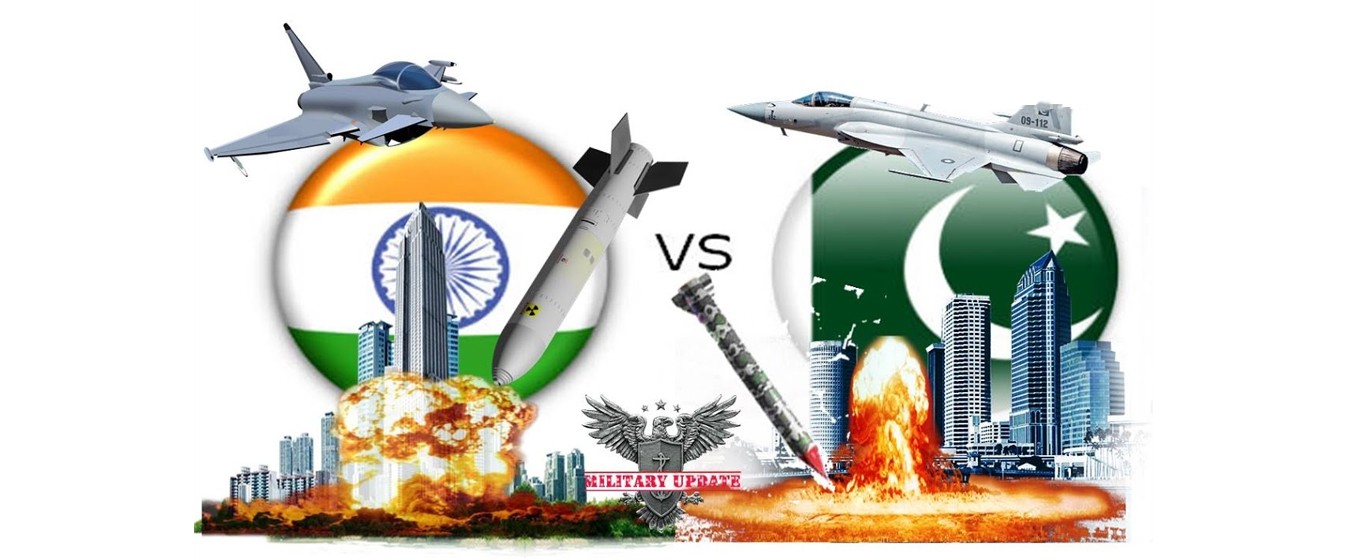
    We know that in the aftermath of the Balakot airstrikes, India and Pakistan went into some form of nuclear readiness. The Indian Navy quietly announced last week that all its crucial assets, including the nuclear missile-launching INS Arihant, were deployed in the Arabian Sea. Unlike the United States and the erstwhile Soviet Union (now Russia), which had several stages of nuclear readiness to signal intent and gravity, India and Pakistan have no such signalling language. So, when it comes, it comes.

    Politicians on both sides of the border are prone to loose talk and nuclear sabre-rattling is part of their lexicon. But this is not without some reason and purpose. Even though there is little risk of a nuclear world war any longer, because of their awesome power and potential to inflict sudden and massive violence on large populations, nuclear weapons inspire tremendous and often irrational fear, however infinitesimal the probabilities of their use. When both adversaries have nuclear weapons, you have a balance of terror.

    As a matter of fact, in the prevailing international situation, any war involving even conventional forces cannot remain a local affair for long, to be sorted out by just the two adversaries. Where there is even the smallest risk of an escalation to nuclear conflict, that intervention could be quite quick. This is what the Pakistanis are counting on.

    But since nuclear weapons cannot be used, their only utility lies in the mere threat of their use. In nuclear theology, this has come to be known as “the utility in non-use”. From time to time declared and undeclared nuclear powers have tried to use nuclear weapons in this manner. The Pakistanis are only travelling down a well-trod path. Each time the Pakistanis threaten us with nuclear war, what they are in fact doing is semaphoring to the rest of the world, particularly those of the West, that have taken it upon themselves to supervise the international regime, to intervene.

    In the early days of the Yom Kippur war of 1973, an incident occurred which tells a great deal about how the game of nuclear diplomacy is played. The sudden and successful attack by Egyptian troops under the command of Gen. Saaduddin Shazli not only put the Egyptians back on the Sinai Peninsula but also unveiled a new generation of Soviet weapons and tactics to match. At the northern end of Israel, a Syrian armored attack under Gen. Mustafa Tlas was threatening to push the surprised Israelis down the slopes of the Golan Heights. In just the first three days of the conflict, the highly regarded Israeli Air Force lost over 40 fighter aircraft and a huge number of tanks to the new generation of Soviet anti-aircraft and anti-tank missiles. The panicked Israelis turned to the United States for assistance but found Washington quite reluctant. Both President Richard Nixon and his national security adviser Henry Kissinger till then were of the opinion that a degree of battlefield reverses was needed to get an increasingly intransigent Israel to the conference table. Caught, in a manner of speaking, between the devil and the deep sea, the Israelis then played their nuclear card.

    American surveillance satellites and high-flying reconnaissance aircraft suddenly began to pick up unusually heightened activity around the Israeli nuclear facility at Dimona near the Negev desert. Israeli defence minister Moshe Dayan, while imploring Dr Kissinger to start the airlift of urgently-needed weapons and military technical assistance, told him about how desperate their situation actually was and had already hinted that Israel might have to resort to nuclear weapons to halt the Arab armies. The alarmed Americans sent a SR-71 Blackbird reconnaissance aircraft fitted with special sensors to detect nuclear material over Dimona. The SR-71’s sensors picked up the signature of nuclear material on a bomb conveyor apparently loading an Israeli fighter-bomber. Whether the nuclear flare registered was from an actual nuclear weapon or radioactive material in a container to simulate a weapon will never be known.

    To the advantage of Israel, the Americans read this as preparations for an imminent nuclear attack. Would the Soviets sit quietly when their allies were subjected to a nuclear attack — would have been their immediate thought? Was this going to be the beginning of World War III? Within minutes, President Nixon was on the line to Prime Minister Golda Meir, telling her that a massive US airlift bearing much-needed weapons and military advisers was ordered and that the supply would begin within hours.

    In early 1952, as the Chinese poured in troops into Korea to grind to a halt the advance of the American-led UN forces, a highly placed US diplomat in Geneva conveyed through Indian diplomat K.M. Pannikar a warning to China that the United States will use nuclear weapons on it unless it agreed to talks immediately. China soon afterwards agreed to hold talks, which soon resulted in the armistice that holds till today.

    Others have done this somewhat differently. During the 1982 Falklands War, the British quietly deployed the nuclear submarine HMS Conqueror, armed with nuclear missiles, off the Argentine coast. As the fighting raged and the Argentines scored some naval victories by sinking the destroyer HMS Sheffield and the converted Harrier jet carrier Atlantic Conveyor, the Royal Navy revealed the presence of its nuclear submarine. The presence of the Conqueror with nuclear weapons was to tell its somewhat lukewarm ally, the United States, that if the war went badly for it Britain would be forced to use even nuclear weapons. It was therefore in America’s interest to not only using its enormous clout with the Argentines to end its occupation of the Falkland Islands but to also assist Britain. Soon after this the US tilted fully in favour of the British by giving it critical intelligence and political support.

    In 1992, then US President George H.W. Bush conveyed to Saddam Hussein that a poison gas attack on Israel using its Scud missiles would invite a nuclear strike upon it. The Iraqis fired several Scuds on Israel, but none with poison gas. After the war, UN inspectors scouring Iraq for weapons capable of mass destruction detected huge quantities of poison gas in ready to use explosive triggered canisters. Obviously, the threat had worked.

    Clearly, the threat of the first use of nuclear weapons, if provoked beyond a point, could be often as effective as nuclear deterrence. In recent times, to give credence to its irrationality, Pakistan has deployed or claims to have deployed tactical nuclear weapons to some of its formations. Since a tactical nuclear weapon has a much smaller destructive power, its use is considered somewhat more likely and hence more credible than a strategic nuclear weapon. A strategic weapon is a city or area-buster, whereas a tactical weapon is said to have only a battlefield application. But India’s response to this is that whatever the weapon, and wherever it is used, if it is used it will invite a full-scale retaliation. Many analysts think this is not credible, and India needs a flexible policy that will allow it to also match escalation up the ladder.

    But the frequent Pakistani outbursts that nuclear war can happen here if the Kashmir situation boils over is an addition to the known nuclear semaphoring practices. Here the Pakistanis are using the Western abhorrence of nuclear war to influence Indian policy. They are not threatening India, because that is not credible, more so since India has a far bigger nuclear arsenal. They are in fact threatening the world that the balance of terror might be breached, and inviting it to intervene. Whatever the nature of this intervention, it is deemed to be in its favour. We saw this happen in 2008 when within minutes of the 26/11 Mumbai attacks Presidents and Prime Ministers from all over began calling our Prime Minister calling for restraint. We have a somewhat ironical situation here. A cruel and ruthless military presiding over a notoriously lawless and corrupt nation is pleading for Kashmir’s supposed right to self-determination and is blackmailing the world to come to its assistance.

    The author is a Trustee and Distinguished Fellow of ‘The Peninsula Foundation’. He is a prolific commentator on economic, political, and security issues. The views expressed are his own.

    This article was published earlier in Deccan Chronicle.

    Photo Credit: PTI

  • Nuclear Stability in Asia and South Asia: the Dynamics of a Fragile Stability

    Nuclear Stability in Asia and South Asia: the Dynamics of a Fragile Stability

    Download Here for Full Report

    M. Matheswaran

    India-Pakistan-China relations determine South Asia’s strategic stability. Recent events and disputes have heightened regional tensions, and have drawn the world’s attention on the region’s potential for conflict. The fact that all three nuclear weapon states have long-standing border disputes has been used by the non-proliferation lobbies to consistently highlight South Asia as a nuclear flash point. The intractable Kashmir dispute continues to be cited as the potential trigger for any nuclear escalation. These concerns were brought to the fore as the world witnessed the two nuclear armed adversaries fight it out on the Himalayan heights of Kargil in May 1999. While India fought the war firmly, and displayed significant escalation control and management of international opinion, it must be acknowledged that both countries kept the conflict below the nuclear threshold, thus questioning the nuclear flash point theory.


    Download Here to read more…


    *This article was published in Indian Foreign Affairs Journal – Apr-Jun 2018.

  • Changing Paradigms of Political Canvas in Sri Lanka

    Changing Paradigms of Political Canvas in Sri Lanka

    The intransigent ethno-political emotional divide amongst the Sri Lankan society of 1980s manifested into a bloodiest insurgency with the Tamil separatists almost succeeding in carving out a separate Tamil Elam in the North and Eastern regions of the island nation. The political divide at that juncture was result of a racial cleavage between the Sinhala majority and oppressed Tamil minority which prompted the later to rebel in the face of socio-economic denials of all kinds.

    It was India who came to rescue of the Sri Lankan government of the day in 1987 to ensure territorial integrity of the country even at the cost of negative political repercussions within India. The India had to pay the price of this political outreach to Sri Lanka with life of Rajiv Gandhi, the prime minister who went out of way to help them in their hour of crisis. The deeply indebted Sinhala dominated Sri Lanka of 80s seem to be chartering a different trajectory now with self serving opportunist afflictions due to inducements of easy money from extra regional players, especially China.

    While encashing the apparent Chinese benevolence, the gullible Sri Lankan politicians seem to have ignored the basic dictum that ‘there are no free lunches’ in this world. And the slip is showing wherein the Sri Lankan political dispensation seems to have compromised on their territorial integrity by leasing out Habantota port and 15000 acres of land in lieu of repayment of Chinese loans. A precedence has been set for more such sovereign compromises in times to come for which India had fought a bloody battle against their own co ethnic insurgents.

    The motive of the ongoing political drama appears to be focused on facilitating the Chinese cause even if it amounts to tempering with the constitutional jurisprudence. Indeed, there is a paradigm shift in political thinking with its doctrine of development through Chinese support which has obvious inherent centrifugal tendencies as against focus on internal economic consolidation. Instead of reclaiming the lost politico-economic ground to China post Habantota episode, a major part of Sri Lankan polity seem to be under compulsion to toe the Chinese lines due to debt diplomacy so cleverly orchestrated by the Chinese.

    The close scrutiny of Sri Lankan political conduct in the past hinges on the non accommodation of rival ethnic, social or political groups within the Sri Lankan society which seem to continue even today in some form or other. Earlier it was based on ethnic rivalry between Sinhala and Tamils, and now it is intra Sinhala dispensation vying for more political and money power in a political set up with opportunist tendencies. Despite a vibrant democratic political dispensation to take care of well being of its subjects, the island nation has witnessed spells of changing political priorities and concomitant societal upheavals in the recent times. The military driven turbulent ethno- political complexion of 80s gave way to consolidation of socio-political synergies alongside resolving the internal security issues for almost three decades.

    Subsequently, in the aftermath of subjugation of Tamil insurgency in 2009, the priorities changed to the much needed economic development of the nation. However, the tourist predominant economy had woeful inadequacies of infrastructure and public conveniences to tap the potential of the nation at par with other international tourist destinations close by. To do that, there was no money due to prolonged war effort which in turn prompted Sri Lankan polity to look outwards paving way for externally influenced politico-economic opportunism.

    Chinese concept of BRI suited both China as well as the Sri Lanka as a mutually beneficial mechanism to take care of each other’s interests. The BRI concept envisages development of communication and transportation net work, industrial and power corridors as part of Chinese grand game for their global economic expansion. As far as China is concerned all the countries in the Indian Ocean are important for Chinese geo political matrix as a response mechanism for the security of her economic interests. Chinese conduct when hyphenated with their ‘’String of Pearls in the Indian Ocean’’, and their defiant politico-military stance in the South China Sea speaks of their seriousness and sensitivities of their interest in the Indo Pacific region. Sri Lanka happens to be in a pivotal position to serve the Chinese geo political interests.

    In the given circumstances, close affiliation with the China is a win -win situation for Sri Lanka for their economic buoyancy and a politically strong anchor to stand by their side in the time of crisis. However, there are also apprehensions of negative fallouts of new found political bonhomie with an outsider with prospects of disturbing existing stable regional political equilibrium fully aligned with socio- cultural emotional bind of Indian legacy. Accordingly, there is an emerging pattern of an internal political divide amongst Sri Lankan parties and individuals believing in encashing the pragmatic opportunism as against continuation of stability through India centric regional cohesiveness.

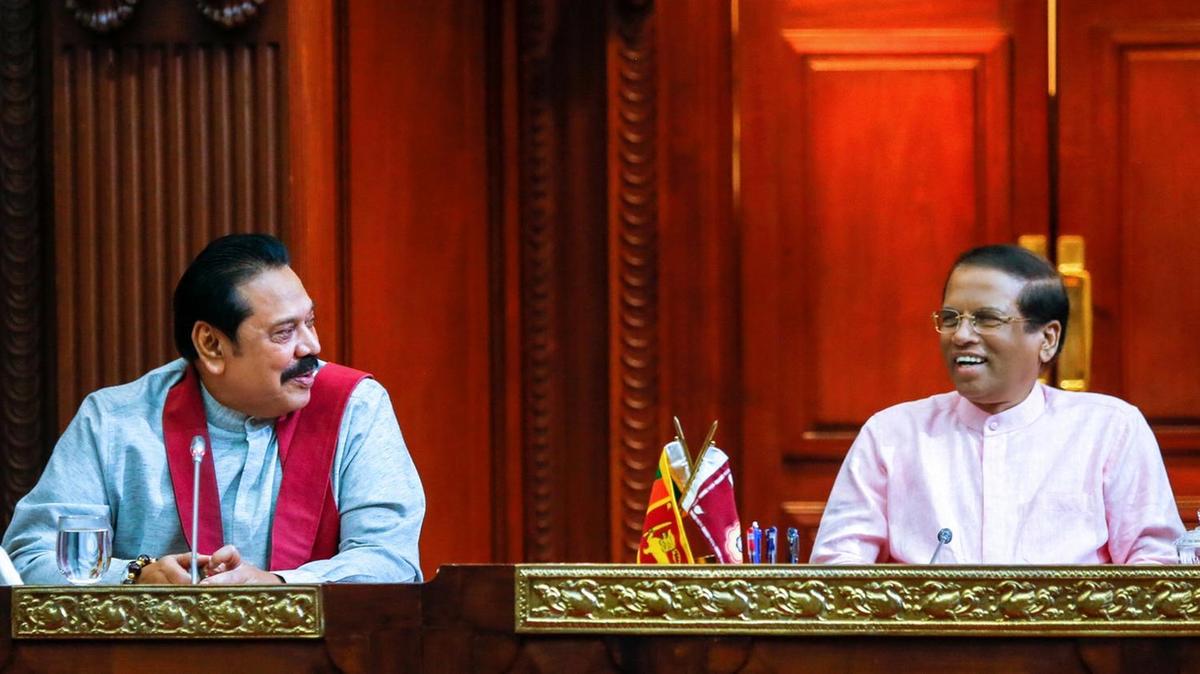
    The Mahindra Rajpaksha during his premiership was given loans worth $ 6 billion for various infrastructural projects including Hambantota port. Later the dept trap diplomacy of China got highlighted in their demand of ownership of the port plus land adjacent to it. It, surely, has exposed the dubious ways of China which has prompted number of recipients of Chinese benevolence to revisit their commitments with them as regards to BRI scheme. Sri Lankan civil society is ceased with this Chinese conduct and there is a resistance to encouraging Chinese intrusion into Sri Lankan affairs beyond a point.

    The opponent Ranil Wickremasinghe, is known to be a proponent of the Indian lobby who had, recently , cancelled housing project of more than 50,000 houses in North and Eastern Tamil areas given earlier to China in favour of Indian companies. The Rajapaksha was brought back as the prime minister by the president through an untenable political move leaving the country in a political chaos. The parliament was dissolved paving way for fresh elections. However, the Supreme Court ruled against this unconstitutional move by the president. It was probably done as Rajapakshe, like his previous tenure, would facilitate better relationship with the China looking at their current political compulsions and national interests.

    What is happening in the Sri Lankan political canvas seem to have imprints of pro India vs pro China lobbies. The fact that there is an outstanding loan of almost $ 5 billion despite handing over the Hambantota port to them, China may be pulling the strings to bring in a political dispensation favourable to them to do their bidding. The way the democratic norms are being flouted do indicate a desperate situation precipitated by the looming economic catastrophe waiting to happen.

    The military geography of Sri Lanka has bestowed her with a unique location to take care of the most vulnerable security concerns of China with 70% of trade and 90% of energy supplies passing through the Indian Ocean. Therefore, it is obvious that China is here to stay as a permanent feature and to do that they seem to have acquired a substantial political space in the Sri Lanka. Whereas, the Sri Lanka seem to have lost out on her autonomy to some extent as there is a probability of China dictating their terms when they find the policies are not in sync with Chinese interests.

    The likely Chinese naval presence at Hambantota port barely few hundred miles from Indian shores is a security concern for India. The Chinese politico-military afflictions in Sri Lanka is likely to prompt the western powers also to further enhance their military presence closer to the Indian shores. It, obviously, would impact the Indian security matrix with the extra regional players milling around in the areas of Indian influence all this time. The new nomenclature of ‘Indo Pacific ‘ referring to erstwhile IOR and Asia Pacific is manifestation new US maritime doctrine as a response mechanism to Chinese geo political expansion. The increase in the US sponsored military diplomacy in the region and revival of Quad are all indicative of new global strategic grand games being unfolded closer to the Indian shores.

    India has no choice but to upgrade her military capabilities to take care of the inimical developments around her periphery both on land as well as maritime domain. It warrants looking beyond defensive doctrines and acquire offensive capabilities for optimum power projection in the areas of concern, besides defence of the island territories and international maritime obligations. Given the distances from the main land and bottle necks for shipping, China would always be militarily vulnerable in the Indian Ocean. It stands to an advantage for India which need to be factored in the design of the military doctrine and its political strategic outreach.

    The Sri Lanka needs to recall that they stand integrated today due to unflinching support by India in their hour of crisis and sacrifices made by the Indian soldiers to hold their country together. They should also appreciate that the India continues to be the stabilizing factor for Sri Lanka and a friend in need. China on other hand is here to exploit the Sri Lankan geographical space for their geo political motives sans any benevolent emotional connect. In fact, China has already usurped their strategically located land through their manipulative ways. If the Sri Lankan polity has not understood their game plan then they should be prepared for more such disintegrating moves as part of their dubious debt diplomacy. The Sri Lanka is in economic crisis and stands vulnerable which is reflective in their recent political conduct. In that, there seem to be tell tale signs of Chinese complicity in the ongoing happenings in the Sri Lankan political space which is not a good news.

    India, obviously, has not been pro active enough to sense the aspirations of her neighbours and propensity of China to exploit the political deficit on the strength of her deep pockets and liberal military outreach. The Sri Lanka has a great significance for Indian security and we need to take all the possible measures to neutralize the Chinese foot prints in the island nation. India fortunately has a large influence in the Sri Lankan society and reckonable political leverages which needs to be nurtured and exploited in our national interests. India as a responsible regional country need to go all out to extend a helping hand to Sri Lanka in her testing times as their political stability is essential to the Indian strategic interests.

    Lt Gen Rameshwar Yadav is an Indian Army veteran and former Director General, Infantry. The views expressed are his own. This article was published earlier in https://cenjows.gov.in/article-detail?id=122

  • US and China Compete over AI-enabled Military Hardware

    US and China Compete over AI-enabled Military Hardware

    Vijay Sakhuja September 02, 2018

    There is a sense of urgency among the militaries of United States and China to gain ascendency in the field of artificial intelligence and machine learning. The United States Department of Defence has set upJoint Artificial Intelligence Center (JAIC) that will help the US military to “preserve and expand military advantage” as also pursue “AI applications with boldness and alacrity while ensuring strong commitment to military ethics and AI safety.” The JAIC will costan estimated $1.7 billion over the next six years. It will work on nearly 600 AI projects in partnershipwith the industry, academia and allies, and will have oversight over almost all service and defense agency AI efforts.

    Defense Secretary Jim Mattis has urgedPresident Donald Trumpto consider formulating a national strategy for artificial intelligence. Meanwhile, the US Army has establishedan AI Task Force and given itself three months to identify “specific skill sets that we’re going to need to be relevant and to thrive in this environment that will include AI and machine learning.”

    Likewise, the Chinese government is pursuing an aggressive policy for the development of artificial intelligence at the national level. In December 2017, the Chinese Ministry of Industry and Information Technology through Circular No. 315called on all agencies under the Central Government to implement ‘Made in China 2025’ and ‘New Generation Artificial Intelligence Development Plan’ and ‘ accelerate the development of artificial intelligence industry, promote the deep integration of artificial intelligence and real economy” It also laid out a ‘Three-Year Action Plan for Promoting the Development of a New Generation of Artificial Intelligence Industry ( 2018 – 2020).

    According to a reporttitled “China’s AI Development Report 2018” released by Tsinghua University, the China’s artificial intelligence (AI) market touched 23.7 billion yuan ($3.5 billion) in 2017, with the growth rate expected to reach 75 percent in 2018. Further, China emerged as the ‘most attractive country for AI investment and financing’ and in the last five years since 2013 the Chinese AI industry accounted for 60 percent of the world’s total including 18,232 AI technology research experts  accounting ‘for 8.9 percent of the world’s total and was second only to the United States, which accounted for 13.9 percent’.

    In China, AI is used in a number of sectors like robotics, drones, autonomous vehicles such as cars and trucks, in manufacturing white goods including marketing services. Perhaps what merits attention is that China is investingin AI-related devices and systems that range from the anodyne to the dystopian wherein the military is looking to the technology to work in concert with its military strategy? Further, experts believethat the Chinese are “making their machines more creative” and “A little bit of automation gives the machines a tremendous boost” which can be characterized as “remote warfare”.

    The US is visibly concerned about losing military edge to China in the field of artificial intelligence. The PLA Navy presents different challenges with significant investments made in weapons such as the Electromagnetic Railgun (EMRG), Solid State Lasers (SSLs) and other systems and sensors.As noted earlier, AI technologies are also being incorporated into a new generation of anti-ship missiles through autonomous targeting capabilities. Similarly, autonomous air and underwater drones and miniaturized assault boats would soon be part of its force structure It is quite plausible that the PLA Navy may have begun to conduct exercises based on AI and ML and assimilated commonly used and commercially available communication devices such as smart phones, tablets and hybrid devices into its naval strategy.

    AI is surely adding to the war fighting tool kit of both the US Navy and the PLA Navy through stealthy ‘robotic trimaran’(Sea hunter and D3000 respectively)thatcould result in a dangerous escalations of a new kind of competition between the two navies. Similarly, China is developing autonomous robotic submarines which are likely to be ready for operations by the early 2020s and supplement regular human-operated submarines. This is sure to pose another set of challenge to the US Navy.

    Dr Vijay Sakhuja is a Trustee of TPF.

  • China: A Colossus in Asia?

    China: A Colossus in Asia?

    Vidya Nadkarni December 10, 2017
    China today is moving out of the shadows.  After decades of following Deng Xiaoping’s advice to “hide our capacities” and “bide our time,” Xi Jinping in his long address to the CCP’s 19th Party Congress in October announced that his country “has stood up, grown rich, and is becoming strong” and would move “closer to center stage.”  Xi celebrated the “steady progress” in China’s construction on the islands and reefs in the South China Sea—a self-back-patting that has disregarded the concerns of Southeast Asian claimants to the Paracel and Spratly island chains and troubled the United States. China, in Xi’s words is a “great nation,” and he implied a prominent global role for the country when he noted that history looked “kindly on those with resolve, with drive and ambition, and with plenty of guts.”  He could not have offered a clearer message to the world that China was claiming its proper due on the global stage.

    China’s assertiveness is coming at a time when American allies and partners are increasingly questioning U.S. resolve and interest in global leadership.  President Trump’s “America First” strategy appears to many as a clarion call for a foreign policy strategy of retrenchment.  While the rhetoric of Trump administration officials continues to support US global engagement, the President’s position has been far less clear.  For instance, early in his administration Trump unceremoniously withdrew from the Trans-Pacific Partnership and the Paris Climate accord.  He decertified the Iran nuclear deal but stopped short of suspending the multilaterally negotiated agreement. Predicting the depth and steadfastness of US commitment to a global presence is therefore difficult.

    Specifically with respect to the Asian theater, while Secretary of State Rex Tillerson and Admiral Harry B. Harris of the US Navy’s Pacific Command (PACOM) have underscored US interest in a strong presence in the Indo-Pacific region, President Trump, in a speech at a November 2017 gathering of Asia-Pacific CEOs in Danang, Vietnam that White House officials had billed as highlighting the US commitment to a “free and open Indo-Pacific region,” inveighed instead against the unfair trade practices of other countries and insisted that he would put America first and not let the United States be taken advantage of anymore.  Trump’s fiery defense of nationalism and sovereignty was followed immediately by President Xi’s vigorous defense of open trade and globalization.  Upon his return to Washington, however, President Trump in debriefing remarks on his trip to Asia touted his accomplishment of three goals: uniting the world against the North Korean menace; strengthening America’s alliances and economic partnerships in a free and open Indo-Pacific; and insisting on fair and reciprocal trade deals. His interlocutors in Asia, however, heard him emphasize the third objective.

    Trump’s November trip to five Asian countries—Japan, South Korea, China, Vietnam, and the Philippines—thus did little to reassure US allies who are caught between the Scylla of economic reliance on China and the Charybdis of an uncertain protection from the US security umbrella. China dominates the economic scene in Asia.  To get a picture of what this means, consider the degree of dependence on China in Australasia.  China has superseded the United States as the largest trading partner of Australia, Japan, India, and the ASEAN countries.  International Monetary Fund (IMF) trade statistics for 2016 show that Australia and the countries of ASEAN collectively ran trade surpluses with China, making access to the large Chinese market enormously important, particularly to Australia and the smaller countries in Southeast Asia.  India and Japan ran trade deficits, although Japan’s deficit is small.  India is the exception here with a trade imbalance ratio of 1:5 in China’s favor fueling fear of Chinese goods flooding the Indian market.  Beijing is investing in much-needed infrastructure projects in countries from Asia and Europe to Africa.  Xi Jinping’s signature Belt/Road Initiative (BRI), which was unveiled to much pomp in May’s Belt and Road Forum in Beijing, has behind it the promise of $124 billion in funding.  China’s economic aid is attractive despite market rate loans because Beijing is unhampered by transparency issues as well as environmental and human rights concerns that are part and parcel of projects funded by the World Bank or the Asian Development Bank. In the long term, however, many of these investments saddle politically volatile countries with massive debt burdens making them vulnerable to strategic manipulation.

    Recognizing that BRI is as much a geostrategic as an economic initiative, Australia, Japan, and India have been cautious about participation.  Australia has nominally agreed to set up a working group to discuss possible cooperation, but Prime Minister Malcolm Turnbull has so far refused to link BRI with the Northern Australian Infrastructure scheme.  Perhaps reacting to Trump’s protectionist instincts, Japanese Prime Minister Shinzo Abe in a June speech offered a paean to free trade and spoke favorably about BRI in the context of the economic virtues of linking the Pacific to Eurasia.  But, in an indirect message to the Chinese leadership, Abe noted the international community’s expectations that it was critical for any infrastructure projects to be “open to use by all” and “be developed through procurement that is fair and transparent.”  India’s concerns arise from the BRI’s lack of transparency and from New Delhi’s objection to the China Pakistan Economic Corridor (CPEC) project, which links the Chinese province of Xinjiang with Pakistan through contested territory in Kashmir.  Recognizing the importance of having India on board, the Chinese leadership has sought to placate New Delhi.

    China’s rise is unlikely to be smooth unless Beijing can neutralize the worries of India, long-standing US allies in Australasia, and smaller countries in Southeast Asia.  Many of these countries are hedging their bets by engaging with China economically but also by investing in military hardware to shore up their security.  Australia, India, Japan, and South Korea regularly hold military exercises with their favored security partner—the United States.  India and Japan have cemented a strong partnership.  Australia has expressed interest in joining the annual Malabar naval exercises that bring together the United States, India, and Japan.  The first time that a quadrilateral naval exercise among these four democracies occurred was in 2007.  While New Delhi has not responded favorably to Australia’s recent request, either to avoid upsetting China or due to doubts over the extent of China’s influence in Australia, an overweening China is likely to propel security countermeasures in all these countries.

    Beijing’s challenge is how best to balance its economic lure with what are seen by many of its Asian neighbors as provocative military moves in the East and South China Seas and the Indian Ocean Region. If China looms large in Asia militarily, the formation of an anti-China alliance may quickly follow.  The problem for great powers is that economic influence is seldom sufficient to override measures that countries are likely to take in the face of security threats.

    Dr Vidya Nadkarni is a Professor and Head of Political Science at the University of San Diego, California. She is a Trustee of TPF.