Blog

  • Part 1 – Air India 171 Crash: NO-GO Fault & Electric Arc

    Part 1 – Air India 171 Crash: NO-GO Fault & Electric Arc

    Air India crash: How AI 171 had NO-GO faults and still flew; leading to electrical cascade, systems failure

    There is exclusive evidence that Air India 171 reported multiple NO-GO faults 15 minutes before takeoff and was still allowed to fly. Faults that likely resulted in an electric arc on the plane; as a high voltage inverter reached its thermal and dielectric limit, frying the emergency beacon, tail blackbox and knocking out the flight computers and avionics rack – a situation that ultimately could’ve led to engine computer FADEC getting corrupted data and cutting off fuel mid-air.


    AI 171 was one of the shortest flights in aviation history. 32 seconds in total. From takeoff to crash.

    A deadly tragedy that claimed the lives of 260. While everyone is familiar with the names of the pilots – Capt Sumeet Sabharwal and First Officer Cliver Kunders. On duty that afternoon of June 12, 2025, were also Air India 171 crew members like Shradha Dhavan, Aparna Mahadik, Saineeta Chakravarty, Nganthoi Sharma Kongbrailatpam, Deepak Pathak, Maithili Patil, Irfan Shaikh, Lamnunthem Singson, Roshni Rajendra Songhare and Manisha Thapa. Their names — representative of the ethnic diversity and cultural richness of India; just as much as the passenger list represented the broader global connect on that fateful day.

    All of them boarded the flight, unaware that AI 171’s systems had likely begun unraveling. Months, days earlier. Deep beneath their feet; inside the aircraft’s labyrinth of wires and power buses.

    The first domino: a failing core network

    On June 9, 2025, maintenance staff logged that the plane’s core network was degrading, as per the Aircraft Accident Investigation Bureau (AAIB) preliminary report. But because Boeing in its operations notes to airlines minimised the damage an inoperative core network could do; maintenance marked the core network as medium-risk (can be fixed in 10 days). And this core network connected about 22 flight critical systems, including FADEC; apart from 28 other more mundane functionalities like the plane’s air conditioning. And later in this article, we’ll show how this was the more important fault and how it connects to all the other failures that followed.

    But prior to core network degradation, the plane was already reporting cabin and cargo related faults in the weeks prior to the crash, as per the AAIB report. Engineers say this points to an intermittent electrical integrity fault affecting the common core cabinets and network interfaces — i.e., the shared platform that hosts cabin and cargo functions and flight critical systems. Now this could be because of electrical fault in the power conditioning module (PCM) — essentially the core cabinet’s internal power supply — which provides regulated electrical power to the aircraft’s network hardware, including the the data traffic router or ARINC 664 Cabinet Switch (ACS) and the the copper-to-fibre signal converter Fibre Optic Translator (FOX).

    And it’s first victim was the common data network (CDN) or core network on June 9 (marked “medium-risk” or CAT C MEL), followed by a fire inerter, a stabilizer motor trim unit and then all three of the plane’s flight control modules by crash day.

    Now let’s take a closer look at the second domino in the chain of failures. On June 10, the plane’s fire inerter or nitrogen generation system (NGS) — which prevents fires in the fuel tanks by depleting oxygen and replacing it with nitrogen — faulted. It was marked as “high risk” (CAT A MEL) and was likely physically inhibited by maintenance.

    (Credit: Federal published content)

    In technical terms, the AAIB report notes that the core network got marked a CAT C MEL or “medium-risk,” while the fire inerter got a CAT A MEL or “high-risk.” MELs or minimum equipment lists are the faults with which a plane is allowed to fly, provided it fixes these issues within a specified number of days. And on the day of the crash, Air India had 7 more days to fix the core network issue (till June 19, 2025) and 8 more days to fix the fire inerter issue, as per the AAIB report.

    But the issues kept piling up and then there was a third domino. On June 12, the day of the crash, the stabilizer motor unit and sensors faulted and had to be replaced on the previous morning flight (AI 423 Delhi to Ahmedabad), as per reports.

    D-Day: A jet in fault mode, a cockpit left blind

    The plane’s condition kept deteriorating.

    On June 12, 2025, the day of the crash, 15 minutes before takeoff; at 1.23 PM IST, the aircraft’s ACARS logs started streaming… “BPCU OPS…FCM OPS…CMCF OPS…GPM OPS….HYDIF OPS….”

    “OPS” in Boeing maintenance parlance is “Operations” — shorthand for a detected operational fault. And AI 171 didn’t have one, but multiple operational faults, according to data shared by two independent sources. Malfunctions serious enough to disrupt electrical power stability and data flow across the length and breadth of the 120-tonne carbon-fiber leviathan.

    (Graphic by Capt Amit Singh)

    A NO-GO plane that still flew

    And not just operational faults, but NO-GO items as well. Regulations don’t permit planes to fly with faults as severe as these. So how did AI 171 still fly with no one being the wiser?

    Rewind to three days earlier, on June 9, when the jet’s core network was marked an active fault. This core network once it starts degrading can also impact the function of the systems that report faults — the Aircraft Condition Monitoring Function (ACMF), the Central Maintenance Computing Function (CMCF), and even the pilots’ Electronic Flight Bags (EFBs).

    Boeing’s internal note itself mentions this possibility, saying, “an inoperative core network could impair the ACARS transmission of faults to the cockpit tablets or EFBs.”

    By June 12, the day of the crash, the timing of the failures had turned vicious. The NO-GO faults were occurring at the exact moment the systems responsible for reporting NO-GO faults were themselves failing. The fault-reporting chain went dark.

    So when maintenance signed off on the jet at 12:10 PM IST and when the pilots performed their checks at 1:23 PM IST — the critical faults or NO-GO items simply never appeared.

    So maintenance didn’t know. Pilots didn’t know. But Boeing would’ve known. And so would Air India.

    The ACARS ring that bound them all: Boeing, Air India, SITA, Inmarsat

    As the plane kept sending out warnings — upstream, Boeing and Air India were seeing everything. Like Sauron’s unblinking eye, they were receiving a ring of real-time data from the aircraft’s digital datalink, ACARS.

    That ring formed a tight closed loop: carried by Air India’s sub-contractor SITA, relayed over satellite provider Inmarsat, and delivered to Air India’s operations centre in Gurugram and Boeing’s data monitoring hub in Belleville, Illinois, US.

    At 1:23 PM IST, that ring flashed three sets of NO-GO warnings. ACARS told everyone in the loop that AI 171’s left and right bus power control units (BPCUs), the computers that act as traffic controllers for electrical power, had entered fault mode, unable to keep the left and right 115-volt AC buses in sync. Meaning the airplane’s two main power highways were falling out of phase, a condition that can cause surges, flickers, or even short-circuits across systems.

    The domino effect: Flight computers, processors fall one by one

    Next, all three flight control modules (FCMs) left, right and centre began reporting operational errors. These are the units at the heart of the 787’s fly-by-wire system. They take instructions from the flight computers and translate pilot inputs into precise movements of the stabilizer, ailerons, and spoilers.

    And it doesn’t stop there. Two general processor modules (GPMs) also faulted. These were the 787’s backstage processors; running key software, performing calculations that feed flight management and crew alerting and the nerve-centre for fault detection and reporting.

    Taken together — the out-of-phase power buses, failing flight control modules, and glitching GPMs — AI 171 wasn’t dealing with a single fault but a system-wide degradation. As pilot Rajneesh S puts it, “Aviation outcomes emerge from complex, tightly coupled systems… failures rarely stem from a single decision or individual lapse.”

    And yet, the plane was cleared for takeoff at 1:25:15 PM IST.

    The plane’s pilots — Capt Sumeet Sabharwal and First Officer Clive Kunders, unaware of what was happening inside, guided the plane to the runway. Started roll and lifted-off at 1:38:39 PM IST.

    A surge, an arc, a cascade of collapse

    Now, takeoff is always the most electrically demanding phase of flight — all four power channels, bus control units, and hydraulic pumps draw maximum load as the plane transitions from ground to airborne mode.

    For AI 171, that surge became catastrophic. And core network degradation could’ve caused an electric arc. Now we’ll show you how AI 171’s systems could’ve arced by tracing the failure chain back to what happened on the previous flight of VT-ANB.

    “Gremlins” in VT-ANB; blank screens to blackout


    A few hours before the crash, passenger Akash Vatsa — seated aboard the same aircraft VT-ANB on its previous flight (AI 423) from Delhi to Ahmedabad— recorded a short video complaining that the air-conditioning and in-flight entertainment weren’t working, and that even the crew call buttons were dead. Post-crash when he posted the video, viewers mocked him —  calling him a fussy traveller who didn’t understand aircraft systems. But Akash was perhaps unknowingly documenting the first public evidence of a deep electrical failure spreading through VT-ANB’s core.

    Trolled for it; but 787’s Architecture vindicated Akash

    “I was badly trolled, people said I was just doing it to gain publicity; linking the inflight entertainment with air conditioning makes no sense and neither it has anything to do with the crash…I was told a non-working AC and inflight entertainment is very common in Air India,” Akash Vatsa told this reporter.

    But turns out Akash was right. On the 787, the in-flight entertainment, cabin climate control, and crew communication panels are not isolated luxuries; they share both power and data on the aircraft’s core network. The same core network that connects 22 flight critical systems including the pathways to engine computer FADEC.

    So in a scenario that resembles Lewis Caroll’s Alice in Wonderland, engineers say Boeing has created its own electrical hard-to-believe architecture, where the air conditioning, a non-flight critical system, sits ensconced on a network with other flight critical systems.

    And one of the cabin air conditioning’s compressors was sharing the same power source — a high voltage inverter, managed by a common motor system controller (CMSC R2) on the R2 line — as the fire inerter (NGS), marked “high-risk” two days earlier. The same R2 line which on the same flight also saw its right horizontal stabilizer electric motor control unit (EMCU) and stabilizer sensors fail during the descent phase, before landing.

    R2: The Rogue Power Lane

    So when the cabin air conditioning’s cabin air compressor (CAC) is in a bad power domain experiencing power surges and voltage spikes  — it can result in fluctuating air conditioning as Akash and other passengers on Flight 423 (VT-ANB) experienced.

    Below is the power path mapping from the right engine’s variable frequency starter generator (VFSG) to the high-voltage drive used by the fire inerter (NGS) and the right compressor (CAC); and to the power conversion system (PCS) to the right stabilizer motor (EMCU) and sensors.

    Power paths:

    R2 235 V AC main bus → ATRU R2 → ±270 V HVDC → CMSC R2  → NGS/ CAC-R2 / Hyd L EMP

    L2/R2 235 V AC main bus  → PCS (115 V/±130 V/28 V) → right stabilizer EMCU (115 V/±130 V) → right stabilizer sensors (28 V)

    This shows the cluster of failing components — be it the fire inerter (NGS), stabilizer motor (EMCU) or the air-conditioning compressor (CAC) — were all on the R2 line.

    Line 26: Legacy of the “Terrible Teens”

    The problems faced by Air India’s Dreamliner AT-VNB have their origin in the ‘Terrible Teens,’ say experts. In aviation parlance, the “Terrible Teens” refers to a cluster of early-build 787s that came off the assembly line with serious manufacturing defects, requiring heavy rework; becoming notorious inside the industry for persistent quality problems.

    “You see VT ANB (AI 171) was only the twenty sixth 787 built (line #26) , and back then the 787 factory in Everett, Washington was known to be having a lot of manufacturing quality issues,” Ed Pierson told the reporter.

    He said one area of particular concern was the aircraft’s electrical wiring interconnect system (EWIS). “Over the years, we’ve seen some very dangerous EWIS practices across multiple Boeing programs — not just the 737, but the 787 as well. Fatigued employees, skipped installation plans, poor electrical bonding and grounding, improperly installed wire bundles, unqualified staff performing electrical work, rushed functional systems testing, and the removal of long-standing quality inspections— all of this can create latent defects in a variety of aircraft systems that can be extremely difficult to troubleshoot,” said Pierson. He adds, “These flaws often produce those frustrating ‘No Fault Found’ or ‘Could Not Duplicate’ maintenance reports. In the military, we used to call them gremlins.”

    Was Fire inerter a victim to power transients?

    And if we rewind a little here, we can see how the first gremlin may have been the fire inerter. Remember how two days before the crash on June 10, maintenance engineers had marked the fire inerter (NGS) a high-risk fault?

    Well this fire inerter (NGS) is designed to prevent explosions by flooding the 787’s fuel tanks with nitrogen-enriched air and depleting its flammable vapour i.e. “live” oxygen. To feed that flow, the NGS uses a compressor and a high-voltage inverter, controlled by a common motor system controller (CMSC R2). And this high-voltage power line (CMSC R2 ±270 V) also feeds a cabin air compressor (CAC) and hydraulic electric motor pump (L) in the aft power distribution bay. The same compressor (CAC) whose faults were visible to the passengers above when the air-conditioning fluctuated on the previous flight (AI 423).

    Where cooling failure becomes combustion risk

    Now comes the most inconspicuous but dark horse fault of all on the crash flight. In the tail section there is an aft zonal dryer, a small unit that removes moisture from the ventilation air around the fire inerter (NGS), compressor and its cooling ducts.

    On AI 171, this started showing abnormal readings at 1.23 PM IST, 15 minutes before takeoff, as per data from two independent sources.

    This would lead to moisture building in the aft bay; a sharp rise in humidity as the dryer isn’t removing water vapor. Condensation risk increases as droplets can form on wiring, high voltage inverters, raising the risk of short circuits or even an arc. And the cooling efficiency also drops as the moisture load would make the environmental control system (ECS) work harder and reduce heat removal margin from electronics.

    Water turns fire: How aft-bay moisture caused electrical failure

    Given what Ed Pierson and other whistleblowers have said about Boeing’s practises and improper bonding of the electric wiring interconnected system (EWIS) — a latent EWIS defect could also play in.

    So 15 minutes before takeoff and 2 minutes before taxi clearance, it’s possible the AI 171’s aft high voltage system was in an unstable state. With cooling faltering, heat building up, moisture settling in and the twin power buses (BPCUs) slipping out of phase, the airplane’s systems were likely reaching their tipping point.

    Zonal dryer turns tail into heat zone: The first ripple in AI 171’s core

    And then they seemed to have tipped over. As per data from the sources the “aft zonal dryer” anomaly seen at 1:23 PM IST likely escalated into a full-blown failure after takeoff at 13:38:39 IST.

    Flight logs accessed show an ACARS message (167280002) shows that there was a failure on the aft zonal dryer’s control feedback path in the integrated cooling system (ICS) that connects to the aircraft’s core data network. Or in other words the moisture-removal or dehumidification loop in the tail section likely failed.

    High voltage inverter drives turns metal-melting arc source

    When the aft zonal dryer fails, humidity rises and the insulation margin inside the high-voltage inverter, controlled by CMSC R2, drops sharply. If the BPCUs are also faulting, power quality can swing violently and protection may not isolate the inverter when it should. At the same time, a degraded core network can delay or corrupt trip commands, keeping the inverter energised even as its insulation environment is collapsing. And loads such as cabin air compressors for the air conditioning would likely put more stress on the inverter precisely as the insulation environment was most vulnerable.

    Under these stacked conditions, the high voltage inverter would possibly become increasingly vulnerable. As the heat builds up it is likely the inverter reached its thermal and dielectric threshold limits — meaning its cooling and insulation could no longer contain the voltage.

    “When that happens the inverter will discharge through nearby wiring harnesses a sustained electrical arc, a plasma-level short that can melt metal and vaporize insulation,” said a flight engineer, who did not want to be named.

    The surge that reached the Dreamliner’s nerve center

    So if a high voltage inverter arced; then this burst of energy would’ve sent transients —  sharp voltage spikes — surging back through the airplane’s 28-volt and 115-volt power buses, rippling through the core network, the data-power spine that links almost every system on the 787.

    And it looks like it did — because ACARS fault codes (252490002, 167280002) indicate that this arc likely hit the forward electronics and electrical bay. And they were probably hit harder than they normally would have because of the existing faults before takeoff.

    When two power lines fail, two others carry the plane — until they don’t

    At 1.23 PM IST, 15 minutes before takeoff, when the system began throwing up processor (GPM), fault monitoring system (CMCF), power controller (BPCU faults) this would have impacted the power routing of flight critical systems.

    The plane has two engine generators (left and right VFSGs) supplying power to four lines — L1, L2, R1 and R2. Given the nature of the faults, the system would have first decided to route flight critical components away from L1 as this line had multiple faults (GPM Left 1 + CMCF Left + BPCU Left) and would have been identified as an unclean source of energy. The next line that would’ve been marked as suspect would have been R1 as this too had faults (GPM Right 4 + BPCU Right). Leaving L2 and R2 as the lines that were probably being used most by the flight critical components on the plane. If L2 or R2 were the components’ secondary electrical path.

    The arc that hit the heart: the R2 power-line arc

    But these two lines L2 and R2 were also seeing components faulting. At 1.23 PM, 15 minutes before takeoff, the right hydraulic electric motor‑driven pump on the L2 line was faulting (HYDIF RIGHT OPS). And as we discussed earlier the R2 line had already seen the fire-inerter (NGS), stabilizer motor (EMCU) and air conditioning compressor (CAC) failing.

    So given more than normal components might be mapped on to the L2 and R2 lines – an arc on the R2 line could’ve had far more impact than normal as it hit the forward and aft avionics bay.

    Once forward and tail avionics are hit they can begin spitting corrupted data and degraded voltage states. And those kinds of faults can bleed directly into FADEC logic. If FADEC sees invalid or contradictory control signals — it can try to “protect the engine” by limiting thrust during takeoff roll. And more dangerously — if this happens once airborne — FADEC could decide to shut the engines.

    When power source for cooling systems starts the fire

    The irony could not be more brutal. If the above interpretation is true the power sources for systems designed for cooling and to prevent fires — appears to have ignited the airplane’s electrical core instead. The high voltage inverter of the fire inerter and airconditioning likely arced to structure, burning through the aft equipment frame, cooking the wiring of the emergency distress beacon (ACARS code 252490002), crippling the auxiliary power unit (APU), charring the tail blackbox (aft EAFR), cutting the anti-collision strobe lights and starting a blackout that killed half the aircraft’s avionics and its lines to the engines.

    The scenario of the plane’s ELT and EAFR getting knocked out by an electric arc is consistent with the AAIB report, which says, “the Emergency Locator Transmitter (ELT) was not activated during this event…..the (aft) EAFR had impact and thermal damages to the housing. The wires were protruding from the housing and the connectors were burnt.”

    Boeing Papers Admit: Single Fault Can Trigger 787 Cascade

    This possibility of an arc on the R2 line cascading across multiple systems is admitted by Boeing in an internal document, where it states, “The loss of a single component within the common core system (CCS) can affect multiple systems.” And on AI 171, the component failing  – if it can be called that – was the core network. The host of the central computers, CCS, flight control computers and the command arm of the power controllers or BPCUs.

    Boeing itself states that the 787’s architecture “differs from the traditional aircraft system, where each individual system requires its own dedicated communications route…the 787 architecture reduces the amount of wiring, hardware and overall weight of the airplane…and in this architecture, individual component failures can impact multiple systems.

    Neither Boeing, Air India, DGCA India, AAIB, or other regulatory agencies like EASA have responded to request for comment.

    What Boeing didn’t design for: emergency power failing before engines

    And then comes an event that could star in Ripley’s “Believe it or Not” as this plane seems to have had its emergency power fail before the engines did. An ACARS fault code (163840003) could indicate the APU’s control unit was also hit in the power transient.

    But even if one didn’t go by the fault code but just by logic and Boeing literature, then again the emergency power or auxiliary power unit (APU) will not function until it can clearly determine a stable high-voltage source. And on AI 171, the APU likely didn’t have that.

    The power gatekeeping BPCUs had started faulting and the core network was degraded —  meaning commands to isolate a failing unit would get delayed or corrupted. So in this deck of cards, when one of the high voltage inverters arcs, with no clean high-voltage source, the 787 can auto-inhibit APU start. Because Boeing’s design philosophy was that loading a heavy consumer like the APU starter motor onto an unverified rail risks accelerating the collapse. What it wasn’t budgeting for was an electric failure that possibly first crippled the emergency power, before it triggered dual engine failure, say engineers.

    The APU That ‘Looked Fine’

    But going by the AAIB report, you wouldn’t think anything was amiss with the APU. As AAIB report states, “ÄPU was recovered intact…APU inlet door began opening at 08:08:54 UTC.”

    Engineers say APU inlet door opening was probably a result of manual action by Captain Sumeet; and not system-driven as the 787 is unlikely to auto-start in the middle of a surge on the high-voltage drive line.

    Faults treated in isolation hid electrical failure behind 787 crash

    So going back in time, the fire inerter (NGS) being identified as an active fault on June 10 seems to have been the alarm siren for a deeper electrical problem on the plane. In hindsight the engineers say the crash itself may have never had happened had the NGS and stabilizer motor problem not been seen in isolation as Boeing’s fault isolation manual (FIM) asked engineers to do.

    If Boeing and the airline had given engineers more authority, leeway and time when it came to dealing with faults, engineers say they are certain that the root cause would have been identified. That it was likely a bad power domain that had impacted the fire inerter, stabilizer motor unit and finally the high voltage inverter — triggering an arc that likely hit the forward avionics rack and inputs to engine computer FADEC — possibly resulting in engine shutdown and ultimately the plane crash.


    And the end of the hopes and dreams of scores of people; people like Shradha Dhavan, Aparna Mahadik, Saineeta Chakravarty, Nganthoi Sharma Kongbrailatpam, Deepak Pathak, Maithili Patil, Irfan Shaikh, Lamnunthem Singson, Roshni Rajendra Songhare and Manisha Thapa — Air India’s crew who’d probably participated in safety demonstrations a minute or two earlier.

    (Disclaimer: The AAIB has not yet released its final report on the AI-171 crash. All the technical scenarios presented here are based on preliminary information, evidence submitted in India’s Parliament and Supreme Court and remain hypotheses. Also the ACARS codes mentioned in the story are not a direct map to maintenance faults as listed in Boeing’s Fault Isolation Manual; as maintenance faults are 7-8 digit strings. The 9-digit ACARS string is only partially recognisable to engineers as its proprietary code of Boeing.  For this story on conditions of anonymity we have spoken to pilots and flight engineers in India, Europe and US; and for details on actuators, sensors, structural engineering and logic paths to IT, mechanical, electrical and electronic engineers from India, working for firms that are Boeing sub contractors.)


  • Jeffrey D. Sachs: Briefing of the UN Security Council on Venezuela

    Jeffrey D. Sachs: Briefing of the UN Security Council on Venezuela

    Jeffrey D. Sachs: Briefing of the UN Security Council on Venezuela
    January 5, 2026


    Mr. President,
    Distinguished Members of the Security Council,

    The issue before the Council today is not the character of the government of Venezuela.

    The issue is whether any Member State—by force, coercion, or economic strangulation—has the right to determine Venezuela’s political future or to exercise control over its affairs.

    This question goes directly to Article 2(4) of the United Nations Charter, which prohibits the threat or use of force against the territorial integrity or political independence of any state.

    The Council must decide whether that prohibition is to be upheld or abandoned.

    Abandoning it would carry consequences of the gravest kind.

    Background and context

    Since 1947,United States foreign policy has repeatedly employed force, covert action, and political manipulation to bring about regime change in other countries. This is a matter of carefully documented historical record. In her book Covert Regime Change (2018), political scientist Lindsey O’Rourke documents 70 attempted US regime-change operations between 1947 and 1989 alone.

    These practices did not end with the Cold War. Since 1989, major United States regime-change operations undertaken without authorization by the Security Council have included, among the most consequential: Iraq (2003), Libya (2011), Syria (from 2011), Honduras (2009), Ukraine (2014), and Venezuela (from 2002 onward).

    The methods employed are well established and well documented. They include open warfare; covert intelligence operations; instigation of unrest; support for armed groups; manipulation of mass and social media; bribery of military and civilian officials; targeted assassinations; false-flag operations; and economic warfare aimed at collapsing civilian life.

    These measures are illegal under the UN Charter, and they typically result is ongoing violence, lethal conflict, political instability, and deep suffering of the civilian population.

    The case of Venezuela

    The recent United States record with respect to Venezuela is clear.

    In April 2002, the United States knew of and approved an attempted coup against the Venezuelan government.

    In the 2010s, the United States funded civil society groups actively engaged in anti-government protests, notably in 2014. When the government cracked down on the protests, the US followed with a series of sanctions. In 2015, President Barrack Obama declared Venezuela to be “an unusual and extraordinary threat to the national security and foreign policy of the United States.”

    In 2017, at a dinner with Latin American leaders on the margins of the UN General Assembly, President Trump openly discussed the option of the US invading Venezuela to overthrow the government.

    During 2017 to 2020, the US imposed sweeping sanctions on the state oil company. Oil production fell by 75 percent from 2016 to 2020, and real GDP per capita (PPP) declined by 62 percent.

    The UN General Assembly has repeatedly voted overwhelmingly against such unilateral coercive measures. Under international law, only the Security Council has the authority to impose such sanctions.

    On 23 January 2019, the United States unilaterally recognized Juan Guaidó as “interim president” of Venezuela and on 28 January 2019 froze approximately $7 billion of Venezuelan sovereign assets held abroad and gave Guaidó authority over certain assets.

    These actions form part of a continuous United States regime-change effort spanning more than two decades.

    Recent United States global escalation

    In the past year, the United States has carried out bombing operations in seven countries, none of which were authorized by the Security Council and none of which were undertaken in lawful self-defense under the Charter. The targeted countries include Iran, Iraq, Nigeria, Somalia, Syria, Yemen, and now Venezuela.

    In the past month, President Trump has issued direct threats against at least six UN member states, including Colombia, Denmark, Iran, Mexico, Nigeria and of course Venezuela. These threats are summarized in Annex I to this statement.

    What is at stake today

    Members of the Council are not called upon to judge Nicolás Maduro.

    They are not called upon to assess whether the recent United States attack and ongoing naval quarantine of Venezuela result in freedom or in subjugation.

    Members of the Council are called upon to defend international law, and specifically the United Nations Charter.

    The realist school of international relations, articulated most brilliantly by John Mearsheimer, accurately describes the condition of international anarchy as “the tragedy of great power politics.” Realism is therefore a description of geopolitics, not a solution for peace. Its own conclusion is that international anarchy leads to tragedy.

    In the aftermath of World War I, the League of Nations was created to end the tragedy through the application of international law. Yet the world’s leading nations failed to defend international law in the 1930s, leading to renewed global war.

    The United Nations emerged from that catastrophe as humanity’s second great effort to place international law above anarchy. In the words of the Charter, the UN was created “to save succeeding generations from the scourge of war, which twice in our lifetime has brought untold sorrow to mankind.”

    Given that we are in the nuclear age, failure cannot be repeated. Humanity would perish. There would be no third chance.
    Measures required of the Security Council

    To fulfill its responsibilities under the Charter, the Security Council should immediately affirm the following actions:

    1. The United States shall immediately cease and desist from all explicit and implicit threats or use of force against Venezuela.
    2. The United States shall terminate its naval quarantine and all related coercive military measures undertaken in the absence of authorization by the Security Council.
    3. The United States shall immediately withdraw its military forces from within and along the perimeter of Venezuela, including intelligence, naval, air, and other forward-deployed assets positioned for coercive purposes.
    4. Venezuela shall adhere to the UN Charter and to the human rights protected in the Universal Declaration of Human Rights.
    5. The Secretary-General shall immediately appoint a Special Envoy, mandated to engage relevant Venezuelan and international stakeholders and to report back to the Security Council within fourteen days with recommendations consistent with the Charter of the United Nations, and the Security Council shall remain urgently seized of this matter.
    6. All Member States shall refrain from unilateral threats, coercive measures, or armed actions undertaken outside the authority of the Security Council, in strict conformity with the Charter.

    In Closing

    Mr. President, Distinguished Members,

    Peace and the survival of humanity depend on whether the United Nations Charter remains a living instrument of international law or is allowed to wither into irrelevance.
    That is the choice before this Council today.

    Thank you.


    Courtesy: commondreams.org

  • India-EU Free Trade Agreement

    India-EU Free Trade Agreement

    Introduction

    After almost two decades of negotiations, the India-European Union Free Trade Agreement (FTA), an important milestone in strategic and economic partnership, was concluded. The FTA is crucial for navigating contemporary global challenges by enabling deeper market integration between the world’s 4th– and 2nd-largest economies.

    Dubbed as the “mother of all deals”, the agreement links India’s tightly guarded market to the 27 nations of the EU bloc. The focus will be on the manufacturing and services sectors and on easing market access for key European products such as cars and wine, in return for easier exports of textiles, gems, and pharmaceuticals. The formal signing of the agreement would take place later this year, after the legal scrubbing is complete and ratification by EU member states.

    The evolution of bilateral ties and the FTA

    Post-Cold War, shared democratic values increased political and economic engagement, leading to the establishment of a Strategic Partnership in 2004. The Eurozone crisis stalled the progress made under the Joint Action Plan (2005) and Broad-based Trade and Investment Agreement (BTIA) talks (2007). Ties remained under-leveraged as Europe turned inward and India diversified its partnerships, turning the relationship economically transactional and geopolitically underdeveloped.

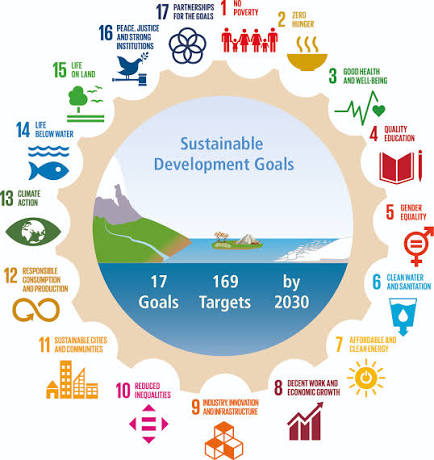
    The talks for the FTA started in 2007, but differences over market access for automobiles in 2013 led to a jettison. The EU had stringent legal mandates for Intellectual Property Rights (IPR), investment protection, massive import duty cuts and sustainable development goals (SDGs). India, on the other hand, needed a more liberal framework for skilled professionals, addressing non-tariff barriers and excluding government procurement.

    The 2019 COVID-19 Pandemic resulted in supply chain shocks. China’s assertiveness triggered convergence on resilience and technology, leading to the revival of trade talks and the establishment of the trade and technology council (2022).The resumption of negotiations aimed at three separate agreements- two on investment protection and geographical indication, to try for an early harvest on trade. Issues like data privacy and security-related legislation, Carbon Border Adjustment Mechanism (CBAM) and IPR were not of primary concern and opening up government procurement was to follow the deals as concluded with the UAE and UK in 2025.

    The FTA has now been finalised during the 16th India-EU summit, held in New Delhi on 27 January 2026. The summit has also led to the creation of a comprehensive strategic agenda towards 2030, which will replace the EU-India Strategic Partnership: A Roadmap to 2025. The past six months of accelerated talks leading up to the agreement are a by-product of incessant increases in tariff rates on the US side, China’s economic heft, and the economic impact on the EU from the Russian invasion of Ukraine. The deal aims to advance the security alignment between the EU and Indiaami with growing concerns about India’s ties with Russia.

    The EU-India Agenda 2025 strategy is to reinforce prosperity and security with India. The key pillars of this engagement are foreign policy and security cooperation, trade and investment, sustainable modernisation, transport and urban development, clean energy, focus on outer space, artificial intelligence, issues such as global economic governance, migration and mobility, education and culture and human rights.

    Sectors of engagement

    Currently, the major focus of bilateral ties is the trade and services sector, which is showing steady growth. The EU is India’s largest trading partner; total merchandise trade with the bloc was 136.54 billion USD in 2024-25. Indian exports have increased from EUR 19 billion in 2019 to EUR 37 billion in 2024, and imports from the EU have also reached EUR 29 billion in 2024. India-EU trade in services reached INR 7.2 Lakh Crore (USD 83.10 billion) in 2024.

    Security and defence ties have deepened since the College of Commissioners’ visit to India in February 2025. The statement from this visit agreed to explore a security and defence partnership between the EU Commissioner for Defence and Space and India’s Minister of State for Defence. Simultaneous visits from the EU delegation in September and December 2025 led to advances in strategic dialogue.

    The talks have been complemented by joint naval exercises and escort operations for humanitarian assistance near Somalia in 2018 and 2019, the Gulf of Aden in June 2021, the Gulf of Guinea in October 2023 and the Indian Ocean in June 2025. On the sidelines of the EU-India summit, a security and defence partnership has also been signed. This will expand cooperation in maritime security, counter terrorism and cyber defence.

    Benefits for EU countries

    Tariffs on 96.6% of EU goods will be eliminated or reduced, saving up to 4 billion euros per year in duties on European products. The FTA grants a competitive advantage for EU exporters, granting the biggest trade opening India has given to any trade partner. The deal ensures privileged access to the Indian services market in key sectors like financial services and maritime transport, but also ensures protection of the EU intellectual property, like trademarks. This makes the customs procedures in exports quicker and easier.

    Breaking down the available data on exports for 2024 and considering the current and finalised tariff rates for the upcoming year, the bilateral relations look promising. The exports of machinery and electrical equipment amounted to 16.3 billion euros in 2024, with prevailing tariff rates of 44%. Aircraft and spacecraft, optical, medical, and surgical equipment exports amount to up to 6.4 and 3.4 billion euros, with tariff rates of 11% and 27.5%, respectively. Exports of plastics and pearls, precious stones and metals amounted to 2.2 and 2.1 billion euros, with tariff rates of up to 16.6% and 22.5%, respectively, in 2024.

    Similarly, trade in other products is depicted as product (amount of exports, tariff rates) as of 2024: In chemicals (€3.2 billion, 22%), motor vehicles (€1.6 billion, 110%), Iron and steel (€1.5 billion, 22%) and pharmaceuticals (€1.1 billion, 11%) are also remarkable. The future tariffs on these products, as part of the deal, will be 0% except for motor vehicles, which will be 10% with a quota of 250,000 EU vehicles annually; this is still beneficial for European car makers.

    Benefits for Indian sectors

    With the FTA, over 99% of Indian exports gain preferential entry into the EU, apart from bolstering the ‘Make in India’ initiative, granting new opportunities for MSMEs and creating jobs for women, artisans, youth and professionals. Indian products worth 75 billion USD are set to be exported, and commodities from sectors like textiles, leather, marine products, gems, and jewellery amounting to 33 billion USD will gain immensely from the preferential access from the FTA.

    India is powered by a young and dynamic workforce that can be leveraged to unlock opportunities across sectors and to enhance competitiveness on the global stage. The FTA also helps in integrating Indian businesses more deeply into global value chains, ensuring the country maintains its role as a key player and supplier in global trade. The labour mobility agreement opens opportunities for young professionals and seasonal workers and brings India into the EU’s Horizon research programme. The EU’s commitment to opening 144 subsectors in IT, professional services and education, and to facilitating easier labour mobility has also brought in a positive outlook.

    In exchange for the tariff cuts, the EU has granted India immediate zero-duty access for labour-intensive exports such as textiles, apparel, leather, footwear, gems and jewellery. The deal is also expected to boost India’s agricultural and food sector through preferential market access for its agricultural exports and increased competitiveness for processed foods.

    Geopolitical side of the agreement

    In the past two decades, EU-India relations have matured in a stable geopolitical environment. The India-US relationship and Europe’s transatlantic bond were held as a matter of long-term potential rather than immediate necessity. But the scenario has changed, with rampant changes in the political leadership and incessant wars. Russia’s invasion of Ukraine has forced Europe to commit to long-term defence rearmament and deterrence planning. The return of President Donald Trump to the White House has reduced trust and introduced uncertainty into Washington’s role for both Brussels and New Delhi, albeit in different ways.

    The FTA was the result of a growing common concern: aggressive tariff rates by the US and its one-sided, unilateral approach with absolute disregard for the principle of reciprocity. Some EU countries recently faced fresh tariff threatsfrom Trump, who was put out by their refusal to accept his proposed takeover of Greenland. The deal was secured amid a flurry of countries striking deals and patching things up to navigate global uncertainty. During negotiations for the FTA, the potential repercussions of US interference were a concern, particularly the kinds of reactions to the agreement.

    India-US Trade Deal

    Fortunately for India, the US and India reached a trade deal on 1 February 2026, less than a week after the India-EU FTA was announced. The current tariff rates will be cut down from 50% to 18% on Indian goods in the US. The trade relationship between the US and India has been strained since the US imposed 50% tariffs, including a 25% penalty linked to India’s purchases of Russian oil. US stocks inched higher after Trump announced the deal with Delhi on Truth Social. On the other hand, this reduction will affect small businesses in the US, which will have to pay an average tariff of 2.5% on goods from India.

    India, EU, Russia and China Relations

    The EU-India relationship is often framed as a natural strategic alignment rooted in shared values and converging interests, but it is better understood as a parallel response to a shared pressure environment. India’s decision to preserve ties with Moscow, refrain from political condemnation, and expand economic engagement through a sharp rise in energy imports remains a persistent source of friction in the EU-India relationship. Meanwhile, recalibrated threat perceptions regarding economic and security policy are a serious point of friction with India. On the sidelines of the announcement of the trade deal, the EU has pressed for a change in India’s stance toward Moscow.

    In their dealings with China, neither side can afford to fully decouple from Beijing. Deeper EU-India economic integration can help mitigate vulnerabilities linked to trade imbalances, technological dependence, and critical digital infrastructure. But India’s concerns about China’s territorial proximity and its defence engagement with Pakistan are significant. The FTA functions less as a mechanism for strategic risk reduction than as a political catalyst for strengthening resilience and autonomy.

    Challenges

    The lack of a resolution in some of the issues that jeopardised the finalisation of the deal in 2013 persists and is not addressed in the current agreement. Agricultural trade negotiations, which  historically have been a sticking point, are kept outside the tariff reductions on both sides. Under the agreement, India will not be granted exemptions under the CBAM, which came into effect on 1 January 2026. CBAM can negatively impact Indian Iron and Steel exports. This was a contentious issue even in the India-UK FTA, with a fear of exporters from India having to pay ‘Green tax’. The duty-free access of EU goods into India can disrupt the trade balance and negatively affect domestic products.

    On issues like easing of regulatory complexity, non-tariff barriers, high compliance standards, climate-related commitments, and rules of origin, both parties have differing interests. All of these issues carry adjustment costs that may be felt most acutely by exporters and suppliers operating with limited capacity. It would be critical to see whether, after the current geopolitical uncertainty settles, the intention to smooth these issues still remains.

    The FTA’s ratification in the European Parliament is pending, but the commitment to early operationalisation means the deal is set to enter into force within a year. However, the EU-Mercosur agreement, concluded after 25 years of negotiations, is now facing opposition from the European Parliament. Although approval from each country is not necessary for the India-EU FTA to be operationalised, it would still need parliamentary approval.

    Apart from the trade deal, the agreement also considers a broad array of topics. Maintaining balance amid shifting positions and competing geopolitical interests is essential for the deal to meet its preconditions.

    Feature Image Credit: weforum.org

    Infograph Credit: Al Jazeera

  • India’s Shadow Wars: Challenges of Chronic Disputes and Insurgencies

    India’s Shadow Wars: Challenges of Chronic Disputes and Insurgencies

    Abstract

    This article contends that insurgencies in India tend to be protracted and are often hard to resolve definitively. They are characterised as “shadow wars” involving asymmetrical tactics, blurred distinctions between combatants and civilians, and an ongoing struggle for legitimacy and control. In this article, the adaptability of insurgent organisations, deep-rooted socio-political and economic disputes, and the limitations of traditional counterinsurgency methods in the Indian context are identified as key factors contributing to the persistence of these conflicts. To effectively address these issues and foster sustainable conflict resolution, it is essential to tackle their root causes and long-term impacts on India’s internal security, governance, and development.

    It is crucial to analyse the nature of India’s ongoing and persistent insurgencies, paying attention to the interplay between asymmetric warfare, socioeconomic grievances, and the effectiveness of counterinsurgency strategies.

    Key words:

    Shadow war, chronic, strategic, insurgency,

    India’s Shadow Wars: The Chronic Challenge of Internal Disputes

    Many highlight a fundamental and complex issue. India’s internal security landscape is marked by ongoing “shadow wars,” driven by several interconnected factors. In these asymmetric conflicts, the distinction between civilians and combatants blurs, creating a challenge that non-state actors often exploit by blending into local populations. At the same time, long-standing economic inequality, social injustice, and political marginalisation serve as breeding grounds for unrest, providing a continuous influx of recruits and supporters for insurgent groups. Developing effective counterinsurgency tactics demands a deep understanding of the complex interactions among these factors.

     The Connection between the Blurring of Civilian-Combatant Lines and Asymmetric Warfare

    Ongoing domestic insurgencies are characterised by the interaction of asymmetric warfare and the blurring of civilian-combatant boundaries. When confronted with the Indian state’s overwhelming conventional military strength, insurgent organisations deliberately adopt asymmetric tactics. These include targeted killings to instil terror and undermine the state’s authority, the deployment of improvised explosive devices (IEDs) to attack security personnel, and guerrilla ambushes in challenging terrain, such as the mountains of Kashmir and the Northeast or the forests of Chhattisgarh. These strategies aim to minimise direct engagement where they would be at a disadvantage while maximising their impact. An important aspect of this asymmetric approach is the extensive infiltration of rebels into civilian communities, which is often driven by various factors. It arises from genuine local support rooted in a sense of marginalisation and historical grievances. Strong tribal ties, for example, sometimes provide rebels with local sympathy and logistical assistance in the Northeast. In other cases, where villages are compelled to provide food, shelter, or intelligence, coercion and intimidation become essential.


    Furthermore, security forces find it challenging to conduct successful operations without risking civilian casualties, as operating within residential areas provides strategic cover. By operating in plain clothes and reintegrating into society following operations, insurgents often intentionally blur boundaries. This ambiguity hampers counterinsurgency efforts (Winter, 2011). The main challenge lies in accurately distinguishing between fighters and non-combatants. Indirect damage poses a significant threat to security operations, making intelligence gathering extremely difficult. Even unforeseen civilian casualties can deepen local discontent and alienation, potentially prompting more people to support the rebels. This leads to an endless cycle where harsh security measures aimed at ending the insurgency unintentionally exacerbate the problem by eroding trust and increasing local grievances. Traditional military tactics, emphasising direct conflict and large-scale operations, may fall short against foes that are deeply rooted and adaptable. A more sophisticated approach is needed—one that goes beyond military strength—requiring accurate intelligence, efforts to secure local cooperation, and tactics designed to minimise civilian harm. The persistent nature of India’s internal insurgencies mainly stems from the inability to effectively manage this complex interaction, which hampers long-term peace and stability by perpetuating cycles of violence and mistrust.

    Enduring economic, social, and political grievances as catalysts

    Long-standing sociopolitical and economic grievances significantly fuel internal insurgencies. A sense of isolation and alienation has been brought about by historical marginalisation, primarily affecting ethnic and tribal groups. Mining for resources and development projects have forced many tribal communities to flee their homelands, sometimes without appropriate compensation. This has led to hostility and the loss of traditional livelihoods. Insurgent groups exploit the narrative of the oppressed, driven by this historical injustice, to recruit new members. The inadequate political representation of certain communities further deepens these grievances. When groups believe their voices are not heard within the democratic system and that the state ignores their specific demands and concerns, feelings of helplessness may grow, and they may resort to more extreme methods for redress. For instance, a perceived lack of political agency and responsiveness by the central government often sparks calls for increased autonomy or even independence in various regions. Inequalities in development and economic status across India’s many regions are also significant. Areas affected by insurgency tend to have poor development outcomes and lag in employment, healthcare, education, and infrastructure. This uneven development fosters a sense of injustice, giving people a tangible reason to complain about ineffective or poor governance. Disadvantaged young people seeking purpose or financial stability may find insurgent groups appealing due to limited viable economic options. Security measures alone cannot resolve these complex, longstanding issues. Despite continuous counterinsurgency efforts, insurgencies may endure for decades because of the deeply rooted nature of these grievances. Addressing these underlying causes requires equitable development policies targeting underserved regions, inclusive governance that guarantees representation and participation for all communities, and a commitment to social justice that redresses historical wrongs and counters ongoing bias. Since the core causes of conflict persist, enduring peace cannot be achieved without these comprehensive, multifaceted strategies (Staniland, 2013).

    The Efficacy and Obstacles of Counterinsurgency Strategies:

    India has effectively contained violence in certain areas through its counterinsurgency methods, which often depend heavily on military and paramilitary forces. However, a solely kinetic approach has struggled to achieve lasting peace. Traditional military superiority is often insufficient due to the challenges of operating in complex terrains and among civilian populations, as well as the rebels’ asymmetric tactics. The “hearts and minds’ strategy, aimed at gaining local support through good governance and development initiatives, has yielded mixed results. These programmes are often impeded by corruption, flawed implementation, and a disconnect between policy and reality on the ground.

    Furthermore, any benefits of development efforts may be undermined by strict security measures that alienate the population. Given its importance, political discourse is often irregular and uneven. Meaningful discussions are impeded by internal divisions within insurgent organisations and by a lack of trust between the state and rebel factions. The Armed Forces (Special Powers) Act (AFSPA), a legal and administrative framework designed to grant security forces operational freedom, has also faced criticism for suspected human rights abuses, further alienating local people and possibly escalating hostility. India’s ongoing insurgencies highlight the drawbacks of relying solely on fragmented or military-focused counterinsurgency tactics. A comprehensive strategy that combines security measures with genuine political participation, equitable and long-term development, and a commitment to addressing the underlying socio-political and economic grievances that sustain these conflicts is essential to achieve lasting peace (Rajagopalan, 2007).

    Conclusion:

    Addressing India’s ongoing internal conflicts requires an integrated approach that goes beyond mere security interventions. While managing existing conflicts involves effective counterinsurgency strategies, long-term stability relies on proactively addressing the root causes of unrest. This includes ensuring fair political participation, promoting social justice, and fostering inclusive economic growth. To truly heal divisions and achieve lasting peace, ending these “shadow wars” ultimately demands a comprehensive strategy that combines security efforts with broad socioeconomic and political reforms.

    References:

    Rajagopalan, R. (2007). Force and Compromise: India’s Counterinsurgency Grand Strategy. South Asia: Journal of South Asian Studies, 75-91. doi:https://doi.org/10.1080/00856400701264035

    Staniland, P. (2013). Insurgencies In India. In Routledge Handbook of Indian Politics (p. 11). Routledge.

    Winter, Y. (2011, September). The asymmetric war discourse and its moral economies: a critique. International Theory, 3(3). doi:https://doi.org/10.1017/S1752971911000145


    Feature Image Credit: thekootneeti.in

  • India’s Refugee Policy: Implications of an Ambiguous Approach

    India’s Refugee Policy: Implications of an Ambiguous Approach

    Abstract

    This article analyses India’s approaches to refugee issues, their limitations, and the challenges faced by refugee communities due to the absence of a comprehensive, standardised refugee policy framework. With over 200,000 refugees from neighbouring countries and others, India has not ratified the 1951 Refugee Convention and the 1967 Protocol, leading to ad hoc, inconsistent and indirect policy applications through complementary legislation. Due to this, refugee communities face significant barriers in terms of accessing education, employment opportunities, healthcare and welfare facilities, government financial aid schemes and legal provisions and protections, including government identification, leading to deportation and exclusion from Indian society. The Citizenship Amendment Act of 2019, along with the COVID-19 pandemic, complicated these conditions and exposed the dire living conditions of refugees. To address these gaps, the paper offers actionable recommendations, including developing a generalised, human-rights-oriented refugee policy that adheres to international humanitarian standards, establishing an institution for refugee protection, conducting comprehensive data collection, and creating collaborative committees that involve diverse stakeholders to address marginalised refugee groups.

    Background of the Policy Issue

    According to the 1951 United Nations Convention Relating to the Status of Refugees, refugees are defined as person/s residing outside of their national territory/boundary and is unable/unwilling to return to the country of their nationality, owing to conflict, fear and possibility of persecution on account of race, religion, nationality, membership of a group and/or political opinion (UNHCR, n.d.). The convention initially applied to European refugees but was expanded through the 1967 Protocol to cover refugees globally and remove any temporal/geographical limitations. The legality of refugee protection is governed by the 1951 Refugee Convention, the 1967 Protocol, and regional- and host-country-level instruments. The 1951 Refugee Convention and 1967 Protocol are not legally binding, leaving states with the authority and legitimacy to grant refugee status, with UNHCR support through the facilitation of international standards and the maintenance of refugee camps and asylum seeker facilities (UNHCR, n.d.).

    As of 2024, India has a refugee and asylum seeker population of more than 240,000 refugees originating from multiple neighbouring countries, including Sri Lanka, Myanmar, Pakistan, Tibet and Afghanistan (Rajan and Sreekumar, 2024). The country has been regarded as a “haven” for refugees throughout history. Yet it lacks a comprehensive domestic refugee policy for the assistance, regulation, and protection of refugees. India has also chosen not to sign the 1951 Convention and the 1967 Protocol (Khosla, 2022).

    Current Policies and Their Effectiveness

    The Foreigners Act of 1946 and the Indian Passport Act also indirectly influence India’s refugee policy, deeming those entering India without a visa to be illegal immigrants. They do not include specific approaches to refugees.

    The Indian government currently manages refugees, asylum seekers and internally displaced persons through ad hoc, arbitrary and ambiguous legal pathways. By employing a unique dual system which divides the asylum caseload between UNHCR and the government based on regions, India leaves a significant number of people in vulnerable and precarious situations (Vijayaraghavan, 2020). While the UNHCR employs the Refugee Determination System (RSD) for asylum seekers arriving from non-neighbouring countries and Myanmar, those from neighbouring South Asian countries must approach the Ministry of Home Affairs directly, resulting in inconsistent protection (Shankar and Vijayaraghavan, n.d.). The Foreigners Act of 1946 and the Indian Passport Act also indirectly influence India’s refugee policy, deeming those entering India without a visa to be illegal immigrants. They do not include specific approaches to refugees (Borah and Das, 2024).

    Several refugees and asylum seekers lack legal status despite being recognised by UNHCR, with exceedingly limited access to government schemes, health care facilities, education, identity documentation, social integration, and economic development (Vijayaraghavan, 2020). Upon recognition by UNHCR, they are issued identity cards, but these cards are rarely recognised by State governments, leaving them with insufficient protection. They also face difficulties obtaining Aadhaar identification, further restricting access to health and welfare benefits and to public services such as bank accounts (Vijayaraghavan, 2020).

    India has endorsed the 2018 Global Compact on Refugees (GCR), which requires the implementation of RSD mechanisms for the registration and identification of refugees and the just determination of asylum applications (Shankar and Vijayaraghavan, n.d.). However, India has not implemented these processes, leaving the UNHCR to handle applications under its Memorandum of Understanding with the international organisation (Shankar and Vijayaraghavan, n.d.).

    The Citizenship Amendment Act (CAA), introduced in 2019 by the ruling government, sparked widespread agitation due to its religious criteria for Indian citizenship and state protection. By specifically catering to religious minority groups from Afghanistan, Bangladesh and Pakistan, the country’s first direct legislation for the protection of refugees further marginalises specific refugee groups. It restricts access to protection (Shankar and Vijayaraghavan, n.d.).

    The Immigration and Foreigners Act, passed in April 2025, replaces the Foreigners Act, 1946; the Passport (Entry into India) Act, 1920; the Immigration (Carriers’ Liability) Act, 2000; and the Registration of Foreigners Act, 1939. While the Act does not specifically address refugees, it aims to curb illegal immigration into India and prioritise national security. The Act introduces stricter penalties for entry and stay violations by foreigners in the country and authorises Immigration Officers to examine passports and other documents as and when required, to seize them if deemed necessary, and to arrest foreigners without a warrant (Immigration and Foreigners Act, 2025). The Act also allows the Central Government to prohibit, regulate and restrict the entry of foreigners into India if they are deemed a security threat, with no mechanism for appeal. Heavy penalties for violations of the law are introduced, with entry into India without a valid visa or passport resulting in a fine of approximately Rs 5 lakh and up to 5 years’ imprisonment (Immigration and Foreigners Act, 2025).

    In September 2025, however, the Ministry of Home Affairs stated that Sri Lankan Tamil refugees who entered India before 9th January 2015 would be exempt from penal provisions if they did not hold valid travel documents (The Wire, 2025). Therefore, Sri Lankan Tamil refugees who are registered with the government will not be treated as undocumented immigrants. In another order issued in September, the Union home ministry declared that members of minority communities from neighbouring countries, including Pakistan, Afghanistan and Bangladesh, who fled to India before 31st December 2024 to escape religious persecution, will be allowed to stay despite a lack of travel documents (The Wire, 2025).

    Limitations/Gaps

    A significant limitation to adequate protection of refugee communities in India is the severe lack of awareness of existing refugee policies and the UNHCR’s role in recognition and protection. Due to the lack of a generalised refugee policy applicable throughout the country, refugees often hesitate to approach Indian authorities for fear of persecution and deportation, even when undergoing financial discrimination and mistreatment (Shankar and Vijayaraghavan, n.d.). The continued ambiguity in India’s definition of refugees also further complicates the problem.

    The COVID-19 Pandemic and India’s sudden lockdown implementation affected refugees to an extreme degree. The lack of savings and inability to earn income left refugees stranded, a situation further exacerbated by the temporary suspension of UNHCR’s refugee status determination activities (Shankar and Raghavan, 2021). Most refugees live, and continue to live, in unsafe and vulnerable conditions, which enhances the risk of infection and spread of the pandemic among refugee communities. Vaccination drives that provided free testing and vaccination were few and far between, and limited access to public health care facilities and financial aid created significant challenges, leaving refugees dependent on the generosity of their employers and landlords (Shankar and Raghavan, 2021).

    While refining outdated laws and regulations that do not meet contemporary migration requirements is necessary and welcome, significant gaps remain in the Immigration and Foreigners Act 2025. The criteria for deeming a person a security threat have not been established, which could result in unlawful deportation, prohibition, or imprisonment. The Act also does not distinguish between foreigners and refugees, who are often forced to partake in irregular methods of travel and stay in search of safety and security. Many lack the means to obtain visas and passports and may lose their proof of identity during dangerous travel.

    The ambiguity of refugee policy leads to variations in the treatment of different refugee communities, usually determined by contextual and geopolitical factors. For example, while Sri Lankan Tamil refugees in the South can seek employment and government financial aid, the same cannot be said for Rohingya refugees, who are often put in refugee detention camps or deported (Sandhu and Sebastian, 2022). The lack of a policy is addressed through ad hoc measures, often implemented by the police administration, that prioritise surveillance and security over protection and welfare. The recent orders that provide certain exemptions to Sri Lankan Tamil refugees and refugees from neighbouring countries are definitely a step in the right direction, but ultimately bring further complications, especially considering the exclusion of certain communities based on religion. This also allows the ruling government to adapt its governance framework to align with ideological principles. By assigning a religious criterion for Indian citizenship and state protection, the Citizenship Amendment Act of 2019 ensures the marginalisation of select groups of refugees and asylum seekers, bringing into question the secular characteristics of India’s governance (Rajan and Sreekumar, 2024).

    The lack of privacy, haphazard sanitary conditions, poor menstrual management and double surveillance by state authorities and refugee communities sheds light on an intersectionality of issues women refugees face in protracted refugee situations and camp sites

    A significant aspect of refugee discourse is its gendered nature, but it is rarely addressed in policy debates and discussions. Women refugees who make up almost half of the refugee population in India are often solely held accountable for caregiving responsibilities and sustenance of the family, further limiting their access to education, employment and individual development (Malik, 2024). The lack of privacy, haphazard sanitary conditions, poor menstrual management and double surveillance by state authorities and refugee communities sheds light on an intersectionality of issues women refugees face in protracted refugee situations and camp sites (Malik, 2024). While women refugees are beginning to achieve representation in the refugee discourse, refugees from LGBTQIA+ communities and second-generation refugees remain mostly out of the picture. Second-generation refugees who are completely isolated from urban society are further restricted from access to quality education and employment opportunities. More often, they are left stateless and lack access to government recognition and welfare facilities because their parents have not been provided with refugee status (Shankar, 2024).

    Actionable Recommendations

    To address these gaps in refugee regulation, a comprehensive, human-rights-oriented refugee policy that adheres to international standards of refugee protection and implements an RSD process should be introduced to ensure consistent and justified treatment of all refugee groups. Considering past policies and measures implemented for Tibetan refugees, it is evident that policies focused on their integration and protection can have a significant positive impact on their community. Indirect legislation has been invoked to ensure basic constitutional protection for certain groups of refugees, but this is typically done by lower courts that lack the Supreme Court’s jurisdiction (Shankar and Vijayaraghavan, n.d.). Additionally, complementary legislation, while helpful to a certain extent, simply does not address most issues and concerns of refugee communities. The Immigration and Foreigners Act advocates a more hands-on approach to migration management. Still, it does not strike a balance between upholding national security and implementing humanitarian measures and lacks a specified approach to refugees and asylum seekers within the country.

    Collecting accurate data on the statistics of refugees and asylum seekers in India plays a significant role in the development of a domestic refugee policy. Currently, the 2011 Census remains the only eligible data for policy analysis. Adequate data, along with policy directives to protect the humanitarian rights of refugees, need to be prioritised to develop comprehensive policies (Vijayaraghavan, 2020). A leading institution can be responsible for collaboration and coordination across relevant departments to develop an overarching legal framework for refugees, with a specific focus on their social and economic integration, education, employment opportunities, and access to welfare and health care facilities. A specialised committee to address gendered concerns can be formed within the institution, thereby drawing attention to issues affecting women in refugee communities.

    Through overarching approaches across various legal and political channels, a generalised refugee policy aligned with international standards can be implemented, providing refugees with adequate legal protection, security, and opportunities for integration.

    A crucial precursor to the formation of this leading institution and refugee policy is the need for productive discourse among the ruling government, policymakers, experts in the field, and refugees themselves, to prioritise the safety of these vulnerable communities. Through overarching approaches across various legal and political channels, a generalised refugee policy aligned with international standards can be implemented, providing refugees with adequate legal protection, security, and opportunities for integration. Without a well-articulated policy specific to refugees, they will continue to be vulnerable, with limitations to their rights and protection. Therefore, it is imperative to strike a balance between upholding national security and ensuring the dignity and protection of refugees and displaced persons. Recognising international human rights norms in formulating refugee policies in India can help build a comprehensive migration policy framework that addresses the country’s unique refugee challenges.

    Works Cited

    Abbas, R. (2015). Internal migration and citizenship in India. Journal of Ethnic and Migration Studies, 42(1), 150–168. https://doi.org/10.1080/1369183x.2015.1100067

    Borah, D., & Das, B. (2024). India’s Refugee Policy: A Critical Analysis. Library Progress International, 44(3), 9877–9885.

    Immigration and Foreigners Act (2025).

    India Migration Now. (2019). Comments to the draft EMIGRATION BILL, 2019, dated 20 January 2019, released for public consultation by the Ministry of External Affairs (MEA) .https://www.indiamigrationnow.org/wp-content/uploads/2022/02/DraftBill2019_Final_Comments_IMN_19012019.pdf

    Khosla, M. (2022, September 22). The Geopolitics of India’s Refugee Policy • Stimson Center. Stimson Center. https://www.stimson.org/2022/the-geopolitics-of-indias-refugee-policy/

    Malik, A. (2024, August 9). Refugee rights, the gendered nature of displacement. The Hindu. https://www.thehindu.com/opinion/lead/refugee-rights-the-gendered-nature-of-displacement/article68506611.ece

    Rajan, S. I., & Sreekumar, A. (2024). An Overview of India’s Migration Governance Over thePast Decade. https://core.ac.uk/reader/611833180

    Sandhu, K., & Sebastian, M. (2022, August 19). Rohingya and CAA: What is India’s refugee policy? BBC News. https://www.bbc.com/news/world-asia-india-62573446

    Shankar, P. (2024, January 5). India’s stateless babies: How lawless asylum rules leave refugees in limbo. Al Jazeera. https://www.aljazeera.com/features/2024/1/5/stateless-babies-in-northeast-india-refugee-mothers-pray-for-nationhood

    Shankar, R., & Vijayaraghavan, H. (n.d.). Refugee recognition challenges in India – Forced Migration Review. Forced Migration Review. https://www.fmreview.org/recognising-refugees/shanker-vijayaraghavan/

    Shanker, R., & Raghavan, P. (2020). The Invisible Crisis: Refugees and COVID-19 in India. International Journal of Refugee Law, 32(4), 680–684. https://doi.org/10.1093/ijrl/eeab011

    The Wire. (2025, September 4). MHA Exempts Sri Lankan Tamil Refugees Who Came to India Before Jan 9, 2015, From Penal Provisions – The Wire. The Wire. https://thewire.in/rights/mha-exempts-sri-lankan-tamil-refugees-who-came-to-india-before-jan-9-2015-from-penal-provisions

    UNHCR. (n.d.). The 1951 Refugee Convention | UNHCR. UNHCR. https://www.unhcr.org/about-unhcr/overview/1951-refugee-convention

    Vijayaraghavan, H. (2020, September 8). Gaps in India’s Treatment of Refugees and Vulnerable Internal Migrants Are Exposed by the Pandemic. Migrationpolicy.org. https://www.migrationpolicy.org/article/gaps-india-refugees-vulnerable-internal-migrants-pandemic


    Feature Image Credit: iisper.org.in

  • Navigating Geopolitical Turbulence in a Fragmented International System

    Navigating Geopolitical Turbulence in a Fragmented International System

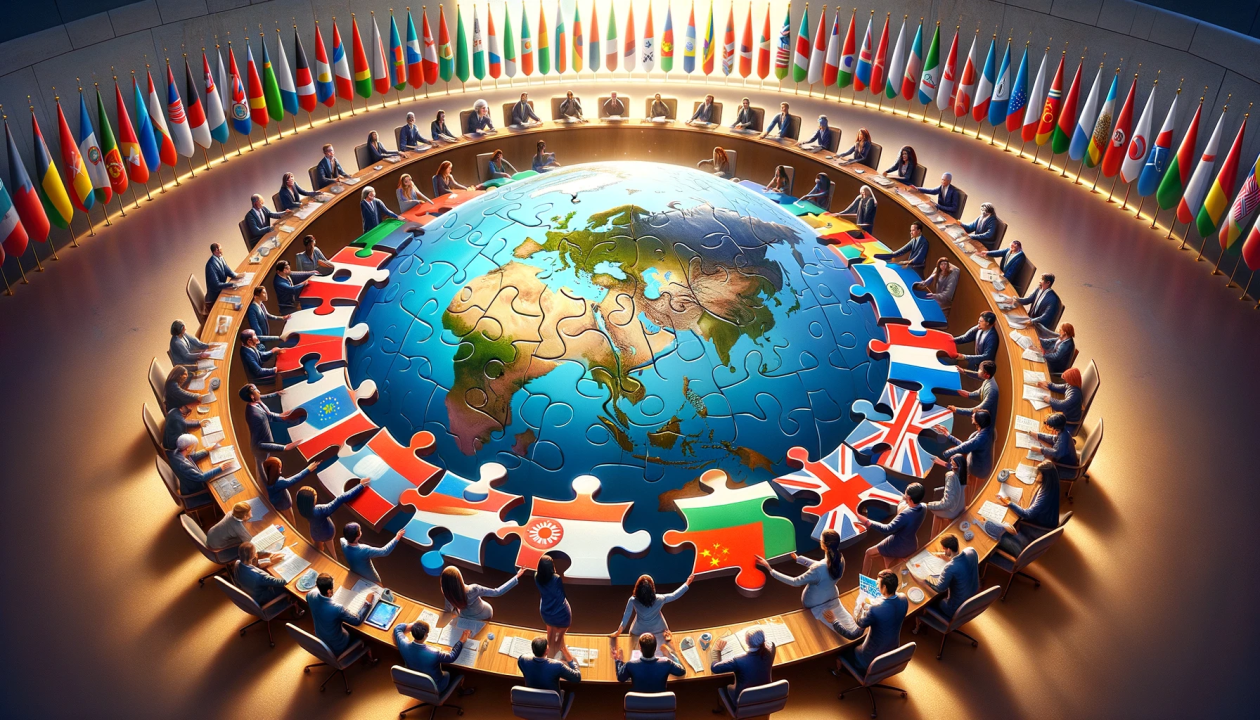
    The old world order is not returning; the international system is structurally transforming into a fragmented multipolar reality. In this age of disorder, flexible institutions and reformist leadership—exemplified by India—are essential to sustain global governance.

    The 56th World Economic Forum Annual Meeting took place in Davos-Klosters, Switzerland, from January 19 to 23, 2026, under the theme “A Spirit of Dialogue.” The forum brought together global political, business, and intellectual leaders at a moment when the international order is not merely under strain but undergoing a deeper structural transformation. Discussions at Davos underscored a shared recognition that dialogue in today’s fractured global environment is not a sentimental ideal but a strategic necessity—particularly amid intensifying geopolitical competition, accelerating technological disruption, economic fragmentation, and the growing limitations of established institutional frameworks. Significantly, the conversations reflected a broader shift in global thinking, moving away from nostalgia for a stable post–Cold War order toward an urgent search for more flexible and adaptive forms of global governance capable of managing uncertainty, fragmentation, and persistent conflict.

    The contemporary international system is undergoing an unprecedented degree of geopolitical turbulence. Institutions such as the United Nations and other global governance mechanisms—established in the aftermath of the Second World War—were designed to manage conflict and promote cooperation within the structural realities of that era. Today, however, the assumptions underpinning these institutions no longer align with prevailing geopolitical conditions, rendering many of them increasingly ineffective and disconnected from contemporary realities. This growing institutional disconnect is inseparable from deeper structural changes in the global system itself. As Zack Cooper, a Senior Fellow at the American Enterprise Institute, notes in his Stimson Center essay “An American Strategy for a Multipolar World”, “a multipolar world is now unavoidable, with legacy powers increasingly accompanied by a number of rising powers… this is a much more complex system than the multipolar dynamic that existed in Europe after the Congress of Vienna… today’s multipolar system is highly fragmented along regional and functional lines.” This observation captures the core challenge of the present international system: it is not merely shifting in power distribution, but fundamentally transforming in structure and complexity.

    From Bipolarity to Fragmentation

    The post–Second World War order was shaped initially by Cold War bipolarity and later by a brief unipolar moment following the end of the Cold War. In contrast, the current system is marked by fragmentation, instability, and a gradual transition toward multipolarity. Historically, periods of power transition—particularly multipolar configurations—have been associated with heightened uncertainty, miscalculation, and conflict. The present environment reflects this pattern, as competing power centres and overlapping crises push the international system toward persistent volatility.

    In this volatile context, states are increasingly adopting hedging strategies to manage risks and vulnerabilities. From Europe to Asia and beyond, countries are diversifying partnerships, avoiding rigid alignments, and seeking strategic flexibility. This behaviour is neither anomalous nor irrational; rather, it is a structural response to systemic uncertainty. Such adaptive behaviour, however, is itself a symptom of deeper structural instability in the international system.

    As many scholars, most notably Kenneth Waltz, have long argued, an emerging multipolar order tends to be among the most unstable configurations in international politics, marked by heightened risks of conflict, miscalculation, and escalation. With multiple powers competing simultaneously and no clear hegemon capable of stabilising the system, the international order becomes increasingly fragile and prone to error. The contemporary system appears to be operating on this edge, shaped by overlapping crises and rival power centres.

    Compounding this instability is the rapid emergence of critical and disruptive technologies, advanced weapons platforms, cyber capabilities, and artificial intelligence. These developments further intensify volatility by lowering barriers to conflict, accelerating escalation dynamics, and complicating traditional deterrence frameworks. International experts at a 2025 conference warned that such technologies are “eroding present deterrence frameworks” and could destabilise the global security order without a global regulatory consensus. Similarly, the World Economic Forum’s Global Cybersecurity Outlook 2025 notes that “cybersecurity is entering an era of unprecedented complexity,” as the rapid adoption of AI without adequate safeguards creates far-reaching security risks requiring multilateral cooperation.

    While some observers attribute current turbulence primarily to political leaders such as Donald Trump, this interpretation is overly simplistic. Trump’s policies may have accelerated existing trends, but they are not the root cause. The deeper drivers lie in structural shifts within the international system and in long-term transformations within American domestic politics that have altered the foundations of US global engagement.

    Davos and the Recognition of a New World Order

    These concerns have been openly acknowledged by global leaders at the World Economic Forum. Canadian Prime Minister Mark Carney, speaking at Davos, argued that “the old world order is not coming back,” cautioning against nostalgia-driven policymaking and warning that the global system is undergoing a rupture rather than a smooth transition. He further observed that economic interdependence has increasingly been weaponised and warned middle powers that “if you are not at the table, you are on the menu.” Such remarks reflect a growing recognition that disorder, competition, and power asymmetries are now embedded features of the international system.

    Similarly, World Economic Forum President Børge Brende highlighted the depth of uncertainty confronting the global order, noting that “the political, geopolitical, and macroeconomic landscape is shifting under our feet.” Emphasising the limits of unilateralism and rigid frameworks, Brende stressed that “dialogue is a necessity, not a luxury,” reinforcing the idea that cooperation must persist even in an era of fragmentation. These statements underline a critical point: the challenge today is not the absence of institutions, but their inability to adapt to changing geopolitical realities.

    French President Emmanuel Macron further reinforced this diagnosis at Davos by warning of a “shift towards a world without rules, where international law is trampled underfoot and where the law of the strongest prevails.” His remarks underscore the erosion of the post–Second World War multilateral framework under the pressure of returning imperial ambitions, coercive diplomacy, and unilateral action. Macron’s warning reflects a broader concern that global politics is increasingly shaped by power rather than norms. At the same time, he rejected intimidation as an organising principle of international relations, stating that “we prefer respect to bullies,” and called for effective multilateralism—one that is reformed and updated rather than dismantled.

    Reforming Global Governance for an Age of Disorder

    Against this backdrop, the central question is how states can navigate such geopolitical turbulence. A rigid, blueprint-based institutional approach—reminiscent of Cold War–era frameworks—is no longer viable. What is required instead are flexible, adaptive institutions capable of absorbing shocks, accommodating diverse interests, and operating under conditions of persistent uncertainty. Since traditional multilateralism is increasingly strained, it is essential to recognise that disorder itself is likely to remain a defining feature of the contemporary international system.

    Any effort to design or reform institutions must therefore begin with this recognition. Fragmentation and regionalisation—particularly through minilateral and issue-based coalitions—are inevitable outcomes of a multipolar environment. However, this does not eliminate the need for global cooperation. Rather, it demands cooperation frameworks that are flexible, inclusive, and responsive to evolving geopolitical realities. Institutions must be capable of adapting to shifting power balances rather than attempting to impose outdated structures on a transformed system. In these tough times, the world requires greater cooperation and coordinated action, because the challenges we face—such as climate change, cyber threats, economic instability, and regional conflicts—are global in nature and cannot be solved through isolated national approaches.

    Another limitation in current thinking is the tendency to interpret global politics solely through the lens of US–China rivalry. While great power competition undeniably shapes the international environment, such a narrow focus underestimates the agency of middle and regional powers. Many states actively shape outcomes, norms, and institutions rather than merely reacting to great power pressures. Effective institutional design must therefore reflect this distributed agency and avoid reducing global politics to a binary rivalry.

    Equally important is the need to move beyond linear and deterministic thinking. The contemporary world is characterised by non-linear dynamics, uncertainty, and complex interactions. Predicting the future exclusively through the lens of past patterns—particularly those rooted in liberal or Cold War assumptions—is increasingly misleading. Institutional responses must be grounded in realism, flexibility, and adaptability rather than static or idealised models of order.

    Recent initiatives such as Donald Trump’s proposal for a “Board of Peace,” driven largely by personal leadership and transactional logic, illustrate the limitations of personality-centric approaches to global governance. Given their temporary nature and the likelihood of reversal under future administrations, such initiatives lack durability. Moreover, such proposals are often unrepresentative and do not reflect the realities of the international system; they are based on authoritarian-style solutions rather than broad-based legitimacy, consensus, and institutional resilience. In contrast, reforming existing institutions—particularly the United Nations—offers a more sustainable path forward. Reforms that reflect contemporary geopolitical realities would enhance the UN’s relevance without undermining its foundational principles.

    India’s Reformist Approach to Global Governance

    India’s approach to global governance is particularly instructive in this context. When India criticises the United Nations or other global institutions, its objective is not to dismantle them but to reform them. This distinguishes India from countries such as China and Russia, which often seek to replace existing structures with alternative, and frequently anti-Western, institutional arrangements. India positions itself not as an anti-Western power, but as a non-Western one—committed to liberal democracy, pluralism, and engagement with existing global frameworks. As India’s Ministry of External Affairs has emphasised, “the architecture of global governance in 2025 for the future cannot be written in ink from 1945,” highlighting the need to update institutions rather than replace them.

    This distinction is crucial. India has significantly benefited from the existing international order, and its economic transformation since the post-1991 reforms has been largely enabled by the stability, access to global markets, and investment flows that the post-World War II system provided. Consequently, India has little incentive to support a China-centric alternative. Reforming the current system, rather than replacing it, aligns with India’s long-term strategic interests. Moreover, India’s leadership and participation in forums such as the SCO and BRICS have played a stabilising role. Without India’s presence, these platforms could easily evolve into explicitly anti-Western blocs. India’s foreign policy is best understood as reformist rather than revisionist, acting as a bridge between the West and the Global South; as Chatham House notes, India seeks to “change the international order from within rather than overthrow it.” Yet many Western policymakers fail to understand India’s global vision and often categorise it alongside other revisionist powers, viewing India narrowly through a bilateral prism or primarily as a counterweight to China. This misreading overlooks India’s broader role as an independent norm-shaping power.

    In light of these dynamics, the most effective strategy for navigating contemporary geopolitical turbulence lies in reforming and revitalising existing institutions rather than constructing entirely new ones based on rigid, blueprint-style thinking. A blueprint approach assumes that we can predict the future and design institutions accordingly—an assumption that is inherently flawed because the future is always uncertain and unknowable. Institutions must therefore be designed to capture the reality of moving from the known to the unknown and to adapt continuously as new challenges emerge. They must be made flexible, resilient, and responsive to disorder rather than designed to eliminate it. Accepting instability as a structural condition—and designing mechanisms of cooperation accordingly—offers the best chance of sustaining global governance in an increasingly fragmented world.


    Feature Image Credit: www.byarcadia.org

  • Did Colonisation ever End?

    Did Colonisation ever End?

    Let us all unite and toil together

    To give the best we have to Africa

    The cradle of mankind and fount of culture

    Our pride and hope at break of dawn

    From the African Union anthem

    Consider this scenario, courtesy of Supreme Africa Breaking News: Since 2022, representatives of the African Union have been meeting at the organisation’s headquarters in Addis Ababa to draw up a living constitution for the continent and establish a single African government. The constitution itself will be promulgated in 2026, whereupon national lawmaking bodies will begin aligning domestic laws within the continental framework and African governments will sign that one African sovereign agreement. Between then and 2028, citizens will receive dual IDs, a unified army will be created, and countries will begin using a common digital currency—Afrigold—alongside their local ones. The third stage, harmonization, will culminate in 2035, when the newly formed African parliament will gain real powers.

    After that, Africans will be free to move around the continent to live and work where they please. They will be able to appeal to AU courts if their government violates their rights, and they will be able to vote in the elections of whichever country they happen to find themselves. Democracy will be the default system of government for all member states, even though monarchies will participate in an advisory capacity in a council of sovereigns, alongside chiefs and spiritual leaders. In the words of Mama Pan Africa, an invented muse of sorts, “This constitution respects the soil it walks on. We’re not killing traditions; we’re aligning them with the dream.”

    Alas, a dream it is indeed. Supreme Africa Breaking News is a YouTube channel of true believers. And the reality of the AU could hardly be harsher.

    The first and most obvious problem is the historical legacy of colonialism, which, by the end of the nineteenth century had divided the continent into several dozen territories under the control and administration of mostly the UK and France, but also Belgium, Portugal, Spain, and, for a time, Germany. Following World War II—which had been fought in the name of saving the world from tyranny—these states all gained what they were pleased to call independence, with their own flags, anthems, and UN seats. But what did that amount to in practice?

    In July 1960, Michel Debré, then the prime minister of France, stated to the leader of Gabon: “Independence is granted on the condition that the State, once independent, undertakes to respect the cooperation agreements signed previously. There are two systems which come into force at the same time: independence and cooperation agreements. One does not go without the other.”

    In short, as the historian Tony Chafer has put it, “decolonisation did not mark an end, but rather a restructuring of the imperial relationship.”

    The French didn’t fudge the answer. In July 1960, Michel Debré, then the prime minister of France, stated to the leader of Gabon: “Independence is granted on the condition that the State, once independent, undertakes to respect the cooperation agreements signed previously. There are two systems which come into force at the same time: independence and cooperation agreements. One does not go without the other.” In short, as the historian Tony Chafer has put it, “decolonisation did not mark an end, but rather a restructuring of the imperial relationship.” The cooperation agreements had a number of components. One was the issue of what was known as the colonial debt—which, however counterintuitive this may seem today, obliged the newly independent countries to pay for the infrastructure supposedly built by France during colonisation. There was also the obligation for them to continue using French as the national language. And there were the security pacts under which they would have to support the mother country in any future wars.

    Even more telling was the right of first refusal on the purchase of all natural resources (including those yet to be discovered) in ex-colonial territories that France reserved for itself, irrespective of whether the new countries’ governments could secure better deals elsewhere. And there was the imposition of the CFA franc on fourteen West and Central African states (including Guinea-Bissau, a former Portuguese colony) at a fixed exchange rate with the French franc (and subsequently, the euro). This setup enabled France to pay for imports in its own currency and thereby save on any currency exchanges in a world otherwise dominated by the US dollar. The French economy benefitted greatly from the ensuing trade surplus, which fed reserves to pay for the country’s debts. Some African leaders profited as well: they could more easily loot their respective treasuries, with the active encouragement of their French masters, who also guaranteed their grip on power by keeping French troops stationed near the capital cities. Those who attempted to skirt any of the requirements were quickly disposed of.

    Such was the case with Togo. In 1963, barely two years into his tenure as the country’s first president, Sylvanus Olympio was assassinated by a squad of soldiers led by Gnassingbé Eyadéma, an army sergeant and former French Foreign Legionnaire. Olympio’s crime, in the eyes of the French authorities, was to have insisted that Togo should have its own currency. Eyadéma soon handed power over to a new president, only to overthrow him four years later, in 1967. Subsequently, he morphed into a civilian president, and following growing unrest after a decade in power in that capacity, he agreed to a democratic constitution—and then easily won multiparty elections in 1993 and again in 1998, both times amid widespread allegations of electoral fraud. Term limits should have forced him to finally step down in 2002, but he had the constitution amended to abolish them, and he won elections again in 2003, and again was accused of fraud. He died in office two years later. In all of this, he was fully supported by successive French governments—much like his son Faure Gnassingbé has been since.

    Gnassingbé, who had served as a minister under his father, in 2005 promptly took over the mantle in what was effectively a military coup. Like his father, he served two terms, the new constitution’s stipulated maximum, and then, also like his father, he rewrote the constitution—this time converting the presidential system to a parliamentary one. As the new prime minister, Gnassingbé was named president of the council of ministers, with most of the previous powers of the president devolving to him. He could stay in this post until at least 2030.

    As it happens, a similar path is currently being trod by Alassane Ouattara, since 2010 the president of Côte d’Ivoire, the jewel in the Françafrique crown. Ouattara is now proposing to stand for re-election for a fourth term, arguing that term limits were reset to zero with a new constitution in 2016. As I write, protestors are being shot on the streets in both countries. President Emmanuel Macron of France recently denied that he had asked Gnassingbé to resign, despite reports to the contrary; where Ouattara is concerned, Macron had said, in 2020, “France does not have to give lessons.” France is anxious to maintain a neocolonial relationship, but Macron understands very well that it cannot be sustained, and so he hedges.

    By contrast, the best that can be said for the British during decolonisation is that they were more circumspect than the French. The new native rulers weren’t required to sign a piece of paper: They had already been co-opted into service, most glaringly in the case of Nigeria. According to the historian Olakunle Lawal, in the runup to independence in 1960, a draft paper from the British Foreign Office sought to investigate how “we can sustain our position as a world power, particularly in the economic and strategic fields, against the dangers inherent in the present upsurge of nationalism,” in order that the UK might “maintain specific British interests on which our existence as a trading country depends.” It concluded that the challenge “was to forestall nationalist demands which threaten our vital interests” by creating “a class with a vested interest in co-operation.” But then the British authorities knew with whom they were dealing.

    Following independence, this class proceeded to loot the Nigerian treasury to the tune of $20 trillion between 1960 and 2005, storing many of the proceeds in safe havens abroad. Nigeria still ranks among the most corrupt countries in the world, according to Transparency International. Such behaviour is a sign of these people’s contempt for the masses they lord it over—and sometimes, indeed, are allowed to lord it over by those masses themselves.

    Consider the case of Ike Ekweremadu, a former long-time senator and former deputy president of the Senate, who is serving a prison sentence in the U.K. after being convicted of an organ-trafficking plot, the first such case to be tried under the 2015 Modern Slavery Act. It turns out that he had arranged for a 21-year-old street hawker in Lagos to travel to the UK so that one of the vendor’s kidneys could be harvested to save the life of Ekweremadu’s ailing daughter. The operation would have cost Ekweremadu £80,000—small change for someone with two homes in London, three in Florida, and seven in Dubai. The intended victim, who was to receive just £7,000 for his organ, only realised what was about to be done to him when doctors informed him of the medical risks he faced and the subsequent lifelong care he would require. Ekweremadu clearly didn’t think much of the fellow’s life; after all, the man had only been selling phone accessories out of a wheelbarrow in Lagos.

    That young man has now improved his lot, having inadvertently been gifted a one-way ticket to the so-called developed world, which mercifully granted him asylum for his travails. Tellingly, however, Ekweremadu’s wife, who was convicted alongside her husband but has since been released, was enthusiastically received when she returned home to Nigeria early this year. In the words of a local community leader: “Our prayers are with the Ekweremadu family, and we hope Senator Ike will also be reunited with us soon.” No mention of their target.

    So here we are, all these decades after so-called independence, and what is the role of the African Union in all of this? Originally known as the Organization of African Unity, the body was launched in 1963 with five objectives: to promote unity and solidarity among African states; to defend their sovereignty, territorial integrity, and independence; to coordinate and intensify their efforts to achieve a better life for the peoples of Africa; to eradicate all forms of colonialism; and to promote international cooperation, with due regard to the Charter of the United Nations and the Universal Declaration of Human Rights. Of these goals, the first was by far the most important. Kwame Nkrumah, Ghana’s first head of state, spelt this out in an impassioned speech to the OAU in 1963: “Unite we must. Without necessarily sacrificing our sovereignties, big or small, we can here and now forge a political union based on defence, foreign affairs and diplomacy, and a common citizenship, an African currency, an African monetary zone, and an African central bank. We must unite in order to achieve the full liberation of our continent.”

    Yet little or no progress was made on this front. In time, the OAU became known as an old men’s club, because of elderly African leaders who were more concerned with oppressing their subjects in the artificial fiefs they had inherited than with uplifting their lot. And many of those fiefs, though many are also actual countries, are still too insignificant in the larger scheme of things: six contain fewer than one million people, four fewer than two million, and another five fewer than three million. Which is one reason the heads of state or government of the OAU issued the Sirte Declaration in 1999 calling for the establishment of the AU: they wanted to accelerate the integration of Africa so that, according to one commentator on the site of the Nasser Youth Movement, the continent could “play its rightful role in the global economy while addressing multifaceted social, economic and political problems compounded as they were by certain negative aspects of globalization.” All well and good.

    And this wish was reiterated by Dr. Arikana Chihombori-Quao, the AU’s ambassador to the U.S. in 2016–19: “Until Africa comes together as a continent to speak with one voice as a people, nothing will change for the good of her people.” Failing that, she pointed out—obviously enough—that a plethora of small, unviable countries with “the same sovereignty as China, as India,” were deliberately designed “to see to it that they will never make it on their own—and in the event those countries do make it, they are easy to destabilise.”

    “The dismissal of Arikana Chihombori-Quao, AU ambassador to the United States, raises serious questions about the independence of the AU. For someone who spoke her mind about the detrimental effects of colonisation and the huge cost of French control in several parts of Africa, this is an act that can best be described as coming from French-controlled colonised minds.”   – Jerry John Rawlings, former President of Ghana

    Shortly after, her term was abruptly cut short without explanation. The chair of the AU at the time, Moussa Faki Mahamat, a former foreign minister of Chad, wrote her a letter that read, in part: “I have the honor to inform you that, in line with the terms and conditions of the service governing your appointment as Permanent Representative of the African Union Mission to the United States in Washington, DC, I have decided to terminate your contract in that capacity with effect from Nov. 1, 2019.” To many, this was proof of the AU’s spinelessness in the face of the West. Jerry John Rawlings, the former (and now late) president of Ghana, tweeted at the time: “The dismissal of Arikana Chihombori-Quao, AU ambassador to the United States, raises serious questions about the independence of the AU. For someone who spoke her mind about the detrimental effects of colonisation and the huge cost of French control in several parts of Africa, this is an act that can best be described as coming from French-controlled colonised minds.”

    The colonised mind was also clearly on display in the case of Ouattara’s election for an illegal third term in late 2020, when he was 78. According to a report by Human Rights Watch, the security forces perpetrated the widespread violence in opposition strongholds, in league with local thugs. Here is the account of one eyewitness in the Yopougon Kouté area of Abidjan:

    I saw a group coming into the neighbourhood in two Gbakas (minivans), blue taxis, and scooters. … They were armed with machetes, knives, and guns. I went out with what I could to defend my village. The neighbourhood youth started throwing stones, and there were so many of us that they fled. One of the government supporters couldn’t escape in time, and he was beaten to death by our young people.

    Even as the European Union—the West—expressed “deep concerns about the tensions, provocations and incitement to hatred that have prevailed and continue to persist in the country around this election,” the AU claimed that the vote had “proceeded in a generally satisfactory manner.” But that was no surprise. As one human rights activist from Mozambique said: “the African Union is an organisation that primarily represents the interests of the powerful. It is toothless and ineffective, and it repeatedly proves itself incapable of ensuring prosperity, security, and peace for all Africans.”

    In fact, the AU is not different enough from the OAU: it, too, is an old men’s club. Africa counts both some of the world’s oldest male presidents (their female counterparts are few and far between). It also counts some of the youngest demographics of any continent, and these older men jealously guard their privileges. Watch the 92-year-old Paul Biya currently planning to run in the forthcoming elections in Cameroon; he has been in power in one form or another since 1982. He isn’t even the longest-standing leader on the continent. That honour goes to the 83-year-old Teodoro Obiang Nguema Mbasogo of Equatorial Guinea, in power since 1979. Two decades ago, the state-operated radio station declared him “the country’s god” with “all power over men and things,” adding that he was “in permanent contact with the almighty” and “can decide to kill anyone without calling him to account and without going to hell.”

    It is hardly surprising that such men would be wary of an AU that, as they see matters, is seeking to usurp their power; they are tardy in funding it. Many member states don’t bother to pay their annual contributions, which is why external sources funded two-thirds of its 2023 budget (and China built the new headquarters in Addis Ababa at its own expense). An attempt was made to rectify this anomaly in a decision adopted by the various governments at a Retreat on Financing of the Union during the 27th African Union Summit in Kigali, Rwanda, in July 2016. It directed all AU members to apply a 0.2% levy on eligible imports to finance the organisation. We are all allowed our dreams; nothing ever came of this one.

    The pity of it all is that a united Africa, whose population is expected to hit 2.5 billion by 2050—and account for one in four people in the world—stands to become the most populous continent by the end of the century: it should automatically command at least one permanent seat on the UN Security Council, and with full veto power. Addressing the annual session of the UN General Assembly in 2023, Joe Biden, then the US president, seemed to make an indirect case for Africa’s inclusion at the top: “We need to be able to break the gridlock that too often stymies progress and blocks consensus on the Council. We need more voices and more perspectives at the table.” His call was repeated in 2024 by Linda Thomas-Greenfield, his Black ambassador to the UN, who waxed lyrical about being Uncle Sam’s emissary in her mother continent. Having “travelled extensively across Africa,” she said, she knew “firsthand the diversity and the talent, the depth and breadth of experience.” And so the US government would support granting the continent two permanent seats on the Security Council—but without veto power, otherwise the council would become “dysfunctional.” Chihombori-Quao rightly said that the proposal “is an insult, not only to the African leaders, but it is an insult to 1.4 billion people.” What else is new?

    This article was published earlier on www.theideasletter.org and is republished under Creative Commons Attribution-Non-commercial-No Derivatives license.

    Feature Image Credit: The Berlin Conference of 1884-5. Source: Illustrierte Zeitung via Wikimedia Commons and  thecollector.com


  • Actions Speak Louder than Words

    Actions Speak Louder than Words

    The recent kidnapping of President Maduro and his wife, with Venezuela being held to ransom at gunpoint, has made clear that it is not high-minded principles, but an imperialistic mindset and the grubbiness of colonial greed, the hankering for resources belonging to others, that has always been their sole motive.


    For years, American academics and mainstream media successfully portrayed American foreign policy as benign and dedicated to promoting freedom, democracy and human rights worldwide. Unfortunately, those involved in dealing with them intimately in the rest of the world, especially the Global South, knew better.

    Their benevolence was nothing more than a mirage. In practice, their malevolent and vindictive security and intelligence establishment used bribery and strong-arm tactics like coups, assassinations and kidnapping as their primary modus operandi to get their way. If none of those worked, then there was always the option of military intervention.

    If anything, we should be grateful to President Trump for two things. Firstly, for having swept aside the sludge of hypocrisy that the United States practised to justify its assertive foreign policy actions. For example, Operation Ajax, the overthrow of Iranian Prime Minister Mossadegh’s democratically elected government in August 1953, was justified as a containment of communism, though he was not a communist. Similarly, Operation Iraqi Freedom, which resulted in the overthrow and execution of Saddam Hussein, was justified on the grounds that Iraq had WMDs and was supportive of Al-Qaeda. That simply turned out to be lies, known only after previous damage had been done.

    The recent kidnapping of President Maduro and his wife, with Venezuela being held to ransom at gunpoint, has made clear that it is not high-minded principles, but an imperialistic mindset and the grubbiness of colonial greed, the hankering for resources belonging to others, that has always been their sole motive. American exceptionalism, it turns out, was no different from how the strong have always behaved toward the weak, throughout history. As the Greek historian, Thucydides, put it, “the strong do what they can, and the weak suffer what they must”.

    Even Trump’s desire to occupy Greenland can be seen in this context. We seem to have forgotten that over 86% of Greenland’s 56000 population are Innuits, who were colonised by Denmark only in the 1700s. There has always been a strong movement for independence there, and polls as recently as 2023 have suggested over 85% of the population supports independence from Denmark. At the end of the day, this confrontation between the United States and Denmark is just about two imperialistic powers contesting territory that neither owns, to extract resources. Some may recall that we, too, have been victims of similar contestations between the English and other imperial powers as well.

    The second has been the treatment that he has meted out to his fellow Americans. They are at the receiving end of how America normally treats the world- with arrogance, a sense of entitlement, and the belief that it is above the law and can do as it pleases. Whether we openly admit it or not, there are many who believe that America has finally got its just desserts- “they who sow the wind, will reap the whirlwind” as Bible-thumping Americans would say. Whether they ever be able to get over Trumpism, even after he is gone, is debatable.

    Notwithstanding this singular truth, we continue to be confused by Trump’s actions. While many see them as incoherent and a symptom of American decline, others, including some here, believe his actions in America will degrade Chinese and Russian capabilities, dampening their geopolitical ambitions. Nothing could be further from the truth.

    America, for all its wealth and overwhelming military might, suffers from a human problem. An overwhelming unwillingness on the part of the average American to be treated as sacrificial lambs in support of imperialistic ambitions. After Iraq and Afghanistan, they do not see such actions as being in the national interest, but as just another initiative to fill the coffers of corporations and those who run them. If Trump, or any other American President for that matter, were to again actually put boots on the ground to implement ongoing plans, be it in Venezuela, Iran or Cuba, it would result in massive protests against the Government, especially once the body bags start rolling in, as they are bound to.

    Bullies only get their way as long as they are not challenged. The very reason for America’s hesitation, even unwillingness, to act as the World’s policeman, especially as hybrid warfare gains currency and conventional forces lose their ability to achieve total domination or success. Trump and his cronies have probably concluded that the security and prosperity of the continental United States lie in ensuring its effectiveness as a regional satrap rather than spreading itself too thin. Threats against Iran are just mere cosplay.

    This applies equally to the Chinese and the Russians, especially the latter, having been seriously debilitated by the million-plus losses that they have suffered in their seemingly unending conflict with Ukraine. The last thing President Xi would want is to find himself in Putin’s shoes, if a military assault on Taiwan were to go awry, as it very well might, given the complexities of amphibious assaults.

    For him to be able to carve out his place in history, action against India is a far more promising prospect. It would be at a much lesser cost and manageable risk, as the political establishment here, whatever be their ideologies, has little, if any, inclination or spine to confront the Chinese. This is borne out by the fact that the BJP and RSS hosted a Chinese Communist Party delegation at the very time that the Chinese Government has renewed its thrust on infrastructure development in the illegally occupied Shaksgam Valley.

    Actions always speak louder than words, and our diplomatic protests mean little when we act in the manner that we have. Incidentally, Chinese actions seriously undermine our positions in the Siachen Glacier and further complicate our already complex security environment. It is indeed time our political establishment and their oligarch friends faced reality, developed resilience and learnt to withstand some pain. Everything cannot be about profit or the chair; sometimes, national interest must take precedence.

    Feature Image Credit: bhaskarenglish.in ‘I’m Venezuela’s President, a prisoner of war’:Maduro denies all charges in US court as heavy gunfire erupts in Caracas
  • “This is not my Home”: The Unregulated Breeding and Trade of Pets and Exotic Birds

    “This is not my Home”: The Unregulated Breeding and Trade of Pets and Exotic Birds

    A recent RTI application filed by The Hindu, enquiring into the details of registration applications for breeding African Grey Parrots, has brought alarming revelations to the limelight. Out of 19 States and Union territories, only Kerala has a record of 17 applications for a breeder’s license for African Grey Parrots. All other states had “no access to data”. The African Grey Parrot is listed in the CITES (Convention on International Trade in Endangered Species of Wild Fauna and Flora) Appendix 1 (that is, prohibited for commercial trade). Its IUCN (International Union for Conservation of Nature) status is “Endangered”. Registration and licensing are required to breed or own an African Grey Parrot. We can easily find African Grey Parrots in pet shops and aviaries, yet much of the registration data remains missing.

    India, especially Chennai Airport, has recorded the highest seizure of trade in wild and exotic animals. A TRAFFIC study reveals that nearly 70,000 wild animals and their parts were traded from 2011 to 2020. According to the Wildlife Crime Control Bureau, Tigers, Pangolins, Parakeets, Munia, owls, Quails, mynas, Jungle fowls, and partridges are common in local trade. Among species seized at airports, birds were the most common. Considering the negligible information on registrations and licensing for exotic bird trade, this cannot be viewed as a coincidence.

    Why are exotic species trade and breeding regulated?

    There are four main reasons for these regulations. Firstly, these animals have difficulty adapting to new habitats. Secondly, their population in their home regions are either endangered or vulnerable, and the export of these species only worsens the situation. Thirdly, these species are “invasive” in India. If they are knowingly or unknowingly released into the wild or environment, they may be a threat to the Indigenous species population. Fourthly and most importantly, they are bio-hazardous, since they are carriers of Zoonotic diseases– a fact which cannot be forgotten after the COVID 19 pandemic.

    The Policy for Regulation of Import, Breeding and Sale of Exotic Species:

    The Wildlife Protection Act, 1972, had regulations on the breeding and sale of species, listed in Schedules I to IV of the Act. These Schedules were not comprehensive and did not include most of the species listed in Appendix 1 of CITES. In June 2020, the Ministry of Environment, Forest and Climate Change (Wildlife Division) published an “Advisory for Dealing with Import of Exotic Live Species in India and Declaration of Stock”. This advisory included a provision for a Voluntary Disclosure Scheme, a move designed to encourage breeders and pet owners to come forward and register the exotic species they were rearing. As an incentive, those who declared their exotic species within six months of receipt of the advisory were not required to produce any documentation. Despite these efforts, only  32,645 individuals from 25 states and five Union Territories declared their possession of exotic species. Reports state that animals like Kangarooswere grown as pets as well.

    In 2022, a significant change was made at the legislation level. The Wildlife Protection Act was amended and came into effect on 1st April 2023. The main objective of this amendment was to rationalise the Act in order to implement the provisions of CITES.

    In 2023, the Ministry of Environment, Forest and Climate Change notified the Breeders of Species License Rules, 2023under Section 49 N. As per Section 49 N of the Act, a person engaged in breeding in captivity or artificially propagating any scheduled specimen listed in Appendix I of Schedule IV is required to make an application for a license within a period of ninety days of the commencement of the Wild Life (Protection) Amendment Act, 2022. The Breeders of Species License Rules, 2023, mandated that all animals listed in Appendices 1 and 4 may be bred only with a valid license. It also laid down the procedure for license application. As per this rule, July 21, 2023, was set as the deadline to submit a license application to the Chief Wild Life Warden. This application was verified and endorsed by a designated authority. The district forest officials and Wildlife wardens are expected to conduct inspections and submit reports within 30 days of receiving the forms.

    The current rules governing exotic species are even simpler. In 2024, under Section 49 M of the Wildlife Protection Act, the Ministry notified the Living Animal Species (Reporting and Registration) Rules, 2024, to facilitate a digital mode of application for licenses. Now, breeders and anyone in possession of exotic species can apply for registration in the PARIVESH 2.0 portal. This had to be done by 28th August 2024, or within 30 days from the date of receipt of such exotic species. The application fee for registration in this portal is Rs. 1,000. If such species were acquired before the enactment of the Wildlife (Protection) Amendment Act, 2022, a declaration had to be submitted. The latest rule mandates the registration of births, transfers, and deaths of these exotic species. Anyone failing to comply with the documents or rules shall have their registration cancelled.

    Apart from the above rules that specifically deal with exotic species, the Prevention of Cruelty to Animals (Pet shop) Rules, 2018 also address registration of pet shops, detailed rules on breeding and maintaining all kinds of pets, provisions regarding inspections by animal welfare boards, etc. This rule requires pet shops to maintain registers and submit annual reports to the State Animal Welfare boards. It also states that the import of birds and animals must be carried out with proper registration and approvals.

    Therefore, the current rules in place for general pet stores and the conditions for the breeding and sale of pets are addressed by the Prevention of Cruelty to Animals (Pet shop) Rules, 2018, and the State Animal Welfare Board. However, with respect to exotic birds and animals, the Living Animal Species (Reporting and Registration) Rules, 2024 specify the proper channels for registration, breeding, and imports, and state that the State Forest Departments are responsible for maintaining databases of these species. Breeding exotic species requires registration with the PARIVESH 2.0 portal and special permits, such as a No Objection Certificate from the Chief Wildlife Warden and a CITES Breeding license, as prerequisites to apply for import and breeding.

    The Ground Realities 

    Despite these stringent rules, one can often find exotic birds in pet shops, often in caged conditions. A gruelling scene to the eyes is the Pet Market at Chennai Broadway. Many pet traders sell exotic species in an open black market for rates ranging from ₹20,000 to 50,000 for tamed and trained birds and as low as ₹1500-4000 for young chicks. One can find advertisements for these sellers on popular social media platforms such as YouTube and Instagram. They would claim that they have “all papers”, but they usually only hold a DNA test paper that shows the determination of the sex of the bird through these tests. This market is completely unregulated, even with police around. Policemen state that they cannot take action unless they receive a complaint from the State Forest Department or the Animal Welfare Board. The primary issue is the lack of regular inspections of these markets by the State Forest Departments. The 2024 rules state that every registered breeder must be present for inspection of facilities as and when required. In 2024, the Tamil Nadu State Forest Department invited public suggestions on Draft Guidelines on Exotic Species Declaration, the current status of which is unknown.

    A significant loophole in the Living Animal Species (Reporting and Registration) Rules, 2024, is that it does not specify remedies or penalties for voluntary or involuntary release of exotic birds into the environment. It does not specify any penalty for unregistered breeding. Additionally, breeders and pet owners lack adequate infrastructure to breed these exotic birds. They are commonly grown as pets in their households.

    Way Forward:

    It is practically impossible for State Forest Departments to conduct door-to-door inspections for possession of exotic species; however, open black markets need to be curbed. NGOs and animal and wildlife activists must come forward to educate the public on the breeding of exotic species. More voluntary disclosures must be encouraged by activist groups and NGOs. There must be policy-level clarity on unregistered breeding and a remedy for releases into the environment. Departments must step up their database maintenance of registrations, pet locations and their health status in a robust way. A practical way to start is to track current pet owners from pet shop and breeder sales registries – which can be done by Animal Welfare Boards. Data pertaining to exotic species can be handed over to the State Forest Department for further action. The Animal Welfare Board and the State Forest Department must improve interoperability in the training of pet owners, pet shopkeepers, and breeders. To prevent another outbreak of Zoonotic disease or disapproval from international bodies, it remains imperative to prioritise this issue, especially given the rising demand for the domestication of these species.

    Feature Image Credit: india.com

  • Positioning Sri Lanka in an Emerging Multipolar World Order

    Positioning Sri Lanka in an Emerging Multipolar World Order

     Summary 

    Sri Lanka sits at a strategic crossroads, with geography that positions it at the heart of global trade and regional security. Yet economic vulnerability, political inconsistency, and limited strategic clarity have constrained its influence. As global power fragments and the Global South rises, the island faces a choice: remain reactive and peripheral or leverage its location, strengthen its economy, and build stable institutions to become a neutral logistics hub, a trusted diplomatic partner, and an active contributor to the emerging multipolar order. Acting decisively now will transform strategic opportunity into lasting national influence. 

    Over the past four years, geopolitical, economic, and technological shifts have progressed at a pace unmatched in the previous three decades. The world we face today is fundamentally different from the one we knew before. War has returned to Europe, shattering the assumption that major interstate conflict on the continent was a thing of the past. The Middle East is once again engulfed in overlapping crises that draw in both regional actors and global powers. Across Africa—from the Sahel to the Horn—coups, insurgencies, and persistent violence are eroding state institutions and deepening humanitarian emergencies. The impact of Trump’s tariffs threatened many sectors globally.

    At the same time, trust in multilateral institutions, long the guardians of global order, is fading. The UN struggles to act decisively, the WTO is weakened, and even climate negotiations are increasingly shaped by national interests rather than collective responsibility. The consensus that once underpinned global cooperation is fragmenting. 

    Meanwhile, technological disruption is accelerating competition. Artificial intelligence, quantum computing, and strategic supply chains have become the new battlegrounds for influence. Nations no longer compete only for territory or ideology; they compete for data, minerals, energy, and technological dominance. 

    The post–Cold War optimism that once promised a borderless world of global democracy and free markets has evaporated. In its place has emerged an era defined by political fragmentation, economic rivalry, and strategic competition. Great-power tensions are rising, regional blocs are hardening, and smaller states are being compelled to navigate an increasingly complex and divided international landscape. 

    The rules-based order that emerged after World War II is weakening, and neither the United States nor China can dictate the future alone. Instead, a triangular contest among the global West, global East, and the global South is shaping a new geopolitical reality. 

    In addition, the Indo-Pacific has become the central arena of strategic competition between the United States and China. As China expands its economic reach, military power, and political influence, the U.S. seeks to uphold a free, open, and rules-based regional order. This rivalry now shapes security, diplomacy, trade, and technology across the entire region, with flashpoints such as the Taiwan Strait and the South China Sea posing the greatest risks of confrontation and global economic disruption. 

    Where does Sri Lanka stand 

    Sri Lanka is a small island nation, but one with a singular and powerful advantage: its geography. Positioned at the center of the world’s busiest East–West maritime corridor, the island lies along sea lanes that carry nearly two-thirds of global oil shipments and almost half of all container traffic. In an era when supply chains, shipping routes, and energy pathways are becoming strategic assets in their own right, Sri Lanka’s location is not merely convenient—it is consequential.

    This makes the island strategically valuable to every major power. For India, Sri Lanka’s stability is essential to security in its immediate neighbourhood and to its ambitions in the wider Indian Ocean. For China, the island is a vital node in the Belt and Road Initiative, linking the maritime silk route to broader trade and energy networks. For the United States, Sri Lanka is central to its Indo-Pacific strategy, where freedom of navigation, open sea lanes, and counter-balancing rival influences are paramount. 

    Beyond the great powers, there is a range of middle powers, which includes Japan, the UAE, Saudi Arabia, South Korea, and even Turkey. These countries are deepening economic, maritime, and diplomatic engagement across the Indian Ocean. Their interests converge on Sri Lanka not merely because of geography, but because of the island’s potential as a stable partner, a logistical hub, and a platform for regional connectivity. Collectively, these factors position Sri Lanka as not just a nation-state but a geopolitical crossroads, where the interests of global and regional actors meet, overlap, and at times compete. 

    Yet, despite this inherent strategic value, Sri Lanka continues to struggle in transforming geography into meaningful geopolitical influence. The island’s location offers an extraordinary opportunity, but opportunity alone does not translate into power. 

    Policy inconsistency—driven by frequent political turnover, short-term decision-making, and competing domestic priorities—has created persistent uncertainty that discourages long-term investment and undermines Sri Lanka’s international credibility. At the same time, an overly cautious geopolitical posture, often bordering on indecision, has prevented the country from defining a clear strategic identity in the Indian Ocean. 

    As a result, Sri Lanka has too often been a reactor rather than an actor: responding to external pressures instead of anticipating them, accommodating the interests of major powers instead of assertively advancing its own. Although global actors are drawn to the island because of its strategic location, Sri Lanka has not consistently leveraged that interest to secure lasting economic, diplomatic, or security advantages. 

    The task ahead is to break this cycle. Sri Lanka must transition from being merely a geographical point of convergence to becoming a strategic participant capable of shaping outcomes that affect its future. This requires strengthening the domestic economic base, setting coherent long-term foreign policy priorities, and building the institutional stability needed to negotiate with confidence. Only then can Sri Lanka convert its location into lasting influence—anchoring its long-term security, enhancing its prosperity, and securing a respected place within a rapidly reordering world. 

    For countries like Sri Lanka, the challenge is to navigate this environment with careful diplomatic balance—leveraging economic opportunities from both the U.S. and China while preserving strategic autonomy and avoiding undue dependency. At the same time, Sri Lanka’s trade-driven economy relies heavily on stable, rules-based maritime routes across the Indian Ocean and the wider Indo-Pacific, making regional peace and open sea lanes essential for national economic stability. 

    The Weak Link in Sri Lanka’s Strategy. 

    The 2022 economic crisis significantly weakened Sri Lanka’s geopolitical standing. A nation’s foreign policy is only as strong as the economic foundation beneath it. When an economy collapses, sovereignty is not formally lost, but it is quietly constrained. Sri Lanka’s reliance on external lenders, bilateral creditors, and major-power investments has narrowed its strategic flexibility and limited its ability to negotiate from a position of strength. 

    Instead of shaping regional agendas, we increasingly find ourselves adjusting to those set by others. Unless Sri Lanka restores economic resilience and rebuilds fiscal credibility, the country risks becoming a pawn in a larger great power contest rather than a strategic actor capable of advancing its own interests. 

    Real impact on Sri Lanka 

    The Trump administration’s imposition of tariffs on Sri Lankan exports functioned as a form of trade restriction rather than a targeted sanction or financial embargo. Nevertheless, the measures had material implications for the country’s economy. The garment sector, which constitutes the backbone of Sri Lanka’s foreign-exchange earnings and employment, was particularly exposed. Given that the United States represents a significant share of Sri Lanka’s export market, the tariffs threatened to impede post-2022 economic recovery and constrain critical foreign-exchange inflows. Beyond immediate economic effects, the episode highlights Sri Lanka’s structural vulnerability to shifts in global trade policy, revealing a broader strategic challenge: without enhanced economic resilience and proactive engagement in international trade frameworks, Sri Lanka risks being perpetually reactive rather than an influential actor in the global economic system. 

    The Global South Is Rising 

    One of the most consequential geopolitical shifts of our time is the emergence of middle powers within the Global South as influential actors in global affairs. Countries such as India, Brazil, Saudi Arabia, South Africa, Turkey, Nigeria, Indonesia, and Mexico are no longer peripheral participants in a system dominated by the West. They possess the economic weight, demographic scale, technological ambition, and diplomatic confidence to reshape global institutions, from trade and finance to climate governance and security frameworks. 

    This rise is visible everywhere. India is now the world’s fastest-growing major economy and a central player in the G20 and Indo-Pacific. Brazil shapes global environmental and agricultural policy. Saudi Arabia and the UAE are redefining energy geopolitics and investing heavily across Asia and Africa. South Africa and Nigeria influence continental politics, peacekeeping, and resource diplomacy. Turkey has become a pivotal actor in West Asia, Central Asia, and global mediation efforts. Together, these countries are forming new coalitions, from BRICS+ to the G20’s expanded role, challenging the old North–South divide and demanding a more equitable international order. 

    And yet, amid this global transformation, Sri Lanka remains largely absent from the strategic conversation. We participate in international forums, but seldom shape their agendas. We attend summits, but rarely articulate a coherent long-term national strategy. The country possesses clear potential, but lacks the strategic clarity and diplomatic consistency required to convert that potential into influence. 

    Sri Lanka belongs to the Global South by geography, history, and shared developmental challenges—but not yet by strategic weight or leadership. At a time when emerging powers across Asia, Africa, and Latin America are redefining global governance, Sri Lanka risks remaining on the sidelines. Unless we strengthen our capacity to articulate priorities, build alliances, and engage proactively, we may become spectators in a moment when others are reshaping the international order. 

    If the Global South continues its ascent as current economic, demographic, and diplomatic trends indicate, it will become a decisive force in global negotiations on climate, trade, energy, technology, and security. The question then becomes: Where will Sri Lanka stand? We must choose whether to meaningfully align with this emerging bloc, articulate our own national priorities, and build partnerships that reflect our strengths or risk being left behind, irrelevant in a world that is rapidly reorganising itself. 

    Opportunities in the New Disorder 

    Disorder brings danger, but it also brings opportunity. History shows that moments of global turbulence create openings for small, agile states to elevate their influence. Finland, Singapore, Qatar, and the UAE are prime examples—nations that turned geography, diplomacy, and strategic clarity into disproportionate global relevance. They became connectors, mediators, hubs, and conveners at a time when great powers were distracted by rivalry. Sri Lanka, too, possesses the attributes to rise in this emerging landscape, if we choose to act with purpose. 

    As a Maritime and Logistics Hub, Sri Lanka sits along the world’s most important East–West maritime highway, yet has not fully realised the potential of this position. With the right investment climate, regulatory consistency, and diplomatic balance, the island can become an efficient, neutral logistics hub serving all blocs: West, East, and South. This includes strengthening ports, aviation links, and digital infrastructure to support regional supply chains and trans-shipment networks. 

    As a Diplomatic Bridge in the Indian Ocean Geopolitics in the Indo-Pacific is increasingly defined by competition, mistrust, and strategic ambiguity. Amid this environment, Sri Lanka can offer what few others can: a neutral, trusted venue for dialogue, confidence-building, and conflict prevention. By convening maritime security forums, climate adaptation roundtables, and regional economic dialogues, Sri Lanka can redefine itself as a facilitator rather than a battleground for competing interests. This diplomatic role, rooted in neutrality and credibility, can become a cornerstone of the island’s long-term relevance. 

    The global transition to clean energy is rewriting economic and political priorities across continents. Sri Lanka’s hydropower, solar, and wind capacity create an opportunity to position the country as a renewable energy partner for the region. Expanding grid connectivity, attracting green financing, and partnering on technology transfers can anchor national energy security while forging deeper alliances with both great powers and rising middle powers as a Renewable Energy Partner. 

    As the Global South demands a fairer international order, Sri Lanka has the opportunity to join voices calling to democratise global governance, from the UN Security Council to the IMF and World Bank. Smaller nations deserve equitable representation and greater institutional responsiveness. By aligning with reform-oriented coalitions, Sri Lanka can gain diplomatic visibility and credibility that far exceeds its size, as a Voice for Reform in Global Institutions. 

    But seizing these opportunities requires qualities we have not consistently demonstrated: political stability, coherent foreign policy, and economic credibility. These are the foundations upon which successful small states build influence, and they are the areas where Sri Lanka has repeatedly stumbled. If Sri Lanka can correct this trajectory, through disciplined governance, strategic clarity, and long-term national planning, then the disorder of today’s world need not be a threat. Instead, it can become the opening through which the island finally realises its potential as a regional connector, a diplomatic actor, and a resilient nation in a rapidly changing global order. 

    The Path Forward 

    Choosing Influence Over Vulnerability Sri Lanka must urgently embrace a new strategic mindset built on five pillars: Balanced Foreign Policy, Avoiding entanglement in rival blocs. Economic Transformation, Strengthening the economy to regain autonomous decision-making. Indian Ocean Strategy, Leveraging geography as a national asset, not a bargaining chip. Institutional Reform, building trustworthy governance that inspires investor and diplomatic confidence. Most importantly engagement with the Global South, positioning Sri Lanka as an active contributor to the emerging world order. The next decade will determine the shape of global power for a generation. If Sri Lanka hesitates, the world will move forward without us. 

    A Moment of Choice 

    Sri Lanka stands at a historic juncture. We possess strategic advantages that many nations envy, yet economic vulnerabilities limit our choices. The world is being reordered, messily, rapidly, irreversibly. The question is not simply Where does Sri Lanka stand today? The real question is: Where will Sri Lanka choose to stand tomorrow? In a world drifting toward rivalry and fragmentation, Sri Lanka must choose to be not a pawn, but a purposeful small power—neutral, stable, connected, and confident. This is our moment to reclaim agency. If we fail, the new world order will be written around us, not with us. The choice before us is stark, to remain a spectator in a world that is rapidly changing—or to step forward, with clarity and purpose, as a nation that shapes its own destiny. 

    References: 

    Alexander Stubb, The West’s Last Chance How to Build a New Global Order Before It’s Too Late January/February 2026 Published on December 2, 2025 https://www.foreignaffairs.com/ 

    Rizwie, Rukshana; Athas, Iqbal; Hollingsworth, Julia “Rolling power cuts, violent protests, long lines for basics: Inside Sri Lanka’s unfolding economic crisis” (3 April 2022). 

    Wignaraja, Ganeshan (16 February 2025). “Sri Lanka struggles to deliver a new era of post-crisis growth | East Asia Forum”. East Asia Forum. Retrieved 29 July 2025. 

    https://www.bloomberg.com/news/articles/2022-03-17/shock-waves-from-the-war-in-ukraine-threaten-to-swamp-sri-lanka 

    https://www.reuters.com/markets/rates-bonds/sri-lankas-ambitious-governance-macro-linked-bonds-2024-12-17/#:~:text=LONDON%2C%20Dec%2017%20(Reuters),ever%20arranged%20in%20a%20restructuring. 

    https://www.voanews.com/a/india-feels-the-squeeze-in-indian-ocean-with-chinese-projects-in-neighborhood-/6230845.html 

    Reuters+2isas.nus.edu.sg+2 

    https://www.business-humanrights.org/en/latest-news/tracking-impact-of-us-tariffs-on-apparel-footwear-supply-chains-wpftc/ 

    Author:

    Air Chief Marshal Gagan Bulathsinghala RWP RSP VSV USP MPhil MSc FIM  ndc psc.

    Formerly Commander Sri Lanka Air Force & Ambassador to Afghanistan

    Director, Charisma Energy
    Director, Strategic Development, WKV Group 
    President, Association of Retired Flag Rank Officers
    Senior Fellow South Asia Foresight Network
     

    Feature Image Credit: ndtv.com