Category: War, Peace, and Diplomacy

  • Hegemonic Regionalism (Indo-Pacific concept): As opposed to locally based Regional Cooperation (ASEAN and Bay of Bengal)

    Hegemonic Regionalism (Indo-Pacific concept): As opposed to locally based Regional Cooperation (ASEAN and Bay of Bengal)

    The late embracing of the Indo-Pacific concept by the United States further supports the position that it is being employed as a strategic instrument to counter a rising power and a potential challenger to its global quasi-hegemonic power position.

    Based on a consideration of capabilities, the United States is currently the only country that can be described as a potential global hegemon. Certainly, there are a number of other countries that have the potential, based on their capabilities, of being candidates to become regional hegemons. Notably, China is among them, but Japan, India, and Brazil are also potential candidates, though their individual capacities vary widely and one could argue, based on capacities, that China takes the lead among them. With the implication that China becomes the main target of the de facto global hegemon, the other potential contenders must be kept in sight, as well. While most recent academic and non-academic discussions about global power transfer are focusing on rising countries, on potential challengers to the existing global hegemon, China in particular, a focus on how the existing quasi-global hegemon, the United States, is reacting to challenges to its dominance, to preserve its leading position and influence, seems almost completely missing. This lack of emphasis constitutes a rather critical issue, because when we focus on global or regional power competition, what should be of interest to analysts is not only the behaviour and strategy of a rising county, i.e., a potential challenger to an existing hegemon, but also to analyse the response of the existing hegemon, as well. After all, when it comes to issues of global and regional stability, the actions of both the existing hegemon and the potential challenger must be taken into account.

    There is no doubt that an existing hegemon does not just ‘sit back’ and watch when its influence is challenged by a new contender for power. Even a declining hegemon will try to challenge a rising power contender, consequently, the potential for instability within the international system arises not only from a rising power but also from the actions of the country which possesses a quasi-hegemonic position, trying to defend its power position. In one of his earlier and most influential works, Mearsheimer (2001) points out that great powers always aim to maximise their share of power and are in constant competition with other power contenders, with the aim of maximising their own power. Therefore, the rise of a new competitor occurs in a dynamic context between the established and the rising hegemon. Ikenberry (2014) points out that, as the overwhelmingly global power once concentrated within the United States dispersed with the arrival of new power challengers in different parts of the world, new struggles over global rules and institutions are emerging. At the very least, as emphasised by Mearsheimer (2013), great powers do not trust one another, as they worry about other countries’ capabilities and intentions.

    Not without reason, Mearsheimer (2013) argues that the United States did not and does not tolerate peer competitors, adding that the United States has demonstrated this clearly during the twentieth century.

    For these reasons, we cannot expect that a hegemon will stay inactive when watching the rise of potential challengers. An established great power, holding an almost global hegemonic position as the United States does, has the capacity to respond to the challenges arising from power contenders, and there are clear indications, past and present, that it will act to preserve its dominant power position, even within an international system that has become more multilateral in comparison with the Cold War period. Not without reason, Mearsheimer (2013) argues that the United States did not and does not tolerate peer competitors, adding that the United States has demonstrated this clearly during the twentieth century. One just has to remember that in the late 1980s, when Japan was close to economically overtaking the United States. at the global level, various United States administrations actively worked against it, refusing Japan more decision-making rights within international organisations like the World Bank and the International Monetary Fund, even though Japan had become a major donor to both organisations. Obviously, the previous Japanese challenge to the United States’ dominance was only economic. Neither will the United States allow other challengers to succeed in undermining its dominant position, even in distant regional settings. Mearsheimer (2001) reminds us that the dominant power will act at the regional level to ensure that no challenge to its own global position will take place, since the crucial task is to block potential peer competitors, even within distant regional settings.

    When evaluating the influence of a hegemon it is worth remembering that this goes beyond a focus on military capabilities, even though such capabilities are essential, and include the hegemon’s ability to disguise its ambitions and interests by pretending that it provides global public goods, which in reality satisfy primarily its own interests. More importantly, as pointed out by Griffiths, O’Callaghan and Roach (2002), all hegemonic states enjoy ‘structural power’, which permits the hegemon to occupy a central position within its own system, as well as shape other states’ preferences. As emphasised by Kupchan (2014), a hegemon also strives to generate a normative and ideological dominance, in support of its power dominance. Indeed, Gilpin, in his seminal influential work on war and change, emphasises that a major power aims to create social structures to serve its hegemonic interests, consequently supporting its domineering position with rules, institutions, and organisational principles, supporting, indeed screening and protecting, its power position with normative dominance (Gilpin 1981).

    one can also reasonably assume that when a hegemonic country introduces a new geopolitical or regional concept of space, such as the Indo-Pacific framework, will be of foremost importance to its own strategy of dominance. Indeed, the Indo-Pacific framework signals the re-mapping of geopolitical space, with little, if any, historical relevance.

    By considering these arguments describing the behaviour of a typical hegemonic power, it is rather consistent to assume that a country, such as the United States, which holds a nearly global like hegemonic position, will use its position and capabilities to support its own power position in different regional settings so as to ward off any potential competitor. For this reason, one can also reasonably assume that when a hegemonic country introduces a new geopolitical or regional concept of space, such as the Indo-Pacific framework, will be of foremost importance to its own strategy of dominance. Indeed, the Indo-Pacific framework signals the re-mapping of geopolitical space, with little, if any, historical relevance. From a historical perspective, the Indian and Pacific Oceans have been perceived as separate maritime spaces. What marries them into one geopolitical space is an invented geopolitical strategy facilitating the strategic power interests of the existing hegemon. What is more, a hegemon or hegemon-like state will not introduce or favour a new geopolitical concept if it goes against its own strategic interests.

    Indeed, from a United States perspective, the Indo-Pacific strategy not only re-strengthens, at least from a hegemonic perspective, its role within the older geopolitical concept of Asia-Pacific, but now extends this influence, from a conceptual perspective, to include the Indian Ocean, as well. One can further argue that the adoption of the Indo-Pacific approach by the United States comes at a time when we can observe considerable changes in the power configuration within East Asia (which encompasses Northeast and Southeast Asia) and to a lesser extent within South Asia. Certain changes in the regional power configuration, namely the rise of China – not only as an economic but increasingly as a military and especially as a maritime power – generate considerable challenges from the perspective of hegemonic power competition. While the strategic challenge that China, as a rising power, generates to the United States quasi hegemonic position is so far limited to a regional challenge, instead of a global challenge, still, based on hegemony theory, the existing hegemon cannot allow such a challenge to take place.

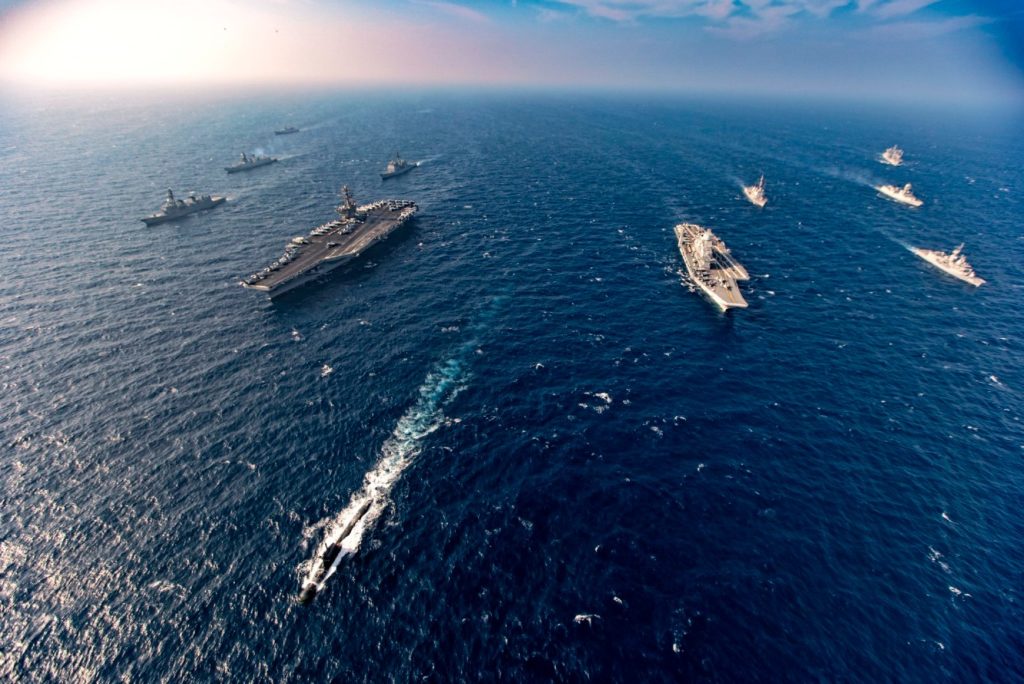
    The late embracing of the Indo-Pacific concept by the United States further supports the position that it is being employed as a strategic instrument to counter a rising power and a potential challenger to its global quasi-hegemonic power position. We may remember that the origin of the Indo-Pacific concept is associated with the previous Japanese Prime Minister Shinzo Abe and his ‘Free and Open Indo-Pacific’ concept. Shinzo Abe mentioned it as early as 2007 when addressing the Indian parliament and began frequently restating it from 2016 onwards. This was part of his intention that Japan should take a more active role in East Asia and beyond. As such, the Indo-Pacific concept was born out of the political-strategic considerations of a regional actor within East Asia. Only later, around 2018, did the United States become considerably interested in the concept, at a time when the potential challenges from rising countries increased – not only from China; one may also consider India’s rise in this context. In 2018, the United States administration even changed the name of its Pacific Command to United States Indo-Pacific Command to highlight its changing geopolitical perspective and to address the increasing regional challenges it faced from a rising China. Not without reason was the replacement of the previous Asia-Pacific concept with the Indo-Pacific concept aimed at integrating India, another rising power in Asia, more firmly with the hegemonic interests of the United States. In academic terms, one could argue that this may represent a strategy of accommodation, in which an existing hegemon accommodates a rising power by offering political and strategic space for that country. It is a strategy the United States followed previously with China until China started to become a too fundamental strategic challenge to the United States hierarchic position. One may wonder if this may also happen to India, once India becomes too powerful to be contained within a United States hegemonic project. However, for the time being, India seems to feel quite comfortable within the geopolitical space it has been offered by the existing quasi-global hegemon. As revealed by Paul T.V (2016) the strategy of accommodation is not only quite a challenging undertaking – as the hegemon has to offer political status, leadership responsibilities, and even a sphere of influence to a rising country – but in the long run the implications are that this will weaken, if not undermine, the hegemon’s own position, thus indicating the limitation of such a strategy. After all, a hegemon is rather unwilling to give up its dominant position voluntarily, though a strategy of accommodation may buy some time and allow it to employ a strategy of divide-and-rule by offering support to a potential weaker power contender when addressing the challenges of a more powerful contender. There can be no less doubt that the ongoing border conflicts between India and China and the emerging regional power competition between them facilitate India’s readiness to become increasingly enveloped in a stronger relationship with the United States which, by the way, contradicts India’s previous entrenched national strategy of non-alignment in global power politics. Consequently, drafting India into its power orbit enhances the United States’ strategic influence in regions where it is not even a resident power, like East, Southeast, or South Asia.

    There can be no less doubt that the ongoing border conflicts between India and China and the emerging regional power competition between them facilitate India’s readiness to become increasingly enveloped in a stronger relationship with the United States which, by the way, contradicts India’s previous entrenched national strategy of non-alignment in global power politics.

    Therefore, a hegemonic state will try to manipulate even distant regional settings in its favour, to arrest the rise of potential challengers to its dominant position, even by facilitating the introduction of a new geopolitical concept, like the Indo-Pacific, which ignores local perceptions of regional cooperation dynamics, the Bay of Bengal approach or ASEAN. While there are some claims that the Indo-Pacific approach does not represent a challenge to ASEAN, a position that is widely disputed, the more specific issue is that the Indo-Pacific approach does not contribute or offer support to those local-based regional cooperation processes from a conceptual perspective. Therefore, while one has to recognise that more recent regional cooperation processes within the Bay of Bengal are less dynamic for the time being, it does not mean that such a regional cooperation process is altogether missing. As stated by Amrith (2013), Asian economic connections led to renewed interest in the Bay of Bengal as a focus for regional cooperation. Indeed, BIMSTEC[1] which was established in 1997, does provide focus on regional cooperation.

    BIMSTEC creates political space for economic cooperation by addressing common challenges like underdevelopment. Consequently, offering a strategic vision for national development to its member countries, a focus fundamentally different from the geopolitical outlook of the Indo-Pacific regional hegemonic project, with its focus on military and especially maritime power distribution. Another crucial difference is that, while the Indo-Pacific strategy is a rather recent invention, regional recognition of the Bay of Bengal as a particular and unique geographic location for regional cooperation, particularly as a centre for trade and cultural migration, goes back centuries, if not millennia. As such, the Bay of Bengal commands a rich history as a historically recognised cultural and trade-inspired region. Yet, with geopolitical concepts based on hegemonic interests, such home-grown sources of regional cooperation are not recognised or supported only if they would fit the interests of the hegemon. It is evident that the Indo-Pacific concept, from a conceptual perspective, also ignores the ASEAN regional cooperation process. As such, the Indo-Pacific approach represents an artificial strategic overlay, not linked with local beads regional cooperation dynamics, even when a regional cooperation process is very well established, as is the case with ASEAN. With regard to the Indo-Pacific concept, ASEAN’s statement on the Indo-Pacific (ASEAN Outlook on the Indo-Pacific 2019) clearly indicates that the perception of the Indo-Pacific area is a contiguous geographic space is misleading and not appropriate, even though the two geopolitical spaces are geographically connected. Indeed, while the Bay of Bengal and the ASEAN regional cooperation favour regional cooperation characterised by horizontal relationships, facilitating the cooperation of countries within the region to address common challenges, the Indo-Pacific approach represent a vertical power arrangement, where a dominant power is projecting its influence onto the regional level.

    However, it should not come as too much of a surprise that a hegemon’s regional strategy, which primarily focuses on supporting its own power interests, has little to say about regional cooperation processes initiated by the people living in that region. Indeed, a global acting hegemon has only a limited interest in the empowerment of independent regional cooperation projects, since they could signal the creation of a more independent political sphere. As Mearsheimer (2013) asserts, based on its superior standing and its need to defend this position, a hegemon has always an inclination to interfere in and re-order the political outlook of even distant regions. We may take into consideration what Mearsheimer (2013) made earlier, that the United States will ensure that it will dominate the commanding heights in Asia. For all these reasons, the Indo-Pacific approach should be recognised as the newest geopolitical strategy supporting the United States’ hegemonic position in Asia.

    Bibliography

    Mearsheimer, John J (2001) The Tragedy of Great Power Politics (2001), W.W Norton & Company: New York

    Mearsheimer, John J (2013) Structural Realism. In: Dunne T, Kurki M., Smith S (eds) International Relations Theories Discipline and Diversity, 3rd ed., Oxford University Press: Oxford. pp. 77-93

    Ikenberry, G. J. (2014) Introduction: power, order, and change in world politics. In: Ikenberry, G. J. (ed.) Power, order, and change in world politics. Cambridge, Cambridge University Press, pp.1-16.

    Griffiths, M, O’Callaghan T, Roach S T (2002) International Relations: The Key Concepts 2nd; Martin Griffiths, Routledge

    Kupchan, C. A. (2014) Unpacking hegemony: the social foundations of hierarchical order. In: Ikenberry, G. J. (ed.) Power, order, and change in world politics. Cambridge, University Press Cambridge, pp. 19-60.

    Gilpin, R. (2010) War and Change in World Politics, Cambridge University Press: Cambridge.

    Paul T.V. (2016) The accommodation of rising powers in world politics. In: Paul, T. V. (ed.) Accommodating rising powers past, present, and future. Cambridge, Cambridge University Press, pp. 3 32.

    Amrith, S. S. (2013) Crossing the Bay of Bengal: The furies of nature and the fortunes of migrants By Sunil S. Amrith Cambridge, MA: Harvard University Press.

    ASEAN Outlook on the Indo-Pacific 2019, available at: https://asean.org/asean-outlook-on-the-indo-pacific/

    Notes

    [1] BIMSTEC has seven members: Thailand, Myanmar, Bangladesh, India, Bhutan, Nepal, and Sri Lanka.

    Feature Image credit: War on the Rocks

  • Mankind as a wholeness – we must comprehend ourselves as a unity in order to survive

    Mankind as a wholeness – we must comprehend ourselves as a unity in order to survive

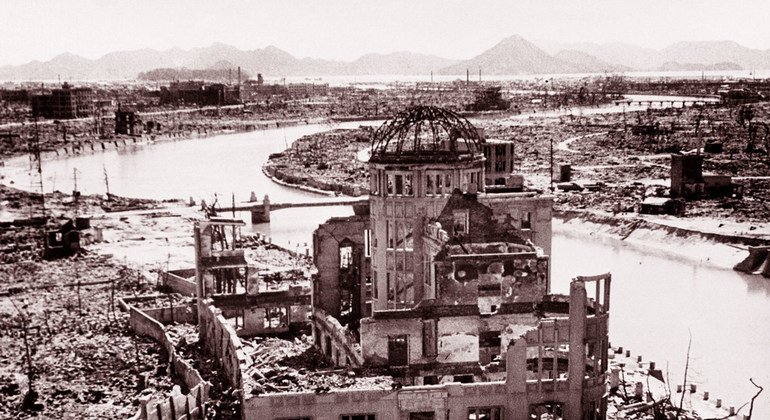
    One might think that mankind has not changed for millennia – we are still antiquated, as Günther Anders had pointed out after his visit to Hiroshima shortly after the atomic bombing. Basically, Anders argued that technical-industrial possibilities have rushed far ahead of comprehension and our moral responsibility – as evidenced in the use of nuclear power, the possibility of self-destruction of humanity during the nuclear arms race (especially in 1983), which was partly prevented only by chance, genetic engineering, and medical possibilities at the beginning and end of life. Add to this climate change and obscene inequality throughout the world.


    Looking at the current explosions of violence on the macro level (Ukraine, Syria, new arms race between the great powers) as well as on the micro level (for example in Central America the Maras) one might think that mankind has not changed for millennia – we are still antiquated, as Günther Anders had pointed out after his visit to Hiroshima shortly after the atomic bombing. Basically, Anders argued that technical-industrial possibilities have rushed far ahead of comprehension and our moral responsibility – as evidenced in the use of nuclear power, the possibility of self-destruction of humanity during the nuclear arms race (especially in 1983), which was partly prevented only by chance, genetic engineering, and medical possibilities at the beginning and end of life. Add to this climate change and obscene inequality throughout the world, we must ask ourselves who we are as humans? How can we explain to our children and grandchildren what we have done for them – or more importantly, not done? Statistically, however, we are living in the most peaceful age in human history to date. The present dominance of the violence topic, of fears and despair as world-politically effective emotions can therefore be a question of the increased and partly medially staged perception – or nevertheless a real setback.  But also, here it could be true that mainly our terms and conceptions are put to the test. For such setbacks primarily question the idea of the linearity of progress, not necessarily progress itself. If we assume the models of a linear ascending progress as in the Enlightenment or in Kant or an equally linear pure history of decay, we cannot integrate contrary developments into our world view – and every contrary development calls the whole model into question. In contrast, models of history based on a cycle (Greek Stoa, Hinduism) are able to capture the constant in change but can only imperfectly explain progress at the societal level. The historical model of a Machiavelli, on the other hand, includes change, but change is always repeated and can best be compared to a sine curve.

    The argument about models of history is by no means abstract, as it appears at first sight. The Marxists as well as Leninists and finally the Stalinists have pursued radical politics with the linear model of progress, just as the idea of the thousand-year Reich had influence on the politics of the National Socialists. Are there alternative models beyond pure decay, equally linear progress, or the assumption that humans do not change after all, or lag behind their technological capabilities in moral and spiritual terms?

    Models for Understanding History – G W F Hegel
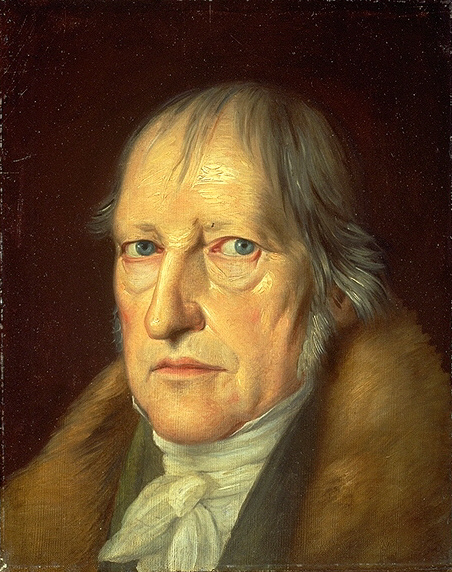
    These positions are not unfounded – however, their absolutization is wrong. As in various psychological (Piaget and Kohlberg) and sociological (Auguste Comte) approaches, the German philosopher Georg W.F. Hegel starts from a stage model in which he develops a progress of world history in the consciousness of freedom. Despite his own Eurocentrism, stage models are in principle capable of countering a pure binary opposition of affirmation or negation of progress in human history. They also do not imply an absolutely inevitable development, as can be seen from the fact that Kohlberg, for example, does not assume that all people reach the highest level, but emphasizes, like all stage theorists, that one cannot skip any of the stages. But Hegel was just not in the tradition of the Enlightenment and Kant, who assumed a linear model of progress, but developed a dialectical sequence of stages, which in my interpretation could best be compared to a sine curve (as in Machiavelli) but erected on an ascending x-axis. In such a model, we can think of the Enlightenment’s idea of progress (in the ascending x-axis) as well as cyclical developments (Machiavelli) of rise and fall, progress, and regress in world history together.

    In this model developed by the author, there is progress, but it is not linear, but itself cyclical. We know such cycles from the business cycle theories in the wake of Kondratieff’s research or also from hegemonic cycles. In contrast to these theoretical approaches, the model of history advocated here is related to a (more or less) slightly ascending x-axis and is derived from Hegel’s conception of becoming at the beginning of his monumental work on the “Science of Logic”, since coming into being and passing away are not completely cancelled out, but a “surplus” arises which goes beyond the infinite coming into being and passing away.  Such a model is on the one hand closed (with respect to the high and low points on the Y-axis), at the same time open on the X-axis and develops “between” its high and low points.

    Hegel’s stage model has itself been a great historical advance; at the same time, we need to go beyond Hegel to overcome his tendency of constructing a systematic closure (which was then taken as an absolute by Marx in a perfect society of communism) in favour of an approach that is at once closed and open. Despite his Eurocentric reductions, Hegel develops a systematic development of the idea of freedom. In his sequence of stages, human history begins with the development of states in which at first only one was free – the ruler, mostly in the figure of the priest-king, who symbolizes the laws of the gods and rule. Still with Plato we find the construction of the philosopher, who must be at the same time king and vice versa. This all-surpassing freedom of the priest-kings is clearly found for Hegel in the pyramids of Egypt. Hegel calls this phase the infancy of history. Greek antiquity, and here especially the city of Athens, is for him the adolescence of world history – the first individualities are formed. The aesthetics of the Greek statues symbolize for him this phase, in which man understands himself as free, when he professes his free polis. In a certain sense, this phase can be understood as that of the aristocracy, because Athens symbolizes the beginning of democracy, but of the approximately 200,000 inhabitants, only about 30,000 were free – slaves, women and metics (“strangers”) were excluded from freedom.

    The focus is no longer on the individual, but on the supra-individual law. Even today, the study of law begins with Roman law (e.g., in dubio pro reo or nulla poene sine lege). Of course, not only Hegel’s choice of words is problematic (e.g., that of “oriental despotism” as the beginning of world history), but also the identification of the fourth stage with the “Germanic period” as the “goal of world history.”

    For Hegel, the manhood of world history is that of the Roman Empire. Here, not the individual but the state has become the supreme purpose and Roman law is developed. The focus is no longer on the individual, but on the supra-individual law. Even today, the study of law begins with Roman law (e.g., in dubio pro reo or nulla poene sine lege). Of course, not only Hegel’s choice of words is problematic (e.g., that of “oriental despotism” as the beginning of world history), but also the identification of the fourth stage with the “Germanic period” as the “goal of world history.” Nevertheless, his characterization is noteworthy. In this stage the state is ordered according to reasonable principles, the individual is completely free because he lives in a reasonable society whose laws he recognizes and to which he can refer. Community and individual are reconciled, the ups and downs of world history (as illustrated in the sine curve) seem to have come to their end and now the real history of mankind begins, a happy time.

    Of course, we know that this was not so, as Hegel assumed – the violent conquest of the world in colonial times, two world wars, Auschwitz, and Hiroshima, the almost self-destruction of mankind in the cold war, all this was still to come. But is Hegel thereby refuting? Or can and perhaps must we continue Hegel?

    Differences to Hegel

     In contrast to Hegel’s conception of world history as a progress in the consciousness of freedom, I argue that this development is a progress in the consciousness and practices of humanity to be a wholenessness. Hereby, I no longer foreground Kant’s four questions concerning the individual human being or even an “I”, but rather transform them into who is humanity, what should we do as humanity, what can we know and hope as humanity? The concept of humanity contains the single individual, but this goes beyond the generalization of the individual as in Kant’s categorical imperative. Also, here the old sentence of Aristotle is valid that the whole is more than the sum of the parts – and so I would like to add, mankind as a wholeness is more than the accumulation of at present over 7.8 billion people. At the same time, humanity is realized in individual human beings; there is no humanity without individual human beings.

    According to the “Out of Africa thesis,” the genus Homo originated in Africa and spread from there to all continents. One of these groups, immodestly calling itself homo sapiens, has not only outlasted all other human species, but has populated even the most distant tip of this earth, moreover, is making its way to other planets of our solar system. Arnold Gehlen’s determination of man (as also already Aristotle) as imperfect, forces mankind to develop more and more. During this time of spreading over the whole planet, however, the individual groups lost contact with each other, because this lasted for millennia and the distances became too great for the time to bridge in shorter periods of time – they became estranged from each other and lived in isolated cultural islands (for example in China, India, in Africa south of the Sahara, the two Americas or also in the more European part of Eurasia as well as in West Asia). With the increasing spread of these initially isolated cultural islands, they came back into contact with each other – which turned out to be peaceful or sometimes warlike. Huntington’s thesis that these contacts were mainly violent underestimates the mutual cultural influences and learning processes. Globalization since European colonization brought humanity into ever closer contact with each other and made it possible for the first time to think of humanity as a wholeness.

     Of course, the setbacks and low blows must not be forgotten – the wars between the great empires, the almost perpetual state of war at the edges of these empires, colonialism, Islamic and Atlantic slavery, racism, two world wars and Auschwitz as a sign of history – but in the end they confirmed the dictum of Goethe and, derived from this, systematized by Hegel as the cunning of history. This is a part of that force which always wills evil and yet creates good. This does not mean to relativize the suffering of countless people. But perhaps we must differentiate and not already take the ideals of the Enlightenment at face value. For this was not only compatible with racism, colonialism, and slavery, two world wars and the Cold War – according to Zygmunt Bauman, these were even direct consequences of a one-sided Enlightenment.

    There is currently a worldwide biologisation of the social in the form of ethnicities, gender antagonisms, nationalism and tribalism (Make America great again by Donald Trump, the Chinese Dream by President Xi Jinping, New Russia by Vladimir Putin, Salafism, right-wing nationalist movements in Europe).

    If, on the other hand, we assume that the impulse of the realization of human rights could actually only fully develop after World War II and the Holocaust, and included all people, not just one’s own ethnic, cultural, or religious group, we are only at the beginning of the realization of human rights. Again, while it is true that there are setbacks at present – in the form of a discourse of “We against the Rest,” the current replacement of global governance by a renationalisation of world politics, the return of tribal thinking to cope with the demands of globalization, this is not the whole picture. It is also true that globalized liquid modernity (Bauman) is leading to the dissolution of all traditional identities including patriarchy as well as consumerism and many states and nations are updating ancient identities because they trust them to outdo even this accelerated transformation, There is currently a worldwide biologisation of the social in the form of ethnicities, gender antagonisms, nationalism and tribalism (Make America great again by Donald Trump, the Chinese Dream by President Xi Jinping, New Russia by Vladimir Putin, Salafism, right-wing nationalist movements in Europe). Nevertheless, while we are simultaneously witnessing the (often violent) dissolution of the old world, we are also experiencing the birth pangs of a new world. After the West defeated the rest of the world in the 19th century, colonised or submerged peoples and civilizations in the 20th century had to learn to live with the victorious West. In the 21st century, the world’s civilizations must finally learn to live with each other.

    In the 1990s, Samuel P. Huntington put forward the much-publicised thesis that the cold war between the ideologically opposed superpowers would be replaced by a similar contest between the world’s civilizations and their respective core states (Russia, India, China, the United States). On the surface, Huntington received more criticism than approval. A closer reading of his approach reveals that he had not drawn up an instruction manual for the “clash of civilizations,” but had formulated a warning to avoid it. The liberal critics, however, emphasized in particular that not only should there not be a clash of civilizations, but also that there could not be, because there was only one civilization in the world, the Western one. The other civilizations mentioned by Huntington are determined by different religions and cultures, but they would not be civilizations. In contrast, the “clash of civilizations” involves a conflict, but the implicit recognition that civilizations other than the Western one exists at all.

    In the 21st century, the world’s civilizations must finally learn to live with each other.

    This recognition of a limited plurality of civilizations makes possible for the first time the thinking, experiencing, and acting of humanity as a wholenessness. In such a wholenessness, opposites, conflicts and even wars are conceivable – from a sociological perspective, conflicts are not opposed to a socialization of humanity (sociology of conflict in the wake of Tönnies and Simmel), even if these bring much suffering with them.  All high religions that emerged between the 7th century B.C. (Judaism, Confucianism, Buddhism, Hinduism, Christianity) and the 7th century A.D. (Islam) formulate an overcoming and renunciation of infinite suffering. This ethicization of transcendence (Jaspers) or also of immanence (Confucianism) contains in its core a perspective of the abolition of suffering, which can be overcome either in transcendence or, with appropriate conduct of life, already in immanence. Suffering, war, and violence are thus no longer accepted as “natural”, but an attempt is made to leave them behind. Although in Hinduism the cycle (symbolized in the wheel) is emphasized – but the goal of life in the different rebirths consists in overcoming this cycle. Therefore, a core message of Hinduism is the statement that the end is good – but if it is not good, it is not the end. While in the “nature religions” like also the Egyptian mythology, before the emergence of these high religions the transcendence was only a mirror of the earthly life, this is explained now to be absolute good – connected with the perspective to orientate the own life at this construction.

    in Hinduism the cycle (symbolized in the wheel) is emphasized – but the goal of life in the different rebirths consists in overcoming this cycle. Therefore, a core message of Hinduism is the statement that the end is good – but if it is not good, it is not the end.

    Here it should not be concealed that this ethicization of the transcendent as well as of immanence can be and has been used to legitimize violence – in direct inversion to Goethe and Hegel we have to acknowledge that the absolutization of the good has also contributed to the legitimization of war and violence in the form: “this is a part of that force which always wants the good and yet creates evil” (Herberg-Rothe). In contrast to positions that attribute the positive sides of religions only to these themselves, the negative ones exclusively to the respective social, political, cultural, and historical circumstances, I assume that the absolutization of the respective ideas contains a tendency to violence. After the western modernity had written the generalization of the presupposed individual on the flags, a new balance of the individual and the communality is to be constructed for a dialogue of the civilizations, which contains at the same time their further development.

    Mankind understood in this way does not include a pure juxtaposition in the sense of a diversity of the civilizations of the world, as this is laid out – despite all remarkable insights – in the conception of a multiplex world or a Global International Relations Theory (Global IRT), both by Amitav Acharya, which is connected only by communication. The conceptions of diversity also do not go beyond mere multiplicity. All these conceptions in the wake of the French post-structuralisms have their strength in the critique as well as overcoming of totalitarian and authoritarian social relations or system constraints and discourses of power. However, since their own approach excludes borders per se, they cannot include any border of their respective approach. Diversity is wonderful and colourful – also the questioning and de-construction of the “normal” following Foucault has been an essential progress, just as tolerance is a moral value to be demanded always. The question, however, is where the limits of tolerance are – we should be far less tolerant of human rights violations, even if the understanding of human rights remains contested in different “cultures.”

    Conclusion

    From Thomas Hobbes we have learned that unlimited freedom leads to war of all against all, civil war.  Freedom must therefore be limited in order to enable people to live together peacefully. But how can freedom be meaningfully limited without oppressing people? Kant’s solution, that my freedom ends where the freedom of the other begins, is a nice metaphor, but far from adequate when two or more parties lay claim to the same good in the broadest sense.  The idea that it is not an oppression of freedom if it is limited only by the freedom of the other is a pure illusion. Even if in the wars and civil wars of the present, the refugee movements and in the worldwide slums, a human life seems to count for little, it must be maintained that all human beings have the same human rights, they are equally endowed with dignity and conscience. Freedom thus finds its limits not primarily in the freedom of others, but, since it is not an abstract freedom, rather one of human beings – thus in their fundamental equality as human beings and thus human rights. Following Hannah Arendt, one can say that freedom does not consist in arbitrariness, but in the right to be different from others. The path of humanity is shown here as self-preservation based in our equality and self-transgression in the freedom to differ from other humans. Such an understanding of the equality of us all as humans seem to contradict all current developments and appears as a kind of wishful thinking. But it is perhaps not just an idea of a better future, but the question how mankind could see itself as a wholeness in order to survive.


    References:

    Acharya, Amitav and Barry Buzan (ed.). Non-Western International Relations Theory: Perspectives on and beyond Asia. New York: Routledge, 2010.

    Anders, Gunther; Christopher John Muller. Prometheanism: technology, digital culture, and human obsolescence. London: Rowman & Littlefield International Ltd., 2016.

    Arendt, Hannah; Danielle Allen and Margaret Canovan. The Human Condition. Chicago: The University of Chicago Press, 2018.

    Arendt, Hannah and Anne Applebaum. The Origins of Totalitarianism. Harcourt: Brace & co, 1951.

    Bauman, Zygment. Modernity and the Holocaust. New York: Cornell University Press, 2000.

    Bauman, Zygment. Born Liquid. Polity Press, 2018.

    Comte, Auguste and Harriet Martineau. The Positive Philosophy of Auguste Comte: Freely translated and condensed by Harriet Martineau. New York: C. Blanchard, 1858.

    Gehlen, Arnold. Man, his Nature and Place in the World. New York: Columbia University Press, 1988.

    Hobbes, Thomas. Leviathan. London: Andrew Crooke, 1651.

    Huntington, Samuel P. The Clash of Civilizations and the Remaking of World Order. New York: Simon & Schuster, 1996.

    Kant, Immanuel; J M D Meiklejohn. Critique of Pure Reason: Tr. from German of Immanuel Kant. London: Bell, 1881.

    Machiavelli, Niccolo. Discourses. S. I.: Open Road Media, 2020. Internet.

    Magen, Nathan H. The Kondratieff Waves. New York: Praeger, 987.

    Marx, Karl and Friedrich Engels; David McLellen. Communist Manifesto. Oxford University Press, 1992.

    Shuman James B., and David Rosenau. The Kondratieff Wave by James B. Shuman and David Rosenau.New York: World Pub, 1972.

    Tonnies, Ferdinand; edited by Jose Harris. Ferdinand Tonnies: Community and Society. Cambridge; Cambridge University Press, 2001.


    Feature Image Credit: NDTV
  • TPF Analysis Series on Russia – Ukraine Conflict #2

    TPF Analysis Series on Russia – Ukraine Conflict #2

    [powerkit_button size="lg" style="info" block="true" url="https://admin.thepeninsula.org.in/2022/03/29/tpf-analysis-series-on-russia-ukraine-conflict/" target="_blank" nofollow="false"]
    The First Paper of the Series – TPF Analysis Series on Russia – Ukraine Conflict #1
    [/powerkit_button]

    What’s in Ukraine for Russia? 

    In a press conference marking his first year in office, President Biden, on the question of Russia invading Ukraine, remarked that such an event would, “be the most consequential thing that’s happened in the world, in terms of war and peace, since World War Two”. [1] It has now been two months since Russia officially launched its “special military operation” in Ukraine, which the US and its allies consider an unjustified invasion of a sovereign state. The conflict in the Eurasian continent has drawn global attention to Europe and US-Russia tensions have ratcheted to levels that were prevalent during the Cold War. The conflict has also raised pertinent questions on understanding what exactly are Russian stakes in Ukraine and the latter’s role in the evolving security architecture of Europe. The second paper in this series will delve into these questions.

    The current Russian position stems from the experience that Russia, and Putin, gained while dealing with the West on a host of issues, not least of which was NATO expansion.

    The Ties that Bind

    An examination of post-Soviet history reveals that Russian preoccupation with security threats from NATO is not embedded in Russian geopolitics; instead, it has been reported that, early on, Russia was even agreeable to joining the military alliance. The current Russian position stems from the experience that Russia, and Putin, gained while dealing with the West on a host of issues, not least of which was NATO expansion. A line of argument sympathetic to Russia is President Putin’s contention that terms dictated to Russia during the post-Cold War settlements were unfair. The claim is a reference to Secretary of State James Baker’s statement on the expansion of NATO, “not an inch of NATO’s present military jurisdiction will spread in an eastern direction”, in 1990 in a candid conversation with Mikhael Gorbachev on the matter of reunification of Germany. [2] It could be argued that it is this commitment and subsequent violation through expansions of NATO is one of the main causes of the current conflict. 

    At the root of the problem was Russia’s security concerns – regarding both traditional and hybrid security – that ultimately led to the centralisation of power after a democratic stint under Yeltsin. Accordingly, Putin had put it in late 1999, “A strong state for Russia is not an anomaly, or something that should be combated, but, on the contrary, the source and guarantor of order, the initiator and the main driving force of any changes”. [3]

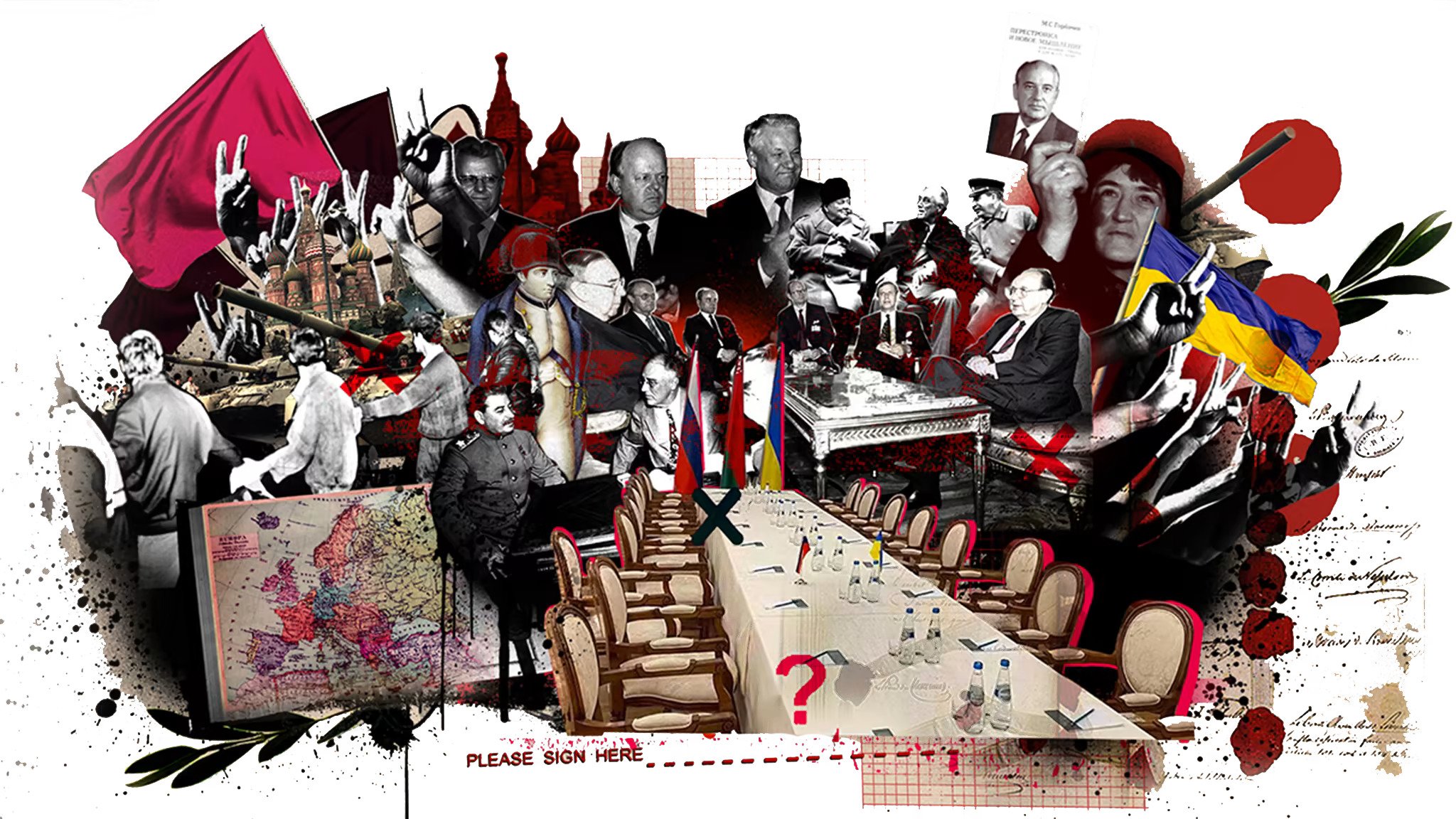
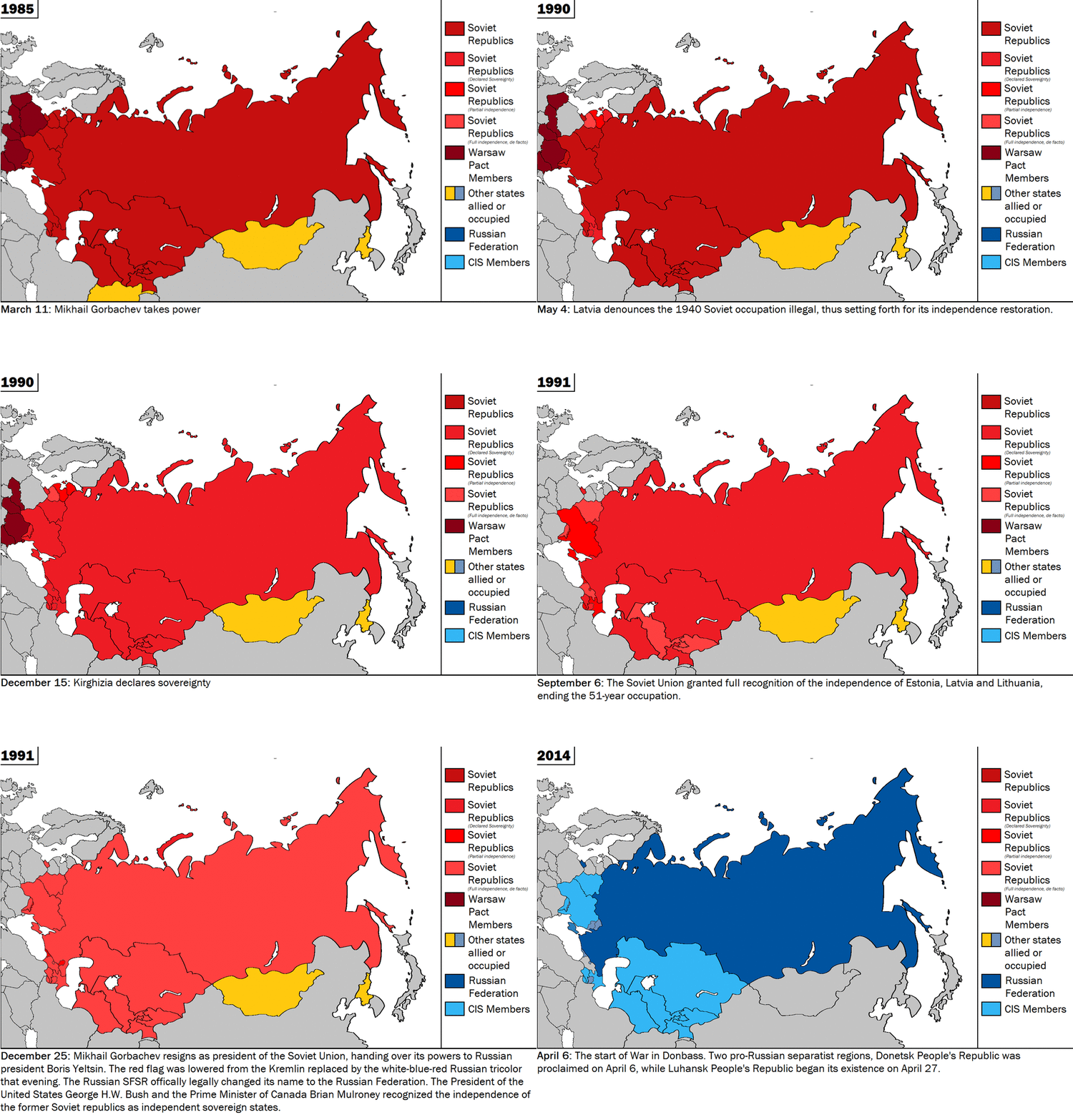
    Historically being a land power, Russia has viewed Ukraine as a strategically critical region in its security matrix. However, as the central control of Moscow weakened in the former USSR, the nationalist aspirations of the Ukrainian people began to materialise and Ukraine played a crucial role, along with the Russian Federation and Belarus, in dissolving the former Soviet Union. The two countries found themselves on opposite sides on extremely fundamental issues, such as security, economic partnership, post-Soviet order, and, not least, sovereignty. In Belovezh, in early December of 1991, when Russian President Boris Yeltsin, Ukrainian President Leonid Kravchuk and Belarusian leader Stanislav Shushkevich met to dissolve the USSR, major disagreements regarding the transitional phase and future of the republics erupted. Yeltsin expressed his desire for some sort of central control of the republics, whereas Kravchuk was vehemently opposed to any arrangement that might compromise his country’s sovereignty. Later, at the foundational ceremony of the Commonwealth of Independent States (CIS), he stressed a common military, the most potent rejection of which came from Kravchuk. [4]

    Source: Wikimedia Commons

    The elephant in the room, however, was the status of Sevastopol, which housed the headquarters of the Black Sea Fleet. Yeltsin was quoted saying that “The Black Sea Fleet was, is and will be Russia’s. No one, not even Kravchuk will take it away from Russia”. [5] Though the issue was soon temporarily resolved –with the two countries dividing the fleet equally amongst themselves, it continued to dominate and sour their relationship. Russia, as the successor state of the USSR, wanted the base and the entire fleet in its navy. Yeltsin even offered gas at concessional rates to Ukraine if it handed over the city and nuclear weapons to Russia. The issue remained unresolved until the 1997 Friendship Treaty under which Ukraine granted Moscow the entire fleet and leased Sevastopol to Russia until 2017 (later extended).

    Ukraine, under Kravchuk and, later, Leonid Kuchma, struggled to tread a tightrope between Russia and the European Union. On one hand, it was economically knit with former Soviet Republics, and on the other, it was actively looking to get economic benefits from the EU. However, soon a slide towards the west was conspicuous. In 1994, it preferred a Partnership and Cooperation Agreement with the EU over CIS Customs Union, which was a Russian initiative. Later, in 1996, it declined to join a new group consisting of former Soviet Republics ‘On Deepening Integration’, scuttling the initiative, since its purpose was to bring Ukraine back into the Russian fold. [6] By 1998, the Kuchma government had formulated a ‘Strategy of Integration into the European Union’. [7]

    Nuclear weapons were another point of contention between the two. Ukraine was extremely reluctant to give up its arsenal, citing security threats from Russia. Kravchuk received a verbal ‘security guarantee’ from the US which forced Russia to “respect the independence, sovereignty, and territorial integrity of each nation” [8] in exchange for surrendering Ukraine’s nuclear weapons. 

    Notwithstanding the disputes, there was a great deal of cooperation between the two, especially after Kuchma’s re-election in 1999. Kuchma’s hook-up with authoritarianism distanced Kyiv from Brussels and brought it closer to Moscow. Ukraine agreed to join Russian initiatives of the Eurasian Economic Community as an observer and Common Economic Space as a full member. At home as well, his support in the eastern parts of the country, where ethnic Russians dwelled, increased dramatically, as evident in the 2002 Parliamentary Elections. [9] However, the bonhomie was soon disrupted by a single event.

    The Orange Revolution was Russia’s 9/11. [10] It dramatically altered Russian thinking on democracy and its ties with the West. It raised the prospect in Russia that Ukraine might be lost completely. It further made them believe the colour revolutions in former Soviet republics were CIA toolkits for regime change. More importantly, it made the Russians apprehensive of a similar revolution within their borders. As a result, the distrust between Russia and the West, and Russia and Ukraine grew considerably. As a nationalist, Victor Yushchenko formulated policies that directly hurt Russian interests. The two countries fought ‘Gas Wars’ in 2006 and 2009, which made both the EU and Russia uncomfortable with Ukraine as a gas transit country. Furthermore, Yushchenko bestowed the title of ‘Hero of Ukraine’ upon Stepan Bandera, a Nazi collaborator and perpetrator of the Holocaust, a decision that surely did not go well with Moscow.

    Geoeconomics: Ukraine as a Gas Transit Country

    The current war is the worst in Europe since the Second World War. Still, Ukraine continues to transit Russian gas through its land, Russia continues to pay for it, and Western Europe continues to receive the crucial resource. The war has shattered all the big bets on Russian dependence on Ukraine for delivering gas to Western Europe and has renewed the discourse on reducing European energy dependence on Russia. Since the EU imports 40% of its gas from Russia, almost a quarter of which flows through Ukraine, Kyiv has had leverage in dealing with Russians in the past. It has been able to extract favourable terms by either stopping or diverting gas for its own domestic use at a time of heightened tensions between Ukraine and Russia. As a result, the EU was directly drawn into the conflict between them, infructuating Moscow’s pressure tactics for a long.

    Moscow has made numerous attempts in the past to bypass Ukraine by constructing alternate pipelines. Nord Stream, the most popular of them, was conceived in 1997, as an attempt to decrease the leverage of the transit states. The pipeline was described as the “Molotov-Ribbentrop Pipeline” by Polish Defence Minister Radoslaw Sirkosi for the geoeconomic influence it gave to Russia. [11] Another project – the South Stream – was aimed at providing gas to the Balkans, and through it to Austria and Italy. The pipeline was conceived in the aftermath of the Orange Revolution and its construction was motivated by geoeconomics, rather than economic viability. It would have led to Russia bypassing Ukraine in delivering gas to the Balkans and Central Europe, thus seizing its significant leverage, and relegating it to vulnerable positions in which Moscow could have eliminated the gas subsidies Ukraine was being provided. [12]As a result of economic unviability, the project was abandoned in 2014.

    To a certain extent, the European Union has been complicit in making matters worse for Russia. For instance, during the 2009 ‘Gas War’ – that began due to Ukraine’s non-payment of gas debt to Russia – instead of holding Ukraine accountable, the EU countries blamed Russia for the gas crisis in Europe and asked Russia to resume gas supply to Ukraine. Later, realising the importance of Ukraine as a transit country, it reached an agreement with Kyiv that “recognized the importance of the further expansion and modernization of Ukraine’s gas transit system as an indispensable pillar of the common European energy infrastructure, and the fact that Ukraine is a strategic partner for the EU gas sector”. The agreement excluded Russia as a party, which saw it as undermining the collaboration between itself and Ukraine, and injuring its influence on the country. [13] The Russian grievance becomes even more palpable when we view the significant gas subsidies it has provided to Ukraine for more than two decades. 

    Similarly, the EU countries viewed Nord Stream 2 from a geostrategic and geo-economic perspective. In December last year, German Economic Affairs Minister Robert Habeck warned Russia of halting Nord Stream 2 if it attacks Ukraine. German Chancellor Olaf Scholz was quoted saying that he would do ‘anything’ to ensure that Ukraine remains a transit country for Russian gas. [14] In fact, the pipeline – that is set to double the capacity of gas delivered to the EU – has faced opposition from almost all Western European countries, the US, the EU as well as Ukraine, which has described it as ‘A dangerous Geopolitical Weapon’. [15] The pipeline had raised concerns amongst Ukrainians of losing a restraining factor on Moscow’s behaviour. [16] However, with the pipeline still inoperable, the Kremlin has already made the restraining factor ineffective.

    The Security Objective

    The Russian Federation is a country which spreads from the European Continent to Asia. In this giant nation, the hospitable region where people live is mainly on the European side, which also comprises main cities like St. Petersburg, Volgograd and the Capital City Moscow. Throughout history, Russia has seen invasions by Napoleon as well as Hitler, and the main area through which these invasions and wars happened was through Ukrainian land which gave them direct access to Russia – due to the lack of any geographical barriers. It was certainly a contributing factor towards the initial success of these invasions. Today, we might understand these events as Russia’s sense of vulnerability and insecurity if history is any indicator. 

    The Russian Federation also follows a similar approach to ensuring its security, survival and territorial integrity. Russia’s interest in Ukraine is as much geopolitical as cultural. Since Russians and Ukrainians were intrinsically linked through their culture and language, Ukraine quickly came to be seen as Russian land, with Ukrainians being recognized as ‘Little Russians’ (Kubicek, 2008), as compared to the “Great Russians”. They were consequently denied the formation of a distinct Ukrainian identity. Putin gave substance to this sentiment as, according to a US diplomatic cable leak, he had “implicitly challenged the territorial integrity of Ukraine, suggesting that Ukraine was an artificial creation sewn together from the territory of Poland, the Czech Republic, Romania, and especially Russia in the aftermath of the Second World War” during a Russia-NATO Council meeting. [17]

    Crimea and much of eastern Ukraine are ethnically Russian and desire closer ties with Russia. But moving further west, the people become increasingly cosmopolitan and it is mostly this population that seeks greater linkage with the Western European countries and membership into the EU and NATO. This in addition to the Euro Maidan protests is what Putin has used to justify the annexation of Crimea in 2014. The other security consideration was the threat it faced from the likelihood of NATO establishing a base in Crimea given its own presence in Sevastopol in the Black Sea. 

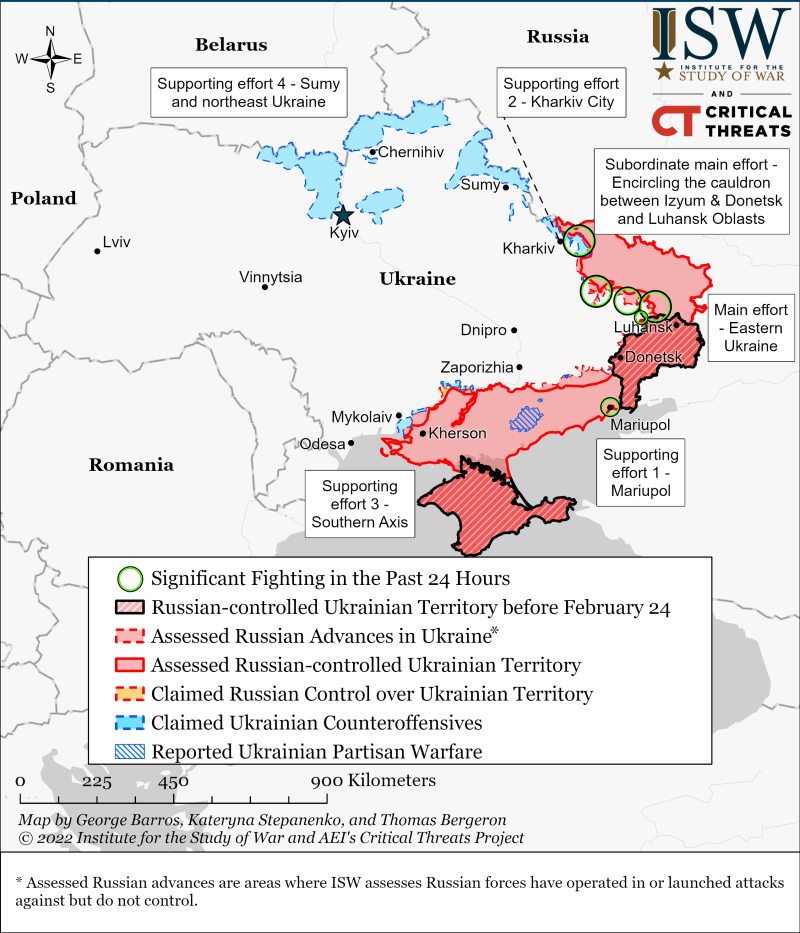
    In the current scenario, the second phase of Russian Military operation in the East and South has shown us the larger vulnerabilities Moscow has which are being countered through control of certain points in the region. By liberating the Donbass region in the east, Russia plans to create a buffer zone between itself and the west to stop future aggression and keep enemies at bay. But the extension of this buffer zone all the way to Odessa is indicative of other strategic considerations. Mariupol in the south of Ukraine is one of the many extended strategic points Russia now controls leading us to ask just why Mariupol is a game-changer in this conflict?

    The port city of Mariupol is a small area geographically, but it provides the land bridge for the Russian forces in the Crimean Peninsula to join the Military operation in the Donbas region. Moreover, it gives Russia a land bridge to Crimea from the Russian Mainland. According to General Sir Richard Barrons, former Commander of UK Joint Forces Command, Mariupol is crucial to Russia’s offensive movement, – “When the Russians feel they have successfully concluded that battle, they will have completed a land bridge from Russia to Crimea and they will see this a major strategic success.” [18]

    Source: ISW (Assessment on 09 May, 2022)

    If the port city of Mariupol is important for the creation of a land corridor, then the Sea of Azov which is adjacent to it is even more important due to its strategic position. [19] The three geopolitical reasons why this sea is important are as follows:

    1. The Sea of Azov is a major point for the economic and military well-being of Ukraine. Proximity to the frontlines of the Donbass region where the fighting between Ukrainian forces and Pro-Russian separatists is taking place makes the control of this sea vital to the Russian military as it helps weaken Ukrainian defence in the region via control of the Kerch Strait.
    2. Controlling the Sea of Azov is strategically important for Russia, to maintain its control in the Crimean Peninsula, which allows Moscow to resupply its forces through the Strait of Kerch.
    3. Finally, it also involves Eurasian politics into why Russia needs to control this region and here the discussion of the Volga-Don canal which links the Caspian Sea with the Sea of Azov comes to the fore. Russia has always used this canal to move warships between the Caspian Sea to the Black Sea and project its power in both regions. Moreover, Russia sees this connection as a significant strategic advantage in any future crisis.

    If Mariupol and the Sea of Azov are considered the most important strategically valuable features by Russia, there also exists the crucial points of Kherson and Odessa which will give Russia complete dominance of the Ukrainian coast line, thus giving larger access and control in the Black Sea region that has the potential to be militarised in the future in conflicts with the West. Moreover, it gives Russia a land corridor to Transnistria which is a Pro-Russian separatist area in Moldova and an opening into the Romanian border through Odessa, thus balancing the build-up of NATO forces in the region. 

    Conclusion

    The Ukrainian crisis is as much the West’s doing as Russia’s and an ear sympathetic to the Russian narrative might even say that the West took advantage of Russia when it was vulnerable immediately following the collapse of the Soviet Union in negotiations regarding the German state reunification and NATO enlargement.

    The bottom line is that, presently, Putin views NATO as an existential security threat to the Russian state and sees the US and its allies’ support of Ukraine as a challenge. Ukraine’s membership in the EU and NATO is a non-starter for Russia and pitting a Ukraine, that has a symbiotic relationship with Russia at all levels, against a slightly diminished but still formidable great power will have consequences for the security architecture and geopolitics of the region.  The Ukrainian crisis is as much the West’s doing as Russia’s and an ear sympathetic to the Russian narrative might even say that the West took advantage of Russia when it was vulnerable immediately following the collapse of the Soviet Union in negotiations regarding the German state reunification and NATO enlargement. On some level, NATO countries recognize the fact that Ukraine and Georgia can never be allowed membership into the North Atlantic alliance because the alternative of wilfully ignoring Russia’s security and national interests is just a recipe for disaster and might just launch the region into the single biggest armed conflict since World War 2. 

    References:

    [1] The White House. (2022, January 20). Remarks by president Biden in the press conference. https://www.whitehouse.gov/briefing-room/speeches-remarks/2022/01/19/remarks-by-president-biden-in-press-conference-6/

    [2] Savranskaya, S., Blanton, T. S., & Zubok, V. (2010). Masterpieces of history: The peaceful end of the Cold War in Europe, 1989. Central European University Press.

    [3] Putin, Vladimir. “Rossiya na Rubezhe Tysyacheletii,” Nesavisimaya Gazeta, December 30, 1999, quoted in D’Anieri, Paul (2019). Ukraine and Russia: From Civilized Divorce to Uncivil War. Cambridge University Press.

    [4] Ibid

    [5] Rettie, J. and James Meek, “Battle for Soviet Navy,” The Guardian, January 10, 1992

    [6] Ibid, no. iii

    [7] Solchanyk, R., Ukraine and Russia: The Post-Soviet Transition. Rowman and Littlefield Publishers. 2000.

    [8] Goldgeier, J. and Michael McFaul. “Power and Purpose: U.S. Policy Toward Russia after the Cold War”, Brookings Institution Press, 2003

    [9] Ibid, no. iii

    [10]  The comment was made by Gleb Pavlovskii, a Russian Political Scientist. quoted in Ben Judah (2013), Fragile Empire: How Russia Fell In and Out of Love with Vladimir Putin. New Haven, CT: Yale University Press, p. 85.

    [11] Ibid, no. iii

    [12] Wigell, M. and  A. Vihma, Geopolitics versus geoeconomics: the case of Russia’s geostrategy and its effects on the EU. International Affairs, 92: 605-627. May 6, 2016

    [13] Ibid, no. iii

    [14] Harper, J. (2021, December 23). Nord stream 2: Who wins, who loses? Deutsche Welle. https://www.dw.com/en/nord-stream-2-who-wins-who-loses/a-60223801

    [15] Ukraine: Nord stream 2 a ‘dangerous geopolitical weapon’. (2021, August 22). DW.COM. https://www.dw.com/en/ukraine-nord-stream-2-a-dangerous-geopolitical-weapon/a-58950076

    [16] Pifer, S. “Nord Stream 2: Background, Objectives and Possible Outcomes”, Brookings, April 2021 https://www.brookings.edu/research/nord-stream-2-background-objections-and-possible-outcomes/

    [17] WikiLeaks. (2008, August 14). UKRAINE, MAP, AND THE GEORGIA-RUSSIA CONFLICT, Canonical ID:08USNATO290_ahttps://wikileaks.org/plusd/cables/08USNATO290_a.html

    [18] Gardner, F. (2022, March 21). Mariupol: Why Mariupol is so important to Russia’s plan. BBC News. https://www.bbc.com/news/world-europe-60825226

    [19] Blank, S. (2018, November 6). Why is the Sea of Azov so important? Atlantic Council. https://www.atlanticcouncil.org/blogs/ukrainealert/why-is-the-sea-of-azov-so-important/

    Featured Image Credits: Financial Times

    [powerkit_button size="lg" style="info" block="true" url="https://admin.thepeninsula.org.in/2022/03/29/tpf-analysis-series-on-russia-ukraine-conflict/" target="_blank" nofollow="false"]
    TPF Analysis Series on Russia – Ukraine Conflict #1
    [/powerkit_button]

  • Does Facial Recognition Tech in Ukraine’s War Bring Killer Robots Nearer?

    Does Facial Recognition Tech in Ukraine’s War Bring Killer Robots Nearer?

    Clearview AI is offering its controversial tech to Ukraine for identifying enemy soldiers – while autonomous killing machines are on the rise

    Technology that can recognise the faces of enemy fighters is the latest thing to be deployed to the war theatre of Ukraine. This military use of artificial intelligence has all the markings of a further dystopian turn to what is already a brutal conflict.

    The US company Clearview AI has offered the Ukrainian government free use of its controversial facial recognition technology. It offered to uncover infiltrators – including Russian military personnel – combat misinformation, identify the dead and reunite refugees with their families.

    To date, media reports and statements from Ukrainian government officials have claimed that the use of Clearview’s tools has been limited to identifying dead Russian soldiers in order to inform their families as a courtesy. The Ukrainian military is also reportedly using Clearview to identify its own casualties.

    This contribution to the Ukrainian war effort should also afford the company a baptism of fire for its most important product. Battlefield deployment will offer the company the ultimate stress test and yield valuable data, instantly turning Clearview AI into a defence contractor – potentially a major one – and the tool into military technology.

    If the technology can be used to identify live as well as dead enemy soldiers, it could also be incorporated into systems that use automated decision-making to direct lethal force. This is not a remote possibility. Last year, the UN reported that an autonomous drone had killed people in Libya in 2020, and there are unconfirmed reports of autonomous weapons already being used in the Ukrainian theatre.

    Our concern is that hope that Ukraine will emerge victorious from what is a murderous war of aggression may cloud vision and judgement concerning the dangerous precedent set by the battlefield testing and refinement of facial-recognition technology, which could in the near future be integrated into autonomous killing machines.

    To be clear, this use is outside the remit of Clearview’s current support for the Ukrainian military; and to our knowledge Clearview has never expressed any intention for its technology to be used in such a manner. Nonetheless, we think there is real reason for concern when it comes to military and civilian use of privately owned facial-recognition technologies.

    Clearview insists that its tool should complement and not replace human decision-making. A good sentiment but a quaint one

    The promise of facial recognition in law enforcement and on the battlefield is to increase precision, lifting the proverbial fog of war with automated precise targeting, improving the efficiency of lethal force while sparing the lives of the ‘innocent’.

    But these systems bring their own problems. Misrecognition is an obvious one, and it remains a serious concern, including when identifying dead or wounded soldiers. Just as serious, though, is that lifting one fog makes another roll in. We worry that for the sake of efficiency, battlefield decisions with lethal consequences are likely to be increasingly ‘blackboxed’ – taken by a machine whose working and decisions are opaque even to its operator. If autonomous weapons systems incorporated privately owned technologies and databases, these decisions would inevitably be made, in part, by proprietary algorithms owned by the company.

    Clearview rightly insists that its tool should complement and not replace human decision-making. The company’s CEO also said in a statement shared with openDemocracy that everyone who has access to its technology “is trained on how to use it safely and responsibly”. A good sentiment but a quaint one. Prudence and safeguards such as this are bound to be quickly abandoned in the heat of battle.

    Clearview’s systems are already used by police and private security operations – they are common in US police departments, for instance. Criticism of such use has largely focused on bias and possible misidentification of targets, as well as over-reliance on the algorithm to make identifications – but the risk also runs the other way.

    The more precise the tool actually is, the more likely it will be incorporated into autonomous weapons systems that can be turned not only on invading armies but also on political opponents, members of specific ethnic groups, and so on. If anything, improving the reliability of the technology makes it all the more sinister and dangerous. This doesn’t just apply to privately owned technology, but also to efforts by states such as China to develop facial recognition tools for security use.

    Outside combat, too, the use of facial recognition AI in the Ukrainian war carries significant risks. When facial recognition is used in the EU for border control and migration purposes – and it is, widely – it is public authorities that are collecting the sensitive biomarker data essential to facial recognition, the data subject knows that it is happening and EU law strictly regulates the process. Clearview, by contrast, has already repeatedly fallen foul of the EU’s GDPR (General Data Protection Regulation) and has been heavily sanctioned by data security agencies in Italy and France.

    If privately owned facial recognition technologies are used to identify Ukrainian citizens within the EU, or in border zones, to offer them some form of protective status, a grey area would be established between military and civilian use within the EU itself. Any such facial recognition system would have to be used on civilian populations within the EU. A company like Clearview could promise to keep its civil and military databases separate, but this would need further regulation – and even then would pose the question as to how a single company can be entrusted with civil data which it can easily repurpose for military use. That is in fact what Clearview is already offering the Ukrainian government: it is building its military frontline recognition operation on civil data harvested from Russian social media records.

    Then there is the question of state power. Once out of the box, facial recognition may prove simply too tempting for European security agencies to put back. This has already been reported in the US where the members of the New York Police Department are reported to have used Clearview’s tool to circumvent data protection and privacy rules within the department and to have installed Clearview’s app on private devices in violation of NYPD policy.

    This is a particular risk with relation to the roll-out and testing in Ukraine. If Ukrainian accession to the European Union is fast-tracked, as many are arguing it should be, it will carry into the EU the use of Clearview’s AI as an established practice for military and potentially civilian use, both initially conceived without malice or intention of misuse, but setting what we think is a worrying precedent.

    The Russian invasion of Ukraine is extraordinary in its magnitude and brutality. But throwing caution to the wind is not a legitimate doctrine for the laws of war or the rules of engagement; this is particularly so when it comes to potent new technology. The defence of Ukraine may well involve tools and methods that, if normalised, will ultimately undermine the peace and security of European citizens at home and on future fronts. EU politicians should be wary of this. The EU must use whatever tools are at its disposal to bring an end to the conflict in Ukraine and to Russian aggression, but it must do so ensuring the rule of law and the protection of citizens.

    This article was published earlier in openDemocracy, and is republished under Creative Commons Licence

    Feature Image Credit: www.businessinsider.in

  • Towards a New Movement of Non-Alignment: Politics of John Mearsheimer and Alexander Dugin

    Towards a New Movement of Non-Alignment: Politics of John Mearsheimer and Alexander Dugin

    Only last August, the U.S. had to leave Afghanistan in disgrace, leaving behind a destroyed country – and now they suddenly appear as the guardians of freedom, human rights and as the leading power of the West?

    Without equating Russia and the USA, they are very similar in their foreign policy behaviour. Despite all the problems under Trump, the U.S. is and remains a democracy in which human rights can be litigated. Russia is only formally an (electoral) democracy, as Putin himself once put it, a managed democracy in which human rights can hardly be claimed. Despite this fundamental difference, it is quite astonishing how the past 20 years have been forgotten in the West. Were the wars in Afghanistan, Iraq and Libya always and in every respect legitimate? Weren’t hundreds of thousands of people killed in them and by no means always only the soldiers? Only last August, the U.S. had to leave Afghanistan in disgrace, leaving behind a destroyed country – and now they suddenly appear as the guardians of freedom, human rights and as the leading power of the West? Conversely, we need to realize that while the U.S. would advocate regime change in Russia as well, does this legitimize all the actions of the Russian leadership and the Russian army?

    It is not only questionable whether Mearsheimer had the ear of the U.S. government – much more decisive is that he not only presents an analysis but in a sense naturalizes the struggle for spheres of influence and large areas. 

    And in essence, Mearsheimer can hardly hide the fact that neo-realism has models in the large-area policy of the Nazis and at least that of Carl Schmitt.

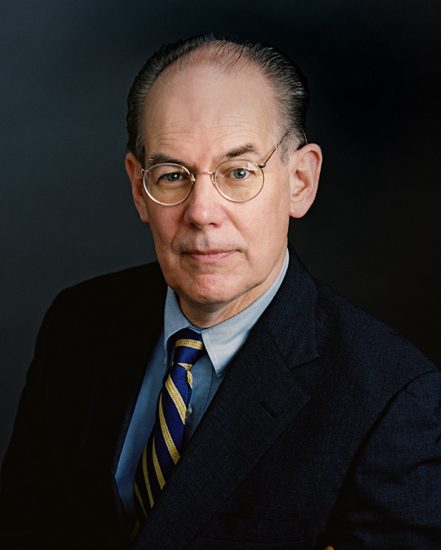
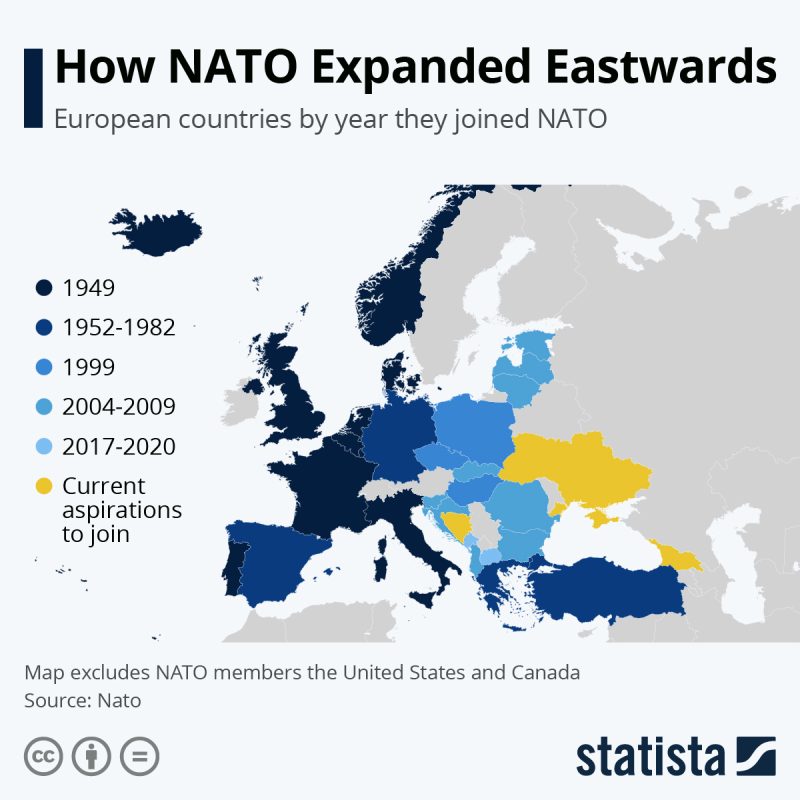
    To find an explanation for the conflict over Ukraine, two theorists are very often referred to, John Mearsheimer from the U.S. and Alexander Dugin from Russia. The defenders of Russia resort to the line of thought of the neo-realists, which was significantly influenced by Mearsheimer. And Mearsheimer argues that Ukraine is not the issue at all, but rather a global political showdown between the United States and Russia over spheres of influence. He attests that the Russian side under Putin is only reacting to a covert war of the USA – with the means at their disposal. And with countries like Sweden, Finland and even Switzerland soon to join NATO, the U.S. strategy – if the government in Washington had stuck to Mearsheimer’s indirect script – would have been extremely successful. The unity of the West under U.S. leadership has also been restored overnight. Mearsheimer is always used in this context as evidence of the true intentions of the U.S. and the real culprit in this war. However, it is not only questionable whether Mearsheimer had the ear of the U.S. government – much more decisive is that he not only presents an analysis but in a sense naturalizes the struggle for spheres of influence and large areas. For the next step, if one were to share his views, one would have to concede such a policy to the US as well? And in essence, Mearsheimer can hardly hide the fact that neo-realism has models in the large-area policy of the Nazis and at least that of Carl Schmitt.

    Dugin’s vision of Eurasia, on the other hand, is ideologically determined. But from his writings can be read the will to reconquer the Baltic states and large parts of the former Soviet Union and the Warsaw Treaty after Ukraine and to achieve at least Russian hegemony in Europe.

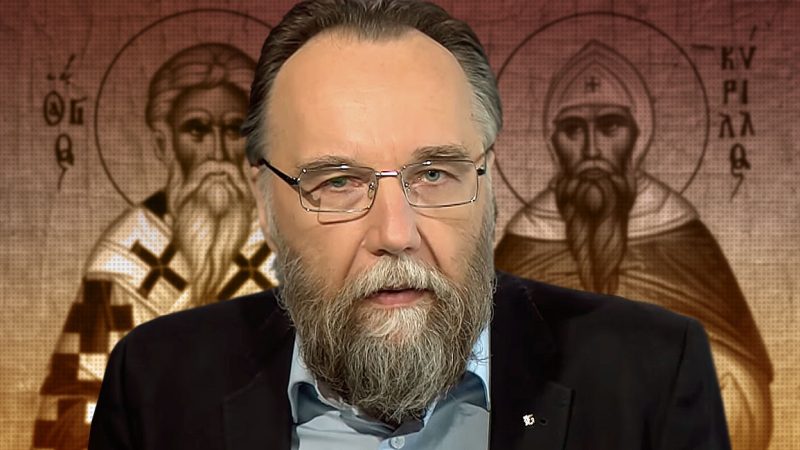
    The same applies to the dreams of Alexander Dugin, a neo-fascist ideologue who has at times been said to be particularly close to Vladimir Putin. Just as with Mearsheimer, the government action of Russia cannot be traced to his ideologue, but there are similarities here as well. Dugin, too, starts from large spaces and, like Putin, includes in his considerations the great Eurasian project, the political-ideological linking of Asia and Europe under Russian leadership. And indeed, this perspective already exists in the Chinese New Silk Road and is being built up economically by President Xi and the Chinese leadership with billions of Yuan. Dugin’s vision of Eurasia, on the other hand, is ideologically determined. But from his writings can be read the will to reconquer the Baltic states and large parts of the former Soviet Union and the Warsaw Treaty after Ukraine and to achieve at least Russian hegemony in Europe.

    What seems progressive here at first glance is the rejection of human equality – at its core, Dugin is concerned with a strictly hierarchical, estates-based society in which “white, male Europeans” are at the top.

    In this way, Dugin positioned himself as an outstanding representative of geopolitical thought as well as a mastermind of a “Eurasian” – as opposed to “Atlantic” – cultural space. This corresponds to the “fourth political theory” he postulates, which, after liberalism, fascism and communism, is most likely to ensure the survival of mankind in the age of globalization in his view. Dugin’s theoretical advisers, besides Heidegger, is the French founder of the “Nouvelle Droite,” Alain de Benoist.  All political systems of modernity are accordingly the results of three ideologies: The first and oldest, he says, is liberal democracy, the second is Marxism, and the third is fascism. The latter has long since failed, banished from history; the first no longer functions as an ideology, but as something taken for granted. The world today is on the brink of a post-political reality in which the values of liberalism are so deeply ingrained that the average person is not even aware of the effect of an ideology in his environment. Thus, liberalism threatens to monopolize political discourse, to flood the world with a universalistic sameness, and to destroy everything that makes different cultures and peoples unique. What seems progressive here at first glance is the rejection of human equality – at its core, Dugin is concerned with a strictly hierarchical, estates-based society in which “white, male Europeans” are at the top.

    a new policy of the Non-Aligned Movement is necessary, because as understandable as partisanship may be due to the suffering in Ukraine, we should not allow ourselves to be instrumentalized by either side.

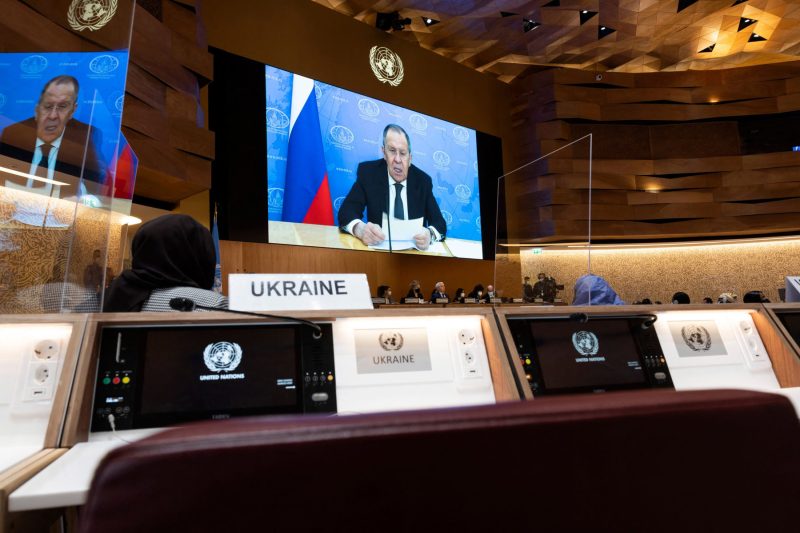
    At their core, Mearsheimer and equally Dugin are representatives of a neo-colonial policy, in that they want to divide the whole world into their spheres of influence. This is what the U.S. has been trying to do since 2001 and now Russia as well. Still unclear is the role of China, which has not yet made a final decision and sees itself equally threatened by both visions. Instead of taking sides for one of the two positions, a new policy of the Non-Aligned Movement is necessary, because as understandable as partisanship may be due to the suffering in Ukraine, we should not allow ourselves to be instrumentalized by either side. Foreign Minister Lavrov had spoken of the need for a balanced world order during his visit to New Delhi. It would be of fundamental importance if Russia were to adhere to this itself. The real actors in such a balanced world order, however, would be the middle powers in a new movement of non-aligned states.

    Feature Image Credit: ipis.ir

  • America defeats Germany for the third time in a century

    America defeats Germany for the third time in a century

    This is a very profound article by Michael Hudson, wherein he exposes the real drivers of the conflict in Ukraine – the American Military Industrial Complex; Oil, Gas and Mining Industry; and the FIRE (Finance, Insurance and Real Estate) – the three oligarchs who form the deep state or the national security state that conducts the American foreign policy. To this we can add the fourth – the Big Tech. Clearly, as Paul Kennedy identified more than three decades ago, like all empires of the past, the American Empire has entered an irretrievable imperial overstretch and the consequent decline that would accelerate post the war in Ukraine.

    TPF is happy to republish this excellently analysed article by Michael Hudson under the Creative Commons Attribution-Non Commercial-No Derivatives 4.0 International License. It was published earlier in MRonline.

    The MIC, OGAM and FIRE Sectors Conquer NATO

    My old boss Herman Kahn, with whom I worked at the Hudson Institute in the 1970s, had a set speech that he would give at public meetings. He said that back in high school in Los Angeles, his teachers would say what most liberals were saying in the 1940s and 50s: “Wars never solved anything.” It was as if they never changed anything—and therefore shouldn’t be fought.

    Herman disagreed, and made lists of all sorts of things that wars had solved in world history, or at least changed. He was right, and of course that is the aim of both sides in today’s New Cold War confrontation in Ukraine.

    The question to ask is what today’s New Cold War is trying to change or “solve.” To answer this question, it helps to ask who initiates the war. There always are two sides—the attacker and the attacked. The attacker intends certain consequences, and the attacked looks for unintended consequences of which they can take advantage. In this case, both sides have their dueling sets of intended consequences and special interests.

    the U.S. policy executed by the Clinton and subsequent administrations to wage a new military expansion via NATO has paid a 30-year dividend in the form of shifting the foreign policy of Western Europe and other American allies out of their domestic political sphere into their own U.S.-oriented “national security” blob. NATO has become Europe’s foreign policy-making body, even to the point of dominating domestic economic interests.

    The active military force and aggression since 1991 has been the United States. Rejecting mutual disarmament of the Warsaw Pact countries and NATO, there was no “peace dividend.” Instead, the U.S. policy executed by the Clinton and subsequent administrations to wage a new military expansion via NATO has paid a 30-year dividend in the form of shifting the foreign policy of Western Europe and other American allies out of their domestic political sphere into their own U.S.-oriented “national security” blob (the word for special interests that must not be named). NATO has become Europe’s foreign policy-making body, even to the point of dominating domestic economic interests.

    The recent prodding of Russia by expanding Ukrainian anti-Russian ethnic violence by Ukraine’s neo-Nazi post-2014 Maidan regime was aimed at (and has succeeded in) forcing a showdown in response the fear by U.S. interests that they are losing their economic and political hold on their NATO allies and other Dollar Area satellites as these countries have seen their major opportunities for gain to lie in increasing trade and investment with China and Russia.

    To understand just what U.S. aims and interests are threatened, it is necessary to understand U.S. politics and “the blob,” that is, the government central planning that cannot be explained by looking at ostensibly democratic politics. This is not the politics of U.S. senators and representatives representing their congressional voting districts or states.

    America’s three oligarchies in control of U.S. foreign policy

    It is more realistic to view U.S. economic and foreign policy in terms of the military-industrial complex, the oil and gas (and mining) complex, and the banking and real estate complex than in terms of the political policy of Republicans and Democrats. The key senators and congressional representatives do not represent their states and districts as much as the economic and financial interests of their major political campaign contributors.

    It is more realistic to view U.S. economic and foreign policy in terms of the military-industrial complex, the oil and gas (and mining) complex, and the banking and real estate complex than in terms of the political policy of Republicans and Democrats. The key senators and congressional representatives do not represent their states and districts as much as the economic and financial interests of their major political campaign contributors. A Venn diagram would show that in today’s post-Citizens United world, U.S. politicians represent their campaign contributors, not voters. And these contributors fall basically into three main blocs.
    Three main oligarchic groups that have bought control of the Senate and Congress to put their own policy makers in the State Department and Defense Department.

    First is the Military-Industrial Complex (MIC)—arms manufacturers such as Raytheon, Boeing and Lockheed-Martin, have broadly diversified their factories and employment in nearly every state, and especially in the Congressional districts where key Congressional committee heads are elected. Their economic base is monopoly rent, obtained above all from their arms sales to NATO, to Near Eastern oil exporters and to other countries with a balance of payments surplus. Stocks for these companies soared immediately upon news of the Russian attack, leading a two-day stock market surge as investors recognized that war in a world of cost-plus “Pentagon capitalism” (as Seymour Melman described it) will provide a guaranteed national security umbrella for monopoly profits for war industries. Senators and Congressional representatives from California and Washington traditionally have represented the MIC, along with the solid pro-military South. The past week’s military escalation promises soaring arms sales to NATO and other U.S. allies, enriching the actual constituents of these politicians. Germany quickly agreed to raise its arms spending to over 2% of GDP.

    Monopolizing the Dollar Area’s oil market and isolating it from Russian oil and gas has been a major U.S. priority for over a year now, as the Nord Stream 2 pipeline threatened to link the Western European and Russian economies more tightly together.

    The second major oligarchic bloc is the rent-extracting oil and gas sector, joined by mining (OGAM), riding America’s special tax favoritism granted to companies emptying natural resources out of the ground and putting them mostly into the atmosphere, oceans and water supply. Like the banking and real estate sector seeking to maximize economic rent and maximizing capital gains for housing and other assets, the aim of this OGAM sector is to maximize the price of its energy and raw materials so as to maximize its natural resource rent. Monopolizing the Dollar Area’s oil market and isolating it from Russian oil and gas has been a major U.S. priority for over a year now, as the Nord Stream 2 pipeline threatened to link the Western European and Russian economies more tightly together.

    If oil, gas and mining operations are not situated in every U.S. voting district, at least their investors are. Senators from Texas and other Western oil-producing and mining states are the leading OGAM lobbyists, and the State Department has a heavy oil sector influence providing a national security umbrella for the sector’s special tax breaks. The ancillary political aim is to ignore and reject environmental drives to replace oil, gas and coal with alternative sources of energy. The Biden administration accordingly has backed the expansion of offshore drilling, supported the Canadian pipeline to the world’s dirtiest petroleum source in the Athabasca tar sands, and celebrated the revival of U.S. fracking.

    The foreign policy extension is to prevent foreign countries not leaving control of their oil, gas and mining to U.S. OGAM companies from competing in world markets with U.S. suppliers. Isolating Russia (and Iran) from Western markets will reduce the supply of oil and gas, pushing up prices and corporate profits accordingly.

    The third major oligarchic group is the symbiotic Finance, Insurance and Real Estate (FIRE) sector, which is the modern finance-capitalist successor to Europe’s old post-feudal landed aristocracy living by land rents. With most housing in today’s world having become owner-occupied (although with sharply rising rates of absentee landlordship since the post-2008 wave of Obama Evictions), land rent is paid largely to the banking sector in the form of mortgage interest and debt amortization (on rising debt/equity ratios as bank lending inflates housing prices). About 80 percent of U.S. and British bank loans are to the real estate sector, inflating land prices to create capital gains—which are effectively tax exempt for absentee owners.

    Internationally, the FIRE sector’s aim is to privatize foreign economies (above all to secure the privilege of credit creation in U.S. hands), so as to turn government infrastructure and public utilities into rent seeking monopolies to provide basic services (such as health care, education, transportation, communications and information technology) at maximum prices instead of at subsidized prices to reduce the cost of living and doing business.

    This Wall Street-centered banking and real estate bloc is even more broadly based on a district-by-district basis than the MIC. Its New York senator from Wall Street, Chuck Schumer, heads the Senate, long supported by Delaware’s former Senator from the credit card industry Joe Biden, and Connecticut’s senators from the insurance sector centered in that state. Domestically, the aim of this sector is to maximize land rent and the “capital’ gains resulting from rising land rent. Internationally, the FIRE sector’s aim is to privatize foreign economies (above all to secure the privilege of credit creation in U.S. hands), so as to turn government infrastructure and public utilities into rent seeking monopolies to provide basic services (such as health care, education, transportation, communications and information technology) at maximum prices instead of at subsidized prices to reduce the cost of living and doing business. And Wall Street always has been closely merged with the oil and gas industry (viz. the Rockefeller-dominated Citigroup and Chase Manhattan banking conglomerates).

    The FIRE, MIC and OGAM sectors are the three rentier sectors that dominate today’s post-industrial finance capitalism. Their mutual fortunes have soared as MIC and OGAM stocks have increased. And moves to exclude Russia from the Western financial system (and partially now from SWIFT), coupled with the adverse effects of isolating European economies from Russian energy, promise to spur an inflow into dollarized financial securities

    As mentioned at the outset, it is more helpful to view U.S. economic and foreign policy in terms of the complexes based on these three rentier sectors than in terms of the political policy of Republicans and Democrats. The key senators and congressional representatives are not representing their states and districts as much as the economic and financial interests of their major donors. That is why neither manufacturing nor agriculture play the dominant role in U.S. foreign policy today. The convergence of the policy aims of America’s three dominant rentier groups overwhelms the interests of labor and even of industrial capital beyond the MIC. That convergence is the defining characteristic of today’s post-industrial finance capitalism. It is basically a reversion to economic rent-seeking, which is independent of the politics of labor and industrial capital.

    The dynamic that needs to be traced today is why this oligarchic blob has found its interest in prodding Russia into what Russia evidently viewed as a do-or-die stance to resist the increasingly violent attacks on Ukraine’s eastern Russian-speaking provinces of Luhansk and Donetsk, along with the broader Western threats against Russia.

    The rentier “blob’s” expected consequences of the New Cold War

    As President Biden explained, the current U.S.-orchestrated military escalation (“Prodding the Bear”) is not really about Ukraine. Biden promised at the outset that no U.S. troops would be involved. But he has been demanding for over a year that Germany prevent the Nord Stream 2 pipeline from supplying its industry and housing with low-priced gas and turn to the much higher-priced U.S. suppliers.

    U.S. officials first tried to stop construction of the pipeline from being completed. Firms aiding in its construction were sanctioned, but finally Russia itself completed the pipeline. U.S. pressure then turned on the traditionally pliant German politicians, claiming that Germany and the rest of Europe faced a National Security threat from Russia turning off the gas, presumably to extract some political or economic concessions. No specific Russian demands could be thought up, and so their nature was left obscure and blob-like. Germany refused to authorize Nord Stream 2 from officially going into operation.

    A major aim of today’s New Cold War is to monopolize the market for U.S. shipments of liquified natural gas (LNG)

    A major aim of today’s New Cold War is to monopolize the market for U.S. shipments of liquified natural gas (LNG). Already under Donald Trump’s administration, Angela Merkel was bullied into promising to spend $1 billion building new port facilities for U.S. tanker ships to unload natural gas for German use. The Democratic election victory in November 2020, followed by Ms. Merkel’s retirement from Germany’s political scene, led to cancellation of this port investment, leaving Germany really without much alternative to importing Russian gas to heat its homes, power its electric utilities, and to provide raw material for its fertilizer industry and hence the maintenance of its farm productivity.

    So the most pressing U.S. strategic aim of NATO confrontation with Russia is soaring oil and gas prices, above all to the detriment of Germany. In addition to creating profits and stock market gains for U.S. oil companies, higher energy prices will take much of the steam out of the German economy. That looms as the third time in a century that the United States has defeated Germany—each time increasing its control over a German economy increasingly dependent on the United States for imports and policy leadership, with NATO being the effective check against any domestic nationalist resistance.

    Higher gasoline, heating and other energy prices also will hurt U.S. consumers and those of other nations (especially Global South energy-deficit economies) and leave less of the U.S. family budget for spending on domestic goods and services. This could squeeze marginalized homeowners and investors, leading to further concentration of absentee ownership of housing and commercial property in the United States, along with buyouts of distressed real estate owners in other countries faced with soaring heating and energy costs. But that is deemed collateral damage by the post-industrial blob.

    Food prices also will rise, headed by wheat. (Russia and Ukraine account for 25 percent of world wheat exports.) This will squeeze many Near Eastern and Global South food-deficit countries, worsening their balance of payments and threatening foreign debt defaults.

    Russian raw materials exports may be blocked by Russia in response to the currency and SWIFT sanctions. This threatens to cause breaks in supply chains for key materials, including cobalt, palladium, nickel and aluminum (the production of which consumes much electricity as its major cost—which will make that metal more expensive). If China decides to see itself as the next nation being threatened and joins Russia in a common protest against the U.S. trade and financial warfare, the Western economies are in for a serious shock.

    The long-term dream of U.S. New Cold Warriors is to break up Russia, or at least to restore its Yeltsin/Harvard Boys managerial kleptocracy, with oligarchs seeking to cash in their privatizations in Western stock markets

    The long-term dream of U.S. New Cold Warriors is to break up Russia, or at least to restore its Yeltsin/Harvard Boys managerial kleptocracy, with oligarchs seeking to cash in their privatizations in Western stock markets. OGAM still dreams of buying majority control of Yukos and Gazprom. Wall Street would love to recreate a Russian stock market boom. And MIC investors at happily anticipating the prospect of selling more weapons to help bring all this about.

    Russia’s intentions to benefit from America’s unintended consequences

    What does Russia want? Most immediately, to remove the neo-Nazi anti-Russian core that the Maidan massacre and coup put in place in 2014. Ukraine is to be neutralized, which to Russia means basically pro-Russian, dominated by Donetsk, Luhansk and Crimea. The aim is to prevent Ukraine from becoming a staging ground of U.S.-orchestrated anti-Russian moves a la Chechnya and Georgia.

    Russia’s aim is to dissolve NATO altogether, and then to promote the broad disarmament and denuclearization policies that Russia has been pushing for. Not only will this cut back foreign purchases of U.S. arms, but it may end up leading to sanctions against future U.S. military adventurism

    Russia’s longer term aim is to pry Europe away from NATO and U.S. dominance—and in the process, create with China a new multipolar world order centered on an economically integrated Eurasia. The aim is to dissolve NATO altogether, and then to promote the broad disarmament and denuclearization policies that Russia has been pushing for. Not only will this cut back foreign purchases of U.S. arms, but it may end up leading to sanctions against future U.S. military adventurism. That would leave America with less ability to fund its military operations as de-dollarization accelerates.

    Now that it should be obvious to any informed observer that (1) NATO’s purpose is aggression, not defense, and (2) there is no further territory for it to conquer from the remains of the old Soviet Union, what does Europe get out of continued membership? It is obvious that Russia never again will invade Europe. It has nothing to gain—and had nothing to gain by fighting Ukraine, except to roll back NATO’s proxy expansion into that country and the NATO-backed attacks on Novorossiya.

    Will European nationalist leaders (the left is largely pro-US) ask why their countries should pay for U.S. arms that only put them in danger, pay higher prices for U.S. LNG and energy, pay more for grain and Russian-produced raw materials, all while losing the option of making export sales and profits on peaceful investment in Russia—and perhaps losing China as well?

    The U.S. confiscation of Russian monetary reserves, following the recent theft of Afghanistan’s reserves (and England’s seizure of Venezuela’s gold stocks held there) threatens every country’s adherence to the Dollar Standard, and hence the dollar’s role as the vehicle for foreign exchange savings by the world’s central banks. This will accelerate the international de-dollarization process already started by Russia and China relying on mutual holdings of each other’s currencies.

    Over the longer term, Russia is likely to join China in forming an alternative to the U.S.-dominated IMF and World Bank. Russia’s announcement that it wants to arrest the Ukrainian Nazis and hold a war crimes trial seems to imply an alternative to the Hague court will be established following Russia’s military victory in Ukraine. Only a new international court could try war criminals extending from Ukraine’s neo-Nazi leadership all the way up to U.S. officials responsible for crimes against humanity as defined by the Nuremberg laws.

    Did the American blob actually think through the consequences of NATO’s war?

    It is almost black humor to look at U.S. attempts to convince China that it should join the United States in denouncing Russia’s moves into Ukraine. The most enormous unintended consequence of U.S. foreign policy has been to drive Russia and China together, along with Iran, Central Asia and other countries along the Belt and Road initiative.

    Russia dreamed of creating a new world order, but it was U.S. adventurism that has driven the world into an entirely new order—one that looks to be dominated by China as the default winner

    Russia dreamed of creating a new world order, but it was U.S. adventurism that has driven the world into an entirely new order—one that looks to be dominated by China as the default winner now that the European economy is essentially torn apart and America is left with what it has grabbed from Russia and Afghanistan, but without the ability to gain future support.

    And everything that I have written above may already be obsolete as Russia and the U.S. have gone on atomic alert. My only hope is that Putin and Biden can agree that if Russia hydrogen bombs Britain and Brussels, that there will be a devil’s (not gentleman’s) agreement not to bomb each other.

    With such talk I’m brought back to my discussions with Herman Kahn 50 years ago. He became quite unpopular for writing Thinking about the Unthinkable, meaning atomic war. As he was parodied in Dr. Strangelove, he did indeed say that there would indeed be survivors. But he added that for himself, he hoped to be right under the atom bomb, because it was not a world in which he wanted to survive.

  • Washington Accuses Russia of Committing War Crimes in Ukraine: Terrible and True, But What About US War Crimes?

    Washington Accuses Russia of Committing War Crimes in Ukraine: Terrible and True, But What About US War Crimes?

    This article is republished from Antiwar.com with permission.

    Nothing can justify this terrible toll and Moscow’s attack. However, those who judge the moral conduct of others should be measured by the same standard. Which raises the question of war crimes committed by the US in its many conflicts.

    Washington appears intent on making Russia’s war on Ukraine into a moral crusade. Pentagon spokesman John Kirby last week declared that “we’re certainly seeing clear evidence that the Russian military is conducting war crimes.”

    Any large-scale conflict is going to kill civilians, some directly in combat, others from the impact of war’s destructive impact on a modern society. Thus, Russian attacks on Ukrainian cities such as Mariupol cannot help but kill civilians. Last week the UN Office of the High Commissioner for Human Rights estimated 953 dead and 1557 injured Ukrainian civilians. But that is merely the number of victims whose death can be confirmed.

    OHCHR reported that it “believes that the actual figures are considerably higher, especially in Government-controlled territory and especially in recent days, as the receipt of information from some locations where intense hostilities have been going on has been delayed and many reports are still pending corroboration. This concerns, for example, Mariupol and Volnovakha (Donetsk region), Izium (Kharkiv region), Sievierodonetsk and Rubizhne (Luhansk region), and Trostianets (Sumy region), where there are allegations of numerous civilian casualties. These figures are being further corroborated and are not included in the above statistics.”

    And if war criminals were routinely prosecuted, Americans would be in the dock as well as Russians.

    Nothing can justify this terrible toll and Moscow’s attack. However, those who judge the moral conduct of others should be measured by the same standard. Which raises the question of war crimes committed by the US in its many conflicts. American forces may attempt to fight “cleaner” wars than does Russia, but even so no one should have any illusion about the high civilian cost of Washington’s interventions. Innocent people die, some directly, many indirectly. And if war criminals were routinely prosecuted, Americans would be in the dock as well as Russians.

    Consider Washington’s widespread drone war. One terrible strike made last August when Americans were withdrawing from Afghanistan wiped out a family, including seven kids. It was a terrible mistake, but the US was culpable. Reported the New York Times: “Military officials said they did not know the identity of the car’s driver when the drone fired, but deemed him suspicious because of how they interpreted his activities that day, saying that he possibly visited an ISIS safe house and, at one point, loaded what they thought could be explosives into the car.” [Italics added] Upon this litany of unproved suppositions, which turned out to be wild speculation, Washington acted like a terrorist and wiped him out along with all those around him.

    Such mistakes are common because America relies on such “signature” strikes, based on interpretating the actions of people typically hundreds or thousands of miles away. Noted the New York Times: “Every independent investigation of the strikes has found far more civilian casualties than administration officials admit. Gradually, it has become clear that when operators in Nevada fire missiles into remote tribal territories on the other side of the world, they often do not know who they are killing, but are making an imperfect best guess.”

    Afghanistan has been a major focus of America’s drone war. A detailed investigation in 2015 by two media organizations and a foundation concluded that drone strikes had killed 3852 people, 476 of whom were civilians. That’s a civilian kill rate of 12.4 percent, better than untargeted air or artillery strikes, but still much higher than claimed by Washington.

    According to journalist Emran Feroz: “Afghanistan is the most drone-bombed country in the world. The United States dropped more bombs on Afghanistan in 2019 than in any other years since the Defense Department began keeping track in 2006. According to new figures released by the U.S. military, at least 7,423 bombs and other munitions were dropped on the country in 2019, a nearly eight-fold increase from 2015 and an average of 20 bombs a day.”

    He described another drone attack that apparently went awry: “Ordinary Afghans say it has happened to them many times and never – not once – has it made news anywhere outside Afghanistan. Last November, an American Reaper drone targeted a group of villagers in the mountainous area of Afghanistan’s southeastern province of Paktia and killed seven of them. Paktia has long been home to Taliban militants, but local residents say all the victims were civilians, including three women and one child. They had gone to the remote area to graze their cattle and collect wood. Suddenly, they were dead.”

    Another cost of the drone war: creating new terrorists who target Americans. Waging war on Muslims around the world makes a lot of enemies, some of whom strike back.

    For instance, Pakistani-American Faisal Shahzad attempted to set off a bomb in Times Square in response to Washington’s drone campaign. He explainedto the court in 2010: “I want to plead guilty 100 times because unless the United States pulls out of Afghanistan and Iraq, until they stop drone strikes in Somalia, Pakistan and Yemen and stop attacking Muslim lands, we will attack the United States and be out to get them.” The judge asked him why he was willing to kill kids. He explained: “When the drones hit, they don’t see children.” Hence, Shahzad concluded that “I am part of the answer to the US killing the Muslim people.”

    America’s anti-ISIS bombing campaign also killed civilians in prodigious numbers. NPR reported on the work of New York Times correspondent David Philipps, who said “the United States’ air war against ISIS seems to have been particularly brutal on innocent civilians in Syria. In recent stories, Philipps reports that a top-secret unit of the US military was allowed to pick targets for drone attacks and bombing runs with little oversight, and that as the conflict wore on, it increasingly sidestepped rules to protect noncombatants, ordering airstrikes that killed farmers in their fields, children in the street and families fleeing combat.”

    According to Philipps, the military counted 1400 dead civilians “during the four years of the war. And they were very confident that those numbers were real and that outside organizations like Human Rights Watch that were reporting numbers that were many times higher were being unreasonable. But once we looked under the hood at how it worked, we found that, you know, time and time again, their accounts were just seriously flawed.”

    The Times explained that it “worked with journalist Azmat Khan, who went to dozens and dozens of these sites on the ground and talked to people who were there and compared what they said to what the military’s own records said and found repeatedly that there was a gulf between them.” For instance, Human Rights Watch estimated some 7000 dead civilians. A toll that dwarfs the number of civilian dead in Ukraine, where the US is blaming Russia for committing war crimes.

    The US also has armed Saudi Arabia and United Arab Emirates, helping them wreak death and destruction against Yemen, the poorest nation in the Mideast. No participant in this civil war, which was internationalized by the Saudis and Emiratis, looks good. However, most casualties and damage are a result of the royal regimes’ air attacks and effective blockade, which has resulted in mass malnutrition, immiseration, and disease.

    President Joe Biden once criticized the Kingdom of Saudi Arabia and its pernicious role in the Yemen war. Like so many of his predecessors, however, he has since effectively turned US policy over to Riyadh and Abu Dhabi, continuing to sell them weapons and deploying US forces to help protect them from retaliation for their continuing attacks on Yemeni civilians. A year after the president took office the war is heating back up in Yemen.

    Reported the Yemen Data Project: “January 2022 was the most violent month in the Saudi-led air war in Yemen in more than five years. Yemen Data Project recorded 139 civilian deaths and 287 civilians injured in Saudi coalition airstrikes in January, taking the casualty toll to over 19,000 civilians killed and injured since Saudi Arabia launched its bombing campaign in Yemen in March 2015. Not since October 2016 have more civilian casualties been recorded in a single month in the air war. Saudi-led coalition airstrikes caused more civilian harm in the first month of 2022 than in the two previous years combined.”

    The UN Group of Eminent International and Regional Experts on Yemenrevealed that civilians were routinely targeted by the Saudi and Emirati royals. Victims included “civilians shopping at markets, receiving care in hospitals, or attending weddings and funerals; children on buses; fishers in boats; migrants seeking a better life; individuals strolling through their neighborhoods; and people who were at home.”

    Widespread air attacks also wrecked basic infrastructure, with catastrophic consequences for health, nutrition, commerce, and safety. The United Nations Development Program reported:

    “By comparing the current reality in Yemen to a scenario where no conflict ever occurred, we can provide an estimate of the total death count – the number of deaths caused both directly and indirectly from the conflict. By doing so, we found that by the end of 2021, Yemen’s conflict will lead to 377,000 deaths – nearly 60 per cent of which are indirect and caused by issues associated with conflict like lack of access to food, water, and healthcare. These deaths are overwhelmingly made up of young children who are especially vulnerable to under and malnutrition. In 2021, a Yemeni child under the age of five dies every nine minutes because of the conflict. This is a significant increase since our 2019 report, Assessing the Impact of War on Development in Yemen, that – through the same assessment – found this to be approximately every 12 minutes.”

    In 2021, a Yemeni child under the age of five dies every nine minutes because of the conflict.

    The experts’ group also found devastating impact: “Protracted conflict, disease outbreaks, the COVID-19 pandemic, flooding, import restrictions, an economic and fuel crisis, and limited humanitarian aid have made everyday life in Yemen unbearable for many. According to the Office for the Coordination of Humanitarian Affairs, around 20.7 million people in Yemen currently require some form of humanitarian and protection assistance. More than 16.2 million of them will face significant food insecurity this year. Additionally, international funding has fallen far short of the required levels to address the humanitarian crisis.”

    Harm from this kind of warfare goes even further. Last fall the experts’ group observed that “Living in a country subjected to an average of 10 airstrikes per day has left millions feeling far from safe. Although the frequency and intensity of airstrikes have fluctuated over the last four years, the Group of Eminent Experts has continued to observe their devastating impact on civilians.”

    “The civilian death toll from Saudi Arabia’s disastrous air war over Yemen was steadily rising in 2016 when the State Department’s legal office in the Obama administration reached a startling conclusion: Top American officials could be charged with war crimes for approving bomb sales to the Saudis and their partners. Four years later, more than a dozen current and former US officials say the legal risks have only grown as President Trump has made selling weapons to Saudi Arabia, the United Arab Emirates and other Middle East nations a cornerstone of his foreign policy.”

    Assessing Washington’s moral blame in aiding the royal aggressors is easy. The legal case is more difficult, but the State Department already made the connection. It warned previous administrations that US officials were committing war crimes. The New York Times reported: “The civilian death toll from Saudi Arabia’s disastrous air war over Yemen was steadily rising in 2016 when the State Department’s legal office in the Obama administration reached a startling conclusion: Top American officials could be charged with war crimes for approving bomb sales to the Saudis and their partners. Four years later, more than a dozen current and former US officials say the legal risks have only grown as President Trump has made selling weapons to Saudi Arabia, the United Arab Emirates and other Middle East nations a cornerstone of his foreign policy.”

    Washington intervened in Libya’s civil war more than a decade ago to promote regime change under cover of helping to protect civilians from the Khadafy government. The country that was the most developed and wealthiest in Africa was bombed to stone age by the US and NATO.

    There is much more to criticize in US policy. Rural Afghanistan suffered desperately for years as a battleground between the US and Taliban, causing many residents to turn toward the insurgents. Washington intervened in Libya’s civil war more than a decade ago to promote regime change under cover of helping to protect civilians from the Khadafy government. Hopes for a better future remained unfulfilled as contending factions subsequently fought for control and now squabble over plans to hold elections.

    Russia deserves to be criticized and held accountable for its increasingly brutal military campaign in Ukraine. However, Washington would have more credibility to judge if its message wasn’t do as I say, not as a I do. US officials should come clean internationally and admit when they have failed in their obligation to protect human rights, including in wartime. Next time they shouldn’t just promise to do better. They should do so.


  • Divided World: The UN Condemnation of Russia is endorsed by Countries run by the richest, oldest, Whitest people on Earth but only 41% of the World’s population

    Divided World: The UN Condemnation of Russia is endorsed by Countries run by the richest, oldest, Whitest people on Earth but only 41% of the World’s population

    On March 2 of this year the UN General Assembly met in an Emergency Session to pass a non-binding resolution condemning Russia’s February 24 intervention in Ukraine.1 141 countries voted for the resolution, 5 voted against, 35 abstained, and 12 did not vote. (Reported: Guardian, Al Jazeera, iNews)

    although the war is nominally a conflict between two developed and ethnically white nations, Russia and Ukraine, this UN vote suggests the war may be viewed by much of the world as a fight over the global political and economic system that institutionalizes the imperial hierarchy, the distribution of nations between rich and poor, and global white supremacy


    In the absence of any reliable opinion poll of the world’s 7.9 billion people, this vote may indicate that the majority of humanity sympathizes with Russia in Ukraine. The statistics presented below show that only 41% of the world’s people live in countries that joined the U.S. in voting for the UN resolution.

    This lopsided vote is even more striking if you consider the demographics. Populations represented by governments that did not vote for the resolution are much more likely to include the world’s poorest nations, nations with younger populations, “nations of color,” nations of the Global South, and nations in the periphery of the world economic system.

    To put it another way, although the war is nominally a conflict between two developed and ethnically white nations, Russia and Ukraine, this UN vote suggests the war may be viewed by much of the world as a fight over the global political and economic system that institutionalizes the imperial hierarchy, the distribution of nations between rich and poor, and global white supremacy.


    The UN vote by population

    41% or 34% amounts to a resounding, humiliating defeat for the U.S. on this non-binding UN resolution. Instead it is reported in the west as a U.S. victory and an “overwhelming” worldwide condemnation of Russia.

    Of the world’s 7,934,000,000 people, 59% live in countries that did not support the resolution and only 41% live in countries that did.2 But that last figure drops to 34% outside of the immediate belligerents and their allies: Ukraine, U.S., and NATO countries, and on the other side, Russia, Armenia, Belarus, Kazakhstan, Kyrgystan, and Tajikistan (all the countries of the Collective Security Treaty Organization).

    41% or 34% amounts to a resounding, humiliating defeat for the U.S. on this non-binding UN resolution. Instead it is reported in the west as a U.S. victory and an “overwhelming” worldwide condemnation of Russia.

    The UN vote and GDP per capita

    All the countries in the top third of the GDP per capita (nominal) rankings, including Japan and all the countries of Western Europe and North America, voted for the resolution, Venezuela being the only country in the top third that did not.

    Of the countries that did not vote for the resolution, most are ranked the poorest in the world, and almost none came above the approximate midpoint rank of 98. The exceptions were: Venezuela (58), Russia (68), Equatorial Guinea (73), Kazakhstan (75), China (76) Cuba (82), Turkmenistan (92), South Africa (95), Belarus (97).3

    The UN vote and the core/periphery divide

    Another way to show the wealth divide in the UN vote is by distinguishing core and peripheralcountries. In world-systems theory the surplus value of labor flows disproportionately to the core countries: “The countries of the world can be divided into two major world regions: the ‘core’ and the ‘periphery.’ The core includes major world powers and the countries that contain much of the wealth of the planet. The periphery has those countries that are not reaping the benefits of global wealth and globalization.” (Colin Stief, ThoughtCo.com, 1/21/20)

    The countries usually considered in the core are: Australia, Austria, Belgium, Canada, Denmark, Finland, France, Germany, Greece, Iceland, Ireland, Italy, Japan, Luxembourg, Netherlands, New Zealand, Norway, Portugal, Singapore, Spain, Sweden, Switzerland, United Kingdom, United States.

    The difference here is stark. Every single core country voted for the resolution and every country that did not is either in the periphery or in some cases, like Russia or China, in the semi-periphery.


    The UN vote and median age

    All the countries ranked in the top third of median age rankings, from Monaco (51.1 years) to Iceland (36.5 years), voted for the resolution, with the following exceptions: China (37.4), Russia (39.6), Belarus (40), Cuba (41.5).

    Of the twenty entries with the lowest median ages (15.4 to 18.9), only half voted for the resolution.

    The UN vote and “countries of color”

    Of the 7,934,000,000 people in the world, 1,136,160,000 live in what are usually recognized as “white countries” (consistently or not) with about 14% of the world’s population. Yet “white countries,” by population, represent about 30% of the total vote in favor of the resolution. This “white vote” accounts for every one of the core countries (except Singapore and Japan). Compare: 97% of the population in the countries that did not vote for the resolution live in “countries of color.” Only Russia, Belarus and Armenia (which did not vote for the resolution) have dominant populations classed as “white.”

    Therefore “white countries” are overrepresented in the group that voted for the resolution (30% vs. 14%), and underrepresented in the group that did not (3% vs. 14%).

    Before the intervention

    What follows is a brief sketch of events leading to the February 24 Russian intervention that prompted the UN resolution. It is a history seldom mentioned in the mainstream media, though it is easily found in selected alternative and now-suppressed media. It is presented here as a possible, partial explanation of why the UN resolution had so little support measured by population.

    U.S./NATO has directed aggression toward Russia for decades, advancing NATO forces ever closer to Russia’s western border, ringing Russia with military bases, placing nuclear weapons at ever closer range, and breaching and discarding treaties meant to lessen the likelihood of nuclear war. The U.S. even let it be known, through its planning documents and policy statements, that it considered Ukraine a battlefield on which Ukrainian and Russian lives might be sacrificed in order to destabilize, decapitate and eventually dismember Russia just as it did Yugoslavia. Russia has long pointed out the existential security threat it sees in Ukrainian territory, and it has made persistent, peaceful, yet fruitless efforts over decades to resolve the problem (See Monthly Review’s excellent editors’ note).

    Recent history includes the 2014 U.S.-orchestrated coup in Ukraine, followed by a war of the central government against those in the eastern regions of Donetsk and Lugansk resisting the coup government and its policies. Those policies include a ban on the Russian language, the native tongue of the region and a significant part of the country (ironically, including President Zelensky).

    By the end of 2021 the war had taken 14,000 lives, four-fifths of them members of the resistance or civilian Russian speakers targeted by the government. Through years of negotiations Russia tried and failed to keep the Donetsk and Lugansk regions inside a united Ukraine. After signing the Minsk agreements that would do just that, Ukraine, under tight U.S. control, refused to comply even with step one: to talk with the rebellion’s representatives.

    As to why the intervention happend now, Vyacheslav Tetekin, Central Committee member of Russia’s largest opposition party, the Communist Party of the Russian Federation, explains:

    Starting from December, 2021 Russia had been receiving information about NATO’s plans to deploy troops and missile bases in Ukraine. Simultaneously an onslaught on the Donetsk (DPR) and Lugansk People’s Republics (LPR) was being prepared. About a week before the start of Russia’s operation the plan was uncovered of an offensive that envisaged strikes by long-range artillery, multiple rocket launchers, combat aircraft, to be followed by an invasion of Ukrainian troops and Nazi battalions. It was planned to cut off Donbas from the border with Russia, encircle and besiege Donetsk, Lugansk and other cities and then carry out a sweeping “security cleanup” with imprisonment and killing of thousands of defenders of Donbas and their supporters. The plan was developed in cooperation with NATO. The invasion was scheduled to begin in early March. Russia’s action pre-empted Kiev and NATO, which enabled it to seize strategic initiative and effectively save thousands of lives in the two republics.

    All this may have informed the world’s overwhelming rejection of the U.S.-backed UN resolution condemning Russia, which western media perversely considers a U.S. victory simply because the resolution passed. Never mind that it passed in a voting system where Liechtenstein’s vote carries the same weight as China’s.

    The Global South also knows from bitter experience that unlike the West, neither Russia nor its close partner China habitually engage in bombings, invasions, destabilization campaigns, color revolutions, coups and assassinations against the countries and governments of the Global South. On the contrary, both countries have assisted the development and military defense of such countries, as in Syria, Venezuela, Nicaragua, Cuba, Iran and elsewhere.

    Conclusion

    Just as the imperial core of North America, Europe and Japan does not represent the world in their population numbers, demographics, wealth, or power, neither does the imperial core speak for the world on crucial issues of war, peace, justice, and international law. Indeed the Global South has already spoken to the Global North so many times, in so many ways, with patience, persistence and eloquence, to little avail. Since we in the North have not been able to hear the words, perhaps we can listen to the cry of the numbers.


    Notes:

    1. The resolution “Deplores in the strongest terms the aggression by the Russian Federation against Ukraine in violation of Article 2 (4) of the Charter.” (Article 2 (4) reads: “All Members shall refrain in their international relations from the threat or use of force against the territorial integrity or political independence of any state, or in any other manner inconsistent with the Purposes of the United Nations.”) The resolution also “[d]eplores the 21 February 2022 decision by the Russian Federation related to the status of certain areas of the Donetsk and Luhansk regions of Ukraine as a violation of the territorial integrity and sovereignty of Ukraine and inconsistent with the principles of the Charter.” Beyond Russia, the resolution “[d]eplores the involvement of Belarus in this unlawful use of force against Ukraine, and calls upon it to abide by its international obligations.”
    2. The population of countries voting for the UN resolution is 3,289,310,000. The population of countries voting against the resolution, abstaining, or not voting is 4,644,694,000 (Against: 202,209,000; abstaining: 4,140,546,000; not voting: 301,939,000).
    3. Here are the countries that did not vote for the resolution, with their GDP per capita rankings (the higher the GDP the higher the rank). 5 countries voted against the resolution: Russia 68, Belarus 97, North Korea 154, Eritrea 178, Syria 147. 35 countries abstained: Algeria 119, Angola 128, Armenia 115, Bangladesh 155, Bolivia 126, Burundi 197, Central African Republic 193, China 76, Congo 143, Cuba 82, El Salvador 121, Equatorial Guinea 73, India 150, Iran 105, Iraq 103, Kazakhstan 75, Kyrgyzstan 166, Laos 140, Madagascar 190, Mali 174, Mongolia 118, Mozambique 192, Namibia 102, Nicaragua 148, Pakistan 162, Senegal 160, South Africa 95, South Sudan 168, Sri Lanka 120, Sudan 171, Tajikistan 177, Tanzania 169, Uganda 187, Vietnam 138, Zimbabwe 144. 12 countries did not vote: Azerbaijan 110, Burkina Faso 184, Cameroon 158, Eswatini 117, Ethiopia 170, Guinea 175, Guinea-Bissau 179, Morocco 130, Togo 185, Turkmenistan 92, Uzbekistan 159, Venezuela 58.


    This article was published earlier in MRonline and is republished under the Creative Commons License 4.0.

    Feature Image Credit: Alarabianews.

    Map and Table: Wikipedia

  • TPF Analysis Series on Russia – Ukraine Conflict #1

    TPF Analysis Series on Russia – Ukraine Conflict #1

    The Peninsula Foundation is releasing a series of analysis papers on the Ukraine-Russia conflict to help the public have a better understanding of the geo-political and security dimensions underlying the conflict. The first paper of the series will introduce you to an overview of the historical, political and humanitarian aspects of the ongoing conflict which is snowballing to be a major conflict and a turning point in Europe’s history since World War II.

    Russia – Ukraine History

    Russia and Ukraine have had a long interwoven history, since as early as the 18th century. One of the most contested territories, Crimea, was first annexed by the Russian empire in 1783 back when it was controlled by the Crimean Khanate. The territory then became a part of the erstwhile Soviet Union in 1921, to be later controlled by Nazi Germany for a brief period in 1942. Following the end of World War II, the autonomous status of Crimea was dissolved as it now became a province of the USSR, but was later handed over to Ukraine as a goodwill gesture by Nikita Khrushchev in 1954 to mark the 300th anniversary of Ukraine’s reunification with the USSR.

    Crimea: White Russian refugees gathering at a Crimean port during the Russian Civil War.

    Image: Library of Congress, Washington, D.C.

    With the dissolution of the Soviet Union in 1991, many had expected Boris Yelsten to take up the issue and bring back Crimea to Russia, but instead, the Crimean parliament proclaimed the independence of its territory in May 1992, a proclamation only to be annulled by Ukraine. Over twenty years later, a similar referendum, with most of the Crimean population voting to join Russia – a referendum declared illegal by Ukrainian and European governments alike. What followed next was a dramatic escalation with the deployment of the Russian Black Sea Fleet.

    Some have argued that NATO’s expansion towards the East is the primary cause of the war, since the organisation was formed primarily to counter the Soviet Union during the Cold War. While it must be acknowledged that such expansion was to be viewed by Russian officials as a provocation even back in the 1990s, the arguments, however, also take away the agency of states in Eastern Europe with most of them ‘demanding’ to join NATO, eager to reap the benefits of the West’s economic system. Over the years, several small states, including Georgia, Ukraine, Uzbekistan, Azerbaijan and Moldova, have seen their relationship with the West as a tool to bring regional stability, and increase their bargaining power against Russia.

    Events leading up to the war

    2021 was a year of security challenges that shook the world amid an ever-mutating Covid-19 pandemic. In October 2021, Russia started moving its troops and military equipment closer to the Ukraine border rekindling concerns of a potential invasion. By mid-December 2021, Russia’s Foreign Minister, Sergey Lavrov released a set of security guarantees and assurances to be met by the U.S. and NATO in exchange for non-intervention in Ukraine. Putin also threatened unspecified ‘military technical’ measures if the West fails to accede to his demands. Putin’s major demands were; (i) Ban on Ukraine entering NATO, (ii) No further expansion of NATO in the Eastern European region, (iii) Withdrawal of any troops or weapons deployed in countries which entered NATO after 1997 (Poland, Estonia, Lithuania, Latvia, and the Balkan countries), (iv) No NATO drills to be conducted in Ukraine, Georgia and Central Asia without prior agreement with Russia. Although NATO was formed to counter the USSR during the Cold War,  it continued its expansion into Eastern Europe territories even long after the dissolution of the USSR. Putin was threatened by the continuous NATO expansionism, the security implications and the loss of the Russian sphere of influence in Eastern Europe.

    The U.S. and NATO immediately rejected these main demands warning if Russia invades Ukraine, there will be serious retaliation and Russia will be met with a ‘massive forceful package’ of economic sanctions. Ukraine’s Foreign Minister Kuleba had said that although they were expecting and already experiencing aggressive Russian cyber-attacks and destabilisation of the Ukrainian economy, the number of Russian troops on the border was ‘insufficient’ and the build-up was missing some key military indicators to execute an imminent ‘full-scale invasion’ of Ukraine. Many experts and theorists also opined that despite Putin’s bold demands and his game of brinkmanship, the reality of war was in question.

    On 21st February, in a televised address Putin said that ‘Ukraine is an integral part of Russia’s history’ and declared the regions of Donetsk and Luhansk as independent Republic States and sent Russian troops into those regions for ‘peacekeeping’.

    The beginning of February showed some positive signs of diplomacy or at the least maintenance of the status quo between Ukraine and Russia despite the West’s declining Putin’s demands. However, it was only calm before the storm. On 21st February, in a televised address Putin said that ‘Ukraine is an integral part of Russia’s history’ and declared the regions of Donetsk and Luhansk as independent Republic States and sent Russian troops into those regions for ‘peacekeeping’. As a response to this, the US and other NATO members imposed economic sanctions on Russian parliament members, banks and other assets and Germany decisively halted the Nord Stream 2 gas pipeline project.

    ‘Special Military Operation’

    On 24th February, Putin announced a ’special military operation’ and Russian forces launched missile and artillery attacks on major Ukrainian cities including Kyiv. Ukrainian Foreign Minister affirmed that Russia has launched a ‘full-scale invasion of Ukraine’, following which Ukraine shut down its entire airspace as a response to the Russian operation in Donbas. The West imposed further sanctions on Russia including but not limited to, removing select Russian banks from the SWIFT system, freezing the assets of the Russian Central Bank and curbing products exported to Russia.

    Zaporizhzhia is a vital asset in fulfilling Ukraine’s energy requirements with six nuclear reactors with a capacity of generating 950MW per reactor. Capturing Zaporizhzhia nuclear power plant would have been a major plan of the invading forces given its strategic nature.

    Nearly four weeks since the Russian Federation launched a ‘special military operation’, the situation on the ground in Ukraine continues to remain dire. The United Nations Human Rights Monitoring Mission in Ukraine (HRMMU) has been responsible for documenting civilian casualties in Ukraine since 2014. In the span of three weeks, Ukraine’s infrastructure and cultural heritage have suffered irreparable damage or been completely destroyed. The ceaseless shelling by Russian forces of cities and hospitals have exacerbated the human toll.

    According to a press briefing released by the Office of the High Commissioner for Human Rights (OHCHR), civilian casualties as of 26 March 2022 stand at 2,909 – 1,119 people killed and 1,790 injured.

    The OHCHR assesses that actual figures might be higher than what is currently being reported as they wait for figures to be corroborated. Most of the civilian casualties are reportedly caused by explosive weapons with a wide impact area. This includes shelling from heavy artillery and multiple-launch rocket systems and missile and air strikes.

    In a rather unexpected move, on 4th March, 2022 the Russian forces attacked and captured the Zaporizhzhia nuclear power plant, located in Energodar, Ukraine. Zaporizhzhia is a vital asset in fulfilling Ukraine’s energy requirements with six nuclear reactors with a capacity of generating 950MW per reactor. Capturing Zaporizhzhia nuclear power plant would have been a major plan of the invading forces given its strategic nature.

    The Russian attack on the nuclear plant raised alarm bells among nations and nuclear watchdogs. Intense shelling on the complex caused a fire in one of the training buildings. Reports have noted the damage to multiple locations within the complex. The Ukrainian government was quick to act and called it an “act of terror”. Contrary to Ukrainian claims, the Russian Ministry of Defence spokesperson Maj. Gen. Igor Konashenkov claimed that the entire event was a sabotage act by the Ukrainian forces. With Chernobyl captured very early in the invasion, the attack on Zaporizhzhia nuclear power plant raises questions about the safety and security of nuclear infrastructures during times of crisis.

    On March 9, 2022, a hospital in Mariupol that also housed a maternity ward came under attack. It was reported that at least 4 people were killed in the bombing, including a pregnant woman. Presently, Mariupol is seeing some of the fiercest attacks, since the port city is a strategic target for Russia. It is estimated that some 300,000 people are trapped with supplies running low. The Russian Federation’s offer of safe passage out of Mariupol for the Ukrainian people has been summarily rejected by Ukraine’s Deputy Prime Minister Iryna Vereshchuk who was quoted saying, “There can be no question of any surrender, laying down of arms”.

    Other areas to have been hit include Kyiv, Kharkiv, Borodyanka, Ochakiv, Sumy, Mykolaiv, Odessa etc. On March 1, the Central Freedom Square in Kharkiv was bombed that leaving both the administrative building and surrounding structures destroyed. On 14 March the Ukrainian health minister Viktor Liashko reported that nearly 100 hospitals had been damaged. As of 17 March, the World Health Organisation (WHO) has verified 44 instances of attacks on healthcare facilities in Ukraine. 

    West’s Sanctions

    The global media coverage of the invasion can be best described as a cacophony of partisanship. The western media has been charged with accusations of brushing off Russian security concerns and, of course, brazen racism. It has followed its own orientalist approach to present the crisis as a result of Russian imperialism.

    The West has swiftly responded by imposing sanctions; a course of action meant to deter and halt Russia’s actions in Ukraine. Germany’s Chancellor Olaf Scholz announced halting final approval for the Nord Stream 2 gas pipeline following Russia’s recognition of two breakaway regions of Eastern Ukraine – Luhansk and Donetsk.

    On 8 March, President Biden, with bipartisan support, announced that the US would be banning imports of Russian oil, gas and energy. The UK also announced that it would phase out Russian oil imports by the end of 2022 on the same day. Both the US and the UK are working with their European counterparts to reduce dependency on Russian hydrocarbon imports. The European Commission responded to Russia’s aggression in Ukraine by stating that the EU countries would work to become independent of Russian energy imports “well before 2030”. Other economic deterrents imposed have been the ban on exports of luxury goods like vehicles, fashion and art to Russia by the UK and EU. The UK has also imposed a 35% tax on imports from Russia, including vodka. Russian oligarchs’ assets in the US, UK and the EU have been targeted. Sanctions have also been imposed on former Russian leaders, ministers and current members of the Russian Parliament.

    Russian flights and private jets have been banned from the US, UK, EU and Canadian airspaces. The G7 countries have also stripped Russia of its “most favoured nation” status; a move that will impact Russia’s trade. Assets of most Russian banks have been frozen and some of them have been removed from the international financial system SWIFT. Other countries to have imposed sanctions on Russia include Japan, Taiwan, New Zealand, Australia and Switzerland. Australia moved to ban exports of alumina and aluminium ore, including bauxite to Russia. Russia relies on Australia for 20% of its alumina requirements – aluminium being a major export for Russia. Several energy, automobile, tech, financial, food and fashion companies have also halted operations in Russia – Exxon, Shell, Apple, Alphabet, Goldman Sachs, JP Morgan, Ferrari, Harley-Davidson, Nike, McDonald’s etc.

    Globally, the impact of the Russia-Ukraine war has been felt in oil markets as prices continue to surge to well over $100 per barrel. Russia’s response to being hit with global sanctions has been to ban the exports of over 200 products, including telecoms, electrical equipment, agricultural, medical goods etc. However, this list does not include energy and raw material resources. It has also banned and blocked interest payments to foreign investors and dividends to overseas shareholders and also banned the sale of Russian stocks and bonds held by foreign investors. It has also passed a decree suspending the IP rights of ‘unfriendly countries’.

    On 15 March, President Zelensky said that it must be accepted that Ukraine will not become a member of NATO, possibly appeasing one of Putin’s major security concerns. Additionally, on 15 March, Moscow announced its decision to withdraw from the Council of Europe after 26 years of membership, hours ahead of a formal decision taken by the Council to expel Russia over its aggression in Ukraine. The move also means that Russia will no longer be a signatory to the European Convention on Human Rights, depriving its citizens of the right to appeal to the European Court of Human Rights. A statement from the Russian foreign ministry cited that the EU and NATO had “destroyed” the Council of Europe and turned the organisation into an “anti-Russia policy tool”.

    Russia also made the decision to sanction President Biden, Prime Minister Trudeau and several top US officials. The list includes Secretary of State Anthony Blinken, Defence Secretary Lloyd Austin, National Security Advisor Jake Sullivan, CIA Director William Burns, WH Press Secretary Jen Psaki and former Secretary of State and Democratic Presidential candidate Hilary Clinton.

    The global media coverage of the invasion can be best described as a cacophony of partisanship. The western media has been charged with accusations of brushing off Russian security concerns and, of course, brazen racism. It has followed its own orientalist approach to present the crisis as a result of Russian imperialism. Popular Russian media channels such as RT and Sputnik have been banned by YouTube across Europe, essentially leading to the West dominating the information warfare, controlling the narrative and presenting a one-sided perspective to the world.  The Russian Federal Service for Supervision of Communications, Information Technology and Mass Media, commonly known as the Roskomnadzor, released a statement informing media and other information sources that any publication regarding the ‘special military operation’ must only use the information received from Russian officials. Several independent Russian media outlets like Ekho Moskvy, InoSMI, Mediazona, New Times, Dozhd, Svobodnaya Pressa, Krym, Realii, Novaya Gazeta, Journalist, Lenizdat etc. were sent notifications by the Roskomnadzor on allegations of reporting false information regarding the actions of the Russian Army, shelling in Ukrainian cities and referring to the military operation as ‘war’, ‘invasion’ and ‘attack’. Nonetheless, some media houses have stood up to the pressure to report more appropriately.

    The war in Ukraine could also leave lasting environmental damage, being a highly industrialised state. The threat of radiation resulting from an attack on any one of Ukraine’s nuclear plants could have devastating consequences. Carcinogenic dust from bombed buildings, groundwater contaminations from spilled chemicals and attacks on industrial facilities will have a lasting impact on the health of the people in the country.

    UN Response

    As Russian troops continue to shell Ukrainian cities, the various United Nations bodies have called for emergency meetings, albeit with no successful outcome to halt the war. In February 2022, a Security Council meeting calling for a resolution to condemn the Russian military operations and demanding an end to Russian attacks had similarly failed with the resolution having been vetoed by Russia.

    Although Putin’s end may not justify his means, one needs to look at this crisis holistically and historically. Putin may have been the one to declare war, but the triggering and contributing events and actions by NATO and the US should also be taken into consideration while analysing this conflict.

    However, the United Nations has been swift with its humanitarian response, an effort visible with its coordinated appeals calling for the allocation of an estimated USD 1.7 billion to help the Ukrainians. Dividing the allocation of funds into two categories – one for people within Ukraine, and the other for its comprehensive response towards refugees coming from Ukraine, the United Nations’ relief efforts have seen one of the most generous responses to its funding appeal. Further, as fighting continues amidst multiple rounds of talks between Russia and Ukraine, UN Agencies, including UNICEF, continue to supply humanitarian aid, including medical supplies to the country. As part of its cash-response strategy, the UN agencies have additionally planned to implement its program of cash-for-rent assistance, where they seek to provide the affected population with the resources to find themselves an accommodation, in order to avoid large-scale displacement.

    Although Putin’s end may not justify his means, one needs to look at this crisis holistically and historically. Putin may have been the one to declare war, but the triggering and contributing events and actions by NATO and the US should also be taken into consideration while analysing this conflict. It seems to be that Putin has not entered into an all-out war yet, as his objectives and weaponry employed are limited. In the forthcoming series of analyses, The Peninsula Foundation delves into each of the facets of the conflict mentioned in this paper.

    Featured Image Credits: The Times

    NATO Expansion Image Credits: Statista

    Russian General Image Credits: Moscow Times

    UNSC Image Credits: Harvard Law Today

  • CIA Director William F. Burns’ misinformation strategy: spreading the big lie that Russia’s invasion of Ukraine was “unprovoked”

    CIA Director William F. Burns’ misinformation strategy: spreading the big lie that Russia’s invasion of Ukraine was “unprovoked”

    CIA Director Bill Burns testified before the Senate Intelligence committee in early March that Russia and Vladimir Putin were “losing the information war over its war in Ukraine.

    “In all my years I spent as a career diplomat, I saw too many instances where we lost information wars with the Russians,” Burns said, but “this is one information war that I think Putin is losing…. In this case, I think we have had a great deal of effect in disrupting their tactics and calculations and demonstrating to the entire world that this is premeditated and unprovoked aggression built on a body of lies and false narratives”.

    George Orwell must be rolling over in his grave with Burns’ performance. While hypocritically excoriating Russia for promoting a “body of lies” and “false narratives,” Burns admitted to using the very same tactics in an information war in which both sides were twisting the truth.

    The U.S. Big Lie centers on the claim of unprovoked Russian aggression.

    As CAM has previously reported, the war was actually started by Ukraine eight years agowhen it sent troops into Eastern Ukraine in an attempt to subdue pro-Russian secessionists who resisted a February 2014 U.S. backed coup d’état.

    Prior to the Russian invasion of Ukraine on February 24, Organization For Security and Cooperation in Europe (OSCE) maps showed that shelings that violated ceasefire arrangements under the Minsk accords were carried out mostly by the Ukrainian government, which had forced the people of Luhansk and Donetsk to live in underground bunkers for years.

    According to the Russian Deputy Foreign Minister, Ukraine had massed 122,000 troops on the border with Donbass on the eve of the war. The Duma claimed to have intelligence indicating that these troops were planning an offensive into Donbass, which the Russian invasion preempted.

    Russia reported on February 21 that it had captured a Ukrainian soldier and killed five others after they crossed into Russian territory in Rostov, just over the border with Ukraine.

    Map showing Ukrainian troops concentrations on the eve of the Russian invasion on February 24, 2022.
    Source: covertactionmagazine.com

    The U.S. further provoked the war by refusing to abide by Putin’s legitimate demand that the North Atlantic Treaty Organization (NATO) not be expanded to Ukraine or anywhere further to Russia’s border—going against a promise made in 1990 by U.S. Secretary of State James A. Baker that NATO would not expand “one inch eastward.”

    The U.S. also armed and equipped the Ukrainian military with lethal weaponry for years, including Javelin anti-tank missiles, which have shot down at least 50 tanks in the war so far, and CIA trained Ukrainian paramilitary units in sniper techniques and irregular warfare.

    Biolabs, False Flags, Chemical Weapons and Atrocity Stories

    At the heart of the current information war lies allegations about wide scale atrocities, false flag attacks and chemical warfare.

    Russia has also accused the U.S. of possessing biowarfare labs within Ukraine. Press Secretary Jen Psaki claimed that the latter allegation was part of a Russian disinformation operation. However, undersecretary of state Victoria Nuland admitted that bioweapons labs existed in Ukraine and that she was afraid that Russian troops would seek to gain control of them, with leaked documents showing that Pentagon contractors had access to the labs.

    Atrocities

    On March 13th, Russia was accused of bombing a maternity ward in Mariupol, killing a pregnant woman and her baby. Russian officials claimed the maternity hospital had been taken over by Ukrainian extremists to use as a base, and that no patients or medics were left inside. Russia’s ambassador to the U.N. and the Russian Embassy in London called the images “fake news,” which appears in this case to be untrue.However, the Western media made the Russians look like the only bad guys in the war by failing to report on Ukrainian atrocities such as Ukraine’s deployment of a cluster bomb in the Donetsk city center, killing dozens of civilians (including six people riding a city bus) and forcing many more to evacuate.

    The U.S. media also failed to report on how Azov battalion men dragged civilians who were trying to leave Mariupol from their cars and then shot them dead, as was captured on video. Russia was further blamed for bombing a movie theater in Mariupol where residents had taken shelter, when eyewitness reports said it was the work again of Azov militants associated with the Ukrainian army.


    CNN and other U.S. media blamed Russia for destroying the movie theater in Mariupol when eyewitness said it was Azov militants within the Ukrainian army. Source: thedailybeast.com.


    The extent to which the CIA is behind the media’s one-sided coverage of the Ukraine war is uncertain. In the past, the CIA has planted journalists and funded intellectual journals and continued to do so under the guise of the National Endowment for Democracy (NED).

    Burns’ statements indicate, however, that the nation’s media have been enlisted in the information war unequivocally. RT News has been shut down and mainstream publications like the New York Times parrot the State Departments’ views about the war, attributing any criticisms of U.S. policy to Russian disinformation.

    Last week, the White House went so far as to invite and brief some 30 top social media “influencers,” especially those on TikTok, a short video platform which has become very popular among the youth. Using similar material provided to mainstream news reporters, this clearly represents an extra effort by Washington to more widely propagate disinformation on Ukraine.

    In his 1928 book, Falsehoods in a Time War, Sir Arthur Ponsonby provided a blueprint of war propaganda that could be summarized as follows:

    1. We do not want war.
    2. The opposite party alone is guilty of war.
    3. The enemy is inherently evil and resembles the devil.
    4. We defend a noble cause, not our own interests.
    5. The enemy commits atrocities on purpose; our mishaps are involuntary.
    6. The enemy uses forbidden weapons.
    7. We suffer small losses, those of the enemy are enormous.
    8. Recognized artists and intellectuals back our cause.
    9. Our cause is sacred.
    10. All who doubt our propaganda are traitors.

    Right out of the CIA’s playbook circa 2022.


    This article was published earlier in MRonline

    TPF is happy to republish it with the permission of the author and under Creative Commons Licence.