Category: War, Peace, and Diplomacy

  • Lessons for today? Why did Europeans conquer the world while other civilisations did not?

    Lessons for today? Why did Europeans conquer the world while other civilisations did not?

    There is no question that India, China, Egypt, and Persia, in particular, produced flourishing civilisations long before the Europeans. The axial period around which world history revolves, as constructed by Jaspers, between the 7th and 3rd centuries B.C., does not refer to Europeans but to the three great civilisations of China, India, and Persia.

    There is no question that India, China, Egypt, and Persia, in particular, produced flourishing civilisations long before the Europeans. The axial period around which world history revolves, as constructed by Jaspers, between the 7th and 3rd centuries B.C., does not refer to Europeans but to the three great civilisations of China, India, and Persia (see also Katzenstein). Nevertheless, Europeans conquered and colonised the world in the 18th and 19th centuries, not the other way around. There are essentially four explanatory approaches, which are not only mutually exclusive but also determine the self-image of large parts of the world to this day. Put simply, the twentieth century saw a political and, in large parts of the world, an economic decolonisation, but by no means a decolonisation of thought and self-understanding. Moreover, there is a danger that the Eurocentrism that needs to be overcome will only be replaced by ethnocentrism (as is currently the case in Russia and, to some extent, in Israel) or even a civilisational-cultural centrism that is no less problematic than Eurocentrism. China, in particular, is in danger of repeating the mistakes of the West.

    the twentieth century saw a political and, in large parts of the world, an economic decolonisation, but by no means a decolonisation of thought and self-understanding

    So, what are the four explanatory approaches mentioned above? There are two Eurocentric approaches: an Asia-centric approach and a globalist approach. The first Eurocentric approach explains the worldwide colonisation of Europeans in terms of an intellectual superiority that began either in the development of Greek thought or in the Middle Ages. However, since the European Middle Ages were extremely “dark,” there is no direct connection between Greek rationality and the supposed intellectual superiority of the Europeans. Rather, this connection was made possible only by the translations into Arabic of the most important Greek philosophers, such as Plato and Aristotle, and by further translations into Latin. From my point of view – and a little local patriotism is allowed here, as I live near Fulda – the rise of the Europeans began with a letter from Charlemagne to the monastery in Fulda, in which he praised the religious zeal of the monks, but harshly criticised their intellectual understanding of religion. This gave rise to the so-called Carolingian Renaissance of work, which for the first time saw physical and manual labour as equal value to spiritual development – although it is debatable whether this was the first time this happened. Still, the facts remain undisputed in this explanatory approach. As a result, inventions were made in ever-new waves, the sciences developed, and this ultimately led to spurts of individualisation, the struggle for freedom and human rights that characterised the entire 18th and 19th centuries in the European-American world. This intellectual advantage led to a military superiority that enabled the Europeans to colonise the world despite being vastly outnumbered. To this day, Euro-American civilisation considers itself superior to all others. As for violent colonisation, it is admitted that Europeans are “sorry” for it but that it has nothing to do with the essence of Euro-American civilisation, which is characterised by human rights, democracy, and freedom (see Kant, Hegel, Marx, Weber: for an overview see Stark).

    The second Eurocentric position also assumes European superiority but places it not in the intellectual but in the purely military sphere. The consequence is that Europeans owe their relative prosperity, democracy, and human rights not to themselves but to the violent exploitation of the entire world. Here, too, there are two variants, referring to the Spanish-Portuguese conquests and the Orange army reform in Holland. Since the Muslim armies’ extensive conquest of the Mediterranean region, the Iberian Peninsula had been engaged in a defensive struggle for almost seven hundred years, which ended with their conquest. This created a caste of highly skilled warriors who sought a new vocation after defeating the Muslim armies, which they found in the conquest of Central and South America. The reform of the Orange army, in turn, made modern warfare possible. Based on both, the Europeans first plundered the gold and silver in both Americas.

    Still, they soon introduced enslaved Africans, as they were more likely to survive the plantation work on the Caribbean islands than the indigenous peoples, who were nearly wiped out. The gold and silver shipped to Europe and the products of slave labour created a demand in Europe that was not met by Spain and Portugal but by England and the Netherlands – the Industrial Revolution was thus triggered by a demand created by the exploitation of large parts of the world, precious metals and the “black gold” of slave labour. “Incidentally, the discovery of the sea route to China and India also caused the decline of the Muslim empires and civilisations, as they were no longer the link between Europe and South and East Asia but stood isolated. Political decolonisation was eventually replaced by mostly indirect rule, in which the respective elites were supported militarily and economically to continue exploiting the population.

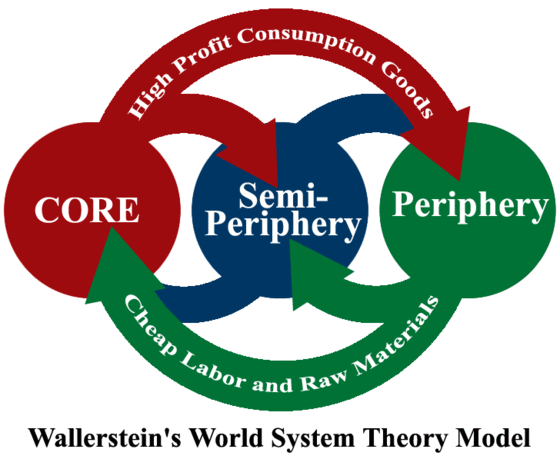
    In most cases, partial military intervention was sufficient for the industrialised states to maintain this system. In the world systems theory of Immanuel Wallerstein and Samir Amin, this practice was conceptualised by dividing the world into centres, semi-peripheries, and peripheries and defining it as a continuous influx of raw materials, goods, and people (brain drain) from the periphery to the mostly Western centres (Amin and Wallerstein).


    A third explanation, however, is Asia-centric. In this view, the dominance of the Europeans and the hegemony of the United States are nothing more than an accident of world history. In this view, East and South Asia have always been the centre of the world economy and intellectual and civilisational development. More precisely, on the shores of the North Pacific and the Indian Ocean (including the Arabian Sea), a power shift has been taking place for thousands of years between China, India, and the Arab-Persian powers. Coincidentally, the retreat of China from about 1500 created a power vacuum in this area, into which the Europeans were gradually able to move. However, they could not compete with these civilisations. The current rise of the great empires and civilisations that were destroyed by European colonisation and Euro-American hegemony is nothing more than a return to the centre of the world, to the countries on the shores of the North Pacific and both parts of the Indian Ocean. In this view, the Europeans and the great powers that emerged from them are in no way superior, but rather the barbarians who caused an unprecedented bloodbath in colonisation and two world wars, including the Holocaust. Now, the centre of the world is returning to where it has always been (Abu-Lughod)

    Another approach is the globalisation approach. It assumes that every five hundred years or so, there has been a shift from one global political centre to the next, i.e., hegemonic empires’ rise, peak, and decline. For the late Andre Gunder Frank, we need to review the last 5000 years, not just the previous 500). At times, individual civilisations succeeded in becoming such hegemonic empires twice. Examples include the Egyptian society, the Chinese Empire of the Han dynasty, the Roman Empire, the Sassanid Empire (Persia), the Muslim Empire until its destruction by the Mongols, and finally European colonisation from about 1500.

    we need a floating balance and mutual recognition of the world’s civilisations

    The crucial question for today is whether globalisation will override this succession of great powers and civilisations or whether there will be a renewed, now genuinely global, struggle for world domination. In my view, we need a floating balance and mutual recognition of the world’s civilisations (Herberg-Rotzhe/Son). The rising civilisations are again faced with whether they will merely repeat the past mistakes and the ethnocentrism of the Europeans under different auspices or contribute to an equal coexistence of the world’s civilisations. And conversely, will the Europeans and the settler colonies they founded also learn to regard other civilisations as equals? Both perspectives will determine the fate of the 21st century if we do not want to experience yet another “bloody century”!

    References:

    Abu-Lughod, Janet: Before European Hegemony: The World System A.D. 1250-1350. Reprint edition. Oxford University Press: Oxford. 1991.

    Amin, Samir: Accumulation on a World Scale: A Critique of the Theory of Underdevelopment. (2 Volumes). Monthly Review Press: New York. 1974.

    Frank, Andre Gunder, The World System: Five Hundred Years or Five Thousand? Routledge: New York. 1996.

    Herberg-Rothe, Andreas and Son, Key-young: Order wars and floating balance. How the rising powers are reshaping our worldview in the twenty-first century. Routledge: New York. 2018.

    Jaspers, Karl: The Origin and Goal of History. Routledge: New York 2021 (original in German 1949).

    Katzenstein, Peter J.” Civilizations in World Politics: Plural and Pluralist Perspectives. Routlöedge: New York 2009.

    Stark, Rodney: How the West Won: The Neglected Story of the Triumph of Modernity. ‎ ISI Books: NewYork. 2015.

    Wallerstein, Immanuel: World-Systems Analysis: An Introduction. Duke University Press: Durham. 2004.


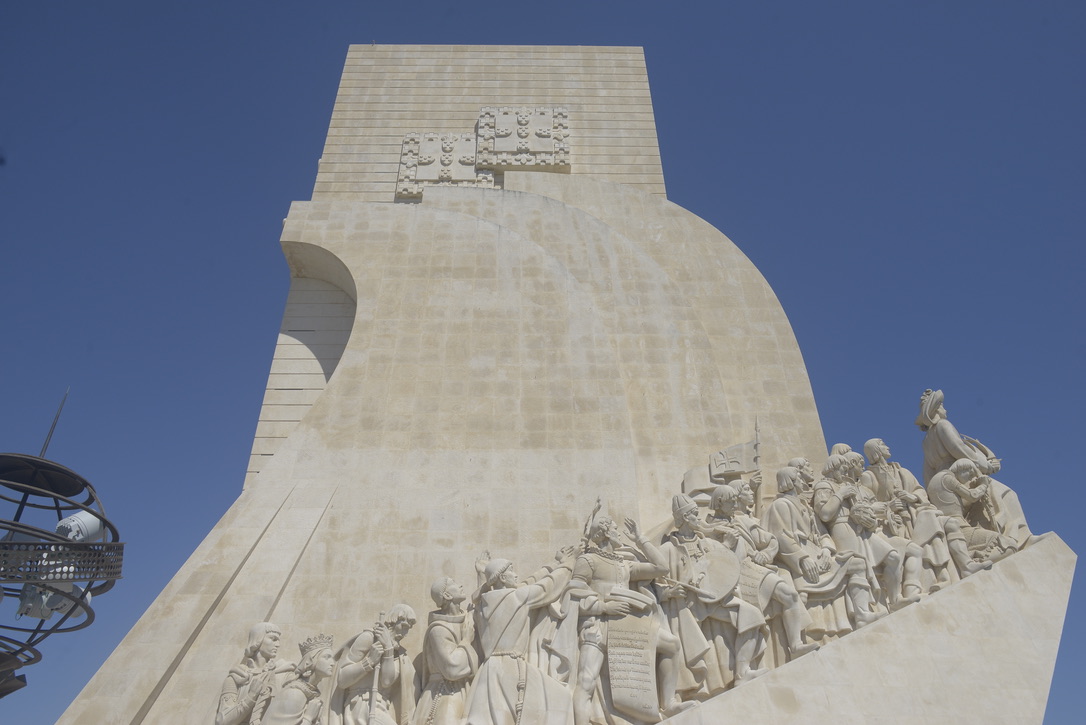
    Feature Photo Credit: Photo of ‘Monument of Discoveries’ in Lisbon. Photo by M Matheswaran. The Monument depicts Henry the Navigator followed by 33 pioneers, including Vasco-da-Gama whose exploration voyages were instrumental in establishing the Portuguese colonial empire, and thus begin the age of colonialism and imperialism.

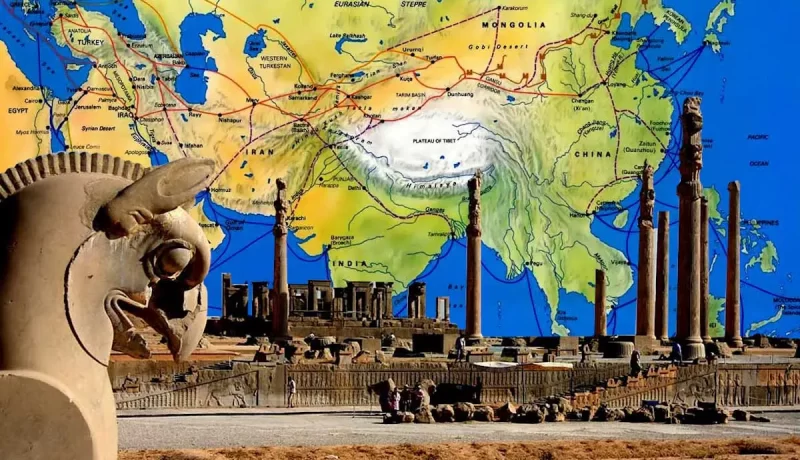
    Image 1-Map: Asian empires and trade routes – the collector.com

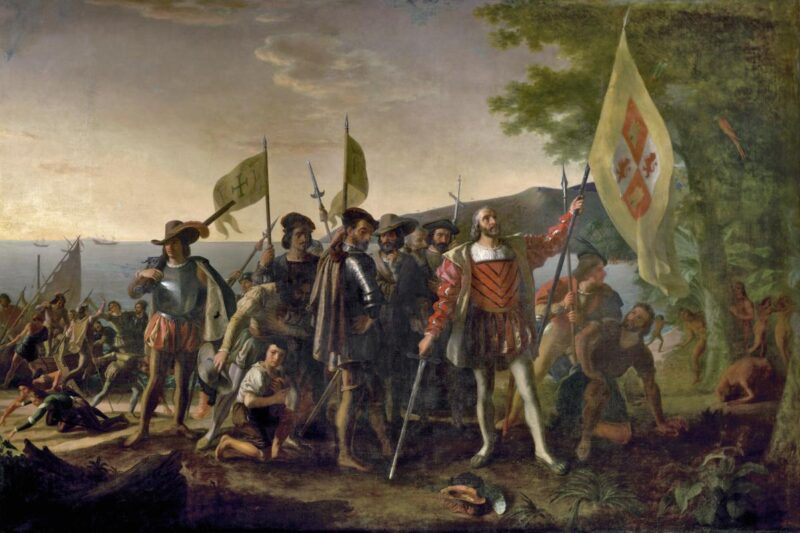
    Image 2: Columbus reaching the Americas (actually the Caribbean) in 1492 – Wikimedia Commons

    Image 3: The story of the colonial looting of Africa – Photo of exhibit in African American Museum, Washington D.C. (Photo – M Matheswaran).

    Image 4: Robert Clive meeting Mir Jaffer in Battle of Plassey 1757 – the beginnings of the British Indian Empire – Wikimedia Commons.


  • Xi Jinping: Assessing his Foreign Policy

    Xi Jinping: Assessing his Foreign Policy

    All foreign policies must aim at attaining purpose, credibility, and efficiency. Purpose defines the main objectives that the country wishes to achieve through its international relations. Credibility comes from international recognition of its actions in this field. And efficiency allows implementation, at the lowest possible cost, of the desired purpose. These three notions, although interwoven and influencing each other, keep their own specificity.

             How does Xi Jinping’s foreign policy qualify in these three areas?

    Purpose

    Its purpose, in tune with that of the Chinese Communist Party before his arrival to power, is sufficiently clear. By 2049, the centenary of the founding of the People’s Republic, China should have achieved a prominence commensurate to its glorious past. According to former Australian Prime Minister Kevin Rudd, China marches towards the perception of its global destiny with a clear strategy in mind. Such destiny is none other than the resurrection of its historical glory (Rudd, 2017). Projects such as the Chinese Dream of National Rejuvenation, Made in China 2025, and the Belt and Road Initiative, converge in defining concrete goals that lead in that direction. This includes China’s “Great Unification” with Taiwan, the consolidation of a hegemonic position within the South China Sea, making China the epicentre of an Asian-led world economic order, and creating a global infrastructure and transportation network with China at its head. Xi Jinping visualizes the next ten to fifteen years as a window of opportunity to shift China’s correlation of power with the United States. Hence, Beijing seeks the convergence of energies and political determination towards this window of opportunity. The strategic compass of Xi’s foreign policy could not be more precise. Few countries show a clearer sense of its purpose.

    Credibility

             His foreign policy credibility presents a more mixed result. Vis-à-vis the Western World and several of its neighbours, China’s credibility is at a very low point. However, the situation is different in relation to the Global South, where Xi’s foreign policy promotes four interconnected initiatives to expand China’s influence. Besides the Belt and Road, whose objective is creating a China-led global infrastructure and transportation network, there is also the Global Development Initiative, the Global Security Initiative, and the Global Civilization Initiative. The first, the Global Development Initiative, aims to contrast the unequal distribution of benefits that characterize the West-led development projects with the inclusiveness and balanced nature of this China-led multilateral development project [Hass, 2023]. The other two initiatives, global security and global civilization, present rational and balanced options clearly differentiated from America’s overbearing approach to these areas. In the former case, China’s proposal promotes harmonious solutions to differences among countries through dialogue and consultation [Chaziza, 2023]. The Global Civilization Initiative, on its side, fosters cooperation and interchange between different civilizations, whereby the heterogeneity of cultures and the multiplicity of identities is fully respected [Hoon and Chan, 2023].

    The Hambantota Port in Sri Lanka is one of thousands project that China has helped finance in recent years – Image Credit: The Brussels Times (The so-called China’s debt-trap is a narrative trap).

           However, three dark areas emerge in Beijing’s credibility with respect to the Global South. Number one is the frustration prevailing in many of these smaller and underdeveloped nations, resulting from the contradiction between China’s openness as a lender and its severity as a creditor. This has given rise to the suspicion of a hidden agenda on its part and has led to the coining of the phrase “debt trap diplomacy”. Number two derives from the arrogance shown by Beijing towards the rights of several of its weakest neighbours, disregarding international law. This seems to delineate a tributary vision of its relations with them. Although this only affects China’s neighbourhood, it projects a haughtiness that contradicts its formulations about a more harmonious, equitable and inclusive world order. Number three is the apparent contradiction between Beijing’s proclamation regarding the value of the heterogeneity of cultures and the diversity of identities and its treatment of non-Han Chinese minorities at home. A feature susceptible to reproducing itself abroad. All the above generates a distance between words and deeds that casts a shadow of doubt concerning China’s sincerity. Hence, even within the Global South, China’s credibility shows a mixed result.

    Efficiency

    Finally, there is the area of efficiency. It is a very complex one, particularly given China’s over-ambitious purpose. It must be said that until 2008, Beijing succeeded in rising as a significant power without alarming neighbours or the rest of the world. It even attained the geopolitical miracle of doing so without alarming the United States. Indeed, few countries have made such a systematic and conscious effort to project a constructive international image as China has done to this date. This included the notion of “peaceful rise”, which implied a path different from that followed by Germany before World War I and Japan during World War II when they tried to overhaul the international political landscape. China’s path, on the contrary, relied upon reciprocity and the search for mutual benefit with other countries. It was a brilliant soft power marketing strategy that gave China huge goodwill dividends (Cooper Ramo, 2007).

    “Observe carefully; secure our position; cope with affairs calmly; hide our capacities and bide time; be good at maintaining a low profile; and never claim leadership” – Deng Xioping

    Regarding its reunification with Taiwan, it relied on “one country, two systems” and the economic benefits of their interconnection as the obvious means to propitiate their joining together. Regarding its maritime disputes in the South China Sea, after having deferred the resolution of this issue to a more propitious moment, it proposed a Code of Conduct to handle it in the least contentious possible manner. In general, similar approach was evident in Beijing’s handling of various contentious issues.  Beijing’s leadership followed Deng Xiaoping’s advice to his successors: “Observe carefully; secure our position; cope with affairs calmly; hide our capacities and bide time; be good at maintaining a low profile; and never claim leadership” (Kissinger, 2012, p. 441).

    “Like Europe, it has many twenty-first century qualities. Its leaders preach a doctrine of stability and social harmony. Its military talks more about soft than hard power. Its diplomats call for multilateralism rather than unilateralism. And its strategy relies more on trade than war to forge alliances and conquer new parts of the world” – Mark Leonard on China in 2008

    Writing in 2008, before the change towards a more assertive foreign policy materialized, Mark Leonard said about China: “Like Europe, it has many twenty-first century qualities. Its leaders preach a doctrine of stability and social harmony. Its military talks more about soft than hard power. Its diplomats call for multilateralism rather than unilateralism. And its strategy relies more on trade than war to forge alliances and conquer new parts of the world” (Leonard, 2008, p. 109). This phrase encapsulates well how China was perceived worldwide, including by the Western World. Not surprisingly, a 2005 world survey on China by the BBC stated that most countries in five continents held a favourable view of that nation. Even more significant was the fact that even China’s neighbours viewed it favourably (Oxford Analytica, 2005). It was a time when all doors opened to China.

    2008 represented a turning point. The convergence of several events that year changed China’s perception of its foreign policy role, making it more assertive. Among such events the most significant was the global economic crisis of 2008, the worst crisis since 1929, resulting from America’s financial excesses; other important events were the sweeping efficiency with which China avoided contagion; the fact that China’s economic growth was the fundamental factor in preserving the world from a major economic downturn; and the boost to Chinese self-esteem after the highly successful Beijing Olympic games of that year. In sum, the time in which China had to keep hiding its strengths seemed to have ended.

    Although this turning point materialized under Hu Jintao, changes accelerated dramatically after Xi Jinping’s ascend to power. He not only sharpened the edges of the country’s foreign policy but made it more aggressive, even reckless. Xi’s eleven years’ tenure in office has translated into a proliferation of international trouble spots. His overreach and overbearing style misfired, generating a concerted and strong reaction against China. As a result, the costs linked to attaining China’s purpose have skyrocketed. This deserves a more detailed analysis of China’s foreign policy efficiency under Xi.

    Intimidatory policies and actions

             Xi Jinping’s intimidatory policies and actions on international affairs have been extensive, bringing with them immense resistance.

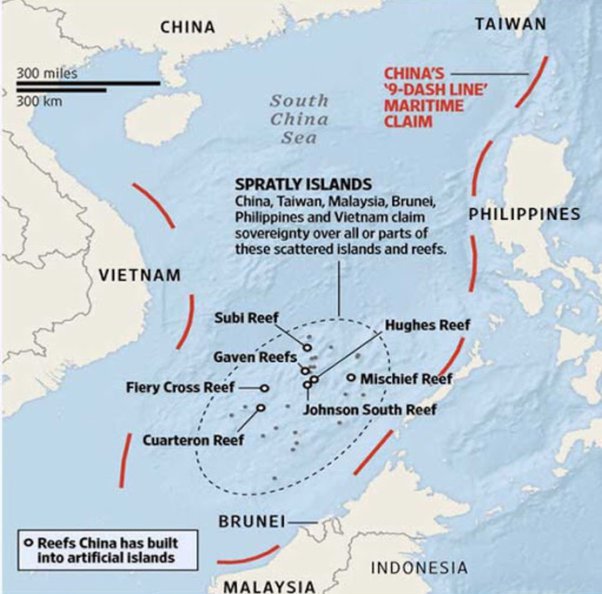
    After dusting off a plan that had remained on paper for years, Xi decided to build seven artificial islands on top of the South China Sea coral reefs. After assuring President Obama they would not be militarized, he proceeded otherwise. Contravening international maritime law, he assigned 12 nautical miles of Territorial Sea and 200 miles of Exclusive Economic Zone to these artificial outposts.

    Under the protection of the People’s Liberation Navy, an oil rig was built in the waters claimed by Vietnam as its EEZ. Disrespecting the International Court of Justice’s ruling about the Philippines’ waters in the South China Sea, China has forcefully enforced its exclusionary presence in them. China’s Coast Guard is now authorized to use lethal force against foreign vessels operating within maritime areas under its jurisdiction claims. This, notwithstanding that China’s claimed jurisdiction, goes far beyond what is recognized by the U.N. Convention on the Law of the Sea or the International Court of Justice while disputed by several other countries.

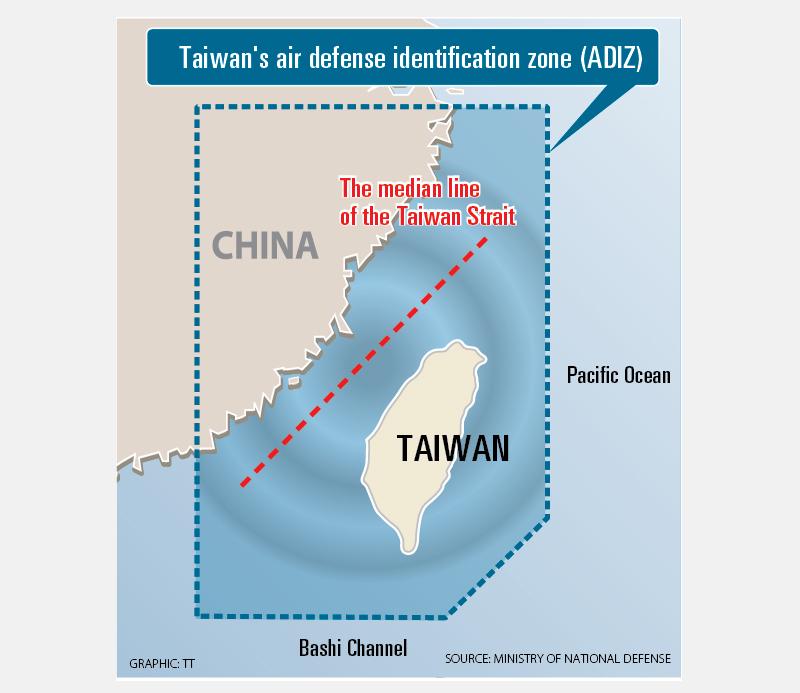
    The People’s Liberation Army (PLA) began to ignore the median line in the Taiwan Strait, which it had respected for decades. Frequent and increasingly bold incursions within Taiwan’s Air Defence Identification Zone and reiterated calls to the PLA to prepare for war in Taiwan have become the new normal. The Senkaku-Diaoyu islands, disputed with Japan, have been declared one of China’s core interests, thus closing the door to a negotiated solution. This has translated into the systematic incursion of Chinese maritime law enforcement ships and planes into the territorial and contiguous maritime space of these islands, currently occupied by Japan. Beijing unilaterally imposed an Air Defence Identification Zone over two-thirds of the East China Sea, forcing foreign aircraft to identify themselves under threat of “defensive measures” by the PLA Air Force.

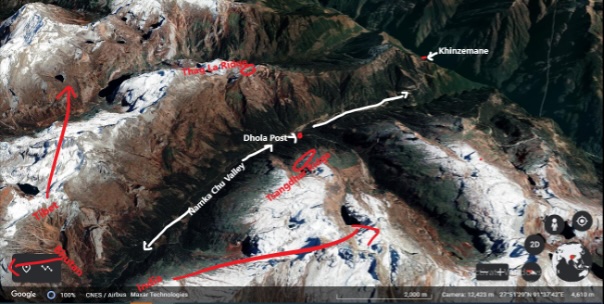
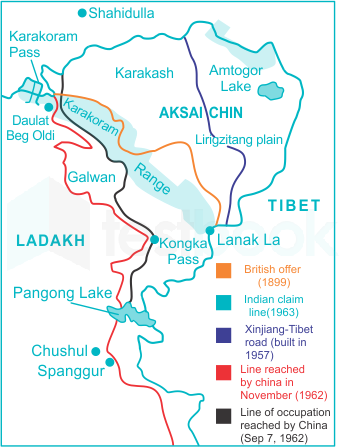
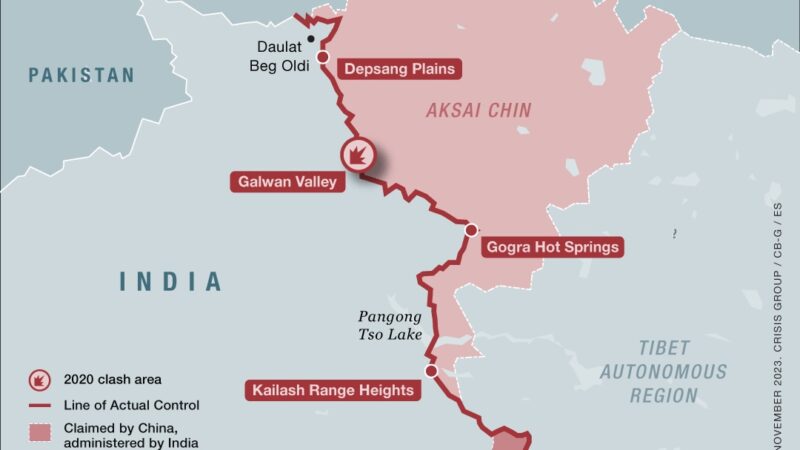
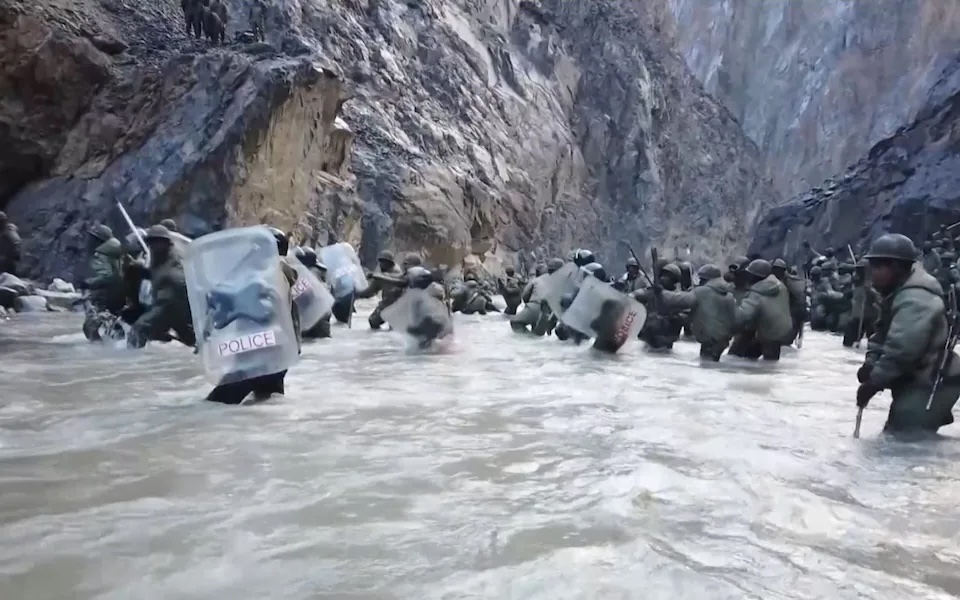
             Since 2017, China has reneged on the quite borders with India and engaged in a series of border skirmishes. It has resorted to intrusions into border regions under dispute resulting in a major skirmish in Ladakh with significant casualties, the first since 1987. In 2023, China released an official standard map showing India’s state of Arunachal Pradesh in Northeast India and Askai Chin plateau in the Indian territory of Ladakh in the west, as official parts of its territory, despite India’s objections. At the same time, it renamed 11 places in Arunachal Pradesh with Chinese names. When South Korea decided to deploy the US Army’s THAAD (Terminal High-Altitude Area Defence) ballistic missile defence, as protection against the growing North Korean threat, China put in motion an economic boycott of South Korean products and services. When Australia and New Zealand protested against Chinese interference in their domestic political systems, Beijing openly threatened to impose economic sanctions on governments or private actors criticising China’s behaviour. A few years later, it effectively banned most Australian exports when Canberra proposed an international scientific investigation on the origins of COVID-19. When Canada detained Huawei’s heiress, Meng Wanzhou, answering an American judicial request, Beijing jailed and presented accusations against two Canadian businessmen based in China (releasing them hours after Meng was released).

    Antagonizing Americans and Europeans

             Xi’s rhetoric in relation to the U.S. has been highly aggressive. Reversing the terms of Deng Xiaoping’s advice to his successors to hide China’s strengths while bidding for right time, Xi has alerted America about its intent to challenge and displace it as the foremost power soon. He has repeatedly referred; to the primacy of China in the emerging world order as its most important objective, to the next ten to fifteen years as the inflexion point when a change in the correlation of power between the two countries should be taking place, to the need to overcome the U.S.’ technological leadership, to the necessity for the PLA to ready itself to wage and win wars, and to the next ten years as a time of confrontation and dangerous storms.

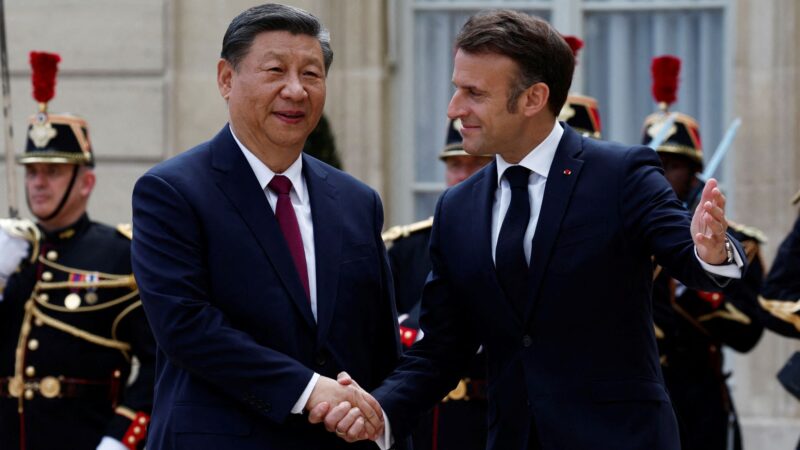
    Xi Jinping starts his European tour in Paris on May6, 2024, his first in five years as China-EU trade relation have hit a low. Picture Source: Sky News.

             China’s actions have also antagonized the Europeans. These relate to China’s refusal to use the term “invasion” when referring to Russia’s actions in Ukraine; supporting the arguments provided by Russia concerning the causes of the war; placing the responsibility of the conflict on the US and the NATO; abstaining from voting in the U.N. on the West’s resolutions against Russia; demonstrating its strong strategic relations with Russia that is described as “partnership without limits”; the conduct of military exercises with Russia while war rages on in Ukraine; and providing indirect support for Russia’s war effort through surveillance drones, computer chips, and other critical components for its defence industry. Though all of the above are sovereign decisions of China, Europe, as China’s major trading partner, expects some support to their position and a neutral approach to the conflict from China.

    For the most part, Beijing’s above foreign policy actions were duly accompanied by a bellicose so-called “wolf warrior diplomacy”. It aggressively reacted to perceived criticism of the Chinese government.

    Domestic actions impacting its Image Abroad

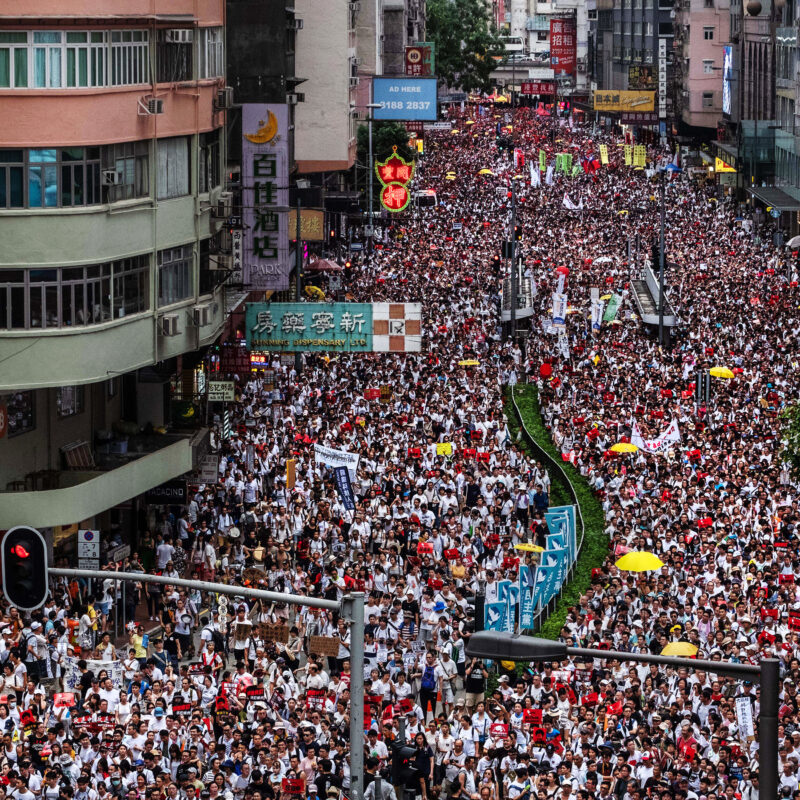
    However, with its aggressive display in the international arena, some domestic actions have negatively permeated abroad. Brushing aside Deng Xiaoping’s commitment to respect Hong Kong’s autonomy for a period of fifty years, Xi reclaimed complete jurisdiction over such territory since his arrival to power. Within a process of actions and reactions, accelerated by the progressive strangulation of Hong Kong’s liberties, Beijing finally imposed a National Security Law over the territory. This ended the Hong Kong Basic Law, which guaranteed its autonomy. By burying the principle of “one country, two systems” established by Deng, Beijing was, at the same time, closing out any possibility of Taiwan’s willing accession to the People’s Republic. Henceforward, only force may accomplish that result.

    On the other hand, the brutal Sinicization of Xinjiang Province has shaken the liberal conscience of Western countries, with particular reference to Europe. The Uyghur population re-education camps have been compared to the Soviet’s Gulag. Beijing’s combative reaction to any foreign criticism in this regard, has compounded China’s image crisis in Europe.

    Any remaining trace of the so-called peaceful emergence of China has completely disappeared under Xi Jinping. Under his rudder, China has brought to the limelight a revisionist and tributary vision of the international order. Not surprisingly, interwoven policies and decisions emanating from different geographical points have been converging to contain China. In an unnecessary way, Beijing under Xi has been instrumental in multiplying the barriers to realising its purpose.

    Keeping China at bay

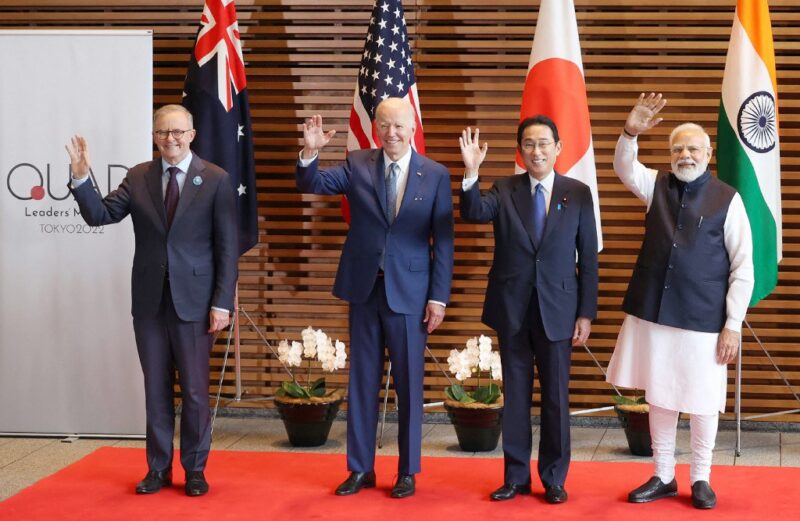
    The number of initiatives to keep China at bay has multiplied. Its list includes the following. The U.S., Japan, Australia and India created a strategic quadrilateral forum known as the Quad, which is none other than a factual alliance aimed at the containment of China. More formally, Australia, the United Kingdom, and the United States gave birth to a strategic military alliance with the same goal. On its side, Japan and Australia signed a security cooperation agreement.

    Leaving aside its restrained post-war defence policy, Japan doubled its defence budget to 2 per cent of its GDP. This will transform Japan to number three position worldwide regarding military expenditure, just behind the U.S. and China. Within the same context, Japan and the U.S. established a joint command of its military forces while agreeing to create a shared littoral force equipped with the most modern anti-ship missiles. Meanwhile, Japan is set to arm itself with state-of-the-art missiles. Overcoming their longstanding mutual mistrust, Japan and South Korea, jointly with the U.S., established a trilateral framework to promote a rules-based Indo-Pacific region. On the same token, Japan, the Philippines, and the U.S. held a first-ever trilateral summit aimed at defence cooperation and economic partnership. They pledged to protect freedom of navigation and overflight in the South China and East China Seas. Several joint naval exercises have taken place in the South China Sea to defend the principle of freedom of navigation, with France participating in the latest one.

    After several fruitless years of attempting to mollify China’s position concerning their maritime dispute in the South China Sea, the Philippines decided to renew its Mutual Defence Treaty with the U.S., which had elapsed in 2016. Meanwhile, most Southeast and East Asian countries on China’s periphery are rapidly increasing their military spending while  still continuing to support the U.S. security umbrella. Although pledging to remain neutral, even Vietnam, a traditional de facto ally of China, decided to upgrade its diplomatic relations with Washington to the highest level.

    America’s several decades policy of “strategic ambiguity” in relation to Taiwan evaporates as a result of China’s increasing threats and harassment to the island. On top of unambiguous support to Taipei by the President and the Congress, the Pentagon has formulated a military doctrine for  Taiwan’s defence in case of invasion. The idea of defending Taiwan if invaded is also taking shape in Japan.

    The European Union adhered to the U.S., the United Kingdom and Canada in sanctioning the Chinese authorities involved in human rights abuses in Xinjiang (the first such European sanction since Tiananmen in 1989). Equally, and for the same reasons, the European Parliament refused to ratify the long-time negotiated investment agreement between China and the European Union. China’s aggressive reaction to such a decision only toughened the European position further. Significantly, European contacts with Taiwan have increased as its democratic nature, and China’s harassment of it are providing a new light on the subject. In that context, the European Parliament officially received Taiwan’s Minister of Foreign Affairs.

    A gigantic containment Bloc

    France and Germany sent warships to navigate the South China Sea in defiance of Beijing’s claimed ownership of 90 per cent of the Sea. NATO’s updated “Strategic Concept” document, which outlines primary threats to the alliance, identified China for the first time as a direct threat to its security: “The People’s Republic of China’s (PRC) stated ambitions and coercive policies challenge our interests, security and values (…) It strives to subvert the rules-based international order, including in the Space, Cyber and Maritime domains (…)The deepening strategic partnership between the People’s Republic of China and the Russian Federation and their mutually reinforcing attempts to undercut the rules-based international order run counter to our values and interests” (NATO, 2022). Not surprisingly, NATO’s last summit included the heads of state and governments of Australia, New Zealand, Japan and South Korea.

    As a result of Xi Jinping’s actions and policies, China is now being subjected to a gigantic geostrategic containment force—a true block integrated by nations and organizations from four continents. For a country like China, which traditionally identified with political subtlety and enjoyed universal goodwill until not so long ago, this change in its strategic environment is not a small development. Xi’s calculations that acting boldly had become possible as China was powerful enough, its economy big enough, its neighbours dependent on it, and the U.S. resolve as uncertain have proved wrong and grossly misfired. At this point, China’s conundrum might leave China with few options short of war. According to former Australian Prime Minister Kevin Rudd, the 2020s have become the “decade of living dangerously”, as, within it, a war between China and the U.S. will most probably erupt (Rudd, 2022, chapter 16).

    In sum

    An evaluation of Xi Jinping’s foreign policy, using the notions of purpose, credibility, and efficiency as bases, would present the following result. Its purpose is crystal clear, which translates into a high mark. Credibility, on its part, shows mixed results: Not entirely unsatisfactory nor satisfactory. In terms of efficiency, though, Xi Jinping has openly failed. The lack of efficiency associated with his outreach adversely affects the attainment of China’s foreign policy purpose, creating countless barriers to its fulfilment. This lack of efficiency affects the country’s credibility as well. The downturn has been dramatic when comparing the current situation of China’s foreign policy to the one that prevailed before 2008 and, more precisely, to Xi Jinping’s ascension to power.


    References:

    Chaziza, M. (2023) “The Global Security Initiative: China’s New Security Architecture for the Gulf”, The Diplomat, May 5.

    Cooper Ramo, J. (2007). Brand China. London: The Foreign Policy Centre.

    Hass, R. (2023) “China’s Response to American-led ‘Containment and Suppression’”, China Leadership Monitor, Fall, Issue 77.

    Hoon, C.Y. and Chan, Y.K., (2023) “Reflections on China’s Latest Civilisation Agenda”, Fulcrum, 4 September.

    Kissinger, H. (2012). On China. New York: Penguin Books.

    Leonard, M. (2008). What Does China Think? New York: Public Affairs.

    NATO (2022). “NATO 2022 Strategic Concept”, June 29.

    Oxford Analytica (2005). “Survey on China”, September 20th.

    Rudd, K. (2022). The Avoidable War. New York: Public Affairs.

    Rudd, K. (2017). “Xi Jinping offers a long-term view of China’s ambitions”, Financial Times, October 23.


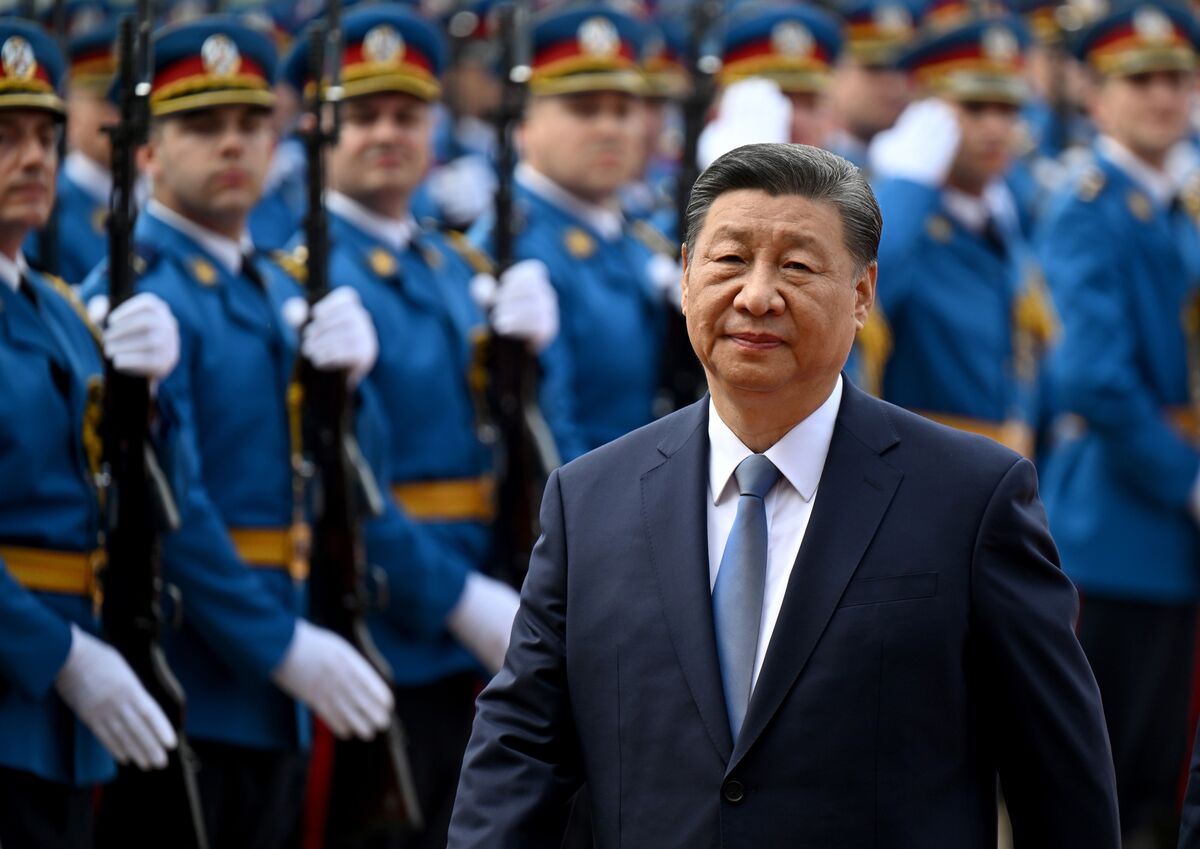
    Feature Image: bloomberg.com – Xi Jinping on visit to Belgrade, Serbia on 07 May 2024 (Xi says China will “never forget” the U.S. bombing of its Embassy)

  • Achieving the Two-State Solution in the Wake of Gaza War

    Achieving the Two-State Solution in the Wake of Gaza War

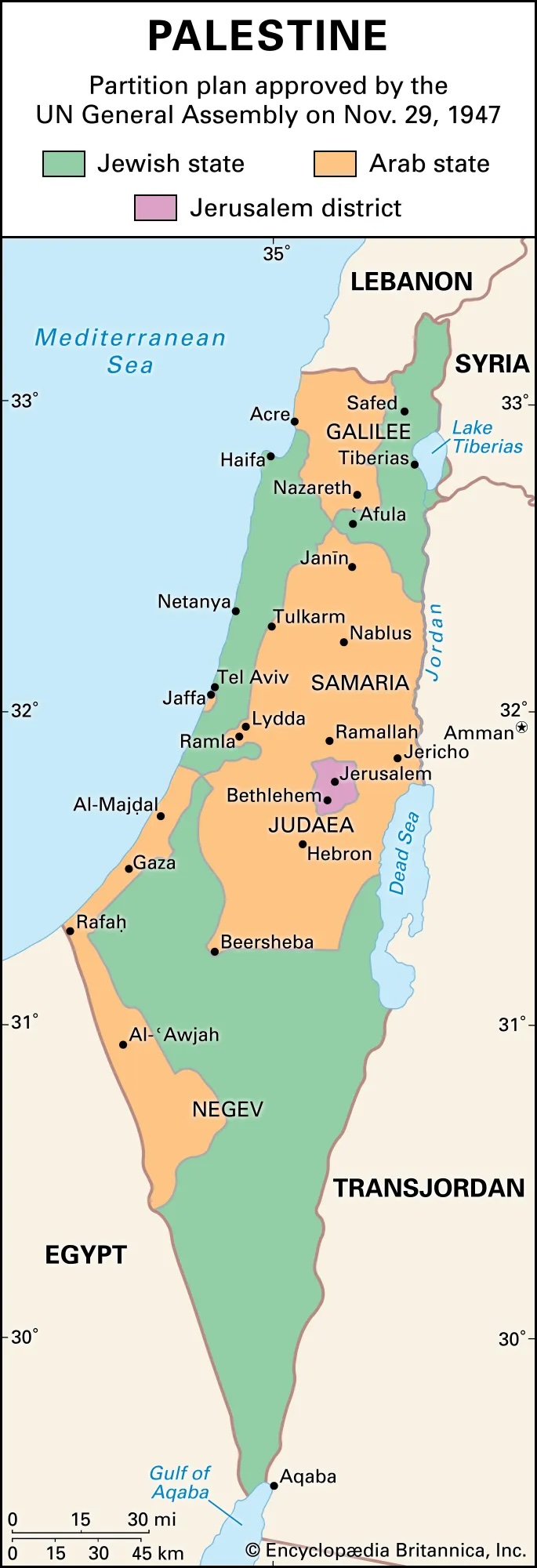
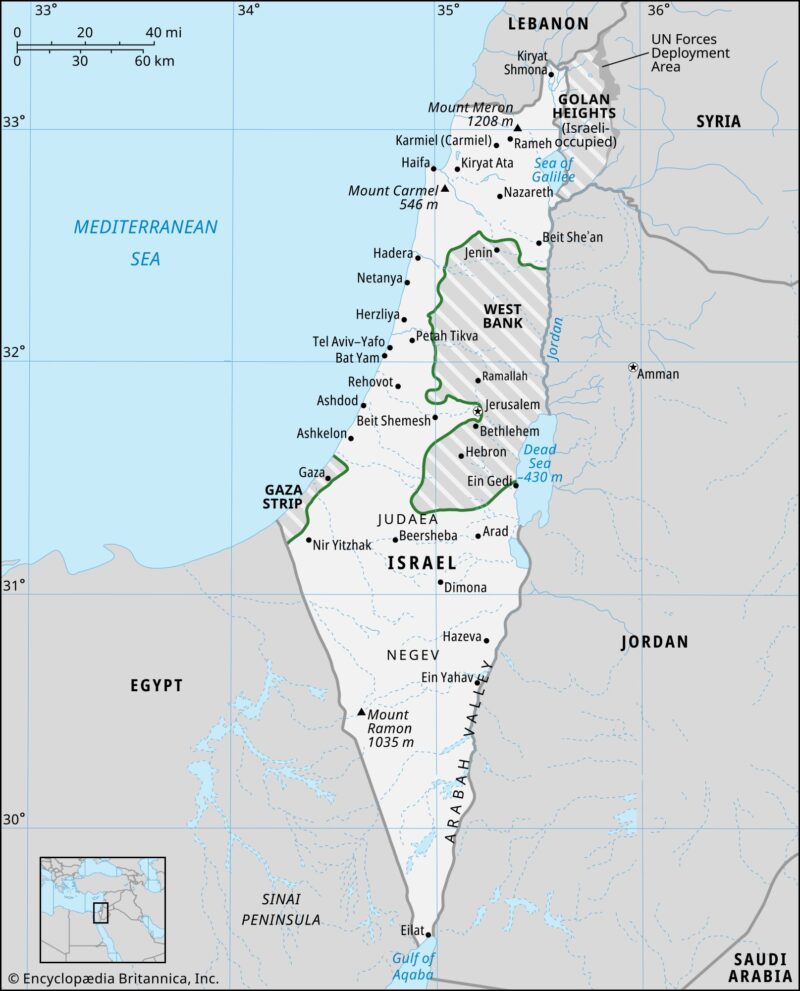
    Peace can come through the immediate implementation of the two-state solution, making the admission of Palestine to the United Nations the starting point, not the ending point.


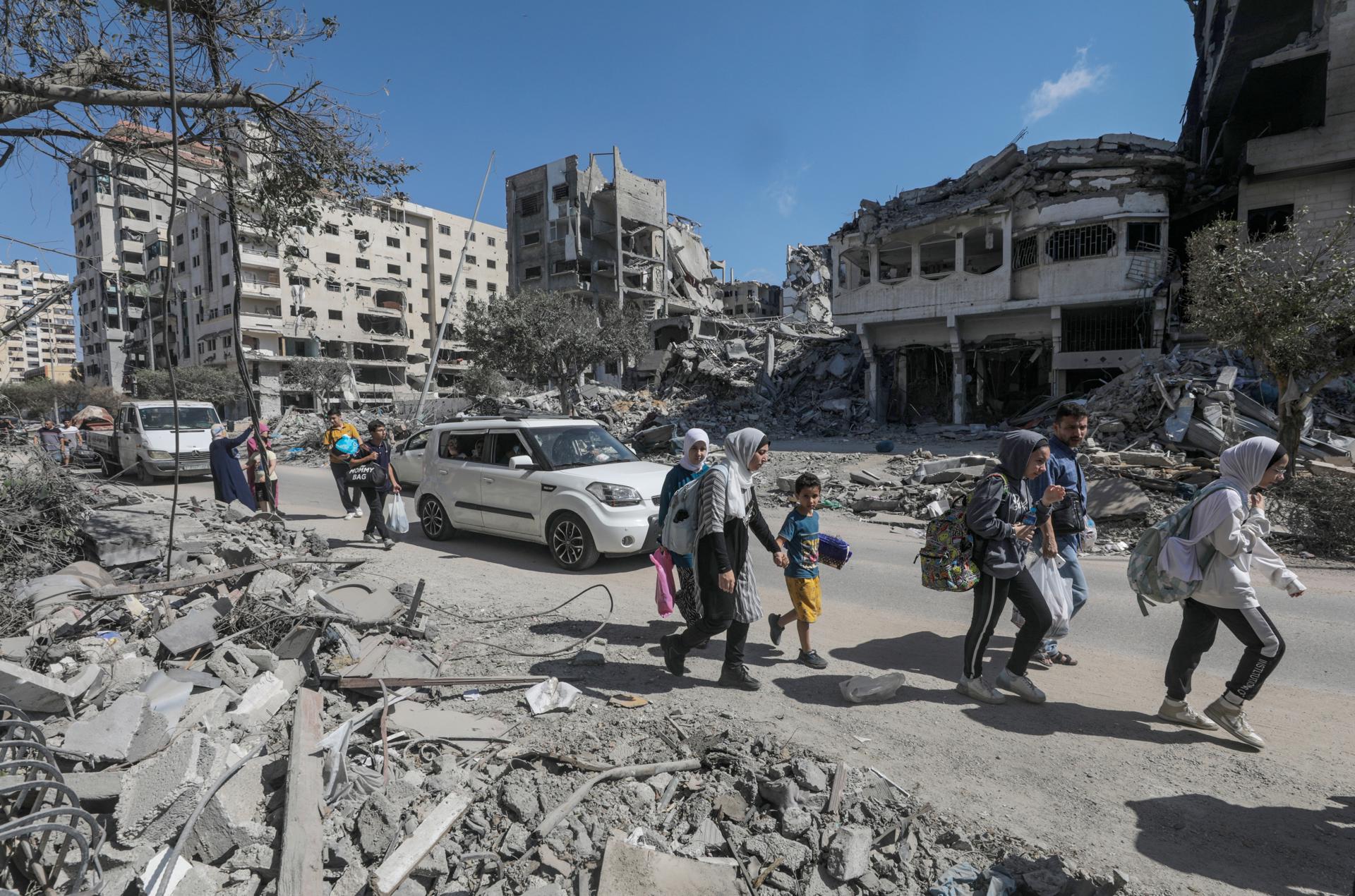
    The two-state solution is enshrined in international law and is the only viable path to a long-lasting peace. All other solutions—a continuation of Israel’s apartheid regime, one bi-national state, or one unitary state—would guarantee a continuation of war by one side or the other or both. Yet the two-state solution seems irretrievably blocked. It is not. Here is a pathway.

    The Israeli government strongly opposes a two-state solution, as does a significant proportion of the Israeli population, some on religious grounds (“God gave us the land”) and some on security grounds (“We can never be safe with a State of Palestine”). A significant proportion of Palestinians regard Israel as an illegitimate settler-colonial entity and, in any event, distrust any peace process.

    How, then, to proceed?

    The usual recommendation is the following six-step sequence of events: (1) ceasefire; (2) release of hostages; (3) humanitarian assistance; (4) reconstruction; (5) peace conference for negotiations between Israel and Palestine; and finally (6) establishment of two states on agreed boundaries. This path is impossible. There is a perpetual deadlock on steps 5 and 6, and this sequence has failed for 57 years since the 1967 war.

    Two sovereign states, on the boundaries of June 4, 1967, protected initially by UN-backed peacekeepers and other guarantees, will be the starting point for a comprehensive and just peace…

    The failure of Oslo is the paradigmatic case in point. There are irreconcilable differences, such as the status of East Jerusalem. Israeli zealots would force from power any Israeli politician who dares to give up East Jerusalem to Palestinian sovereignty and Palestinian zealots would do the same with any Palestinian leader who gave up sovereignty over East Jerusalem. We should relinquish the continuing illusion that Israel will ever reach an agreement or that Palestine would ever have the negotiating power to engage meaningfully with Israel, especially when the Palestinian Authority is highly dependent on the US and other funders.

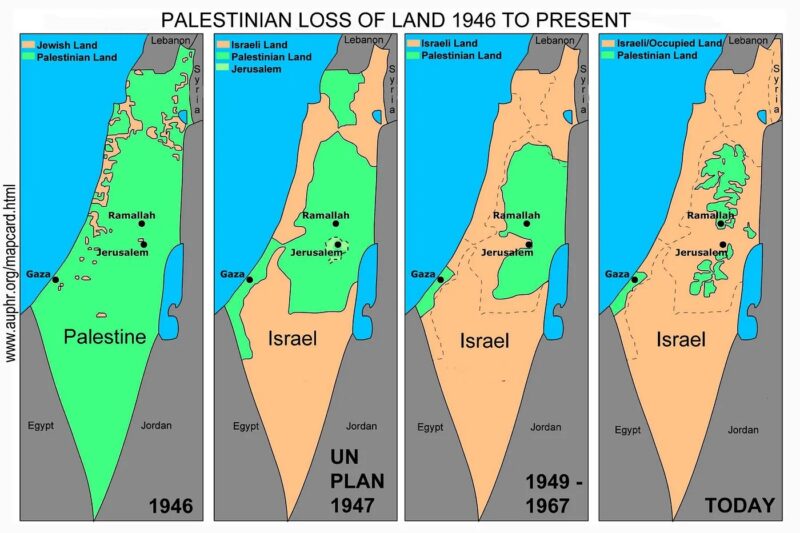
    The correct approach is, therefore, the opposite, starting with the establishment of two states on globally agreed boundaries, notably the boundaries of June 4, 1967, as enshrined in UN Security Council and UN General Assembly resolutions. The UN member states will have to impose the two-state solution instead of waiting for yet another Palestinian-Israeli failed negotiation.

    Thus, the settlement should follow this order: (1) establishment of Palestine as 194th member state within a two-state solution framework on June 4, 1967 borders; (2) immediate ceasefire; (3) release of hostages; (4) humanitarian assistance; (5) peacekeepers, disarmament and mutual security; and (6) negotiation on modalities (settlements, return of refugees, mutually agreed land-swaps, and others; but not boundaries).

    In 2011, the State of Palestine (now recognized by 140 UN member states but not yet as a UN member state itself) applied for full UN member status. The UN Security Council Committee on New Members (constituted by the UN Security Council) recognized the legitimacy of Palestine’s application, but as is utterly typical in the “peace process,” the US government prevailed on the Palestinian Authority to accept “observer status,” promising that full UN membership would soon follow. Of course, it did not.

    The Security Council, backed by the UN General Assembly, has the power under the UN Charter to impose the two-state settlement. It can do so as a matter of international law, following decades of relevant resolutions. It can then enforce the solution through a combination of carrots (economic inducements, reconstruction funding, UNSC-backed peacekeepers, disarmament, border security, etc.) and sticks (sanctions for violations by either party).

    The only conceivable border for creating the two-state solution is June 4, 1967. Starting from that border, the two sides might indeed negotiate a mutually agreed-upon swap of land for mutual benefit, but they would do so knowing that the “best alternative to a negotiated agreement” (BATNA) is the June 4, 1967 border.

    It is quite possible, indeed likely, that the US would initially veto the proposed pathway. After all, the US has already used its veto multiple times to block merely a ceasefire. Yet, the process of eliciting the US veto and then securing a large majority vote in the UN General Assembly will be salutary for three reasons.

    First, US politics is shifting rapidly against Israeli policies, given the US public’s growing understanding of Israel’s war crimes and Israel’s political extremism. This shift in public opinion makes it far more likely that the US leaders will sooner rather than later accept the basic approach outlined here because of US domestic political dynamics. Second, the increasing US isolation in the UN Security Council and UN General Assembly is also weighing heavily on US leaders and forcing the US leadership to reconsider its policy positions in view of geopolitical considerations. Third, a strong vote in the UNSC and UNGA for the two-state solution on June 4, 1967 borders, will help to strengthen international law and the terms of the eventual settlement as soon as the US veto is lifted.

    For these reasons, there is a realistic prospect that the UN will finally exercise its international legal and political authority to create the conditions for peace.

    Twenty-two years ago, Arab and Islamic leaders affirmed in the 2002 Arab Peace Initiative that the only pathway to peace is through the two-state solution. On February 7, 2024, the Saudi Ministry of Foreign Affairs reasserted that a comprehensive peace will only be achieved by recognizing an independent Palestinian state on the 1967 borders and East Jerusalem as the capital. The Arab states and the world community generally shouldn’t buy into another vague peace process that is likely doomed to fail, especially given the urgency caused by the ongoing genocide in Gaza and the bad-will accumulated over the past 57 years of a fruitless “Peace Process.”

    Peace can come through the immediate implementation of the two-state solution, making the admission of Palestine to the UN the starting point, not the ending point. Two sovereign states, on the boundaries of June 4, 1967, protected initially by UN-backed peacekeepers and other guarantees, will be the starting point for a comprehensive and just peace not only between Israel and Palestine—and also a regional peace that would secure diplomatic relations across the Middle East and end this conflict that has burdened the inhabitants, the region, and the world, for more than a century.

    This article was published earlier in Common Dreams.

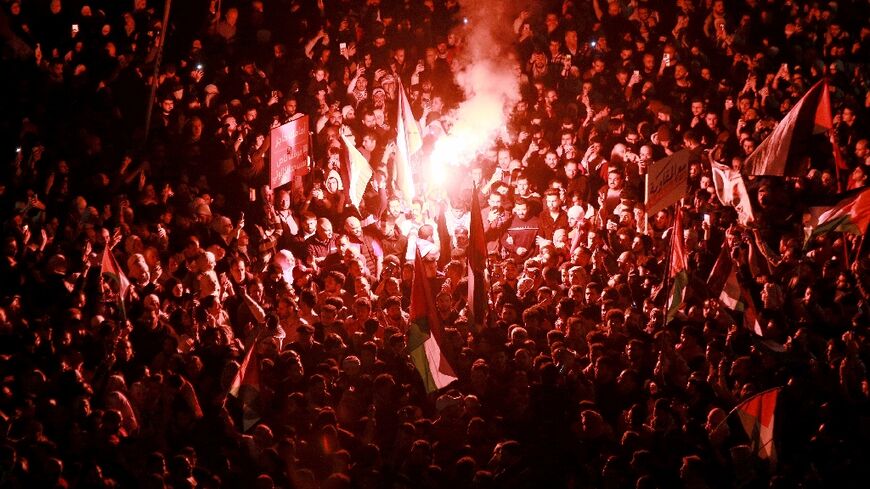
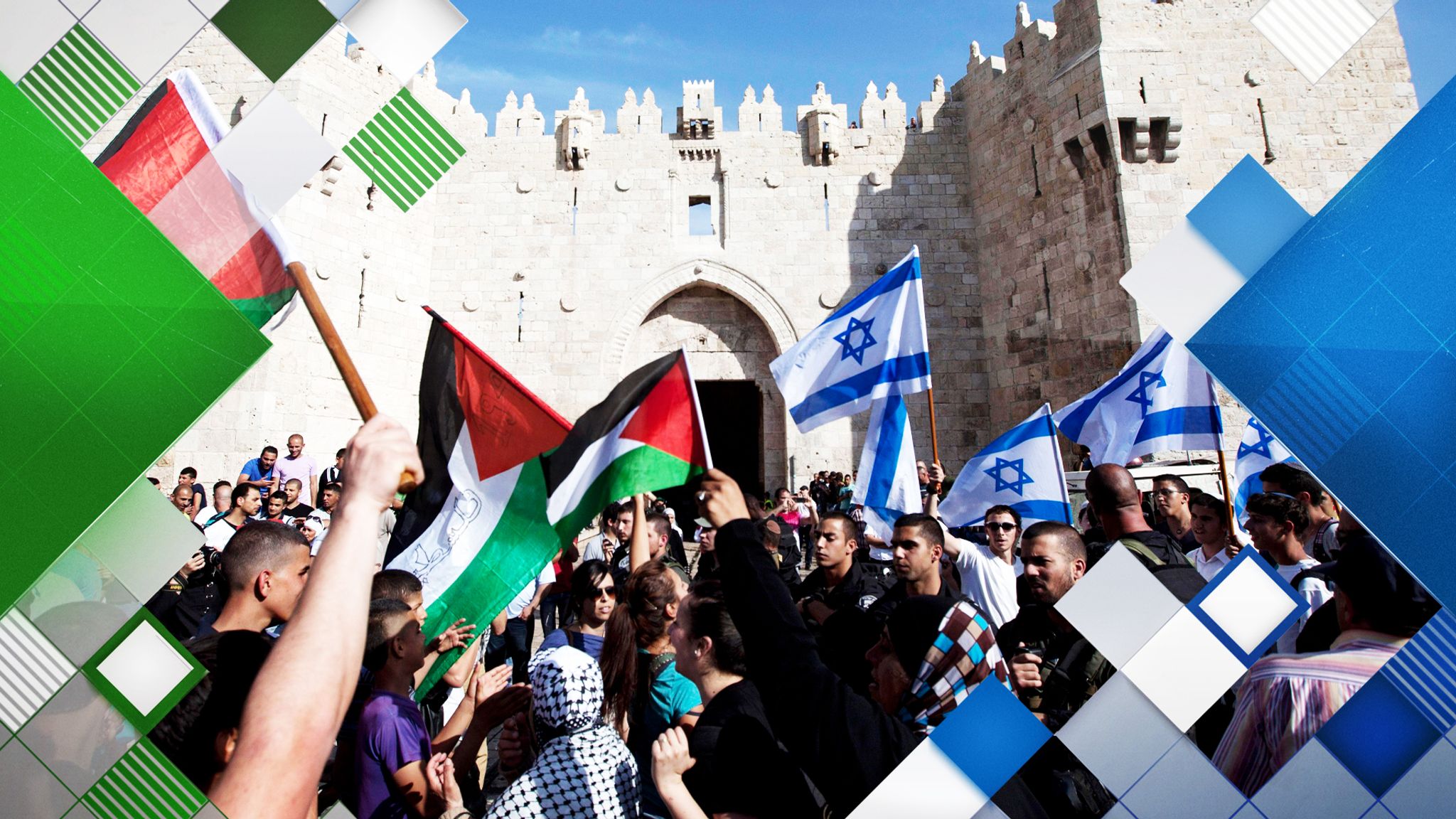
    Feature Image Credit: news.sky.com

    Maps Credit: britannica.com

  • Strategies: hierarchy or balancing Purpose, Aims and Means?

    Strategies: hierarchy or balancing Purpose, Aims and Means?

    At the beginning of his famous first chapter, Clausewitz defines war as mentioned above within a hierarchy of purpose, aims, and means. His renowned formula is related to this definition. At the end of the same chapter, nevertheless, he introduces the consequences for the theory of war from this initial reasoning about the nature of war and states: “Our task, therefore, is to develop a theory that maintains a balance between these three tendencies, like an object suspended between three magnets”


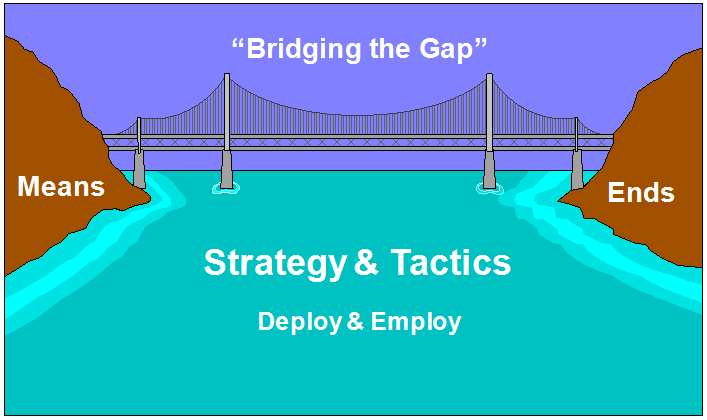
    Strategy Bridge
    “The Strategy Bridge concept leads to battle-centric warfare and the primacy of tactics over strategy.”


    At the outset, I would like to emphasise that in war and in violent action, justifiable ends do not legitimate all means. But I won’t solely treat the means applied by Hamas on October 7th, nor that of the Israel defence forces afterwards. Nevertheless, if someone argued that the ends justify all means, this would have to be applied to both sides. I want to highlight more principal arguments concerning the ‘end-aims-means’ relationship by contrasting a mere hierarchical approach, which is, in my view, leading to a reversal of ends and means, and a floating balance of them. The task of coming to a proper appreciation of Clausewitz’s thoughts on strategy is actually to combine a hierarchical structure with that of a floating balance. This article examines the relation of purpose, aims and means in Clausewitz’s theory and highlights that this relation is methodologically comparable to the floating balance of Clausewitz’s trinity. Modern strategic thinking is characterised by the end, way (aim), means relationship and the concept of the ‘way’ as the shortest possible connection between ends and means  (consider, for instance, Colin Gray’s concept of a strategy bridge[1]). This notion stems from a very early text of Clausewitz: ‘As a result each war is raised as an independent whole, whose entity lies in the last purpose whose diversity lies in the available means, and whose art therein exists, to connect both through a range of secondary and associated actions in the shortest way.’

    Nevertheless, here we can detect the fundamental difference in many of Clausewitz’s interpretations, which understand strategy as the shortest way of connecting purpose and means (battle and combat). Within this quote, Clausewitz speaks of war as an independent whole, a notion which he later rejects fervently.   A central distinction is the concept to which the means attaches: the Taoist tradition and Sun Tzu hold that the means connects directly to the political purpose of the war; in contrast, for Clausewitz, the means attaches to an intermediary aim within a war, which must be sequentially achieved prior to the fulfilment of the war’s political purpose. The distinctive feature of the Taoist tradition is that strategy as a “way” effectively becomes tactics, in the sense that there exists no “strategic” aim, in the meaning of an intermediate military “strategic” war aim inserted between the political purpose of the war and tactical combat.

    Battle-centric Warfare: Winning battles and losing the War

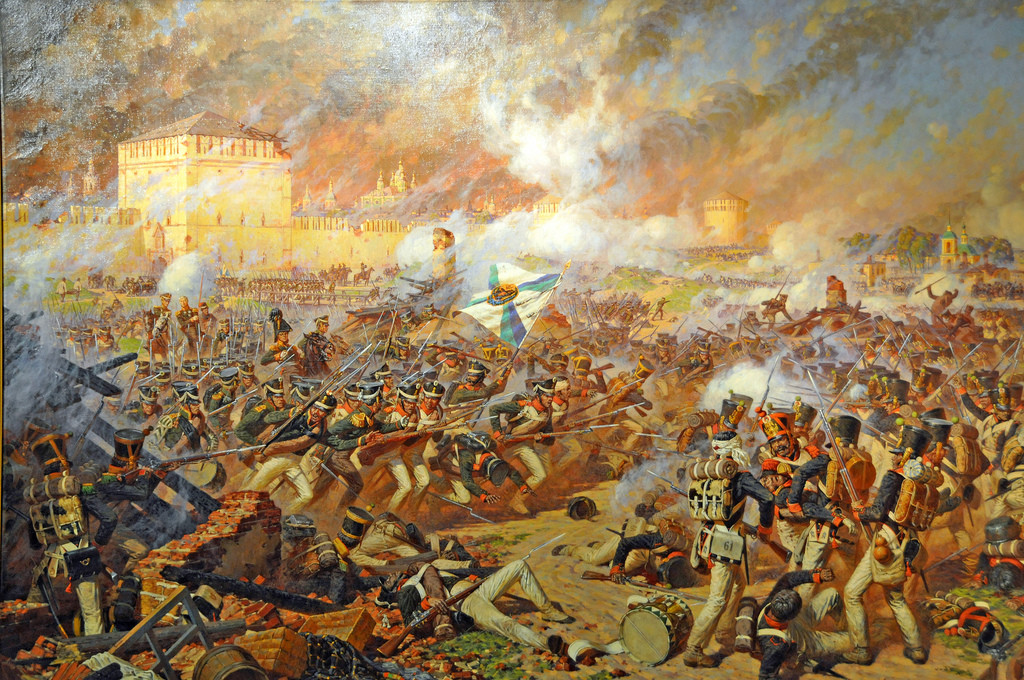
    If strategy is nothing else than the direct way of linking the political purpose with the means, understood as combat, this understanding results in a ‘battle-centric’ concept of warfare that privileges tactical outcomes. One might attribute the loss of the Vietnam War, as well as the defeat of the US in Afghanistan and Iraq, to this misunderstanding about battle. In the early 1980s, Colonel Harry G. Summers Jr wrote a most influential work about the faults made in the Vietnam War. He observed that the US Army won every battle in Vietnam but finally lost the war. Summers recounts an exchange between himself and a former North Vietnamese Army officer some years after the war. It went something like this: Summers: ‘You never defeated us in the field.’ NVA Officer: ‘That is true. It is also irrelevant.’ [2]Winning battles does not necessarily lead to winning the war, and not only in this case. The same point can be made about Napoleon’s campaign in Russia. Napoleon won all the battles against the Russian army but lost the campaign. It was precisely this observation that led Clausewitz to denounce battle-centric warfare.

    ‘War is thus an act of force to compel our enemy to do our will,’ Clausewitz wrote at the beginning of his famous first chapter of On War (75).[3] ‘Force … is thus the means of war; to impose our will on the enemy is its purpose’, he continued. ‘To secure that purpose, we must make the enemy defenceless, which, in theory, is the true aim of warfare. That aim takes the place of the purpose, discarding it as something not actually part of war’ (75). This seemingly simple sentence reveals the core problem: what does it mean that the aim ‘takes the place’ (in German: vertritt) of the purpose? Are they identical or different? To put it bluntly, At the beginning of his famous first chapter, Clausewitz defines war as mentioned above within a hierarchy of purpose, aims, and means. His renowned formula is related to this definition. At the end of the same chapter, nevertheless, he introduces the consequences for the theory of war from this initial reasoning about the nature of war and states: “Our task, therefore, is to develop a theory that maintains a balance between these three tendencies, like an object suspended between three magnets” (89).[4] In relation to the concept of strategy, we must combine a hierarchical understanding of the purpose-aims-means-rationality with that of a floating balance of all three.

    Presenting any of these elements as an absolute would be artificially to delimit the analysis of war, as the components are interdependent. Clausewitz’s solution is the ‘trinity’, in which he defined war by different, even opposing, tendencies, each with its own rules. Nevertheless, since war is ‘put together’ in this concept of three tendencies, it is necessary to consider how these tendencies interact and conflict simultaneously rather than one being absolute. Clearly, if we go to war, there is a purpose for that war, and different purposes for war are possible. Each of these possible purposes is connected with different achievable military aims, and finally, each aim can be achieved by various means. The question, therefore, is whether all three are incorporated into a hierarchy or whether their relationship must be understood as a floating balance among them.

    Purpose, Aims, and Means in War

    Clausewitz explains this dynamic relationship of purpose, aims and means in war in Chapter Two of Book One. At the beginning of Book One, Chapter Two, Clausewitz writes that ‘if for a start we inquire into the [aim] of any particular war, which must guide military action if the political purpose is to be properly served, we find that the [aim] of any war can vary just as much as its political purpose and its actual circumstances’ (90). The consequence of this proposition is that not every aim and means serves a given purpose. The problem of the relationship between purpose and aims is that each element of the purpose-aims-means construct has a rationality of its own, which Clausewitz emphasises in his proposition that war has its own grammar, although not its own logic. He writes, for example, ‘we can now see that in war many roads lead to success, and that they do not all involve the opponent’s outright defeat.’ Clausewitz then summarises that there exists a wide range of possible ways (94) to reach the aim of war and that it would be a mistake to think of these shortcuts as rare exceptions (94). For example, Clausewitz wrote: ‘It is possible to increase the likelihood of success without defeating the enemy’s forces. I refer to operations that have direct political repercussions, that are designed in the first place to disrupt the opposing alliance’ (emphasis in the original) (92).[5]Another prominent example, Clausewitz emphasised, was the warfare of Frederick the Great. He would never have been able to defeat Austria in the Seven Years’ War if his aim had been the outright defeat of Austria. Clausewitz concludes if he had tried to fight in this manner, ‘he would unfailingly have been destroyed himself.’ (94). After explaining other strategies besides the destruction of the enemy armed forces, he concludes that all we need to do for the moment is to admit the general possibility of their existence, the likelihood of deviating from the basic concept of war under the pressure of particular circumstances (99). But the main conclusion is that in war, many roads may lead to success – but the reverse is true, too, not all means are neither guaranteeing success nor are legitimate.[6]

    But the main conclusion is that in war, many roads may lead to success – but the reverse is true, too, not all means are neither guaranteeing success nor are legitimate.

    Why is that so?   Although Clausewitz finishes Chapter 2 of Book I with the notion that the ‘wish to annihilate the enemy’s forces is the first-born son of war’ (99), he emphasises that at a later stage and by degrees’ we shall see what other kinds of strategies can achieve in war’ (99). Nevertheless, he gives us two clues in this chapter. First, that war is not an independent whole but – an extension of the political sphere: that war has its own grammar but not its own logic.[7] Second, in my interpretation of Clausewitz, the difference between attack and defence represents a distinction between self-preservation and gaining advantages in warfare. Already in Chapter Two, he articulates the ‘distinction that dominates the whole of war: the difference between attack and defence. We shall not pursue the matter now, but let us just say this: that from the negative purpose [comes?] all the advantages, all the more effective forms, of fighting, and that in it is expressed the dynamic relationship between the magnitude and the likelihood of success’ (94).

    My thesis is that Clausewitz is trying to combine the Aristotelian difference between poieses and praxis in his writings – an instrumental view of war for political purposes with the performance of the conduct of war, not just with the execution of the political will. Whereas for the early Clausewitz, the ‘purpose’ is a moment within the war, he later opposes this position, emphasising that this purpose is located outside of the actual warfare. With this differentiation of purposes in war and the purpose of war, Clausewitz covers a fundamental difference between various forms of action, which was initially developed by Aristotle and remains even today. The practical philosophy of Aristotle is based on the basic distinction of techne, as based on poiesis and phronesis, and praxis, based on performance and practical knowledge. Techne is technical, instrumental knowledge.

    In contrast, phronesis or praxis of action can be characterised as performance in warfare. If we compare different purposes for going to war with each other, we are close to what Max Weber called the “value rationality” of purposes. Although Max Weber sometimes seems to overemphasise the difference between the rationality of purposes and military aims, his differentiation is useful to shed light on Clausewitz’s theory. Value rationality is primarily about the relationship of different purposes to one another, which can be classified into a hierarchy of purposes. The subordination of warfare to the shaping of international order, as Clausewitz puts it, is ‘value-rational’ as defined by Max Weber. By contrast, “action rationality” is a principle of action exclusively oriented to achieving a particular military aim through the most effective means and rational consideration of possible consequences and side effects.

                Clausewitz initially makes a two-fold distinction between the purpose-aims-means relationship: first, as a value rationality, in which we find a hierarchical relationship starting from the purpose at the top, with aims and means subordinated respectively; second, as a process rationality, in which the military aim as the object of practical action is the output of the purpose-aim-means relationship.

    He made this distinction at times only implicitly based on the different connotations of the concept of purpose. In part, Clausewitz differentiates between the purpose of war and the purpose in war. He used the same terms throughout, providing various contents from which this distinction could be deduced. Henceforth we need to have a further look at his use of terms and concepts.

    Beginning with his earliest writings, Clausewitz asserted that war has a purpose. In his Strategie (Strategy), written in 1804, he wrote that the ‘purpose of the war’ can be: ‘Either to destroy the enemy completely, to remove their sovereignty, or to prescribe the conditions for peace.’ The destruction of the enemy forces is the ‘more present purpose’ of war. If the purpose of war, however, is the destruction of the enemy forces, is it a purpose that is realised within warfare?[8]  The problem is that the destruction of the enemy moves from being a means to an aim in and of itself. In contrast to such an understanding of the purpose-aims-means rationality, for Clausewitz, the military aim within the war is an intermediary dimension between purpose and means. In his later writings, Clausewitz replaces the term’ purpose in war’ through the terms’ aims’ and ‘goals in warfare’ [(he uses the same German term Ziel for both aim and goal).

    The late Clausewitz emphasises that the purpose of war lies outside the boundaries of the art of warfare. He argues that one must always consider peace as the achievement of the purpose and the end of the business of war. (215) ‘Even more generally, the consideration of the use of force, which was necessary for warfare, affects the resolution for peace. As the war is not an act of blind passion but is required for the political purpose to prevail, this value must determine the size of our own sacrifices. Once the amount of force and thus the extent of the applied force is being so large that the value of the political purpose was no longer held in balance, the violence must be abandoned, and peace be the result.’ (217)

    Additionally, one has to take into account the counter-actions of the opponent. Clausewitz emphasises this difference in his chapter about the theory of war, Book Two: ‘The essential difference is that war is not an exercise of the will directed at inanimate matter, as in the case with the mechanical arts, or at matter which is animate but yielding, as in the case with the human mind and emotions in the fine art. In war, the will is directed at an animate object that reacts’. (149). Hence, Clausewitz’s final achievement is not a strategy that could be applied to all kinds of war but a reflection on the art of warfare, the performance of warfare within a political purpose.

    If, as it seems to Clausewitz, the purpose of war lies outside of warfare and war is determined only as means for this purpose, then a technical, instrumental understanding of the war is thereby intended. But this is not the whole of Clausewitz. He also emphasises praxis, performance and practical knowledge. If the purpose lies within warfare, this does not contain a complete identity of the goal of martial action with its execution. In this case too, the purpose is not war for war’s sake. My conclusion is that Clausewitz is really trying to combine the Aristotelian difference between poieses and praxis in his writings – an instrumental view of war for political purposes with the performance of the conduct of war, not just with the execution of the political will.

    Further dimensions of the concept of Purpose in Clausewitz

    According to Herfried Münkler, Clausewitz makes a distinction between an existential and instrumental view of war. If purpose exists at the top of a hierarchy in the purpose-aims-means relationship, there is an assumption that war is instrumental, in the sense that there is a choice between different purposes, thus identifying the purpose in terms of Max Weber’s value rationality. However, if war is “existential”, in that the only purpose is the survival of the state, the hierarchy of the relationship is reversed, as the means by which the enemy is defeated gains primacy, which accords with a process of rationality. Clausewitz summarised the difference between both concepts of purpose: ‘Where there is a choice of purpose, one may consider and note the means, and where only one purpose may be, the available means are the right ones.’[9]

    A pure process of rationality can lead to the fact that the military aim and means of warfare become the purpose in themselves. It is for characterising war in this manner, as an instrument facing inwards on itself, rather than outwards to a wider political purpose, that the early Clausewitz can be criticised. He adopted the Napoleonic model from Jena, trying to seize its successes systematically and, without considering the social background of France, to generalise it as an abstraction. In his critique of Clausewitz, Keegan wrote that the military develops war cultures, which correspond with their social environment. If, however, war is seen as purely instrumental and the connection to this environment is cut, then the danger of blurring the military boundaries threatens potentially endless violence. In this view, the roots of Clausewitz’s image of war refer back to the origins of the modern age, which was characterised by the full possession of civil rights, the general right to vote and compulsory military service, all of which completed the portrait of the citizen soldier and the ‘battle scenes’ of the people’s army.

    The question for today is whether the revolution in military affairs as well as fourth and fifth-generation warfare (5th generation warfare is partisan warfare applied by states or state-like entities like Hamas) are tempting to a primacy of the means and aims over meaningful purposes, a primacy of tactics over strategy and the ‘art of war’, which is in Clausewitz’s view even surpassing strategy.

    The French model was, in fact, adapted for the Prussian circumstances: a revolutionary people’s army in the service of the raison d’ état – but without ‘republic’ (meaning a democratically constituted system of government). In this form, Clausewitz’s theory was proved and began to be used later for multiple purposes. It started its triumphant advance through the general staff throughout the war ministries of the world. In Keegan’s view, the result of this process was the general armament of Europe in the 19th century and its excessive increase in the 20th century.[10] Keegan left unmentioned that Clausewitz’s theory of war had yet to be bisected to fulfil this function, especially by the German general staff in the First World War. Nevertheless, his criticism revealed a fundamental problem of modern war: the separation of potential options for warfare from socially meaningful purposes. In World War I, tactics replaced strategy.

    Although the understanding of the strategy of the early Clausewitz was, in fact, one of an aim or goal independent from the political realm within warfare, the definition of purpose of the later Clausewitz is based on the political purpose outside of warfare. There are still passages in the final version of On War in which Clausewitz does not differentiate clearly between purpose and aims. The question for today is whether the revolution in military affairs as well as fourth and fifth-generation warfare (5th generation warfare is partisan warfare applied by states or state-like entities like Hamas) are tempting to a primacy of the means and aims over meaningful purposes, a primacy of tactics over strategy and the ‘art of war’, which is in Clausewitz’s view even surpassing strategy.


    Notes:

    [1]   The relevant discussions may be found in the following books: Echevarria, A. 2007. Clausewitz and Contemporary War. Oxford: Oxford University Press; Gray, C. 1999. Modern Strategy. Oxford: Oxford University Press; Herberg-Rothe, A. 2007. Clausewitz’s Puzzle: The Political Theory of War. Oxford: Oxford University Press; Keegan, J. 1994. A History of Warfare. London and New York: Vintage; Simpson, E. 2012. War from the Ground Up: Twenty-First Century Combat as Politics. London: Hurst; Strachan, H. 2007. Clausewitz’s OnWar. Atlantic Monthly Press, New York; von Ghyczy, T., Bassford, C. and von Oetinger, B. Clausewitz on strategy. Inspiration and insight from a master strategist. Hoboken: Wiley; Heuser, B., 2010, The Evolution of Strategy: Thinking War from Antiquity to the Present. Cambridge: Cambridge University Press; Heuser, Beatrice 2010, The Strategy Makers: Thoughts on War and Society from Machiavelli to Clausewitz. Praeger Security International:

    [2]   For details, see Herberg-Rothe, Andreas, Clausewitz’s puzzle. Oxford University Press: Oxford 2007. Clausewitz, Carl von; 1990.  Schriften, Aufsätze, Studien, Briefe, vol. 2, ed. W. Hahlweg. Göttingen: Vandenhoeck&Ruprecht.; Clausewitz, Carl von, 1992. Historical and Political Writings, ed. P. Paret and D. Moran, 1992. Princeton, NJ: Princeton University Press; Clausewitz, Carl von,  Politische Schriften [Political Literature], ed. H. Rothfels. Munich: Drei Masken Verlag.  1922.

    [3]   The numbers in brackets are references to Clausewitz, Carl von, On War. Translated and edited by Peter Paret and Michael Howard. Princeton: Princeton University Press 1984. As translation is a highly tricky process, I have tried to make some translations of my own only in some cases, especially in trying to distinguish the German terms „Zweck“ and „Ziel“. These terms have been translated as purpose, object, objective, ends, and as aims, goals and sometimes even ways by Howard and Paret. My main intention in this article is to distinguish between purpose and aims. It might be that the great variety of the translations has contributed to the underestimation of the difference between the purpose of the war and the goal within the war. Although they are closely connected with each other, I follow Clausewitz’s assertion that the same purpose could be reached by pursuing different goals.

    [4]   With this notion, we can explain the difference between Clausewitz’s real concept of the trinity and trinitarian warfare, which is not directly a concept of Clausewitz, but an argument made by Harry Summers, Martin van Creveld and Mary Kaldor. In trinitarian warfare, the three tendencies of war are understood as a hierarchy, whereas  Clausewitz describes his understanding of their relationship as a floating balance In my view, each war is differently composed of the three aspects of applying force, the struggle or fight of the armed forces and the fighting community the fighting forces belong to; based on this interpretation I define war as the violent struggle of communities; see Herberg-Rothe, Clausewitz’s puzzle.

    [5]   This reference seems to strengthen the difference made by Emile Simpson between the use of armed force within a military domain that seeks to establish military conditions for a political solution on one side and the use of armed force that directly seeks political as opposed to specifically military outcomes; Simpson, War from the ground up, p. 1.

    [6]   The confusion about the difference between Zweck (purpose) of and Ziel (aims) in warfare concerning Clausewitz might be additionally caused by his own insufficient differentiation in this chapter.

    [7]   For Clausewitz’s concept of Policy and politics, see Herberg-Rothe, Clausewitz’s puzzle, chapter 6.

    [8]           Clausewitz, Carl von, Strategie aus dem Jahre 1804 mit Zusätzen von 1808 und 1809 (Strategy from the Year 1804 with Additions from 1808 and 1809). In EB, Verstreute Kleine Schriften (Small Scattered Writings), pp. 3-61, here pp. 20-21.

    [9]   Clausewitz, Carl von, Historisch-politische Aufzeichnungen von 1809 (Historical-Political Records of 1809). In: Clausewitz, Carl von, Politische Schriften (Political Literature), p. 76.

    [10]         . Keegan, Kultur des Krieges (The Culture of War), in particular, p. 543; Naumann, Friedrich, An den Ufern des Oxos (On the banks of the Oxos). John Keegan corrects Carl von Clausewitz. In: Frankfurter Rundschau from 17.6.98, p. ZB 4.


    Feature Photo Credit: Dennis Jarvis – War on the Rocks

  • The Morals of Hamas and Israel — A Dharmic Perspective

    The Morals of Hamas and Israel — A Dharmic Perspective

    In this analysis of the catastrophic destruction unleashed by Israel on Gaza in response to the Hamas’ attack on October 7th, Dr Seshadri Kumar poses very pertinent and valuable questions to the Indian policymakers and the audience in general.

    This article was published earlier in medium.com

    I have seen a number of Indians try to draw a moral equivalence between the attacks by Hamas on Israeli civilians that precipitated the ongoing war in Palestine and the retaliatory attacks of the Israeli Defense Forces on Gaza civilians. Both are equally wrong, these people say. Cruelty and barbarism are wrong, whatever the circumstances, they say. And they also say, therefore, that the Palestinians deserve the brutal bombardment that Israel is inflicting on them because they acted brutally by attacking first. Basically, they asked for it. The fact that the Palestinians are Muslims, a minority that is hated by the majority of Hindus (and, as I am finding out, Christians as well) in India, helps in developing this response.

    But are these two actions equivalent? Most of my friends are Indians, and Hindus at that, so I will draw upon Hindu mythology, which is revered in India, to answer this.

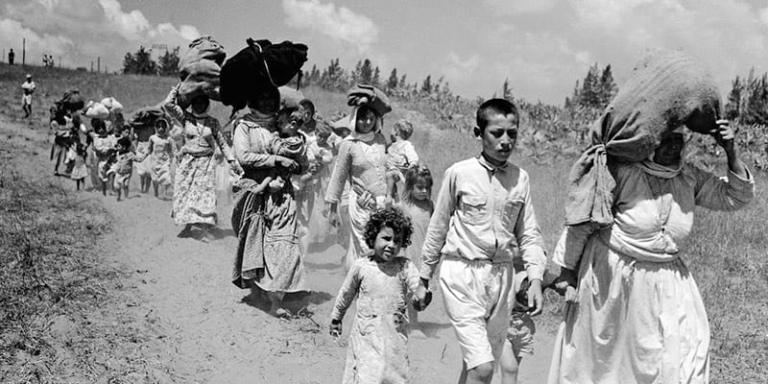
    First, one must understand what the Palestinians have gone through. The very creation of Israel was an injustice to the Arabs living in Palestine, as they were forcibly removed from their homes and forced to be refugees. Initially, all the other Arab countries supported them and fought many wars with Israel. But they lost every time, and the Palestinians lost more and more land each time.

    But the Bible is not history, and even if Jews used to live in that land centuries ago, brutally uprooting people living in Palestine in 1948 was a gross human rights violation. By this logic, the Chola kings of South India were once in control of Sri Lanka, Cambodia, and Thailand, so India is entitled to invade those countries and expel their populations from their lands.

    Some people say that the land that forms the state of Israel was once populated by Jews if we go by the Bible, and therefore Israel has a right to that land. But the Bible is not history, and even if Jews used to live in that land centuries ago, brutally uprooting people living in Palestine in 1948 was a gross human rights violation. By this logic, the Chola kings of South India were once in control of Sri Lanka, Cambodia, and Thailand, so India is entitled to invade those countries and expel their populations from their lands.

    After a lot of conflict over decades, the Israelis gave two parcels of land to the Palestinians to live in and self-govern, but the Jews control the lifelines to both areas — the West Bank, ruled by Fatah, and the Gaza Strip, ruled by Hamas.

    Palestinians are routinely terrorized and humiliated by Israel. Their demand for a Palestinian homeland has come to nought despite years of negotiations. Israel is a brutal occupation force in Palestine.

    If all this were not enough, even the small area still occupied by Arabs is constantly encroached upon by Jews. Jews build settler colonies in Palestinian areas, taking away more and more of the little land the Muslims own. Muslim families living in Jerusalem are often forced at gunpoint from their own homes to make way for Jews. The number of Jewish settlers in Palestinian areas was just over half a million in 2010; today, it is just under three-quarters of a million. This increase has happened because of explicit support and encouragement of forced settlement policies by various governments in Israel, including the current Likud-led government of Benjamin Netanyahu and by the US. Another reason for this is that Jews anywhere have an automatic right to become Israeli citizens, and this has led to a huge influx of Jewish immigrants into Israel. Any protest by Palestinians is met with disproportionate retaliation. Children who throw stones are met with machine gunfire. A single rocket is replied to by a hail of bombs from aircraft. Collective punishment of Palestinians is and has been the norm. Israel has been deliberately provoking the Palestinians more and more, and the US has been openly partisan, as when President Trump recognized Jerusalem as Israel’s capital.

    If this were still not bad enough, the Palestinians seem to be losing all their Arab friends. There seems to be Palestine fatigue in the Arab world. Egypt normalized relations with Israel long ago. More recently, other countries, including the UAE, Sudan, Bahrain, and Morocco, have normalized relations. Even Saudi Arabia is on the cusp of normalizing relations with Israel. Clearly, there is nobody left to stand up for the Palestinians.

    A peaceful resolution is clearly not getting the Palestinians anywhere. Despite condemnation by the UN, Israel is continuing its settlement policy. At this rate, the Palestinians will all be begging for a living on the streets.

    How should Palestinians fight for their rights? Talks have failed. How should they “fight” Israel? By engaging in a direct military confrontation with the far superior Israeli army, using primitive weapons, and without an air force — to end up with a guaranteed defeat?

    So, if you say you are sympathetic to the plight of the Palestinians, you are giving them only three options:

    1. Have round after round of negotiations, which don’t get anywhere.
    2. Fight a direct war with a far superior army and an air force, which will lead to complete defeat.
    3. Watch Israeli civilians encroach on what Palestinians still consider their land, until nothing is left, and end up as slave labour for the Jews.

    It is worth noting that the Palestinians living in the West Bank, under Fatah rule, have not indulged in violence all these years. Yet, what has it gained them? Israel withdrew all its settlements from the Gaza Strip in 2010 but is briskly building new Jewish settlements in the West Bank. This is what Fatah got by being peaceful.

    People become terrorists when they have no other option. Asymmetric warfare is the weapon of the weak. When one has a just cause, and all acceptable and peaceful ways of securing one’s rights have come to nought, then one adopts unacceptable and violent ways. In other words, the ends justify the means.

    Hindus can understand this by reading the great Hindu epic, the Mahabharata. The Mahabharata is the story of a conflict between two sets of cousins, the Kauravas and the Pandavas, for control of a kingdom, Hastinapura. In the Mahabharata, the principle that any means are acceptable in order for a just end to prevail, referred to as the principle of Brihaspati, the preceptor of the Gods, is invoked by both sides.

    The operative portion of the story in the Mahabharata starts when King Vichitravirya dies. He has two sons: the elder, Dhritarashtra, is blind, and therefore is passed over for the kingship. His younger brother, Pandu, is crowned king. But King Pandu is cursed by a dying sage during a hunting accident, loses interest in the kingdom, and abdicates, upon which Dhritarashtra is crowned king by default. The children of Dhritarashtra are called the Kauravas, and the children of Pandu are called the Pandavas. Both the Pandavas and Kauravas therefore have a legitimate claim to the kingdom — the former are the children of the last legitimate king, who was the younger brother, whereas the latter are the children of the elder brother who is the current king, albeit by default.

    Duryodhana, the eldest of the Kauravas, believes that the entire kingdom should belong to him, and that the Pandavas do not have a legitimate claim to “even a needlepoint of land.” The Pandavas, on the other hand, are amenable to a split of the kingdom, with half going to their cousins and half ruled by them.

    Duryodhana hates the Pandavas because they are rival claimants to the kingdom. He tries to have them poisoned and then and burned to death. When all that fails, Dhritarashtra tries to achieve peace by partitioning the kingdom. Duryodhana then cheats the Pandavas for their share of the kingdom by winning a rigged game of dice. The condition of the game is that the Pandavas must go into exile for 13 years. When the Pandavas return from exile, Duryodhana refuses to return their portion of the kingdom to them. He justifies all his actions to his father by quoting Brihaspati — that one may take any steps necessary for the elimination of a powerful adversary.

    The Pandavas decide to fight for their right in the great war of Kurukshetra when Duryodhana refuses to return to their kingdom.

    In the setting of the Mahabharata, there are rules by which one is expected to fight on the battlefield. One must not attack someone who is not fighting them. One must not attack an unarmed opponent. One must not strike below the waist. No fighting at night, except by prior agreement. These rules are referred to as the “dharma” (right conduct) of battle. Violation of these rules would be called “adharma.” (Violation of dharma was viewed in the same way as we view human rights violations today.)

    Now the Pandavas can regain their kingdom only by defeating the Kauravas in battle. But the Kauravas are invincible in battle. They have great warriors who have never been defeated in war: Bhishma, the grand-uncle of the Pandavas and Kauravas, a student of the great Parashurama, the greatest warrior the world has known; Drona, the martial teacher of both the Pandavas and Kauravas, another disciple of Parashurama; Karna, the son of the Sun god, born with impregnable armor, and yet another disciple of Parashurama; and many other great warriors such as Bhurishravas. Duryodhana himself is invincible when fighting with his favourite weapon, the mace or bludgeon.

    While the Pandavas themselves have great warriors, notably Bhima, the second of the five Pandavas, the strongest man of his time; and Arjuna, the third of the Pandavas, the greatest archer of his time; even these cannot kill the undefeated warriors on the Kaurava side.

    But the Pandavas also have on their side Krishna, who is an incarnation of the God Vishnu in human form, who wants to help the Pandavas win because he is on the side of justice and fairness, and he believes that the Pandavas are on the side of dharma.

    Krishna knows that the Pandavas can never beat the Kauravas in a fair fight. So, he resorts to dishonourable tactics, or adharma, to win.

    Bhishma has taken a vow that he will never fight a woman. There is a warrior on the Pandava side, Shikhandi, who was born a woman, but who underwent a gender change and became a man. However, Bhishma still considers this warrior a woman, and his code of chivalry will not allow him to fight Shikhandi. But Shikhandi is incapable of killing Bhishma. So Krishna instructs Arjuna to position himself behind Shikhandi and shoot arrows at Bhishma. Bhishma will not shoot at Arjuna because Shikhandi stands in between, and so allows himself to be killed by Arjuna. This is clearly a violation of dharma by the Pandavas — attacking a foe who is not fighting you.

    Drona is told a lie that his son, Aswatthama, has been killed. On hearing this, Drona loses all interest in life and goes into meditation. When he is thus unarmed and defenceless, a warrior named Dhrishtadyumna chops off his head. Another violation of dharma.

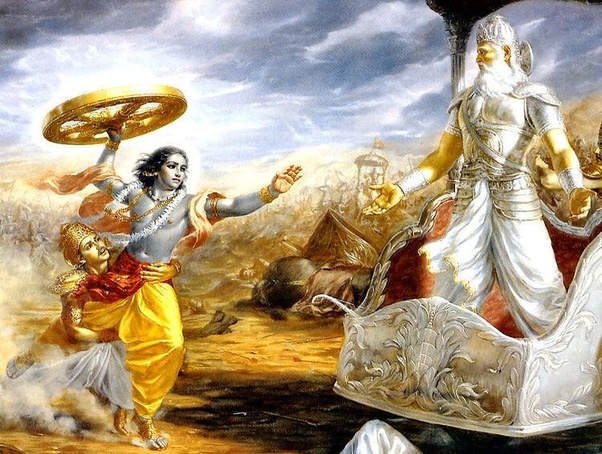
    Karna, similarly, is killed by Arjuna when his chariot is stuck in the mud, and he is unable to fight Arjuna. Dharma would have required Arjuna not to attack Karna when he was unarmed and not engaged in battle with him. But upon Krishna’s urging, Arjuna kills Karna from behind when he is engaged in removing his wheel from the mud.

    Similarly, Bhurishravas is engaged in a fight with another warrior when Arjuna cuts his hand off with an arrow from behind. A disillusioned Bhurishravas goes into meditation, at which point his opponent beheads him while he is unarmed and in meditation.

    In the final battle of the war, Duryodhana and Bhima are fighting with their maces, and Bhima is finding the going tough, because Duryodhana is unbeatable with the mace. At this point, Krishna signals to Bhima to strike Duryodhana below the navel, a violation of the rules of war. Bhima strikes Duryodhana’s thighs and mortally wounds him. More adharma.

    Krishna justifies every one of these transgressions of dharma by saying that the ends justify the means. A dying Duryodhana accuses the Pandavas of violating the rules of war to defeat him. Krishna recalls all of Duryodhana’s evil deeds, and says that without violating the rules of war, without adharma, the Pandavas could never have avenged the great wrongs done to them. Adharma was required to defeat adharma.

    And so, the Mahabharata is a deeply pessimistic story, because it says that the virtuous can never defeat the wicked by following fair play in war. They must resort to trickery, unfair and illegitimate tactics — adharma — in order for dharma to prevail. After trying to follow dharma their entire lives, even not retaliating when their wife Draupadi was disrobed in the great assembly of Hastinapura by the Kauravas during the game of dice, after patiently enduring multiple assassination attempts, after being deprived of their kingdom by fraud, after enduring 13 years in exile, the Pandavas finally come to the realization that they can get their rightful inheritance only through evil and unfair means, through adharma. Even to ensure the victory of virtue, one must embrace vice.

    Similarly, the Palestinians have not gotten justice for 75 years by appealing to dharma, and today Hamas is pursuing the path of adharma. The injustice of the Palestinians began in 1948 with the nakba, the forced expulsion of more than 700,000 Palestinians from the new state of Israel and the destruction of more than 500 villages. Some 5000 Palestinians were massacred by Israel at the time. The injustice has only grown worse in the last 75 years.

    If the present adharma of Hamas is wrong, then the actions of the Pandavas in the Mahabharata were also wrong. And if what the Pandavas did was right, then what Hamas has done is also right. In both cases, adharma was committed to securing justice and fairness. Hindus must decide which course of action they find morally right — but they must choose consistently.

    A system where dharma is never respected and followed can only result in adharma. We have no choice but to accept this reality.

    Had Dhritarashtra upheld dharma when the Pandavas pleaded for their rights with him, they would never have had to engage in adharma to get their rights. If we claim to value dharma, then we must be consistent in upholding it. Otherwise, we are engaging in adharma ourselves.

    Had the world listened to the anguished cries of the Palestinians over the last 75 years, a just solution would have been worked out for them and some of them (i.e., Hamas) would not need to engage in terrorism today. But by turning a deaf ear and a blind eye to their suffering, the West has forced Hamas to engage in the only way that the West pays attention to — terrorism.

    It is not enough to say that you condemn both the violence against civilians by Hamas and the state terrorism of Israel equally. By doing so, you are only enabling the powerful terrorist state of Israel, because your condemnation means nothing to them — they have been engaging in state terrorism for 75 years and getting away with it scot-free. The only people to face consequences for their terrorism are the weak — in this case, Hamas, and in decades past, the PLO. They are blacklisted, their assets are frozen, they are put on Interpol arrest lists, whereas the terrorists who rule the state of Israel roam the world as royalty.

    The world is not equal and fair. The powerful have more privileges. And so, if you value human rights and freedom, you must not condemn equally. If you genuinely care about justice, you must side with the weak, not be even-handed.

    Be like Krishna. Not like Dhritarashtra.

    Feature Image Credit: www.lapresalatina.com


  • Perpetrators and Victims: Ways Out of Violence?

    Perpetrators and Victims: Ways Out of Violence?

    Franz Fanon had sharpened the problem in such a way that the colonised would only really liberate themselves through violence and the killing of the colonialists because only in this way could they free themselves from the humiliation they had suffered.

    the real evil is humiliation – and many civilisations and peoples of the world have not only been exploited in colonisation but, perhaps more importantly, humiliated.

    violent action changes one’s own soul.


    I would like to emphasise from the outset that many readers of these lines will, of course, think that this is the writing of a Western-influenced intellectual, especially a German, who is marked by the guilt of the Germans for Auschwitz. Indeed, I am. Nevertheless, I want to address several issues beyond the current conflicts.

    An explanation of the causes of violence can very quickly turn into an understanding, and this into a legitimation of violent action. Although the boundary between these three concepts is fluid, it does not follow that identifying the causes of violent experiences legitimises all forms of one’s violent actions. Thus, while one can legitimise the violent resistance of the Palestinians and the establishment of their Palestinian state, one cannot legitimise all forms of one’s use of violence. The Queen of Jordan is indeed absolutely right when she accuses the West of double standards in the application of morality – but the need for moral recognition of the opponent as a human person is in no way invalidated by the Western double standard. In my view, there is no difference in principle whether Palestinian or Israeli children suffer. But the suffering of children on one side does not justify the suffering of children on the other side. At the moment, we are also in an information war in which precisely this is being conveyed – my own experience of violence as a victim legitimises the use of violence by myself. In his anticolonialism impulse, Franz Fanon had sharpened the problem in such a way that the colonised would only really liberate themselves through violence and the killing of the colonialists because only in this way could they free themselves from the humiliation they had suffered. This assumption, however, turned out to be highly counterproductive because violent action changes one’s own soul. While I fully agree with Jacques Vergés that the real evil is humiliation – and many civilisations and peoples of the world have not only been exploited in colonisation but, perhaps more importantly, humiliated. Here the distinction between a biological human being and a legal-moral person took on its nation-destroying dynamic and became a double standard – moral-legal qualities were granted only to Europeans, all others were degraded to half-monkeys, uneducated primitive peoples, or sub-humans (the Jews to the Nazis). This degradation did not kill the body, but like all rape, it killed the soul.

    Perhaps we need to get away from reducing every form of violence to its purpose – violent actions can also become independent. You can’t use violence the way you use cutlery and plates at dinner – after you wash up, everything looks the same, but people have gotten used to violence taking on a life of its own. The surviving fighters from the civil wars in the former Yugoslavia, Chechnya, Syria, and Iraq form a group of some 40,000 mercenaries who fight each other in ever-changing constellations. The 2012 “Tuareg” rebellion in Mali was also supported by such independent fighters, who returned from Palestine and helped themselves to the weapons stockpiles of the collapsed Ghaddafi regime. Chechen fighters, in turn, were a central part of the IS leadership; today, they are fighting on both sides in Ukraine. A tragic consequence of these developments is the inversion of the perpetrator-victim relationship. Many victims of violence have such fragmented souls that they use violence themselves to prevent themselves from ever being victims again, even at the cost of becoming perpetrators. Ideologies and political goals then become an indiscriminate source of legitimation for one’s violent actions, which ultimately only serve the purpose of no longer being a victim.

    Discourses of history: Throughout the Islamic sphere of influence, as in all colonised countries, there is a pronounced discourse of victimhood – the problem is that while the people concerned were indeed victims to the extent that the Western world still finds difficult or impossible to admit, a discourse of victimhood leads to legitimising even one’s own most horrific forms of violence by saying that one was a victim. Stalinism and Nazism, as well as the ideologies of al-Qaeda, Daesh/IS, the Taliban, and Hamas in Gaza, derive their legitimacy from this discourse of victimhood. At a training course in Yad Vashem, the Israeli Holocaust memorial, this victim discourse, the reversal of the victim-perpetrator relationship, was very vividly presented – not by me, but by the Israeli leaders of the training course. The symbol for this is the desert fortress Massada, where the last Jewish defenders committed suicide in order not to be humiliated as slaves by the Romans.

    But the consequence was the motto: Never again, Massada!

    And the Holocaust, anti-Semitism and Islamic Jew-hatred are not a distant past for Israelis but part of the present discourse – just as for many Palestinians, the Nakba is an ongoing part of the present. In Arabic, the Nakba refers to the flight and expulsion of some 700,000 Arab Palestinians from the former British Mandate of Palestine. It took place between the 1947 UN partition plan for Palestine and the 1949 armistice following the Palestine War, waged by six Arab states against the state of Israel, which was founded on May 14, 1948. In the historical narrative of Palestinians, other Arabs, and anti-Zionists, the Nakba is usually described as a pre-planned ethnic cleansing by the Israeli military; in the historical narrative of Israel, it is generally described as a voluntary flight in response to Arab calls. In my lecture at the World Peace Museum in Kyoto, Japan, I also wanted to talk about the crimes of the Japanese Empire in the 20th century. The colleague who invited me responded, at first incomprehensibly to me, that this could not be made a topic: He meant that you Germans were lucky, you had your Hitler. To my incomprehension, he explained that the Germans could blame the Holocaust entirely on Hitler and his few comrades, which, according to recent research, is not valid. But if he had to talk about the crimes of the Japanese army, he would speak of his father, but really about himself. He found himself unable to distance himself even minimally from his father. Although the greater sense of family in many non-Western societies can be a useful corrective to Western over-individualisation, the danger lies in the repetition of age-old conflicts. To my surprise, even the famous peace researcher Johann Galtung had postulated at a conference in Basel that 3 million deaths in the “Killing Fields” of the Red Khmer were compared to 3000 years of oppression. The undisputed experience of oppression led him to relativise a crime against humanity.

    The problem, however, is that for every terrorist killed, General Abi Zaid, the former commander of U.S. forces in Iraq, estimates that five new ones grow. After the violent excesses of Hamas members, it is “understandable” that the relatives of the victims want to kill them, but this will most likely only multiply the number of violent and militant supporters.

      Even with regard to the Holocaust, Hannah Arendt had distinguished between the unforgivable act and the perpetrator, whom one must be able to forgive. But “forgiveness” depends on the admission of guilt. And this admission is made virtually impossible by the victim discourse. In addition, it is difficult to come to terms with one’s own violent actions. Many of these people will never be able to return to civilian society – this could be observed, for example, in the case of US soldiers who, decades after the Vietnam War, still had to “play” the war over and over again in the Nevada desert, because the violence they had committed had filled their identity entirely. There is a drug that is more quickly and deeply addictive than even heroin – and that is violence. Violence eats the soul. And even if Arendt distinguishes between the perpetrator and the act, what to do with perpetrators who cannot distance themselves from the act is problematic. In a study of the recruitment of IS supporters in Iraq, it was found that the main recruitment base for IS was the prisons there. Even in Western prisons, petty criminals often turn out to be serious criminals. Sometimes, you have to admit that the only way to deal with people who are entirely violent is to kill them – like the IS supporters who abused Yazidi women as sex slaves. To this day, it is difficult to understand why the neighbouring states did not put an end to the violent excesses of IS earlier since it would have had no chance against a functioning modern army. The problem, however, is that for every terrorist killed, General Abi Zaid, the former commander of U.S. forces in Iraq, estimates that five new ones grow. After the violent excesses of Hamas members, it is “understandable” that the relatives of the victims want to kill them, but this will most likely only multiply the number of violent and militant supporters.

     Both Hamas and the religious extremists in Israel and the settlers in the West Bank are obviously trying to turn a political dispute into a religiously underpinned clash of civilisations, or, as Samuel P. Huntington better calls it, a clash of civilisations. Hamas is not only a liberation movement, as it is often ascribed in defence of its actions, but at least a religious movement oriented toward an eschatological struggle – just like the religious extremists in Israel. Both rely on the construction of identity that Huntington also advocates: we know who we are when we know who we are against. Although there is a renaissance of religion around the world, and it is often very violent, this does not mean that religions per se are violent. But religious belief necessarily excludes other beliefs. It is different from the civilisations associated with them. While religions exclude others, civilisations are much more likely to include others. This difference also explains why the followers of the great monotheistic religions, while claiming to be peace-loving, have been responsible for unparalleled excesses of violence throughout their history. The Islamic wars of conquest, the Crusades, the Ottoman conquests, the Thirty Years’ War, Islamic and Atlantic slavery, and, finally, worldwide colonisation leave a single trail of blood. And this, of all things, from two world religions that considered themselves peace-loving. The traditional explanation is no longer valid: these excesses of violence had nothing to do with religion but only with socio-historical conditions, which themselves were oriented towards eternal peace. This is certainly true for these civilisations (even if the concept of civilisation has been distorted by European colonisation), but not for the religions (which is why the Global Ethic project has failed so spectacularly, contrary to its own claims because it has not gone beyond a minimal consensus).

    Huntington’s liberal critics had argued not only that there should not be a clash of civilisations but also that there could not be one – because, in their eyes, there was only one civilisation, the Western one. The others are religions or cultures, but not civilisations. It is time to abandon this liberal and Western conceit, and the replacement of Eurocentrism with ethnocentrism or religious centrism is not an adequate response to the problems of exploding violence.

     At first glance, a dialogue of the world’s civilisations seems unrealistic in the face of worldwide explosions of violence. On the contrary, it is necessary to prevent political disputes from becoming a clash of civilisations. Huntington’s liberal critics had argued not only that there should not be a clash of civilisations but also that there could not be one – because, in their eyes, there was only one civilisation, the Western one. The others are religions or cultures, but not civilisations. It is time to abandon this liberal and Western conceit, and the replacement of Eurocentrism with ethnocentrism or religious centrism is not an adequate response to the problems of exploding violence. Instead, the appropriate response to the increasing number of wars and excesses of violence worldwide must be to separate the hardliners discursively, politically, and militarily from the population, not to drive the population into the hands of the hardliners. In the latter case, we would only be threatened with a new “bloody century” like the first half of the 20th century. A dialogue among the world’s civilisations is necessary, if perhaps only modest, step to avoid this. For in the mutual recognition of the world’s civilisations, both sides will be bound by their own civilisational principles.

    Feature Image: Nakba of 1948 – Palestinians being forced out by Israelis – arabcenterdc.org

  • Hamas Attack – What really happened on 7th October? – Sifting truth from propaganda

    Hamas Attack – What really happened on 7th October? – Sifting truth from propaganda

    As Gaza is under a catostrophic military assault by Israeli forces it is important to analyse the trigger for the Israeli assault – the Hamas attack of October 7th. Evidence is now emerging that up to half the Israelis killed were combatants; that Israeli forces were responsible for some of their own civilian deaths; and that Tel Aviv disseminated false ‘Hamas atrocities’ stories to justify its devastating air assault on Palestinian civilians in Gaza. This article, a persuasive analysis, was published earlier in The Cradle.

    Two weeks after the Hamas breakout assault on Israel on 7 October, a clearer picture of what happened – who died, and who killed – is now beginning to emerge.

    Instead of the wholescale massacre of civilians claimed by Israel, incomplete figures published by the Hebrew newspaper Haaretz show that almost half the Israelis killed that day were in fact combatants – soldiers or police.

    In the interim, two weeks of blanket western media reporting that Hamas allegedly killed around 1,400 Israeli civilians during its 7 October military attack has served to inflame emotions and create the climate for Israel’s unconstrained destruction of the Gaza Strip and its civilian population.

    Accounts of the Israeli death toll have been filtered and shaped to suggest that a wholesale civilian massacre occurred that day, with babies, children, and women the main targets of a terror attack.

    Now, detailed statistics on the casualties released by the Israeli daily Haaretz paint a starkly different picture. As of 23 October, the news outlet has released information on 683 Israelis killed during the Hamas-led offensive, including their names and locations of their deaths on 7 October.

    Of these, 331 casualties – or 48.4 percent – have been confirmed to be soldiers and police officers, many of them female. Another 13 are described as rescue service members, and the remaining 339 are ostensibly considered to be civilians.

    While this list is not comprehensive and only accounts for roughly half of Israel’s stated death toll, almost half of those killed in the melee are clearly identified as Israeli combatants.

    There are also so far no recorded deaths of children under the age of three, which throws into question the Israeli narrative that babies were targeted by Palestinian resistance fighters. Of the 683 total casualties reported thus far, seven were between the ages of 4 and 7, and nine between the ages of 10 and 17. The remaining 667 casualties appear to be adults.


    Age Distribution of the Israelis killed during Hamas’ October 7 operation (as of 23 October)
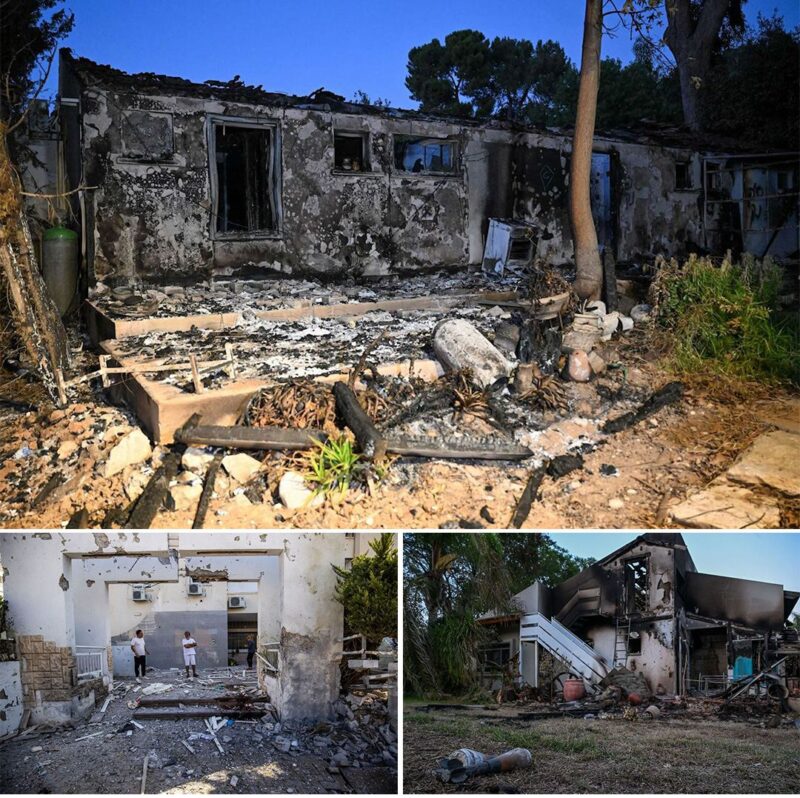
    The numbers and proportion of Palestinian civilians and children among those killed by Israeli bombardment over the past two weeks – over 5,791 killed, including 2,360 children and 1,292 women, and more than 18,000 injured – are far higher than any of these Israeli figures from the events of 7 October.

    Revisiting the scene

    The daring Hamas-led military operation, codenamed Al-Aqsa Flood, unfolded with a dramatic dawn raid at approximately 6:30 AM (Palestine time) on 7 October. This was accompanied by a cacophony of sirens breaking the silence of occupied Jerusalem, signaling the start of what became an extraordinary event in the occupation state’s 75-year history.

    As per the spokesperson of Hamas’ armed wing, the Al-Qassam Brigades, around 1,500 Palestinian fighters crossed the formidable Gaza-Israel separation barrier.

    However, this breakout was not limited to Hamas forces alone; numerous armed fighters belonging to other factions such as Palestinian Islamic Jihad (PIJ) later breached the armistice line, along with some Palestinians unaffiliated with any organized militia.

    As it became apparent this was no ordinary resistance operation, hundreds of videos quickly flooded social media, most of which have been viewed by The Cradle, depicting dead Israeli troops and settlers, fierce gunfire battles between various parties, and Israelis being taken captive into Gaza.

    These videos were either taken on the phones of Israelis, or were released by Palestinian fighters filming their own operation. It wasn’t until hours later that more gruesome and downright dubious allegations began to surface.

    Unsubstantiated allegations of ‘Hamas atrocities’

    Aviva Klompas, a former speechwriter for the Israeli mission to the UN, was the first Israeli of note to spread the claim that there were reports of “Israeli girls being raped and their bodies dragged through the street.

    She posted this on X at 9:18 PM (Palestine time), on 7 October, although an op-ed Klompa published with Newsweek at 12:28 AM (Palestine time), on 8 October, made no mention of any sexual violence.

    Klompas is also the co-founder of Boundless Israel, a “think-action tank” that works “to revitalize Israel education and take bold collective action to combat Jew-hatred.” An “unapologetically Zionist” charitable group that works to promote Israeli narratives on social media.

    The one case touted as proof of rape was that of a young German-Israeli woman named Shani Louk, who was filmed face down in the back of a pickup truck and was widely assumed dead.

    It was unclear whether the fighters filmed with Louk in the Gaza-bound vehicle were members of Hamas, as they do not sport the uniforms or insignia of the Al-Qassam troops identifiable in other Hamas videos – some even wore casual civilian clothing and sandals.

    Later, her mother claimed to have evidence that her daughter was still alive, but had suffered a severe head wound. This rings true with information released by Hamas that indicated Louk was being treated for her injuries at an unspecified Gaza hospital.

    Complicating matters further, on the day these rape allegations arose, Israelis would not have had access to this information. Their armed forces had not yet entered many, if not most, of the areas liberated by the resistance and were still engaged in armed clashes with them on multiple fronts.

    Nevertheless, these rape claims took on a life of their own, with even US President Joe Biden alleging, during a speech days later, that Israeli women were “raped, assaulted, paraded as trophies” by Hamas fighters. It is important to note that The Forward’s article on 11 October reported that the Israeli military acknowledged they had no evidence of such allegations at that point.

    When the army later made its own allegations of decapitations, foot amputations, and rape, Reuters pointed out that “the military personnel overseeing the identification process didn’t present any forensic evidence in the form of pictures or medical records.” To date, there is no credible evidence of these atrocities that has been presented.

    Other outrageous allegations, such as the story of Hamas “beheading 40 babies‘ made headlines and the front pages of countless western news outlets. Even Biden claimed to have seen “confirmed photos of terrorists beheading babies.” The claims trace back to Israeli reserve settler and soldier David Ben Zion, who has previously incited violent riots against Palestinians and called for the West Bank town of Huwara to be wiped out. No evidence was ever produced to support these claims and the White House itself confirmed later that Joe Biden had never seen such photos.

    The Hamas plan

    There is little to no credible evidence that Palestinian fighters had a plan to – or deliberately sought to – kill or harm unarmed Israeli civilians on 7 October. From the available footage, we witness them engaging primarily with armed Israeli forces, accounting for the deaths of hundreds of occupation soldiers. As Qassam Brigades’ Spokesman Abu Obeida made clear on 12 October:

    Al-Aqsa Flood operation aimed to destroy the Gaza Division (an Israeli army unit on Gaza’s borders) which was attacked at 15 points, followed by attacking 10 further military intervention points. We attacked the Zikim site and several other settlements outside the Gaza Division headquarters.

    Abu Obeida and other resistance officials claims that the other key objective of their operation was to take Israeli prisoners that they could exchange for the approximately 5,300 Palestinian prisoners held in Israeli detention centers, many of whom are women and children.

    Hamas Deputy Head of the Political Bureau of Saleh Al-Arouri, in an interview after the operation, stressed: “We have a large and qualitative number and senior officers. All we can say now is that the freedom of our prisoners is at the doorstep.”

    Both sides play this game: Since the start of its military assault on Gaza, Israel has rounded up and imprisoned more than 1,200 Palestinians in the occupied West Bank. To date there have been 38 prisoner exchange deals between the resistance factions and Tel Aviv – deals that Israelis often resist to the very last minute.

    While these kinds of testimonies trickle out, reports are emerging that Israeli authorities have dialed up the mistreatment, torture, and even killing of Palestinian prisoners in their custody – a violation of the Geneva Conventions, which ironically, a non-state actor like Hamas appears to have followed to the letter.

    In relation to the events of 7 October, there are certainly some videos depicting possibly unarmed Israelis, killed in their vehicles or at entrances to facilities, so that Palestinian troops could gain access.

    There are also videos which show the fighters engaging in shootouts with armed Israeli forces, where there were unarmed Israelis taking cover in between, in addition to videos of fighters shooting toward houses and throwing grenades into fortified areas. Eyewitness testimony also suggests grenades were thrown into bomb shelters, though by whom is unclear.

    Even at the Israeli “peace rave”, which has been cited as the single deadliest attack committed by Palestinian fighters during their operation, videos emerged that appeared to show Israeli forces opening fire through a crowd of unarmed civilians, toward targets they believed to be Hamas members. ABC News also reported that an Israeli tank had headed to the site of the festival.

    An Israeli massacre in Kibbutz Be’eri?

    In its report on the events at Be’eri Kibbutz, ABC News photographed artillery pieces resembling Israeli munitions outside a bombed-out home. The reporter, David Muir, mentioned that Hamas fighters, covered in plastic bags, were found in the aftermath.

    Additionally, videos of the scene show homes that appear to have been struck by munitions that Hamas fighters did not possess. Muir reported that about 14 people were held hostage in a building by Palestinian fighters.

    A Hebrew-language Haaretz article published on 20 October, which only appears in English in a must-read Mondoweiss article, paints a very different story of what went down in Be’eri that day. A Kibbutz resident who had been away from his home – whose partner was killed in the melee – reveals stunning new details:

    His voice trembles when his partner, who was besieged in her home shelter at the time, comes to mind. According to him, only on Monday night (9 October) and only after the commanders in the field made difficult decisions — including shelling houses with all their occupants inside in order to eliminate the terrorists along with the hostages — did the IDF complete the takeover of the kibbutz. The price was terrible: at least 112 Be’eri people were killed. Others were kidnapped. Yesterday, 11 days after the massacre, the bodies of a mother and her son were discovered in one of the destroyed houses. It is believed that more bodies are still lying in the rubble.”

    Photo evidence of the destruction in Be’eri corroborates his account. Only the heavy munitions of the Israeli army could have destroyed residential homes in this manner.
    Aftermath or Be’eri Kibbutz after the fire power of the two sides cease
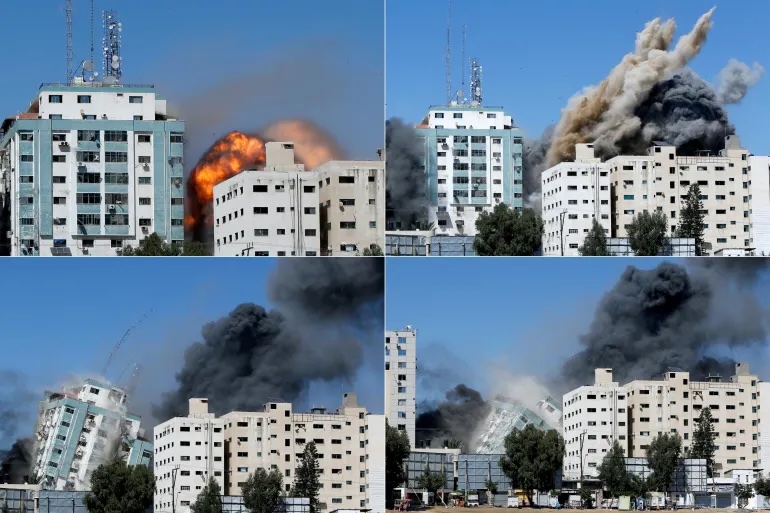
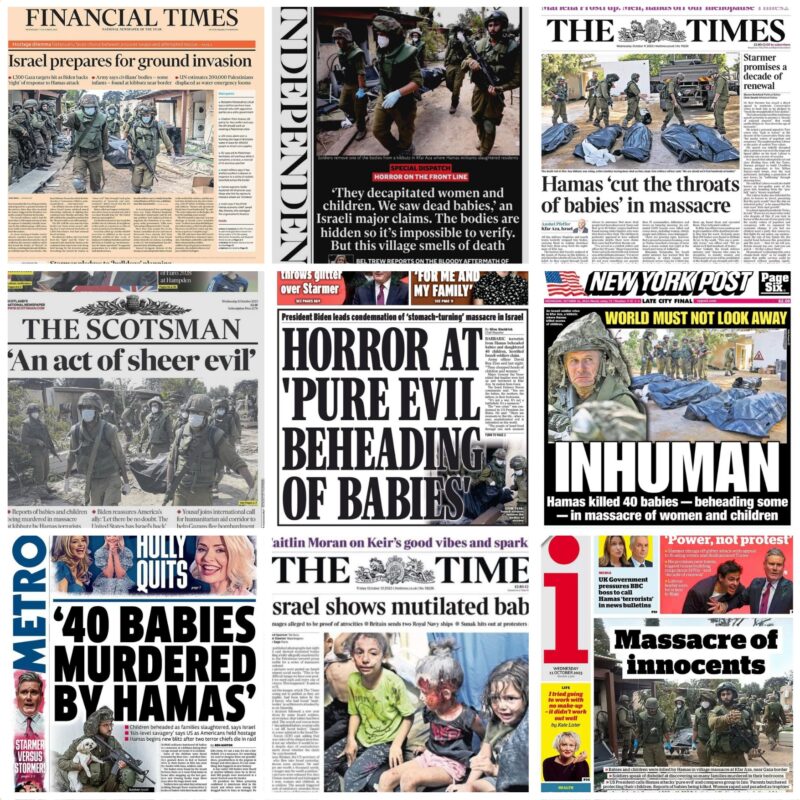
    Hamas behaviors: Evidence vs allegations

    Yasmin Porat, a survivor from Kibbutz Be’eri, said in an interview for an Israeli radio-show, hosted by state-broadcaster Kan, that Israeli forces “eliminated everyone, including the hostages,” going on to state that “there was very, very heavy crossfire” and even noted tank shelling.

    Porat had attended the Nova rave and testified to the humane treatment throughout different interviews she conducted with Israeli media. She explained that when she was held prisoner, the Hamas fighters “guarded us”, telling her in Hebrew to “Look at me well, we’re not going to kill you. We want to take you to Gaza. We are not going to kill you. So be calm, you’re not going to die.” She also added the following:

    They give us something to drink here and there. When they see we are nervous they calm us down. It was very frightening but no one treated us violently. Luckily nothing happened to me like what I heard in the media.

    Increasingly, and to the horror of some Israeli officials and news outlets, Israeli eyewitnesses and survivors of the bloodshed are testifying that they were treated well by Palestinian fighters. On 24 October, Israeli state broadcaster Kan bemoaned the fact that prisoner Yocheved Lifshitz, released by Hamas the day before, was allowed to make statements live on air.

    As she was handed over to Red Cross intermediaries, the elderly Israeli female captive was caught on camera turning back to squeeze the hand of her Hamas captor in her last goodbyes. Lifshitz’s live broadcast, in which she spoke about her two-week ordeal, “humanized” her Hamas captors even further as she recounted her daily life with the fighters:

    “They were very friendly toward us. They took care of us. We were given medicine and were treated. One of the men with us was badly injured in a motorbike accident. Their (Hamas) paramedics looked after his wounds, he was given medicine and antibiotics. The people were friendly. They kept the place very clean. They were very concerned about us.

    More questions than answers

    It is essential to recognize that in many reports by western journalists on the ground, the majority of information regarding the actions of Hamas fighters comes from the Israeli army – an active participant in the conflict.

    Emerging evidence now indicates that there is a high probability, especially due to the scale of the infrastructural damage, that Israeli military forces could have deliberately killed captives, fired on incorrect targets, or mistaken Israelis for Palestinians in their firefights. If the only source of information for a serious claim made is the Israeli army, then it has to be taken into account that they have reason to conceal cases of friendly fire.

    Israeli friendly fire was rampant, even in the days that followed, from an army with very little actual combat experience. In the city of Ashkelon (Askalan) on 8 October, Israeli soldiers shot dead and shouted insults at the body of a man they believed to have been a Hamas fighter, yet later realized they had executed a fellow Israeli. This is just one of three such examples of friendly fire in one day, resulting in the killing of Israelis by their own troops.

    Amid the fog of war, parties to the conflict have different perspectives on what occurred during the initial raid and its aftermath. It’s not disputed that Palestinian armed groups inflicted significant losses on the Israeli military, but there will be plenty of ongoing debate regarding everything else in the weeks and months to come.

    An independent, impartial, international investigation is urgently needed, one that has access to information from all sides involved in the conflict. Neither the Israelis nor the Americans will agree to this, which itself suggests that Tel Aviv has much to conceal.

    In the meantime, Palestinian civilians in Gaza endure ongoing, indiscriminate attacks with the most sophisticated heavy weapons in existence, living under the persistent threat of forced and potentially irreversible displacement. This Israeli air blitz was made possible only by the flood of unsubstantiated ‘Hamas atrocities’ stories that media began to circulate on and after 7 October.


    The views expressed in this article do not necessarily reflect those of TPF.

    Feature Image: Gaza under attack – Politico

  • Propaganda Blitz: How Mainstream Media is Pushing Fake Palestine Stories

    Propaganda Blitz: How Mainstream Media is Pushing Fake Palestine Stories

    Biased media reporting and propaganda with fake news is now a major strategy to create polarised perceptions worldwide. This type of reporting is now led by leading media houses of the West, whose only aim is to create a narrative that suits their foreign policy and economic objectives. Truth is a big casualty in the bargain, along with innocent lives, communities, and nations. The ongoing Israel-Hamas conflict is mired in heavy propaganda. It is important for the world to re-examine the past, extract the truth and history, and the current geopolitical machinations to understand this long-drawn Middle East conflict properly. TPF endeavours to provide, through select articles and accurate analysis, the right analysis and perspective of the Israel-Palestine issue. In the article below, Alan Macleod clearly describes how mainstream media pushes many false narratives to obfuscate the true nature, causes, and victims of the conflict.         – Team TPF


    After Hamas launched a surprise attack on Israel, IDF forces responded with airstrikes, levelling Gazan buildings. The violence so far has claimed the lives of more than 2,500 people. Western media, however, show far more interest and have much greater sympathy with Israeli dead than Palestinian ones and have played their usual role as unofficial spokespersons for the Israeli Defense Forces (IDF).

    EXTRAORDINARY CLAIMS, ZERO EVIDENCE

    One case in point is the claim that, during their incursion into southern Israel, Hamas fighters stopped to round up, kill and mutilate 40 Israeli babies, beheading them and leaving their bodies behind.

    The extraordinary assertion was originally reported by the Israeli channel i24 News, which based it on anonymous Israeli military sources. Despite offering no proof whatsoever, this highly inflammatory claim about an enemy made by an active participant in a conflict was picked up and repeated across the world by a host of media (e.g., in the United States by Fox NewsCNNMSNBusiness Insider, and The New York Post)

    Meanwhile, the front pages of the United Kingdom’s largest newspapers were festooned with the story, the press outraged at the atrocity and inviting their readers to feel the same way.

    Extraordinary claims should require extraordinary evidence, and a story like this should have been met with serious skepticism, given who was making the claim. The first question any reporter should have asked was, “Where is the evidence?” Given multiple opportunities to stand by it, the IDF continually distanced itself from the claims. Nevertheless, the story was simply too useful not to publish.

    The decapitated baby narrative was so popular that even President Biden referenced it, claiming to have seen “confirmed” images of Hamas killing children. This claim, however, was hastily retracted by his handlers at the White House, who noted that Biden was simply referencing the i24 News report.

    The story looked even more like a piece of cheap propaganda after it was revealed that the key source for the claim was Israeli soldier David Ben Zion, an extremist settler who had incited race riots against Palestinians earlier this year, describing them as “animals” with no heart who needs to be “wiped out.”

    Manipulating the U.S. public into supporting the war by feeding them atrocity propaganda about mutilating babies has a long history. In 1990, for instance, a girl purporting to be a local nurse was brought before Congress, where she testified that Iraqi Dictator Saddam Hussein’s men had ripped hundreds of Kuwaiti babies from their incubators and left them to die. The story helped whip the American public up into a pro-war fervor. It was later revealed that it was a complete hoax dreamed up by a public relations firm.

    THE MURDERED GIRL WHO CAME BACK TO LIFE

    Another piece of blatantly fake news is the case of Shani Louk. Louk attended the Supernova Festival, ambushed by Hamas. It was widely reported that Hamas murdered her (e.g., Daily MailMarcaYahoo! NewsTMZBusiness Insider), stripped her, and paraded her naked body trophy-like through the streets on the back of a truck. Louk’s case incited global anger and calls for an overwhelming Israeli military response.

    There was only one problem: Louk was later confirmed to be alive and in hospital, a fact that suggests the videos of her on the back of a truck were actually images of people saving her life by taking her to seek medical assistance.

    Few of the outlets irresponsibly publishing these wildly incendiary stories have printed apologies or even retractions. The Los Angeles Times was one exception: after publishing a report claiming that Palestinians had raped Israeli civilians, it later informed readers that “such reports have not been substantiated.”

    LIONIZING ISRAEL, DEHUMANIZING PALESTINIANS

    Few readers, however, see these retractions. Instead, they are left with visceral feelings of anger and disgust towards Hamas, priming them to support Western military action against Palestine or the wider region.

    In case their audiences did not get the message, op-eds and editorials in major newspapers hammered home this idea. The Wall Street Journal ran an op-ed entitled “The Moral Duty to Destroy Hamas”, which insisted to readers that “Israel is entitled to do whatever it takes to uproot this evil, depraved culture that resides next to it.” Thus, the outlet implicitly gave Israel a free pass to carry out whatever war crimes it wished on the civilian population, whether that is using banned chemical weapons, cutting off electricity and water, or targeting ambulances or United Nations officials.

    The National Review’s editorial board was of a similar mind, stating that “Israel needs a long leash to destroy Hamas.” This long leash, they explained, meant giving Israel far more time to carry out the destruction of Gaza. Western leaders would have to refrain from criticizing Israel or calling for calm and peace.

    The message was clear: international unity was paramount at this time. Mere trifles such as war crimes must be overlooked. And while Israel and its people were treated with special sympathy (e.g., Washington Post), the other side was written off as bloodthirsty radicals. While the phrase “Palestinian terrorists” could be found across the media spectrum (e.g., Fox NewsNew York PostNew York Times), its opposite, “Israeli terrorists” was completely absent from corporate media. This, despite casualties on the Palestinian side, outnumbering Israelis.

    Underlining the fact that Israeli lives are deemed more important is the way in which deaths from each side are reported. The BBC, for example, told its readers that Israelis have been “killed” while people in Gaza merely “died,” removing any agency from its perpetrators and almost suggesting their deaths were natural.

    CONTEXT-FREE VIOLENCE

    Missing from most of the reporting was the basic factual background of the attack. Few articles mentioned that Israel was built upon an existing Palestinian state and that most of the inhabitants of Gaza are descended from refugees ethnically cleansed from southern Israel in order to make way for a Jewish state. Also left unmentioned was that Israel controls almost every aspect of Gazan’s life. This includes deciding who can enter or leave the densely populated strip and limiting the import of food, medicine and other crucial goods. Aid groups have called Gaza “the world’s largest open-air prison.” The United Nations has declared the conditions in Gaza to be so bad as to be unlivable.

    One of the principal reasons that this crucial context is not given is that it could influence Western audiences into sympathizing with Palestinians or supporting Palestinian liberation. Giant media corporations are largely owned by wealthy oligarchs or by transnational corporations, both of whom have a stake in preserving the status quo and neither of whom wish to see national liberation movements succeed.

    https://twitter.com/AlanRMacLeod/status/1712797752709566763?ref_src=twsrc%5Etfw%7Ctwcamp%5Etweetembed%7Ctwterm%5E1712797752709566763%7Ctwgr%5Eb05f8d7d7e0b67196918b4e46787442438501a6b%7Ctwcon%5Es1_&ref_url=https%3A%2F%2Fscheerpost.com%2F2023%2F10%2F14%2Fpropaganda-blitz-how-mainstream-media-is-pushing-fake-palestine-stories%2F

    Some media outlets make this explicit. Axel Springer – the enormous German broadcaster that owns Politico – requires its employees to sign its mission statement endorsing “the trans-Atlantic alliance and Israel” and has told any staff members that support Palestine to leave their jobs.

    Other outlets are slightly less overt but nonetheless have Israel red lines that employees cannot cross. CNN fired anchor Marc Lamont Hill for calling for a free Palestine. Katie Halper was fired from The Hill for (accurately) calling Israel an Apartheid state. The Associated Press dismissed Emily Wilder after it became known that she had been a pro-Palestine activist during her college years. And The Guardian sacked Nathan J. Robinson after he made a joke mocking US military aid to Israel. These cases serve as examples to the rest of the journalistic world. The message is that one cannot criticize the Israeli government’s violent apartheid system or show solidarity for Palestine without risking losing their livelihoods.

    Ultimately, then, corporate media play a key role in maintaining the occupation by manipulating public opinion. If the American people were aware of the history and the reality of Israel/Palestine, the situation would be untenable. For those wishing to maintain the unequal state of affairs whereby an apartheid government expels or imprisons its indigenous population, the pen is as important as the sword.


    This article was published earlier in scheerpost.com and is republished under the Creative Commons Attribution-NonCommercial-NoDerivatives 4.0 International license

    Feature Image Credit: aljazeera.com


  • The Atomic Executioner’s Lament

    The Atomic Executioner’s Lament

    While the world focuses on the trials and travails of the scientists who invented the atomic bomb, little attention is paid to the hard positions taken by the nuclear executioners, the men called upon to drop these bombs in time of war.


    Crew of the Enola Gay, returning from their atomic bombing mission over Hiroshima, Japan. At center is navigator Capt. Theodore Van Kirk; to the right, in foreground, is flight commander Col. Paul Tibbetts. (Wikimedia Commons, Public domain)


    There is an interesting scene in Chris Nolan’s film Oppenheimer, one which could easily get lost in the complexity of telling the story of the man considered to be the father of the American atomic bomb, J. Robert Oppenheimer.

    The Trinity test of the first nuclear device has been successfully completed, and Oppenheimer is watching as two men in military uniform are packing up one of Oppenheimer’s “gadgets” for shipment out of Los Alamos to an undisclosed destination.

    Oppenheimer talks to them about the optimum height for the detonation of the weapon above ground, but is cut off by one of the soldiers, who, smiling, declares “We’ve got it from here.”

    Such men existed, although the scene in the movie — and the dialogue — was almost certainly the product of a scriptwriter’s imagination. The U.S. military went to great lengths to keep the method of delivery of the atomic bomb a secret, not to be shared with either Oppenheimer or his scientists.

    Formed on March 6, 1945, the 1st Ordnance Squadron, Special (Aviation) was part of the 509th Composite Group, commanded by then-Lieutenant Colonel Paul Tibbets. Prior to being organized into the 1st Ordnance Squadron, the men of the unit were assigned to a U.S. Army ordnance squadron stationed a Wendover, Utah, where Tibbets and the rest of the 509th Composite Group were based.

    Mission map for the bombings of Hiroshima and Nagasaki, Aug. 6 and Aug. 9, 1945. Scale is not consistent due to the curvature of the Earth. Angles and locations are approximate. Kokura was included as the original target for Aug. 9 but weather obscured visibility; Nagasaki was chosen instead. (Mr.98, Wikimedia Commons, Public domain)

    While Oppenheimer and his scientists designed the nuclear device, the mechanism of delivery — the bomb itself — was designed by specialists assigned to the 509th. It was the job of the men of the 1st Ordnance Squadron to build these bombs from scratch.

    The bomb dropped on Hiroshima by Paul Tibbets, flying a B-29 named the Enola Gay, was assembled on the Pacific Island of Tinian by the 1st Ordnance Squadron.

    Concerned about the possibility of the B-29 crashing on takeoff, thereby triggering the explosive charge that would send the uranium slug into the uranium core (the so-called gun device), the decision was made that the final assembly of the bomb would be done only after the Enola Gay took off.

    One of the 1st Ordnance Squadron technicians placed the uranium slug into the bomb at 7,000 feet over the Pacific Ocean.

    The bomb worked as designed, killing more than 80,000 Japanese in an instant; hundreds of thousands more died afterwards from the radiation released by the weapon.

    For the pilot and crew of the Enola Gay, there was no remorse over killing so many people. “I knew we did the right thing because when I knew we’d be doing that I thought, yes, we’re going to kill a lot of people, but by God we’re going to save a lot of lives,’ Tibbets recounted to Studs Terkel in 2002. He added:

    “We won’t have to invade [Japan]. You’re gonna kill innocent people at the same time, but we’ve never fought a damn war anywhere in the world where they didn’t kill innocent people,” Tibbets told Terkel. “If the newspapers would just cut out the shit: ‘You’ve killed so many civilians.’ That’s their tough luck for being there.

    An atomic bomb victim with burns, Ninoshima Quarantine Office, Aug. 7, 1945. (Onuka Masami, Wikimedia Commons, Public domain)

    Major Charles Sweeney, the pilot of Bockscar, the B-29 that dropped the second American atomic bomb on the city of Nagasaki on Aug. 9, 1945, held similar convictions about his role in killing 35,000 Japanese instantly.

    “I saw these beautiful young men who were being slaughtered by an evil, evil military force,” Sweeney recounted in 1995. “There’s no question in my mind that President Truman made the right decision.” However, Sweeney noted, “As the man who commanded the last atomic mission, I pray that I retain that singular distinction.”

    History records the remorse felt by Oppenheimer and his Soviet counterpart, Andrei Sakharov, and the punishment they both suffered at the hands of their respective governments. They suffered from designer’s remorse, a regret — stated after the fact — that what they had built should not be used, but somehow locked away from the world, as if the Pandora’s Box of nuclear weaponization had never been opened.

    Having designed their respective weapons, however, both Oppenheimer and Sakharov lost control of their creations, turning them over to military establishments which did not participate in the intellectual and moral machinations of bringing such a weapon into existence, but rather the cold, hard reality of using these weapons to achieve a purpose and goal which, as had been the case for Tibbets and Sweeney, seemed justified.

    Ignoring the Executioner

    Brigadier General Charles W. Sweeney, pilot of the aircraft that dropped the atomic bomb on Nagasaki. (Public domain, Wikimedia Commons)

    This is the executioners’ lament, a contradiction of emotions where the perceived need for justice outweighs the costs associated.

    While the world focuses on the trials and travails of Oppenheimer and Sakharov, they remain silent about the hard positions taken by the nuclear executioners, the men called upon to drop these bombs in time of war.  There have only been two such men, and they remained resolute in their judgement that it was the right thing to do.

    The executioner’s lament is overlooked by most people involved in supporting nuclear disarmament. This is a mistake, because the executioner, as was pointed out to Oppenheimer by the men of the 1stOrdnance Squadron, is in control.

    They possess the weapons, and they are the ones who will be called upon to deliver the weapons. Their loyalty and dedication to the task are constantly tested in order to ensure that, when the time comes to execute orders, they will do so without question.

    Image of a younger Petrov from a family album.
    (Stanislav Petrov’s Personal Library, Wikimedia Commons, CC0)


    Those opposed to nuclear weapons often point to the example of Stanislav Petrov, a former lieutenant colonel of the Soviet Air Defense Forces who, in 1983, twice made a decision to delay reporting the suspected launch of U.S. missiles towards the Soviet Union, believing (rightly) that the launch detection was a result of malfunctioning equipment.

    But the fact is that Petrov was an outlier who himself admitted that had another officer been on duty that fateful day, they would have reported the American missile launches per protocol.

    Those who will execute the orders to use nuclear weapons in any future nuclear conflict will, in fact, execute those orders. They are trained, like Tibbets and Sweeney, to believe in the righteousness of their cause.

    Dmitry Medvedev, the former Russian prime minister and president who currently serves as the deputy chairman of the Russian National Security Council, has publicly warned the Western supporters of Ukraine that Russia would “have to” use nuclear weapons if Ukrainian forces were to succeed in their goal of recapturing the former territories of Ukraine that have been claimed by Russia in the aftermath of referenda held in September 2022.

    “Imagine,” Medvedev said, “if the offensive, which is backed by NATO, was a success and they tore off a part of our land, then we would be forced to use a nuclear weapon according to the rules of a decree from the president of Russia. There would simply be no other option.”

    Some in the West view Medvedev’s statement to be an empty threat; U.S. President Joe Biden said last month that there is no real prospect of Russian President Vladimir Putin ordering the use of nuclear weapons against either Ukraine or the West.

    “Not only the West, but China and the rest of the world have said: ‘don’t go there,’ ” Biden said following the NATO Summit in Vilnius.

    Ignoring Russian Doctrine

    But Biden, like other doubters, emphasizes substance over process, denying the role played by the executioner in implementing justice defined on their terms, not that of those being subjected to execution.

    Russia has a nuclear doctrine that mandates that nuclear weapons are to be used “when the very existence of the state is put under threat.” According to Medvedev, “there would simply be no other option,” ironically noting that “our enemies should pray” for a Russian victory, as the only way to make sure “that a global nuclear fire is not ignited.”

    The Russians who would execute the orders to launch nuclear weapons against the West would be operating with the same moral clarity as had Paul Tibbets and Charles Sweeney some 88 years ago. The executioner’s lament holds that they will be saddened by their decision but convinced that they had no other choice.

    Proving them wrong will be impossible because, unlike the war with Japan, where the survivors were given the luxury of reflection and accountability, there will be no survivors in any future nuclear conflict.

    The onus, therefore, is on the average citizen to get involved in processes that separate the tools of our collective demise — nuclear weapons — from those who will be called upon to use them.

    Meaningful nuclear disarmament is the only hope humankind has for its continued survival.

    The time to begin pushing for this is now, and there is no better place to start than on Aug. 6, 2023 — the 78th anniversary of the bombing of Hiroshima, when like-minded persons will gather outside the United Nations to begin a dialogue about disarmament that will hopefully resonate enough to have an impact of the 2024 elections.


    This article was published earlier in consortiumnews.com

    The views expressed are the author’s own.

    Feature Image: The devastated city of Hiroshima after the atomic bomb blast – bbc.com

  • An Asia-Pacific NATO: fanning the flames of war

    An Asia-Pacific NATO: fanning the flames of war


    Former President Trump sidelined NATO to such an extent that European members were disillusioned with American leadership and NATO was in a state of fragmentation. With Biden’s presidency unleashing its Ukraine strategy and war against Russia, NATO has solidified with blind subservience to American leadership. Building on imagined threats from Russia and China, the US is now seeking to make a NATO alliance format for security across Asia as well. On the eve of the 33rd summit at Vilnius on 11-12 July 2023, Türkiye dropped its objections for Sweden to become the 33rd member of NATO, abandoning its 150-year tradition of proud neutrality and peace in favour of war-mongering. With an eye on Asia, the summit invited four Asian countries – Japan, South Korea, Australia, and New Zealand – as observers at the summit. The summit statement is, as expected, replete with anti-Russian rhetoric but more importantly extensive in its focus on the ‘China threat’ thus paving the way for NATO’s role in Asia. Jeffrey Sachs, in a speech in Australia in early July (reproduced below), has warned forcefully about the peril that NATO poses to global peace and security.                                           – TPF Editorial Team

    “My country, the U.S., is unrecognisable. I’m not sure who runs the country. I do not believe it is the president.”, says Jeffrey Sachs in a speech at a Saving Humanity and Planet Earth (SHAPE) seminar, Melbourne, Australia. “U.S. actions are putting us on a path to war with China in the same way that U.S. actions did in Ukraine.”

    “the idea of opening NATO offices in Asia is mind-boggling in its foolishness. Please tell the Japanese to stop this reckless action.”

    Jeffrey Sachs
    Speech to Shape (Saving Humanity and Planet Earth)
    July 5, 2023

    Good afternoon to everybody. I want to thank you for inviting me and to thank SHAPE for its leadership. I just had the privilege to listen to Alison Broinowski and Chung-in Moon. We have been treated to brilliant and insightful statements. I absolutely agree with all that has been said. The world has gone mad but especially the Anglo-Saxon world, I’m afraid. I don’t know whether there is any sense in our little English-speaking corner of the world. I’m of course speaking of the United States, UK, Canada, Australia and New Zealand.

    There’s something profoundly disheartening about the politics of our countries right now. The deep madness, I’m afraid, is British Imperial thinking that has been taken over by the United States. My country, the U.S., is unrecognisable now compared even to 20 or 30 years ago. I’m not sure, to tell you the truth, who runs the country. I do not believe it is the president of the United States right now. We are run by generals, by our security establishment. The public is privy to nothing. The lies that are told about foreign policy are daily and pervasive by a mainstream media that I can barely listen to or read anymore. The New York Times, Washington Post, Wall Street Journal and the main television outlets are 100 per cent repeating government propaganda by the day, and it’s almost impossible to break through.

    it’s about a madness of the United States to keep U.S. hegemony, a militarised foreign policy dominated by the thinking of generals who are mediocre intellects, personally greedy, and without any sense because their only modus operandi is to make war.

    What is this about? Well, as you’ve heard, it’s about a madness of the United States to keep U.S. hegemony, a militarised foreign policy dominated by the thinking of generals who are mediocre intellects, personally greedy, and without any sense because their only modus operandi is to make war.

    And they are cheer-led by Britain, which is unfortunately, in my adult life, increasingly pathetic in being a cheerleader for the United States for U.S. hegemony and for war. Whatever the U.S. says, Britain will say it ten times more enthusiastically. The U.K. leadership could not love the war in Ukraine more. It is the great Second Crimean War for the British media and for the British political leadership.

    Now, how Australia and New Zealand fall for this idiocy is really a deep question for me and for you. People should know better. But I’m afraid that it is the Five Eyes and the security establishment that told the politicians, to the extent that the politicians are involved in this, ‘well this is how we have to do it’. This is our Security State and I don’t think our politicians necessarily have much role in this. By the way, the public has no role in U.S. foreign policy at all. We have no debate, no discussion, no deliberation, no debates over voting the hundred, now $113 billion, but in fact much more money spent on the Ukraine War.

    So far there’s not been an hour of organised debate even in the Congress on this, much less in the public, but my guess is that your security establishment is really the driver of this in Australia, and they explain to the Prime Minister and others: ‘you know this is the utmost National Security, and this is what America has told us. Let us, your security apparatus, explain what we’re seeing. Of course, you cannot divulge this to the broader public, but this is, at the essence, a struggle for survival in the world’.

    Everything I see myself, and I’m now 43 years in this activity as an economic advisor all over the world, suggests that this message is nonsense. One thing that would be interesting for people to look at, in order to understand these developments, is a very telling article by a former colleague of mine at Harvard, Ambassador Robert Blackwell and Ashley Tellis, written for the Council on Foreign Relations in March 2015. I want to read a couple excerpts from it because it laid out the plan of what’s happening right now pretty directly. This is how things work in the U.S., in which future plans are laid out to the establishment in such reports.

    “Since its founding, the United States has consistently pursued a grand strategy focused on acquiring and maintaining preeminent power over various rivals. First on the North American continent, then in the Western Hemisphere, and finally, globally. Preserving U.S. primacy in the global system ought to remain the central objective of U.S. grand strategy in the 21st century.”    

     – Robert Blackwill and Ashley Tellis in a March 2015 article for Council on Foreign Relations.

    We’re basically told in 2015 what’s going to happen in US-China relations. The deterioration of relations was planned — it’s not ad hoc. So, here’s what Blackwell and Tellis wrote in 2015. First, “Since its founding, the United States has consistently pursued a grand strategy focused on acquiring and maintaining preeminent power over various rivals. First on the North American continent, then in the Western Hemisphere, and finally, globally.” And then they argue that “preserving U.S. primacy in the global system ought to remain the central objective of U.S. grand strategy in the 21st century.”

    So, what’s the U.S. goal? The goal is very straightforward, it is the primacy of the United States globally. Blackwell and Tellis lay out the game plan for China. They tell us what to do.

    Here’s the list, though I’m only excerpting: “Creating new preferential trading arrangements among U.S. friends and allies to increase their mutual gains through instruments that consciously exclude China.” This is the game that Obama already started with TPP, though he couldn’t get it through domestic political opposition. Second, “create, in partnership with U.S. allies, a technology control regime vis-à-vis Beijing,” to block China’s strategic capabilities. Third, build up “power-political capacities of U.S. friends and allies on China’s periphery,” and “improving the capability of U.S. military forces to effectively project power along the Asian rimlands despite any Chinese opposition.”

    This foreshadowing of US policies by way of the Council on Foreign Relations (CFR) is well-known in recent history.

    What I find especially remarkable about this list is that it was made in 2015. It’s the step-by-step plan of action actually being carried out. This foreshadowing of US policies by way of the Council on Foreign Relations (CFR) is well-known in recent history. In 1997 in the CFR’s journal Foreign Affairs, Zbigniew Brzezinski laid out with precision the intended timeline for NATO enlargement and specifically the intention to include Ukraine in that NATO enlargement. Of course, that NATO enlargement plan has led us directly to the Ukraine War, which is indeed a proxy Russia-US war over NATO enlargement.

    Now the friends and geniuses that brought you the Ukraine War are on their way to bringing you a new war in your neighbourhood. As Professor Moon noted, the North Atlantic Treaty Organization is starting to open its offices in East Asia, which is not exactly the North Atlantic.

    So, this is where we are. It’s not absolutely simple to see through for one main reason, at least in the U.S. I’m not sure what it’s like in Australia but I expect that it’s pretty much the same as in the U.S., where we have no honesty or public deliberation about any of this. The policies are owned entirely by the security establishment, the military-industrial complex, the network of “think tanks” which are in fact non-think tanks in Washington, with almost all funded by the military-industrial complex.

    The military-industrial complex and its corporate lobby have taken over the East Coast universities where I teach. I taught at Harvard for more than 20 years, and now I teach at Columbia University. The influence of the intelligence agencies on the campuses is unprecedented, in my experience. All of this has happened without much public notice, almost a silent coup. There is no debate, no public politics, no honesty, no documents revealed. Everything is secret, confidential and a bit mysterious. Since I happen to be an economist who engages with the heads of state and ministers around the world, I hear a lot of things and see a lot of things that help me to pierce through the official “narratives” and pervasive lies.

    You will not find any of this in our public discourse. And just a word, if I may, about the Ukraine War. The war was completely predictable, and resulted from a U.S. plan for hegemony based on NATO enlargement that dates back to the early 1990’s. The U.S. strategy was to bring Ukraine into the U.S. military orbit. Brzezinski, again in 1997 in his book The Global Chess Board, laid out the strategy. Russia without Ukraine is nothing, he argued. Ukraine, he wrote, is the geographical pivot for Eurasia. Interestingly, Brzezinski warned American policymakers to ensure that they don’t push Russia and China into an alliance. In fact, that would be so antithetical to U.S. interests that Brzezinski clearly believed that it would never happen. But it has, because U.S. foreign policy is incompetent as well as profoundly dangerous and misconceived.

    During 1990-91, I happen to have been an advisor to Gorbachev, and during 1991-94, to Boris Yeltsin and Leonid Kuchma, spanning the late days of perestroika and the early days of Russian and Ukrainian independence after the dissolution of the Soviet Union. I watched very closely what was happening. I saw that the United States was absolutely uninterested in any way in helping Russia to stabilise.

    The idea of the U.S. security establishment from the early 1990s was U.S.-led unipolarity or U.S. hegemony. In the early 1990s, the U.S. rejected measures to help stabilise the Soviet economy and then the Russian economy, while it also began planning NATO enlargement, in direct contradiction to what the U.S. and Germany had promised Gorbachev and Yeltsin. So, the issue of NATO enlargement, including to Ukraine, is part of a U.S. game plan that started in the early 1990s, and eventually led to the Ukraine war.

    By the way, the U.S. was deeply involved in the overthrow of Ukraine’s pro-Russian president in 2014. Yes, this was a coup, and to an important extent, a regime change operation of the United States. I happen to have seen a part of it, and I know that U.S. money poured into supporting the Maidan. Such U.S. meddling was disgusting and destabilising, and all part of the game plan to enlarge NATO to Ukraine and Georgia.

    When one looks at the map it’s indeed Brzezinski’s 1997 idea: surround Russia in the Black Sea region. Ukraine, Romania, Bulgaria, Turkey and Georgia would all be members of NATO. That would be the end of Russian power projection in the Eastern Mediterranean and the Middle East. So it went for these “security” geniuses.

    Putin put forward diplomatic responses that were repeatedly rejected by the U.S. and its NATO allies, including the Minsk II Agreement endorsed by the U.N Security Council, but then ignored by Ukraine.

    On December 17, 2021, Putin put on the table a perfectly reasonable document as the basis for negotiation, A Draft U.S.-Russia Security Agreement. At the core was Russia’s call for an end to NATO expansion. Tragically, the U.S. blew it off. I called the White House at the end of December 2021, spoke with one of our top security officials, and pleaded, “Negotiate. Stop the NATO enlargement. You have a chance to avoid war.” Of course, to no avail. The United States’ formal response to Putin was that NATO enlargement was non-negotiable with Russia, a matter in which Russia has absolutely no say.

    This is a mind-boggling way to pursue foreign affairs because it is a direct road to war. I hope everybody understands this war in Ukraine was close to ending as early as March 2022 with a negotiated agreement just one month after Russia invaded on February 24th. The negotiated agreement was stopped by the U.S. because it was based on Ukraine’s neutrality. The U.S. told Ukraine to fight on, end negotiations, and reject neutrality.

    And so we are in a war that continues to escalate towards possible nuclear war, which is what would happen if Russia were to suffer deep defeats on the battlefield. Russia is not losing on the battlefield just now, but if it did, it would likely escalate to nuclear war. Russia is not going to be pushed out of the Donbas and Crimea and meekly go home with apologies. Russia is going to escalate if it needs to escalate. So, we are right now in a spiral that is extremely dangerous.

    Japan plays utterly into this spiral. And Australia does as well. It’s so sad to watch Australia accepting to be used in this reckless way. To pay a fortune for new military bases in a reckless, provocative, and costly way, that will feed the U.S. military-industrial complex while weighing heavily on Australia.


    Such U.S. actions are putting us on a path to war with China in the same way that U.S. actions did in Ukraine. Only an Asia-Pacific war would be even more disastrous. The whole idea of the U.S. and its allies fighting China is mind-boggling in its implications, its stupidity and its recklessness. All of this is utterly divorced from Australia’s real security interests. China is not a threat to Australia. It is not a threat to the world.

    I don’t know of a single Chinese overseas invasion in its history, by the way, except when the Mongols briefly ruled China and tried to invade Japan. Other than the Mongol invasion, defeated by a typhoon, China has not launched overseas wars. It’s just not part of China’s statecraft, nor would such wars be in China’s national interest.

    What worries me about the world is a deeply neurotic United States (in)security leadership that aims to be number one, but that can’t be number one in the way that it believes. This is pathetic, yet is applauded each day in London, a place that still dreams of the glory of global empire from a long bygone era.

    RCEP is the correct concept for the region to bring together China, Korea, Japan, the ten ASEAN countries, Australia and New Zealand in a coherent framework, especially around the climate challenge, energy policy, trade policy, and infrastructure and investment policy. A well-functioning RCEP would do a world of good, not only for the 15 countries in RCEP but for the entire world.

    Permit me, in conclusion, to take one minute to say what should be done.

    First, the war in Ukraine could end the day Biden steps up and says NATO will not enlarge to Ukraine. The basis for a negotiated security arrangement has been there for 30 years, but has been rejected so far by the U.S.

    Second, the idea of opening NATO offices in Asia is mind-boggling in its foolishness. Please tell the Japanese to stop this reckless action.

    Third, the U.S. approach to arming Taiwan is profoundly dangerous, provocative and deliberately so.

    Fourth, what is needed most in the Asia-Pacific is regional dialogue amongst Asia-Pacific nations.

    Fifth, the Asia-Pacific should build on RCEP [Regional Comprehensive Economic Partnership Agreement]. RCEP is the correct concept for the region to bring together China, Korea, Japan, the ten ASEAN countries, Australia and New Zealand in a coherent framework, especially around the climate challenge, energy policy, trade policy, and infrastructure and investment policy. A well-functioning RCEP would do a world of good, not only for the 15 countries in RCEP but for the entire world.

    Sorry to have run on so long but it’s so important what SHAPE is doing. You’re completely on the right track and all best wishes to your efforts.


    This transcript of Jeffrey Sach’s speech was published earlier in Pearls and Irritations.

    Feature Image Credit: bnn.network

    Cartoon Credit: Global Times