Category: War, Peace, and Diplomacy

  • US strategists lost empathy, along with their wars

    US strategists lost empathy, along with their wars

    This article was published earlier in Responsible Statecraft.

    The great realist thinker Hans Morgenthau stated that a fundamental ethical duty of the statesman is the cultivation of empathy: the ability through study to see the world through the eyes of rival state elites. Empathy in this sense is not identical with sympathy. Thus, George Kennan’s deep understanding of Stalinism led to an absolute hostility to that system.

    This kind of empathy has very valuable consequences for foreign policy. It makes for an accurate assessment of another state establishment’s goals based on its own thoughts, rather than a picture of those goals generated by one’s own fears and hopes; above all, it permits one to identify the difference between the vital and secondary interests of a rival country as that country’s rulers see them.

    A vital interest is one on which a state will not compromise unless faced with irresistible military or economic pressure. Otherwise, it will resist to the very limit of its ability, including, if necessary, by war. A statesman who sets out to challenge another state’s vital interests must therefore be sure not only that his or her country possesses this overwhelming power, but that it is prepared actually to use it.

    Geopolitical power is really, in the end, local and relative: it is the power that a state is willing to bring to bear in a particular place or on a particular issue relative to the power that a rival state will bring to bear. Furthermore, the degree of the willingness to mobilize and use power and to make sacrifices depends ultimately on whether the issue concerned is believed to be a vital national interest. If it is only a secondary interest, then it is one on which the statesman should be prepared to make concessions and seek compromise.

    The first step in this process of empathy is simply to listen to what the other side says. This however is not in itself enough, for they may of course be exaggerating an issue’s importance as a bluff or a negotiating gambit. It is therefore also necessary to study in depth the history, politics and culture of the country concerned. Thus, despite what Chinese officials say, we might doubt that they would actually go to war if Taiwan declares independence. A study of modern Chinese history, and of the importance of nationalism to the legitimacy of the Chinese state, makes clear that they are not bluffing.

    What makes this search for understanding easier is that foreign and security establishments generally hold historically-derived doctrines about their country’s vital interests that are relatively easy to identify given study and an open mind.

    The greatest enemy of an open mind and a capacity for empathy is self-righteousness. One aspect of self-righteousness is a confusion between basic moral commitments and the inevitable moral compromises forced upon state representatives trying to defend their country’s interests in a morally flawed and chaotic world.

    The morality of Western policymakers lies in their commitment to Western democracy, and their renunciation of absolutely immoral means: notably the mass murder of civilians. This commitment however, while it may restrain Western democracies from the most evil actions, does not confer some kind of innate innocence on their conduct of policy.

    This is especially true of the Middle East where I have worked for a number of years. Given the nature of this region, any outside state, democratic or otherwise, seeking to play an important role there will inevitably be compelled to engage in certain immoral actions — including alliances with corrupt and murderous dictatorships. What Western policymakers can, however, be blamed for is the pretense that because our systems are democratic, this somehow in itself makes these immoral actions better than those same actions when engaged in by other states.

    The least excusable Western failure of empathy since the end of the Cold War has been with regard to Russia because — by contrast to some Middle East countries, let alone North Korea — the attitudes and beliefs of the Russian establishment are not hard to understand, at least for anyone with a minimal grasp of Russian history and culture. Moreover, the realism of Russian policymakers fits the mindset of many American security officials.

    The vital interests of Russia are adhered to by the Russian establishment as a whole. They consist chiefly of a belief that Russia must be one pole of a multipolar world — not a superpower, but a great power with real international influence. Also: that Russia must retain predominant influence on the territory of the former Soviet Union, that any rival alliance must be excluded, and that international order depends on the preservation of existing states. In addition, as with any political system, there is a commitment to the existing Russian political order and a determination that any change in it must not be directed from outside.

    There are obvious tensions between some of these Russian interests and secondary U.S. interests, but on one issue — the danger from Sunni Islamist extremism and terrorism — a vital interest of Russia is completely identical with our own. Because of this danger, U.S. administrations, like the Russians, have often supported existing authoritarian Muslim states for fear that their overthrow would lead to chaos and the triumph of Islamist extremism.

    In Syria, Russia followed the policy of the U.S. in Algeria 20 years earlier — and indeed in its support for General Abdel Fattah al-Sisi in Egypt today. Russian fears of an ISIS takeover of Syria if the state collapsed were echoed in briefings to President Obama by the CIA. Yet a Western narrative has emerged of Russia engaging in wicked support for “brutal dictatorships” in the Middle East, and that this policy in turn is linked not to fear of Islamist extremism, but implacable anti-Americanism and reckless geopolitical ambition.

    Straightforward Western prejudices (now dignified with the abominable euphemism of “narratives”) are part of the reason for these false perceptions derived from the Cold War. The collapse of Communism, however, also led to a growth in Western hubris that led Western policymakers to fail either to listen to their Russian colleagues when they stated Russia’s vital interests, or to study Russia in sufficient depth to understand that they were not bluffing but really meant what they said. Instead, you had the tragicomic picture of American officials lecturing Russian officials on the “real” interests of Russia.

    As a result, U.S. and British officials ignored Russian warnings that if Washington persisted in trying to extend NATO membership to Georgia and Ukraine, Russia would fight. And when Russia did fight — albeit in a very limited way — this was taken as a sign not of a Western failure to listen, but of Russian “madness,” aggression, and evil. Though if one thinks of the Monroe Doctrine, Russian concerns in this regard should hardly be incomprehensible to an American official. It should also have been easy enough to accept the Russian point that this was a vital interest for the sake of which Moscow was prepared to make very important concessions to Washington on other issues.

    Instead, the United States establishment embroiled itself in confrontations with Russia, only to recognize at the last moment in Georgia in 2008 and Ukraine in 2014 that these countries were not in fact American vital interests, and that the U.S. was not prepared to fight to defend them. An additional danger therefore in refusing to study other countries’ vital interests is that it makes it more difficult to think seriously about your own. We had better hope that in dealing with the vastly more formidable challenge of China our policy elites will engage in real study, eschew self-righteousness, and identify and not attack the vital interests of China, as long as Beijing does not seek to attack our own.

    This article is republished with the permission of the author and Quincy Institute.
    Image credit: Pexels
     
  • Understanding the Syrian Civil War through Galtung’s Conflict Theory

    Understanding the Syrian Civil War through Galtung’s Conflict Theory

    Introduction

    As the founder of the discipline of Peace and Conflict Studies, Johan Vincent Galtung has outspokenly advocated for a world without nuclear weapons and has placed the focus of his research on scientific terminologies and methods to understand and deal with conflicts. Having coined the term “peace research”, Galtung has devoted much of his time in formulating the influential and unique ‘transcend approach’, wherein the focus is on peace, rather than security. He has advocated for a model that is holistic and is based on deep understanding and dialogue with one party at a time.

    Having coined the term “peace research”, Galtung has devoted much of his time in formulating the influential and unique ‘transcend approach’, wherein the focus is on peace, rather than security.

    The underlying cause of any violence, according to Galtung, is an unresolved conflict, one that has not been transformed or transcended, due to the existence of incompatible goals. If the goals are among the four basic needs of survival, well-being, identity, or freedom, the conflict is then concluded to be deep, and most difficult to resolve if left unattended. It is important to remember that a conflict does not progress linearly, but rather goes around in a circle, through a cycle of non-violence, to violence, then to post-violence, and likely back to violence again if it fails to be resolved.

    The escalation of a conflict to a violent level is largely a result of disequilibrium among the actors or parties involved, leading to polarization and dehumanization of the Other, and finally reflected in their aggression, the output of which is violence. What follows violence is traumatization, and consequently acts of revenge (Galtung, 2010), leading the cycle of conflict back to its first level.

    Galtung’s Notion of Conflict

    Johan Galtung, in his book, ‘Peace by Peaceful Means (1996)’, defined conflict as a “triadic construct” (pg.71), consisting of three important factors – Attitudes, Behaviour, and Contradictions.

    While both, Attitudes (A) and Contradiction (B), reflect the latent, subconscious level of conflict, Behaviour (B), on the other hand, is always manifest and reflects how people consciously act when confronted with contradictions and hostile attitudes and assumptions. Behaviour may thus be seen as an act of violence, both physical and verbal.

    Attitudes and assumptions may include the person’s perceptions about an actor or an institution; his/her emotions – how s/he feels about the actor/institution involved; and what s/he wants or expects from the given actor/institution. Thus, attitudes may include sexist beliefs about women or discriminatory attitudes towards minorities.

    Contradictions, on the other hand, refer to the content of the conflict, the incompatibility between the goals. It may include a territorial dispute between two or more actors over a single piece of territory, as in the case of Israel and Palestine, or as in the case of multiple parties laying claim to the same group of islets in the South China Sea. In the case of structural or indirect conflict, the contradictions may refer to the disequilibrium in the positions of parties involved, as in the case of inequality between different classes.

    A conflict, according to Galtung, could start from any of the three points of the triangle. It could start from point (A), wherein the actor’s hostile attitude could be in disharmony with those of other actors, leading to contradiction, and later reflected in violent behaviour.  A conflict may also start from point (B), where the actors involved may develop capacities or inclination towards negative/aggressive behaviour, which may get stimulated when a contradiction comes along.

    Galtung further divides the conflicts into actor/direct conflicts and structural/ indirect conflicts. The main point of departure between the two lies in their categorization into manifest, and latent levels. In a direct conflict, both attitudes and contradictions are manifest, that is, they are conscious and overt, the actor being aware of them at all times.

    However, the same does not apply when one takes into account the structural or indirect conflicts. Here, both attitudes and contradictions are latent, that is, they are subconscious and the actor is unaware of them. This is not to say that the contradictions or the incompatibilities are non-existent, rather only that the actor involved finds himself/herself completely unaware of such contradictions.

    Types of Violence

    While stating that the two types of violence – Direct and Structural, are to be considered as the starting point of any strategy for a peaceful resolution, Galtung also defined a third category of violence, namely, the Cultural Violence.

    Direct violence is an event that is often quick and visible, reflecting the capabilities and intentions of actors to engage in a conflict. It includes a victim and a perpetrator and can be seen explicitly in societies. Structural violence, on the other hand, is a process that is slow and often invisible. It refers to the injustice and inequality built into the structural institutions of the society. It is reflective of a position “higher up or lower down in a hierarchy of exploitation-repression-alienation” (Galtung 2012, pg.12), where the parties involved are determined either to keep the hierarchy intact or to completely obliterate it.

    An example of structural violence, as seen from a top-down approach would include colonial aspirations of the European nations. In the case of India and the British empire, the aggression from top existed in the form of material exploitation at the hands of the latter. It became visible once the natives demonstrated their will to oppose colonialism and break the hierarchy of exploitation. The same holds for the Indian caste system, wherein the structural violence, in the form of exploitation and marginalization, has remained intact because of the capability of those higher up, namely the Brahmins, to maintain the disequilibrium in positions between themselves and the communities they perceive to be lower than them.

    The Indian caste system, wherein the structural violence, in the form of exploitation and marginalization, has remained intact because of the capability of those higher up, namely the Brahmins, to maintain the disequilibrium in positions between themselves and the communities they perceive to be lower than them.

    Cultural violence refers to those “aspects of culture that can be used to legitimize or justify both, structural and direct violence” (Galtung: 1990, pg.291). It renders the use of violence as acceptable in society and makes it okay for actors to use violence without making them feel guilty. In a brilliant example, Galtung talks about how the internalization of culture makes it morally easier for actors to employ violence, such as in the interpretation in case of murder on behalf of one’s country being seen as right (Galtung: 1990, pg.292). In the case of direct and structural violence faced by immigrants, it is the culture that allows for such violence to be tolerated. The cultural violence, in this case, justifies the indirect and direct violence by dehumanizing the immigrants and portraying them as thugs or aliens. It allows societies to tolerate policies of forced child-separation while continuing to deny them equitable means of living.

    Escalation of conflicts into violence

    Violence is most often an outcome of deprivation of needs. The more basic and non-negotiable the needs, the likelier chance there is for aggression to come into existence. While classifying the basic needs into four broad categories of survival, welfare, freedom, and identity, Galtung warns his readers against prioritizing any one need over the others. To put survival above freedom and identity, would result in repression and alienation (Galtung, 1985), failing to end structural and cultural violence.

    When the goal of an actor (A) is incompatible with that of an actor (B), such that it obstructs the attainment of the goal by the actor (B), the pursuit of such goals would then most likely result in frustration among both actors, the consequence of which would be a polarisation of the two extremes. Polarisation would imply a zero-sum game, where the scope of transcendence is low, and the likely outcome is a position of no compromise. Because the contradiction in goals is absolute, the victory of the actor (A) would thus necessarily imply the loss of actor (B).

    Polarisation, accompanied by the dehumanization of the Other, may galvanize into hostility and hatred, manifesting itself into aggressive behaviour, finally resulting in escalation. The conflict, however, does not stop at violence. What follows violence, is traumatization of the victims harmed by violence, breeding acts of revenge (Galtung 2010, pg.16).

    In an actor conflict, the polarization between the two sides can almost immediately lead to direct violence. This is because actor (A), who has incompatible goals with actor (B), can easily identify the object/ subject of obstruction of attainment of its goals. Therefore, what follows is violent behaviour by actor (A) towards actor (B).

    On the other hand, in a structural conflict, polarisation may result in acute disequilibrium between rank positions of members in a society. However, Galtung in his essay on the “Structural Theory of Aggression” argues that violence is unlikely to occur unless all methods of maintaining equilibrium have been tried and unless culture facilitates violence wherein those lower down are constantly reminded of their position and their consequent mistreatment (Galtung 1964, pg.99).

    A system of injustice or inequity which refuses to break the hierarchy of oppression and exploitation would likely result in frustration, the outburst of which would be reflected in the form of violence. The often-visible Naxalite violence in India can be seen as a result of deep-rooted structural violence, wherein the parties involved have suffered exploitation and marginalization due to unequal economic development and inequitable distribution of resources for years.

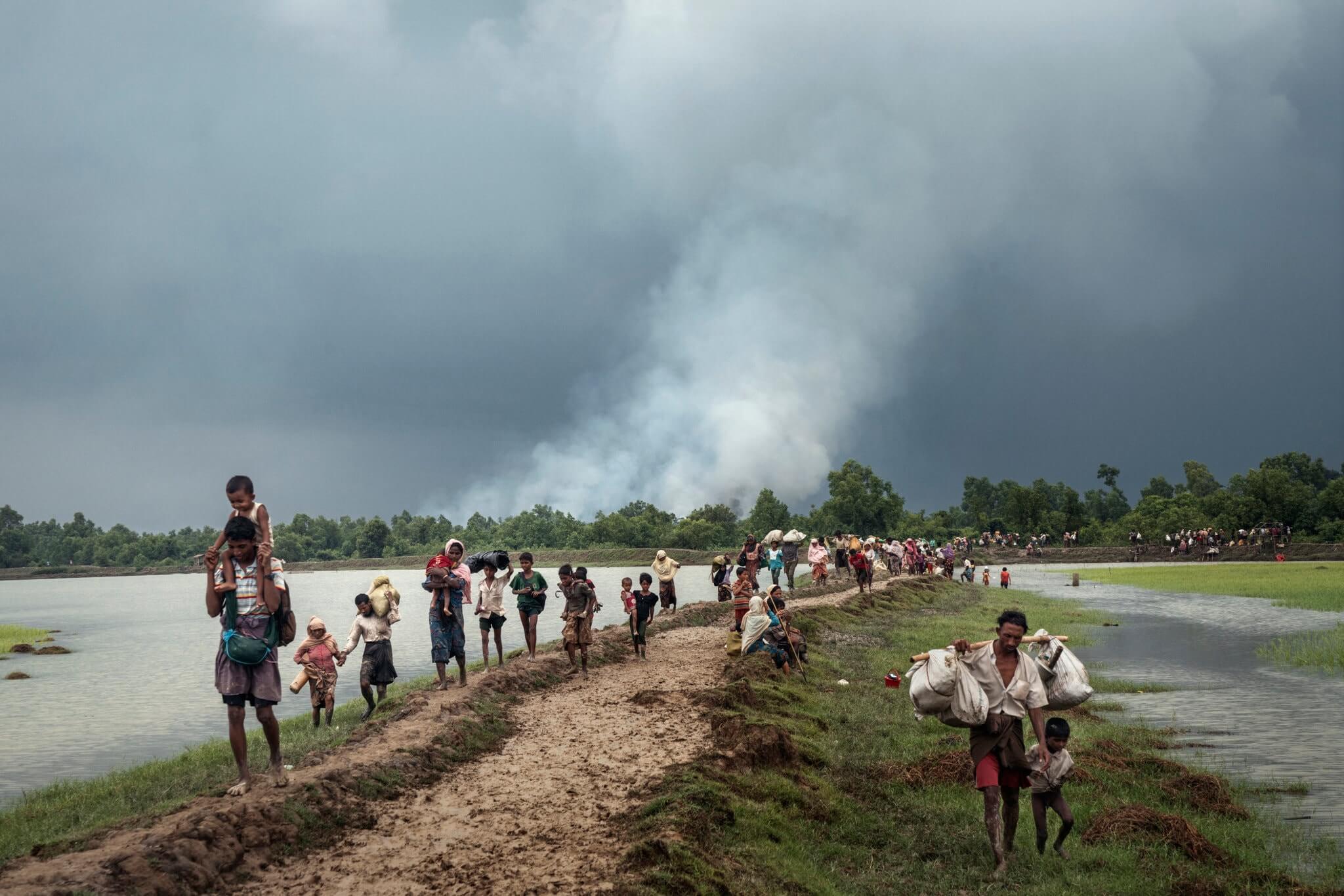
    the genocide that took place against the members of the Rohingya community in Myanmar is a crude example of direct violence. 

    On the other hand, the genocide that took place against the members of the Rohingya community in Myanmar is a crude example of direct violence. They claimed to have been living in the State since the 9th century but were eventually labelled as Bangladeshi Immigrants. Years of discrimination (structural violence) and hatred (attitudes, assumptions/ cultural violence) led to their ethnic cleansing (direct violence). They were murdered, raped, and evicted from their homeland. It only took one law, which rendered them stateless, for the majority of Myanmar to consider them as sub-humans, and readily accept the atrocities committed against them.

    Syrian Conflict through Galtung’s Conflict Theory

    The civil war in Syria is, unfortunately, an example of one of the bloodiest conflicts of this century. The war is often seen as a result of the outburst of pro-democracy protests in 2011, under the appellation of the Arab Spring.

    However, when approached from Galtung’s conflict theory, the conflict can be divided into three categories of violence. First, what we have been witnessing is the horror of direct violence in Syria, as a consequence of years of repression, facilitated by the government’s violent response towards the peaceful protesters in 2011. Second, the structural violence in the form of decades of economic restraints and systemic corruption, which exacerbated the existing poverty and inequality amongst the citizens.  Further, four years of drought between 2006 and 2011, and the consequent failed economic policies forced 2 million to 3 million Syrians into abject poverty (Polk, 2013). The dwindling Syrian economy and infrastructure finally led to the deprivation of the basic need of welfare and threatened their need for survival, resulting in frustration. Third is the cultural violence that has helped in sustaining the ongoing violence, in the form of distortion, denial, and dehumanization of the victims of violence has helped Assad and his foreign allies in continuing the mass murder of Syrians. Here, the sanitization of language is of key importance, where the attempts of distortion of reality often end up in changing the moral colour of violence, as argued by Galtung, wherein violence from being unacceptable starts to be tolerated without question.

    Direct Violence in Syria

    Syrians have been victims of decades-long political repression, in the form of restrictions on freedom of speech and expression, torture and enforced disappearances. The political institutions have historically been unstable, with three military coups taking places in 1949 alone followed by one more in 1954, in addition to the Ba’athist-led coups of 1963 and 1966. The Syrian security forces (Mukhabarat) are known to have detained citizens without proper warrants even before 2010, many of whom have reportedly been tortured in prisons (Human Rights Watch, 2010). In their attempts to keep the hierarchy of power relations intact, the centralised institutions are known to clamp down on any public demonstrations, with frequent arrests and employment of state violence.

    several actors are involved in perpetrating the more visible, direct violence, and it is clear that the Syrian conflict cannot be looked at as a conflict solely between the state and armed rebellion groups.

    In 2011, fifteen school-going children, all under the age of seventeen, were reportedly arrested and tortured for writing anti-graffiti on a wall, leading to the protests of 2011. The government responded by opening fire on the peaceful protestors, killing four civilians (Macleod, 2011). More than 400,000 people have died because of the Syrian conflict since 2011, with 5 million seeking refuge abroad and over 6 million displaced internally (World Bank). This section identifies several actors involved in perpetrating the more visible, direct violence, and contends that the Syrian conflict cannot be looked at as a conflict solely between the state and armed rebellion groups. It would also be myopic to look at the conflict entirely from the perspective of sectarian divisions, given that each rebellion group has a different motive, and is being backed by several different actors.

    While soldiers supporting the Syrian president and the opposition armed groups continue to remain prominent actors, recent years have seen the rise of Islamic State, Al-Qaeda and their affiliated members. The war has also seen a large-scale presence of two categories of foreign actors – those supporting the Syrian regime (Iran, and Russia), and those who continue to be the key rebel supporters (US, Turkey, and Saudi Arabia). All of these actors have their motives and intentions of being engaged in the war. While Iran sees Syria as its primary ally and a transit point for Hezbollah, Russia thinks of Syria as its last remaining stronghold. The United States and Saudi Arabia, on the other hand, are driven by their intentions to maintain the regional balance of power away from the Iranian axis of influence. Meanwhile, Turkey continues to battle the spill-over effect of the thousands of Syrian refugees who continue to cross over the border to Turkey.

    The anti-government groups based in Ghouta, including Jaysh al-Islam, Ahrar al-Sham and Faylaq al-Rahmane, have killed and mutilated hundreds of civilians in indiscriminate attacks on Damascus. These armed groups have also regularly arrested and tortured civilians in Douma, including members of religious minority groups. Hay’at Tahrir al-Sham (HTS), an Al-Qaeda affiliate present in Idlib, has carried out arrests and kidnappings that targeted local political opponents and journalists, while also continuously interfering with humanitarian access and aid distribution in areas under its control (CSIS).

    Cultural Violence in Syria

    The cultural violence in Syria, like elsewhere, is most often perpetrated in the form of sanitization of language, where years of structural violence are termed as mere discrimination, and where civilians are seen as mere targets to be killed. A few years ago, in an attempt of distorting reality, the Russian media described a Syrian documentary on Helmet volunteers in Aleppo as a “thinly disguised Al Qaeda promotional vehicle” (Hamad, 2018).  Such attempts of distortion aim at normalizing even the most brutal violence. In the case of Russia, these attempts help in legitimizing its airstrikes, even when the number of civilians that have been killed in these strikes surpass the number of the ISIS members it sought to target. According to a report, approximately four thousand civilians have been killed by Russian airstrikes as opposed to 2758 ISIS members (Armstrong & Richter, 2016).

    Additionally, cultural violence in the form of ideology and religion has helped to sustain violence in the region. Religion, here, has acted as a form of cultural violence, where the fight is between the ‘Chosen’ and the ‘Unchosen’. In Syria, this fight has taken the form of sectarian divisions between the minority Alawi community and the majority Sunni population. The legitimisation of violence at the hands of the state is rooted in its fight against ‘extremism’, which depends upon the promulgation of the narrative that all rebel forces have the same ulterior motive -of building an intolerant Islamic caliphate. State’s reliance on its alleged effort to curb extremism has allowed its forces to justify the use of heavy artillery, the bombardment of residential places, and the subsequent massacres. Another factor that helps explain the sustenance of violence, is its normalization – where violence is seen as natural, and a part of everyday life. Decades of repression in Syria have helped to normalize torture, and rampant arrests and restrictions.

    Structural Violence in Syria

    While countries continue to witness the horrors of visible atrocities and war crimes, the underlying layers of structural violence continue to buttress the egregious brutality which is often more direct, and physical. Although the war is often seen as a result of the outburst of pro-democracy protests in 2011, a close examination of the country’s socio-economic structures would enable one to get a detailed insight into the underlying layers of frustration caused due to large-scale poverty, inequality, and marginalisation.

    One would also find that the relatively peaceful structure, which existed before the protests of 2011, was held intact largely due to the existence of single-party dominance, where one actor (Hafez al-Assad, and later Bashar al-Assad) held all power and authority, while those existing in lower ranks of society continued to lack resources, as well as opportunities to challenge the dominant power. The injustice and inequality built into the structural institutions of the Syrian society can be referred to, what has been called as the ‘structural violence’, by Johan Galtung. The violence, here, is reflective of a position “higher up or lower down in a hierarchy of exploitation-repression-alienation”, where the parties involved are determined either to keep the hierarchy intact or to completely obliterate it.

    In the case of Syria, the deprivation of the most basic and non-negotiable needs, which threatened the citizens’ need for survival, has been the primary cause for aggression to come into existence. The factors that, thus, led to the conflict in Syria can be seen rooted in years of repression, poverty, and lack of representative institutions, which manifested in the form of protests, or the Arab Spring of 2011. The Syrian economic crisis has existed long before the commencement of the civil war. Since the beginning of the economic crisis, Syria’s institutional structures have failed to meet the rising needs and rights of its population. In the 1980s, the country was trapped in a downward spiral of a fiscal crisis, as a result of large-scale drought, and due to both, domestic and external factors. The crisis led to high food deficit, and an increase in the cost of living, leading to a rise in patronage networks which provided small circles of elites with profitable businesses. These networks became increasingly popular in real estate and land management, leaving out large sectors of Syria underdeveloped. While the country witnessed a decreasing overall debt and a noticeable rise in the GDP in the 2000s, large sections of the population were excluded from benefitting from these growth rates due to differences in wage rates and declining job opportunities. Increasing inequality was reflected in a paper published by the UNDP, which claimed that 65.6% of all labour in Syria belonged to the informal sector in 2010, with Aleppo and Idlib ranking first with over 75% of their workforce belonging to the informal sector (UNDP, 2018).

    Years of conflict have exacerbated the economic crisis, pushing both the state and its citizens, into chaos, with more than 80 per cent of the Syrian population living below the poverty line, with an unemployment rate of at least 55 per cent in 2018.

    Additionally, the oil revenues fell from more than 14% of GDP in the early 2000s to about 4% in 2010 due to depleting reserves. According to a report, overall poverty in Syria in 2007 impacted 33.6% of the population, of which 12.3% were estimated to be living under extreme poverty. Noting the degree of inequality in Syria in 1997, the report found out that the lower 20% of the population had a share of only 8% in expenditure, while the richest 20% of the population share about 41% of the expenditure (Abu-Ismail, Abdel-Gadir & El-Laithy). Moreover, the widely disputed region of North-Eastern Syria witnessed highest levels of inequality in 2007, in addition to deprivation of living standards, and worst levels of illiteracy, and access to safe water, just four years before the outbreak of the civil war. The unequal access to resources was also starkly reflected in the housing situation of the country before the war, where over 40% of the population lived under informal housing conditions, – through squatting, or on lands obtained without legal contracts (Goulden, 2011).

    Years of conflict have exacerbated the economic crisis, pushing both the state and its citizens, into chaos, with more than 80 per cent of the Syrian population living below the poverty line, with an unemployment rate of at least 55 per cent in 2018. With most of the business networks now being controlled by the selected few elites, the population at large continues to suffer the brunt of both structural, and direct violence.

    Conclusion

    This paper has attempted to explain the theory of conflict, as proposed by Johan Galtung. In doing so, it has referred to six primary sources of the author. It has taken into account Galtung’s two triangles of conflict. First, the attitudes-behaviour-contradiction triangle, which seeks to explain the notion of conflict, and demonstrates how a conflict consists of all three, with attitudes and contradictions existing at the latent level, manifesting themselves into violent behaviour which is conscious and visible. The second triangle divides violence into three broad categories of direct violence, structural violence, and cultural violence, and demonstrates how the latter two facilitate and bring about direct violence. This paper has also attempted to employ Galtung’s theory of conflict to explain the civil war in Syria, where it has identified the three categories of violence and has tried to apply the theory into practice. The conflict, which started with citizens demanding their basic needs and rights has been sustained over the years by the involvement of foreign states, and increased state brutality which has been responded to by an increasingly similar, if not equal, force by the rebellion groups. The country, now, witnesses itself entangled in a cycle of conflict, where the war has led to steep economic deterioration, political repression, and physical violence, which in turn has led to further widespread cataclysm.


    References

    Abu-Ismail, K., Abdel-Gadir, A., & El-Laithy, H. (n.d.). Arab Development Challenges Report Background Paper 2011/15. Retrieved September 28, 2020, from https://www.undp.org/content/dam/rbas/doc/poverty/BG_15_Poverty%20and%20Inequality%20in%20Syria_FeB.pdf
    Armstrong, M., & Richter, F. (2016, October 20). Infographic: People Killed By Russian Airstrikes In Syria. Retrieved September 30, 2020, from https://www.statista.com/chart/6311/people-killed-by-russian-airstrikes-in-syria/
    CSIS. (n.d.). Hay’at Tahrir al-Sham (HTS). Retrieved September 28, 2020, from https://www.csis.org/programs/transnational-threats-project/terrorism-backgrounders/hayat-tahrir-al-sham-hts
    Employment and Livelihood Support in Syria: UNDP in Syria. (2018, August). Retrieved September 28, 2020, from https://www.sy.undp.org/content/syria/en/home/library/Employment_and_Livelihood_Support_in_Syria.html
    Galtung, J. (1964). A Structural Theory of Aggression. Journal of Peace Research, 1(2), 95-119. doi:10.1177/002234336400100203
    Galtung, J. (1985). Twenty-Five Years of Peace Research: Ten Challenges and Some Responses. Journal of Peace Research, 22(2), 141-158. doi:10.1177/002234338502200205
    Galtung, J. (1990). Cultural Violence. Journal of Peace Research, 27(3), 291-305. doi:10.1177/0022343390027003005
    Galtung, J. (1996). Conflict Theory. In Peace by peaceful means: Peace and conflict, developmentment and civilization(pp. 71-73). Thousand Oaks, CA: Sage.
    Galtung, J. (2010). Peace by peaceful conflict transformation – the TRANSCEND approach. In C. Webel & J. Galtung (Authors), Handbook of peace and conflict studies (pp. 15-16). London: Routledge.
    Galtung, J. (2012). Peace and Conflict Studies as Political Activity. In T. Matyók, J. Senehi, & S. Byrne (Authors), Critical issues in peace and conflict studies: Theory, practice, and pedagogy (pp. 12-13). Lanham, Maryland.: Lexington Books.
    Goulden, R. (2011). Housing, Inequality, and Economic Change in Syria. British Journal of Middle Eastern Studies,38(2), 187-202. doi:10.1080/13530194.2011.581817
    Hamad, S. (2018, March 09). The dehumanisation of Syria’s victims facilitates war crimes. Retrieved July 26, 2020, from https://www.trtworld.com/opinion/the-dehumanisation-of-syria-s-victims-facilitates-war-crimes-15802
    Human Rights Watch. (2010, July 16). Syria: Al-Asad’s Decade in Power Marked by Repression. Retrieved September 28, 2020, from https://www.hrw.org/news/2010/07/16/syria-al-asads-decade-power-marked-repression
    Polk, W. (2013, December 10). Understanding Syria: From Pre-Civil War to Post-Assad. Retrieved July 26, 2020, from https://www.theatlantic.com/international/archive/2013/12/understanding-syria-from-pre-civil-war-to-post-assad/281989/
    Macleod, H. (2011, April 26). How schoolboys began the Syrian revolution. Retrieved September 30, 2020, from https://www.cbsnews.com/news/how-schoolboys-began-the-syrian-revolution/
    Massari, P. (2013, September 10). Religion and Conflict in Syria. Retrieved July 26, 2020, from https://hds.harvard.edu/news/2013/09/10/religion-and-conflict-syria
    World Bank. (n.d.). The World Bank In Syrian Arab Republic. Retrieved September 30, 2020, from https://www.worldbank.org/en/country/syria/overview

    Image: Adobe Stock

  • UAE-Israel Deal: An Analysis of its Regional Impact

    UAE-Israel Deal: An Analysis of its Regional Impact

    Introduction

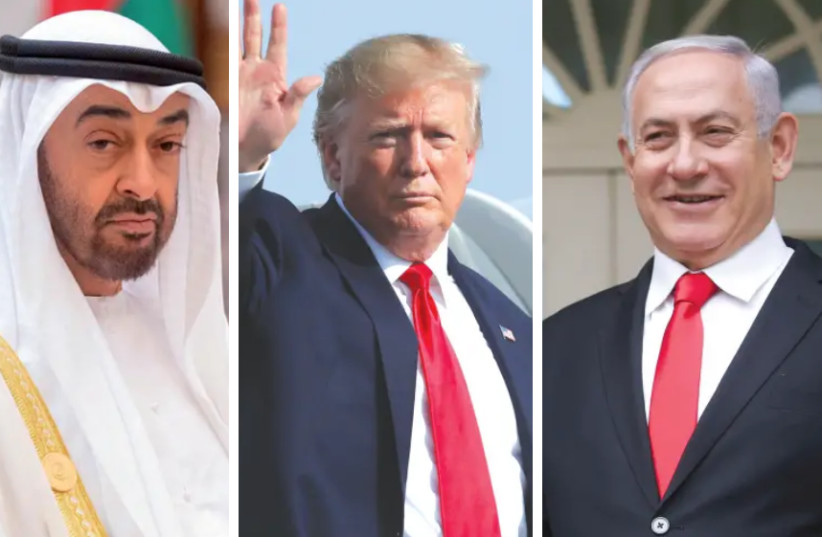
    The recently brokered Abraham Accords Peace Agreement between the United Arab Emirates and Israel marks the beginning of the potential shift in West Asia’s existing power relations. Driven by their security interests, and in an attempt to amplify their power projections in the region, the two countries have come together, in what is being seen, as an opposition to the Iranian axis of influence. Although the normalization of relations with Israel marks a huge setback for the possibility of a Palestinian Statehood, several Arab countries are expected to jump on the bandwagon, with Bahrain having already concluded a treaty after UAE. This article highlights the eclectic mix of reactions from various players in West Asia and the potential opportunities and setbacks it brings with itself.

    Palestine

     Several countries held strongly pro-Palestine policies during the Cold War and decolonization period. However, in the last few decades, many have established ties with Israel; Egypt in 1979, and Jordan in1994 and now UAE and Bahrain in 2020. That being said, majority of the Arab and Gulf countries still officially do not recognize Israel. The United Arab Emirates announced its decision to normalize relations with Israel on 12th August 2020. There are many reasons why UAE and Bahrain decided to establish diplomatic relations with Israel; according to some analysts it is to counter Iran’s influence in the region, but for some it is also to establish trade and business contacts.

    However, do these developments indicate that countries in the Arab world are moving gradually into accepting Israel’s occupation of Palestinian lands as ‘fait accompli’? A significant development that needs to be recognised is the fact that many West Asian countries no longer demand the return of Palestinian lands as a precondition to normalizing ties with Israel.

    The Palestinians in the West Bank and Gaza have strongly criticised the deal and see it as betrayal of their rights and cause by the international community.

    It is long-known that Israel will not return to pre-1967 boundaries; in May 2020 Benjamin Netanyahu explicitly stated his plan to annex the West Bank. He has, however, postponed the implementation of his decision, probably indefinitely, in the interests of the deal that is likely to benefit Israel greatly.

    The Palestinians in the West Bank and Gaza have strongly criticised the deal and see it as betrayal of their rights and cause by the international community.  Banners  displaying “Treason” and “No to normalization with the occupier’ have come up across the region.  The Palestinian Authority, in very obvious response, have rejected the deals. These accords, as they rightly fear, affect the future of Palestinian sovereignty and legitimize Israel’s occupation.

    Turkey  

     President Recep Tayyip Erdogan sees himself as the champion of Muslims ever since he came to power in 2002. Under Erdogan, Turkey has pursued a clear pro-Palestinian stance. Turkey has indeed provided aid to Palestine at various times, including during COVID-19. It has criticized Trump’s peace plan for the Israel-Palestine conflict, for ignoring Palestinians’ legitimate rights. Not surprisingly, Turkey is clearly unhappy with UAE’s and Bahrain’s steps to normalize ties with Israel. Turkey has threatened with the option of halting diplomatic relations with UAE over the deal.

    However, for Palestinians Turkey’s statements ring hypocritical and hallow. Turkey was one of the earliest and the first Muslim majority state to recognize Israel in 1949. Turkey and Israel have a long history of intelligence cooperation. Even in the current situation, Turkey is focused more on dealing with the UAE on this issue, rather than Israel. Nevertheless, speaking for Palestinian rights in the international forum is equally important. In that respect, Turkey’s voice in support of the Palestinian cause is an important one.

    Saudi Arabia

     Saudi Arabia, long seen as the champion of Islamic nations, particularly in view of the fact that it is home to the two holiest shrines of Islam. Therefore, this peace agreement is a shock to the conservatives who form the majority in the Kingdom. This move by the UAE is seen as going along with the Jewish regime that denies the rights of the Palestinian Muslims. However, the Foreign Minister, Faisal bin Farhan Al Saud said the deal could be seen as positive, but his country will not normalize relations until peace is signed with the Palestinians,  within the framework of the Arab Peace Initiative.  Saudi Arabia’s track record of its unwavering support to the Palestinian cause from the days of the Yom Kippur war, also known as Ramadan War, makes the nation’s stance on the ‘Abraham Accords’ more influential than any other Gulf country. The advocacy for Palestinian state runs deep in the Saudi people. As a result, Saudi leadership’s slightest inclination towards the agreement could spark unrest among its citizens.

    The current regime under the Crown Prince of Saudi Arabia, Mohammed bin Salman (MBS), who is a very capable leader compared to his predecessors because of his broader outlook to mend diplomatic ties with the regional enemies, yields an element of uncertainty as he may be inclined towards the accord. The political and ideological differences between the people of Saudi and their leader might spark cynicism towards the government; hence, support for the accord is implausible in the short term.

    Israel, which shares the Red Sea coastline with the country and is a major player in technology innovations in the region, makes it an ideal ally for the Kingdom.

    The idea, however, is not wholly inconceivable because of MBS’s Vision 2030. Upon ascending the throne, the Crown Prince has constructed an elaborate plan to detach the Kingdom’s dependence on its natural resources and focus on bringing in diverse investments into the country. One of the main plans is to develop the Red Sea Coastline by exploiting its tourism prospects by building a smart city. Israel, which shares the Red Sea coastline with the country and is a major player in technology innovations in the region, makes it an ideal ally for the Kingdom. One of the other factors that could generate a coalition between Saudi Arabia and Israel is their common enemy, Iran.

    If MBS does accept the accord, it may not come as a surprise, but that does not warrant the fact that there is a high possibility of the decision shocking many conservative and religious establishments.  In retrospect, that could give birth to the “new” Saudi Arabia that the crown prince has promised to build.

    Qatar

    Qatar, which is considered the most developed state in the Gulf region, is in the middle of a diplomatic standoff with the regional players. Its dispute with the two major states, Saudi Arabia and UAE, has made the state go out of its way to establish diplomatic ties with parties that are not particularly approved by the GCC. The state has not given any official statement on the accord, but it’s closeness with Iran may be taken as an unofficial veto to the accord in itself. Qatar’s close relationship with the US and Iran has been a subject of debate ever since the Gulf crisis, but the state has somehow managed not to let the relationship cut across each other. This particular agreement with Israel orchestrated by the Trump government could pressure Qatar to push and resolve its issues with the UAE.

    Like any other Arab country, Qatar has advocated for the Palestinian state. It took it a little further by investing in the Gaza Strip, funding welfare payments to the coastal territory. One can suspect that the Emirati’s decision to form a coalition with the Israeli state will only deepen the ties between Qatar and Palestine.

    Though the Qatar government has been silent about the accord, Doha based news media, Al Jazeera has not shied away from raising concerns regarding the agreement. It even went to the extent of calling the accord ‘PR stunt’ initiated by the UAE. It’s support to Palestine and capitalisation of the hashtag ‘normalization as betrayal’ have received a lot of criticism from those countries that support the agreement. Qatar has always been hostile to Israel’s treatment towards the Palestinian state but has managed to have practical relations with Israel.

    Iran  

    As the world witnesses the coming together of the United Arab Emirates and Israel, two of the former adversaries, it comes as no surprise that Iran has been aggressively lashing out against the deal. With Iran still reeling under the economic pressure of the US sanctions, President Rouhani has called the deal a ‘betrayal’, aimed at satisfying the United States at a time when President Trump prepares himself to run in the national election in November. The leader of Iran-backed Hezbollah has also condemned the deal on similar grounds. Iran’s disapproval stems from two main factors – first, from its support for the Palestinian statehood; and second, more realistically, due to the increasing influence of Israel-United States nexus in the region and consequently its declining axis of influence. Iran’s insecurity is speculated to have stemmed from the confluence of actors that oppose the Islamic Republic’s attempts to establish its hegemony in the region. The confluence opens up the possibility of shifting the regional balance of power in favour of Israel, and Saudi Arabia, under the shadow of the United States. While Saudi Arabia and Israel do not yet have an official diplomatic relationship, various reports suggesting backdoor diplomacy between the two countries have surfaced over the years. The common factor bringing the two countries together has most often been assumed as the perceived threat from Iran.

    Iran and UAE, on the other hand, while maintaining a meaningful trade relationship, continue to have persistent sources of bilateral tension.

    On the other hand, while Iran and Israel have often been engaged in rhetoric of bellicose jingoism towards one another, it is essential to note that both the countries maintained a friendly relationship before the Iranian revolution of 1979, with Iran being the second Muslim country recognizing the state of Israel.

    Iran and UAE, on the other hand, while maintaining a meaningful trade relationship, continue to have persistent sources of bilateral tension, one of which is the unresolved territorial dispute over the islands of Greater Tunb, Lesser Tunb, and Abu Musa, which lie near the critical Strait of Hormuz, providing access to key shipping lanes. Despite UAE’s historical claims over their sovereignty, the islands that were forcefully occupied by Iran continue to be a strain in the relationship between the two countries. A second irritant is a growing relationship between UAE and the United States, with the former becoming one of the largest importers of US weapons and providing the US with military bases and intelligence on Iran. Worried about the growing Iranian aggression, the country has maintained a strong security relationship with the United States and has often supported the UNSC resolutions to bar sensitive materials and technology to Iran.

    Yemen

    The conflict in Yemen that began to unravel with the spread of Arab Spring in 2011 has resulted in an unprecedented loss of civilian lives across the country, making Yemen one of the world’s worst humanitarian crises. The Israel-UAE deal, which reflects the beginning of normalization of ties between Arab countries and Israel, cannot be seen in isolation from the region’s larger volatile landscape. The Peace Treaty, as it is being termed, brings with itself a plethora of threats that seek to shift the existing power relations, without aiming at the cessation of violence. UAE’s increasing outreach must be looked at in the context of its increasingly interventionist policies, especially in Yemen. The deal may ultimately lead to more interference and militarization in Yemen, prolonging the prospects for conflict resolution, and sustaining hostile conditions.

    Varied responses to the deal can be seen with the Yemeni government, and the Houthis, an armed group championing Yemen’s Zaidi Shia Muslim minority, coming out in opposition to the deal in a bid to continue their support for Palestine. On the other hand, it comes as no surprise that members of the Southern Transitional Council (southern separatists), which gets its support from the UAE, have applauded the treaty to build cooperation between UAE and Israel.

    Interest and interference in Yemen are of tremendous strategic significance to both Israel and UAE.

    Interest and interference in Yemen are of tremendous strategic significance to both Israel and UAE. In a show of its strengthening military projection, UAE seized control of the Yemeni island of Socotra, located in the Indian Ocean,allegedly allowing Israel to establish its presence in the region. The archipelago sits at a crucial strategic position en-route to Bab el-Mandeb, providing access to key shipping lanes.

    On the other hand, while there exists no diplomatic relationship between Yemen and Israel, the latter has often been seen intervening in the ongoing conflict in Yemen, “under the pretext of defending its interests in the Red Sea and the Strait of Bab-El-Mandeb”. With a military base already constructed at Emba Soira in Eritrea, Israel continues to increase its strategic presence across the Strait. Further, as speculations about the possible Houthi-Iran cooperation spread across the region, Israel’s surveillance centres continue to monitor the armed group’s actions and other actors in Yemen.

    Conclusion

    Palestine is a very sensitive and rousing issue for most of the citizens in West Asia. It is a shared memory of betrayal and expulsion; indeed, many politicians in West Asia use Palestine as an element in their speech and citizens also use it during slogans referring to Palestine protests.

    That being said, these deals are coming at a time when Israel is increasing its hawkish behaviour towards the Palestinians. Once the annexation happens, one cannot help but wonder how it could change the landscape of West Asia. Thus far, the progress made is the mild indication of some major players in the region favouring the accord.  Analysts suspect that the support for the accord will gain momentum in the long-term side-tracking religious, cultural and social identities to maintain diplomatic relations for economic growth.  If all countries, therefore, become friendly with Israel, will the annexation only receive loud threats with no actions?

    This study is put together by Dharika Athray, Rupal Anand, and Vrinda Aiyaswamy. All of them are Research Interns at TPF.

  • China’s support to Syria: In Conflict and Redevelopment

    China’s support to Syria: In Conflict and Redevelopment

    China is looking to ramp up relations with Syria both as part of its strategic Belt and Road Initiative (BRI) but also to take advantage of the multi-billion dollar reconstruction effort that is expected to materialise following the gradual winding down of the war.


    Syria is an ancient civilisation and also an important part of the ancient silk route, with cities such as Palmyra, Aleppo and Damascus playing an important role in trade and travel between the East and the West. While the discovery of a maritime route between Europe and Asia has to some extent diminished its importance in this regard, Syria is still strategically important. China is looking to ramp up relations with Syria both as part of its strategic Belt and Road Initiative (BRI) but also to take advantage of the multi-billion dollar reconstruction effort that is expected to materialise following the gradual winding down of the war.

    China’s non-interference policy is an integral aspect of its involvement and role in the Middle East. During the course of the Syrian war, China has consistently supported the Bashar Al Assad government on the diplomatic front – through the exercise of the veto power against the resolutions introduced in the United Nations Security Council either condemning the Syrian government, calling for ceasefire or for imposing sanctions on suspected war criminals. While negotiating the renewal of border crossings for aid, China agreed on the need for humanitarian assistance but emphasised on state sovereignty. China’s policy of non-interference has served it well in strengthening bilateral relations and advancing its interests.

    One of the reasons for the diplomatic support extended by China to the Syrian government is also the involvement of the Uighur fighters in the Syrian conflict which has greatly bothered China. While it has never got directly involved militarily in the Syrian conflict there are unconfirmed media reports which suggested that China was sharing military intelligence with the Syrian government and also sent its military advisors to Syria to help it in its fight against the rebels. In this sense, it saw Syria as a key player in its fight against religious extremism thereby preventing its export to its own volatile Xinjiang province.

    With the Syrian conflict slowly winding down and Bashar Al Assad’s hold on Syria greatly strengthened more than at any other time since the beginning of the civil war, China is ramping up its diplomatic efforts in Syria  using trade as an important policy tool to ramp up the relations between the two great civilisations.

    Based on Chinese government’s invitation Syria has participated in the second BRI summit held in Beijing in April 2019. Previously in 2018, China held a Trade Fair on Syrian reconstruction projects which was attended by nearly one thousand Chinese companies and which saw investment proposals of nearly USD two billion. The collapse of most of the industry in Syria due to the war has also resulted in a significant increase of cost-effective Chinese imports into Syria ranging from toys to car parts and industrial machinery and equipment.

    China is also leveraging its economic strength fully by using aid as a foreign policy tool. In 2019,  Xinhua reported on the  that an economic cooperation agreement was signed between Syria’s Planning and International Cooperation Commission (PICC) and the Chinese embassy in Damascus. As part of this agreement, a donation will be set aside to fund a series of humanitarian projects as agreed upon by both sides.

    The collapse of most of the industry in Syria due to the war has also resulted in a significant increase of cost-effective Chinese imports into Syria ranging from toys to car parts and industrial machinery and equipment.

    China is expected to be a key player in the international reconstruction and development effort that is expected to take place in Syria due to its strong bilateral ties with not only Syria but also its alignment with Russian and Iranian position on Syria , these two players being the major supporters of Bashar Al Assad’s government in the civil war. While Russia and Iran are surely expected to carve out a large part of the reconstruction contracts between themselves, their capacity to make the huge investments in these projects, estimated to be worth anywhere between USD 200 million to USD 1  trillion is doubtful. This creates the ripe opportunity for China to enter the reconstruction business effort either by themselves or, as is more likely, in partnership with Russian and Iranian governments or businesses.

    Beyond the business opportunities provided by the potential reconstruction of Syria, China is also strategically interested in Syria. China was always interested in securing access to the Ports of Tartus and Latakia on Syria’s Mediterranean coast. Such an access is expected to complement Beijing’s interests in the Greek port Piraeus (COSCO shipping, the Chinese state-owned shipping and logistics services supplier company in the Port authority) and the Israeli port of Haifa, in securing a trade route to Europe. In alignment with these strategic interests, Chinese companies’ area also exploring the possibility of upgrading the deep seaport of Tripoli, Lebanon to allow it to accommodate larger vessels and also the possibility of building a railroad that would connect Beirut and Tripoli in Lebanon to Homs and Aleppo in Syria.

    Beyond the business opportunities provided by the potential reconstruction of Syria, China is also strategically interested in Syria. China was always interested in securing access to the Ports of Tartus and Latakia on Syria’s Mediterranean coast.

    Chinese investments into and trade ties with Syria however, risk the attraction of US sanctions on Syria. The arrest of Meng Wanzhou, Chief Financial Officer of Huawei, , in Canada, based on a request by the United States highlights the extent of these risks. “The Caesar Syria Civilian Protection Act”, also known as “The Caesar Act”, a United States legislation that sanctions the Syrian government, including Syrian president Bashar al-Assad, for war crimes against the Syrian population, parts of which  are now incorporated  in the “National Defense Authorization Act for Fiscal Year 2020” greatly tightened the sanctions environment against the Syrian government and a number of its industries potentially impacting the Chinese investments and trade ties. While China has called for an end to sanctions stating they were “inhuman,” they have been wary of being targeted by sanctions and further straining their relations with the US. However, it is unlikely that the sanctions would have a significant effect on China given the size of China’s economy and its ability to circumvent sanctions while dealing with Iran and North Korea. China, as part of its ‘mask diplomacy,’ is increasingly providing aid to the Syrian government in their efforts against Covid-19. This serves the dual purpose of strengthening China-Syria relations and strengthening China’s narrative of Covid-19.

    To conclude, China has been a staunch supporter of the incumbent Syrian government of Bashar Al Assad during the almost decade long Syrian civil war and is set to reap the benefits from the post-war Syrian reconstruction effort in conjunction with the Russians and the Iranians to advance its interests.

    Image: Middle East Institute


  • The Law of Armed Conflict and its continuing relevance to the South Asian Region

    The Law of Armed Conflict and its continuing relevance to the South Asian Region

    The South Asian region has had its share of recent historical experiences with large scale violations as well as allegations of large scale violations of international humanitarian law (IHL).2 This applies as much to instances of international and non-international armed conflict as it does to the situations created by new threats to peace and security such as terrorism. Memories of some of these unfortunate events have not faded over the years. For the sake of convenience, the paper is divided into two parts. The first part elaborates specific examples of IHL related issues in South Asia and also deals with some of the major thematic issues in the context of the region. The second part highlights the challenges to IHL application and implementation in this region. The conclusion summarizes the main strands in IHL’s relevance to the South Asian context. The most interesting aspect of our enquiry that stares us in the face is the fact that IHL related issues apply to almost all South Asian countries. The degree of intensity may differ but the fact remains that acts that attract universally applicable IHL provisions are found aplenty in the region.

    Image Credit: New York Times

    Download Full Paper

    The Law of Armed Conflict and its continuing relevance to the South Asian Region

  • The Wuhan Pneumonia and Biological Warfare

    The Wuhan Pneumonia and Biological Warfare

    Category : China/Biological Warfare

    Title : The Wuhan Pneumonia and Biological Warfare

    Author : Kamal Davar 02-04-2020

    There is a lot of speculation about the origin of the current Cover-19 pandemic. While most say it originated from the wet meat market in Wuhan in China, there are wild speculations about it being an experiment gone wrong resulting in the leakage of the virus from the testing lab, while some accuse the Chinese of having planned a biological war strategy as an extension of the US-China trade war. The Chinese accuse the US military of having inserted the virus in Wuhan during the military exercise. All said, it is worth examining the possibilities if a pandemic can become a tool for waging war. Lt Gen Kamal Davar examines the possibilities of a biological war.

    Read More

  • Lessons from countering the corona-virus for war and violence:  Containment, Common Security and Cooperation

    Lessons from countering the corona-virus for war and violence: Containment, Common Security and Cooperation

    The world is engulfed in the ‘Corona Virus’ pandemic. As national health systems are being stretched to their limits, countries are closing their borders, banning travel, and isolating themselves…all in an international co-operative strategy to contain its spread and eliminate this pandemic. Andreas Herberg-Rothe sees valuable lessons in this international co-operation to be used to contain war and violence. Taking a leaf out of the broad ‘containment theory’ articulated by the late George Kennan in an anonymous article published in 1947 in the FP magazine, Andreas proposes a containment strategy for the world from the scourge of terrorism, religious fanaticism, and wars for world dominance (both proxy as well as interventions). This strategy for ‘common security’ can succeed only if it respects pluralism of cultures, religions, and social orders…M Matheswaran.


    The initial measures against the spread of the new corona-virus could be summarized by one word – containment of the virus and hindering its spreading. This current prominence of the concept of containment could be used for other world problems. By having a closer look at the concept of containment it becomes obvious that it also included the concept of common security and cooperation – the same is true with the corona-virus. We are witnessing a worldwide expansion of war and violence, which should be countered by a new containment, just as George Kennan emphasized as early as 1987: “And for these reasons we are going to have to develop a wider concept of what containment means (…) – a concept, in other words, more responsive to the problems of our own time – than the one I so light-heartedly brought to expression, hacking away at my typewriter there in the northwest corner of the War College building in December of 1946.” Nearly seventy-five years have already passed, since George Kennan formulated his original vision of containment. Although his original concept would be altered, in application by various administrations of the US-Government, in practice it has been incorporated within the concept and politics of common security, which has been the essential complement to pure militarily containment. These ideas are still valid – and as Kennan himself pointed out, they are in more need of explication and implementation than ever.

    The disinhibition of war and a new containment

    The triumphant advance of democracy and free markets in the wake of the Soviet collapse seemed to be unstoppable, to the point where it appeared for a time as if the twenty-first century would be an age defined by economics and thus, to a great extent, peace.  However, these expectations were quickly disappointed, not only because of the ongoing massacres and genocide in Africa, but also by the return of war to Europe (primarily in the former Yugoslavia), together with the attacks of September 11, 2001 in the USA, the Iraq war, the war in Syria with its on-going, violent consequences. A struggle against a new totalitarianism of an Islamic type appears to have started, in which war and violence are commonly perceived as having an unavoidable role. One can also speak of a new dimension to violence with respect to its extent and brutality – as exemplified by the extreme violence of the ongoing civil wars in Africa and the Middle East.  Additionally we are facing completely new types of threats, for example the possession of weapons of mass destruction by terrorist organizations or the development of atomic bombs by “problematic” states like North Korea. The potential emergence of a new Superpower, China, and perhaps of new “great” powers like India may lead to a new arms race, which presumably have a nuclear dimension as well. In the consciousness of many, violence appears to be slipping the leash of rational control, an image the media has not hesitated for foster, especially with respect to Africa. Will there be “another bloody century,” as Colin Gray has proposed?

    Although the current situation and the foreseeable future is not as immediately ominous as in the Cold War, it may be even worse in the long run. On one side, the prospect of planetary self-destruction via nuclear overkill, which loomed over the Cold War– and what could be worse than that, has been successfully averted. On the other hand, after having been granted a brief respite in the 1990s, mankind now feels itself to be confronting a “coming anarchy” of unknown dimensions and a new conflict between the US and China seems to be inevitable. If the horrific destructive potential threat of the Cold War has been reduced in scale, less cataclysmic possibilities have also become more imminent.

    As compared to the Cold War, there is no longer an exclusive actor to be contained, as the Soviet Union was. Even if one were to anticipate China’s emergence as a new superpower in the next twenty years, it would not be reasonable, in advance of this actually happening, to  develop a strategy of military containment against China similar to that against the Soviet Union in the 50s and 60s of  last century, since doing so might well provoke the kind of crises and conflicts that such a strategy would be intended to avoid. The attempt to build up India as counter-weight to China and facilitating its nuclear ambitions, for instance, might risk undermining the international campaign to limit the proliferation of nuclear weapons in the world. Therefore we need quite another concept of containment, which could not be perceived as a threat to China.

    The second difference is, that current developments in the strategic environment display fundamentally conflicting tendencies: between globalization and struggles over identities, locational advantages, and interests; between high-tech wars and combat with “knives and machetes” or suicide bombers; between symmetrical and asymmetrical warfare; between the privatization of war and violence and their re-politicization and re-ideologization as well as wars over “world order”; between the formation of new regional power centres and the imperial-hegemonic dominance of the only Superpower; between international organized crime and the institutionalization of regional and global institutions and communities; between increasing violations of international law and human rights on one side  and their expansion on the other. A strategy designed to counter only one of these conflicting tendencies may be problematic with respect to the others.  I therefore stress the necessity of striking a balance between competing possibilities.

    The third difference is that the traditional containment was perceived mainly as military deterrence of the Soviet Union, although in its original formulation by George Kennan it was quite different from such a reductionism. Our main and decisive assumption is that a new containment must combine traditional, military containment on one side, and a range of opportunities for cooperation on the other. That’s not only necessary with respect to China, but even to the political Islam, in order to reduce the appeal of militant Islamic movements to millions of Muslim youth.

    Such an overarching perspective has to be self-evident, little more than common sense, because it has to be accepted by quite different political leaders and peoples. The self-evidence of this concept could go so far that one could ask why we are discussing it. On the other hand, such a concept must be able to be distinguished by competing concepts. Last but not least, it should be regarded as an appropriate concept to counter contemporary developments. Finally, taking into account, that Kennan’s concept would not have succeeded, if it had been directed against the actions of the international community or the United States, it should be to some extend only brings to expression, what the international community is already doing anyway.

    A concept that realized these demands of a political concept for contemporary needs was that of “common security”, developed in the 1970s. In the special situation of the cold war and of mutual deterrence this concept didn’t imply a common security shared among states with similar values and policies. On the contrary, this concept, perhaps developed for the first time by Klaus von Schubert, emphasized a quite different meaning. Traditionally, opponents have understood security as security from each other. The new approach laid down by Klaus von Schubert derived from the assumption, that in a world of multiple capacities of annihilating the planet, security could only be defined as common security. This small difference between security from each other and common security — shared security against a universal threat — was nothing less than a paradigm change in the Cold war.

    The question of course remains, how to deter the true-believers, members of terrorist networks or people like the previous President of Iran, for whom even self-destruction may be a means of hastening millenarian goals. Of course, the “true-believers” or the “hard-core terrorist” could hardly be deterred. But this is just the reason, why containment should not be reduced to a strategy of deterrence. The real task even in these cases therefore is to act politically and militarily in a manner, that would enable to separate the “true believers” from the “believers” and those from the followers. This strategy can include military actions and credible threats, but at the same time it should be based on a double strategy of offering a choice between alternatives, whereas the reduction to military means would only intensify violent resistance. Additionally, even the true believers could be confronted with the choice, either further to be an accepted part of their social and religious environment (or to be excluded from them) or to reduce their millenarian aspirations. Of course, by following this strategy, there is no guarantee, that each terrorist attack could be averted. But this is not the real question. Assuming, that the goal of the terrorists and millenarian Islamists is to provoke an over-reaction of the West in order to ignite an all-out war between the West and the Islamic world, there is no choice than trying to separate them from their political, social and religious environment.

    The concept of containment and contemporary warfare

    The goal of the war on terror should not try to gain victory, because no one could explain, what victory would mean with regard to this special war. Moreover, trying to gain a decisive victory about the terrorists would even produce much more of them.  The additional problem is not only, how we ourselves conceive the concept of victory, but even more important, in which ways for example the low-tech enemies define victory and defeat. That is an exercise, that requires cultural and historical knowledge much more than it does gee-whiz technology.

    Instead one could argue, that the goal is “to contain terror”, which is of course something quite different from appeasement.  An essential limitation of the dangers, posed by terrorist organizations could be based on three aspects: first, a struggle of political ideas for the hearts and minds of the millions of young people; second the attempt to curb the exchanges of knowledge, financial support, communication between the various networks with the aim of isolating them on a local level; and finally, but only as one of these three tasks, to destroy what one could label the terrorist infrastructure. In my understanding, trying to achieve victory in a traditional military manner would not only fail, but additionally would perhaps lead to much more terrorism in the foreseeable future.

    The concept of the “centre of gravity” in warfare can provide another illustration of the way in which my conception makes a difference. Clausewitz defines war as an act of violence to compel our enemy to do our will. This definition suits our understanding of war between equal opponents, between opponents in which one side doesn’t want to annihilate the other or his political, ethnic or tribal body. But in conflicts between opponents with a different culture or ethnic background, the imposition of ones will on the other is often perceived as an attempt to annihilate the other’s community and identity. Hence, for democratic societies, the alternative is only to perceive war as an act of violence where, rather than compelling our own will to the opponent, your opponent is rendered unable any more to pursue his own will violently, unable to use his full power to impose his will on us or others. Consequently the abilities of his power must be limited, that he is no more able to threaten or fight us in order to compel us to do his will.

    The purpose of containing war and violence, therefore, is, to remove from the belligerent adversary his physical and moral freedom of action, but without attacking the sources of his power and the order of his society. The key to “mastering violence” is to control certain operational domains, territory, mass movement, and armaments, but also information and humanitarian operations. But this task of  “mastering violence” should no longer be perceived as being directed against the centre of gravity, but to the “lines” of the field of gravitation. Instead of an expansion of imposing one’s own will on the adversary up to the point of controlling his mind, as the protagonists of Strategic Information Warfare put it, the only way of ending conflict in the globalized  21st century is to set limits for action, but at the same time to give room for action (in the sense, Hannah Arendt used this term) and even  resistance, which of course has the effect of legitimising action within those limits.

    The overall political perspective on which the concept of the containing of war and violence in world society rests therefore consists of the following elements, the “pentagon of containing war and violence”:

    ▪ the ability to deter and discourage any opponent to fight a large scale war and to conduct pin-point military action as last resort,

    ▪ the possibility of using military force in order to limit and contain particularly excessive, large-scale violence which has the potential to destroy societies;

    ▪ the willingness to counter phenomena which help to cause violence such as poverty and oppression, especially in the economic sphere, and also the recognition of a pluralism of cultures and styles of life in world society;

    ▪ the motivation to develop a culture of civil conflict management (concepts which can be summed up with the “civilizational hexagon”, global governance, and democratic peace), based on the observation, that the reduction of our action to military means have proved counterproductive and would finally overstretch the military capabilities

    and

    ▪ restricting the possession and proliferation of weapons of mass destruction, their delivery systems, as well as of small arms, because the unhindered proliferation of both of them is inherently destructive to social order.

    The position I have put forward is oriented towards a basically peaceful global policy, and treats the progressive limitation of war and violence as both an indefinite, on-going process and as an end in itself. The lasting and progressive containment of war and violence in world society is therefore necessary for the self-preservation of states, even their survival and of the civility of individual societies and world society.    

    Image Credit:Photo by Erik Mclean on Unsplash


  • Advantage India, after Balakot air strike

    Advantage India, after Balakot air strike

    G Parthasarathy                                                                                     March 8, 2019/Op-Ed

    After the precision air strikes by the Indian Air Force on the small town of Balakot in Pakistan’s Khyber Pakhtunkhwa Province, public attention in India is now focused on bringing the leaders of the Jaish-e- Mohammed, including Jaish Supremo Maulana Masood Azhar to justice.

    Ironically, Azhar would not have been such a threat today if we did not cravenly release him after being blackmailed, during the Kandahar hijacking of IC 814. Those then released, included terrorists like Omar Syed Sheikh, who funded the 9/11 hijackers in the US and murdered American journalist Daniel Pearl.

    Recurring pattern

    The mass killing of Indians in terrorist strikes organised by the ISI has been a continuing feature of Pakistani policies, since the Mumbai bomb blasts on March 12, 1993. People seem to forget that 253 people were killed and 713 injured in the terrorist strikes in Mumbai in 1993. These killings were organised by the then ISI Chief Lt. General Javed Nasir, who incidentally enjoyed the patronage of Nawaz Sharif for years.

    The mastermind of the 1993 bomb blasts, Dawood Ibrahim, lives under heavy security protection, in the elite locality of Clifton in Karachi. There is conclusive evidence that the attack on India’s Parliament in December 13, 2001 was organised by Maulana Masood Azhar’s Jaish-e-Mohammed.

    A former ISI Chief Lt. General Javed Akhtar admitted this, in March 2004, in Pakistan’s Parliament. In the Kargil conflict in 1999, 527 Indian soldiers had been killed and 453 wounded, which was ostensibly designed to disrupt India’s supply lines to its forces in Siachen.

    When the Jaish-e-Mohammed, thereafter, briefly receded into the background, the ISI backed Lashkar-e-Taiba mounted yet another terrorist attack on November 26, 2008 on Mumbai, when 139 Indians died and 256 were injured. This received huge international attention, as the casualties included citizens of countries like US, UK, France, Germany and Israel.

    Yet, within a few months, we were back to a “Composite Dialogue” with Pakistan, after the Sharm el Sheikh Summit, where the focus of attention was not the 26/11 terrorist strike on Mumbai, but unfounded Pakistani allegations of Indian involvement in the freedom struggle in Baluchistan! Sadly, this was a manifestation of Indian diplomacy, at its worst.

    The Balakot Air Strikes by IAF Mirage 2000 aircraft was marked by the use of precision guided Israeli Spice 2000 bombs, which function with deadly accuracy. There is now conclusive evidence that the target was a Jaish-e-Mohammed Madrassa, which was badly damaged.

    Hundreds of Jaish Jihadis, preparing for “martyrdom” in Jammu and Kashmir, were motivated and trained in Balakot, for “Jihad” in Kashmir. The training was embellished with promises of an after life in a heavenly abode. Our government would, however, have been better advised, if unverified claims of hundreds of casualties were not prematurely made, or publicised.

    What will, however, please our Russian friends, is the fact that an upgraded frontline American F-16 equipped with highly sophisticated AAM-RAM missiles, was shot down by a 1970s-1980s vintage, Russian Mig 21 BIS of the IAF. This incident again exposed the notorious inefficiency of our Defence Ministry, which has delayed a proposal for modernisation of the IAF’s fighter fleet for over two decades.

    Successive Defence Ministers must accept constitutional responsibility for the cavalier manner the entire issue of modernisation of our fighter fleet has been handled. More importantly, the decision-making organisational structure in our Defence Ministry, dominated by a generalist bureaucracy, needs to be drastically restructured and reformed.

    Pakistan should be made to realise that India’s air strike in Balakot marks only the beginnings of a new approach, which India will now undertake.

    Upgrade covert actions

    Firstly, it is time for decision-makers in New Delhi to realise that our covert actions capabilities on foreign soil need to be upgraded. I had occasion to recently read a book by journalist Sandeep Unnithan, due for release shortly, on how Prime Minister Indira Gandhi personally supervised covert actions in Bangladesh in 1971, which virtually destroyed maritime communications facilities there, even before the conflict started in December 1971.

    The Israelis spent years developing capabilities to seek out the perpetrators of the Second World War “Holocaust,” across the world. Their Iranian rivals have developed similar capabilities, which one saw recently, when Iran responded to a terrorist attack from Pakistani soil, which killed 29 Iranian Revolutionary Guards, near the border between Pakistani Baluchistan and the Sunni majority Iranian Province of Sistan-Baluchistan, where the port of Chabahar is located.

    In an almost immediate Iranian counter-strike, across the border, over eight Pakistani soldiers were killed and a large number injured.

    The time for developing capabilities for counter-strikes is now ripe. The global political, diplomatic and economic scenario in India and Pakistan has changed drastically, over the past two decades.

    Pakistan remains, in international perspectives, an economically bankrupt and politically dysfunctional country, which is ostensibly democratic, but run by a military elite, which is given to promoting religious extremism across its neighbourhood. Its actions, like hosting Osama bin Laden secretly for over a decade, promoting Taliban extremism in Afghanistan and using internationally discredited terrorist groups for Jihad abroad, have irreparably sullied its international image and reliability.

    Islamabad is addicted to seeking doles from rich Arab neighbours, China and international financial institutions like the IMF, Asian Development Bank and the World Bank. Pakistan is constantly dependent on these countries and international institutions, for its economic survival.

    In contrast, India is seen today as a country with the fastest growing economy in the world, which is increasingly attractive for foreign investment. India is at peace and enjoys excellent relations with all countries (except Pakistan) in its Indian Ocean neighbourhood.

    It has multiple free trade and comprehensive economic cooperation agreements within SAARC and with members of Bimstec and Asean. There are, likewise, Comprehensive Economic Cooperation Agreements with South Korea and Japan.

    Across its western maritime frontiers, India is the only country, which enjoys excellent relations at the same time, with the oil rich Arab Gulf States, Iran and Israel. Prime Minister Narendra Modi has publicly expressed India’s thanks for American understanding and support in recent days.

    These developments now need, in course of time, to be augmented by moves to engage people in Pakistan, making it clear that India wishes them well.

    They have to be made to realise that their present miseries are the result of actions by a power hungry and rogue army, which is undermining democracy and leading the country to economic disaster and international isolation.

    Ambassador G Parthasarathy IFS (Retd) is a former High Commissioner in Pakistan, and is a Trustee of ‘The Peninsula Foundation’. Views expressed are author’s own.

    This article was published earlier in ‘The Hindu-Businessline‘. 

    Image Credit