Category: War, Peace, and Diplomacy

  • The Ideological Engine: Exceptionalism, Religion, and the Civilisational Alternative

    The Ideological Engine: Exceptionalism, Religion, and the Civilisational Alternative

    Series: India’s Strategic Choices, Civilisational Responsibilities, and the Contest for the Emerging World Order

    This is the second of a three-part prologue to a series on India’s strategic choices, civilisational responsibilities, and the contest for the emerging world order.

    Ideological Engine crafted with Religious Endorsement

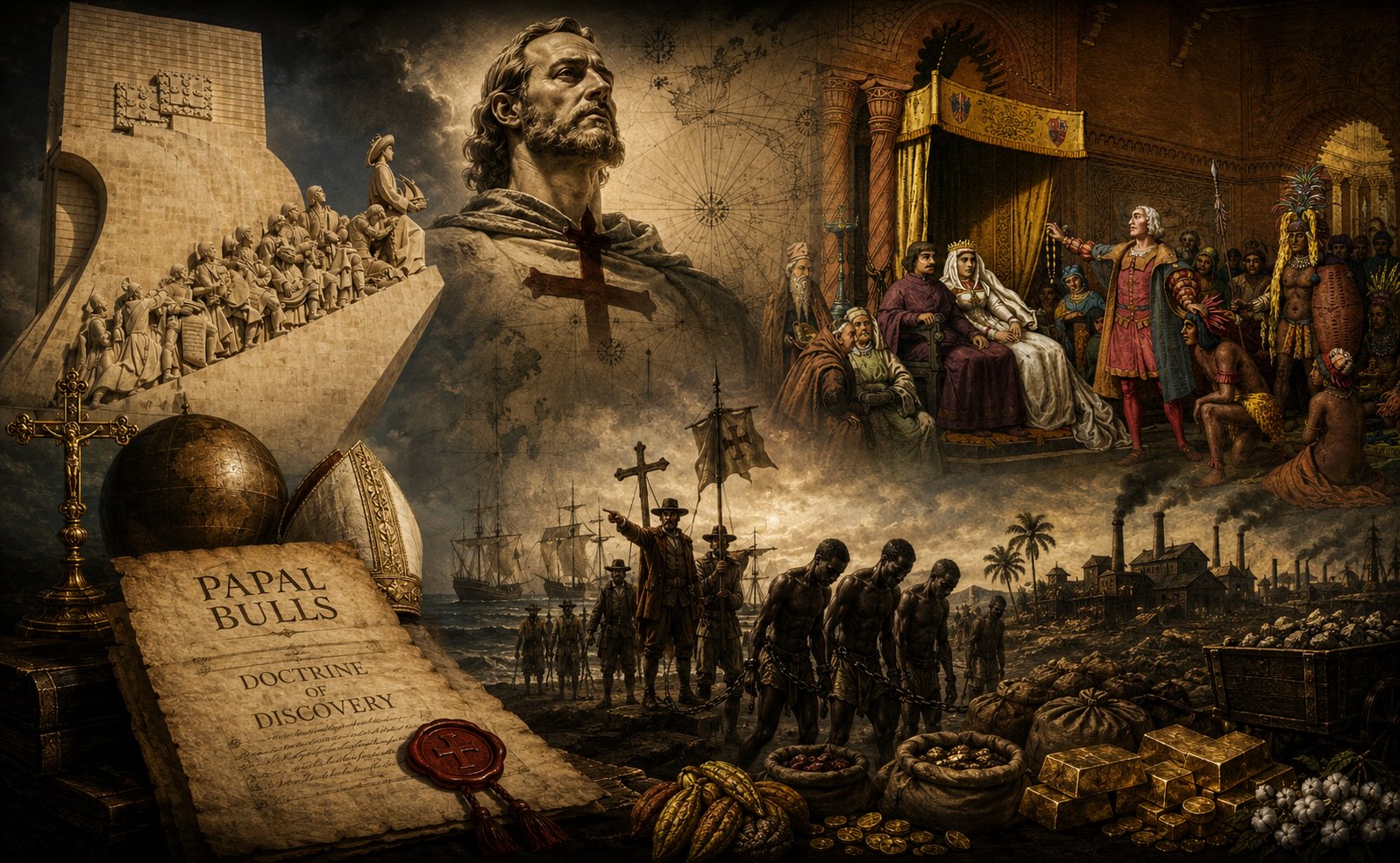
    In my previous post, I traced the material foundations of the current world order — the knowledge borrowed from the Islamic world, the wealth extracted from the Americas, two-thirds of humanity colonised and enslaved. It was the extraction, the enslavement, and the colonial architecture that built Western dominance. But material power alone does not sustain five centuries of global domination. It requires an ideological engine — a moral framework that converts extraction into mission, conquest into duty, and atrocity into the necessary price of civilisation. That engine was exceptionalism. And it was powered by religion.

    The mechanism was constructed with precision. In 1452, Pope Nicholas V issued the papal bull Dum Diversas, authorising the King of Portugal to “capture, vanquish, and subdue the Saracens, pagans, and any other unbelievers and enemies of Christ” and “reduce their persons to perpetual servitude.” Three years later, Romanus Pontifex extended this authority to conquer the lands of infidels for “the salvation of all”. In 1493, following Columbus’s return from the Americas, Pope Alexander VI issued Inter Caetera — the foundational document of the Doctrine of Discovery — declaring that any land not under Christian rule could be seized, its peoples subjugated, and its resources claimed, in the service of Christianising the world.
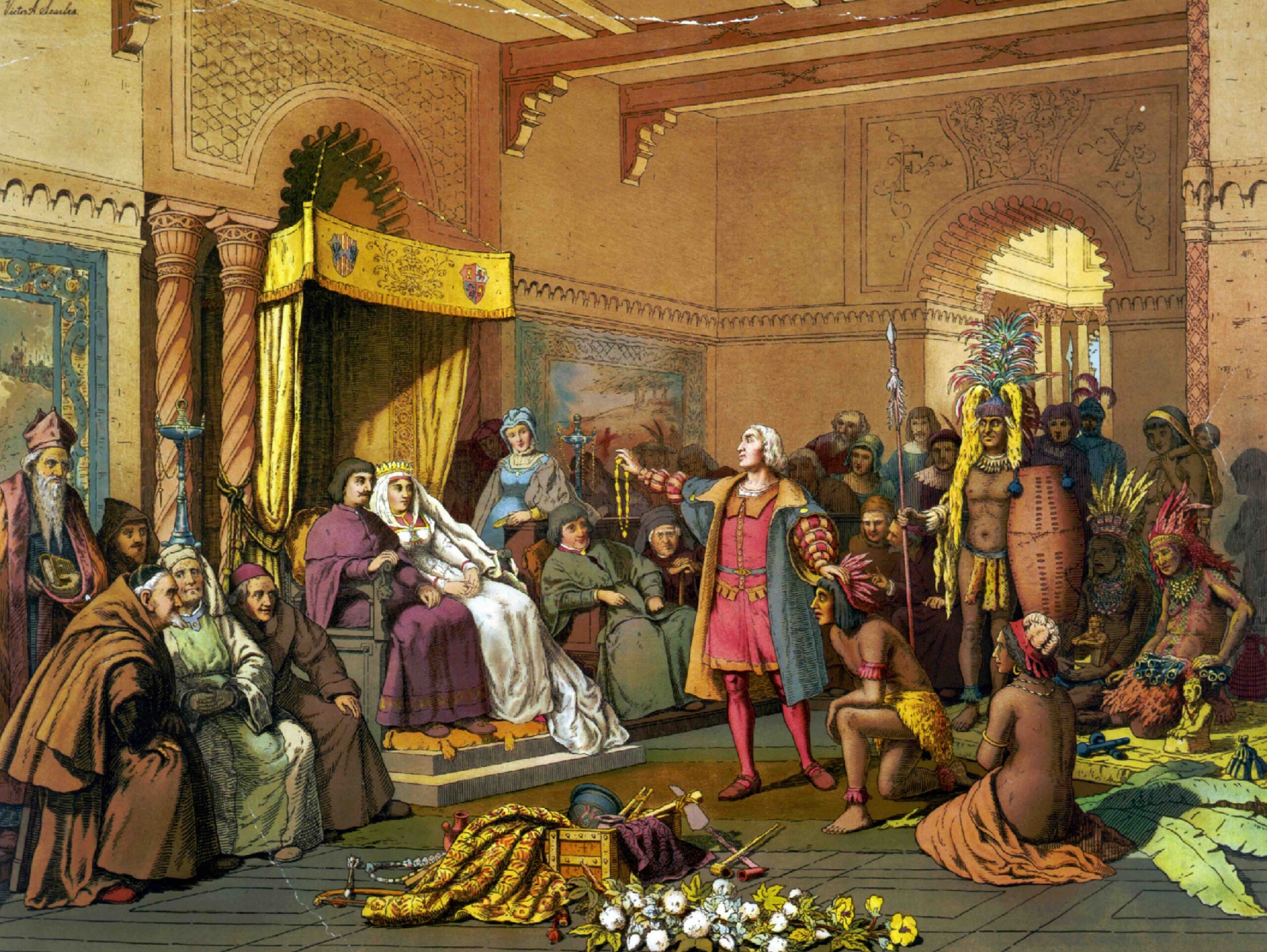
    Columbus at the court of Barcelona. Christopher Columbus standing before the King and Queen of Spain, presenting Indians and treasures from the New World, 1493. (Newscom TagID: whphotos146159.jpg) [Photo via Newscom]

    These were not peripheral theological documents. They were the legal and moral architecture of the colonial project, establishing in explicit terms sanctioned by the highest religious authority in the Western world that non-Christians were less than human, that killing them was not a sin, and that converting or enslaving them was a sacred duty. The Doctrine of Discovery was subsequently incorporated into the legal systems of the United States, Canada, Australia, and other settler-colonial states, where it shaped land law, property rights, and indigenous dispossession for centuries. The Vatican formally repudiated the Doctrine of Discovery only in 2023 — more than five centuries after the damage was done.

    And here is what makes that repudiation hollow: the doctrine did not stay in the fifteenth century. It became the operating law of the settler-colonial states, and it remains so.

    In 1823, the United States Supreme Court, in Johnson v. McIntosh, formally incorporated the Doctrine of Discovery into American law. Chief Justice John Marshall ruled that Indigenous peoples did not own their lands once those lands had been “discovered” by Christian colonists — that discovery itself conferred title on the discovering Christian nation, reducing the original inhabitants to mere occupants on their own soil. Marshall himself conceded the principle was “extravagant.” He made it law regardless. It has never been overturned. Two centuries later, it remains the foundation of all federal Indian law in the United States.

    Plenary power — plenitudo potestatis, the fullness of power — is the exact phrase by which the fifteenth-century popes claimed the authority to authorise conquest and enslavement in the first place.

    The living force of this doctrine was demonstrated in 2023 — the very year of the Vatican’s repudiation. In Haaland v. Brackeen, the US Supreme Court affirmed the modern form of the doctrine: the “plenary power” of the federal government over Native peoples. The term is not incidental. Plenary power — plenitudo potestatis, the fullness of power — is the exact phrase by which the fifteenth-century Popes claimed the authority to authorise conquest and enslavement in the first place. The Vatican renounced the doctrine in March 2023. Three months later, in June, the highest court of the United States reaffirmed its modern expression as settled law. One institution let go of the fiction. The other continued to build on it.

    Terra Nullius and the Concepts of Exceptionalism and Manifest Destiny

    The pattern is not confined to the Americas. In Australia, the entire continent was claimed under the doctrine of terra nullius — the legal fiction that the land belonged to no one, that sixty thousand years of continuous Aboriginal civilisation and hundreds of distinct nations simply did not count as habitation. The Australian Constitution, when it came into force in 1901, contained Section 127, which declared that “in reckoning the numbers of the people of the Commonwealth, aboriginal natives shall not be counted.” The original inhabitants of the continent were constitutionally excluded from the population of their own country. That exclusion was not removed until a referendum in 1967. The fiction of terra nullius itself was not overturned until the High Court’s Mabo judgment in 1992 — one hundred and ninety-two years after colonisation began.

    The Doctrine of Discovery is not a historical curiosity to be studied and regretted. It is the living legal architecture on which the settler-colonial states were built, and on which — as the events of 2023 demonstrate — they continue to stand. The exceptionalism that authorised conquest in 1452 was not repented and abandoned. It was secularised, constitutionalised, and preserved.

    This is the point that must be understood clearly. The Doctrine of Discovery is not a historical curiosity to be studied and regretted. It is the living legal architecture on which the settler-colonial states were built, and on which — as the events of 2023 demonstrate — they continue to stand. The exceptionalism that authorised conquest in 1452 was not repented and abandoned. It was secularised, constitutionalised, and preserved.

    This is not a distortion of Christianity. It is the documented institutional expression of a specific tradition within it: the doctrine that one’s own community occupies a uniquely chosen position in the divine order — that the Other is not merely different but lesser, and that this difference legitimates domination.

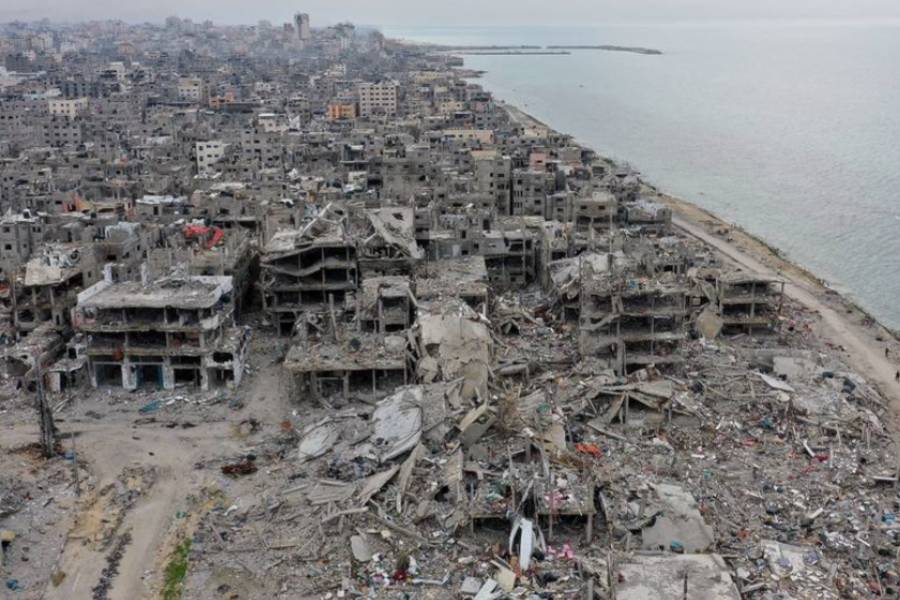
    The same logic operated, in different institutional forms, across other traditions. The conquering caliphates that used the concept of jihad to justify forced conversion were not the whole of Islamic tradition, which contains rich pluralist and humanistic streams. They were the weaponisation of religious exceptionalism by those who held political and military power. Political Zionism, in its most extreme contemporary expressions, follows the same pattern: the theological claim to exclusive divine right over territory and the dehumanisation of non-Jewish populations, ruthlessly visible from the Nakba in 1947-48 to the present conduct of the Gaza war, in full view of the world and with endorsement by the West. It follows the same pattern: religious exceptionalism converted into political licence for dispossession and violence.

    The pattern is not one religion. It is a specific logic — the claim to divine chosenness that exempts a community from the moral constraints that apply to others – that has been institutionalised, at different moments and in different traditions, wherever political power has found it useful.

    In Western civilisation, this logic found its most durable and consequential expression in American exceptionalism. In 1630, Puritan leader John Winthrop, preparing to establish the Massachusetts Bay Colony, called for the creation of a community that would be “as a City upon a Hill, the eyes of all people upon us.” This was not yet a global claim.  It was a theological self-conception: a chosen people, on a divinely appointed errand, under special divine scrutiny. But the seed was planted. Two centuries later, in 1845, John L. O’Sullivan gave it political form: “our manifest destiny to overspread the continent allotted by Providence for the free development of our yearly multiplying millions.” God-given expansion across a continent — regardless of the peoples already living on it — was reframed as destiny, not conquest.

    The indigenous peoples of North America experienced what that destiny meant in practice. At Sand Creek in November 1864, a Colorado militia under Colonel John Chivington attacked a Cheyenne and Arapaho village whose chief, Black Kettle, was flying both an American flag and a white flag of truce. Roughly 150 people were killed, the majority of them women, children, and the elderly; the soldiers mutilated the dead and paraded body parts through the streets of Denver. Three separate investigations — two congressional, one military — condemned it as a massacre. Not one man was ever indicted. The campaigns that defined the conquest of the West — villages destroyed, food supplies burned, non-combatants killed as a matter of strategy — were not the excesses of rogue commanders. They were the method.

    And the men who carried them out were not disgraced but memorialised. George Armstrong Custer, who at dawn on the Washita River in 1868 attacked the village of that same Black Kettle, who had survived Sand Creek and was again seeking peace, killed him and his wife in the assault,  while his aggressive forces killed a large number of unarmed women and children. Custer was mythologised into a national hero, his death at the Little Bighorn recast as a noble sacrifice. This is exceptionalism completing its work: not merely committing the atrocity, but converting it, in the national memory, into valour. The conversion of conquest into heroism is not a distortion of the exceptionalist project. It is the project.

    It is worth pausing to see precisely how this engine is built, because it reveals something the comfortable version of history conceals. There are two broad models of colonialism, and they are not the same. Extractive colonialism — the Spanish in Peru, the British in India — needs the colonised population alive: to mine the silver, to work the plantations, to pay the taxes. It subjugates.

    But settler colonialism, of the kind practised in North America and Australia, does not primarily want the people. It wants the land. And a population that comes to stay on land already inhabited requires something darker than subjugation: it requires removal. The historian Patrick Wolfe named this the ‘logic of elimination’ — the observation that in the settler-colonial project, invasion is not an event but a structure, and the indigenous inhabitant is not a labour force to be exploited but an obstacle to be cleared. This is why the settler variant needed its ideological engine to run at maximum power. To subjugate a people, you need only believe they are lesser. To eliminate them, you must first erase them — conceptually, legally, theologically — before you erase them in fact. Terra nullius, the empty land; the savage without real title; the wilderness awaiting God’s chosen — these were not decorative rhetoric. They were the necessary vocabulary of replacement.

    A society that never hears the moral objection is merely benighted. A society that hears it clearly, debates it in its legislature, affirms it in its highest court — and proceeds anyway, in the name of Providence — has not failed to find its conscience. It has chosen to override it. That is what the ideological engine is for: not to fill a silence where conscience is absent, but to drown out a conscience that is present.
    And here is the fact that removes every excuse: the conscience was present. It was not that no one knew, or that no one objected. Roger Williams argued in the 1630s that the Crown had no right to grant land it did not own, that it had to be purchased from its actual inhabitants — and he was banished for saying so. The Quaker John Woolman condemned the dispossession on moral grounds a century before it reached the Mississippi. When the Indian Removal Act came before the United States Congress in 1830, it passed by 102 votes to 97 — a bitter, closely fought debate, not a silent consensus. When the Cherokee took their case to the Supreme Court, Chief Justice John Marshall ruled in Worcester v. Georgia that they possessed sovereign rights the state was bound to respect. President Andrew Jackson ignored the ruling and carried out the removal regardless; on the Trail of Tears that followed, thousands died. This is the point that must be held onto. A society that never hears the moral objection is merely benighted. A society that hears it clearly, debates it in its legislature, affirms it in its highest court — and proceeds anyway, in the name of Providence — has not failed to find its conscience. It has chosen to override it. That is what the ideological engine is for: not to fill a silence where conscience is absent, but to drown out a conscience that is present.

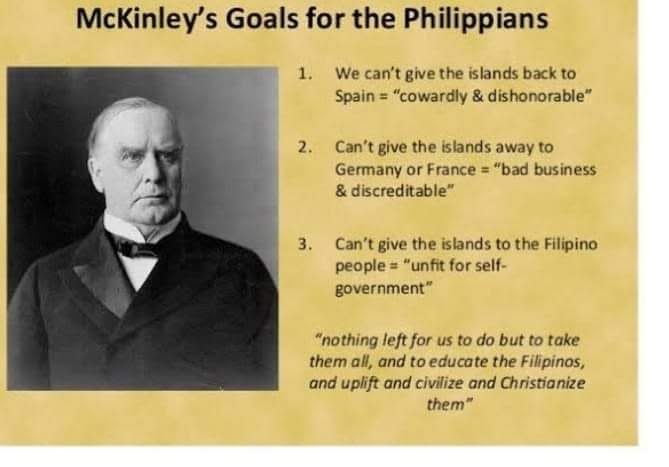
    The same logic was exported globally. In 1898, the United States entered the Spanish-American War, having suggested to Filipino independence fighters that it was their ally against Spanish colonial rule. When Spain was defeated, the Philippines was not given its independence. It was purchased for twenty million dollars and then colonised. The Philippine-American War resulted in the deaths of over 20,000 Filipino combatants and as many as 200,000 Filipino civilians through violence, famine, and disease. McKinley called his policy “Benevolent Assimilation.” The Philippines did not receive full independence until 1946 — forty-eight years after the liberation that was promised.

    This is the pattern that repeats from Vietnam to Iraq to Afghanistan to Iran: intervention justified as liberation, freedom invoked to mask extraction, and sovereignty violated in the name of the values that sovereignty was supposed to protect.

    The Civilisational Alternative 

    Now consider the contrast. India, China, and Persia are rooted in civilisational traditions that are fundamentally pluralist in their relationship to truth and the divine. Hinduism, Buddhism, Jainism, and Zoroastrianism do not claim exclusive possession of truth. They understand the search for ultimate reality as a path that admits multiple valid routes — that the divine is too vast and complex for any single tradition to comprehend fully. This epistemological humility produces a fundamentally different relationship to the Other: not as a lesser being to be converted or eliminated, but as a fellow traveller on a different path through the same reality — or, in the Tamil saint Vallalar’s image, rivers of many names flowing to a single shoreless ocean.

    A tradition whose foundational claim is Ekam Sat Vipra Bahudha Vadanti — truth is one, the wise call it by many names — or the Jain Anekantavada, the many-sidedness of truth, or the Tamil Yaadhum Oorey-Yaavarum Kelir, that every place is home and every person kin, is structurally resistant to exceptionalism, because its highest ideal explicitly denies the premise exceptionalism requires: that a single community owns the truth and stands chosen above the rest.

    The distinction I am drawing must be stated carefully, because it is easy to misread as a claim that one civilisation is virtuous and another is wicked. That is not the claim, and it would be false. The impulse to dress conquest in sacred language is close to universal — it appears wherever power seeks to launder its crimes, and no civilisation, India’s included, is innocent of it. Ashoka built his empire by the sword before he turned to the dharma. India’s own caste hierarchy was given cosmic sanction, as I have argued elsewhere in examining the Manusmriti. The human capacity to summon the transcendent in defence of the indefensible is not the property of any one people. What differs is not the impulse to justify but what each tradition installs as its highest principle — and therefore what any justification of atrocity must first overcome. A tradition whose foundational claim is Ekam Sat Vipra Bahudha Vadanti — truth is one, the wise call it by many names — or the Jain Anekantavada, the many-sidedness of truth, or the Tamil Yaadhum Oorey-Yaavarum Kelir, that every place is home and every person kin, is structurally resistant to exceptionalism, because its highest ideal explicitly denies the premise exceptionalism requires: that a single community owns the truth and stands chosen above the rest.

    One can still commit atrocity within such a tradition — humans always can — but one cannot easily make the tradition’s own highest principle bless it. A covenantal structure built on a chosen people, an exclusive truth, and a promised land contains that raw material at its theological core. It does not compel atrocity, and most who inherit it are decent people who read it toward mercy — the abolitionists and Roger Williams drew on it too. But the doctrine of chosenness is available to be weaponised in a way that Ekam Sat structurally is not. That is the civilisational difference that matters: not that one people is depraved and another pure, but that traditions differ in whether their deepest ideal resists the engine of exceptionalism or supplies its fuel.
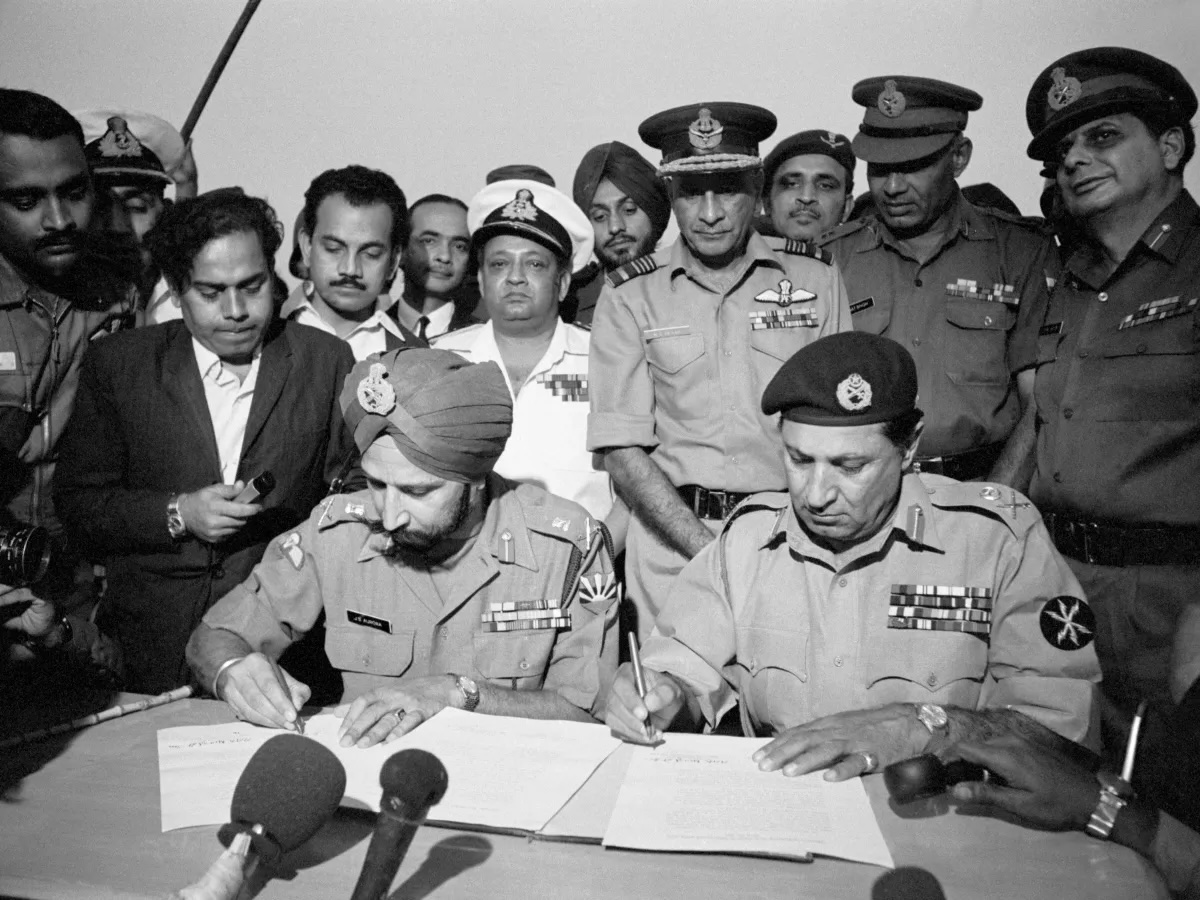
    Scholarly analysis consistently describes India’s conduct as just war traditions with no ulterior motive of imperialism or fiscal interest. There is no comparable example in the modern history of any Western military power.

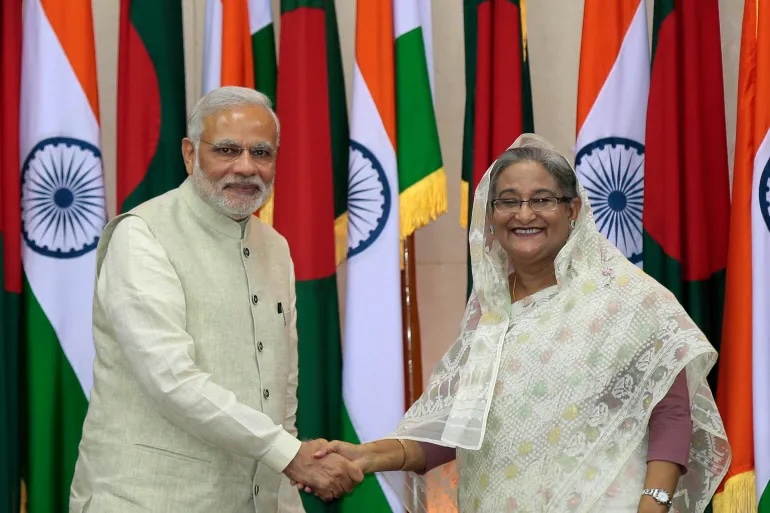
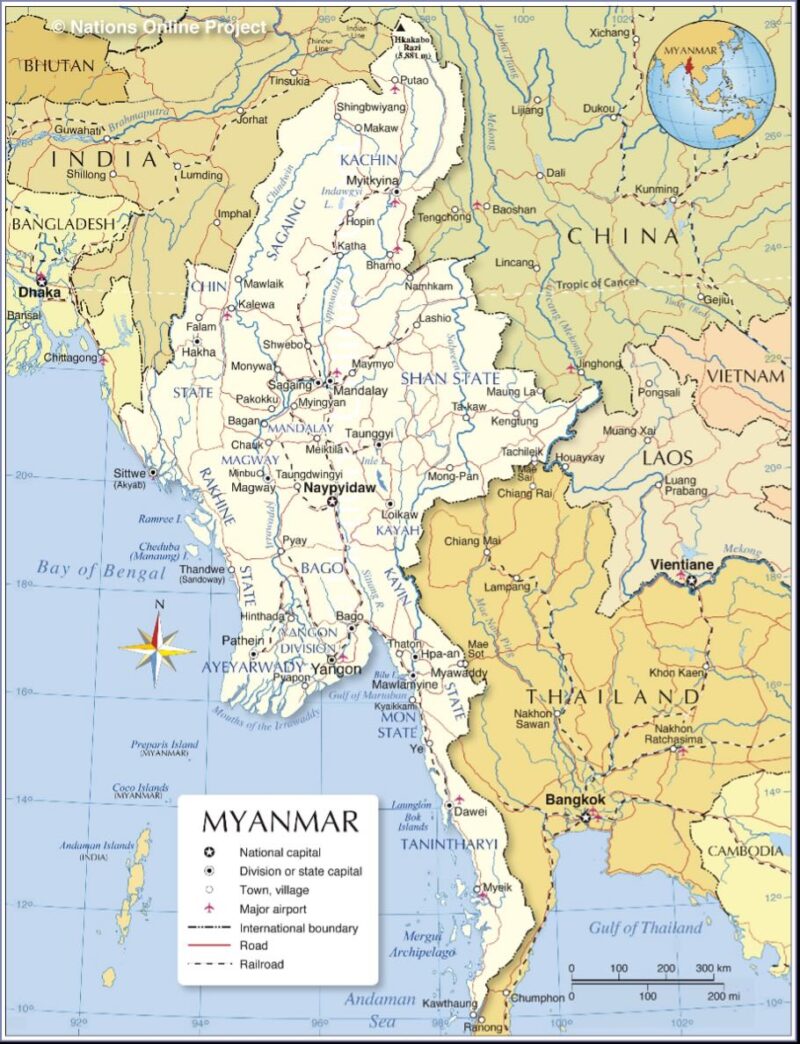
    This civilisational disposition is not merely philosophical. It expresses itself in conduct. In December 1971, India made the decision to intervene militarily in East Pakistan in response to one of the most egregious humanitarian catastrophes of the 20th century — the Bangladesh genocide. The intervention was swift and decisive. Indian military forces liberated Bangladesh in thirteen days of formal war. Pakistani forces surrendered on December 16, 1971. The Indian military then withdrew completely. No occupation. No extraction. No installation of a client government. No strategic bases retained. Full sovereignty was transferred immediately to the people of Bangladesh. India returned over 90,000 Pakistani prisoners of war through the Simla Agreement. Scholarly analysis consistently describes India’s conduct as just war traditions with no ulterior motive of imperialism or fiscal interest. There is no comparable example in the modern history of any Western military power.

    These are not coincidental differences. They are civilisational ones. The world is now in contest over what the emerging order will be built upon. The declining Western order was built on exceptionalism — the claim to divine chosenness that converts domination into duty, secularised into legal doctrine but never abandoned. The Asian civilisational alternative — pluralist, non-exclusivist, epistemologically humble — offers a different foundation. India’s 1971 conduct is the most precise proof available that this alternative is not merely philosophical. It has been demonstrated operationally.

    The question is whether India — in Gaza, in Iran, in the institutions of the emerging world order — is willing to act consistently with the civilisational tradition it inherits.

    — This is the second in the series prologue.

    Air Marshal M Matheswaran (Retd) is the Founder-President of The Peninsula Foundation (@TPF_Chennai), grounded in the conviction that power without ethics is tyranny — and that India’s civilisational traditions offer the world something Western exceptionalism cannot.


    Further Reading:

    On the Doctrine of Discovery and the Papal Bulls

    Pope Nicholas V, Dum Diversas, 18 June 1452. Full Latin text and English translation: Doctrine of Discovery Project, doctrineofdiscovery.org.

    Pope Nicholas V, Romanus Pontifex, 8 January 1455.

    Pope Alexander VI, Inter Caetera, 4 May 1493.

    Robert J. Miller, Jacinta Ruru, Larissa Behrendt, and Tracey Lindberg, Discovering Indigenous Lands: The Doctrine of Discovery in the English Colonies (Oxford University Press, 2010).

    Steven T. Newcomb, Pagans in the Promised Land: Decoding the Doctrine of Christian Discovery (Fulcrum, 2008).

    On the Vatican’s 2023 repudiation

    Dicastery for Culture and Education and Dicastery for Promoting Integral Human Development, ‘Joint Statement on the Doctrine of Discovery,’ Vatican, 30 March 2023.

    On the incorporation and persistence of the Doctrine of Discovery in US law

    Johnson v. McIntosh, 21 U.S. (8 Wheat.) 543 (1823).

    Haaland v. Brackeen, 599 U.S. 255 (2023).

    On the affirmation of ‘plenary power’ over Native peoples as the modern descendant of the Doctrine of Discovery, see the analysis by Peter d’Errico and the essays in the ‘200 Years of Johnson v. M’Intosh’ series, Canopy Forum, 2023.

    Robert J. Miller, ‘The Doctrine of Discovery in American Indian Law,’ Idaho Law Review, 42 (2005).

    Lindsay G. Robertson, Conquest by Law: How the Discovery of America Dispossessed Indigenous Peoples of Their Lands (Oxford University Press, 2005).

    On Australia, terra nullius, and constitutional exclusion

    Mabo v. Queensland (No. 2) (1992) 175 CLR 1.

    Section 127, Constitution of Australia (repealed by referendum, 1967).

    Henry Reynolds, The Law of the Land (Penguin, 1987).

    Bain Attwood, Rights for Aborigines (Allen & Unwin, 2003).

    On Section 127 and the 1967 referendum: National Museum of Australia, ‘Indigenous Referendum,’ and George Williams’ analysis of the ‘race power’ in Australia’s constitutional history.

    On American exceptionalism — Puritan origins and Manifest Destiny

    John Winthrop, ‘A Modell of Christian Charity’ (1630).

    John L. O’Sullivan, ‘Annexation,’ The United States Magazine and Democratic Review, 17(1), July–August 1845.

    Anders Stephanson, Manifest Destiny: American Expansion and the Empire of Right (Hill and Wang, 1995).

    Hilde Eliassen Restad, American Exceptionalism: An Idea That Made a Nation and Remade the World (Routledge, 2014).

    On the Sand Creek Massacre and the conquest of the Plains

    U.S. Congress, Joint Committee on the Conduct of the War, Massacre of the Cheyenne Indians (38th Congress, 2nd Session, 1865).

    The contemporary Congressional investigation that condemned the massacre; the primary documentary record.

    Ari Kelman, A Misplaced Massacre: Struggling over the Memory of Sand Creek (Harvard University Press, 2013).

    Dee Brown, Bury My Heart at Wounded Knee: An Indian History of the American West (Holt, Rinehart & Winston, 1970).

    On the Washita (1868), the killing of Black Kettle, and the pattern of village attacks; also on the mythologisation of George Armstrong Custer.

    Nathaniel Philbrick, The Last Stand: Custer, Sitting Bull, and the Battle of the Little Bighorn (Viking, 2010).

    On the Philippines, 1898–1946

    Stanley Karnow, In Our Image: America’s Empire in the Philippines (Random House, 1989).

    Paul A. Kramer, The Blood of Government: Race, Empire, the United States, and the Philippines (University of North Carolina Press, 2006).

    On India’s 1971 Bangladesh liberation

    Srinath Raghavan, 1971: A Global History of the Creation of Bangladesh (Harvard University Press, 2013).

    Gary J. Bass, The Blood Telegram: Nixon, Kissinger, and a Forgotten Genocide (Knopf, 2013).

    On Asian civilisational pluralism

    Amartya Sen, The Argumentative Indian: Writings on Indian History, Culture and Identity (Penguin, 2005).

    Wendy Doniger, The Hindus: An Alternative History (Penguin, 2009).

    Ramalinga Adigalar (Vallalar), Thiru Arutpa, Sixth Thirumurai, Verse 3907.

    The metaphor of the many religions as rivers merging into a single shoreless ocean. See thiruarutpa.org.
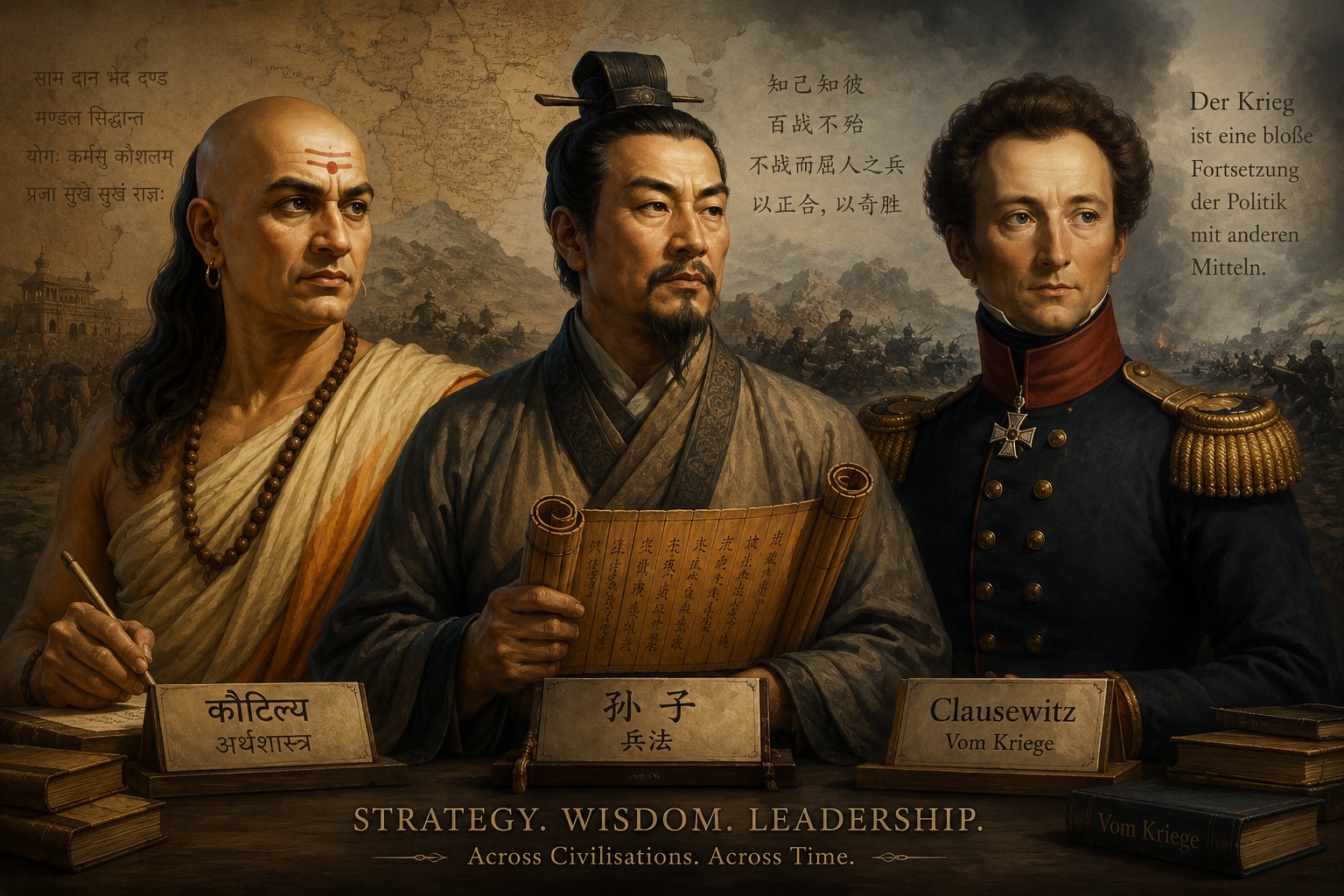
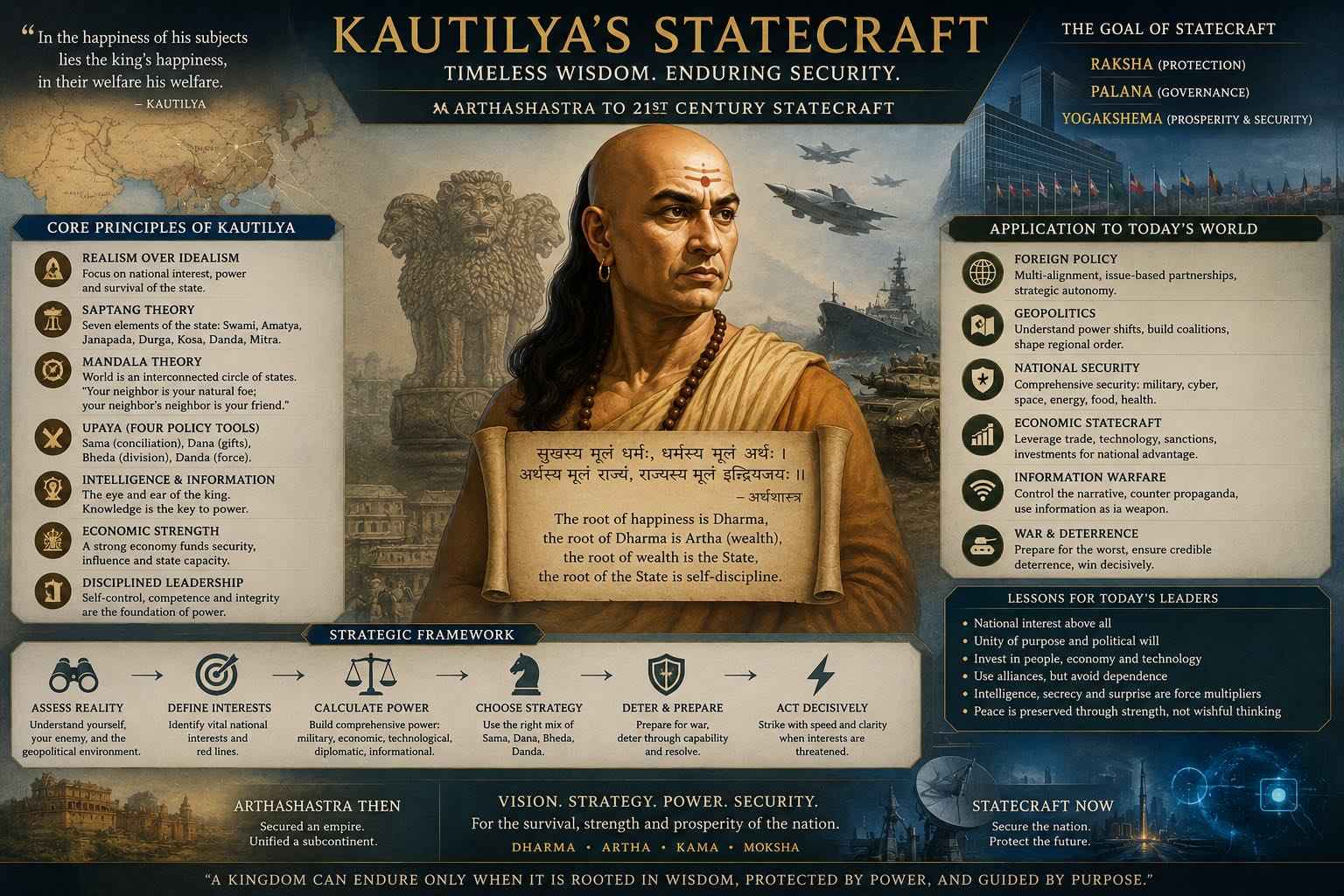
     

  • Kautilya, Sun Tzu and Clausewitz: A Complementary Grammar of Strategy — and Why the Indian Tradition Begins with the King’s Self-Mastery

    Kautilya, Sun Tzu and Clausewitz: A Complementary Grammar of Strategy — and Why the Indian Tradition Begins with the King’s Self-Mastery

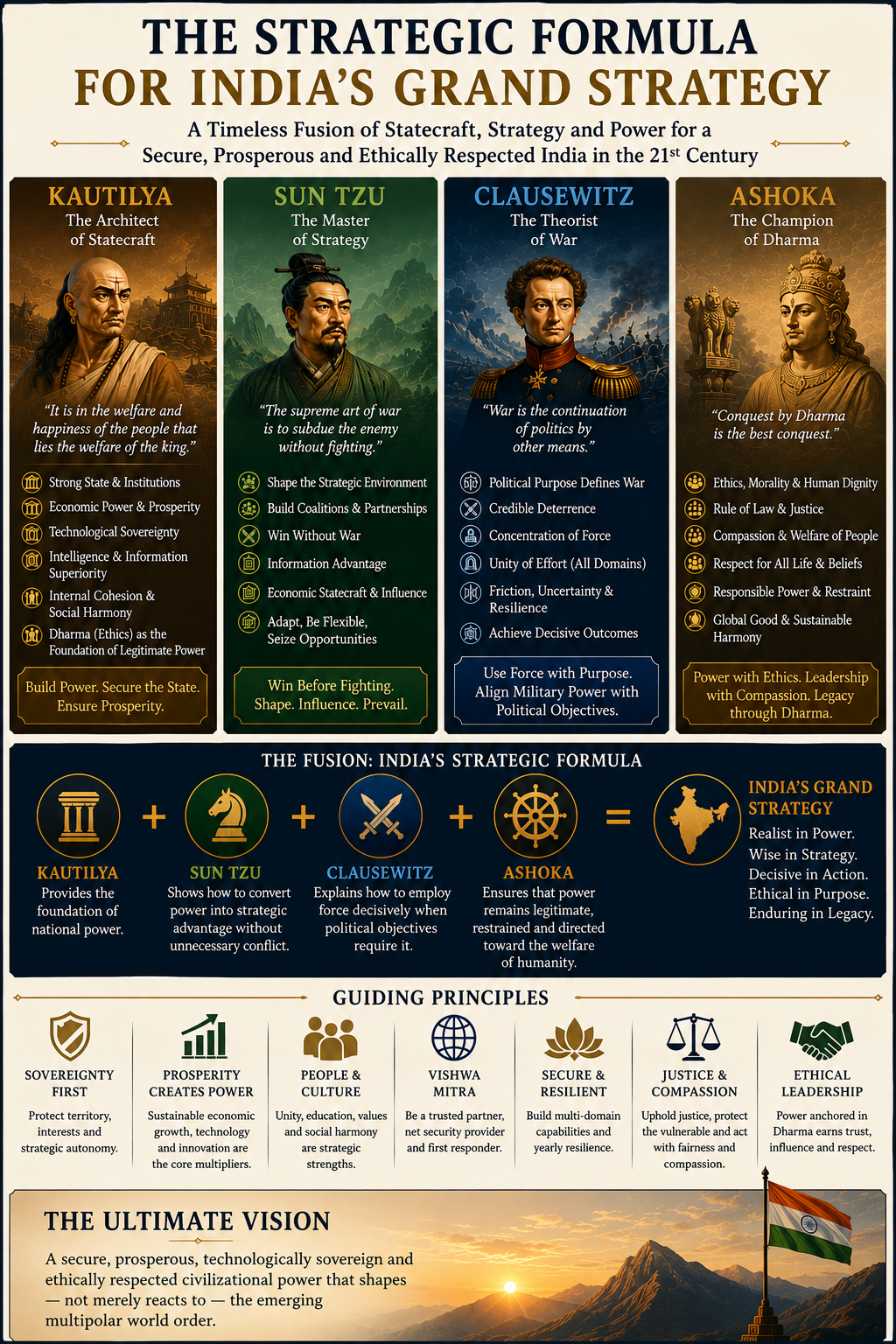
    TPF’s Distinguished Adjunct Scholar, Andreas Herberg-Rothe analyses not only the interconnectedness between Kautilya, Sun Tzu, and Clausewitz but develops a syntheised understanding that highlights Kautilya’s larger statecraft, realism, and the ethical underpinning exemplified later by one of India’s and the world’s greatest emperors – ‘Asoka the Great’.


    Abstract

    It is right to insist that any serious Indian debate on strategy must return to Kautilya. Kautilya is not merely one strategic thinker among others whom India happened to produce early, but the most complete account we possess of the state as a system — of war as one instrument within a standing order of economy, administration, intelligence, and alliance. Where I part company with the tendency to treat Kautilya as sufficient is this. A grammar of statecraft is not the whole of strategy. Sun Tzu and Clausewitz are not rivals to be defeated or predecessors to be surpassed; each addresses precisely what the other two leave dark. Clausewitz corrects Sun Tzu’s confidence that war can be won in the enemy’s mind before the first blow; Sun Tzu and Kautilya together correct Clausewitz’s fixation on the symmetrical clash of mass armies; Kautilya anchors both in the institutional foundation on which any campaign, and any peace, must stand. I therefore argue for two theses that operate along different axes. Horizontally, the three thinkers form a complementary system in which each compensates for the others’ blind spots. Vertically, within the Indian tradition itself, Kautilya’s realism already carries the seed of its own moral limit: the Rajarishi, the self-mastered king, is the hinge on which Ashoka’s later turn to Dharmavijaya could swing. Power without an ordering purpose is self-destructive, and a moral purpose without power is defenceless. That is why I begin with Kautilya — but do not end there. In the end, I attempt to apply my brief discussion of Kautilya, Clausewitz, and Sun Tzu to India’s situation.

    Why Begin with Kautilya

    In the Western reception, there is a habit of turning to Kautilya only as an exotic confirmation of something already believed — “the Indian Machiavelli”, as though the Arthashastra were a footnote to The Prince. I want to begin with Kautilya for three analytical reasons.

    First, the order of explanation. Sun Tzu tells us how to prevail in a campaign; Clausewitz tells us what happens when force is actually used; Kautilya tells us what must exist before either question can be asked — a treasury, an administration, an intelligence apparatus, a body of allies, a food supply. His Saptanga, or the seven limbs of the state, is not a list of assets but a theory of what a polity is. If we are looking for the ground on which the other two operate, it is here. To begin with Kautilya is to begin with the state, and only then to ask how it fights.

    Second, the Indian frame of the conversation is examined. This is a dialogue conducted in and about India, and it would be a small intellectual dishonesty to use Clausewitz as the measure against which the Arthashastra is graded. The more interesting movement runs the other way: to take Kautilya as the primary text and ask what the European and Chinese traditions add to it and where they expose its limits. This is the posture I adopt throughout.

    Third, the moral question is already present in Kautilya. The reason I do not treat Kautilya as a pure realist to be balanced, from the outside, by Ashokan ethics is that the balance is internal to his own text. He opens the Arthashastra not with tactics but with the education and self-conquest of the ruler. Begin anywhere else, and one misses the seed. Begin with Kautilya, and the path to Ashoka is already visible in the first book.

    Kautilya’s State: War as One Instrument Among Many

    Kautilya’s account of foreign policy and security in the Arthashastra is a pragmatic synthesis of realpolitik and administration. It treats the relentless pursuit of the state’s interest, the management of alliances, and comprehensive security as a single problem, refusing to separate the external from the internal: domestic stability and external deterrence are the same pillar seen from two sides. Five elements carry most of this weight.

    The Mandala: geography as the map of friendship and enmity

    Kautilya reads a state’s environment as a circle of states, the Mandala, in which relations are dictated less by sentiment than by position: the immediate neighbour is a presumptive rival; the state beyond the rival is a natural ally — the ancient form of “the enemy of my enemy is my friend”. The Vijigishu, the would-be conqueror or the home state, must work this circle continuously through diplomacy, espionage, and alliance to maintain a regional balance. What matters for my argument is that the balance is structural and permanent, not the product of a single campaign.

    The six measures (Sadgunya): policy as a spectrum, not a switch

    Toward other states, Kautilya prescribes not a choice between peace and war but a graded set of six measures, selected by the balance of power of the moment:

    • Sandhi — peace: treaties made when the opponent is stronger, to buy time and rebuild.
    • Vigraha — hostility: open conflict when victory is likely, or provocation demands it.
    • Asana — neutrality: remaining still when neither attack nor submission is advantageous.
    • Yana — the expedition: active mobilisation and the march.
    • Samsraya — shelter: seeking the protection of a stronger power under immediate threat.
    • Dvaidhibhava — the double policy: peace with one power while preparing for war against another.

    The point is the continuity of the scale. War is not a rupture of politics but one register of it — a formulation to which I will return, because it is also, in a different key, the core of Clausewitz.

    The four expedients (Upaya): force as the last of four, not the first

    Before using force, Kautilya insists that peaceful avenues be exhausted. He orders them:

    • Sama — conciliation: negotiation and treaty.
    • Dana — gift: economic inducement or concession.
    • Bheda — dissension: the covert splitting of an adversary’s alliances from within.
    • Danda — punishment: the last resort of military or economic coercion when other means have failed.

    It is easy to read Bheda and Danda as evidence of unlimited cynicism. I think that is a misreading, and the reason is the placement: coercion is fourth, not first, and it is the servant of an order it does not itself define.

    Comprehensive security: the Saptanga and the ecology of the state

    Kautilya’s Saptanga, the seven limbs — sovereign, ministers, population, fortified towns, treasury, army, and allies — treats security as an interconnected ecology rather than a military department. He counts as threats not only invading armies but also famine, disease, and economic collapse; a powerful army, he warns, is worth nothing if the treasury is empty or the population is in revolt. This is what modern strategists relabel as “comprehensive security,” and it is the element of Kautilya that the twentieth century’s narrower schools most conspicuously lack.

    Intelligence as a permanent organ of the state

    A standing, state-run intelligence network is not an accessory to Kautilya’s system but one of its organs. Its agents gather foreign intelligence, gauge public mood, detect internal dissent, and assess the capabilities of allies and adversaries alike. For Kautilya, security is dual and requires continuous vigilance — outward against the rival and inward against decay — and the two are never separated.

    Three Thinkers, Three Grammars

    Set beside Kautilya, Sun Tzu, and Clausewitz look less like competitors than like specialists in different parts of a single problem. All three are realists — none mistakes war for a moral pageant — but they are not, for that reason, immoralists. They simply enter the subject through different doors.

    • Kautilya — comprehensive statecraft. War is one instrument within a standing political, economic, and intelligence order.
    • Sun Tzu — the psychological and the subversive. The ideal is to win without fighting by breaking the opponent’s will and cohesion.
    • Clausewitz — the philosophy of war itself: its violence, its friction, its stubborn refusal to be dictated to by the opponent; “war is the continuation of politics by other means.”

    Reduced to a sentence each: Sun Tzu teaches how to defeat the opponent’s mind; Clausewitz how to survive the violent clash; Kautilya how to run a state so secure that its rivals are undone before they know the contest has begun. Stated that way, the three are obviously incomplete on their own, which underpins my next argument.

    The Complementary System: How Each Compensates the Other

    The three should be read neither as competing dogmas nor as ingredients to be blended into a single syncretic paste. They form a dynamic system in which each addresses, quite precisely, the blind spots of the others. This is the horizontal axis of my argument, and it is where I most respectfully qualify the claim that Kautilya suffices.

    Kautilya compensates Clausewitz: the foundation and the aftermath

    Clausewitz’s genius lies in exposing war as a duel of reciprocal interaction — Wechselwirkung — and in locating its decision in the destruction of the enemy’s centre of gravity. However, his lens narrows to the clash. He tells us that war is an instrument of policy and says remarkably little about how a state builds the economic, social, and institutional resilience to endure a long conflict, still less about how to construct a durable peace after it. Kautilya fills exactly this void. The Saptanga presents military power as the product of a whole ecology — treasury, justice, alliance — rather than a free-standing lever. For him, war is a temporary phase within a permanent condition of statecraft, and military action is subordinated to a protective, welfare-oriented purpose (Yogakshema). Kautilya thus anchors Clausewitz’s volatile escalation on a foundation that can survive it.

    Clausewitz compensates Sun Tzu: the shock of reality against the illusion of control

    Sun Tzu’s fascination with deception, intelligence, and manoeuvre culminates in the ideal of subduing the enemy without fighting. The hidden danger is the assumption beneath it: that conflict can be run like a rational game of chess or wei-qi, in which a clever enough commander reads and moves every piece. This structurally underestimates what Clausewitz called the remarkable trinity: the primordial violence and passion of the people, the play of chance and friction in the hands of the commander, and the rational calculation of the government. Clausewitz is the reality check on Sun Tzu’s optimism. The adversary is an independent will whose hostility, courage, and counteraction (Gegenhandeln) can shatter the most elegant deception the moment violence is unleashed. While Sun Tzu assumes that the theatre can be read, Clausewitz insists on the non-linearity of force once it is in motion.

    Sun Tzu and Kautilya compensate Clausewitz: beyond the symmetrical clash

    Clausewitz’s model grows from a European tradition of symmetrical clashes between mass armies; his dialectic of attack and defence is at its sharpest in the open shock of forces. He attends far less to the asymmetric, the irregular, the purely psychological — to forms of conflict that bypass the battlefield altogether. Here, Sun Tzu and Kautilya jointly enlarge the field. Sun Tzu shows how informational asymmetry and psychological paralysis can collapse an enemy before a blow lands; Kautilya details Guda Yuddha, the clandestine war of subversion, diplomatic friction, and internal destabilisation, dismantling an opponent’s cohesion from within. The most decisive victories, on this combined view, often occur long before a Clausewitzian duel can take shape.

    The Vulnerability of Deception: A Critique of Sun Tzu

    The result is a balanced matrix rather than a hierarchy: Kautilya secures the institutional foundation; Sun Tzu reduces material costs through psychological agility; Clausewitz provides the analytical honesty to confront violence when it arises. Remove any one, and the account bleeds at the seam the other two were covering.

    Perhaps the most important aspect of Sun Tzu’s strategy is deceiving the enemy. However, this approach has a fundamental problem. In order to deceive the enemy, we must make our deception so realistic that we risk deceiving ourselves.

    A personal anecdote illustrates this point. During the era of “real existing socialism”, it was customary for the population to march in large crowds past the Politburo building in East Berlin. One participant explained it to me this way: “When these ‘crowds’ marched past the podium, they turned off, walked behind the stage, and then reappeared at the front.” He added that, initially, this had been a pleasant Sunday stroll with the family, but later, people had to run at a brisk pace because there were so few participants. Everyone knew the truth, yet everyone participated in the charade.

    However, a deeper structural problem was that although the Politburo members were technically aware of the operational deception, they gradually came to believe that their performance was genuinely being mistaken for reality by the outside world and by their own apparatus. In terms of Sun Tzu’s principle of deception, it becomes profoundly self-destructive if the political and military leadership believes their own deception is effective—and by doing so, they ultimately deceive themselves. They mistook the simulation for the baseline of power.

    The Clausewitzian Corrective

    This is precisely where the matrix requires Clausewitz’s analytical honesty to stabilise the structure. Sun Tzu’s deception operates in the realm of appearance, yet it remains a dangerous epiphenomenon. If a state relies too heavily on psychological manipulation, its strategic calculus becomes hollow. Clausewitz provides the necessary antidote to this self-induced “fog of war.” By anchoring strategy in the immutable, violent friction of reality and in the strict relationship between political purpose and material means, Clausewitz forces the strategist to look beyond the theatre.

    In the contemporary context of India’s rivalry with China, this critique is vital. While China employs Sun Tzu-inspired psychological and informational warfare to project an aura of absolute dominance, India must avoid competitive simulation. Kautilya could guarantee that India’s domestic and institutional foundations remain structurally sound. Clausewitz ensures that India retains the unvarnished analytical clarity to evaluate China’s actual material capabilities—rather than Beijing’s self-deceiving theatre—while preparing for the physical reality of conflict if deterrence fails.

    The Vertical Axis: From Danda to Dharma, from Kautilya to Ashoka

    The complementarity above is horizontal — three grammars of how a state contends. There is a second axis, vertical and internal to the Indian tradition, concerning the purpose of the instruments of power. It is here that I locate my disagreement with any reading of Kautilya as merely amoral, and here that the Kautilya–Ashoka relationship, so often drawn as mere opposition, is better drawn as a sequence. Machiavelli is the useful analogy: the sharp realism of The Prince serves, in the Discorsi, the longer survival and freedom of the republic. Kautilya’s pragmatism is likewise anchored in a wider order — Dharma, the moral and cosmic law. His ideal of the self-mastered king, the Rajarshi, is not the opposite of Ashoka’s later Dharmavijaya, victory through righteousness. It is its seed.

    Self-mastery (Indriya-jaya) as a hard security requirement

    Kautilya opens not with the army but with a discussion of the ruler’s character. The Rajarshi must achieve Indriya-jaya, the conquest of his own senses and passions — lust, anger, greed, arrogance, and vanity. This is not soft counsel. For Kautilya, a ruler’s ethical integrity is a national security requirement: a leader enslaved by his passions will corrupt the state and drag it to ruin. Read this forward, and Ashoka’s remorse after Kalinga, his turn away from conquest, is the historical fulfilment of Indriya-jaya — the king conquering his own imperial ambition in the service of a higher duty.

    Collective welfare (Yogakshema) as the purpose of the state

    One of Kautilya’s most cited lines states this point without ambiguity:

    “In the happiness of his subjects lies the king’s happiness; in their welfare, his welfare. What pleases himself he shall not consider as good, but whatever pleases his subjects he shall consider as good.”

    This is not the charter of a predatory elite. The state exists for Yogakshema — the security, livelihood, and welfare of its people — and coercion (Danda) is legitimate only because it holds back Matsya-nyaya, the law of the fish, in which the strong devour the weak. Ashoka adopted this protective philosophy in its entirety and expanded its radius. When he declared that “all men are my children”, he was extending Kautilya’s duty of care from a particular political community to all living beings.

    From power to righteousness: inversion, not demolition

    In Kautilya’s universe, coercion is the material instrument that upholds the moral law: without institutional power, justice cannot survive in an imperfect world, so power is subordinated to order. Ashoka’s achievement was not to dismantle the efficient Mauryan apparatus he inherited — an apparatus shaped through and through by Kautilyan principles — but to invert its priority. Recognising that conquest through raw Danda leaves generational trauma in its wake, he used the resilient vessel of the Kautilyan state to carry the universal ethic of the Dhamma. The machine was Kautilya’s; the purpose poured into it was Ashoka’s. That is why I hold that power without an ordering purpose is self-destructive, and a moral purpose without the machinery of power is defenceless — the two are complementary in exactly the same way that Kautilya and Ashoka are.

    Conclusion: A Framework for the Present Dialogue

    Ashoka’s ethical turn was not an ahistorical break; it was the flowering of a seed already present in Kautilya’s insistence on the king’s self-conquest and on welfare as the state’s purpose. This is the vertical lesson. The horizontal lesson is that no single tradition — not even one as complete as Kautilya’s — holds the whole of strategy: Clausewitz keeps us honest about violence, Sun Tzu about the mind, and Kautilya about the state that must outlast both. Put together, the two axes give a usable framework for the contemporary Indian debate: a strategy that is Kautilyan in its comprehensiveness, Sun Tzuan in its economy of force, Clausewitzian in its clear sight of what force actually is — and Ashokan in its sense of what all of it is finally for.

    My claim is only this: begin with Kautilya, by all means — but do not stop with him, and do not forget the Rajarshi who stands, self-mastered, at the very front of his book.

    Possible Strategic Implications for India’s Security Architecture

    1. Maritime Space and “Hinterindia” (Southeast Asia): Expanding the Mandala
    • The Clausewitzian/Kautilyan Baseline: Clausewitz’s Centre of Gravity (Schwerpunkt) in the Strait of Malacca cannot be controlled by India through mere operational posturing; it requires physical mass, sustained naval projection and logistical depth. This aligns with Kautilya’s insistence on Dravyaprakriti (the material resource base) and Durga/Kosha (fortifications and financial reserves) as the mandatory prerequisites for external power projection. Through the lens of India’s Act East Policy, “Hinterindia” (Southeast Asia/ASEAN states) constitutes the outer ring of Kautilya’s Mandala theory—the “neighbours of the neighbour” who share India’s existential concerns regarding Chinese expansionism.
    • The Sun Tzu Leverage & The Critique of Deception: Sun Tzu’s hierarchy of success dictates that we must “prevent the junction of the enemy’s forces.” China attempts to counter this by creating a simulated narrative of inevitable regional hegemony, seeking to deceive Southeast Asian nations into bandwagoning with it.
    • The Strategic Balance: India must counter China’s psychological narrative not with empty rhetoric but by offering a robust institutional and material alternative for Southeast Asia (e.g., defence exports such as BrahMos missile transfers and shared maritime domain awareness). By anchoring Kautilya’s Mandala in tangible material foundations, India may create a structural counterweight to “Hinterindia.” This turns Sun Tzu’s “victory without battle” into a tangible reality: China’s strategy to dominate the Strait of Malacca is thwarted because the littoral states of Southeast Asia are firmly integrated into a resilient, material balancing system led by New Delhi.
    1. The Two-Front Reality: Prakashayuddha (West) vs. Tushnimyuddha (East and Cyber)
    • The Clausewitzian/Kautilyan Baseline: India faces two fundamentally different forms of warfare that demand distinct structural foundations. On the Western Front (Pakistan), India confronts Prakashayuddha—open, visible, conventional warfare. This theatre is dominated by Clausewitz’s trinitarian element of “primordial violence, hatred, and enmity.” It is a highly emotionalised, zero-sum clash, with the danger of rapid escalation to absolute war ever-present. Conversely, in the Eastern and Maritime domains (China), the conflict takes the form of Tushnimyuddha—the silent, concealed grey-zone warfare. This involves cyber subversion, maritime encirclement, and informational pressure, aimed at eroding India’s power from within before a single shot is fired.
    • The Sun Tzu Leverage and Critique of Deception: Pakistan has historically used asymmetric deception (proxy networks and nuclear brinkmanship) to mask its internal systemic decline. Applying the critique of self-deception, Pakistani leadership became victims of their own theatre—believing their deceptive proxies could paralyse India, while in reality this strategy hollowed out Pakistan’s economic and institutional foundations (Saptanga). In the East, China utilises highly sophisticated, automated deception (AI-driven cyber operations and the “Three Warfares” narrative) to project an aura of absolute dominance over the Indo-Pacific.

    The Strategic Balance:

    • In the realm of Prakashayuddha (the West): India needs the unvarnished analytical honesty of Clausewitz to confront raw violence without allowing the conflict’s emotionality to dictate its grand strategy. India must economise on this front through unyielding, visible conventional deterrence, ensuring that Pakistan’s self-deceiving provocations do not drain India’s core resources.
    • In the realm of Tushnimyuddha (East/Cyber): India cannot counter China’s silent warfare with empty psychological manoeuvres. True resilience in Tushnimyuddha requires solid domestic, institutional, and societal foundations. In the cyber domain, this means building domestic technological sovereignty and public trust to make society immune to external fractures. By standing firmly on its own domestic ground (Saptanga), India can ensure that its political purpose (Clausewitz) remains independent.
    1. The China-USA Dilemma: Strategic Autonomy in a Multi-Polar Mandala
    • The Clausewitzian/Kautilyan Baseline: Clausewitz strictly warns that the political purpose must always remain the “original measure” of war. If India relies on the USA to balance China, it risks subordinating its political objectives to Washington’s global design and fracturing its strategic autonomy. Kautilya resolves this dilemma through the Saptanga theory, in which the state’s internal pillars (Swami-Amatya-Janapada) must be structurally robust enough to resist external co-optation.
    • The Sun Tzu Leverage: Sun Tzu warns against protracted external dependencies and conflicts that drain the state’s core resources: “There is no instance of a country having benefited from prolonged warfare.”
    • The Strategic Balance: To preserve strategic autonomy between China and the US, India’s deterrence cannot be borrowed or faked—it must spring from its own Comprehensive National Power. Kautilya’s Shadgunya framework permits temporary, transactional alignments (Samsraya), strictly as a breathing space to build internal material strength. Combined with Clausewitz’s insistence on the primacy of the independent political purpose, India should use its relationship with the US not as a strategic crutch but as an institutional catalyst to accelerate its domestic economic, technological, and military foundations. Deterrence against China is thus achieved not by proxy diplomacy but by the undeniable structural weight of a self-reliant Indian state.
    1. Strategic Autonomy and Internal Emancipation: Beyond the Prussian and Meiji Trap
    • The Structural Challenge: True structural deterrence against an external adversary such as China cannot coexist with deep systemic fragmentation at home. India’s historical vulnerabilities—the persistence of the caste system, the marginalisation of Dalits, and pervasive poverty—constitute severe internal fractures (Vyasanas) in Kautilyan terms. Kautilya’s warnings against internal rebellion (Abhyantara-Kopa) explicitly state that internal fractures are far more dangerous than external invasion. A state that systematically excludes or impoverishes a vast segment of its population violates the core principle of Yogakshema (the material and moral welfare of the people).
    • The Historical Matrix: Historically, states facing existential external pressure have often resorted to a “revolution from above” to modernise their societies, as seen in 19th-century Prussia and Meiji Japan. However, both historical trajectories fell into the trap of hyper-militarism by subordinating the entire social fabric to the military apparatus, ultimately leading to catastrophic conflicts.
    • The Kautilyan Alternative: Kautilya’s Saptanga framework offers a safeguard against militaristic traps. Unlike the Prussian or Japanese models, which elevated the military (Danda) to an absolute end in itself, Kautilya strictly subordinates military force to civil governance (Amatya), as Clausewitz does, and to the material welfare of the population (Yogakshema).
    • The Strategic Balance: For contemporary India, overcoming internal problems is not a secondary moral goal but a primary strategic imperative. A just, inclusive, and cohesive society is India’s ultimate defence infrastructure. By operationalising national self-preservation and defensive modernisation as vehicles for internal emancipation—expanding technical education, institutional trust, and industrial opportunities for the most marginalised echelons of society—India can dismantle archaic barriers through the pragmatic necessity of its national survival. Securing the external realm is achieved by immunising the domestic foundation.
    1. Epilogue: The Civilizational Horizon and Intercultural Recognition
    • The Demographic Gravity of the Northern Belt: Looking beyond the immediate operational timeline towards 2050, India’s long-term geopolitical architecture cannot be detached from global demographic shifts. While the Russian Federation faces a massive population surge along its southern “Islamic belt,” from New Delhi’s geographic perspective, this same space constitutes an expansive northern and western Islamic belt. A purely militaristic and exclusionary response to this demographic reality is unsustainable. Instead, this development demands a shift from religious fragmentation to a broader civilisational paradigm. While religions, by their doctrinal nature, tend toward theological exclusion, civilisations have historically possessed the capacity for pluralistic inclusion and cross-cultural balance.
    • The Balance of Kautilya and Ashoka: To articulate a genuinely Indian contribution to the global order without falling into the ideological trap of contemporary Hindu nationalism (Hindutva), India’s strategic culture must synthesise its two foundational, dialectical pillars: Kautilya and Ashoka. Kautilya provides the unyielding institutional, economic, and structural baseline (Saptanga) necessary to preserve state survival and sovereignty. Yet this material power remains hollow—and prone to internal fracturing—without Ashoka’s ethical and universalist horizon. Ashoka’s edicts did not establish a homogeneous religious empire but rather a civilisational space anchored in Dhamma (righteousness, social ethics, and mutual tolerance), which actively accommodated diverse belief systems and ethnicities.

    Selected works by the author:

    Herberg-Rothe, Andreas, Clausewitz’s puzzle. The political theory of war. OUP: Oxford 2007. (published in Chinese in 2020).

    References to Kautilya:

    • Encyclopaedia Britannica Online; Entry: “Artha-shastra” com.

    The entry defines the Arthaśāstra not merely as a military manual, but as a comprehensive treatise on statecraft that integrates legal codes, economic management, and administrative systems into a unified standing order. It explicitly demonstrates how external warfare and foreign policy are treated as internal instruments of a highly organised, centralised state apparatus, which relies extensively on domestic stability, economic oversight, and sophisticated intelligence networks

    • Encyclopaedia.com

    “Kautilya” https://www.encyclopedia.com/places/britain-ireland-france-and-low-countries/british-and-irish-political-geography/kautilya

    This text emphasises the rigorous institutional and structural foundations of Kautilya’s polity, outlining how military campaigns are subordinate to and dependent upon a robust domestic administration. It details Kautilya’s intricate systems of taxation, social welfare, and resource regulation, illustrating that a state’s capacity for external war or lasting peace must firmly stand on its internal institutional infrastructure.”

    The article challenges the reductionist view of Kautilya as a purely amoral realist, highlighting that the Arthaśāstra is fundamentally concerned with securing the welfare and prosperity of its citizens under a just government. This underscores that the king is not an absolute despot but merely one of seven interdependent institutes of the state (Saptanga), tasked with safeguarding the good of the people in a dharma-sanctioned manner. This structural insistence on the sovereign’s self-discipline directly anchors the moral limits of power, providing the conceptual bridge to the tradition’s later ethical evolution.”

    A note on further sources about Clausewitz, Kautilya, and Sun Tzu:

    For readers who wish to check the argument against the texts rather than against summaries of them, the standard points of entry are as follows:

    • Kautilya, The Arthashastra, ed. and trans. L. N. Rangarajan (Penguin, 1992); and R. P. Kangle, The Kautiliya Arthasastra, 3 vols. (Motilal Banarsidass) — the Saptanga, the Sadgunya, and the Upaya are set out in Books 6–7, the education and self-mastery of the ruler in Book 1.
    • Sun Tzu, The Art of War, trans. Samuel B. Griffith (Oxford, 1963) or Roger Ames (1993) — “to subdue the enemy without fighting” and “all warfare is based on deception” appear in chapters 3 and 1, respectively.
    • Carl von Clausewitz, On War, ed. and trans. Michael Howard and Peter Paret (Princeton, 1976) — the definition of war as the continuation of policy, the remarkable trinity, and friction are in Book 1; see also A. Herberg-Rothe, Clausewitz’s Puzzle (Oxford, 2007).
    • On Ashoka, the Rock and Pillar Edicts in Romila Thapar, Asoka and the Decline of the Mauryas (Oxford, rev. ed.) — “all men are my children” is from the Separate Rock Edict at Dhauli/Jaugada.

    Feature Image and other Images: Made with AI assistance

  • Flattery’s Limits: How Pandering to Trump Undermines Pakistan’s Mediation

    Flattery’s Limits: How Pandering to Trump Undermines Pakistan’s Mediation

    Flattery may open doors, but it cannot sustain trust in high-stakes diplomacy. Pakistan’s Trump-centric approach reveals the limits of personality-driven foreign policy.

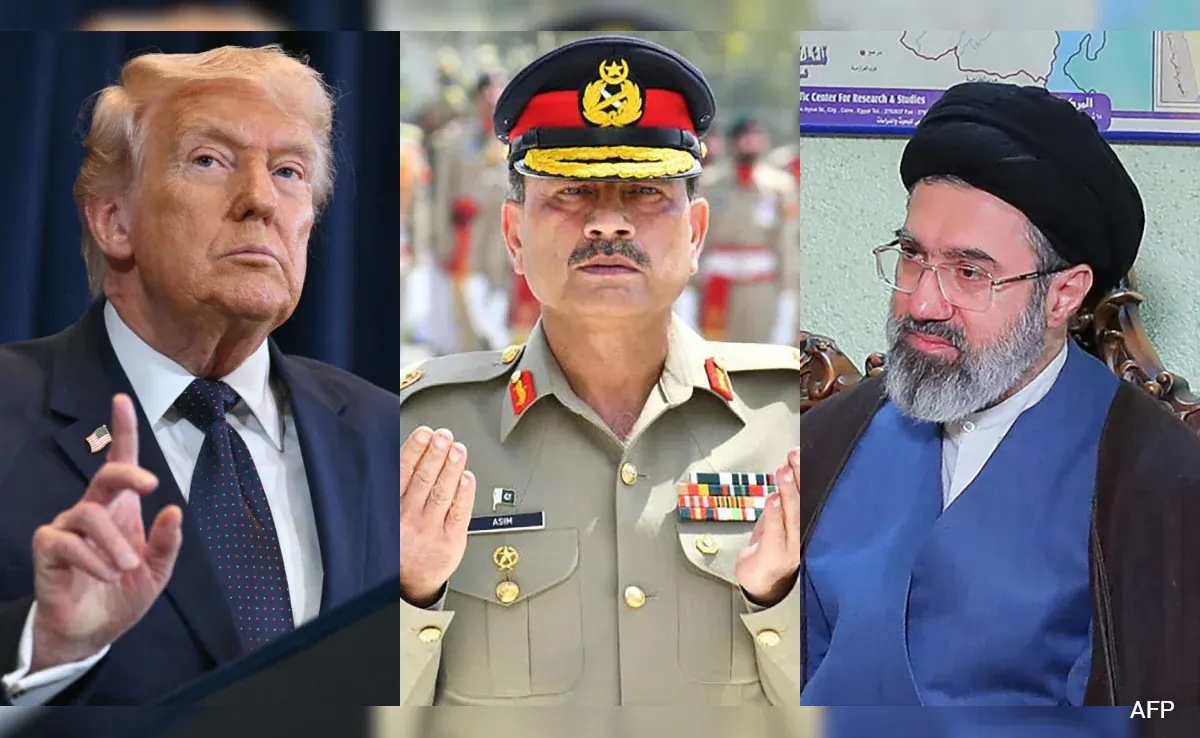
    Pakistan’s recent foreign policy under a hybrid regime led by its Field Marshal Asif Munir and Prime Minister Shehbaz Sharif is heavily influenced by a personality-driven dynamic, particularly in its engagement with Donald Trump. As pointed out by Mehdi Hasan, a British-American journalist and political commentator, in an interview with NDTV, Pakistanis have “done a good job of sucking up to Trump,” underscoring a growing reliance on flattery and ego-boosting tactics to remain in Trump’s good books.

    When Flattery Becomes a Diplomatic Constraint

    From the early phase of Donald Trump’s second term, especially after developments like Operation Sindoor, Pakistan openly credited Trump for ceasefire efforts—something India refrained from doing. Islamabad went further by nominating Trump multiple times for the Nobel Peace Prize. At many international platforms, particularly during the Gaza Board of Peace meeting in Washington and earlier at the Gaza peace summit at Sharm el-Sheikh, Pakistan’s leadership left no stone unturned in praising Trump, with Prime Minister Shehbaz Sharif describing him as a “man of peace” and even a “saviour of South Asia.” Even during recent ceasefire extensions by Trump, Pakistan continued this pattern of excessive praise.

    This reflected a calculated strategy: to appeal to Trump’s personality, which is widely perceived as ego-driven and narcissistic. By consistently affirming his self-image and constantly putting messages into his psychological zone of acceptance. Pakistan managed to secure his attention and, to some extent, his favour. Of course, the United States has its own strategic calculations—particularly regarding Iran—but the personal dimension of Trump’s leadership style makes such flattery tactically useful in the short term.

    However, this approach is now showing clear limitations, especially in the context of reaching any peace deal with Iran. The very strategy that helped Pakistan gain proximity is now constraining its ability to act as a credible intermediary. Because Islamabad has focused primarily on sending positive, non-confrontational messages to Trump, it appears reluctant—or unable—to convey messages that might irritate or challenge him.

    This concern has been explicitly raised by Iranian voices. Iranian analysts and officials have questioned whether Pakistan is genuinely transmitting Tehran’s positions to Washington. One such voice, Iranian lawmaker Ebrahim Rezaei, pointed out that Pakistan is no longer seen as a neutral mediator. According to him, Islamabad selectively communicates, prioritising Trump’s preferences over balanced diplomacy. He stated that Pakistan “lacks the necessary credibility” and “always takes Trump’s ego into account and does not say a word against his wishes,” underscoring a growing perception that its role as an intermediary is increasingly compromised.

    Importantly, the United States now appears to be echoing similar concerns. A CNN report published on May 12, 2026, titled “Trump increasingly considers resuming large-scale military action against Iran,” stated that many Trump administration officials believed Pakistan had been sharing “a more positive version of the Iranian position with the US than what reflects reality,” while also questioning whether Islamabad was “aggressively conveying Trump’s displeasure” to Tehran. Significantly, an earlier CNN report published on May 6, 2026, titled “US and Iran closing in on memorandum aimed at ending war, source says,” had already hinted at scepticism inside the White House, noting that Pakistani mediators were presenting an optimistic assessment of Iranian flexibility that some US officials did not fully share.

    This is the core psychological flaw in a personality-centric foreign policy. When diplomacy is personalised to accommodate one man’s ego, it is bound to hinder strategic flexibility. Mediators must be in a position to deliver awkward truths and dissenting opinions. But when a state is afraid to upset a leader like Trump, it starts filtering messages, putting them into what can be called the ‘zone of psychological acceptance.’ Anything outside that zone is open to suppression.

    Erosion of Trust and Mediation Credibility

    As a result, trust erodes. Iran’s scepticism about Pakistan’s neutrality is not incidental—it is a direct consequence of this ego-management strategy. Even technical issues, such as disagreements over the scope of ceasefire agreements—for example, whether regions like Lebanon were included when the initial ceasefire between the United States and Iran was reached—became points of contention because communication was filtered, biased, and incomplete. This then became a major point of contention, with Iran maintaining that Lebanon formed part of the ceasefire framework, while the United States rejected this interpretation, deepening mistrust and reinforcing perceptions of inconsistency in how the agreement was conveyed. As Ebrahim Rezaei further said, “They are unwilling to tell the world that America first accepted Pakistan’s proposal but then went back on its word. They do not say that the Americans had commitments regarding Lebanon or the blocked assets, but that they failed to fulfil them. A mediator must be impartial, not always leaning to one side.”

    In the long run, such a policy is unsustainable. Personality-driven diplomacy may yield short-term visibility and tactical gains, but it weakens institutional credibility. Relationships built around individuals rather than enduring interests and institutions tend to fade with political transitions. When leadership changes in Washington, Pakistan may once again find itself marginalised, having invested too heavily in a single personality rather than in a broader strategic framework.

    As Pakistani security analyst and president of the Pakistan Institute for Peace Studies, Muhammad Amir Rana, warned in his February 1, 2026, article “Pakistan’s Trump Test” published in Dawn, “The post-Trump phase will test Pakistan’s diplomacy and political leadership,” while also questioning “how far the country can maintain its relevance” once Trump exits the political stage. Rana further argued that Pakistan’s current diplomatic positioning is too closely tied to a “Trump-endorsed defence equation” and cautioned that, without developing “alternative strategic options,” Islamabad could face increasing diplomatic marginalisation in the future. These concerns reinforce the broader perception that Pakistan’s recent diplomatic gains are heavily dependent on Trump-era political dynamics rather than on durable institutional and bipartisan foundations in Washington.

    Playing to a leader’s ego can open doors, but it also shrinks the space for honest diplomacy. Pakistan’s experience suggests that an over-reliance on psychological appeasement in foreign policy can compromise both credibility and effectiveness in complex negotiations. As also noted by American psychologist Michael Maccoby in his book, “The Productive Narcissist: The Promise and Peril of Visionary Leadership,” leaders with strong narcissistic traits may initially respond positively to admiration and validation. However, their effectiveness tends to decline over time as underlying behavioural patterns become more visible. In such contexts, strategies based on flattery and ego management may generate short-term gains but ultimately constrain credibility and weaken long-term influence.

  • Jeffrey D. Sachs: Briefing of the UN Security Council on Venezuela

    Jeffrey D. Sachs: Briefing of the UN Security Council on Venezuela

    Jeffrey D. Sachs: Briefing of the UN Security Council on Venezuela
    January 5, 2026


    Mr. President,
    Distinguished Members of the Security Council,

    The issue before the Council today is not the character of the government of Venezuela.

    The issue is whether any Member State—by force, coercion, or economic strangulation—has the right to determine Venezuela’s political future or to exercise control over its affairs.

    This question goes directly to Article 2(4) of the United Nations Charter, which prohibits the threat or use of force against the territorial integrity or political independence of any state.

    The Council must decide whether that prohibition is to be upheld or abandoned.

    Abandoning it would carry consequences of the gravest kind.

    Background and context

    Since 1947,United States foreign policy has repeatedly employed force, covert action, and political manipulation to bring about regime change in other countries. This is a matter of carefully documented historical record. In her book Covert Regime Change (2018), political scientist Lindsey O’Rourke documents 70 attempted US regime-change operations between 1947 and 1989 alone.

    These practices did not end with the Cold War. Since 1989, major United States regime-change operations undertaken without authorization by the Security Council have included, among the most consequential: Iraq (2003), Libya (2011), Syria (from 2011), Honduras (2009), Ukraine (2014), and Venezuela (from 2002 onward).

    The methods employed are well established and well documented. They include open warfare; covert intelligence operations; instigation of unrest; support for armed groups; manipulation of mass and social media; bribery of military and civilian officials; targeted assassinations; false-flag operations; and economic warfare aimed at collapsing civilian life.

    These measures are illegal under the UN Charter, and they typically result is ongoing violence, lethal conflict, political instability, and deep suffering of the civilian population.

    The case of Venezuela

    The recent United States record with respect to Venezuela is clear.

    In April 2002, the United States knew of and approved an attempted coup against the Venezuelan government.

    In the 2010s, the United States funded civil society groups actively engaged in anti-government protests, notably in 2014. When the government cracked down on the protests, the US followed with a series of sanctions. In 2015, President Barrack Obama declared Venezuela to be “an unusual and extraordinary threat to the national security and foreign policy of the United States.”

    In 2017, at a dinner with Latin American leaders on the margins of the UN General Assembly, President Trump openly discussed the option of the US invading Venezuela to overthrow the government.

    During 2017 to 2020, the US imposed sweeping sanctions on the state oil company. Oil production fell by 75 percent from 2016 to 2020, and real GDP per capita (PPP) declined by 62 percent.

    The UN General Assembly has repeatedly voted overwhelmingly against such unilateral coercive measures. Under international law, only the Security Council has the authority to impose such sanctions.

    On 23 January 2019, the United States unilaterally recognized Juan Guaidó as “interim president” of Venezuela and on 28 January 2019 froze approximately $7 billion of Venezuelan sovereign assets held abroad and gave Guaidó authority over certain assets.

    These actions form part of a continuous United States regime-change effort spanning more than two decades.

    Recent United States global escalation

    In the past year, the United States has carried out bombing operations in seven countries, none of which were authorized by the Security Council and none of which were undertaken in lawful self-defense under the Charter. The targeted countries include Iran, Iraq, Nigeria, Somalia, Syria, Yemen, and now Venezuela.

    In the past month, President Trump has issued direct threats against at least six UN member states, including Colombia, Denmark, Iran, Mexico, Nigeria and of course Venezuela. These threats are summarized in Annex I to this statement.

    What is at stake today

    Members of the Council are not called upon to judge Nicolás Maduro.

    They are not called upon to assess whether the recent United States attack and ongoing naval quarantine of Venezuela result in freedom or in subjugation.

    Members of the Council are called upon to defend international law, and specifically the United Nations Charter.

    The realist school of international relations, articulated most brilliantly by John Mearsheimer, accurately describes the condition of international anarchy as “the tragedy of great power politics.” Realism is therefore a description of geopolitics, not a solution for peace. Its own conclusion is that international anarchy leads to tragedy.

    In the aftermath of World War I, the League of Nations was created to end the tragedy through the application of international law. Yet the world’s leading nations failed to defend international law in the 1930s, leading to renewed global war.

    The United Nations emerged from that catastrophe as humanity’s second great effort to place international law above anarchy. In the words of the Charter, the UN was created “to save succeeding generations from the scourge of war, which twice in our lifetime has brought untold sorrow to mankind.”

    Given that we are in the nuclear age, failure cannot be repeated. Humanity would perish. There would be no third chance.

    Measures required of the Security Council

    To fulfill its responsibilities under the Charter, the Security Council should immediately affirm the following actions:

    1. The United States shall immediately cease and desist from all explicit and implicit threats or use of force against Venezuela.
    2. The United States shall terminate its naval quarantine and all related coercive military measures undertaken in the absence of authorization by the Security Council.
    3. The United States shall immediately withdraw its military forces from within and along the perimeter of Venezuela, including intelligence, naval, air, and other forward-deployed assets positioned for coercive purposes.
    4. Venezuela shall adhere to the UN Charter and to the human rights protected in the Universal Declaration of Human Rights.
    5. The Secretary-General shall immediately appoint a Special Envoy, mandated to engage relevant Venezuelan and international stakeholders and to report back to the Security Council within fourteen days with recommendations consistent with the Charter of the United Nations, and the Security Council shall remain urgently seized of this matter.
    6. All Member States shall refrain from unilateral threats, coercive measures, or armed actions undertaken outside the authority of the Security Council, in strict conformity with the Charter.

    In Closing

    Mr. President, Distinguished Members,

    Peace and the survival of humanity depend on whether the United Nations Charter remains a living instrument of international law or is allowed to wither into irrelevance.

    That is the choice before this Council today.

    Thank you.


    Courtesy: commondreams.org

  • Guerrilla Air Defence: Strategy of the Underdog

    Guerrilla Air Defence: Strategy of the Underdog

    Guerrilla air defence is a testament to human ingenuity in asymmetrical warfare. Irregular forces can challenge even the most sophisticated air powers by adapting low-cost solutions, decentralised tactics, innovative technologies, and asymmetrical strategies.

    In the modern era of warfare, air superiority has become a cornerstone of military strategy. Nations with advanced air forces often dominate battlefields, leveraging precision-guided munitions, reconnaissance drones, and stealth technology. However, guerrilla forces, lacking comparable resources, have developed innovative air defence strategies to counter such overwhelming air dominance. Guerrilla air defence embodies the ingenuity of the underdog, employing asymmetric tactics and exploiting weaknesses in advanced air forces.

    Guerrilla Air Defence

    Guerrilla air defence refers to the methods and tactics employed by ground forces, mainly non-state actors or irregular forces, to counter the overwhelming aerial superiority of state militaries. In modern conflicts, air dominance often plays a pivotal role in determining outcomes, and ground forces must innovate to level the battlefield. These tactics range from using man-portable air defence systems (MANPADS) to employing deception, leveraging urban terrain, and deploying counter-drone measures.                                  

    Historical Background

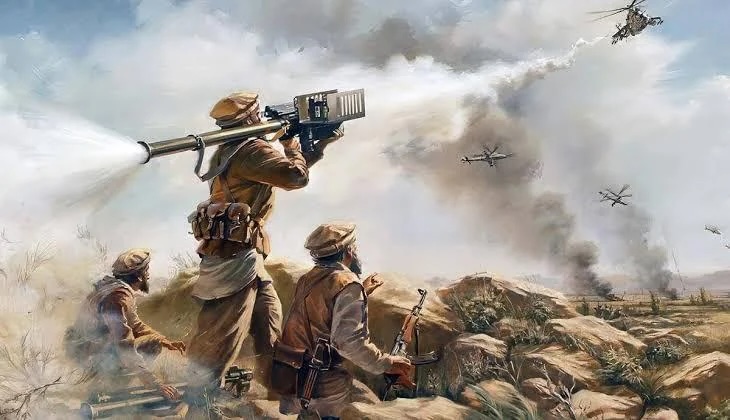
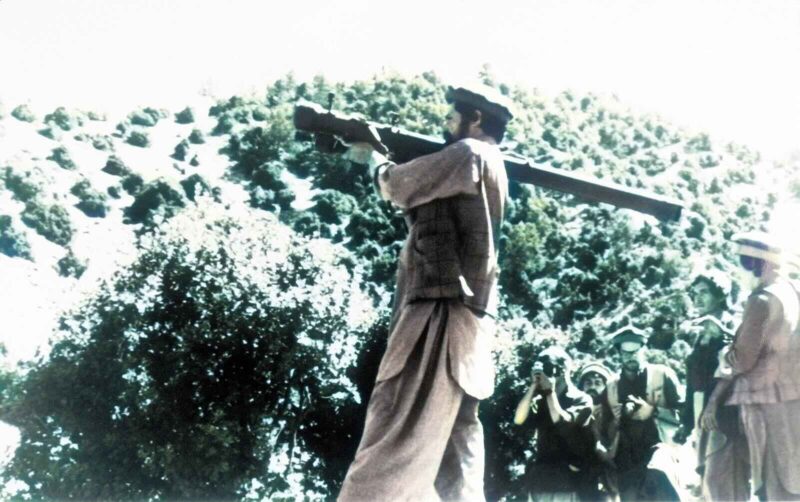
    Mujahideen firing a Stinger (Soviet-Afghan War 1979-89): Image Credit-wikimedia commons

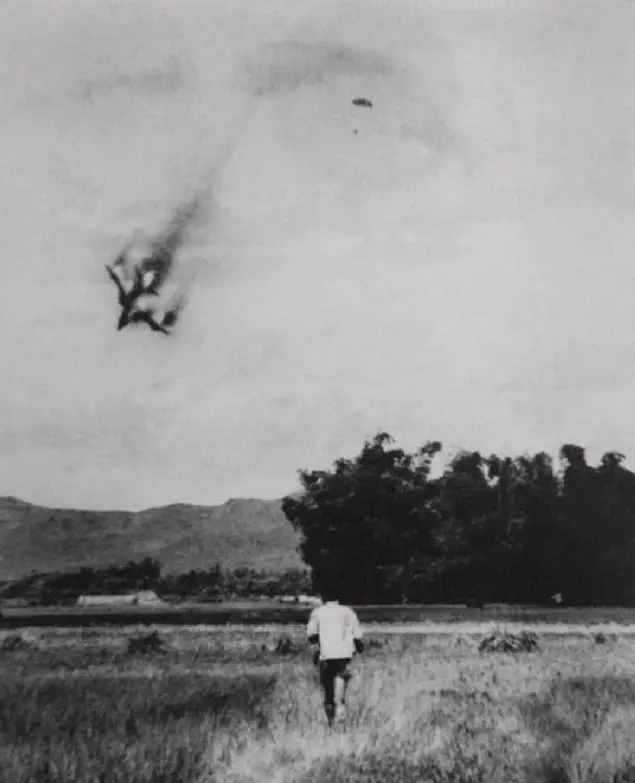
    Vietcongs in action against US aircraft during Vietnam War 1965-1975 (Image – www.thearmorylife.com)

    The concept of guerrilla air defence emerged during the Cold War, as smaller forces sought ways to combat technologically superior opponents. Early examples include the North Vietnamese forces, with Soviet and Chinese support, employing a mix of surface-to-air missiles (SAMs), anti-aircraft artillery (AAA), and man-portable air defence systems (MANPADS) to counter American air supremacy. The infamous downing of U.S. planes over Hanoi—dubbed “SAM City”—highlighted the effectiveness of such strategies. During the Afghan-Soviet War (1979-1989), Afghan mujahideen famously utilised U.S.-supplied Stinger missiles to neutralise Soviet helicopters and jets, turning the tide in specific regions and undermining Soviet morale. These historical precedents set the stage for modern guerrilla air defence tactics, which blend ingenuity, adaptability, and external support.

     Principles of Guerilla Air Defence

    Mobility and Concealment: Mobility and concealment are fundamental to guerrilla air defence. Unlike conventional militaries that deploy fixed air defence installations, guerrilla forces rely on portable systems and improvised techniques to remain undetected. Camouflage, underground networks, and rapid movement are essential to avoid detection by aerial surveillance. Guerrilla fighters exploit natural and urban terrain to conceal their positions, using forests, mountains, and cityscapes as cover.

    Decentralisation: Unlike conventional forces, guerrillas rely on dispersed, mobile, small, independent cells. This limits the effectiveness of an enemy’s centralised air strikes and ensures survivability by reducing the risk of total system compromise if one group is detected.

    Exploiting Vulnerabilities: Guerrilla air defence capitalises on the inherent vulnerabilities of modern air power. Helicopters and battlefield air support aircraft often operate at low altitudes and are prime targets for guerrilla forces. Air forces operating in conflict zones usually follow predictable flight paths or schedules. Guerrilla forces use intelligence and reconnaissance to identify and exploit these patterns.

    Innovation, Improvisation and Resource Maximisation: Guerrillas rely on improvised systems, salvaged weaponry, and external aid to bolster their capabilities. Guerrilla air defence thrives on innovation, often repurposing civilian technologies or adapting outdated equipment. Guerrilla groups have been known to convert commercial drones into makeshift anti-aircraft platforms or deploy modified artillery to target aircraft. Using decoys and false signals to mislead enemy pilots and air defence systems is a common tactic.

    Psychological and Strategic Impact: The psychological effects of guerrilla air defence extend beyond physical damage to aircraft. Even a limited success rate in downing aircraft can significantly reduce the adversary’s willingness to conduct low-risk operations. Each successful engagement serves as a propaganda tool, showcasing the resilience and effectiveness of the underdog.

    Modern Techniques in Guerilla Air Defence

    Modern technology, the fighting environment, and new systems and platforms influence the evolution of newer techniques of guerrilla warfare.

    MANPADS: MANPADS have revolutionised guerrilla air defence due to their portability, ease of use, and effectiveness against low-flying aircraft. One of the most effective tools in guerrilla air defence is using MANPADS, such as the American-made FIM-92 Stinger or the Russian Igla systems. Small teams can carry these portable missile systems and target low-flying aircraft, including helicopters and drones. By utilising these weapons in ambushes or from concealed positions, ground forces can inflict significant damage on technologically superior adversaries, as demonstrated in Afghanistan during the 1980s and the recent Russia-Ukraine war.

    Innovations: While less mobile than MANPADS, AAA remains a staple of guerrilla air defence. Improvised mounts, hidden emplacements, and integration with civilian infrastructure enhance its effectiveness. Groups frequently modify heavy machine guns and anti-aircraft guns like the ZSU-23-4 Shilka. These systems are often mounted on trucks for mobility and used to target low-altitude threats. While less precise than missiles, their volume of fire can pose a substantial threat to helicopters and low-flying planes.

    Urban Environment: Urban environments provide an advantage for the ground forces due to the dense infrastructure that limits aircraft manoeuvrability.  Ground fighters use rooftops, narrow streets, and underground networks to evade detection and launch surprise attacks. In Syria and Iraq, insurgents have used such strategies to counter aerial operations by state and coalition forces.

    Drones: Modern airpower—characterised by drones, advanced jets, and electronic warfare capabilities—poses unique challenges to ground forces. The proliferation of drones has forced forces to develop countermeasures, such as portable jammers, anti-drone rifles, and improvised kinetic solutions like nets or small arms fire.

    Passive Measures: Camouflage and deception remain critical in evading aerial surveillance. Ground forces must rely on natural cover, decoy installations, and rapid mobility to avoid detection. In the Vietnam War, the Viet Cong famously used tunnels and dense jungle foliage to counter U.S. air superiority.

    Implications of Guerilla Air Defence on Modern Warfare

    Guerrilla air defence has emerged as a critical factor in modern warfare, reshaping the dynamics of aerial supremacy and asymmetric conflict. While these strategies aim to counter technologically superior air forces, they carry profound implications for guerrilla groups and conventional militaries. By disrupting aerial operations and imposing costs on powerful adversaries, guerrilla air defence challenges traditional military doctrines and influences the broader landscape of modern conflict.

    Prolonging Conflicts and Increasing Costs: Guerrilla air defence strategies can effectively neutralise or deter low-altitude operations. This capability forces adversaries to adapt, often at significant financial and operational costs. For instance, deploying advanced countermeasures, rerouting flight paths, or relying on high-altitude bombers requires additional resources. As a result, conflicts involving guerrilla air defence tend to become protracted, straining the logistics and finances of all involved parties. The prolonged nature of such conflicts can also erode public and political support for military interventions. For example, the psychological and economic toll of losing expensive aircraft or personnel to guerrilla defences can influence domestic perceptions of the conflict’s viability.

    Evolving Air Warfare Tactics: Conventional militaries must adapt their air warfare strategies to counter guerrilla air defence. This evolution includes increased reliance on high-altitude operations, precision-guided munitions, and stealth technology. Modern air forces also invest heavily in countermeasures such as infrared jammers, flares, and electronic warfare systems to neutralise guerrilla threats. The rise of guerrilla air defence has also accelerated the development of unmanned aerial systems (UAS) for reconnaissance, surveillance, and strike missions. Being expendable and capable of operating in hostile environments, drones minimise the risks associated with manned operations. This shift represents a significant transformation in aerial warfare, emphasising technology over traditional pilot-led missions.

    Impact on Urban and Asymmetric Warfare: Urban environments provide natural concealment and mobility advantages for guerrilla fighters, making them ideal battlegrounds for deploying guerrilla air defence systems. By leveraging civilian infrastructure and the complexity of urban terrain, guerrilla forces can create no-fly zones or deny access to key air corridors. This trend has made urban warfare increasingly challenging for conventional militaries, which must balance operational objectives with minimising civilian casualties and collateral damage.

    Proliferation of Advanced Technology: The success of guerrilla air defence has spurred the proliferation of advanced yet accessible technologies. MANPADS, drones, and electronic warfare tools have become increasingly available on the black market or through state sponsorship. This diffusion of technology not only empowers guerrilla groups but also raises concerns about their use by terrorist organisations or non-state actors in unconventional warfare.

    Redefining Air Superiority: In traditional warfare, air superiority was synonymous with dominance over adversaries. However, guerrilla air defence challenges this notion by proving that even technologically inferior forces can contest airspace. This shift underscores the importance of integrating multi-domain strategies considering ground-based threats alongside aerial operations. For example, in conflicts such as the Syrian Civil War or the Ukraine-Russia war, guerrilla air defence has demonstrated that controlling the skies no longer guarantees uncontested dominance on the ground. The interplay between air and ground forces requires a more nuanced approach, blending technology with adaptable tactics.

    Strategic and Political Implications: Guerrilla air defence imposes strategic dilemmas on conventional forces, often compelling them to overextend resources or adopt more cautious operational postures. This dynamic can undermine the perceived effectiveness of powerful militaries, affecting their credibility and deterring future interventions. Politically, the effectiveness of guerrilla air defence can shift the balance of power in asymmetric conflicts. By contesting air supremacy, guerrilla forces gain leverage in negotiations or peace processes, demonstrating their resilience and capacity to endure prolonged engagements.

    Challenges and Limitations of Guerilla Air Defence

    Guerrilla air defence, while innovative and impactful in certain situations, faces numerous challenges and limitations. These obstacles stem from technological gaps, resource constraints, and the inherent asymmetry between irregular forces and advanced air power.

    Technological Disparity: One of the primary challenges guerrilla groups face is the vast technological gulf between them and conventional military forces. Modern air forces deploy fifth-generation stealth aircraft, precision-guided munitions, and advanced surveillance systems. In contrast, guerrilla forces often rely on outdated or improvised equipment. While tools like man-portable air defence systems (MANPADS) can neutralise low-flying aircraft, they are ineffective against high-altitude bombers or stealth fighters. Advanced countermeasures, such as infrared jammers and decoys, further diminish the impact of guerrilla tactics.

    Logistics and Maintenance: Air defence systems, even portable ones, require robust logistical support. Maintaining and deploying these systems necessitates technical expertise, spare parts, and a steady supply of ammunition. Guerrilla groups, often operating in resource-scarce environments, struggle to sustain such logistical chains. Over time, wear and tear render many systems inoperable, and acquiring replacements or repairs can be risky and costly.

    Detection and Targeting Vulnerabilities: The effectiveness of guerrilla air defence relies heavily on concealment and mobility. However, advancements in surveillance technology, such as drones, satellite imagery, and AI-powered analytics, make it increasingly challenging for guerrilla forces to remain hidden. Once detected, these forces become vulnerable to precision strikes or overwhelming aerial assaults, negating their defensive efforts.

    Dependence on External Support: Guerrilla groups often depend on external states or entities to access advanced air defence systems. This reliance introduces vulnerabilities, as shifts in international politics or interruptions in supply chains can leave these groups without critical resources. For example, a sudden embargo or the withdrawal of support from a sponsor state can cripple guerrilla air defence capabilities.

    Financial Constraints: Air defence is inherently resource-intensive. Procuring, transporting, and maintaining systems like MANPADS or drones requires significant financial investment. Guerrilla groups operating with limited funding must prioritise resources across multiple operational needs, often leaving air defence underfunded. Moreover, the cost-benefit ratio usually favours their adversaries; an advanced air force can deploy inexpensive countermeasures or overwhelm defences with superior numbers.

    Psychological and Operational Strain: Constant exposure to aerial bombardments and the awareness of technological inferiority take a toll on guerrilla fighters’ morale. The strain of operating under the persistent threat of airstrikes can lead to operational inefficiencies and diminished cohesion. Furthermore, the psychological impact of losing critical assets, such as an air defence unit or a valuable weapon system, can significantly affect a group’s strategic planning.

    Limited Strategic Impact: Guerrilla air defence is inherently reactive, designed to mitigate air superiority rather than achieve dominance. While it can disrupt operations and impose costs on adversaries, it rarely shifts the overall balance of power in a conflict. This limitation means that guerrilla air defence is more a delaying tactic than a decisive strategy.

    Conclusion

     Guerrilla air defence is a testament to human ingenuity in asymmetrical warfare. Irregular forces can challenge even the most sophisticated air powers by adapting low-cost solutions, decentralised tactics, innovative technologies, and asymmetrical strategies. Guerrilla air defence’s implications for modern warfare are far-reaching, influencing military strategy, technology development, and conflict outcomes. While it disrupts aerial operations and challenges conventional doctrines, guerrilla air defence also faces significant limitations, such as resource constraints and susceptibility to countermeasures. Nevertheless, its role in redefining the dynamics of air superiority and asymmetric warfare highlights its growing importance in the ever-evolving landscape of modern conflict.

    References:

    1. Boot, M. (2002). The Savage Wars of Peace: Small Wars and the Rise of American Power. Basic Books.
    2. Coll, S. (2004). Ghost Wars: The Secret History of the CIA, Afghanistan, and Bin Laden. Penguin Books.
    3. Jones, S. G. (2017). Waging Insurgent Warfare: Lessons from the Viet Cong to the Islamic State. Oxford University Press.
    4. Hura, M. et al. (2000). Interoperability: A Continuing Challenge in Coalition Air Operations. RAND Corporation.
    5. “Counter-Unmanned Aircraft Systems (C-UAS)” (2021). Center for Strategic and International Studies (CSIS).
    6. Biddle, Stephen, and Jeffrey A. Friedman. “The 2006 Lebanon Campaign and the Future of Warfare: Implications for Army and Defence Policy.” Strategic Studies Institute, 2008.
    7. McInnes, Colin. “The Impact of Air Power on Insurgency and Guerrilla Warfare.” RUSI Journal, Vol. 134, No. 2 (1989): 47–53.
    8. Schulte, Paul. “Proliferation and the Revolution in Military Affairs.” Survival, Vol. 39, No. 1 (1997): 21–42.
    9.   Small Arms Survey. MANPADS: Combating the Threat to Global Aviation from Portable Air Defence Systems. Geneva: Graduate Institute of International and Development Studies, 2011.
    10. RAND Corporation. The Air War in the Gulf: Assessing the Results. Santa Monica: RAND, 1993.
    11. Keegan, John. The Face of Battle. New York: Viking Press, 1976.
    12. Cordesman, Anthony H. The Changing Face of War: Lessons of Combat, from the Marne to Iraq. Washington, D.C.: CSIS Press, 2007.
    13. Grau, Lester W., and Michael A. Gress. The Soviet-Afghan War: How a Superpower Fought and Lost. Lawrence: University Press of Kansas, 2002.
    14. Beckett, Ian F.W. Modern Insurgencies and Counter-Insurgencies: Guerrillas and Their Opponents since 1750. London: Routledge, 2001.
    15. United Nations Office for Disarmament Affairs (UNODA). Study on the Proliferation of Small Arms and Light Weapons, Including MANPADS.
    16. U.S. Department of Defence. Counter-Insurgency Air Operations: Best Practices and Challenges.


    Feature Image Credit: www.reddit.com

    Image of US aircraft shot down by Vietnamese: https://en.topwar.ru

  • China and the Sunset of the International Liberal Order

    China and the Sunset of the International Liberal Order


    Rise of Multipolar World Order – www.newsvoyagernet.com

           The irrational amounts that the Soviet Union allocated to its defense budget not only represented a huge burden on its economy, but imposed a tremendous sacrifice on the standard of living of its citizens. Subsidies to the rest of the members of the Soviet bloc had to be added to this bill.

             Such amounts were barely sustainable for a country that, as from the first half of the 1960s, was subjected to a continuous economic stagnation. This situation became aggravated by the strong decline of oil prices, USSR’s main export, since the mid 1980s. The reescalation of the Cold War undertaken by Jimmy Carter and Ronald Reagan, particularly the latter, put in motion an American military buildup, that could not be matched by Moscow.

             With the intention of avoiding the implosion of its system, Moscow triggered a reform process that attained none other than accelerating such outcome. Indeed, Mikhail Gorbachev opened the pressure cooker hoping to liberate, in a controlled manner, the force contained in its interior. Once liberated, however, this force swept away with everything on its path. Initially came its European satellites, subsequently Gorbachev’s power base, and, finally, the Soviet Union itself. The Soviet system had reached the point where it could not survive without changes, but neither could assimilate them. In other words, it had exhausted its survival capacity.

              Without a shot being fired, Washington had won the Cold War. The exuberant sentiment of triumph therein derived translated into the “end of history” thesis. Having defeated its ideological rival, liberalism had become the final point in the ideological evolution of humanity. If anything, tough, the years that followed to the Soviet implosion were marred by trauma and conflict. In the essential, however, the idea that the world was homogenizing under the liberal credo was correct.

             On the one hand, indeed, the multilateral institutions, systems of alliances and rules of the game created by the United States shortly after World War II, or in subsequent years, allowed for a global governance architecture. A rules based liberal international order imposed itself over the world. On the other hand, the so-called Washington Consensus became a market economy’s recipe of universal application. This homogenization process was helped by two additional factors. First, the seven largest economies that followed the U.S., were industrialized democracies firmly supportive of its leadership. Second, globalization in its initial stage acted as a sort of planetary transmission belt that spread the symbols, uses, and values of the leading power.

             The new millennium thus arrived with an all-powerful America, whose liberal imprint was homogenizing the planet. The United States had indeed attained global hegemony, and Fukuyama’s end of history thesis seemed to reflect the emerging reality.

    But things turned out to be more complex than this, and the history of the end of history proved out to be a brief one. In a few years’ time, global “Pax Americana” began to be challenged by the presence of a powerful rival that seemed to have emerged out of the blue: China. How had this happened?

             Beginning the 1970s, Beijing and Washington had reached a simple but transformative agreement. Henceforward, the United States would recognize the Chinese Communist regime as China’s legitimate government. Meanwhile, China would no longer seek to constrain America’s leadership in Asia. By extension, this provided China with an economic opening to the West. Although it would be only after Deng Xiaoping’s arrival to power, that the real meaning of the latter became evident.

             In spite of the multiple challenges encountered along the way, both the United States and China made a deliberate effort to remain within the road opened in 1972. Their agreement showed to be not only highly resilient, but able to evolve amid changing circumstances. The year 2008, however, became an inflexion point within their relationship. From then onwards, everything began to unravel. Why was it so?

             The answer may be found in a notion familiar to the Chinese mentality, but alien to the Western one – the shi. This concept can be synthesized as an alignment of forces able to shape a new situation. More generally, it encompasses ideas such as momentum, strategic advantage, or propensity for things to happen. Which were, hence, the alignment of forces that materialized in that particular year? There were straightforward answers to that question: The U.S.’ financial excesses that produced the world’s worst financial crisis since 1929; Beijing’s sweeping efficiency in overcoming the risk of contagion from this crisis; China’s capability to maintain its economic growth, which helped preventing a major global economic downturn; and concomitantly, the highly successful Beijing Olympic games of that year, which provided the country with a tremendous self-esteem boost.

             The United States, indeed, had proven not to be the colossus that the Chinese had presumed, while China itself turned out to be much stronger than assumed. This implied that the U.S. was passing its peak as a superpower, and that the curves of the Chinese ascension and the American decline, were about to cross each other. Deng Xiaoping’s advice for future leadership generations, had emphasized the need of preserving a low profile, while waiting for the attainment of a position of strength. In Chinese eyes, 2008 seemed to show that China was muscular enough to act more boldly. Moreover, with the shi in motion, momentum had to be exploited.

             Beijing’s post-2008 assertiveness became much bolder after Xi Jinping’s arrival to power in 2012-2013. China, in his mind, was ready to contend for global leadership. More to the point within its own region, China’s centrality and the perception of the U.S. as an alien power, had to translate into pushing out America’s presence.

    Challenged by China, Washington reacted forcefully. Chinese perceptions run counter to the fact that the U.S.’ had been a major power in East Asia since 1854, which translated into countless loss of American lives in four wars. Moreover, safeguarding the freedom of navigation in the South China Sea, a key principle within the rules based liberal international order, provided a strong sense of staying power. This was reinforced by the fact that America’s global leadership was also at stake, thus requiring not to yield presence in that area for reputational reasons. The containment of Beijing’s ascendancy, became thus a priority for Washington.

             However, accommodating two behemoths that feel entitled to pre-eminence is a daunting task. Specially so, when one of them feels under threat of exclusion from the region, and the other feels that its emergence is being constrained. On top, both remain prisoners of their history and of their national myths. This makes them incapable of looking at the facts, without distorting them with the subjective lenses of their perceived sense of mission and superiority.

             War ensuing, under those circumstances, is an ongoing risk. But if war is a possibility, Cold War is already a fact. This implies a multifaceted wrestle in which geopolitics, technology, trade, finances, alliances, and warfare capabilities are all involved. And even if important convergent interest between them still remains in place, ties are being cut by the day. As a matter of fact, if in the past economic interdependence helped to shield from geopolitical dissonances, the opposite is the case today. Indeed, a whole array of zero-sum geopolitical controversies are rapidly curtailing economic links.

             The U.S., particularly during the Biden administration, chose to contain China through a regional architecture of alliances and by way of linking NATO with Indo-Pacific problems and selective regional allies. The common denominator that gathers them together is the preservation of the rules based liberal international order. An order, threatened by China’s geostrategic regional expansionism.


    However, China itself is not short of allies. A revisionist axis, that aims at ending the rules based liberal international order, has taken shape. The same tries to throw back American power and to create its own spheres of influence. This axis represents a competing center of gravity, where countries dissatisfied with the prevailing international order can turn to. Together with China two additional Asia-Pacific powers, Russia and North Korea, are part of this bloc.

    Trump’s return to the White House might change the prevailing regional configuration of factors. Although becoming more challenging to Beijing from a trade perspective, he could substantially weaken not only the rules based liberal international order, but the architecture of alliances that contains China. The former, because the illiberal populism that he represents is at odds with the liberal order. The latter, not only because he could take the U.S. out of NATO, but because his transactional approach to foreign policy, which favors trade and money over geopolitics, could turn alliances upside down.

    The rules based liberal international order, which became universal over the ashes of the Soviet Union, could now be facing its sunset. This, not only because its main challenger, China, may strengthen its geopolitical position in the face of its rival alliances’ disruption, but, more significantly, because the U.S. itself may cease to champion it.

    Feature Image Credit: www.brookings.edu


  • Crimson Cows and Indian Sensibilities

    Crimson Cows and Indian Sensibilities

    That Israel, in addition to being an apartheid state, has gone completely rogue is no longer in doubt. As Israel digs itself into a deeper hole, in the belief that it can kill its way to success, it finds that this year its GDP has collapsed from 4.8% in 2022 to 1.5%, with over 46000 small businesses having shut down. By some estimates, between 500,000 to 1 million Israelis have permanently emigrated.


    Approximately 7 million Jewish Israelis and an equal number of Palestinians live cheek-by-jowl between the Mediterranean Sea and the Jordan River. The area encompasses Israel, the occupied territories of the West Bank, including East Jerusalem, and the Gaza Strip.  Nominally, the Palestinians in the West Bank do have limited self-rule, but defacto have no control over the movement of people and goods, or taxes. Agreements signed in the 1990’s, permit the Israeli Government to collect taxes on behalf of the Palestinian Authority (PA), which it then disburses to the PA for its use. These taxes make up over 65-70% of the PA’s public budget and have a critical impact on the quality of life of ordinary Palestinians.

    As has been the norm with Israel, it has used every means, including financial control, to inflict collective punishment on the Palestinians at any attempt by them to free themselves from Israeli occupation. In May this year, for example, it withheld disbursal of all taxes collected over the past three months on grounds that Spain, Ireland and Norway had announced they would recognise the Palestinian State. This resulted in the breakdown of municipal services and widespread loss of jobs. Subsequently, in June it indulged in blatant blackmail when it agreed to disburse withheld funds, provided the PA retroactively approved five settlements in the West Bank that had been illegally established earlier, despite condemnation by Palestinians and the international community.

    While the Hamas attack of 7 October 2023, especially their despicable actions against women, children and civilians, has been widely condemned, the fact that over half of the 1200 Israelis killed, were by their own military in pursuant of the reprehensible “Hannibal Directive”, continues to be glossed over. Oddly enough, over the course of that year, prior to the attack, the fact that over 200 Palestinians had been killed by the Israeli military and settlers for a variety of reasons has simply been ignored by the international media and not been seen as the immediate provocation for the attack, especially its ferocity.

    It now emerges, that the numbers of Palestinians killed by the Israeli response has been grossly underestimated. As per a study dated 10 July 2024 in the Lancet, a respectable and authoritative medical journal, an estimated 186000-200,000 Palestinians have been killed in Gaza, directly or indirectly. This is approximately 9% of the total population, the overwhelming majority of them being women and children.

    The Israeli response to this attack was disproportionate, to put it mildly, but it still continues to receive full support from Western Governments. It now emerges, that the numbers of Palestinians killed by the Israeli response has been grossly underestimated. As per a study dated 10 July 2024 in the Lancet, a respectable and authoritative medical journal, an estimated 186000-200,000 Palestinians have been killed in Gaza, directly or indirectly. This is approximately 9% of the total population, the overwhelming majority of them being women and children.

    The difference between these estimates and the official figures released by the Gaza Health Ministry, which presently stands at approximately 43000, is explained by the fact that the Ministry only accounts for bodies that have been found and not for those remaining under the rubble, that the cities have been reduced to. Nor does it account for the indirect deaths due to hunger, non-availability of medical help etc. Studies suggest that these tend to be between 5-10 times higher than the official figures.

    Israel’s inhuman and deliberate response has been decried by experts, governments, United Nations Agencies and NGOs. They have gone on to accuse Israel of carrying out a genocide against the Palestinian population in Gaza, and more recently, in the West Bank. What is even more horrific, if that is even possible, are the accusations made by Dr. Feroze Sidhwa, an American trauma surgeon, on his return from Gaza. In his devastating op-ed in The New York Times, titled “65 Doctors, Nurses and Paramedics: What We Saw in Gaza”, he recounts harrowing stories from dozens of healthcare workers and CT scans of children shot in the head or the left side of the chest. The Times called the corresponding images of the patients too graphic to publish. In his words, “44 doctors, nurses and paramedics saw multiple cases of preteen children who had been shot in the head or chest in Gaza… He personally identified 13 such cases in his two weeks there”.

    That Israel, in addition to being an apartheid state, has gone completely rogue is no longer in doubt. In July this year, for example,  a video was leaked of the gangrape of a male Palestinian prisoner by guards of the IDF at the Sde Teiman detention facility in Southern Israel. Commentators in Israel referred to this video as just the tip of the iceberg, but what followed is instructive. Ten soldiers were arrested and faced trial for this act, but not before a mob, led by government ministers, attempted to free them forcibly from detention. Another minister demanded an investigation to identify the individual who had leaked the video so that he could be tried for treason. An MP from the governing Likud Party defended the actions of the guards in Parliament, responding to a question by an Arab-Israeli MP with “If he is a Nukhba (Hamas militant), everything is legitimate to do! Everything!”  Even the Minister responsible for  Prison Services, Ben-Gvir, told Israeli media on the day of the reservists’ arrest that it was “shameful for Israel to arrest our best heroes”.

    This race to the bottom doesn’t end there of course, and as the saying goes, the best is yet to come. As is well known, the Holy City of Old Jerusalem is home to the “Temple”, or as it is now known the Temple Mount. It refers to the two existing Islamic religious structures, the Dome of the Rock and the Al Aqsa Mosque, collectively known as Haram al-Sharif, and considered the third holiest site in Islam. However, according to the Tanakh or the Hebrew Bible, prior to these structures, the ‘First Temple’ was supposedly built on that very site in the 10th century BCE by King Solomon, and stood for five hundred years before being destroyed by the Babylonians. Almost a century later, it was replaced by the ‘Second Temple’ built by Cyrus the Great, only for it to be destroyed by the Romans in 70 CE. The New Testament holds that important events in Jesus’ life took place in the Temple, and the Crusaders attributed the name “Templum Domini” to the Dome of the Rock.

    However, many Jews see the building of a “Third Temple” in Jerusalem as an object of longing and a symbol of future redemption, as it would announce the arrival of a new Messiah who would unite the flock and lead them to salvation. Incidentally, the promised land would incorporate the whole of Palestine, along with parts of Turkey, Syria, Iraq, Saudi Arabia and Kuwait.

    Thus the religious significance and sensitivity of Temple Mount cannot be underestimated. Fortunately, as things stand Non-Muslims are not permitted to enter the two structures, while Jews are only allowed to pray at the Western Wall that runs along the side of the hill and is thought to be a remnant of the Second Temple. However, many Jews see the building of a “Third Temple” in Jerusalem as an object of longing and a symbol of future redemption, as it would announce the arrival of a new Messiah who would unite the flock and lead them to salvation. Incidentally, the promised land would incorporate the whole of Palestine, along with parts of Turkey, Syria, Iraq, Saudi Arabia and Kuwait.

    But before its construction can be undertaken, it would require purification of the site and of the construction crew. That would, however, only be feasible, by sacrificing a red heifer, specifically bred to meet stringent biblical requirements. It would be required to be burnt alive at the Mount of Olives, adjacent to the Al Aqsa Mosque, and its ashes used to consecrate the holy ground and the people. The stuff of hopes and dreams for a tiny minority, with little hope of fulfilment in the modern world, or so one thought.

    These cows represent a tangible step towards the construction of the Temple and fulfilment of the prophecy.  The next obvious step in this tragedy will be the demolition of the Haram al-Sharif, for which dry rehearsals have already been undertaken. The consequences of such a step in the region are not difficult to visualise, but will it stop the extremists? Very unlikely.

    However, in September 2022, an unprincipled collaboration between extreme Zionist religious leaders, Right-Wing Christian Evangelicals and the present Israeli Government allowed for five red heifers to be flown from Texas to Israel. Ironically enough, despite the Evangelicals being well-known for their antisemitic beliefs. Brought in as pets, to avoid existing restrictions on livestock, they are now kept in an archaeological park in Shiloh, an illegal Israeli settlement, near the Palestinian city of Nablus. These cows represent a tangible step towards the construction of the Temple and fulfilment of the prophecy.  The next obvious step in this tragedy will be the demolition of the Haram al-Sharif, for which dry rehearsals have already been undertaken. The consequences of such a step in the region are not difficult to visualise, but will it stop the extremists? Very unlikely.

    As Israel digs itself into a deeper hole, in the belief that it can kill its way to success, it finds that this year its GDP has collapsed from 4.8% in 2022 to 1.5%, with over 46000 small businesses having shut down. By some estimates, between 500,000 to 1 million Israelis have permanently emigrated. In addition, it finds itself short of weapons, ammunition, tanks and manpower as heavy casualties in the ongoing conflict have taken their toll. Yet, its arrogant leadership refuses to pay heed to that one cardinal rule about tackling insurgencies; they are a political problem and can only be resolved politically.

    The question that it raises for us is do we really need such friends, and more importantly, are our commercial interests so important that we are willing to forego all that we hold sacred?

    Clearly, if Israel refuses to change direction its days are numbered. After all its most steadfast ally, the United States, can only support so many losing causes. With Ukraine on the brink, an ascending Russo-China coalition to deal with and Taiwan increasingly under threat, an intransigent Benjamin Netanyahu is a liability, who may well find himself the target of a drone, be it American or Iranian. This is very likely despite Trump’s victory to become the 47th President of the United States. The question that it raises for us is do we really need such friends, and more importantly, are our commercial interests so important that we are willing to forego all that we hold sacred?

    Feature Image Credit: Middle East Eye
    Image – De Gaza: reliefweb.int
    Children of Gaza Image Credit: Middle East Eye – How Israel’s Genocide in Gaza sparked a protest movement in the UK.
    Wailing Wall and Al Aqsa Mosque: Tourist Israel
    Red Heifer Sacrifice Ritual Image: thetorah.com

  • Recalibrating India’s Act East Policy: New Realities in Myanmar and Bangladesh

    Recalibrating India’s Act East Policy: New Realities in Myanmar and Bangladesh

    On 23 September 2024, Reuters published a news item quoting unnamed sources that said that India had ‘ invited political and military opponents of Myanmar’s ruling junta to attend a seminar in New Delhi. Even as the lack of corroboration of such a report puts it in the realm of conjecture, it is worthwhile mulling over the motivations or otherwise for such a seminal event to be even contemplated, especially in the light of implications for India’s Act East Policy.


    TPF Occasional Paper: 10/2024

    Recalibrating India’s Act East Policy: New Realities in Myanmar and Bangladesh

    Maj Gen Alok Deb (Retd)

    On 23 September 2024, Reuters published a news item quoting unnamed sources that said that India had ‘ invited political and military opponents of Myanmar’s ruling junta to attend a seminar in New Delhi’[i]. The item went on to specify that the shadow National Unity Government (NUG) and ethnic minority rebels from the states of Chin, Rakhine and Kachin bordering India had been invited to a seminar in mid-November, to be hosted by the Delhi-based Indian Council of World Affairs (ICWA), a foreign policy think tank funded by the Government of India. The piece was also carried by some major Indian newspapers with its origin attributed to Reuters. At the time of writing, there has been no acknowledgement or rebuttal of this report by any government agency. Neither has the ICWA posted this on its website as a forthcoming event. Even as the lack of corroboration of such a report puts it in the realm of conjecture, it is worthwhile mulling over the motivations or otherwise for such a seminal event to be even contemplated, especially in the light of implications for India’s Act East Policy.

    A Summary of India’s Act East Policy

    India’s ‘Act East’ policy of 2014 is an initiative that takes off from its earlier ‘Look East’ policy. ‘Act East’ envisages initiatives at multiple levels with the nations of ASEAN and the wider Indo-Pacific region. These initiatives are to be taken forward through a process of continuous engagement at bilateral, regional and multilateral levels, thereby providing enhanced connectivity in its broadest sense, including political, economic, cultural and people-to-people relations.[ii]

    To successfully implement the ‘Act East’ policy, the Indian government is working to make the North East its strategic gateway to ASEAN. Accordingly, it has increased the allocation for the region’s development by more than four times over the last 10 years.[iii]  The North East is also poised to benefit from initiatives from countries like Japan which earlier this year had proposed developing an industrial hub in Bangladesh with supply chains to the North East, Nepal and Bhutan.[iv]

    As the North East becomes India’s gateway to ASEAN,  the centrality of Myanmar to our Act East becomes apparent. It is the key link in the road connectivity between India’s North East and other ASEAN nations whereby the free flow of inland goods, services and other initiatives to and from these nations to India can be ensured. The success or otherwise of Act East is thus directly affected by the security environment in Myanmar. Instability here will negatively impact our North Eastern states sharing borders with that country. The internal situation in Myanmar therefore becomes an area of prime concern for India, warranting close attention.

    For similar reasons, another neighbour, Bangladesh, is equally important for the success of India’s Act East Policy. India’s North East has benefitted from good ties with Bangladesh, both security-wise and economically. Militancy in the North East has reduced over the last decade and a half. With Bangladesh agreeing to provide access to its ports in the Bay of Bengal for the movement of Indian goods, the North Eastern states have a shorter route to the sea. Additionally, states bordering Bangladesh such as Assam and Meghalaya have developed trade links with that country for mutual benefit. The  BBIN (Bangladesh Bhutan India Nepal) Motor Vehicle Agreement for the Regulation of Passenger, Personal and Cargo Vehicular Traffic was signed in 2015 to ‘ promote safe, economically efficient and environmentally sound road transport in the sub-region andfurther help each country in creating an institutional mechanism for regional integration’  is another mechanism for implementing our Act East and Neighbourhood First policies[v]. The role of Bangladesh here is pivotal.

    State of the Civil War in Myanmar

    Fighting in Myanmar is now in its fourth year. The military junta continues to suffer reverses on the battlefield. Large portions of Rakhine State and certain portions of Chin State are now under the control of the Arakan Army (AA). International Crisis Group has recently averred that ‘..in just a few months, the Arakan Army has created the largest area in Myanmar under the control of a non-state armed group – in terms of both size and population – and is now on the verge of securing almost all of Rakhine[vi].

    In Shan state to the North, the Three Brotherhood Alliance (TBA) of three Ethnic Armed Organisations (EAOs) had by December 2023, captured over 20,000 square kilometres of territory, including key border crossings and trade routes between China and Myanmar in Operation 1027[vii].  On 07 March 2024, the Kachin Independence Army (KIA) launched Operation 0307 and successfully captured certain military posts across  Kachin State close to the Chinese border. This forced the Tatmadaw (Myanmar military) to redeploy, further thinning out forces[viii]. Fighting also continues in other states and regions across the country, notably Sagaing and Kayah.

    Associated Press deduces that ‘.. the announcement of the measure on state television amounts to a major, though tacit, admission that the army is struggling to contain the nationwide armed resistance against its rule..’.The Junta has since conscripted Rohingya youth and deployed them against the Rakhines. 

    Notwithstanding these losses, there is no let-up in the Tatmadaw’s efforts to combat the rebels. The Junta has resorted to conscription to stem rising attrition, activating an old law in this regard. Associated Press deduces that ‘.. the announcement of the measure on state television amounts to a major, though tacit, admission that the army is struggling to contain the nationwide armed resistance against its rule..[ix] To further contextualise, the same article stated the rebel National Unity Government’s (NUG) claim that more than 14,000 troops have defected from the military since the 2021 seizure of power. The Junta has since conscripted Rohingya youth and deployed them against the Rakhines. The Chins fear that they too will be acted upon similarly.[x]

    To overcome the asymmetry of force especially in artillery and airpower, the rebels have acquired large numbers of drones. These are being used to bomb military positions, contributing significantly towards the successes of the CNA’s operations[xi].  To summarise, Myanmar’s civil war continues to see-saw with no signs of ebbing. The Junta continues to make periodic peace overtures to the NUG with conditionalities that the latter is unwilling to accept[xii]. With the multiplicity of actors and issues involved, there are no clear indications of how and when the conflict will be resolved.

    Impact of the  Myanmar Conflict on India’s North-East

    The impact of Myanmar’s internal situation on India’s border states has progressively worsened. Initially, after the Junta takeover, it was Mizoram which bore the brunt. The state government citing common ethnicity and humanitarian concerns accepted the influx of Chins from Myanmar as a moral responsibility and initiated rehabilitation measures. These refugees along with earlier refugees from Bangladesh recently joined Kukis from Manipur, number around 44000 and continue to remain in refugee camps.[xiii] The Central government has had to reconcile its policy of preventing infiltration across borders with the societal realities of Mizoram. A positive outcome of this approach is that there has been no violence in Mizoram.

    In Manipur, by September 2024, the 18-month-long ethnic conflict had resulted in over 225 deaths and some 60,000 people displaced.[xiv] The administration has been derided by both sides, more so with recent warnings about impending threats to law and order[xv] followed by retractions[xvi]. People of either community have been uprooted from their homes and moved to safe areas separated by buffer zones guarded by security forces.  So great is the mutual suspicion that on the clamour of the Meiteis to replace the Assam Rifles, two battalions of this central force have been withdrawn and replaced by the Central Reserve Police Force (CRPF), against the wishes of the Kukis[xvii].

    Voices for an independent ‘Kukiland’ for the Kuki Zo peoples are being raised,[xviii] which are variously interpreted as a demand for greater autonomy within Manipur or for a separate union territory. The current happenings also dredge up the old ghost of ‘Zale’n-gam’ or Kuki nation, comprising the Chin Kuki Zomi peoples (including Mizos) residing across India, Bangladesh and Myanmar. Zale’n- gam has few takers and appears restricted to a YouTube channel[xix]. Today both sides fight each other with a variety of weapons including improvised rockets and drones. Hostage-taking is the latest tactic that has been adopted.[xx]

    Tension between the Nagas of Manipur and other communities is discernible with some reports of violence against the former.[xxi] As of now Nagas have kept out of the Kuki-Meitei dispute; also, other than the insurgent National Socialist Council of Nagaland ( Isak Muviah) faction (NSCN-IM) that is observing a ceasefire with the Centre, no other party has demanded integration of all Naga inhabited areas in India ( Arunachal Pradesh, Assam, Manipur) and Myanmar – the idea of  Greater Nagalim.

    At the state level, the responses of Mizoram and Manipur to the Myanmar crisis vary. This can be best seen in their reactions to the Centre’s recent notification to fence the entire 1643 Km Myanmar border and its earlier decision to end the Free Movement Regime that permits movement on both sides of the border for up to a distance of 16 km.[xxii]  While the Mizoram government and tribes living in both states oppose the decisions, the Manipur government clamours for its implementation. Currently, only around 30 Km of the border has been fenced.

    Since the Tatmadaw now has limited control over its border areas, it has become imperative for India to commence a structured dialogue with other warring parties in Myanmar’s border regions. This, with a view to restoring the situation in Manipur (and on the border) through mutually acceptable solutions at least for the short to medium term, is necessary. Only then can a modicum of security on the border be guaranteed. This involves navigating a maze of ethnic, religious, historical and societal issues with great sensitivity. The importance of such a dialogue cannot be overemphasised, more so because of recent developments in Bangladesh.

    The Impact of Bangladesh’s ‘Second Liberation’

    The events of 5 August 2024  that witnessed the overthrow of Sheikh Hasina’s government have proved to be yet another watershed in India-Bangladesh relations. India has invested more in the India-Bangladesh relationship than with any other neighbour in South Asia. A glance at the website of our Ministry of External Affairs[xxiii], where details of various agreements and summaries from the last Prime Ministerial meeting in Delhi in June 2024 are provided, will suffice to show just how strong and all-encompassing this relationship has become.

    Persons or organisations associated with the previous regime have either fled the country or been placed under arrest and assets confiscated. A few have been killed by mobs. Bank accounts of others have been frozen. Jamaat e Islami which collaborated with the Pakistan Army in 1971 has been resurrected. Extremists with proven murder charges against them have been freed from prison, as have political prisoners.

    At the time of writing, it is two months since the interim government headed by Chief Advisor Mohammed Yunus assumed charge.  The country continues to make efforts to reestablish the rule of law. All wings of the armed forces have been given magisterial powers[xxiv]. The functioning of the judiciary, higher civil services, local administration, police, security agencies, banking, economy, and higher education, is under review. Persons or organisations associated with the previous regime have either fled the country or been placed under arrest and assets confiscated. A few have been killed by mobs. Bank accounts of others have been frozen.[xxv] The Jamaat e Islami which collaborated with the Pakistan Army in 1971 has been resurrected. Extremists with proven murder charges against them have been freed from prison, as have political prisoners. Commissions have been set up to suggest reforms in the constitution, electoral system, police, judiciary, public administration and in tackling corruption.  Elections do not seem to be on the horizon yet. The advisers ( as the ministers are currently known) are new faces, not well known in India.

    While this paper does not attempt to be a study of India-Bangladesh relations, the polarised politics in that country coupled with a perception that the misdeeds of Sheikh Hasina’s government were conducted with impunity because of Indian backing, is sure to impact India’s portrayal here.

    With the removal of Sheikh Hasina, the India-Bangladesh relationship is undergoing a major reset. Statements of certain public figures and sentiments of a section of the population in that country suggest that a different perspective on the evolution of Bangladesh as a nation from 1971 onwards is emerging. While this paper does not attempt to be a study of India-Bangladesh relations, the polarised politics in that country coupled with a perception that the misdeeds of Sheikh Hasina’s government were conducted with impunity because of Indian backing, is sure to impact India’s portrayal here. This will make it an arduous task for both countries to go back to the trusted, cooperative and mutually beneficial relationship that existed. As mentioned, the list of achievements for both countries is far too numerous –  settlement of land and oceanic borders,  road, rail and riverine connectivity (including use of ports), economy and business ( both government and private), education including educational scholarships, technology, disaster management, border management, maritime security, military to military cooperation, improved people to people contacts, culture and health. As per records, of the 16 lakh visas issued by India for Bangladesh nationals in 2023, 4.5 lakhs were for medical treatment alone[xxvi]. Economies are so embedded that everyday necessities like onions are exported regularly to Bangladesh ( approximately 6 to 7 lakh tonnes annually).

    Even as the new regime provides assurances on the security of minorities and acknowledges India as an important neighbour, the enthusiasm with which it has interacted with official interlocutors from a host of nations worldwide especially China, Pakistan and the US is noteworthy and indicates where its newfound priorities might lie.

    A parallel reality, however, is that negative perceptions about India have historically found space in sections of Bangladesh’s polity. These have received a huge fillip after the change of regime with even settled agreements prone to misunderstanding. A recent example pertains to a tripartite agreement dating back to the Hasina period whereby electricity is to be imported from Nepal via India to Bangladesh. The agreement was signed in Kathmandu in the first week of  October 2024. Newspaper reports from Bangladesh indicate that there is palpable resentment over the condition that Indian transmission systems inside Indian territory be utilised for this purpose since it increases costs per unit of electricity in Bangladesh.[xxvii] Another issue currently bedevilling relations is the state of minorities in Bangladesh who have faced attacks on their homes, businesses and religious places with some loss of life, since the protests in July. India’s concerns in this regard have been conveyed at the highest level. Even as the new regime provides assurances on the security of minorities and acknowledges India as an important neighbour, the enthusiasm with which it has interacted with official interlocutors from a host of nations worldwide especially China, Pakistan and the US is noteworthy and indicates where its newfound priorities might lie.

    Larger Implications for India

    Bangladesh and Myanmar are pivotal for India’s Act East policy from the security, economic and connectivity angles. The issues pertaining to Myanmar and Manipur have been brought out earlier. A common concern affecting both nations and  India is the Rohingya crisis. Despite international pressure and requests from Bangladesh for China to intercede with Myanmar on its behalf, there has been no positive response from Myanmar. Bangladesh, which currently hosts close to one million refugees,[xxviii] has publicly expressed its inability to accommodate any more Rohingyas and asked for a speedy ‘third country settlement’ [xxix]. A detailed report of the International Crisis Group (ICG) in October 2023[xxx]provides details of activities of militant organisations like the Rohingya Solidarity Organisation (RSO) and Arakan Rohingya Salvation Army (ARSA) which are involved in drug running from Myanmar along with Bangladeshi syndicates for sale of the product in that country. Their participation in violent crime and other illegal activity has become a pressing concern within Bangladesh. Rohingyas have infiltrated into India as well, and have been identified as far North as Jammu. The security implications of such migration for both Bangladesh and India are apparent. The insensitivity of the Myanmar Junta on this account is heightening security risks for India and Bangladesh and merits diplomatic intervention.

    With the situation in Bangladesh evolving by the day, it is prudent for India to take a strategic pause as it weighs its options for pursuing its Act East policy. While giving the new regime in Bangladesh its due, India has to consider the impact of resurgent forces aided by inimical powers that aim to derail the India-Bangladesh relationship beyond repair. Even as both countries attempt to reestablish strong ties, the old adage preached by educated Bangladeshis in the context of support to Sheikh Hasina’s regime that ‘India should not put all its eggs in one basket’ resonates. While Myanmar geographically cannot provide the singular advantages that Bangladesh can, it is time for India to press for securing Myanmar’s cooperation to complete pending projects in that country, such as the Kaladan Multi-Modal Port Project (KMMPP) via Sittwe and Paletwa, that provides an alternate route to our North East, as well as the Trans Asian Highway (TAH) that provides connectivity with the rest of ASEAN, amongst others.

    To summarise, two possible reasons for inviting rebel Myanmar groups to Delhi could be: first, the relative viability of either Bangladesh or Myanmar to help implement the Act East policy in light of the emerging situation in Bangladesh and the state of the civil war in Myanmar. The second, ensuring security on the India-Myanmar border, to prevent aggravating the situation in India’s border states.


    Notes:

    [i] ‘Exclusive: India extends unprecedented invite to Myanmar’s anti-junta forces, sources say’ Wa Lone and Devjyot Ghoshal Reuters September 23, 2024

    [ii] ‘Govt aims to make Northeast gateway of ‘Act East Policy’: President Murmu’ Press Trust of India 27 June 2024.

    [iii] Ibid.

    [iv] ‘Japan to tie landlocked Northeast India with Bangladesh’  Saleem Samad  The Daily Messenger 05 March 2024.

    [v] Press Information Bureau Government of India Ministry of Shipping note dated  10 June 2015

    ‘Bangladesh, Bhutan, India and Nepal (BBIN) Motor Vehicle Agreement for the Regulation of Passenger, Personal and Cargo Vehicular Traffic amongst BBIN’

    [vi]   ‘Breaking Away: The Battle for Myanmar’s Rakhine State Asia Report N°339 | 27 August 2024’ International Crisis Group (Executive Summary).

    [vii]   ‘As Myanmar’s Junta Loses Control in the North, China’s Influence Grows’  Jason Tower, United States Institute for Peace, August 1, 2024.

    [viii] Ibid.

    [ix]   ‘Facing setbacks against resistance forces, Myanmar’s military government activates conscription law ‘ Associated Press, February 12, 2024.

    [x] ‘India’s ‘Forgotten Partition’ and the Myanmar Refugee Crisis’  Swapnarka Arnan The Diplomat  11 May 2024.

    [xi] ‘We killed many … drones are our air force’: Myanmar’s rebels take on the junta from above. Aakash Hassan and Hannah Ellis-Petersen  The Observer 20 January 2024.

    [xii] ‘Armed Groups Snub Myanmar Junta ‘Peace’ Offer’  The Irrawaddy 28 September 2024

    [xiii] ‘Centre provides 1,379 MT rice to Mizoram for Manipur, Myanmar, B’desh refugees’ Morung Express 25 September 2024.

    [xiv] ‘Ethnic violence in India’s Manipur escalates, six killed’  Tora Agarwala Reuters  September 7, 2024

    [xv] ‘900 Kuki militants infiltrated Manipur from Myanmar, says Security Advisor’ India Today NE September 20 2024.

    [xvi] ‘Input on infiltration by 900 Kuki militants could not be substantiated on the ground, says Manipur security advisor’ Vijaita Singh The Hindu 26 September 2024.

    [xvii] ‘Kukis call removal of Assam Rifles from 2 Manipur areas ‘biased, appeasement’, Meiteis call it ‘victory’  Ananya Bhardwaj  The Print 04 August 2024.

    [xviii]‘ Manipur: Kuki-Zo organizations hold rallies, demand separate ‘Kukiland’ for peace  by Northeast News

    August 31, 2024.

    [xix] YouTube channel titled ‘Zalengam Media’.

    [xx] ‘Kuki militants seek release of ‘secessionist’ in Manipur’ Prawesh Lama and Thomas Ngangom Hindustan Times Sep 30, 2024.

    [xxi] ‘Keep us out of your war, Manipur Naga body warns two warring communities’  The Hindu Bureau 06 February 2024

    [xxii] ‘Government sanctions ₹31,000 crore to fence Myanmar border’   The Hindu

    Published – September 18, 2024

    [xxiii] Ministry of External Affairs, Government of India website mea.gov.in.

    [xxiv] ‘Navy, the air force also granted magistracy powers’  The Daily Star September 30 2024

    [xxv] ‘Bank accounts of Joy Putul Bobby frozen’ Dhaka Tribune 30 Sep 2024.

    [xxvi] ‘Indian High Commission in Dhaka, facing protests & threats, returns 20,000 visa applicants’ passports ‘ Ananya Bhardwaj  The Print   29 September 2024.

    [xxvii] ‘Bangladesh delegation in Nepal to sign the contract to import 40 MW electricity’ Dhaka Tribune 30 September 2024.

    [xxviii] Operational Data Portal of the United Nations High Commissioner for Refugees, for Bangladesh.

    [xxix] ‘Bangladesh calls for faster resettlement process for Rohingya’ Ruma Paul  Reuters  September 8, 2024

    [xxx] ‘Rohingya Refugees in Bangladesh: Limiting the Damage of a Protracted Crisis’ International Crisis Group Autumn Update 04 October 20223.


    Feature Image Credit: What does Sheikh Hasina’s resignation mean for India-Bangladesh relations? – aljazeera.com 

    Map Credit: National Online Project

    Bangladesh Parliament Image: The Shattered Identity of a Nation: From Liberation to Chaos – borderlens.com

    Sheikh Mujibur Rahman’s Statue: Bangabandhu to Toppled Statue: Mujibur Rahman’s contested legacy post Bangladesh upheaval – Economic Times


  • The beginning of the end of Israel

    The beginning of the end of Israel

    One year later, the flames of genocide still burn, but after decades of persecution and bloodshed, we may well be seeing the beginning of the end of the settler-colonial project in Palestine.

    We have reached a grim milestone. A full year of gruesome Israeli mass murder. A year of epic Palestinian suffering.

    A year of direct Western complicity. A year of continuous media incitement. A year of shameful inaction by international institutions.

    For twelve months, we have seen relentless persecution of human rights defenders across the West, solely for peacefully opposing genocide and apartheid.

    And fifty-two weeks of a horrified global public helplessly witnessing on their screens the first live-streamed genocide in history.

    The carnage of this past year is unprecedented. The destruction is almost unimaginable.

    Still, this genocide will end. The Palestinian people and their besieged nation will undoubtedly emerge from the ashes of genocide, recover, and reassert their inalienable rights in their ancient homeland.

    But international institutions and the global human rights system will be left bruised and battered.

    The political capital expended by the US empire and the broader West in defence of the slaughter, as well as their global standing and reputation, will never be recouped.

    And, almost certainly, this year of cruelty and lawlessness will mark the beginning of the end for the Zionist project in Palestine and, therefore, of the state of Israel as we know it.

    A formula for disaster

    Of course, neither the genocide nor the current wave of slaughter of Palestinians started in October of 2023. The systematic massacre, purging, and erasure of the indigenous Palestinian people began in earnest with the Nakba of 1947-48, and it has not ceased since that bloody beginning.

    And the genocidal threat was always obvious. Any thinking person could see, even prior to the establishment of the state of Israel, that the Zionist project of the West was a formula for disaster.

    First, at the very historic moment when colonialism was being dismantled around the world, and global human rights rules were being adopted at the United Nations, the West carved out an exception for Palestine.

    It was at this moment that Zionist forces chose to attack Palestine, murder and terrorize its population, chase many survivors away in terror, and begin the erasure of the indigenous people, and their replacement with a European settler colony founded by foreign invaders and radicalized by a deeply racist and fundamentally violent political ideology.

    The colony was to be sustained at the barrel of a gun by waging constant war both against the Indigenous people and against the neighbouring states.

    A colonial education system and a media ecosystem were built to dehumanize the Indigenous and neighbouring peoples and to instil a supremacist ideology into the settler population.

    The settler state, its economy, and its society were thoroughly militarized, enlisting all adults in the project of state violence, arming it to the teeth, including with nuclear, chemical, and biological weapons, and even integrating the field-testing of new weapons on captive civilian populations as part of the business model of the colony’s arms industry.

    They ring-fenced the entire project with western-guaranteed impunity, carving out an exception to the application of all rules of international law.

    And they built an all-encompassing machinery of repression, including laws, policies, practices, and technologies to ensure the constant subjugation, dehumanization, and persecution of the indigenous Palestinian people.

    The toxic cocktail was complete.

    Maintaining Western support

    Of course, an artificially imposed European colony in the heart of the Middle East, which is necessarily maintained by force, could never become self-sufficient. Rather, it has always, and will always, rely on massive support from Western states, especially the US. Maintaining that vital support was to become a key goal of the Israeli state and its transnational network of proxy groups.

    As such, in the intervening years, the Israeli regime adopted a strategy of incremental genocide, with simmering persecution and dispossession, punctuated by periodic full-blown massacres and marked by a continuous march of expansion.

    It was a pace, tried and true over 75 years, with which the regime’s Western sponsors were comfortable, allowing them to continue unbroken the flow of military, economic, and diplomatic support without significant domestic pressure at home.

    And it allowed like-minded media corporations, decade after decade, to continuously disseminate pro-Israel propaganda as a smokescreen to obscure the horrific realities being perpetrated against the indigenous people on the ground.

    Expedited genocide

    But when Israel’s current ultra-Zionist government took power last year, it immediately abandoned the strategy of incremental genocide.

    In its place, it moved to expedited genocide (beginning with waves of ethnic cleansing in occupied Jerusalem and the West Bank), betting that its Western sponsors (and their captured politicians and complicit media) would not dare (or care) to take the steps necessary to stop it, even when it launched wholesale civilian slaughter in Gaza.

    They were right.

    So much so that Western countries like the U.S., UK, Germany, and others quickly moved beyond mere acquiescence for the genocide and into direct complicity and participation in it.

    As a result, one year later, we are witnessing unprecedented bloodshed in the region, and the broader world is in deep trouble.

    Axis of Genocide

    Thus, Israel is not alone in its march of terror. It is accompanied, in lockstep, by what has been called the Axis of Genocide.

    Four members of that Axis, Israel, the U.S., the UK, and France, are nuclear-armed states. A fifth, Germany, is a serial genocide perpetrator and a major European economic power. Three (the U.S., UK, and France) have veto power in the UN Security Council.

    Adding to the danger, all of its members share a common ideological grounding in militarism, colonialism, white supremacy, and political Zionism. Most have the stain of genocide on their historical records.

    All have political systems that are deeply compromised and corrupted by the influence of the weapons industry, the billionaire class, and the Israeli lobby. And all are marked by profound societal levels of Islamophobia, anti-Arab racism, and anti-Palestinian bigotry.

    And, in defence of a single, small, oppressive, and violent settler colony in the Middle East, all have quickly abandoned the entire edifice of international law and international institutions built up since the end of the Second World War, and which they once claimed as part of their brand.

    As recent history has shown, these biases, linkages, and incentives have become a formula not only for genocide in Palestine but for catastrophe on a global scale.

    Breaking bones and records

    And, indeed, the cost of Western-secured Israeli impunity has been shockingly high.

    Image Credit: @anadoluagency

    In one year, Israel has set new records for the pace of civilian killing, the rate of destruction of civilian infrastructure, the killing of children, the killing of medical personnel, the killing of journalists, the killing of humanitarian workers, and the killing of UN staff.

    The depravity of Israel’s actions has shocked the world. Collective punishment, a chain of massacres, summary executions, torture camps, systematic sexual violence, starvation tactics, imposed disease, the direct targeting of small children with sniper rifles, and the blocking of humanitarian aid to facilitate starvation.

    We have all seen the images. The methodic eradication of whole neighbourhoods, schools, hospitals, universities, food stores, shelters, refugee camps, agricultural fields, and even cemeteries.

    The mangled bodies of Palestinians, the fear-filled eyes of the children, the terror as bombs fall on bread lines. The cold-blooded murder of innocents, of defenceless children like Hind Rajab, trapped in the family car, terrified for hours and then slaughtered by Israeli soldiers, and of thousands of others like her.

    And we have seen the cold, cruel laughter of the Israeli soldiers, the deranged chants of violent Israeli settlers, the genocidal pledges of Israeli political and military leaders.

    The promise of the Prime Minister to wipe out the Palestinians “like Amalek”, a biblical verse that calls for Israel to “utterly destroy all that they have and spare them not; but slay both man and woman, infant and suckling, ox and sheep, camel and ass.”

    The calls of Israeli leaders to perpetrate another Nakba, to raze Gaza to the ground, to make no distinction between civilians and fighters. To “bury them.”

    And, by now, we have all memorized the familiar barbarous pattern of Israel’s crimes: target civilians and civilian infrastructure, then target the rescue workers who come to help, then celebrate in Hebrew but switch to English to claim that they were all terrorists, human shields, or collateral damage, then reload and do it again.

    The accumulated criminal guilt of the Israeli perpetrators and their complicit Western partners is staggering. But so too is the historic moral lapse of the wider world, both those who have defended the genocide and those who have remained silent as it has been carried out with their tax dollars, with their government’s political support, or in their name.

    Today, everyone knows. No one can say they were not warned before the catastrophe. And no one can say they did not know of the horrors that followed, broadcast in real-time to all of us.

    Seventy-six blood-soaked years into this colonial enterprise, it is clear to all who will see that what the West has constructed in the heart of the Middle East is not an enlightened project, but rather a rampaging Frankenstein monster that threatens to drag the indigenous Palestinian people, the region, and the world into a conflagration from which it may not recover for generations.

    The darkness spreads

    How long the rampage can be sustained is an open question. But there will undoubtedly be much more darkness before the dawn.

    Israel, drunk with Western-backed impunity, even as it continues its genocide in Palestine, is now spreading its attacks across the region and leaving mountains of bodies and rivers of blood in its wake.

    In a matter of weeks, it has waged terror attacks with booby-trapped communication devices in Lebanon, assassinated leaders across the region, launched military attacks on Gaza, the West Bank, Lebanon, Syria, Iraq, Iran, and Yemen, has invaded Lebanese territory, and is now seeking to draw its U.S. sponsor into an all-out regional war of conquest and domination.

    For their part, collaborationist governments in the West show little appetite for reining in the rampaging monster that they themselves created in the Middle East, and to which they continue to provide endless flows of arms, money, intelligence, diplomatic cover, legal exceptionalism, and a heretofore impenetrable cocoon of impunity.

    When the reckoning comes, as it must, the accountability of both Israel and its Western accomplices must be secured, lest these horrors be repeated in an endless cycle of atrocity, impunity, and recidivism.

    Israeli impunity is coming to an end

    But there are flickering lights in the darkness, and they are growing.

    The just cause of Palestine and the steadfastness of her people have inspired millions around the world to stand up and fight back. The civilized world is now more mobilized than it has been in generations to oppose the horrific evil unleashed on the world by Israel and its Western sponsors.

    More and more people are escaping from the distorting matrix of Western corporate media and turning to independent media and first-hand sources on social media, delivering a powerful blow to the controlled, pro-Israel narrative of official Western institutions.

    Today, Israel is on trial for genocide at the World Court, and its leaders are the subject of arrest warrant requests at the International Criminal Court for crimes against humanity, including extermination.

    The ICJ has already issued a series of provisional anti-genocide measures against Israel, and a growing list of countries is lining up behind Palestine and South Africa in the genocide case against Israel.

    A dedicated international tribunal is under discussion at the UN. Cases have already been brought in national courts around the world, and more are certain to follow. Plans are also underway to mandate an international anti-apartheid body to focus on Israel.

    In the meantime, the United Nations, its independent human rights mechanisms, and the leading international, Palestinian, and Israeli human rights organizations have all collected massive quantities of evidence, have strongly condemned Israel for its shocking criminality, and are working to ensure accountability.

    Mass demonstrations against Israel are not only daily occurrences in capitals around the globe, but they are actually growing, undeterred by the often-brutal efforts (especially of Western governments) to suppress them.

    The ICJ has declared the obligation of all states to cut off all recognition, aid, investment, trade, weapons, and support of any kind with Israel’s colonial project in the occupied Palestinian territory.

    Israel is increasingly isolated on the global stage. And the global movement for boycott, divestment and sanctions is growing with every passing day.

    In other words, the age of Israeli impunity is coming to an end, despite the best efforts of the U.S., the UK, Germany, and other complicit Western states.

    And we may well be seeing, after decades of endless persecution and bloodshed, the beginning of the end of the European settler-colonial project in Palestine.

    One year later, the flames of genocide still burn. At this tragic moment, it is hard to see through the smoke that obscures the path forward. But white supremacist settler colonialism was defeated in South Africa, Rhodesia, Namibia, and Algeria. It will be defeated in Israel too. Through struggle and solidarity, with law and politics, in resistance and resilience, this will end.


    Feature Image Credit: Palestinian Return Center

    This article was published earlier in mondoweiss.net

  • The NATO Declaration and the Deadly Strategy of Neoconservatism

    The NATO Declaration and the Deadly Strategy of Neoconservatism

    For the sake of America’s security and world peace, the U.S. should immediately abandon the neocon quest for hegemony in favour of diplomacy and peaceful co-existence.

    In 1992, U.S. foreign policy exceptionalism went into overdrive. The U.S. has always viewed itself as an exceptional nation destined for leadership, and the demise of the Soviet Union in December 1991 convinced a group of committed ideologues—who came to be known as neoconservatives—that the U.S. should now rule the world as the unchallenged sole superpower.

    Despite countless foreign policy disasters at neocon hands, the 2024 NATO Declaration continues to push the neocon agenda, driving the world closer to nuclear war.
    The neoconservatives were originally led by Richard Cheney, the Defense Secretary in 1992. Every President since then—Clinton, Bush, Obama, Trump, and Biden—has pursued the neocon agenda of U.S. hegemony, leading theU.S. into perpetual wars of choice, including Serbia, Afghanistan, Iraq, Syria, Libya, and Ukraine, as well as relentless eastward expansion of NATO, despite a clear U.S. and German promise in 1990 to Soviet President Mikhail Gorbachev that NATO would not move one inch eastward.
    The core neocon idea is that the U.S. should have military, financial, economic, and political dominance over any potential rival in any part of the world. It is targeted especially at rival powers such as China and Russia and, therefore, brings the U.S. into direct confrontation with them. The American hubris is stunning: most of the world does not want to be led by the U.S., much less led by a U.S. state clearly driven by militarism, elitism and greed.
    The neocon plan for U.S. military dominance was spelt out in the Project for a New American Century. The plan includes relentless NATO expansion eastward and the transformation of NATO from a defensive alliance against a now-defunct Soviet Union to an offensive alliance used to promote U.S. hegemony. The U.S. arms industry is the major financial and political backer of the neocons. The arms industry spearheaded the lobbying for NATO’s eastward enlargement starting in the 1990s. Joe Biden has been a staunch neocon from the start, first as Senator, then as Vice President, and now as President.
    To achieve hegemony, the neocon plans rely on CIA regime-change operations; U.S.-led wars of choice; U.S. overseas military bases (now numbering around 750 overseas bases in at least 80 countries); the militarization of advanced technologies (biowarfare, artificial intelligence, quantum computing, etc.); and relentless use of information warfare.
    The quest for U.S. hegemony has pushed the world to open warfare in Ukraine between the world’s two leading nuclear powers, Russia and the United States. The war in Ukraine was provoked by the relentless determination of the U.S. to expand NATO to Ukraine despite Russia’s fervent opposition, as well as the U.S. participation in the violent Maidan coup (February 2014) that overthrew a neutral government and the U.S. undermining of the Minsk II agreement that called for autonomy for the ethnically Russian regions of eastern Ukraine.
    The NATO Declaration calls NATO a defensive alliance, but the facts say otherwise. NATO repeatedly engages in offensive operations, including regime-change operations. NATO led the bombing of Serbia in order to break that nation into two parts, with NATO placing a major military base in the breakaway region of Kosovo. NATO has played a major role in many U.S. wars of choice. NATO bombing of Libya was used to overthrow the government of Moammar Qaddafi.
    The U.S. quest for hegemony, which was arrogant and unwise in 1992, is absolutely delusional today since the U.S. clearly faces formidable rivals that can compete with the U.S. on the battlefield, in nuclear arms deployments and in the production and deployment of advanced technologies. China’s GDP is now around 30% larger than the U.S. when measured at international prices, and China is the world’s low-cost producer and supplier of many critical green technologies, including EVs, 5G, photovoltaics, wind power, modular nuclear power, and others. China’s productivity is now so great that the U.S. complains of China’s “over-capacity.”

    Sadly and alarmingly, the NATO declaration repeats the neoconservative delusions.
    The Declaration falsely declares that “Russia bears sole responsibility for its war of aggression against Ukraine,” despite the U.S. provocations that led to the outbreak of the war in 2014.
    The NATO Declaration reaffirms Article 10 of the NATO Washington Treaty, according to which NATO’s eastward expansion is none of Russia’s business. Yet the U.S. would never accept Russia or China establishing a military base on the US border (say in Mexico), as the U.S. first declared in the Monroe Doctrine in 1823 and has reaffirmed ever since.
    The NATO Declaration reaffirms NATO’s commitment to biodefense technologies, despite growing evidence that U.S. biodefense spending by NIH financed the laboratory creation of the virus that may have caused the Covid-19 pandemic.
    The NATO Declaration proclaims NATO’s intention to continue to deploy anti-ballistic Aegis missiles (as it has already done in Poland, Romania, and Turkey) despite the fact that the U.S. withdrawal from the ABM Treaty and placement of Aegis missiles in Poland and Romania has profoundly destabilized the nuclear arms control architecture.
    The NATO Declaration expresses no interest whatsoever in a negotiated peace for Ukraine.
    The NATO Declaration doubles down on Ukraine’s “irreversible path to full Euro-Atlantic integration, including NATO membership.” Yet Russia will never accept Ukraine’s NATO membership, so the “irreversible” commitment is an irreversible commitment to war.
    The Washington Post reports that in the lead-up to the NATO summit, Biden had serious qualms about pledging an “irreversible path” to Ukraine’s NATO membership, yet Biden’s advisors brushed aside these concerns.

    The neoconservatives have created countless disasters for the U.S. and the world, including several failed wars, a massive buildup of U.S. public debt driven by trillions of dollars of wasteful war-driven military outlays, and the increasingly dangerous confrontation of the U.S. with China, Russia, Iran, and others. The neocons have brought the Doomsday Clock to just 90 seconds to midnight (nuclear war), compared with 17 minutes in 1992.

    For the sake of America’s security and world peace, the U.S. should immediately abandon the neocon quest for hegemony in favour of diplomacy and peaceful co-existence.
    Alas, NATO has just done the opposite.


    Feature Image Credit: Bloomberg