Category: War, Peace, and Diplomacy

  • Five Centuries of Global Transformation: A Chinese Perspective

    Five Centuries of Global Transformation: A Chinese Perspective

    Humanity is in the midst of a global upheaval, on a scale unseen in 500 years: namely, the relative decline of Europe and the United States, the rise of China and the Global South, and the resulting revolutionary transformation of the international landscape. Although the era of Western global dominance is often said to have lasted five centuries, precisely speaking this is an overstatement. In reality, Europe and the United States have occupied their positions as world hegemons for closer to 200 years, after reaching their initial stages of industrialisation. The first industrial revolution was a turning point in world history, significantly impacting the relationship between the West and the rest of the world. Today, the era of Western hegemony has run its course and a new world order is emerging, with China playing a major role in this development. This article explores how we arrived at the current global conjuncture examining the different stages in the relationship between China and the West.

    Stage I: A Shifting Balance Between China and the West

    The first encounter between China and Europe dates back to the era of naval exploration of the fifteenth and sixteenth centuries, during which the Chinese navigator and diplomat Zheng He (1371–1433) embarked on his Voyages Down the Western Seas (郑和下西洋, Zhèng Hé xià xīyáng) (1405–1433), followed by the Portuguese and Spanish naval expeditions to Asia.[1] From then on, China has established direct contact with Europe through ocean passages.

    During this period China was ruled by the Ming dynasty (1388–1644), which adopted a worldview guided by the concept of tianxia (天下, tiānxià, ‘all under heaven’).[2] This belief system generally categorised humanity into two major civilisations: the Chinese who worshipped heaven, or the sky, and the West which, broadly, worshipped gods in a monotheistic sense.[3] It is important to note that, in this era, the Chinese had a broad conception of the West, considering it to encompass all the regions which expanded northwestward from Mesopotamia to the Mediterranean Sea and then to the Atlantic coast, rather than the contemporary notion which is generally limited to of the United States, Canada, Australia, New Zealand, and Europe. On the other hand, Chinese civilisation spread to the southeast, from the reaches of the Yellow River to the Yangtze River Basin onward to the coast. The two civilisations would meet at the confluence of the Indian and Pacific Oceans, from which point there has been a complete world history to speak of. At the same time, however, tianxia put forward a universalist conception of the world, in which China and the West were considered to share the same ‘world island’. Separated by the ‘Onion Mountains’ (the Pamir Mountains of Central Asia), each civilisation was thought to have its own history, though there was not yet a unified world history, and each maintained, based on their own knowledge, the tianxia order at their respective ends of the world island.

    Although the Ming dynasty discontinued its sea voyages after Zheng He’s seventh mission in 1433, some islands in the South Seas (南洋, nányáng, roughly corresponding to contemporary Southeast Asia) became incorporated into the imperial Chinese tributary system (朝贡, cháogòng). This constituted a major change in the tianxia order, compared with the prior Han (202 BCE–CE 9, 25–220 CE) and Tang (618–907 CE) dynasties in which tribute was mainly received from states of the Western Regions (西域, xīyù, roughly corresponding to contemporary Central Asia). More importantly, this southeastward expansion opened a road into the seas for China, as Chinese people of the southeast coast migrated to the South Seas, and with them goods such as silk, porcelain, and tea entered the maritime trade system. Compared with the prosperous Tang and Song (960–1279) periods, overseas trade expanded, with the Jiangnan (江南, jiāngnán, ‘south of the Yangtze River’) economy, which was largely centred on exports, being particularly dynamic; consequently, industrialisation accelerated and China, for the first time, became the ‘factory of the world’.

    European nations did not have the upper hand in their trade with China, however, they offset their deficit with the silver that they mined in the newly conquered Americas. This silver flowed into China in large quantities and became a major trading currency, leading to the globalisation of silver. Meanwhile, the introduction of corn and sweet potato seeds, native to the Americas, to China contributed to the rapid growth of the nation’s population due to the suitability of these crops to harsh conditions.

    However, China’s involvement in shaping a maritime-linked world order also brought about unexpected problems for the country; namely, an imbalance between its economy, which penetrated the maritime system, and its political and military institutions, which remained continental. This contradiction between the land and the sea produced significant tensions within China, eventually leading to the demise of the Ming dynasty. Border conflicts in the north and northeast required significant financial resources, however most of China’s wealth at that time came from maritime trade and was concentrated in the southeast. Consequently, education thrived in this coastal region, resulting in scholar-officials (士大夫, shìdàfū) from the southeast coming to dominate China’s political processes and prevent tax reforms to better distribute wealth – instead, the traditional tax system was strengthened, imposing larger burdens on the peasantry.[4] These tensions would eventually come to a head; taxation weighed particularly heavily on northern peasants who mainly lived off farming, leading to their displacement and becoming migrants who eventually overthrew the Ming regime. At the same time, military resources in the north were insufficient, leading to the growing influence of Qing rebel forces in the northeast and their opportunistic advances to the south, culminating in the establishment of the Qing dynasty’s (1636–1912) rule over the entire country.

    The Qing dynasty originated among the Manchu people of northeast China, who had agricultural and nomadic cultural roots. As Qing forces marched southwards and founded their empire, they made great efforts to establish control over the regions flanking China from the west and north, an arc extending from the Mongolian Plateau to the Tianshan Mountains and to the Qinghai-Tibet Plateau. For thousands of years, these northwest regions were a source of political instability, with successive dynasties trying and failing to unify the whole of China. By integrating these areas into the Chinese state, the Qing dynasty was thus able to achieve this historic political aim of unification. This domestic integration also had an impact on China’s international position, with Russia now becoming the country’s most important neighbour as the overland Silk Road was rerouted northwards, via the Mongolian steppe, through Russia to northern Europe.

    By the mid-to-late eighteenth century, these two ‘arcs’ of development, on the land and sea respectively, held equal weight but differing significance for China: the land provided security, while the seas were the source of vitality. However, both the land and sea developments contained contradictory dynamics: the regions of the northwestern steppe were not very stable internally while relations with neighbouring Russia and the Islamic world remained stable, on the other hand, the southeastern seas were stable internally but introduced new challenges for China in the form of relations with Europe and the United States. These land-sea dynamics have historically presented China with unique trade-offs and, to this day, they remain a fundamental strategic issue.

    In contrast, European countries benefited more from direct trade with China, and rose to a dominant position within the new global order. During the sixteenth century, under the increasingly decadent Roman Catholic Church, ethnic nationalism brewed up in Europe, culminating in Martin Luther’s Reformation in Germany. Subsequently, Europe entered an era of nation-state building known as the early modern period, characterised by the break-up of the authority of the Roman Catholic Church and the establishment of the sovereignty of secular monarchies, which overcame some of the hierarchies and divisions created by the feudal lords and made all subjects equal under the king’s law. The first country to achieve this was England, where Henry VIII banned the Church of England from paying annual tribute to the Papacy in 1533 and passed the Act of Supremacy the following year, establishing the king as the supreme head of the English Church which was made the state religion. This is why England is recognised as the first modern nation, while the constitutional changes were secondary.

    The Roman Catholic Church, facing a ruling crisis, sought to open up new pastoral avenues, and began to preach outside of Europe through the voyages of ‘discovery’. Christianity gradually became a world religion, one of the most important developments in the last five centuries, with missionaries finally making their way to China, after many twists and turns, in the late sixteenth century.

    The Christian missionaries had prepared to spread their message of truth to the Chinese, who they had expected to be ‘barbarians’. However, to their surprise, they discovered that China was a powerful civilisation with a sophisticated governance system and religious traditions. Although not believing in the personal gods of the missionaries, the Chinese people had a system of moral principles, a highly developed economy, and an established order. This inspired some missionaries to develop a serious appreciation for China, including translating Chinese classics and sending the texts back to Europe, where they would have a notable impact on the Enlightenment in Paris.[5]

    During the Enlightenment, Western philosophers developed ideas of humanism and rationalism, including notions that human beings are the subject and a ‘creator’ does not exist; humans should seek their own happiness instead of trying to ascend to the kingdom of God; humans can have sound moral beliefs and relations without relying on religion; the state can establish order without relying on religion; direct rule by the king over all subjects is the best political system, and so on. It is important to note, however, that these Enlightenment ideals, which are said to have formed the basis for Western modernity, had been common knowledge in China for thousands of years. As such, the flow of Chinese ideas and teachings to the West through Christian missionaries can be considered an important, if not the only, influence in the development of Western modernisation. Of course, Western countries have been the main drivers of global modernisation over the last two centuries, but the modernity that it advocates has long been embedded in other cultures, including China. It is necessary to recognise and affirm this fact to understand the evolution of the world today.

    In short, during the first stage of world history, which spanned more than 300 years from the early-to-mid fifteenth century to the mid-to-late eighteenth century, an integrated world system began to form, with both China and the West adjusting, changing, and benefiting in their interactions. From the Chinese perspective, this world order was largely fair.

    Stage II: Reversals of Fortunes Between China and the West

    In the mid-to-late eighteenth century, Western countries utilised their higher levels of industrialisation to secure decisive military superiority, which they abused to conquer and colonise nearly the entire Global South. This brought the world closer together than ever before, but in a union that was unjust and, therefore, unsustainable.

    Among the Western countries, England was the first to achieve an advanced stage of industrialisation, for which there was a special reason: colonisation. The British Empire appropriated massive amounts of wealth from its colonies, which also served as captive markets for British manufactures. This wealth and market demand, along with England’s relatively small population, drove scientific and technological development, and ultimately industrialisation based on the mining of fossil fuels (namely, coal), and the production of steel and machinery. During the eighteenth and nineteenth centuries, England would become the wealthiest and most powerful country in the world, with its wealth spreading to Western Europe and its colonial settlements such as the United States and Australia. The thriving European powers violently conquered and colonised the outside world through military force including most of Africa, Asia, and the Americas, eventually reaching China’s doorstep in the early-to-mid nineteenth century. In the preceding centuries of peaceful trading with China, the Western powers accumulated a large trade deficit, which they now sought to balance through the opium trade. However, due to the severe social consequences of this drug trade, China outlawed the importation of opium in 1800; in response, the Western powers launched two wars against China – the First Opium War (1839–1842) and the Second Opium War (1856–1860) – to violently open the country’s markets up. After China was defeated, various Western countries, including England, France, Germany, and the United States, forced China to sign unequal treaties granting these nations trade concessions and territories, including Hong Kong. As a result, the tianxia order began to crumble and China entered a period referred to as the ‘century of humiliation’ (百年国耻, bǎinián guóchǐ).

    China’s setback was rooted in the long-standing imbalance between its marine-oriented economy and continental military-political system. First, China’s market relied heavily on foreign trade, but the Qing government failed to develop a sovereign monetary policy, resulting in the trade flow being constantly controlled by foreign powers. Silver from abroad became China’s de facto currency and, with the government unable to exercise effective supervision, the country lost monetary sovereignty and was vulnerable to the fluctuations of silver supplies, destabilising the economy. Second, China’s natural resources were over-exploited to produce large amounts of exports; as a result, the country’s ecological environment was severely damaged. Constrained by both market and resource limitations, China’s endogenous growth hit a chokepoint, as productivity plateaued, employment declined, and surplus populations became displaced, leading to a series of major rebellions in the early-to-mid nineteenth century. It was in this context that the West showed up at China’s doorstep.

    Under the pressure of both domestic problems and external aggression, China embarked on the path of ‘learning from the outside world to defend against foreign intervention’ (师夷长技以制夷, shī yí zhǎng jì yǐ zhì yí), which has been fundamental theme of Chinese history over the past century or so. This formulation, despite having been ridiculed by many since the 1980s following the initiation of China’s economic reforms, epitomises the country’s strategy. On the one hand, China has closely studied the key drivers of Western power, namely industrial production, technological development, economic organisation, and military capability, as well as methods for social mobilisation based on the nation-state. On the other hand, China has sought to learn from other countries for the purpose of advancing its development, securing its independence, and building upon its own heritage.

    Until the mid-twentieth century, however, this path did not yield significant changes for China, fundamentally due to its inadequate state capacity, which deteriorated even further after the Qing dynasty fell in 1911. In fact, several initiatives undertaken in the late Qing period to strengthen the state, generated new problems in turn; for example, the ‘New Army’ (新军, xīnjūn) which was established in the late-nineteenth century in an effort to modernise China’s military would turn into a secessionist force. Meanwhile, theories of development advocated by scholar-officials in this period, such as the concept of ‘national salvation through industry’ (实业救国, shíyè jiùguó), were impossible to implement due to the state’s inability to provide institutional support. As such, trade remained China’s fastest growing economic sector, which, despite bringing short-term economic benefits, resulted in China becoming further subordinated to the West.

    However, by the time of the Second World War, which was preceded by China’s War of Resistance Against Japanese Aggression (1937–1945), the country’s international position began to improve, while the West experienced a relative decline. The Second World War and anti-colonial struggles for national liberation dealt a crushing blow to the old imperialist order, as the Western powers were forced to retreat, initiating a decline as they were no longer able to reap colonial dividends. Countries across Asia, Africa, and Latin America, including China, won their independence; meanwhile, the Soviet Union, stretching across Eurasia, emerged as a significant rival to the West. Amid these global convulsions, China’s weight on the international stage dramatically increased and it became an important force.

    In this global context, China began its journey toward national rejuvenation, with two main priorities. The first priority was political; emulating the Soviet Union, China’s Nationalist and the Communist parties established a strong state, which had been the cornerstone of Western economic development, while the lack of state organisation and mobilisation capacity was the greatest weakness of the Qing dynasty in the face of Western powers. The second priority was industrialisation, which advanced in a step-by-step manner in three phrases.

    The first breakthrough in industrialisation took place after the Chinese Revolution in 1949 and was made possible by the help of the Soviet Union, which exported a complete basic industrial system to China. Although this system had serious limitations, which came to a head by the 1970s and 1980s, it allowed China to develop a comprehensive understanding of the systematic nature of industry, especially the underlying structure of industrialisation, that is, heavy industry.

    The second breakthrough in industrialisation came after China established diplomatic relations with the United States in the 1970s and began to import technologies from the US and European countries. During this phase, China focused on the development of its southeast coast, a region which had a longstanding history of rural commerce and industry. With the support of machinery and knowledge gained during the first round of industrialisation, the consumer goods sector in the southeast coastal areas was able to develop rapidly at the township level, the level of government which had the most flexibility. By absorbing a large amount of workers, the labour-intensive industrial system significantly improved livelihood for the people.

    The third breakthrough in industrialisation, beginning at the turn of the century, was driven by the traditional emphasis for a strong state and a desire to continue the revolution, saw the government devote its capacity to building infrastructure and steering industrial development. As a result, China experienced continuous growth in industrial output and kept moving upwards along the industrial chain, creating the largest and most comprehensive manufacturing sector in the world. The global economic landscape thus changed dramatically.

    Today, China is in the midst of its fourth breakthrough in industrialisation, which revolves around the application of information technology to industry. In the current period, the United States is worried about being overtaken by China, which has prompted a fundamental change in bilateral relations and ushered in an era of global change.

    In short, at the heart of the second stage of world history were the shifting dynamics between China and the West. For more than 100 years since the early nineteenth century, the Western powers were on the upswing while China experienced a downturn; since the Second World War, however, the trends have reversed, with China on the rise and the West declining. Now it appears that the critical point in this relationship is approaching, where the two sides will reach equivalent positions, exhausting the limits of the old world order.

    Stage III: The Decline of the US-Led Order

    In the wake of China’s rise, the old, Western-dominated world order has been overwhelmed, however, the real trigger for its collapse is the instability resulting from the fact that the United States has been unable to secure the unipolar global dominance which it pursued after the end of the Cold War.

    Historically, the Roman empire could not reach India, let alone venture beyond the Onion Mountains; in the other direction, the Han and Tang dynasties could have hardly maintained their power even if they had managed to cross this range. The structural equilibrium for the world is for nations to stay in balance, rather than be ruled by a single centre.

    Even the immense technological advances in transportation and warfare have been unable to change this iron law. Prior to the Second World War, the Western powers had penetrated nearly all corners of the world; despite their competing interests and the force needed to maintain their colonies, this system of rule was, in a way, more stable than the current order by distributing power more broadly across the several countries. Meanwhile, in the postwar period, the Soviet Union and the West formed opposing Cold War blocs, with each camp having its own scope of influence and balanced, to an extent, by the other.

    In contrast, following the end of the Cold War, the United States became the sole superpower, dominating the entire world. The United States, as the most recently established Western country, the last ‘New World’ to be ‘discovered’ by the Europeans, and the most populous of these powers, was destined to be the final chapter in the West’s efforts to dominate the world. The United States confidently announced that their victory over the Soviet Union constituted ‘the end of history’. However, ambition cannot bypass the hard constraint of reality. Under the sole domination of the United States, the world order immediately became unstable and fragmented; the so-called Pax Americana was too short-lived to be written into the pages of history. After the brief ‘end of history’ euphoria under the Clinton and Bush administrations, the Obama era saw the United States initiate a ‘strategic contraction’, seeking to unload its burdens of global rule one after another.

    In addition to external costs, Washington’s fleeting pursuit of global hegemony also induced internal strains. Although the United States reaped many dividends from its imperial rule by developing a financial system in which capital could be globally allocated, this came with a cost; as a Chinese saying goes, ‘a blessing might be a misfortune in disguise’ (福兮祸所依, fú xī huò suǒ yī). The boom of the US financial sector, along with the volatile speculation that feeds off it, has caused the country to become deindustrialised, with the livelihoods of the working and middle classes bearing the brunt. Due to the self-protective measures of emerging countries such as China, it was impossible for this financial system to fully extract sufficient external gains to cover the domestic losses suffered by the popular classes due to deindustrialisation. Consequently, the US has developed extreme levels of income inequality, and become sharply polarised, with increasing division and antagonism between different classes and social groups.

    Deindustrialisation is at the root of the US crisis. Western superpowers were able to tyrannise the world during the nineteenth century, including their bullying of China, mainly due to their industrial superiority, which allowed them produce the most powerful ships and cannons; deindustrialisation causes the supply of those ‘ships and cannons’ to become inadequate. Even the US military-industrial system has become fragmentary and excessively costly due to the decline of supporting industries. The US elite realises the gravity of this problem, but successive administrations have struggled to address the issue; Obama called for reindustrialisation but made no progress due to the deep impasse between Republicans and Democrats, a dynamic that inhibits effective government action, which Francis Fukuyama termed the ‘vetocracy’; Trump followed this up with the timely slogan ‘Make America Great Again’, promising to make the US the world’s strongest industrial power once more; and this intention can also be seen in the incumbent Biden administration’s push for the enactment of the CHIPS and Science Act and other initiatives aimed at boosting domestic industrial development. However, as long as US finance capital can continue to take advantage of the global system to obtain high profits abroad, it cannot possibly return to domestic US industry and infrastructure. The United States would have to break the power of the financial magnates in order to revive its industry, but how could this even be possible?

    In contrast to the deindustrialisation which has taken place in the United States, China is steadily advancing through its fourth breakthrough of industrialisation and rising towards the top of global manufacturing, relying on the solid foundation of a complete industrial chain. Fearing that they will be surpassed in terms of ‘hard power’, the US elite has declared China to be a ‘competitor’ and the nature of relations between the two countries has fundamentally changed.

    The US elite have long referred to their country as the ‘City upon a Hill’, a Christian notion by which it is meant that the United States holds an exceptional status in the world and is a ‘beacon’ for other nations to follow. This deep-seated belief of superiority means that Washington cannot accept the ascendance of other nations or civilisations, such as China, which has been following its own path for thousands of years. China’s economic rise and, consequently, its growing influence in reshaping the US-led global order is nothing more than the world returning to a more balanced state; however, this is sacrilegious to Washington, comparable to the rejection of religious conversion for missionaries. It is clear that the US elite have exhausted their goodwill for China, are united in pursuing a hostile strategy against it, and will use all means to disrupt China’s development and influence on the world stage. Washington’s aggressive approach has, in turn, hardened the resolve of China to extricate itself from the confines of the US-led global system. Pax Americana will only allow China to develop in a manner which is subordinated to the rule of the United States, and so China has no choice but to take a new path and work to establish a new international order. This struggle between the United States and China is certain to dominate world headlines for the foreseeable future.

    Nevertheless, there are several factors which decrease the likelihood that the struggle will develop in a catastrophic manner. First, the two countries are geographically separated by the Pacific ocean; and, second, although the United States is a maritime nation adept at offshore balancing, it is much less capable of launching land-based incursions, particularly against a country such as China which is a composite land-sea power with enormous strategic depth. As a result, US efforts to launch a full-scale war against China would be nonviable; even if Washington instigated a naval war in the Western Pacific, the odds would not be in its favour. On top of these two considerations, the United States is, in essence, a ‘commercial republic’ (the initial definition given for the country by one of its Founding Fathers, Alexander Hamilton), meaning that its actions are fundamentally based on cost-benefit calculations; China, on the contrary, is highly experienced in dealing with aggressive external forces.[6]Altogether, these factors all but guarantee that a full-frontal war between the two countries can be entirely avoided.

    In this regard, the shifting positions of China and the United States vary greatly from similar dynamics in the past, such as the evolving hegemony on the European continent in recent centuries. In the latter context, the narrow confines of Europe cannot allow for multiple major powers, whereas the vast Pacific Ocean certainly can. This situation constitutes the bottom line of the relationship between the two countries. Therefore, while China and the United States will compete on all fronts, as long as China continues to increase its economic and military strength and clearly demonstrates its willingness to use that power, the United States will retreat in the same rational manner as its former suzerain, Britain, did. Once the United States withdraws from East Asia and the Western Pacific, a new world order will begin to take shape.

    Over the past few years, China’s efforts in this respect have paid off, causing some within the United States to recognise China’s power and determination, and adjust their strategy accordingly, pressuring allied countries to bear greater costs to uphold the Western-led order. Despite the posturing of the Western countries, there is, in fact, no such ‘alliance of democracies’; the US has always based its alliance system on common interests, of which the most important is to work together, not to advance any high-minded ideal, but to bleed other countries dry. Once these countries can no longer secure external profits together, they will have to compete with each other and their alliance system will promptly break up. In such a situation, the Western countries would return to a state similar to the period before the Second World War; fighting each other for survival rather than to carve the world into colonies. This battle of nations, although not necessarily through hot war, could cause the Western countries to backslide to their early modern state.

    The willingness of the United States to do anything in its pursuit of profit, has led to the rapid crumbling of its value system. Since former President Woodrow Wilson led the country to its position as the leader of the world system, values have been at the core of the US appeal. At that time, Wilson held sway with many Chinese intellectuals, though disillusion soon followed; meanwhile, today, the myth of the ‘American dream’ and universal values of the United States remains charismatic to a considerable proportion of Chinese elites, however, the experience of the Trump presidency has torn the mask off these purported values. The United States has openly returned to the vulgarity and brutality of colonial conquest and westward expansion.

    In addition, the current generation of Western elites suffers from a deficit in its capacity for strategic thinking. Many of the leading strategists and tacticians of the Cold War have now died, and amid hubris and dominance of the two decade ‘end of history’ era, the United States and European countries did not really produce a new generation of sharp intellectual figures. Consequently, in the face of their current dilemmas, the best that this generation of elites can offer is nothing more than repurposing old solutions and returning to the vulgarity of the colonial period.

    This kind of vulgarity may be shocking to some, however, it has deep roots in US history: from the Puritan colonists’ genocide against indigenous peoples in order to build their so-called ‘City upon a Hill’; to many of its founding fathers having been slave owners, who enshrined slavery in the Constitution; to the Federalist Papers which designed a complex system of separation of powers to guarantee freedom, but coldly discussed war and trade between countries; and to the country’s obsession with the right to bear arms, giving each person the right to kill in the name of freedom. Thus, we can see that Trump did not bring vulgarity to the United States, but only revealed the hidden tradition of the ‘commercial republic’ (it is worth noting that, in the Western tradition, merchants also tended to be plunderers and pirates).

    Today, the United States has nearly completed this transformation of its identity: from a republic of values to a republic of commerce. This version of the country does not possess the united will to resume its position as leader of the world order, as evidenced by the strong and continued influence of the ‘America First’ rhetoric. The rising support among certain sections of the US population for such political vulgarity will encourage more politicians to follow this example.

    The world order continues to be led by a number of powerful states, but is in the midst of great instability as efforts to strengthen the European Union have failed, Russia is likely to continue to decline, China is growing, Japan and South Korea lack real autonomy, and the United States, due to financial pressures, is rapidly shedding its responsibilities to support the network of post-war global multilateral institutions and alliances and instead seeks to build bilateral systems to maximise its specific interests. Put simply, the world order is falling apart; presently, the relevant questions are related to how rapid this breakdown will be, what an alternative new order should look like, and whether this new order can emerge and take effect in time to avoid widespread serious global instability.

    China’s Role in Reshaping the World Order

    A new international order has begun to emerge amid the disintegration of the old system. The main generative force in this dynamic is China, which is already the second-largest economy in the world and is a civilisation that is distinct from the West.

    China is one of the largest countries in the world and its long history has endowed it with experiences that are relevant to matters of global governance. With its immense size and diversity, China contains a world order within itself and has historically played a leading role in establishing a tianxia system that stretched over land and sea, from Central Asia to the South Seas. Alongside its rich history, China has also transformed itself into a modern country over the past century, having learned from Western experiences and its own tradition of modernity. By sharing the wisdom of its ancient history and the lessons of its modern development, China can play a constructive role in global efforts to address imbalances in the world order and build a new system in three major ways.

    1. The restoration of balanced global development. The classical order on the ‘world island’ (世界岛, shì jiè daǒ, roughly corresponding to Eurasia) leaned toward the continental nations, while the modern world order has been largely dominated by Western maritime powers. As a result, the world island became fractured, with the former centre of civilisation becoming a site of chaos and unending wars. Pax Americana was unable to establish a stable form of rule over the world island, as the United States was separated from this region by the sea and was unable to form constructive relations with non-Western countries. Therefore, the United States was only able to maintain a maritime order, rather than a world order. It relied on brutal military interventions into the centre of the world island, hastily retreating after wreaking havoc and leaving the region in a perpetual state of rupture.

    Conversely, China’s approach to the construction of a new international order is that of ‘listening to both sides and choosing the middle course’ (执两用中, zhí liǎng yòng zhōng). Historically, China successfully balanced the land and sea; during the Han and Tang dynasties, for instance, China accumulated experience in interacting with land-based civilisations, meanwhile, since the Song and Ming dynasties, China has been deeply involved in the maritime trade system. It is based on this historical experience that China has proposed the Belt and Road Initiative (BRI), of which the most important aspect is the incorporation of the world island and the oceans, accommodating both the ancient and modern orders. The BRI offers a proposal to develop an integrated and balanced world system, with the ‘Belt’ aiming to restore order on the world island, while the ‘Road’ is oriented towards the order on the seas. Alongside this initiative, China has built corresponding institutions, such as the Shanghai Cooperation Organisation (SCO).

    2. Moving beyond capitalism and promoting people-centred development. The system on which Western power and prosperity has been built is capitalism, rooted in European legacies of the merchant-marauder duality and colonial conquest, driven by the pursuit of monetary profits, managing capital with a monstrously developed financial system, and hinging on trade. Under capitalism, the Western powers have viewed countries of the Global South as ‘others’, treating them as hunting grounds for cheap resources or markets. Although the Western powers have been able to occupy and spread capitalism to much of the world, they have not been able to widely cultivate prosperity, too often tending towards malicious opportunism; for those countries that do not profit from colonialism, but suffer from its brutal oppression, the system is nonviable. As a result, since the Western powers took charge of the world in the nineteenth century, the vast majority of non-Western countries have been unable to attain industrial or modern development, a track record which disproves the purported universality of capitalism.

    The ancient Chinese sages advocated for a socioeconomic model that Dr Sun Yat-sen, a leader in the 1911 revolution to overthrow of the Qing dynasty and the first president of the Republic of China, called the ‘Principles of People’s Livelihood’ (民生主义, mínshēng zhǔyì) which can be rephrased as ‘the philosophy of benefiting the people’ (厚生主义, Hòushēng zhǔyì). This philosophy, which values the production, utilisation, and distribution of material to allow people to live better and in a sustainable manner, dates back over 2000 years, appearing as early as the Book of Documents (尚书, shàngshū), an ancient Confucian text. Guided by this philosophy, a policy of ‘promoting the fundamental and suppressing the incidental’ (崇本抑末, chóngběn yìmò) was adopted in ancient China to orient commercial and financial activities towards production and people’s livelihood. Today, China has rejuvenated this model and begun to share it with other countries through the BRI, which has taken the approach of teaching others ‘how to fish’, emphasising the improvement of infrastructure and advancement of industrialisation.

    China, which is now the world’s factory and continues to upgrade its industries, is also driving a reconfiguration of the world’s division of labour: upstream, accepting components produced by cutting-edge manufacturing in Western countries; downstream, transferring productive and manufacturing capacity to underdeveloped countries, particularly in Africa. As the world’s largest consumer market, China should access energy from different parts of the world in a fair and even manner, and promote global policies which emphasise production (‘the fundamental’) and minimise financial speculation (‘the incidental’).

    3. Towards a world of unity and diversity. When the European powers established the current world order, they generally pursued ‘homogenisation’, inclined to use violence to impose their system on other countries and inevitably creating enemies. The United States, influenced by Christian Puritanism, tends to believe in the uniformity of values, imposing its purported ‘universal values’ on the world, and denouncing any nation that differs from its conceptions as ‘evil’ and an enemy. During ‘the end of history’ period, this tendency was exemplified by the so-called War on Terror which launched invasions and missiles throughout the Middle East. Despite this preoccupation with homogenisation, the US-led order is being unravelled by rampant polarisation, broken apart by intensifying cultural and political divisions.

    China, on the other hand, tells a different story. For millennia, based on the principle of ‘multiple gods united in one heaven’ or ‘one culture and multiple deisms’, various religious and ethnic groups have been integrated within China through the worship of heaven or the culture, thus developing the nation and the tianxia system of unity and diversity. Universal order or harmony can neither be attained through violent conquest nor through the preaching and imposition of values to change ‘the other’ into ‘self’, but rather by recognising the autonomy of ‘the other’; as emphasised in The Analects of Confucius (论语·季氏, lúnyǔ·jìshì), ‘…all the influences of civil culture and virtue are to be cultivated to attract them to be so; and when they have been so attracted, they must be made contented and tranquil’ (修文德以来之,既来之,则安之, xiūwén dé yǐlái zhī, jì lái zhī, zé ānzhī). By and large, it is along this path of harmony in diversity that China today conducts international relations.

    China should understand the building of a new international order through the lens of revitalising the tianxia order, and its approach should be guided by the sages’ way of ‘harmonising all nations’ (协和万邦, xiéhé wànbāng) to pacify the tianxia. The process of constructing a new international order, or a revitalised tianxia order, should adhere to the following considerations:

    1. A tianxia order will not be built at once but progressively. A Chinese idiom can be used to describe the China-led process of forming a new global system: ‘Although Zhou was an old country, the (favouring) appointment alighted on it recently’ (周虽旧邦,其命维新, zhōu suī jiù bāng, qí mìng wéixīn). Zhou was an old kingdom that was governed by moral edification; its influence gradually expanded, first to neighbouring states and then beyond, until two-thirds of the tianxia paid allegiance to the kingdom and the existing Yin dynasty (c. 1600–1045 BCE) was replaced by the Zhou dynasty (c. 1045– 256 BCE). In approaching the construction of a new international order and revitalising the concept of tianxia, China should follow this progressive approach to avoiding a collision with the existing hegemonic system. The concept of tianxia refers to a historical process without end.

    2. Virtue and propriety are the first priority in maintaining the emerging tianxia system. A tianxia system aims to ‘harmonise all nations’, not to establish closed alliances or demand homogeneity. China should promote morality, decency, and shared economic prosperity in relations between nations and international law. What distinguishes this approach from the existing system of international law is that, in addition to clarifying the rights and obligations of each party, it also emphasises building mutual affection and rapport between nations.

    3. A tianxia order will not seek to monopolise the entire world. The world is too large to be effectively governed by any country alone. The sages understood this and so their tianxia order never attempted to expand all over the known world at the time, nor did later generations; for instance, Zheng He came across many nations during his voyages to the Western Seas, but the Ming dynasty did not colonise and conquer them, nor did he include them all in the tributary system, but instead allowed them to make their own choices. Today, China does not seek to impose any system onto other countries; with such moderation, the struggle for hegemony can be avoided.

    4. A new international order will consist of several regional systems. Instead of a world system governed by one dominant country or a small group of powers, a new global order will likely be made up of several regional systems. Across the world, countries with common geographies, cultures, belief systems, and interests have already begun to form their own regional organisations, such as in Africa, Asia, Latin America, the Middle East, and the Atlantic states; China should focus on the Western Pacific and Eurasia.

    The concept of regional systems shares some similarities with Samuel Huntington’s division of civilisations, however, importantly, it does not necessitate any clash between them. As a large country and land-sea power, China will likely overlap with multiple regional systems, including both maritime- and land-based regional systems. China, which literally means ‘the country of the middle’, should serve as a harmoniser between different regional systems and act to mitigate conflict and confrontation; in this way, a new international order of both unity and diversity can emerge.

    A new architecture of global governance will be built gradually, with layers nested upon each other from the inside out. To this end, China’s efforts should begin in the innermost layer to which it belongs, East Asia. Traditionally, China, the Korean peninsula, Vietnam, Japan, and other countries in this region formed a Confucian cultural sphere; however, after the Second World War, despite these nations successfully modernising, relations between them have deteriorated due to the pressures of foreign powers, such as the United States and Soviet Union. China’s efforts to reorganise the world order must start from here, by revitalising this shared heritage, developing coordinated regional policies based on the ‘Principles of People’s Livelihood’, and demonstrating improved standards of prosperity and civility for the world. As the achievements and strength of such regional efforts grow, the power of the United States and its world order will inevitably fade out, and the process of global transformation will rapidly accelerate.

    After the inner layer of East Asia, the next-most nested layer, or middle layer, that China should focus on is the heart of the world island, Eurasia. Central to these regional efforts is the SCO, in which China, Russia, India, and Pakistan are already member states, Iran and Afghanistan are observer states, and Turkey and Germany can be invited. Due to its economic decline and weakening global influence, Russia is likely to increase its focus on its neighbouring regions, namely Central Asia, and to participate more actively in the SCO, including assisting in efforts to promote harmonious relations and development in the region and minimising conflict. The stability of Eurasia is key, not only to the security and prosperity of China, particularly its western regions, but to overall global peace.

    Finally, the outermost layer for China is the institutionalised BRI, which connects nations and regions across the world. Proposed by President Xi Jinping in 2013, to date China has signed more than 200 BRI cooperation agreements with 149 countries and 32 international organisations.

    Concluding Remarks

    The evolution and future direction of the world order cannot be understood without examining the shifting relationship between China and the West over the past five centuries. In the early modern era, the Western powers were inspired by China in their pursuit of modernisation; in the past century, China has learned from the West. The re-emergence of China has shaken the foundations of the old Western-dominated world order and is a driving force in the formation of a new international system. Amid the momentous changes in the global landscape, it is necessary to recognise the strengths and limits of Western modernity, ideologies, and institutions, while also appreciating the Chinese tradition of modernity and its developments in the current era. For China, this requires a restructuring of its knowledge system, guided by a new vision which is inspired by classical Chinese wisdom: ‘Chinese learning as substance, Western learning for application’ (中学为体,西学为用, Zhōngxué wèi tǐ, xīxué wèi yòng).

    Bibliography

    Hamilton, Alexander, John Jay, and James Madison. The Federalist Papers [联邦党人文集]. Translated by Cheng Fengru, Han Zai, and Xun Shu. The Commercial Press, 1995.

    Yao, Zhongqiu. The Way of Yao and Shun: The Birth of Chinese Civilisation [尧舜之道:中国文明的诞生]. Hainan Publishing House, 2016.

    Zhu, Qianzhi. The Influence of Chinese Philosophy on Europe [中国哲学对欧洲的影响]. Hebei People’s Publishing House, 1999.

    Author’s Notes

    1. During the early fifteenth century, the Ming dynasty (1388–1644) sponsored a series of seven ocean voyages led by the Chinese navigator and diplomat Zheng He (1371–1433). Over a thirty-year period, these naval missions travelled from China to Southeast Asia, India, the Horn of Africa, and the Middle East.

    2. Tianxia is an ancient Chinese worldview which dates back over four thousand years and roughly translates to ‘all under heaven’, or the Earth and living beings under the sky. Incorporating moral, cultural, political, and geographical elements, tianxia has been a central concept in Chinese philosophy, civilisation, and governance. According to this belief system, achieving harmony and universal peace for tianxia, where all peoples and states share the Earth in common (天下为公 tiānxià wèi gōng), is the highest ideal.

    3. See Yao Zhongqiu, The Way of Yao and Shun: The Birth of Chinese Civilisation [尧舜之道:中国文明的诞生] (Hainan Publishing House, 2016), 64–74.

    4. Scholar-officials were intellectuals appointed to political and government posts by the emperor of China. This highly educated group formed a distinct social class which dominated government administration within imperial China.

    5. For further reading on this topic, see Zhu Qianzhi, The Influence of Chinese Philosophy on Europe [中国哲学对欧洲的影响] (Hebei People’s Publishing House, 1999).

    6. Alexander Hamilton, John Jay, and James Madison, The Federalist Papers [联邦党人文集], trans. Cheng Fengru, Han Zai, and Xun Shu (The Commercial Press, 1995).


    This article was published earlier in Dongsheng and is republished under the Creative Commons license CC 4.0

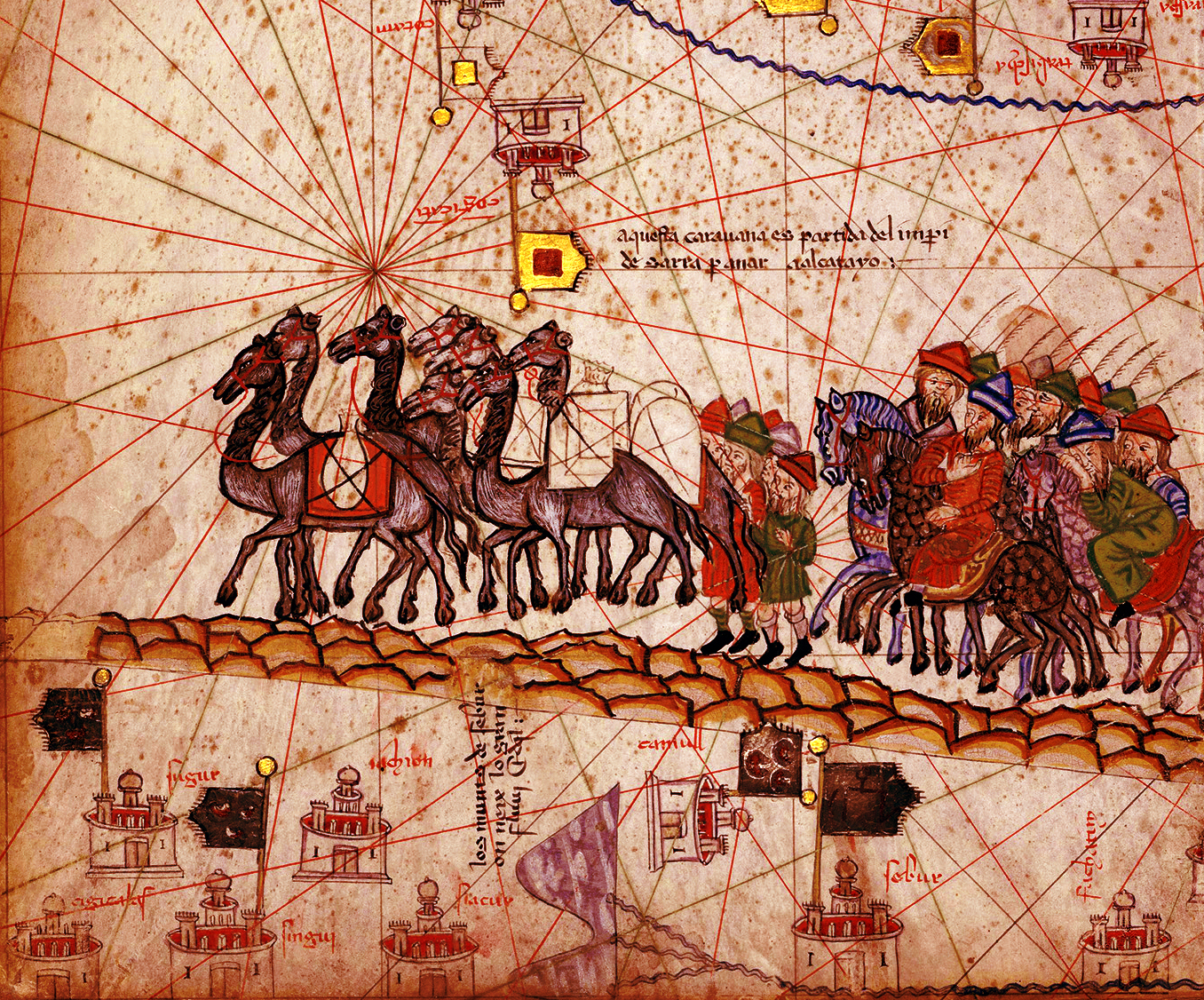
    Feature Image: Detail from Catalan Atlas (circa 1375) depicting Marco Polo’s caravan on the Silk Road. Abraham Cresques / Wikimedia Commons.
  • The War in Ukraine Was Provoked—and Why That Matters to Achieve Peace

    The War in Ukraine Was Provoked—and Why That Matters to Achieve Peace

    By recognizing that the question of NATO enlargement is at the center of this war, we understand why U.S. weaponry will not end this war. Only diplomatic efforts can do that.

    George Orwell wrote in 1984 that “Who controls the past controls the future: who controls the present controls the past.” Governments work relentlessly to distort public perceptions of the past. Regarding the Ukraine War, the Biden administration has repeatedly and falsely claimed that the Ukraine War started with an unprovoked attack by Russia on Ukraine on February 24, 2022. In fact, the war was provoked by the U.S. in ways that leading U.S. diplomats anticipated for decades in the lead-up to the war, meaning that the war could have been avoided and should now be stopped through negotiations.

    Recognizing that the war was provoked helps us to understand how to stop it. It doesn’t justify Russia’s invasion. A far better approach for Russia might have been to step up diplomacy with Europe and with the non-Western world to explain and oppose U.S. militarism and unilateralism. In fact, the relentless U.S. push to expand NATO is widely opposed throughout the world, so Russian diplomacy rather than war would likely have been effective.

    The Biden team uses the word “unprovoked” incessantly, most recently in Biden’s major speech on the first-year anniversary of the war, in a recent NATO statement, and in the most recent G7 statement. Mainstream media friendly to Biden simply parrot the White House. TheNew York Times is the lead culprit, describing the invasion as “unprovoked” no fewer than 26 times, in five editorials, 14 opinion columns by NYT writers, and seven guest op-eds!

    There were in fact two main U.S. provocations. The first was the U.S. intention to expand NATO to Ukraine and Georgia in order to surround Russia in the Black Sea region by NATO countries (Ukraine, Romania, Bulgaria, Turkey, and Georgia, in counterclockwise order). The second was the U.S. role in installing a Russophobic regime in Ukraine by the violent overthrow of Ukraine’s pro-Russian President, Viktor Yanukovych, in February 2014. The shooting war in Ukraine began with Yanukovych’s overthrow nine years ago, not in February 2022 as the U.S. government, NATO, and the G7 leaders would have us believe.

    The key to peace in Ukraine is through negotiations based on Ukraine’s neutrality and NATO non-enlargement.

    Biden and his foreign policy team refuse to discuss these roots of the war. To recognize them would undermine the administration in three ways. First, it would expose the fact that the war could have been avoided, or stopped early, sparing Ukraine its current devastation and the U.S. more than $100 billion in outlays to date. Second, it would expose President Biden’s personal role in the war as a participant in the overthrow of Yanukovych, and before that as a staunch backer of the military-industrial complex and very early advocate of NATO enlargement. Third, it would push Biden to the negotiating table, undermining the administration’s continued push for NATO expansion.

    The archives show irrefutably that the U.S. and German governments repeatedly promised to Soviet President Mikhail Gorbachev that NATO would not move “one inch eastward” when the Soviet Union disbanded the Warsaw Pact military alliance. Nonetheless, U.S. planning for NATO expansion began early in the 1990s, well before Vladimir Putin was Russia’s president. In 1997, national security expert Zbigniew Brzezinski spelled out the NATO expansion timeline with remarkable precision.

    U.S. diplomats and Ukraine’s own leaders knew well that NATO enlargement could lead to war. The great US scholar-statesman George Kennan called NATO enlargement a “fateful error,” writing in the New York Times that, “Such a decision may be expected to inflame the nationalistic, anti-Western and militaristic tendencies in Russian opinion; to have an adverse effect on the development of Russian democracy; to restore the atmosphere of the cold war to East-West relations, and to impel Russian foreign policy in directions decidedly not to our liking.”

    President Bill Clinton’s Secretary of Defense William Perry considered resigning in protest against NATO enlargement. In reminiscing about this crucial moment in the mid-1990s, Perry said the following in 2016: “Our first action that really set us off in a bad direction was when NATO started to expand, bringing in eastern European nations, some of them bordering Russia. At that time, we were working closely with Russia and they were beginning to get used to the idea that NATO could be a friend rather than an enemy … but they were very uncomfortable about having NATO right up on their border and they made a strong appeal for us not to go ahead with that.”

    In 2008, then U.S. Ambassador to Russia, and now CIA Director, William Burns, sent a cable to Washington warning at length of grave risks of NATO enlargement: “Ukraine and Georgia’s NATO aspirations not only touch a raw nerve in Russia, they engender serious concerns about the consequences for stability in the region. Not only does Russia perceive encirclement, and efforts to undermine Russia’s influence in the region, but it also fears unpredictable and uncontrolled consequences which would seriously affect Russian security interests. Experts tell us that Russia is particularly worried that the strong divisions in Ukraine over NATO membership, with much of the ethnic-Russian community against membership, could lead to a major split, involving violence or at worst, civil war. In that eventuality, Russia would have to decide whether to intervene; a decision Russia does not want to have to face.”

    Ukraine’s leaders knew clearly that pressing for NATO enlargement to Ukraine would mean war. Former Zelensky advisor Oleksiy Arestovych declared in a 2019 interview “that our price for joining NATO is a big war with Russia.”

    Nuland makes clear on the call that she was coordinating closely with then Vice President Biden and his national security advisor Jake Sullivan, the same Biden-Nuland-Sullivan team now at the center of U.S. policy vis-à-vis Ukraine.

    During 2010-2013, Yanukovych pushed neutrality, in line with Ukrainian public opinion. The U.S. worked covertly to overthrow Yanukovych, as captured vividly in the tape of then U.S. Assistant Secretary of State Victoria Nuland and U.S. Ambassador Geoffrey Pyatt planning the post-Yanukovych government weeks before the violent overthrow of Yanukovych. Nuland makes clear on the call that she was coordinating closely with then Vice President Biden and his national security advisor Jake Sullivan, the same Biden-Nuland-Sullivan team now at the center of U.S. policy vis-à-vis Ukraine.

    After Yanukovych’s overthrow, the war broke out in the Donbas, while Russia claimed Crimea. The new Ukrainian government appealed for NATO membership, and the U.S. armed and helped restructure the Ukrainian army to make it interoperable with NATO. In 2021, NATO and the Biden Administration strongly recommitted to Ukraine’s future in NATO.

    In the immediate lead-up to Russia’s invasion, NATO enlargement was center stage. Putin’s draft US-Russia Treaty (December 17, 2021) called for a halt to NATO enlargement. Russia’s leaders put NATO enlargement as the cause of war in Russia’s National Security Council meeting on February 21, 2022. In his address to the nation that day, Putin declared NATO enlargement to be a central reason for the invasion.

    Historian Geoffrey Roberts recently wrote: “Could war have been prevented by a Russian-Western deal that halted NATO expansion and neutralised Ukraine in return for solid guarantees of Ukrainian independence and sovereignty? Quite possibly.” In March 2022, Russia and Ukraine reported progress towards a quick negotiated end to the war based on Ukraine’s neutrality. According to Naftali Bennett, former Prime Minister of Israel, who was a mediator, an agreement was close to being reached before the U.S., U.K., and France blocked it.

    While the Biden administration declares Russia’s invasion to be unprovoked, Russia pursued diplomatic options in 2021 to avoid war, while Biden rejected diplomacy, insisting that Russia had no say whatsoever on the question of NATO enlargement. And Russia pushed diplomacy in March 2022, while the Biden team again blocked a diplomatic end to the war.

    By recognizing that the question of NATO enlargement is at the center of this war, we understand why U.S. weaponry will not end this war. Russia will escalate as necessary to prevent NATO enlargement to Ukraine. The key to peace in Ukraine is through negotiations based on Ukraine’s neutrality and NATO non-enlargement. The Biden administration’s insistence on NATO enlargement to Ukraine has made Ukraine a victim of misconceived and unachievable U.S. military aspirations. It’s time for the provocations to stop, and for negotiations to restore peace to Ukraine.

    This article was published earlier in commondreams.org and is republished under Creative Commons(CC BY-NC-ND 3.0).

    Feature Image Credit: columbian.com

  • Clausewitz and Sun Tzu – Paradigms of Warfare in the 21st Century

    Clausewitz and Sun Tzu – Paradigms of Warfare in the 21st Century

    [powerkit_button size=”lg” style=”info” block=”true” url=”https://admin.thepeninsula.org.in/wp-content/uploads/2023/04/Clausewitz-and-Sun-Tzu-1.pdf” target=”_blank” nofollow=”false”]
    Download
    [/powerkit_button]

    “No principle in the world is always right, and no thing is always wrong. What was used yesterday may be rejected today, what is rejected now may be used later on. This use or disuse has no fixed right or wrong. To avail yourself of opportunities at just the right time, responding to events without being set in your ways is in the domain of wisdom. If your wisdom is insufficient (…) you’lle come to an impasse wherever you go.”

    –  Taostic Text

    Every war has its own strategy and also its own theorist. In fact, there are only two great theorists of war and warfare, the Prussian “philosopher of war” Carl von Clausewitz, and the ancient Chinese theorist of the “art of war”, Sun Tzu. Nevertheless, there is no single strategy that applies equally to all cases, i.e., not even Clausewitz’s or Sun Tzu’s. Often an explanation for success or failure is sought in the strategies used only in retrospect. For example, Harry G. Summers (Summers 1982) attributed the defeat of the United States in the Vietnam War to the failure to take into account the unity of people, army, and government, Clausewitz’s “wondrous trinity.” In contrast, after the successful campaign against Iraq in 1991, the then Chief of Staff of the U.S. Army, Colin Powell, appeared before the press with Clausewitz’s Book of War and signaled, see, we learned from the mistakes of the Vietnam War and won the Iraq War with Clausewitz (Herberg-Rothe 2007). Similarly, after World War I, there was a discourse that amounted to if the German generals had read Clausewitz correctly, the war would not have been lost. This position referred to the victory of the German forces in the Franco-Prussian War of 1870-71 and the assessment of the then Chief of General Staff, Helmut von Moltke, that he was able to fight this war successfully by studying Clausewitz’s “On War.” Since then, Clausewitz’s book has been searched for reasons for victory or defeat (Herberg-Rothe 2007).

    If Clausewitz’s status seemed unchallenged after the Iraq war in 1991, it was gradually questioned and often replaced by Sun Tzu. Two reasons played a role here – on the one hand, the new forms of non-state violence and, on the other, the new technological possibilities, the revolution in military affais (RMA), which is far from being completed. In particular, robotic and hybrid warfare, as well as the incorporation of artificial intelligence, that of space, and the development of quantum computers. The trigger of the change from Clausewitz to Sun Tzu was a seemingly new form of war, the so-called “New Wars”, which in the strict sense were not new at all, but are civil wars or those of non-state groups. In the view of the epoch-making theorist of the “New Wars”, Mary Kaldor (Kaldor 2000, much more differentiated Münkler 2002), interstate war was replaced by non-state wars, which were characterized by special cruelty of the belligerents. These weapon bearers, seemingly a return to the past, were symbolized by child soldiers, warlords, drug barons, archaic fighters, terrorists, and common criminals who were stylized as freedom fighters (Herberg-Rothe 2017).

    Since Sun Tzu lived in a time of perpetual civil wars in China, his “art of war” seemed more applicable to intrastate war, (McNeilley 2001) while Clausewitz’s conception was attributed to interstate war. In combating these new weapons carriers and the “markets of violence,” civil war economies, or “spaces open to violence” associated with them, Napoleon’s guiding principle was applied: “Only partisans help against partisans” (Herberg-Rothe 2017). Accordingly, conceptions of warfare were developed by John Keegan and Martin van Creveld, for example, that amounted to an archaic warrior with state-of-the-art technologies (Keegan 1995, van Creveld 1991). On the military level, the transformation of parts of the Western armed forces as well as the Bundeswehr from a defensive army to an intervention army took place. In contrast to the United States, the Bundeswehr placed greater emphasis on pacifying civil society in these civil war economies, and ideally the soldier became a social worker in uniform (Bredow 2006).

    The battle was fought by highly professional special forces in complex conflict areas. The initial success of the U.S. Army in Afghanistan can be attributed to the use of such special forces, which, as a result of modern communications capabilities, were able to engage superior U.S. airpower at any time. Because interstate warfare has returned to the forefront with the Ukraine war, Clausewitz may regain relevance in the coming years – unless the controversial concepts of hybrid warfare, John Boyd’s OODA loop, or NATO’s comprehensive approach gain further influence. At their core, these are based on non-state warfare by states, thus enabling a renaissance of Sun Tzu.

    However, the paradigm shift from Clausewitz to Sun Tzu became even clearer during the Second Iraq war in 2003. From the perspective of one commentator, this campaign was won in just a few weeks because the U.S. army was guided by Sun Tzu’s principles, while Saddam Hussein’s Russian advisors adhered to Clausewitz and Moscow’s defense against Napoleon (Macan 2003/Peters 2003). Before the fall of Afghanistan, former U.S. Secretary of Defense James Mattis brought up the Clausewitz/Sun Tzu distinction anew. “The Army was always big on Clausewitz, the Prussian; the Navy on Alfred Thayer Mahan, the American; and the Air Force on Giulio Douhet, the Italian. But the Marine Corps has always been more Eastern-oriented. I am much more comfortable with Sun-Tzu and his approach to warfare.” (Mattis 2008).

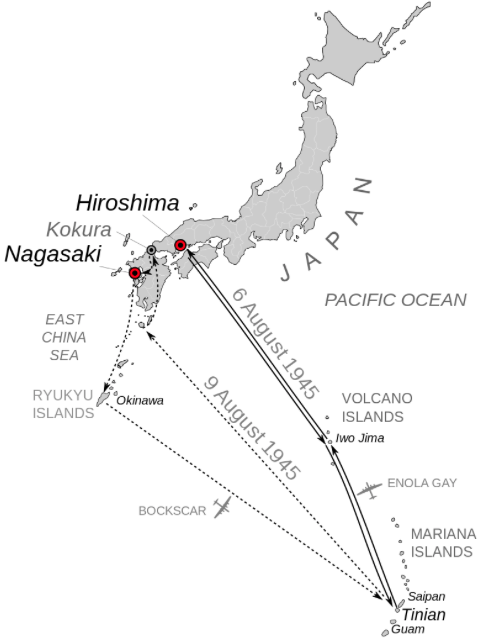
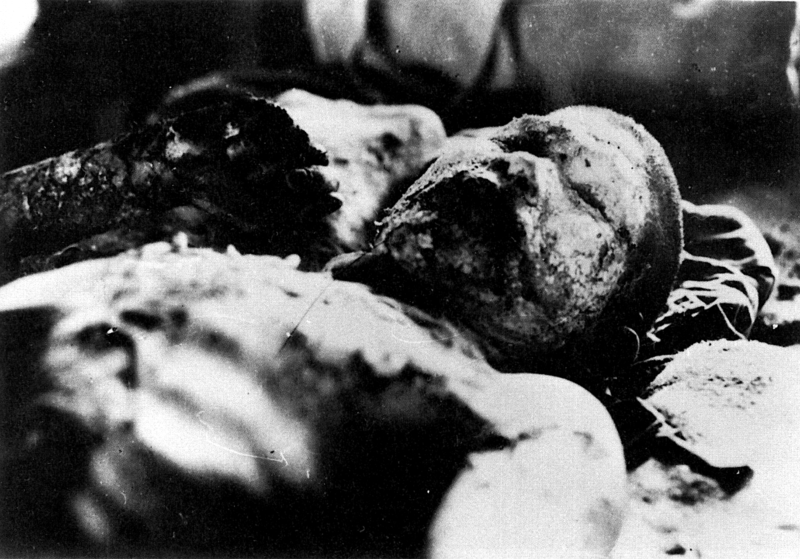
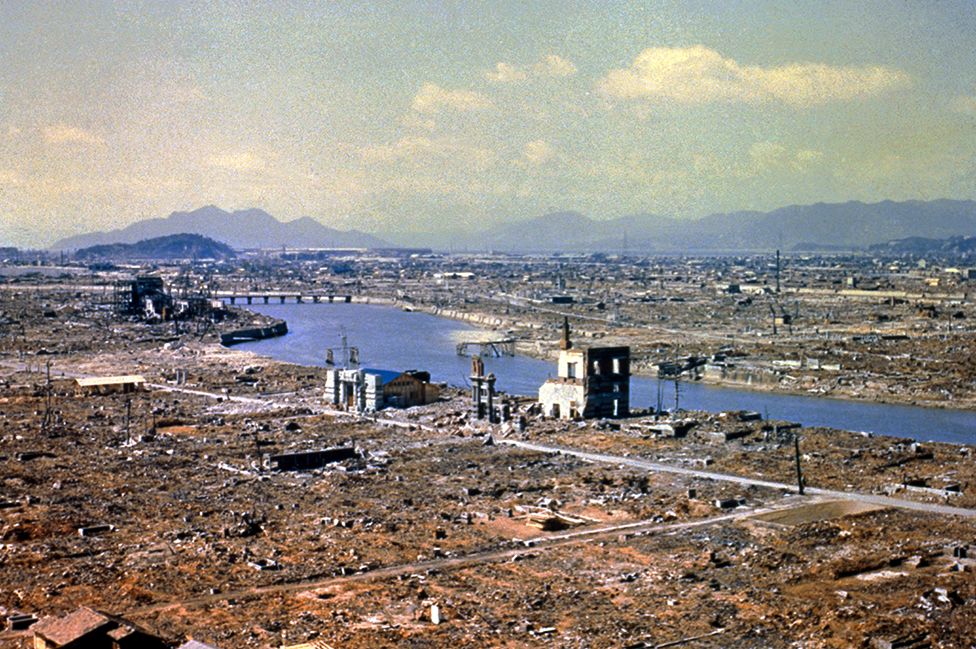
    Without fully following this distinction, it gives us hints that we cannot find absolutely valid approaches in Clausewitz’s and Sun Tzu’s conceptions, but differentiations in warfare. If we simplify the difference between the two, Clausewitz’s approach is more comparable to wrestling (Clausewitz 1991, 191), while Sun Tzu’s is comparable to jiu-jitsu. The difference between the two becomes even clearer when comparing Clausewitz’s conception to a boxing match. The goal is to render the opponent incapable of fighting (Clausewitz 1991, 191) by striking his body, as Clausewitz himself points out, thereby forcing him to make any peace. In contrast, Sun Tzu’s goal is to unbalance his opponent so that even a light blow will force him to the ground because he will be brought down by his own efforts. Of course, all two aspects play a major role in both Clausewitz and Sun Tzu, but Clausewitz’s strategy relates more to the body, the material means available to the war opponents, Sun Tzu’s strategy more to the mind, the will to fight. Both strategies have also often been conceptualized as the antithesis of direct and indirect strategy – in direct strategy, two more or less similar opponents fight on a delineated battlefield with roughly equal weapons and “measure their strength” – in indirect strategy, on the other hand, attempts are made, for example, to disrupt the enemy’s supply of food and weapons or to break the will of the opposing population to continue supporting the war. Examples of this in World War II would be the tank battles for symmetric and the bombing of German cities and the atomic bombing of Hiroshima and Nagasaki as an example of asymmetric warfare. Non-state warfare is also asymmetrically structured in nearly all cases, as it is primarily directed against the enemy civilian population (Wassermann 2015). Perhaps asymmetric warfare was most evident in the Yom Kippur War between Israel and the Egyptian army. The latter had indeed surprised Israel and managed to overrun Israeli positions along the Suez Canal. However, instead of giving the Egyptian army a tank battle in the Sinai, a relatively small group of tanks set back across the Suez Canal and in the back of the Egyptian army, cutting it off from the water supply, forcing the Egyptian army to surrender within a few days (Herberg-Rothe 2017).

    This distinction between Clausewitz and Sun Tzu can be contradicted insofar as Clausewitz begins with a “definition” of war in which the will plays a major role and which states that war is an act of violence to force the opponent to fulfill our will (Clausewitz 1991, 191). But how is the opponent forced to do this in Clausewitz’s conception? A few pages further on it says by destroying the opponent’s forces. By this concept of annihilation, however, he does not understand physical destruction in the narrower sense, but to put the armed forces of the opponent in such a state that they can no longer continue the fight (Clausewitz 1991 215).

    Sun Tzu

    Sun Tzu’s approach relates more directly to the enemy’s thinking. “The greatest achievement is to break the enemy’s resistance without a fight” (Sunzi 1988, 35). Accordingly, Basil Liddell Hart later formulated, “Paralyzing the enemy’s nervous system is a more economical form of operation than blows to the enemy’s body.” (Liddel Hart, 281). Sun Tzu’s methodical thinking aims at a dispassionate assessment of the strategic situation and thus at achieving inner distance from events as a form of objectivity. This approach is rooted in Taoism, and in it the presentation of paradoxes is elevated to a method. Although the “Art of War” contains a number of seemingly unambiguous doctrines and rules of thumb, they cannot be combined into a consistent body of thought.

    In this way, Sun Tsu confronts his readers (who are also his students) with thinking tasks that must be solved. Often these tasks take the form of the paradoxical. This becomes quite obvious in the following central paradox: “To fight and win in all your battles is not the greatest achievement. The greatest achievement is to break the enemy’s resistance without a fight.”(Sun Tzu). In clear contradiction to the rest of the book, which deals with warfare, Sun Tsu here formulates the ideal of victory without a battle and thus comes very close to the ideal of hybrid warfare, in which possible battle is only one of several options.

    Obviously, he wants to urge his readers to carefully consider whether a war should be waged and, if so, under what conditions. It is consistent with this that Sun Tsu repeatedly reflects on the economy of war, on its economic and social costs, and at the same time refers to the less expensive means of warfare: cunning, deception, forgery, and spies. Victory without combat is thus the paradox with which Sun Tsu seeks to minimize the costs of an unavoidable conflict, limit senseless violence and destruction, and point to the unintended effects.

    The form of the paradox is used several times in the book, for example when Sun Tsu recommends performing deceptive maneuvers whenever possible; this contradicts his statement that information about the opponent can be obtained accurately and used effectively – at least when the opponent is also skilled in deceptive maneuvers or is also able to see through the deceptions of his opponent. This contradiction stands out particularly glaringly when one considers that Sun Tsu repeatedly emphasizes the importance of knowledge, for example when he says: “If you know the enemy and yourself, there is no doubt about your victory; if you know heaven and earth, then your victory will be complete” (Sunzi 1988, 211). In a situation in which one must assume that the other person also strives to know as much as possible, this sentence can only be understood as a normative demand, as an ideal: Knowledge becomes power when it represents a knowledge advantage, as Michel Foucault has emphasized in more recent times: For him, knowledge is power. Cunning, deception, and the flow of information, even when they are not absolutely necessary, are, however, in danger of becoming ends in themselves, because they alone guarantee an advantage in knowledge. Information, then, is the gold and oil of the 21st century.

    The presentation of paradoxes is not an inadequacy for Sun Tsu, but the procedure by which he instructs his readers/students. In contrast to the theoretical designs of many Western schools, Sun Tsu relies here on non-directive learning: the paradox demands active participation from the reader, mirrors to him his structure of thinking, and makes him question the suitability of his own point of view in thinking through the position of the opponent. Sun Tsu thereby forces his recipients to constantly examine the current situation and to frequently reflect. By repetitively thinking through paradoxical contradictions, the actor gains the inner distance and detachment from the conflict that are necessary for an impersonal, objectifying view of events. By being confronted with paradoxes, the reader learns to simultaneously adopt very different points of view, to play through the given variants, to form an understanding for the contradictions of real situations, and at the same time to make decisions as rationally as possible. In this way, the text encourages people not to rely on the doctrines it formulates as positive knowledge about conflict strategies, but to practice repeated and ever new thinking through as a method. Sun Tzu’s approach is thus characterized by highlighting paradoxes of warfare by designing strategies of action through reflection aimed at influencing the thinking of the opponent.

    Elective Affinities with Mao Tse-tung

    The conception of the “people’s war” by the Chinese revolutionary Mao Tse-Tung is a further development of that of Sun Tzu and the dialectical thinking of Marx and Engels. At the same time, in these paradoxes, he tries to provide an assessment and analysis of the situation that is as objective-scientific as possible, linking it to subjective experience: “Therefore, the objects of study and cognition include both the enemy’s situation and our own situation, these two sides must be considered as objects of investigation, while only our brain (thought) is the investigating object” (Mao 1970, 26).

    The comprehensive analyses that Mao prefaces each of his treatises have two purposes: On the one hand, they serve as sober, objective investigations before and during the clashes, which are intended to ensure rational predictions of what will happen and are based on reliable information and the most precise planning. On the other hand, Mao uses them to achieve the highest level of persuasion and to mobilize his followers through politicization. Not for nothing are terms like “explain,” “persuade,” “discuss,” and “convince” constantly repeated in his writings, since the people’s war he propagates requires unconditional loyalty and high morale.

    Mao repeatedly demonstrates thinking in interdependent opposites, which can be understood as a military adaptation of the Chinese concept of Yin and Yang. His precise analyses demonstrate dialectical reversals; thus he can show that in strength is hidden weakness and in weakness is hidden strength. According to this thinking, in every disadvantage an advantage can be found, and in every disadvantage an advantage. An example of this is his explanation of the dispersion of forces: while conventional strategies proclaim the concentration of forces (as does Clausewitz, Clausewitz 1991, 468), Mao relies on dispersion. This approach confuses the opponent and creates the illusion of the omnipresence of his opponent.

    Mao understands confrontations as reciprocal interactions and, from this perspective, is able to weigh the relationship between concentration and dispersion differently: “Performing a mock maneuver in the East, but undertaking the attack in the West” (Mao 1970, 372) means to bind the attention of the opponent, but at the same time to become active where the opponent least expects it. Mao’s method of dialectically seeking out weakness in strength and strength in weakness leads him to the flexibility that is indispensable for confronting a stronger opponent.

    Finally, it is the ruthless analysis of one’s own mistakes that bring Mao to his guiding principles; from a series of sensitive defeats, he concluded, “The aim of war consists in nothing other than ‘self-preservation and the destruction of the enemy’ (to destroy the enemy means to disarm him or ‘deprive him of his power of resistance,’ but not to physically destroy him to the last man)” (Mao 1970, 349). On this point, Mao Tse Tung is in complete agreement with Clausewitz. Mao also clarifies this core proposition by defining the concept of self-preservation dialectically – namely, as an amalgamation of opposites: “Sacrifice and self-preservation are opposites that condition each other. For such sacrifices are not only necessary in order to preserve one’s own forces-a partial and temporary failure to preserve oneself (the sacrifice or payment of the price) is indispensable if the whole is to be preserved for the long run” (Mao 1970, 175).

    Sun Tzu problems

    Sun Tzu’s “The Art of War” as well as the theorists of network-centric warfare and 4th and 5th generation warfare focus on military success but miss the political dimension with regard to the post-war situation. They underestimate the process of transforming military success into real victory (Macan 2003, Peters 2003, Echevarria 2005). The three core elements of Sun Tzu’s strategy could not be easily applied in our time: Deceiving the opponent in general risks deceiving one’s own population as well, which would be problematic for any democracy. An indirect strategy in general would weaken deterrence against an adversary who can act quickly and decisively. Focusing on influencing the will and mind of the adversary may enable him to avoid a fight and merely resume it at a later time under more favorable conditions.

    Sun Tzu is probably more likely to win battles and even campaigns than Clausewitz, but it is difficult to win a war by following his principles. The reason is that Sun Tzu was never interested in shaping the political conditions after the war, because he lived in a time of seemingly never-ending civil wars. The only imperative for him was to survive while paying the lowest possible price and avoiding fighting, because even a successful battle against one enemy could leave you weaker when the moment came to fight the next. As always in history, when people want to emphasize the differences with Clausewitz, the similarities between the two approaches are neglected. For example, the approach in Sun Tzu’s chapter on “Swift Action to Overcome Resistance” would be quite similar to the approach advocated by Clausewitz and practiced by Napoleon. The main problem, however, is that Sun Tzu neglects the strategic perspective of shaping postwar political-social relations and their impact “by calculation” (Clausewitz 1991, 196) on the conduct of the war. As mentioned earlier, this was not a serious issue for Sun Tzu and his contemporaries, but it is one of the most important aspects of warfare in our time (Echevarria 2005¸ Lonsdale 2004).

    Finally, one must take into account that Sun Tzu’s strategy is likely to be successful against opponents with a very weak order of forces or associated community, such as warlord systems and dictatorships, which were common opponents in his time. His book is full of cases where relatively simple actions against the order of the opposing army or its community lead to disorder on the part of the opponent until they are disbanded or lose their will to fight altogether. Such an approach can obviously be successful with opponents who have weak armed forces and a weak social base but is likely to prove problematic with more entrenched opponents.

    Here, the Ukraine war could be a cautionary example. Apparently, the Russian military leadership and the political circle around Putin were convinced that this war, like the intervention in Crimea, would end quickly, because neither the resistance of the Ukrainian population nor its army was expected, nor the will of the Western states to support Ukraine militarily. To put it pointedly, one could say that in the second Iraq war, Sun Tzu triumphed over Clausewitz, but in the Ukraine war Clausewitz triumphed over Sun Tzu. This also shows that while wars in an era of hybrid globalization (Herberg-Rothe 2020) necessarily also take on a hybrid character, it is much more difficult to successfully practice hybrid warfare-such a conflation of opposites is strategically at odds with those writings of Clausewitz in which he generalizes the principles of Napoleonic warfare, though not with his determination of defense. The Ukraine war can even be seen as evidence of the greater strength of defense as postulated by Clausewitz (Herberg-Rothe 2007).

    And Clausewitz?

    At first glance, Clausewitz’s position is not compatible with that of Sun Tzu. In his world-famous formula of the continuation of war by other means (Clausewitz 1991, 210), Clausewitz takes a hierarchical position, with politics determining the superior end. Immediately before this formula, however, he writes that politics will pervade the entire warlike act, but only insofar as the nature of the forces exploding within it permits (Clausewitz 1991, ibid.). By this statement, he relativizes the heading of the 24th chapter, which contains the world-famous formula. In addition, all headings of the first chapter, with the exception of the result for the theory, the final conclusion of the first chapter, were written in the handwriting of Marie von Clausewitz, while only the actual text was written by Clausewitz (Herberg-Rothe 2023, on the discovery of the manuscript by Paul Donker).

    The tension only implicit in the formula becomes even clearer in the “wondrous trinity,” Clausewitz’s “result for the theory” of war. Here he writes that war is not only a true chameleon, because it changes its nature somewhat in each concrete case, but a wondrous trinity. This is composed of the original violence of war, hatred, and enmity, which can be seen as a blind natural instinct, the game of probabilities and chance, and war as an instrument of politics, whereby war falls prey to mere reason. Violence, hatred, and enmity like a blind natural instinct on the one side, and mere understanding on the other, this is the decisive contrast in Clausewitz’s wondrous trinity. For Clausewitz, all three tendencies of the wondrous trinity are inherent in every war; their different composition is what makes wars different (Clausewitz 1991, 213, Herberg-Rothe 2009).

    While Clausewitz formulates a clear hierarchy between the end, aim, and means of war in the initial definition and the world-famous formula, the wondrous trinity is characterized by a principled equivalence of the three tendencies of war’s violence, the inherent struggle and its instrumentality. At its core, Clausewitz’s wondrous trinity is a hybrid determination of war, which is why the term “paradoxical trinity” is more often used in English versions. In his determination of the three interactions to the extreme, made at the beginning of the book, Clausewitz emphasizes the problematic nature of the escalation of violence in the war due to its becoming independent, because the use of force develops its own dynamics (Clausewitz 1991, 192-193, Herberg-Rothe 2007 and 2017). The three interactions have often been misunderstood as mere guides to action, but they are more likely to be considered as escalation dynamics in any war. This is particularly evident in escalation sovereignty in war – the side gains an advantage that can outbid the use of force. However, this outbidding of the adversary (Herberg-Rothe 2001) brings with it the problem of violence taking on a life of its own. This creates a dilemma, which Clausewitz expresses in the wondrous trinity.

    This dilemma between the danger of violence becoming independent and its rational application gives rise to the problem formulated at the outset, namely that there cannot be a single strategy applicable to all cases, but that a balance of opposites is required (Herberg-Rothe 2014). In it, the primacy of politics is emphasized, but at the same time, this primacy is constructed as only one of three opposites of equal rank. Thus, Clausewitz’s conception of the wondrous trinity is also to be understood as a paradox, a dilemma, and a hybrid.

    As already observed in ethics, there are different ways to deal with such dilemmas (Herberg-Rothe 2011). One is to make a hierarchy between opposites. Here, particular mention should be made of the conception of trinitarian war, which was wrongly attributed to Clausewitz by Harry Summers and Martin van Creveld and was one of the causes of Clausewitz being considered obsolete by Mary Kaldor regarding the “New Wars.” For in the conception of trinitarian war, the balance of three equal tendencies emphasized by Clausewitz is explicitly transformed into a hierarchy of government, army, and people/population. Even if it should be noted that this interpretation was favored by a faulty translation in which Clausewitz’s notion of “mere reason” was transformed into the phrase “belongs to reason alone” (Clausewitz 1984), the problem is systematically conditioned. For one possible way of dealing with action dilemmas is such a hierarchization or what Niklas Luhmann called “functional differentiation”. We find a corresponding functional differentiation in all modern armies – Clausewitz himself had developed such a differentiation in his conception of the “Small War”, which was not understood as an opposition to the “Great War”, but as its supporting element. In contrast, Clausewitz developed the contrast to the “Great War” between states in the “People’s War” (Herberg-Rothe 2007).

    A second way of dealing with dilemmas of action is to draw a line up to which one principle applies and above which the other applies – that is, different principles would apply to state warfare than to “people’s war,” guerrilla warfare, the war against terrorists, warlords, wars of intervention in general. This was, for example, the proposal of Martin van Creveld and Robert Kaplan, who argued that in war against non-state groups, the laws of the jungle must apply, not those of “civilized” state war (van Creveld 1998, Kaplan 2002). In contrast, there are also approaches that derive the uniformity of war from the ends, aims, means relation, arguing that every war, whether state war or people’s war, has these three elements and that wars differ only in which ends are to be realized by which opponents with which means (I assume that this is the position of the Clausewitz-orthodoxy). It must be conceded that Clausewitz is probably inferior to Sun Tzu in practical terms with regard to the “art of warfare” – because in parts of his work, he gave the word to a one-sided absolutization of Napoleon’s warfare – while only in the book on defense did he develop a more differentiated strategy (Herberg-Rothe 2007, Herberg-Rothe 2014). Perhaps one could say that Sun Tzu is more relevant to tactics, whereas Clausewitz has the upper hand in strategy (Herberg-Rothe 2014).

    Summary

    If we return to the beginning, Clausewitz is the (practical) philosopher of war (Herberg-Rothe 2022), while Sun Tzu focuses on the “art of warfare”. As is evident in the hybrid war of the present, due to technological developments and the process I have labeled hybrid globalization (Herberg-Rothe 2020), every war can be characterized as a hybrid. However, as is currently evident in the Ukraine War, the designation of war as a hybrid is different from successful hybrid warfare. This is because hybrid warfare necessarily combines irreconcilable opposites. This mediation of opposites (Herberg-Rothe 2005) requires political prudence as well as the skill of the art of war. The ideal-typical opposition of both is correct in itself, if we provide these opposites with a “more” in each case, not an exclusive “or”.

    Clausewitz’s conception is “more” related to

    “politics, one’s own material possibilities and those of the opponent, a direct strategy, and that of the late Clausewitz on a relative symmetry of the combatants and the determination of war as an instrument. This can be illustrated with a boxing match in which certain blows are allowed or forbidden (conventions of war), the battlefield and the time of fighting remain delimited (declaration of war, conclusion of peace)”.

    Sun Tzu’s conception, on the other hand, refers to more

    “directly on the military opponent, his thinking and “nervous system” (Liddel-Heart), an indirect strategy (because a direct strategy in his time would have resulted in a weakening of one’s own position even if successful), and a relative asymmetry of forms of combat”.

    Despite this ideal-typical construction, every war is characterized by a combination of these opposites. Consequently, the question is neither about an “either-or” nor a pure “both-and,” but involves the question of which strategy is the appropriate one in a concrete situation. To some extent, we must also distinguish in Clausewitz’s conception of politics between a purely hierarchical understanding and a holistic construction. Put simply, the former conception is addressed in the relationship between political and military leadership; in the latter, any violent action by communities is per se a political one (Echevarria 2005, Herberg-Rothe 2009). From a purely hierarchical perspective, it poses no problem to emphasize the primacy of politics in a de-bounded, globalized world with Clausewitz. If, on the other hand, in a holistic perspective all warlike actions are direct expressions of politics, the insoluble problem arises of how limited warfare could be possible in a de-bounded world.

    This raises the question of which of the two, Clausewitz or Sun Tzu, will be referred to more in the strategic debates of the future. In my view, this depends on the role that information technologies, quantum computers, artificial intelligence, drones, and the development of autonomous robotic systems will play in the future – in simple terms, the role that thought and the “soul” will play in comparison to material realities in a globalized world. The Ukraine war arguably shows an overestimation of the influence of thought and soul (identity) on a community like Ukraine, but with respect to autocratic states like Russia and China, possibly an underestimation, at least temporarily, of the possibilities of manipulating the population through the new technologies. Regardless of the outcome of the war, the argument about Clausewitz and/or Sun Tzu will continue as an endless story – but this should not proceed as a mere repetition of dogmatic arguments, but rather answer the question of which of the two is the better approach can be taken in which concrete situation.

    Bibliography

    Bredow, Wilfried von (2006), Kämpfer und Sozialarbeiter – Soldatische Selbstbilder im Spannungsfeld herkömmlicher und neuer Einsatzmissionen. In: Gareis, S.B., Klein, P. (eds) Handbuch Militär und Sozialwissenschaft. VS Verlag für Sozialwissenschaften: Wiesbaden.

    Clausewitz, Carl von (199119), Vom Kriege. Dümmler: Bonn.

    Clausewitz, Carl von (1984), On War. OUP: Oxford.

    Creveld, Martin van (1991), The transformation of war. The Free Press: New York.

    Echevarria, Antulio II (2005), Fourth-generation warfare and other myths. Carlisle.

    Herberg-Rothe, Andreas (2001), Das Rätsel Clausewitz. Fink: München

    Herberg-Rothe, Andreas (2007), Clausewitz’s puzzle. OUP: Oxford

    Herberg-Rothe, Andreas (2009), Clausewitz’s “Wondrous Trinity” as a Coordinate System of War and Violent Conflict. In: International

    Journal of Violence and Conflict (IJVC) 3 (2), 2009, pp.62-77.

    Herberg-Rothe, Andreas (2011), Ausnahmen bestätigen die Moral. In: Frankfurter Rundschau vom 16. Juni 2011, 31.

    Herberg-Rothe, Andreas (2014), Clausewitz’s concept of strategy – Balancing purpose, aims and means. In: Journal of Strategic Studies. 2014; volume 37, 6-7, 2014, pp. 903-925. Also published online (17.4.2014): http://www.tandfonline.com/doi/full/10.1080/01402390.2013.853175

    Herberg-Rothe, Andreas (2015), Theory and Practice: The inevitable dialectics. Thinking with and beyond Clausewitz’s concept of theory. In: Militaire Spectator. Jaargang 184, Den Haag, Nr. 4, 2015, pp. 160-172.

    Herberg-Rothe, Andreas (2020), The dissolution of identities in liquid globalization and the emergence of violent uprisings. In: African Journal of Terrorism and Insurgency Research – Volume 1 Number 1, April 2020, pp. 11-32.

    Herberg-Rothe, Andreas (2022), Clausewitz as a practical philosopher. Special issue of the Philosophical Journal of Conflict and Violence. Guest editor: Andreas Herberg-Rothe. Trivent: Budapest, 2022. Also published online: https://trivent-publishing.eu/home/140-philosophical-journal-of-conflict-and-violence-pjcv-clausewitz-as-a-practical-philosopher.html

    Kaldor, Mary (2000), Neue und alte Kriege. Organisierte Gewalt im Zeitalter der Globalisierung. Suhrkamp: Frankfurt.

    Kaplan, Robert D. (2002), Warrior Politics. Vintage books: New York 2002

    Keegan, John (1995), Die Kultur des Krieges. Rowohlt: Berlin

    Liddell Hart, Basil Henry (1955), Strategie. Aus dem Englischen übertragen von Horst Jordan, Wiesbaden: Rheinische Verlags-Anstalt.

    Lonsdale, David (2004), The nature of war in the information age. Frank Cass: London

    Macan Marker, Marwaan (2003), Sun Tzu: The real father of shock and Awe, Asia Times, 2, April 2003

    Mao Tsetung (1970), Sechs Militärische Schriften, Peking: Verlag für fremdsprachige Literatur

    Mattis, James (2008), quoted in https://foreignpolicy.com/2015/06/08/quote-of-the-day-gen-mattis-reading-list-and-why-he-looks-more-to-the-east/); last access: 15.1.2023.

    McNeilly, Mark (2001), Sun Tzu and the Art of Modern Warfare. Oxford: Oxford University Press

    Münkler, Herfried (2002), Die neuen Kriege. Rowohlt: Reinbek bei Hamburg.

    Peters, Ralph, A New Age of War, New York Post, 10. April 2003.

    Summers, Harry G. Jr. (1982), On Strategy: A critical analysis of the Vietnam War. Novato.

    Sun Tzu (2008), The Art of War. Spirituality for Conflict. Woodstock.

    Sunzi (1988), Die Kunst des Kriegs, hrsg. und mit einem Vorwort von James Clavell, München 1988.

    Wassermann, Felix (2015), Asymmetrische Kriege. Eine politiktheoretische Untersuchung zur Kriegführung im 21. Jahrhundert: Campus: Frankfurt.

    Featured Image Credits: U.S Army

    [powerkit_button size=”lg” style=”info” block=”true” url=”https://admin.thepeninsula.org.in/wp-content/uploads/2023/04/Clausewitz-and-Sun-Tzu-1.pdf” target=”_blank” nofollow=”false”]
    Download
    [/powerkit_button]

  • U.S. Hegemony and its Perils

    U.S. Hegemony and its Perils

    This analytical report on the perils of US hegemony was released by China on the 20th of February 2023. It is evident that much of the world is now alienated by the USA and the West. This is particularly so after the Ukraine-Russia conflict that erupted a year ago. The majority of the world remains non-commital but certainly does not support the US or Ukraine in this conflict nor do they condemn Russia. In effect, the non-western world has openly indicated that this unnecessary war is caused by the aggressive actions of NATO and the US to provoke Russia. The constant interventions and wars waged by the US and NATO in the name of democracy and disregarding the UN are now being questioned. China has cleverly utilised this sentiment to time its publication. The paper is very well analysed, crisply argued, and has flagged real questions to the world community. In short, the paper implies that the US and its allies pose the gravest threat to global stability and peace, and more so to the sovereignty of all countries.

    This paper was published earlier in fmprc.gov.cn


    Introduction

    Since becoming the world’s most powerful country after the two world wars and the Cold War, the United States has acted more boldly to interfere in the internal affairs of other countries, pursue, maintain and abuse hegemony, advance subversion and infiltration, and willfully wage wars, bringing harm to the international community.

    The United States has developed a hegemonic playbook to stage “colour revolutions,” instigate regional disputes and even directly launch wars under the guise of promoting democracy, freedom and human rights. Clinging to the Cold War mentality, the United States has ramped up bloc politics and stoked conflict and confrontation. It has overstretched the concept of national security, abused export controls and forced unilateral sanctions upon others. It has taken a selective approach to international law and rules, utilizing or discarding them as it sees fit, and has sought to impose rules that serve its own interests in the name of upholding a “rules-based international order.”

    This report, by presenting the relevant facts, seeks to expose the U.S. abuse of hegemony in the political, military, economic, financial, technological and cultural fields and to draw greater international attention to the perils of the U.S. practices to world peace and stability and the well-being of all peoples.

    I. Political Hegemony – Throwing Its Weight Around

    The United States has long been attempting to mould other countries and the world order with its own values and political system in the name of promoting democracy and human rights.

    ◆ Instances of U.S. interference in other countries’ internal affairs abound. In the name of “promoting democracy,” the United States practised a “Neo-Monroe Doctrine” in Latin America, instigated “colour revolutions” in Eurasia, and orchestrated the “Arab Spring” in West Asia and North Africa, bringing chaos and disaster to many countries.

    In 1823, the United States announced the Monroe Doctrine. While touting an “America for the Americans,” what it truly wanted was an “America for the United States.”

    Since then, the policies of successive U.S. governments toward Latin America and the Caribbean Region have been riddled with political interference, military intervention and regime subversion. From its 61-year hostility toward and blockade of Cuba to its overthrow of the Allende government of Chile, U.S. policy on this region has been built on one maxim-those who submit will prosper; those who resist shall perish.

    The year 2003 marked the beginning of a succession of “colour revolutions” – the “Rose Revolution” in Georgia, the “Orange Revolution” in Ukraine and the “Tulip Revolution” in Kyrgyzstan. The U.S. Department of State openly admitted playing a “central role” in these “regime changes.” The United States also interfered in the internal affairs of the Philippines, ousting President Ferdinand Marcos Sr. in 1986 and President Joseph Estrada in 2001 through the so-called “People Power Revolutions.”

    In January 2023, former U.S. Secretary of State Mike Pompeo released his new book Never Give an Inch: Fighting for the America I Love. He revealed in it that the United States had plotted to intervene in Venezuela. The plan was to force the Maduro government to reach an agreement with the opposition, deprive Venezuela of its ability to sell oil and gold for foreign exchange, exert high pressure on its economy, and influence the 2018 presidential election.

    ◆ The U.S. exercises double standards on international rules. Placing its self-interest first, the United States has walked away from international treaties and organizations and put its domestic law above international law. In April 2017, the Trump administration announced that it would cut off all U.S. funding to the United Nations Population Fund (UNFPA) with the excuse that the organization “supports, or participates in the management of a program of coercive abortion or involuntary sterilization.” The United States quit UNESCO twice in 1984 and 2017. In 2017, it announced leaving the Paris Agreement on climate change. In 2018, it announced its exit from the UN Human Rights Council, citing the organization’s “bias” against Israel and failure to protect human rights effectively. In 2019, the United States announced its withdrawal from the Intermediate-Range Nuclear Forces Treaty to seek the unfettered development of advanced weapons. In 2020, it announced pulling out of the Treaty on Open Skies.

    The United States has also been a stumbling block to biological arms control by opposing negotiations on a verification protocol for the Biological Weapons Convention (BWC) and impeding international verification of countries’ activities relating to biological weapons. As the only country in possession of a chemical weapons stockpile, the United States has repeatedly delayed the destruction of chemical weapons and remained reluctant in fulfilling its obligations. It has become the biggest obstacle to realizing “a world free of chemical weapons.”

    ◆ The United States is piecing together small blocs through its alliance system. It has been forcing an “Indo-Pacific Strategy” onto the Asia-Pacific region, assembling exclusive clubs like the Five Eyes, the Quad and AUKUS, and forcing regional countries to take sides. Such practices are essentially meant to create division in the region, stoke confrontation and undermine peace.

    ◆ The U.S. arbitrarily passes judgment on democracy in other countries and fabricates a false narrative of “democracy versus authoritarianism” to incite estrangement, division, rivalry and confrontation. In December 2021, the United States hosted the first “Summit for Democracy,” which drew criticism and opposition from many countries for making a mockery of the spirit of democracy and dividing the world. In March 2023, the United States will host another “Summit for Democracy,” which remains unwelcome and will again find no support.

    II. Military Hegemony – Wanton Use of Force

    The history of the United States is characterized by violence and expansion. Since it gained independence in 1776, the United States has constantly sought expansion by force: it slaughtered Indians, invaded Canada, waged a war against Mexico, instigated the American-Spanish War, and annexed Hawaii. After World War II, the wars either provoked or launched by the United States included the Korean War, the Vietnam War, the Gulf War, the Kosovo War, the War in Afghanistan, the Iraq War, the Libyan War and the Syrian War, abusing its military hegemony to pave the way for expansionist objectives. In recent years, the U.S. average annual military budget has exceeded $700 billion, accounting for 40 percent of the world’s total, more than the 15 countries behind it combined. The United States has about 800 overseas military bases, with 173,000 troops deployed in 159 countries.

    According to the book America Invades: How We’ve Invaded or been Militarily Involved with almost Every Country on Earth, the United States has fought or been militarily involved with almost all the 190-odd countries recognized by the United Nations with only three exceptions. The three countries were “spared” because the United States did not find them on the map.

    ◆ As former U.S. President Jimmy Carter put it, the United States is undoubtedly the most warlike nation in the history of the world. According to a Tufts University report, “Introducing the Military Intervention Project: A new Dataset on U.S. Military Interventions, 1776-2019,” the United States undertook nearly 400 military interventions globally between those years, 34 percent of which were in Latin America and the Caribbean, 23 percent in East Asia and the Pacific, 14 percent in the Middle East and North Africa, and 13 percent in Europe. Currently, its military intervention in the Middle East and North Africa and sub-Saharan Africa is on the rise.

    Alex Lo, a South China Morning Post columnist, pointed out that the United States has rarely distinguished between diplomacy and war since its founding. It overthrew democratically elected governments in many developing countries in the 20th century and immediately replaced them with pro-American puppet regimes. Today, in Ukraine, Iraq, Afghanistan, Libya, Syria, Pakistan and Yemen, the United States is repeating its old tactics of waging proxy, low-intensity, and drone wars.

    ◆ U.S. military hegemony has caused humanitarian tragedies. Since 2001, the wars and military operations launched by the United States in the name of fighting terrorism have claimed over 900,000 lives, with some 335,000 of them civilians, injured millions and displaced tens of millions. The 2003 Iraq War resulted in some 200,000 to 250,000 civilian deaths, including over 16,000 directly killed by the U.S. military, and left more than a million homeless.

    The United States has created 37 million refugees around the world. Since 2012, the number of Syrian refugees alone has increased tenfold. Between 2016 and 2019, 33,584 civilian deaths were documented in the Syrian fighting, including 3,833 killed by U.S.-led coalition bombings, half of them women and children. The Public Broadcasting Service (PBS) reported on November 9, 2018, that the air strikes launched by U.S. forces on Raqqa alone killed 1,600 Syrian civilians.

    The two-decade-long war in Afghanistan devastated the country. A total of 47,000 Afghan civilians and 66,000 to 69,000 Afghan soldiers and police officers unrelated to the September 11 attacks were killed in U.S. military operations, and more than 10 million people were displaced. The war in Afghanistan destroyed the foundation of economic development there and plunged the Afghan people into destitution. After the “Kabul debacle” in 2021, the United States announced that it would freeze some 9.5 billion dollars in assets belonging to the Afghan central bank, a move considered “pure looting.”

    In September 2022, Turkish Interior Minister Suleyman Soylu commented at a rally that the United States has waged a proxy war in Syria, turned Afghanistan into an opium field and heroin factory, thrown Pakistan into turmoil, and left Libya in incessant civil unrest. The United States does whatever it takes to rob and enslave the people of any country with underground resources.

    The United States has also adopted appalling methods in war. During the Korean War, the Vietnam War, the Gulf War, the Kosovo War, the War in Afghanistan and the Iraq War, the United States used massive quantities of chemical and biological weapons as well as cluster bombs, fuel-air bombs, graphite bombs and depleted uranium bombs, causing enormous damage on civilian facilities, countless civilian casualties and lasting environmental pollution.

    III. Economic Hegemony – Looting and Exploitation

    After World War II, the United States led efforts to set up the Bretton Woods System, the International Monetary Fund and the World Bank, which, together with the Marshall Plan, formed the international monetary system centred around the U.S. dollar. In addition, the United States has established institutional hegemony in the international economic and financial sector by manipulating the weighted voting systems, rules and arrangements of international organizations, including “approval by 85 percent majority” and its domestic trade laws and regulations. By taking advantage of the dollar’s status as the major international reserve currency, the United States is basically collecting “seigniorage” from around the world; and using its control over international organizations, it coerces other countries into serving America’s political and economic strategy.

    ◆ The United States exploits the world’s wealth with the help of “seigniorage.” It costs only about 17 cents to produce a $100 bill, but other countries had to pony up $100 worth of actual goods in order to obtain one. It was pointed out more than half a century ago that the United States enjoyed exorbitant privilege and deficit without tears created by its dollar and used the worthless paper note to plunder the resources and factories of other nations.

    ◆ The hegemony of the U.S. dollar is the main source of instability and uncertainty in the world economy. During the COVID-19 pandemic, the United States abused its global financial hegemony and injected trillions of dollars into the global market, leaving other countries, especially emerging economies, to pay the price. In 2022, the Fed ended its ultra-easy monetary policy and turned to aggressive interest rate hikes, causing turmoil in the international financial market and substantial depreciation of other currencies, such as the euro, many of which dropped to a 20-year low. As a result, a large number of developing countries were challenged by high inflation, currency depreciation and capital outflows. This was exactly what Nixon’s secretary of the treasury, John Connally, once remarked, with self-satisfaction yet sharp precision, “The dollar is our currency, but it is your problem.”

    ◆ With its control over international economic and financial organizations, the United States imposes additional conditions for assisting other countries. In order to reduce obstacles to U.S. capital inflow and speculation, the recipient countries are required to advance financial liberalization and open up financial markets so that their economic policies would fall in line with America’s strategy. According to the Review of International Political Economy, along with the 1,550 debt relief programs extended by the IMF to its 131 member countries from 1985 to 2014, as many as 55,465 additional political conditions had been attached.

    ◆ The United States willfully suppresses its opponents with economic coercion. In the 1980s, to eliminate the economic threat posed by Japan and control and use the latter in service of America’s strategic goal of confronting the Soviet Union and dominating the world, the United States leveraged its hegemonic financial power against Japan and concluded the Plaza Accord. As a result, the yen was pushed up, and Japan was pressed to open up its financial market and reform its financial system. The Plaza Accord dealt a heavy blow to the growth momentum of the Japanese economy, leaving Japan to what was later called “three lost decades.”

    ◆ America’s economic and financial hegemony has become a geopolitical weapon. Doubling down on unilateral sanctions and “long-arm jurisdiction,” the United States has enacted such domestic laws as the International Emergency Economic Powers Act, the Global Magnitsky Human Rights Accountability Act, and the Countering America’s Adversaries Through Sanctions Act, and introduced a series of executive orders to sanction specific countries, organizations or individuals. Statistics show that U.S. sanctions against foreign entities increased by 933 percent from 2000 to 2021. The Trump administration alone has imposed more than 3,900 sanctions, which means three sanctions per day. So far, the United States had or has imposed economic sanctions on nearly 40 countries across the world, including Cuba, China, Russia, the DPRK, Iran and Venezuela, affecting nearly half of the world’s population. “The United States of America” has turned itself into “the United States of Sanctions.” And “long-arm jurisdiction” has been reduced to nothing but a tool for the United States to use its means of state power to suppress economic competitors and interfere in normal international business. This is a serious departure from the principles of a liberal market economy that the United States has long boasted.

    IV. Technological Hegemony – Monopoly and Suppression

    The United States seeks to deter other countries’ scientific, technological and economic development by wielding monopoly power, suppression measures and technology restrictions in high-tech fields.

    ◆ The United States monopolizes intellectual property in the name of protection. Taking advantage of the weak position of other countries, especially developing ones, on intellectual property rights and the institutional vacancy in relevant fields, the United States reaps excessive profits through monopoly. In 1994, the United States pushed forward the Agreement on Trade-Related Aspects of Intellectual Property Rights (TRIPS), forcing the Americanized process and standards in intellectual property protection in an attempt to solidify its monopoly on technology.

    In the 1980s, to contain the development of Japan’s semiconductor industry, the United States launched the “301” investigation, built bargaining power in bilateral negotiations through multilateral agreements, threatened to label Japan as conducting unfair trade, and imposed retaliatory tariffs, forcing Japan to sign the U.S.-Japan Semiconductor Agreement. As a result, Japanese semiconductor enterprises were almost completely driven out of global competition, and their market share dropped from 50 percent to 10 percent. Meanwhile, with the support of the U.S. government, a large number of U.S. semiconductor enterprises took the opportunity and grabbed a larger market share.

    ◆ The United States politicizes and weaponizes technological issues and uses them as ideological tools. Overstretching the concept of national security, the United States mobilized state power to suppress and sanction Chinese company Huawei, restricted the entry of Huawei products into the U.S. market, cut off its supply of chips and operating systems, and coerced other countries to ban Huawei from undertaking local 5G network construction. It even talked Canada into unwarrantedly detaining Huawei’s CFO, Meng Wanzhou, for nearly three years.

    The United States has fabricated a slew of excuses to clamp down on China’s high-tech enterprises with global competitiveness and has put more than 1,000 Chinese enterprises on sanction lists. In addition, the United States has also imposed controls on biotechnology, artificial intelligence and other high-end technologies, reinforced export restrictions, tightened investment screening, suppressed Chinese social media apps such as TikTok and WeChat, and lobbied the Netherlands and Japan to restrict exports of chips and related equipment or technology to China.

    The United States has also practised double standards in its policy on China-related technological professionals. To sideline and suppress Chinese researchers, since June 2018, visa validity has been shortened for Chinese students majoring in certain high-tech-related disciplines, repeated cases have occurred where Chinese scholars and students going to the United States for exchange programs and study were unjustifiably denied and harassed, and large-scale investigation on Chinese scholars working in the United States was carried out.

    ◆ The United States solidifies its technological monopoly in the name of protecting democracy. By building small blocs of technology, such as the “chips alliance” and “clean network,” the United States has put “democracy” and “human rights” labels on high technology and turned technological issues into political and ideological issues to fabricate excuses for its technological blockade against other countries. In May 2019, the United States enlisted 32 countries to the Prague 5G Security Conference in the Czech Republic and issued the Prague Proposal in an attempt to exclude China’s 5G products. In April 2020, then U.S. Secretary of State Mike Pompeo announced the “5G clean path,” a plan designed to build a technological alliance in the 5G field with partners bonded by their shared ideology on democracy and the need to protect “cyber security.” The measures, in essence, are the U.S. attempts to maintain its technological hegemony through technological alliances.

    ◆ The United States abuses its technological hegemony by carrying out cyberattacks and eavesdropping. The United States has long been notorious as an “empire of hackers,” blamed for its rampant acts of cyber theft around the world. It has all kinds of means to enforce pervasive cyberattacks and surveillance, including using analogue base station signals to access mobile phones for data theft, manipulating mobile apps, infiltrating cloud servers, and stealing through undersea cables. The list goes on.

    U.S. surveillance is indiscriminate. All can be targets of its surveillance, be they rivals or allies, even leaders of allied countries such as former German Chancellor Angela Merkel and several French Presidents. Cyber surveillance and attacks launched by the United States, such as “Prism,” “Dirtbox,” “Irritant Horn” and “Telescreen Operation,” are all proof that the United States is closely monitoring its allies and partners. Such eavesdropping on allies and partners has already caused worldwide outrage. Julian Assange, the founder of Wikileaks, a website that has exposed U.S. surveillance programs, said, “Do not expect a global surveillance superpower to act with honour or respect. There is only one rule: There are no rules.”

    V. Cultural Hegemony – Spreading False Narratives

    The global expansion of American culture is an important part of its external strategy. The United States has often used cultural tools to strengthen and maintain its hegemony in the world.

    ◆ The United States embeds American values in its products, such as movies. American values and lifestyle are tied to its movies, TV shows, publications, media content and programs by government-funded non-profit cultural institutions. It thus shapes a cultural and public opinion space in which American culture reigns and maintains cultural hegemony. In his article “The Americanization of the World,” John Yemma, an American scholar, exposed the real weapons in U.S. cultural expansion, Hollywood, the image design factories on Madison Avenue and the production lines of Mattel Company and Coca-Cola.

    There are various vehicles the United States uses to keep its cultural hegemony. American movies are the most used; they now occupy more than 70 percent of the world’s market share. The United States skillfully exploits its cultural diversity to appeal to various ethnicities. When Hollywood movies descend on the world, they scream the American values tied to them.

    ◆ American cultural hegemony not only shows itself in “direct intervention” but also in “media infiltration” and as “a trumpet for the world.” U.S.-dominated Western media has a particularly important role in shaping global public opinion in favour of U.S. meddling in the internal affairs of other countries.

    The U.S. government strictly censors all social media companies and demands their obedience. Twitter CEO Elon Musk admitted on December 27, 2022, that all social media platforms work with the U.S. government to censor content, reported Fox Business Network. Public opinion in the United States is subject to government intervention to restrict all unfavourable remarks. Google often makes pages disappear.

    The U.S. Department of Defense manipulates social media. In December 2022, The Intercept, an independent U.S. investigative website, revealed that in July 2017, U.S. Central Command official Nathaniel Kahler instructed Twitter’s public policy team to augment the presence of 52 Arabic-language accounts on a list he sent, six of which were to be given priority. One of the six was dedicated to justifying U.S. drone attacks in Yemen, such as by claiming that the attacks were precise and killed only terrorists, not civilians. Following Kahler’s directive, Twitter put those Arabic-language accounts on a “white list” to amplify certain messages.

    ◆The United States practices double standards on the freedom of the press. It brutally suppresses and silences the media of other countries by various means. The United States and Europe bar mainstream Russian media, such as Russia Today and Sputnik, from their countries. Platforms such as Twitter, Facebook and YouTube openly restrict official accounts of Russia. Netflix, Apple and Google have removed Russian channels and applications from their services and app stores. Unprecedented draconian censorship is imposed on Russia-related content.

    ◆The United States abuses its cultural hegemony to instigate “peaceful evolution” in socialist countries. It sets up news media and cultural outfits targeting socialist countries. It pours staggering amounts of public funds into radio and TV networks to support their ideological infiltration, and these mouthpieces bombard socialist countries in dozens of languages with inflammatory propaganda day and night.

    The United States uses misinformation as a spear to attack other countries and has built an industrial chain around it; there are groups and individuals making up stories and peddling them worldwide to mislead public opinion with the support of nearly limitless financial resources.

    Conclusion

    While a just cause wins its champion-wide support, an unjust one condemns its pursuer to be an outcast. The hegemonic, domineering, and bullying practices of using strength to intimidate the weak, taking from others by force and subterfuge, and playing zero-sum games are exerting grave harm. The historical trends of peace, development, cooperation and mutual benefit are unstoppable. The United States has been overriding truth with its power and trampling justice to serve self-interest. These unilateral, egoistic and regressive hegemonic practices have drawn growing, intense criticism and opposition from the international community.

    Countries need to respect each other and treat each other as equals. Big countries should behave in a manner befitting their status and take the lead in pursuing a new model of state-to-state relations featuring dialogue and partnership, not confrontation or alliance. China opposes all forms of hegemonism and power politics and rejects interference in other countries internal affairs. The United States must conduct serious soul-searching. It must critically examine what it has done, let go of its arrogance and prejudice, and quit its hegemonic, domineering and bullying practices.

    Feature Image: Photograph by M Matheswaran

    Cartoon: canadiandimensions.com    Caricature showing Uncle Sam lecturing four children labelled Phillippines (who appears similar to Phillippine leader Emilio Aguinaldo), Hawaii, Porto (sic) Rio, and Cuba in front of children holding books labelled with various US states. In the background are an American Indian holding a book upside down, a Chinese boy at the door and a black boy cleaning the window. Originally published on p. 8-9 of the January 25, 1899 issue of Puck magazine.

  • What Ukraine needs to learn from Afghanistan about proxy wars

    What Ukraine needs to learn from Afghanistan about proxy wars

    The greatest enemy of economic development is war. If the world slips further into global conflict, our economic hopes and our very survival could go up in flames. The Bulletin of the Atomic Scientists has moved the hands of the Doomsday Clock to a mere 90 seconds to midnight. The world’s biggest economic loser in 2022 was Ukraine, where the economy collapsed by 35% according to the International Monetary Fund. The war in Ukraine could end soon, and economic recovery could begin, but this depends on Ukraine understanding its predicament as a victim of a US-Russia proxy war that broke out in 2014.

    The US has been heavily arming and funding Ukraine since 2014 with the goal of expanding Nato and weakening Russia. America’s proxy wars typically rage for years and even decades, leaving battleground countries like Ukraine in rubble.

    Unless the proxy war ends soon, Ukraine faces a dire future. Ukraine needs to learn from the horrible experience of Afghanistan to avoid becoming a long-term disaster. It could also look to the US proxy wars in Vietnam, Cambodia, Lao PDR, Iraq, Syria, and Libya.

    Starting in 1979, the US armed the mujahideen (Islamist fighters) to harass the Soviet-backed government in Afghanistan. As president Jimmy Carter’s national security advisor Zbigniew Brzezinski later explained, the US objective was to provoke the Soviet Union to intervene, in order to trap the Soviet Union in a costly war. The fact that Afghanistan would be collateral damage was of no concern to US leaders.

    The Soviet military entered Afghanistan in 1979 as the US hoped, and fought through the 1980s. Meanwhile, the US-backed fighters established al-Qaeda in the 1980s, and the Taliban in the early 1990s. The US “trick” on the Soviet Union had boomeranged.

    In 2001, the US invaded Afghanistan to fight al-Qaeda and the Taliban. The US war continued for another 20 years until the US finally left in 2021. Sporadic US military operations in Afghanistan continue.

    Afghanistan lies in ruins. While the US wasted more than $ 2 trillion of US military outlays, Afghanistan is impoverished, with a 2021 GDP below $400 per person! As a parting “gift” to Afghanistan in 2021, the US government seized Afghanistan’s tiny foreign exchange holdings, paralysing the banking system.

    The proxy war in Ukraine began nine years ago when the US government backed the overthrow of Ukraine’s president Viktor Yanukovych. Yanukovych’s sin from the US viewpoint was his attempt to maintain Ukraine’s neutrality despite the US desire to expand Nato to include Ukraine (and Georgia). America’s objective was for Nato countries to encircle Russia in the Black Sea region. To achieve this goal, the US has been massively arming and funding Ukraine since 2014.

    The American protagonists then and now are the same. The US government’s point person on Ukraine in 2014 was Assistant Secretary of State Victoria Nuland, who today is Undersecretary of State. Back in 2014, Nuland worked closely with Jake Sullivan, president Joe Biden’s national security adviser, who played the same role for vice president Biden in 2014.

    The US overlooked two harsh political realities in Ukraine. The first is that Ukraine is deeply divided ethnically and politically between Russia-hating nationalists in western Ukraine and ethnic Russians in eastern Ukraine and Crimea.

    The second is that Nato enlargement to Ukraine crosses a Russian redline. Russia will fight to the end, and escalate as necessary, to prevent the US from incorporating Ukraine into Nato.

    The US repeatedly asserts that Nato is a defensive alliance. Yet Nato bombed Russia’s ally Serbia for 78 days in 1999 in order to break Kosovo away from Serbia, after which the US established a giant military base in Kosovo. Nato forces similarly toppled Russian ally Moammar Qaddafi in 2011, setting off a decade of chaos in Libya. Russia certainly will never accept Nato in Ukraine.

    At the end of 2021, Russian president Vladimir Putin put forward three demands to the US: Ukraine should remain neutral and out of Nato; Crimea should remain part of Russia; and the Donbas should become autonomous in accord with the Minsk II Agreement.

    The Biden-Sullivan-Nuland team rejected negotiations over Nato enlargement, eight years after the same group backed Yanukovych’s overthrow. With Putin’s negotiating demands flatly rejected by the US, Russia invaded Ukraine in February 2022.

    In March 2022, Ukraine’s president Volodymyr Zelensky seemed to understand Ukraine’s dire predicament as a victim of a US-Russia proxy war. He declared publicly that Ukraine would become a neutral country, and asked for security guarantees. He also publicly recognised that Crimea and Donbas would need some kind of special treatment.

    Israel’s prime minister at that time, Naftali Bennett, became involved as a mediator, along with Turkey. Russia and Ukraine came close to reaching an agreement. Yet, as Bennett has recently explained, the US “blocked” the peace process.

    Since then, the war has escalated. According to US investigative reporter Seymour Hersh, US agents blew up the Nord Stream pipelines in September, a claim denied by the White House. More recently, the US and its allies have committed to sending tanks, longer-range missiles, and possibly fighter jets to Ukraine.

    The basis for peace is clear. Ukraine would be a neutral non-Nato country. Crimea would remain home to Russia’s Black Sea naval fleet, as it has been since 1783. A practical solution would be found for the Donbas, such as a territorial division, autonomy, or an armistice line.

    Most importantly, the fighting would stop, Russian troops would leave Ukraine, and Ukraine’s sovereignty would be guaranteed by the UN Security Council and other nations. Such an agreement could have been reached in December 2021 or in March 2022.

    Above all, the government and people of Ukraine would tell Russia and the US that Ukraine refuses any longer to be the battleground of a proxy war. In the face of deep internal divisions, Ukrainians on both sides of the ethnic divide would strive for peace, rather than believing that an outside power will spare them the need to compromise.
    Feature Image Credit: politico.eu

    This article was published earlier in dailymaverick.co.za and is republished with the permission of the author.

  • ‘World War 3 has already started’ between US and Russia/China, argues French scholar

    ‘World War 3 has already started’ between US and Russia/China, argues French scholar

    Ben Norton reviews the interview given by the prominent French Scholar, Emmanuel Todd. The interview was in French and published in the major French newspaper ‘Le Figaro’. Emmanuel Todd argues the Ukraine proxy war is the start of WWIII, and is “existential” for both Russia and the US “imperial system”, which has restricted the sovereignty of Europe, making Brussels into Washington’s “protectorate”. 

    America is fragile. The resistance of the Russian economy is pushing the American imperial system toward the precipice. No one had expected that the Russian economy would hold up against the “economic power” of NATO. I believe that the Russians themselves did not anticipate it –  Emmanuel Todd

    A prominent French intellectual has written a book arguing that the United States is already waging World War Three against Russia and China.

    He also warned that Europe has become a kind of imperial “protectorate”, which has little sovereignty and is essentially controlled by the US.

    Emmanuel Todd is a widely respected anthropologist and historian in France.

    In 2022, Todd published a book titled “The Third World War Has Started” (“La Troisième Guerre mondiale a commencé” in French). At the moment, it is only available in Japan.

    But Todd outlined the main arguments he made in the book in a French-language interview with the major newspaper Le Figaro, conducted by the journalist Alexandre Devecchio.

    According to Todd, the proxy war in Ukraine is “existential” not only for Russia, but also for the United States.

    The US “imperial system” is weakening in much of the world, he observed, but this is leading Washington to “strengthen its hold on its initial protectorates”: Europe and Japan.

    This means that “Germany and France had become minor partners in NATO”, Todd said, and NATO is really a “Washington-London-Warsaw-Kiev” bloc.

    US and EU sanctions have failed to crush Russia, as Western capitals had hoped, he noted. This means that “the resistance of the Russian economy is pushing the American imperial system toward the precipice”, and “the American monetary and financial controls of the world would collapse”.

    The French public intellectual pointed to UN votes concerning Russia, and cautioned that the West is out of touch with the rest of the world.

    “Western newspapers are tragically funny. They don’t stop saying, ‘Russia is isolated, Russia is isolated’. But when we look at the votes of the United Nations, we see that 75% of the world does not follow the West, which then seems very small”, Todd observed.

    He also criticized the GDP metrics used by Western neoclassical economists for downplaying the productive capacity of the Russian economy, while simultaneously exaggerating that of financialized neoliberal economies like in the United States.

    In the Le Figaro interview, Todd argued (all emphasis added):

    This is the reality, World War III has begun. It is true that it started ‘small’ and with two surprises. We went into this war with the idea that the Russian army was very powerful and that its economy was very weak.

    It was thought that Ukraine was going to be crushed militarily and that Russia would be crushed economically by the West. But the reverse happened. Ukraine was not crushed militarily even if it lost 16% of its territory on that date; Russia was not crushed economically. As I speak to you, the ruble has gained 8% against the dollar and 18% against the euro since the day before the start of the war.

    So there was a sort of misunderstanding. But it is obvious that the conflict, passing from a limited territorial war to a global economic confrontation, between the whole of the West on the one hand and Russia backed by China on the other hand, has become a war world. Even if military violence is low compared to that of previous world wars.

    The newspaper asked Todd if he was exaggerating. He replied, “We still provide weapons. We kill Russians, even if we don’t expose ourselves. But it remains true that we Europeans are above all economically engaged. We also feel our true entry into war through the inflation and shortages”.

    Todd understated his case. He didn’t mention the fact that, after the US sponsored the coup that overthrew Ukraine’s democratically elected government in 2014, setting off a civil war, the CIA and Pentagon immediately began training Ukrainian forces to fight Russia.

    The New York Times has acknowledged that the CIA and special operations forces from numerous European countries are on the ground in Ukraine. And the CIA and a European NATO ally are even carrying out sabotage attacks inside Russian territory.

    Nevertheless, in the interview, Todd continued:

    Putin made a big mistake early on, which is of immense sociohistorical interest. Those who worked on Ukraine on the eve of the war considered the country not as a fledgling democracy, but as a society in decay and a ‘failed state’ in the making.

    I think the Kremlin’s calculation was that this decaying society would crumble at the first shock, or even say ‘welcome Mom’ to holy Russia. But what we have discovered, on the contrary, is that a society in decomposition, if it is fed by external financial and military resources, can find in war a new type of balance, and even a horizon, a hope. The Russians could not have foreseen it. No one could.

    Todd said he shares the view of Ukraine of US political scientist John Mearsheimer, a realist who has criticized Washington’s hawkish foreign policy.

    Mearsheimer “told us that Ukraine, whose army had been taken over by NATO soldiers (American, British and Polish) since at least 2014, was therefore a de facto member of NATO, and that the Russians had announced that they would never tolerate a NATO member Ukraine,” Todd said.

    For Russia, this is there a war that is “from their point of view defensive and preventative,” he conceded.

    “Mearsheimer added that we would have no reason to rejoice in the eventual difficulties of the Russians because, since this is an existential question for them, the harder it was, the harder they would hit. The analysis seems to hold true.”

    Germany and France had become minor partners in NATO and were not aware of what was going on in Ukraine on the military level. French and German naivety has been criticized because our governments did not believe in the possibility of a Russian invasion. True, but because they did not know that Americans, British and Poles could make Ukraine be able to wage a larger war. The fundamental axis of NATO now is Washington-London-Warsaw-Kiev.

    However, Todd argued that Mearsheimer “does not go far enough” in his analysis. The US political scientist has overlooked how Washington has restricted the sovereignty of Berlin and Paris, Todd said:

    Germany and France had become minor partners in NATO and were not aware of what was going on in Ukraine on the military level. French and German naivety has been criticized because our governments did not believe in the possibility of a Russian invasion. True, but because they did not know that Americans, British and Poles could make Ukraine be able to wage a larger war. The fundamental axis of NATO now is Washington-London-Warsaw-Kiev.

    Mearsheimer, like a good American, overestimates his country. He considers that, if for the Russians the war in Ukraine is existential, for the Americans it is nothing but a power “game” among others. After Vietnam, Iraq and Afghanistan, one debacle more or less… What does it matter?

    The basic axiom of American geopolitics is: ‘We can do whatever we want because we are sheltered, far away, between two oceans, nothing will ever happen to us’. Nothing would be existential for America. Insufficiency of analysis which today leads Biden to a series of reckless actions.

    America is fragile. The resistance of the Russian economy is pushing the American imperial system toward the precipice. No one had expected that the Russian economy would hold up against the “economic power” of NATO. I believe that the Russians themselves did not anticipate it.

    The French public intellectual went on in the interview to argue that, by resisting the full force of Western sanctions, Russia and China pose a threat to “the American monetary and financial controls of the world”.

    This, in turn, challenges the US status as the issuer of the global reserve currency, which gives it the ability to maintain a “huge trade deficit”:

    If the Russian economy resisted the sanctions indefinitely and managed to exhaust the European economy, while it itself remained backed by China, the American monetary and financial controls of the world would collapse, and with them the possibility for United States to fund its huge trade deficit for nothing.

    This war has therefore become existential for the United States. No more than Russia, they cannot withdraw from the conflict, they cannot let go. This is why we are now in an endless war, in a confrontation whose outcome must be the collapse of one or the other.

    Todd warned that, while the United States is weakening in much of the world, its “imperial system” is “strengthening its hold on its initial protectorates”: Europe and Japan.

    He explained:

    Everywhere we see the weakening of the United States, but not in Europe and Japan because one of the effects of the retraction of the imperial system is that the United States strengthens its hold on its initial protectorates.

    If we read [Zbigniew] Brzezinski (The Grand Chessboard), we see that the American empire was formed at the end of the Second World War by the conquest of Germany and Japan, which are still protectorates today. As the American system shrinks, it weighs more and more heavily on the local elites of the protectorates (and I include all of Europe here).

    The first to lose all national autonomy will be (or already are) the English and the Australians. The Internet has produced human interaction with the United States in the Anglosphere of such intensity that its academic, media and artistic elites are, so to speak, annexed. On the European continent we are somewhat protected by our national languages, but the fall in our autonomy is considerable, and rapid.

    As an example of a moment in recent history when Europe was more independent, Todd pointed out, “Let us remember the war in Iraq, when Chirac, Schröder and Putin held joint press conferences against the war” – referring to the former leaders of France (Jacques Chirac) and Germany (Gerhard Schröder).

    The interviewer at Le Figaro newspaper, Alexandre Devecchio, countered Todd asking, “Many observers point out that Russia has the GDP of Spain. Aren’t you overestimating its economic power and resilience?”

    Todd criticized the overreliance on GDP as a metric, calling it a “fictional measure of production” that obscures the real productive forces in an economy:

    War becomes a test of political economy, it is the great revealer. The GDP of Russia and Belarus represents 3.3% of Western GDP (the US, Anglosphere, Europe, Japan, South Korea), practically nothing. One can ask oneself how this insignificant GDP can cope and continue to produce missiles.

    The reason is that GDP is a fictional measure of production. If we take away from the American GDP half of its overbilled health spending, then the “wealth produced” by the activity of its lawyers, by the most filled prisons in the world, then by an entire economy of ill-defined services, including the “production” of its 15 to 20 thousand economists with an average salary of 120,000 dollars, we realize that an important part of this GDP is water vapor.

    War brings us back to the real economy, it allows us to understand what the real wealth of nations is, the capacity for production, and therefore the capacity for war.

    Todd noted that Russia has shown “a real capacity to adapt”. He attributed this to the “very large role for the state” in the Russian economy, in contrast to the US neoliberal economic model:

    If we come back to material variables, we see the Russian economy. In 2014, we put in place the first important sanctions against Russia, but then it increased its wheat production, which went from 40 to 90 million tons in 2020. Meanwhile, thanks to neoliberalism, American wheat production, between 1980 and 2020, went from 80 to 40 million tons.

    Russia has therefore a real capacity to adapt. When we want to make fun of centralized economies, we emphasize their rigidity, and when we glorify capitalism, we praise its flexibility.

    The Russian economy, for its part, has accepted the rules of operation of the market (it is even an obsession of Putin to preserve them), but with a very large role for the state, but it also derives its flexibility from training engineers, who allow the industrial and military adaptations.

    This point is similar to what economist Michael Hudson has argued – that although Moscow’s economy is no longer socialist, like that of the Soviet Union was, the Russian Federation’s state-led industrial capitalism clashes with the financialized model of neoliberal capitalism that the United States has tried to impose on the world.


    The Peninsula Foundation is happy to republish this article with the permission of the author, Ben Norton.

    The article was published earlier in geopoliticaleconomy.com

    Feature Image Credit: newstatesman.com

    Portrait Sketch of Emmanuel Todd: Fabien Clairefond


  • Ukraine War Tolls Death Knell for NATO

    Ukraine War Tolls Death Knell for NATO

    President Vladimir Putin addressed an expanded meeting of the Russian Defence Ministry Board, Moscow on Dec. 21, 2022

    The defining moment in US President Joe Biden’s press conference at the White House last Wednesday, during President Zelensky’s visit, was his virtual admission that he is constrained in the proxy war in Ukraine, as European allies don’t want a war with Russia.

    To quote Biden, “Now, you say, ‘Why don’t we just give Ukraine everything there is to give?’  Well, for two reasons. One, there’s an entire Alliance that is critical to stay with Ukraine.  And the idea that we would give Ukraine material that is fundamentally different than is already going there would have a prospect of breaking up NATO and breaking up the European Union and the rest of the world… I’ve spent several hundred hours face-to-face with our European allies and the heads of state of those countries, making the case as to why it was overwhelmingly in their interest that they continue to support Ukraine… They understand it fully, but they’re not looking to go to war with Russia.  They’re not looking for a third World War.”

    Biden realised at that point that “I probably already said too much” and abruptly ended the press conference. He probably forgot that he was dwelling on the fragility of Western unity.

    The whole point is that the western commentariat largely forgets that Russia’s core agenda is not about territorial conquest — much as Ukraine is vital to Russian interests —but about NATO expansion. And that has not changed.

    Every now and then President Putin revisits the fundamental theme that the US consistently aimed to weaken and dismember Russia. As recently as last Wednesday, Putin invoked the Chechen war in the 1990s — “the use of international terrorists in the Caucasus, to finish off Russia and to split the Russian Federation… They [US]claimed to condemn al-Qaeda and other criminals, yet they considered using them on the territory of Russia as acceptable and provided all kinds of assistance to them, including material, information, political and any other support, notably military support, to encourage them to continue fighting against Russia.”

    Putin has a phenomenal memory and would have been alluding to Biden’s careful choice of William Burns as his CIA chief. Burns was Moscow Embassy’s point person for Chechnya in the 1990s! Putin has now ordered a nationwide campaign to root out the vast tentacles that the US intelligence planted on Russian soil for internal subversion. Carnegie, once headed by Burns, has since shut down its Moscow office, and the Russian staff fled to the West!

    The leitmotif of the expanded meeting of the Board of the Defence Ministry in Moscow on Wednesday, which Putin addressed, was the profound reality that Russia’s confrontation with the US is not going to end with the Ukraine war. Putin exhorted the Russian top brass to “carefully analyse” the lessons of the Ukraine and Syrian conflicts.

    Importantly, Putin said, “We will continue maintaining and improving the combat readiness of the nuclear triad. It is the main guarantee that our sovereignty and territorial integrity, strategic parity and the general balance of forces in the world are preserved. This year, the level of modern armaments in the strategic nuclear forces has already exceeded 91 per cent. We continue rearming the regiments of our strategic missile forces with modern missile systems with Avangard hypersonic warheads.”

    Equally, Defence Minister Sergei Shoigu proposed at Wednesday’s meeting a military build-up “to bolster Russia’s security,” including:

    • Creation of a corresponding group of forces in Russia’s northwest to counter Finland and Sweden’s induction as NATO members;
    • Creation of two new motorised infantry divisions in the Kherson and Zaporozhya regions, as well as an army corps in Karelia, facing the Finnish border;
    • Upgrade of 7 motorised infantry brigades into motorised infantry divisions in the Western, Central and Eastern military districts, and in the Northern Fleet;
    • Addition of two more air assault divisions in the Airborne Forces;
    • Provision of a composite aviation division and an army aviation brigade with 80-100 combat helicopters within each combined arms (tank) army;
    • Creation of 3 additional air division commands, eight bomber aviation regiments, one fighter aviation regiment, and six army aviation brigades;
    • Creation of 5 district artillery divisions, as well as super-heavy artillery brigades for building artillery reserves along the so-called strategic axis;
    • Creation of 5 naval infantry brigades for the Navy’s coastal troops based on the existing naval infantry brigades;
    • Increase in the size of the Armed Forces to 1.5 million service personnel, with 695,000 people serving under contract.

    Putin summed up: “We will not repeat the mistakes of the past… We are not going to militarise our country or militarise the economy… and we will not do things we do not really need, to the detriment of our people and the economy, the social sphere. We will improve the Russian Armed Forces and the entire military component. We will do it calmly, routinely and consistently, without haste.”

    If the neocons in the driving seat in the Beltway wanted an arms race, they have it now. The paradox, however, is that this is going to be different from the bipolar Cold War era arms race.

    If the US intention was to weaken Russia before confronting China, things aren’t working that way. Instead, the US is getting locked into a confrontation with Russia and the ties between the two big powers are at a breaking point. Russia expects the US to roll back NATO’s expansion, as promised to the Soviet leadership in 1989.

    The neocons had expected a “win-win” in Ukraine: Russian defeat and a disgraceful end to Putin’s presidency; a weakened Russia, as in the 1990s, groping for a new start; consolidation of western unity under a triumphant America; a massive boost in the upcoming struggle with China for supremacy in the world order; and a New American Century under the “rules-based world order”.

    But instead, this is turning out to be a classic Zugzwang in the endgame — to borrow from German chess literature — where the US is under obligation to make a move on Ukraine but whichever move it makes will only worsen its geopolitical position.

    Biden has understood that Russia cannot be defeated in Ukraine; nor are Russian people in any mood for an insurrection. Putin’s popularity is soaring high, as Russian objectives in Ukraine are being steadily realised. Thus, Biden is getting a vague sense, perhaps, that Russia isn’t exactly seeing things in Ukraine as a binary of victory and defeat, but is gearing up for the long haul to sort out NATO once and for all.

    The transformation of Belarus as a “nuclear-capable” state carries a profound message from Moscow to Brussels and Washington. Biden cannot miss it. (See my blog NATO nuclear compass rendered unavailing, Indian Punchline, Dec. 21, 2022

    Logically, the option open to the US at this point would be to disengage. But that becomes an abject admission of defeat and will mean the death knell for NATO, and Washington’s transatlantic leadership goes kaput. And, worse still, major west European powers — Germany, France and Italy — may start looking for a modus vivendi with Russia. Above all, how can NATO possibly survive without an “enemy”?

    Clearly, neither the US nor its allies are in a position to fight a continental war. But even if they are, what about the emerging scenario in the Asia-Pacific, where the “no limits” partnership between China and Russia has added an intriguing layer to the geopolitics?

    The neocons in the Beltway have bitten more than what they could chew. Their last card will be to push for a direct US military intervention in the Ukraine war under the banner of a “coalition of the willing.”

    This commentary was published earlier on the author’s website – indianpunchline.com

    Feature Image Credit: Ministry of Defense of the Russian Federation

  • Putin’s statements suggest the Ukraine conflict could last for years

    Putin’s statements suggest the Ukraine conflict could last for years

    Most likely, the fighting will continue into 2023, and quite probably beyond, until either Moscow or Kiev is exhausted, or one side claims a decisive victory. For the US, Ukraine is a matter of principle; for the Kremlin, the matter is simply existential – the conflict with the West is not about Ukraine, but about the fate of Russia itself.

    Last week, Russian President Vladimir Putin commented, during a meeting with soldiers’ mothers, that he now regards the Minsk agreements of 2014 and 2015 as a mistake. This confession was stark in the context of the possibility of peace negotiations to end the fighting in Ukraine.

    Russian President Vladimir Putin commented, during a meeting with soldiers’ mothers, that he now regards the Minsk agreements of 2014 and 2015 as a mistake.

    It is worth remembering that in 2014, Putin acted on a mandate from the Russian parliament to use military force “in Ukraine,”not just in Crimea. In fact, Moscow did save the cities of Donetsk and Lugansk from being overrun by Kyiv’s army, and defeated Ukraine’s forces, but rather than clearing the whole region of Donbass, Russia stopped, and agreed to a cease-fire brokered in Minsk by Germany and France.

    Putin explained to the mothers that at the time, Moscow did not know for sure the sentiments of the Donbass population affected by the conflict, and hoped that Donetsk and Lugansk could somehow be reunited with Ukraine on the conditions laid down in Minsk. Putin might have added – and his own actions, as well as conversations with then-Ukrainian President Pyotr Poroshenko, confirm it – that he was prepared to give the new Kyiv authorities a chance to settle the issue and rebuild a relationship with Moscow. Until rather late in the game, Putin also hoped that he could still work things out with the Germans and the French, and the US leadership.

    Admissions of mistakes are rare among incumbent leaders, but they are important as indicators of lessons they have learned.

    Admissions of mistakes are rare among incumbent leaders, but they are important as indicators of lessons they have learned. This experience has apparently made Putin decide not that the decision to launch the special military operation last February was wrong, but that eight years before, Moscow should not have put any faith in Kyiv, Berlin, and Paris, and instead should have relied on its own military might to liberate the Russian-speaking regions of Ukraine.

    In other words, agreeing to a Minsk-style ceasefire now would be another mistake which would allow Kyiv and its backers to better prepare to resume fighting at the time of their choosing.

    The Russian leader realizes, of course, that many nations in the non-West, those who refused to join the anti-Russian sanctions coalition and profess neutrality on Ukraine, have called for an end to hostilities. From China and India to Indonesia and Mexico, these countries, while generally friendly toward Russia, see their economic prospects being impaired by a conflict that pits Russia against the united West. The Western media also promote the message that global energy and food security is suffering because of Moscow’s actions. Russia’s arguments and protestations to the contrary have only limited impact since Russian voices are rarely heard on Middle Eastern, Asian, African, or Latin American airwaves.

    Be that as it may, Moscow cannot ignore the sentiments of the larger part of humanity, which is now increasingly referred to in Russian expert circles as the Global Majority. Hence, official Russian statements that Moscow is open for dialogue without preconditions. However, any Russian delegation to talks would have to take into account the recent amendments to the country’s Constitution, which name the four former Ukrainian regions of Donetsk, Lugansk, Kherson, and Zaporozhye as part of the Russian Federation. As Foreign Minister Sergey Lavrov has put it, Russia will only negotiate on the basis of existing geopolitical realities. It should be noted that the Kremlin has not retracted the objectives of the military operation, which include the demilitarization and denazification of Ukraine, which means ridding the state and society of ultra-nationalist, anti-Russian elements.

    As for Kyiv, it has gone back and forth on the issue. Having nearly reached a peace agreement with Moscow in late March, it later reversed course to continue fighting (the Russians believe this was done on Western advice). Having achieved operational successes on the battlefield this past fall, Ukrainian President Vladimir Zelensky had all contacts with the Kremlin formally banned and formulated extreme demands which he addressed to Putin’s successors, whenever they may emerge. For the West, this was bad from the perspective of public relations, and Zelensky was asked to make it appear as if he was open for talks, but in reality, nothing changed.

    The reality is that the principal parties involved in the conflict in Ukraine, namely Washington and Moscow, do not consider the present, or the near future, as a good time for negotiations.

    The reality is that the principal parties involved in the conflict in Ukraine, namely Washington and Moscow, do not consider the present, or the near future, as a good time for negotiations. From the US perspective, despite the unprecedented sanctions imposed on Russia by the West and the recent setbacks that the Russian Army has experienced in Kharkov and Kherson, Moscow is far from being defeated on the battlefield or destabilized domestically. From the Kremlin’s perspective, any truce or peace that leaves Ukraine as an ‘anti-Russia’, hostile state, is tantamount to a defeat with highly negative consequences.

    Instead, both sides believe they can win. The West, of course, has vastly superior resources in virtually every field that it can use in Ukraine. But Russia is working to mobilize its own substantial reserves in both manpower and the economy.

    Where Moscow has an advantage is in escalatory dominance. For the US, Ukraine is a matter of principle; for the Kremlin, the matter is simply existential – the conflict with the West is not about Ukraine, but about the fate of Russia itself.


    It looks as if the war will continue into 2023, and possibly beyond that. Talks will probably not start before either side is prepared to concede due to exhaustion, or because both parties have reached an impasse. In the meantime, the death toll will continue to mount, pointing to the essential tragedy of major power politics. In the fall of 1962, then-US President John F. Kennedy was ready to walk to the edge of the nuclear precipice in order to prevent the Soviet Union from turning Cuba into its missile base. Sixty years later, Russian President Vladimir Putin ordered a military action to make sure that Ukraine does not become an unsinkable aircraft carrier for America.

    Whatever Soviet leader Nikita Khrushchev thought about his right to counter US missiles pointed at Moscow from Turkey with weapons of his own targeting Washington and New York from Cuba (with Havana’s consent), and whatever successive US presidents thought about their right to expand the NATO military bloc to include Ukraine (at Kyiv’s wish), there is always a horrendous price to pay for the failure to take into account the rival power’s security interests.


    There is a lesson to be learned from this. Whatever Soviet leader Nikita Khrushchev thought about his right to counter US missiles pointed at Moscow from Turkey with weapons of his own targeting Washington and New York from Cuba (with Havana’s consent), and whatever successive US presidents thought about their right to expand the NATO military bloc to include Ukraine (at Kyiv’s wish), there is always a horrendous price to pay for the failure to take into account the rival power’s security interests. Cuba went down in history as a narrow success for common sense. Ukraine is an ongoing story, with its outcome still hanging in the balance.

    Feature Image: rt.com

    Image: Khrushchev and Kennedy – rferl.org

    Image: Robert and Jack Kennedy – bostonglobe.com – The most important lesson of the Cuban Missile crisis.

  • The Meaning of War in the 21st Century

    The Meaning of War in the 21st Century

    War is, as Clausewitz said, a continuation of politics…or to be precise it is part of geopolitical machinations.  The complexity of the conflict in Ukraine can be understood only if one examines the many dimensions at play in 21st-century wars.  French journalist and political scientist, Thierry Meyssan delivers some thoughts on the evolution of the human dimension of war. The end of industrial capitalism and the globalization of exchanges do not only transform our societies and our ways of thinking but the meaning of all our activities, including wars.                                          – TPF Editorial Team


    The atomic bombings of Hiroshima and Nagasaki were not part of any military strategy. Japan had already intended to surrender. The United States just wanted them not to surrender to the Soviets who were beginning to pour into Manchuria, but to themselves.


    Since the end of World War II 77 years ago, Europeans (except for the former Yugoslavs) have known peace on their soil. They have forgotten this distant memory and discovered war with horror in Ukraine. The Africans of the Great Lakes, the ex-Yugoslavs and the Muslims from Afghanistan to Libya, passing through the Horn of Africa, look at them with disgust: for many decades, the Europeans ignored their sufferings and accused them of being responsible for the misfortunes they were suffering.

    The war in Ukraine started with Nazism according to some, eight years ago according to others, but it is only two months old in the consciousness of Westerners. They see some of the sufferings it causes, but they do not yet perceive all its dimensions. Above all, they misinterpret it according to the experience of their great-grandparents and not according to their own experience.

    Wars only a Succession of Crimes

     As soon as it starts, war forbids nuances. It forces everyone to position themselves in one of the two camps. The two jaws of the beast immediately crush those who do not comply.
    The ban on nuances forces everyone to rewrite events. There are only “good guys”, us, and “bad guys”, those on the other side. War propaganda is so powerful that after a while, no one can distinguish the facts from the way they are described. We are all in the dark and no one knows how to turn on the light.
    War causes suffering and death without distinction. It doesn’t matter to which side you belong. It doesn’t matter if you are guilty or innocent. One suffers and dies not only from the blows of those on the other side, but also collaterally from those on one’s own side. War is not only suffering and death, but also injustice, which is much more difficult to bear.
    None of the rules of civilized nations remain. Many give in to madness and no longer behave like humans. There is no longer any authority to make people face the consequences of their actions. Most people can no longer be counted on. Man has become a wolf for man.

    Something fascinating is happening. If some people turn into cruel beasts, others become luminous and their eyes enlighten us.

    I spent a decade on the battlefields and never went home. Although I now flee from suffering and death, I am still irresistibly drawn to those looks. That is why I hate war and yet I miss it. Because in this tangle of horrors there is always a sublime form of humanity.

    The Wars of the 21st Century

    I would now like to offer you some thoughts that do not commit you to this or that conflict and even less to this or that side. I will just lift a veil and invite you to look at what it hides. What I am about to say may shock you, but we can only find peace by accepting reality.

    Wars are changing. I am not talking about weapons and military strategies, but about the reasons for conflicts, about their human dimension. Just as the transition from industrial capitalism to financial globalization is transforming our societies and pulverizing the principles that organized them, so this evolution is changing wars. The problem is that we are already incapable of adapting our societies to this structural change and therefore even less capable of thinking about the evolution of war.

     War always seeks to solve the problems that politics has failed to solve. It does not happen when we are ready for it, but when we have eliminated all other solutions.

    This is exactly what is happening today. The US Straussians have inexorably cornered Russia in Ukraine, leaving it no option but to go to war. If the Allies insist on pushing her back, they will provoke a World War.

    The periods between the two eras, when human relationships must be rethought, are conducive to this kind of disaster. Some people continue to reason according to principles that have proven their effectiveness but are no longer adapted to the world. They are nevertheless advancing and can provoke wars without wanting to.


    On the night of May 9, 1945, the US air force bombed Tokyo. In one night more than 100,000 people were killed and more than 1 million were left homeless. It was the largest massacre of civilians in history.


    If in peacetime, we distinguish between civilians and soldiers, this way of reasoning no longer makes sense in modern warfare. Democracies have swept away the organization of societies into castes or orders. Everyone can become a combatant. Mass mobilizations and total wars have blurred the lines. From now on, civilians are in charge of the military. They are no longer innocent victims but have become the first responsible for the general misfortune of which the militaries are only the executors.

    In the Western Middle Ages, war was the business of the nobles and of them alone. In no case did the population participate. The Catholic Church had enacted laws of war to limit the impact of conflicts on civilians. All this does not correspond anymore to what we live and is not based on anything.

    The equality between men and women has also reversed the paradigms. Not only are soldiers now women, but they can be civilian commanders too. Fanaticism is no longer the exclusive domain of the so-called stronger sex. Some women are more dangerous and cruel than some men.

    We are not aware of these changes. In any case, we do not draw any conclusions from them. This leads to bizarre positions such as the refusal of Westerners to repatriate the families of jihadists they have let go to the battlefields and to judge them. Everyone knows that many of these women are far more fanatical than their husbands were. Everyone knows that they represent a much greater danger. But nobody says so. They prefer to pay Kurdish mercenaries to keep them and their children in camps, as far away as possible.

    Only the Russians have repatriated the children, who were already contaminated by this ideology. They entrusted them to their grandparents, hoping that the latter would be able to love and care for them.

    For the past two months, we have been receiving Ukrainian civilians fleeing the fighting. They are only women and children who suffer. So we do not take any precautions. However, a third of these children have been trained in the summer camps of the Banderites. There they learned the handling of weapons and the admiration of the criminal against humanity, Stepan Bandera.

    The Geneva Conventions are only a vestige of the time when we reasoned as humans. They do not stick to any reality. Those who apply them do so not because they believe they are obliged to, but because they hope to remain human and not sink into a sea of crimes. The notion of “war crimes” is meaningless, since the purpose of war is to commit successive crimes in order to achieve the victory that could not be obtained by civilized means, and in a democracy, each voter is responsible.

    In the past, the Catholic Church forbade strategies directed against civilians, such as the siege of cities, on pain of ex-communication. Besides the fact that today there is no moral authority to enforce rules, no one is shocked by “economic sanctions” affecting entire peoples, even to the point of causing murderous famines, as was the case against North Korea.

    Given the time we need to draw conclusions from what we are doing, we continue to consider certain weapons as prohibited while using them ourselves. For example, President Barack Obama explained that the use of chemical or biological weapons is a red line that should not be crossed, but his Vice President Joe Biden has installed a large research system in Ukraine. The only people who have forbidden themselves any weapon of mass destruction are the Iranians since Imam Ruhollah Khomeini morally condemned them. Precisely, they are the ones we accuse of wanting to build an atomic bomb, as they do nothing of the kind.

     In the past, wars were declared in order to take over territories. In the end, a peace treaty was signed to modify the land register. In the age of social networks, the issue is less territorial and more ideological. The war can only end with the discrediting of a way of thinking. Although territories have changed hands, some recent wars have resulted in armistices, but none in a peace treaty and reparations.

    We can see that, despite the dominant discourse in the West, the war in Ukraine is not territorial, but ideological. President Volodymyr Zelensky is the first warlord in history to speak several times a day. He spends much more time talking than commanding his army. He writes his speeches around historical references. We react to the memories he evokes and ignore what we don’t understand. To the English, he speaks like Winston Churchill, they applaud him; to the French, he reminds them of Charles De Gaulle, and they applaud him; etc… To all, he concludes “Glory to Ukraine!”, they do not understand the allusion which they find pretty.

    Those who know the history of Ukraine recognize the war cry of the Banderites. The one they shouted while massacring 1.6 million of their fellow citizens, including at least 1 million Jews. But how could a Ukrainian call for the massacre of other Ukrainians and a Jew for the massacre of Jews?

    Our innocence makes us deaf and blind.


    For the first time in a conflict, one side censored the enemy media before the war started. RT and Sputnik were shut down in the European Union because they could have challenged what was to come. After the Russian media, opposition media are beginning to be censored. The Voltaire Network’s website, Voltairenet.org, has been censored in Poland for a month by decision of the National Security Council.


    War is no longer limited to the battlefield. It becomes essential to win over the spectators. During the war in Afghanistan, US President George W. Bush and British Prime Minister Tony Blair considered destroying the satellite TV channel Al-Jazeera. It had no impact on the belligerents, but it gave pause to viewers in the Arab world.

    It is worth noting that after the 2003 war in Iraq, French researchers imagined that military warfare might turn into cognitive warfare. If the nonsense about Saddam Hussein’s weapons of mass destruction only lasted a few months, the way in which the United States and the United Kingdom managed to get everyone to believe it was perfect. In the end, Nato added a sixth domain to its usual five (air, land, sea, space and cyber): the human brain. While the Alliance is currently avoiding confrontation with Russia in the first four domains, it is already at war in the last two.

    As the areas of intervention expand, the notion of a belligerent is fading. It is no longer men who confront each other, but systems of thought. War is thus becoming globalized. During the Syrian war, more than sixty states that had nothing to do with this conflict sent weapons to the country, and today, twenty states are sending weapons to Ukraine. As we do not understand the events live, but interpret them in the light of the old world, we believed that the Western weapons were used by the Syrian democratic opposition while they were going to the jihadists and we are convinced that they are going to the Ukrainian army and not to the Banderites.

    The road to hell is paved with good intentions.


    This article was published earlier in voltairenet.org and is republished under Creative Commons License 4.0.

    Feature Image Credit: Proxy Wars and 21st Century Merchants of Death.


  • Killing in War – Between Striving for Power and Self-Preservation

    Killing in War – Between Striving for Power and Self-Preservation

    [powerkit_button size=”lg” style=”info” block=”false” url=”https://admin.thepeninsula.org.in/wp-content/uploads/2022/10/TPF-Research-Paper-Killing-in-War-1.pdf” target=”_blank” nofollow=”false”]
    Download
    [/powerkit_button]

    Introduction:

    How does it come about that humans kill each other en masse in wars? Within the animal kingdom, they seem to have a special position in this respect. Many animal species have a killing taboo within the species, but at the same time, there is a displacement competition, which is often decided by fights. This displacement of conspecifics corresponds to the formation of communities as well as processes of belonging to or exclusion from them. If the displaced conspecifics do not succeed in forming or joining their own communities, they usually perish, for example, because they are denied access to food sources. The displacement of conspecifics serves their own survival and the formation of a group that enables this survival directly or in the transmission of the biological heritage.

    Living and surviving in the community, exclusion and displacement of conspecifics not belonging to the community – this can be considered as a basic pattern of conflicts within a species. In the animal kingdom, such conflicts are usually ritualized rank fights in which the killing of the opponent is usually avoided. However, this cannot hide the fact that killing also takes place here – for example, when the inferior is forced into a territory where he has no chance of survival (Eibl-Eibesfeldt, 1984). While in the animal kingdom the right of the physically stronger is almost unrestricted, there is a special feature in humans. Because of their intelligence, they are able to recognize that displacement from the community means immediate death and makes biological reproduction impossible (Orywal et al., 1995).

    Recognition of the connection between displacement from the community (or displacement of one’s own by competing communities) and personal death or restriction of reproductive opportunity is the decisive reason for the skipping of the killing taboo within the human species.

    Recognition of the connection between displacement from the community (or displacement of one’s own by competing communities) and personal death or restriction of reproductive opportunity is – according to my central hypothesis – the decisive reason for the skipping of the killing taboo within the human species. In addition, there is in the human being the ability, also developed by his mind, that the weakest or a group of weaker can kill the strongest. This happens with the help of tools, above all weapons, but also by “cunning and trickery”, i.e. by the use of intelligence. At the same time, this basic constellation also gives rise to the possible realization that a fight to the death can lead to the downfall of one’s own community. At a certain point in the conflict, it may therefore be more advisable to abandon the struggle and secure one’s own survival through other efforts – e.g., through improved food production, development of new technical processes, etc. (this is the core idea of Hegel’s struggle for recognition; Herberg-Rothe, 2007).

    Defensive also appears in cases where the militant preservation of one’s identity is not a reaction to an attack from outside but means an attempt to prevent the internal disintegration of one’s community. When a community is threatened by internal tensions, war may serve to stabilize it by fighting an external enemy. Paradigmatic for this is the well-known dictum of Kaiser Wilhelm II at the beginning of World War I that he no longer knew any parties, he only knew Germans.

    Likewise, wars are waged in order to establish a community with its own identity in the first place. Here, the war is supposed to constitute the political greatness through whose anticipated existence it legitimizes itself. This motif emerges most clearly in the national-revolutionary liberation movements, whose strategy is to establish in the struggle the nation for which the war is waged. The talk of the purifying power of war (Ernst Jünger) or the purifying function of violence (Frantz Fanon) acquires its political content here. In the struggle, the community is to be “forged together” (Münkler calls this the existential dimension of war; Münkler, 1992).

    This keeps people in its clutches by no means exclusively because war is essentially determined by feelings (van Creveld, 1998 and Ehrenreich, 1997), but because it subjectively or objectively serves the material as well as ideal self-preservation of communities internally and externally. It is true that feelings play an essential, if not often even decisive role within wars – but the respective decision to go to war is in the rarest cases dominated by feelings alone.  With this determination, however, only one side is mentioned. Defence and self-preservation appear as the real core of war only insofar as it is determined by the aspect of fighting. If, on the other hand, we take more account of its “original violence”, the first moment of Clausewitz’s “whimsical trinity”, and the membership of the combatants in a comprehensive community, war remains equally determined by the aspect of the violent “wanting to have more” (Plato) of material or ideal goods as by the preservation (or creation) of one’s own identity in the struggle, in the displacement competition of communities.

    Let us recapitulate why this cut-throat competition is violent. In a non-violent competition between communities, one of them can be defeated. In order to preserve its physical or symbolic existence, the side that subjectively or objectively sees itself as the loser resorts to violent means. This is the fear of the physical or symbolic death of one’s own community, which can be maintained solely by struggle and, in the last resort, by war. Contrary to the assumption of Thomas Hobbes, the founder of modern political theory, according to my hypothesis, the fear of one’s own death does not lead to the abandonment of the struggle for life and death, but rather to its unleashing.

    While Hobbes’s assumption may be largely plausible with respect to single individuals, although it underestimates the momentum of self-definition through violence (Sofsky, 1996), it is fundamentally wrong with respect to communities. Here, many individuals put their lives on the line precisely because they thereby enable the “survival of the community” and thus their own symbolic or biological survival. The same mechanism of displacement competition, however, can also lead to the insight that the preservation and strengthening of one’s own community can be promoted much better by cooperative behaviour than by a violent conflict.

    If we apply this hypothesis to the interstate sphere, all those approaches fail that derive causes of war only from a single essence, for example from violent struggle (Hondrich, 2002), from the apparently aggressive nature of man or from the struggle for survival (sociobiological theories). The same is true, conversely, for attempts at explanation that see human beings as basically peaceable and seek the causes of wars solely in structures that have taken on an independent existence, such as the state, “capitalism,” the arms industry, dictatorships, or the lack of democratic participation.

    Rather, violence and war are a possibility of self-preservation inherent in human action and, at the same time, of self-delimitation (“wanting more” of material as well as ideal things) of communities. Since this possibility can never be completely excluded, the decisive task of political action is the limitation of violence and war in world society.

    Abolishing proximity and creating distance

    In his study on killing, former Colonel Dave Grossman describes his experiences with U.S. Army training programs that teach soldiers how to kill. He sees the decisive approach in switching off the soldiers’ thinking and automating their actions. Using historical examples, Grossman tries to prove that in a battle only 15-25% of soldiers actually have the willingness to kill others. Grossman concludes that there is an anthropological inhibition to kill others “eye to eye” (Grossman, 1995).  But 15-25 of those involved in war who kill, rape, maim are, in this perspective, either mentally ill to an even lesser degree or subject to a process of violence taking on a life of its own.  Violence is perhaps the drug that is most quickly addictive and considered “normal” by its practitioners.

    According to Grossman, there is an inhibition to killing due to the perceived anthropological sameness and the resulting proximity to the respective opponent, it is precisely this proximity that leads to explosive excesses of violence in mixed settlement areas.

    While, according to Grossman, there is an inhibition to killing due to the perceived anthropological sameness and the resulting proximity to the respective opponent, it is precisely this proximity that leads to explosive excesses of violence in mixed settlement areas. The conclusions drawn from this are extremely contradictory. While in cases of great (spatial or interpersonal) distance the killing inhibition is eliminated by the fact that the opponent is no longer perceived in his sameness as a human being, the use of force in complex and confusing civil war situations can contribute to the creation of distance between people. Last, however, distance can also lead to the limitation of violence. Proximity and distance thus structure the occurrence of violence in very different ways.

    Eliminating proximity between opponents to reduce the inhibition to kill can be done in very different ways. Systematically, three methods can be distinguished that have also played a major role historically: first, the creation of spatial distance, second, social distance, and third, the integration of the combatants into tightly knit communities in which it is no longer the individual who acts, but the group. Belonging to a group and its courses of action are then stronger than the individual’s inhibition to kill.

    One instrument for creating social distance is the degradation of the opponent by denying him his humanity. The demonization of the opponent is the prerequisite for his destruction.

    The creation of spatial distance between combatants is above all a characteristic of modern warfare and the development of distance weapons. The extent of interpersonal distance appears to be directly proportional to the range of the weapons. In the case of bows and arrows, the distance is still relatively small, as it was in the early development of rifles. Only in connection with another distancing principle, the integration into firmly established formations, did these weapons attain their historical significance. The situation is already different with weapons that have an effect at a greater distance, such as artillery in the Napoleonic Wars and World War I or the modern use of aircraft and rocket-propelled grenades. Bomber pilots can no longer see their opponent and perceive him as a human being. They drop their bombs on illuminated squares or leave target acquisition to the sensors of their weapons systems. In the most modern form of spatial distance, the enemy no longer appears as a human being at all, but only as a number and a diagram on computer screens.

    One instrument for creating social distance is the degradation of the opponent by denying him his humanity. The demonization of the opponent is the prerequisite for his destruction. Thus, in the metaphoric of the Nazi regime, political opponents mutated into vermin and rats. In the political propaganda between the world wars, the ideological opponent was also assigned animal characteristics (“Russian bear”). The stigmatization of the opponent as a “machine being” also belongs to this category. In all these cases, the humanity of the opponent is negated, on the one hand, in order to strengthen the sense of belonging to one’s own community by spreading fear and terror, and on the other hand, in order to lift anthropological inhibitions against killing.

    The Nazi concentration camps played a special role in the creation of social distance. In them, two mechanisms of action were applied: on the one hand, the organized and purposeful dehumanization of people, who were degraded to mere numbers by systematic terror. Their individuality was erased by pain and hunger to such an extent that in the end, they were only walking skeletons, “Muselmanen” (Sofsky, 1993, 229 ff.). On the other hand, a sophisticated form of “division of labour” was developed, especially in the pure extermination camps.

    Inhibition to kill was also lowered in groups whose coherence and inner structure had a stronger effect than individuality. The importance of group cohesion was particularly evident in World War I. For many men, the war was the only place “where men could love passionately” (Stephan, 1998, 34 f.) What is meant, however, is not primarily homosexual love (although it always played a major role in men’s alliances), but the intoxicating, emotional bond with the community (ibid.). These men did not fight out of fear of their superiors or of punishment, but primarily out of comradely feelings: Just as they could rely on their comrades, the comrades should be able to rely on them. Possibly, this bond to the group through stress and practiced movements is more important and obvious than abstract ideals or interests for which the individual goes into battle. The decisive factor then is the community on a small scale, which must be defended.

    The fear of one’s own death, the fear of being killed by another person, can only be countered in hopeless situations by killing the other person. The fear of one’s own death or the death of a member of the group leads directly to wanting to kill the cause of this fear of oneself. Fear of death and killing are directly related. The subjective impression arises, as if only the opponent brings one to kill oneself. In this case, the opponent seems to be responsible for the painful overcoming of one’s own inhibition to kill. This creates a boundless rage against him, because it is he through whose behaviour one’s own killing inhibition has been lifted. In the direct fight (“eye to eye”) for life and death, the fear of one’s own death becomes the furore of immoderate violence.

    This “automatic killing” out of fear of one’s own death is described most vividly in Erich Maria Remarque’s novel Nothing New in the West. It says: “I think nothing, I make no decision – I thrust furiously and feel only how the body twitches and then softens and slumps.” And further: “If we were not automata at this moment, we would remain lying, exhausted, will-less. But we have pulled forward again, will-less and yet madly furious, wanting to kill, for that there are our mortal enemies now, their guns and shells aimed at us. We are numb dead men who can still run and kill by a dangerous spell” (Remarque, 1998).

    If one assumes an anthropologically conditioned inhibition of killing in humans, one can furthermore interpret the mutilation of the opponent as a reaction to the fact that precisely despite the prohibition of killing “the other” was killed. The mutilation mitigates the guilt of killing a conspecific by the fact that this conspecific is no longer identifiable as a human being. In the act of killing a conspecific, its mutilation restores the distance between the opponents.

    Whether the “lust” for killing described by Remarque is the result of a drive remains to be seen. It is more likely that the feelings felt in the existential situation of struggle are an expression of triumph over death because one’s own fear of death had to be held down in order to be able to act (Sofsky, 2002). If one assumes an anthropologically conditioned inhibition of killing in humans, one can furthermore interpret the mutilation of the opponent as a reaction to the fact that precisely despite the prohibition of killing “the other” was killed. The mutilation mitigates the guilt of killing a conspecific by the fact that this conspecific is no longer identifiable as a human being. In the act of killing a conspecific, its mutilation restores the distance between the opponents. Especially in the desecration of the dead, as often occurs in massacres, the motive of one’s own “apology” is revealed in the attempt to rob the opponent of even the last vestige of humanity.

    Killing and proximity

    In the case of groups and communities that are closely connected spatially and through neighbourhood relations, emerging socio-economic, religious-cultural, ethnic or political conflicts that are no longer negotiable can turn into extreme mutual anger.

    So far, the creation of spatial and social distance has been discussed as a prerequisite for the individual as well as mass killing. In contrast, in situations characterized by great proximity, killing is often a means of re-establishing distance. It is a well-known fact that most murders committed by private individuals occur in the immediate social environment of the perpetrators. It is also no coincidence that the cruellest ethnic persecutions and exterminations take place between neighbouring or closely related population groups, as the example of Serbs, Croats and Bosniaks teach us. Sigmund Freud, the founder of psychoanalysis, spoke of the “narcissism of small differences” (Freud, 2001): The closer individuals and groups of people are to each other, the more disappointed expectations of love and happiness, unfulfilled claims, and hurt feelings of self-esteem play a decisive role in the mutual relationship. One cannot be as disappointed and hurt by “strangers,” by those who are not the same as by those who are closest to one (Mentzos, 2002).

    Particularly in the case of groups and communities that are closely connected spatially and through neighbourhood relations, emerging socio-economic, religious-cultural, ethnic or political conflicts that are no longer negotiable can turn into extreme mutual anger. Because of manifold mutual dependencies, it may be necessary for such conflict situations to reassure oneself of one’s own identity by distancing oneself from the other group. One’s own self or that of the group finally experiences its own power and independence in a violent struggle, in which, precisely because of the dangerous proximity to other people or to the other group, not least one’s own elementary recognition is at stake (Altmeyer, 2002).

    Victims

    For Martin van Creveld, war does not begin when groups of people kill and murder others. Rather, a war begins at the point when the former risk being killed themselves. For van Creveld, those who kill for “base motives” are not belligerents, but butchers, murderers, and assassins (van Creveld 1998, 234-238). Despite all commonalities, the opinions of the theorists of the “New Wars” diverge widely at this point. While some emphasize the independence of violence, the excesses and irregularity of warfare, and pursue a culturally pessimistic approach (especially Sofsky), others primarily stress the aspect of the victim. War is understood here as an almost “sacred act” in defense of the existence of communities (van Creveld, 1998) and civilization (Keegan), characterized essentially by the soldierly willingness to sacrifice for the community (Ehrenreich, 1997 and Stephan, 1998). By considering only one side of the pair of opposites of victims and perpetrators, these theories transfigure war into a pure act of sacrifice, ultimately the most selfless of human activities (van Creveld, 1998).

    The blurring of the contrast between victims and perpetrators in war is summarized by Thomas Kühne in the concept of the victim myth. In modern military life, this myth takes on the task of making an active killing in war socially acceptable, and of dissolving the contradiction between killing and being killed in a sacred aura.

    The question, however, is who is a victim and who is a perpetrator in combat in wars. And when and where do the lines between the two blur? There is a long tradition of the myth of sacrifice, in which even the most barbaric destruction of the other was passed off as self-sacrifice for a higher cause. Heinrich Himmler, for example, spent some effort convincing his subordinates that the extermination of Jews in the gas chambers was in fact a heroic act. A distinguishing criterion obviously lies in whether one’s violent act is directed against the defenseless or against persons who have an opportunity for self-defense or escape. The blurring of the contrast between victims and perpetrators in war is summarized by Thomas Kühne in the concept of the victim myth. In modern military life, this myth takes on the task of making an active killing in war socially acceptable, and of dissolving the contradiction between killing and being killed in a sacred aura. The myth of sacrifice created a symbolic order in the moral and emotional conflict between the experience of death and killing, between feelings of omnipotence and powerlessness (Kühne, 1999 and 2001).

    We will not abolish war in the 21st century, but we must limit it for reasons of self-preservation.

    If we summarize, violence in war is possible because the other is no longer seen as equal, but a spatial or social distance makes it possible in the first place. Through our intelligence, even the physically weakest can defeat a stronger one and does not have to succumb to cut-throat competition. In part, violence also creates social distance in the first place, an aspect we find especially in civil wars. I am unsure whether violence has tended to increase or decrease in wars. Steven Pincker argued that, regardless of media portrayals, violence has decreased to a significant degree worldwide (Pinker, 2013) – to what extent the Ukraine war heralds a contrary trend is impossible to predict. What is likely, however, is that the wars of the future will revolve around ideas of order, around the resurgence of empires and civilizations that have been submerged in colonization and European-American hegemony and that are pushing onto the world stage (Herberg-Rothe & Son, 2018). Whether the possibility of overcoming violence or intensifying it follows from this will remain contested. A positive example could be the end of the Cold War, in which the countless overkill capabilities themselves overcame the antagonistic opposition between capitalism and communism, because the threat of the planet’s self-destruction made people realize not to fight a war with nuclear weapons. The other possibility remains that a new thirty-year war for recognition and order is looming. To be sure, war is not the “father of all things,” as Heraclitus opined. But its horrible destructiveness is nevertheless integrated with the dialectic of self-preservation – on the one hand through the increase of power and material, on the other hand, the preservation of an own physical or symbolic identity.  This dialectical development can also contribute to the self-preservation of humankind, as it succeeded in the nuclear arms race of the Cold War, albeit with great luck in some cases. War as a means of self-preservation is abolished in the nuclear age. Even at the micro level, unleashing violence would endanger humanity’s self-preservation. We will not abolish war in the 21st century, but we must limit it for reasons of self-preservation.

    References

    Altmeyer, Martin (2000), Narzissmus und Objekt, Göttingen.

    Ehrenreich, Barbara (1997), Blutrituale. Ursprung und Geschichte der Lust am Krieg, München.

    Creveld, Martin van (1998), Die Zukunft des Krieges, München.

    Eibl-Eibesfeldt, Irenäus (1984), Krieg und Frieden aus der Sicht der Verhaltensforschung, München.

    Gray, Chris Habbles (1997), Postmodern War, London.

    Grossman, Dave (1995), On Killing. The Psychological Costs of Learning to Kill in War and Society, Boston.

    Herberg-Rothe, Andreas (2007), Clausewitz’s puzzle. Oxford.

    Herberg-Rothe, Andreas (2017), Der Krieg. 2. Aufl. Frankfurt.

    Herberg-Rothe, Andreas and Son, Key-young (2018), Order wars and floating balance. How the rising powers are reshaping our worldview in the twenty-first century. New York.

    Hondrich, Klaus (2002), Wieder Krieg, Frankfurt.

    Kühne, Thomas (1999), Der Soldat. In: Frevert, Ute/Haupt, Heinz-Gerhard (Hrsg.), Der

    Mensch des 20. Jahrhunderts, Frankfurt New York, 344-372.

    Kühne, Thomas (2001), Lust und Leiden an der kriegerischen Gewalt.

    Traditionen und Aneignungen des Opfermythos, ungedruckter Vortragstext zur Jahrestagung des Arbeitskreises Historische Friedensforschung “Vom massenhaften gegenseitigen Töten – oder: Wie die Erforschung des Krieges zum Kern kommt”, Ev. Akademie Loccum, 2.-4. Nov. 2001.

    Mentzos, Stavros (2002), Der Krieg und seine psychosozialen Kosten, Göttingen.

    Münkler, Herfried (1992), Gewalt und Ordnung, Frankfurt.

    Orywal, Erwin u.a. (Hrsg.), (1995),, Krieg und Kampf. Die Gewalt in unseren Köpfen, Berlin.

    Pinker, Steven (2013), Gewalt. Eine neue Geschichte der Menschheit. Frankfurt

    Remarque, Erich Maria (1998), Im Westen nichts Neues, Köln.

    Sofsky, Wolfgang (2002), Zeiten des Schreckens, Frankfurt.

    Sofsky, Wolfgang (1993), Die Ordnung des Terrors, Frankfurt.

    Sofsky, Wolfgang (1996), Traktat über die Gewalt, 2. Aufl., Frankfurt.

    Stephan, Cora (1998), Das Handwerk des Krieges, Berlin.

    [powerkit_button size=”lg” style=”info” block=”true” url=”https://admin.thepeninsula.org.in/wp-content/uploads/2022/10/TPF-Research-Paper-Killing-in-War-1.pdf” target=”_blank” nofollow=”false”]
    Download
    [/powerkit_button]