Category: Democracy & Governance

  • Indian Economy at 75: Trapped in a Borrowed Development Strategy

    Indian Economy at 75: Trapped in a Borrowed Development Strategy

    In 1947, at the time of Independence, India’s socio-economic parameters were similar to those in countries of South East Asia and China. The level of poverty, illiteracy, and inadequacy of health infrastructure was all similar. Since then, these other countries have progressed rapidly leaving India behind in all parameters. ‘Why is it so?’ should be the big question for every Indian citizen in this time of our 75th anniversary celebrations.


    Introduction

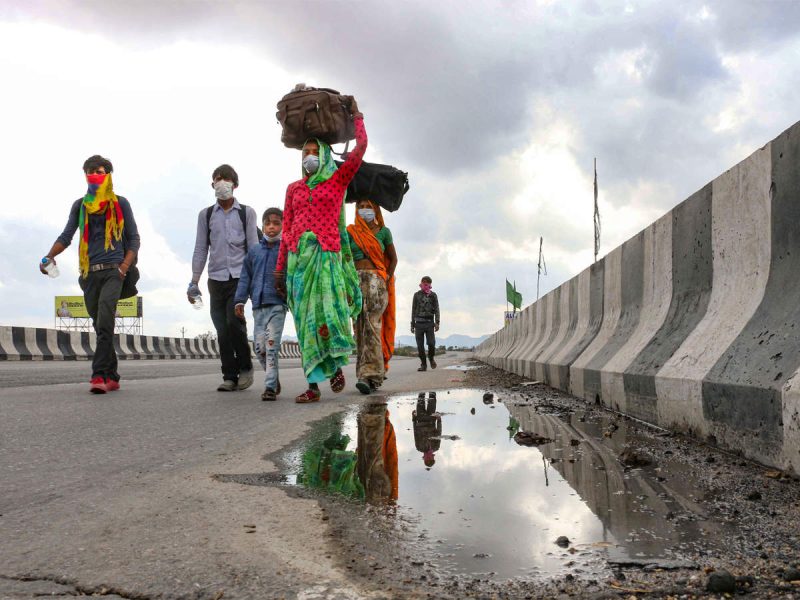
    India at 75 is a mixed bag of development and missed opportunities. The country has achieved much since Independence but a lot remains to be done to become a developed society. The pandemic has exposed India’s deficiencies in stark terms. The uncivilized conditions of living of a vast majority of the citizens became apparent. According to a report by Azim Premji University, 90% of the workers said during the lockdown that they did not have enough savings to buy one week of essentials. This led to the mass migration of millions of people, in trying conditions from cities to the villages, in the hope of access to food and survival.

    Generally, technology-related sectors, pharmaceuticals and some producing essentials in the organized sectors have done well in spite of the pandemic. So, a part of the economy is doing well in spite of adversity but incomes of at least 60% of people at the bottom of the income ladder have declined (PRICE Survey, 2022). The great divide between the unorganized and organized parts of the economy is growing. The backdrop to these developments is briefly presented below.

    Structure and Growth of the Economy
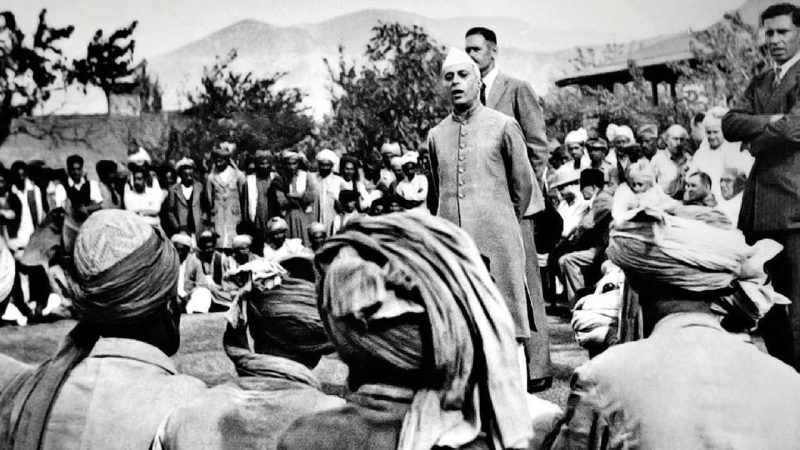
    In 1947, at the time of Independence, India’s socio-economic parameters were similar to those in countries of South East Asia and China. The level of poverty, illiteracy, and inadequacy of health infrastructure was all similar. Since then, these other countries have progressed rapidly leaving India behind in all parameters. So, India has fallen behind relatively in spite of improvements in health services and education, diversification of the economy and development of the industry.

    In 1950, agriculture was the dominant sector with a 55% share of GDP which has now dwindled to about 14%. The share of the services sector has grown rapidly and by 1980 it surpassed the share of agriculture and now it is about 55% of GDP. The Indian economy has diversified production `from pins to space ships’.

    Agriculture grows at a trend rate of a maximum of 4% per annum while the services sector can grow at even 12% per annum. So, there has been a shift in the economy’s composition from agriculture to services, accelerating the growth rate. The average growth rate of the economy between the 1950s and the 1970s was around 3.5%. In the 1980s and 1990s, it increased to 5.4% due to the shift in the composition. There was no acceleration in the growth rate of the economy in the 1990s compared to the 1980s. This rate again increased in the period after 2003 only to decline in 2008-09 due to the global financial crisis. Subsequently, the rate of growth has fluctuated wildly both due to global events and the policy conundrums in India.

    There was the taper tantrum in 2012-13 which cut short the post-global financial crisis recovery. Demonetization in November 2016 adversely impacted growth. That was followed by the structurally flawed GST. These policies administered shocks to the economy. Then came the pandemic in 2020. The economy’s quarterly growth rate had already fallen from 8% in Q4 2017-18 to 3.1% in Q4 2019-20, just before the pandemic hit.

    1980-81 marked a turning point. Prior to that, a drought would lead to a negative rate of growth in agriculture and of the economy as a whole. For instance, due to the drought in 1979-80, the economy declined by 6%. But, that was the last one. After that, a decline in agriculture has not resulted in a negative growth rate for the economy. The big drought of 1987-88 saw the economy grow at 3.4%. After 1980-81, the economy experienced a negative growth rate only during the pandemic which severely impacted the services sector, especially the contact services.

    Employment and Technology Related Issues

    Agriculture employs 45% of the workforce though its share in the economy (14%) has now become marginal. It has been undergoing mechanisation with increased use of tractors, harvester combines, etc., leading to the displacement of labour. Similar is the case in non-agriculture. So, surplus labour is stuck in agriculture leading to massive disguised unemployment.

    India is characterized by disguised unemployment and underemployment.Recent data points to growing unemployment among the educated youth. They wait for suitable work. The result is a low labour force participation rate (LFPR) in India (in the mid-40s) compared to similar other countries (60% plus).The gender dimension of unemployment and the low LFPR is worrying with women the worst sufferers.

    India’s employment data is suspect. The reason is that in the absence of unemployment allowance, people who lose work have to do some alternative work otherwise they would starve. They drive a rickshaw, push a cart, carry a head load or sell something at the roadside. This gets counted as employment even though they have only a few hours of work and are underemployed. So, India is characterized by disguised unemployment and underemployment.
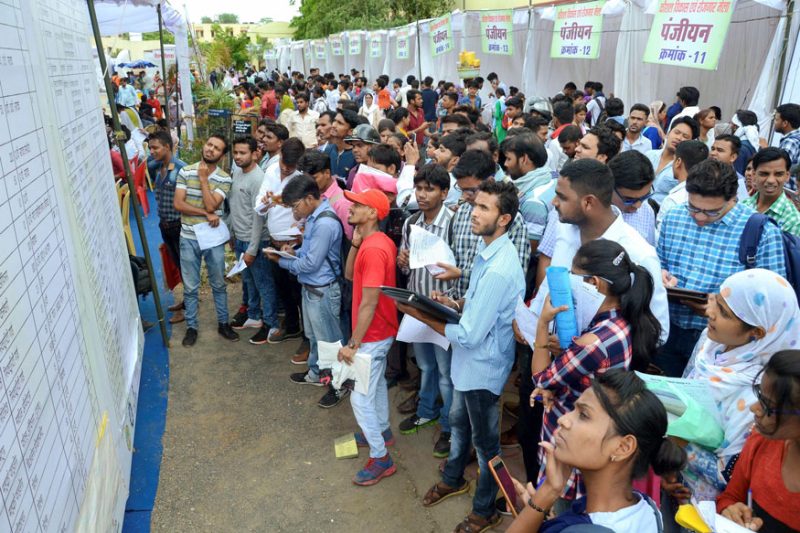
    Recent data points to growing unemployment among the educated youth. They wait for suitable work. The result is a low labour force participation rate (LFPR) in India (in the mid-40s) compared to similar other countries (60% plus). It implies that in India maybe 20% of those who could work have stopped looking for work. No wonder for a few hundred low-grade government jobs, millions of young apply. The gender dimension of unemployment and the low LFPR is worrying with women the worst sufferers.
    These aspects of inadequate employment generation are linked to automation and the investment pattern in the economy. New technologies that are now being used in the modern sectors are labour displacing. For instance, earlier in big infrastructure projects like the construction of roads, one could see hundreds of people working but now big machines are used along with a few workers.

    Further, the organized sectors get most of the investment so little is left for the unorganized sector. This is especially true for agriculture. Thus, neither the organized sector nor agriculture is generating more work. Consequently, entrants to the job market are mostly forced to join the non-agriculture unorganized sector, which in a sense is the residual sector, where the wages are a fraction of the wages in the organized sector. The unorganized sector also acts as a reserve army of labour keeping organized sector wages in check

    Lack of a Living Wage

    To boost profits, the organized sector is increasingly, employing contract labour rather than permanent employees. This is true in both the public and private sectors. So, not only the workers in the unorganized sector, even the workers in the organised sector do not earn a living wage. Thus, most workers have little savings to deal with any crisis. They are unable to give their children a proper education and cannot afford proper health facilities. Most of the children drop out of school and can only do menial jobs requiring physical labour. They cannot obtain a better-paying job and will remain poor for the rest of their lives.

    The Delhi socio-economic survey of 2018 pointed to the low purchasing power of the majority of Indians. It showed that in Delhi, 90% of households spent less than Rs. 25,000 per month, and 98% spent less than Rs. 50,000 per month. Since Delhi’s per capita income is 2.5 times the all India average, deflating the Delhi figures by this factor will approximately yield all India figures. So, 98 per cent of the families would have spent less than Rs.20,000 per month, and 90 per cent less than Rs.10,000 per month. This effectively implies that 90 per cent of families were poor in 2018, if not extremely poor (implied by the poverty line). During the pandemic, many of them lost incomes and were pauperized and forced to further reduce their consumption.

    Unorganized Sector Invisibilized

    In the unorganized sector, labour is not organized as a trade union and therefore, is unable to bargain for higher wages, when prices rise. It constitutes 94% of the workforce and has little social security. No other major world economy has such a huge unorganized sector. No wonder when such a large section of the population faces a crisis in their lives, the economy declines, as witnessed during the pandemic. India’s official rate of growth fell more sharply than that of any other G20 country.

    The micro sector has 99% of the units and 97.5% of the employment of MSME and is unlike the small and medium sectors. The benefits of policies made for the MSME sector do not accrue to the micro units.

    Policymakers largely ignore the unorganized sector. The sudden implementation of the lockdown which put this sector in a deep existential crisis points to that. The micro sector has 99% of the units and 97.5% of the employment of MSME and is unlike the small and medium sectors. The benefits of policies made for the MSME sector do not accrue to the micro units.

    Invisibilization of the unorganized sector in the data is at the root of the problem. Data on this sector become available periodically, called the reference years. In between, it is assumed that this sector can be proxied by the organized sector. This could be taken to be correct when there is no shock to the economy and its parameters remain unchanged.
    Demonetization and the flawed GST administered big shocks to the economy and undermined the unorganized sector. Its link with the organized sector got disrupted. Thus, the methodology of calculating national income announced in 2015 became invalid.

    The implication is that the unorganized sector’s decline since 2016 is not captured in the data. Worse, the growth of the organized sector has been at the expense of the unorganized sector because demand shifted from the latter to the former. It suited the policymakers to continue using the faulty data since that presented a rosy picture of the economy. This also lulled them into believing that they did not need to do anything special to check the decline of the unorganized sector.

    Policy Paradigm Shift in 1947

    Growing unemployment, weak socio-economic conditions, etc., are not sudden developments. Their root lies in the policy paradigm adopted since independence.
    In 1947, the leadership, influenced by the national movement understood that people were not to blame for their problems of poverty, illiteracy and ill-health and could not resolve them on their own. So, it was accepted that in independent India these issues would be dealt with collectively. Therefore, the government was given the responsibility of tackling these issues and given a key role in the economy.

    Simultaneously, the leadership, largely belonging to the country’s elite, was enamoured of Western modernity and wanted to copy it to make India an ’advanced country’. The two paths of Western development then available were the free market and Soviet-style central planning. India adopted a mix of the two with the leading role given to the public sector. This path was chosen also for strategic reasons and access to technology which the West was reluctant to supply. But, this choice also led to a dilemma for the Indian elite. It had to ally with the Soviet Union for reasons of defence and access to technology but wanted to be like Western Europe.

    Both the chosen paths were based on a top-down approach. The assumption was that there would be a trickle down to those at the bottom. People accepted this proposition believing in the wider good of all. Resources were mobilized and investments were made in the creation of big dams and factories (called temples of modern India) that generated few jobs. They not only displaced many people trickle down was minimal. For instance, education spread but mostly benefitted the well-off.

    The Indian economy diversified and grew rapidly. An economy that for 50 years had been growing at about 0.75% grew at about 4% in the 1950s. But, the decline in the death rate led to a spurt in the rate of population growth. So, the per capita income did not show commensurate growth, and poverty persisted. Problems got magnified due to the shortage of food following the drought of 1965-67 and the Wars in 1962 and 1965. The Naxalite movement started in 1967, there was BOP crisis and high inflation in 1972-74 due to the growing energy dependence and the Yom Kippur war. Soon thereafter there was political instability and the imposition of an Emergency in 1975. The country went from crisis to crisis.

    Planning failed due to crony capitalism. The prevailing political economy enabled the business community to systematically undermine policies for their narrow ends by fueling the growth of the black economy.

    The failure of trickle-down and the cornering of the gains of development by a narrow section of people led to growing inequality and people losing faith in the development process. Different sections of the population realized that they needed a share in power to deliver to their group. Every division in society — caste, region, community, etc. — was exploited. The leadership became short-termist and indulged in competitive populism by promising immediate gains.

    The consensus on policies that existed at independence dissipated quickly. Election time promises to get votes were not fulfilled. For instance, PM Morarji Desai said that promises in the Janata Dal manifesto in 1977 were the party’s programme and not the government’s. Such undermining of accountability of the political process has undermined democracy and trust and aggravated alienation.

    Black Economy and Policy Failure

    The black economy has grown rapidly since the 1950s with political, social and economic ramifications. Even though it is at the root of the major problems confronting the country, most analysts ignore it.

    So, the black economy controls politics and to retain power it undermines accountability and weakens democracy.

    It undermines elections and strengthens the hold of vested interests on political parties. The compromised leadership of political parties is open to blackmail both by foreign interests and those in power. When in power it is willing to do the bidding of the vested interests. So, the black economy controls politics and to retain power it undermines accountability and weakens democracy.

    The black economy controls politics and corrupts it to perpetuate itself. The honest and the idealist soon are corrupted as happened with the leadership that emerged from the anti-corruption JP movement in the mid-1970s. Many of them who gained power in the 1990s was accused of corruption and even prosecuted. Proposals for state funding of elections will only provide additional funds but not help clean up politics.

    The black economy can be characterized as ’digging holes and filling them’. It results in two incomes but zero output. There is activity without productivity with investment going to waste. Consequently, the economy grows less than its potential. It has been shown that the economy has been losing 5% growth since the mid-1970s. So, if the black economy had not existed, today the economy could have been 8 times larger and each person would have been that much better off. Thus, development is set back. In 1988, PM Rajiv Gandhi lamented that out of every rupee sent only 15 paisa reaches the ground. P Chidambaram as FM said, `expenditures don’t lead to outcomes’.

    The black economy leads to the twin problem of development. First, black incomes being outside the tax net reduce resource availability to the government. If the black incomes currently estimated at above 60% of GDP could be brought into the tax net, the tax/GDP ratio could rise by 24%. This ratio is around 17% now and is one of the lowest in the world. Further, as direct tax collections rise, the regressive indirect taxes could be reduced, lowering inflation.

    India’s fiscal crisis would also get resolved. The current public sector deficit of about 14% would become a surplus of 10%. This would eliminate borrowings and reduce the massive interest payments (the largest single item in the revenue budget). It would enable an increase in allocations to public education and health to international levels and to infrastructure and employment generation.

    In brief, curbing the black economy would take care of India’s various developmental problems, whether it be lack of trickle-down, poverty, inequality, policy failure, employment generation, inflation and so on. It causes delays in decision-making and a breakdown of trust in society.

    Due to various misconceptions about the black economy, many of the steps taken to curb it have been counterproductive, like demonetization. Dozens of committees and commissions have analysed the issues and suggested hundreds of steps to tackle the problem. Many of them have been implemented, like reduction in tax rates and elimination of most controls but the size of the black economy has grown because of a lack of political will.

    Policy Paradigm Shift in 1991

    Failure of policies led to crisis after crisis in the period leading up to 1990. The blame was put on the policies themselves and not the crony capitalism and black economy that led to their failure. The policies prior to 1990 have been often labelled as socialist. Actually, the mixed economy model was designed to promote capitalism. At best the policies may be labelled as state capitalist and they succeeded in their goal. Private capital accumulated rapidly pre-1990. The Iraq crisis of 1989-90 led to India’s BOP crisis and became the trigger for a paradigm change in policies in favour of capital. The earlier more humane and less unequal path of development was discarded.

    Marketization has led to the ’marginalization of the marginals’, greater inequality and a rise in unemployment.

    In 1991, a new policy paradigm was ushered in. Namely, ’individuals are responsible for their problems and not the collective’. Under this regime, the government’s role in the economy was scaled back and individuals were expected to go to the market for resolving their problems. This may be characterized as ’marketization’. This brought about a philosophical shift in the thinking of individuals and society.
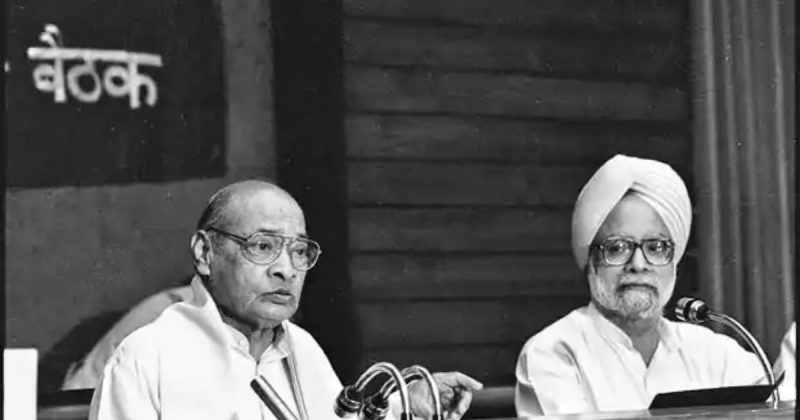
    Marketization has led to the ’marginalization of the marginals’, greater inequality and a rise in unemployment. These policies have promoted ’growth at any cost’ with the cost falling on the marginalized sections and the environment, both of which make poverty more entrenched. So, the pre-existing problems of Indian society have got aggravated in a changed form.

    Poverty is defined in terms of the ’social minimum necessary consumption’ which changes with space and time. Marketization has changed the minimum due to the promotion of consumerism and environmental decay imposing heavy health costs.
    The highly iniquitous NEP is leading to an unstable development environment. The base of growth has been getting narrower leading to periodic crises. Additionally, policy-induced challenges like demonetization, GST, pandemic and now the war in Ukraine have aggravated the situation. These social and political challenges can only grow over time as divisions in society become sharper.

    Weakness in Knowledge Generation

    Why does the obvious not happen in India? No one disagrees that poverty, illiteracy and ill health need to be eliminated. In addition to the problems due to the black economy and top-down approach, India has lagged behind in generating socially relevant knowledge to tackle its problems and make society dynamic.

    Technology has rapidly changed since the end of the Second World War. It is a moving frontier since newer technologies emerge leading to constant change and the inability of the citizens to cope with it. The advanced technology of the 1950s is intermediate or low technology today.

    Literacy needs to be redefined as the ability to absorb the current technology so as to get a decent job. Many routine jobs are likely to disappear soon, like, driver’s jobs as autonomous (self-driving) vehicles appear on the scene. Most banking is already possible through net banking and machines, like, ATMs. Banks themselves are under threat from digital currency.

    So, education is no more about the joy of learning and expanding one’s horizon. No wonder, the scientific temper is missing among a large number of the citizens.

    India’s weakness in knowledge generation is linked to the low priority given to education and R&D. Learning is based substantially on `rote learning’ which does not enable absorption of knowledge and its further development. So, education is no more about the joy of learning and expanding one’s horizon. No wonder, the scientific temper is missing among a large number of the citizens. Dogmas, misconceptions and irrationalities rule the minds of many and they are easily misled. This is politically, socially and economically a recipe for persisting backwardness.

    In spite of policy initiatives regarding education, like, the national education policy in 1968 and 1986, there is deterioration. This is because the milieu of education is all wrong. Policy is in the hands of bureaucrats, politicians or academics with bureaucratized mindsets. So, policies are mechanically framed. Like the idea that ’standards can be achieved via standardization’.

    Learning requires democratization. So, institutions need to be freed from the present feudal and bureaucratic control. Presently, institutions treat dissent as a malaise to be eliminated rather than celebrated. Courses are sought to be copied from foreign universities. JNU is told to be like Harvard or Cambridge. This is a contradiction in terms; originality cannot be copied. Courses copied from abroad tend to be based on the societal conditions there and not Indian conditions. Gandhi had said that the Indian education system is alienating and for many it still is.

    The best minds mostly go abroad and even if they return, they bring with them an alien framework not suited to India. So, as a society, we need to value ideas, prioritize education and R&D and generate socially relevant knowledge.

    Learning is given low priority because ideas are sought to be borrowed from abroad. So, the rulers have little value for institutions that could generate new ideas and inadequate funds are allotted to them. The best minds mostly go abroad and even if they return, they bring with them an alien framework not suited to India. So, as a society, we need to value ideas, prioritize education and R&D and generate socially relevant knowledge.

    Conclusion

    The growth at any cost strategy has been at the expense of the workers and the environment. This has narrowed the base of growth and led to instability in society — politically, socially and economically.

    India is a diverse society and the Indian economy is more complex than any other in the world. This has posed serious challenges to development in the last 75 years but undeniably things are not what they were. The big mistake has been to choose trickle-down policies that have not delivered to a vast number of people who live in uncivilized conditions. Poverty has changed its form and the elite imply that the poor should be grateful for what they have got. They should not focus on growing inequality, especially after 1991, when globalization entered the marketization phase which marginalizes the marginals.

    The growth at any cost strategy has been at the expense of the workers and the environment. This has narrowed the base of growth and led to instability in society — politically, socially and economically. The situation has been aggravated by the recent policy mistakes — demonetization, flawed GST and sudden lockdown. The current war in Ukraine is likely to lead to a new global order which will add to the challenges. The answer to ’why does the obvious not happen’ in India is not just economic but societal. Unless that challenge is met, portents are not bright for India at 75.

    This paper is based substantially on, `Indian Economy since Independence: Persisting Colonial Disruption’, Vision Books, 2013 and `Indian Economy’s Greatest Crisis: Impact of Coronavirus and the Road Ahead’, Penguin Random House, 2020.

    This article was published earlier in Mainstream Weekly.

    Feature Image Credit: Financial Express

    Other Images: DNA India, news18.com,  economictimes, rvcj.com
  • Gendered Politics at the Local Level: An Analysis of Tamil Nadu

    Gendered Politics at the Local Level: An Analysis of Tamil Nadu

    The institution of panchayat raj, a milestone in the journey of administrative institutions at the grass-root level, is not an exception to proxy candidature, caste-based violation of rights or gendered politics

    The political domain continues to be considered a male bastion, with women in politics often seen as a paradox. The domain is conspicuous by the very low presence of women, with very few of them making it to positions of power. Elizabeth I, Margaret Thatcher, Indira Gandhi, and Golda Meir have often been regarded as minorities in politics despite being some of the most powerful women in domestic and international politics. In the minuscule group of women politicians, ‘self-made’ women are often considered an exception rather than a rule. The political transitions are short-term solutions to break the pattern of exclusion. From the suffragette of the 20th century up till now, feminists have fought a lengthy battle for women’s right to vote and hold office. With the development that is slow and choppy, women continue to be underrepresented in politics, and parliament. While we talk about women’s political participation, it is easy for us to imagine empty seats in the parliament. However, women in India have been involved in politics since pre-independent times even when they had no voting rights. The aspect of politics that has always held an uncertain position in our minds is the relationship between women and politics.

    Constitutional Provision

    The world of urban local politics associated with political decentralisation in India was constitutionalised in 1992 through the 74th Constitutional Amendment. It ensured a reservation of at least one-third of the total number of seats for women. Additionally, for the office of chairperson one-third of the seats are reserved for women in the Urban Local Body (ULB). However, the bill for the reservation of seats for women in parliament has remained pending for years. The Constitution allows 50% of seats to be reserved for women in the local body elections. In Tamil Nadu, the High Court has directed the State Election Commission to ensure that the reservation stays at 50% in ULB as mandated by law.

    Proxy Politics and Tamil Nadu

    Despite the reservation mandated by law, the participation of women in state and national politics has barely improved. Gender inequality, hierarchy, and stigma against women in politics along with structural, social, economic and cultural barriers continue to obstruct women’s effective participation in politics. Within the urban local body, it is witnessed that husbands or male relatives wield actual power and control even though women relatives or wives are the ones elected for the position and appointed officially. Men continue to control the wards while most elected women work as proxies. This is evident in the case of the Tambaram corporation where Nagarajan, husband of DMK councillor Geetha, took the chair on her behalf in official meetings, a clear violation of legislative procedures and law. In such cases, women are shadowed and they are not free to make their own decisions. Proxy politics is rampant at the grassroots level of panchayat and local body elections where women get posts filled with responsibilities but without effective power or control.

    The term ‘proxy women’ needs further elaboration. In the 2022 urban local body elections in Tamil Nadu, while women councillors were elected in accordance with the 50% reservation policy, the actual power and control were exercised by their husbands. Though the Greater Chennai Corporation has a majority of women in elected seats, it is effectively run by men. In a few wards, for instance, in wards number 24 and 34, it was the husbands who were attending to complaints, and deciding over issues, while operating the office. In some wards, husbands address themselves as councillors.  And while people in the ward complain of not having seen their councillor since her election to the post, it is to be noted here that this problem does not end with councillors. Even the top-most positions held by women in the municipal body continue to be dictated by her veteran politician family members or, they are in the hands of the political party itself. 

    Participation in PRI

    The institution of panchayat raj, a milestone in the journey of administrative institutions at the grass-root level, is not an exception to proxy candidature, caste-based violation of rights or gendered politics. Retired IAS officer Ashok Varadhan Shetty stated a case in Dindigul in 2008 where the husband of a woman member of block panchayat was caught participating in council meetings while she stayed at home. Even when the obstacles for women in politics and panchayats in specific are diverse, male dominance automatically tops the list of obstructing women’s participation in politics.

    Theories of Representation

    The gendered pattern of politics in most parts of India is deeply patriarchal with low sex ratio, patrilocal marriage, and patrilineal inheritance, with women being denied access to the public sphere. In Omvedt’s words, “Girls are socialised to be mothers, wives and domestic workers under other’s authority”. As literature explains, women in political bodies argue that mere representation is not sufficient. A formal seat is not the same as active participation. In India, most women are less educated, less exposed, and more dependent, and proxy women are more likely to be seen as token representatives in political organisations.

    Philip’s study of the political representation of women has set up a foundation to shift from ‘politics of ideas’ to ‘politics of presence’. The twin democratic principles of equality in politics and popular control, help in ensuring equal representation of men and women. He has presented four arguments for politics of presence: the importance of symbolic representation; the need to tackle exclusion inherent in ideas of the political party; the need for vigorous support to the disadvantaged groups; and the importance of politics of presence in arriving at policy options.

    Does the concept of proxy politics leave a mark on female politicians alone? Certainly not. Various male politicians act as mere mouthpieces of the political party. Hence, it is not just women who become prey to proxy politics, the practice is widespread at the lower level. But the difference that lies here is men are instructed while women are dominated. Gender equality is, thus, an essential element for the sustainable progress of any nation. The goal of all-round development can be achieved only through equal representation of all genders in various fields. In the Global Gender Gap Report, released by the World Economic Forum, based on the key dimensions of Economic Participation and Opportunity, Educational Attainment, Health, Survival and Political Empowerment, India has ranked 140 out of 156 countries slipping 28 ranks from the 2020 report. It is evident how deep and strong the roots of discrimination in the country are.

    References

    The Constitution 112th Amendment. (n.d.). Amendment to Article 243T of the Constitution to provide for 50 percent reservation for women in Urban Local Bodies. Retrieved August 9, 2022, from https://mohua.gov.in/upload/uploadfiles/files/243T_Constitution_15.pdf

    Mahanta, K. (n.d.). Home | Government of India. Retrieved August 9, 2022, from https://censusindia.gov.in/census.website/

    Menon, J. (2021, October 8). Tamil Nadu: Many women in panchayat race, but will they take the podium? | Chennai News. Times of India. Retrieved August 9, 2022, from https://timesofindia.indiatimes.com/city/chennai/tamil-nadu-many-women-in-panchayat-race-but-will-they-take-the-podium/articleshow/86858818.cms

    Omvedt, G. (n.d.). Women in governance in South Asia. Economic and Political Weekly.

    Phillips, A. (1998). The Politics of Presence. Clarendon Press.

    Sarpanch Pati Culture: DMK’S Women Councillors, Their Proxy Husbands, Relatives Abuse Power in TN. (2022, April 9). Times Now. Retrieved August 9, 2022, from https://www.timesnownews.com/videos/times-now/specials/sarpanch-pati-culture-dmks-women-councillors-their-proxy-husbands-relatives-abuse-power-in-tn-video-90747544

    Tamil Nadu Municipal Laws (Amendment) Act, 2016. (2016, February 27). TAMIL NADU GOVERNMENT GAZETTE. Retrieved August 9, 2022, from http://www.stationeryprinting.tn.gov.in/extraordinary/2016/56-Ex-IV-2.pdf

    Feature Image Credits: The Federal

  • Roe overturned: What you need to know about the American Supreme Court abortion decision

    Roe overturned: What you need to know about the American Supreme Court abortion decision

    Despite the terminal decline of the American Empire or the Deep State, the American Republic still remains an inspiration for people across the world, for reasons of its vibrant democracy and peoples’ liberty ensured through robust institutions, law and order, and the strong constitutional process. To paraphrase Johan Galtung – ‘the US is a fabulous Republic but a terrible empire’. But even that seems to be changing as society’s democratic values, ethics, and morals are in serious decline.  The rise of right wing politics has led to a decline in the standards and values, and in the independence of institutions most notably the Judiciary. Separation of the Church and the State is a core tenet of the American Constitution and governance. That seems to be compromised as many judges bring their personal and religious beliefs in to their work. This was in demonstration in the American Supreme Court’s judgement that ends one of the most critical fundamental rights of women to their bodies and their choices for abortion. 

    After half a century, Americans’ constitutional right to get an abortion has been overturned by the Supreme Court.The ruling in Dobbs v. Jackson Women’s Health Organization – handed down on June 24, 2022 – has far-reaching consequences. There is a strong religious influence to this judgement. This could influence many other countries, particularly in an environment where right wing politics, influenced by narrow religious overtones,  is on the upswing in many countries across the world, including the world’s largest Democracy, India. Fortunately, India’s abortion laws are governed by medical advice and womens’ safety (and so it is termed MTP – Medical termination of Pregnancy). The MTP Act of 1971 was further liberalised through an Amendment Act of 2021 wherein the gestation limit for abortions is raised from 20 to 24 weeks. While India’s laws are considerate by supporting abortion decision to rape and incest survivors, the American judgement will deny this freedom or choice to the victim women.

     Nicole Huberfeld and Linda C. McClain, health law and constitutional law experts at Boston University, explain what just happened, and what happens next. This article was published earlier in The Conversation. TPF is happy to republish this article under the Creative Commons Attribution-No Derivatives 4.0-International (CC BY-ND 4.0).

    – TPF Editorial Team

    What did the Supreme Court rule?

    The Supreme Court decided by a 6-3 majority to uphold Mississippi’s ban on abortion after 15 weeks of pregnancy. In doing so, the justices overturned two key decisions protecting access to abortion: 1973’s Roe v. Wade and Planned Parenthood v. Casey, decided in 1992.

    The court’s opinion, written by Justice Samuel Alito, said that the Constitution does not mention abortion. Nor does the Constitution guarantee abortion rights via another right, the right to liberty.

    The opinion rejected Roe’s and Casey’s argument that the constitutional right to liberty included an individual’s right to privacy in choosing to have an abortion, in the same way that it protects other decisions concerning intimate sexual conduct, such as contraception and marriage. According to the opinion, abortion is “fundamentally different” because it destroys fetal life.

    The court’s narrow approach to the concept of constitutional liberty is at odds with the broader position it took in the earlier Casey ruling, as well as in a landmark marriage equality case, 2015’s Obergefell v. Hodges. But the majority said that nothing in their opinion should affect the right of same-sex couples to marry.

    Alito’s opinion also rejected the legal principle of “stare decisis,” or adhering to precedent. Supporters of the right to abortion argue that the Casey and Roe rulings should have been left in place as, in the words of the Casey ruling, reproductive rights allow women to “participate equally in the economic and social life of the Nation.”

    The ruling does not mean that abortion is banned throughout the U.S. Rather, arguments about the legality of abortion will now play out in state legislatures, where, Alito noted, women “are not without electoral or political power.”

    States will be allowed to regulate or prohibit abortion subject only to what is known as “rational basis” review – this is a weaker standard than Casey’s “undue burden” test. Under Casey’s undue burden test, states were prevented from enacting restrictions that placed substantial obstacles in the path of those seeking abortion. Now, abortion bans will be presumed to be legal as long as there is a “rational basis” for the legislature to believe the law serves legitimate state interests.

    In a strenuous dissent, Justices Stephen Breyer, Elena Kagan and Sonia Sotomayor faulted the court’s narrow approach to liberty and challenged its disregard both for stare decisis and for the impact of overruling Roe and Casey on the lives of women in the United States. The dissenters said the impact of the decision would be “the curtailment of women’s rights, and of their status as free and equal citizens.” They also expressed deep concern over the ruling’s effect on poor women’s ability to access abortion services in the U.S.

    Where does this decision fit into the history of reproductive rights in the U.S.?

    This is a huge moment. The court’s ruling has done what reproductive rights advocates feared for decades: It has taken away the constitutional right to privacy that protected access to abortion.

    This decision was decades in the making. Thirty years ago when Casey was being argued, many legal experts thought the court was poised to overrule Roe. Then, the court had eight justices appointed by Republican presidents, several of whom indicated readiness to overrule in dissenting opinions.

    Instead, Republican appointees Anthony Kennedy, Sandra Day O’Connor and David Souter upheld Roe. They revised its framework to allow more state regulation throughout pregnancy and weakened the test for evaluating those laws. Under Roe’s “strict scrutiny” test, any restriction on the right to privacy to access an abortion had to be “narrowly tailored” to further a “compelling” state interest. But Casey’s “undue burden” test gave states wider latitude to regulate abortion.

    Even before the Casey decision, abortion opponents in Congress had restricted access for poor women and members of the military greatly by limiting the use of federal funds to pay for abortion services.

    In recent years, states have adopted numerous restrictions on abortion that would not have survived Roe’s tougher “strict scrutiny” test. Even so, many state restrictions have been struck down in federal courts under the undue burden test, including bans on abortions prior to fetal viability and so-called “TRAP” – targeted regulation of abortion provider – laws that made it harder to keep clinics open.

    President Donald Trump’s pledge to appoint “pro-life” justices to federal courts – and his appointment of three conservative Supreme Court justices – finally made possible the goal of opponents of legal abortion: overruling Roe and Casey.

    What happens next?

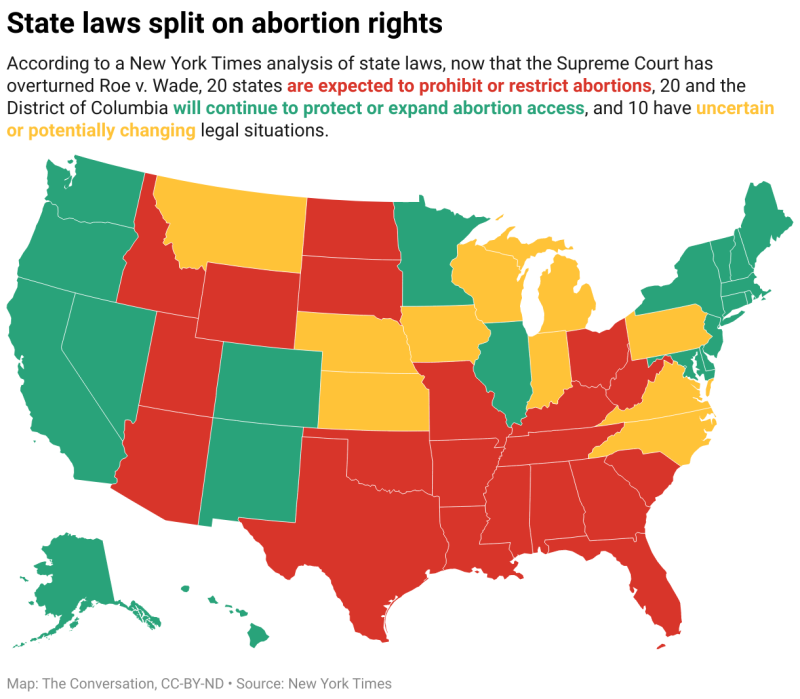
    Even before Dobbs, the ability to access abortion was limited by a patchwork of laws across the United States. Republican states have more restrictive laws than Democratic ones, with people living in the Midwest and South subject to the strongest limits.

    Thirteen states have so-called “trigger laws,” which greatly restrict access to abortion. These will soon go into effect now that the Supreme Court has overturned Roe and Casey, requiring only state attorney general certification or other action by a state official.

    Nine states have pre-Roe laws never taken off the books that significantly restrict or ban access to abortion. Altogether, nearly half of states will restrict access to abortion through a variety of measures like banning abortion from six weeks of pregnancy – before many women know they are pregnant – and limiting the reasons abortions may be obtained, such as forbidding abortion in the case of fetal anomalies.

    Meanwhile, 16 states and the District of Columbia protect access to abortion in a variety of ways, such as state statutes, constitutional amendments or state Supreme Court decisions.

    None of the states that limit abortion access currently criminalize the pregnant person’s action. Rather, they threaten health care providers with civil or criminal actions, including loss of their license to practice medicine.

    Some states are creating “safe havens” where people can travel to access an abortion legally. People have already been traveling to states like Massachusetts from highly restrictive states.

    The court’s decision may drive federal action, too.

    The House of Representatives passed the Women’s Health Protection Act, which protects health care providers and pregnant people seeking abortion, but Senate Republicans have blocked the bill from coming up for a vote. Congress could also reconsider providing limited Medicaid payment for abortion, but such federal legislation also seems unlikely to succeed.

    President Joe Biden could use executive power to instruct federal agencies to review existing regulations to ensure that access to abortion continues to occur in as many places as possible. Congressional Republicans could test the water on nationwide abortion bans. While such efforts are likely to fail, these efforts could cause confusion for people who are already vulnerable.

    The Supreme Court’s rolling back a right that has been recognized for 50 years puts the U.S. in the minority of nations, most of which are moving toward liberalization.

    What does this mean for people in America seeking an abortion?

    Unintended pregnancies and abortions are more common among poor women and women of color, both in the U.S. and around the world.

    Research shows that people have abortions whether lawful or not, but in nations where access to abortion is limited or outlawed, women are more likely to suffer negative health outcomes, such as infection, excessive bleeding and uterine perforation. Those who must carry a pregnancy to full term are more likely to suffer pregnancy-related deaths.

    The state-by-state access to abortion resulting from this decision means many people will have to travel farther to obtain an abortion. And distance will mean fewer people will get abortions, especially lower-income women – a fact the Supreme Court itself recognized in 2016.

    But since 2020, medication abortion – a two-pill regimen of mifepristone and misoprostol – has been the most common method of ending pregnancy in the U.S. The coronavirus pandemic accelerated this shift, as it drove the Food and Drug Administration to make medication abortions more available by allowing doctors to prescribe the pills through telemedicine and permitting medication to be mailed without in-person consultation.

    Many states that restrict access to abortion also are trying to prevent medication abortion. But stopping telehealth providers from mailing pills will be a challenge. Further, because the FDA approved this regimen, states will be contradicting federal law, setting up conflict that may lead to more litigation.

    The Supreme Court’s rolling back a right that has been recognized for 50 years puts the U.S. in the minority of nations, most of which are moving toward liberalization. Nevertheless, even though abortion is seen by many as essential health care, the cultural fight will surely continue.

    Featured Image Credit: Evening Standard

  • Valuing Folk Crop Varieties for Agroecology and Food Security

    Valuing Folk Crop Varieties for Agroecology and Food Security

    India’s Ministry of Environment, Forest and Climate Change (MoEFCC) has recently, through an office memorandum, excluded the new generation genetically modified (GM) plants – also known as genetically edited (GE) plants – from the ambit of India’s biosafety rules. The use of GMO plant seeds like Monsanto’s Bt Cotton gave promising results initially but over a longer period it has resulted in many problems leading to large number of marginal farmer suicides. Based on this bitter experience the Government of India has brought in place very stringent bio-safety rules. However, with new biotech breakthroughs like Genome Editing techniques, there is a huge pressure from corporate giants like Monsanto, Bayer etc to open up agricultural markets in major countries like India and the global south. There is a fear that American capitalism driven biotech companies may destroy indigenous bio-diversities that could result in food insecurity in the long run. India adopted ‘Green Revolution’ in a big way to increase its food production. It lead to the use of High Yield Variety seeds and mono-cultural farming in a big way. Half a century later, there is a need to review the after effects of the ‘Green Revolution’ as the country is plagued by over use of fertilisers, pesticides, water scarcity, increasing salinity, and battling loss of nutrition in farmlands due to the loss of traditional crop diversity. India was home to a vast gene pool of 110000 varieties of native rice before the Green revolution, of which less than 600 are surviving today. The use of GMO crops will lead to further destruction of Indian food diversity. Genome editing, a newer technology, should be examined carefully from a policy perspective. The European Union treats all GMO and GE as one and therefore it has a single stringent policy. Dr Debal Deb has done a pioneering work in saving many of the indigenous rice varieties and campaigns against the industrial agriculture. His is a larger and vital perspective of Agricultural ecology. The Peninsula Foundation revisits his article of 2009 to drive home the importance of preserving and enhancing India’s bio-diversity and agricultural ecology as pressures from capitalist biotech predators loom large for commercial interests.

    – TPF Editorial Team

    On May 25, 2009, Hurricane Aila hit the deltaic islands of the Sunderban of West Bengal. The estuarine water surged and destroyed the villages. Farmer’s homes were engulfed by the swollen rivers, their properties vanished with the waves, and their means of livelihood disappeared, as illustrated by the empty farm fields, suddenly turned salty. In addition, most of the ponds and bore wells became salinized.

    Since Aila’s devastation, there has been a frantic search for the salt-tolerant rice seeds created by the ancestors of the current Sunderban farmers. With agricultural modernization, these heirloom crop varieties had slipped through the farmers’ hands.

    But now, after decades of complacency, farmers and agriculture experts alike have been jolted into realizing that on the saline Sunderban soil, modern high-yield varieties are no match for the “primitive,” traditional rice varieties. But the seeds of those diverse salt-tolerant varieties are unavailable now; just one or two varieties are still surviving on the marginal farms of a few poor farmers, who now feel the luckiest. The government rice gene banks have documents to show that they have all these varieties preserved, but they cannot dole out any viable seeds to farmers in need. That is the tragedy of the centralized ex situ gene banks, which eventually serve as morgues for seeds, killed by decades of disuse.

    The only rice seed bank in eastern India that conserves salt-tolerant rice varieties in situ is Vrihi, which has distributed four varieties of salt-tolerant rice in small quantities to a dozen farmers in Sunderban. The success of these folk rice varieties on salinized farms demonstrates how folk crop genetic diversity can ensure local food security. These folk rice varieties also promote sustainable agriculture by obviating the need for all external inputs of agrochemicals.

    Folk Rice Varieties, the Best Bet

    Not only the salinization of soil in coastal farmlands but also the too-late arrival of the monsoon this year has caused seedlings of modern rice varieties to wither on all un-irrigated farms and spelled doom for marginal farmers’ food security throughout the subcontinent. Despite all the brouhaha about the much-hyped Green Revolution, South Asia’s crop production still depends heavily on the monsoon rains and too much, too late, too early, or too scanty rain causes widespread failure of modern crop varieties. Around 60 per cent of India’s agriculture is unirrigated and totally dependent on rain.

    In 2002, the monsoon failure in July resulted in a seasonal rainfall deficit of 19 percent and caused a profound loss of agricultural production with a drop of over 3 percent in India’s GDP (Challinor et al. 2006). This year’s shortfall of the monsoon rain is likely to cause production to fall 10 to 15 million tons short of the 100 million tons of total production forecast for India at the beginning of the season (Chameides 2009). This projected shortfall also represents about 3 percent of the expected global rice harvest of 430 million tons.

    In the face of such climatic vagaries, modern agricultural science strives to incorporate genes for adaptation — genes that were carefully selected by many generations of indigenous farmer-breeders centuries ago. Thousands of locally-adapted rice varieties (also called “landraces”) were created by farmer selection to withstand fluctuations in rainfall and temperature and to resist various pests and pathogens. Most of these varieties, however, have been replaced by a few modern varieties, to the detriment of food security.

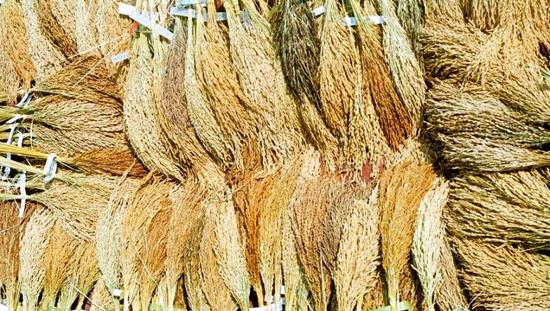
    Until the advent of the Green Revolution in the 1960s, India was believed to have been home to about 110,000 rice varieties (Richharia and Govindasamy 1990), most of which have gone extinct from farm fields. Perhaps a few thousand varieties are still surviving on marginal farms, where no modern cultivar can grow. In the eastern state of West Bengal, about 5600 rice varieties were cultivated, of which 3500 varieties of rice were shipped to the International Rice Research Institute (IRRI) of the Philippines during the period from 1975 to 1983 (Deb 2005). After an extensive search over the past fourteen years for extant rice varieties in West Bengal and a few neighboring states, I was able to rescue only 610 rice landraces from marginal farms. All others–about 5000–have disappeared from farm fields. The 610 extant rice varieties are grown every year on my conservation farm, Basudha. Every year, these seeds are distributed to willing farmers from the Vrihi seed bank free of charge.

    Vrihi (meaning “rice seed” in Sanskrit) is the largest non-governmental seed repository of traditional rice varieties in eastern India. These varieties can withstand a much wider range of fluctuations in temperature and soil nutrient levels as well as water stress than any of the modern rice varieties. This year’s monsoon delay has not seriously affected the survivorship and performance of the 610 rice varieties on the experimental farm, nor did the overabundant rainfall a few years earlier.

    Circumstances of Loss

    If traditional landraces are so useful, how could the farmers afford to lose them? The dynamics are complex but understandable. When government agencies and seed companies began promoting “miracle seeds,” many farmers were lured and abandoned their heirloom varieties. Farmers saw the initial superior yields of the high input–responsive varieties under optimal conditions and copied their “successful” neighbors. Soon, an increasing number of farmers adopted the modern, “Green Revolution” (GR) seeds, and farmers not participating in the GR were dubbed backward, anti-modern, and imprudent. Seed companies, state agriculture departments, the World Bank, universities, and national and international development NGOs (non-governmental organizations) urged farmers to abandon their traditional seeds and farming practices–both the hardware and software of agriculture. After a few years of disuse, traditional seed stocks became unviable and were thereby lost. Thus, when farmers began to experience failure of the modern varieties in marginal environmental conditions, they had no other seeds to fall back on. Their only option was, and still is, to progressively increase water and agrochemical inputs to the land. In the process, the escalating cost of modern agriculture eventually bound the farmers in an ever-tightening snare of debt. After about a century of agronomists’ faith in technology to ensure food security, farming has become a risky enterprise, with ever greater debt for farmers. Over 150,000 farmers are reported to have committed suicide between 1995 and 2004 in India (Government of India 2007), and the number grew by an annual average of 10,000 until 2007 (Posani 2009).

    The government gave ample subsidies for irrigation and fertilizers to convert marginal farms into more productive farms and boosted rice production in the first decade that GR seeds were used. Soon after, however, yield curves began to decline. After 40 years of GR, the productivity of rice is declining at an alarming rate (Pingali 1994). IRRI’s own study revealed yield decreases after cultivation of the “miracle rice variety” IR8 over a 10-year period (Flinn et al 1982). Today, just to keep the land productive, rice farmers in South Asia apply over 11 times more synthetic nitrogen fertilizers and 12.8 times more phosphate fertilizers per hectare than they did in the late 1960s (FAI 2008). Cereal yield has plummeted back to the pre-GR levels, yet many farmers cannot recall that they had previously obtained more rice per unit of input than what they are currently getting. Most farmers have forgotten the average yields of the traditional varieties and tend to believe that all traditional varieties were low-yielding. They think that the modern “high-yielding” varieties must yield more because they are so named.

    In contrast, demonstration of the agronomic performance of the 610 traditional rice varieties on Basudha farm over the past 14 years has convinced farmers that many traditional varieties can out-yield any modern cultivar. Moreover, the savings in terms of water and agrochemical inputs and the records of yield stability against the vagaries of the monsoon have convinced them of the economic advantages of ecological agriculture over chemical agriculture. Gradually, an increasing number of farmers have been receiving traditional seeds from the Vrihi seed bank and exchanging them with other farmers. As of this year, more than 680 farmers have received seeds from Vrihi and are cultivating them on their farms. None of them have reverted to chemical farming or to GR varieties.

    Extraordinary Heirlooms

    Every year, farmer-researchers meticulously document the morphological and agronomic characteristics of each of the rice varieties being conserved on our research farm, Basudha. With the help of simple equipment–graph paper, rulers, measuring tape, and a bamboo microscope (Basu 2007)–the researchers document 30 descriptors of rice, including leaf length and width; plant height at maturity; leaf and internode color; flag leaf angle; color and size of awns; color, shape and size of rice seeds and decorticated grains; panicle density; seed weight; dates of flowering and maturity; presence or absence of aroma; and diverse cultural uses.

    Vrihi’s seed bank collection includes numerous unique landraces, such as those with novel pigmentation patterns and wing-like appendages on the rice hull. Perhaps the most remarkable are Jugal, the double-grain rice, and Sateen, the triple-grain rice. These characteristics have been published and copyrighted (Deb 2005) under Vrihi’s name to protect the intellectual property rights of indigenous farmers.

    A few rice varieties have unique therapeutic properties. Kabiraj-sal is believed to provide sufficient nutrition to people who cannot digest a typical protein diet. Our studies suggest that this rice contains a high amount of labile starch, a fraction of which yields important amino acids (the building blocks of proteins). The pink starch of Kelas and Bhut moori is an essential nutrient for tribal women during and after pregnancy, because the tribal people believe it heals their anemia. Preliminary studies indicate a high content of iron and folic acid in the grains of these rice varieties. Local food cultures hold Dudh-sar and Parmai-sal in high esteem because they are “good for children’s brains.” While rigorous experimental studies are required to verify such folk beliefs, the prevalent institutional mindset is to discard folk knowledge as superstitious, even before testing it– until, that is, the same properties are patented by a multinational corporation.

    Traditional farmers grow some rice varieties for their specific adaptations to the local environmental and soil conditions. Thus, Rangi, Kaya, Kelas, and Noichi are grown on rainfed dryland farms, where no irrigation facility exists. Late or scanty rainfall does not affect the yield stability of these varieties. In flood-prone districts, remarkable culm elongation is seen in Sada Jabra, Lakshmi-dighal, Banya-sal, Jal kamini, and Kumrogorh varieties, which tend to grow taller with the level of water inundating the field. The deepest water that Lakshmi-dighal can tolerate was recorded to be six meters. Getu, Matla, and Talmugur can withstand up to 30 ppt (parts per thousand) of salinity, while Harma nona is moderately saline tolerant. No modern rice variety can survive in these marginal environmental conditions. Traditional crop varieties are often recorded to have out-yielded modern varieties in marginal environmental conditions (Cleveland et al. 2000).

    Farmer-selected crop varieties are not only adapted to local soil and climatic conditions but are also fine-tuned to diverse local ecological conditions and cultural preferences. Numerous local rice landraces show marked resistance to insect pests and pathogens. Kalo nunia, Kartik-sal, and Tulsi manjari are blast-resistant. Bishnubhog and Rani kajal are known to be resistant to bacterial blight (Singh 1989). Gour-Nitai, Jashua, and Shatia seem to resist caseworm (Nymphula depunctalis) attack; stem borer (Tryporyza spp.) attack on Khudi khasa, Loha gorah, Malabati, Sada Dhepa, and Sindur mukhi varieties is seldom observed.

    Farmers’ agronomic practices, adapting to the complexity of the farm food web interactions, have also resulted in selection of certain rice varieties with distinctive characteristics, such as long awn and erect flag leaf. Peasant farmers in dry lateritic areas of West Bengal and Jharkhand show a preference for long and strong awns, which deter grazing from cattle and goats (Deb 2005). Landraces with long and erect flag leaves are preferred in many areas, because they ensure protection of grains from birds.

    Different rice varieties are grown for their distinctive aroma, color, and tastes. Some of these varieties are preferred for making crisped rice, some for puffed rice, and others for fragrant rice sweets to be prepared for special ceremonies. Blind to this diversity of local food cultures and farm ecological complexity, the agronomic modernization agenda has entailed drastic truncation of crop genetic diversity as well as homogenization of food cultures on all continents.

    Sustainable Agriculture and Crop Genetic Diversity

    Crop genetic diversity, which our ancestors enormously expanded over millennia (Doebley 2006), is our best bet for sustainable food production against stochastic changes in local climate, soil chemistry, and biotic influences. Reintroducing the traditional varietal mixtures in rice farms is a key to sustainable agriculture. A wide genetic base provides “built-in insurance” (Harlan 1992) against crop pests, pathogens, and climatic vagaries.

    Traditional crop landraces are an important component of sustainable agriculture because their long-term yield stability is superior to most modern varieties. An ample body of evidence exists to indicate that whenever there is a shortage of irrigation water or of fertilizers–due to drought, social problems, or a disruption of the supply network– “modern crops typically show a reduction in yield that is greater and covers wider areas, compared with folk varieties” (Cleveland et al. 1994). Under optimal farming conditions, some folk varieties may have lower mean yields than high-yield varieties but exhibit considerably higher mean yields in the marginal environments to which they are specifically adapted.

    All these differences are amply demonstrated on Basudha farm in a remote corner of West Bengal, India. This farm is the only farm in South Asia where over 600 rice landraces are grown every year for producing seeds. These rice varieties are grown with no agrochemicals and scant irrigation. On the same farm, over 20 other crops, including oil seeds, vegetables, and pulses, are also grown each year. To a modern, “scientifically trained” farmer as well as a professional agronomist, it’s unbelievable that over the past eight years, none of the 610 varieties at Basudha needed any pesticides–including bio-pesticides–to control rice pests and pathogens. The benefit of using varietal mixtures to control diseases and pests has been amply documented in the scientific literature (Winterer et al. 1994; Wolfe 2000; Leung et al. 2003). The secret lies in folk ecological wisdom: biological diversity enhances ecosystem persistence and resilience. Modern ecological research (Folke et al. 2004; Tilman et al. 2006; Allesina and Pascual 2008) supports this wisdom.

    If the hardware of sustainable agriculture is crop diversity, the software consists of biodiversity-enhancing farming techniques. The farming technique is the “program” of cultivation and can successfully “run” on appropriate hardware of crop genetic and species diversity. In the absence of the appropriate hardware however, the software of ecological agriculture cannot give good results, simply because the techniques evolved in an empirical base of on-farm biodiversity. Multiple cropping, the use of varietal mixtures, the creation of diverse habitat patches, and the fostering of populations of natural enemies of pests are the most certain means of enhancing agroecosystem complexity. More species and genetic diversity mean greater complexity, which in turn creates greater resilience–that is, the system’s ability to return to its original species composition and structure following environmental perturbations such as pest and disease outbreaks or drought, etc.

    Ecological Functions of On-Farm Biodiversity

    Food security and sustainability at the production level are a consequence of the agroecosystem’s resilience, which can only be maintained by using diversity on both species and crop genetic levels. Varietal mixtures are a proven method of reducing diseases and pests. Growing companion crops like pigeonpea, chickpea, rozelle, yams, Ipomea fistulosa, and hedge bushes provide alternative hosts for many herbivore insects, thereby reducing pest pressure on rice. They also provide important nutrients for the soil, while the leaves of associate crops like pigeonpea (Cajanus cajan) can suppress growth of certain grasses like Cyperus rotundus.

    Pest insects and mollusks can be effectively controlled, even eliminated, by inviting carnivorous birds and reptiles (unless they have been eliminated from the area by pesticides and industrial toxins). Erecting bamboo “T’s” or placing dead tree branches on the farm encourages a range of carnivorous birds, including the drongo, bee eaters, owls, and nightjars, to perch on them. Leaving small empty patches or puddles of water on the land creates diverse ecosystems and thus enhances biodiversity. The hoopoe, the cattle egret, the myna, and the crow pheasant love to browse for insects in these open spaces.

    Measures to retain soil moisture to prevent nutrients from leaching out are also of crucial importance. The moisturizing effect of mulching triggers certain key genes that synergistically operate to delay crop senescence and reduce disease susceptibility (Kumar et al. 2004). The combined use of green mulch and cover crops nurtures key soil ecosystem components–microbes, earthworms, ants, ground beetles, millipedes, centipedes, pseudoscorpions, glow worms, and thrips — which all contribute to soil nutrient cycling.

    Agricultural sustainability consists of long-term productivity, not short-term increase of yield. Ecological agriculture, which seeks to understand and apply ecological principles to farm ecosystems, is the future of modern agriculture. To correct the mistakes committed in the course of industrial agriculture over the past 50 years, it is imperative that the empirical agricultural knowledge of past centuries and the gigantic achievements of ancient farmer-scientists are examined and employed to reestablish connections to the components of the agroecosystem. The problems of agricultural production that arise from the disintegration of agorecosystem complexity can only be solved by restoring this complexity, not by simplifying it with technological fixes.

    Further Reading and Resources: in situ conservation and agroecology

    References

    Allesina S and Pascual M (2008). Network structure, predator-prey modules, and stability in large food webs. Theoretical Ecology 1(1):55-64.

    Basu, P (2007). Microscopes made from bamboo bring biology into focus. Nature Medicine 13(10): 1128. http://www.nature.com/nm/journal/v13/n10/pdf/nm1007-1128a.pdf.

    Challinor A, Slingo J, Turner A and Wheeler T (2006). Indian Monsoon: Contribution to the Stern Review. University of Reading. www.hm-treasury.gov.uk/d/Challinor_et_al.pdf.

    Chameides B (2009). Monsoon fails, India suffers. The Green Grok. Nicholas School of the Environment at Duke University. www.nicholas.duke.edu/thegreengrok/monsoon_india.

    Cleveland DA, Soleri D and Smith SE (1994). Do folk crop varieties have a role in sustainable agriculture? BioScience 44(11): 740–751.

    Cleveland DA, Soleri D and Smith SE (2000). A biological framework for understanding farmers’ plant breeding. Economic Botany 54(3): 377–394.

    Deb D (2005). Seeds of Tradition, Seeds of Future: Folk Rice Varieties from east India. Research Foundation for Science Technology & Ecology. New Delhi.

    Doebley J (2006). Unfallen grains: how ancient farmers turned weeds into crops. Science 312(5778): 1318–1319.

    FAI (2008). Fertiliser Statistics, Year 2007-2008. Fertilizer Association of India. New Delhi. http://www.faidelhi.org/

    Flinn JC, De Dutta SK and Labadan E (1982). An analysis of long term rice yields in a wetland soil. Field Crops Research 7(3): 201–216.

    Folke C, Carpenter S, Walker B, Scheffer M, Elmqvist T, Gunderson L and Holling CS (2004). Regime shifts, resilience and biodiversity in ecosystem management. Annual Review of Ecology, Evolution and Systematics 35: 557–581.

    Government of India (2007). Report of the Expert Group on Agricultural Indebtedness. Ministry of Agriculture. New Delhi. http://www.igidr.ac.in/pdf/publication/PP-059.pdf

    Harlan JR (1992) Crops and Man (2nd edition). , p. 148. American Society of Agronomy, Inc and Crop Science Society of America, Inc., Madison, WI.

    Kumar V, Mills DJ, Anderson JD and Mattoo AK (2004). An alternative agriculture system is defined by a distinct expression profile of select gene transcripts and proteins. PNAS 101(29): 10535–10540

    Leung H, Zhu Y, Revilla-Molina I, Fan JX, Chen H, Pangga I, Vera Cruz C and Mew TW (2003). Using genetic diversity to achieve sustainable rice disease management. Plant Disease 87(10): 1156–1169.

    Pingali PI (1994). Technological prospects for reversing the declining trend in Asia’s rice productivity. In: Agricultural Technology: Policy Issues for the International Community (Anderson JR, ed), pp. 384–401. CAB International.

    Posani B (2009). Crisis in the Countryside: Farmer suicides and the political economy of agrarian distress in India. DSI Working Paper No. 09-95. Development Studies Institute, London School of Economics and Political Science. London. http://www.lse.ac.uk/collections/DESTIN/pdf/WP95.pdf

    Richharia RH and Govindasamy S (1990). Rices of India. Academy of Development Science. Karjat.

    Note: The only reliable data are given in Richharia and Govindasamy (1990), who estimated that about 200,000 varieties existed in India until the advent of the Green Revolution. Assuming many of these folk varieties were synonymous, an estimated 110,000 varieties were in cultivation. Such astounding figures win credibility from the fact that Dr. Richharia collected 22,000 folk varieties (currently in custody of Raipur University) from Chhattisgarh alone – one of the 28 States of India. The IRRI gene bank preserves 86,330 accessions from India [FAO (2003) Genetic diversity in rice. In: Sustainable rice production for food security. International Rice Commission/ FAO. Rome. (web publication) URL: http://www.fao.org/docrep/006/y4751e/y4751e0b.htm#TopOfPage ]

    Singh RN (1989). Reaction of indigenous rice germplasm to bacterial blight. National Academy of Science Letters 12: 231-232.

    Tilman D, Reich PB and Knops JMH (2006). Biodiversity and ecosystem stability in a decade-long grassland experiment. Nature 441: 629-632.

    Winterer J, Klepetka B, Banks J and Kareiva P (1994). Strategies for minimizing the vulnerability of rice to pest epidemics. In: Rice Pest Science and Management. (Teng PS, Heong KL and Moody K, eds.), pp. 53–70. International Rice Research Institute, Manila.

    Wolfe MS (2000). Crop strength through diversity. Nature 406: 681–682.

    This article was published earlier in Independent Science News and is republished under the Creative Commons Attribution 3.0 License.

    Feature Image Credit: www.thebetterindia.com

  • National Education Policy, 2020 – Policy Brief

    National Education Policy, 2020 – Policy Brief

    [powerkit_button size=”lg” style=”info” block=”true” url=”https://admin.thepeninsula.org.in/wp-content/uploads/2022/04/Policy-Brief-NEP-2020.docx-1_compressed-1.pdf” target=”_blank” nofollow=”false”]
    Download – Policy Brief on National Education Policy, 2020
    [/powerkit_button]

    Executive Summary:

    In line with the New Education Policy (NEP) 2020 mandate, the UGC released the draft National Higher Educational Qualifications Framework (NHEQF) in February 2022. Its release has reignited the controversy over the policy that was criticized and even rejected by many state governments. The inclusion of Education in the concurrent list gives overriding powers to the centre. However, the sweeping changes the NEP is set to bring have raised concerns that the states would turn into mere implementing agencies while all the decisions regarding education will be taken by the centre. At the root of the controversy lies the federal structure of India which would be jeopardized by the implementation of the policy. Hence, significant and appropriate amendments to the draft are required to address the grievances of the states.

    What is NEP (2020)?

    The NEP, released in July of 2020 by the Union Government, seeks to overhaul the entire education system of the country by replacing the thirty four-year-old National Policy on Education (1986). In the domain of pre-University education, the new policy aims to transform the curricula structure from 10+2 to 5+3+3+4, mandates the Three Language Formula (TLF), reduces the syllabus to make board exams “easier” and gives thrust to vocational training and skill development. In the realm of higher education, it envisions a single regulator- the Higher Education Council India (HECI)- for Higher Education Institutes (HEIs) by merging UGC, AICTE and other regulatory bodies. The HECI is further divided into four verticals, namely the National Higher Education Regulatory Council (NHERC), National Accreditation Council (NAC), Higher Education Grants Council (HEGI) and General Education Council (GEC). 

    The policy introduces four-year undergraduate programmes with multiple exit options, along with proposing a national Academic Bank of Credit and a national entrance exam for all universities. It further allows higher education to be taught in regional languages. Additionally, it proposes the National Testing Agency (NTA) conduct a “high quality” common entrance test and a common specialized subject exam in sciences, humanities, language, arts, and vocational subjects, at least twice a year. It blurs the distinction between research-oriented and employment-oriented education, emphasizing a multidisciplinary approach to education. Additionally, it proposes facilitation to top global universities to set up campuses in India and to top Indian Universities to establish campuses abroad.

    The policy also touches upon the issue of Adult Education. It proposes strong and innovative government initiatives to achieve 100% adult literacy, educate about critical life skills (including financial literacy, digital literacy, commercial skills, health care and awareness etc.), impart vocational skills and provide basic education to adults. It also ensures providing the necessary infrastructure for adults to facilitate its implementation.  

    Why is it a problem? 

    Since its release, the policy has been opposed by a few states. Though other states have voiced their reservations, none have been as vocal and vehement as Tamil Nadu. 

    • The foremost reason pertains to the Three Language Formula. The policy states that out of the three languages that ought to be taught at the pre-University level, two must be Indian. This leaves the students from the southern states to learn Hindi, along with English and the regional language in their curriculum. The formula was brought forward in 1968 by the then Indira Gandhi government as recommended by Kothari Commission. All states adopted the policy except Tamil Nadu, which continued its two language policy.

    The Three Language Formula finds its explicit mention in Section 4.13 of the Draft policy. In order to promote multilingualism, the draft states that, “The three-language formula will continue to be implemented”. Moreover, a student is given the option to change one of the three languages only once- in Grade 6 or 7. Though the formula has been in continuance since the 1970s, an exclusive emphasis upon it raises eyebrows. The draft further falls short of assuring the states unwilling to implement the formula of any compulsion by the centre, instead offering “greater flexibility” in its implementation. 

    Learning Hindi has always been a controversial issue in Tamil Nadu. The state has seen numerous instances of violence and public protests against the imposition of Hindi. The state has also actively promoted Tamil learning in schools. In 2006, the state enacted Tamil Nadu Tamil Learning Act, making it compulsory for every school operating in the state to teach Tamil. The state government is also opposed to the establishment of Navodaya Schools by the centre in the state.

    • The draft also places an unprecedented emphasis on learning Sanskrit. Section 4.16 stresses the need for learning Sanskrit since most of the Indian other languages attribute “their origins and sources of vocabularies” to it. Section 4.17 emphasizes the importance of classical literature possessed by the language. It thus offers its teaching “at all levels of school and higher education”. Moreover, it promotes the teaching of the language through its classical literature in mathematics, philosophy, grammar, music, politics, medicine, architecture, metallurgy, drama, poetry etc.

    Laying such a huge emphasis upon an archaic language in schools and even HEIs at “all levels” would leave a student burdened with an unnecessary curriculum. Offering courses in Sanskrit to college students, for instance, in non-Hindi speaking states would decrease their grades. Worse still, in Central Universities- mostly dominated by Hindi speakers, such courses will make naked and even exacerbate the language barrier the non-Hindi speaking students face. Further, the postulate that most of the major Indian languages owe their “origins” to Sanskrit is not even remotely true. Additionally, the literature in Sanskrit can be discriminatory against varna, caste or group, especially in social sciences. 

    • However, the major concern relates to the federal structure of India. The policy proposes the establishment of the all-powerful HECI and its verticals. The NHERC, one of its verticals, reserves the power to regulate every facet of HEIs, including financial probity, good governance, and the full online and offline public self-disclosure of all finances, audits, procedures, infrastructure, faculty/staff, courses, and educational outcomes[Section 18.3]. It further envisions a “graded accreditation” system to be given by the NAC, that will “specify phased benchmarks for all HEIs to achieve set levels of quality, self-governance, and autonomy…to attain the highest level of accreditation over the next 15 years” [Section 18.4]. The GECI, another of its verticals, will frame “expected learning outcomes for higher education programmes” and mandate the identification of “specific skills that students must acquire during their academic programmes” [Section 18.6].

    Owing to its vague language, the draft lacks clarity on the extent of jurisdiction of HECI and its verticals. It reserves the power to regulate the faculty/staff, courses, educational outcomes etc., thus infringing upon the state’s rights on reservations and education. Moreover, the students are required to acquire “specific skills” and “learning outcomes” framed by the central government, making it difficult for them to cater to the needs of their respective states. Further, the vocabulary used, such as “good governance”, leaves room for significant manipulation in the future.

    • The policy veritably promotes the centralization of education at every level. For instance, it envisages a nation-wide “high-quality” common aptitude test for admission into the universities, as well as “specialized common subject exams in the sciences, humanities, languages, arts, and vocational subjects” [Section 4.42], which it assumes will reduce the burden on students. Moreover, an all-India test is to be conducted by NTA for admission into pre-service teacher preparation programmes of Teacher Education Institutions (TEIs) [Section 15.7], which it envisions to convert into multidisciplinary institutions [Section 15.4]. Moreover, it places an undue emphasis on centralized vocational training in all schools and HEIs which would be overseen by the National Committee for the Integration of Vocational Education (NCIVE) [Section 16.8]. In the field of academic research, the policy envisions the establishment of the National Research Foundation to provide funding for research [Section 17.9]. Further, it proposes to establish the National Research Foundation (NRF) which is meant to provide funding for research to the institutions, and “undertake major initiatives to seed and grow research at the state universities and other public institutions”[Section 17.9], centralizing disbursement of research-oriented funding. It is further empowered to ensure that the Research Scholars are “constantly made aware of the most urgent national research issues” to allow breakthroughs to be optimally brought into policy [Section 17.11(c)].

    Tamil Nadu’s objection to a country-wide entrance test is premised upon the recommendations of the M. Anandakrishnan committee. Constituted in 2006, it recommended the abolition of the Common Entrance Test (CET) in the state from the academic year 2007-08 (Srinivasan, 2016), due to the unaffordability of the high fees of coaching for the rural and underprivileged students. Furthermore, the NRF is empowered to fund the research on urgent “national” issues, thus again leaving the door ajar for manipulation of their jurisdiction, and depriving state-funded institutions of funding for research on regional issues.

    • The policy seizes the administrative autonomy from both public and private HEIs. It mandates every such institution to establish a Board of Governors (BoG) which would be empowered to govern the institution[Section 19.2], including the selection of leaders of the institution [Section 19.4]. Further, the policy subjugates the BoG to guidelines formulated by NHERC[Section 19.3]. Additionally, it makes it compulsory for every institution to formulate its own Institutional Development Plan [Section 19.5] to strategize its roadmap.

    In subjugating the administrative system of the colleges to a central body, the central government ignores the urban-rural divide and caste-based discrimination entrenched in them. Moreover, drafting the same guidelines for urban, rural, minority etc. institutions would, along with waning their autonomy, undermine the purpose they are meant to serve. 

    • The policy provides multiple exit and entry options to the students pursuing higher education[Section 11.9], along with the creation of an Academic Bank of Credits to digitally store credits earned by the student and different designs of Master’s programmes [Section 11.10].  

    The central government does not contemplate the unintended consequences of the above proposition, especially for the backward communities and female students. It leaves the students of the said groups with multiple exit options but few entry options. Multiple choices of exit will compel such students facing monetary or familial issues to quit their education in the middle. Further, it burdens a teenage student with critical life-changing decisions.  Moreover, the proposed system disallows a student to carry backlogs into the next year, bringing about the apprehension of exacerbation of the dropout rate, which currently stands at 12.6%.

    • Both the draft NHEQF and the draft policy suggest, in multiple instances, that all colleges either become multidisciplinary or merge with existing universities. However, both the documents do not provide any provision regarding how the same will be executed without any monetary assistance. This has raised concerns about many state government colleges becoming defunct due to a lack of finances to become multidisciplinary, thus depriving a large number of students of educational opportunities. 
    • The policy makes no mention of the Reservation System in educational institutions, both in admission and faculty recruitment, making it non-inclusive to all sections of the society. Further, it does not mention the drop-out rates among the backward communities, let alone ways to tackle them. The NEP policy-makers veritably fail to view education as a tool to uplift the poor and backward classes while formulating it.
    • The proposal also lacks a grievance redressal mechanism, either for the states or the institutions regarding any facet of the policy. The institutions and state governments are left with no choice but to follow the guidelines of the would-be central institutions. Institutions failing to comply with the guidelines are feared to become defunct. Moreover, the power of ‘light but tight’ regulation bestowed upon the central bodies also leaves the door ajar for manipulation of their jurisdiction. 

    Tamil Nadu’s response to NEP

    Since early on, Tamil Nadu’s policies have emphasized education as a modus operandi to uplift the backward castes. As early as 1919, certain legislations were in place to encourage and mandate local education authorities to establish schools at places that were accessible to everyone, thus broadening the social base of its educated bracket. The reasons for the Tamil Nadu government opposing NEP are manifold. 

    Tamil Nadu Chief Minister MK Stalin has explicitly stated that the policy will not be implemented in the state. He has called it a policy “for elites” and, if implemented, education “will be confined and limited to a few sections”. The state government has even set up a committee to formulate its own State Education Policy in a bid to replace the NEP. Furthermore, the state plans to implement only some ‘good aspects’ of the central policy (Sathyanarayana, 2021). It claims that the policy negates the efforts of more than a hundred years of social justice aspirations that were carefully envisaged in Tamil Nadu. State Education Minister K. Ponmudi noted that mandating entrance exams for getting admissions to arts and science colleges would affect the students from rural areas.

    Similar concerns were raised by L. Jawahar Nesan, head of the All India Save Education Committee, while complaining that the proposed Academic Bank of Credits (ABC) could result in “students dropping out of higher educational institutions before completing their course”. “The proposed system aims at furthering vocational education and creation of a workforce pool”, he added (“Academics call for the withdrawal of draft”, 2022). The State Platform for Common School System- Tamil Nadu (SPCSS-TN) termed the framework “a crude form of diarchy”(Sathyanarayana, 2022). Regarding the mandatory entrance test akin to NEET, PB Prince Gajendra Babu, General Secretary of the body, said that the students don’t have sufficient time and their family circumstances do not permit them to undergo separate coaching for entrance exams(ibid). In September last year, the Coimbatore-based Aram Seiya Virumbu Trust filed a writ petition in Madras High Court challenging the constitutionality of Section 57 of the 42nd Amendment that brought education in the concurrent list as a response to the policy, whose implementation, the trust alleged, will lead to “autonomy of the states in education be completely taken away thereby striking at the very root of the federal structure”(Imranullah S., 2021).

    The issue of centralization of education has always been a hot potato in the state. Back in 2006, M. Karunanidhi’s government constituted a committee under the chairmanship of M. Anandakrishnan to recommend measures for the abolition of the Common Entrance Test (CET) in the state from the academic year 2007-08. On the recommendations of the committee, the state government terminated its practice of conducting CET for admission into technical and medical courses, making it easier for underprivileged students to pursue the said graduate courses (Rajasekaran, 2021). Other policy decisions taken by the state for similar causes include the 50% ‘in-service’ super speciality seats quota in government medical colleges which was recently upheld by the Supreme Court. Prior to NEET, the quota had provided opportunities to the lower strata of society to enter the colleges which in turn helped the state government in providing an uninterrupted supply of doctors in primary health centres (P.M., 2019). 

    Other States’ Response

    Among other states, West Bengal has most emphatically opposed the implementation of the policy. Within a month of its release, Partha Chatterjee, the state Education Minister, announced the government’s unwillingness to implement the policy in the state “any time soon”, due to its undermining of the federal structure and non-inclusion of Bengali in the list of classical languages(“No NEP 2020 in West Bengal”, 2020). He also said that no one in the state government was consulted for its formulation. Kerala has also protested against the policy in the report of the six-member committee, chaired by Professor Prabhat Patnaik. 

    Delhi Education Minister Manish Sisodia accused the central government of encouraging the privatisation of education and reducing its responsibility as a government to provide quality education to all, while questioning the need to make board exams easier. Chhattisgarh CM Bhupesh Baghel termed it as centralization of education which goes against the federal structure of the country(Sharma, 2020). Rajasthan Education Minister Govind Datasra also criticized the draft for lack of clarity.

    Conclusion

    The policy possesses strong tendencies of centralization of education, contravening federalism as a basic structure of our constitution. It establishes bodies that are empowered to determine policies and curriculum for all educational institutions, including state institutions, with little or no role of the states in formulating them, turning them into mere implementing bodies. Moreover, it imposes teaching of Hindi and Sanskrit in all schools across the country with no consent of the states. The policy violates numerous Supreme Court rulings that have upheld federalism as a basic structure of the constitution. The central government must make significant changes to the draft policy to make it more reflective, just and fair to India’s diversity.

    Recommendations

    • The draft policy is an onslaught on federalism as a basic structure of our constitution. The concerned authorities, while acknowledging the competence of the states in educational planning and execution, and its role as a determinant of their development, must re-draft the policy to omit the provisions that dilute the federal structure.
    • The Three Language Formula must be waived off for the states unwilling to pursue it. Additionally, the students of the states that choose to implement the formula must be given the option to change any of the languages in secondary schooling.
    • In view of the large endemic socio-economic disparity in India, the states must be allowed to formulate their own processes of enrolling the students into higher education. Imposing a central exam on constituents of the backward community might disrupt the smooth process in which they have been uplifted from their backwardness in the last few decades.
    • The proposed provision of multiple exit options in higher education must be reformulated so as to prevent dropouts in the middle of the courses. The policy must also consider instating multiple options to clear backlogs to further reduce the number of dropouts.
    • The colleges must be given more autonomy in deciding their curriculum. To turn a vast number of government colleges into multidisciplinary ones might be expensive for the state governments, which could possibly result in these colleges being permanently closed.
    • The attempts to centralize education must be clamped down to address the grievances of various states. Moreover, the necessary central bodies proposed in the draft must be given adequate representation by all the states.
    • The policy must explicitly uphold the reservation system in educational institutions regarding admissions and jobs.
    • The draft lacks clarity on the extent of jurisdiction of the proposed central bodies. Hence, the government must elaborate on the roles of these institutions
    • The undue emphasis on vocational education must be dialled down. Instead, emphasis must be placed upon academic education and critical thinking.  

    References

    1. “Academics call for withdrawal of draft National Higher Education Qualification Framework”,(2022, March 9) The Hindu. https://www.thehindu.com/news/national/tamil-nadu/academics-call-for-withdrawal-of-draft-national-higher-education-qualification-framework/article65207193.ece
    2. Imranullah S., Mohamed. (2021, September 14) “Case in Madras HC challenges constitutional amendment shifting education from state list to concurrent list” The Hindu. https://www.thehindu.com/news/national/tamil-nadu/case-in-madras-hc-challenges-constitutional-amendment-shifting-education-from-state-list-to-concurrent-list/article36448046.ece
    3. “No NEP 2020 in West Bengal, it undermines role of states: Education minister”(2020, September 7) Livemint. https://www.livemint.com/politics/news/no-nep-2020-in-west-bengal-it-undermines-role-of-states-state-education-minister-11599477761391.html
    4. P.M., Yazhini.(2019, June 8) “Common Entrance Exams Like NEET Ignore India’s Gender and Social Realities”. The Wire. https://thewire.in/education/neet-tamil-nadu-caste-gender
    5. Rajasekaran, Ilangovan.(2021, May 29) “M. Anandakrishnan, an educationist who democratised technical education in Tamil Nadu, passes away”. Frontline. https://frontline.thehindu.com/dispatches/m-anandakrishnan-educationist-who-democratised-technical-education-in-tamil-nadu-passes-away/article34677215.ece
    6. Sathyanarayana, R.(2021, December 30) “Tamil Nadu to accept ‘good aspects’ of National Education Policy”. DT Next. https://www.dtnext.in/News/TopNews/2021/12/30135026/1336439/Tamil-Nadu-to-accept-good-aspects-of-National-Education-.vpf
    7. Sathyanarayana, R.(2022, February 22) “Experts flay draft higher education framework”. DT Next. https://www.dtnext.in/News/TopNews/2022/02/22022833/1354869/Experts-flay-draft-higher-education-framework.vpf
    8.  Sharma, Nidhi. (2020, August 18) “New Education Policy an attempt to centralise education: Opposition-ruled states” The Economic Times. https://economictimes.indiatimes.com/news/politics-and-nation/new-education-policy-an-attempt-to-centralise-education-opposition-ruled-states/articleshow/77604704.cms?from=mdr
    9. Srinivasan, R.(2016). Reservation in Educational Institutions: Who Gains from Abolishing the Common Entrance Test (CET) in Tamil Nadu. The Hindu Centre. https://www.thehinducentre.com/incoming/article23697651.ece/BINARY/Policy%20Watch%20No_3.pdf

    Featured Image: Deloitte

    [powerkit_button size=”lg” style=”info” block=”true” url=”https://admin.thepeninsula.org.in/wp-content/uploads/2022/04/Policy-Brief-NEP-2020.docx-1_compressed-1.pdf” target=”_blank” nofollow=”false”]
    Download – Policy Brief on National Education Policy, 2020
    [/powerkit_button]

  • Change in IAS (Cadre) Rules – Policy Brief

    Change in IAS (Cadre) Rules – Policy Brief

    [powerkit_button size=”lg” style=”info” block=”true” url=”https://admin.thepeninsula.org.in/wp-content/uploads/2022/02/Change-in-IAS-Cadre-Rules-1.pdf” target=”_blank” nofollow=”false”]
    Download – Change in IAS (Cadre) Rules
    [/powerkit_button]

    Executive Summary:

    The Centre’s proposal to amend the IAS Cadre Rules has sent shockwaves through the State governments and the bureaucratic community. Although the Centre already has the preponderance of power over the State government, it has always been the convention to depute All India Services (AIS) officers with the concurrence of the State government(s) and the Central government and the consent of the officer concerned. By providing overriding powers to the Central government, the proposal poses a fundamental risk to the federal structure of the Constitution. Not only should the proposal be recalled, but the annual intake of the IAS officers should be increased to address the issue of staff shortage, while recruiting suitable personnel from other Central Civil Services. The empanelment process also needs to be reformed to ensure transparency, objectivity and to uphold the principles of natural justice.

    The Centre’s proposal is a reflection of the long overdue need for the complete overhaul and reform of the Indian civil service system. These piecemeal amendments and a myriad of executive orders are not only unproductive to the civil service system but also counterproductive to the basic structure of the Constitution. A high-level committee should be established to undertake a holistic study to reform the Indian civil service system not only to bring in better performance and accountability but more importantly, to get rid of the colonial legacy once and for all.

    What is it?

    Deputation of IAS officers is governed under Rule 6 of The Indian Administrative Service (Cadre) Rules, 1954. Rule 6(1) mandates that the deputation of cadre officers to the Centre must be done with the concurrence of the concerned State government(s) and the Central government.

    The provision to Rule 6(1) states that in case of any disagreement, the Central government’s decision will prevail, and the State governments shall give effect to it.

    The proposal attempts to amend the Central Deputation rules by giving overriding powers to the Centre to transfer and post Cadre officers without the consent of the State government.

    Proposed Amendments (Singh, 2022)

    1. ‘Within a specified time’

    The proposal amends the proviso mandating the State governments to give effect to the final decision of the Central government within a specified time as decided by the Central government.

    2. ‘Officer shall stand relieved’

    In case, a State government delays a cadre officer’s deputation to the Centre and does not give effect to the Central government’s decision within a specified time, the concerned ‘officer shall stand relieved from the cadre from the date as may be specified by the Central government’.

    3. ‘Number of officers’

    Another change proposed is that the actual number of officers to be deputed to the Centre shall be decided by the Central government in consultation with the State government which is required to provide a list of eligible names.

    4. ‘Public interest’

    In a specific situation, if the need arises for the services of a cadre officer to be utilized by the Central government in the public interest, the State governments shall give effect to it within a specified time.

    The abovementioned amendments were sent to the State governments in a letter dated 12th January 2022 by the Department of Personnel and Training (DoPT) seeking comments until 25th January. The DoPT had earlier sent three similar letters (dated 20th,27th December and 6th January) which were strongly opposed by six States (including BJP ruled States) (Singh, 2022). As of now, more than 7 States have written to the DoPT opposing the proposed changes and other states such as Maharashtra, Kerala and Tamil Nadu have also raised their opposition. The CMs of Chhattisgarh and Rajasthan have also written to the PM opposing the proposed amendments to the cadre rules.

    Why is it a problem?

    The proposed amendments are essentially an attack on the federal structure of our Constitution since it derogates the State government’s power in posting and transferring its cadre officers without its consent. In spite of the rules giving preponderance of power to the Centre, it has always been the convention to depute officers to the Centre in concurrence with the State governments and the consent of the officer concerned (Dhingra, 2021).

    Mamata Banerjee, the CM of West Bengal wrote a strongly worded letter to the PM opposing this move and calling it a ‘unilateral decision’ which was ‘historically unprecedented and wholly unconstitutional’.

    The trigger for this move by the Centre is most likely the result of the tussle between the Centre and West Bengal over former IAS officer Mr. Alapan Bandhopadhyay. Given his experience in handling the Covid-19 crisis as the Chief Secretary of West Bengal, the State government had requested the Centre to extend his tenure and the latter acceded by extending his term for 3 months (24th May 2021). However, the Centre on 28th May 2021 did a complete 180° and issued an order to Mr. Bandhopadhyay informing him that he has been placed with the Government of India ‘with immediate effect’. Following this, the State government opposed the order and did not relieve him and the concerned officer also opted to retire from the services and is now appointed as the advisor to the CM. The Centre then issued a show-cause notice to Mr. Bandhopadhyay for his failure to report to the DoPT. There have been other similar tussles in the past between the Centre and Tamil Nadu government (2001) and West Bengal government (2020) (Agnihotri, 2021), but when the States refused to relieve the concerned IPS officers, the Centre upheld the convention of State government concurrence and did not insist on deputing them anyway.

    Shortage of officers in the Centre

    The DoPT cites the shortage of AIS officers in Union Ministries as the driving factor for these proposed amendments since the ‘States are not sponsoring an adequate number of officers for Central Deputation’. While this is true, it is pertinent to note that State governments also have been suffering from a shortage of officers, especially during the pandemic and have requested the DoPT multiple times to increase the cadre strength of IAS officers (West Bengal, Rajasthan, Bihar).

    Senior IPS officers advise that the problem of shortage of AIS officers has been perennial and does not warrant a knee-jerk reaction at the cost of violating the basic structure of our Constitution. The problem of shortage must be seen as secondary to upholding the federal structure especially since there are other ways to address this problem without seizing the State governments’ authority. While only AIS officers come under the common purview of both the Central and State governments, there are other Central Services with ample human resources over which the Central government has sole authority and the shortage can be filled by deputing these Central services officers.

    The Empanelment Process

    The empanelment process of AIS officers in India has been infested with executive arbitrariness and a lack of transparency. The procedure for empanelment is laid down in the Central Staffing Scheme which does not have any legislative sanction and is instead governed by a slew of Executive Orders (E.O), the primary dated 5th Jan 1996 (NO.36/77/94-EO(SM-I)). The flawed Annual Confidential Report system was replaced by the Annual Performance Appraisal Reports (APAR) system following a Supreme Court ruling to ensure more transparency.

    However, the additional layer of review with the 360° appraisal system or the Multi-Source Feedback system introduced by PM Modi in April 2015 allows the panel to override the recommendations of the APAR system.

    The 92nd Report of the Department-Related Parliamentary Standing Committee on Personnel, Public Grievances, Law and Justice in 2017
    reprimanded the 360° system for its opacity and lack of objectivity, thereby leaving the empanelment process ‘susceptible to manipulation’. Former Upper-level Secretaries have also been critical about the 360° system due to its

    ▪ Lack of transparency
    ▪ Absence of an appeal process
    ▪ Susceptible to bias and discrimination.
    (MS, 2018)

    The absence of legal backing for the empanelment procedure has led to the arbitrary exercise of power by the executive. Usually, officers start their career after training in State cadres and it would take up to 9 years for an officer to occupy Central government positions. But the present government has started a practice of appointing newly recruited officers, fresh from training, as Assistant Secretaries in the Union Ministries. Although this move was said to increase exposure for the new officers, it also may as easily be detrimental to their careers. This new pattern, initiated by the Modi govt, is characterised by a lack of transparency and establishing a core group of loyalist officers at the cost of building experience, knowledge, and performance. The loyalty of the officers of the civil services must be to the Constitution alone and not to any political party or even government of the day if it violates the constitutional provisions.

    Already, the AIS officers are in a bind where the State government and Central government are governed by opposing parties. The lack of fairness in the empanelment process has further discouraged and disheartened officers from Central Deputation. Although salaries and incentives remain the same, the State governments use transfers and postings as de facto punishment for AIS officers who do not follow suit with the State government’s decisions. Similarly, the Central government beguiles AIS officers with the temptation of post-retirement postings. The proposed amendments grant overreaching powers to the Central government which could be used to harass and corrupt an
    unwilling officer.

    Conclusion:

    In conclusion, the proposed amendments derogate the consent of State governments and the officer concerned. This not only gives rise to a lack of transparency and increased bias, but also has the potential to disintegrate the delicate federal structure that has been upheld since Independence. The Supreme Court has on many occasions emphasized that federalism is a part of the basic structure of our Constitution, and even a Constitutional amendment cannot do away with it. The Supreme Court has also affirmed cooperative federalism as a ‘cherished Constitutional goal’. Therefore, the Central government must look at other ways to overcome the issue of staff shortage, without granting itself overarching powers in direct violation of the Constitution.

    Recommendations:

    ▪ Recall the proposal amending the IAS (Cadre) Rules which will fundamentally damage India’s federal structure, thereby undermining national integrity and security.

    ▪ Shortage of officers can be addressed, in the short term, by recruiting suitable personnel from other Central Services such as IRS, Indian Defence Accounts service, Customs, etc. Alternatively, well-known professional experts in various fields can be inducted at senior positions, which will not only address the shortage but also the need for professional competence and experience in specialist departments as against the oft raised complaint of generalist nature of the IAS.

    ▪ Keeping in mind the demands of the Covid-19 pandemic, increase the annual intake of IAS officers to address the shortfall of 22 per cent in IAS posts.

    ▪ Increase Lateral recruitment for Central posts on a contract basis in the short term.

    ▪ The empanelment process, especially the 360° Appraisal system must be completely reformed to ensure equal opportunity and better transparency.

    ▪ The Centre’s proposal is a reflection of the long overdue need for the complete overhaul and reform of the Indian civil service system. These piecemeal amendments and a myriad of executive orders are not only unproductive to the civil service system but also counterproductive to the basic structure of the Constitution. A high-level committee should be established to undertake a holistic study to reform the Indian civil service system not only to bring in better performance and accountability but more importantly, to get rid of the colonial legacy once and for all.

    References:

    1. Agnihotri, S. (2021, June 4). Centre’s tussle with Bengal over chief secretary Reeks of uncooperative federalism. The Wire. Retrieved January 25, 2022, from https://thewire.in/politics/centres-tusslewith-bengal-over-chief-secretary-reeks-of-uncooperative-federalism

    2. Dev Dutt v. Union of India & Ors., (2008) 8 SCC 725

    3. Dhingra, S. (2021, June 7). Centre vs states, rules vs convention – who really controls IAS officers. ThePrint. Retrieved January 26, 2022, from https://theprint.in/india/governance/centre-vs-statesrules-vs-convention-who-really-controls-ias-officers/672013/

    4. Mishra, N. (2021, June 7). Explained: Chief secretary appointment controversy. TheLeaflet. Retrieved January 25, 2022, from https://www.theleaflet.in/explained-chief-secretary-appointmentcontroversy/

    5. MS, N. (2018, August 29). Why India’s civil servants are disaffected with the 360-degree empanelment process for top central government posts. The Caravan. Retrieved January 25, 2022, from https://caravanmagazine.in/government-policy/why-indias-civil-servants-disaffected-with-360-degree-empanelment

    6. Rajya Sabha, 92nd Report, Appraisal and Empanelment of Civil Servants under the Central Government, Department-Related Parliamentary Standing Committee on Personnel, Public Grievances, Law and Justice, August 2017, available at http://164.100.47.5/newcommittee/reports/EnglishCommittees/Committee%20on%20Personnel,%20PublicGrievances,%20Law%20and%20Justice/92.pdf

    7. Saxena, N. C. (2022, January 24). Who should control where IAS officers serve? The Wire. Retrieved January 25, 2022, from https://thewire.in/government/who-should-control-where-ias-officers-serve

    8. Singh, V. (2022, January 20). States weigh options on IAS cadre rule changes. The Hindu. Retrieved January 25, 2022, from https://www.thehindu.com/news/national/states-weigh-options-on-iascadre-rule-changes/article38293886.ece

    9. The Quint, Centre proposes new IAS Cadre Rules: What are they? why are they being opposed? (2022, January 21). Retrieved January 25, 2022, from https://www.thequint.com/news/india/ias-cadrerules-mamata-banerjee-narendra-modi-centre-states#read-more

    10. Yadav, S. (2022, January 22). Explained: IAS officers and central posting. The Indian Express. Retrieved January 25, 2022, from https://indianexpress.com/article/explained/ias-cadre-rules-amendmentswest-bengal-explained-7734310/

    Featured Image: Press Information Bureau (PIB)

    [powerkit_button size=”lg” style=”info” block=”true” url=”https://admin.thepeninsula.org.in/wp-content/uploads/2022/02/Change-in-IAS-Cadre-Rules-1.pdf” target=”_blank” nofollow=”false”]
    Download – Change in IAS (Cadre) Rules
    [/powerkit_button]

  • Changing Socio-Economic Situation of UP over the past Decade

    Changing Socio-Economic Situation of UP over the past Decade

    Elections have been announced and UP will be crucial. Parties have been campaigning for them for at least the last 6. The media has been awash with advertisements portraying a rosy picture of UP. They needed this unprecedented blitzkrieg to overcome the negativity due to the poor of the COVID second wave. Anyway, the and the government try to present a positive image of their work. Other state governments followed the UP, to the delight of media which is garnering much revenue.

    What is the reality on the ground in UP? Farmers, workers and have been protesting. Why this protest if the situation is as rosy as is projecting? Where does lie? Citizens need to know, to make up their minds about who to vote for. Since there has been growth. Even when it is small but positive, will be visible in socio-economic parameters, like, education, longevity, etc. There will be more roads, bridges, agricultural production, and so on.

    So, it is no brainer that the last 5 years would show progress compared to the immediately preceding 5 years and the ones before that, etc.. The meaningful comparison has to be based on changes in the ratios and growth rates between the earlier period and the present one. That tells us whether matters will improve faster or stagnate. Also, comparisons with all India figures would yield a picture of where UP stands compared to other states.

    If the present regimes 5 years are compared to the 5 years earlier this would be unfair since the last two years have been unusual – hit by the pandemic and the lockdown. The economy as a whole experienced a downturn and so did UP. A meaningful comparison would be between the pre-pandemic three years and the 5 years before them.

    Growth has Decreased

    A difficulty arises regarding measuring the growth of the economy since the Indian economy’s data is suspect, especially after demonetization. A disjuncture has been created between the organized and unorganized sectors while the data is largely from the former. So, the latter goes largely unrepresented and this causes a large error in the growth rates.

    Ignoring this aspect for the moment, let us analyse the official data, assuming it to be correct. It shows that out of the 20 major states, UP’s position remains at 19 in the last 10 years. In effect, there is no relative improvement in UP’s situation at the all India level.

    This is because the official growth rate was 11.8% in 2016-17 and has fallen to 6.3% in 2018-19 before the pandemic. The decline is also visible in the real income per person. Between 2012-13 and 2016-17, it increased by 27.63%. If we take the average over three years it increased by 16.6%. Leaving out the pandemic year of 2020-21, it rose by 9.23% (including the pandemic year it was 0.43%, that is it hardly grew). Including inflation also the per-person income growth slowed down. It was 25% during 2017–21 as compared to an increase of 65% during 2012–17.

    Slower Structural Transformation

    UP’s income (GSDP) was Rs.19 lakh crore out of GDP of Rs.190 lakh crore in 2019-20 – 10% of the country’s income. But its population share is estimated at 17%. The situation has not changed in the last 5 years and that is why the per-person income capita income rank or UP remains at 19th out of the 20 major states.

    One of the factors underlying the slow growth of UP is that it has structurally not transformed as much as has happened for the country as a whole. In UP, the share of agriculture is 24% while that of services is 50%. The all-India figures are 19.7% and 54.3% respectively. So, UP’s structural transformation is lagging behind that of all of India. Since agriculture cannot grow as fast as the services sector, the state’s growth rate is bound to be less than that for the nation. This feature is also the reason for weak employment generation in UP because agriculture cannot absorb more workers, in fact, it is characterized by mechanization and disguised unemployment.

    UP employed 57.13 lakh under MGNREGS, in May 2020 which was the highest in India. This points to high rural unemployment in UP. The large scale migration of workers from other states to UP in 2020 is an indication of the weak employment generation in UP which forced many to look for work elsewhere. No wonder the state faced the biggest impact of Coronavirus in India both in terms of employment and health aspects.

    Unfortunately, data invisibilizes the unorganized sector and hence the poor. The country has suffered policy induced crisis due to demonetisation, implementation of GST, NBFC crisis and the pandemic induced lockdown. This has deeply impacted the unorganized sectors of the economy and they have suffered massive losses during 2016-17 to 2020-21. The total loss for the unorganized sector in UP is estimated at 10% of the national loss during this period and amounts to Rs. 7.1 lakh crore. That is an average loss per annum of Rs. 1.78 lakh crore. This loss is far more than what the social welfare schemes of the government give. In any case, the schemes are mired in corruption and inefficiency and do not reach everyone uniformly. So, the poor are the net losers in spite of the government schemes.

    Government’s Efforts Slowing

    Are the government schemes expanding? How much are they able to help UP develop and catch up with the other states of India?

    No doubt, the absolute budgetary expenditures rise with inflation and growth. So, on most items more is spent than in earlier years. But to know whether these expenditures will help improve the situation or not, one has to compare the expenditures as a ratio of the state’s income (GSDP). On this score, the Budget data shows:

    a) Development expenditure peaked in 2015-16 at 16.66% and declined to 13.28% in 2019-20. This signifies that development is decelerating.

    b) Non-Development expenditure rose from 6.81% in 2015-16 to 8.49% in 2018-19 and was at 7.12% in 2019-20. This reflects the expenditure on grandiose show schemes of the state government which resulted in a decline in developmental expenditures mentioned above.

    c) No wonder expenditure on Education, etc. peaked in 2016-17 at 4.21% and fell to 3.07% in 2018-19 and was at 3.3% in 2019-20. The target should have been 6% of GSDP on public education. Instead of moving towards that goal, there is retrogression.

    d) Similarly, health expenditure peaked in 2016-17 at 0.84% and fell to 0.79% in 2019-20. It should have been raised to at least 3% of GSDP and instead, it fell. The impact of this was visible during the pandemic with poor health facilities in large parts of the hinterland and unnecessary deaths.

    e) Budgetary Capital outlay peaked in 2015-16 at 5.66% and fell to 3.55% in 2019-20. This slows down infrastructure development and adversely impacts private investment.

    In brief, as the economy expands, there will be development in a state – more hospitals, schools, colleges and so on. Further, development may be skewed and leave the poor behind as is the case in recent times. The real picture becomes clear when one looks at the ratios and compares them with other states. In these respects, UP has lagged behind both its past performance and other states. The virtual campaigning required due to the spread of Omicron would marginalize the less tech-savvy parties and give BJP an advantage in painting a glorious image of itself, in spite of its recent indifferent performance.

    This article was published earlier in hwnews.in

    Feature Image Credit: www.dnaindia.com

  • The power of poetry in politics and indigenous people of India

    The power of poetry in politics and indigenous people of India

    O ancestral spirits!
    How now do we escape,
    From the conspiracies of time,
    Concocted on the flames
    That from the sweltering earth rise?
    Where all is slowly being roasted alive,
    The air, the forests, and the soil,
    And man – in body and in mind?

    – Lament in Songs (Geeton Ke Bilaap) through Jacinta Kerketta

    A profound political philosopher of ancient Athens whose administrational academics left people in admiration and aghast protested against poets and critiqued poetries. He feared the passion or public emotion evoked by poets, and he reckoned that rational thought could be ravaged by public passion.

    “For a poet is an airy thing, winged and holy, and he is not able to make poetry until he becomes inspired and goes out of his mind and his intellect is no longer in him.”

    ― Plato

    Poetry is one of the ancient art forms, the earliest kinds of poems were recited and passed on orally before the evolution of scripts. Administrative and ancestral accounts were more merely to remember due to the poem’s rhythmic and repetitious nature.

    Influence of poetry in politics

    Through triumph and terror or from pain to power, poetry allows people to paint different shades of human emotions. Poetry has served as a significant tool to convey meanings and messages since the beginning. It is also used as a channel to cast awareness on sound socio-economic concerns and personify political questions. Poems play a pivotal role in collective resonation to specific themes and it embraces the efficiency of words which could be serene as a sea or sharp as a sword.

    In the year 1821 Percy Bysshe Shelley wrote eloquently in his essay A Defence of Poetry that the poet creates humane values and imagines the forms that shape the social order and“Poets are the unacknowledged legislators of the world.” Political poetries pave a path to discuss injustice in the societies and build a bridge between the emotive expression of the state administrators and its citizens. Political poetries are not definitive they are not bureaucratic blueprints or literary balms either, they imprint the cyclic endurance of the past, present, and future. They massively represent the public’s fear and anguish or equip the endangered with empowerment.

    Adrienne Rich compellingly stated in a commentary that –

    “I’m both a poet and one of the “everybodies” of my country. I live with manipulated fear, ignorance, cultural confusion and social antagonism huddling together on the faultline of an empire”.


    Profile and position of indigenous people of India

    Histories have created many poets and many poets have influenced histories, traditionally archiving their histories through songs, folklore, and myths. Adivasis have aced their way through their ancestral accounts accumulation. Adivasis are folks who function their lives through flourishing flora and fauna encapsulated with enriching cultures and practices and lives among the areas of the Indian sub-continent. Adivasi is a common term that was coined in the 1930s to address the indigenous groups of India, while the legal term ”scheduled tribes” is used in the constitution. They are the most prehistoric inhabitants of the sub-continent who are a heterogeneous group with diverse ethnicity and linguistics. Post the Aryan intervention the Adivasis began to trade with people of the plains, it was during the mid-eighteenth century that the indigenous people of the east revolted against the political British and its intrusive regulation upon the mainlands of the indigenous folks.

    This renounced the defenceless position of the land and its people. Even, today the Adivasis encounter various forms of social discrimination, political power lash, and remain economically stagnant.

    Balance between battles and banquets- Political poetries of the past and the present

    Songs, myths, and folklore revolving around landscapes, political relations among the Adivasis or with the non-Adivasis, human emotions were all oral histories being passed on to the next generation. The stories of Adivasis were massively written by people who did not belong to the Adivasi community, the literary endeavours of the tribes were not adequately acknowledged due to the lack of recognition of languages amongst the state. The poems written by the poets or writers of the community have an extensive influence over the political lives of Adivasis in terms of the political periphery.  In most poems by the Adivasis, the muscles of metaphors were majorly merged with nature or the environment. The largest of them are written in their indigenous languages like Kotas, Santali, and Ho & others where some are translated to other vernacular languages and some are not. Many political poetries raise questions against the havoc harboured by a biased notion of “progress”. The following are a few poetical works of indigenous people of India which brought out Adivasi’s political proximity.

    The editor of Chandini Magazine, Susheela Samad was one of the earliest Adivasi writers in the 1920s, where two of her poetry were published in the 1940s. In the year 1960 several stories of Alice Ekka were published in the Adivasi Patrika who was also the first female Adivasi writer.

    The very famous Temsüla Ao an Ao Naga tribal poet and an ethnographer who worked on Oral histories published plenty of poetry from 1988 to 2007 shedding light on the word “song” in all her titles emphasizing the essence of poems in tribal song culture and expressing the voices of her community against land & cultural alienation.

    Referring to the violence in the valley, the poet says

      ” But to-day

       I no longer know my hills,

       The birdsong is gone,

       Replaced by the staccato

       Of sophisticated weaponry. ” (“My Hills” 19-23)

    The poet laments the loss of peace and verdure in her region.

    The director of Adivasi Bhasha Shodh Sansthan (Tribal Language Research Institute) Ushakiran Atram is a Koitur poet and a writer who held compelling narratives on patriarchal injustice and political vocalization from a woman’s scope of the lens.

    “Bata maan, main kiski hun? Baba-Bhaiya ki? Mere Shauhar ki? Sawkaar-Ranger-Patil ki? Jameendaar-Darzi-Sonaarki? Kiski hun main?”—Tell me, mother, whose am I? Father’s or brother’s? My husband’s? Moneylenders-Rangers-Patils? Landlords-Tailors-Goldsmiths? Whose am I?

    the mentioned poem is from one of her books named ‘Motiyarin’ A Gonti term which means a position given to a woman leader who supervises the overall activities in Gotul.

    “Unless you speak their dialect, you’re an outsider,” says Lakshmanan who accompanied Tamil Nadu Pazhankudi Makkal Sangam, a movement that worked for indigenous welfare. In 2010, he also wrote an anthology of poems titled ‘Odiyan’ which means the evil spirit through which he paints the colours of pain and anguish of the Irular community which was partly in their language.


    Jacinda Kerketta a young poet and a journalist of the Oraon tribe raises questions about the standpoint on “development” on tribal lands, In the poem “Oh Shahar” (Oh City) she writes

    Leaving behind their homes,

    Their soil, their bales of straw,

    Fleeing the roof over their heads, they often ask,

    O, City!

    Are you ever wrenched by the very roots?

    In the name of so-called progress?

    The author brings out the intensity of anthropocentrism imposed upon the Adivasi arena and all her poems do not victimize their position instead evokes thought-provoking questions.


    Recently, Arivu a resounding rapper and a political poet brought out many problematic political practices of history and the present against his community through his album called ‘Therukural’ (voices of the streets), and in 2021 the song “Enjoy Enjaami” which is a blend of Rap and ‘oppari'(lament song sung during mourning )took over the stage of multi-media, the artist poetically and politically protested in all his works intending to enlighten the traces of civilization before caste and issues of inequality.


    Waharu Sonavane, a Bhilli poet and an activist whose “Stage” was an icebreaker that questioned the leadership of a major movement – Narmada Bachao Andolan and indigenous representation in bearing the torch.


    Will the mainstream history intersect Adivasi’s ancestral accounts? or will they contradict? Poetical poems fade along with time, they lose their essence of eventual happenings but strikingly hold the public psychology of the period. Political poems of indigenous tribes of India pose their position into viewing history from a different lens – meaning to revisit the history not just from conventional collectives but also to learn from our oral archives, songs and stories.

    The following poem was written by Waharu Sonavane; translated by Bharat Patankar, Gail Omvedt, and Suhas Paranjape –

    Stage

     We didn’t go to the stage,

    nor were we called.

    With a wave of the hand

    we were shown our place.

    There we sat

    and were congratulated,

    and “they”, standing on the stage,

    kept on telling us of our sorrows.

    Our sorrows remained ours,

    they never became theirs.

    When we whispered out doubts

    they perked their ears to listen,

    and sighing,

    tweaking our ears,

    told us to shut up,

    apologize; or else…


    Feature Image Credit: www.climatescorecard.org

  • Democracy in Retreat: India’s declining Parliamentary Practices and Debates

    Democracy in Retreat: India’s declining Parliamentary Practices and Debates

    Abstract

    The Indian Political climate is always one of enormous diversity and vibrancy. In recent times it has tended to become politically charged with extreme ideologies. In 2014, the Bhartiya Janata Party (BJP) came to power with a landmark majority, which it sustained in the following 2019 general elections. In the time that the Bhartiya Janata Party has been in power, there have been popular protests and reports that give rise to apprehensions that the democratic practices of India are in serious decline.  This paper analyses whether the government led by the BJP is functioning more as a majoritarian entity that disregards democratic norms. In doing so it aims to answer the primary question of whether there is erosion in adherence to constitutional mechanisms in policymaking and carries out a review of the educational realm with regards to allegations of bypassing democratic and constitutional norms. The research is based on primary and secondary sources and mixed methodology: collation and analysis are based on already existing data with a mixed focus on quantitative and qualitative aspects. For the former, numerical data has been gathered from official government sites while the latter is drawn from pre-existing literature, published research papers and journal articles. The paper concludes by affirming the thesis and supports the argument that anti-democratic trends are indeed present in the Indian Governmental apparatus.


    Introduction

    Bhartiya Janata Party (BJP) came to power gaining a spectacular single-party majority in the general elections of 2014, the first in nearly three decades (Jaffrelot, 2019). This success was replicated in the Lok Sabha elections of 2019 which marked two full consecutive terms of the BJP regime for the first time. This is also the first time in nearly three decades that a single-party majority government is in power since 2014.

    India is, for long, seen as the World’s largest Democracy. Although this is a well-known tag bestowed to India, with the vast diversity of thought, ideologies and practices adopted by different governments there have been times in Indian political history where the actions of governments do not align with the overarching democratic values at large.

    A relevant instance of the same is the 1975 declaration of Emergency under Prime Minister Indira Gandhi. Dubbed as one of the darkest times of Indian democracy, this period witnessed civil liberties being harrowingly curbed and journalistic freedom and opposition faced a draconian crackdown. Gyan Prakash, a historian and a scholar, reflects upon this event under Congress rule in a way that has significance when analysing the political happenings of contemporary times.  The essence of his work is that the Emergency was brought on by a larger reason than an individual’s quest for power (Prakash, 2019); he asserts that Indian democracy’s strained relationship with popular politics is to blame. There is then merit in assessing how Indian Democracy may be vulnerable to subversion and the extent to which structural issues in the democratic framework are being exploited currently by the BJP, the party in power.

    The decline in adhering to Democratic norms under the BJP Rule

    In the recent past, three international reports have suggested that the democratic nature of the Indian nation-state is on a decline.
    Freedom House, a non-profit think tank located in the United States, downgraded India from a free democracy to a “somewhat free democracy” in its annual report on worldwide political rights and liberties. The V-Dem Institute, based in Sweden, in its most recent study on democracy, claimed that India has devolved into an “electoral autocracy. Additionally, India fell two spots to 53rd place in The Economist Intelligence Unit’s recent Democracy Index (Biswas, 2021).

    These reports, however, are of international origins and subject to an ethnocentric view of what constitutes democracy and democratic practices. Although they are worth mentioning, their evaluation cannot be fully accepted at face value.

    The sentiments of this report however do find echoes on the national front. A recent event wherein the ruling government was criticised internally for showcasing a lack of democratic conduct was with regards to the new National Education Policy.

    National Education Policy 2020 was unveiled on July 30, 2020. In 2017, the Ministry of Human Resource Development (MHRD) formed a committee chaired by Dr K. Kasturirangan (former chairman of ISRO) to review the existing education policy and submit a new proposal (Ministry of Human Resource Development, Government of India, 2020). The committee circulated a draught NEP for public comment in the year 2019, the edited version of the same is expected to replace the decades-old 1986 Policy on Education.

    Some key features of the NEP 2020 include restructuring and reform of school curriculum, changes to curriculum content, the aim to achieve foundational literacy, and ensure that the children who enrol in schools are retained in the system and finish their schooling rather than dropping out and more (Ministry of Human Resource Development, Government of India, 2020) .

    The reforms and restructuring that the NEP suggests have the potential to elevate India to the status of a desirable educational hub. It offers a welcome and refreshing change from the rote learning patterns and administrative limitations that have so far dominated the educational realm.

    The policy thus cannot be denied credit where it is due. There are, however, some strong critiques levelled against the NEP by scholars, educators, opposition and students alike. The nature of these critiques signals the idea that some anti-democratic elements underlie the policy and its construction.

    The first of these criticisms is against the centralisation of education while the second criticism concerns itself with the lack of commitment to a secular curriculum. The Constitution had mandated education as a state subject, which was later amended to make it a concurrent subject thus bringing in a stronger role for the Union government. This amendment is seen as a blow to the federal structure of the country. The NEP is fully dominated by the Centre thus making the states mere bystanders.

    Opposition ruled states have questioned the need for the NEP to take effect during the Covid 19 pandemic and levelled a range of accusations. The Delhi Education Minister stated that the NEP lacks mention of the government-run school system and that he believes the policy will pave the way to privatize education, which is a concern as it will create a situation where not all can have access to high-quality education. The Chhattisgarh chief minister commented along similar lines alleging that the fine print of the NEP displayed no space for state concerns nor any tangible improvement in educational quality.  In Rajasthan, a three-member committee was formed to analyse and evaluate the NEP, working off their findings Rajasthan’s Education minister expressed concern regarding the funding of the policy and raised the question of lack of clarity regarding the 6% GDP being attributed to the educational realm (Sharma, 2020).

    The contention regarding NEP also stems from the fact that Education is on the concurrent list. The Sarkaria commission, set up in 1983 by the central government stated that to pass a law on a concurrent list subject, the union government should ensure that the states have been adequately brought into the folds of discussion and weight is given to their opinions during consultation. The NEP 2020 is, however, not a law and is a policy, therefore it does not fully fit into the ambit of this suggestion.  It is perhaps the content of the policy that has created furore from the states regarding not being adequately consulted (Menon, 2020).

    The educational sector is one where the states have had tremendous sway and many practicalities fall within the state jurisdiction, additionally, 75-80 per cent of the expenditure is accounted for by the state (Jha, 2019).

    The NEP in contrast to previous national policies was approved by the Union Cabinet and did not go through the parliament. Thus, the level to which states accept it and subsequently the larger question of how well Indian federalism is operating comes under scrutiny.

    Prior to the 42nd Amendment in 1976- Education remained on the state list. Through an amendment made in 1976 to Schedule VII of the constitution, education was shifted to the concurrent list upon the recommendation of the Swaran Singh Committee. This move was regarded as an avenue to empower the centre with centralised policymaking advantages.

    Some experts find parallels between the dark Era of Democracy, the period of emergency under Indira Gandhi, and the current government under the BJP. The 1976 provisions under Prime Minister Indira Gandhi saw the transfer of five state subjects to the concurrent list, including the education sector. This has been identified as the foundation on which NEP stands and thereby has been interpreted as having a basis that does not align with constitutional democratic values (Raveendhren, 2020).

    The relationship between the States and the Union government concerning all educational policies from the eve of independence until the NEP 2020 has undergone noticeable changes. NEP 1968 gave a primary role to the state while the union government committed to assisting states (Menon, 2020). On the other hand NEP 1986, in the aftermath of the Emergency and on the recommendation of the Sarkaria committee, put forth a vision for partnership between the union and the states. NEP 2020, mentions neither of these, assumed to have taken the approval of the states for granted.

    The second major critique of NEP that implies an anti-democratic approach brings to the forefront the proposed curricula for moral values. The Indian Nation state adopted a form of secularism that rested on the strategy of non-interference. This form of secularism espouses that the state and religion are not completely and wholly separated. Instead, it proposes an equidistance of the state from all religions and accordance of equal respect to them without favour or priority being given to one over another.

    One of the ways in which the ideal of Indian secularism is affirmed is through the education system. According to article 28 of the Indian constitution Governmental educational institutes in India do not permit the dissemination of religious instruction, however, they do not prohibit religious text or books from being used in the classroom (Gowda C. , 2019). This is most often noticeable in the literature curriculum where devotional poetry is present. Tulsidas, Kabir to Malik Muhammad Jayasi to even John Henry Newman are all often included and studied. The inclusion of various religious poets and works from a variety of religions reflects the attempt made by the Indian educational system to embody the constitutional ideal of secularism. It is of course debatable and subject to change the extent to which each school adheres to upholding this secular and diverse teaching, although there is a commitment to the ideal, nonetheless.

    The second critique against NEP can be understood against this background. In a section termed inspiring lessons from the literature and people of India, stories of Panchatantra, Jataka, Hitopadesha etc are mentioned. Critics assert that these stories come from an unequivocal Hindu background and a secular curriculum should ideally have included Aesop’s Stories and Arabian Nights as an equal part of Indian folklore.

    They emphasize the importance of this measure to ensure that all students, no matter their faith feel represented and included in the classroom and the moral imagination of pupils are shaped to respect diversity and tolerance.

    Education: Policy Changes in Academia

    The NEP controversy hints at some concerns in the larger system of education. The BJP government which has been in power since 2014 has enacted several policies, laws and acts, and much like all governments has garnered appreciation and criticism alike. It is the content of the critical claims that warrant discussion, for much of the disapproval claims that democratic and secular ideals of the Indian nation are being cast aside.

    A recent contention arose due to the decision of CBSE to reduce the curriculum to alleviate student pressure on the line forum. The Central Board of Secondary Education announced a 30 per cent reduction in the curriculum. One of the concerns is that under this provision, chapters on federalism, secularism, democratic rights need not be taught in class 12 (Sanghera, 2020). Class 10 political science syllabus also saw the removal of chapters such as “popular struggles and movements” and “democracy and diversity”.

    These omissions have invited considerable disapproval from scholars and experts across fields. The former director of the National Council of Education Research and Training commented that the cuts have rendered some remaining topics “incomprehensible”. Educators on the ground state discontent with the removal of topics for they believe it to promote self-reflection and criticality (Sanghera, 2020).

    The rewriting of textbooks has persisted at state levels before the 2014 elections and is not a novel phenomenon. In BJP ruled states it can be noted that a counter idea of history is underway in educational texts. In this exercise, some ideologically conservative Hindu organisations have been accorded more space and appreciation for their contributions, however, the educational attention accorded to ideals of secularism and so forth has been minimized.

    In Gujrat for instance as far back as 2000, there was a move that made it compulsory for teachers to attend Sanskrit training camps in preparation for when the subject would be made mandatory.

    The focus on the educational sphere and the changes that occur in it are of significance because the policies of the state in such realms are not divorced from the Indian climate and foster a culture of tolerance at large.

    In recent times, experts have raised some concerns regarding the qualifications of those in high governmental positions. The Prime Minister of the country stated his belief regarding the roots of cosmetic surgery and reproductive advancements of modern times as having already existed in ancient India (Rahman, 2014). Drawing upon the Sanskrit epic of Mahabharata, he spoke of genetic science as an explanation for the birth of Karna and cosmetic surgery as an explanation for the physique of Ganesha- an elephant-headed Hindu God. The Minister of Science and technology in 2018 stated at the 105th edition of the Indian Science Congress, that Stephen Hawking went on record to assert that the Vedas, a body of Indian scripture, had a theory that superseded Einstein’s famous E=mc2 theory of relativity (Koshy, 2018).

    In contrast, the first National Democratic Alliance headed by Atal Bihari Vajpayee demonstrated an affinity for learning and scientific rigour. M.M. Joshi, the Human Resource Development Minister for instance had completed a doctorate in physics. George Fernandes, Yashwant Sinha and Lk Advani are among some other examples of cabinet ministers who were profoundly involved with academia on public policy and history. Some members of the government such as Jaswant Singh and Arun Shourie also authored some works (Guha, 2019).

    Since it is noticeable that some policies of the ruling government have garnered critique, perhaps the logical next step is to evaluate the process of policymaking as it has shaped up in the last 7 years.

    Institutional norms and parliamentary procedures in India, especially for legislation making are designed to ensure space for debate, discussion and dissent. This operates as a system where all decisions are subjected to scrutiny by the people’s representatives. To that end, adherence to parliamentary procedure is an indicator of a government’s treatment of and respect for democracy. To carry out any analysis of this sort in an objective manner, one must first ascertain what exactly constitutes an ideal parliamentary procedure.

    Parliamentary Procedure on Legislation Making: How Does A Bill Become An Act?

    Acts usually start as bills which simply put, is the draft of a legislative proposal. This bill may be introduced by public members or private members and requires passing in the Lok Sabha and Rajya Sabha as well as the president’s assent to become a law.

    There are (Lok Sabha Secretariate, 2014) three stages through which a bill is passed in the parliament: these are known as the first, second and third reading respectively.

    For the First Reading, the speaker puts forth the request for leave of the house, which if granted is used to introduce the bill. Following this stage is the second reading which entails general discussion. It is during this stage that the House may choose to refer the bill to a parliamentary committee for further input or even circulate it to gauge public opinion. During the second reading, parliamentary procedure states that a clause-by-clause reading must proceed, and it is during this time amendments are moved. The second reading concludes with the adoption of ‘Enacting Formula’ and ‘Long Title of the Bill’. The next stage is the third and the last reading. At this Juncture, debates for and against the bill take place. For an ordinary bill, only a simple majority of the members present, and voting suffices, however for a constitutional amendment bill, in keeping with article 368 of the constitution, a majority of the house’s total members and at least 2/3rd members present, and voting is deemed necessary. Once this process is complete, the bill is sent to the other house of the parliament and goes through the same stages after which is referred to the president for his assent.

    Analysis of Parliamentary Procedure under the BJP Government

    With the great furore over the recent Monsoon session of the parliament, opposition leaders and journalists have expressed dissatisfaction with the government’s treatment of parliamentary procedure.

    The monsoon session of the parliament is one example where a couple of mechanisms that have increasingly been used as of late signify a subversion of the democratic process (Brien, Autocratic Government doesn’t want Parliament to Function, 2021).

    The first of these is the misuse of Article 123 also known as the Ordinance Route. Article 123 of the constitution permits the president to enact a temporary law in the event of urgent and unavoidable circumstances.

    During the first 30 years of our parliamentary democracy, for every 10 bills in the parliament, one ordinance was issued. In the following 30 years, this number went to 2 ordinances per every 10 bills. In the BJP Government’s first term from 2014-2019, this number went up to 3.5 ordinances per every ten bills. For perspective, while 61 ordinances were issued under the UPA government spanning ten years the BJP-led NDA government issued 76 ordinances in a time frame of 7 years spanning from May 2014 to April 2021. It is also useful to note that ten of these ordinances were issued right before the 2019 Lok Sabha elections (Gowda M. R., 2021).

    As many as 11 ordinances have been passed since March 24th, 2020, which is when the lockdown was imposed. Five of these relate to covid 19, two to the health sector, every other ordinance such as the Banking Regulation Amendment and the Agriculture bills do not have anything to do with the coronavirus pandemic (Brien, The ordinance raj of the Bharatiya Janata Party, 2020).

    Another practice that raises serious concern relates to the issue of repromulagation. However, it is important to note that the recourse to ordinance route and repromulgation is not an exclusively BJP action. Before the year 1986, no central government was known to have issued a repromulagation and this method came into view during the Narasimha Rao government in 1992. This was the landmark time frame that one can trace the trends of repromulagation as originating from.

    As far as the ordinances are concerned, they are an emergency provision, however, many governments have used them with an almost immoral frequency (Dam, 2015). According to PRS Legislative Research’s reports, average ordinances issued could be placed at around 7.1 per year in the 1950’s while in the 1990s there was a marked increase to an average of 19.6 per year. The 2010s witnessed a dip in the trend with an average number of ordinances being 7.9 per year (Madhvan, The Ordinance route is bad, repromulgation is worse, 2021). This number has unfortunately risen again in recent years with an average number of ordinances numbering 16 in 2019 and 15 in 2020.

    The issue of repromulagation of ordinances was brought up in the Supreme Court and was deemed as an unconstitutional practice in January of 2017 by a bench of seven judges. This judgement decisively stated that repromulagation of ordinances was an unconstitutional practice that sought to subvert the constitutionally prescribed legislative processes (Madhvan, The Ordinance route is bad, repromulgation is worse, 2021).

    States have also used ordinances to pass legislation. A non-BJP ruled state Kerala, for example, published 81 regulations in 2020, whereas Karnataka issued 24, and Maharashtra issued 21. Kerala has also re-promulgated ordinances: between January 2020 and February 2021, one ordinance to establish a Kerala University of Digital Sciences, Innovation, and Technology was repromulgated five times (Madhvan, The Ordinance route is bad, repromulgation is worse, 2021).

    Although previous administrations and other states have utilized ordinances to undermine the constitutional process, the problem is decidedly amplified under the present rule with regards to the number of ordinances produced per given period.

    This sort of rise in ordinances being issued points to a trend of avoiding in-depth critical evaluation and discussion on proposals by rushing them into becoming acts.

    One of the most controversial ordinances in the recent past pertains to the three farm laws which now stand repealed after year-long demonstrations and protests at the Singhur border by farmers. The reason for not introducing these proposals in the parliament and instead enacting ordinances is unclear for there seems to be no urgent link to the covid 19 pandemic. Additionally, the farm bills not being subjected to any discussions nor being referred to parliamentary committees for any further report making has led to removing any possibility for amendment. These laws provide a useful avenue to assess why the bill was not passed through a proper parliamentary process and instead rushed through the ordinance. This assumes critical relevance since agriculture is essentially a state subject, and the States were not consulted on the farm laws.

    The ordinance culture has also extended to BJP run states, for instance, Uttar Pradesh, Madhya Pradesh, and Gujarat adopted ordinances weakening labour laws without consulting workers’ unions or civil rights organisations during the lockdown. Moreover, this was followed up on 15th March 2020, when colonial-era legislation was enacted as an Ordinance. This was the Uttar Pradesh Recovery of Damages to Public and Private Property ordinance which would heavily fine any damage to property, public or private during a protest.

    Under the BJP-led NDA rule, there has been slim or no involvement of parliamentary committees. Parliamentary committees are key in assessing a proposal with necessary scrutiny and expertise.  These committees provide a place for members to interact with subject experts and government officials while they are studying a bill (Kanwar, 2019).

    60 per cent of proposals were referred to Standing or Select Committees during the United Progressive Alliance’s first term. During the UPA-II administration, this rose to 71 per cent. Modi’s first term from 2014-19 had a 27 per cent reference rate, while his second term so far has only a 12 per cent rate (Gowda M. R., 2021). Not only is there a blatant and marked disregard for referring bills to parliamentary committees, but the administration has also actively worked to hinder committee work. A meeting of the Parliamentary Standing Committee on Information Technology on July 28, 2021, had to be cancelled owing to a lack of quorum when 15 BJP members refused to sign the attendance register. It is speculated this was to avoid the discussion on the Pegasus scandal.

    Monsoon Session of Parliament 2021 and other Statistics

    Adherence to the parliamentary procedure can be gauged through a wide avenue of categories including but not limited to hours lost to disruptions, adjournments, the productivity of each session, time spent on deliberation and so on.

    A record number of 12 bills were passed by the parliament in the first 10 days of the monsoon session. All these bills were passed by a voice vote which is widely viewed as a largely inaccurate mechanism to assess supporters of a particular proposal. None of these 12 bills nor the overall 14 bills was referred to standing committees for in-depth analysis.  According to TMC leader (Brien, 2021), Derek O’Brien in the monsoon session bills were rushed through and 12 bills were passed at an average time of under 7 minutes per bill (Brien, Indian Express, 2021). In the same vein, BSP MP Danish Ali commented that the Essential Defence Services Bill was passed in less than 10 minutes (Nair, 2021).

    Since 2014, the 2021 monsoon session of the parliament ranks the third highest in terms of time lost to forced adjournments and interruptions. In this session, the number of sitting hours was, unfortunately, lower than the number of hours lost to disruptions which came to be around 74.46 hours.

    The lack of debates on bills has become a major controversy. With a per bill time of fewer than 10 minutes, 14 new bills were passed in the monsoon session, a worrying number that indicates no involvement of the parliamentary committees, and no sustained debates, a feature essential to provide checks to freehand power (Radhakrishnan, 2021).

    The time accorded to bill discussion is another avenue to assess the functioning of parliamentary procedure. In 2019, the average time spent on bill discussion stood at 213 minutes. At present, it stands at 85 minutes. Furthermore, in the 16thand 17th Lok Sabha, which subsumes the two terms of the Bhartiya Janata Party, 27% and 12% bills respectively were referred to parliamentary committees. In contrast during the 14th Lok Sabha (17 May 2004 – 18 May 2009) 60% of the bills were referred to parliamentary committees, and 71% of the bills were referred to the parliamentary committees for discussion in the 15th Lok Sabha (2009-14).

    With regards to the passing of bills, around 18% of the bills were introduced and passed in the same session in the 15thLok Sabha. In the 16th Lok Sabha (2014-2019) this number jumped to 33 per cent while in the 17th one it increased drastically to 70%, indicating the lack of debate.


    Conclusion

    This paper has attempted to evaluate primarily the basic question of whether constitutional methods have been followed in policymaking under the Bhartiya Janata Party’s tenure. In doing so it has analysed the educational realm beginning from the recent criticisms against the NEP. These critiques highlighted that a centralised decision-making structure that is detrimental to federal values is visible alongside a lack of focus on secular education. Additionally, statements from top officials, policies of CBSE, and those responsible for the change in curriculum hint that policies of late seem to have an aim of fostering educational sensibilities that further an ideological agenda of the ruling party. The paper also attempted to broaden its lens to assess the larger process of policymaking and legislation. Herein it was determined that there is an incongruity between the parliamentary procedures of recent years and the constitutional norms. This includes the statistics that highlight a growing recourse to ordinances, the curtailing of question hour, minimal involvement of parliamentary committees and the excessive use of voice vote. The state of affairs in India at the moment stands to suggest that parliamentary procedures do not adhere to constitutional norms, and thus there is a reason for apprehension as this trend could give way to majoritarian politics and set precedent for unethical conduct in the political realm at large.


    Works Cited:

    Biswas, S. (2021, March 16). Electoral autocracy’: The downgrading of India’s democracy. Retrieved November 15, 2021, from https://www.bbc.com/news/world-asia-india-56393944

    Brien, D. O. (2020, September 11). The ordinance raj of the Bharatiya Janata Party. Retrieved October 29, 2021, from https://www.hindustantimes.com/analysis/the-ordinance-raj-of-the-bharatiya-janata-party/story-NlVvn0pm6updxwYlj0gSvJ.html

    Brien, D. O. (2021, August 7). Autocratic Government doesn’t want Parliament to Function. (NDTV, Interviewer)

    Brien, D. O. (2021, August 5). Indian Express. Retrieved October 31, 2021, from https://indianexpress.com/article/india/parliament-monsoon-session-bills-passed-derek-obrien-7440026/

    Dam, S. (2015, June 3). Repromulgation Game. Retrieved October 30, 2021, from https://www.thehindu.com/opinion/columns/legal-eye-column-repromulgation/article7275518.ece

    Gowda, C. (2019, June 26). Missing secularism in National Education Policy. Retrieved November 7, 2021, from https://www.livemint.com/education/news/missing-secularism-in-new-education-policy-1561564775831.html

    Gowda, M. R. (2021, August 16). The 2021 Monsoon Session Is Proof of Modi Govt’s Disregard for Parliament. Retrieved October 31, 2021, from https://thewire.in/government/the-2021-monsoon-session-is-proof-of-the-modi-govts-disregard-for-parliament

    Guha, R. (2019, April 28). Modi Government’s surgical strike against science and scholarship. Retrieved November 10, 2021, from https://thewire.in/education/the-modi-governments-surgical-strike-against-science-and-scholarship

    Jaffrelot, C. G. (2019). BJP in Power: Indian Democracy and Religious Nationalism. Washington DC: Carnegie Endowment for International Peace.

    Jha, J. a. (2019, September 10). India’s education budget cannot fund proposed education policy. Retrieved November 1, 2021, from https://www.indiaspend.com/indias-education-budget-cannot-fund-proposed-new-education-policy/

    Kanwar, S. (2019, September 19). Importance of Parliamentary committees. Retrieved November 1, 2021, from https://prsindia.org/theprsblog/importance-parliamentary-committees

    Koshy, J. (2018, March 16). Stephen Hawking said Vedas had a ‘theory’ superior to Einstein’s thesis, says Harsh Vardan. Retrieved November 10, 2021, from https://www.thehindu.com/news/national/stephen-hawking-said-vedic-theory-superior-to-einsteins-science-minister-claims/article23272193.ece

    Lok Sabha Secretariate, N. D. (2014, May). How a bill becomes an act. Retrieved October 28, 2021, from Parliament of India – Lok Sabha: http://164.100.47.194/our%20parliament/How%20a%20bill%20become%20an%20act.pdf

    Madhvan, M. (2021). Ordinance route is bad repromulgation is worse. PRS Legislative research. Retrieved October 27, 2021, from https://prsindia.org/articles-by-prs-team/the-ordinance-route-is-bad-repromulgation-worse

    Madhvan, M. (2021, April 19). The Ordinance route is bad, repromulgation is worse. Retrieved October 27, 2021, from https://prsindia.org/articles-by-prs-team/the-ordinance-route-is-bad-repromulgation-worse

    Menon, S. (2020, August 11). Imposing NEP on the states. Retrieved October 30, 2021, from https://www.tribuneindia.com/news/comment/imposing-nep-on-states-124964

    Ministry of Human Resource Development, Government of India. (2020). National Education Policy 2020. New Delhi: MHRD, Government of India.

    Nair, S. K. (2021, August 3). The Hindu. Retrieved November 3, 2021, from https://www.thehindu.com/news/national/opposition-cries-foul-as-12-bills-were-passed-in-10-days-of-monsoon-session/article35707105.ece

    Prakash, G. (2019). Emergency Chronicles. Princeton University Press.

    Radhakrishnan, V. S. (2021, August 17). 2021 Monsoon session: LS passed 14 Bills after discussing each less than 10 minutes. Retrieved October 30, 2021, from The Hindu: https://www.thehindu.com/data/data-2021-monsoon-session-ls-passed-14-bills-after-discussing-each-less-than-10-minutes/article35955980.ece

    Rahman, M. (2014, October 28). Indian prime minister claims genetic science existed in ancient times. Retrieved November 15, 2021, from https://www.theguardian.com/world/2014/oct/28/indian-prime-minister-genetic-science-existed-ancient-times

    Raveendhren, R. S. (2020, August 19). New education policy and erosion of state powers. Retrieved November 1, 2021, from https://timesofindia.indiatimes.com/city/chennai/new-education-policy-and-erosion-of-states-powers/articleshow/77624663.cms

    Sanghera, T. (2020, August 6). Modi’s textbook manipulations. Foreign Policy. https://foreignpolicy.com/2020/08/06/textbooks-modi-remove-chapters-democracy-secularism-citizenship/

    Sharma, N. (2020, August 18). New Education Policy an attempt to centralise education: Opposition-ruled states. Retrieved October 21, 2021, from https://economictimes.indiatimes.com/news/politics-and-nation/new-education-policy-an-attempt-to-centralise-education-opposition-ruled-states/articleshow/77604704.cms


  • The Scylla and Charybdis of Duty Discharge: Military Dilemma with undemocratic Leaders

    The Scylla and Charybdis of Duty Discharge: Military Dilemma with undemocratic Leaders

    A week after the attack on the U.S. Capitol, the joint chiefs of staff issued a memorandum to the joint force condemning the assault on Congress and the constitutional process. They re-affirmed Joe Biden’s electoral victory and re-iterated their commitment to protecting and defending the constitution against all enemies, foreign and domestic. This re-iteration came on the heels of another. In the summer of 2020, senior military leaders in the United States were alarmed at the Trump administration’s use of military force to deter civilian protestors gathering in American cities to voice their discontent about racial discrimination and police brutality towards minority communities. Retired officers and seniors in the Defense Department warned against the politicization of the military and cautioned civilian leaders against using the military to achieve partisan goals. The Concerned Members of the Gray Line — a coalition of over 1,000 West Point alumni from six decades of graduating classes who had collectively served across ten presidential administrations — wrote a letter to West Point’s class of 2020 cautioning the graduates that while “the principle of civilian control is central to the military profession … it does not imply blind obedience.”

    These are just two examples of unprecedented steps taken by active and former senior military professionals in the tumultuous civil-military relations that characterized the Trump administration. Another example of an unprecedented action came to light recently in the form of revelations from Bob Woodward and Robert Costa’s forthcoming book, Peril, which suggest that the chairman of the Joint Chiefs of Staff, Gen. Mark Milley, took “good faith precaution” to secure America’s nuclear weapons from what he believed to be a worryingly likely scenario of the president “going rogue” and initiating a military strike against China. In the weeks leading up to the inauguration, Milley feared that the outgoing president would either try to use the military to “prevent the peaceful transfer of power” or that he would unleash nuclear war to maintain power. To avert nuclear Armageddon, he inserted himself into the nuclear chain of command — an authority that he does not have by law and doctrine — and reaffirmed with other senior military officials the elaborate procedures that need to be followed in the event of an executive order to launch nuclear weapons. In so doing, Milley positioned himself as a bulwark to thwart a potentially calamitous chain of events set in motion by an increasingly erratic and bellicose leader. His actions have invited an array of responses, ranging from those who support himand defend his conduct to those who demand his resignation and implore that he be court-martialled for treason. In his testimony to the Senate Armed Forces Committee, Milley defended his loyalty to the nation and asserted that he acted well within his statutory role of being in the “chain of communication” as the president’s primary military adviser

    Milley’s conduct, while deserving of public awareness and scrutiny, needs to be understood in the context of the unprecedented dilemma that he faced. What can military leaders do when the norm of military subordination to civilian control clashes with their adherence to the constitution and the rule of law? Milley was a military professional confronting a civilian executive with a penchant for undermining democracy — obeying this leader would risk jeopardizing his oath to defend the constitution and the rule of law, while disobeying would threaten the norm of civilian supremacy and the military’s democratic accountability.

    In recent years, democratic backsliding has affected nascent and mature democracies alike. To preserve and extend their authority, leaders in the United States, Poland, Hungary, the Philippines, Brazil, Nicaragua, Turkey, and India have used and/or threatened to use the military to advance partisan goalslike enforcing controversial immigration policies, detaining journalists, repressing protests, arresting civil society activists, overturning election results or preventing elections from being held at all, and detaining opposition leaders. Understanding military behavior in other countries threatened by democratic erosion can help to contextualize the situation that Milley confronted and the actions that he undertook.

    Democracy and Civil-Military Relations

    The principal dilemma of all civil-military relations, as explained by civil-military relations scholar Peter Feaver, entails the cultivation of a military strong enough to do what civilian leaders ask yet subordinate enough to do so only when asked. Civilian control over a professional subordinate military is a quintessential element of democratic regimes. Non-democracies, on the other hand, are characterized by politically influential militaries that have either overthrown civilian leaders and usurped power through coups or have acted as powerful allies for civilian autocrats like in Syria and North Korea. Comparative politics scholar Dan Slater demonstrates how in many postcolonial regimes, militaries are powerful and effective brokers in ensuring authoritarian durability. As such, curbing the military’s politically aggressive tendencies involves bolstering civilian oversight mechanisms. For example, by punishing disobedient officers, monitoring the appropriate implementation of civilian orders, controlling their purse strings, and ensuring their accountability through public hearings, civilians could keep a check on the military.

    Whereas politically aggressive militaries used to be the dominant cause of democratic decline in the Cold War period, the decades after the Cold War became characterized by executive aggrandizement. This involves a gradual rollback by elected leaders of citizens’ power and rights. Societies with high levels of inequality, when saddled with political institutions that are unable to deliver opportunities for economic advancement, are particularly prone to being captured by demagogues. These “assassins of democracy” like Donald Trump, Recep Tayyip Erdoğan, Jair Bolsonaro, Narendra Modi, Viktor Orban, Daniel Ortega, and Rodrigo Duterte, among others, use the very institutions of democracy to kill it.

    In this context, the military’s actions are critical to further enhancing or eroding democracy. In dealing with undemocratic leaders, democratic militaries face an unenviable dilemma brought on by their tradition of subordination to civilian control. If they follow orders from an undemocratic leader, they become complicit in democratic erosion. If they disobey, they risk disrupting military cohesion. Populist leaders who are prone to using the military to further their partisan agendas end up affecting the military’s internal cohesion by creating supporters and detractors of their actions within the military. These fissures between supporters and opponents will inevitably paralyze decision-making, threaten the military’s operational effectiveness, and ultimately jeopardize national security.

    This was the dilemma confronted by the Indian military in the 1970s. Like the American military, the Indian armed forces are a professional subordinate institution, beholden to the precept of civilian control and obedience to the constitution and rule of law. And like their American counterparts, the Indian military have played a critical role in protecting India’s fragile postcolonial democracy through the vicissitudes of India’s chaotic politics.

    “India is Indira. Indira is India” 

    On June 25, 1975, the Indian president, Fakhruddin Ali Ahmed, declared a state of internal emergency upon the advice of Prime Minister Indira Gandhi, citing a right-wing conspiracy that aimed at preventing the democratically elected government from functioning. Prior to the announcement of the emergency, India was in the throes of nationwide protests, with agitators clamoring for Gandhi’s resignation after her conviction for electoral malpractice by the Allahabad High Court, which unseated her and nullified her candidature and 1972 electoral victory. The emergency declaration had an immediate effect — 900 arrests were made within 24 hours, 300 of whom were political prisoners including Gandhi’s leading opponent, J. P. Narayan. During the 18-month emergency, Gandhi disempowered state governments, censored the press, banned public meetings, and postponed the national election, tarnishing India’s democratic credentials.

    The opposition implored the Indian army to dethrone Gandhi. Gandhi asked the army to support the implementation of the emergency. They did neither. In a massive rally organized on June 25 in the nation’s capital — New Delhi — Narayan appealed to “the police and armed forces not to obey the illegal and immoral orders of her [Gandhi’s] government” [emphasis added]. This was Gandhi’s last straw, leading to her swift and stealthy imposition of an emergency, as she acutely feared military intransigence and being overthrown in a coup. In a telling incident from 1969, Gandhi candidly asked former field marshal Sam Manekshaw if he planned to oust her. The military, however, refused to heed Narayan’s appeals and did not overthrow her. As explained by Aqil Shah, “the Indian military’s actions were shaped by institutional standards of appropriate behavior which made the notion of a constitutionally prescribed civilian supremacy inviolable and legitimate.” Not only did the military’s organizational beliefs and culture reinforce the norm of civilian supremacy, they also imbibed a learned behavior from their neighbor about the futility of political meddling. In Shah’s interviews with Indian Army officers: “many were typically surprised, and in some cases offended, by any comparison with other ‘political’ armies, including Pakistan. They found it profoundly difficult to countenance actions that constituted subversion of civil supremacy.”

    The army also remained uninvolved in the emergency’s implementation. Gandhi asked the then Indian army chief, Gen. T. N. Raina, for troops to aid civilian authorities in the implementation of her directives. According to retired Maj. Gen. Afsir Karim, who was serving in the army headquarters at the time and was involved in daily official dealings with the army chief’s office, Raina resisted Gandhi’s request and communicated to the military rank and file that “[they] are not a part of the emergency and [should] keep away from politics.” This refusal, however, contravenes their constitutionally prescribed function of obeying civilian authority. How did the army not become complicit in Gandhi’s authoritarian takeover when refusal to obey her meant the subversion of civilian control?

    In this dilemma, the Indian army feared a disruption to their organizational integrity and internal cohesion. Gen. G.G. Bewoor, another former chief of army staff, opined that the army “must protect itself against political influences that could shatter its professional cohesion and erode its capacity to defend the state against external aggression or internal conflict.” [emphasis added] To maintain cohesion and ensure that his troops remained unsullied by politicization, Raina circumvented the issue of obedience versus disobedience by relying on his operational training and professional experience as a trained soldier. When approached by the civilian Ministry of Defence, he instructed the army headquarters to follow the Union War Book, a voluminous classified document that contains detailed instructions for every government department on how to function in the event of war. Invoking the Union War Book implied a deployment for war. This was along the lines of the military’s well-established repertoire of action — the large-scale use of force as dictated by the army’s conventional offensive doctrine that has shaped their crisis behavior and strategy in all security crises since India’s independence. A mobilization on this scale meant the relocation of troops away from India’s restive western and eastern border regions to the national capital and other parts of the country as desired by civilian policymakers. However, the Defence Ministry rejected the army’s proposal, viewing it as “unnecessary for the purposes of an internal Emergency.”

    Raina confronted an elected leader who centralized authority, suspended judicial hearings on constitutional provisions, and undermined democracy. This example is illustrative of how democratic militaries can navigate the dilemma posed by subordination in the context of democratic erosion. The Indian army rejected the opposition’s attempts to co-opt them by reinforcing the norm of civilian supremacy. Simultaneously, they circumvented being used as a pawn in Gandhi’s authoritarian machinations by re-affirming their cardinal function — maintaining national security.

    On Jan. 7, 2021, Milley faced a similarly exceptional conundrum. In his attempt to not let the military be used in a partisan manner by the president and to avert a potential military confrontation with China, he exercised his professional judgment in a manner similar to Raina. Like its Indian counterpart, the U.S. military is organizationally and normatively well-versed in maintaining civilian supremacy, ensuring that coups are never countenanced as a way of expressing disapproval with civilian leaders.

    However, fearing further instability and threats to national security, Milley’s outreach to his Chinese counterpart and his insertion into the nuclear chain of command both leveraged his traditional training and professional experience in averting conventional wars. As argued by Tom Nichols, “Milley, invoking his personal relationship with his Chinese counterpart, told Li that he would hear about any military action from Milley himself. This is what reassurance and transparency looks like in a crisis.” Milley’s knowledge of and personal relationship with Gen. Li Zuocheng can be thought of as a critical wartime resource — both would also have come in handy in the event of an actual military operation. His backchannel reassurances to his Chinese counterpart helped to thwart a nuclear confrontation. In so doing, he stayed true to his higher calling of defending the nation, even when that seemed to undermine civilian supremacy.

    Exceptional circumstances beget exceptional responses. While military officers have a general duty to obey civilian control, they also take an oath to protect the constitution. When compared to other states that have experienced violent civil-military interactions, the United States has benefitted from a relatively stable relationship between its civilian leaders and its military. Obedience to civilian control implies obedience to constitutional and lawful orders. However, the former president delighted in upending norms in politics and civil-military relations, creating situations where obedience to civilian control clashed with protecting the rule of law. In this unprecedented situation, Milley relied on his best understanding of protecting the state — one that was honed through decades of professional experience and service. Shortly before his inauguration, Biden told the general, “we know what you went through. We know what you did.” The president’s confidence in his chief military adviser is a testament to Milley’s professional conduct in upholding American democracy.


    This article was published earlier in War on the Rocks.

    Feature Image Credit: theemergingindia.com