Category: Democracy & Governance

  • The Philippines’ History Curriculum: Origins and Repercussions

    The Philippines’ History Curriculum: Origins and Repercussions

    Background

    The Philippines, a twice-colonized archipelago that achieved its complete independence in 1946, is a member of the ASEAN and an essential player in the geopolitics of the Southeast Asia region. Its status is owed mainly to its rapidly growing economy, of which the services industry is the most significant contributor, comprising 61% of its Gross Domestic Product (GDP) (Bajpai, 2022). Services refer to various products – for example, business outsourcing, tourism, and the export of skilled workers, healthcare workers, and labourers in other industries. In recent years, a growing demand for qualified professionals has grown as the economy has grown, thus necessitating more robust educational systems (Bajpai, 2022). Although the Philippines has a high literacy rate, hovering at around 97%, the efficacy of its educational system is often called into question (“Literacy Rate and Educational Attainment”, 2020). Administration oversight, infrastructural deficiencies, and pervasive corruption in the government that seeps into the entities responsible for educational reform are significant issues that legitimize these doubts (Palatino, 2023). However, reforming the current flaws in the system requires an understanding of the basic underlying structure of the country’s educational system as it is today. This fundamental understanding can help clarify specific political trends in the status quo and highlight the importance of proper historical education in developing a nation. Despite its ubiquity in nearly every curriculum, the study of history as a crucial part of the education system is often not prioritized, leading to an underdeveloped understanding of the society’s culture and previous struggles with colonial exploitation. Though it is present in the Philippines’ education today, it continues to change because of its historically dynamic demographic and political atmosphere.

    Origins of the Education System 
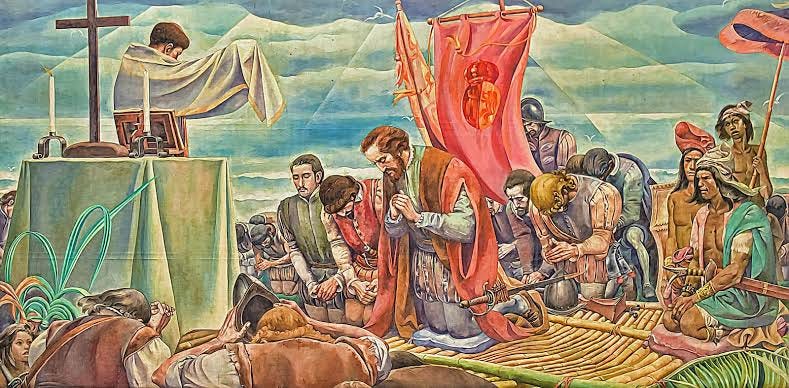
    To begin with, the educational system, and especially the modes of linguistic and history education in the country, have been heavily influenced by the major powers that occupied it – namely, the Spanish Empire and the United States. The impact of these periods of colonization can be seen most significantly in the historical education and consciousness of the general population, as well as the propagation of the English language. The Philippines possesses a great deal of linguistic diversity, especially among indigenous groups – an estimated 170 distinct languages in the country today (Postan, 2020). However, even in pre-colonial times – typically considered by historians to be the years before 1521 – the most common language in the country was Old Tagalog, and other indigenous languages are still spoken today (Stevens, 1999). Records suggest that the Spanish did not forcefully erase indigenous languages spoken in the country. However, they did conduct business and educational institutions in Spanish, leading to the language being used almost exclusively amongst the upper classes – the colonizers, business people in the country, and other influential figures in the empire. Though there were attempts to conduct education in Castilian Spanish, priests and friars responsible for teaching the locals preferred to do so in local languages as it was a more effective form of proselytization. This cemented the reputation of Spanish as a language for the elite, as the language was almost exclusively limited to those chosen to attend prestigious institutions or government missions that operated entirely in Spanish (Gonzales, 2017). In terms of popularising education to expose a broader audience to Christianity, the Spanish also established a compulsory elementary education system. However, restrictions existed based on social class and gender (Musa & Ziatdinov, 2012). Because of this, although the influence of Spanish on local languages can be seen through the borrowing of certain words, indigenous and regional languages were not supplanted to a large extent, though their scripts were Latinised in some instances to make matters more convenient for the Spanish (Gonzales, 2017). However, the introduction of Catholicism to a large segment of the population and a more organized educational system are aspects of Spanish rule that remain in Philippine society today, as do the negative ramifications of the social stratification that was a significant element of its occupation (Herrera, 2015).
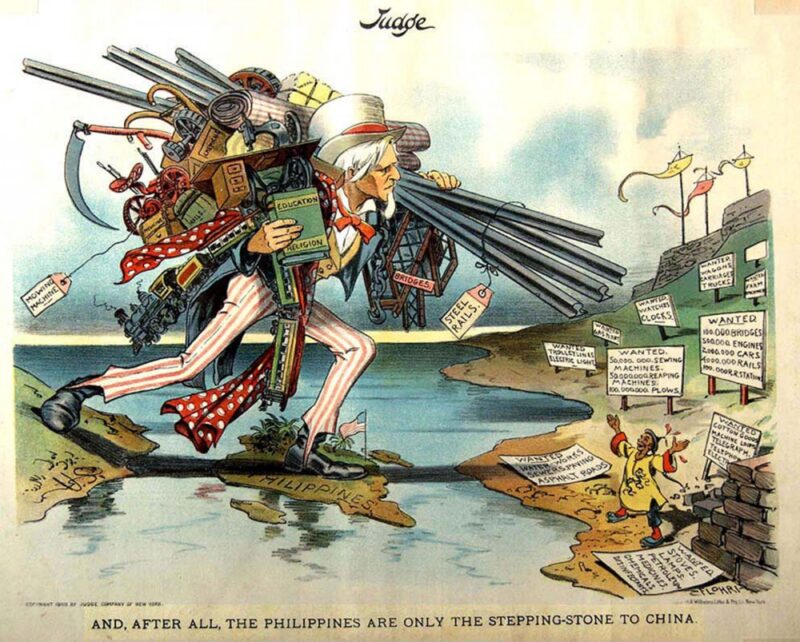
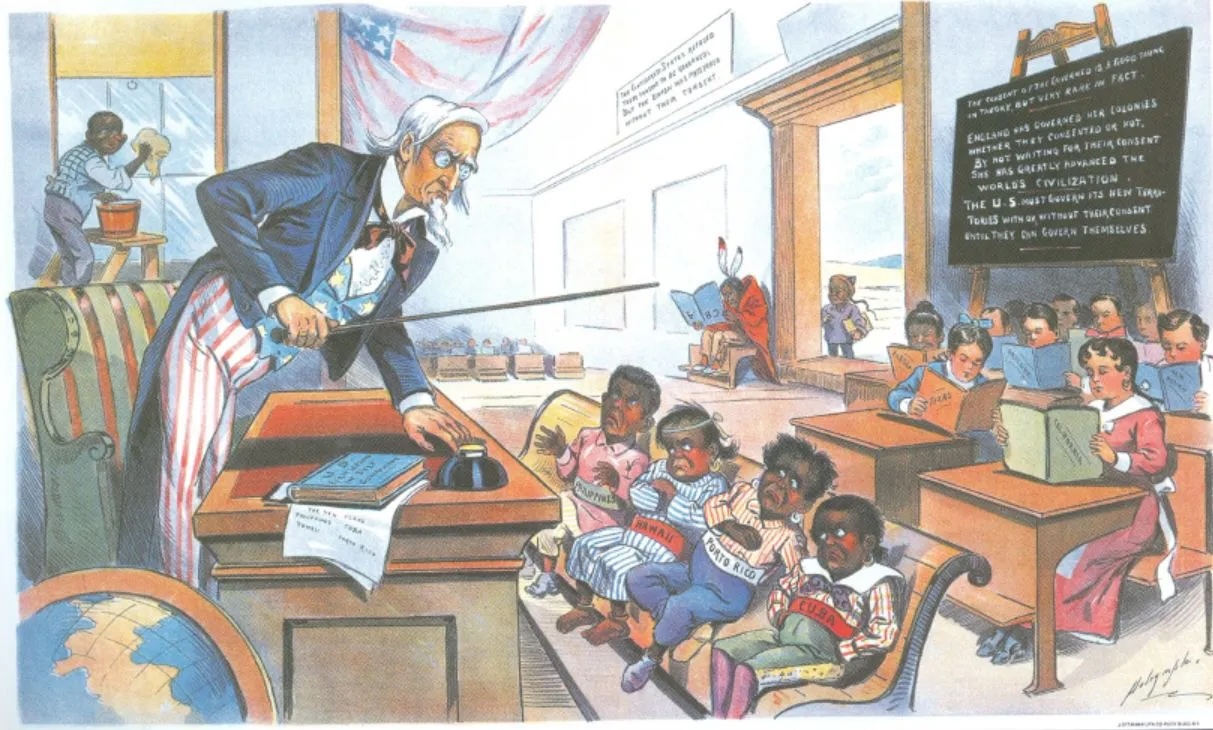
    Uncle Sam, loaded with implements of modern civilization, uses the Philippines as a stepping-stone to get across the Pacific to China (represented by a small man with open arms), who excitedly awaits Sam’s arrival. With the expansionist policy gaining greater traction, the possibility for more imperialistic missions (including to conflict-ridden China) seemed strong. The cartoon might be arguing that such endeavours are worthwhile, bringing education, technological, and other civilizing tools to a desperate people. On the other hand, it could be read as sarcastically commenting on America’s new propensity to “step” on others. “AND, AFTER ALL, THE PHILIPPINES ARE ONLY THE STEPPING-STONE TO CHINA,” in Judge Magazine, 1900 or 1902. Wikimedia.

    In contrast, the American occupation following Spain’s defeat in the Spanish-American War in 1898 significantly changed the country’s linguistic patterns and revolutionized the education system. Upon arriving in the country, the Americans decided to create a public school system in the country, where every student could study for free. However, the medium of instruction was in English, given that they brought teachers from the United States (Casambre, 1982). This differed from the Spanish system in that social class and gender did not influence students’ access to education to the same extent. Furthermore, the Americans brought their own material to the country due to a lack of school textbooks. As the number of schools in the country and the pedagogical influence of American teachers increased, the perception of the Americans’ role as colonizers ultimately changed. Education became a tool to exert cultural influence, leading to the propagation of American ideals like capitalism, in addition to subverting separatist tendencies that were cropping up in the country as one colonizer was replaced by another. It also led to the suppression of knowledge concerning the US’ exploitation of the nation.  Ultimately, the colonizers’ influence on the linguistic and educational landscape of the nation manifests itself in the general population’s understanding of their country’s history.

    The Current History Curriculum
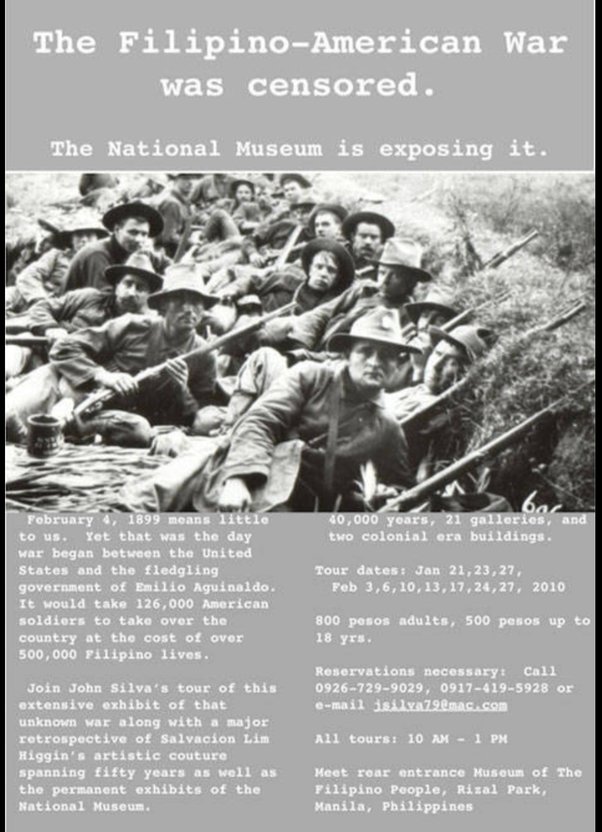
    The social studies curriculum in the Philippines, called Araling Panlipunan (AP), is an interdisciplinary course that combines topics of economics and governance with history, primarily post-colonial history (“K to 12 Gabay Pangkurikulum”, 2016). The topic of World War II takes up nearly 50% of the course, while other aspects of indigenous and pre-colonial history are included to a limited extent (Candelaria, 2021). This act of prioritization is a colonial holdover. Although the Philippines indubitably played a crucial role in the Pacific Theatre during WW II, its massive presence in the AP course signals the nation’s continued alliance with the US and reinforces a mentality amongst the general public that favours it. This bias occurs as a singular American perspective is promoted by the course, wherein the actions of other countries against the Philippines are highlighted. At the same time, the exploitation of the Philippines by the Spanish and Americans is not as widely discussed. For example, although the atrocities committed by the Japanese during World War II are taught extensively as part of the curriculum, the American actions during the Philippine-American War (1899-1902), during which the Americans burned and pillaged entire villages, are not emphasized (Clem, 2016). Furthermore, it leads to the sidelining of historical events that have created the political situation in the country today, such as the issue of the current president being related to the former dictator, Ferdinand Marcos.

    As the course is conducted chronologically, discussions of topics such as the Marcos Regime are left up to teachers’ discretion due to the subject’s controversial nature, given that the dictator’s son is the current president (Santos, 2022). This means that as much or as little time can be spent on it is as decided. Because of the American influence, even citizens who are taught about the atrocities that occurred during the dictatorship are not informed of the support provided to the Marcos dictatorship by the US government. During his presidency, which lasted from 1965 to 1986, the Philippines received significant economic aid from the US government in exchange for the continuation of its military presence in the country, which proved helpful to the US during the Vietnam War as it was able to utilize its bases in Subic Bay and Clark air base(Hawes, 1986). As a result of the necessity of these bases, a 1979 amendment to the 1947 Military Bases Agreement was signed, which increased the US’ fiscal contributions to security assistance. To further support this military objective, the Carter and Reagan administrations showed their diplomatic support to Marcos by visiting the Philippines and inviting him to Washington.

    Additionally, when Marcos was ousted from power in 1986 by the People Power Revolution, he spent his exile in ‘Hawaii’, in the US (Southerl, 1986). Therefore, while the US is credited for introducing democratic principles to the country through its program for expanding education while occupying the archipelago, it also played a significant role in supporting a despotic government that is not as widely acknowledged. Because of this, the Filipino perception of and relationship with the US has been heavily influenced by a lack of awareness amongst the general public about its involvement in a massively corrupt administration.

    Significant Developments 

    Despite the importance of a robust historical education in improving the public’s awareness of their own culture and geopolitical relationships, history as a subject has been transformed into a political tool in the Philippines, twisted when it can be useful and neglected when it does not support an agenda. Various bills passed in the House of Representatives (the lower house of parliament in the Philippines, below the Senate), as well as decisions taken by the Department of Education, have diminished the significance of history in the overall school curriculum and reinforced an American perspective in the historical content that continues to be taught. Department of Education Order 20, signed in 2014, removed Philippines History as a separate subject in high school (Ignacio, 2019). The argument for this decision was that Philippines History would be integrated within the broader AP social studies curriculum under different units, such as the Southeast Asian political landscape. However, educators opposing the abolition of Philippine History as a separate subject state that due to fewer contact hours being allocated for AP in total compared to English, maths, and science, it is unlikely that Philippine history can be discussed in adequate depth, considering the other social science topics mandated by the AP curriculum. In addition, House Bill 9850, which was passed in 2021, requires that no less than 50% of the subject of Philippine history centres around World War II (Candelaria, 2021). The bill’s primary concerns mention that it prioritizes the war over other formative conflicts in the nation’s history, such as the Philippine Revolution against Spain or the Philippine-American War. Furthermore, it requires modifying or reducing discussions surrounding other vital events in the Philippines, such as agrarian reforms and more recent developments like the conflict in Mindanao.

    Both of these policies face significant opposition. For example, a Change.org petition demanding the return of the subject of Philippine history in high schools has garnered tens of thousands of signatures. At the same time, numerous historical experts and teachers have spoken against HB 9850 (Ignacio, 2018). Despite this resistance from academics and teaching professionals, it is unlikely that history will be prioritized unless the general public also learns to inform itself. Around 73% of the total population (approximately 85.16 million people) have access to the internet, of which over 90% are on social media (Kemp, 2023). Because of the large working population in the country, social media companies like Facebook have set up offices there. Programs that offered data-free usage in 2013 have made the Philippines a huge market for Facebook, and many Filipinos trust the news they find on the website more than some mainstream media sources (Quitzon, 2021). Even though internet access is relatively widespread, signifying that information is readily available to the average Filipino, social media, especially Facebook, often functions as a fertile breeding ground for misinformation.

    Repercussions of the History Curriculum
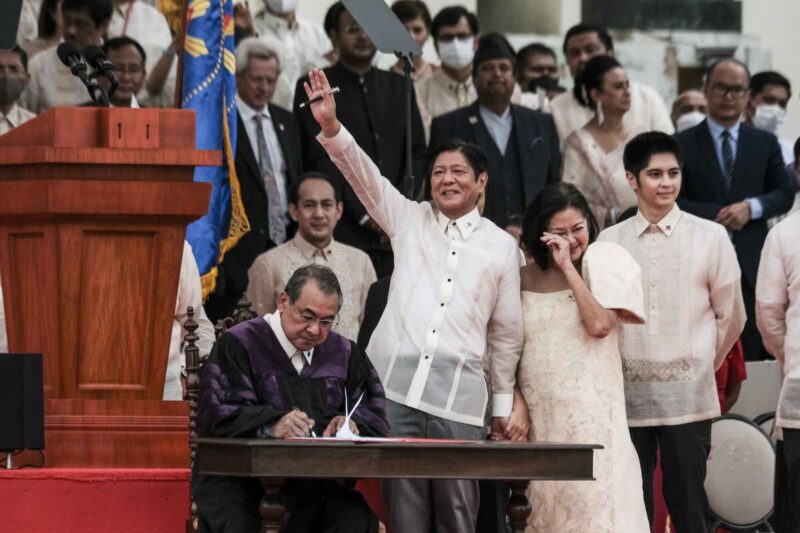
    In recent years, misinformation has become an important political tool to propagate ignorance and manipulate historical and current events to promote specific agendas. The most relevant example was the mass historical revisionism campaign leading to the 2022 general elections (Quitzon, 2021). Given that Bongbong Marcos, Ferdinand Marcos’ son, was running for president alongside vice presidential candidate Sara Duterte (former president Rodrigo Duterte’s daughter), the campaign focused on changing the public perception of both families and their period of rule. Preceding the elections, social media trolls and supporters of the campaign spread videos, doctored images, and fake news that minimized the atrocities and scale of theft that occurred throughout the Marcos regime and the Duterte administration, instead highlighting and exaggerating the perceived benefits they brought to the country. The prioritization of these political agendas is reflected in the history curriculum, as it does not sufficiently cover critical areas of Philippine history that have directly led to the political situation of today and the pre-colonial era that is an inseparable part of Filipino culture.

    Recommended Policy Measures 

    However, another by-product of this absence of consciousness is that the general public is desensitized to poor governance and neocolonialism as their education systems and news sources constantly feed them biased and inaccurate information about the history of their own country and its relationship to others. When dictators are portrayed as good rulers and previous colonizers are portrayed as historical allies, it results in a population that unknowingly votes against its interests as they are unaware of the past events that have shaped the current political atmosphere and the various deficiencies in the system. Considering that these political campaigns rely on the general public not having a solid understanding of historical events, especially those about the martial law era, it is unlikely that politicians will take meaningful steps to improve historical education in the country since they benefit from citizens lacking awareness. As such, the onus must, unfortunately, be placed on the general public to educate themselves on good citizenship and exercise their right to vote at the grassroots level responsibly so that future local politicians and members of parliament may at least be able to encourage the study of history in the government. Additionally, teaching students how to use the internet to conduct reliable research is imperative to reduce misinformation so they can counter the misinformation they find online.

    Conclusion

    In conclusion, the Philippine education system has been shaped by the periods of colonization the country has experienced. This has led to a history curriculum favouring the American perspective and thus disadvantages crucial elements of local history. The consequences of the lack of awareness this has caused in the general public are manifold: it has made them more susceptible to misinformation and historical revisionism. It has worked to the advantage of politicians who take advantage of it. Nevertheless, the Philippines can still reverse this trend by utilizing its high literacy rates and social media presence to promote reliable historical education. They can also push for better historical education policies through petitions and appeals to local government agencies and Senate committees related to education – such as the National Commission for Culture and the Arts (NCCA), the Committee on Basic Education and Culture, and the Committee on Education, Arts and Culture – amongst others (Ignacio, 2018). Overall, there are many deficiencies in the current history education system in the Philippines, but they still coexist with the potential for change. Citizens have the power to advocate and must continue using it to usher forth a more well-informed society and nation.


    References

    Bajpai, Prableen. “Emerging Markets: Analyzing the Philippines’s GDP.” Investopedia, 12 July 2023, www.investopedia.com/articles/investing/091815/emerging-markets-analyzing-philippines-gdp.asp#:~:text=The%20country.

    Casambre, Napoleon. The Impact of American Education in the Philippines. Educational Perspectives, scholarspace.manoa.hawaii.edu/server/api/core/bitstreams/f3bbc11f-f582-4b73-8b84-76cfd27a6f77/content#:~:text=Under%20the%20Americans%2C%20English%20was.

    Clem, Andrew. “The Filipino Genocide.” Series II, vol. 21, 2016, p. 6, scholarcommons.scu.edu/cgi/viewcontent.cgi?article=1138&context=historical-perspectives.

    Constantino, Renato. “The Miseducation of the Filipino.” Journal of Contemporary Asia, vol. 1, no. 1, 1970, eaop.ucsd.edu/198/group-identity/THE%20MISEDUCATION%20OF%20THE%20FILIPINO.pdf.

    Department of Education. K To12 Gabay Pangkurikulum. 2016, www.deped.gov.ph/wp-content/uploads/2019/01/AP-CG.pdf.

    “Education Mass Media | Philippine Statistics Authority | Republic of the Philippines.” Psa.gov.ph, 28 Dec. 2019, psa.gov.ph/statistics/education-mass-media.

    Gonzales, Wilkinson Daniel Wong. “Language Contact in the Philippines.” Language Ecology, vol. 1, no. 2, Dec. 2017, pp. 185–212, https://doi.org/10.1075/le.1.2.04gon.

    Hawes, Gary. “United States Support for the Marcos Administration and the Pressures That Made for Change.” Contemporary Southeast Asia, vol. 8, no. 1, 1986, pp. 18–36, www.jstor.org/stable/25797880.

    Herrera, Dana. “The Philippines: An Overview of the Colonial Era.” Association for Asian Studies, vol. 20, no. 1, 2015, www.asianstudies.org/publications/eaa/archives/the-philippines-an-overview-of-the-colonial-era/.

    Ignacio, Jamaico D. “[OPINION] The Slow Death of Philippine History in High School.” RAPPLER, 26 Oct. 2019, www.rappler.com/voices/ispeak/243058-opinion-slow-death-philippine-history-high-school/.

    —. “We Seek the Return of ‘Philippine History’ in Junior High School and Senior High School.” Change.org, 19 July 2018, www.change.org/p/we-seek-the-return-of-philippine-history-in-junior-high-school-and-senior-high-school.

    John Lee Candelaria. “[OPINION] The Dangers of a World War II-Centered Philippine History Subject.” RAPPLER, 20 Sept. 2021, www.rappler.com/voices/imho/opinion-dangers-world-war-2-centered-philippine-history-subject/.

    Kemp, Simon. “Digital 2023: The Philippines.” DataReportal – Global Digital Insights, 9 Feb. 2023, datareportal.com/reports/digital-2023-philippines#:~:text=Internet%20use%20in%20the%20Philippines.

    Musa, Sajid, and Rushan Ziatdinov. “Features and Historical Aspects of the Philippines Educational System.” European Journal of Contemporary Education, vol. 2, no. 2, Dec. 2012, pp. 155–76, https://doi.org/10.13187/ejced.2012.2.155.

    Quitzon, Japhet. “Social Media Misinformation and the 2022 Philippine Elections.” Center for Strategic & International Studies, 22 Nov. 2021, www.csis.org/blogs/new-perspectives-asia/social-media-misinformation-and-2022-philippine-elections.

    Santos, Franz Jan. “How Philippine Education Contributed to the Return of the Marcoses.” Thediplomat.com, 23 May 2022, thediplomat.com/2022/05/how-philippine-education-contributed-to-the-return-of-the-marcoses/.

    Southerl, Daniel. “A Fatigued Marcos Arrives in Hawaii.” Washington Post, 27 Feb. 1986, www.washingtonpost.com/archive/politics/1986/02/27/a-fatigued-marcos-arrives-in-hawaii/af0d6170-6f42-41cc-aee8-782d4c9626b9/.

    Stevens, J. Nicole. “The History of the Filipino Languages.” Linguistics.byu.edu, 30 June 1999, linguistics.byu.edu/classes/Ling450ch/reports/filipino.html.

    Stout, Aaron P. The Purpose and Practice of History Education: Can a Humanist Approach to Teaching History Facilitate Citizenship Education? 2019, core.ac.uk/download/pdf/275887751.pdf.

    Feature Image Credit: actforum-online.medium.com Filipino Education and the Legacies of American Colonial Rule – Picture from ‘Puck’ Magazine
  • Effect of Neo-Liberal Globalisation on Women in Garment Industries: A Third World  Perspective

    Effect of Neo-Liberal Globalisation on Women in Garment Industries: A Third World Perspective

    Abstract

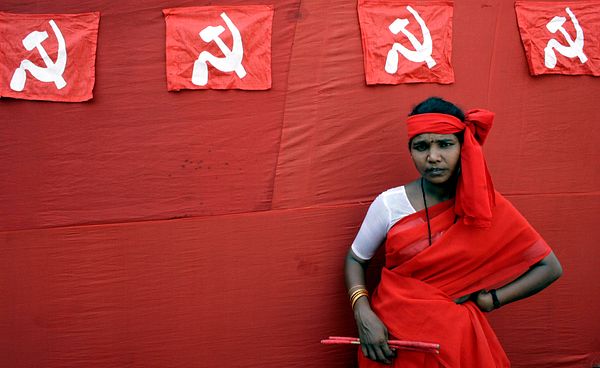
    Globalisation is a phenomenon that has brought about an effective change in the nature of the economy of the world nations. An inevitable result of this has been industrialisation, from heavy industries like iron and steel to software industries that house recent developments like artificial intelligence. Garment Industries have been a part of this industrial surge and have significantly contributed to the country’s economic growth, involving significant exports. At the heart of this unprecedented growth, an often unsaid and silenced issue remains the labour and lives of millions of women. Women, especially in the so-called third-world countries like Bangladesh,  Cambodia, and India, constitute more than 50% of the labour force in the garment sector. However,  the gender inequality that persists within these industries exists in the form of a lack of safety standards, wage disparity, stringent maternity benefits and improper compensation packages. World organisations like the International Labour Organisation (ILO) have developed projects to ensure decent working conditions. Still, the resultant effect has been scant due to the lack of gendered understanding of the issues. This research aims to illuminate the consequences of organisational patriarchy in comprehending the issues faced by women in the garment sector and subsequent policy framing. The study is based on the assumption that the inclusion of women andan opportunity to voice their concerns is absent. Therefore, there is a need for a gendered lens in framing policies, their implementation and further monitoring. Thus, this understanding will not only enhance the awareness of the working conditions of women in the garment industry but also be an eye-opener concerning the effect of global policies on the female labour force.

    Keywords: Female labour, Globalisation, Gender inequality


    Introduction

    The second five-year plan (1956-1961) in India had rapid industrialisation as one of its focuses and followed the Mahalanobis model of production of capital goods. This saw capitalism take the

    reins of development, which later consolidated with globalisation and took the world economy by storm, making possible the impossible, i.e., connecting the global markets. The transnational phenomenon led to the import of frontier technologies, which are highly capital-intensive (Indira  Hirway, 2012). The consequent effect was an improvement in technology and an increase in productivity accompanied by a decrease in employment intensity. This reduction affected the often underrepresented and discriminated group – women. Women’s growth was curtailed by ensuring that patriarchy was perpetuated in the organisational setup as well. The women in the lower strata of the industrial workforce faced the wrath of wage disparity, and the women in the higher echelons had a glass ceiling that prevented them from occupying managerial positions. They also had to endure the double burden of work and household chores, affecting the female labour force participation rate. Garment industries in developing countries like India, Pakistan and Bangladesh have witnessed large-scale employment of women as formal and informal labour to fulfil the needs of international buyers. In this paper, based on secondary research, I would like to traverse the historical aspects that led to globalisation, subsequent policies and the consequential effect it had on women, primarily focusing on export garment industries, which house the highest percentage of employed women.

    Industrialisation and women 

    The post-independence era in India, from 1947 onwards, witnessed industrial growth. The employment of labour also saw a shift from traditional agriculture. “Gender was the primary axis along  which industrial labour and the labour force were constituted.” Very few women worked in factories, and the support and protection they received were also poor compared to men. The policies that catered to labour protection, like the Factories Act (1948),  The Minimum Wages Act (1948) and The Employees’ State Insurance Act (1948) that paraded gender neutrality were gender blind. The ensuing period of globalisation, which questioned the conservative market nature, also brought about changes in the perception of women’s labour. With the world markets creating an arena for exports, the need for developing countries like India to keep up with the race became necessary, and the viable solution was to employ women from the lower strata of the society, mostly Dalits, in the name of empowering them. They were bait in the corporate hawk culture. The governments also failed to visualise the consequences of liberal markets and the capitalists donning the crown.

    As a part of the capitalist world, women were subject to both economic and emotional labour, which affected the female labour force participation rate, and the percentage of women in the informal sector became higher than women in the formal sector. However, there have been a lot of studies on the women employed in the informal sector, and there have also been time-use surveys conducted in this regard. Women’s labour in the formal sector has been consistently neglected due to the common belief that they enjoy the protection of an organised system. This may hold true to some extent, but in the case of garment or textile industries, which are a focus here, women are also the most penalised according to the reports by the International Labour  Organisation (ILO).

    Ministry of Labour and Employment, India – Statistics on Women Labour

    According to the information provided by the Office of Registrar General & Census Commissioner of India in the 2011 Census, the total number of female workers in India is 149.8 million, of which  121.8 and 28.0 million are from rural and urban areas, respectively. Out of the total 149.8 million female workers, 35.9 million females work as cultivators and another 61.5 million as agricultural labourers. Of the remaining female workers, 8.5 million remain in households, and 43.7 million are classified as other workers.


    As per Census 2011, the work participation rate for women is 25.51 per cent compared to 25.63  per cent in 2001. The female labour participation rate decreased marginally in 2011 but has seen an improvement from 22.27 per cent in 1991 and 19.67 per cent in 1981. The work participation rate for women in rural areas is 30.02 per cent compared to 15.44 per cent in urban areas.

    As far as the organised sector is concerned, in March 2011, women workers constituted 20.5 per cent of total employment in the organised sector in the country, which is higher by 0.1 per cent compared to the preceding year. As per the last Employment Review by the Directorate General of  Employment & Training (DGE&T), on 31st March 2011, about 59.54 lakh women workers were employed in the organised sector (public and private). Nearly 32.14 lakh women were employed in the community, social, and personal service sectors.

    Feminist Analysis of Existing Laws

    The labour laws in India have thoroughly focused on the idea of promoting growth along with social justice in tandem with the efforts of labour unions. However, despite the state and the unions’ consistent efforts, the laws’ ability to improve women’s living and working conditions was negligible, as described in the landmark report published in 1971, “Towards Equality”. It was an eye-opener to the dire circumstances in which women were surviving with patriarchy clawing its way into not just the domestic sphere but the workplace as well. While acts like the Maternity Benefit Act of 1961 offer relief to women on some levels,  there is a lack of legal awareness among women workers. This is a contributing factor to their being taken advantage of by employers. An analysis of the allocation of Variable Dearness  Allowance of Minimum Wages with effect from October 2022 has no separate mention of women’s labour. The general labour classification in this regard has been Unskilled, Skilled/Clerical, Semi Skilled and Highly skilled are the most probable categories in which women fall under unskilled due to a plethora of reasons. Despite the assumption that the New Labour Code is a relief to women labour across the country, measures must be taken to understand its effective implementation in both the public and private sector organisations.

    Women in Garment Industries

    The garment industries in South Asian nations like India and Bangladesh have been significant contributors to their economies and increased the employment ratio of women in the labour force. “India’s ready-made garment industry contributes around 16 per cent to total export earnings and is the largest foreign exchange earner in the country” (WTO,2019). Post-1980 saw unprecedented growth of the export industry, and the growth chart statistics show that from $2  million in 1960-61 to $696 million in 1980-81, it then increased sharply to $2,236 million in 1990- 91 and to $4,765 million in 1999-2000. The vast wage disparity was the driving force behind the globalisation of the garment industry. Studies have shown that the hourly wage of Indian

    labour is a meagre Rs.8 per hour, whereas a British worker performing the same work received around Rs.420. Thus, the capitalist tendency of the upper class and lower class is synonymous with the imperialist notion of civilised and barbaric groups pushing for cheap labour and higher production of goods.

    The onus of cheap labour fell on women, mainly from the marginalised communities who were desperate for jobs that promised a stable source of income. The Indian state also firmly believed that this was a way to empower women and ensure financial freedom. However, the challenges were masked by the rosy nature of the benefits put forth by the employers. The actual reasons for the employment of women, which were different from the portrayed norms, were: i) the common notion that women in the developing regions were meek beings who would barely retort against any kind of discomfort and would succumb to the system, ii) women will not question the wage disparity for they are fed the patriarchal notion of the superiority of men iii) the stable source of income will not let them rise in protest despite the atrocities meted out to them.

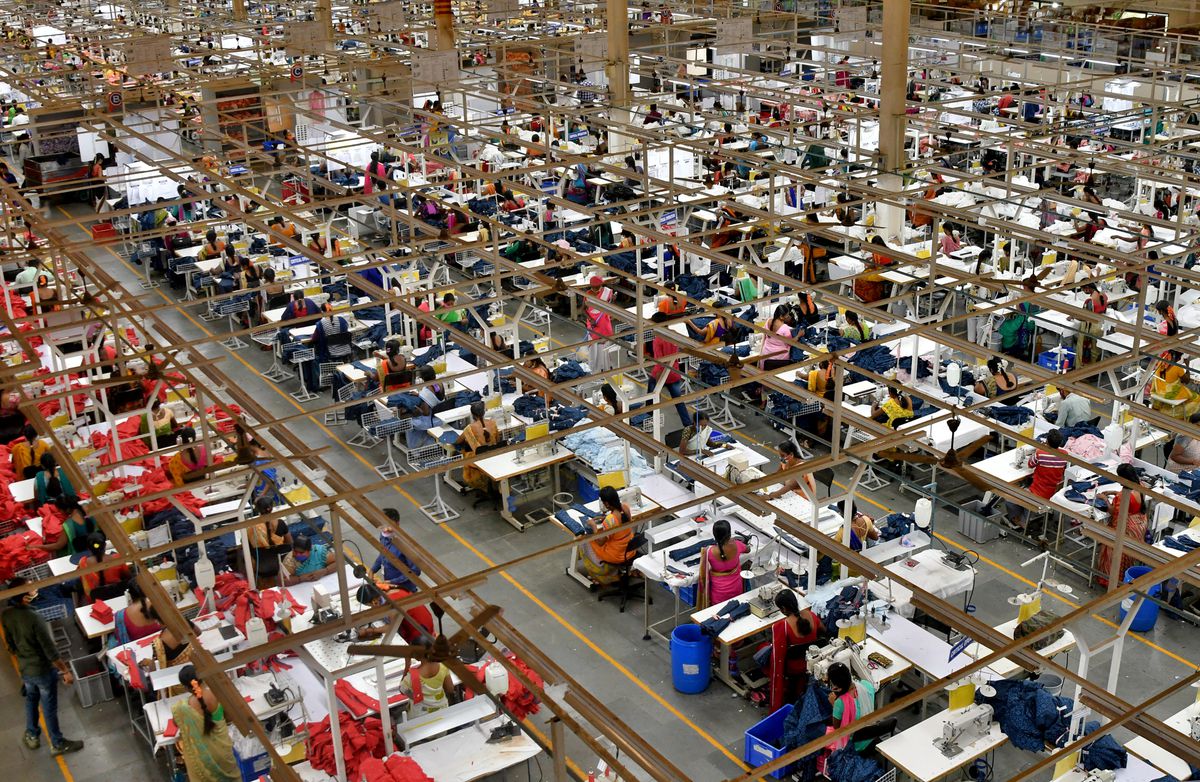
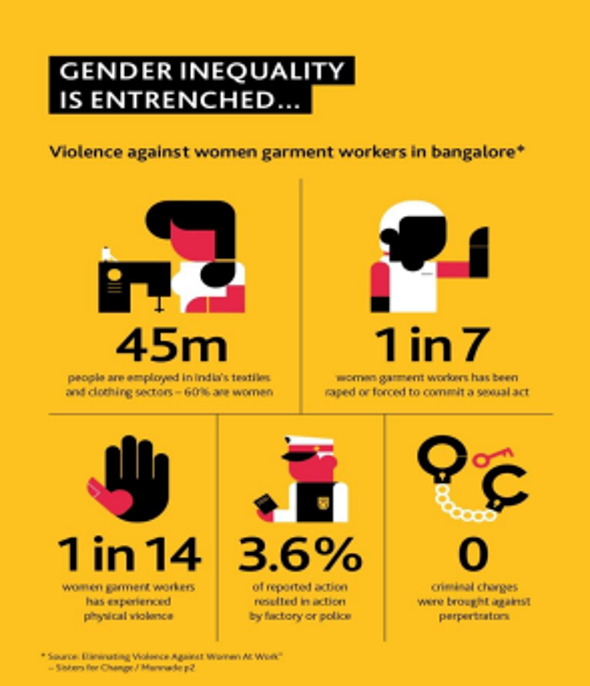
    Here, I would like to discuss a study conducted in Bangalore, Karnataka, which houses more than  800 garment industries and has the largest workforce of women. The exploitative nature of the employment of women in the garment industry is well documented and needs no elaboration. Briefly, the large majority of women, whether working as skilled tailors or as unskilled helpers, do not get even the legally stipulated minimum wage. Workers are frequently required to work overtime, but since this is set against production targets, they are not paid for overtime work. Insecurity of work is one of the most widely reported problems, as employers frequently terminate a woman’s service just before the completion of five years to avoid payment of gratuity. Harsh production targets, sexual and verbal abuse, lack of maternity and other leave, lack of accident insurance, and absence of toilet and creche facilities are some of the commonly stated and widely known features of female employment in garment manufacture. This misery underpins the production of high fashion garments sold in chic stores in the first world and worn by middle and upper-class women who pay for a single dress at a price that exceeds several times the monthly income of a woman who produces it.

    Challenges to women in the garment labour force due to Globalisation

    The post-1991 era in India saw a massive difference in the treatment of women as the labour force in industries, especially the textile sector. Female workers typically migrate from rural areas to work in the garment industry to meet their financial needs. Women labour in the garment industry mostly come from households below the poverty line. Therefore, the proposition for the ’empowerment of women’ through employment in these capitalist industries was thought to pave the road for the emancipation of this vulnerable group. However, with the fast fashion industry booming and the convergence of interests among global consumers, there was and still exists a constant need to satiate consumer behaviour consistently. The mass production of goods became inevitable. This had adverse effects in that it created a hostile working  environment, and reports suggest that it took a toll on the physical and mental health of women:

    i) Impact on physical well-being: The study “Sewing shirts with injured fingers and tears: exploring the experience of female garment workers’ health problems in Bangladesh” found that physical health problems included headaches, eye pain, musculoskeletal pains and fatigue. It further revealed that garment work is also so physically demanding that women cannot work for more than ten years. These findings are consistent with other research, which found that the highest proportion of female workers quit factory work before they reach 40. The workers reported that getting sick and injured was an everyday phenomenon. The doctors thought that women in factories could not work for more than ten years owing to the stressful conditions. This study also described that since the manufacturing units have men as supervisors, it becomes difficult for women to voice their concerns, particularly those related to their menstrual health. Further, this gendered division of labour extends to their home life, where their husbands expect them to fulfil their domestic obligations despite long, physically demanding hours at work.

    ii) Impact on mental well-being: The article “Mental Health Status of Female Workers in Private Apparel Manufacturing Industry in Bangalore City, Karnataka, India” steers the discussion in the direction of the importance of mental health awareness and the need for a safe work environment for women in garment factories. Mental health problems, including depression, have become a global health priority, and socially disadvantaged people are more vulnerable to suffering from mental health problems. There is evidence that scarcity of human resources, limited access to, and cost of mental health services are critical issues in most low- and middle-income countries. Separation from their children is an important issue for them. Most had left their children in their home villages, citing lack of time to care for them due to their long work hours and difficulties in paying for their children’s living costs in the city. They work from morning to night and during weekends, with nobody at home to look after their children. They get to leave only a few times a  year, and the distance to their villages can be up to 10 hours of travel time. As such, they have no option but to leave their children in their village to live with their grandparents. However, avoiding long working hours is impossible, as they need money to provide for their impoverished families.

    To improve the health and well-being of female garment workers, steps should be taken to develop health interventions to meet the needs of this important group of workers who contribute significantly to the country’s economic development.

    Way Forward

    Although women are at a disadvantage, the involvement of women in decision-making becomes indispensable. A developmental perspective based on male priorities and the male concept of the role of women in a patriarchal society such as ours cannot alleviate the lot of women already inhibited by traditional gender-role expectations. Stakeholder theory advocates that firms bear responsibility for the implications of their actions, and based on this, women come under the category of normative stakeholders to whom the industry has a moral obligation: an obligation of stakeholder fairness. Also, stress has to be placed on including women in the policy-making process, thereby increasing accountability of the framed policies. Illiteracy is a global problem and one of the reasons for the deterioration in the status of women and the feminisation of poverty. Ignorance of their rights- political, social, and economic- leads to the exploitation of women and their inability to converge to form a pressure group. The interface between the grassroots women and the activists must be used to build awareness and sensitise people, both men and women. Involving men who are sensitive to women’s issues is a healthy practice. It would benefit the cause of women if their struggle is seen as a fight for human rights,  which it is, and not merely as a gender-based movement.


    References

    • Ahmed, F. (2004). The rise of the Bangladesh garment industry: globalisation, women workers, and voice. NWSA Journal, 16(2), 34–45. https://doi.org/10.2979/nws.2004.16.2.34
    • Unni, J., Bali, N., & Vyas, J. H. (1999). Subcontracted women workers in the global economy: the case of the garment industry in India. http://www.sewaresearch.org/pdf/researches/subcontracted.pdf
    • Saha, T. K., Dasgupta, A., Butt, A., & Chattopadhyay, O. (2010). Health status of workers engaged in the small-scale garment industry: How healthy are they? Indian Journal of Community Medicine, 35(1), 179. https://doi.org/10.4103/0970-0218.62584
    • Baud, I., & De Bruijne, G. (1993). Gender, small-scale industry, and development policy. https://doi.org/10.3362/9781780442280
    • Oonk, G., Overeem, P., Peepercamp, M., & Theuws, M. (2012). Maid in India: Young Dalit women continue to suffer exploitative conditions in India’s garment industry. Social Science Research Network. https://doi.org/10.2139/ssrn.2119816
    • Carr, M. (2001). GLOBALISATION AND THE INFORMAL ECONOMY: HOW GLOBAL TRADE AND INVESTMENT IMPACT ON THE WORKING POOR. RePEc: Research Papers in Economics. http://info.worldbank.org/etools/docs/library/76309/dc2002/proceedings/pdfpaper/module6mcmc.pdf
    • Hale, A., & Shaw, L. M. (2001). Women workers and the promise of ethical trade in the globalised garment industry: a serious beginning? Antipode, 33(3), 510–530 https://doi.org/10.1111/1467-8330.00196
    • Mezzadri, A. (2014). Indian Garment clusters and CSR norms: incompatible agendas at the bottom of the garment commodity chain. Oxford Development Studies, 42(2), 238–258. https://doi.org/10.1080/13600818.2014.885939
    • Sharma, L., & Srivastava, M. (2020). A scale to measure organisational stress among women workers in the garment industry. European Journal of Training and Development, 46(9), 820–846. https://doi.org/10.1108/ejtd-04-2019-0060
    • Kabeer, N., & Mahmud, S. (2003). Globalisation, gender, and poverty: Bangladeshi women workers in export and local markets. Journal of International Development, 16(1), 93–109 https://doi.org/10.1002/jid.1065
    • ANNUAL REPORT 2022-23. (n.d.). In Ministry of Labour and Employment. Ministry of Labour and Employment, Government of India.


    Feature Image Credit: www.changealliance.in

  • The Impact of Domestic Politics on Foreign Policy: The Colombian Case Study

    The Impact of Domestic Politics on Foreign Policy: The Colombian Case Study

    Introduction

    Colombia is amongst the world’s highly polarised states and has endured conflict for decades. The country witnessed around 50 years of armed struggle between militant groups, the government, and the drug cartels and has seen various forms of human rights violations in these years. The country saw more than 220,000 people killed in the conflict, roughly 25000 kidnapped or disappeared and more than 5 million displaced citizens (García-Perdomo, Harlow & Brown, 2022). However, after much pressure from the people and the government, the guerrilla factions and the ruling party convened to sign a peace agreement that essentially brought the active warring factions to a pause. On November 24, 2016, the Revolutionary Armed Forces of Colombia – People’s Army, or FARC, signed a landmark peace agreement, which also saw the militants present a public apology to the people of Colombia for their violent actions (Georgi, 2022).

    Since the end of the Second World War, Colombia has seen various governments adopt different stances and approaches to their foreign policies. Multiple domestic actors – state and non-state- have strongly influenced the country’s diplomacy. For example, between 1998 – 2002, Colombia moved from the narrative of remaining a failed state and developed ties with the US (Monroy & Sanchez, 2017). The Republic of Colombia has had 17 presidents since 1946, most of whom belong to Right-Wing conservative parties. The current President, Gustavo Francisco Petro Urrego, is the first President from a liberal and leftist political party (Tickner, 2022, 8:10) in decades. The country has never had a progressive-left leader in its political history, and his government has been making waves on all fronts concerning ties with neighbouring countries, attempting to resolve the internal conflict, and dealing with economic disparities within the population.

    A state’s foreign policy primarily focuses on interactions with other states and international actors and is essential to its political agenda. Given the interdependence of these two domains, domestic politics play a vital role in determining a state’s foreign policy. Foreign policy refers to a state’s approach and actions internationally. In contrast, domestic politics refers to the political processes, institutions, and actors within a state that affect the country’s policies. This essay uses Colombia as a case study to investigate how the country’s domestic politics and conflicts have affected its foreign policy. The timeline under revision is from the end of the Second World War to the present.

    This paper will look at the following factors as critical points of discussion. Determining the success of a policy is done by evaluating its efficiency and the evident improvement of situations. The paper will examine 1. How has the evolution of state leadership impacted Colombia’s foreign policy? 2. What role did the insurgents and drug lords play in this scenario? The state leadership (Hey, 1997), the insurgents, and the drug lords are critical players in Colombia’s political landscape and the evolution of its foreign policy. King, Keohane and Verba (1994, p.76) define causality as “a theoretical concept independent of the data used to learn about it”. It is difficult to draw causal inferences in a limited paper. Still, by examining the players mentioned earlier, this paper hopes to attract inferences between domestic politics and the direction of the country’s foreign policy.

    State Leadership and Foreign Policy

    There is a crisp scent of dependency theory when exploring literature about the foreign policies of Latin American countries (Hey, 1997). Similarly, Colombia – a state that witnessed long years of violent conflicts, deaths, kidnappings and illegal drug production continued on the same path as the rest of the countries in the continent. Significant economic disparities and multiple right-wing presidencies saw the inequality between people grow larger and larger (Hey, 1997). These were all critical factors in shaping how the country’s foreign policy presented itself to the world. After the end of the Second World War, Colombia maintained a low profile with respect to its foreign policy (Drekonja-Kornat, 1983). However, Colombia did have a traditional foreign policy – as in a Ministry to oversee relations and maintain ties with neighbouring countries, especially since border disagreements were high. Colombia had closer ties with the US than its immediate neighbouring states. At the same time, there appeared to be a consensus on the state leadership directing policies to suit principles of capitalistic democracy, free trade and markets; Colombia’s external affairs seemed to feed off of international support, especially from the United States of America. The US, in its quest to spread its capitalist democracy, assisted the various presidencies with aid and other means to combat guerrilla movements and insurgent activities. In turn, Colombia helped the US in the Korean War and stood by the US during the Cold War years, too. Drekonja-Kornat (1983) says Colombia was the only Latin American Country involved in the Korean conflict. During Turbay’s presidency, the US-Colombia ties grew closer, and US assistance helped establish his regime further (Hey, 1997). He held office from 1978 – 1982.

    The state’s leadership, in return, adopted and often tailored policies to suit strategic and international partners, particularly the US. Examples of presidencies adopting such policies include supporting the US stance on drugs (Hey, 1997), committing to recognise threats and terrorist activities as adjudged by the US and the EU, etc. (United States Department of State, 2021). Colombia’s constant internal security dilemma accentuates the existence of a dependency theory of Foreign Policy.

    Impact of the Internal Conflict on Colombia’s Foreign Policy

    The insurgents, guerrilla groups, and drug cartels played a role in shaping the foreign policy of Colombia. The entry of drugs into neighbouring countries, particularly the US, brought an international player into Colombia’s domestic issues (Gomez-Suarez & Newman, 2013). The United States desperately tried to solve the drug menace, which led to fighting the drug cartels and networks. America aided and supported the governments in curbing the cartel’s activities and eliminating insurgents who pushed for a more communist ideology, primarily in the Cold War period. Colombia’s alignment with the US on account of the Cold War influenced its domestic politics, which had a more significant say in shaping the country’s foreign policy. The United States of America is Colombia’s largest aid donor; listed below are some of the aid packages received by Colombia:

    1. The US has provided more than $1 billion in direct and indirect support for implementing peace in Colombia since 2016. (United States Department of State, 2021).
    2. The US provided roughly $700 million to assist Colombia with the Venezuelan migrant crisis and host approximately 1.8 million refugees in Colombia. (United States Department of State, 2021).

    Viewing the case from a realist perspective, much of Colombia’s foreign affairs has been dictated by the ebbs and flow of the insurgency. With Colombia’s development and domestic affairs requiring external support, it lacked the necessary flexibility to implement social development schemes as dependency on external aid was high (Monroy & Sanchez, 2017). Colombia became an instrument of the American War on Drugs, almost a pawn to the American foreign policy in Latin America (Tickner, 2011).

    While examining the history of how the state’s leadership handled its foreign policy directives and its domestic issues, there is space for some leniency. Many attempts to broker a peace agreement between the insurgents and the state were met with strong reluctance from the general public and a lack of participation from insurgent groups. Furthermore, corruption in various levels of government offices withheld any progress that could have been made. One could interpret the constant repetition of right-wing presidencies as people’s reluctance to move away from conservative rules, much to the dismay of insurgents, ultimately rendered the public most affected in the struggle for domestic power in the country.

    The Way Forward

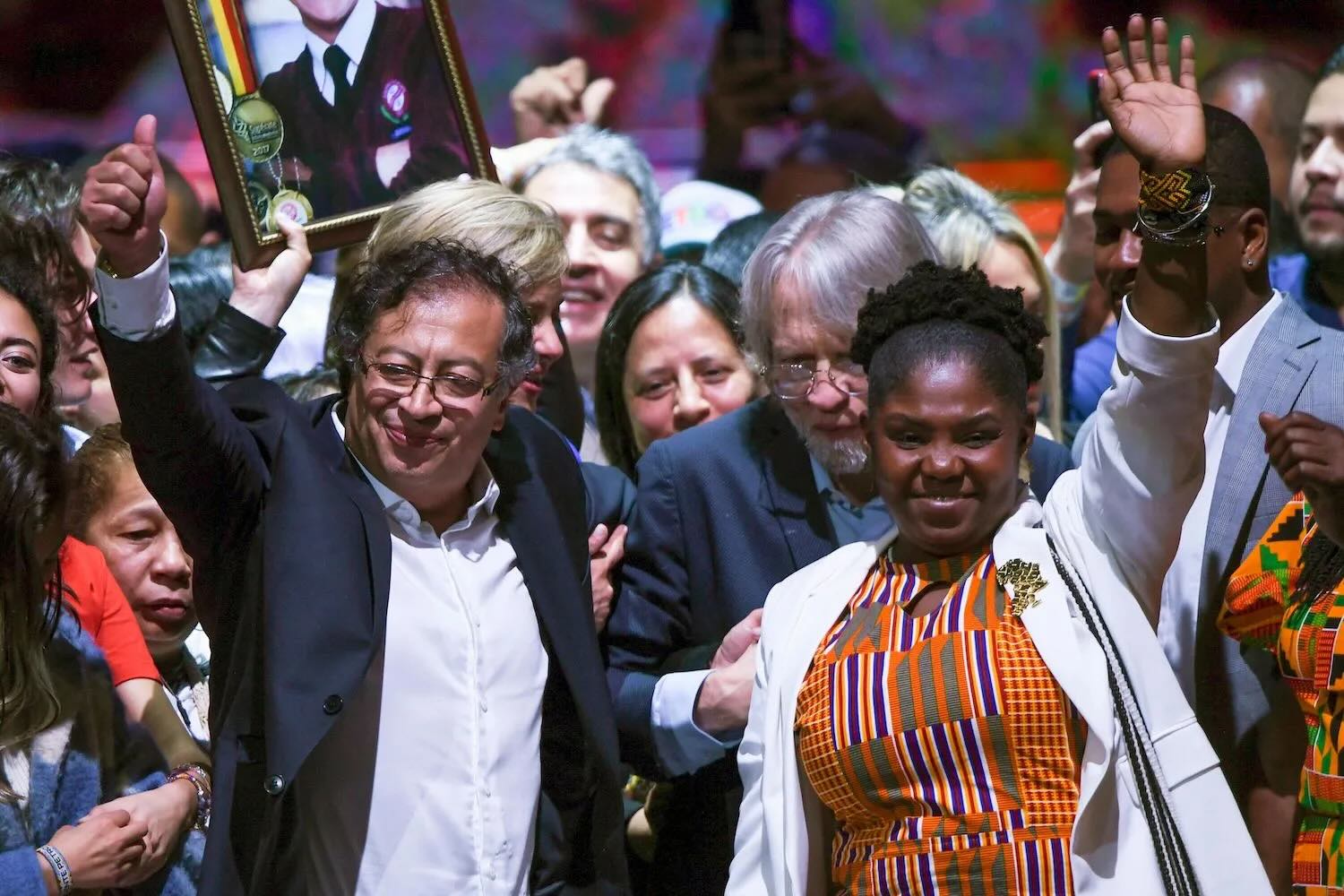
    Gustavo Petro became the first leftist President of Colombia on June 19, 2022, in decades (Freeman, 2023). His Presidential victory also marked the first-ever Afro-Colombian, Francia Marquez, to take office as Vice President. Unlike his liberal predecessors, the change in power was smooth from his rightist counterparts. As a leftist, there were questions about his merit and reputation as the country’s leftists were primarily likened to insurgents and militants. While the 2016 Peace Accords dismantled and disarmed most militants from the Fuerzas Armadas Revolucionarias de Colombia or FARC, the associations took longer to change.

    President Petro, however, is having quite the start to office. He is leading a policy of ‘Total Peace’, an effort to include all factions and players in the internal conflict and arrive at an end to the insurgency; his presidency plans to shift Colombia’s economic dependency on trade from the US, fossil fuels and the illicit drug trade to a more sustainable approach (Freeman, 2023), that would be similar to the Green Theory. One can interpret his actions as playing on both sides of the solid and historical US-Colombia ties (Santa Eulalia, 2022). Owing to the associations with his left-leaning tendencies, his moves are somewhat open to more scrutiny by the public. After all, no incumbent President has been re-elected to office in the last 15 elections (Freeman, 2023).

    A significant part behind his election to office has been the general public’s displeasure at rising economic inequalities between people, the inability of the previous government to provide and implement social welfare schemes and the financial toll caused by inactivity during the Covid-19 pandemic. While Drekonja-Konrat (1986) argues that most Latin-American countries can shape their foreign policies to the extent that it doesn’t hurt US interests, Petro is challenging the very notion of keeping his voters happy (Santa Eulalia, 2022). The truth in the details is that they are pretty co-dependent; Colombia needs the support of the US in tackling drug issues and the matter of the guerrilla militant groups, while the US views Colombia as a key strategic partner in the region. Accordingly, Petro has to carefully cater to his vote-bank’s anti-Americanism and yet maintain cordial ties with the US. It is a fragile line to tread, but the room to navigate and keep the US and the public happy is also quite small. Political revisionism is prevalent, given Petro is trying to appease both sides of support, constantly showing evident links as to how a country’s domestic politics can affect its foreign policy.

    References

    Drekonja-Kornat., G. (1983). Colombia: Learning the Foreign Policy Process, Journal of Inter-American Studies and World Affairs, 25(2). Pp- 229-250.

    Drekonja-Kornat., G. (1986). The rise of Latin America’s foreign policy: Between hegemony and autonomy. Latin American Research Review, 21(1), 239-259.

    Freeman, W. (February 2023). Colombia tries a transformative Left Turn, Council on Foreign Relations. Retrieved from: https://www.cfr.org/article/colombia-tries-transformative-left-turn

    García-Perdomo, V.,  Harlow, S. & Brown, D. K., (2022). Framing the Colombian Peace Process: Between Peace and War Journalism, Journalism Practice.

    Georgie, R. (2022). Peace that antagonises: Reading Colombia’s peace process as a hegemonic crisis, Security Dialogue, pp – 1-19.

    Gomez-Suarez, A. & Newman, J., (2013). Safeguarding Political Guarantees in the Colombian Peace Process: have Santos and FARC learnt the lessons from the past?, Third World Quarterly, 34(5), pp – 819-837.

    Hey, J. A. K. (1997). Three Building Blocks of a Theory of Latin American Foreign Policy, Third World Quarterly, 18(4), pp -631-658.

    King, G., Keohane, R.O, & Verba, S. (1994). Designing Social Inquiry: Scientific Inference in Qualitative Research.Princeton, NJ, Princeton University Press.

    Monroy, M. C. & Sánchez, F. (2017) Foreign Policy Analysis and the Making of Plan Colombia, Global Society, 31(2), pp – 245-271.

    Santaeulilah, I. (October 2022). Petro Playing Both Sides in Colombia-US Relations, El Pais. Retrieved from: https://english.elpais.com/international/2022-10-26/petro-playing-both-sides-in-colombia-us-relations.html

    Feature Image Credit: Foreign Policy


  • Social and Economic Aspects of Caste Survey in Bihar

    Social and Economic Aspects of Caste Survey in Bihar

    The need for caste census today is because after independence we adopted the top-down development model. It was thought that the development benefits would flow from the upper strata to the lower ones. But this hope has been belied with the well-off capturing most of the benefits, leaving little for the marginalized sections who are lagging behind in development.
    ————-

    The release of the figures of the caste survey in Bihar has immediately led to the heating up of politics in the entire country. There is a demand for conducting a caste survey in many states, including Uttar Pradesh, Madhya Pradesh, Rajasthan and Maharashtra. In Karnataka, the demand is to make public the data of the caste survey conducted in 2015.

    Poverty and Population Increase

    According to the Bihar survey report, the largest population in the state belongs to the extremely backward class (EBC), constituting about 36 per cent of the total population. While the Report clarifies the situation in Bihar, it does not tell us the situation in the entire country. That would require a national survey. Therefore, now the pressure will increase on the Central Government to conduct and make public the data at the national level. That is the only way the caste composition of the total population can be known. This is required to make policies which can enable equitable shares in employment and education for different sections of the population.

    The increase in the proportion of extremely backward classes in the total population of Bihar should have been expected because of the prevailing poverty among them. Those who are poor have more children due to several reasons, like lack of education and awareness. Most importantly, for their social security in old age. The poor do not have savings; hence children constitute their old-age social security. They have more children to ensure at least one child survives till their old age. Also, more children mean more earning hands in the family. As people become more prosperous, people produce fewer children. The economic condition of the middle class and the well-off are relatively better, so they have fewer children, and their population grows less.

    The question arises: what is the likely consequence? Upper caste people are worried that since extremely backward castes constitute a higher proportion of the population, their demand for reservation will increase.

    Growing Unemployment a Crucial Factor

    I believe that if we had given more importance in employment and education to the extremely backward castes from the beginning, today’s situation would not have arisen. Reservation makes no difference if jobs are available in sufficient numbers. Reservation becomes critical when employment generation is weak. When there is a lack of adequate employment, a dispute arises over reservations as to who will get how much employment. At present, due to large unemployment among the educated youth and few available government jobs, the demand for reservations has increased.

    The problem has been growing because, after independence, we have adopted the top-down and trickle-down policy. The result has been that the upper sections of society have cornered most of the benefits while the marginalized sections have received very little benefits. Disparities have grown, and so have expectations, thereby raising the level of conflict in society. The use of more advanced technology in every sector has displaced labour and contributed to increasing unemployment. The Agriculture sector, which has the most employment (46%) in our country, has seen increased use of tractors, harvester combines, threshers, potato digging machines, etc., thereby reducing the need for employment and displacing workers. This is also true of manufacturing and services, like banking.

    Impact of Government Policies

    The government is also fueling this change by promoting the growth of the capital-intensive organized sector at the expense of the unorganized sector (which employs 94% of the workers). For example, the government reduced the tax rates on the corporate sector and rolled out the PLA scheme while cutting allocations to the National Rural Employment Guarantee Scheme. Allocations to education and health sectors have also been kept low and cut, even though both these sectors generate more employment. Due to these policies, most of the investments are being made in big projects, like railway freight corridors, where human labour is being replaced by big machines.

    The result is rising inequality, frustration, alienation and sharpening social conflict. Therefore, the parties pursuing social justice politics for the lower classes and the people themselves have been demanding greater reservation for the backward castes according to their proportion in the population. With Bihar’s caste survey becoming public, the demand for conducting such surveys in other states and nationally will become more vociferous. The demand will also arise that the maximum limit of reservation, which is fixed at 50 per cent by the Supreme Court, should be increased. But reservations will be only for a few million jobs while the need is for work for tens of millions. So, the real issue is the generation of enough employment and good education for the children of the poor.

    Political Implications

    Opponents of caste surveys argue that castes with a lower proportion in the population will start competing to increase their population by bypassing family planning policies. But I don’t accept this. Around the world, as family prosperity increases and education levels rise, people have fewer children. The well-off families with less share in the population are already sending their children abroad for education and employment, which may accelerate.

    Bihar’s caste survey data is bound to impact national politics. All political parties would like to use it in their own way, and Mandal-Kamandal politics will intensify in the country. But, the situation for BJP has changed compared to the 1990s since in the last few elections, it has wooed the votes of backward castes. The issue of reservation and demand for an increase in the maximum prescribed reservation limit will intensify. The ruling party will be reluctant, but in view of the electoral arithmetic, it will also not oppose it vociferously. It will hope that the Supreme Court will not agree to increase the limit. Further, it will try to divert the public attention towards issues like Sanatan dharma, terrorism and threats from China-Pakistan.
    The lesson is that when socially correct policies are not implemented in a timely manner, social strife and alienation spread, and the nation is forced to implement sub-optimal policies.

    This is a translation of the article in Hindi published earlier in Amar Ujala.

  • Trump followed four years later by Trump: Would America’s trustiness and system of alliances survive?

    Trump followed four years later by Trump: Would America’s trustiness and system of alliances survive?

    Ambassador Alfredo Toro Hardy examines, in this excellently analysed paper, the self-created problems that have contributed to America’s declining influence in the world. As he rightly points out, America helped construct the post-1945 world order by facilitating global recovery through alliances, and mutual support and interweaving the exercise of its power with international institutions and legal instruments. The rise of neoconservatism following the end of the Cold War, particularly during the Bush years from 2000 to 2008, led to American exceptionalism, unipolar ambitions, and the failure of American foreign policy.  Obama’s Presidency was, as Zbigniew Brezinski said, a second chance for restoring American leadership but those gains were nullified in Donald Trump’s 2016-20 presidency leading to the loss of trust in American Leadership. In a final analysis that may be questionable for some, Ambassador Alfredo sees Biden’s administration returning to the path of liberal internationalism and recovering much of the lost trust of the world.  His fear is that it may all be lost if Trump returns in 2024.                               – Team TPF


    TPF Occasional Paper   9/2023    

    Trump followed four years later by Trump: Would America’s trustiness and system of alliances survive?


    According to Daniel W. Drezner: “Despite four criminal indictments, Donald Trump is the runaway frontrunner to win the GOP nomination for president. Assuming he does, current polling shows a neck-and-neck race between Trump and Biden in the general election. It would be reckless for other leaders to dismiss the possibility of a second Trump term beginning on January 20, 2025. Indeed, the person who knows this best is Biden himself. In his first joint address to Congress, Biden said that in a conversation with world leaders, he has ‘made it known that America is back’, and their responses have tended to be a variation of “but for how long?”. [1]

    A bit of historical context

    In order to duly understand the implications of a Trump return to the White House, a historical perspective is needed. Without context, it is difficult to comprehend the meaning of the “but for how long?” that worries so many around the world. Let’s, thus, go back in time.

    Under its liberal internationalist grand vision, Washington positioned itself at the top of a potent hegemonic system. One, allowing that its leadership could be sustained by the consensual acquiescence of others. Indeed, through a network of institutions, treaties, mechanisms and initiatives, whose creation it promoted after World War II, the United States was able to interweave the exercise of its power with international institutions and legal instruments. Its alliances were a fundamental part of that system. On the other side of the Iron Curtain, though, the Soviet Union established its own system of alliances and common institutions.

                In the 1970s, however, America’s leadership came into question. Two reasons were responsible for it. Firstly, the Vietnam War. The excesses committed therein and America’s impotence to prevail militarily generated great discomfort among several of its allies. Secondly, the crisis of the Bretton Woods system. As a global reserve currency issuer, the stability of the U.S. currency was fundamental. In a persistent way, though, Washington had to run current account deficits to fulfil the supply of dollars at a fixed parity with gold. This impacted the desirability of the dollar, which in turn threatened its position as a reserve currency issuer. When a run for America’s gold reserves showed a lack of trust in the dollar, President Nixon decided in 1971 to unhook the value of the dollar from gold altogether.

                Notwithstanding these two events, America’s leadership upon its alliance system would remain intact, as there was no one else to face the Soviet threat. However, when around two decades later the Soviet Union imploded, America’s standing at the top would become global for the same reason: There was no one else there. Significantly, the United States’ supremacy was to be accepted as legitimate by the whole international community because, again, it was able to interweave the exercise of its power with international institutions and legal instruments.

    Inexplicable under the light of common sense

                In 2001, however, George W. Bush’s team came into government bringing with them an awkward notion about the United States’ might. Instead of understanding that the hegemonic system in place served their country’s interests perfectly well, the Bush team believed that such a system had to be rearranged in tandem with America’s new position as the sole superpower. As a consequence, they began to turn upside down a complex structure that had taken decades to build.

    The Bush administration’s world frame became, indeed, a curious one. It believed in unconditional followers and not in allies’ worthy of respect; it believed in ad hoc coalitions and “with us or against us” propositions where multilateral institutions and norms had little value; it believed in the punishment of dissidence and not in the encouragement of cooperation; it believed in preventive action prevailing over international law.

    In proclaiming the futility of cooperative multilateralism, which in their perspective just constrained the freedom of action of America’s might, they asserted the prerogatives of a sole superpower. The Bush administration’s world frame became, indeed, a curious one. It believed in unconditional followers and not in allies’ worthy of respect; it believed in ad hoc coalitions and “with us or against us” propositions where multilateral institutions and norms had little value; it believed in the punishment of dissidence and not in the encouragement of cooperation; it believed in preventive action prevailing over international law. Well-known “neoconservatives” such as Charles Krauthammer, Robert Kagan, and John Bolton, proclaimed America’s supremacy and derided countries not willing to follow its unilateralism.

                But who were these neoconservatives? They were the intellectual architects of Bush’s foreign policy, who saw themselves as the natural inheritors of the foreign policy establishment of Truman’s time. The one that had forged the fundamental guidelines of America’s foreign policy during the Cold War, in what was labelled as the “creation”. In their view, with the United States having won the Cold War, a new creation was needed. Their beliefs could be summed up as diplomacy if possible, force if necessary; U.N. if possible, ad hoc coalitions, unilateral action, and preemptive strikes if necessary. America, indeed, should not be constrained by accepted rules, multilateral institutions, or international law. At the same time, the U.S.’ postulates of freedom and democracy, expressions of its exceptionalism, entailed the right to propitiate regime change whenever necessary, in order to preserve America’s security and the world order.

    Bogged down in Iraq and Afghanistan, while deriding and humiliating so many around the world, America’s neoconservatives undressed the emperor. By taking off his clothes, they made his frailties visible for everyone to watch.

    Inexplicable, under the light of common sense, the Bush team disassociated power from the international structures and norms that facilitated and legitimized its exercise. As a consequence, America moved from being the most successful hegemonic power ever to becoming a second-rate imperial power that proved incapable of prevailing in two peripheral wars. Bogged down in Iraq and Afghanistan, while deriding and humiliating so many around the world, America’s neoconservatives undressed the emperor. By taking off his clothes, they made his frailties visible for everyone to watch.

                At the beginning of 2005, while reporting a Pew Research Center poll, The Economist stated that the prevailing anti-American sentiment around the world was greater and deeper than at any other moment in history. The BBC World Service and Global Poll Research Partners, meanwhile, conducted another global poll in which they asked, “How do you perceive the influence of the U.S. in the world?”. The populations of some of America’s traditional allies gave an adverse answer in the following percentages: Canada 60%; Mexico 57%; Germany 54%; Australia 52%; Brazil 51%; United Kingdom 50%. With such a negative perception among Washington’s closest allies, America’s credibility was in tatters.[2]

             Is the liberal international order ending? what is next? dailysabah.com

     While Bush’s presidency was reaching its end, Zbigniew Brzezinski wrote a pivotal book that asserted that the United States had lost much of its international standing. This felt, according to the book, particularly disturbing. Indeed, as a result of the combined impact of modern technology and global political awakening, that speeded up political history, what in the past took centuries to materialize now just took decades, whereas what before had taken decades, now could materialize in a single year. The primacy of any world power was thus faced with immense pressures of change, adaptation and fall. Brzezinski believed, however, that although America had deeply eroded its international standing, a second chance was still possible. This is because no other power could rival Washington’s role. However, recuperating the lost trust and legitimacy would be an arduous job, requiring years of sustained effort and true ability. The opportunity of this second chance should not be missed, he insisted, as there wouldn’t be a third one. [3]

    A second chance

                Barak Obama did certainly his best to recover the space that had been lost during the preceding eight years. That is, the U.S.’s leading role within a liberal internationalist structure. However, times had changed since his predecessor’s inauguration. In the first place, a massive financial crisis that had begun in America welcomed Obama, when he arrived at the White House. This had increased the international doubts about the trustiness of the country. In the second place, China’s economy and international position had taken a huge leap ahead during the previous eight years. Brzezinski’s notion that no other power could rival the United States was rapidly evolving. As a result, Obama was left facing a truly daunting challenge.

                To rebuild Washington’s standing in the international scene, Obama’s administration embarked on a dual course of action. He followed, on the one hand, cooperative multilateralism and collective action. On the other hand, he prioritized the U.S.’ presence where it was most in need, avoiding unnecessary distractions as much as possible. Within the first of these aims, Obama seemed to have adhered to Richard Hass’ notion that power alone was simple potentiality, with the role of a successful foreign policy being that of transforming potentiality into real influence. Good evidence of this approach was provided through Washington’s role in the Paris Agreement on Climate Change, in the Joint Comprehensive Plan of Action in relation to Iran, in the NATO summits, in the newly created G20, and in the summits of the Americas, among many other instances. By not becoming too overbearing, and by respecting other countries’ points of view, the Obama Administration played a leading influence within the context of collective action. Although theoretically being one among many, the United States always played the leading role.[4]

    Within this context, Obama’s administration followed a coalition-building strategy. The Trans-Pacific Partnership represented the economic approach to the pivot and aimed at building an association covering forty per cent of the global economy. There, the United States would be the first among equals. As for the security approach to the pivot, the U.S. Navy repositioned its forces within the Pacific and the Atlantic oceans.

                To prioritize America’s presence where it was most needed, Obama turned the attention to China and the Asia-Pacific. While America was focusing on the Middle East, China enjoyed a period of strategic opportunity. His administration’s “pivot to Asia” emerged as a result. This policy had the dual objective of building economic prosperity and security, within that region. Its intention was countering, through facts, the notion that America was losing its staying power in the Pacific. Within this context, Obama’s administration followed a coalition-building strategy. The Trans-Pacific Partnership represented the economic approach to the pivot and aimed at building an association covering forty per cent of the global economy. There, the United States would be the first among equals. As for the security approach to the pivot, the U.S. Navy repositioned its forces within the Pacific and the Atlantic oceans. From a roughly fifty-fifty correlation between the two oceans, sixty per cent of its fleet was moved to the Pacific. Meanwhile, the U.S. increased joint exercises and training with several countries of the region, while stationing 2,500 marines in Darwin, Australia. As a result of the pivot, many of China’s neighbours began to feel that there was a real alternative to this country’s overbearing assertiveness.[5]

                Barak Obama was on a good track to consolidating the second chance that Brzezinski had alluded to. His foreign policy helped much in regaining international credibility and standing for his country, and the Bush years began to be seen as just a bump on the road of America’s foreign policy. Unfortunately, Donald Trump was the next President. And Trump coming just eight years after Bush, was more than what America’s allies could swallow.

    Dog-eat-dog foreign policy

                The Bush and Trump foreign policies could not be put on an equal footing, though. The abrasive arrogance of Bush’s neoconservatives, however distasteful, embodied a school of thought in matters of foreign policy. One, characterized by a merger between exalted visions of America’s exceptionalism and Wilsonianism. Francis Fukuyama defined it as Wilsionanism minus international institutions, whereas John Mearsheimer labelled it as Wilsionanism with teeth. Although overplaying conventional notions to the extreme, Bush’s foreign policy remained on track with a longstanding tradition. Much to the contrary, Trump’s foreign policy, according to Fareed Zakaria, was based on a more basic premise– The world was largely an uninteresting place, except for the fact that most countries just wanted to screw the United States. Trump believed that by stripping the global system of its ordering arrangements, a “dog eat dog” environment would emerge. One, in which his country would come up as the top dog. His foreign policy, thus, was but a reflection of gut feelings, sheer ignorance and prejudices.[6]

                Trump derided multilateral cooperation and preferred a bilateral approach to foreign relations. One, in which America could exert its full power in a direct way, instead of letting it dilute by including others in the decision-making process. Within this context, the U.S.’ market leverage had to be used to its full extent, to corner others into complying with Washington’s positions. At the same time, he equated economy and national security and, as a consequence, was prone to “weaponize” economic policies. Moreover, he premised on the use of the American dollar as a bullying tool to be used to his country’s political advantage. Not only China but some of America’s main allies as well, were targeted within this approach. Dusting off Section 323 of the 1962 Trade Expansion Act, which allowed tariffs on national security grounds, Trump imposed penalizations in every direction. Some of the USA’s closest allies were badly affected as a result.

                Given Trump’s contempt for cooperative multilateralism, but also aiming at erasing Obama’s legacy, an obsessive issue with him, he withdrew the U.S. from the Trans-Pacific Partnership, from the Paris Agreement on Climate Change, and from the Joint Comprehensive Plan of Action in relation to Iran. He also withdrew his country from other multilateral institutions, such as the United Nations’ Human Rights Commission and, in the middle of the Covid 19 pandemic, from the World Health Organization. Trump threatened to cut funding to the U.N., waged a largely victorious campaign to sideline the International Criminal Court, and brought the World Trade Organization to a virtual standstill. Even more, he did not just walk away from the Joint Comprehensive Plan of Action, in relation to Iran, but threatened its other signatories to impose sanctions on them if, on the basis of the agreement, they continued to trade with Iran.

    Trump followed a transactional approach to foreign policy in which principles and allies mattered little, and where trade and money were prioritized over security considerations.

                Trump followed a transactional approach to foreign policy in which principles and allies mattered little, and where trade and money were prioritized over security considerations. In 2019, he asked Japan to increase fourfold its annual contribution for the privilege of hosting 50,000 American troops in its territory, while requesting South Korea to pay 400 percent more for hosting American soldiers. This, amid China’s increasing assertiveness and North Korea’s continuous threats. In his relations with New Delhi, a fundamental U.S. ally within any containment strategy to China, he subordinated geostrategic considerations to trade. On the premise that India was limiting American manufacturers from access to its market, Trump threatened this proud nation with a trade war.[7]

                Irritated because certain NATO member countries were not spending enough on their defence, Trump labelled some of Washington’s closest partners within the organization as “delinquents”. He also threatened to reduce the U.S.’ participation in NATO, calling it “obsolete”, while referring to Germany as a “captive of Russia”. At the same time, Trump abruptly cancelled a meeting with the Danish Prime Minister, because she was unwilling to discuss the sale of Greenland to the United States. This, notwithstanding the fact that this was something expressively forbidden by the 1975 Helsinki Final Act, represents the cornerstone of European stability. The European Union, in his view, was not a fundamental ally, but a competitor and an economic foe. Deliberately, Trump antagonized European governments, including that of London at the time, by cheering Brexit. Meanwhile, he imposed tariffs on steel and aluminium on many of its closest partners and humiliated Canada and Mexico by imposing upon them a tough renegotiation of NAFTA. One, whose ensuing accord did not bring significant changes. Moreover, he fractured the G7, a group integrated by Washington’s closest allies, leaving the United States standing alone on one side with the rest standing on the other.

    In June 2018, Donald Tusk, President of the European Council, expressed his bewilderment at seeing that the rules-based international order was being challenged precisely by its main architect and guarantor– the United States. Financial Times columnist Martin Wolf summoned up all of this, by expressing that under Trump the U.S. had become a rogue superpower.

                Unsurprisingly, thus, America’s closest allies reached the conclusion that they could no longer trust it. Several examples attested to this. In November 2017, Canberra’s White Paper on the security of Asia expressed uncertainty about America’s commitment to that continent. In April 2018, the United Kingdom, Germany and France issued an official statement expressing that they would forcefully defend their interests against the U.S.’ protectionism. On May 10, 2018, Angela Merkel stated in Aquisgran that the time in which Europe could trust America was over. On May 31, 2018, Justin Trudeau aired Canada’s affront at being considered a threat to the United States. In June 2018, Donald Tusk, President of the European Council, expressed his bewilderment at seeing that the rules-based international order was being challenged precisely by its main architect and guarantor– the United States. In November 2019, in an interview given to The Economist, Emmanuel Macron stated that the European countries could no longer rely on the United States, which had turned its back on them. Financial Times columnist Martin Wolf summoned up all of this, by expressing that under Trump the U.S. had become a rogue superpower.[8]

    The return of liberal internationalism

    Politically and geopolitically Biden rapidly went back to the old premises of liberal internationalism. Cooperative multilateralism and collective action were put back in place, and alliances became, once again, a fundamental part of America’s foreign policy. 

               As mentioned, George W. Bush followed a few years later by Donald Trump was more than what America’s allies could handle. Fortunately for that country, and for its allies, Trump failed to be re-elected in 2020, and Joe Biden came to power. True, the latter’s so-called foreign policy for the middle classes kept in place some of Trump’s international trade policies. However, politically and geopolitically he rapidly went back to the old premises of liberal internationalism. Cooperative multilateralism and collective action were put back in place, and alliances became, once again, a fundamental part of America’s foreign policy.  Moreover, Biden forcefully addressed some of his country’s main economic deficiencies, which had become an important source of vulnerability in its rivalry with China. In sum, Biden strengthened the United States’ economy, its alliances, and its international standing.

                Notwithstanding the fact that Biden had to fight inch by inch with a seemingly unconquerable opposition, while continuously negotiating with two reluctant senators from his own party, he was able to pass a group of transformational laws. Among them, are the Infrastructure Investment and Job Act, the CHIPS and Science Act and the Inflation Reduction Act. Together, these legislations allow for a government investment of a trillion dollars in the modernization of the country’s economy and its re-industrialization, including the consolidation of its technological leadership, the updating of its infrastructures and the reconversion of its energy matrix towards clean energy. Private investments derived from such laws would be gigantic, with the sole CHIPS Act having produced investment pledges of more than 100 billion dollars. This projects, vis-à-vis China’s competition, an image of strength and strategic purpose. Moreover, before foes and friends, these accomplishments prove that the U.S. can overcome its legislative gridlocks, in order to modernize its economy and its competitive standing.

                Meanwhile, Washington’s alliances have significantly strengthened. In Europe, Russia’s invasion of Ukraine and Washington’s firm reaction to it had important consequences. While the former showed to its European allies that America’s leadership was still indispensable, the latter made clear that the U.S. had the determination and the capacity to exercise such leadership. Washington has indeed led in response to the invasion, in the articulation of the alliances and the revitalization of NATO, in sanctions on Russia, and in the organization of the help provided to Ukraine. It has also been Kyiv’s main source of support in military equipment and intelligence, deciding at each step of the road what kind of armament should be supplied to the Ukrainian forces. In short, before European allies that had doubted Washington’s commitments to its continent, and of the viability of NATO itself, America proved to be the indispensable superpower.

                Meanwhile, American alliances in the Indo-Pacific have also been strengthened and expanded, with multiple initiatives emerging as a result. As the invasion of Ukraine made evident the return of geopolitics by the big door, increasing the fears of China’s threat to regional order, Washington has become for many the essential partner. America’s security umbrella has proved to be for them a fundamental tool in containing China’s increasing arrogance and disregard for international law and jurisprudence. Among the security mechanisms or initiatives created or reinforced under its stewardship are an energized Quad; the emergence of AUKUS; NATO’s approach to the Indo-Pacific region; the tripartite Camp David’s security agreement between Japan, South Korea and the U.S.; a revamped defence treaty with The Philippines; an increased military cooperation with Australia; and Hanoi’s growing strategic alignment with Washington. On the economic side, we find the Indo-Pacific Economic Framework for Prosperity and the freshly emerged Partnership for Global Infrastructure and Investment & India-Middle East-Europe Economic Corridor.

    Enough would be enough

                Although the Global South has proved to be particularly reluctant to fall back under the security leadership of the superpowers, Washington has undoubtedly become the indispensable partner for many in Europe and the Indo-Pacific. Thanks to Biden, the United States has repositioned itself on the cusp of a potent alliance system, regaining credibility and vitality. What would happen, thus, if he is defeated in the 2024 elections and Trump regains the White House? In 2007, Brzezinski believed, as mentioned, that although America had deeply eroded its international standing, a second chance was still possible. Actually, with Biden (and thanks in no small part to the Russian invasion and China’s pugnacity), the U.S. got an unexpected third chance. But definitively, enough would be enough. Moreover, during Trump’s first term in office, a professional civil service and an institutional contention wall (boosted by the so-called “adults in the room”), may have been able to keep at bay Trump’s worst excesses. According to The Economist, though, that wouldn’t be the case during a second term, where thousands of career public servants would be fired and substituted by MAGA followers. The deconstruction of the so-called “deep State” would be the aim to be attained, which would translate into getting rid of anyone who knows how to get the job done within the Federal Government. Hence, for America’s allies, Trump’s nightmarish first period would pale in relation to a second one. Trump followed four years later by Trump, no doubt about it, would shatter America’s trustiness, credibility, international standing, and its system of alliances. [9]

    Notes:

    [1] “Bracing for Trump 2.0”, Foreign Affairs, September 5, 2023

    [2] The Economist, 19th February, 2005; Walt, Stephen M, Taming American Power, New York: W.W. Norton and Company, 2005, p.72.

    [3] Second Chance, New York: Basic Books, 2007, p. 191, 192, 206.

    [4] Hass, Richard, “America and the Great Abdication”, The Atlantic, December 28, 2017.

    [5] Campbell, Kurt, The Pivot, New York: Twelve, 2016, pp. 11-28.

    [6] Steltzer, Irwin, Neoconservatism, London: Atlantic Books, 2004, pp. 3-28; Fukuyama, Francis, “After the Neoconservatives”, London: Profile Books, 2006, p. 41; Zakaria, Farid, “The Self-Destruction of American Power”, Foreign Affairs, July-August 2019.

    [7] World Politics Review, “Trump works overtime to shake down alliances in Asia and appease North Korea”, October 14, 2019.

    [8] White, Hugh, “Canberra voices fears”, The Strait Time, 25 November, 2017; Breuninger, Kevin, “Canada announces retaliatory tariffs”, CNBC, May 31, 2018; The Economist, “Emmanuel Macron warns Europe”, November 7th, 2019; Kishore Mahbubani, Has China Won? New York: Public Affairs, 2020, p. 56; Cooley, Alexander and Nexon, Daniel, Exit from Hegemony , Oxford: Oxford University Press, 2020, p. 70.

    [9]  The Economist, “Preparing the way: The alarming plans for Trump’s second term”, July 15th, 2023.


    Feature Image Credit: livemint.com

    Cartoon Credit: seltzercreativegroup.com

  • From Civil Wars to Gang Wars

    From Civil Wars to Gang Wars

    Depending on the context, these uprooted and redundant young people can become terrorists, child soldiers, members of youth gangs that dominate the suburbs from Paris to Rio, drug cartels, mafia gangs, or human traffickers.

    With the end of the Cold War in 1991, interstate war seemed to have said goodbye. But even then, there was no end of history, as Francis Fukuyama had assumed. Instead, interstate war was largely replaced by wars of intervention in weak states and civil wars. At the latest since the war in Ukraine, however, interstate war is back on the agenda and a new arms race has begun – the wars of the present have been nationalized. What is often overlooked, however, is that civil wars have not completely ceased to exist but have been replaced by gang wars. This will be analyzed here using the example of South American gangs, but it applies equally to large parts of Africa, Iraq, or Southeast Asia.

    A Brief Review

    In order to analyze this, a brief review is necessary. After the fall of the USSR, a return to the Middle Ages was diagnosed in security policy, and a return to pre-modern weapon carriers such as child soldiers, warlords, and private security companies. After the attacks of September 11, the fight against a new totalitarianism, this time Islamist, seemed imminent, and the “war on terror” was proclaimed. Meanwhile, China and Russia have re-emerged as serious rivals to the U.S., at least militarily, and a new arms race is on the horizon. The U.S. has been weakened by its lost wars in Afghanistan and Iraq, which even the much-vaunted and overestimated military-technological revolution could not stop.

    While in the 19th century the Western states conquered the whole world, in the 20th century the defeated empires and civilizations had to learn to live with the victorious West, and now the resurgent empires and the West have to learn to live with each other.

    Are there long-term trends in this rapid succession of different experiences and analyses of violent events? Two immediately come to mind: the “rise of the others,” as the influential US columnist Fareed Zakaria has called it, that is, the resurgence of the great empires and civilizations submerged by European colonization and US hegemony. These are primarily China and India, but also Russia and the littoral states of the North Pacific. In short, world affairs are shifting from the North Atlantic to the North Pacific. Whereas the entire 20th century was dominated by the North Atlantic littoral states (with the exception of Japan), in the 21st century there are at least two such centers: the North Atlantic littoral states and the North Pacific littoral states.  Here, the United States has the unbeatable geostrategic advantage of being located on both oceans. These former great empires and civilizations have almost one goal: to no longer be considered underdeveloped or backward by the states of the West, but as equals. While in the 19th century the Western states conquered the whole world, in the 20th century the defeated empires and civilizations had to learn to live with the victorious West, and now the resurgent empires and the West have to learn to live with each other.

    more and more people are becoming aware that Western modernity has a Janus face.   What is the hallmark of Western modernity: human rights, democracy and the emancipation of women, or colonialism, racism, two world wars?

    While until well into the 20th century many assumptions were that the values of Western modernity would spread throughout the world, more and more people are becoming aware that Western modernity has a Janus face.   What is the hallmark of Western modernity: human rights, democracy and the emancipation of women, or colonialism, racism, two world wars? And even Auschwitz was not carried out by “barbarians” but by the Germans, of all people, who are often associated abroad with Goethe, Schiller, Bach, Beethoven, and Mozart.  The opposing interpretations either argue that this is regrettable but has nothing to do with the nature of the West. And conversely, critics of the West argue just as one-sidedly that Western values are just empty words, and that the reality of Western politics is characterized by colonialism and racism. And Donald Trump’s current polemic against female Democratic Party politicians with immigrant backgrounds is racist, colonialist, and hostile to women. And the fact that there has been no outcry from the liberal West against this polemic may even indicate a concealed complicity because we Europeans also come to terms with racist and colonialist stereotypes. Donald Trump’s racism can be summed up in the simple formula: Make America white again. People of a different skin color or origin are only tolerated as long as they fit into the new hierarchy.

    Racist polemics like those of the new right in Europe, of White Power in the U.S., or even of Bolsonaro’s movement in Brazil can really only be understood against a backdrop of fundamental insecurity and grievance. The West feels deeply offended that the “others” who were always seen as less developed no longer want to copy it, and full of fear that they could even overtake the West. Fear rules the politics of the West, fear of the end of its feeling of superiority and of the fact that nothing could then be left if one no longer feels superior to the others.  Freely according to the motto: I am nothing, I can do nothing, but I am German – and this shows its ugly grimace in hate speech and violent outbursts. But we are not alone in this respect. For alongside the resurgence of the Others, which is significant in terms of world politics, civil wars around the world are turning into gang wars – the political community is disintegrating into ever new gangs. This has not been adequately perceived in the West until today because we have not been able to describe this process adequately with our conceptual system. In Western thought, the paradigm of Thomas Hobbes from the 17th century is still valid. It states that in a theoretically constructed state of nature, which always occurs when there is no longer a functioning state, the “state of nature” of the “war of all against all” occurs. In this conception, everyone is absolutely free and has a right to everything he can take, provided he has the power to do so. This life, however, according to Hobbes, is full of violence and fear eats the soul. To overcome this self-destructive “state of nature,” all individuals transfer all violence to a single sovereign, who in return provides them with protection and security. In this simple construction the modern state was born, secured by the state monopoly of violence. Here, only the state has a right to legitimately exercise violence, and non-state violence is criminalized.

    Gang Wars

    What is not included in this construction are gangs – groups of mostly young men left over from the civil wars since the end of the Cold War, uprooted in the refugee movements, or who have lost their identity in the dramatic transformation process we trivialize as globalization. Depending on the context, these uprooted and redundant young people can become terrorists, child soldiers, members of youth gangs that dominate the suburbs from Paris to Rio, drug cartels, mafia gangs, or human traffickers. The context varies, but the cause is the same everywhere: these young people feel marginalized, superfluous, and uprooted. Approaches that have analyzed related global violence have almost always emphasized individual violence or violent enrichment. Of course, there are civil war economies, markets of violence, and state collapse, including “new wars” (Kaldor and Münkler) characterized by the privatization and economization of violence and asymmetric warfare against the weakest in societies. In such markets of violence, people are traded first and foremost, and about 79% of them are women and children, but also weapons, drugs, rare earths, and the well-known blood diamonds as a synonym for precious stones. In many countries, however, violent gangs play at least as large a role.

    A characteristic feature of these gangs is that they are not exclusively concerned with private enrichment through violence, but paradoxically give their members a sense of identity and even home through their violence. This paradox is not provided for in our conceptual system for understanding violence.  Islamist terrorism can in no way be attributed to the pursuit of material interests. It is true that the Islamic State also used oil and that the Taliban dominate the opium trade in the Golden Crescent between Iran, Afghanistan and Pakistan. This only proves that there is a link between political and economic struggles, not that the struggles for recognition and identity in these organizations are economically determined. This means that there is still a link between violence and the market, perhaps it has just become more “invisible”, more visible at the micro level. Macro-violence, on the other hand, is increasingly characterized by struggles for identity and recognition.

    If we say there is a transition to a global war of all against all, I think there is a global transition to gang wars. These may or may not be youth gangs. Drug cartels and mafia organizations can also be based on gang structures. Of course, economic interests play an important role here, but I doubt that cohesion is guaranteed by economic interests alone. One example is the Japanese Yakuza. What are gangs?  A gang is a group that originally formed spontaneously and socializes and integrates its members through fighting and conflict. Typical behaviors include meeting in person, hanging out and occupying public space, traveling in a group, and having a high propensity for conflict – such as rocker groups.

    Many children, adolescents, and young adults in Central and South America are active members of youth gangs called “maras” or “pandillas”.

    The result of this behavior is the development of a distinct tradition, an unreflective internal structure, an esprit de corps, paradoxically solidarity and morality within the group, and a sense of belonging to a unified territory.  The leader must constantly maintain a threatening gesture against his own and also constantly rekindle the waning enthusiasm of his followers; in other words, respect for him must be constantly maintained. Many children, adolescents, and young adults in Central and South America are active members of youth gangs called “maras” or “pandillas”.

    After the end of the civil wars in Nicaragua in 1990, El Salvador in 1992, and Guatemala in 1996, there was a forced migration of illegal immigrants from the U.S. to their home countries, including the deportation of Central American-born members of street gangs formed in the U.S. to their parents’ home countries.  These young people had fled poverty and civil war, formed criminal gangs (maras) primarily on the West Coast of the U.S., and were now forced to return to their home countries, which they may never have seen. Back in Latin America, the mareros regrouped and received a large influx of both young people looking for direction and demobilized security forces and guerrillas (there were about 40,000 of them at the time).

    The most important aspects of a Latin American gang member’s life are honor, drugs, and violence. This is what a pandillero’s entire daily life revolves around, and in most cases, it also determines the when, how, and why of his death. In the gangs, there is a certain code of honor that states that gang solidarity and reputation are more important than anything else.  In a sense, the honor of the gang becomes the transcendence of the members, as the collective as such is religiously exalted and the individual counts for less and less. The individual is obligated to kill unconditionally for the honor of the group or die himself. There is also a paradoxical construction in another point: on the one hand, there is an absolute hierarchy, on the other hand, there is a feeling of being a gang: “We rule the barrio so that no one tells us what to do. If someone does, we silence them. You submit because we are many. We young people rule.  The response of the pandillero in a world where he is nothing is to attack, to dominate the barrio, to submit because he is submitted, to define a territory because he lives in uprootedness, to join an institution that gives identity because he lacks it. The pandillero strives to dominate in an environment that excludes him.

    Whoever belongs to a pandilla must not only master the exercise of violence, but must also be able to accept the suffering of violence. The initiation rituals for men and women are different: men must allow themselves to be beaten by existing members of the gang for a certain period of time, which varies from gang to gang, while women must allow themselves to be raped by any member of the gang. The unimaginable extent of violence in Central American youth gangs is an indication that gangs cannot be attributed to interests alone, for although these interests may be predominant in the exercise of violence, they are unlikely to play a role in voluntary submission to the group, self-sacrifice for it, and endurance of violence. Rather, the recognition by group members of having endured violence is the central aspect of one’s identity and loyalty to the gang. This is the too often overlooked connection between the wars of states and parastatal organizations (IS, Hamas, Hezbollah, Iran’s Revolutionary Guards) and the violence that takes place on a mass but individual level (Hobbes, war of all against all). They cannot be attributed to either level, but are the intermediate realm, the hybrid between the two.

    Feature Image: Salvadoran left wing revolutionary group Farabundo Marti National Liberation Front

  • The myth of Magna Carta: The struggle still goes on

    The myth of Magna Carta: The struggle still goes on

    The rise of democratic, elected Parliaments in England and Scotland just 50 years after the Magna Carta is not a coincidence but a consequence of that demand to share power. It is from the Magna Carta that the English writ of habeas corpus evolved, safeguarding individuals and their freedoms against unjust and unlawful imprisonment with the right to appeal.

    We now take our liberties and rights for granted, and the way of life it guarantees us is inherent. But what we now have has come after a long evolution process, and often they flowed out of something else quite unintended. The Magna Carta is a case in point. The English-speaking world recently celebrated over 800 years of the Magna Carta or Great Charter, which is synonymous with fundamental rights and the rule of law that are the cornerstones of modern democracy. Much of the world believes the Magna Carta came out of an eruption of a long-suppressed yearning among ordinary people for protection against the monarch and nobility. But it is not so.

    The Magna Carta was thus not a grand demand for equality, basic freedoms or the rule of law, but just a narrow demand for restricting the ruler’s powers, to ring-fence the interests of the elite.


    It came out of an intra-elite struggle between 40 barons and their ruler. England’s King John had emptied the royal treasuries in a fruitless war with France, and the barons were unwilling to meet his demands for higher taxes. The consequence was the Magna Carta — to protect the barons from the King’s demands. The demand to be judged by their peers was another protection. It was not meant for ordinary people, but only for barons. The Magna Carta was thus not a grand demand for equality, basic freedoms or the rule of law, but just a narrow demand for restricting the ruler’s powers, to ring-fence the interests of the elite.

    But the Magna Carta’s myth endured and was invoked whenever and wherever people struggled against injustice and freedom. Mahatma Gandhi invoked it in South Africa when he fought for racial equality, and emancipators and freedom fighters like Nelson Mandela, Jawaharlal Nehru, Ho Chi Minh, Fidel Castro and Martin Luther King Jr invoked it when they were being tried for sedition by oppressive regimes. Like the English barons, they too were arguing for limiting the oppressive and unjust powers of rulers, but not just for themselves and their peers, but for all their peoples. The story of modern democracy is about the long journey from the rights of a few to the rights of all.

    Another myth that endures is that the twin notions of democracy and the rule of law somehow originated with the Magna Carta. The fact is that the King rejected the Magna Carta soon after it was presented to him. But John avoided the consequences of the barons’ indignation by dying and thereby perpetuating the myth.

    The first democracies long preceded the 1215 Magna Carta. As early as the sixth century BC several “independent republics” existed in India as sanghas and ganas. Their main characteristics were a raja, elected or hereditary, and a deliberative assembly. These assemblies met regularly and passed laws pertaining to finances, administration and justice. The raja and other officials obeyed the decisions of these assemblies. While these assemblies mostly comprised the nobility and landowners, in some cases they included all free men. But the Brahminical system prevailed, in that the monarch always had to be a Kshatriya. While Licchavis, who held sway over the Kathmandu Valley in today’s Nepal and a major part of northern Bihar, were governed by an assembly of about 7,000 rajas, who in turn were the heads of all major families, others like the Shakyas, the clan to which Gautama Buddha belonged, had assemblies open to all people, rich or poor, and noble or common.

    Socrates and his pupil, Plato, deliberated and expounded on the role of a citizen within a community and laid down the foundations of the political philosophy that flourished in Athens and spread to most of the world in the next two and a half millennia.

    The greatest contribution to the evolution of democracy as a philosophy was in Athens, where great philosophers like Socrates, Plato, and Aristotle lit up public discourse with their brilliance and original thinking. Socrates and his pupil, Plato, deliberated and expounded on the role of a citizen within a community and laid down the foundations of the political philosophy that flourished in Athens and spread to most of the world in the next two and a half millennia. Aristotle, who counted among his students Alexander the Great, dwelt more on systems of government and who first qualified liberty as the fundamental principle of democracy.

    Aristotle wrote in Politics: “Now a fundamental principle of the democratic form of constitution is liberty — that is what is usually asserted, implying that only under this constitution do men participate in liberty, for they assert this as the aim of every democracy. But one factor of liberty is to govern and be governed in turn; for the popular principle of justice is to have equality according to number, not worth, and if this is the principle of justice prevailing, the multitude must of necessity be sovereign and the decision of the majority must be final and must constitute justice, for they say that each citizen must have an equal share; so it results that in democracies the poor are more powerful than the rich, because there are more of them, and whatever is decided by the majority is sovereign.”

    This principle that “whatever is decided by the majority is sovereign” has always had to contend with the rights of individuals. In the US, created after a great debate among the founding fathers as a democracy, it was by majority will that slavery flourished till the Civil War. It took another century before equal rights for black people became the majority will. This constant struggle for individual rights against the will of the collective has been the central story of the evolution of the modern democratic state.  Free India, by contrast, provided for all these rights and liberties from the beginning in its Constitution. The Magna Carta, because it sought to limit the powers of the ruler, perhaps still has a place in our hearts and minds. To most citizens in democratic states, our life is also a constant struggle against the assertion of collective will to trample individual liberties or the rights of smaller groups.

    This principle that “whatever is decided by the majority is sovereign” has always had to contend with the rights of individuals.

    The rise of democratic, elected Parliaments in England and Scotland just 50 years after the Magna Carta is not a coincidence but a consequence of that demand to share power. It is from the Magna Carta that the English writ of habeas corpus evolved, safeguarding individuals and their freedoms against unjust and unlawful imprisonment with the right to appeal. It is from this emergence of petitioning for the production of the body that Parliaments in due course became to be increasingly used as a forum to address all the concerns and grievances of ordinary people.

    Thus, whatever be Magna Carta’s first intent, its consequences greatly expanded over centuries into a charter, which guarantees individual liberties, equality and justice to all, irrespective of race, religion and class. But that struggle is far from over. It goes on, and only its forms change as human values and means change.

    This article was published earlier in the Asian Age.

    Feature Image Credit: Britannica


  • Manipur Violence: Understanding North East India is essential for viable Solutions

    Manipur Violence: Understanding North East India is essential for viable Solutions

    Whenever an ethnic clash or terrorist attack occurs in India’s Northeast, there is a beeline of “national media” reporters to the region for a quick report. Many energetic journalists move to the site of the incident to get “firsthand” information while many others air all kinds of” Breaking News” from cities like Guwahati or even from the national capital. In such a situation one can even see the emergence of “experts” who give their views from the comfort of their homes. These experts who had gained experience by serving in the region at some time in their careers do have adequate background knowledge, but they are at times out of sync with the ground realities. Ministers and political leaders also descend on the violence-hit region but many have political agenda and very often end up making unsolicited, unrealistic, and even provocative remarks. This trend is not new and is an increasing tendency for the past several decades.

    Unfortunately, such flying visits do not help. Sometimes such reporting that makes headlines in electronic and print media and is generally accepted as authentic may not convey the ground reality as some inputs may be biased or doctored depending upon the source of the information.


    Unlike other states of the country, the Northeast of India is unique with its cultural and geopolitical characteristics. The region shares 96% of its border internationally with four countries including China, and is an extremely complex region with more than 200 ethnic groups with distinct cultures, food habits, languages, or dialects. Amongst all the northeastern states, Manipur is the most complex state with more than thirty-five ethnic groups. The state shares a large part of its boundary with Myanmar (398 Kilometers) presently ruled by the Military junta.  Manipur also shares a boundary of 96 Km with Mizoram,205 km with Assam and 204km with Nagaland. The state has a diverse demography.  Nagas (24%) and Kukis (16%) are mostly Christians whereas Hindu Meities and Muslims constitute 53% and 6% of the population respectively.

     While India’s border with Pakistan and Bangladesh is fenced, the border with Myanmar is not. There is also a policy of Free Move Regime (FMR) which allows Citizens of both countries to come up to 16 Kilometers within each other’s territory without a visa or passport documentation. Though the aim of FMR is noble as it allows better interaction amongst people who are mostly from the same ethnic tribe,  it is prone to exploitation by militants, as well as smugglers.

    Myanmar military’s operations against rebel groups have forced many tribals particularly Chin-Kuki to enter Indian states particularly Mizoram and Manipur for safety. However, Meities allege that infiltration of Chin-Kuki, as well as rebels to Manipur from Myanmar, is part of a grand design to occupy land and carry out nefarious activities like land grabbing, arms smuggling, drug trafficking etc.  As per an unconfirmed report, approximately 35000 Chin/Kuki refugees from Myanmar have taken shelter in Mizoram and another about 5000 have taken refuge in Manipur.

    The smuggling of drugs, timber, areca nut, cheap Chinese clothes, and electronic items from Myanmar into Manipur and further to other parts of the country is a lucrative business. There is fierce competition to control the lucrative drug trade. While Kuki tribes are primarily involved in poppy cultivation, almost all other ethnic groups are involved in the drug trade in some form or other. It is learnt that fertilizer (urea) provided for distribution to farmers is diverted for poppy cultivation by vested interests with the connivance of Government officials.

     There are a large number of small or big militant groups active in Manipur, each vying for influence and claiming to be the “protectors” of the interest of the respective ethnic groups. Many of these groups, particularly Kuki militant groups, are under Suspension of Operation (SoO) with the Central Government.  Approximately 2000 Kuki militants representing about 26 different Kuki Militant groups are lodged in Designated Camps set up in various Hill districts of the state. The allegations by Meities that the Kuki militants are abetting and instigating Kukis to carry out violence against them cannot be ruled out. Similarly, Kukis allege the involvement of Meitei militants in the ongoing ethnic violence. The ethnic violence which has been continuing since 3rd May 2023 has not seen a substantial reduction despite Union Home Minister Amit Shah and others’ appeal. The Nagas are closely observing the emerging situations. In such a delicate environment all that is needed is just a spark to aggravate an already volatile situation.

    Despite many differences, the various ethnic groups have learnt to live together in Manipur. However, a number of actions in the recent past by the present ruling dispensation in the state has led to resentment amongst tribals mainly Kukis. These include eviction of Kuki encroachers from forest land, action against Kukis involved in poppy cultivation etc.    While these appear to be genuine actions of an elected Government, Kukis feel that they have been deliberately targeted. A section of Meities has now demanded that NRC (National Register of Citizens) should be made for Manipur state as they feel that immigration of Chin/Kukis from Myanmar has substantially increased. Thus, the trust deficit between Kuki and Meities had already reached a peak. It will take substantial effort from everyone from the Government machinery to the common citizen to restore confidence and goodwill amongst the ethnic tribes.

     The direction of the Imphal High Court on 27 March 2023  given out publicly on 19th April directing the Manipur Government to consider  ST status for Meities triggered a  large-scale violence on 3rd May. Incidentally, Muralidaran who was appointed Acting Chief Judge of Manipur High Court on 6th February 2023 had given the very important judgment within two months of his assuming office. The Supreme Court however on 17th May 2023, criticizing the Manipur High Court judgement as ‘factually wrong’, expressed the need to nullify the order of the Manipur High Court. It is worth noting that the President of the country is the constitutional authority vested with the power of declaring a Caste or Tribe as SC or ST. The case to declare Meities as ST was first filed in 2013 (MutumChuramaniMetitei versus the State of Manipur).

    According to the census records of 1891, 1901 and 1931, the Meitei was listed as a Scheduled Tribe, however, since 1951 were removed from the ST list of the Indian Union without any information or communication to the people of Manipur. In 1949, the Ministry of Tribal Affairs, Government of India constituted a minority commission to verify the social status of Meities. There are reasons to believe that many Meities were not keen on the ST tag as they probably felt that they were of a higher class and being accepted as tribal will lower their social status. However, a faction of low caste Meities enjoys OBC and SC status.

    Meities are probably now realizing the folly committed by their elders for not advocating for ST status.  Incidentally, like Nagas and Kukis, Meities are also from Mongoloid genetic backgrounds. However, in the 19th century, under the influence of Bengali Hindus, Meities adopted Hindu culture, accepted Vaishnavism, and hence, are influenced by caste and social stratification patterns.

    The pressure on land in the Manipur valley where other tribes (being ST) could own land as well as enjoy other benefits in terms of education and employment made the present generation of Meities feel insecure.  They realized that only if they were granted ST status could they buy land in the hills or compete in jobs with other tribes. In a civil writ petition filed by a section of Meites in Manipur High Court in April 2022, the High Court on 27th March 2023 had directed the state government to submit the recommendation to the Ministry of Tribal Affairs to include the Meities in the ST list.

    While both the tribes, namely Kukis and Nagas protested on 3rd May against the High Court’s directions, the protest by Kukis turned violent. It is also a singular failure of Biren Singh’s Government for not anticipating the law-and-order breakdown and accordingly taking effective measures to prevent the chaos.

    In Manipur, the tribals enjoy some benefits under Article 371C of the constitution as well as the Manipur Hill Area District Autonomous Council Act of 1972. However, Kukis have been demanding a separate Autonomous Council on similar lines of the Bodoland Territorial Council operative in Bodo-dominated areas of Assam.  Some Kukis have gone to the extent of demanding “Kuki land”, a separate state to be carved out of Manipur.  On the other hand, the demand of the Nagas is for the integration of Naga Areas of Manipur with Nagaland (Greater Nagaland). Therefore, the issues in Manipur are very complex.   Many other tribes in the Northeast have been raising demand either for ST status or Autonomous council or even for separate states.  Hence, the Centre needs to be very cautious in resolving the current Manipur imbroglio as the decisions can have ramifications in the other Northeast states.

    The Central Government, though sincere in its efforts at solving the problems of the Northeast, has made many mistakes in the past simply because of the politicians’ lack of patience to understand the intricacies of the region. One glaring example was the extension of the Ceasefire with NSCN (IM) to the state of Manipur in 2001. The Government had signed a Ceasefire agreement with dominant NSCN (IM) groups in 1997 which was confined to the state of Nagaland. However, under pressure from the NSCN (IM), the Govt in 2001 extended the Ceasefire to Manipur by incorporating the words “Without Territorial Limits”.  The Central Government’s decision, taken without understanding the psyche of Meities and without consulting the Manipur government, led to large-scale violence leading to the killing of thirteen protestors in police firing on 18 June 2001. The Government had no option but to withdraw the Ceasefire from Manipur. However, it took decades to normalize the relations between the Nagas and the Meities.

    Similarly, the “Assam Accord” signed by the Central Government with the All-Assam Student Union (AASU) in 1985 has been a non-starter even after almost forty years of signing the accord. The Assam Accord talks of “Detection, Deletion (from Voters List) and Deportation of illegal Bangladeshis who have entered Assam post-1971.  These illegal Bangladeshis cannot be deported to Bangladesh as there is no deportation agreement with Bangladesh. Moreover, Bangladesh denies that her citizens have infiltrated Assam or any other state. The government has signed an accord which it finds difficult to implement.

    The Manipur situation is becoming tricky with neighbouring state Mizoram getting involved in the Manipur issue. Mizos belonging to Chin tribes just as Kukis are providing all help to their brethren who have taken refuge in that state. Now a section of the people particularly from Mizoram are trying to bring a religious angle to the issue saying that Christians have been deliberately targeted in Manipur.   A section of Mizo politicians is now supporting the Kukis’ demand for Autonomous Council/ separate state that will further complicate the issue. Incidentally, a few newspapers published in Israel have also talked about the safety and security of the Jews in Manipur. Similarly, the role of RSS in the present violence has become conspicuous.

     Both Kukis and Meiteis are attempting to internationalise the issue which is essentially an internal issue of the country. On 30th June 2023, World Kuki-Zo Intellectual Council (WKZIC) submitted a memorandum to the Prime Minister of Israel seeking urgent intervention for the protection of the Kuki people. On 6th July 2023, the US Ambassador to India, Eric Garcetti, stated that the United States is ready to assist India in resolving the current ongoing issue.

     It is creditable that other ethnic tribes, particularly Nagas of Manipur have shown great restraint however, they are concerned about the possible political fallout of the ethnic clashes.  Their concern is that any solution between Kukis and Meities should not in any way put the Nagas in any disadvantageous position.

     The allegation by a section of Meitie leaders that Assam Rifles has been partial to Kukis appears to be politically motivated to malign India’s oldest Para Military Force.  The security forces, particularly the Assam Rifles, have been working round the clock to maintain peace in the state.  Assam Rifles has rescued Meities from Kuki-dominated hill districts and similarly had rescued Kukis from Meitei-dominated valleys. It is hoped that the Central Government does not give in to the demand of some BJP leaders of Manipur to withdraw Assam Rifles from the state. On the contrary, there are allegations that at times Manipur Administration, in particular, the state police have been biased. It is pertinent to note that sizeable arms were looted from many police stations by miscreants which indicates the nexus of police with the miscreants, especially at the lower level.

      Despite Home Minister’s appeal to surrender arms looted from many police stations, only a few have been deposited. COCOMI (Coordinating Committee of Manipur Integrity), in a statement on 07th June 2023, rejected Home Minister Amit Shah’s appeal to surrender looted arms and resolved not to allow Security Forces to launch operations to recover looted weapons. Such actions at this critical time are bound to aggravate the situation. The organization COCOMI has recently declared “Manipuri’s National War against Chin Kuki Narco terrorism”. Terming the entire Chin- Kukis as a narco-terrorist group will further widen the gap.  It is to be noted that the spoils of the drug trade are enjoyed by most of the tribes including smugglers based in places outside the Northeast region,

    The immediate aim, particularly of the Governments at the Centre as well as at the State, should be to win back the trust and confidence of people of all communities.  The civil society, the media and common Meitei as well as the Kuki people must play a responsible role keeping in mind the sensitivities of all communities. Panel discussions are good but putting one tribal group against another in the TV debate will further antagonize the common people. Similarly, people on social media must exercise utmost restraint.   A long-term solution will need great deliberation.  Patience and restraint are the key words at his juncture.


    The views expressed are the author’s own.

  • Inculcating Pride In the People: Can This Be The Way Forward?

    Inculcating Pride In the People: Can This Be The Way Forward?

    Atmanirbharta, self-reliance, is a complex idea. India has strived for it since its Independence. Colonial rule had caused a deterioration in India’s socio-economic conditions which led to mass poverty.

    In a recent interview, Mr. Nripen Mishra, Chairperson of the Committee to construct the Ram Janmabhumi Temple said, `Our youth are very sensitive to the call that India must become a big power  … I think we have to inject this … the temple as one more reason for being proud’.

    Clearly, the ruling establishment has set a goal of inculcating a sense of pride among the citizens, especially the youth. Building the grand Ram Janambhumi Temple is one more way of doing that. So were the building of the tallest statue, a grand Central vista, Parliament House, etc..

    Atmanirbharta and Vishwaguru

    The slogans of Atmanirbharta and India as Vishwaguru have been used continuously to inculcate pride. The package of Rs. 22 lakh crore announced in May 2020 soon after the start of the pandemic was called Atmanirbhar. Greater self-reliance is sought by raising customs duties since at least 2017. Reminds one of the 1960s ideas that Indian industries need protection from imports. India is currently heavily dependent on the import of armament. So, indigenous defense production is sought to be increased to reduce this dependence and also to enable exports to earn foreign exchange.

    But, if we are dependent on others for critical supplies, are we already Vishwaguru? Maybe atmanirbharta could make us Vishwaguru in the future. Are we doing the right things to achieve it

    The `Vishwa guru’ status is currently claimed on the basis of soft power, like, yoga and film music. In economic terms we claim to be the fastest-growing large economy and that our production has surpassed that of our colonial master, Britain, to make us the 5th largest world economy. But the true measure of prosperity is per capita income which is abysmally low. For the poor and unemployed what does being vishwaguru mean?

    Premature claims of being vishwaguru breed complacency. Do other nations accept our claim? In January 2021 at WEF the PM announced that the world could learn from India how to handle the pandemic. By March, the country suffered grievously in the second wave.

    Self-Reliance

    Atmanirbharta, self-reliance, is a complex idea. India has strived for it since its Independence. Colonial rule had caused a deterioration in India’s socio-economic conditions which led to mass poverty. India lagged way behind the advanced countries in 1947. To gain independence, the national movement used the idea of self-reliance to raise people’s consciousness against colonization. Gandhi suggested `Swaraj’ or self-rule and said, `There are no people on earth who would not prefer their own bad government to the good government of an alien power’. This idea persisted among the leadership after independence since India had to contend with neo-colonialism and given its backwardness, India depended on other nations for aid, technology, etc.

    The notion of self-reliance had to be differently interpreted in a different context. In a globalizing world, it may be in the nation’s interest to import in a big way and exchange ideas with others. But, if other nations try to capture their markets, as they often do, self-reliance may require protecting the home market.

    Globalization and Atmanirbharta

    Is globalization consistent with Atmanirbharta? Colonization was also globalization. Political independence does not imply insularity but the ability to deal with other nations to serve the national interest. India gained considerable autonomy in policy to pursue a path in its self-interest through industrialization, development of social and physical infrastructure, etc. The public sector and a reasonable technology base were developed to gain a modicum of economic independence. Pressures from the international financial institutions to follow their agenda or to allow consumerism were warded off till 1980.

    The big shift came in 1991 with the new economic policies which were imposed by the IMF as conditionalities. Atmanirbharta which was slowly eroded post the mid-1970s got breached.

    Can Borrowing Lead to Atmanirbharta?

    In a globalizing world, dealing with other nations as equals requires a rapid generation of technology and socially relevant knowledge. This is not possible without a strong education and R&D infrastructure which we are lacking in.

    The government has reversed direction since 2017 and is attempting greater self-reliance. But, is the strategy for achieving it right? In a globalizing world, dealing with other nations as equals requires a rapid generation of technology and socially relevant knowledge. This is not possible without a strong education and R&D infrastructure which we are lacking in. The government claims that the National Education Policy (NEP) 2020 will help in this direction. But its emphasis on inviting the top foreign universities to come to India, something UGC is pushing, can only further undermine indigenous strengths.

    Schemes to get foreign faculty and borrow syllabi from foreign universities have existed but they undermine Indian academia’s autonomy. India has long had faculty members who earned their degrees abroad. If that could not impart dynamism to Indian institutions would the recent steps succeed? The idea that originality can be copied is a contradiction in terms. Even if some good foreign Universities do come, they can only be a shadow of the original.

    It would also relegate Indian institutions and academia to second-rate status. Foreign faculty will only come on privileged terms not available to Indian academics. The lesson for good students would be to go abroad and from there return to Indian institutions. That would deprive Indian institutions of good students for research thereby adversely impacting research in India. Further, India has its own unique problems that are unlikely to be the concerns of foreign institutions and academics.

    The change in focus of Indian institutions would further undermine the generation of relevant knowledge, the absence of which has been a cause of the lack of dynamism in Indian institutions. Indian academics have largely been `derived’ intellectuals, borrowing ideas from the West and recycling them in India. This trend would be reinforced to the detriment of those who were generating socially relevant knowledge because their work would be largely characterized as not of international standard and discounted in recruitment and promotions.

    The disadvantage of a Late Start

    It could be argued that one should not reinvent the wheel; therefore, there is no harm in borrowing ideas from abroad. In growth literature it is called `advantage of a late start’ – technology already developed becomes available to the late starters. A pre-requisite for this strategy to succeed, in a fast changing world, is a strong research environment in the borrowing country. Without that the borrowing country could become permanently dependent, leading to a `disadvantage of a late start’. This is true for most developing countries, including India.

    With NEP 2020, a new experiment has started without addressing the root cause of the failure of earlier policies. Our institutions of higher learning operate in a feudal mode where the autonomy and originality of academics are undermined.

    In India with every pay commission, steps to strengthen teaching and research in institutions of higher education were put into place but they have not delivered in the absence of basic reforms. With NEP 2020, a new experiment has started without addressing the root cause of the failure of earlier policies. Our institutions of higher learning operate in a feudal mode where the autonomy and originality of academics are undermined. Independence in thought is seen as a malaise to be eliminated little realizing that that is the key to new knowledge generation. No wonder, those Indians who deliver when in foreign institutions fail to do so working in India.


    In brief, borrowing from abroad without changing the systems in the country will not lead to atmanirbharta. The deficiencies in our education system need to be rectified before the strategy to borrow can succeed. Are we not putting the cart before the horse when the leadership talks of atmanirbharta while doing everything to curtail originality in thought and seeking compliance with their diktats?

    The slogan of Vishwaguru and atmanirbharta have not yet instilled pride in the nation, how will building a big temple do so? Will the poor and unemployed become proud citizens forgetting their misery? During the colonial period, perhaps religiosity was greater but pride was missing.

    This article was published earlier in hwnews.in
    Views expressed are author’s own.

    Feature Image Credit: newslaundry.com

    Students in Foreign University Image: business-standard.com


  • Colonial exploitation included heritage theft, and that continues to this day

    Colonial exploitation included heritage theft, and that continues to this day

    Museums and private collectors in the West have prided themselves on the vast collections of heritage treasures, antiquities, and archaeological and epigraphic treasures from across the world. In truth, these are stolen treasures from the non-western world enabled by colonialism and imperialism. It is time the victim nations work towards global policies to ensure these treasures are returned to their original owners. This is truly a massive public policy challenge in global governance and for a fair, equitable, multi-polar world. Professor M A Kalam looks at the continuing theft of India’s heritage treasures.


    The whole idea of establishing a colony was to exploit the resources there and enrich the home coffers. And all colonials—irrespective of whether they were British, Danes, Dutch, Italians, Belgians, Portuguese, Spanish, or American—indulged in this exercise and over a period turned it into a fine art. As ill luck would have it, a host of countries in many parts of the world were less developed than these colonials, particularly in terms of technology, but were very rich and well-endowed in terms of resources of various kinds. Though they possessed natural wealth, they lacked adequate technology and hence were not in a position to resist the onslaught and machinations of different kinds of the technologically-advanced colonials. The resource-rich countries were, in the main, in Asia, Africa and Latin America. Highly developed naval vessels and a state-driven overpowering desire to explore resources in different regions of the world enabled the colonials to adopt different strategies for befriending and subsequently subjugating the peoples of the resource-rich areas.

    Genesis Of Exploitation

    Because of her tremendous naval power, Britain spread its net of exploration quite wide in South Asia and Africa. In India, the British came in as traders established the East India Company and then gradually started flexing their arms and took control of administration and became the rulers of the country. Though they allowed some pockets to be “ruled” by rajas, maharajas, nizams and nawabs, these provinces were not independent in the real sense of the term but were virtually servile to the British, if not their minions, in many ways. That is how the genesis of exploitation took shape in India. Subsequently, there were myriad ways in which colonial exploitation occurred—physical exploitation of the people including sexual abuse and exploitation of labour was one of the forms of that

    Other ways of exploitation were the draining of different kinds of agricultural and forest resources; these included: jute, cotton, sugar, tea, coffee and wheat. The goods developed in British factories were sold back in India for rich benefits. Also, commercial crops like tea, coffee, indigo, opium, cotton, jute, sugarcane and oilseed were introduced and these had impacted their profits tremendously but had different environmental implications in different regions of the country, as plantations always do, due the exercise of clear felling of the forests in almost all cases of extensive plantation activities.

    Repatriating The Kohinoor

    To top it all, regarding exploitation, was the brazen way in which India’s heritage wealth, antiquities and artefacts, were exported to their home bases, by the colonials, to unabashedly adorn their own museums and galleries. Many of these artefacts were stolen without any hesitation. Today it is being argued that one of the most famous diamonds in the world, the Kohinoor, was not necessarily snatched from the people of India but was offered on a platter to the British as part of the peace treaty of Lahore by the king of Punjab Maharaja Dalip Singh. Arm-twisting gets another name in diplomatic parlance—offer. And the British have the temerity to continue to adorn their crown with the Kohinoor though they refrained from its display on the head of the recently crowned queen, the wife of King Charles III during the latter’s coronation, in a rare diplomatic courtesy, apparently not to provoke the sensibility of the Indian delegation attending the coronation.

    As Rishi Sunak is more loyal than the queen, there is no chance of him taking the initiative in repatriating to India the Kohinoor or the innumerable other artefacts that were stolen/snatched from India and today adorn the British Museum and many other of their galleries.

    Last week the Standing Committee on Transport, Tourism and Culture headed by YSR Congress MP Vijay Sai Reddy, adopted the Report ‘Heritage Theft – The Illegal Trade in Indian Antiquities and the Challenges of Retrieving and Safeguarding Our Tangible Cultural Heritage’. The Committee conferred with the Culture Ministry officials who apparently think that while efforts were being made to bring back the stolen antiquities from different foreign locations, the case of Kohinoor diamond is “contentious since it was surrendered by Maharaja Dalip Singh as part of the 1849 peace treaty with the British”.

    Reversing Colonial Exploitation

    To recapitulate and also to highlight the way in which different forms of exploitation occurred, we can argue that in the first instance, it was human exploitation wherein there was sexual abuse, killings and decimation of populations. The second way was the exploitation of the agricultural and natural resources which can be conceived of as resources that were “consumables” and “non-durables”. The third was the exploitation of the heritage wealth that falls in the realm of non-consumables and durables.

    So, today, when we explore measures that could be thought of in terms of “getting back” things and reversing the impact that colonial exploitation had on India, we can think of some strategies: in the case of the first two, that is human exploitation and the draining of consumables, there can only be reparations if the Britishers’ conscience pricks them enough; or at least unqualified apologies. But in the case of the third, that is the loss of heritage wealth, there can, and should indeed be repatriation of the stolen antiquities.

    A host of “art dealers” in different parts of the country are smuggling out artefacts and antiquities from India, particularly from ancient temples, and at times from museums, on a large scale. Only a fraction of this comes to light.

    Now, talking about the loss of heritage wealth, we also have to bring into the picture the fact that it is happening, quite rampantly, even today though the colonials left the shores years back on India becoming independent. A host of “art dealers” (read thieves) in different parts of the country are smuggling out artefacts and antiquities from India, particularly from ancient temples, and at times from museums, on a large scale. Only a fraction of this comes to light when these items are exhibited in galleries and museums in different parts of the world; often times these are hidden in private collections. India is trying to regain some of this heritage wealth but there seem to be obstacles, at times quite unsurmountable, of the diplomatic and other kinds. Let us hope the Standing Committee on Transport, Tourism and Culture succeeds in its exertions.


    A version of this article was published earlier in moneycontrol.com

    Feature Image Credit: Kohinoor Diamond in Queen’s Crown, now safely kept in the Tower of London. smithsonianmag.com 

    Picture of Idols: The three 15th century ‘panchaloga’ idols of Shri Rama, Sita, and Laxman were stolen in 1978 from a Vijaynagara era temple (15th Century) in Anandamangalam village in Tamilnadu, India. These were identified and finally restored to India by the UK government in 2020. www.bbc.com