Category: Democracy & Governance

  • A Paradigm Shift in Rural Governance

    A Paradigm Shift in Rural Governance

    Critics and welfare economists argue that the new Act fundamentally alters the risk-sharing mechanism for rural employment.

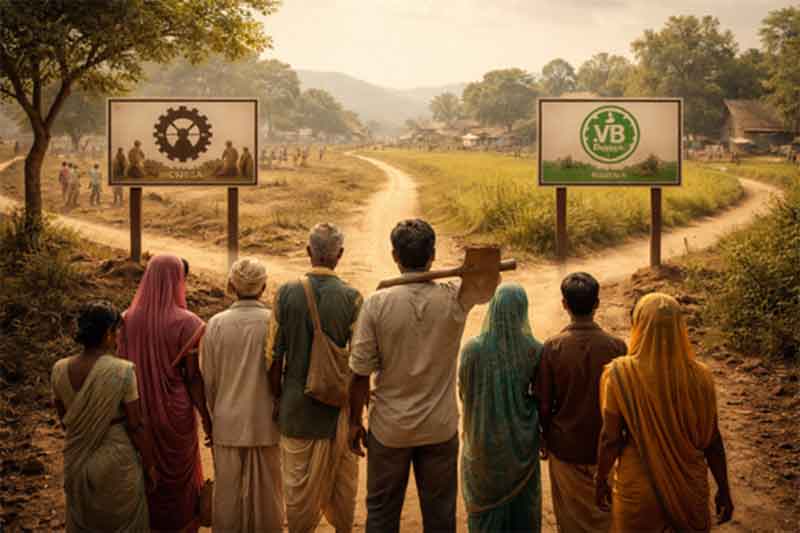
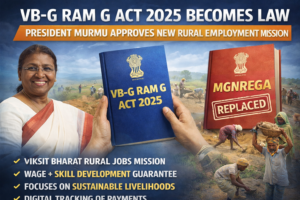
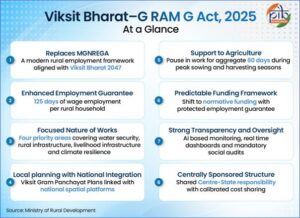
    In December 2025, India’s employment guarantee scheme underwent a monumental shift when the Union Government repealed the nearly two-decade-old Mahatma Gandhi National Rural Employment Guarantee Act (MGNREGA), replacing it with the Viksit Bharat – Guarantee for Rozgar and Ajeevika Mission (Gramin) Act, 2025 (VB-G-RAM-G Act). This transition, marked by Presidential assent on 21st December, 2025, signals a shift from a right-based, demand-driven welfare model towards a centrally sponsored, infrastructure-focused mission aligned with the “Viksit Bharat 2047 Vision”. While the new Act ostensibly increases the statutory number of workdays from 100 to 125 per household, it has sparked serious national and international debate over its potential to dismantle the safety net for India’s rural poor and erode the states’ federal powers to address such matters.

    The Government Rational

    The primary justification for this comprehensive legislative overhaul is set out in the Economic Survey 2025-26, which argues that India’s rural economy has matured beyond the need for a survival-oriented safety net. The Survey points to a 53% decline in MGREGA work demand from its pandemic peak, with demand falling by approximately 1837 million person-days in the 2025-26 financial year. Currently, rural unemployment reportedly decreased from 3.3% in 2020-21 to 2.5% in 2023-24, suggesting that the rural workforce is penetrating into non-farm employment. According to findings from NABARD, rural economic fundamentals, including formal credit access and consumption, have strengthened significantly, rendering the MGREGA model obsolete. The government also identifies “persistent structural weaknesses” in the old system, such as monitoring gaps, fake muster rolls, and the unauthorised use of machinery. The new Act intends to address these problems through advanced technological oversight.

    Structural Sabotage

    Jean Dreze, a key architect of the original MGREGA, warns that these normative allocations will function as de facto budget ceilings, effectively transforming a legal right into a rationing system and making it a supply-driven employment scheme. 

    Critics and welfare economists argue that the new Act fundamentally alters the risk-sharing mechanism for rural employment. Under the previous Act, the Central Government provided 100% of unskilled manual wages, with a demand-driven budget. The new Act reclassifies the programme as a Central Sponsored Scheme (CSS), introducing a 60:40 funding-sharing ratio for general states and a 90:10 ratio for the Himalayan and North Eastern states. Most contentious is the provision allowing the Centre to determine “normative state-wise allocations” based on parameters it prescribes. Any expenditure incurred by a state beyond this central cap must be borne entirely by the state. Jean Dreze, a key architect of the original MGREGA, warns that these normative allocations will function as de facto budget ceilings, effectively transforming a legal right into a rationing system and making it a supply-driven employment scheme.

    The Switch-off Clause and Labour Market Vulnerability

    Section 6 of the new Act introduces a “switch-off” clause, allowing states to suspend the employment guarantee for up to 60 days during peak agricultural seasons like sowing and harvesting. The government frames this as a “calibrated balance” to ensure the availability of agricultural labour and prevent wage inflation. However, this provision has been heavily criticised for institutionalising inequality. Dreze points out that this is an unnecessary complication, as rural labourers naturally seek higher-paying private-market work during peak seasons, and any additional layer of government discretion risks diluting the fundamental right to work.

    Technological Barriers and Risk of Exclusion

    To address leakages, the new Act mandates an extensive technological ecosystem, including biometric authentication, AI-based fraud detection, GPS monitoring and e-measurement books. While the government promotes this as a move toward transparency and accountability, experts warn of a “discouraged worker effect”. Rajendran Narayanan of Azim Premji University suggests that digital layers often act as structural barriers for workers trying to access jobs and payments. There is a growing concern that removing individuals from welfare rolls due to data mismatches and branding them as ‘fake’ normalises the denial of genuine entitlements. Furthermore, while the government highlights the increase in the administrative expenditure ceiling from 6% to 9% to support this digital transition, critics argue that these resources should instead be directed toward ensuring timely wage payments, which have historically been plagued by delays.

    Federalism and Future Social Protection

    The Act’s transition to a CSS has significant implications on fiscal federalism for Indian states. Development economist Jayati Ghosh warns that the Centre’s increased power to determine normative allocations could be “weaponised” against opposition-ruled states. The case of West Bengal, where central funding was suspended for three years, is a classic precedent to political misuse of such a scheme. By placing the legal responsibility for employment on states while simultaneously withdrawing central funding, the Act creates what critics term as “unfunded mandate”. This has already led to regional resistance, with Gram Sabhas across states like Bihar, West Bengal and Jharkhand adopting a resolution rejecting the new Act and demanding the restoration of the old one.

    Infrastructure over Individuals

    Under the new Act, wage employment is tied to the creation of durable public assets through the Viksit Bharat National Rural Infrastructure Stack. Works are confined to four priority verticals: water security, core rural infrastructure, livelihood-related infrastructure and extreme weather mitigation. These plans are digitally integrated with national platforms like PM Gati Shakti to ensure whole-of-government convergence. While the government argues that this ensures every person contributes to national development, critics fear that shifting from small-scale, community-led projects to large-scale infrastructure projects prioritises macroeconomic metrics over local livelihood security, which MGNREGA prioritised.

    The dismantling of a Global Benchmark:

    The repeal of MGNREGA has drawn sharp condemnation from the global academic community. A collective letter signedby leading economists, including Thomas Piketty, Joseph Stiglitz, and Mariana Mazzucato, urged the Indian government not to dismantle the program that was once a global benchmark for rights-based social security employment. The signatories argue that ending MGNREGA is a “historic mistake” that eliminates a proven instrument for poverty reduction and social justice.

    Transition Realities

    As the new Act is implemented in the 2026-27 financial year, millions of rural households face an uncertain transition. To mitigate immediate disruption, the Ministry of Rural Development has indicated that verified MGNREGA job cards- those that have completed Aadhar-based e-KYC will likely remain valid during the initial transition phase. Currently, approximately 75% of existing job cards meet these criteria. States have been given a six-month window to formulate their own schemes consistent with the new Act. However, for the millions whose cards remain unverified, the shift to a digital-first, AI-monitored mission risks creating a period of significant instability in livelihoods.

    Conclusion

    The replacement of MGREGA with the VB-G-RAM-G Act represents one of the most significant pivots in the Indian social policy on rural employment since independence. It reflects a fundamental ideological shift from a right-based moral obligation of the state toward a technocratic mission focused on data, efficiency and infrastructure. The government’s gamble rests on the belief that the rural economy is now robust enough to ensure the withdrawal of its primary safety net. However, if the transition results in the suppression of work demand due to fiscal pressures or the exclusion of the most vulnerable due to digital barriers, the cost to India’s rural poor would be tragic.

    As the original architect, Jean Dreze, notes, if social legislation is to succeed, it must be heavily favouring a rights-based framework, for governments naturally seek to wriggle out of their obligations. By granting the Central government maximum powers and minimum obligations, the VB-G-RAM-G Act may have secured the vision of “Viksit Bharat” at the potential expense of the very people it was originally intended to serve and protect.

    Feature Image Credit: https://countercurrents.org

  • The Cockroach and the Firewall

    The Cockroach and the Firewall

    India banned a joke on national security grounds. The joke went to court, found a cause, and began to splinter — all in a single week. None of it is a revolution yet. All of it is worth watching.

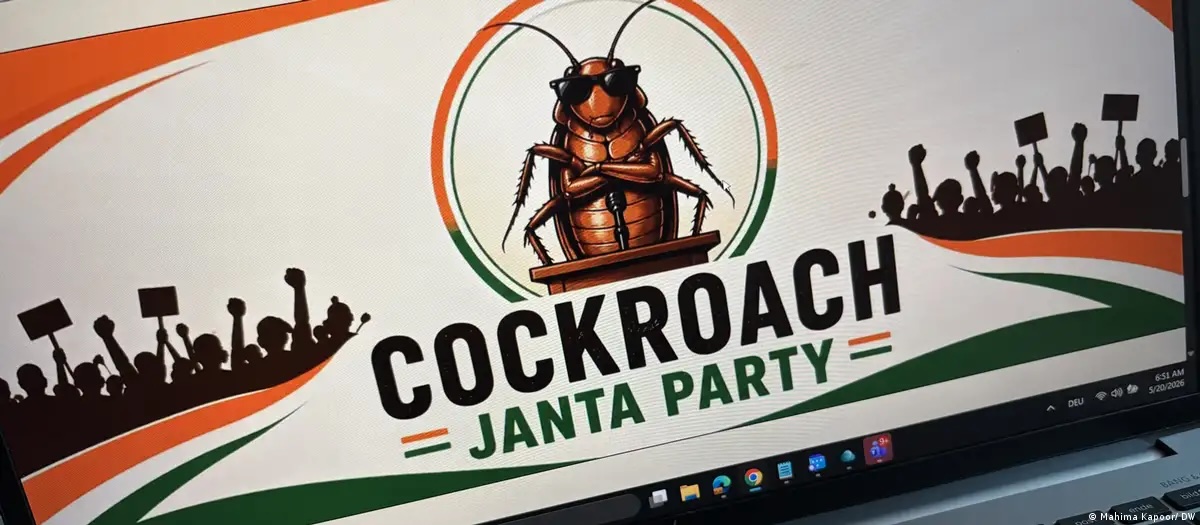
    When the Chief Justice of India reportedly likened unemployed young people to cockroaches and parasites, he was not making policy. He was making a mistake. The clarification came within a day — he meant only holders of fake degrees; the youth are “the pillars of a developed India.” But the insult had escaped. Within a week, a satirical “Cockroach Janta Party,” its name a mocking echo of the ruling party, had drawn more than twenty-two million Instagram followers — more than double the BJP’s, well past the Congress’s — along with a million sign-ups and a petition. Then the government did the most revealing thing it could have done. It treated the joke as a threat to India’s sovereignty.

    On the twenty-first of May, the Ministry of Electronics and Information Technology ordered the party’s account to be blocked under Section 69A of the IT Act, acting on Intelligence Bureau inputs alleging it endangered national security. No public order was published; the directive remains secret under the blocking rules. The website went dark, the founder’s personal pages were hacked, and — by his account — the death threats arrived, one reportedly promising he could be “murdered even in America.” Sit with the official rationale, because it collapses under its own weight. A state cannot, in one breath, tell its citizens that something is a frivolous meme and that it imperils the nation. By reaching for the sovereignty of India against an Instagram page, the government made a public confession about which of the two it believes. A confident order ignores satire. It does not invoke the Intelligence Bureau against it.

    That is the first thing worth noticing, and it is not the follower count. It is the asymmetry. A throwaway courtroom remark, instantly retracted, produced a movement; a movement of memes produced a national-security order. When effects keep dwarfing their causes like this, the cause is never really the cause. The Chief Justice did not create the anger he released, and the censor did not create the defiance he provoked. Both struck matches beside a fuse that has lain there, dry, for more than a decade.

    The fuse is not mysterious. India’s inequality is the highest in its recorded history — the top one per cent holds about forty per cent of the nation’s wealth, a concentration the economists who measured it called hard to sustain “without major social and political upheaval.” The country graduates more than eight million young people a year into a graduate unemployment rate near thirty per cent. A quarter of Indians belong to a generation promised development and handed a culture war. For ten years, the noise of majoritarian politics kept that fuse damp. The cockroach remark landed because it told an entire generation, in one word, what the system thought of them. The ban landed because it proved the system was afraid of what they might do about it.

    And yet — to say this plainly, because the temptation to romance the moment is strong — this is not a revolution, and a ban will not make it one. Not because Indians are docile; that old slander is simply false. This is the country of the JP Movement, of the 2011 anti-corruption surge, of the farmers who made a government blink. It is because the things that actually topple regimes are absent here, and the thing that is present is the thing that stops them.

    Revolutions do not run on anger. If they did, half the world would be in flames. They run on state collapse. France in 1789 was bankrupt; Russia in 1917 was losing a war; the regimes that fell in Sri Lanka, Bangladesh and Nepal these past three years were small, centralised, and hollow, where seizing one square in the capital was the same as seizing the country. None of that describes India. Its treasury is solvent, its army intact, its agencies obedient. There is also an exit the burning countries lacked: a ballot that still works — in 2024 the ruling party lost its majority and now governs on sufferance, its worst losses where the jobs ran out. And there is the deepest barrier of all: India is too many things at once. The countries that fell had a single national crowd. India has a hundred separate angers that flare in the same season without ever becoming the same fire. A movement can own the internet in Delhi and remain a rumour in Chennai. India’s diversity, so often praised as its glory, is also its great circuit-breaker. It does not extinguish anger. It prevents anger from adding up.

    Watch, then, what the past week has actually done to the joke — because the most interesting news is not the ban but everything that has happened since, and almost all of it cuts both ways. The movement went to the Delhi High Court, challenging the block as unconstitutional. That is the system working as designed: anger flowing into an institutional channel rather than onto the street, the very pressure valve a revolution requires to be sealed shut. At the same moment, the energy found something a meme had lacked — a concrete cause. The party has fused itself to the NEET examination scandal, the leaked medical entrance test that was cancelled in May, that upended the futures of twenty-two lakh students, and that has been linked to at least fourteen student suicides. Its demand is now specific and nameable: the resignation of the education minister. A grievance with a face and a number is a different creature from a grievance with only a punchline.

    And then, almost on cue, the splintering began. A lawyer in Haryana, declaring himself the movement’s “national convener,” filed to register the party with the Election Commission in his own name — with a softened, sanded-down list of aims — against the wishes of its founder. Opposition figures rushed to amplify the memes; Congress and Left accounts adopted the cockroach as their own. This is the oldest story in Indian protest, and it is happening in fast-forward: the instant a movement matters, the formal players move to capture, fork or absorb it. India did this to the 2011 anti-corruption wave, which it turned into a party and then ground down — and the cockroach’s own founder comes from precisely that lineage. The system’s reflex is not to crush such energy. It is to digest it. A week in, the digestion has already started.

    So why does a confident state still swat so frantically at a cartoon insect? Because it has read the same history I have, and read it badly. It remembers that Nepal’s collapse last year was triggered not by hunger but by a clumsy social-media ban — and it has just repeated the act it should most have feared. Suppression does not delete a grievance; it dramatises it. The party was back within hours under a new handle, Cockroach is Back — “You thought you can get rid of us? Lol” — and a resurrection travels further than a meme. Every citizen who watches the government panic over a joke quietly revises upward the number of people who must, like them, be unhappy. That is the real engine here: not the followers, but what the followers learn about one another when the state overreacts. Denying a permit for a human chain in Bengaluru, or floating a criminal probe, only widens the audience for the next post.

    Here is the part the censors have not thought through. The one grievance that could cross India’s linguistic borders — the borders that have always kept its angers apart — is an attack on the internet itself, because the net is the country’s only truly national commons. A Tamil student and a graduate in the Hindi belt do not share a language, a politics, or a hero. They share a feed, and now they share a banned one, and a ruined exam that was sat in five hundred cities at once. In choosing to censor the single medium that ignores the firewalls — over a scandal that respects no region — the government may have picked the rare battlefield where India’s diversity does not protect it. That is why this is a blunder, not merely a heavy hand.

    India now carries nearly every structural precondition for upheaval — the inequality, the idle graduates, the curdled consent, a dead exam with a body count, and a state frightened enough to show its hand — and is held back by exactly one thing. Its anger has not yet become a single anger.

    Even so, resist both the fantasy and the complacency. The fantasy is that twenty-two million followers, a viral ban, or a court date are a barricade. They are not; the Indian state has blocked 1,400 accounts in a single protest before and absorbed the consequences, and a movement already fighting over its own name before the Election Commission is not yet a threat to anyone’s power. The complacency is the old lie that Indians never revolt. The truth is more demanding than either: India now carries nearly every structural precondition for upheaval — the inequality, the idle graduates, the curdled consent, a dead exam with a body count, and a state frightened enough to show its hand — and is held back by exactly one thing. Its anger has not yet become a single anger.

    Watch for the day it does. Not the follower counts, not the unemployment graphs — those are already maxed out. Watch whether the High Court lets the block stand or strikes it down; watch whether the NEET families in one state find the banned feed in another and recognise their grief in it; watch whether the movement survives its own capture. The government has handed that convergence its best possible candidate — not a judge’s insult, not joblessness in the abstract, but a censored network and a wrecked examination, two things that look identical in every language. The cockroach did not break the firewall. The question this week left open is whether the people swinging at it have just found the one crack that runs all the way through.

    Feature Image Credit: dw.com

    Text Image Credit: pratidintime.com

    This article has used AI assistance.

  • Part 2 – Air India 171’s Final Transmissions point to FADEC cutting Fuel, Leading to Crash

    Part 2 – Air India 171’s Final Transmissions point to FADEC cutting Fuel, Leading to Crash

    This article (part 2 and final) and part 1, published earlier, are part of the investigative analysis by journalist Rachel Chitra on the Air India-171 crash in Ahmedabad last June.  The analysis is tentative, based on information the journalist accessed. The tentative analysis and likely conclusions are entirely those of the author and do not reflect in any way the position or views of the TPF  –  TPF Editorial Team.


    In the previous part 1, we discussed how core network degradation likely caused the failure of multiple components. Like “the one ring to rule them all” in The Lord of the Rings, the core network is the one system that connects some 22 flight-critical and 28 flight-non-critical systems, and yet it was flagged only “medium risk” thanks to Boeing certification for the 787.

    Now we piece together the final pieces of the jigsaw puzzle — the ACARS fault codes, core network failure, and the FADEC misinterpretation that likely triggered TCMA fuel cutoff mid-air. The moment the airplane’s digital system killed itself.

    By Rachel Chitra

    The morning, everything went dark

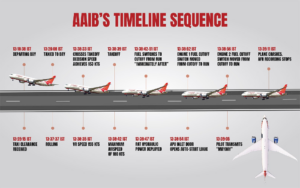
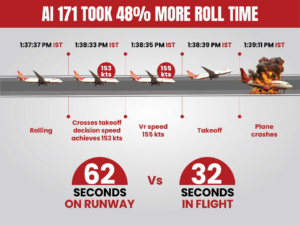
    On June 12, when Air India flight AI-171 started rolling at 1:37:37 PM IST and lifted off from Ahmedabad, no one had any reason to suspect anything was wrong. Mothers were settling children into their seats, flight attendants Lamnunthem Singson and Nganthoi Kongbrailatpam had secured the galley latches, and two experienced pilots, Captain Sumeet Sabharwal and First Officer Clive Kunders, guided the Boeing 787 to the runway for what should have been a routine afternoon flight to London.

    But disaster struck shortly after liftoff at 1:38:39 PM IST.

    Three seconds into takeoff at 1:38:42 IST, AI 171’s systems were screaming… “247450002 597…252490002 597…252390002 597…,” as per data from two independent sources.

    Strings of fault codes. Indicating that major systems, including flight control computers, were going down, taking dozens of subsystems and a bunch of sensors in their wake.

    Systems failing faster than pilots could run a checklist

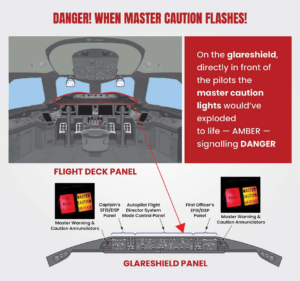
    Three seconds into takeoff, when the pilots were trying to make sense of what was happening, the “Master caution” light would’ve flashed in their faces; directly in front of them on the glareshield panel.

    On the flight, warning display or EICAS (engine indicating and crew alerting system) amber messages should’ve started queuing faster than any human eye could read.

    Messages like “ELEC SYS,” “BUS ISLN,” “GEN OFF BUS”, “RAT DEPLOYED”, “SPOILERS”, “STAB TRIM,”…and then the loss of flight critical data….“AIR DATA SYS”  “ALT DISAGREE,” “MACH DISAGREE,” “CAS DISAGREE,” “CABIN ALT AUTO,” “PACK,” “ZONE TEMP” “DATA COM” “BAT DISCH.”

    But they likely didn’t. Because the plane’s fault reporting system itself had faulted.

    A stroke mid-sky: the cockpit blackout

    Then whole sections of the cockpit display would have frozen on their last readings as the computing and power backbone feeding EICAS collapsed — a sudden, system-wide blackout, like a stroke cutting off blood flow in the brain.

    Cockpit lights would’ve flickered.

    And EICAS’s prophecy would’ve turned true in two seconds when the pilots heard a sickening sound…. the sound of the left engine spooling down; and before the plane could yaw with the asymmetric thrust…the right engine winding down as well. And in the eerie silence filling the cockpit, they wouldn’t have been able to hear the loud, rackety sound of the Ram Air Turbine (RAM) spinning in the air.

    Computers Rebooted, Went to Ground Mode in the Sky

    But the RAM, the only working generator at that point on the plane, housed roughly 23 metres away from the cockpit in the 56.7 metre long body of the 787-8, would need a few more seconds to start generating hydraulic power and even more time to supply electrical power to feed critical flight instruments.

    Capt Sumeet and First Officer Clive wouldn’t have known, but the Flight Control Computers (FCC) likely had gone into reboot.

    And while rebooting, the logic deep inside the computers would have silently flipped to its fail-safe “ground mode,” before it started up, analysed and flipped back to “air mode.”

    Yet in the face of the most bizarre and unprecedented of circumstances.

    Two men still did their duty.

    Captain Sumeet. The man who took over the aircraft. Started APU. Attempted relight.

    And First Officer Clive, who ably assisted him, who ran checklists. Called ATC, who declared “Mayday.”

    Engines Dead at 625 Feet — Pilots Still Fought to Bring the Jet Back

    At that point, dual engine failure at a height of only 625 feet above sea level (minus Ahmedabad airport elevation of 190 feet) leaves a very narrow margin for relit attempts to have worked, even if they could have.

    But both pilots did try, even as the brutal reality of their situation must have hit them like a speeding truck.

    The AAIB report says the auxiliary power unit (APU) inlet door had started opening 17 seconds (1:38:54 IST) before the crash. And if it was opening, it could’ve only been the action of the pilots; only they would’ve switched on the auxiliary power, said flight engineers across airlines. Reason being the plane’s auto start logic would’ve been inhibited given the electric arc and the nature of some of the faults underway, which we discussed in part 1 of the investigation.

    If the hand on APU start was pilot’s — Suicide theory falls flat on its face

    And it’s not just flight engineers, even pilots say the same. “If they were faced with blank screens….at that point more than a memory item from a checklist, the immediate concern of the pilots would’ve been to get the plane’s power back on, and they’d have certainly turned on the APU,” says Sam Thomas, president, Air Line Pilots Association (ALPA).

    Even though AAIB in its preliminary report seems to hint it was the system that triggered the APU with this line: “The APU Inlet Door began opening at about 1:38:54 IST, consistent with the APU Auto Start logic.”

    “But then if it turns out it was manual action; that the pilots were doing their best to save the plane, it doesn’t fit the whole pilot suicide theory, does it?” asks an Air India pilot.

    And here lies the crux of AI 171, where billions are at stake. If you could blame the pilots and not the plane; then more than 1,100 Dreamliners could continue to fly across the globe.

    When AI 171 spent more time on the runway than in air

    At 1:19:12 PM IST, AAIB reports that Air Traffic Control (ATC) queried if AI 171 required the full length of the runway. Pilot monitoring Captain Sumeet likely told ATC they needed the full length of Runway 23. Standard for a heavy, long-haul Dreamliner on a hot day.

    Sometime in that crucial minute between runway roll, takeoff and flight, at 1.38 PM IST, an ACARS code (163600003) shows that there seems to have been a problem with the left and right thrust reversers and their locking sensors, which are the devices that tell the jet’s engine computer FADEC whether the engine’s rear doors are properly sealed for forward thrust.

    AI 171’s 62-second roll: when the engine chose safety over speed

    If the thrust reverser doors aren’t fully sealed, hot exhaust air could leak forward into the engine’s intake, disrupting smooth airflow and causing the engine to lose power or stall. So, to ward against that, FADEC will limit thrust.

    Possibly a reason why AI 171 spent more time on the runway than in air. “It took 62 seconds on the runway. A clean takeoff roll should take only 40-42 seconds,” says Capt Amit Singh, the petitioner in the Air India case in the Supreme Court, and a commercial airline pilot.

    The difference isn’t trivial: it points to an airplane struggling to reach take-off speed.

    Acceleration on ground vs in air

    And this becomes clearer when one looks at the acceleration data. Aviation Herald editor and electronics engineer Simon Hradecky said, “The AAIB report states that between 08:08:35-42 UTC (1:38:35-42 PM IST) the aircraft accelerated from 155 to 180 knots IAS. That’s an acceleration of almost 4 knots a second in air versus acceleration of 2.6 knots a second on the ground.”

    Normally, as the plane’s nose begins rising at about 3° per second, lift increases, drag rises sharply, and the aircraft naturally stops accelerating the way it did on the runway. But AI 171 did the opposite. It shot up. Hradecky adds, “the aircraft will still accelerate at takeoff…however, at a much slower pace…in about the range of acceleration on the ground. Certainly not at nearly 4 knots a second.”

    Explaining further, he says, once the aircraft begins rotating at about 3° per second, induced drag should rise quickly, even while the aircraft is still on the ground. As the nose comes up and the lift vector tilts further backwards, that induced drag begins to grow and can exceed the drag the tyres were producing. At the same time, as the wings generate more lift, weight is progressively removed from the tyres, so tyre drag falls away until it becomes zero at unstick. But this reduction in tyre drag is replaced by increasing induced drag as lift builds.

    He adds that there is another reason acceleration should slow after liftoff. As the aircraft accelerates vertically into the climb, it needs more lift than just enough to balance its weight. A G-load of +1G would merely hold vertical speed constant; to increase climb rate, the aircraft needs more than that. But as lift increases, induced drag rises too, further limiting acceleration until the aircraft settles into a stable climb.

    So while an aircraft does continue to accelerate after becoming airborne, Hradecky says that under normal conditions, this is usually only at around one knot per second, so long as the pitch remains reasonably below the climb angle and the aircraft is still rotating at about 3 degrees per second. Only once the aircraft reaches that climb angle does airspeed stop increasing, with thrust and drag coming into balance.

    That is why, Hradecky says, an acceleration of 4 knots per second once airborne, especially sustained over seven seconds from 155 to 180 knots IAS, is unrealistic in normal operations. In his view, it indicates that almost immediately after liftoff, the crew were already dealing with an abnormal situation, and the pitch did not increase as per SOP; instead, the pitch angle was unusually low. This, he says, is also supported by the CCTV video, which appears to show a small pitch-down within a second after becoming airborne, after which the pitch does not increase again. Without being able to measure the pitch angle precisely from the CCTV footage, and with no such data published in the preliminary report, Hradecky estimates the aircraft may have been at around 9 degrees of pitch rather than the roughly 15 degrees that would be more normal.

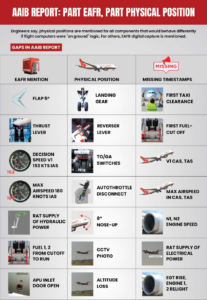
    The aircraft accelerating faster after getting airborne than it did across the length of the runway is a telltale fingerprint of something holding the jet back; something like maybe the reversers (ACARS code 163600003), say, pilots and engineers. The AAIB report mentions the physical position of the reverser levers, “that they were bent but in the stowed position.” But AAIB doesn’t mention its digital position recorded in the black box or enhanced airborne flight recorders (EAFR).

    Seconds after liftoff, AI 171’s power grid collapse

    The aircraft lifted off at 1:38:39 PM IST, as per AAIB. With multiple electrical faults already unfolding, power transients were almost inevitable.

    Reverse-engineering the fault sequence, engineers say it’s likely the trigger for RAT deployment happened one second after liftoff at 1:38:40 PM IST. And RAT deployed two seconds later at 1:38:42 PM IST.

    In part 1, we discussed how a high-voltage inverter could’ve arced and struck the forward and aft avionics bays (ACARS codes 247450002, 252490002, 252390002, 247460002). Now, this would likely have resulted in a power loss and a reboot of all three flight control computers (FCCs) by 1:38:43 PM IST, four seconds into takeoff. And the possibility of all three flight control computers rebooting mid-air, the FAA warned about as early as 2016, as per a Seattle Times report. To ward off against the eventuality, the FAA recommends a 21-day power cycle. Air India did not respond to whether such a 21-day power cycle was performed by the airline’s maintenance staff or the maintenance arm, Air India Engineering Services Ltd (AIESL).

    A jet in the sky — with systems flipped to “on ground”

    So that second 1:38:43 PM IST, when all three flight control computers rebooted, nearly every flight parameter on the plane — Weight-on-Wheels, thrust reversers, flaps, spoilers, landing gear, stabiliser trim — would’ve gone to their fail-safe mode, which would be “on ground.” And a second or two later, the rebooted flight computers would’ve analysed data, realised the true position and gone back to “in air” mode.

    “Air-ground logic is based on several parameters, so not only WoW.  For example, thrust reversers and ground spoilers may only work when WoW is TRUE “on ground”, radio altitude is below a certain altitude, and wheel speed is not zero,” says Joe Jacobsen, a former aerospace engineer with Boeing and deputy director with Foundation for Aviation Safety. He adds, “The details differ for different aircraft models.”

    And now let’s see how that power loss and subsequent flight computer reboot would’ve affected each component on board. Let’s start with the landing gears.

    FO Cliver raised gear, power cut likely stopped it halfway

    If First Officer Clive had commanded gear “UP” at 1:38:42 PM IST, the gear would’ve started retracting, and then milliseconds into the command, it would’ve stopped had the plane faced a major power disruption. Given that the plane was already reporting operational errors in the hydraulic right pump (HYDIF Right) 15 minutes before takeoff at 1:23 IST. And the left hydraulic pump’s primary electrical path was R2, which would put it directly in the line of fire when the high-voltage inverter of the CMSC R2 line arced, as we discussed in part 1.

    Possible sequence of events:

    • The AAIB report notes that the landing gear lever was found in the “DOWN” position, but this refers to its physical state post-crash and post-fire. Not the blackbox or EAFR recording.
    • If three seconds into takeoff, First Officer Clive commanded the gear “UP,” EAFR will record the command.
    • And if three seconds into takeoff, there was a power disruption, EAFR will also record its after-effects. And the gear retraction stopping halfway.

    With logic flipped to ground: spoilers can deploy, reversers can arm

     At the fourth second into takeoff at 1:38:43 PM IST, if the flight control computers had rebooted its logic would’ve flipped to fail-safe mode, which is “on ground.”

    Now, if the systems think the plane is landing (“on ground”), the flat panels on the top surface of an aircraft’s wings, called the spoilers, will auto deploy. The intention is to create drag and disrupt the airflow so that the aircraft slows down safely and stays on the runway.

    In the air, spoilers are inhibited from deploying, as doing so would break the smooth airflow around the wings and cause the plane to stall. But on AI 171, spoilers likely auto-deployed because the flight computers rebooted and, for a second, went into “ground” mode.

    The Reverser–Spoiler Double Blow

    Remember the thrust reverser faults (1636000030) we discussed earlier that could have resulted in FADEC limiting thrust on the runway? Well, if the flight computers go from “in air” to “on ground,” then thrust reversers would go from “stowed” to “idle reverse.” At takeoff, engines direct airflow backwards to propel the aircraft forward. But if the thrust reversers were in “idle reverse”, they would redirect airflow in the opposite direction, providing a gentle braking effect, like when the plane needs to land and slow down on the runway.

    If both the spoilers and thrust reversers were deployed mid-air, even briefly, the aircraft would have faced an immediate loss of lift and forward thrust — a double blow that could stall the jet within seconds of take-off.

    The AAIB report says, “The reverser levers were bent but were in the ‘stowed’ position.” Engineers say this must be taken as proof of pilot integrity as their intentions, at least — going by AAIB’s photographs and words — were clearly for the reversers to stay “stowed.” They also note that the AAIB reports refer to the physical position of the reverser levers, not their digital position, as captured by the black box or EAFR.

     AAIB quotes EAFR—just not for the “on ground”-logic-systems

    Engineers say it must be noted that when the data supports a neutral interpretation, like with flap angle, airspeed, AAIB quotes the black box or EAFR. When the data would clarify whether the aircraft entered ground-mode before impact—nose pitch, landing gear, reverser levers, TO/GA, autothrottle—the report relies on describing their physical positions post-crash. “The digital capture for the very systems that determine ‘air’ versus ‘ground,’ for whether there was a stall, for whether the fly-by-wire automated jet went into manual mode — are all conspicuously absent,” says an engineer.

    The AAIB report also omits many crucial timestamps, such as when the first fuel cut-off occurred, when the relight attempts began, and when the engine fan speed reached idle. Timings that crucially can shed light on the behaviour of the engine computers or FADECs, more than AAIB’s words, which are vague.

    AAIB report on FADEC behaviour on AI 171

    “When fuel control switches are moved from CUTOFF to RUN while the aircraft is in flight, each engine’s full authority dual engine control (FADEC) automatically manages a relight and thrust recovery sequence of ignition and fuel introduction,” says the AAIB.

    FADEC is the plane’s full authority digital engine control. But AAIB refers to it as “full authority dual engine control” on page 15 of its report. Lawyers say this mistake — saying “dual” for “digital” and other wordings — in a sentence talking about how FADEC managed a “relight and thrust recovery sequence” could give AAIB “plausible deniability” if tomorrow it came to light that FADEC’s behaviour was different on AI 171.

    In that paragraph, the report describes events such as fuel switches moving back to “RUN” and the APU inlet door opening, with precise timestamps from EAFR. And then…” it does sound as if the AAIB report is referencing how the FADEC procedure should work rather than explaining exactly what did happen on 171…underscoring the need for an independent evaluation of the actual FDR and any ACARS data to understand what was actually occurring with the automated systems,” says US attorney Michael Andrews, who is representing the families of the victims from the AI 171 crash.

    When automation can pull the plug

    So what did the engine computer FADEC really do on that plane? According to Boeing training manuals, if the plane switches to “on ground” logic in the air, the engine computers’ FADEC can initiate a fuel cutoff. If the conditions for something obtuse, called TCMA or thrust control malfunction accommodation, were met.

    What is this TCMA? And why did Boeing design it?

    Few phases of flight are as critical as takeoff, when both engines are at full power, and the aircraft is still on the ground. In this phase, there’s almost no time or room to correct an error before the plane hits the aircraft perimeter wall, nearby buildings, or other planes.

    TCMA: FADEC’s Watchdog

    To prevent accidents on the ground, Boeing and its subcontractors GE Aerospace and Safran designed TCMA — a protection circuit and software logic — for FADEC to prevent dangerous thrust.

    When it comes to the question of how much engine power to command, passengers would be surprised to learn it isn’t the pilots but FADEC that calls the shots. Engine computer FADEC continuously compares the pilot’s commanded thrust with the engine’s actual output and calculates whether the thrust is accelerating or decelerating as expected. If the system detects that the thrust is inconsistent with the commands, the FADEC interprets this as a thrust control malfunction. In that case, it automatically shuts off fuel to the engine.

    1:38:44 PM IST: Second AI 171 Likely Entered TCMA Kill Zone

    As per TCMA patent documents and Boeing literature, for a TCMA event, all of the following conditions must be true:

    • Airplane is on the ground
    • Airspeed is less than 200 knots
    • Altitude is less than 17,500 feet
    • Selected N1 (engine fan speed) is more than the TCMA threshold

    And in AI 171’s case, at 1:38:44 PM IST, four of these conditions were likely met.

    • Airplane is on the ground = Flight computers rebooted, logic went to “on ground”
    • Airspeed is less than 200 knots
    • Altitude is less than 17,500 feet = maximum altitude reached was around 435 feet, going by ADS-B transponder data minus Ahmedabad airport elevation
    • Selected engine fan speed (N1) is more than the threshold = possible given the takeoff thrust

    So how did FADEC see TCMA engine’s actual fan speed (N1) as incompatible with the commanded takeoff thrust? Why did it sense danger?

    On data recorded in the black box, AAIB says, “EAFR data revealed that the thrust levers remained forward (takeoff thrust) until the impact.”

    AAIB’s statement is actually proof of pilots’ integrity, say engineers, “as it shows pilots’ intention – that they kept the thrust in forward from takeoff to crash.” Engineers also say AAIB’s statement that throttles were in “forward”, along with GE documents, can point to a different story.

    Inside the Boolean Gating Trap: FADEC’s Blind Spot

    Older GE engines had a logic condition (Boolean gating) of “AND.” Meaning throttles “AND” thrust reversers have to be in “idle” for TCMA activation. But pilots found that inconvenient, as for certain ground manoeuvres during taxiing and initial rollouts, they keep the thrust levers in forward and the reverser levers in idle.

    So, for newer GEnx engines developed by GE Aerospace in partnership with Safran, the logic condition was changed from “AND” to “OR,” according to sources at GE and Air India. Meaning either throttle “OR” thrust reversers can be in “idle” for TCMA to activate if FADEC feels thrust is not proportional to airspeed.

    And on AI 171, we do know that there was both a thrust reverser fault (163600003) and flight control computers likely rebooted; and thrust reverser status could’ve gone to fail-safe mode of “idle reverse.”

    So then AI 171 had throttles in forward and thrust reversers, likely in “idle reverse”, so some TCMA conditions were met. But TCMA would also require engine speed (N1) to be disproportionate to airspeed data. So what was happening on AI 171 that caused FADEC to believe the engine thrust was dangerously high?

    Airspeed data failure on AI 171

    The whole series of ACARS codes accessed and sent to Boeing was topped off with “EM12R0.” EM12R0 indicates a disagreement in airspeed data. Now, on an average day with 1,100 Dreamliners in the sky, nearly 80-100 Dreamliners can fly with this code with no harm, as it just indicates one of the channels for air speed calculation disagreed with another. But on AI 171, it could’ve proved disastrous given some of the other failures underway.

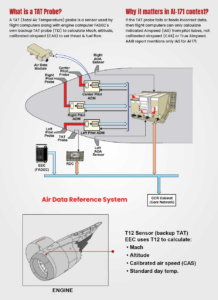
    EM12R0 indicates engine monitoring (EM) on channel 12; i.e., the total air temperature (TAT) probe fell to zero (R=0), meaning its inputs were no longer considered valid. This brings us then to the question of whether FADEC got calibrated airspeed (CAS) on AI 171? Was a failure to get CAS the reason for the whole series of failures, topped off by “EM12R0”?

    True airspeed: Lion Air 610 crash investigation vs AAIB report

    In crash investigations such as Air France 447 and Lion Air 610, authorities published the IAS (indicated airspeed), CAS (calibrated airspeed), and TAS (true airspeed). In contrast, the AAIB report in every reference to airspeed only mentions IAS: “take-off decision speed V1 153 kts IAS…maximum recorded airspeed of 180 Knots IAS.”

    Now, one mystery in AAIB’s discussion of indicated airspeed (IAS) is: what was the engine computer FADEC getting? Because FADEC does not accept a raw value like IAS. It only accepts calculated values like CAS and Mach, which represent the aircraft’s speed relative to sound. While IAS requires only pitot tubes to be operational, calculated values like CAS and Mach require additional components, such as the total air temperature probe (TAT), to be operational as well.

    Now, before roll, the engine computer FADEC needs valid feeds, including calibrated airspeed (CAS), to set thrust. So at 1:37:35 PM IST — two seconds before roll — FADEC has to have a valid CAS from the flight computers via the core network for it to set thrust.

    At this point, the system is not dependent on the TAT probes, but on an inlet cabin temperature probe. This is because the external TAT probe is an aspirated probe, meaning it needs airflow – the plane doesn’t start using it till it crosses 50 knots.

    Frozen Airspeed: FADEC voting logic, the pathway to TCMA Activation

    At about 1:37:56 UTC, the aircraft crossed 50 knots. And that’s when AI 171 must have switched to using its external TAT probe.

    FADEC in normal mode will not accept a single feed for airspeed data, in case it’s false or invalid. FADEC will use voting logic for airspeed data. It will vote on multiple feeds and accept only if two or more readings are consistent.

    FADEC takes calibrated airspeed (CAS) data from multiple feeds (internal T12 TAT probe + FCM L + FCM R + FCM C). Only if two or more feeds are consistent will it accept their value. If not, then FADEC will latch onto “last known good value.”

    So, for calibrated airspeed (CAS), FADEC might have latched on to “last known good value” of around 176 knots at 1:38:41 PM IST, or 50 knots at 1:37:56 PM IST. With the first timestamp being, if we assume flight computers lost TAT readings only after a power disruption caused by an electric arc. And the second timestamp, if we assume flight computers lost TAT readings at the handover point on roll, when the system stopped using the cabin probe and switched to external TAT once the plane crossed 50 knots.

    Triple Redundancy on Paper—TAT A Single-Point Failure in Reality

    Now the normal assumption would be that each flight computer has its own TAT probe, so that each of the three flight computers has its own data source, i.e., three TAT probes. The 787 has three pitot tubes and two angle-of-attack sensors.

    But in reality, the 787 has mapped all its three flight computers to the same single external TAT probe. So even though the 787 looks like it has triple redundancy for airspeed data on paper. In reality, each FADEC obtains its airspeed data from its own internal TAT and the three flight computers (FCM L, FCM R, and FCM C).

    But if all three flight computers reboot at the same time or the TAT probe failed earlier, FADEC will latch onto the last known good calibrated airspeed (CAS) value, which could have been 176 knots or 50 knots. When FADEC’s own internal TAT probe (T12) showed the correct reading of the plane as it accelerated to 187–191 knots IAS at 1:38:43 PM IST, four seconds after liftoff, FADEC will assume its own probe is wrong, generating the ACARS error code “EM12R0.”

    A likely catastrophic logic error by FADEC, leading to the death of 260 people.

    The last few seconds on AI 171

    No altitude. No thrust. No starter power. Capt Sumeet would’ve sensed this reality as early as the 15-16th second into liftoff.

    As he was toggling the fuel switches back to RUN for a relight attempt, he’d have known the truth. The plane couldn’t be saved.

    But he and First Officer Kunders still did their best.

    Capt Sumeet attempted a relight. Started the APU.

    First Officer Clive communicated with ATC. Called out “MAYDAY MAYDAY MAYDAY” at 1:39:05 PM IST.

    The pilots likely never even received the “Pull up, Pull up” terrain warnings.

    Against the deafening silence of blacked-out systems, the only sounds Capt Sumeet and First Officer Clive would’ve heard were passenger screams and ATC’s responses — as the ground closed in on them.

    (Disclaimer: The AAIB has not yet released its final report on the AI-171 crash. All the technical scenarios presented here are based on preliminary information and evidence submitted to India’s Parliament and Supreme Court, and remain hypotheses. Also, the ACARS codes mentioned in the story are not a direct map to maintenance faults listed in Boeing’s Fault Isolation Manual, since maintenance faults are 7-8-digit strings. The 9-digit ACARS string is only partially recognisable to engineers as it is Boeing’s proprietary code. For this story on conditions of anonymity, we have spoken to pilots plus flight and design engineers for airlines and Boeing in India, Europe and the US; and for details on actuators, sensors, structural engineering, logic paths to IT, mechanical, electrical and electronics engineers from India who are Boeing subcontractors)


    Feature Image: www.livelaw.in


  • Book Review: ‘Democracy and its Critics – Robert A Dahl

    Book Review: ‘Democracy and its Critics – Robert A Dahl


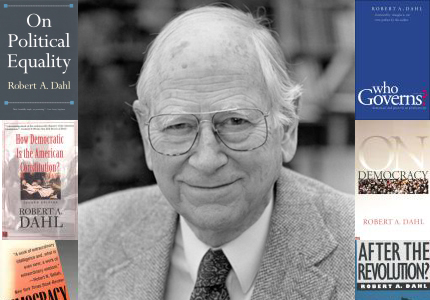
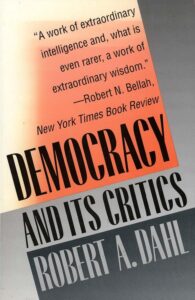
    Robert A. Dahl’s Democracy and Its Critics (1989) is one of the most important works in modern political theory, examining the strengths and weaknesses of democracy. In this book, Dahl seeks to answer a fundamental question: Is democracy really the best form of government, despite its many criticisms? To answer this, he examines the arguments made by different thinkers who support and oppose democracy. By doing this, Dahl not only defends democracy but also explains its limitations and how it can work better in modern societies.

    One of the key ideas in the book is that democracy should not be understood solely as an ideal system in which everyone directly participates in decision-making. In reality, modern societies are large and complex; therefore, the direct participation of all citizens in every decision is not possible. Because of this, Dahl introduces the concept of “polyarchy.” Polyarchy is a practical form of democracy that exists in most modern nations. In such systems, citizens participate mainly through representatives elected by popular vote. According to Dahl, polyarchy includes features such as free and fair elections, freedom of expression, access to diverse sources of information, and the ability of people to organise and form political groups.

    Another important idea discussed in the book is political equality. Dahl argues that democracy is grounded in the principle that all citizens should be treated as politically equal. This means that every person should have an equal opportunity to express their views and influence political decisions. In democratic systems, this is usually achieved through voting, political participation, and open public debate. Dahl believes that democracy is morally justified because it respects equality among citizens.

    However, Dahl also recognises that democracy has long faced criticism. One of the earliest criticisms comes from classical philosophers such as Plato, who believed that democracy could lead to poor decision-making because ordinary people may lack the knowledge or expertise to govern. According to this argument, decisions in a democracy may be based more on emotion or popular opinion than on rational thought. Critics worry that this could lead to instability and ineffective governance.

    Dahl responds to this criticism by explaining that although citizens may not always have perfect knowledge, no other political system has proved better at protecting people’s rights and interests than democracy. In authoritarian or elite-controlled systems, decisions may be made by a small group that may not represent the interests of the majority. Democracy, despite its flaws, allows citizens to participate and hold leaders accountable.

    The book also examines Marxist criticisms of democracy. Marxist thinkers argue that democracy in capitalist societies is not truly equal, because economic inequality leads to political inequality. In other words, wealthy individuals and corporations often have more political influence than ordinary citizens. They can fund political campaigns, influence the media, and lobby governments to advance their interests. This means that, even though everyone has the right to vote, some groups still have more political power than others.

    Dahl agrees that economic inequality can pose problems for democracies. When wealth is concentrated in the hands of a few, those individuals may gain greater influence over political decisions. However, he argues that democracy still provides citizens with tools to challenge such inequalities. Through elections, political parties, public debate, and civil society organisations, people can push for reforms and hold governments to account.

    Another issue Dahl discusses is the role of elites in democratic systems. In large societies, it is unrealistic for every citizen to participate in every policy decision-making process. Consequently, many decisions are made by political leaders, bureaucrats, and experts. Some critics argue that this means democracies are actually controlled by elites rather than ordinary citizens. Dahl accepts that elites play an important role in modern governance but emphasises that democratic systems include mechanisms to keep them accountable. Regular elections, competition among political parties, and freedom of speech help ensure that leaders remain responsive to public opinion.

    The book also highlights some of the challenges that democracy faces in the contemporary world. One of the biggest concerns is growing economic inequality, which can undermine political equality. If some individuals or groups have far more resources than others, they may dominate political discussions and decision-making. This can erode trust in democratic institutions and leave citizens feeling that their voices do not matter in the political process.

    Despite these challenges, Dahl remains optimistic about the future of democracy. He believes that democracy has a unique ability to adapt and correct its mistakes. Because democratic societies allow open discussion and criticism, they can identify problems and work towards solutions. For example, citizens can demand policy changes, support new political movements, or replace leaders through elections.

    One of the strengths of Democracy and Its Critics is that Dahl does not blindly praise democracy. Instead, he carefully examines its weaknesses while explaining why it remains the most acceptable form of government. His discussion of criticisms, from classical philosophers to modern political theories, makes the book intellectually rich and thought-provoking. At the same time, his concept of polyarchy helps readers understand how democracy actually functions in real-world political systems.

    However, the book has some limitations. Some scholars argue that Dahl does not fully address the extent to which economic power shapes politics. While he acknowledges the problem, critics contend that in many societies economic inequality is so pronounced that it significantly weakens democratic participation. Additionally, the book mainly focuses on democracy within individual countries and does not fully explore how democratic principles apply to global institutions and international decision-making.

    Overall, Democracy and Its Critics remains an important contribution to the study of democracy. It helps readers understand both the strengths and weaknesses of democratic systems. Dahl shows that democracy is imperfect, yet it remains the most legitimate and flexible system of government available. By enabling citizens to participate in politics and hold leaders accountable, democracies create opportunities for continuous improvement and reform.

    In conclusion, Robert A. Dahl’s Democracy and Its Critics offers a thoughtful, balanced analysis of democracy and the arguments against it. The book encourages readers to think critically about democratic institutions and the challenges they face in the contemporary world. Although democracy has many flaws, Dahl convincingly argues that it remains the best available system for securing political equality, protecting citizens’ rights, and enabling societies to evolve over time. For students of political science and anyone interested in governance, this book offers valuable insights into how democracy works and why it continues to matter today.


    The book ‘Democracy and Its Critics’, authored by Robert A. Dahl, was first published in 1989 by Yale University Press.

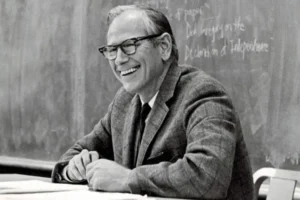
    Robert A. Dahl was an American political theorist and Sterling Professor of Political Science at Yale University. He established the pluralist theory of democracy—in which political outcomes are enacted through competitive, if unequal, interest groups—and introduced “polyarchy” as a descriptor of actual democratic governance.

  • India’s Shadow Wars: Challenges of Chronic Disputes and Insurgencies

    India’s Shadow Wars: Challenges of Chronic Disputes and Insurgencies

    Abstract

    This article contends that insurgencies in India tend to be protracted and are often hard to resolve definitively. They are characterised as “shadow wars” involving asymmetrical tactics, blurred distinctions between combatants and civilians, and an ongoing struggle for legitimacy and control. In this article, the adaptability of insurgent organisations, deep-rooted socio-political and economic disputes, and the limitations of traditional counterinsurgency methods in the Indian context are identified as key factors contributing to the persistence of these conflicts. To effectively address these issues and foster sustainable conflict resolution, it is essential to tackle their root causes and long-term impacts on India’s internal security, governance, and development.

    It is crucial to analyse the nature of India’s ongoing and persistent insurgencies, paying attention to the interplay between asymmetric warfare, socioeconomic grievances, and the effectiveness of counterinsurgency strategies.

    Key words:

    Shadow war, chronic, strategic, insurgency,

    India’s Shadow Wars: The Chronic Challenge of Internal Disputes

    Many highlight a fundamental and complex issue. India’s internal security landscape is marked by ongoing “shadow wars,” driven by several interconnected factors. In these asymmetric conflicts, the distinction between civilians and combatants blurs, creating a challenge that non-state actors often exploit by blending into local populations. At the same time, long-standing economic inequality, social injustice, and political marginalisation serve as breeding grounds for unrest, providing a continuous influx of recruits and supporters for insurgent groups. Developing effective counterinsurgency tactics demands a deep understanding of the complex interactions among these factors.

     The Connection between the Blurring of Civilian-Combatant Lines and Asymmetric Warfare

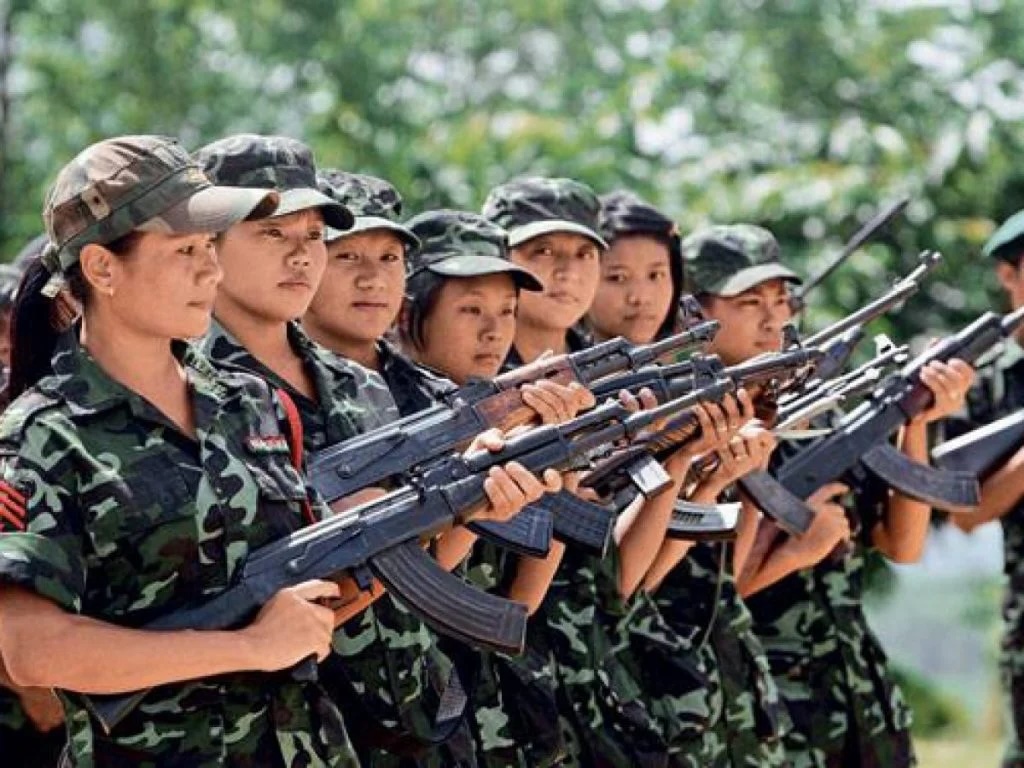
    Ongoing domestic insurgencies are characterised by the interaction of asymmetric warfare and the blurring of civilian-combatant boundaries. When confronted with the Indian state’s overwhelming conventional military strength, insurgent organisations deliberately adopt asymmetric tactics. These include targeted killings to instil terror and undermine the state’s authority, the deployment of improvised explosive devices (IEDs) to attack security personnel, and guerrilla ambushes in challenging terrain, such as the mountains of Kashmir and the Northeast or the forests of Chhattisgarh. These strategies aim to minimise direct engagement where they would be at a disadvantage while maximising their impact. An important aspect of this asymmetric approach is the extensive infiltration of rebels into civilian communities, which is often driven by various factors. It arises from genuine local support rooted in a sense of marginalisation and historical grievances. Strong tribal ties, for example, sometimes provide rebels with local sympathy and logistical assistance in the Northeast. In other cases, where villages are compelled to provide food, shelter, or intelligence, coercion and intimidation become essential.


    Furthermore, security forces find it challenging to conduct successful operations without risking civilian casualties, as operating within residential areas provides strategic cover. By operating in plain clothes and reintegrating into society following operations, insurgents often intentionally blur boundaries. This ambiguity hampers counterinsurgency efforts (Winter, 2011). The main challenge lies in accurately distinguishing between fighters and non-combatants. Indirect damage poses a significant threat to security operations, making intelligence gathering extremely difficult. Even unforeseen civilian casualties can deepen local discontent and alienation, potentially prompting more people to support the rebels. This leads to an endless cycle where harsh security measures aimed at ending the insurgency unintentionally exacerbate the problem by eroding trust and increasing local grievances. Traditional military tactics, emphasising direct conflict and large-scale operations, may fall short against foes that are deeply rooted and adaptable. A more sophisticated approach is needed—one that goes beyond military strength—requiring accurate intelligence, efforts to secure local cooperation, and tactics designed to minimise civilian harm. The persistent nature of India’s internal insurgencies mainly stems from the inability to effectively manage this complex interaction, which hampers long-term peace and stability by perpetuating cycles of violence and mistrust.

    Enduring economic, social, and political grievances as catalysts

    Long-standing sociopolitical and economic grievances significantly fuel internal insurgencies. A sense of isolation and alienation has been brought about by historical marginalisation, primarily affecting ethnic and tribal groups. Mining for resources and development projects have forced many tribal communities to flee their homelands, sometimes without appropriate compensation. This has led to hostility and the loss of traditional livelihoods. Insurgent groups exploit the narrative of the oppressed, driven by this historical injustice, to recruit new members. The inadequate political representation of certain communities further deepens these grievances. When groups believe their voices are not heard within the democratic system and that the state ignores their specific demands and concerns, feelings of helplessness may grow, and they may resort to more extreme methods for redress. For instance, a perceived lack of political agency and responsiveness by the central government often sparks calls for increased autonomy or even independence in various regions. Inequalities in development and economic status across India’s many regions are also significant. Areas affected by insurgency tend to have poor development outcomes and lag in employment, healthcare, education, and infrastructure. This uneven development fosters a sense of injustice, giving people a tangible reason to complain about ineffective or poor governance. Disadvantaged young people seeking purpose or financial stability may find insurgent groups appealing due to limited viable economic options. Security measures alone cannot resolve these complex, longstanding issues. Despite continuous counterinsurgency efforts, insurgencies may endure for decades because of the deeply rooted nature of these grievances. Addressing these underlying causes requires equitable development policies targeting underserved regions, inclusive governance that guarantees representation and participation for all communities, and a commitment to social justice that redresses historical wrongs and counters ongoing bias. Since the core causes of conflict persist, enduring peace cannot be achieved without these comprehensive, multifaceted strategies (Staniland, 2013).

    The Efficacy and Obstacles of Counterinsurgency Strategies:

    India has effectively contained violence in certain areas through its counterinsurgency methods, which often depend heavily on military and paramilitary forces. However, a solely kinetic approach has struggled to achieve lasting peace. Traditional military superiority is often insufficient due to the challenges of operating in complex terrains and among civilian populations, as well as the rebels’ asymmetric tactics. The “hearts and minds’ strategy, aimed at gaining local support through good governance and development initiatives, has yielded mixed results. These programmes are often impeded by corruption, flawed implementation, and a disconnect between policy and reality on the ground.

    Furthermore, any benefits of development efforts may be undermined by strict security measures that alienate the population. Given its importance, political discourse is often irregular and uneven. Meaningful discussions are impeded by internal divisions within insurgent organisations and by a lack of trust between the state and rebel factions. The Armed Forces (Special Powers) Act (AFSPA), a legal and administrative framework designed to grant security forces operational freedom, has also faced criticism for suspected human rights abuses, further alienating local people and possibly escalating hostility. India’s ongoing insurgencies highlight the drawbacks of relying solely on fragmented or military-focused counterinsurgency tactics. A comprehensive strategy that combines security measures with genuine political participation, equitable and long-term development, and a commitment to addressing the underlying socio-political and economic grievances that sustain these conflicts is essential to achieve lasting peace (Rajagopalan, 2007).

    Conclusion:

    Addressing India’s ongoing internal conflicts requires an integrated approach that goes beyond mere security interventions. While managing existing conflicts involves effective counterinsurgency strategies, long-term stability relies on proactively addressing the root causes of unrest. This includes ensuring fair political participation, promoting social justice, and fostering inclusive economic growth. To truly heal divisions and achieve lasting peace, ending these “shadow wars” ultimately demands a comprehensive strategy that combines security efforts with broad socioeconomic and political reforms.

    References:

    Rajagopalan, R. (2007). Force and Compromise: India’s Counterinsurgency Grand Strategy. South Asia: Journal of South Asian Studies, 75-91. doi:https://doi.org/10.1080/00856400701264035

    Staniland, P. (2013). Insurgencies In India. In Routledge Handbook of Indian Politics (p. 11). Routledge.

    Winter, Y. (2011, September). The asymmetric war discourse and its moral economies: a critique. International Theory, 3(3). doi:https://doi.org/10.1017/S1752971911000145


    Feature Image Credit: thekootneeti.in

  • India’s Refugee Policy: Implications of an Ambiguous Approach

    India’s Refugee Policy: Implications of an Ambiguous Approach

    Abstract

    This article analyses India’s approaches to refugee issues, their limitations, and the challenges faced by refugee communities due to the absence of a comprehensive, standardised refugee policy framework. With over 200,000 refugees from neighbouring countries and others, India has not ratified the 1951 Refugee Convention and the 1967 Protocol, leading to ad hoc, inconsistent and indirect policy applications through complementary legislation. Due to this, refugee communities face significant barriers in terms of accessing education, employment opportunities, healthcare and welfare facilities, government financial aid schemes and legal provisions and protections, including government identification, leading to deportation and exclusion from Indian society. The Citizenship Amendment Act of 2019, along with the COVID-19 pandemic, complicated these conditions and exposed the dire living conditions of refugees. To address these gaps, the paper offers actionable recommendations, including developing a generalised, human-rights-oriented refugee policy that adheres to international humanitarian standards, establishing an institution for refugee protection, conducting comprehensive data collection, and creating collaborative committees that involve diverse stakeholders to address marginalised refugee groups.

    Background of the Policy Issue

    According to the 1951 United Nations Convention Relating to the Status of Refugees, refugees are defined as person/s residing outside of their national territory/boundary and is unable/unwilling to return to the country of their nationality, owing to conflict, fear and possibility of persecution on account of race, religion, nationality, membership of a group and/or political opinion (UNHCR, n.d.). The convention initially applied to European refugees but was expanded through the 1967 Protocol to cover refugees globally and remove any temporal/geographical limitations. The legality of refugee protection is governed by the 1951 Refugee Convention, the 1967 Protocol, and regional- and host-country-level instruments. The 1951 Refugee Convention and 1967 Protocol are not legally binding, leaving states with the authority and legitimacy to grant refugee status, with UNHCR support through the facilitation of international standards and the maintenance of refugee camps and asylum seeker facilities (UNHCR, n.d.).

    As of 2024, India has a refugee and asylum seeker population of more than 240,000 refugees originating from multiple neighbouring countries, including Sri Lanka, Myanmar, Pakistan, Tibet and Afghanistan (Rajan and Sreekumar, 2024). The country has been regarded as a “haven” for refugees throughout history. Yet it lacks a comprehensive domestic refugee policy for the assistance, regulation, and protection of refugees. India has also chosen not to sign the 1951 Convention and the 1967 Protocol (Khosla, 2022).

    Current Policies and Their Effectiveness

    The Foreigners Act of 1946 and the Indian Passport Act also indirectly influence India’s refugee policy, deeming those entering India without a visa to be illegal immigrants. They do not include specific approaches to refugees.

    The Indian government currently manages refugees, asylum seekers and internally displaced persons through ad hoc, arbitrary and ambiguous legal pathways. By employing a unique dual system which divides the asylum caseload between UNHCR and the government based on regions, India leaves a significant number of people in vulnerable and precarious situations (Vijayaraghavan, 2020). While the UNHCR employs the Refugee Determination System (RSD) for asylum seekers arriving from non-neighbouring countries and Myanmar, those from neighbouring South Asian countries must approach the Ministry of Home Affairs directly, resulting in inconsistent protection (Shankar and Vijayaraghavan, n.d.). The Foreigners Act of 1946 and the Indian Passport Act also indirectly influence India’s refugee policy, deeming those entering India without a visa to be illegal immigrants. They do not include specific approaches to refugees (Borah and Das, 2024).

    Several refugees and asylum seekers lack legal status despite being recognised by UNHCR, with exceedingly limited access to government schemes, health care facilities, education, identity documentation, social integration, and economic development (Vijayaraghavan, 2020). Upon recognition by UNHCR, they are issued identity cards, but these cards are rarely recognised by State governments, leaving them with insufficient protection. They also face difficulties obtaining Aadhaar identification, further restricting access to health and welfare benefits and to public services such as bank accounts (Vijayaraghavan, 2020).

    India has endorsed the 2018 Global Compact on Refugees (GCR), which requires the implementation of RSD mechanisms for the registration and identification of refugees and the just determination of asylum applications (Shankar and Vijayaraghavan, n.d.). However, India has not implemented these processes, leaving the UNHCR to handle applications under its Memorandum of Understanding with the international organisation (Shankar and Vijayaraghavan, n.d.).

    The Citizenship Amendment Act (CAA), introduced in 2019 by the ruling government, sparked widespread agitation due to its religious criteria for Indian citizenship and state protection. By specifically catering to religious minority groups from Afghanistan, Bangladesh and Pakistan, the country’s first direct legislation for the protection of refugees further marginalises specific refugee groups. It restricts access to protection (Shankar and Vijayaraghavan, n.d.).

    The Immigration and Foreigners Act, passed in April 2025, replaces the Foreigners Act, 1946; the Passport (Entry into India) Act, 1920; the Immigration (Carriers’ Liability) Act, 2000; and the Registration of Foreigners Act, 1939. While the Act does not specifically address refugees, it aims to curb illegal immigration into India and prioritise national security. The Act introduces stricter penalties for entry and stay violations by foreigners in the country and authorises Immigration Officers to examine passports and other documents as and when required, to seize them if deemed necessary, and to arrest foreigners without a warrant (Immigration and Foreigners Act, 2025). The Act also allows the Central Government to prohibit, regulate and restrict the entry of foreigners into India if they are deemed a security threat, with no mechanism for appeal. Heavy penalties for violations of the law are introduced, with entry into India without a valid visa or passport resulting in a fine of approximately Rs 5 lakh and up to 5 years’ imprisonment (Immigration and Foreigners Act, 2025).

    In September 2025, however, the Ministry of Home Affairs stated that Sri Lankan Tamil refugees who entered India before 9th January 2015 would be exempt from penal provisions if they did not hold valid travel documents (The Wire, 2025). Therefore, Sri Lankan Tamil refugees who are registered with the government will not be treated as undocumented immigrants. In another order issued in September, the Union home ministry declared that members of minority communities from neighbouring countries, including Pakistan, Afghanistan and Bangladesh, who fled to India before 31st December 2024 to escape religious persecution, will be allowed to stay despite a lack of travel documents (The Wire, 2025).

    Limitations/Gaps

    A significant limitation to adequate protection of refugee communities in India is the severe lack of awareness of existing refugee policies and the UNHCR’s role in recognition and protection. Due to the lack of a generalised refugee policy applicable throughout the country, refugees often hesitate to approach Indian authorities for fear of persecution and deportation, even when undergoing financial discrimination and mistreatment (Shankar and Vijayaraghavan, n.d.). The continued ambiguity in India’s definition of refugees also further complicates the problem.

    The COVID-19 Pandemic and India’s sudden lockdown implementation affected refugees to an extreme degree. The lack of savings and inability to earn income left refugees stranded, a situation further exacerbated by the temporary suspension of UNHCR’s refugee status determination activities (Shankar and Raghavan, 2021). Most refugees live, and continue to live, in unsafe and vulnerable conditions, which enhances the risk of infection and spread of the pandemic among refugee communities. Vaccination drives that provided free testing and vaccination were few and far between, and limited access to public health care facilities and financial aid created significant challenges, leaving refugees dependent on the generosity of their employers and landlords (Shankar and Raghavan, 2021).

    While refining outdated laws and regulations that do not meet contemporary migration requirements is necessary and welcome, significant gaps remain in the Immigration and Foreigners Act 2025. The criteria for deeming a person a security threat have not been established, which could result in unlawful deportation, prohibition, or imprisonment. The Act also does not distinguish between foreigners and refugees, who are often forced to partake in irregular methods of travel and stay in search of safety and security. Many lack the means to obtain visas and passports and may lose their proof of identity during dangerous travel.

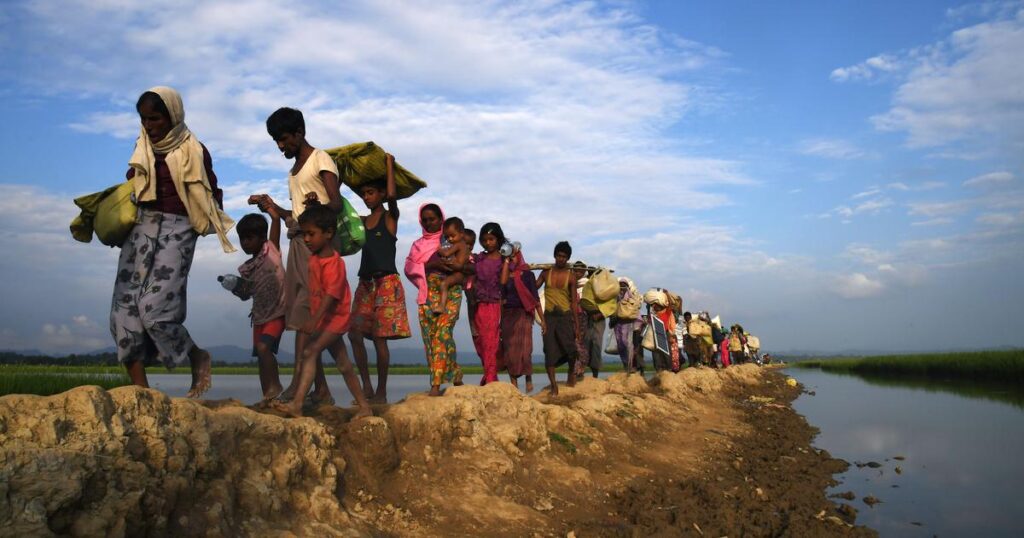
    The ambiguity of refugee policy leads to variations in the treatment of different refugee communities, usually determined by contextual and geopolitical factors. For example, while Sri Lankan Tamil refugees in the South can seek employment and government financial aid, the same cannot be said for Rohingya refugees, who are often put in refugee detention camps or deported (Sandhu and Sebastian, 2022). The lack of a policy is addressed through ad hoc measures, often implemented by the police administration, that prioritise surveillance and security over protection and welfare. The recent orders that provide certain exemptions to Sri Lankan Tamil refugees and refugees from neighbouring countries are definitely a step in the right direction, but ultimately bring further complications, especially considering the exclusion of certain communities based on religion. This also allows the ruling government to adapt its governance framework to align with ideological principles. By assigning a religious criterion for Indian citizenship and state protection, the Citizenship Amendment Act of 2019 ensures the marginalisation of select groups of refugees and asylum seekers, bringing into question the secular characteristics of India’s governance (Rajan and Sreekumar, 2024).

    The lack of privacy, haphazard sanitary conditions, poor menstrual management and double surveillance by state authorities and refugee communities sheds light on an intersectionality of issues women refugees face in protracted refugee situations and camp sites

    A significant aspect of refugee discourse is its gendered nature, but it is rarely addressed in policy debates and discussions. Women refugees who make up almost half of the refugee population in India are often solely held accountable for caregiving responsibilities and sustenance of the family, further limiting their access to education, employment and individual development (Malik, 2024). The lack of privacy, haphazard sanitary conditions, poor menstrual management and double surveillance by state authorities and refugee communities sheds light on an intersectionality of issues women refugees face in protracted refugee situations and camp sites (Malik, 2024). While women refugees are beginning to achieve representation in the refugee discourse, refugees from LGBTQIA+ communities and second-generation refugees remain mostly out of the picture. Second-generation refugees who are completely isolated from urban society are further restricted from access to quality education and employment opportunities. More often, they are left stateless and lack access to government recognition and welfare facilities because their parents have not been provided with refugee status (Shankar, 2024).

    Actionable Recommendations

    To address these gaps in refugee regulation, a comprehensive, human-rights-oriented refugee policy that adheres to international standards of refugee protection and implements an RSD process should be introduced to ensure consistent and justified treatment of all refugee groups. Considering past policies and measures implemented for Tibetan refugees, it is evident that policies focused on their integration and protection can have a significant positive impact on their community. Indirect legislation has been invoked to ensure basic constitutional protection for certain groups of refugees, but this is typically done by lower courts that lack the Supreme Court’s jurisdiction (Shankar and Vijayaraghavan, n.d.). Additionally, complementary legislation, while helpful to a certain extent, simply does not address most issues and concerns of refugee communities. The Immigration and Foreigners Act advocates a more hands-on approach to migration management. Still, it does not strike a balance between upholding national security and implementing humanitarian measures and lacks a specified approach to refugees and asylum seekers within the country.

    Collecting accurate data on the statistics of refugees and asylum seekers in India plays a significant role in the development of a domestic refugee policy. Currently, the 2011 Census remains the only eligible data for policy analysis. Adequate data, along with policy directives to protect the humanitarian rights of refugees, need to be prioritised to develop comprehensive policies (Vijayaraghavan, 2020). A leading institution can be responsible for collaboration and coordination across relevant departments to develop an overarching legal framework for refugees, with a specific focus on their social and economic integration, education, employment opportunities, and access to welfare and health care facilities. A specialised committee to address gendered concerns can be formed within the institution, thereby drawing attention to issues affecting women in refugee communities.

    Through overarching approaches across various legal and political channels, a generalised refugee policy aligned with international standards can be implemented, providing refugees with adequate legal protection, security, and opportunities for integration.

    A crucial precursor to the formation of this leading institution and refugee policy is the need for productive discourse among the ruling government, policymakers, experts in the field, and refugees themselves, to prioritise the safety of these vulnerable communities. Through overarching approaches across various legal and political channels, a generalised refugee policy aligned with international standards can be implemented, providing refugees with adequate legal protection, security, and opportunities for integration. Without a well-articulated policy specific to refugees, they will continue to be vulnerable, with limitations to their rights and protection. Therefore, it is imperative to strike a balance between upholding national security and ensuring the dignity and protection of refugees and displaced persons. Recognising international human rights norms in formulating refugee policies in India can help build a comprehensive migration policy framework that addresses the country’s unique refugee challenges.

    Works Cited

    Abbas, R. (2015). Internal migration and citizenship in India. Journal of Ethnic and Migration Studies, 42(1), 150–168. https://doi.org/10.1080/1369183x.2015.1100067

    Borah, D., & Das, B. (2024). India’s Refugee Policy: A Critical Analysis. Library Progress International, 44(3), 9877–9885.

    Immigration and Foreigners Act (2025).

    India Migration Now. (2019). Comments to the draft EMIGRATION BILL, 2019, dated 20 January 2019, released for public consultation by the Ministry of External Affairs (MEA) .https://www.indiamigrationnow.org/wp-content/uploads/2022/02/DraftBill2019_Final_Comments_IMN_19012019.pdf

    Khosla, M. (2022, September 22). The Geopolitics of India’s Refugee Policy • Stimson Center. Stimson Center. https://www.stimson.org/2022/the-geopolitics-of-indias-refugee-policy/

    Malik, A. (2024, August 9). Refugee rights, the gendered nature of displacement. The Hindu. https://www.thehindu.com/opinion/lead/refugee-rights-the-gendered-nature-of-displacement/article68506611.ece

    Rajan, S. I., & Sreekumar, A. (2024). An Overview of India’s Migration Governance Over thePast Decade. https://core.ac.uk/reader/611833180

    Sandhu, K., & Sebastian, M. (2022, August 19). Rohingya and CAA: What is India’s refugee policy? BBC News. https://www.bbc.com/news/world-asia-india-62573446

    Shankar, P. (2024, January 5). India’s stateless babies: How lawless asylum rules leave refugees in limbo. Al Jazeera. https://www.aljazeera.com/features/2024/1/5/stateless-babies-in-northeast-india-refugee-mothers-pray-for-nationhood

    Shankar, R., & Vijayaraghavan, H. (n.d.). Refugee recognition challenges in India – Forced Migration Review. Forced Migration Review. https://www.fmreview.org/recognising-refugees/shanker-vijayaraghavan/

    Shanker, R., & Raghavan, P. (2020). The Invisible Crisis: Refugees and COVID-19 in India. International Journal of Refugee Law, 32(4), 680–684. https://doi.org/10.1093/ijrl/eeab011

    The Wire. (2025, September 4). MHA Exempts Sri Lankan Tamil Refugees Who Came to India Before Jan 9, 2015, From Penal Provisions – The Wire. The Wire. https://thewire.in/rights/mha-exempts-sri-lankan-tamil-refugees-who-came-to-india-before-jan-9-2015-from-penal-provisions

    UNHCR. (n.d.). The 1951 Refugee Convention | UNHCR. UNHCR. https://www.unhcr.org/about-unhcr/overview/1951-refugee-convention

    Vijayaraghavan, H. (2020, September 8). Gaps in India’s Treatment of Refugees and Vulnerable Internal Migrants Are Exposed by the Pandemic. Migrationpolicy.org. https://www.migrationpolicy.org/article/gaps-india-refugees-vulnerable-internal-migrants-pandemic


    Feature Image Credit: iisper.org.in

  • “This is not my Home”: The Unregulated Breeding and Trade of Pets and Exotic Birds

    “This is not my Home”: The Unregulated Breeding and Trade of Pets and Exotic Birds

    A recent RTI application filed by The Hindu, enquiring into the details of registration applications for breeding African Grey Parrots, has brought alarming revelations to the limelight. Out of 19 States and Union territories, only Kerala has a record of 17 applications for a breeder’s license for African Grey Parrots. All other states had “no access to data”. The African Grey Parrot is listed in the CITES (Convention on International Trade in Endangered Species of Wild Fauna and Flora) Appendix 1 (that is, prohibited for commercial trade). Its IUCN (International Union for Conservation of Nature) status is “Endangered”. Registration and licensing are required to breed or own an African Grey Parrot. We can easily find African Grey Parrots in pet shops and aviaries, yet much of the registration data remains missing.

    India, especially Chennai Airport, has recorded the highest seizure of trade in wild and exotic animals. A TRAFFIC study reveals that nearly 70,000 wild animals and their parts were traded from 2011 to 2020. According to the Wildlife Crime Control Bureau, Tigers, Pangolins, Parakeets, Munia, owls, Quails, mynas, Jungle fowls, and partridges are common in local trade. Among species seized at airports, birds were the most common. Considering the negligible information on registrations and licensing for exotic bird trade, this cannot be viewed as a coincidence.

    Why are exotic species trade and breeding regulated?

    There are four main reasons for these regulations. Firstly, these animals have difficulty adapting to new habitats. Secondly, their population in their home regions are either endangered or vulnerable, and the export of these species only worsens the situation. Thirdly, these species are “invasive” in India. If they are knowingly or unknowingly released into the wild or environment, they may be a threat to the Indigenous species population. Fourthly and most importantly, they are bio-hazardous, since they are carriers of Zoonotic diseases– a fact which cannot be forgotten after the COVID 19 pandemic.

    The Policy for Regulation of Import, Breeding and Sale of Exotic Species:

    The Wildlife Protection Act, 1972, had regulations on the breeding and sale of species, listed in Schedules I to IV of the Act. These Schedules were not comprehensive and did not include most of the species listed in Appendix 1 of CITES. In June 2020, the Ministry of Environment, Forest and Climate Change (Wildlife Division) published an “Advisory for Dealing with Import of Exotic Live Species in India and Declaration of Stock”. This advisory included a provision for a Voluntary Disclosure Scheme, a move designed to encourage breeders and pet owners to come forward and register the exotic species they were rearing. As an incentive, those who declared their exotic species within six months of receipt of the advisory were not required to produce any documentation. Despite these efforts, only  32,645 individuals from 25 states and five Union Territories declared their possession of exotic species. Reports state that animals like Kangarooswere grown as pets as well.

    In 2022, a significant change was made at the legislation level. The Wildlife Protection Act was amended and came into effect on 1st April 2023. The main objective of this amendment was to rationalise the Act in order to implement the provisions of CITES.

    In 2023, the Ministry of Environment, Forest and Climate Change notified the Breeders of Species License Rules, 2023under Section 49 N. As per Section 49 N of the Act, a person engaged in breeding in captivity or artificially propagating any scheduled specimen listed in Appendix I of Schedule IV is required to make an application for a license within a period of ninety days of the commencement of the Wild Life (Protection) Amendment Act, 2022. The Breeders of Species License Rules, 2023, mandated that all animals listed in Appendices 1 and 4 may be bred only with a valid license. It also laid down the procedure for license application. As per this rule, July 21, 2023, was set as the deadline to submit a license application to the Chief Wild Life Warden. This application was verified and endorsed by a designated authority. The district forest officials and Wildlife wardens are expected to conduct inspections and submit reports within 30 days of receiving the forms.

    The current rules governing exotic species are even simpler. In 2024, under Section 49 M of the Wildlife Protection Act, the Ministry notified the Living Animal Species (Reporting and Registration) Rules, 2024, to facilitate a digital mode of application for licenses. Now, breeders and anyone in possession of exotic species can apply for registration in the PARIVESH 2.0 portal. This had to be done by 28th August 2024, or within 30 days from the date of receipt of such exotic species. The application fee for registration in this portal is Rs. 1,000. If such species were acquired before the enactment of the Wildlife (Protection) Amendment Act, 2022, a declaration had to be submitted. The latest rule mandates the registration of births, transfers, and deaths of these exotic species. Anyone failing to comply with the documents or rules shall have their registration cancelled.

    Apart from the above rules that specifically deal with exotic species, the Prevention of Cruelty to Animals (Pet shop) Rules, 2018 also address registration of pet shops, detailed rules on breeding and maintaining all kinds of pets, provisions regarding inspections by animal welfare boards, etc. This rule requires pet shops to maintain registers and submit annual reports to the State Animal Welfare boards. It also states that the import of birds and animals must be carried out with proper registration and approvals.

    Therefore, the current rules in place for general pet stores and the conditions for the breeding and sale of pets are addressed by the Prevention of Cruelty to Animals (Pet shop) Rules, 2018, and the State Animal Welfare Board. However, with respect to exotic birds and animals, the Living Animal Species (Reporting and Registration) Rules, 2024 specify the proper channels for registration, breeding, and imports, and state that the State Forest Departments are responsible for maintaining databases of these species. Breeding exotic species requires registration with the PARIVESH 2.0 portal and special permits, such as a No Objection Certificate from the Chief Wildlife Warden and a CITES Breeding license, as prerequisites to apply for import and breeding.

    The Ground Realities 

    Despite these stringent rules, one can often find exotic birds in pet shops, often in caged conditions. A gruelling scene to the eyes is the Pet Market at Chennai Broadway. Many pet traders sell exotic species in an open black market for rates ranging from ₹20,000 to 50,000 for tamed and trained birds and as low as ₹1500-4000 for young chicks. One can find advertisements for these sellers on popular social media platforms such as YouTube and Instagram. They would claim that they have “all papers”, but they usually only hold a DNA test paper that shows the determination of the sex of the bird through these tests. This market is completely unregulated, even with police around. Policemen state that they cannot take action unless they receive a complaint from the State Forest Department or the Animal Welfare Board. The primary issue is the lack of regular inspections of these markets by the State Forest Departments. The 2024 rules state that every registered breeder must be present for inspection of facilities as and when required. In 2024, the Tamil Nadu State Forest Department invited public suggestions on Draft Guidelines on Exotic Species Declaration, the current status of which is unknown.

    A significant loophole in the Living Animal Species (Reporting and Registration) Rules, 2024, is that it does not specify remedies or penalties for voluntary or involuntary release of exotic birds into the environment. It does not specify any penalty for unregistered breeding. Additionally, breeders and pet owners lack adequate infrastructure to breed these exotic birds. They are commonly grown as pets in their households.

    Way Forward:

    It is practically impossible for State Forest Departments to conduct door-to-door inspections for possession of exotic species; however, open black markets need to be curbed. NGOs and animal and wildlife activists must come forward to educate the public on the breeding of exotic species. More voluntary disclosures must be encouraged by activist groups and NGOs. There must be policy-level clarity on unregistered breeding and a remedy for releases into the environment. Departments must step up their database maintenance of registrations, pet locations and their health status in a robust way. A practical way to start is to track current pet owners from pet shop and breeder sales registries – which can be done by Animal Welfare Boards. Data pertaining to exotic species can be handed over to the State Forest Department for further action. The Animal Welfare Board and the State Forest Department must improve interoperability in the training of pet owners, pet shopkeepers, and breeders. To prevent another outbreak of Zoonotic disease or disapproval from international bodies, it remains imperative to prioritise this issue, especially given the rising demand for the domestication of these species.

    Feature Image Credit: india.com

  • Invisible Labour, Indispensible Work: Ensuring Rights for Women  Domestic Workers

    Invisible Labour, Indispensible Work: Ensuring Rights for Women Domestic Workers

    A persistent socio-economic issue requiring ongoing attention is the need for specific legislation to safeguard the social security of women workers in the “unorganised” sector. Although the government has expressed its aim to implement a National Policy for Domestic Workers to provide protection and social security benefits, it remains largely unrealised as a deferred vision. This highlights and clearly emphasises the neglect of the workforce within the “grey economy”, as termed by UN Women.[1]

    The Gendered, Unregulated, and Unorganised Workforce

    According to data from the e-eShram portal, which maintains records of the unorganised workforce, the total number of women domestic and household workers registered on the portal as of March 2023 is 2.67 crore (out of a total of 2.69 crore). This staggering figure not only highlights the economic vulnerability faced by women but also the gender disparity.

    However, what is more alarming is that these statistics reflect only the registered segment of the workforce. The absence of reliable data on unregistered domestic and household workers raises serious concerns regarding the invisibility and exploitation of millions who remain outside the ambit of any regulatory or welfare framework.

    International Legal Framework: The ILO Convention

    Article 1 of the Domestic Workers Convention of 2011[2] (Convention 189) defines domestic work as work performed in the household, and a domestic worker as a person engaged in domestic work with an employment relationship, and carrying it out on an occupational basis.[3] The Convention mandates the protection of domestic workers by ensuring equal treatment, decent working conditions, fair wages, and prohibiting all forms of abuse and exploitation.

    The Domestic Workers Recommendation, which supplements Convention 189, further recommends, inter alia, the creation of a model employment contract, a minimum standard for “live-in domestic workers”, and the promotion of awareness and training programmes.

    India’s Position

    Although India is a signatory to the Convention, its continued abstention from ratification has constrained the formulation and effective implementation of a comprehensive national policy for domestic workers, despite repeated governmental declarations of commitment in this regard.

    Entry 24 of List III (Concurrent List) of the Constitution empowers both Parliament and State Legislatures to enact laws on labour welfare. However, this concurrent competence has resulted only in a fragmented legal framework, marked by uneven levels of protection. In the absence of comprehensive central legislation, domestic workers are left in a legal vacuum, with existing legal frameworks offering only minimal and indirect protection.

    Existing Legal Protection in India

    1. The Unorganised Social Security Act of 2008[4]

    The Unorganised Social Security Act of 2008 is the first legislation to recognise “unorganised workers.” Section 2(n), which defines the wage worker, includes “workers employed by households, including domestic workers.”

    Section 2(m)[5] further states that the unorganised workers are the workforce not covered by any of the social security legislations, such as:

    • Employee’s Compensation Act, 1923 (3 of 1923),
    • The Industrial Disputes Act, 1947 (14 of 1947),
    • The Employees’ State Insurance Act, 1948 (34 of 1948),
    • The Employees Provident Funds and Miscellaneous Provision Act, 1952 (19 of 1952),
    • The Maternity Benefit Act, 1961 (53 of 1961) and
    • The Payment of Gratuity Act, 1972 (39 of 1972)[6]

    2.  Other Statutory Protections

    According to the Child Labour (Prohibition & Regulation) Act, 1986, employment of children below the ages of 14 and 15 years in certain prohibited occupations, including domestic work or service, is prohibited.

     The Sexual Harassment of Women at Workplace (Prevention, Prohibition & Redressal) Act, 2013, extends protection to women engaged in household work against sexual harassment under Section 2(e), and provides redressal through an inquiry into the complaint under Section 11.[7]

    Section 27 [8] of the Minimum Wages Act, 1948,[9] empowers the appropriate State governments to fix a minimum wage by adding an employee to the Schedule. Thus, some states have added the category of “domestic work” into the schedule to provide a statutory protection of minimum wages through State laws. According to the PIB[10], the State Governments of Andhra Pradesh, Jharkhand, Karnataka, Kerala, Odisha, Rajasthan, Haryana, Punjab, Tamil Nadu and Tripura have included domestic workers in the schedule of the Minimum Wages Act.

    The Conundrum between Fair Wages & Minimum Wages

    A common misunderstanding about the minimum wage is that it is synonymous with a fair wage. While minimum wages provide a baseline, they do not necessarily equate to fair wages. The factors used to determine and compute a minimum wage change with the inevitable fluctuations in economic factors, such as the cost of living, employer capacity, purchasing power, and other market conditions. Wage is not something that is required for mere existence but is necessary for leading a decent livelihood, and that is what amounts to “fair wage.”  The Supreme Court in the landmark cases of Maneka Gandhi v Union of India[11] and Olga Tellis v. Bombay Municipal Corporation[12] has held that “right to life under Article 21 is not just about physical survival but includes the right to live with human dignity.

    The Hon’ble Supreme Court, while recently hearing the case of Ajay Malik v. State of Uttarakhand,[13] where it directed the rescue and rehabilitation of a woman who was abused while employed as a domestic worker, noted the “incontrovertible demand” for a national domestic worker’s law. The court in this case also highlighted the plethora of attempts taken by the Parliament to legislate on this matter through various bills, such as

    1. The Domestic Workers (Conditions of Employment) Bill of 1959,
    2. The House Workers (Conditions of Service) Bill of 1989,
    3. The Housemaids and Domestic Workers (Conditions of Service and Welfare) Bill, 2004,
    4. The Domestic Workers (Registration, Social Security and Welfare) Bill, 2008,
    5. The Domestic Workers (Decent Working Conditions) Bill of 2015,
    6. The Domestic Workers Welfare Bill, 2016,
    7. The Domestic Workers (Regulation of Work and Social Security) Bill, 2017, was never enacted afterwards.

    The National Policy on Domestic Workers calls for the inclusion of social security protections, such as “life and disability cover, health and maternity benefits & old age protection,” for domestic workers within the existing legislation of the Unorganised Workers’ Social Security Act, 2008. However, with the enactment of The Code on Social Security, 2020 (CoSS), the 2008 Act is repealed, and its provisions are subsumed in the Code.

    The social security schemes are operating in the interim through the executive scheme (eShram)[14].

    Why do Domestic workers require a central legislation?

    The key question is why domestic workers require central legislation and what objective it aims to serve. The scope of the term domestic worker is so broad that it includes chores ranging from washing utensils and cleaning the house to even serving as caretakers; ironically, their scope for legal protection remained confined due to their engagement in private homes. This leads to the perception that any form of regulation is “illegitimate or an intervention into the private affairs.”[15] However, the private nature of labour naturally places the domestic workers in a vulnerable position, often prone to abuse by the employers. Hence, the objective of the law should not be just to prevent abuse against domestic workers and to ensure a social welfare scheme, but also to empower the section to adopt vocational or skill training to equip them with the means for a self-sufficient life.

     Policy Recommendations

    The problems faced by the domestic workers cannot be tackled in isolation; they require not only the legislation of a central law but also its effective implementation. This can be done with the assimilation of the new mandates into the existing structure. The central legislation should facilitate the following:

    1. Mandatory registration of domestic workers in the E-Shram portal, conferring an obligation upon the employer to register their domestic workers in the national register of the E-Shram portal, in case of failure on the part of the workers.
    2. Establish a national helpline number with a domestic workers’ welfare board to report and track the incidents of both violence by and against the domestic workers.
    3. Ensuring skill training for domestic workers through self-help groups, as well as regional skill-training programmes under the supervision of taluk-level officers, to prevent stagnation in centralised schemes.


    Endnotes:

    [1] UN Women, “Women in Informal Economy,” UN Women, available at https://www.unwomen.org/en/news/in-focus/csw61/women-in-informal-economy

    (last visited Oct. 5, 2025).

    [2] International Labour Organization, Domestic Workers Convention, 2011 (C-189), Article 1.

    [3] International Labour Organization, Domestic Workers Convention, 2011 (No. 189), ILO NormLEX, Instrument ID: 2551460.http://www.ilo.org/dyn/normlex/en/f?p=NORMLEXPUB:12100:0::NO:12100:P12100_INSTRUMENT_ID:2551460:NO

    [4] The Unorganized Workers’ Social Security Act, 2008, No. 33 of 2008.https://labour.gov.in/sites/default/files/unorganised_workers_social_security_act_2008.pdf

    [5] The Unorganized Workers’ Social Security Act, 2008, No. 33 of 2008, §2(m).

    [6]  Ministry of Labour & Employment, Government of India, “Unorganized Worker” (labour.gov.in).

    [7] The Sexual Harassment of Women at Workplace (Prevention, Prohibition & Redressal) Act, 2013, No. 14 of 2013 §11.

    [8] The Minimum Wages Act, 1948, No. 11 of 1948, §27.

    [9] The Minimum Wages Act, 1948, No. 11 of 1948., https://clc.gov.in/clc/sites/default/files/MinimumWagesact.pdf

    [10]Press Information Bureau, Government of India, “National Policy for Domestic Workers” (Press Release, 12 September 2019). https://www.pib.gov.in/Pressreleaseshare.aspx?PRID=1564261

    [11] Maneka Gandhi v. Union of India, (1978) 1 SCC 248.

    [12] Olga Tellis v. Bombay Municipal Corporation, (1985) 3 SCC 545

    [13] Ajay Malik v. State of Uttarakhand, 2025 SCC OnLine SC 185

    [14] Ministry of Labour & Employment, Government of India, e-Shram Portal, https://eshram.gov.in/

    [15] Vanessa H. May, Unprotected Labor: Household Workers, Politics, And Middle-Class Reform in New York, 1870–1940, 12 (2011)

  • IndiGo Airlines’ Operational Crisis and Its Consequences for Indian Aviation

    IndiGo Airlines’ Operational Crisis and Its Consequences for Indian Aviation

    Quick Take
    IndiGo Airlines, India’s largest domestic carrier, hit a massive snag in early December 2025 with a large number of cancelled and delayed flights. The main reason was that Indigo was not ready for the strict new safety rules on how long pilots can fly, known as Flight Duty Time Limitation (FDTL), set by the aviation watchdog, the DGCA. This blunder was compounded by the fact that the airline also had 50 to 70 planes sitting idle due to technical glitches involving Pratt & Whitney engines.

    The fallout was nasty: big financial hits evidenced by a decline in stock valuation and substantial refund expenditures, and a seriously bruised reputation with IndiGo’s On-Time Performance (OTP) tanking to an abysmal 19.7%, which typically exceeded 80% before the crisis. It also left a whole lot of unhappy passengers stranded across major airports, particularly during the high-demand winter period. Competitors like Air India and Akasa Air cashed in with higher prices and snatched up market share. The IndiGo crisis also placed considerable strain on the country’s overall airport infrastructure.

    This whole chaos was a wake-up call, demonstrating that running a “bare-bones crew” model just doesn’t fly in the face of non-negotiable safety rules mandated by the regulators or, as in this case, the judiciary. It also underscored the role of the regulatory and judicial authorities in fundamentally shaping the operational and financial strategies of both private and public airline entities.

    Why the Wheels Came Off?

     The disaster was the result of new safety rules colliding with a risky strategy, particularly that of IndiGo Airlines. The new rules require the DGCA to implement the revised FDTL norms, which were intended to mitigate pilot fatigue and enhance flight safety standards.

    Table 1.

    Cause Category Specific Cause/Factor Description
    Regulatory Change New FDTL Norms The DGCA mandate necessitated an increase in the weekly pilot rest period from 36 to 48 hours, an expansion of the definition of night hours, and a severe limitation on the maximum number of night landings (from six to two per roster cycle).
    Operational Strategy Under-Rostering/Crew Shortage IndiGo historically operated with a paradigm focused on high aircraft utilisation. Its standard crew buffer (estimated at approximately 4%) became effectively zero under the new regulatory framework. Pilot associations contend that this shortfall resulted from management’s “lean manpower strategy” and hiring moratoria, despite a two-year period for preparatory action.
    Technical Factors Grounded Aircraft The airline’s capacity for operational flexibility was severely constrained by the grounding of an estimated 50–70 Airbus A320neo family aircraft. This was principally attributable to inspection requirements and component shortages related to Pratt & Whitney engines.
    Outside Interference Winter/Airport Traffic Bad winter weather, minor technical issues, and already overcrowded major airports led to crew-related delays that rippled across their entire flight network, resulting in a substantial number of daily cancellations.

     Consequences

     The Damage and the Industry Reaction

    The consequences of the IndiGo crisis were immediate and painful, which spread across the entire aviation industry.

    • Money and Image: The stock price for the parent company, InterGlobe Aviation, dropped due to higher costs and refund payments. Its image as the reliable, on-time airline was severely damaged. The company, previously lauded for its operational punctuality, faced widespread public indignation and negative media coverage over delays, inadequate communication, and poor passenger support, thereby eroding its brand equity. The widespread chaos also raised doubts among investors and passengers about the overall stability and planning skills of the Indian airline industry.
    • Operations and Oversight:  The disruptions instigated a massive cascading failure across the network, resulting in delayed crew rotations, aircraft being immobile at various airports, and a generalised loss of effective operational control.
    • Regulatory: The DGCA stepped in with a formal investigation, putting IndiGo under the microscope.

    The wider effect on the Indian aviation market was concerning as well.

    Impact on Other Major Airlines in India
    Given IndiGo’s dominant market position (exceeding 60% of the domestic market), its operational disruptions invariably affected the entire Indian aviation ecosystem, albeit with varying impacts.

    IndiGo Versus Competitors
    The differential impact of the FDTL norms as described in Table -2 highlights the varying operational strategies employed by major Indian carriers.

    Table 2

    Carrier Operational Strategy FDTL Impact & On-Time Performance (OTP)
    IndiGo The Low-Cost Carrier (LCC) model focuses on high fleet utilisation, fast turnarounds, and aggressive scheduling, particularly for late-night flights. Hit the hardest due to insufficient crew planning. OTP dropped to lows of 19.7%, significantly impacting reputation and revenue.
    Air India/Vistara (Tata Group) More diversified/Full-Service models; typically maintain larger pilot buffers and fewer highly aggressive night schedules compared to IndiGo’s LCC core. While the group also lobbied against the rules, they were largely unaffected by the immediate operational meltdown. Their OTP remained relatively stable (e.g., 66.8%–67.2% during the crisis).
    Akasa Air Newer, agile LCC. Benefited from learning from older airlines’ mistakes and potentially scaling up its crew faster. Maintained strong operational stability during the crisis, reporting OTPs in the range of 67.5%–73.2%.
    SpiceJet Legacy LCC, often facing its own financial/operational challenges. While not immune to industry pressures, their OTP (e.g., 68.7%–82.5% range) remained significantly higher than IndiGo’s during the disruption period.


    Market and Systemic Effects of IndiGo’s Crisis

     Table 3

    Airline/Sector Impact Description Market Effect
    Competitors (e.g., Air India, Vistara, Akasa Air) Temporary Market Share Gain Passengers displaced by IndiGo’s cancellations transitioned to competing carriers, leading to a short-term increase in passenger volumes for rivals.
    Competitors (Revenue) Surge Pricing and Higher Yields The sudden reduction in available network capacity from IndiGo’s cancellations allowed other airlines to implement substantial surge pricing, yielding significantly higher ticket revenue on specific routes (e.g., Delhi-Bengaluru).
    Airport Operations Systemic Strain The disorder at major aviation hubs (Delhi, Pune, Mumbai, Bengaluru) was not restricted to IndiGo. Grounded IndiGo aircraft occupying parking positions impeded the movement and punctuality of all other airlines. Furthermore, passenger unrest at boarding gates disrupted the boarding processes for other flights.
    Broader Market Negative Sector Sentiment Although competitors realised short-term financial gains, the extensive chaos undermined overall investor and passenger confidence regarding the stability and planning efficiency of the Indian aviation sector.


    The IndiGo crisis vividly demonstrated the fragility of a hyper-efficient, operationally lean business model when confronted by abrupt, non-negotiable regulatory shifts, particularly ordained by those prioritising aviation safety, such as the FDTL norms. While competitors accrued temporary benefits from increased fares and passenger diversion, the underlying issue underscored the necessity for long-term human resource planning across the entire industry.

    Besides, ultimately, the Indian aviation sector functions under the guidelines and standards, including critical safety mandates, that the regulators like DGCA and AAI enforce, while economic regulators determine market structure and operational costs. Policies, whether judicial in origin (e.g., the High Court’s directive leading to new FDTL) or governmental (e.g., AERA tariffs and privatisation initiatives), emphasise the parameters that all airlines, public or private, must navigate to ensure safety (for the customers), viability and stability (for the industry).

    The Fix: Getting Back on Track
    Solving these critical issues needs both a quick patch-up and a fundamentally sound long-term strategy.

    The central challenge involves addressing immediate resource constraints, specifically, the deficit of pilots due to the new FDTL norms and the incapacitation of 50–70 aircraft due to issues with Pratt & Whitney engines, while simultaneously pursuing long-term, systematic solutions to ensure sustainable expansion of the aviation sector.

    Short-Term Fixes

    Cut flights: IndiGo must actively reduce its flight schedule with “calibrated adjustments” to match the limited FDTL-compliant crew it actually has. The airlines should focus on reducing nighttime flights to comply with the new norms. The DGCA must formally approve the diminished schedule and enforce a strict timeline for restoration, ensuring the rebalancing measure is authentic and not a transient manoeuvre.

    Temporary FDTL Exemption: On 5 December 2025, the DGCA provided IndiGo with a one-time exemption from new pilot night-duty rules and revoked a regulation that prohibited airlines from classifying pilot leave as weekly rest. However, this exemption has generated widespread apprehension, most notably from the International Federation of Air Line Pilots’ Associations (IFALPA), which states that crew fatigue “clearly affects safety.”

    Fast Leasing:  IndiGo need to quickly hire temporary aircraft and foreign crew through wet and damp leasing arrangements to instantly inject pilots and capacity. The DGCA must streamline the security clearance and licensing endorsement procedures for wet-leased crew and aircraft to facilitate rapid deployment

    Fix the Planes: IndiGo and other affected carriers must engage in intensified collaboration with Pratt & Whitney (P&W) to expedite the delivery of spare engines and components. This necessitates aggressive follow-up, including, if necessary, diplomatic pressure on P&W’s parent company (RTX Corporation) to prioritise Indian carriers, given the magnitude of the crisis.

    Maintenance, Repair, and Overhaul (MRO) Push: Engine maintenance must be expedited through the utilisation of P&W’s Customer Training Centre and the India Engineering Centre (IEC) in Bengaluru. The government should provide incentives (such as the reduced GST on MRO components) to encourage domestic and international MRO centres to rapidly expand their capacity for quick engine turnarounds

    Long-Term Strategy
    To ensure the industry’s future growth, particularly in demand, does not precipitate a recurrence of systemic failure, the industry requires strategic, large-scale investment in both human capital and physical infrastructure.

    Invest in People:
    All airlines must set aside resources for a mandatory 15-20% crew buffer, as is the rule now. This means saying goodbye to the “lean manpower” idea and building a required crew reserve pool to ensure compliance with the new rules and also absorb future regulatory adjustments, training demands, and natural attrition rates.

    Better Training: The Indian Ministry of Civil Aviation (MoCA) needs to incentivise the rapid expansion of local flying schools and flight simulators to keep up with the massive number of new planes ordered by various airlines and reduce the reliance on expensive foreign training.

    Upgrade Infrastructure: The government needs to speed up the construction of secondary airports (such as Jewar and Navi Mumbai) to take the pressure off the fully packed primary hubs. The Airports Authority of India (AAI) must invest in modern Air Traffic Management (ATM) systems to allow more planes in the airspace and reduce delays caused by weather.

    Stronger Supply Chain: Airlines should think about mixing their fleets (e.g., using both Airbus and Boeing jets). The “Make in India” scheme needs to aggressively focus on building local MRO capacity for new-generation engines to reduce reliance on fragile global supply chains for crucial maintenance.

    To sum up, IndiGo needs to honestly cut its schedule in the short term, with the regulators keeping a close watch on any temporary waivers. But for lasting stability, the entire Indian aviation sector must make coordinated, major investments in its human capital and physical assets to comply with the necessary regulatory and judicial mandates.  The primary focus for the entire industry is safety and passenger comfort, which can’t be overemphasised.

    Feature Image Credit: freepressjournal.in

    Image; Indigo Chaos www.indiatoday.in 

  • India’s war on the Mughal Empire

    India’s war on the Mughal Empire

    The profound legacies of the Mughal Empire, forged through a remarkable fusion of Persian and Sanskrit worlds, are now under siege from a mythical vision of India’s past.

    On every 15 August since 1947, India’s Independence Day, the country’s prime minister unintentionally acknowledges the Mughals’ political legacy by delivering a nationwide address from the parapets of the mightiest symbol of Mughal power – Delhi’s massive Red Fort, built in 1648.

    ‘As is true of autocracies everywhere’, wrote David Remnick last April, ‘this Administration demands a mystical view of an imagined past.’  Although Remnick was referring to Trump’s America, something of the same sort could be said of India today. Informed by Hindutva (Hindu-centric) ideals, the country’s governing BJP party imagines a Hindu ‘golden age’ abruptly cut short when Muslim outsiders invaded and occupied an imagined sacred realm, opening a long and dreary ‘dark age’ of anti-Hindu violence and tyranny. In 2014, India’s prime minister declared that India had experienced 1,200 years of ‘slavery’ (ghulami), referring to ten centuries of Muslim rule and two of the British Raj. But whereas the British, in this view, had the good sense to go home, Muslims never left the land they had presumably violated and plundered. To say the least, India’s history has become a political minefield.

    Today’s India would be unrecognisable without the imprint the Mughals had made, and continue to make, on its society and culture. It was they who, for the first time, unified most of South Asia politically.

    Between the early 16th and the mid-18th century, towards the end of those 12 centuries of alleged ‘slavery’, most of South Asia was dominated by the Mughal Empire, a dazzling polity that, governed by a dynasty of Muslims, was for a while the world’s richest and most powerful state. Although it declined precipitously during the century before its liquidation by Queen Victoria in 1858, today’s India would be unrecognisable without the imprint the Mughals had made, and continue to make, on its society and culture. It was they who, for the first time, unified most of South Asia politically. On every 15 August since 1947, India’s Independence Day, the country’s prime minister unintentionally acknowledges the Mughals’ political legacy by delivering a nationwide address from the parapets of the mightiest symbol of Mughal power – Delhi’s massive Red Fort, built in 1648. Much of modern India’s administrative and legal infrastructure was inherited from Mughal practices and procedures. The basis of India’s currency system today, the rupee, was standardised by the Mughals. Indian dress, architecture, languages, art, and speech are all permeated by Mughal practices and sensibilities. It’s hard to imagine Indian music without the sitar, the tabla, or the sarod. Almost any Indian restaurant, whether in India or beyond, will have its tandoori chicken, kebab, biryani, or shahi paneer. One can hardly utter a sentence in a north Indian language without using words borrowed from Persian, the Mughals’ official language. India’s most popular entertainment medium – Bollywood cinema – is saturated with dialogue and songs delivered in Urdu, a language that, rooted in the vernacular tongue of the Mughal court, diffused throughout India thanks to its association with imperial patronage and the prestige of the dynasty’s principal capital, Delhi.

    Yet, despite all this, and notwithstanding the prime minister’s national address at Delhi’s Red Fort, India’s government is engaged in a determined drive to erase the Mughals from public consciousness, to the extent possible. In recent years, it has severely curtailed or even abolished the teaching of Mughal history in all schools that follow the national curriculum. Coverage of the Mughals has been entirely eliminated in Class Seven (for students about 12 years old), a little of it appears in Class Eight, none at all in Classes Nine to 11, and a shortened version survives in Class 12. In 2017, a government tourism brochure omitted any mention of the Taj Mahal, the acme of Mughal architecture and one of the world’s most glorious treasures, completed in 1653. Lawyers in Agra, the monument’s site, have even petitioned the courts to have it declared a Hindu temple.

    Although such radical measures have failed to gain traction, the national government has made more subtle efforts to dissociate the monument from the Mughals and identify it with Hindu sensibilities. For example, authorities have eliminated the initial ‘a’ from the name of one of its surrounding gardens, so that what had been Aram Bagh, the ‘Garden of Tranquility’, is now Ram Bagh, the ‘Garden of Ram’, the popular Hindu deity. This is the same deity to which India’s current government recently dedicated an extravagant temple complex on the site of the Babri Masjid, the mosque in eastern India that the Mughal Empire’s founder had built in 1528, but which a mob of Hindu activists tore down brick by brick in 1992.

    All of this prompts two related questions: how did a rich, Persian-inflected Mughal culture sink such deep roots in today’s India in the first place? And why in recent years has the memory of that culture come under siege?

    Ever since the early 13th century, a series of dynastic houses, known collectively as the Delhi sultanate, had dominated the north Indian plain. The last of these houses, the ethnically Afghan Lodis, was dislodged by one of the most vivid figures in early modern history, Zahir al-Din Babur(1483-1530). In 1526, Babur led an army of mostly free-born Turkish retainers from his base in Kabul, down through the Khyber Pass and onto the wide Indo-Gangetic plain, thereby launching what would become the Mughal Empire.

    As was true for the Delhi sultans, the new polity’s success lay in controlling access to ancient trade routes connecting Delhi and Lahore with Kabul, Balkh, and Central Asian markets, such as Samarkand and Bukhara. For centuries, cotton and other Indian goods moved northwards along this route, while horses – more than a hundred thousand annually, by Babur’s day – moved southwards to markets across South Asia. War horses had long formed the basis of power for Indian states, together with native war elephants. But the larger and stronger horses preferred by Indian rulers had to be continually imported from abroad, especially from Central Asia’s vast, long-feathered grasslands where native herds roamed freely.

    Having established a fledgling kingdom centred on Delhi, Agra and Lahore, Babur bequeathed to his descendants a durable connection to the cosmopolitan world of Timurid Central Asia, a refined aesthetic sensibility, a love of the natural world reflected in his delightful memoir, the Baburnama, and a passion for gardens. Aiming to recreate in India the refreshing paradisiac spaces that he knew from his Central Asian homeland, Babur built gardens across his realm, a practice his descendants would continue, culminating in the Taj Mahal.

    Since he died only four years after reaching India, Babur’s new kingdom merely continued many institutions of the defeated Lodis, such as giving his most trusted retainers land assignments, from which they collected taxes and maintained specified numbers of cavalry for state use. It was Babur’s son Humayun (r. 1530-40, 1555-56) who took the first steps to deepen the roots of Mughal legitimacy in Indian soil, as when he married the daughter of an Indian Muslim landholder rather than a Central Asian Turk, a practice he encouraged his nobles to follow. More importantly, while seated in a raised pavilion (jharokha) that projected from his palace’s outer walls, he would greet the morning’s rising sun and show his face to the public, just as the sun showed itself to him. This followed an ancient practice of Indian rajas that subtly conflated the image of a seated monarch with the icon of a Brahmanical deity, before whom one pays respectful devotion through mutual eye contact (darshan).

    The Mughals became further Indianised during the long reign of Humayun’s son Akbar (r. 1556-1605). Whereas for three centuries the Delhi sultans had struggled to defeat the Rajput warrior clans that dominated north India’s politics, Akbar adopted the opposite policy of absorbing them into his empire as subordinate kings. Nearly all Rajput kings accepted this arrangement, for by doing so they could retain rulership over their ancestral lands while simultaneously receiving high-ranking positions in Akbar’s newly created ruling class – the imperial mansabdars. Their new status also allowed them to operate on an all-India political stage instead of remaining provincial notables. Moreover, they were granted religious freedom, including the right to build and patronise Hindu temples. Over time, there emerged a warrior ethos common to both Mughals and Rajputs that superseded religious identities, allowing the latter to understand Muslim warriors as fellow Rajputs, and even to equate Akbar himself with the deity Rama. For their part, Akbar and his successors, as the Rajputs’ sovereign overlords, acquired regular tribute payments from subordinate dynastic houses, the service of north India’s finest cavalry, access to the sea through Rajasthani trade routes leading to Gujarat’s lucrative markets, and the incorporation of Rajput princesses in the imperial harem.

    Moreover, since Rajput women could become legal wives of the emperor, from Akbar’s time onwards, an emperor’s child by a Rajput mother was eligible for the throne. As a result, Akbar’s son Jahangir (r. 1605-23) was half Rajput, as his mother was a Rajput princess. Jahangir, in turn, married seven daughters of Rajput rulers, one of whom was the mother of his imperial successor Shah Jahan, making the latter biologically three-quarters Rajput.

    This last point proved especially consequential. As more Rajput states submitted to Mughal overlordship, the imperial court swelled into a huge, multi-ethnic and women-centred world in which the Rajput element steadily gained influence over other ethnicities. Moreover, since Rajput women could become legal wives of the emperor, from Akbar’s time onwards, an emperor’s child by a Rajput mother was eligible for the throne. As a result, Akbar’s son Jahangir (r. 1605-23) was half Rajput, as his mother was a Rajput princess. Jahangir, in turn, married seven daughters of Rajput rulers, one of whom was the mother of his imperial successor Shah Jahan, making the latter biologically three-quarters Rajput.

    Inevitably, Rajput mothers in the imperial harem imparted their culture to their offspring, who were raised in the harem world. This allowed Indian sensibilities and values to seep deeply into Mughal imperial culture, reflected in imperial art, architecture, language, and cuisine. At the same time, the absorption of Rajput cavalry in the imperial system allowed native military practices to diffuse throughout the empire’s military culture.

    The Mughals engaged with Sanskrit literary traditions and welcomed Brahmin and Jain scholars to their courts. From the 1580s on, Akbar sponsored Persian translations of the great Sanskrit epics Mahabharata and Ramayana, effectively accommodating Indian thought to Mughal notions of statecraft.

    Like all authentically Indian emperors, moreover, the Mughals engaged with Sanskrit literary traditions and welcomed Brahmin and Jain scholars to their courts. From the 1580s on, Akbar sponsored Persian translations of the great Sanskrit epics Mahabharata and Ramayana, effectively accommodating Indian thought to Mughal notions of statecraft. Whereas the Sanskrit Mahabharata stressed cosmic and social order (dharma), its Persian translation stressed the proper virtues of the king. Similarly, the Sanskrit Ramayana was subtly refashioned into a meditation on Mughal sovereignty, while the epic’s hero, Rama, was associated with Akbar himself, as though the emperor were an avatar of Vishnu.

    Beginning with Akbar, the Mughals also fostered cultural fusions in the domains of medicine and astronomy.  By the mid-17th century, the Mughals’ Greco-Arab (Yunani) medical tradition had become thoroughly Indianised, as Indo-Persian scholars engaged with Indian (Ayurvedic) works on pharmacology and the use of native Indian plants.

    Similarly, from the late 16th century on, Persian-Sanskrit dictionaries allowed Sanskrit scholars to absorb Arabo-Persian ideas that had derived from ancient Greek understandings of the uniformity of nature and laws of motion. That knowledge, together with astronomical tables patronised by Shah Jahan that enabled the prediction of planetary movements, then spread among the Mughal-Rajput ruling class at large.

    The most telling indication of the public’s acceptance of the Mughals as authentically Indian is that in both the 18th and 19th centuries, when the empire faced existential threats from outside, native forces rallied around the Mughal emperor as the country’s sole legitimate sovereign. In 1739, the Persian warlord Nadir Shah invaded India, routed a much larger Mughal army, sacked Delhi, and marched back to Iran with enormous loot, including the symbolically charged Peacock Throne. At this moment, the Marathas, who for decades had fiercely resisted the imposition of Mughal hegemony over the Indian peninsula, realised that the Mughals represented the ultimate symbol of Indian sovereignty and must be preserved at all costs. The Marathas’ chief minister Baji Rao (1700-40) even proposed that all of north India’s political stakeholders form a confederation to support and defend the weakened Mughal dynasty from foreign invaders.

    Similarly, by the mid-19th century, the English East India Company had acquired de facto control over much of the subcontinent, while the reigning Mughal ruler, Bahadur II (r. 1837-57), had been reduced to a virtual prisoner in Delhi’s Red Fort, an emperor in name only. But in 1857, a rebellion broke out when a disaffected detachment of the Company’s own Indian troops massacred their English officers in the north Indian cantonment of Meerut. Seeking support for what they hoped would become an India-wide rebellion, the mutineers then galloped down to Delhi and enthusiastically rallied around a rather bewildered Bahadur II.  Notwithstanding his own and his empire’s decrepit condition, to the rebels, this feeble remnant of the house of Babur still represented India’s legitimate sovereign.

    Through the Mughals’ twilight years, spanning the two incidents mentioned above, one emperor was especially revered in public memory – ‘Alamgir (r. 1658-1707), widely known today by his princely name, Aurangzeb. Upon his death, large and reverential crowds watched his coffin move 75 miles across the Deccan plateau to Khuldabad, a saintly cemetery in present-day Maharashtra. There, the emperor’s body was placed, at his own request, in a humble gravesite open to the sky, quite unlike the imposing monuments built to glorify the memory of his dynastic predecessors (excepting Babur). That simple tomb soon became an object of intense popular devotion. For years, crowds thronged his gravesite, beseeching ‘Alamgir’s intercession with the unseen world, for his saintly charisma (baraka) was believed to cling to his gravesite, just as in life it had clung to his person. For, during his lifetime, the emperor was popularly known as ‘Alamgir zinda-pir, or ‘Alamgir, the living saint’, one whose invisible powers could work magic.

    ‘Alamgir’s status as a saintly monarch continued to grow after his death in 1707. Already in 1709, Bhimsen Saksena, a former imperial official, praised ‘Alamgir for his pious character and his ability to mobilise supernatural power in the empire’s cause. In 1730, another retired noble, Ishwar Das Nagar, credited ‘Alamgir for the exceptional peace, security, and justice that had characterised his long reign. Nagar’s account followed a spate of histories that praised the emperor as a dedicated, even heroic administrator, and his half-century reign as a ‘golden age’ of governmental efficiency.

    Further contributing to ‘Alamgir’s cult was the appearance of hundreds of images depicting the emperor engaged in administration, military activity, or religious devotion. Reflecting the extent of the ‘Alamgir cult, many of these post-1707 paintings were produced not at the imperial court but in north India’s Hindu courts, including those of the Mughals’ former enemies. No other Mughal emperor was so venerated, and for so long a period, as ‘Alamgir.

    Over time, however, Indians gradually came to see the Mughal period – and especially ‘Alamgir’s reign – in an increasingly negative light. As the East India Company attained control over South Asia in the late 18th century, British administrators, being unable as foreigners to deploy a nativist rationale to justify their rule, cited the efficiency, justice, peace and stability that they had brought to their Indian colony. And because the Mughals had immediately preceded the advent of Company rule, those rulers were necessarily construed as having been inefficient and unjust despots in a war-torn and unstable land. The colonial understanding of Muslims and Hindus as homogeneous and mutually antagonistic communities also facilitated aligning colonial policies with the old Roman strategy of divide et impera. More perniciously, the colonial view of the Mughals as alien ‘Mahomedans’ who had oppressed a mainly non-Muslim population reinforced the notion of a native Hindu ‘self’ and a non-native Muslim ‘other’ – constructions that would bear bitter fruit.

    Although originating from within the colonial regime, such ideas gradually percolated into the public domain as the 19th century progressed and Indians became increasingly absorbed in the Raj’s educational and administrative institutions. It was not until the 1880s, with the first stirrings of Indian nationalist sentiment, however, that such colonial tropes became widely politicised. As the possibility of an independent nation took root, Indian nationalists began to look to their own past for models that might inspire and mobilise mass support for their cause. The writing of history soon became a political endeavour, ultimately degenerating into a black-and-white morality play that clearly distinguished heroes from villains. In short, India’s precolonial past became a screen onto which many – though not all – Hindu nationalists projected the tropes of the Hindu self and the Muslim other.

    Between 1912 and 1924, one of India’s most esteemed historians, Jadunath Sarkar, published his five-volume History of Aurangzib, the princely name of ‘Alamgir, who would soon become the most controversial – and ultimately the most hated – ruler of the Mughal dynasty. Sarkar’s study was so detailed, so thoroughly researched, and so authoritative that, in the century following its publication, no other historian even attempted a thorough survey of ‘Alamgir’s reign.

    Importantly, Sarkar wrote against the backdrop of the Great War and a nationalist movement that was just then reaching a fever pitch. In 1905, Lord Curzon, the Viceroy for India, had partitioned Sarkar’s native province of Bengal in half, a cynical divide-and-rule measure that ‘awarded’ Bengali Muslims with their own Muslim-majority province of eastern Bengal. The very next year, there appeared the All-India Muslim League, a political party committed to protecting the interests of India’s Muslims. Meanwhile, the partition of Bengal had provoked a furious protest by Bengali Hindus, leading to India-wide boycotts against British-made goods. Ultimately, the government gave in to Hindu demands and, in 1911, annulled the partition, which only intensified fear and anxiety within India’s Muslim minority community.

    It was in this highly charged political atmosphere that Sarkar worked on his biography of ‘Alamgir. With each successive volume of his study, the emperor was portrayed in darker colours, as were Muslims generally. In the end, Sarkar blamed ‘Alamgir for destroying Hindu schools and temples, thereby depriving Hindus of the ‘light of knowledge’ and the ‘consolations of religion’, and for exposing Hindus to ‘constant public humiliation and political disabilities’. Writing amid the gathering agitation for an independent Indian nation, Sarkar maintained that ‘no fusion between the two classes [Hindus and Muslims] was possible’, adding that while a Muslim might feel that he was in India, he could not feel of India, and that ‘Alamgir ‘deliberately undid the beginnings of a national and rational policy which Akbar [had] set on foot.’

    Perhaps more than any other factor, Sarkar’s negative assessment of ‘Alamgir has shaped how millions have thought about that emperor’s place in Indian history. Since the publication of History of Aurangzib, professional historians have generally shied away from writing about the emperor, as though he were politically radioactive. This, in turn, opened up space in India’s popular culture for demagogues to demonise the Mughal emperor. For millions today, ‘Alamgir is the principal villain in a rogues’ gallery of premodern Indo-Muslim rulers, a bigoted fanatic who allegedly ruined the communal harmony established by Akbar and set India on a headlong course that, many believe, in 1947, culminated in the creation of a separate Muslim state, Pakistan. In today’s vast, anything-goes blogosphere, in social media posts, and in movie theatres, he has been reduced to a cardboard cutout, a grotesque caricature serving as a historical punching bag. A recent example is the film Chhaava, a Bollywood blockbuster that was released on February 14, 2025 and has since rocketed to superstar status. Among films in only their sixth week since release, already by late March, it had grossed the second-largest earnings in Indian cinema history.

    Loosely based on a Marathi novel of the same title, Chhaava purports to tell the story of a pivotal moment in ‘Alamgir’s 25-year campaign to conquer the undefeated states of the Deccan plateau. These included two venerable sultanates, Bijapur and Golkonda, and the newly formed Maratha kingdom, launched in 1674 by an intrepid chieftain and the Mughals’ arch-enemy, Shivaji (r. 1674-80). The film concerns the reign of Shivaji’s elder son and ruling successor, Sambhaji (r. 1680-89), his struggles with Mughal armies, and finally his capture, torture, and execution at ‘Alamgir’s order in 1689.

    The film is not subtle. With its non-stop violence, gratuitous blood and gore, overwrought plot, and black-and-white worldview, the movie turns the contest between Sambhaji and ‘Alamgir into a cartoonish spectacle, like a Marvel Comics struggle between Spiderman and Doctor Doom. Whereas Sambhaji single-handedly vanquishes an entire Mughal army, ‘Alamgir is pure, menacing evil. Mughal armies display over-the-top brutality toward civilians: innocent Indians are hanged from trees, women are sexually assaulted, a shepherdess is burned to death, and so forth.

    In reality, ‘Alamgir is not known to have plundered Indian villages or attacked civilians (unlike the Marathas themselves, whose raids in Bengal alone caused the deaths of some 400,000 civilians in the 1740s). On the other hand, contemporary sources record Sambhaji’s administrative mismanagement, his abandonment by leading Maratha officers inherited from his father reign, his weakness for alcohol and merry-making, and how, instead of resisting Mughal forces sent to capture him, he hid in a hole in his minister’s house, from which he was dragged by his long hair before being taken to ‘Alamgir.

    Historical accuracy is not Chhaava’s strength, nor its purpose. More important are its consequences. Within weeks of its release, the film whipped up public fury against ‘Alamgir and the Mughals. In one venue where the movie was showing, a viewer wearing medieval warrior attire rode into the theatre on horseback; in another, a viewer became so frenzied during the film’s protracted scene of Sambhaji’s torture that he leapt to the stage and began tearing the screen apart.

    Politicians swiftly joined the fray. In early March, a member of India’s ruling BJP party demanded that ‘Alamgir’s grave be removed from Maharashtra, the heartland of the Maratha kingdom. On 16 March, another party member went further, demanding that the emperor’s tomb be bulldozed. The next day, a riot broke out in Nagpur, headquarters for the far-right Rashtriya Swayamsevak Sangh, India’s paramilitary Hindu supremacist organisation. It began when around 100 activists who supported bulldozing ‘Alamgir’s grave burned an effigy of the emperor. In response, a group of the city’s Muslims staged a counter-protest, culminating in violence, personal injuries, the destruction of property, and many arrests. The fevered demand for bulldozing ‘Alamgir’s final resting place, however, is deeply ironic. In 1707, Sambhaji’s son and eventual successor to the Maratha throne, Shahu, travelled 75 miles on foot to pay his pious respects to ‘Alamgir’s tomb.

    In the end, the furore over ‘Alamgir’s gravesite illustrates the temptation to adjust the historical past to conform to present-day political priorities. Indicating the Indian government’s support for Chhaava’s version of history, in late March, India’s governing party scheduled a special screening of the film in New Delhi’s Parliament building for the prime minister, Cabinet ministers, and members of parliament.

    Nor is it only the historical past that is being adjusted to accord with present-day imagination. So is territory. In 2015, the Indian government officially renamed New Delhi’s Aurangzeb Road – so-named when the British had established the city – after a former Indian president. Eight years later, the city of Aurangabad, which Prince Aurangzeb named for himself while governor of the Deccan in 1653, was renamed Sambhaji Nagar, honouring the man the emperor had executed in 1689.

    Such measures align with the government’s broader agenda to scrub from Indian maps place names associated with the Mughals or Islam and replace them with names bearing Hindu associations, or simply to Sanskritise place-names containing Arabic or Persian lexical elements. Examples include: Mustafabad to Saraswati Nagar (2016), Allahabad to Prayagraj (2018), Hoshangabad to Narmadapuram (2021), Ahmednagar to Ahilyanagar (2023), and Karimgunj to Sribhumi (2024). Many more such changes have been proposed – at least 14 in the state of Uttar Pradesh alone – but not yet officially authorised.

    It is said that the past is a foreign country. Truly, one can never fully enter the mindset of earlier generations. But if history is not carefully reconstructed using contemporary evidence and logical reasoning, and if it is not responsibly presented to the public, we risk forever living with a ‘mystical view of an imagined past’ with all its attendant dangers, as Remnick warns.


    This essay was published earlier on www.engelsbergideas.com

    Feature Image Credit: www.engelsbergideas.com