Category: Democracy & Governance

  • Poll Trail in India’s Backyard

    Poll Trail in India’s Backyard

    This article was published earlier in ‘The Tribune’.

    A DEVELOPMENT that has received scant notice in global politics is the democratisation of South Asia, where elected governments rule all the regional countries. An alliance of Maoists and the Communist Party (UML) was voted to power in Nepal in November-December 2017. Scheduled elections were held this year in Bhutan, where the enlightened monarchy voluntarily ceded power to elected governments. Pakistan saw a change in government recently, when the Imran Khan-led Tehreeq-e-Insaf party was voted to power, though there is evidence that the victory was ‘facilitated’ by the army. The Maldives saw a welcome change in government, with opposition parties joining hands to nominate the soft-spoken Ibrahim Mohammed Solih, to oust the authoritarian and anti-India government of President Abdullah Yameen.

    Bangladesh is now headed for general election on December 30. This will be followed by the General Election in India next year. Presidential elections are also scheduled in Afghanistan next year. Interestingly, it is President Ghani who is determined to hold these elections next year. The Trump administration, however, seems keen to thrust a government with Taliban participation on the Afghan people, to facilitate the expeditious withdrawal of its troops from Afghanistan, instead of backing a constitutionally mandated election.

    After going through the traumatic experience of having its elected government arbitrarily dismissed and its legislature dissolved by President Sirisena, Sri Lanka has seen its elected government and parliament being restored, with the judiciary asserting its constitutional authority. Presidential and parliamentary elections in Sri Lanka are scheduled in 2020. But given the continuing personal and policy differences between President Sirisena and PM Wickremesinghe, the island nation appears headed for uncertain times politically and economically in coming months.

    Developments in South Asia will also be seriously affected by what transpires in the elections in Bangladesh, the results of which will have a bearing on the security of India’s Northeast. The results could shape the contours of Pakistan-sponsored terrorism against India, by groups operating from Bangladesh. India has seen a vast improvement in relations with Bangladesh during the past decade, because of the cooperation and understanding of the Awami League government headed by Sheikh Hasina.

    The last decade saw the resolution of the long-pending problem of demarcation of India’s borders with Bangladesh and exchange of enclaves, which was completed in 2016. Likewise, the demarcation of the maritime boundary with Bangladesh was completed, with a UN tribunal awarding Bangladesh 19,467 sq km of the disputed 25,602 sq km in the Bay of Bengal. Sheikh Hasina’s two terms in office in recent years have also seen a remarkable strengthening of anti-terrorism cooperation with India. This involved firm action against Indian separatist groups, which were provided a haven by Khaleda Zia and her Bangladesh National Party, with Pakistani involvement. India and Bangladesh have acted jointly against Pakistan-sponsored terrorism on their soil by measures like the decision not to participate in the SAARC Summit to be held in Islamabad.

    India’s economic cooperation with Bangladesh has increased substantially in recent years, with projects for the supply of over 3600 MW hydroelectric and thermal power by India. This has been accompanied by substantial expansion in road and rail communication links. Moreover, under Sheikh Hasina’s leadership, Bangladesh achieved an unprecedented rise in economic growth, with a threefold increase in per capita income and a reduction of people living below the poverty line, from 19 per cent to 9 per cent. Bangladesh is no longer classified as a ‘least developed country’. A booming textile industry and moves to step up growth in areas like pharmaceuticals and IT have spurred optimism that Bangladesh could soon reach a 9 per cent growth rate.

    Hasina has virtually decimated her rival Khaleda and her party. Also, the formidable Jamat-e-Islami has been banned from participating in elections. Khaleda is in jail, convicted on charges of corruption. Accusations of authoritarianism against Sheikh Hasina have, however, resulted in the forging of opposition unity. The octogenarian Dr Kamal Hossain, who played a leading role in the Bangladesh freedom struggle and became a close associate of Sheikh Mujibur Rahman, engineered this development. The opposition parties, including Khaleda’s BNP and members of the Jamat-e-Islami, have joined this alliance, labelled as the Jatiya Oikya Front (National Unity Front), to take on the Awami League. Pakistan has maintained close ties with the BNP and Jamat-e-Islami.

    Sheikh Hasina has welcomed Chinese assistance, including financing of important projects. China has committed $38 billion in loans, though Bangladesh officials have made it clear that they have no intention of walking into a debt trap, like Pakistan and Sri Lanka. But Bangladesh has welcomed Chinese efforts to find an amicable solution to the Rohingya issue. Sheikh Hasina has averred that Bangladesh will not get involved in US-China rivalries, stating: ‘Our foreign policy is very clear. We want friendly relations with everyone. What China and US are doing is between them.’ But China let the cat out of the bag about its preferences in Bangladesh, when Khaleda met President Xi in 2016 during his visit to Bangladesh. A press note by the Chinese embassy in Dhaka noted: ‘President Xi Jinping appreciated that the BNP has firmly maintained a friendly policy towards China for years.’ Despite protestations of ‘non-interference’, China has given indications of its involvement in the internal politics of Sri Lanka and the Maldives, where Chinese and Pakistani preferences have been identical. Sheikh Hasina and the Awami League are approaching the electorate with a creditable record on economic development. The challenge by a united opposition can’t, however, be ignored.

    Ambassador G Parthasarathy is a former diplomat and a prolific commentator on geopolitics. He is a trustee of TPF. The views expressed are his own.

    Note: Since the time this article was published, Bangladesh went to polls and Sheikh Hasina has won a land-slide victory. This is bound to have a very positive impact on the region, and on India-Bangladesh relations in particular – TPF research team.

  • Disempowering the soldier

    Disempowering the soldier

    Deepak Sinha                                                                                          December 02, 2018 : Commentary

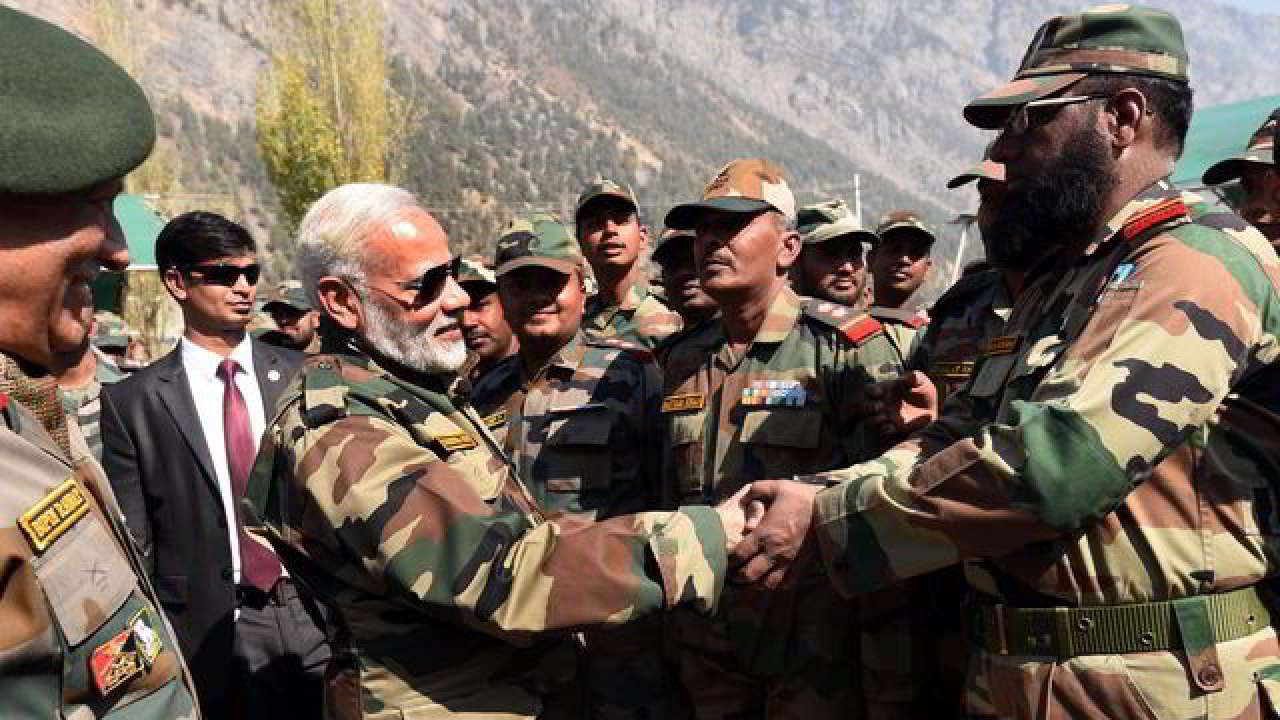
    With election fever having gripped major parts of the country, television coverage of Prime Minister Narendra Modi hitting the poll trail is common, as also his constant reference to the so-called “surgical strikes” in his speeches. It is obvious that through his words of sympathy and support for the sacrifice and efforts of the military, he is intent on furthering his reputation as a firm and pro-active leader. But despite semantics and bombast, his Government continues with unabated ferocity in its agenda to disempower and dismember the military. Among a host of other issues, take the case of the Armed Forces Tribunals (AFT), another important institution that has been in the line of fire by this Government over the past year.

    It was just about a decade ago when the Parliament, in its wisdom, transformed the military justice system by enacting the Armed Forces Tribunal Act, 2007, in order to address the serious lacunae in the existing system where justice was dispensed within the military. As per its website, it provided for the “adjudication or trial of disputes and complaints with respect to commission, appointments, enrolments and conditions of service in respect of persons subject to the Army Act, 1950, The Navy Act, 1957 and the Air Force Act, 1950.”

    More importantly, it also provided for “appeals arising out of orders, findings or sentences of courts — martial held under the said Acts and for matters connected therewith or incidental thereto.” In addition, it also adjudicates cases pertaining to military veterans and their heirs in issues relating to service matters. The AFT also has a distinct advantage since appeals against its findings can be made directly to the Supreme Court, thereby speeding up the judicial process for the affected individuals and the Government.

    The critical role played by the AFT can best be understood in context of the fact that the Armed Forces being hierarchical organisations steeped in tradition, demand unquestionable loyalty and implicit obedience to orders from its rank and file. In this paternalistic and excessively conservative environment if, for any reason, an individual finds himself on the wrong side of the track, be it with regard to personnel or disciplinary issues, his superior officer becomes the prosecutor, jury and judge — all rolled in one.

    While this provides for a quick dispensation of justice, undoubtedly extremely important in certain circumstances, it may not necessarily be unbiased or provide for an impartial or just resolution of the issue. The establishment of the AFT, thus, provided for an extremely important element in the military justice system. It gave all ranks an opportunity to approach an independent authority if they felt that they had not received justice at the hands of their superior officers for whatever reason.

    Besides the principal Bench in New Delhi, the AFT has regional benches in 10 other cities across the country. While Delhi, Lucknow and Chandigarh have three Benches each, all other centres have a Bench each, a total of 17 Benches. Each Bench comprises of a judicial member and an administrative member. The judicial members are retired High Court judges and administrative members are retired members of the Armed Forces who have held the rank of Major General/ equivalent or above for a period of three years or more.

    It demands no great intelligence to conclude that the judicial member is appointed based on his experience and knowledge of law and functioning of the criminal justice system. The administrative member is selected based on his long and distinguished service in the military and knowledge in associated matters.

    However, over the past year while members have retired at regular intervals on completion of the laid down tenures, new appointments have not been forthcoming with a result that presently, of the authorised 35 members for 17 Benches, there are a total of only seven judicial members and eight administrative members presently nominated to the AFT. This implies that the Armed Forces Tribunals is presently functioning at less than 40 per cent of its strength.

    Another five members, including three administrative members, will retire by May 2019, which would make the Armed Forces Tribunals virtually non-functional, if new members are not appointed. For all intents and purposes, circumstances leading to the prevailing state of affairs cannot be attributed to the lack of suitably-qualified judges or service officers. But it clearly points towards a deliberate attempt by the appointing authority and the Ministry of Defence to nullify their effectiveness at the cost of servicemen and veterans alike.

    It is a matter of public record that there have been numerous occasions on which the various Benches of the AFT have ruled against the stand of the Ministry, thereby causing much embarrassment and humiliation to the Ministry. As per reports in the media as on date, the Ministry of Defence has a total of over 7,000 appeals against judgements of the AFT pending in the Supreme Court.

    Obviously, the Defence Secretary finds himself in an unenviable position and can hardly be happy with this state of affairs, especially given the fact that he is a member of the selection committee that appoints members to the Armed Forces Tribunals. This attempt to curtail the effectiveness of the AFT could, therefore, well be because of this, which makes it a clear case of conflict of interest. Incidentally, a petition is under consideration of the Punjab and Haryana High Court since 2012 on this very issue and the need to place the AFT under the Ministry of Law instead.

    However, a more disturbing reason could be that the Government’s attempt to introduce new rules through the Finance Bill 2017 were stalled when it was stayed by the Supreme Court in its judgment of February 9, 2018, in the matter of Kudrat Sandhu versus the Union of India.

    As per the new rules, the appointment of administrative members was to be no longer restricted to the military, but was also open to others with at least 20 years of public service in such fields as economics and finance. Clearly, expecting non-military members to be conversant with military traditions and customs, procedures and conditions of service was not only impracticable, to say the least, but also made no sense. Obviously, this was nothing but a brazen and unashamed attempt to add to the sinecures available for retiring bureaucrats, which given their bent of mind, would result in the Ministry of Defence getting things their way from their own erstwhile colleagues.

    Whether the Armed Forces Tribunals has been brought to its knees by the deliberate actions of unconscionable bureaucrats or utter lack of empathy of politicians is of little concern. The truth is, by curtailing the effectiveness of the Armed Forces Tribunals, the Government is destroying the military justice system which is a disservice to serving and retired personnel. Moreover, it is denying them justice that is their due, given that they have no other legal recourse available.

    The writer is a military veteran, a Consultant with the Observer Research Foundation and Visiting Senior Fellow with The Peninsula Foundation, Chennai. This article was published earlier in ‘The Pioneer’ on November 30, 2018.

  • Avoiding the Ideology trap: Learning from History

    Avoiding the Ideology trap: Learning from History

    Deepak Sinha                                                                                       November 23, 2018: Commentary

    Alexandre Dumas once wrote that “all generalizations are dangerous, even this one.” While there is much wisdom in his words, there are also circumstances when sweeping generalizations are not only unavoidable, but also simply reflect the truth. The widespread prevalence of social media and 24 x 7 news channels have empowered individuals by ensuring that not only is information, analysis and opinion available at the click of a button but also that his or her voice is heard, sometimes with telling effect, as the ongoing ‘#MeToo’ movement has shown, both in India and abroad. While empowerment of the individual is a positive development for our democracy, it has also upended governance structures, as it allows unelected individuals and groups to stall progress or any attempt to change the status quo.

    Moreover, unprincipled and unaccountable elements have used such channels to spread vicious lies and propaganda that allows them to organize and indulge in bullying, intimidation and even violence to achieve their own nefarious ends. Political parties too have seen this as a useful tool to dominate the public narrative and occupy mind space. A perfect example is what we were witness to in Gujarat recently where large number of innocent labourers from Bihar and Uttar Pradesh were threatened with violence and hounded out, ostensibly by a local politician, because of an alleged heinous criminal act on the part of one unidentified individual.

    While what we saw in Gujarat was at the extreme end of the spectrum, and was clearly criminal in nature, a more insidious and harmful impact of social media is the constant attempt to question and vilify decision makers and leaders, without necessarily being fully aware of all the facts. Such criticism, apart from creating fissures and uncertainty within an organization, also tends to severely constrain leaders from taking initiatives that fall within their ambit and are necessary if progress is to be made.

    Interestingly, one group who appear to be the torch bearers at the forefront of this “criticism tsunami”, if one can call it that, are military veterans. There are those among them who are extremely critical of the manner in which this government has treated the Armed Forces, with some justification one may add, and are appalled by the seeming subservience of the top brass. There are also those, in fairly substantial numbers, who tend to be extremely conservative in their outlook and view all issues through the prism of nationalism and, for all intents and purposes, are allied to the present governments’ ultra- nationalistic plank. Indeed, there are many among them who have taken the plunge into politics and are members of the BJP, with one former Chief reportedly having even joined the RSS. When you add to this the fact that our adversaries spare no effort at feeding misinformation aimed at polarizing the military community and civil society, there is little doubt that the military finds itself a veritable minefield of clashing ideologies and attitudes through which it has to tread exceedingly cautiously.

    To be fair, much of the criticism against the Forces has been brought on by patently silly attempts of those at the helm to grab headlines and credit to inveigle themselves into the good books of the governing dispension, probably in the hope of post- retirement sinecures. This is not something new, though what differentiates it from earlier times is this governments’ ill-concealed and voracious appetite to take advantage of these officers to politicize much of what the military does in the hope of deriving advantage against its political opponents. Sadly, it has also got into the habit of appropriating military infrastructure for use by the public to win votes, without bothering about the impact of such a step on the military. For example, while military veterans are barred from using military hospitals except in some circumstances, and are therefore covered by the Ex Servicemen Health Scheme, the Government has recently permitted all those covered by CGHS to utilize facilities at Service Hospitals. With an additional 50 Crores personnel to be catered for where will all serving personnel and their dependents go?

    The recent celebration of “Parakram Parv”, a three day commemoration of the cross-border punitive strikes in retaliation to the terror attack against the Uri military camp in which 17 soldiers were killed and scores injured, is another recent example. Without downplaying the significance of the cross-border strikes, probably a far more appropriate manner of honouring the forces, if the Prime Minister indeed genuinely appreciates their contribution, would have been for him to have taken the initiative to get back home the fifty four soldiers still held as Prisoners of War by Pakistan since the 1971 Indo-Pak War. Their continued incarceration, with no attempts by successive governments or civil society for their release, is a matter of national shame that reflects poorly on each and every one of us.

    This brings us to the elephant in the room that must be seen for what it is. It is well known fact that our military’s exemplary record of remaining apolitical is what differentiates it from all other militaries in the region. Individual ideologies and beliefs just have no place in the military’s firmament and politicians of all persuasions have been kept at arms- length, though one must also admit that most political parties have reciprocated similarly and kept their distance from the military as well. Unfortunately, the unsubtle attempt by the current dispensation to foist its ideology amongst the military rank and file, attempting to use “deep selection” among the higher ranks and indirectly through the veteran community that is enamoured of its ultra – nationalistic agenda, and all that it implies, appears to be showing nascent signs of putting down roots. This is an extremely dangerous trend that needs to be dealt with ruthlessly if we are to maintain our military’s neutrality and inclusive character. It seems the time has now come for including a provision within the Service Rules for an appropriate “cooling off” period before any soldier can join either a political party or involve himself in politics. This is particularly so for those leaving in the higher ranks.

    The unedifying manner in which this government has dealt with the Armed Forces over the past four years, whether it be in its dealings with veterans or its refusal to adhere to long standing norms, customs and traditions, has led to increasing antipathy among the rank and file that is clearly reflected in some of their actions that have embarrassed the senior hierarchy and the MOD and shown them in poor light. Seven hundred personnel individually petitioning the Supreme Court on their apprehensions of being victimized while deployed in operations, serving officers publicly criticizing policy directions issued by Army Headquarters on social media and the non-implementation of policy directions issued by the MOD, as has happened in nearly all military cantonments with regard to providing open access to the public, are examples that should be cause for worry. All of this has adversely affected morale, which can also be gauged from the most telling example of an officer having reportedly applied for premature retirement on grounds that his conditions of service have been violated by the down- gradation of the military. That his application was rejected is no cause for optimism.

    The situation is hardly likely to improve given the reported fact that the government is once again attempting, surreptitiously and without appropriate consultation with the military leadership, to look for a method by which it can prevent the Cantonment Boards from taking back bungalows from their present owners on expiry of the 99 year lease period, as required vide the Cantonment Act 2006. One reported solution being considered is to replace the ex officio appointment of the Local Military Authority as President of the Cantonment Board by an elected representative to supposedly further its “democratization” A move that would be violative of the Cantonment Board Act, not that such statutory provisions have stopped it before, especially keeping in mind that some extremely influential people have obtained ownership of these leased bungalows.

    Finally, it should be a matter of great concern that amongst a host of other issues, the Service Chiefs have also quietly acquiesced to the appointment of Mr. Doval, the National Security Advisor, as the de-facto Commander-in-Chief, despite lacking both the constitutional authority and the credentials to hold such an appointment. The irony cannot be missed given that the Services themselves seem reluctant to accept the appointment of a Chief of Defence Staff fearing loss of power.

    By conceding their authority the Chiefs have placed the Services in a very tenuous position which can impact their professional standing and functioning in the future. They would do well to study the case of the German Armed Forces, the Reichswehr, formed post the First World War, as an apolitical and professional force. However it rapidly deteriorated after it was ideologically suborned and converted into the Wehrmacht, the unified armed forces of Nazi Germany. This happened largely in part due to the acquiescence of the High Command to orders that were wholly unconstitutional and undemocratic and partly due to the fierce loyalty of some to Nazi ideology. Our hierarchy must not let themselves be lulled into a state of complacency but hold firm on retaining customs and traditions that have allowed our military to occupy the preeminent position that it does in the hearts and minds of our citizens.

    This article was published earlier in Times of India.

    Brigadier Deepak Sinha is a Visiting Senior Fellow at TPF. The views expressed are his own.

  • The Economics Nobel: From the Esoteric to the Practical

    The Economics Nobel: From the Esoteric to the Practical

    Mohan Guruswamy                                                                                   October 15, 2018 : Commentary

    The Sveriges Riksbank Prize in Economic Sciences in Memory of Alfred Nobel was instituted in 1968 by the Swedish central bank, and laureates are selected by the Royal Swedish Academy of Sciences. It is commonly called the Nobel Prize in Economics, though the Nobel Endowment has nothing to do with it. It has mostly tended to go to scholars doing esoteric research in economics. Much of economic research has tended to be quite remote from influencing public policy. My professor at the Kennedy School of Government, Harvard University, Professor Thomas Schelling who taught me “game theory” used in nuclear strategy, and only sometimes in economics, got an Economics Nobel for just that in 2005. Now the trend from the esoteric and philosophical is moving towards the practical.

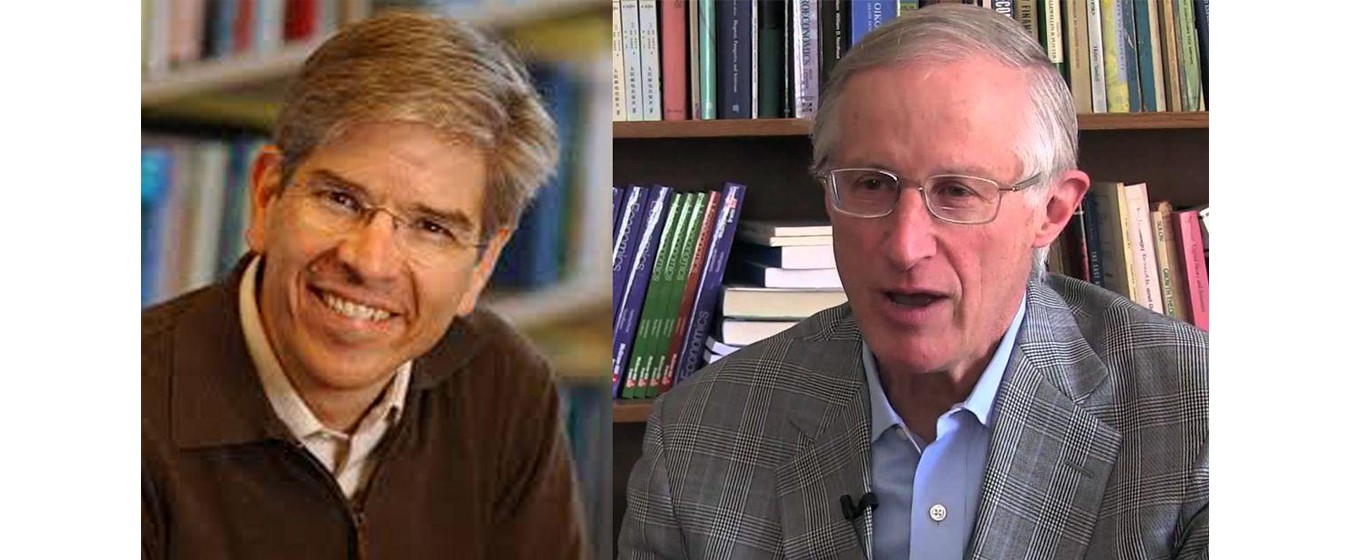
    This year two American economists, William Nordhaus and Paul Romer, were awarded the Nobel Prize in Economics for their work in two diverse areas, but current concerns. Nordhaus won it for his warning policymakers during the first stirrings of concern about climate change in the 1970s that their economic models were not properly taking account of the impact of global warming and he is seen as one of the pioneers of environmental economics.

    The co-winner – Romer – is seen as the prime mover behind the endogenous growth theory, “the notion that countries can improve their underlying performance if they concentrate on supply-side measures such as research and development, innovation and skills”. This simply means developing nations that want to get out of their rut, like India, must invest in quality education and R&D. Instead our bureaucratic centralism has created a huge system whose outcomes are so low grade, that mediocrity passes off as brilliance. The fact that Indian students and scholars have to go abroad to fully harness their brilliance and gain recognition tells us what has gone wrong with our system.

    Paul Romer has argued, “Technological change can be accelerated by the targeted use of state interventions in areas such as R&D tax credits and patent regulation”. He called it “post colonial endogenous growth theory”. This famously inspired the an Oxford don, the economist Derek Morris, to write an odd to it. Its the history of economic theory in verse and is very witty and clever. The relevant verse for us is:

    “Only inventions seemed to have any effect
    And from where these arose everyone was quite bereft
    So people then began to get rather weary
    Of the once almighty neoclassical growth theory

    A new explanation arrived,
    over which there was quite a fuss
    Technical progress – innovation, ideas – were “endogenous”

    Invention was crucial but needed embodiment
    In people – in skills – and in capital investment
    So these were important to make growth shine
    Although others had known this for a very long time.”

    But how does one nurture invention without a national mood? For it is now well understood that how we do as a nation depends a great deal on how we perceive ourselves? This psychological factor is now understood to be critical to sustained economic growth.

    Classical economics was linked closely with psychology. Adam Smith’s other great work was “The Theory of Moral Sentiments” and dealt with the psychological principles of individual behavior. Smith emphasized the concept of empathy, the capacity to recognize feelings that are being experienced by another being. Jeremy Bentham described “utilitarianism as the greatest happiness of the greatest number that is the measure of right and wrong” and is considered by many as the father of the welfare state. Classical economic theory, also known as laissez faire, claims that leaving individuals to make free choices in a free market results in the best allocation of resources. Since individuals made choices the emphasis was on understanding human beings and their behavior as individual and as groups.

    Neo-classical economists based their thinking on the assumptions that people have rational preferences; individuals maximize utility and firm’s profits; and people act independently. Consequently neo-classical economists distanced themselves from psychology and sought explanations for economic analysis heavily based on the concept of rational expectations. For most of the last century economics became increasingly mathematical. Much of economic theory came to be presented as mathematical models, mostly calculus, to clarify assumptions and implications.

    It is not as if the switch was complete. Many great economists like Vilfredo Pareto, John Maynard Keynes and Joseph Schumpeter continued to base their analysis on psychological explanations.

    In more recent times this school of economics has been given greater importance and is reflected in the award of Nobel Prizes to behavioral economists like Daniel Kahneman of Princeton University and last year to Richard Thaler. Making the announcement Nobel Committee said: “His empirical findings and theoretical insights have been instrumental in creating the new and rapidly expanding field of behavioral economics, which has had a profound impact on many areas of economic research and policy.”

    There is a delicious irony in the award of the Nobel to Richard H. Thaler. He works in the University of Chicago, the nursery of classical economics, where he is the Ralph and Dorothy Keller Distinguished Service Professor of Behavioral Science and Economics at the Booth School of Business. Incidentally Raghuram Rajan who is also an economics professor is a colleague, was reported to also being considered for the Nobel for his “contributions illuminating the dimensions of decisions in corporate finance”.

    The dominance of the classical school on the world of economics can be gauged by the fact that since the relatively recent inception of the Nobel Prize in Economics in 1968, the Chicago economics department faculty have won the Nobel as many as twelve times, twice as many as MIT, which has six Nobel laureates. Seen from Harvard University’s ivory tower even MIT is considered as leaning more towards classical economic theory. Recent Harvard winners for economics such as Oliver Hart (2016), Alvin Roth (2012) and Eric Maskin (2007) were rewarded for their work based on mathematical empiricism than behavioral speculation. Amartya Sen (1998) was one of the few who broke this mold and won it in recognition of his work and abiding interest in welfare economics.

    Every politician worth his salt knows that national mood and perceptions are decisive in determining national outcomes. And often people do not always make rational choices, something that marketers of diverse products such as automobiles and soap, and political dreams know. But economists took their time recognizing this, and the Nobel Committee even longer. Better late than never.


    Mohan Guruswamy is a well known political and economics commentator. He is a Trustee of TPF.

  • Governance

    Governance

    My dog Charlie is long gone. But Charlie, who was a brown “Great indian Mongrel”, was wise in the ways of the world. He taught me a lesson in public policy I will never forget.

    Corruption is India’s favorite conversation topic. We love discussing it and bemoaning its all pervasiveness. We are experts at it and have all experienced it at in some form or the other and at all levels. Yet with so much collective experience it is a difficult topic to write about. Like our gods it takes so many myriad forms. It defies a simple definition. But we all know what it is. What Justice Potter Stewart of the US| Supreme Court said in the context of obscenity – “I know it when I see it”- is equally applicable to corruption. It is the most obscene of obscenities but is a fairly common one.

    Economists prefer to bandy about a different term when referring to corruption. They call it “economic rent”. According to the IMF “it is the extra amount paid (over what would have been paid for the best alternative use) to somebody or for something useful whose supply is limited either by nature or through human ingenuity.” Quite clearly this definition excludes the moral dimension. But then our problems get even more compounded when we realize that the moral dimension is very elastic and varies.

    Take for instance the case of former Prime Minister Manmohan Singh. As far as the Rajya Sabha is concerned, he is a tenant of Mrs Hiteshwar Saikia and is a resident of Guwahati in Assam. But we know that is not true and that he has been ordinarily resident in New Delhi from ever since we came to know him. LK Advani, has been just as peripatetic. At one time he declared he was a resident of Ujjain in MP for the sake of a Rajya Sabha seat. Now he is a resident of Ahmedabad. Arun Jaitley has similarly been vagrant. He is a Delhiwala, but went to Amritsar where he announced he was buying a house to reloacte in 2014. The Amritsaris didnt want teh likes of him, so now he is a resident of Ahmedabad. But if you and I were as cavalier as this in declaring our place of residence, say for the purpose of a passport, we could end up in prison.

    Economic rent takes other forms, which tax the common good much more. High import duties, for instance, meant to restrain imports actually serve to increase prices and profits for domestic manufacturers. The Hindustan Ambassador, that immortal symbol of a mindless and rapacious bureaucracy, actually gave its manufacturer and employees as much joy as it gave sorrow to those who owned or drove these cars. Did you notice how all car tyres or batteries cost about the same? Or how all similar sized air-conditioners and refrigerators cost about the same? Or till recently how all air-tickets cost the same and an arm and a leg at the same time? Adam Smith explained it best by noting that “People of the same trade seldom meet together, even for merriment and diversion, but the conversation ends in a conspiracy against the public.”

    These conspiracies cannot succeed without the active connivance of the politicians and bureaucrats. We know what they mostly do, but thanks to the exertions of Aniruddha Bahal, purporting to represent an industry association, we have proof for the first time of this. Our MP’s have much to thank Dr. Manmohan Singh for conjuring up MPLADs (MP’s local area development scheme), but the then Finance Minister probably never contemplated the likes of the venerable Sakshi Maharaj who turned the scheme into one of personal development. But though both the two stings involve MP’s scams evidenced are of different natures. The money for questions business is a common place as a traffic cop collecting money from errant drivers. The payment itself is a punishment for the truancy and it does not seem to matter very much where the money paid ends up, We learn our lessons from it. But when the cops collect for registering an FIR or for no rhyme of reason then it belongs to a different class and we are truly outraged.

    Those of us in Delhi who built houses or made alterations without the sanction of the authorities paid for the deviations knowing it was contrary to the law. But it was commonplace and that seemed to make it okay. But when the High Court has ordered them demolished we were outraged. What if the same High Court ordered that MP’s making false statements about their place of residence must quit? Would we be outraged? We may be happy but not outraged. This is clearly a subject that requires far greater deliberation and discussion and there is much Parliament can do by way of introspection. There are many who are quite expert on the subject. Chandan Mitra, a former  BJP MP, whose concern for probity is as well known as his Chattarpur farmhouse, has even written a book on the subject of corruption.

    Opinion polls show that there are some professions we believe to be almost entirely corrupt. Politicians and policemen top this list with 99% of those polled believing them to be crooks. Much of the corruption we witness in everyday life is a result of their unnecessary exertions. In the past few months I have had opportunity every morning to contemplate a vacant plot of land in the neighborhood I live in. The plot is bounded by roads on all four sides and naturally people walking take a short cut across it. Some well meaning soul has taken upon himself to put an end to this practice. First a sign came up demanding that people not do the most rational thing, that is take a short cut. The sign was ignored and my dog Charlie has been using the signpost to leave his signature. Then a small length of barbed wire pegged between two poles appeared astride the path at both ends. The people who use the path still find it convenient to go around the poles and take the not so short shortcut. Good old Charlie just slips under the wire and seems quite happy that he has two more poles to leave his daily markers.

    The nature of most of our lawmaking is just like this. They are irrational and people will respond rationally to them, by circumventing them if not ignoring them. Just as Dr.Manmohan Singh has done to the requirement that MP’s to the upper house be ordinarily resident in the state. Now the only way that plot can be prevented from being used as a short cut is to either build on it. If the empty plot is just walled up, the walls will encourage another use, which will be odious to boot. Which brings me to another aspect. We have laws that prohibit pissing in public and on walls, private and public. Pissing is meant to be a private business. But where are people to pee when you just don’t have enough urinals? So a law against pissing in public makes sense only when you have enough public urinals.

    Thoughtless laws corrode a state thoroughly. This is why states built around tight regulation and appeals to a higher human idealism fail. The crime wave that engulfed the former USSR was really due to the old nomenklatura doing the only thing they were adept at. It is not that other social and political systems do not germinate corruption. Corruption is all-pervasive and a world wide phenomenon. It comes built in with nature. Animals steal food from each other just as humans extort from others. But human beings live in organised societies and societies are nothing but systems based on laws. For laws to work it must be clear that if caught, trial will be swift and if found guilty retribution will be commensurate.

    That’s where we have serious problems. Who makes the law? Politicians. Who enforces the laws? The police. Both are believed to be overwhelmingly corrupt.

  • GDP Growth by increasing the Cost of Government!

    GDP Growth by increasing the Cost of Government!

    Mohan Guruswamy  11 July 2018

    The truth is now staring us in the face. The latest breakdown of sectoral contribution to growth is out. Get ready for this. Public Administration, which somewhat perversely is classified as part of services, has now grown by 7% over the previous quarter making it the biggest driver of growth in India. Very simply this means as you keep paying government employees more the GDP will keep growing ever faster till one day you run out of breath and cash. In the Q3 of 2018, Public Administration added contributed 17.3% towards growth. In Q4 of 2018 it has grown to 22.4% making is a fraction smaller than the contribution of manufacturing at 22.7%.

    But hold your breath. Not satisfied with the 7th Pay Commission’s across the board hike of 23%, government employees are hopeful that the Prime Minister on August 15 will make an announcement fulfilling the promise made by the Finance Minister to give central government employees a pay hike beyond the recommendations of the pay commission. They are also hopeful that the retirement age will be raised to 62 years, allowing them to serve this poor and hapless country longer.

    There had been a spate of commentaries about how beneficial the 7th Pay Commission mandated pay hikes, and now approved by the Union Government with retrospective effect will benefit the economy. Despite this munificence, some government employees have called the 23.5% across the board hike peanuts! Others have made comments like “you pay peanuts you get monkeys!” as if you will now have earnest and honest public servants because the same fellows get more pay? The metaphor is unfortunate as well as illogical as the “monkeys” are already in place, only now the diet has become much more richer. Fat monkeys are what you will get.

    The high cost of wages has also slowed down intake into government and most departments are hugely understaffed. For instance the Revenue collecting departments are under strength by as much as 45.45%, Health by 27.59%, Railways by 15.15% and that the MHA is under strength by only 7.2% speaks volumes about how much has gone wrong in our system. We have a saying that the main business of government is to collect taxes so that they may be spent for the benefit of all the people. Thus we see the main business of government is now its least concern.

    The sheer absurdity of the logic that higher government salaries are beneficial to the economy speaks volumes of the kind of stupidity that permeates our policy thinking at high places. By this logic if the pay hike was higher GDP growth would be even higher. But think of this in terms of money denied for critically needed infrastructure and social development such as rods, power plants, schools and hospitals. As if these don’t generate GDP growth? Higher salaries mostly benefit those who get them. Period.

    The last pay hike hike benefitted 23 million government employees in the central and state governments and their PSU’s. No doubt this will make the CII and FICCI members will hear the music louder and dance all the way to the bank.  No wonder the top industry and banking analysts have given a big thumbs up to the Union Cabinet decision stating the move will “boost consumption in the economy” and lead to higher GDP growth. Its their fond hope that the pay hike combined with continued public push to the capital expenditure will help steer the economy to higher growth levels of 8% and above.

    “The pay hike of nearly Rs. 1 lakh crores for government employees will give a strong boost to the consumer demand and help uplift the growth of the economy,” said Didar Singh. the then secretary general, FICCI.  He will approve being a former IAS officer rehired by the industry trade union. But has FICCI noticed the IIM, Ahmedabad study that has found the “pay in the government sector is distinctly greater than that in the private sector?” The 23.5% average hike in central government employees’ salaries pushed up the government’s wage bill, including arrears, by an estimated R. 1.14 lakh crores.

    While you worry about the high cost of government, I will give you another reason to worry? If you wonder why our public administration is so ineffective, consider this. An analysis by a leading media organization suggests that roughly 14% officers get transferred within one year of service and another 54% within 18 months. In other words, 68%, or over two-thirds of India’s top bureaucrats, last on an average less than 18 months at a posting. Only 8% of the officers analyzed had average tenures of more than two years and there are only 14 officers who have managed to complete an average stay of more than three years between transfers. So what is the government you are getting for all the money we spend?

    This when 648 million Indians are living below the UNDP stipulated poverty line. The question we all must ask is growth at whose cost? Arun Jaitley crowing about it is akin to the head of a family who prefers to increase his spending on smoking and drinking by cutting down on the milk for the growing children.

    The three levels of government together employ about 185 lakh persons. The central government employs 34 lakhs, all the state governments together employ another 72.18 lakhs, quasi-government agencies account for a further 58.14 lakhs, and at the local government level, a tier with the most interface with the common citizens, we have only 20.53 lakhs employees. In other words it simply means we have five persons telling us to do this or do that, for every one supposedly serving us. And whom even these one out of six persons are answerable to is still a big question?

    Do we then have a big government bearing down on us? Not really.

    Consider this: India has 1,622.8 government servants for every 100,000 citizens. In stark contrast, the U.S. has 7,681. The central government, with 3.1 million employees, thus has 257 serving every 100,000 population, against the U.S. federal government’s 840. Now look at the next tier at the state level. Bihar has just 457.60 per 100,000, Madhya Pradesh 826.47, Uttar Pradesh has 801.67, Orissa 1,191.97 and Chhattisgarh 1,174.62.

    This is not to suggest there is a causal link between poverty and low levels of public servants: Gujarat has just 826.47 per 100,000 and Punjab 1,263.34. The troubled states or really speaking the troublesome states actually fare far better on this score. Thus, Mizoram has 3,950.27 public servants per the 100,000 populations, Nagaland 3,920.62 and Jammu and Kashmir 3,585.96. Bar Sikkim, with 6,394.89 public servants per 100,000, no state comes close to international levels.

    Very clearly for the most part, India’s relatively backward states have low numbers of public servants. This means staff is not available for the provision of education, health and social services needed to address poverty. It would seem that instead of getting better government and more public servants, we are getting more expensive government.

    We are now riding the tiger of a high wage enclave of government employees, who also drive consumption and hence GDP growth. It may now be difficult to get off this tiger

    Shri Mohan Guruswamy is a former Rajya Sabha MP and a political commentator. He is a Trustee of TPF.
    This article was earlier published in National Herald.

  • Foreign Reserves beyond a point are Pointless

    Foreign Reserves beyond a point are Pointless

    Mohan Guruswamy  October 07, 2017

    Clearly the Indian economy is not at a place where it wants to be. The Modi government is finds itself in a chakravyuh that it is unable to fight its way out. The government is just unable to make or attract the investment needed to make the economy buoyant again. India enjoyed a decade of unprecedented growth from 2004-14 that seemed to have lost steam in the last year. It was largely caused by a huge decline in the proportion of capital investment expenditure. Despite the growth of the private and foreign investment, the Indian economy is still largely dependent on government investment to lead the investment and growth cycle.

    The promise of Modi was that he was expected to set right this trend and once again begin a new cycle with government led investment. He promised us a hundred new cities, a nationwide grid of high-speed rail networks, a national river-linking program and so many other major transformational projects. A hundred new cities have now become a hundred smart cities, which means little more than free wi-fi networks. The nationwide grid of fast trains has now become an exorbitant and apparently uneconomical single bullet train joining Ahmedabad and Bombay. Similarly all other feasible and exciting promises made are now mere caricatures of what were promised. It is simply that the Modi government has been unable to free the economy from its high subsidy burden and PSU black hole, where only the oil and power companies earn a profit due to administered pricing.

    Consequently the picture continues to be bleak. Output of capital goods contracted 1% in July against growth of 8.8% a year ago. Production of consumer durable goods shrank 1.3% against a nominal increase of 0.2% a year earlier.

    Then came the twin black swan events. Demonetization came as a body blow to the cash-dependent unorganized sector that makes up 40% of India’s GDP. The unorganized sector also accounts for 90% of the total employment of around 450 million. The loss of jobs due to the two events – demonetization and hasty implementation of GST- is still not empirically confirmed. Estimates vary. The construction and vegetable and fruit retail sectors seem to have taken a massive hit and the ballpark estimation of loss of jobs is at about 25-30 million. These sectors mostly employ rural landless labour with few skills and hence forced into taking up daily wage and earnings sustenance. They don’t shout much and few notice their pain. Unlike the loss of even a few thousand jobs in the IT sector.

    The implementation of GST forced companies to reduce production in the run-up to its 1 July implementation as dealers reduced inventory. The inadequate training and preparation was abundantly evident. The announcement of rates was hasty and the many mismatches between input and output rates compounded the confusion. Of the Rs.95000 crores collected in the first month, as much as Rs.65000 is due to be refunded. The problem is that the government doesn’t seem to have the cash to do so.

    In a belated effort to reverse these trends the government is planning to loosen its fiscal deficit target of 3.2% of GDP to enable it to spend up to Rs. 50,000 crore. This is piddly sum for an economy whose GDP is over Rs.150 lakh crores now. Right now we have a net outflow of foreign investment. What we need is a huge dollop of cash infusion to boost investment. Loosening fiscal deficit norms will help. But meaningfully slashing subsidies when Modi’s term is on the slope to elections is not politically feasible.

    There is that old saying that when the going gets tough, the tough get going.  Modi should now show toughness and imagination that is tempered with realism.  He needs to revive the national mood and generate optimism over the economy. He now needs a plan to drive investment. He doesn’t have to go far to find the money to fund this plan.

    The government is sitting with reserves of nearly $400 billion with about $135 billion alone sitting in US banks earning next to nothing. These reserves are equal to about 80% of our foreign debt. Even after providing a quarter of the reserves to cover short-term hot money of NRI investors each taking a pound of flesh for mostly foreign bank financed investment in their mother country, we will still have $300 billion in hand.  How much money can be freed from the other $300 billion for investment is the big question now? Kaushik Basu has said that India’s foreign reserves need not be more than the current account deficit (CAD) or about $80 billion. Others are more cautious.

    This will certainly raise many eyebrows. One is surprised over the number of people who think holding huge reserves abroad in ridiculously low yield securities is a sign of our wealth. No. It is a sign of our stupidity.

    Just holding enough reserves to cover the CAD or exports for a few months would be about enough. This nonsense of holding reserves to at least cover six months imports is just plain arbitrary and concocted by the people who made the Washington Consensus. This “consensus” assures New York banks plenty of cheap money to finance American domestic consumption and extravagances. The Chinese have now realized the stupidity of financing the US cheaply with their reserves which not long ago almost touched $4trillion. They have run it down by about $1trillion since.

    Now how much do you think the US foreign reserves amount to? Hold your seat. It is now $65 billion or about a fifth of India’s. What a travesty.

    Clearly running them down by $100-120 billion or Rs.6.5L- 8L crores can be contemplated. The government could establish an India Infrastructure Investment Fund and start shifting meaningful fractions from the foreign reserves into this fund. A board of well-regarded experts, who can allocate investments on merits to prevent the usual leakages and political misuse, could administer the fund. The fund must also mandate the minimum level of local procurement and investment to boost Make in India.

    Slow growth and no new jobs are Narendra Modi’s twin Achilles heels. He is vulnerable on both counts. He must seize the moment with both hands and start running with both legs.

    Shri Mohan Guruswamy is a former Rajya Sabha MP and a political commentator. He is a Trustee of TPF.
    This article was earlier published in ‘The Economic Times’.

  • The Demand for Gondwana: India’s Adivasi Homeland

    The Demand for Gondwana: India’s Adivasi Homeland

    Mohan Guruswamy December 03, 2017

     The scion of the former Gond kings of Chandagarh or Chandrapur now in Maharashtra, Birshah Atram was recently visiting the Gond homelands in the former composite Adilabad district to meet his kinsmen in the various garhi’s in the region. Birshah Atram is descended from a line that was established in Chandrapur in the 13th century by Kandakya Balal Sah. The Gond kings ruled till 1751 when the British annexed it after the Raja of Nagpur died childless. Birshah who holds two PhD’s in English and Ancient Indian History has for long been seeking a solution to the vexed Adivasi problem, that has also morphed into the Telugu led Naxalite rebellion that enables the Central and State governments to turn it into a law and order issue, by highlighting the grievances of the Adivasi people. He believes that the Central Government needs to implement the constitutional provisions and promises made in the Constituent Assembly by recognizing Gondi language and self-rule for the Gond people by carving out a Gondwana state of the Gond homelands in Maharashtra, Madhya Pradesh, Andhra Pradesh and Chhattisgarh.

    There is a vast and mostly forested region spanning almost the entire midriff of India from Orissa to Gujarat, lying between the westbound Narmada and eastbound Godavari, bounded by many mountain ranges like the Vindhya, Satpura, Mahadeo, Meykul, and Abujhmar, that was once the main home of the Adivasi. The late Professor Nihar Ranjan Ray, one of our most distinguished historians, described the central IndianAdivasis as “the original autochthonous people of India” meaning that their presence in India pre-dated by far the Dravidians, the Aryans and whoever else settled in this country. The anthropologist Dr. Verrier Elwin states this more emphatically when he wrote: “These are the real swadeshi products of India, in whose presence all others are foreign. These are ancient people with moral rights and claims thousands of years old. They were here first and should come first in our regard.”

    Unfortunately like indigenous people all over the world, the India’sAdivasis too have been savaged and ravaged by later people claiming to be more “civilized”. They still account for almost 8% of India’s population and are easily it’s most deprived and oppressed section. Though this is the home of many tribal groups, the largest tribal group, the Gonds, dominated the region. The earliest Gond kingdom appears to date from the 10th century and the Gond Rajas were able to maintain a relatively independent existence until the 18th century, although they were compelled to offer nominal allegiance to the Mughal Empire.

     The great historian Sir Jadunath Sarkar records: “In the sixteenth and seventeenth century much of the modern Central Provinces (today’s MP) were under the sway of aboriginal Gond chiefs and was known under the name of Gondwana. A Mughal invasion and the sack of the capital had crippled the great Gond kingdom of Garh-Mandla in Akbar’s reign and later by Bundela encroachments from the north. But in the middle of the seventeenth century another Gond kingdom with its capital at Deogarh, rose to greatness, and extended its sway over the districts of Betul, Chindwara, and Nagpur, and portions of Seoni, Bhandara and Balaghat. In the southern part of Gondwana stood the town of Chanda, the seat of the third Gond dynasty and hereditary foe and rival of the Raja of Deogarh.” But the glory of Deogarh departed when the Maratha ruler of Nagpur annexed Deogarh after the death of Chand Sultan.

    Incidentally the Gond ruler of Deogarh, Bakht Buland, founded the city of Nagpur. Jadunath Sarkar writes about him thus: “He lived to extend the area, power and prosperity of his kingdom very largely and to give the greatest trouble to Aurangzeb in the last years of his reign.” In fact the one big reason Aurangzeb could not deploy all his power against Shivaji was because the Gond kings were constantly at war with the Mughals and kept interdicting the lines from the Deccan to Agra. But of course the history of modern India is not generous to them.

    During the British days this region constituted much of the Central Provinces of India later to become Madhya Pradesh. This is the main home of about sixteen million Gond people who are India’s largest single tribal grouping. The Gonds are now a culturally and linguistically heterogeneous people having attained much cultural uniformity with the dominant linguistic influences of their region. Thus, the Gonds of the eastern and northwestern Madhya Pradesh region that now includes the new state of Chhattisgarh speak Chhattisgarhi and western Hindi. But the Gonds of Bastar, which is at the southeastern end of this vast region and a part of Chhattisgarh, are different in this respect. Though there are many tribal groups like the Halbas, Bhatras, Parjas and Dorlas, the Maria and Bison Horned Gonds are the most numerous. The language spoken by them, like that of the Koyas of AP is an intermediate Dravidian language closer to Telugu and Kannada.

    The process of Hinduization combined with Hindi culture has reduced the egalitarian Koitur to the bottom of the social strata. Dr. Kalyan Kumar Chakravarthy, Director of the Indira Gandhi Rashtriya Manav Sangrahalaya, Bhopal has written eloquently and cogently on this in his concluding chapter “Extinction or Adaptation of the Gonds” in the book “Tribal Identity in India” also edited by him. The real enemy of theAdivasi is the creeping Hinduization with all its attendant values and exclusionary practices, seems to me a good start to the process of saving its tribal society from extinction. All over the rest of India’s central highlands our policies by forcing the Adivasis to merge their identities with that of the encroaching culture have crushed them into a becoming a feeble and self-pitying underclass.

    Clearly there are two distinct reasons for the present unrest in the Adivasihomelands of India. The first and probably the more important one is the struggle for identity against the creeping Hinduization or de-culturization of Adivasi society. Adivasi society was built on a foundation of equality. People were given respect and status according to their contribution to social needs but only while they were performing that particular function. Such a value-system was sustainable as long as the Adivasi community was non-acquisitive and all the products of society were shared. Adivasisociety has been under constant pressure as the money economy grew and made traditional forms of barter less difficult to sustain.

    The Fifth and Sixth Schedules under Article 244 of the Indian Constitution in 1950 provided for self-governance in specified tribal majority areas. In 1999 the Government of India even issued a draft National Policy on Tribals to address the developmental needs of tribal people. Special emphasis was laid on education, forestry, healthcare, languages, resettlement and land rights. The draft was meant to be circulated between MP’s, MLA’s and Civil Society groups. A Cabinet Committee on Tribal Affairs was meant to constantly review the policy. Little has happened since. The draft policy is still a draft, which means there is no policy.

    Even before Independence on December 16 1946, welcoming the Objectives Resolution in the Constituent Assembly, the legendary Adivasileader Jaipal Singh stated the tribal case and apprehensions explicitly. He said: “Sir, if there is any group of Indian people that has been shabbily treated it is my people. They have been disgracefully treated, neglected for the last 6,000 years. …The whole history of my people is one of continuous exploitation and dispossession by the non-aboriginals of India punctuated by rebellions and disorder, and yet I take Pandit Jawahar Lal Nehru at his word. I take you all at your word that now we are going to start a new chapter, a new chapter of independent India where there is equality of opportunity, where no one would be neglected.”

    The Adivasi’s paid dearly for taking Jawaharlal Nehru and the Constituent Assembly at their word.

    Shri Mohan Guruswamy is a former Rajya Sabha MP and a political commentator. He is a Trustee of TPF.

    This article was published earlier in ‘The Citizen’.