Category: Democracy & Governance

  • India Elections 2019: Under-representation of Women Reflects Failure of Policy

    India Elections 2019: Under-representation of Women Reflects Failure of Policy

    Renuka Paul                                                                                           April 10, 2019/Analysis

    India, the world’s largest democracy, will witness the start of its general elections tomorrow, for constituting the 17th Lok Sabha. With 900 million eligible voters, it is expected to be the biggest electoral event and is scheduled to be held in 7 phases from April 11th to May 19th, 2019. The democratic exercise, however, does not appear to be fairly representative of women. For over two decades, the insufficient involvement of women in Indian politics has been largely debated, and measures to alter the status quo have been backed by nearly all major political parties. Despite the support, implementation of these proposals have stalled. Moreover, there has been no significant increase in women’s representation within party ranks nor in the number of female candidates being nominated for the upcoming election.

    India Fares Poorly in Comparison to its Neighbours

    Although women constitute nearly half of India’s population at present, female political representation remains at 11.8 percent in Lok Sabha and 11.2 percent in Rajya Sabha (global average, as of 2018, is 24.3 percent). In other words, nearly 9 out of 10 legislators in India are men. While women have held the roles of the President, Prime Minister and Chief Minister in India, these instances remain an anomaly rather than the norm, with most of the elected female leaders belonging to political families (43 percent). According to Inter Parliamentary Union (2019), India is ranked 149thout of 193 countries in terms of representation of women in Lower Houses. In comparison, Nepal (32.7 percent), Afghanistan (27.3 percent), Bangladesh (20.6 percent) and Pakistan (20.2 percent) perform far better and have political quotas in place. Furthermore, representation of women in state assemblies is even lower (8 percent), with the highest numbers in Bihar, Haryana and Rajasthan at 14 percent and lowest in Mizoram, Nagaland and Puducherry with no elected women representatives.

    The abysmal rate of women’s role in decision making and legislation was first acknowledged in 1976 after a report by the Committee on the Status of Women in India was published. Following this, 73rdand 74thconstitutional amendments were adopted in 1993 mandating 33 percent reservation for women in local governance. Later, in 1996, in order to correct the deeply skewed ratio of female electoral participation, the Women’s Reservation Bill was introduced in the parliament in order to extend reservation to Lok Sabha and state assemblies. As per the provisions of the bill, seats under the quota were to be allotted to different constituencies by rotation, as prescribed by the authority determined by the parliament. Importantly, the bill contained a clause stating that the reservation extended would be eliminated 15 years after its introduction. This clause was included upon determining that the estimated time period was sufficient to remove the political disadvantages faced by women. Further, some argued that following the 15 years, people would come to realise the capabilities of women leaders and, if the bill were to not be revoked, it would limit female candidates to contest elections from the reserved seats alone. Though the bill has been promoted by major parties, it has failed to get legislative approval.

    Patriarchal Mindset and the Absence of Political Will

    Both the NDA and UPA governments blamed failure of the bill’s passage on the coalition arrangement that made consensus impossible, despite the support of the leading party. Although the BJP were vocal about women’s marginalisation in politics while in opposition, upon coming to power in 2014 with a clear majority, the party has neither discussed nor passed the bill. Overall, a general lack of political will remains and the disinterest of parties in issues of inclusive representation is evident. This is highlighted by the fact that women representatives of all major parties in the general elections is less than 10 percent.

    Opponents of political quotas for women argue that it will further strengthen the gender imbalance at the top. According to them, “modern women” are capable of contesting elections on merit and do not require affirmative actions to win elections. Moreover, they argue that reserved seats restrict the choice of voters to only women candidates, thereby violating the rules of democratic elections. Others claim that rotation of reserved constituencies would reduce an MP’s incentive to work for their constituencies since they would not be eligible for contesting elections in the next term. Many have proposed alternatives such as reservations for women in political parties instead, dual member constituencies, etc. Interestingly, while these disagreements have stymied the bill for over two decades, they did not hinder the passage of the 73rdand 74thamendments (passed with a clear majority when introduced the first time). This may be because the latter does not pose any threats to the dominant position of male parliamentarians, as opposed to the former that challenges their own survival.

    Globally, it is established that men and women in leadership positions often have differing priorities and perspectives. An ideal mix of both the sexes in politics is necessary to ensure that the democratic process is truly representative and that demands of all categories are considered during decision making processes. Though open competition in constituencies may be preferred, reservation for women candidates is required until gender parity is achieved. This balance in elected bodies is crucial to establish a mechanism that allows women to actively engage and influence broader political and economic concerns, especially those that affect women.  In India, equal opportunities in terms of political participation and representation have been granted to women since independence. However, societal and historical biases against women have created rigid structures that have hindered women’s accessibility to positions of power. Equal political representation makes the democratic system more responsive to the needs of the people. In this sense, there is an urgent need to improve women’s involvement in politics for inclusive growth and development.

    Reservation for Women an Absolute Necessity

    The existence of reserved seats for women in elected bodies isn’t just a demand for fairness and equality. Various studies have highlighted the positive effects of bringing in female leaders. A report by the Ministry of Panchayati Raj has highlighted that reservation for women in PRIs has improved the self-esteem, confidence and decision-making skills of the candidates, which in turn has led to an increase in education for girls and consequently expanded the breadth of their future aspirations. Furthermore, it was found that the elected women also invested more in the handling public goods such as cleaner fuels, road connectivity and water accessibility- issues that often affect women at large. According to a study by UN University WIDER, constituencies with women leaders have 15 percent more luminosity growth in their regions than those headed by men, thereby improving productivity and employment rates. The study concluded that women leaders contributed 1.8 times more to economic growth than their male counterparts. Many studies have recorded considerable differences in policy priorities and solutions offered by both the sexes, with female leaders primarily emphasizing on issues aimed at improving the quality of life, conditions of women and children, health parameters and lives of minorities. Research indicates that this is possibly the result of traditional roles played by women as mothers or caregivers. A J-PAL research paper has also observed that the quota system in local governments have boosted child health and nutrition, female entrepreneurship and the responsiveness of police toward violence against women. Altogether, the inclusion of women in politics is not limited to changing gender relations in the nation but also greatly contributes to improving social welfare and economics.

    Many have noted that for women to substantially impact the policy scenario, they would need at least a 30 percent share in the parliament.  In fundamentally patriarchal Indian society, this highlights yet again the crucial need for the Women’s Reservation Bill. While many contend that this will limit and make women candidates dependent on the quota system, evidence shows otherwise. Despite quotas in local governments (33 percent), as of 2018, the national average of women in panchayats is around 44 percent and 14 states have more than 50 percent women leaders. In fact, Uttarakhand and Rajasthan have 56 percent female representation in PRIs. However, there are many other factors that require consideration. According to Economic Survey 2018, cultural attitudes towards women, domestic responsibilities, illiteracy, lack of confidence, inaccessibility to political funds, threat of violence, etc are some causes that limit women’s abilities to step forward in politics. Therefore, while women are offered opportunities through political quotas, inherent social structures and norms need to be altered in order to enhance balanced representation.

    Positive Impact on Society

    In recent years, the signs of increasing involvement of women in Indian politics are clearly visible. This is primarily manifested through voting and political activism (not figured into representation). According to leading election researchers, the upcoming general elections will see female voters surpassing the men. These trends show that there exists a demand to see more from political parties than hollow promises of female-oriented policy statements in election manifestos. For instance, Odisha has introduced a resolution in its state assembly for reserving one-third seats for women in parliament and legislative assembly, and the Biju Janata Dal (BJD), the ruling party, has proclaimed that 33 percent women candidates will contest elections. Trinamool Congress in West Bengal has announced that 41 percent of its candidates for Lok Sabha seats are women. While other parties have criticised these moves as opportunistic and an attempt to capture a larger share of the female electorate, these decisions certainly offer a better platform for women in the upcoming elections. Moreover, with the increase of women voters, other parties and states will be compelled to follow suit.

    For effectively including women in the elected leadership, in addition to affirmative action, there is a need for parties to prioritise women within their ranks, thereby cultivating a gender neutral political environment. These efforts should also be enhanced through comprehensive political education and gender sensitisation by the state and media. Since substantial female political empowerment necessitates a shift in people’s values and perceptions, it requires collaborative efforts from various players including leaders, political parties, civil society and the media alike.

    Renuka Paul is a Research Analyst with TPF.

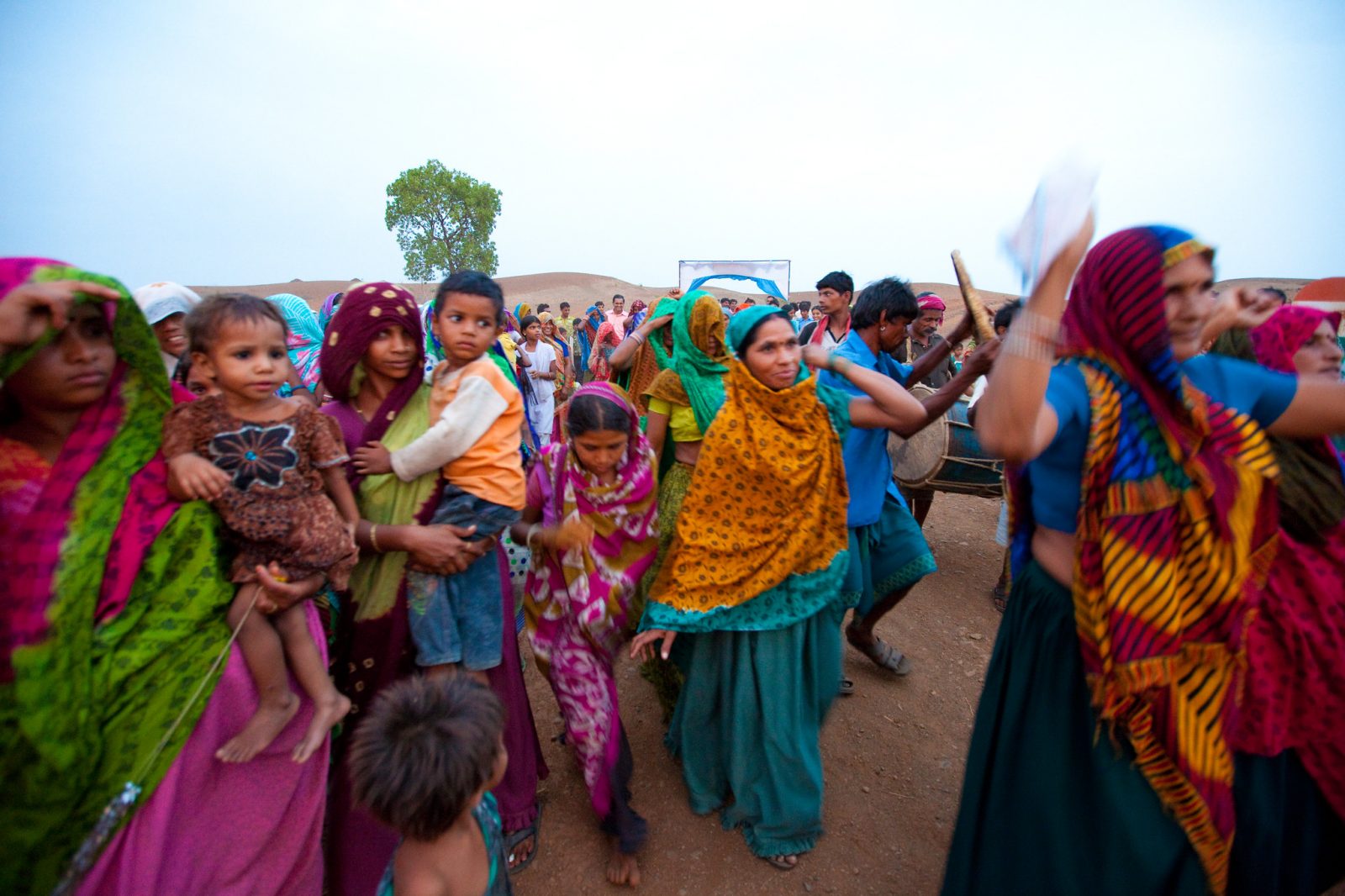
    Header Image: Welcome party at the Gram Sabha, Panchayat-Khaal Khandvi, District-Megh Nagar, Jhabua, MP (UN Women)

  • Evaluating the Impact of Demonetisation: Between Fact and Fiction

    Evaluating the Impact of Demonetisation: Between Fact and Fiction

    Manjari Balu                                                                                        Apr 10, 2019/Analysis

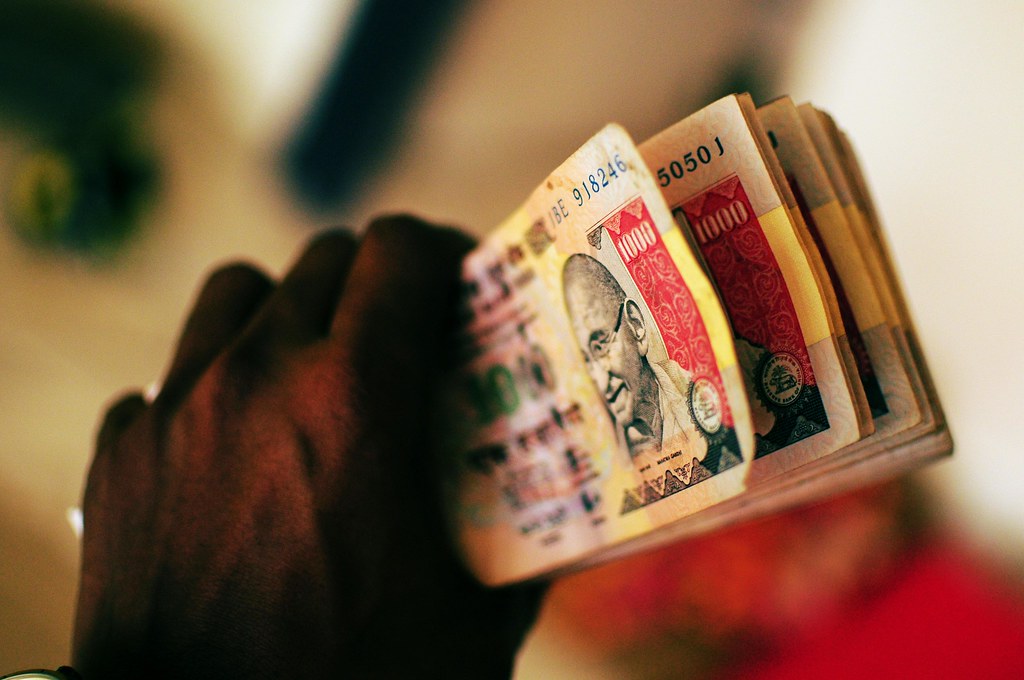
    In democratic societies, economic policy often becomes hostage to electoral politics, devolving into quixotic pledges that are optimised for securing votes rather than social welfare.  Qualifying as a polemical issue that has been most widely discussed, the 2016 shock therapy through demonetisation of 86 per cent of all Indian currency in circulation, is arguably a case in point. In a democratic polity, the political manifestos transcend to the policies to impress the masses paying minimal attention to market efficiency, rather, gain is considered a windfall. Intuitively, there are few factors that determine the eligibility of a policy to qualify in mass politics.  The magnitude of the people affected by the policy, the organized structure of the people, and the kind of effect it has on the masses. It could be direct or indirect and short or long run depending on the execution of the policy.

    The narratives have been changed from the original proclamation of extirpating black money and choking the funding for terrorism to tout for a cashless economy and digital payments as promoted by the relentless advertisements and social media campaigns.

    Theoretically, proscribing a country’s currency for a short period by ceasing the value of the same is considered to be one of the strategies to deal with black money. History has, however, proven that demonetisation must be accompanied with a structured treatment to the economy as fall in inflation becomes intractable and aggregate demand tends to attenuate.

    As per the Global corruption perception index, India is ranked 81stposition by Transparency International, an agency that adopts a specific methodology to evaluate the level of corruption in different countries. India has shown an improvement in score and for the first time, China has been assessed to have more corruption than India.

    Though the score seems to be encouraging, a comparative analysis shows that developing countries have been taking up legislative measures bolstered with government initiatives and transfer of knowledge about corruption. Vanuatu, The Solomon Island and South Korea have improved their score by encouraging citizen partnership, passed various anti-corruption laws and pushed for social reforms to combat corruption.

    The intent to strike the shadow economy through demonetisation had a substantial effect on the informal economy too. The loss suffered due to a cashless economy especially by the informal sector eclipsed the expected result of a reduction in the shadow economy. Further, the fundamental proposition to withdraw currency for a short period is premised on the assumption that there is a definite relationship between the currency in circulation and the so-called “shadow economy”. A simple glance at the data of different countries’ currency to GDP (Gross Domestic Product) ratios and shadow economy figures illustrates the misconception. There are countries with higher currency to GDP ratios than India but records smaller shadow economy – likewise, some countries have larger shadow economy despite lower currency to GDP figures. This is because black money is seldom held in cash. It is often converted to high-value items like real estate, diamonds, gold, films, etc. Also, the high-value stakeholders, politicians being the ironical suspect, have evolved to absorb the black money and have been scot free even post-demonetization.

    Countering terrorism by making the fake currency illegal was the second claim that has been appreciated by the public. Terror incidents are a menace to people especially in conflicted areas, zones with extremisms and other local terror groups. While contemplating the effects of demonetization to counter the terror incidence, the Terrorism Index suggests that the index has increased to 7.57 in 2017 from 7.53 in 2016. There is no conspicuous result relating to terrorism if such a radical decision was intended to control terrorist incidence.

    A thorough study entitled ‘Cash and the Economy: Evidence from India’s Demonetisation’ conducted at Harvard University used economic modelling techniques and satellite data to find that India’s demonetisation led to a contraction in ATM withdrawals and had an effect on both the formal and informal sector. The cross-sectional analysis of the districts recorded the reaction to the shock was uncertain and the withdrawal quantum changed with the proportion of the informal economy.  The informal economy is estimated to account for 81 per cent of total employment and 44 per cent of total output which pertains to cash-intensive transaction. While the GDP rate has not fluctuated, the estimates for employment has caused a reduction in the national economic activity of roughly 3 percentage points in November and December 2016. There is a widespread opinion from various technocrats about the excess cost of executing demonetisation over the actually proposed benefit. In political terms, however, the policy has borne significant payoffs for the current establishment.

    One point of evidence for this claim is the manner in which the decision was made. Reports reveal that the government made the decision to demonetise despite stiff opposition from the RBI board, meaning that leaders were alerted to the potential economic pitfalls prior to introducing the shock. It is likely that the prospect of political gains prevailed over economic ones, especially given that the current establishment exhibits a penchant for such conduct – similar tensions between economic and electoral considerations have been observed with respect to the calculation of GDP and the proposed methodology by Central Statistical Organization.

    A slump in growth rate was expected on the account of demonetisation but India seems to be consistently growing. However, this does not harbinger a steady state of development. Agriculture sector accounts for almost 50 per cent of the total workforce experienced a severe deprivation due to their dependence on cash. Further, growth in real investment also plunged in the fourth quarter of 2016-17 which collapsed the rate of industrial credit in the last two quarters following demonetisation. An analysis from the Economic Survey 2016-17 volume 2 suggests no economy has experienced a 7 per cent growth rate with low investment and high levels of unemployment. This validates the contention posted by the economists regarding the methodology of GDP metric calculation.

    Literature states that there is an internal paradox that is associated with the response of people in the informal sector. An unequivocal inference is hard to be drawn about the response due to the power hierarchies within the informal economy. Analysing informal labour and informal capital, factors of informal economy would help us identify the nuances of the effect. The informal capital faces the hardship of a cash crunch and exploits the informal labour during the crisis. Further, absence of a system to control the squeezing of labour corroborates the inefficiency of the state to mollify the situation.

    There is an undeniable defilement of economy in the short run post-demonetisation, however, comment on the long run effects have to be reserved to the time when there is maximum accessibility of data. The ruling establishment has, indeed, managed to spin the policy as relying on the patriotic duty of its citizens in aiding their Prime Minister’s efforts to flush out black money from the economy. If one were to assume policymakers to be rational actors, it would stand to reason that demonetisation was done to avail electoral payoffs, even as broader society incurs a reduction, willingly, in social welfare. Unfortunately, India’s demonetisation bears testimony to a glaring ailment of all democracies – that bad economics can be good politics.

    Manjari Balu is a Research Analyst at TPF. She holds a degree in economics.

  • The Politics of Balakot

    The Politics of Balakot

    Deepak Sinha                                                                                                        March 29, 2019/Op-Ed

    There is something about old proverbs. Take, for example, an old adage by Abraham Lincoln: “You can fool all the people some of the time, and some of the people all the time, but you cannot fool all the people all the time”. Certainly, this maxim is spot-on with regards to the Pulwama tragedy and its repercussions. Despite Pakistan’s best efforts to steer the narrative to its advantage, the truth that is emerging — though in dribs and drabs — paints a very different picture from what it would have wanted us to believe.

    For example, take a look at perceptions in Pakistan about the suicide attack itself. Not only most of us, but also much of the world, especially analysts focussing on this region, had little hesitation in accepting the involvement of Pakistan-based terrorist group, Jaish-e-Mohammed (JeM), in the suicide bombing attack, especially since the JeM itself publicly claimed responsibility. Yet, let alone the Pakistani establishment, not even one respected journalist or analyst over there uttered a word of condemnation against the JeM for this heinous act. Instead, they insisted that the attack was motivated by the brutal treatment meted out to Kashmiri locals by the Indian security forces.

    This is contrary to what has widely been reported about Pakistani Senator Mushahid Hussain Sayed, a senior politician and former Cabinet minister, who quite categorically stated that “what happened in Pulwama in February, in my view, was Pakistan’s finest hour after the nuclear tests of 1998.” Moreover, while Pakistan’s Foreign Minister acknowledged JeM chief Masood Azhar’s presence in Pakistan, the Director-General of Inter-Services Public Relations (ISPR) blandly contradicted him a day later, unequivocally stating that the JeM does not exist in Pakistan as it is a “proscribed terrorist organisation”.

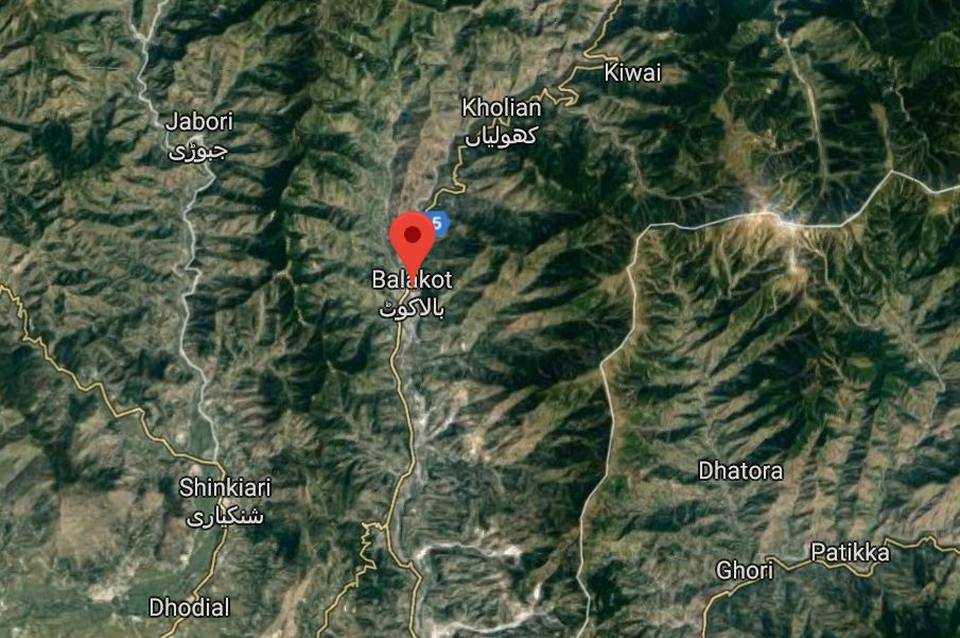
    Similarly, with regard to the Indian response, the ISPR spokesperson was the first one to admit that the Indian Air Force (IAF) had crossed the Line of Control (LoC) and carried out a strike in the vicinity of Balakot. He, however, attempted to mislead and obfuscate the issue by hinting that this attack was in the vicinity of the village, in close proximity to the LoC in Pakistan-occupied Kashmir (PoK), and not the town by that name in Khyber Pakhtunkhwa, deep inside Pakistan, where it actually struck. While the IAF claimed to have hit the terrorist training camp, the spokesman insisted that no damage or casualty was inflicted to the “seminary” located over there. However, the cordoning of the area by the Pakistani Army and its refusal till date to allow any access raises questions and suggests an attempt to cover up.

    Finally, there was the confusion about two Indian fighter aircraft having been shot down with both pilots taken prisoners. It, however, turned out that the IAF’s claim at that time of having lost one MIG-21, piloted by Wing Commander Abhinandan after he had downed a Pakistani F-16, was correct. Bizarrely, not only has Pakistan continued to deny the loss of its own aircraft, it even insists that the F-16s in its possession were not involved in operations in this sector. This despite the IAF having produced evidence.

    Clearly, obfuscation and deceit are embedded in the DNA of Pakistan, especially in the manner it deals with India and the international community. We have been experiencing this since decades. Remember, Pakistan denied any connection to the so-called “raiders”, who nearly captured Srinagar in 1948 or to the “militants”, who occupied the Kargil heights in 1999, only to recant and accept its involvement subsequently. It isn’t as if it reserved such treatment for India alone as Iran and Afghanistan have also found to their cost. Therefore, in the present instance, to have expected Pakistan to behave any differently was sheer fantasy, especially given that the military uses proxy war to retain its pre-eminent role within the country and the region.

    The sad truth is that its very foundation was built on the British construct — that it was religious antagonism and not its requirement for a pliable state that would help protect its interests in the region — which resulted in the horrors of partition. The formation of Bangladesh put paid to the two-nation theory and secret Cabinet documents in the UK, subsequently declassified, showed up the deceitful lengths the British had gone to in furthering their own interests.

    Leaving aside Pakistan’s desperate attempts to change perceptions what should be of immense concern to all right-thinking people, here is the horrendous manner in which this issue is being used by politicians and the media to gain attention for their selfish agenda even if it is at the cost of the nation’s interest. Neither free speech nor the looming elections justify such crass behaviour, especially since it is impacting the credibility and apolitical nature of our armed forces.

    While Prime Minister Narendra Modi deserves credit for his bold decision to aggressively respond in the manner that he did, it is no excuse for the Bharatiya Janata Party (BJP) to use the strike to tom-tom its nationalistic credentials, going so far as to shamefully depict Wing Commander Abhinandan in posters used for election rallies. Prime Minister Modi may well scream ‘Jai Jawan, Jai Kisan’ from the rooftops but it has not in any way stopped his Government from refusing to grant One Rank One Pension (OROP) to military veterans or opposing the grant of Non Functional Upgrade (NFU) in the Supreme Court using all manner of lies. That the NFU is already authorised to the Civil Services and the Central Armed Police Forces, thereby changing long-standing civil-military parity, has been deliberately ignored. Their efforts to humiliate and lower the prestige and standing of the armed forces continues unhindered.

    It isn’t as if other political parties, including the Congress, have behaved any less hypocritically. On the one hand, they have “officially” supported and praised the action of the IAF, while at the same time senior leaders of these very parties have questioned the efficacy of the attack, despite the Air Chief having clearly stated that the targets selected were destroyed as they had planned. It appears that they believe that the only manner in which the steadfastness and strength of character ‘Modi’ displayed on this occasion can be negated is by deliberately destroying the credibility of our military’s achievements. While we may be uncertain of who will succeed at the hustings, there is absolutely no doubt that our armed forces have lost out yet again.

    Brigadier Deepak Sinha (retd), an Army veteran, is a Visiting Senior Fellow at the TPF and is also a Consultant at ORF, New Delhi.

    This article was published earlier on March 19th, 2019, on The Pioneer.

    Image Credit: Google Maps

  • Accountability A Must for Armed Forces

    Accountability A Must for Armed Forces

    Kamal Davar                                                                                                            March 29, 2019/Op-Ed

    In democracies the world over, institutions are constitutionally mandated to serve their nation in consonance with the nation’s aspirations and objectives. An institution exists because of and for the nation, and not the other way around. Legally and logically, all institutions are accountable to the constitution from which they derive their responsibilities and strength.

    In India the image of most institutions over the years, since the country’s independence, has taken a beating with regard to their equity, performance, professional integrity — at least in public perception. However, if there is one institution which has unquestionably retained its awe and respect in the nation’s acuity and, equally, its emotions, it’s the Indian Armed Forces.

    Through challenging times faced by the nation since the violent 1947 Partition, India’s armed forces have acquitted themselves with the highest professionalism, uncommon valour and sacrifices to uphold the integrity and honour of the nation. However, events of the past month, namely, the Pulwama terrorist strike and India’s retaliatory air operations in Pakistan’s Balakot have raised significant points in the minds of some security analysts, the foreign media and even some doubting Thomases in India regarding the results of the military action. The dividing line between military transparency vis-a-vis military secrecy has been much debated.

    A few skeptics and some learned ones too have asked: Does the unique respect of the nation towards its armed forces make the latter remain in the comfort zone of its cocoon, answerable to no one but themselves? It is essential, in keeping with the glorious reputation of India’s tri-services, that doubts in the minds of anyone and anywhere are amply answered in the larger interests of the nation and the armed forces themselves.

    The defence forces exist to defend the country from external and internal aggression, to preserve and further national interests — something that they have consistently achieved with matchless sacrifices, aplomb and victories for the nation. However, it is equally important that wherever shortcomings in their operations surface, those must not be pushed under the carpet and ignored on some fuzzy notions of misplaced pride, secrecy or political considerations under pressure from the ruling establishment. Operational security considerations also must be given their due importance for the elements of surprise and secrecy substantially govern success in military operations.

    The dastardly Pakistan-inspired and supported terrorist strike on February 14, 2019, on a CRPF convoy in Pulwama in Jammu and Kashmir resulted in more than 40 fatalities. That this tragedy is attributable to a serious intelligence failure, shoddy road clearance drills besides the faulty decision to dispatch such huge numbers of paramilitary personnel by road and not by air (as now ordered) cannot be denied by security professionals anywhere. That India altered the counter-terror policy paradigm by launching retributive aerial attacks deep inside Pakistani territory was indeed a welcome change and, resultantly, would have sent the correct signal to a terrorism-sponsoring Pakistan.

    The Indian Air Force’s deep strike and the resultant casualties in and damage caused to Jaish-e-Mohammed’s training camp in Balakot in Pakistan’s Khyber-Pakhtunkhwa province and the next day’s shallow aerial counter strike in the Poonch-Naushera sector by Pakistan would have thrown up many lessons for India’s security hierarchy. That these lessons are addressed with alacrity and the seriousness they demand requires no elaboration.

    Even in a democracy where transparency is essential in certain policy matters, the media, especially the over-noisy electronic media, has to absorb the fact that strategies and tactics, operational details, targeting and timings, employment of new weapons and platforms, strengths and weaknesses must not be discussed in the public domain. However, at an opportune time, the official arm of the government/services can and must share relevant details with the public which do not compromise national security. Equally, lapses, where emerging, even within the security forces must be analysed in great depth for future improvements.

    Post the Kargil War, the Vajpayee government had, very appropriately, carried out a comprehensive review of India’s higher defence management under the aegis of the Kargil Review Committee (KRC) and the Group of Ministers (GoM). The KRC and the GoM had done a remarkable job and some of the security organisations now in place owe their existence to them. Though India was clearly victorious in the Kargil War, the government at that time did not hesitate to discuss openly whatever shortcomings in the defence structure there were, dispensing the garb of national security or jingoistic patriotism! In the US, it is commonplace for serving generals/admirals to depose and testify before congressional committees on matters pertaining to national security. Accountability to the nation is thus a very normal hallmark in all democracies.

    As the world’s largest democracy and an aspiring global player, India has to conduct itself like one. Consequently, all its institutions have to be scrupulously accountable to the nation’s Constitution and not to personalities or political dispensations. The Indian armed forces are held in near-reverence and affection by the nation, necessitating them to always display professional acumen, moral courage and integrity of the highest order. As the last bastion of the state, the three services, both in peace and war, must continue to serve the nation as only they can and never, ever compromise on the values of truth, honour and valour. For retaining their high-pedestal-esteem in a democratic set-up, the armed forces must also accept that they are no holy cows either and should welcome any legitimate queries from the government or the public as regards their functioning or performance as long as operational security considerations are not compromised.

    Equally, responsible people in the nation must acknowledge the simple fact that merely questioning the government or any institution on matters pertaining to national security is not being anti-national!

    Lt Gen Kamal Davar is an Indian Army veteran and is former chief of India’s Defence Intelligence Agency. He is a visiting distinguished fellow at the TPF.

    This article was published earlier on March 24th, 2019, on The Asian Age.

    Image Credit

  • The state of Bihar!?

    The state of Bihar!?

    The Prime Minister in the run up to the Bihar assembly elections announced a Rs.50,000 crores package for the state. Just as he announced a Rs.100,000 crores package for Jammu and Kashmir that July. Bihar has a population of over 103 million and J&K has a population of 12.5 million.

    This is not a new story. Bihar has been systematically exploited by denying it its rightful and deserved share of central funds from the First Plan.

    That Bihar is India’s poorest and most backward state is undeniable. The facts speak for themselves. But what makes its situation truly unique is that Bihar is the only state in India where the incidence of poverty is uniformly at the highest level (46-70%) in all the sub-regions. The annual real per capita income of Bihar of Rs. 3650 is about a third of the national average of Rs.11, 625. Bihar is also the only Indian state where the majority of the population – 52.47% – is illiterate.

    But Bihar has its bright spots also. Its infant mortality rate is 62 per 1000, which is below the national average of 66 per 1000. But what is interesting is that it is better than not just states like UP (83) and Orissa (91), but better than even states like Andhra Pradesh and Haryana (both 66).

    Even in terms of life expectancy, the average Bihari male lives a year longer (63.6 yrs.) than the average Indian male (62.4 yrs) and the state’s performance in increasing life spans has been better than most during the past three years.

    Bihar has 7.04 mn. hectares under agriculture and its yield of 1679 kgs. per hectare, while less than the national average of 1739 kgs. per hectare is better than that of six other states, which include some big agricultural states like Karnataka and Maharashtra.

    Despite this, in overall socio-economic terms, Bihar is quite clearly in a terrible shape.

    As opposed to an All-India per capita developmental expenditure during the last three years of Rs.7935.00, Bihar’s is less than half at Rs.3633.00. While development expenditure depends on a bunch of factors including a state’s contribution to the national exchequer, no logic can explain away the per capita Tenth Plan size, which at Rs. 2533.80 is less than a third of that of states like Gujarat (Rs.9289.10), Karnataka (Rs.8260.00) and Punjab (Rs.7681.20).

    Simple but sound economic logic tells us that when a region is falling behind, not just behind but well behind, it calls for a greater degree of investment in its progress and development. It is analogous to giving a weak or sick child in the family better nutrition and greater attention. Only in the animal kingdom do we see survival of the fittest with the weak and infirm neglected, deprived and even killed.

    But instead of this we see that Bihar is being systematically denied, let alone the additional assistance its economic and social condition deserves, but also what is its rightful due.

    From the pitiful per capita investment in Bihar, it is obvious that the Central Government has been systematically starving Bihar out of funds. Quite obviously Bihar has also paid the price for being politically out of sync with the central government for long periods. The last one was for a dozen years from 1992 to 2004. For the last one year Bihar had a government in New Delhi that was supposed to be favorably disposed to the regime in Patna.

    Quite clearly states that are in political sync do much better in terms of central assistance. Lets take a look at how Andhra Pradesh, a state that has stayed largely in political sync with New Delhi, has fared in the past few years. In terms of grants from the Central Government (2000 to 2005), Bihar fared poorly receiving only Rs. 10833.00 crores while AP got Rs. 15542.00 crores.

    Bihar has also been neglected as far as net loans from the center are concerned. It received just Rs.2849.60 as against Rs.6902.20 received by AP from 2000-02. It’s only in terms of per capita share of central taxes do we see Bihar getting its due. This gross neglect by the central government is reflected in the low per capita central assistance (additional assistance, grants and net loans from the center) received by Bihar in 2001. While AP received Rs.625.60 per capita, Bihar got a paltry Rs.276.70.

    The results of the economic strangulation of Bihar can be seen in the abysmally low investments possible in the state government’s four major development thrusts. Bihar’s per capita spending on Roads is Rs.44.60, which is just 38% of the national average, which is Rs.117.80. Similarly for Irrigation and Flood Control Bihar spends just Rs.104.40 on a per capita basis as opposed to the national average of Rs.199.20.

    Now the question of how much did Bihar “forego”? If Bihar got just the All-India per capita average, it would have got Rs. 48,216.66 crores for the 10th Five Year Plan instead of the Rs.21,000.00 crores it has been allocated.

    This trend was established in the very first five-year plan and the cumulative shortfall now would be in excess of Rs. 80,000.00 crores. That’s a huge handicap now to surmount. Then it would have got Rs. 44,830 crores as credit from banks instead of the Rs. 5635.76 crores it actually got, if it were to get the benefit of the prevalent national credit/deposit ratio.

    Similarly Bihar received a pittance from the financial institutions, a mere Rs.551.60 per capita, as opposed to the national average of Rs.4828.80 per capita. This could presumably be explained away by the fact that Bihar now witnesses hardly any industrial activity. But no excuses can be made for the low investment by NABARD. On a cumulative per capita basis (2000 to 2002) Bihar received just Rs.119.00 from NABARD as against Rs.164.80 by AP and Rs.306.30 by Punjab. It can be nobody’s argument that there is no farming in Bihar.

    If the financial institutions were to invest in Bihar at the national per capita average, the state would have got Rs.40, 020.51 crores as investment instead of just Rs.4571.59 crores that it actually received.

    Quite clearly Bihar is not only being denied its due share, but there is a flight of capital from Bihar, India’s poorest and most backward state. This is a cruel paradox indeed. The cycle then becomes vicious. This capital finances economic activity in other regions, leading to a higher cycle of taxation and consequent injection of greater central government assistance there. If one used harsher language one can even say that Bihar is being systematically exploited, and destroyed by denying it its rightful share of central funds.

    To even make a dent on the abysmal state that Bihar is now in, Bihar will need at least twice what it gets from the Centre, as of yesterday.


    Mohan Guruswamy is a prolific commentator on politics, economics, development and governance. He is a trustee of TPF. The views expressed are the author’s own.

  • When Democracy is not Enough?

    When Democracy is not Enough?

    This Op-Ed was published earlier in ‘The Tribune’.

    If we do not stand up and reclaim the space we have conceded to criminals and other low-life who now sit in judgment over us, it will be our children who will pay the price in the coming years.

    The Preamble to the Constitution of India clearly states that India is a sovereign, socialist, secular, democratic republic. But as the ongoing public discourse of our political masters clearly shows, we are more a democracy and less a republic. We may not truly be aware of the subtle difference between the two or even be bothered to give this aspect much thought. But make no mistake, if we are to progress and develop as a nation, we cannot do without either. History tells us that the term ‘democracy’ originated from the Greek words ‘demos’, the common people, and ‘kratos’ or strength. The first democracy was the city of Athens in 508-507 BC where Cleisthenes, known as the father of Athenian democracy, introduced the concept of rule by the common people. However, representational democracy, as we know it today, is very different from what was practised then and is today defined by its one major characteristic “rule of the majority”, which can easily devolve into mob rule or tyranny of the majority, or even worse, anarchy.

    Benjamin Franklin once said: “Democracy is two wolves and a lamb voting on what to have for lunch.” The only thing that keeps the lamb off the lunch menu is the fact that we are a republic — not a perfect one but still one nonetheless. What that basically implies is that the country is not a private concern of the rulers but is considered a “public matter” and belongs to each one of us regardless of caste, creed, gender or ethnicity. While this obviously demands that our rulers are elected and not inherited, as quite a few tends to be, more importantly, it requires them to rule for the common good, an aspect of governance on which philosophers, such as Plato and Aristotle, wrote volumes. This is, of course, only possible when there are a set of laws and those elected as leaders follow them both in letter and spirit.

    Unfortunately over the past few decades, common good seems to be ignored in the face of parochial and self-serving interests of our leaders, as the rule of law is often ignored or rendered irrelevant. It is no wonder then that our legislatives at the Centre and States have a surfeit of members facing criminal charges — 1,765 MPs and MLAs at last count, or 36 per cent facing over 3,500 cases as per the Government; though some contend the numbers are vastly understated.

    While the Supreme Court may well view the entry of criminals into legislative bodies as akin to “termite to the citadel of democracy,” it cannot make laws to keep them out. That, the court said, is the domain of Parliament, an institution that is yet to show a firmness of resolve to stem the rot. Ironically, it is the actions of the apex court itself which gave a fillip to criminals joining politics with its farcical ruling in the infamous JMM bribery case, involving the bribing of MPs to defeat a no-confidence motion brought against the then Prime Minister PV Narasimha Rao’s Government way back in 1993. These allegedly corrupt MPs were unashamed and blatant enough to openly deposit the bribe money in a public sector bank. They were subsequently prosecuted under the Prevention of Corruption Act but were absolved by the Supreme Court’s interpretation of Article 105 of the Constitution. This Article states that (1) MPs shall enjoy freedom of speech in Parliament and (2) shall not be held liable to any proceedings in any court in respect of anything said or any vote given in Parliament.

    The court held that the alleged bribe-takers, who had voted in the House, were “entitled to the immunity conferred by Article 105(2)”. It also went on to direct that the bribe-givers must be prosecuted, as also the bribe-takers who did not vote. Certainly, a unique legal justification for the concept of honour among thieves.

    The apex court has now attempted to correct the existing state of affairs by directing the Government to set up 12 fast-track special courts to try cases against the legislators.

    In addition, it has also directed all political parties, which give tickets to persons with criminal cases pending against them, to publicise the information on the party websites, apart from issuing a declaration in “widely circulated” newspapers and on electronic media after the nomination is filed.

    However, there is little doubt left that the “centre of gravity” seems to have shifted in favour of the criminal legislators and they seem to have become indispensable to parties for grabbing power. The sad truth is that actions taken by the Supreme Court now are of little consequence, nothing more than closing the barn door after the horse has bolted.

    While regular and reasonably fair elections have ensured that we continue to enjoy the fruits of a vibrant democracy, the same cannot be said for the state of our Republic. The gradual decline of values and the rule of law have ensured that the common good is of little concern to our political class who are quite happy with the status quo. Neither the judiciary nor the bureaucrats can bring about change for the better that is required. It is, therefore, left to the common citizen to act. If we do not stand up and reclaim the space, we have conceded to criminals and other low-life who now sit in judgment over us. It will be our children who will pay the price in the coming years.


    The writer is a military veteran, a Consultant with the Observer Research Foundation and Visiting Senior Fellow with The Peninsula Foundation, Chennai. The views expressed are the author’s own.

  • Poll Trail in India’s Backyard

    Poll Trail in India’s Backyard

    This article was published earlier in ‘The Tribune’.

    A DEVELOPMENT that has received scant notice in global politics is the democratisation of South Asia, where elected governments rule all the regional countries. An alliance of Maoists and the Communist Party (UML) was voted to power in Nepal in November-December 2017. Scheduled elections were held this year in Bhutan, where the enlightened monarchy voluntarily ceded power to elected governments. Pakistan saw a change in government recently, when the Imran Khan-led Tehreeq-e-Insaf party was voted to power, though there is evidence that the victory was ‘facilitated’ by the army. The Maldives saw a welcome change in government, with opposition parties joining hands to nominate the soft-spoken Ibrahim Mohammed Solih, to oust the authoritarian and anti-India government of President Abdullah Yameen.

    Bangladesh is now headed for general election on December 30. This will be followed by the General Election in India next year. Presidential elections are also scheduled in Afghanistan next year. Interestingly, it is President Ghani who is determined to hold these elections next year. The Trump administration, however, seems keen to thrust a government with Taliban participation on the Afghan people, to facilitate the expeditious withdrawal of its troops from Afghanistan, instead of backing a constitutionally mandated election.

    After going through the traumatic experience of having its elected government arbitrarily dismissed and its legislature dissolved by President Sirisena, Sri Lanka has seen its elected government and parliament being restored, with the judiciary asserting its constitutional authority. Presidential and parliamentary elections in Sri Lanka are scheduled in 2020. But given the continuing personal and policy differences between President Sirisena and PM Wickremesinghe, the island nation appears headed for uncertain times politically and economically in coming months.

    Developments in South Asia will also be seriously affected by what transpires in the elections in Bangladesh, the results of which will have a bearing on the security of India’s Northeast. The results could shape the contours of Pakistan-sponsored terrorism against India, by groups operating from Bangladesh. India has seen a vast improvement in relations with Bangladesh during the past decade, because of the cooperation and understanding of the Awami League government headed by Sheikh Hasina.

    The last decade saw the resolution of the long-pending problem of demarcation of India’s borders with Bangladesh and exchange of enclaves, which was completed in 2016. Likewise, the demarcation of the maritime boundary with Bangladesh was completed, with a UN tribunal awarding Bangladesh 19,467 sq km of the disputed 25,602 sq km in the Bay of Bengal. Sheikh Hasina’s two terms in office in recent years have also seen a remarkable strengthening of anti-terrorism cooperation with India. This involved firm action against Indian separatist groups, which were provided a haven by Khaleda Zia and her Bangladesh National Party, with Pakistani involvement. India and Bangladesh have acted jointly against Pakistan-sponsored terrorism on their soil by measures like the decision not to participate in the SAARC Summit to be held in Islamabad.

    India’s economic cooperation with Bangladesh has increased substantially in recent years, with projects for the supply of over 3600 MW hydroelectric and thermal power by India. This has been accompanied by substantial expansion in road and rail communication links. Moreover, under Sheikh Hasina’s leadership, Bangladesh achieved an unprecedented rise in economic growth, with a threefold increase in per capita income and a reduction of people living below the poverty line, from 19 per cent to 9 per cent. Bangladesh is no longer classified as a ‘least developed country’. A booming textile industry and moves to step up growth in areas like pharmaceuticals and IT have spurred optimism that Bangladesh could soon reach a 9 per cent growth rate.

    Hasina has virtually decimated her rival Khaleda and her party. Also, the formidable Jamat-e-Islami has been banned from participating in elections. Khaleda is in jail, convicted on charges of corruption. Accusations of authoritarianism against Sheikh Hasina have, however, resulted in the forging of opposition unity. The octogenarian Dr Kamal Hossain, who played a leading role in the Bangladesh freedom struggle and became a close associate of Sheikh Mujibur Rahman, engineered this development. The opposition parties, including Khaleda’s BNP and members of the Jamat-e-Islami, have joined this alliance, labelled as the Jatiya Oikya Front (National Unity Front), to take on the Awami League. Pakistan has maintained close ties with the BNP and Jamat-e-Islami.

    Sheikh Hasina has welcomed Chinese assistance, including financing of important projects. China has committed $38 billion in loans, though Bangladesh officials have made it clear that they have no intention of walking into a debt trap, like Pakistan and Sri Lanka. But Bangladesh has welcomed Chinese efforts to find an amicable solution to the Rohingya issue. Sheikh Hasina has averred that Bangladesh will not get involved in US-China rivalries, stating: ‘Our foreign policy is very clear. We want friendly relations with everyone. What China and US are doing is between them.’ But China let the cat out of the bag about its preferences in Bangladesh, when Khaleda met President Xi in 2016 during his visit to Bangladesh. A press note by the Chinese embassy in Dhaka noted: ‘President Xi Jinping appreciated that the BNP has firmly maintained a friendly policy towards China for years.’ Despite protestations of ‘non-interference’, China has given indications of its involvement in the internal politics of Sri Lanka and the Maldives, where Chinese and Pakistani preferences have been identical. Sheikh Hasina and the Awami League are approaching the electorate with a creditable record on economic development. The challenge by a united opposition can’t, however, be ignored.

    Ambassador G Parthasarathy is a former diplomat and a prolific commentator on geopolitics. He is a trustee of TPF. The views expressed are his own.

    Note: Since the time this article was published, Bangladesh went to polls and Sheikh Hasina has won a land-slide victory. This is bound to have a very positive impact on the region, and on India-Bangladesh relations in particular – TPF research team.

  • Disempowering the soldier

    Disempowering the soldier

    Deepak Sinha                                                                                          December 02, 2018 : Commentary

    With election fever having gripped major parts of the country, television coverage of Prime Minister Narendra Modi hitting the poll trail is common, as also his constant reference to the so-called “surgical strikes” in his speeches. It is obvious that through his words of sympathy and support for the sacrifice and efforts of the military, he is intent on furthering his reputation as a firm and pro-active leader. But despite semantics and bombast, his Government continues with unabated ferocity in its agenda to disempower and dismember the military. Among a host of other issues, take the case of the Armed Forces Tribunals (AFT), another important institution that has been in the line of fire by this Government over the past year.

    It was just about a decade ago when the Parliament, in its wisdom, transformed the military justice system by enacting the Armed Forces Tribunal Act, 2007, in order to address the serious lacunae in the existing system where justice was dispensed within the military. As per its website, it provided for the “adjudication or trial of disputes and complaints with respect to commission, appointments, enrolments and conditions of service in respect of persons subject to the Army Act, 1950, The Navy Act, 1957 and the Air Force Act, 1950.”

    More importantly, it also provided for “appeals arising out of orders, findings or sentences of courts — martial held under the said Acts and for matters connected therewith or incidental thereto.” In addition, it also adjudicates cases pertaining to military veterans and their heirs in issues relating to service matters. The AFT also has a distinct advantage since appeals against its findings can be made directly to the Supreme Court, thereby speeding up the judicial process for the affected individuals and the Government.

    The critical role played by the AFT can best be understood in context of the fact that the Armed Forces being hierarchical organisations steeped in tradition, demand unquestionable loyalty and implicit obedience to orders from its rank and file. In this paternalistic and excessively conservative environment if, for any reason, an individual finds himself on the wrong side of the track, be it with regard to personnel or disciplinary issues, his superior officer becomes the prosecutor, jury and judge — all rolled in one.

    While this provides for a quick dispensation of justice, undoubtedly extremely important in certain circumstances, it may not necessarily be unbiased or provide for an impartial or just resolution of the issue. The establishment of the AFT, thus, provided for an extremely important element in the military justice system. It gave all ranks an opportunity to approach an independent authority if they felt that they had not received justice at the hands of their superior officers for whatever reason.

    Besides the principal Bench in New Delhi, the AFT has regional benches in 10 other cities across the country. While Delhi, Lucknow and Chandigarh have three Benches each, all other centres have a Bench each, a total of 17 Benches. Each Bench comprises of a judicial member and an administrative member. The judicial members are retired High Court judges and administrative members are retired members of the Armed Forces who have held the rank of Major General/ equivalent or above for a period of three years or more.

    It demands no great intelligence to conclude that the judicial member is appointed based on his experience and knowledge of law and functioning of the criminal justice system. The administrative member is selected based on his long and distinguished service in the military and knowledge in associated matters.

    However, over the past year while members have retired at regular intervals on completion of the laid down tenures, new appointments have not been forthcoming with a result that presently, of the authorised 35 members for 17 Benches, there are a total of only seven judicial members and eight administrative members presently nominated to the AFT. This implies that the Armed Forces Tribunals is presently functioning at less than 40 per cent of its strength.

    Another five members, including three administrative members, will retire by May 2019, which would make the Armed Forces Tribunals virtually non-functional, if new members are not appointed. For all intents and purposes, circumstances leading to the prevailing state of affairs cannot be attributed to the lack of suitably-qualified judges or service officers. But it clearly points towards a deliberate attempt by the appointing authority and the Ministry of Defence to nullify their effectiveness at the cost of servicemen and veterans alike.

    It is a matter of public record that there have been numerous occasions on which the various Benches of the AFT have ruled against the stand of the Ministry, thereby causing much embarrassment and humiliation to the Ministry. As per reports in the media as on date, the Ministry of Defence has a total of over 7,000 appeals against judgements of the AFT pending in the Supreme Court.

    Obviously, the Defence Secretary finds himself in an unenviable position and can hardly be happy with this state of affairs, especially given the fact that he is a member of the selection committee that appoints members to the Armed Forces Tribunals. This attempt to curtail the effectiveness of the AFT could, therefore, well be because of this, which makes it a clear case of conflict of interest. Incidentally, a petition is under consideration of the Punjab and Haryana High Court since 2012 on this very issue and the need to place the AFT under the Ministry of Law instead.

    However, a more disturbing reason could be that the Government’s attempt to introduce new rules through the Finance Bill 2017 were stalled when it was stayed by the Supreme Court in its judgment of February 9, 2018, in the matter of Kudrat Sandhu versus the Union of India.

    As per the new rules, the appointment of administrative members was to be no longer restricted to the military, but was also open to others with at least 20 years of public service in such fields as economics and finance. Clearly, expecting non-military members to be conversant with military traditions and customs, procedures and conditions of service was not only impracticable, to say the least, but also made no sense. Obviously, this was nothing but a brazen and unashamed attempt to add to the sinecures available for retiring bureaucrats, which given their bent of mind, would result in the Ministry of Defence getting things their way from their own erstwhile colleagues.

    Whether the Armed Forces Tribunals has been brought to its knees by the deliberate actions of unconscionable bureaucrats or utter lack of empathy of politicians is of little concern. The truth is, by curtailing the effectiveness of the Armed Forces Tribunals, the Government is destroying the military justice system which is a disservice to serving and retired personnel. Moreover, it is denying them justice that is their due, given that they have no other legal recourse available.

    The writer is a military veteran, a Consultant with the Observer Research Foundation and Visiting Senior Fellow with The Peninsula Foundation, Chennai. This article was published earlier in ‘The Pioneer’ on November 30, 2018.

  • Avoiding the Ideology trap: Learning from History

    Avoiding the Ideology trap: Learning from History

    Deepak Sinha                                                                                       November 23, 2018: Commentary

    Alexandre Dumas once wrote that “all generalizations are dangerous, even this one.” While there is much wisdom in his words, there are also circumstances when sweeping generalizations are not only unavoidable, but also simply reflect the truth. The widespread prevalence of social media and 24 x 7 news channels have empowered individuals by ensuring that not only is information, analysis and opinion available at the click of a button but also that his or her voice is heard, sometimes with telling effect, as the ongoing ‘#MeToo’ movement has shown, both in India and abroad. While empowerment of the individual is a positive development for our democracy, it has also upended governance structures, as it allows unelected individuals and groups to stall progress or any attempt to change the status quo.

    Moreover, unprincipled and unaccountable elements have used such channels to spread vicious lies and propaganda that allows them to organize and indulge in bullying, intimidation and even violence to achieve their own nefarious ends. Political parties too have seen this as a useful tool to dominate the public narrative and occupy mind space. A perfect example is what we were witness to in Gujarat recently where large number of innocent labourers from Bihar and Uttar Pradesh were threatened with violence and hounded out, ostensibly by a local politician, because of an alleged heinous criminal act on the part of one unidentified individual.

    While what we saw in Gujarat was at the extreme end of the spectrum, and was clearly criminal in nature, a more insidious and harmful impact of social media is the constant attempt to question and vilify decision makers and leaders, without necessarily being fully aware of all the facts. Such criticism, apart from creating fissures and uncertainty within an organization, also tends to severely constrain leaders from taking initiatives that fall within their ambit and are necessary if progress is to be made.

    Interestingly, one group who appear to be the torch bearers at the forefront of this “criticism tsunami”, if one can call it that, are military veterans. There are those among them who are extremely critical of the manner in which this government has treated the Armed Forces, with some justification one may add, and are appalled by the seeming subservience of the top brass. There are also those, in fairly substantial numbers, who tend to be extremely conservative in their outlook and view all issues through the prism of nationalism and, for all intents and purposes, are allied to the present governments’ ultra- nationalistic plank. Indeed, there are many among them who have taken the plunge into politics and are members of the BJP, with one former Chief reportedly having even joined the RSS. When you add to this the fact that our adversaries spare no effort at feeding misinformation aimed at polarizing the military community and civil society, there is little doubt that the military finds itself a veritable minefield of clashing ideologies and attitudes through which it has to tread exceedingly cautiously.

    To be fair, much of the criticism against the Forces has been brought on by patently silly attempts of those at the helm to grab headlines and credit to inveigle themselves into the good books of the governing dispension, probably in the hope of post- retirement sinecures. This is not something new, though what differentiates it from earlier times is this governments’ ill-concealed and voracious appetite to take advantage of these officers to politicize much of what the military does in the hope of deriving advantage against its political opponents. Sadly, it has also got into the habit of appropriating military infrastructure for use by the public to win votes, without bothering about the impact of such a step on the military. For example, while military veterans are barred from using military hospitals except in some circumstances, and are therefore covered by the Ex Servicemen Health Scheme, the Government has recently permitted all those covered by CGHS to utilize facilities at Service Hospitals. With an additional 50 Crores personnel to be catered for where will all serving personnel and their dependents go?

    The recent celebration of “Parakram Parv”, a three day commemoration of the cross-border punitive strikes in retaliation to the terror attack against the Uri military camp in which 17 soldiers were killed and scores injured, is another recent example. Without downplaying the significance of the cross-border strikes, probably a far more appropriate manner of honouring the forces, if the Prime Minister indeed genuinely appreciates their contribution, would have been for him to have taken the initiative to get back home the fifty four soldiers still held as Prisoners of War by Pakistan since the 1971 Indo-Pak War. Their continued incarceration, with no attempts by successive governments or civil society for their release, is a matter of national shame that reflects poorly on each and every one of us.

    This brings us to the elephant in the room that must be seen for what it is. It is well known fact that our military’s exemplary record of remaining apolitical is what differentiates it from all other militaries in the region. Individual ideologies and beliefs just have no place in the military’s firmament and politicians of all persuasions have been kept at arms- length, though one must also admit that most political parties have reciprocated similarly and kept their distance from the military as well. Unfortunately, the unsubtle attempt by the current dispensation to foist its ideology amongst the military rank and file, attempting to use “deep selection” among the higher ranks and indirectly through the veteran community that is enamoured of its ultra – nationalistic agenda, and all that it implies, appears to be showing nascent signs of putting down roots. This is an extremely dangerous trend that needs to be dealt with ruthlessly if we are to maintain our military’s neutrality and inclusive character. It seems the time has now come for including a provision within the Service Rules for an appropriate “cooling off” period before any soldier can join either a political party or involve himself in politics. This is particularly so for those leaving in the higher ranks.

    The unedifying manner in which this government has dealt with the Armed Forces over the past four years, whether it be in its dealings with veterans or its refusal to adhere to long standing norms, customs and traditions, has led to increasing antipathy among the rank and file that is clearly reflected in some of their actions that have embarrassed the senior hierarchy and the MOD and shown them in poor light. Seven hundred personnel individually petitioning the Supreme Court on their apprehensions of being victimized while deployed in operations, serving officers publicly criticizing policy directions issued by Army Headquarters on social media and the non-implementation of policy directions issued by the MOD, as has happened in nearly all military cantonments with regard to providing open access to the public, are examples that should be cause for worry. All of this has adversely affected morale, which can also be gauged from the most telling example of an officer having reportedly applied for premature retirement on grounds that his conditions of service have been violated by the down- gradation of the military. That his application was rejected is no cause for optimism.

    The situation is hardly likely to improve given the reported fact that the government is once again attempting, surreptitiously and without appropriate consultation with the military leadership, to look for a method by which it can prevent the Cantonment Boards from taking back bungalows from their present owners on expiry of the 99 year lease period, as required vide the Cantonment Act 2006. One reported solution being considered is to replace the ex officio appointment of the Local Military Authority as President of the Cantonment Board by an elected representative to supposedly further its “democratization” A move that would be violative of the Cantonment Board Act, not that such statutory provisions have stopped it before, especially keeping in mind that some extremely influential people have obtained ownership of these leased bungalows.

    Finally, it should be a matter of great concern that amongst a host of other issues, the Service Chiefs have also quietly acquiesced to the appointment of Mr. Doval, the National Security Advisor, as the de-facto Commander-in-Chief, despite lacking both the constitutional authority and the credentials to hold such an appointment. The irony cannot be missed given that the Services themselves seem reluctant to accept the appointment of a Chief of Defence Staff fearing loss of power.

    By conceding their authority the Chiefs have placed the Services in a very tenuous position which can impact their professional standing and functioning in the future. They would do well to study the case of the German Armed Forces, the Reichswehr, formed post the First World War, as an apolitical and professional force. However it rapidly deteriorated after it was ideologically suborned and converted into the Wehrmacht, the unified armed forces of Nazi Germany. This happened largely in part due to the acquiescence of the High Command to orders that were wholly unconstitutional and undemocratic and partly due to the fierce loyalty of some to Nazi ideology. Our hierarchy must not let themselves be lulled into a state of complacency but hold firm on retaining customs and traditions that have allowed our military to occupy the preeminent position that it does in the hearts and minds of our citizens.

    This article was published earlier in Times of India.

    Brigadier Deepak Sinha is a Visiting Senior Fellow at TPF. The views expressed are his own.

  • The Economics Nobel: From the Esoteric to the Practical

    The Economics Nobel: From the Esoteric to the Practical

    Mohan Guruswamy                                                                                   October 15, 2018 : Commentary

    The Sveriges Riksbank Prize in Economic Sciences in Memory of Alfred Nobel was instituted in 1968 by the Swedish central bank, and laureates are selected by the Royal Swedish Academy of Sciences. It is commonly called the Nobel Prize in Economics, though the Nobel Endowment has nothing to do with it. It has mostly tended to go to scholars doing esoteric research in economics. Much of economic research has tended to be quite remote from influencing public policy. My professor at the Kennedy School of Government, Harvard University, Professor Thomas Schelling who taught me “game theory” used in nuclear strategy, and only sometimes in economics, got an Economics Nobel for just that in 2005. Now the trend from the esoteric and philosophical is moving towards the practical.

    This year two American economists, William Nordhaus and Paul Romer, were awarded the Nobel Prize in Economics for their work in two diverse areas, but current concerns. Nordhaus won it for his warning policymakers during the first stirrings of concern about climate change in the 1970s that their economic models were not properly taking account of the impact of global warming and he is seen as one of the pioneers of environmental economics.

    The co-winner – Romer – is seen as the prime mover behind the endogenous growth theory, “the notion that countries can improve their underlying performance if they concentrate on supply-side measures such as research and development, innovation and skills”. This simply means developing nations that want to get out of their rut, like India, must invest in quality education and R&D. Instead our bureaucratic centralism has created a huge system whose outcomes are so low grade, that mediocrity passes off as brilliance. The fact that Indian students and scholars have to go abroad to fully harness their brilliance and gain recognition tells us what has gone wrong with our system.

    Paul Romer has argued, “Technological change can be accelerated by the targeted use of state interventions in areas such as R&D tax credits and patent regulation”. He called it “post colonial endogenous growth theory”. This famously inspired the an Oxford don, the economist Derek Morris, to write an odd to it. Its the history of economic theory in verse and is very witty and clever. The relevant verse for us is:

    “Only inventions seemed to have any effect
    And from where these arose everyone was quite bereft
    So people then began to get rather weary
    Of the once almighty neoclassical growth theory

    A new explanation arrived,
    over which there was quite a fuss
    Technical progress – innovation, ideas – were “endogenous”

    Invention was crucial but needed embodiment
    In people – in skills – and in capital investment
    So these were important to make growth shine
    Although others had known this for a very long time.”

    But how does one nurture invention without a national mood? For it is now well understood that how we do as a nation depends a great deal on how we perceive ourselves? This psychological factor is now understood to be critical to sustained economic growth.

    Classical economics was linked closely with psychology. Adam Smith’s other great work was “The Theory of Moral Sentiments” and dealt with the psychological principles of individual behavior. Smith emphasized the concept of empathy, the capacity to recognize feelings that are being experienced by another being. Jeremy Bentham described “utilitarianism as the greatest happiness of the greatest number that is the measure of right and wrong” and is considered by many as the father of the welfare state. Classical economic theory, also known as laissez faire, claims that leaving individuals to make free choices in a free market results in the best allocation of resources. Since individuals made choices the emphasis was on understanding human beings and their behavior as individual and as groups.

    Neo-classical economists based their thinking on the assumptions that people have rational preferences; individuals maximize utility and firm’s profits; and people act independently. Consequently neo-classical economists distanced themselves from psychology and sought explanations for economic analysis heavily based on the concept of rational expectations. For most of the last century economics became increasingly mathematical. Much of economic theory came to be presented as mathematical models, mostly calculus, to clarify assumptions and implications.

    It is not as if the switch was complete. Many great economists like Vilfredo Pareto, John Maynard Keynes and Joseph Schumpeter continued to base their analysis on psychological explanations.

    In more recent times this school of economics has been given greater importance and is reflected in the award of Nobel Prizes to behavioral economists like Daniel Kahneman of Princeton University and last year to Richard Thaler. Making the announcement Nobel Committee said: “His empirical findings and theoretical insights have been instrumental in creating the new and rapidly expanding field of behavioral economics, which has had a profound impact on many areas of economic research and policy.”

    There is a delicious irony in the award of the Nobel to Richard H. Thaler. He works in the University of Chicago, the nursery of classical economics, where he is the Ralph and Dorothy Keller Distinguished Service Professor of Behavioral Science and Economics at the Booth School of Business. Incidentally Raghuram Rajan who is also an economics professor is a colleague, was reported to also being considered for the Nobel for his “contributions illuminating the dimensions of decisions in corporate finance”.

    The dominance of the classical school on the world of economics can be gauged by the fact that since the relatively recent inception of the Nobel Prize in Economics in 1968, the Chicago economics department faculty have won the Nobel as many as twelve times, twice as many as MIT, which has six Nobel laureates. Seen from Harvard University’s ivory tower even MIT is considered as leaning more towards classical economic theory. Recent Harvard winners for economics such as Oliver Hart (2016), Alvin Roth (2012) and Eric Maskin (2007) were rewarded for their work based on mathematical empiricism than behavioral speculation. Amartya Sen (1998) was one of the few who broke this mold and won it in recognition of his work and abiding interest in welfare economics.

    Every politician worth his salt knows that national mood and perceptions are decisive in determining national outcomes. And often people do not always make rational choices, something that marketers of diverse products such as automobiles and soap, and political dreams know. But economists took their time recognizing this, and the Nobel Committee even longer. Better late than never.


    Mohan Guruswamy is a well known political and economics commentator. He is a Trustee of TPF.