Tag: China

  • The Fallacy of Handling China with Kid Gloves

    The Fallacy of Handling China with Kid Gloves

    It is apparent that the Modi Government has shown great reluctance to enhance defence expenditure, and instead has been looking for ways and means to curtail spending, as any government should. This is reflected in the manner it has gone about slashing manpower and rehashing recruitment and manpower policies.

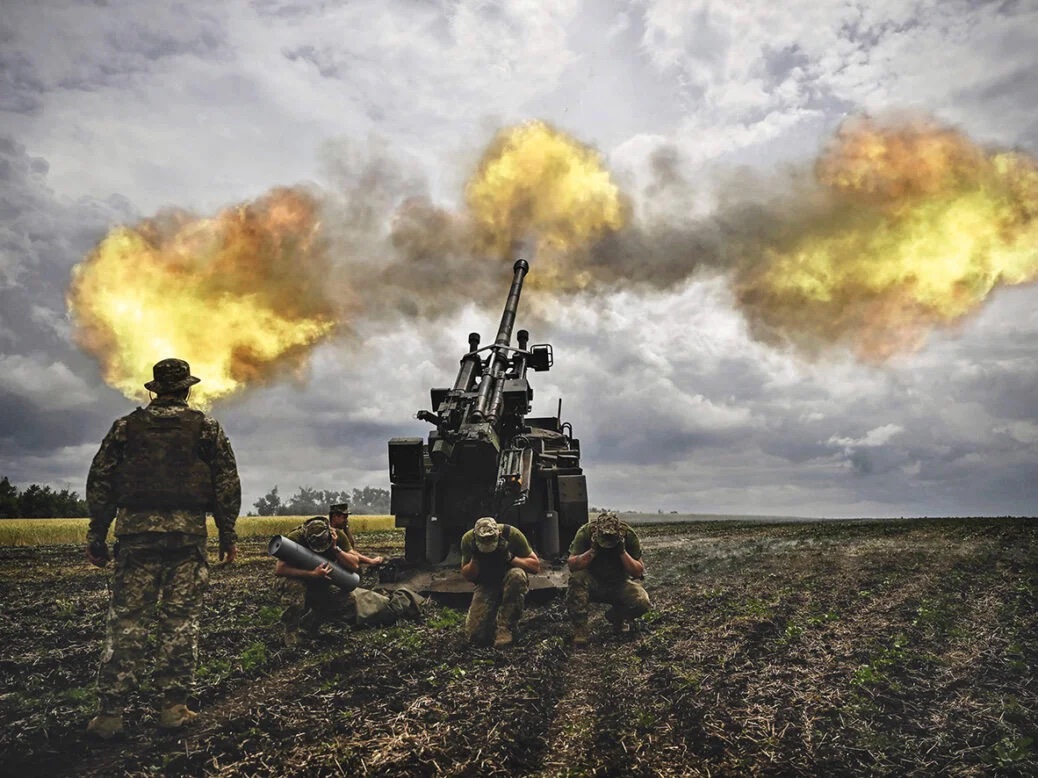
    By introducing, what the vast majority consider, a flawed Agnipath Scheme, whose efficacy or otherwise only time will tell. In addition, it has also undertaken a concerted drive towards indigenization of defence procurement. The Russo-Ukrainian conflict has clearly demonstrated rightsizing, reorganisation and reorientation of our military is unavoidable.

    The proposed reduction in strength of the Rashtriya Rifles is indeed a welcome step that requires to be hastened. In fact, following abrogation of Article 370 and reorganisation of Jammu and Kashmir, while many may disagree, the logical follow-up should have been de-notification of AFSPA and withdrawal of the Army from the hinterland.

    [powerkit_button size=”lg” style=”info” block=”true” url=”http://www.indiandefencereview.com/news/the-fallacy-of-handling-china-with-kid-gloves/” target=”_blank” nofollow=”false”]
    Read More
    [/powerkit_button]

  • ‘World War 3 has already started’ between US and Russia/China, argues French scholar

    ‘World War 3 has already started’ between US and Russia/China, argues French scholar

    Ben Norton reviews the interview given by the prominent French Scholar, Emmanuel Todd. The interview was in French and published in the major French newspaper ‘Le Figaro’. Emmanuel Todd argues the Ukraine proxy war is the start of WWIII, and is “existential” for both Russia and the US “imperial system”, which has restricted the sovereignty of Europe, making Brussels into Washington’s “protectorate”. 

    America is fragile. The resistance of the Russian economy is pushing the American imperial system toward the precipice. No one had expected that the Russian economy would hold up against the “economic power” of NATO. I believe that the Russians themselves did not anticipate it –  Emmanuel Todd

    A prominent French intellectual has written a book arguing that the United States is already waging World War Three against Russia and China.

    He also warned that Europe has become a kind of imperial “protectorate”, which has little sovereignty and is essentially controlled by the US.

    Emmanuel Todd is a widely respected anthropologist and historian in France.

    In 2022, Todd published a book titled “The Third World War Has Started” (“La Troisième Guerre mondiale a commencé” in French). At the moment, it is only available in Japan.

    But Todd outlined the main arguments he made in the book in a French-language interview with the major newspaper Le Figaro, conducted by the journalist Alexandre Devecchio.

    According to Todd, the proxy war in Ukraine is “existential” not only for Russia, but also for the United States.

    The US “imperial system” is weakening in much of the world, he observed, but this is leading Washington to “strengthen its hold on its initial protectorates”: Europe and Japan.

    This means that “Germany and France had become minor partners in NATO”, Todd said, and NATO is really a “Washington-London-Warsaw-Kiev” bloc.

    US and EU sanctions have failed to crush Russia, as Western capitals had hoped, he noted. This means that “the resistance of the Russian economy is pushing the American imperial system toward the precipice”, and “the American monetary and financial controls of the world would collapse”.

    The French public intellectual pointed to UN votes concerning Russia, and cautioned that the West is out of touch with the rest of the world.

    “Western newspapers are tragically funny. They don’t stop saying, ‘Russia is isolated, Russia is isolated’. But when we look at the votes of the United Nations, we see that 75% of the world does not follow the West, which then seems very small”, Todd observed.

    He also criticized the GDP metrics used by Western neoclassical economists for downplaying the productive capacity of the Russian economy, while simultaneously exaggerating that of financialized neoliberal economies like in the United States.

    In the Le Figaro interview, Todd argued (all emphasis added):

    This is the reality, World War III has begun. It is true that it started ‘small’ and with two surprises. We went into this war with the idea that the Russian army was very powerful and that its economy was very weak.

    It was thought that Ukraine was going to be crushed militarily and that Russia would be crushed economically by the West. But the reverse happened. Ukraine was not crushed militarily even if it lost 16% of its territory on that date; Russia was not crushed economically. As I speak to you, the ruble has gained 8% against the dollar and 18% against the euro since the day before the start of the war.

    So there was a sort of misunderstanding. But it is obvious that the conflict, passing from a limited territorial war to a global economic confrontation, between the whole of the West on the one hand and Russia backed by China on the other hand, has become a war world. Even if military violence is low compared to that of previous world wars.

    The newspaper asked Todd if he was exaggerating. He replied, “We still provide weapons. We kill Russians, even if we don’t expose ourselves. But it remains true that we Europeans are above all economically engaged. We also feel our true entry into war through the inflation and shortages”.

    Todd understated his case. He didn’t mention the fact that, after the US sponsored the coup that overthrew Ukraine’s democratically elected government in 2014, setting off a civil war, the CIA and Pentagon immediately began training Ukrainian forces to fight Russia.

    The New York Times has acknowledged that the CIA and special operations forces from numerous European countries are on the ground in Ukraine. And the CIA and a European NATO ally are even carrying out sabotage attacks inside Russian territory.

    Nevertheless, in the interview, Todd continued:

    Putin made a big mistake early on, which is of immense sociohistorical interest. Those who worked on Ukraine on the eve of the war considered the country not as a fledgling democracy, but as a society in decay and a ‘failed state’ in the making.

    I think the Kremlin’s calculation was that this decaying society would crumble at the first shock, or even say ‘welcome Mom’ to holy Russia. But what we have discovered, on the contrary, is that a society in decomposition, if it is fed by external financial and military resources, can find in war a new type of balance, and even a horizon, a hope. The Russians could not have foreseen it. No one could.

    Todd said he shares the view of Ukraine of US political scientist John Mearsheimer, a realist who has criticized Washington’s hawkish foreign policy.

    Mearsheimer “told us that Ukraine, whose army had been taken over by NATO soldiers (American, British and Polish) since at least 2014, was therefore a de facto member of NATO, and that the Russians had announced that they would never tolerate a NATO member Ukraine,” Todd said.

    For Russia, this is there a war that is “from their point of view defensive and preventative,” he conceded.

    “Mearsheimer added that we would have no reason to rejoice in the eventual difficulties of the Russians because, since this is an existential question for them, the harder it was, the harder they would hit. The analysis seems to hold true.”

    Germany and France had become minor partners in NATO and were not aware of what was going on in Ukraine on the military level. French and German naivety has been criticized because our governments did not believe in the possibility of a Russian invasion. True, but because they did not know that Americans, British and Poles could make Ukraine be able to wage a larger war. The fundamental axis of NATO now is Washington-London-Warsaw-Kiev.

    However, Todd argued that Mearsheimer “does not go far enough” in his analysis. The US political scientist has overlooked how Washington has restricted the sovereignty of Berlin and Paris, Todd said:

    Germany and France had become minor partners in NATO and were not aware of what was going on in Ukraine on the military level. French and German naivety has been criticized because our governments did not believe in the possibility of a Russian invasion. True, but because they did not know that Americans, British and Poles could make Ukraine be able to wage a larger war. The fundamental axis of NATO now is Washington-London-Warsaw-Kiev.

    Mearsheimer, like a good American, overestimates his country. He considers that, if for the Russians the war in Ukraine is existential, for the Americans it is nothing but a power “game” among others. After Vietnam, Iraq and Afghanistan, one debacle more or less… What does it matter?

    The basic axiom of American geopolitics is: ‘We can do whatever we want because we are sheltered, far away, between two oceans, nothing will ever happen to us’. Nothing would be existential for America. Insufficiency of analysis which today leads Biden to a series of reckless actions.

    America is fragile. The resistance of the Russian economy is pushing the American imperial system toward the precipice. No one had expected that the Russian economy would hold up against the “economic power” of NATO. I believe that the Russians themselves did not anticipate it.

    The French public intellectual went on in the interview to argue that, by resisting the full force of Western sanctions, Russia and China pose a threat to “the American monetary and financial controls of the world”.

    This, in turn, challenges the US status as the issuer of the global reserve currency, which gives it the ability to maintain a “huge trade deficit”:

    If the Russian economy resisted the sanctions indefinitely and managed to exhaust the European economy, while it itself remained backed by China, the American monetary and financial controls of the world would collapse, and with them the possibility for United States to fund its huge trade deficit for nothing.

    This war has therefore become existential for the United States. No more than Russia, they cannot withdraw from the conflict, they cannot let go. This is why we are now in an endless war, in a confrontation whose outcome must be the collapse of one or the other.

    Todd warned that, while the United States is weakening in much of the world, its “imperial system” is “strengthening its hold on its initial protectorates”: Europe and Japan.

    He explained:

    Everywhere we see the weakening of the United States, but not in Europe and Japan because one of the effects of the retraction of the imperial system is that the United States strengthens its hold on its initial protectorates.

    If we read [Zbigniew] Brzezinski (The Grand Chessboard), we see that the American empire was formed at the end of the Second World War by the conquest of Germany and Japan, which are still protectorates today. As the American system shrinks, it weighs more and more heavily on the local elites of the protectorates (and I include all of Europe here).

    The first to lose all national autonomy will be (or already are) the English and the Australians. The Internet has produced human interaction with the United States in the Anglosphere of such intensity that its academic, media and artistic elites are, so to speak, annexed. On the European continent we are somewhat protected by our national languages, but the fall in our autonomy is considerable, and rapid.

    As an example of a moment in recent history when Europe was more independent, Todd pointed out, “Let us remember the war in Iraq, when Chirac, Schröder and Putin held joint press conferences against the war” – referring to the former leaders of France (Jacques Chirac) and Germany (Gerhard Schröder).

    The interviewer at Le Figaro newspaper, Alexandre Devecchio, countered Todd asking, “Many observers point out that Russia has the GDP of Spain. Aren’t you overestimating its economic power and resilience?”

    Todd criticized the overreliance on GDP as a metric, calling it a “fictional measure of production” that obscures the real productive forces in an economy:

    War becomes a test of political economy, it is the great revealer. The GDP of Russia and Belarus represents 3.3% of Western GDP (the US, Anglosphere, Europe, Japan, South Korea), practically nothing. One can ask oneself how this insignificant GDP can cope and continue to produce missiles.

    The reason is that GDP is a fictional measure of production. If we take away from the American GDP half of its overbilled health spending, then the “wealth produced” by the activity of its lawyers, by the most filled prisons in the world, then by an entire economy of ill-defined services, including the “production” of its 15 to 20 thousand economists with an average salary of 120,000 dollars, we realize that an important part of this GDP is water vapor.

    War brings us back to the real economy, it allows us to understand what the real wealth of nations is, the capacity for production, and therefore the capacity for war.

    Todd noted that Russia has shown “a real capacity to adapt”. He attributed this to the “very large role for the state” in the Russian economy, in contrast to the US neoliberal economic model:

    If we come back to material variables, we see the Russian economy. In 2014, we put in place the first important sanctions against Russia, but then it increased its wheat production, which went from 40 to 90 million tons in 2020. Meanwhile, thanks to neoliberalism, American wheat production, between 1980 and 2020, went from 80 to 40 million tons.

    Russia has therefore a real capacity to adapt. When we want to make fun of centralized economies, we emphasize their rigidity, and when we glorify capitalism, we praise its flexibility.

    The Russian economy, for its part, has accepted the rules of operation of the market (it is even an obsession of Putin to preserve them), but with a very large role for the state, but it also derives its flexibility from training engineers, who allow the industrial and military adaptations.

    This point is similar to what economist Michael Hudson has argued – that although Moscow’s economy is no longer socialist, like that of the Soviet Union was, the Russian Federation’s state-led industrial capitalism clashes with the financialized model of neoliberal capitalism that the United States has tried to impose on the world.


    The Peninsula Foundation is happy to republish this article with the permission of the author, Ben Norton.

    The article was published earlier in geopoliticaleconomy.com

    Feature Image Credit: newstatesman.com

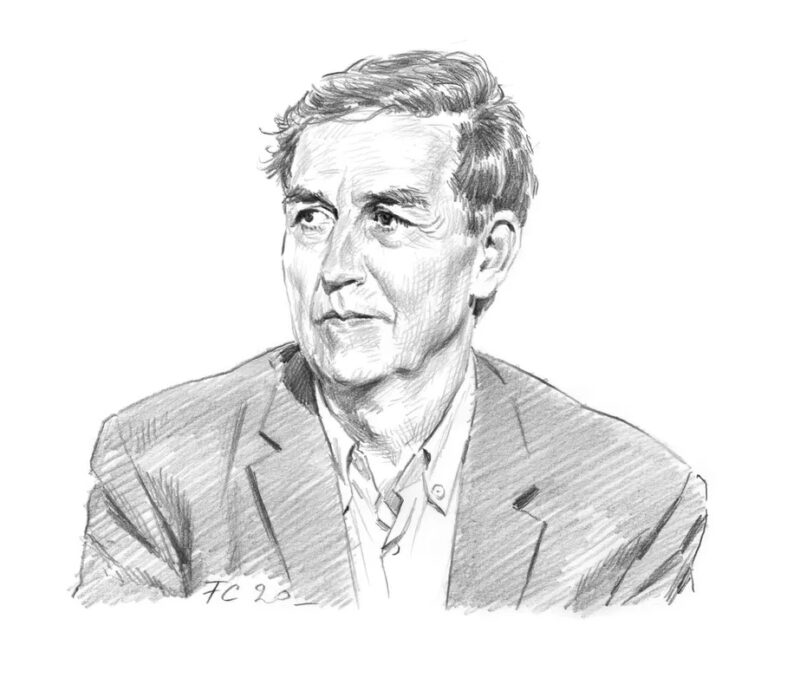
    Portrait Sketch of Emmanuel Todd: Fabien Clairefond


  • China’s People Crisis

    China’s People Crisis

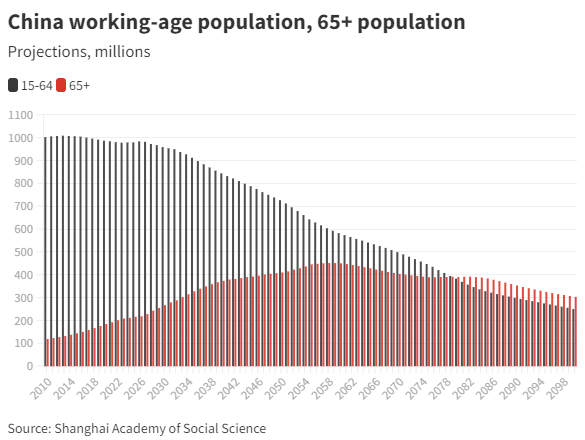
    For the first time in sixty years, China’s population has fallen. The population in 2022 – 1.4118 billion – fell by 850,000 from 2021. Its national birth rate has fallen to 6.77 births per thousand people.
    Deaths have also outnumbered births for the first time last year in China. It logged its highest death rate since 1976 – 7.37 deaths per 1,000 people, up from 7.18 the previous year.
    China has now hit an impenetrable economic wall. The People’s Republic has a people crisis – it has now stopped growing and is getting old. The reason is paradoxical. China’s one-child policy worked exceedingly well for it in the past. By preventing almost 400 million births since 1979, it gave the Chinese greater prosperity. It is estimated that between 1980 and 2010, the effect of a favourable population age structure accounted for between 15% and 25% of per capita GDP growth.
    That bonus with the demographic dividend has now ended. China’s population was expected to stabilise in 2030 at 1.391 billion, moving at a slow crawl from 1.330 billion in 2010. But it has hit that spot seven years ahead. In 2050, China is projected to decline to 1.203 billion.
    The flattening population and its somewhat unfavourable demographic profile have been causing concern in China for some years now. In 2013, the Communist Party of China’s Central Committee allowed couples to have a second child if one parent was an only child. But Chinese families have gotten used to one child existence. The demographic wall is not going to be crossed, and China’s workforce is not growing anymore.
    Whereas China added as many as 90 million individuals to its workforce from 2005 to 2015, in the decade from 2015, it will, at present trends, add only 5 million. In 2010, there were 116 million people aged 20 to 24. By 2020, the number will fall by 20% to 94 million. The size of the young population aged 20-24 will only be 67 million by 2030, less than 60% of the figure in 2010.
    One immediate consequence of this slowdown is that by 2030 the cohort aged above 60 years will increase from the present 180 million to 360 million. The other immediate economic consequence is that its savings rate will decline precipitously.
    As a nation climbs the economic ladder, people inevitably live longer. But old age is also more expensive. For instance, in the US, the old actually consume more than the rest due to medical expenses. Either they support themselves or their families have to support them. Apart from low consumption in the first few years of life, consumption is reasonably constant over the life cycle. But while income is earned and output produced, in the working life between 20 and 65 years, it is not so before and after. This ratio of working-age and non-working-age cohorts is called the dependency ratio.
    As Indian, African and (surprise, surprise) American dependency ratios turn increasingly favourable in the coming decades, China’s will go downhill and it will join Europe and Japan as the world’s aged societies.
    In comparison, in 2021, the United States recorded 11.06 births per 1,000 people, and in the United Kingdom, 10.08 births. The birth rate for the same year in India, which is poised to overtake China as the world’s most populous country, was 16.42.
    China’s total fertility rate – the average number of children born to each woman – is among the lowest in the world, at only 1.4. In contrast, the developed world average is 1.7. China’s replacement rate – the rate at which the number of births and deaths are balanced – is 2.1, as against India’s 2.5. At purchasing power parity, China’s per capita income is just a fifth or less of other large economies. At the same time, China’s fertility level is far below that of the US, UK or France (all around 2.0), and is on par with those of Russia, Japan, Germany and Italy – all countries with sharply declining populations. This is a big reason why Germany so readily accepted to take about a million refugees from Syria and Libya.
    Over the next 20 years, China’s ratio of workers to retirees will drop precipitously from roughly 5:1 today to just 2:1. Such a big change implies that the tax burden for each working-age person must rise by more than 150%. This assumes that the government will maintain its current level of tax revenue. In addition, mounting expenditure on pensions and healthcare will put China in a difficult position. If the government demands that taxpayers pay more, the public will demand better scrutiny of how their dollars are collected and spent. This could very well open the floodgates of challenges to the Communist Party.
    Can China succeed to get out of the low growth rate cycle? The conditions now are against it. The cost of rearing a child in China has increased hugely. The state may require more children, but most families will find the costs unaffordable. This is mainly because China is now a predominantly middle-class nation.
    How will this policy reversal pan out for China? Demographers give three scenarios. The highest outcome will mean 1.43 billion in 2050, while the more plausible outcome will be between 1.35- 1.37 billion. Either way, it is not going to alter the future much for China. It will become old before it becomes rich.
    Feature Image Credit: Reuters
    Graph Credit: World Economic Forum
  • On China and Economy, Dialogue Is the Need of the Hour

    On China and Economy, Dialogue Is the Need of the Hour

    The strength of democracy is that debate and dialogue provide society with a self-corrective mechanism.

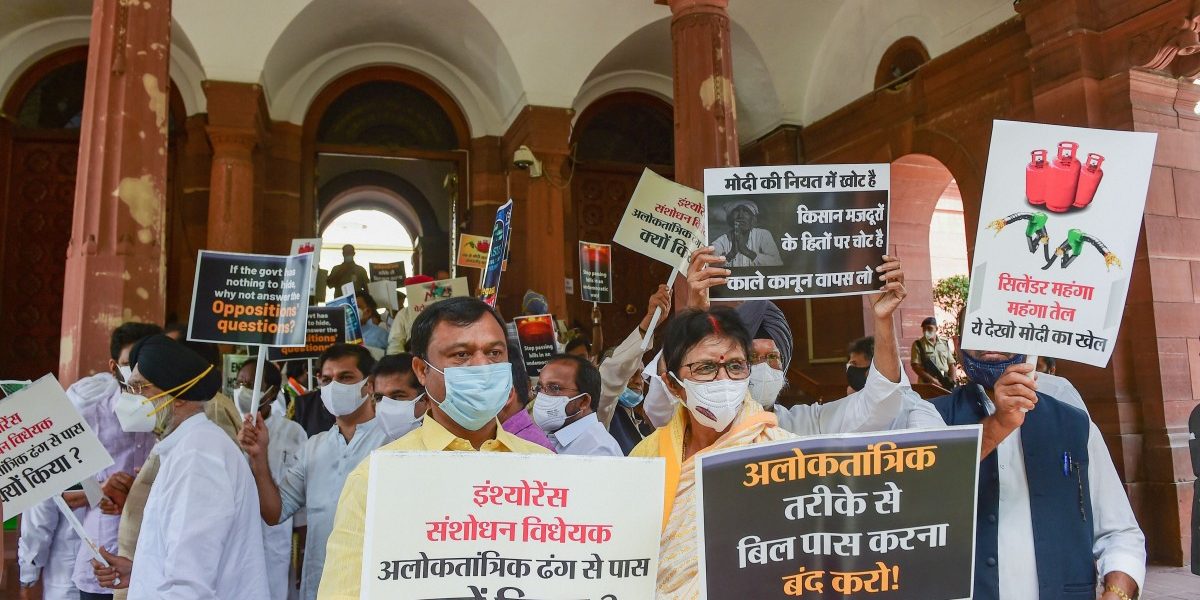
    The news of Chinese transgression in Tawang on December 9 is disturbing. The opposition has repeatedly demanded a discussion in the parliament but the government has not agreed. The government’s stock reply is that the matter should not be politicised and that we should have full faith in our army and our brave soldiers.

    This is diversionary since no one is saying that our soldiers are at fault or are not fighting valiantly. The issue is about policy and India’s political stance vis-à-vis China because of which the brave soldiers are suffering. A full discussion in parliament will help clear the air in this regard.

    [powerkit_button size=”lg” style=”info” block=”true” url=”https://thewire.in/rights/china-economy-dialogue-debate-democracy” target=”_blank” nofollow=”false”]
    Read More
    [/powerkit_button]

  • Understanding the ‘Xi Jinping’ thought on Rule of Law: Future Substance of Lawfare and Challenges in the Indo-Pacific

    Understanding the ‘Xi Jinping’ thought on Rule of Law: Future Substance of Lawfare and Challenges in the Indo-Pacific

    [powerkit_button size=”lg” style=”info” block=”true” url=”https://admin.thepeninsula.org.in/wp-content/uploads/2022/11/Xi-Jinping-Thought-Lawfare_ArpanAChakravarty-1.pdf” target=”_blank” nofollow=”false”]
    Download
    [/powerkit_button]

    Abstract

    Lawfare aims at using the law and legal systems to hurt or discredit opponents or stop them from reaching their political goals. It is seen that the rule of law has been used to shape the future course of the war as an alternative to traditional military means. Regimes worldwide have started using the law to constrain behaviour, contest circumstances, confuse legal precedents, and gain an advantage. In this paper, the author looks at how China uses “lawfare” in its own country, worldwide and lessons for India.

    Introduction

    While the world focused on the conflict between Ukraine and Russia, China and Solomon Island signed an inter-governmental security pact1 which has been raising concerns regarding the rule-based order2 in the Indo-Pacific region. China, as a rising power, is undoubtedly becoming a significant adversary to various countries bordering it, including India; its growth aims at unipolar Asia, which is causing enormous uncertainty in the region.

    Due to this, it becomes important to understand the multipolar distribution of power in the region since the Indo-Pacific is becoming a site for political contestation and the rise of ‘lawfare’. It is seen that in order to contest for leadership, China has been active on the front to demonstrate, influence, and ideate with different nations. It is actively setting rules and terms of compliance for it through a set of carefully crafted strategies of ‘lawfare’.

    This paper seeks to examine the theoretical underpinnings of lawfare, its internal dimension that influences China’s domestic policy, and its external dimension that has a bearing on China’s strategic and international standing, and finally how China uses lawfare to intimidate other nations and what the world can learn from it.

    [powerkit_button size=”lg” style=”info” block=”true” url=”https://admin.thepeninsula.org.in/wp-content/uploads/2022/11/Xi-Jinping-Thought-Lawfare_ArpanAChakravarty-1.pdf” target=”_blank” nofollow=”false”]
    Read the Full Paper
    [/powerkit_button]

  • Xi’s third term, the 20th Party Congress and Implications for India

    Xi’s third term, the 20th Party Congress and Implications for India

    The historic 20th National Congress of the Communist Party of China (CPC) concluded on October 23rd. The week-long extravagant event – beginning on October 16th – has brought new faces of the Chinese political elite to the forefront along with a few surprises. Xi’s report before the 20th National Party Congress (NPC) at the opening ceremony and his appointments to the highest posts in the country are very telling of what his third term could look like for the world. Most importantly, the implications for India cannot be clearer – politically, economically, diplomatically, and militarily. India will need to acquaint herself with these new appointments and developments and come up with a strategy to level the playing field.

    What the report says and implies

    Xi’s report to the 20th NPC was in stark contrast to the report delivered in 2017 to the 19th NPC. In 2017, Xi was triumphant of all that China had achieved and hoped to achieve in the future – particularly on the economic front and of its growing international influence. He was proud of China’s assertive foreign policy and soft power. That sentiment has not necessarily changed in the 20th NPC report. However, Xi’s report did strike a sombre tone, predicting a tough future for China – “…strategic opportunities, risks, and challenges are concurrent and uncertainties and unforeseen factors are rising. Various “black swan” and “grey rhino” events may occur at any time.” His speech and report come across as a rallying call meant to safeguard the primacy and authority of the CPC and their way of life against external interference.

    “China’s overall development objectives for the year 2035 are as follows: Significantly increase economic strength, scientific and technological capabilities, and composite national strength; substantially grow the per capita GDP to be on par with that of a mid-level developed country”.              – Xi Jinping in his address to the 20th Party Congress.

    The importance of “national security” (mentioned 81 times) and China’s external and regional challenges is given highest priority and significance. Other key phrases that find frequent mention in the report are “military”, “strategic/strategy” and “risks”. There is a concerted focus on military modernisation and ramping R&D. Simultaneously, Xi is also realistic of the economic challenges ahead of China – “…many bottlenecks hindering high-quality development, and China’s capacity for scientific and technological innovation is not yet strong enough. Many major issues need to be resolved in order to guard against financial risks and ensure that food, energy, and industrial and supply chains are secure and reliable.” Interestingly, China’s economy was not in the spotlight. There was a glaring omission of the development of and plans for the BRI; mentioned only twice in the entire report. Predictably, there was no change in China’s policy towards Taiwan except a veiled threat directed at the US for its interference in its neighbourhood. It appears that Xi’s plans for his third term are to focus on China’s security and strategic challenges through assertive diplomacy.

    Xi stacks the deck in his favour

    Xi Jinping’s appointment as General Party Secretary of the CPC for a third term was the least surprising outcome from the 20th NPC; owing to constitutional amendments made in his previous term i.e., the removal of the constraint of a term limit. He also retains his position as Chairman of the party’s Central Military Commission (CMC). His appointments to the state’s top bodies have broken with the CPC’s age norm of ‘7-up, 8-down’; officials eligible to serve another term at 67 years have been given the boot while people like Zhang Youxia (VC of the CMC), at 72 years, has been given another term when he should ideally have been retired.

    The reshuffling of the Politburo Standing Committee (PBSC) appears to have only one important criterion – loyalty to Xi Jinping. The move is also an indication of the concentration of power that now rests with Xi and his men. With the introduction of the “Two Establishes” and “Two Safeguards”, Xi elevated himself to be on par with Mao Zedong and above Deng Xiaoping, Hu Jintao and Jiang Zemin. Indeed, the inclusion of Xi Jinping’s Thoughts on Socialism with Chinese characteristics in the Party Constitution along with the “Two Establishes” and “Two Safeguards” has cemented Xi Jinping as the core of the CPC. His appointments to the PBSC reflect this. Premier Li Keqiang, widely believed to be a dissenter and protégé of former President Hu Jintao was dropped. Hu Chunhua, slated for a position in the PBSC and considered for the premiership was unable to secure a position in the 7-member powerful body and was even dropped from the Politburo. Other members to be removed were Wang Yang, Han Zheng and Li Zhangshu. Both Wang Yang and Han Zheng were closely linked to Li Keqiang and former President Jiang Zemin respectively. The new members of PBSC are Li Qiang, Cai Qi, Ding Xuexiang and Li Xi. Zhao Leji and ideology tsar Wang Huning were the only members to retain their seats; having closely aligned themselves with Xi Jinping in the period between the 19thNPC and 20th NPC. The composition of the 20th PBSC indicates Xi’s success in removing all factional opposition present within the Party. All the members who were left off the PBSC were a part of the Communist Youth League and rose within its ranks to become powerful men. Their removal, along with Hu Jintao being escorted out during the 20th National Congress is both a signal to Xi’s loyalists and opposition.

    Similarly, the selection of people into the 24-member Politburo and Central Committee are all Xi loyalists and will have a direct impact on China’s domestic and foreign policies going forward. Xi’s prioritisation of security and S&T is reflected in some of the new appointments to the Politburo – Chen Wenqing (an intelligence officer and former minister of the Ministry of State Security), engineers with specialisation in aerospace Ma Xingrui and Yuan Jiajin, Li Ganjie (nuclear engineering), Zhang Youxia (VC of the CMC), Hei Weidong (VC of the CMC and Commander of CMC’s Joint Command Center), Chen Jining (environmental sciences), and Yin Li (public health expert). Notably, both the PBSC and Politburo have no women participation.

    The backgrounds of the appointees to these bodies are also an indicator of the growing premium Xi is placing on technocrats. Beyond party and political loyalty, they are expected to fall in line with his policy agenda and thus, have backgrounds in aerospace, technology, finance, economics, engineering, and advanced manufacturing in sectors like semiconductors. 

    The backgrounds of the appointees to these bodies are also an indicator of the growing premium Xi is placing on technocrats. Beyond party and political loyalty, they are expected to fall in line with his policy agenda and thus, have backgrounds in aerospace, technology, finance, economics, engineering, and advanced manufacturing in sectors like semiconductors. The number of officials with backgrounds in S&T in the Central Committee is at par with Jiang Zemin’s first term in 1992. According to a study by the Brookings Institution, 81 seats in the 20th Central Committee – around 40% – are occupied by Chinese officials with technical expertise. The belief that technocrats generally lack political factions, prefer working in silos and are solution-oriented also works in Xi’s favour.


    A stronger and more loyal CMC

    The new CMC appointees stand out for several reasons. For one, Xi has broken with the established retired norms by placing Army veteran Zhang Youxia as VC of the CMC. Further, the placement of He Weidong as the second VC of the CMC is unusual since he has essentially jumped two grades without serving as either a member of the CMC or Central Committee of the CPC. Second, Xi appears to have rewarded those that he has personal and familial connections with.

    Zhang Youxia’s father, Zhang Zongxun was a founding member of the PLA and served with Xi’s father, Xi Zongxun in the 1940s. General Zhang’s decorated career, combat experience (Sino-Vietnamese war in the 1980s) and position as head of the Equipment Development Department of the CMC make him one of Xi’s most trusted allies in the PLA. On the other hand, General He Weidong’s catapult to second VC is significant given his operational experience with both the Western Theatre Command (WTC) and Eastern Theatre Command (ETC) ground forces. Reportedly, both Xi and He are also close friends owing to the time they both spent in Fujian province and Zhejiang province during Xi’s days working in the provincial government.

    The other new appointment with operational and combat experience is General Liu Zhenli. He takes over as Chief of the Joint Staff Committee of the CMC and was previously Chief of Staff and Commander of the PLA Army and Chief of Staff of the PAP. His experience in the Sino-Vietnam border skirmishes in the 1980s as well as his stint with the PAP makes him an important addition to the CMC.

    Finally, General Li Shangfu’s (potentially Minister of National Defense) elevation to the CMC is notable in that it signals a close linkage between the aerospace domain and the military. Li is a technocrat and is widely regarded as the man behind China’s manned and unmanned space program. His time as Deputy Commander of the PLA Strategic Support Force and his current appointment as Director of the Equipment Development Department reflects Xi’s aim of achieving the centenary goal of the PLA Army and modernising its military and national defence.

    The other two members to retain their position in the CMC are Admiral Miao Hua and General Zhang Shengmin. They both rose through the ranks in the Political Work Department as political commissars. Admiral Miao will continue to head the Political Work Department. He is also a close ally of Xi from when they both served in the Fujian province in the 1990s and 2002. No doubt his work as a political commissar in the PLA Navy makes him a strong candidate for a second term in the CMC. Similarly, General Zhang continues to head the Central Commission for Discipline Inspection as he serves in the PLA Rocket Force. His appointment is particularly significant given the fact that he replaced Du Jincai who was being investigated with then VC’s Guo Boxiong and Xu Caihou on corruption. Zhang Shengmin’s retainment signals, one, Xi’s trust in him and two, that his anti-corruption campaign is far from over.

    Other appointments such as Airforce General Xu Qilang and PLA Generals Wei Fenghe and Li Zuocheng to the State Commission indicate an overwhelming prioritisation of the WTC and ETC, meaning India and Taiwan – China’s two biggest security challenges. The appointment of several serving chiefs of the ground forces will have far-reaching implications for the LAC and India’s national security.

    The combination of technocrats and veterans in the CMC is a nod towards Xi’s vision for the Chinese military – “…continue integrated development of the military through mechanization, informatization, and the application of smart technologies and work faster to modernize military theory, organizational forms, personnel, and weaponry and equipment. We will enhance the military’s strategic capabilities for defending China’s sovereignty, security, and development interests…”.

    However, the success of these appointments remains to be seen given the relatively limited operational experience some of the members have.

     What do we make of China’s economy?

    The “common prosperity for all” is another major tenet at the heart of China’s domestic economic policy. Whilst outlining all the strides the CPC has made in the last five years to the 20th NPC, Xi is also aware of the economic challenges China faces – the effects of the Covid-19 pandemic, the rise of unilateralism and protectionism, a sluggish global economy and regional conflicts and disturbances. To combat these challenges, China is pursuing the “dual circulation” strategy and “high-quality development”. Notably, these two mechanisms have made their way to the Party Constitution. The dual circulation strategy is aimed at improving domestic demand, building secure and resilient supply chains, and reducing China’s dependency on foreign trade for its economic growth.

    China is pursuing the “dual circulation” strategy and “high-quality development”. Notably, these two mechanisms have made their way to the Party Constitution. The dual circulation strategy is aimed at improving domestic demand, building secure and resilient supply chains, and reducing China’s dependency on foreign trade for its economic growth.

    Along with a faster recovery of its industrial production equipment manufacturing and high-tech manufacturing, China’s GDP grew by 3.9% in the third quarter. However, this does not take away from the fact that, presently, China’s exports have diminished. The strict zero-covid policy that China continues to enforce is severely impacting its industries. The recent US Chips Act and export controls targeted at China are affecting foreign enterprises in the country as well as its tech industry.

    Further, the absence of market-reform oriented economists like Premier Le Keqiang, Vice Premier Liu He, head of the Central Bank Yi Gang, financial regulator Guo Shuqing and Finance Minister Liu Kun from the PBSC and Politburo will surely be felt. Li Qiang, the potential candidate for the Premiership does not have an economic background and it is likely that most of the heavy lifting will fall to He Lifeng (tapped for Vice Premier) in the Politburo. He is a supporter of Xi’s “self-reliance” policies and economic nationalism. He will have big shoes to fill as Liu He, the outgoing Vice Premier, had a powerful portfolio that included economic policy and the financial sector. The Harvard-trained economist was also Xi’s go-to man for trade negotiations with Washington.

    India’s continued economic growth is evidence contrary to what China dictates. Even as China seeks membership in the Comprehensive and Progressive Agreement for Trans-Pacific Partnership (CPTPP) and uses the Regional Comprehensive Economic Partnership (RCEP), there are signs of decoupling with the Chinese economy emerging. Already, the US-imposed export controls are impacting China’s production and manufacturing. While China proposes a more “secure” and inward-looking economic policy, achieving this goal will take a long time. This is an opportunity for India to exploit. India becoming the next manufacturing hub for the world will challenge China’s position in Asia and thus, presents an obstacle for the latter.

    China’s wolf-warrior diplomacy to continue

    With Yang Jiechi’s retirement, the position of head of China’s Central Foreign Affairs Commission is set to move to Wang Yi, another seasoned career diplomat. His appointment to the Politburo, at 69 years of age, is yet another display of Xi’s disregard for the Party age norms. But it also indicates that Xi looks to Wang’s expertise as China enters its most challenging period of international engagements. Wang has been the face of China’s foreign policy for quite some time and is another ‘wolf-warrior diplomat’. His appointment signals the continuity of the wolf-warrior diplomacy that China practices. With Wang Yi at the helm, it is expected that Qin Gang, the current ambassador to the US, will become the next Foreign Minister. The other potential appointee to the position is Liu Haixing who is a career diplomat specialising in European affairs and served multiple postings in China’s embassy in France. He is also the Deputy Director of the Office of the National Security Commission (NSC). Other diplomats on the roster are Liu Jianchao and Qi Yu. Liu Jianchao was recently made Director of the International Liaison Department of the Central Committee of the Chinese Communist Party (CCID) this June and it is unlikely to change so soon. He also previously served at the Office of the Foreign Affairs Commission (FAC). Qi Yu, serving as Party Secretary of the Foreign Ministry has no diplomatic experience.

    The choice between Liu Haixing and Qin Gang will also dictate the future direction of China’s foreign policy. The choice of diplomats to the Central Committee also indicates the importance Xi places on public relations. China’s need to sway public opinion, both domestically and internationally, is reflected in the choice of Liu Jianchao and Qin Gang. Both have ample experience serving as spokespersons for the Party and the PRC respectively. Further, Liu Jianchao’s and Liu Haixing’s elevation to the Central Committee also indicates the importance of serving in Party Commissions. Their time at the FAC and NSC, respectively, within the last five years has earned them a fast-tracked promotion to the Central Committee. The path to the top is even closer for Liu Haixing given the fact that his senior, Cai Qi who served in the NSC, now sits in the PBSC.

    The road ahead for India

    The appointments to the PBSC, Politburo and CMC are a reflection of China’s assertiveness on the international stage. The military appointees are of particular importance to India. The overwhelming emphasis on ground forces and service chiefs with experience in the WTC could mean more skirmishes along the LAC and a concerted focus towards engaging in hybrid warfare. The LAC is a priority security concern for India as well and the nationalistic fervour that Xi exemplified in his speech to the 20th NPC is no different from what Prime Minister Modi engages in. That said, India’s military forces must be prepared for an escalation along the LAC at any point in time.

    The Central Committee of 205 members, the majority of whom hold doctorates, includes 47 military leaders. This is reflective of China’s governance structure that is techno-military focused along with the necessary expertise in political, economic, and social domains.

    However, leaving aside the anti-Chinese rhetoric of the West, it is important for India to recognise the competence; educational qualifications, experience, and expertise; and the varied techno-military-politico composition of the Chinese leadership. CCP’s Central Committee consists of 205 full committee members from which are chosen the top leadership forming the Politburo of 24 members inclusive of the apex standing committee of seven members and the Central Military Commission of seven members. All 205 members are highly qualified in various disciplines such as economics, education, politics, philosophy, sciences, engineering, medicine, aerospace, nuclear, space, telecommunications, sociology, history, management, international relations, law, jurisprudence, geopolitics etc. The majority hold doctorates in their chosen fields. Xi Jinping holds a degree in Chemical Engineering and a doctorate in Marxian philosophy and Political Science. In addition, the leadership has a significant presence of military leadership, both serving and veterans that includes 27 Generals and 17 Lieutenant Generals out of the 205 members.

    China’s economic downturn and security-oriented economic policy that Xi has propounded is an opportunity for India to become the next manufacturing hub in Asia. However, India must remain cautious of what competition with China could look like for the neighbourhood.

    The changes to the diplomatic cadre in the 20th NPC do not take away from the fact that India’s standing and position are stronger and more sure-footed than it has ever been. Our diplomacy in the face of the ongoing Russia-Ukraine war showcases that. India’s strategic autonomy, respect for international law and norms and growing strategic partnerships with the Indo-Pacific countries are an advantage to her engagement with Beijing.

    Feature Image Credit: orcasia.org
  • BRICS Real Value: One Step Towards New World Order

    BRICS Real Value: One Step Towards New World Order

    While “BRICS” has been a frequently occurring acronym in our discourse in recent years, not many seem to have grasped the reality of Brics and its actual utility.

    The post-Cold War era has seen the economic and political rise of a host of nations — Brazil, China and India being foremost among them. Since 2000 and the advent of Vladimir Putin, Russia has with some help from soaring oil prices made impressive economic gains. The new South Africa, based equally on the industrial inheritance of the robust but unequal and exploitative apartheid regime and the bounty of nature, now finds itself as an advancing economic power. Unlike Nigeria, which has frittered its oil wealth and has been looted by its native kleptocracy, South Africa has been a relative symbol of responsible government and probity in public life. Each one of these nations is now a major economic player and some already have bigger GDPs than many countries in the Group of Seven. Together, in the next two decades, Brics is likely to outstrip the G-7.

    [powerkit_button size=”lg” style=”info” block=”true” url=”https://www.deccanchronicle.com/opinion/columnists/270722/mohan-guruswamy-brics-real-value-one-step-towards-new-world-orde.html” target=”_blank” nofollow=”false”]
    Read More
    [/powerkit_button]

  • The Geopolitical Significance of Chabahar Port to India 

    The Geopolitical Significance of Chabahar Port to India 

    The port of Chabahar is a seaport in south-eastern Iran, located on the Gulf of Oman, at the mouth of the Strait of Hormuz. It is situated in Sistan-va-Baluchestan, one of Iran’s least developed provinces. Contrary to Bandar Abbas, the busiest port in Iran, Chabahar is a deep-water port with direct access to the Indian Ocean that is outside the Hormuz Strait. It is Iran’s only seaport and consists of two separate ports called Shahid Beheshti and Shahid Kalantari. The last Shah of Iran proposed the port’s development in 1973. Work in Chabahar began when the Shah of Iran, Reza Pahlavi, was in power. The Iranian Revolution of 1979 hindered the development of this port. Following the 1979 Islamic revolution, US firms involved in various infrastructure investments fled the country. The new government took on these projects. The port of Chabahar grew in importance during the Iran-Iraq war of 1983 when ships were hesitant to enter the Strait of Hormuz. The port’s first phase opened during the Iran-Iraq war, when Iran began shifting maritime trade up the east coast toward the Pakistani border to reduce the reliance on Persian Gulf ports which were susceptible to attack by the Iraq Air Force. Chabahar is substantial for its fishing industry and will serve as a major trade hub designed to connect South Asia, Central Asia, and the Middle East. Chabahar can emerge as a potential global trading hub – and an arena for geopolitical competition. Chabahar is vital for both India and Iran to reduce their dependence on the Suez Canal for transporting cargo to Europe. Chabahar is a strategic port from an Indian perspective. Apart from being easily accessible from India’s western coasts, it serves several important functions. For starters, by having access to the port, India can reduce its commute time to Central Asia by one-third. Second, a link between Afghanistan and India could be built without going through Pakistan and this could help the already established diplomatic, security and economic relationship between New Delhi and Kabul. Third, India gains road access to four cities in Afghanistan via Chabahar: Herat, Kandahar, Kabul, and Mazar-e-Sharif. This will help India strengthen its trade with Afghanistan (“Chabahar and Beyond” 2016). However, the Taliban’s return to power in 2021 gives rise to a certain level of uncertainty. The current geopolitical environment, both regional and global, creates opportunities for India to overcome possible uncertainties.

    New Delhi views Chabahar port as a means of bypassing Pakistan’s land routes to gain access to the Afghan and Central Asian markets.

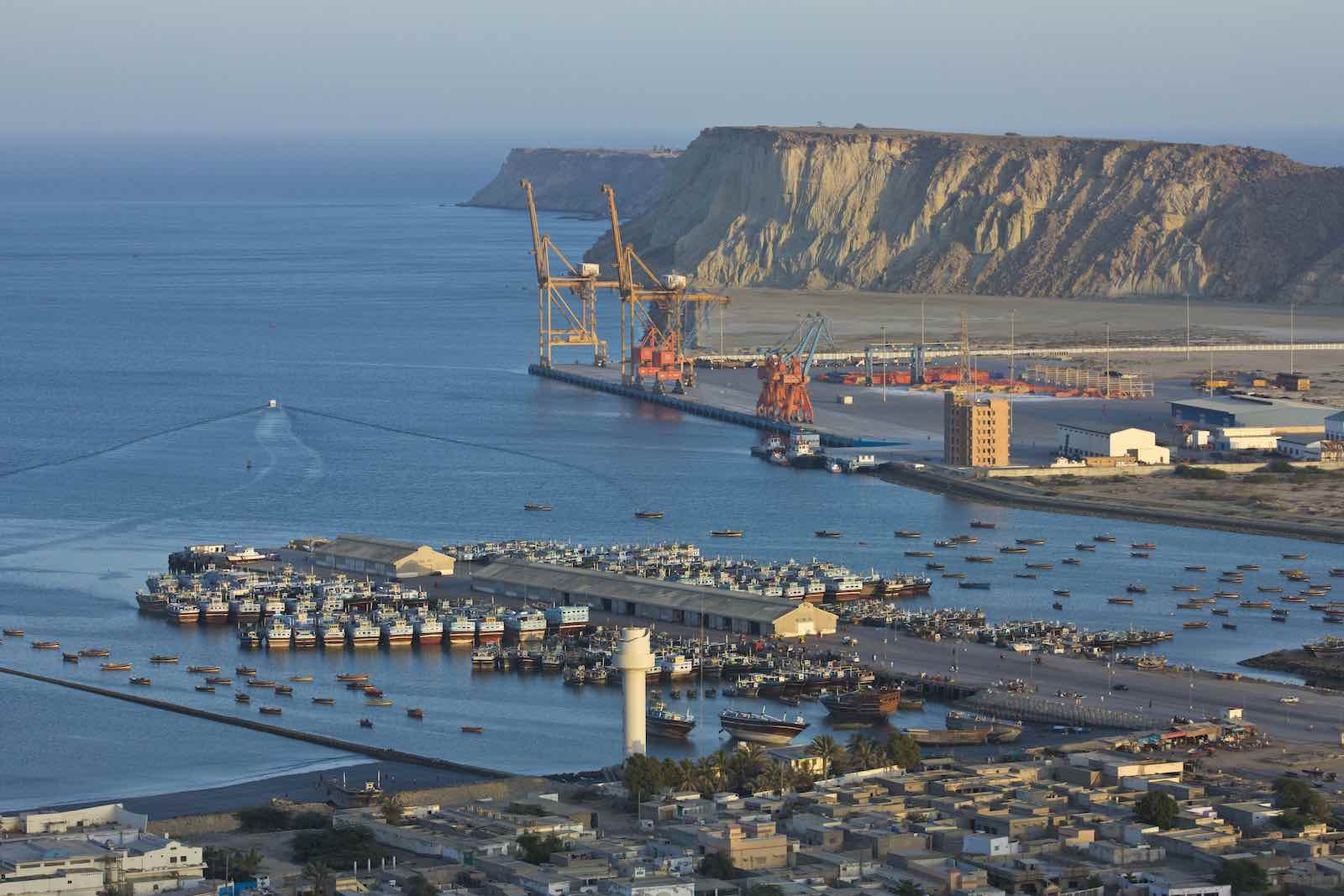
    Being one of the world’s fastest-growing economies, expansion of trade relations and access to new markets is a necessity for India. As an investor, New Delhi views Chabahar port as a means of bypassing Pakistan’s land routes to gain access to the Afghan and Central Asian markets. Pakistan’s Gwadar port is one possible route for India to access Central Asian markets, India has long aimed for alternative routes due to its adversarial relationship with Pakistan (“Chabahar Port: A Step toward Connectivity for India and Afghanistan,” n.d.). Additionally, the port will strengthen relations between India and Iran, which may help counterbalance strong Sino-Pakistani cooperation. According to the Minister of Foreign Affairs (MEA), India and Iran share close historical and civilizational ties, “Our bilateral relations are marked by strong linkages across institutions, cultures and people-to-people ties,” the MEA said in a statement. Afghanistan also seeks to explore new trade routes to reach international markets. It aims to reduce its dependence on Pakistan, which handles most of the Afghan trade due to the country’s landlocked status. 

    Afghanistan is crucial for India’s ‘neighbourhood first’ strategy. India assisted Afghanistan in becoming a full member state of SAARC in 2007. It signed a Preferential Trade Agreement with Kabul in 2003 following the establishment of the interim government post the US’s intervention in 2001. Under the North-South Transport Corridor framework, India, Afghanistan, and Iran signed the Chabahar port agreement in 2003, allowing all three countries to use the Chabahar port as a trade hub. India is working on constructing the Chabahar port primarily to compete with the Gwadar port project and to connect it to Russia’s International North-South Transport Corridor (INSTC). India has already built a 218-km-long road from Delaram to Zaranj (“India Completes Zaranj-Delaram Highway in Afghanistan” 2008) and now plans to connect this road to Chabahar port and deliver goods through this route. India is also keen on using the Chabahar port to connect the oil-rich Central Asian countries by road connectivity via the Milak (Iran) and Zaranj-Dilaram (Afghanistan) roads. For India, the port, which is only 940 kilometers from Mundra in Gujarat, is about more than just facilitating the flow of trade with Afghanistan. Rather, the development of Chabahar is a crucial component of the country’s grand strategy to connect with Central Asia. India’s justification for wanting to develop the Chabahar Port goes beyond its interest in Afghanistan. Enhancing regional trade and connectivity as well as thwarting China’s expanding influence in the Indian Ocean are other top priorities for Indian foreign policy (“What Are India, Iran, and Afghanistan’s Benefits from the Chabahar Port Agreement? Manohar Parrikar Institute for Defense Studies and Analyses,” n.d.).

    Geopolitical Challenges

    The port of Chabahar will be of little use if Afghanistan is not stable. Indian interest in the Chabahar Port, therefore, continues to be closely linked to the geopolitical changes the region is currently experiencing.

    The competition for regional dominance between India and China can be seen in the development of ports in the regions. Indian involvement in the Chabahar port is important in securing India’s interest in the region. A calculative China will seize any opportunity that India might present in the port facility. If China moves in, Indian investments in the Chabahar port may be unfavorably affected (Pant and Mehta, 2018). A significant barrier is the complex nature of India-Iran relations, in which the former does not hold a privileged position. Given India’s priorities in the Middle East, it is unlikely that the relationship with Iran could compete with the comprehensive partnership that China and Pakistan share, which includes a strong defence and security arrangement. Iran may find it challenging to ignore or exclude China, its largest foreign investor, from the Chabahar project. Additionally, China has successfully completed several infrastructure projects in Iran, including the Tehran Metro, and has allocated US$ 1.5 billion through its EXIM Bank for the electrification of the Tehran-Mashhad railway line (“$1.5b China Loan for Iranian Rail Project” 2017).

    Peace and stability in Afghanistan will also impact the performance of the Chabahar Port. The tumultuous security situation in Afghanistan could jeopardise trilateral efforts between India, Iran, and Afghanistan to operate the Chabahar Port facility. And finally, the port of Chabahar will be of little use if Afghanistan is not stable. Indian interest in the Chabahar Port, therefore, continues to be closely linked to the geopolitical changes the region is currently experiencing.

    References

    “$1.5b China Loan for Iranian Rail Project.” 2017. Financial Tribune. July 25, 2017. https://financialtribune.com/articles/economy-domestic-economy/68986/update-15b-china-loan-for-iranian-rail-project.

    Amirthan, Shawn. 2016. “What Are India, Iran, and Afghanistan’s Benefits from the Chabahar Port Agreement?” Strategic Analysis 41 (1): 87–93. https://doi.org/10.1080/09700161.2016.1249184.

    “Chabahar and Beyond.” 2016. Www.thehindubusinessline.com. May 25, 2016. https://www.thehindubusinessline.com/opinion/editorial/chabahar-and-beyond/article8646239.ece.

    “Chabahar Port: A Step toward Connectivity for India and Afghanistan.” n.d. Thediplomat.com. https://thediplomat.com/2019/07/chabahar-port-a-step-toward-connectivity-for-india-and-afghanistan/.

    “India Completes Zaranj-Delaram Highway in Afghanistan.” 2008. Development News from Afghanistan, August 24, 2008. https://afghandevnews.wordpress.com/2008/08/24/india-completes-zaranj-delaram-highway-in-afghanistan/.

    Pant, Harsh V., and Ketan Mehta. 2018. “India in Chabahar.” Asian Survey 58 (4): 660–78. https://doi.org/10.1525/as.2018.58.4.660.

    “What Are India, Iran, and Afghanistan’s Benefits from the Chabahar Port Agreement? Manohar Parrikar Institute for Defence Studies and Analyses.” n.d. Idsa.in. https://idsa.in/strategicanalysis/40_1/india-iran-and-afghanistans-benefits-from-the-chabahar-port-agreement.

    Featured Image Credit: Lowy Institute

  • The Great Chips War

    The Great Chips War

    The supply chain disruptions for semiconductor chips and the increasing sanctions imposed by the US on high-tech chips access to China and Russia has signalled the critical relevance of control over this technology and process for national security. Chip design and manufacture involve heavy capital investments and access to special machinery that is monopolised by very few American-controlled/influenced companies in Europe and East Asia. India, having missed the boat earlier due to poor investment decisions, has recognised chip manufacturing as a critical strategic industry and is investing efforts to establish significant capabilities. This could take years as challenges still remain.  – TPF Editorial Team

    Following the US Commerce Department’s announcement of severe new restrictions on sales of advanced semiconductors and other US high-tech goods to China, the Sino-American rivalry has entered an important new phase. Even under the best circumstances, China will have a difficult time adapting to its new reality.

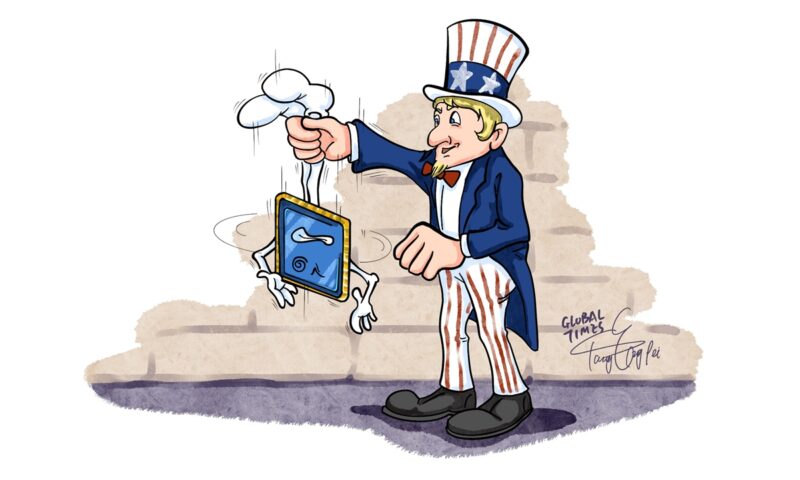
    In addition to dealing with the fallout from open warfare in eastern Europe, the world is witnessing the start of a full-scale economic war between the United States and China over technology. This conflict will be highly consequential, and it is escalating rapidly. Earlier this month, the US Commerce Department introduced severe new restrictions on the sale of advanced semiconductors and other US high-tech goods to China. While Russia has used missiles to try to cripple Ukraine’s energy and heating infrastructure, the US is now using export restrictions to curtail China’s military, intelligence, and security services.

    The new chip war is a war for control of the future.

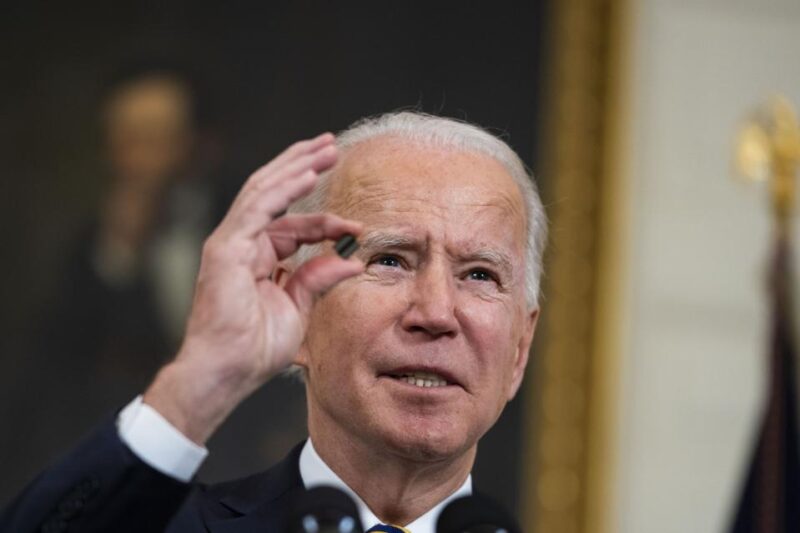
    Moreover, in late August, US President Joe Biden signed the CHIPS Act, which includes subsidies and other measures to bolster America’s domestic semiconductor industry. Semiconductors are and will remain, at the heart of the twenty-first-century economy. Without microchips, our smartphones would be dumb phones, our cars wouldn’t move, our communications networks wouldn’t function, any form of automation would be unthinkable, and the new era of artificial intelligence that we are entering would remain the stuff of sci-fi novels. Controlling the design, fabrication, and value chains that produce these increasingly important components of our lives is thus of the utmost importance. The new chip war is a war for control of the future.

    The semiconductor value chain is hyper-globalized, but the US and its closest allies control all the key nodes. Chip design is heavily concentrated in America, and production would not be possible without advanced equipment from Europe, and fabrication of the most advanced chips – including those that are critical for AI – is located exclusively in East Asia. The most important player by far is Taiwan, but South Korea is also in the picture.

    In its own pursuit of technological supremacy, China has become increasingly reliant on these chips, and its government has been at pains to boost domestic production and achieve “self-sufficiency.” In recent years, China has invested massively to build up its own semiconductor design and manufacturing capabilities. But while there has been some progress, it remains years behind the US; and, crucially, the most advanced chips are still beyond China’s reach.

    It has now been two years since the US banned all sales of advanced chips to the Chinese telecom giant Huawei, which was China’s global technology flagship at the time. The results have been dramatic. After losing 80% of its global market share for smartphones, Huawei was left with no choice but to sell off its smartphone unit, Honor, and reorient its corporate mission. With its latest move, the US is now aiming to do to all of China what it did to Huawei.

    This dramatic escalation of the technology war is bound to have equally dramatic economic and political consequences, some of which will be evident immediately, and some of which will take some time to materialize. China most likely has stocked up on chips and is already working to create sophisticated new networks to circumvent the sanctions. (After Huawei spun it off in late 2020, Honor quickly staged a comeback, selling phones that use chips from the US multinational Qualcomm.)

    Still, the new sanctions are so broad that, over time, they will almost certainly strike a heavy blow not only to China’s high-tech sector but also to many other parts of its economy. A European company that exports to China now must be doubly sure that its products contain no US-connected chips. And, owing to the global nature of the value chain, many chips from Taiwan or South Korea also will be off-limits.

    The official aim of the US policy is to keep advanced chips out of the Chinese military’s hands. But the real effect will be to curtail China’s development in the sectors that will be critical to national power in the decades ahead.

    The official aim of the US policy is to keep advanced chips out of the Chinese military’s hands. But the real effect will be to curtail China’s development in the sectors that will be critical to national power in the decades ahead. China will certainly respond with even stronger efforts to develop its own capabilities. But even under the best circumstances, and despite all the resources it will throw at the problem, any additional efforts will take time to bear fruit, especially now that US restrictions are depriving China of the inputs that it needs to achieve self-sufficiency.

    The new chips war eliminates any remaining doubt that we are witnessing a broader Sino-American decoupling. That development will have far-reaching implications – only some of them foreseeable – for the rest of the global economy.

    Ukraine is already repairing and restarting the power stations that have been hit by Russian missile barrages since the invasion began in February. But it will be much more difficult for China to overcome the loss of key technologies. As frightening as Russia’s twentieth-century-style war is, the real sources of power in the twenty-first century do not lie in territorial conquest. The most powerful countries will be those that master the economic, technological, and diplomatic domains.

    This article was published earlier in Project Syndicate.

    Images Credit: Globaltimes.cn

  • Time to be firm tackling Dragon on LAC Standoff & Human Rights

    Time to be firm tackling Dragon on LAC Standoff & Human Rights

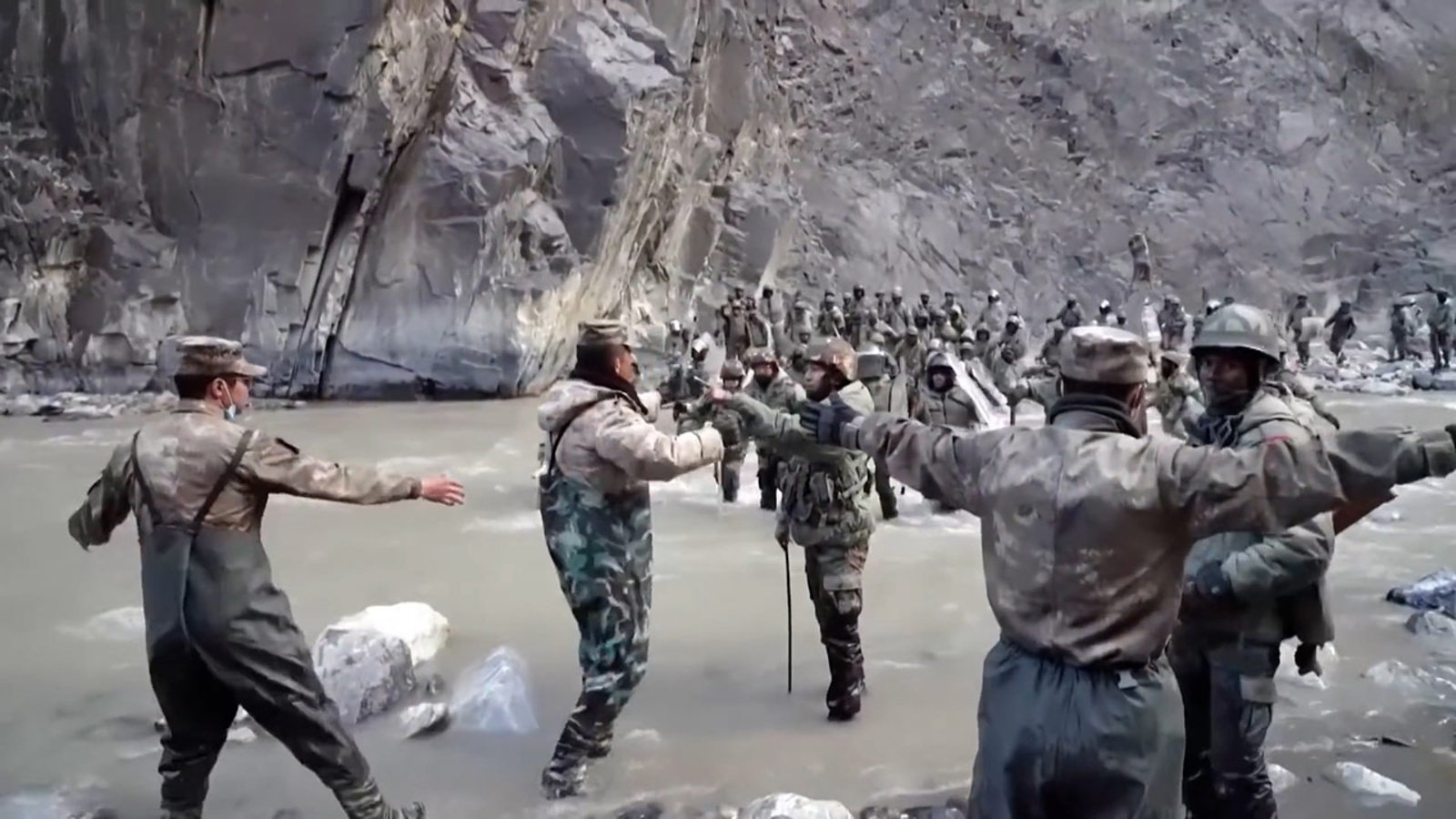
    Both nations, according to reports, now have between 50,000 to 60,000 troops deployed along the LAC in Ladakh.

    The last couple of years, in particular, have seen the world torn apart by both the Covid-19 catastrophe and the emergence of a new Cold War. Nations have been pursuing their own selfish agendas on the global stage unmindful of the uncalled-for destruction of weaker societies with misery and turmoil being inflicted on the hapless. After Russia’s invasion of Ukraine eight months ago, a conflict which threatens to escalate into a nuclear dimension, the world is yet to see any signs of a resolution. India, which is located in easily one of the world’s most geopolitically stressed regions, has its own share of diverse challenges, threatening its security and well-being, largely attributable to the hegemonistic and an overly assertive China.

    [powerkit_button size=”lg” style=”info” block=”true” url=”https://www.asianage.com/opinion/columnists/111022/kamal-davar-time-to-be-firm-tackling-dragon-on-lac-standoff-human-rights.html” target=”_blank” nofollow=”false”]
    Read more
    [/powerkit_button]