Blog

  • India’s National River Linking Project: Will it work or end up a Disaster?

    India’s National River Linking Project: Will it work or end up a Disaster?

    In October, India’s ambitious scheme to build a 230-kilometre canal between the Ken and Betwa rivers was finally approved. It’s the first of many projects planned for implementation under the National River Linking Project (NRLP), which aims to connect 37 Himalayan and peninsular rivers across the country via some 3,000 reservoirs and 15,000 kilometres of dams and canals. The government has touted the NRLP, which was first mooted more than four decades ago, as the solution to drought-proofing the country. But new research suggests the US$168 billion project could actually make the drought worse. 

    – From a study by the ‘Geographical‘ – Dec 2023.


    I keep hearing that Modiji is going to unveil the often-spoken and then shelved Rivers Link Up Scheme as his grand vision to enrich the farmers and unite India. In a country where almost two-thirds of the agricultural acreage is rainfed, water is wealth. Telangana has shown the way. Once India’s driest region has in just eight years been transformed into another granary of India. Three years ago, he had promised to double farmers’ incomes by 2022, and he has clearly failed. He now needs a big stunt. With elections due in 2024, he doesn’t even have to show any delivery. A promise will do for now.

    This is also a Sangh Parivar favourite, and I am quite sure the nation will once again set out to undertake history’s greatest civil engineering project by seeking to link all our major rivers. It will irretrievably change India. If it works, it will bring water to almost every parched inch of land and just about every parched throat in the land.

    On the other hand, if it doesn’t work, Indian civilization as it exists even now might then be headed the way of the Indus Valley or Mesopotamian civilizations destroyed by a vengeful nature, for interfering with nature is also a two-edged sword. If the Aswan High Dam turned the ravaging Nile into a saviour, the constant diversion of the rivers feeding Lake Baikal have turned it into a fast-receding and highly polluted inland sea, ranking it as one of the world’s greatest ecological disasters. Even in the USA, though the dams across the mighty Colorado have turned it into a ditch when it enters Mexico, California is still starved for water.

    I am not competent to comment on these matters, and I will leave this debate for the technically competent and our perennial ecological Pooh-Bahs. But the lack of this very debate is cause for concern. It is true that the idea of linking up our rivers has been afloat for a long time. Sir Arthur Cotton was the first to propose it in the 1800’s. The late KL Rao, considered by many to be an outstanding irrigation engineer and a former Union Minister for Irrigation, revived this proposal in the late 60’s by suggesting the linking of the Ganges and Cauvery rivers. It was followed in 1977 by the more elaborate and gargantuan concept of garland canals linking the major rivers, thought up by a former airline pilot, Captain Dinshaw Dastur. Morarji Desai was an enthusiastic supporter of this plan.

    The return of Indira Gandhi in 1980 sent the idea back into dormancy, where it lay all these years, till President APJ Abdul Kalam revived it on the eve of the Independence Day address to the nation in 2002. It is well known that Presidents of India only read out what the Prime Ministers give them, and hence, the ownership title of Captain Dastur’s original idea clearly was vested with Atal Behari Vajpayee.

    India’s acute water problem is widely known. Over sixty per cent of our cropped areas are still rain-fed, much too abjectly dependent on the vagaries of the monsoon. The high incidence of poverty in certain regions largely coincides with the source of irrigation, clearly suggesting that water for irrigation is integral to the elimination of poverty. In 1950-51, when Jawaharlal Nehru embarked on the great expansion of irrigation by building the “temples of modern India” by laying great dams across our rivers at places like Bhakra Nangal, Damodar Valley and Nagarjunasagar, only 17.4% or 21 million hectares of the cropped area of 133 million hectares was irrigated. That figure rose to almost 35% by the late 80s, and much of this was a consequence of the huge investment by the government in irrigation, amounting to almost Rs. 50,000 crores.

    Ironically enough, this also coincided with the period when water and land revenue rates began to steeply decline to reach today’s zero level. Like in the case of power, it seems that once the activity ceased to be profitable to the State, investment too tapered off.

    The scheme is humongous. It will link the Brahmaputra and Ganges with the Mahanadi, Godavari and Krishna, which in turn will connect to the Pennar and Cauvery. On the other side of the country, it will connect the Ganges, Yamuna, with the Narmada, traversing in part the supposed route of the mythical Saraswathi. This last link has many political and mystical benefits, too.

    There are many smaller links as well, such as joining the Ken and Betwa rivers in MP, the Kosi with the Gandak in UP, and the Parbati, Kalisindh and Chambal rivers in Rajasthan. The project, when completed, will consist of 30 links, with 36 dams and 10,800 km of canals diverting 174,000 million cubic meters of water. Just look at the bucks that will go into this big bang. It was estimated to cost Rs. 560,000 crores in 2002 and entail the spending of almost 2% of our GNP for the next ten years. Now, it will cost twice or more than that, but our GDP is now three times more, and it might be more affordable and, hence, more tempting to attempt.

    The order to get going with the project was the output of a Supreme Court bench made up of then Chief Justice BN Kirpal and Justices KG Balakrishnan and Arjit Pasayat, which was hearing a PIL filed by the Dravida Peravai, an obscure Tamil activist group. The learned Supreme Court sought the assistance of a Senior Advocate, Mr Ranjit Kumar, and acknowledging his advice, recorded: “The learned Amicus Curiae has drawn our attention to Entry 56 List of the 7th Schedule to the Constitution of India and contends that the interlinking of the inter-State rivers can be done by the Parliament and he further contends that even some of the States are now concerned with the phenomena of drought in one part of the country, while there is flood in other parts and disputes arising amongst the egalitarian States relating to sharing of water. He submits that not only these disputes would come to an end but also the pollution levels in the rivers will be drastically decreased, once there is sufficient water in different rivers because of their inter-linking.”

    The only problem with this formulation is that neither the learned Amicus Curiae nor the learned Supreme Court are quite so learned as to come to such sweeping conclusions.

    Feature Image Credit: geographical.co.uk

    Opinions expressed are that of the author and do not reflect TPF’s position on the issue.

  • From Global Democratisation to the Battle of World Powers? Contradictory Developments in the Present

    From Global Democratisation to the Battle of World Powers? Contradictory Developments in the Present

    Shortly after the democratic revolutions of 1989-1991, Francis Fukuyama wrote his highly influential essay on the end of history- that is, the end of violent history through global democratization.

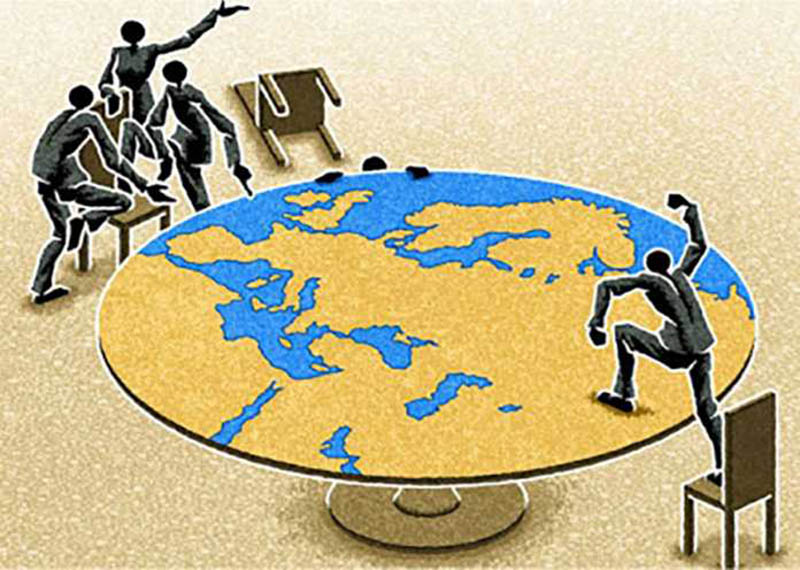
    Members of the United Nations Security Council sit during a meeting on Syria at the United Nations Headquarters in New York City, NY, U.S. April 5, 2017. REUTERS/Shannon Stapleton – RC141DE9DE00. Image credit: world101.cfr.org

    The world has changed so dramatically since the end of the Cold War that it is necessary to look back in order to understand today’s global political situation. In total, there are five different discourses that will be discussed here as representative of historical developments. They range from Fukuyama’s thesis of global democratization to various versions of coming anarchy and global (“new”) civil wars (Kaplan, Kagan, Kaldor, Münkler), Huntington’s clash of civilizations, the concept of global governance and the “rise of the others” (Zakaria, Zhang), a multipolar world of nation-states, and the re-nationalization of world politics. My central thesis is that all five discourses are present in contemporary political conflicts and that we cannot neglect any of them.

    But if you look at the history of democracy, you can almost discover a law of motion of democratic revolutions based on Hannah Arendt’s analysis of the French Revolution. It starts with a democratic revolt against a dictator or colonial rule. Then the revolutionaries become radicalized, civil war breaks out, a new, this time totalitarian ruler takes power, and only after his overthrow does democracy prevail.

    Shortly after the democratic revolutions of 1989-1991, Francis Fukuyama wrote his highly influential essay on the end of history- that is, the end of violent history through global democratization. And his thoughts were very timely. What better confirmation could there be when, in just a few years, the old dictatorships from Berlin to Vladivostok, which only called themselves communist but were not, but rather geriocracies, were swept away in a wave of democratisation. The Arab Spring seemed to confirm his thoughts, as here, too, long-standing dictatorships were overrun by democratic movements virtually overnight, as in Egypt and Tunisia. But even then, there were counter-movements that contradicted the assumed linear process of global democratization. Fukuyama, therefore, had to defend his original thesis and argue that, despite all the setbacks, democracy was still at the end of history. In a way, he was echoing Hannah Arendt’s theory of revolution. The reverses of democratization in Russia, many Arab countries, and the global civil wars have often been cited as cultural – Russia, China, and Middle Eastern Islam were still too culturally authoritarian to allow for genuine democratization. But if you look at the history of democracy, you can almost discover a law of motion of democratic revolutions based on Hannah Arendt’s analysis of the French Revolution. It starts with a democratic revolt against a dictator or colonial rule. Then the revolutionaries become radicalized, civil war breaks out, a new, this time totalitarian ruler takes power, and only after his overthrow does democracy prevail. The French overthrew their king and got the emperor, Napoleon; the Russians revolted against the czar and got Stalin; the Chinese fought against their emperor and got Mao Tse-tung; the Germans overthrew their emperor after their military defeat and got the leader Adolf Hitler. Resistance to colonial rule also often followed this law of democratic movement: the colonial rulers were driven out and replaced by new rulers.

    In the same year that the Soviet Union collapsed, the terrible civil wars in the former Yugoslavia began, the first Chechen war, followed by countless “markets of violence” and so-called new wars, which in a narrower sense were new civil wars and wars of state collapse. Mass rape became a weapon of war to demoralize the enemy, and an almost complete dissolution of the boundaries of violence took on a life of its own, seeming to make any rational resolution of conflicts impossible. Warlords, drug lords, terrorists, child soldiers, and “archaic” warriors who seemed to belong to the past dominated warfare worldwide. Against this backdrop, Western armies were transformed into intervention armies that were supposed to maintain a minimum of order on the borders of the U.S. “liberal empire” in order to prevent global anarchy (Robert Kaplan) or a “world civil war” (Enzensberger) – at least according to Western discourse. From the perspective of the countries affected by these wars of intervention, however, they were wars to maintain their immediate exploitation (especially in Africa), to keep corrupt regimes that collaborated with Western states alive (Arabian Peninsula), or to eliminate those that opposed the West (Iraq, Iran, Afghanistan). In the open spaces of violence and violent markets, high-value illegal goods were traded: Drugs, blood diamonds, human beings (women and child slaves), weapons and rare earths.

    Linked to these wars of intervention was the apparent cultural triumph of the West, which is associated with the term globalisation, but was, in fact, initially an Americanization, the so-called McDonaldization or Mac World. However, this cultural globalization of the American way of life, combined with U.S. wars of intervention, led to a backlash as many societies saw their cultural identity threatened. Taken together, these two factors triggered Samuel Huntington’s concept of the clash of civilizations.

    In their liberal hubris, his Western critics argued that there could be no clash of civilizations because only the West had produced a civilization – the others were religions or cultures, but not civilizations.

     His book has often been misunderstood as a guide to action for the coming war – but in fact, he had written the book to prevent that clash, and he argued for the U.S. to withdraw from small wars around the world because he saw the liberal identity of the U.S. at risk. Perhaps more importantly, he saw non-Western religions not just as cultures but as civilizations that had grown out of their respective religions. In their liberal hubris, his Western critics argued that there could be no clash of civilizations because only the West had produced a civilization – the others were religions or cultures, but not civilizations.

    While globalization initially had the effect of Americanization, in the medium term, it facilitated the “rise of the others” (Zakaria), the great empires and civilizations that had perished under European colonization and Euro-American hegemony. As a result of their initial economic success (Malaysia, Singapore, the Asian Tigers, China, India, the Pacific Rim countries), they no longer sought to imitate Western culture in order to be recognized as equals, but to develop their own identity, which they considered superior to the West. From the point of view of Western discourse, the “others” were, at best, immature children or barbarians – now the West suddenly sees itself in the role of other civilizations, seeing themselves as superior to the West. One expression of this changed self-image was Zahng Weiwei’s book China – The Civilizational State. We are now experiencing a paradoxical situation in which the West is consumed by fear of decline and the dissolution of its own sense of superiority, leading to the rise of right-wing populist and radical right-wing movements; large parts of the Asian world population are filled with hope for a better life, and the Islamic-Arab world is desperate in the face of unfulfilled promises, leading to the radicalization of young people in Islamist movements.

    The concept of global governance was invented at the beginning of the 21st century as a reaction to advancing globalization. The assumption, correct in itself, was that the absence of a democratic world state did not necessarily mean that there was no possibility of at least regulating global problems, subjecting them to rules, if not solving them. Global governance was based on the idea of cooperation between nation-states, non-governmental organizations, globally active institutions, the emerging global civil society, globally active corporations, and global players. However, the resurgence of big states has pushed global governance into the background, just like globalization itself. Some states want to reverse globalization, at least in the economic and political spheres. This applies at least to Western democracies, whose citizens often see themselves as the losers of globalization.

    The relative loss of importance of the Western states and the institutions they helped to create, such as the U.N., cannot be overlooked – the overstretched role of the U.S. as the world’s policeman is due, on the one hand, to its own lack of investment in development and education, and on the other to the rise of others.

    What we are currently experiencing is not simply a multipolar world of great powers, even if there are signs of a renaissance of great power politics. Instead, we are witnessing a contradictory process of the five discourses alluded to here: Democratization, failed states, the clash of civilizations, further globalization, and the renaissance of great power politics. The still existing, but also partly former, Global South is still dependent on cooperation, even if new forms of cooperation are emerging, such as the expansion of the BRICS, which compete politically but cooperate economically. The relative loss of importance of the Western states and the institutions they helped to create, such as the U.N., cannot be overlooked – the overstretched role of the U.S. as the world’s policeman is due, on the one hand, to its own lack of investment in development and education, and on the other to the rise of others. What remains unpredictable is whether the emerging states of the Global South and the former superpower Russia will make the same mistake as the West in its centuries-long quest for hegemony, namely, to see itself as superior to all others. Eurocentrism would be replaced by an equally problematic ethnocentrism, and a nationalist dynamic would be set in motion that would be difficult for states to control. Even if all current developments point to the contrary and we see a return of tribalism in the form of “us versus them – whoever the others are” discourses, the only option left is to revive intercultural dialogue if we do not want to experience “another bloody century” (Colin S. Gray).


    Feature Image Credit: chinausfocus.com

  • Using Artificial Intelligence to address Corruption: A proposal for Tamilnadu
    Using Artificial Intelligence to address Corruption: A proposal for Tamilnadu

    Nations must adopt Artificial Intelligence as a mechanism to build transparency, integrity, and trustworthiness, which are necessary to fight corruption. Without effective public scrutiny, the risk of money being lost to corruption and misappropriation was vast. Dr Chris Kpodar, a global Artificial Intelligence Specialist, has advocated the use of artificial intelligence as an anti-corruption tool through the redesigning of systems to address systems that were previously prone to bribery and corruption.


    Artificial Intelligence Tools

    Artificial Intelligence has become popular due to its increasing applications in many fields. Recently, IIT Madras opened a course on B.Tech Data Science in Tanzania, demonstrating the popularity of Artificial Intelligence. The history of Artificial Intelligence goes back to the 1950s when computing power was less, and hardware were huge. These days, computing power has increased exponentially along with the miniaturisation of hardware, leading to algorithms being able to compute larger datasets. The field of AI, however, has gone through ups and downs in terms of popularity.

    Researchers have worked on Neural Networks (Figure below), a mathematical model modelled after neurons in the brain, a foundation unit, and one of the foundations of state-of-the-art AI.

    Artificial intelligence (AI), machine learning, deep learning, and data science are popular terms that describe computing fields that teach a machine how to learn. AI is a catch-all term that broadly means computing systems designed to understand and replicate human intelligence. Machine Learning is a subfield of AI where algorithms are trained on datasets to make predictions or decisions without explicitly being programmed. Deep Learning is a subfield of Machine Learning, which specifically refers to using multi-layers of neural networks to learn from large datasets, mimicking cognition of the neurons in the brain. Recently, the field of AI has resurged in popularity after a popular type of neural network architecture, AlexNET, achieved impressive results in the Image Recognition Challenge in 2012. Since then, neural networks have started to enter into applications in the industry, with colossal research funding mobilised.

    Breakthroughs that can aid Policy Implementation

    There are many types of neural networks, each designed for a particular application. The recent popularity of applications like ChatGPT is due to a neural network called Language Models. Language Models are probability models which ask the question, what is the next best token to generate, given the previous token?

    Two significant breakthroughs led towards ChatGPT, including translating language from one language to another using a machine learning technique called attention mechanism. Secondly, this technique was introduced in transformer-type language models, which led to increased state-of-the-art performance in many tasks in artificial intelligence.

    Transformers, a robust neural network, was introduced in 2017 by Google Researchers in “Attention is All You Need”. This translates into generating human-like text in ChatGPT. Large language models have taken a big step in the technology landscape. As Machine Learning applications are being deployed rapidly, it calls for a governance model for these models, as research in AI models is advancing quickly with innumerable breakthroughs. Earlier in 2019, GPT-2, a Machine Learning model based on transformers, could not solve fundamental mathematical problems such as elucidating numbers from 0-100. Within a year, more advancement in the GPT models led to models being able to perform higher-level scores in SAT exams, GRE, etc. Another breakthrough advancement was the ability of machine-learning programs to generate code, which has increased developer productivity automatically.

     Moreover, many researchers are working on AGI (Artificial General Intelligence), and nobody knows precisely when such capabilities might be developed or researched. Researchers have not settled on a convincing definition of AGI agreeable to everyone in the AI research community. The rate of advancement and investment in AI research is staggering, which calls for ethical concerns and governance of these large language models. India is an emerging economy where all sectors are growing rapidly. India’s economy grows nearly 10% yearly, with the services sector making up almost 50% of the entire economy. This translates to the government enjoying high tax revenues from this sector, generating high-paying jobs. Most of the Indian workforce is employed in the industrial and agricultural sectors.

    Using AI to deal with Corruption and enhance Trust

    The primary issue in India has been corruption at all levels of the government, from the panchayat, district level, and state level to central machinery. Corruption is attributed mainly to regulation, rent-seeking behaviour, lack of accountability, and requiring permits from the Government. Indian bureaucratic system and government employees are among the least efficient across sectors such as infrastructure, real estate, metal & mining, aerospace & defence, power and utility, which are also most susceptible to corruption. Due to inefficiency, the productivity of the public sector is low, impacting the local Indian economy.

    India ranks 85 out of 180 countries using the Corruption Index measured in 2022, with close to 62% of Indians encountering corruption, paying bribes to government officials to get the job done. There are many reasons for corruption in India: excessive regulation, a complicated tax system, bureaucratic hurdles, lack of ownership of work, and the public sector being the least productive organisation. Corruption is dishonest or fraudulent conduct by those in power, typically involving bribery. Bribery is defined generally as corrupt solicitation, acceptance, or transfer of value in exchange for official action. In bribery, there are two actors in the transaction, the giver and the receiver; however, corruption involves primarily one actor who abuses the position of power for personal gain. Bribery is a singular act, while corruption might be an ongoing abuse of power to benefit oneself.

    Trust is a critical glue in financial transactions; where trust between individuals is higher, the economic transactions are faster, and the economy grows, with more businesses moving, bringing capital, and increasing the production and exchange of goods. However, when trust is low, businesses hesitate, and the economy either stagnates or declines. High-trust societies like Norway have advanced financial systems, where credit and financial instruments are more developed, compared with lower-trust societies such as Kenya and India, where many financial instruments and capital markets to raise finances are unavailable. Therefore, public policymakers must seek ways to increase trust in their local economies by forming policies conducive to business transactions.

    The real-estate sector in Tamilnadu: a fit case for the use of AI

    Tamil Nadu is India’s second-largest economy and is the most industrialised and urbanised state in India. Real estate is an economic growth engine and a prime mover of monetary transactions. It is a prime financial asset for most Tamils from many social strata. However, real estate in Tamil Nadu is prone to corruption at many levels. One specific popular method is the forgery of land registration documents, which has resulted in a lack of trust among investors at all levels in Tamil Nadu.

    To address this lack of trust, we can use technology tools to increase confidence and empower the public to create an environment of accountability, resulting in greater confidence. Machine Learning can provide algorithms to detect these forgeries and prevent land grabbing. Tools such as identity analysis, document analysis, and transaction pattern analysis can help to provide more accountability. In addition to the above, machine learning offers many methods or combinations of methods that can be used. One advanced way is using transformer-based models, which are the foundation for language models such as BERT and generative Pre-Trained Models for text-based applications. The original documents could be trained using large language models as a baseline to frequently check and find forgeries. Documents can be encoded to compare semantic anomalies between different types of documents.

    Once forgery is detected, it can be automatically sent to civil magistrates or pertinent authorities. Additionally, the recent introduction of Software repository sites allows the public to be informed or notice any change in the status or activity. Customised public repositories based on GitHub might create immense value for Tamil Nadu’s Department of Revenue, create accountability, increase productivity and reduce workload. The Customised public repositories displaying land transaction activity might inform the public of such forgeries, thus creating an environment of greater accountability and trust for the people. Another popular method can be introduced by introducing Computer Vision Algorithms, such as convolutional neural networks combined with BERT, that can validate signatures, document tampering, and time-frames to flag forgeries. This can be done by training original documents with specific algorithms and checking documents with reasonable doubts about forgery.

    Another primary concern in Tamil Nadu’s Government has been people in positions of power in the government or close to financial oversight. They are more prone to corruption, which can be flagged or monitored using graph neural networks, which can map individuals, connections, and economic transactions in a network to flag which individuals are more likely or prone to corruption. Another method to reduce corruption is to remove personal discretion in the process, which Machine Learning can enable to automate the tasks and documents in land registration; digitisation might help reduce corruption. Large Language Models can also be used as classifiers and released to the public to keep accountability on the Tamil Nadu Government’s spending, so the public is aware and personal gain of Government money can be further reduced this way. Another central area of corruption is the tender, the bidding process for government contracts in Tamil Nadu, such as public development works or engineering projects. Tamil Nadu’s tender or bidding process can be made more public, and machine learning algorithms can be used to check if norms, contracts, and procedures are followed to award tender bids for government projects. To save wasteful expenditure, algorithms can check if objective conditions are met, with any deviations flagged and in the public domain. Given any suspicion, the public can file a PIL in Tamil Nadu’s court system.

    We can argue and conclude that with more deployed machine learning tools being part of Tamil Nadu’s State machinery, we can confidently say that corruption can be reduced to more significant levels by releasing all information to the public and creating an environment of greater accountability.

    References:

    1. Russell, Stuart J.; Norvig, Peter. (2021). Artificial Intelligence: A Modern Approach

    2.Bau, D., Elhussein, M., Ford, J. B., Nwanganga, H., & Sühr, T. (n.d.). Governance of AI models. Managing AI risks. https://managing-ai-risks.com/

    1. S. Department of State. (2021). 2021 Country Reports on Human Rights Practices: India. U.S. Department of State. https://www.state.gov/reports/2021-country-reports-on-human-rights-practices/india/
    1. Devlin, J., Chang, M.-W., Lee, K., & Toutanova, K. (2019). BERT: Pre-training of deep bidirectional transformers for language understanding. In Proceedings of NAACL-HLT (pp. 4171-4186). https://arxiv.org/abs/1810.04805
    1. Radford, A., Wu, J., Child, R., Luan, D., Amodei, D., & Sutskever, I. (2019). Language models are unsupervised multitask learners. OpenAI blog, 1(8). https://openai.com/blog/better-language-models/
    1. Radford, A., Narasimhan, K., Salimans, T., & Sutskever, I. (2018). Improving language understanding by generative pre-training. OpenAI blog, 12. https://openai.com/blog/language-unsupervised/
    2. Bai, Y., Kadavath, S., Kundu, S., Askell, A., Kernion, J., Jones, A., … Kaplan, J. (2022). Constitutional AI: Harmlessness from AI feedback. arXiv preprint arXiv:2212.08073. https://arxiv.org/pdf/2212.08073.pdf,

    https://www.anthropic.com/news/constitutional-ai-harmlessness-from-ai-feedback

    1. Reinforcement Learning with Human Feedback (RLHF), Ouyang, L., Wu, J., Jiang, X., Almeida, D., Wainwright, C. L., Mishkin, P., Zhang, C., Agarwal, S., Slama, K., Ray, A., Schulman, J., Hilton, J., Kelton, F., Miller, L., Simens, M., Askell, A., Welinder, P., Christiano, P., Leike, J., & Lowe, R. (2022). Training language models to follow instructions with human feedback. arXiv preprint arXiv:2203.02155. https://arxiv.org/abs/2203.02155

    Feature Image: modernghana.com

  • Electoral bonds: No solution to illegal political funding

    Electoral bonds: No solution to illegal political funding

    How do donations via electoral bonds funded by legal or illegal money help curb undue influence on policy makers? Electoral bonds provide an additional of such funds

    THE Union Government initiated the Electoral Bonds scheme, which was announced in the Union Budget 2017–18, on January 2, 2018. The aim was “to cleanse the system of political funding in the country”. While many other issues are also germane, the moot question is will this goal be achieved.

    These are bearer bonds that private entities can buy from a designated bank (presently the State Bank of India) and donate them to a political party. They are supposedly an anonymous way of donating funds to political parties, since the identity of the donor is not disclosed. The bonds become available around the time of elections, presumably to provide ‘legitimate’ funds to political parties.

    Data shows that most of the funds go to the ruling party and help them consolidate their hold over power.


    Read more…

  • Houthi’s attacks in the Red Sea: What does this mean for the world?

    Houthi’s attacks in the Red Sea: What does this mean for the world?

    The Houthis started in the 1990s as an armed group in Yemen, fighting against corruption. They belong to a community called Zaidis, who are a part of the Shia-Muslim minority. Along with Hamas and Hezbollah, the Houthis have declared themselves to be a part of the Iranian-led “axis of resistance” against Israel, the US, and the larger West.1 The Houthis have been attacking commercial ships passing through the lower Red Sea, and this has dramatically increased since mid-November in retaliation to Israel’s bombardment of Gaza. Due to these events, the Red Sea trade route is significantly affected, impacting the flow of global trade and having the potential to cause further damage. With ships attacked and stranded in one of the leading shipping routes of the world, countries seem to find themselves in yet another geopolitical fix. As the war continues between Israel and Gaza, the Red Sea has become a renewed hotspot for geopolitical and military tensions.

    Situated between Africa and West Asia, the Red Sea is a seawater entrance to the Indian Ocean in the south and goes through the Gulf of Aden and the Bab El Mandeb Strait, meeting the Gulf of Suez in the north. Countries like the US, France, Japan, and China have military bases in the region, including in Djibouti and many along the Horn of Africa, with considerable deployment of ships, weapons, and personnel. Establishing such bases conveys how critical it is to have control of the area as a measure of regional power and as a way of asserting their dominance internationally. Big players, including the Cold War rivals, have long struggled to gain presence and influence in West Asia. Having a military and economic presence in Africa with proximity to the Red Sea was necessary, for it provides access to almost 12% of the world’s trade, including nearly 40% of the trade between Europe and Asia.

    Until recently, the Houthis had been targeting ships heading towards Israel or ones that Israelis owned. However, recent developments showing attacks on ships bound for Israel with flags of various countries have raised grave concerns for global trade and security in the immediate future. The US, along with countries like the UK, France, and Bahrain, have tried to stop Houthi attacks on ships passing through the Red Sea under what Washington calls the “Operation Prosperity Guardian”. On the first day of the new year, The US military released a statement conveying that they killed at least 10 Houthi rebels and sabotaged three Houthi ships. Although the US was successful in deterring the Houthis from their attempt to attack, it did not do much to stop the group from being involved in disrupting peaceful navigation through the Red Sea.

    Private shipping companies such as Maersk, CMA CGM, Hapag-Lloyd, and MSC have begun to avoid using the Red Sea route due to the imminent threat from Houthis.3  The ongoing supply chain disruption caused by the COVID-19 pandemic and Russia’s invasion of Ukraine could further escalate due to the Red Sea crisis and cause severe concerns for world trade and consumer goods supply. With the suspension of trade via the Suez Canal, traffic through the Red Sea has dropped by 35%.4  The Houthis have raised the shipping cost internationally, imposing additional costs on commerce when trouble at the Panama Canal due to low water levels has already made shipping more complicated and central banks worry about a new inflationary spike. While trade hasn’t wholly stopped, most ships can choose the longer but safer route around Africa through the Cape of Good Hope to reach Europe and Asia from either side. This option imposes significant costs on shipping and, therefore, to consumers and affects local states in the region if the Houthi “blockade” persists. In the worst-case scenario, crude oil prices would rise in 2024 if oil shipments through the canal were stopped entirely, and this could cause a significant disturbance.

    Image Credit: washingtoninstitute.org

    Surprisingly, though, Russian ships have enjoyed free navigation through the Red Sea. Russian ships travel to Asia through the Black Sea, connecting to the Mediterranean Sea, passing through the Suez Canal and the Red Sea, and joining the Indian Ocean. With sanctions from Europe and the US amid the war in Ukraine, Russia cannot afford to lose its markets in Asia, particularly India and China, since these two countries buy almost 90% of Russia’s oil exports.5  The free navigation of Russian ships could possibly be due to its close relationship with Iran or due to the adoption of a similar stance with the Houthis on the war between Israel and Gaza. In the unlikely scenario that Russia does not have access to the Red Sea, it leaves them with the only other option of travelling through the Cape of Good Hope, adding 8,900 kilometres with an additional two weeks of travel. Such delays in oil shipments and a highly possible hike in price may prompt countries like India and China to start looking for other alternatives to their oil requirement, given the pre-existing energy crisis. Most probable alternatives include Saudi Arabia and other Gulf countries that do not need to pass the Red Sea to reach the Indian Ocean and thus Asian markets since they have ports in the Persian Gulf with access to the Arabian Sea.

    The disruption in trade has caused an impact on Indian imports and exports as well. Indian exports traverse the Indian Ocean and reach the Suez Canal through the Arabian Sea to reach European markets. Trade between India and Europe has been rising, at an all-time high in 2022, with goods traded worth $130 Billion.6   As of 2021, India engaged in trade worth $200 Billion through the Suez Canal, making the EU one of India’s main export destinations, with a Free trade agreement in the talks.7  India also procures its oil from Russia using the Suez Canal and the Red Sea. A slowdown or possible pause of oil imports may cause severe concerns amid the ongoing energy crisis. At such a juncture for the Indian economy, if the situation persists, trade will likely take a hit along with India’s domestic economy. If the condition fails to change decisively, the higher fees and the expense of prolonged travel duration will also put inflationary pressure on the global economy and India.

    The Houthis will most likely continue to put pressure on Israel to stop its onslaught in Gaza, and they are likely to keep attacking until they reach their goal. By taking control of the Red Sea and indirectly and directly hurting countries irrespective of their size and power, Houthis pressurize the international community to, in turn, put pressure on Israel. This also means that the group is unlikely to agree on any other way of settlement. Not only does this fall on Israel to stop their attacks but also on the US since the latter has always portrayed itself as a peace negotiator in the Middle East and, therefore, has the responsibility to restore order in the region. The Houthis possess a plethora of Iranian-supplied weaponry, ranging from precision drones to anti-ship cruise and ballistic missiles that can strike a moving vessel hundreds of kilometres away. What makes the Houthis more dangerous is the enormous stockpile that can help them continue their campaign indefinitely.

    The attacks have also prompted an unanticipated return of Somali piracy in international seas. As a result, increased expenses are now a worry for merchant shipping lines and seafarer safety for governments worldwide. The ship Lila Norfolk, under the Liberian flag and carrying six Filipinos and fifteen Indians, was taken over by Somali pirates on January 4th, 2024. The Indian navy had already deployed four warships patrolling the Indian Ocean, including INS Chennai, which was involved in the rescue operation during the recent highjack of ship Lila Norfolk. Even though the Indian Navy’s intervention allowed for the sailors’ rescue, it caused further concerns for India’s security and economy. The spill over of these attacks onto the Indian Ocean may threaten India’s security.

    Countries must monitor developments in the Red Sea and, for India, the Indian Ocean. Although India has not joined any Western-led operations on this matter, the country must push the international community to ensure freedom of navigation and the territorial integrity of countries over their sea is upheld under the UN Convention on the Law of the Seas.


    References

    [1] Who are the Houthi rebels and why are they attacking Red Sea ships? (2023, December 23). BBC News. https://www.bbc.com/news/world-middle-east-67614911

    [2] Yerushalmy, J. (2023, December 19). Red Sea crisis explained: what is happening and what does it mean for global trade? The Guardian.

    [3] A new Suez crisis threatens the world economy. (2023, December 16). The Economist. https://www.economist.com/international/2023/12/16/a-new-suez-crisis-threatens-the-world-economy

    [4] Graham, R., Murray, B., & Longley, A. (2023, December 19). Houthi Red Sea Attacks Start Shutting Down Merchant Shipping. Bloomberg.com. https://www.bloomberg.com/news/articles/2023-12-18/houthi-attacks-start-shutting-down-red-sea-merchant-shipping

    [5] Russia: crude oil shipments by destination 2023 | Statista. (2023, September 14). Statista. https://www.statista.com/statistics/1350506/russia-crude-oil-shipments-by-destination/

    [6] I. (n.d.). First India-EU Trade and Technology Council: Significant Milestone in India-EU Relations – Indian Council of World Affairs (Government of India). https://www.icwa.in/show_content.php?lang=1&level=3&ls_id=9416&lid=6112#:~:text=The%20EU%20is%20India’s%202nd,EU%20total%20trade%20in%20goods.

    [7] Ibid.


    Feature Image Credit: dailynewsegypt.com

  • The Indian Military: Five Issues for the immediate Future

    The Indian Military: Five Issues for the immediate Future

    While much has happened in 2023, new developments in the security dynamic warrant a relook at the transformation process. India now has to be prepared to prosecute both short and prolonged wars. Clearly defined political aims must be translated into achievable military objectives on the borders.

    2023 was an eventful year. In addition to ongoing conflicts in Africa, Afghanistan, Syria and Ukraine, it witnessed the start of yet another war in the Gaza Strip, which by early 2024 had expanded across West Asia. The Red Sea region is witnessing duels between the Houthis and the West. Israel and Hezbollah are skirmishing in Lebanon. Iran has carried out strikes in Iraq and Syria. The US has blamed Iranian proxies for causing the deaths of its service personnel in Jordan and retaliated accordingly across Iraq and Syria. Iran and Pakistan have carried out tit-for-tat missile strikes. While conflicts such as Nagorno Karabakh have ended for now, other potential trouble spots in the Balkans and South and East China Seas continue to make headlines.

    This uncertain security environment has put trade, supply chains and, in some cases, national sovereignty at risk. At home, long-festering structural issues in the India-China relationship have come to a head. China’s belligerence is on full display along our Northern borders even as it makes further inroads in Bhutan, Bangladesh, Nepal and Sri Lanka. In 2024, Maldives has displayed a pronounced anti-India tilt. Pakistan’s intractability and support for terrorism, despite its precarious internal situation and volatile borders on its West, remains a cause for concern. In Myanmar, the civil war rages on, while the outcome of ethno-religious conflict, which has spilled across international borders in Manipur and Mizoram, poses a different challenge.

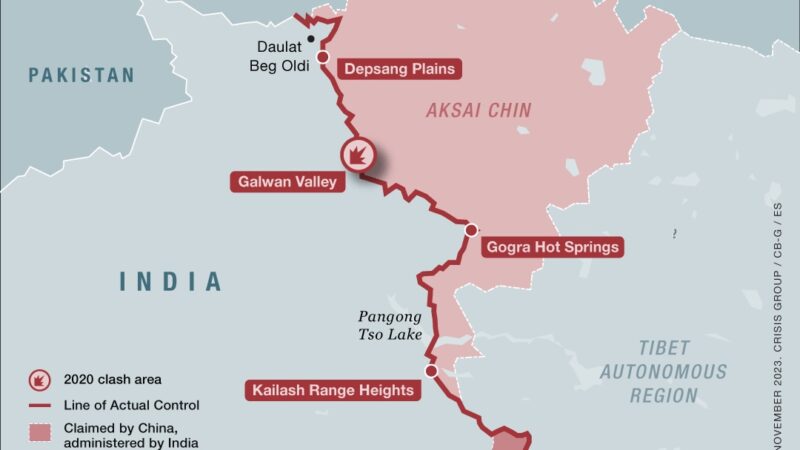
    Despite 20 rounds of Corps Commanders talks, the Army is completing its fourth winter of ‘mirror deployment’ along the Line of Actual Control (LAC). Small-scale operations at the LAC have continued at least till 2022, as citations for gallantry in respect of individual soldiers on Republic Day indicate. The Chief of Army Staff (COAS) announced in his annual press conference in January that there will be no reduction in troop levels until the return to the ‘status quo ante as of mid-2020. Concurrently, the Army continues to battle terrorists on both sides of the Pir Panjal ranges in Jammu and Kashmir. The Air Force remains highly alert even as the Navy is committed full time in the Western Arabian Sea and East coast of Africa, successfully protecting Indian shipping ( and ships of other nations) from piracy and other threats. In sum, the Indian military is committed to ensuring the nation’s security full-time.

    The Indian Army had labelled 2023 as its ‘Year of Transformation’, based on the five pillars of Force Structuring & Optimisation, Modernisation & Technology Infusion, Systems, Processes & Functions, Human Resource Management and Jointness & Integration. The Ministry of Defence (MoD), in its 2023 Year End Review, has listed various proposals totalling over Rs 3.50 lakh crores that were approved to enhance operational preparedness. These cover a wide range of equipment and upgrades – from procurement of light combat helicopters to indigenous upgradation of Su-30 MKI aircraft, purchase of medium-range anti-ship missiles for the Navy and acquisition of towed gun systems for the Army. Other notable items are procurement of Sea/ Sky Guardian drones (31 of these since approved for sale by the US State Department in February 2024), utility helicopters, light armoured multi-purpose vehicles, anti-tank guided missiles (ATGMs), Very Short Range Air Defence Systems (VSHORAD) and cadet training ships. Improvements in other spheres – progress towards Atmanirbharta, indigenisation, border infrastructure, roads, induction and career management of women, and welfare of veterans- have also been covered. The individual services have also listed their achievements in enhancing operational capabilities and overall efficiency.

    While much has happened in 2023, new developments in the security dynamic warrant a relook at the transformation process. India now has to be prepared to prosecute both short and prolonged wars. Clearly defined political aims must be translated into achievable military objectives on the borders. The nature of these conflicts will be difficult to determine. With elements of both the conventional and non-conventional employment of weapon systems across all five domains with simultaneous conduct of information operations, they will be genuinely hybrid and constantly mutating, based on whichever element achieves more significant success.

    As a first step, it becomes necessary to incorporate fresh thought and prepare a fully fleshed-out tri-service Indian military doctrine. The integrated doctrine issued by the Integrated Defence Staff (IDS) in 2017 requires review to incorporate analysis and lessons learnt from Nagorno Karabakh, Ukraine, Gaza and our current experiences on the Northern borders, with the ‘collusive threat’ now a reality. Given that doctrine is essentially a set of principles that tells us ‘how to do’, i.e. how to achieve desired effects and not specifically ‘what to do’, capability development logically flows from doctrine analysis. Here, there has to be a consensus between the services on capabilities necessary to fulfil the military’s mandate – new platforms or technology, organisational issues, enhancement of joint or single service logistic capability, training and human resource aspects or upgrades.

    For the short to medium term, increasing focus on new technology must be balanced with the capacity to absorb technology and the context in which such weapons are envisaged to be employed. While incorporation of  AI, quantum computing, electronic warfare, stealth technology, space warfare and the like will be very much on the cards, all these can truly be incorporated once there is greater clarity and broader consensus upon two issues – what is the right weapon mix for a country like India to have, in terms of the proportion of latest generation weapons vis a vis what remains in the inventory and can be employed effectively now and in the immediate future, to thwart the enemy’s perceived designs? This is especially important when we look at the options available to incorporate new technology in terms of the time required for indigenous self-development and the secretive mindset of foreign suppliers with respect to sharing the intricacies of technologies that power such costly weapon systems. Secondly, a holistic consideration of the number of technologies that need to be developed in this time frame as part of capability development becomes necessary when we analyse the weapon/capability mix required to defend against an attacker – including one whose political and military objectives at the start of a conflict remain opaque, and whose capabilities and pattern of operations are possibly more overhyped than actual.

    The above issues become even more relevant when we look at the allocations for defence in the interim budget presented in Parliament on 01 February this year. Detailed analyses on the defence aspect will likely be published in days to come. In the context of this article, just two examples are highlighted. First, the 30 per cent higher allocation for Border Roads is hugely appropriate as it fits into future planning and enhances capability and capacities. Second, the deployment of the budget of Rs 23,855 crores to the DRDO and planned funding of a Rs 1 Lakh crore corpus for R&D projects, including ‘deep defence’ technology, while a positive step, must be carefully thought out, based on the aspects highlighted in the preceding paragraphs.Industry start-ups are doing a valuable job introducing the latest generation of weapons and technology to the military in concert with organisations like the Army Design Bureau. The incorporation of new technology and subsequent production of new weapons will be predicated on answers to these issues.

    Organisational aspects are another area for the military’s focus in 2024. Work on integrated theatre commands continues and will surely see the light of day. Notwithstanding the non-availability of a National Security Strategy, the Integrated Defence Staff (IDS) has to list out with absolute clarity what the mission of each theatre command is, in synchronicity with national aims. How to ensure optimal efficiency of these integrated resources for mission accomplishment has to be carefully thought out through multiple iterations with all stakeholders. This will have to be subject to rigorous validation in several tabletop and ground variety exercises to arrive at a common and operationally validated solution.

    Human resource issues will compete equally for the military’s attention. The Agniveer experiment has completed a little over one year. The performance of these soldiers in operations has been on par with their counterparts of yesteryears (of the same seniority). However, it is their performance in garrison soldiering that is yet to be fully gauged. As mentioned by the COAS, their assessment at multiple levels has to be continuously finetuned to remove any traces of subjectivity. Close monitoring of this scheme is necessary before pronouncing judgement on its success or otherwise, specifically its impact on regimental ethos and overall effect on unit efficiency. Employment of increasing numbers of woman Agniveers and woman officer intakes is another area which will occupy the minds of Commanding Officers (COs) of the three services. The recent decision of the Karnataka High Court in January 2024 striking down the provision of the Indian Military Nursing Services Ordinance 1943, which gives 100% reservation for women in nursing officer posts, is another spinoff in the battle for gender equality. This lends further urgency to the need to evolve an Indian model for the successful integration of women into the armed forces. Gender sensitisation of both sexes in uniform is of utmost priority.

    Managing high quality men and women drawn from all corners of India mandates a high degree of personal and professional integrity, sense of balance, and strength of character in military leaders at every level, specially so in an era where misinformed (or deliberate) inputs on social media can wreak havoc in society.

    Finally, as always, the military has to continue focusing on reinforcing institutional values. All militaries are dynamic. They must be nurtured and motivated by caring, professional and impartial leadership. A quote attributed to Sir Winston Churchill in his address to the House of Commons in 1923 says ‘…the armed forces.. are living things, if they are bullied, they sulk, if they are unhappy, they pine, if they are harried, sufficiently they get feverish, if they are sufficiently disturbed, they will wither and dwindle and almost die…’.Preserving the health of their respective services along with enhanced operational preparedness is the foremost task of the service chiefs. This comes about by careful selection of higher leadership, strict adherence to the culture, ethics and norms of the Indian military while forswearing all else at the altar of professionalism. Managing high quality men and women drawn from all corners of India mandates a high degree of personal and professional integrity, sense of balance, and strength of character in military leaders at every level, specially so in an era where misinformed (or deliberate) inputs on social media can wreak havoc in society. The responsibility of the Chiefs in this regard is onerous indeed and cannot be overemphasised. All else follows from this.

    Feature Image Credit: scroll.in

  • Kamal Davar | Raging turmoil in Myanmar poses security threat to India’s Northeast

    Kamal Davar | Raging turmoil in Myanmar poses security threat to India’s Northeast

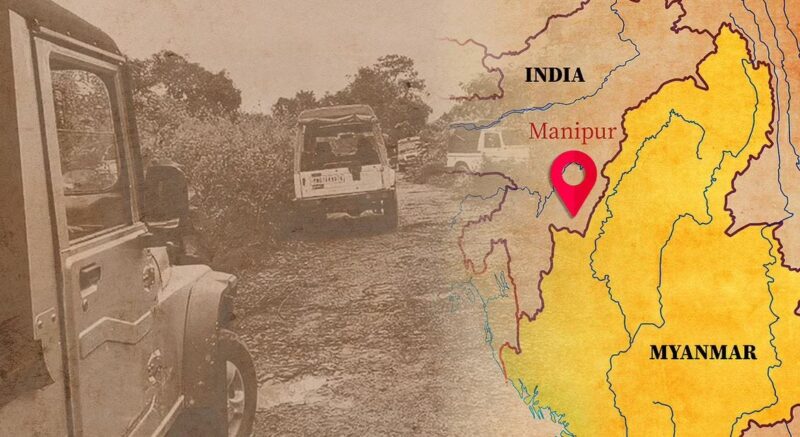
    The turmoil in neighbouring Myanmar that is almost turning into a civil war has prompted the Government of India to decide that the country’s border with Myanmar will be covered by barbed fencing, much like the India-Bangladesh border. The states of Arunachal Pradesh, Nagaland, Manipur and Mizoram share a 1,643-km border with Myanmar. There is also a rethink on the free movement agreement with Myanmar that allows people living 16 km on either side unfettered cross-border movement on the production of border passes. The fierce fighting raging in Myanmar has led to deep security concerns in India, besides the large influx of refugees, which will be a natural outcome of this turmoil.

    India’s Northeast, often regarded as a “distant frontier” is also described in the government’s Vision Document 2020 as a “rainbow country”. It is surrounded by Bangladesh, Bhutan, China, Nepal and Myanmar. It includes the “seven sisters” — Arunachal Pradesh, Assam, Manipur, Meghalaya, Mizoram, Nagaland and Tripura. Sikkim too is seen as a part of this region. It has wide disparity in cultures, customs, languages and traditions. A host of geopolitical, historical, political and social conflicts have afflicted this region for years and posed both external and internal security challenges to this country. Geographically distant and economic disparities have further widened the chasm between the Northeast with the rest of India.


    Read more…

  • Foreign Policy through the Prism of Hindsight

    Foreign Policy through the Prism of Hindsight

    It goes without saying that at one time or the other we have all been victims of that old adage “20/20 hindsight”– the ability to clearlypick holes on past choices! Incidentally, the phrase was first used in 1962, when the British aeronautical journal, Flight International, noted the newest expression in the US air transport business– namely, 20/20 hindsight”. While hindsight is a wonderful prism to critique the past, we cannot ignore the fact that inevitably, every choice is predicated on the situation being faced and the consequences of earlier choices. Moreover, it’s worth remembering that in choosing, as American lawyer and politician Joe Andrews so aptly put it, “the hardest decisions in life are not between good and bad or right and wrong, but between two goods or two rights”, which in some cases may well be choosing the lesser evil. Of course, it also goes without saying that the choices we make are to a great extent intrinsically moulded by our personalities, life experiences, ideological beliefs and preferences, and ‘primordial biases’.


    Read more…

  • What the Global Economy and Security Require

    What the Global Economy and Security Require

    With the new year 2024 well underway, the world is afflicted with wars, economic challenges, and the larger issues of climate change impact that threaten the very survival of the planet. It is paradoxical to see that great powers are still focused on competition and conflict. The year ahead portends continued conflicts, wars, and the weaponisation of economic infrastructures, demonstrated by Israel’s genocidal war against the Palestinians. Carla Norrlof highlights the increase in geopolitical conflicts and the complex relationship between economics and security. The article, like most Western academics, looks from the American perspective. and may miss the larger worldview.

    – Team TPF

    This article was published earlier in Project Syndicate.


    If America and its allies are to maximize both security and prosperity in the coming years, policymakers and strategists will have to understand the complex interplay of forces that is making the world more adversarial and fraught with risk. The global environment demands a comprehensive new economic-security agenda. The global order is undergoing significant changes that demand a new economic-security agenda.

    From hot wars and localized insurgencies to great-power standoffs, geopolitical conflict has made the complex relationship between economics and security a daily concern for ordinary people everywhere. Complicating matters even more is the fact that emerging markets are gaining economic clout and directly challenging traditional powers’ longstanding dominance through new networks and strategic alliances.

    These developments alone would have made this a tumultuous period marked by economic instability, inflation, and supply-chain disruptions. But one also must account for rapid technological advances – which have introduced new security risks (such as arms races and cyber threats) – as well as natural risks such as pandemics and climate change.

    To navigate this dangerous new world, we must reckon with three interrelated dimensions: the effects of geopolitics on the global economy; the influence of global economic relations on national security; and the relationship between global economic competition and overall prosperity.

    Each pathway sheds light on the multifaceted interplay between economics and security. We will need to understand all of them if we are to tackle the varied and complex challenges presented by our highly interconnected global system.

    As recent years have shown, geopolitics can profoundly affect the global economy, reshaping trade, investment flows, and policies sometimes almost overnight. Aside from their devastating human toll, wars like the Russian invasion of Ukraine and Israel’s campaign in Gaza often reverberate far beyond the immediate theater of conflict.

    For example, Western-led sanctions on Russia, and the disruption of Ukrainian grain exports through the Black Sea, caused energy and food prices to soar, resulting in supply insecurity and inflation on a global scale. Moreover, China has deepened its economic relationship with Russia following the mass exodus of Western firms in 2022 and 2023.

    Similarly, Israel’s bombing of Gaza has destabilized the entire Middle East, especially tourism-dependent neighbouring countries such as Egypt, Jordan, and Lebanon. Meanwhile, Yemeni Houthi rebels, long supplied by Iran, have been attacking cargo ships in the Red Sea, leading international shipping firms to suspend or adjust their routes and directly impeding trade through the Suez Canal – a major artery of global commerce.

    We are witnessing the destabilizing effects of natural threats as well. The COVID-19 pandemic drove a massive shift away from cost-effective “just-in-time” supply chains to a “just-in-case” model aimed at strengthening resilience during disruptions. And, more recently, an El Niño-induced drought has diminished the capacity of the Panama Canal – another major artery of global commerce. Whether for geopolitical or ecological reasons, rerouting around these new bottlenecks inevitably increases shipping costs, causes delivery delays, disrupts global supply chains, and creates inflationary pressure.

    Turning to the second dimension – the implications of global economic relations for national security – it is clear that countries will be more likely to adopt bold or aggressive security policies if they already have a web of economic ties that can either attract support or dampen opposition. China, for example, is counting on economically dependent countries within its Belt and Road Initiative to accept its political influence and longer-term bid for hegemony. Many countries also now rely on China for critical defence-related supply-chain components, which leaves them vulnerable diplomatically and militarily.

    More broadly, global connectivity, in the form of economic networks and infrastructure, is increasingly being weaponized for geopolitical ends. As Russia’s war on Ukraine shows, economic ties can create dependencies that raise the cost of opposing assertive security policies (or even outright aggression). The implicit threat of supply disruptions has a coercive – sometimes quite subtle and insidious – effect on a country’s national security objectives. Owing to the network effects of the dollar system, the United States retains significant leverage to enforce international order through coercive sanctions against states that violate international norms.

    Trading with the enemy can be lucrative, or simply practical, but it also alters the distribution of power. As Western governments learned over the past two decades, the advantages conferred by technological superiority can be substantially offset by forced technology transfers, intellectual property theft, and reverse engineering.

    The third dimension – the relationship between global economic competition and prosperity – has been complicated by these first two dynamics, because the pursuit of material well-being now must be weighed against security considerations. Discussions in this area thus centre around the concept of economic security, meaning stable incomes and a reliable supply of the resources needed to support a given standard of living. Both Donald Trump’s “Make America Great Again” slogan and President Joe Biden’s “Build Back Better” plan reflect concerns that economic relations with China harm US prosperity.

    The challenge for the US and its allies is to manage the tensions between these varying economic and security objectives. There is a potential conflict between adapting to market- and geopolitically-driven shifts in economic power and sustaining the economic strength to finance a military force capable of protecting the global economy. The US, as the dominant power, must remain both willing and capable of preserving an open, rules-based global economy and a peaceful international order. That will require additional investments in military capabilities and alliances to counteract territorial aggression and safeguard sea lanes, as well as stronger environmental policies and frameworks to distribute global economic gains according to market principles.

    By attempting to mitigate security risks through deglobalization (reshoring, onshoring, and “friend-shoring”), we risk adding to the economic and security threats presented by a more fragmented world. Though economic ties with rivals can create dangerous dependencies, they also can act as a safeguard against hostility.

    All governments will need to grapple with these tensions as they develop a new economic-security agenda. The world is quickly becoming more adversarial and fraught with risk. To maximize both security and prosperity, we will have to understand the complex interplay of forces that are creating it.

    Feature Image Credit: India Today