Blog

  • The Centre is notional, the States the real entities

    The Centre is notional, the States the real entities

    Utilisation of the country’s resources needs to be decided jointly by the Centre and the States. The changed political situation after the general election makes this feasible.

    The results of the general election 2024 have thrown up a surprise. They portend greater democratisation in the country, with the regional parties doing well. These parties will share space on the ruling party benches as well as on the Opposition side in Parliament. This will help strengthen federalism, which is so crucial for a diverse nation such as India. It was badly fraying until recently.
    Centre-State relations became contentious during the general election campaign. The idea of’ 400 par’, ‘one nation, one election’, and the Prime Minister threatening that the corrupt (i.e., Opposition leaders) would soon be in jail were perceived as threats to the Opposition-ruled States.
    The Opposition-ruled States have been complaining about step-motherly treatment by the Centre. Protests have been held in Delhi and the State capitals. The Supreme Court of India has said that ‘a steady stream of States are compelled to approach it against the Centre’. Kerala has complained about the inadequate transfer of resources, Karnataka about drought relief and West Bengal about funds for the Mahatma Gandhi National Rural Employment Guarantee Scheme (MGNREGS). The attempt seems to be to show the Opposition-ruled States in a bad light.
    The Supreme Court, expressing its helplessness, recently said that Centre-State issues need to be sorted out amicably. When the Bharatiya Janata Party came to power in 2014, it had talked of cooperative federalism. The introduction of the Goods and Services Tax (GST) in 2017 was an example of this when some States that had reservations about it eventually agreed to its rollout. But that was the last of it. With federalism fraying, discord has grown between the Centre and the Opposition-ruled States.
    There is huge diversity among the States—Assam is unlike Gujarat, and Himachal Pradesh is very different from Tamil Nadu. A common approach is not conducive to the progress of such diverse States. They need greater autonomy to address their issues in their own unique ways. This is both democracy and federalism. So, a dominant Centre forcing its will on the States, leading to the deterioration in Centre-State relations, does not augur well for India.

    Financing and conflict is one issue
    States face three broad kinds of issues. Some of them can be dealt with by each State without impacting other States, such as education, health, and social services. But infrastructure and water sharing require States to come to an agreement. Issues such as currency and defence require a common approach. The last two kinds of issues require a higher authority, in the form of the Centre, to bring about coordination and optimality.
    Expenditures have to be financed to achieve goals, and that results in conflict. Revenue has to be raised through taxes, non-tax sources and borrowings. The Centre has been given a predominant role in raising resources due to its efficiency in collecting taxes centrally. Among the major taxes, personal income tax (PIT), corporation tax, customs duty and excise duty are collected by the Centre. GST is collected by both the Centre and the States and shared. So, the Centre controls most of the resources, and they have to be devolved to the States to enable them to fulfil their responsibilities.

    The Centre sets up the Commission and has mostly set its terms of reference. This introduces a bias in favour of the Centre and becomes a source of conflict between the Centre and the States.

    A Finance Commission is appointed to decide on the devolution of funds from the Centre to the States and the share of each State. The Centre sets up the Commission and has mostly set its terms of reference. This introduces a bias in favour of the Centre and becomes a source of conflict between the Centre and the States. Further, there has been an implicit bias in the Commissions that the States are not fiscally responsible. This reflects the Centre’s bias — that the States are not doing what they should and that they make undue demands on the Centre.
    The States also pitch their demands high to try and get a larger share of the revenues. They tend to show lower revenue collection and higher expenditures in the hope that there will be a greater allocation from the Commission. The Commission becomes an arbiter, and the States the supplicants.

    Inter-State tussles, Centre-State relations
    The States cannot have a common position as they are at different stages of development and with vastly different resource positions. The rich States have more resources, while the poor ones need more resources in order to develop faster and also play catch up. So, the Finance Commission is supposed to devolve proportionately more funds to the poorer States. Unfortunately, despite the efforts of the 15 Finance Commissions so far, the gap still remains wide.
    The rich States, which contribute more and get proportionately less, have resented this. What they forget is that the poorer States provide them the market, which enables them to grow faster. The poorer States also lose much of their savings which leak out to the rich States, accelerating their development. It is often said that as Mumbai contributes a bulk of the corporate and income taxes, it should get more. But this is because Mumbai is the financial capital. So, the big corporations are based there and pay their tax in Mumbai. More revenue is contributed in an accounting sense, and not that production is taking place in Mumbai.
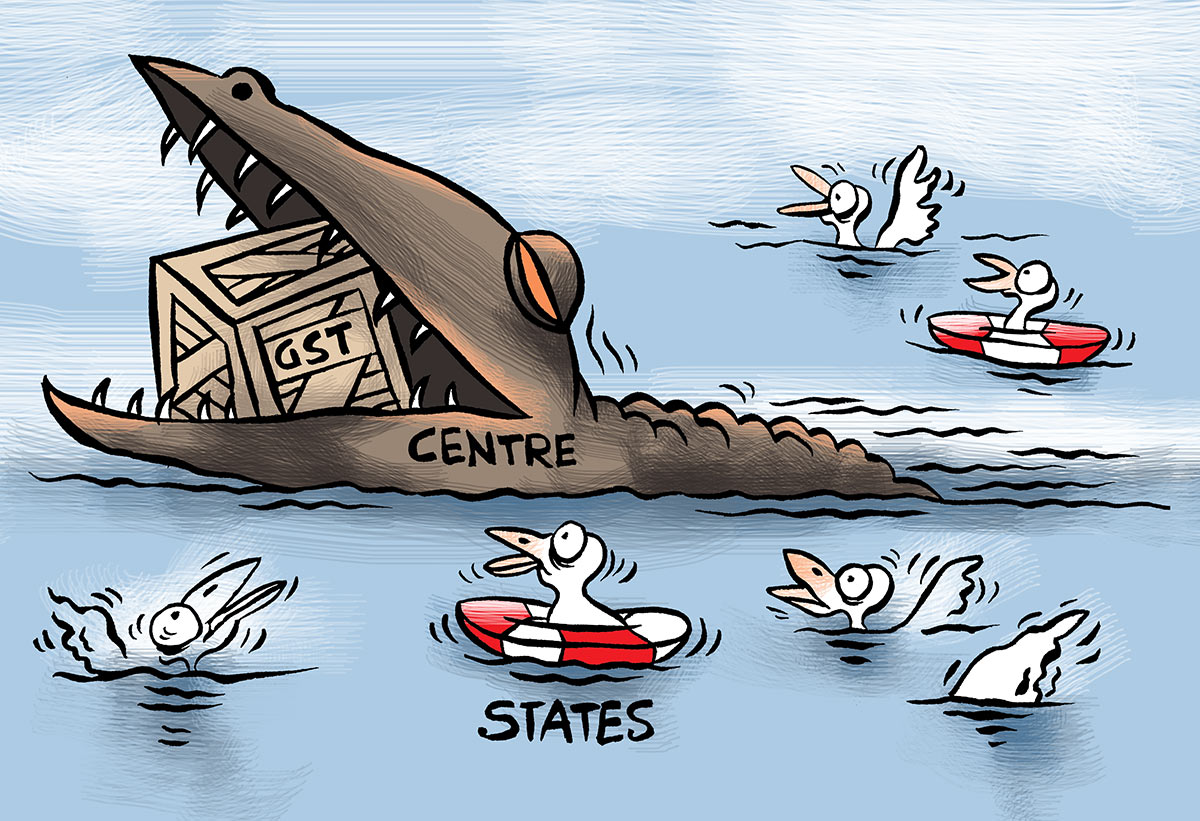
    The Centre allocates resources to the States in two ways. First, on account of the Finance Commission award. Second, the Centre is notional, while the States are real. So, all expenditures by the Centre are in some State. The amount spent in each State is also a transfer. This becomes another source of conflict. Expenditures lead to jobs and prosperity in a State. Benefits accrue in proportion to the funds spent. As a result, each State wants more expenditure in its territory. The Centre can play politics in the allocation of schemes and projects. For instance, it is accused of favouring Gujarat and Uttar Pradesh. The Opposition-ruled States have for long complained of step-motherly treatment.
    To get more resources, the States have to fall in line with the Centre’s diktat. This has taken a new form when the call is for a ‘double engine ki sarkar’, i.e. for the same political party to be governing at the Centre and the States. It is an admission that the Opposition-ruled States will be at a disadvantage. This undermines the autonomy of the States and also weakens federalism.

    State autonomy is not to be confused with freedom to do anything. It is circumscribed by the need to function within a national framework for the wider good. It implies a fine balance between the common and the diverse.

    Issues in federalism
    The Sixteenth Finance Commission has begun work. It should try to reverse fraying federalism and strengthen the spirit of India as a ‘Union of States’. This is not only a political task but also an economic one. The Commission could suggest that there is even-handed treatment of all the States by the Centre and also less friction among the rich and poor States when proportionately more resources are transferred to poor States so as to keep rising inequality in check.
    The issue of governance, both at the Centre and in the States, needs to be flagged. It determines investment productivity and the pace of development. Corruption and cronyism lead to resources being wasted and a loss of social welfare.
    To reduce the domination of the Centre over the States, the devolution of resources from the Centre to the States could be raised substantially from its current level of 41%. The Centre’s role could be curtailed. For instance, the Public Distribution System and MGNREG Scheme are joint schemes, but the Centre asserts that it be given credit. It has penalised States that have not done so.

    The Centre is notional and constitutionally created, while States and local bodies are the real entities where economic activity occurs and resources are generated.

    The Centre’s undue assertiveness undermines federalism. Funds with the Centre are public funds collected from the States and spent in the States. The Centre is notional and constitutionally created, while States and local bodies are the real entities where economic activity occurs and resources are generated. The States have agreed to the Centre’s constitutional position, but that does not make them supplicants for their own funds.

    It is time that the utilisation of the country’s resources is jointly decided by the Centre and the States on the basis of being equal partners. This has become more feasible with the changed political situation after the results of the 2024 general election.


    This article was published earlier in The Hindu.

    Feature Image Credit: rediff.com


  • In Amman, life moves in slow motion

    In Amman, life moves in slow motion

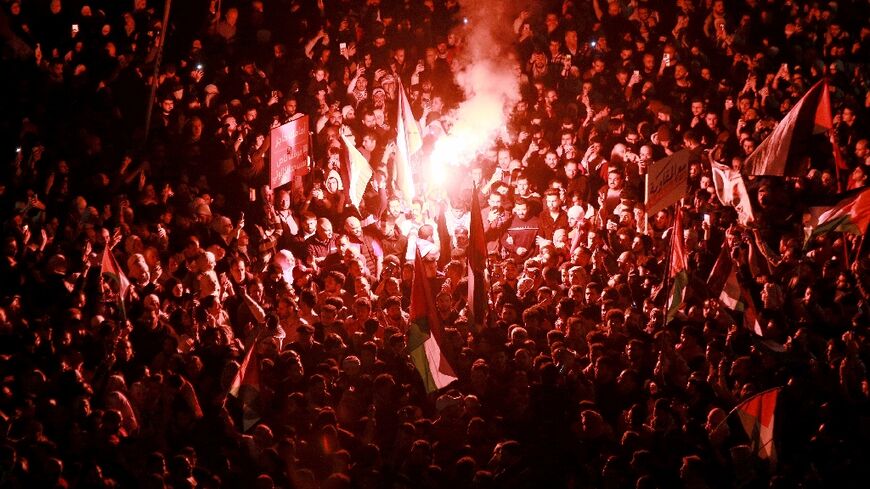
    Amman Protests in April in support of Palestinians. Image from Reuters.

    On a Tuesday evening outside the al-Kalouti mosque in Amman, Jordan, a crowd of men, women and children has gathered. They carry Palestinian flags and hold placards that read: “Food, Water and Medicine are Rights Not Privileges” and “Stop Ethnic Cleansing”. Some display images of Benjamin Netanyahu, Joe Biden and Abdel Fattah el-Sisi alongside condemnatory messages. In a voice close to breaking, a man yells: “We’re sorry, people of Gaza.”

    “It’s like my life is moving in slow motion. Looking at how the world is reacting and how people still justify the killing shows just how much our lives are worth in their eyes.” It triggers many emotions, she said, especially for the older generation that went through the Nakba, or the mass displacement and dispossession of Palestinians during the 1948 Arab-Israeli war.

    In Jordan, which shares a border with Israel and the West Bank, a heavy atmosphere has prevailed since October. Over half of Jordan’s population is Palestinian or of Palestinian origin, and in the capital of Amman, that number is far higher. Many have family in Palestine. “People are living in a ghost-like state,” said Jumana Abdin, a Palestinian Jordanian woman who lives and works in Amman. “It’s like my life is moving in slow motion. Looking at how the world is reacting and how people still justify the killing shows just how much our lives are worth in their eyes.” It triggers many emotions, she said, especially for the older generation that went through the Nakba, or the mass displacement and dispossession of Palestinians during the 1948 Arab-Israeli war.

    “In Germany, you have to wonder if you might get in trouble for expressing support for Palestine, but Amman feels like a refuge,” said David Ghannam, a Palestinian German working in the development sector in Amman, who travelled to Gaza in early 2023. “There’s a sense of unity in Amman. We’re all collectively mourning the loss of innocent lives.”

    Across Amman, signs of solidarity are ever-present: Palestinian flags hanging from shopfronts and in cafes; watermelon imagery on billboards, clothing and stationery; people donning keffiyehs; daily demonstrations near the mosque. Fundraisers are regularly held for Gaza, and businesses have carried out strikes in solidarity. Starbucks and McDonald’s stores across the city remain empty. In supermarkets, customers are embracing local products, a shift that stems from a refusal to purchase products from countries actively supporting Israel, such as the US and Germany.

    Another byproduct of the war has been a drastic drop in the number of tourists arriving in Jordan. Petra, which used to draw 4,000-5,000 daily visitors prior to October, has seen as few as 400 visitors on some days, according to the regional tourism authority. Bedouin-run shops in the famous archaeological site remain deserted. “We went through difficult days because the Bedouins’ main source of income is tourism,” said Hussein W, who runs the Harmony Luxury Camp in Wadi Rum. “Now the situation is better as visitors who did come spread the word saying things here are safe and stable. But we hope for an end to the war.”

    During the month of Ramadan, Amman’s streets usually come alive with decorations, and a festive air descends as people break their fasts at sunset with a variety of foods. This Ramadan, however, was different. “People are [hesitant] to exhibit any sense of celebration,” said Abdin. “Streets are less busy, restaurants are emptier, and people are staying at home more. On the other hand, fasting for over 14 hours heightened our sense of solidarity with our brothers and sisters in Gaza, who are going days without food or water.”


    Feature Image: al-monitor.com Jordanians keep up Ramadan Rallies for Gaza Ceasefire. 

    This article was published in April 2024 in mint lounge 

    The article can also be accessed from the author’s website https://yamunamatheswaran.com

  • Lessons for today? Why did Europeans conquer the world while other civilisations did not?

    Lessons for today? Why did Europeans conquer the world while other civilisations did not?

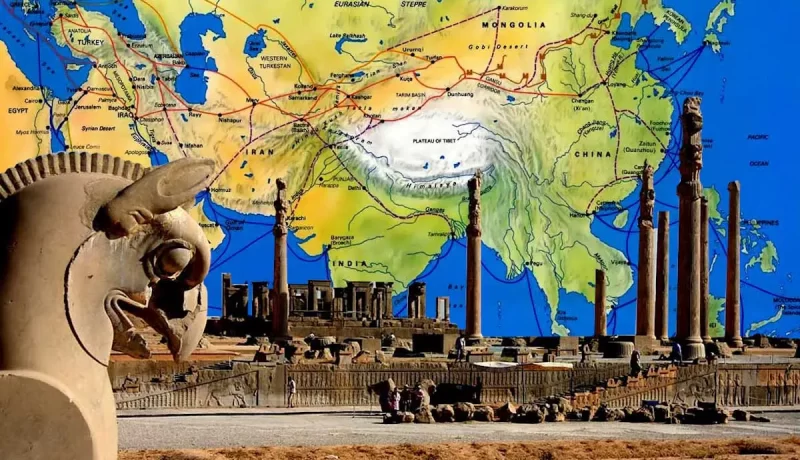
    There is no question that India, China, Egypt, and Persia, in particular, produced flourishing civilisations long before the Europeans. The axial period around which world history revolves, as constructed by Jaspers, between the 7th and 3rd centuries B.C., does not refer to Europeans but to the three great civilisations of China, India, and Persia.

    There is no question that India, China, Egypt, and Persia, in particular, produced flourishing civilisations long before the Europeans. The axial period around which world history revolves, as constructed by Jaspers, between the 7th and 3rd centuries B.C., does not refer to Europeans but to the three great civilisations of China, India, and Persia (see also Katzenstein). Nevertheless, Europeans conquered and colonised the world in the 18th and 19th centuries, not the other way around. There are essentially four explanatory approaches, which are not only mutually exclusive but also determine the self-image of large parts of the world to this day. Put simply, the twentieth century saw a political and, in large parts of the world, an economic decolonisation, but by no means a decolonisation of thought and self-understanding. Moreover, there is a danger that the Eurocentrism that needs to be overcome will only be replaced by ethnocentrism (as is currently the case in Russia and, to some extent, in Israel) or even a civilisational-cultural centrism that is no less problematic than Eurocentrism. China, in particular, is in danger of repeating the mistakes of the West.

    the twentieth century saw a political and, in large parts of the world, an economic decolonisation, but by no means a decolonisation of thought and self-understanding

    So, what are the four explanatory approaches mentioned above? There are two Eurocentric approaches: an Asia-centric approach and a globalist approach. The first Eurocentric approach explains the worldwide colonisation of Europeans in terms of an intellectual superiority that began either in the development of Greek thought or in the Middle Ages. However, since the European Middle Ages were extremely “dark,” there is no direct connection between Greek rationality and the supposed intellectual superiority of the Europeans. Rather, this connection was made possible only by the translations into Arabic of the most important Greek philosophers, such as Plato and Aristotle, and by further translations into Latin. From my point of view – and a little local patriotism is allowed here, as I live near Fulda – the rise of the Europeans began with a letter from Charlemagne to the monastery in Fulda, in which he praised the religious zeal of the monks, but harshly criticised their intellectual understanding of religion. This gave rise to the so-called Carolingian Renaissance of work, which for the first time saw physical and manual labour as equal value to spiritual development – although it is debatable whether this was the first time this happened. Still, the facts remain undisputed in this explanatory approach. As a result, inventions were made in ever-new waves, the sciences developed, and this ultimately led to spurts of individualisation, the struggle for freedom and human rights that characterised the entire 18th and 19th centuries in the European-American world. This intellectual advantage led to a military superiority that enabled the Europeans to colonise the world despite being vastly outnumbered. To this day, Euro-American civilisation considers itself superior to all others. As for violent colonisation, it is admitted that Europeans are “sorry” for it but that it has nothing to do with the essence of Euro-American civilisation, which is characterised by human rights, democracy, and freedom (see Kant, Hegel, Marx, Weber: for an overview see Stark).

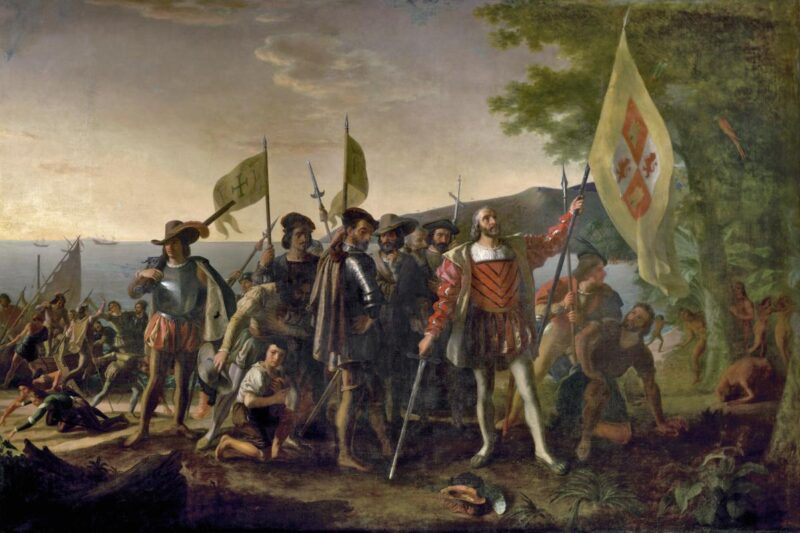
    The second Eurocentric position also assumes European superiority but places it not in the intellectual but in the purely military sphere. The consequence is that Europeans owe their relative prosperity, democracy, and human rights not to themselves but to the violent exploitation of the entire world. Here, too, there are two variants, referring to the Spanish-Portuguese conquests and the Orange army reform in Holland. Since the Muslim armies’ extensive conquest of the Mediterranean region, the Iberian Peninsula had been engaged in a defensive struggle for almost seven hundred years, which ended with their conquest. This created a caste of highly skilled warriors who sought a new vocation after defeating the Muslim armies, which they found in the conquest of Central and South America. The reform of the Orange army, in turn, made modern warfare possible. Based on both, the Europeans first plundered the gold and silver in both Americas.

    Still, they soon introduced enslaved Africans, as they were more likely to survive the plantation work on the Caribbean islands than the indigenous peoples, who were nearly wiped out. The gold and silver shipped to Europe and the products of slave labour created a demand in Europe that was not met by Spain and Portugal but by England and the Netherlands – the Industrial Revolution was thus triggered by a demand created by the exploitation of large parts of the world, precious metals and the “black gold” of slave labour. “Incidentally, the discovery of the sea route to China and India also caused the decline of the Muslim empires and civilisations, as they were no longer the link between Europe and South and East Asia but stood isolated. Political decolonisation was eventually replaced by mostly indirect rule, in which the respective elites were supported militarily and economically to continue exploiting the population.

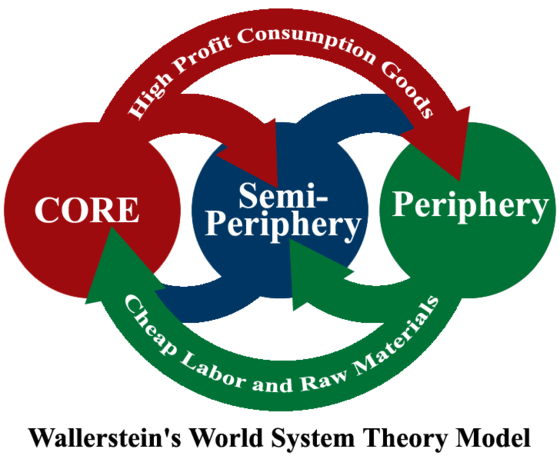
    In most cases, partial military intervention was sufficient for the industrialised states to maintain this system. In the world systems theory of Immanuel Wallerstein and Samir Amin, this practice was conceptualised by dividing the world into centres, semi-peripheries, and peripheries and defining it as a continuous influx of raw materials, goods, and people (brain drain) from the periphery to the mostly Western centres (Amin and Wallerstein).


    A third explanation, however, is Asia-centric. In this view, the dominance of the Europeans and the hegemony of the United States are nothing more than an accident of world history. In this view, East and South Asia have always been the centre of the world economy and intellectual and civilisational development. More precisely, on the shores of the North Pacific and the Indian Ocean (including the Arabian Sea), a power shift has been taking place for thousands of years between China, India, and the Arab-Persian powers. Coincidentally, the retreat of China from about 1500 created a power vacuum in this area, into which the Europeans were gradually able to move. However, they could not compete with these civilisations. The current rise of the great empires and civilisations that were destroyed by European colonisation and Euro-American hegemony is nothing more than a return to the centre of the world, to the countries on the shores of the North Pacific and both parts of the Indian Ocean. In this view, the Europeans and the great powers that emerged from them are in no way superior, but rather the barbarians who caused an unprecedented bloodbath in colonisation and two world wars, including the Holocaust. Now, the centre of the world is returning to where it has always been (Abu-Lughod)

    Another approach is the globalisation approach. It assumes that every five hundred years or so, there has been a shift from one global political centre to the next, i.e., hegemonic empires’ rise, peak, and decline. For the late Andre Gunder Frank, we need to review the last 5000 years, not just the previous 500). At times, individual civilisations succeeded in becoming such hegemonic empires twice. Examples include the Egyptian society, the Chinese Empire of the Han dynasty, the Roman Empire, the Sassanid Empire (Persia), the Muslim Empire until its destruction by the Mongols, and finally European colonisation from about 1500.

    we need a floating balance and mutual recognition of the world’s civilisations

    The crucial question for today is whether globalisation will override this succession of great powers and civilisations or whether there will be a renewed, now genuinely global, struggle for world domination. In my view, we need a floating balance and mutual recognition of the world’s civilisations (Herberg-Rotzhe/Son). The rising civilisations are again faced with whether they will merely repeat the past mistakes and the ethnocentrism of the Europeans under different auspices or contribute to an equal coexistence of the world’s civilisations. And conversely, will the Europeans and the settler colonies they founded also learn to regard other civilisations as equals? Both perspectives will determine the fate of the 21st century if we do not want to experience yet another “bloody century”!

    References:

    Abu-Lughod, Janet: Before European Hegemony: The World System A.D. 1250-1350. Reprint edition. Oxford University Press: Oxford. 1991.

    Amin, Samir: Accumulation on a World Scale: A Critique of the Theory of Underdevelopment. (2 Volumes). Monthly Review Press: New York. 1974.

    Frank, Andre Gunder, The World System: Five Hundred Years or Five Thousand? Routledge: New York. 1996.

    Herberg-Rothe, Andreas and Son, Key-young: Order wars and floating balance. How the rising powers are reshaping our worldview in the twenty-first century. Routledge: New York. 2018.

    Jaspers, Karl: The Origin and Goal of History. Routledge: New York 2021 (original in German 1949).

    Katzenstein, Peter J.” Civilizations in World Politics: Plural and Pluralist Perspectives. Routlöedge: New York 2009.

    Stark, Rodney: How the West Won: The Neglected Story of the Triumph of Modernity. ‎ ISI Books: NewYork. 2015.

    Wallerstein, Immanuel: World-Systems Analysis: An Introduction. Duke University Press: Durham. 2004.


    Feature Photo Credit: Photo of ‘Monument of Discoveries’ in Lisbon. Photo by M Matheswaran. The Monument depicts Henry the Navigator followed by 33 pioneers, including Vasco-da-Gama whose exploration voyages were instrumental in establishing the Portuguese colonial empire, and thus begin the age of colonialism and imperialism.

    Image 1-Map: Asian empires and trade routes – the collector.com

    Image 2: Columbus reaching the Americas (actually the Caribbean) in 1492 – Wikimedia Commons

    Image 3: The story of the colonial looting of Africa – Photo of exhibit in African American Museum, Washington D.C. (Photo – M Matheswaran).

    Image 4: Robert Clive meeting Mir Jaffer in Battle of Plassey 1757 – the beginnings of the British Indian Empire – Wikimedia Commons.


  • Xi Jinping: Assessing his Foreign Policy

    Xi Jinping: Assessing his Foreign Policy

    All foreign policies must aim at attaining purpose, credibility, and efficiency. Purpose defines the main objectives that the country wishes to achieve through its international relations. Credibility comes from international recognition of its actions in this field. And efficiency allows implementation, at the lowest possible cost, of the desired purpose. These three notions, although interwoven and influencing each other, keep their own specificity.

             How does Xi Jinping’s foreign policy qualify in these three areas?

    Purpose

    Its purpose, in tune with that of the Chinese Communist Party before his arrival to power, is sufficiently clear. By 2049, the centenary of the founding of the People’s Republic, China should have achieved a prominence commensurate to its glorious past. According to former Australian Prime Minister Kevin Rudd, China marches towards the perception of its global destiny with a clear strategy in mind. Such destiny is none other than the resurrection of its historical glory (Rudd, 2017). Projects such as the Chinese Dream of National Rejuvenation, Made in China 2025, and the Belt and Road Initiative, converge in defining concrete goals that lead in that direction. This includes China’s “Great Unification” with Taiwan, the consolidation of a hegemonic position within the South China Sea, making China the epicentre of an Asian-led world economic order, and creating a global infrastructure and transportation network with China at its head. Xi Jinping visualizes the next ten to fifteen years as a window of opportunity to shift China’s correlation of power with the United States. Hence, Beijing seeks the convergence of energies and political determination towards this window of opportunity. The strategic compass of Xi’s foreign policy could not be more precise. Few countries show a clearer sense of its purpose.

    Credibility

             His foreign policy credibility presents a more mixed result. Vis-à-vis the Western World and several of its neighbours, China’s credibility is at a very low point. However, the situation is different in relation to the Global South, where Xi’s foreign policy promotes four interconnected initiatives to expand China’s influence. Besides the Belt and Road, whose objective is creating a China-led global infrastructure and transportation network, there is also the Global Development Initiative, the Global Security Initiative, and the Global Civilization Initiative. The first, the Global Development Initiative, aims to contrast the unequal distribution of benefits that characterize the West-led development projects with the inclusiveness and balanced nature of this China-led multilateral development project [Hass, 2023]. The other two initiatives, global security and global civilization, present rational and balanced options clearly differentiated from America’s overbearing approach to these areas. In the former case, China’s proposal promotes harmonious solutions to differences among countries through dialogue and consultation [Chaziza, 2023]. The Global Civilization Initiative, on its side, fosters cooperation and interchange between different civilizations, whereby the heterogeneity of cultures and the multiplicity of identities is fully respected [Hoon and Chan, 2023].

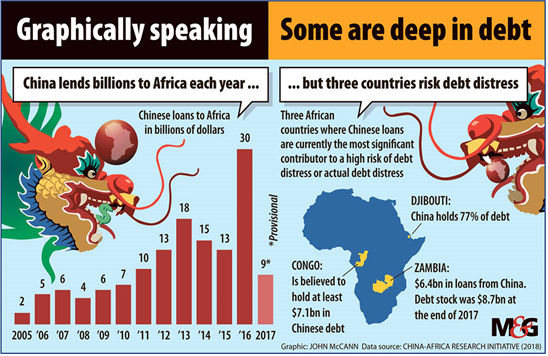
    The Hambantota Port in Sri Lanka is one of thousands project that China has helped finance in recent years – Image Credit: The Brussels Times (The so-called China’s debt-trap is a narrative trap).

           However, three dark areas emerge in Beijing’s credibility with respect to the Global South. Number one is the frustration prevailing in many of these smaller and underdeveloped nations, resulting from the contradiction between China’s openness as a lender and its severity as a creditor. This has given rise to the suspicion of a hidden agenda on its part and has led to the coining of the phrase “debt trap diplomacy”. Number two derives from the arrogance shown by Beijing towards the rights of several of its weakest neighbours, disregarding international law. This seems to delineate a tributary vision of its relations with them. Although this only affects China’s neighbourhood, it projects a haughtiness that contradicts its formulations about a more harmonious, equitable and inclusive world order. Number three is the apparent contradiction between Beijing’s proclamation regarding the value of the heterogeneity of cultures and the diversity of identities and its treatment of non-Han Chinese minorities at home. A feature susceptible to reproducing itself abroad. All the above generates a distance between words and deeds that casts a shadow of doubt concerning China’s sincerity. Hence, even within the Global South, China’s credibility shows a mixed result.

    Efficiency

    Finally, there is the area of efficiency. It is a very complex one, particularly given China’s over-ambitious purpose. It must be said that until 2008, Beijing succeeded in rising as a significant power without alarming neighbours or the rest of the world. It even attained the geopolitical miracle of doing so without alarming the United States. Indeed, few countries have made such a systematic and conscious effort to project a constructive international image as China has done to this date. This included the notion of “peaceful rise”, which implied a path different from that followed by Germany before World War I and Japan during World War II when they tried to overhaul the international political landscape. China’s path, on the contrary, relied upon reciprocity and the search for mutual benefit with other countries. It was a brilliant soft power marketing strategy that gave China huge goodwill dividends (Cooper Ramo, 2007).

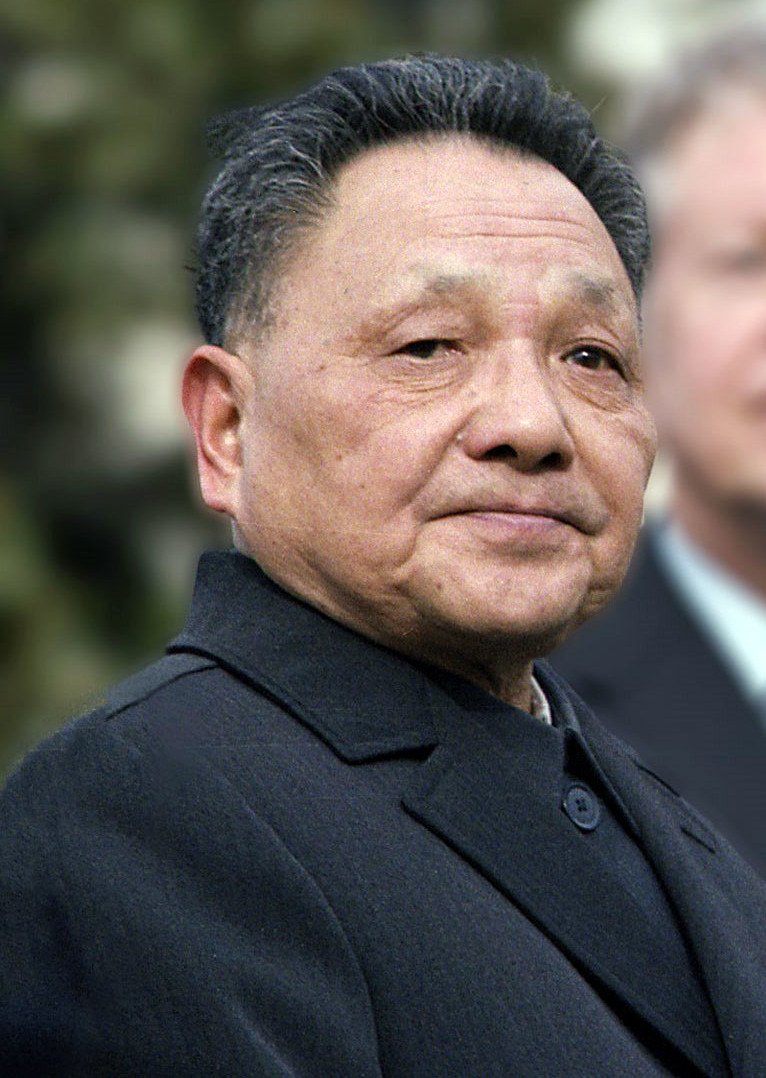
    “Observe carefully; secure our position; cope with affairs calmly; hide our capacities and bide time; be good at maintaining a low profile; and never claim leadership” – Deng Xioping

    Regarding its reunification with Taiwan, it relied on “one country, two systems” and the economic benefits of their interconnection as the obvious means to propitiate their joining together. Regarding its maritime disputes in the South China Sea, after having deferred the resolution of this issue to a more propitious moment, it proposed a Code of Conduct to handle it in the least contentious possible manner. In general, similar approach was evident in Beijing’s handling of various contentious issues.  Beijing’s leadership followed Deng Xiaoping’s advice to his successors: “Observe carefully; secure our position; cope with affairs calmly; hide our capacities and bide time; be good at maintaining a low profile; and never claim leadership” (Kissinger, 2012, p. 441).

    “Like Europe, it has many twenty-first century qualities. Its leaders preach a doctrine of stability and social harmony. Its military talks more about soft than hard power. Its diplomats call for multilateralism rather than unilateralism. And its strategy relies more on trade than war to forge alliances and conquer new parts of the world” – Mark Leonard on China in 2008

    Writing in 2008, before the change towards a more assertive foreign policy materialized, Mark Leonard said about China: “Like Europe, it has many twenty-first century qualities. Its leaders preach a doctrine of stability and social harmony. Its military talks more about soft than hard power. Its diplomats call for multilateralism rather than unilateralism. And its strategy relies more on trade than war to forge alliances and conquer new parts of the world” (Leonard, 2008, p. 109). This phrase encapsulates well how China was perceived worldwide, including by the Western World. Not surprisingly, a 2005 world survey on China by the BBC stated that most countries in five continents held a favourable view of that nation. Even more significant was the fact that even China’s neighbours viewed it favourably (Oxford Analytica, 2005). It was a time when all doors opened to China.

    2008 represented a turning point. The convergence of several events that year changed China’s perception of its foreign policy role, making it more assertive. Among such events the most significant was the global economic crisis of 2008, the worst crisis since 1929, resulting from America’s financial excesses; other important events were the sweeping efficiency with which China avoided contagion; the fact that China’s economic growth was the fundamental factor in preserving the world from a major economic downturn; and the boost to Chinese self-esteem after the highly successful Beijing Olympic games of that year. In sum, the time in which China had to keep hiding its strengths seemed to have ended.

    Although this turning point materialized under Hu Jintao, changes accelerated dramatically after Xi Jinping’s ascend to power. He not only sharpened the edges of the country’s foreign policy but made it more aggressive, even reckless. Xi’s eleven years’ tenure in office has translated into a proliferation of international trouble spots. His overreach and overbearing style misfired, generating a concerted and strong reaction against China. As a result, the costs linked to attaining China’s purpose have skyrocketed. This deserves a more detailed analysis of China’s foreign policy efficiency under Xi.

    Intimidatory policies and actions

             Xi Jinping’s intimidatory policies and actions on international affairs have been extensive, bringing with them immense resistance.

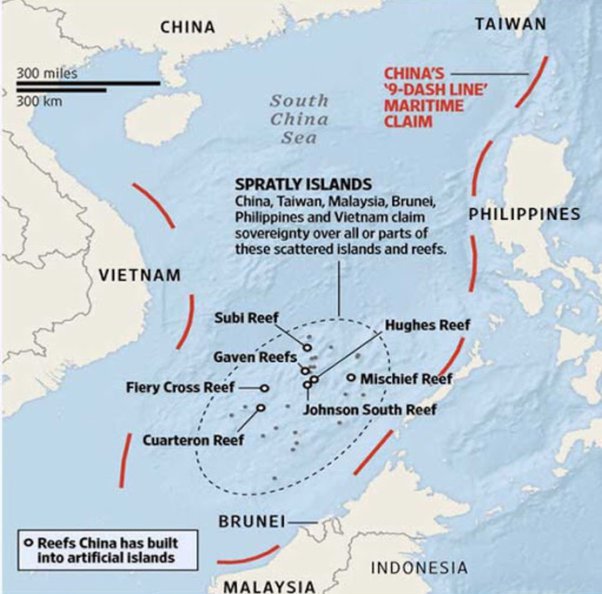
    After dusting off a plan that had remained on paper for years, Xi decided to build seven artificial islands on top of the South China Sea coral reefs. After assuring President Obama they would not be militarized, he proceeded otherwise. Contravening international maritime law, he assigned 12 nautical miles of Territorial Sea and 200 miles of Exclusive Economic Zone to these artificial outposts.

    Under the protection of the People’s Liberation Navy, an oil rig was built in the waters claimed by Vietnam as its EEZ. Disrespecting the International Court of Justice’s ruling about the Philippines’ waters in the South China Sea, China has forcefully enforced its exclusionary presence in them. China’s Coast Guard is now authorized to use lethal force against foreign vessels operating within maritime areas under its jurisdiction claims. This, notwithstanding that China’s claimed jurisdiction, goes far beyond what is recognized by the U.N. Convention on the Law of the Sea or the International Court of Justice while disputed by several other countries.

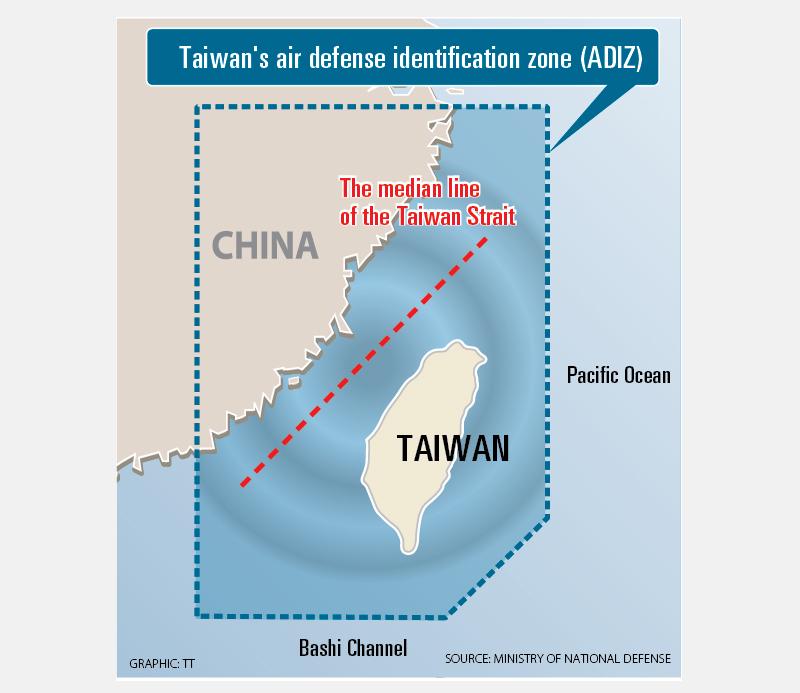
    The People’s Liberation Army (PLA) began to ignore the median line in the Taiwan Strait, which it had respected for decades. Frequent and increasingly bold incursions within Taiwan’s Air Defence Identification Zone and reiterated calls to the PLA to prepare for war in Taiwan have become the new normal. The Senkaku-Diaoyu islands, disputed with Japan, have been declared one of China’s core interests, thus closing the door to a negotiated solution. This has translated into the systematic incursion of Chinese maritime law enforcement ships and planes into the territorial and contiguous maritime space of these islands, currently occupied by Japan. Beijing unilaterally imposed an Air Defence Identification Zone over two-thirds of the East China Sea, forcing foreign aircraft to identify themselves under threat of “defensive measures” by the PLA Air Force.

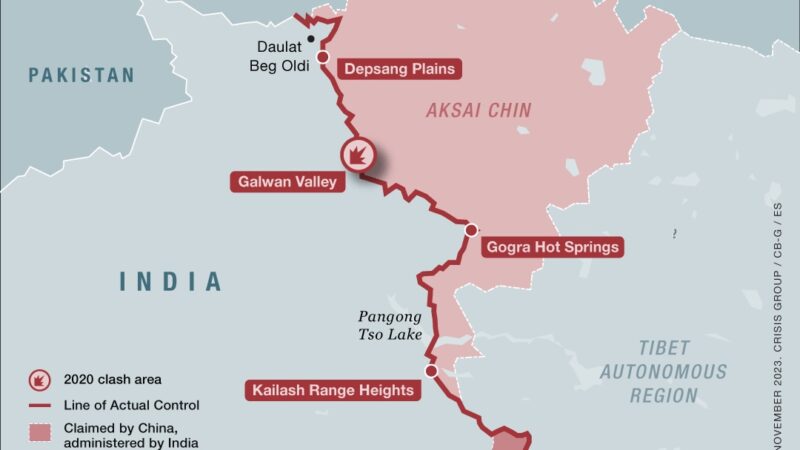
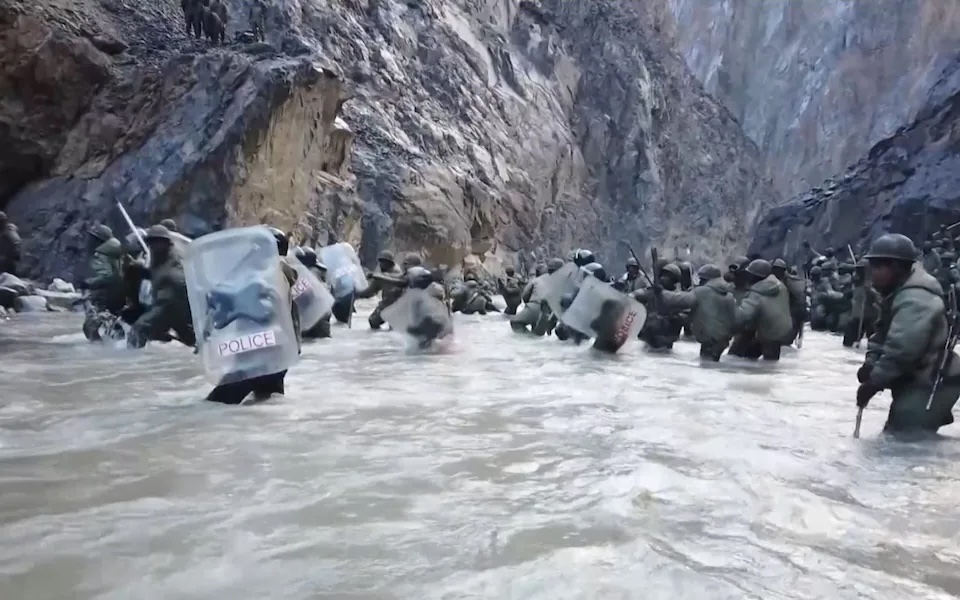
             Since 2017, China has reneged on the quite borders with India and engaged in a series of border skirmishes. It has resorted to intrusions into border regions under dispute resulting in a major skirmish in Ladakh with significant casualties, the first since 1987. In 2023, China released an official standard map showing India’s state of Arunachal Pradesh in Northeast India and Askai Chin plateau in the Indian territory of Ladakh in the west, as official parts of its territory, despite India’s objections. At the same time, it renamed 11 places in Arunachal Pradesh with Chinese names. When South Korea decided to deploy the US Army’s THAAD (Terminal High-Altitude Area Defence) ballistic missile defence, as protection against the growing North Korean threat, China put in motion an economic boycott of South Korean products and services. When Australia and New Zealand protested against Chinese interference in their domestic political systems, Beijing openly threatened to impose economic sanctions on governments or private actors criticising China’s behaviour. A few years later, it effectively banned most Australian exports when Canberra proposed an international scientific investigation on the origins of COVID-19. When Canada detained Huawei’s heiress, Meng Wanzhou, answering an American judicial request, Beijing jailed and presented accusations against two Canadian businessmen based in China (releasing them hours after Meng was released).

    Antagonizing Americans and Europeans

             Xi’s rhetoric in relation to the U.S. has been highly aggressive. Reversing the terms of Deng Xiaoping’s advice to his successors to hide China’s strengths while bidding for right time, Xi has alerted America about its intent to challenge and displace it as the foremost power soon. He has repeatedly referred; to the primacy of China in the emerging world order as its most important objective, to the next ten to fifteen years as the inflexion point when a change in the correlation of power between the two countries should be taking place, to the need to overcome the U.S.’ technological leadership, to the necessity for the PLA to ready itself to wage and win wars, and to the next ten years as a time of confrontation and dangerous storms.

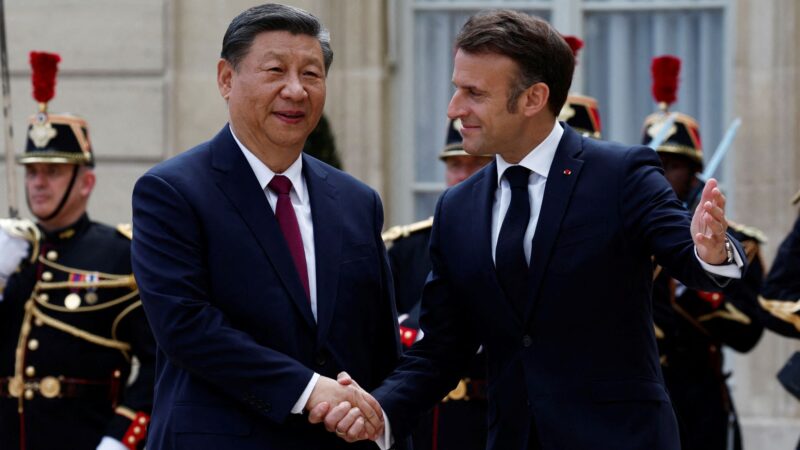
    Xi Jinping starts his European tour in Paris on May6, 2024, his first in five years as China-EU trade relation have hit a low. Picture Source: Sky News.

             China’s actions have also antagonized the Europeans. These relate to China’s refusal to use the term “invasion” when referring to Russia’s actions in Ukraine; supporting the arguments provided by Russia concerning the causes of the war; placing the responsibility of the conflict on the US and the NATO; abstaining from voting in the U.N. on the West’s resolutions against Russia; demonstrating its strong strategic relations with Russia that is described as “partnership without limits”; the conduct of military exercises with Russia while war rages on in Ukraine; and providing indirect support for Russia’s war effort through surveillance drones, computer chips, and other critical components for its defence industry. Though all of the above are sovereign decisions of China, Europe, as China’s major trading partner, expects some support to their position and a neutral approach to the conflict from China.

    For the most part, Beijing’s above foreign policy actions were duly accompanied by a bellicose so-called “wolf warrior diplomacy”. It aggressively reacted to perceived criticism of the Chinese government.

    Domestic actions impacting its Image Abroad

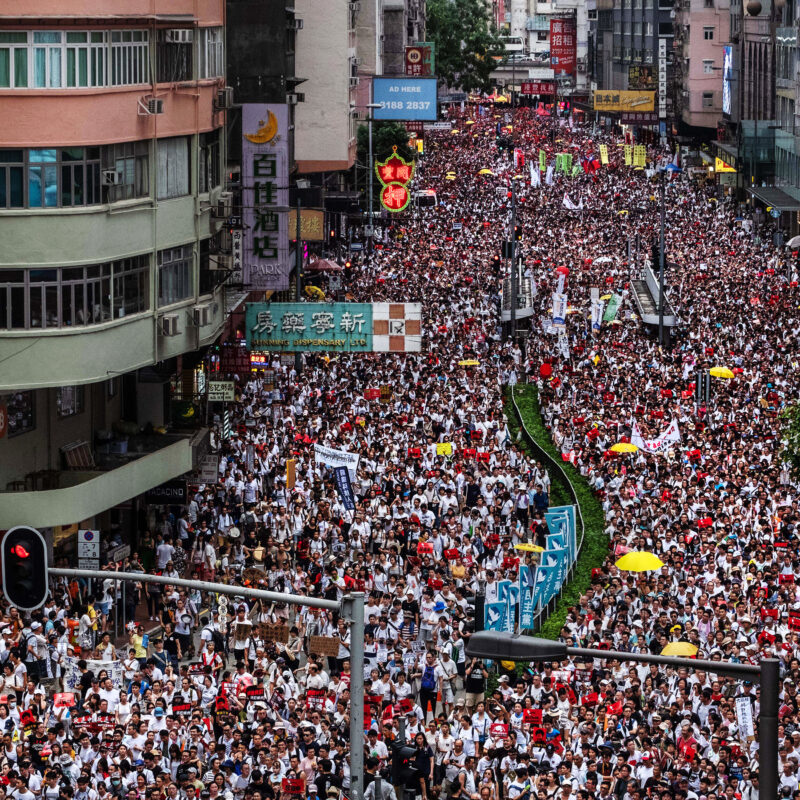
    However, with its aggressive display in the international arena, some domestic actions have negatively permeated abroad. Brushing aside Deng Xiaoping’s commitment to respect Hong Kong’s autonomy for a period of fifty years, Xi reclaimed complete jurisdiction over such territory since his arrival to power. Within a process of actions and reactions, accelerated by the progressive strangulation of Hong Kong’s liberties, Beijing finally imposed a National Security Law over the territory. This ended the Hong Kong Basic Law, which guaranteed its autonomy. By burying the principle of “one country, two systems” established by Deng, Beijing was, at the same time, closing out any possibility of Taiwan’s willing accession to the People’s Republic. Henceforward, only force may accomplish that result.

    On the other hand, the brutal Sinicization of Xinjiang Province has shaken the liberal conscience of Western countries, with particular reference to Europe. The Uyghur population re-education camps have been compared to the Soviet’s Gulag. Beijing’s combative reaction to any foreign criticism in this regard, has compounded China’s image crisis in Europe.

    Any remaining trace of the so-called peaceful emergence of China has completely disappeared under Xi Jinping. Under his rudder, China has brought to the limelight a revisionist and tributary vision of the international order. Not surprisingly, interwoven policies and decisions emanating from different geographical points have been converging to contain China. In an unnecessary way, Beijing under Xi has been instrumental in multiplying the barriers to realising its purpose.

    Keeping China at bay

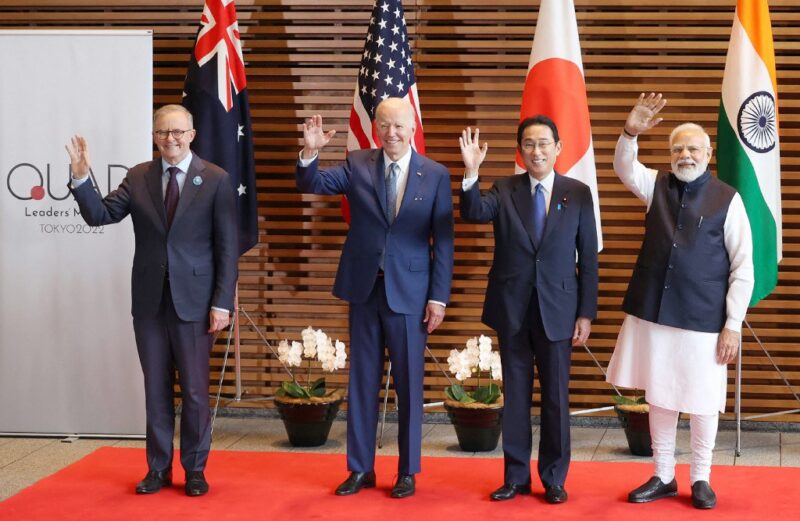
    The number of initiatives to keep China at bay has multiplied. Its list includes the following. The U.S., Japan, Australia and India created a strategic quadrilateral forum known as the Quad, which is none other than a factual alliance aimed at the containment of China. More formally, Australia, the United Kingdom, and the United States gave birth to a strategic military alliance with the same goal. On its side, Japan and Australia signed a security cooperation agreement.

    Leaving aside its restrained post-war defence policy, Japan doubled its defence budget to 2 per cent of its GDP. This will transform Japan to number three position worldwide regarding military expenditure, just behind the U.S. and China. Within the same context, Japan and the U.S. established a joint command of its military forces while agreeing to create a shared littoral force equipped with the most modern anti-ship missiles. Meanwhile, Japan is set to arm itself with state-of-the-art missiles. Overcoming their longstanding mutual mistrust, Japan and South Korea, jointly with the U.S., established a trilateral framework to promote a rules-based Indo-Pacific region. On the same token, Japan, the Philippines, and the U.S. held a first-ever trilateral summit aimed at defence cooperation and economic partnership. They pledged to protect freedom of navigation and overflight in the South China and East China Seas. Several joint naval exercises have taken place in the South China Sea to defend the principle of freedom of navigation, with France participating in the latest one.

    After several fruitless years of attempting to mollify China’s position concerning their maritime dispute in the South China Sea, the Philippines decided to renew its Mutual Defence Treaty with the U.S., which had elapsed in 2016. Meanwhile, most Southeast and East Asian countries on China’s periphery are rapidly increasing their military spending while  still continuing to support the U.S. security umbrella. Although pledging to remain neutral, even Vietnam, a traditional de facto ally of China, decided to upgrade its diplomatic relations with Washington to the highest level.

    America’s several decades policy of “strategic ambiguity” in relation to Taiwan evaporates as a result of China’s increasing threats and harassment to the island. On top of unambiguous support to Taipei by the President and the Congress, the Pentagon has formulated a military doctrine for  Taiwan’s defence in case of invasion. The idea of defending Taiwan if invaded is also taking shape in Japan.

    The European Union adhered to the U.S., the United Kingdom and Canada in sanctioning the Chinese authorities involved in human rights abuses in Xinjiang (the first such European sanction since Tiananmen in 1989). Equally, and for the same reasons, the European Parliament refused to ratify the long-time negotiated investment agreement between China and the European Union. China’s aggressive reaction to such a decision only toughened the European position further. Significantly, European contacts with Taiwan have increased as its democratic nature, and China’s harassment of it are providing a new light on the subject. In that context, the European Parliament officially received Taiwan’s Minister of Foreign Affairs.

    A gigantic containment Bloc

    France and Germany sent warships to navigate the South China Sea in defiance of Beijing’s claimed ownership of 90 per cent of the Sea. NATO’s updated “Strategic Concept” document, which outlines primary threats to the alliance, identified China for the first time as a direct threat to its security: “The People’s Republic of China’s (PRC) stated ambitions and coercive policies challenge our interests, security and values (…) It strives to subvert the rules-based international order, including in the Space, Cyber and Maritime domains (…)The deepening strategic partnership between the People’s Republic of China and the Russian Federation and their mutually reinforcing attempts to undercut the rules-based international order run counter to our values and interests” (NATO, 2022). Not surprisingly, NATO’s last summit included the heads of state and governments of Australia, New Zealand, Japan and South Korea.

    As a result of Xi Jinping’s actions and policies, China is now being subjected to a gigantic geostrategic containment force—a true block integrated by nations and organizations from four continents. For a country like China, which traditionally identified with political subtlety and enjoyed universal goodwill until not so long ago, this change in its strategic environment is not a small development. Xi’s calculations that acting boldly had become possible as China was powerful enough, its economy big enough, its neighbours dependent on it, and the U.S. resolve as uncertain have proved wrong and grossly misfired. At this point, China’s conundrum might leave China with few options short of war. According to former Australian Prime Minister Kevin Rudd, the 2020s have become the “decade of living dangerously”, as, within it, a war between China and the U.S. will most probably erupt (Rudd, 2022, chapter 16).

    In sum

    An evaluation of Xi Jinping’s foreign policy, using the notions of purpose, credibility, and efficiency as bases, would present the following result. Its purpose is crystal clear, which translates into a high mark. Credibility, on its part, shows mixed results: Not entirely unsatisfactory nor satisfactory. In terms of efficiency, though, Xi Jinping has openly failed. The lack of efficiency associated with his outreach adversely affects the attainment of China’s foreign policy purpose, creating countless barriers to its fulfilment. This lack of efficiency affects the country’s credibility as well. The downturn has been dramatic when comparing the current situation of China’s foreign policy to the one that prevailed before 2008 and, more precisely, to Xi Jinping’s ascension to power.


    References:

    Chaziza, M. (2023) “The Global Security Initiative: China’s New Security Architecture for the Gulf”, The Diplomat, May 5.

    Cooper Ramo, J. (2007). Brand China. London: The Foreign Policy Centre.

    Hass, R. (2023) “China’s Response to American-led ‘Containment and Suppression’”, China Leadership Monitor, Fall, Issue 77.

    Hoon, C.Y. and Chan, Y.K., (2023) “Reflections on China’s Latest Civilisation Agenda”, Fulcrum, 4 September.

    Kissinger, H. (2012). On China. New York: Penguin Books.

    Leonard, M. (2008). What Does China Think? New York: Public Affairs.

    NATO (2022). “NATO 2022 Strategic Concept”, June 29.

    Oxford Analytica (2005). “Survey on China”, September 20th.

    Rudd, K. (2022). The Avoidable War. New York: Public Affairs.

    Rudd, K. (2017). “Xi Jinping offers a long-term view of China’s ambitions”, Financial Times, October 23.


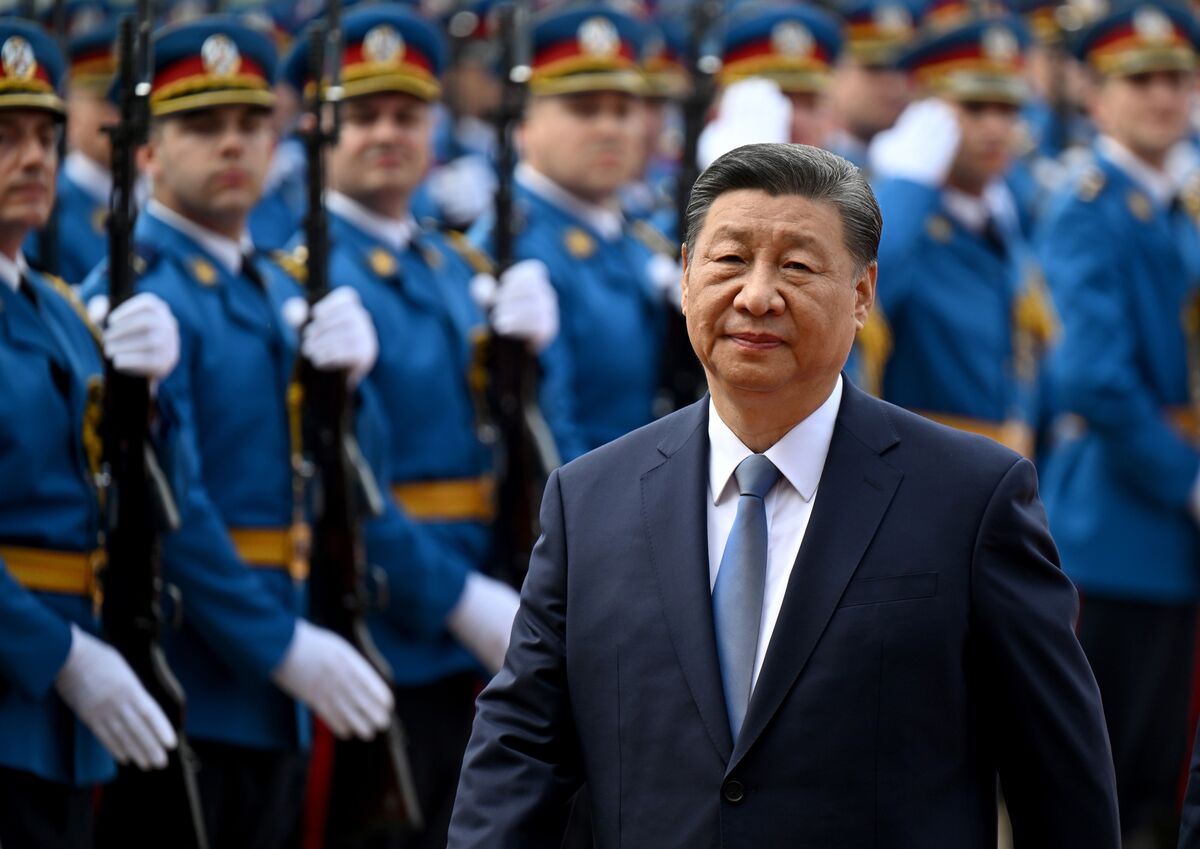
    Feature Image: bloomberg.com – Xi Jinping on visit to Belgrade, Serbia on 07 May 2024 (Xi says China will “never forget” the U.S. bombing of its Embassy)

  • Between the Devil & the Deep Blue Sea: Tackling India’s Internal Security Challenges

    Between the Devil & the Deep Blue Sea: Tackling India’s Internal Security Challenges

    Our ability to develop and prosper, both as a society and a nation, are wholly dependent on the smooth functioning of our democratic institutions and their ability to faithfully uphold the tenets laid down in our Constitution.

    Our progress since Independence has not been without bumps along the road. Not only has the detritus of Partition haunted us, but we have also had to confront antagonistic neighbours intent on grabbing territory, creating divisions and curtailing our economic development and influence around the world. They have tried to do this by resorting to conventional operations, grey zone warfare, including using terrorist groups. In addition, we’ve had to overcome our internal troubles as well, what V.S. Naipaul referred to as a “million mutinies”, rebellions and insurgencies, for the most part, along our border regions. Undertaken by our disaffected citizens, in most cases with external support, aspiring to establish their own independent homelands because of ideological or religious motivations or out of a sense of frustration at being treated as second-class citizens within their own country.

    The response of the State and Central Governments to these internal challenges has invariably been to initially attempt some sort of half-hearted political accommodation or initiative aimed at preserving the status quo and giving themselves political advantage. Once this fails, as it is bound to, the Central Armed Police Forces or the Army are brought in, depending on the levels of violence, to neutralise the insurgency and regain political and administrative control. This can take anywhere from a decade to three or more. The Mizoram Insurgency, for example, commenced in 1966 and was successfully terminated with the agreement being signed between opposing sides in 1986, while the Punjab Insurgency lasted from the mid-80s to the mid-90s, though there are efforts to restart it.

    Unfettered exploitation of natural resources and minerals from those resource-rich regions by large corporations and their political acolytes has led to the displacement of tribals from their homelands and added to their economic woes. Given that the political, security and administrative establishments are wholly compromised and corrupt, the tribals have alleged that they have had little choice but to take up arms in an effort to break the nexus and get their rightful dues.

    We’ve had similar problems in our North-eastern States of Assam, Nagaland, Manipur and Tripura, which continue to persist in fits and starts, aided, and abetted by China. We have also faced a long-running Maoist rebellion in our hinterland, organised and conducted by tribals from those regions. Unfettered exploitation of natural resources and minerals from those resource-rich regions by large corporations and their political acolytes has led to the displacement of tribals from their homelands and added to their economic woes. Given that the political, security and administrative establishments are wholly compromised and corrupt, the tribals have alleged that they have had little choice but to take up arms in an effort to break the nexus and get their rightful dues.

    The issue we seem to have failed to comprehend is the transformation that has taken place in understanding what constitutes the basic elements of national security.

    Fortunately, good sense prevailed within the political and security establishment, and the military, other than limited support in casualty evacuation and surveillance by the Air Force was completely kept out of ant-Maoist operations. The military’s job is not to protect marauding corporates but our sovereignty from the depredations of inimical elements, both internal and external. The dynamics of the Military’s involvement in countering the Maoist insurgency would have undoubtedly had serious repercussions within the military’s functioning, and over a period of time, would have adversely impacted our existing governance structures, much in the manner that some of our neighbours have been so affected. The issue we seem to have failed to comprehend is the transformation that has taken place in understanding what constitutes the basic elements of national security. Until the end of the Cold War and before the advent of globalisation, national security had purely military and economic connotations with the stress on territorial control. This was achieved by controlling the flow of information, goods and services and the movement of people through various means, including physical barriers. The advent of the Info-Tech revolution and the consequent move towards globalisation made it increasingly difficult for governments to control access to and the free flow of information, ideas, digital services, and finances.

    As Professors, Wilson and Donan, note in their book, ‘Border Identities: Nation and State at the International Frontiers’ (UK, Cambridge: University Press, 1998), “International borders are becoming so porous that they no longer fulfil their historical role as barriers to the movement of goods, ideas and people and as markers of the extent of the power of the state.”

    Perforce, governments the world over have been forced into the realisation, for many at great cost, that it has become impossible to lock up people or ideas and isolate them from the global discourse. Thus, in the context of the security of the state, more than just ensuring territorial integrity, it is the security of the people through sustainable human development that is non-negotiable. We are today at a stage where, while traditional physical threats continue to pose serious challenges, especially from China and Pakistan, it is the non-military threats that are more dominant. These arise, on one side, from the host of cross-border insurgencies that afflict us because of ethnic, ideological, economic or religious conflicts, and on the other side, because of policies that emanate from politics of exclusion and economic exploitation. In both cases endemic corruption due to the nexus between the political-bureaucracy-security establishment and criminal elements involved in the smuggling of drugs and weapons and human trafficking remains the common thread. As a result, we not only face the threat of violence but also have to confront the increasing spread of religious radicalization.

    For example, in the Northeast, as my colleagues, Lt Gen J S Bajwa (Retd), Maj Gen N G George (Retd) and I, have pointed out in our paper, ‘Makeover of Rainbow Country: Border Security and connecting the Northeast’ (Manekshaw Paper No 62, Centre for Land Warfare Studies, 2016), “we are faced with a trans-border insurgency affecting our states that has metamorphosed into a serious law and order issue due to trans-national criminal syndicates having established linkages with armed gangs that are opposed to the existing political status-quo. This has also been accentuated with these groups being used by China and Pakistan for meeting their own nefarious designs…. Criminal syndicates have extended their reach to include complete control and dominance over all smuggling activities, be it of small arms, psychotropic drugs, livestock, or human trafficking. This economic clout has enabled them to subvert elements within the political parties, the bureaucracy, and the security establishment….”. Thus, it appears that the defining characteristic of on-going insurgencies is that they are nothing more than “businesses”, using all means at their disposal to make a profit. Thus, we see that has been that they have never crossed the threshold of violence or mass mobilisation that would lead to the next logical phase; from insurgency to civil war, where insurgent forces take on the military in conventional operations. These regions are further adversely impacted by poor governance, ineffective policing, agonisingly slow judicial processes, and unchecked criminal activity. The ability of the local populace to oppose the injustices heaped on them has been very subtly neutralised using the Security Forces and Police with wide ranging powers, including in some regions the use of AFSPA, to maintain the status quo. Our ability to develop and prosper, both as a society and a nation, are wholly dependent on the smooth functioning of our democratic institutions and their ability to faithfully uphold the tenets laid down in our Constitution. This is not feasible without sustained focus on providing high quality of universal education, emphasis on social justice and inclusion and an unvarying commitment to ensuring accountability and the rule of law. Focus on infrastructure development in border areas as well as ensuring free and fair elections, greater accountability and breaking the existing nexus between criminal groups and the local political and administrative establishment and unethical corporate houses. Clearly, all stakeholders have to accept that resorting to the use of force in order to ensure a stable security environment is an unviable option with very limited positives.

    The ability of the local populace to oppose the injustices heaped on them has been very subtly neutralised using the Security Forces and Police with wide ranging powers, including in some regions the use of AFSPA, to maintain the status quo.

    Finally, a word with regard to countering terrorist actions such as the one that targeted Mumbai on 26 November 2008. Much has changed since then with our major cites becoming far less vulnerable thanks to a quantum enhancement of the coastal surveillance infrastructure as well as better coordination, integration and demarcation of responsibilities amongst the stakeholders such as the Indian Navy, Coast Guard, local police and the intelligence agencies. In addition, the establishment of integrated National Security Guards (NSG) hubs in Mumbai and other metropolises ensures much speedier response as well as better coordination with local police and their Special Weapons and Tactics (SWAT) Teams. Efforts have also been directed to enhancing training of personnel and upgrading technical capabilities.

    Unfortunately, politics has played a major spoilsport and two important initiatives planned in the aftermath of the Mumbai attack, the establishment of the National Counter Terrorism Centre (NCTC) and its intelligence data exchange architecture (NATGRID) have not fully fructified. There can be little doubt that these initiatives, if pushed through as visualised, would have been of immense utility in ensuring our ability to prevent and respond to terror threats in a timely and effective manner. To conclude, it would be fair to suggest that we face an extremely difficult and challenging internal security environment that is deeply entwined in, and impacted by, our external threat perceptions. Of necessity, we must adopt robust policies, with the requisite capabilities, to be able to respond appropriately so as to be perceived as a ‘hard state’ by our neighbours. This would give us the necessary space andenvironment to push through policies focussing on sustainable human development, which is the only feasible option to ameliorate our internal security challenges.


    Feature Image Credit: the diplomat

  • West Asian moves and countermoves: Challenges of them spinning out of control

    West Asian moves and countermoves: Challenges of them spinning out of control

    What will the complex calculus of the new Middle East crisis resolve into, and what will be the impact on India?

    ISRAEL has succeeded in diverting world attention from Gaza and Hamas to Iran. This is similar to how Hamas, in October 2023, successfully short-circuited US efforts at normalising relations between the Arab states and Israel under the Abrahams Accord.

    These moves and countermoves are ratcheting up the intensity of conflict in West Asia with serious global implications, including for India. The Indian approach seems to be similar to that in the case of the conflict in Ukraine— to play both sides.

    Countermoves

    Iran’s attack on Israeli soil is unprecedented. It is a response to the Israeli attack on its consulate in Syria on April 1, killing some of its top army commanders. It had warned of a retaliation and that gave Israel and its partners, the US, the UK, etc., time to prepare.

    The US had already moved its forces and prepared its allies in the region to shoot down the projectiles from Iran. Even Jordan apparently participated in this. Israel could take care of the projectiles that managed to reach its territory. So, 99 percent of the projectiles were shot down in the air and there was little damage in Israel.

    The Indian approach seems to be similar to that in the case of the conflict in Ukraine— to play both sides.

    It provided a sense of victory to Israel, the US and their allies. This was US President Joe Biden’s message to Israeli Prime Minister Benjamin Netanyahu and to forestall any immediate Israeli retaliation.

    Did Iran need 15 days to prepare to attack Israel? Could it not have used many more than 300 projectiles to attack to overwhelm Israeli defences? Could the Iranian allies like the Hezbollah in Lebanon and the Houthis in Yemen not have fired a much larger number of projectiles?

    Clearly, Iran was making a show of avenging an attack on them but did not want to hit Israel. It did not want to provoke an attack on its territory from the much superior US and Israeli forces.

    The Iranian foreign minister stated in a press conference after the attack that the US, Turkey and some Arab neighbours were given advance information about the limited attack. The US has denied that it had advance information.

    Not only were 15 days given to Israel to prepare its defence, the timing of the attack was also conveyed in advance. The drones, which would take six–seven hours to reach Israel, and cruise missiles, which would take two–three hours, were bound to be neutralised given the advance preparations.

    Only ballistic missiles, which take only a few minutes to traverse the distance that exists between Israel and Iran, were a serious challenge, but due to the advanced notice and preparation, even they got neutralised.

    The Iranian army briefing after the attack also mentioned that the attack was a limited one and had achieved its objective and no more attacks would occur unless Israel attacked its territory. Thus, the Iranian attack was for show and not effect.

    The US and the G7 that met in the aftermath of the Iranian attack while condemning the Iranian attack suggested that Israel had won and that it should not retaliate against Iran.

    Some even argue that this presents an opportunity to take out Iran’s nuclear establishments and cripple its nuclear bomb capability.

    Indeed, Israel’s attack on the embassy in Syria was meant to draw the US and other allies into unequivocally supporting Israel. That support had been dwindling due to the ongoing genocide in Gaza which was inflaming world opinion. Israel has succeeded in this aim. Today, the attention has shifted from genocide in Gaza to the global implications of a wider war in West Asia.

    Pressures escalating

    The US, while saying it does not want an escalation and that it would not support an Israeli strike, has also said its support to Israel is “ironclad”. Just as Israel has defied US advice to avoid civilian casualties in Gaza and allow more humanitarian aid to enter, it can defy the current US advice to not escalate the conflict.

    Israel could attack, secure in the fact that the US and the allies would defend it if Iran retaliates substantially in response to the Israeli retaliation.

    Will Israel oblige by not attacking Iran? The ultra-right in Israel is pressurising the government to retaliate. They have been a part of the growing problem created by the displacement of Palestinians from the West Bank, coming up of new settlements and aggressive assertions in Jerusalem. All this has led to rising Palestinian resentment.

    Many Israelis and conservative Republicans in the US are arguing for Israeli retaliation. The Israeli war cabinet said the conflict is “not over yet” and we will “extract a price”.

    Even the moderate leader Benny Gantz wants retaliation, though at a time of Israel’s choosing. The ultras argue that Iran has crossed a red line by attacking Israeli soil and it must pay for that.

    Some even argue that this presents an opportunity to take out Iran’s nuclear establishments and cripple its nuclear bomb capability.

    Hamas’s action was a result of perceived subjugation and atrocities by Israel over a long period, which could not have been anticipated by Israel and the US.

    But, there are limits to such actions since there are other players who may be forced to intervene. Also, it could lead to a wider conflict in West Asia. The Sunni nations, though not allies of Iran, may also be forced to act. Already, some of these US allies have prohibited the use of their air space by the US.

    Limits of shadow fights

    Israel has a huge network of intelligence in not only Gaza but all over West Asia. It has been able to kill its opponents’ leaders in Gaza, Lebanon, Iran, Iraq and Syria. Recently, it could kill the sons and grandsons of Hamas leader.

    But, the October 7 attack by Hamas in Israel and Hamas still being able to fight in Gaza six months later lays bare the limits of their intelligence. The extensive network of tunnels in Gaza, the troop strength of Hamas and Israel’s inability to get hostages released for six months also point to the same limitation.

    All this points to the limits of shadow fighting in international relations. Hamas’s attack on October 7 destroyed an equilibrium because it was willing to accept the massive death and destruction in Gaza.

    Israel’s attack on the embassy in Syria knowing that Iranians would retaliate has further shifted the out-of-equilibrium position. These instabilities are feeding into each other since one cannot anticipate what nations may do under uncertainty no matter how well a powerful nation may plan.

    Hamas’s action was a result of perceived subjugation and atrocities by Israel over a long period, which could not have been anticipated by Israel and the US.

    The attack on the embassy in Syria was also unanticipated and a result of Israel’s perception that Iran is behind the Hamas, Hezbollah and Houthis. Iran’s attack on Israel is also a result of its perception of having been attacked on its soil which required an attack on Israeli soil.

    Conclusion: Rising global challenges

    Now that the world is divided into two blocs, the situation has become more worrisome. Iran is a part of the bloc consisting of Russia and China. It has been supplying drones to Russia for its war in Ukraine. Even though this bloc may not want a second front, it cannot but stand with Iran in case of a Western bloc attack on Iran.

    Its stand on the issue will be a crucial determinant of what happens next. The stance of G7 and NATO will be vital since they have been unsuccessfully trying to restrain Israel. Military mobilisation will rise in key nations. The beneficiary will be the military-industrial complex.

    War in West Asia will impact the petroleum products market. If Iran is attacked and it blocks the Hormuz Strait or attacks oil tankers, petro-goods prices will rise. Shipping through the Suez has already been impacted and may face further disruption.

    India imports 85 percent of its petroleum requirements so the outgo of foreign exchange may increase leading to a deterioration in the balance of payments (BOP), weakening of the Indian rupee and higher inflation.

    Thus, the post-pandemic easing of supply bottlenecks may reappear and create inflation globally, disrupting many economies.

    India imports 85 percent of its petroleum requirements so the outgo of foreign exchange may increase leading to a deterioration in the balance of payments (BOP), weakening of the Indian rupee and higher inflation.

    Foreign investments may slow down. A substantial number of Indians working in West Asia may be forced to return and that will reduce repatriation by non-resident Indians.

    Thus, capital flows may be impacted and further aggravate the BOP. India would need to prepare for these challenges in the midst of the fraught election season where the leadership’s attention is not where it should be.


    This article was published earlier in The Leaflet.

    Feature Image Credit: Wall Street Journal.

  • An Individual’s Guarantee As Party Manifesto Weakens Democracy, Feeds Instability, Uncertainty

    An Individual’s Guarantee As Party Manifesto Weakens Democracy, Feeds Instability, Uncertainty

    The last decade points to the individualisation of decision making in India leading to huge problems. As can be expected, these go unmentioned in the manifesto – after all the manifesto is supposed to create a feel good factor in the nation. The end result of ‘Modi’s guarantee’ could be contrary to the promises.

    The Bharatiya Janata Party’s (BJP’s) manifesto titled “Modi ki Guarantee 2024” promises much. It implies a guarantee that soon all will be well because of Narendra Modi. It reflects a) the state of affairs in the BJP and b) its reading of people’s mood.

    It implies that people have more faith in Modi than in the party. Does this reflect the failure of the party? Like in a presidential form of election, vote is sought in the name of a leader, Modi.

    The contrast with the Congress manifesto, titled, `Nyay Patra’, promising justice to all, is stark. The BJP manifesto too promises justice. But, one depends on faith in an individual’s guarantee while the other seeks to deliver through strengthening society’s institutional setting. The instrumentality proposed by the two political parties is diametrically opposite.


    Read More

  • Elections 2024: Modi up a steep & slippery Slope

    Elections 2024: Modi up a steep & slippery Slope


    Be it a democracy or a dictatorship, governments are almost always changed by throwing out the incumbent. The former is called a democratic transition and the latter is inevitably a revolution. Even if it is, as usually is the case, more of the same. India’s electoral process that begins on April 19 will be concluded on June 4 when the results are announced. Most psephologists, commentators, astrologers and bazar gossips are sanguine that Prime Minister Narendra Modi will be easily re-elected to a third successive term. I do not agree with that sanguinity.I think Mr Modi has a hard hill to climb and the slope may be too steep and slippery for him. Look at the objective reality. In 2019, the BJP won 303 seats or almost 56 per cent of the Lok Sabha with 37.4 per cent of the popular vote. This skew is how it usually is in a first-past-the-post system. Even a minority mandate translates into an overwhelming outcome. But the problem with the BJP mandate is that it is concentrated in a minority of states. The saffron mandate is restricted almost entirely to the large Hindi-speaking states (202/235), as well as Maharashtra (41/48) and Karnataka (25/28). It got 268 out of its 303 in just this concentration. Winning these states is not the issue for the BJP. Repeating this performance is.


    Read More

  • Untangling the “socialism” vs. “capitalism” Dichotomy

    Untangling the “socialism” vs. “capitalism” Dichotomy

    Few ideological dichotomies polarize opinions as readily and as completely as that between “socialism” and “capitalism.” Those who embrace socialism tend to blame capitalism for everything that’s wrong with our world today. Those who embrace capitalism harbor a seething contempt for socialists, but both camps base their views on ideology with only vague notions about the true nature of either system.

    The “socialists” think of capitalism as a rapacious system of exploitation that favors a few at the detriment of many. There is some truth in that. The “capitalists” think of socialism as a system that gives free stuff to the lazy and undeserving, choking society’s progress. There’s some truth in that too, but having lived in both systems and having experienced the ideological brainwash from both sides, I find neither side convincing.

    Spoiler alert: it’s not a left vs. right thing. It’s a top-down vs. bottom-up thing.

    So, you’re a communist!?

    Both system’s ideological foundations amount to marketing, the intellectual gloss on the cover of their respective sales brochures. But the gloss never captures the essence of either system – an omission that is so egregious that it is almost certainly deliberate. Clear understanding of the essence of this dichotomy is not encouraged and instead of exploring all the relevant issues, on both sides of the ideological divide people readily resort to derogatory labels which usually shut down the much needed open minded discussion.

    Last week I had the privilege of participating in a “Capitalist Exploits” conference in Dubai. The event was by invitation only and attended by about 70 participants, all successful entrepreneurs and investors from all over the world. Our various discussion panels covered a lot of ground including health, technology, investing, politics and geopolitics. For my humble contribution I had the honor of being called a communist. This was in jest and not with malice, but as they say, there’s some truth in every joke. I earned the distinction simply by questioning the ideological orthodoxy prevalent in the “capitalist” Western world.

    As someone who grew up in the Communist block and experienced the Marxist brainwash, being called a communist felt comical: I’d rejected the Marxist ideology already as a teenager, not because I had any deep understanding of the economic and socio-political issues we faced but because the system wasn’t delivering as advertised: it was clearly evolving in the opposite direction from the promised utopia.

    At the age of 17, I moved to the “capitalist” United States which appeared to be based on a much, much superior system to the one I knew. The U.S. economy was vibrant with entrepreneurship and innovation and the American people seemed significantly more prosperous than we were. But the more I learned about the “capitalist” system, the more I became convinced that the same seed of doom that made “socialism” unsustainable was also baked into the foundation of the “capitalist” system.

    For starters, in both systems we had the familiar old fiat currency with fractional reserve lending. This one element guarantees the collapse of both systems: over time it reliably corrodes the democratic framework of society, suffocates free market economy, kills entrepreneurship and innovation, and guarantees that government sector of the economy will gradually displace more and more private enterprise. It does this due to an economic effect called the deflationary gap.

    Deflationary gap

    The following few paragraphs may seem convoluted but please bear with me, we’re getting to the essence of the issue at hand. To understand the deflationary gap, let’s consider a closed economic system that produces a certain quantity of goods and services. By “closed” I mean that we’ll assume the system has no foreign trade.

    The total of all the price tags attached to the goods and services produced is the aggregate cost of the system’s output: it represents the amounts of money expended by the businesses on things like raw materials, wages, rents and interest plus the entrepreneurs’ profits. These sums are income to those who receive them and also comprise the system’s total purchasing power. On the whole, the aggregate costs, aggregate incomes and aggregate prices are all the same, because they represent the opposite sides of the same transactions.

    The prices at which the system’s output can be sold in the marketplace are determined by the total amount of money which is available for spending in a given period of time. For the system to be in equilibrium, aggregate prices should exactly absorb the system’s total purchasing power. But a problem arises because in the current monetary system, there are two factors that significantly reduce the system’s purchasing power: (1) savings and (2) debt repayments.

    Namely, people don’t always spend all of their income. Instead, they prefer to set aside a part of it as savings which has the effect of reducing the total purchasing power available in the system.

    This is a problem

    So, if there are any savings, the available purchasing power will be less than the aggregate asking prices. For the system to remain in balance the savings would have to reappear in the market in the form of investments, but if total investment is less than total savings, the purchasing power will still fall short of the amount needed for all of the output to be sold at asking prices. This shortfall of purchasing power in the system, the excess of savings over investment is the deflationary gap.

    The other systemic drain on purchasing power (hat tip to author Liam Allonefor pointing this out to me) are debt repayments: since (nearly) all currency enters into circulation as debt, paying down debts extinguishes the currency and the purchasing power with it.

    Without government intervention we get a depression

    The system can be balanced either by lowering the supply and prices of goods, by enhancing its total purchasing power, or a combination of both. Lowering prices and production of goods will stabilize the economic system at a low level of economic activity. Increasing the purchasing power in the system will stabilize it on a higher level of activity. Left to itself and without intervention, a modern economic system would fall into what we call a self-reinforcing deflationary depression: the deflationary gap would lead to falling prices and output, decline of income and rising unemployment. Furthermore, in recessions and depressions, the level of investment typically declines even more rapidly than savings. To avert this, government intervention is necessary.

    Without government intervention, the economy would stabilize when the level of savings declined to the level of investments which would be at a depression level of activity. This is an anathema in all modern economies, and governments invariably pursue the imperative of economic growth. To generate growth, they must inject new purchasing power into the system. This cannot be done through taxation since taxation doesn’t create new purchasing power: taxes only transfer money from those who earn it to the government.

    This is why governments have no alternative but to continuously engage in deficit spending, adding debt in excess of their tax receipts. This is why virtually all governments in the world today run budget deficits and chronically grow public debt. In spite of all the incessant talk about balancing the budget, paying down debts or imposing debt ceilings, the debts only keep rising at rates that predictably accelerate over time. It doesn’t matter whether we call the system “socialist” or “capitalist,” they both necessitate an ever growing role of government in the economy.

    Today, in many of the “capitalist” nations, government spending accounts for almost half of the GDP and in some cases significantly more. In the UK, the mothership of capitalism, the government’s share of GDP is 44%. In France it’s over 58%.

    The great American debt ceiling Kabuki theater

    In the United States, for over a century now we’ve been treated to periodic reruns of the “debt ceiling” Kabuki theatre. When public debt reaches the “debt ceiling,” free-spending socialists call for more government spending and a raising of the debt ceiling. The conservatives enjoy grandstanding about fiscal conservatism and balancing budgets, but regardless of which side controls the Presidency or the Congress, for over a century now the debt ceiling has been raised every time. The only exceptions have been periods when the ceiling was simply ignored and the public debt continued its accelerating upward trajectory:

    You get socialism, whether you like it or not!

    Averting a depression and achieving economic growth necessitates government intervention and guarantees an accelerating rise in deficit spending with the corresponding rise in public debt regardless of whether we are talking about a “capitalist” or a “socialist” economies. This should be obvious, as the evolution of public debt in the U.S. illustrates:


    There’s no point railing against “socialism” and dreaming about a small government, private capital utopia which doesn’t, and cannot exist so long as our economies are based on fiat currencies with fractional reserve lending. Even if we start with zero public debt, the pursuit of economic growth will lead to the same outcomes.

    With fullness of time, government sector will progressively crowd out private enterprise: it’s a mathematical certainty. As a result, we get socialism whether we like it or not. Even if a political leader declares himself to be an anarcho-capitalist and thinks he can create the capitalist utopia (like Argentina’s Javier Millei), the endgame will be the same.

    The passionate disciples of capitalist ideology will protest and invoke the theoretical works by economists like Ludwig Von Mises, Murray Rothbardor Friedrich Hayek but I would simply ask them to please name one real-world example of a successful free market capitalist economy where the government never ran budget deficits and piled up public debt. I can wait.

    For those who would defend the free market ideology and excuse its failing as a consequence of human corruption and weakness of the structures of society, I’d warn them that this was exactly how Marxists explained away the failures of communist utopia.

    Top-down or bottom-up?

    With that, we can address the false dichotomy between “socialist” and “capitalist” economies as they’re commonly discussed. Namely, in what we call “capitalist” economies, a larger proportion of government-injected purchasing power flows top-down. In what we call “socialist” economies, it flows bottom-up.

    Capitalist governments splurge their largesse on large private corporations in the form of subsidies and generous government contracts. Socialist governments splurge on social welfare programs like low-cost or free health care, education, generous unemployment benefits and pension plans, and programs that maintain full employment even where jobs couldn’t be justified by private enterprise.

    It’s what the “capitalists” hate. As a rule, individuals who strongly favor free market capitalism tend to be the successful, entrepreneurial types who value risk taking, hard work and creating wealth through private initiative. The idea that the state would splurge on the lazy and undeserving free-loaders is understandably revolting.

    However, the alternative in splurging on large corporations is far more dangerous. If purchasing power is distributed bottom up, the decisions about how to spend that purchasing power are up to the ordinary people. As such, they’ll tend to benefit ordinary businesses that produce consumer goods and services: bakers, apparel makers, restaurants, coffee shops, musicians, tour guides, bicycle repairmen, etc.

    By contrast, if the state spends top-down, it runs the moral hazard of determining the winners and losers in the supposedly free market competition. The winners will tend to be those corporations and groups that can “invest” the most in political lobbying efforts. As a result, we get the TBTF banking behemoths, big Ag, big Pharma, big Media, big Tech and a massively bloated military-industrial complex. Ultimately, this favors the emergence of corporatism, as Benito Mussolini characterized fascism. Today we prefer the sanitized term, “private-public partnership.” The adverse effect of all this is a society’s addiction to permanent wars and a penchant for empire-building.


    This article is published in Alex Krainer’s Substack.


  • An Education Policy for Colonising Minds

    An Education Policy for Colonising Minds

    Imperialist hegemony over the third world is exercised not just through arms and economic might but also through the hegemony of ideas by making the victims see the world the way imperialism wants them to see it. A pre-requisite for freedom in the third world, therefore, is to shake off this colonisation of the mind, and to seek truth beyond the distortions of imperialism. The anti-colonial struggle was aware of this; in fact, the struggle begins with the dawning of this awareness. And since the imperialist project does not come to an end with formal political decolonisation, the education system in the newly independent ex-colonies must continuously aim to go beyond the falsehoods of imperialism.

    This requires that the course contents and syllabi in Indian educational institutions must be different from those in metropolitan institutions. This is obvious in the case of humanities and social sciences, where it is impossible to understand the present of the country without reckoning with its colonised past; and metropolitan universities scrupulously avoid making this connection, attributing the current state of underdevelopment of the country to all sorts of extraneous factors like laziness, lack of enterprise, superstition, and, above all, excessive population growth. But even in the case of natural sciences, the syllabi and course contents in third-world universities cannot be identical with those in metropolitan universities, not because Einstein’s theory or quantum physics have any imperialist ideology in them, but because the range of scientific concerns in the third world is not necessarily the same as in the metropolitan countries. In fact, this was the view of JD Bernal, the British scientist and Marxist intellectual, one of the great figures of the twentieth century.

    To believe that the syllabi and course contents in third-world universities should be identical to those in metropolitan universities is itself a symptom of being hegemonised by imperialism. Education policy in the dirigiste period in India was aware of this; despite the obvious failings of the education system the education policy of that period could not be faulted for having a wrong vision.

    With neo-liberalism, however, things begin to change, as the Indian big bourgeoisie gets integrated with globalised finance capital, as the Indian upper middle-class youth looks for employment in multinational corporations, as the nation’s development is made dependent upon exporting goods to foreign markets and attracting foreign finance and foreign direct investment to the country. Significantly, even top functionaries of the government started talking about reinviting the East India Company back to India.

    Since the era of neo-liberalism entails the hegemony of globalised finance capital, and since this capital requires a globalised (or at least a homogeneous) technocracy, the emphasis shifts to having a homogeneous education system internationally to train such a technocracy; and obviously such a system necessarily has to be one that emanates from the metropolis.

    This means an education system not for decolonising minds but for recolonising minds. To this end, the UPA government earlier had invited several well-known foreign universities to set up branches in India and even to “adopt’ some Indian universities that could be developed in their own image. Oxford, Harvard, and Cambridge were obviously invited under this scheme not to follow the syllabi and course contents prepared within India but to replicate what they followed back home. The idea was to start a process whereby there would be a uniformity of course contents and syllabi between the Indian and metropolitan universities, that is, to roll back the attempt made earlier towards decolonisation of minds in Indian universities. In fact, an Indian Human Resource Development minister had openly stated in parliament that his objective was to provide a Harvard education in India so that Indian students would not have to go abroad for it.

    The NDA government has carried forward to a very great extent what the UPA government had started; and the National Education Policy it has enacted gives an official imprimatur to this idea of a uniform education system between India and the metropolis, which necessarily means the adoption of common curricula, course contents and syllabi between Indian and metropolitan universities.

    Towards this uniformity, it has taken two decisive steps: one is the destruction of those universities in India that were providing a counter to the imperialist discourse and that had, for this very reason, attracted worldwide attention; the obvious examples here are the Jawaharlal Nehru University, the Hyderabad Central University, Jadavpur University, and others.

    The other is the carrying out of negotiations under the pressure of the University Grants Commission between individual Indian universities and foreign universities to make the course contents in various disciplines in the former clones of those in the latter. The only caveat here is that the UGC insists on having some material on subjects like Vedic Mathematics included in the course contents of Indian universities, which the foreign universities do not always agree with.

    No doubt, some accord will be reached on these issues in due course, in which case the Indian universities would have curricula and course contents that represent an admixture of the demands of neo-liberalism and the demands of the Hindutva elements. It would be a colonisation of minds with a veneer of “how great our country was in ancient times”. Imperialism should not have any problem with that. As long as imperialism, which is a modern phenomenon that has emerged with the development of capitalism, is painted not as an exploitative system but as a benevolent civilising mission for countries like India, as long as the present state of underdevelopment of these countries is not in any way linked to the phenomenon of imperialism, which it would not be if there is uniformity of course contents with metropolitan universities, then what had happened in ancient times is not of much concern to imperialism, at least to the liberal imperialist viewpoint, as distinct from the extreme right which favours a white supremacist discourse.

    An alternative tendency with the same consequence of recolonising minds is to do away with the social sciences and humanities altogether or to reduce them to inconsequential subjects and substitute them with courses that are exclusively “job-oriented” and do not ask questions about society, like management and cost accountancy. In fact, both the Hindutva elements and the corporates have a vested interest in this since both are keen to have students who are exclusively self-centred and do not ask questions about the trajectory of social development. This tendency, too, is gathering momentum at present.

    An education system that recolonises minds is the counterpart of the corporate-Hindutva alliance that has acquired political hegemony in the country. Such a recolonisation is what the corporates want; and the Hindutva elements that were never associated with the anti-colonial struggle, that never understood the meaning of nation-building, that do not understand the role and significance of imperialism, and hence of the need for decolonising minds, are quite content as long as lip service is paid to the greatness of ancient India. An education system that purveys the imperialist ideology with some Vedic seasoning is good enough for them. This is exactly the education system that the country is now in the process of building.

    The corporate- Hindutva alliance, however, is a response to the crisis of neo-liberalism, when corporate capital feels the need to ally itself with the Hindutva elements to maintain its hegemony in the face of the crisis. The National Education Policy likewise is not for carrying the nation forward but for managing the crisis by destroying thought and preventing people from asking questions and seeking the truth. The “job orientation” that this policy prides itself on is only for a handful of persons; in fact, the crisis of neo-liberalism means fewer jobs overall. In sync with this, the education system excludes large numbers of persons; their minds are to be filled instead with communal poison within an altered discourse that bypasses issues of material life and makes them potential low-wage recruits for fascistic thug-squads.

    This education policy, therefore, can only be transitory until the youth starts asking questions about the unemployment and distress that has become its fate. And as an alternative development trajectory beyond neo-liberal capitalism is explored, the quest for an education system beyond what the NDA government is seeking to introduce will also begin; and decolonisation of the mind will again come onto the agenda, as it had done during the anti-colonial struggle.


    This article was published earlier in People’s Democracy.