Blog

  • Accountability A Must for Armed Forces

    Accountability A Must for Armed Forces

    Kamal Davar                                                                                                            March 29, 2019/Op-Ed

    In democracies the world over, institutions are constitutionally mandated to serve their nation in consonance with the nation’s aspirations and objectives. An institution exists because of and for the nation, and not the other way around. Legally and logically, all institutions are accountable to the constitution from which they derive their responsibilities and strength.

    In India the image of most institutions over the years, since the country’s independence, has taken a beating with regard to their equity, performance, professional integrity — at least in public perception. However, if there is one institution which has unquestionably retained its awe and respect in the nation’s acuity and, equally, its emotions, it’s the Indian Armed Forces.

    Through challenging times faced by the nation since the violent 1947 Partition, India’s armed forces have acquitted themselves with the highest professionalism, uncommon valour and sacrifices to uphold the integrity and honour of the nation. However, events of the past month, namely, the Pulwama terrorist strike and India’s retaliatory air operations in Pakistan’s Balakot have raised significant points in the minds of some security analysts, the foreign media and even some doubting Thomases in India regarding the results of the military action. The dividing line between military transparency vis-a-vis military secrecy has been much debated.

    A few skeptics and some learned ones too have asked: Does the unique respect of the nation towards its armed forces make the latter remain in the comfort zone of its cocoon, answerable to no one but themselves? It is essential, in keeping with the glorious reputation of India’s tri-services, that doubts in the minds of anyone and anywhere are amply answered in the larger interests of the nation and the armed forces themselves.

    The defence forces exist to defend the country from external and internal aggression, to preserve and further national interests — something that they have consistently achieved with matchless sacrifices, aplomb and victories for the nation. However, it is equally important that wherever shortcomings in their operations surface, those must not be pushed under the carpet and ignored on some fuzzy notions of misplaced pride, secrecy or political considerations under pressure from the ruling establishment. Operational security considerations also must be given their due importance for the elements of surprise and secrecy substantially govern success in military operations.

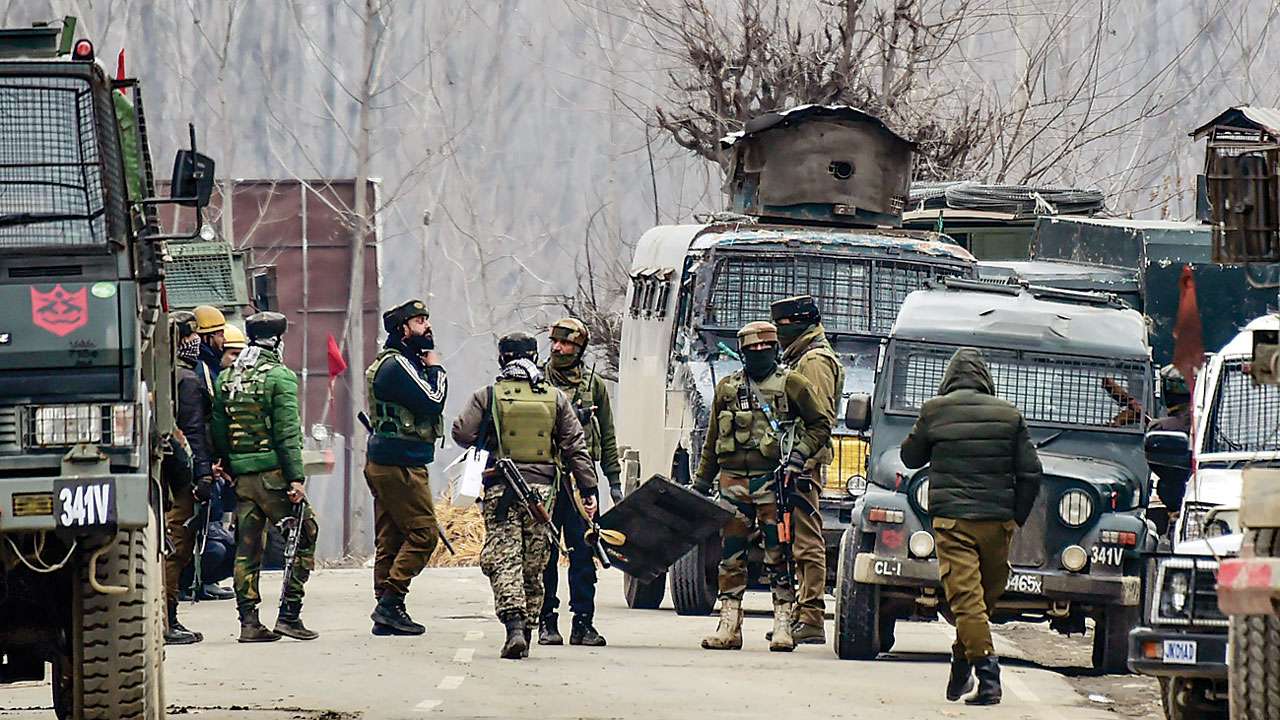
    The dastardly Pakistan-inspired and supported terrorist strike on February 14, 2019, on a CRPF convoy in Pulwama in Jammu and Kashmir resulted in more than 40 fatalities. That this tragedy is attributable to a serious intelligence failure, shoddy road clearance drills besides the faulty decision to dispatch such huge numbers of paramilitary personnel by road and not by air (as now ordered) cannot be denied by security professionals anywhere. That India altered the counter-terror policy paradigm by launching retributive aerial attacks deep inside Pakistani territory was indeed a welcome change and, resultantly, would have sent the correct signal to a terrorism-sponsoring Pakistan.

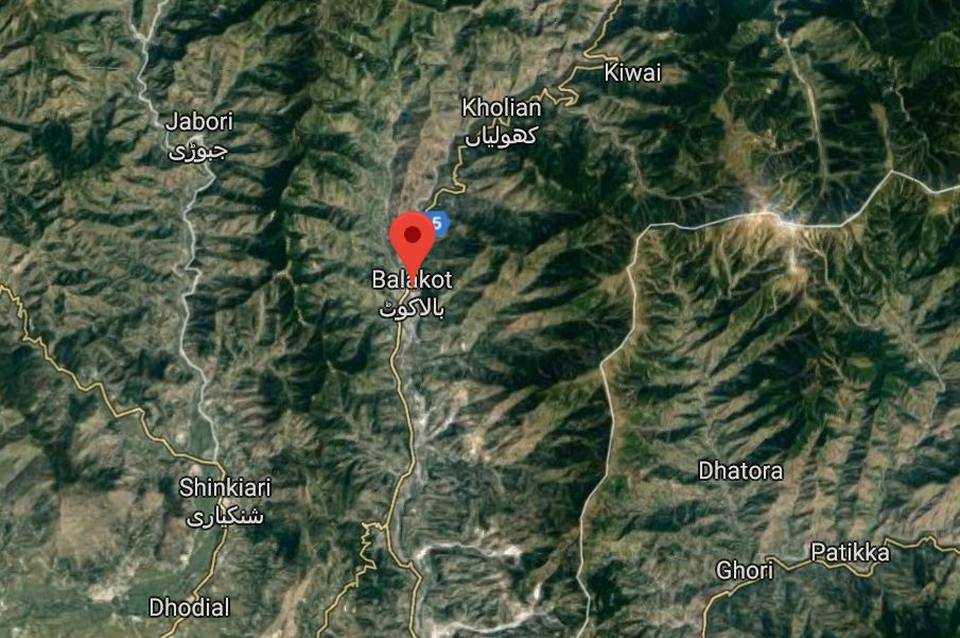
    The Indian Air Force’s deep strike and the resultant casualties in and damage caused to Jaish-e-Mohammed’s training camp in Balakot in Pakistan’s Khyber-Pakhtunkhwa province and the next day’s shallow aerial counter strike in the Poonch-Naushera sector by Pakistan would have thrown up many lessons for India’s security hierarchy. That these lessons are addressed with alacrity and the seriousness they demand requires no elaboration.

    Even in a democracy where transparency is essential in certain policy matters, the media, especially the over-noisy electronic media, has to absorb the fact that strategies and tactics, operational details, targeting and timings, employment of new weapons and platforms, strengths and weaknesses must not be discussed in the public domain. However, at an opportune time, the official arm of the government/services can and must share relevant details with the public which do not compromise national security. Equally, lapses, where emerging, even within the security forces must be analysed in great depth for future improvements.

    Post the Kargil War, the Vajpayee government had, very appropriately, carried out a comprehensive review of India’s higher defence management under the aegis of the Kargil Review Committee (KRC) and the Group of Ministers (GoM). The KRC and the GoM had done a remarkable job and some of the security organisations now in place owe their existence to them. Though India was clearly victorious in the Kargil War, the government at that time did not hesitate to discuss openly whatever shortcomings in the defence structure there were, dispensing the garb of national security or jingoistic patriotism! In the US, it is commonplace for serving generals/admirals to depose and testify before congressional committees on matters pertaining to national security. Accountability to the nation is thus a very normal hallmark in all democracies.

    As the world’s largest democracy and an aspiring global player, India has to conduct itself like one. Consequently, all its institutions have to be scrupulously accountable to the nation’s Constitution and not to personalities or political dispensations. The Indian armed forces are held in near-reverence and affection by the nation, necessitating them to always display professional acumen, moral courage and integrity of the highest order. As the last bastion of the state, the three services, both in peace and war, must continue to serve the nation as only they can and never, ever compromise on the values of truth, honour and valour. For retaining their high-pedestal-esteem in a democratic set-up, the armed forces must also accept that they are no holy cows either and should welcome any legitimate queries from the government or the public as regards their functioning or performance as long as operational security considerations are not compromised.

    Equally, responsible people in the nation must acknowledge the simple fact that merely questioning the government or any institution on matters pertaining to national security is not being anti-national!

    Lt Gen Kamal Davar is an Indian Army veteran and is former chief of India’s Defence Intelligence Agency. He is a visiting distinguished fellow at the TPF.

    This article was published earlier on March 24th, 2019, on The Asian Age.

    Image Credit

  • Undertones of a Potential India-Pakistan Water War

    Undertones of a Potential India-Pakistan Water War

    Renuka Paul and M Matheswaran                                                           (March 9, 2019/Analysis)

    Last week saw India-Pakistan tensions touch a crescendo as India, for the first time, executed a punitive strike into Pakistan. While Pakistan’s retaliatory strike was thwarted by IAF’s air defence mechanism it also resulted in a MiG 21 aircraft being shot down and the Indian pilot taken as prisoner. While international pressure forced Pakistan to release him within 48 hours, it also led to quick de-escalation. In the bargain, India’s pressure on Pakistan became diluted significantly. The genesis of this spike in tensions between the two nuclear powered neighbours, relates to the event of February 14th, 2019 when Pakistan based Jaish-e-Mohammad launched a terror attack in Pulwama, Jammu and Kashmir that killed over 40 Indian paramilitary personnel.

    Blaming Pakistan for the incident, New Delhi has revoked the ‘Most Favoured Nation’ status granted to Islamabad, imposed 200 percent duty on imports from Pakistan and vowed to end the flow of unutilized water from India’s shareflowing to Pakistan. On February 26th, India carried out “non-military, pre-emptive” airstrikes to destroy terrorist camps in Balakot, Pakistan. The tough and unprecedented (since 1971) retaliatory measure of crossing Pakistan’s airspace makes sense given the political pressure due to the upcoming elections and the media fuelled public sentiments. This changed discourse proves that Pakistan’s approach of employing Islamic proxies to cause destructions and using nuclear weapons as a safeguard to deter Indian response does not hold true any longer. Moreover, the international community including China and Saudi Arabia, usual Pakistan allies, has condemned the terror activities.

    Some argue that the strongest threat India has made since the Pulwama incident is the decision to alter the course of water flowing into Pakistan towards Punjab and Kashmir instead. The recent claim, however, seems irrelevant as it is in fact a two-year-old announcement that the excess of Indian waters that flow into Pakistan will be used for hydroelectric projects. But what this has sparked is a boost to those advocating abrogation of the Indus Water Treaty (IWT) and has highlighted a potential water conflict in the subcontinent.

    Post partition, in 1948, Pakistan argued that it needs Kashmir partly for its water security as it is nearly 65-percent dependent on the Indus river system. Following escalated issues, India partially cut off water supply to Pakistan by shutting off water from Ferozepur Headworks to Dipalpur Canal, portions of Lahore and main branches of the Upper Bari Doab Canal. To de-escalate the situation and to prevent further water crisis, the World Bank, after years of negotiations, brokered the IWT in 1960. According to this deal, India is allocated the eastern rivers- Ravi, Beas and Sutlej- while Pakistan has the western rivers- Indus, Chenab and Jhelum- and it mandates a bilateral meet twice a year to share data regarding flow, flooding etc. However, over the years the undertones of looming water dispute is evident. Being the upper riparian state, India has a clear advantage that sustains Pakistan’s insecurities. For instance, it has built multiple dams and barrages over river Jhelum. While 1.50 MAF water is allowed to India from Jhelum under IWT, constant disputes exist regarding the amount of water diverted (stop the flow or flood).

    In 2008, Lashkar-e-Taiba chief Hafiz Saeed accused India of water terrorism, followed by Pakistan government in 2010 claiming that India chokes water supply consistently. In the aftermath of Uri attacks in 2016, Modi proclaimed that “blood and water cannot flow simultaneously” and dismissed the bilateral meet of IWT committees. In addition, New Delhi set up dozens of small and medium hydroelectric and irrigation projects like Wular barrage, Baglihar Dam, etc that obstruct Pakistan’s water share. Though India cannot unilaterally end the treaty, it can reduce the water flow to Pakistan utilizing the provisions of IWT that allows India to use water from Western rivers for non-consumptive needs like irrigation, hydroelectricity production, etc. Islamabad responded that revocation of IWT “can be taken as an act of war” and garnered international support to stop India’s project efforts.

    Given that Pakistan is allotted 80 percent of the water from the Indus river system, many in India call for ending IWT. However, the potential consequences of retraction from IWT are manifold. As signatory to the international agreement, backing out from IWT will invite international condemnation affecting India’s global image and its bid for UNSC seat. Moreover, the trust relation with neighbours (Nepal and Bangladesh) with whom India shares water treaties will be affected. Additionally, India does not have the infrastructure to use the extra water and this could result in the flooding of Kashmir. Even the underutilized water that belongs to India (from eastern rivers) is free flowing to Pakistan. Despite continued claims of diverting the water that flows to Pakistan to other parts in India, New Delhi is yet to materialize these claims.

    Experts argue that this is to avoid water crisis within the country. Water disputes within states in India are common. For instance, it was only after 40 years of interventions that Jammu and Kashmir, Punjab and Haryana signed an agreement in 2018 on the Shahpur Jandi dam project for access to and use of the water from these rivers. There is also the risk of China following India’s steps and reducing water flow to the Brahmaputra river. They have already done so by building the Lalho project on the Xiabuqu river, a tributary of Yarlung Tsangpo (Brahmaputra as known in India). Realizing the disadvantages of withdrawing from IWT, India has looked at other alternatives.

    New Delhi is engaging in water power play by further limiting Pakistan’s water supply through Afghanistan – India investing on the $236 million Shahtoot Dam on Kabul river in Afghanistan is an example. Using water as a political weapon is not new. Turkey completely stopped water flow from Euphrates to Syria, Israel cut fresh water supply to Gaza, and so on. In the absence of a water sharing agreement between Afghanistan and Pakistan, India is investing in river and dam projects on Afghanistan’s eastern rivers- Kabul and Kunar- that eventually flow into Pakistan. However, this seems to set a dangerous precedent and will further worsen the distributional conflicts in the region. In parallel, India has also taken up multiple projects utilizing the provisions under the treaty that can potentially reduce the water flow to Pakistan. Though it takes time, given the costs and objections involved, this seems to be a move in the right direction.

    With political tensions and water stress rising in both nations, water diplomacy needs to be an important factor to be considered in Indo-Pak negotiations. Moreover, issues like climate change and global warming were irrelevant when IWT was brokered and left out of its gambit. Intermittent floods and droughts could be controlled through mutual coordination. Therefore, water should be seen as a factor for cooperation and not conflict.

    Renuka Paul is a Research Analyst with The Peninsula Foundation. She holds a Masters in Public Policy from Mumbai University. Views expressed are the author’s own.

    Air Marshal M Matheswaran AVSM VM PhD (Retd) is the Founder President and Trustee of TPF.

  • Advantage India, after Balakot air strike

    Advantage India, after Balakot air strike

    G Parthasarathy                                                                                     March 8, 2019/Op-Ed

    After the precision air strikes by the Indian Air Force on the small town of Balakot in Pakistan’s Khyber Pakhtunkhwa Province, public attention in India is now focused on bringing the leaders of the Jaish-e- Mohammed, including Jaish Supremo Maulana Masood Azhar to justice.

    Ironically, Azhar would not have been such a threat today if we did not cravenly release him after being blackmailed, during the Kandahar hijacking of IC 814. Those then released, included terrorists like Omar Syed Sheikh, who funded the 9/11 hijackers in the US and murdered American journalist Daniel Pearl.

    Recurring pattern

    The mass killing of Indians in terrorist strikes organised by the ISI has been a continuing feature of Pakistani policies, since the Mumbai bomb blasts on March 12, 1993. People seem to forget that 253 people were killed and 713 injured in the terrorist strikes in Mumbai in 1993. These killings were organised by the then ISI Chief Lt. General Javed Nasir, who incidentally enjoyed the patronage of Nawaz Sharif for years.

    The mastermind of the 1993 bomb blasts, Dawood Ibrahim, lives under heavy security protection, in the elite locality of Clifton in Karachi. There is conclusive evidence that the attack on India’s Parliament in December 13, 2001 was organised by Maulana Masood Azhar’s Jaish-e-Mohammed.

    A former ISI Chief Lt. General Javed Akhtar admitted this, in March 2004, in Pakistan’s Parliament. In the Kargil conflict in 1999, 527 Indian soldiers had been killed and 453 wounded, which was ostensibly designed to disrupt India’s supply lines to its forces in Siachen.

    When the Jaish-e-Mohammed, thereafter, briefly receded into the background, the ISI backed Lashkar-e-Taiba mounted yet another terrorist attack on November 26, 2008 on Mumbai, when 139 Indians died and 256 were injured. This received huge international attention, as the casualties included citizens of countries like US, UK, France, Germany and Israel.

    Yet, within a few months, we were back to a “Composite Dialogue” with Pakistan, after the Sharm el Sheikh Summit, where the focus of attention was not the 26/11 terrorist strike on Mumbai, but unfounded Pakistani allegations of Indian involvement in the freedom struggle in Baluchistan! Sadly, this was a manifestation of Indian diplomacy, at its worst.

    The Balakot Air Strikes by IAF Mirage 2000 aircraft was marked by the use of precision guided Israeli Spice 2000 bombs, which function with deadly accuracy. There is now conclusive evidence that the target was a Jaish-e-Mohammed Madrassa, which was badly damaged.

    Hundreds of Jaish Jihadis, preparing for “martyrdom” in Jammu and Kashmir, were motivated and trained in Balakot, for “Jihad” in Kashmir. The training was embellished with promises of an after life in a heavenly abode. Our government would, however, have been better advised, if unverified claims of hundreds of casualties were not prematurely made, or publicised.

    What will, however, please our Russian friends, is the fact that an upgraded frontline American F-16 equipped with highly sophisticated AAM-RAM missiles, was shot down by a 1970s-1980s vintage, Russian Mig 21 BIS of the IAF. This incident again exposed the notorious inefficiency of our Defence Ministry, which has delayed a proposal for modernisation of the IAF’s fighter fleet for over two decades.

    Successive Defence Ministers must accept constitutional responsibility for the cavalier manner the entire issue of modernisation of our fighter fleet has been handled. More importantly, the decision-making organisational structure in our Defence Ministry, dominated by a generalist bureaucracy, needs to be drastically restructured and reformed.

    Pakistan should be made to realise that India’s air strike in Balakot marks only the beginnings of a new approach, which India will now undertake.

    Upgrade covert actions

    Firstly, it is time for decision-makers in New Delhi to realise that our covert actions capabilities on foreign soil need to be upgraded. I had occasion to recently read a book by journalist Sandeep Unnithan, due for release shortly, on how Prime Minister Indira Gandhi personally supervised covert actions in Bangladesh in 1971, which virtually destroyed maritime communications facilities there, even before the conflict started in December 1971.

    The Israelis spent years developing capabilities to seek out the perpetrators of the Second World War “Holocaust,” across the world. Their Iranian rivals have developed similar capabilities, which one saw recently, when Iran responded to a terrorist attack from Pakistani soil, which killed 29 Iranian Revolutionary Guards, near the border between Pakistani Baluchistan and the Sunni majority Iranian Province of Sistan-Baluchistan, where the port of Chabahar is located.

    In an almost immediate Iranian counter-strike, across the border, over eight Pakistani soldiers were killed and a large number injured.

    The time for developing capabilities for counter-strikes is now ripe. The global political, diplomatic and economic scenario in India and Pakistan has changed drastically, over the past two decades.

    Pakistan remains, in international perspectives, an economically bankrupt and politically dysfunctional country, which is ostensibly democratic, but run by a military elite, which is given to promoting religious extremism across its neighbourhood. Its actions, like hosting Osama bin Laden secretly for over a decade, promoting Taliban extremism in Afghanistan and using internationally discredited terrorist groups for Jihad abroad, have irreparably sullied its international image and reliability.

    Islamabad is addicted to seeking doles from rich Arab neighbours, China and international financial institutions like the IMF, Asian Development Bank and the World Bank. Pakistan is constantly dependent on these countries and international institutions, for its economic survival.

    In contrast, India is seen today as a country with the fastest growing economy in the world, which is increasingly attractive for foreign investment. India is at peace and enjoys excellent relations with all countries (except Pakistan) in its Indian Ocean neighbourhood.

    It has multiple free trade and comprehensive economic cooperation agreements within SAARC and with members of Bimstec and Asean. There are, likewise, Comprehensive Economic Cooperation Agreements with South Korea and Japan.

    Across its western maritime frontiers, India is the only country, which enjoys excellent relations at the same time, with the oil rich Arab Gulf States, Iran and Israel. Prime Minister Narendra Modi has publicly expressed India’s thanks for American understanding and support in recent days.

    These developments now need, in course of time, to be augmented by moves to engage people in Pakistan, making it clear that India wishes them well.

    They have to be made to realise that their present miseries are the result of actions by a power hungry and rogue army, which is undermining democracy and leading the country to economic disaster and international isolation.

    Ambassador G Parthasarathy IFS (Retd) is a former High Commissioner in Pakistan, and is a Trustee of ‘The Peninsula Foundation’. Views expressed are author’s own.

    This article was published earlier in ‘The Hindu-Businessline‘. 

    Image Credit

  • Will Venezuelan Parliamentary Elections End the Deadlock?

    Will Venezuelan Parliamentary Elections End the Deadlock?

    Andrei Korobkov                                                                                   March 05, 2019/Analysis

    The crisis in Venezuela grows more complex with each passing day. At first, President Nicolas Maduro declared that he was willing to consider the possibility of early parliamentary elections. But it is clear that this proposal is absolutely unacceptable for the opposition, which already wields a majority in the legislature and has the US firmly behind it. The opposition is urging the President to resign and takes a dim view of an early presidential election, no matter how rapidly it can be organized. The “interim president” appointed by parliament, Juan Guaido, is counting on the West’s financial and political support. He is feeling increasingly confident now that the US has frozen Venezuela’s government bank accounts and announced that the pretender president would be given control of them. This means that the government will immediately lose $7 billion deposited in US banks and another $11 billion in expected revenues from 2019 oil sales. Given that, Guaido, dizzy as he is with what he sees as his success, is unlikely to be willing to agree to serious talks or compromises, although he can suggest holding simultaneous presidential and parliamentary elections. Maduro, for his part, is not going to surrender and has already issued a warning that the growing confrontation and the mounting Western interference in his country’s internal affairs could lead to a civil war.

    There are a number of reasons why the current crisis in Venezuela is of such great interest and may have far-reaching political consequences. The US has always regarded Latin America as its backyard where it is free to lay down the law and punish disobedient. The 1823 Monroe Doctrine, in effect, introduced a “limited sovereignty” model that became increasingly pertinent during the Cold War.

     The United States has made huge investments in Latin American economies; Latin elites have been educated in the US for generations; the Americans have trained Latin militaries and supplied them with arms for centuries. The region is highly dependent on the US technologically. Besides, Venezuela is one of America’s main oil suppliers. The Americans are exasperated not only by the demonstrative independence of Venezuelan foreign policy but also by the 20 years of leftist reforms under the Chavez and Maduro governments. The same is true of the increasingly noticeable political, economic and military presence of Russia and China in the country. Of no small importance, too, is Venezuela’s good relationship with Cuba.After the Cold War, the Americans initially decided to at least formally follow the rules and refrain from toppling democratically elected governments in the region. Instead they used other, more flexible methods to influence the situation in individual Latin American countries. The exceptions were the abortive coup attempts in Honduras in 2009 and Venezuela (against Chavez) in 2002. From this point of view, the attempt to displace Maduro is relatively out of step with the new US policy in the region and may signal yet another revision of regional strategy.

    One more specific feature of the current situation in Venezuela is that the US line consists of an eclectic array of approaches that the US has used in a number of Latin American countries over the last 60 years. The contras’ failed landing in the Bay of Pigs in 1961 is one notorious example. A more obscure aspect of the story is how the CIA thought about the operation. After all, no one expected that the team in question would be able to launch a large-scale operation and fight Fidel Castro’s government. The plan was for them to dig in on a limited territory, proclaim an alternative government that would be immediately recognized by Washington, and request US troops be sent in to “support the legitimate government.” The gambit was a scandalous failure, but the “alternative government” idea is still alive and being used in Caracas in the form of a constitutional coup.

    Another precedent was set in Chile in 1973. Older people remember well the TV footage of well-fed and clearly not overworked housewives banging pots and pans at protests in Santiago and shouting that they were starving. The same tactics are being used today. The US has introduced economic sanctions and is intentionally destabilizing the economic situation in a country that has already been weakened by the government’s experiments with “Bolivarian socialism” to accuse Maduro of being an ineffective leader and to arouse popular disaffection. (But even today, Maduro’s opponents are failing to turn the lower strata that form the majority in that developing country against him: these people remember that it was Chavez and Maduro after him who gave them access to education and healthcare and enabled them to enjoy far better living standards).

    A third model still in the works is based on the 1989 Panama operation. If the first two options don’t work, outbursts of violence will be provoked through assassination attempts against opposition leaders or assaults on US nationals. This would lay the groundwork for a US invasion under the pretext of restoring law and order and guaranteeing the safety of US citizens.

    The first two models have been tested in Venezuela, without much success. The question is whether the third option will be attempted. This also raises two more interesting questions. Latin American coups usually become possible if military leaders turn on the government, but in Venezuela they continue to support Maduro. Moreover, it was the military who saved Hugo Chavez in 2002 and thwarted the coup masterminded from outside the country. The question is whether this support endures and whether the US succeeds in offering military leaders enough “carrots” for them to change their outlook.

    The second question concerns the US president. Donald Trump took over two years ago with his coterie of right-wing political reformers determined to fundamentally alter both America’s domestic and foreign policy. In the foreign policy arena, this new approach was based on renouncing interventionism, shifting emphasis towards domestic growth, acknowledging that the center of the world system was migrating from the northern Atlantic Ocean to the Pacific, and recognizing China as the major geopolitical threat to the United States. The last point implies that the US must create a new system aimed at containing China, which, in turn, requires better relations with Russia as a counterweight to China, the start of tariff wars against the PRC, and the destabilization of the WTO and the free trade system as a whole, which allegedly are more beneficial for China than for the United States. But, seen by the US elite (and not without reason) as a systemic threat, Trump is under continuous attack and unable to implement many of these ideas (with the greatest obstacles put in the way of his attempts to improve US-Russia relations). Gradually, the majority of the right-wing reformers left his administration (the biggest loss was the departure of Steve Bannon and Sebastian Gorka) to be replaced by traditional neocons and interventionists like John Bolton, the current national security advisor.

    Along with the loss of Republican control of the House of Representatives in November 2018, the approach of the presidential primaries, growing stock market volatility, relatively low presidential approval ratings, and unending attacks on Trump from the political establishment and the “elite” press, this is strengthening the hand of those who are urging the president to stage a “small victorious war” of his own. After all, Trump is still the only US president in two generations who has not yet launched a single new military intervention. Meanwhile, Trump himself is between a rock and a hard place, as he is being pressured by both the traditional US right, who dream of the US flexing its military might and toppling the disobedient regime, and the Democrats, who hope to force the president to break his election promises, mire him in a protracted military conflict and thus discredit and politically weaken him ahead of his re-election campaign.

    The current situation has yet another, broader international dimension. The international community is divided over Venezuela. The United States is supported by Canada, Brazil, and many European and Latin American countries. But that is a far cry from unity. Many right-wing governments in Europe, including Italy, whose government is very close to Trump ideologically, have been skeptical of attempts to give Venezuela away to a different suitor.

    An even more important factor is that the new leftist president of Mexico, Andres Manuel Lopez Obrador, is well aware of the possibility that Mexico will be the next target, if a constitutional coup is allowed to happen in Venezuela. Moreover, opposing Trump is a win-win for any Mexican politician amid the growing US-Mexican friction over immigration, tariffs, and much else. President Erdogan in Turkey is thinking along the same lines.

    Most important, of course, is the stance taken by Russia and China. Both have actively cooperated with Venezuela in recent years, with Chinese investment in the Venezuelan economy exceeding Russia’s by almost 400 percent. Nevertheless, China is very cautious about its moves, as it is currently under pressure from the US and unwilling to furnish Trump with another pretext to accuse it of growing expansionism.

    This is why the initiative in supporting President Maduro will most likely remain in Russian hands. Though inferior to China in terms of investment, Russia is the main arms supplier to Venezuela (with sales totaling $12 billion). Russia has also invested heavily in Venezuela’s oil industry and a number of other sectors.Thus, the current situation includes many unknowns linked to actors’ moves both in Venezuela and the United States, as well as Russia, China and a number of other countries. As such, both the course of the conflict and its outcome can be of global importance, influencing, among other things, the prospect of whether the US reverts to its traditional imperial interventionism or opts for a somewhat different policy.

    The course of this crisis and its outcome may also have serious impact on the domestic political situation in the United States. The potential for a “controlled crisis” looms large in this situation, because the chances of a political provocation aimed at drawing the Trump administration into a military conflict are sufficiently high. Therefore, the dynamics of the Venezuelan drama may decide the fate of both Maduro and Trump himself in the long run.

    Dr Andrei Korobkov is Professor of Political Science at the Middle Tennessee State University, and is Non-Resident Visiting Distinguished Fellow at TPF. This article is the English translation of the original published earlier in Valdai Discussion Club.

    The views expressed are the author’s own.

  • Reaping the Whirlwind: Pulwama and After

    Reaping the Whirlwind: Pulwama and After

    Deepak Sinha                                                                                                         01 Mar 2019

    It was the military disaster of 1971 that forced the Pakistani establishment, the military which runs the country for all practical purposes, to face up to the fact that it could never win a conventional war against India. If it was to avenge its humiliation and cut India down to size, it had little choice but to fight through proxies, bleed India through a thousand cuts.

                This idea must surely have germinated from its successful employment of Islamic militants, the forerunners of the Taliban, used to oppose the rule of the Marxist People’s Democratic Party of Afghanistan (PDPA) that had deposed President Mohammed Daud Khan in what came to be known as the Saur or April Revolution of 1978, It was this Pakistani fomented insurgency which finally led to the Soviet intervention and occupation of Afghanistan in Dec 1979. Incidentally, while conventional wisdom would have us believe that it was the CIA that came up with the idea of using militants to fight the Soviets, facts show that they came to the party much later and only added their considerable resources to the techniques perfected by Pakistan’s Inter-Services Intelligence in the use of irregulars for its own ends.

                Thus from the early Eighties Pakistan commenced its support for secessionist elements within India that were involved in fighting against the State, firstly the Khalistan Movement and subsequently, with greater success, in Jammu and Kashmir. It clearly had advantages as there was credible deniability, economy of effort with the dirty work being done by proxies keeping Indian Security Forces tied down and finally, the most important of all, creating fear and anxiety within the general population that impacted every aspect of our democratic way of life.

                There is of course one major disadvantage of using proxies, they tend to have a mind of their own and often times respond inappropriately and at cross purposes to what its mentors may be wishing to achieve. The Pulwama suicide attack falls in this category. There have been numerous statements over the past four years that have made clear that Pakistan prefers to deal with Indian Governments run by the more “liberal and secular” parties compared to having to deal with the more conservative, Hindutva driven BJP. With elections around the corner and with the BJP facing the very real likelihood of a serious decline, if the recent state elections were any indication, it would have been in Pakistan’s best interest to maintain a low profile.

                Masood Azhar, the Jaish- e- Mohammed supremo, obviously had a different view. Not only did his organization carry out the suicide attack that led to the death of 45 policemen, but also went on to claim credit for the action. Thus, in one thoughtless act he not only destroyed the Pakistan Government’s attempts at deniability, but he also made Imran Khan’s call for India to provide credible evidence infructuous. Most importantly, the timing of the devastating attack left the Modi Government with little choice but to respond overtly and with speed, if it was to still retain any hope of doing well at the hustings. There was also the possibility that if India responded in an effective manner to the outrage, the Governments stock would go up rapidly and that would enhance Mr. Modi’s reputation and chances of return to power, just as the earlier cross- border strike helped the BJP in the Uttar Pradesh elections. This could hardly have been to Pakistan’s advantage and in the event it was facilitated by the Army, then General Bajwa has certainly made a serious miscalculation.

                Regardless of the number of casualties that the Indian Air Force’s attack on terror camps deep inside Pakistan may have caused, the very fact that the Indian Government displayed the intent to take on terrorists inside Pakistan has clearly changed the narrative prevalent for the past four decades. It has also shown up Pakistan’s repeated threats of a nuclear riposte as sheer hyperbole and bluster. More importantly the initiative has finally shifted in India’s favour along with world opinion which has had enough of Pakistan’s duplicitous behaviour. Moreover, any escalation above a perfunctory retaliation, which was to be expected to assuage domestic opinion, by Pakistan, would destroy the fig leaf of deniability it has used over the years. Most importantly, it would force their military into a direct confrontation, something that the proxy war waged by them over the years allowed them to avoid.

                In this context one can only hope better sense will prevail and we will be able to avoid a serious escalation of the conflict which can hardly help either side given the huge challenges that we face in lifting vast swathes of our population out of the twin evils of poverty and illiteracy.  However, it must be emphasized that true progress will only occur as and when Pakistan starts to wind up the Jihad factory it has built over these years. In any case the Indian cross- border raid cannot be a one- off affair and we must be willing to do all that it takes to neutralize the Jihadi network and its vast army of financiers, mangers and facilitators.

                Finally, while all our attention may be taken in dealing with the issue at hand, the fact as to what led to the Pulwama attack must not be lost sight off. For this serious lapse on the part of our intelligence services, it is imperative that heads must roll. There have also been clear indications that despite increasing numbers of militants being neutralized in the Valley the Army and other Security Forces were being increasingly marginalized, especially in South Kashmir, because of popular discontent. They had consequently lost their ability to dominate the countryside, thereby losing out on intelligence. These aspects continued to be ignored by the Central Government and the military hierarchy. Little thought was given to the necessity for reviewing either counter insurgency strategies or tactical procedures and the leadership continued to be swayed by tactical successes with little attempt to resolve the growing disillusionment and radicalization within the population, especially the youth. This must certainly change.


    The writer, a military veteran is a Consultant with the Observer Research Foundation, New Delhi and Senior Visiting Fellow with The Peninsula Foundation, Chennai.

    This article was also published in the Pioneer https://www.dailypioneer.com/2019/columnists/stifle-the-jihadi-network.html. Opinions expressed in the article are those of the author alone.

  • Looking Beyond the Rafale Imbroglio

    Looking Beyond the Rafale Imbroglio

    The tenor of the debate, especially in the election year, can hardly be expected to be moderate or mature. While wild assertions made by the politicians in hope of swaying the electorate is to be expected and accepted, there is also a vital need for politicians to ensure that matters pertaining to National Security are kept out of the ambit of politics. Just as Georges Clemenceau, French Prime Minister during the Great War, commented that “War is too serious a matter to entrust to military men”, so too is the case with entrusting national security to just politicians. But politicians being politicians care little for such niceties, which explains why allegations of wrongdoing are flying so thick and fast in the ongoing Rafale procurement imbroglio, who, unfortunately, have been joined by respected academics and researchers, who should know better.

    Attempts to garner the limelight and the few minutes of fame that goes with it is understandable in the case of politicians, but for academics to do so by drawing conclusions based on speculation that passes for facts and little else, seems to be rather hasty, if not downright fallacious and unprofessional.  A respected academic, for example, has concluded that the decision to procure just 36 jets instead of the original 126 with the attendant increase in unit cost shows “extraordinary ineptitude can only be explained by the circumvention of laid down procedures.” He further  goes on to equate the manner in which this decision was made to that of demonetization, berates the Government for being “parsimonious and incompetent” and suggests that their action was “worse than a crime—it was a blunder.”

    He may well be proved right in his conclusions subsequently, but the truth is that it is one thing to question the Governments’ motivation or influence in the selection of the aircraft or the offset partners, but quite another to question the decisions it takes, however much we may disagree with them. For one, Mr. Modi was elected by a substantial majority to do just that, since that is what is expected of a leader. Moreover, we are wholly unaware as to circumstances that led to the Government to take the decision that it did, and therefore to question his decisions clearly smacks of arrogance, if not an ulterior motive. It is all very well to rant about the ineptitude and incompetence of this Government and its adverse impact on defence modernization, but what then are we to conclude at the previous Governments’ inability to push through the earlier deal in the seven years that it had to do so? Surely ineptitude or Incompetence may be too mild a term in their case.

    There is no gainsaying the fact that defence procurement and corruption have had a symbiotic relationship ever since Independence and our first procurement scandal, the infamous “Jeep Scandal” of 1948. Politicians have always seen defence procurement as a lucrative source of funds and as long as our political funding regulations remain opaque, nothing is going to change. Therefore, if this Government has actually resorted to underhand means as alleged, despite it being a government to government deal, then they have only trod on the well-beaten path of their illustrious predecessors. Thus, if precedent is to be our guide, then all the brouhaha on the issue will only result in a setback for the Air Force while politicians and their minions involved getting away, as we saw in the Bofors case.

    If it is accountability that we are interested in, then we need to look beyond this specific issue of procurement and ask ourselves as to why the Air Force finds itself in such desperate straits today, with regard to its combat strength. The fact that its combat strength has fallen from its authorized forty-two squadrons to the present thirty plus, over the past two decades, was neither unanticipated nor unexpected.  Like all machines, aircraft have a quantifiable life span, which while possible to extend with mid-life upgrades, will at a point in time require replacement by the next generation, if the Air Force is to be able to match and overcome the adversary’s capabilities. This does not call for either vision or foresight, just common sense and a practical understanding of the facts, which somehow the Government of India with its vast resources was unable to do. Surely someone must be held accountable for this negligence because not only does it put our national security at risk but endangers pilots who are expected to make do with shoddy outdated aircraft.

    While the Air Force hierarchy must carry some of the blame, not least for lack of moral fibre for its inability to stand up for its rights, governments over the years, especially the Ministry of Defence and Hindustan Aeronautics Limited (HAL) that it controls, have much to answer for. For the most part, much of our current problems can be traced to the utter failure of HAL to produce the hugely over-budget, inordinately delayed and ostensibly indigenous Light Combat Aircraft, the Tejas. In this context, the existing perceptions within the Air Force that quality control in HAL is all but non- existent have been borne out by the recent crash of the Mirage 2000 aircraft undergoing upgradation. Initial reports doing the rounds suggest that the nose wheel broke while it was taking off resulting in the tragic death of two test pilots, the best of the best.  It also brings to mind a similar case when three paratroopers slithering down from a HAL manufactured Advanced Light Helicopter at the Army Day Parade in January 2018 fell and were grievously injured because the “strong point” to which their rope was tied broke and separated from the aircraft’s body. The question that needs answering is not just how many such cases have happened in the past, but also how many in HAL have been held accountable for such shoddy work?

    This also explains to a large extent the previous governments’ inability to successfully close the deal for the 126 aircraft. It was reportedly blocked by the unwillingness of the Air Force hierarchy to accept aircraft manufactured by HAL without certification by Dassault Aviation, the manufacturers of the Rafale, something they refused to do.  That they would prefer to work with an untried and untested offset partner, allegedly thrust on them, rather than with HAL speaks volumes about what they think of the capabilities of this Defence PSU!

    Therefore, politicians and academics critical of this governments’ decision to keep HAL out of the loop in this case, especially their accusation that by doing so we have lost out on technology transfer, are either being deliberately obtuse or completely out of touch with reality. In this context, Mr. Rahul Gandhi has been particularly vocal, even to the extent of meeting workers of HAL. It would be wonderful if he took the initiative to volunteer to fly in one of these aircraft or take time off to interact with the pilots who do. Maybe, just maybe, he would have a change of heart and leave national security issues out of the realm of politics.  Finally, our leaders would do well to remember that even after these aircraft are inducted into service, they will continue to be confronted by that gargantuan problem, where will the other hundred-odd aircraft desperately need come from? After all what is sauce for the goose is also sauce for the gander!


    Brigadier Deepak Sinha (retd), an Army veteran, is a Visiting Senior Fellow at the TPF and is also a Consultant at ORF, New Delhi.

    This article was published earlier in the Times of India. The views expressed are the author’s own. 

  • The state of Bihar!?

    The state of Bihar!?

    The Prime Minister in the run up to the Bihar assembly elections announced a Rs.50,000 crores package for the state. Just as he announced a Rs.100,000 crores package for Jammu and Kashmir that July. Bihar has a population of over 103 million and J&K has a population of 12.5 million.

    This is not a new story. Bihar has been systematically exploited by denying it its rightful and deserved share of central funds from the First Plan.

    That Bihar is India’s poorest and most backward state is undeniable. The facts speak for themselves. But what makes its situation truly unique is that Bihar is the only state in India where the incidence of poverty is uniformly at the highest level (46-70%) in all the sub-regions. The annual real per capita income of Bihar of Rs. 3650 is about a third of the national average of Rs.11, 625. Bihar is also the only Indian state where the majority of the population – 52.47% – is illiterate.

    But Bihar has its bright spots also. Its infant mortality rate is 62 per 1000, which is below the national average of 66 per 1000. But what is interesting is that it is better than not just states like UP (83) and Orissa (91), but better than even states like Andhra Pradesh and Haryana (both 66).

    Even in terms of life expectancy, the average Bihari male lives a year longer (63.6 yrs.) than the average Indian male (62.4 yrs) and the state’s performance in increasing life spans has been better than most during the past three years.

    Bihar has 7.04 mn. hectares under agriculture and its yield of 1679 kgs. per hectare, while less than the national average of 1739 kgs. per hectare is better than that of six other states, which include some big agricultural states like Karnataka and Maharashtra.

    Despite this, in overall socio-economic terms, Bihar is quite clearly in a terrible shape.

    As opposed to an All-India per capita developmental expenditure during the last three years of Rs.7935.00, Bihar’s is less than half at Rs.3633.00. While development expenditure depends on a bunch of factors including a state’s contribution to the national exchequer, no logic can explain away the per capita Tenth Plan size, which at Rs. 2533.80 is less than a third of that of states like Gujarat (Rs.9289.10), Karnataka (Rs.8260.00) and Punjab (Rs.7681.20).

    Simple but sound economic logic tells us that when a region is falling behind, not just behind but well behind, it calls for a greater degree of investment in its progress and development. It is analogous to giving a weak or sick child in the family better nutrition and greater attention. Only in the animal kingdom do we see survival of the fittest with the weak and infirm neglected, deprived and even killed.

    But instead of this we see that Bihar is being systematically denied, let alone the additional assistance its economic and social condition deserves, but also what is its rightful due.

    From the pitiful per capita investment in Bihar, it is obvious that the Central Government has been systematically starving Bihar out of funds. Quite obviously Bihar has also paid the price for being politically out of sync with the central government for long periods. The last one was for a dozen years from 1992 to 2004. For the last one year Bihar had a government in New Delhi that was supposed to be favorably disposed to the regime in Patna.

    Quite clearly states that are in political sync do much better in terms of central assistance. Lets take a look at how Andhra Pradesh, a state that has stayed largely in political sync with New Delhi, has fared in the past few years. In terms of grants from the Central Government (2000 to 2005), Bihar fared poorly receiving only Rs. 10833.00 crores while AP got Rs. 15542.00 crores.

    Bihar has also been neglected as far as net loans from the center are concerned. It received just Rs.2849.60 as against Rs.6902.20 received by AP from 2000-02. It’s only in terms of per capita share of central taxes do we see Bihar getting its due. This gross neglect by the central government is reflected in the low per capita central assistance (additional assistance, grants and net loans from the center) received by Bihar in 2001. While AP received Rs.625.60 per capita, Bihar got a paltry Rs.276.70.

    The results of the economic strangulation of Bihar can be seen in the abysmally low investments possible in the state government’s four major development thrusts. Bihar’s per capita spending on Roads is Rs.44.60, which is just 38% of the national average, which is Rs.117.80. Similarly for Irrigation and Flood Control Bihar spends just Rs.104.40 on a per capita basis as opposed to the national average of Rs.199.20.

    Now the question of how much did Bihar “forego”? If Bihar got just the All-India per capita average, it would have got Rs. 48,216.66 crores for the 10th Five Year Plan instead of the Rs.21,000.00 crores it has been allocated.

    This trend was established in the very first five-year plan and the cumulative shortfall now would be in excess of Rs. 80,000.00 crores. That’s a huge handicap now to surmount. Then it would have got Rs. 44,830 crores as credit from banks instead of the Rs. 5635.76 crores it actually got, if it were to get the benefit of the prevalent national credit/deposit ratio.

    Similarly Bihar received a pittance from the financial institutions, a mere Rs.551.60 per capita, as opposed to the national average of Rs.4828.80 per capita. This could presumably be explained away by the fact that Bihar now witnesses hardly any industrial activity. But no excuses can be made for the low investment by NABARD. On a cumulative per capita basis (2000 to 2002) Bihar received just Rs.119.00 from NABARD as against Rs.164.80 by AP and Rs.306.30 by Punjab. It can be nobody’s argument that there is no farming in Bihar.

    If the financial institutions were to invest in Bihar at the national per capita average, the state would have got Rs.40, 020.51 crores as investment instead of just Rs.4571.59 crores that it actually received.

    Quite clearly Bihar is not only being denied its due share, but there is a flight of capital from Bihar, India’s poorest and most backward state. This is a cruel paradox indeed. The cycle then becomes vicious. This capital finances economic activity in other regions, leading to a higher cycle of taxation and consequent injection of greater central government assistance there. If one used harsher language one can even say that Bihar is being systematically exploited, and destroyed by denying it its rightful share of central funds.

    To even make a dent on the abysmal state that Bihar is now in, Bihar will need at least twice what it gets from the Centre, as of yesterday.


    Mohan Guruswamy is a prolific commentator on politics, economics, development and governance. He is a trustee of TPF. The views expressed are the author’s own.

  • When Democracy is not Enough?

    When Democracy is not Enough?

    This Op-Ed was published earlier in ‘The Tribune’.

    If we do not stand up and reclaim the space we have conceded to criminals and other low-life who now sit in judgment over us, it will be our children who will pay the price in the coming years.

    The Preamble to the Constitution of India clearly states that India is a sovereign, socialist, secular, democratic republic. But as the ongoing public discourse of our political masters clearly shows, we are more a democracy and less a republic. We may not truly be aware of the subtle difference between the two or even be bothered to give this aspect much thought. But make no mistake, if we are to progress and develop as a nation, we cannot do without either. History tells us that the term ‘democracy’ originated from the Greek words ‘demos’, the common people, and ‘kratos’ or strength. The first democracy was the city of Athens in 508-507 BC where Cleisthenes, known as the father of Athenian democracy, introduced the concept of rule by the common people. However, representational democracy, as we know it today, is very different from what was practised then and is today defined by its one major characteristic “rule of the majority”, which can easily devolve into mob rule or tyranny of the majority, or even worse, anarchy.

    Benjamin Franklin once said: “Democracy is two wolves and a lamb voting on what to have for lunch.” The only thing that keeps the lamb off the lunch menu is the fact that we are a republic — not a perfect one but still one nonetheless. What that basically implies is that the country is not a private concern of the rulers but is considered a “public matter” and belongs to each one of us regardless of caste, creed, gender or ethnicity. While this obviously demands that our rulers are elected and not inherited, as quite a few tends to be, more importantly, it requires them to rule for the common good, an aspect of governance on which philosophers, such as Plato and Aristotle, wrote volumes. This is, of course, only possible when there are a set of laws and those elected as leaders follow them both in letter and spirit.

    Unfortunately over the past few decades, common good seems to be ignored in the face of parochial and self-serving interests of our leaders, as the rule of law is often ignored or rendered irrelevant. It is no wonder then that our legislatives at the Centre and States have a surfeit of members facing criminal charges — 1,765 MPs and MLAs at last count, or 36 per cent facing over 3,500 cases as per the Government; though some contend the numbers are vastly understated.

    While the Supreme Court may well view the entry of criminals into legislative bodies as akin to “termite to the citadel of democracy,” it cannot make laws to keep them out. That, the court said, is the domain of Parliament, an institution that is yet to show a firmness of resolve to stem the rot. Ironically, it is the actions of the apex court itself which gave a fillip to criminals joining politics with its farcical ruling in the infamous JMM bribery case, involving the bribing of MPs to defeat a no-confidence motion brought against the then Prime Minister PV Narasimha Rao’s Government way back in 1993. These allegedly corrupt MPs were unashamed and blatant enough to openly deposit the bribe money in a public sector bank. They were subsequently prosecuted under the Prevention of Corruption Act but were absolved by the Supreme Court’s interpretation of Article 105 of the Constitution. This Article states that (1) MPs shall enjoy freedom of speech in Parliament and (2) shall not be held liable to any proceedings in any court in respect of anything said or any vote given in Parliament.

    The court held that the alleged bribe-takers, who had voted in the House, were “entitled to the immunity conferred by Article 105(2)”. It also went on to direct that the bribe-givers must be prosecuted, as also the bribe-takers who did not vote. Certainly, a unique legal justification for the concept of honour among thieves.

    The apex court has now attempted to correct the existing state of affairs by directing the Government to set up 12 fast-track special courts to try cases against the legislators.

    In addition, it has also directed all political parties, which give tickets to persons with criminal cases pending against them, to publicise the information on the party websites, apart from issuing a declaration in “widely circulated” newspapers and on electronic media after the nomination is filed.

    However, there is little doubt left that the “centre of gravity” seems to have shifted in favour of the criminal legislators and they seem to have become indispensable to parties for grabbing power. The sad truth is that actions taken by the Supreme Court now are of little consequence, nothing more than closing the barn door after the horse has bolted.

    While regular and reasonably fair elections have ensured that we continue to enjoy the fruits of a vibrant democracy, the same cannot be said for the state of our Republic. The gradual decline of values and the rule of law have ensured that the common good is of little concern to our political class who are quite happy with the status quo. Neither the judiciary nor the bureaucrats can bring about change for the better that is required. It is, therefore, left to the common citizen to act. If we do not stand up and reclaim the space, we have conceded to criminals and other low-life who now sit in judgment over us. It will be our children who will pay the price in the coming years.


    The writer is a military veteran, a Consultant with the Observer Research Foundation and Visiting Senior Fellow with The Peninsula Foundation, Chennai. The views expressed are the author’s own.

  • Poll Trail in India’s Backyard

    Poll Trail in India’s Backyard

    This article was published earlier in ‘The Tribune’.

    A DEVELOPMENT that has received scant notice in global politics is the democratisation of South Asia, where elected governments rule all the regional countries. An alliance of Maoists and the Communist Party (UML) was voted to power in Nepal in November-December 2017. Scheduled elections were held this year in Bhutan, where the enlightened monarchy voluntarily ceded power to elected governments. Pakistan saw a change in government recently, when the Imran Khan-led Tehreeq-e-Insaf party was voted to power, though there is evidence that the victory was ‘facilitated’ by the army. The Maldives saw a welcome change in government, with opposition parties joining hands to nominate the soft-spoken Ibrahim Mohammed Solih, to oust the authoritarian and anti-India government of President Abdullah Yameen.

    Bangladesh is now headed for general election on December 30. This will be followed by the General Election in India next year. Presidential elections are also scheduled in Afghanistan next year. Interestingly, it is President Ghani who is determined to hold these elections next year. The Trump administration, however, seems keen to thrust a government with Taliban participation on the Afghan people, to facilitate the expeditious withdrawal of its troops from Afghanistan, instead of backing a constitutionally mandated election.

    After going through the traumatic experience of having its elected government arbitrarily dismissed and its legislature dissolved by President Sirisena, Sri Lanka has seen its elected government and parliament being restored, with the judiciary asserting its constitutional authority. Presidential and parliamentary elections in Sri Lanka are scheduled in 2020. But given the continuing personal and policy differences between President Sirisena and PM Wickremesinghe, the island nation appears headed for uncertain times politically and economically in coming months.

    Developments in South Asia will also be seriously affected by what transpires in the elections in Bangladesh, the results of which will have a bearing on the security of India’s Northeast. The results could shape the contours of Pakistan-sponsored terrorism against India, by groups operating from Bangladesh. India has seen a vast improvement in relations with Bangladesh during the past decade, because of the cooperation and understanding of the Awami League government headed by Sheikh Hasina.

    The last decade saw the resolution of the long-pending problem of demarcation of India’s borders with Bangladesh and exchange of enclaves, which was completed in 2016. Likewise, the demarcation of the maritime boundary with Bangladesh was completed, with a UN tribunal awarding Bangladesh 19,467 sq km of the disputed 25,602 sq km in the Bay of Bengal. Sheikh Hasina’s two terms in office in recent years have also seen a remarkable strengthening of anti-terrorism cooperation with India. This involved firm action against Indian separatist groups, which were provided a haven by Khaleda Zia and her Bangladesh National Party, with Pakistani involvement. India and Bangladesh have acted jointly against Pakistan-sponsored terrorism on their soil by measures like the decision not to participate in the SAARC Summit to be held in Islamabad.

    India’s economic cooperation with Bangladesh has increased substantially in recent years, with projects for the supply of over 3600 MW hydroelectric and thermal power by India. This has been accompanied by substantial expansion in road and rail communication links. Moreover, under Sheikh Hasina’s leadership, Bangladesh achieved an unprecedented rise in economic growth, with a threefold increase in per capita income and a reduction of people living below the poverty line, from 19 per cent to 9 per cent. Bangladesh is no longer classified as a ‘least developed country’. A booming textile industry and moves to step up growth in areas like pharmaceuticals and IT have spurred optimism that Bangladesh could soon reach a 9 per cent growth rate.

    Hasina has virtually decimated her rival Khaleda and her party. Also, the formidable Jamat-e-Islami has been banned from participating in elections. Khaleda is in jail, convicted on charges of corruption. Accusations of authoritarianism against Sheikh Hasina have, however, resulted in the forging of opposition unity. The octogenarian Dr Kamal Hossain, who played a leading role in the Bangladesh freedom struggle and became a close associate of Sheikh Mujibur Rahman, engineered this development. The opposition parties, including Khaleda’s BNP and members of the Jamat-e-Islami, have joined this alliance, labelled as the Jatiya Oikya Front (National Unity Front), to take on the Awami League. Pakistan has maintained close ties with the BNP and Jamat-e-Islami.

    Sheikh Hasina has welcomed Chinese assistance, including financing of important projects. China has committed $38 billion in loans, though Bangladesh officials have made it clear that they have no intention of walking into a debt trap, like Pakistan and Sri Lanka. But Bangladesh has welcomed Chinese efforts to find an amicable solution to the Rohingya issue. Sheikh Hasina has averred that Bangladesh will not get involved in US-China rivalries, stating: ‘Our foreign policy is very clear. We want friendly relations with everyone. What China and US are doing is between them.’ But China let the cat out of the bag about its preferences in Bangladesh, when Khaleda met President Xi in 2016 during his visit to Bangladesh. A press note by the Chinese embassy in Dhaka noted: ‘President Xi Jinping appreciated that the BNP has firmly maintained a friendly policy towards China for years.’ Despite protestations of ‘non-interference’, China has given indications of its involvement in the internal politics of Sri Lanka and the Maldives, where Chinese and Pakistani preferences have been identical. Sheikh Hasina and the Awami League are approaching the electorate with a creditable record on economic development. The challenge by a united opposition can’t, however, be ignored.

    Ambassador G Parthasarathy is a former diplomat and a prolific commentator on geopolitics. He is a trustee of TPF. The views expressed are his own.

    Note: Since the time this article was published, Bangladesh went to polls and Sheikh Hasina has won a land-slide victory. This is bound to have a very positive impact on the region, and on India-Bangladesh relations in particular – TPF research team.

  • Assess Pakistan’s Sincerity to end cross-border Terror

    Assess Pakistan’s Sincerity to end cross-border Terror

    Published earlier in ‘The New Indian Express’.

    It is unfortunate that the solemnity of events marking the 10th anniversary of the barbarous terrorist attack on Mumbai, by the Lashkar-e-Taiba (LeT) was negated, by the hype and drama surrounding Indian participation in the opening of the Sikh holy shrine in Kartarpur. The Israelis sought out and arrested, or eliminated those German Nazis responsible for the holocaust of Jews during World War II. Even those Nazi War Criminals living in countries as far off as Argentina were sought out, eliminated, or brought to justice. Those responsible for, or involved in, the Mumbai massacres of March 12, 1993 and November 26, 2008, ranging from Dawood Ibrahim to Lashkar military commander Zakiur Rehman Lakhvi, live comfortably in Pakistan.

    Imran Khan, like other Pakistani leaders, has resorted to the usual Pakistani excuses, citing absence of evidence and “lack of cooperation” by India as being responsible for their inability to prosecute the perpetrators of the Mumbai attacks. But former chief of Pakistan’s Federal Investigative Agency Tariq Khosa exposed such ploys in an article in the Dawn newspaper in 2015. He was, however, later compelled to retract. Khosa acknowledged that the Commander and Deputy Commander of the 26/11 terrorists were traced and arrested. He averred that the investigations led to the FIA obtaining detailed evidence about the import and transportation from Japan to Lahore, of the fishing trawler used by the terrorists.

    The money trails were followed and linked to an accused in Pakistan, who was arrested. A couple of foreign-based financiers were also brought to trial. The room in Karachi from which the operation was commanded and controlled was located and the communications equipment used retrieved.

    The sheer brazenness of Pakistani denials of involvement was also evident from evidence available in the trial in Chicago of two persons of Pakistani origin, David Coleman Headley (born Daood Sayed Gilani) and Tahawwur Hussain Rana. They received long prison terms and the trial proceedings reveal the extent of Pakistani involvement in the planning and execution of the 26/11 strike. The so-called ‘trial’ of Lakhvi was a farce. The then ISI chief Lt Gen Shuja Pasha periodically visited Lakhvi in jail. His wife was allowed freely to meet him and their new baby was born while Lakhvi was in jail. Lakhvi is now a free man and continues his role in the LeT.

    Every time a new ruler emerges in Pakistan, his “friends” in India issue loud calls about why we should immediately enter into a serious dialogue with the new messiah, because of the goodwill towards India that he claims he has. Imran Khan is no exception. People seem to forget that Imran, popularly known as ‘Taliban Khan’, has been elected to office, thanks to the support of the powerful army. Under international economic pressure, the army is now trying to persuade the world that it oozes goodwill for India. We should interact with the military and civilian establishment in Pakistan to first assess how sincere they are in eliminating cross-border terrorism. Imran has realistically recognised that any formal dialogue can commence only after General Elections in India in 2019.


    Ambassador G Parthasarathy is a former diplomat and a prolific commentator on Geopolitics. He is a Trustee of TPF. The views expressed are the author’s own,