Category: TPF Analysis

  • What After The Galwan Incident?

    What After The Galwan Incident?

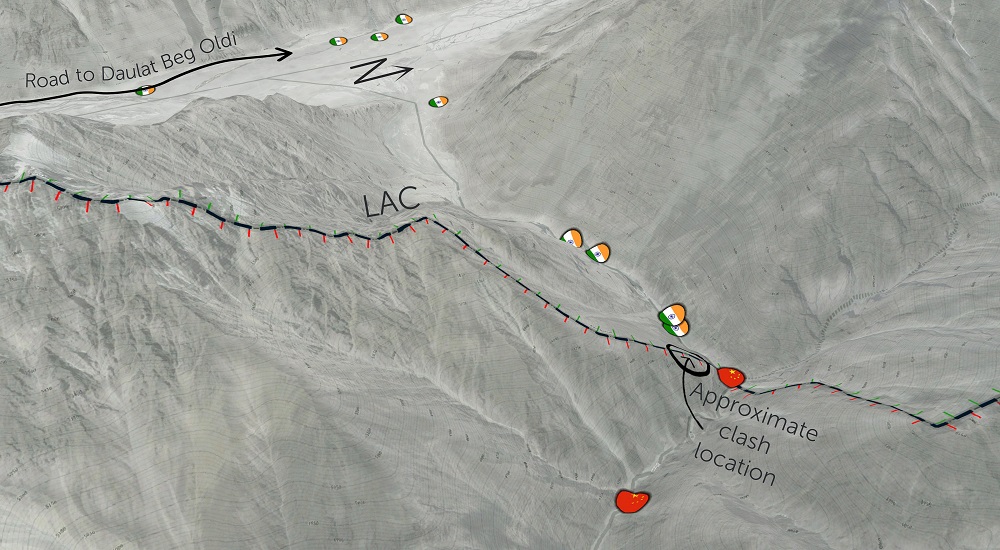
    As one writes, a phase of the events in the Galwan valley near the Line of Actual Control (LAC) has come to an end. Inputs from government, media and private commentators, have provided a perspective of the events preceding the incidents of 15/16 June and thereafter till the current day. For the world, the occasion has provided the opportunity yet again to witness the fighting spirit and junior leadership of all ranks of the Indian Army, who despite being outnumbered, were able to inflict far greater casualties on their adversaries, in inhospitable terrain under fading light conditions. The sacrifices of the men of 16 BIHAR, 3 PUNJAB, 3 Medium Regiment, and individual personnel from 81 Field Regiment, Corps of Signals and the Army Medical Corps have added lustre to the reputation of the Indian military. Their deeds shall remain enshrined in the memory of a grateful nation. At this watershed moment, we salute them.
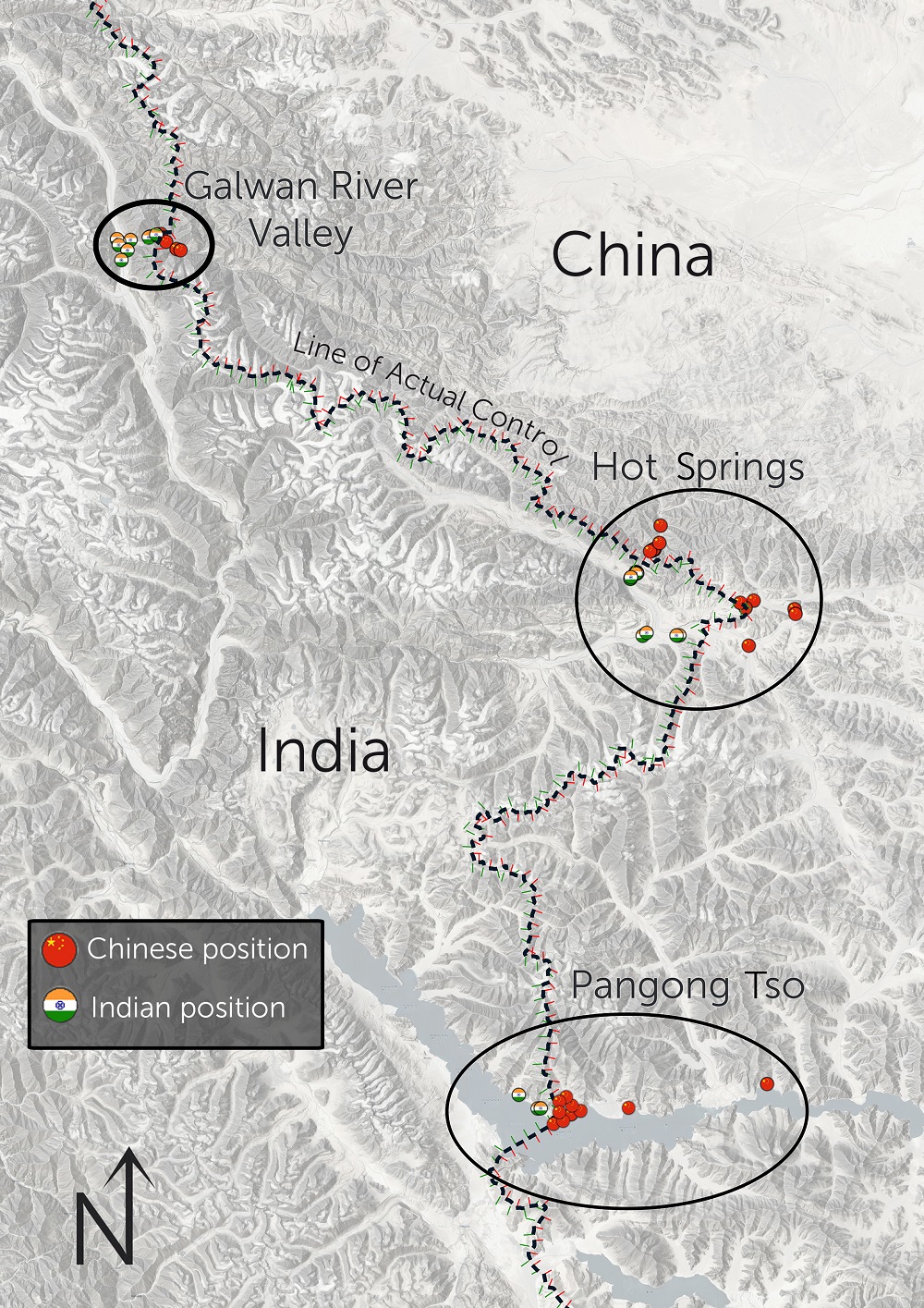
    China is contesting control over settled areas (Galwan), exploiting laid down rules and norms of border management by resorting to use of primitive weapons instead of firearms, and pushing the envelope on the ground in attempting to increase areas under control such as at Hot Springs and Pangong Tso – all actions just short of war.
    One theory gaining currency in attempting to understand China’s recent behaviour, pertains to its unhappiness over what it perceives as alteration of the status quo on the LAC by designating Ladakh as a Union Territory – resulting in active collusion with Pakistan which shares Beijing’s sentiments on this issue, amongst others. However, there is no doubt that the strategy applied by China in East Ladakh comes straight out of its manual on Grey Zone Warfare. It is contesting control over settled areas (Galwan), exploiting laid down rules and norms of border management by resorting to use of primitive weapons instead of firearms, and pushing the envelope on the ground in attempting to increase areas under control such as at Hot Springs and Pangong Tso – all actions just short of war.

    While the situation on the Pangong Tso awaits resolution, what is amply clear is that the era of explaining away patrol clashes on the LAC to the Indian public, in terms of ‘varying perceptions held by both sides’, is past. By its perfidious actions in East Ladakh this year, China has shredded in letter and spirit the border agreements built up over the last three decades. The recent incidents have brought greater clarity to the public mind, with a consensus that China’s salami slicing tactics cannot be tolerated any further. Indian soldiers see the LAC as a line marked on the map. Commanders are clear that the areas up to that line are to be either physically occupied or patrolled at will from bases in the vicinity, supplemented by other forms of surveillance. As per media reports, the Government has over the weekend ‘revised the Rules of Engagement’, giving ‘a free hand to the Army’ to deal with occurrences of this nature. By implication, in future if patrols cannot resolve their face offs peacefully, there will be no resorting to hand to hand scuffles with primitive weapons – unsuccessful efforts at border management will give way to border defence, through resort to tactical military operations.
    As per media reports, the Government has over the weekend ‘revised the Rules of Engagement’, giving ‘a free hand to the Army’ to deal with occurrences of this nature. By implication, in future if patrols cannot resolve their face offs peacefully, there will be no resorting to hand to hand scuffles with primitive weapons – unsuccessful efforts at border management will give way to border defence, through resort to tactical military operations.
    Response to this new paradigm places another set of challenges before the Indian Army. Prior to May 2020, Galwan was not in the category of disputed areas, as understood in LAC parlance. Neither had any Chinese activity been sensed in the preceding years. While construction of the DSDBO road could be the trigger, the fact that an area where the LAC had lain undisturbed since 1962 could become the scene of such a violent action, warrants scrutiny of PLA intent across the board. Previous assumptions with respect to the PLAs likely areas of interest across the entire Northern border, therefore, certainly warrants a relook. Conclusions drawn would mandate contingency planning and consequent tasking at strategic, operational and tactical levels. Such plans doubtless exist. However, it is obvious that their scope, timelines, and imperatives for successful implementation will need review in conjunction with the other services.
    Outcomes of such reviews would inevitably renew the focus on capability building and in the middle term, might even alter priorities for the same. Substantial enhancements in the areas of surveillance, tactical and strategic air mobility and real time communication links continue to retain their importance. Induction of greater varieties of kinetic non-contact weapon systems, complemented by force multipliers such as cyber warriors and special forces too remain on top of the list. Also, the continued ceasefire violations on the Line of Control to the West, and the relentless tempo of counter terrorist operations in the Valley during this period smack of collusion and tell a tale which defence planners must take note of. Developing the desired capability will be predicated on guaranteed funding and fast track procedures. It is heartening to peruse reports in the Economic Times of 22 June that the Government has granted emergency financial powers up to Rs 500 crore per procurement project to each service for buying weapons and ammunition. Even if new projects cannot be initiated immediately because of fund constraints imposed by the Covid-19 pandemic and otherwise, it is time for stalled ones like the Mountain Strike Corps to be quickly completed. The example of the PLA which has almost completed its reorganisation for fighting wars of the future and tested the response of its field force during the Covid-19 pandemic, must be taken note of.
    Thanks to the Galwan episode, the vital aspect of border infrastructure has gained nationwide attention. There is perceptive increase in the pace of development over the last few years. The sequence and methodology however are dictated essentially by two factors – availability of resources (funds and specialist equipment) and the need for calibrating messages implicit in such actions to China. Despite Covid-19 constraints, the current crisis mandates that funds currently earmarked for infrastructure development continue to flow so that development progresses, albeit at a slower pace. As regards messaging to China, we have reached a watershed moment. As high level military talks continue and spell out the Indian position on the ground to the Chinese, creating an ‘all of nation approach’ for tackling China becomes necessary.
    Galwan incident has ensured that the negative perception of China worldwide is now shared by almost all sections of Indian society. This bitterness is fuelled by the sheer brutality of the Chinese military and duplicity of the Chinese government, bringing back memories of 1962 for many who have only heard of that era. It is driven further by a realisation of the scale of India’s dependence on China, be it in the import of manufactured goods of all hues, or technology, and the consequent harm to Indian interests and livelihoods. Awareness has spread amongst Indians that China’s constant working against India’s interests in world fora, be it in vetoing expansion of the permanent membership of the Security Council for ‘technical reasons’, blocking its membership in the Nuclear Suppliers Group or introducing discussions on Kashmir are all part of its plan to obstruct India’s progress to its rightful place in the comity of nations. In attempting to correct an unequal economic relationship, ensuring that India retains its position in the region and preventing erosion of its influence in South Asia and beyond, all elements of the Indian state have their tasks cut out. It becomes imperative now to prepare a different toolkit with a wider range of options (including those not envisaged earlier) to manage India-China relations. Such options now require to be coordinated at all levels of the government and intimated to stakeholders including industry and other influencers for implementation. This coordination is long overdue. Resetting the economic relationship will not be easy. However, announcement of a practical time bound and holistic road map which has been thought through with all stakeholders would be a beginning.
    Galwan incident has ensured that the negative perception of China worldwide is now shared by almost all sections of Indian society.
    To supplement the proposed policy outlined above, articulation of a holistic Strategic Narrative vis-a-vis China becomes necessary. Such a narrative would pertain to as many aspects as possible – bilateral issues (including border management), local and regional matters, so that consistent, coherent and long term views are voiced, keeping in mind the national interest. information operations would be a subset of such a narrative, and briefings organised as frequently as possible would be useful force multipliers. It might be necessary for the concerned sections in the newly formed Department of Military Affairs and the Department of Defence to coordinate these aspects. India must also actively consider the possibilities that other forms of conflict, including hybrid warfare, are necessary to exploit and invest in the same. Here too, employment of such methodologies by China is an example. China has been refining its doctrine of ‘Unrestricted Warfare’ since the early 90s. The effects are there to see in South China Sea and elsewhere. It is executing certain aspects of this strategy against India on the Northern borders.
    Managing relations with China is destined to remain the major preoccupation for Indian strategic thinkers in coming years. Tensions along the LAC are but one manifestation of this problem. Both nations are hostage to geography. China’s behaviour over the last decade has influenced Indian foreign and military policies like no other, causing India to take decisions that were not in the realms of possibility earlier. Articulating a holistic China strategy through an all of government approach within the overall ambit of a National Security Strategy to ensure that India achieves its rightful place, has never been so important.
    Image Credit: ASPI:The Strategist – Nathan Ruser

  • Vocal about Local: Empowering local Governance Structures to deal with the Pandemic

    Vocal about Local: Empowering local Governance Structures to deal with the Pandemic

    Urban centres in times of the Pandemic 

    India is a rapidly urbanizing state. The 2011 census estimates that 31% of Indians live in urban areas. It counts 4041 statutory towns, 3892 census towns and 474 urban agglomerations as urban areas. These numbers however are quite outdated in 2020 and also there is considerable consensus among experts that there is an underestimation of urban spaces owing to the outdated definition of ‘urban’ in India. For example, the Joint Research Centre (JRC) of the European Commission, based on satellite data, reports that at least 54% of India’s population lived in cities or large urban areas in 2015 and the World bank using the Agglomeration Index finds out that 55.3% of India’s population lived in urban-like spaces in 2010. Regardless, the fact remains that these urban spaces should be governed democratically with the spirit of the 74th amendment. The COVID-19 situation further reasserts the importance of such governments and their role in Indian society.

    Cities and urban spaces have emerged as hotspots of the Coronavirus. It is from the cities that the coronavirus subsequently spread to other rural areas.

    Cities and urban spaces have emerged as hotspots of the Coronavirus. It is from the cities that the coronavirus subsequently spread to other rural areas. Throughout history, pandemics have originated and perpetuated from cities, therefore it is not irrational to predict another pandemic perpetuated from cities in today’s close-knit global village. This warrants a greater need to safeguard the cities which are the essential links that connect nation states to the globalized world. The first step in this direction would be to empower urban governments for efficient crisis management and prevention of communicable diseases by assuring basic public goods.

    Subsidiarity

    The principle of subsidiarity advises that the Central authority should have a subsidiary function, performing only those tasks which cannot be performed at a more local level. The principle therefore asserts the sovereignty of the citizen in a democracy and places her at the center of decision making.

    In line with the principle, everything that can be done better locally, including providing basic services like safe drinking water and ensuring public goods like clean air, should be done by the local governments. The rationale being that, one, it increases efficiency and promotes self-reliance; two, it provides legitimacy to democracy and three, it creates awareness among people and develops responsible citizens. And another obvious reason is that it is most effective in understanding the local problems and in ensuring a pragmatic feedback loop.

    All these reasons become much more clearer in times of crisis such as the Covid-19 pandemic when local assessment and rapid service delivery become difficult. Urban Local Bodies (ULBs) neither have properly delineated functions to perform nor do they have the finances to do so. The 12th schedule of the Indian Constitution lists a group of 18 subjects on which the local governments can act upon, but only if the States ‘may’ wish to assign those functions by virtue of another State legislation. Even when legislated, States usually encroach into the domain of the purview of the local governments.

    The Veerappa Moily commission’s sixth report dealing with local governance sums it up perfectly.
    “Confusion, unnecessary duplication, inefficiency, wastage of funds, poor outputs and outcomes are the result of this organisational jungle. The local organisations which should be the ones most directly and fully concerned are at best treated as a small part of the implementation, occasionally consulted but, in most cases, by-passed and ignored”.

    Furthermore, the establishment of parastatals has reduced the functions of the local governments. The Parastatals perform specific functions which are supposed to be performed by ULBs and are accountable only to the State government thereby circumventing the ULBs. In addition, the Union government also takes a share of the implementation space with centrally sponsored schemes thereby making proper delineation of powers impossible for ULBs.

    The Veerappa Moily commission’s sixth report dealing with local governance sums it up perfectly.
    “Confusion, unnecessary duplication, inefficiency, wastage of funds, poor outputs and outcomes are the result of this organisational jungle. The local organisations which should be the ones most directly and fully concerned are at best treated as a small part of the implementation, occasionally consulted but, in most cases, by-passed and ignored”.

    Now, when experts ask for decentralized governance to efficiently deal with the pandemic and to decentralize decision-making regarding lockdown measures, all they get is a dysfunctional organisation jungle where local governments do not have the wherewithal to function as self-governing institutions.

    Disaster Risk Reduction

    Strong local governments are of great importance, especially during disasters and pandemics. Experts suggest that a sound bottom-up governance approach has been more successful in the wake of disaster response. For instance, in a UNDP study on disaster risk reduction in Bangladesh, they point out the importance of local governance.

    The report suggests that local governments are crucial because they ‘play the greatest role in sustaining ongoing, participatory disaster risk reduction at local community level’. The report goes on to summarize that the key lesson learnt from the study is that decentralization of authority and decision making is essential to effectively deal with the disaster.
    “Decentralization of authority to local governments is vital to ensure local ownership of disaster risk reduction and the local implementation of the Hyogo Framework for Action. Local authorities should have the responsibility of implementing disaster risk reduction, and be accountable to the community they represent in doing so”.

    Much has been written about why governments closer to the people are more effective but what is equally important is that when decision making is decentralized, citizen satisfaction and responsibility is increased (for example, see this study done in Indonesia). This becomes important in times of the Covid-19 pandemic where individual responsibility is necessary to stop the spread of the virus. Also with lives and livelihoods pitted against each other, citizen satisfaction is important to make hard decisions which might deter personal freedom in the short term.

    Considering all this, the National Disaster Management Act, 2005, which was used by the Union government to impose lockdown measures, seems to lack the involvement of local governments in disaster risk reduction. V N Alok in his article for the Financial Express, deals with this complaint. He argues that there is only a passing reference to local government in the Act and even when referenced, functions are mostly subsidiary to the District authority headed by the Collector/Magistrate which is controlled by the State government. On the other hand, there is no ambiguity in assigning functions to the State and Union governments.

    India is often referred to as the ‘flailing state’, which is strong and sound in the centre, with no reliability at the grass-roots. Local governments can provide the missing link that could hinge the State to the people.

    This again echoes Veerappa Moily Commission’s concern that there is no proper delineation of powers for the local governments. Article 243 N and 243 ZF mandated that all laws inconsistent with parts IX and X of the Indian constitution shall be changed accordingly within a year of passing the 73rd and 74th Amendments. But most States have still not identified and changed all statutes conforming to the idea that local governments are self-governing institutions. This shows India’s hesitation to look at local governments as self-governing institutions capable of dealing with problems.

    India is often referred to as the ‘flailing state’, which is strong and sound in the centre, with no reliability at the grass-roots. Local governments can provide the missing link that could hinge the State to the people.

    Its importance is felt during the pandemic more so than ever, especially in cities where the institution is weak compared to rural India. An integrated approach, with involvement from the local government, would prove to be more effective than centralized decision making. But before relying on ULBs and locally elected leaders, they have to be empowered-politically, functionally and financially. The first step towards such empowerment could be by including local governments in conversations regarding governance and decision making; to be more vocal about local governments.

  • China’s support to Syria: In Conflict and Redevelopment

    China’s support to Syria: In Conflict and Redevelopment

    China is looking to ramp up relations with Syria both as part of its strategic Belt and Road Initiative (BRI) but also to take advantage of the multi-billion dollar reconstruction effort that is expected to materialise following the gradual winding down of the war.


    Syria is an ancient civilisation and also an important part of the ancient silk route, with cities such as Palmyra, Aleppo and Damascus playing an important role in trade and travel between the East and the West. While the discovery of a maritime route between Europe and Asia has to some extent diminished its importance in this regard, Syria is still strategically important. China is looking to ramp up relations with Syria both as part of its strategic Belt and Road Initiative (BRI) but also to take advantage of the multi-billion dollar reconstruction effort that is expected to materialise following the gradual winding down of the war.

    China’s non-interference policy is an integral aspect of its involvement and role in the Middle East. During the course of the Syrian war, China has consistently supported the Bashar Al Assad government on the diplomatic front – through the exercise of the veto power against the resolutions introduced in the United Nations Security Council either condemning the Syrian government, calling for ceasefire or for imposing sanctions on suspected war criminals. While negotiating the renewal of border crossings for aid, China agreed on the need for humanitarian assistance but emphasised on state sovereignty. China’s policy of non-interference has served it well in strengthening bilateral relations and advancing its interests.

    One of the reasons for the diplomatic support extended by China to the Syrian government is also the involvement of the Uighur fighters in the Syrian conflict which has greatly bothered China. While it has never got directly involved militarily in the Syrian conflict there are unconfirmed media reports which suggested that China was sharing military intelligence with the Syrian government and also sent its military advisors to Syria to help it in its fight against the rebels. In this sense, it saw Syria as a key player in its fight against religious extremism thereby preventing its export to its own volatile Xinjiang province.

    With the Syrian conflict slowly winding down and Bashar Al Assad’s hold on Syria greatly strengthened more than at any other time since the beginning of the civil war, China is ramping up its diplomatic efforts in Syria  using trade as an important policy tool to ramp up the relations between the two great civilisations.

    Based on Chinese government’s invitation Syria has participated in the second BRI summit held in Beijing in April 2019. Previously in 2018, China held a Trade Fair on Syrian reconstruction projects which was attended by nearly one thousand Chinese companies and which saw investment proposals of nearly USD two billion. The collapse of most of the industry in Syria due to the war has also resulted in a significant increase of cost-effective Chinese imports into Syria ranging from toys to car parts and industrial machinery and equipment.

    China is also leveraging its economic strength fully by using aid as a foreign policy tool. In 2019,  Xinhua reported on the  that an economic cooperation agreement was signed between Syria’s Planning and International Cooperation Commission (PICC) and the Chinese embassy in Damascus. As part of this agreement, a donation will be set aside to fund a series of humanitarian projects as agreed upon by both sides.

    The collapse of most of the industry in Syria due to the war has also resulted in a significant increase of cost-effective Chinese imports into Syria ranging from toys to car parts and industrial machinery and equipment.

    China is expected to be a key player in the international reconstruction and development effort that is expected to take place in Syria due to its strong bilateral ties with not only Syria but also its alignment with Russian and Iranian position on Syria , these two players being the major supporters of Bashar Al Assad’s government in the civil war. While Russia and Iran are surely expected to carve out a large part of the reconstruction contracts between themselves, their capacity to make the huge investments in these projects, estimated to be worth anywhere between USD 200 million to USD 1  trillion is doubtful. This creates the ripe opportunity for China to enter the reconstruction business effort either by themselves or, as is more likely, in partnership with Russian and Iranian governments or businesses.

    Beyond the business opportunities provided by the potential reconstruction of Syria, China is also strategically interested in Syria. China was always interested in securing access to the Ports of Tartus and Latakia on Syria’s Mediterranean coast. Such an access is expected to complement Beijing’s interests in the Greek port Piraeus (COSCO shipping, the Chinese state-owned shipping and logistics services supplier company in the Port authority) and the Israeli port of Haifa, in securing a trade route to Europe. In alignment with these strategic interests, Chinese companies’ area also exploring the possibility of upgrading the deep seaport of Tripoli, Lebanon to allow it to accommodate larger vessels and also the possibility of building a railroad that would connect Beirut and Tripoli in Lebanon to Homs and Aleppo in Syria.

    Beyond the business opportunities provided by the potential reconstruction of Syria, China is also strategically interested in Syria. China was always interested in securing access to the Ports of Tartus and Latakia on Syria’s Mediterranean coast.

    Chinese investments into and trade ties with Syria however, risk the attraction of US sanctions on Syria. The arrest of Meng Wanzhou, Chief Financial Officer of Huawei, , in Canada, based on a request by the United States highlights the extent of these risks. “The Caesar Syria Civilian Protection Act”, also known as “The Caesar Act”, a United States legislation that sanctions the Syrian government, including Syrian president Bashar al-Assad, for war crimes against the Syrian population, parts of which  are now incorporated  in the “National Defense Authorization Act for Fiscal Year 2020” greatly tightened the sanctions environment against the Syrian government and a number of its industries potentially impacting the Chinese investments and trade ties. While China has called for an end to sanctions stating they were “inhuman,” they have been wary of being targeted by sanctions and further straining their relations with the US. However, it is unlikely that the sanctions would have a significant effect on China given the size of China’s economy and its ability to circumvent sanctions while dealing with Iran and North Korea. China, as part of its ‘mask diplomacy,’ is increasingly providing aid to the Syrian government in their efforts against Covid-19. This serves the dual purpose of strengthening China-Syria relations and strengthening China’s narrative of Covid-19.

    To conclude, China has been a staunch supporter of the incumbent Syrian government of Bashar Al Assad during the almost decade long Syrian civil war and is set to reap the benefits from the post-war Syrian reconstruction effort in conjunction with the Russians and the Iranians to advance its interests.

    Image: Middle East Institute


  • Sanitation & Hygiene Concerns in Government Schools in Tamilnadu: Need for Digital Intervention

    Sanitation & Hygiene Concerns in Government Schools in Tamilnadu: Need for Digital Intervention

    Ensuring that there are proper health and hygiene facilities and awareness for girls at the school level is an extremely important building block for quality education. 

    Introduction

    Achieving quality education at school level is a dynamic process that needs to revise the elements according to the needs of the social setting. One such element is a  policy that promises an education system to promote gender equality from the grassroots. The problem needs an intervention with an enhanced infrastructure for maintaining sanitation and hygiene for girl students and a holistic understanding of gender issues through awareness that leads to organic social change. The state, undoubtedly, is responsible to ensure quality education and resolve the gaps in education using innovative methods. Tamil Nadu is one of the best performing states as far as literacy rate is concerned. However, realistic social barriers still exist that need intervention and customized strategy. According to the 2011 census, Tamil Nadu stood third after Kerala and Maharashtra. The male literacy rate was around 87% and the female literacy rate was around 73%. 

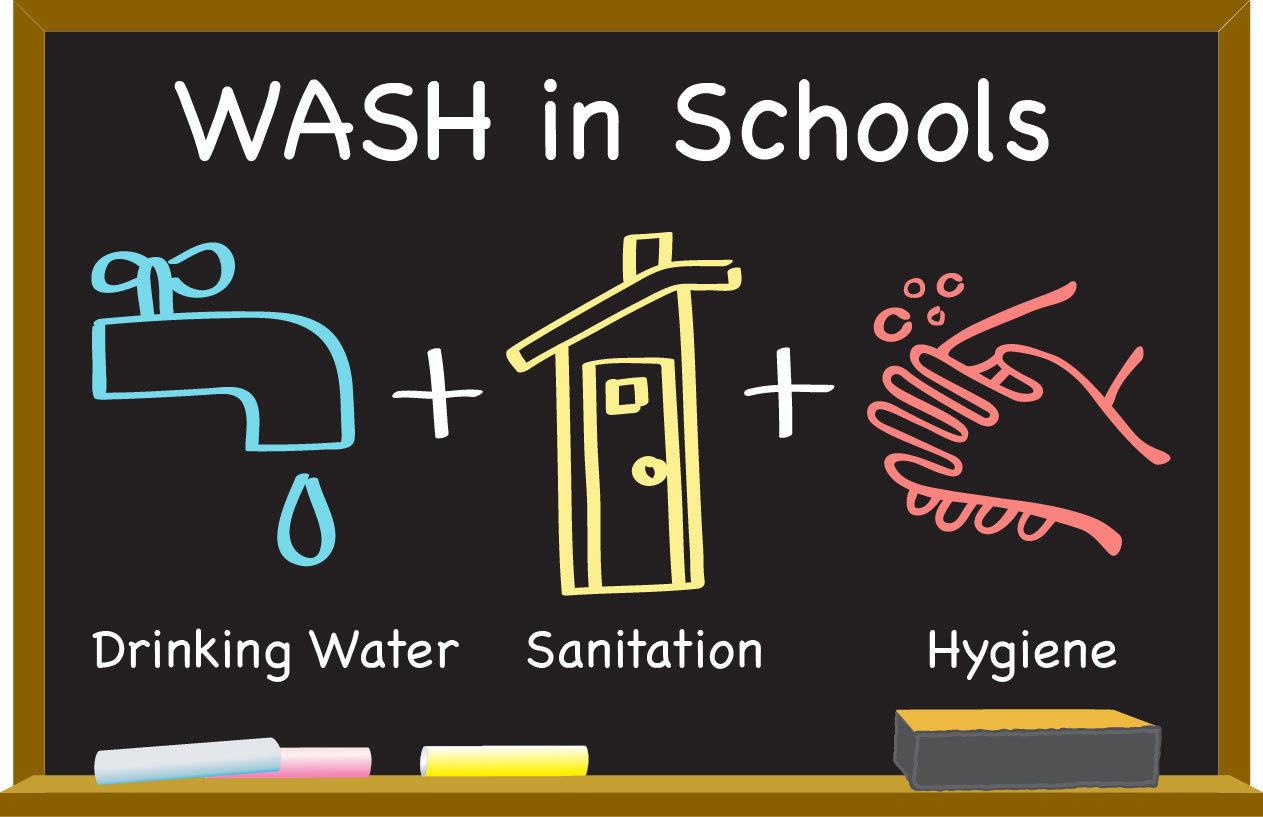
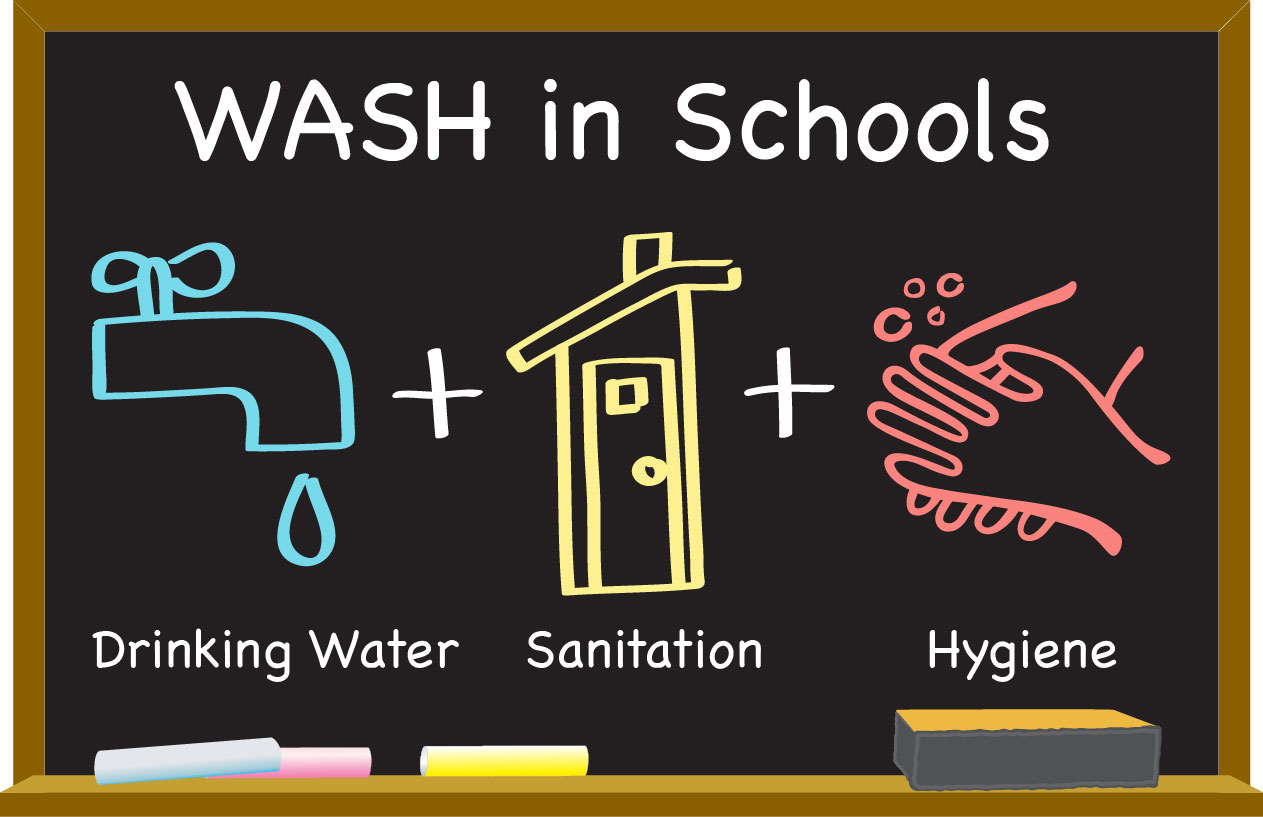
    This article attempts to decode the most important factors,sanitation and hygiene, in ensuring ‘quality’ of education for girls. This particular aspect encompasses three main Sustainable Development Goals (SDG) of the UN; Quality Education, Gender Equality and Water & Sanitation. The last goal of providing access to clean water, sanitation and hygiene (WASH) particularly in rural areas is the means to achieve the former two goals of gender equality and quality education. 

    Need to prioritize WASH for quality education

    Tamil Nadu employs more than 50% of its women in remunerative labour. Girls tend to drop out of schools either because of customary practices or because of the demand for labour. In some cases The lack of awareness and knowledge on menstruation and menstrual practices are also major factors contributing to this drop out. Despite several initiatives and attempts at establishing proper sanitation and hygiene practices particularly in schools, most of these initiatives fail to gain attention across social barriers, especially those initiatives surrounding menstruation and their importance. This exposes the limitation of community-based initiatives and their impact. Specifically Water, Sanitation and Hygiene practices, commonly known as WASH. Tamil Nadu is estimated to have 6.1 million adolescent girls and yet around 7837 schools have either dysfunctional toilets or no toilet facilities at all. The implication of such poor infrastructure is an adverse impact on learning and results in drop out from schools in most of the cases. Ensuring that there are proper health and hygiene facilities and awareness for girls at the school level is an extremely important building block for quality education. 

    The lack of awareness and knowledge on menstruation and menstrual practices are also major factors contributing to this drop out. Despite several initiatives and attempts at establishing proper sanitation and hygiene practices particularly in schools, most of these initiatives fail to gain attention across social barriers, especially those initiatives surrounding menstruation and their importance.

    Access to toilets and sanitation facilities is a privilege that only a few have access to particularly in rural areas where people practice open defecation owing to the lack of toilets. Tamil Nadu has performed brilliantly in this respect since the implementation of Swachh Bharat Abhiyan Scheme in 2014. Over 48 lakh toilets were built in rural areas since 2014, with Tamil Nadu becoming an open-defecation free state. 

    The Government of India recognized the role played by sanitation and hygiene in ensuring that quality education is delivered. In 2014, the MHRD had launched the ‘Swachh Bharat Swachh Vidyalay’ initiative. The scheme was implemented to ensure that there were separate functional toilets for girls and boys. In addition to ensuring separate toilets, the scheme also focuses on maintaining a certain level of hygiene and sanitation. While it is not enough that this initiative  has been implemented in schools across the country, it is also important that parents, teachers and children are aware of the same. Proper hygiene and sanitation does not end in school,  it is imperative that this awareness is spread in local communities and villages as well. As a part of the scheme, government schools in rural and urban areas are eligible to nominate themselves for the ‘Swachh Vidyalay Puraskar’. This acts as an incentive for schools across the country to improve their WASH standards. 

    Capitalizing the Digital Wave

    With Tamil Nadu’s rural internet penetration through mobile phones at 41.98%, there is a significant potential that can be tapped in the state’s ICT usage. While creating awareness is one side of the coin, spreading awareness is another. This is where the potential of ICT can be harnessed, in spreading awareness. The government of Tamil Nadu has made available textbooks, lessons and other educational material on their ‘DIKSHA’ portal which is essentially a YouTube channel. On this channel, students from different classes can access their study material. This could be one of the possible means through which awareness can be created across districts and villages on the importance of sanitation and hygiene. 

    Some of the government schools in Tamil Nadu have demonstrated an exceptional WASH record, thereby proving the fact that if the administration is focused the results can be excellent as shown by Thiruvallur and Vellore districts. Schools in these districts have maintained excellent sanitation and hygiene standards and have been recipients of the SVP.  The initiatives taken by these schools to spread awareness on the importance of sanitation and hygiene have largely been behaviour oriented. By involving parents and the larger community, these initiatives have been successful and effective as well. Community-based initiatives are to create and spread awareness on various social welfare schemes. Apart from creating awareness, such initiatives also tend to bring communities together. The implementation of the SBSV scheme has facilitated the use of ICT as well. While the integration of ICT in the process is a welcome change, there is a lack of clarity on what exactly it is being used for. 

    Importance of awareness on Menstrual Hygiene 

    It has been established that several initiatives were taken in the past and are being taken to improve ‘WASH’ practices in the country, particularly in schools to improve enrollment rates as well as reduce dropout rates. Educational institutions in the country, particularly schools have an inherent responsibility to educate adolescent girls on menstruation, talk about the changes it brings about in a girl’s body. A 2014 report by Dasra foundation posits that close to 23 million girls drop out of school annually due to a lack of awareness. 79% of girls and women in Tamil Nadu were not aware of menstrual hygiene and practices that are followed at the time of menstruation. Lack of awareness of menstrual hygiene and the practices that are required to be followed at the time of menstruation makes a girl/woman extremely susceptible to infections. This is largely attributed to the stigma that is created around menstruation and the notion that it is an ‘impure’ phenomena. A study conducted in 2015, in Padappai, points out that only 43.33% of girls were aware of menstruation when they experienced it the first time. The source of information in most of these cases was the mother while the teachers and schools had a very small part to play in the process. Therefore,  a layer of stigma surrounding the issue is apparent that is far from being institutionalized. Institutionalizing the issue would lead to it being discussed in schools, which in turn would normalize it and break the stigma around it. There are a plethora of possibilities that ICT brings about. Schools could tap into this potential and make use of it to communicate effectively to their students. In rural India particularly, simply creating awareness and breaking the stigma around menstruation will not suffice. Often, this stigma is reinforced by  women in the family. In order to move beyond this, schools must ensure that lessons on menstruation are conducted for both girls and boys alike. Not only does this induce awareness among boys but it also makes them more sensitive to the issue. 

    A 2014 report by Dasra foundation posits that close to 23 million girls drop out of school annually due to a lack of awareness. 79% of girls and women in Tamil Nadu were not aware of menstrual hygiene and practices that are followed at the time of menstruation.

    Awareness through Digital Platform

    Tried and tested methods of spreading awareness in a community has generated results but is not enough. Improving sanitation and hygiene standards in learning institutions requires the participation of all the stakeholders involved in the process. While this may be an initial attempt at de-stigmatizing the issue, undoing centuries of discrimination and oppression requires a systemic approach. Tamil Nadu government’s ‘DIKSHA’ portal is a good place to start. In addition to developing online resources, there must also be some sort of portal that mandates uploading information related to the sanitation and hygiene measures that are being taken in schools. Additionally, it is important to use digital interventions to create awareness and reinforce the message in a timely manner. While infrastructure creation is a part of the goal, it is equally important to establish the need for it and educate people. This is where the digital intervention comes into the picture. One of the goals in Tamil Nadu’s Vision 2023 Project is to encourage PPP as a mechanism for infrastructure creation. This could be one of the potential means through which awareness is spread by introducing digital interventions in rural areas. It could either include installing a TV in Gram Panchayat offices which could display campaigns on the importance of sanitation and hygiene/menstrual hygiene, etc. With respect to creating awareness on menstrual hygiene which is a systemic issue because of the stigma attached to it – the solution needs to be systemic as well. For starters, creating conversation around menstruation is extremely important. Something called the ‘culture of silence’ exists in Kenya particularly in rural areas where girls refrain from speaking about menstruation and puberty. Identifying practices like this is a start when it comes to de-stigmatizing menstruation. While removing GST on sanitary napkins is one way to make the product more accessible, it is important to make people realize why there is a need for using one in the first place and the consequences of not using it. This brings us to the question of whether it is enough for the state to build infrastructure alone and if its responsibility ends there as opposed to also creating awareness on how to go about using the said infrastructure as well as educating people on its importance. 

    Ensuring  Effective Policies

    Some of the government schools in Tamil Nadu have demonstrated an exceptional WASH record, thereby proving the fact that if the administration is focused the results can be excellent as shown by Thiruvallur and Vellore districts. Schools in these districts have maintained excellent sanitation and hygiene standards and have been recipients of the SVP. 

    Initiatives like the SBA, SBSV and SVP are focussed around creating infrastructure and incentivizing schools to implement hygiene practices. Sanitation happens to be a state subject, and each state faces its own challenges with respect to addressing the problem. For instance in a state like Tamil Nadu where there is decent infrastructure, the drop-out rate for girls is still on the higher side. A lack of awareness on menstrual hygiene has also contributed to the drop-out rates in the state. Evidence suggests that not all government schools in Tamil Nadu have toilets and the ones that have toilets, do not maintain them well. Perhaps now the state must implement initiatives that focus on capacity building and behavioural change in order to ensure that the results are more impactful and also long-lasting. The initiatives that the state implements in the future must focus on intrinsically motivating people to implement sanitation and hygiene practices in their lives. Apart from that, the state must also conduct follow-up workshops that engage with people and communities and teach them how to use toilets, etc. In addition, whenever a new initiative/scheme is launched, state governments must also make sure that there are bodies/committees in place in every district that happens to be a beneficiary of the scheme. As communication becomes easier and more efficient in the digital age, initiatives that are implemented in the future must focus on knowledge creation. 


    References 

    https://www.orfonline.org/expert-speak/gender-dimensions-of-school-closures-in-india-during-covid19-lessons-from-ebola-66643/

    https://poshan.outlookindia.com/story/poshan-news-strong-connect-between-sanitation-and-health/348492

    https://swachhindia.ndtv.com/23-million-women-drop-out-of-school-every-year-when-they-start-menstruating-in-india-17838/

    https://www.ncbi.nlm.nih.gov/pmc/articles/PMC6286883/

    http://sujal-swachhsangraha.gov.in/sites/default/files/Five%20schools-%20WASH%20in%20School%20-%20practices%2C%20Tamil%20Nadu-%20Clean%20school%20.pdf

    https://mhrd.gov.in/sites/upload_files/mhrd/files/upload_document/Swachh_Vidyalay_Puraskar_Guidelines.pdf

    https://www.researchgate.net/publication/294638502_Awareness_about_menstrual_hygiene_among_adolescent_girls_in_rural_area_of_Kancheepuram_district_-_Tamilnadu

    https://timesofindia.indiatimes.com/city/chennai/tn-second-in-rural-smartphone-use/articleshow/67291628.cms

    https://www.researchgate.net/publication/333561228_Availability_and_Utilization_of_Sanitation_Facilities_A_Micro_Study_from_Rural_Tamil_Nadu

    https://swachhindia.ndtv.com/swachh-bharat-abhiyan-tamil-nadu-to-go-open-defecation-free-on-october-2-25278/#:~:text=Tamil%20Nadu’s%20Swachh%20Bharat%20Abhiyan%20Journey&text=The%20state%20has%20a%20total,declared%20free%20from%20open%20defecation.&text=Tamil%20Nadu%20has%20improved%20its,per%20cent%20in%20four%20years.&text=Over%2048%20lakh%20toilets%20(48,since%202014%20in%20rural%20areas.

    https://www.wsscc.org/2016/08/10/wsscc-menstrual-hygiene-management-training-kenya-breaks-silence-menstruation/

  • India-China Trade in ancient times: Southern Silk Route

    India-China Trade in ancient times: Southern Silk Route

    To follow the Silk Road is to follow a ghost. It flows through the heart of Asia, but it has officially vanished leaving behind the pattern of its restlessness: counterfeit borders, unmapped peoples. The road forks and wanders wherever you are. It is not a single way, but many: a web of choices.

     Colin Thubron, Shadow of the Silk Road.


    Introduction

    India and China, two Asian giants, share a lot of similarities in terms of history and culture. Both countries represent age old civilizations and unique history. Cultural and economic ties between the two countries date back to about 2000 years ago. The Silk Route, which is an ancient network of trade routes, formally established by the Han Dynasty, served as a connection between the two countries. It was also through this route that Buddhism spread to China and East Asia from India. The routes were more than just trade routes; it was the carrier of ideas, innovations, inventions, discoveries, myths and many more.

    The earliest mention of China can be found in the Indian text “Arthashastra” which was written by Kautilya in the fourth century BC. Kautilya made a remark about Cinapattasca Cinabhumjia (Cinapatta is a product of China)[1]. Whereas, the earliest mention of India in Chinese records dates between 130 and 125 BC.  Zhang Qian, a Chinese envoy to Central Asia, referred to India as Shendu, in his report about India to Emperor Wu of the Han dynasty.

    This article will look into the ancient trade route that existed between South Western China and India’s North East region via Myanmar and the future of the trade route.

    Ancient trade links between India and China

    Shiji, which is the first Chinese dynastic history, compiled between 104 and 87 BCE talks about the existence of a trading route between India and South West China. According to Chinese records, Emperor Wu of the Han dynasty, tried to establish a trade route from Changan, the Chinese capital to North East India through Yunnan and adjoining areas. However, the rulers of Yunnan were against the idea of establishing a direct trade between India and China and Emperor Wu failed to establish the trade route. Even though the trade route failed to take off, the trade in Cinapatta and Chinese square bamboo continued without any hindrance.

    Political Geography of the Southern Silk Route

    The Southern Silk route (SSR), one of the least studied overland route, is a trade route which is about 2000 km long and linked East and North East India with Yunnan Province of China via Myanmar. This is a relatively unknown, ancient trade route that is considered a part of the larger web of Silk Roads. This route existed before the Central Asian Silk route became popular. This trade route between Eastern India and China came to be known during the early 3rd century BCE, and it became popular by the 2nd century BCE. By 7th century AD various other branches of the SSR emerged to create web of trading routes.

    Traders carried silk from Yunnan through Myanmar, across India and joined the main silk route in Afghanistan. In addition, silk was also transported from South West China through the Shan states and North Myanmar into East India and then down to the Coromandel Coast.

    The Qing dynasty which ruled China from 1644-1912, recorded the cross cultural exchanges that took place across SSR. This route contributed to cultural exchanges between China and the West. It also promoted interactions among different nationalities.

    Indian sources have failed to provide abundant evidence about the SSR and the interaction that took place across this route but there is enough evidence that indicates that trade and migration did take place in the Eastern India-Upper Myanmar-Yunnan region. For example, modern scholars believed that the Tai Ahoms were originally from Yunnan but they migrated to North East India and founded a small kingdom around 13th century, which grew to become the powerful Ahom Kingdom of Assam.

    The areas through which the SSR passed were inhabited by various ethnic groups whose political, social and economic organizations were primitive and backward. As a result, the safety of the route was often questioned. Archeological evidences have been found along the Southern banks of Brahmaputra up to Myanmar border, which shows that trade did exist along this route.

    The main items that were exported from China via this route included Silk, Sichuan cloth, Bamboo walking sticks, ironware and other handicrafts items.  Sichuan, a South Western province was the main source of silk. Glass beads, jewels, emeralds etc were some of the items that were imported to China.

    Another important trade route is the South West Silk route or the Sikkim Silk route, which connected Yunnan, and India through Tibet. A section of the route from Lhasa crossing Chumbi Valley, Nathu La Pass connected to the Tamralipta Port (present day Tamluk in West Bengal). From the Tamralipta port, this trade route took to the sea to traverse to Sri Lanka, Bali, Java and other parts of the Far East.  Another section of the route crossed Myanmar and entered India through Kamrup (Assam) and connected the ports of Bengal and present day Bangladesh.

    Over time, the Southern Silk Route lost its prominence and it was in 1885 that it re- emerged as a strategic link as the British tried to control some parts of the route in order to access and gain control over Southern China.

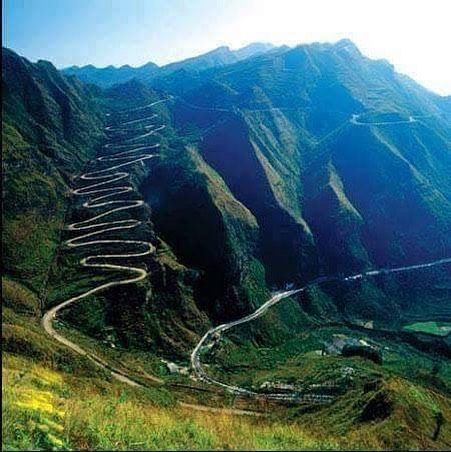
    The strategic importance of the route increased during World War II. In 1945, Ledo Road or Stilwell Road was constructed from Ledo, Assam to Kunming, Yunnan to supply aid and troops to China for the war with Japan. Ledo Road is the shortest land route between North East India and South West China. However, after the war the road was left unused and in 2010, BBC reported that much of the Ledo road has been swallowed up by jungle.

    The Assam-Myanmar-Yunnan road is very difficult to traverse not only in the present times but also during the ancient times. However, despite the hard conditions, it is through this route that a golden triangle of drug trafficking, movement of terrorist and smuggling functions today.

    Future Potential: Reviving the Southern Silk Route Economy

    North-East India and the Yunnan province share many similarities. Both are landlocked as well as under developed regions. Both are home to a large number of ethnic groups and have witnessed secessionist movement from time to time. Apart from this, Yunnan and North East India are geographically isolated from their political capitals.

    Yunnan and North East India, home to rich varieties of subtropical fruits with high nutritional values and medicinal plants, can cooperate and transform the hills of North East India and South West China into plantations, factories, laboratories to produce processed food products and lifesaving drugs that can find a huge market in developing and developed countries.

    In a bid to revive the Southern Silk route, Bangladesh, China, India and Myanmar, signed the Kunming Initiative, a sub-regional organization, in 1999. This initiative was replaced by the Bangladesh-China-India-Myanmar Economic Corridor (BCIM-EC) in 2015. The BCIM-EC was announced by China as a part of its Belt-Road Initiative, which has been boycotted by India since the beginning. In 2019, the BCIM-EC was dropped from the list of 35 projects that are to be undertaken under BRI, indicating that China has disreagrded the project. However, in the same year India has sought to keep the BCIM-EC project alive.

    If the BCIM-EC project does take place, it will reduce the travel time, cut transportation cost, open up markets, provide way for joint exploration and development of natural resources and create production bases along the way. Before the BCIM-EC takes off, it is important to develop the roadways infrastructure of India’s North East region.

    Even though the BCIM-EC promises to elevate the economic conditions of the backward North-East region of India, it has not gained sufficient steam as both China and India have different apprehensions. China sees India’s reluctance to support BRI as the barrier for any progress in the project. Given the current stand-off in Ladakh, India’s apprehensions about China seeking to exploit the insurgent groups operating in the region gains significance. Either way realizing the Southern Silk Road as a viable project in the form of BCIM-Economic Corridor looks distant now.


    [1]Haraprasad Ray, “Southern Silk Route: A Perspective,” in The Southern Silk Route : Historical Links and Contemporary Convergences (Routledge, 2019).

    References

    Ray, Haraprasad. “Southern Silk Route: A Perspective.” Essay. In The Southern Silk Route: Historical Links and Contemporary Convergences. Routledge, 2019.

    “Continental and Maritime Silk Routes: Prospects of India- China Co-operations.” In Proceedings of the 1st ORF-ROII Symposium. Kunming, 2015.

    Mukherjee, Rila. “Routes into the Present.” Essay. In Narratives, Routes and Intersections in Pre-Modern Asia, 37–40. Routledge, 2017.

    UNESCO. Accessed June 20, 2020. https://en.unesco.org/silkroad/content/did-you-know-great-silk-roads.

    “The Silk Route.” Accessed June 21, 2020. http://www.sikkimsilkroute.com/about-silk-route/.

    Ray, Haraprasad. Introduction. In North East India’s Place in India-China Relations and Its Future Role in India’s Economy, n.d.

    Chowdhury, Debasish Roy. “’Southern Silk Road’ Linking China and India Seen as Key to Boosting Ties.” South China Morning Post, October 23, 2013.

    “China Wants to Revive ‘Southern Silk Road’ with India.” The Times of India, June 9, 2013.


    Image: Stilwel Road from Ledo in Northeast India to Kunming in Yunnan province, China


  • CDS: A Welcome Reform and the Challenges Ahead

    CDS: A Welcome Reform and the Challenges Ahead

    The Year 2020 ushered in a momentous reform for higher defence management (HDM) in India with the government implementing PM Narendra Modi’s announcement made earlier from the ramparts of the Red Fort on 15th Aug 2019, on establishing the institution of the Chief of Defence Staff (CDS). Retiring Army Chief General Bipin Rawat, not surprisingly, was appointed as the first CDS of the Indian Armed Forces. The unique honour brings with it myriad challenges lying ahead for the new appointee.

                To those at home and abroad who are accustomed to the working of governments of all political hues in India it should not be a surprise that this  critically vital appointment  took over 18 years to materialise. To recall, as part of the many HDM reforms this appointment was also approved by the NDA led Vajpayee government way back in 2001, after the 1999 Kargil War, based on the recommendations of the Subramanyam led Kargil Review Committee (KRC). Bureaucratic sluggishness, lack of will among different political dispensations as also the fact that there could be indifference on matters of even national security broadly explain the long delay. Thus, the Modi government deserves full credit for institutionalizing the long overdue appointment of the CDS. However, the designated role of CDS, the status and the government charter laying down all the details are still being worked out.

    Chief of the Defence Staff (CDS)

    As promulgated by the government, the CDS will be a ‘four star’ officer and will be considered as the ‘first among equals’ in relation to the chiefs of the Army, Navy and the Air Force. He will be the permanent Chairman of the Chiefs of Staff Committee (COSC) and can serve till 65 years of age. KRC recommended that CDS appropriately should  be a ‘five star officer’ considering his onerous responsibilities and role.

    Now that the government has given the green signal for the CDS to commence functioning to provide the desired levels of integration in all tri-service matters including policy, operational, training, communications, logistical aspects and so on, the CDS will be confronted with myriad challenges in achieving his onerous missions. Apart from an unwavering encouragement support from the Prime Minister’s Office (PMO) and the Ministry of Defence (MOD), the CDS will require more than a willing assistance from the three services to truly get-off the ground. As is natural and customary, no service likes to shed its resources and time honoured responsibilities to newer organizations. Having raised the Defence Intelligence Agency (DIA) way back in 2002, as a result of the same KRC recommendations, I am more than aware of the reluctance of the three Services to shed some of their assets and roles which will now be managed by the CDS. Thus, General Rawat will have to orchestrate extracting resources from the three Services for the new organizations, formations and units directly under his command being raised, with tact and sensitivity.

    Re-organisation of MOD: an analysis

                The MOD, till recently,functioned with four departments namely the Departments of Defence (DOD), Defence Production, Defence Research and Development as well as Ex Servicemen Welfare – each headed by a Secretary – ranked officer. On 30th Dec 2019, the government promulgated a gazette notification establishing the fifth department to be called the Department of Military Affairs (DMA) to be headed by the newly appointed CDS. The Rules of Business existing since 1961 and reallocation of certain responsibilities with the Defence Secretary have been modified though this has also invited adverse comments from defence analysts in India on the ground that the desired level of responsibilities had not been given to the CDS.

                In the last many years, right from the acceptance of the KRC and its approval by  LK Advani led Group of Ministers and subsequently by the Vajpayee government in 2001, it had been accepted by all that the CDS was urgently required as a major reform of  India’s higher defence management. The CDS was required to provide single-point professional military advice to the political leadership. However, what apparently has happened now is that the CDS will be providing his advice to the Defence Minister only and not to both the Prime Minister and Defence Minister. Many see in this, a case of bureaucratic play to reduce the importance of the CDS.

                 In the orders recently issued by the government, four key responsibilities have been taken away from the DOD under the Defence Secretary and now put under the DMA which includes the three services and their headquarters, the Territorial Army and works relating to the army, navy and the air force. Non-capital purchases and promoting jointness in procurement, operations, training, communications, logistics (including repairs and maintenance) and encouraging use of indigenous equipment and platforms will be in the CDS charter.

                Entry 1 of the amended charter for the DOD states that “Defence of India and every part thereof including defence policy and preparation for defence and all such acts as may be conducive in times of war to its prosecution and after its termination to effective demobilization” will be with the Defence Secretary.  This has apparently been done to ensure the primacy of the civil bureaucracy. Why can’t the responsibility of defence policy and the mandate for defence of India not rest with the Defence Minister if this charter, was to be kept away from the CDS?

    Why can’t the responsibility of defence policy and the mandate for defence of India not rest with the Defence Minister if this charter, was to be kept away from the CDS?

                The other amendment is in the field of defence purchases where the earlier formulation of “procurement exclusive to the defence services” has been altered to “capital acquisition exclusive to the defence services.” This means that big-ticket acquisitions will be in the Defence Secretary’s ambit creating an impression of paucity of faith in the CDS in this matter.

    The existing HQ Integrated Defence Staff could have been the backbone for this new integrated structure within the MOD brining about cost-effectiveness as well. 

                The Department of Military Affairs will have a structure that rightly includes civilian bureaucracy as well. The CDS will be assisted by two joint secretaries and a dozen deputy secretary level officers. Ideally not only the CDS but the entire MOD should have seen complete integration of the civil bureaucracy with the military. The existing HQ Integrated Defence Staff could have been the backbone for this new integrated structure within the MOD brining about cost-effectiveness as well.  Military and civil officers should be working in various departments of the MOD in unison. The Defence Secretary could have been retained, as the coordinator of all the departments. The DMA could have been headed by a Secretary level Vice Chief of the Defence Staff (VCDS) to enable the CDS, in the MOD, to concentrate primarily on critical strategic issues for advising the Prime Minister and Defence Minister on macro-management of defence strategy.

                The Defence Secretary’s charter also includes  military cantonments, veterinary and military farms, land acquisition for defence, Border Roads Organisation, purchasing food items for defence and even the Canteen Stores Department – virtually covering all issues and portfolios related to financial expenditure and management! Surprisingly, even the management of the National Defence College (NDC) and the Institute of Defence Studies has been kept with the Defence Secretary!

    The DMA could have been headed by a Secretary level Vice Chief of the Defence Staff (VCDS) to enable the CDS, in the MOD, to concentrate primarily on critical strategic issues for advising the Prime Minister and Defence Minister on macro-management of defence strategy.  

    Theatre commands

                One of the critical issues, after the establishment of the CDS system, would be the widely discussed recommendation that integrated inter-service theatre commands should be established to exercise control over all operations in each theatre as practiced in many nations of the world including US and China. Currently the three services have their own operational commands that make for a total of 17 command HQs.  In addition, the Indian Armed Forces through HQ IDS have under their control only one tri-service command headquarters, namely the Andaman and Nicobar Command (ANC). The Strategic Forces Command (SFC), though led, manned and operated primarily  by personnel from the three services have their ultimate command authority  vested in the Nuclear Command Authority directly under the PM/National Security Council.

                The CDS has been tasked with the responsibility of restructuring military commands for optimal utilization of resources by bringing in jointness in operations through the establishment of joint theatre commands. However, many Indian analysts opine that the armed forces should commence this integration after coursing out exhaustive trials initially for one command headquarters. The significant change must be analysed in its entirety and not rushed through. It may be prudent to adopt ‘best practices’ of some other formidable armed forces in the world and suitably adapt them for our own challenges and genius. Theatre commands, once finally agreed to, can be implemented in a graduated manner employing the incremental concept. In the services even with the current structures, far greater jointness in operational doctrines and plans, training, communications and logistics should be ensured first to establish synergy.

    Theatre commands, once finally agreed to, can be implemented in a graduated manner employing the incremental concept.

                The newly appointed CDS at a recently conducted press conference outlined the likely contours of the envisaged theatre commands. He stated that two integrated commands, namely the Air Defence Command and the Peninsular Command respectively will be raised in the coming year while they will endeavour to raise the first theatre command by 2022. Preliminary studies on the geographical and operational spans for five theatre commands along the northern and western borders are underway. In addition, the services are also carrying out an in-depth study to examine if Jammu and Kashmir should have a separate theatre command.

                The Air Defence Command will be integrating all air defence assets including air defence missiles with the three services, coastal guns, air defence radars and air surveillance systems presently held with the three services.  In view of potent air and ballistic missile threats from India’s adversaries, the Air Defence Command, to be headed by an air force officer, will assume critical significance in terms of its efficacy.

                The Peninsular Command which, some naval officers want to call the Indian Ocean Command will look to merging the western and eastern naval commands. This command to be headed by a naval officer would be given dedicated air force assets and army troops. It would work to ensure India’s maritime security interests in the Indian Ocean region, both on the western and eastern sea-boards, and would also acquire the capably of conducting amphibious operations.

    National Security Doctrine

     As one of his top priorities, the CDS must have the Government Issue a National Security Doctrine which lays down a well-conceived and comprehensive strategic policy for the nation in the short, mid and long term perspective. It will be primarily an articulation of the nation’s overall vision and strategic intent. This document should naturally have both the non-classified and classified objectives which can be disseminated on a ‘need to know’ basis among concerned institutions and personalities in the country. The existing HQ IDS have endeavoured in the past to produce perspective plans for the Indian Armed Forces and have the requisite expertise to produce such policy documents for approval by the government.

    HQrs Andaman and Nicobar Command and newer agencies

                As mentioned earlier, the Indian Armed Forces have under their direct ambit only one tri-service command, namely HQ ANC. This Command HQ is of critical significance for its role in dominating the sea-lanes of the Indian Ocean and preventing the ever-assertive PLA Navy from indulging in mischief in these waters.  The CDS would no doubt accord adequate attention to a further strengthening of the strategic combat capabilities of HQ ANC for handling maritime challenges that will only multiply on India’s eastern seaboard and in the entire Indo-Pacific region.

                For CDS challenges emanating from the entire spectrum of warfare encompassing all domains are a priority. The CDS will also be overseeing the establishment of the recently sanctioned Cyber and Special Forces agencies besides the Defence Space Agency. These entities in the years ahead could qualify for being upgraded to the levels of Command HQs. As widely known, the domains of cyber and space are the battlegrounds of the future – and there the foresighted Chinese have stolen a march even over hi-tech western agencies including those of the US. India, despite being an IT super power, has still a long way to go to bridge the gap between itself and China in this aspect.

    CDS: Nuclear Military Adviser   

                The CDS will now be overseeing the functioning of the SFC far more intimately than was done earlier by the COSC as he has also been designated as the Nuclear Military Adviser to the government. The presence of a senior military officer in the Nuclear Command Authority is a step in the right direction for he would be able to provide the necessary expertise and fillip to the nation’s nuclear preparedness. The CDS may wish to advise the government to review its entire Nuclear Doctrine and revisit the policies of “No-First Use” and “Massive Retaliation”. Also, it may be necessary to re-examine whether India should go in for the development of tactical nuclear weapons for limiting a nuclear exchange. India’s two adversaries, China and Pakistan, are both reckonable nuclear powers and India’s nuclear preparedness has, therefore, to match up to them.

    Defence budgets and inter service prioritization

    It is a strategic truism that the Indian Armed Forces have to be prepared to confront a “two-front war”. Mandated to provide integrated “single-point military advice” to the government, the CDS will have to rise above service loyalties and professionally prioritize conflicting inter-service requirements in the larger interests of the nation. This assumes greater significance in the current scenario where the combat capabilities of the Indian Armed Forces have to be accorded substantial accretions in an environment of great financial strain facing the nation. The volatile situation in West Asia will be greatly impacting the energy security of India and this will further tax India’s currently faltering economy. Thus, the first test for the newly appointed CDS will have to be to convince the financially stressed government to make larger allocations in the capital budget for speedy acquisition of much needed modern weapon systems. As is known, India’s depleting fighter aircraft and submarine fleets, other deficiencies in other platforms, various types of ammunition and spares, force-multipliers etc need concerted attention. Last year’s defence budget had been allocated merely 1.49 per cent of the GDP whereas successive parliamentary committees have recommended at least 3 per cent of the GDP to be assigned for defence. Unfortunately, even this year’s recently announced defence budget has been dismal – considering the big-ticket acquisitions required by the armed forces.

    In the current charter issued by the government, any big-ticket acquisitions will remain in the Defence Secretary’s purview and thus final negotiations with foreign collaborators, Indian Defence Public Sector Undertakings or Indian private industry would rest with the DOD and the Defence Secretary. Delays as earlier are likely to occur. With “Make in India” and “Start-up India” initiatives not yet taking off, the government needs to revisit these areas involving the CDS institution.

    Coordination with civil agencies

                One of the tasks that can do with better handling is improving the coordination between the armed forces and other civilian governmental agencies who are, also handling various other aspects of national security. The CDS structure now will be an important institution to improve coordination between the MHA, MOD, NSAB and NSC Real-time information or intelligence sharing between the Defence Intelligence Agency (DIA) and the other national intelligence agencies like the Intelligence Bureau, Research and Analysis Wing, National Technical Research Organisation and other newer intelligence that had come up in the last few years will hopefully improve. However, to start with, the CDS must put the Service Intelligence Directorates of the three services directly under command of the DIA for better effectiveness in the exacting intelligence domain.

    Recommendations: overall mandate for CDS

                The CDS has been formally appointed and his role enunciated and as the appointment matures in the immediate future, a further refinement of his responsibilities should be undertaken. These should include the following: –

    • The CDS should be designated as the Principal Defence Advisor to the Prime Minister (through the Defence Minister) on all matters pertaining to India’s national security.
    • The CDS should provide an overarching ‘strategic vision’ to the government and be responsible for all strategic planning for the armed forces, including all war plans and contingency planning. During peacetime, preparedness for future operations, in the strategic domain, should be one of the prime responsibilities of the CDS. He will have to synergize the mission and assets of the three services in various theatres to achieve the nation’s strategic objectives.
    • The CDS must be made responsible for overall financial planning, budgetary allocations and force structuring for the three services.
    • The CDS should oversee the preparation of the annual Defence Intelligence Estimate which obtains requisite strategic intelligence inputs for overall defence planning.
    • The establishment of theatre commands, the functioning of other tri-service commands like the Strategic Forces Command, Andaman and Nicobar Command and others which may come up in the future like the Air Defence, Cyber, Space and Special Forces Commands must get the utmost attention of the CDS.

    Conclusion

    The coming years in an increasingly troubled world and especially in our volatile neighbourhood portend diverse and formidable challenges to India’s security and economic resurgence. Consequently, an earnest effort must be made to meet them. A major HDM reform like the recent establishment of the CDS edifice goes a long way in the optimal utilization of India’s resources for defence and enhancing its operational preparedness across the entire spectrum of warfare.  All new institutions at their start do face various problems and the office of the CDS will be no exception. But it must get whole-hearted support from the PMO, MOD and the three services themselves in successfully fulfilling the onerous responsibilities and roles assigned to it.

    Views expressed are the author’s own.

    This article was published earlier in Chanakya.

  • Lebanon’s Economic Crisis and Political Unrest

    Lebanon’s Economic Crisis and Political Unrest

    The Lebanon crisis illustrates the outcome of an inefficiently regulated market economy, shaped by long-term instant gratification of economic policies. Economy is run by corrupt institutions with ingrained crony capitalism, bureaucratic regulations and over-reliance on foriegn exchange.

    Lebanon is a free market economy in West Asia, bordered by Syria and Israel and the Mediterranean Sea, and hence, was a frequent recipient of spillovers of unrest and refugee crisis from the neighbouring countries. It is a service-sector dominated (majorly, banks and tourism) economy with a GDP of $56.9 billion─ growth rate of 0.2%, compared to 0.6% the previous year and a workforce of 2.4 million out of which 30 percent include Syrian refugees. The country relies heavily on imports (consumer goods, machinery and equipment etc) with a low dependence on exports (vegetables, non-precious metals and textiles). For years, Lebanon used foreign remittances such as transfers from non-resident Lebanese, foreign deposits and high government loans to balance the trade deficit. Lebanon exchange rate had been kept fixed at 1500 pounds per dollar which was also a fiduciary currency in Lebanon. Thus the higher demand for dollars to fixate the exchange rate, and meet the domestic demand for dollars, is levelled using foreign deposits by offering high yield rates, which had to be further funded by more deposits at even higher interest rates. These faulty policies had sustained the economy until interest payments had snowballed into heavy burden.

    Figure 1: trend of GDP per capita in Lebanon

    Source: Trading Economics

    Lebanese economy is also characterized by high government debt, substantially from domestic banks, borrowed primarily for reconstruction of the economy post civil war (1975-90). Over the years, the government relied more heavily on deficit financing to meet government spending, while the weak governance and corrupt politicians moved along with unfulfilled reforms and poor economic development. There was an underprovision of basic necessities like hassle-free electricity supply, regular water and waste management. On the other hand, crony capitalism had built up, with favours laid out to private businesses which were ultimately owned by rich, exploitative politicians. The debt-to-GDP ratio peaked to 150% by 2019, with a budget deficit of 11.5% of GDP and 50% of the revenues are consumed in debt servicing. This led to an economic crisis, followed by a political crisis, and ultimately snowballed into a financial crisis, rendered vulnerable and  in desperate need of foreign aid to see the day.

    Evidently, though Lebanon crisis started in late 2019, it is the result of long term economic policies mismanaged by corrupt political elite; when the government proposed to tax ‘free-calls in Whatsapp’ to meet the mounting budget deficit in October 2019, protests erupted across the country, catapulting into political unrest and ousting the prime minister. Investors and citizens lost confidence in the system, and led to reducing capital inflows.

    Their sovereign bonds were rated as highly risky assets (probable default),  leading to interest rates as high as 15%. The political uncertainty and the liquidity crunch, led to freezing of external deposits, while the steady domestic and foreign demand for dollars persisted, leading to a shortage of USD. The banks levied restrictions (weekly quotas) on dollar withdrawals, the dollar rate spiked, depreciating the pound, and reducing the purchasing power of the pound. This had squeezed the middle and low income strata the most, draining their last pounds of savings, since their debts substantially constituted dollar repayments. Businesses relying on dollars for most part were affected as the price of imports sky-rocketed, and the oil crunch tightened until the central government stepped in to ease the situation. The condition degraded further by the onset of Coronavirus and the lockdown, which led to widespread unemployment and inflation. The World Bank estimated that 50% of Lebanese population could be pushed below the poverty line by 2020 if immediate action is not taken.

    The debt of Lebanon has built up to 124464 billion LBP, i.e nearly $82 billion and the country has become the 3rd most indebted country in the world. In March 2020, Lebanon government, as a decisive step to prioritize the domestic concerns of the country and retain sustainable foreign exchange reserves in the economy, had defaulted on the Eurobond debt of $1.2 billion for the first time. The ailing economy seeks to restructure the other outstanding debts amounting to $31 billion and has been seeking advice, especially from the IMF on debt restructuring measures. There is a need for an ‘economic rescue plan’ to protect the depositors from this worst economic crisis Lebanon has faced.

    Figure 2: trend of Lebanon government’s debt

    Source: Trading Economics

    Foreign aid from the institutions is a big responsibility, as it would demand austerity measures from the economy that had dwelled in capitalistic pleasures for so long. Though, CEDRE and foreign countries like France and UK have promised ‘soft’ loans to the Lebanese government, economists believe that external aid would be unproductive, and will become an additional debt burden on the already bleeding financial system unless government inculcates greater transparency and accountability to the public, ousting corruption and following through on long-term economic policies with commitment.  Lebanon government is also seeking aid from the IMF. But  this would certainly entail strict reform targets linked to the outflow of credit and hence, is very unlikely.

    For the immediate future, Lebanon’s economic policies should be directed towards increasing  self-reliance in the economy, with higher focus on manufacturing sectors to create employment. Financial policies to stabilize the economy are of primary concern. It is time to make up for the blunders of non-performing investments in the electricity industry. Investments on infrastructural development should be realized and substantial attention should be given to improving  socio-economic conditions of the people. Construction and manufacturing industries should be supported. Actions should be taken to handle the refugee situation, and check the drain of human capital out of the country.   It could be said that Lebanon’s government has a long way to go before it can regain the confidence of its people and the foreign investors in order to stabilize the economy.

    Current Scenario

          Covid 19 has a destructive and deleveraging impact on all the economies, and Lebanon is no exception. The economy is heavily dependent on the service sector, especially tourism, and foreign remittances. The impact of the coronavirus pandemic has been devastating on the money the expats send home, which makes up nearly 12.7% of the GDP, making Lebanon the second-most remittances dependent middle-eastern country, only behind Palestine. Amid the collapsing economy and the disruption triggered by the Covid-19 pandemic, the only certainty is the gathering pace of Lebanon’s political unrest.


    REFERENCES

    https://www.nytimes.com/2019/11/15/world/middleeast/lebanon-protests-economy.html?action=click&module=RelatedLinks&pgtype=Article

    https://www.nytimes.com/2020/05/10/world/middleeast/lebanon-economic-crisis.html

    https://www.trtworld.com/magazine/what-s-behind-lebanon-s-economic-crisis-35874

    https://www.nytimes.com/2020/03/07/world/middleeast/lebanon-debt-financial-crisis.html

    https://www.nytimes.com/2019/12/03/world/middleeast/lebanon-protests-corruption.html?action=click&module=RelatedLinks&pgtype=Article

    https://www.theguardian.com/world/2020/mar/07/lebanon-to-default-on-debt-for-first-time-amid-financial-crisis

    https://www.nytimes.com/2020/03/07/world/middleeast/lebanon-debt-financial-crisis.html

    https://www.nytimes.com/2019/10/23/world/middleeast/lebanon-protests.html

    DATA- https://data.worldbank.org/country/lebanon

    https://www.britannica.com/place/Lebanon/Trade

    https://tradingeconomics.com/lebanon/government-debt


    Image Credit: Adobe Stock

  • POST COVID 19: RE-IMAGINING THE NEW WORLD ORDER

    POST COVID 19: RE-IMAGINING THE NEW WORLD ORDER

    As the world grapples, rather unsuccessfully so far, with its worst pandemic in a century, COVID 19, it would be an understatement that the world, as mankind has known for decades, will ever be the same again! The Coronavirus is not just a medical emergency which has afflicted the entire world, already caused over 125,000  fatalities and  with its rampage  continuing alarmingly,   the socio-economic-political consequences for the world, in the near future, are likely to be as horrendous as the employment of a weapon of mass destruction(WMD).

    Post COVID 19, whenever that period dawns, what the new world order or disorder would be is agitating the minds of governments and analysts the world over. Though it is rather premature today to crystal-gaze as to when the world can rejoice that COVID 19 is now part of history, it is equally imperative for governments and global institutions, the world over, to frankly analyse the ramifications of  the aftermath of such an apocalyptic event. It will be better to be prepared for the after-results now than be found ill-prepared as the world was when this pandemic struck in full surprise and ferocity.

    The onslaught of this coronavirus was indeed a Black Swan event and hence it found the world, including the most powerful nation on the earth, US and most of the technologically advanced nations, like in Europe, grossly under-prepared – a fact that will puzzle future historians. For the uninitiated, a Black Swan event is a metaphor for an unpredictable event that is beyond what is normally expected of a grave situation and is characterized by both extreme rarity and equally severity in occurrence. Events like the Black Death plague which had engulfed the world 600 years back and took a toll of 25 million lives, the Spanish Flu a hundred years back which took millions of lives, the atom bomb attacks on Hiroshima and Nagasaki in Japan by the US Air Force at the near- end of World War II  or the 9/11 terrorist attack on the Twin Towers in the US could be categorized  as Black Swan events.

    Prior to ascertaining through the prism of uncertainty the contours of the “new normal” or the “next normal”, it will be in order to study what all went grievously wrong in the globe’s response to the pandemic. Firstly and, unquestionably, was the emerging superpower China’s total disdain for the fallout of the coronavirus. Reliable reports in the western media point out that as early as 17 Nov 2019, the virus was detected in the Wuhan laboratory in China’s Hubei province. It was attributed to the major animal market of Wuhan which sells dead bats, dogs, cats, fish, seafoods and many other forms of animal produce for the Chinese palate. Once the virus started spreading uncontrollably, it was only on 31 Dec 2019 that China cared to inform the WHO regards the spread of an “abnormal pneumonia”.

    From the beginning of Jan 2020, the pandemic rapidly spread its tentacles to the US and most nations of Europe with devastating effect. Amazingly and regrettably, the US and most nations were rather sluggish in their response mechanisms to combat this dreadful virus. No stringent lockdowns or social/physical distancing or curbs on travel or congregations was enforced—- the tragic results were for all to see with medical systems collapsing and no drugs/vaccines available, no hospital beds or ambulances, as  required, available. It was only that by end Feb/ mid-March some emergency measures were enforced—much too late though. The world expects all fellow nations to share critical information with each other in the event of such emergencies as such viruses do not recognize any international borders.

    In India too, there is a view that we may have been a bit late in enforcing lockdowns and other stringent measures. Nevertheless, PM Narendra Modi’s much awaited 21 days lockdown announced on 24 March (and its subsequent extension till 03 May 2020), though necessary, could have been better implemented with some advance planning. Though the centre and state bureaucracy did step up subsequently to resolve the teething problems, especially of migrant labour, many helpful interventions from well-meaning NGOs, gurdwaras, temples, the public and others, the humanitarian problems have been overcome to a large extent. Overall, the nation’s response, cutting across religious lines, to this medical emergency has been encouraging and embellished with humanitarianism.

    The other major fall-out of the COVID 19 pandemic will, in all certainty, be the catastrophic economic costs the world will have to bear. The IMF has stated that the current crisis is the most horrible in a century and will be likely worse than the “Great Depression” (1929-1939). It visualizes the global GDP to shrink by a whopping 3 percent though it forecasts that next year could witness an improvement. As observed all over the world, stock markets have tumbled to abysmally low levels, production facilities come to virtual shutdowns, staff laid off, air and rail travel shut, supply chains both international and intra-nation disrupted etc. In addition, oil prices have had a dangerously steep decline throwing the world trade and economy out of gear. The US with its financial muscle ultimately, despite being financially badly mauled, is expected to slowly bounce back. President Donald Trump, now in his crucial re-election year, may take some out-of-the box fiscal initiatives to bring the US economy back on track. The ongoing trade war between China and the US may witness contours of a rivalry not witnessed so far. Anyway, China needs to be globally chastised for its unethical practices.

    It will be a natural fall-out for most nations now to take a fresh look at their trade relations with China. Japan has already announced a US $ 2.2 billion package for their industrialists to pull out of China. Others like Taiwan may do so too. Some of the industries moving out of China may prefer to re-locate to India and here is a good chance for India to welcome them here and give a fillip to India’s currently near-stagnant “Make in India” programmes. However, the Indian establishment will have to shed its hollow big talk, traditional lethargic attitudes and genuinely encourage foreign investments into India. India’s private industry is modern, robust, and skilful enough to work together with foreign collaborators.

    The world now must rise and strengthen global institutions like the UN and its various agencies to combat global challenges. No country, however powerful, can exist as an island as witnessed now. Nations like China, notwithstanding its deep pockets, must be cautioned not to disturb the economic equilibrium of the world, most of which is reeking with poverty and under-development. China’s intransigent attitude not even allowing a discussion on the pandemic at the United Nations Security Council last fortnight is unacceptable to the world.

    In the coming years, it is certain that owing to the gruesome after-effects of COVID 19, nations, both the powerful and the poor, are going to take far more seriously their public health preparedness and emergency standard operating procedures. Medical infrastructures, rightly so, demand far greater thought, planning and investments than hithertofore.

    It is well on the cards that even the militarily powerful nations will look into the various nuances of biological warfare. It is now clear to the entire world that a virus can prove to be far more lethal than many megatons of explosives and modern weaponry. According to many western journalists, China may deny its botched-up bio warfare experiment, but it is a matter of time when the bitter truth will unravel. India as a signatory of the Geneva Convention of 1972 (effective since mid-1975) to eschew production and experimentation of  WMDs including bio weapons should not only  use its moral authority to make nations be sincere adherents of existing UN protocols  but, importantly, for its own safety put into place  adequate defensive mechanisms to thwart such challenges. The lessons to be drawn from COVID 19 must be taken seriously. In addition, the UN must draw up contingency plans to prevent, contain and manage and ultimately defeat such likely challenges in the future. It will have to be a synthesis of health, economic, political, and even military measures.

    The new world order, in all likelihood, will be drastically differing, more sobering, additionally fiscally prudent, and conservative and with nations becoming isolationist and inward looking. China’s image and its economy will certainly take a sound beating. Though the pandemic is world-wide and global problems, unquestionably, require global solutions, yet in the coming years we may witness the rise of hyper-nationalism and authoritarianism in most nations including democracies. Nevertheless, as India strives to do its bit to get its economy back on track and takes various prophylactic measures for the future, it must do its bit to strengthen global institutions.

    This article was published earlier in ‘USI – Strategic Perspectives‘. Views expressed are the author’s own.

    Image credit: Tehran Times


  • A Novel Behavioural Economics Nudge to Fight the Novel Coronavirus

    A Novel Behavioural Economics Nudge to Fight the Novel Coronavirus

    The last time that the Olympics and the Wimbledon were cancelled, were during the world war. Nuclear bomb was the weapon that ended the war. But what is the weapon that can end the war against this Covid-19?

    Research in behavioural economics finds that often one panics, or fears more than necessary, due to a bias in thinking that goes by the name of ‘Probability Neglect’; not considering the true probability of the event occurring, but being influenced by the gravity of the adversity.

    Cass Sunstein (Feb 28, 2020), who co-authored the book ‘Nudge’ with the Nobel laureate Richard Thaler for his contribution to Behavioural Economics observes in a column in Bloomsberg:

    ‘But one thing is clear: A lot of people are more scared than they have any reason to be. They have an exaggerated sense of their own personal risk.’

    A similar view has been expressed by Mark Travers (March 6, 2020) in the Forbes.

    The reasoning for several such publications advocating that panic on the grounds of a person contracting the virus, is unjustified goes something like this: The probability of a person contracting the virus is extremely low (of the order of .0001, which could vary depending on the place one lives and such other factors). Further, 80% of those who contract the virus need no hospitalisation and would recover as they would recover from a common flu, and the fatality percentage is very low – Although the overall fatality rate is about 2%, if the one who has contracted the disease is in his forties, the fatality risk is only about 0.4%.

    Though inordinate fear and panic may be unjustified from an analysis of the personal risk involved, such fear is functional, particularly in the context of the present scenario. Why? The measures to contain the pandemic are primarily social distancing and washing hands. These are to be practised by individuals, and so fear in the minds of individuals, would promote the effective practise of the measures needed to control the virus.

    It is here that I wish to segregate fear, in the context of this pandemic, into two categories: fear that stems from Concern for the Self and fear that stems from Concern for Others.

    Fear stemming from a Concern for the Self is the fear that grips one from the likelihood of being infected and the consequences one would suffer thereby. It is fear caused by one’s love for the self. Risk of one contracting the disease, being hospitalised and dying, was shown to be so low and consequently fear that stems from Concern for the Self, despite Probability Neglect bias, has been low. If this fear had gripped the public, the spread of the virus would have been arrested by people effectively practising social distancing.

    Fear stemming from a Concern for Others is the fear that grips one due to the consequences others would suffer due to one being infected. It is fear caused by one’s love for others, one’s fellow human beings.

    A brief analysis of consequences others would suffer, with a minimum of technicalities, is presented here. The primary purpose of these computations is to project in quantitative terms a realistic picture (erring on the conservative side without exaggerating) for one to appreciate. The next four paragraphs demand the reader to engage System-2 thinking. System-2 thinking is lazy, and behavioural economics predicts a disposition in the reader to skim through – discarding the matter as an elaboration of what is already known – without following the computations that demand System-2 effort. The author gently nudges, that the reader pursues through this difficulty for the next four paragraphs to truly place the consequences in the forefront of one’s consciousness. (For a detailed understanding of System-1 thinking and System-2 thinking, I recommend that the prudent reader consults ‘Thinking, Fast and Slow’, a classic authored by Daniel Kahneman (2011), another Nobel laureate, for his contribution to Behavioural Economics.)

    A parameter R0, Basic Reproduction Number, refers to the mean number of individuals an infected person directly infects. It would be appropriate to consider R0 = 2, a conservative value for the current corona virus crisis. Another variable is the Generation Time, the mean time that an infected person takes to infect another person, since being infected. It would be appropriate to consider a value of 7 days (1 week) as the Generation Time for this virus, since this virus starts infecting others even before one is diagnosed with the disease.

    Considering the above mentioned values, an infected person, whom we will call Mr. Prime, would have infected two others after one week (Generation Time). After two weeks the two others infected, would have infected four others. Thus the total number infected by Mr. Prime at the end of two weeks is 6 (2 directly infected by Mr. Prime at the end of one week + another 4 indirectly infected by Mr. Prime at the end of two weeks). Continuing this way, at the end of four Generation Times (4 weeks), the numbers infected by Mr. Prime would be 30. The reader is encouraged to check this out by simple mind arithmetic. To aid one’s memory, if we approximate 4 weeks as a month, it is easy to see that in 30 days Mr. Prime would have effectively infected 30 others.

    Extending this further, one can see that in two months (8 weeks), Mr. Prime has been the sole cause for effectively infecting 510 people. (Research in behavioural economics foresees that a few prudent readers may observe that the number infected ought to be 900 and less prudent readers may suggest the number 60, and only few would agree with the number 510 as proposed by this author. This is the influence of the gullible System-1 thinking. Effortful System-2 thinking can however, lead a prudent reader to see that the number infected is indeed 510, under the given considerations.)

    We further examine the consequences of people getting infected. If Mr. Prime has infected about 500 people in two months, 20% of them would get (or shortly would be) hospitalised and 2% of the 500 would die. Thus Mr. Prime would have been responsible for hospitalisation of 100 people (contributing to the mayhem for the demand of ventilators) and for the death of 10 people (2% of 500). It can be said that Mr. Prime, by having not taken steps to prevent himself from being infected, has effectively killed ten people; a case of serial homicides by negligent behaviour.

    A corona infected person turns out to be a serial killer even before he or she has been diagnosed with the virus, and has no control over the serial killing sequence that has got triggered. Generally when a person is sick, people’s sympathies are with him or her and the sick person is seen as a victim. But the foregoing analysis shows, a corona infected person as a perpetrator. Not a very comforting perspective, as no one wishes to be a serial killer. Another way of describing the corona virus could be as a virus that when it infects, a normal human being turns into a serial killer, like a psychopath (-that you fall sick is a small matter).

    But this perspective has potential to induce a very functional fear, panic, of having blood on one’s hands. This fear can lead to people being paranoid about being infected by the corona virus. Well, this fear bordering on panic and paranoia could be an effective weapon to stop the pandemic from spreading.

    Are all those who have been diagnosed with Covid-19 guilty of being serial killers? The answer is no. Though they have indeed turned out to be killers, they are not guilty of being killers; they had not seen the virus from this perspective at the time of their being infected. But, despite being sensitised to this perspective, if one had not turned every stone to take the precautions, and had ended with an infection, yes, he indeed is guilty of being a serial killer.

    The war against Novel Corona virus can indeed be fought with the functional fear that stems from Concern for Others, love for your fellow human being; and not from fear that stems from Concern for the Self.

    A gentle nudge: Love your neighbour as yourself to end this war.


    References:

    Sunstein, Cass R; Feb 28, 2020; ‘The Cognitive Bias that Makes Us Panic About Coronavirus’, ‘Technology and Ideas’, Bloomberg

    Travers, Mark; Mar 06, 2020; ‘Psychology Research Explains Panic Over Coronavirus – and How You Can Calm Down’, Editor’s Pick, Forbes

    Kahneman, Daniel; 2011, ‘Thinking, Fast and Slow’, Allen Lane, Penguin Books


    Image Credit: Evgeni Tcherkasski on Unsplash

  • COVID-19: Coronavirus highlights the class divide in India

    COVID-19: Coronavirus highlights the class divide in India

    It would indeed be revealing, as well as quite embarrassing, particularly for the privileged middle and upper classes, if a survey is undertaken to locate and spot the residential blocks in the different cities of India where the instances of COVID-19 cases have occurred. That will also show how and from where the infection is spreading to other people and other localities. It is not at all difficult to do that; mapping through GIS is an easy exercise

    Needless to say, almost all of these cases surely are in the neighborhoods inhabited by the richer and privileged sections of the society, and most of them are those who have a travel history of having been abroad. After their return they have infected those who have come in contact with them.

    Fine, many of them have been isolated or quarantined, if not actually hospitalised, and as a consequence of the lockdown have the extravagance of ‘work from home’ (it is another matter that post-lockdown the TV viewership has increased sharply). Many of them also have the advantage of drawing their regular, guaranteed salary at the end of the month.

    At the other polar opposite of the class edifice, at the bottom of the pyramid, are the multitude of hapless groups of people, sections of our own society, the ‘others’, who for absolutely no fault of theirs, not to talk of any crime committed, have overnight been thrown out of everything — jobs, wages, shelters, source of income, and the like. This was because a nation-wide lockdown was imposed as a result of the overseas excursions of those at the other end (the upper end) of the class hierarchy.

    Besides the urban homeless and the needy, those who have been made to bear the brunt of this lockdown are the migrant labour who have become, during the last few years, a given in most of our cities and town. These migrant workers (aka ‘guest’ workers) are reluctantly accepted in many places; mainly because they come cheap and the ‘locals’ mostly refrain from doing certain kinds of jobs in the vicinity of their own habitations and locales (they may, however, do more demeaning jobs away from their own dwellings, say in West Asia/Gulf or other overseas contexts). These ‘guests’ are now being thrown to the wolves and the weather.

    As the State had no contingent plan for these migrant labour, an institution-created famine-like situation has arisen due to the starvation that they have been facing. After five days of lockdown the central government woke up to the misery of these souls and directed the state governments and the union territories to provide shelter and food to them. In the interim these people had a choice; either starve to death or risk breaking the physical distance barrier and get susceptible to the virus. Hopefully, now that their plight has been highlighted, things will get better for these ‘guests’.

    The luxury of the so-called social distance does not operate in their ambit as lower class habitations as also other allied spaces that pertain to them are extremely dense by definition. Almost all seem to have chosen the option of reaching their respective homes going by the thronging witnessed at bus stops and highway halting points for buses and trucks. However, to no avail as the states in their wisdom have shut all borders for them by suspending all forms of transport.

    During Partition in 1947, people moved due to issues between the two countries. Now the mass movement of people is also because of a partition — a partition between the rich and the poor, within the national borders, across state borders wherein each state is guarding its territory with vehemence. The State has failed utterly on two counts; one, in not anticipating such an event, and second, in not being able to either prevent or combat the movement.

    It is really poignant that the choice is between death by hunger and death by the virus. Given such a choice, the poor feel it is better to die in their native place than in a strange locale. Also, if they do beat starvation death and live, the chances of recovery and survival from the virus appear to be higher even if they are infected. It is death by starvation that is most galling for them as evidenced by empirical responses that are obtained by sources that are interacting with them.

    It is such an unfortunate thing that all crises always seem to impact the poor in the worst negative way possible. Floods, droughts, hurricanes or what have you invariably target the less privileged. It is utterly ironical that the present crisis that has emerged among the upper echelons in India due to Covid-19 too does so.

    It is also pertinent to point out as to how the ilk of the original carriers of the virus, the upper classes, are planning their strategies in combating the absence of their domestics, cooks, drivers as can be ‘seen’ from the debates and dialogue of the resident welfare associations and similar bodies on social media. The dominant narrative is ‘no work, no pay’. Those who say they will pay, are making it sound as if they are achieving martyrdom by their act.

    This article was published earlier by “Moneycontrol

    Views expressed are the author’s own.

    Image Credit: www.ft.com