Category: India

  • Conference Report- India and the Indian Ocean Region: Dynamics of Geopolitics, Security, and Global Commons

    Conference Report- India and the Indian Ocean Region: Dynamics of Geopolitics, Security, and Global Commons

    TPF Team                                                                                                    August 19, 2019/Conference

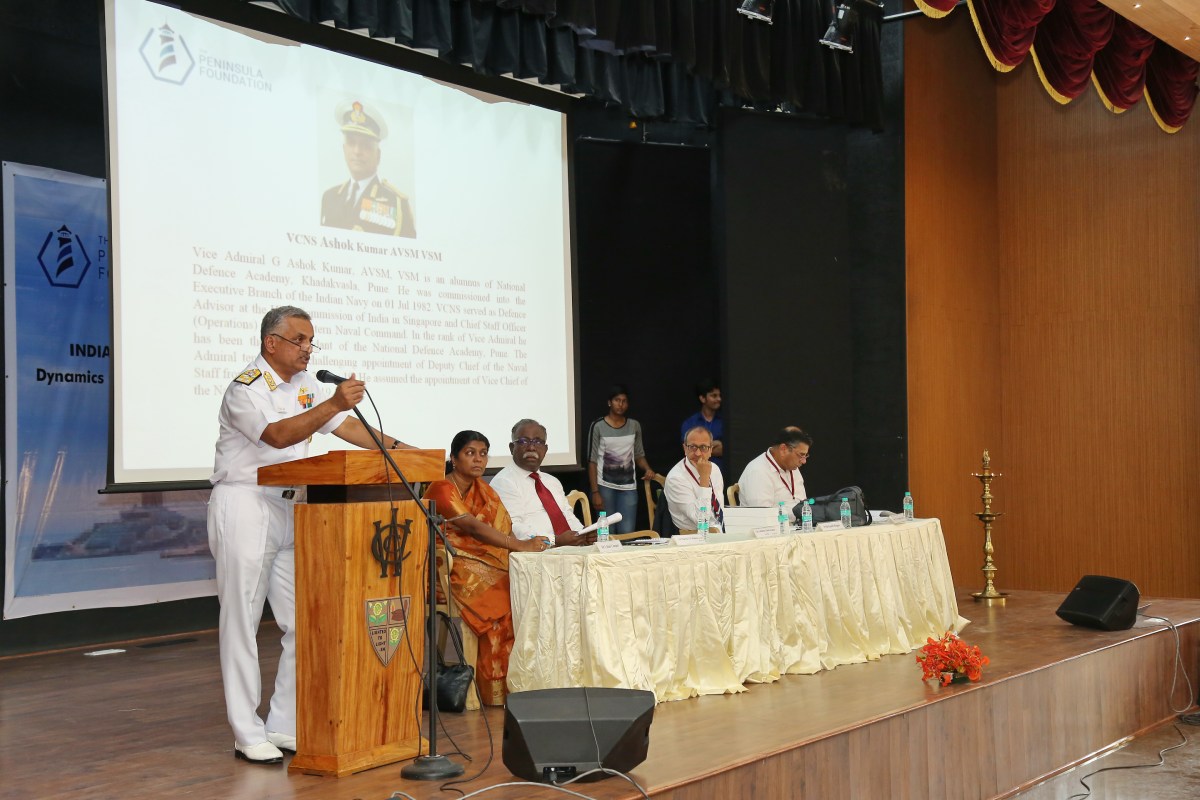
    The Peninsula Foundation held its first international conference titled “India and the Indian Ocean Region: Dynamics of Geopolitics, Security and Global Commons” on the 12thand 13thof July at the Women’s Christian College, Chennai. Fifteen papers authored by research scholars from various institutions and backgrounds were presented during the course of the two-day conference comprising five sessions.The inaugural address was delivered by the Chief Guest, Vice Admiral N Ashok Kumar AVSM VSM, Vice Chief of Naval Staff (VCNS). In an eloquent speech, the VCNS highlighted the growing importance of the Indian Ocean Region and the need to debate and discuss issues relating to chokepoints and the trade routes. He spoke about historical evidence of the criticality of the trade routes in the Indian Ocean Region (IOR), and related it to the present context of ship movements in vital sea lanes of communications (SLOCs) that are vital for economic growth of countries in the Asia-Pacific Region. India’s geographic location gives it a dominant strategic position, as seventy-five percent of international shipping links go through the IOR. He pointed out that China is deeply focussed on safeguarding its interests in the IOR since more than seventy percent of its energy requirements are dependent on Indian Ocean sea lanes. Stressing on the importance of the IOR, the VCNS highlighted the vulnerability of chokepoints and the need to ensure freedom of the seas.

                The keynote address was delivered by Professor Kanti Prasad Bajpai, Vice Dean and Wilmar Professor of Asian Studies at the Lee Kuan Yew School of Public Policy, National University of Singapore. He focused on the contemporary understanding of the term ‘region’ and its context with regards to geopolitics and international relations, stating that when we refer to a region in the geopolitical context, we essentially refer to a zone of conflict, a war-zone or an area of potential conflict. Thus, South Asia often implies the India-Pakistan conflict, Middle East or West Asia the Arab-Israeli conflict, or the conflict between North and South Korea when talking about Korea as a region. Similarly, the Indian Ocean region is one of geopolitical contest amongst the great powers. It is a strategically important region where interdependence is inevitable amongst the nations that have vested interests in the IOR.

                Professor Bajpai further elucidated the fundamentals of trade development in the region and substantiated a case for the IOR as a strategic zone, citing the consistency with which external powers compete to control the region. He highlighted the three forms of culture that govern or define power positions in the IOR: classical culture, popular culture and strategic culture. India, aspiring to position itself as an important player in the region, has to evaluate the choices that are available to it: accept one dominant power to manage the region in a rule-based order or actively participate in the dialogue for a negotiated order that can be achieved through multilateral trade agreements. In conclusion, Professor Bajpai raised questions to be addressed in the upcoming sessions. The inaugural session ended with a special lecture on the cultural legacies of the Asia-Pacific Region, delivered by Indian classical dancer and Padma Bhushan awardee, Dr Padma Subrahmanyam.

    Session One: ‘Indian Ocean: Culture, Civilizations and Connectivity’

                The topic of the first session chaired by Cmde. C. Uday Bhaskar, Director of the Society for Policy Studies (SPS), was ‘Indian Ocean: Culture, Civilizations and Connectivity’. The speakers discussed the history, culture and impact of trade on the IOR. G Padmaja, an independent researcher, emphasised India’s maritime heritage and argued that policies do not move beyond mere talk with respect to the IOR. Dr Vijay Sakhuja, Trustee of The Peninsula Foundation, stated that the IOR is the busiest trade route in terms of development and commodity exchange. He elucidated the importance of digital shipping and the scope of 5G technology and reliance on Artificial Intelligence in driving the trading ecosystem. The third speaker Dr D Dhanuraj, Chairman, Centre for Public Policy Research (CPPR), explored the idea of the modern political economy influencing the flow of men and commodities, and talked about the possibility of India reclaiming its rights over the IOR.

    Session Two: ‘Power Politics in the IOR: Geostrategies and Geo-economics’

                Through his paper “Competing Pivots in the Indian Ocean Region”, Dr Lawrence Prabhakar, Associate Professor, Madras Christian College, highlighted that the region can be constructed and contested through a maritime mandala that goes beyond security and economic factors to include cultural, governance, transnational and other aspects. Dr Arvind Kumar, HOD, Department of Geopolitics, Manipal University, in his paper “Stability of Trade and Commerce: Energy Corridor” discussed the potential of energy resources in the IOR and the need to include energy security as a significant feature in global trade and growth drive. In his paper titled “China’s BRI: Responses in the IOR and Implications for Regional Order”, Dr Jabin Jacob, Associate Professor, Shiv Nadar University, focussed on smaller nations affected by the Belt and Road Initiative and the responses by the Chinese government. Chairperson Dr TCA Raghavan, DG, ICWA, summarised the session by observing that the actions of regional states cannot be categorised as malicious but are rather reactions to Indian and Chinese policies over time.

    Session Three: India’s Strategic Interests in the IOR

                In the final session of the day, speakers discussed maritime security, power projections and evolving ties with littoral states in the region.  The session was chaired by Vice Admiral Shekhar Sinha (retd), Trustee, India Foundation. Cmde Somen Bannerjee, of Vivekananda International Foundation, pointed out in his paper titled “Maritime Security and Power Projections” that China is set to become the biggest power in the IOR in the next fifteen years. He also discussed the need for India to strategize power projection as a necessary course of action in order to secure importance on the global stage.  Through his paper, “Strategic Partnerships: India & ASEAN”, Ambassador Antonio Chiang brought to attention the strategic partnership between Taiwan and China, and the implications of China’s rise to power on Taiwan. Group Captain PB Nair spoke about the role of the Indian Air Force (IAF) in the context of the IOR, providing assistance in navigating sea routes, and the significance of Artificial Intelligence (AI) technology in carrying out sea operations.

    Day Two: Panel Discussion on India’s Approaches in the IOR

                Day Two commenced with a panel discussion on India’s strategic approaches in the IOR, its aspirations and the contradictions. The panel consisted of Dr TCA Raghavan, Ambassador Antonio Chiang, Lt Gen S.L. Narasimhan, Cmde Uday Bhaskar and Professor Kanti Bajpai. The session, moderated by Air Marshal M Matheswaran, addressed three main points: the power struggle in Asia, India’s inadequate investment with regard to being a rising power, and India’s engagement with multilateral institutions.

                The discussion focussed on the ramifications of Chinese economic power and military strength in the region, its effect on India’s policies, as well as the need for utilization of soft power and soft balancing techniques by smaller countries to level the international playing field.

                With regard to India’s investment activities, Dr TCA Raghavan mentioned that ineptness in domestic spheres would spill over and reflect in international projects.

                On the topic of India’s engagement in multilateral institutions, Professor Kanti Bajpai noted that while it cannot be said that India doesn’t deliver, there is a certain level of ambiguity about what the expectations are. The delay in finalising the Regional Comprehensive Economic Partnership (RCEP) was discussed; Lt Gen S L Narasimhan explored the reason behind India’s hesitancy to the agreement, stating that RCEP only covered the free movement of goods and not of services. Thus, India being a service-strong nation would be at a disadvantage.

                With regard to China’s technological advancements and its potential economic superpower status, Ambassador Chiang stated that intellectual power would be a game-changer for India. He noted that China resorts to hard and fast action for solving problems as opposed to the kind of strategic decision-making employed by India.

    Session Four: International Cooperation and Global Commons

                Session Four of the conference was chaired by Dr Joshua Thomas, Deputy Director at the North Eastern Regional Centre of the Indian Council of Social Science Research (ICSSR). The first speaker, Dr Suba Chandran, spoke on the topic of “Cultural Legacies & Competing Zones of Influence: India, China and External Powers.” His talk addressed two questions: who the actors are and their nature of influence, and how India can respond.  Embracing our shared religious and cultural history and strengthening the education system in India were among the measures suggested by Dr Chandran to build bridges and enable India to assume a more central position of power in the region. Rear Admiral S Shrikande presented a paper on the subject of “International Institutions: SLOCs, Chokepoints, Freedom of Navigation”, and shared insights on the United Nations Convention on the Law of the Sea (UNCLOS). The final speaker of the session, Rear Admiral K Swaminathan, spoke on India’s role as a net security provider in the region, and mentioned several instances of the Indian Navy providing assistance to neighbours in times of need and contributing to preserving international security. While Dr Chandran spoke about cultural connectivity across countries in the IOR through a ‘Bring East Policy’, the naval officers emphasised on the need for connectivity, capacity and credibility in the international sphere.

    Session Five: Transnational Issues, Threats and Challenges in the IOR

                In his paper titled “International and Regional Cooperation in Disaster Management”, Air Vice Marshal Ashutosh Dixit underlined the vital role played by the UN and Armed forces in mitigating the risks of disasters. While the UN plays a multifaceted role of being the interface between local and international responders, it is most often the armed forces that promptly and efficiently mobilize resources to the disaster-struck nation, as their reach has no limitations. Dr Arabinda Acharya, Associate Professor, National Defense University, Washington DC, in his paper “Non Traditional Security Threats: Piracy, Maritime Terrorism, Climate Change, Illegal Unreported and Unregulated (IUU) Fishing, Illegal Immigration, and Smuggling of Arms and Drugs” explored challenges to good order at sea and proposed investment in resources to thwart non-state actors on land so as to reduce their power at sea. Through his paper, “India and the Blue Economy: Evolving Partnerships,” Dr R P Pradhan, Associate Professor at BITS Pilani, Goa Campus, emphasised the critical role of the Big Push Theory in developing the blue economy. Investing in strategic assets such as seaports similar to China, Indonesia, South Korea, etc. is vital for realising India’s aspirations for a larger role in the regionIn his closing remarks, Lt General SL Narasimhan, Director General, Centre for Contemporary Chinese Studies, Ministry of External Affairs, emphasised the need for states and regional organizations to collaborate rather than compete in order to address challenges that transcend national borders.

                Lastly, in his valedictory address, Dr TCA Raghavan identified crucial points with respect to the theme of the conference, including the difference between military and diplomatic thinking, and strategic and tactical strength. Dr Raghavan stressed the need for developing dialogue forums and intergovernmental organisations in the Arabian Sea littoral with countries such as Saudi Arabia, Yemen and Iran, among others, to focus on pressing issues in the region.

    [sc name=”donte”]
  • Strategic Autonomy and the Looming Oil Crisis

    Strategic Autonomy and the Looming Oil Crisis

    Kamal Davar                                                                                             May 31, 2019/Commentary

    The new Modi government will have to speedily contend with a serious foreign policy challenge on its hands.

    That this ordeal comes in the wake of some underplayed serious economy problems currently facing the nation will compound the problems for India which imports over 80 per cent of its burgeoning oil needs.

    Thus, if the looming crisis in the Persian Gulf between an arrogant US and an equally defiant Iran does not get resolved peacefully, ominous ramifications await the region, the world and all those nations which import crude oil from Iran.

    The genesis of the current crisis between the US and Iran has its roots in the Joint Comprehensive Plan Of Action (JCPOA) which was agreed upon by Iran and six western nations in 2015, led by the US, to curb Iran’s nuclear programme, which boils down to deterring Iran from developing nuclear weapons. But in May 2018, the US, under its mercurial President Donald Trump, chose to renege on this treaty as Trump felt that this was the “worst deal ever negotiated.”

    It is also a fact that Iran did not violate any norms of the law as regards this agreement.

    Meanwhile, the US allowed some nations, including India, which import oil from Iran a six-month waiver, which ended on May 2, 2019. As a consequence of the US action, oil prices the world over have jacked and soon its adverse effects will be felt in India as inflation will hit the already strained Indian economy. Over a 10 per cent hike in global oil prices has already taken place in the last one month and a crippling escalation in oil prices ahead is well on the cards.

    Notwithstanding any US pressure on India, the unalterable fact of Iran’s strategic significance to India in the region remains beyond question. India imported 24 million metric tonnes of crude from Iran in the 2018-19. India was Iran’s second largest buyer of crude last year, while Tehran was the third largest supplier to India after Iraq and Saudi Arabia (11 per cent of a total of India’s oil imports).

    Additionally, Iranian crude comes with a longer credit period and cheaper freight owing to Iran’s geographical proximity to India and, thus, Iranian oil remains the best option for India in more ways than one.

    Higher oil prices also make the Indian rupee weaker, making imports to India costlier. Importantly, that Iran-India collaboration in the development in the vital Chabahar Port in Iran will give India vital ingress to Afghanistan and the Central Asian Republics cannot be understated.

    Meanwhile, the US has rushed the formidable USS Abraham Lincoln carrier-borne Task Force to the Persian Gulf region and undertaken certain prophylactic steps in case war breaks out.

    The Iranians, too, have mounted some small-range anti-ship missiles on their warships. Iranian President Hassan Rouhani recently said that his nation is facing acute pressure from international sanctions, dubbing it a “war unprecedented in the history of the Islamic revolution.”

    The US has also branded Iran’s elite Revolutionary Guards as a foreign terrorist organisation. A war of words has broken out, with President Trump declaring that if “Iran wants to fight, that will be the official end of Iran. Never threaten the United States again.”

    Replying back sternly, Iranian Foreign Minister Javad Zarif retorted that Iranians have stood tall for millennia against aggression and that “economic terrorism and genocidal taunts won’t end Iran.” He added that “never threaten an Iranian. Try respect it works.”

    Importantly, even US allies have steered away from of taking any partisan positions with either the US or Iran. Meanwhile, oil-producing nations like Saudi Arabia, Kuwait, Mexico and the US itself have been requested to step up their oil production to cater for Iranian oil shortfalls.

    How this oil crisis will shape up to meet global demands is anyone’s guess.

    It is a strategist’s nightmare in conjuring up a scenario concerning the ramifications of a war between Iran and the US. The Persian Gulf is easily one of the world’s critically significant strategic waterways through which one-third of the world’s oil is transported.

    In the event of a war, Iran will definitely close the vital Straits of Hormuz for commercial shipping purposes, throwing the region’s economy out of shape — an eventuality which, hopefully, should not ever take place.

    Preoccupied with its General Election, India, as a major regional player, has so far not reached out to its strategic partner, the US, to impress upon it to defuse the crisis.

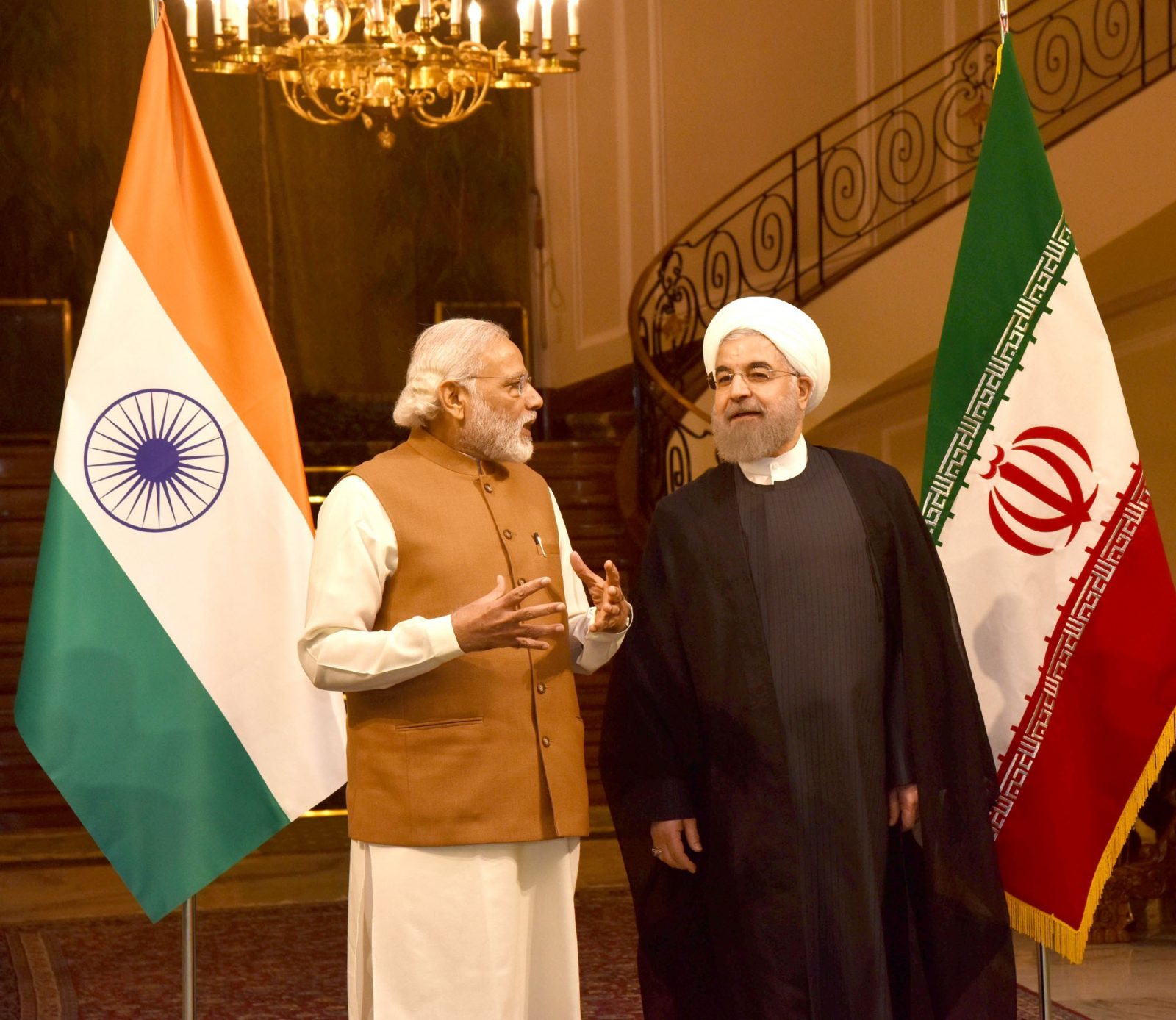
    Recently, the Iranian Foreign Minister made a trip to India to explain their position to India on the current standoff.

    India, however, need not succumb to any US pressures or take sides. India has an adequate financial standing and moral stature to play a peacemaker’s role. India must conscientiously follow the time-honoured policy of zealously guarding its strategic autonomy. Respect for India from nations even adversarial to each other — as in earlier decades — will follow automatically and some of India’s economic tribulations will also get simultaneously addressed.

    Let the new government in New Delhi bear in mind Iran’s more than significant strategic value for India in the region.

    The author, Lt Gen Kamal davar is a former DGDIA and is visiting Distinguished fellow at TPF. 

    This article was earlier published in The Tribune.

  • How the newly inducted IAF Chinook heavy-lift helicopters provide huge versatility in operations

    How the newly inducted IAF Chinook heavy-lift helicopters provide huge versatility in operations

    M Matheswaran                                                                                                 May 22, 2019/Opinion

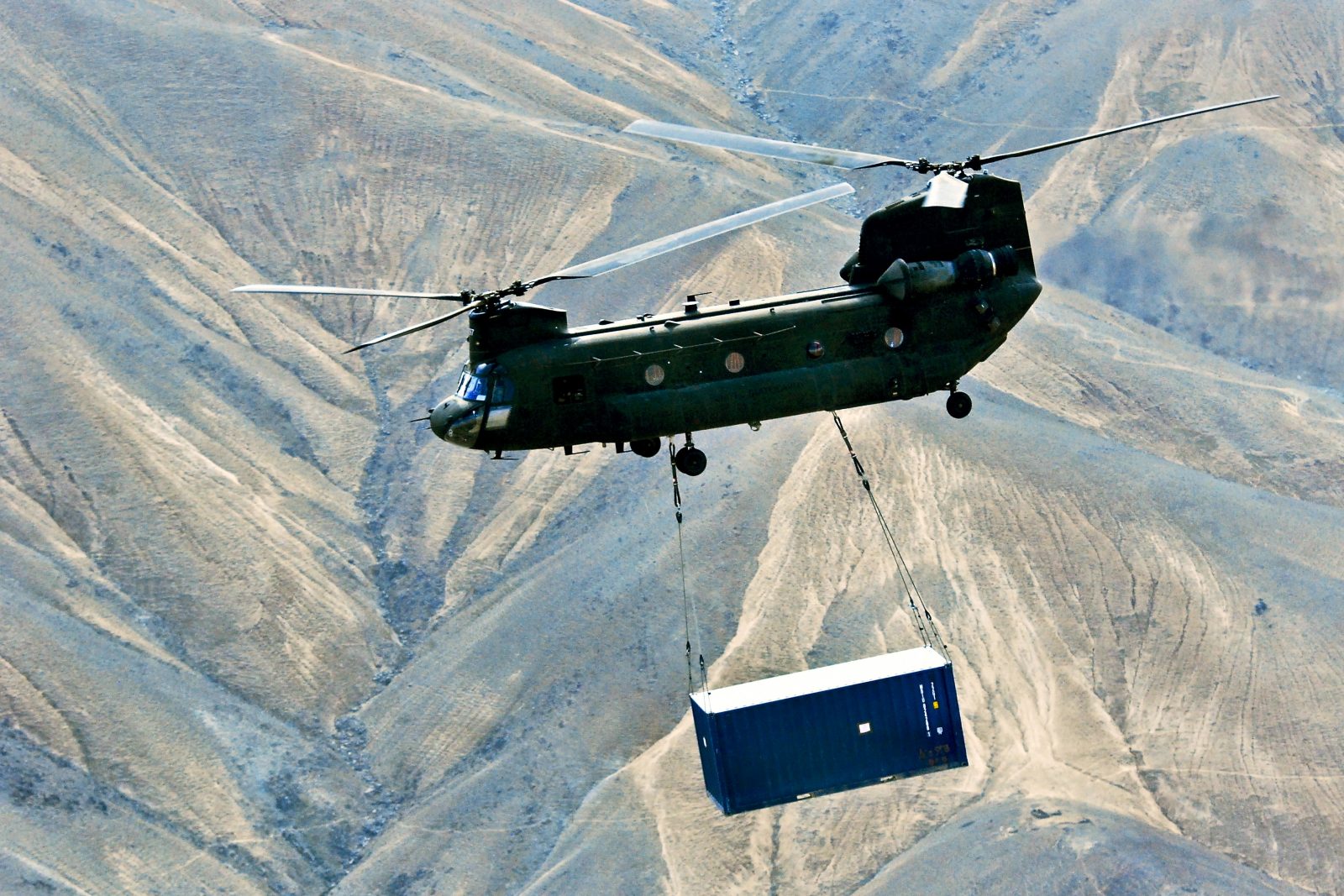
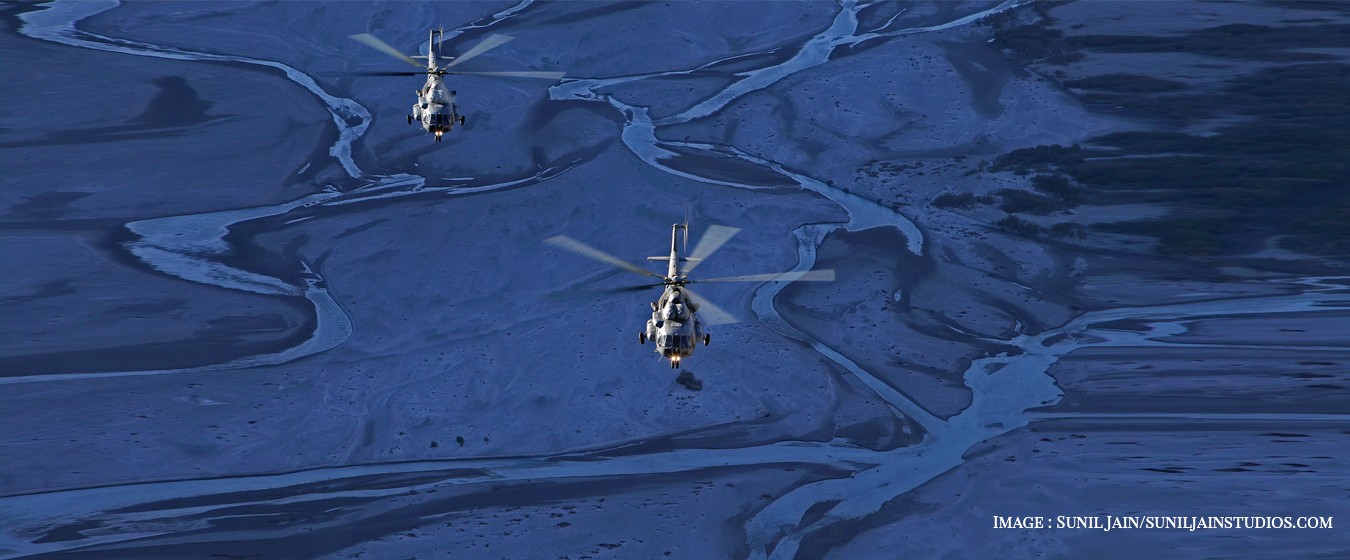
    The Indian Air Force inducted the first batch of four Boeing C-47 F(I) Chinook helicopters last month into its inventory. These are part of the order for fifteen heavy lift helicopters. With a payload capability of 10 tonnes and a significantly good high altitude performance, the Chinooks fill a long-felt gap in IAF’s heavy lift helicopter capability. For long the IAF had depended solely on its small fleet of Russian built Mi-26 helicopter, which is still the world’s largest and heaviest payload helicopter. The Mi-26, with an enormous payload capability of 20 tonnes, had provided yeoman service for more than two decades.

    Starting with a fleet of four aircraft, the Mi-26 has played extensive role in meeting major airlift requirements of material, machinery, and men, for the military and civil administration in the Himalayan border regions.With one aircraft having crashed few years ago, the surviving fleet had been hampered by maintenance and technical support problems, virtually bringing to halt the heavy heli-lift capability of the IAF. Besides, increasing emphasis on infrastructure build-up in the border regions has highlighted the importance of heli-lift capabilities for both the IAF and the Indian Army. This is what prompted the IAF to look out for building and enhancing its heli-lift capabilities in the heavy-segment.

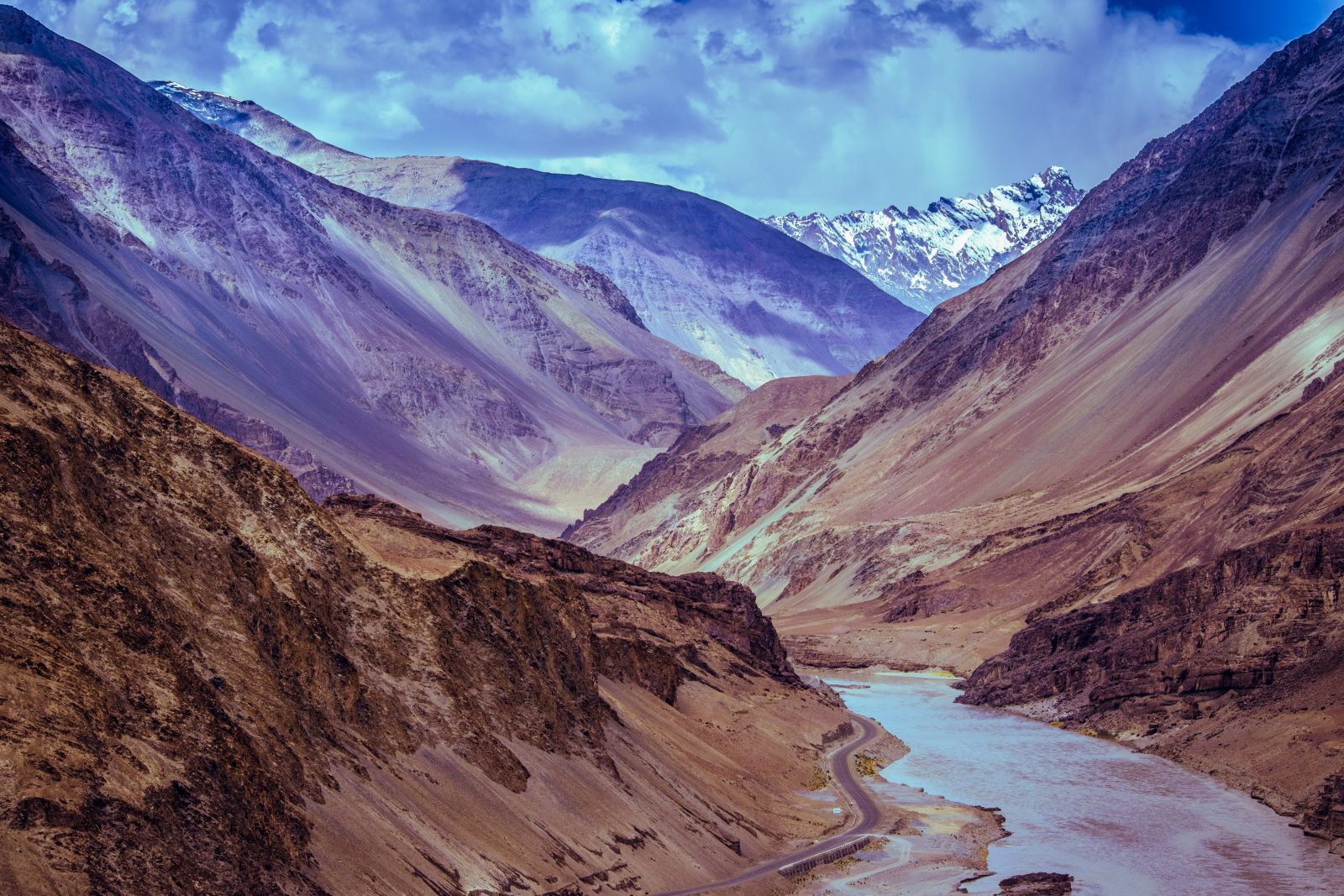
    India’s borderlands, dominated by the mighty Himalayan ranges, are unique, treacherous, and the most demanding in the world. The need to operate at altitudes higher than 20000 ft on regular basis is unique to India, and is a challenge to most helicopters designed in the West and Russia. Operations in Indian environment puts gruelling demands on these helicopters. High altitude performance in other parts of the world is at less than 20000ft, in fact, it would average between 5000 and 10000 ft, with exceptions at 15000 ft. In India, 20000 ft operations would be routine in the Himalayan stretches and valleys all across our nearly 4000 km long border in the north and north-west. High altitude operations put severe demands on the engine, has a drastic reduction in effective payload, and has adverse impact on total technical life. These will need to be addressed by appropriate technical enhancements that are fairly expensive as well.

    Indian MOD signed the contract with M/s Boeing in Sep 2015 for supply of 15 CH-47F(I) Chinook Helicopters. The contract is for USD 1.1 billion, with an option clause for further seven aircraft. All 15 aircraft are planned to be supplied before March, 2020. It is almost certain that the option clause would be exercised. The first aircraft was handed over in a ceremony at the manufacturer’s production facility in Philadelphia on Feb 1 st , and the first batch of four were shipped out to Mundra Port in Gujarat. The four were then assembled and integrated into fully operational helicopters at the IAF base in Chandigarh and inducted on the 25 th March. Some of the specialist systems, self-protection systems and EW equipment are contracted through the FMS (Foreign Military Sales) procedure.

    While the payload capability is only half that of the Mi-26 helicopter, the Chinook provides huge versatility in operations. The IAF version is the CH-47 F(I), which is the latest and advanced version of the Chinook, designed more than 50 years ago in 1962. The IAF aircraft is upgraded with new generation avionics and flight control systems that make the aircraft capable of very precise and versatile operations during day and night. The Chinook’s twin-rotor design gives it good agility and stability in high altitude operations. Its advanced mission computer and the DAFCS (Digital Automatic Flight Control System) allows the pilot to feed in the complete mission profile and fly automatically and with hover precision in one foot increments vertically and laterally. The CH-47 F(I) is an advanced multi mission helicopter with the true multi-role, vertical-lift capability. It contains a fully integrated, digital cockpit management system, Common Aviation Architecture Cockpit and advanced cargo-handling capabilities that complement the aircraft’s mission performance and handling characteristics. Its primary role will be for transportation of troops, artillery, equipment, and fuel. The army is particularly keen on the Chinook heavy heli-lift capability for transportation and deployment of its recently procured M-777 Ultra-Light howitzer artillery guns in the Himalayan border regions with China.

    As opposed to the small fleet of three Mi-26 helicopters, the larger fleet size of the CH- 47 F(I) would provide the IAF immense flexibility and availability of aircraft for a variety of tasks. It will provide a boost to the construction of infrastructure and border road projects, long overdue. Border Roads Organisation would get a fillip to its long-delayed road construction projects in the north-east. Our continued requirements of aerial maintenance in remote regions will be better served with this new capability, as also for critical needs of HADR operations, in missions for transportation of relief supplies, and evacuation of refugees. The IAF plans to deploy the two squadrons, one in the Western sector in Himachal Pradesh and adjoining Himalayan regions, and the other in the East sector in Assam/Arunachal Pradesh.

    The Chinook acquisition was also accompanied by acquisition of the Apache attack helicopter, also from Boeing. Both contracts, worth together over USD 3.5 billion, were signed on the same day on 28 Sep 2015. Both are also a combination of DCS (Direct Commercial Sales) and FMS (Foreign Military Sales) processes. The two inductions have followed a series of procurements from the USA, mostly through the FMS route. Having started with the first major defence deal in 2008, the Indo-USA defence business is likely to touch a whopping USD 18 billion by the end of 2019. Most of these acquisitions are through FMS and are virtually replacing the earlier Russian fleets: Apache replacing the Mi-35, Chinook replacing Mi-26, Sikorsky MH-60 Romeo replacing the Kamov in the Navy, with the likelihood of 110 NMRH to follow; this is a sort of indirect CAATSA in play.
    It is important for India to realise that while many of these acquisitions have given significant teeth to Indian operational capability, in terms of business it has been huge business to the US companies with very little to show for India in 3 terms of Technology transfer or industrial gain in terms of manufacture or co-design and co- development.

    The CAG report number 3 of 2019 comes down heavily on these acquisitions. It castigates the MOD and the IAF for procedural lapses, long drawn out acquisition processes, and more importantly of having skewed the QRs in such a way that only Chinook and Apache would have been successful. That’s a serious indictment. However, India will do well to remember that major procurements like the Apache and the Chinook at huge costs, while meeting the IAF’s operational requirements, should also be leveraged to benefit India’s larger strategic interests of technology acquisition, industrial capability, global partnerships, and of course, strengthening US-India strategic partnership. It needs to be a win-win for both.

    The author is retired Air Marshal and former Deputy Chief of Integrated Defence Staff. He is the founding Chairman and President of The Peninsula Foundation, Chennai. Views expressed are personal. 

    This article was published earlier in Financial Express.

    Image Credit.

  • Undertones of a Potential India-Pakistan Water War

    Undertones of a Potential India-Pakistan Water War

    Renuka Paul and M Matheswaran                                                           (March 9, 2019/Analysis)

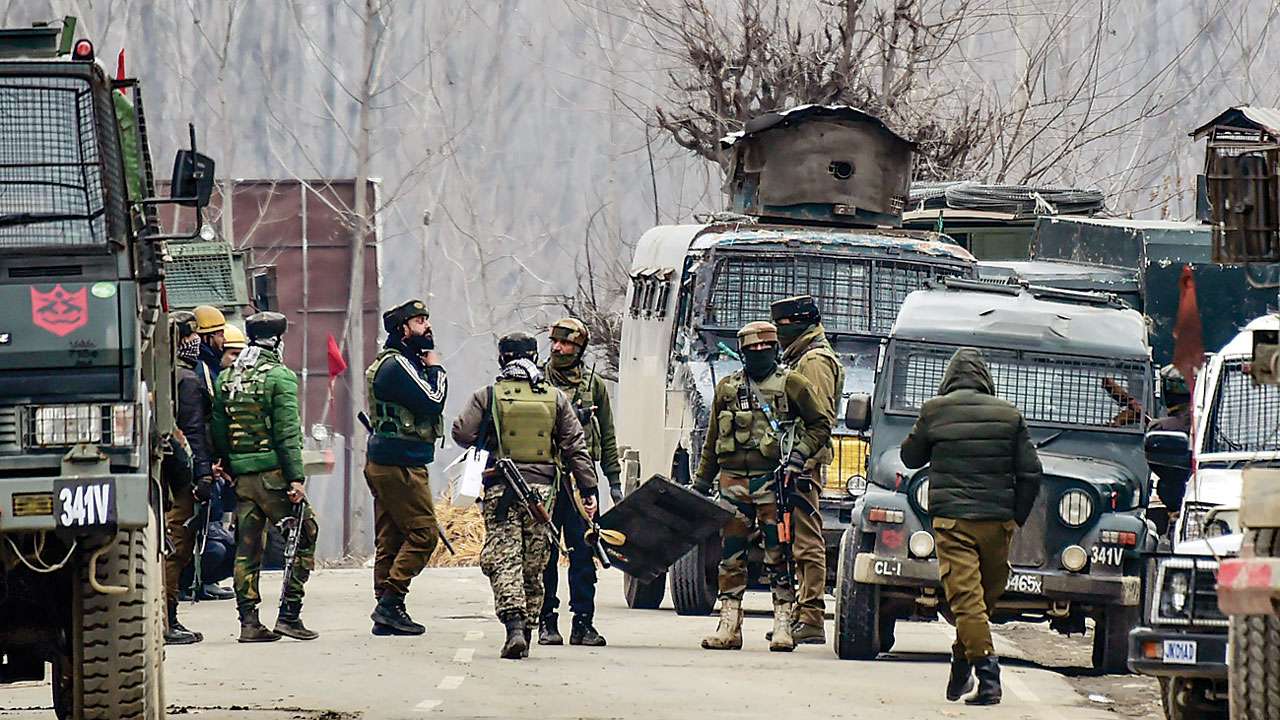
    Last week saw India-Pakistan tensions touch a crescendo as India, for the first time, executed a punitive strike into Pakistan. While Pakistan’s retaliatory strike was thwarted by IAF’s air defence mechanism it also resulted in a MiG 21 aircraft being shot down and the Indian pilot taken as prisoner. While international pressure forced Pakistan to release him within 48 hours, it also led to quick de-escalation. In the bargain, India’s pressure on Pakistan became diluted significantly. The genesis of this spike in tensions between the two nuclear powered neighbours, relates to the event of February 14th, 2019 when Pakistan based Jaish-e-Mohammad launched a terror attack in Pulwama, Jammu and Kashmir that killed over 40 Indian paramilitary personnel.

    Blaming Pakistan for the incident, New Delhi has revoked the ‘Most Favoured Nation’ status granted to Islamabad, imposed 200 percent duty on imports from Pakistan and vowed to end the flow of unutilized water from India’s shareflowing to Pakistan. On February 26th, India carried out “non-military, pre-emptive” airstrikes to destroy terrorist camps in Balakot, Pakistan. The tough and unprecedented (since 1971) retaliatory measure of crossing Pakistan’s airspace makes sense given the political pressure due to the upcoming elections and the media fuelled public sentiments. This changed discourse proves that Pakistan’s approach of employing Islamic proxies to cause destructions and using nuclear weapons as a safeguard to deter Indian response does not hold true any longer. Moreover, the international community including China and Saudi Arabia, usual Pakistan allies, has condemned the terror activities.

    Some argue that the strongest threat India has made since the Pulwama incident is the decision to alter the course of water flowing into Pakistan towards Punjab and Kashmir instead. The recent claim, however, seems irrelevant as it is in fact a two-year-old announcement that the excess of Indian waters that flow into Pakistan will be used for hydroelectric projects. But what this has sparked is a boost to those advocating abrogation of the Indus Water Treaty (IWT) and has highlighted a potential water conflict in the subcontinent.

    Post partition, in 1948, Pakistan argued that it needs Kashmir partly for its water security as it is nearly 65-percent dependent on the Indus river system. Following escalated issues, India partially cut off water supply to Pakistan by shutting off water from Ferozepur Headworks to Dipalpur Canal, portions of Lahore and main branches of the Upper Bari Doab Canal. To de-escalate the situation and to prevent further water crisis, the World Bank, after years of negotiations, brokered the IWT in 1960. According to this deal, India is allocated the eastern rivers- Ravi, Beas and Sutlej- while Pakistan has the western rivers- Indus, Chenab and Jhelum- and it mandates a bilateral meet twice a year to share data regarding flow, flooding etc. However, over the years the undertones of looming water dispute is evident. Being the upper riparian state, India has a clear advantage that sustains Pakistan’s insecurities. For instance, it has built multiple dams and barrages over river Jhelum. While 1.50 MAF water is allowed to India from Jhelum under IWT, constant disputes exist regarding the amount of water diverted (stop the flow or flood).

    In 2008, Lashkar-e-Taiba chief Hafiz Saeed accused India of water terrorism, followed by Pakistan government in 2010 claiming that India chokes water supply consistently. In the aftermath of Uri attacks in 2016, Modi proclaimed that “blood and water cannot flow simultaneously” and dismissed the bilateral meet of IWT committees. In addition, New Delhi set up dozens of small and medium hydroelectric and irrigation projects like Wular barrage, Baglihar Dam, etc that obstruct Pakistan’s water share. Though India cannot unilaterally end the treaty, it can reduce the water flow to Pakistan utilizing the provisions of IWT that allows India to use water from Western rivers for non-consumptive needs like irrigation, hydroelectricity production, etc. Islamabad responded that revocation of IWT “can be taken as an act of war” and garnered international support to stop India’s project efforts.

    Given that Pakistan is allotted 80 percent of the water from the Indus river system, many in India call for ending IWT. However, the potential consequences of retraction from IWT are manifold. As signatory to the international agreement, backing out from IWT will invite international condemnation affecting India’s global image and its bid for UNSC seat. Moreover, the trust relation with neighbours (Nepal and Bangladesh) with whom India shares water treaties will be affected. Additionally, India does not have the infrastructure to use the extra water and this could result in the flooding of Kashmir. Even the underutilized water that belongs to India (from eastern rivers) is free flowing to Pakistan. Despite continued claims of diverting the water that flows to Pakistan to other parts in India, New Delhi is yet to materialize these claims.

    Experts argue that this is to avoid water crisis within the country. Water disputes within states in India are common. For instance, it was only after 40 years of interventions that Jammu and Kashmir, Punjab and Haryana signed an agreement in 2018 on the Shahpur Jandi dam project for access to and use of the water from these rivers. There is also the risk of China following India’s steps and reducing water flow to the Brahmaputra river. They have already done so by building the Lalho project on the Xiabuqu river, a tributary of Yarlung Tsangpo (Brahmaputra as known in India). Realizing the disadvantages of withdrawing from IWT, India has looked at other alternatives.

    New Delhi is engaging in water power play by further limiting Pakistan’s water supply through Afghanistan – India investing on the $236 million Shahtoot Dam on Kabul river in Afghanistan is an example. Using water as a political weapon is not new. Turkey completely stopped water flow from Euphrates to Syria, Israel cut fresh water supply to Gaza, and so on. In the absence of a water sharing agreement between Afghanistan and Pakistan, India is investing in river and dam projects on Afghanistan’s eastern rivers- Kabul and Kunar- that eventually flow into Pakistan. However, this seems to set a dangerous precedent and will further worsen the distributional conflicts in the region. In parallel, India has also taken up multiple projects utilizing the provisions under the treaty that can potentially reduce the water flow to Pakistan. Though it takes time, given the costs and objections involved, this seems to be a move in the right direction.

    With political tensions and water stress rising in both nations, water diplomacy needs to be an important factor to be considered in Indo-Pak negotiations. Moreover, issues like climate change and global warming were irrelevant when IWT was brokered and left out of its gambit. Intermittent floods and droughts could be controlled through mutual coordination. Therefore, water should be seen as a factor for cooperation and not conflict.

    Renuka Paul is a Research Analyst with The Peninsula Foundation. She holds a Masters in Public Policy from Mumbai University. Views expressed are the author’s own.

    Air Marshal M Matheswaran AVSM VM PhD (Retd) is the Founder President and Trustee of TPF.

  • Reaping the Whirlwind: Pulwama and After

    Reaping the Whirlwind: Pulwama and After

    Deepak Sinha                                                                                                         01 Mar 2019

    It was the military disaster of 1971 that forced the Pakistani establishment, the military which runs the country for all practical purposes, to face up to the fact that it could never win a conventional war against India. If it was to avenge its humiliation and cut India down to size, it had little choice but to fight through proxies, bleed India through a thousand cuts.

                This idea must surely have germinated from its successful employment of Islamic militants, the forerunners of the Taliban, used to oppose the rule of the Marxist People’s Democratic Party of Afghanistan (PDPA) that had deposed President Mohammed Daud Khan in what came to be known as the Saur or April Revolution of 1978, It was this Pakistani fomented insurgency which finally led to the Soviet intervention and occupation of Afghanistan in Dec 1979. Incidentally, while conventional wisdom would have us believe that it was the CIA that came up with the idea of using militants to fight the Soviets, facts show that they came to the party much later and only added their considerable resources to the techniques perfected by Pakistan’s Inter-Services Intelligence in the use of irregulars for its own ends.

                Thus from the early Eighties Pakistan commenced its support for secessionist elements within India that were involved in fighting against the State, firstly the Khalistan Movement and subsequently, with greater success, in Jammu and Kashmir. It clearly had advantages as there was credible deniability, economy of effort with the dirty work being done by proxies keeping Indian Security Forces tied down and finally, the most important of all, creating fear and anxiety within the general population that impacted every aspect of our democratic way of life.

                There is of course one major disadvantage of using proxies, they tend to have a mind of their own and often times respond inappropriately and at cross purposes to what its mentors may be wishing to achieve. The Pulwama suicide attack falls in this category. There have been numerous statements over the past four years that have made clear that Pakistan prefers to deal with Indian Governments run by the more “liberal and secular” parties compared to having to deal with the more conservative, Hindutva driven BJP. With elections around the corner and with the BJP facing the very real likelihood of a serious decline, if the recent state elections were any indication, it would have been in Pakistan’s best interest to maintain a low profile.

                Masood Azhar, the Jaish- e- Mohammed supremo, obviously had a different view. Not only did his organization carry out the suicide attack that led to the death of 45 policemen, but also went on to claim credit for the action. Thus, in one thoughtless act he not only destroyed the Pakistan Government’s attempts at deniability, but he also made Imran Khan’s call for India to provide credible evidence infructuous. Most importantly, the timing of the devastating attack left the Modi Government with little choice but to respond overtly and with speed, if it was to still retain any hope of doing well at the hustings. There was also the possibility that if India responded in an effective manner to the outrage, the Governments stock would go up rapidly and that would enhance Mr. Modi’s reputation and chances of return to power, just as the earlier cross- border strike helped the BJP in the Uttar Pradesh elections. This could hardly have been to Pakistan’s advantage and in the event it was facilitated by the Army, then General Bajwa has certainly made a serious miscalculation.

                Regardless of the number of casualties that the Indian Air Force’s attack on terror camps deep inside Pakistan may have caused, the very fact that the Indian Government displayed the intent to take on terrorists inside Pakistan has clearly changed the narrative prevalent for the past four decades. It has also shown up Pakistan’s repeated threats of a nuclear riposte as sheer hyperbole and bluster. More importantly the initiative has finally shifted in India’s favour along with world opinion which has had enough of Pakistan’s duplicitous behaviour. Moreover, any escalation above a perfunctory retaliation, which was to be expected to assuage domestic opinion, by Pakistan, would destroy the fig leaf of deniability it has used over the years. Most importantly, it would force their military into a direct confrontation, something that the proxy war waged by them over the years allowed them to avoid.

                In this context one can only hope better sense will prevail and we will be able to avoid a serious escalation of the conflict which can hardly help either side given the huge challenges that we face in lifting vast swathes of our population out of the twin evils of poverty and illiteracy.  However, it must be emphasized that true progress will only occur as and when Pakistan starts to wind up the Jihad factory it has built over these years. In any case the Indian cross- border raid cannot be a one- off affair and we must be willing to do all that it takes to neutralize the Jihadi network and its vast army of financiers, mangers and facilitators.

                Finally, while all our attention may be taken in dealing with the issue at hand, the fact as to what led to the Pulwama attack must not be lost sight off. For this serious lapse on the part of our intelligence services, it is imperative that heads must roll. There have also been clear indications that despite increasing numbers of militants being neutralized in the Valley the Army and other Security Forces were being increasingly marginalized, especially in South Kashmir, because of popular discontent. They had consequently lost their ability to dominate the countryside, thereby losing out on intelligence. These aspects continued to be ignored by the Central Government and the military hierarchy. Little thought was given to the necessity for reviewing either counter insurgency strategies or tactical procedures and the leadership continued to be swayed by tactical successes with little attempt to resolve the growing disillusionment and radicalization within the population, especially the youth. This must certainly change.


    The writer, a military veteran is a Consultant with the Observer Research Foundation, New Delhi and Senior Visiting Fellow with The Peninsula Foundation, Chennai.

    This article was also published in the Pioneer https://www.dailypioneer.com/2019/columnists/stifle-the-jihadi-network.html. Opinions expressed in the article are those of the author alone.

  • Looking Beyond the Rafale Imbroglio

    Looking Beyond the Rafale Imbroglio

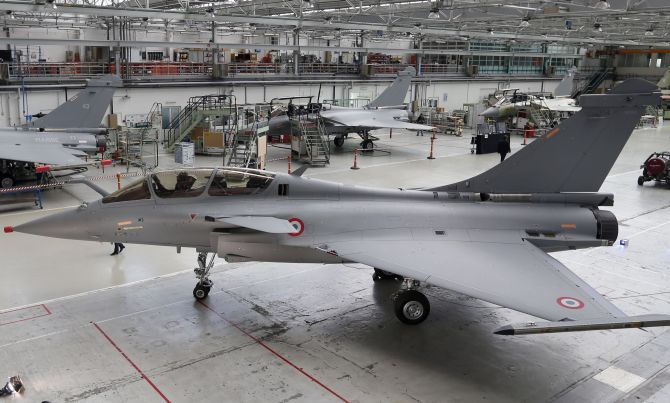
    The tenor of the debate, especially in the election year, can hardly be expected to be moderate or mature. While wild assertions made by the politicians in hope of swaying the electorate is to be expected and accepted, there is also a vital need for politicians to ensure that matters pertaining to National Security are kept out of the ambit of politics. Just as Georges Clemenceau, French Prime Minister during the Great War, commented that “War is too serious a matter to entrust to military men”, so too is the case with entrusting national security to just politicians. But politicians being politicians care little for such niceties, which explains why allegations of wrongdoing are flying so thick and fast in the ongoing Rafale procurement imbroglio, who, unfortunately, have been joined by respected academics and researchers, who should know better.

    Attempts to garner the limelight and the few minutes of fame that goes with it is understandable in the case of politicians, but for academics to do so by drawing conclusions based on speculation that passes for facts and little else, seems to be rather hasty, if not downright fallacious and unprofessional.  A respected academic, for example, has concluded that the decision to procure just 36 jets instead of the original 126 with the attendant increase in unit cost shows “extraordinary ineptitude can only be explained by the circumvention of laid down procedures.” He further  goes on to equate the manner in which this decision was made to that of demonetization, berates the Government for being “parsimonious and incompetent” and suggests that their action was “worse than a crime—it was a blunder.”

    He may well be proved right in his conclusions subsequently, but the truth is that it is one thing to question the Governments’ motivation or influence in the selection of the aircraft or the offset partners, but quite another to question the decisions it takes, however much we may disagree with them. For one, Mr. Modi was elected by a substantial majority to do just that, since that is what is expected of a leader. Moreover, we are wholly unaware as to circumstances that led to the Government to take the decision that it did, and therefore to question his decisions clearly smacks of arrogance, if not an ulterior motive. It is all very well to rant about the ineptitude and incompetence of this Government and its adverse impact on defence modernization, but what then are we to conclude at the previous Governments’ inability to push through the earlier deal in the seven years that it had to do so? Surely ineptitude or Incompetence may be too mild a term in their case.

    There is no gainsaying the fact that defence procurement and corruption have had a symbiotic relationship ever since Independence and our first procurement scandal, the infamous “Jeep Scandal” of 1948. Politicians have always seen defence procurement as a lucrative source of funds and as long as our political funding regulations remain opaque, nothing is going to change. Therefore, if this Government has actually resorted to underhand means as alleged, despite it being a government to government deal, then they have only trod on the well-beaten path of their illustrious predecessors. Thus, if precedent is to be our guide, then all the brouhaha on the issue will only result in a setback for the Air Force while politicians and their minions involved getting away, as we saw in the Bofors case.

    If it is accountability that we are interested in, then we need to look beyond this specific issue of procurement and ask ourselves as to why the Air Force finds itself in such desperate straits today, with regard to its combat strength. The fact that its combat strength has fallen from its authorized forty-two squadrons to the present thirty plus, over the past two decades, was neither unanticipated nor unexpected.  Like all machines, aircraft have a quantifiable life span, which while possible to extend with mid-life upgrades, will at a point in time require replacement by the next generation, if the Air Force is to be able to match and overcome the adversary’s capabilities. This does not call for either vision or foresight, just common sense and a practical understanding of the facts, which somehow the Government of India with its vast resources was unable to do. Surely someone must be held accountable for this negligence because not only does it put our national security at risk but endangers pilots who are expected to make do with shoddy outdated aircraft.

    While the Air Force hierarchy must carry some of the blame, not least for lack of moral fibre for its inability to stand up for its rights, governments over the years, especially the Ministry of Defence and Hindustan Aeronautics Limited (HAL) that it controls, have much to answer for. For the most part, much of our current problems can be traced to the utter failure of HAL to produce the hugely over-budget, inordinately delayed and ostensibly indigenous Light Combat Aircraft, the Tejas. In this context, the existing perceptions within the Air Force that quality control in HAL is all but non- existent have been borne out by the recent crash of the Mirage 2000 aircraft undergoing upgradation. Initial reports doing the rounds suggest that the nose wheel broke while it was taking off resulting in the tragic death of two test pilots, the best of the best.  It also brings to mind a similar case when three paratroopers slithering down from a HAL manufactured Advanced Light Helicopter at the Army Day Parade in January 2018 fell and were grievously injured because the “strong point” to which their rope was tied broke and separated from the aircraft’s body. The question that needs answering is not just how many such cases have happened in the past, but also how many in HAL have been held accountable for such shoddy work?

    This also explains to a large extent the previous governments’ inability to successfully close the deal for the 126 aircraft. It was reportedly blocked by the unwillingness of the Air Force hierarchy to accept aircraft manufactured by HAL without certification by Dassault Aviation, the manufacturers of the Rafale, something they refused to do.  That they would prefer to work with an untried and untested offset partner, allegedly thrust on them, rather than with HAL speaks volumes about what they think of the capabilities of this Defence PSU!

    Therefore, politicians and academics critical of this governments’ decision to keep HAL out of the loop in this case, especially their accusation that by doing so we have lost out on technology transfer, are either being deliberately obtuse or completely out of touch with reality. In this context, Mr. Rahul Gandhi has been particularly vocal, even to the extent of meeting workers of HAL. It would be wonderful if he took the initiative to volunteer to fly in one of these aircraft or take time off to interact with the pilots who do. Maybe, just maybe, he would have a change of heart and leave national security issues out of the realm of politics.  Finally, our leaders would do well to remember that even after these aircraft are inducted into service, they will continue to be confronted by that gargantuan problem, where will the other hundred-odd aircraft desperately need come from? After all what is sauce for the goose is also sauce for the gander!


    Brigadier Deepak Sinha (retd), an Army veteran, is a Visiting Senior Fellow at the TPF and is also a Consultant at ORF, New Delhi.

    This article was published earlier in the Times of India. The views expressed are the author’s own. 

  • The state of Bihar!?

    The state of Bihar!?

    The Prime Minister in the run up to the Bihar assembly elections announced a Rs.50,000 crores package for the state. Just as he announced a Rs.100,000 crores package for Jammu and Kashmir that July. Bihar has a population of over 103 million and J&K has a population of 12.5 million.

    This is not a new story. Bihar has been systematically exploited by denying it its rightful and deserved share of central funds from the First Plan.

    That Bihar is India’s poorest and most backward state is undeniable. The facts speak for themselves. But what makes its situation truly unique is that Bihar is the only state in India where the incidence of poverty is uniformly at the highest level (46-70%) in all the sub-regions. The annual real per capita income of Bihar of Rs. 3650 is about a third of the national average of Rs.11, 625. Bihar is also the only Indian state where the majority of the population – 52.47% – is illiterate.

    But Bihar has its bright spots also. Its infant mortality rate is 62 per 1000, which is below the national average of 66 per 1000. But what is interesting is that it is better than not just states like UP (83) and Orissa (91), but better than even states like Andhra Pradesh and Haryana (both 66).

    Even in terms of life expectancy, the average Bihari male lives a year longer (63.6 yrs.) than the average Indian male (62.4 yrs) and the state’s performance in increasing life spans has been better than most during the past three years.

    Bihar has 7.04 mn. hectares under agriculture and its yield of 1679 kgs. per hectare, while less than the national average of 1739 kgs. per hectare is better than that of six other states, which include some big agricultural states like Karnataka and Maharashtra.

    Despite this, in overall socio-economic terms, Bihar is quite clearly in a terrible shape.

    As opposed to an All-India per capita developmental expenditure during the last three years of Rs.7935.00, Bihar’s is less than half at Rs.3633.00. While development expenditure depends on a bunch of factors including a state’s contribution to the national exchequer, no logic can explain away the per capita Tenth Plan size, which at Rs. 2533.80 is less than a third of that of states like Gujarat (Rs.9289.10), Karnataka (Rs.8260.00) and Punjab (Rs.7681.20).

    Simple but sound economic logic tells us that when a region is falling behind, not just behind but well behind, it calls for a greater degree of investment in its progress and development. It is analogous to giving a weak or sick child in the family better nutrition and greater attention. Only in the animal kingdom do we see survival of the fittest with the weak and infirm neglected, deprived and even killed.

    But instead of this we see that Bihar is being systematically denied, let alone the additional assistance its economic and social condition deserves, but also what is its rightful due.

    From the pitiful per capita investment in Bihar, it is obvious that the Central Government has been systematically starving Bihar out of funds. Quite obviously Bihar has also paid the price for being politically out of sync with the central government for long periods. The last one was for a dozen years from 1992 to 2004. For the last one year Bihar had a government in New Delhi that was supposed to be favorably disposed to the regime in Patna.

    Quite clearly states that are in political sync do much better in terms of central assistance. Lets take a look at how Andhra Pradesh, a state that has stayed largely in political sync with New Delhi, has fared in the past few years. In terms of grants from the Central Government (2000 to 2005), Bihar fared poorly receiving only Rs. 10833.00 crores while AP got Rs. 15542.00 crores.

    Bihar has also been neglected as far as net loans from the center are concerned. It received just Rs.2849.60 as against Rs.6902.20 received by AP from 2000-02. It’s only in terms of per capita share of central taxes do we see Bihar getting its due. This gross neglect by the central government is reflected in the low per capita central assistance (additional assistance, grants and net loans from the center) received by Bihar in 2001. While AP received Rs.625.60 per capita, Bihar got a paltry Rs.276.70.

    The results of the economic strangulation of Bihar can be seen in the abysmally low investments possible in the state government’s four major development thrusts. Bihar’s per capita spending on Roads is Rs.44.60, which is just 38% of the national average, which is Rs.117.80. Similarly for Irrigation and Flood Control Bihar spends just Rs.104.40 on a per capita basis as opposed to the national average of Rs.199.20.

    Now the question of how much did Bihar “forego”? If Bihar got just the All-India per capita average, it would have got Rs. 48,216.66 crores for the 10th Five Year Plan instead of the Rs.21,000.00 crores it has been allocated.

    This trend was established in the very first five-year plan and the cumulative shortfall now would be in excess of Rs. 80,000.00 crores. That’s a huge handicap now to surmount. Then it would have got Rs. 44,830 crores as credit from banks instead of the Rs. 5635.76 crores it actually got, if it were to get the benefit of the prevalent national credit/deposit ratio.

    Similarly Bihar received a pittance from the financial institutions, a mere Rs.551.60 per capita, as opposed to the national average of Rs.4828.80 per capita. This could presumably be explained away by the fact that Bihar now witnesses hardly any industrial activity. But no excuses can be made for the low investment by NABARD. On a cumulative per capita basis (2000 to 2002) Bihar received just Rs.119.00 from NABARD as against Rs.164.80 by AP and Rs.306.30 by Punjab. It can be nobody’s argument that there is no farming in Bihar.

    If the financial institutions were to invest in Bihar at the national per capita average, the state would have got Rs.40, 020.51 crores as investment instead of just Rs.4571.59 crores that it actually received.

    Quite clearly Bihar is not only being denied its due share, but there is a flight of capital from Bihar, India’s poorest and most backward state. This is a cruel paradox indeed. The cycle then becomes vicious. This capital finances economic activity in other regions, leading to a higher cycle of taxation and consequent injection of greater central government assistance there. If one used harsher language one can even say that Bihar is being systematically exploited, and destroyed by denying it its rightful share of central funds.

    To even make a dent on the abysmal state that Bihar is now in, Bihar will need at least twice what it gets from the Centre, as of yesterday.


    Mohan Guruswamy is a prolific commentator on politics, economics, development and governance. He is a trustee of TPF. The views expressed are the author’s own.

  • India and China Talks: No Give, No Take

    India and China Talks: No Give, No Take

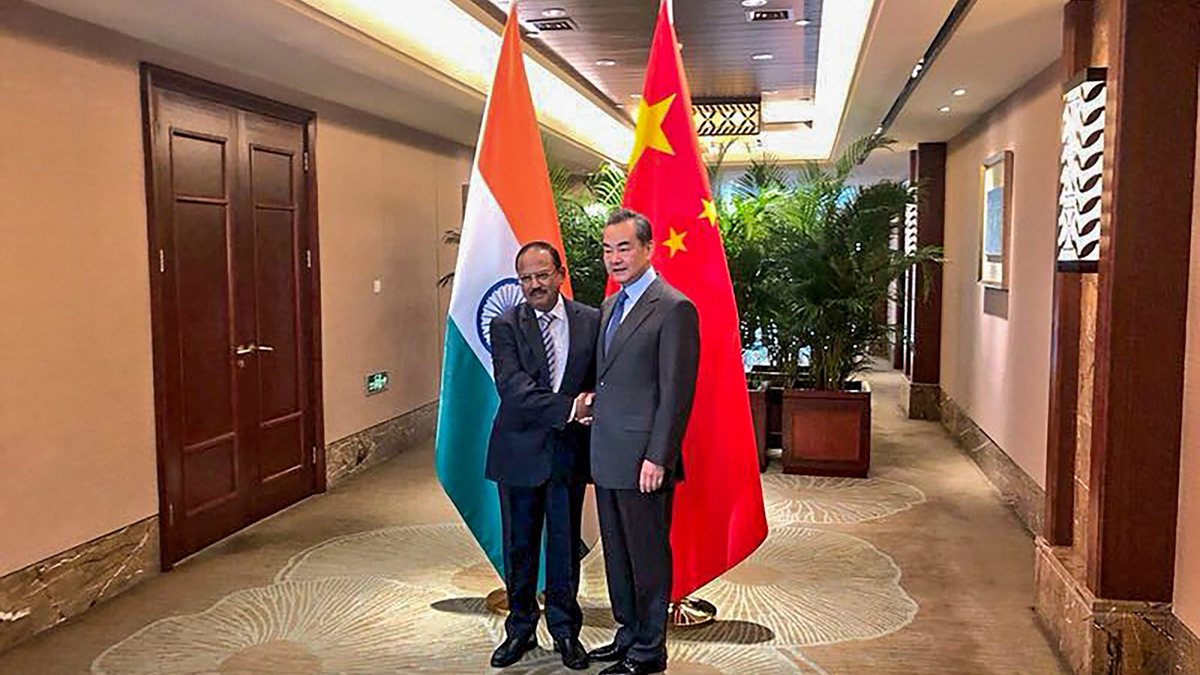
    The Indian and Chinese Special Representatives, National Security Advisor Ajit Doval and State Councillor and Foreign Minister Wang Yi, had the 21st round of talks ostensibly to discuss the “Border Issue” on November 24 at the picturesque town of Dujiangyan in Sichuan province. Though this was the first appearance of Wang Yi at these talks, there is now a monotonous regularity in this and no resolution of the vexatious border issue seems to be in sight, let alone be discussed.  Since the border issue now seems very intractable, the two representatives have broadened the scope of the talks to discuss other bilateral issues. Nevertheless, while it is clearly understood that the resolution of the border territories dispute may never be on the horizon, but at least agreeing on where the interim lines of control lie the military vigil on the borders will ease off into a less tense standstill. Sadly for us, there was a time when with a little bit of give and take this contentious and now protracted problem seemed solvable.

    In 1960 Chinese Premier Zhou Enlai suggested something akin to a status quo as a permanent solution. This was repeated in 1982 by Chairman Deng Xiaoping to India’s Ambassador in Beijing, G Parthasarathy. Once again it was offered during Rajiv Gandhi’s tenure as Prime Minister to the then Indian Ambassador AP Venkateshwaran and senior advisor to then Chinese PM Zhao Ziyang. But when Rajiv Gandhi visited Beijing in 1988, both countries decided to keep a permanent solution aside and focus on immediate “doable’s”. All along India felt that the internal political situation will not allow the government of the day the room to go with it. It hasn’t changed much, with the historical issues even less understood and inflamed public opinions prevailing on both sides.

    What is commonly referred to as the “Border Dispute” between India and China has now manifested itself into two distinct disputes. The first is the dispute over two large and separated tracts of territories. One is Aksai Chin, a virtually uninhabited high altitude desert expanse of about 37000 square kilometers. The other is what is now the Indian state of Arunachal Pradesh, a diversely populated hill region with a population of around 1.4 million people spread out over 84,000 square kilometers, which China claims as Lower Tibet.

    Aksai Chin lies between the state of Jammu and Kashmir, and China’s Xinjiang province, both regions that are also riven by separatist conflicts. Arunachal Pradesh borders Tibet, which also has a separation conflict with China. India claims that these borders were agreed upon by British India, and independent or semi-independent authorities, in Xinjiang and Tibet in the early days of the last century. China doesn’t agree with these. Both countries agree that these are legacies of history and cannot be solved in the immediate or near term and best be left to the future to resolve.

    But what causes the frequent frictions between the two is that they do not have agreed Lines of Actual Control (LAC) to separate the jurisdictions under the control of the armies of the two countries. The perceptions of the LAC differ at many places. At some places it might be by just a few meters, and elsewhere by tens of kilometers.

    To minimize the inflammability due to actively patrolling of security personnel of both sides, the two countries have a Border Defence Cooperation Agreement that sets out norms of behavior for both sides. The important things being that nothing of a permanent nature will be built on these disputed areas, and that the patrols take all precautions not to confront each other. Which simply means, if they come face to face they will both withdraw. The corollary to this is that the patrols will not tail each other. The agreement also requires local commanders to frequently meet and exchange views and sort out local differences across the table.

    Despite the adverse geographical and climatic conditions, and the overarching tensions between Asia’s biggest economies, the troops on the ground are able to show surprising bonhomie and friendliness. But periodically, either due to misunderstanding or local level posturing by either side, there are frictions that threaten to erupt into a conflict with use of arms. But it has not happened since 1967 when the two armies fought a fierce localized battle in the Sikkim sector, quite close to where the recent Dokolam dispute took place.

    The two countries have been engaged in frequent talks at various levels since 1981. After Prime Minister Rajiv Gandhi’s visit to Beijing in 1988, both countries had agreed to set up a task force to find a solution to the “border issue”. Chairman Deng welcoming his “ young friend” suggested they “forget the past” as they stood in the centre of the cavernous Great Hall of the People and the handshake lasted three long minutes.

    For three long decades since then the two countries have been meeting to discuss the border issue, but so far we have seen unwillingness by both sides to forget the past. Since 2003 these talks were elevated to a high level political dialogue between Special Representatives, in India’s case the National Security Advisor and in China’s case an official at the level of State Councilor. The first meeting at this level took place between Indian NSA Brajesh Mishra and Chinese State Councilor Dai Bing Guo. We are now having the 20thround of this dialog between India’s National Security Advisor, Ajit Doval, and China’s State Councilor, Yang Jeichi.

    A former Indian NSA once told me that the talks are high in style and hospitality, with the Indian side trying hard to match the Chinese, but there has been little traction. This is because of the versions of the claims that have been internalized and now form public opinion in both countries. Both countries are gripped by strong nationalism bordering on jingoism, which makes give and take, so vital in the resolution of such vexatious disputes, extremely difficult.

    But the Border Management and Cooperation Agreement is a major outcome of these talks and that has by and large worked. The next logical step of these talks should be to agree on an LAC. But unfortunately even that is now being weighed down by aggressive nationalism driven by social media that equates “giving up” with national loss of face. This is something increasingly very important to both countries. We will not be seen giving up anything, even our obduracy and historical short sightedness.

    Both countries are now very different then what they were in the last century. Both, India and China, are relatively prosperous and militarily powerful, but not so powerful to take by force what they desire.  The new geopolitics and the new interdependent economics also will not permit a major dislocation in the world order.  But the rise of new nationalisms has also led to a hardening of hearts. Neither now seems capable of giving or taking. So once again when Ajit Doval and Wang Yi met, both sides did not give away anything and we will have to wait for another time for that.


    Mohan Guruswamy is a Distinguished Fellow and Trustee of TPF. This article was earlier published in ‘The Citizen’.


  • A step closer to N-triad deterrent

    A step closer to N-triad deterrent

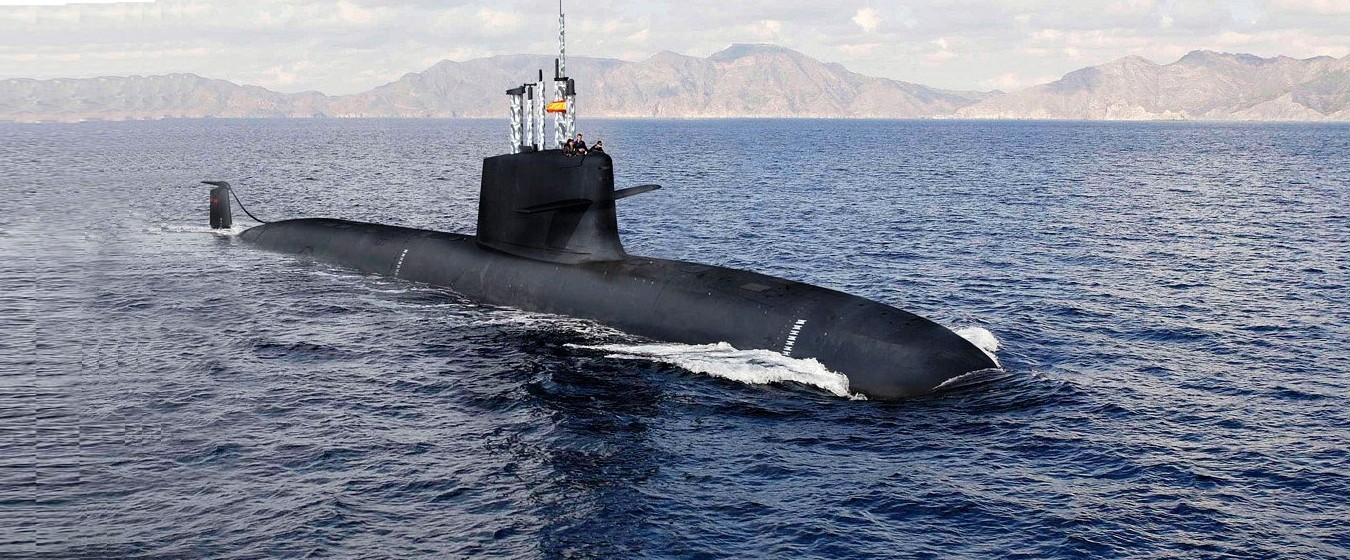
    PM Modi announced with justifiable national pride on November 6 that India’s first nuclear-propelled submarine, INS Arihant, commissioned in 2016, was now operational as an integral part of its nuclear deterrent. India earlier had the capabilities to launch nuclear weapons from the air, mounted largely on its Mirage 2000 and Jaguar, and by land-based missiles, ranging from Agni 1 (700-900 km) to Agni 5 missiles (5,500 km). Its aim has been to develop a ‘credible nuclear deterrent’, with capabilities to deliver nuclear weapons from multiple locations to strategic areas in its nuclear-armed neighbours, China and Pakistan.

    Arihant provides India with a capability to hit either neighbour from 300 m under the sea. The sea-based missiles envisaged for this purpose are Sagarika (750 km range) and K-4 (3,500 km). While land-based missile sites can be destroyed, a submarine-based deterrent is virtually impregnable against a missile attack. India is the only country with a sea-based N-deterrent, which is not a Permanent Member of the UNSC. India will soon operationalise a second nuclear submarine (Arighat), and is expected to have a fleet of four by 2022.

    According to US Federation of Nuclear Scientists, India currently possesses 130-140 nuclear weapons, while Pakistan has 140-150 and China 280. While India tested its first nuclear weapons in 1998, Pakistan’s first test was in 1990, on Chinese soil.

    In a recent book, Thomas Reed, a US nuclear weapons designer and former Secretary of the US air force, stated that China’s ‘Pakistan nuclear connection’ can be explained in the following words: ‘India was China’s enemy and Pakistan was India’s enemy. The Chinese did a massive training of Pakistani scientists, brought them to China for lectures, even gave them the design of the CHIC-4 device, which was a weapon that was easy to build — a model for export.’ Gary Milhollin, another expert, remarked: ‘Without China’s help, Pakistan’s bomb would not exist.’ China has also provided Pakistan the designs of its nuclear weapons, upgraded its ‘inverters’ for producing enriched uranium in Kahuta and provided it with plutonium reactors to build tactical nuclear weapons in Khushab and Fatehjang. Pakistan’s ballistic and cruise missiles are replicas of Chinese missiles.

    India’s N-doctrine stated that its weapons would only be used in retaliation against a major attack on Indian territory, or on its forces anywhere, in which nuclear, chemical or biological weapons are used. But Pakistan does not have a formal doctrine. The long time head of its Nuclear Command Authority, Lt Gen Khalid Kidwai, however, said over a decade ago that Pakistan’s nuclear weapons were ‘aimed solely at India’ and Pakistan would use nuclear weapons if India conquered a large part of Pakistan’s territory, or destroyed a large part of its land and air forces. He also held out the possibility of the use of weapons if India tried to ‘economically strangle’ it, or pushed it to political destabilisation. Pakistan’s statements in recent years have, however, indicated that it would not be averse to using tactical nuclear weapons in a conventional conflict with India.

    China, like India, also had proclaimed that it would not be the first to use nuclear weapons. But it has been ambiguous if this applied to India. China has maintained a measure of ambiguity on its ‘no-first-use’ pledge. This became evident when China’s foreign ministry spokesman (in 2004) rejected a suggestion from External Affairs Minister Natwar Singh that both countries should adopt a ‘common’ nuclear doctrine. Subsequent discussions between Indian and Chinese experts have suggested that China maintains deliberate ambiguity on its doctrine when it comes to dealing with India. Many ask if this is meant to signal to Pakistan that China will come to its aid in any nuclear exchange Pakistan may have with India, even if initiated by Pakistan. This ambiguity adds to India’s determination to strengthen its ‘triad’ of land, air and sea-based nuclear weapons. Agni 5 missiles can target China’s populous east coast. Within the next four years, we would have an adequate sea-based deterrent to deter China from holding out credible nuclear assurances to Pakistan that it would intervene should India choose to respond to use, or threats of use, of tactical weapons by Pakistan.

    While India has a streamlined nuclear command structure headed by the PM and Cabinet Committee on Security, it needs to revamp the archaic structure of its Ministry of Defence (MoD). The key military figure in the command structure is the Chairman of the Joint Chiefs of Staff Committee, who generally holds office for less than a year; hardly enough time for him to become familiar with the complexities of the command. Repeated proposals, including from defence committees and task forces, recommending the appointment of a full-time Chief or Defence Staff, or Chairman Chiefs of Staff Committee, who will hold charge of the command and report to the political authority, have gathered dust in the offices of the MoD bureaucracy.

    The MoD needs to be reorganised. Recommendations for such change, even from the Parliament Standing Committee of Defence, lie unimplemented. We recently acquired our desperately needed first batch of artillery guns after the ’80s’ Bofors controversy. This happened even as detailed designs for 155 mm Howitzers provided by Sweden were gathering dust for two decades. There is also surely something wrong if it takes over a decade to acquire fighter aircraft, even as the IAF is facing a shortage of around 30 per cent in the sanctioned strength.

    Ambassador G Parthasarathy  IFS (Retd) is the former High Commissioner to Pakistan and is a trustee of TPF. 

    This Op-Ed was published earlier in ‘The Tribune’ on November 15th.

  • Indian Air Force at 86: Challenges of Sustaining Credible Force Structure

    Indian Air Force at 86: Challenges of Sustaining Credible Force Structure

    The Indian Air Force celebrates its 86th anniversary on this October 8th, making it one of the oldest and large air forces of the world. Despite many challenges, most of which relate to inefficiencies of political decision making and inadequate financial support to modernisation, the IAF has come out with flying colours to continue to demonstrate its operational capabilities and strategic reach. The recent ‘Gaganshakti’ high intensity exercise  is an outstanding example. While the IAF continues to grapple with its huge problems of obsolescence, the last decade and a half has also been testimony to some major transformations underway in the IAF. As the 21st century dawned, the IAF began a rapid transformation from being largely a tactical air force to a strategic force, with significant expeditionary capability.

    Isolation to Outward Engagement

                 For more than half a century, outward engagement of the three services was limited to participation in UN peace-keeping missions. As India began its transformation with economic liberalisation in 1991, it began to dismantle its inward looking licence raj, and with it a global outlook started to emerge. As Indian economy accelerated into an overdrive by the late 1990s, and as India’s strategic image strengthened with  the overt declaration of its nuclear weapon status, the government encouraged military to military interactions and defence diplomacy. IAF’s international engagement expanded significantly from the 2000s. Major bilateral exercises were carried out on regular basis with major air forces – USA, UK, France, Singapore, South Africa, Oman, and Malaysia. Also, the IAF became a regular participant in USAF’s multinational exercises such as Cope Thunder and Red Flag. Recently the IAF has expanded its international exercises to involve Israel, Russia, Australia, Indonesia, and Malaysia. For over a decade, the Singapore Air Force carries out its two month long annual training from one of IAF bases on the eastern coast. Joint exercises for humanitarian assistance, involving multinational forces, is now a regular feature. These interactions and engagements have highlighted IAF’s high quality operational expertise, its global standing, and in turn, has contributed immensely to IAF’s growth in its international understanding. Today, the world sees the IAF as the sharp edge of India’s military power as well as the primary instrument of its humanitarian assistance capability worldwide.

    Enhancing its Reach

                 Although the IAF inducted the Jaguar from 1979, its air-to-air refuelling capability was kept inactive. Induction of Mirage 2000 in 1985 met the same fate. The importance of aerial refuelling in extended range operations by the USA in its Libyan strike, Osirak nuclear reactor strike by Israel, and Falklands operations by the UK was not lost on the IAF, and it decided in favour of this force multiplier in the late 1990s. Although the IAF was one of the last major air forces to induct the aerial refueler, its pace of operationalisation was probably the fastest. In less than a decade IAF fighters were flying across Atlantic Ocean to participate in international exercises like the ‘Red Flag’ and ‘Cope Thunder’. Within the last decade the IAF has demonstrated its extended operational reach through all its major exercises. Aerial refuelers form critical component of IAF’s operational capability in terms of reach and penetration. An expansion of this fleet is now long overdue.

    Technological and Operational Transformation

                 Airpower, by its very nature is technology intensive. The IAF embarked on major operational reorientation through induction of major technologies from the early 2000s. This began with induction of precision weapons, UAVs, electro-optical systems, and sensors. The IAF initiated its first upgrade program in the mid 1990s, for 125 MiG-21 Bis aircraft, by stitching together a complex avionics upgrade involving three nations – Russia, France, and Israel. The success of this program has established an irreversible upgrade culture as a cost-effective strategy for sustaining its force structure. This upgrade strategy has also contributed immensely to  indigenisation capability of Indian industry. The Jaguar fleet went through a series of comprehensive upgrades, giving rise to significant expansion of its capabilities. The Su-30 MKI is an excellent result of IAF’s conceptualisation and implementation of avionics suites and mission optimisation. Between 2004 and now, the IAF’s upgrade strategies have given fresh lease of life to various aircraft fleet and weapon systems: AN-32, MiG-27, MiG-29, Jaguar, Mirage-2000, and air defence missile systems. More programs involving upgrades of Su-30 MKI fighters and IL-76 transport aircraft are likely to be taken up soon.

    The IAF moved to transform its air defence operations through the induction of AWACS platforms. Selecting the proven IL-78 platform, the IAF again masterminded a complex three nation development program to evolve a modern, state-of-the art AWACS platform by 2009. The three AWACS platforms inducted in phase I have been utilised extensively to bring in major operational transformation of its air defence operations in a very short time-frame. The AWACS has certainly given the IAF a significant operational edge vis-à-vis the PLAAF challenge across the Himalayas. Simultaneously, the IAF has supported the indigenous program of AEW aircraft development based on Embraer-145 platform.

    Indo-US strategic partnership manifested itself in significant transformation in IAF’s airlift capability. By 2012, the IAF inducted and operationalised C-130J Hercules aircraft for special operations, which is also the IAF’s first 20 tonne airlift aircraft; and C-17 Globemaster heavy lift aircraft. These are going to be joined by Chinook heavy lift helicopters and Apache attack helicopters. By 2012 large numbers of Russian Mi-17 1V helicopters entered service. With these inductions, the IAF’s airlift capability has truly attained transcontinental proportions.

    The air defence missile segment, afflicted by long delays and overruns in terms of cost and time, has finally started showing results. The IAF, inducted its first squadrons of LLQRM (short range air defence missiles) based on Israeli systems, while simultaneously inducting indigenous Akash missile systems. This still indicated huge gaps, which is sought to be filled by the long-delayed MRSAM, jointly developed by India and Israel. With the projected signing of the contract for the Russian S-400 long-range SAMs the air defence will be on stronger operational capability.

    The most significant operational and technological capability of the IAF is its net-work centric warfare capability, which is underway for more than a decade. The IAF is the most significantly networked military force amongst the three services. It first established its primary communication grid, AFNET (Air Force Network), and  simultaneously established its air defence network inclusive of vital command and control network, IACCS (Integrated Air Command and Control System). The IACCS integrated all its ground based radar sensors and other inputs to create a common operational picture for real-time command and control to become effective. This was a pioneering transformation. The culminating transformation is its ‘airborne network’, which involved evolving NCW concepts based on  futuristic ‘self-organising, master-less, node-less, architecture’. The concepts were validated through a three-year long pilot project in 2013. Centred on the SDR (Software Defined Radio) the IAF is focused on indigenous solution. However, interim acquisition of limited numbers of SDR to kickstart operationalisation has stalled for nearly four years due to our infamous acquisition procedural delays. NCW operationalisation is a huge challenge that involves significantly large number of legacy aircraft and systems.

    The transformation of the IAF as an aerospace force began in the aftermath of Kargil war. IAF has been at the forefront of transforming the ISR domain through its operational strategies involving various ISR assets – UAVs, tactical and strategic reconnaissance systems, and satellites. It has played a stellar  role in defining the roadmap for developing and deploying space assets. It is matter of time before the IAF leads the tri-service aerospace command in true measure to formalise and operationalise India’s Space security strategy.

    IAF as the instrument of India’s Global Power

                 The rise of India and China is the major transformative process of the 21st century international system. That India aspires to be a global power is well known and well founded. India’s march to global power status in the 21st century will be a challenging and arduous task. Rise to great power status is not one of just prestige and power but comes with huge responsibilities. These responsibilities come with significant costs. A great power should be willing to share and shoulder the costs of providing public goods to the global community. This is precisely what the USA is now complaining about, as it finds the costs of sustaining itself as a hegemon is becoming prohibitively expensive. The USA is clearly signalling that aspiring great powers should share the costs of global public goods albeit without upsetting an international order crafted to its advantage. This is where India must rise to the challenge by rising as a benign power with the right balance of hard and soft power to influence the course of emerging power politics.

    The IAF, on its 86th anniversary, is at the cross roads of evolving as the instrument of India’s global power. As the 21st century progresses, the centrality of aerospace power in the national power of major countries has become unquestionable. Joint or integrated warfare has been necessitated by the critical role of aerospace power in all domains, be it precision, reach, rapidity of application, and intelligence through ISR. The viability of conventional deterrence comes from aerospace power’s ability to deter through the fear of precise punishment. It becomes obvious that the IAF has to be the cutting edge instrument of India’s hard military power. This obviously calls for the right combination of force structure with cutting edge technologies and weapon systems with significantly long reach. A serious introspection would reveal that the IAF, as it enters its 87th year, faces daunting challenges of building and sustaining the requisite force structure.

    IAF’s Force Structure Challenges

     IAF has been grappling with problems of obsolescence and dwindling force structure for more than two decades. Long drawn out and unending MMRCA acquisition process is an example of leaving operational capability gaps unactioned as well as loss of opportunities to enhance industrial and technological capabilities. Time and cost overruns in the indigenous Tejas-LCA program is again an operational shortfall for the IAF. The IAF today is at an all-time low of 32 fighter squadrons. An analysis of the history of IAF’s force structure would reveal a story of crisis management to sustain minimum force levels. Much of the blame must go to the political leadership for failure to grasp the importance of sustaining credible conventional force structures, while part of the blame must certainly fall on services themselves.

    JRD Tata committee, set up in the aftermath of 1962 humiliation against China, recommended an IAF force structure of 65 combat squadrons. This was accepted by the government but was pruned down to 39.5 squadrons as an interim measure on account of resource constraints. This figure has remained more or less permanent, till the government approved a figure of 42 squadrons in 2005. Even though the IAF has enhanced its combat capability with the induction of force multipliers, and networked air defence capability, its approved force structure may fall short of meeting India’s requirements of functioning effectively as a global player. In the modern, net-centric aerospace environment, the IAF will be India’s main instrument of conventional deterrence. Tata committee recommendations look more apt for India, given India’s emerging stature and global responsibilities expected of it. However, the immediate requirement is to get IAF’s force structure back to the approved 42 combat squadron strength. Given the large number of aircraft that need to be replaced, this would take at least 15 years if only done on war-footing.

    Modernisation and Indigenisation Imperatives

    As it celebrates its 86th anniversary the IAF would do well to do some serious introspection. Modernisation processes for all militaries in all countries face the challenges of timely resource availability, particularly for capital-intensive service like the Air Force. In India the problem is compounded by inadequate aerospace industrial and technology base. Indian military power, and IAF in particular, is heavily import dependent. Despite more than 70 years of indigenisation efforts, not much has changed in critical areas. A major cause for this state of affairs is the lack of adequate involvement of the user service in project management and technology development. The IAF will have to take a leaf out of the USAF model to make a major impact on indigenisation. This will need the following to be done on a time bound basis:

    • IAF needs to create a cadre of research personal. It also needs to operate aerospace research laboratories. These will focus on research and development of aerospace technologies. Ideally the IAF needs to exercise command and control over laboratories such as ADE, DARE, CABS, etc.
    • Programs like the Tejas-LCA should have been managed by the user service, the IAF, after the technology demonstration phase. Program management by the user service is an absolute must as it will be driven by operational needs balancing technology, cost, and time factors. As a corollary, it becomes obvious that the IAF must create the necessary expertise to manage its programs.
    • IAF’s involvement in DRDO driven programs must clearly define them as those that are technology development oriented and those that are user driven weapon system development. The latter programs must clearly be managed by the IAF while the former must be enabled by IAF support.
    • The IAF must clearly lay down a 20 year strategic roadmap for the government wherein all aircraft and major weapon systems are made completely free of foreign OEM dependence.


    Conclusion

                India’s security environment cannot be viewed simply as just border and territorial disputes with Pakistan and China. Its strategic challenges in a fast changing 21st century world are increasing by the day. China’s aerospace capability has leapfrogged significantly over the last two decades, and it poses a major challenge to India. The IAF will need to spearhead India’s aerospace capability to balance China’s dominance.

    IAF’s long-term force structure strategy could revert to its earlier ‘auxiliary air force’ format, albeit in a new form. Indian government wound up the auxiliary air forces post 1962, while it retained the ‘Territorial Army’ model. The benefits of this scheme is well established. It provides huge opportunities to a large segment of qualified young people to do military service, provides a ready reserve, and forms an important component of second rung security structure. With slight modification this could be created as Air National Guards, much like the US system. The objective should be to achieve one squadron of Air National Guards for each state in a defined time period based on financial and technical resources. These squadrons should be equipped with Tejas aircraft. Over a period of time this could become a win-win situation for the IAF, civil society, and the country as a whole. A comprehensive approach to force structure could see the IAF as the foremost air force in Asia and a major powerful force in the world by 2032, that will be IAF’s centenary year.

    =====xxx=====

     The author, Air Marshal M Matheswaran AVSM VM PhD (Retd) is a former Deputy Chief of Integrated Defence Staff (Policy, Plans & Force Development).