Category: India

  • India, China, and Arunachal Pradesh

    India, China, and Arunachal Pradesh

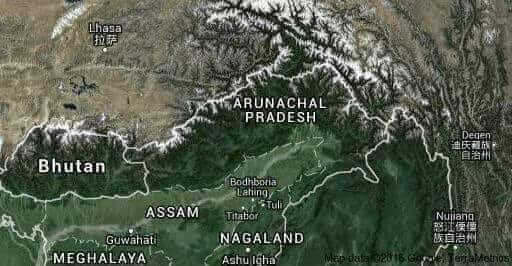
    The satellite picture below brilliantly depicts the geographical separation of Arunachal Pradesh (called Lower Tibet by the Chinese) and Tibet. The McMahon Line more or less runs along the crest line of the Himalayas.

    The Chinese have never been quite explicit on how much of Arunachal they seek.  I once saw an official map displayed in a travel agents office in Lhasa that showed only the Tawang tract as Chinese territory. In other maps they have their border running along the foothills, which means all of Arunachal.

    The Chinese have based their specific claim on the territory on the premise that Tawang was administered from Lhasa, and the contiguous areas owed allegiance to the Dalai Lama, the spiritual and temporal ruler of Tibet. Then the Chinese must also consider this. Sikkim till into the 19th century a vassal of Tibet and Darjeeling was forcibly taken from it by the British! By extending this logic could they realistically stake a claim for Sikkim and Darjeeling? Of course not. It would be preposterous. History has moved on. The times have changed. For the 21st century to be stable 20th century borders must be stable, whatever be our yearnings.

    At the crux of this issue is the larger question of the national identities of the two nations and when and how they evolved. The Imperial India of the Mughals spanned from Afghanistan to Bengal but did not go very much below the Godavari in the South. The Imperial India of the British incorporated all of today’s India, Pakistan and Bangladesh, but had no Afghanistan, not for want of trying. It was the British who for the first time brought Assam into India in 1826 when they defeated Burma and formalized the annexation with the treaty of Yandabo.

    It was only in 1886 that the British first forayed out of the Brahmaputra valley when they sent out a punitive expedition into the Lohit valley in pursuit of marauding tribesmen who began raiding the new tea gardens. Apparently the area was neither under Chinese or Tibetan control for there were no protests either from the Dalai Lama or the Chinese Amban in Lhasa. Soon the British stayed put.

    Tibet remained in self imposed isolation and the race to be first into Lhasa became the greatest challenge for explorers and adventurers in the second half of the 19th century. Not the least among these were the spies of the Survey of India, the legendary pundits. The most renowned of these was the Sarat Chandra Das whose books on Tibet are still avidly read today. As the adventurers, often military officers masquerading as explorers began visiting Tibet the British in India began worrying. Reports that the most well-known of Czarist Russia’s military explorers, Col. Grombchevsky was sighted in Tibet had Lord Curzon, the Governor General of India most worried.

    In 1903 Curzon decided to send a military expedition into Tibet led by Grombchevsky’s old antagonist, Col. Francis Younghusband. A brigade strong mixed force of Gurkhas and Tommies went over the Nathu La into the Chumbi valley and advanced unhindered till Shigatse. A Tibetan military force met them there but offered what can only be described as passive resistance. Not a shot was fired back as the British Indian troops rained bullets on them. It was a forerunner to Jallianwalla Bagh. From Shigatse Younghusband made a leisurely march into Lhasa. The British got the Tibetans to agree to end their isolation and having extracted trade concessions withdrew in 1904, the way they came.

    In 1907 Britain and Russia formally agreed that it was in their interests to leave Tibet “in that state of isolation from which, till recently, she has shown no intention to depart.” It may be of interest to the reader to know that the Great Game nevertheless continued. In 1907 Col. Mannerheim then of the Russian Army, later Field Marshal Mannerheim and first President of Finland, led a horseback expedition from Kyrgyzstan to Harbin on China’s northeast to identify a route for the cavalry.

    The next important year was 1913 when the Tibetans declared independence after the collapse of the Qing dynasty and the establishment of a Republic in China under Sun Yat Sen. They attacked and drove the Chinese garrisons in Tibet into India over the Nathu La. Also in 1913 the British convened the Simla Conference to demarcate the India-Tibet border. The British proposed the 1914 McMahon Line, as we know it. The Tibetans accepted it. The Chinese Amban however initialed the agreement under protest. But his protest seemed mostly about the British negotiating directly with Tibet as a sovereign state and not over the McMahon Line as such.

    Things moved on then. In 1935 at the insistence of Sir Olaf Caroe ICS, then Deputy Secretary in the Foreign Department, the McMahon Line was notified. In 1944 JP Mills ICS established British Indian administration in NEFA, but excluding Tawang which continued to be administered by the Lhasa appointed head lama at Tawang despite the fact that it lay well below the McMahon Line. This was largely because Henry Twynam, the Governor of Assam lost his nerve and did not want to provoke the Tibetans. In 1947 the Dalai Lama (the same gentleman who is now in Dharamshala) sent the newly independent India a note laying claim to some districts in NEFA/Arunachal.

    On October 7, 1950 the Chinese attacked the Tibetans at seven places on their frontier and made known their intention of reasserting control over all of Tibet. As if in response on February 16, 1951 Major Relangnao ‘Bob’ Khating IFAS raised the India tricolor in Tawang and took over the administration of the tract. The point of this narration is to bring home the fact that India’s claim over Arunachal Pradesh doesn’t rest on any great historical tradition or cultural affinity. We are there because the British went there. But then the Chinese have no basis whatsoever to stake a claim, besides a few dreamy cartographic enlargements of the notion of China among some of the hangers-on in the Qing emperor’s court. The important thing now is that we have been there for over a hundred years and that settles the issue.

    Arunachal Pradesh has a very interesting population mix. Only less than 10% of its population is Tibetan. Indo-Mongoloid tribes account for 68% of the population. The rest are migrants from Nagaland and Assam. As far as religious affinities go Hindus are the biggest group with 37%, followed by 36% animists, 13% Buddhists. Recent census figures suggest a spurt in Christianity, possibly induced by pocketbook proselytizing. In all there are 21 major tribal groups and over 100 ethnically distinct sub-groupings, speaking over 50 distinct languages and dialects. The population of about a million is spread out over 17 towns and 3649 villages. With the exception of a few villages of Monpas who live north of the McMahon Line, it is an ethnically compact and contiguous area.

    In fact in future boundary negotiations India could make a case for inclusion of the few Monpa villages left behind north of the McMahon Line? Many knowledgeable observers suggest that the area south of the Huangpo/Brahmaputra from the Pemako gorge till it enters the Subansiri division of Arunachal would be a logical boundary as the raging and hence un-fordable and unbridgeable river ensures hardly any Chinese administrative presence in the area.

    It is true that historically India never had a direct border with Tibet till the British took Kumaon and Garhwal from Nepal in 1846 and extended its domain over Arunachal in 1886. On the other hand the formidable Himalayas were always culturally a part of India and formed a natural barrier against ingress from the north, whether Tibetan or Chinese. But times have moved and technology and mankind’s great engineering powers now make it possible for even the most hostile terrain to be subjugated. The Himalayas are no longer the barrier they once were. As China and India emerge as the world’s great economies and powers can India possibly allow China a strategic trans-Himalayan space just a few miles from the plains?

    The view from the Chinese side about what exactly constitutes China is no less confused. Apparently like the British, the Manchu’s who ruled China from the 17th to the early 20th century had a policy of staking claim to the lands that lay ahead of their frontiers in order to provide themselves with military buffers. In a recent article in the China Review magazine, Professor Ge Jianxiong, Director of the Institute of Chinese Historical Geography at Fudan University in Shanghai writes: “to claim that Tibet has always been a part of China since the Tang dynasty; the fact that the Qinghai-Tibetan plateau subsequently became a part of the Chinese dynasties does not substantiate such a claim.” Ge also notes that prior to 1912 when the Republic of China was established the idea of China was not clearly conceptualized. Even during the late Qing period (Manchu) the term China would on occasion refer to the Qing state including all the territory that fell within the boundaries of the Qing Empire. At other times it would be taken to refer to only the eighteen interior provinces excluding Manchuria, Inner Mongolia, Tibet and Sinkiang.

    Professor Ge further adds that the notions of “Greater China” were based entirely on the “one-sided views of Qing court records that were written for the courts self-aggrandizement.” Ge criticizes those who feel that the more they exaggerate the territory of historical China the more “patriotic” they are. In this context I would like to recall a recent conversation I had with the then Chinese Ambassador to India, Sun Yuxi. Ambassador Sun said that while he was soundly castigated in India for his unintended comment, he gained a major constituency in China. The mandarins in the Beijing would do well to take heed to Ge Jianxiong’s advice: “If China really wishes to rise peacefully and be on solid footing in the future, we must understand the sum of our history and learn from our experiences.” The same holds true for the babus in South Block and ‘the having writ move on’ media pundits. If we don’t then we know who will be laughing!


    Image Credit: Tawang Monastery

  • (Part-II) Proposing a Legal Framework for Distribution of the COVID-19 Vaccination

    (Part-II) Proposing a Legal Framework for Distribution of the COVID-19 Vaccination

    I.   Reassessing Vulnerabilities During a Pandemic

    A general problem across all conventional models is their failure to understand that vulnerabilities during a pandemic are created and compounded by socio-economic factors too. Therefore, there is a need to adopt approaches that holistically assess the correlation between socioeconomic factors and vulnerability during a pandemic.[1]

    The Syndemics Approach

    Under this approach, pandemics are understood as an interaction of that disease with other diseases and the socio-economic and political factors that increase the risk of vulnerability.[2] All these factors synergistically interact to impact the health of individuals and society. Through these risk factors, it identifies the overlapping health and socio-economic problems that increase vulnerability (‘syndemic vulnerabilities’). The socio-economic risk factors are influenced by social determinants of health, i.e., the conditions of housing, food, employment, healthcare, and education.[3] Therefore, the utility of this approach lies in its holistic conception of socio-economic factors that impact the formation, clustering, and progression of diseases.[4] Using this approach, I argue that the COVID-19 pandemic has synergistically interacted and exacerbated the existing diseases and socio-economic conditions of marginalized groups across countries.

    Higher Risks of Infection, Transmission, and Mortality: Typically, due to historic discrimination and denial, marginalized communities have a greater number of pre-existing diseases like diabetes and asthma,[5] which in turn elevates their risk of infection and mortality. Moreover, there is unequal access to healthcare among marginalized communities due to the high costs of medical care and the absence of health insurance.[6] Marginalized communities are also disproportionately poor,[7] which affects their ability to mitigate the impact of the pandemic.

    Typically, marginalized communities are housed in crowded neighbourhoods with smaller houses that lack outside space.[8] They also have higher population densities, especially in urban areas, and lower access to communal green space.[9]Due to historic discrimination, marginalized communities are over-represented in essential services, including low-wage healthcare sectors and sanitation jobs.[10] This reduces their ability to work from home, and thus increases their risk of infection and transmission. Marginalized communities are more likely to take public transportation,[11] which further increases their risk of infection and transmission.

    These syndemic vulnerabilities have increased the risk of mortality among these marginalized communities. For instance, in America, the mortality rate of African-Americans and Indigenous/Latino communities is 3.4 times and 3.3 times higher than a non-Hispanic White person.[12] Evidence from past epidemics/pandemics shows that the rates of infection and mortality are always disproportionately higher among marginalized communities.[13]

    Greater Socio-Economic Disruption: Due to a lack of quality education, members of marginalized communities tend to work in lower-wage jobs in the informal sector, which has been worst hit by the pandemic.[14] The percentage fall in employment for marginalized communities has been far greater, indicating that education was a protective factor in the first wave of job losses.[15] Consequently, there has also been greater housing evictions among these communities.[16]The access to quality education for children in marginalized communities has also been severely impacted because they lack access to the internet,[17] affecting their ability to access education. Moreover, low literacy among adults in marginalized communities indicates their inability to assist their children with any form of home learning.[18]

    Therefore, the increased syndemic vulnerabilities of marginalized communities and the consequent disproportionate socio-economic disruptions of the pandemic on them necessitate a greater strive for their inclusion in distributing the vaccine. Early access to such vaccines allows these groups the opportunity to proportionately mitigate these vulnerabilities and disruptions.

    Intersectionality

    Presently, vulnerabilities among individuals are dominantly viewed from a single-axis framework. This ignores the multiple layers and experiences of vulnerability, resulting from an interplay of power structures and different social identities, held by one individual. This ignorance is avoided when using intersectionality, which is an analytical framework that explains how different social, economic, and political identities overlap to create different modes of discrimination and privilege.[19] Thus, it explains how certain individuals in the population are relatively more disadvantaged than others.[20] Intersectionality not only provides a multi-layered understanding of vulnerabilities during a pandemic but also helps prioritize distribution within an identified category, given the scarcity of vaccines.


    II.   Proposing a Multi-Value Ethical Framework

    Given its rational criteria, incorporating utilitarianism’s clinical risk factors is quite valuable. However, as argued, vulnerability during a pandemic is also determined by socioeconomic risk factors. Therefore, there is a need to adopt a multi-value approach that incorporates both clinical and socio-economic risk factors. I propose to do so by simultaneously prioritizing the values of ‘collective wellbeing’ and ‘justice’.

    Borrowed from utilitarianism is the value of ‘collective wellbeing’, which aims at maximizing benefits and minimizing harms. Flowing from a syndemic conception of COVID-19 is the value of ‘justice’, which aims at reducing health inequities and treats like people alike. These values are not necessarily always distinct, but their overlap over one parameter indicates a stronger justification. They can be operationalized using an ‘intersectional multi-parameter weighted framework’.

    Operationalizing Values

    The framework is constructed through three layers: (1) for each risk parameter, there is (2) a value-based justification, along with (3) its extent of weightage. The risk parameters are viewed from an intersectional power axis, with value justifications sourced from clinical and syndemic vulnerabilities. The weightage typically connotes a three-point scale, where 3 indicates the highest priority, and 1 indicates the lowest. The priority order is based on the greatness of one’s total score. The lottery method should only be used as a tie-breaker when the score is the same, and no more doses are presently available.

    Age:    Older people are at a significantly higher risk of infection and severe morbidity or mortality due to physiological changes associated with ageing. Globally, more than 95% of COVID-19 deaths were among individuals aged 60 and above. Even among older people, more than half of all deaths occurred in people aged 80 and above.[21]

    Therefore, in descending order, weightage must be given to individuals above 80 years, individuals between 60-80 years, and individuals between 40-59 years.

    Comorbidities:          Depending on the country, between 48-75% of COVD-19 deaths are associated with existing comorbidities. Those with comorbidities are also at moderately higher risk of infection.[22]

    The prioritization has to be categorized based on the severity of the comorbidity, in contracting the infection and causing death. Therefore, in descending order, higher weightage must be given to severe comorbidities, moderate comorbidities, and mild comorbidities. The severity in infection and mortality is different for countries due to distinct socio-economic realities and evolutionary biology. Therefore, this identification and classification need to be uniquely undertaken. However, as a general rule, it is almost universal for HIV, cancer, and most cardiovascular diseases to be severe comorbidities.[23]

    Profession:     Prioritizing frontline healthcare, sanitation, and defence workers are justified because they engage in services, whose absence has the greatest negative societal impact- whether on health, safety/security, or economy. They are also in constant contact with areas and people having the greatest risk of infection. Therefore, protecting them has a multiplier effect, in that their ability to remain uninfected protects the health of others and minimizes societal and economic disruption. Since the state obligates these workers to work in risk conditions, while everyone else is working from home, it is further obligated to protect them.

    Therefore, in descending order, priority must be given to frontline workers, workers in other essential sectors, and workers in non-essential sectors.

    Income:          One’s economic status affects their ability to access healthcare, thus results in higher rates of mortality and severe morbidity.[24] The syndemic approach reveals that poverty compounds one’s syndemic vulnerability.

    Therefore, in descending order, priority must be given to individuals with low-income, middle-income, and high-income.

    Ethnic Identity:         The syndemic approach reveals that marginalized communities are at a greater risk of infection, transmission, and mortality. They are also worst affected by the pandemic, which further compounds their vulnerability. Given these vulnerabilities, prioritized vaccine access to marginalized communities also helps reduce all three risks among the general population.

    The prioritization criteria would depend on the marginalized communities within a country and the extent of their syndemic vulnerabilities. For instance, in America, the syndemic vulnerabilities are greatest for African-Americans, followed by the Indigenous/Latinos communities, and then Pacific Islanders.

    Conclusion

    The conventional models of vaccine distribution are unethical towards disadvantaged groups. While neoliberalism completely ignores the distributive function of law, utilitarianism, lottery, and FCFS at least acknowledge this. However, their criterion of distribution ignores socio-economic vulnerabilities. This ignorance can be addressed using a syndemics approach and intersectionality.

    The syndemics approach explains the socio-economic risk factors that disproportionately disadvantage marginalized communities, both medically and socio-economically. Intersectionality provides a layered understanding of how vulnerabilities affect people, even those in the same group, differently. Using these approaches, I propose a multi-value ethical framework that balances the pragmatic considerations of medical utilitarianism with greater social inclusion. It operationalizes the values of these ethical systems through the priority order generated under an ‘intersectional multi-parameter weighted framework’.


    Notes:

    [1] While each country has different marginalized groups, the patterns of vulnerability explored are similar. Thus, marginalized groups have been generally analyzed hereinafter.

    [2] Merrill Singer, Nicola Bulled, et al, ‘Syndemics and the biosocial conception of health’ (2017) 389 Lancet 941, 941-943.

    [3] Clare Bambra, Ryan Riordan, et al, ‘The COVID-19 pandemic and health inequalities’ (2020) 1 J Epidemiol Community Health 964, 965.

    [4] Singer (n 23) 948.

    [5] Harleen Kaur, ‘Indirect racial discrimination in COVID-19 ethical guidance’ (BMJ Blog, 27 August 2020) <https://blogs.bmj.com/covid-19/2020/08/27/indirect-racial-discrimination-in-covid-19-ethical-guidance/> accessed 8 January 2021.

    [6] Bambra (n 24) 965-966.

    [7] Melanie Moses, ‘A Model for a Just COVID-19 Vaccination Program’ (Nautilus, 25 November 2020) <http://nautil.us/issue/93/forerunners/a-model-for-a-just-covid_19-vaccination-program> accessed 8 January 2021.

    [8] Tonia Poteat, ‘Understanding COVID-19 Risks and Vulnerabilities among Black Communities in America: Syndemics’ (2020) 47 Annals of Epidemiology 1, 3.

    [9] Bambra (n 24) 966.

    [10] National Academies (n 16) 30-31.

    [11] ‘Beyond the data: Understanding the impact of COVID-19 on BAME groups’ (2020) Public Health England Report, 22-23 <https://assets.publishing.service.gov.uk/government/uploads/system/uploads/attachment_data/file/892376/COVID_stakeholder_engagement_synthesis_beyond_the_data.pdf> accessed 8 January 2021.

    [12] Harald Schmidt, ‘Is It Lawful and Ethical to Prioritize Racial Minorities for COVID-19 Vaccines?’ (2020) 324 JAMA <https://jamanetwork.com/journals/jama/fullarticle/2771874> accessed 8 January 2021.

    [13] Bambra (n 24) 967.

    [14] Shruti Srivastava, ‘Millions Escaped Caste Discrimination. Covid-19 Brought It Back’ (Bloomberg Quint, 21 August 2020) <https://www.bloombergquint.com/politics/millions-escaped-caste-discrimination-covid-19-brought-it-back> accessed 8 January 2021.

    [15] Ashwini Deshpande, ‘Differential impact of COVID-19 and the lockdown’ (The Hindu, 22 August 2020) <https://www.thehindu.com/opinion/lead/differential-impact-of-covid-19-and-the-lockdown/article32416854.ece> accessed 8 January 2021.

    [16] Schmidt (n 33).

    [17] Deshpande (n 36).

    [18] Ibid.

    [19] Olena Hankivsky, ‘An intersectionality-based policy analysis framework’ (2014) 13(119) Intl J Equity in Health 1, 2.

    [20] Ibid.

    [21] ‘Supporting older people during the COVID-19 pandemic’ (WHO, 3 April 2020) <https://www.euro.who.int/en/health-topics/health-emergencies/coronavirus-covid-19/news/news/2020/4/supporting-older-people-during-the-covid-19-pandemic-is-everyones-business> accessed 8 January 2021.

    [22] Awadhesh Kumar, ‘Impact of COVID-19 and comorbidities on health and economics’ (2020) 14(6) Diabetes Metab Syndr 1625, 1626-1627.

    [23] Ibid.

    [24] National Academies (n 16) 68-77.


    Image Credit: One India

  • Proposing a Legal Framework for Distribution of the COVID-19 Vaccination [Part I]

    Proposing a Legal Framework for Distribution of the COVID-19 Vaccination [Part I]

    Introduction

    Distributing the COVID-19 vaccination has been touted as the biggest policy decision in 2021. This stems from the utility and efficacy of vaccines in immediately addressing pandemics. Specifically, the COVID-19 vaccination not only protects the injected person, with a 70%-95% efficacy[1] but also provides ‘herd immunity’.[2] That is, the non-injected population is also benefited due to a reduced risk of transmission and infection, so long as 70% of individuals in society are vaccinated. Therefore, access to the vaccine determines how much and for whom the adversity of the pandemic is mitigated.

    Currently, most vaccine developers are in the final two phases of clinical trials, with some, like Pfizer/BioNTech’s and Oxford University/AstraZeneca’s, already receiving ‘emergency use authorization’ from multiple countries. Most countries have prepared a ballpark action plan for distribution, while the United Kingdom has already vaccinated more than 3.5 million people.[3]

    In this paper, I evaluate the most ethical framework for distributing COVID-19 vaccinations, amongst the population of one country, by its government. I address this question from the perspective of marginalized communities, using the approaches of realism, syndemics, and intersectionality. In Part I of this article, I will evaluate the conventional models for vaccine distribution. In Part II, I will provide an alternative framework for reassessing vulnerabilities during a pandemic, and propose a multi-value ethical framework.

    1. Evaluating the Conventional Models for Vaccine Distribution

    The decision to distribute COVID-19 vaccines is inherently ethical because it involves allocating an important resource in a resource-scarce world. Thus, determining who can pre-maturely mitigate the pandemic’s adversity. There are four models in conventional discourse that have sought to answer the distribution question. In this section, under each model, I will critically evaluate the role of law in distribution and the ethical values that guide prioritized distribution.

    Neoliberalism

    Neoliberalism is characterized by a strict separation between the state, society, and the market.[4] The objective of all economic activity in the markets is wealth and efficiency maximization.[5] To this end, greater involvement of the private sector in the economy is justified because the market allocation of resources is more efficient. Any state intervention beyond a minimum supporting role is conceived as inefficient because rent-seeking, corruption, and capture by special interests are inevitable.[6]

    The diminished role of the state in securing redistribution means that individuals are responsible for their welfare and income. Therefore, individuals would themselves be responsible for ensuring access to the vaccination, notwithstanding their socio-economic status. They must attain this access by successfully competing in the “free market”, through instruments like price point discovery.[7] The underlying rules of competition create a level playing field where fair bargaining over market transactions can occur, so long as the requisite effort is made. This is because the rules are universal in their applicability, and create a distinct economic space, free from state coercion.[8] Therefore, access to the vaccine is determined by one’s ability to pay for it.

    State intervention is only justified when there is a market failure, but even then, preference is accorded to non-state solutions like direct public action or self-regulation.[9] Neoliberalism addresses equity concerns, like non-access to the vaccine, through safety nets and income transfers rather than through market regulation.[10] Otherwise, inefficiencies are introduced into the system, which distorts market incentives, and thus undermines the goal of economic growth.[11] This means that vaccine developers would lose the incentive to undertake expedient and mass production.

    Critique:         Neoliberalism denies that any redistribution to disadvantaged groups is covered by legal reforms. There is no focus on how economic gains are distributed, and the effect of reforms on vulnerable social groups.[12]Neoliberalism’s refusal to acknowledge the distributive function of legal regulation is flawed because rules necessarily always operate to distribute resources and powers to various groups and actors in particular ways.[13] The neoliberal machinery devises a particular allocation of risks, resources, powers, costs, burdens and benefits among different market actors. The effect is that the existing propertied class receive greater entitlement, whilst others are disadvantaged.[14] This perpetuates the inequalities already in status quo, impacting accessibility to the vaccine. Therefore, the relevant question is not whether distributive concerns must be considered, but rather their manner of incorporation in the process of market reform. To this end, the state, which guarantees the regulatory underpinnings of a market economy, must inherently play a greater role in regulating the distribution of economic gains from the market.

    The idea to distribute vaccines based on personal purchasing power is flawed because it ignores the fact that vaccines possess inelastic demand. Therefore, given short supply at short-term and medium-term levels, the price will continually go up to unaffordable rates. This increased price does not encourage new suppliers because the intellectual property rights and R&D is held only by a few developers.[15]

    Utilitarianism

    Utilitarianism assesses the morality of a decision based on its consequences, whether it maximizes benefits and/or minimizes harms. Under this rationale, priority is accorded based on the greatest clinical risks and greatest utility to social functioning. The clinical factors consider the risk of severe morbidity and mortality, risk of infection, and risk of transmission.[16] The greatest utility to society is measured in terms of the risk of negative societal impact, i.e., the public utility of one’s occupation/social role to society and other individuals’ lives and livelihood.[17]

    Therefore, in this pandemic, utilitarianism would prioritize age (above 50/60 years) and associated comorbidities (identified set of diseases) based on the risk of morbidity/mortality and infection, followed by occupation (healthcare and frontline workers) based on the risk of negative societal impact and risk of infection.[18]

    Critique:         Unlike neoliberalism, there is limited value in the utilitarian model because it recognizes the distributive role of law in allocating benefits. Moreover, it pursues this based on a rational objective criterion.

    However, its main problem lies in assessing vulnerabilities through only a clinical lens. It ignores that socio-economic factors also contribute to overall vulnerability during the pandemic, as I argue in the next section. Additionally, it doesn’t acknowledge that even within the identified categories, some are more vulnerable than others. Therefore, it has the effect of compounding existing socio-economic inequalities.

    Lottery

    This approach prioritizes distribution through a random selection of names. This is premised on the assumption that such selection is egalitarian and impartial, and also overcomes the inherent moral relativity/ambiguity of human reasoning.[19]

    Critique:         Random lotteries acknowledge the role of law in distributing benefits, but they lack any rational prioritization to effectively and immediately address the pandemic. While absolute objectivity is unattainable, avoiding moral reasoning altogether is merely “an easy method to avoid hard decisions”.[20] The assumption that everyone’s life is equally important fails to acknowledge the differential disparities that differentially threaten such lives.[21]

    First Come First Serve

    Like lotteries, this approach is premised on avoiding moral decisions and the assumption that everyone has an equal opportunity to access the vaccine.[22]

    Critique:         While this approach acknowledges the role of law in distributing benefits, it is completely blind to the socio-economic realities. Given scarcity, it is inevitable that access will be confined to those with better connections, access to information, communication, and transportation. All these factors are, in turn, tied to one’s socio-economic status. Thus, there is disproportionate denial to disadvantaged communities.


    References:

    [1] James Gallagher, ‘Covid vaccine update’ (BBC, 30 December 2020) <https://www.bbc.com/news/health-51665497> accessed 8 January 2021.

    [2] Rebecca Weintraub, ‘A Covid-19 Vaccine Will Need Equitable, Global Distribution’ (HBR, 2 April 2020) <https://hbr.org/2020/04/a-covid-19-vaccine-will-need-equitable-global-distribution> accessed 8 January 2021.

    [3] Lucy Rodgers & Dominic Bailey, ‘Covid vaccine: How will the UK jab millions of people?’ (BBC, 23 January 2021) <https://www.bbc.com/news/health-55274833> accessed 24 January 2021.

    [4] Manfred Steger & Ravi Roy, Neoliberalism (OUP 2010) 3-4.

    [5] Kerry Rittich, Recharacterizing Restructuring (Kluwer Law International 2002) 50-52.

    [6] Rittich (n 4) 55-59.

    [7] Sahil Deo, Shardul Manurkar, et al, ‘COVID19 Vaccine: Development, Access and Distribution in the Indian Context’ (2020) Observer Research Foundation Issue Brief No. 378, 6 <https://www.orfonline.org/research/covid19-vaccine-development-access-and-distribution-in-the-indian-context-69538/> accessed 8 January 2021.

    [8] Rittich (n 4) 131.

    [9] Rittich (n 4) 74-76.

    [10] Ibid.

    [11] Steger (n 4).

    [12] Rittich (n 4) 130.

    [13] Steger (n 11)

    [14] Rittich (n 4) 158-160.

    [15] Deo (n 7).

    [16] National Academies of Sciences, Engineering, and Medicine, Framework for Equitable Allocation of COVID-19 Vaccine (National Academies Press 2020) 102-105.

    [17] National Academies (n 16) 8.

    [18] Ibid.

    [19] Richard Zimmerman, ‘Rationing of influenza vaccine during a pandemic’ (2017) 25 Vaccine 2019, 2023.

    [20] Ibid.

    [21] Erica Moser, ‘Many ethical questions involved in prioritizing groups for vaccine distribution’ (The Day, 13 December 2020) <https://www.theday.com/article/20201213/NWS01/201219766> accessed 8 January 2020.

    [21] Ibid.

    [22] Zimmerman (n 19).


    Image Credit: Crowd Wisdom 360

  • Chief of Defence Staff, a year later: Lack of Clarity and an ambiguous Mandate

    Chief of Defence Staff, a year later: Lack of Clarity and an ambiguous Mandate

    On 31st of Dec 2020 India’s first Chief of Defence Staff (CDS), Gen Bipin Rawat, completed one-year in office.  With China recently unveiling its 14th Five Year Plan aiming to bring its military on par with the USA by 2027, it would be interesting to observe if the appointment of CDS has helped the Indian Military spruce up its structure and operational philosophy in any manner.

    Appointment of CDS was put on hold for almost two decades after the Kargil Review Committee made its recommendations.  Opinion among the strategic community has always been divided on the appointment of CDS. Those who argued in favour espoused that CDS would be the panacea for all ills while those who opposed, opined that the time-tested Higher Defence Organisation proposed by Lord Ismay has worked well over the years and hence, the western concept of CDS is unnecessary. Now that the CDS is in place, it is futile to revisit the debate but the functioning of CDS would be a subject of scrutiny for the next few years.

    In the last few months, the Department of Military Affairs (DMA) headed by the CDS came for intense criticism for making proposals about the increase in retirement age and reduction in pensions. Previous proposals such as the closure of CSD canteens at peace stations, opening up of cantonment, doing away with Army Day parade etc, which are believed to have emanated from the DMA have been subjected to ridicule and disdain in the social media. It wasn’t exactly clear as to why the office of CDS was being used for such purely administrative issues, which are counterproductive in enhancing the morale and pride of the forces.

    Men in uniform yearned that CDS would play a vital role in bringing about the true integration of Services HQ with the MoD and expedite the process of defence modernisation. However, after one year, it is indeed of great concern that the office of CDS (read DMA) appears to be focussed on administrative and ceremonial issues with absolutely no strategic significance.

    When CDS assumed charge on 1st Jan 20, it was reported that the CDS would be the Principal Military Advisor to the Government (read Def Minister) and he would head the newly created DMA.  Additionally, he would assume charge of the Integrated Defence Staff (IDS), serve as the permanent Chairman of the Chiefs of Staff Committee (COSC), Head the Tri-Service Commands, and be a member of the Defence Acquisition Council besides the Nuclear Command Authority. Quite a tall order indeed but doesn’t seem to be adequately equipped with a statutory mandate to perform effectively. Men in uniform yearned that CDS would play a vital role in bringing about the true integration of Services HQ with the MoD and expedite the process of defence modernisation. However, after one year, it is indeed of great concern that the office of CDS (read DMA) appears to be focussed on administrative and ceremonial issues with absolutely no strategic significance. One of the first initiatives announced by Gen Rawat was to create an Air Defence Command which is yet to materialise and creation of Theatre Commands seems to be a long haul.

    it is beyond comprehension to fathom what prompted the Government to create a Department of Military Affairs within the MoD when the Integrated Defence Staff (IDS) was already functioning since 2001 awaiting the appointment of a CDS.  As Service Chiefs continue to exercise Command over their respective Service, the CDS as the head of IDS would be rightly placed to promote joint training initiatives, validate joint operational plans and act as a catalyst in defence modernisation.  However, for all this to be achieved, the role and functioning of the CDS should be spelt out; particularly the role of CDS as the “Principal Military Advisor” to the Raksha Mantri, vis-à-vis the Defence Secretary who continues to be the “Principal Advisor” to the Defence Minister. Such vital aspects are never left to chance based on an individual’s equations with political leadership but need to be appropriately institutionalised, mandated and published.

    Currently, Defence Secretary functions as head of the Department of Defence and is additionally responsible for coordinating the activities of the five Departments in the Ministry, including the newly created DMA. The Defence Secretary draws his functional powers from the Cabinet Secretariat –Manual of Office Procedures (CS-MoP) which clearly states that the Secretary of the Department “is the principal adviser of the Minister on all matters of policy and administration within his Ministry/Department, and his responsibility is complete and undivided”. If Defence Secretary is coordinating the affairs of all the five departments including DMA as the Principal Advisor, what is the status of the four-star-CDS?

    The Government of India (Allocation of Business) Rules, 1961 are made by the President of India under Article 77 of the Constitution for the allocation of business of the Government of India. The business of the Government is transacted in the Ministries/Departments, Secretariats and offices (referred to as ‘Department’) as per the distribution of subjects specified in these Rules. Allocation of Business Rules has not been revised since 2017 though DMA has been created one year ago.  As a result, the DMA is not listed in the First Schedule of the Allocation of Business.

    Transaction of Business (Rules) 1961 are made by the President of India for the convenient transaction of the Business of the Government of India. The disposal of business by various ministries, inter-departmental transactions and mandates of various committees are published in these rules. The significance of these rules can be gauged from the fact that the rules have been recently amended to deal with unprecedented challenges posed by Covid 19 pandemic. Cabinet Secretariat has amended Government of India Transaction of Business Rules, 1961 to widen powers of two committees to meet the economic crisis caused by Covid 19, using the powers under the Act. However, Transaction of Business Rules has not been revised clearly defining the role of CDS as the Principal Military Advisor to the Government.

    The organisation chart in the MoD has been removed possibly because it would only be too embarrassing to place the CDS under the Defence Secretary. There is an urgent need for the GoI to create a meaningful role for the CDS and empower him with a statutory mandate.

    A cursory glance at the website of the Ministry of Defence would reveal a lack of any sincerity in assigning specific responsibilities for DMA. It has been casually mentioned that DMA “deals with the armed forces of the Union….. and promotes jointness among the three services”. Were these objectives not met by the MoD in the past? So what value addition has the DMA provided? The organisation chart in the MoD has been removed possibly because it would only be too embarrassing to place the CDS under the Defence Secretary. There is an urgent need for the GoI to create a meaningful role for the CDS and empower him with a statutory mandate.

    Indian Military is not expeditionary. However, if there is a convincing need to create Theatre Commands in pursuit of joint operations and interoperability, replacing the existing 17 Service-specific Commands by fewer Theatre Commands would be the most challenging task for the CDS. If the experience of USA, UK and other major militaries is anything go by, such major military reforms could be pushed through only with steadfast backing from the government, taking all three services into confidence and aligning the entire military leadership with the desired outcomes of this humungous exercise which may eventually need constitutional validity through an Act of the parliament.

    For the appointment of CDS to make a meaningful purpose the following measures are imperative:

    • Abolish the DMA and facilitate the CDS to take complete control of the IDS, keeping its functioning outside the purview of Def Secretary
    • Revise the CS-MOP, Allocation of Business Rules, Transaction of Business rules and the Warrant of Precedence, clearly bringing out the role and responsibilities of CDS as the Principal Military Advisor to the Defence Minister, in contrast to the roles and responsibilities of the Defence Secretary which may also now need to be re-drafted.
    • Make CDS a permanent member of the Cabinet Committee on Security facilitating the single-point military advice to the National Security Council.
    • The cabinet should spell out a Defence Policy Guidance (DPG) with a 12 year to the 15-year horizon in the light of prevailing and forecasted geo-political scenario and assist the CDS in preparing a clear roadmap for Indian Military Modernisation

    To abrogate the stigma of “Attached Offices”, and to integrate the Services HQ with MoD, a beginning needs to be made by augmenting the IDS with officials from the MoD.

    • Currently, the budgeting and procurement plans are made in isolation and subject to scrutiny by the Ministry of Fin (Def) thereby losing time and effort. IDS needs to be adequately empowered by augmenting it with an integral wing of the Ministry of Fin (Def) headed by a Joint Secretary ranked officer.
    • A Defence Production Wing under the charge of an Additional Secretary ranked officer reporting directly to the CDS should be created with the long term objective of achieving complete integration of the department of defence production with IDS. This suggestion would certainly be the most unpopular with the bureaucracy but could turn out to be a game-changer if achieved.

    Kargil Review Committee had recommended the appointment of CDS to integrate the armed forces in their planning, procurement and functioning to transform the Indian Military as a unitary force to reckon with.  In the absence of a clear mandate and constitutional validity for the functioning of the CDS, the entire effort of instituting one, seems to be of little consequence, much less, competent of driving any significant reforms. The current arrangement needs a complete overhaul if that is to be achieved.

  • Evaluating the Make in India Policy for Defence Manufacturing and Technology Acquisition

    Evaluating the Make in India Policy for Defence Manufacturing and Technology Acquisition

    Led by the Department of Industrial Policy & Promotion, Ministry of Commerce, the Make in India policy (“MII”) extends to 25 focused sectors. Among these is the defence sector, where the nature of the sector renders MII extremely important and relevant. This is outlined by India’s status as the second-largest standing army and third-largest military spender in the world.[1] Yet, it remains the second-largest arms importer and its exports merely amount to 0.2% of the global pie.[2] China is the fifth-largest arms exporter at 5.5% of the global share.[3] However, this is likely to fall in the post-pandemic world, where China’s credibility has been severely tainted.[4] This represents an opportunity for Indian defence manufacturers to attract present and future foreign investment.

    Against this background, MII was enacted with two objectives: (1) to increase domestic manufacturing of defence equipment; and (2) address the national security interest of self-sufficiency over key technologi. There are two ways in which technology up-gradation can happen: (1) indigenous efforts; and (2) transfer of technology, through international agreements. In this article, I flag the main challenges to argue that India has significantly underperformed in both. Subsequently, I propose macro-policy changes to address identified challenges.

    Evaluating technological upgradation in the Defence sector in india

    1. Evaluating ‘Indigenous Efforts’

    Indigenous efforts are confronted with three main challenges:

    • Inadequate Investment for Research & Development (R&D)

    Only 5.7% of the defence budget is allocated to R&D,[5] despite successive parliamentary committees recommending at least 10% to meet minimum requirements.[6] The average allocation among global rivals like USA, UK, France, and China is well above 15%.[7] Even private-sector players in India, like Tata, L&T, and Mahindra and Mahindra, invest less than 1% of their turnover in R&D, as against the average of 10% in the aforementioned countries.[8] The producer lacks the basic R&D required even for making marginal improvements in performance to the product, or altering it based on user-specifications.[9] The effect of this is that the resulting product is obsolete in an already disruptive market. Thus, a buyer, even if domestic, is unwilling to accept such an obsolete product at higher prices merely for the sake of indigenous production.

    • Shortage of Skilled Workforce

    A skilled workforce is the key to achieving self-sufficiency in defence manufacturing because of the highly specialized nature of this sector and the workforces’ vision and skills determine the efficacy of the produced/procured domestic technology. This shortage exists at both the research and procurement level.

    At the research level, there is a severe shortage of skilled human resources, in terms of quantity and quality, at R&D organizations like DRDO.[10] With more than 3,500 engineering colleges producing about 1.5 million engineering graduates annually, India has an unparalleled talent availability.[11] However, only 17.5% of these graduates are employable because colleges lack proper infrastructure and faculty,[12] along with current curriculum ignoring industry skills, defined career paths, and evolving technologies.[13] Thus, organizations are compelled to spend significantly in making fresh talent “employable”.

    While India has a decent pool of highly qualified low-cost engineers and scientists,[14] they are unwilling to work in the public sector due to limited opportunities and low growth potential,[15] where most defence R&D is undertaken. As the departure of 132 scientists in the last five years from DRDO shows,[16] even those employed mostly do not continue long-term due to better opportunities elsewhere.[17] The contribution of most of these scientists has been limited to the production of academic articles,[18] which hasn’t seen any significant and meaningful absorption in the policy. Therefore, the policy has been unable to capture the huge latent employment potential in this sector.[19]

    This position must be contrasted against global competitors like the US and China, where the highly skilled and employable workforce is significantly and routinely absorbed into the most impactful R&D organization, whether private or public.[20] Moreover, unlike other leading countries, India lacks any training and education infrastructure specialized for R&D personnel in the defence sector. These countries have developed specialist defence schools that have managed to produce large pools of exclusive talent. France itself has managed to produce 134,000 specialist employees.[21]

    At the procurement level, the asset acquisition process is not tasked to a dedicated cadre of the workforce.[22] Further, there are no educational or training programs for employees involved in this process.[23] Thus, there is the loss in terms of the benefits of specialization, especially in a sector where progress is characterized by specialization.

    • Limited Involvement of the Private Sector

    There is a significant lack of incentive for greater private sector involvement. The private sector is commercially motivated to establish its manufacturing base only when it has a good chance, or preferably guarantee, of getting frequent and sizeable orders.[24] However, the current manufacturing and procurement process has ignored this motivation but is also completely converse to it.

    As the BJP government’s Rafale fiasco indicates, the procurement processes lack transparency, and frequently fraught with allegations and counter-allegations.[25] This disincentivizes both domestic and global private sector players from conducting business.

    Despite unprecedented inclusion of the private sector, it is widely believed in the private sector that the government is biased towards public sector undertakings, denying a level-playing field for the private sector and even denying opportunities to bid.[26]

    The government’s Strategic Partnership Model, aimed at inviting world-class defence giants to collaborate with Indian entities, has unduly restricted autonomy. Under this program, the government chooses the Indian partner for the foreign OEM, without consulting them.[27] Global defence giants, like Airbus, Lockheed Martin, ThyssenKrupp, and Dassault, have shown interest in contracting with the Indian private sector.[28] However, it is a combination of these factors that this interest has largely failed to materialise into successfully concluded deals.

    Even where, despite these disincentives, the private sector has been involved, this has been in non-critical and less required areas. Most of India’s defence imports are in the category of major platforms such as fighter aircraft, helicopters, naval guns, and anti-submarine missiles.[29] However, the private sector initiatives are predominantly in the category of ammunitions (including rockets and bombs), and surveillance and tracking systems.[30]

    1. Evaluating ‘Transfer of Technology’

    There has been no transfer of technology (“ToT”) in the critical defence procurement process. All major contracts under MII have been “off the shelf”, and without any crucial ToT.[31] As per the CAG Report, between 2007 and 2018, the government concluded 46 offset contracts but failed to implement the ToT agreements in any of them.[32]

    The failure here can be attributed to successive governments unduly hoping that India’s status as a large arms importer would necessarily make international players compliant as regards sharing their intellectual property (“IP”). While foreign companies have shown interest in contracting with Indian players, the large purchase orders have been inadequate to incentivize foreign players to share their IP.[33]

    The government has also been overly ambitious of ToT as a means of technology upgradation. Even implementing the negotiated ToT is not the end because the more challenging issues of absorption of this technology and ownership of IP remain.[34] Moreover, the ToT route provides India only with the ‘know-how’, without any insight into the ‘know-why’.[35] As India’s acquisition of the Sukhoi Su-30 has shown, the public sector is critically dependent on the OEMs, here the Russians, for even minor systemic upgradations.

    Way Forward

    The government must increase allocation to defence R&D to at least 10% and must incentivize greater contributions from the private sector. Existing capabilities and services at training and diploma centres must be upgraded through public-private partnerships. There must be a separate and devoted institutional structure for all procurement-related functions. The procurement policy must also aim at buying talent, besides technology, to bridge technology gaps. The education curriculum at engineering universities needs to be modernized, with a focus on employability. Specialist defence schools must also be established. However, it is most important that the public sector aims at retaining its talent through unique and lucrative incentive structures.

    To incentivize the private sector through minimum order guarantees, the government must utilize ‘public procurement of innovation’. Under this policy tool, the government uses its exchequer to artificially generate demand for an emerging innovative solution, unavailable on a commercial scale.[36] The private sector can further be incentivized by streaming the procurement and dispute resolution process. As for procurement, a fast-track procedure with single-window clearances can be adopted.[37] As for dispute resolution a permanent arbitration tribunal must be established to expeditiously settle disputes with finality.[38]

    Conclusion

    Firstly, the indigenous efforts at technology up-gradation have failed due to limited R&D output, shortage of skilled workforce, and limited private sector involvement. The R&D budgetary allocation is way below the recommended and global standard. The shortage of skilled workforce is both at the research and procurement due to a lack of education and training infrastructure specific to the defence sector, low employability among most graduates, and unwillingness to work in the public sector among highly qualified graduates. The private sector has been disincentivized due to a lack of order guarantees, the unrealistic and retroactive manner of the procurement process, the constant allegations and counter-allegations, and the continued bias towards the public sector. Moreover, the private sector has been involved in non-critical and less required areas.

    Secondly, while the government has concluded ToT agreements, it has been inefficient in enforcing them. Moreover, even if this were to succeed, it has not established any action plan for absorbing this technology and addressing ownership of IP. It has also been overly ambitious of the utility of ToT.


    References

    [1] Kuldip Singh, ‘Yes, Indian Military Can Go the ‘Make in India’ Way – Just Not Yet’ (The Quint, 25 May 2020) <https://www.thequint.com/voices/opinion/india-armed-forces-defence-sector-military-expenditure-budget-technology-upgrade-make-in-india> accessed 19 December 2020.

    [2] Arjun Srinivas, ‘Private defence business gets one more nudge’ (LiveMint, 1 October 2020) <https://www.livemint.com/news/india/private-defence-business-gets-one-more-nudge-11601460654397.html> accessed 19 December 2020.

    [3] Snehesh Alex Philip, ‘China has become a major exporter of armed drones, Pakistan is among its 11 customers’ (The Print, 23 November 2020) <https://theprint.in/defence/china-has-become-a-major-exporter-of-armed-drones-pakistan-is-among-its-11-customers/549841/> accessed 4 January 2021.

    [4] Rajan Kochhar, ‘Preparing defence sector for post COVID-19 world: Time to treat private sector as equal partner’ (Economic Times, 5 May 2020) <https://government.economictimes.indiatimes.com/news/governance/opinion-make-in-india-a-dream-or-reality-for-the-armed-forces/75552970> accessed 19 December 2020.

    [5] Jayant Singh, ‘Industry Scenario’ (Invest India) <https://www.investindia.gov.in/sector/defence-manufacturing> accessed 19 December 2020.

    [6] Prof (Dr) SN Misra, ‘Make in India: Challenges Before Defence Manufacturing’ (2015) 30(1) Indian Defence Rev <http://www.indiandefencereview.com/news/make-in-india-challenges-before-defence-manufacturing/2/> accessed 19 December 2020.

    [7] ‘Government Expenditures on Defence Research and Development by the United States and Other OECD Countries: Fact Sheet’ (2020) Congressional Research Service R45441 <https://fas.org/sgp/crs/natsec/R45441.pdf> accessed 19 December 2020; A Sivathanu Pillai, ‘Defence R&D’ in Vinod Misra (ed), Core Concerns in Indian Defence and the Imperatives for Reforms (Pentagon Press & IDSA 2015) 132-133.

    [8] Misra (n 6).

    [9] Amitabha Pande, ‘Defence, Make in India and the Illusive Goal of Self Reliance’ (The Hindu Centre for Public Policy, 11 April 2019) <https://www.thehinducentre.com/the-arena/current-issues/article26641241.ece> accessed 19 December 2020.

    [10] Azhar Shaikh, Dr. Uttam Kinange, & Arthur Fernandes, ‘Make in India: Opportunities and Challenges in the Defence Sector’ (2016) 7(1) Intl J Research in Commerce & Management 13, 14-15.

    [11] Kishore Jayaraman, ‘How Can India Bridge The Skill Gap in Aerospace & Defence Sector?’ (All Things Talent, 24 September 2018) <https://allthingstalent.org/2018/09/24/how-can-india-bridge-skill-gap-in-aerospace-defence-sector/> accessed 30 December 2020.

    [12] Dr. JP Dash & BB Sharma, ‘Skilling Gaps in Defence Sector for ‘Make in India’’ (2017) 32(2) Indian Defence Rev <http://www.indiandefencereview.com/spotlights/skilling-gaps-in-defence-sector-for-make-in-india/> accessed 30 December 2020.

    [13] Jayaraman (n 10); Dhiraj Mathur, ‘Unlocking defence R&D in India – Do we have the skill?’ (Firstpost, 6 April 2016)<https://www.firstpost.com/business/unlocking-defence-rd-in-india-do-we-have-the-skill-2715650.html> accessed 30 December 2020.

    [14] Mathur (n 13).

    [15] PR Sanjai, ‘Indian aerospace sector needs one million skilled workforce in next 10 years’ (Livemint, 20 February 2015) <https://www.livemint.com/Politics/hRJQjq7ZKVXQ5RFkzWbmAJ/Indian-aerospace-sector-needs-one-million-skilled-workforce.html> accessed 30 December 2020.

    [16] PTI, ‘132 scientists left DRDO on personal grounds in last 5 years: Govt’ (Economic Times, 12 March 2020) <https://economictimes.indiatimes.com/news/defence/132-scientists-left-drdo-on-personal-grounds-in-last-5-years-govt/articleshow/74579857.cms?from=mdr> accessed 30 December 2020.

    [17] Dash (n 12).

    [18] PTI, ‘India is world’s third largest producer of scientific articles: Report’ (Economic Times, 18 December 2019) <https://economictimes.indiatimes.com/news/science/india-is-worlds-third-largest-producer-of-scientific-articles-report/articleshow/72868640.cms?from=mdr> accessed 30 December 2020.

    [19] ‘Make in India: An Overview of Defence Manufacturing in India’ (2015) Singhania & Partners LLP Report <https://www.gita.org.in/Attachments/Reports/Make-in-India-Defence-Manufacturing-in-India.pdf> accessed 19 December 2020.

    [20] Ranjit Ghosh, ‘Defence Research and Development: International Approaches for Analysing the Indian Programme’ (2015) IDSA Occasional Paper 41, 11-34 <https://idsa.in/system/files/opaper/OP41__RanjitGhosh_140815.pdf> accessed 19 December 2020.

    [21] Dash (n 12).

    [22] Shaikh (n 10) 15.

    [23] Ibid.

    [24] Rohit Srivastava, ‘New measures for self-sufficiency in defence – industry perspective’ (Indian Defence Industries, 19 May 2020) <https://indiandefenceindustries.in/defence-reforms-industry-perspective> accessed 19 December 2020.

    [25] Pradip R Sagar, ‘How ‘Make in India’ in defence sector is still an unfulfilled dream’ (The Week, 25 May 2019) <https://www.theweek.in/theweek/current/2019/05/25/how-make-in-india-in-defence-sector-is-still-an-unfulfilled-dream.html> accessed 19 December 2020.

    [26] Ibid; Lt. Gen. (Retd.) (Dr). Subrata Saha, ‘Execution key for defence manufacturing in India’ (LiveMint, 2 April 2020) <https://www.livemint.com/Opinion/Gx9NVPGvIsVbVzLTJ0VouK/Execution-key-for-defence-manufacturing-in-India.html> accessed 19 December 2020.

    [27] Prasanna Karthik, ‘India’s strategic partnership policy is counter-productive in its current form’ (Observer Research Foundation, 8 June 2020) <https://www.orfonline.org/expert-speak/indias-strategic-partnership-policy-is-counter-productive-in-its-current-form-67511/> accessed 19 December 2020.

    [28] Sagar (n 25).

    [29] Srinivas (n 3).

    [30] Ibid.

    [31] Singh (n 1); Sagar (n 25).

    [32] Joe C Mathew, ‘Defence offset policy performance dismal: CAG’ (Business Today, 24 September 2020) <https://www.businesstoday.in/current/economy-politics/defence-offset-policy-performance-dismal-cag/story/416872.html> accessed 19 December 2020.

    [33] Lieutenant Commander L Shivaram (Retd), ‘Understanding ‘Make in India’ in the Defence Sector’ (2015) 145(601) J United Service Institution of India <https://usiofindia.org/publication/usi-journal/understandingmake-in-india-in-the-defence-sector/> accessed 19 December 2020.

    [34] Lt Gen A B Shivane, ‘India needs outcome oriented defence reforms’ (Indian Defence Industries, 22 May 2020) <https://indiandefenceindustries.in/india-outcome-oriented-reforms> accessed 19 December 2020.

    [35] Misra (n 6).

    [36] E. Uyarra & J. Edler, ‘Barriers to Innovation through Public Procurement: A Supplier Perspective’ (2014) 34(10) Science Direct <https://www.sciencedirect.com/science/article/pii/S0166497214000388> accessed 19 December 2020.

    [37] Kochhar (n 4).

    [38] Lt. Gen. (Retd.) Dalip Bharadwaj, ‘‘Make in India’ in defence sector: A distant dream’ (Observer Research Foundation, 7 May 2018) <https://www.orfonline.org/expert-speak/make-in-india-defence-sector-distant-dream/> accessed 19 December 2020.

  • Quad 2.0: Can it be a win-win for the four Democracies

    Quad 2.0: Can it be a win-win for the four Democracies

    China’s GDP expanded from USD 6 trillion in 2010 to USD 14.3 trillion in 2019. It has had exponential growth over the last three decades, with an average GDP growth rate of 9.23% from 1989 to 2020. Although the impact of the COVID pandemic pushed its GDP into decline and negative (-6.80%) in the first quarter of 2020, it has rebounded with a growth of 5% in the third quarter. It’s military spending, officially, is more than three times that of India, unofficially maybe five times or more. China has become one of the key players in the Indo-Pacific as a significant part of its economic activities depend on this region.

    The Indo-Pacific has replaced the Trans-Atlantic as the epicentre of global politics. Its importance to the global order is multifarious. In economic terms, one half of the world’s commercial influx goes through the Indo-Pacific sea routes and the Indian Ocean carries two-thirds of global oil shipments. Besides, a few of the biggest military spenders are part of the region. China’s hostile actions and policies have agitated the US, Japan, Australia and India. A shared concern over the expansion of China’s political and military clout was fundamental to the revival of the Quadrilateral Security Dialogue (Quad 2.0), on the sidelines of the ASEAN summit in Manila, in 2017.

    Quad is seen as cooperation between four large democracies that share the idea of an open and inclusive Indo-Pacific

    There is growing speculation over what the re-emergence of the Quad means. On the one hand, it is seen as cooperation between four large democracies that share the idea of an open and inclusive Indo-Pacific; on the other, a strategic alliance towards keeping China’s assertive actions in check.

    The Quad: Overcoming Intransigence

    The Quad is a mechanism that enables a dialogue on regional security issues between the four countries. Its revival, this year, reflects an intersection of strategic interests: that of an open and inclusive Indo-Pacific and a rules-based international order. The Quad came together in November for the naval exercise – Exercise Malabar – in two phases, in the Bay of Bengal and the Arabian Sea. The exercise, in its 24th edition, is the biggest so far and has sent significant strategic signalling to China.

    The Quad should be considered less as a formal alliance and more as a mechanism built on existing bilateral and trilateral partnerships between the four countries. It first emerged as a cooperative response to the 2004 tsunami, when the four navies were involved in providing humanitarian and disaster relief. Despite strong support from Japan and the US to formalise the group, it disbanded with Australia and India backing out in 2007, due to concerns about China’s reaction to the grouping. This gave rise to multilateral partnerships among the four countries.

    Between the four democracies, there are three trilateral and six bilateral partnerships. Trilaterally, Japan, India and Australia first came together in 2015 to discuss shared concerns over maritime security in the Indo-Pacific Region and freedom of navigation in the South China Sea. More recently, the three countries agreed to develop a supply chain resilience program for the Indo-Pacific Region amid growing recognition of their excessive, economic reliance on China.

    Bilaterally, the US and India signed the Basic Exchange and Cooperation Agreement (BECA) on October 27 that gives India access to American geospatial intelligence that will be useful for precision guidance of its missiles. Further, India-Australia ties have strengthened over the last few years with their initial 2+2 dialogue in 2017 and with Australian participation in India’s Milan exercise in 2018, focusing on interoperability between navies in the region.

    China and the Quad

    Over the years, the Indo-Pacific has emerged as a region of strategic importance. As China expands into the region, its actions have created tensions with the Quad members.

    Sino-Indian relations:  India-China relations have touched rock-bottom since the clashes on the LAC in Ladakh.  China’s intrusions and violations along the LAC have been backed up by significant massing of PLA forces, for the first time in 40 years. India’s strong actions at the LAC and subsequent sanctions and banning of Chinese IT applications have signalled that India is not shy of escalating its response. China’s actions are seen as part of its coercive strategy to India’s refusal to back China on BRI, and its vehement opposition to CPEC. It sees India’s closeness to the USA and its coordination in the Quad as a threat to China’s strategic interests.

    China’s increasing influence in the Indian Ocean Region (IOR) has raised India’s concerns. It has always been wary of ties between Beijing and Islamabad, which intensified with the launch of the China-Pakistan Economic Corridor (CPEC) in 2013. The Chinese-operated Gwadar port off the Arabian Sea in Pakistan, which can be used by the Chinese navy to establish a submarine presence in the region, did not rest well with India. Such a port would also help China with its ‘Malacca Dilemma’. Other ports of such concern are Hambantota in Sri Lanka and Kyaukphyu in Myanmar. Though China claims these ports are of economic significance, these are also militarily strategic ports that give it an advantage in the IOR.

    In light of these issues, a revived and active Quad will benefit India’s strategic interests. The partnership could affect China in two ways. First, China would face increased competition in the IOR from India that now works with strong allies. Second, with the recent imposition of the technology ban, China stands to lose a large market for its products.

     Japan-China relations: Over the past few years, the situation in the South China Sea (SCS) has worsened with China’s land reclamation activities and militarisation of islands. Japan sees the South China Sea as key to its security because of its crucial sea lanes vital to its trade and economic health. It is also wary of China’s ability to influence the energy supply chains, which East Asia is dependent on, and the PLA’s movement in the Indo-Pacific region that could affect regional security.

    Despite its renewed trade with China and the recent signing of the RCEP, increased tensions in the SCS has forced Japan to support revival of the Quad. China’s increased naval and air activities in the South China Sea makes the Quad and its possible expansion into Quad Plus even more relevant for Japan.

    China-Australia relations: Australia backed out of the Quad in 2007 primarily because it was concerned about how China would view it, and the possible impact it might have on their bilateral trade. By 2017, China became Australia’s top export destination, and this trend has continued through 2019, pushing Australia into a dangerous economic dependency with China. Further, Australia’s 2016 White Paper called out China for its coercive behaviour in the Indo-Pacific, identifying the South China Sea and the Southern Pacific as vital strategic regions.

    Australia’s economic dependence on China is high and this is unlikely to change despite the strong statements from prime minister Morrison.  Australia’s strong stand against China is also seen as emanating from American pressure. Australia actively supports Quad as it sees an increasingly powerful China working to change the world order. Australia is also a member of the newly signed RCEP, the new economic grouping that will be dominated by China. While Australia has hedged its economic interests by signing the RCEP, its strategic and security priorities are linked to the Quad.

    China-US relations:  China’s rising military power is now seen as a threat to American power and the liberal world order. Since 2011, American strategies and policies have focussed more on the Indo-Pacific. This shift in focus has strengthened its ties with Japan, Australia and India. Tensions between the US and China have increased since then and the 2018 trade war not only aggravated their relations but also kept the rest of the world on an edge.

    With a strong Quad partnership, the US expects to regain and strengthen its influence in the Indo-Pacific. For China already hit hard by the US trade war, more setbacks will accentuate the problems. Moreover, with a more focused Quad led by the US, China’s efforts to project its power and influence in the Indo-Pacific region will come under pressure.

     Conclusion

     A few aspects about the Quad remain unclear. First, its intent is still uncertain because the respective countries have to evaluate their relations with China if they want to make the bloc official. Second, if it were to be official, to what extent would it serve the interests of the member countries? Third, is the Quad a concert of democracies to contain China? Last, will it coordinate with other members in the Indo-Pacific region, that is will Quad translate into Quad Plus?

    China’s actions have managed to bring the four countries closer.  China, however, has scored a success when the RCEP (Regional Comprehensive Economic Partnership), the world’s largest plurilateral trade agreement was signed on November 15th. Both Japan and Australia are members of the RCEP. Many see this as a setback for India and America, and an important building block in a new world order, in which China calls the shots all over Asia. It puts in doubt the viability of SCRI (Supply Chain Resilience Initiative), an effort by Quad members to create an alternative to Chinese domination of supply chains.

    The nature of China’s challenge to the global order and the Indo-Pacific is geoeconomics in design, as evidenced by its Belt and Road Initiative and its recent success in RCEP. The Quad will need to go beyond security cooperation.

    While security and military cooperation will help in checking China’s aggressive approach, it must be recognised that this alone will be an incomplete strategy. The nature of China’s challenge to the global order and the Indo-Pacific is geoeconomics in design, as evidenced by its Belt and Road Initiative and its recent success in RCEP. The Quad will need to go beyond security cooperation.

    The conclusion of RCEP maybe China’s gain, but it is important to recognise the fact that ASEAN is the main driver of RCEP. In attempting to balance China, ASEAN and Japan have kept the door open for India to re-join the RCEP. It is possible that the US, under the Biden presidency, may revive the TPP (now proposed by Japan as CATPP, Comprehensive and Progressive Agreement on Trans-Pacific Partnership), which could balance the RCEP. The Quad, in this context, will continue to be very relevant for peace and security in the Indo-Pacific.


  • GM insect-resistant Bt cotton boosted India’s crop yields? Differing Experts

    GM insect-resistant Bt cotton boosted India’s crop yields? Differing Experts

    India was the world’s leading cotton and textile producer for millenniums. In the 1990s the traditional ‘desi’ variety of cotton was upstaged by imported hybrid cotton varities in the hopes of increased production and profits. They soon became vulnerable to pests and resulted in increased use of fertilisers and pesticides, thus increasing the production costs. The failure of hubrid cotton led to the introduction of Bt cotton in 2002 as India’s first genetically modified crop. GM crops have been strongly opposed by increasing believers of traditional agriculture and scientists, possibly for very good reasons. India’s cotton production has quadrupled by 2010 and proponents of GM crops have attributed this to Bt cotton. This has been hotly contested. The recent assertion in favour of Bt cotton by Dr Ramesh Chander of Niti Aayog, early this year, has come under scathing criticism in an article by Professor Andrew Paul Gutierrez, Dr. Hans R.Herren, and Dr. Peter E.Kenmore  as also by Sujatha Byravan. The claims by the advocates of GM crops and Bt cotton were questioned in a well-researched article early this year by scientists K R Kranthi and G D Stone. This article counters their arguements.

                                                                                                                                                                                                        – TPF
    This article was originally posted on the non-profit GeneticLiteracyProject.org website.

    Authors: Cameron English, Jon Entine, and Matin Qaim

    Was the introduction of transgenic (GMO) cotton seeds to India in 2002 the beginning of the renaissance of the country’s then struggling cotton industry? Or was it a non-event, hyped by biotechnology advocates, especially agro-businesses, to bolster the case for a technology struggling for public acceptance?

    After years of farmers losing crops to tobacco budworms, cotton bollworms and pink bollworms, costing billions of dollars a year in losses, Monsanto developed insect-resistant Bt cotton in the early 1990s. The engineered crop has become widespread since its commercial release in China and the United States in 1996, followed by its introduction to India in 2002.

    Within just a few years, India’s troubled cotton industry had done a 180, emerging as one of the world’s largest producers of GMO cotton, as exports boomed, helping to fuel India’s rapid rise as an emerging nation. But not everyone accepts this version of events. Agricultural biotechnology critics maintain that the success of Bt cotton was more smoke and mirrors than science, a story deceptively promoted by the beleaguered agricultural biotechnology industry and its supporters

    Competing research conclusions

    The Bt cotton debate was reignited this year following the publication of contrasting scholarly analyses, one challenging the success narrative and several others defending it. The latest volley of criticism was launched in March when Indian entomologist K. R. Kranthi and Washington University anthropologist Glenn Davis Stone wrote a scathing analysis of Bt cotton success claims in Nature Plants, an article widely disseminated by the global media. Reviewing 20 years of data, the authors claimed that the dramatic success of India’s first (and only) GMO crop was largely hype, and may have even been a failure. According to Stone in a press release put out by Washington University in St. Louis:

    Yields in all crops [in India] jumped in 2003, but the increase was especially large in cotton,” Stone said. “But Bt cotton had virtually no effect on the rise in cotton yields because it accounted for less than 5% of India’s cotton crop at the time.
    Now farmers in India are spending more on seeds, more on fertilizer and more on insecticides …. Our conclusion is that Bt cotton’s primary impact on agriculture will be its role in making farming more capital-intensive — rather than any enduring agronomic benefits.

    That led to a rebuke by long-time scholars in the field. In early May, four scientists at the South East Asia Biotechnology Center in New Dehli weighed in with their own take down in the open access Cold Spring Harbor Laboratory Publication bioRxiv, concluding:

    This study [Kranthi and Stone] conspicuously ignores positive shifts that occurred with Bt adoption at reduced real cost of production in all states resulting in large welfare benefits netting out increased cost of cultivation. [The fallacy] associated with increasing yield trends even before [the] introduction of Bt cotton as claimed by Kranthi and Stone does not stand [up to] scrutiny of increasing yield trends from 2002-03 to 2009-10, with some years showing significant yield dips due to drought [only] to bounce back …. in 2017-18. The ignorance of drought impact tends to attribute the yield reduction entirely [to] the failure of Bt technology.

    In June, GLP published a detailed critique by plant geneticist Deepak Pental, who wrote:

    The article’s authors claim to have carried out ‘a new analysis of unprecedented scope, time depth and detail’ on cotton cultivation in India to find the real reasons behind the doubling of yields between 2000 and 2006, followed by yield stagnation. While the avowed goal of the analysis is to set the record right on the contribution of the Bt trait to cotton cultivation in India, the real purpose of the report is to cast doubts on the utility of GE technologies.

    Most recently, a number of scientists who have crunched the data responded sharply to the Stone-Kranthi hypothesis in letters published in Nature Plants. One of the most prominent is Ian Plewis, an emeritus professor at the University of Manchester in England, who has written extensively on debunked claims that the introduction of Bt cotton led to a surge in farmer suicides in India. Last year, he analyzed much of the same data cited by Stone and Kranthi in a paper in the Review of Agrarian Studies, arriving at a much more nuanced conclusion.

    The conclusions from these analyses are mixed. The more expensive Bt hybrid seeds have lowered insecticide costs in all three States, but only in Rajasthan did yields increase. An important message of this paper is that conclusions about the effectiveness of Bt cotton are more nuanced than many researchers and commentators recognise. The paper does not refute the assertions about the success of Bt cotton, but it does show that the benefits are not evenly distributed across India.

    In a letter to the journal, Plewis  challenged Kranthi’s and Stone’s methodology.

    Kranthi and Stone do not present state-wide analyses of insecticide use, relying instead on unpublished market research data for India as a whole. Their assertion that farmers are spending more on insecticide than they were before the introduction of Bt is not supported by my analyses which are based on publicly available data and show that the technology reduced the proportion of farmers’ costs going to insecticides in all three states.
    Kranthi and Stone make some important points but their approach prevents them from reaching soundly based assessments of the long-term impacts of Bt cotton on Indian farmers in different states.

    Other critics were equally challenging of their data. In a letter originally published in Nature Plants, agricultural economist Matin Qaim, who has been writing about the impacts of Bt cotton in India since its introduction, jumped into the fray:

    Kranthi and Stone’s attempt to analyze long-term effects of Bt cotton is laudable, as the effects of the technology can change over time due to evolving pest populations and other dynamics. However, their claim that Bt contributed little to the yield increases observed in India between 2002 and 2008 is unconvincing ….

    Strong arguments on both sides. What do the facts say? Let’s separate the cotton from the sharp ends of the boll.

    What is Bt cotton?

    Bt seeds produce over 200 different Bt toxins, each harmful to different insects. Bt cotton is an insect-resistant transgenic crop (GMO) designed to combat many destructive insects, most notably the bollworm. It was created by genetically altering the cotton genome to express a natural, non-pathogenic microbial protein from the bacterium Bacillus thuringiensis that is found in the soil. Bt in its natural and transgenic forms has been extensively evaluated and found to be safe to all higher animals tested. Bt has been used as an insecticide in organic farming since the middle of the 20th century.

    Screen Shot at PM
    Bollworm resistance to Bt cotton problematic for farmers worldwide.

    Traditionally, pesticides have been used to combat the cotton bollworm. However, in developing nations like India, the expense of using large amounts of pesticide is often too high for marginal farmers. Bt cotton was developed with the intention of reducing the amount of pesticide needed for cotton cultivation, thereby reducing production costs for farmers, environmental impact, and the pesticide exposure of applicators, often women and children.

    Numerous independent studies have attributed anywhere from 14-30% of the cotton yield increase in India to the cultivation of Bt seeds. Five years after the introduction of Bt cotton, a professor at Jawaharlal Nehru University and visiting fellow at Centre de Sciences Humaines, New Delhi would write in the Wall Street Journal about India’s recently flagging cotton production: “By 2007-08, India became the largest producer of cotton with the largest acreage under Bt cotton in the world, pushing China into second place.” Many scientists and news organizations cited the surge in production of Indian cotton as one of the clearest GMO success stories.

    After its introduction, within a decade, Bt cotton accounted for more than 95% of all cotton cultivation in India, as yields increased.

    zjoyqkdyts
    During that same period marking a 55% rise in yields, overall use of insecticides remained below absolute levels from 2003, while per- hectare usage dropped precipitously.

    chart
    Source: KR Kranthi (December 2016), News reports from Reuters, Financial Express

    Stone’s critique and pink bollworm resistance

    Despite its initial success, Bt cotton seed is more costly than non-transgenic (but lower yielding) varieties, making it a target for some critics who are skeptical of crop biotechnology. One of those longtime skeptics is Washington University professor Stone. Stone is part of a cohort of scholars and activists, including Indian-philosopher Vandana Shiva, which fervently believes that the Indian Green Revolution that dramatically reduced hunger and is credited with saving more than a billion lives was a failure.

    As far back as 2012, Stone challenged a plethora of studies generally supporting the view behind the success of India’s Bt cotton crops and the resurrection of the nation’s once-threatened cotton industry. Stone looked at the data from a cultural anthropology perspective and saw more hype than substance. Writing in his influential paper in 2012, “Constructing Facts: Bt Cotton Narratives in India,” Stone maintained, “We simply cannot say how Bt seed has affected cotton production in India.”  The “triumph narrative” of Bt cotton in India, he claimed, “flows mainly from economists and the biotech industry (and its academic allies)” in “industry-journal authentication systems” (peer-reviewed journals), which “serve the interests of their constituent parties.” The arrangement is a “cosy alliance between GM manufacturers and ostensibly independent researchers,” he added.

    Problems emerged in 2017, as the pink bollworm ravaged cotton crops in India, suggesting the pest had developed resistance. A January 2018 study released by Central Institute of Cotton Research (CICR) showed how the proportion of pink bollworm on green bolls of Bt cotton plants in Maharashtra, Gujarat and Madhya Pradesh rose from 5.71 percent in 2010 to 73.82 percent in 2017. GMO-skeptic Stone tweeted a link to a scathing article in Bloomberg, sarcastically asking why GMO supporters seemed to be ignoring the Bt’s failure in India.screen shot at pm

    As reporter Mark Lynas noted in an analysis for the Cornell Alliance for Science, the debate is nuanced than either pro or anti factions often maintain. The Bloomberg report did notice that similar problems have not turned up in Australia and China, where Bt cotton is grown, suggesting the resistance may be unique to conditions in India. Lynas interviewed Ronald Herring, author of numerous peer-reviewed papers on the impacts of Bt cotton in India. He acknowledged the reality of the problem, but suggested the issue was murky. The problem could be linked to a variety of issues, including the use of counterfeit Bt seeds, which are rampant in India, or the fact that many financially-pressed Indian farmers abandoned the recommended rotations of a second crop, which can be less profitable than the cash-crop cotton.

    Bt cotton has had an up and down history in India. From 2002 to 2009, cotton production, productivity and acreage grew steadily. Soon, the pink bollworm began developing resistance. Studies between 2013 and 2015 of Indian Council of Agricultural Research and CICR concluded that pink bollworm had developed resistance to Bollgard-II. Insecticide use shot up to levels not seen in a decade.

    Vijay Paranjape, the associate director of the USAID-funded Bt brinjal project in Bangladesh, and an expert in Bt cotton in India, told Lynas that the problem was largely focused in one region, Vidarbha. “[T]here is some pattern to it that could be due to [poor] agronomic practices being followed,” in that area. In other words, the facts are complicated.

    Another Bt expert, Srinivasan Ramasamy, then a visiting scientist at Cornell University, told Lynas: “I don’t agree that Bt cotton has failed in India.” Ramasamy, he said, pointed out that Bt cotton “was developed against three different bollworms — Helicoverpa armigeraEarias spp. and Pectinophora gossypiella” (the latter is pink bollworm).

    Bt cotton effectively reduced these bollworms, except the pink bollworm, that too in Maharashtra only. If the other two species remained as a major threat, the pesticide use might have been several-folds higher than the current use. Hence, Bt cotton has contributed to pesticide reduction.

    Stone’s disputations and Qaim’s response

    This nuanced history of course is often not reflected in the commentaries, or even academic studies, by supporters of GMO crops. Setbacks are often portrayed by hardened critics as absolute failures.

    Jump to 2020, and Stone, joined by K. R. Kranthi, the former director of India’s Central Institute for Cotton Research and now the head of a technical division at the Washington-based International Cotton Advisory Committee, reemerged as a sharp critic of Bt cotton—though the success narrative appears even stronger now. Since 2012, water usage has dropped sharply in Indian while Bt cotton yields have continued to climb, and are at or near historic highs, up more than 150% since the early 2000s.
    f large

    Despite these numbers, Kranthi and Stone argued that “the largest production gains came prior to widespread [Bt] seed adoption and must be viewed in line with changes in fertilization practices and other pest population dynamics.” They also cited the pink bollworm’s evolved resistance to Bt insecticide and the threat posed by other pests that are impervious to the insecticidal power of Bt cotton.

    Qaim found these arguments lacking, however. Building on previous scholarship, the agricultural economist explains that, when other relevant factors are accounted for, Bt cotton did indeed boost crop yields in India. Here are his conclusions:

    The agronomic and socioeconomic effects of insect-resistant Bacillus thuringiensis (Bt) cotton in India have long been debated. In their recent Perspective article, Kranthi and Stone [1] used 20 years of data to analyze associations between the adoption of Bt cotton, crop yields and insecticide use, claiming that Bt technology had little yield effects and did not produce any enduring benefits.

    Here, I argue that the methods used by Kranthi and Stone are not suitable to make statements about causal effects, so their conclusions are misleading. As earlier studies showed [2–7], Bt cotton has contributed to sizeable yield gains and important benefits for cotton farmers and the environment. Kranthi and Stone’s attempt to analyze long-term effects of Bt cotton is laudable, as the effects of the technology can change over time due to evolving pest populations and other dynamics.

    However, their claim that Bt contributed little to the yield increases observed in India between 2002 and 2008 is unconvincing, as this part of their analysis looks at the same time period that was also analyzed previously by other authors with more precise microlevel data and better methodologies [7,8]. Kranthi and Stone use simple graphical analysis to compare time trends for Bt adoption, fertilizer use and yield at national and state levels.

    Comparing the graphs, they find a stronger correspondence between the fertilizer and yield trends than between the Bt adoption and yield trends. Thus, they conclude that the observed yield increases were primarily due to the higher use of fertilizer and other inputs, and not to Bt technology. The problem is that such a simple graphical comparison of time trends is inappropriate to analyze causal effects. Crop yields may increase because of more fertilizer or because of better pest control through the adoption of insect-resistant Bt varieties. It is also possible that some farmers decided to use more fertilizer because of Bt adoption. Many other factors, such as changes in irrigation, other inputs and technologies, agronomic practices, training of farmers or simple weather fluctuations may also affect cotton yields and broader socioeconomic benefits.

    In principle, Kranthi and Stone acknowledge these complexities but they do nothing to control for any of the confounding factors. Previous studies used microlevel data and more sophisticated statistical techniques to control for confounding factors and possible bias, hence leading to more reliable effect estimates. Kathage and Qaim [7] used panel data collected between 2002 and 2008 from over 500 randomly selected cotton farms in four states of India. They used statistical differencing techniques and controlled for the use of fertilizer, irrigation, pesticides, agronomic practices and many other factors, including location and time trends, to deal with selection bias and cultivation bias.

    screenshot bt cotton yields and farmers benefits qaim natureplants pdf

    Results showed that—after controlling for all other factors—Bt adoption had increased cotton yields by 24%, farmers’ profits by 50% and farm household living standards by 18%, with no indication that the benefits were fading during the 2002–2008 period. The same data also revealed that chemical insecticide quantities declined by more than 40% through Bt adop-tion, with the largest reductions in the most toxic active ingredients previously sprayed to control the American bollworm [9–11].

    There are not many other examples from India or elsewhere where a single technology has caused agronomic, economic and environmental benefits in a similar magnitude.Against this background, Kranthi and Stone’s statement that “the surge in yields has been uncritically attributed to Bt seed” is not correct. Of course, there are other factors that contributed to the observed doubling of yields between 2002 and 2008 but the 24% estimate by Kathage and Qaim is the net effect of Bt technology after controlling for other factors [7]. Using longer-term data but inap-propriate methodologies to challenge earlier results, as Kranthi and Stone do in their article, is not convincing. Bt cotton has increased yields through better pest control and has benefited adopting farm-ers in India and several other developing countries [12–14].

    References
    1. Kranthi, K. R. & Stone, G. D. Long-term impacts of Bt cotton in India. Nat. Plants6, 188–196 (2020).
    2. Datta, S. et al. India needs genetic modification technology in agriculture. Curr. Sci.117, 390–394 (2019).
    3. Qaim, M. The economics of genetically modified crops. Annu. Rev. Resour. Econ.1, 665–693 (2009). Bt cotton, yields and farmers’ benefitsMatin Qaim ✉arising from K. R. Kranthi and G. D. Stone Nature Plants https://doi.org/10.1038/s41477-020-0615-5 (2020)–70–50–30–1010305070Cotton yieldInsecticidequantityCotton profitFarm householdliving standardBt effect (%)Fig. 1 |Net effects of Bt cotton adoption in India (2002–2008). Mean percentage effects are shown with standard error bars. Results are based on plot-level and household-level panel data collected in four rounds between 2002 and 2008. Net effects of Bt cotton were estimated with panel data regression models and differencing techniques to control for observed and unobserved confounding factors 7,9,11 Nature Plants| www.nature.com/natureplants matters arisingNature PlaNts
    4. Crost, B., Shankar, B., Bennett, R. & Morse, S. Bias from farmer self-selection in genetically modified crop productivity estimates: evidence from Indian data. J. Agric. Econ.58, 24–36 (2007).
    5. Qaim, M., Subramanian, A., Naik, G. & Zilberman, D. Adoption of Bt cotton and impact variability: insights from India. Rev. Agric. Econ.28, 48–58 (2006).
    6. Subramanian, A. & Qaim, M. The impact of Bt cotton on poor households in rural India. J. Dev. Stud.46, 295–311 (2010).
    7. Kathage, J. & Qaim, M. Economic impacts and impact dynamics of Bt(Bacillus thuringiensis) cotton in India. Proc. Natl Acad. Sci. USA109, 11652–11656 (2012).
    8. Krishna, V., Qaim, M. & Zilberman, D. Transgenic crops, production risk and agrobiodiversity. Eur. Rev. Agric. Econ.43, 137–164 (2016).
    9. Krishna, V. V. & Qaim, M. Bt cotton and sustainability of pesticide reductions in India. Agric. Syst.107, 47–55 (2012).
    10. Veettil, P. C., Krishna, V. V. & Qaim, M. Ecosystem impacts of pesticide reductions through Bt cotton adoption. Aust. J. Agric. Resour. Econ.61, 115–134 (2017).
    11. Kouser, S. & Qaim, M. Impact of Bt cotton on pesticide poisoning in smallholder agriculture: a panel data analysis. Ecol. Econ.70, 2105–2113 (2011).
    12. Ali, A. & Abdulai, A. The adoption of genetically modified cotton and poverty reduction in Pakistan. J. Agric. Econ.61, 175–192 (2010).
    13. Qiao, F. Fifteen years of Bt cotton in China: the economic impact and its dynamics. Wo r l d D e v.70, 177–185 (2015).
    14. Qaim, M. Role of new plant breeding technologies for food security and sustainable agricultural development. Appl. Econ. Perspect. Policy42, 129–150 (2020)
    Matin Qaim is a professor in the Department of Agricultural Economics and Rural Development at the University of Goettingen in Germany. Visit his website. Follow Matin on Twitter @MatinQaim
    The letter was originally published in Nature Plants and has been republished here with permission. Nature Plants can be found on Twitter @NaturePlants
    Cameron English is a Science writer and the Managing Editor at Genetic Literacy Project.
    Jon Entine is a renowned journalist, author, though-leader and the Founder and Executive Director of the Genetic Literacy Project.
    This article is republished from the Genetic Literacy project under the Creative Commons 4.0

    Image Credit: GLP and India Times

  • InsurTech In India

    InsurTech In India

    It is not an unknown to anyone that the third, or Digital, Revolution, and the Fourth- The Technological Revolution has transformed the world order and the way daily activities are conducted. From a linear to an exponential growth rate of the revolutions, all the sectors- minor and major have seen unprecedented changes. The financial sector, though slow and cautious, is not an exception to these transformations.

    FinTech, or Financial Technology is the integration of technology into the offering of financial service to improve and automate their delivery and usage. Regular activities like online transfer of money to purchase of equity through an online platform come under the umbrella of Fintech. The Global Fintech Market has been valued at $127.66 bn by 2018 and was estimated (before COVID) to grow at 24.7% per annum. India is the 3rd largest fintech centre with FinTech investments of nearly $3.7 bn.

    Financial systems globally have incorporated certain level of digitalization and have experienced growth. One of the major markets that were perceived to have huge potential for Fintech investments is Insurance. Reducing vulnerability to financial loss, mobilization of funds and capital formation, and funding of infrastructural (or long term) projects had made the Insurance sector attractive for both demand-side and supply side parties for centuries, essentially making it a necessary financial instrument. Given this, the insurance penetration in the world is still quite low, and this industry is perceived as ripe for disruption and innovation by the FinTech Start-Ups.

    Insurtech, coined in 2010, is a combination of insurance and Fintech i.e. exploiting the wave of the digital revolution to improve insurance provision, innovation, and cost reduction. Insurtech employs artificial intelligence for customization of insurance products, simplification of pricing and underwriting for the products, cost reduction through disintermediation and automation, easy and quick settlement of claims and provide a platform for innovation. For example, claim settlement in motor insurance could be automized and made digital intensive, by uploading photographs of the accident and relevant documents to verify the claim, and online processing and approval of the claim. Blockchain technology would be of critical here for collaboration and common sharing of data and transactions with other insurance players, to avoid fraud by customer( for example, repetitive claims). Use of technology would also enable extending of services to those previously left out of the system.

    Why InsurTech?

    Say for example, in health insurance, an insurer would obtain only point-in-time data (through medical tests) about the policyholder which is not completely sufficient to make accurate risk assessment and underwriting. Once the customer is on-boarded, there is no effective way an insurer could know or keep track of the risk entailed in activities of the agent. That is the problem of moral hazard[1] which is a most relevant in case of motor insurance (at the individual level) or marine insurance (at the institutional level). InsurTech extract information from repositories like Big Data, BlockChain[2][3] or information records of Technology-driven devices (IoT devices like wearables and trackers) to maintain a regular stream of data that enables them to price the risk better and provide appropriate incentives to customers’ to reduce their risk exposure.

    For example, Pedometers to count steps walked in a day, fitness devices that capture heartbeat, oxygen intake, blood pressure etc, or even information recorded by smartphones (sometimes linked to the wearables) is used as input data that helps insurers to gain better insights(to a limited extent)  into the behavioural pattern of the policyholder. This is additional information available to the tech-driven InsurTechs that gives them an edge over the conventional insurance companies in assessing the risk more accurately. The analysis could be utilized to motivate customers to maintain good health by providing incentives like health-score based reduction in premium or other tangible benefits like discounts on health products, free subscriptions etc.

    There are several types of innovations[4] that fall within the scope of InsurTech—Digital platforms, Internet of Things (IoT), Big Data Comparators, Robo Adviser, Machine Learning, Artificial Intelligence, Blockchain, P2P (peer to peer), Usage-based and so on. India, being one of the largest smartphone users could take advantage of the Existing mobile and digital penetration to extend the outreach of insurance products (life, health, pension schemes) into untapped segments in the country- like youth and low-income customers.

    Risk assessment, underwriting and Fraud detection is done by the analysis of the accumulated data using Artificial intelligence and Machine Learning techniques. Artificial intelligence (AI) refers to the simulation of human intelligence in machines that are programmed to think like humans and mimic their actions. Machine Learning (ML), [5]a subset of Artificial Intelligence, is the science and engineering of making machines ‘learn’ by finding patterns in data in an automated manner, using sophisticated methods and algorithms.

    So how does Insurtech aspire to be the face of the insurance market?

    With the digital revolution and rapid increase in the use of mobile phones, insurtech sees an opportunity to reach out to its customers in a fast and convenient way. Data resources like Big data and SaaS, about the customers collected from multiple sources could be employed to draw better inference from raw data and target the pool of potential customers. Unlike traditional insurance, Artificial Intelligence (AI) and Machine Learning(ML) could be used to develop chat bots and multiply interaction between agent and customer for assessing and customize the products in line with their needs. New Technologies (like Robotic process automation) could be used to reduce human intervention and automate the mundane activities like underwriting the contracts, claim settlement and also reducing operational costs. Moreover, AI and ML enable fraud detection from the pattern of activities of the customer. Unlike established insurers, insurtech have the flexibility to steer clear of legacy products and provide tailor-made products for the customers according to their needs and demand.

    Incumbents, or the established insurers, are viewing this as an opportunity and catalyst of innovation rather than a threat to their market penetration and customer acquisition. Collaboration of incumbents with the nascent start ups is a win-win situation, with the integration of best of both the worlds- the established infrastructure and market share of incumbents and innovative products, niche targeting and better pricing by employing AI and ML algorithms of the Insurtech.

    Insurtech in the World

                US homes nearly half of the InsurTech start-ups, followed by UK and India, and is an avenue for 63% of the insurtech investments.


    Source: InsurTech 2020 , Research Insights by Imaginea


                Some of the innovative on-demand insurance products launched by Insurtech around the world include-

    • MANGO: a Mexican- retirement and life insurance intermediary, for obtaining life insurance in minutes without excessive paperwork and confusing coverages.
    • Go Girl: women-only drivers insurance. It involves lower premiums for good drivers, free courtesy car repairs and an inbuilt accident and theft insurance. Complete transaction is conducted online.
    • VisitorCoverage: a travel medical insurance for only non-US citizens. It also provides insurance for public emergency health screening including Covid-19 and other tests.
    • Fizzy: an mobile insurance for delays in flights for 2hours or more
    • Dapp: Etherisc, a Munich Based insurance platform , offers a crop insurance, providing an instant payout of insurance in case of flood or drought.
    • AgUnity and Etherisc, a austalian start up to provide insurance covers directly to farmers to reduce the last mile challenges in providing insurance to customers who need it.

    InsurTech in India

    Currently, there are 24 life insurance and 39 non- life insurance companies in India (incumbents). In spite of that, India with a population of 121 billion has less that 4% (3.7% to GDP) of insurance penetration and a lapsation rate (unpaid premium for >6 months) as high as 20% compared to 15-20% in other Asian countries. As of 2017, at least 75% or 988 million Indians do not have life cover and 56% of population do not have any significant health coverage (out of 44%, 26% are covered by Rashtriya Swasthya Bima Yojana and only 8% by insurers).

    Incidentally, Indian insurance industry for a long time has relied on one-size-fits-all insurance products in the market, but now the dynamics of the insurance market are changing. Innovative products like usage-based insurance, micro insurance and on-demand insurance are flooding the Indian market. The large section of uninsured population is a candy store of opportunities for competent start ups that are in search of potential markets.

    • Usage based insurance: insurance products with low premium, paid periodically based on usage like pay-per-mile auto insurance; individual habits-based life insurance.
    • Need – based insurance: based on specific needs of the customer like theft insurance when away from home, theft insurance for valuables in the rented house. IRCTC travel insurance – in collaboration with ICICI Lombard, Royal Sundaram and Shriram general. Paytm launches a e-wallet insurance, refunding money stolen or accessed unauthorized.
    • Sachet-size insurance: provision of products like insurance against dengue (dengue insurance) to accident and life insurance, at a low premium rates is the agenda of this insurance.  Toffee Insurance – gurgoan based insurance start up, offers insurance against cycle theft and mosquito related diseases for a premium starting from Rs 20.

    [innovative ideas like Tinder-Date-Gone-Bad insurance to cover for restaurant bills and gift expenses are all our millennials and Gen X need to mobilize some cash for insurance].

    These are the some of the innovative products tailor-made for its customers according to their needs and economy. The primary incentive behind these innovations is to create an environment where customers are introduced to the benefits of insurance, who would ultimately vouch for the long-term insurances.

    Paytm which has users mostly in Tier II and Tier III cities has partnered with insurers to provide insurance services like premium payment and policy renewal and has  launched PayTm Insurance in early 2020, tying up with leading insurance firms in india. Amazon and Flipkart have collaborated with ACKO and AEGON LIFE respectively to provide Point-of-Sale insurance(for example, insurance on electronics). Ola provides commutation insurance for the rides at Rs 1. IRDA and the incumbents have viewed this disruption as an opportunity to improve penetration and provision of service. Collaboration with incumbents would also reduce barriers to trade for the emerging start ups and would provide financial support for more innovations. IRDA granted licenses to AKCO, DIGIT INSURANCE, COCO by DHFL and reliance health insurance to work as “neo-insurers”; a sandbox was established for the initial testing of new innovations before launching them into the market; guidelines and regulations were laid down for the functioning of insurtech, under the supervision of IRDA.

    Though at nascent stage, Insurtech has already attracted $3 billion investments worldwide. India has attracted nearly $183 million investments, as of 2019.


    Source: Predictions, BusinessToday.in 


    Source: Predictions

    IRDAI on Insurtech

                IRDA is the Insurance Regulatory and Development Authority of India. The demand for linking wearables to product designing by the insurers prompted the setting up of a working group to look into the new innovations and wearables. The main purpose/aim of working committee was to make recommendations for supervisory and regulatory frameworks for InsurTech.

    What should be the Regulator’s role in encouraging innovation”[6]       

    IRDA working committee has recognized that customers’ needs have evolved over time which cannot be fulfilled by traditional insurance alone. IRDA subsequently acknowledged that use of technology will, not only aid in new innovations and better service provision, but also helps insurers assess risk better, develop new business models, processes and products, through the use of data collected through various devices (for example: IoT[7] devices in the automobile to assess policyholders’ driving behaviour, which are recorded as data points). Insurers are embracing innovations with focus on data analytics, and sophisticated data models that help the identify, understand and quantify risk.
    Nevertheless, IRDA also acknowledged that this data capture poses several threats and challenges to the insurer and the customer. IRDA recognized the need for a regulator to understand the fast moving innovations in the sector, and develop proper knowledge and skills that foster Insurtech, simultaneously protecting the customers’ interests. In its report, it has made some recommendations regarding supervisory and regulatory framework with respect to InsurTech – Risk assessment, risk Improvement, product design and product pricing.

    For a better insight into the status quo of InsurTech worldwide, IRDA working committee looked into the variety of measures insurance regulatory bodies in other countries have observed.

    • Financial Conduct Authority (UK): FCA has taken initiative to look out for upcoming start ups and understand their potential problems, alongside with providing direct support (advisory support and clearing regulatory ambiguities); it has established a sandbox for pilot testing of new products on live customers on a small scale.
    • BaFin, Germany: it has adopted a technologically neutral position, i.e no special treatment is accorded to InsurTech owing to their innovative nature. Regulations to the insurers are strictly based on the functions performed by them.
    • Mexico: Regulators felt it is too early for developing separate regulations for Insurtech and they would be supervised under the existing regulations.

    Notable observations

    “From purchasing a policy to raising a claim, the process is time consuming, resource driven, and paper intensive. Technology can address these concerns and make the customer experience very smooth and hassle free.”

    “Digital technology could extend the reach coverage into largely untapped areas such as lower income segments, by reducing costs and allowing businesses to engage with customers in more compelling and relevant ways”

    “The use of technology has an impact on product design and the efficiency of inclusive insurance delivery.”

    “The consent of the customer to share data is a must for participation in such products.”

    “Insurers may be allowed to capture data as per their product requirements, but within the scope of insurance and underwriting need.”

    “The provider shall capture and give the insurance companies only the specified information, and the privacy of data arrangement will be directly between the insured and the provider.”

    “Insurers shall develop robust internal monitoring mechanisms to ensure that data leakages do not take place as this data could be misused for monetary benefits (e.g., sending promotional offers to customer based on his location etc.).”

    “The products can evolve and be tested in a sandbox environment before fully going live and a transition strategy should be proposed for when the proposed product exits the sandbox environment.”

                 Working Committee insisted on maintaining transparency and follow protocol for data collection, data usage and data sharing with third parties. It suggested that there is a need for portability/ sharing of data between the insurers. They could employ block chain technology unto this purpose.

    IRDA permits the insurers to offer discounts or offers to the customer based on the data collected. Premium and other benefits like discounts or subsidized or free health services  could be determined by the performance, progress, and consistency in individual’s (say health) score arrived at by analysing data obtained from single or multiple sources.

    Data Mining and Security

    Data collection could be done through proprietary or third party services. However,

    • Consent and customer access: The insurer should provide the details of the data collected to the customer and he should have access to this data (on a portal etc). There should be complete transparency about the data collected (should be as per/after his consent) and the benefits bestowed.
    • Usage: The usage of data should be as per the notice given to the customers. Regulations have to provide appropriate safeguards against data misuse
    • Disclosure: Insurer should not share the data with any third party, except for analytical services, provided they(analytical firms) satisfy the framework laid down.
    • BlockChain: BlockChain is an effective way to ensure transparency and security (encrypted records-blocks which are resistant to modification of data) which makes them ideal for recording of events and transactions. This is an ideal platform to ensure security and sharing to data among insurers.

    Concerns

    • It is important to maintain a right balance between protection of policyholders’ interest and promoting innovation.
    • There is a chance that some segment of populated may be rendered commercially uninsurable. Risk granulation might worsen the affordability and exclusion of certain sections in the society.
    • Innovations might disrupt the traditional risk pooling mechanism of the incumbents
    • Technology might disrupt the conventional business models of the insurers. There is a possibility of minimized engagement (integration) between insurers and customers.
    • Data insecurity is a prominent challenge.
    • Overreliance on technology could be a threat.
    • Supervisors ought to develop adequate technical resources, knowledge and skills to make sure there are no lapses.

    Recommendations

    • Insurers should perform a cost-benefit analysis, because the cost is ultimately borne by policyholders
    • (As mentioned) Product pricing and premium reviews, incentives to customers can be based on data collected through devices.
    • Such products must be tested in the sandbox before launch in the market.
    • Provision for adding wearbles data pricing for existing products. Details of usage of wearble devices should be a part of product filing.

    Interview

                InsurTech is still newbie. I found it more appropriate to  interview  few analysts who have hands on experience in the insurance market and have worked, supervised or studied about InsurTech and InsurTech start ups.

    I have interviewed 4 analysts

    Dr Sahil: A medical graduate(Cancer Biology) who ventured into Insurance sector. He is a experienced professional with an in-depth knowledge of healthcare and Insurance industry. Had the opportunity to be a part of 4 startups Currently working as a Director in a new and upcoming zen space of Insurtech- Meta InsurTech.

    Aparajit Bhattacharya: Senior-level Insurance professional experienced as Business Head of public and private companies. He is also a seasoned executive with an in-depth understanding of emerging technologies and their commercial applications, also having international business expertise, having conducted business in South Asia, Nigeria. Motivated self-starter who earned multiple sales achievement awards during the early career, as well as sustained recognition for Co-Founded Start-Up- Insure First.

    Rahul Mathur: He has completed his Master’s degree from the University of Warwick. He worked as a  Insurance Product Manager at Laka Insurance focused on product development, strategy and research. Presently, he is based in London working as a consulting analyst for a Start-up lead at the London chapter of Accenture’s FinTech Innovation Lab. He is also an Ambassador for Asia Insurtech Podcast, Asia’s first podcast dedicated to InsurTech and innovation in insurance featuring entrepreneurs, thought leaders and investors.

    Neerav:  Senior-level insurance professional.

    1. Where does insurTech stand today in India?

    Dr.Sahil:  InsurTech is basically employing AI and ML methods, and other technological tools, that reduce human intervention and processing time and increases efficiency in the insurance sector processes. InsurTech can help in early and easy, simplified purchase, processing and settlement of claims. According to me, we haven’t really reached that stage yet. Currently, we are in a behavioural changing phase, through digitalization of insurance Claims processing is still paper intensive (physical documents). The farthest we have gone so far is the approval of sandbox for testing products. But we are still behind in R&D and new products are yet to come out.

    Aparajit: InsurTech is a mix of insurance and technology. Though AI seems like a catchy concept, it hasn’t entered insurance globally. Presently, InsurTech is majorly dominated by Cloud-Based API. In the coming decade, more insurtech start ups and intermediaries will subscribe to using blockchain to automate activities more than AI.

    Neerav: InsuTech is mainly AI driven ecosystem that aids in reducing human intervention, cost and time, and improves accuracy. It cannot be regarded as a separate field. It has touched all areas in insurance so far, from risk analysis to price determination. But we are certainly slower than some countries like Singapore which have been using more advanced technologies.

    Rahul: More incumbents are willing to engage with Start ups to do business for example- partnerships with Riskcovry for distribution via APIs. Situations have changed for the insurance industry. Digit has scaled to $313M GWP for FY20 via commercial lines business. Private players are laying an active role in insurance. InsurTech has penetrated almost all areas in insurance including risk analysis, and price determination.

    1. What has been the Biggest success of InsurTech so far? What more could be done?


    Dr.Sahil: Sandbox is a appaudable success. New products are entering markets right now. But country needs to be more adaptable. As a premium- driven economy, we are attracted to cheaper premium products, which defeats the purpose of insurance. Awareness is still a big challenges in India.

    Aparajit:  One of the major successes is digital customer onboarding ( and acquisition) . Social media and search engines are creating awareness. Specially after covid, awareness about insurance (mostly health) has increased. InsurTech also created a excellent API culture for customer acquisition.

    Secondly, Sandbox is a commendable breakthrough, indicating that regulator is working on creating a conducive environment for growth of insurtechs. IRDA is also promoting e-commerce sales in Insurance. In Additional, various business-to-business start ups that work on administration, customer onboarding have also developed. These are some appreciable successes so far.

    Neerav: Insurers in India have become more adaptive to change and are more open to suggestions, new technologies and actively building internal infrastructure. They are looking for ultimate outcome.

    Rahul: Biggest success of InsurTech so far is lowering operational cost resulting in lower premiums (e.g.how). Secondly, B2B2C (business to business to customer) distribution via new affinity channels like e-commerce and payments apps entering into insurance (Patym premium payment). Incumbents have realized the need for change and “innovation”. As more InsurTechs enter the space, incumbents are becoming increasingly comfortable working alongside Technology companies (they are starting to appoint “Heads of Innovation” and create standalone teams for new affinity)

    1. What do you think are the niche areas that InsurTech could cater to?

    Dr.Sahil: There are numerous opputunities for InsurTech. There are numerous pools of customers that need to be insured. So the questionhere shifs to what should be done by the insurtechs to tap into these pools. To achieve these oppurtunities, Increased interaction between insurers, early processing and common data repository are 3 component areas that needs work on initially. For example, in case of health insurance, digital recording of medical report results, prescriptions and OPD slips saves huge amount of processing time (even for third party administrator) for the customer. Moreover, creating a central repository of relevant data, accessible to all insurers, would avoid be beneficial.

    Aparajit: India is one of the fastest growing insurance markets in the world. Yet,it has less than 4% penetration. InsurTech is an necessary means of reaching out to less insured tier II and tier III cities, which entails high capital costs if done in the traditional way. Secondly, unorganized sector workers are more likely uninsured for most part. Insurtech could bridge this gap through digital customer onboarding, virtual distribution of policies, e- kyc etc Digital Customer acquisition, identity verification (through e- Aadhaar), quick accessing of product details as per customer needs etc could be done without the need for physical infrastructure. Thus, API driven InsurTech would be the key to solve the low penetration problem in India.

    Neerav : there are two  types of distributors-  retail and corporate. Corporate have broadly foussed on launching Apps say, a wellness app for pharmacy buying and telecalls. Gradually, it will be expanding to other customers (retails). The main focus would be on customers in tier II cities and rural areas, rather than in metrocities.

    Rahul: InsurTech has prospective future in Drone insurance. The upcoming use for electrical vehicles opens up doors for new product- electrical vehicles insurance. InsurTech also has huge scope in Micro insurance and insurance in sharing economy. 

    1. Personal Data Security is one of the biggest challenges India is facing. How are the new Start ups assuring the customer data safety?

    Dr.Sahil: InsurTech is all about data. And Tech doesn’t happen overnight. It has various layers that need to be designed before a robust technology takes form.

    1. Functionality or purpose of the innovation
    2. Independence in the working
    3. The Load taking capacity
    4. Security measures

    Younger population currently prefers hassle free processing through digital platform, hence data security is not the first thing on mind. This is surely a big challenge, but this is a task for a later stage. Moreover, In India, Most insurtechs are intermediaries and the essential processes like underwriting, policy issue, claim settlement are done at the insurers’ end. So in ideal situations, insurers should be responsible for Data security. Alternatively, Government, a more informed member, should take responsibility to ensure data security and measures in case of a data leak where parties involved are punished.

    Aparajit: InsurTechs abide by the data safety protocols, system audits reports and security protocols mandated by IRDA. Mostly all the Servers are located in india, which reduces risk to considerable extent. However, data threat is very much of a real problem and IRDA will come up with new measures in due course of time to tackle this effectively.

    Neerav : Big companies are mainly following European data security standards and

    Guidelines and hence are legally insulated. But in practical sense, there are still gaps. Risk prevails. Challenges are there but we will figure out more ways. Infact, this isone of the many reasons, incumbents are hesitant to invest in newbies.

    Rahul: Typically, start-ups are built on AWS[8] or MS Azure or GCP(cloud based platforms) which comes with in-built security features  that incumbents who use on-premise services would not have access to. Moreover, Incumbents tend to be more vulnerable since they are the targets of cyber criminals owing to the size of their operations. Typically, leading InsurTech companies with increasing investments (Series A/B) have a full-service cyber security team (but this varies by company).

    1. How can we increase the awareness about Insurance in India?

    Dr.Sahil: Agents, more often than not, focus on appraisal and incentives. Similarly, customers are concerned with cheaper premium with more benefits. Improving customer welfare is hardly talked about. This is a consequence of lack of awareness. Insurer should focus on post sales engagement. Inception of a chat bot or common call centre, agnostic touch point not represented by any one company could be a innovative start.

    Aparajit: Social media and search engines playing a major role in creating awareness- like  insurance specific pages on facebook, Linkedin. API culture of InsuTech also actively creates awareness. For the benefit of customers, simplification and bullet pointing the terms and conditions in policy underwriting is a suggestion.

    Neerav: Most effective way is ‘word of mouth’. Customers will do away with agents, only if they see a better alternative in new technology. Though Advertising is effective promotion, it has a limited impact. Lack of awareness has negatively impacted customers’ welfare for a long time.

    1. In my opinion, one of the implications of digital insurance is lesser personal contact and more digital interaction between the agents and the customers. Do you think this could transform into challenge in any context?

    Dr.Sahil: As mentioned before, Agent is certainly more concerned about his benefits. Post sale of product, subsequent contact with agent will be for claim processing and settlement or maturity. thus, evidently, it is more profitable to be more interactive with the insurer. Most queries by the clients are not complex or tech related (like clauses of a claim) and could be answered by Chatbots. Chatbots infact make his process more efficient- make it phygital- physical person plus digital model. Many Insurers like policy bazaar, HDFC have already employed this technology. Is time agents also adapt to this change.

    Aparajit: Unlike popular belief, digitalization can infact improve the productivity of Agent if taken advantage of. Typically, an Agent could contact 2-3 clients per day, given the distance and time factor. Digital arrangement is cost effective in the sense that it reduces transaction costs and travelling time, increases agent productivity and outreach.  Tier II and III cities are becoming with active on online platforms and are looking for online modes of communication. Voice and video could become the new mode of communication, the new normal.

    Neerav: Not really. This was a problem of past. On the contrary, InsurTech could make huge difference in Tier II and III cities which are highly dependent on agents. InsurTech would promote awareness, and provide more transparent information and advice unlike an agent. Agents could still be a source of contact forsecond opinion, but InsurTech could replace agents at primary level.

    Rahul: It is difficult to say certainly. For more established agents/brokers who own large books, they might just return to business as usual The younger generation of agents &amp; brokers might accept the support that digital platform provides (lower commissions but higher volume) since they are less embedded in the “old ways”. It is also important to consider that customers at different points in their life would want different levels of service ranging from digital to Face-to-Face.

    1. IRDA has been welcoming to the changes in the sector. Do you think there is more to be done?

    Dr.Sahil: IRDA has done a great job so far in welcoming InsurTech into the country and establishing the sandbox. But It has to move beyond the role of a regulator and expand its capabilities in technology and insurtech.

    Aparajit:  Yes, there is a lot of scope for IRDA as a regulator. But the pace has been set, which is a progressive step. Finance ministry and IRDA could promote digitalization and modrenization in LIC.

    Neerav: No. IRDA has been very supportive and cautious. As long as the product quality meets the standards, IRDA would approve and promote the product and the firm. Although, may be Public sector firms in the economy could be given a nudge by the government and IRDA.

    Rahul: Sandbox is a good starting point and  Standardization of clauses, exclusions and claim settlements in Health is a welcome move. However, there is a  Lack of clarity on policy wordings and interpretation which makes it harder for brokers/customers to compare products on features beyond price. In addition, there is a need for Centrally pooled underwriting capacity for innovation. This is a global problem where any start-up or platform which requires “product innovation” in insurance has to chase multiple carriers. Similar to how the IRDA used to operate the Third-Party motor pool, it should consider operating an innovation pool for capacity (application system like Sandbox)

    1. Covid 19 is the biggest pandemic any country has faced so far. Yet, it is believed that Covid could in fact accelerate digitalization. Do you believe that? Do you think this holds true for India? What will be its short term and long term impacts?

     Dr.Sahil: Covid has succeded in driving a behavioural change in the customers. People have become more adaptive to digitalization of processes. This could be a long lasting effect. Yet, this seems to a  very limited group, expansion of which depends on the InsurTechs now. However, In my opinion, InsurTech per se is covid independent.

    Aparajit:

    Traditionally, There are 4 distribition channels for insurance- bancassurance, agency, direct sales and brokers and corporate agents. Prior to Covid, agency and bancassurance owned  major market share and digital platforms have less than 5% contribution. But currently, with  bancassurance and agency which are not technologically prepared, are shut and digital platforms have taken their place. Policy bazaar’s business has increased by 30% due to their digital front which is certainly going to sustain even when bancasssurance and agents revive. Thus, in this way, InsurTech will be efficient, removing manual and menial (repetitive) works. Some jobs would become obsolete, and those employees could be used for other human intensive activities. Though motor and travel insurance companies have expected short term losses, these can be recovered as the industry revives.  Insurtech was initially met with scepticism. Adopting digitalization was considered “optional”. Covid has certain ways exposed the inefficiencies in the industry. It is now a question of how fast industry can adopt technology for the long term benefit.

    Neerav: Covid infact has a multifold effect on the industry. It could change the business is done by the insurers. Gradually, a virtual work culture may develop, where client meetings are held digitally. This is entail large cost benefits.  Smaller cities and towns are moving towards digital payments and service, which has become a necessity now. It also achieving a gradual behavioural change and adaptation to technology. Insurance industry will see a change

    Rahul: Some B2B InsurTechs (like policybazaar.com, Metamophsys) have seen several inquiries come in and sales cycles shorten. Executives understood the limitations of not having digital capabilities to administer policies, renewals and claims remotely, and incumbents are inclining rapidly towards digital operations. This effect is bound to remain for a long period. Moreover, Awareness of the importance of health insurance is likely to remain. Health Insurance was one of the few segments to maintain positive YoY growth in April and May 2020)

                Presently, nearly 60- 65%  of population in India is young. They would form a major share of insurance demand in the forthcoming years and InsurTech and incumbents should be prepared for this. Demand for Renters policies and gadget protection policies will increase rapidly. Health Insurance also holds more oppurtunities for innovation and disruption. A more customer centric approach will pave the way for InsurTech.

    Evidently, Insurtech needs to happen as it is an effective way to create awareness among customers, for them to look beyond return on investment or fear. Insurance is a precaution against an eventuality and should be considered a long term investment.

    Appendix

    List of InsurTechs in India

    India: InsureTech Acitivity (Sorted by Type and then Alphabetical Order)
    Name Type Description Founded in Location
    Konsult Enabler Mobile app offering health consultations with potential insurance leads 2015 Delhi
    SatSure Enabler Crop damage assessment service 2015 Bangalore
    Trak N Tell Enabler A leading telematics solution provider 2009 Delhi
    BharatSaves Enabler Online insurace shopping by Google N/A Bangalore
    Xceedance Enabler Insurance analytics and consulting to P&C carriers 2013 Bangalore
    Senseforth Enabler Conversational AI – has developed SPOK, an email bot HDFC Life Insurance 2012 Bangalore
    Ask Arvi Enabler Health Insurance Assistant / Conversational AI 2017 Mumbai
    Girnar Software Intermediary IT company offering mobile and web solutions. Operators of CarDekho.com car buying portal 2007 Jaipur
    Demyto Intermediary A portal for car services with the ability to request an insurance quote 2015 Pune
    EasyPolicy Intermediary Life and P&C insurance comparison site 2011 Noida
    Wishfin Intermediary Insurance and finance marketplace, formerly known as Deal4Loans 2015 Delhi
    Pickme India Intermediary Gadget insurance 2011 Mumbai
    YuMiGo Intermediary Travel insurance aggregator 2015 Delhi
    Turtlemint Intermediary Insurance aggregator with online quotes and form assist 2015 Mumbai
    RenewBuy Intermediary Car insurance aggreagtor 2015 Noida
    Coverfox Intermediary Insurance aggregator with online quotes and form assist 2013 Mumbai
    ETInsure Intermediary Insurance aggregator with online quotes and form assist 2016 Delhi
    121Policy Intermediary Insurance aggregator with online quotes and form assist 2016 Kolkata
    GIBL Intermediary Insurance aggregator with online quotes 2013 Kolkata
    GramCover Intermediary An insurance marketplace for the rural sector. 2016 Delhi
    PolicyMantra Intermediary Insurance aggregator with online quotes and form assist 2010 Mumbai
    PolicyBazaar Intermediary Insurance aggregator with online quotes and form assist 2008 Gurgaon
    CarDekho Intermediary Car search portal that also provides online car insurance quotes (Subsidiary of Girnar) 2016 Gurgaon
    PolicyBoss Intermediary Online insurance aggregator 2003 Mumbai
    Acko General Insurance Primary India’s first online insurance company 2017 Mumbai

    References

    [1] Moral Hazard is the case where the insured assumes more risk, since the burden of the loss is borne by someone else( insurer)

    [2] Blockchain or distributed registry technology is a digital ledger that stores active transaction data without intermediate control by using a consensus system to validate transactions. Blockchain operates on a principle of transparency for fixed record keeping.

    [3] InsurTech -Working Group Findings & Recommendations (IRDA)

    [4] InsurTech -Working Group Findings & Recommendations (IRDA)

    [5] InsurTech -Working Group Findings & Recommendations (IRDA)

    [6] InsurTech -Working Group Findings & Recommendations (IRDA)

    [7] Internet of Things

    [8] Amazon Web Services

    This is a working paper. Comments are welcome and can be forwarded to aqf19surya@mse.ac.in

  • What Triggered Recent Chinese Naval Exercises in the South China Sea?

    What Triggered Recent Chinese Naval Exercises in the South China Sea?

    During the last few months, the PLA Navy along with the PLA Air Force conducted several exercises in the South China Sea. China used these maneuvers to deter Taiwan against its growing relationships with the US, and as a tool of “strategic communication” to signal to the US of its military capabilities to project power and defend its national interests. There are at least five important reasons that could have triggered such aggressive posturing by China.

    First is COVID-19. After Wuhan was designated as the source-destination of COVID-19 in January this year and over 80,000 of its residents were reported to have been infected by the virus, the Chinese leadership sought to boost its image among its people who had been struggling by lockdowns.[i] In the first half of February, China chose to divert international attention away from the pandemic by deploying fighter jets and bombers to intimidate Taiwan which had been critical of China over its handling of the virus. This prompted Taipei to advise authorities in Beijing to “focus on preventing the spread of the epidemic” and admonished it for “inciting nationalism at home to shift public focus away from challenges at hand” and labelled it as a “game not worth the candle”.[ii]

    the PLA Navy, led by the aircraft carrier Liaoning, conducted naval exercises and the taskforce sailed through the Miyako Strait, Bashi Channel and the South China Seaostensibly to display its military readiness during the pandemic. 

    Also, while the global community struggled to combat the pandemic and at least three US Navy carriers afflicted by COVID-19 virus, the PLA Navy, led by the aircraft carrier Liaoning, conducted naval exercises and the taskforce sailed through the Miyako Strait, Bashi Channel and the South China Sea[iii] ostensibly to display its military readiness during the pandemic. The PLA Air Force too showcased it combat readiness and fighter jets intruded into Taiwan’s air space. However, the US responded by three-carrier deployment including dual-carrier operations; B-52 Stratofortress bombers operated from Guam and the nuclear submarines were forward-deployed to conduct “contingency response operations.”[iv]

    Second, China was rattled after the US turned the Taiwan Allies International Protection and Enhancement Initiative (TAIPEI) Act into law to show that “it has the support of both branches of government, which is required for a strong and effective U.S. foreign policy”.[v] Similarly, it also introduced a new Bill ‘Taiwan Defence Act’ in the US Congress[vi] which requires the Department of Defense to provide weapons to Taipei. The Trump administration also announced a military package worth US$ 180 million to improve Taiwan’s capability against “regional threats and to strengthen homeland defense,” [vii]

    Third, is about the Pacific Deterrence Initiative (PDI) which entails fiscal support for military activities and associated infrastructure investment plans[viii] in the Pacific Ocean. The PDI is similar to the 2014 European Deterrence Initiative (targeted against Russia) and is meant to advance US priorities in the Indo-Pacific region. It aims to “focus resources on key capability gaps to ensure U.S. forces have everything they need to compete, fight, and win in the Indo-Pacific” is conspicuously targeted against China.

    India, in response to Chinese posturing in the Himalayas, deployed its naval ship in the South China Sea. This unexpected Indian posturing challenging China in its own backyard and operating in close cooperation with the US Navy, has caused alarm bells in Beijing.

    Fourth, China is concerned about the Quadrilateral Security Dialogue (QSD), a grouping of Australia, India, Japan and the US, which China believes is meant to contain it. Since 2018, India has been hosting the Malabar series of naval exercises which include Japan and the US; but this is being expanded to include Australia. The geographic focus of the Malabar exercises had so far remained in the Bay of Bengal or the Pacific Ocean (around Guam and Japanese waters), could now shift to the South China Sea. India, in response to Chinese posturing in the Himalayas, deployed its naval ship in the South China Sea. This unexpected Indian posturing challenging China in its own backyard and operating in close cooperation with the US Navy, has caused alarm bells in Beijing.

    Chinese worries about the Quad are further aggravated after Taiwanese President Tsai Ing-wen, amid rising tensions between Taiwan and China around the South China Sea region, has called for a joint alliance of democratic nations to uphold “a strategic order that encourages cooperation, transparency and problem-solving through dialogue, not threats of war”.[ix]

    Fifth, is related to Code of Conduct (CoC) for South China Sea between China and the ASEAN. The Chairman’s Statement of the 36th ASEAN Summit has “emphasised the need to maintain and promote an environment conducive to the COC negotiations”[x] and Prime Minister Nguyen Xuan Phuc has urged China to accelerate talks on an effective and efficient COC in line with international law, including the 1982 UNCLOS.[xi] China has in the past disregarded the urgency over the finalization of the CoC and has dragged the issue far too long, but now appears to have realized that there is high degree of unity among the Member States over the South China Sea issue and attempted to reassure ASEAN of its intentions to pursue the issue hopefully in right earnest.

    Among other political, diplomatic and economic toolkits to appease the ASEAN Member States, it also chose to conduct military exercises to intimidate Malaysia, Philippines and Vietnam.

    Among other political, diplomatic and economic toolkits to appease the ASEAN Member States, it also chose to conduct military exercises to intimidate Malaysia, Philippines and Vietnam. It relented only after Philippines Foreign Secretary Teodoro Locsin Jr denounced as ‘illegal provocations’ Chinese air patrols over the South China Sea and threatened if “something happens that is beyond incursion but is in fact an attack on say a Filipino naval vessel … [that] means then I call up Washington DC,”

    China’s attempts to dominate the regional security affairs, non-adherence to the 1982 United Nations Law of the Sea, coercion of other claimants to the disputed features in South China Sea and its intimidation of Taiwan has not gone well among the ASEAN Member States. ASEAN sees US’ formidable capabilities and above all its commitment to keep the Indo-Pacific ‘free and open’ against any attempts by China, as reassuring.

    In his recent remarks at the 10th East Asia Summit Foreign Ministers’ Meeting,[xii] Secretary of State Michael R. Pompeo assured his counterparts from 17 countries that the US shares and supports the “principles of openness, inclusiveness, transparency, and respect for international law contained in the US’ Indo-Pacific vision, ASEAN’s Outlook on the Indo Pacific, and the visions of many other EAS Member States”.

    Image Credit: The Globe and Mail and VoA

    References

    [i] “China Sends Ships, Planes over Disputed Seas to Show Strength after COVID-19 Outbreak”, https://www.voanews.com/east-asia-pacific/china-sends-ships-planes-over-disputed-seas-show-strength-after-covid-19-outbreak  (accessed 08 September 2020).

    [ii] “The ROC Firmly Defends its Sovereignty: The CCP Should Immediately Stop its Military Provocations and not Misjudge the Situation”, https://www.mac.gov.tw/en/News_Content.aspx?n=A921DFB2651FF92F&sms=37838322A6DA5E79&s=3AF953C12D84A525  (accessed 08 September 2020).
    [iii] “   Chinese aircraft carrier Liaoning conducts exercises in South China Sea: PLA Navy spokesperson”, https://www.globaltimes.cn/content/1185471.shtml  (accessed 08 September 2020).
    [iv] “Pacific Fleet Submarines: Lethal, Agile, Underway”, https://www.navy.mil/submit/display.asp?story_id=112909 (accessed 06 July 2020).
    [v] “Trump and the TAIPEI Act”, https://thediplomat.com/2020/04/trump-and-the-taipei-act/  (accessed 08 September 2020).
    [vi] Under the 1978 Taiwan relations Act the United States “will make available to Taiwan such defence articles and defence services in such quantity as may be necessary to enable Taiwan to maintain a sufficient self-defence capabilities”;
    [vii] “Trump administration approves arms sale to Taiwan amid China tensions”, https://edition.cnn.com/2020/05/21/politics/us-taiwan-arms-sale/index.html (accessed 20 June 2020).
    [viii] “Investments in theater missile defense, expeditionary airfield and port infrastructure, fuel and munitions storage, and other areas will be key to America’s future force posture in the Indo-Pacific.” See “The Pacific Deterrence Initiative: Peace through Strength in the Indo-Pacific”, https://warontherocks.com/2020/05/the-pacific-deterrence-initiative-peace-through-strength-in-the-indo-pacific/ (accessed 20 June 2020).
    [ix] “Fed-Up of Chinese Threats, Taiwanese President Urges ‘Coalition of Democracies’ to Confront Beijing”, https://eurasiantimes.com/fed-up-of-chinese-threats-taiwanese-pm-urges-coalition-of-democracies-to-confront-beijing/ (accessed 09 September 2020).
    [x] “Chairman’s Statement of the 36th ASEAN Summit 26 June 2020” https://asean.org/storage/2020/06/Chairman-Statement-of-the-36th-ASEAN-Summit-FINAL.pdf (accessed 14 July 2020).
    [xi] “Pompeo: China cannot be allowed to treat the South China Sea as its maritime empire”, https://vietnamtimes.org.vn/pompeo-china-cannot-be-allowed-to-treat-the-south-china-sea-as-its-maritime-empire-21832.html (accessed 14 July 2020).
    [xii] “Secretary Pompeo’s Participation in the 10th East Asia Summit Virtual Foreign Ministers’ Meeting”, https://china.usembassy-china.org.cn/secretary-pompeos-participation-in-the-10th-east-asia-summit-virtual-foreign-ministers-meeting/  (accessed 10 September 2020).

  • Consolidating India-ASEAN Strategic Partnership under Chairmanship of Vietnam

    Consolidating India-ASEAN Strategic Partnership under Chairmanship of Vietnam

    During the first six months of the year, there were 26 meetings and most of these were through video-conferencing, exhibiting a high degree of commitment by the ASEAN under the Chairmanship of Vietnam.    

    Vietnam’s Chairmanship of the ASEAN comes at a time of immense turbulence marked by COVID-19 pandemic, disruption in the global supply chains resulting in economic recession among major economies, and strategic instability in the Indo-Pacific region marked by high tensions between the United States and China in the South China Sea. However, the ASEAN calendar of engagements with its Partner countries has remained busy, and Vietnam has spearheaded the Organisation with adeptness and alacrity and sustained the momentum of the ASEAN’s mandate through meetings and conversations.  During the first six months of the year, there were 26 meetings and most of these were through video-conferencing, exhibiting a high degree of commitment by the ASEAN under the Chairmanship of Vietnam.

     On 16 June 2020, at the 20th ASEAN-India Joint Cooperation Committee Meeting, through a video conference, India and the ASEAN “reaffirmed their commitment to further strengthen and deepen their cooperation.” Both sides noted the progress made for the implementation of the ASEAN-India Plan of Action (2016-2020), and “shared their commitment to complete the development of the new Plan of Action for 2021-2025 to further strengthen their strategic partnership over the next five years”.[i]

    A month later Secretary (East), Ministry of External Affairs (MEA), India, participated in the 22nd annual meeting of the Senior officials of ASEAN countries and India, and commended Viet Nam’s ASEAN chairmanship. Both sides “agreed to continue assisting each other’s citizens affected by the coronavirus outbreak”; provide “ASEAN countries with detailed information about the Indo-Pacific Ocean Initiative proposed by Indian Prime Minister Narendra Modi at the 16th ASEAN-India Summit in 2019”; welcomed “ASEAN bringing into play its role in fostering cooperation, dialogue and trust building in the region”; and conveyed India’s support for “efforts to seriously and fully implement the Declaration on the Conduct of Parties in the East Sea and build an efficient and effective Code of Conduct in the waters in line with international law and the 1982 UN Convention on the Law of the Sea”.[ii]

    COVID-19 Pandemic

    India and ASEAN are confronted with COVID-19 pandemic and there is ample evidence that both sides have conveyed their intention to fight the pandemic together. Prime Minister Modi engaged the leaders of Indonesia, Myanmar, Thailand, Singapore and Vietnam through telephonic conversations and assured support to ASEAN Member States. Likewise, Indian Foreign Secretary Harsh Vardhan Shringla has had weekly tele-conversations with counterparts from US, Australia, Japan, South Korea, New Zealand, and Vietnam to share ideas and best practices in the Indo-Pacific region for responding to COVID-19 pandemic.[iii]

    It is an opportune moment for the officials of the health departments in India and ASEAN to set up a dedicated virtual platform/dashboard designated as ‘India-ASEAN Meeting for Health Development (AI-MHD) that can be pluggedinto the ‘ASEAN Emergency Operations Centre (EOC) Network, the ASEAN Risk Assessment and Risk Communication Centre, the ASEAN Bio Diaspora Virtual Center (ABVC) and the ASEAN Centre for Humanitarian Assistance on disaster management (AHA Centre) for future public health emergencies’.

     India’s External Affairs Minister Dr. S. Jayashankar, in his remarks at the 6th Roundtable Meeting of ASEAN-India Network of Think Tanks (AINTT), noted that “the impact of the Coronavirus has been beyond our collective imagination. Current estimates put the cumulative loss in the range of USD 5.8-8.8 trillion or approximately 6.5-9.7% of the global GDP.[iv]

    ASEAN Outlook on the Indo Pacific (AOIP)

    India has acknowledged the importance of the ASEAN Outlook on the Indo Pacific (AOIP) and New Delhi is committed to “explore cooperation in the key areas outlined in the AOIP, covering maritime cooperation, connectivity, sustainable development and economic cooperation, in order to contribute to the maintenance of peace, freedom and prosperity in the region”.[v] Similarly, ASEAN has endorsed synergies in various sectors and promoted regional frameworks under India’s Act East Policy, and SAGAR (Security and Growth for All in the Region) vision. Although health and pandemic issues are conspicuously absent in the AIOP and SAGAR, but these are surely part of the broader thematic issues contained therein.

    India is committed to positive contribution to ASEAN-led mechanisms such as the East Asia Summit (EAS), the ASEAN Regional Forum (ARF), the ASEAN Defence Ministers’ Meeting-Plus (ADMM-Plus). It is a staunch believer of ‘rule of law’ and India believes that a Code of Conduct is a useful solution to reduce tensions in the South China Sea.

    On November 04, 2019, Prime Minister Narendra Modi launched the Indo Pacific Oceans’ Initiative (IPOI) at the East Asia Summit held in Bangkok, Thailand.[vi] It is an “ an open global initiative” and “ draws on existing regional cooperation architecture and mechanisms to focus on seven central pillars conceived around Maritime Security; Maritime Ecology; Maritime Resources; Capacity Building and Resource Sharing; Disaster Risk Reduction and Management; Science, Technology and Academic Cooperation; and Trade Connectivity and Maritime Transport.”

    Cooperation, Dialogue and Trust Building

    India is committed to positive contribution to ASEAN-led mechanisms such as the East Asia Summit (EAS), the ASEAN Regional Forum (ARF), the ASEAN Defence Ministers’ Meeting-Plus (ADMM-Plus). It is a staunch believer of ‘rule of law’ and India believes that a Code of Conduct is a useful solution to reduce tensions in the South China Sea. India’s Foreign Minister has stated that India is working in conjunction with Vietnam and “responses to that (CoC) are being handled by the Vietnamese and that is the way it should be,” [vii]

                Finally, it has been noted that “as we come out of this pandemic, let us be clear on one fact. The world will never be the same again. That means new thinking, fresh ideas, more imagination and greater openness. We need to go beyond orthodoxies, whether of trade, politics or security. These are domains that all of you debate regularly and I am sure today you will have a very productive discussion.”[viii]  It is useful for ASEAN and India to explore commonalities and convergences in the ASEAN Outlook on the Indo Pacific (AOIP) and the Indo Pacific Oceans’ Initiative (IPOI). In this context, Vietnam has the unique opportunity to further expand, deepen and strengthen the ASEAN India Strategic Partnership.


    Notes

    [i] “ASEAN, India strengthen cooperation”, https://asean.org/asean-india-strengthen-cooperation/ (accessed 20 August 2020).

    [ii] “ASEAN, Indian senior officials gather at online 22nd meeting”, https://www.asean2020.vn/xem-chi-tiet1/-/asset_publisher/ynfWm23dDfpd/content/asean-indian-senior-officials-gather-at-online-22nd-meeting (accessed 20 August 2020).


    [iii] “Cooperation among select countries of the Indo-Pacific in fighting COVID-19 pandemic”, https://mea.gov.in/press-releases.htm?dtl/32691/Cooperation+among+select+countries+of+the+IndoPacific+in+fighting+COVID19+pandemic (accessed 20 August 2020).

    [iv] “Remarks by EAM during the 6th Roundtable Meeting of ASEAN-India Network of Think Tanks (AINTT)”,https://www.mea.gov.in/Speeches-Statements.htm?dtl/32904/Remarks_by_EAM_during_the_6th_Roundtable_Meeting_of_ASEANIndia_Network_of_Think_Tanks_AINTT(accessed 20 August 2020).

    [v] “ASEAN Outlook On The Indo-Pacific” https://asean.org/storage/2019/06/ASEAN-Outlook-on-the-Indo-Pacific_FINAL_22062019.pdf (accessed 20 August 2020).

    [vi] “Ministry of External Affairs Indo-Pacific Division Briefs”, https://mea.gov.in/Portal/ForeignRelation/Indo_Feb_07_2020.pdf (accessed 20 August 20200.

    [vii] “Incident between Indian, Chinese militaries was ‘not skirmish but face-off’: Jaishankar”,https://economictimes.indiatimes.com/news/defence/incident-between-indian-chinese-militaries-was-not-skirmish-but-face-off-  (accessed 20 August 2020).

    [viii] “Remarks by EAM during the 6th Roundtable Meeting of ASEAN-India Network of Think Tanks (AINTT)”, https://www.mea.gov.in/Speeches-Statements.htm?dtl/32904/Remarks_by_EAM_during_the_6th_Roundtable_Meeting_of_ASEANIndia_Network_of_Think_Tanks_AINTT (accessed 20 August 2020).


    Image Credit: Asia Times