Category: India

  • A step closer to N-triad deterrent

    A step closer to N-triad deterrent

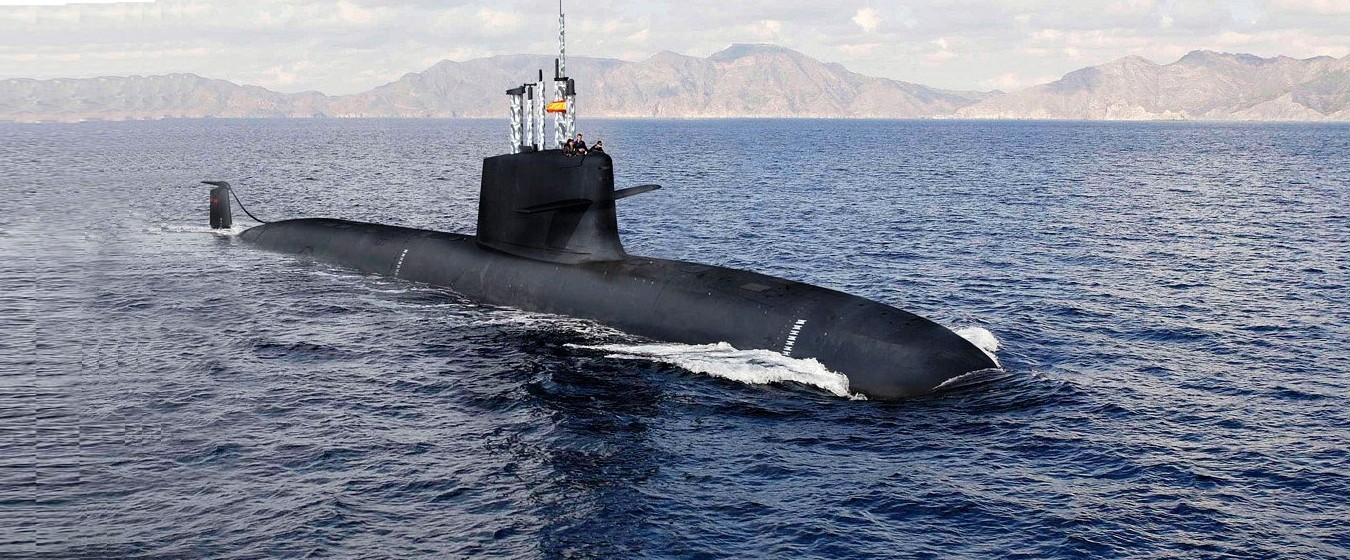
    PM Modi announced with justifiable national pride on November 6 that India’s first nuclear-propelled submarine, INS Arihant, commissioned in 2016, was now operational as an integral part of its nuclear deterrent. India earlier had the capabilities to launch nuclear weapons from the air, mounted largely on its Mirage 2000 and Jaguar, and by land-based missiles, ranging from Agni 1 (700-900 km) to Agni 5 missiles (5,500 km). Its aim has been to develop a ‘credible nuclear deterrent’, with capabilities to deliver nuclear weapons from multiple locations to strategic areas in its nuclear-armed neighbours, China and Pakistan.

    Arihant provides India with a capability to hit either neighbour from 300 m under the sea. The sea-based missiles envisaged for this purpose are Sagarika (750 km range) and K-4 (3,500 km). While land-based missile sites can be destroyed, a submarine-based deterrent is virtually impregnable against a missile attack. India is the only country with a sea-based N-deterrent, which is not a Permanent Member of the UNSC. India will soon operationalise a second nuclear submarine (Arighat), and is expected to have a fleet of four by 2022.

    According to US Federation of Nuclear Scientists, India currently possesses 130-140 nuclear weapons, while Pakistan has 140-150 and China 280. While India tested its first nuclear weapons in 1998, Pakistan’s first test was in 1990, on Chinese soil.

    In a recent book, Thomas Reed, a US nuclear weapons designer and former Secretary of the US air force, stated that China’s ‘Pakistan nuclear connection’ can be explained in the following words: ‘India was China’s enemy and Pakistan was India’s enemy. The Chinese did a massive training of Pakistani scientists, brought them to China for lectures, even gave them the design of the CHIC-4 device, which was a weapon that was easy to build — a model for export.’ Gary Milhollin, another expert, remarked: ‘Without China’s help, Pakistan’s bomb would not exist.’ China has also provided Pakistan the designs of its nuclear weapons, upgraded its ‘inverters’ for producing enriched uranium in Kahuta and provided it with plutonium reactors to build tactical nuclear weapons in Khushab and Fatehjang. Pakistan’s ballistic and cruise missiles are replicas of Chinese missiles.

    India’s N-doctrine stated that its weapons would only be used in retaliation against a major attack on Indian territory, or on its forces anywhere, in which nuclear, chemical or biological weapons are used. But Pakistan does not have a formal doctrine. The long time head of its Nuclear Command Authority, Lt Gen Khalid Kidwai, however, said over a decade ago that Pakistan’s nuclear weapons were ‘aimed solely at India’ and Pakistan would use nuclear weapons if India conquered a large part of Pakistan’s territory, or destroyed a large part of its land and air forces. He also held out the possibility of the use of weapons if India tried to ‘economically strangle’ it, or pushed it to political destabilisation. Pakistan’s statements in recent years have, however, indicated that it would not be averse to using tactical nuclear weapons in a conventional conflict with India.

    China, like India, also had proclaimed that it would not be the first to use nuclear weapons. But it has been ambiguous if this applied to India. China has maintained a measure of ambiguity on its ‘no-first-use’ pledge. This became evident when China’s foreign ministry spokesman (in 2004) rejected a suggestion from External Affairs Minister Natwar Singh that both countries should adopt a ‘common’ nuclear doctrine. Subsequent discussions between Indian and Chinese experts have suggested that China maintains deliberate ambiguity on its doctrine when it comes to dealing with India. Many ask if this is meant to signal to Pakistan that China will come to its aid in any nuclear exchange Pakistan may have with India, even if initiated by Pakistan. This ambiguity adds to India’s determination to strengthen its ‘triad’ of land, air and sea-based nuclear weapons. Agni 5 missiles can target China’s populous east coast. Within the next four years, we would have an adequate sea-based deterrent to deter China from holding out credible nuclear assurances to Pakistan that it would intervene should India choose to respond to use, or threats of use, of tactical weapons by Pakistan.

    While India has a streamlined nuclear command structure headed by the PM and Cabinet Committee on Security, it needs to revamp the archaic structure of its Ministry of Defence (MoD). The key military figure in the command structure is the Chairman of the Joint Chiefs of Staff Committee, who generally holds office for less than a year; hardly enough time for him to become familiar with the complexities of the command. Repeated proposals, including from defence committees and task forces, recommending the appointment of a full-time Chief or Defence Staff, or Chairman Chiefs of Staff Committee, who will hold charge of the command and report to the political authority, have gathered dust in the offices of the MoD bureaucracy.

    The MoD needs to be reorganised. Recommendations for such change, even from the Parliament Standing Committee of Defence, lie unimplemented. We recently acquired our desperately needed first batch of artillery guns after the ’80s’ Bofors controversy. This happened even as detailed designs for 155 mm Howitzers provided by Sweden were gathering dust for two decades. There is also surely something wrong if it takes over a decade to acquire fighter aircraft, even as the IAF is facing a shortage of around 30 per cent in the sanctioned strength.

    Ambassador G Parthasarathy  IFS (Retd) is the former High Commissioner to Pakistan and is a trustee of TPF. 

    This Op-Ed was published earlier in ‘The Tribune’ on November 15th.

  • Indian Air Force at 86: Challenges of Sustaining Credible Force Structure

    Indian Air Force at 86: Challenges of Sustaining Credible Force Structure

    The Indian Air Force celebrates its 86th anniversary on this October 8th, making it one of the oldest and large air forces of the world. Despite many challenges, most of which relate to inefficiencies of political decision making and inadequate financial support to modernisation, the IAF has come out with flying colours to continue to demonstrate its operational capabilities and strategic reach. The recent ‘Gaganshakti’ high intensity exercise  is an outstanding example. While the IAF continues to grapple with its huge problems of obsolescence, the last decade and a half has also been testimony to some major transformations underway in the IAF. As the 21st century dawned, the IAF began a rapid transformation from being largely a tactical air force to a strategic force, with significant expeditionary capability.

    Isolation to Outward Engagement

                 For more than half a century, outward engagement of the three services was limited to participation in UN peace-keeping missions. As India began its transformation with economic liberalisation in 1991, it began to dismantle its inward looking licence raj, and with it a global outlook started to emerge. As Indian economy accelerated into an overdrive by the late 1990s, and as India’s strategic image strengthened with  the overt declaration of its nuclear weapon status, the government encouraged military to military interactions and defence diplomacy. IAF’s international engagement expanded significantly from the 2000s. Major bilateral exercises were carried out on regular basis with major air forces – USA, UK, France, Singapore, South Africa, Oman, and Malaysia. Also, the IAF became a regular participant in USAF’s multinational exercises such as Cope Thunder and Red Flag. Recently the IAF has expanded its international exercises to involve Israel, Russia, Australia, Indonesia, and Malaysia. For over a decade, the Singapore Air Force carries out its two month long annual training from one of IAF bases on the eastern coast. Joint exercises for humanitarian assistance, involving multinational forces, is now a regular feature. These interactions and engagements have highlighted IAF’s high quality operational expertise, its global standing, and in turn, has contributed immensely to IAF’s growth in its international understanding. Today, the world sees the IAF as the sharp edge of India’s military power as well as the primary instrument of its humanitarian assistance capability worldwide.

    Enhancing its Reach

                 Although the IAF inducted the Jaguar from 1979, its air-to-air refuelling capability was kept inactive. Induction of Mirage 2000 in 1985 met the same fate. The importance of aerial refuelling in extended range operations by the USA in its Libyan strike, Osirak nuclear reactor strike by Israel, and Falklands operations by the UK was not lost on the IAF, and it decided in favour of this force multiplier in the late 1990s. Although the IAF was one of the last major air forces to induct the aerial refueler, its pace of operationalisation was probably the fastest. In less than a decade IAF fighters were flying across Atlantic Ocean to participate in international exercises like the ‘Red Flag’ and ‘Cope Thunder’. Within the last decade the IAF has demonstrated its extended operational reach through all its major exercises. Aerial refuelers form critical component of IAF’s operational capability in terms of reach and penetration. An expansion of this fleet is now long overdue.

    Technological and Operational Transformation

                 Airpower, by its very nature is technology intensive. The IAF embarked on major operational reorientation through induction of major technologies from the early 2000s. This began with induction of precision weapons, UAVs, electro-optical systems, and sensors. The IAF initiated its first upgrade program in the mid 1990s, for 125 MiG-21 Bis aircraft, by stitching together a complex avionics upgrade involving three nations – Russia, France, and Israel. The success of this program has established an irreversible upgrade culture as a cost-effective strategy for sustaining its force structure. This upgrade strategy has also contributed immensely to  indigenisation capability of Indian industry. The Jaguar fleet went through a series of comprehensive upgrades, giving rise to significant expansion of its capabilities. The Su-30 MKI is an excellent result of IAF’s conceptualisation and implementation of avionics suites and mission optimisation. Between 2004 and now, the IAF’s upgrade strategies have given fresh lease of life to various aircraft fleet and weapon systems: AN-32, MiG-27, MiG-29, Jaguar, Mirage-2000, and air defence missile systems. More programs involving upgrades of Su-30 MKI fighters and IL-76 transport aircraft are likely to be taken up soon.

    The IAF moved to transform its air defence operations through the induction of AWACS platforms. Selecting the proven IL-78 platform, the IAF again masterminded a complex three nation development program to evolve a modern, state-of-the art AWACS platform by 2009. The three AWACS platforms inducted in phase I have been utilised extensively to bring in major operational transformation of its air defence operations in a very short time-frame. The AWACS has certainly given the IAF a significant operational edge vis-à-vis the PLAAF challenge across the Himalayas. Simultaneously, the IAF has supported the indigenous program of AEW aircraft development based on Embraer-145 platform.

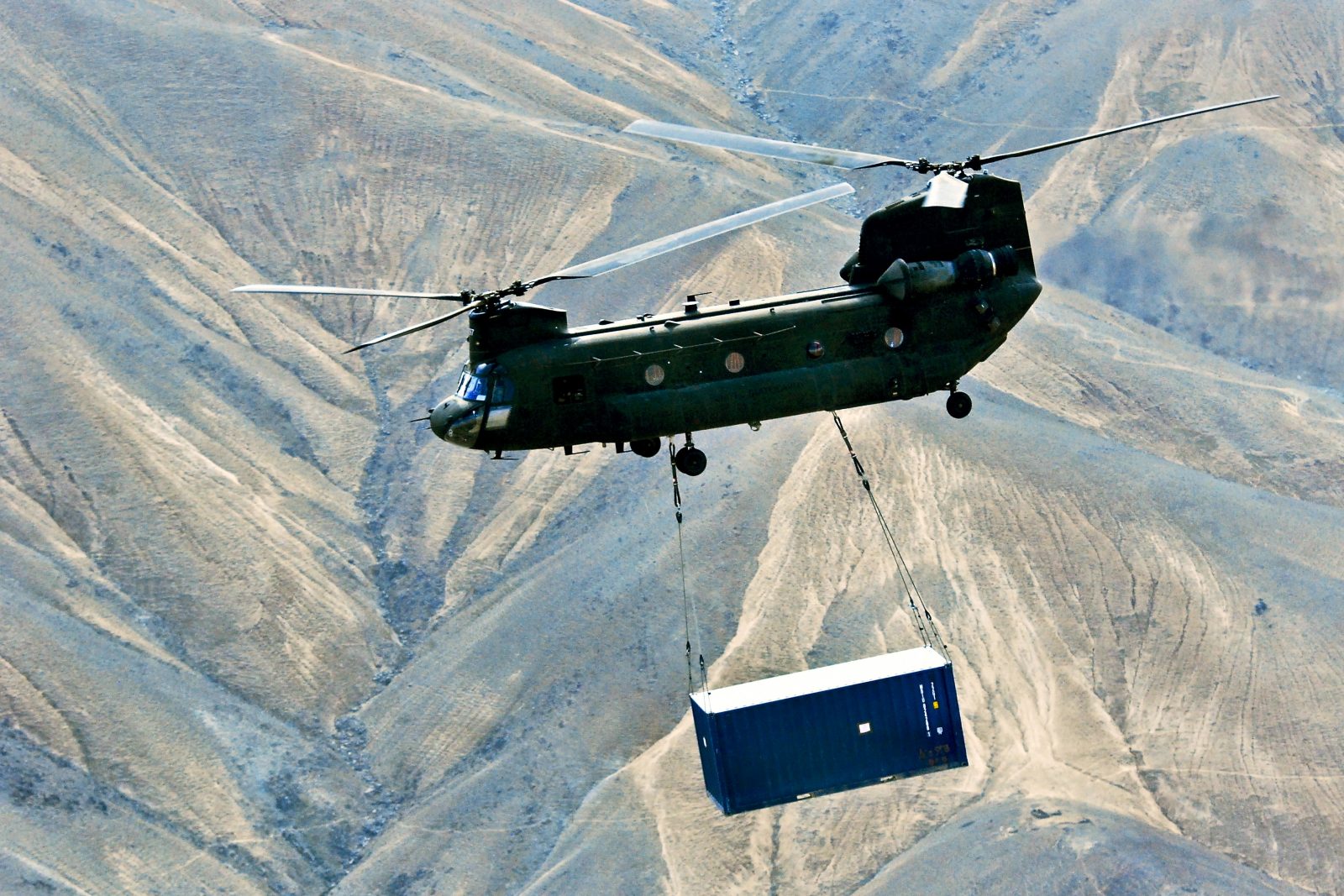
    Indo-US strategic partnership manifested itself in significant transformation in IAF’s airlift capability. By 2012, the IAF inducted and operationalised C-130J Hercules aircraft for special operations, which is also the IAF’s first 20 tonne airlift aircraft; and C-17 Globemaster heavy lift aircraft. These are going to be joined by Chinook heavy lift helicopters and Apache attack helicopters. By 2012 large numbers of Russian Mi-17 1V helicopters entered service. With these inductions, the IAF’s airlift capability has truly attained transcontinental proportions.

    The air defence missile segment, afflicted by long delays and overruns in terms of cost and time, has finally started showing results. The IAF, inducted its first squadrons of LLQRM (short range air defence missiles) based on Israeli systems, while simultaneously inducting indigenous Akash missile systems. This still indicated huge gaps, which is sought to be filled by the long-delayed MRSAM, jointly developed by India and Israel. With the projected signing of the contract for the Russian S-400 long-range SAMs the air defence will be on stronger operational capability.

    The most significant operational and technological capability of the IAF is its net-work centric warfare capability, which is underway for more than a decade. The IAF is the most significantly networked military force amongst the three services. It first established its primary communication grid, AFNET (Air Force Network), and  simultaneously established its air defence network inclusive of vital command and control network, IACCS (Integrated Air Command and Control System). The IACCS integrated all its ground based radar sensors and other inputs to create a common operational picture for real-time command and control to become effective. This was a pioneering transformation. The culminating transformation is its ‘airborne network’, which involved evolving NCW concepts based on  futuristic ‘self-organising, master-less, node-less, architecture’. The concepts were validated through a three-year long pilot project in 2013. Centred on the SDR (Software Defined Radio) the IAF is focused on indigenous solution. However, interim acquisition of limited numbers of SDR to kickstart operationalisation has stalled for nearly four years due to our infamous acquisition procedural delays. NCW operationalisation is a huge challenge that involves significantly large number of legacy aircraft and systems.

    The transformation of the IAF as an aerospace force began in the aftermath of Kargil war. IAF has been at the forefront of transforming the ISR domain through its operational strategies involving various ISR assets – UAVs, tactical and strategic reconnaissance systems, and satellites. It has played a stellar  role in defining the roadmap for developing and deploying space assets. It is matter of time before the IAF leads the tri-service aerospace command in true measure to formalise and operationalise India’s Space security strategy.

    IAF as the instrument of India’s Global Power

                 The rise of India and China is the major transformative process of the 21st century international system. That India aspires to be a global power is well known and well founded. India’s march to global power status in the 21st century will be a challenging and arduous task. Rise to great power status is not one of just prestige and power but comes with huge responsibilities. These responsibilities come with significant costs. A great power should be willing to share and shoulder the costs of providing public goods to the global community. This is precisely what the USA is now complaining about, as it finds the costs of sustaining itself as a hegemon is becoming prohibitively expensive. The USA is clearly signalling that aspiring great powers should share the costs of global public goods albeit without upsetting an international order crafted to its advantage. This is where India must rise to the challenge by rising as a benign power with the right balance of hard and soft power to influence the course of emerging power politics.

    The IAF, on its 86th anniversary, is at the cross roads of evolving as the instrument of India’s global power. As the 21st century progresses, the centrality of aerospace power in the national power of major countries has become unquestionable. Joint or integrated warfare has been necessitated by the critical role of aerospace power in all domains, be it precision, reach, rapidity of application, and intelligence through ISR. The viability of conventional deterrence comes from aerospace power’s ability to deter through the fear of precise punishment. It becomes obvious that the IAF has to be the cutting edge instrument of India’s hard military power. This obviously calls for the right combination of force structure with cutting edge technologies and weapon systems with significantly long reach. A serious introspection would reveal that the IAF, as it enters its 87th year, faces daunting challenges of building and sustaining the requisite force structure.

    IAF’s Force Structure Challenges

     IAF has been grappling with problems of obsolescence and dwindling force structure for more than two decades. Long drawn out and unending MMRCA acquisition process is an example of leaving operational capability gaps unactioned as well as loss of opportunities to enhance industrial and technological capabilities. Time and cost overruns in the indigenous Tejas-LCA program is again an operational shortfall for the IAF. The IAF today is at an all-time low of 32 fighter squadrons. An analysis of the history of IAF’s force structure would reveal a story of crisis management to sustain minimum force levels. Much of the blame must go to the political leadership for failure to grasp the importance of sustaining credible conventional force structures, while part of the blame must certainly fall on services themselves.

    JRD Tata committee, set up in the aftermath of 1962 humiliation against China, recommended an IAF force structure of 65 combat squadrons. This was accepted by the government but was pruned down to 39.5 squadrons as an interim measure on account of resource constraints. This figure has remained more or less permanent, till the government approved a figure of 42 squadrons in 2005. Even though the IAF has enhanced its combat capability with the induction of force multipliers, and networked air defence capability, its approved force structure may fall short of meeting India’s requirements of functioning effectively as a global player. In the modern, net-centric aerospace environment, the IAF will be India’s main instrument of conventional deterrence. Tata committee recommendations look more apt for India, given India’s emerging stature and global responsibilities expected of it. However, the immediate requirement is to get IAF’s force structure back to the approved 42 combat squadron strength. Given the large number of aircraft that need to be replaced, this would take at least 15 years if only done on war-footing.

    Modernisation and Indigenisation Imperatives

    As it celebrates its 86th anniversary the IAF would do well to do some serious introspection. Modernisation processes for all militaries in all countries face the challenges of timely resource availability, particularly for capital-intensive service like the Air Force. In India the problem is compounded by inadequate aerospace industrial and technology base. Indian military power, and IAF in particular, is heavily import dependent. Despite more than 70 years of indigenisation efforts, not much has changed in critical areas. A major cause for this state of affairs is the lack of adequate involvement of the user service in project management and technology development. The IAF will have to take a leaf out of the USAF model to make a major impact on indigenisation. This will need the following to be done on a time bound basis:

    • IAF needs to create a cadre of research personal. It also needs to operate aerospace research laboratories. These will focus on research and development of aerospace technologies. Ideally the IAF needs to exercise command and control over laboratories such as ADE, DARE, CABS, etc.
    • Programs like the Tejas-LCA should have been managed by the user service, the IAF, after the technology demonstration phase. Program management by the user service is an absolute must as it will be driven by operational needs balancing technology, cost, and time factors. As a corollary, it becomes obvious that the IAF must create the necessary expertise to manage its programs.
    • IAF’s involvement in DRDO driven programs must clearly define them as those that are technology development oriented and those that are user driven weapon system development. The latter programs must clearly be managed by the IAF while the former must be enabled by IAF support.
    • The IAF must clearly lay down a 20 year strategic roadmap for the government wherein all aircraft and major weapon systems are made completely free of foreign OEM dependence.


    Conclusion

                India’s security environment cannot be viewed simply as just border and territorial disputes with Pakistan and China. Its strategic challenges in a fast changing 21st century world are increasing by the day. China’s aerospace capability has leapfrogged significantly over the last two decades, and it poses a major challenge to India. The IAF will need to spearhead India’s aerospace capability to balance China’s dominance.

    IAF’s long-term force structure strategy could revert to its earlier ‘auxiliary air force’ format, albeit in a new form. Indian government wound up the auxiliary air forces post 1962, while it retained the ‘Territorial Army’ model. The benefits of this scheme is well established. It provides huge opportunities to a large segment of qualified young people to do military service, provides a ready reserve, and forms an important component of second rung security structure. With slight modification this could be created as Air National Guards, much like the US system. The objective should be to achieve one squadron of Air National Guards for each state in a defined time period based on financial and technical resources. These squadrons should be equipped with Tejas aircraft. Over a period of time this could become a win-win situation for the IAF, civil society, and the country as a whole. A comprehensive approach to force structure could see the IAF as the foremost air force in Asia and a major powerful force in the world by 2032, that will be IAF’s centenary year.

    =====xxx=====

     The author, Air Marshal M Matheswaran AVSM VM PhD (Retd) is a former Deputy Chief of Integrated Defence Staff (Policy, Plans & Force Development).

  • India needs a Space Security Architecture

    India needs a Space Security Architecture

    Ajay Lele December 12, 2017

    In the 21st century Space Security is rapidly emerging as a critical component of the National Security architecture. Today, space has emerged as a major instrument for the human survival. Very many activities associated with humans day to day leaving are depending on the satellite technologies directly or indirectly. Owing to increasing emphasis on space technologies space industry is also found making rapid growth. At the same time space has obvious utilities for the militaries too for the smooth and fast conduct of their various operations. Unfortunately, space is also emerging as a potential battleground with the possibility of confrontations both on the earth and also in the outer space. Naturally, for the states with significant amount of assets positioned in space as well as for the states having dependence on space technologies, it becomes imperative to evolve a specific policy structure to address issues concerning space security. This article attempts to discuss a need of such framework for India.

    Necessity

    Indian space programme is civilian in nature and existing space structures has been evolved essentially to cater for such requirement. Presently, Space Commission is responsible for growth, development, sustenance and furtherance of India’s space programme. There is no specific defence element involved with this structure. Hence, appreciating the military needs and also to allow ISRO to continue with its civilian mandate, it has become necessary to have a separate commission for handling strategic requirements. For this purpose a Military Space Commission needs to be established.

    Such commission could oversee all space security aspects. Under this commission a specific agency could be established for coordinating activities of various stakeholders and liaise with various agencies of (civilian) Space Commission. Such agency could suggest modifications in exiting policy architecture as found necessary from time to time and also establish an experts group. This is important because human resources having an understanding about strategic requirements in respect of outer space issues may not be readily available. Hence, to address modern day threats it is inessential to have human resource of specialists with multidisciplinary vision. Such group should consist of military personnel, space scientists, cyber experts, AI/robotic experts, strategic technologists, technology managers, lawyers, academicians, disarmament & arms control experts and diplomats.

    Military Space Command, a tri-service organisation should be the main implementation agency for this commission. This agency should have a larger mandate encompassing various issues. In coming years, Indian Army, Navy, Air force and other services like the Coastguard, Border Security Force etc are likely to increase their reliance on satellites for the purposes of intelligence gathering, communication, navigation, and operations of various weapon systems. Over last couple of years is has been noticed that the need for I-S-R capacities in space to support network centric strategies is significantly increasing. Space command should be tasked to administer various military and para military related aspects of satellite technologies. This command should directly liaise with the Military Space Commission to project its requirements. For operational purposes this command could be put under the CDS/IDS. Home Ministry representative could a single point source amongst para military forces to liaise with this command. The command should have an exclusive research wing. Also, special focus should be given to issues related to Space Situational Awareness (SSA) and Space Meteorology.

    India has no intent to weaponize the space. However, India needs to develop (not necessarily test) certain offensive technologies, from ASAT to jamming to cyber tools. Today, the idea of weapons in space is more theoretical in nature. However, this could become a reality in coming few years. From deterrence perspective it is important for India to have a mechanism in place which could address such issues. The policy perspective in this regard should be developed by the Military Space Commission and Space Command should be the implementation agency. Legal and foreign policy related issues would play a major role towards evolving any space security architecture. In regards to these matters, it is important for Military Space Commission to liaise with the Space Commission and evolve an India specific view.

    Context

    Indian space programme is civilian in nature and existing space structures has been evolved essentially to cater for such requirement. Presently, Space Commission is responsible for growth, development, sustenance and furtherance of India’s space programme. There is no specific defence element involved with this structure. Hence, appreciating the military needs and also to allow ISRO to continue with its civilian mandate, it has become necessary to have a separate commission for handling strategic requirements. For this purpose a Military Space Commission needs to be established.

    Such commission could oversee all space security aspects. Under this commission a specific agency could be established for coordinating activities of various stakeholders and liaise with various agencies of (civilian) Space Commission. Such agency could suggest modifications in exiting policy architecture as found necessary from time to time and also establish an experts group. This is important because human resources having an understanding about strategic requirements in respect of outer space issues may not be readily available. Hence, to address modern day threats it is inessential to have human resource of specialists with multidisciplinary vision. Such group should consist of military personnel, space scientists, cyber experts, AI/robotic experts, strategic technologists, technology managers, lawyers, academicians, disarmament & arms control experts and diplomats.

    Military Space Command, a tri-service organisation should be the main implementation agency for this commission. This agency should have a larger mandate encompassing various issues. In coming years, Indian Army, Navy, Air force and other services like the Coastguard, Border Security Force etc are likely to increase their reliance on satellites for the purposes of intelligence gathering, communication, navigation, and operations of various weapon systems. Over last couple of years is has been noticed that the need for I-S-R capacities in space to support network centric strategies is significantly increasing. Space command should be tasked to administer various military and para military related aspects of satellite technologies. This command should directly liaise with the Military Space Commission to project its requirements. For operational purposes this command could be put under the CDS/IDS. Home Ministry representative could a single point source amongst para military forces to liaise with this command. The command should have an exclusive research wing. Also, special focus should be given to issues related to Space Situational Awareness (SSA) and Space Meteorology.

    India has no intent to weaponize the space. However, India needs to develop (not necessarily test) certain offensive technologies, from ASAT to jamming to cyber tools. Today, the idea of weapons in space is more theoretical in nature. However, this could become a reality in coming few years. From deterrence perspective it is important for India to have a mechanism in place which could address such issues. The policy perspective in this regard should be developed by the Military Space Commission and Space Command should be the implementation agency. Legal and foreign policy related issues would play a major role towards evolving any space security architecture. In regards to these matters, it is important for Military Space Commission to liaise with the Space Commission and evolve an India specific view.

    In closing

    It is important to note that Military Space Commission is not an attempt to evolve a parallel architecture to Space Commission and ISRO. Duplication of assets is not advisable and all necessary assistance (and advise) should be taken from ISRO to organise range of activities. There sould be horizontal and vertical interaction with various departments of ISRO and also with Defence Research & Development Organisation (DRDO). Today, the rapidly changing global space order is posing different type of challenges to national security. As one of the leading space-faring states in the world and also being a major military power and possessor of nuclear weapons, it is important for India to have well-thought-of policy of using space for military and deterrence purposes.

    References: Author has referred various Internet based sources

    Dr Ajay Lele is a Senior Fellow at the IDSA.