Category: Democracy & Governance

  • Democracy and Legislation: Lack of Parliamentary Debates negates the Constitution and accountability to the People

    Democracy and Legislation: Lack of Parliamentary Debates negates the Constitution and accountability to the People

    Democratic principles have long been accepted as the cornerstone of Free India. Reaching beyond a mere organizational setup, democracy has been treated as the ideal through which equality and justice are sought to be ensured for the people.

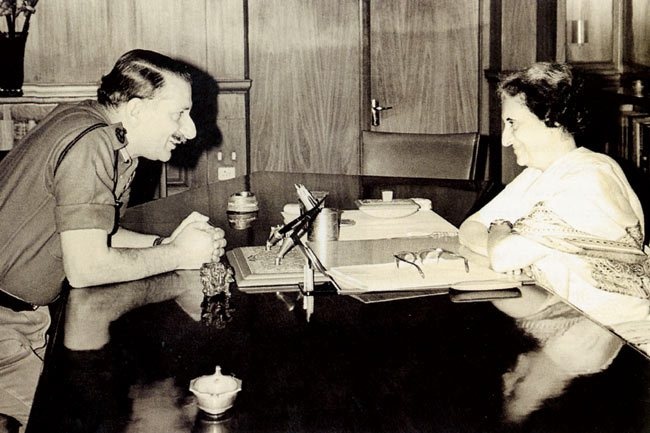
    Despite the well-recognised principles of equity and transparency in the practice of democracy, it is well established that various Governments, on many occasions in independent India’s history, have resorted to flouting constitutional democratic principles for personal gain; the widely criticized imposition of emergency under Indira Gandhi is one such example. It evident that the Indian people are once more confronted by a situation where the government of the day is guilty of flouting of democratic norms. This article examines various instances of current parliamentary practices in this context.

    60 per cent of proposals were referred to Standing or Select Committees during the United Progressive Alliance’s first term. During the UPA-II administration, this rose to 71 per cent. NDA’s first term from 2014-19 had a 27 per cent reference rate, while it’s second term, so far, has only 12 per cent rate.

    Institutional norms and parliamentary procedures in India, especially for legislation making are designed to ensure space for debate, discussion and dissent. This operates as a system where all decisions are subjected to scrutiny by the people’s representatives. To that end, whether a ruling party adheres to parliamentary procedure speaks volumes about the respect accorded to to the constitution and democracy at large. To analyse whether the current government is adhering to parliamentary procedures and by extension, if it is truly democratic, one must first ascertain what exactly constitutes the ideal parliamentary procedure.

    Parliamentary Procedure on Legislation Making: How Does A Bill Become An Act

    Acts usually start as bills which simply put, is the draft of a legislative proposal. This bill may be introduced by public members or private members and requires passing in the Lok Sabha and Rajya Sabha as well as the president’s assent to become a law.

    There are three stages through which a bill is passed in the parliament: these are known as the first, second and third reading respectively.

    For the First Reading, the speaker puts forth the request for leave of the house, which if granted is used to introduce the bill. Following this stage is the second reading which entails general discussion. It is during this stage that the House may choose to refer the bill to a parliamentary committee for further input or even circulate it to gauge public opinion. During the second reading, parliamentary procedure states that a clause-by-clause reading must proceed and it is during this time amendments are moved. The second reading concludes with the adoption of ‘Enacting Formula’ and ‘Long Title of the Bill’. The next stage is the third and the last reading. At this Juncture, debates for and against the bill take place. For an ordinary bill, only a simple majority of the members present, and voting suffices, however for a constitutional amendment bill, in keeping with article 368 of the constitution, a majority of the house’s total members and at least 2/3rd members present and voting is deemed necessary. Once this process is complete, the bill is sent to the other house of the parliament and goes through the same stages after which it is referred to the president for his assent.

    Modi Government’s track-record of Passing of Bills

    Leaders of opposition and Journalist reports have alleged that the aforementioned procedure has been cast aside by the current regime in favour of bulldozing the bills without debates. This argument is not without merit and one can identify some central ways in which the ruling party has violated parliamentary procedure.

    The first and most grievous is the misuse of Article 123 also known as the Ordinance Route. Article 123 of the constitution permits the president to enact a temporary law in the event of urgent and unavoidable circumstances. It is clear that the Article 123 has been exploited by the current government.

    During the first 30 years of our parliamentary democracy, for every 10 bills in the parliament, one ordinance was issued. In the following 30 years, this number went to 2 ordinances per every 10 bills. During the period 2014-2019 of the BJP government, this number went up to 3.5 ordinances per every ten bills. For perspective, while 61 ordinanceswere issued under the UPA government spanning ten years, the government led by the BJP issued 76 ordinances in a time frame of 7 years spanning from May 2014 to April 2021. It is also useful to note that ten of these ordinances were issued right before the 2019 Lok Sabha elections.

    Astonishingly, as many as 11 ordinances have been passed since March 24th, 2020, which is when the lockdown was imposed. Five of these relate to covid 19, two to the health sector, every other ordinance such as the Banking Regulation Amendment and the Agriculture bills do not have anything to do with the coronavirus pandemic.

    States have also used ordinances to pass legislation. A non-BJP ruled state Kerala, for example, published 81 regulations in 2020, whereas Karnataka issued 24, and Maharashtra issued 21. Kerala has also re-promulgated ordinances: between January 2020 and February 2021, one ordinance to establish a Kerala University of Digital Sciences, Innovation, and Technology was promulgated five times.

    Although previous administrations have utilized ordinances to undermine the constitutional process, the problem is decidedly amplified under the present rule with regards to the number of ordinances produced per given period.

    This sort of rise in Ordinances being issued points to a trend of avoiding in-depth critical evaluation and discussion on proposals by rushing them into becoming acts.

    One of the most controversial ordinances in the recent past pertains to the three farm laws. The reason for not introducing these proposals in the parliament and instead enacting ordinances is unclear for there seems to be no urgent link to the covid 19 pandemic. Additionally, the farm bills not being subjected to any discussions nor being referred to parliamentary committees for any further report making has led to removing any possibility for amendment. These laws provide a useful avenue to assess why the bill was not passed through a proper parliamentary process and instead rushed through the ordinance.

    The ordinance culture has also extended to BJP run states, for instance, Uttar Pradesh, Madhya Pradesh, and Gujarat adopted ordinances weakening labour laws without consulting workers’ unions or civil rights organisations during the lockdown. Moreover, this was followed up on 15th March 2020, when colonial-era legislation was enacted as an Ordinance. This was the Uttar Pradesh Recovery of Damages to Public and Private Property Ordinance which would heavily fine any damage to property, public or private during a protest.

    Moreover, the current administration can be observed violating the parliamentary procedure for there is very little or no involvement of parliamentary committees. Parliamentary committees are key in assessing a proposal with necessary scrutiny and expertise.  These committees provide a place for Members to interact with subject experts and government officials while they are studying a bill.

    60 per cent of proposals were referred to Standing or Select Committees during the United Progressive Alliance’s first term. During the UPA-II administration, this rose to 71 per cent. Prime minister Modi’s first term from 2014-19 had a 27 per cent reference rate, while his second term so far has a 12 per cent rate. Not only is there a blatant and marked disregard for referring bills to parliamentary committees, but the administration has also actively worked to hinder committee work. A meeting of the Parliamentary Standing Committee on Information Technology on July 28, 2021, had to be cancelled owing to a lack of quorum when 15 BJP members refused to sign the attendance register, it is speculated this was to avoid the discussion on the Pegasus scandal.

    Monsoon Session of Parliament

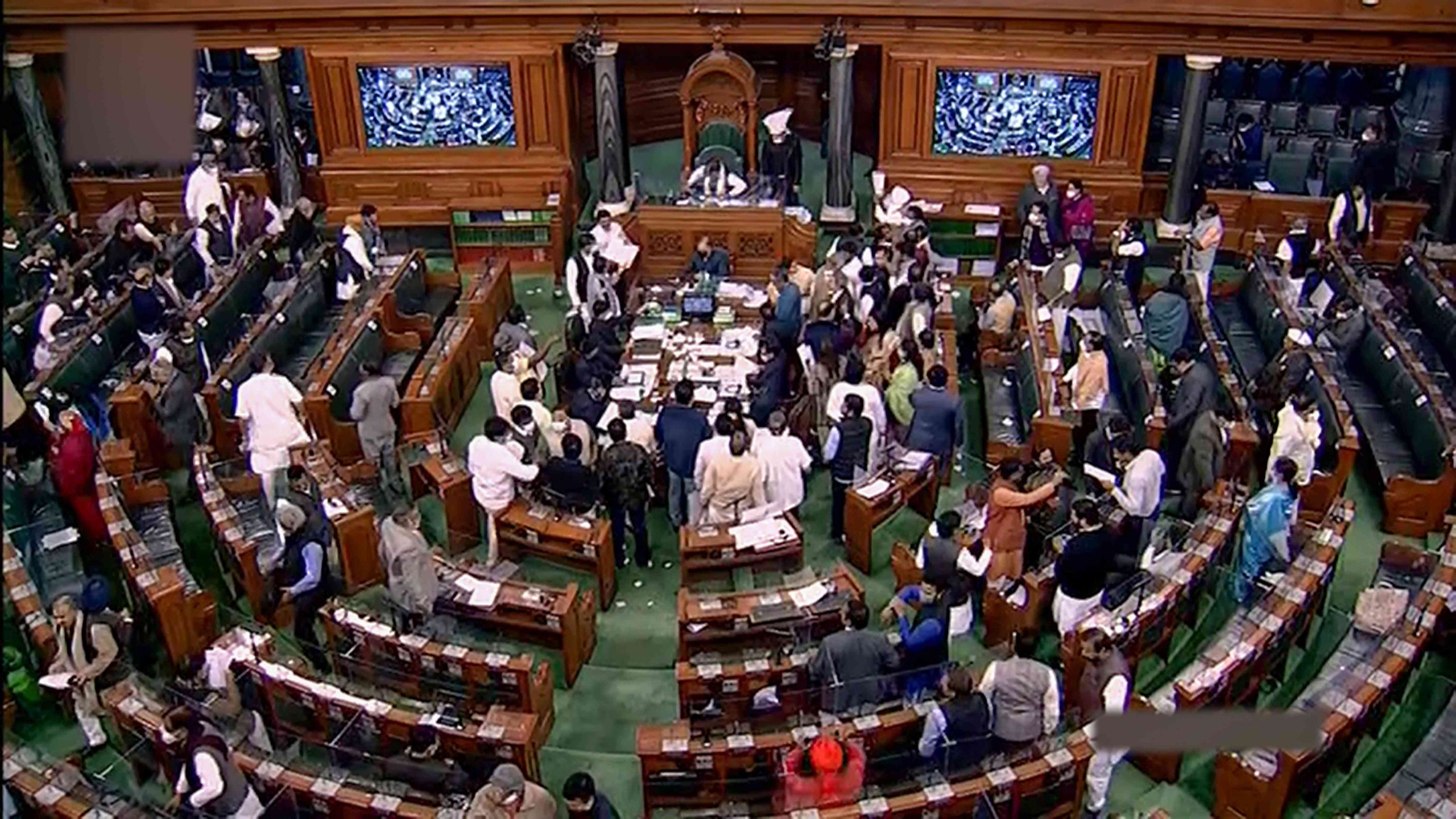
    The most recent monsoon session of the Parliament is an apt depiction of how the administration has bypassed the norms and rules of parliamentary procedure, endangering the democratic processes that citizens invest faith in.

    A record number of 12 bills were passed by the parliament in the first 10 days of the monsoon session. All these bills were passed by a voice vote which is a tremendously inaccurate mechanism to assess supporters of a particular proposal. None of these 12 bills nor the overall 14 bills were referred to standing committees for in-depth analysis.  According to TMC leader Derek O’Brien, the government rushed through and passed 12 Bills at an average time of under 7 minutes per bill. In the same vein, BSP MP Danish Ali commented that the Essential Defence Services Bill was passed in less than 10 minutes.

    Be it the ordinance route, curtailing zero hour, the excessive use of voice vote or the bypassing of parliamentary committees, all point towards the same and devastating trend, the lack of adherence to parliamentary procedure. This must compel citizens to take stock of whether India needs a reminder on how democratic proceedings should proceed and accountability to the people be restored.

    Feature Image: medium.com

  • Drought or Floods? : Tamil Nadu Needs An Integrated Water Management Policy

    Drought or Floods? : Tamil Nadu Needs An Integrated Water Management Policy

    Tamil Nadu not only requires a more sustainable and scientific approach to water management but an integrated development model that no longer separates the human environment, basic needs, ecological justice and public accountability   

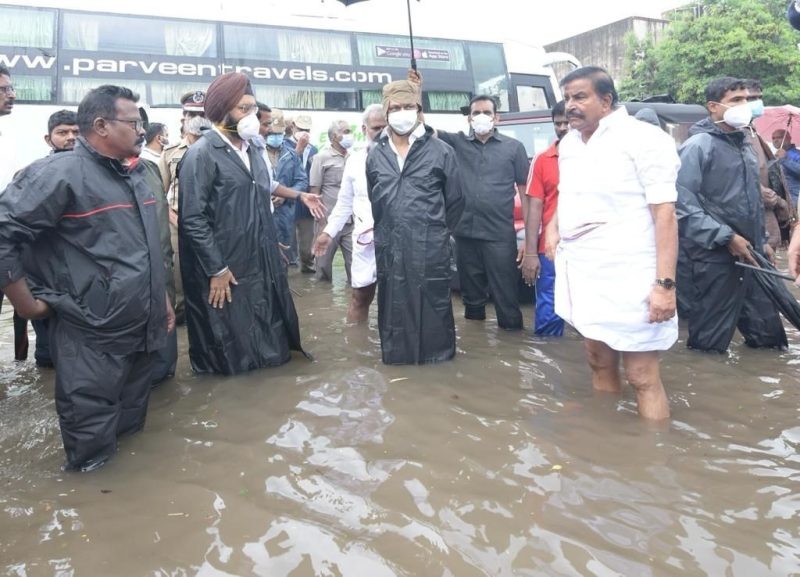
    Every time we are faced with drought or floods, we all complain about the absence of a more sustainable water management policy in the state.  Politicians and the political parties blame each other and present competing narratives of their achievements when people are caught in deep crises of survival either due to bad drought or worse floods.  The bureaucrats, police, public charity and the brave hearts work round the clock while the government monitors the rescue, relief and resettlement of the victims though patterns and intensity of engagements differ between the floods and drought situation.

    We then return to our normal selves when the floods recede and the victims of extreme drought disappear from our sight.  What happened to the excessive water during the floods and the thirsty/hungry people in drought situations who seemed to have gone out of sight? It is important to argue for a more sustainable water management policy and at the same time explore the challenges in developing and executing such a policy. We do not have an open and democratic media/socio-political environment to discuss and debate between the ministers, bureaucrats, experts, non-state actors and creative members of the civil society beyond the blame game. A curious gap is that there are no solutions emerging while causes are either understated or overemphasized by different experts and groups depending on their professional background and personal worldview.


    The government appears to be in a catch-22 situation over urbanization, industrialization, population growth, migrations, and the urban slums.  The impact of rural poverty, state of agriculture, unemployment, migrations as well as the level of the rural-urban divide has not been studied adequately even in a developed state like Tamil Nadu.  But there is no escape from the truth that the government is the major violator and path setter for more violations of environmental principles and laws of nature by the greedy builders and corporate interests.

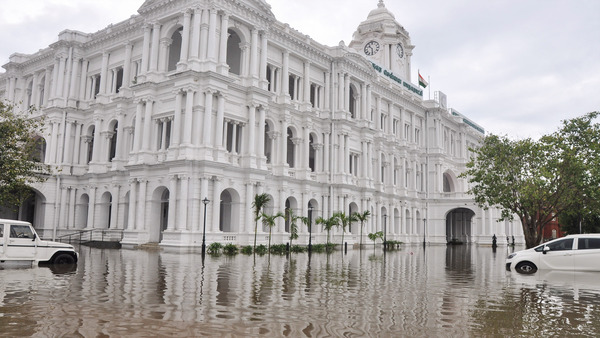
    It may be relevant to recall here the Chennai floods in 2015 and the worse water shortage in less than four years time in 2019.  Besides rapid industrialization and massive urbanization issues, Chennai is also faced with the challenges of climate change which is altering the weather patterns resulting in deadly floods and prolonged droughts.  Given the nature of challenges, there is a need to move beyond developing an appropriate water management policy and strengthening climate change resilience towards addressing core concerns of our democracy such as the absence of public accountability and rights without responsibilities.


    Chennai’s water bodies have shrunk at an alarming rate without much public attention. Every lake that has disappeared in Chennai had been part of our ecological system. Pallikaranai marshland has unfortunately been forced to yield land to hospitals, government buildings and educational institutions including (paradoxically) the Indian Institute of Technology – Madras (IIT-M) and National Institute of Ocean Technology.

    Chennai’s water bodies have shrunk at an alarming rate without much public attention. Every lake that has disappeared in Chennai had been part of our ecological system. Pallikaranai marshland has unfortunately been forced to yield land to hospitals, government buildings and educational institutions including (paradoxically) the Indian Institute of Technology – Madras (IIT-M) and National Institute of Ocean Technology. Today, Ennore creek faces a much bigger threat than ever before.  It is time we discuss more openly about our public policy, political culture, and abuse of social power, corruption in public life and the lack of environmental ethics. In intrinsic terms, this reveals about a political society without a conscience for environmental justice which forms the basis of social justice, distributional justice and good governance.

    The percentage culture and corruption prevalent among the politicians cutting across the party and political loyalties and the nexus between the politicians, bureaucrats and the business interests are one of the most unfortunate but successful stories of decentralization of public administration in Tamil Nadu.  If these arguments appear unreasonable, then how do we explain the rise and role of sand mafias, stone quarry contractors, timber lobbies, water industry and corporate bodies engaged in mineral extraction and exploitation?  These are not unspecified and general observations because of the fact that these individuals and the corporates control the lakes, rivers, forests, seashores, land access and ultimately the policy process within the government. Although slum dwellers, settlers along the river banks and seashores as well as forest people appear as main violators of the laws of State, yet the truth is vastly different.  The Palar River in the north, Cauvery River flowing through the west to east and the Tamiraparani River in the south of Tamil Nadu bear testimonies to this brutal reality of sand quarrying and criminal nexus between politicians, bureaucrats, industrialists and the sand mafia in Tamil Nadu.

    We need to question our materialistic approach to progress in the name of growth and development.  It is not adequate to boast about our progress in social justice and the inclusive model of development without environmental justice and responsibility to our future generations.  Tamil Nadu not only requires a more sustainable and scientific approach to water management but an integrated development model that no longer separates the human environment, basic needs, ecological justice and public accountability.

  • Distress Migration: A case study of KBK districts in Odisha

    Distress Migration: A case study of KBK districts in Odisha

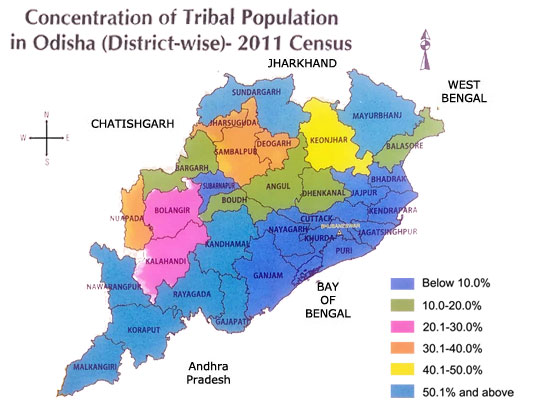
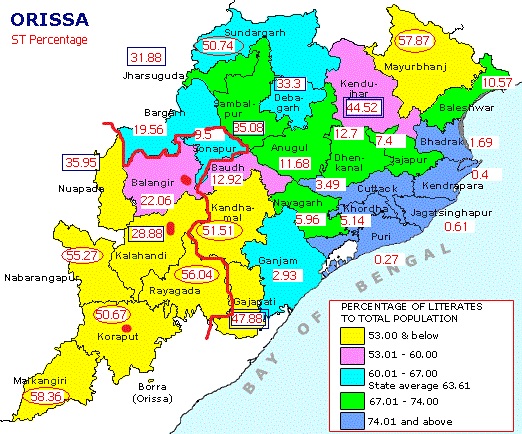
    The former districts of Koraput, Balangir and Kalahandi, also known as KBK districts, were reorganised into 8 districts of Koraput, Malkangiri, Nabarangpur, Rayagada, Balangir, Subarnapur, Kalahandi and Nuapada in 1992. These districts form the South-West part of Odisha comprising the great Deccan Plateau and the Eastern Ghats. These highland districts highly rich in mineral resources, flora and fauna remain as one of the most backward regions in Odisha

    Among the different forms of migration, distressed migrants remain the most impoverished and unrecognised. These migrants form the lowest strata of the society; disadvantaged by caste, poverty and structural inequalities. In Odisha, the underdeveloped region of KBK is one among the main sources of distressed migrants. They move to cities in search of employment and better wages, while in cities they are even more disadvantaged due to social, economic and linguistic barriers. Administrative and political apathy over their issues has only enhanced their distress.

    This paper attempts to address three questions:

    1. What are the characteristics of distressed migrants in KBK district, Odisha?
    2. What are the existing policies of the state to curb this form of migration?
    3. What form of government intervention is required to address this distress?

    The analysis is carried out through a review of published articles, government reports, e-books and newspaper reports.

    Defining distress migration

    Migration is a multifaceted concept driven by diverse factors. Migration can be internal or international, voluntary or involuntary, temporary or permanent. Depending on the pattern and choice of migration, each migratory trend could be characterised into different forms. Distress migration is one such form of migration.

    Involuntary migration is often associated with displacement out of conflict, environmental distress, climatic change etc. That is any sudden threat or event forces people to migrate. However, involuntary migration may also arise out of socio-economic factors such as poverty, food insecurity, lack of employment opportunities, unequal distribution of resources etc. This component of involuntary migration is addressed by the concept of distress migration (Avis, 2017).

    To understand distressed rural-urban migration in India, the broad definition used by Mander and Sahgal (2010) in their analysis of rural-urban migration in Delhi can be employed. They have discussed distress migration as:

    “Such movement from one’s usual place of residence which is undertaken in conditions where the individual and/or the family perceive that there are no options open to them to survive with dignity, except to migrate. Such distress is usually associated with extreme paucity of alternate economic options, and natural calamities such as floods and drought. But there may also be acute forms of social distress which also spur migration, such as fear of violence and discrimination which is embedded in patriarchy, caste discrimination, and ethnic and religious communal violence” ( Mander and Sahgal, 2010)

    In brief, the definition states that distress migration is caused by an array of issues. Environmental disasters, economic deprivation, gender or social oppression, lack of alternate employment opportunities and inability to survive with dignity are mentioned as the main drivers of distress migration (Avis, 2017).

    Thus, distress migration is a form of temporary migration driven by environmental and socio-economic factors and not based on an informed or voluntary choice.

    Profile of KBK districts

    The former districts of Koraput, Balangir and Kalahandi, also known as the KBK districts, were reorganised into 8 districts of Koraput, Malkangiri, Nabarangpur, Rayagada, Balangir, Subarnapur, Kalahandi and Nuapada in 1992. These districts form the South-West part of Odisha comprising the great Deccan Plateau and the Eastern Ghats. These highland districts highly rich in mineral resources, flora and fauna remain as one of the most backward regions in Odisha. The region is termed backward on account of rural backwardness, high poverty rates, low literacy rates, underdeveloped agriculture and poor development of infrastructure and transportation (Directorate of Economics and Statistics, 2021).

    The districts are home to primitive tribal communities such as Gonds, Koyas, Kotias etc. dependent on forest produce and subsistence agriculture for a living. KBK region registered a workforce participation rate of 48.06 % in the 2011 census. There was a significant occupation change noticed from the 2011 census.  The region witnessed a fall in cultivators from 33% in 2001 to 26.7% in 2011. However, the fall in cultivators was compensated with an increase in agricultural labourers from 44.24 % in 2001 to 48.87% in 2011. Employment in household industries also witnessed a downfall between the period of 2001 to 2011 (Sethy, 2020).

    The rise in agricultural labourers has a negative impact on the communities. As agriculture is underdeveloped owing to the arid nature of the region, crop failure, extreme calamities, low net irrigated area and falling government expenditure, these workers are pushed into abject poverty. In search of alternate employment options, these workers migrate to other areas of employment in rural or urban pockets. Such a form of seasonal migration during the lean period in agriculture is a predominant phenomenon in these districts. Their dependence on non-timber forest produce is hindered by the rapid deterioration and deforestation of forests for development projects and mining.

    Characteristics of distressed migrants in KBK region

    1. Who Are These Distressed Migrants?

    In the KBK region, distress migration has been a popular coping strategy during lean periods of agriculture. And this strategy is majorly adapted by disadvantaged and marginalised sections of the region. They are disadvantaged by caste, chronic poverty, landlessness, low levels of literacy and skills, increased dependence on forest and agriculture and debt-ridden (Meher, 2017; Mishra D.K., 2011; Tripathy, 2015, 2021).

    1. Why Do They Migrate

    Distressed migration in the region is induced by many interlinked factors. One such factor is that the region is highly under-developed in terms of social and economic infrastructure. Such under-development puts the communities at a disadvantage with low levels of literacy and skills. Their dependence on agriculture and forest produce for livelihood rises. However, agriculture is under-developed and forests are subjected to high levels of deforestation. With low levels of income, crop failure and non-availability of alternate employment opportunities, the communities are subjected to absolute levels of poverty, food and employment insecurities (Kujur, 2019).

    Landlessness is also identified as one significant push factor. As the region is highly dominated by tribal communities, they are more attached to and dependent on the forest cover. Globalisation and industrialisation resulted in deforestation and encroachment of farmlands for industrial and mining purposes. Eventually, a major proportion of land remains with a smaller group of wealthy people (Mishra D.K., 2011).   Relocation and involuntary displacement also result in the loss of their livelihood that is dependent on the local environment (Jaysawal & Saha, 2016).

    With falling income, people approach local moneylenders to meet their basic sustenance needs. With low incomes from agriculture and forest produce, families approach these informal creditors to meet emergency needs like marriage, birth and death rituals or medical treatment as well as to meet basic consumption needs with the expectation of cash flow from labour contractors during the lean season. Moneylenders exploit them by charging higher interest rates. Thus, the non-availability of formal credit facilities pushes them into a debt trap and further to adopt migration (KARMI, 2014; Mishra D.K., 2016).

    The region is also subject to extreme calamities and drought. Small and marginal farmers, poor in income and land, choose to migrate as they are unable to cope with the regular droughts and climate change. A study on historical analysis of the effect of climate on migration in Western Odisha mentions that the migratory trend saw a rise after the mega drought in 1965. Up until then, large-scale migration from the region was not a phenomenon (Panda, 2017).


    1. Channel of Migration

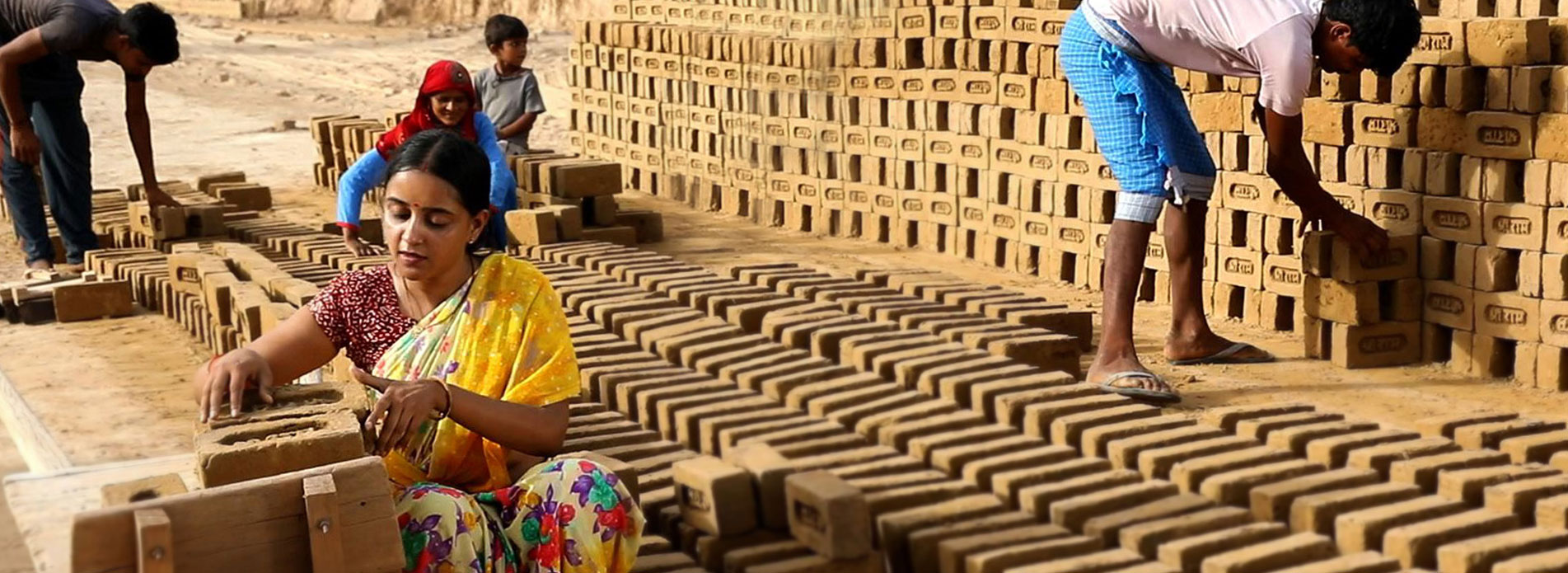
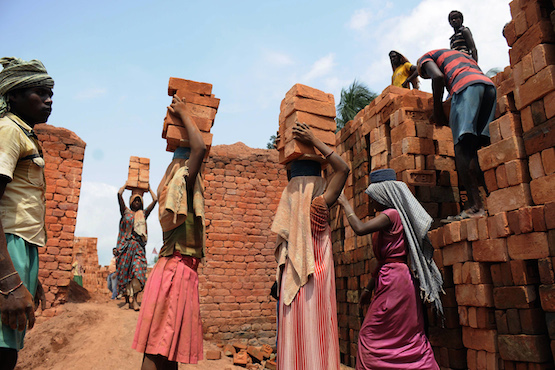
    Sardars provide an advance amount and in exchange, the debtor or any family member agrees to work for them for a stipulated period, usually six months. Hence, there exists a form of debt bondage. Large-scale family migration through this system is seen in the KBK region. The major stream of such bonded labour migration is witnessed towards brick kilns in Andhra Pradesh

    In the region, seasonal migration occurs through the channels of agents, locally known as Sardars, on a contractual basis. This form of migration is known as Dadan labour migration. The poor migrant labourers are known as Dadan and they are recruited by Sardars, who are usually local people who are familiar with residents in the region (KARMI, 2014). During the period of Nukhai, they go around the villages and contact prospective labourers. These Sardars are the intermediary between the employer and the migrant labourer. Sardars provide an advance amount and in exchange, the debtor or any family member agrees to work for them for a stipulated period, usually six months. Hence, there exists a form of debt bondage. Large-scale family migration through this system is seen in the KBK region. The major stream of such bonded labour migration is witnessed towards brick kilns in Andhra Pradesh. They are also a major source of labour in the areas of construction, handlooms and other forms of informal sector work across South India (Daniels, 2014). The problems they face in the destination are manifold. They are subjected to poor working conditions, poor housing and sanitation facilities and limited access to education and health facilities. They are recognised as cheap labour with limited bargaining power owing to their social, cultural and linguistic exclusion in the destination state. Upon entering the contract their freedom to move and freedom to express is denied (Acharya, 2020).

    1. Pull Factors to Migrate

    The hope of availability of better job opportunities and wages is the main pull factor. However, upon the analysis of the nature of migration, push factors have a higher weightage in inducing such distress migration. Migration to brick kilns and other informal sectors from the KBK region can be termed as distress migration as in this case, distress is caused mainly by socioeconomic factors. It is not an informed or voluntary choice. Debt migration remains the only coping strategy that they could adopt.

    Government intervention to curb such distress

    1. Policies Addressing Debt-Bondage Migration:

    The first attempt of the state government to address Dadan migration or debt migration is the enactment of the Dadan Labour (Control and Regulation) Act (ORLA) in 1975. The act had provisions for the registration of labourers and agents, ensuring compliance of minimum wages and favourable working conditions and appointing inspection officers and dispute redressal committees (Daniels, 2014).  However, the act remained on paper and no evidence of enactment was published until it was repealed in 1979 upon the enactment of the Interstate Migrant Workmen (Regulation of Employment and Conditions of Service) Act, 1979 (Nanda, 2017).

    The ISMW act has been criticised to be inadequate and failing to regulate and facilitate safe migration. According to the act, only those interstate migrant workmen who are recruited by licensed agents come under the ambit of the act. However, most agents involved in Dadan migration are not licensed and hence, these workers cannot avail of any of the provisions of the act (Singh, 2020). Though registration of labour contractors is mandatory in the origin state, there is no information about the names of these contractors and hence, further monitoring of the migration process is avoided (NCABL, 2016). Lack of adequate enforcement, under-staffing and poor infrastructure are identified as the reasons for poor implementation of the act in the state (Daniels, 2014).

    A positive attempt against distress migration was the Memorandum of Undertaking (MoU) initiated between the labour department of Odisha and Andhra Pradesh to ensure labour welfare measures of migrant workers in Brick Kilns. After the MoU, the state of undivided Andhra Pradesh took up various progressive measures in education, health, housing and PDS for migrant workers in Brick Kilns. ILO necessitated the need for states to enter into inter-state MoUs to effectively address the bonded labour migration. However, no further MoU was signed with other states like Tamil Nadu, Chhattisgarh etc. which are also among the major host states for migrants from the region (NCABL, 2016).

    The Bonded Labour System (Abolition) Act enacted in 1976 governs the provisions for identification, rescue and rehabilitation of bonded labourers across the country. The act has its loopholes in implementation. There is no information on whether vigilance committees have been set up in every district or whether the surveys have been periodically conducted or to what extent the act has been functioning in the state (Post News Network, 2019). The centrally sponsored scheme for Rehabilitation of Bonded Labour also has its setbacks. There have been reported cases of delay and denial of financial aid by district officials ( Mishra .S., 2016). In 2016, with restructuring and revamping of the Rehabilitation scheme, rescued workers could only avail the full amount of financial aid with the prosecution of the accused employers. With no database on the employer, the rates of prosecution have been low and the rescued bonded labour do not receive their funds (NACBL, 2016)

    1.  Ensuring Accessibility of Health Facilities in Destination

    The Rashtriya Swasthya Bima Yojana or RSBY launched by the central government in 2008 provides health insurance to BPL families. The scheme incorporates provisions to split smart cards so those migrant workers could avail health insurance in destination states. After signing of the MoU between Andhra Pradesh and Odisha, the two states took steps to spreading awareness among the migrant workers about how to use the smart cards (Inter-State Migrant Workman Act (ISMW), Labour Directorate, n.d.)

    1. Ensuring Education of Migrant Workers Children

    The state of Odisha has established seasonal hostels to ensure the education of children of migrant workers.  The children are enrolled in seasonal hostels during October-June, that is until their parents return home (Odisha Primary Education Programme Authority, n.d.).  The state has ensured the education of migrant children at their destination state by sending Odiya textbooks and Odiya teachers to residential schools in Andhra Pradesh (Inter-State Migrant Workman Act (ISMW), Labour Directorate, n.d.).

    1. Alternate Employment Opportunities: MGNREGA

    Mahatma Gandhi National Rural Employment Guarantee Act (MGNREGA) was introduced in 2006 to provide guaranteed employment to rural poor with the objective of uplifting them from poverty and restricting distress migration.  A study analysing the performance of MGNREGA through secondary sources of data suggests that based on physical criteria of 100 Days of Wage Employment, Person-days generated, ST and Women person-days and financial performance in terms of total expenditure, total wages, average cost and average wage rate per day person, the performance of MGNREGA in KBK districts is better compared to Non- KBK districts.  But the region is lagging in rural employability criteria based on average days of employment provided per household and job cards issued (Sahoo et al., 2018).  Labour in the region is not interested to work under MGNREGA due to its dismal implementation in the state. Workers complain about the delay in receiving payments and instances of the creation of non-existent workers’ names among MGNREGA’s beneficiaries (KARMI, 2014).  Uncertain and low wages make these labourers favour migration to Brick Kilns in hope of better wages (Deep, 2018).

    1. Development Policies in KBK Region

    The KBK region has a high incidence of poverty owing to regional disparities in development and social exclusion based on caste. The main initiatives implemented by the state government for the upliftment of the KBK region are the Special Area Development Programme, Revised Long Term Action Plan (RLTAP), Biju KBK Plan, Backward Regions Grants Fund, Gopabandhu Gramin Yojana (GGY), Special Central Assistance (SCA) for tribal sub-plan (TSP) areas, Western Odisha Development Council (WODC) and Grants under Article 275(1) of the Constitution. Development projects to reduce poverty and regional disparities are obstructed by economic, social and institutional factors (Mishra, 2020).


    The state of Odisha has done positive interventions in the education of migrant children and health facilities of the migrant population. However, the distress migration is still prevalent owing to the social and economic exclusion and debt bondage situations in the region. Land grabbing in the name of development left the tribal communities poor and in distress. Structural inequalities induced by caste discrimination are enhanced with such landlessness.


    Policy Recommendations

    The state of Odisha has done positive interventions in the education of migrant children and health facilities of the migrant population. However, the distress migration is still prevalent owing to the social and economic exclusion and debt bondage situations in the region. Several initiatives and schemes have been enacted to address distress migration; however, their failure in reducing distress can be linked to dismal governance, poor implementation and misappropriation of schemes.

    The state must ensure migration to be safe and a viable coping strategy. From this study it is suggested the state of Odisha follow a multipronged approach to address the distress.

    Origin state (Odisha) interventions

    •         Short Term Interventions:
    1. The system of debt bondage should be completely abolished by the proper implementation of legislation. Different loopholes in implementation such as the delay in the release of funds, prosecution of accused and identification and registration of middlemen should be addressed. Apart from the financial aid, the state should intervene in providing a comprehensive livelihood plan for the rescued labourers. Abolishing the bonded labour system is essential to reduce distress and make migration safe.
    2. Informal sources of credit should be eliminated and formal credit and microfinance facilities should be made available. Such facilities would reduce the exploitation and prevent the creation of absurd debt. Formal credit provides opportunities for small and marginal farmers to indulge in productive investments. This enables them to cope with extreme climatic changes.
    3. Land grabbing in the name of development left the tribal communities poor and in distress. Structural inequalities induced by caste discrimination are enhanced with such landlessness. The provision of land ownership enables the communities to enjoy land-based benefits which further supports them to sustain their livelihood. Ownership of land also provides the indigenous community with a sense of social and economic significance.
    •         Long term interventions
    1. The state should engage in enhancing the skills of the people in the region. Vocational skill training and development schemes can be introduced. This could expand the opportunities available for employment and distribute labour across all the economic sectors.
    2. Rural development should be given higher priority. The state of Odisha has already initiated many schemes for the development of the KBK region. However, the state should study the economic and social factors that stagnate the process of development in the region. Chronic poverty, poor infrastructural and rural connectivity and dismal education and health facilities are some of the important areas that require attention.

    Host state intervention

    1.   The host state needs to create a database of migrants entering their state. A statistically significant database on migrants solves a huge array of issues faced by the migrant in the destination state. A comprehensive database helps in identifying and recognising migrants. It also allows for understanding the different characteristics of migrants and the sectors in which they are employed. This would be beneficial for monitoring and ensuring safe and favourable working conditions. A database also helps in ensuring the availability and accessibility of social security and entitlements in host states.


    1.   Migrant labour is as important to the destination state as it is to the origin state. Both origin and host state should cooperate towards making migration a viable livelihood strategy.

    Another important area where both the origin and host state should intervene together is creating awareness among workers about the existing provisions and rights available to them. Access to the same should be made easy.

    Conclusion

    The highly backward districts of the KBK region remain a major source of distressed migrants. Years of state initiative in reducing distress have had negligible impact. The area remains underdeveloped and migration is the only viable choice of employment. Migration can only be a viable coping strategy for seasonal migrants when the channel of migration is made legal and safe. The major drawback in any initiative attempted to resolve distress is the poor implementation. Administrative apathy, corruption and misappropriation of schemes have stagnated the progress of every initiative.


    References

    1. Acharya, A. K. (2020). Caste-based migration and exposure to abuse and exploitation: Dadan labour migration in India. Contemporary Social Science, 1-13.
    2. Avis, W. R. (2017). Scoping study on defining and measuring distress migration.
    3. Bhatta Mishra, R. (2020). Distress migration and employment in indigenous Odisha, India: Evidence from migrant-sending households. World Development136, 105047.
    4. Daniels, U. (2014). Analytical review of the market, state and civil society response to seasonal migration from Odisha. Studies, stories and a canvas seasonal labour migration and migrant workers from Odisha, 106-115.
    5. Deep, S. S. Seasonal Migration and Exclusion: Educational Experiences of children in Brick Kilns. Ideas, Peoples and Inclusive Education in India. National Coalition for Education, India. 2018.
    6. Directorate of Economics and Statistics (2021). Odisha Economic Survey 2020-21. Planning and Convergence Department. Government of Odisha. http://www.desOdisha.nic.in/pdf/Odisha%20Economic%20Survey%202020-21-1.pdf
    7. Giri, J. (2009). Migration in Koraput: “In Search of a Less Grim Set of Possibilities” A Study in Four Blocks of tribal-dominated Koraput District, Odisha. Society for Promoting Rural Education and Development, Odisha, 1.
    8. Inter-State Migrant Workman Act (ISMW) | Labour Directorate. (n.d.). Labour Directorate, Government of Odisha. Retrieved August 10, 2021, from https://labdirodisha.gov.in/?q=node/63%27%3B.
    9. Jaysawal, N., & Saha, S. (2018). Impact of displacement on livelihood: a case study of Odisha. Community Development Journal53(1), 136-154.j
    10. Jena, M. (2018, July 21). Distress migration: land ownership can put a break. The Pioneer. https://www.dailypioneer.com/2018/state-editions/distress-migration-land-ownership-can-put-a-break.html
    11. KARMI. (2014). Migration Study Report of Golamunda Block of Kalahandi District of Odisha. Pp.13. Kalahandi Organisation of AgKriculture and Rural Marketing Initiative (KARMI), Kalahandi Odisha.
    12. Kujur, R. (2019). Underdevelopment and patterns of labour migration: a reflection from Bolangir district, Odisha. research journal of social sciences10(1).
    13. Mahapatra, S. K., & Patra, C. (2020). Effect of migration on agricultural growth & development of KBK District of Odisha: A statistical assessment. Journal of Pharmacognosy and Phytochemistry, Sp9(2), 162-167.
    14. Mander, H., & Sahgal, G. (2010). Internal migration in India: distress and opportunities, a study of internal migrants to vulnerable occupations in Delhi.
    15. Meher, S. K. (2017). Distress seasonal migration in rural Odisha A case study of Nuapada District.
    16. Mishra, D. K. (2011, April). Behind dispossession: State, land grabbing and agrarian change in rural Odisha. In International conference on global land grabbing(Vol. 6, No. 8).
    17. Mishra, D. K. (2016). Seasonal migration from Odisha: a view from the field. Internal migration in contemporary India, 263-290.
    18. Mishra, S. (2016, January 13). Rescued migrant workers get raw deal from Govt. The Pioneer. https://www.dailypioneer.com/2016/state-editions/rescued-migrant-workers-get-raw-deal-from-govt.html
    19. Mishra, S. (2020). Regional Disparities in Odisha–A Study of the Undivided “Kbk” Districts. Research Journal of Humanities and Social Sciences11(4), 261-266.
    20. Nanda, S. K. (2017). Labour scenario in Odisha. Odisha Review73(10), 20-25.
    21. NCABL. (2016). Joint Stakeholders’ Report on Situation of Bonded Labour in India for Submission to United Nations Universal Periodic Review III. NATIONAL COALITION FOR ABOLITION OF BONDED LABOUR (NCABL), Bhubaneswar Odisha.
    22. Panda, A. (2017). Climate change, drought and vulnerability: A historical narrative approach to migration from Western Odisha, India. In Climate Change, Vulnerability and Migration(pp. 193-211). Routledge India.
    23. Post News Network. (2019, April 30). Elimination of bonded labour calls for cohesive action plan. Odisha News, Odisha Latest News, Odisha Daily – OdishaPOST. https://www.Odishapost.com/elimination-of-bonded-labour-calls-for-cohesive-action-plan/
    24. Sahoo, M., Pradhan, L., & Mishra, S. (2018). MGNREGA and Labour Employability-A Comparative Analysis of KBK and Non-KBK Regions of Odisha, India. Indian Journal of Economics and Development6(9), 1-8.
    25. Sethy, P. (2020). Changing Occupational Structure of Workers in KBK Districts of Odisha. Center for Development Economic6(06), 17-28.
    26. Singh, V. K. (2020, April 22). Opinion | The ‘nowhere people’ of COVID-19 need better legal safeguards. The Hindu. https://www.thehindu.com/news/national/other-states/the-nowhere-people-of-covid-19-need-better-legal-safeguards/article31400344.ece
    27. Tripathy, S. N. (2015). Evaluating the role of micro-finance in mitigating the problems of distress out-migrants: A study in KBK districts of Odisha. The Micro Finance Review, Journal of the Centre for Micro Finance Research.
    28. Tripathy, S. N. (2021). Distress Migration Among Ultra-poor Households in Western Odisha. Journal of Land and Rural Studies, 23210249211001975.


    Feature Image: Tata Trusts

  • Urdu, Hindu Attire, Abrahamisation | It’s much ado about nothing

    Urdu, Hindu Attire, Abrahamisation | It’s much ado about nothing

    Urdu in India seems to have suffered because of a mistaken identity, and has had a decline from the time Pakistan declared Urdu as her national language

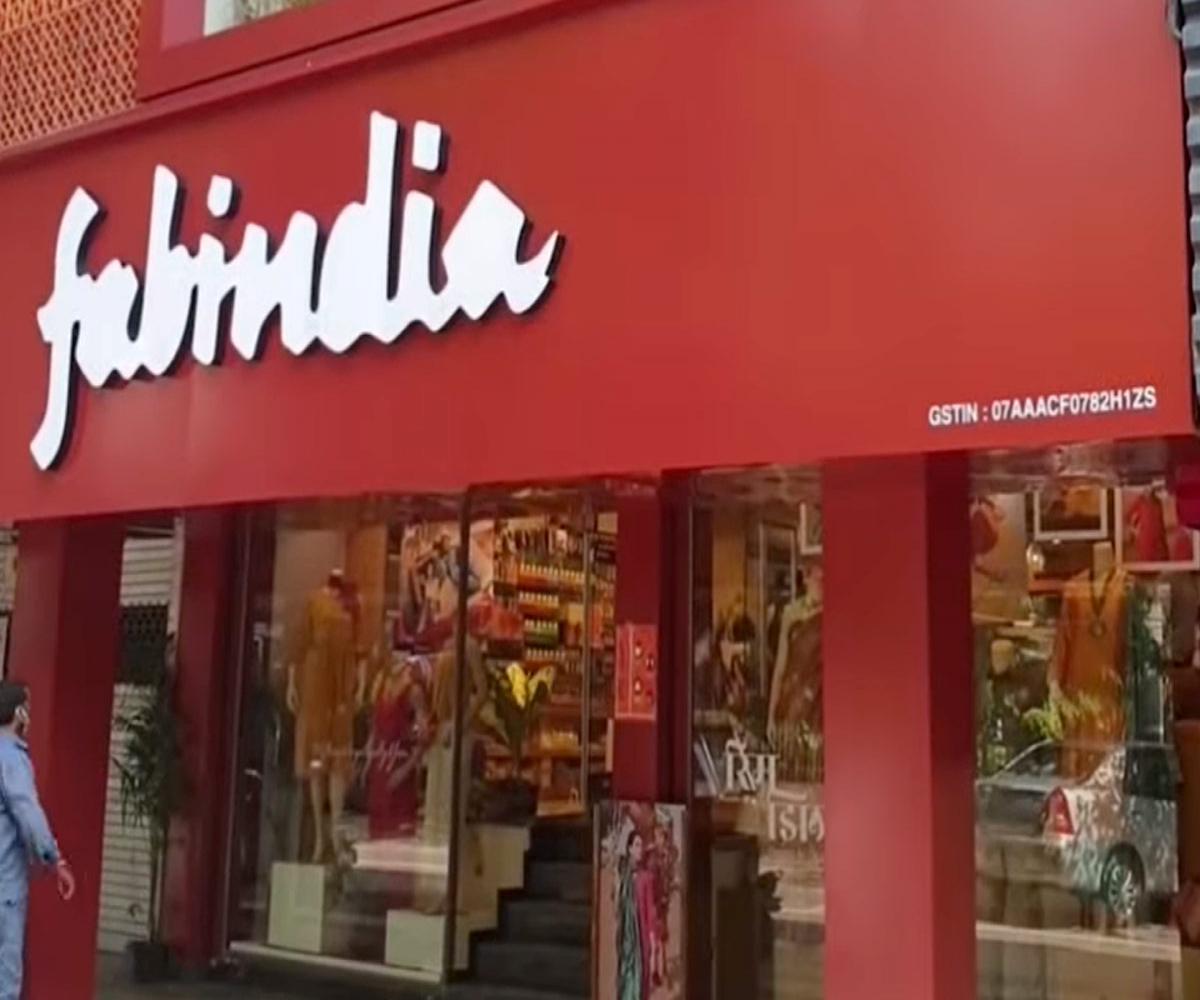
    Reacting to the Fabindia’s ‘Jashn-e-Riwaaz’ advertisement, on October 18 Bharatiya Janata Party (BJP) leader Tejasvi Surya, who is also president of the Bharatiya Janata Yuva Morcha, and a member of the Lok Sabha from Bengaluru, called it a ‘deliberate attempt of abrahamisation of Hindu festivals, depicting models without traditional Hindu attires….’. For those who are unfamiliar with the term ‘Abrahamisation’, a simple explanation, as conceived by some in the Right wing, is: ‘the process by which tenets of Hinduism are modified to have features of monotheistic religions (Judaism, Christianity and Islam)’.

    In what way does the advertisement amount to abrahamisation? Surya says the models are without traditional ‘Hindu attires’. This is not true by any stretch of imagination, as none — none — can have or provide a single monolithic picture of what constitutes ‘Hindu attire’. This argument in itself is both ambivalent, and supercilious. We shall get back to the attire squabble in a bit.

    What to Surya’s mind is more abhorrent, and prompts him to utilise the moniker ‘abrahamisation’ could be the phrase ‘Jashn-e-Riwaaz’, which undoubtedly is a Urdu phrase. Unfortunately, anything that is even remotely connected with Urdu raises the hackles of the Right wing in India. The entire rub as regards the advertisement has to do with this Urdu phrase, as by extension, anything that relates to Urdu gets identified with Muslims.

    It is that what appears to prompt Surya to mark out the advertisement as an attempt at ‘abrahamisation’. If this is the case, the attire has been used as a camouflage to attack the Urdu rendering in the advertisement. Let us dwell deeper on this association of Urdu with Muslims, and analyse to what extent, if any, is such an association (or nexus, depending on how one sees it) valid?

    Urdu Speakers

    The Muslim population of India is about 14 percent, and the proportion of those who speak Urdu as their mother tongue/first language is just about 4 percent. Interestingly, all of these 4 percent Urdu speakers are not necessarily Muslims. So, an overwhelmingly large proportion of Muslims do not have Urdu as their mother tongue/first language.

    Muslims are found all over India, from Kashmir to Kanyakumari and from Arunachal Pradesh in the extreme east to Gujarat in the west. Invariably, all of them speak the local/state languages. So where do Muslims speak Urdu? In a relatively small zone in the central-north areas. Also, small numbers of ‘migrants’ in other states, including the Deccani version, in some pockets in Andhra Pradesh, Karnataka and Telangana.

    Urdu Literature And Journalism

    The very first Urdu newspaper, Jam-i-Jahan-Numa, was published in Calcutta by Harihar Dutta as early as 1822. The weekly Kohinoor was started by Munshi Harsukh Rai in 1850. In 1858, Manbir Kabiruddin started the Urdu Guide. Munshi Nawal Kishore started the first Urdu newspaper, Oudh Akhbar, from Lucknow, also in 1858.

    In 1913 Ganesh Shankar founded Pratap, a famous revolutionary weekly in Kanpur which became a daily in 1920. Now it is published from Delhi. In 1923 Lala Kushal Chand, an Arya Samaji, started the Milap, an Urdu daily, from Lahore. After Independence it was shifted to Delhi, and is still in circulation as the largest Urdu newspaper in India.

    Urdu literature has been overwhelmingly patronised by non-Muslim writers and poets. Some of them are: Krishan Chander, Munshi Premchand, Rajinder Singh Bedi, Raghupati Sahay (Firaq Gorakhpuri), Gulzar (Sampooran Singh Kalra), Khushwant Singh, and so on.

    Clearly, some of the best patrons of Urdu have been non-Muslims. Given all these, where does the Urdu-equals-Muslim equation come from?

    Urdu literature has been overwhelmingly patronised by non-Muslim writers and poets. Some of them are: Krishan Chander, Munshi Premchand, Rajinder Singh Bedi, Raghupati Sahay (Firaq Gorakhpuri), Gulzar (Sampooran Singh Kalra), Khushwant Singh, and so on.


    The Pakistan Angle

    That equation came into prominence in 1947. After Pakistan came into being, surprisingly Urdu became her national language, though overall an overwhelming majority spoke Bangla. In the western wing the autochthones of Pakistan, namely the five main ethnic groups — Punjabis, Pathans, Sariakis, Balochis and Sindhis — all spoke a different language, and had very little to do with Urdu.

    It was just small sections in urban areas, and those who went over as Mohajirs (migrants) from India at Partition, who had Urdu as their mother tongue. It must not be forgotten that the 1971 secession of the eastern wing of Pakistan and the genesis of Bangladesh had a lot to do with the politico-linguistic neglect of Bangla.

    Urdu in India seems to have suffered, and has had a decline from the time Pakistan declared Urdu as her national language. No need to go into the political details of that here, except to point out that Punjabi which had till then adopted the Perseo-Arabic script that Urdu uses, gradually shifted to Gurmukhi script subsequent to Partition.

    The attribution of Urdu as an Islamic/Muslim language, and the generalisation to define a homogenous ‘Hindu attire’ are both problematic, as at its core both are built on false assumptions.

    The Attire Conundrum

    Now to the ‘Hindu attire’ ingredient of Surya’s assertion. The models featured in the advertisement do not by any sort of contention wear anything that could be thought of as non-Hindu, or anything offensive, or for that matter anything to suggest that these are ‘abrahamic’. Where do we look for those traditional ‘Hindu attires’?

    We do not have any comprehensive studies as to what women wore during ancient times in different parts of India, and if there was any unanimity or monolithic depiction as regards their attire. Besides, all over the country there have always been a range of dress patterns, and these did, and still do, cut across the various ethnic, religious and caste groups. To take up just a single example, the dress worn by Kathak dancers is common not just to dancers from various religious groups but also to the different genders. Among many other factors climatic conditions and local availability of fabric — and not religion — often determines attire.

    The attribution of Urdu as an Islamic/Muslim language, and the generalisation to define a homogenous ‘Hindu attire’ are both problematic, as at its core both are built on false assumptions. On a related note, the stigmatisation of Urdu by those who are unaware of its rich past can be seen when English is categorised as a ‘foreign language’.

    This article was earlier published in –  money control

    Image Credit: The News Minute

  • 2021-22 Q1 GDP Data Overestimates: Economic Shocks Question Methodology

    2021-22 Q1 GDP Data Overestimates: Economic Shocks Question Methodology

    2021-22 Q1 GDP Data Overestimates: Economic Shocks Question Methodology: The demonetisation shock impacted the unorganised sector far more adversely than it did the organised sector

    There are methodological errors in estimating annual and quarterly GDP data, especially when there is a shock to the economy, by using projections from the previous year, dividing the annual estimates into the four quarters and using production targets as if they have been achieved, explains Professor Arun Kumar


    The Reserve Bank of India (RBI) has maintained its growth projection for 2021-22 at 9.5% while the World Bank has retained it at 8.3%. These are based on the union government’s growth estimate of 20.1% for first quarter of 2021-22—an unprecedented growth rate based on the low base in the same quarter of 2020-21, which witnessed a massive decline of 24.1%.

    A sharp rise in growth after a steep fall in the preceding year is not a new phenomenon for the economy. Prior to 1999, only annual, not quarterly, data was available. Official data shows that the economy has risen sharply several times since independence: 1953-54 (6.2%), 1958-59 (7.3%), 1967-68 (7.7%), 1975-76 (9.2%) 1980-81 (6.8%), 1988-89 (9.4%) and 2010-11 (9.8%). The data after 2011-12 base revision was controversial. For instance, the new series shows a high growth rate of 8.3% for 2016-17 though it is well known that demonetisation devastated the economy

    Methodological Issues

    If the new series, using 2011-12 as the base year, shows a high growth rate for 2016-17, the methodology is not right. This has been extensively discussed since 2015, when the series was announced. A major change has been the use of the data provided by the union ministry of corporate affairs, called the MCA-21 database, since 2015. But it has been pointed out that many of the companies in this database are shell firms and the government shut down several of them in 2018. Further, many companies were found to be missing.

    Another problem pointed out, starting the year of demonetisation, is that the measurement of the contribution of the unorganised sector—which constitutes 45% of the GDP—is not based on independent data.

    The data for the non-agriculture sector is collected during surveys every five years. In between these years, the organised sector is largely used as a proxy and projections are made from the past. Both these features of estimation pose a problem when there is a shock to the economy.

    The demonetisation shock impacted the unorganised sector far more adversely than it did the organised sector. Hence, after demonetisation, the organised sector data should not have been used as a proxy to measure the contribution of the unorganised sector. Further, due to the shock, projections from the past will not be a valid procedure. This problem was accentuated by the implementation of the Goods and Services Tax (GST), which again impacted the unorganised sector more adversely

    Demand started to shift from the unorganised sector to the organized, making the situation even more adverse. For instance, e-commerce has severely impacted the neighbourhood stores and taxi aggregators have displaced the local taxi stands.

    Due to the shocks, the earlier procedure of calculating GDP becomes invalid and should have been changed. Since this has not been done, in effect, the GDP data is measuring the organised sector and agriculture.

    Thus, 31% of the economy is not being measured, and by all accounts, this part is declining, not growing. Therefore, GDP growth is far lower than what has been officially projected since 2016-17.

    The pandemic and the lockdown have administered the biggest shock to the economy. But the organised sector was hit far less than the unorganised sector. The split between the two sectors has been far greater than due to demonetisation or GST. Therefore, there is an urgent need to revise the method of calculating GDP—also, projections from the past do not make sense.

    Quarterly Data Issues

     The problem is even greater when projecting quarterly GDP growth. The data used is sketchier than the annual data. Not only most of the data for the unorganised sector is unavailable (except for agriculture), even the organised sector data is partial. For instance, the data for businesses is based on companies that declare their results in that quarter. Only a few hundred companies out of the thousands might be declaring such data.

    Worse, the estimation is based on a) projections for the same quarter in the preceding year same quarter, b) in many cases, the projection is not just for the quarter but for the year as a whole and then it is divided into four to get the data for one quarter and c) cases where targets, not actual production data. are used to estimate the contribution to GDP.

    Worse, the estimation is based on a) projections for the same quarter in the preceding year same quarter, b) in many cases, the projection is not just for the quarter but for the year as a whole and then it is divided into four to get the data for one quarter and c) cases where targets, not actual production data. are used to estimate the contribution to GDP.

    Fishing and aquaculture, mining and quarrying, and quasi-corporate and the unorganised sector are a few sectors which belong to the first group. Some sectors belonging to the second category are other crops, major livestock products, other livestock products and forestry and logging. Livestock belongs to the third category, where annual targets/projections are used.

    This procedure is clearly inadequate but maybe acceptable in a normal year. But when there is a shock to the economy, does it make sense? If there is a projection from the previous year, it is likely to give an upward bias since the economy was performing better in the preceding year. Further, projections have to be based on some indicators and the data on these indicators were only partially available due to the lockdown.

    Finally, how can the annual projection be made and then divided into four to obtain the quarterly estimate when the economy is highly variable from quarter to quarter. In 2020, each quarter was very different from the previous one.

    Next, if the data for 2020-21 is erroneous, when there was a massive slump in the economy, the shock continues into 2021-22. How can projections be made from the 2020-21 to 2021-22? Thus, there would be large errors in the quarterly data for the current year. This will then be fed into the data for 2022-23. Therefore, the shock to the economy will play itself out for several years.

    Impact on other Macro Variables

    Quarterly data are also published for other macro variables like consumption, and investment by public and private sectors. The government-related data is available in the Budget documents, but the private sector data poses a huge challenge. These estimates are, again, based on projections from the previous year, and in some cases, annual estimates are divided between quarters. Production data is also used to project consumption and investment by the private sector. So, if the former is incorrect, as pointed out above, then the estimates for the latter will also be erroneous.

    The RBI’s survey of the organised sector showed that capacity utilisation was down to 63% in January 2021, but the official quarterly data was showing a growth of 1.3% rather than a decline of 10%. Thus, the quarterly data was not representative of even the organised sector.

    Similarly, consumer sentiment was down to 55.5 compared to 105 a year back, implying that even the organised sector consumption had not recovered to the pre-pandemic levels. Both these variables were further dented in the second wave of COVID-19 in Q1 of 2021-22. The implication is that the data on these variables is also not reliable.

    If the production data is an overestimate due to the use of projections from the last year, the consumption and investment data would also be over projections. The further implication is that if the data for 2020-21 is not right, the quarterly data for 2021-22, projected from the previous year, will also be erroneous and overestimate.

    Analysis of Macro Variables for Q1 of 2021-22

    For the moment, let us analyse the Q1 data leaving aside the errors pointed out above. When the economy was in decline in the preceding year, comparing rates of growth makes less sense than comparing the level of GDP.

    On a low base of 2020-21 (-24.4%), the rate of growth for 2021-22 looks impressive (+20.1%). But it is 9.2% less than the pre-pandemic Q1 of 2019-20—i.e., the economy has not recovered to the pre-pandemic level.

    Further, if the economy was growing at the pre-pandemic rate, the economy would have expanded another 7.5% in two years. Thus, compared to the possible level of GDP in 2021-22, it is down by about 16%.

    Except for agriculture and the utilities sectors, data shows that none of the other sectors have recovered to the levels in 2019-20. Private final consumption expenditure is down by 11.9% and gross fixed capital formation by 17.1%. Government consumption expenditure and exports have increased compared to their levels in 2019-20. The former does give a boost to the economy by increasing demand but the latter does not since imports remain much higher than exports.

    Therefore, out of the four sources of demand, only government expenditure has increased—but this is not enough to compensate for the decline in the other three and that is why the economy is still down compared to 2019-20.

    It may be argued that over time, data undergoes revision as more data becomes available. But the situation now is unusual due to the pandemic. This necessitated a major revision in the methodology itself due to lack of data and consequent non-comparability across quarters and years.

     The views expressed are those of the author.

    This article was published earlier in NEWSCLICK.

    Image Credit: The Federal


  • India’s Education: Sacrificing Scientific Temper and Academic Rigour for right wing Ideology

    India’s Education: Sacrificing Scientific Temper and Academic Rigour for right wing Ideology

    The Indian governmental apparatus has been making international headlines, but unfortunately not for the most positive of reasons.

    Most recently, the V-Dem institute based in Sweden has raised alarm about the rapidly deteriorating state of Indian democracy. Since 2017, this non-profit research organization has churned out data-heavy global democracy reports. In its 2021 report, it categorized India as an “electoral autocracy” rather than an electoral democracy.

    Considering such harsh international condemnation and national tumult, it is perhaps the need of the hour to analyse the present regime and its mechanisms that pose a threat to the constitutional values and democratic foundation of India. The developments in Education and Academia are a fitting avenue to carry out this analysis.

    Since the Bhartiya Janata Party came to power in 2014, India’s public policy formulation has changed dramatically. Most changes in educational policies can be divided into two categories: the first pertains to changes in educational institutes’ curriculum, and the second pertains to the violation of scientific integrity by advancing exclusively ideology-based interests.

    Changes in Course Content and Curriculum

    In a bid to lessen the pressure on students who had to adapt to an online mode of learning, the Central Board of Secondary Education announced a 30 percent reduction in the curriculum. Although at first glance, this exercise appears to be a rational and ingenious move catered towards the best interest of students, deeper scrutiny of this initiative presents many glaring issues and unveils a covert saffronisation agenda.

    Under this provision, chapters on federalism, secularism, democratic rights need not be taught, Class 10 political science syllabus also saw the removal of chapters such as “popular struggles and movements” and “democracy and diversity”. The content that these themes deal with has raised rightful concerns from critics that these cuts could have a political motivation.

    These omissions have invited considerable disapproval from scholars and experts across fields. Former director of the National Council of Education Research and Training, Krishna Kumar himself commented that the cuts have rendered some remaining topics “incomprehensible.” The removal of topics that many educators argue promote criticality and self-reflection, must compel one to question the motivations of the bureaucratic apparatus’s policies.

    The effort to rewrite textbooks has seen a parallel launch at both national and state levels. In BJP ruled states the administration is openly pursuing to propagate a counter idea of history, elevating the role of ideologically conservative Hindu organizations and subsequently minimizing the educational attention accorded to efforts made to nurture secularism in Free India.

    The state board in Rajasthan, for example, removed all references to Jawaharlal Nehru, India’s first prime minister and champion of a diverse and secular India, while adding numerous references to V.D. Savarkar, a staunch believer of Hindutva ideology. Dr B.R. Ambedkar, a leader of the Dalit community who converted to Buddhism has been referred to as a “Hindu social reformer and his work towards Dalit activism has been grossly minimized. In Gujrat too, as far back as 2000, there was a move that made it compulsory for teachers to attend Sanskrit training camps in preparation for when the subject would be made mandatory.

    The Indian political climate has taken a shape wherein the Bhartiya Janata Party’s government has created a perception of an Idea of India that is exclusionary, theocratic, and intolerant. The analysis of public policies and governmental initiatives thus must proceed in this context and be astutely informed by the idea that the policies of the state are not divorced from the charged Indian political climate. To that end, the association between BJP and the Rashtriya Swayamsevak Sangh can explain much of the government’s political orientation.

    The Rashtriya Swayamsevak Sangh is an ultranationalist organization that has long nurtured the idea of a Hindu Rashtra. The Bhartiya Janata Party, having had its roots in the political wing of RSS shares much of the same core values which invariably determine the shape and implications of the official government policies. The looming perils of such an association have made themselves visible at a variety of junctures in Indian political history from 2014 onwards- a manifestation of the same is abundantly visible in the violation of academic integrity and rigour under the current political regime.

    Violation of Academic Integrity and Scientific Rigour

    The appointment of ideological and political loyalists for important roles in academia is a pattern that the current regime has religiously followed. Without scholarly pedigree to their name, their appointment as heads of such prestigious institutions is a nod to the government’s priorities of installing right-wing stalwarts in arenas requiring objective intellectual leadership.

    This regime’s impact on academia has been one warranting pointed criticism.  The government’s policies have the effect of harbouring anti-intellectualism and in analysing the various policies during this tenure, one can identify a systematic erosion of academic integrity- new heads of acclaimed public institutions to HRD ministers all align with the core ideology of BJP rather than having any significant reputation and merit in education or academia. Simply put, those in important positions within the educational sector have come to occupy these positions only because of their socio-political location and ideological stance.

    Smriti Irani, the HRD minister from 2014-2016 was accused of heavy-handed approach and interference in dealing with the universities and higher education institutions. The controversy over the minister’s academic credentials claim made it worse, and ultimately, she was shifted from the ministry.  Similarly, the appointment of Gajendra Chauhan as the FTII chairman in 2015 was met with scorn and dissatisfaction from students and critics alike who alleged that he clamped down on artistic liberty of the institution and that his political affiliation with BJP landed him the role he was unfit for. In counter to these criticisms, the government has argued, not without some merit, that the past dispensations have neglected various nuances of Indian culture and civilisation under the rubric of liberalism, pseudo-secularism, and Marxist influence.

    The appointment of ideological and political loyalists for important roles in academia is a pattern that the current regime has religiously followed. Sudershan Rao’s appointment as the head of the Indian Council of Historical Researchand Braj Bihari Kumar’s appointment as the head of the Indian Council of Social Sciences were some other governmental decisions that raised grave concerns. Without scholarly pedigree to their name, their appointment as heads of such prestigious institutions is a nod to the government’s priorities of installing right-wing stalwarts in arenas requiring objective intellectual leadership.

    In the present scenario then, the inroads being made into the educational sphere by ultranationalist ethos are a cause of serious concern – be it changes to curriculum or violation of academic integrity through subverting requirements to become institutional heads. Open and overt- these trends all point to the one larger agenda: systematic saffronisation of education.


    Views expressed are those of the author.


  • Narcotic Jihad | Can science and reason defeat religious polarisation in Kerala?

    Narcotic Jihad | Can science and reason defeat religious polarisation in Kerala?

    It is surprising that in today’s Kerala the well-educated religious lot, who are expected to have had a smattering of science, and who are expected to be the ones who see reason, are the ones who are raising the bogeys of ‘love jihad’ and ‘narcotic jihad’.

    Bertrand Russell, the great mathematician-philosopher and polymath had famously held that “Religion is something left over from the infancy of our intelligence; it will fade away as we adopt reason and science as our guidelines”. When we reflect on Russell’s quotation and introspect the religious realm in India per se, not to talk about contemporary events in Kerala, it is quite disconcerting and distressing; and a few crucial issues ensue from there.

    First and foremost, either Russell was wrong in his assertion as regards the fading away of religion in the wake of the adoption of reason and science by humans, or his understanding and definition of ‘religion’, ‘intelligence’, ‘reason’, and ‘science’ were at variance with the general, and usually acceptable, notions/definitions that are prevalent in civic society at large.

    It is rather surprising that in today’s Kerala the well-educated religious lot, the clergy, who are expected to have had a smattering of science, and who are expected to be the ones who see reason, are the ones who are raising the bogeys of ‘love jihad’ and ‘narcotic jihad’, notwithstanding the fact that probes by different agencies, including the National Investigation Agency, have debunked such allegations.

    The clergy concerned, particularly the bishop of Pala and other priest(s) who have indulged in such rhetoric, may not necessarily have played on into the hands of the Sangh Parivar, but have certainly touched the hearts and endeared themselves to the latter to the extent that the latter are ecstatic. Also, they have, along with other Right-wing groups, extolled the bishop of Pala, and have extended their support to him.

    However, something that has been very heartening and positive in this dark and murky scenario has been the bold and defiant stand of a group of nuns who not only spoke out against the bishop but also walked out of the mass of the priest who preached hate by going to the extent of beseeching his flock to boycott Muslims traders as also Muslim autorickshaw drivers.

    One would not have been surprised if insinuations and allegations of ‘love jihad’ and ‘narcotic jihad’ were made by Right-wing extremist groups because it is, inevitably, their wont to do so. But coming from the clergy in a state which has historically seen relatively amicable and amiable relations between Muslims and Christians wherein they have prospered together, belies logic.

    Pre-Islamic Arab contact with Kerala and the rest of the west coast of India dates back to the ‘Before Christ’ era, which gradually transformed into the Islamic one from the seventh century AD onwards.

    The oldest mosque to be built in the Indian subcontinent was the Cheramaan Juma Mosque in Methala, Thrissur district, in 629 CE. It is significant to point out that the north-centric way of looking at and referring to Islam in India by certain historians is quite misplaced. By the time Islam made any impact in the northwest and north of India, full-fledged Islamic societies had been formed in Kerala that extended beyond and along the Coromandel Coast in Tamil Nadu and spread towards South East Asia.

    Similarly, the Christian connection and the advent of Christianity in Kerala go back to 52 CE. For centuries, these religious groups, namely, Christians and Muslims, have coexisted and inhabited common spaces all over Kerala, along with the pre-existing indigenous communities. Also, there has been a high degree of acculturation between the various religious groups in terms of language, food, clothing, and other cultural practices including in the religious realm.

    There were, no doubt, skirmishes between the Christians and Muslims with the arrival of the Portuguese during the late fifteenth and early sixteenth century, but these have to be treated more as aberrations for economic gains than something that disturbed the overall ambiance of peace and communal harmony. The erstwhile situation as regards peaceful coexistence between the different religious communities prevailed in Kerala in spite of quite a few communal riots in other parts of India, both before and after the Independence.

    It is felt in some circles in Kerala that due to the COVID-19 pandemic and the restrictions as regards congregations, the footfalls have declined to result in drastically reduced revenues in the churches, and that has made some clergy feel insecure; and one way of getting back the faithful could be to polarise the communities in the expectation that would help in consolidating their own followers.

    Of late, the anti-Muslim rant that has emanated in Kerala is not confined to the borders of the state. The overt and manifest support in social media and through videos, for Israel’s bombing of Gaza during the recent conflict vis-à-vis the Palestinians, too, is, at one level quite disturbing, and at another level, points to the mindset that such perpetrators are embedded in.

    The proclivity to reduce the Palestinian identity to just a Muslim/Islamic one is one of the most irrational ways of looking at a people and explicating their ethnicity. Christian Palestinians too are at the forefront in their resistance to Israeli imperialism, and the occupation of Palestine. The well-known academic and crusader for peace, late Professor Edward Said, was one such.

    This article was published earlier in moneycontrol.com

    Featured Image: keralakaumudi.com

  • Bonded Labour in India: Prevalent, Yet Overlooked

    Bonded Labour in India: Prevalent, Yet Overlooked

    In 1976, India stood out as the first country in South Asia to enact legislation prohibiting bonded labour. However, the system has not been uprooted owing to the different barriers posed by socio-cultural norms and administrative and legislative incompetency. The country’s most vulnerable and disadvantaged sections of society are at risk of being trapped into such a form of modern slavery. The prevalence of this system over the decades necessitates the need to understand the root causes of the emergence of such bonded labour situations and why it is still prevalent in the country.

    Bonded labour in India

    The Bonded Labour System Abolition Act (1976) defines a bonded labour system as a relationship evolved out of a debtor-creditor agreement. It is identified as a form of forced labour where the debtor comes into an agreement, oral or written, with the creditor and receives a loan amount in exchange for his labour or that of his family members. The obligation need not just be an economic consideration such as a loan or an advance amount received from the creditor. People also become bonded with social, customary, hereditary or caste obligations and often agree to enter service with no wages or for nominal wages. The labourer finds it difficult to settle the debt amount as the provided wages are too low even to meet their basic sustenance needs. Eventually, they end up in the same form of labour again and again. Thus their choice to join such a system is out of distress or coercion to some extent. They may also be restricted from switching to another job or to ask for the provision of minimum wages given the conditions of the contract and the lack of awareness of their rights.

    Indebtedness is identified as a major trigger for people to join as bonded labour, especially migrants from poor rural households. However, the need for money arises out of the existing disadvantages in society that these communities are subjected to. Caste, unequal distribution of resources, increased dependence on agriculture, low levels of education and food insecurity pushes them into such unfree labour choices.

    We can identify that this system was prevalent in the country from the pre-colonial era characterised by class hierarchies. Such class hierarchies and high caste exploitations are continuing to function even in this democratic era and consequently, has pushed certain groups of the society to be economically weaker; weak in terms of assets, income and bargaining power. Globalisation and industrialisation have only resulted in the further exclusion of such groups of labour from mainstream jobs.  Indebtedness is identified as a major trigger for people to join as bonded labour, especially migrants from poor rural households. However, the need for money arises out of the existing disadvantages in society that these communities are subjected to. Caste, unequal distribution of resources, increased dependence on agriculture, low levels of education and food insecurity pushes them into such unfree labour choices. Owing to these social and economic factors, marginalised communities in the lower strata of the society, especially the women and children, are trapped in such a system.

    Over the years, the system of bonded labour has existed and evolved under different names and forms across India. Bonded labour arising out of traditionally accustomed social relations is one of the oldest forms and is still prevalent in the country. For example, the system of “jajamani” wherein the workers receive food grains in exchange for working as barbers and washermen for the upper caste. Labourers in agriculture, seasonal inter and intrastate migrants and child labour in informal sectors of brick kiln, rice mills, quarries, domestic work etc. are the other areas where debt bondage is currently more persistent. There has been a considerable shift from traditional debt bondage relation to aneo-bondage labour system among migrant workers. The former was characterised by an element of patronage amongst the considerable amount of exploitation. However the latter is at a higher tone of exploitation and eliminates patronage relations. This has made employers deny the responsibility of employee’s welfare and the labourers have lost the minimum livelihood security which they had secured under the patronage system. The neo-bondage system is further manipulated by the role of intermediaries.

    Thus, with structural transformation in the economy, the system of bonded labour has evolved into a much worse form of exploitation in the country and specifically marginal and backward communities are the main victims of this system.

    Interventions to abolish bonded labour

    Upon identifying the prevalence and exploitation of bonded labour in the pre-independence era, constitutional provisions prohibiting forced labour were assigned under Article 23. Under the Directive Principle of State Policy, Article 42 and 43 ensured fair and humane working conditions and living wages to workers.

    Post-independence, legislation against bonded labour was enacted at a regional level.  Orissa, Rajasthan and Kerala were the first states to enact state legislation against bonded labour.  In 1954, India ratified the International labour organization (ILO) Convention on forced labour (C029). Despite the constitutional provisions, regional and international interventions in bonded labour, construction and implementation of a uniform law took time.

    In 1976, the Bonded Labour System (Abolition) Act was enacted to abolish any form of bonded labour system arising out of debt, customary or hierarchical obligations. In brief, the act has identified and defined bonded labour, provided for extinguishment of past or existing debt, established duties of district magistrate in implementing the provisions of the act, sanctioned the state governments to form a vigilance committee in each district to guide and ensure competent implementation of the act by the magistrate and stated the penal actions against those compelling people into bonded labour. The act was amended in 1985 to bring contract and migrant workers under its ambit.

    In 1978, a new centrally sponsored scheme for Rehabilitation of Bonded Labour was enacted to provide financial assistance to the state government for rehabilitating rescued bonded labourers, to conduct surveys, evaluation studies and awareness campaigns across districts. In 2016, the government restructured the scheme. The restructuring involved an increase in the provision of funds to bonded labour for rehabilitation and to states for conducting surveys. Under the restructured scheme, rescued bonded labour is only provided with the full amount of financial assistance after the conviction of the accused and a Bonded Labour Rehabilitation Fund corpus was to be created at every district.

    The interplay of caste-based exploitation and subsequent impoverishment in terms of resources and assets combined with underdeveloped rural areas devoid of standard education, health and employment opportunities push marginalised people into bonded labour.

    Why and how does the system still sustain?

    Many factors contributing to the prevalence of bonded labour continue to prevail despite after years of legislative action to abolish the same. The interplay of caste-based exploitation and subsequent impoverishment in terms of resources and assets combined with underdeveloped rural areas devoid of standard education, health and employment opportunities push marginalised people into bonded labour. Such an environment accompanied by the inept implementation of legislations and schemes further aids in sustaining bonded labour systems.

    BLS(A) act 1976 failed to be effectively implemented owing to apathy, corruption, lack of administrative and political will. The vigilance committees were often defunct and working for the employer. The act was criticised on the grounds that it stated only mediocre and minor punitive actions and the rates of prosecution were also low. Moreover, some states remain in denial of accepting the existence of bonded labour. This indifference results in the loss of comprehensive data on bonded labour hindering the further implementation of provisions of the act.

    The Central Sector Scheme for Rehabilitation of Bonded Labour also has its loopholes. After the restructuring of the scheme, financial aid is provided only after the accused is convicted and convictions are rare owing to poor implementation of the BLS(A) Act and the absence of a review of cases. Thus, in most cases the rescued labourers do not receive the full financial aid they are entitled to immediately after the rescue. Often, it takes years to receive the full amount or may not even receive any.

    The situation is even grave as the rescued labourers have asymmetric knowledge of the rights and entitlements they can avail themselves of. Even when they are fully aware, most of them lack the will to attain these entitlements due to the dismal behaviour of officials and delayed processes.

    Moving towards Abolishment

    First and foremost, recognition and acceptance of the prevalence of bonded labour should be ensured. Only then the bonded labourers could be identified, rescued and rehabilitated effectively. The collection of comprehensive data is essential for further implementation of the provisions of the legislation. Also apart from the vigilance committee, a new committee composed of the magistrate, members of the marginalised communities, NGO’s and other civil bodies working in the field would enable to get a more comprehensive view of the issues in the sector.

    From a long term perspective, there is a need to address the caste induced structural inequalities. One way through which this could be attained is through land redistribution.

    Mere financial aid is not sufficient for the rescued labourers to foster a livelihood plan. The Human rights law network suggests the same and recommends a comprehensive rehabilitation package providing for education and job security.

    From a long term perspective, there is a need to address the caste induced structural inequalities. One way through which this could be attained is through land redistribution. Apart from this, the government should also focus on skill development and training of rural poor, especially migrants caught up in bonded labour. Varied skills can enhance their employment opportunities and provide more freedom to move towards other areas of work.


    References

    1. B.L.S., A. (2020, June 30). Telangana: Two Years After Rescue From Bonded Labour, 12 Tribals Receive Compensation. The Wire. https://thewire.in/rights/telangana-bonded-labour-rescue-tribals-compensation
    2. Breman, J. (2010). Neo-bondage: A fieldwork-based account. International Labor and Working-Class History78(1), 48-62. https://www.jstor.org/stable/40931303
    3. Gabra, L. (2021, March 21). Will Bonded Labor in India Ever Come To An End? BORGEN. https://www.borgenmagazine.com/bonded-labor-in-india/
    4. Human Rights Law Network. (n.d.). Release and Rehabilitation of Bonded Labour — HRLN. Human Rights Law Network (HRLN). Retrieved August 15, 2021, from https://hrln.org/initiative/release-and-rehabilitation-of-bonded-labour
    5. Human Rights Watch. (n.d.). Small Change. Human Rights Watch (HRW). Retrieved August 6, 2021, from https://www.hrw.org/reports/2003/india/India0103-05.htm
    6. J, S. (2019, September 15). Rescue of bonded labourers up, convictions rare. Times of India Blog. https://timesofindia.indiatimes.com/blogs/tracking-indian-communities/rescue-of-bonded-labourers-up-convictions-rare/
    7. Khan, J. A. (2019, April 30). How effective are the Policies for Rehabilitations of Bonded Labour in India? CBGA India. https://www.cbgaindia.org/blog/effective-policies-rehabilitations-bonded-labour-india/
    8. Mantri, G., & Suresh, H. (2020, January 31). The News Minute | Delve. The News Minute. https://www.thenewsminute.com/article/it-s-2020-bonded-labour-still-reality-india-here-s-why-116977.
    9. Molfenter, C. (2013). Overcoming bonded labour and slavery in South Asia: the implementation of anti-slavery laws in India since its abolition until today. Südasien-Chronik-South Asia Chronicle3, 358-82. https://edoc.hu-berlin.de/bitstream/handle/18452/9122/358.pdf?sequence=1&isAllowed=y
    10. Murugesan, D (2018). HANDBOOK ON BONDED LABOUR. NATIONAL HUMAN RIGHTS COMMISSION (NHRC), New Delhi. https://nhrc.nic.in/sites/default/files/Hand_Book_Bonded_Labour_08022019.pdf
    11. NCABL. (2016). Joint Stakeholders’ Report on Situation of Bonded Labour in India for Submission to United Nations Universal Periodic Review III. NATIONAL COALITION FOR ABOLITION OF BONDED LABOUR (NCABL), Bhubaneswar Odisha. https://www.upr-info.org/sites/default/files/document/india/session_27_-_may_2017/js34_upr27_ind_e_main.pdf
    12. Prasad, K. K. (2015). Use of the Term’Bonded Labour’ is a Must in the Context of India. Anti-Trafficking Review, (5), 162.
    13. Sabhapathi, V. (2020, June 11). An Analysis of Bonded Labour System in India. Legal Bites – Law And Beyond. https://www.legalbites.in/bonded-labour-system-in-india/
    14. S, B. (2016, April 2). Caught in a vicious cycle of bonded labour. The Hindu. https://www.thehindu.com/news/national/karnataka/caught-in-a-vicious-cycle-of-bonded-labour/article7720754.ece
    15. Sethia, S. The Changing Nature of Bonded Labour in India.
    16. Srivastava, R. S. (2005). Bonded labour in India: Its incidence and pattern.https://www.ilo.org/wcmsp5/groups/public/—ed_norm/—declaration/documents/publication/wcms_081967.pdf 

    17. THE BONDED LABOUR SYSTEM (ABOLITION) ACT, 1976. (ACT NO. 19 OF 1976). (India). https://labour.gov.in/sites/default/files/TheBondedLabourSystem(Abolition)Act1976.pdf


    Image Credits: starfishasia.com

  • Politics and the Military don’t gel

    Politics and the Military don’t gel

    It would be in the interest of the political establishment to desist from politicising the military. Creating an uncontrollable monster, that will go on to bite the hand that feeds it, is nothing but sheer stupidity.

    The former President of the United States, Donald Trump, has always had the reputation of being a man of questionable moral and ethical integrity with close connections to the radical right. Yet, there were those who voted for him in 2016 because they genuinely believed that he was the lesser of the two evils, and strongly felt that only an “outsider” like him was capable of draining the “Washington Swamp”, a phrase alluding to the seemingly all-pervasive corruption surrounding the Washington power elite. They would certainly have been disappointed by his insipid performance as President, especially the extent of his chicanery and selfishness. These have been laid bare in a recent book by two Pulitzer Prize-winning Washington Post journalists, investigative staff writer Carol Leonnig and former White House Bureau Chief Philip Rucker, on Trump’s final year in power, titled “I Alone Can Fix It”. A fitting sequel, and as perceptive and illuminating, is “A Very Stable Genius”.

    One of the most fascinating aspects of their latest book pertains to the manner in which the Chairman of the Joint Chiefs of Staff, General Mark Milley, responded to President Trump’s brazen attempts to overturn the election results by peddling his “Big Lie” that the elections had been “stolen” by the Democrats resorting to widespread fraud. Despite his legal challenges being summarily dismissed, he continues to peddle these allegations to this day. There can be little doubt that his incitement of his supporters culminated in a violent but abortive attempt on January 6 to disrupt proceedings at Capitol Hill to formalise the election results.

    Prior to this, one may recall, General Milley had been excoriated by military veterans, politicians and the media for having unwittingly dragged the military into politics by being present, in uniform, at Trump’s infamous “Bible photo op” at the St John’s Church, immediately after peaceful protestors had been forcefully evicted while demonstrating for racial equality. Indeed, that he then went on to tender a public apology for his error of judgement speaks volumes of his forthrightness, integrity and strength of character.

    On Trump’s attempts to cling to power through force, General Milley reportedly told his colleagues in the Joint Chiefs: “They may try, but they’re not going to f@@###g succeed…You can’t do this without the military. You can’t do this without the CIA and the FBI. We’re the ones with the guns.” His actions have lessons that our military leadership would do well to imbibe. 

    He then initiated action to ensure that the military was not dragged into the political sphere, despite Trump having appointed his own lackeys to key positions within the Pentagon. If the authors are to be believed, he went so far as to compare Trump to Hitler and refer to the January 6 insurrection as the “Reichstag Moment” for the US. On Trump’s attempts to cling to power through force, he reportedly told his colleagues in the Joint Chiefs: “They may try, but they’re not going to f@@###g succeed…You can’t do this without the military. You can’t do this without the CIA and the FBI. We’re the ones with the guns.”

    His actions have lessons that our military leadership would do well to imbibe. It is inconceivable that our senior military hierarchy can, or ever will, adopt such a confrontational attitude towards the leadership of a democratically elected Government, whatever be the provocation, or however unconstitutional be their actions. The aloofness displayed by the military during the 1977 Emergency is a case in point. True, there have been the likes of General Thimmayya, Field Marshal Manekshaw and a few more of that vintage who have displayed spine and opposed Government directions, but these have been few and far between, and restricted only to professional matters within their purview. Moreover, till recently, the military’s senior leadership has been quite circumspect in ensuring that its actions were completely unbiased, apolitical, secular and within constitutional parameters. In fact, it was their adherence to such behaviour that made the military the most popular and respected institution within the country.

    Unfortunately, while the bulk of our military remains apolitical and secular, the actions and public statements of the Chief of Defence Staff, General Bipin Rawat, have created perceptions that the military’s senior leadership has become excessively politicised. Then there is the fact that some very senior officers have taken the plunge into active politics immediately on shedding their uniform.

    While some within the ruling elite may see this turn of events as advantageous to their ideological cause, and in fact encourage this shift within the military hierarchy through the process of “deep selection”, as some allege, they may well be biting off more than they can chew. If there is anything to learn from history, it is that once the military gets sucked into politics, it will not be satisfied acting as a mere handmaiden of those in power. As General Milley so eloquently put it, they are the ones with the guns! We just need to look closely at our own neighbourhood for examples.

    The Government and the legislative would do well to put rules in place that prevent members of the military and even the Civil Services from joining politics without an appropriate cooling- off period.

    It would be in the interest of the political establishment to desist from politicising the military. Creating an uncontrollable monster, that will go on to bite the hand that feeds it, is nothing but sheer stupidity. The Government and the legislative would do well to put rules in place that prevent members of the military and even the Civil Services from joining politics without an appropriate cooling- off period. That would go a long way in insulating them, especially the military, from politics.

    This article was published earlier in the pioneer.

    The views expressed are those of the author.

    Feature Image: www.dailypioneer.com

  • Religion and Governance: An Important Lesson from India’s History

    Religion and Governance: An Important Lesson from India’s History

    The fortunes of India had irrevocably changed on May 29, 1658, when two Indian armies clashed on the dusty fields of Samugarh, near Agra. India’s history changed forever. Aurangzeb’s victory over his brother Dara Shikoh marked the beginning of Islamic bigotry in India that not only alienated the Hindus but also the much more moderate Sufis and Shias as well.

    Aurangzeb’s narrow Sunni beliefs were to make India the hotbed of Muslim fundamentalists, long before the Wahabis of Saudi Arabia sponsored the fanatics of the Taliban and the Islamic State. It was not only a battle for the Mughal throne but also a battle for the very soul of India

    Aurangzeb’s victory here and other successful campaigns resulted in the creation of the greatest and biggest imperial India till then. But the seeds of India’s collapse were sowed.

    In 1620 India had the world’s greatest national income, over a third of it, and was its greatest military power as well. It was the envy of Europe. The European traders came to seek Indian goods for their markets. But no sooner was the iron hand of Aurangzeb no more that his imperial India began to disintegrate. The iron hand that ruled by dividing rather than uniting and that sought to impose a hierarchy by theological preferences gave rise to much discordance. But for Aurangzeb, Shivaji Bhonsle might have remained a minor western Indian feudatory? There are important lessons to be learned from all this for those who rule and seek to rule India.

    The weakening central rule and profit-seeking peripheral kingdoms allowed European trading posts to be established. Weakening regimes led to the trading posts raising armed guards. Soon the overseas trading companies began warring each other and with so many minor states now free to make their destinies joining hands with one or the other it was the Europeans who got gradually got established. The Anglo-French wars of the Carnatic were fought by Indian armies beefed up by trading company levies. The East India Company of the British ultimately prevailed and the French, Dutch, Portuguese and Danish got reduced to pockets.

    A hundred years later, in 1757, the era of total foreign supremacy over India began when the East India Company’s troops drawn from South India and officered by English company executives defeated the army of Nawab Siraj-ud-Daulah at Plassey (Palashi) in Bengal, with the now usual mix of superior drilling, resolute leadership and a bit of treachery. At a crucial time, Mir Jaffar and his troops crossed over. India lay prostrate before Robert Clive.

    Within a decade, on August 12, 1765, Clive obtained a firman from the then Mughal Emperor, Shah Alam, granting the Diwani of Bengal, Bihar, and Odisha to the Company. A Muslim contemporary indignantly exclaims that so great a “transaction was done and finished in less time than would have been taken up in the sale of a jackass”. By this deed the Company became the real sovereign ruler of 30 million people, yielding a revenue of four millions sterling. The John Company grew from strength to strength, and by 1857 the Grand Mughal was reduced to his fort conducting poetry soirees. It was the golden age of Urdu poetry.

    The events of 1857 led to the formal establishment of India as a directly ruled colony of the British empire. It was yet another epochal event. India changed, for the better and for the worse. Once again India absorbed from outsiders, as it absorbed from the Dravidians, Aryans, Greeks, Persians, Kushans, Afghans, Uzbeks, and all those who came to seek their fortunes here. The British were the only ones who came to take away its vast wealth in a systematic manner. The wealth taken from India to a great extent financed the Industrial Revolution in England.

    From then to another epochal year ending with seven took ninety years. In 1947, India became independent. Its GDP is now the world’s third-biggest. In a few decades, it could conceivably become its biggest. But have we learned any lessons from history?

    Given its abject failures on the economic front, the BJP/RSS regime in New Delhi is now pushing India towards a Hindutva nationhood, by seeking to victimise a minority for the perceived wrongs and slights of the past. An intolerant religion can never be the basis of nationhood and national unity in India. The legacy of Aurangzeb tells us that. Aurangzeb had created the greatest empire that India had seen since Ashoka the Great. But it didn’t take very long for it to dissipate. In the hundred years that followed, a foreign mercantile company gained control over all of India.

    The BJP under Narendra Modi might keep gaining electoral dominion over all or most of India. But has the BJP learned any lessons from history? Does the PM  want to become the Hindu Aurangzeb? What is worrisome is that we know well that history is not Narendra Modi’s forte.


    This article was published earlier in Deccan Chronicle. The opinions expressed in the article are the author’s personal views and do not reflect TPF’s institutional position or analysis.

    Featured Image: Shah Alam conveying the grant of the Diwani to Lord Clive. en.wikipedia.org