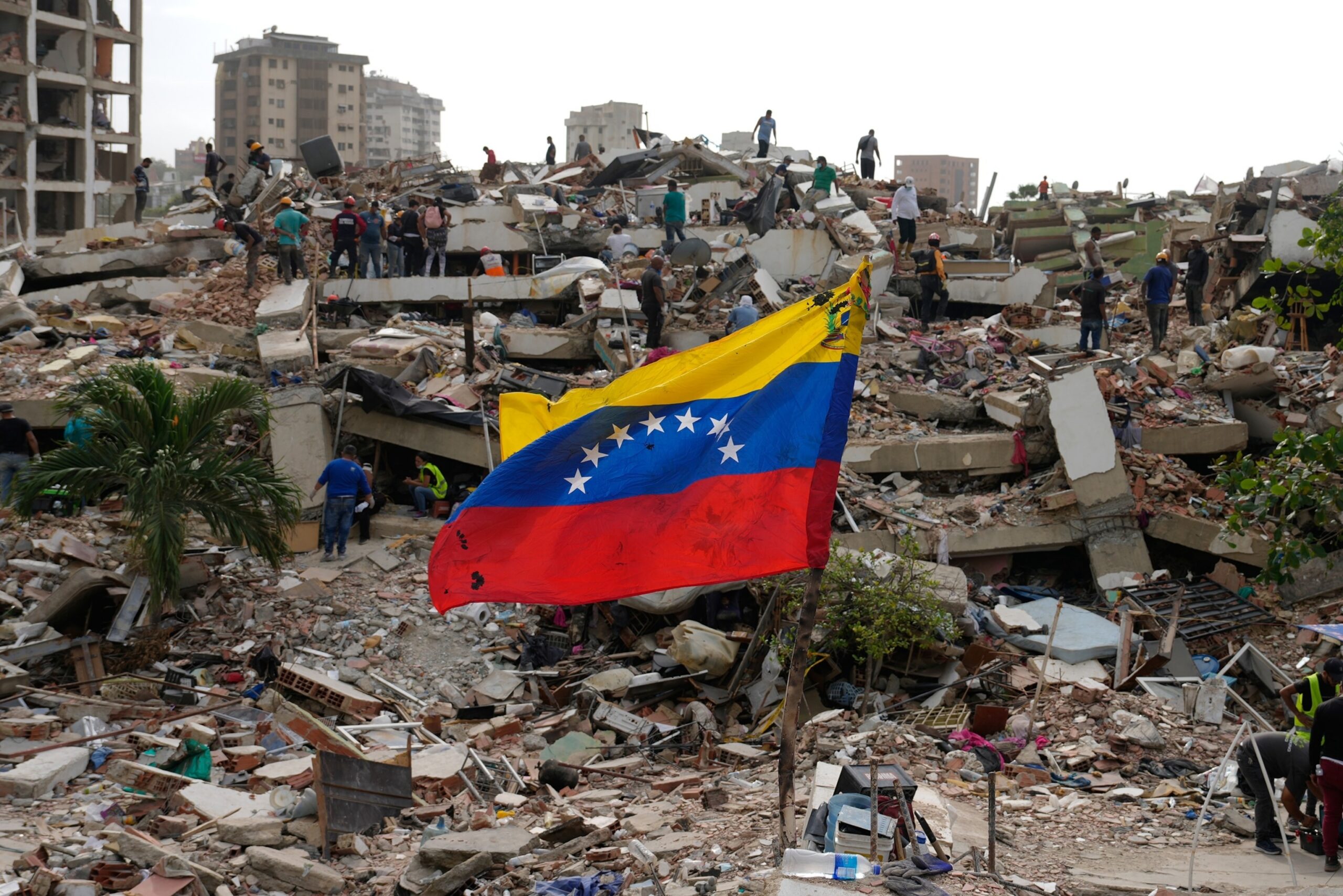
On June 24, 2026 Venezuela experienced one of the most devastating natural disasters in its modern history when two powerful earthquakes measuring 7.2 and 7.5 struck within seconds of each other along the country’s north-central Caribbean coast. The shallow earthquakes, centred near Morón, sent powerful tremors across Caracas, La Guaira, Carabobo, Yaracuy and Miranda, causing widespread structural collapse, crippling transport networks, disrupting electricity supplies and severely damaging hospitals and other critical infrastructure. Hundreds of aftershocks further complicated rescue operations, making this the country’s strongest seismic event in more than a century.
The Humanitarian Catastrophe
The scale of destruction has been staggering. Thousands of buildings—including residential apartments, schools, hospitals and public facilities—either collapsed or suffered extensive damage. Rescue teams, supported by international search-and-rescue missions, continue to search through debris for survivors. Recent estimates place the death toll at well over 1,450, with more than 3,000 injured and tens of thousands displaced from their homes. While international humanitarian assistance has begun arriving from multiple countries, damaged roads, disrupted communications and recurring aftershocks have slowed relief efforts considerably. India on its part has sent two C-17 Indian Air Force aircrafts under Operation Amistad to aid the crisis stricken country.
From a disaster management perspective, the earthquakes have exposed the vulnerability of ageing infrastructure and inadequate urban preparedness. Hospitals already operating with limited resources have struggled to cope with the influx of trauma patients, while shortages of medical equipment, emergency supplies and trained personnel have further constrained rescue and relief operations. As in many fragile states, the disaster has demonstrated how natural hazards become significantly more destructive when institutional capacity is weak.
Geopolitics, Sovereignty and Venezuela’s Oil
The earthquake also unfolded against an exceptionally volatile geopolitical backdrop. Barely six months earlier, Venezuela underwent a dramatic political transition following a U.S. military operation that resulted in the capture and removal of former President Nicolás Maduro. The operation generated widespread international debate, with several international law scholars, United Nations experts and governments describing it as a violation of Venezuelan sovereignty and questioning its compatibility with the principles of the UN Charter.
The post-Maduro transition has also reshaped U.S.–Venezuela relations. Washington has moved towards supporting Venezuela’s interim administration, easing selected sanctions and reopening engagement with the country’s energy sector. Given that Venezuela possesses the world’s largest proven crude oil reserves, renewed American interest in rebuilding the country’s petroleum industry has inevitably fueled geopolitical debate regarding the strategic importance of energy security in shaping U.S. policy. While some commentators argue that access to Venezuela’s vast oil resources has become a central strategic consideration, others view the engagement primarily through the lens of regional stability, democratic transition and humanitarian assistance. These competing interpretations continue to shape international discourse surrounding Venezuela’s future.
A Disaster that Struck a Nation Already in Crisis
This national tragedy is particularly severe because it has struck a country that has spent over a decade grappling with profound political, economic and humanitarian challenges. Years of economic contraction, hyperinflation, international sanctions, declining oil production, institutional deterioration and the migration of millions of Venezuelans have considerably weakened the state’s ability to prepare for and respond to major disasters. Public investment in infrastructure maintenance, healthcare and emergency management had already declined substantially before the earthquake, leaving many critical facilities vulnerable to seismic damage.
Consequently, the earthquake has not merely created a humanitarian emergency; it has compounded an already fragile national situation. Reconstruction costs are expected to run into several billions of dollars at a time when Venezuela continues to face severe fiscal constraints. Although the country’s oil production infrastructure largely escaped catastrophic damage, disruptions to electricity networks, ports and petrochemical facilities have slowed industrial activity and complicated recovery efforts. The earthquake has therefore added another layer of economic uncertainty to a nation that was only beginning to show modest signs of stabilization after years of decline.
Conclusion
Venezuela’s twin earthquakes illustrate how natural disasters rarely occur in isolation. Instead, they intersect with existing political instability, economic fragility and geopolitical competition, magnifying their human and developmental consequences. While international relief efforts may alleviate immediate suffering, long-term recovery will require far more than rebuilding damaged infrastructure. It will depend upon restoring institutional capacity, strengthening governance, revitalizing the economy and ensuring that humanitarian assistance remains insulated from geopolitical contestation. For Venezuela, recovery is therefore not merely a question of reconstruction—it is a test of whether a nation burdened by years of crisis can rebuild both its physical landscape and its political future.
Leave a Reply