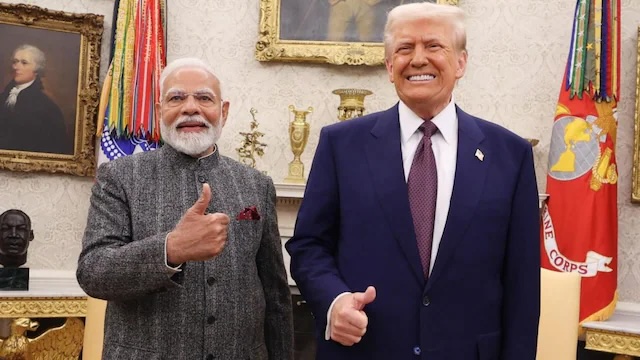
With its deep institutional roots and strategic clarity, the India–U.S. relationship is well-positioned to advance further, driven not by transient rhetoric but by enduring common purpose
U.S. President Donald Trump’s repeated assertions about mediating a ceasefire between India and Pakistan have reignited long-standing apprehensions surrounding external involvement in the Kashmir issue. His remarks, including those referenced during a U.S. court hearing in May 2025—where U.S. Commerce Secretary Howard Lutnick testified that the Trump administration’s trade policies helped avert a potential nuclear confrontation in South Asia—were met with widespread criticism from strategic experts and policymakers alike. New Delhi has remained steadfast in its position: the issue of Jammu and Kashmir is strictly bilateral and not subject to international mediation.
Diaspora Influence and Institutional Depth
Despite Trump’s controversial rhetoric, the India–U.S. relationship has matured well beyond the influence of individual leaders. It now stands as a robust, multi-dimensional partnership, underpinned by shared strategic interests, deepening economic ties, and strong people-to-people linkages. This is evident through the formalization of the relationship via key agreements and strategic initiatives. Today, it is regarded as a promising and one of the most consequential partnerships of the 21st century, given its potential to reshape the dynamics of the Indo-Pacific region and beyond. Moreover, this strength is particularly reflected in the vibrant Indian diaspora in the United States—numbering over four million—one of the most educated and affluent immigrant communities in the country, playing an increasingly influential role in shaping policy.
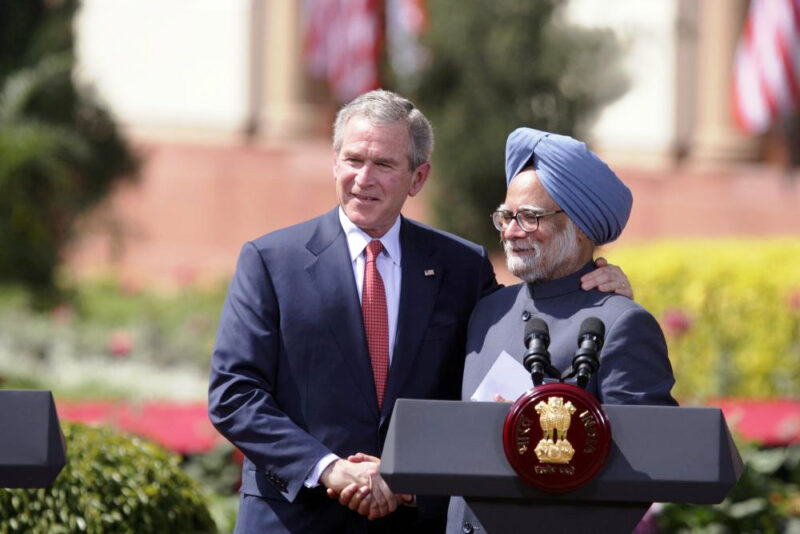
The diaspora’s clout in U.S. policymaking has grown remarkably. A striking example of this influence was witnessed during the COVID-19 crisis in 2021. At a critical juncture, when the Biden administration had imposed export restrictions on essential medical supplies, Indian-Americans mounted an organized lobbying campaign. Their efforts succeeded in convincing the administration to reverse the ban and dispatch critical medical equipment and raw materials for vaccines to India. This intervention demonstrated the community’s capacity to influence key policy decisions at the highest levels. Their role is not limited to crisis management. The Indian-American community has been instrumental in advancing landmark initiatives such as the U.S.–India civil nuclear agreement, and today, many Indian-Americans serve in influential roles within the U.S. government. This diaspora acts as a cultural and strategic bridge, enhancing bilateral understanding and reinforcing long-term cooperation.
The evolving India–U.S. partnership is bolstered by a diverse and committed set of stakeholders,including government institutions, private enterprises, think tanks, academic bodies, and civil society in both nations. Crucially, U.S. institutions such as the State Department and Congress continue to regard India as a vital strategic partner, particularly in the context of the Indo-Pacific strategy and broader efforts to counterbalance China’s growing regional influence. These institutions take a long-term, bipartisan approach to India–U.S. relations, one that is grounded in continuity and strategic alignment rather than reactive or transactional impulses, such as those reflected in Trump’s pronouncements.
Strategic Continuity
Trump’s leadership style has often been described as transactional, business-oriented, and self-promoting. He frequently projects himself as a master negotiator and dealmaker, but many of his actions suggest otherwise. His tendency to prematurely claim success and take credit has often weakened his own negotiating position, whether in the context of Ukraine, North Korea, Iran, or South Asia. For instance, Trump repeatedly announced breakthroughs in negotiations between Russia and Ukraine that never materialized, thereby weakening his credibility and diminishing his effectiveness as a serious diplomatic actor.
While Trump’s erratic rhetoric may generate headlines, it is critical not to exaggerate its impact on this deeply rooted relationship. His habitual tendency to seek the spotlight and amplify his personal role in global diplomacy often lacked substantive backing or long-term vision.
In the case of India and Pakistan, Trump’s attempt to “hyphenate” the relationship—suggesting he could broker a deal between both nations—ignored the decades-long efforts by previous U.S. administrations to de-hyphenate the ties and treat each relationship on its own strategic merits. His statement that “they’ve been fighting for 1,500 years” reveals a superficial understanding of South Asian geopolitics and history. Such remarks reflect a lack of diplomatic nuance and strategic depth.
In contrast, previous U.S. presidents devoted sustained efforts toward cultivating strategic trust with India—especially in light of their fraught Cold War history and the lingering presence of anti-American sentiment within Indian political and intellectual circles. During this era, American foreign policy toward India embodied a form of strategic altruism, emphasizing long-term engagement grounded in mutual respect rather than immediate concessions or gains. Successive administrations—Republican and Democratic alike, including Trump’s own during his first term—recognized the importance of winning India’s trust, acknowledging its historic skepticism of U.S. intentions and its adherence to a non-aligned foreign policy stance.
These efforts bore fruit in the form of landmark agreements and growing strategic alignment across a broad spectrum of areas, including defense cooperation, civil nuclear energy, high technology, artificial intelligence, cybersecurity, and counterterrorism. Recent developments—including the Initiative on Critical and Emerging Technologies (iCET), the U.S.–India Major Defense Partnership Framework (2025–2035), the COMPACT Initiative, and collaborations through platforms like INDUS-X and the Artemis Accords—have deepened cooperation. These engagements signify that the India–U.S. partnership is now an essential component of the 21st-century global security and economic architecture.
the India–U.S. partnership rests on far more stable and enduring foundations: bipartisan consensus within the U.S. strategic establishment, shared democratic values, converging geopolitical interests, and institutional mechanisms that safeguard continuity and progress.
While Trump’s erratic rhetoric may generate headlines, it is critical not to exaggerate its impact on this deeply rooted relationship. His habitual tendency to seek the spotlight and amplify his personal role in global diplomacy often lacked substantive backing or long-term vision. Even his relationship with Elon Musk—once a vocal ally who contributed nearly $300 million to pro-Trump political efforts during the 2024 campaign—has deteriorated into public conflict, highlighting the unpredictability of Trump’s leadership style. In stark contrast, the India–U.S. partnership rests on far more stable and enduring foundations: bipartisan consensus within the U.S. strategic establishment, shared democratic values, converging geopolitical interests, and institutional mechanisms that safeguard continuity and progress.
West Asia dynamics: No Indian shift
Moreover, recent U.S. gestures toward Pakistan—including inviting Pakistan’s Army Chief to U.S. Army Day celebrations, public praise for its leadership, the release of funds for upgrading the F-16 fleet—and support in securing IMF bailout packages—should be analysed through the lens of broader strategic imperatives, particularly concerning Iran. Amid escalating tensions with Tehran and recent Israeli airstrikes on Iranian targets by its close ally Israel, Washington may be positioning itself for potential regional contingencies and wider escalation. In this context, logistical access to Pakistani military bases—notably Noor Khan Airbase, and other facilities which, according to senior analyst Imtiaz Gul, is already under partial U.S. operational control—could become critical. Pakistan has a history of facilitating U.S. military operations, such as during the War on Terror. Given its proximity to Iran, Pakistan is strategically well-placed to support U.S. initiatives in the region.
The U.S. may also seek to ensure that Pakistan remains aligned with Western objectives should Israel act unilaterally against Iran. Therefore, recent goodwill gestures by the U.S. toward Pakistan should be interpreted not as a shift away from India, as some within the Indian strategic establishment might fear, but as part of a calculated strategy to secure regional flexibility amid evolving geopolitical uncertainties in West Asia.
Ultimately, the strength and resilience of the India–U.S. relationship derive from its firm institutional foundation and shared strategic vision. It is largely insulated from the whims of transient political figures. Despite periodic turbulence, the partnership has demonstrated remarkable continuity and adaptability. Key U.S. national security documents—including the Indo‑Pacific Strategy and the National Security Strategy—consistently describe India as a “major defense partner” and an indispensable actor in the effort to balance China’s regional ambitions. These structural commitments ensure that the bilateral relationship remains on a trajectory of deepening cooperation. As articulated in the 2022 U.S. Indo-Pacific Strategy, India is seen as a “like-minded partner and leader in South Asia and the Indian Ocean, active in and connected to Southeast Asia,” and a “driving force of the Quad and a net security provider in the region.”
Conclusion
Today, the India–U.S. relationship stands as a beacon of mutual trust, strategic alignment, and forward-looking engagement. Decades of deliberate diplomacy, institutional investment, and cultural linkage have given rise to one of the most promising partnerships of the 21st century. While figures like President Trump may generate momentary uncertainty, they lack the capacity to derail the deep-rooted and multidimensional nature of this partnership. The future of India–U.S. relations remains bright, anchored in shared democratic ideals, strategic complementarity, and a common vision for a free, open, and inclusive Indo-Pacific.
Feature Image credit: news18.com
Image of President Bush and PM Manmohan Singh: wikipedia India-United States Civil Nuclear Deal.
Leave a Reply