Tag: USA

  • Washington Accuses Russia of Committing War Crimes in Ukraine: Terrible and True, But What About US War Crimes?

    Washington Accuses Russia of Committing War Crimes in Ukraine: Terrible and True, But What About US War Crimes?

    This article is republished from Antiwar.com with permission.

    Nothing can justify this terrible toll and Moscow’s attack. However, those who judge the moral conduct of others should be measured by the same standard. Which raises the question of war crimes committed by the US in its many conflicts.

    Washington appears intent on making Russia’s war on Ukraine into a moral crusade. Pentagon spokesman John Kirby last week declared that “we’re certainly seeing clear evidence that the Russian military is conducting war crimes.”

    Any large-scale conflict is going to kill civilians, some directly in combat, others from the impact of war’s destructive impact on a modern society. Thus, Russian attacks on Ukrainian cities such as Mariupol cannot help but kill civilians. Last week the UN Office of the High Commissioner for Human Rights estimated 953 dead and 1557 injured Ukrainian civilians. But that is merely the number of victims whose death can be confirmed.

    OHCHR reported that it “believes that the actual figures are considerably higher, especially in Government-controlled territory and especially in recent days, as the receipt of information from some locations where intense hostilities have been going on has been delayed and many reports are still pending corroboration. This concerns, for example, Mariupol and Volnovakha (Donetsk region), Izium (Kharkiv region), Sievierodonetsk and Rubizhne (Luhansk region), and Trostianets (Sumy region), where there are allegations of numerous civilian casualties. These figures are being further corroborated and are not included in the above statistics.”

    And if war criminals were routinely prosecuted, Americans would be in the dock as well as Russians.

    Nothing can justify this terrible toll and Moscow’s attack. However, those who judge the moral conduct of others should be measured by the same standard. Which raises the question of war crimes committed by the US in its many conflicts. American forces may attempt to fight “cleaner” wars than does Russia, but even so no one should have any illusion about the high civilian cost of Washington’s interventions. Innocent people die, some directly, many indirectly. And if war criminals were routinely prosecuted, Americans would be in the dock as well as Russians.

    Consider Washington’s widespread drone war. One terrible strike made last August when Americans were withdrawing from Afghanistan wiped out a family, including seven kids. It was a terrible mistake, but the US was culpable. Reported the New York Times: “Military officials said they did not know the identity of the car’s driver when the drone fired, but deemed him suspicious because of how they interpreted his activities that day, saying that he possibly visited an ISIS safe house and, at one point, loaded what they thought could be explosives into the car.” [Italics added] Upon this litany of unproved suppositions, which turned out to be wild speculation, Washington acted like a terrorist and wiped him out along with all those around him.

    Such mistakes are common because America relies on such “signature” strikes, based on interpretating the actions of people typically hundreds or thousands of miles away. Noted the New York Times: “Every independent investigation of the strikes has found far more civilian casualties than administration officials admit. Gradually, it has become clear that when operators in Nevada fire missiles into remote tribal territories on the other side of the world, they often do not know who they are killing, but are making an imperfect best guess.”

    Afghanistan has been a major focus of America’s drone war. A detailed investigation in 2015 by two media organizations and a foundation concluded that drone strikes had killed 3852 people, 476 of whom were civilians. That’s a civilian kill rate of 12.4 percent, better than untargeted air or artillery strikes, but still much higher than claimed by Washington.

    According to journalist Emran Feroz: “Afghanistan is the most drone-bombed country in the world. The United States dropped more bombs on Afghanistan in 2019 than in any other years since the Defense Department began keeping track in 2006. According to new figures released by the U.S. military, at least 7,423 bombs and other munitions were dropped on the country in 2019, a nearly eight-fold increase from 2015 and an average of 20 bombs a day.”

    He described another drone attack that apparently went awry: “Ordinary Afghans say it has happened to them many times and never – not once – has it made news anywhere outside Afghanistan. Last November, an American Reaper drone targeted a group of villagers in the mountainous area of Afghanistan’s southeastern province of Paktia and killed seven of them. Paktia has long been home to Taliban militants, but local residents say all the victims were civilians, including three women and one child. They had gone to the remote area to graze their cattle and collect wood. Suddenly, they were dead.”

    Another cost of the drone war: creating new terrorists who target Americans. Waging war on Muslims around the world makes a lot of enemies, some of whom strike back.

    For instance, Pakistani-American Faisal Shahzad attempted to set off a bomb in Times Square in response to Washington’s drone campaign. He explainedto the court in 2010: “I want to plead guilty 100 times because unless the United States pulls out of Afghanistan and Iraq, until they stop drone strikes in Somalia, Pakistan and Yemen and stop attacking Muslim lands, we will attack the United States and be out to get them.” The judge asked him why he was willing to kill kids. He explained: “When the drones hit, they don’t see children.” Hence, Shahzad concluded that “I am part of the answer to the US killing the Muslim people.”

    America’s anti-ISIS bombing campaign also killed civilians in prodigious numbers. NPR reported on the work of New York Times correspondent David Philipps, who said “the United States’ air war against ISIS seems to have been particularly brutal on innocent civilians in Syria. In recent stories, Philipps reports that a top-secret unit of the US military was allowed to pick targets for drone attacks and bombing runs with little oversight, and that as the conflict wore on, it increasingly sidestepped rules to protect noncombatants, ordering airstrikes that killed farmers in their fields, children in the street and families fleeing combat.”

    According to Philipps, the military counted 1400 dead civilians “during the four years of the war. And they were very confident that those numbers were real and that outside organizations like Human Rights Watch that were reporting numbers that were many times higher were being unreasonable. But once we looked under the hood at how it worked, we found that, you know, time and time again, their accounts were just seriously flawed.”

    The Times explained that it “worked with journalist Azmat Khan, who went to dozens and dozens of these sites on the ground and talked to people who were there and compared what they said to what the military’s own records said and found repeatedly that there was a gulf between them.” For instance, Human Rights Watch estimated some 7000 dead civilians. A toll that dwarfs the number of civilian dead in Ukraine, where the US is blaming Russia for committing war crimes.

    The US also has armed Saudi Arabia and United Arab Emirates, helping them wreak death and destruction against Yemen, the poorest nation in the Mideast. No participant in this civil war, which was internationalized by the Saudis and Emiratis, looks good. However, most casualties and damage are a result of the royal regimes’ air attacks and effective blockade, which has resulted in mass malnutrition, immiseration, and disease.

    President Joe Biden once criticized the Kingdom of Saudi Arabia and its pernicious role in the Yemen war. Like so many of his predecessors, however, he has since effectively turned US policy over to Riyadh and Abu Dhabi, continuing to sell them weapons and deploying US forces to help protect them from retaliation for their continuing attacks on Yemeni civilians. A year after the president took office the war is heating back up in Yemen.

    Reported the Yemen Data Project: “January 2022 was the most violent month in the Saudi-led air war in Yemen in more than five years. Yemen Data Project recorded 139 civilian deaths and 287 civilians injured in Saudi coalition airstrikes in January, taking the casualty toll to over 19,000 civilians killed and injured since Saudi Arabia launched its bombing campaign in Yemen in March 2015. Not since October 2016 have more civilian casualties been recorded in a single month in the air war. Saudi-led coalition airstrikes caused more civilian harm in the first month of 2022 than in the two previous years combined.”

    The UN Group of Eminent International and Regional Experts on Yemenrevealed that civilians were routinely targeted by the Saudi and Emirati royals. Victims included “civilians shopping at markets, receiving care in hospitals, or attending weddings and funerals; children on buses; fishers in boats; migrants seeking a better life; individuals strolling through their neighborhoods; and people who were at home.”

    Widespread air attacks also wrecked basic infrastructure, with catastrophic consequences for health, nutrition, commerce, and safety. The United Nations Development Program reported:

    “By comparing the current reality in Yemen to a scenario where no conflict ever occurred, we can provide an estimate of the total death count – the number of deaths caused both directly and indirectly from the conflict. By doing so, we found that by the end of 2021, Yemen’s conflict will lead to 377,000 deaths – nearly 60 per cent of which are indirect and caused by issues associated with conflict like lack of access to food, water, and healthcare. These deaths are overwhelmingly made up of young children who are especially vulnerable to under and malnutrition. In 2021, a Yemeni child under the age of five dies every nine minutes because of the conflict. This is a significant increase since our 2019 report, Assessing the Impact of War on Development in Yemen, that – through the same assessment – found this to be approximately every 12 minutes.”

    In 2021, a Yemeni child under the age of five dies every nine minutes because of the conflict.

    The experts’ group also found devastating impact: “Protracted conflict, disease outbreaks, the COVID-19 pandemic, flooding, import restrictions, an economic and fuel crisis, and limited humanitarian aid have made everyday life in Yemen unbearable for many. According to the Office for the Coordination of Humanitarian Affairs, around 20.7 million people in Yemen currently require some form of humanitarian and protection assistance. More than 16.2 million of them will face significant food insecurity this year. Additionally, international funding has fallen far short of the required levels to address the humanitarian crisis.”

    Harm from this kind of warfare goes even further. Last fall the experts’ group observed that “Living in a country subjected to an average of 10 airstrikes per day has left millions feeling far from safe. Although the frequency and intensity of airstrikes have fluctuated over the last four years, the Group of Eminent Experts has continued to observe their devastating impact on civilians.”

    “The civilian death toll from Saudi Arabia’s disastrous air war over Yemen was steadily rising in 2016 when the State Department’s legal office in the Obama administration reached a startling conclusion: Top American officials could be charged with war crimes for approving bomb sales to the Saudis and their partners. Four years later, more than a dozen current and former US officials say the legal risks have only grown as President Trump has made selling weapons to Saudi Arabia, the United Arab Emirates and other Middle East nations a cornerstone of his foreign policy.”

    Assessing Washington’s moral blame in aiding the royal aggressors is easy. The legal case is more difficult, but the State Department already made the connection. It warned previous administrations that US officials were committing war crimes. The New York Times reported: “The civilian death toll from Saudi Arabia’s disastrous air war over Yemen was steadily rising in 2016 when the State Department’s legal office in the Obama administration reached a startling conclusion: Top American officials could be charged with war crimes for approving bomb sales to the Saudis and their partners. Four years later, more than a dozen current and former US officials say the legal risks have only grown as President Trump has made selling weapons to Saudi Arabia, the United Arab Emirates and other Middle East nations a cornerstone of his foreign policy.”

    Washington intervened in Libya’s civil war more than a decade ago to promote regime change under cover of helping to protect civilians from the Khadafy government. The country that was the most developed and wealthiest in Africa was bombed to stone age by the US and NATO.

    There is much more to criticize in US policy. Rural Afghanistan suffered desperately for years as a battleground between the US and Taliban, causing many residents to turn toward the insurgents. Washington intervened in Libya’s civil war more than a decade ago to promote regime change under cover of helping to protect civilians from the Khadafy government. Hopes for a better future remained unfulfilled as contending factions subsequently fought for control and now squabble over plans to hold elections.

    Russia deserves to be criticized and held accountable for its increasingly brutal military campaign in Ukraine. However, Washington would have more credibility to judge if its message wasn’t do as I say, not as a I do. US officials should come clean internationally and admit when they have failed in their obligation to protect human rights, including in wartime. Next time they shouldn’t just promise to do better. They should do so.


  • TPF Analysis Series on Russia – Ukraine Conflict #1

    TPF Analysis Series on Russia – Ukraine Conflict #1

    The Peninsula Foundation is releasing a series of analysis papers on the Ukraine-Russia conflict to help the public have a better understanding of the geo-political and security dimensions underlying the conflict. The first paper of the series will introduce you to an overview of the historical, political and humanitarian aspects of the ongoing conflict which is snowballing to be a major conflict and a turning point in Europe’s history since World War II.

    Russia – Ukraine History

    Russia and Ukraine have had a long interwoven history, since as early as the 18th century. One of the most contested territories, Crimea, was first annexed by the Russian empire in 1783 back when it was controlled by the Crimean Khanate. The territory then became a part of the erstwhile Soviet Union in 1921, to be later controlled by Nazi Germany for a brief period in 1942. Following the end of World War II, the autonomous status of Crimea was dissolved as it now became a province of the USSR, but was later handed over to Ukraine as a goodwill gesture by Nikita Khrushchev in 1954 to mark the 300th anniversary of Ukraine’s reunification with the USSR.

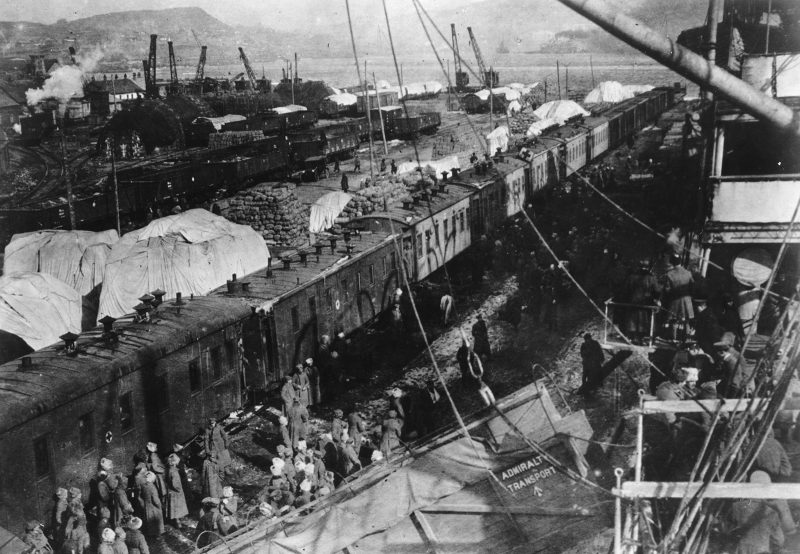
    Crimea: White Russian refugees gathering at a Crimean port during the Russian Civil War.

    Image: Library of Congress, Washington, D.C.

    With the dissolution of the Soviet Union in 1991, many had expected Boris Yelsten to take up the issue and bring back Crimea to Russia, but instead, the Crimean parliament proclaimed the independence of its territory in May 1992, a proclamation only to be annulled by Ukraine. Over twenty years later, a similar referendum, with most of the Crimean population voting to join Russia – a referendum declared illegal by Ukrainian and European governments alike. What followed next was a dramatic escalation with the deployment of the Russian Black Sea Fleet.

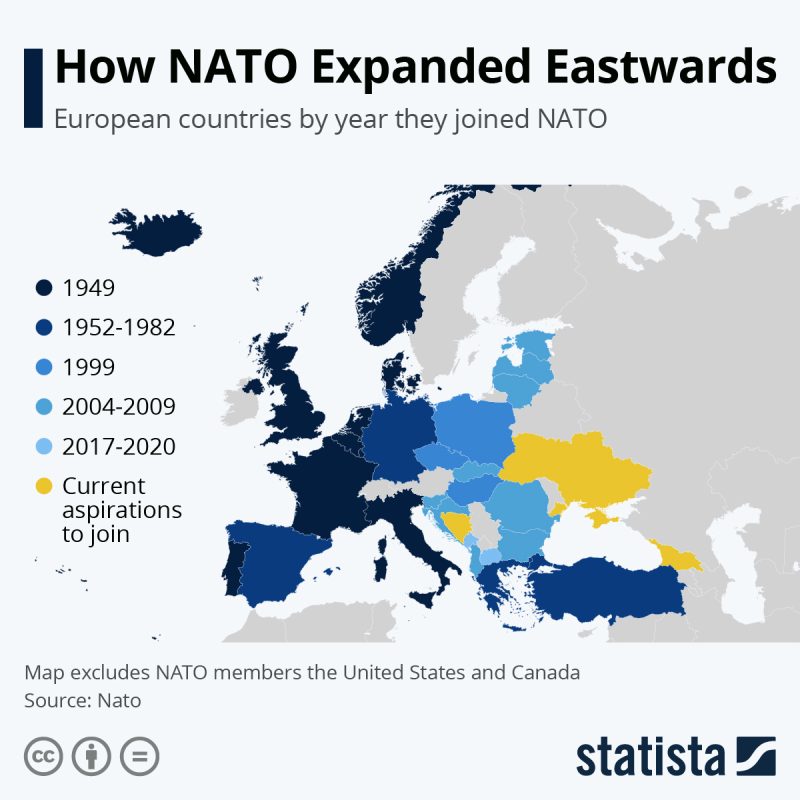
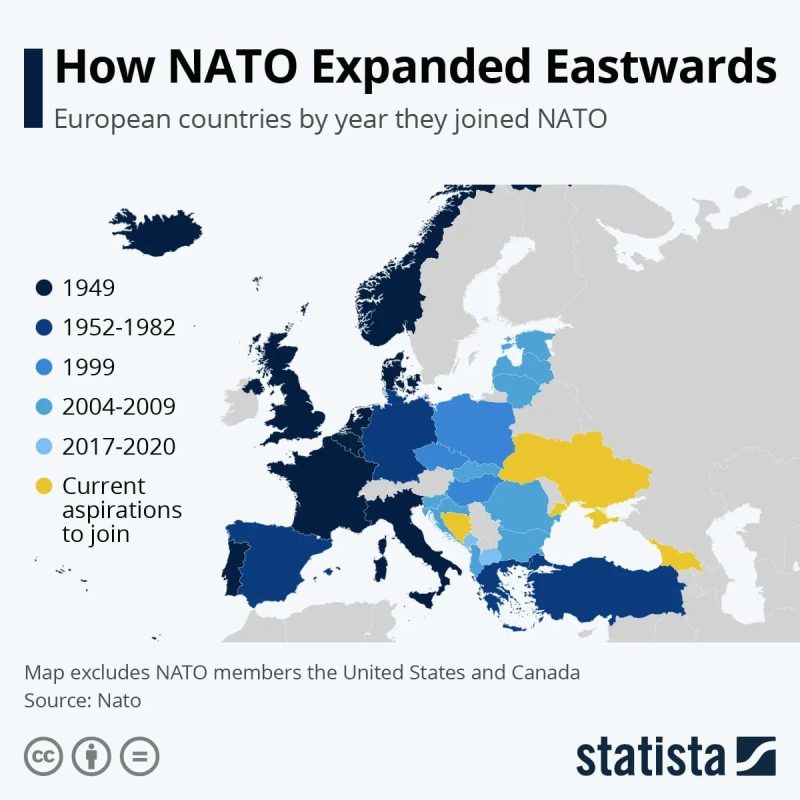
    Some have argued that NATO’s expansion towards the East is the primary cause of the war, since the organisation was formed primarily to counter the Soviet Union during the Cold War. While it must be acknowledged that such expansion was to be viewed by Russian officials as a provocation even back in the 1990s, the arguments, however, also take away the agency of states in Eastern Europe with most of them ‘demanding’ to join NATO, eager to reap the benefits of the West’s economic system. Over the years, several small states, including Georgia, Ukraine, Uzbekistan, Azerbaijan and Moldova, have seen their relationship with the West as a tool to bring regional stability, and increase their bargaining power against Russia.

    Events leading up to the war

    2021 was a year of security challenges that shook the world amid an ever-mutating Covid-19 pandemic. In October 2021, Russia started moving its troops and military equipment closer to the Ukraine border rekindling concerns of a potential invasion. By mid-December 2021, Russia’s Foreign Minister, Sergey Lavrov released a set of security guarantees and assurances to be met by the U.S. and NATO in exchange for non-intervention in Ukraine. Putin also threatened unspecified ‘military technical’ measures if the West fails to accede to his demands. Putin’s major demands were; (i) Ban on Ukraine entering NATO, (ii) No further expansion of NATO in the Eastern European region, (iii) Withdrawal of any troops or weapons deployed in countries which entered NATO after 1997 (Poland, Estonia, Lithuania, Latvia, and the Balkan countries), (iv) No NATO drills to be conducted in Ukraine, Georgia and Central Asia without prior agreement with Russia. Although NATO was formed to counter the USSR during the Cold War,  it continued its expansion into Eastern Europe territories even long after the dissolution of the USSR. Putin was threatened by the continuous NATO expansionism, the security implications and the loss of the Russian sphere of influence in Eastern Europe.

    The U.S. and NATO immediately rejected these main demands warning if Russia invades Ukraine, there will be serious retaliation and Russia will be met with a ‘massive forceful package’ of economic sanctions. Ukraine’s Foreign Minister Kuleba had said that although they were expecting and already experiencing aggressive Russian cyber-attacks and destabilisation of the Ukrainian economy, the number of Russian troops on the border was ‘insufficient’ and the build-up was missing some key military indicators to execute an imminent ‘full-scale invasion’ of Ukraine. Many experts and theorists also opined that despite Putin’s bold demands and his game of brinkmanship, the reality of war was in question.

    On 21st February, in a televised address Putin said that ‘Ukraine is an integral part of Russia’s history’ and declared the regions of Donetsk and Luhansk as independent Republic States and sent Russian troops into those regions for ‘peacekeeping’.

    The beginning of February showed some positive signs of diplomacy or at the least maintenance of the status quo between Ukraine and Russia despite the West’s declining Putin’s demands. However, it was only calm before the storm. On 21st February, in a televised address Putin said that ‘Ukraine is an integral part of Russia’s history’ and declared the regions of Donetsk and Luhansk as independent Republic States and sent Russian troops into those regions for ‘peacekeeping’. As a response to this, the US and other NATO members imposed economic sanctions on Russian parliament members, banks and other assets and Germany decisively halted the Nord Stream 2 gas pipeline project.

    ‘Special Military Operation’

    On 24th February, Putin announced a ’special military operation’ and Russian forces launched missile and artillery attacks on major Ukrainian cities including Kyiv. Ukrainian Foreign Minister affirmed that Russia has launched a ‘full-scale invasion of Ukraine’, following which Ukraine shut down its entire airspace as a response to the Russian operation in Donbas. The West imposed further sanctions on Russia including but not limited to, removing select Russian banks from the SWIFT system, freezing the assets of the Russian Central Bank and curbing products exported to Russia.

    Zaporizhzhia is a vital asset in fulfilling Ukraine’s energy requirements with six nuclear reactors with a capacity of generating 950MW per reactor. Capturing Zaporizhzhia nuclear power plant would have been a major plan of the invading forces given its strategic nature.

    Nearly four weeks since the Russian Federation launched a ‘special military operation’, the situation on the ground in Ukraine continues to remain dire. The United Nations Human Rights Monitoring Mission in Ukraine (HRMMU) has been responsible for documenting civilian casualties in Ukraine since 2014. In the span of three weeks, Ukraine’s infrastructure and cultural heritage have suffered irreparable damage or been completely destroyed. The ceaseless shelling by Russian forces of cities and hospitals have exacerbated the human toll.

    According to a press briefing released by the Office of the High Commissioner for Human Rights (OHCHR), civilian casualties as of 26 March 2022 stand at 2,909 – 1,119 people killed and 1,790 injured.

    The OHCHR assesses that actual figures might be higher than what is currently being reported as they wait for figures to be corroborated. Most of the civilian casualties are reportedly caused by explosive weapons with a wide impact area. This includes shelling from heavy artillery and multiple-launch rocket systems and missile and air strikes.

    In a rather unexpected move, on 4th March, 2022 the Russian forces attacked and captured the Zaporizhzhia nuclear power plant, located in Energodar, Ukraine. Zaporizhzhia is a vital asset in fulfilling Ukraine’s energy requirements with six nuclear reactors with a capacity of generating 950MW per reactor. Capturing Zaporizhzhia nuclear power plant would have been a major plan of the invading forces given its strategic nature.

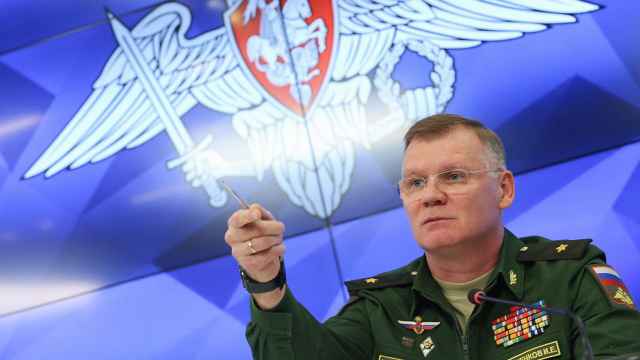
    The Russian attack on the nuclear plant raised alarm bells among nations and nuclear watchdogs. Intense shelling on the complex caused a fire in one of the training buildings. Reports have noted the damage to multiple locations within the complex. The Ukrainian government was quick to act and called it an “act of terror”. Contrary to Ukrainian claims, the Russian Ministry of Defence spokesperson Maj. Gen. Igor Konashenkov claimed that the entire event was a sabotage act by the Ukrainian forces. With Chernobyl captured very early in the invasion, the attack on Zaporizhzhia nuclear power plant raises questions about the safety and security of nuclear infrastructures during times of crisis.

    On March 9, 2022, a hospital in Mariupol that also housed a maternity ward came under attack. It was reported that at least 4 people were killed in the bombing, including a pregnant woman. Presently, Mariupol is seeing some of the fiercest attacks, since the port city is a strategic target for Russia. It is estimated that some 300,000 people are trapped with supplies running low. The Russian Federation’s offer of safe passage out of Mariupol for the Ukrainian people has been summarily rejected by Ukraine’s Deputy Prime Minister Iryna Vereshchuk who was quoted saying, “There can be no question of any surrender, laying down of arms”.

    Other areas to have been hit include Kyiv, Kharkiv, Borodyanka, Ochakiv, Sumy, Mykolaiv, Odessa etc. On March 1, the Central Freedom Square in Kharkiv was bombed that leaving both the administrative building and surrounding structures destroyed. On 14 March the Ukrainian health minister Viktor Liashko reported that nearly 100 hospitals had been damaged. As of 17 March, the World Health Organisation (WHO) has verified 44 instances of attacks on healthcare facilities in Ukraine. 

    West’s Sanctions

    The global media coverage of the invasion can be best described as a cacophony of partisanship. The western media has been charged with accusations of brushing off Russian security concerns and, of course, brazen racism. It has followed its own orientalist approach to present the crisis as a result of Russian imperialism.

    The West has swiftly responded by imposing sanctions; a course of action meant to deter and halt Russia’s actions in Ukraine. Germany’s Chancellor Olaf Scholz announced halting final approval for the Nord Stream 2 gas pipeline following Russia’s recognition of two breakaway regions of Eastern Ukraine – Luhansk and Donetsk.

    On 8 March, President Biden, with bipartisan support, announced that the US would be banning imports of Russian oil, gas and energy. The UK also announced that it would phase out Russian oil imports by the end of 2022 on the same day. Both the US and the UK are working with their European counterparts to reduce dependency on Russian hydrocarbon imports. The European Commission responded to Russia’s aggression in Ukraine by stating that the EU countries would work to become independent of Russian energy imports “well before 2030”. Other economic deterrents imposed have been the ban on exports of luxury goods like vehicles, fashion and art to Russia by the UK and EU. The UK has also imposed a 35% tax on imports from Russia, including vodka. Russian oligarchs’ assets in the US, UK and the EU have been targeted. Sanctions have also been imposed on former Russian leaders, ministers and current members of the Russian Parliament.

    Russian flights and private jets have been banned from the US, UK, EU and Canadian airspaces. The G7 countries have also stripped Russia of its “most favoured nation” status; a move that will impact Russia’s trade. Assets of most Russian banks have been frozen and some of them have been removed from the international financial system SWIFT. Other countries to have imposed sanctions on Russia include Japan, Taiwan, New Zealand, Australia and Switzerland. Australia moved to ban exports of alumina and aluminium ore, including bauxite to Russia. Russia relies on Australia for 20% of its alumina requirements – aluminium being a major export for Russia. Several energy, automobile, tech, financial, food and fashion companies have also halted operations in Russia – Exxon, Shell, Apple, Alphabet, Goldman Sachs, JP Morgan, Ferrari, Harley-Davidson, Nike, McDonald’s etc.

    Globally, the impact of the Russia-Ukraine war has been felt in oil markets as prices continue to surge to well over $100 per barrel. Russia’s response to being hit with global sanctions has been to ban the exports of over 200 products, including telecoms, electrical equipment, agricultural, medical goods etc. However, this list does not include energy and raw material resources. It has also banned and blocked interest payments to foreign investors and dividends to overseas shareholders and also banned the sale of Russian stocks and bonds held by foreign investors. It has also passed a decree suspending the IP rights of ‘unfriendly countries’.

    On 15 March, President Zelensky said that it must be accepted that Ukraine will not become a member of NATO, possibly appeasing one of Putin’s major security concerns. Additionally, on 15 March, Moscow announced its decision to withdraw from the Council of Europe after 26 years of membership, hours ahead of a formal decision taken by the Council to expel Russia over its aggression in Ukraine. The move also means that Russia will no longer be a signatory to the European Convention on Human Rights, depriving its citizens of the right to appeal to the European Court of Human Rights. A statement from the Russian foreign ministry cited that the EU and NATO had “destroyed” the Council of Europe and turned the organisation into an “anti-Russia policy tool”.

    Russia also made the decision to sanction President Biden, Prime Minister Trudeau and several top US officials. The list includes Secretary of State Anthony Blinken, Defence Secretary Lloyd Austin, National Security Advisor Jake Sullivan, CIA Director William Burns, WH Press Secretary Jen Psaki and former Secretary of State and Democratic Presidential candidate Hilary Clinton.

    The global media coverage of the invasion can be best described as a cacophony of partisanship. The western media has been charged with accusations of brushing off Russian security concerns and, of course, brazen racism. It has followed its own orientalist approach to present the crisis as a result of Russian imperialism. Popular Russian media channels such as RT and Sputnik have been banned by YouTube across Europe, essentially leading to the West dominating the information warfare, controlling the narrative and presenting a one-sided perspective to the world.  The Russian Federal Service for Supervision of Communications, Information Technology and Mass Media, commonly known as the Roskomnadzor, released a statement informing media and other information sources that any publication regarding the ‘special military operation’ must only use the information received from Russian officials. Several independent Russian media outlets like Ekho Moskvy, InoSMI, Mediazona, New Times, Dozhd, Svobodnaya Pressa, Krym, Realii, Novaya Gazeta, Journalist, Lenizdat etc. were sent notifications by the Roskomnadzor on allegations of reporting false information regarding the actions of the Russian Army, shelling in Ukrainian cities and referring to the military operation as ‘war’, ‘invasion’ and ‘attack’. Nonetheless, some media houses have stood up to the pressure to report more appropriately.

    The war in Ukraine could also leave lasting environmental damage, being a highly industrialised state. The threat of radiation resulting from an attack on any one of Ukraine’s nuclear plants could have devastating consequences. Carcinogenic dust from bombed buildings, groundwater contaminations from spilled chemicals and attacks on industrial facilities will have a lasting impact on the health of the people in the country.

    UN Response

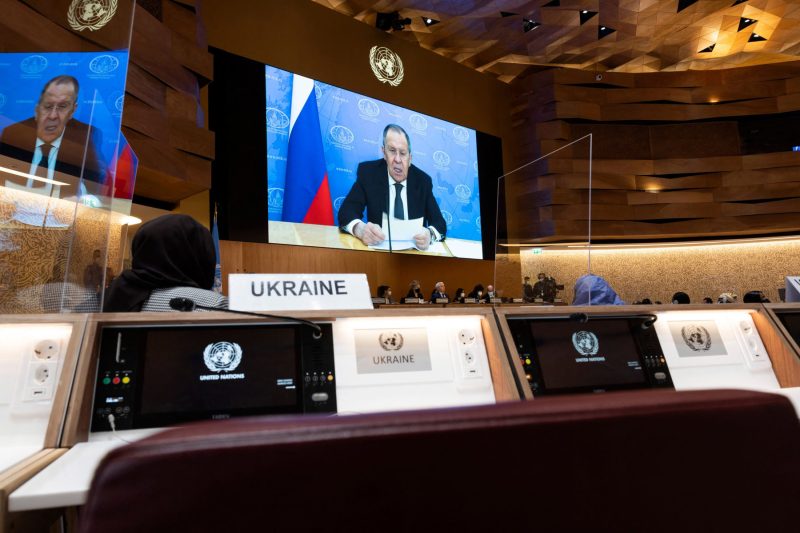
    As Russian troops continue to shell Ukrainian cities, the various United Nations bodies have called for emergency meetings, albeit with no successful outcome to halt the war. In February 2022, a Security Council meeting calling for a resolution to condemn the Russian military operations and demanding an end to Russian attacks had similarly failed with the resolution having been vetoed by Russia.

    Although Putin’s end may not justify his means, one needs to look at this crisis holistically and historically. Putin may have been the one to declare war, but the triggering and contributing events and actions by NATO and the US should also be taken into consideration while analysing this conflict.

    However, the United Nations has been swift with its humanitarian response, an effort visible with its coordinated appeals calling for the allocation of an estimated USD 1.7 billion to help the Ukrainians. Dividing the allocation of funds into two categories – one for people within Ukraine, and the other for its comprehensive response towards refugees coming from Ukraine, the United Nations’ relief efforts have seen one of the most generous responses to its funding appeal. Further, as fighting continues amidst multiple rounds of talks between Russia and Ukraine, UN Agencies, including UNICEF, continue to supply humanitarian aid, including medical supplies to the country. As part of its cash-response strategy, the UN agencies have additionally planned to implement its program of cash-for-rent assistance, where they seek to provide the affected population with the resources to find themselves an accommodation, in order to avoid large-scale displacement.

    Although Putin’s end may not justify his means, one needs to look at this crisis holistically and historically. Putin may have been the one to declare war, but the triggering and contributing events and actions by NATO and the US should also be taken into consideration while analysing this conflict. It seems to be that Putin has not entered into an all-out war yet, as his objectives and weaponry employed are limited. In the forthcoming series of analyses, The Peninsula Foundation delves into each of the facets of the conflict mentioned in this paper.

    Featured Image Credits: The Times

    NATO Expansion Image Credits: Statista

    Russian General Image Credits: Moscow Times

    UNSC Image Credits: Harvard Law Today

  • CIA Director William F. Burns’ misinformation strategy: spreading the big lie that Russia’s invasion of Ukraine was “unprovoked”

    CIA Director William F. Burns’ misinformation strategy: spreading the big lie that Russia’s invasion of Ukraine was “unprovoked”

    CIA Director Bill Burns testified before the Senate Intelligence committee in early March that Russia and Vladimir Putin were “losing the information war over its war in Ukraine.

    “In all my years I spent as a career diplomat, I saw too many instances where we lost information wars with the Russians,” Burns said, but “this is one information war that I think Putin is losing…. In this case, I think we have had a great deal of effect in disrupting their tactics and calculations and demonstrating to the entire world that this is premeditated and unprovoked aggression built on a body of lies and false narratives”.

    George Orwell must be rolling over in his grave with Burns’ performance. While hypocritically excoriating Russia for promoting a “body of lies” and “false narratives,” Burns admitted to using the very same tactics in an information war in which both sides were twisting the truth.

    The U.S. Big Lie centers on the claim of unprovoked Russian aggression.

    As CAM has previously reported, the war was actually started by Ukraine eight years agowhen it sent troops into Eastern Ukraine in an attempt to subdue pro-Russian secessionists who resisted a February 2014 U.S. backed coup d’état.

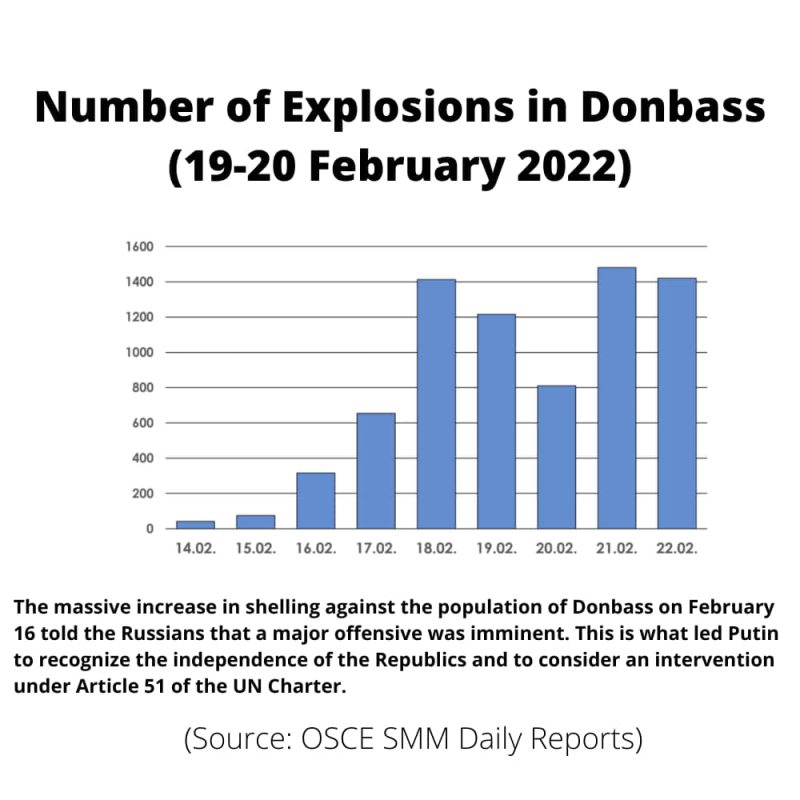
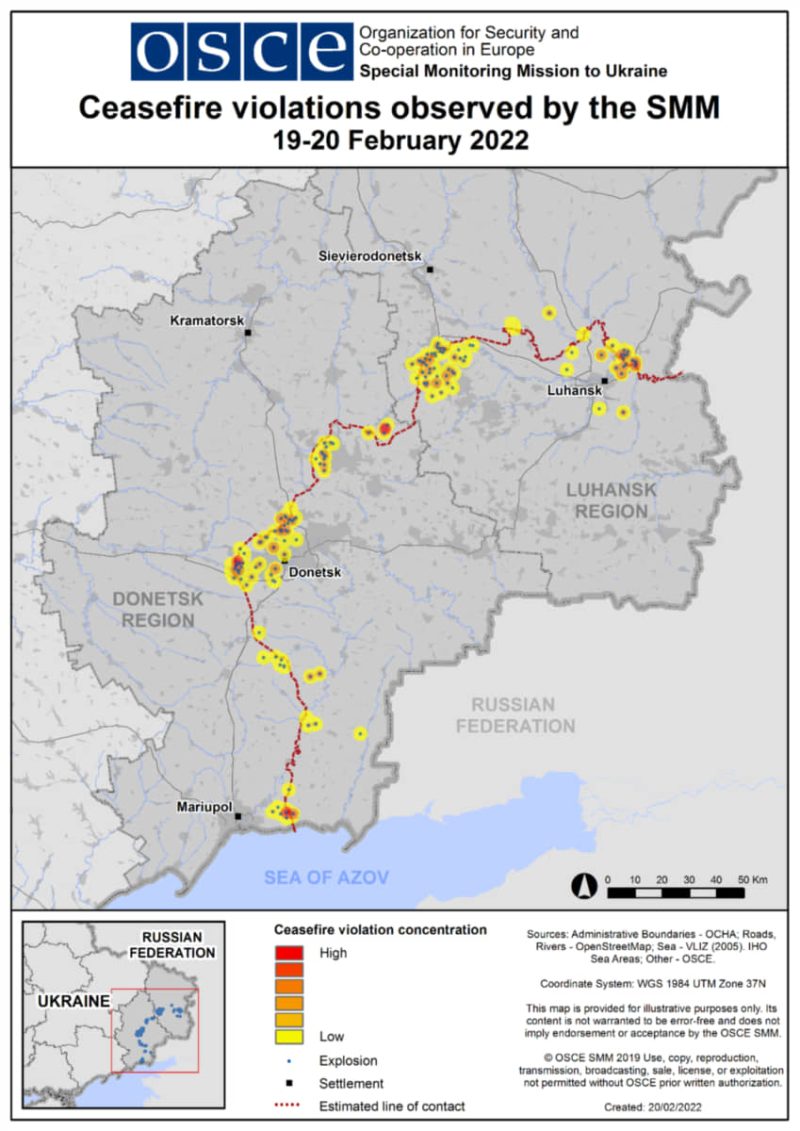
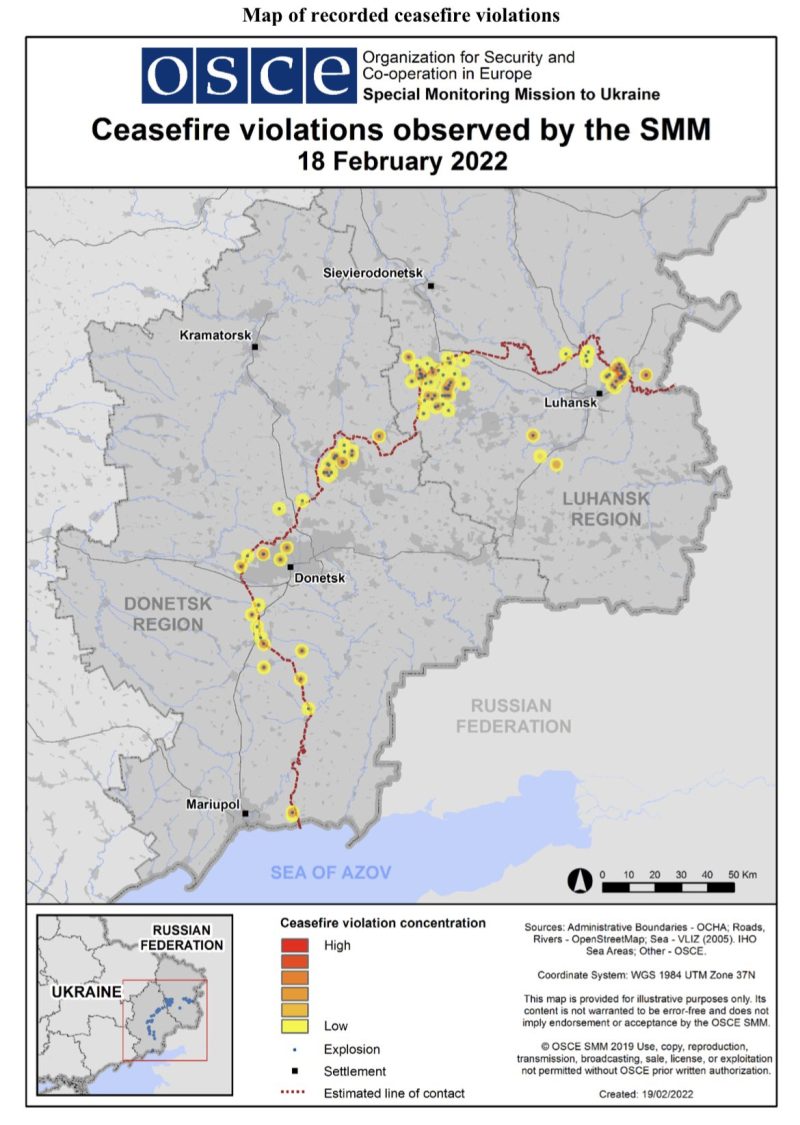
    Prior to the Russian invasion of Ukraine on February 24, Organization For Security and Cooperation in Europe (OSCE) maps showed that shelings that violated ceasefire arrangements under the Minsk accords were carried out mostly by the Ukrainian government, which had forced the people of Luhansk and Donetsk to live in underground bunkers for years.

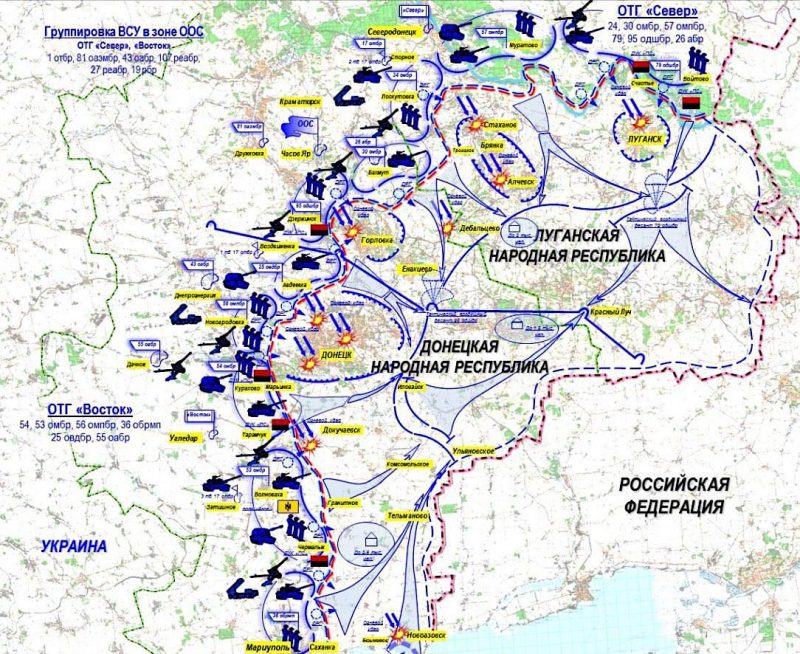
    According to the Russian Deputy Foreign Minister, Ukraine had massed 122,000 troops on the border with Donbass on the eve of the war. The Duma claimed to have intelligence indicating that these troops were planning an offensive into Donbass, which the Russian invasion preempted.

    Russia reported on February 21 that it had captured a Ukrainian soldier and killed five others after they crossed into Russian territory in Rostov, just over the border with Ukraine.

    Map showing Ukrainian troops concentrations on the eve of the Russian invasion on February 24, 2022.
    Source: covertactionmagazine.com

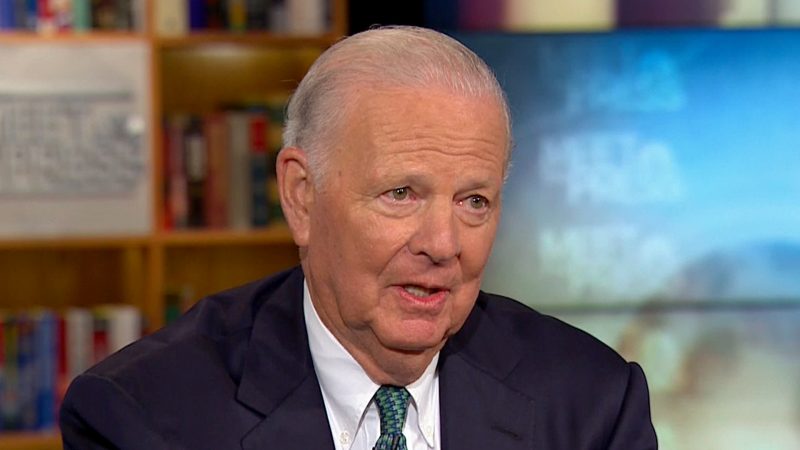
    The U.S. further provoked the war by refusing to abide by Putin’s legitimate demand that the North Atlantic Treaty Organization (NATO) not be expanded to Ukraine or anywhere further to Russia’s border—going against a promise made in 1990 by U.S. Secretary of State James A. Baker that NATO would not expand “one inch eastward.”

    The U.S. also armed and equipped the Ukrainian military with lethal weaponry for years, including Javelin anti-tank missiles, which have shot down at least 50 tanks in the war so far, and CIA trained Ukrainian paramilitary units in sniper techniques and irregular warfare.

    Biolabs, False Flags, Chemical Weapons and Atrocity Stories

    At the heart of the current information war lies allegations about wide scale atrocities, false flag attacks and chemical warfare.

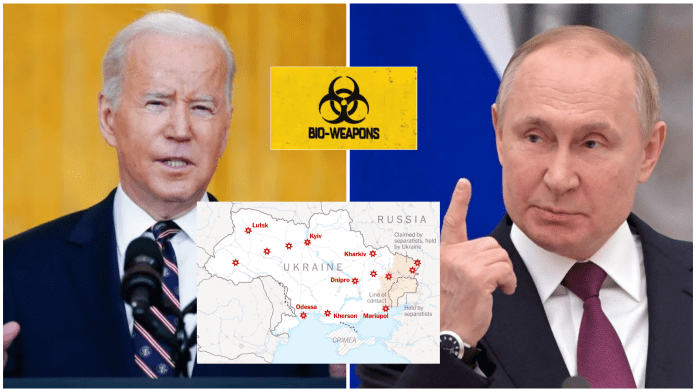
    Russia has also accused the U.S. of possessing biowarfare labs within Ukraine. Press Secretary Jen Psaki claimed that the latter allegation was part of a Russian disinformation operation. However, undersecretary of state Victoria Nuland admitted that bioweapons labs existed in Ukraine and that she was afraid that Russian troops would seek to gain control of them, with leaked documents showing that Pentagon contractors had access to the labs.

    Atrocities

    On March 13th, Russia was accused of bombing a maternity ward in Mariupol, killing a pregnant woman and her baby. Russian officials claimed the maternity hospital had been taken over by Ukrainian extremists to use as a base, and that no patients or medics were left inside. Russia’s ambassador to the U.N. and the Russian Embassy in London called the images “fake news,” which appears in this case to be untrue.However, the Western media made the Russians look like the only bad guys in the war by failing to report on Ukrainian atrocities such as Ukraine’s deployment of a cluster bomb in the Donetsk city center, killing dozens of civilians (including six people riding a city bus) and forcing many more to evacuate.

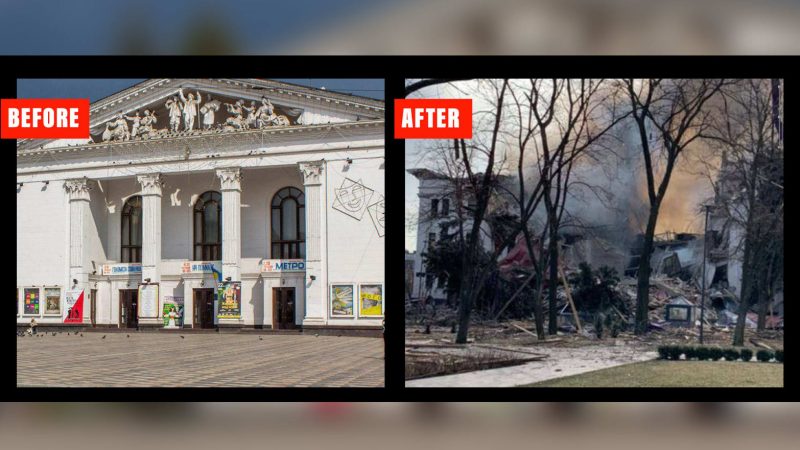
    The U.S. media also failed to report on how Azov battalion men dragged civilians who were trying to leave Mariupol from their cars and then shot them dead, as was captured on video. Russia was further blamed for bombing a movie theater in Mariupol where residents had taken shelter, when eyewitness reports said it was the work again of Azov militants associated with the Ukrainian army.


    CNN and other U.S. media blamed Russia for destroying the movie theater in Mariupol when eyewitness said it was Azov militants within the Ukrainian army. Source: thedailybeast.com.
     

    The extent to which the CIA is behind the media’s one-sided coverage of the Ukraine war is uncertain. In the past, the CIA has planted journalists and funded intellectual journals and continued to do so under the guise of the National Endowment for Democracy (NED).

    Burns’ statements indicate, however, that the nation’s media have been enlisted in the information war unequivocally. RT News has been shut down and mainstream publications like the New York Times parrot the State Departments’ views about the war, attributing any criticisms of U.S. policy to Russian disinformation.

    Last week, the White House went so far as to invite and brief some 30 top social media “influencers,” especially those on TikTok, a short video platform which has become very popular among the youth. Using similar material provided to mainstream news reporters, this clearly represents an extra effort by Washington to more widely propagate disinformation on Ukraine.

    In his 1928 book, Falsehoods in a Time War, Sir Arthur Ponsonby provided a blueprint of war propaganda that could be summarized as follows:

    1. We do not want war.
    2. The opposite party alone is guilty of war.
    3. The enemy is inherently evil and resembles the devil.
    4. We defend a noble cause, not our own interests.
    5. The enemy commits atrocities on purpose; our mishaps are involuntary.
    6. The enemy uses forbidden weapons.
    7. We suffer small losses, those of the enemy are enormous.
    8. Recognized artists and intellectuals back our cause.
    9. Our cause is sacred.
    10. All who doubt our propaganda are traitors.

    Right out of the CIA’s playbook circa 2022.


    This article was published earlier in MRonline

    TPF is happy to republish it with the permission of the author and under Creative Commons Licence.

  • Truths and lies about pledges made to Russia

    Truths and lies about pledges made to Russia

    The ongoing Russia-Ukraine war is a senseless one. However, we must realise that much of the blame for this war lies at the door steps of the USA, NATO, and the EU. In this article, author Guy Mettan demolishes the myths put out by the Western press, and highlights the real causes of the war. TPF is delighted in republishing this excellent article by the eminent author, journalist, and parliamentarian. He responded to our request with a refreshing candour –

    “I would be very pleased and honoured if you republish my article. I know that Indian people have a very balanced, non-aligned vision of the world that doesn’t exist any more in the West. But I think – and hope – that this hegemonic way of thinking and doing will soon end for a more equitable world.”

    – TPF Editorial Team

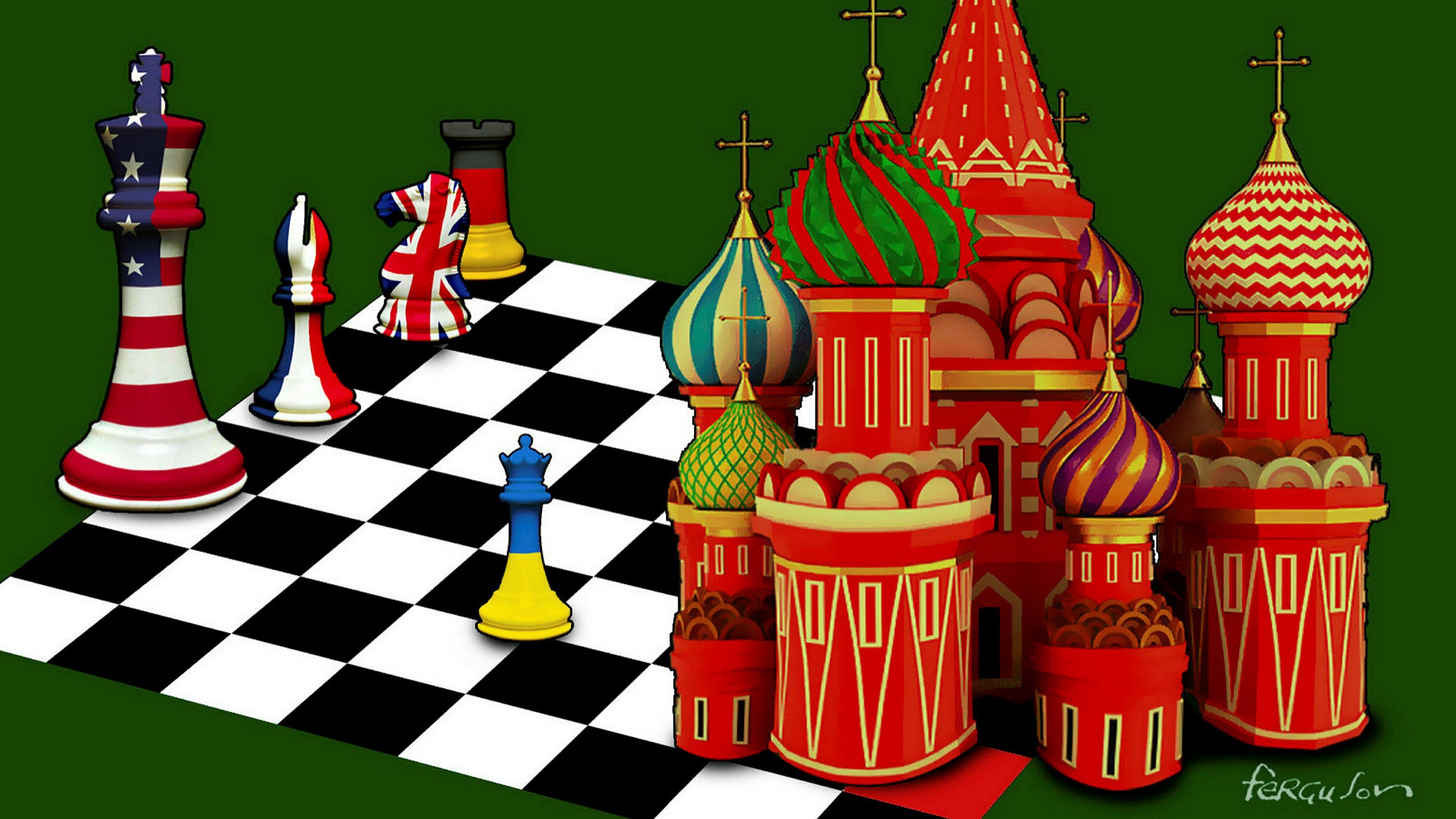
    Zbigniew Brzezinski, author of the famous book “The Grand Chessboard: American Primacy and its Geostrategic Imperatives”, in which he explains why the United States should definitely grab Ukraine

    In particular, it is necessary to correct numerous articles that claimed that the pledge made by the United States to Gorbachev in 1991, according to which NATO “would not move an inch in the East” in exchange for German reunification and the withdrawal of Red Army troops from Eastern Europe, was a “myth” forged by the Kremlin in order to neutralise or even invade Ukraine.

    This thesis is based on an article published in Foreign Affairs magazine in 2014, at the time of the Ukrainian crisis, and reaffirmed in a book published last November. Its author, Mary E. Sarote, is a member of the most influential think tank in U.S. imperial politics, the Council on Foreign Relations, whose opinions are more propaganda than impartial study.

    For this so-called “myth” could not be truer. It is essential to be aware of it if we want to both understand what is happening and find a negotiated solution to the conflict.


    “we consider that the consultations and discussions in the framework of the 2+4 mechanism should provide a guarantee that German reunification will not lead to an expansion of the NATO military organisation to the east”

      – James Baker, US Secretary of State, February 9, 1990. 


    On February 9, 1990, James Baker, then U.S. Secretary of State, said exactly this: “we consider that the consultations and discussions in the framework of the 2+4 mechanism should provide a guarantee that German reunification will not lead to an expansion of the NATO military organisation to the east.” The next day, Chancellor Helmut Kohl echoed, “We consider that NATO should not expand its sphere of activity.”

    Declassified documents show security assurances against NATO expansion to Soviet leaders from Baker, Bush, Genscher, Kohl, Gates, Mitterrand, Thatcher, Hurd, Major and Woerner.

    In December 2017, the National Security Archive at George Washington University published memos, minutes and telegrams from that time, from which it emerges that Western assurances appear in numerous documents recorded or written during chancellery exchanges in 1990 and 1991. All the details can be found on the university’s dedicated website, under the heading “NATO Expansion: what Gorbachev Heard. Declassified documents show security assurances against NATO expansion to Soviet leaders from Baker, Bush, Genscher, Kohl, Gates, Mitterrand, Thatcher, Hurd, Major and Woerner. Slavic Studies Panel Addresses ‘Who Promised What to Whom on NATO Expansion?’”

    Former American ambassador to Moscow, Jack Matlock, also confirmed these facts in his various publications. Guarantees have therefore been given, even if they are not contained in a treaty signed in due form.

    But you have to be willing to take note and recognise that a word is a word.

    President Bill Clinton decided to ignore them and succeeded, in 1997, in expanding NATO eastwards by admitting new members in exchange for a $4 billion “bribe” to his friend Boris Yeltsin, as Yeltsin later called this gift.

    It was only later, with the rise of the neoconservatives, that President Bill Clinton decided to ignore them and succeeded, in 1997, in expanding NATO eastwards by admitting new members in exchange for a $4 billion “bribe” to his friend Boris Yeltsin, as Yeltsin later called this gift.

    At that time, the most resolute anti-Russian in the American administration, Zbigniew Brzezinski, author of the famous book “The Grand Chessboard. American Primacy and its Geostrategic Imperatives”, in which he explains why the United States should definitely grab Ukraine, foresaw what would happen today: “If Russia is dismissed or rejected, it will be filled with resentment and its vision of itself will become more anti-European and anti-Western.” And he urged Clinton to hurry: “The longer we wait, the louder Moscow’s objections will be,” he predicted in the mid-1990s, while warning against an overly abrupt expansion.


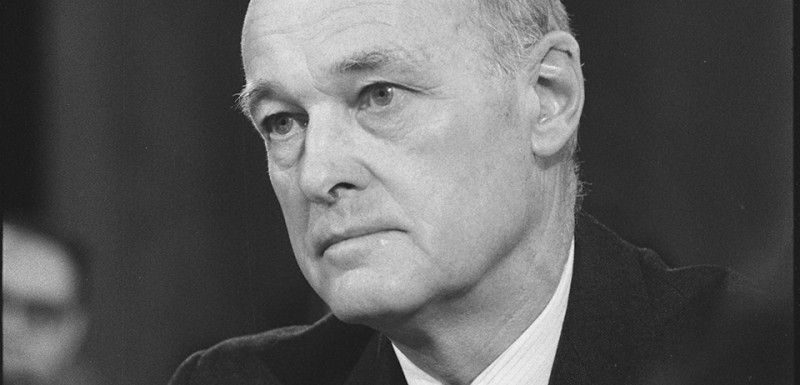
    George Kennan, in a February 5, 1997 New York Times article, prophesized the current situation by writing that, following the breach of the given word to Gorbachev, the expansion of NATO is a ‘Fateful Error’.


    This danger was not overlooked by the father of the Soviet Union’s containment, George Kennan. In a 1997 New York Times article, he prophesized the current situation by writing that, following the breach of the given word to Gorbachev, the admission of Poland, Hungary and the Czech Republic into NATO would be “the biggest mistake of post-Cold War American politics and would only serve to inflame nationalistic, anti-Western and militaristic tendencies in the Russian public.”

    Since then, NATO has only made things worse, admitting seven new states in 2004 and promising membership to Ukraine and Georgia in April 2008, before encouraging the latter to attack South Ossetia in August of the same year. This was barely ten months after Putin’s speech at the Munich conference, in which he had expressed the wish that NATO should stop expanding! In 25 years, NATO has doubled the number of its members, all in the East.

    At the same time, it accumulated aggressions by brazenly lying and twisting international law: the Gulf War in 1991 (with the fabricated affair of the babies thrown out of Kuwaiti incubators); the dismemberment of Yugoslavia in 1992, the illegal bombing of Serbia in 1999 and secession of Kosovo (justified by the pseudo-massacre of Raçak and the so-called Operation Horseshoe imputed to Serbia); the invasion of Afghanistan in 2001; the Iraq war in 2003 (started thanks to Colin Powell’s lies to the UN); the destruction of Libya and the assassination of Gaddafi (falsely accused of slaughtering his own population) in 2011; the attempted destruction of Syria and the overthrow of its president between 2011 and 2019; the war in Yemen since 2015, carried out under Saudi flag and considered by the UN to be the most important humanitarian catastrophe of our time.

    It is therefore very difficult to regard the American-led NATO as an innocent and harmless bridge club.

    It should therefore come as no surprise that, after the U.S.-organised coup in February 2014 to overthrow democratically elected Ukrainian President Viktor Yanukovych, whose mistake was to wish for Ukraine to seek a balance between Russia and Europe, Russia regained control of Crimea while the Donbass provinces rebelled against this forfeiture.

    The United States and NATO are of course free to renege on their word and continue their aggressive course at the risk of starting a war. But at least the public has the right to know why and how it has come to this without being misled about who is really responsible for what would be a real mess for Europe.


    This article was published earlier in MRonline. It is republished under Creative Commons License,

    Feature Image: www.ft.com

    James Baker Image: www.bakerinstitute.org

    George Kennan Image: Foreign Policy and his article ‘A Fatefull Error’ in NYT.


  • Sanctions on Russia: How will they play out?

    Sanctions on Russia: How will they play out?

    The rich nations supporting Ukraine in its war with Russia have imposed sanctions on the latter. They cannot intervene militarily directly since that would lead to a much wider conflagration and a possible catastrophic Third World War, as the Russian Foreign Minister has warned. The North Atlantic Treaty Organization realizes that and has not sent its troops to Ukraine, in spite of pleadings by the Ukrainian government. Instead, it is providing arms and other support to Ukraine to resist the invasion. The situation remains dangerous and tricky.

    Sanctions are supposed to punish the Russians for their aggression. It won’t halt the war but will it hurt the Russians enough that they will regret the invasion and not embark on future adventures? If the war drags on the costs could mount. This could lead to pressures for a regime change in Moscow and that may lead to a ratcheting up of the war. If sanctions are successful, will it be a lesson to China? Severe sanctions against Iran (0.3 per cent of the World’s Gross Domestic Product [GDP]) did not bring it to its knees. Given that the Russian economy is bigger (1.7 per cent of the World’s GDP) and much more advanced technologically, its economy may be much less impacted.

    [powerkit_button size=”lg” style=”info” block=”true” url=”https://theleaflet.in/sanctions-on-russia-how-will-they-play-out/” target=”_blank” nofollow=”false”]
    Read More
    [/powerkit_button]

  • The Russia-Ukraine War: Putin’s Reasons, Objectives and the Way Out

    The Russia-Ukraine War: Putin’s Reasons, Objectives and the Way Out

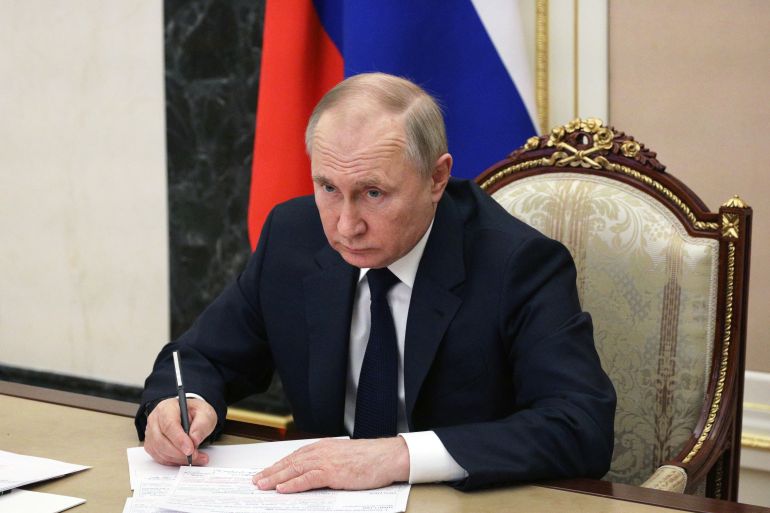
    In 3 weeks since Russia’s president, Putin ordered on February 24 this year, a “special military operation” against Ukraine, many questions were asked on his reasons and goals.

    Putin answered those questions in the early morning address to the nation on February 24. He referred to Russia’s particular concern and anxiety over the NATO expansion to the east and the US policy of containment of Russia through the military “settlement” of the Ukrainian territory. Transformation of Ukraine, historically a part of the Russian state, into an “anti-Russia” controlled and guided by the U.S. was nothing less, in Putin’s view than a real threat to Russia’s very existence.

    Putin went on to mention Ukraine’s use of armed forces against the pro-Russian separatists in Donbas, the potential threat that the Ukrainian nationalists could present for Russia-annexed Crimea, and Kyiv’s desire to acquire nuclear weapons. “Russia’s clash with these forces is inevitable.”

    This was the start of Russia’s war on Ukraine. Few of us believed it would actually happen, but it did, nonetheless. Let’s start by trying to understand, why.

    Russia’s red lines

    According to John Mearsheimer, the West, and especially America, is principally responsible for the current crisis, which actually started at NATO’s Bucharest summit in April 2008, with the US pushing the alliance to announce a plan for Ukraine and Georgia’s prospective membership. Russian leaders characterized the move as an existential threat to Russia and promises to thwart it. Putin warned the West then and there: “if Ukraine joins NATO, it will do so without Crimea and the eastern regions. It will simply fall apart.”

    Nobody listened, or paid attention, thus underscoring the second point from Putin’s pre-invasion speech: the West no longer treats Russia as a great power and will do whatever it deems necessary without taking heed of Russia’s legitimate interests. Instead, Ukraine was actively encouraged to expand its collaboration with NATO and crush the pro-Russian rebellion in Donbas by force. The U.S. and NATO supplied lethal weapons for Ukraine’s civil war, trained its armed forces and turned a blind eye to reports of atrocities that Kyiv and Kyiv-affiliated militias had committed in the region.

    Ukraine started hosting joint land-based and naval exercises with NATO countries, effectively blocking Russia’s Black Sea fleet in its base in Sevastopol. In July 2021, Ukraine and America co-hosted a major naval exercise in the Black Sea region involving navies from 32 countries. In November 2021, the U.S. conducted its annual Global Thunder 22 exercises, which included strategic aviation practising nuclear strikes against Russia over the Black Sea and only 20 km from Russia’s borders. In parallel to that, Ukraine’s Deputy Minister of Defense announced his country’s aspirations to put as many US/NATO training centers in Ukraine as possible, which effectively amounted to a request for additional U.S. military personnel in the country.

    As John Mearsheimer observed, Ukraine was fast becoming a de facto member of NATO. It wanted to use NATO’s rearmaments and the US political and strategic back-up to crush the separatist rebellion in Donbas and ensure “de-occupation and reintegration” of Crimea, now an integral part of the Russian Federation, by all necessary means, not excluding “military measures.” Russia’s fears of NATO’s ballistic missiles appearing on the Ukraine-Russia border, within 7-8 minutes of flying time to Moscow no longer seemed overly exaggerated. Putin described such a potentiality as NATO’s holding a knife to Russia’s throat and made an explicit connection between Ukraine’s aspirations of NATO membership and Kyiv’s plan to return Donbas and Crimea by force. Both were equally unacceptable.

    Russia’s goals

    According to the Russian leader, if Ukraine joined NATO, it would be tempted to implement its “de-occupation strategy” for Crimea through the use of force. NATO would then be obliged to help Ukraine under its Article V mutual defence clause. “This means that there will be a military confrontation between Russia and NATO,” Putin said. Such a war would soon turn nuclear. The Kremlin came to a conclusion that a pre-emptive strike on Ukraine was the only way to stave off a future Russia-NATO war over Crimea.

    We haven’t seen it coming. It was hard to anticipate because Ukraine’s turning away from Russia and drawing closer to NATO did not start yesterday. Ukraine’s Yavoriv training ground hosted the first joint manoeuvres with NATO back in 1995. In 1997, Ukraine and NATO signed the Charter on a Distinctive Partnership. In 2000, the Ukrainian parliament ratified the Status of Forces Agreement, which enabled the stationing of NATO troops on Ukrainian soil. In 2002, Ukraine’s goal of eventual NATO membership was first voiced by its President; that goal has since become a part of the country’s official foreign policy doctrine. Ukraine’s forces took part in numerous NATO-led operations and missions over the years, from Bosnia to Kosovo to Afghanistan to Iraq. And Russia observed all of these developments over the period of near 20 years with calm and reserve, leaving an impression that Ukraine is free to proceed as it wants.

    Moscow’s calm evaporated after Ukraine’s Maidan revolution of 2014 deposed Russia-leaning president Yanukovych and, through the revolutionary powers’ first acts, indicated a clear break with the last memories of the Russian influence. Symbolically, the very first move was to strip the Russian language of its semi-official status in the areas where significant numbers of Russian-speaking minorities lived. A clear indication was given as to the status of the Russian Black Sea Fleet naval base in Sevastopol – the new powers would prefer the Russian navy relocate to Russia proper at its earliest convenience. Plans were underway to offer these naval facilities to NATO.

    Putin moved on to annex Crimea, which, in his view, was an act of strategic necessity. He apparently anticipated Ukraine’s eventually acquiescing to the fact.

    It did not happen. Instead, Ukraine grew more nationalistic, and a significant number of its nationalists embraced anti-Russianism together with far-right politics and symbology. Hence, the Russian goals in the present war include “de-Nazification,” which must be read as Ukraine’s abandonment of anti-Russian nationalism and return to the quasi-Soviet ideology of “one people” with Russians and Belarusians. In other words, Russia would seek to reaffirm, if not impose, a version of the Ukrainian identity that was supported through both the imperial and the Soviet times — Ukrainians as a junior kinfolk to the Russian “older brother.”

    The way out

    With Ukraine’s capital Kyiv under assault and the southern port of Mariupol nearing utter destruction, calls for peace have intensified on all sides, including from Russia’s most important backers in China. Unfortunately, the search for a working compromise has not yet started in earnest. Ukraine’s original position at peace talks focused on the immediate withdrawal of all Russian troops from all of Ukraine, Crimea and Donbas included. From the Russian perspective, that would be equal to capitulation and surrender of a part of its own territory (Crimea), plus legal denunciation of a friendship and support treaty just concluded with Donbas.

    Russia’s present terms for ending the war are equally unrealistic. They include Ukraine’s adoption of a neutral status and the abandonment of its hopes for NATO membership; acknowledgement of the Russian sovereignty over Crimea and the independence of separatist regions in the country’s east; and demilitarization. The objective of the regime change, disguised by the “de-Nazification” rhetoric, has not been voiced much as of recent.

    Given the very fact of the ongoing war with Russia, the demand for demilitarization is clearly a non-starter. Russia’s insistence on Ukraine’s constitutional neutrality could, perhaps, be taken back to Ukraine’s parliament for a serious discussion; however, a ceasefire must be reached first for such a discussion to happen. As for Ukraine’s acknowledgement of Russia’s sovereignty over Crimea or independence of Donbas, these Russia-pushed items look more like the terms of surrender and cannot form the basis of a peace agreement.

    A more plausible ground for a compromise could be the two states’ mutual pledge to refrain from all attempts to solve any outstanding issues by force in the future. That would stop short from Ukraine’s recognition of either Crimea or Donbas but would assure Russia that Ukraine has no plans to regain the lost territories by force. Russia would need to withdraw its army from all areas of Ukraine proper. Ukraine would have to accept that its fight for the return of Crimea and Donbas would now be restricted in its choice of means to mostly diplomatic and legal instruments. The assurances of a non-aligned, non-bloc status that Ukraine could give to Russia should be matched with Russia’s assurances of full compensation for the losses that this war inflicted on Ukraine’s economy and society. While such a compromise will most probably draw the rage of hawkish nationalists on both sides, it might actually form the foundation of a peace agreement that everyone needs.

    Image Credits:

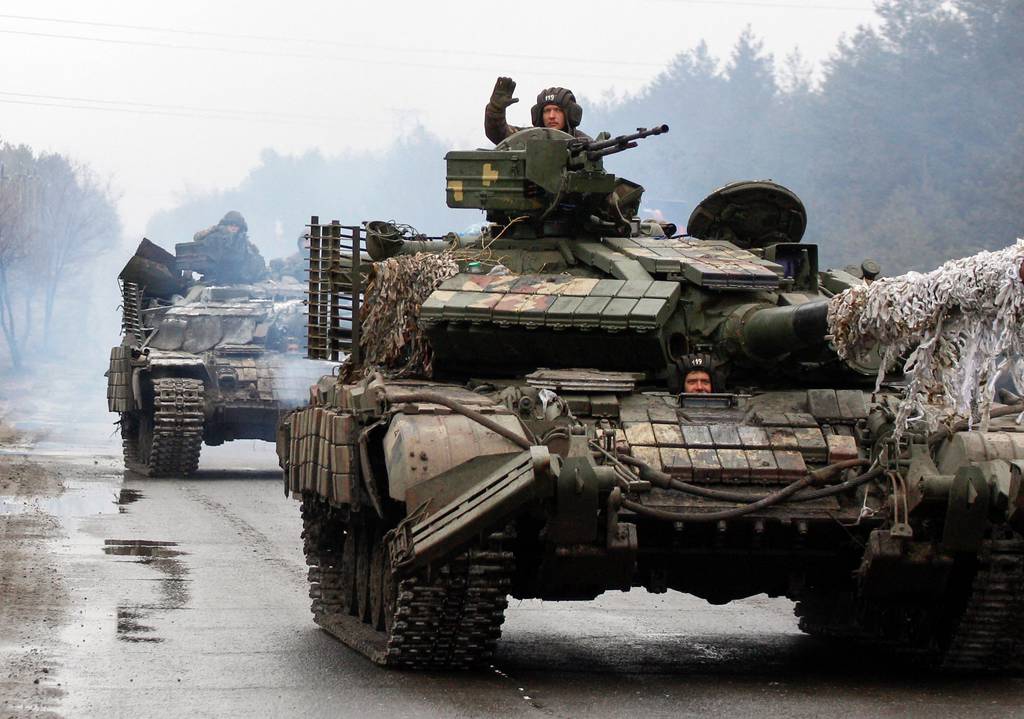
    Feature Image: www.militarytimes.com

    Putin Image: Al Jazeera

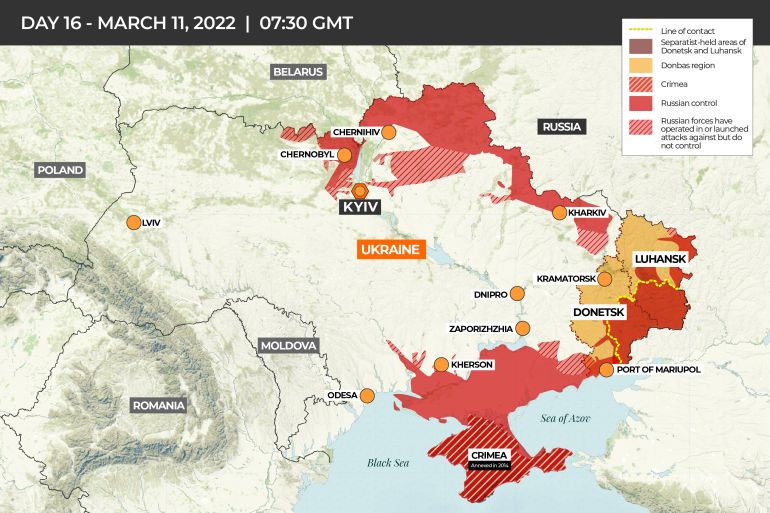
    Map: Al Jazeera

  • The Ukraine crisis: Its impact on India

    The Ukraine crisis: Its impact on India

    India has to tread a fine line in this imbroglio: Taking care of the welfare and evacuation of Indian students and the possibility of an oil price hike.

    The face-off over Ukraine between Russia and the United States and its Nato allies has been dominating the headlines for a while now with tensions ratcheting up as we receive dire public warnings every day of a Russian invasion any day now. Clearly, the possibility of Russian intervention there, and the consequent escalation of sanctions against them, is very real and concerning.

    While Ukraine may be a developing country and the poorest in Europe, by no means is it a pushover. It is the second-largest country there, behind Russia, by area, and in terms of population the eighth largest with its 42 million inhabitants. It has been independent since 1991, following the collapse of the Soviet Union, though it had been a part of the Russian Empire and the Soviet Union since the 18th century. If there is one lesson that Putin and the Russian military should have learnt from America’s disastrous interventions in Iraq and Afghanistan is that invasions are relatively easy to accomplish, but keeping restive and hostile populations under control is a wholly different proposition.

    [powerkit_button size=”lg” style=”info” block=”true” url=”https://www.dailypioneer.com/2022/columnists/the-ukraine-crisis–its-impact-on-india.html” target=”_self” nofollow=”false”]
    Read More
    [/powerkit_button]

  • US Foreign Policy Is a Cruel Sport

    US Foreign Policy Is a Cruel Sport

    The Russia- Ukraine conflict escalated into a full-blown as Russian President Vladimir Putin ordered special military operations into Ukraine. In this global geopolitical chessboard, Ukraine is a pawn and a tragic victim. However, the causes of this war lie squarely in the decades-long aggressive strategy employed by the US and its European allies in expanding NATO at the expense of Russia’s security and strategic interests. Henry Kissinger’s, in his 2014 article, sounded prophetic – “if Ukraine is to survive and thrive, it must not be either side’s outpost against the other — it should function as a bridge between them.” He categorically stated Ukraine must not join NATO. Diana Johnston’s article clearly brings out the reasons for the current mess and how the USA’s aggressive and deeply self-centred foreign policy has created much of the mess in today’s world.

    The Peninsula Foundation is happy to republish this article with the author’s permission. The opinions expressed are the author’s own.

    The article was published earlier in Consortium News.

    – Editorial Team


    In the time of the first Queen Elizabeth, British royal circles enjoyed watching fierce dogs torment a captive bear for the fun of it.  The bear had done no harm to anyone, but the dogs were trained to provoke the imprisoned beast and goad it into fighting back.  Blood flowing from the excited animals delighted the spectators.

    This cruel practice has long since been banned as inhumane.

    And yet today, a version of bear baiting is being practised every day against whole nations on a gigantic international scale.  It is called United States foreign policy. It has become the regular practice of the absurd international sports club called NATO.

    United States leaders, secure in their arrogance as “the indispensable nation,” have no more respect for other countries than the Elizabethans had for the animals they tormented. The list is long of targets of U.S. bear-baiting, but Russia stands out as a prime example of constant harassment.  And this is no accident.  The baiting is deliberately and elaborately planned.

    As evidence, I call attention to a 2019 report by the RAND Corporation to the U.S. Army chief of staff entitled “Extending Russia.” Actually, the RAND study itself is fairly cautious in its recommendations and warns that many perfidious tricks might not work.  However, I consider the very existence of this report scandalous, not so much for its content as for the fact that this is what the Pentagon pays its top intellectuals to do: figure out ways to lure other nations into troubles U.S. leaders hope to exploit.

    The official U.S. line is that the Kremlin threatens Europe by its aggressive expansionism, but when the strategists talk among themselves the story is very different.  Their goal is to use sanctions, propaganda and other measures to provoke Russia into taking the very sort of negative measures (“over-extension”) that the U.S. can exploit to Russia’s detriment.

    The RAND study explains its goals:

    “We examine a range of nonviolent measures that could exploit Russia’s actual vulnerabilities and anxieties as a way of stressing Russia’s military and economy and the regime’s political standing at home and abroad. The steps we examine would not have either defense or deterrence as their prime purpose, although they might contribute to both. Rather, these steps are conceived of as elements in a campaign designed to unbalance the adversary, leading Russia to compete in domains or regions where the United States has a competitive advantage, and causing Russia to overextend itself militarily or economically or causing the regime to lose domestic and/or international prestige and influence.”

    Clearly, in U.S. ruling circles, this is considered “normal” behaviour, just as teasing is normal behaviour for the schoolyard bully, and sting operations are normal for corrupt FBI agents.

    This description perfectly fits U.S. operations in Ukraine, intended to “exploit Russia’s vulnerabilities and anxieties” by advancing a hostile military alliance onto its doorstep, while describing Russia’s totally predictable reactions as gratuitous aggression.  Diplomacy involves understanding the position of the other party.  But verbal bear baiting requires total refusal to understand the other, and constant deliberate misinterpretation of whatever the other party says or does.

    What is truly diabolical is that, while constantly accusing the Russian bear of plotting to expand, the whole policy is directed at goading it into expanding!  Because then we can issue punishing sanctions, raise the Pentagon budget a few notches higher and tighten the NATO Protection Racket noose tighter around our precious European “allies.”

    For a generation, Russian leaders have made extraordinary efforts to build a peaceful partnership with “the West,” institutionalized as the European Union and above all, NATO. They truly believed that the end of the artificial Cold War could produce a peace-loving European neighbourhood. But arrogant United States leaders, despite contrary advice from their best experts, rejected treating Russia as the great nation it is and preferred to treat it as the harassed bear in a circus.

    The expansion of NATO was a form of bear-baiting, the clear way to transform a potential friend into an enemy. That was the way chosen by former U.S. President Bill Clinton and following administrations.  Moscow had accepted the independence of former members of the Soviet Union.  Bear-baiting involved constantly accusing Moscow of plotting to take them back by force.

    Russia’s Borderland

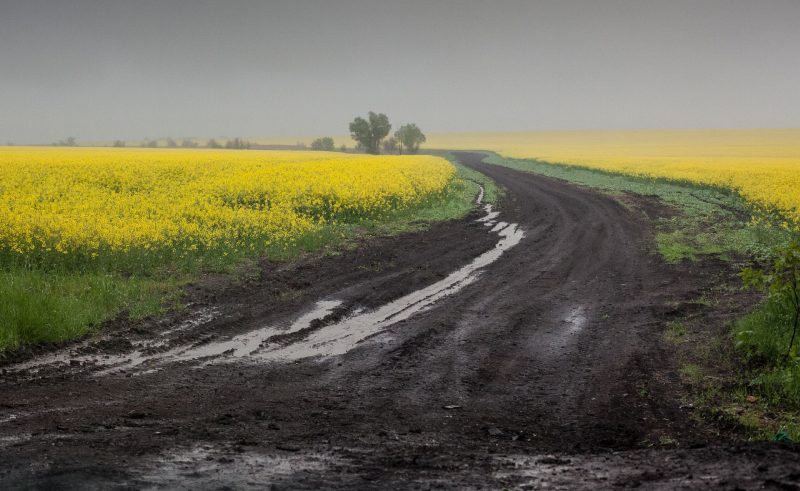
    An unpaved road to Lysychansk, Lugansk, March 2015. (Rosa Luxemburg-Stiftung, Flickr, CC BY 2.0)

    Ukraine is a word meaning borderlands, essentially the borderlands between Russia and the territories to the West that were sometimes part of Poland, or Lithuania, or Habsburg lands.  As a part of the U.S.S.R., Ukraine was expanded to include large swaths of both.  History had created very contrasting identities on the two extremities, with the result that the independent nation of Ukraine, which came into existence only in 1991, was deeply divided from the start.  And from the start, Washington strategies, in cahoots with a large, hyperactive anti-communist anti-Russian diaspora in the U.S. and Canada, contrived to use the bitterness of Ukraine’s divisions to weaken first the U.S.S.R. and then Russia.  Billions of dollars were invested in order to “strengthen democracy” – meaning the pro-Western west of Ukraine against its semi-Russian east.

    The 2014 U.S.-backed coup that overthrew President Viktor Yukanovych, solidly supported by the east of the country, brought to power pro-West forces determined to bring Ukraine into NATO, whose designation of Russia as the prime enemy had become ever more blatant. This caused the prospect of an eventual NATO capture of Russia’s major naval base at Sebastopol, on the Crimean peninsula.

    Since the Crimean population had never wanted to be part of Ukraine, the peril was averted by organizing a referendum in which an overwhelming majority of Crimeans voted to return to Russia, from which they had been severed by an autocratic Khrushchev ruling in 1954.  Western propagandists relentlessly denounced this act of self-determination as a “Russian invasion” foreshadowing a program of Russian military conquest of its Western neighbours – a fantasy supported by neither facts nor motivation.

    Appalled by the coup overthrowing the president they had voted for, by nationalists threatening to outlaw the Russian language they spoke, the people of the eastern provinces of Donetsk and Lugansk declared their independence.

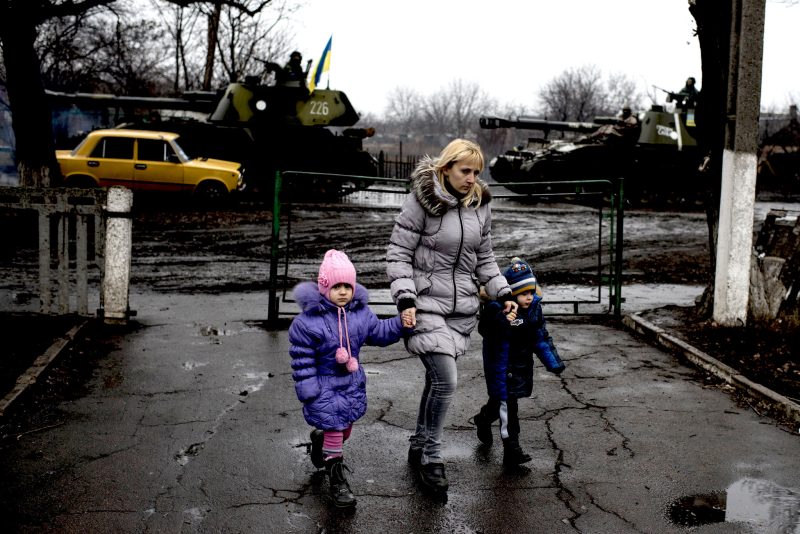
    March 2015: Civilians pass by as OSCE monitors the movement of heavy weaponry in eastern Ukraine. (OSCE, CC BY-NC-ND 2.0)

    Russia did not support this move but instead supported the Minsk agreement, signed in February 2015 and endorsed by a UN Security Council resolution. The gist of the accord was to preserve the territorial integrity of Ukraine by a federalization process that would return the breakaway republics in return for their local autonomy.

    The Minsk agreement set out a few steps to end the internal Ukrainian crisis. First, Ukraine was supposed to immediately adopt a law granting self-government to eastern regions (in March 2015). Next, Kyiv would negotiate with eastern territories over guidelines for local elections to be held that year under OSCE supervision.  Then Kyiv would implement a constitutional reform guaranteeing eastern rights. After the elections, Kyiv would take full control of Donetsk and Lugansk, including the border with Russia.  A general amnesty would cover soldiers on both sides.

    However, although it signed the agreement, Kyiv has never implemented any of these points and refuses to negotiate with the eastern rebels.  Under the so-called Normandy agreement, France and Germany were expected to put pressure on Kyiv to accept this peaceful settlement, but nothing happened. Instead, the West has accused Russia of failing to implement the agreement, which makes no sense inasmuch as the obligations to implement fall on Kyiv, not on Moscow.  Kyiv officials regularly reiterate their refusal to negotiate with the rebels, while demanding more and more weaponry from NATO powers in order to deal with the problem in their own way.

    Meanwhile, major parties in the Russian Duma and public opinion have long expressed concern for the Russian-speaking population of the eastern provinces, suffering from privations and military attack from the central government for eight years. This concern is naturally interpreted in the West as a remake of Hitler’s drive to conquest neighbouring countries.  However, as usual, the inevitable Hitler analogy is baseless. For one thing, Russia is too large to need to conquer Lebensraum.

    You Want an Enemy?  Now You’ve Got One

    Germany has found the perfect formula for Western relations with Russia: Are you or are you not a “Putinversteher,” a “Putin understander?” By Putin, they mean Russia, since the standard Western propaganda ploy is to personify the targeted country with the name of its president, Vladimir Putin, necessarily a dictatorial autocrat.   If you “understand” Putin or Russia, then you are under deep suspicion of disloyalty to the West.  So, all together now, let us make sure that we DO NOT UNDERSTAND Russia!

    Image Credit: metro.co.uk

    Russian leaders claim to feel threatened by members of a huge hostile alliance, holding regular military manoeuvers on their doorstep?  They feel uneasy about nuclear missiles aimed at their territory from nearby NATO member states?  Why, that’s just paranoia, or a sign of sly, aggressive intentions.  There is nothing to understand.

    So, the West has treated Russia like a baited bear.  And what it’s getting is a nuclear-armed, militarily powerful adversary nation led by people vastly more thoughtful and intelligent than the mediocre politicians in office in Washington, London and a few other places.

    U.S. President Joe Biden and his Deep State never wanted a peaceful solution in Ukraine, because troubled Ukraine acts as a permanent barrier between Russia and Western Europe, ensuring U.S. control over the latter.  They have spent years treating Russia as an adversary, and Russia is now drawing the inevitable conclusion that the West will accept it only as an adversary.  The patience is at an end. And this is a game-changer.

    First reaction: the West will punish the bear with sanctions!  Germany is stopping certification of the Nordstream 2 natural gas pipeline.  Germany thus refuses to buy the Russian gas it needs in order to make sure Russia won’t be able to cut off the gas it needs some time in the future.  Now that’s a clever trick, isn’t it!  And meanwhile, with a growing gas shortage and rising prices, Russia will have no trouble selling its gas somewhere else in Asia.

    When “our values” include refusal to understand, there is no limit to how much we can fail to understand.

    To be continued.


    Feature Image: nato.int

  • The Cold War that Wasn’t

    The Cold War that Wasn’t

    US President Joe Biden has repeatedly cast his country’s rivalry with China as a battle between democracy and autocracy, an ideological clash reminiscent of the Cold War. This narrative is inaccurate – the United States and China are locked in a competition for strategic dominance – and all but precludes resolution. Whereas demands related to tangible assets and security concerns can be accommodated, ideological struggles typically end one way: with the unconditional defeat of one of the parties

    The US should not be attempting to “defeat” China, as it did the Soviet Union, because, first and foremost, China is not on a quest to spread “socialism with Chinese characteristics” around the world. When Chinese President Xi Jinping declared in 2017 that “war without the smoke of gunpowder in the ideological domain is ubiquitous, and the struggle without armament in the political sphere has never stopped,” he was mainly demanding that outsiders respect China’s institutions and cultural traditions.

    The US is an exhausted power, and it is now being challenged by a rising one. To ensure that this well-known geopolitical dynamic does not end in war, the US must abandon jingoistic rhetoric and replace megaphone diplomacy with wise and creative statesmanship.

    This partly reflects Chinese nationalism, fed by historical narratives, especially the memory of the “century of humiliation” (1839-1949), during which China faced interventions and subjugation by Western powers and Japan. But it is also pragmatic: The Communist Party of China recognizes that some domestic trends could destabilize the country and eventually even undermine the CPC’s rule.

    For example, China’s economic rise has produced an educated, well-connected, and fast-growing middle class. If these increasingly powerful consumers rejected restrictions on private-sector activity or limits to free expression, the CPC would have trouble on its hands. Given this, the CPC views US advocacy of political freedom and human rights in China as an effort to subvert its rule.

    Even America’s drive to export liberal democracy to Asia and Africa has been less an ideological problem for China than a strategic one. Functioning democracies are likely to be harder bargaining partners for China and might even be brought into US-led anti-Chinese alliances.

    On this front, China’s fears have probably been assuaged by recent developments. With the from Afghanistan and the Taliban’s quick reconquest of the country, America’s democratic “crusade” – to borrow the language of former US President George W. Bush – seems to have reached an ignominious conclusion.

    But even if the US is not bringing new countries into the democratic fold, its existing alliance system is formidable, and Biden is committed to strengthening it further. For example, he has worked to resuscitate NATO; created , a new defense and technology alliance with the United Kingdom and Australia; and deepened security cooperation among key democracies in the Indo-Pacific (Australia, India, Japan, and the US, known as the “Quad”).

    This focus on alliances is probably the biggest difference between Biden’s China policy and that of his predecessor, Donald Trump, who spearheaded the shift toward confrontation. (Prior to Trump, recent US presidents largely attempted to maintain good working relations with China, not least because they clung to the assumption that the country’s economic rise would gradually bring about political change.)

    For China, this difference is worrying. Though the US cannot contain China alone, it can apply strong diplomatic pressure if it has other powers on its side, and China is in no position to create an alliance system that can match that of the US. Far from stabilizing the situation, however, this imbalance could fuel China’s insecurity, making constructive engagement all the more difficult

    America’s position is hardly unassailable, either. Biden’s touted exposed the limits of ideology as a mobilizing tool for a global anti-China coalition. It does not help that America’s own democracy is plagued by polarization, paralysis, and discontent. Add to that the world’s highest numberof COVID-19 deaths, and the “shining city on a hill” has lost its luster, to say the least.

    While the US is no ancient Rome – not least because it retains extraordinary advantages in crucial areas, from defense and diplomacy to technology and finance – it is suffering from what the historian Edward Gibbon described as “the natural and inevitable effect of immoderate greatness.” It has failed to adapt its democratic institutions to meet the needs of its population and its responsibilities as a world power.

    Ultimately, the US is an exhausted power, and it is now being challenged by a rising one. This dynamic is as longstanding as it is dangerous. As the ancient historian Thucydides explained, the rise of Athens, and the fear that this instilled in Sparta, made the catastrophic Peloponnesian War inevitable. Harvard’s Graham Allison notes that there have been 16 similar cases in the last 500 years. War broke out in 12 of them.

    To avoid what Allison calls the Thucydides Trap, the US must abandon jingoistic rhetoric and Manichean thinking, replacing megaphone diplomacy with wise and creative statesmanship. The choice is not between capitulating to China and crushing it. The US must recognize China’s legitimate concerns and aspirations, and it must be prepared to negotiate accordingly. (Sooner or later, it will have to do the same with regard to the West’s current showdown vis-à-vis Russia over Ukraine and NATO’s expansion.)

    The US must accept that the days of American hegemony are over. In today’s multipolar world, different political cultures and systems will have to learn to coexist. The ideological defeat of the Soviet Union did not exactly usher in a liberal democracy. Perhaps more important, even if China somehow suddenly became a liberal democracy, its historical grievances and territorial aspirations would remain, as is the case with Russia today. In this sense, ideological competition is beside the point.

    This article was originally published by Project Syndicate.

    Feature Image Credit: The Hill

  • Are we on the path to World War III? The rise of Asia and lessons from World War I

    Are we on the path to World War III? The rise of Asia and lessons from World War I

    Robert McNamara, the US Secretary of State during the Cuban Missile Crisis, famously noted that it was sheer luck, not rationality, that prevented the escalation of this crisis into a world war.

    The rise of East Asia and South-East Asia is inevitable – unless there would be World War III in this region. Whereas World War I was fought by the powers located at the shore of the North-Atlantic, World War II by those of the North-Atlantic and North-Pacific, World War III would be fought by those powers solely at the North-Pacific and the Indian Ocean. Are there lessons to be learned from the devastating conduct and outcome of World War I for our times? Is there only one lesson to be learned – that you can learn nothing from history? Or are we doomed to repeat history if we don’t learn anything from it? History will not repeat itself precisely, but wars repeatedly occur throughout history, even great wars. We are living in an age in which a war between the great powers is viewed as unlikely because it seems to be in no one’s interest, as the outcome of such a war would be so devastating that each party would do the utmost to avoid it. Rationality seems to dominate the assumptions and way of thinking in our times. But no war would have been waged if the losing side, or even both sides, would have known the outcome in advance.


    But what if conflicts in Asia would not be fought to pursue national interests so much as recognition? What would this mean: to be accepted as equal again after the humiliation in the course of European colonization and subsequent American hegemony? Indeed, acknowledgement of past suffering seems to be a trauma in the conscience of many Asian nations. Are those desires only irrational or a different kind of rationality, which we have to take into account?


    There are striking similarities between the Pre-World War I era and the current developments in Asia: World War I signifies the danger, not the inevitability, of a new world war in the decades to come. World War I is a symbolic representation of the risk that war amongst the great powers could erupt although nobody would benefit from it. It is a writing on the wall, that rationality is not a guarantee for avoiding self-destruction. All reckonings regarding the repetition of World War I in Asia are based on the assumption that it would be in no one’s interest to fight a large-scale war, even with WMD, which could lead to the destruction of great parts of Asia. But what if conflicts in Asia would not be fought to pursue national interests so much as recognition? What would this mean: to be accepted as equal again after the humiliation in the course of European colonization and subsequent American hegemony? Indeed, acknowledgement of past suffering seems to be a trauma in the conscience of many Asian nations. Are those desires only irrational or a different kind of rationality, which we have to take into account? At present, we have apparently a conflict between democracies in the Pacific and the Indian Ocean on one side and authoritarian China on the other. But during my few visits I got the impression that the trauma of colonization and the non-recognition of the Asian civilizations is more counting in the cultural memory of the Asian nations. And especially India should be wary to be instrumentalised by the US in their conflict with China.


    During her last visit to Beijing in September 2012, then US secretary of state Hillary Clinton held a press conference in which she stated that the world would soon see, but for the first time in history, that a rising power and an established power would not engage in a war. Of course, her statement was related to China and the US. Additionally, she even compared the competition between China and the US with that of the Peloponnesian War between Sparta and Athens – authoritarian Sparta against democratic Athens. Athens, the strongest city-state in Greece before the war, was reduced to a state of near-complete subjection, while Sparta became established as the leading power. Thucydides, the chronicler of the Peloponnesian War and one of the ancient world’s most important historians, saw the initial cause of this war in the growth of Athenian power: “What made war inevitable was the growth of Athenian power and the fear which this caused in Sparta.”

    Unlike Plato, though, Thucydides argues that it was not the striving for power in itself but rather fear of loss of power and, in the long term, fear of being oppressed, robbed of one’s freedom, and enslaved that caused the escalation leading to war. In Thucydides’ account, fear was the cause of war on both sides. Sparta was afraid of the growth of Athenian power, and Athens was afraid of what might happen if it gave in to an escalating series of demands and threats, the result of which could not be foreseen.

    The Europeans who went to war assumed they would be home by Christmas 1914. We know now, of course, that World War I not only happened but that it also resulted in the self-destruction of the European powers in two world wars. World War I is foremost a lesson that a limited conflict could escalate into a nightmare of millions of deaths and unspeakable suffering, for which no rational explanation could be found.


    No one wanted World War I to happen. Or, at least, no one wanted the kind of war that actually took place. The general assumption was that the conflict would be very limited. The Europeans who went to war assumed they would be home by Christmas 1914. We know now, of course, that World War I not only happened but that it also resulted in the self-destruction of the European powers in two world wars. World War I is foremost a lesson that a limited conflict could escalate into a nightmare of millions of deaths and unspeakable suffering, for which no rational explanation could be found. Military aims and strategies gained priority above meaningful political purposes. Although the generals of the German empire believed that they were relying on Clausewitz’s theory, in fact, they perverted him. Tactics replaced strategy, strategy substituted politics, politics gained momentum above policy, and policy was militarized. It was as if everybody was saying: being at war would mean a stop to thinking.


    This does not mean a simple equation of rising China with the then rising German Empire. Although the actors then and today seem to be quite different, the dynamics generated by the conflict between emerging, rising and declining powers are strikingly comparable.


    Perhaps the deepest and hidden reason for this escalation was that no war party could admit neither defeat nor failure. Striking evidence for this assumption is that the proclaimed war aims of the German Empire got momentum the more they got unrealistic and irrational. The pride, honour and identity of the German Reich prohibited the acknowledgement of defeat and failure. This was the same with Russia, France, England and the Habsburg Empire – and the Turk Empire too. Perhaps especially these Empires knew that their rule wouldn’t survive if they would have had to acknowledge military defeat or failure. Military defeat or failure would have humiliated their identity and their “face”: their social recognition within their society and community. A military defeat would signal their “symbolic death” – and so, the empires fought a war for life and death. This does not mean a simple equation of rising China with the then rising German Empire. Although the actors then and today seem to be quite different, the dynamics generated by the conflict between emerging, rising and declining powers are strikingly comparable.

    Robert McNamara, the US Secretary of State during the Cuban Missile Crisis, famously noted that it was sheer luck, not rationality, that prevented the escalation of this crisis into a world war. In 1983 the world did even need twice more than a great fortune to avoid a nuclear disaster. In current times all great powers are using military means to pursue their political and economic interests. But we just should not allow ourselves to bet in a casino-like style that military conflicts and strategies could not lead to the escalation of limited conflicts into great power wars. The path to World War III would not be similar to that leading to World War II, but comparable to the pre-World War I era.

    This article is an amended version of the Introduction in his book “Lessons from World War I for the Rise of Asia” by Stuttgart:Ibidem Publishers.

    Feature Image Credit: www.express.co.uk 

    Article Images: www.fr21news.com , www.bloomberg.com , L’EXPRESS