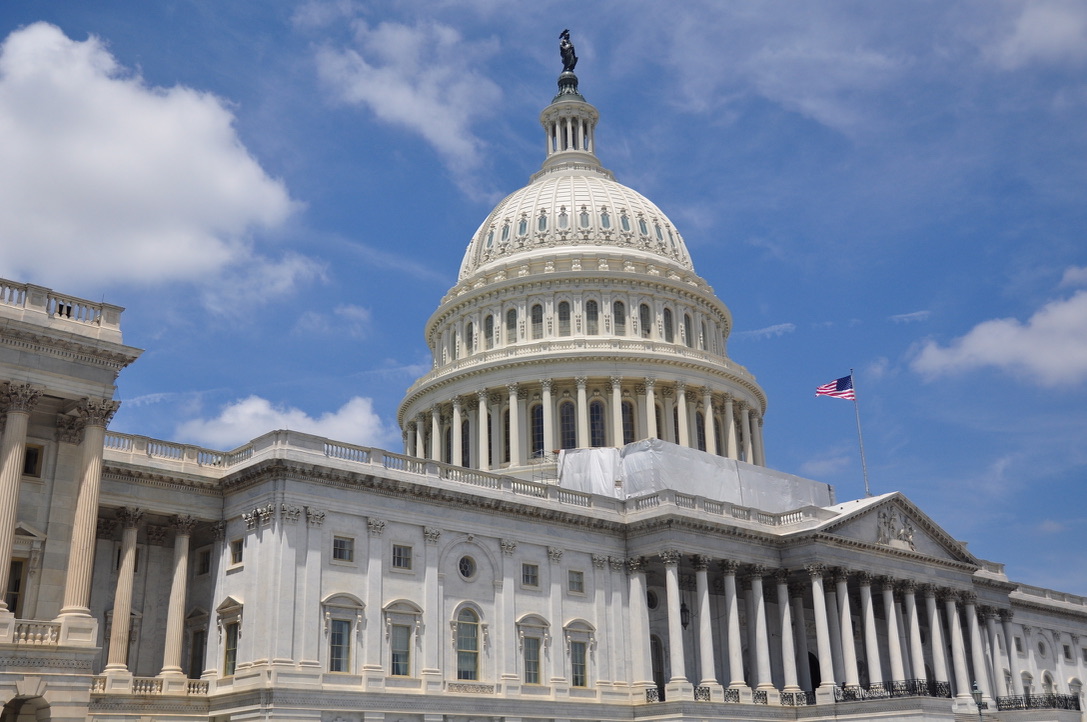
Tag: USA

  • Putin’s statements suggest the Ukraine conflict could last for years

    Putin’s statements suggest the Ukraine conflict could last for years

    Most likely, the fighting will continue into 2023, and quite probably beyond, until either Moscow or Kiev is exhausted, or one side claims a decisive victory. For the US, Ukraine is a matter of principle; for the Kremlin, the matter is simply existential – the conflict with the West is not about Ukraine, but about the fate of Russia itself.

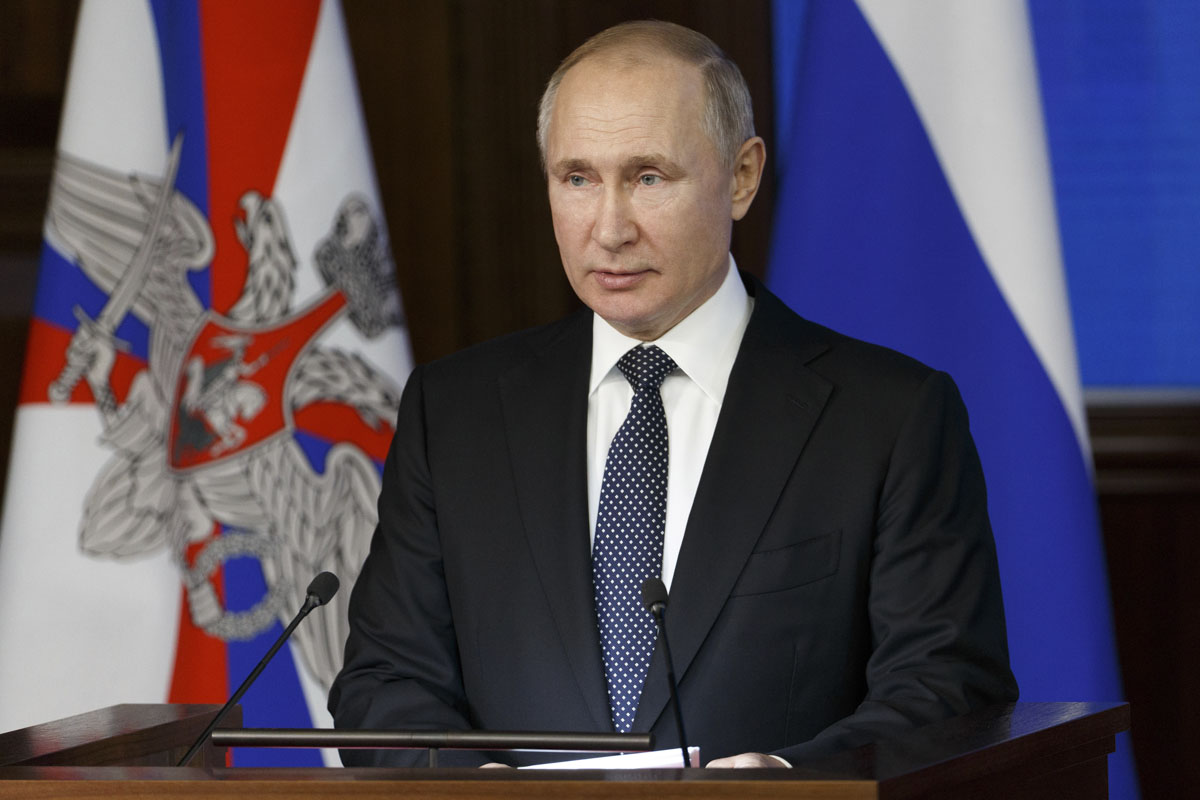
    Last week, Russian President Vladimir Putin commented, during a meeting with soldiers’ mothers, that he now regards the Minsk agreements of 2014 and 2015 as a mistake. This confession was stark in the context of the possibility of peace negotiations to end the fighting in Ukraine.

    Russian President Vladimir Putin commented, during a meeting with soldiers’ mothers, that he now regards the Minsk agreements of 2014 and 2015 as a mistake.

    It is worth remembering that in 2014, Putin acted on a mandate from the Russian parliament to use military force “in Ukraine,”not just in Crimea. In fact, Moscow did save the cities of Donetsk and Lugansk from being overrun by Kyiv’s army, and defeated Ukraine’s forces, but rather than clearing the whole region of Donbass, Russia stopped, and agreed to a cease-fire brokered in Minsk by Germany and France.

    Putin explained to the mothers that at the time, Moscow did not know for sure the sentiments of the Donbass population affected by the conflict, and hoped that Donetsk and Lugansk could somehow be reunited with Ukraine on the conditions laid down in Minsk. Putin might have added – and his own actions, as well as conversations with then-Ukrainian President Pyotr Poroshenko, confirm it – that he was prepared to give the new Kyiv authorities a chance to settle the issue and rebuild a relationship with Moscow. Until rather late in the game, Putin also hoped that he could still work things out with the Germans and the French, and the US leadership.

    Admissions of mistakes are rare among incumbent leaders, but they are important as indicators of lessons they have learned.

    Admissions of mistakes are rare among incumbent leaders, but they are important as indicators of lessons they have learned. This experience has apparently made Putin decide not that the decision to launch the special military operation last February was wrong, but that eight years before, Moscow should not have put any faith in Kyiv, Berlin, and Paris, and instead should have relied on its own military might to liberate the Russian-speaking regions of Ukraine.

    In other words, agreeing to a Minsk-style ceasefire now would be another mistake which would allow Kyiv and its backers to better prepare to resume fighting at the time of their choosing.

    The Russian leader realizes, of course, that many nations in the non-West, those who refused to join the anti-Russian sanctions coalition and profess neutrality on Ukraine, have called for an end to hostilities. From China and India to Indonesia and Mexico, these countries, while generally friendly toward Russia, see their economic prospects being impaired by a conflict that pits Russia against the united West. The Western media also promote the message that global energy and food security is suffering because of Moscow’s actions. Russia’s arguments and protestations to the contrary have only limited impact since Russian voices are rarely heard on Middle Eastern, Asian, African, or Latin American airwaves.

    Be that as it may, Moscow cannot ignore the sentiments of the larger part of humanity, which is now increasingly referred to in Russian expert circles as the Global Majority. Hence, official Russian statements that Moscow is open for dialogue without preconditions. However, any Russian delegation to talks would have to take into account the recent amendments to the country’s Constitution, which name the four former Ukrainian regions of Donetsk, Lugansk, Kherson, and Zaporozhye as part of the Russian Federation. As Foreign Minister Sergey Lavrov has put it, Russia will only negotiate on the basis of existing geopolitical realities. It should be noted that the Kremlin has not retracted the objectives of the military operation, which include the demilitarization and denazification of Ukraine, which means ridding the state and society of ultra-nationalist, anti-Russian elements.

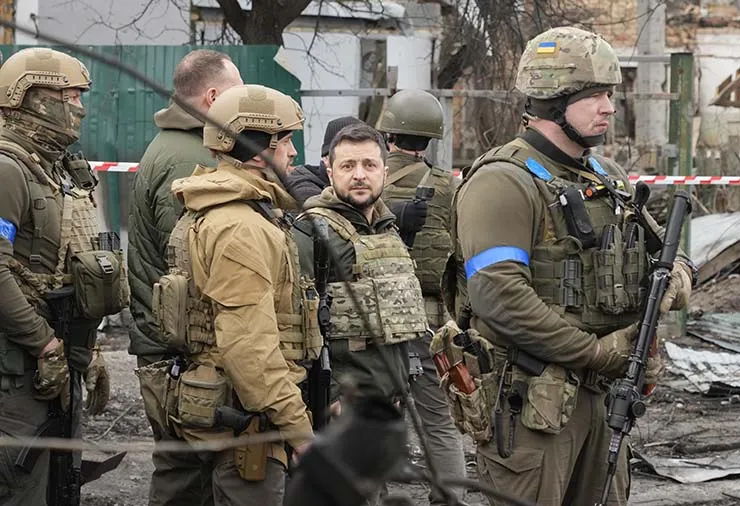
    As for Kyiv, it has gone back and forth on the issue. Having nearly reached a peace agreement with Moscow in late March, it later reversed course to continue fighting (the Russians believe this was done on Western advice). Having achieved operational successes on the battlefield this past fall, Ukrainian President Vladimir Zelensky had all contacts with the Kremlin formally banned and formulated extreme demands which he addressed to Putin’s successors, whenever they may emerge. For the West, this was bad from the perspective of public relations, and Zelensky was asked to make it appear as if he was open for talks, but in reality, nothing changed.

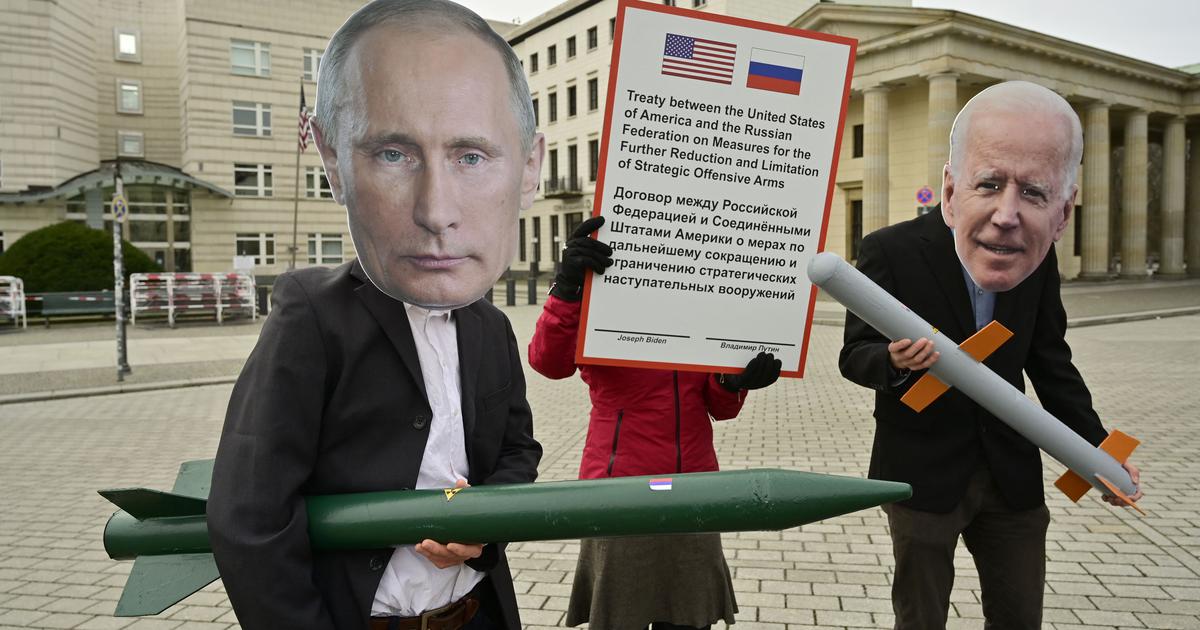
    The reality is that the principal parties involved in the conflict in Ukraine, namely Washington and Moscow, do not consider the present, or the near future, as a good time for negotiations.

    The reality is that the principal parties involved in the conflict in Ukraine, namely Washington and Moscow, do not consider the present, or the near future, as a good time for negotiations. From the US perspective, despite the unprecedented sanctions imposed on Russia by the West and the recent setbacks that the Russian Army has experienced in Kharkov and Kherson, Moscow is far from being defeated on the battlefield or destabilized domestically. From the Kremlin’s perspective, any truce or peace that leaves Ukraine as an ‘anti-Russia’, hostile state, is tantamount to a defeat with highly negative consequences.

    Instead, both sides believe they can win. The West, of course, has vastly superior resources in virtually every field that it can use in Ukraine. But Russia is working to mobilize its own substantial reserves in both manpower and the economy.

    Where Moscow has an advantage is in escalatory dominance. For the US, Ukraine is a matter of principle; for the Kremlin, the matter is simply existential – the conflict with the West is not about Ukraine, but about the fate of Russia itself.


    It looks as if the war will continue into 2023, and possibly beyond that. Talks will probably not start before either side is prepared to concede due to exhaustion, or because both parties have reached an impasse. In the meantime, the death toll will continue to mount, pointing to the essential tragedy of major power politics. In the fall of 1962, then-US President John F. Kennedy was ready to walk to the edge of the nuclear precipice in order to prevent the Soviet Union from turning Cuba into its missile base. Sixty years later, Russian President Vladimir Putin ordered a military action to make sure that Ukraine does not become an unsinkable aircraft carrier for America.

    Whatever Soviet leader Nikita Khrushchev thought about his right to counter US missiles pointed at Moscow from Turkey with weapons of his own targeting Washington and New York from Cuba (with Havana’s consent), and whatever successive US presidents thought about their right to expand the NATO military bloc to include Ukraine (at Kyiv’s wish), there is always a horrendous price to pay for the failure to take into account the rival power’s security interests.


    There is a lesson to be learned from this. Whatever Soviet leader Nikita Khrushchev thought about his right to counter US missiles pointed at Moscow from Turkey with weapons of his own targeting Washington and New York from Cuba (with Havana’s consent), and whatever successive US presidents thought about their right to expand the NATO military bloc to include Ukraine (at Kyiv’s wish), there is always a horrendous price to pay for the failure to take into account the rival power’s security interests. Cuba went down in history as a narrow success for common sense. Ukraine is an ongoing story, with its outcome still hanging in the balance.

    Feature Image: rt.com

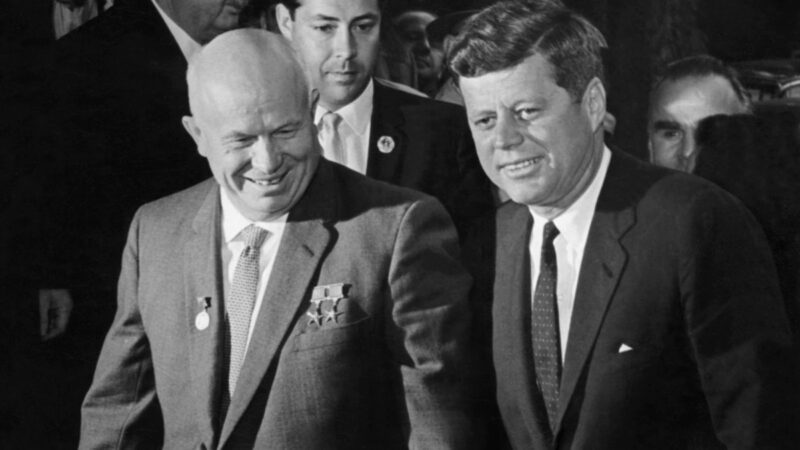
    Image: Khrushchev and Kennedy – rferl.org

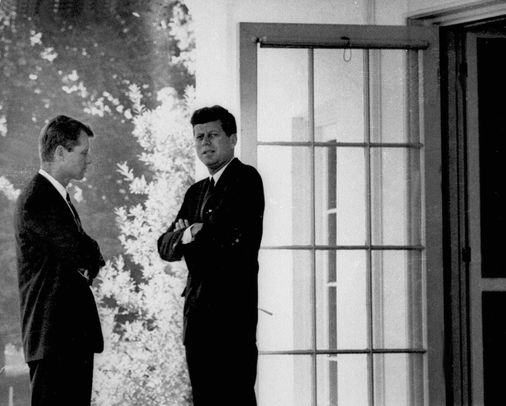
    Image: Robert and Jack Kennedy – bostonglobe.com – The most important lesson of the Cuban Missile crisis.

  • The Great Chips War

    The Great Chips War

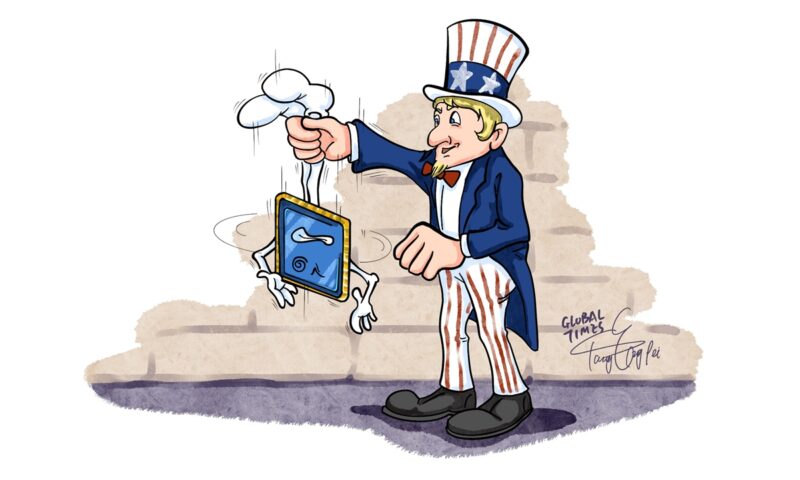
    The supply chain disruptions for semiconductor chips and the increasing sanctions imposed by the US on high-tech chips access to China and Russia has signalled the critical relevance of control over this technology and process for national security. Chip design and manufacture involve heavy capital investments and access to special machinery that is monopolised by very few American-controlled/influenced companies in Europe and East Asia. India, having missed the boat earlier due to poor investment decisions, has recognised chip manufacturing as a critical strategic industry and is investing efforts to establish significant capabilities. This could take years as challenges still remain.  – TPF Editorial Team

    Following the US Commerce Department’s announcement of severe new restrictions on sales of advanced semiconductors and other US high-tech goods to China, the Sino-American rivalry has entered an important new phase. Even under the best circumstances, China will have a difficult time adapting to its new reality.

    In addition to dealing with the fallout from open warfare in eastern Europe, the world is witnessing the start of a full-scale economic war between the United States and China over technology. This conflict will be highly consequential, and it is escalating rapidly. Earlier this month, the US Commerce Department introduced severe new restrictions on the sale of advanced semiconductors and other US high-tech goods to China. While Russia has used missiles to try to cripple Ukraine’s energy and heating infrastructure, the US is now using export restrictions to curtail China’s military, intelligence, and security services.

    The new chip war is a war for control of the future.

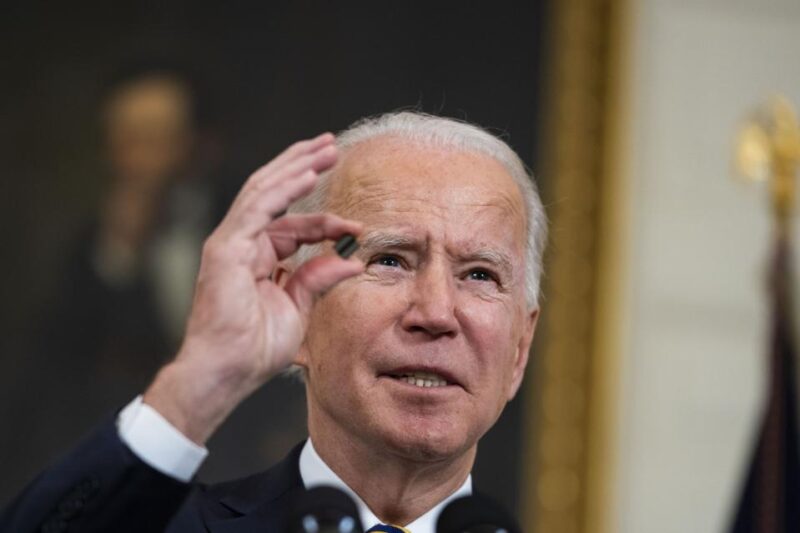
    Moreover, in late August, US President Joe Biden signed the CHIPS Act, which includes subsidies and other measures to bolster America’s domestic semiconductor industry. Semiconductors are and will remain, at the heart of the twenty-first-century economy. Without microchips, our smartphones would be dumb phones, our cars wouldn’t move, our communications networks wouldn’t function, any form of automation would be unthinkable, and the new era of artificial intelligence that we are entering would remain the stuff of sci-fi novels. Controlling the design, fabrication, and value chains that produce these increasingly important components of our lives is thus of the utmost importance. The new chip war is a war for control of the future.

    The semiconductor value chain is hyper-globalized, but the US and its closest allies control all the key nodes. Chip design is heavily concentrated in America, and production would not be possible without advanced equipment from Europe, and fabrication of the most advanced chips – including those that are critical for AI – is located exclusively in East Asia. The most important player by far is Taiwan, but South Korea is also in the picture.

    In its own pursuit of technological supremacy, China has become increasingly reliant on these chips, and its government has been at pains to boost domestic production and achieve “self-sufficiency.” In recent years, China has invested massively to build up its own semiconductor design and manufacturing capabilities. But while there has been some progress, it remains years behind the US; and, crucially, the most advanced chips are still beyond China’s reach.

    It has now been two years since the US banned all sales of advanced chips to the Chinese telecom giant Huawei, which was China’s global technology flagship at the time. The results have been dramatic. After losing 80% of its global market share for smartphones, Huawei was left with no choice but to sell off its smartphone unit, Honor, and reorient its corporate mission. With its latest move, the US is now aiming to do to all of China what it did to Huawei.

    This dramatic escalation of the technology war is bound to have equally dramatic economic and political consequences, some of which will be evident immediately, and some of which will take some time to materialize. China most likely has stocked up on chips and is already working to create sophisticated new networks to circumvent the sanctions. (After Huawei spun it off in late 2020, Honor quickly staged a comeback, selling phones that use chips from the US multinational Qualcomm.)

    Still, the new sanctions are so broad that, over time, they will almost certainly strike a heavy blow not only to China’s high-tech sector but also to many other parts of its economy. A European company that exports to China now must be doubly sure that its products contain no US-connected chips. And, owing to the global nature of the value chain, many chips from Taiwan or South Korea also will be off-limits.

    The official aim of the US policy is to keep advanced chips out of the Chinese military’s hands. But the real effect will be to curtail China’s development in the sectors that will be critical to national power in the decades ahead.

    The official aim of the US policy is to keep advanced chips out of the Chinese military’s hands. But the real effect will be to curtail China’s development in the sectors that will be critical to national power in the decades ahead. China will certainly respond with even stronger efforts to develop its own capabilities. But even under the best circumstances, and despite all the resources it will throw at the problem, any additional efforts will take time to bear fruit, especially now that US restrictions are depriving China of the inputs that it needs to achieve self-sufficiency.

    The new chips war eliminates any remaining doubt that we are witnessing a broader Sino-American decoupling. That development will have far-reaching implications – only some of them foreseeable – for the rest of the global economy.

    Ukraine is already repairing and restarting the power stations that have been hit by Russian missile barrages since the invasion began in February. But it will be much more difficult for China to overcome the loss of key technologies. As frightening as Russia’s twentieth-century-style war is, the real sources of power in the twenty-first century do not lie in territorial conquest. The most powerful countries will be those that master the economic, technological, and diplomatic domains.

    This article was published earlier in Project Syndicate.

    Images Credit: Globaltimes.cn

  • The Meaning of War in the 21st Century

    The Meaning of War in the 21st Century

    War is, as Clausewitz said, a continuation of politics…or to be precise it is part of geopolitical machinations.  The complexity of the conflict in Ukraine can be understood only if one examines the many dimensions at play in 21st-century wars.  French journalist and political scientist, Thierry Meyssan delivers some thoughts on the evolution of the human dimension of war. The end of industrial capitalism and the globalization of exchanges do not only transform our societies and our ways of thinking but the meaning of all our activities, including wars.                                          – TPF Editorial Team


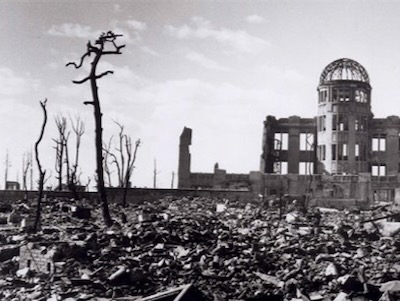
    The atomic bombings of Hiroshima and Nagasaki were not part of any military strategy. Japan had already intended to surrender. The United States just wanted them not to surrender to the Soviets who were beginning to pour into Manchuria, but to themselves.


    Since the end of World War II 77 years ago, Europeans (except for the former Yugoslavs) have known peace on their soil. They have forgotten this distant memory and discovered war with horror in Ukraine. The Africans of the Great Lakes, the ex-Yugoslavs and the Muslims from Afghanistan to Libya, passing through the Horn of Africa, look at them with disgust: for many decades, the Europeans ignored their sufferings and accused them of being responsible for the misfortunes they were suffering.

    The war in Ukraine started with Nazism according to some, eight years ago according to others, but it is only two months old in the consciousness of Westerners. They see some of the sufferings it causes, but they do not yet perceive all its dimensions. Above all, they misinterpret it according to the experience of their great-grandparents and not according to their own experience.

    Wars only a Succession of Crimes

     As soon as it starts, war forbids nuances. It forces everyone to position themselves in one of the two camps. The two jaws of the beast immediately crush those who do not comply.
    The ban on nuances forces everyone to rewrite events. There are only “good guys”, us, and “bad guys”, those on the other side. War propaganda is so powerful that after a while, no one can distinguish the facts from the way they are described. We are all in the dark and no one knows how to turn on the light.
    War causes suffering and death without distinction. It doesn’t matter to which side you belong. It doesn’t matter if you are guilty or innocent. One suffers and dies not only from the blows of those on the other side, but also collaterally from those on one’s own side. War is not only suffering and death, but also injustice, which is much more difficult to bear.
    None of the rules of civilized nations remain. Many give in to madness and no longer behave like humans. There is no longer any authority to make people face the consequences of their actions. Most people can no longer be counted on. Man has become a wolf for man.

    Something fascinating is happening. If some people turn into cruel beasts, others become luminous and their eyes enlighten us.

    I spent a decade on the battlefields and never went home. Although I now flee from suffering and death, I am still irresistibly drawn to those looks. That is why I hate war and yet I miss it. Because in this tangle of horrors there is always a sublime form of humanity.

    The Wars of the 21st Century

    I would now like to offer you some thoughts that do not commit you to this or that conflict and even less to this or that side. I will just lift a veil and invite you to look at what it hides. What I am about to say may shock you, but we can only find peace by accepting reality.

    Wars are changing. I am not talking about weapons and military strategies, but about the reasons for conflicts, about their human dimension. Just as the transition from industrial capitalism to financial globalization is transforming our societies and pulverizing the principles that organized them, so this evolution is changing wars. The problem is that we are already incapable of adapting our societies to this structural change and therefore even less capable of thinking about the evolution of war.

     War always seeks to solve the problems that politics has failed to solve. It does not happen when we are ready for it, but when we have eliminated all other solutions.

    This is exactly what is happening today. The US Straussians have inexorably cornered Russia in Ukraine, leaving it no option but to go to war. If the Allies insist on pushing her back, they will provoke a World War.

    The periods between the two eras, when human relationships must be rethought, are conducive to this kind of disaster. Some people continue to reason according to principles that have proven their effectiveness but are no longer adapted to the world. They are nevertheless advancing and can provoke wars without wanting to.


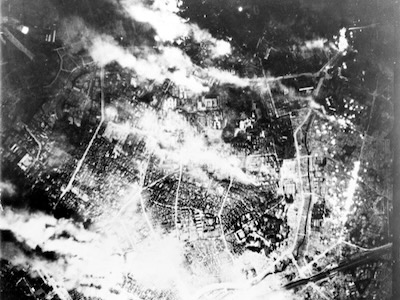
    On the night of May 9, 1945, the US air force bombed Tokyo. In one night more than 100,000 people were killed and more than 1 million were left homeless. It was the largest massacre of civilians in history.


    If in peacetime, we distinguish between civilians and soldiers, this way of reasoning no longer makes sense in modern warfare. Democracies have swept away the organization of societies into castes or orders. Everyone can become a combatant. Mass mobilizations and total wars have blurred the lines. From now on, civilians are in charge of the military. They are no longer innocent victims but have become the first responsible for the general misfortune of which the militaries are only the executors.

    In the Western Middle Ages, war was the business of the nobles and of them alone. In no case did the population participate. The Catholic Church had enacted laws of war to limit the impact of conflicts on civilians. All this does not correspond anymore to what we live and is not based on anything.

    The equality between men and women has also reversed the paradigms. Not only are soldiers now women, but they can be civilian commanders too. Fanaticism is no longer the exclusive domain of the so-called stronger sex. Some women are more dangerous and cruel than some men.

    We are not aware of these changes. In any case, we do not draw any conclusions from them. This leads to bizarre positions such as the refusal of Westerners to repatriate the families of jihadists they have let go to the battlefields and to judge them. Everyone knows that many of these women are far more fanatical than their husbands were. Everyone knows that they represent a much greater danger. But nobody says so. They prefer to pay Kurdish mercenaries to keep them and their children in camps, as far away as possible.

    Only the Russians have repatriated the children, who were already contaminated by this ideology. They entrusted them to their grandparents, hoping that the latter would be able to love and care for them.

    For the past two months, we have been receiving Ukrainian civilians fleeing the fighting. They are only women and children who suffer. So we do not take any precautions. However, a third of these children have been trained in the summer camps of the Banderites. There they learned the handling of weapons and the admiration of the criminal against humanity, Stepan Bandera.

    The Geneva Conventions are only a vestige of the time when we reasoned as humans. They do not stick to any reality. Those who apply them do so not because they believe they are obliged to, but because they hope to remain human and not sink into a sea of crimes. The notion of “war crimes” is meaningless, since the purpose of war is to commit successive crimes in order to achieve the victory that could not be obtained by civilized means, and in a democracy, each voter is responsible.

    In the past, the Catholic Church forbade strategies directed against civilians, such as the siege of cities, on pain of ex-communication. Besides the fact that today there is no moral authority to enforce rules, no one is shocked by “economic sanctions” affecting entire peoples, even to the point of causing murderous famines, as was the case against North Korea.

    Given the time we need to draw conclusions from what we are doing, we continue to consider certain weapons as prohibited while using them ourselves. For example, President Barack Obama explained that the use of chemical or biological weapons is a red line that should not be crossed, but his Vice President Joe Biden has installed a large research system in Ukraine. The only people who have forbidden themselves any weapon of mass destruction are the Iranians since Imam Ruhollah Khomeini morally condemned them. Precisely, they are the ones we accuse of wanting to build an atomic bomb, as they do nothing of the kind.

     In the past, wars were declared in order to take over territories. In the end, a peace treaty was signed to modify the land register. In the age of social networks, the issue is less territorial and more ideological. The war can only end with the discrediting of a way of thinking. Although territories have changed hands, some recent wars have resulted in armistices, but none in a peace treaty and reparations.

    We can see that, despite the dominant discourse in the West, the war in Ukraine is not territorial, but ideological. President Volodymyr Zelensky is the first warlord in history to speak several times a day. He spends much more time talking than commanding his army. He writes his speeches around historical references. We react to the memories he evokes and ignore what we don’t understand. To the English, he speaks like Winston Churchill, they applaud him; to the French, he reminds them of Charles De Gaulle, and they applaud him; etc… To all, he concludes “Glory to Ukraine!”, they do not understand the allusion which they find pretty.

    Those who know the history of Ukraine recognize the war cry of the Banderites. The one they shouted while massacring 1.6 million of their fellow citizens, including at least 1 million Jews. But how could a Ukrainian call for the massacre of other Ukrainians and a Jew for the massacre of Jews?

    Our innocence makes us deaf and blind.


    For the first time in a conflict, one side censored the enemy media before the war started. RT and Sputnik were shut down in the European Union because they could have challenged what was to come. After the Russian media, opposition media are beginning to be censored. The Voltaire Network’s website, Voltairenet.org, has been censored in Poland for a month by decision of the National Security Council.


    War is no longer limited to the battlefield. It becomes essential to win over the spectators. During the war in Afghanistan, US President George W. Bush and British Prime Minister Tony Blair considered destroying the satellite TV channel Al-Jazeera. It had no impact on the belligerents, but it gave pause to viewers in the Arab world.

    It is worth noting that after the 2003 war in Iraq, French researchers imagined that military warfare might turn into cognitive warfare. If the nonsense about Saddam Hussein’s weapons of mass destruction only lasted a few months, the way in which the United States and the United Kingdom managed to get everyone to believe it was perfect. In the end, Nato added a sixth domain to its usual five (air, land, sea, space and cyber): the human brain. While the Alliance is currently avoiding confrontation with Russia in the first four domains, it is already at war in the last two.

    As the areas of intervention expand, the notion of a belligerent is fading. It is no longer men who confront each other, but systems of thought. War is thus becoming globalized. During the Syrian war, more than sixty states that had nothing to do with this conflict sent weapons to the country, and today, twenty states are sending weapons to Ukraine. As we do not understand the events live, but interpret them in the light of the old world, we believed that the Western weapons were used by the Syrian democratic opposition while they were going to the jihadists and we are convinced that they are going to the Ukrainian army and not to the Banderites.

    The road to hell is paved with good intentions.


    This article was published earlier in voltairenet.org and is republished under Creative Commons License 4.0.

    Feature Image Credit: Proxy Wars and 21st Century Merchants of Death.


  • The Great Game in Ukraine is Spinning out of Control

    The Great Game in Ukraine is Spinning out of Control

    Former US National Security Advisor Zbigniew Brzezinski famously described Ukraine as a “geopolitical pivot” of Eurasia, central to both US and Russian power.  Since Russia views its vital security interests to be at stake in the current conflict, the war in Ukraine is rapidly escalating to a nuclear showdown.  It’s urgent for both the US and Russia to exercise restraint before disaster hits.

    The current conflict is, in essence, the Second Crimean War.  This time, a US-led military alliance seeks to expand NATO to Ukraine and Georgia, so that five NATO members would encircle the Black Sea.

    Since the middle of the 19th Century, the West has competed with Russia over Crimea and more specifically, naval power in the Black Sea.  In the Crimean War (1853-6), Britain and France captured Sevastopol and temporarily banished Russia’s navy from the Black Sea.  The current conflict is, in essence, the Second Crimean War.  This time, a US-led military alliance seeks to expand NATO to Ukraine and Georgia, so that five NATO members would encircle the Black Sea.

    The US has long regarded any encroachment by great powers in the Western Hemisphere as a direct threat to US security, dating back to the Monroe Doctrine of 1823, which states: “We owe it, therefore, to candour and to the amicable relations existing between the United States and those [European] powers to declare that we should consider any attempt on their part to extend their system to any portion of this hemisphere as dangerous to our peace and safety.”

    In 1961, the US invaded Cuba when Cuba’s revolutionary leader Fidel Castro looked to the Soviet Union for support.  The US was not much interested in Cuba’s “right” to align with whichever country it wanted – the claim the US asserts regarding Ukraine’s supposed right to join NATO.  The failed US invasion in 1961 led to the Soviet Union’s decision to place offensive nuclear weapons in Cuba in 1962, which in turn led to the Cuban Missile Crisis exactly 60 years ago this month.  That crisis brought the world to the brink of nuclear war.

    Yet America’s regard for its own security interests in the Americas has not stopped it from encroaching on Russia’s core security interests in Russia’s neighbourhood.  As the Soviet Union weakened, US policy leaders came to believe that the US military could operate as it pleases.  In 1991, Undersecretary of Defense Paul Wolfowitz explained to General Wesley Clark that the US can deploy its military force in the Middle East “and the Soviet Union won’t stop us.” America’s national security officials decided to overthrow Middle East regimes allied to the Soviet Union and encroach on Russia’s security interests.

    In 1990, Germany and the US gave assurances to Soviet President Mikhail Gorbachev that the Soviet Union could disband its own military alliance, the Warsaw Pact, without fear that NATO would enlarge eastward to replace the Soviet Union. It won Gorbachev’s assent to German reunification in 1990 on this basis.  Yet with the Soviet Union’s demise, President Bill Clinton reneged by supporting the eastward expansion of NATO.

    America’s dean of statecraft with Russia, George Kennan, declared that NATO expansion “is the beginning of a new cold war.”   

    Russian President Boris Yeltsin protested vociferously but could do nothing to stop it.  America’s dean of statecraft with Russia, George Kennan, declared that NATO expansion “is the beginning of a new cold war.”

    Under Clinton’s watch, NATO expanded to Poland, Hungary, and the Czech Republic in 1999.  Five years later, under President George W. Bush, Jr. NATO expanded to seven more countries: the Baltic states (Estonia, Latvia, and Lithuania), the Black Sea (Bulgaria and Romania), the Balkans (Slovenia), and Slovakia.  Under President Barack Obama, NATO expanded to Albania and Croatia in 2009, and under President Donald Trump, to Montenegro in 2019.

    Russia’s opposition to NATO enlargement intensified sharply in 1999 when NATO countries disregarded the UN, attacked Russia’s ally Serbia, and stiffened further in the 2000s with the US wars of choice in Iraq, Syria, and Libya. At the Munich Security Conference in 2007, President Putin declared that NATO enlargement represents a “serious provocation that reduces the level of mutual trust.”

    “And we have the right to ask: against whom is this expansion intended?  And what happened to the assurances [of no NATO enlargement] our western partners made after the dissolution of the Warsaw Pact?”  – Putin at the Munich Security Conference in 2007.

    Putin continued: “And we have the right to ask: against whom is this expansion intended?  And what happened to the assurances [of no NATO enlargement] our western partners made after the dissolution of the Warsaw Pact?” Where are those declarations today? No one even remembers them. But I will allow myself to remind this audience of what was said. I would like to quote the speech of NATO General Secretary Mr Woerner in Brussels on 17 May 1990. He said at the time that: “the fact that we are ready not to place a NATO army outside of German territory gives the Soviet Union a firm security guarantee. Where are these guarantees?”

    In 2007, with the NATO admission of two Black Sea countries, Bulgaria and Romania, the US established the Black Sea Area Task Group (originally the Task Force East).  Then in 2008, the US raised the US-Russia tensions still further by declaring that NATO would expand to the very heart of the Black Sea, by incorporating Ukraine and Georgia, threatening Russia’s naval access to the Black Sea, Mediterranean, and the Middle East.

    Also in 2007, with the NATO admission of two Black Sea countries, Bulgaria and Romania, the US established the Black Sea Area Task Group (originally the Task Force East).  Then in 2008, the US raised the US-Russia tensions still further by declaring that NATO would expand to the very heart of the Black Sea, by incorporating Ukraine and Georgia, threatening Russia’s naval access to the Black Sea, Mediterranean, and the Middle East.  With Ukraine’s and Georgia’s entry, Russia would be surrounded by five NATO countries in the Black Sea: Bulgaria, Georgia, Romania, Turkey, and Ukraine.

    Russia was initially protected from NATO enlargement to Ukraine by Ukraine’s pro-Russian president Viktor Yanukovych, who led the Ukrainian parliament to declare Ukraine’s neutrality in 2010.  Yet in 2014, the US helped to overthrow Yanukovych and bring to power a staunchly anti-Russian government.  The Ukraine War broke out at that point, with Russia quickly reclaiming Crimea and supporting pro-Russian separatists in the Donbas, the region of Eastern Ukraine with a relatively high proportion of Russian population.  Ukraine’s parliament formally abandoned neutrality later in 2014.

    Ukraine and Russian-backed separatists in the Donbas have been fighting a brutal war for 8 years.  Attempts to end the war in the Donbas through the Minsk Agreements failed when Ukraine’s leaders decided not to honour the agreements, which called for autonomy for the Donbas.  After 2014, the US poured in massive armaments to Ukraine and helped to restructure Ukraine’s military to be interoperable with NATO, as evidenced in this year’s fighting.

    The Russian invasion in 2022 would likely have been averted had Biden agreed with Putin’s demand at the end of 2021 to end NATO’s eastward enlargement.  The war would likely have been ended in March 2022, when the governments of Ukraine and Russia exchanged a draft peace agreement based on Ukrainian neutrality.  Behind the scenes, the US and UK pushed Zelensky to reject any agreement with Putin and to fight on.  At that point, Ukraine walked away from the negotiations.

    The nuclear threat is not empty, but a measure of the Russian leadership’s perception of its security interests at stake. 

    Russia will escalate as necessary, possibly to nuclear weapons, to avoid military defeat and NATO’s further eastward enlargement.  The nuclear threat is not empty, but a measure of the Russian leadership’s perception of its security interests at stake.   Terrifyingly, the US was also prepared to use nuclear weapons in the Cuban Missile Crisis, and a senior Ukrainian official recently urged the US to launch nuclear strikes “as soon as Russia even thinks of carrying out nuclear strikes,” surely a recipe for World War III.  We are again on the brink of nuclear catastrophe.

    President John F. Kennedy learned about nuclear confrontation during the Cuban missile crisis.  He defused that crisis not by force of will or US military might, but by diplomacy and compromise, removing US nuclear missiles in Turkey in exchange for the Soviet Union removing its nuclear missiles in Cuba.  The following year, he pursued peace with the Soviet Union, signing the Partial Nuclear Test Ban Treaty.

    In June 1963, Kennedy uttered the essential truth that can keep us alive today: “Above all, while defending our own vital interests, nuclear powers must avert those confrontations which bring an adversary to a choice of either a humiliating retreat or a nuclear war. To adopt that kind of course in the nuclear age would be evidence only of the bankruptcy of our policy–or of a collective death-wish for the world.”  

    It is urgent to return to the draft peace agreement between Russia and Ukraine of late March, based on the non-enlargement of NATO.  Today’s fraught situation can easily spin out of control, as the world has done on so many past occasions – yet this time with the possibility of nuclear catastrophe.  The world’s very survival depends on prudence, diplomacy, and compromise by all sides.


    This article is republished with the permission of the author. It was published earlier in www.other-news.info

    Image Credit: Scroll.in

  • The West’s False Narrative about Russia and China

    The West’s False Narrative about Russia and China

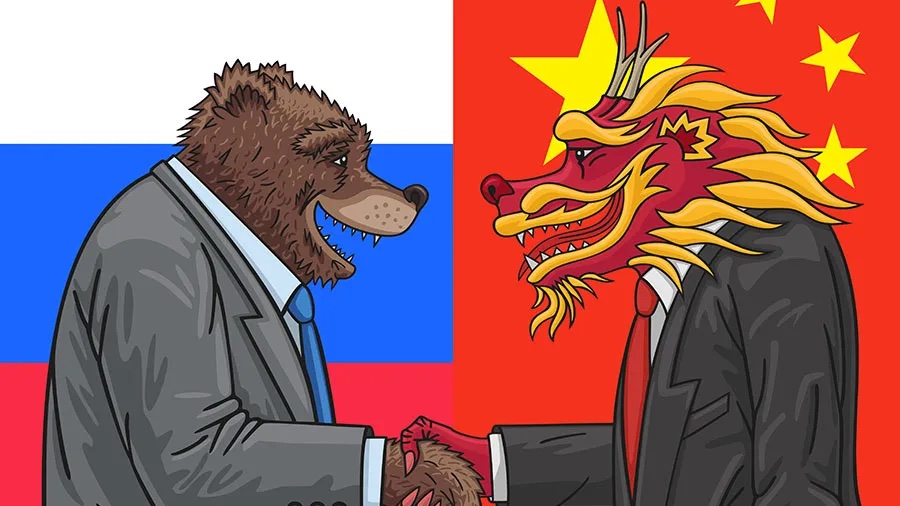
    The relentless Western narrative that the West is noble while Russia and China are evil is simple-minded and extraordinarily dangerous.

    The world is on the edge of nuclear catastrophe in no small part because of the failure of Western political leaders to be forthright about the causes of the escalating global conflicts.  The relentless Western narrative that the West is noble while Russia and China are evil is simple-minded and extraordinarily dangerous.  It is an attempt to manipulate public opinion, not to deal with very real and pressing diplomacy.

    The essential narrative of the West is built into US national security strategy.  The core US idea is that China and Russia are implacable foes that are “attempting to erode American security and prosperity.”  These countries are, according to the US, “determined to make economies less free and less fair, to grow their militaries, and to control information and data to repress their societies and expand their influence.”

    The irony is that since 1980 the US has been in at least 15 overseas wars of choice (Afghanistan, Iraq, Libya, Panama, Serbia, Syria, and Yemen just to name a few), while China has been in none, and Russia only in one (Syria) beyond the former Soviet Union.  The US has military bases in 85 countries, China in 3, and Russia in 1 (Syria) beyond the former Soviet Union.

    US security strategy is not the work of any single US president but of the US security establishment, which is largely autonomous, and operates behind a wall of secrecy.  

    President Joe Biden has promoted this narrative, declaring that the greatest challenge of our time is the competition with the autocracies, which “seek to advance their own power, export and expand their influence around the world, and justify their repressive policies and practices as a more efficient way to address today’s challenges.”  US security strategy is not the work of any single US president but of the US security establishment, which is largely autonomous, and operates behind a wall of secrecy.

    The overwrought fear of China and Russia is sold to a Western public through manipulation of the facts.  A generation earlier George W. Bush, Jr. sold the public on the idea that America’s greatest threat was Islamic fundamentalism, without mentioning that it was the CIA, with Saudi Arabia and other countries, that had created, funded, and deployed the jihadists in Afghanistan, Syria, and elsewhere to fight America’s wars.

    Or consider the Soviet Union’s invasion of Afghanistan in 1980, which was painted in the Western media as an act of unprovoked perfidy.  Years later, we learned that the Soviet invasion was actually preceded by a CIA operation designed to provoke the Soviet invasion! The same misinformation occurred vis-à-vis Syria.  The Western press is filled with recriminations against Putin’s military assistance to Syria’s Bashar al-Assad beginning in 2015, without mentioning that the US supported the overthrow of al-Assad beginning in 2011, with the CIA funding a major operation (Timber Sycamore) to overthrow Assad years before Russia arrived.

    Or more recently, when US House Speaker Nancy Pelosi recklessly flew to Taiwan despite China’s warnings, no G7 foreign minister criticized Pelosi’s provocation, yet the G7 ministers together harshly criticized China’s “overreaction” to Pelosi’s trip.

    The Western narrative about the Ukraine war is that it is an unprovoked attack by Putin in the quest to recreate the Russian empire.  Yet the real history starts with the Western promise to Soviet President Mikhail Gorbachev that NATO would not enlarge to the East, followed by four waves of NATO aggrandizement: in 1999, incorporating three Central European countries; in 2004, incorporating 7 more, including in the Black Sea and the Baltic States; in 2008, committing to enlarge to Ukraine and Georgia; and in 2022, inviting four Asia-Pacific leaders to NATO to take aim at China.

    Nor do the Western media mention the US role in the 2014 overthrow of Ukraine’s pro-Russian president Viktor Yanukovych; the failure of the Governments of France and Germany, guarantors of the Minsk II agreement, to press Ukraine to carry out its commitments; the vast US armaments sent to Ukraine during the Trump and Biden Administrations in the lead-up to war; nor the refusal of the US to negotiate with Putin over NATO enlargement to Ukraine.

    Of course, NATO says that is purely defensive so that Putin should have nothing to fear.  In other words, Putin should take no notice of the CIA operations in Afghanistan and Syria; the NATO bombing of Serbia in 1999; the NATO overthrow of Moammar Qaddafi in 2011; the NATO occupation of Afghanistan for 15 years; nor Biden’s “gaffe” calling for Putin’s ouster (which of course was no gaffe at all); nor US Defense Secretary Lloyd Austin stating that the US war aim in Ukraine is the weakening of Russia.

    The US has a mere 4.2% of the world population, and now a mere 16% of world GDP (measured at international prices).  In fact, the combined GDP of the G7 is now less than that of the BRICS (Brazil, Russia, India, China, and South Africa), while the G7 population is just 6 per cent of the world compared with 41 per cent in the BRICS. 

    At the core of all of this is the US’s attempt to remain the world’s hegemonic power, by augmenting military alliances around the world to contain or defeat China and Russia.  It’s a dangerous, delusional, and outmoded idea.  The US has a mere 4.2% of the world population, and now a mere 16% of world GDP (measured at international prices).  In fact, the combined GDP of the G7 is now less than that of the BRICS (Brazil, Russia, India, China, and South Africa), while the G7 population is just 6 per cent of the world compared with 41 per cent in the BRICS.

    There is only one country whose self-declared fantasy is to be the world’s dominant power: the US.  It’s past time that the US recognized the true sources of security: internal social cohesion and responsible cooperation with the rest of the world, rather than the illusion of hegemony.  With such a revised foreign policy, the US and its allies would avoid war with China and Russia, and enable the world to face its myriad environment, energy, food and social crises.

    European leaders should pursue the true source of European security: not US hegemony, but European security arrangements that respect the legitimate security interests of all European nations

    Above all, at this time of extreme danger, European leaders should pursue the true source of European security: not US hegemony, but European security arrangements that respect the legitimate security interests of all European nations, certainly including Ukraine, but also including Russia, which continues to resist NATO enlargements into the Black Sea.  Europe should reflect on the fact that the non-enlargement of NATO and the implementation of the Minsk II agreements would have averted this awful war in Ukraine.  At this stage, diplomacy, not military escalation, is the true path to European and global security.

    Feature Image Credit: Big Stock

    This article was published earlier in Pearls and Irritations.

  • Ukraine War: India’s Stature in the Emerging World Order

    Ukraine War: India’s Stature in the Emerging World Order

    The war between Russia and Ukraine has caused a major disruption not only in that region, but the entire world. Power centres are shifting; a new world order is emerging out of this global churn. The world anxiously waits for India to take a more active role in a bid to end hostilities. What will India do?

    India’s firm stand of neutrality about the conflict in Ukraine has attracted considerable attention from the world’s strategic thinkers and governments. In this regard, many see the rise of India as a future pole power of the 21st century, as the current world order has entered a phase of instability, conflict, and competition. The Ukraine war may be the tipping point for the Euro-American dominance in the last three centuries, as a multi-polar world order is emerging, albeit slowly. India’s stature in this world order transformation is critical, as the non-western countries that constitute two-thirds of the world will meticulously observe and monitor it. A careful analysis of the ongoing transformation of the world order amidst the massive cacophony of propaganda and a plethora of biased reports (masquerading as research and academic outputs) is a huge challenge for serious researchers and policymakers.

    [powerkit_button size=”lg” style=”info” block=”true” url=”https://raksha-anirveda.com/ukraine-war-indias-stature-in-the-emerging-world-order/” target=”_blank” nofollow=”false”]
    Read More
    [/powerkit_button]

  • Xi is Not Mao

    Xi is Not Mao

    The ongoing conflicts and crises across the world, be it in Ukraine or in the South China Sea, reflect a serious flaw in the current international order and in the politics of relations amongst nations. The singular focus on the demonisation of leaders, aided by perception management through devious media control, reflects a significant danger to global safety and stability. The current hyper noise in US-China relations is driven by hyperbole about Xi and other leaders. It is time to take a step back and review the information holocaust.

    Rebecca E Karl’s perceptive article highlights the vagaries of flawed picture portrayals of China and Xi that can be very far from the truth. This article was published earlier in Dissent Magazine.

    – Editorial Team

    Mao and Xi’s historical projects couldn’t be more different, and it is high time to move beyond the bad history that conflates them.

    Commentary on China these days often presents lazy thinking that leads to some ridiculous historical statements. That President Xi Jinping is a would-be Mao Zedong or that China is facing a “new Cultural Revolution” are examples of this laziness. In a charitable light, such assertions stem from a broad misunderstanding of the logics of contemporary China and its role in the world today. In a less charitable light, they are driven by ideological fealty to some of the most outdated and frankly racist aspects of Cold War Western anti-communism. My premise in the following comments: China today is not Maoist, and Xi is not Mao redux. China today is also not communist in any genuine sense of that term, even though the Communist Party presides over the country with an increasingly iron grip.

    The difference between Mao and now could not be starker. Mao’s twentieth-century anti-capitalist and anti-feudal revolution in politics and culture sought to transform China’s domestic social relations by mobilizing masses of people against the systems of domination that constrained their everyday lives. He sought to demonstrate to the non-capitalist world the superiority of socialism as a mode of material and cultural production. Those experiments must be judged a failure on both counts. Xi’s twenty-first-century goal, by contrast, is to release economic forces from the burden of sustaining socialist relations in order to build China’s global wealth and power. To that end, he has pursued domestic stability and has repressed potentially insurgent political, social, and cultural impulses along with challenges from internal peripheries—all while enhancing the power and privileges of the Communist Party itself. To date, his efforts to redefine and defend capitalist logics in China seem to have found success.

    China today is not Maoist, and Xi is not Mao redux. China today is also not communist in any genuine sense of that term, even though the Communist Party presides over the country with an increasingly iron grip.

    Mao and Xi’s historical projects couldn’t be more different, and it is high time to move beyond the bad history that conflates them. We need to grapple with how the past several decades of social and political realignment, not just in China but around the world, are leading to a global future not yet foretold.

    The “new Cold War” rhetoric that permeates public discourse these days is dangerous, to be sure, yet it appeals to a version of the world that is long gone. Socialism has disappeared, and capitalism has prevailed. The fundamental antagonism between these two irreconcilable social and ideological systems—the antagonism that informed a struggle between two different cultural imaginings of the future—has not existed since at least the mid-1990s, when the post-1989 Chinese capitalist order came into full view and took material and ideological root in China and the world. (And, as anyone in Asia or Africa knows, the concept of the “cold” war was always of questionable utility in places that hosted a continuous series of hot wars.)

    Indeed, the huge dissension within the “West,” the United States included, about how to even specify these problems—or whether to specify them at all—gives the lie to the fiction of unified nation-states facing off across elemental ideological divides.

    We live in a capitalist world, but that doesn’t reduce the stakes of current conflicts. Will we blow each other up in militarized one-upmanship? Will we so pollute our environments that we destroy the natural world’s capacity to sustain life? Will we tear each other and ourselves apart in the attempt to come to human solutions to human-made problems? Will the speed of disease and pathology outstrip our ability to lock down and vaccinate, or will we look the other way as the necropolitical selection of those who live and die proceeds apace? These are apocalyptic stakes, but they do not break down analytically on fundamental lines of systemic antagonism. The definition of and solutions to these problems do not depend on such outmoded analytics as the “West” and the “rest,” or the United States and China. Indeed, the huge dissension within the “West,” the United States included, about how to even specify these problems—or whether to specify them at all—gives the lie to the fiction of unified nation-states facing off across elemental ideological divides.

    We need to confront the possibility that our leaders—whoever they may be, whether so-called democrats or so-called authoritarians, so-called liberals, leftists, or rightists—all are leading us into disaster.

    What we need to confront today is that our accustomed systems of analysis based in the imaginary unities of nation-states are exhausted. We need to confront the possibility that our leaders—whoever they may be, whether so-called democrats or so-called authoritarians, so-called liberals, leftists, or rightists—all are leading us into disaster. Those of us outside China must oppose attempts by our governments and ventriloquist media to create ever more unequal and violent capitalist relations that ratchet up tensions between peoples and nations. At the same time, we must try to support those within China who are opposing their own government’s and ventriloquist media’s commitments to suppressing the critical voices and anti-capitalist practices in their midst. The stakes are high, and now is the time to rise to the occasion of critical engagement rather than sink into facile historical analogies. What we face today are not conflicts between civilizations but conflicts over what kind of civilization we wish to inhabit moving forward. Neither the Chinese state nor Western ones have the kinds of answers that we need these days, but there are activist elements in all of our societies striving to find solutions. It is to such activists that we must look for hope.

    Feature Image Credit: Nikkei Asia

  • The New World and the Ukraine-Russia Breadbasket – Book review of “Oceans of Grain”

    The New World and the Ukraine-Russia Breadbasket – Book review of “Oceans of Grain”

    To understand the rise and fall of empires, we must follow the paths travelled by grain—along rivers, between ports, and across seas. In Oceans of Grain, historian Scott Reynolds Nelson reveals how the struggle to dominate these routes transformed the balance of world power. Early in the nineteenth century, imperial Russia fed much of Europe through the booming port of Odessa, on the Black Sea in Ukraine. But following the US Civil War, tons of American wheat began to flood across the Atlantic, and food prices plummeted. This cheap foreign grain spurred the rise of Germany and Italy, the decline of the Habsburgs and the Ottomans, and the European scramble for empire. It was a crucial factor in the outbreak of the First World War and the Russian Revolution.
    A powerful new interpretation, Oceans of Grain shows that amid the great powers’ rivalries, there was no greater power than control of grain.

    Thomas Grennes reviews the book ‘Oceans of Grain’ by Scott Reynolds Nelson. The book is very timely, given the emerging food crisis as a result of the blockade of the Black Sea ports that hampers the export of grain from the major exporters,  Ukraine and Russia.


    Book Title – Oceans of Grain: How American Wheat Remade the World

    Author – Scott Reynolds Nelson

    Publisher – Basic Books

    Page Count – 368 pages

    Date Published – Feb 22, 2022


    The Russian invasion of Ukraine has reminded the world that war in Europe isn’t just the stuff of history books. It also demonstrates how war can affect the world’s food supply, as both Ukraine and Russia have long been major global suppliers of wheat and other grains.

    This makes the new book Oceans of Grain, by University of Georgia history professor and Guggenheim fellow Scott Reynolds Nelson, especially timely. Nelson has written five other history-oriented books, including the award-winning Steel Drivin’ Man: John Henry, the Untold Story of an American Legend and A Nation of Deadbeats: An Uncommon History of American Financial Disasters.

    Oceans of Grain covers some 14,000 years of human history, beginning with the origin of bread, with an emphasis on the era in which the modern wheat market developed, from the 18th century to the end of World War I.

    New World food / The book focuses on the breadbaskets of the United States, Russia, and Ukraine, though it also gives a little attention to Canada, Argentina, and Australia, and passing mention of South and East Asia. Nelson often writes as if Russia and Ukraine are one land, in part because the border between them has shifted many times throughout history. His use of the word “grain” is nearly synonymous with “wheat,” though he does offer limited discussions of corn (maize), oats, barley, and rice.

    Grain has been crucial to human life for millennia. Expressions such as “Bread is the staff of life” and prayers such as “Give us this day our daily bread” illustrate the historical importance of bread and wheat. Technical change that has raised productivity in grain production has increased the standard of living for hundreds of millions of people, and negative shocks to the grain sector have caused crises and wars.

    Expansion of grain production in the 19th century to the then-newly settled regions of the United States, Canada, Argentina, and Australia greatly benefited grain consumers around the world, but it harmed traditional producers in Russia and elsewhere. The benefits for Europe were previously described in a 1997 Journal of Economic History article by Kevin H. O’Rourke as the “distributional effects of Christopher Columbus.” According to O’Rouke, transport innovations such as steamships and railroads “exported New World land to Europe, embodied in New World food.”

    Geography and transport / Geography has been crucial to the location of grain production and the pattern of world grain trade. The fertile chernozem (Russian for “black soil”) of Ukraine, parts of Russia, and neighboring lands were conducive to early grain production. Ancient “black paths” used by oxcart drivers led from the interior of Ukraine to Black Sea ports. Centuries ago, grain was shipped through the Turkish Straits on both ends of the Sea of Marmara to the Aegean Sea and then onto the ancient Greek and Roman civilizations along the Mediterranean. Control of those straits, the Bosporus and Dardanelles, has long been crucial and has led to many wars involving Russia and Turkey. Even today, following the Russian invasion of Ukraine, access to the Turkish Straits by Russian ships is a crucial military issue.

    Transport innovations have had a major effect on the pattern of world trade. Improvements in navigation and sailing ships were followed by the transition to steamships. The development of Odessa on the Black Sea was a major contributor to Ukrainian grain exports. Grain ports have been described as the children of empires, and Nelson points out the Greek term emporion — “marketplace” — is the etymological root of both “emporium” and “empire.”

    Other innovations also played important roles. Improvements in communication, such as the telegraph and undersea cables, aided long-distance trade. Improvements in explosives (nitroglycerin) contributed to the construction of deep-water harbors that can handle bigger ships. Better explosives also helped build the Suez Canal. Completed in 1869, it reduced travel time from London to Calcutta from six months to 30 days. The shortcut from the Mediterranean Sea to the Indian Ocean permitted the bypassing of the southern tip of Africa.

    Grain policy / Government policies have had an important effect on the pattern of world grain trade.

    Russian Tsarina Catherine II (1762–1796), better known as Catherine the Great, sought to develop a more grandiose Russian empire by making the country a major grain exporter. Russia’s partitioning of the Polish–Lithuanian Commonwealth added territory from the Baltic Sea in the north to the Black Sea in the south that included fertile wheat-growing land.

    According to Nelson, Catherine was influenced by the French Physiocrats, led by François Quesnay, who thought that agriculture was the main source of wealth. Catherine believed that Russia’s becoming a large grain producer would free its citizens from having to rely on other countries for their basic food. She also admired the benefits received by Poles from transporting grain down the Vistula River to Gdańsk. By increasing Russian production and exports of grain from Black Sea ports through the Turkish Straits, Catherine expected to convert Constantinople to “Tsargrad.”

    She promoted Russian wheat production in various ways, including increasing the power of landlords over serfs that made the serfs more like slaves. She also followed the anti-Semitism of earlier tsars who restricted Jews from living in old Russia. Jews were underrepresented as grain growers and overrepresented as middlemen in the grain sector. According to Nelson, this made it easy for Catherine to believe they were “leeches” who profited off the work of others. She limited the area where Jews could live to an area called the Pale of Settlement, which mostly came from land recently acquired from the partition of Poland–Lithuania. The Pale included Ukraine, with its rich black soil for growing grain, and Odessa was founded during her reign. Adding the Jewish population of the Pale made Catherine the ruler of the largest Jewish population in the world.

    A grain “invasion” / At the time of Catherine, the United States had not become an important grain exporter. But after 1865, the American Great Plains were settled, the U.S. rail network expanded, and ships and communication improved. Those innovations contributed to the United States becoming a major producer and exporter of grain.

    O’Rourke’s 1997 article described the expansion of U.S. exports as a “grain invasion” of Europe. Train tracks substituted for the ancient black paths, carrying the Plains’ bounty to U.S. ports and then onto Europe. Development of multinational grain companies like Archer Daniels Midland, Bunge, Cargill, and Louis Dreyfus (known collectively as ABCD) also contributed to a major change in the pattern of trade. The migration of labor from Europe to the United States and other emerging exporters aided the production of the newly settled farmland.

    This grain invasion increased the world supply of land devoted to wheat. That harmed European landowners, and they sought protection from their governments. German landowners successfully lobbied Chancellor Otto von Bismarck, who responded with protectionism in the form of tariffs. He was supported in this by ultranationalist politician and history professor Heinrich von Treitschke, who blamed cheap imports for the fall of the Greek and Roman empires.

    This grain invasion increased the world supply of land devoted to wheat. Russian leaders, including Prime Minister Sergei Witte and Finance Minister Ivan Vyshnegradsky, sought to regain Russia’s export prominence. They promoted a long and costly railroad expansion through Siberia to Port Arthur in Manchuria, believing it would become a major port for Russian grain exports to the Pacific. Japan resented the Russian encroachment in their neighborhood and defeated Russia in the Russo–Japanese War of 1905. The defeat was an embarrassment to the government of Witte and Vyshnegradsky, and the Marxists used it in their calls for revolution. Frequently stated goals of the Bolshevik revolutionaries were “Peace, Land, and Bread.” Nelson suggests that the humiliating military defeat may have contributed to Russia’s participation in World War I and drove Russia into revolution.

    The United Kingdom was a prominent exception to grain protectionism. Parliament did impose the protectionist Corn Laws (“corn” in British English encompasses all grains) in 1815, but the beginning of the Irish Potato Famine (1845–1852) led to the laws’ repeal in 1846. British grain production fell as a result, but the broader economy prospered. Land devoted to grain production decreased and real wages rose. Many British cities, including London and Liverpool, doubled in size between 1845 and 1860. European workers gained from greater access to grain, and European socialist parties generally supported free grain imports.

    Parvus / Nelson illustrates the connection between developments in the grain sector and politics by following the colorful life of Israel Lazarevich Helphand (sometimes spelled “Gelfand”; 1867–1924), who used the pseudonym “Alexander Lvovich Parvus” or just “Parvus.” He was the odd combination of a widely-read journalist with a doctoral degree in political economy from the University of Basel, a Marxist theorist and practitioner, and a wealthy grain trader. According to Nelson, Parvus was the thinker whom Vladimir Lenin, Leon Trotsky, and Rosa Luxemburg most admired. Parvus was born in a shtetl in Belarus and his family moved to Odessa, where his father became a grain trader. Odessa was also the home of David Leontyevich Bronstein, who raised and traded grain. His son, Lev Davidovich Bronstein, would later take the pseudonym “Leon Trotsky.”

    Parvus has been rediscovered recently, and he was the subject of recent television series in both Russia (“Demon of the Revolution,” 2017) and Turkey (“The Last Emperor,” 2017–2020). Nelson claims that both series distorted and glorified Parvus’s true role in the Russian Revolution.

    Conclusion / Oceans of Grain is a good read. It is imaginative and bold in suggesting that shocks to the grain sector may have contributed to wars and revolutions. Relevant data are usually presented to support the hypotheses. Even though they are not always convincing, they do stimulate thought.

    There are inevitable omissions, but all good stories must leave out some details. Nelson’s extensive focus on the emergence of U.S. grain production and exports is appropriate given the resulting negative effects on European grain producers and positive effects on European grain consumers. However, his limited attention to Canada, Argentina, and Australia is disappointing because they contributed to those effects on Europe. Failing to examine the competing producers in some detail could exaggerate the effects of American grain exports to Europe.

    The current Russian invasion of Ukraine certainly gives this book special relevance. Putin aspires to control the territory of the old Russian Empire, and he considers Russia and Ukraine inseparable. Nelson tells the story of how the combined Russia/Ukraine once dominated grain trade with Europe, and how the United States and other newly settled grain exporters successfully challenged that dominance. Russia and Ukraine remain among the world’s largest wheat exporters today. The fertile black soil north of the Black Sea continues to be a major source of wheat and daily bread for millions of people.


    This review was published earlier by Cato Institute.

    Feature Image Credit: www.gtreview.com

  • Hegemonic Regionalism (Indo-Pacific concept): As opposed to locally based Regional Cooperation (ASEAN and Bay of Bengal)

    Hegemonic Regionalism (Indo-Pacific concept): As opposed to locally based Regional Cooperation (ASEAN and Bay of Bengal)

    The late embracing of the Indo-Pacific concept by the United States further supports the position that it is being employed as a strategic instrument to counter a rising power and a potential challenger to its global quasi-hegemonic power position.

    Based on a consideration of capabilities, the United States is currently the only country that can be described as a potential global hegemon. Certainly, there are a number of other countries that have the potential, based on their capabilities, of being candidates to become regional hegemons. Notably, China is among them, but Japan, India, and Brazil are also potential candidates, though their individual capacities vary widely and one could argue, based on capacities, that China takes the lead among them. With the implication that China becomes the main target of the de facto global hegemon, the other potential contenders must be kept in sight, as well. While most recent academic and non-academic discussions about global power transfer are focusing on rising countries, on potential challengers to the existing global hegemon, China in particular, a focus on how the existing quasi-global hegemon, the United States, is reacting to challenges to its dominance, to preserve its leading position and influence, seems almost completely missing. This lack of emphasis constitutes a rather critical issue, because when we focus on global or regional power competition, what should be of interest to analysts is not only the behaviour and strategy of a rising county, i.e., a potential challenger to an existing hegemon, but also to analyse the response of the existing hegemon, as well. After all, when it comes to issues of global and regional stability, the actions of both the existing hegemon and the potential challenger must be taken into account.

    There is no doubt that an existing hegemon does not just ‘sit back’ and watch when its influence is challenged by a new contender for power. Even a declining hegemon will try to challenge a rising power contender, consequently, the potential for instability within the international system arises not only from a rising power but also from the actions of the country which possesses a quasi-hegemonic position, trying to defend its power position. In one of his earlier and most influential works, Mearsheimer (2001) points out that great powers always aim to maximise their share of power and are in constant competition with other power contenders, with the aim of maximising their own power. Therefore, the rise of a new competitor occurs in a dynamic context between the established and the rising hegemon. Ikenberry (2014) points out that, as the overwhelmingly global power once concentrated within the United States dispersed with the arrival of new power challengers in different parts of the world, new struggles over global rules and institutions are emerging. At the very least, as emphasised by Mearsheimer (2013), great powers do not trust one another, as they worry about other countries’ capabilities and intentions.

    Not without reason, Mearsheimer (2013) argues that the United States did not and does not tolerate peer competitors, adding that the United States has demonstrated this clearly during the twentieth century.

    For these reasons, we cannot expect that a hegemon will stay inactive when watching the rise of potential challengers. An established great power, holding an almost global hegemonic position as the United States does, has the capacity to respond to the challenges arising from power contenders, and there are clear indications, past and present, that it will act to preserve its dominant power position, even within an international system that has become more multilateral in comparison with the Cold War period. Not without reason, Mearsheimer (2013) argues that the United States did not and does not tolerate peer competitors, adding that the United States has demonstrated this clearly during the twentieth century. One just has to remember that in the late 1980s, when Japan was close to economically overtaking the United States. at the global level, various United States administrations actively worked against it, refusing Japan more decision-making rights within international organisations like the World Bank and the International Monetary Fund, even though Japan had become a major donor to both organisations. Obviously, the previous Japanese challenge to the United States’ dominance was only economic. Neither will the United States allow other challengers to succeed in undermining its dominant position, even in distant regional settings. Mearsheimer (2001) reminds us that the dominant power will act at the regional level to ensure that no challenge to its own global position will take place, since the crucial task is to block potential peer competitors, even within distant regional settings.

    When evaluating the influence of a hegemon it is worth remembering that this goes beyond a focus on military capabilities, even though such capabilities are essential, and include the hegemon’s ability to disguise its ambitions and interests by pretending that it provides global public goods, which in reality satisfy primarily its own interests. More importantly, as pointed out by Griffiths, O’Callaghan and Roach (2002), all hegemonic states enjoy ‘structural power’, which permits the hegemon to occupy a central position within its own system, as well as shape other states’ preferences. As emphasised by Kupchan (2014), a hegemon also strives to generate a normative and ideological dominance, in support of its power dominance. Indeed, Gilpin, in his seminal influential work on war and change, emphasises that a major power aims to create social structures to serve its hegemonic interests, consequently supporting its domineering position with rules, institutions, and organisational principles, supporting, indeed screening and protecting, its power position with normative dominance (Gilpin 1981).

    one can also reasonably assume that when a hegemonic country introduces a new geopolitical or regional concept of space, such as the Indo-Pacific framework, will be of foremost importance to its own strategy of dominance. Indeed, the Indo-Pacific framework signals the re-mapping of geopolitical space, with little, if any, historical relevance.

    By considering these arguments describing the behaviour of a typical hegemonic power, it is rather consistent to assume that a country, such as the United States, which holds a nearly global like hegemonic position, will use its position and capabilities to support its own power position in different regional settings so as to ward off any potential competitor. For this reason, one can also reasonably assume that when a hegemonic country introduces a new geopolitical or regional concept of space, such as the Indo-Pacific framework, will be of foremost importance to its own strategy of dominance. Indeed, the Indo-Pacific framework signals the re-mapping of geopolitical space, with little, if any, historical relevance. From a historical perspective, the Indian and Pacific Oceans have been perceived as separate maritime spaces. What marries them into one geopolitical space is an invented geopolitical strategy facilitating the strategic power interests of the existing hegemon. What is more, a hegemon or hegemon-like state will not introduce or favour a new geopolitical concept if it goes against its own strategic interests.

    Indeed, from a United States perspective, the Indo-Pacific strategy not only re-strengthens, at least from a hegemonic perspective, its role within the older geopolitical concept of Asia-Pacific, but now extends this influence, from a conceptual perspective, to include the Indian Ocean, as well. One can further argue that the adoption of the Indo-Pacific approach by the United States comes at a time when we can observe considerable changes in the power configuration within East Asia (which encompasses Northeast and Southeast Asia) and to a lesser extent within South Asia. Certain changes in the regional power configuration, namely the rise of China – not only as an economic but increasingly as a military and especially as a maritime power – generate considerable challenges from the perspective of hegemonic power competition. While the strategic challenge that China, as a rising power, generates to the United States quasi hegemonic position is so far limited to a regional challenge, instead of a global challenge, still, based on hegemony theory, the existing hegemon cannot allow such a challenge to take place.

    The late embracing of the Indo-Pacific concept by the United States further supports the position that it is being employed as a strategic instrument to counter a rising power and a potential challenger to its global quasi-hegemonic power position. We may remember that the origin of the Indo-Pacific concept is associated with the previous Japanese Prime Minister Shinzo Abe and his ‘Free and Open Indo-Pacific’ concept. Shinzo Abe mentioned it as early as 2007 when addressing the Indian parliament and began frequently restating it from 2016 onwards. This was part of his intention that Japan should take a more active role in East Asia and beyond. As such, the Indo-Pacific concept was born out of the political-strategic considerations of a regional actor within East Asia. Only later, around 2018, did the United States become considerably interested in the concept, at a time when the potential challenges from rising countries increased – not only from China; one may also consider India’s rise in this context. In 2018, the United States administration even changed the name of its Pacific Command to United States Indo-Pacific Command to highlight its changing geopolitical perspective and to address the increasing regional challenges it faced from a rising China. Not without reason was the replacement of the previous Asia-Pacific concept with the Indo-Pacific concept aimed at integrating India, another rising power in Asia, more firmly with the hegemonic interests of the United States. In academic terms, one could argue that this may represent a strategy of accommodation, in which an existing hegemon accommodates a rising power by offering political and strategic space for that country. It is a strategy the United States followed previously with China until China started to become a too fundamental strategic challenge to the United States hierarchic position. One may wonder if this may also happen to India, once India becomes too powerful to be contained within a United States hegemonic project. However, for the time being, India seems to feel quite comfortable within the geopolitical space it has been offered by the existing quasi-global hegemon. As revealed by Paul T.V (2016) the strategy of accommodation is not only quite a challenging undertaking – as the hegemon has to offer political status, leadership responsibilities, and even a sphere of influence to a rising country – but in the long run the implications are that this will weaken, if not undermine, the hegemon’s own position, thus indicating the limitation of such a strategy. After all, a hegemon is rather unwilling to give up its dominant position voluntarily, though a strategy of accommodation may buy some time and allow it to employ a strategy of divide-and-rule by offering support to a potential weaker power contender when addressing the challenges of a more powerful contender. There can be no less doubt that the ongoing border conflicts between India and China and the emerging regional power competition between them facilitate India’s readiness to become increasingly enveloped in a stronger relationship with the United States which, by the way, contradicts India’s previous entrenched national strategy of non-alignment in global power politics. Consequently, drafting India into its power orbit enhances the United States’ strategic influence in regions where it is not even a resident power, like East, Southeast, or South Asia.

    There can be no less doubt that the ongoing border conflicts between India and China and the emerging regional power competition between them facilitate India’s readiness to become increasingly enveloped in a stronger relationship with the United States which, by the way, contradicts India’s previous entrenched national strategy of non-alignment in global power politics.

    Therefore, a hegemonic state will try to manipulate even distant regional settings in its favour, to arrest the rise of potential challengers to its dominant position, even by facilitating the introduction of a new geopolitical concept, like the Indo-Pacific, which ignores local perceptions of regional cooperation dynamics, the Bay of Bengal approach or ASEAN. While there are some claims that the Indo-Pacific approach does not represent a challenge to ASEAN, a position that is widely disputed, the more specific issue is that the Indo-Pacific approach does not contribute or offer support to those local-based regional cooperation processes from a conceptual perspective. Therefore, while one has to recognise that more recent regional cooperation processes within the Bay of Bengal are less dynamic for the time being, it does not mean that such a regional cooperation process is altogether missing. As stated by Amrith (2013), Asian economic connections led to renewed interest in the Bay of Bengal as a focus for regional cooperation. Indeed, BIMSTEC[1] which was established in 1997, does provide focus on regional cooperation.

    BIMSTEC creates political space for economic cooperation by addressing common challenges like underdevelopment. Consequently, offering a strategic vision for national development to its member countries, a focus fundamentally different from the geopolitical outlook of the Indo-Pacific regional hegemonic project, with its focus on military and especially maritime power distribution. Another crucial difference is that, while the Indo-Pacific strategy is a rather recent invention, regional recognition of the Bay of Bengal as a particular and unique geographic location for regional cooperation, particularly as a centre for trade and cultural migration, goes back centuries, if not millennia. As such, the Bay of Bengal commands a rich history as a historically recognised cultural and trade-inspired region. Yet, with geopolitical concepts based on hegemonic interests, such home-grown sources of regional cooperation are not recognised or supported only if they would fit the interests of the hegemon. It is evident that the Indo-Pacific concept, from a conceptual perspective, also ignores the ASEAN regional cooperation process. As such, the Indo-Pacific approach represents an artificial strategic overlay, not linked with local beads regional cooperation dynamics, even when a regional cooperation process is very well established, as is the case with ASEAN. With regard to the Indo-Pacific concept, ASEAN’s statement on the Indo-Pacific (ASEAN Outlook on the Indo-Pacific 2019) clearly indicates that the perception of the Indo-Pacific area is a contiguous geographic space is misleading and not appropriate, even though the two geopolitical spaces are geographically connected. Indeed, while the Bay of Bengal and the ASEAN regional cooperation favour regional cooperation characterised by horizontal relationships, facilitating the cooperation of countries within the region to address common challenges, the Indo-Pacific approach represent a vertical power arrangement, where a dominant power is projecting its influence onto the regional level.

    However, it should not come as too much of a surprise that a hegemon’s regional strategy, which primarily focuses on supporting its own power interests, has little to say about regional cooperation processes initiated by the people living in that region. Indeed, a global acting hegemon has only a limited interest in the empowerment of independent regional cooperation projects, since they could signal the creation of a more independent political sphere. As Mearsheimer (2013) asserts, based on its superior standing and its need to defend this position, a hegemon has always an inclination to interfere in and re-order the political outlook of even distant regions. We may take into consideration what Mearsheimer (2013) made earlier, that the United States will ensure that it will dominate the commanding heights in Asia. For all these reasons, the Indo-Pacific approach should be recognised as the newest geopolitical strategy supporting the United States’ hegemonic position in Asia.

    Bibliography

    Mearsheimer, John J (2001) The Tragedy of Great Power Politics (2001), W.W Norton & Company: New York

    Mearsheimer, John J (2013) Structural Realism. In: Dunne T, Kurki M., Smith S (eds) International Relations Theories Discipline and Diversity, 3rd ed., Oxford University Press: Oxford. pp. 77-93

    Ikenberry, G. J. (2014) Introduction: power, order, and change in world politics. In: Ikenberry, G. J. (ed.) Power, order, and change in world politics. Cambridge, Cambridge University Press, pp.1-16.

    Griffiths, M, O’Callaghan T, Roach S T (2002) International Relations: The Key Concepts 2nd; Martin Griffiths, Routledge

    Kupchan, C. A. (2014) Unpacking hegemony: the social foundations of hierarchical order. In: Ikenberry, G. J. (ed.) Power, order, and change in world politics. Cambridge, University Press Cambridge, pp. 19-60.

    Gilpin, R. (2010) War and Change in World Politics, Cambridge University Press: Cambridge.

    Paul T.V. (2016) The accommodation of rising powers in world politics. In: Paul, T. V. (ed.) Accommodating rising powers past, present, and future. Cambridge, Cambridge University Press, pp. 3 32.

    Amrith, S. S. (2013) Crossing the Bay of Bengal: The furies of nature and the fortunes of migrants By Sunil S. Amrith Cambridge, MA: Harvard University Press.

    ASEAN Outlook on the Indo-Pacific 2019, available at: https://asean.org/asean-outlook-on-the-indo-pacific/

    Notes

    [1] BIMSTEC has seven members: Thailand, Myanmar, Bangladesh, India, Bhutan, Nepal, and Sri Lanka.

    Feature Image credit: War on the Rocks

  • Roe overturned: What you need to know about the American Supreme Court abortion decision

    Roe overturned: What you need to know about the American Supreme Court abortion decision

    Despite the terminal decline of the American Empire or the Deep State, the American Republic still remains an inspiration for people across the world, for reasons of its vibrant democracy and peoples’ liberty ensured through robust institutions, law and order, and the strong constitutional process. To paraphrase Johan Galtung – ‘the US is a fabulous Republic but a terrible empire’. But even that seems to be changing as society’s democratic values, ethics, and morals are in serious decline.  The rise of right wing politics has led to a decline in the standards and values, and in the independence of institutions most notably the Judiciary. Separation of the Church and the State is a core tenet of the American Constitution and governance. That seems to be compromised as many judges bring their personal and religious beliefs in to their work. This was in demonstration in the American Supreme Court’s judgement that ends one of the most critical fundamental rights of women to their bodies and their choices for abortion. 

    After half a century, Americans’ constitutional right to get an abortion has been overturned by the Supreme Court.The ruling in Dobbs v. Jackson Women’s Health Organization – handed down on June 24, 2022 – has far-reaching consequences. There is a strong religious influence to this judgement. This could influence many other countries, particularly in an environment where right wing politics, influenced by narrow religious overtones,  is on the upswing in many countries across the world, including the world’s largest Democracy, India. Fortunately, India’s abortion laws are governed by medical advice and womens’ safety (and so it is termed MTP – Medical termination of Pregnancy). The MTP Act of 1971 was further liberalised through an Amendment Act of 2021 wherein the gestation limit for abortions is raised from 20 to 24 weeks. While India’s laws are considerate by supporting abortion decision to rape and incest survivors, the American judgement will deny this freedom or choice to the victim women.

     Nicole Huberfeld and Linda C. McClain, health law and constitutional law experts at Boston University, explain what just happened, and what happens next. This article was published earlier in The Conversation. TPF is happy to republish this article under the Creative Commons Attribution-No Derivatives 4.0-International (CC BY-ND 4.0).

    – TPF Editorial Team

    What did the Supreme Court rule?

    The Supreme Court decided by a 6-3 majority to uphold Mississippi’s ban on abortion after 15 weeks of pregnancy. In doing so, the justices overturned two key decisions protecting access to abortion: 1973’s Roe v. Wade and Planned Parenthood v. Casey, decided in 1992.

    The court’s opinion, written by Justice Samuel Alito, said that the Constitution does not mention abortion. Nor does the Constitution guarantee abortion rights via another right, the right to liberty.

    The opinion rejected Roe’s and Casey’s argument that the constitutional right to liberty included an individual’s right to privacy in choosing to have an abortion, in the same way that it protects other decisions concerning intimate sexual conduct, such as contraception and marriage. According to the opinion, abortion is “fundamentally different” because it destroys fetal life.

    The court’s narrow approach to the concept of constitutional liberty is at odds with the broader position it took in the earlier Casey ruling, as well as in a landmark marriage equality case, 2015’s Obergefell v. Hodges. But the majority said that nothing in their opinion should affect the right of same-sex couples to marry.

    Alito’s opinion also rejected the legal principle of “stare decisis,” or adhering to precedent. Supporters of the right to abortion argue that the Casey and Roe rulings should have been left in place as, in the words of the Casey ruling, reproductive rights allow women to “participate equally in the economic and social life of the Nation.”

    The ruling does not mean that abortion is banned throughout the U.S. Rather, arguments about the legality of abortion will now play out in state legislatures, where, Alito noted, women “are not without electoral or political power.”

    States will be allowed to regulate or prohibit abortion subject only to what is known as “rational basis” review – this is a weaker standard than Casey’s “undue burden” test. Under Casey’s undue burden test, states were prevented from enacting restrictions that placed substantial obstacles in the path of those seeking abortion. Now, abortion bans will be presumed to be legal as long as there is a “rational basis” for the legislature to believe the law serves legitimate state interests.

    In a strenuous dissent, Justices Stephen Breyer, Elena Kagan and Sonia Sotomayor faulted the court’s narrow approach to liberty and challenged its disregard both for stare decisis and for the impact of overruling Roe and Casey on the lives of women in the United States. The dissenters said the impact of the decision would be “the curtailment of women’s rights, and of their status as free and equal citizens.” They also expressed deep concern over the ruling’s effect on poor women’s ability to access abortion services in the U.S.

    Where does this decision fit into the history of reproductive rights in the U.S.?

    This is a huge moment. The court’s ruling has done what reproductive rights advocates feared for decades: It has taken away the constitutional right to privacy that protected access to abortion.

    This decision was decades in the making. Thirty years ago when Casey was being argued, many legal experts thought the court was poised to overrule Roe. Then, the court had eight justices appointed by Republican presidents, several of whom indicated readiness to overrule in dissenting opinions.

    Instead, Republican appointees Anthony Kennedy, Sandra Day O’Connor and David Souter upheld Roe. They revised its framework to allow more state regulation throughout pregnancy and weakened the test for evaluating those laws. Under Roe’s “strict scrutiny” test, any restriction on the right to privacy to access an abortion had to be “narrowly tailored” to further a “compelling” state interest. But Casey’s “undue burden” test gave states wider latitude to regulate abortion.

    Even before the Casey decision, abortion opponents in Congress had restricted access for poor women and members of the military greatly by limiting the use of federal funds to pay for abortion services.

    In recent years, states have adopted numerous restrictions on abortion that would not have survived Roe’s tougher “strict scrutiny” test. Even so, many state restrictions have been struck down in federal courts under the undue burden test, including bans on abortions prior to fetal viability and so-called “TRAP” – targeted regulation of abortion provider – laws that made it harder to keep clinics open.

    President Donald Trump’s pledge to appoint “pro-life” justices to federal courts – and his appointment of three conservative Supreme Court justices – finally made possible the goal of opponents of legal abortion: overruling Roe and Casey.

    What happens next?

    Even before Dobbs, the ability to access abortion was limited by a patchwork of laws across the United States. Republican states have more restrictive laws than Democratic ones, with people living in the Midwest and South subject to the strongest limits.

    Thirteen states have so-called “trigger laws,” which greatly restrict access to abortion. These will soon go into effect now that the Supreme Court has overturned Roe and Casey, requiring only state attorney general certification or other action by a state official.

    Nine states have pre-Roe laws never taken off the books that significantly restrict or ban access to abortion. Altogether, nearly half of states will restrict access to abortion through a variety of measures like banning abortion from six weeks of pregnancy – before many women know they are pregnant – and limiting the reasons abortions may be obtained, such as forbidding abortion in the case of fetal anomalies.

    Meanwhile, 16 states and the District of Columbia protect access to abortion in a variety of ways, such as state statutes, constitutional amendments or state Supreme Court decisions.

    None of the states that limit abortion access currently criminalize the pregnant person’s action. Rather, they threaten health care providers with civil or criminal actions, including loss of their license to practice medicine.

    Some states are creating “safe havens” where people can travel to access an abortion legally. People have already been traveling to states like Massachusetts from highly restrictive states.

    The court’s decision may drive federal action, too.

    The House of Representatives passed the Women’s Health Protection Act, which protects health care providers and pregnant people seeking abortion, but Senate Republicans have blocked the bill from coming up for a vote. Congress could also reconsider providing limited Medicaid payment for abortion, but such federal legislation also seems unlikely to succeed.

    President Joe Biden could use executive power to instruct federal agencies to review existing regulations to ensure that access to abortion continues to occur in as many places as possible. Congressional Republicans could test the water on nationwide abortion bans. While such efforts are likely to fail, these efforts could cause confusion for people who are already vulnerable.

    The Supreme Court’s rolling back a right that has been recognized for 50 years puts the U.S. in the minority of nations, most of which are moving toward liberalization.

    What does this mean for people in America seeking an abortion?

    Unintended pregnancies and abortions are more common among poor women and women of color, both in the U.S. and around the world.

    Research shows that people have abortions whether lawful or not, but in nations where access to abortion is limited or outlawed, women are more likely to suffer negative health outcomes, such as infection, excessive bleeding and uterine perforation. Those who must carry a pregnancy to full term are more likely to suffer pregnancy-related deaths.

    The state-by-state access to abortion resulting from this decision means many people will have to travel farther to obtain an abortion. And distance will mean fewer people will get abortions, especially lower-income women – a fact the Supreme Court itself recognized in 2016.

    But since 2020, medication abortion – a two-pill regimen of mifepristone and misoprostol – has been the most common method of ending pregnancy in the U.S. The coronavirus pandemic accelerated this shift, as it drove the Food and Drug Administration to make medication abortions more available by allowing doctors to prescribe the pills through telemedicine and permitting medication to be mailed without in-person consultation.

    Many states that restrict access to abortion also are trying to prevent medication abortion. But stopping telehealth providers from mailing pills will be a challenge. Further, because the FDA approved this regimen, states will be contradicting federal law, setting up conflict that may lead to more litigation.

    The Supreme Court’s rolling back a right that has been recognized for 50 years puts the U.S. in the minority of nations, most of which are moving toward liberalization. Nevertheless, even though abortion is seen by many as essential health care, the cultural fight will surely continue.

    Featured Image Credit: Evening Standard