Tag: India

  • India is a Nation of Meat-Eaters — They are Mostly Men

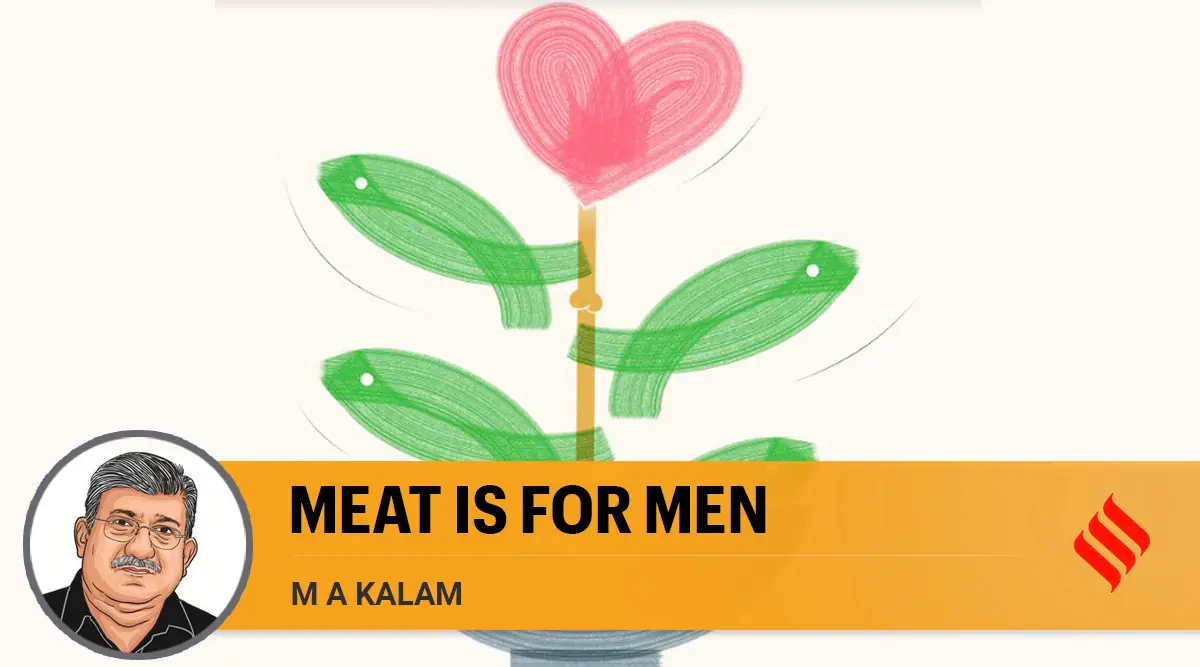
    India is a Nation of Meat-Eaters — They are Mostly Men

    Besides smashing the ‘vegetarian India’ myth, NFHS data also reveals how entrenched patriarchy dictates who is allowed to eat what.

    Whatever may be the rhetoric or the narrative, even if the latter is a preponderantly dominant one, truth finds its own place to emerge. For years, many sections of Indian society, principally the right-wing segment, have peddled the story that India is primarily a vegetarian nation. Proclamations of this sort have been made time and again, although archaeological and anthropological data do not give any credence to such claims and assertions. The Vedas too do not support this narrative. In fact, it is unequivocally held that it was unviable to depend only on vegetarian food anywhere in the world even during the Vedic times.

    [powerkit_button size=”lg” style=”info” block=”true” url=”https://indianexpress.com/article/opinion/india-nation-meat-eaters-mostly-men-7935896/” target=”_blank” nofollow=”false”]
    Read More
    [/powerkit_button]

  • Will Government Steps Tame Runaway Inflation?

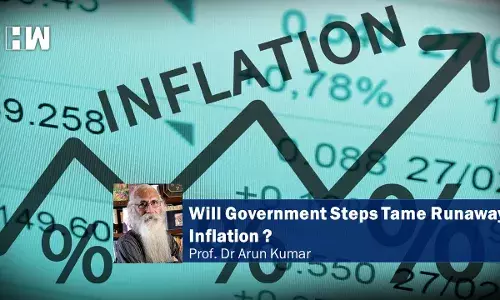
    Will Government Steps Tame Runaway Inflation?

    “The steps announced by the government are only a first step. Prices of essentials have to be brought down (not just rate of inflation) and wages indexed to inflation”

    WPI rising at 15.08% in April 2022 has set alarm bells ringing in the government. Not only has the WPI been rising at above 10% per annum for over 13 months, but it has also been rising faster since February 2022. In other words, it has accelerated. Of course, the war in Ukraine has impacted it but it had been rising rapidly prior to that. In November 2021 it had risen by 14.87%. It moderated a little till January 2022 and then again rose.

    In November 2021 the government had cut taxes on petro goods to bring down their prices. Now the government has again cut these taxes in the hope of moderating inflation. By restricting the exports of wheat and sugar it seeks to lower their prices. Additionally, it has acted to lower the prices of basics like steel, cement and plastics. These steps should help moderate inflation. The issue is how much and whether it will benefit the citizens, especially the marginalized ones?

    Acceleration and Generalization to all Commodities.

    When indirect taxes are levied on basic items of production, they feed into the price of all other products. For instance, if the price of energy rises, since it is used in all production, the price of all products rises – there is a generalized price rise. If the tax on diesel is raised, transport costs, cost of running pumps in the fields and electricity generated using diesel rise. Similar is the case with coal, cement, steel and plastics. So, one way of lowering the rate of inflation is to reduce taxes on these basics.

    [powerkit_button size=”lg” style=”info” block=”true” url=”https://hwnews.in/business-finance/business/will-government-steps-tame-runaway-inflation-1353302/” target=”_blank” nofollow=”false”]
    Read More
    [/powerkit_button]

  • “Aapada mein Avasar”: Examining India’s Engagement with the International Community Amidst the Pandemic

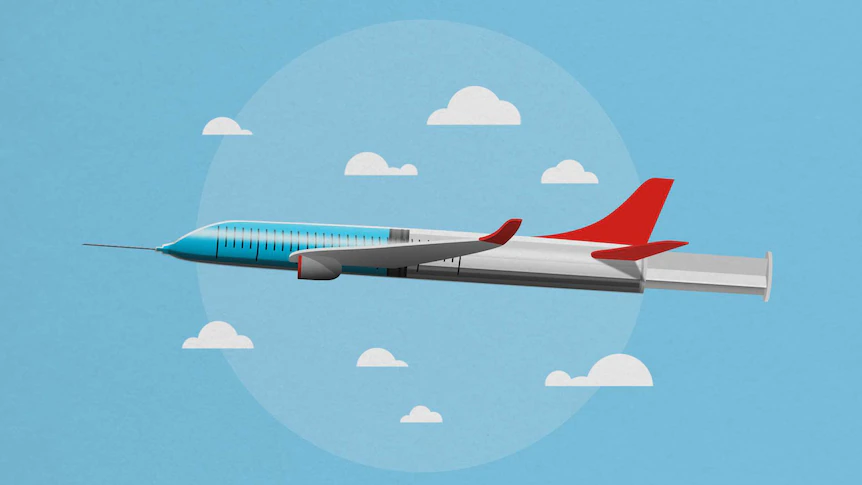
    “Aapada mein Avasar”: Examining India’s Engagement with the International Community Amidst the Pandemic

    [powerkit_button size=”lg” style=”info” block=”true” url=”https://admin.thepeninsula.org.in/wp-content/uploads/2022/05/TPF-Issue-Brief-Aapada-mein-Avasar-1_compressed-2.pdf” target=”_blank” nofollow=”false”]
    Download PDF
    [/powerkit_button]

    Abstract

    Health security has often been considered an issue of “low politics”. However, in the past two years, the global economy has suffered the most since the Great Depression and global supply chains have been hampered. The developed countries were caught off-guard at par with the rest of the world with global resource inequities at display. As the developed world resorted to “medicine nationalism” and “vaccine nationalism,” their credibility as “global leaders” was sharply questioned. Amidst this, the allegations of the pandemic’s origins generated reactions from an emergent China which stopped concealing its geopolitical ambitions and adopted an unapologetically aggressive posture. Moreover, the credibility of a prominent international organization, the World Health Organization, in terms of its inability in notifying and managing the pandemic was heavily criticised. Each of these occurrences having emerged from a global health crisis has unexpectedly altered the prioritization of matters in the international order, and thereby international diplomacy.

    With the developing and least developed countries deprived of critical medical supplies due to hoarding by developed countries – India’s active engagement in medical diplomacy in the initial phase garnered international appreciation. While it cannot be looked at in a transactional sense, it visibly helped India push for its geopolitical interests in the middle of a global crisis – finding the adequate avasar (possibilities) in the ongoing aapada (crisis). Although flaws on the domestic front existed during the first wave, their impact on India’s medical diplomacy was limited. However, a domestic crisis during the second wave turned out to be an eye-opener and prominently impacted foreign policy initiatives. Considering the lessons so learnt and applied in managing the third wave, this paper examines the tremendous domestic potential of India, while also looking at its historical legacy. In doing so, it emphasises the relevance of domestic affairs as a determinant of successful medical diplomacy outreach – thereby impacting the larger foreign policy objectives.

    Introduction

    While health security has often been relegated as a low-priority issue in the geopolitical landscape, the last two years have unprecedentedly changed everything. A majority of developed nations have appeared helpless in managing the human catastrophe thereby resorting to vaccine and medicine protectionism. To put this on record, over six million people worldwide have lost their lives (COVID Live – Coronavirus Statistics, 2022) during these two years – with the maximum number of lives lost in the United States of America. The global economy has suffered the most since the Great Depression as a fallout of extended total lockdowns that hampered global supply chains. Moreover, an unexpected, unrealised over-dependency of global supply chains on a single country’s economy – China – caught the international community unprepared. Gradually, newer possibilities and threats have emerged through a changing character of the global economy, society, as well as politics and warfare – each of these shifting to the virtual domain.

    [powerkit_button size=”lg” style=”info” block=”true” url=”https://admin.thepeninsula.org.in/wp-content/uploads/2022/05/TPF-Issue-Brief-Aapada-mein-Avasar-1_compressed-2.pdf” target=”_blank” nofollow=”false”]
    Read More
    [/powerkit_button]

    Feature Image Credits: ABC

  • How Do We Make the Wheels of the Police and Criminal Justice System Run Faster?

    How Do We Make the Wheels of the Police and Criminal Justice System Run Faster?

    The system of law enforcement in India encourages illegality and checks it only when it is in the interest of the rulers.

    The end of April 2022 saw three significant news items about justice delivery in the nation.

    Attorney General K.K. Venugopal said that 4.8 crore cases are in the courts and it had become a hopeless situation since “… litigants’ fundamental right to speedy justice lay in tatters …”.

    The Chief Justice of India, at the conference of chief ministers and Chief Justices, said that courts are burdened since the executive and the legislature are not doing their job.

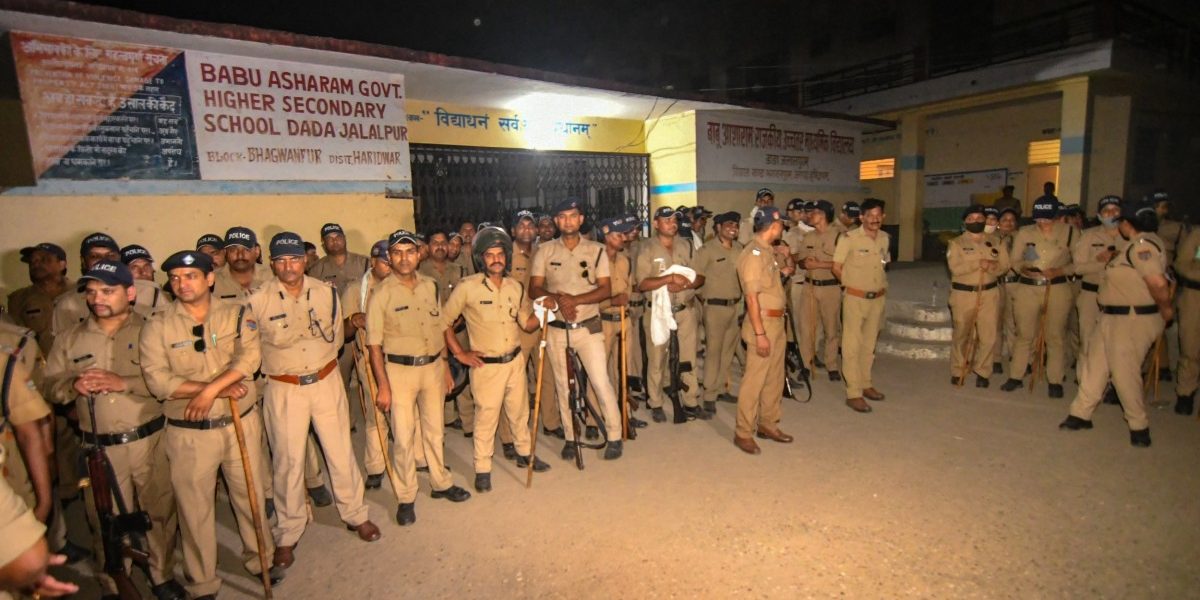
    Finally, Barpeta District Court Judge while granting bail to Gujarat MLA Jignesh Mevani castigated police functioning. He appealed to the high court to “prevent registration of false FIRs like the present one… Otherwise, our state will become a police state.” He suggested that policemen be required to wear body cameras and CCTV cameras installed in police vehicles to prevent fake encounters and registration of false cases.

    These three news items are interlinked. A large number of cases in the courts are a result of the lack of proper functioning of the executive, poorly drafted laws, and worse, their misuse. The Mevani case points to the registration of a false case. Anticipating that he may get bail, a false case was lodged in advance to arrest him as soon as he got bail.

    Clearly, politics was at play which ended up wasting the time of the judiciary and the executive. The case was perhaps meant to send a signal to other opponents of the ruling dispensation, and as the judge noted, it weakens the “hard earned democracy”.

    [powerkit_button size=”lg” style=”info” block=”true” url=”https://thewire.in/government/how-do-we-make-the-wheels-of-the-police-and-criminal-justice-system-run-faster” target=”_blank” nofollow=”false”]
    Read More
    [/powerkit_button]

  • IAF’s Force Structure: Strategy for Overcoming the Crisis

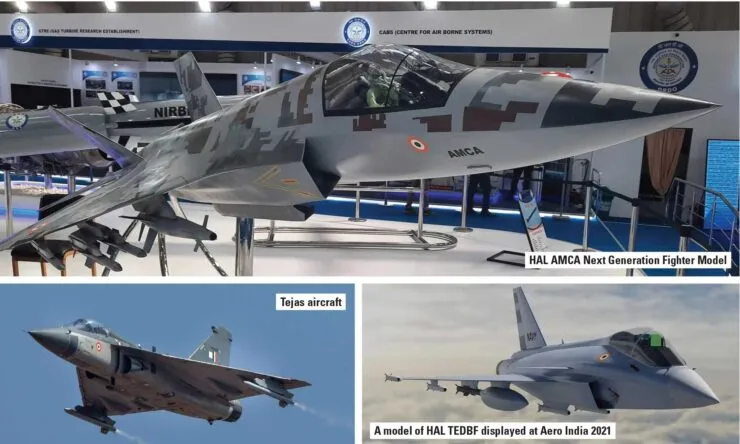
    IAF’s Force Structure: Strategy for Overcoming the Crisis

    Aligned with its national security interests, India’s strong geostrategic role-play, amidst the changing world order as a rising military power, aerospace power in particular must be rooted in the Indian industry.

    The ongoing conflict in Ukraine has many cautions for India. War at anytime and anywhere is a human catastrophe and therefore, all efforts to prevent or stop war should not be spared. While the American-led side wants India to take a stand in favour of their position, the Russian side is appreciative of India’s neutral stand. Recent visits by leaders from the USA, UK, EU, and Japan have emphasised the need for India to condemn Russia’s actions in Ukraine.

    What is of concern, however, is the fact that the USA and others stressing their view that India’s excessive dependence on Russia for its military equipment is the reason for its refusal to support their sanctions on Russia. Various officials from the US State Department and the DOD have openly advocated their objective of weaning India’s defence imports from Russia. There lies the real issue.

    India’s defence market is too huge and attractive for Western defence industries, and hence, it is the focus of strategic dialogues of many of these countries with India.

    India’s defence market is too huge and attractive for Western defence industries, and hence, it is the focus of strategic dialogues of many of these countries with India. India has diversified its military procurements in the last three decades to ensure it does not become vulnerable to a single source supply. As a result, India’s defence supplies from Russia, which was as high as 70-75% in the early 2000s came down to a current level of 50-55%. The US has been the biggest gainer in this diversification, garnering nearly $ 22 billion in sales to India in the last 15 years to emerge as its number 1 supplier. The Ukraine conflict and the resultant sanctions are being used by the USA to pressurise India to reduce its imports from Russia. The real objective is to ensure the US and its European allies replace Russia as India’s major if not exclusive supplier of defence equipment. The threat of CAATSA on India’s S-400 air defence missile deal with Russia is a prime example. The crux of the India-USA strategic partnership is really about capturing India’s defence market for the Military-Industrial Complex of the USA.

    [powerkit_button size=”lg” style=”info” block=”true” url=”https://raksha-anirveda.com/iafs-force-structure-strategy-for-overcoming-the-crisis/” target=”_blank” nofollow=”false”]
    Read More
    [/powerkit_button]

  • Physical Literacy | It’s Time We Stopped Seeing Sports and Education as Strange Bedfellows

    Physical Literacy | It’s Time We Stopped Seeing Sports and Education as Strange Bedfellows

    No concerted effort has been made at any level to treat sports and education as essentially concurrent activities that have to be given equal importance in a significant way

    The Supreme Court bench comprising Justices L Nageswara Rao and BR Gavai gave directions to the Union and state governments on April 25 seeking their views (but refrained from passing a judgment) as regards a suggestion that sports be recognised as a fundamental right, and the various educational entities/institutions (including CBSE, ICSE, and the various state boards) in India be directed that at least 90 minutes daily be devoted to “free play and games” (physical literacy) during school hours.

    This direction came about as a result of a report submitted by senior advocate Gopal Sankarnarayanan in a Public Interest Litigation (PIL). The PIL was filed by Kanishka Pandey, a sports researcher, in the wake of which the court had appointed Sankarnarayanan as an amicus curiae in August 2018.

    [powerkit_button size=”lg” style=”info” block=”true” url=”https://www.moneycontrol.com/news/opinion/physical-literacy-its-time-we-stopped-seeing-sports-and-education-as-strange-bedfellows-8446421.html” target=”_self” nofollow=”false”]
    Read More
    [/powerkit_button]

  • Optimisation of Water Resources

    Optimisation of Water Resources

    Community participation is the most important aspect of resource management and in this connection, the role of Panchayat, NGOs and Civil Society is very important. Therefor, a planned awareness strategy needs to be prepared and implemented.

    Introduction:

    Once again after the current sweltering warm weather, the monsoon is eagerly awaited; not only to get a respite from the heat but also to get water so essential for the crops. The good news is that as per the IMD prediction, this year the monsoon is going to be normal. However, the question is whether we are ready to make use of nature’s bounty for us? It may be noted that the total quality of water available in the world is 1600 million cubic km and 97.5% of it is saline. Of the balance, 2.5% of the fresh water, most of it lies deep and frozen in Antarctica and Greenland. Only 0.26% is available in rivers, lakes and in the soil and shallow aquifer.

    According to NITI Aayog surface water availability in India is 257 BCM of water per year which is likely to go up to 385 BCM in near future. India also has 432 BCM rechargeable ground water. India uses 634 BCM of water per year to grow food, generate energy and satisfy the needs of industry. Thus, theoretically, the availability should meet the requirements but the situation on the ground has many problems and availability gets impacted by other environmental and man-made factors. In this connection following two reports from World Bank and NASA are relevant.

    [powerkit_button size=”lg” style=”info” block=”true” url=”https://striveindia.in/optimization-of-water/” target=”_blank” nofollow=”false”]
    Read More
    [/powerkit_button]

  • India’s Indian Ocean and the Imperative for a Strong Indian Navy

    India’s Indian Ocean and the Imperative for a Strong Indian Navy

    “A good navy is not a provocation to war. It is the surest guarantee of peace!”
    The Indian Ocean has been at the centre of world history ever since we know it. Man originated in Africa, probably somewhere in the Olduvai Gorge in present-day Tanzania – where Homo Erectus lived 1.2 million years ago and where the first traces of Homo Sapiens, our more recent ancestors having evolved only about 200,000 years ago. First phonetic languages evolved around 100, 000 years ago. The migration of mankind out of Africa began almost 60000 years ago. But we don’t call the Indian Ocean the African Ocean because the first recorded activity over it began only about 3000 years ago.
    Three great early recorded activities of this period come to mind. The first is the Indus Valley Civilization. It was a Bronze Age civilization (3300–1300 BCE; mature period 2600–1900 BCE) in the northwestern region of the Indian subcontinent. Along with Ancient Egypt and Mesopotamia, it was one of three early civilizations of the Old World, and of the three the most widespread.
    The Indus civilization’s economy appears to have depended significantly on trade, which was facilitated by major advances in transport technology. It may have been the first civilization to use wheeled transport. These advances may have included bullock carts that are identical to those seen throughout South Asia today, as well as boats. Most of these boats were probably small, flat-bottomed craft, perhaps driven by sail, similar to those one can see on the Indus River today; however, there is secondary evidence of sea-going craft.
    Archaeologists have discovered a massive, dredged canal and what they regard as a docking facility at the coastal city of Lothal now in Gujarat. Judging from the dispersal of Indus civilization artifacts, the trade networks, economically, integrated a huge area, including portions of Afghanistan, the coastal regions of Persia, northern and western India, and Mesopotamia. There is some evidence that trade contacts extended to Crete and possibly to Egypt.
    There was an extensive maritime trade network operating between the Harappan and Mesopotamian civilizations as early as the middle Harappan Phase, with much commerce being handled by “middlemen merchants from Dilmun” (modern Bahrain and Failaka located in the Persian Gulf). Such long-distance sea trade became feasible with the innovative development of plank-built watercraft, equipped with a single central mast supporting a sail of woven rushes or cloth.
    The second great economic activity was Slavery. Slavery can be traced back to the earliest records, such as the Code of Hammurabi (c. 1760 BC), which refers to it as an established institution. Slavery is rare among hunter-gatherer populations, as it is developed as a system of social stratification. Slavery typically also requires a shortage of labour and a surplus of land to be viable. Bits and pieces from history indicate that Arabs enslaved over 150 million African people and at least 50 million from other parts of the world.  Later they also converted Africans into Islam, causing a complete social and financial collapse of the entire African continent apart from wealth attributed to a few regional African kings who became wealthy in the trade and encouraged it.
    The third great economic activity was seafaring evidenced by migration. The island of Madagascar, the largest in the Indian Ocean, lies some 250 miles (400 km) from Africa and 4000 miles (6400 km) from Indonesia. New findings, published in the American Journal of Human Genetics, show that the human inhabitants of Madagascar are unique – amazingly, half of their genetic lineages derive from settlers from the region of Borneo, with the other half from East Africa. It is believed that the migration from the Sunda Islands began around 200 BC.
    Linguists have established that the origins of the language spoken in Madagascar, Malagasy, suggested Indonesian connections, because its closest relative is the Maanyan language, spoken in southern Borneo. The Gods were also kind and gave the IOR the weather conditions that helped in evolving seaborne trade and intercourse. The sea surface current and prevailing wind structure in and over the Indian Ocean favoured seafarers in their endeavour and sailings in the Indian Ocean from the southern tip of Africa (Cape of Good Hope) during the month of May. After the entry into the Indian Ocean, the seafarers continued to sail in the northerly direction along the coastline of Africa (aided by the strong Somali Current and the East Arabian Current) towards the Arabian Sea.
    The physical environmental conditions over the sea and the external prevailing weather helped the seafarers reach places up to the west coast of India. As this sea surface current extend towards the east coast of India, the sailors were greatly assisted by the surface current as they sailed along. During November, when the East Indian Winter wind reverses in its direction and begins to blow from the northeast, the sailors prepare for their return journey. The winds that generate the waves contribute to the reduction in the otherwise required travel time for the sailings between any given two points of departure and arrival. The natural and external forces help the sailors make their journey/expedition more economical and energy-efficient.
    Clearly, the region was a hub of all kinds of economic activity. Then came the Petroleum Age. And things changed as never before. The Spice trade, the Silk trade, and the China trade all paled into insignificance. The use of Coal as a ship fuel enlarged distances and volumes of cargo. Oil made even longer journeys and greater volumes possible.
    Petroleum is the lifeblood of modern society. It’s a relatively new activity, but its advent has transformed our world as few things have. Petroleum, in one form or another, has been used since ancient times. According to Herodotus more than 4000 years ago, asphalt was used in the construction of the walls and towers of Babylon; there were oil pits near Babylon, and a pitch spring on Zacynthus.
    Great quantities of it were found on the banks of the river Issus, one of the tributaries of the Euphrates. Ancient Persian tablets indicate the medicinal and lighting uses of petroleum in the upper levels of their society. By 347 AD, oil was produced from bamboo-drilled wells in China. Early British explorers to Myanmar documented a flourishing oil extraction industry based in Yenangyaung, that in 1795 had hundreds of hand-dug wells under production.
    Oil is now the single most important driver of world economics, politics and technology.  The rise in importance was due to the invention of the internal combustion engine, the rise in commercial aviation, and the importance of petroleum to industrial organic chemistry, particularly the synthesis of plastics, fertilizers, solvents, adhesives and pesticides. Today, oil contributes 3% of the global GDP.
    In 1847, the process to distill kerosene from petroleum was invented by James Young. He noticed natural petroleum seepage in the Riddings colliery at Alfreton, Derbyshire from which he distilled a light thin oil suitable for use as lamp oil, at the same time obtaining a thicker oil suitable for lubricating machinery. In 1848 Young set up a small business refining the crude oil.
    Today the world’s biggest stand-alone refinery is the Reliance refinery at Jamnagar with a refining capacity of about 1.5 million barrels a day. The Essar refinery at Jamnagar refines a further 0.5 million barrels a day. Together they make Jamnagar one of the world’s great refining centers. India’s number one export item is Petroleum products, mostly Petrol and Diesel. India now exports the equivalent of about 615,000 barrels a day. In 2020, petroleum exports accounted for $25.3 billion of our total exports of $291.8 billion in the same year.
    India imported $77 billion worth of oil in the year 2020-21 and more than half of this comes from countries in the IOR. Iraq’s share is 22.4%, Saudi Arabia’s share is 18.8%, UAE’s share is 10.8%, and Kuwait’s 5%. The IOR is India’s lifeline and lifeblood. If the line is blocked we will suffer hugely, if the blood gets anaemic we will suffer hugely. India just cannot afford anything to go wrong here.
    The sea lanes in the Indian Ocean are considered among the most strategically important in the world—according to the Journal of the Indian Ocean Region, more than 80 percent of the world’s seaborne trade in oil transits through the Indian Ocean choke points, with 40 percent passing through the Strait of Hormuz, 35 percent through the Strait of Malacca and 8 percent through the Bab el-Mandab Strait.
    But it’s not just about sea-lanes and trade. More than half the world’s armed conflicts are presently located in the Indian Ocean region, while the waters are also home to continually evolving strategic developments including the competing rises of China and India, the potential nuclear confrontation between India and Pakistan, the US interventions in Iraq and Afghanistan, Islamist terrorism, incidents of piracy in and around the Horn of Africa, and management of diminishing fishery resources.
    As a result of all this, almost all the world’s major powers have deployed substantial military forces in the Indian Ocean region. For example, in addition to maintaining expeditionary forces in Iraq, the US 5th Fleet is headquartered in Bahrain, and uses the island of Diego Garcia as a major air-naval base and logistics hub for its Indian Ocean operations. In addition, the United States has deployed several major naval task forces there, including Combined Task Force 152 (currently operated by the Kuwait Navy), which is focusing on illicit non-state actors in the Arabian Gulf, and Combined Task Force 150 (currently commanded by the Pakistan Navy), which is tasked with Maritime Security Operations (MSO) outside the Arabian Gulf with an Area of Responsibility (AOR) covering the Red Sea, Gulf of Aden, Indian Ocean and the Gulf of Oman. France, meanwhile, is perhaps the last of the major European powers to maintain a significant presence in the north and southwest Indian Ocean quadrants, with naval bases in Djibouti, Reunion, and Abu Dhabi.
    And, of course, China and India both also have genuine aspirations of developing blue water naval capabilities through the development and acquisition of aircraft carriers and an aggressive modernization and expansion programme.
    China’s aggressive soft power diplomacy has widely been seen as arguably the most important element in shaping the Indian Ocean strategic environment, transforming the entire region’s dynamics. By providing large loans on generous repayment terms, investing in major infrastructure projects such as the building of roads, dams, ports, power plants, and railways, and offering military assistance and political support in the UN Security Council through its veto powers, China has secured considerable goodwill and influence among countries in the Indian Ocean region.
    And the list of countries that are coming within China’s strategic orbit appears to be growing. Sri Lanka, which has seen China replace Japan as its largest donor, is a case in point—China was no doubt instrumental in ensuring that Sri Lanka was granted dialogue partner status in the Shanghai Cooperation Organization (SCO).
    To the west, Kenya offers another example of how China has been bolstering its influence in the Indian Ocean. The shift was underscored in a leaked US diplomatic cable from February 2010 that was recently published by WikiLeaks. In it, US Ambassador to Kenya Michael Ranneberger highlighted the decline of US influence in East Africa’s economic hub, saying: ‘We expect China’s engagement in Kenya to continue growing given Kenya’s strategic location…If oil or gas is found in Kenya, this engagement will likely grow even faster. Kenya’s leadership may be tempted to move close to China in an effort to shield itself from Western, and principally US pressure to reform.’
    The rise of China as the world’s greatest exporter, its largest manufacturing nation and its great economic appetite poses a new set of challenges. At a meeting of South-East Asian nations in 2010, China’s foreign minister Yang Jiechi, facing a barrage of complaints about his country’s behaviour in the region, blurted out the sort of thing polite leaders usually prefer to leave unsaid. “China is a big country,” he pointed out, “and other countries are small countries and that is just a fact.”
    Indeed it is, and China is big not merely in terms of territory and population, but also in military might. Its Communist Party is presiding over the world’s largest military build-up. And that is just a fact, too—one that the rest of the world has to come to terms with.
    China’s defence budget has almost certainly experienced double-digit growth for two decades. According to SIPRI, a research institute, annual defence spending rose from over $30 billion in 2000, $120 billion in 2010 to almost $229.4 billion in 2021. SIPRI usually adds about 50% to the official figure that China gives for its defence spending, because even basic military items such as research and development are kept off budget. Including those items would imply total military spending in 2021, based on the latest announcement from Beijing, would be around $287.8 billion.
    This is not a sum India can match and the last thing we need to get caught in is a numbers game. A one-party dictatorship will always be able to outspend us, even if our GDPs get closer.
    But history tells us again and again that victory is not assured by superiority in numbers and even technology. If that were to be so, Alexander should have been defeated at Gaugamela, Babur at Panipat, Wellington at Waterloo, Russia at Leningrad, Britain in the Falklands, and above all Vietnam who defeated three of the world’s leading powers – France, the USA and China – in succession. I don’t have to tell you that victory is more a result of strategy and tactics. Numbers do matter, but numbers are not all. Technology does matter, but technology alone cannot assure you of victory. It’s always mind over matter. You know these things better than most of us. You also know what to do. As the old saying goes: “When the going gets tough, the tough get going!”
    That said, the threat from China should not be exaggerated. There are three limiting factors. First, unlike the former Soviet Union, China has a vital national interest in the stability of the global economic system. Its military leaders constantly stress that the development of what is still only a middle-income country with a lot of very poor people takes precedence over military ambition. The increase in its military spending reflects the growth of the economy, rather than an expanding share of national income. For many years China has steadily spent the same proportion of GDP on defence (a bit over 1.7%, whereas America spend about 3.7% in the year 2020-21).
    The real test of China’s willingness to keep military spending constant will come when China’s headlong economic growth starts to slow further. But in the past form, China’s leaders will continue to worry more about internal threats to their control than external ones. In 2020, the Chinese spending on internal security was $212 billion. With a rapidly ageing population, it is also a good bet that meeting the demand for better health care will become a higher priority than maintaining military spending.
    Like all the other great powers, China faces a choice of guns and butter or more appropriately walking sticks. But till then it is: Nervi belli pecunia infinita or unlimited money is the muscle of war.
    India on the other hand will keep growing long after China has stopped growing. Its youthful population and present growth trends indicate the accumulation of the world’s largest middle class in India. India’s growth is projected to continue well past 2050. In fact so big will this become, that India during this period will increasingly power world economic growth, and not China. In 2050, India is projected to have a population of 1.64 billion and of these 1.3 billion will belong to the middle and upper classes. The lower classes will be constant at around 300 million, as it is now.
    India already has the world’s third-largest GDP. Many economists prophesize that in 2050 it will be India that will be the world’s biggest economy, not China. In per capita terms, we might still be poorer, but in over GDP terms, we will be bigger.
    According to a study by IHS Markit, a subsidiary of S&P Global, India will be the world’s third-largest economy by 2030. Indian GDP in 2030 is projected to be $8.4 trillion. China, in second place, will have a GDP of $ 33.7 trillion and the US $ 30.4 trillion. As we say in India, aap key muh mein ghee aur shakhar.  Both incidentally now deemed bad for health.
    Now comes the dilemma for India. Robert Kaplan writes: “As the United States and China become great power rivals, the direction in which India tilts could determine the course of geo-politics in Eurasia in the 21st century. India, in other words, looms at the ultimate pivot state.” At another time Mahan noted that India, located in the centre of the Indian Ocean littoral, is critical for the seaward penetration of both the Middle-east and China.
    Now if one were an Indian planner, he or she would be looking at the China Pakistan axis with askance. India has had conflicts and still perceives threats from both, jointly and severally. The Tibetan desert, once intended to be India’s buffer against the north now has become China’s buffer against India. The planner will not be looking at all if he or she were not looking at the Indian Ocean as a theatre. After all, it is also China’s lifeline and its lifeblood flows here.
    Now if one were a Chinese planner, he or she would be looking with concern over India’s growth and increasing ability to project power in the IOR. The planner will also note what experts are saying about India’s growth trajectory. That it will be growing long after China gets walking sticks. That it is the ultimate pivot state in the grand struggle for primacy between the West led by the USA and Japan, and China.
    What will this planner be thinking particularly given the huge economic and military asymmetry between China and India now? Tacitus tells it most pithily. That peace can come through strength or Si vis pacem para bellum. While China has ratcheted up its show of assertiveness in recent years, India has been quietly preparing for a parity to prevent war. Often parity does not have to be equality in numbers. The fear of pain disproportionate to the possible gains, and the ability of the smaller in numbers side to do so in itself confer parity.
    There is a certain equilibrium in Sino-Indian affairs that make recourse to force extremely improbable. Both modern states are inheritors of age-old traditions and the wisdom of the ages. Both now read their semaphores well and know how much of the sword must be unsheathed to send a message. This ability will ensure the swords remain recessed and for the plowshares to be out at work.
    Finally, I would be remiss if I did not say something about the centrality of the Indian Navy to our future. Nothing says it better than what Theodore Roosevelt said a century ago: “A good Navy is not a provocation to war. It is the surest guarantee of peace!”
    Featured Image Credit: Indian Navy
  • Sanctions on Russia Are a Tool That Must Be Calibrated Like Any Other

    Sanctions on Russia Are a Tool That Must Be Calibrated Like Any Other

    If de-dollarisation occurs, the impact will be felt wide and far. Severe sanctions are a double-edged sword which will impact every nation.

    Russia’s invasion of Ukraine has been condemned by the majority of countries in the United Nations. NATO has not intervened militarily since that runs the danger of a wider conflagration with the possible use of nuclear weapons. So, instead, the NATO powers have supplied Ukrainian forces with weapons and imposed severe sanctions on Russia. Evermore sanctions are announced every week.

    It was said that this would degrade Russia’s capacity to wage war by freezing its assets held in Western banks. Also, its earnings through trade would decline and impoverish it. It was also argued that the Russians would be hurt through multiple channels – higher inflation, the inability of its citizens to get dollars, a collapse in prices of financial assets, like, shares and so on.

    Thus, while Russia is attacking militarily, the West is hitting back through economic means. Further, there is also a cyber and media component to the war. It is perhaps the first war on multiple fronts. Will the Russians be hurt enough to stop the war? Can one draw lessons from the sanctions against Iran?

    [powerkit_button size=”lg” style=”info” block=”true” url=”https://thewire.in/economy/sanctions-on-russia-are-a-tool-that-must-be-calibrated-like-any-other” target=”_blank” nofollow=”false”]
    Read More
    [/powerkit_button]

  • Colonial taxes built Britain. That must be taught in lessons on Empire

    Colonial taxes built Britain. That must be taught in lessons on Empire

    UK government ministers want the British Empire’s benefits taught in schools. Don’t let them ignore the death and destruction it inflicted says Professor Gurminder K Bhambra. Her observation is equally if not more important for India and other erstwhile colonies. Britain and other European colonial powers not only looted and decimated Indian economy over three centuries of colonial interaction but their ruthless exploitation led to much of the poverty that has afflicted the global south ever since. This fact of history must be taught extensively in Indian schools. There are many who propagate the fallacy that the British empire was beneficial but the truth that it was ruthlessly exploitative must be taught and researched in a big way. The wealth of the West was built on built on exploitation of Africa, Asia, and Latin America. The West continues to dominate the global economic system and it is inherently exploitative. History teaching and research, from policy and science perspectives, are in dire need for elimination of Western bias.


    Recent weeks have seen a variety of UK government ministers – fromOliver Dowden to Kemi Badenoch to, most recently, education secretary Nadhim Zahawi – both extol the benefits of British Empire and urge the teaching of those benefits. This follows on from the government’s response to the Commission on Race and Ethnic Disparities, which set out the need for a new model curriculum for history which would advise schools on how best to teach these issues. This is all part of the government’s Inclusive Britain strategy which calls on us to acknowledge the rich and complex history of ‘global Britain’.

    In the spirit of this call, I offer one account of the complex, entangled histories of colonial taxation and national welfare that continue to shape modern Britain. Few people know that colonial subjects from the Indian subcontinent paid taxation, including income tax, to the British government in Westminster. Or that that taxation was used to alleviate the conditions of poorer people within Britain at a time when the working class and middle class here were exempt from paying income tax.

    Taxation – and the ways in which it is returned to citizens through welfare – is one of the main ways in which the ‘imagined community’ of the nation comes into being. That is, the relationship between taxes and welfare is part of the process of constructing institutions and the idea of the nation. If we were to recognise that this ‘imagined community’ was built not only through national taxes, but also colonial ones, then how might that change our understanding of what it is to be British today?

    My grandfather, Mohan Singh, was born in 1913 in a small village in the Punjab, in what was then British India. He was four years old when his father, Gurdit Singh, died and 17 when his uncle, Harnam Singh, who had been supporting him, also passed away. My grandfather had planned on attending the Government College in Lahore, but – needing to support his mother and younger sister – he instead spent six months training as a boilermaker. He then got married to Pritam Kaur and travelled to Calcutta to work in a variety of factories, engineering works and rolling mills.

    In 1942, he travelled to the British colony of Kenya – bringing his family over later – and worked for 18 years at the East African Railways and Harbour Company. He spent the last two decades of his life in the UK, working at Chalvey Engineering in Slough as a sheet metal worker before retiring at the age of 65 in Southall, west London.

    Calls to ‘go home’ have been the refrain of right-wing opponents of immigration from at least the 1970s

    Mohan Singh criss-crossed three continents during his lifetime, but he never left the jurisdiction of the British Empire. In his application for registration as a citizen of the UK and Colonies – in the aftermath of the British Nationality Act of 1948 – he wrote: “I was born in British India.” He further noted that he lived and worked in India and Kenya, two countries that were colonies of Britain. It was these connections that confirmed his citizenship and gave him the right to travel to and live in Britain. He duly exercised those rights but, on arrival, he had them called into question by the local population, who were either unaware of them or indifferent.

    Calls to ‘go home’ have been the refrain of right-wing opponents of immigration from at least the 1970s – as well as having been plastered on the sides of vans as part of the UK government’s ‘hostile environment’policies of recent years. They are also implicit in an influential body of scholarly work oriented to questions of belonging and entitlement that argue for priority in public policy to be given to the ‘white working class.’ This is on the basis of them being ‘insiders’ who have contributed through their taxes to the wealth that is disbursed through welfare.

    Former colonial subjects, like my grandfather, are regarded as immigrant outsiders even when they come to the metropole carrying passports of British citizenship. They are not seen to have contributed to the wealth of Britain by paying taxes and they are regarded as unfairly gaining access to the national patrimony. As Geoff Dench, Kate Gavron and Michael Youngwrite in ‘The new East End’: “As newcomers, their families cannot have put much into the system, so they should not be expecting yet to take so much out.”

    Britain established direct rule over India after suppressing the 1857 Indian Mutiny (also known as the First War of Independence). In 1860, it implemented an income tax upon colonial subjects, in part to pay for the costs associated with those revolts. Initially, a 2% rate was imposed on those earning between 200 rupees and 500 rupees a year and a 4% rate on those earning above 500 rupees annually.

    Famine Genocide 1876-1879 in British Raj Madras, India. Credit: Wikimedia Commons

    The arrival of the British in India – first via the English East India Company and then through direct rule – had brought endemic famine across the subcontinent

    When my grandfather started work in the 1930s, the average wage for a skilled worker in British India was about 40 rupees a month. He was very unlikely to have paid income tax, however, as he would not have earned enough to meet the threshold, which by then was 2,000 rupees a year. Of the amount that was collected, around three-quarters went to the imperial treasury, with only one rupee in a hundred for local purposes. Local purposes included the building of canals and roads, but not the alleviation of poverty, not even in times of catastrophic famine.

    The arrival of the British in India – first via the English East India Company and then through direct rule – had brought endemic famine across the subcontinent. The 50 years after the implementation of the income tax saw one of the most intense such periods of famine, in which it is estimated over 14 million people died of starvation. This was in the context of grain being exported by rail from the famine regions (including to Britain) and colonial taxes continuing to be collected even in the worst-affected areas.

    In all cases, the demands of ‘sound finance’ trumped those of public health and the primary thing to be avoided was any idea that the poor in India should be maintained at public expense. Ensuring sufficient funds for the ensuing military campaign in Afghanistan – from the taxes paid by colonial subjects for local purposes – was of more importance than using those taxes to alleviate severe hunger and avert the deaths of millions.

    Here, we see quite clearly that the idea of the ‘imagined community’ created through taxation and its redistribution did not include colonial subjects. The taxes that Indians paid to the imperial treasury and to local provinces did not give them any entitlement to the redistribution of that income. Worse, any relief provided during famines was often dependent on undertaking hard labour in camps at a distance from a claimant’s locality.

    The most extreme instance was where the rations provided in return for heavy labour were scarcely above the level required for basic subsistence. The ‘Temple wage’ – named after the lieutenant-governor, Richard Temple, who brought it in – produced lethal results and, as Mike Davis notes in ‘Late Victorian Holocausts’, turned the work camps into extermination camps.

    The death and destruction brought about by the Empire were known at the time. In 1925, Harry Pollitt, the leader of the Boilermakers Union in the UK, stated that the British Empire was drenched in blood. This was in the context of debates at the Trades Union Congress in Scarborough, where a resolution was eventually adopted – by three million votes to 79,000 – against imperialism and in support of the right of self-determination of those who were colonised.

    Such sentiments, however, came up against more hard-nosed understandings concerning the utility of the Empire to those in Britain. As Labour foreign secretary Ernest Bevin proclaimed in Parliament in 1946, “I am not prepared to sacrifice the British Empire, because I know that if the British Empire fell … it would mean that the standard of life of our constituents would fall considerably.”

    Here, Bevin acknowledged that the life of all within Britain was enhanced as a consequence of Empire. However, Empire was overwhelmingly disastrous for the majority of people subject to it. Their standard of life fell considerably as a consequence of colonialism and the famines it produced and, in many, many cases, they lost their lives to it.

    One mode of survival was to move. This is why my grandfather moved from a village in the Punjab to train as a boilermaker in Lahore, before working in Calcutta, Nairobi and London. This is likely why his grandfather before him moved from famine-struck Orissa to Rajasthan to Punjab. These movements tend not to be seen to be part of the histories of Britain, global or otherwise, or of any consequence to understanding Britain or Britishness in the present.

    The forgetting of the Empire involves also the forgetting of the political community – colonial and postcolonial – that was constructed through taxation. Few in Britain today understand the extent to which national projects – from social welfare to cultural institutions such as country houses, museums, and galleries – have been enabled through the taxes paid by former colonial subjects. There is an urgent need for us to recognise our shared histories and account for them.

    One aspect of the ‘culture wars’ is the call to take the views of taxpayers into account when discussing ‘contested histories’. Samir Shah, the chair of London’s Museum of the Home, for example, argued that as heritage bodies are funded by taxpayers’ money, then the views of taxpayers – those he considers the silent majority – ought to be taken more explicitly into account. Given that both colonial subjects and their descendants paid taxes to the government in Westminster, then they/we also have a legitimate stake, in the government’s own terms, in how our shared history is represented. There is a benefit to the teaching of British Empire, but the reality is different from what these ministers suppose.


    This essay was published earlier in openDemocracy and is republished under Creative Commons Attribution – Non Commercial 4.0 International License.


    Feature Image Credit: The Irish Times