Tag: India

  • Giveaways & Elections: Short-termism to the Fore

    Giveaways & Elections: Short-termism to the Fore

    BJP and AAP are the two winners in the just concluded crucial Assembly elections. The scale of victory of these two parties surprised most analysts. In UP after three decades, a ruling party won, overcoming severe anti-incumbency. There are accusations of the rigging of the EVMs but this can’t be proved when VVPAT slips are not being fully counted. Even if they were to be counted, fraud could have been committed in other ways and this could become an endless exercise. AAP, a new kid on the block, won on the promise of change from the terribly corrupt politics of the moribund established parties.

    Delivery is Important

    So, the ruling BJP won because it said that it had brought about a change in the lives of the common people while AAP won on the promise of bringing about change in their lives. What is this change that was so attractive to the people?

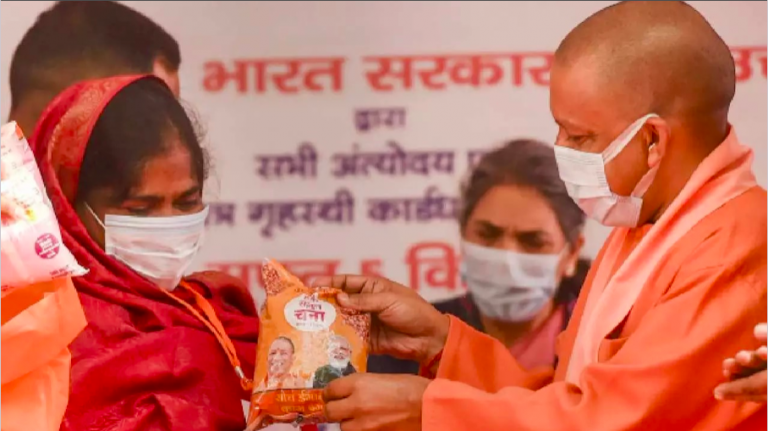
    BJP faced anti-incumbency due to high inflation, youth unemployment, farmers’ discontent, COVID mismanagement, etc. But its cadres went door to door to point to the Rs. 6000 is given to farmers, free grains, etc. to households, money for toilets and houses, etc. The beneficiaries from these schemes are called `Labhartis’ by the pundits. The opposition also promised various things if they came to power but obviously, a bird in hand is better than two in the bush. Also, the credibility of the opposition parties in UP is low since they delivered little when they were in power earlier. Finally, public memory is short. Many of the schemes that are listed as achievements by the present government were initiated by the earlier regimes.

    [powerkit_button size=”lg” style=”info” block=”true” url=”https://thepublicindia.com/2022/03/14/giveaways-elections-short-termism-to-the-fore/” target=”_blank” nofollow=”false”]
    Read More
    [/powerkit_button]

  • 10 Bangladeshis Evacuated By India From Ukraine: PM Hasina Dials To Thank PM Modi

    10 Bangladeshis Evacuated By India From Ukraine: PM Hasina Dials To Thank PM Modi

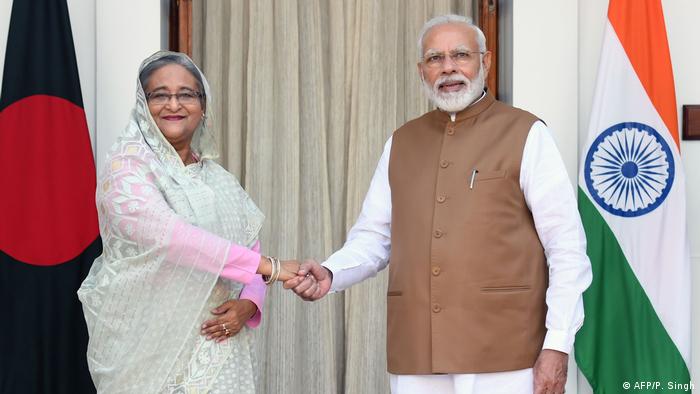
    Bangladesh Prime Minister Sheikh Hasina has expressed her gratitude to Prime Minister Narendra Modi for rescuing nine stranded Bangladeshi students from Sumy, the north-eastern city of besieged Ukraine and other areas.

    At least two more Bangladeshi nationals are still stuck in Mariupol, shared Ambassador Sultana Laila Hossain, Bangladesh’s envoy to Poland and Ukraine in an exclusive interaction with The New Indian. Ambassador Hossain also thanked India for saving 10 Bangladeshi lives.

    Nine Bangladeshis have been evacuated by India under its pilot evacuation drive Operation Ganga on March 9, and one Bangladeshi was airlifted on March 4. The nine evacuees are on the way to the domicile via transit route in Poland.

    [powerkit_button size=”lg” style=”info” block=”true” url=”https://newindian.in/first-on-new-indian-10-bangladeshis-evacuated-by-india-from-ukraine-hasina-dials-to-thank-modi/” target=”_blank” nofollow=”false”]
    Read More
    [/powerkit_button]

  • The Ukraine crisis: Its impact on India

    The Ukraine crisis: Its impact on India

    India has to tread a fine line in this imbroglio: Taking care of the welfare and evacuation of Indian students and the possibility of an oil price hike.

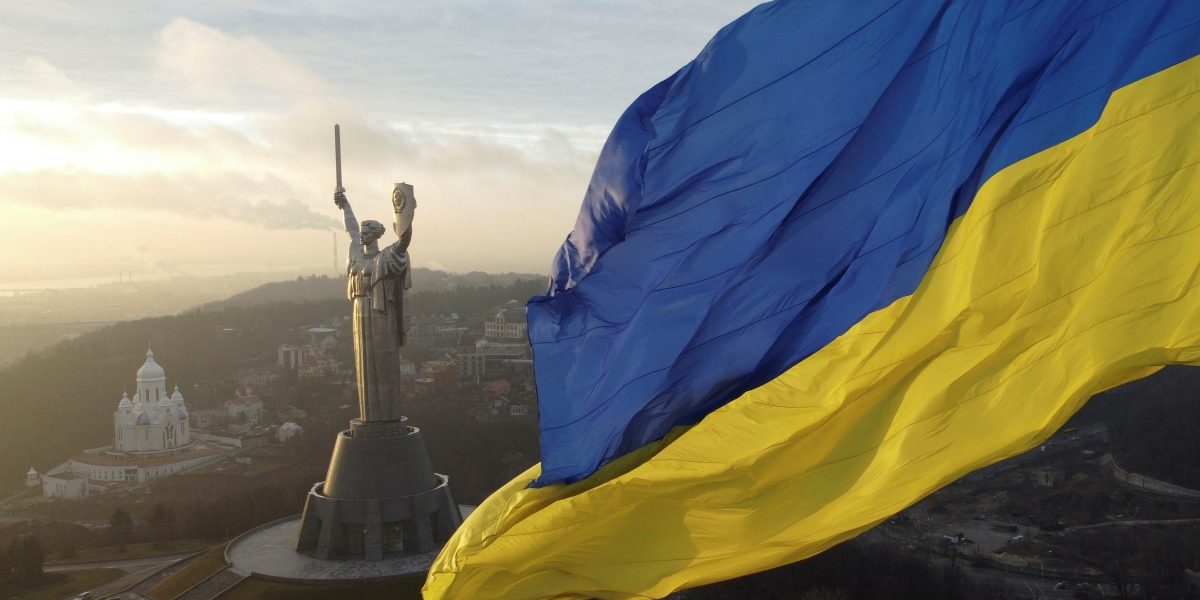
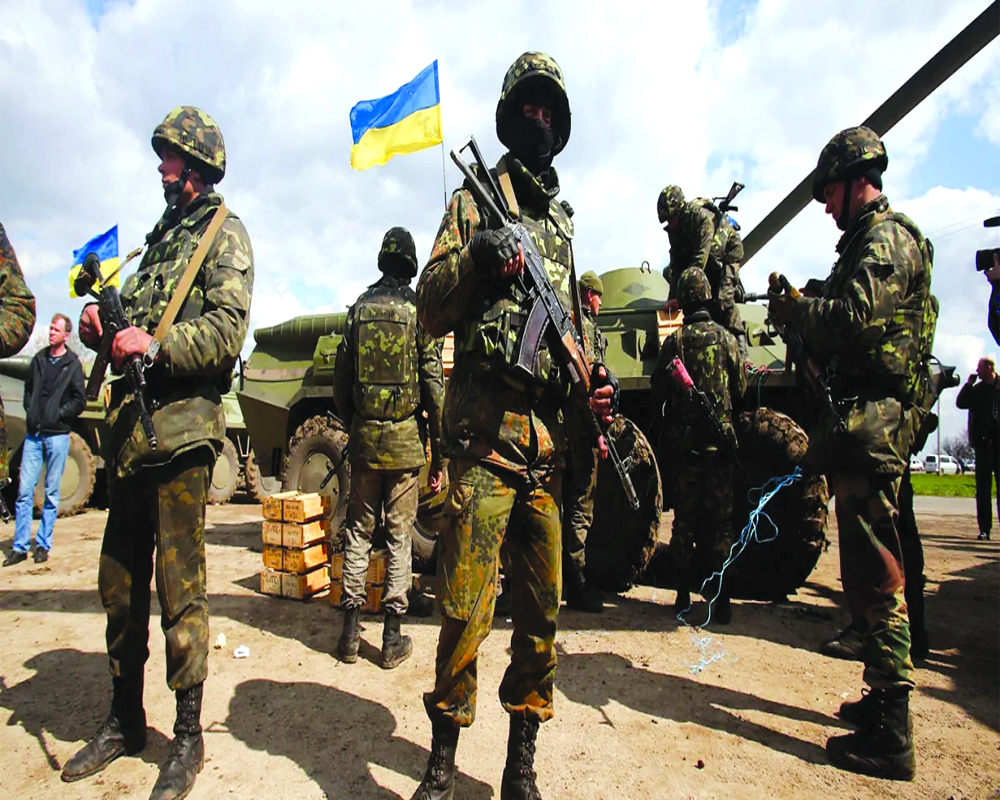
    The face-off over Ukraine between Russia and the United States and its Nato allies has been dominating the headlines for a while now with tensions ratcheting up as we receive dire public warnings every day of a Russian invasion any day now. Clearly, the possibility of Russian intervention there, and the consequent escalation of sanctions against them, is very real and concerning.

    While Ukraine may be a developing country and the poorest in Europe, by no means is it a pushover. It is the second-largest country there, behind Russia, by area, and in terms of population the eighth largest with its 42 million inhabitants. It has been independent since 1991, following the collapse of the Soviet Union, though it had been a part of the Russian Empire and the Soviet Union since the 18th century. If there is one lesson that Putin and the Russian military should have learnt from America’s disastrous interventions in Iraq and Afghanistan is that invasions are relatively easy to accomplish, but keeping restive and hostile populations under control is a wholly different proposition.

    [powerkit_button size=”lg” style=”info” block=”true” url=”https://www.dailypioneer.com/2022/columnists/the-ukraine-crisis–its-impact-on-india.html” target=”_self” nofollow=”false”]
    Read More
    [/powerkit_button]

  • The Strategic Imperative of Developing Ladakh

    The Strategic Imperative of Developing Ladakh

    Abstract
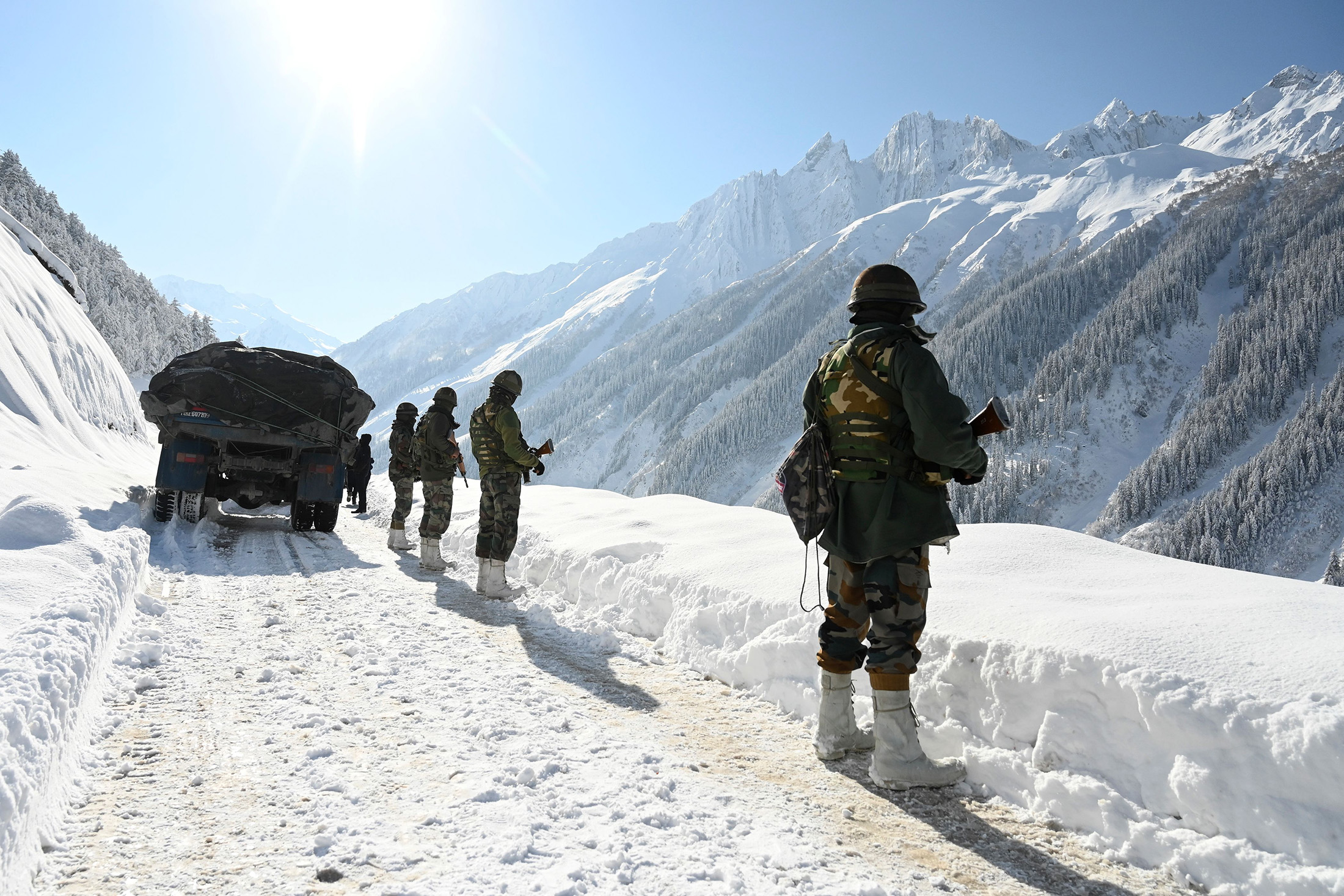
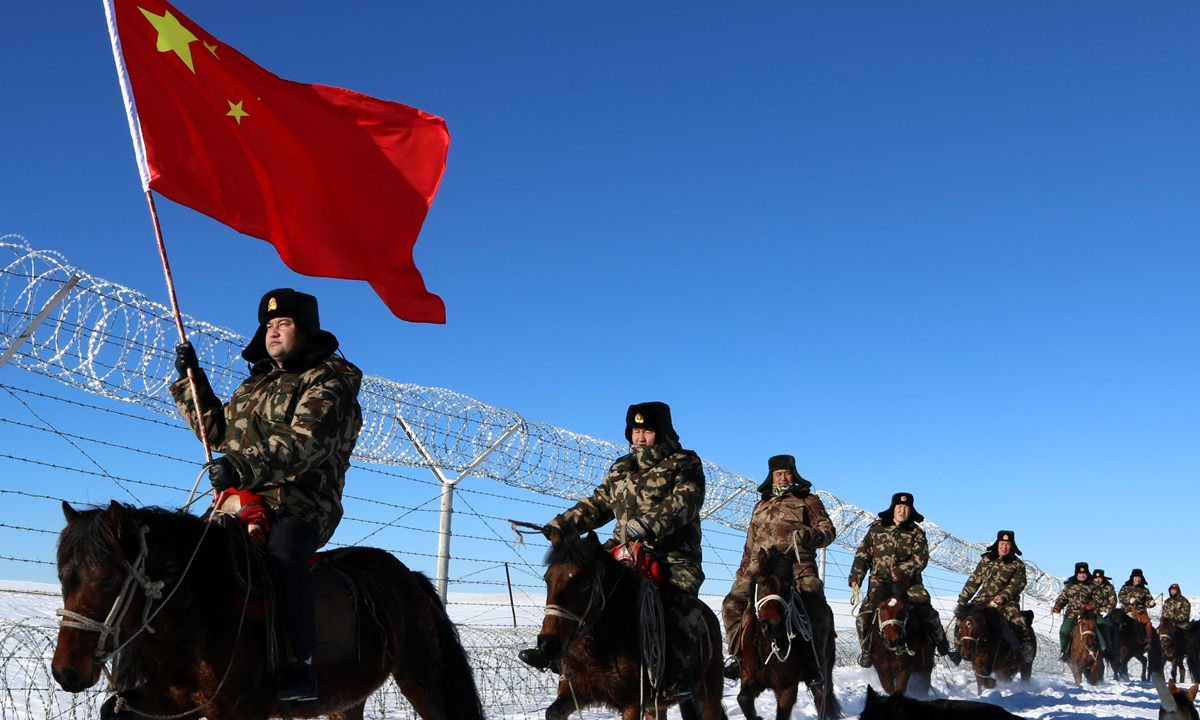
    Following the Galwan valley clash in 2020, Ladakh has become the most important place of strategic and operational importance since it adjoins two adversarial neighbours who are strategically aligned with each other. China’s belligerence is taking many forms such as information warfare, land transgression, allegations of hacking, etc. The recent claim of unfurling of the Chinese flag supposedly in Galwan, which was later clarified to have been done in another location is a spoke of its information warfare against India. China’s construction activities enabling quick buildup of its troops and armaments are also a major cause of concern for India. While there are some initiatives launched by the Indian army and the Central government to strengthen the infrastructure in the Northern borders, special attention needs to be paid towards the holistic development of human resources and infrastructure in Ladakh.


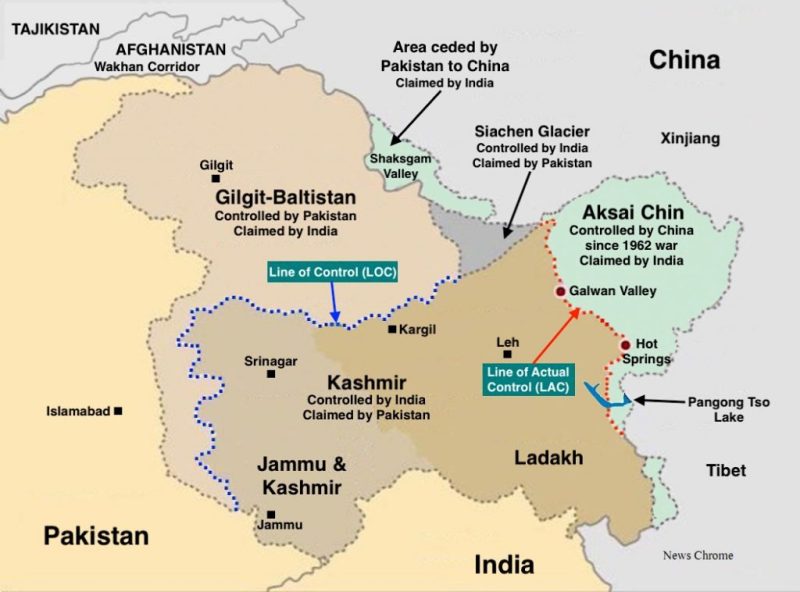
    2022 began with a fresh show of Chinese belligerence in Ladakh, with a well-known Chinese media outlet putting out a tweet saying, “China’s national flag rises over Galwan Valley on the New Year Day of 2022“, following up with a short video of the event. The tweet further claimed that the flag was special, having flown earlier over Tiananmen Square in Beijing[i]. As Indian government sources confirmed that the ceremony did not occur in any disputed area, the Indian Army released photographs of soldiers hoisting the flag in the Galwan Valley on the occasion of the New Year[ii]. In other incidents across the rest of the Line of Actual Control (LAC), China suddenly ‘renamed’ 15 locations in Arunachal Pradesh, continuing efforts to undermine Indian sovereignty in that state. The Chinese embassy in Delhi wrote to counsel Indian MPs who had attended a reception hosted by the Tibetan government in exile in late December 2021[iii]. The frigid relationship between the two nations was underscored once again by the inconclusive outcome of the 14th round of Corps Commander’s talks held on the LAC on 12 Jan 2022[iv]

    Chinese activities have not been restricted to the information domain alone. Construction of a bridge across the Pangong Tso, starting 20 km east of Finger 8 to connect its North and South banks, has come to light, providing an additional approach for a quick build-up of troops and logistics. While the above actions by China, both in the realm of information warfare and otherwise, have been effectively countered by the Indian government[v], the overall situation across the entire LAC continues to be of significant concern. This is despite the much-publicized sharing of sweets between Indian and Chinese troops at ten border crossings across the LAC[vi] in January.

    Strategic Importance of Ladakh

    As compared to the rest of the LAC, the situation in Ladakh is serious. The killing of 20 Indian soldiers, including a Commanding Officer, in June 2020 has thrust the region into the nation’s collective consciousness. Galwan, Gogra, Daulet Beg Oldi, Pangong Tso, and Chushul are household names across the country and the public today is better educated about the sheer complexity of the border issue and our history of dealing with China on the matter. The importance of safeguarding national sovereignty has taken centre stage with issues such as the institution of ‘no patrolling zones’ and perceptions about the LAC being subjected to frequent debate in the media and elsewhere.

    In the aftermath of the Galwan events, the strategic importance of Ladakh, seen more through the lens of tourism in tranquil times, has acquired renewed relevance. It is the only borderland of India adjoining two hostile states, both of which have gone to war with India at different times for their own reasons. Ladakh abuts Gilgit Baltistan, which is under illegal occupation of Pakistan, and Tibet, which is under China’s forced occupation. As the likelihood of collusive action between these countries increasingly grows, Ladakh will remain primus inter pares amongst all the regions on our Northern borders for strategic and operational reasons. Accordingly, plans to bring about a qualitative change in capacity and capability in all aspects of the region’s development to meet security challenges and human aspirations acquire greater importance vis-a-vis other locations.

    The above aspect is well appreciated by the Central Government, which has taken many initiatives towards strengthening infrastructure development along the Northern borders in recent years. With regards to Ladakh, development has accelerated dramatically post creation of the Union Territory (UT) of Ladakh in 2019. A review of the UT Administrations’ activities after two years of its creation by the Lt Governor during a media interaction reveals the scale and scope of its achievements[vii]. Future plans are contained in a comprehensive ‘Vision Document,’ prepared on its behalf by a reputed consultancy, available on the internet[viii]. The Document is a comprehensive data-backed effort, listing the status of various developmental markers today and the desired end state. Achieving the vision would require effort, time, and planning for its translation into practical and prioritized implementables, after further considering risks, costs, benefits, and overall viability while adhering to timelines. Despite the progress made on many fronts and considering the constraints remaining, continued and focused long-term efforts by the administration are required here: equally important, the current and future security perspective has to be a key pillar of such plans.

    Development Issues and Imperatives

    A key priority that requires greater impetus is to accelerate the movement of locals for populating areas that, for reasons of geography and proven Chinese intent, have acquired strategic or operational significance. Page 9 of the Vision Document[ix] mentions that 65% of the total population is in and around Leh and Kargil cities. Though the paper has recommended setting up other population centres, enhanced hostile activity by China in and around places like Demchok on the LAC warrants that such areas also be included for consideration. In recent years, the Border Roads Organisation (BRO) has dramatically enhanced connectivity. Greater resources and manpower have constructed important roads and opened up East Ladakh and other parts of the UT[x]. The next step is to actualize a long-term plan with short and intermediate goals, which could see the setting up of small townships – after creating suitable infrastructure in housing, health, education, connectivity, and other civic amenities to support small-sized populations. Here the focus has to be on providing livelihood options other than the purely pastoral, with options explored for setting up Small Manufacturing Enterprises (SMEs), which might take time to prove financially viable. In this respect, China has succeeded with the construction of border villages and resettlement of Tibetans in areas opposite the LAC in Arunachal Pradesh and its disputed border with Bhutan[xi]. Though the Indian experiment in that region, which commenced post-1962, has not been as successful, it has to be pushed through in Ladakh. Here, reconciling developmental cum security needs with genuine environmental concerns would be necessary, considering that the Army’s premier firing range in Ladakh in the Tangtse Chushul area was closed some years ago for such reasons.

    There is scope too for the military, as an essential stakeholder to assist in development in other spheres, such as preparation of dual-use facilities; helipads and Advanced Landing Grounds wherever feasible, are one example. Another option is to create infrastructure for specialized training in the Ladakh region – archives of the Press Trust of India mention an international training event, ‘Exercise Himalayan Warrior’ held in 2007 where Indian and British troops trained together in mountain warfare techniques in an area North of Leh[xii]. Training facilities of this nature would naturally benefit the local economy, though the fallout of such strategic signalling would have to be carefully weighed.

    A fourth option to enhance the military’s participation, albeit indirectly, is to increase local recruitment. While recruit balancing would be carried out at Army Headquarters, there is a need to examine the feasibility of expanding the number of Ladakh Scout battalions (either regular units or on the Territorial Army model), which are eminently suited for fighting in such terrain. Being a permanent measure, this would offset, to an extent, the expense on induction of at least a few units from outside Ladakh. Benefits accruing from deploying local sons of the soil can be easily appreciated.

    Harnessing through Civil-Military Engagement

    At the turn of the century, it was in Ladakh that the Indian Army launched Operation SADHBHAVNA. Displaying strategic foresight, then GOC 14 Corps, Lt Gen Arjun Ray, set a one-point aim – ‘To Forestall Militancy in Ladakh.’ The program, a runaway success, was adopted subsequently by other field formations of the Indian Army. A process of continued oversight, course correction, innovation, and streamlining at various levels has made it an effective tool for helping assimilate our border populations into the national fold by winning hearts and minds. Here, it must be emphasized that SADBHAVNA has not been conceptualized as a developmental program per se. Neither is such an approach being followed on the ground – the projects being small, community-based, and including aspects of human resource development. It has had very positive spinoffs, with Ladakh being a significant beneficiary. With major development programs like the Ministry of Home Affairs’ flagship Border Areas Development Program (BADP) and others at the state level already in place, it is worth examining if an interaction between the local administration (at the panchayat level, say) and local military garrisons, both working from the ground upwards can help further synergize efforts to achieve optimum results.

    Strategic contestation between India and China is a reality. The border issue will continue to influence many aspects of bilateral relations. Continued information warfare, a huge trade deficit, allegations of hacking, and now evidence of massive tax evasion by smartphone companies[xiii] are indicators of the need for a realistic appraisal of that country’s intentions and strengthening own capabilities. The development of Ladakh is an important factor in this regard.

    Notes

    [i] Free Press Journal, January 03, 2022.

    [ii] ‘LAC Standoff: India exposes China’s lies in Ladakh as Indian Army hoists tricolour in Galwan Valley’. Ajeyo Basu, News24, January 04, 2022.

    [iii] ‘China protests Indian MPs’ attending Tibetan reception, Tibet govt-in-exile fires back’. Geeta Mohan, India Today, January 01, 2022.

    [iv] ‘Joint Press Release of the 14th round of India-China Corps Commander Level Meeting’. Ministry of External Affairs, Government of India, January 13, 2022.

    [v] ‘Government breaks silence, hits back at China on letter to MPs, Pangong bridge’. Shubhajit Roy, Indian Express, January 07, 2022.

    [vi] ‘New Year: Indian, Chinese troops exchange sweets at Demchok and other border points’. Press Trust of India, January 01, 2022.

    [vii] ‘Major transformation in developmental profile of Ladakh UT in nearly 2 years: Lt Governor’. Mohinder Verma, Daily Excelsior, September 18, 2021.

    [viii] ‘Vision 2050 for UT of Ladakh’. Government of India.

    [ix] ibid

    [x] ‘Five Mega Road Infrastructure Projects Launched in Ladakh Amid Border Row With China’. PTI, October 01, 2021.

    [xi] ‘More evidence of China building villages in disputed areas along borders with India, Bhutan’. Hindustan Times, November 18, 2021.

    [xii] Press Information Bureau, Government of India. Ministry of Defence note, Exercise “Himalayan Warrior”. September 16, 2007.

    [xiii] ‘Xiaomi India under lens: DRI says evasion of customs duty of Rs 653 cr by Chinese smartphone maker’. Economic Times, January 05, 2021.

    Feature Image Credit: Bloomberquint

    Map Credit: Newschrome

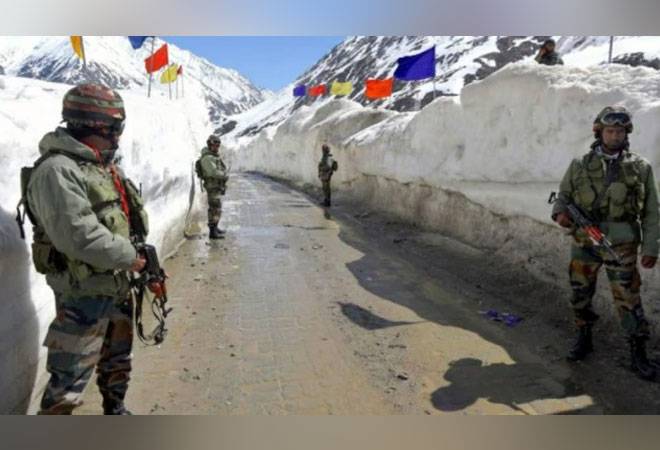
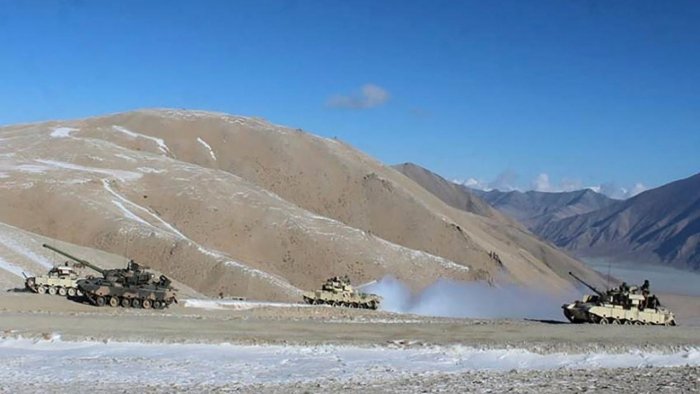
    Images: www.deccanherald.com  and www.business-standard.com

  • China’s New Land Border Law

    China’s New Land Border Law

    On October 23, 2021, the Standing Committee of the National People’s Congress, the highest legislative body of the People’s Republic of China passed the Land Boundary Law along adding to its new Maritime Law as well as China Coast Guard Law passed earlier in 2021, which shows China’s intention in pursuing an aggressive policy on its territorial claims. The land boundary law came into effect on January 1, 2022. The law is likely motivated partially by the possible implications over developments in Afghanistan that could potentially have a destabilising effect in Xinjiang, growing violence in Myanmar-China border but more by the India-China geopolitical tussle.  The timing of the law is clearly related to the escalating border tensions with India and in the South China Sea. India and China have been engaged in border stand-off since May 2020.[i] Closer scrutiny of this law, consisting of 62 articles in seven chapters, indicates that China is stepping up its aggressive tone when it comes to border disputes, demonstrated by its rhetoric that China will “resolutely defend territorial sovereignty and land border security.”[ii] It states that the main aim of the law is to “standardise and strengthen the security and stability of land borders” and “safeguard national sovereignty, security and territorial integrity.”[iii] In other words, Beijing will take all measures to safeguard its interests within its specified borders by any means be it military or economic. The law effectively uses a civil-military fusion strategy emphasising improvement of public services and infrastructure along the borders as also incorporating the local population in territorial defence. The law prohibits any party from engaging in any border activities which would “endanger national security or affect China’s friendly relations with neighbouring countries”.[iv]

    Zhang Yesui, a spokesperson for the National People’s Congress stated that the law became necessary to safeguard China’s interests at the border and to regulate national borders, border defence management, and international cooperation in border affairs.[v] This law has serious implications for all 14 countries sharing borders with China. By incorporating the sovereignty claim over disputed territories China has effectively legitimised the use of force along its 22,4577 kilometres of borders as of January 01, 2022. Even though China has guaranteed that these laws aren’t meant to dislodge any international laws and treaties, it is evident that China is adopting aggressive policies to attain its goals.

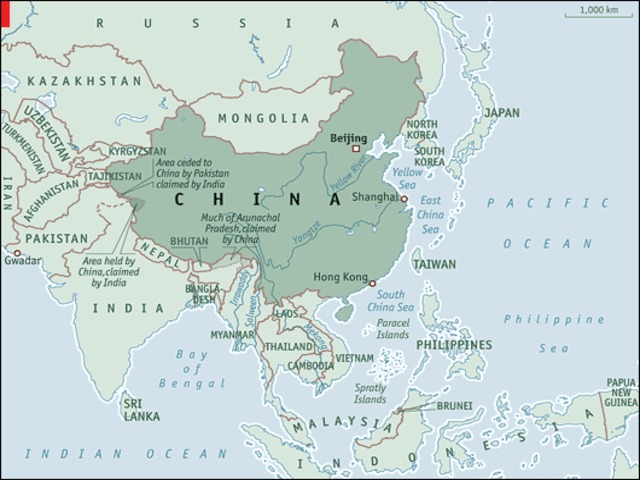
    The new law has serious implications for India. Firstly, since the 1962 war, the Line of Actual Control (LAC) is the de facto border between India and China, and both countries have different interpretations of the LAC over at least 13 different locations.[vi] Article 4 of the law states China’s sovereignty and territorial integrity as sacred and inviolable and applies this dictum to the disputed territories.[vii] Thus this law makes the earlier agreement of Peace and Tranquillity along the disputed Sino-India border almost irrelevant.  Secondly, the law forbids any form of construction of facilities “near” China’s border. This is elucidated in Article 10 deals with border defence construction including its river waters management under the term flood control. These issues are deliberately kept vague, and they could interfere with any form of construction on the border. This could again become contentious as both the countries are engaged in an “infrastructure arms race” on their sides of the border. Thirdly, the new law has made a special mention of the role of civilians concerning the development of villages and towns in the borderlands. The law reflects China’s intention to increase civilian settlements bordering India, Nepal, and Bhutan.[viii] This move goes in tandem with China’s agenda of “developing the border regions, enriching the local people” introduced in 1999 and is seen as a strategy to legitimise its territorial claims.[ix]

    The law has a problematic stance with international law, as Beijing is circumventing these by enacting domestic laws to give it legal backing for its unlawful actions. It shows that international law is ineffective against powerful states. The new law goes against the ethos of the Vienna Convention on Law of Treaties of 1969 (VCLT), which is an instrument that regulates the treaties between states. It establishes internationally recognised norms of behaviour by states in crisis or conflict situations. It is important to note that under the general principles of international law, unilateral declarations do tend to have a legal character of their own as explained under the Law of Treaties. It is imperative that such unilateral declarations must not affect the rights of other states and must go through two different stages to be considered legally acceptable. Firstly, there should be a unilateral statement by an actor and secondly, the said statement must either be accepted by the party/parties concerned or must go unchallenged. In this case, several parties have issues with China’s new land border law.[x]

     As Beijing’s ‘Land border law’ came into effect on January 1st, the PLA released a propaganda video showing the Chinese flag and soldiers in the Galwan valley, with a banner reading ‘never yield an inch of land’. Earlier China released a statement renaming 15 places in India’s border state of Arunachal Pradesh. Chinese maps have consistently shown the entire state of Arunachal Pradesh, Barahoti plains in Uttarakhand, and areas up to the 1959 claim line in Ladakh as its territory.[xi] China will use the new law to claim these areas as its sovereign territory thus deeming it non-negotiable. It is playing realpolitik to increase pressure on India by escalating the friction points.[xii] The current situation at the India-China border has the potential to spiral out of control, as both sides are deploying heavy armaments and forces on the border, and in essence, the new law makes the border dispute a ticking time-bomb with far-reaching consequences for the world.

    Reference

    [i] Philip, Snehesh Alex. “Chinese Troops Challenge India at Multiple Locations in Eastern Ladakh, Standoff Continues.” ThePrint, 24 May 2020, https://theprint.in/defence/chinese-troops-challenge-india-at-multiple-locations-in-eastern-ladakh-standoff-continues/428304/.

    [ii] Wei, Changhao. “NPCSC Adopts New Laws on Family Education and Land Borders, Amends Audit Law & Authorizes New Regulatory and Military Reforms.” NPC Observer, 18 Nov. 2021,https://npcobserver.com/2021/10/26/npcsc-adopts-new-laws-on-family-education-and-land-borders-amends-audit-law-authorizes-new-regulatory-and-military-reforms/.

    [iii]  Panag , Lt Gen H S. “China’s Land Border Law Is More Sinister than It Lets on. India Needs a Course Correction.” ThePrint, 11 Nov. 2021, https://theprint.in/opinion/chinas-land-border-law-is-more-sinister-than-it-lets-on-india-needs-a-course-correction/764463/.

    [iv] 13th National People’s Congress. “Land Border Law of the People’s Republic of China.” The National People’s Congress of the People’s Republic of China, 23 Oct. 2021, http://www.npc.gov.cn/npc/c30834/202110/5a3d27747cc542f8bcde9030a83218e2.shtml.

    [v] Huang, Kristin. “What ‘New Challenges’ Does China’s New Border Defence Law Aim to Tackle?” South China Morning Post, 31 Oct. 2021, https://www.scmp.com/news/china/diplomacy/article/3154139/what-new-challenges-does-chinas-new-border-defence-law-aim.

    [vi] Fravel, Taylor M. “Analysis | Why Are China and India Skirmishing at Their Border? Here’s 4 Things to Know.” The Washington Post, WP Company, 2 June 2020, https://www.washingtonpost.com/politics/2020/06/02/why-are-china-india-skirmishing-their-border-heres-4-things-know/.

    [vii] Kalita, Jayanta. “China’s New Border Law Could Further Complicate Boundary Disputes”, The Irrawaddy, November 22, 2021.  https://www.irrawaddy.com/opinion/guest-column/chinas-new-border-law-could-further-complicate-boundary-disputes.html

    [viii] Pasricha, Anjana. “Chinese Border Villages in Disputed Territory Put India on Alert.” VOA, 2 Apr. 2021, https://www.voanews.com/a/east-asia-pacific_voa-news-china_chinese-border-villages-disputed-territory-put-india-alert/6204062.html.

    [ix] Jianqiang, Yang. “Deputy Director of the National Ethnic Affairs Commission, Answered Questions from the Chinese Government Website on the ‘Eleventh Five-Year Plan’ for the Action to Promote Frontiers and Enrich the People.” Central Government Portal, 18 June 2007, http://www.gov.cn/zwhd/2007-06/18/content_652065.htm.

    [x] Pandey, Utkarsh. “The India-China Border Question: An Analysis of International Law and State Practices.” ORF, 23 Dec. 2020, https://www.orfonline.org/research/the-india-china-border-question/.

    [xi] “China’s new border laws implemented under Galwan video: All you need to know about the legislation and why is it a concern for India.” Firstpost, January 03, 2022.  https://www.firstpost.com/india/chinas-new-border-laws-implemented-amid-galwan-video-all-you-need-to-know-about-the-legislation-and-why-is-it-a-concern-for-india-10253481.html

    [xii] Siddiqui, Huma. “China continues its belligerence, renamed 15 places in Arunachal: India should expect more such actions, say experts”, Financial Express, December 31, 2021. https://www.financialexpress.com/defence/china-continues-its-belligerence-renamed-15-places-in-arunachal-india-should-expect-more-such-actions-say-experts/2395218/


    Feature Image Credi: Global Times

    Map Credit: jagranjosh.com

  • Indian citizenship concepts and definitions need a revisit

    Indian citizenship concepts and definitions need a revisit

    More than 600,000 Indians gave up their citizenship during the last five years, Union Minister of State for Home Nityanand Rai informed the Lok Sabha. While 133,000 Indians gave up citizenship in 2017, it was 134,000 in 2018, 144,000 in 2019, 85,248 in 2020 and 111,000 in 2021 until 30 September. The dip during 2020 was, without any doubt, because of the pandemic. What entails in revoking citizenship is the surrender of the Indian passport as mandated by the Indian authorities since India does not allow dual citizenship unlike her co-subcontinental countries Pakistan and Bangladesh.

    While we do not have an idea about the reasons for the revocation of citizenship, the fact remains that these erstwhile Indian citizens, across the globe, have opted for citizenship of different countries (and that includes the passport of the country concerned) where they have been residents for varying periods. For all practical purposes, looked at from the lens of India’s Ministry of Foreign Affairs, these former Indian citizens are “foreigners”. It may not be out of place to point out here that Padma Bhushan awardee and former ambassador to the US, Abid Hussain, had famously remarked that Indians have their heart in India, but their money in Swiss banks.


    Read More

  • India and Vietnam Need to set up an Industry 4.0 Technology Task Force

    India and Vietnam Need to set up an Industry 4.0 Technology Task Force

    Amid the ongoing difficult times marked by the COVID-19 pandemic and the fear of its highly virulent Omicron variant spreading across the globe, India and Vietnam pledged to further deepen the Comprehensive Strategic Partnership.  In this context, the recent visit to India by National Assembly Chairman Vuong Dinh Hue to New Delhi this month has strengthened the relationship between the two countries.  Also, next year, India and Vietnam would be celebrating the 50thanniversary of the establishment of their diplomatic relations and their legislative bodies plan to organise commemorative joint events both in New Delhi and Hanoi.

    Chairman Vuong Dinh Hue held wide-ranging discussions in New Delhi with India’s Vice President of India and Chairman of Rajya Sabha, Shri M Venkaiah Naidu and these focused on international matters of common concern and other global challenges. Both sides aim to contribute to global peace, security, stability and development in the region. At the bilateral level, issues concerning COVID-9, socio-economic development in respective countries, economy, trade & investment, energy, security-defence, science-technology, air connectivity, culture, education and training were also the agenda. As many as 12 MoUs were exchanged between Vietnamese and Indian enterprises in the fields of public health, provision of pharmaceutical materials, drug and vaccine production, oil and gas, information technology and technology transfer, education, and tourism.

    India acknowledged and extended gratitude for the timely supply by Vietnam of oxygen and related equipment and the gifting of 40,000 facemasks to the Indian Red Cross Society. As a reciprocal and goodwill gesture, India has announced a donation of 2,00,000 doses of indigenously developed Bharat Biotech COVAXIN to Vietnam through Duc Minh, Bharat Biotech’s local partner in Vietnam. It is useful to mention that Bharat Biotech has been working with Duc Minh Medical JSC, towards the commercialisation of INDIRAB (Inactivated Rabies Vaccine).

    The bilateral cooperation and mutually beneficial partnership between India and Vietnam in the field of energy are noteworthy. For the last three decades, India’s ONGC Videsh Limited (OVL) has been engaged in Vietnam’s offshore energy projects in the South China Sea. New Delhi is now seeking a 15-year extension of the existing arrangement beyond May 2023 when the current MOU between OVL and PetroVietnam (PVN) expires. India hopes that Vietnam and other claimants including China can establish a binding ‘Conduct of Conduct’ and develop concrete mechanisms to institutionalize a regional dialogue among the claimants and other stakeholders to serve for de-escalation of tensions.

    During his interactions, Chairman Vuong Dinh Hue was also assured of India’s support for the ASEAN Outlook for Indo Pacific (AOIP). External Affairs Minister S Jaishankar has noted that “From the Indian perspective, Vietnam is a key partner both in the ASEAN and the Indo-Pacific context,” It was also reiterated that there is strong convergence between India’s Indo-Pacific Oceans Initiative (IPOI) and the AOIP and India is looking forward to continuing working closely with Vietnam.

    In an interview with a major Indian media house, Chairman Vuong Dinh Hue emphasised investments in the digital sphere to usher in Fourth Industrial Revolution in Vietnam. This fits into Vietnam’s call for greater investment from Indian corporations in fields such as information technology, innovation and renewable energy. Industry 4.0 technologies are high on Vietnam’s agenda and the Party and the State have introduced several policies, guidelines and programs to harness these technologies.  In particular, the country hopes that the digital component of the economy could account for about 20% of the GDP. According to a consulting company, Vietnam’s “GDP may rise by US$28.5-62.1 billion by 2030 depending on the level of technology put into use by businesses, or equivalent to an increase of between 7-16% of the GDP”.

    Earlier this year, Vietnam issued the National Strategy on the Fourth Industrial Revolution by 2030 under which Vietnam hopes to be named among the 40 top performers in the Global Innovation Index (GII), the top 30 in the International Telecommunication Union (ITU)’s Global Cybersecurity Index (GCI) and the top 50 in the United Nations (UN)’s e-Government Development Index (EGDI) by 2030.

    Vietnam is committed to expanding international cooperation and integration in science and technology, particularly the Fourth Industrial Revolution technologies. India too has similar ambitions and PM Modi highlighted the issue at the WEF’s Davos Digital Agenda, how India is harnessing AI and other technologies of the fourth industrial revolution for achieving its developmental objectives and for promoting social good. Given the political will of both sides, India and Vietnam could explore setting up a task force to ascertain areas of convergences.


    Image Credit: vir.com.vn

  • Military leadership: In the eye of storm

    Military leadership: In the eye of storm

    Politicians are trying hard to keep behind curtains the true state of affairs along the Line of Actual Control but it’s only adding to credibility deficit

    The acrimonious exchanges between both sides on the heels of the 13th Corps Commander-level talks in Ladakh, an exercise in futility and procrastination, have drawn adverse attention to the manner in which the Union Government has kept its own citizens in the dark as to the true state of affairs along the Line of Actual Control in Ladakh and elsewhere. Equivocation has its costs, and the recently released videos and photographs of our personnel taken prisoners at Galwan have left us embarrassed and angered, mainly at the folly and shortsightedness of our leadership for not coming clean on the issue in the first place. All that its rather inept attempts to keep the genie in the bottle have achieved is to play into the hands of the excellent Information Warfare capabilities the Chinese possess, allowing them to shape the narrative to their advantage.


    Read More

  • Dagshai And Kasauli – The Afghanistan Connection

    Dagshai And Kasauli – The Afghanistan Connection

    With Afghanistan, the Taliban, and the for-ever conflict grabbing the headlines across the world over the last few months, it is well to recognise that the histories of India and Afghanistan are intertwined from time immemorial. Anand Sethi digs into the 19th and 20th-century history to bring out some fascinating connections between Dagshai in Himachal Pradesh and Afghanistan – Team TPF

    The Automatic Teller Machine (ATM) in Dagshai Cantonment is quite unique. Set up some 14 years ago at the instance of a dynamic Commanding Officer of the then Gorkha Rifles Battalion stationed in Dagshai, the ATM is housed in a smallish, stand-alone, colonial-era stone-built sloped roof hutment which most likely served as an extension of the kitchen facilities for a cluster of similarly constructed nearby barracks. It is quite unique. It communicates with the infrastructure by means of a huge, floor-mounted, satellite dish antenna. Given the nearly non – existent banking facilities, this ATM has served as our ‘go-to’ facility to withdraw cash for our personal expenses during the exasperating COVID times!

    On normal working times and days, with the troops busy with their official duties, there is usually only a rare person ahead of one at the ATM. Social distancing is the least of the problems here. However, on this particular day a few months back there were two persons ahead of me to use the ATM. This prompted a little ‘walkabout’ to while away the time and to maintain social distancing. While returning I noticed that there was some inscription or lettering on a whitish background near the top of the hutment but quite obscured due to the collection of grime, mud, rainwater stains that had accumulated over many years. Upon completing the ATM transaction I managed to clamber up and did a vigorous cleaning of the inscription.  What emerged was the signage: ’40 A GHAZNI LINES’. This was quite incredible! There has never been any mention of Dagshai having had a ‘Ghazni Lines’. Certainly not in any maps or documents painstakingly collected over the years by me for our ‘Dagshai Jail Museum’. Evidently, some Regiment(s) had gone from Dagshai to fight in the battles at Ghazni during the Afghan wars (or stationed in Dagshai afterward), received their ‘Battle Honours’ there.

    Research conducted indicates that no formations linked with Dagshai were involved in the Battle of Ghazni (‘Ghuznee’) in September 1842. However, two Regiments with clear Dagshai connections were very much in the ‘Battle Order’ during the First Battle of Ghazni in July 1839 (Gen. Sir John Keane versus Hyder Khan). Both received the Ghazni Battle Honours. One was the 1st Bengal Fusiliers who had been stationed in Dagshai during the tumultuous period of 1856 – 57. They of course had the dubious distinction of having as one of their Officers the ‘infamous’ (Brevet) Major William Hodson (whose portrait hangs amongst the ‘infamous Dagshaiites’ in our Jail Museum), the one who in 1857 apprehended Bahadur Shah Zafar and killed the royal princes. However, it is somewhat doubtful that the 1st Bengal Fusiliers had the Ghazni Lines in Dagshai named after their Battle Honours. The unit was away from Dagshai for a large part of their stay doing duties in and around Delhi during the 1857 ‘troubles’.

    The most likely formation to have the Ghazni Lines in Dagshai named after them would thus be the 2ndRegiment of Foot (Queen’s Royal West Surrey – the Queen, in this case, being Queen Catherine of Braganza, wife of King Charles II), presently operating as the Princess of Wales Royal Regiment.  This was the second senior-most line Regiment (after the Royal Scots) in the regular British Army. (The 1stBengal Fusiliers, on the other hand, was a formation of the East India Company’s Army, during their Dagshai stay). They were first garrisoned in Dagshai in 1870 -71. They not only took part in the 1839 battle at Ghazni but also got Battle Honours at the Battle of Khelat later that year. The Regimental History of the 2nd Regiment of Foot carries this interesting piece – “The formidable Ghazni fortress protected by thick 60 feet high walls prevented a major problem especially due to the lack of heavy artillery. The capture of Ghazni fortress was made possible only because Mohan Lal, a Kashmiri interpreter, spy, and assistant to the Political Officer Captain Sir Alexander Burnes, managed to discover that one of the gates to the fortress was somehow left poorly defended”. An interesting trivia about the 2nd Regiment of Foot – they were the only British Regiment where the Officers were allowed to remain seated while drinking the Loyal Toast to the Monarch. Apparently, this was so because the Regiment had been attached to the Royal Navy for a period of time and adopted the Navy’s tradition of sitting!

    The case for the 2nd Regiment of Foot for having set up Dagshai’s Ghazni Lines gets strengthened by the fact that they returned to Dagshai for the period 1895 – 96.  The Regiment went back to fight in Afghanistan in 1897, this time in Tirah (now in Khyber Pakhtunkhwa, Pakistan) before being garrisoned in Peshawar in 1902. They returned to Dagshai in 1916 for a short third spell in the garrison.

    Arguably, the Regiment with Dagshai as well as old Afghanistan links would be the Gordon Highlanders (earlier the 92nd Regiment of Foot). First stationed in Dagshai in 1860, the Regiment acquired as their Regimental Tune (still is the Regimental Tune and my mobile phone caller tune), the now-classic Pipes and Drums composition “Dagshai Hills” in 9/8 format march by the famous John Wallace. The Gordons fought in the Second Afghan War (1878 – 80) and saw action at Charasaib, Sherpur, and Kandahar where they took part in a winning battle after marching 320 miles from Kabul in just 23 days.

    The greatest battle achievement of the Gordons, however, was at Dargai (near Tirah and now part of Pakistan’s Kabul Pakhtunkhwa). In 1897 the heights at Dargai were held by a strong contingent of Afridi tribesmen. As part of the Tirah campaign, at the time the 21 valiant soldiers of the 36th Battalion (Now 4th Sikhs) of the Sikh Regiment were putting up their heroic stand at Saragarhi, the Gordons were tasked to capture the Dargai height at all costs. On October 20th, 1897 the Gordon Highlanders, with their flanks protected by the Gurkhas and Sikhs, attacked the Afridi-held hilltop redoubt. Despite numerous attempts, the Gordon’s were unable to take the height and had suffered numerous casualties. The Commanding Officer called out to his Pipers, led by Sergeant Piper George Findlater to keep playing ‘Dagshai Hills’ until the hill was taken. Findlater, despite being shot all over his body and bleeding profusely kept on playing the Regimental Tune until Dargai Hill was captured.

    For his extraordinary valour, Piper Findlater was awarded the Victoria Cross which he received in person from Queen Victoria. A huge painting to commemorate this famous battle hangs in the Officers Mess room of the Gordon Highlanders in Aberdeen, Scotland.  A large replica is available to view in our Dagshai Jail Museum along with other exhibits related to the Gordon Highlanders. The Pipe Bands of every formation that gets posted to Dagshai learns to play ‘Dagshai Hills’ and is played at the beginning of the Army Band display at the annual ‘Dagshai Concert’.

    Several of the formations garrisoned in Kasauli (then ‘Kussowlie’) also took part in the various Afghan Wars. Most notable amongst these were the Somerset Light Infantry (action at Jalalabad), 9th Regiment of Foot – Norfolks (action at Kabul), 66th Regiment – King’s Royal Rifles (action at Maiwand), and the 8thKing’s Regiment of Foot (action in the Kurram Valley). However, Kasauli’s Afghanistan connection is predominantly that of the famous Warburton family.

    During the First Afghan War in 1839 when the Bengal and Bombay Divisions of the East India Company (‘John Company’) Army along with some formations of regular British Army troops in India, in support of the ousted Shah Shuja, attacked Afghanistan in an attempt to retake Afghanistan from the ‘usurper’ Amir Dost Mohammed Khan’s forces and their allied tribal warriors.

    Amongst the ‘John Company’ troops was a 27-year-old Lt. Robert Warburton of the 6th Battalion, Bengal Foot Artillery. During the war, Lt. Robert Warburton found himself imprisoned in an Afghan lockup near the famous Buddhist site of Bamyan. A young lady named Shah Jahan Begum Durrani, a niece of Shah Shujah as well as that of Amir Dost Mohammed Khan was married (apparently against her wishes) to Sardar Faiz Talab Khan, a senior advisor to Dost Mohammed, and had a son (named Jahandad Khan) born from him in August 1840. Dost Mohammed and Faiz Talab Khan fled Kabul late in 1839 as the British troops advanced. Dost Muhammad was later to be exiled to Mussoorie.

    What ensued seems like scenes from a potboiler Hindi movie. Apparently, Shah Jahan Begum had met Lt. Robert Warburton in Kabul before she was married off. Clearly, as it turned out, Shah Jahan Begum had already become fond of Robert and this may have been the reason that she was hastily married off against her wishes. With her husband, Sardar Faiz Talib Khan having left along with Amir Dost Mohammed, Shah Jahan Begum managed to get hold of a few of her Durrani tribesmen and went hastily to Bamyan.

    At Bamyan, she and her Durrani followers somehow managed to free Robert Warburton from custody and hastily fled, escorted by the Durrani tribesmen. Somewhere during this daring escape, in November of 1840, Lt. Robert Warburton and Shah Jahan Begum got officially married. A son (also named Robert Warburton) was born to them in July 1842 whilst they were still holed up in Ghilzai (aka ‘Khilji’) fort. By early 1843 the four of them, Lt. Warburton, Shah Jahan Begum, Jahandad Khan, and little Robert Warburton) somehow managed to sneak into Peshawar. On arrival in Peshawar Lt. Robert Warburton officially adopted young Jahandad Khan and had him renamed John Paul Warburton.

    In 1864 John Paul Warburton joined the Punjab Police. Over the next few years, he had a spectacular career as a highly efficient Police Officer busting many criminal gangs and putting into jail scores of offenders. For his efforts, John Paul Warburton (aka Jahandad Khan) became popularly known all across Punjab as ‘Button Saheb – Controller of Devils”. From 1864 through 1900 when he retired, ‘Button Saheb’ had successful postings at Karnal, Delhi, Ludhiana, etc. In a rare eulogy, the famous Rudyard Kipling wrote – “He is supposed to have the gift of invisibility and executive control over many devils.” Needless to say, Kipling’s character Strickling (“Plain Tales From The Hills”) is based on Button Saheb. The then government in appreciation of his services gifted John Paul Warburton a large piece of land in Gujranwala District. This town with its own mainline railway station still exists in Pakistan as ‘Warburton’.

    From 1900 through 1909 Button Saheb served as the Special Advisor to the Patiala State Police with the rank of Inspector General. On his finally quitting service in 1909 John Paul Warburton along with his family came to live in Kasauli after having acquired ‘Gilbert House’ (presently the residence of the Brigade Commander and the former home of the historic figure  Maj. General Walter Raleigh Gilbert. In 1919 Button Saheb tragically died in the driveway of ‘Gilbert House’ after he fell off his favourite horse which had been ‘disturbed’ by his grandchildren and friends playing nearby.

    John Paul Warburton and his wife Mary Meakins had seven children. His youngest son’s (Robert Paul) granddaughter, Pamela Warburton (aka Durrani Warburton) was the last of the family to occupy ‘Gilbert House’. Old-time residents of Kasauli still talk about the regal style that Durrani Warburton lived in and especially about her going around Kasauli in an ornate Rickshaw pulled by fully liveried bearers.

    Durrani or Dani Warburton occupied ‘Gilbert House’ in Kasauli until 1943. She never married but was reputed to be a spectacular tennis player having been Punjab Singles Champion five times. Durrani Warburton did yeoman community service through the years of World War II and for her efforts was awarded the title of ‘Kaiser –i- Hind’.

    The senior Robert Warburton died in Peshawar on Nov. 10th, 1863. Button Saheb’s half-brother, Col. Sir Robert Warburton Jr, KCIE, also joined the Royal Artillery. Later he went on to found the ‘Khyber Rifles’ and died in April 1899 in Kensington, London.

    Needless to say, there have been other individuals and families that have Dagshai / Kasauli – Afghanistan connections. Most notably of course being Rudyard Kipling and the three redoubtable Lawrence brothers. But let this wait for another piece someday.

  • Are we on the path to World War III? The rise of Asia and lessons from World War I

    Are we on the path to World War III? The rise of Asia and lessons from World War I

    Robert McNamara, the US Secretary of State during the Cuban Missile Crisis, famously noted that it was sheer luck, not rationality, that prevented the escalation of this crisis into a world war.

    The rise of East Asia and South-East Asia is inevitable – unless there would be World War III in this region. Whereas World War I was fought by the powers located at the shore of the North-Atlantic, World War II by those of the North-Atlantic and North-Pacific, World War III would be fought by those powers solely at the North-Pacific and the Indian Ocean. Are there lessons to be learned from the devastating conduct and outcome of World War I for our times? Is there only one lesson to be learned – that you can learn nothing from history? Or are we doomed to repeat history if we don’t learn anything from it? History will not repeat itself precisely, but wars repeatedly occur throughout history, even great wars. We are living in an age in which a war between the great powers is viewed as unlikely because it seems to be in no one’s interest, as the outcome of such a war would be so devastating that each party would do the utmost to avoid it. Rationality seems to dominate the assumptions and way of thinking in our times. But no war would have been waged if the losing side, or even both sides, would have known the outcome in advance.


    But what if conflicts in Asia would not be fought to pursue national interests so much as recognition? What would this mean: to be accepted as equal again after the humiliation in the course of European colonization and subsequent American hegemony? Indeed, acknowledgement of past suffering seems to be a trauma in the conscience of many Asian nations. Are those desires only irrational or a different kind of rationality, which we have to take into account?


    There are striking similarities between the Pre-World War I era and the current developments in Asia: World War I signifies the danger, not the inevitability, of a new world war in the decades to come. World War I is a symbolic representation of the risk that war amongst the great powers could erupt although nobody would benefit from it. It is a writing on the wall, that rationality is not a guarantee for avoiding self-destruction. All reckonings regarding the repetition of World War I in Asia are based on the assumption that it would be in no one’s interest to fight a large-scale war, even with WMD, which could lead to the destruction of great parts of Asia. But what if conflicts in Asia would not be fought to pursue national interests so much as recognition? What would this mean: to be accepted as equal again after the humiliation in the course of European colonization and subsequent American hegemony? Indeed, acknowledgement of past suffering seems to be a trauma in the conscience of many Asian nations. Are those desires only irrational or a different kind of rationality, which we have to take into account? At present, we have apparently a conflict between democracies in the Pacific and the Indian Ocean on one side and authoritarian China on the other. But during my few visits I got the impression that the trauma of colonization and the non-recognition of the Asian civilizations is more counting in the cultural memory of the Asian nations. And especially India should be wary to be instrumentalised by the US in their conflict with China.


    During her last visit to Beijing in September 2012, then US secretary of state Hillary Clinton held a press conference in which she stated that the world would soon see, but for the first time in history, that a rising power and an established power would not engage in a war. Of course, her statement was related to China and the US. Additionally, she even compared the competition between China and the US with that of the Peloponnesian War between Sparta and Athens – authoritarian Sparta against democratic Athens. Athens, the strongest city-state in Greece before the war, was reduced to a state of near-complete subjection, while Sparta became established as the leading power. Thucydides, the chronicler of the Peloponnesian War and one of the ancient world’s most important historians, saw the initial cause of this war in the growth of Athenian power: “What made war inevitable was the growth of Athenian power and the fear which this caused in Sparta.”

    Unlike Plato, though, Thucydides argues that it was not the striving for power in itself but rather fear of loss of power and, in the long term, fear of being oppressed, robbed of one’s freedom, and enslaved that caused the escalation leading to war. In Thucydides’ account, fear was the cause of war on both sides. Sparta was afraid of the growth of Athenian power, and Athens was afraid of what might happen if it gave in to an escalating series of demands and threats, the result of which could not be foreseen.

    The Europeans who went to war assumed they would be home by Christmas 1914. We know now, of course, that World War I not only happened but that it also resulted in the self-destruction of the European powers in two world wars. World War I is foremost a lesson that a limited conflict could escalate into a nightmare of millions of deaths and unspeakable suffering, for which no rational explanation could be found.


    No one wanted World War I to happen. Or, at least, no one wanted the kind of war that actually took place. The general assumption was that the conflict would be very limited. The Europeans who went to war assumed they would be home by Christmas 1914. We know now, of course, that World War I not only happened but that it also resulted in the self-destruction of the European powers in two world wars. World War I is foremost a lesson that a limited conflict could escalate into a nightmare of millions of deaths and unspeakable suffering, for which no rational explanation could be found. Military aims and strategies gained priority above meaningful political purposes. Although the generals of the German empire believed that they were relying on Clausewitz’s theory, in fact, they perverted him. Tactics replaced strategy, strategy substituted politics, politics gained momentum above policy, and policy was militarized. It was as if everybody was saying: being at war would mean a stop to thinking.


    This does not mean a simple equation of rising China with the then rising German Empire. Although the actors then and today seem to be quite different, the dynamics generated by the conflict between emerging, rising and declining powers are strikingly comparable.


    Perhaps the deepest and hidden reason for this escalation was that no war party could admit neither defeat nor failure. Striking evidence for this assumption is that the proclaimed war aims of the German Empire got momentum the more they got unrealistic and irrational. The pride, honour and identity of the German Reich prohibited the acknowledgement of defeat and failure. This was the same with Russia, France, England and the Habsburg Empire – and the Turk Empire too. Perhaps especially these Empires knew that their rule wouldn’t survive if they would have had to acknowledge military defeat or failure. Military defeat or failure would have humiliated their identity and their “face”: their social recognition within their society and community. A military defeat would signal their “symbolic death” – and so, the empires fought a war for life and death. This does not mean a simple equation of rising China with the then rising German Empire. Although the actors then and today seem to be quite different, the dynamics generated by the conflict between emerging, rising and declining powers are strikingly comparable.

    Robert McNamara, the US Secretary of State during the Cuban Missile Crisis, famously noted that it was sheer luck, not rationality, that prevented the escalation of this crisis into a world war. In 1983 the world did even need twice more than a great fortune to avoid a nuclear disaster. In current times all great powers are using military means to pursue their political and economic interests. But we just should not allow ourselves to bet in a casino-like style that military conflicts and strategies could not lead to the escalation of limited conflicts into great power wars. The path to World War III would not be similar to that leading to World War II, but comparable to the pre-World War I era.

    This article is an amended version of the Introduction in his book “Lessons from World War I for the Rise of Asia” by Stuttgart:Ibidem Publishers.

    Feature Image Credit: www.express.co.uk 

    Article Images: www.fr21news.com , www.bloomberg.com , L’EXPRESS