Blog

  • Unravelling the national narrative

    Unravelling the national narrative

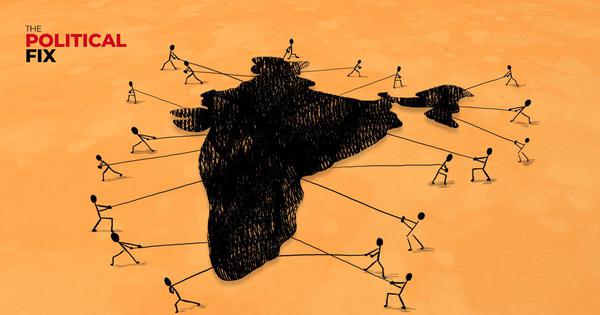
    There can be no denying the fact that the BJP under Mr Modi’s leadership has been able to, over this past decade, reinforce the perception of being seen as a focused and forward-looking party, intent on pushing our national interest to the fullest. This is in complete contrast to the rather dismal picture that our opposition presents with its inherent lack of focus, regressive emphasis on caste and the inability to work together. There is little doubt then, that Mr. Modi will once again lead the BJP and its allies to another win, though the margin of victory is difficult to predict.

    This result need not have been inevitable. As our foremost and shrewdest political strategist, Prashant Kishor, points out, despite their best efforts, the BJP alliance has historically never got more than 38% of the votes cast. That leaves a sizeable 60% plus, opposed to the BJP and its ideology, that the opposition has failed to use effectively. More so, since we still have a long way to go to becoming Viksit Bharat anytime soon. The Government’s economic claims are under a bit of a cloud given the existing scale of unemployment, middling growth and rising prices. However, in addition, there are a couple of other fundamental issues that must be tackled urgently, if we are to truly unshackle our potential as envisaged.


    Read more…

  • The United States as an Empire in Decline: A Talk by Jeremy Kuzmarov

    The United States as an Empire in Decline: A Talk by Jeremy Kuzmarov

    The Peninsula Foundation organised a webinar titled ” World Order Turmoil: The Reality of American Empire” on the 19th of January 2024. The main talk was given by the Chief Guest Jermey Kuzmarow and further comments was provided by the Discussant, Mohan Guruswamy. The event led to excellent discussions with critical comments from both the speakers. The discussions were moderated by Air Marshal M Matheswaran, President-TPF.

    Jeremy Kuzmarov is Managing editor of CovertAction Magazine and author of five books on U.S. foreign policy. His website can be accessed here. Mohan Guruswamy is our Governing Council member and a Distinguished Fellow and a prolific writer on economics, security, and geopolitics.


    Given below is the text of jeremy Kuzmarow’s talk, along with questions and answers.
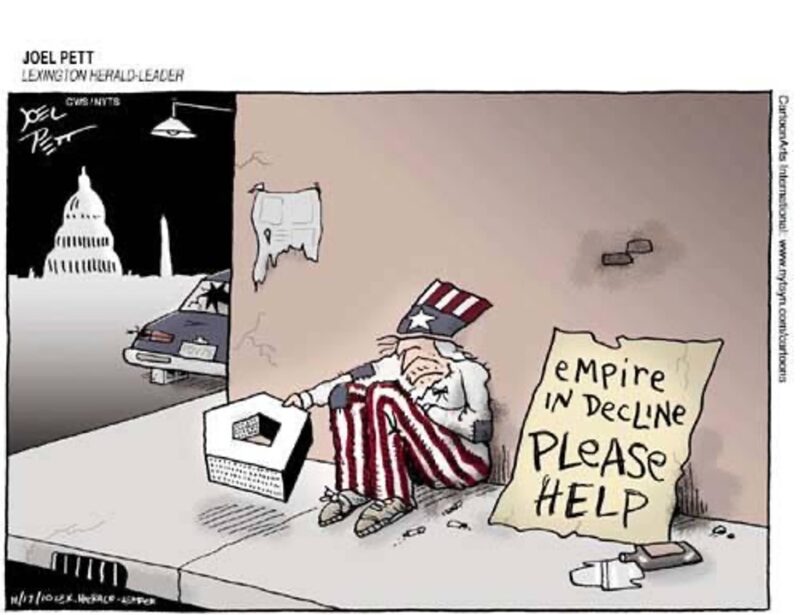
     

    (Source: tunnelwall.blogspot.com)

    In September, I attended a talk sponsored by the Tulsa Committee on Foreign Relations by an inside-the-beltway pundit named Ali Wyne, a former senior fellow at the pro-NATO Atlantic Council and David Rockefeller fellow at the elitist Trilateral Commission.

    Wyne told the audience in so many words that the sun had not yet set on the American empire; that the Biden administration was outmaneuvering the evil Putin in Ukraine; and that the U.S. was still a beacon of hope for the rest of humanity.

    Toward the end, Wyne personalized the talk, discussing how his family had migrated to the U.S. from Pakistan with nothing, and that through hard work he was able to achieve the American dream.

    But Wyne seemed oblivious to the fact that that dream is increasingly unreachable for the majority of people in an increasingly stratified society marred by a decline in civilian manufacturing and public services and skyrocketing education costs.

    Wyne also failed to point out that the American dream historically was achieved at the expense of Third World nations that were looted by U.S. corporations, and by endless wars that killed millions of people.

    Wyne’s delusional worldview is underscored in a new book by Fadi Lama, Why the West Can’t Win: From Bretton Woods to a Multipolar World (Atlanta: Clarity Press, 2023), which shows that the American Century has ended and that a new multipolar world order has been established in which economic dynamism lies primarily in the East.

    Lama is an international adviser for the European Bank for Reconstruction and Development (EBRD) and geopolitical consultant with a Ph.D. in mechanical engineering from the Georgia Institute of Technology (Georgia Tech).
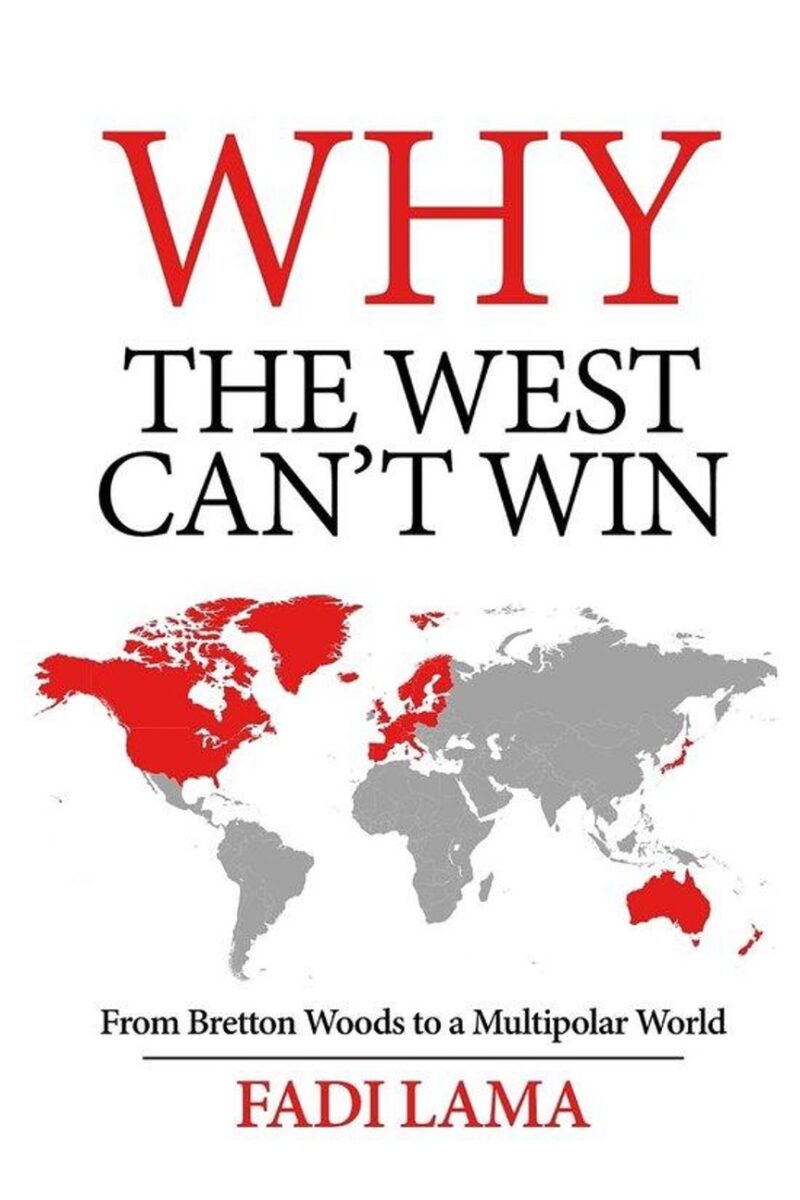
    He points out at the beginning of his book that in 1500, prior to the era of Western colonialism, there was a relatively fair political-economic world order with a close equilibrium between population and wealth generation. But by the end of World War II, the West accounted for only 30% of global population but 60% of global Gross Domestic Product (GDP).

    When many colonized nations gained their independence, the West imposed a neo-colonial framework that enabled their resources to be exploited by Western multinational corporations.

    Some countries on the front lines of the Cold War, such as West Germany, Japan and South Korea, were allowed unhindered development as part of a geopolitical strategy designed to keep them within the Western orbit and curb the advance of Communism. However, being pseudo-independent states, when the political necessity was removed, they were cut back to size.

    The liberation of China in the 1949 Communist-led revolution (an event known in the U.S. as the “loss of China”) was a historical turning point that began to reverse the Western monopolization of wealth and power and set the stage for the re-empowerment of the Global South.

    By 2017, China—known as the “sick man of Asia” in the 19th century following its de facto colonization of Great Britain following the Opium War—was the world’s number one economy with its real goods production amounting to 24% of global real goods production.

    Under CCP leadership, China regained its sovereignty and lifted 770 million people out of poverty, with homelessness now being practically non-existent.

    According to Lama, China’s staggering economic success resulted from a centralized political system in which commercial banking was dominated by the public sector. Central bank financial and monetary policies were further put under the control of the Chinese government, which implemented policies serving the national interest rather than those of the Western financial oligarchy.

    China’s economic success contrasts markedly with the growing economic stagnation in Western countries and the U.S. resulting from the neo-liberal economic model in which the private sector is elevated above the public sector.

    By 2014, the top 0.1% in the U.S. owned as many assets as the bottom 90%, an obscene inequality ratio accompanied by a dramatic rise in poverty, which had been reduced massively in China under more socialist-oriented policies.

    China’s superior state-centric economic model is currently being followed by Russia which has withstood record U.S. sanctions under Vladimir Putin’s leadership through a renewed commitment to economic autarky (self-sufficiency) and investment in local industries and technologies.

    Following the collapse of the Soviet Union, U.S. strategic planners saw a golden opportunity to reduce Russia’s status to that of a fourth-rate power and to enable the plunder of its bountiful natural resources.

    The overzealous policies backfired, however, pushing Russia into alliance with China that signifies the birth of a new multi-polar world order that holds the potential to restore the global economic parity from 1500—before Western colonization took root.

    Lama emphasizes the fact that Russia now provides food aid in Afghanistan and Africa and fertilizer to poor countries, and has forged growing relations with both China and Iran, the latter having gained independence from Western colonial tutelage in 1979 when the Shah was overthrown.

    Lama finds significant economic synergy and growing win-win cooperation in the economic, cultural, scientific and military fields between China, Russia and Iran, which he says are “de facto allies in the struggle for a ‘Fair World.’”

    Russia and China today are leading the way in space exploration, clean energy technologies as well as cutting-edge missile technologies at a time that U.S. weapons systems are proving to be extraordinarily costly and inefficient owing to a Byzantine Pentagon contracting system and under-skilled workforce due to the skyrocketing costs of higher education.

    Today’s shifting power balance can be compared with 1997 when “‘the empire’ had control over three of the top four energy reserves: Venezuela was a U.S. vassal, Russian energy resources were under control of the Money Powers (Western financial oligarchs) via their proxy Russian oligarchs, and Saudi Arabia was a compliant U.S. tributary. Of the top four, only Iranian reserves were out of the Money Powers’ control.”

    By 2022, Lama writes, “the Empire had lost control of the top three reserves, Venezuela, Iran and Russia, while Saudi Arabia is no longer as compliant as it was in 1997.”

    What happened in the interim was a period of heightened military intervention and imperial overreach resulting in a counter-mobilization that signifies the end of the era of Western empires dating back to the 16th century.

    Bretton Woods: From Military to Financial Colonialism

    The imperial framework after World War II was established through the Bretton Woods economic system, which Lama says was designed to “lock countries into a financial structure controlled by the West.”

    Lama writes that this structure “requires central bank governors be independent of their governments, but dependent on rules established by the Bank for International Settlements (BIS), at the top of the pyramid in the Bretton Woods system.

    Established in 1930 to handle reparations payments imposed on Germany at the Versailles Conference after World War I, BIS had helped finance Hitler’s rise to power and was owned by central banks, setting policies for them that directly influenced the global economy.

    Franklin D. Roosevelt had proposed liquidating the BIS due to its cooperation with Nazi Germany, though the resolution that he sponsored to that effect at the July 1944 Bretton Woods Conference at which the post-World War II monetary and political global structure was being set, was revoked after Roosevelt’s death.
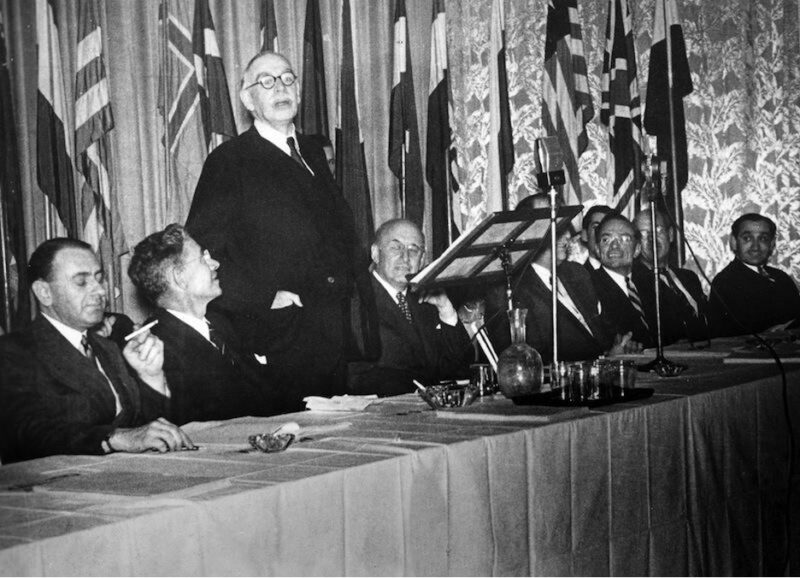
    John Maynard Keynes addressing the July 1944 Bretton Woods Conference in New Hampshire. [Source: centerforfinancialstability.org

    According to Lama, when some newly decolonized countries tried to adopt an alternative economic arrangement to Bretton Woods, their leaders (Togo’s Sylvanus Olympio, Egypt’s Nasser; Indonesia’s Sukarno; Democratic Republic of Congo’s Lumumba; Iran’s Mossadegh; Ecuador’s Jaime Roldos; Panama’s Omar Torrijos) were eliminated by wars, coups or assassinations [over a 25-year span].

    Economic hit men would descend on developing countries offering loans for infrastructure projects whose real purpose was to plunge these countries into debt so they would become dependent on foreign creditors and their economies could be restructured along neo-liberal lines and in the service of multi-national corporations.

    A pillar of the Bretton Woods system was that the U.S. dollar was established as the international trade currency, which was convertible into gold at the fixed rate of $35 per ounce of gold.

    With the decline of U.S. competitiveness in the 1960s, the Nixon administration froze the convertibility of the U.S. dollar in gold and, instead, made it convertible to oil, provided that oil was sold only in U.S. dollars.

    This led to a dramatic increase in the price of oil and petrodollar arrangement with Saudi Arabia by which the U.S. provided military protection and weapons to the Saudis in exchange for the promise of them trading their oil in U.S. dollars and using income from oil to buy U.S. Treasury bills. Interest on these sales was then spent by the U.S. Department of the Treasury on infrastructure projects in Saudi Arabia to be executed by U.S. companies.

    The fact that other countries had to hold reserves in U.S. dollars to cover their oil imports allowed the U.S. to incur high trade deficits bred by deindustrialization in the neo-liberal era without causing a depreciation of the U.S. dollar.

    However, this is no longer sustainable in the long term and Russia and China are spearheading a shift in the global economy by which oil and other commodities are no longer being traded in U.S. dollars, ushering in the end of the American Century.

    The Money Power

    Lama’s book includes discussion of the growth of the Western financial oligarchy, or what he calls the Money Power, who are the major shareholders of the leading hedge funds (BlackRock, Vanguard and State Street) and have become the absolute rulers over society.

    According to Lama, the Money Power is well placed to control elections in Western democracies and control mass media in all its forms, print, TV and social media platforms.

    They support free trade agreements designed to usurp what little is left of national sovereignty and a neo-liberal vulture economy in which all aspects of the economy are privatized in order to maximize corporate profits.

    The U.S. decline has been fueled by the Money Power’s recognition that maintaining a strong manufacturing base was no longer necessary when trade deficits could be offset by currency manipulation owing to Nixon’s convertibility of the U.S. dollar to oil and the trade in oil around the world in U.S. dollars.

    The U.S. economy is increasingly dominated by the financial sector which flourishes at the expense of other vital economic sectors, leading to the high wealth concentration and impoverishment of society made worse by austerity measures entailing cutbacks in social and other government services.

    Russophobia, Sinophobia and the End of an Era

    The intense Russophobia cultivated in the U.S. media over the last decade is the result of the Money Power’s lust for Russia’s immense wealth, which it was starting to gain access to in the 1990s before Vladimir Putin reasserted national control over Russia’s economy.

    The anti-Russia propaganda has had the greatest impact on the educated classes, as 77% of Americans with post-graduate degrees considered Russia an enemy in a March 2022 poll, compared to 66% with high school education or less.

    Russophobia has been combined with an ascendant Islamophobia and Sinophobia, whose purpose is to mobilize public support for confronting the troika of powers (Russia, Iran and China), which threaten Western hegemony.

    According to Lama, if a date were to be identified for the end of the U.S. empire, it would be January 8, 2020, when Iran avenged the assassination of General Qasem Soleimani by attacking a U.S. air base in Iraq and displaying Iran’s weapons capability.

    Afterwards, the U.S. Central Command (Centcom) significantly relocated its headquarters from Doha, Qatar, just 125 miles from Iranian shores, to safety in Tampa, Florida.

    While the current U.S. war in Gaza has created a renewed pretext for expanded U.S. military intervention in the Middle East, Lama’s book makes clear that the U.S. could not win a war against Iran for regime change.

    Contrary to Wyne’s analysis, the U.S. has also been outmaneuvered in Ukraine, whose army is in a state of disrepair after a failed counteroffensive. It is further being outmaneuvered by China, which is winning hearts and minds through the Belt and Road Initiative (BRI) that provides low-interest loans to countries for infrastructural development with no strings attached.

    In sum, the Great Game for world domination appears to be up and the Money Power has lost. That is why they are behaving so erratically in manufacturing crisis after crisis as they desperately attempt to sustain a fading world order defined by profound inequality and injustice. For the rest of my talk, I will try and further answer some of the questions that were posed prior to the seminar:

    Question 1) This dealt with consistent U.S. war making as a tool in which the US tried to sustain its hegemony, and growing pushback with the rise of BRICS, Shanghai Cooperation Organization and Rise of China? How will all this shape the future world order?

    Answer: There is the threat of a world war breaking out provoked by the U.S. as the U.S. cannot tolerate geopolitical competition or being relegation to a second rate power, and will respond violently—as it is already doing. Currently, the U.S. is provoking wars simlutaneously with Russia, China and the Middle East, with catastrophic consequences already for the people of Ukraine, Russia and Gaza. The great Australian journalist John Pilger produced a documentary in 2016 warning about the U.S. military buildup in the Asia Pacific and coming war with China, which would be catastrophic for everyone involved.

    It is instructive to look back in history to the 1930s when Japan challenged U.S. and Western empires in the Asia Pacific with the establishment of the Greater Economic Co-Prosperity Sphere. This challenge and effort by Japan to establish an alternative yen bloc in Southeast Asia and to supplant the Western colonial powers led directly to the Pacific War. Records from the time reveal how the U.S. manuevered Japan into firing the first shot (an explicit goal of U.S. policy as outlined by Secretary of State Henry Stimson) by imposing a naval buildup in the South China sea and crippling oil embargo that threatened to cut off Japan’s oil supply and undermine its empire in the Asia-Pacific.

    There is evidence that FDR knew about the impending Pearl Harbor attacks but allowed them to take place because the American public would only support military intervention if America were attacked and the attack was made to look like a sneak attack by a dastardly enemy.

    History could easily repeat itself today; the U.S. military is in fact preparing for war in the Asia Pacific; building a new military base in Micronesia in the middle of the Pacific Ocean, and training soldiers in jungle warfare in Hawaii while studying military battles in the Pacific War, like the Battle of Guadalcanal.

    Gen. Charles A. Flynn, the commander of U.S. Army Pacific, was quoted in The New York Times stating that China had been on “an incremental, insidious and irresponsible path for decades.” Now more than ever, the “total Army,” he said, needs to prioritize relevant Pacific experience.
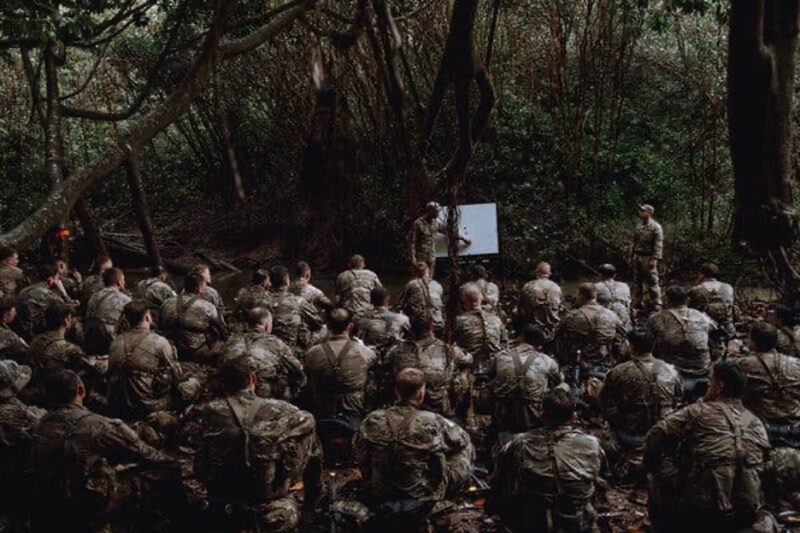
    U.S. soldiers being trained to fight a 21st Century Pacific War—this time against China. [Source: nytimes.com]

    After provoking a war with China, like with Japan in World War II, the U.S. would surely make it look like China started it and that it was somehow innocent. This has been a feature of US imperial wars going back to the era of the Indian Wars.

    Question 2: The first half of the 20th century was essentially a contest of empires. The two World Wars were fundamentally European wars or a contest of colonial empires. While the European empires were destroyed, the gain was for the U.S. as it emerged as the most powerful actor.

    Answer: Agreed. I would add that the U.S. defeated the Japanese empire in the Pacific theater of World War II, which enabled the U.S. to establish a chain of military bases in the Asia Pacific as a linchpin of U.S. imperialism. U.S. strategic planners had long considered the Asia Pacific key to world domination because of its economic vitality and rich resources and geography and this is why the U.S. cannot accept any rival powers there, including Japan, and now China.

    Question 3: Did the U.S. foresee this and plan its rise to a position as the pre-eminent power ensuring the destruction of the European powers?

    Answer: Yes, absolutely. As one example of dispacing European empires, I was just reading a book about U.S. policy in Congo in the 1960s by David Gibbs, The Political Economy of Third World Intervention. The book showed how U.S. mining tycoons (Maurice Templesman and Harold Hochschild) came to oppose Belgian colonialism so American corporations could replace Belgian ones in controlling and profiting from Congo’s lucrative mineral wealth. Templesman and Hochschild financed CIA front organizations and supported the murder of Patrice Lumumba who wanted to nationalize Congo’s mines after independence. They cultivated very close ties with Joseph Mobutu; Lumumba’s replacement and murderer, who cultivated the image of a Pan-Africanist devoted to African culture, but who sold out Congo and its economy to foreign interests. The CIA funded Mobutu’s security apparatus so he could crush a secessionist movement in the diamond rich Katanga province backed by the Belgians. The goal was for Mobutu to consolidate his control over Congo and for U.S. corporations to take over the mines from Belgians in Katanga. Here is U.S. neocolonialism at work, and muscling out of the Europeans.

    Question 4: The U.S.-led post-1945 world order rests on its control of the three pillars – political, economic, and security ( Allies/Vassals, Economic Control through Bretton Woods systems + USD as the global reserve currency, and the UN Security Council+NATO). Is Western Europe an Ally of the US or is it an unequal relationship?

    Answer: I would say its an ally of the U.S. to a point, as we see from the example of the Belgians in Congo. Many Europeans are starting to question alliance with the U.S. and whether the US has the best interests of European countries in mind. The U.S. involvement in Ukraine and destruction of the Nordstream II pipeline, for example, has been deterimental to European economies, including especially that of Germany that relied on cheap Russian natural gas imports. With the destruction of the pipeline, they were forced to purchase natural gas at a much higher cost from the Middle East and from U.S. natural gas suppliers in Texas and elsewhere who were financing politicians in the U.S. that supported the copious military aid to Ukraine along with the weapons contractors. European countries historically benefited from trade with Russia, so the war in Ukraine has generally hurt their economies and it is not clear for how much longer their populations will put up with this and just go along with the New Cold War.

    Question 5: Decolonisation was superficial as the U.S.-led West retained much of the colonial and imperial controls. Is it right to say that the U.S., in effect, has been an expanding empire since the American-Spanish War? The Cold War was a check on the American expansion.

    Answer: Decolonization was indeed superficial as the U.S. used clandestine and sometimes not so clandestine means toinfluence and control postcolonial leaders across much of the Third World and to sustain neocolonial economic relationships where Third World countries exported raw materials to the West and purchased products that were manufactured there, or had their resources owned and controlled by U.S. corporations.

    I would suggest that the U.S. was an expanding empire from the formation of the country. Historian Richard Van Alstyne wrote an important book in 1960 entitled The Rising American Empire. The book shows how the American founding fathers all conceived of the U.S. as an empire and had ambitions of eclipsing the British and Roman empires at their height. Van Alstyne also addresses how the pacification of the Native Americans and takeover of their resources and land and massacre of those who resisted previewed what the U.S. would do to other peoples around the world.
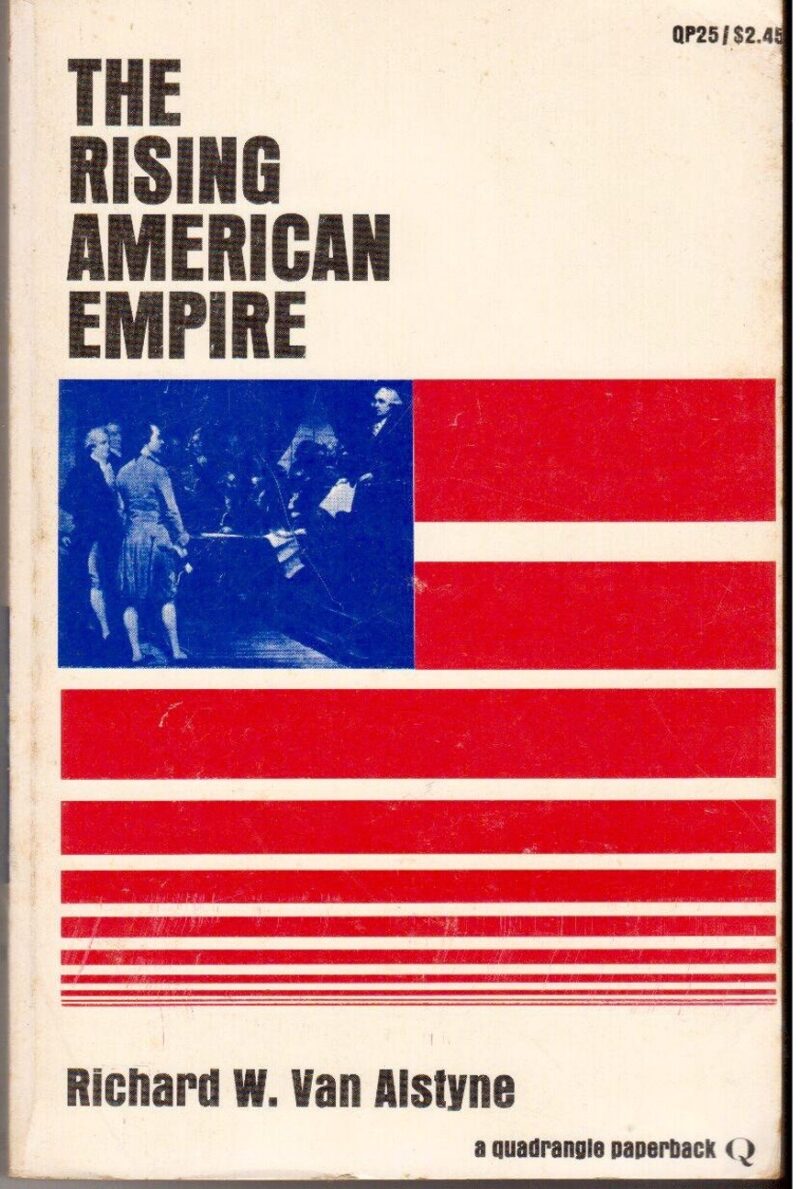
    As far as the Cold War, my book, The Russians are Coming, Again with John Marciano shows that rather than being a check on U.S. expansion, the Cold War served to validate heightened U.S. intervention across the Third World under the pretext of fighting and combatting communism. In fact the real communist threat, as Noam Chomsky has emphasized, was a threat to U.S. business interests and ability to encourage development of an alternative state-centered model of governance that would prevent corporate pillage and the kind of neoloconial arrangements that prevailed quite widely in this period and beyond.

    Question 6: The end of the Cold War and American unipolar dominance unleashed the push for the American Empire—through GWOT and a series of wars.

    Answer: Absolutely: We have the U.S. empire on steroids with the Global War on Terror. It has given a pretext for the U.S. to invade and bomb many Middle-Eastern countries. And it has been totally ridden with contradictions, as the U.S. has supported leading terrorist states like Saudi Arabia and committed large scale terrorist acts based on standard definitions of terrorism as acts of violence targeting civilians with the purpose of affecting a political goal or political change.

                                                                                                                                                              Source: goodreads.com

    Question 7: NATO Expansion – conflict with Russia and anti-China strategy – a clear case of imperial overstretch and suicidal?

    Answer: Yes I think so. Back in 1996, George Kennan, the father of the containment strategy and original Cold War, warned about NATO expansion, stating: that NATO expansion would amount to a “strategic blunder of epic proportions” and the “most fateful error of American policy in the entire post-Cold War era,” as it would “inflame the nationalistic, anti-Western and militaristic tendencies in Russian opinion, restore the atmosphere of the cold war to East-West relations,” and “impel Russian foreign policy in a direction decidedly not to our liking.”

    Kennan’s prediction proved to be true and look where we are today: in a new Cold War, with the U.S. having torn up the arms control treaties of the 1980s; initiated a proxy war with Russia that could lead to a full-blown war between the two countries and nuclear conflict. If the latter transpires, the NATO expansion surely will have been suicidal. Already it is diverting badly needed resources towards the military and a senseless new arms race, much like in the original cold war, where it produced heavy deficits and Third World type living conditions in the U.S. with astronimical inequality levels, underfunded edcuation and health care system, and abysmally poor public services, including in areas like mental health treatment, and programs to assist the homeless. One consequence is the extremely high crime rates in the U.S. and overcrowded prisons.
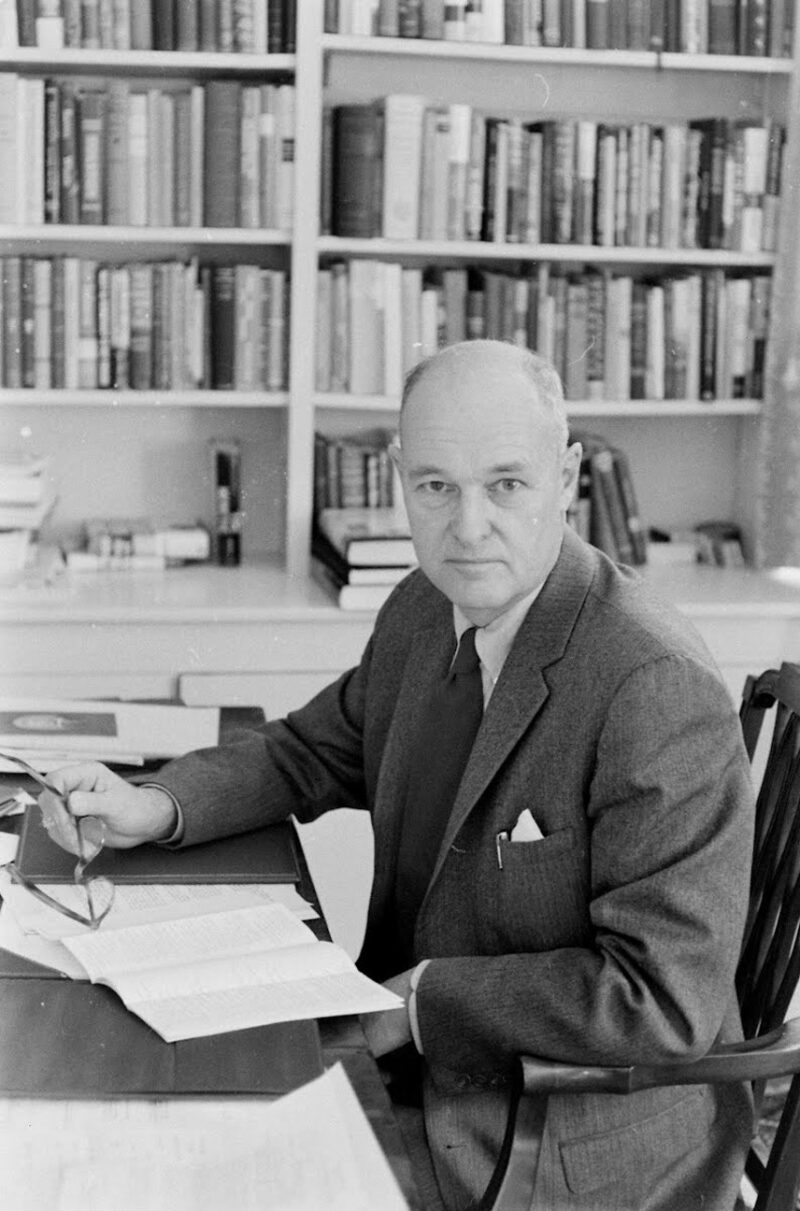
    George F. Kennan: if only U.S. leaders in the 1990s and 2000s had listened to him [Source: artsandculture.google.com

    As far as China, the provocations by the Biden administration may be even more insane than with regards to Russia, as a) the U.S. depends on Chinese purchasing of U.S. debt; b) the U.S. economy is quite dependant on China’s; and c) China has superior military technology capabilities that would give it the edge in any war with the U.S.

    Charles Freeman is a retired diplomat who served as Nixon’s translator when he famously visited China in theearly 1970s to reestablish U.S. diplomatic relations during the Cold War. Freeman told me when I interviewed him that China was in no way a military threat to the U.S., but the U.S. sees it as a threat because its economy has been growing and slowly surpassing that of the U.S. The U.S., however, should not view China as a threat of any kind, and should consider its economic growth an opportunity for the U.S. if it tried to harness China’s economic growth to its own. This would mesh well with the win-win strategy advocated for by Chinese Premer Xi Jinping in which China and the U.S. would cooperate to mutual economic benefit.

    Charles Freeman [Source: globaltimes.cn]

    Instead, the U.S. has sought to a) encircle China militarily, b) arm Taiwan to the teeth in violation of the “One China” policy and incite Taiwanese separatist elements, c) try and undermine Chinese interests throughout Southeast Asia, and d) provoke it by launching drone surveillance missions over its borders and in Chinese controlled waters off Taiwan, and e) sailing U.S. naval ships in Chinese waters.

    This is in addition to a) the propaganda directed against China in the U.S., b) the persecution of Chinese scientists; c) support for separatist elements in Xinjiang and Tibet; and d) the waging of an economic war on China and efforts to sabotage China’s economy—a policy that had been pursued by the FDR administration against Japan that directly provoked war with it.

    Question 8: Are current wars in Ukraine and Gaza—a sign of major turbulence in the World Order?

    Answer: Yes absoutely. These wars were both easily avoidable and were a direct result of U.S. foreign policy and its extremism.

    1. In the case of Ukraine, the U.S. was intent on using Ukraine as a battering ram directed against Russia. The U.S. orchestrated the 2014 Maidan coup and empowered and armed far right, Russophobic elements who triggered the war with Russia by a) attacking the ethnic Russian population in Eastern Ukraine; and b) reneging on any commitments in the Minsk peace agreements that would have given greater autonomy to the Luhansk and Donetsk provinces. The U.S. aim was similar to Afghanistan in the 1980s where they wanted to draw the Russians into a military quagmire and trap and discredit Putin and cripple his regime by ratcheting up economic sanctions against him (which it was believed would create disaffection with his rule and trigger a movement for regime change). This strategy was born of desperation because Putin was succeeding in strengthening Russia and blocking the neoconservative designs to control Eurasia and its rich oil and gas reserves, which was only possible with a weakened Russia.
    2. Gaza: The U.S. has long used Israel as an outpost of its power in the Middle East, recently establishing secret military bases in the Negev. The neocons in Washington have long sought regime change in Iran and see Israel as their vehicle to help achieve that. They also wanted regime change in Syria and to ensure Israeli control over the Golan Heights, where oil reserves have been discovered. U.S. weapons have emboldened hardliners in Israel and enabled Israeli aggression in Gaza and now Lebanon with disastrous human costs for the civilian population that people are comparing to a new Holocaust.

    Question 9:  With the rise of China, India, and the BRICS—is this a Power Transition moment?

    Answer: Yes. We are seeing major historical changes in real-time. China’s achievements through the One Belt, One Road initiative were so impressive they led to a copycat effort by the Biden and Boris Johnson admiinistrations that never really got off the ground. The SCO is enabling countries also to get around the World Bank and IMF by offering loans with no strings attached. China’s rise is epitlmized by its trading alliance with Russia and influence throughout Africa, where China is clearly winning the Great Game. While Chinese labor practices may be bad in many places, China is bringing tangible benefits to African countries through the building of impressive infrastructure, whereas all the U.S. offers is drone bases and IMF structural adjustment programs that push economic austerity measures and reinforce social inequality.

    Question 10: Is this a sign of the end of Western dominance of the last 500 years?

    Answer: I believe that yes, we are seeing major historical shifts. It may take some more time as empires often do have lasting power and can linger on even when their legitimacy has been eroded, but change is coming about.

    Question 11: In its entire history, the USA has been at war for all but 15-20 years. Is the USA a war-mongering state?

    Answer: Sadly, yes. It goes back to the founding of the country as a settler colonial state rooted in the military conquest and genocide of the Native Americans. The colonial mentality is so deep that the U.S. names a lot of its weapons systems after native tribes that were vanquished, like the Apache helicopter for example. The Operation to kill Osama bin Laden was called Operation Geronimo after the Apache chief who was vanquished in the 19th century. Noam Chomsky once asked; imagine the nazis had won World War II, and named weapons: “gypsys” and ‘Jews.”

    [Source: telegraph.co.uk]

    This reflects something rotten at the core of imperialism and a deep imperial mentality that is hard to vanquish and is passed on generation after generation. This mentality and the war like culture in the U.S. is seen in a hero worship of soldiers and the military at sporting events, and in the denigration and marginalization of peace activists in popular and intellectual culture.

    That the military culture is a largely top down phenomenon though should be emphasized as since Vietnam, the U.S. government has dared not reintroduce the draft, lest it face a societal revolt remniscent of the 1960s counter-culture movement. So a lot of Americans see through the lies and are not so hawkish—that’s why the government has to distance the public from the wars; lie to them repeatedly about what they are all about; and develop new technologies and AI that could ensure a reliance on machines in fighting wars rather than the American people who often see through the lies and will protest an unjust war—particularly if there are a large number of U.S. ground troops potentially being put in harms way (like in Vietnam).

    Question 12: What is the future of 21st century world order? Barry Posan says the era of Superpower is over. Has the multipolar world emerged? what would be its shape?

    Answer: I think we are indeed seeing the birth of a new multipolar world order in which the center of economic power in the world increasingly lies in the East and in which China is a powerhouse and Southeast Asia is a key motor of economic growth in the Global economy. The U.S. is sliding more towards authoritarianism and potentially even a civil war, and may be further weakened by domestic unrest as it loses its economic supremacy and the U.S. dollar ceases to be a main currency of global trade. U.S. military interventions may focus more on South America and Mexico (which some Republicans want to bomb now to stem the immigration tide) and the U.S. army may have to be deployed more often to contain domestic unrest and right wing estremists/neofascists and to control armies of homeless people who are a product of a failed economic model.

    Related to the last question about U.S. adaptation to the new realities, a great danger is that the U.S. won’t accept reality, and will attempt to violently reimpose its hegemony, triggering a new Pacific War or world war that would result in millions of deaths.

    The recent escalation of conflict in Ukraine and the Middle East as well as U.S. saber rattling towards China and over Taiwan, makes this threat all too real and ominous.

    Feature Image Credit: iai.tv

  • Achieving the Two-State Solution in the Wake of Gaza War

    Achieving the Two-State Solution in the Wake of Gaza War

    Peace can come through the immediate implementation of the two-state solution, making the admission of Palestine to the United Nations the starting point, not the ending point.


    The two-state solution is enshrined in international law and is the only viable path to a long-lasting peace. All other solutions—a continuation of Israel’s apartheid regime, one bi-national state, or one unitary state—would guarantee a continuation of war by one side or the other or both. Yet the two-state solution seems irretrievably blocked. It is not. Here is a pathway.

    The Israeli government strongly opposes a two-state solution, as does a significant proportion of the Israeli population, some on religious grounds (“God gave us the land”) and some on security grounds (“We can never be safe with a State of Palestine”). A significant proportion of Palestinians regard Israel as an illegitimate settler-colonial entity and, in any event, distrust any peace process.

    How, then, to proceed?

    The usual recommendation is the following six-step sequence of events: (1) ceasefire; (2) release of hostages; (3) humanitarian assistance; (4) reconstruction; (5) peace conference for negotiations between Israel and Palestine; and finally (6) establishment of two states on agreed boundaries. This path is impossible. There is a perpetual deadlock on steps 5 and 6, and this sequence has failed for 57 years since the 1967 war.

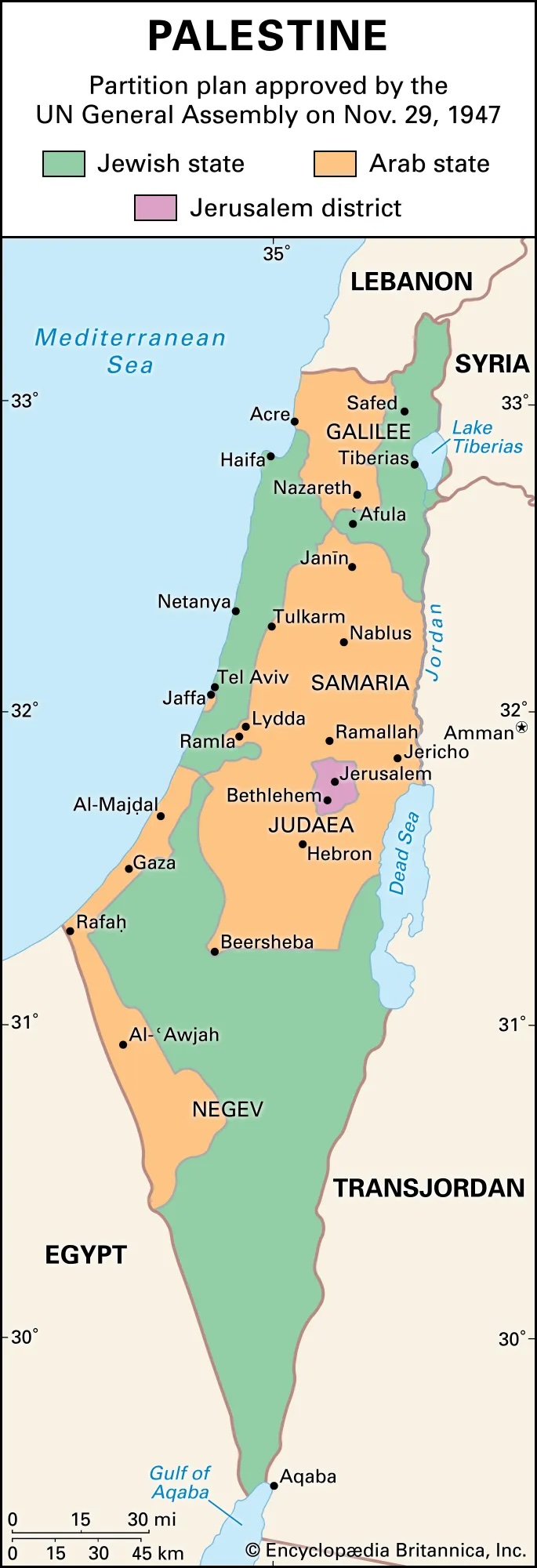
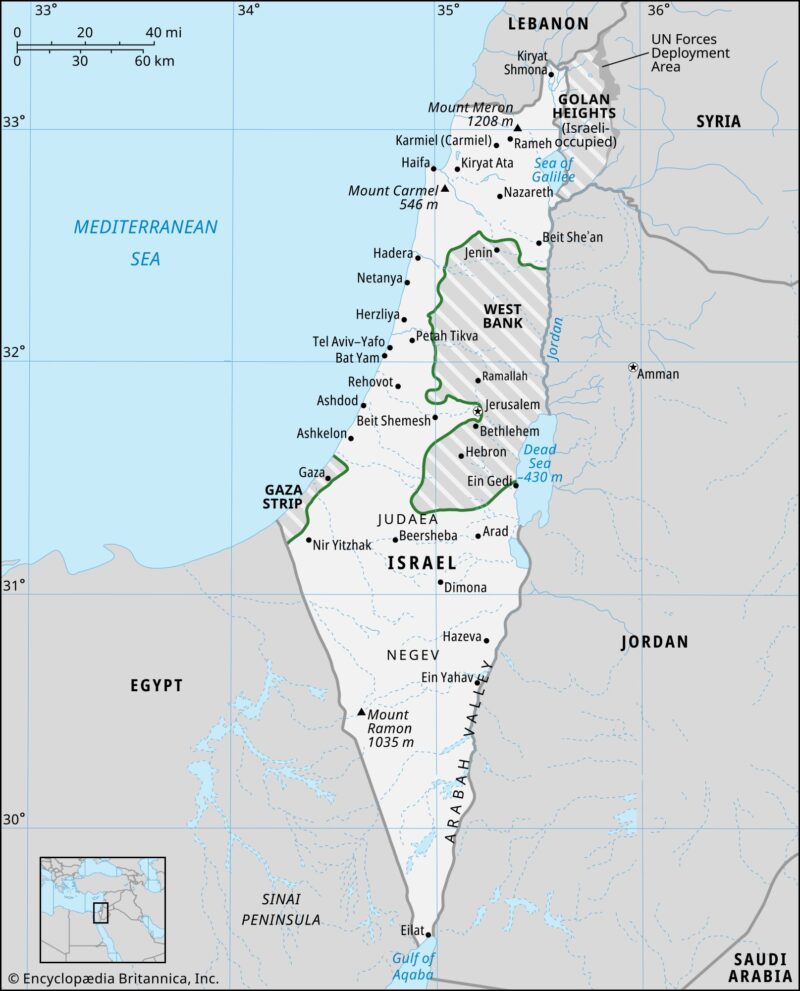
    Two sovereign states, on the boundaries of June 4, 1967, protected initially by UN-backed peacekeepers and other guarantees, will be the starting point for a comprehensive and just peace…

    The failure of Oslo is the paradigmatic case in point. There are irreconcilable differences, such as the status of East Jerusalem. Israeli zealots would force from power any Israeli politician who dares to give up East Jerusalem to Palestinian sovereignty and Palestinian zealots would do the same with any Palestinian leader who gave up sovereignty over East Jerusalem. We should relinquish the continuing illusion that Israel will ever reach an agreement or that Palestine would ever have the negotiating power to engage meaningfully with Israel, especially when the Palestinian Authority is highly dependent on the US and other funders.

    The correct approach is, therefore, the opposite, starting with the establishment of two states on globally agreed boundaries, notably the boundaries of June 4, 1967, as enshrined in UN Security Council and UN General Assembly resolutions. The UN member states will have to impose the two-state solution instead of waiting for yet another Palestinian-Israeli failed negotiation.

    Thus, the settlement should follow this order: (1) establishment of Palestine as 194th member state within a two-state solution framework on June 4, 1967 borders; (2) immediate ceasefire; (3) release of hostages; (4) humanitarian assistance; (5) peacekeepers, disarmament and mutual security; and (6) negotiation on modalities (settlements, return of refugees, mutually agreed land-swaps, and others; but not boundaries).

    In 2011, the State of Palestine (now recognized by 140 UN member states but not yet as a UN member state itself) applied for full UN member status. The UN Security Council Committee on New Members (constituted by the UN Security Council) recognized the legitimacy of Palestine’s application, but as is utterly typical in the “peace process,” the US government prevailed on the Palestinian Authority to accept “observer status,” promising that full UN membership would soon follow. Of course, it did not.

    The Security Council, backed by the UN General Assembly, has the power under the UN Charter to impose the two-state settlement. It can do so as a matter of international law, following decades of relevant resolutions. It can then enforce the solution through a combination of carrots (economic inducements, reconstruction funding, UNSC-backed peacekeepers, disarmament, border security, etc.) and sticks (sanctions for violations by either party).

    The only conceivable border for creating the two-state solution is June 4, 1967. Starting from that border, the two sides might indeed negotiate a mutually agreed-upon swap of land for mutual benefit, but they would do so knowing that the “best alternative to a negotiated agreement” (BATNA) is the June 4, 1967 border.

    It is quite possible, indeed likely, that the US would initially veto the proposed pathway. After all, the US has already used its veto multiple times to block merely a ceasefire. Yet, the process of eliciting the US veto and then securing a large majority vote in the UN General Assembly will be salutary for three reasons.

    First, US politics is shifting rapidly against Israeli policies, given the US public’s growing understanding of Israel’s war crimes and Israel’s political extremism. This shift in public opinion makes it far more likely that the US leaders will sooner rather than later accept the basic approach outlined here because of US domestic political dynamics. Second, the increasing US isolation in the UN Security Council and UN General Assembly is also weighing heavily on US leaders and forcing the US leadership to reconsider its policy positions in view of geopolitical considerations. Third, a strong vote in the UNSC and UNGA for the two-state solution on June 4, 1967 borders, will help to strengthen international law and the terms of the eventual settlement as soon as the US veto is lifted.

    For these reasons, there is a realistic prospect that the UN will finally exercise its international legal and political authority to create the conditions for peace.

    Twenty-two years ago, Arab and Islamic leaders affirmed in the 2002 Arab Peace Initiative that the only pathway to peace is through the two-state solution. On February 7, 2024, the Saudi Ministry of Foreign Affairs reasserted that a comprehensive peace will only be achieved by recognizing an independent Palestinian state on the 1967 borders and East Jerusalem as the capital. The Arab states and the world community generally shouldn’t buy into another vague peace process that is likely doomed to fail, especially given the urgency caused by the ongoing genocide in Gaza and the bad-will accumulated over the past 57 years of a fruitless “Peace Process.”

    Peace can come through the immediate implementation of the two-state solution, making the admission of Palestine to the UN the starting point, not the ending point. Two sovereign states, on the boundaries of June 4, 1967, protected initially by UN-backed peacekeepers and other guarantees, will be the starting point for a comprehensive and just peace not only between Israel and Palestine—and also a regional peace that would secure diplomatic relations across the Middle East and end this conflict that has burdened the inhabitants, the region, and the world, for more than a century.

    This article was published earlier in Common Dreams.

    Feature Image Credit: news.sky.com

    Maps Credit: britannica.com

  • China’s economy is still far out growing the U.S. – contrary to Western media “fake news”

    China’s economy is still far out growing the U.S. – contrary to Western media “fake news”

    GDP data for China, the U.S., and the other G7 countries for the year 2023 has now been published. This makes possible an accurate assessment of China’s, the U.S., and major economies performance—both in terms of China’s domestic goals and international comparisons. There are two key reasons this is important.

    • First for China’s domestic reasons: to achieve a balanced estimate of China’s socialist economic situation and therefore the tasks it faces.
    • Second, because the U.S. has launched a quite extraordinary propaganda campaign, including numerous straightforward factual falsifications, to attempt to conceal the real international economic facts.

    The factual situation is that China’s economy, as it heads into 2024, has far outgrown all other major comparable economies. This reality is in total contradiction to claims in the U.S. media. This in turn, therefore, demonstrates the extraordinary distortions and falsifications in the U.S. media about this situation. It confirms that, with a few honourable exceptions, Western economic journalism is primarily dominated by, in some cases quite extraordinary, “fake news” rather than any objective analysis. Both for understanding the economic situation, and the degree of distortion in the U.S. media, it is therefore necessary to establish the facts of current international developments

    China’s growth targets

    Starting with China’s strategic domestic criteria, it has set clear goals for its economic development over the next period which will complete its transition from a “developing” to a “high-income” economy by World Bank international standards. In precise numbers, in 2020’s discussion around the 14th Five Year plan, it was concluded that for China by 2035: “It is entirely possible to double the total or per capita income”. Such a result would mean China decisively overcoming the alleged “middle income trap” and, as the 20th Party Congress stated, China reaching the level of a “medium-developed country by 2035”.

    In contrast, a recent series of Western reports, widely used in anti-China propaganda, claim that China’s economy will experience sharp slowdown and will fail to reach its targets.

    Self-evidently which of these outcomes is achieved is of fundamental importance for China’s entire national rejuvenation and construction of socialism—as Xi Jinping stated, China’s: “path takes economic development as the central task, and brings along economic, political, cultural, social, ecological and other forms of progress.” But the outcome also affects the entire global economy—for example, a recent article by the chair of Rockefeller International, published in the Financial Times, made the claim that what was occurring was China’s “economy… losing share to its peers”. The Wall Street journal asserted: “China’s economy limps into 2024” whereas in contrast the U.S. was marked by a “resilient domestic economy.” The British Daily Telegraph proclaimed China has a “stagnant economy”. The Washington Postheadlined that: “Falling inflation, rising growth give U.S. the world’s best recovery” with the article claiming: “in the United States… the surprisingly strong economy is outperforming all of its major trading partners.” This is allegedly because: “Through the end of September, it was more than 7 percent larger than before the pandemic. That was more than twice Japan’s gain and far better than Germany’s anaemic 0.3 percent increase.” Numerous similar claims could be quoted from the U.S. media.

    U.S. use of “fake news”

    Reading U.S. media claims on these issues, and comparing them to the facts. it is impossible to avoid the conclusion that what is involved is deliberate “fake news” for propaganda purposes—as will be seen, the only alternative explanation is that it is disgracefully sloppy journalism that should not appear in supposedly “quality” media. For example, it is simply absurdly untrue, genuinely “fake news”, that the U.S. is “outperforming all of its major trading partners”, or that China has a “stagnant economy”. Anyone who bothers to consult the facts, an elementary requirement for a journalist, can easily find out that such claims are entirely false—as will be shown in detail below.

    To first give an example regarding U.S. domestic reports, before dealing with international aspects, a distortion of U.S. economic growth in 2023 was so widely reported in the U.S. media that it is again hard to avoid the conclusion that this was a deliberate misrepresentation to present an exaggerated view of U.S. economic performance. Factually, the U.S. Bureau of Economic Analysis, the U.S. official statistics agency for economic growth, reported that U.S. GDP in 2023 rose by 2.5%—for comparison China’s GDP increased by 5.2%. But a series of U.S. media outlets, starting with the Wall Street Journal, instead proclaimedthat the “U.S. economy grew 3.1% over the last year”.

    This “fake news” on U.S. growth was created by statistical “cherry picking”. In this case comparing only the last quarter of 2023 with the last quarter of 2022, which was an increase of 3.1%, but not by taking GDP growth in the year as a whole “last year”. But U.S. growth in the earlier part of 2023 was far weaker than in the 4th quarter—year on year growth in the 1stquarter was only 1.7% and in the 2nd quarter only 2.4%. Taking into account this weak growth in the first part of the year, and stronger growth in the second, U.S. growth for the year as a whole was only 2.5%—not 3.1%. As it is perfectly easy to look up the actual annual figure, which was precisely published by the U.S. statistical authorities, it is hard to avoid the conclusion that this was a deliberate distortion in the U.S. media to falsely present a higher U.S. growth rate in 2023 than the reality.

    It may be noted that even if U.S. GDP growth had been 3.1% then China’s was much higher at 5.2%. But the real data makes it transparently clear that China’s economy grew more than twice as fast as the U.S. in 2023—showing at a glance that claims that the U.S. is “outperforming all of its major trading partners”, or that China has a “stagnant economy” were entirely “fake news”.

    Many more examples of U.S. media false claims could be given, but the best way to see the overall situation is to systematically present the overall facts of growth in the major economies.

    What China has to do to achieve its 2035 goals

    Turning first to assessing China’s economic performance, compared to its own strategic goals of doubling GDP and per capita GDP between 2020 and 2035, it should be noted that in 2022 China’s population declined by 0.1% and this fall is expected to continue—the UN projects China’s population will decline by an average 0.1% a year between 2020 and 2035. Therefore, in economic growth terms, the goal of doubling GDP growth to 2035 is slightly more challenging than the per capita target and will be concentrated on here—if China’stotal GDP goal is achieved then the per capita GDP one will necessarily be exceeded.

    To make an international comparison of China’s growth projections compared with the U.S., the U.S. Congressional Budget Office (CBO), responsible for the official growth projections for the U.S. economy on which its government’s policies rely, estimates there will be 1.8% annual average U.S. GDP growth between 2023 and 2023—with this falling to 1.6% from 2034 onwards. This figure is slightly below the current U.S. 12-year long term annual average GDP growth of 2.3%—12 being the number of years from 2023 to 2035. To avoid any suggestion of bias against the U.S., and in favour of China, in international comparisons here the higher U.S. number of 2.3% will be used.

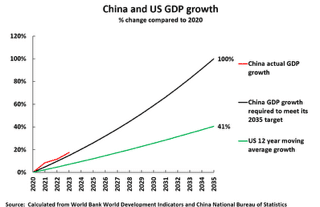
    The results of such figures are that if China hits its growth target for 2035, and the U.S. continues to grow at 2.3%, then between 2020 and 2035 China’s economy will grow by 100% and the U.S. by 41%—see Figure 1. Therefore, from 2020 to 2035, China’s economy would grow slightly more than two and a half times as fast as the U.S.

    The strategic consequences of China’s economic growth rate

    The international implications of any such growth outcomes were succinctly summarised by Martin Wolf, chief economics commentator of the Financial Times. If China’s economy continues to grow substantially faster than Western ones, and it achieves the status of a “medium-developed country by 2035”, then, in addition to achieving high domestic living standards, China’s will become by far the world’s largest economy. As Wolf put it: “The implications can be seen in quite a simple way. According to the IMF, China’s gross domestic product per head (measured at purchasing power) was 28 per cent of U.S. levels in 2022. This is almost exactly half of Poland’s relative GDP per head… Now, suppose its [China’s] relative GDP per head doubled, to match Poland’s. Then its GDP would be more than double that of the U.S. and bigger than that of the U.S. and EU together.” By 2035 such a process would not be completed on the growth rates already given, and measuring by Wolf’s chosen measure of purchasing power parities (PPPs) China’s economy by 2035 would be 60% bigger than that of the U.S. But even that would make China by far the world’s largest economy.

    Wolf equally accurately notes that the only way that such an outcome would be prevented from occurring is if China’s economy slows down to the growth rate of a Western economy such as the U.S. Clearly, if China’s economic growth slows to that of a Western economy, then, naturally, China will never catch up with the West—it will necessarily simply stay the same distance behind. Therefore. as Wolf accurately puts it the outcomes are:

    What is the economic future of China? Will it become a high-income economy and so, inevitably, the largest in the world for an extended period, or will it be stuck in the ‘middle income’ trap, with growth comparable to that of the U.S.?

    The progress in achieving China’s strategic economic goals

    Turning to the precise figure required to achieve China’s 2035 target, China’s goal of doubling GDP required average annual growth of at least 4.7% a year between 2020 and 2035. So far China, as Figure 1 shows, is ahead of this goal—annual average growth in 2020-2022 was 5.7%, meaning that from 2023-2035 annual average 4.6% growth is now required.

    China’ 5.2% GDP increase in 2023 therefore once again exceeded the required 4.6% growth rate to achieve its 2035 goal—as shown in Figure 1. From 2020 to 2023 the required total increase in China’s GDP to hit its 2035 target was 14.9%, whereas in fact its growth was 17.5%. This is in line with the 45-year record since 1978’s Reform and Opening Up, during which entire period the medium/long term targets set by China have always been exceeded.

    Therefore. to summarise, there is no sign whatever in 2023, or indeed in the period since 2020, that China will fail to meet its target of doubling GDP between 2020 and 2035—China is ahead of this target. Such a 4.6% growth rate would easily ensure China becomes a high-income economy by World Bank criteria well before 2035—the present criteria for this being per capita income of $13,846.

    It should be noted, as discussed in in detail below, that a clear international conclusion flows from this necessary 4.6% annual average growth rate for China to achieve its strategic goals. It means that China must continue to grow much faster than the Western economies throughout this period to 2035—that is in line with China’s current trend. However, if China were to slow down to the growth rate of a Western economy, then it will fail to achieve its strategic goals to 2035, may not succeed in becoming a high income economy, and will necessarily remain the same distance behind the West as now. The implications of this will be considered below.

    Systematic comparisons not “cherry picking”

    Having considered China’s performance in 2023 terms of achieving its own domestic strategic goals we will now turn to actual results and a comparison of China with other international economies. This immediately shows the factual absurdity, the pure “fake news” of claims such as that the U.S. has “the world’s best recovery“ and “the United States… is outperforming all of its major trading partners.” On the contrary China has continued to far outgrow the U.S. economy not only in 2023 but in the entire last period. China’s outperformance of the other major Western economies, the G7, is even greater that of the U.S.

    Entirely misleading claims regarding such international comparisons, used for propaganda as opposed to serious analysis, are sometimes made because data is taken from extremely short periods of time which are taken out of context—unrepresentative statistical “cherry picking” or, as Lenin put it, a statistical “dirty business”. Such a method is always erroneous, but it is particularly so during periods which were affected by the impact of the Covid pandemic as these caused extremely violent short-term economic fluctuations related to lock downs and similar measures. China’s assertion of superior growth is based on its overall performance, not an absurd claim that it outperforms every other economy, on every single measure, in every single period! Therefore, in making international comparisons, the most suitable period to take is that for since the beginning of the pandemic up to the latest available GDP data. As comparison of China with the U.S. is the most commonly made one, and particularly concentrated on by the U.S. media campaign, this will be considered first.

    China’s and the U.S.’s growth in 2023

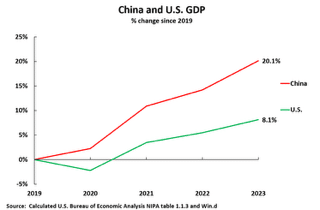
    It was already noted that in 2023 China’s GDP grew by 5.2% and the U.S. by 2.5%—China’s economy growing more than twice as fast as the U.S. But it should also be observed that 2023 was an above trend growth year for the U.S.—U.S. annual average growth over a 12-year period is only 2.3% and over a 20-year period it is only 2.1%. Therefore, although in 2023 China’s economy grew more than twice as fast as the U.S., that figure is actually somewhat flattering for the U.S. Figure 2shows that in the overall period since the beginning of the pandemic China’s economy has grown by 20.1% and the U.S. by 8.1%—that is China’s total GDP growth since the beginning of the pandemic was two and half times greater than the U.S. China’s annual average growth rate was 4.7% compared to the US’s 2.0%.

    Economic performance of China and the three major global economic centres

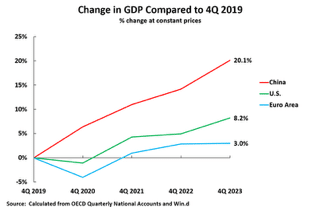
    Turning to wider international comparisons than the U.S. such data immediately shows the extremely negative situation in most “Global North” economies and China’s great outperformance of them. To start by analysing this in the broadest terms, Figure 3 shows the developments in the world’s three largest economic centres—China, the U.S., and the Eurozone. These three together account for 57% of world GDP at current exchange rates and 46% in purchasing power parities (PPPs). No other economic centre comes close to matching their weight in the world economy.

    Regarding the relative performance of these three major economic centres, at the time of writing data has not been published for the Euro Area for the whole year of 2023 —which would be the ideal comparison. However, it has been published for the the Euro area for the four quarters of 2023 individually and trends can be calculated on that basis. These show that In the four years to the 4th quarter of 2023, covering the period since the beginning of the pandemic, China’s economy has grown by 20.1%, the U.S. by 8.2%, and the Eurozone by 3.0%. China’s economy therefore grew by two and a half times as fast as the U.S. while the situation of the Eurozone could accurately be described as extremely negative with annual average GDP growth in the last four years of only 0.7%.

    Such data again makes it immediately obvious that claims in the Western media that China faces economic crisis, and the Western economies are doing well is entirely absurd—pure fantasy propaganda disconnected from reality.

    Relative performance of China and the G7

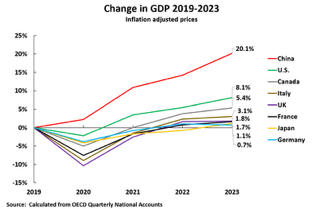
    Turning to analysing individual countries, then comparing China to all G7 states, i.e. the major advanced economies, shows the situation equally clearly—see Figure 4. Data for China and all G7 economies has now been published for the whole of 2023. The huge outperformance by China of all the major advanced economies is again evident.

    Over the four years since the beginning of the pandemic China’s economy grew by 20.1%, the U.S. by 8.1%, Canada by 5.4%, Italy by 3.1%, the UK by 1.8%, France by 1.7%, Japan by 1.1% and Germany by 0.7%.

    In the same period China’s economy therefore grew two and a half times as fast as the U.S., almost four times as fast as Canada, almost seven times as fast as Italy, 11 times as fast as the UK, 12 times as fast as France, 18 times as fast as Japan and almost 29 times as fast as Germany.

    In terms of annual average GDP growth during this period China’s was 4.7%, the U.S. 2.0%, Canada 1.3%, Italy 0.8%, the UK 0.4%, France 0.4%, Japan 0.3% and Germany 0.2%.

    It may therefore be seen that China’s economy far outperformed the U.S., while the performance of all other major G7 economies may be quite reasonably described as extremely negative—all having annual average economic growth rates of around or even under 1%.

    Comparison of China to developing economies

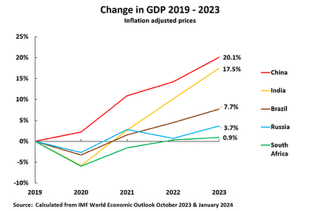
    A comparison using the IMF’s January 2024 projections can also be made to the major developing economies—the BRICS. Figure 5 shows this, using the factual result for China and the IMF projections for the other countries. Over the period since the start of the pandemic, from 2019-2023, China’s GDP grew by 20.1%, India by 17.5%, Brazil by 7.7%, Russia by 3.7% and South Africa by 0.9%.

    This data confirms that the major Global South economies are growing faster than most of the major Global North economies, which is part of the rise of the Global South and draws attention to the good performance of India. But China grew more than two and half times more than all the BRICS economies except India—China’s growth was 15% greater than India’s. It should be noted that India is at a far lower stage of development than the other BRICS economies—all the others fall in the World Bank classification of upper middle-income economies whereas India falls into the lower middle income group.

    Comparison of China’s growth to Western economies

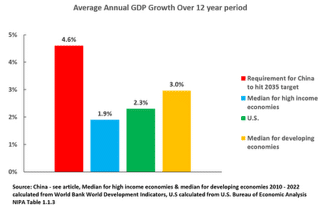
    Finally, this outperformance by China casts light on what is necessary to achieve its own 2035 strategic targets. China’s 4.6% growth rate necessary to meet these goals means that it must continue to maintain a growth rate far higher than Western economies—Figure 6 shows this in overall terms in addition to individual comparisons given to major economies above. Whereas China must achieve an annual average 4.6% growth rate the median growth rate of high income “Western” economies is only 1.9%, the U.S. is 2.3%, and the median for developing economies is 3.0%.That is, to achieve its 2035 goals China must grow twice as fast as the long term trend of the U.S., almost two and a half times as fast as the median for high income economies, and more than 50% faster than the median for developing economies. As already seen, China is more than achieving this.

    But such facts immediately show why it is an extremely misleading when proposals are made that China should move towards the macro-economic structure of a Western economy. If China adopts the structure of a Western economy then, of course, China will slow down to the same growth rate as Western economies—and therefore fail to achieve its 2035 economic goals. China will be precisely stuck in the negative outcome of the situation accurately diagnosed by Martin Wolf.

    What is the economic future of China? Will it become a high-income economy and so, inevitably, the largest in the world for an extended period, or will it be stuck in the ‘middle income’ trap, with growth comparable to that of the U.S.?

    Conclusion

    In conclusion, it addition to objectively analysing 2023’s economic results, it is also necessary in the light of this factual situation to make a remark regarding Western, in particular U.S. “journalism”.

    None of the data given above is secret, all is available from public readily accessible sources. In many cases it does not even require any calculations and simply published data can be used. But the U.S. media and journalists report information that is systematically misleading and in many cases simply untrue. While it lagged China in creating economic growth the U.S. was certainly the world leader in creating “fake economic news”! What was the reason, what attitude should be taken to it?

    First, to avoid accusations of distortion, it should be stated that there were a small handful of Western journalists who refused to go along with this type of distortion and fake news. For example Chris Giles, the Financial Times economics commentator, in December, sharply attacked “an absurd way to compare economies… among people who should know better.” Giles did not do this because of support for China but because, quite rightly, he warned that spreading false or distorted information led to serious errors by countries doing so: “Coming from the UK, which lost its top economic dog status in the late 19th century but still has some delusions of grandeur, I can understand American denialism… But ultimately, bad comparisons foster bad decisions.” But the overwhelming majority of U.S. and Western journalists continued to spread fake news. Why?

    First, the fact that identical distortions and false information appeared absolutely simultaneously across a very wide range of media makes it clear that undoubtedly U.S. intelligence services were involved in creating it—i.e. part of the misrepresentation and distortions were entirely deliberate and conscious, aimed at disguising the real situation.

    Second, another part was merely sloppy journalism—that is journalists who could not be bothered to check facts.

    Third, supporting both of these factors was “white Western arrogance”—an arrogant assumption, rooted in centuries of European and European descended countries dominating the world, that the West must be right. Therefore, such arrogance made it impossible to acknowledge or report the clear facts that China’s economy is far outperforming the West.

    But whether it was conscious distortion, sloppy journalism, or conscious or unconscious arrogance, in all these cases no respect should be given to the Western “quality” media. It is not trying to find out the truth, which is the job of journalism, it is simply spreading false propaganda.

    It remains a truth that if a theory and the real world don’t coincide there are only two courses that can be taken. The first, that of a sane person, is to abandon the theory. The second, that of a dangerous one, is to abandon the real world—precisely the danger that Chris Giles pointed to. What has been appearing in the Western media about international economic comparisons regarding China is precisely abandonment of the real world in favour of systematic fake news.


    This article was published earlier in mronline.org and is republished under Creative Commons Attribution-Non Commercial-No Derivatives 4.0 International License

    Feature Image Credit: China will continue to lead global growth in 2024 – globaltimes.cn

  • GDP data for Q3 2023–24: The mystery of a robust growth

    GDP data for Q3 2023–24: The mystery of a robust growth

    Recently released GDP figures have sprung a surprise, baffled experts and overturned the government’s own data and projections. What could be the reason

    GROSS Domestic Product (GDP) figures have sprung a surprise— showing a growth of 8.4 percent in Quarter 3 of 2023–24, on top of the previous two quarter’s growth of 8.2 percent and 8.1 percent.

    The annual growth for 2023–24 is projected at 7.6 percent. But given the growth rates in the first three quarters, it is likely to be above 8 percent, unless the economy decelerates sharply in Q4, of which there is little sign.

    The surprise

    Experts are embarrassed that how could they be so far off. In December 2023, the Reserve Bank of India (RBI) had upped its projected growth rate from 6.5 percent to 7 percent.

    Various foreign credit rating agencies had revised the expected growth rate to only around 6.5 percent. The International Monetary Fund (IMF) expected a 6.3 percent rate of growth.


    Read more…


    Read more…

  • India’s National River Linking Project: Will it work or end up a Disaster?

    India’s National River Linking Project: Will it work or end up a Disaster?

    In October, India’s ambitious scheme to build a 230-kilometre canal between the Ken and Betwa rivers was finally approved. It’s the first of many projects planned for implementation under the National River Linking Project (NRLP), which aims to connect 37 Himalayan and peninsular rivers across the country via some 3,000 reservoirs and 15,000 kilometres of dams and canals. The government has touted the NRLP, which was first mooted more than four decades ago, as the solution to drought-proofing the country. But new research suggests the US$168 billion project could actually make the drought worse. 

    – From a study by the ‘Geographical‘ – Dec 2023.


    I keep hearing that Modiji is going to unveil the often-spoken and then shelved Rivers Link Up Scheme as his grand vision to enrich the farmers and unite India. In a country where almost two-thirds of the agricultural acreage is rainfed, water is wealth. Telangana has shown the way. Once India’s driest region has in just eight years been transformed into another granary of India. Three years ago, he had promised to double farmers’ incomes by 2022, and he has clearly failed. He now needs a big stunt. With elections due in 2024, he doesn’t even have to show any delivery. A promise will do for now.

    This is also a Sangh Parivar favourite, and I am quite sure the nation will once again set out to undertake history’s greatest civil engineering project by seeking to link all our major rivers. It will irretrievably change India. If it works, it will bring water to almost every parched inch of land and just about every parched throat in the land.

    On the other hand, if it doesn’t work, Indian civilization as it exists even now might then be headed the way of the Indus Valley or Mesopotamian civilizations destroyed by a vengeful nature, for interfering with nature is also a two-edged sword. If the Aswan High Dam turned the ravaging Nile into a saviour, the constant diversion of the rivers feeding Lake Baikal have turned it into a fast-receding and highly polluted inland sea, ranking it as one of the world’s greatest ecological disasters. Even in the USA, though the dams across the mighty Colorado have turned it into a ditch when it enters Mexico, California is still starved for water.

    I am not competent to comment on these matters, and I will leave this debate for the technically competent and our perennial ecological Pooh-Bahs. But the lack of this very debate is cause for concern. It is true that the idea of linking up our rivers has been afloat for a long time. Sir Arthur Cotton was the first to propose it in the 1800’s. The late KL Rao, considered by many to be an outstanding irrigation engineer and a former Union Minister for Irrigation, revived this proposal in the late 60’s by suggesting the linking of the Ganges and Cauvery rivers. It was followed in 1977 by the more elaborate and gargantuan concept of garland canals linking the major rivers, thought up by a former airline pilot, Captain Dinshaw Dastur. Morarji Desai was an enthusiastic supporter of this plan.

    The return of Indira Gandhi in 1980 sent the idea back into dormancy, where it lay all these years, till President APJ Abdul Kalam revived it on the eve of the Independence Day address to the nation in 2002. It is well known that Presidents of India only read out what the Prime Ministers give them, and hence, the ownership title of Captain Dastur’s original idea clearly was vested with Atal Behari Vajpayee.

    India’s acute water problem is widely known. Over sixty per cent of our cropped areas are still rain-fed, much too abjectly dependent on the vagaries of the monsoon. The high incidence of poverty in certain regions largely coincides with the source of irrigation, clearly suggesting that water for irrigation is integral to the elimination of poverty. In 1950-51, when Jawaharlal Nehru embarked on the great expansion of irrigation by building the “temples of modern India” by laying great dams across our rivers at places like Bhakra Nangal, Damodar Valley and Nagarjunasagar, only 17.4% or 21 million hectares of the cropped area of 133 million hectares was irrigated. That figure rose to almost 35% by the late 80s, and much of this was a consequence of the huge investment by the government in irrigation, amounting to almost Rs. 50,000 crores.

    Ironically enough, this also coincided with the period when water and land revenue rates began to steeply decline to reach today’s zero level. Like in the case of power, it seems that once the activity ceased to be profitable to the State, investment too tapered off.

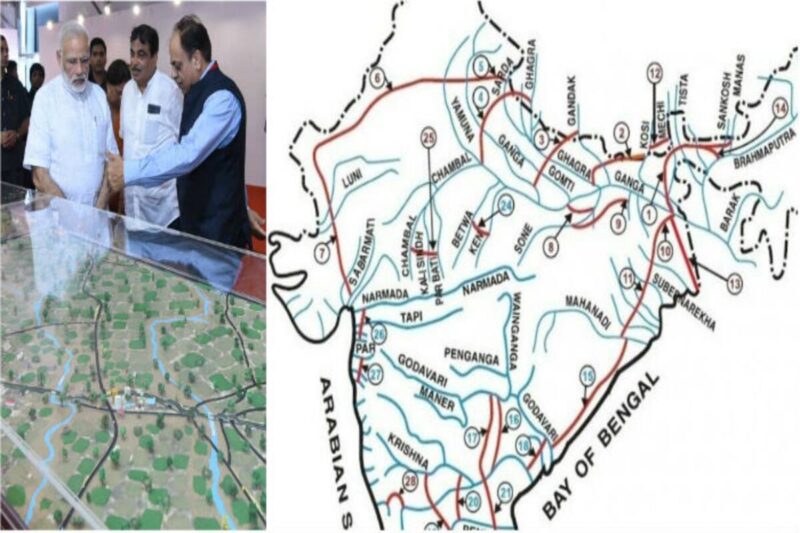
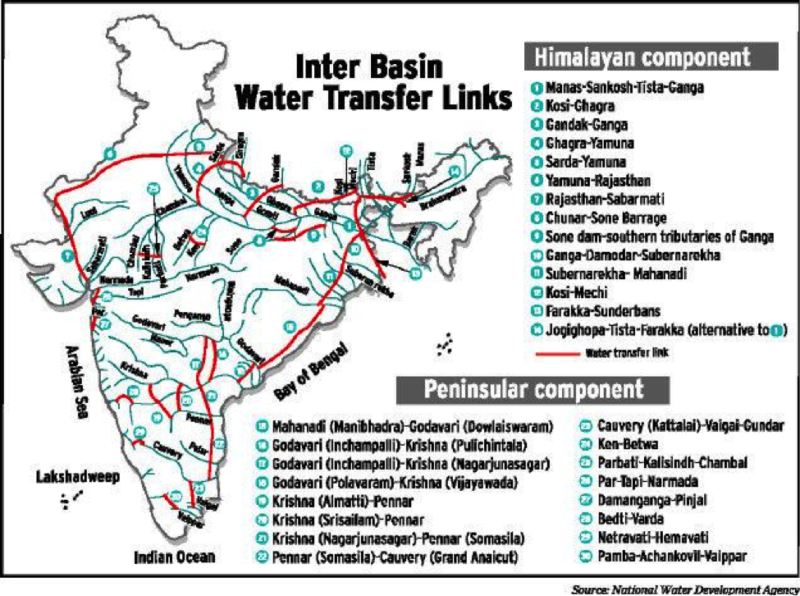
    The scheme is humongous. It will link the Brahmaputra and Ganges with the Mahanadi, Godavari and Krishna, which in turn will connect to the Pennar and Cauvery. On the other side of the country, it will connect the Ganges, Yamuna, with the Narmada, traversing in part the supposed route of the mythical Saraswathi. This last link has many political and mystical benefits, too.

    There are many smaller links as well, such as joining the Ken and Betwa rivers in MP, the Kosi with the Gandak in UP, and the Parbati, Kalisindh and Chambal rivers in Rajasthan. The project, when completed, will consist of 30 links, with 36 dams and 10,800 km of canals diverting 174,000 million cubic meters of water. Just look at the bucks that will go into this big bang. It was estimated to cost Rs. 560,000 crores in 2002 and entail the spending of almost 2% of our GNP for the next ten years. Now, it will cost twice or more than that, but our GDP is now three times more, and it might be more affordable and, hence, more tempting to attempt.

    The order to get going with the project was the output of a Supreme Court bench made up of then Chief Justice BN Kirpal and Justices KG Balakrishnan and Arjit Pasayat, which was hearing a PIL filed by the Dravida Peravai, an obscure Tamil activist group. The learned Supreme Court sought the assistance of a Senior Advocate, Mr Ranjit Kumar, and acknowledging his advice, recorded: “The learned Amicus Curiae has drawn our attention to Entry 56 List of the 7th Schedule to the Constitution of India and contends that the interlinking of the inter-State rivers can be done by the Parliament and he further contends that even some of the States are now concerned with the phenomena of drought in one part of the country, while there is flood in other parts and disputes arising amongst the egalitarian States relating to sharing of water. He submits that not only these disputes would come to an end but also the pollution levels in the rivers will be drastically decreased, once there is sufficient water in different rivers because of their inter-linking.”

    The only problem with this formulation is that neither the learned Amicus Curiae nor the learned Supreme Court are quite so learned as to come to such sweeping conclusions.

    Feature Image Credit: geographical.co.uk

    Opinions expressed are that of the author and do not reflect TPF’s position on the issue.

  • From Global Democratisation to the Battle of World Powers? Contradictory Developments in the Present

    From Global Democratisation to the Battle of World Powers? Contradictory Developments in the Present

    Shortly after the democratic revolutions of 1989-1991, Francis Fukuyama wrote his highly influential essay on the end of history- that is, the end of violent history through global democratization.

    Members of the United Nations Security Council sit during a meeting on Syria at the United Nations Headquarters in New York City, NY, U.S. April 5, 2017. REUTERS/Shannon Stapleton – RC141DE9DE00. Image credit: world101.cfr.org

    The world has changed so dramatically since the end of the Cold War that it is necessary to look back in order to understand today’s global political situation. In total, there are five different discourses that will be discussed here as representative of historical developments. They range from Fukuyama’s thesis of global democratization to various versions of coming anarchy and global (“new”) civil wars (Kaplan, Kagan, Kaldor, Münkler), Huntington’s clash of civilizations, the concept of global governance and the “rise of the others” (Zakaria, Zhang), a multipolar world of nation-states, and the re-nationalization of world politics. My central thesis is that all five discourses are present in contemporary political conflicts and that we cannot neglect any of them.

    But if you look at the history of democracy, you can almost discover a law of motion of democratic revolutions based on Hannah Arendt’s analysis of the French Revolution. It starts with a democratic revolt against a dictator or colonial rule. Then the revolutionaries become radicalized, civil war breaks out, a new, this time totalitarian ruler takes power, and only after his overthrow does democracy prevail.

    Shortly after the democratic revolutions of 1989-1991, Francis Fukuyama wrote his highly influential essay on the end of history- that is, the end of violent history through global democratization. And his thoughts were very timely. What better confirmation could there be when, in just a few years, the old dictatorships from Berlin to Vladivostok, which only called themselves communist but were not, but rather geriocracies, were swept away in a wave of democratisation. The Arab Spring seemed to confirm his thoughts, as here, too, long-standing dictatorships were overrun by democratic movements virtually overnight, as in Egypt and Tunisia. But even then, there were counter-movements that contradicted the assumed linear process of global democratization. Fukuyama, therefore, had to defend his original thesis and argue that, despite all the setbacks, democracy was still at the end of history. In a way, he was echoing Hannah Arendt’s theory of revolution. The reverses of democratization in Russia, many Arab countries, and the global civil wars have often been cited as cultural – Russia, China, and Middle Eastern Islam were still too culturally authoritarian to allow for genuine democratization. But if you look at the history of democracy, you can almost discover a law of motion of democratic revolutions based on Hannah Arendt’s analysis of the French Revolution. It starts with a democratic revolt against a dictator or colonial rule. Then the revolutionaries become radicalized, civil war breaks out, a new, this time totalitarian ruler takes power, and only after his overthrow does democracy prevail. The French overthrew their king and got the emperor, Napoleon; the Russians revolted against the czar and got Stalin; the Chinese fought against their emperor and got Mao Tse-tung; the Germans overthrew their emperor after their military defeat and got the leader Adolf Hitler. Resistance to colonial rule also often followed this law of democratic movement: the colonial rulers were driven out and replaced by new rulers.

    In the same year that the Soviet Union collapsed, the terrible civil wars in the former Yugoslavia began, the first Chechen war, followed by countless “markets of violence” and so-called new wars, which in a narrower sense were new civil wars and wars of state collapse. Mass rape became a weapon of war to demoralize the enemy, and an almost complete dissolution of the boundaries of violence took on a life of its own, seeming to make any rational resolution of conflicts impossible. Warlords, drug lords, terrorists, child soldiers, and “archaic” warriors who seemed to belong to the past dominated warfare worldwide. Against this backdrop, Western armies were transformed into intervention armies that were supposed to maintain a minimum of order on the borders of the U.S. “liberal empire” in order to prevent global anarchy (Robert Kaplan) or a “world civil war” (Enzensberger) – at least according to Western discourse. From the perspective of the countries affected by these wars of intervention, however, they were wars to maintain their immediate exploitation (especially in Africa), to keep corrupt regimes that collaborated with Western states alive (Arabian Peninsula), or to eliminate those that opposed the West (Iraq, Iran, Afghanistan). In the open spaces of violence and violent markets, high-value illegal goods were traded: Drugs, blood diamonds, human beings (women and child slaves), weapons and rare earths.

    Linked to these wars of intervention was the apparent cultural triumph of the West, which is associated with the term globalisation, but was, in fact, initially an Americanization, the so-called McDonaldization or Mac World. However, this cultural globalization of the American way of life, combined with U.S. wars of intervention, led to a backlash as many societies saw their cultural identity threatened. Taken together, these two factors triggered Samuel Huntington’s concept of the clash of civilizations.

    In their liberal hubris, his Western critics argued that there could be no clash of civilizations because only the West had produced a civilization – the others were religions or cultures, but not civilizations.

     His book has often been misunderstood as a guide to action for the coming war – but in fact, he had written the book to prevent that clash, and he argued for the U.S. to withdraw from small wars around the world because he saw the liberal identity of the U.S. at risk. Perhaps more importantly, he saw non-Western religions not just as cultures but as civilizations that had grown out of their respective religions. In their liberal hubris, his Western critics argued that there could be no clash of civilizations because only the West had produced a civilization – the others were religions or cultures, but not civilizations.

    While globalization initially had the effect of Americanization, in the medium term, it facilitated the “rise of the others” (Zakaria), the great empires and civilizations that had perished under European colonization and Euro-American hegemony. As a result of their initial economic success (Malaysia, Singapore, the Asian Tigers, China, India, the Pacific Rim countries), they no longer sought to imitate Western culture in order to be recognized as equals, but to develop their own identity, which they considered superior to the West. From the point of view of Western discourse, the “others” were, at best, immature children or barbarians – now the West suddenly sees itself in the role of other civilizations, seeing themselves as superior to the West. One expression of this changed self-image was Zahng Weiwei’s book China – The Civilizational State. We are now experiencing a paradoxical situation in which the West is consumed by fear of decline and the dissolution of its own sense of superiority, leading to the rise of right-wing populist and radical right-wing movements; large parts of the Asian world population are filled with hope for a better life, and the Islamic-Arab world is desperate in the face of unfulfilled promises, leading to the radicalization of young people in Islamist movements.

    The concept of global governance was invented at the beginning of the 21st century as a reaction to advancing globalization. The assumption, correct in itself, was that the absence of a democratic world state did not necessarily mean that there was no possibility of at least regulating global problems, subjecting them to rules, if not solving them. Global governance was based on the idea of cooperation between nation-states, non-governmental organizations, globally active institutions, the emerging global civil society, globally active corporations, and global players. However, the resurgence of big states has pushed global governance into the background, just like globalization itself. Some states want to reverse globalization, at least in the economic and political spheres. This applies at least to Western democracies, whose citizens often see themselves as the losers of globalization.

    The relative loss of importance of the Western states and the institutions they helped to create, such as the U.N., cannot be overlooked – the overstretched role of the U.S. as the world’s policeman is due, on the one hand, to its own lack of investment in development and education, and on the other to the rise of others.

    What we are currently experiencing is not simply a multipolar world of great powers, even if there are signs of a renaissance of great power politics. Instead, we are witnessing a contradictory process of the five discourses alluded to here: Democratization, failed states, the clash of civilizations, further globalization, and the renaissance of great power politics. The still existing, but also partly former, Global South is still dependent on cooperation, even if new forms of cooperation are emerging, such as the expansion of the BRICS, which compete politically but cooperate economically. The relative loss of importance of the Western states and the institutions they helped to create, such as the U.N., cannot be overlooked – the overstretched role of the U.S. as the world’s policeman is due, on the one hand, to its own lack of investment in development and education, and on the other to the rise of others. What remains unpredictable is whether the emerging states of the Global South and the former superpower Russia will make the same mistake as the West in its centuries-long quest for hegemony, namely, to see itself as superior to all others. Eurocentrism would be replaced by an equally problematic ethnocentrism, and a nationalist dynamic would be set in motion that would be difficult for states to control. Even if all current developments point to the contrary and we see a return of tribalism in the form of “us versus them – whoever the others are” discourses, the only option left is to revive intercultural dialogue if we do not want to experience “another bloody century” (Colin S. Gray).


    Feature Image Credit: chinausfocus.com

  • Using Artificial Intelligence to address Corruption: A proposal for Tamilnadu

    Using Artificial Intelligence to address Corruption: A proposal for Tamilnadu

    Nations must adopt Artificial Intelligence as a mechanism to build transparency, integrity, and trustworthiness, which are necessary to fight corruption. Without effective public scrutiny, the risk of money being lost to corruption and misappropriation was vast. Dr Chris Kpodar, a global Artificial Intelligence Specialist, has advocated the use of artificial intelligence as an anti-corruption tool through the redesigning of systems to address systems that were previously prone to bribery and corruption.


    Artificial Intelligence Tools

    Artificial Intelligence has become popular due to its increasing applications in many fields. Recently, IIT Madras opened a course on B.Tech Data Science in Tanzania, demonstrating the popularity of Artificial Intelligence. The history of Artificial Intelligence goes back to the 1950s when computing power was less, and hardware were huge. These days, computing power has increased exponentially along with the miniaturisation of hardware, leading to algorithms being able to compute larger datasets. The field of AI, however, has gone through ups and downs in terms of popularity.

    Researchers have worked on Neural Networks (Figure below), a mathematical model modelled after neurons in the brain, a foundation unit, and one of the foundations of state-of-the-art AI.

    Artificial intelligence (AI), machine learning, deep learning, and data science are popular terms that describe computing fields that teach a machine how to learn. AI is a catch-all term that broadly means computing systems designed to understand and replicate human intelligence. Machine Learning is a subfield of AI where algorithms are trained on datasets to make predictions or decisions without explicitly being programmed. Deep Learning is a subfield of Machine Learning, which specifically refers to using multi-layers of neural networks to learn from large datasets, mimicking cognition of the neurons in the brain. Recently, the field of AI has resurged in popularity after a popular type of neural network architecture, AlexNET, achieved impressive results in the Image Recognition Challenge in 2012. Since then, neural networks have started to enter into applications in the industry, with colossal research funding mobilised.

    Breakthroughs that can aid Policy Implementation

    There are many types of neural networks, each designed for a particular application. The recent popularity of applications like ChatGPT is due to a neural network called Language Models. Language Models are probability models which ask the question, what is the next best token to generate, given the previous token?

    Two significant breakthroughs led towards ChatGPT, including translating language from one language to another using a machine learning technique called attention mechanism. Secondly, this technique was introduced in transformer-type language models, which led to increased state-of-the-art performance in many tasks in artificial intelligence.

    Transformers, a robust neural network, was introduced in 2017 by Google Researchers in “Attention is All You Need”. This translates into generating human-like text in ChatGPT. Large language models have taken a big step in the technology landscape. As Machine Learning applications are being deployed rapidly, it calls for a governance model for these models, as research in AI models is advancing quickly with innumerable breakthroughs. Earlier in 2019, GPT-2, a Machine Learning model based on transformers, could not solve fundamental mathematical problems such as elucidating numbers from 0-100. Within a year, more advancement in the GPT models led to models being able to perform higher-level scores in SAT exams, GRE, etc. Another breakthrough advancement was the ability of machine-learning programs to generate code, which has increased developer productivity automatically.

     Moreover, many researchers are working on AGI (Artificial General Intelligence), and nobody knows precisely when such capabilities might be developed or researched. Researchers have not settled on a convincing definition of AGI agreeable to everyone in the AI research community. The rate of advancement and investment in AI research is staggering, which calls for ethical concerns and governance of these large language models. India is an emerging economy where all sectors are growing rapidly. India’s economy grows nearly 10% yearly, with the services sector making up almost 50% of the entire economy. This translates to the government enjoying high tax revenues from this sector, generating high-paying jobs. Most of the Indian workforce is employed in the industrial and agricultural sectors.

    Using AI to deal with Corruption and enhance Trust

    The primary issue in India has been corruption at all levels of the government, from the panchayat, district level, and state level to central machinery. Corruption is attributed mainly to regulation, rent-seeking behaviour, lack of accountability, and requiring permits from the Government. Indian bureaucratic system and government employees are among the least efficient across sectors such as infrastructure, real estate, metal & mining, aerospace & defence, power and utility, which are also most susceptible to corruption. Due to inefficiency, the productivity of the public sector is low, impacting the local Indian economy.

    India ranks 85 out of 180 countries using the Corruption Index measured in 2022, with close to 62% of Indians encountering corruption, paying bribes to government officials to get the job done. There are many reasons for corruption in India: excessive regulation, a complicated tax system, bureaucratic hurdles, lack of ownership of work, and the public sector being the least productive organisation. Corruption is dishonest or fraudulent conduct by those in power, typically involving bribery. Bribery is defined generally as corrupt solicitation, acceptance, or transfer of value in exchange for official action. In bribery, there are two actors in the transaction, the giver and the receiver; however, corruption involves primarily one actor who abuses the position of power for personal gain. Bribery is a singular act, while corruption might be an ongoing abuse of power to benefit oneself.

    Trust is a critical glue in financial transactions; where trust between individuals is higher, the economic transactions are faster, and the economy grows, with more businesses moving, bringing capital, and increasing the production and exchange of goods. However, when trust is low, businesses hesitate, and the economy either stagnates or declines. High-trust societies like Norway have advanced financial systems, where credit and financial instruments are more developed, compared with lower-trust societies such as Kenya and India, where many financial instruments and capital markets to raise finances are unavailable. Therefore, public policymakers must seek ways to increase trust in their local economies by forming policies conducive to business transactions.

    The real-estate sector in Tamilnadu: a fit case for the use of AI

    Tamil Nadu is India’s second-largest economy and is the most industrialised and urbanised state in India. Real estate is an economic growth engine and a prime mover of monetary transactions. It is a prime financial asset for most Tamils from many social strata. However, real estate in Tamil Nadu is prone to corruption at many levels. One specific popular method is the forgery of land registration documents, which has resulted in a lack of trust among investors at all levels in Tamil Nadu.

    To address this lack of trust, we can use technology tools to increase confidence and empower the public to create an environment of accountability, resulting in greater confidence. Machine Learning can provide algorithms to detect these forgeries and prevent land grabbing. Tools such as identity analysis, document analysis, and transaction pattern analysis can help to provide more accountability. In addition to the above, machine learning offers many methods or combinations of methods that can be used. One advanced way is using transformer-based models, which are the foundation for language models such as BERT and generative Pre-Trained Models for text-based applications. The original documents could be trained using large language models as a baseline to frequently check and find forgeries. Documents can be encoded to compare semantic anomalies between different types of documents.

    Once forgery is detected, it can be automatically sent to civil magistrates or pertinent authorities. Additionally, the recent introduction of Software repository sites allows the public to be informed or notice any change in the status or activity. Customised public repositories based on GitHub might create immense value for Tamil Nadu’s Department of Revenue, create accountability, increase productivity and reduce workload. The Customised public repositories displaying land transaction activity might inform the public of such forgeries, thus creating an environment of greater accountability and trust for the people. Another popular method can be introduced by introducing Computer Vision Algorithms, such as convolutional neural networks combined with BERT, that can validate signatures, document tampering, and time-frames to flag forgeries. This can be done by training original documents with specific algorithms and checking documents with reasonable doubts about forgery.

    Another primary concern in Tamil Nadu’s Government has been people in positions of power in the government or close to financial oversight. They are more prone to corruption, which can be flagged or monitored using graph neural networks, which can map individuals, connections, and economic transactions in a network to flag which individuals are more likely or prone to corruption. Another method to reduce corruption is to remove personal discretion in the process, which Machine Learning can enable to automate the tasks and documents in land registration; digitisation might help reduce corruption. Large Language Models can also be used as classifiers and released to the public to keep accountability on the Tamil Nadu Government’s spending, so the public is aware and personal gain of Government money can be further reduced this way. Another central area of corruption is the tender, the bidding process for government contracts in Tamil Nadu, such as public development works or engineering projects. Tamil Nadu’s tender or bidding process can be made more public, and machine learning algorithms can be used to check if norms, contracts, and procedures are followed to award tender bids for government projects. To save wasteful expenditure, algorithms can check if objective conditions are met, with any deviations flagged and in the public domain. Given any suspicion, the public can file a PIL in Tamil Nadu’s court system.

    We can argue and conclude that with more deployed machine learning tools being part of Tamil Nadu’s State machinery, we can confidently say that corruption can be reduced to more significant levels by releasing all information to the public and creating an environment of greater accountability.

    References:

    1. Russell, Stuart J.; Norvig, Peter. (2021). Artificial Intelligence: A Modern Approach

    2.Bau, D., Elhussein, M., Ford, J. B., Nwanganga, H., & Sühr, T. (n.d.). Governance of AI models. Managing AI risks. https://managing-ai-risks.com/

    1. S. Department of State. (2021). 2021 Country Reports on Human Rights Practices: India. U.S. Department of State. https://www.state.gov/reports/2021-country-reports-on-human-rights-practices/india/
    1. Devlin, J., Chang, M.-W., Lee, K., & Toutanova, K. (2019). BERT: Pre-training of deep bidirectional transformers for language understanding. In Proceedings of NAACL-HLT (pp. 4171-4186). https://arxiv.org/abs/1810.04805
    1. Radford, A., Wu, J., Child, R., Luan, D., Amodei, D., & Sutskever, I. (2019). Language models are unsupervised multitask learners. OpenAI blog, 1(8). https://openai.com/blog/better-language-models/
    1. Radford, A., Narasimhan, K., Salimans, T., & Sutskever, I. (2018). Improving language understanding by generative pre-training. OpenAI blog, 12. https://openai.com/blog/language-unsupervised/
    2. Bai, Y., Kadavath, S., Kundu, S., Askell, A., Kernion, J., Jones, A., … Kaplan, J. (2022). Constitutional AI: Harmlessness from AI feedback. arXiv preprint arXiv:2212.08073. https://arxiv.org/pdf/2212.08073.pdf,

    https://www.anthropic.com/news/constitutional-ai-harmlessness-from-ai-feedback

    1. Reinforcement Learning with Human Feedback (RLHF), Ouyang, L., Wu, J., Jiang, X., Almeida, D., Wainwright, C. L., Mishkin, P., Zhang, C., Agarwal, S., Slama, K., Ray, A., Schulman, J., Hilton, J., Kelton, F., Miller, L., Simens, M., Askell, A., Welinder, P., Christiano, P., Leike, J., & Lowe, R. (2022). Training language models to follow instructions with human feedback. arXiv preprint arXiv:2203.02155. https://arxiv.org/abs/2203.02155

    Feature Image: modernghana.com

  • Electoral bonds: No solution to illegal political funding

    Electoral bonds: No solution to illegal political funding

    How do donations via electoral bonds funded by legal or illegal money help curb undue influence on policy makers? Electoral bonds provide an additional of such funds

    THE Union Government initiated the Electoral Bonds scheme, which was announced in the Union Budget 2017–18, on January 2, 2018. The aim was “to cleanse the system of political funding in the country”. While many other issues are also germane, the moot question is will this goal be achieved.

    These are bearer bonds that private entities can buy from a designated bank (presently the State Bank of India) and donate them to a political party. They are supposedly an anonymous way of donating funds to political parties, since the identity of the donor is not disclosed. The bonds become available around the time of elections, presumably to provide ‘legitimate’ funds to political parties.

    Data shows that most of the funds go to the ruling party and help them consolidate their hold over power.


    Read more…

  • Houthi’s attacks in the Red Sea: What does this mean for the world?

    Houthi’s attacks in the Red Sea: What does this mean for the world?

    The Houthis started in the 1990s as an armed group in Yemen, fighting against corruption. They belong to a community called Zaidis, who are a part of the Shia-Muslim minority. Along with Hamas and Hezbollah, the Houthis have declared themselves to be a part of the Iranian-led “axis of resistance” against Israel, the US, and the larger West.1 The Houthis have been attacking commercial ships passing through the lower Red Sea, and this has dramatically increased since mid-November in retaliation to Israel’s bombardment of Gaza. Due to these events, the Red Sea trade route is significantly affected, impacting the flow of global trade and having the potential to cause further damage. With ships attacked and stranded in one of the leading shipping routes of the world, countries seem to find themselves in yet another geopolitical fix. As the war continues between Israel and Gaza, the Red Sea has become a renewed hotspot for geopolitical and military tensions.

    Situated between Africa and West Asia, the Red Sea is a seawater entrance to the Indian Ocean in the south and goes through the Gulf of Aden and the Bab El Mandeb Strait, meeting the Gulf of Suez in the north. Countries like the US, France, Japan, and China have military bases in the region, including in Djibouti and many along the Horn of Africa, with considerable deployment of ships, weapons, and personnel. Establishing such bases conveys how critical it is to have control of the area as a measure of regional power and as a way of asserting their dominance internationally. Big players, including the Cold War rivals, have long struggled to gain presence and influence in West Asia. Having a military and economic presence in Africa with proximity to the Red Sea was necessary, for it provides access to almost 12% of the world’s trade, including nearly 40% of the trade between Europe and Asia.

    Until recently, the Houthis had been targeting ships heading towards Israel or ones that Israelis owned. However, recent developments showing attacks on ships bound for Israel with flags of various countries have raised grave concerns for global trade and security in the immediate future. The US, along with countries like the UK, France, and Bahrain, have tried to stop Houthi attacks on ships passing through the Red Sea under what Washington calls the “Operation Prosperity Guardian”. On the first day of the new year, The US military released a statement conveying that they killed at least 10 Houthi rebels and sabotaged three Houthi ships. Although the US was successful in deterring the Houthis from their attempt to attack, it did not do much to stop the group from being involved in disrupting peaceful navigation through the Red Sea.

    Private shipping companies such as Maersk, CMA CGM, Hapag-Lloyd, and MSC have begun to avoid using the Red Sea route due to the imminent threat from Houthis.3  The ongoing supply chain disruption caused by the COVID-19 pandemic and Russia’s invasion of Ukraine could further escalate due to the Red Sea crisis and cause severe concerns for world trade and consumer goods supply. With the suspension of trade via the Suez Canal, traffic through the Red Sea has dropped by 35%.4  The Houthis have raised the shipping cost internationally, imposing additional costs on commerce when trouble at the Panama Canal due to low water levels has already made shipping more complicated and central banks worry about a new inflationary spike. While trade hasn’t wholly stopped, most ships can choose the longer but safer route around Africa through the Cape of Good Hope to reach Europe and Asia from either side. This option imposes significant costs on shipping and, therefore, to consumers and affects local states in the region if the Houthi “blockade” persists. In the worst-case scenario, crude oil prices would rise in 2024 if oil shipments through the canal were stopped entirely, and this could cause a significant disturbance.

    Image Credit: washingtoninstitute.org

    Surprisingly, though, Russian ships have enjoyed free navigation through the Red Sea. Russian ships travel to Asia through the Black Sea, connecting to the Mediterranean Sea, passing through the Suez Canal and the Red Sea, and joining the Indian Ocean. With sanctions from Europe and the US amid the war in Ukraine, Russia cannot afford to lose its markets in Asia, particularly India and China, since these two countries buy almost 90% of Russia’s oil exports.5  The free navigation of Russian ships could possibly be due to its close relationship with Iran or due to the adoption of a similar stance with the Houthis on the war between Israel and Gaza. In the unlikely scenario that Russia does not have access to the Red Sea, it leaves them with the only other option of travelling through the Cape of Good Hope, adding 8,900 kilometres with an additional two weeks of travel. Such delays in oil shipments and a highly possible hike in price may prompt countries like India and China to start looking for other alternatives to their oil requirement, given the pre-existing energy crisis. Most probable alternatives include Saudi Arabia and other Gulf countries that do not need to pass the Red Sea to reach the Indian Ocean and thus Asian markets since they have ports in the Persian Gulf with access to the Arabian Sea.

    The disruption in trade has caused an impact on Indian imports and exports as well. Indian exports traverse the Indian Ocean and reach the Suez Canal through the Arabian Sea to reach European markets. Trade between India and Europe has been rising, at an all-time high in 2022, with goods traded worth $130 Billion.6   As of 2021, India engaged in trade worth $200 Billion through the Suez Canal, making the EU one of India’s main export destinations, with a Free trade agreement in the talks.7  India also procures its oil from Russia using the Suez Canal and the Red Sea. A slowdown or possible pause of oil imports may cause severe concerns amid the ongoing energy crisis. At such a juncture for the Indian economy, if the situation persists, trade will likely take a hit along with India’s domestic economy. If the condition fails to change decisively, the higher fees and the expense of prolonged travel duration will also put inflationary pressure on the global economy and India.

    The Houthis will most likely continue to put pressure on Israel to stop its onslaught in Gaza, and they are likely to keep attacking until they reach their goal. By taking control of the Red Sea and indirectly and directly hurting countries irrespective of their size and power, Houthis pressurize the international community to, in turn, put pressure on Israel. This also means that the group is unlikely to agree on any other way of settlement. Not only does this fall on Israel to stop their attacks but also on the US since the latter has always portrayed itself as a peace negotiator in the Middle East and, therefore, has the responsibility to restore order in the region. The Houthis possess a plethora of Iranian-supplied weaponry, ranging from precision drones to anti-ship cruise and ballistic missiles that can strike a moving vessel hundreds of kilometres away. What makes the Houthis more dangerous is the enormous stockpile that can help them continue their campaign indefinitely.

    The attacks have also prompted an unanticipated return of Somali piracy in international seas. As a result, increased expenses are now a worry for merchant shipping lines and seafarer safety for governments worldwide. The ship Lila Norfolk, under the Liberian flag and carrying six Filipinos and fifteen Indians, was taken over by Somali pirates on January 4th, 2024. The Indian navy had already deployed four warships patrolling the Indian Ocean, including INS Chennai, which was involved in the rescue operation during the recent highjack of ship Lila Norfolk. Even though the Indian Navy’s intervention allowed for the sailors’ rescue, it caused further concerns for India’s security and economy. The spill over of these attacks onto the Indian Ocean may threaten India’s security.

    Countries must monitor developments in the Red Sea and, for India, the Indian Ocean. Although India has not joined any Western-led operations on this matter, the country must push the international community to ensure freedom of navigation and the territorial integrity of countries over their sea is upheld under the UN Convention on the Law of the Seas.


    References

    [1] Who are the Houthi rebels and why are they attacking Red Sea ships? (2023, December 23). BBC News. https://www.bbc.com/news/world-middle-east-67614911

    [2] Yerushalmy, J. (2023, December 19). Red Sea crisis explained: what is happening and what does it mean for global trade? The Guardian.

    [3] A new Suez crisis threatens the world economy. (2023, December 16). The Economist. https://www.economist.com/international/2023/12/16/a-new-suez-crisis-threatens-the-world-economy

    [4] Graham, R., Murray, B., & Longley, A. (2023, December 19). Houthi Red Sea Attacks Start Shutting Down Merchant Shipping. Bloomberg.com. https://www.bloomberg.com/news/articles/2023-12-18/houthi-attacks-start-shutting-down-red-sea-merchant-shipping

    [5] Russia: crude oil shipments by destination 2023 | Statista. (2023, September 14). Statista. https://www.statista.com/statistics/1350506/russia-crude-oil-shipments-by-destination/

    [6] I. (n.d.). First India-EU Trade and Technology Council: Significant Milestone in India-EU Relations – Indian Council of World Affairs (Government of India). https://www.icwa.in/show_content.php?lang=1&level=3&ls_id=9416&lid=6112#:~:text=The%20EU%20is%20India’s%202nd,EU%20total%20trade%20in%20goods.

    [7] Ibid.


    Feature Image Credit: dailynewsegypt.com