Blog

  • Indian Air Force at 86: Challenges of Sustaining Credible Force Structure

    Indian Air Force at 86: Challenges of Sustaining Credible Force Structure

    The Indian Air Force celebrates its 86th anniversary on this October 8th, making it one of the oldest and large air forces of the world. Despite many challenges, most of which relate to inefficiencies of political decision making and inadequate financial support to modernisation, the IAF has come out with flying colours to continue to demonstrate its operational capabilities and strategic reach. The recent ‘Gaganshakti’ high intensity exercise  is an outstanding example. While the IAF continues to grapple with its huge problems of obsolescence, the last decade and a half has also been testimony to some major transformations underway in the IAF. As the 21st century dawned, the IAF began a rapid transformation from being largely a tactical air force to a strategic force, with significant expeditionary capability.

    Isolation to Outward Engagement

                 For more than half a century, outward engagement of the three services was limited to participation in UN peace-keeping missions. As India began its transformation with economic liberalisation in 1991, it began to dismantle its inward looking licence raj, and with it a global outlook started to emerge. As Indian economy accelerated into an overdrive by the late 1990s, and as India’s strategic image strengthened with  the overt declaration of its nuclear weapon status, the government encouraged military to military interactions and defence diplomacy. IAF’s international engagement expanded significantly from the 2000s. Major bilateral exercises were carried out on regular basis with major air forces – USA, UK, France, Singapore, South Africa, Oman, and Malaysia. Also, the IAF became a regular participant in USAF’s multinational exercises such as Cope Thunder and Red Flag. Recently the IAF has expanded its international exercises to involve Israel, Russia, Australia, Indonesia, and Malaysia. For over a decade, the Singapore Air Force carries out its two month long annual training from one of IAF bases on the eastern coast. Joint exercises for humanitarian assistance, involving multinational forces, is now a regular feature. These interactions and engagements have highlighted IAF’s high quality operational expertise, its global standing, and in turn, has contributed immensely to IAF’s growth in its international understanding. Today, the world sees the IAF as the sharp edge of India’s military power as well as the primary instrument of its humanitarian assistance capability worldwide.

    Enhancing its Reach

                 Although the IAF inducted the Jaguar from 1979, its air-to-air refuelling capability was kept inactive. Induction of Mirage 2000 in 1985 met the same fate. The importance of aerial refuelling in extended range operations by the USA in its Libyan strike, Osirak nuclear reactor strike by Israel, and Falklands operations by the UK was not lost on the IAF, and it decided in favour of this force multiplier in the late 1990s. Although the IAF was one of the last major air forces to induct the aerial refueler, its pace of operationalisation was probably the fastest. In less than a decade IAF fighters were flying across Atlantic Ocean to participate in international exercises like the ‘Red Flag’ and ‘Cope Thunder’. Within the last decade the IAF has demonstrated its extended operational reach through all its major exercises. Aerial refuelers form critical component of IAF’s operational capability in terms of reach and penetration. An expansion of this fleet is now long overdue.

    Technological and Operational Transformation

                 Airpower, by its very nature is technology intensive. The IAF embarked on major operational reorientation through induction of major technologies from the early 2000s. This began with induction of precision weapons, UAVs, electro-optical systems, and sensors. The IAF initiated its first upgrade program in the mid 1990s, for 125 MiG-21 Bis aircraft, by stitching together a complex avionics upgrade involving three nations – Russia, France, and Israel. The success of this program has established an irreversible upgrade culture as a cost-effective strategy for sustaining its force structure. This upgrade strategy has also contributed immensely to  indigenisation capability of Indian industry. The Jaguar fleet went through a series of comprehensive upgrades, giving rise to significant expansion of its capabilities. The Su-30 MKI is an excellent result of IAF’s conceptualisation and implementation of avionics suites and mission optimisation. Between 2004 and now, the IAF’s upgrade strategies have given fresh lease of life to various aircraft fleet and weapon systems: AN-32, MiG-27, MiG-29, Jaguar, Mirage-2000, and air defence missile systems. More programs involving upgrades of Su-30 MKI fighters and IL-76 transport aircraft are likely to be taken up soon.

    The IAF moved to transform its air defence operations through the induction of AWACS platforms. Selecting the proven IL-78 platform, the IAF again masterminded a complex three nation development program to evolve a modern, state-of-the art AWACS platform by 2009. The three AWACS platforms inducted in phase I have been utilised extensively to bring in major operational transformation of its air defence operations in a very short time-frame. The AWACS has certainly given the IAF a significant operational edge vis-à-vis the PLAAF challenge across the Himalayas. Simultaneously, the IAF has supported the indigenous program of AEW aircraft development based on Embraer-145 platform.

    Indo-US strategic partnership manifested itself in significant transformation in IAF’s airlift capability. By 2012, the IAF inducted and operationalised C-130J Hercules aircraft for special operations, which is also the IAF’s first 20 tonne airlift aircraft; and C-17 Globemaster heavy lift aircraft. These are going to be joined by Chinook heavy lift helicopters and Apache attack helicopters. By 2012 large numbers of Russian Mi-17 1V helicopters entered service. With these inductions, the IAF’s airlift capability has truly attained transcontinental proportions.

    The air defence missile segment, afflicted by long delays and overruns in terms of cost and time, has finally started showing results. The IAF, inducted its first squadrons of LLQRM (short range air defence missiles) based on Israeli systems, while simultaneously inducting indigenous Akash missile systems. This still indicated huge gaps, which is sought to be filled by the long-delayed MRSAM, jointly developed by India and Israel. With the projected signing of the contract for the Russian S-400 long-range SAMs the air defence will be on stronger operational capability.

    The most significant operational and technological capability of the IAF is its net-work centric warfare capability, which is underway for more than a decade. The IAF is the most significantly networked military force amongst the three services. It first established its primary communication grid, AFNET (Air Force Network), and  simultaneously established its air defence network inclusive of vital command and control network, IACCS (Integrated Air Command and Control System). The IACCS integrated all its ground based radar sensors and other inputs to create a common operational picture for real-time command and control to become effective. This was a pioneering transformation. The culminating transformation is its ‘airborne network’, which involved evolving NCW concepts based on  futuristic ‘self-organising, master-less, node-less, architecture’. The concepts were validated through a three-year long pilot project in 2013. Centred on the SDR (Software Defined Radio) the IAF is focused on indigenous solution. However, interim acquisition of limited numbers of SDR to kickstart operationalisation has stalled for nearly four years due to our infamous acquisition procedural delays. NCW operationalisation is a huge challenge that involves significantly large number of legacy aircraft and systems.

    The transformation of the IAF as an aerospace force began in the aftermath of Kargil war. IAF has been at the forefront of transforming the ISR domain through its operational strategies involving various ISR assets – UAVs, tactical and strategic reconnaissance systems, and satellites. It has played a stellar  role in defining the roadmap for developing and deploying space assets. It is matter of time before the IAF leads the tri-service aerospace command in true measure to formalise and operationalise India’s Space security strategy.

    IAF as the instrument of India’s Global Power

                 The rise of India and China is the major transformative process of the 21st century international system. That India aspires to be a global power is well known and well founded. India’s march to global power status in the 21st century will be a challenging and arduous task. Rise to great power status is not one of just prestige and power but comes with huge responsibilities. These responsibilities come with significant costs. A great power should be willing to share and shoulder the costs of providing public goods to the global community. This is precisely what the USA is now complaining about, as it finds the costs of sustaining itself as a hegemon is becoming prohibitively expensive. The USA is clearly signalling that aspiring great powers should share the costs of global public goods albeit without upsetting an international order crafted to its advantage. This is where India must rise to the challenge by rising as a benign power with the right balance of hard and soft power to influence the course of emerging power politics.

    The IAF, on its 86th anniversary, is at the cross roads of evolving as the instrument of India’s global power. As the 21st century progresses, the centrality of aerospace power in the national power of major countries has become unquestionable. Joint or integrated warfare has been necessitated by the critical role of aerospace power in all domains, be it precision, reach, rapidity of application, and intelligence through ISR. The viability of conventional deterrence comes from aerospace power’s ability to deter through the fear of precise punishment. It becomes obvious that the IAF has to be the cutting edge instrument of India’s hard military power. This obviously calls for the right combination of force structure with cutting edge technologies and weapon systems with significantly long reach. A serious introspection would reveal that the IAF, as it enters its 87th year, faces daunting challenges of building and sustaining the requisite force structure.

    IAF’s Force Structure Challenges

     IAF has been grappling with problems of obsolescence and dwindling force structure for more than two decades. Long drawn out and unending MMRCA acquisition process is an example of leaving operational capability gaps unactioned as well as loss of opportunities to enhance industrial and technological capabilities. Time and cost overruns in the indigenous Tejas-LCA program is again an operational shortfall for the IAF. The IAF today is at an all-time low of 32 fighter squadrons. An analysis of the history of IAF’s force structure would reveal a story of crisis management to sustain minimum force levels. Much of the blame must go to the political leadership for failure to grasp the importance of sustaining credible conventional force structures, while part of the blame must certainly fall on services themselves.

    JRD Tata committee, set up in the aftermath of 1962 humiliation against China, recommended an IAF force structure of 65 combat squadrons. This was accepted by the government but was pruned down to 39.5 squadrons as an interim measure on account of resource constraints. This figure has remained more or less permanent, till the government approved a figure of 42 squadrons in 2005. Even though the IAF has enhanced its combat capability with the induction of force multipliers, and networked air defence capability, its approved force structure may fall short of meeting India’s requirements of functioning effectively as a global player. In the modern, net-centric aerospace environment, the IAF will be India’s main instrument of conventional deterrence. Tata committee recommendations look more apt for India, given India’s emerging stature and global responsibilities expected of it. However, the immediate requirement is to get IAF’s force structure back to the approved 42 combat squadron strength. Given the large number of aircraft that need to be replaced, this would take at least 15 years if only done on war-footing.

    Modernisation and Indigenisation Imperatives

    As it celebrates its 86th anniversary the IAF would do well to do some serious introspection. Modernisation processes for all militaries in all countries face the challenges of timely resource availability, particularly for capital-intensive service like the Air Force. In India the problem is compounded by inadequate aerospace industrial and technology base. Indian military power, and IAF in particular, is heavily import dependent. Despite more than 70 years of indigenisation efforts, not much has changed in critical areas. A major cause for this state of affairs is the lack of adequate involvement of the user service in project management and technology development. The IAF will have to take a leaf out of the USAF model to make a major impact on indigenisation. This will need the following to be done on a time bound basis:

    • IAF needs to create a cadre of research personal. It also needs to operate aerospace research laboratories. These will focus on research and development of aerospace technologies. Ideally the IAF needs to exercise command and control over laboratories such as ADE, DARE, CABS, etc.
    • Programs like the Tejas-LCA should have been managed by the user service, the IAF, after the technology demonstration phase. Program management by the user service is an absolute must as it will be driven by operational needs balancing technology, cost, and time factors. As a corollary, it becomes obvious that the IAF must create the necessary expertise to manage its programs.
    • IAF’s involvement in DRDO driven programs must clearly define them as those that are technology development oriented and those that are user driven weapon system development. The latter programs must clearly be managed by the IAF while the former must be enabled by IAF support.
    • The IAF must clearly lay down a 20 year strategic roadmap for the government wherein all aircraft and major weapon systems are made completely free of foreign OEM dependence.


    Conclusion

                India’s security environment cannot be viewed simply as just border and territorial disputes with Pakistan and China. Its strategic challenges in a fast changing 21st century world are increasing by the day. China’s aerospace capability has leapfrogged significantly over the last two decades, and it poses a major challenge to India. The IAF will need to spearhead India’s aerospace capability to balance China’s dominance.

    IAF’s long-term force structure strategy could revert to its earlier ‘auxiliary air force’ format, albeit in a new form. Indian government wound up the auxiliary air forces post 1962, while it retained the ‘Territorial Army’ model. The benefits of this scheme is well established. It provides huge opportunities to a large segment of qualified young people to do military service, provides a ready reserve, and forms an important component of second rung security structure. With slight modification this could be created as Air National Guards, much like the US system. The objective should be to achieve one squadron of Air National Guards for each state in a defined time period based on financial and technical resources. These squadrons should be equipped with Tejas aircraft. Over a period of time this could become a win-win situation for the IAF, civil society, and the country as a whole. A comprehensive approach to force structure could see the IAF as the foremost air force in Asia and a major powerful force in the world by 2032, that will be IAF’s centenary year.

    =====xxx=====

     The author, Air Marshal M Matheswaran AVSM VM PhD (Retd) is a former Deputy Chief of Integrated Defence Staff (Policy, Plans & Force Development).
  • US and China Compete over AI-enabled Military Hardware

    US and China Compete over AI-enabled Military Hardware

    Vijay Sakhuja September 02, 2018

    There is a sense of urgency among the militaries of United States and China to gain ascendency in the field of artificial intelligence and machine learning. The United States Department of Defence has set upJoint Artificial Intelligence Center (JAIC) that will help the US military to “preserve and expand military advantage” as also pursue “AI applications with boldness and alacrity while ensuring strong commitment to military ethics and AI safety.” The JAIC will costan estimated $1.7 billion over the next six years. It will work on nearly 600 AI projects in partnershipwith the industry, academia and allies, and will have oversight over almost all service and defense agency AI efforts.

    Defense Secretary Jim Mattis has urgedPresident Donald Trumpto consider formulating a national strategy for artificial intelligence. Meanwhile, the US Army has establishedan AI Task Force and given itself three months to identify “specific skill sets that we’re going to need to be relevant and to thrive in this environment that will include AI and machine learning.”

    Likewise, the Chinese government is pursuing an aggressive policy for the development of artificial intelligence at the national level. In December 2017, the Chinese Ministry of Industry and Information Technology through Circular No. 315called on all agencies under the Central Government to implement ‘Made in China 2025’ and ‘New Generation Artificial Intelligence Development Plan’ and ‘ accelerate the development of artificial intelligence industry, promote the deep integration of artificial intelligence and real economy” It also laid out a ‘Three-Year Action Plan for Promoting the Development of a New Generation of Artificial Intelligence Industry ( 2018 – 2020).

    According to a reporttitled “China’s AI Development Report 2018” released by Tsinghua University, the China’s artificial intelligence (AI) market touched 23.7 billion yuan ($3.5 billion) in 2017, with the growth rate expected to reach 75 percent in 2018. Further, China emerged as the ‘most attractive country for AI investment and financing’ and in the last five years since 2013 the Chinese AI industry accounted for 60 percent of the world’s total including 18,232 AI technology research experts  accounting ‘for 8.9 percent of the world’s total and was second only to the United States, which accounted for 13.9 percent’.

    In China, AI is used in a number of sectors like robotics, drones, autonomous vehicles such as cars and trucks, in manufacturing white goods including marketing services. Perhaps what merits attention is that China is investingin AI-related devices and systems that range from the anodyne to the dystopian wherein the military is looking to the technology to work in concert with its military strategy? Further, experts believethat the Chinese are “making their machines more creative” and “A little bit of automation gives the machines a tremendous boost” which can be characterized as “remote warfare”.

    The US is visibly concerned about losing military edge to China in the field of artificial intelligence. The PLA Navy presents different challenges with significant investments made in weapons such as the Electromagnetic Railgun (EMRG), Solid State Lasers (SSLs) and other systems and sensors.As noted earlier, AI technologies are also being incorporated into a new generation of anti-ship missiles through autonomous targeting capabilities. Similarly, autonomous air and underwater drones and miniaturized assault boats would soon be part of its force structure It is quite plausible that the PLA Navy may have begun to conduct exercises based on AI and ML and assimilated commonly used and commercially available communication devices such as smart phones, tablets and hybrid devices into its naval strategy.

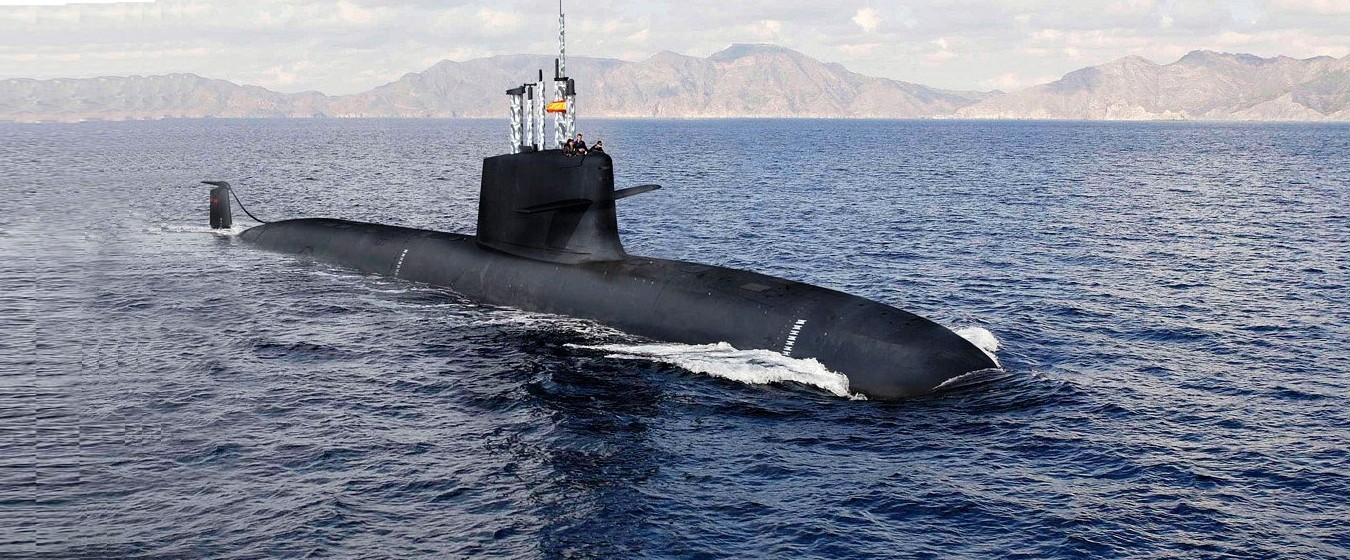
    AI is surely adding to the war fighting tool kit of both the US Navy and the PLA Navy through stealthy ‘robotic trimaran’(Sea hunter and D3000 respectively)thatcould result in a dangerous escalations of a new kind of competition between the two navies. Similarly, China is developing autonomous robotic submarines which are likely to be ready for operations by the early 2020s and supplement regular human-operated submarines. This is sure to pose another set of challenge to the US Navy.

    Dr Vijay Sakhuja is a Trustee of TPF.

  • The Centrality of MADness in Nuclear Doctrine

    The Centrality of MADness in Nuclear Doctrine

    Mohan Guruswamy August 24, 2018

    It has been reported that the defence acquisitions council (DAC), chaired by defence minister, Nirmala Sitharaman, has approved the “acceptance of necessity (AoN) for the acquisition of the National Advanced Surface to Air Missile System-II (NASAMS-II) worth around $1 billion from the US. However, in 2002 the USA had vetoed India’s bid to acquire the Israeli Arrow-2 missile interceptor system. Consequently, DRDO began developing the Prithvi Air Defense (PAD), which will provide long-range high-altitude ballistic missile interception during an incoming missile’s midcourse phase as well as interception during the terminal phase. At various times these systems had different monikers like ballistic missile defence (BMD) or anti-ballistic missile system (ABM).

    The people who decide on such things reside in New Delhi and understandably their safety gets priority. So it is the NCR that will get the expensive and exaggerated sense of protection such systems tend to generate. But no air defence system can be deemed impenetrable. The Americans and Russians realized much before the Cold War ended that the costs involved will be prohibitive, even for them and made a virtue of necessity. But the idea was seductive. Even as the Cold War was waning, Ronald Reagan toyed with the idea of a strategic defence initiative (SDI), which envisaged an ABM systems stationed deep in space that will launch on picking up a launch. It seemed far-fetched and futuristic that commentators took to calling it Star Wars.

    This thought has been high on the minds of our security establishment ever since it learned that on May 26, 1990 China tested a Pakistani derivative of its CHIC-4 design at the Lop Nor test site, with a yield in the 10 to 12 kiloton (kt) range. That yield estimate accords with recorded yields of Pakistan’s 1998 nuclear tests, which are somewhere between 5 and 12 kt. Refinements in boosting and efficient plutonium use are the normal next steps in weapon improvement, along with miniaturization of the warheads to fit into smaller and lighter reentry vehicles. Pakistan has done all of these to arm its cruise and ballistic missiles with lighter payloads. Once India deploys the PAD system around its capital, we can be assured that Pakistan too will deploy an ABM around Islamabad. We can also rest assured that China will assist it in “developing” such a capability.

    The International Panel on Fissile Materials has estimated that Pakistan has an inventory of approximately 3,100 kilograms (kg) of highly enriched uranium (HEU) and roughly 170kg of weapon-grade plutonium This is enough to potentially produce 200 to 300 warheads. Pakistan has also frequently tested the ranges of about a dozen Chinese derived missiles from the Hatf (50 km) to Shaheen III (2750 km). There is little doubt that Pakistan has planned for all eventualities, from local battlefield use and to feed its desire to have a credible “Islamic” bomb capability, and for that its reach must include Tel Aviv.

    Long after the Cold War has ended, nuclear deterrence is still based on Mutually Assured Destruction (MAD). This simply means that any sneak decapitating or debilitating first strike will be responded with a massive retaliation, the fear of which should instill good sense. That after almost three quarters of a century when the nuclear genie was uncorked from the bottle, we have not had a nuclear war or weapon use is living proof of its robust common sense. So much so, that when developments in ABM or BMD capability reached fruition, the two Cold War protagonists, the USA and now defunct USSR, had a treaty restricting these systems. Ironically even well before they had a treaty on reducing the number of nuclear bombs.

    The MAD doctrine was made painfully credible, by the development of nuclear arsenal survivability by widespread deployment (at the peak of the Cold War America and Russia each had over 30,000 nuclear bombs.) This credibility got its biggest boost when submarines, initially diesel and then nuclear powered, capable of firing nuclear armed missiles (SSBN) from the impenetrable dark recesses of the oceans were introduced. The first of these submarines was the Russian Zulu Class submarine capable of firing from underwater an early Scud missile (1955). The Americans were the first to deploy a long endurance, deep diving and very silent nuclear powered submarine – George Washington – in 1959. Since then MAD was ensured by the highly accurate missiles in the bellies of such submarines operated by the US, Russian, British, French, Chinese and India navies. Pakistan too is now reportedly testing nuclear capable missiles fired from underwater on modified diesel submarines.

    We need to learn from how nuclear weapons strategies evolved during the Cold War, instead of mimicking USA and Soviet follies. The notion of deterrence between the USA and USSR was based on no escape from MAD. The march of the Cold War follies peaked with the two protagonists together deploying almost 70,000 warheads each aimed at a specific target. At the height of this madness almost every open ground was targeted as possible tank marshaling or military logistics areas. The last thing we hence want is getting into a numbers game with Pakistan or China. Credibility depends on reducing the uncertainty of use from the opposite perspective. The Indian PAD missile defence system only increases them. India and Pakistan have ensured a modicum of confidence by not mating the warheads and delivery systems, giving a vital period to rollback the unleashing of Armageddon. But now both countries will have to evolve a launch on warning doctrine.

    Clearly, the two South Asian nuclear powers too have a local version of MAD in place. The Pakistani doctrine “commits itself” to use battlefield nuclear weapons if an Indian conventional assault threatens its essential nationhood and hence it has steadfastly refused to accept the notion of “no first use” (NFU). The Indian doctrine emphasizes NFU but also makes it explicit that any Pakistani use of nuclear weapons on India or its forces will be responded with a massive retaliation. India may have less nuclear weapons, not because it cannot make more, but what it has is enough to ensure the complete annihilation of Pakistan, which is geographically too a much smaller country. China has moved on from NFU to a doctrine now called “credible minimum deterrence”. But how much is credible?

    Mercifully, nuclear doctrines these days are couched in such abstractions as MAD requires a degree of predictability, ironically ensured by opacity. The USA’s “single integrated operational plan” (SIOP) began with the ominous words that its objective, after the outbreak of a general war with the then Soviet Union to turn it into a “smoking radiating ruin.” It was written by its the certifiable USAF chief, Gen. Curtis Lemay Jr., based on whom the character played by George C. Scott in the Stanley Kubrick classic “Dr. Strangelove” was created. But people like Lemay who gave MAD credibility. Since no one of a sane frame of mind would even contemplate the enormity of the disaster of a nuclear war, uncertainty of use was a key element of MAD. It has been written that Soviet President Leonid Brezhnev used to have sleepless nights thinking of a man like Richard Nixon with his finger on the button.

    India’s nuclear strategy documents in detail as to who the nuclear command would devolve to in the unlikely event of a decapitating first strike on New Delhi with the aim of eliminating its national leadership. It is said that chain of nuclear command keeps descending downwards to a Major General, a modern day Raja Parikshit so to say who will perform the final obsequies. At last count India had over 600 military officers at that level. Decapitating all of them is a near statistical and physical impossibility. It will take tens of thousands to precision nuclear weapons to annihilate India’s military chain of command, and it can be speculated whether even America or Russia can achieve that, let alone Pakistan?

    Ironically, the evocative acronym MAD doctrine is eminently sensible. Good sense should tell us that enough of this madness and leave MAD alone.

    This Op-Ed was originally published in Asian Age.

    Mohan Guruswamy is a Trustee of TPF.

  • Women In Indian Armed Forces

    Women In Indian Armed Forces

    Center for Women’s Studies & Department of History
    Women’s Christian College, Chennai
    & The Peninsula Foundation, Chennai

    cordially invite you to the Inauguration of the

    National Seminar

    Women in Indian Armed Forces:
    Changing Contexts and Transformations

    On 8th March 2018 at 9.00 a.m.

    at the Auditorium (Centenary Building)

    Inaugural Address

    Dr. C. Joshua Thomas

    Coordinator, ASEAN Studies Centre &, Deputy Director,

    ICSSR North Eastern Regional Centre, NEHU Campus, Meghalaya

    Keynote Address

    Air Marshal (Retd.) Dr. M. Matheswaran

    Former Deputy Chief, Integrated Defence Staff (Air),

    South Block, Govt of India, New Delhi

    Chairman The Peninsula Foundation, Chennai

    Special Address

    Lt. Gen. (Retd.) Vinod G. Khandare

    Former Director General Defence Intelligence Agency, New Delhi

    Sponsored by

    Indian Council for Social Science Research,

    New Delhi & Southern Regional Centre, Hyderabad

    Events Snaps

    [sc name=”donte”]

  • The Military Industrial Component of the U.S.-India Partnership – Panel Discussion at Stimson Centre

    The Military Industrial Component of the U.S.-India Partnership – Panel Discussion at Stimson Centre

    Past Events July 24, 2018 The Military-Industrial Component of the U.S.-India Partnership
    JULY 24, 2018 | 12:15 PM
    Please join the Stimson South Asia program for a conversation with Air Marshal M. Matheswaran, the former Deputy Chief of the Integrated Defence Staff in the Indian Ministry of Defence, who will talk about the military-industrial component of the U.S.-India partnership. Joanna Spear, Associate Professor of International Affairs at the Elliott School, and Benjamin Schwartz, Head of the Aerospace and Defense Program at the U.S.-India Business Council, will serve as discussants. Sameer Lalwani of the Stimson Center will moderate.
    WHAT: An on-the-record discussion with Air Marshal M. Matheswaran on the military-industrial component of the U.S.-India partnership.
    WHERE: The Stimson Center, 1211 Connecticut Avenue, NW, 8th Floor, Washington DC, 20036
    WHEN: Tuesday, July 24 from 12.15 to 2 pm. Lunch will be served at 12.15 and the discussion will begin at 12.30.
    RSVP: Click here to RSVP for the event.
    FOLLOW: @StimsonCenter on Twitter for event news and use #StimsonNow to join the conversation
    Featuring:
    Sameer Lalwani, Senior Associate and Co-Director, South Asia Program, Stimson Center (moderator)
    Sameer Lalwani is a Senior Associate and Co-Director of the South Asia Program at the Stimson Center where he researches nuclear deterrence, inter-state rivalry, and counter/insurgency. He is also an Adjunct Professor at the George Washington University’s Elliott School and a Contributing Editor to War on the Rocks.
    Air Marshal M. Matheswaran, former Deputy Chief of the Integrated Defence Staff, Indian Ministry of Defence
    Air Marshal M. Matheswaran retired from the Indian Air Force in 2014 after nearly 39 years of military service. In his last appointment, he was the Deputy Chief of the Integrated Defence Staff for 23 months at the tri-service headquarters in the Ministry of Defence, India. Since then, he has held defense and aerospace consulting positions at Hindustan Aeronautics Limited and Reliance Defence. He is the Founder, Chairman, and President of the Peninsula Foundation, a think-tank for security policy research.
    Benjamin Schwartz, Head, Aerospace & Defense, U.S.-India Business Council
    Benjamin Schwartz leads the U.S.-India Business Council’s Defense and Aerospace program where he advocates for pro-trade policies before officials in the Indian and American governments. He previously served in a range of positions within the U.S. national security community, including at the Department of State, the Department of Energy, and the Department of Defense, where he was Director for India in the Office of the Secretary of Defense.
    Joanna Spear, Associate Professor of International Affairs, George Washington University.
    Joanna Spear is Associate Professor of International Affairs and Director of the FAO Regional Sustainment Initiative at the Elliott School of International Affairs at George Washington University. Her areas of focus include U.S. and UK arms sales policies, U.S. counter-proliferation policies, and transatlantic relations. In 2012, she was a Senior Visiting Fellow at Institute of Defence Studies and Analyses New Delhi, working on India’s arms import policies and offset strategies.
    [sc name=”donte”]

  • Defence Corridors

    Defence Corridors

    M Matheswaran August 19, 2018
    As a follow-up on the ‘Make in India’ strategy in the defence sector, the Government of India has announced its intensions to set up two defence corridors, one in Tamilnadu and another in Uttar Pradesh.The idea of defence corridors is a very sensible one. However, the challenges to it should not be underestimated. The economic viability and success of the defence corridor plan lies in its careful implementation through well thought out cluster strategy.

    [sc name=”donte”]

  • The Challenges of AI-enabled Underwater Platforms

    The Challenges of AI-enabled Underwater Platforms

    Vijay Sakhuja  Aug 03, 2018

    The Chinese People’s Liberation Army Navy (PLAN) is likely to acquire a new type of submarine by the early 2020s. According to the South China Morning Post, the Shenyang Institute of Automation under the Chinese Academy of Sciences (CAS) is engaged in developing a series of extra-large unmanned underwater vehicle (XLUUV) that will feature Artificial Intelligence (AI). The vessels will be capable of performing a number of tasks without “human intervention,” “handle their assignments and return to base on their own,” and carry out reconnaissance, surveillance, combat operations against enemy targets, and undertake activities such as whale tracking. It will be possible to integrate these vessels with other manned and unmanned platforms and systems at sea, in air as also on land to carry out coordinated missions.

    Lin Yang, the project director and a marine technology specialist, has noted that Chinese interest in these platforms is prompted by US plans to acquire XLUUVs capable of carrying “a variety of payloads, from sensors to weapons.” Two prototype units have been contracted, one to Lockheed Martin and the other to Boeing, and they have been granted US$ 43.2 million and US$ 42.3 million, respectively for research, design, and testing in 2020. The winner will receive orders for production of up to five platforms. Unlike China and the US, Russia is developing the Status-6 autonomous torpedo capable of delivering 100-megaton warhead capable of “wiping out all living things” within a 1,500 km radius.

    These developments are clear signs of the role of AI-enabled underwater platforms and weapons in the future, and add a new dimension to underwater operations. There are at least four issues concerning them that merit attention.

    First is naval warfare. Navies have traditionally employed conventional submarines for intelligence gathering, laying mines, attacking enemy submarines and ships, and more recently, conducting strikes against shore targets by using land attack cruise missiles. The usual tactic for conventional submarine has been the ‘lie-in-wait’ position at the entrance to harbours or close to choke points and attack the enemy. Like their conventional counterparts, AI-enabled platforms can serve as scouts, and smaller platforms can masquerade as decoys to attract the enemy, forcing it to expose its position. If necessary, the AI-tool kit should be able to detect, track, generate high speed, and attack the enemy like a torpedo.

    It is useful to mention that the US’ XLUUVs will “operate autonomously for weeks or even months, periodically phoning home to check for new orders,” giving the US Navy a significant advantage in tactical operations. Similarly, the Status-6 autonomous torpedo can be used by the Russian defence ministry’s special division for deep-sea research and deliver “deep-sea equipment or installing surveillance devices.”

    Second, the XLUUVs may entail new legal challenges. There is an ongoing debate raging over regulating lethal autonomous weapon systems (LAWS), including a call to ban fully autonomous weapon systems centered on the Principle of Non-Delegation of the Authority to Kill by non-human mechanisms. A global campaign – Coalition to Stop Killer Robots – has called for an international ban on ‘killer robots’, and “a treaty for emerging weapons.” There is a belief that morality and generally accepted ethics need to be injected into the use of AI-enabled weapon systems given that “inanimate machines cannot understand or respect the value of life.” If the XLUUVs are put to combat operations, it would result in the weaponisation of AI, and this empowers humans to absolve themselves of any moral consequences of killing or using these for self-defence.

    It is important to mention that engineers and scientists from the technology industry signed a pledge in Stockholm at the 2018 International Joint Conference on Artificial Intelligence (IJCAI) and called upon “governments and government leaders to create a future with strong international norms, regulations and laws against lethal autonomous weapons.” They have since been joined by corporates such as Google DeepMind, the XPRIZE Foundation, University College London, ClearPath Robotics/OTTO Motors, the European Association for AI, and the Swedish AI Society.

    Third, the XLUUVs rely primarily on AI to conduct operations. These platforms would transit long distances passing through a variety of undersea topography, ie ridges, mounts, trenches, rocks, slopes and basins, and would be vulnerable to collisions, detection by civilian research and survey vessels, enemy submarines and warship, and underwater military detection systems including those used for seismic warnings. Further, underwater activity such as laying of oil and gas pipelines and fiber optic cables can impact their safety. Besides, natural occurrences such as currents and tides can result in drift and cause considerable difficulty to being positioned in the designated destination.

    Fourth regards the impact of AI-enabled underwater platforms on the marine environment, particularly marine life such as whales, sharks, dolphins and other migratory species. Sonar transmissions by XLUUVs can cause potential damage to mammals’ sensory organs resulting in disorientation or death. Whales may even misunderstand sonar waves as that of an attacker, and panic can drive them towards the platform.

    The development of XLUUVs presents clear dangers and could have potentially destabilising consequences for all countries. Further, their impact on marine life and the associated ecosystem – which is already witnessing stress due to pollution and plastic – does not appear to have been taken into consideration. Finally, an international treaty for emerging AI-enabled underwater platforms needs to be prepared, debated, and signed.

    This article was originally published in IPCS.

    http://ipcs.org/comm_select.php?articleNo=5497

  • Governance

    Governance

    My dog Charlie is long gone. But Charlie, who was a brown “Great indian Mongrel”, was wise in the ways of the world. He taught me a lesson in public policy I will never forget.

    Corruption is India’s favorite conversation topic. We love discussing it and bemoaning its all pervasiveness. We are experts at it and have all experienced it at in some form or the other and at all levels. Yet with so much collective experience it is a difficult topic to write about. Like our gods it takes so many myriad forms. It defies a simple definition. But we all know what it is. What Justice Potter Stewart of the US| Supreme Court said in the context of obscenity – “I know it when I see it”- is equally applicable to corruption. It is the most obscene of obscenities but is a fairly common one.

    Economists prefer to bandy about a different term when referring to corruption. They call it “economic rent”. According to the IMF “it is the extra amount paid (over what would have been paid for the best alternative use) to somebody or for something useful whose supply is limited either by nature or through human ingenuity.” Quite clearly this definition excludes the moral dimension. But then our problems get even more compounded when we realize that the moral dimension is very elastic and varies.

    Take for instance the case of former Prime Minister Manmohan Singh. As far as the Rajya Sabha is concerned, he is a tenant of Mrs Hiteshwar Saikia and is a resident of Guwahati in Assam. But we know that is not true and that he has been ordinarily resident in New Delhi from ever since we came to know him. LK Advani, has been just as peripatetic. At one time he declared he was a resident of Ujjain in MP for the sake of a Rajya Sabha seat. Now he is a resident of Ahmedabad. Arun Jaitley has similarly been vagrant. He is a Delhiwala, but went to Amritsar where he announced he was buying a house to reloacte in 2014. The Amritsaris didnt want teh likes of him, so now he is a resident of Ahmedabad. But if you and I were as cavalier as this in declaring our place of residence, say for the purpose of a passport, we could end up in prison.

    Economic rent takes other forms, which tax the common good much more. High import duties, for instance, meant to restrain imports actually serve to increase prices and profits for domestic manufacturers. The Hindustan Ambassador, that immortal symbol of a mindless and rapacious bureaucracy, actually gave its manufacturer and employees as much joy as it gave sorrow to those who owned or drove these cars. Did you notice how all car tyres or batteries cost about the same? Or how all similar sized air-conditioners and refrigerators cost about the same? Or till recently how all air-tickets cost the same and an arm and a leg at the same time? Adam Smith explained it best by noting that “People of the same trade seldom meet together, even for merriment and diversion, but the conversation ends in a conspiracy against the public.”

    These conspiracies cannot succeed without the active connivance of the politicians and bureaucrats. We know what they mostly do, but thanks to the exertions of Aniruddha Bahal, purporting to represent an industry association, we have proof for the first time of this. Our MP’s have much to thank Dr. Manmohan Singh for conjuring up MPLADs (MP’s local area development scheme), but the then Finance Minister probably never contemplated the likes of the venerable Sakshi Maharaj who turned the scheme into one of personal development. But though both the two stings involve MP’s scams evidenced are of different natures. The money for questions business is a common place as a traffic cop collecting money from errant drivers. The payment itself is a punishment for the truancy and it does not seem to matter very much where the money paid ends up, We learn our lessons from it. But when the cops collect for registering an FIR or for no rhyme of reason then it belongs to a different class and we are truly outraged.

    Those of us in Delhi who built houses or made alterations without the sanction of the authorities paid for the deviations knowing it was contrary to the law. But it was commonplace and that seemed to make it okay. But when the High Court has ordered them demolished we were outraged. What if the same High Court ordered that MP’s making false statements about their place of residence must quit? Would we be outraged? We may be happy but not outraged. This is clearly a subject that requires far greater deliberation and discussion and there is much Parliament can do by way of introspection. There are many who are quite expert on the subject. Chandan Mitra, a former  BJP MP, whose concern for probity is as well known as his Chattarpur farmhouse, has even written a book on the subject of corruption.

    Opinion polls show that there are some professions we believe to be almost entirely corrupt. Politicians and policemen top this list with 99% of those polled believing them to be crooks. Much of the corruption we witness in everyday life is a result of their unnecessary exertions. In the past few months I have had opportunity every morning to contemplate a vacant plot of land in the neighborhood I live in. The plot is bounded by roads on all four sides and naturally people walking take a short cut across it. Some well meaning soul has taken upon himself to put an end to this practice. First a sign came up demanding that people not do the most rational thing, that is take a short cut. The sign was ignored and my dog Charlie has been using the signpost to leave his signature. Then a small length of barbed wire pegged between two poles appeared astride the path at both ends. The people who use the path still find it convenient to go around the poles and take the not so short shortcut. Good old Charlie just slips under the wire and seems quite happy that he has two more poles to leave his daily markers.

    The nature of most of our lawmaking is just like this. They are irrational and people will respond rationally to them, by circumventing them if not ignoring them. Just as Dr.Manmohan Singh has done to the requirement that MP’s to the upper house be ordinarily resident in the state. Now the only way that plot can be prevented from being used as a short cut is to either build on it. If the empty plot is just walled up, the walls will encourage another use, which will be odious to boot. Which brings me to another aspect. We have laws that prohibit pissing in public and on walls, private and public. Pissing is meant to be a private business. But where are people to pee when you just don’t have enough urinals? So a law against pissing in public makes sense only when you have enough public urinals.

    Thoughtless laws corrode a state thoroughly. This is why states built around tight regulation and appeals to a higher human idealism fail. The crime wave that engulfed the former USSR was really due to the old nomenklatura doing the only thing they were adept at. It is not that other social and political systems do not germinate corruption. Corruption is all-pervasive and a world wide phenomenon. It comes built in with nature. Animals steal food from each other just as humans extort from others. But human beings live in organised societies and societies are nothing but systems based on laws. For laws to work it must be clear that if caught, trial will be swift and if found guilty retribution will be commensurate.

    That’s where we have serious problems. Who makes the law? Politicians. Who enforces the laws? The police. Both are believed to be overwhelmingly corrupt.

  • The San Juan Incident

    The San Juan Incident

    K N Sushil   December 08, 2017

    The ARA San Juan disappeared a few hundred kilometers off Argentina’s coast on November 15, and despite an extensive air and sea search no sign of the sub has been found. Eight days after the sub vanished, the Vienna-based Comprehensive Nuclear Test-Ban Treaty Organisation said that it had detected hydro-acoustic anomaly” about 30 nautical miles (60km) north of the sub’s last-known position at 10:31 (13:31 GMT) few hours after the sub’s last contact. The analysis of the acoustic incident was reported as follows.

    The acoustic signal associated with the loss of the Argentina Submarine ARA SANJUAN confirms the following:

    That acoustic signal originated near 46-10S, 59-42W at 1358Z (GMT) on 15 November 2017. It was produced by the collapse (implosion) of the ARA SAN JUAN pressure-hull at a depth of 1275-feet. Sea pressure at the collapse depth was 570 PSI. The frequency of the collapse event signal (bubble-pulse) was about 4.4Hz. The energy released by the collapse was equal to the explosion of 12,500 pounds of TNT at the depth of 1275-feet. That energy was produced by the nearly instantaneous conversion of potential energy (sea-pressure) to kinetic energy, the motion of the intruding water-ram which entered the SAN JUAN pressure-hull at a speed of about 1800 mph.
    The entire pressure-hull was completely destroyed (fragmented/compacted) in about 40 milliseconds (0.040s or 1/25th of a second), the duration of the compression phase of the collapse event which is half the minimum time required for cognitive recognition of an event. Although the crew may have known collapse was imminent, they never knew it was occurring. They did not drown or experience pain. Death was instantaneous.
    The SAN JUAN wreckage sank vertically at an estimated speed between 10 and 13 knots. Bottom impact would not have produced an acoustic event detectable at long range

    The ARA San Juan was an IKL(German) designed type 1700 submarine built by TKMS in their Essen yard in 1985 at about the same time the Indian type 1500 was being built at HDW(Kiel). Both the submarines have great deal of similarities. Therefore, having commanded two type 1500s I will venture to hazard a guess on what could have afflicted the submarine.

    Facts as gleaned from various reports.

    15 Nov 0030Hrs. Submarine surfaced to report Water ingress through snort system causing a short circuit in the forward battery group. The forward battery group was isolated. The submarine charged her batteries on surface

    At 0600 The message is transmitted through normal communication channels.

    At 0730 the Captain informs base that he intend to continue his passage dived (Presumably because the sea was rough) At 1031, according to the CTBT report the submarine imploded at a depth of 1275 ft.

    From the above it would appear that the submarine was snorting before she surfaced at 0030hrs. If there was water ingress through the snort mast that caused a short in the forward battery group then the submarine was unable to maintain snorting depth, because the sea may have been too rough and the “head valve” (that prevents water from coming into the mast, when the mast dips even momentarily) was not functioning. As part of the SOP the snort induction drain, which drains into the bilges is kept open for the duration of the snort.  In any case during the snorting, the diesel engines are used to create the suction that draws all the foul air from all over the submarine. The fresh air coming from the snort mast merely spreads to fill the vacuum. Therefore flooding through the snort system would normally have no effect on the battery groups.

    The submarine remained on surface for seven hours post an incident of fire and smoke, which was attributed to short circuiting of the forward battery group. The crew, it seems, did not see any fire but managed to clear the smoke after isolating the forward battery group.

    A fire in a battery group is one of the most dreaded emergencies on board any submarine. Therefore the damage control actions and subsequent analysis would have been painstakingly thorough. If there was a fire in the battery pits the firefighting system would have been activated (manually or automatically). Once the system is activated the battery pits are to be kept in a sealed condition for at least one hour. Thereafter the pit is ventilated for at least an hour before inspecting it. In these types of submarines one has to lie down on a trolley and manoeuvre manually over the batteries. If the sea is rough it becomes extremely difficult and dangerous.  It may therefore be possible that they may have dispensed with the inspection whilst on surface.

    In the seven hours on surface the crew must have thoroughly examined the power distribution network and come to the conclusion that the problem was contained, and the submarine was reasonably safe to continue dived with a single battery group. They may even have considered that it would be safer and easier to inspect the battery pit while the submarine is underwater.

    The submarine dived at 0730 hrs. After 3 hours it appears to have imploded at a depth of 388 Meters. 388 Meters is of course below the normal operating depth but well above the crushing depth. If the submarine did indeed implode at that depth the inescapable inference is that there were severe structural problems that had weakened the pressure hull. The Argentinean Navy must have known if any structural limitations were reported or imposed.

    If the structural problems were not severe enough then some event that occurred in the 3 hours she was submerged must have been responsible. That event was so catastrophic that the submarine was unable to prevent an uncontrolled descent. Given the background situation the captain would have ordered the submarine to dive to 50 Meters. As soon as he settled down to that depth, he would have ordered the inspection of the battery pit. Unless there are clear tell tale signs, it is possible to miss some things which may have the potential to cause damage. Anyhow the inference and action post this inspection is not known. Did they reconnect the forward group? We will never know. The inspection would have taken about 45 minutes to an hour. The fact that they did not surface immediately after the inspection indicates that they did not notice anything alarming.

    In the three hours that the submarine was under water, if there had been a gradual flooding, the crew would have taken action to mitigate the effects, and would have ample reaction time to surface. Therefore loss of control must have been triggered by a sudden event. A pressure hull breech and flooding that must have cause to rapidly lose depth. The most immediate response is to use speed to create dynamic vectors to aid depth control. Since the submarine had only one battery group connected the speed of the submarine would be restricted to about 8 Knots ahead and about 4 Knots astern.  This would not be sufficient to delay the descent so that de-ballasting and pumping out capacities can effectively annul or reduce the rate of flooding. The rate of flooding keeps on increasing with depth.

    Now we have a situation where the submarine with the forward (or all) ballast tank probably blown going down. At depths greater than 180 meters the effect of blowing ballast with High Pressure air (250Bar)is painstakingly slow. The next stage is when the submarine crosses 15 meters more than the operational depth the Hydrazine emergency de-ballasting system will be triggered. This system is designed to clear the forward and aft main ballast tanks in 12 seconds at any depth. The problem would be if the Ballast tanks already contain air the Hydrazine will cause an explosion in the ballast tanks. If that happens there is nothing left to create positive buoyancy.

    The Next question is why did the submarine implode at 388 meters? As brought out earlier it clearly points to structural weakness in the pressure. If such a situation did not pre-exist then it may be possible that the battery pit event may have cause massive spillage of acid into the pit causing the pit to corrode in the almost 10 hours this corrosion may have weakened the hull sufficiently to cause a substantial breech in the pressure hull. The flooding of the pits could an explosion as the water level reaches to short the terminal connectors.  This is only a conjecture.

    San Juan went down without a trace. The crew did not even have the time or opportunity to release the systems and tell tale indicators that were meant tell the outside world that the submarine is in distress.

    It is said what goes up must come down. Submariners know that what goes down need not necessarily come up. San Juan RIP.

    In the language of the submarine community San Juan is on eternal patrol.

    Vice Admiral K N Sushil (retd) is a Indian Navy Veteran, and the former Flag Officer commanding-in-Chief of Southern Naval Command.[/vc_column_text][/vc_column][/vc_row]

  • China: A Colossus in Asia?

    China: A Colossus in Asia?

    Vidya Nadkarni December 10, 2017
    China today is moving out of the shadows.  After decades of following Deng Xiaoping’s advice to “hide our capacities” and “bide our time,” Xi Jinping in his long address to the CCP’s 19th Party Congress in October announced that his country “has stood up, grown rich, and is becoming strong” and would move “closer to center stage.”  Xi celebrated the “steady progress” in China’s construction on the islands and reefs in the South China Sea—a self-back-patting that has disregarded the concerns of Southeast Asian claimants to the Paracel and Spratly island chains and troubled the United States. China, in Xi’s words is a “great nation,” and he implied a prominent global role for the country when he noted that history looked “kindly on those with resolve, with drive and ambition, and with plenty of guts.”  He could not have offered a clearer message to the world that China was claiming its proper due on the global stage.

    China’s assertiveness is coming at a time when American allies and partners are increasingly questioning U.S. resolve and interest in global leadership.  President Trump’s “America First” strategy appears to many as a clarion call for a foreign policy strategy of retrenchment.  While the rhetoric of Trump administration officials continues to support US global engagement, the President’s position has been far less clear.  For instance, early in his administration Trump unceremoniously withdrew from the Trans-Pacific Partnership and the Paris Climate accord.  He decertified the Iran nuclear deal but stopped short of suspending the multilaterally negotiated agreement. Predicting the depth and steadfastness of US commitment to a global presence is therefore difficult.

    Specifically with respect to the Asian theater, while Secretary of State Rex Tillerson and Admiral Harry B. Harris of the US Navy’s Pacific Command (PACOM) have underscored US interest in a strong presence in the Indo-Pacific region, President Trump, in a speech at a November 2017 gathering of Asia-Pacific CEOs in Danang, Vietnam that White House officials had billed as highlighting the US commitment to a “free and open Indo-Pacific region,” inveighed instead against the unfair trade practices of other countries and insisted that he would put America first and not let the United States be taken advantage of anymore.  Trump’s fiery defense of nationalism and sovereignty was followed immediately by President Xi’s vigorous defense of open trade and globalization.  Upon his return to Washington, however, President Trump in debriefing remarks on his trip to Asia touted his accomplishment of three goals: uniting the world against the North Korean menace; strengthening America’s alliances and economic partnerships in a free and open Indo-Pacific; and insisting on fair and reciprocal trade deals. His interlocutors in Asia, however, heard him emphasize the third objective.

    Trump’s November trip to five Asian countries—Japan, South Korea, China, Vietnam, and the Philippines—thus did little to reassure US allies who are caught between the Scylla of economic reliance on China and the Charybdis of an uncertain protection from the US security umbrella. China dominates the economic scene in Asia.  To get a picture of what this means, consider the degree of dependence on China in Australasia.  China has superseded the United States as the largest trading partner of Australia, Japan, India, and the ASEAN countries.  International Monetary Fund (IMF) trade statistics for 2016 show that Australia and the countries of ASEAN collectively ran trade surpluses with China, making access to the large Chinese market enormously important, particularly to Australia and the smaller countries in Southeast Asia.  India and Japan ran trade deficits, although Japan’s deficit is small.  India is the exception here with a trade imbalance ratio of 1:5 in China’s favor fueling fear of Chinese goods flooding the Indian market.  Beijing is investing in much-needed infrastructure projects in countries from Asia and Europe to Africa.  Xi Jinping’s signature Belt/Road Initiative (BRI), which was unveiled to much pomp in May’s Belt and Road Forum in Beijing, has behind it the promise of $124 billion in funding.  China’s economic aid is attractive despite market rate loans because Beijing is unhampered by transparency issues as well as environmental and human rights concerns that are part and parcel of projects funded by the World Bank or the Asian Development Bank. In the long term, however, many of these investments saddle politically volatile countries with massive debt burdens making them vulnerable to strategic manipulation.

    Recognizing that BRI is as much a geostrategic as an economic initiative, Australia, Japan, and India have been cautious about participation.  Australia has nominally agreed to set up a working group to discuss possible cooperation, but Prime Minister Malcolm Turnbull has so far refused to link BRI with the Northern Australian Infrastructure scheme.  Perhaps reacting to Trump’s protectionist instincts, Japanese Prime Minister Shinzo Abe in a June speech offered a paean to free trade and spoke favorably about BRI in the context of the economic virtues of linking the Pacific to Eurasia.  But, in an indirect message to the Chinese leadership, Abe noted the international community’s expectations that it was critical for any infrastructure projects to be “open to use by all” and “be developed through procurement that is fair and transparent.”  India’s concerns arise from the BRI’s lack of transparency and from New Delhi’s objection to the China Pakistan Economic Corridor (CPEC) project, which links the Chinese province of Xinjiang with Pakistan through contested territory in Kashmir.  Recognizing the importance of having India on board, the Chinese leadership has sought to placate New Delhi.

    China’s rise is unlikely to be smooth unless Beijing can neutralize the worries of India, long-standing US allies in Australasia, and smaller countries in Southeast Asia.  Many of these countries are hedging their bets by engaging with China economically but also by investing in military hardware to shore up their security.  Australia, India, Japan, and South Korea regularly hold military exercises with their favored security partner—the United States.  India and Japan have cemented a strong partnership.  Australia has expressed interest in joining the annual Malabar naval exercises that bring together the United States, India, and Japan.  The first time that a quadrilateral naval exercise among these four democracies occurred was in 2007.  While New Delhi has not responded favorably to Australia’s recent request, either to avoid upsetting China or due to doubts over the extent of China’s influence in Australia, an overweening China is likely to propel security countermeasures in all these countries.

    Beijing’s challenge is how best to balance its economic lure with what are seen by many of its Asian neighbors as provocative military moves in the East and South China Seas and the Indian Ocean Region. If China looms large in Asia militarily, the formation of an anti-China alliance may quickly follow.  The problem for great powers is that economic influence is seldom sufficient to override measures that countries are likely to take in the face of security threats.

    Dr Vidya Nadkarni is a Professor and Head of Political Science at the University of San Diego, California. She is a Trustee of TPF.