Blog

  • The United States Must Airdrop Aid to the Blockaded Regions of Afghanistan

    The United States Must Airdrop Aid to the Blockaded Regions of Afghanistan

    With the Afghan economy is on the verge of collapse, the United Nations has warned that half of the population in Afghanistan needs humanitarian aid. While the U.S. military’s combat operations in Afghanistan have come to an end, Washington has pledged to remain engaged with the country through diplomacy, development, and humanitarian aid. After the sudden collapse of the U.S.-backed government on August 15, 2021, the Taliban swiftly seized 33 of Afghanistan’s 34 provinces –  the last standing is Panjshir. As Panjshir leads the resistance, it has also become a safe refuge for many Afghans escaping the wrath of the Taliban.

    The Panjshir Valley is surrounded by magnificent mountains and a roaring river at its heart. It has historically been an unconquered territory, be it against the Soviet Union in the 1970s or the Taliban in the 1990s. The current resistance force is led by Mr. Ahmad Massoud, the son of the legendary anti-Soviet freedom fighter Ahmad Shah Massoud, who was tragically assassinated by al-Qaeda in collaboration with the Taliban two days before the horrific attacks of 9/11. Mr. Ahmad Massoud is now leading the National Resistance Front (NRF) of Afghanistan, alongside Vice President Mr. Amrullah Saleh, who has proclaimed himself as care-taker President in the absence of President Ashraf Ghani, who has fled the country.

    While people across the country suffer from the shortage of food and basic needs, the situation in Panjshir is dire as the NRF and Taliban are fighting tooth and nail. Notably, several of Massoud’s closest aides have been killed, allegedly by Pakistan’s drones, and there is an active blockade imposed on the valley by the Taliban. The NRF’s attempts to negotiate a peace deal with the Taliban, which included some level of autonomy for Panjshir under a decentralized Islamic democratic system were rebuffed. The Taliban insists on a centralized and puritanical theocracy with the group as the dominant power at the center.  While both sides have sustained casualties, reports indicate a devastating toll on the civilian population.

    The Panjshir valley has been surrounded by the Taliban from all entry points, and they have callously enforced an active blockade, inhibiting humanitarian relief from reaching the afflicted. Internet and telephone communication lines have been cut off for several days. Mr. Saleh has appealed to the international community for humanitarian assistance, but his pleas for help have fallen on deaf ears. The Taliban has confirmed the blockade, by saying that due to fighting goods and food items have not entered the province for some four days but promised to reopen the supply lines. The Taliban also claimed to have captured the entire province, including the capital Bazarak. However, the NRF reports resumption of fierce fighting across the province. This is at a time when Ahmad Massoud has called for a national uprising which has inspired some movements in other provinces. Additionally, several women have also participated in protesting for their rights in cities like Kabul, Herat, and Mazar e Sharif.

    Many amongst the ranks of the NRF are former members of the Afghanistan National Defense and Security Forces (ANDSF). They have risked their lives fighting alongside American troops against al-Qaeda, the Taliban, and the Islamic State Khorasan, and many feel abandoned while they continue to resist. While we do not know a lot about the intensity of the issue due to complete media blackout, some with access on the ground report of the catastrophic humanitarian crisis is unfolding in places like Panjshir and Andarab, a district in neighboring Baghlan province. Upwards of a quarter of a million civilians are trapped in these areas,  and desperately need “food supplies, including baby formula, rice, wheat, and other perishables” and medicine.

    While the U.S. military’s combat mission has ended in Afghanistan,  America and its allies can provide critical assistance through humanitarian aid as originally planned. Some small amount of aid from the United Arab Emirates and Bahrain have reached Kabul, but a lot more needs to be done to prevent the catastrophe that the United Nations has warned about. One of the quickest ways to get aid across the country would be through airdropping. The US has conducted several airdrop missions in the past including one in 2014 in Iraq. The US should start with airdropping the much-needed supplies in areas such as Panjshir and other regions where the Taliban has imposed blockades. This can bring great relief to the people in need. Delays in delivering humanitarian aid could risk the lives of many people from starvation and medical attention.

    Image Credit: www.foreignpolicy.com 

  • The Fall of Kabul and dealing with the Taliban 2.0

    The Fall of Kabul and dealing with the Taliban 2.0

    The debacle of the democratic apparatus in Afghanistan was inevitable. After pumping billions in aid and significant bloodshed, the US government ended its longest war in defeat, the war in Afghanistan under the euphemism of ‘Global War on Terror’. Right after occupying the White House, the Biden administration has followed the path of its predecessors and commanded the complete withdrawal of troops from Afghanistan. The 2020 – Doha peace agreement between the US government and the Taliban brought a scant number of outcomes. Even during the presence of international forces in Afghanistan, the Taliban leaders disrespected the peace agreement and violated significant features of the agreement – that is a ceasefire. Following the agreement, over 5000 prisoners belonging to the separatist groups- were released by the Afghan government, under pressure from the US. Quite naturally, these prisoners were back with their militant outfits, thus strengthening the Taliban’s fighting capability.

    As of now, India has not taken any part in the peace negotiations with the Taliban. One of the major reasons is in the past the Indian government has never recognised the Taliban as a legitimate actor and vouched for a peace negotiation that should be Afghan-led, Afghan controlled and Afghan-owned. Currently, there are speculations about the likely power structure and composition of the government in Afghanistan, but it is quite clear the Taliban will govern the country by Sharia law. At this time of fast transition, the countries in South Asia are seeking to gain diplomatic leverage in the situation.

    India has a huge stake in Afghanistan’s reconstruction. In 2016 Indian Prime Minister and Afghan President Ashraf Ghani inaugurated the Salma dam project in Afghanistan. This 200 million dollar project is part of the larger developmental approach of the Indian government to Afghanistan. But recently, the equipment of the Salma dam was captured by the Taliban. In this scenario, it is unlikely that the Dam project will receive further Indian logistical support in future. Similarly, uncertainty beleaguers the Chabahar Project. India was one of the largest bilateral donors to Afghanistan during the war on terror. It ranges from infrastructure building to the promotion of democracy and small development projects. Almost $3 billion has been invested in and on Afghanistan in capacity building, education, infrastructure and security counts. This developmental commitment has made India the most dependable country and strategic partner for Afghanistan so far. However, now that the Taliban is in full control, the Indian government needs to find a diplomatic solution on how to go ahead with the various projects and commitments in Afghanistan.

    Except for Panjshir province, the entire country is under Taliban control. The president, head of the state, has left the country. Led by interim President Amrullah Saleh and Ahamad Masoud, the Resistance Force from Panjshir Valley is fiercely fighting against the Taliban. Under such circumstances, the conservative approach of the Indian government, as it has begun to talk to the Taliban, could ruin the decades’ long reputation and developmental efforts in Afghanistan. India has legitimate concerns in Afghanistan and should protect its interests carefully. The absence of the US forces and elected Afghan government makes the task very difficult for the government of India. In the past, the Indian government cooperated with the elected Afghan government based on their shared interests and values of democracy, freedom, rule of law and respect for human rights. But the past approach may not work anymore under the Taliban leadership. In the past, the Ministry of External Affairs stated that it is in touch with ‘various stakeholders’ in Afghanistan and other regional countries. Indian officials believe that a ‘double’ peace’ i.e. one within Afghanistan and around the country is necessary for the region. To ensure safety for the Indians living in Afghanistan, the government has already evacuated all Indians employed by the Indian embassy. India has also started emergency E-visa facilities for Afghan citizens. With regard to the diplomatic relationship with the Taliban, the government is following a ‘wait and watch policy with its extended neighbour. The Taliban leadership has announced that they would like to have good relations with the Indian government and access to the Indian market through Pakistan. The Taliban also wants these two countries to resolve their issues as its interests are linked to the two countries. The government of India is yet to respond. The Afghan media personnel, translators, performance artists, civilians are being hunted down by the Taliban soldiers. In this scenario, India will carefully assess the situation and the reliability of the Taliban to make its further move.

    While India is still on the horns of a dilemma over the direct dialogue with the Taliban, India’s arch-rival Pakistan is busy re-establishing its hold and is trying to isolate India diplomatically from the region. Pakistan was one of the first countries to recognise the Taliban as a legitimate actor in the 90s. Last year, the government of Pakistan welcomed an Afghan Taliban delegation led by Mullah Abdul Ghani Baradar. In the meeting, Pakistan showed their support for peace and blamed India as a spoiler of peace in the war-torn country. But reports suggest otherwise. According to the US Defense Intelligence Agency, Pakistan harbours Taliban leaders along with other insurgent groups such as the Haqqani network, Jaish-e-Mohammed and Laskar-e-Taiba. Such groups have the potential to disrupt the security and stability in South Asia. The report also says that the strategic objective of the Pakistan government is to counter the Indian influence in Afghanistan. In a recent interview, Pakistan foreign affairs minister Shah Mahmood Qureshi said that the violence in Afghanistan led to a refugee exodus to Pakistan but they cannot take more refugees. Last year, the High Council for National Reconciliation leader Abdullah Abdullah said that Pakistan holds the key role in the Afghan peace process and India should keep their profile low in the Afghan situation.

    As the Taliban emerges in its second avatar while reframing its extremist Islamic ideology, China is poised to become the critical player in the region.  Under a slew of conditions negotiated with the Taliban, China will enhance its role through rapid investments and enabling Afghanistan to integrate into its Belt and Road Initiative. An unstable, dry and war-torn Afghanistan doesn’t offer any attractive economic proposition at the moment. As the economic challenges loom on the Taliban government, it can’t simply sustain on drugs. The Taliban have to rely on China, Pakistan and some Central Asian republics to rebuild its economy. Afghanistan’s unexploited mineral wealth, worth a trillion or more, is a great opportunity for the Taliban to leverage economic gains by engaging China, Iran, Russia, and Turkey. An alliance of China, Pakistan, Iran or Turkey may lead to the marginalisation of India’s role and effectiveness in Afghanistan.

    Whether India will recognize the Taliban is not clear yet but India can’t simply meditate either. Under India’s presidency, the UN Security Council passed Resolution 2593 on Afghanistan. Chairing a session India’s Foreign Secretary Harsh V Shringla has clarified that India won’t tolerate if Afghan territory turns into a sanctuary of terrorists and threat for the neighbouring states. Apart from human rights, Shringla emphasized Women’s participation in society.

    India along with its all partners should advocate for strict observation of the Taliban led governance. Having invested over $3 billion over the last two decades in the reconstruction of Afghanistan, India’s considerable contribution cannot be ignored. The recent meeting between India’s envoy Deepak Mittal and the Taliban’s foreign minister-designate Stanekzai at the Taliban’s request signals a possibility for a changed approach and environment from that of the Taliban 1.0. India’s immediate priority should be the safe evacuation of the Indian origin people and stranded Afghans.


    Image Credit: www.dawn.com

  • India, the Sino-US Rivalry, and the post-pandemic World Order

    India, the Sino-US Rivalry, and the post-pandemic World Order

    India has a vital stake in the geopolitical contest between the US and China, particularly in the context of the rising Sino-Indian rivalry. India’s strategies, therefore, must focus on ensuring its security and its freedom of action in global affairs. It will also need to play an active role in reforming the world to more equitable and multipolar governance.

    The global disruption caused by the Covid-19 pandemic that engulfed the world at the end of 2019 and continues to this day is the biggest economic, political, and technological disruption since the Second World War. The pandemic has exposed the serious deficiencies in national healthcare systems in all countries, developed and developing. More importantly, the pandemic has raised questions on the relevance and effectiveness of the current world order, about the future of international organisations and multilateral frameworks, and poses challenges to international political and economic relations.


    Read more

  • International Migration in Pandemic Times: Disrupted Links, Remittances and Migrantophobia

    International Migration in Pandemic Times: Disrupted Links, Remittances and Migrantophobia

    The COVID-19 pandemic has severely limited international migration due to border closures and has forced millions of people to return home. According to expert estimates, the pandemic reduced the number of international migrants by the middle of 2020 by about 2 million people: to 281 million people instead of the expected 283 million people.

    In 2020, immigration to the countries of the Organisation for Economic Cooperation and Development (OECD) was half what it had been in 2019; in Canada the number of immigrants decreased by 45%, and in Australia – by 70%.

    To compensate the negative impact on its economy, Canada launched a recruitment programme to bring in 400,000 immigrants in 2021, 2022 and 2023. The number of migrants who came to Saudi Arabia decreased by 90%.

    The pandemic partly realised a hypothetical situation long idealised among migrantophobes: “how much better it would be if the migrants went back where they came from.” Although some, rather than all migrants returned to their homelands, the host countries were able to really feel what it was like to do without them.

    COVID-19 has greatly affected territorial mobility both between countries and regions, and within specifi c states. As a result, migration fl ows and remittances declined, accompanied by a rise in migrantophobia and xenophobia in the main destination countries. These crises overlapped with the fact that migration has been a major political issue in North America and Europe over the past years.


    Click here for the Valdai Discussion Club Report

  • Politics and the Military don’t gel

    Politics and the Military don’t gel

    It would be in the interest of the political establishment to desist from politicising the military. Creating an uncontrollable monster, that will go on to bite the hand that feeds it, is nothing but sheer stupidity.

    The former President of the United States, Donald Trump, has always had the reputation of being a man of questionable moral and ethical integrity with close connections to the radical right. Yet, there were those who voted for him in 2016 because they genuinely believed that he was the lesser of the two evils, and strongly felt that only an “outsider” like him was capable of draining the “Washington Swamp”, a phrase alluding to the seemingly all-pervasive corruption surrounding the Washington power elite. They would certainly have been disappointed by his insipid performance as President, especially the extent of his chicanery and selfishness. These have been laid bare in a recent book by two Pulitzer Prize-winning Washington Post journalists, investigative staff writer Carol Leonnig and former White House Bureau Chief Philip Rucker, on Trump’s final year in power, titled “I Alone Can Fix It”. A fitting sequel, and as perceptive and illuminating, is “A Very Stable Genius”.

    One of the most fascinating aspects of their latest book pertains to the manner in which the Chairman of the Joint Chiefs of Staff, General Mark Milley, responded to President Trump’s brazen attempts to overturn the election results by peddling his “Big Lie” that the elections had been “stolen” by the Democrats resorting to widespread fraud. Despite his legal challenges being summarily dismissed, he continues to peddle these allegations to this day. There can be little doubt that his incitement of his supporters culminated in a violent but abortive attempt on January 6 to disrupt proceedings at Capitol Hill to formalise the election results.

    Prior to this, one may recall, General Milley had been excoriated by military veterans, politicians and the media for having unwittingly dragged the military into politics by being present, in uniform, at Trump’s infamous “Bible photo op” at the St John’s Church, immediately after peaceful protestors had been forcefully evicted while demonstrating for racial equality. Indeed, that he then went on to tender a public apology for his error of judgement speaks volumes of his forthrightness, integrity and strength of character.

    On Trump’s attempts to cling to power through force, General Milley reportedly told his colleagues in the Joint Chiefs: “They may try, but they’re not going to f@@###g succeed…You can’t do this without the military. You can’t do this without the CIA and the FBI. We’re the ones with the guns.” His actions have lessons that our military leadership would do well to imbibe. 

    He then initiated action to ensure that the military was not dragged into the political sphere, despite Trump having appointed his own lackeys to key positions within the Pentagon. If the authors are to be believed, he went so far as to compare Trump to Hitler and refer to the January 6 insurrection as the “Reichstag Moment” for the US. On Trump’s attempts to cling to power through force, he reportedly told his colleagues in the Joint Chiefs: “They may try, but they’re not going to f@@###g succeed…You can’t do this without the military. You can’t do this without the CIA and the FBI. We’re the ones with the guns.”

    His actions have lessons that our military leadership would do well to imbibe. It is inconceivable that our senior military hierarchy can, or ever will, adopt such a confrontational attitude towards the leadership of a democratically elected Government, whatever be the provocation, or however unconstitutional be their actions. The aloofness displayed by the military during the 1977 Emergency is a case in point. True, there have been the likes of General Thimmayya, Field Marshal Manekshaw and a few more of that vintage who have displayed spine and opposed Government directions, but these have been few and far between, and restricted only to professional matters within their purview. Moreover, till recently, the military’s senior leadership has been quite circumspect in ensuring that its actions were completely unbiased, apolitical, secular and within constitutional parameters. In fact, it was their adherence to such behaviour that made the military the most popular and respected institution within the country.

    Unfortunately, while the bulk of our military remains apolitical and secular, the actions and public statements of the Chief of Defence Staff, General Bipin Rawat, have created perceptions that the military’s senior leadership has become excessively politicised. Then there is the fact that some very senior officers have taken the plunge into active politics immediately on shedding their uniform.

    While some within the ruling elite may see this turn of events as advantageous to their ideological cause, and in fact encourage this shift within the military hierarchy through the process of “deep selection”, as some allege, they may well be biting off more than they can chew. If there is anything to learn from history, it is that once the military gets sucked into politics, it will not be satisfied acting as a mere handmaiden of those in power. As General Milley so eloquently put it, they are the ones with the guns! We just need to look closely at our own neighbourhood for examples.

    The Government and the legislative would do well to put rules in place that prevent members of the military and even the Civil Services from joining politics without an appropriate cooling- off period.

    It would be in the interest of the political establishment to desist from politicising the military. Creating an uncontrollable monster, that will go on to bite the hand that feeds it, is nothing but sheer stupidity. The Government and the legislative would do well to put rules in place that prevent members of the military and even the Civil Services from joining politics without an appropriate cooling- off period. That would go a long way in insulating them, especially the military, from politics.

    This article was published earlier in the pioneer.

    The views expressed are those of the author.

    Feature Image: www.dailypioneer.com

  • Exploitation Across Borders Indian migrant workers fight for their right to get paid in Serbia

    Exploitation Across Borders Indian migrant workers fight for their right to get paid in Serbia

    Indian migrant workers have been targeted to work at mega construction projects in EU-candidate state Serbia. A group of workers is not willing to give up fighting for their salary, despite the legal loopholes that a company registered in America has used to contract them for work in Serbia

    When Boobalan Dhanapal, 41, arrived in Serbia in July 2019, he was eager to work and send money back home. He was joined by fellow construction workers from Chennai, a coastal city in the southern Indian state of Tamil Nadu. Boobalan, who has a degree in civil engineering, was recruited to work as a construction foreman for a monthly salary of Є 440 (approx. 38,500 Indian rupees), inclusive of food and housing. At the time, it sounded like a good deal.

    In 2019, over 150 men from various Indian states began working for GP Nikolić, a Serbian construction company, on a number of infrastructure projects across the Balkan country.


    Read More

  • Book Review: Political Violence in South and Southeast Asia: Critical Perspectives

    Book Review: Political Violence in South and Southeast Asia: Critical Perspectives


    Political Violence in South and Southeast Asia: Critical Perspectives
    Editor: Itty Abraham, Edward Newman, Meredith L. Weiss
    Publisher: UNU Press, Tokyo, 2010. 224 Pages


    Written against the framework of persistent threats to human security, ‘Political Violence in South and Southeast Asia: Critical Perspectives’ is a volume of extreme relevance and consequence. The book brings together numerous political scientists and anthropologists with in-depth knowledge of the socio-political environment of the two regions. It aims at understanding the interaction between violent and non-violent politics, and in doing so, it defines political violence as consequential and strategic, as opposed to spontaneous and senseless. Intending to shift the narrative of understanding violence solely from the standpoint of terrorism, the book develops a critical understanding of violence by dwelling on its social and structural context.

    Divided into eight distinct chapters, the book takes cognizance of both state and non-state actors in a violent landscape. While concentrating on the local events of political violence in countries of South and Southeast Asia, the authors underline the significance of identities and the process of their consolidation, the character of states, geographic borders, external influences, and patterns of rebellion, in determining the manifestations of political violence.

    Arguing that the theories of economic greed, grievance, regime type, and state collapse are guilty of facile claims and problematic conceptualization of political violence, the authors critique the narrow construction of the concept and the premature assumptions regarding its victims and perpetrators. In doing so, they focus on exploring the aims, approaches, consequences, and conceptual dimensions of such violence, without dwelling deep into the causes of the same. In analyzing the different brands of violence, the authors place their focus on assassinations, riots, pogroms, ethnic cleansing, and genocides in the two regions.

    In his first chapter, Sankaran Krishna compares the assassinations of two political leaders in India – Mohandas Gandhi, and Rajiv Gandhi.  The author presents a key argument underlining the changing moral economy of political killing in South Asia. Highlighting the context in which the two killings took place, Krishna argues that assassinations in the region have shifted from being carried out in the name of a larger cause or principle (Godse’s idea of saving India) to ‘a consequence of a blowback’ – which represented India’s choice of active participation in the Sri Lankan civil war, in the case of Rajiv Gandhi. Buttressing his argument, the author also takes into account the killings of Benazir Bhutto and Indira Gandhi.  He does, however, present an uncomfortable and curious narrative by viewing these assassinations as attempts of suicide. Claiming that Gandhi’s insistence on fasting until death and refusal to be protected by the state, and Rajiv and Indira Gandhi’s deliberate lax in their security were rehearsals for eventual suicides, the author makes rather unsettling and complex arguments, one, defining Gandhi’s killing as a moral assassination, and two, by dwelling deep into the writings of Godse and portraying him as a man of rationality against the mainstream narrative of associating him solely with terrorism.

    Later, presenting one of the central arguments of the book, Paul Brass, in his chapter on forms of collective and state violence in South Asia, argues against violence being defined as senseless. Asserting that all kinds of violence have their strategic purpose, he lays down the critical concept of an Institutionalised Riot System, arguing that riots are systematic and organised. Claiming that riot production consists of different stages, which are usually analogous to a staged production of drama, Brass states that the first stage is that of rehearsal, followed by enactment, and interpretation. While the rehearsal stage consists of those who arouse sentiments, consisting of politicians, ‘respectable’ group of university professors, and the lower ‘unrespectable’ groups of informants, local party workers, and journalists, the stage of enactment consists of false and inflammatory media reports. It brings together, on the one hand, university professors and students forming a part of the local crowd, and on the other hand, criminals recruited to burn, loot and kill. The final stage of interpretation and explanation is especially crucial to understanding the sustenance of such violence, which involves attempts at making the riot appear as spontaneous, as opposed to planned. What is witnessed is an active shift in responsibility to those who are not directly involved in riots, and even those who vehemently oppose the idea of rioting. The author substantiates his claims by associating the Riot System with examples from Northern India, particularly citing the killings in Meerut in 1982 and 1987.

    The second half of the book is majorly devoted to a comparative approach to study mass violence and the impact of external influences in the region. The authors, in their respective chapters, provide detailed empirical evidence by dwelling deep into the case studies of different countries. Geoffrey Robinson, in his chapter, identifies three distinct ways in which the countries of Southeast Asia have witnessed violence. The states are either defined as principal perpetrators, as in the case of Indonesia in East Timor and the regime of Khmer Rouge in Cambodia; or as facilitating violence through propaganda and militia or inaction during mass violence, as with the case of Indonesia during the 1965-66 massacre. Finally, the state, according to Robinson, has also served as a vital link in the formation and spread of violent societal norms and modes of political action. He identifies the patterns and correlations between a level of violence and the character of states. An argument is made that because the military is designed to organize violence, any state where the military had an active role in the past has experienced more violence, as in the individual cases of Thailand, Philippines, Indonesia, or Burma. On the other hand, religious and ethnic violence, including riots, occurs almost always in newly democratizing states.

    While Naureen Chowdhury Fink points out the contestations surrounding the borders of Bangladesh, Natasha Hamilton-Hart lays down the extent of external influences on political violence in Southeast Asia. She identifies the first wave of such influence, in the form of overt support to principal perpetrators, starting with the large-scale military support by China and the Soviet Union to the Vietnamese communists after the conflict escalated to open warfare involving American troops from 1964. Citing the United States military support and its deliberate silence during the massacre in Indonesia, the author identifies a direct link between the United States and the ongoing political violence in Indonesia. She also cites the US’ support to the Philippine government’s suppression of the rebellion, and to non-communist insurgent groups in Cambodia, and the Western support to Khmer Rouge – where lethal weapons from China, the US, and the UK flooded the country. In citing these examples, the author presents the extent to which external support has been instrumental in sustaining violence in the region.  Later, external support is reported to have taken the form of training of police, militaries, insurgents, and other actors, along with a provision of intelligence and logistical support.

    Vince Boudreau, in his chapter on recruitment and attack in Southeast Asian collective violence, argues that the patterns of collective violence in the region are influenced by trade-offs between efforts to recruit supporters and strike at adversaries. He also identifies a correlation between the nature of violence and the mode and strategies used for targeting the victims. A riot, for example, even when purposely produced by professionals – will likely be less discriminate than a coordinated attack by guerrillas; or a bomb detonated in a marketplace will likely be less discriminating than one thrown into a church. Identifying five such degrees of discrimination, Boudreau ranks them in an order of descending brutality – from indiscriminate attacks to indiscriminate categorical violence which employs a strategy designed to hit anyone who belongs to a particular socio-cultural category. Then comes to discriminate functional, referring to a strategy that targets individuals playing a particular occupational or political role, followed by the third strategy – discriminate personal, implying attacks on specific individuals based on something they have done, and lastly attacks on property.

    Finally, towards the end of the book, an argument is made regarding the totalizing logic of sovereignty of the state, where the author takes into account different political movements and illustrates how these movements are perceived as subversive irrespective of their motive. The argument implies that the ideological movements because they embody a critique of the state, are much more difficult for the state to subsume without violence.

    By adopting a comparative approach to study violence perpetrated by both, state and non-state actors, the book successfully underlines the conceptual similarities that exist within the societies, with regards to patterns and dimensions of violence. Because the book employs detailed contemporary evidence in explaining its critical concepts, it becomes a rather pertinent reading providing a wide scope for further analysis of similar events. Further, it successfully illustrates the correlations that exist between the character of states and the level and modes of violence, and in the reviewer’s opinion, can successfully go beyond the regions of South and Southeast Asia, to explain behavioural politics in more violent societies of West Asia and Africa.

  • Re-Emergence of Global Terror

    Re-Emergence of Global Terror

    That Terrorism is the scourge of the world is a harsh truism of the times is beyond dispute since the last few decades. That global challenges necessitate global solutions requires no elaboration is also a universally accepted imperative—yet only in lip service and hardly ever adopted in practice. Why else would then the world, with inexplicable insensitivity and inaction, accept the most tragic happenings and the grave humanitarian crisis in intensely fratricidal violence driven AfghanistanFailing to heed to the lessons of history,  US President Joe Biden has committed a monumental  strategic  blunder in  the undue hasty  and unplanned exit  of American troops from Afghanistan is now more than apparent beckoning dismay and condemnation  from even US allies and sympathizers across the world especially by the hapless Afghans.

    Failing to heed to the lessons of history, US President Joe Biden has a monumental strategic blunder in the undue hasty and unplanned exit of American troops from Afghanistan is now more than apparent beckoning dismay and condemnation from even US allies and sympathisers across the world especially by the hapless Afghans.


    Read More

  • Harmony – the soft power of the East-Asian civilizations

    Harmony – the soft power of the East-Asian civilizations

    To date, the Western understanding of freedom as liberation still seems to be the hegemonic discourse. But as we know from Thomas Hobbes excessive freedom is leading to civil wars – and the ideology of unlimited freedom in the market economy and over excessive consumption is burning the world in climate change.

    East Asia and South-East Asia are emerging as the world’s largest economic powerhouse and perhaps even as a technological superpower.  Nevertheless, a deeper understanding of the consequences of this process will remain elusive, unless we squarely look at the puzzles surrounding the norms and preferences of major East Asian states. In contrast to the Western neo-liberal model, which puts excessive emphasis on individual freedom leading in the Western countries to the dissolution of the social fabric of the societies, there is an authoritarian temptation to maintain social cohesion in light of the dramatic social transformation worldwide. But mere authoritarianism is not compatible with the progress of societies because it does lack the incentive to rise above your current situation. We all know we started to live in a new world different from what we used to. But it is still early to name or define this Chameleon-like world of incessant transformation. Western triumphalism, perhaps understandable after the end of the Cold War, was long gone. Perhaps, we are destined to live in limbo for the near future. In order to cope with this process, East Asia needs not only economic and technological progress but also the soft power of ideas. To date, the Western understanding of freedom as liberation still seems to be the hegemonic discourse. But as we know from Thomas Hobbes excessive freedom is leading to civil wars – and the ideology of unlimited freedom in the market economy and over excessive consumption is burning the world in climate change.

    Harmony in the Confucian tradition is also not a fixed status, but the task is to harmonize the contrasts and opposites.

    An alternative value system might be the Confucian and East Asian concepts of harmony.  Harmony is not sameness but implies tensions like those in a symphony. In music, we find a lot of contrasts for example in a symphony of Beethoven but at the same time, we enjoy the harmony of the whole composition. Already in the first very old appearances of the concept of harmony, it is related to the singing of birds and music in general. Harmony is therefore related to the balancing of contrasts. Harmony in the Confucian tradition is also not a fixed status, but the task is to harmonize the contrasts and opposites. And of course, a part of harmony is related to freedom, but unrestricted freedom is not the ultimate goal. The question, therefore, is how to limit unrestricted freedom without suppressing the people? The answer might be to harmonize and balance freedom with equality.

    The question, therefore, is how to limit unrestricted freedom without suppressing the people? The answer might be to harmonize and balance freedom with equality.

    As in a symphony, real harmony is achieved when we are able to balance the contrasts of life: between the whole and the part, being born and dying, the individual and the community, between freedom and equality. We could compare such a balance with a water wave. If there are no movements and waves at all, the sea is dying – if it is a Tsunami the waves are destructive for the individual and the community. Harmony is superseding the Western discourse of absolute freedom because in a harmonious society freedom is not abandoned but a part of the greater whole.  Neither the authoritarian rule nor excessive freedom should be the alternative for world order in the twenty-first century – what we desperately need in a burning world is a harmony or floating balance between and within our societies as well as us as individuals.


    Feature Image: The Idea of Harmony wsimag.com

  • The Taliban Occupation of Afghanistan: Impact on India

    The Taliban Occupation of Afghanistan: Impact on India

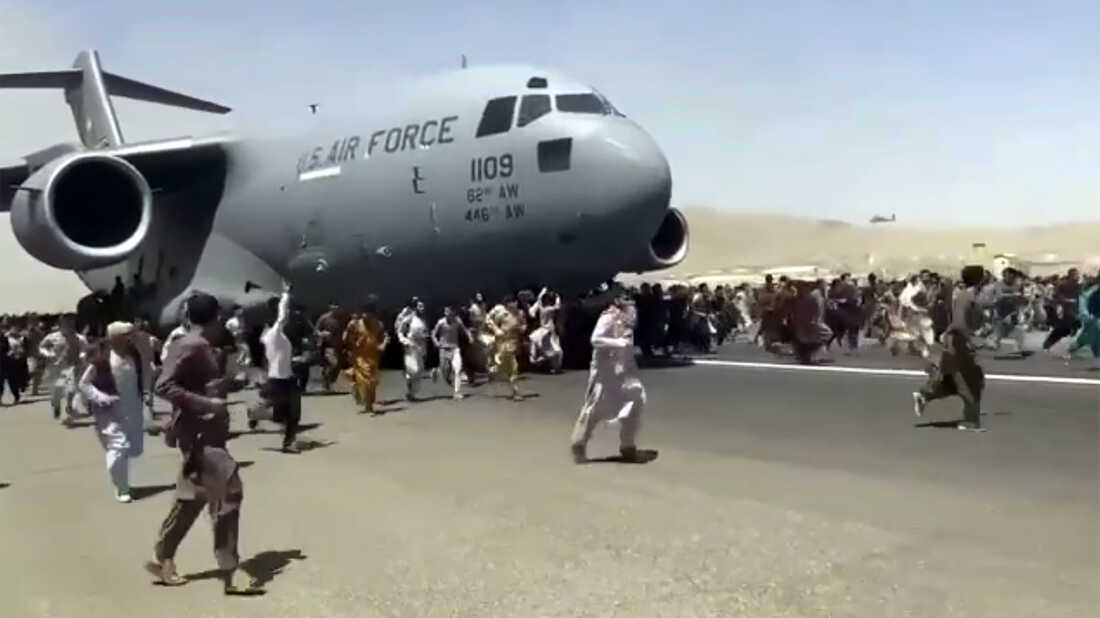
    The swift and relatively unopposed takeover of Afghanistan by the Taliban, in a matter of just days and not months as expected,has caught the United States and its Allies,as well as the international community, completely off-guard.It has led to a serious humanitarian crisis as countries scramble to get their own citizens, stranded in-country, out of harm’s way. An effort greatly complicated and impeded by the frenzy and sheer desperation of the tens of thousands of Afghans, who had worked with the Coalition, and are also attempting to flee to avoid retribution.


    Read More