Blog

  • Infrastructure development is high priority for Vietnam-Lao PDR relations

    Infrastructure development is high priority for Vietnam-Lao PDR relations

    The year 2022 is singularly important for Vietnam-Lao PDR relations. It marks the 60th anniversary of the bilateral diplomatic relations, and 45 years of the Vietnam-Laos Treaty of Amity and Cooperation. Both sides have accorded high priority to the current year, and Prime Minister Pham Minh Chinh extended the invitation to Lao Prime Minister Phankham Viphavanh to visit to commemorate the above events.  Accordingly, Prime Minister Viphavanh is in Vietnam and is leading a high-level delegation.

    Prime Minister Pham Minh Chinh, according to reports, will also co-chair the 44th meeting of the Vietnam-Laos Inter-Governmental Committee and launch the Vietnam-Laos Solidarity and Friendship Year 2022. This would help to “get a better understanding of each other’s socio-economic situation, development orientations and external policies” particularly during the ongoing COVID-19 pandemic.

    The visit is also intended to boost Vietnam-Laos cooperation strategy for the 2021-2030 period and the five-year cooperation plan for the 2021-2025 period that are now into the second year and involve bilateral engagements in multiple domains such as politics, diplomacy, security-defence, economy, science-technology, culture, and education-training.

    COVID-19 would be high on the agenda of both leaders given that the pandemic is impacting their countries. They are in the midst of the fourth wave with 8,236 and 354,075 active cases (as of 05 Jan 2022) respectively.

    In December 2021, the Lao government announced opening up of the country for trade and tourism in three phases: First phase – January 1, 2022; Second phase – April 1, 2022; and the Third phase July 1, 2022. In the first phase, 17 countries, including Vietnam and many neighbouring ASEAN countries, besides some European countries, China, the US, Australia and Canada would be welcomed. The Lao economy is impacted by COVID-19 and was projected to grow at 3 per cent, a figure lower than 4 per cent as approved by the Laotian National Assembly. This attributed to the pandemic and prolonged lockdowns that disrupted economic activities and companies, retail and wholesale shops had to shut down.

    Leaders in Vientiane recognize the importance of regional development particularly in the Cambodia-Laos-Vietnam Development Triangle Area (CLV-DTA)

    Vietnam and Lao PDR are also engaged in major connectivity projects. Lao is a landlocked country and ports in Vietnam provide the country access to the sea to engage in international seaborne commerce.

    Last year, during President Nguyen Xuan Phuc visit to Laos, 14 agreements spanning a wide range of issues were signed. The leaders agreed to fast-track joint projects including Vung Ang No.1, 2, 3 port projects, the Hanoi-Vientiane Expressway, Vientiane-Vung Ang Railway, Lao-Vietnam Friendship Park in Vientiane, Nongkhang Airport and hospitals in Lao Houaphan and Xiangkhouang Provinces.

    One of their flagship joint projects is the 1,450 kilometres long East-West Economic Corridor (EWEC). It is a road-building project and is supported by the Asia Development Bank (ADB). Its western leg includes Thailand, and in the east, it terminates at the Vietnamese port of Da Nang which is a major gateway to the Pacific.

    Similarly, the 555 kilometres railway link (452 kilometres in Laos and 103 kilometres in Ha Tinh central province in Vietnam) between Vientiane and the Vietnamese deep-water port of Vung Ang is important. It gives Laos yet another access to the sea. Importantly, it is being jointly developed and Laos would hold a 60% stake in the project, and Vietnam with 40%.

    China is also engaged in connectivity projects in Laos. In December 2021, after six years of construction, the Laos-China Railway project was finally operationalized. It is a complex project and includes 61 kilometres of bridges and 198 kilometres of tunnels and reduce travel time between Vientiane to the Chinese border from 15 hours by road to four hours. It will be operated by the Laos-China Railway Co., a joint venture between China Railway group and two other Chinese government-owned companies with a 70% stake and a Laotian state company with 30%.

    Vietnam offers Laos an alternative to Chinese infrastructure investments and it ranks third among investors in Lao with total investments of US$ 5.16 billion in 209 projects. There are fears that the Chinese funded projects do not generate economic benefits for Laos, instead these only benefit China.

    There are geopolitical dynamics at play in the CLV-DTA that are targeted against China, and Cambodia and Laos acknowledge Vietnam’s leadership

    Vietnam cannot match up with the Chinese investments in Laos, but leaders in Vientiane recognize the importance of regional development particularly in the Cambodia-Laos-Vietnam Development Triangle Area (CLV-DTA). Vietnam for example has invested nearly US$ 4 billion in Cambodia and as noted above over US$ 5 billion in Laos. It is fair to assume that there are geopolitical dynamics at play in the CLV-DTA that are targeted against China, and Cambodia and Laos acknowledge Vietnam’s leadership.

    Images Credit: Vietnam times

  • China’s New Land Border Law

    China’s New Land Border Law

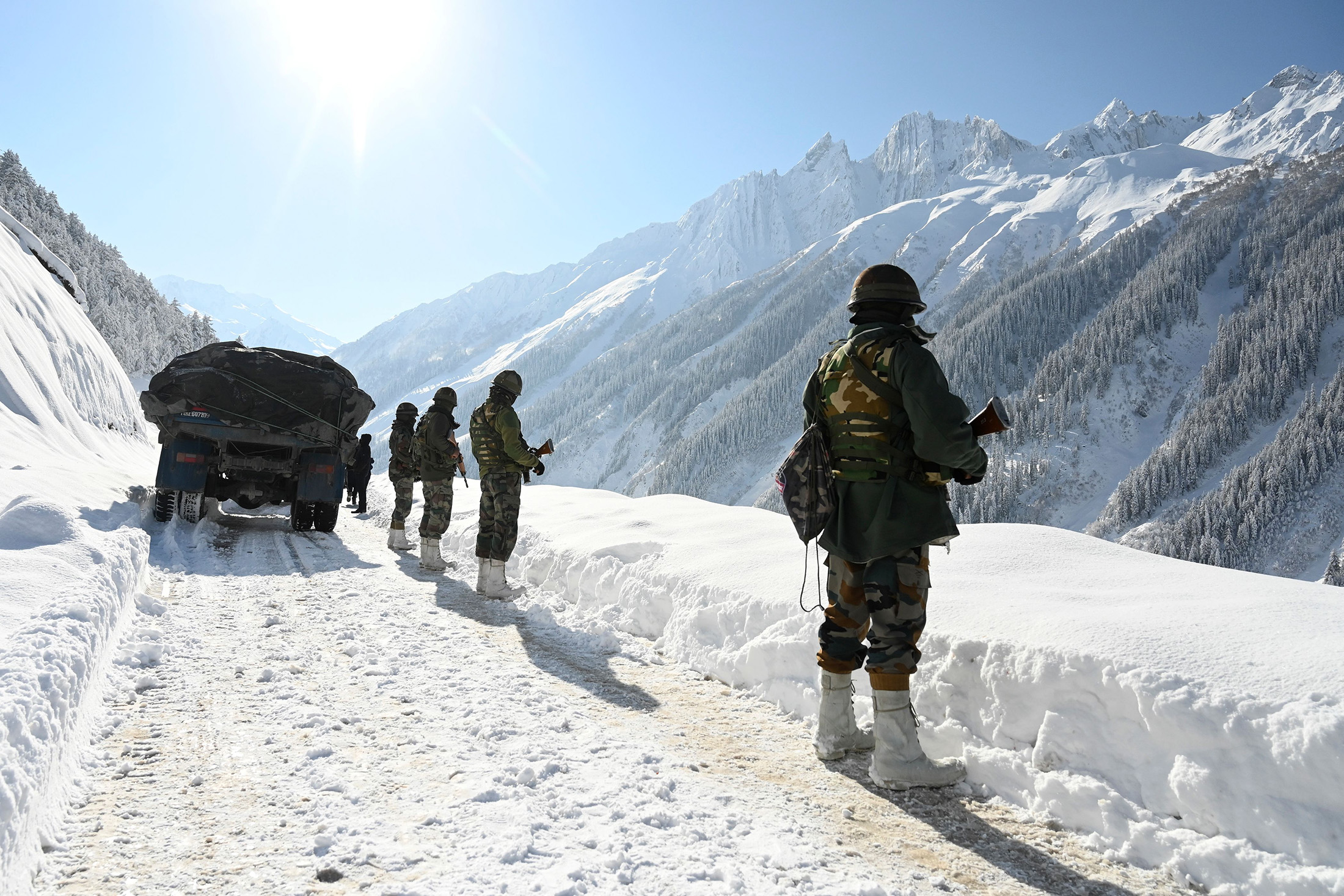
    On October 23, 2021, the Standing Committee of the National People’s Congress, the highest legislative body of the People’s Republic of China passed the Land Boundary Law along adding to its new Maritime Law as well as China Coast Guard Law passed earlier in 2021, which shows China’s intention in pursuing an aggressive policy on its territorial claims. The land boundary law came into effect on January 1, 2022. The law is likely motivated partially by the possible implications over developments in Afghanistan that could potentially have a destabilising effect in Xinjiang, growing violence in Myanmar-China border but more by the India-China geopolitical tussle.  The timing of the law is clearly related to the escalating border tensions with India and in the South China Sea. India and China have been engaged in border stand-off since May 2020.[i] Closer scrutiny of this law, consisting of 62 articles in seven chapters, indicates that China is stepping up its aggressive tone when it comes to border disputes, demonstrated by its rhetoric that China will “resolutely defend territorial sovereignty and land border security.”[ii] It states that the main aim of the law is to “standardise and strengthen the security and stability of land borders” and “safeguard national sovereignty, security and territorial integrity.”[iii] In other words, Beijing will take all measures to safeguard its interests within its specified borders by any means be it military or economic. The law effectively uses a civil-military fusion strategy emphasising improvement of public services and infrastructure along the borders as also incorporating the local population in territorial defence. The law prohibits any party from engaging in any border activities which would “endanger national security or affect China’s friendly relations with neighbouring countries”.[iv]

    Zhang Yesui, a spokesperson for the National People’s Congress stated that the law became necessary to safeguard China’s interests at the border and to regulate national borders, border defence management, and international cooperation in border affairs.[v] This law has serious implications for all 14 countries sharing borders with China. By incorporating the sovereignty claim over disputed territories China has effectively legitimised the use of force along its 22,4577 kilometres of borders as of January 01, 2022. Even though China has guaranteed that these laws aren’t meant to dislodge any international laws and treaties, it is evident that China is adopting aggressive policies to attain its goals.

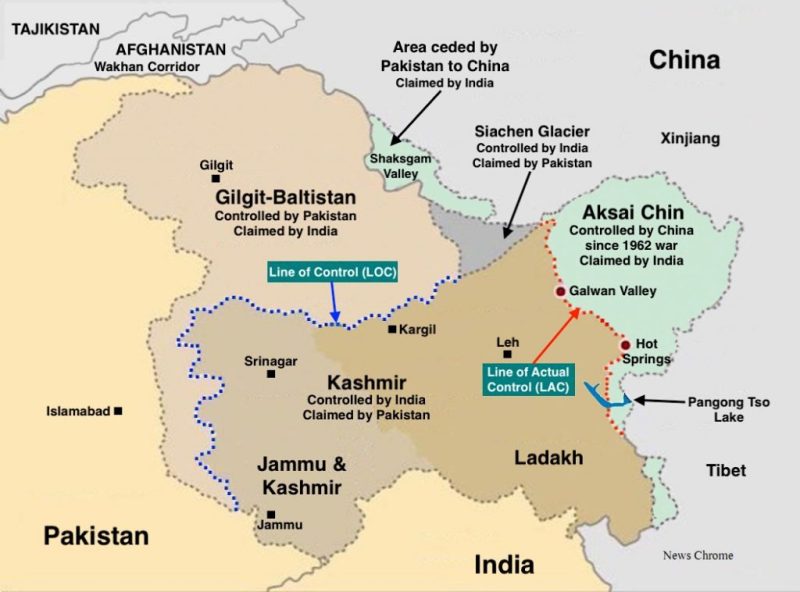
    The new law has serious implications for India. Firstly, since the 1962 war, the Line of Actual Control (LAC) is the de facto border between India and China, and both countries have different interpretations of the LAC over at least 13 different locations.[vi] Article 4 of the law states China’s sovereignty and territorial integrity as sacred and inviolable and applies this dictum to the disputed territories.[vii] Thus this law makes the earlier agreement of Peace and Tranquillity along the disputed Sino-India border almost irrelevant.  Secondly, the law forbids any form of construction of facilities “near” China’s border. This is elucidated in Article 10 deals with border defence construction including its river waters management under the term flood control. These issues are deliberately kept vague, and they could interfere with any form of construction on the border. This could again become contentious as both the countries are engaged in an “infrastructure arms race” on their sides of the border. Thirdly, the new law has made a special mention of the role of civilians concerning the development of villages and towns in the borderlands. The law reflects China’s intention to increase civilian settlements bordering India, Nepal, and Bhutan.[viii] This move goes in tandem with China’s agenda of “developing the border regions, enriching the local people” introduced in 1999 and is seen as a strategy to legitimise its territorial claims.[ix]

    The law has a problematic stance with international law, as Beijing is circumventing these by enacting domestic laws to give it legal backing for its unlawful actions. It shows that international law is ineffective against powerful states. The new law goes against the ethos of the Vienna Convention on Law of Treaties of 1969 (VCLT), which is an instrument that regulates the treaties between states. It establishes internationally recognised norms of behaviour by states in crisis or conflict situations. It is important to note that under the general principles of international law, unilateral declarations do tend to have a legal character of their own as explained under the Law of Treaties. It is imperative that such unilateral declarations must not affect the rights of other states and must go through two different stages to be considered legally acceptable. Firstly, there should be a unilateral statement by an actor and secondly, the said statement must either be accepted by the party/parties concerned or must go unchallenged. In this case, several parties have issues with China’s new land border law.[x]

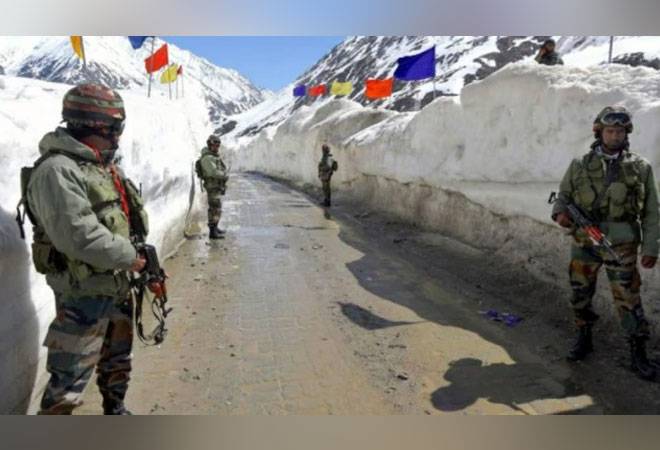
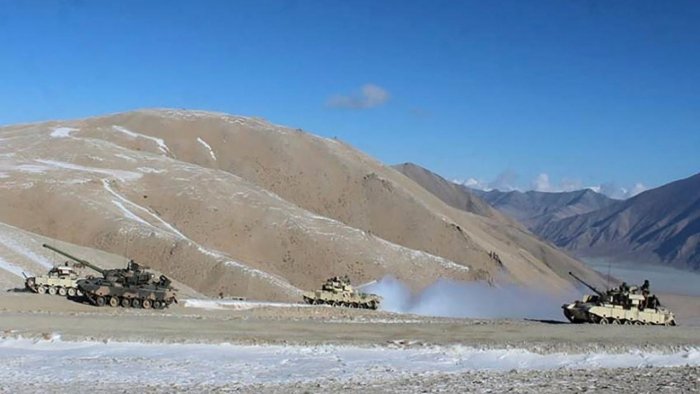
     As Beijing’s ‘Land border law’ came into effect on January 1st, the PLA released a propaganda video showing the Chinese flag and soldiers in the Galwan valley, with a banner reading ‘never yield an inch of land’. Earlier China released a statement renaming 15 places in India’s border state of Arunachal Pradesh. Chinese maps have consistently shown the entire state of Arunachal Pradesh, Barahoti plains in Uttarakhand, and areas up to the 1959 claim line in Ladakh as its territory.[xi] China will use the new law to claim these areas as its sovereign territory thus deeming it non-negotiable. It is playing realpolitik to increase pressure on India by escalating the friction points.[xii] The current situation at the India-China border has the potential to spiral out of control, as both sides are deploying heavy armaments and forces on the border, and in essence, the new law makes the border dispute a ticking time-bomb with far-reaching consequences for the world.

    Reference

    [i] Philip, Snehesh Alex. “Chinese Troops Challenge India at Multiple Locations in Eastern Ladakh, Standoff Continues.” ThePrint, 24 May 2020, https://theprint.in/defence/chinese-troops-challenge-india-at-multiple-locations-in-eastern-ladakh-standoff-continues/428304/.

    [ii] Wei, Changhao. “NPCSC Adopts New Laws on Family Education and Land Borders, Amends Audit Law & Authorizes New Regulatory and Military Reforms.” NPC Observer, 18 Nov. 2021,https://npcobserver.com/2021/10/26/npcsc-adopts-new-laws-on-family-education-and-land-borders-amends-audit-law-authorizes-new-regulatory-and-military-reforms/.

    [iii]  Panag , Lt Gen H S. “China’s Land Border Law Is More Sinister than It Lets on. India Needs a Course Correction.” ThePrint, 11 Nov. 2021, https://theprint.in/opinion/chinas-land-border-law-is-more-sinister-than-it-lets-on-india-needs-a-course-correction/764463/.

    [iv] 13th National People’s Congress. “Land Border Law of the People’s Republic of China.” The National People’s Congress of the People’s Republic of China, 23 Oct. 2021, http://www.npc.gov.cn/npc/c30834/202110/5a3d27747cc542f8bcde9030a83218e2.shtml.

    [v] Huang, Kristin. “What ‘New Challenges’ Does China’s New Border Defence Law Aim to Tackle?” South China Morning Post, 31 Oct. 2021, https://www.scmp.com/news/china/diplomacy/article/3154139/what-new-challenges-does-chinas-new-border-defence-law-aim.

    [vi] Fravel, Taylor M. “Analysis | Why Are China and India Skirmishing at Their Border? Here’s 4 Things to Know.” The Washington Post, WP Company, 2 June 2020, https://www.washingtonpost.com/politics/2020/06/02/why-are-china-india-skirmishing-their-border-heres-4-things-know/.

    [vii] Kalita, Jayanta. “China’s New Border Law Could Further Complicate Boundary Disputes”, The Irrawaddy, November 22, 2021.  https://www.irrawaddy.com/opinion/guest-column/chinas-new-border-law-could-further-complicate-boundary-disputes.html

    [viii] Pasricha, Anjana. “Chinese Border Villages in Disputed Territory Put India on Alert.” VOA, 2 Apr. 2021, https://www.voanews.com/a/east-asia-pacific_voa-news-china_chinese-border-villages-disputed-territory-put-india-alert/6204062.html.

    [ix] Jianqiang, Yang. “Deputy Director of the National Ethnic Affairs Commission, Answered Questions from the Chinese Government Website on the ‘Eleventh Five-Year Plan’ for the Action to Promote Frontiers and Enrich the People.” Central Government Portal, 18 June 2007, http://www.gov.cn/zwhd/2007-06/18/content_652065.htm.

    [x] Pandey, Utkarsh. “The India-China Border Question: An Analysis of International Law and State Practices.” ORF, 23 Dec. 2020, https://www.orfonline.org/research/the-india-china-border-question/.

    [xi] “China’s new border laws implemented under Galwan video: All you need to know about the legislation and why is it a concern for India.” Firstpost, January 03, 2022.  https://www.firstpost.com/india/chinas-new-border-laws-implemented-amid-galwan-video-all-you-need-to-know-about-the-legislation-and-why-is-it-a-concern-for-india-10253481.html

    [xii] Siddiqui, Huma. “China continues its belligerence, renamed 15 places in Arunachal: India should expect more such actions, say experts”, Financial Express, December 31, 2021. https://www.financialexpress.com/defence/china-continues-its-belligerence-renamed-15-places-in-arunachal-india-should-expect-more-such-actions-say-experts/2395218/


    Feature Image Credi: Global Times

    Map Credit: jagranjosh.com

  • Vietnam Successfully Delivers at the UNSC

    Vietnam Successfully Delivers at the UNSC

    Vietnamese leaders and people have every reason to celebrate the successful completion of their country’s role as a non-permanent member of the United Nations Security Council (UNSC) for the years 2020 and 2021. Before assuming the responsibilities at the UNSC it had announced that it will “make the most of its two years to contribute to improving the effectiveness of the Council, to foster dialogue to help find peaceful solutions to conflicts and to bring the voice of small countries to the work of the council” with particular focus on “conflict prevention, preventive diplomacy, peaceful settlement of disputes, and strengthened implementation of Chapter VI of the UN Charter,” By all accounts, the country achieved all set goals notwithstanding the “complicated and unpredictable socio-economic, political, and security developments as well as unprecedented challenges, including the widespread impact of the COVID-19 pandemic”.

    Vietnam has accrued international prestige not only as an important regional actor but also responsible international actor whose focus is on Chapter VI and Chapter VIII of the UN Charter

    During the above period, Vietnam served twice as President of UNSC in January 2020 and April 2021. It led to several events and initiatives, and these were acknowledged by other members of the UNSC; above all, these received an active response. Some of the important proposals led by Vietnam were (a) two resolutions on reappointing the prosecutor and reviewing the two-year operation of the International Residual Mechanism for Criminal Tribunals (IRMCT)  and on the protection of essential infrastructure; (b) three President’s statements on respecting the UN Charter, strengthening the relationship between the UN and regional organisations in promoting trust-building and resolving the consequences of mines; (c) one press statement on the terrorist attack in Indonesia; and (d) the Hanoi declaration on women, peace and security. It also promoted issues concerning UN peacekeeping and called on the international community to “respond to and reduce climate change impacts on international peace and security”.

    Vietnam also supported issues raised by other non-permanent members of the UNSC. For instance, Prime Minister Pham Minh Chinh supported Indian Prime Minister Modi’s Five Principles and assured that Vietnam is “committed to working with India and other Council members in promoting dialogue, cooperation and mutual respect, for global peace and prosperity”. He too made three proposals i.e. (a) sustainably utilizing the oceans and seas; (b) comprehensive and holistic maritime security through “cooperation, dialogue and international law” and led by the UN; and (c) uphold legal obligations in line with international law, especially the United Nations Charter and UNCLOS 1982.

    In the context of the latter, Prime Minister Chinh made known that his country was “determined” to engage with ASEAN and China to “seriously, fully and effectively implement the 2002 Declaration of Conduct of Parties in the South China Sea (DOC) and negotiate an effective and substantive Code of Conduct of Parties in the South China Sea (COC) consistent with international law, in particular, UNCLOS 1982”.

    The country can be credited for raising the issue of the South China Sea at the United Nations 

    During its tenure-ship as a non-permanent member of the UNSC, Vietnam concurrently held the Chairship of the ASEAN in 2020.  The country can be credited for raising the issue of the South China Sea at the United Nations. In his message to the High-level General Debate of the UN General Assembly, President Nguyen Phu Trong conveyed that while Vietnam is committed to the “maintenance and promotion of peace, stability, maritime security and safety and freedom of navigation in the East Sea (South China Sea)” and upholding international law, particularly the 1982 UNCLOS, emphasised and called on “all concerned parties to exercise restraint, avoid unilateral acts that would complicate the situation, and settle disputes and differences through peaceful means with due respect for diplomatic and legal processes.” It is not surprising that there was a reaction from Beijing and the Chinese Foreign Ministry spokesperson stated that the “Security Council is not a suitable place to discuss the South China Sea issue,”

    In essence, Vietnam not only addressed international-transnational-global issues at the UNSC, but it also raised regional issues such as the South China Sea which is the collective voice of the ASEAN as well as the claimant States. This is a big politico-diplomatic advantage for the ASEAN and Vietnam has accrued international prestige not only as an important regional actor but also responsible international actor whose focus is on Chapter VI and Chapter VIII of the UN Charter.


    Feature Image Credit: VnExpress International

  • Governor vs Chief Minister | Political meddling with educational institutions must stop

    Governor vs Chief Minister | Political meddling with educational institutions must stop

    The rather ugly spat between Governor of Kerala Arif Mohammed Khan and Chief Minister Pinarayi Vijayan as regards the latter’s alleged interference in the appointment of vice-chancellors in state universities should not surprise anyone familiar with the Indian academic scene. That the incident has come out in the open, too, should not alarm those with even a semblance of awareness of what goes on in the realm of education in India.

    In almost all states allegations of political intrusion in various appointments in educational institutions have been made, more or less consistently. The only difference this time is that the Governor/Chancellor has expressed his anguish and discomfort, in writing, to the Chief Minister. In many other cases it is the Chief Minsters or their Cabinet colleagues who have alleged that the office of the Governor/Chancellor has intervened in academic appointments.


    Read More

  • AFSPA in the N-E: Is status quo the answer?

    AFSPA in the N-E: Is status quo the answer?

    The recent Nagaland incident involving the Army Special Forces again underlines that such cases are unavoidable in the existing milieu

    Much has already been written on the tragic incident that occurred recently in the Tiru-Oting area of Mon district, Nagaland. In a case of mistaken identity, six coal miners were killed by a troop of the Army Special Forces. Subsequent escalation led to more deaths, including that of a Special Forces soldier, murdered in retaliation by villagers. The Army was quick to express regret, though it does not take away from the fact that in the existing milieu, such incidents are unavoidable.

    The truth is that the Special Forces personnel did their job with brutal efficiency. They were operating on supposedly credible intelligence and allegedly acted decisively once the vehicle transporting the miners did not stop, with tragic consequences. That they rushed two wounded miners to a civil hospital does suggest they acted in good faith.


    Read More

  • Indian citizenship concepts and definitions need a revisit

    Indian citizenship concepts and definitions need a revisit

    More than 600,000 Indians gave up their citizenship during the last five years, Union Minister of State for Home Nityanand Rai informed the Lok Sabha. While 133,000 Indians gave up citizenship in 2017, it was 134,000 in 2018, 144,000 in 2019, 85,248 in 2020 and 111,000 in 2021 until 30 September. The dip during 2020 was, without any doubt, because of the pandemic. What entails in revoking citizenship is the surrender of the Indian passport as mandated by the Indian authorities since India does not allow dual citizenship unlike her co-subcontinental countries Pakistan and Bangladesh.

    While we do not have an idea about the reasons for the revocation of citizenship, the fact remains that these erstwhile Indian citizens, across the globe, have opted for citizenship of different countries (and that includes the passport of the country concerned) where they have been residents for varying periods. For all practical purposes, looked at from the lens of India’s Ministry of Foreign Affairs, these former Indian citizens are “foreigners”. It may not be out of place to point out here that Padma Bhushan awardee and former ambassador to the US, Abid Hussain, had famously remarked that Indians have their heart in India, but their money in Swiss banks.


    Read More

  • Democracy in Retreat: India’s declining Parliamentary Practices and Debates

    Democracy in Retreat: India’s declining Parliamentary Practices and Debates

    Abstract

    The Indian Political climate is always one of enormous diversity and vibrancy. In recent times it has tended to become politically charged with extreme ideologies. In 2014, the Bhartiya Janata Party (BJP) came to power with a landmark majority, which it sustained in the following 2019 general elections. In the time that the Bhartiya Janata Party has been in power, there have been popular protests and reports that give rise to apprehensions that the democratic practices of India are in serious decline.  This paper analyses whether the government led by the BJP is functioning more as a majoritarian entity that disregards democratic norms. In doing so it aims to answer the primary question of whether there is erosion in adherence to constitutional mechanisms in policymaking and carries out a review of the educational realm with regards to allegations of bypassing democratic and constitutional norms. The research is based on primary and secondary sources and mixed methodology: collation and analysis are based on already existing data with a mixed focus on quantitative and qualitative aspects. For the former, numerical data has been gathered from official government sites while the latter is drawn from pre-existing literature, published research papers and journal articles. The paper concludes by affirming the thesis and supports the argument that anti-democratic trends are indeed present in the Indian Governmental apparatus.


    Introduction

    Bhartiya Janata Party (BJP) came to power gaining a spectacular single-party majority in the general elections of 2014, the first in nearly three decades (Jaffrelot, 2019). This success was replicated in the Lok Sabha elections of 2019 which marked two full consecutive terms of the BJP regime for the first time. This is also the first time in nearly three decades that a single-party majority government is in power since 2014.

    India is, for long, seen as the World’s largest Democracy. Although this is a well-known tag bestowed to India, with the vast diversity of thought, ideologies and practices adopted by different governments there have been times in Indian political history where the actions of governments do not align with the overarching democratic values at large.

    A relevant instance of the same is the 1975 declaration of Emergency under Prime Minister Indira Gandhi. Dubbed as one of the darkest times of Indian democracy, this period witnessed civil liberties being harrowingly curbed and journalistic freedom and opposition faced a draconian crackdown. Gyan Prakash, a historian and a scholar, reflects upon this event under Congress rule in a way that has significance when analysing the political happenings of contemporary times.  The essence of his work is that the Emergency was brought on by a larger reason than an individual’s quest for power (Prakash, 2019); he asserts that Indian democracy’s strained relationship with popular politics is to blame. There is then merit in assessing how Indian Democracy may be vulnerable to subversion and the extent to which structural issues in the democratic framework are being exploited currently by the BJP, the party in power.

    The decline in adhering to Democratic norms under the BJP Rule

    In the recent past, three international reports have suggested that the democratic nature of the Indian nation-state is on a decline.
    Freedom House, a non-profit think tank located in the United States, downgraded India from a free democracy to a “somewhat free democracy” in its annual report on worldwide political rights and liberties. The V-Dem Institute, based in Sweden, in its most recent study on democracy, claimed that India has devolved into an “electoral autocracy. Additionally, India fell two spots to 53rd place in The Economist Intelligence Unit’s recent Democracy Index (Biswas, 2021).

    These reports, however, are of international origins and subject to an ethnocentric view of what constitutes democracy and democratic practices. Although they are worth mentioning, their evaluation cannot be fully accepted at face value.

    The sentiments of this report however do find echoes on the national front. A recent event wherein the ruling government was criticised internally for showcasing a lack of democratic conduct was with regards to the new National Education Policy.

    National Education Policy 2020 was unveiled on July 30, 2020. In 2017, the Ministry of Human Resource Development (MHRD) formed a committee chaired by Dr K. Kasturirangan (former chairman of ISRO) to review the existing education policy and submit a new proposal (Ministry of Human Resource Development, Government of India, 2020). The committee circulated a draught NEP for public comment in the year 2019, the edited version of the same is expected to replace the decades-old 1986 Policy on Education.

    Some key features of the NEP 2020 include restructuring and reform of school curriculum, changes to curriculum content, the aim to achieve foundational literacy, and ensure that the children who enrol in schools are retained in the system and finish their schooling rather than dropping out and more (Ministry of Human Resource Development, Government of India, 2020) .

    The reforms and restructuring that the NEP suggests have the potential to elevate India to the status of a desirable educational hub. It offers a welcome and refreshing change from the rote learning patterns and administrative limitations that have so far dominated the educational realm.

    The policy thus cannot be denied credit where it is due. There are, however, some strong critiques levelled against the NEP by scholars, educators, opposition and students alike. The nature of these critiques signals the idea that some anti-democratic elements underlie the policy and its construction.

    The first of these criticisms is against the centralisation of education while the second criticism concerns itself with the lack of commitment to a secular curriculum. The Constitution had mandated education as a state subject, which was later amended to make it a concurrent subject thus bringing in a stronger role for the Union government. This amendment is seen as a blow to the federal structure of the country. The NEP is fully dominated by the Centre thus making the states mere bystanders.

    Opposition ruled states have questioned the need for the NEP to take effect during the Covid 19 pandemic and levelled a range of accusations. The Delhi Education Minister stated that the NEP lacks mention of the government-run school system and that he believes the policy will pave the way to privatize education, which is a concern as it will create a situation where not all can have access to high-quality education. The Chhattisgarh chief minister commented along similar lines alleging that the fine print of the NEP displayed no space for state concerns nor any tangible improvement in educational quality.  In Rajasthan, a three-member committee was formed to analyse and evaluate the NEP, working off their findings Rajasthan’s Education minister expressed concern regarding the funding of the policy and raised the question of lack of clarity regarding the 6% GDP being attributed to the educational realm (Sharma, 2020).

    The contention regarding NEP also stems from the fact that Education is on the concurrent list. The Sarkaria commission, set up in 1983 by the central government stated that to pass a law on a concurrent list subject, the union government should ensure that the states have been adequately brought into the folds of discussion and weight is given to their opinions during consultation. The NEP 2020 is, however, not a law and is a policy, therefore it does not fully fit into the ambit of this suggestion.  It is perhaps the content of the policy that has created furore from the states regarding not being adequately consulted (Menon, 2020).

    The educational sector is one where the states have had tremendous sway and many practicalities fall within the state jurisdiction, additionally, 75-80 per cent of the expenditure is accounted for by the state (Jha, 2019).

    The NEP in contrast to previous national policies was approved by the Union Cabinet and did not go through the parliament. Thus, the level to which states accept it and subsequently the larger question of how well Indian federalism is operating comes under scrutiny.

    Prior to the 42nd Amendment in 1976- Education remained on the state list. Through an amendment made in 1976 to Schedule VII of the constitution, education was shifted to the concurrent list upon the recommendation of the Swaran Singh Committee. This move was regarded as an avenue to empower the centre with centralised policymaking advantages.

    Some experts find parallels between the dark Era of Democracy, the period of emergency under Indira Gandhi, and the current government under the BJP. The 1976 provisions under Prime Minister Indira Gandhi saw the transfer of five state subjects to the concurrent list, including the education sector. This has been identified as the foundation on which NEP stands and thereby has been interpreted as having a basis that does not align with constitutional democratic values (Raveendhren, 2020).

    The relationship between the States and the Union government concerning all educational policies from the eve of independence until the NEP 2020 has undergone noticeable changes. NEP 1968 gave a primary role to the state while the union government committed to assisting states (Menon, 2020). On the other hand NEP 1986, in the aftermath of the Emergency and on the recommendation of the Sarkaria committee, put forth a vision for partnership between the union and the states. NEP 2020, mentions neither of these, assumed to have taken the approval of the states for granted.

    The second major critique of NEP that implies an anti-democratic approach brings to the forefront the proposed curricula for moral values. The Indian Nation state adopted a form of secularism that rested on the strategy of non-interference. This form of secularism espouses that the state and religion are not completely and wholly separated. Instead, it proposes an equidistance of the state from all religions and accordance of equal respect to them without favour or priority being given to one over another.

    One of the ways in which the ideal of Indian secularism is affirmed is through the education system. According to article 28 of the Indian constitution Governmental educational institutes in India do not permit the dissemination of religious instruction, however, they do not prohibit religious text or books from being used in the classroom (Gowda C. , 2019). This is most often noticeable in the literature curriculum where devotional poetry is present. Tulsidas, Kabir to Malik Muhammad Jayasi to even John Henry Newman are all often included and studied. The inclusion of various religious poets and works from a variety of religions reflects the attempt made by the Indian educational system to embody the constitutional ideal of secularism. It is of course debatable and subject to change the extent to which each school adheres to upholding this secular and diverse teaching, although there is a commitment to the ideal, nonetheless.

    The second critique against NEP can be understood against this background. In a section termed inspiring lessons from the literature and people of India, stories of Panchatantra, Jataka, Hitopadesha etc are mentioned. Critics assert that these stories come from an unequivocal Hindu background and a secular curriculum should ideally have included Aesop’s Stories and Arabian Nights as an equal part of Indian folklore.

    They emphasize the importance of this measure to ensure that all students, no matter their faith feel represented and included in the classroom and the moral imagination of pupils are shaped to respect diversity and tolerance.

    Education: Policy Changes in Academia

    The NEP controversy hints at some concerns in the larger system of education. The BJP government which has been in power since 2014 has enacted several policies, laws and acts, and much like all governments has garnered appreciation and criticism alike. It is the content of the critical claims that warrant discussion, for much of the disapproval claims that democratic and secular ideals of the Indian nation are being cast aside.

    A recent contention arose due to the decision of CBSE to reduce the curriculum to alleviate student pressure on the line forum. The Central Board of Secondary Education announced a 30 per cent reduction in the curriculum. One of the concerns is that under this provision, chapters on federalism, secularism, democratic rights need not be taught in class 12 (Sanghera, 2020). Class 10 political science syllabus also saw the removal of chapters such as “popular struggles and movements” and “democracy and diversity”.

    These omissions have invited considerable disapproval from scholars and experts across fields. The former director of the National Council of Education Research and Training commented that the cuts have rendered some remaining topics “incomprehensible”. Educators on the ground state discontent with the removal of topics for they believe it to promote self-reflection and criticality (Sanghera, 2020).

    The rewriting of textbooks has persisted at state levels before the 2014 elections and is not a novel phenomenon. In BJP ruled states it can be noted that a counter idea of history is underway in educational texts. In this exercise, some ideologically conservative Hindu organisations have been accorded more space and appreciation for their contributions, however, the educational attention accorded to ideals of secularism and so forth has been minimized.

    In Gujrat for instance as far back as 2000, there was a move that made it compulsory for teachers to attend Sanskrit training camps in preparation for when the subject would be made mandatory.

    The focus on the educational sphere and the changes that occur in it are of significance because the policies of the state in such realms are not divorced from the Indian climate and foster a culture of tolerance at large.

    In recent times, experts have raised some concerns regarding the qualifications of those in high governmental positions. The Prime Minister of the country stated his belief regarding the roots of cosmetic surgery and reproductive advancements of modern times as having already existed in ancient India (Rahman, 2014). Drawing upon the Sanskrit epic of Mahabharata, he spoke of genetic science as an explanation for the birth of Karna and cosmetic surgery as an explanation for the physique of Ganesha- an elephant-headed Hindu God. The Minister of Science and technology in 2018 stated at the 105th edition of the Indian Science Congress, that Stephen Hawking went on record to assert that the Vedas, a body of Indian scripture, had a theory that superseded Einstein’s famous E=mc2 theory of relativity (Koshy, 2018).

    In contrast, the first National Democratic Alliance headed by Atal Bihari Vajpayee demonstrated an affinity for learning and scientific rigour. M.M. Joshi, the Human Resource Development Minister for instance had completed a doctorate in physics. George Fernandes, Yashwant Sinha and Lk Advani are among some other examples of cabinet ministers who were profoundly involved with academia on public policy and history. Some members of the government such as Jaswant Singh and Arun Shourie also authored some works (Guha, 2019).

    Since it is noticeable that some policies of the ruling government have garnered critique, perhaps the logical next step is to evaluate the process of policymaking as it has shaped up in the last 7 years.

    Institutional norms and parliamentary procedures in India, especially for legislation making are designed to ensure space for debate, discussion and dissent. This operates as a system where all decisions are subjected to scrutiny by the people’s representatives. To that end, adherence to parliamentary procedure is an indicator of a government’s treatment of and respect for democracy. To carry out any analysis of this sort in an objective manner, one must first ascertain what exactly constitutes an ideal parliamentary procedure.

    Parliamentary Procedure on Legislation Making: How Does A Bill Become An Act?

    Acts usually start as bills which simply put, is the draft of a legislative proposal. This bill may be introduced by public members or private members and requires passing in the Lok Sabha and Rajya Sabha as well as the president’s assent to become a law.

    There are (Lok Sabha Secretariate, 2014) three stages through which a bill is passed in the parliament: these are known as the first, second and third reading respectively.

    For the First Reading, the speaker puts forth the request for leave of the house, which if granted is used to introduce the bill. Following this stage is the second reading which entails general discussion. It is during this stage that the House may choose to refer the bill to a parliamentary committee for further input or even circulate it to gauge public opinion. During the second reading, parliamentary procedure states that a clause-by-clause reading must proceed, and it is during this time amendments are moved. The second reading concludes with the adoption of ‘Enacting Formula’ and ‘Long Title of the Bill’. The next stage is the third and the last reading. At this Juncture, debates for and against the bill take place. For an ordinary bill, only a simple majority of the members present, and voting suffices, however for a constitutional amendment bill, in keeping with article 368 of the constitution, a majority of the house’s total members and at least 2/3rd members present, and voting is deemed necessary. Once this process is complete, the bill is sent to the other house of the parliament and goes through the same stages after which is referred to the president for his assent.

    Analysis of Parliamentary Procedure under the BJP Government

    With the great furore over the recent Monsoon session of the parliament, opposition leaders and journalists have expressed dissatisfaction with the government’s treatment of parliamentary procedure.

    The monsoon session of the parliament is one example where a couple of mechanisms that have increasingly been used as of late signify a subversion of the democratic process (Brien, Autocratic Government doesn’t want Parliament to Function, 2021).

    The first of these is the misuse of Article 123 also known as the Ordinance Route. Article 123 of the constitution permits the president to enact a temporary law in the event of urgent and unavoidable circumstances.

    During the first 30 years of our parliamentary democracy, for every 10 bills in the parliament, one ordinance was issued. In the following 30 years, this number went to 2 ordinances per every 10 bills. In the BJP Government’s first term from 2014-2019, this number went up to 3.5 ordinances per every ten bills. For perspective, while 61 ordinances were issued under the UPA government spanning ten years the BJP-led NDA government issued 76 ordinances in a time frame of 7 years spanning from May 2014 to April 2021. It is also useful to note that ten of these ordinances were issued right before the 2019 Lok Sabha elections (Gowda M. R., 2021).

    As many as 11 ordinances have been passed since March 24th, 2020, which is when the lockdown was imposed. Five of these relate to covid 19, two to the health sector, every other ordinance such as the Banking Regulation Amendment and the Agriculture bills do not have anything to do with the coronavirus pandemic (Brien, The ordinance raj of the Bharatiya Janata Party, 2020).

    Another practice that raises serious concern relates to the issue of repromulagation. However, it is important to note that the recourse to ordinance route and repromulgation is not an exclusively BJP action. Before the year 1986, no central government was known to have issued a repromulagation and this method came into view during the Narasimha Rao government in 1992. This was the landmark time frame that one can trace the trends of repromulagation as originating from.

    As far as the ordinances are concerned, they are an emergency provision, however, many governments have used them with an almost immoral frequency (Dam, 2015). According to PRS Legislative Research’s reports, average ordinances issued could be placed at around 7.1 per year in the 1950’s while in the 1990s there was a marked increase to an average of 19.6 per year. The 2010s witnessed a dip in the trend with an average number of ordinances being 7.9 per year (Madhvan, The Ordinance route is bad, repromulgation is worse, 2021). This number has unfortunately risen again in recent years with an average number of ordinances numbering 16 in 2019 and 15 in 2020.

    The issue of repromulagation of ordinances was brought up in the Supreme Court and was deemed as an unconstitutional practice in January of 2017 by a bench of seven judges. This judgement decisively stated that repromulagation of ordinances was an unconstitutional practice that sought to subvert the constitutionally prescribed legislative processes (Madhvan, The Ordinance route is bad, repromulgation is worse, 2021).

    States have also used ordinances to pass legislation. A non-BJP ruled state Kerala, for example, published 81 regulations in 2020, whereas Karnataka issued 24, and Maharashtra issued 21. Kerala has also re-promulgated ordinances: between January 2020 and February 2021, one ordinance to establish a Kerala University of Digital Sciences, Innovation, and Technology was repromulgated five times (Madhvan, The Ordinance route is bad, repromulgation is worse, 2021).

    Although previous administrations and other states have utilized ordinances to undermine the constitutional process, the problem is decidedly amplified under the present rule with regards to the number of ordinances produced per given period.

    This sort of rise in ordinances being issued points to a trend of avoiding in-depth critical evaluation and discussion on proposals by rushing them into becoming acts.

    One of the most controversial ordinances in the recent past pertains to the three farm laws which now stand repealed after year-long demonstrations and protests at the Singhur border by farmers. The reason for not introducing these proposals in the parliament and instead enacting ordinances is unclear for there seems to be no urgent link to the covid 19 pandemic. Additionally, the farm bills not being subjected to any discussions nor being referred to parliamentary committees for any further report making has led to removing any possibility for amendment. These laws provide a useful avenue to assess why the bill was not passed through a proper parliamentary process and instead rushed through the ordinance. This assumes critical relevance since agriculture is essentially a state subject, and the States were not consulted on the farm laws.

    The ordinance culture has also extended to BJP run states, for instance, Uttar Pradesh, Madhya Pradesh, and Gujarat adopted ordinances weakening labour laws without consulting workers’ unions or civil rights organisations during the lockdown. Moreover, this was followed up on 15th March 2020, when colonial-era legislation was enacted as an Ordinance. This was the Uttar Pradesh Recovery of Damages to Public and Private Property ordinance which would heavily fine any damage to property, public or private during a protest.

    Under the BJP-led NDA rule, there has been slim or no involvement of parliamentary committees. Parliamentary committees are key in assessing a proposal with necessary scrutiny and expertise.  These committees provide a place for members to interact with subject experts and government officials while they are studying a bill (Kanwar, 2019).

    60 per cent of proposals were referred to Standing or Select Committees during the United Progressive Alliance’s first term. During the UPA-II administration, this rose to 71 per cent. Modi’s first term from 2014-19 had a 27 per cent reference rate, while his second term so far has only a 12 per cent rate (Gowda M. R., 2021). Not only is there a blatant and marked disregard for referring bills to parliamentary committees, but the administration has also actively worked to hinder committee work. A meeting of the Parliamentary Standing Committee on Information Technology on July 28, 2021, had to be cancelled owing to a lack of quorum when 15 BJP members refused to sign the attendance register. It is speculated this was to avoid the discussion on the Pegasus scandal.

    Monsoon Session of Parliament 2021 and other Statistics

    Adherence to the parliamentary procedure can be gauged through a wide avenue of categories including but not limited to hours lost to disruptions, adjournments, the productivity of each session, time spent on deliberation and so on.

    A record number of 12 bills were passed by the parliament in the first 10 days of the monsoon session. All these bills were passed by a voice vote which is widely viewed as a largely inaccurate mechanism to assess supporters of a particular proposal. None of these 12 bills nor the overall 14 bills was referred to standing committees for in-depth analysis.  According to TMC leader (Brien, 2021), Derek O’Brien in the monsoon session bills were rushed through and 12 bills were passed at an average time of under 7 minutes per bill (Brien, Indian Express, 2021). In the same vein, BSP MP Danish Ali commented that the Essential Defence Services Bill was passed in less than 10 minutes (Nair, 2021).

    Since 2014, the 2021 monsoon session of the parliament ranks the third highest in terms of time lost to forced adjournments and interruptions. In this session, the number of sitting hours was, unfortunately, lower than the number of hours lost to disruptions which came to be around 74.46 hours.

    The lack of debates on bills has become a major controversy. With a per bill time of fewer than 10 minutes, 14 new bills were passed in the monsoon session, a worrying number that indicates no involvement of the parliamentary committees, and no sustained debates, a feature essential to provide checks to freehand power (Radhakrishnan, 2021).

    The time accorded to bill discussion is another avenue to assess the functioning of parliamentary procedure. In 2019, the average time spent on bill discussion stood at 213 minutes. At present, it stands at 85 minutes. Furthermore, in the 16thand 17th Lok Sabha, which subsumes the two terms of the Bhartiya Janata Party, 27% and 12% bills respectively were referred to parliamentary committees. In contrast during the 14th Lok Sabha (17 May 2004 – 18 May 2009) 60% of the bills were referred to parliamentary committees, and 71% of the bills were referred to the parliamentary committees for discussion in the 15th Lok Sabha (2009-14).

    With regards to the passing of bills, around 18% of the bills were introduced and passed in the same session in the 15thLok Sabha. In the 16th Lok Sabha (2014-2019) this number jumped to 33 per cent while in the 17th one it increased drastically to 70%, indicating the lack of debate.


    Conclusion

    This paper has attempted to evaluate primarily the basic question of whether constitutional methods have been followed in policymaking under the Bhartiya Janata Party’s tenure. In doing so it has analysed the educational realm beginning from the recent criticisms against the NEP. These critiques highlighted that a centralised decision-making structure that is detrimental to federal values is visible alongside a lack of focus on secular education. Additionally, statements from top officials, policies of CBSE, and those responsible for the change in curriculum hint that policies of late seem to have an aim of fostering educational sensibilities that further an ideological agenda of the ruling party. The paper also attempted to broaden its lens to assess the larger process of policymaking and legislation. Herein it was determined that there is an incongruity between the parliamentary procedures of recent years and the constitutional norms. This includes the statistics that highlight a growing recourse to ordinances, the curtailing of question hour, minimal involvement of parliamentary committees and the excessive use of voice vote. The state of affairs in India at the moment stands to suggest that parliamentary procedures do not adhere to constitutional norms, and thus there is a reason for apprehension as this trend could give way to majoritarian politics and set precedent for unethical conduct in the political realm at large.


    Works Cited:

    Biswas, S. (2021, March 16). Electoral autocracy’: The downgrading of India’s democracy. Retrieved November 15, 2021, from https://www.bbc.com/news/world-asia-india-56393944

    Brien, D. O. (2020, September 11). The ordinance raj of the Bharatiya Janata Party. Retrieved October 29, 2021, from https://www.hindustantimes.com/analysis/the-ordinance-raj-of-the-bharatiya-janata-party/story-NlVvn0pm6updxwYlj0gSvJ.html

    Brien, D. O. (2021, August 7). Autocratic Government doesn’t want Parliament to Function. (NDTV, Interviewer)

    Brien, D. O. (2021, August 5). Indian Express. Retrieved October 31, 2021, from https://indianexpress.com/article/india/parliament-monsoon-session-bills-passed-derek-obrien-7440026/

    Dam, S. (2015, June 3). Repromulgation Game. Retrieved October 30, 2021, from https://www.thehindu.com/opinion/columns/legal-eye-column-repromulgation/article7275518.ece

    Gowda, C. (2019, June 26). Missing secularism in National Education Policy. Retrieved November 7, 2021, from https://www.livemint.com/education/news/missing-secularism-in-new-education-policy-1561564775831.html

    Gowda, M. R. (2021, August 16). The 2021 Monsoon Session Is Proof of Modi Govt’s Disregard for Parliament. Retrieved October 31, 2021, from https://thewire.in/government/the-2021-monsoon-session-is-proof-of-the-modi-govts-disregard-for-parliament

    Guha, R. (2019, April 28). Modi Government’s surgical strike against science and scholarship. Retrieved November 10, 2021, from https://thewire.in/education/the-modi-governments-surgical-strike-against-science-and-scholarship

    Jaffrelot, C. G. (2019). BJP in Power: Indian Democracy and Religious Nationalism. Washington DC: Carnegie Endowment for International Peace.

    Jha, J. a. (2019, September 10). India’s education budget cannot fund proposed education policy. Retrieved November 1, 2021, from https://www.indiaspend.com/indias-education-budget-cannot-fund-proposed-new-education-policy/

    Kanwar, S. (2019, September 19). Importance of Parliamentary committees. Retrieved November 1, 2021, from https://prsindia.org/theprsblog/importance-parliamentary-committees

    Koshy, J. (2018, March 16). Stephen Hawking said Vedas had a ‘theory’ superior to Einstein’s thesis, says Harsh Vardan. Retrieved November 10, 2021, from https://www.thehindu.com/news/national/stephen-hawking-said-vedic-theory-superior-to-einsteins-science-minister-claims/article23272193.ece

    Lok Sabha Secretariate, N. D. (2014, May). How a bill becomes an act. Retrieved October 28, 2021, from Parliament of India – Lok Sabha: http://164.100.47.194/our%20parliament/How%20a%20bill%20become%20an%20act.pdf

    Madhvan, M. (2021). Ordinance route is bad repromulgation is worse. PRS Legislative research. Retrieved October 27, 2021, from https://prsindia.org/articles-by-prs-team/the-ordinance-route-is-bad-repromulgation-worse

    Madhvan, M. (2021, April 19). The Ordinance route is bad, repromulgation is worse. Retrieved October 27, 2021, from https://prsindia.org/articles-by-prs-team/the-ordinance-route-is-bad-repromulgation-worse

    Menon, S. (2020, August 11). Imposing NEP on the states. Retrieved October 30, 2021, from https://www.tribuneindia.com/news/comment/imposing-nep-on-states-124964

    Ministry of Human Resource Development, Government of India. (2020). National Education Policy 2020. New Delhi: MHRD, Government of India.

    Nair, S. K. (2021, August 3). The Hindu. Retrieved November 3, 2021, from https://www.thehindu.com/news/national/opposition-cries-foul-as-12-bills-were-passed-in-10-days-of-monsoon-session/article35707105.ece

    Prakash, G. (2019). Emergency Chronicles. Princeton University Press.

    Radhakrishnan, V. S. (2021, August 17). 2021 Monsoon session: LS passed 14 Bills after discussing each less than 10 minutes. Retrieved October 30, 2021, from The Hindu: https://www.thehindu.com/data/data-2021-monsoon-session-ls-passed-14-bills-after-discussing-each-less-than-10-minutes/article35955980.ece

    Rahman, M. (2014, October 28). Indian prime minister claims genetic science existed in ancient times. Retrieved November 15, 2021, from https://www.theguardian.com/world/2014/oct/28/indian-prime-minister-genetic-science-existed-ancient-times

    Raveendhren, R. S. (2020, August 19). New education policy and erosion of state powers. Retrieved November 1, 2021, from https://timesofindia.indiatimes.com/city/chennai/new-education-policy-and-erosion-of-states-powers/articleshow/77624663.cms

    Sanghera, T. (2020, August 6). Modi’s textbook manipulations. Foreign Policy. https://foreignpolicy.com/2020/08/06/textbooks-modi-remove-chapters-democracy-secularism-citizenship/

    Sharma, N. (2020, August 18). New Education Policy an attempt to centralise education: Opposition-ruled states. Retrieved October 21, 2021, from https://economictimes.indiatimes.com/news/politics-and-nation/new-education-policy-an-attempt-to-centralise-education-opposition-ruled-states/articleshow/77604704.cms


  • India and Vietnam Need to set up an Industry 4.0 Technology Task Force

    India and Vietnam Need to set up an Industry 4.0 Technology Task Force

    Amid the ongoing difficult times marked by the COVID-19 pandemic and the fear of its highly virulent Omicron variant spreading across the globe, India and Vietnam pledged to further deepen the Comprehensive Strategic Partnership.  In this context, the recent visit to India by National Assembly Chairman Vuong Dinh Hue to New Delhi this month has strengthened the relationship between the two countries.  Also, next year, India and Vietnam would be celebrating the 50thanniversary of the establishment of their diplomatic relations and their legislative bodies plan to organise commemorative joint events both in New Delhi and Hanoi.

    Chairman Vuong Dinh Hue held wide-ranging discussions in New Delhi with India’s Vice President of India and Chairman of Rajya Sabha, Shri M Venkaiah Naidu and these focused on international matters of common concern and other global challenges. Both sides aim to contribute to global peace, security, stability and development in the region. At the bilateral level, issues concerning COVID-9, socio-economic development in respective countries, economy, trade & investment, energy, security-defence, science-technology, air connectivity, culture, education and training were also the agenda. As many as 12 MoUs were exchanged between Vietnamese and Indian enterprises in the fields of public health, provision of pharmaceutical materials, drug and vaccine production, oil and gas, information technology and technology transfer, education, and tourism.

    India acknowledged and extended gratitude for the timely supply by Vietnam of oxygen and related equipment and the gifting of 40,000 facemasks to the Indian Red Cross Society. As a reciprocal and goodwill gesture, India has announced a donation of 2,00,000 doses of indigenously developed Bharat Biotech COVAXIN to Vietnam through Duc Minh, Bharat Biotech’s local partner in Vietnam. It is useful to mention that Bharat Biotech has been working with Duc Minh Medical JSC, towards the commercialisation of INDIRAB (Inactivated Rabies Vaccine).

    The bilateral cooperation and mutually beneficial partnership between India and Vietnam in the field of energy are noteworthy. For the last three decades, India’s ONGC Videsh Limited (OVL) has been engaged in Vietnam’s offshore energy projects in the South China Sea. New Delhi is now seeking a 15-year extension of the existing arrangement beyond May 2023 when the current MOU between OVL and PetroVietnam (PVN) expires. India hopes that Vietnam and other claimants including China can establish a binding ‘Conduct of Conduct’ and develop concrete mechanisms to institutionalize a regional dialogue among the claimants and other stakeholders to serve for de-escalation of tensions.

    During his interactions, Chairman Vuong Dinh Hue was also assured of India’s support for the ASEAN Outlook for Indo Pacific (AOIP). External Affairs Minister S Jaishankar has noted that “From the Indian perspective, Vietnam is a key partner both in the ASEAN and the Indo-Pacific context,” It was also reiterated that there is strong convergence between India’s Indo-Pacific Oceans Initiative (IPOI) and the AOIP and India is looking forward to continuing working closely with Vietnam.

    In an interview with a major Indian media house, Chairman Vuong Dinh Hue emphasised investments in the digital sphere to usher in Fourth Industrial Revolution in Vietnam. This fits into Vietnam’s call for greater investment from Indian corporations in fields such as information technology, innovation and renewable energy. Industry 4.0 technologies are high on Vietnam’s agenda and the Party and the State have introduced several policies, guidelines and programs to harness these technologies.  In particular, the country hopes that the digital component of the economy could account for about 20% of the GDP. According to a consulting company, Vietnam’s “GDP may rise by US$28.5-62.1 billion by 2030 depending on the level of technology put into use by businesses, or equivalent to an increase of between 7-16% of the GDP”.

    Earlier this year, Vietnam issued the National Strategy on the Fourth Industrial Revolution by 2030 under which Vietnam hopes to be named among the 40 top performers in the Global Innovation Index (GII), the top 30 in the International Telecommunication Union (ITU)’s Global Cybersecurity Index (GCI) and the top 50 in the United Nations (UN)’s e-Government Development Index (EGDI) by 2030.

    Vietnam is committed to expanding international cooperation and integration in science and technology, particularly the Fourth Industrial Revolution technologies. India too has similar ambitions and PM Modi highlighted the issue at the WEF’s Davos Digital Agenda, how India is harnessing AI and other technologies of the fourth industrial revolution for achieving its developmental objectives and for promoting social good. Given the political will of both sides, India and Vietnam could explore setting up a task force to ascertain areas of convergences.


    Image Credit: vir.com.vn

  • The Scylla and Charybdis of Duty Discharge: Military Dilemma with undemocratic Leaders

    The Scylla and Charybdis of Duty Discharge: Military Dilemma with undemocratic Leaders

    A week after the attack on the U.S. Capitol, the joint chiefs of staff issued a memorandum to the joint force condemning the assault on Congress and the constitutional process. They re-affirmed Joe Biden’s electoral victory and re-iterated their commitment to protecting and defending the constitution against all enemies, foreign and domestic. This re-iteration came on the heels of another. In the summer of 2020, senior military leaders in the United States were alarmed at the Trump administration’s use of military force to deter civilian protestors gathering in American cities to voice their discontent about racial discrimination and police brutality towards minority communities. Retired officers and seniors in the Defense Department warned against the politicization of the military and cautioned civilian leaders against using the military to achieve partisan goals. The Concerned Members of the Gray Line — a coalition of over 1,000 West Point alumni from six decades of graduating classes who had collectively served across ten presidential administrations — wrote a letter to West Point’s class of 2020 cautioning the graduates that while “the principle of civilian control is central to the military profession … it does not imply blind obedience.”

    These are just two examples of unprecedented steps taken by active and former senior military professionals in the tumultuous civil-military relations that characterized the Trump administration. Another example of an unprecedented action came to light recently in the form of revelations from Bob Woodward and Robert Costa’s forthcoming book, Peril, which suggest that the chairman of the Joint Chiefs of Staff, Gen. Mark Milley, took “good faith precaution” to secure America’s nuclear weapons from what he believed to be a worryingly likely scenario of the president “going rogue” and initiating a military strike against China. In the weeks leading up to the inauguration, Milley feared that the outgoing president would either try to use the military to “prevent the peaceful transfer of power” or that he would unleash nuclear war to maintain power. To avert nuclear Armageddon, he inserted himself into the nuclear chain of command — an authority that he does not have by law and doctrine — and reaffirmed with other senior military officials the elaborate procedures that need to be followed in the event of an executive order to launch nuclear weapons. In so doing, Milley positioned himself as a bulwark to thwart a potentially calamitous chain of events set in motion by an increasingly erratic and bellicose leader. His actions have invited an array of responses, ranging from those who support himand defend his conduct to those who demand his resignation and implore that he be court-martialled for treason. In his testimony to the Senate Armed Forces Committee, Milley defended his loyalty to the nation and asserted that he acted well within his statutory role of being in the “chain of communication” as the president’s primary military adviser

    Milley’s conduct, while deserving of public awareness and scrutiny, needs to be understood in the context of the unprecedented dilemma that he faced. What can military leaders do when the norm of military subordination to civilian control clashes with their adherence to the constitution and the rule of law? Milley was a military professional confronting a civilian executive with a penchant for undermining democracy — obeying this leader would risk jeopardizing his oath to defend the constitution and the rule of law, while disobeying would threaten the norm of civilian supremacy and the military’s democratic accountability.

    In recent years, democratic backsliding has affected nascent and mature democracies alike. To preserve and extend their authority, leaders in the United States, Poland, Hungary, the Philippines, Brazil, Nicaragua, Turkey, and India have used and/or threatened to use the military to advance partisan goalslike enforcing controversial immigration policies, detaining journalists, repressing protests, arresting civil society activists, overturning election results or preventing elections from being held at all, and detaining opposition leaders. Understanding military behavior in other countries threatened by democratic erosion can help to contextualize the situation that Milley confronted and the actions that he undertook.

    Democracy and Civil-Military Relations

    The principal dilemma of all civil-military relations, as explained by civil-military relations scholar Peter Feaver, entails the cultivation of a military strong enough to do what civilian leaders ask yet subordinate enough to do so only when asked. Civilian control over a professional subordinate military is a quintessential element of democratic regimes. Non-democracies, on the other hand, are characterized by politically influential militaries that have either overthrown civilian leaders and usurped power through coups or have acted as powerful allies for civilian autocrats like in Syria and North Korea. Comparative politics scholar Dan Slater demonstrates how in many postcolonial regimes, militaries are powerful and effective brokers in ensuring authoritarian durability. As such, curbing the military’s politically aggressive tendencies involves bolstering civilian oversight mechanisms. For example, by punishing disobedient officers, monitoring the appropriate implementation of civilian orders, controlling their purse strings, and ensuring their accountability through public hearings, civilians could keep a check on the military.

    Whereas politically aggressive militaries used to be the dominant cause of democratic decline in the Cold War period, the decades after the Cold War became characterized by executive aggrandizement. This involves a gradual rollback by elected leaders of citizens’ power and rights. Societies with high levels of inequality, when saddled with political institutions that are unable to deliver opportunities for economic advancement, are particularly prone to being captured by demagogues. These “assassins of democracy” like Donald Trump, Recep Tayyip Erdoğan, Jair Bolsonaro, Narendra Modi, Viktor Orban, Daniel Ortega, and Rodrigo Duterte, among others, use the very institutions of democracy to kill it.

    In this context, the military’s actions are critical to further enhancing or eroding democracy. In dealing with undemocratic leaders, democratic militaries face an unenviable dilemma brought on by their tradition of subordination to civilian control. If they follow orders from an undemocratic leader, they become complicit in democratic erosion. If they disobey, they risk disrupting military cohesion. Populist leaders who are prone to using the military to further their partisan agendas end up affecting the military’s internal cohesion by creating supporters and detractors of their actions within the military. These fissures between supporters and opponents will inevitably paralyze decision-making, threaten the military’s operational effectiveness, and ultimately jeopardize national security.

    This was the dilemma confronted by the Indian military in the 1970s. Like the American military, the Indian armed forces are a professional subordinate institution, beholden to the precept of civilian control and obedience to the constitution and rule of law. And like their American counterparts, the Indian military have played a critical role in protecting India’s fragile postcolonial democracy through the vicissitudes of India’s chaotic politics.

    “India is Indira. Indira is India” 

    On June 25, 1975, the Indian president, Fakhruddin Ali Ahmed, declared a state of internal emergency upon the advice of Prime Minister Indira Gandhi, citing a right-wing conspiracy that aimed at preventing the democratically elected government from functioning. Prior to the announcement of the emergency, India was in the throes of nationwide protests, with agitators clamoring for Gandhi’s resignation after her conviction for electoral malpractice by the Allahabad High Court, which unseated her and nullified her candidature and 1972 electoral victory. The emergency declaration had an immediate effect — 900 arrests were made within 24 hours, 300 of whom were political prisoners including Gandhi’s leading opponent, J. P. Narayan. During the 18-month emergency, Gandhi disempowered state governments, censored the press, banned public meetings, and postponed the national election, tarnishing India’s democratic credentials.

    The opposition implored the Indian army to dethrone Gandhi. Gandhi asked the army to support the implementation of the emergency. They did neither. In a massive rally organized on June 25 in the nation’s capital — New Delhi — Narayan appealed to “the police and armed forces not to obey the illegal and immoral orders of her [Gandhi’s] government” [emphasis added]. This was Gandhi’s last straw, leading to her swift and stealthy imposition of an emergency, as she acutely feared military intransigence and being overthrown in a coup. In a telling incident from 1969, Gandhi candidly asked former field marshal Sam Manekshaw if he planned to oust her. The military, however, refused to heed Narayan’s appeals and did not overthrow her. As explained by Aqil Shah, “the Indian military’s actions were shaped by institutional standards of appropriate behavior which made the notion of a constitutionally prescribed civilian supremacy inviolable and legitimate.” Not only did the military’s organizational beliefs and culture reinforce the norm of civilian supremacy, they also imbibed a learned behavior from their neighbor about the futility of political meddling. In Shah’s interviews with Indian Army officers: “many were typically surprised, and in some cases offended, by any comparison with other ‘political’ armies, including Pakistan. They found it profoundly difficult to countenance actions that constituted subversion of civil supremacy.”

    The army also remained uninvolved in the emergency’s implementation. Gandhi asked the then Indian army chief, Gen. T. N. Raina, for troops to aid civilian authorities in the implementation of her directives. According to retired Maj. Gen. Afsir Karim, who was serving in the army headquarters at the time and was involved in daily official dealings with the army chief’s office, Raina resisted Gandhi’s request and communicated to the military rank and file that “[they] are not a part of the emergency and [should] keep away from politics.” This refusal, however, contravenes their constitutionally prescribed function of obeying civilian authority. How did the army not become complicit in Gandhi’s authoritarian takeover when refusal to obey her meant the subversion of civilian control?

    In this dilemma, the Indian army feared a disruption to their organizational integrity and internal cohesion. Gen. G.G. Bewoor, another former chief of army staff, opined that the army “must protect itself against political influences that could shatter its professional cohesion and erode its capacity to defend the state against external aggression or internal conflict.” [emphasis added] To maintain cohesion and ensure that his troops remained unsullied by politicization, Raina circumvented the issue of obedience versus disobedience by relying on his operational training and professional experience as a trained soldier. When approached by the civilian Ministry of Defence, he instructed the army headquarters to follow the Union War Book, a voluminous classified document that contains detailed instructions for every government department on how to function in the event of war. Invoking the Union War Book implied a deployment for war. This was along the lines of the military’s well-established repertoire of action — the large-scale use of force as dictated by the army’s conventional offensive doctrine that has shaped their crisis behavior and strategy in all security crises since India’s independence. A mobilization on this scale meant the relocation of troops away from India’s restive western and eastern border regions to the national capital and other parts of the country as desired by civilian policymakers. However, the Defence Ministry rejected the army’s proposal, viewing it as “unnecessary for the purposes of an internal Emergency.”

    Raina confronted an elected leader who centralized authority, suspended judicial hearings on constitutional provisions, and undermined democracy. This example is illustrative of how democratic militaries can navigate the dilemma posed by subordination in the context of democratic erosion. The Indian army rejected the opposition’s attempts to co-opt them by reinforcing the norm of civilian supremacy. Simultaneously, they circumvented being used as a pawn in Gandhi’s authoritarian machinations by re-affirming their cardinal function — maintaining national security.

    On Jan. 7, 2021, Milley faced a similarly exceptional conundrum. In his attempt to not let the military be used in a partisan manner by the president and to avert a potential military confrontation with China, he exercised his professional judgment in a manner similar to Raina. Like its Indian counterpart, the U.S. military is organizationally and normatively well-versed in maintaining civilian supremacy, ensuring that coups are never countenanced as a way of expressing disapproval with civilian leaders.

    However, fearing further instability and threats to national security, Milley’s outreach to his Chinese counterpart and his insertion into the nuclear chain of command both leveraged his traditional training and professional experience in averting conventional wars. As argued by Tom Nichols, “Milley, invoking his personal relationship with his Chinese counterpart, told Li that he would hear about any military action from Milley himself. This is what reassurance and transparency looks like in a crisis.” Milley’s knowledge of and personal relationship with Gen. Li Zuocheng can be thought of as a critical wartime resource — both would also have come in handy in the event of an actual military operation. His backchannel reassurances to his Chinese counterpart helped to thwart a nuclear confrontation. In so doing, he stayed true to his higher calling of defending the nation, even when that seemed to undermine civilian supremacy.

    Exceptional circumstances beget exceptional responses. While military officers have a general duty to obey civilian control, they also take an oath to protect the constitution. When compared to other states that have experienced violent civil-military interactions, the United States has benefitted from a relatively stable relationship between its civilian leaders and its military. Obedience to civilian control implies obedience to constitutional and lawful orders. However, the former president delighted in upending norms in politics and civil-military relations, creating situations where obedience to civilian control clashed with protecting the rule of law. In this unprecedented situation, Milley relied on his best understanding of protecting the state — one that was honed through decades of professional experience and service. Shortly before his inauguration, Biden told the general, “we know what you went through. We know what you did.” The president’s confidence in his chief military adviser is a testament to Milley’s professional conduct in upholding American democracy.


    This article was published earlier in War on the Rocks.

    Feature Image Credit: theemergingindia.com 


  • UAE’s industrialization drive and the potential for Sovereign Wealth Funds to unlock value

    UAE’s industrialization drive and the potential for Sovereign Wealth Funds to unlock value

    The United Arab Emirates has renewed its commitment to the fourth industrial revolution recently with an ambitious target of increasing the industrial sector’s contribution from AED133 billion to AED300 billion (US$ 81.7 billion) by 2031. The main objectives of this ten-year strategy are to leapfrog towards knowledge-intensive industries, apply technology-intensive solutions to retrofit current industries, and push manufacturing in industries like aerospace, pharmaceuticals, medical equipment, etc. However, these objectives are not novel. While the early development plans of the emirates’ primarily focused on diversifying the economy from hydrocarbon revenues, the ultimate objective was to expand towards knowledge-intensive industries. In line with this, economic development plans as early as 1991 record the rulers’ interests in building a manufacturing-oriented economy, but the success is yet to materialize. Even in the case of the most diversified emirate – Dubai, the main drivers of the economy as of 2020 were entrepot activities like trade (26.5%), transportation and storage (12.5%), and financial services (9.7%), while manufacturing contributed to 8.8%. These statistics can be further appreciated by recollecting that from the early 1990s, development plans for Dubai were made under the assumption that the annual real growth rate in its manufacturing sector would meet 7%.[1]  As of 2020, the growth rate in manufacturing is only 0.3%. While manufacturing-oriented industrialization was to play a key role in the economy, there have been considerable challenges in realizing it. This article first briefly recalls the historical development efforts of the emirate, then discusses reasons which could have hindered the country’s trajectory towards knowledge-intensive manufacturing, and highlights a potential development instrument the country can utilize to realize its objectives in the present day.

    Federal Structure and overcoming the Inequalities

    Being a federation every emirate was offered autonomy which retained the control of resources of the respective emirates’ within respective ruling families. This resulted in vast inequalities amidst emirates with Abu Dhabi and Dubai becoming relatively well off compared to others. The remaining emirates were dependent on the budget provisions from oil-rich Abu Dhabi to maintain the social contract over their respective emirates. This internal dynamic resulted in different approaches being taken for economic development in the country. To briefly summarize some of them – Dubai invested in infrastructure to improve its entrepot facilities and industrialize in sectors associated with hydrocarbon resources, Abu Dhabi began focusing on renewable energy and clean technology from the early 2000s,  Ras al-Khaimah benefitted from its low-cost production environment (up to 25-50% lower than in other emirates) to become the country’s manufacturing base, and Fujairah developed a storage and bunkering expertise due to its geographical location beyond the chokepoint of the Strait of Hormuz.[2] The developmental push from the emirates created a boom mainly in industries associated with hydro-carbon, real-estate, logistics, and finance. Although official data on sector-wise contribution to GDP remain unpublished, World Bank data confirms that as of 2019 about 16% of the UAE’s GDP is accredited to hydrocarbon sources. It also confirms that as of 2019, manufacturing value-added as a percentage of GDP stood at 8.7%.

    In the context of UAE, the viability of proceeding with labour-intensive industries as a starting point was low as the country has a small Emirati population. Second, while most late developing countries have resorted to wage suppression to make production costs competitive, the UAE is restricted from doing so owing to the social contract it shares with its citizens

    Despite the autonomy every emirate has enjoyed, the overarching approach the country has used for economic development is to invite foreign firms to the country by providing business-friendly infrastructure and environment.[3]For the emirate of Dubai, which was most successful in diversification, Singapore’s development model was an inspiration for implementing policies promoting business-friendly infrastructure and environment.[4] Among potential factors that explain the challenge in the uptake of knowledge-intensive manufacturing in the UAE, this article focuses on two – First, the inherent characteristic of firm relocation, and second, the existence of a twin labour market in the country with high wage levels. Helleiner argued that it is easier to scale to knowledge-intensive industries when labour-intensive production processes exist locally, this way, production activities can upgrade vertically. The logic was that direct relocation of knowledge-intensive functions of industries would imply high costs to the firm. His thesis was based on the development of the Asian tigers whose development process benefitted from the vertical up-gradation of industrial activity. In the context of UAE, the viability of proceeding with labour-intensive industries as a starting point was low as the country has a small Emirati population. Second, while most late developing countries have resorted to wage suppression to make production costs competitive, the UAE is restricted from doing so owing to the social contract it shares with its citizens. UAE nationals are instead offered much better employment packages in the public sector which deters their participation in the private sector.[5] As a result, the private sector across all skill levels is significantly dependent on expatriate labour. In addition to this, foreign talents are paid twice as much as their home countries across all skill levels. Tong and Al Awad demonstrate that this is true not only for low-skilled and semi-skilled jobs but also for high-skilled jobs by comparing the average wages of high-skilled expatriates from the US and the UK. They compare their wage levels at home and in Dubai, control for purchasing power parities, and find that the salaries are twice as that in their home countries. Competition for knowledge-intensive industries has predominantly arisen from the global North and as income levels in the UAE are twice as much as that in developed countries, there is an inherent risk on the price competitiveness of products on a global scale.

    Development model, SWF, and Top-down Approach

    A difference in the UAE’s late development model relative to others in the category is that while the latter was challenged in capital accumulation, it was easily accrued for the UAE. The difficulty for the UAE lies in using accumulated capital to break the dependency. Thus, the way forward for the UAE lies in a radical rethinking of its development model. Where vertical integration by first relocating labour-intensive industries demonstrates a bottom-up approach to development, the UAE is better positioned to approach development in a top-down model of vertical integration having accumulated capital. Although public sector investment and involvement in the economy is high, there exists scope to increase the synergies between industry-leading companies and local producers through the public sector. In this case, a policy instrument with the potential to push economic development is the state’s Sovereign Wealth Funds (SWFs).

    The channelling of SWFs as a development policy instrument provides an opportunity for greater collaboration between international industry leaders and local businesses. Investing in the economic diversification of the country has been an important objective for the state’s SWFs. Some noticeable instances where the SWFs have built linkages between international companies and local businesses have been in the aerospace sector.[6] For instance, Mubadala entered into strategic partnerships with Airbus and Boeing in 2008 and 2009 respectively and launched Strata Manufacturing as a wholly-owned subsidiary of Mubadala in 2009. Soon after Strata Manufacturing was launched, the company concluded agreements with both Airbus and Boeing to manufacture aircraft parts at its aerostructures manufacturing facility in Al-Ain. This further continued when Strata Manufacturing received a ten-year contract from Boeing for the manufacture of Boeing 777’s empennage ribs and vertical fin rib for Boeing’s 787 Dreamliner. This development model is novel because it demonstrates how embedded autonomy, a key feature in the East Asian development model, can be replicated while collaborating with established international companies for economic development at home. Sovereign Wealth Funds as an institutional investor demonstrate how the state can be at the forefront of national development efforts from a transnational level.

    This top-down model of economic development through SWFs is a novel use of the investment vehicle as a policy instrument. It allows the state to direct development from a transnational level, which is an important operational condition for developmental states in an era of globalization

    An important lesson from late developers in East Asia and Southeast Asia is that state-directed capitalism is important for economic development. This top-down model of economic development through SWFs is a novel use of the investment vehicle as a policy instrument. It allows the state to direct development from a transnational level, which is an important operational condition for developmental states in an era of globalization. Although the UAE has demonstrated the use of this instrument in some cases, there is great potential to further drive economic development towards the fourth industrial revolution through SWFs. There will likely be more linkages built between local businesses and international companies through SWFs as the UAE moves forward to a knowledge-intensive economy. As the article highlighted above, there will be challenges moving forward in ensuring price competitiveness at a global level when operating in a labour market with price distortions. To this end, the challenge remains in finding innovative financing mechanisms by state investors in the short run and for policymakers to introduce suitable policies for correcting the price distortions in the long run. This ongoing effort in the UAE requires a closer examination from researchers, development practitioners, and policymakers as it is a unique development model and has the potential to deliver promising developmental lessons.


    Notes

    [1] Euromoney; London”, Periodical, (1997), World Economic Analysis, United Arab Emirates Document no.:198889294, ProQuest One Business.

    [2] Ulrichsen, Kristian Coates, The United Arab Emirates: Power, Politics And Policy-Making, p.87-129, Routledge, 2017.

    [3] Davidson, Christopher. The United Arab Emirates: A Study In Survival. 1st ed. Lynne Rienner Publishers, 2005.

    [4] Sampler, Jeffrey, and Saeb Eigner. Sand To Silicon. Dubai, UAE: Motivate Publ., 2008.


    [5] Davidson, Christopher. The United Arab Emirates: A Study In Survival. 1st ed. Lynne Rienner Publishers, 2005.


    [6] Ulrichsen, Kristian Coates, The United Arab Emirates: Power, Politics And Policy-Making, p.103-108, Routledge, 2017.


    Feature Image Credit: Asharq AL-awsat