Blog

  • Liquid Globalization and Intercultural Practical Philosophy

    Liquid Globalization and Intercultural Practical Philosophy

    This essay is based on a lecture given by the author at the German Jordanian University in Amman on the 18th of November 2021.

    Abstract

    We are witnessing the birth pains of a new global order. The previous order based on the hegemony of the Western states is in tatters and the newly industrialized nations are no longer seeking to imitate Western modernity but to rely on their own civilizational achievements. They are trying to combine a kind of modernity with an identity of their own. Nevertheless, opposing the declining West is not enough to initiate a global order, which is surpassing the previous one. The most successful challengers of Western modernity are relying on authoritarian or even totalitarian (IS, Taliban) conceptions of identity. But the alternative to the (neo-)liberal world order should not be an illiberal order. In order to design such an alternative, we need to conduct a discourse of the civilizational foundations of our different approaches by further developing intercultural philosophy. Intercultural philosophy has had already its height after the demise of the USSR but remained mainly a theoretical enterprise; it is of paramount importance in the conflicts about the new world order.   Assuming that we are witnessing a new phase of globalization, which can be characterized by the simultaneous processes of the rise (Zakaria) as well as the demise of the other (Herberg-Rothe), intercultural philosophy is becoming a practical philosophy designated to mitigate conflicts about interests.

    Intercultural Philosophy as a Practical Approach

    The Western model of society is viewed to be in crisis and for many people, nations and civilizations it is no longer an attractive role model.

    Intercultural philosophy has had already its height after the end of the Cold War but was mainly a theoretical enterprise. Assuming that we are witnessing a new phase of globalization, which can be characterized by the simultaneous processes of the rise (Zakaria, 2008) as well as the demise of the other (Herberg-Rothe and Foerstle, 2020), intercultural philosophy is becoming a practical philosophy designated to mitigate conflicts about interests and culture to cope with this process. The current phase of globalization, which in the footsteps of Zygmunt Bauman could be labelled hybrid globalization (Bauman, 2000), is accompanied by emotions (Moisi, 2010) like insecurity, uncertainty and dissolution of identities. Hybrid globalization is characterized by the ongoing process of globalization and local resistance against it. The Western model of society is viewed to be in crisis and for many people, nations and civilizations it is no longer an attractive role model. But all nations and civilizations need to find a balance between their civilizational traditions and coping with hybrid globalization. Mutual recognition of the civilizational foundations of the Western and Non-Western world may be a possible means to cope with this process. I’m assuming that the alternative to Western modernity and the global order which is based on it should not be illiberalism or even authoritarian rule but a new balance of the normative foundations of all civilizations (Katzenstein, 2009).

    What we need, therefore, is to initiate a virtuous circle as follows:

    1. Research on the subject of how conflicts are articulated in terms of culture and religion.
    2. Relating these concepts to different understandings of civilization.
    3. Mutual recognition of the civilizational foundations of Islam and Western thinking.
    4. Self-recognition is not only as religion or culture but as a civilization.
    5. Self-binding to civilizational norms in order to be recognized as equally valued civilization.

    Based on our interpretation of Clausewitz (Herberg-Rothe, 2007) we think that mutual recognition among the great civilizations of the earth is the prerequisite of settling disputes over diverging interests. 

    What we need, therefore, is the initiative of a discourse of mutual recognition of the great civilizations on earth and even a discourse, where the diverse understandings of central concepts like order, self-determination, emancipation, identity, dignity and so forth differ. At the same time, a closer look at the civilizations’ common grounds is essential, to eventually provide a basis for a meaningful dialogue. We think that we must find a balance between the Western model of the billiard game and the Eastern model of the concentric circles (Qin, 2016 and Yan, 2011).

    Additionally, most countries of the Non-Western world are no longer seeing the Western world as a role model they must follow but are seeking to find their own identity as a balance of their traditions and civilizational achievements – be it the Chinese dream of Xi Jinping, Hindu nationalism in India, and the revival of Confucianism in East Asia.

    We assume that there is a close linkage of struggles for recognition, the question of identity and increasing radicalization (Herberg-Rothe and Foerstle, 2020). The fundamental problem existed in the assumption that the uprooted, redundant, and excluded members of society would come to terms with their destiny on an individual level. We assume that these excluded are forming violent groups, in which they find a kind of stable identity through recognition by exercising violence. Only by recognizing the contributions of the civilizations of the world to the heritage of mankind, it is possible to enable a stable identity contrary to violent actions (Herberg-Rothe and Son, 2018). Additionally, most countries of the Non-Western world are no longer seeing the Western world as a role model they must follow but are seeking to find their own identity as a balance of their traditions and civilizational achievements – be it the Chinese dream of Xi Jinping, Hindu nationalism in India, and the revival of Confucianism in East Asia. Especially in China, the concept of harmony in Confucianism serves the purpose of balancing the other two C’s, communism and capitalism (Herberg-Rothe and Son, 2018).

    The denial of recognition versus mutual recognition

    The denial of recognition and the struggle for recognition play an ever-increasing role in intra-state conflicts in a globalized world as well as the international sphere, which is characterized by the “Rise of the Other” (Zakaria, 2008). We live in an increasingly globalized world, in which we assume that difficulties concerning recognition (between individuals, groups, ethnos, religious communities, nations or even civilizations) are a major source for radicalization. If mutual recognition is non-existent or cannot be built, conflicting interests are much more likely to escalate. There is a broad consensus (in the field of socialization research and increasingly also within social sciences in general) that the urge for recognition is the important factor for forming and stabilizing identity (personal, group, national, and civilizational) (Daase, 2015)

    Samuel P. Huntington was widely criticized for his assumption that we are facing a clash of civilizations (Huntington, 1996). What the liberal critics of Huntington were highlighting was that there should not be a clash of civilizations, but even more important that there could not be a clash of civilizations because in their view there was only one civilization, the Western one. The others were in their view religions or cultures, but no civilizations, because they did not undergo the process of secularization, which is in the Western discourse a dogma (Katzenstein, 2009).

    So, my first proposition for the mutual recognition of the civilizations of the earth is that most are based on religion, not in opposition to or separation from their related religions. For example, the Han dynasty created Confucianism as a civilization three centuries after Confucius, similarly Buddhist culture and civilization was constructed and expanded on a worldwide scale by Emperor Ashoka in India, nearly three centuries after Buddha. 

    Through the achievement of mutual recognition, the rapidly growing radicalization tendencies are supposed to be reduced and in the long run, peaceful coexistence is more likely. However, recognition requires awareness for differences and communalities (ontological perspective) or is otherwise produced within a process (epistemological approach). The outlook is thus the development of a third way in between universalization of only one culture or civilization (in the form of “We against the Rest”; Herberg-Rothe and Son, 2018), be it eurocentrism or any other kind of ethnocentrism and cultural relativism to stimulate peaceful cooperation and to limit the dramatic tendencies of radicalization throughout the world (Herberg-Rothe and Foerstle, 2020).

    Given the absence or non-maturity of Chinese, Russian, African, Islamic, or Indian IRTs, the mainstream IRT originated almost exclusively from the Anglo-Saxon world, for example, realism, neo-realism, neo-conservatism, liberal institutionalism, and theories of democratic peace (although in connection to Kant).

    In the wake of globalization, many pundits articulated whether the theoretical concepts developed from the era of nation-states (Beck, 1992) are still tenable for the portrayal of twenty-first century international relations. Furthermore, many concepts regarded as central in the IRT came to be perceived as a mere form of American political science (Acharya, 2000 and 2014). Given the absence or non-maturity of Chinese, Russian, African, Islamic, or Indian IRTs, the mainstream IRT originated almost exclusively from the Anglo-Saxon world, for example, realism, neo-realism, neo-conservatism, liberal institutionalism, and theories of democratic peace (although in connection to Kant). The reason is that in most Non-Western countries’ societies, cultures and civilizations are more important than the state, whereas in the Western understanding the state is the most important institution.

    My second proposition for the mutual recognition of the civilizations of the earth is, therefore, to be aware that in the Western world the state has the dominant role – international relations are relations between states – whereas in the Non-Western world the state is a variable of society, culture. In the process of globalization this separation between the Western World and all other civilizations is dissolving (Herberg-Rothe and Son,  2018)

    The problem of identity in a globalized world

    One’s identity is shaped through a difficult and open-ended interplay and mutual interdependency of personal performance and societal consideration. Recognition is thus the result of an exchange, during which the failure of a human being is feasible. No given script through societal framing is existent anymore, whereby risk and insecurity increase significantly. It is not necessarily the need for recognition that is “new” and for this reason just generated through modernity, rather the conditions are new in this context. An unsatisfactory identity-building leads to rage and an imminent loss of identity leads to fear – both hold enormously destructive potentials. The paradox of all rebellious attempts to create an identity is thereby that a conspicuous or provocative behaviour of young persons is often, citing Erik Erikson, just a “request for brotherly recognition” (Herberg-Rothe and Son, 2018). Although I share the critique of identity politics put forward by Francis Fukuyama in general, in which identity is related to a fixed core, my consequence is to conceptualize identity as a balance of conflicting tendencies within individuals, societies and communities (Herberg-Rothe, 2007; Herberg-Rothe and Son, 2018 and  Fukuyama, 2018)

    Through the social change in rendering globalization, the individual, as well as collectives, face increasing societal pressure. Zygmunt Bauman speaks of the transition from a “solid” into a “fluid” modernity (Bauman, 2000). Former stable identities (determined through solid social and spatial borders which offer, despite quite critical aspects of these borders, still a secured room for identity shaping) become insecure, if not destructed (Beck, 1992). The outcome of this is a high demand on individuals as well as collectives to cope with the obstacles of identity building in constant active work. The continually transforming social, cultural and political spaces and contexts hinder this process additionally. If the obstacles appear to be insuperable or if no realistic options for action exist, societies with a multiplicity of fragmented identities develop. 

    To sum up, the big identity question has such importance because radicalization drifts are an increasing phenomenon in heterogeneous societies.

    To sum up, the big identity question has such importance because radicalization drifts are an increasing phenomenon in heterogeneous societies. Globalization represents profound structural changes that are accompanied by momentous crises (Moisi, 2010). Anyway, existing social inequalities become more and more intensified and find expression in intra-societal tensions. Adjustment processes appear almost impossible, as the promises based on modernity are broadly seen as unrealistic or not reasonable. According to this, an alternative to cope with the rapidly changing transformation must be discovered (Herberg-Rothe and Son, 2018)

    The developments and assumptions regarding identity, recognition and radicalization serve as the basis for our research project. To enable unstable individuals or collectives to recover their identity, it is necessary, by focusing on the macro level, to foster mutual recognition between the world’s civilizations. Dialogue and with it an associated discourse of mutual recognition is supposed to contribute as a crucial component of avoidance of radicalization. The aim is to establish dialogues and to find practical approaches for inter-civilizational agreement. Under the overall scheme of mutual recognition versus radicalization, it is, for now, the purpose to elaborate differences and similarities of the world’s civilizations. The focus lies on the understanding of societal and international relations in order to initiate a dialogue in which the denial of recognition does not transform conflicts about interests into struggles for recognition, which are again the main source for radicalization processes (Herberg-Rothe and Foerstle, 2020).

    One can view this kind of balancing and harmonizing as a form of limited plurality or as articulated by Hannah Arendt, unity of multiplicity and multiplicity within unity.

    According to this, the focus lies on mutual understanding and recognition as powerful tools to prevent vanished and unstable identities in the globalized world, to see the last resort in radical thinking and acting. Yet the question arises, how much plurality and variety in thinking and acting is really desirable, respectively rated as positive in principle. It is therefore also an important element of our research, to find a way in between the fundamental contrast, on the one side of the universalism of values of just one civilization and cultural relativism on the other. Amitav Acharya’s concept of “universal pluralism” is in this respect ground-breaking, but still insufficient in our eyes (Acharya 2000 and 2014). We advocate the development of a process, in which the concepts of Clausewitz’s “floating balance” (Clausewitz, 1976), Confucian’s “harmony”, and Hegel’s “mutual recognition” are examined closely (Herberg-Rothe and Son, 2018). One can view this kind of balancing and harmonizing as a form of limited plurality or as articulated by Hannah Arendt, unity of multiplicity and multiplicity within unity. In this way, we aim to devise ways to effectively cope with or govern differences and contrasts facing the international society of the twenty-first century. All in all, we seek to adopt a harmonious mutual recognition of Western and East Asian thoughts and devise a better set of theories and methodologies to analyse the contemporary world.  It is our deepest conviction that the Western and like-minded states could only hold on to such values as freedom, equality, emancipation, and human rights if these could be harmoniously balanced with the contributions of other civilizations (Zhang, 2012) and cultures.

    Intercultural philosophy as a foundational approach for mutual recognition

    Intercultural philosophy can play an important role in this process of the mutual recognition of the civilizations of the earth. Since Karl Jaspers, the godfather of intercultural philosophy acknowledged the existence of four different civilizations, immense progress has been made concerning understanding of the different approaches (Katzenstein, 2009). Nevertheless, I strongly believe that all civilizations have posed the same question but did find different answers. So, intercultural philosophy is in my view possible beyond the acknowledgement of a mere multiplicity of philosophies, because we as humans are posing the same questions. For example, concerning being born, living and dying, between immanence and transcendence, between the individual and community, between our limited abilities and the desire for eternity, the relation of us as being to some degree animals and ethics which constitutes us as humans – our ethical convictions may be different, but all civilizations have an ethical foundation. I would even argue that it is ethics, which distinguishes us from animals, not our intellect. We might get aware of the full realization of this proposition when relating it to the development of artificial intelligence.

    Although I’m advocating the development of intercultural philosophy as a part of transnational governance and the mutual recognition of the civilizations of the earth, I would like to highlight the main problem, at least in my view.

    Aristotle already posed the decisive question, whether the whole is more than the sum of its parts? If I understand with my very limited knowledge of Islamic philosophy rightly it is based on the assumption that the whole is more than the sum of its parts – we might label this position a holistic approach. On the contrary Western thinking is characterized by the approach of exchanging the whole exactly through the sum of its parts. We might label this an atomistic approach – atoms are just differentiated by the number of electrons, neutrons and so on. Concerning holism, I would argue that the task might be how to distinguish the whole from mere hierarchies – concerning the concept of harmony in Confucianism I would argue that true harmony is related to a balance of hierarchical and symmetrical societal and international relations. Instead of the false assumption in Western approaches that we could transform all hierarchical relations into symmetrical ones, I think that we need to construct a balance between both (Herberg-Rothe and Foerstle, 2020). If I’m not misguided there is also a concept in Islam that might be comparable to that of balance and harmony. Harmony is not sameness but implies a lot of tensions: to be clear: harmony can be characterized by “unity with difference and difference with unity” (Herberg-Rothe and Son, 2018). I compare this perspective sometimes with a water wave in a sea: If there are no waves at all, the sea is dying, if the waves are Tsunamis, they are destructive for society.

    My colleague Peng Lu from Fujian university made the following proposition: In the 19th century, the Europeans conquered the whole world, in the twentieth century the defeated nations and civilizations needed to live with the victorious West, in the twenty-first century the civilizations of the earth finally need to learn to live with one another.  This is the task of the century.

    References: 

    Acharya, Amitav. The End of American World Order. Cambridge: Polity Press, 2014.

    Acharya, Amitav, The Quest for Identity: International Relations of Southeast Asia. Oxford: Oxford University Press, 2000.

    Bauman, Zygmunt, Liquid Modernity. Cambridge: Polity Press, 2000.

    Beck, Ulrich, Risk Society. Towards a New Modernity. Thousand Oaks: Sage publications, 1992.

    Clausewitz, Carl von, On War. Edited and translated by Michael Howard and Peter Paret. Princeton: Princeton University Press. 1976

    Daase, Christopher et. al. (eds.), Recognition in International Relations. Rethinking a Political Concept in a Global Context. New York: Palgrave, 2015.

    Fukuyama, Francis (2018), Against Identity Politics. The New Tribalism and the Crisis of Democracy. In: Foreign Affairs, Sept./Oct. Retrieved from: https://www.foreignaffairs.com/articles/americas/2018-08-14/against-identity-politics-tribalism-francis-fukuyama; last access, 3.10.2018, 10.21.

    Herberg-Rothe, Andreas, Clausewitz‘s puzzle. The political theory of war. OUP: Oxford 2007.

    Herberg-Rothe, Andreas und Son, Key-young, Order wars and floating balance. How the rising powers are reshaping our world view in the twenty-first century. Routledge: New York 2018.

    Herberg-Rothe, Andreas und Foerstle, Miriam, The dissolution of identities in liquid globalization and the emergence of violent uprisings. In: African Journal of Terrorism and Insurgency Research – Volume 1 Number 1, April 2020 b, pp. 11-32.

    Huntington, Samuel. The clash of civilizations and the remaking of world order. New York: Simon & Schuster, 1996.

    Katzenstein, Peter J, Civilizations in world politics. Plural and pluralistic perspectives. Routledge: New York 2009.

    Moisi, Dominique, The Geopolitics of Emotion: How Cultures of Fear, Humiliation, and Hope are Reshaping the World, New York: Doubleday, 2010.

    Qin, Yaqing. “A Relational Theory of World Politics.” International Studies Review 18 (2016): 33-47.

    Yan, Xuetong. Ancient Chinese Thought, Modern Chinese Power. Princeton: Princeton University Press, 2011.

    Zakaria, Fareed, The Post-American World, New York/London: W. W. Norton, 2008.

    Zhang, Wei-Wei, The China Wave: Rise of A Civilizational State. Hackensack: World Century Publishing Corporation, 2012.

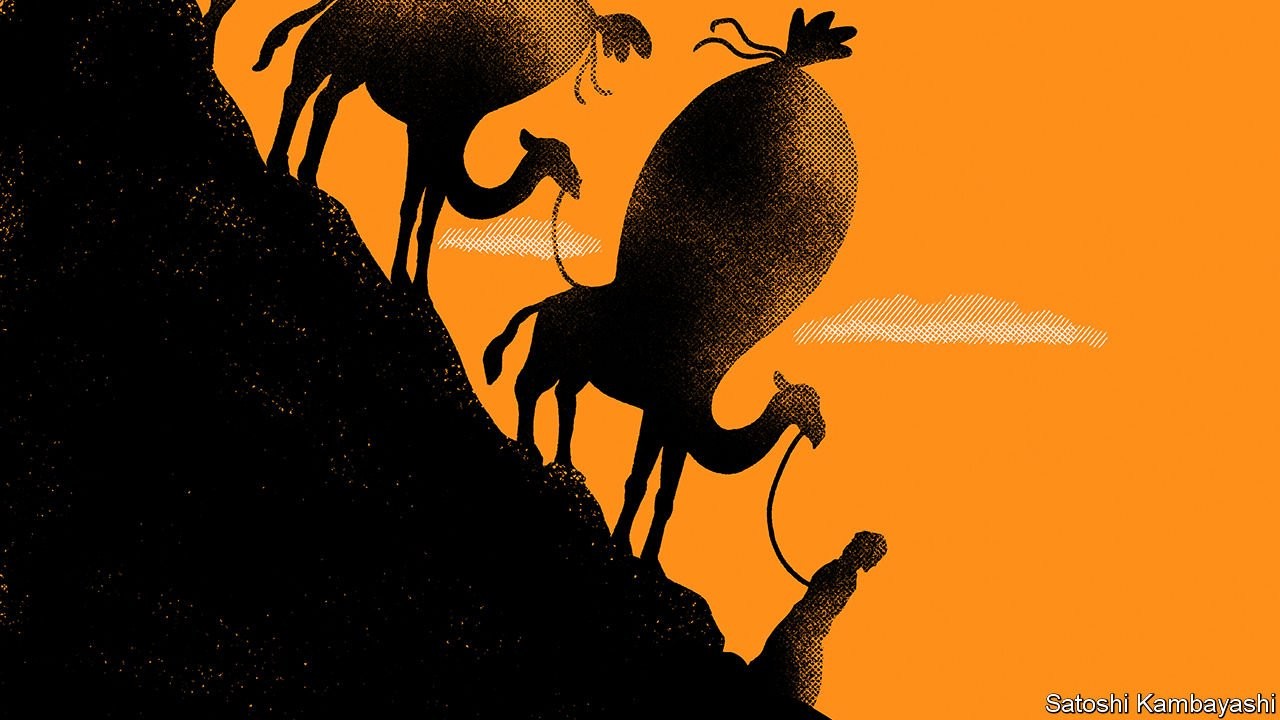
    Feature Image Credit: Harvard Business Review

  • Houthi attack on Abu Dhabi: Yemen civil war and Regional Complexities

    Houthi attack on Abu Dhabi: Yemen civil war and Regional Complexities

    On 17th January, the Houthis conducted their first attack on Emirati soil in years. Carried out in the heart of the country– Abu Dhabi –with the help of a UAV, the attack killed three foreign nationals working in the city– two Indians and one Pakistani. In the aftermath of the attack, the Arab Coalition intensified the air bombings of key strongholds of the Houthis, leading to an increase in civilian casualties in a proxy war that has already caused several thousand civilians their lives. The attack has also underlined the capabilities of the Islamist political outfit in striking a distant country, and not just its northern neighbour. The attack has also rendered the UAE as a country susceptible to attacks from hostile groups in the region.

    Costs of UAE’s intervention strategy

    Importantly, the attack has led to a scrutiny of UAE’s policy vis-à-vis the hapless South Arabian country. Not long ago, in February 2020, the Emirati leadership, in an official ceremony addressing the recent returnee personnel deployed in Yemen, added an achievement to its touted ‘Peace First’ strategy in the country[1]. The gulf country had begun its troop withdrawal from the war-torn country in July of 2019[2]. This move, though remarkable, was hardly surprising by a country that was stopped in its tracks after finding itself as a part of the Arab Coalition[3] back in 2015. But the withdrawal of troops from Yemeni soil didn’t mean a dilution of its involvement in the Civil War. The move by the Emirates was seen as merely a shift from direct involvement to an indirect one.[4] The leadership of the country had utilized its presence in Yemen to cultivate and build a network of belligerents of the Civil War, such as the Sothern Transitional Council (STC), Security Belt Forces and the Shabwani and Hadrami Elite forces to name a few.[5] A withdrawn and non-aggressive UAE depends heavily both upon and sponsors such groups to keep its influence in the country afloat. It had reportedly trained some 90,000 South Yemenis during its stint in the country.[6] These militias have fought, in the past, against the Houthis, Al-Qaeda in Arabian Peninsula (AQAP), Islah and the ISIS. In December last year, one such group, the Giants Brigades, attacked Houthis, eventually defeating them in the Shabwah province. The Houthi attack in January is seen as a retaliation for this precise attack.

    In December last year, one such group, the Giants Brigades, attacked Houthis, eventually defeating them in the Shabwah province. The Houthi attack in January is seen as a retaliation for this precise attack.

    Another key takeaway from the attack on 17th January is associated with the Saudi Arabia-UAE partnership. The Emirates, which contributed the second-largest troops to the Arab Coalition, had virtually abandoned Saudi Arabia in its effort to bring the Hadi government back to Sana’a. Since 2016 up to the troops’ pull-out, the country had focused mainly on counter-terrorism operations, primarily targeting Islah.[7] The two partners were pitted against each other when, in 2019, the Emirati-backed STC pushed itself into the provinces of Shabwa and Abyan held by the Saudi-backed government. Now, with the Houthis becoming a potent threat to the security of the UAE, the stress between the two governments is set to cool down. The attack has made UAE substantially, if not equally vulnerable, when compared with Saudis, to Houthis’ aggression. But it is not likely that the country will put an end to its troop withdrawal strategy. Its focus is likely to be on strengthening its security apparatus, something already visible in French, American and Israeli assistance.

    Attacks boost UAE-Israel Strategic Partnership

    The Houthis conducted another failed attack on Abu Dhabi in late January during Israeli President Herzog’s visit. The day was chosen to deliver a message to both Abu Dhabi and Jerusalem. This, and other numerous attempts by the Iran-backed Zaidi Shia militia to attack the Emirates, is set to further firm up the already burgeoning ties between the two. Immediately after the January 17th attack, Prime Minister Naftali Bennett offered Israeli ‘security and intelligence support’ to the victim state[8]. He committed to partner with the UAE to defeat ‘common enemies’. Right after the signing of the Abraham Accords, both the countries embarked upon strengthening security-related ties[9], leading to the signing of a strategic agreement to develop unmanned military and commercial vessels in November last year. Both the countries have been susceptible to attacks by Iran’s proxies. It is Israel’s North-eastern neighbour Syria that has posed a threat to its security. Now, Houthis’ reach to the Emirati soil renders Israel vulnerable to similar attacks, with speculations already in works in Israel.[10] Additionally, Houthis’ ties with Lebanese Hezbollah could aggravate the situation further. Israeli-Emirati partnership seems to be the greatest benefactor of the attack.

    the UAE has been applauded for pursuing a balanced approach between Saudi Arabia and the US on one hand and Iran and its allies on the other[13]. But with the continuous attack on Abu Dhabi by Iranian proxies, the relations between the UAE and Iran are set to face road blocks

    Just as Emirates was coping with the deadly attack from Yemen, another Iraq-based armed group conducted a drone strike on Abu Dhabi. Known by the name Awliyat al-Waad al-Haq, or the True Promise Brigades, the Shia Islamist group is widely believed to have close ties with both Tehran and Iraq’s Kataib Hezbollah. Though the Iranians have not publicly supported the attacks, they haven’t condemned them either. Moreover, the attacks on Abu Dhabi came just months after Emirati National Security Advisor Sheikh Tahnoun bin Zayed Al Nahyan visited Tehran where he touted his visit as a ‘turning point’ for the two countries[11] and visit of Iranian Deputy Foreign Minister Ali Bagheri Kani to Abu Dhabi, declaring that the two countries had agreed to open ‘a new chapter’ in their bilateral relations[12]. Also, the UAE has been applauded for pursuing a balanced approach between Saudi Arabia and the US on one hand and Iran and its allies on the other[13]. But with the continuous attack on Abu Dhabi by Iranian proxies, the relations between the UAE and Iran are set to face road blocks.

    Yemen’s Humanitarian Crisis

    Last year, in one of his first decisions regarding West Asia, President Biden revoked the Trump administration decision to recognize Houthis as a foreign terrorist group. After the recent attacks on Abu Dhabi and the al-Dhafra airbase, the Biden administration has been forced to reconsider its previous decision[14]. The US has, in response to the attacks, stepped up its naval deployment in the Gulf region, along with enhancing cooperation in intelligence and air defence with the Emirates. It also helped stave off other Houthi missile attacks on Abu Dhabi through US Patriot interceptors. The attacks also come at a crucial time when the talks between P5+1 and Iran regarding the Iran Nuclear Deal underway in Vienna. With eight rounds that have passed without any breakthrough, it remains to be seen how Houthi aggression impacts the JCPOA.

    The Civil War in Yemen is in its eighth year, with no signs of the end in near future. The casualties have reached as high as 377,000. It has resulted in a humanitarian crisis, pushing millions to the brink. According to a UNDP report, the war may cause more than 1.3 million casualties by 2030. Hence, we need to ask, has the international community failed to protect the Yemeni people?

    Notes

    [1] Jalal, I (2020, February 25), ‘The UAE may have withdrawn from Yemen, but it’s influence remains strong’ Middle East Institute https://www.mei.edu/publications/uae-may-have-withdrawn-yemen-its-influence-remains-strong

    [2] Ibid

    [3] Salisbury, P. (2020, July 1), ‘Risk perception and appetite in UAE Foreign and national security policy’ Chatham House https://www.chathamhouse.org/2020/07/risk-perception-and-appetite-uae-foreign-and-national-security-policy-0/8-case-study-uae

    [4] Jalal, I (2020, February 25), ‘The UAE may have withdrawn from even, but it’s influence remains strong’ Middle East Institute https://www.mei.edu/publications/uae-may-have-withdrawn-yemen-its-influence-remains-strong

    [5] Ibid

    [6] Ibid

    [7] Salisbury, P. (2020, July 1), ‘Risk perception and appetite in UAE Foreign and national security policy’ Chatham House https://www.chathamhouse.org/2020/07/risk-perception-and-appetite-uae-foreign-and-national-security-policy-0/8-case-study-uae

    [8] TOI staff, (2022, January 18),’Bennett offers UAE security and intelligence support after attack by Houthis’ Times of Israelhttps://www.timesofisrael.com/bennett-offers-uae-security-and-intelligence-support-after-attack-by-houthis/

    [9] Ulrichsen, K.C. (2021, August 6), ‘Restoring balance to UAE-Iran relations’ Doha Institute https://www.dohainstitute.org/en/PoliticalStudies/Pages/Restoring-Balance-to-UAE-Iran-Relations.aspx

    [10] Melman, Y. (2022, January 21),’After Abu Dhabi, is Israel’s Red Sea port of Eilat next target for Houthi drone strike’ Haaretz https://www.haaretz.com/israel-news/israel-red-sea-eilat-target-houthi-iran-drone-strike-abu-dhabi-1.10553018

    [11] Hafezi, H. (2021, December 6), ‘UAE security official pays rare visit to Iran to discuss ties, regional issues’ Reuters https://www.reuters.com/article/us-iran-emirates-idAFKBN2IL0ME

    [12] Ulrichsen, K.C. (2021, August 6), ‘Restoring balance to UAE-Iran relations’ Doha Institutehttps://www.dohainstitute.org/en/PoliticalStudies/Pages/Restoring-Balance-to-UAE-Iran-Relations.aspx

    [13] Ibid

    [14]  Landay, J (2022, January 20). ‘Biden says administration mulling re-designating Yemen’s Houthis a terrorist group’, Reuters https://www.reuters.com/world/middle-east/us-yemen-envoy-lenderking-visit-gulf-london-state-department-2022-01-19/

    Feature Image Credit: www.mirror.co.uk

    Image Credit: itv Times News

  • FCRA, NGOs and the Question of Which Foreign Funding Is in National Interest

    FCRA, NGOs and the Question of Which Foreign Funding Is in National Interest

    Foreign interests and influences come with foreign capital and these are far stronger than what the funds flowing to NGOs bring with them.

    The Foreign Contribution (Regulation) Act (FCRA) registration or license that enables the licensees to get foreign funds has either not been renewed or cancelled for many non-governmental organisations or NGOs.
    Problems created for of one of the best known of them, Missionaries of Charity, drew international attention and criticism since the organisation has been doing yeoman’s work in giving succour to the poor. Under pressure, permission was restored for the organisation and along with it the FCRA of prestigious institutions like IIT Delhi and JNU were also restored.

    Why did all this happen in the first place?


    Read More

  • Responsible Decision-making in the Face of Corona – A Need for a Metric

    Responsible Decision-making in the Face of Corona – A Need for a Metric

    [powerkit_button size=”lg” style=”info” block=”false” url=”https://admin.thepeninsula.org.in/wp-content/uploads/2022/02/Issue-Brief-TPF_Corona-Metric-2_compressed-1-12-1.pdf” target=”_blank” nofollow=”false”]
    DOWNLOAD PDF
    [/powerkit_button]


    Abstract

    The asymmetry of the human mind in treating the information that is currently available and the information we do not have is remarkable. During the Covid-19 pandemic, many people have been conscious to take precautions to prevent contracting the virus oneself or their family members. However, the consequences of a person infecting another are not consciously considered by everyone while going on about their ‘new normal’ life making daily transactions that involve the labour of a multitude of people. Nobody pauses to wonder whether anyone in the supply chain of the product or service consumed by an individual has contracted the virus or died due to the virus in the process of its production. This is because that information is unavailable to us in a tangible form for our minds to perceive and hence it chooses to ignore it. Although the number of cases increases with every wave, people have started accepting it or rather have become desensitised to the number of lives lost to Covid-19, mainly because these deaths are unseen. This article explores whether such a pondering – number of people infected and consequently lives compromised – would be a consideration in the decision-making in the production and consumption of products and services. If so, is there a need to develop a metric to inform us of this number? Would it be feasible to have such a metric? This article attempts to quantify these unseen deaths, so as to sensitise people to the consequences of a person getting infected.

    Introduction:

    Now, two years after the onset of the Covid-19 pandemic, most people reading this would have lost one or more relatives, friends, colleagues or an acquaintance due to the infection. I am no exception. But the trigger for this article is the death of a couple, Razia and Nasir (names changed) that happened in the summer of 2021. Their small fruits and vegetable outlet, by a synergic arrangement, was situated within the spacious premises of another outlet – a cold storage that dispenses meat, poultry and fish for the upwardly mobile residents living in a posh locality of Bangalore. 

    [powerkit_button size=”lg” style=”info” block=”true” url=”https://admin.thepeninsula.org.in/wp-content/uploads/2022/02/Issue-Brief-TPF_Corona-Metric-2_compressed-1-12-1.pdf” target=”_blank” nofollow=”false”]
    READ MORE
    [/powerkit_button]

    Featured Image Credit: OSORIOartist

  • Dissonance and disharmony the military could do without

    Dissonance and disharmony the military could do without

    In a few months from now, the campaigning season opens up along the LAC with China, with the likelihood that the ongoing tensions and stand-off may very well spill over into something more serious, may be even limited conflict perhaps?

    In such unsettled times the military leadership must obviously be singularly focused on countering challenges that it is likely to confront in the coming days. Thus, any needless controversy that embroils the military at this critical juncture, especially of the politically motivated variety, will tend to divert the leadership’s attention from the task at hand and adversely impact the morale of the rank and file.


    Read More

  • Changing Socio-Economic Situation of UP over the past Decade

    Changing Socio-Economic Situation of UP over the past Decade

    Elections have been announced and UP will be crucial. Parties have been campaigning for them for at least the last 6. The media has been awash with advertisements portraying a rosy picture of UP. They needed this unprecedented blitzkrieg to overcome the negativity due to the poor of the COVID second wave. Anyway, the and the government try to present a positive image of their work. Other state governments followed the UP, to the delight of media which is garnering much revenue.

    What is the reality on the ground in UP? Farmers, workers and have been protesting. Why this protest if the situation is as rosy as is projecting? Where does lie? Citizens need to know, to make up their minds about who to vote for. Since there has been growth. Even when it is small but positive, will be visible in socio-economic parameters, like, education, longevity, etc. There will be more roads, bridges, agricultural production, and so on.

    So, it is no brainer that the last 5 years would show progress compared to the immediately preceding 5 years and the ones before that, etc.. The meaningful comparison has to be based on changes in the ratios and growth rates between the earlier period and the present one. That tells us whether matters will improve faster or stagnate. Also, comparisons with all India figures would yield a picture of where UP stands compared to other states.

    If the present regimes 5 years are compared to the 5 years earlier this would be unfair since the last two years have been unusual – hit by the pandemic and the lockdown. The economy as a whole experienced a downturn and so did UP. A meaningful comparison would be between the pre-pandemic three years and the 5 years before them.

    Growth has Decreased

    A difficulty arises regarding measuring the growth of the economy since the Indian economy’s data is suspect, especially after demonetization. A disjuncture has been created between the organized and unorganized sectors while the data is largely from the former. So, the latter goes largely unrepresented and this causes a large error in the growth rates.

    Ignoring this aspect for the moment, let us analyse the official data, assuming it to be correct. It shows that out of the 20 major states, UP’s position remains at 19 in the last 10 years. In effect, there is no relative improvement in UP’s situation at the all India level.

    This is because the official growth rate was 11.8% in 2016-17 and has fallen to 6.3% in 2018-19 before the pandemic. The decline is also visible in the real income per person. Between 2012-13 and 2016-17, it increased by 27.63%. If we take the average over three years it increased by 16.6%. Leaving out the pandemic year of 2020-21, it rose by 9.23% (including the pandemic year it was 0.43%, that is it hardly grew). Including inflation also the per-person income growth slowed down. It was 25% during 2017–21 as compared to an increase of 65% during 2012–17.

    Slower Structural Transformation

    UP’s income (GSDP) was Rs.19 lakh crore out of GDP of Rs.190 lakh crore in 2019-20 – 10% of the country’s income. But its population share is estimated at 17%. The situation has not changed in the last 5 years and that is why the per-person income capita income rank or UP remains at 19th out of the 20 major states.

    One of the factors underlying the slow growth of UP is that it has structurally not transformed as much as has happened for the country as a whole. In UP, the share of agriculture is 24% while that of services is 50%. The all-India figures are 19.7% and 54.3% respectively. So, UP’s structural transformation is lagging behind that of all of India. Since agriculture cannot grow as fast as the services sector, the state’s growth rate is bound to be less than that for the nation. This feature is also the reason for weak employment generation in UP because agriculture cannot absorb more workers, in fact, it is characterized by mechanization and disguised unemployment.

    UP employed 57.13 lakh under MGNREGS, in May 2020 which was the highest in India. This points to high rural unemployment in UP. The large scale migration of workers from other states to UP in 2020 is an indication of the weak employment generation in UP which forced many to look for work elsewhere. No wonder the state faced the biggest impact of Coronavirus in India both in terms of employment and health aspects.

    Unfortunately, data invisibilizes the unorganized sector and hence the poor. The country has suffered policy induced crisis due to demonetisation, implementation of GST, NBFC crisis and the pandemic induced lockdown. This has deeply impacted the unorganized sectors of the economy and they have suffered massive losses during 2016-17 to 2020-21. The total loss for the unorganized sector in UP is estimated at 10% of the national loss during this period and amounts to Rs. 7.1 lakh crore. That is an average loss per annum of Rs. 1.78 lakh crore. This loss is far more than what the social welfare schemes of the government give. In any case, the schemes are mired in corruption and inefficiency and do not reach everyone uniformly. So, the poor are the net losers in spite of the government schemes.

    Government’s Efforts Slowing

    Are the government schemes expanding? How much are they able to help UP develop and catch up with the other states of India?

    No doubt, the absolute budgetary expenditures rise with inflation and growth. So, on most items more is spent than in earlier years. But to know whether these expenditures will help improve the situation or not, one has to compare the expenditures as a ratio of the state’s income (GSDP). On this score, the Budget data shows:

    a) Development expenditure peaked in 2015-16 at 16.66% and declined to 13.28% in 2019-20. This signifies that development is decelerating.

    b) Non-Development expenditure rose from 6.81% in 2015-16 to 8.49% in 2018-19 and was at 7.12% in 2019-20. This reflects the expenditure on grandiose show schemes of the state government which resulted in a decline in developmental expenditures mentioned above.

    c) No wonder expenditure on Education, etc. peaked in 2016-17 at 4.21% and fell to 3.07% in 2018-19 and was at 3.3% in 2019-20. The target should have been 6% of GSDP on public education. Instead of moving towards that goal, there is retrogression.

    d) Similarly, health expenditure peaked in 2016-17 at 0.84% and fell to 0.79% in 2019-20. It should have been raised to at least 3% of GSDP and instead, it fell. The impact of this was visible during the pandemic with poor health facilities in large parts of the hinterland and unnecessary deaths.

    e) Budgetary Capital outlay peaked in 2015-16 at 5.66% and fell to 3.55% in 2019-20. This slows down infrastructure development and adversely impacts private investment.

    In brief, as the economy expands, there will be development in a state – more hospitals, schools, colleges and so on. Further, development may be skewed and leave the poor behind as is the case in recent times. The real picture becomes clear when one looks at the ratios and compares them with other states. In these respects, UP has lagged behind both its past performance and other states. The virtual campaigning required due to the spread of Omicron would marginalize the less tech-savvy parties and give BJP an advantage in painting a glorious image of itself, in spite of its recent indifferent performance.

    This article was published earlier in hwnews.in

    Feature Image Credit: www.dnaindia.com

  • The Strategic Imperative of Developing Ladakh

    The Strategic Imperative of Developing Ladakh

    Abstract
    Following the Galwan valley clash in 2020, Ladakh has become the most important place of strategic and operational importance since it adjoins two adversarial neighbours who are strategically aligned with each other. China’s belligerence is taking many forms such as information warfare, land transgression, allegations of hacking, etc. The recent claim of unfurling of the Chinese flag supposedly in Galwan, which was later clarified to have been done in another location is a spoke of its information warfare against India. China’s construction activities enabling quick buildup of its troops and armaments are also a major cause of concern for India. While there are some initiatives launched by the Indian army and the Central government to strengthen the infrastructure in the Northern borders, special attention needs to be paid towards the holistic development of human resources and infrastructure in Ladakh.


    2022 began with a fresh show of Chinese belligerence in Ladakh, with a well-known Chinese media outlet putting out a tweet saying, “China’s national flag rises over Galwan Valley on the New Year Day of 2022“, following up with a short video of the event. The tweet further claimed that the flag was special, having flown earlier over Tiananmen Square in Beijing[i]. As Indian government sources confirmed that the ceremony did not occur in any disputed area, the Indian Army released photographs of soldiers hoisting the flag in the Galwan Valley on the occasion of the New Year[ii]. In other incidents across the rest of the Line of Actual Control (LAC), China suddenly ‘renamed’ 15 locations in Arunachal Pradesh, continuing efforts to undermine Indian sovereignty in that state. The Chinese embassy in Delhi wrote to counsel Indian MPs who had attended a reception hosted by the Tibetan government in exile in late December 2021[iii]. The frigid relationship between the two nations was underscored once again by the inconclusive outcome of the 14th round of Corps Commander’s talks held on the LAC on 12 Jan 2022[iv]

    Chinese activities have not been restricted to the information domain alone. Construction of a bridge across the Pangong Tso, starting 20 km east of Finger 8 to connect its North and South banks, has come to light, providing an additional approach for a quick build-up of troops and logistics. While the above actions by China, both in the realm of information warfare and otherwise, have been effectively countered by the Indian government[v], the overall situation across the entire LAC continues to be of significant concern. This is despite the much-publicized sharing of sweets between Indian and Chinese troops at ten border crossings across the LAC[vi] in January.

    Strategic Importance of Ladakh

    As compared to the rest of the LAC, the situation in Ladakh is serious. The killing of 20 Indian soldiers, including a Commanding Officer, in June 2020 has thrust the region into the nation’s collective consciousness. Galwan, Gogra, Daulet Beg Oldi, Pangong Tso, and Chushul are household names across the country and the public today is better educated about the sheer complexity of the border issue and our history of dealing with China on the matter. The importance of safeguarding national sovereignty has taken centre stage with issues such as the institution of ‘no patrolling zones’ and perceptions about the LAC being subjected to frequent debate in the media and elsewhere.

    In the aftermath of the Galwan events, the strategic importance of Ladakh, seen more through the lens of tourism in tranquil times, has acquired renewed relevance. It is the only borderland of India adjoining two hostile states, both of which have gone to war with India at different times for their own reasons. Ladakh abuts Gilgit Baltistan, which is under illegal occupation of Pakistan, and Tibet, which is under China’s forced occupation. As the likelihood of collusive action between these countries increasingly grows, Ladakh will remain primus inter pares amongst all the regions on our Northern borders for strategic and operational reasons. Accordingly, plans to bring about a qualitative change in capacity and capability in all aspects of the region’s development to meet security challenges and human aspirations acquire greater importance vis-a-vis other locations.

    The above aspect is well appreciated by the Central Government, which has taken many initiatives towards strengthening infrastructure development along the Northern borders in recent years. With regards to Ladakh, development has accelerated dramatically post creation of the Union Territory (UT) of Ladakh in 2019. A review of the UT Administrations’ activities after two years of its creation by the Lt Governor during a media interaction reveals the scale and scope of its achievements[vii]. Future plans are contained in a comprehensive ‘Vision Document,’ prepared on its behalf by a reputed consultancy, available on the internet[viii]. The Document is a comprehensive data-backed effort, listing the status of various developmental markers today and the desired end state. Achieving the vision would require effort, time, and planning for its translation into practical and prioritized implementables, after further considering risks, costs, benefits, and overall viability while adhering to timelines. Despite the progress made on many fronts and considering the constraints remaining, continued and focused long-term efforts by the administration are required here: equally important, the current and future security perspective has to be a key pillar of such plans.

    Development Issues and Imperatives

    A key priority that requires greater impetus is to accelerate the movement of locals for populating areas that, for reasons of geography and proven Chinese intent, have acquired strategic or operational significance. Page 9 of the Vision Document[ix] mentions that 65% of the total population is in and around Leh and Kargil cities. Though the paper has recommended setting up other population centres, enhanced hostile activity by China in and around places like Demchok on the LAC warrants that such areas also be included for consideration. In recent years, the Border Roads Organisation (BRO) has dramatically enhanced connectivity. Greater resources and manpower have constructed important roads and opened up East Ladakh and other parts of the UT[x]. The next step is to actualize a long-term plan with short and intermediate goals, which could see the setting up of small townships – after creating suitable infrastructure in housing, health, education, connectivity, and other civic amenities to support small-sized populations. Here the focus has to be on providing livelihood options other than the purely pastoral, with options explored for setting up Small Manufacturing Enterprises (SMEs), which might take time to prove financially viable. In this respect, China has succeeded with the construction of border villages and resettlement of Tibetans in areas opposite the LAC in Arunachal Pradesh and its disputed border with Bhutan[xi]. Though the Indian experiment in that region, which commenced post-1962, has not been as successful, it has to be pushed through in Ladakh. Here, reconciling developmental cum security needs with genuine environmental concerns would be necessary, considering that the Army’s premier firing range in Ladakh in the Tangtse Chushul area was closed some years ago for such reasons.

    There is scope too for the military, as an essential stakeholder to assist in development in other spheres, such as preparation of dual-use facilities; helipads and Advanced Landing Grounds wherever feasible, are one example. Another option is to create infrastructure for specialized training in the Ladakh region – archives of the Press Trust of India mention an international training event, ‘Exercise Himalayan Warrior’ held in 2007 where Indian and British troops trained together in mountain warfare techniques in an area North of Leh[xii]. Training facilities of this nature would naturally benefit the local economy, though the fallout of such strategic signalling would have to be carefully weighed.

    A fourth option to enhance the military’s participation, albeit indirectly, is to increase local recruitment. While recruit balancing would be carried out at Army Headquarters, there is a need to examine the feasibility of expanding the number of Ladakh Scout battalions (either regular units or on the Territorial Army model), which are eminently suited for fighting in such terrain. Being a permanent measure, this would offset, to an extent, the expense on induction of at least a few units from outside Ladakh. Benefits accruing from deploying local sons of the soil can be easily appreciated.

    Harnessing through Civil-Military Engagement

    At the turn of the century, it was in Ladakh that the Indian Army launched Operation SADHBHAVNA. Displaying strategic foresight, then GOC 14 Corps, Lt Gen Arjun Ray, set a one-point aim – ‘To Forestall Militancy in Ladakh.’ The program, a runaway success, was adopted subsequently by other field formations of the Indian Army. A process of continued oversight, course correction, innovation, and streamlining at various levels has made it an effective tool for helping assimilate our border populations into the national fold by winning hearts and minds. Here, it must be emphasized that SADBHAVNA has not been conceptualized as a developmental program per se. Neither is such an approach being followed on the ground – the projects being small, community-based, and including aspects of human resource development. It has had very positive spinoffs, with Ladakh being a significant beneficiary. With major development programs like the Ministry of Home Affairs’ flagship Border Areas Development Program (BADP) and others at the state level already in place, it is worth examining if an interaction between the local administration (at the panchayat level, say) and local military garrisons, both working from the ground upwards can help further synergize efforts to achieve optimum results.

    Strategic contestation between India and China is a reality. The border issue will continue to influence many aspects of bilateral relations. Continued information warfare, a huge trade deficit, allegations of hacking, and now evidence of massive tax evasion by smartphone companies[xiii] are indicators of the need for a realistic appraisal of that country’s intentions and strengthening own capabilities. The development of Ladakh is an important factor in this regard.

    Notes

    [i] Free Press Journal, January 03, 2022.

    [ii] ‘LAC Standoff: India exposes China’s lies in Ladakh as Indian Army hoists tricolour in Galwan Valley’. Ajeyo Basu, News24, January 04, 2022.

    [iii] ‘China protests Indian MPs’ attending Tibetan reception, Tibet govt-in-exile fires back’. Geeta Mohan, India Today, January 01, 2022.

    [iv] ‘Joint Press Release of the 14th round of India-China Corps Commander Level Meeting’. Ministry of External Affairs, Government of India, January 13, 2022.

    [v] ‘Government breaks silence, hits back at China on letter to MPs, Pangong bridge’. Shubhajit Roy, Indian Express, January 07, 2022.

    [vi] ‘New Year: Indian, Chinese troops exchange sweets at Demchok and other border points’. Press Trust of India, January 01, 2022.

    [vii] ‘Major transformation in developmental profile of Ladakh UT in nearly 2 years: Lt Governor’. Mohinder Verma, Daily Excelsior, September 18, 2021.

    [viii] ‘Vision 2050 for UT of Ladakh’. Government of India.

    [ix] ibid

    [x] ‘Five Mega Road Infrastructure Projects Launched in Ladakh Amid Border Row With China’. PTI, October 01, 2021.

    [xi] ‘More evidence of China building villages in disputed areas along borders with India, Bhutan’. Hindustan Times, November 18, 2021.

    [xii] Press Information Bureau, Government of India. Ministry of Defence note, Exercise “Himalayan Warrior”. September 16, 2007.

    [xiii] ‘Xiaomi India under lens: DRI says evasion of customs duty of Rs 653 cr by Chinese smartphone maker’. Economic Times, January 05, 2021.

    Feature Image Credit: Bloomberquint

    Map Credit: Newschrome

    Images: www.deccanherald.com  and www.business-standard.com

  • The power of poetry in politics and indigenous people of India

    The power of poetry in politics and indigenous people of India

    O ancestral spirits!
    How now do we escape,
    From the conspiracies of time,
    Concocted on the flames
    That from the sweltering earth rise?
    Where all is slowly being roasted alive,
    The air, the forests, and the soil,
    And man – in body and in mind?

    – Lament in Songs (Geeton Ke Bilaap) through Jacinta Kerketta

    A profound political philosopher of ancient Athens whose administrational academics left people in admiration and aghast protested against poets and critiqued poetries. He feared the passion or public emotion evoked by poets, and he reckoned that rational thought could be ravaged by public passion.

    “For a poet is an airy thing, winged and holy, and he is not able to make poetry until he becomes inspired and goes out of his mind and his intellect is no longer in him.”

    ― Plato

    Poetry is one of the ancient art forms, the earliest kinds of poems were recited and passed on orally before the evolution of scripts. Administrative and ancestral accounts were more merely to remember due to the poem’s rhythmic and repetitious nature.

    Influence of poetry in politics

    Through triumph and terror or from pain to power, poetry allows people to paint different shades of human emotions. Poetry has served as a significant tool to convey meanings and messages since the beginning. It is also used as a channel to cast awareness on sound socio-economic concerns and personify political questions. Poems play a pivotal role in collective resonation to specific themes and it embraces the efficiency of words which could be serene as a sea or sharp as a sword.

    In the year 1821 Percy Bysshe Shelley wrote eloquently in his essay A Defence of Poetry that the poet creates humane values and imagines the forms that shape the social order and“Poets are the unacknowledged legislators of the world.” Political poetries pave a path to discuss injustice in the societies and build a bridge between the emotive expression of the state administrators and its citizens. Political poetries are not definitive they are not bureaucratic blueprints or literary balms either, they imprint the cyclic endurance of the past, present, and future. They massively represent the public’s fear and anguish or equip the endangered with empowerment.

    Adrienne Rich compellingly stated in a commentary that –

    “I’m both a poet and one of the “everybodies” of my country. I live with manipulated fear, ignorance, cultural confusion and social antagonism huddling together on the faultline of an empire”.


    Profile and position of indigenous people of India

    Histories have created many poets and many poets have influenced histories, traditionally archiving their histories through songs, folklore, and myths. Adivasis have aced their way through their ancestral accounts accumulation. Adivasis are folks who function their lives through flourishing flora and fauna encapsulated with enriching cultures and practices and lives among the areas of the Indian sub-continent. Adivasi is a common term that was coined in the 1930s to address the indigenous groups of India, while the legal term ”scheduled tribes” is used in the constitution. They are the most prehistoric inhabitants of the sub-continent who are a heterogeneous group with diverse ethnicity and linguistics. Post the Aryan intervention the Adivasis began to trade with people of the plains, it was during the mid-eighteenth century that the indigenous people of the east revolted against the political British and its intrusive regulation upon the mainlands of the indigenous folks.

    This renounced the defenceless position of the land and its people. Even, today the Adivasis encounter various forms of social discrimination, political power lash, and remain economically stagnant.

    Balance between battles and banquets- Political poetries of the past and the present

    Songs, myths, and folklore revolving around landscapes, political relations among the Adivasis or with the non-Adivasis, human emotions were all oral histories being passed on to the next generation. The stories of Adivasis were massively written by people who did not belong to the Adivasi community, the literary endeavours of the tribes were not adequately acknowledged due to the lack of recognition of languages amongst the state. The poems written by the poets or writers of the community have an extensive influence over the political lives of Adivasis in terms of the political periphery.  In most poems by the Adivasis, the muscles of metaphors were majorly merged with nature or the environment. The largest of them are written in their indigenous languages like Kotas, Santali, and Ho & others where some are translated to other vernacular languages and some are not. Many political poetries raise questions against the havoc harboured by a biased notion of “progress”. The following are a few poetical works of indigenous people of India which brought out Adivasi’s political proximity.

    The editor of Chandini Magazine, Susheela Samad was one of the earliest Adivasi writers in the 1920s, where two of her poetry were published in the 1940s. In the year 1960 several stories of Alice Ekka were published in the Adivasi Patrika who was also the first female Adivasi writer.

    The very famous Temsüla Ao an Ao Naga tribal poet and an ethnographer who worked on Oral histories published plenty of poetry from 1988 to 2007 shedding light on the word “song” in all her titles emphasizing the essence of poems in tribal song culture and expressing the voices of her community against land & cultural alienation.

    Referring to the violence in the valley, the poet says

      ” But to-day

       I no longer know my hills,

       The birdsong is gone,

       Replaced by the staccato

       Of sophisticated weaponry. ” (“My Hills” 19-23)

    The poet laments the loss of peace and verdure in her region.

    The director of Adivasi Bhasha Shodh Sansthan (Tribal Language Research Institute) Ushakiran Atram is a Koitur poet and a writer who held compelling narratives on patriarchal injustice and political vocalization from a woman’s scope of the lens.

    “Bata maan, main kiski hun? Baba-Bhaiya ki? Mere Shauhar ki? Sawkaar-Ranger-Patil ki? Jameendaar-Darzi-Sonaarki? Kiski hun main?”—Tell me, mother, whose am I? Father’s or brother’s? My husband’s? Moneylenders-Rangers-Patils? Landlords-Tailors-Goldsmiths? Whose am I?

    the mentioned poem is from one of her books named ‘Motiyarin’ A Gonti term which means a position given to a woman leader who supervises the overall activities in Gotul.

    “Unless you speak their dialect, you’re an outsider,” says Lakshmanan who accompanied Tamil Nadu Pazhankudi Makkal Sangam, a movement that worked for indigenous welfare. In 2010, he also wrote an anthology of poems titled ‘Odiyan’ which means the evil spirit through which he paints the colours of pain and anguish of the Irular community which was partly in their language.


    Jacinda Kerketta a young poet and a journalist of the Oraon tribe raises questions about the standpoint on “development” on tribal lands, In the poem “Oh Shahar” (Oh City) she writes

    Leaving behind their homes,

    Their soil, their bales of straw,

    Fleeing the roof over their heads, they often ask,

    O, City!

    Are you ever wrenched by the very roots?

    In the name of so-called progress?

    The author brings out the intensity of anthropocentrism imposed upon the Adivasi arena and all her poems do not victimize their position instead evokes thought-provoking questions.


    Recently, Arivu a resounding rapper and a political poet brought out many problematic political practices of history and the present against his community through his album called ‘Therukural’ (voices of the streets), and in 2021 the song “Enjoy Enjaami” which is a blend of Rap and ‘oppari'(lament song sung during mourning )took over the stage of multi-media, the artist poetically and politically protested in all his works intending to enlighten the traces of civilization before caste and issues of inequality.


    Waharu Sonavane, a Bhilli poet and an activist whose “Stage” was an icebreaker that questioned the leadership of a major movement – Narmada Bachao Andolan and indigenous representation in bearing the torch.


    Will the mainstream history intersect Adivasi’s ancestral accounts? or will they contradict? Poetical poems fade along with time, they lose their essence of eventual happenings but strikingly hold the public psychology of the period. Political poems of indigenous tribes of India pose their position into viewing history from a different lens – meaning to revisit the history not just from conventional collectives but also to learn from our oral archives, songs and stories.

    The following poem was written by Waharu Sonavane; translated by Bharat Patankar, Gail Omvedt, and Suhas Paranjape –

    Stage

     We didn’t go to the stage,

    nor were we called.

    With a wave of the hand

    we were shown our place.

    There we sat

    and were congratulated,

    and “they”, standing on the stage,

    kept on telling us of our sorrows.

    Our sorrows remained ours,

    they never became theirs.

    When we whispered out doubts

    they perked their ears to listen,

    and sighing,

    tweaking our ears,

    told us to shut up,

    apologize; or else…


    Feature Image Credit: www.climatescorecard.org

  • RCEP, Indo-Pacific Economic Framework and Vietnam

    RCEP, Indo-Pacific Economic Framework and Vietnam

    The World Bank projection for the RCEP is indeed very impressive and the Member States will see GDP increase by 1.5 per cent. Furthermore, by some estimates, the RCEP could add almost US$ 200 billion to the global economy by 2030.

    ASEAN Member States, Australia, China, Japan, South Korea, and New Zealand have heralded the Regional Comprehensive Economic Partnership (RCEP) on 01 January 2022. This 15 Member consortium is the largest economic grouping and constitutes nearly 30 per cent of the global population which relates to a market of 2.3 billion people with an output value of about US$26.2 trillion with over a quarter in world exports. The World Bank projectionfor the RCEP is indeed very impressive and the Member States will see GDP increase by 1.5 per cent. Furthermore, by some estimates, the RCEP could add almost US$ 200 billion to the global economy by 2030.

    Infographics Credit: Vietnam Investment Review

    As far as Vietnam is concerned, the leaders in Hanoi must be happy to see the RCEP take concrete shape given that it was signed in November 2020 during the ASEAN Summit under Vietnam’s chairship. Vietnam, according to Fitch Solutions, is expected to benefit enormously from the RCEP particularly the IT, footwear, agriculture, automobiles, and telecommunications sectors being the major export categories. The RCEP will also provide Vietnam access to huge consumer markets which could be double the size of those included in the CPTPP. Vietnam can potentially move to become a high-tech manufacturer, and the RCEP can facilitate “local firms increase exports and attract high-quality goods for its consumers. Likewise, agriculture and fisheries product exports will benefit”.

    Vietnam, according to Fitch Solutions, is expected to benefit enormously from the RCEP particularly the IT, footwear, agriculture, automobiles, and telecommunications sectors being the major export categories

    Vietnam’s economic outlook for 2022 is positive with numerous growth opportunities. The National Assembly has identified (2021-2025 period) focus areas in sectors such as “digital economy, hi-tech industries, developing the urban economy, strengthening regional connectivity, strengthening the role of key economic zones, and restructuring to achieve a green and sustainable economy among others”. These sectors can be expected to grow given that the country has strong economic indicators notwithstanding the downturn in economic growth due to COVID-19. This is premisedon “investor-friendly policies, relative economic and political stability, cost efficiency, and consumer demand prospects, supply chains restructuring in Asia” which will attract both old and new investors.

    However, Vietnam should also be prepared for the ongoing and impending geo-economic and geopolitical triggers emerging from contestation between the US and China. During the East Asia Summit in October 2021, President Biden announced that the US was considering a major trade and economic initiative in the form of an “Indo-Pacific economic framework”. Soon thereafter Commerce Secretary Gina Raimondo visited Japan, Malaysia, Singapore, and South Korea to “begin discussions on potential negotiations that could start in early 2022”. Besides some Members of Congress, the new framework is also inspired by Australia and Japan, who had called for a “more active U.S. trade policy, including U.S. leadership in regional trade initiatives”. Above all, the initiative should be seen as a move by the Biden Administration to put to rest any doubts in the minds of regional leaders that the US “lacks an economic and trade strategy sufficient to counter China’s increasing economic influence” in the aftermath of President Trump decision to withdraw from the proposed 12-nation Trans-Pacific Partnership (TPP) in 2017.

    The new US economic framework, it is hoped, will also lessen fears in the minds of regional countries arising from the geopolitical-geostrategic issues between the US and China. The US’ “free and open Indo-Pacific” strategy which pivots on ‘rule of law’ is essentially diplomatic and military and is symbolized by the Quadrilateral Security Dialogue among the US, Japan, India, and Australia (the Quad) and the Australia-United Kingdom-United States (AUKUS) security partnership.

    The Quad has made significant progress and the first-ever in-person Leaders’ Summit was held in September 2021. It was agreed to advance practical cooperation on 21st-century challenges such as “ ending the COVID-19 pandemic, including by increasing production and access to safe and effective vaccines; promoting high-standards infrastructure; combatting the climate crisis; partnering on emerging technologies, space, and cyber security; and cultivating next-generation talent”. The leaders also called for building quality infrastructure in the Indo-Pacific region which was targeted against China’s Belt and Road Initiative (BRI).  As far as the AUKUS is concerned, the rationale is quite clear and is driven by the growing Chinese assertiveness amid fears of extreme coercion against regional countries particularly Taiwan and the claimants of the South China Sea.

    The RCEP and the “Indo-Pacific economic framework” are significant developments but can potentially pose a dilemma for Vietnam

    The RCEP and the “Indo-Pacific economic framework” are significant developments but can potentially pose a dilemma for Vietnam. There are numerous economic benefits to be accrued from the RCEP, but at the same time there are both economic and strategic rewards from the “Indo-Pacific economic framework”.  The US Indo-Pacific strategy has not found much favour in Hanoi; instead, Vietnam has chosen to support and pursue the ASEAN Outlook for Indo Pacific (AOIP) which envisages ASEAN Centrality and the East Asia Summit (EAS), as the underlying principle for promoting cooperation in the Indo-Pacific region.


    Feature Image Credit: worldakkam.com

  • The Cold War that Wasn’t

    The Cold War that Wasn’t

    US President Joe Biden has repeatedly cast his country’s rivalry with China as a battle between democracy and autocracy, an ideological clash reminiscent of the Cold War. This narrative is inaccurate – the United States and China are locked in a competition for strategic dominance – and all but precludes resolution. Whereas demands related to tangible assets and security concerns can be accommodated, ideological struggles typically end one way: with the unconditional defeat of one of the parties

    The US should not be attempting to “defeat” China, as it did the Soviet Union, because, first and foremost, China is not on a quest to spread “socialism with Chinese characteristics” around the world. When Chinese President Xi Jinping declared in 2017 that “war without the smoke of gunpowder in the ideological domain is ubiquitous, and the struggle without armament in the political sphere has never stopped,” he was mainly demanding that outsiders respect China’s institutions and cultural traditions.

    The US is an exhausted power, and it is now being challenged by a rising one. To ensure that this well-known geopolitical dynamic does not end in war, the US must abandon jingoistic rhetoric and replace megaphone diplomacy with wise and creative statesmanship.

    This partly reflects Chinese nationalism, fed by historical narratives, especially the memory of the “century of humiliation” (1839-1949), during which China faced interventions and subjugation by Western powers and Japan. But it is also pragmatic: The Communist Party of China recognizes that some domestic trends could destabilize the country and eventually even undermine the CPC’s rule.

    For example, China’s economic rise has produced an educated, well-connected, and fast-growing middle class. If these increasingly powerful consumers rejected restrictions on private-sector activity or limits to free expression, the CPC would have trouble on its hands. Given this, the CPC views US advocacy of political freedom and human rights in China as an effort to subvert its rule.

    Even America’s drive to export liberal democracy to Asia and Africa has been less an ideological problem for China than a strategic one. Functioning democracies are likely to be harder bargaining partners for China and might even be brought into US-led anti-Chinese alliances.

    On this front, China’s fears have probably been assuaged by recent developments. With the from Afghanistan and the Taliban’s quick reconquest of the country, America’s democratic “crusade” – to borrow the language of former US President George W. Bush – seems to have reached an ignominious conclusion.

    But even if the US is not bringing new countries into the democratic fold, its existing alliance system is formidable, and Biden is committed to strengthening it further. For example, he has worked to resuscitate NATO; created , a new defense and technology alliance with the United Kingdom and Australia; and deepened security cooperation among key democracies in the Indo-Pacific (Australia, India, Japan, and the US, known as the “Quad”).

    This focus on alliances is probably the biggest difference between Biden’s China policy and that of his predecessor, Donald Trump, who spearheaded the shift toward confrontation. (Prior to Trump, recent US presidents largely attempted to maintain good working relations with China, not least because they clung to the assumption that the country’s economic rise would gradually bring about political change.)

    For China, this difference is worrying. Though the US cannot contain China alone, it can apply strong diplomatic pressure if it has other powers on its side, and China is in no position to create an alliance system that can match that of the US. Far from stabilizing the situation, however, this imbalance could fuel China’s insecurity, making constructive engagement all the more difficult

    America’s position is hardly unassailable, either. Biden’s touted exposed the limits of ideology as a mobilizing tool for a global anti-China coalition. It does not help that America’s own democracy is plagued by polarization, paralysis, and discontent. Add to that the world’s highest numberof COVID-19 deaths, and the “shining city on a hill” has lost its luster, to say the least.

    While the US is no ancient Rome – not least because it retains extraordinary advantages in crucial areas, from defense and diplomacy to technology and finance – it is suffering from what the historian Edward Gibbon described as “the natural and inevitable effect of immoderate greatness.” It has failed to adapt its democratic institutions to meet the needs of its population and its responsibilities as a world power.

    Ultimately, the US is an exhausted power, and it is now being challenged by a rising one. This dynamic is as longstanding as it is dangerous. As the ancient historian Thucydides explained, the rise of Athens, and the fear that this instilled in Sparta, made the catastrophic Peloponnesian War inevitable. Harvard’s Graham Allison notes that there have been 16 similar cases in the last 500 years. War broke out in 12 of them.

    To avoid what Allison calls the Thucydides Trap, the US must abandon jingoistic rhetoric and Manichean thinking, replacing megaphone diplomacy with wise and creative statesmanship. The choice is not between capitulating to China and crushing it. The US must recognize China’s legitimate concerns and aspirations, and it must be prepared to negotiate accordingly. (Sooner or later, it will have to do the same with regard to the West’s current showdown vis-à-vis Russia over Ukraine and NATO’s expansion.)

    The US must accept that the days of American hegemony are over. In today’s multipolar world, different political cultures and systems will have to learn to coexist. The ideological defeat of the Soviet Union did not exactly usher in a liberal democracy. Perhaps more important, even if China somehow suddenly became a liberal democracy, its historical grievances and territorial aspirations would remain, as is the case with Russia today. In this sense, ideological competition is beside the point.

    This article was originally published by Project Syndicate.

    Feature Image Credit: The Hill