Blog

  • The Dark Side of Sindhi Nationalism in Pakistan

    The Dark Side of Sindhi Nationalism in Pakistan

    “If Sindhudesh is created, the feudal lords will kill us”1.

    These were the words of the late veteran Sindhi leader Rasool Baksh Palijo. As a Marxist, he had fully dedicated himself to the popular causes, fighting for the constitutional and legal rights of Bengalis, Balochs, Sindhis and minorities. His almost life-long antagonism to Sindhi Secessionism underlines the structural problems plaguing the province of Sindh, caste being at the centre of it. The problems have manifested themselves politically in numerous instances, beginning with the separation of Sindh from Bombay Province in 1936, and the Pakistan Movement itself. After the Partition, the Ashrafiya-Savarna alliance2 –which views the Sindhi society in terms of non-antagonistic Hindu-Muslim binary, while comfortably brushing casteism under the carpet– has been at the forefront of this. In fact, the alliance is a recent (re)construction, which happened as a result of the marginalisation of Ashraf Sindhis at the hands of Mohajir and Punjabi elites that began immediately after independence. Similarly, Sindh’s turn to Sufism, which mostly took place in the colonial era3, and was later adopted by Sindhi Secessionists as one of the most defining identities of the Sindhi nation, itself has its underpinnings in the caste system. It is then no surprise that a section of Sindhis –mostly of the lower castes– has opposed the idea of Sindhudesh.

    For the last few years, Indians have been at the receiving end of the BJP-sponsored narrative of Pakistan being on the brink of breaking up into four or five states, one of them being Sindhudesh. Indian Sindhis (like myself) are thrilled with such conceptions. Little is known about the sociological background of the Sindhi National Movement. A look into that might answer why the movement has not succeeded politically. In this article, I discuss the cases of two communities that have largely stayed out of the nationalist movement: the Haris and Dalits.

    Are Sindhis Casteless people?

    The vehement assertion, especially by the Sindhi diaspora, of Sindhis being casteless is remotely the truth. Sindhis, both Hindus and Muslims, practise the caste system as religiously as the rest of the Indian society.

    The vehement assertion, especially by the Sindhi diaspora, of Sindhis being casteless is remotely the truth. Sindhis, both Hindus and Muslims, practise the caste system as religiously as the rest of the Indian society. In Muslims, the Syeds –who claim to be descendants of Prophet Muhammad– occupy the top-most strata, followed by other Ashrafis belonging to Central Asian, Iranian and Arab descent, as well as the Balochs and Pathans communities. The Pirs or spiritual leaders, who have wielded considerable political power during the colonial period, also largely fall into the upper castes. They are followed by Waderas and Sammats who constitute the landowning class, that has traditionally wielded the socio-economic power in rural Sindh. Then there is the Hari community, composed of landless labourers. Among Hindus, there are, among others, the Brahmins, Rajputs, Amils – the civil servant caste, Bhaibands – the caste of businessmen, and Dalits. While most Amils and Bhaibands migrated to India after the partition, some Brahmins, Rajputs and Dalit pockets remain intact. Some districts –Tharparkar, Tando Allahyar and Mirpurkhas– have a huge population of Dalits.

    Around 59 upper castes –both Muslim and Hindu– and 22 feudal families make up the ruling class in rural Sindh.4 Since Pakistan has no custom of caste census, we do not know how much they are over-represented in its political institutions. However, an analysis by Ghulam Hussein in his paper Understanding Hegemony of Caste in Political Islam and Sufism in Sindh, Pakistan states that the Dalit community is highly underrepresented in Sindh Provincial Assembly –with only one out of nine reserved seats for minorities going to a Dalit; though the number is higher in local bodies. After the partition, as analysed by Hussein, the Syeds were the beneficiaries of the Hindu Migration to India as far as representation in the assemblies is concerned, since they occupied most of the seats vacated by Caste Hindus. The number of Scheduled Castes representatives, however, remained the same as that before the partition, despite them becoming the majority within the minority. Similarly, Pasmanda Muslims, that are unacknowledged by Pakistan to be existent, are also under-represented. Furthermore, more than a quarter of Sindh’s Members of Provincial Assembly (MPAs) in the 12th Assembly were professional landlords5.

    Casteism makes no appearance in Sindhi nationalist debates. One argument given by the Sindhi nationalists is that being a predominantly Islamic society, caste is non-existent among Sindhis.

    Casteism makes no appearance in Sindhi nationalist debates. One argument given by the Sindhi nationalists is that being a predominantly Islamic society, caste is non-existent among Sindhis. Instead, many ‘progressive’ Sindhi writers have displayed sympathy for the working classes instead of the lower castes. For Hindu communities, though they acknowledge the presence of caste, they quickly turn towards the benefits of reservation. Hussein writes, “In the Sindhi nationalist historical imaginary, casteism does not seem as problematic as sectarianism, religious bigotry and ethnolinguistic discord”6. In some instances, the Sindhi community as a whole is presented as Untouchables within Pakistan, thereby drawing a parallel between oppression of the Dalits and state oppression of Sindhi Secessionists/Nationalists7.

    The Rural Setting of Sindh: The oppression of the Hari Community

    Mohammed Ibrahim Joyo, another Marxist leader of Sindh during the colonial era, in his short book, Save Sind, Save the Continent (From Feudal Lords, Capitalists and their Communalisms), wrote about the exploitative nature of the rural setting dominated by Pirs, Waderas and Syeds. He, much like Palijo, identifies the local Syeds, Pirs, Hindu moneylenders, Zamindars etc., and not the Europeans, as the real enemies of the people of Sindh. For him, the Zamindars and Jagirdars, present themselves as “semi-gods to their peasant slaves”. Their only mission in life is to “vitiate the entire social fabric of life around”. “Periodically, they bestir themselves and make themselves available for snatching votes and forcing consent from the people, so that they could rule over them ‘democratically’”. For the Haris, he writes, ‘‘the only duty they know is to work like bullocks for their landlords and money-lenders, to touch the feet of their Zamindar-Masters and Pirs, and worship them literally as living gods, and lastly to instruct their children to do likewise’’8

    Ghulam Murtaza Syed (hereafter referred to as Syed), the Father of Sindhi Nationalism and a product of the ruling class in Sindh, attributes the setting to the administrative measures of the colonisers, which led to coming into “existence [of] a limited new hierarchy of fat landlords, absentee, indifferent, unenlightened and in some cases oppressive and tyrannical”9. “The great community of peasants became a crowd of ‘tenants at will’ without any permanent or substantial stake in its own occupation.” Syed, in his speeches and writings, is heavily critical of the established elite and seems to favour the upliftment of the conditions of the Haris. He places a ‘potentiality for evil’10 upon the Zamindars, who are involved in most of the crimes, some of which include kidnapping the women of the Haris.

    Despite the concern shown by Syed in his disquisitions, many Sindhi leaders remained suspicious and mistrustful of him. Though Palijo, Joyo and a few other leftist Sindhi leaders were once his companions, and despite them having some ideological affinities with him, they were largely opposed to his goals. They viewed Islam and the notion of Social Justice it emanates as a panacea of all social ills, as opposed to Syed who detested, at least after 1973, the role of religion in a modern state. They, nonetheless, remained on good personal terms with Syed. Their antipathy to Syed’s ideas stemmed, among others, from his personal conduct. Despite all the sympathetic speeches and writings, Syed continued to behave as an Ashrafiya, wearing white clothes to display his purity and detachment from worldly matters. The peasants who worked for the leader regularly touched his feet to ask for favours11.

    Hamida Khuhro, another associate of Syed to later part ways, describes it as ‘Syedism’, which, according to her, was his first and most constant ideology12. It is similar to the politics of patronage that characterises the entire subcontinent, but with some Sindhi blend of reverence of Syeds and Pirs. As per Oskar Vekaaik, author of Reforming Mysticism: Sindhi Separatist Intellectuals in Pakistan, Syed was brought up with the idea of Syed as a spiritual hero to the Hari working for him. “Rather than the people of flesh and blood working on his fields, however, he soon took the Hari as an abstract or imagined category including all landless Muslim peasants in Sindh. He saw the Haris as an exploited and backward people, who needed to be freed and uplifted. To him, this was the main task of the Syed”13.

    The province of Sindh is (in)famous for being one of the last strongholds of feudalism. During the British conquest of Sindh in 1843, the province had one of the most repressive feudal systems in the entire subcontinent. The British, having no coherent and consistent agrarian policy –they first introduced the ryotwari system only to abandon it later– didn’t endeavour to undo the socio-economic control of Waderas. These Waderas performed, and still do, many functions in rural Sindh, including quasi-judicial and tax collection. The system served the limited purpose of the British to collect taxes and transportation of raw materials. Charles Napier even regarded them as Sindh’s natural aristocracy. Thus, the dovetailed interests of Waderas and the British led the landlord class to flourish14. The power of Waderas grew so much during British rule that at the time of partition, around 80% of the province’s arable land was owned by them.15

    To be fair, the concerns of the Hari community did occupy, though didn’t dominate, some mainstream Sindhi political debates. Syed, as one of the proponents of their upliftment, has been a vocal critic of their oppression. Other leaders, such as Hyder Baksh Jatoi, M.A. Khuhro, etc. had built their careers on issues of Haris. However, the social background of Sindhi Nationalist leaders, and their daily actions that go against their words, have prevented the landless labourers from supporting their cause. This is corroborated by what Imdad Qazi, Secretary-General of the Communist Party of Pakistan, told Hussein in an interview, “Marxists, both Leninists and Maoists, parted ways with the nationalists in the 1970s. When the barrage-lands were allotted to peasants, Nationalists stood with Marxists, but when Marxists spoke about land reforms, Nationalists left us”16

    It is, thus, the rural setting of Sindh which makes leaders like Palijo suspicious of, and even antagonistic to, the intentions of Sindhi secessionists. The Syed-Pir-Wadera alliance which has continuously exploited the Haris for centuries has made them committed, though dissenting, citizens of Pakistan.

    Manifestation of Nationalism

    The predilection of Sindhi nationalists towards Ashrafiya-Savarna symbolism is conspicuous. For instance, in his book, and otherwise as well, Paigham-e-Latif, G.M. Syed not only declared Shah Abdul Latif Bhittai, a Syed, as the national poet of Sindh but went as far as to justify his own genealogical superiority by tracing his lineage to the late mediaeval poet17. Furthermore, in his book A Nation in Chains- Sindhudesh, he first propounded the idea of Raja Dahir, the Brahmin king during the invasion led by Muhammad bin Qasim in 711 AD, as a national hero (which was a response to the state-sponsored narrative of tracing the history of Pakistan to the invasion).18

    The issues were taken up by Sindhi nationalists who also represent the Ashrafiya-Savarna bias. Take for instance the issue of religious conversion of Sindhi Hindus. By confining their opposition to conversion under the bracket of religious freedom, they conveniently bypass their Dalit identity –since most of the converted people are Dalits– thereby serving Savarna Hindu causes. Another example is the incursion of Punjabis and Army personnel (Pakistan has a policy of allocating land to retired army men) which is, perhaps, most detested by Sindhi nationalists. Punjabis, who have been migrating and settling in Sindh for more than a century, and have developed agricultural practices that yield more than those employed by Sindhi feudal lords, are seen as a major threat to Ashrafiya domination. Thus, the issue of Punjabis settling in rural Upper Sindh becomes one of the most potent rallying points.

    Sufism is perhaps the most defining feature of Sindhi Nationalism. Nationalists project Sindh as a land of Sufi saints, with some figures, such as Lal Shahbaz Qalandar, being identified with the Sindhi nation itself. Sufism, however, is used as a soft power by the Syeds to perpetuate their domination.

    Sufism is perhaps the most defining feature of Sindhi Nationalism. Nationalists project Sindh as a land of Sufi saints, with some figures, such as Lal Shahbaz Qalandar, being identified with the Sindhi nation itself. Sufism, however, is used as a soft power by the Syeds to perpetuate their domination. The Pirs, most of whom are Syeds and local agents of Sufism, have traditionally had more power than the local Mulla. Their huge following has given them enormous influence over the lives of ordinary people. In fact, to be a be-Pir, or without a Pir, was traditionally seen as tantamount to being a non-believer. With such hegemonic power of Sufism of the local Pirs –described as Political Sufism– renders irrelevant caste one of the most important factors in micropolitics. Sufism, furthermore, augments the power of the Syeds, who already have huge amounts of land gifted to them by successive rulers, including the British.19

    Conclusion

    Since the death of G.M. Syed in 1995, the Sindhudesh Movement has been dying out. Since then, the movement has suffered blows from the Pakistani Army that, among others, led to the poisoning (most probably by ISI) of Bashir Ahmad Qureshi in 2012. Moreover, it stands divided, with numerous factions of Syed’s Jeay Sindh Mahaz propping up since the 1980s. However, the core support bank of the movement –the rural Syed, Pirs and Waderas remain, more or less, supportive of the movement. Though electorally, they desert the nationalists and vote for Bhutto’s People’s Party of Pakistan. The movement, however, still remains less popular amongst the Haris and Dalits. The latter has been deemed politically absent by the nationalists. The former, though appearing in nationalist discourses, have been disenchanted with their conduct, which contradicts their words. The writers and leaders of the movement have carefully projected their struggle narrowly against the actions of, what they deem as, Punjabi-dominated Pakistan. Their concerns regarding the injustices being done by the state far outweigh the concerns for the injustices they themselves have been unleashing upon their fellow Sindhis for centuries.

    References

    1. “Biggest problem is structural: Palijo” The Dawn, August 19, 2003

    https://www.dawn.com/news/135713/biggest-problem-is-structural-palijo

    2. The term is borrowed from Hussain, Ghulam. “Appropriation of Caste Spaces in Pakistan: The Theo-Politics of Short Stories in Sindhi Progressive Literature” Religions 10, no. 11: 627. 2019 https://doi.org/10.3390/rel10110627

    3. Boivin, Michel. The Sufi Paradigm and the Makings of a Vernacular Knowledge in Colonial India: The Case of Sindh (1851–1929). Palgrave Macmillan. 2020

    4. Hussain, Ghulam. “Understanding Hegemony of Caste in Political Islam and Sufism in Sindh, Pakistan”. Journal of Asian and African Studies Vol 1 Issue 30. 2019

    5. Kronstadt K. A. “Pakistan’s Sindh province”. Congressional Research Service. 2015. October 29 https://sgp.fas.org/crs/row/sindh.pdf

    6. Hussain, Ghulam.. “Appropriation of Caste Spaces in Pakistan: The Theo-Politics of Short Stories in Sindhi Progressive Literature” Religions 10, no. 11: 627. 2019 https://doi.org/10.3390/rel10110627

    7. Ibid.

    8. Joyo, Ibrahim M. Save Sind, Save the Continent (From Feudal Lords, Capitalists and their Communalisms). Karachi. 1946.

    9. Ibid

    10. Ibid.

    11. Verkaaik, Oskar. “Reforming Mysticism: Sindhi Separatist Intellectuals in Pakistan.” International Review of Social History, vol. 49, 2004, pp. 65–86. JSTOR, http://www.jstor.org/stable/26405524. Accessed 6 Jun. 2022.

    12. Ibid.

    13. Ibid

    14. “Sind and Its Pirs up to 1843.” Sufi Saints and State Power: The Pirs of Sind, 1843–1947, by Sarah F. D. Ansari, Cambridge University Press, Cambridge, 1992, pp. 9–35.

    15. Kronstadt K. A. “Pakistan’s Sindh province”. Congressional Research Service. Washington D.C. 2015. October 29. https://sgp.fas.org/crs/row/sindh.pdf

    16. Hussain, Ghulam. “Ethno-Nationality of Caste in Pakistan: Privileged Caste Morality in Sindhi Progressive Literature and Politics”. Critical Sociology. 2021. 48(1):127-149

    17. Ibid

    18. Syed, Ghulam M. A Nation in Chains- Sindhudesh. 1974.

    19. Ansari, Sarah F.D. Sufi Saints and State Power: The Pirs of Sind, 1843–1947, Cambridge University Press, Cambridge, 1992.

  • Agnipath Might have Adverse Consequences

    Agnipath Might have Adverse Consequences

    It takes a soldier a long time to emotionally and physically get moulded into his unit groove, become infused with his unit’s ethos and, thus, be prepared to lay down his life for the unit’s honour

    The government this week announced a recruitment model, Agnipath, for the short-term induction of personnel into the armed forces. As a veteran, who has worn the nation’s uniform with pride for 41 years, I wish the new scheme all success. But due to my loyalty to my motherland, shared by all veterans, I also have some misgivings about the new recruitment programme.

    [powerkit_button size=”lg” style=”info” block=”true” url=”https://www.hindustantimes.com/opinion/agnipath-might-have-adverse-consequences-101655393300667.html” target=”_blank” nofollow=”false”]
    Read More
    [/powerkit_button]

  • China’s Growing Space Power Significant for India

    China’s Growing Space Power Significant for India

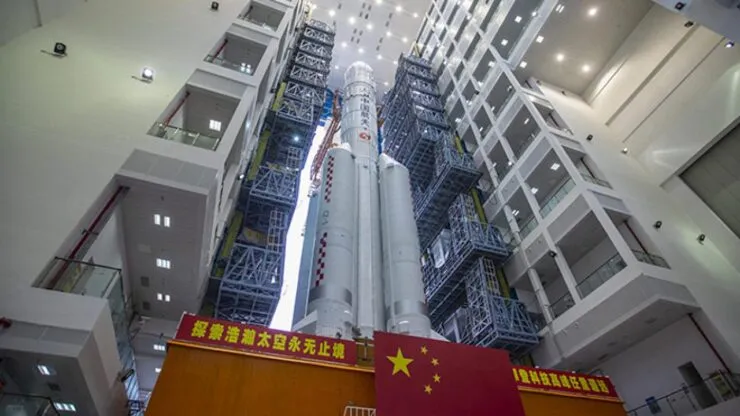
    Space has become an arena of competition for power and influence. Big powers have invested heavily in their military space capabilities. Amid an accelerated militarisation of space, China’s space capabilities have grown by leaps and bounds. China has identified Space as a critical domain in the perspective of its global ambitions. The rapid growth in China’s Space capabilities and its articulated ambitions are of significant importance to India’s Space security and national interests.

    Space has become an enormously important facet of our daily life. The increasing utility and critical need for space-based services have made it a rapidly-growing economic and technological arena. Space capabilities now symbolise a nation-state’s growing economic power. Innovation and disruptive technologies are now characterising the growth of the space industry, both in the private and public sectors. In all this, play the most important role as space has become an arena of competition for power and influence.

    Traditionally, military uses of space technologies have revolved around advanced communication, precise navigation, improved Intelligence, Surveillance, Reconnaissance (ISR) capabilities, and meteorology. Further developments have enabled these technologies to be used in Ballistic Missile Defence (BMD), advanced sensors, early warning systems, and anti-satellite (ASAT) systems.

    [powerkit_button size=”lg” style=”info” block=”true” url=”https://raksha-anirveda.com/chinas-growing-space-power-significant-for-india/” target=”_blank” nofollow=”false”]
    Read More
    [/powerkit_button]

  • Implications of Nagaland Tragedy

    Implications of Nagaland Tragedy

    There are grave suspicions that either the information provided was false or that the Mon operation had been compromised at the highest levels

    This columnist’s piece yesterday drew attention to the farcical nature of the investigations conducted by the Nagaland Police into December’s tragic incident in which six coalminers were mistakenly killed by troops from a Special Forces unit in Mon district. Prior to the SIT even beginning its work, Nagaland DGP T John Longkumer and Divisional Commissioner (Kohima) Rovilatuo Mor made serious accusations against the Army unit involved, based purely on hearsay and speculation.

    By their own admission, the accusations were based on information conveyed by villagers who reached the scene four hours later. The same villagers attacked the detachment and killed a soldier and injured the rest while they were still awaiting the police’s arrival. Not only does it put serious doubts on the credibility of their statement, but also casts a deep shadow on the work of the SIT, composed wholly of personnel from the Nagaland Police, on its ability to carry out a free, fair and unbiased investigation.

    [powerkit_button size=”lg” style=”info” block=”true” url=”https://www.dailypioneer.com/2022/columnists/implications-of-nagaland-tragedy.html” target=”_blank” nofollow=”false”]
    Read More
    [/powerkit_button]

  • Nagaland Tragedy and the SIT Farce

    Nagaland Tragedy and the SIT Farce

    Nobody’s saying that there was no conspiracy, in fact, all evidence points to one, but in which the military was clearly the scapegoat.

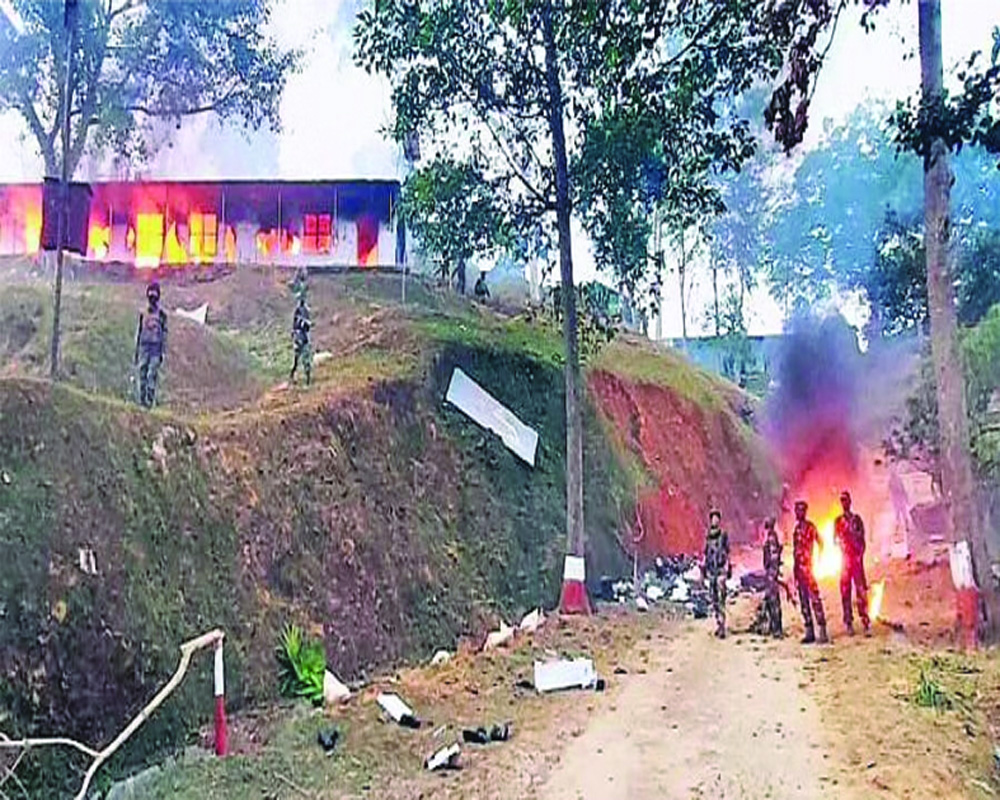
    Last December, this author had written about the tragic incident that occurred in Nagaland’s Mon district earlier that month (‘AFSPA in the Northeast: Is status quo the answer?’). In a tragic case of mistaken identity, six coal miners were killed by troops from a Special Forces unit. Subsequent escalation by local villagers who descended on the site four hours later, allegedly at the behest of the DSP, led to the murder of one soldier with the rest being injured, many of them seriously. They were finally able to disengage with difficulty, having to leave behind four vehicles loaded with gear and ammunition. The unruly mob subsequently set these trucks on fire, which resulted in the ammunition in the burning trucks “cooking off”, or exploding. This probably led to the death of seven others, which the police promptly pinned on the detachment that had left.

    This case is again making headlines as the Nagaland Police has charge-sheeted 30 soldiers under various sections of the IPC, including criminal conspiracy, murder, attempt to murder, voluntarily causing grievous hurt by dangerous weapons and disappearance of evidence. That an operational task assigned by higher headquarters, based on inputs reportedly provided by the Intelligence Bureau, constitutes a criminal conspiracy speaks volumes of the quality of the investigations. But that in no way suggests that there was no conspiracy, in fact, all evidence points to one, but in which the military was clearly the scapegoat.

    [powerkit_button size=”lg” style=”info” block=”true” url=”https://www.dailypioneer.com/2022/columnists/nagaland-tragedy-and-the-sit-farce.html” target=”_blank” nofollow=”false”]
    Read More
    [/powerkit_button]

  • India is not the Fastest Growing Big Economy

    India is not the Fastest Growing Big Economy

    A closer look at recent data on GDP shows that the numbers are flawed and recovery is incomplete

    The Provisional Estimates of Annual National Income in 2021-22 just released show that GDP grew 8.7% in real terms and 19.5% in nominal terms (including inflation). It makes India the fastest-growing major economy in the world. Further, the real economy is 1.51% larger than it was in 2019-20, just before the…

    [powerkit_button size=”lg” style=”info” block=”true” url=”https://www.thehindu.com/opinion/lead/india-is-not-the-fastest-growing-big-economy/article65515195.ece” target=”_self” nofollow=”false”]
    Read More
    [/powerkit_button]

  • The Inefficiencies of India’s Justice System

    The Inefficiencies of India’s Justice System

    The present system of justice delivery is inefficient precisely because it is meant to be manipulated by our rulers to achieve their goals.

    Aryan Khan’s case reflects what is wrong in India’s system of justice. He was caught for allegedly being part of a nexus with international or national drug dealers. Much hype followed since he is the son of a mega movie star. Media, political parties and the general public presented, commented and followed the case.

    As suddenly as the case erupted, it has been closed with the argument that no narcotic drugs were found. It is common knowledge that drugs flow in parties like the one that was planned on the ship. But, here a particular group of youngsters were targeted and it was not a general raid. What was the plan?

    Message and Extortion

    A Minister in the Maharashtra government accused the agency of using such cases for extortion. He was later arrested for having dealings with the family of a notorious don. If the allegations against him are true, he would know about use of drugs and the ways of functioning of the agency involved. So, his allegations about extortion are likely to be correct. The question then is, who was the real target and has a deal been struck?

    The public will never get to know the truth but, what an inefficient way of doing things. It cannot be that some officer initiated the case on his own for extortion and harassment of a high profile person. Could the extortion not have been done quietly without media hype and public exposure? Mafia is known to extort without advertising their action. For the powers that be, it was also necessary to send a message to their detractors. The case is symptomatic of what the system is capable of.

    [powerkit_button size=”lg” style=”info” block=”true” url=”https://thewire.in/political-economy/the-inefficiencies-of-indias-justice-system” target=”_blank” nofollow=”false”]
    Read More
    [/powerkit_button]

  • The Geopolitical Consolidation of Artificial Intelligence

    The Geopolitical Consolidation of Artificial Intelligence

    Key Points

    • IT hardware and Semiconductor manufacturing has become strategically important and critical geopolitical tools of dominant powers. Ukraine war related sanctions and Wassenaar Arrangement regulations invoked to ban Russia from importing or acquiring electronic components over 25 Mhz.
    • Semi conductors present a key choke point to constrain or catalyse the development of AI-specific computing machinery.
    • Taiwan, USA, South Korea, and Netherlands dominate the global semiconductor manufacturing and supply chain. Taiwan dominates the global market and had 60% of the global share in 2021. Taiwan’s one single company – TSMC (Taiwan Semiconductor Manufacturing Co), the world’s largest foundry, alone accounted for 54% of total global revenue.
    • China controls two-thirds of all silicon production in the world.
    • Monopolisation of semiconductor supply by a singular geopolitical bloc poses critical challenges for the future of Artificial Intelligence (AI), exacerbating the strategic and innovation bottlenecks for developing countries like India.
    • Developing a competitive advantage over existing leaders would require not just technical breakthroughs but also some radical policy choices and long-term persistence.
    • India should double down over research programs on non-silicon based computing with a national urgency instead of pursuing a catch-up strategy.

    Russia was recently restricted, under category 3 to category 9 of the Wassenaar Arrangement, from purchasing any electronic components over 25MHz from Taiwanese companies. That covers pretty much all modern electronics. Yet, the tangibles of these sanctions must not deceive us into overlooking the wider impact that hardware access and its control have on AI policies and software-based workflows the world over. As Artificial Intelligence technologies reach a more advanced stage, the capacity to fabricate high-performance computing resources i.e. semiconductor production becomes key strategic leverage in international affairs.

    Semiconductors present a key chokepoint to constrain or catalyse the development of AI-specific computing machinery. In fact, most of the supply of semiconductors relies on a single country – Taiwan. The Taiwan Semiconductor Manufacturing Corporation (TSMC) manufactures Google’s Tensor Processing Unit (TPU), Cerebras’s Wafer Scale Engine (WSE), as well as Nvidia’s A100 processor. The following table provides a more detailed1 assessment:

    Hardware Type

    AI Accelerator/Product Name

    Manufacturing Country

    Application-Specific Integrated Circuits (ASICs)

    Huawei Ascend 910

    Taiwan

    Cerebras WSE

    Taiwan

    Google TPUs

    Taiwan

    Intel Habana

    Taiwan

    Tesla FSD

    USA

    Qualcomm Cloud AI 100

    Taiwan

    IBM TrueNorth

    South Korea

    AWS Inferentia

    Taiwan

    AWS Trainium

    Taiwan

    Apple A14 Bionic

    Taiwan

    Graphic Processing Units (GPUs)

    AMD Radeon

    Taiwan

    Nvidia A100

    Taiwan

    Field-Programmable Gate Arrays (FPGAs)

    Intel Agilex

    USA

    Xilinx Virtex

    Taiwan

    Xilinx Alveo

    Taiwan

    AWS EC2 FI

    Taiwan

    As can be seen above, the cake of computing hardware is largely divided in such a way that the largest pie holders also happen to form a singular geopolitical bloc vis-a-vis China. This further shapes the evolution of territorial contests in the South China Sea. This monopolisation of semiconductor supply by a singular geopolitical bloc poses critical challenges for the future of Artificial Intelligence, especially exacerbating the strategic and innovation bottlenecks for developing countries like India. Since the invention of the transistor in 1947, and her independence, India has found herself in an unenviable position where there stands zero commercial semiconductor manufacturing capacity after all these years while her office-bearers continually promise of leading in the fourth industrial revolution.

    Bottlenecking Global AI Research

    There are two aspects of developing these AI accelerators – designing the specifications and their fabrication. AI research firms first design chips which optimise hardware performance to execute specific machine learning calculations. Then, semiconductor firms, operating in a range of specialities and specific aspects of fabrication, make those chips and increase the performance of computing hardware by adding more and more transistors to pieces of silicon. This combination of specific design choices and advanced hardware fabrication capability forms the bedrock that will decide the future of AI, not the amount of data a population is generating and localising.

    However, owing to the very high fixed costs of semiconductor manufacturing, AI research has to be focused on data and algorithms. Therefore, innovations in AI’s algorithmic efficiency and model scaling have to compensate for a lack of equivalent situations in the AI’s hardware. The aggressive consolidation and costs of hardware fabrication mean that firms in AI research are forced to outsource their hardware fabrication requirements. In fact, as per DARPA2, because of the high costs of getting their designs fabricated, AI hardware startups do not even receive much private capital and merely 3% of all venture funding between 2017-21 in AI/ML has gone to startups working on AI hardware.

    But TSMC’s resources are limited and not everyone can afford them. To get TSMC’s services, companies globally have to compete with the likes of Google and Nvidia, therefore prices go further high because of the demand side competition. Consequently, only the best and the biggest work with TSMC, and the rest have to settle for its competitors. This has allowed this single company to turn into a gatekeeper in AI hardware R&D. And as the recent sanctions over Russia demonstrate, it is now effectively playing the pawn which has turned the wazir in a tense geopolitical endgame.

    Taiwan’s AI policy also reflects this dominance in ICT and semiconductors – aiming to develop “world-leading AI-on-Device solutions that create a niche market and… (make Taiwan) an important partner in the value chain of global intelligent systems”.3 The foundation of strong control over the supply of AI hardware and also being #1 in the Global Open Data Index, not just gives Taiwan negotiating leverage in geopolitical competition, but also allows it to focus on hardware and software collaboration based on seminal AI policy unlike most countries where the AI policy and discourse revolve around managing the adoption and effects of AI, and not around shaping the trajectory of its engineering and conceptual development like the countries with hardware advantage.

    Now to be fair, R&D is a time-consuming, long-term activity which has a high chance of failure. Thus, research focus naturally shifts towards low-hanging fruits, projects that can be achieved in the short-term before the commissioning bureaucrats are rotated. That’s why we cannot have a nationalised AGI research group, as nobody will be interested in a 15-20 year-long enterprise when you have promotions and election cycles to worry about. This applies to all high-end bleeding-edge technology research funding everywhere – so, quantum communications will be prioritised over quantum computing, building larger and larger datasets over more intelligent algorithms, and silicon-based electronics over researching newer computing substrates and storage – because those things are more friendly to short-term outcome pressures and bureaucracies aren’t exactly known to be a risk-taking institution.

    Options for India

    While China controls 2/3 of all the silicon production in the world and wants to control the whole of Taiwan too (and TSMC along with its 54% share in logic foundries), the wider semiconductor supply chain is a little spreadout too for any one actor’s comfort. The leaders mostly control a specialised niche of the supply chain, for example, the US maintains a total monopoly on Electronic Design Automation (EDA) software solutions, the Netherlands has monopolised Extreme UltraViolet and Argon Flouride scanners, and Japan has been dishing out 300 mm wafers used to manufacture more than 99 percent of the chips today.4 The end-to-end delivery of one chip could have it crossing international borders over 70 times.5 Since this is a matured ecosystem, developing a competitive advantage over existing leaders would require not just proprietary technical breakthroughs but also some radical policy choices and long term persistence.

    It is also needless to say that the leaders are also able to attract and retain the highest quality talent from across the world. On the other hand, we have a situation where regional politicians continue cribbing about incoming talent even from other Indian states. This is therefore the first task for India, to become a technology powerhouse, she has to, at a bare minimum, be able to retain all her top talent and attract more. Perhaps, for companies in certain sectors or of certain size, India must make it mandatory to spend at least X per cent of revenue on R&D and offer incentives to increase this share – it’ll revamp things from recruitment and retention to business processes and industry-academia collaboration – and in the long-run prove to be a lot more socioeconomically useful instrument than the CSR regulation.

    It should also not escape anyone that the human civilisation, with all its genius and promises of man-machine symbiosis, has managed to put all its eggs in a single basket that is also under the constant threat of Chinese invasion. It is thus in the interest of the entire computing industry to build geographical resiliency, diversity and redundancy in the present-day semiconductor manufacturing capacity. We don’t yet have the navy we need, but perhaps in a diplomatic-naval recognition of Taiwan’s independence from China, the Quad could manage to persuade arrangements for an uninterrupted semiconductor supply in case of an invasion.

    Since R&D in AI hardware is essential for future breakthroughs in machine intelligence – but its production happens to be extremely concentrated, mostly by just one small island country, it behoves countries like India to look for ways to undercut the existing paradigm of developing computing hardware (i.e. pivot R&D towards DNA Computing etc) instead of only trying to pursue a catch-up strategy. The current developments are unlikely to solve India’s blues in integrated circuits anytime soon. India could parallelly, and I’d emphatically recommend that she should, take a step back from all the madness and double down on research programs on non-silicon-based computing with a national urgency. A hybrid approach toward computing machinery could also resolve some of the bottlenecks that AI research is facing due to dependencies and limitations of present-day hardware.

    As our neighbouring adversary Mr Xi says, core technologies cannot be acquired by asking, buying, or begging. In the same spirit, even if it might ruffle some feathers, a very discerning reexamination of the present intellectual property regime could also be very useful for the development of such foundational technologies and related infrastructure in India as well as for carving out an Indian niche for future technology leadership.

    References:

    1. The Other AI Hardware Problem: What TSMC means for AI Compute. Available at https://semiliterate.substack.com/p/the-other-ai-hardware-problem

    2. Leef, S. (2019). Automatic Implementation of Secure Silicon. In ACM Great Lakes Symposium on VLSI (Vol. 3)

    3. AI Taiwan. Available at https://ai.taiwan.gov.tw/

    4. Khan et al. (2021). The Semiconductor Supply Chain: Assessing National Competitiveness. Center for Security and Emerging Technology.
    5. Alam et al. (2020). Globality and Complexity of the Semiconductor Ecosystem. Accenture.

  • America’s Two Cold Wars: Hegemony to Decline?

    America’s Two Cold Wars: Hegemony to Decline?

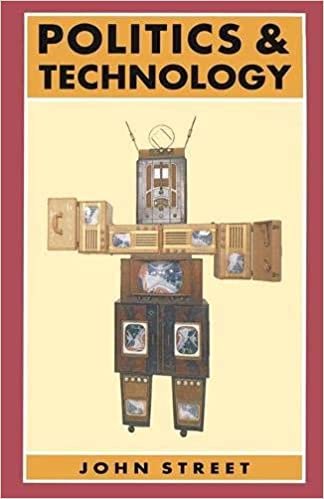
    Book Name: America’s Two Cold Wars: Hegemony to Decline?

    Author: Alfredo Toro Hardy

    Publisher: Palgrave Macmillan

    Year of Publication: March, 2022

    Pages: 305 


    The war in Ukraine has necessitated a recalibration of US foreign policy as tensions intensify between America, its allies and Russia. The US’s ‘pivot to Asia’ policy has taken a hit in the face of Russia’s aggression in Ukraine. As global attention, once again, shifts to the former Cold War superpower, China appears to be reaping all the benefits in the ensuing power vacuum.

    Alfredo Toro Hardy’s America’s Two Cold Wars: From Hegemony to Decline? is a timely addition, both in terms of what is unfolding presently and the literature that is emerging on the shortfalls of American foreign policy in its dealings with Russia and China. The former Venezuelan diplomat joins the intensifying debate on the emerging reality of a Cold War between the US and China and the broader debate surrounding America’s decline from being a global hegemonic power and its implications for the country’s international engagement with the rest of the world.

    The book offers a comprehensive diagnosis of American foreign policy by way of a comparative analysis of the US’s Cold War with the Soviet Union with the emerging one with China from the American perspective and seeks to answer two questions: one, how different a strategic competitor is China to the erstwhile Soviet Union and two, how different is the US of today compared to its former self when it confronted and won the Cold War with the Soviets.

    Hardy identifies five fundamental issues afflicting US foreign policy in its engagement with China – ideology (or lack thereof), squandered alliances, foreign policy-related inconsistencies, the country’s economic downturn and the containment strategy trap. The author’s key argument recurs throughout the book – that the US is confronting China in the emerging Cold War on a “wrong configuration of factors” (p. 168) and needs to “responsibly explore and analyse the options on the table” (p. 171).

    In acknowledgement of the deficiencies facing America’s foreign policy regarding China, the author sets the context and provides readers with a succinct account of the collapse of the Soviet Union, the emergence of the period of US hegemony and the rise of China in the first two chapters. Hardy rightly emphasises that America is threatened by China’s ascendence – citing research done by the Pew Research Center that showed that 73 per cent of Americans viewed China negatively. In the author’s words, “Washington is aggrievedly and forcefully reacting against what it perceives as an existential contention” (p. 7).

    Hardy also outlines the Chinese perspective and correctly concludes that Beijing is driven by its experience under imperialist powers during the ‘century of humiliation’ and economic mismanagement under Mao Zedong. Indeed, this coupled with the Tiananmen Massacre in 1989, controversy over Chinese dissident Fang Lizhi between 1989-1990, the Taiwan strait crisis in 1996, the bombing of the Chinese embassy in Belgrade (p. 23) by American forces and more recently, the independence movements in Hong Kong are insightful examples in understanding why the Party and now, Xi Jinping, are in pursuit of relentless centralisation of power and authority. Despite China’s adroitness in foreign affairs under Xi Jinping, the country’s great power ambitions are driven by domestic considerations and how the international community perceives these ambitions. The US’s belief in China’s disregard for a rules-based order is what the latter takes offence with – believing the former to be constraining it from taking its “rightful place in the world” (p.7). China eschews the American mindset of reverting to the Cold War mentality and instead argues for a more inclusive world where both states are mindful of their responsibilities.

    The author offers a penetrating account of US-China relations – moving from cautious partners with mutual strategic interests to strategic competitors. A pragmatic agreement was drawn up that was mindful of the other’s national interests – the US would recognize the Communist government in China and give it legitimacy and in exchange, China would not seek to limit or challenge the “US’s power projection in Asia” (p.22). China’s gains from this arrangement were enormous and translated into divestment from Mao’s model of productivity and economic self-sufficiency, a foothold in Western markets and a WTO membership. However, 2008 marked the inflexion point in their relations. The diplomat’s insightful analysis of the changing currents in China’s foreign policy and engagement with the US – the global financial crisis and China’s ability in tiding over it, the success of the Beijing Olympics, the US’s failures in the Middle East and disregard for its allies, China’s military build-up, the South China Sea and Xi Jinping’s leadership – is unparalleled and serves as an excellent prelude to why he thinks the two countries are in an “unavoidable collision course” (p. 35). China’s desire to forge a new status quo and challenge the US’s rules and the US’s and China’s “perceived sense of mission and superiority” based on their history and national myths as they look into the future, makes the prospect of a major conflict with spill over effects plausible. Here Hardy goes a step further and claims, based on the plausibility of a war between the two, that they are already in the midst of a Cold War (p. 36). In announcing its ambitions to the world, China may have lost the advantage of its hitherto low profile strategy and believes that American hegemony is on the decline.

    To be sure, the author’s analysis of the five deficiencies in American foreign policy forms the most important section of the book. His commentary on America’s notion of its exceptionalism and “crusader foreign policy” (p. 42) is particularly relevant when we look at its response to the war in Ukraine – the US’s network of financial institutions and media conglomerates have been “able to impose international patterns of credibility or ostracism depending on the acceptance or not of the prevailing liberal ideology” (p. 18).

    Alexis de Tocqueville’s Democracy in America described American democracy as a form of Christianity and there is more than a grain of truth to this when they believe they were ordained by God to undertake the responsibility of exporting democracy to the rest of the world, not unlike the colonial powers; as Hardy keenly points out – “the United States never stopped being what its puritan colonists wanted it to become” (p. 42). The ideological calculus worked in America’s favour during the Cold War with the Soviet Union. In confronting China, a country uninterested in exporting communism, in relentless pursuit of efficiency and economic development, the US falls considerably short. This section is a succinct account of the erosion of democracy domestically, the political establishment, poor performance in development indicators (specifically, education and infrastructure) and the labour market. As Hardy puts it – “efficiency is the catchword” (p. 53) and the name of the game in the Cold War between America and China.

    In building alliances to counter China, US foreign policy has a long road ahead as it recovers from the wars in the Middle East, the Trump presidency, its recent misstep in leaving Afghanistan to the Taliban and now, its conflict escalations with Russia. America’s inconsistencies in maintaining its alliances have put them on the back foot in confronting China and only served to better the latter’s position in the international community through cooperative multilateralism (p. 82). The author concludes that the worst-case scenario for the US would be a Russia-China alignment. Indeed, in the fourth iteration of the India-US 2+2 dialogue, the Russia-Ukraine war was the elephant in the room as joint statements from the US and India reflected a sentiment of ‘agree to disagree’. These joint remarks were widely acknowledged to be ‘tame’ in comparison to the statements several White House officials made of India’s position on the matter, most notably that of President Biden’s comment of India being “somewhat shaky” on the Quad and that of Deputy NSA Daleep Singh who warned of “consequences” should India continue to increase its imports from Russia.

    The author is critical of the growing divide between the Democrats and Republicans in the foreign policy establishment – referring to them as “inhabiting different foreign policy planets” (p. 105). Even the consensus on the containment strategy for China is shaky as Progressive Democrats call for restraint. China, on the other hand, is a different story. According to Hardy, China has its eggs in order – a sound national objective, well-rounded foreign policy, cooperative multilateral mechanisms and localised geopolitical ambitions for the moment. China exhibits unwavering focus as it marches towards what it believes is its destiny – to become a world power by 2049. The only downside that the author warns of in China’s strategy is Xi’s presence at the helm. The longer Xi stays at the top, the more the country’s policies will mould around his personality. In the event of his absence “China may find itself in big trouble” (p. 109).

    In comparing the Soviet Union and China’s economies, here too the US falls short. During the first Cold War, America had both economic and military advantages and possessed a technological edge that was unmatched. Today, the US might go toe to toe with China and still not emerge victorious. According to Hardy, China will surpass the US’s GDP in absolute terms and has already achieved the same in Purchasing Power Parity (PPP). It is very likely that China’s military expenditure will far exceed the US’s down the line. It has militarily caught up to the US through asymmetric “armament development” (p. 121) and other strategies. Its advantage also lies in the fact that its military deployment is closer to home compared to the US’s strategy of maintaining a standing presence around the world. However, the analysis in this section falls short of elaborating upon America’s weaponization of its financial power. A major factor in the US being a superpower has been the dollar hegemony it has enjoyed since the 1970s. This aspect is intrinsic to understanding US foreign policy, especially when global FOREX reserves in dollars have declined to 59 per cent from 72 per cent in the last two decades. Analysts argue that this reflects the decline of the dollar’s dominance in the face of other currencies. Indeed, China, Russia, India and Brazil are working to reduce their dependency on the dollar and shield themselves from Washington’s vagaries.

    Washington is playing catch-up with Beijing; inheriting the Cold War mentality and deploying used strategies against a competitor that almost evenly matches the US in all aspects. From Hardy’s commentary on the containment strategy that the US pursued against the Soviets, it is immediately evident that the same cannot be replicated in its confrontation with China. While appreciative of the consistency that the Obama, Trump and Biden administrations have shown in dealing with China, the author claims the lack of an overarching strategy and general cohesiveness will not deter China’s ambitions. Considerations of “economic preponderance and geopolitical feasibility” (p. 146) appear to be missing in devising a strategy to counter China. But the author astutely points to the viability of containing China in a region that is of significant geostrategic importance and has historically been its sphere of influence and rightly questions the US’s capability to respond when China has “firm control of the operational theatre” (p. 148) in the region.

    Hardy’s sections that delve into the US’s economy, while useful in the context of its military expenditure, do not adequately explain the sheer influence and entitlement that the country enjoys in international organizations like the IMF, World Bank, OECD, WHO etc. and its impacts in its engagement with China. Similarly, the US has historically turned to sanctions as punitive measures against their enemies – indicative of confidence borne out of the dollar hegemony. Insights into how effective sanctions are and why and how the US weaponizes this power would more forcefully drive home the well-rounded strategy that America has pursued as a hegemon. The Ukraine war is just one example in a long line wherein the US has exercised its power and unilaterally imposed severe sanctions on Russia – encouraging even its allies and partners to take the same measures against Russia. Increasingly, it is becoming evident that the US’s unilateral sanctions are having a negative impact on its credibility as a responsible superpower. Nevertheless, the book offers the general reader a comprehensive assessment of the US in the world order presently and more specifically, a comparison of its foreign policy strategies with the erstwhile Soviet Union and China.

    Overall, America’s Two Cold Wars: From Hegemony to Decline? is a thorough exposition of US foreign policy and draws from experts like Kishore Mahbubani, Mathew Kroenig, Francis Fukuyama, Henry Kissinger and John Mearsheimer and, unlike most literature on the topic, Hardy does not assume a fatalistic narrative that supports the US’s decline of power. Simply put, with the first Cold War, America had all the right configuration of factors in place. This seems to have changed in the second; if the US is facing China on the wrong configuration of factors (p. 168), then the results are only a product of successive administrations lacking coherency in putting together a sound strategy. The author, in a reflection of his experience and expertise, incisively concludes that the US must pursue alternatives to a Cold War with China for three important reasons: first, sharing global governance responsibilities would aid in building US credibility as a responsible superpower as well provide cooperative solutions to global problems like climate change; second, US strategy towards China needs to be a choice between adopting a China-centred policy or alliance centred policy geared towards building multilateral cooperation (p. 169) and third, the interconnectedness of the global economic system will ensure that everyone pays the price for an expensive war between the US and China. The US’s only recourse is to focus on building back its credibility, alliances and partnerships. At the same time, it must be realistic and reflect a deeper understanding of China’s national interests and strategic objectives. These two intentions must work in tandem if the US hopes to successfully counter China.

    About the Author:

    ALFREDO TORO HARDY is a Venezuelan retired diplomat, scholar and author. He has a PhD in International Relations from the Geneva School of Diplomacy and International Affairs, two master’s degrees in international law and international economics from the University of Pennsylvania and the Central University of Venezuela, a post-graduate diploma in diplomatic studies by the Ecole Nationale D’Administration (ENA) and a Bachelor of Law degree by the Central University of Venezuela. Before resigning from the Venezuelan Foreign Service in protest of events taking place in his country, he was one of its most senior career diplomats. As such, he served as Ambassador to the United States, the United Kingdom, Spain, Brazil, Singapore, Chile and Ireland.

    Hardy directed the Diplomatic Academy of the Venezuelan Ministry of Foreign Affairs, as well as other Venezuelan academic institutions in the field of international affairs. He is an Honorary Research Fellow of the Geneva School of Diplomacy and International Relations and has been a Visiting Professor at the universities of Princeton and Brasilia and an online Professor at the University of Barcelona. He has also been a Fulbright Scholar, a two-time Rockefeller Foundation Bellagio Center Resident Scholar and an academic advisor on diplomatic studies at the University of Westminster. He has authored twenty-one books and co-authored fifteen more on international affairs and history while publishing thirty peer-reviewed papers on the same subjects.

  • Snatching Defeat from Victory’s Jaws

    Snatching Defeat from Victory’s Jaws

    “The Govt’s ad hoc approach towards Army recruitment has adversely impacted youngsters, and even the military’s operational preparedness”.

    Recruitment for the Army has been at a standstill over the past two years as the Government contemplates drastic changes in its recruitment pattern and consequently its manpower profile. As recruitment is age-driven, this halt on recruitment has adversely impacted youngsters, mostly from rural areas, who suddenly find themselves stuck in limbo. The tragic suicide by young Pawan of Bhiwani district on becoming overage in the interim says it all.

    But his case is just the tip of an iceberg as over 1 lakh candidates, having cleared the physical tests, are still awaiting conduct of the written exam as time ticks by.

    It has adversely impacted the Army as well. Approximately 50,000 personnel retire annually, which implies that the Army is currently deficient in nearly 10 per cent of its authorised strength. This has impacted operational readiness and will have a knock-on effect on training and manpower management in future. The fact is, it takes 18 months from the time an individual is selected and joins his unit as a trained soldier. Clearly, halting regular recruitment, for whatever reasons, has been an imprudent move that has negatively impacted our national security and should have been avoided at all costs, given the fragile security environment that we confront.

    [powerkit_button size=”lg” style=”info” block=”true” url=”https://www.dailypioneer.com/2022/columnists/snatching-defeat-from-victory—s-jaws.html” target=”_blank” nofollow=”false”]
    Read More
    [/powerkit_button]