Blog

  • BRICS: On 1 January 2024, the World’s Centre of Gravity will Shift

    BRICS: On 1 January 2024, the World’s Centre of Gravity will Shift

    As is often the case in history, the actions of a dying empire create common ground for its victims to look for new alternatives, no matter how embryonic and contradictory they are. The diversity of support for the expansion of BRICS is an indication of the growing loss of the political hegemony of imperialism.

    On the last day of the BRICS summit in Johannesburg, South Africa, the five founding states (Brazil, Russia, India, China, and South Africa) welcomed six new members: Argentina, Egypt, Ethiopia, Iran, Saudi Arabia, and the United Arab Emirates (UAE). The BRICS partnership now encompasses 47.3 per cent of the world’s population, with a combined global Gross Domestic Product (by purchasing power parity, or PPP,) of 36.4 per cent. In comparison, though the G7 states (Canada, France, Germany, Italy, Japan, the United Kingdom, and the United States) account for merely 10 per cent of the world’s population, their share of the global GDP (by PPP) is 30.4 per cent. In 2021, the nations that today form the expanded BRICS group were responsible for 38.3 percent of global industrial output while their G7 counterparts accounted for 30.5 percent. All available indicators, including harvest production and the total volume of metal production, show the immense power of this new grouping. Celso Amorim, advisor to the Brazilian government and one of the architects of BRICS during his former tenure as foreign minister, said of the new development that ‘[t]he world can no longer be dictated by the G7’.

    Certainly, the BRICS nations, for all their internal hierarchies and challenges, now represent a larger share of the global GDP than the G7, which continues to behave as the world’s executive body. Over forty countries expressed an interest in joining BRICS, although only twenty-three applied for membership before the South Africa meeting (including seven of the thirteen countries in the Organisation of Petroleum Exporting Countries, or OPEC). Indonesia, the world’s seventh largest country in terms of GDP (by PPP), withdrew its application to BRICS at the last moment but said it would consider joining later. Indonesia’s President Joko Widodo’s comments reflect the mood of the summit: ‘We must reject trade discrimination. Industrial down streaming must not be hindered. We must all continue to voice equal and inclusive cooperation’.

    The facts are clear: the Global North’s percentage of world GDP fell from 57.3 per cent in 1993 to 40.6 per cent in 2022, with the US’s percentage shrinking from 19.7 per cent to only 15.6 per cent of global GDP (by PPP) in the same period – despite its monopoly privilege. In 2022, the Global South, without China, had a GDP (by PPP) greater than that of the Global North.

    BRICS does not operate independently of new regional formations that aim to build platforms outside the grip of the West, such as the Community of Latin America and Caribbean States (CELAC) and the Shanghai Cooperation Organisation (SCO). Instead, BRICS membership has the potential to enhance regionalism for those already within these regional fora. Both sets of interregional bodies are leaning into a historical tide supported by important data, analysed by Tricontinental: Institute for Social Research using a range of widely available and reliable global databases. The facts are clear: the Global North’s percentage of world GDP fell from 57.3 per cent in 1993 to 40.6 per cent in 2022, with the US’s percentage shrinking from 19.7 per cent to only 15.6 per cent of global GDP (by PPP) in the same period – despite its monopoly privilege. In 2022, the Global South, without China, had a GDP (by PPP) greater than that of the Global North.

    The West, perhaps because of its rapid relative economic decline, is struggling to maintain its hegemony by driving a New Cold War against emergent states such as China. Perhaps the single best evidence of the racial, political, military, and economic plans of the Western powers can be summed up by a recent declaration of the North Atlantic Treaty Organisation (NATO) and the European Union (EU): ‘NATO and the EU play complementary, coherent and mutually reinforcing roles in supporting international peace and security. We will further mobilise the combined set of instruments at our disposal, be they political, economic, or military, to pursue our common objectives to the benefit of our one billion citizens’.

    Why did BRICS welcome such a disparate group of countries, including two monarchies, into its fold? When asked to reflect on the character of the new full member states, Brazil’s President Luiz Inácio Lula da Silva said, ‘What matters is not the person who governs but the importance of the country. We can’t deny the geopolitical importance of Iran and other countries that will join BRICS’. This is the measure of how the founding countries made the decision to expand their alliance. At the heart of BRICS’s growth are at least three issues: control over energy supplies and pathways, control over global financial and development systems, and control over institutions for peace and security.

    A larger BRICS has now created a formidable energy group. Iran, Saudi Arabia, and the UAE are also members of OPEC, which, with Russia, a key member of OPEC+, now accounts for 26.3 million barrels of oil per day, just below thirty per cent of global daily oil production. Egypt, which is not an OPEC member, is nonetheless one of the largest African oil producers, with an output of 567,650 barrels per day. China’s role in brokering a deal between Iran and Saudi Arabia in April enabled the entry of both of these oil-producing countries into BRICS. The issue here is not just the production of oil, but the establishment of new global energy pathways.

    The Chinese-led Belt and Road Initiative has already created a web of oil and natural gas platforms around the Global South, integrated into the expansion of Khalifa Port and natural gas facilities at Fujairah and Ruwais in the UAE, alongside the development of Saudi Arabia’s Vision 2030. There is every expectation that the expanded BRICS will begin to coordinate its energy infrastructure outside of OPEC+, including the volumes of oil and natural gas that are drawn out of the earth. Tensions between Russia and Saudi Arabia over oil volumes have simmered this year as Russia exceeded its quota to compensate for Western sanctions placed on it due to the war in Ukraine. Now these two countries will have another forum, outside of OPEC+ and with China at the table, to build a common agenda on energy. Saudi Arabia plans to sell oil to China in renminbi (RMB), undermining the structure of the petrodollar system (China’s two other main oil providers, Iraq and Russia, already receive payment in RMB).

    Both the discussions at the BRICS summit and its final communiqué focused on the need to strengthen a financial and development architecture for the world that is not governed by the triumvirate of the International Monetary Fund (IMF), Wall Street, and the US dollar. However, BRICS does not seek to circumvent established global trade and development institutions such as the World Trade Organisation (WTO), the World Bank, and the IMF. For instance, BRICS reaffirmed the importance of the ‘rules-based multilateral trading system with the World Trade Organisation at its core’ and called for ‘a robust Global Financial Safety Net with a quota-based and adequately resourced [IMF] at its centre’. Its proposals do not fundamentally break with the IMF or WTO; rather, they offer a dual pathway forward: first, for BRICS to exert more control and direction over these organisations, of which they are members but have been suborned to a Western agenda, and second, for BRICS states to realise their aspirations to build their own parallel institutions (such as the New Development Bank, or NDB). Saudi Arabia’s massive investment fund is worth close to $1 trillion, which could partially resource the NDB.

    BRICS’s agenda to improve ‘the stability, reliability, and fairness of the global financial architecture’ is mostly being carried forward by the ‘use of local currencies, alternative financial arrangements, and alternative payment systems’. The concept of ‘local currencies’ refers to the growing practice of states using their own currencies for cross-border trade rather than relying upon the dollar. Though approximately 150 currencies in the world are considered to be legal tender, cross-border payments almost always rely on the dollar (which, as of 2021, accounts for 40 per cent of flows over the Society for Worldwide Interbank Financial Telecommunications, or SWIFT, network).

    Other currencies play a limited role, with the Chinese RMB comprising 2.5 per cent of cross-border payments. However, the emergence of new global messaging platforms – such as China’s Cross-Border Payment Interbank System, India’s Unified Payments Interface, and Russia’s Financial Messaging System (SPFS) – as well as regional digital currency systems promise to increase the use of alternative currencies. For instance, cryptocurrency assets briefly provided a potential avenue for new trading systems before their asset valuations declined, and the expanded BRICS recently approved the establishment of a working group to study a BRICS reference currency.

    Following the expansion of BRICS, the NDB said that it will also expand its members and that, as its General Strategy, 2022–2026 notes, thirty per cent of all of its financing will be in local currencies. As part of its framework for a new development system, its president, Dilma Rousseff, said that the NDB will not follow the IMF policy of imposing conditions on borrowing countries. ‘We repudiate any kind of conditionality’, Rousseff said. ‘Often a loan is given upon the condition that certain policies are carried out. We don’t do that. We respect the policies of each country’.

    In their communiqué, the BRICS nations write about the importance of ‘comprehensive reform of the UN, including its Security Council’

    In their communiqué, the BRICS nations write about the importance of ‘comprehensive reform of the UN, including its Security Council’. Currently, the UN Security Council has fifteen members, five of whom are permanent (China, France, Russia, the UK, and the US). There are no permanent members from Africa, Latin America, or the most populous country in the world, India. To repair these inequities, BRICS offers its support to ‘the legitimate aspirations of emerging and developing countries from Africa, Asia, and Latin America, including Brazil, India, and South Africa to play a greater role in international affairs’. The West’s refusal to allow these countries a permanent seat at the UN Security Council has only strengthened their commitment to the BRICS process and to enhance their role in the G20.

    The entry of Ethiopia and Iran into BRICS shows how these large Global South states are reacting to the West’s sanctions policy against dozens of countries, including two founding BRICS members (China and Russia). The Group of Friends in Defence of the UN Charter – Venezuela’s initiative from 2019 – brings together twenty UN member states that are facing the brunt of illegal US sanctions, from Algeria to Zimbabwe. Many of these states attended the BRICS summit as invitees and are eager to join the expanded BRICS as full members.

    We are not living in a period of revolutions. Socialists always seek to advance democratic and progressive trends. As is often the case in history, the actions of a dying empire create common ground for its victims to look for new alternatives, no matter how embryonic and contradictory they are. The diversity of support for the expansion of BRICS is an indication of the growing loss of the political hegemony of imperialism.

    This article was published earlier in tricontinental.org and is republished under the Creative Commons.


  • Migrant or native, we are all out of Africa

    Migrant or native, we are all out of Africa

    No human group can make a concerted claim as regards nativism and try to make an ‘other’ an immigrant, foreigner or outsider

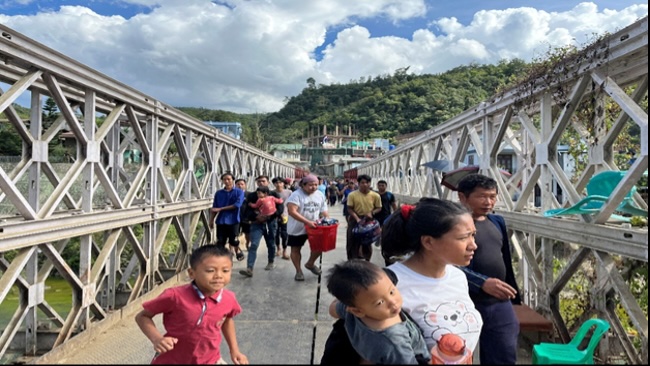
    Why, and how, does Mizoram get involved in the ongoing ethnic (and religious) strife that has been on for over three months in Manipur? The Kukis and Zomis in Manipur are ethnically related to the Mizos, the dominant community in Mizoram. The Mizos, in turn, are ethnically related to the Chins in Myanmar and the Kuki-Chins in Bangladesh.

    Together they all belong to the greater Zo community, speak a similar language, have common ancestry and parallels as regards their cultures and traditions. These latter groups are predominantly Christian and hence have a strong bond with the Mizos in Mizoram, a ‘Christian state’, like Nagaland. The Chief Minister of Mizoram, Zoramthanga, is a Mizo.

    In Manipur, the Meiteis, a Hindu community, are the majority and overwhelmingly numerically dominant. But it is interesting that the Meiteis are found in small numbers in Mizoram too, and many have started fleeing from the state. A similar fleeing of the Kukis from Manipur to Mizoram has happened. Also, there are the Naga groups in different pockets of Manipur. The neighbouring state of Nagaland has 17 officially recognised Naga groups.

    It is exasperating, and quite disquieting, to note the presence of ethnic groups that are dominant in one state, being minorities in a neighbouring state. Such existence has given rise to very foreboding situations and added to the already prevailing ethnic conflicts in India’s North-East.

    It is not just that the Indian states in the region share common borders. There are international borders too in the area, as Bangladesh and Myanmar adjoin the Indian states. Different communities/tribes/groups of people have lived in the regions that are the focus of our discussion for aeons. Such inter-state and international habitations of ethnic groups across states/countries are come across elsewhere in the world too.

    One of the most interesting and classic instances of a single ethnic group, who regard themselves as a single nation, and inhabit more than one country, is that of the Bedouin (found in Syria, Algeria, Morocco, Libya, Egypt, Israel, and so on). Such situations come about because free-ranging groups of people, or partially or fully settled groups of people, got divided into different states or countries because of the coming in of boundaries and division of territories.

    What would have been the scenario if these borders between states and countries had not come up? We would undoubtedly have diverse groups living in enclaves, either quite separated or adjoining each other either as small groups or larger ones, but sans the borders dividing them; the question of majority/minority or dominance/subservience would not, probably, have had the same kind of meaning or effect as has happened due to the drawing of borders between states and countries.

    Borders that formed between enclaves of diverse inhabitants and made groups of people dominant and/or majority groups have resulted in hegemony, where the traditions, customs, practices, and mores of that group have gained significance. These traditions and customs prevail extensively when compared to the practices of the smaller groups in that same area. Invariably, the dominant group makes claims to being the ‘original inhabitants’ and the ‘natives’ of the state/country concerned.

    Quite often co-habitants develop similar institutions and social and cultural practices despite the differences and diversity between them, and this is quite apparent in multicultural societies. Amitav Ghosh argues that “it is … the vitality of the place itself that creates commonalities between the people who dwell in it, no matter what their origin” (The Nutmeg’s Curse, page 221). But sadly, it is the differences that often come to the fore, and similarities remain latent.

    Here, it is pertinent for us to dwell on the facets of claims that groups make as regards being the autochthons and natives of a given state/country. By extension, the non-dominant groups are labelled ‘immigrants’, ‘foreigners’, and ‘outsiders’. Prior to ‘Out of Africa’, and the spread of Homo sapiens to the different parts of the world, somewhere between 80,000 and 50,000 years ago, there were no fully evolved human beings in any part of the world. Subsequent to a group of them leaving Africa, different parts of the Earth got populated gradually.

    All the physiognomic and phenotypical differences that we find among humans today, including skin colour, hair texture, and colour of the eyes came about as a result of where people settled.

    To put it tersely, no human group can make a concerted claim as regards nativism and try to make an ‘other’ an immigrant, foreigner or outsider. Ghosh endorses this when he says “Except for one small part of Africa, nowhere on Earth can people be said to be truly native, in the sense of having come into being on that soil” (The Nutmeg’s Curse, page 221).


    This article was published earlier in Deccan Herald.

    Feature Image:Kuki women leave after attending a protest against the alleged sexual assault of two tribal women, in Churachandpur district in Manipur. Credit: Retuers Photo


  • India’s rocky path to establishing joint theatre commands

    India’s rocky path to establishing joint theatre commands

    The Indian military has been seeking to build jointness among its services for decades, including through proposals to establish regional joint theatre commands with responsibility for different areas of the subcontinent and beyond. But those efforts hit a roadblock earlier this year when the Indian Air Force (IAF) objected to its capabilities being split across commands and relegated to providing tactical support to land operations. A truly joint Indian military may still be a long way off.


    Read More

  • BRICS Summit 2023

    BRICS Summit 2023

    The 15th BRICS Summit will be held next week from the 22nd to the 24th of August in Johannesburg under the chairmanship of South Africa. Unlike in the past when the West largely ignored the summits as of little consequence, the 15th Summit has got the world’s attention in a major way. Given the current turmoil in the world order and the realisation in much of the world that the West is largely responsible for the unending wars and interventions, this summit has assumed enormous importance. To put it bluntly, the BRICS is being seen as having the potential to end Western dominance and reshape the world into a more equitable and multipolar world order. The summit, which South Africa hosts next week, could mark a significant step in the reconfiguration of geopolitical power in the not-too-distant future.

    Already, BRICS countries represent over 40% of the global population and an estimated 30% of its GDP, and with China expected to overtake the United States as early as 2035 as the world’s largest economy, many sovereign states are eager to establish themselves for a de-dollarised future. 40 countries have expressed their interest to join BRICS, while 23 countries have formally applied, including Argentina, Iran, Saudi Arabia, the United Arab Emirates, Indonesia, Thailand, Cuba, Egypt, and Nigeria. A total of 67 countries, including 53 African states have been invited to the BRICS Summit 2023. This is a significant development. The important issues likely to be discussed at the summit include the expansion of BRICS and the possible introduction of BRICS currency.  As a prelude, the joint statement of BRICS’ foreign ministers meeting in June 2023 shows the expanding domains of cooperation that included international security and world order. The joint statement is reproduced below.

    – Team TPF

    Joint Statement of the BRICS Ministers of Foreign Affairs and International Relations Cape Town, South Africa 1 June 2023

    1. The BRICS Ministers of Foreign Affairs and International Relations met on 1 June 2023 in Cape Town, South Africa. They exchanged views on major global and regional trends and issues. They reaffirmed their commitment to strengthening the framework of BRICS cooperation under the three pillars of political and security, economic and financial, and cultural and people-to-people cooperation upholding the BRICS spirit featuring mutual respect and understanding, equality, solidarity, openness, inclusiveness, and consensus.

    2. The Ministers reiterated their commitment to strengthening multilateralism and upholding international law, including the purposes and principles enshrined in the Charter of the United Nations (UN) as its indispensable cornerstone, and the central role of the UN in an international system in which sovereign states cooperate to maintain peace and security, advance sustainable development, ensure the promotion and protection of democracy, human rights and fundamental freedoms for all, and promoting cooperation based on the spirit of solidarity, mutual respect, justice and equality.

    3. The Ministers expressed concern about the use of unilateral coercive measures, which are incompatible with the principles of the Charter of the UN and produce negative effects notably in the developing world. They reiterated their commitment to enhancing and improving global governance by promoting a more agile, effective, efficient, representative and accountable international and multilateral system.

    4. The Ministers recalled UN General Assembly (UNGA) Resolution 75/1 and reiterated the call for reforms of the principal organs of the United Nations. They recommitted to instil new life in the discussions on the reform of the UN Security Council (UNSC) and continue the work to revitalise the General Assembly and strengthen the Economic and Social Council. They recalled the 2005 World Summit Outcome document and reaffirmed the need for a comprehensive reform of the UN, including its Security Council, with a view to making it more representative, effective and efficient, and to increase the representation of the developing countries so that it can adequately respond to global challenges. China and Russia reiterated the importance they attach to the status and role of Brazil, India and South Africa in international affairs and supported their aspiration to play a greater role in the UN.

    5. The Ministers reaffirmed the importance of the G20 to continue playing the role of the premier multilateral forum in the field of economic cooperation that comprises both developed and developing countries where major economies jointly seek solutions to global challenges. They looked forward to the successful hosting of the 18th G20 Summit under the Indian G20 Presidency. They noted the opportunities to build sustained momentum for change by India, Brazil and South Africa chairing the G20 from 2023 to 2025 and expressed support for continuity and collaboration in their G20 presidencies and wish them all success in their endeavours.

    6. The Ministers called for the implementation of the 2030 Agenda for Sustainable Development in its three dimensions – economic, social and environmental – in a balanced and integrated manner by mobilising the means required to implement the 2030 Agenda. They highlighted in this regard that the Sustainable Development Goals (SDGs) Summit, to be held in New York in September 2023, constitutes a unique opportunity for renewing international commitment to the implementation of the 2030 Agenda.

    7. The Ministers recognised the impact on the world economy from unilateral approaches in breach of international law and they also noted that the situation is complicated further by unilateral economic coercive measures, such as sanctions, boycotts, embargoes and blockades.

    8. The Ministers expressed their support for the free, open, transparent, fair, predictable, inclusive, equitable, non-discriminatory and rules-based multilateral trading system with the World Trade Organisation (WTO) at its core, with special and differential treatment (S&DT) for developing countries, including Least Developed Countries. They stressed their support to work towards positive and meaningful outcomes on the issues at the 13th Ministerial Conference (MC13). They committed to engage constructively to pursue the necessary WTO reform with a view to presenting concrete deliverables to MC13. They called for the restoration of a fully and well-functioning dispute settlement system accessible to all members by 2024, and the selection of new Appellate Body Members without further delay. They condemned unilateral protectionist measures under the pretext of environmental concerns such as unilateral and discriminatory carbon border adjustment mechanisms, taxes and other measures.

    9. They supported a robust Global Financial Safety Net with a quota-based and adequately resourced International Monetary Fund (IMF) at its centre. They called on continuing the process of IMF governance reform under the 16th General Review of Quotas, including a new quota formula as a guide, to be completed by 15 December 2023.

    10. The Ministers congratulated Ms Dilma Rousseff, former President of the Federative Republic of Brazil, as President of the New Development Bank (NDB) and expressed confidence that it will contribute to strengthening the NDB in effectively achieving its mandate. They encouraged the NDB to follow the member-led and demand-driven principle, mobilise financing from diversified sources, enhance innovation and knowledge exchange, assist member countries in achieving the SDGs and further improve efficiency and effectiveness to fulfil its mandate, aiming to be a premier multilateral development institution.

    11. The Ministers emphasised the importance of financial inclusion so that citizens can reap the benefits of economic growth and prosperity and welcomed the many new technological instruments for financial inclusion, developed in BRICS countries, that can contribute to ensuring the citizens full participation in the formal economy.

    12. Ministers underscored the importance of encouraging the use of local currencies in international trade and financial transactions between BRICS as well as their trading partners.

    13. The Ministers emphasised that ensuring energy security is a crucial foundation for economic development, social stability, national security, and the welfare of all nations worldwide. They called for resilient global supply chains and predictable, stable energy demand to ensure universal access to affordable, reliable, sustainable, and modern energy sources. They also stressed the importance of enhancing energy security and market stability by strengthening value chains, promoting open, transparent, and competitive markets, and ensuring the protection of critical energy infrastructure. They strongly condemned all terrorist attacks against critical infrastructure, including critical energy facilities, and against other vulnerable targets.

    14. The Ministers reiterated that the objectives, principles and provisions of the United Nations Framework Convention on Climate Change (UNFCCC) and its Paris Agreement, in particular, the principles of common but differentiated responsibilities and respective capabilities (CBDR-RC) in the light of different national circumstances, must be honoured. They reaffirmed their national and joint efforts to promote the implementation of the Paris Agreement In this regard, they stressed the importance of the fulfilment by developed countries of their commitments to provide technology and adequate, predictable, timely, new and additional climate finance that is long overdue to assist developing countries to address climate change. They expressed concern that the goal of developed countries to jointly mobilise USD 100 billion per year by 2020, and annually through 2025, has not been achieved and urged developed countries to meet their commitments. They rejected attempts to link security with the climate change agenda and recalled that the UNFCCC, including the annual Conference of the Parties (COP) sessions, is the appropriate and legitimate international forum to discuss the issue of climate change in all its dimensions.

    15. The Ministers emphasised their determination to contribute to a successful COP28 in Dubai, later this year, with the focus on implementation. As the main mechanism for promoting implementation and climate action on all aspects of the Paris Agreement under the UNFCCC, the Global Stocktake must be effective in assessing and identifying implementation gaps on the global response to climate change, whilst prospectively laying the foundations for enhanced ambition by all, in particular by developed countries, and for the fulfilment of outstanding gaps in means of implementation for mitigation and adaptation actions in developing countries.

    16. The Ministers welcomed Brazil’s candidacy to host COP30 as the year 2025 will be key to the very future of the global response to climate change.

    17. The Ministers recognised the importance of the inclusion of women in peace processes including in conflict prevention and resolution, peacebuilding, post-conflict reconstruction and development, and sustaining peace.

    18. The Ministers recalled their national positions concerning the situation in and around Ukraine as expressed at the appropriate fora, including the UNSC and UNGA. They noted with appreciation relevant proposals of mediation and good offices aimed at peaceful resolution of the conflict through dialogue and diplomacy. They called for the full and effective implementation of both the Black Sea Grain Initiative and the Memorandum of Understanding between the Russian Federation and the Secretariat of the United Nations on promoting Russian food products and fertilizers to the world markets and stress the importance of allowing grains and fertilisers to continue to reach those most in need.

    19. The Ministers expressed serious concern over continued conflicts in the Middle East and North Africa (MENA) region and endorsed the Joint Statement by BRICS Deputy Foreign Ministers and Special Envoys at their meeting of 26 April 2023.

    20. The Ministers welcomed the readmission of the Syrian Arab Republic to the League of Arab States on 7 May 2023 and reaffirmed their support to all efforts conducive to a political and negotiated solution that respects Syrian sovereignty and territorial integrity.

    21. The Ministers expressed concern about the outbreak of violence in Sudan. They urged the immediate cessation of hostilities and they called for the unimpeded access of the Sudanese population to humanitarian assistance. They welcomed the efforts of the African Union, the Intergovernmental Authority for Development, the League of Arab States, the United Nations and its Security Council in seeking solutions for the ongoing crisis. They further welcomed support rendered by various countries, international organisations and agencies in the evacuation of foreign citizens from Sudan.

    22. The Ministers expressed strong condemnation of terrorism in all its forms and manifestations whenever, wherever and by whomsoever committed. They recognised the threat emanating from terrorism, extremism conducive to terrorism and radicalisation. They are committed to combating terrorism in all its forms and manifestations, including the cross-border movement of terrorists, and terrorism financing networks and safe havens. They reiterated that terrorism should not be associated with any religion, nationality, civilisation or ethnic group. They reaffirmed their unwavering commitment to contribute further to the global efforts of preventing and countering the threat of terrorism on the basis of respect for international law, in particular the Charter of the United Nations, and human rights, emphasising that States have the primary responsibility in combating terrorism with the United Nations continuing to play central and coordinating role in this area. They also stressed the need for a comprehensive approach of the whole international community to effectively curb the terrorist activities, which pose a serious threat, including in the present-day pandemic environment. The Ministers rejected double standards in countering terrorism and extremism conducive to terrorism. The Ministers called for an expeditious finalisation and adoption of the Comprehensive Convention on International Terrorism within the UN framework and for launching multilateral negotiations on an international convention for the suppression of acts of chemical and biological terrorism, at the Conference of Disarmament. They welcomed the activities of the BRICS Counter-Terrorism Working Group and its five Subgroups based upon the BRICS Counter-Terrorism Strategy and the BRICS Counter-Terrorism Action Plan. We also look forward to further deepening counter-terrorism cooperation.

    23. They expressed the need to comprehensively strengthen mechanisms for countering the increased use, in a globalised society, by terrorists and their supporters of emerging and evolving technologies such as Unmanned Aerial Systems, the Internet and other information and communications technologies, including social media platforms, for terrorist purposes, such as for recruitment and incitement to commit terrorist acts, as well as for the financing, planning, and preparation of their activities.

    24. The Ministers called for strengthening the system of arms control, disarmament and non-proliferation, including the Convention on the Prohibition of the Development, Production and Stockpiling of Bacteriological (Biological) and Toxin Weapons and on their Destruction (BTWC) and the Convention on the Prohibition of the Development, Production, Stockpiling and Use of Chemical Weapons and on Their Destruction (CWC), and for preserving their integrity and effectiveness to maintain global stability and international peace and security. They underlined the need to comply with and strengthen the BTWC, including by adopting a legally binding Protocol to the Convention that provides for, inter alia, an efficient verification mechanism. The Ministers reasserted their support for ensuring the long-term sustainability of outer space activities and prevention of an arms race in outer space (PAROS) and of its weaponization, including through negotiations to adopt a relevant legally binding multilateral instrument. They recognised the value of the updated Draft Treaty on the Prevention of the Placement of Weapons in Outer Space, the Threat or Use of Force against Outer Space Objects (PPWT) submitted to the Conference on Disarmament in 2014. They stressed that practical Transparency and Confidence-Building Measures (TCBMs), may also contribute to PAROS.

    25. The Ministers, while emphasising the formidable potential of the ICTs for growth and development, recognised new associated possibilities they bring for criminal activities and threats, and expressed concern over the rising level and complexity of criminal misuse of ICTs. They welcomed the ongoing work in the Ad Hoc Committee to elaborate a comprehensive international convention on countering the use of ICTs for criminal purposes and reaffirmed their commitment to cooperating in the implementation of the mandate adopted by the UN General Assembly resolution 75/282 in a timely manner.

    26. In line with paragraph 57 of the Beijing Declaration, the Ministers emphasised the responsible and ethical development and use of Artificial Intelligence (AI) for socio-economic development and inclusive growth of all societies. They supported communication and cooperation on AI technology to promote mutual benefits, called for strengthening AI international governance and encourage policy exchanges and dialogues on AI, with a view to exploring to establish an effective global governance framework with the aim to protect human rights and spur innovation and economic growth.

    27. The Ministers reiterated the need for all countries to cooperate in promoting and protecting human rights and fundamental freedoms under the principles of equality and mutual respect. They agreed to continue to treat all human rights, including the right to development, in a fair and equal manner, on the same footing and with the same emphasis. They agreed to strengthen cooperation on issues of common interests both within BRICS and in multilateral fora including the United Nations General Assembly and Human Rights Council, taking into account the necessity to promote, protect and fulfil human rights in a non-selective, non-politicised and constructive manner and without double standards.

    28. The Ministers noted the Chair’s internal report on BRICS Institutional Development in line with paragraphs 71 to 73 of the Beijing Declaration.

    29. The Ministers welcomed the Friends of BRICS Foreign Ministers meeting on 2 June 2023.

    30. The Ministers expressed their full support to South Africa’s BRICS Chairship in 2023 under the theme “BRICS and Africa: Partnership for Mutually Accelerated Growth, Sustainable Development, and Inclusive Multilateralism”. They expressed their commitment to working together to ensure the success of the XV BRICS Summit. The Ministers looked forward to the next BRICS Ministers of Foreign Affairs and International Relations meeting to be held on the margins of UNGA78 and hosted by the Russian Federation as the incoming Chair of BRICS in 2024.


  • Seabed: “to mine or not to mine”

    Seabed: “to mine or not to mine”

    Seabed mining offers new vistas for business partnerships and joint ventures among different industries in the offshore mining supply chains.

    The month-long debate “to mine or not to mine” has ended inconclusively at the 28th session of the International Seabed Authority (ISA) Assembly from 28 June to 28 July 2023 in Kingston, Jamaica amid calls for a “ban /suspension/precautionary pause” on any extractive activities.

    Figure Credit: eandt.theiet.org

    The ‘naysayers’ vehemently argued for the protection of the oceans given that these large bodies of water are already experiencing multiple and diverse nature and human-induced challenges such as climate change, unsustainable fishing, marine pollution etc. Furthermore, any attempt to mine the seabed will have far-reaching adverse impacts on marine life and result in biodiversity loss keeping in mind that human knowledge about the deep sea ecosystems is very little.

    Those in favour of seabed mining attempted to convince that energy transition is critical for sustainable development and for that a sustained supply of nickel, manganese, cobalt, and copper, is inescapable. These metals/minerals would have to be sourced from the seabed. For the time being, the representatives of the ISA Member States and other stakeholders have returned home to mull over the issue of seabed mining.

    The sudden hyper-activity at the ISA is a result of the June 2021 submission by Nauru, a Pacific island nation which submitted an application for approval from the ISA to commence extraction activities relying on the “two-year rule,” under which the “Council shall complete the adoption of the relevant rules, regulations, and procedures (RRPs) within two years from the submission”. The two-year deadline expired on 9 July 2023, but the ISA Council, a 36-member body executive arm responsible for approving contracts with private corporations and government entities, among other things, announced that it would “continue the negotiations on the draft exploitation regulations”.

    Meanwhile, at home, the Government of India is all set to exploit oceanic resources. Earlier this month, the Indian Parliament (Rajya Sabha and Lok Sabha) passed the Offshore Areas Mineral (Development and Regulation) Amendment Bill 2023 which enables extraction activities in offshore areas for mineral resources.

    It is true that offshore resource development has been a much-neglected area other than the oil and gas sectors. This is notwithstanding the seminal contributions made by the Geological Survey of India (GSI) which has been leading offshore scientific research and survey activities since the early sixties. The Marine and Coastal Survey Division (MCSD) of the GSI conducts numerous related activities including seabed mapping and exploration within the Indian EEZ and is supported by three ocean-going vessels.

    According to the GSI, as of January 2023, nearly 95 % of India’s EEZ of 2.159 million square kilometres has been surveyed. Since 2022, the GSI has been carrying our seabed mapping in international waters and has covered over 70,000 square kilometres till December 2023 for “generation of baseline data along with the search for possible mineral occurrences in the Ninety East Ridge near the Equator, Indian Ocean and the Laxmi Basin (Block-I, II and III), Arabian Sea by deploying its vessels”.

    The Indian EEZ is endowed with 1,53,996 million tonnes of live mud particularly off Gujarat and Maharashtra coasts, and 745 million tonnes of construction-grade sand has been found along the Kerala coast. The Bay of Bengal coast (Odisha, Andhra Pradesh and Tamil Nadu) and the Arabian Sea coast (Maharashtra and Kerala) are rich in heavy mineral and Polymetallic Ferro-Manganese nodules are available in the Andaman Sea and waters off Lakshadweep islands.

    Polymetallic nodules (Copper, Cobalt, Nickel, Manganese, Rare earth, etc.) are particularly important to support India’s mission to promote the use of clean energy. In November 2022, during the G20 summit in Indonesia Prime Minister Narendra Modi told the participating countries that by 2030, half of India’s electricity will be “generated from renewable sources,”

    The Offshore Areas Mineral (Development and Regulation) Amendment Bill 2023, among many issues, has introduced a number of initiatives including the “auction” of offshore mineral exploration sites and mining rights to companies, including from the private sector, thus creating a level playing field for business competition. The Bill provides for two types of operating rights through auction to the private sector (a) production lease and (b) composite license. It merits mention that the provision for “renewal of production leases has been scrapped with a 50-year lease period to remove uncertainty for operators” which will “give confidence to investors by bringing in transparency and fair play,”

    Seabed mining offers new vistas for business partnerships and joint ventures among different industries in the offshore mining supply chains. For instance, lifting of the extracted ore and carrying it to storage sites ashore is an opportunity for the maritime transportation sector. Similarly, environmental impact assessment, and restoration techniques when needed is a unique industry. Likewise, Industry 4.0 technology developers have opportunities to support Marine Spatial Planning (MSP), bio-remediation, bio-prospecting, and a variety of other seabed mining sectors.

    This article was published earlier in kalingainternational.com

    Feature Image Credit: euronews.com

  • Why India risks a quantum tech brain drain

    Why India risks a quantum tech brain drain

    Clear career progression would help India’s quantum workforce and avoid a brain drain overseas

    India could lose its best quantum tech talent if the industry doesn’t get its act together.

    Quantum technology has the potential to revolutionise our lives through speeds which once seemed like science fiction.

    India is one of a few nations with national quantum initiatives and it stands on the threshold of potentially enormous technological and social benefits.

    The National Quantum Mission, approved by the national cabinet in April, is a timely government initiative that has the potential to catapult India to a global leader leading in quantum research and technologies if leveraged correctly.

    Its main areas of research are quantum computing, secure quantum communications, quantum sensing and metrology and quantum materials.

    The challenge for India is how it ensures it gets the best out of the mission.

    The benefits of the technology can benefit many aspects of society through processing power, accuracy and speed and can positively impact health, drug research, finance and economics.

    Similarly, quantum security can revolutionise security in strategic communication sectors including defence, banking, health records and personal data.

    Quantum sensors can enable better GPS services through atomic clocks and high-precision imaging while quantum materials research can act as an enabler for more quantum technologies.

    But the Indian quantum ecosystem is still academia-centric.

    India’s Department of Science and Technology had set up a pilot programme on Quantum Enabled Science and Technologies — a precursor to the National Quantum Mission.

    As a result, India has a large number of young and energetic researchers, working at places such as RRI Bangalore, TIFR and IIT Delhi who have put an infrastructure in place for the next generation quantum experiments with capabilities in different quantum technology platforms. These include quantum security through free space, fibres as well-integrated photonics, quantum sensing and metrology.

    The prospects and impact of quantum technologies will be hugely strategic. Predictions suggest quantum computing will have a profound impact on financial services, logistics, transportation, aerospace and automotive, materials science, energy, agriculture, pharmaceuticals and healthcare, and cybersecurity. All of these areas are strategic on macroeconomic and national security scales.

    Even as it has taken significant policy initiative to kickstart research into quantum technologies, India will need to craft a national strategy with a long-term perspective and nurture and develop its research work force.

    Clear career progression would help India’s quantum workforce. The risk of brain drain, where local talent moves overseas for better opportunities, could be a real possibility if different industries which can benefit from the technology fail to recognise its transformative capabilities and how it can help create jobs and opportunities.

    While there are multiple labs working in different quantum sectors, the career path of students and post-doctoral researchers remains unclear as there are not enough positions in the academic sector.

    One problem is industry and academia are competing with each other for quantum research funding which is why equal emphasis on quantum technology development in the industrial sector could help.

    While India does have some quantum start-ups, more lab-to-market innovations which would make the technology practically useful could give the field momentum. Currently, the big industrial firms in India are not yet committed to quantum technology.

    The lack of homegrown technologies like optical, optomechanical and electronic components for precision research is another impediment. Most of these are imported, resulting in financial drain and long delays in research.

    The National Quantum Mission could help fix a number of these problems.

    Hurdles could be turned into opportunities if more start-ups and established industries were to manufacture high-end quantum technology enabling products in India.

    Another major deterrent is the lack of coordination. Multiple efforts to develop and research the technology, across government and start-ups, do not seem to have coherence and still lack maturity. People involved in quantum research are hopeful the mission will help address this.

    Like most other countries, India has witnessed plenty of hype about quantum research. While this may help provide a short-term boost to the field, excessive hype can lead to unrealistic expectations.

    Continuing to build a skilled workforce and a clear career progression plan for those involved in research and development of quantum technologies can help secure India’s future in this space.

    There is a distinction between magic and miracles and while believing in one, one should not start expecting the latter as that can only lead to disappointment in the long run.


    This article was originally published under Creative Commons by 360info™.


  • The Atomic Executioner’s Lament

    The Atomic Executioner’s Lament

    While the world focuses on the trials and travails of the scientists who invented the atomic bomb, little attention is paid to the hard positions taken by the nuclear executioners, the men called upon to drop these bombs in time of war.


    Crew of the Enola Gay, returning from their atomic bombing mission over Hiroshima, Japan. At center is navigator Capt. Theodore Van Kirk; to the right, in foreground, is flight commander Col. Paul Tibbetts. (Wikimedia Commons, Public domain)


    There is an interesting scene in Chris Nolan’s film Oppenheimer, one which could easily get lost in the complexity of telling the story of the man considered to be the father of the American atomic bomb, J. Robert Oppenheimer.

    The Trinity test of the first nuclear device has been successfully completed, and Oppenheimer is watching as two men in military uniform are packing up one of Oppenheimer’s “gadgets” for shipment out of Los Alamos to an undisclosed destination.

    Oppenheimer talks to them about the optimum height for the detonation of the weapon above ground, but is cut off by one of the soldiers, who, smiling, declares “We’ve got it from here.”

    Such men existed, although the scene in the movie — and the dialogue — was almost certainly the product of a scriptwriter’s imagination. The U.S. military went to great lengths to keep the method of delivery of the atomic bomb a secret, not to be shared with either Oppenheimer or his scientists.

    Formed on March 6, 1945, the 1st Ordnance Squadron, Special (Aviation) was part of the 509th Composite Group, commanded by then-Lieutenant Colonel Paul Tibbets. Prior to being organized into the 1st Ordnance Squadron, the men of the unit were assigned to a U.S. Army ordnance squadron stationed a Wendover, Utah, where Tibbets and the rest of the 509th Composite Group were based.

    Mission map for the bombings of Hiroshima and Nagasaki, Aug. 6 and Aug. 9, 1945. Scale is not consistent due to the curvature of the Earth. Angles and locations are approximate. Kokura was included as the original target for Aug. 9 but weather obscured visibility; Nagasaki was chosen instead. (Mr.98, Wikimedia Commons, Public domain)

    While Oppenheimer and his scientists designed the nuclear device, the mechanism of delivery — the bomb itself — was designed by specialists assigned to the 509th. It was the job of the men of the 1st Ordnance Squadron to build these bombs from scratch.

    The bomb dropped on Hiroshima by Paul Tibbets, flying a B-29 named the Enola Gay, was assembled on the Pacific Island of Tinian by the 1st Ordnance Squadron.

    Concerned about the possibility of the B-29 crashing on takeoff, thereby triggering the explosive charge that would send the uranium slug into the uranium core (the so-called gun device), the decision was made that the final assembly of the bomb would be done only after the Enola Gay took off.

    One of the 1st Ordnance Squadron technicians placed the uranium slug into the bomb at 7,000 feet over the Pacific Ocean.

    The bomb worked as designed, killing more than 80,000 Japanese in an instant; hundreds of thousands more died afterwards from the radiation released by the weapon.

    For the pilot and crew of the Enola Gay, there was no remorse over killing so many people. “I knew we did the right thing because when I knew we’d be doing that I thought, yes, we’re going to kill a lot of people, but by God we’re going to save a lot of lives,’ Tibbets recounted to Studs Terkel in 2002. He added:

    “We won’t have to invade [Japan]. You’re gonna kill innocent people at the same time, but we’ve never fought a damn war anywhere in the world where they didn’t kill innocent people,” Tibbets told Terkel. “If the newspapers would just cut out the shit: ‘You’ve killed so many civilians.’ That’s their tough luck for being there.

    An atomic bomb victim with burns, Ninoshima Quarantine Office, Aug. 7, 1945. (Onuka Masami, Wikimedia Commons, Public domain)

    Major Charles Sweeney, the pilot of Bockscar, the B-29 that dropped the second American atomic bomb on the city of Nagasaki on Aug. 9, 1945, held similar convictions about his role in killing 35,000 Japanese instantly.

    “I saw these beautiful young men who were being slaughtered by an evil, evil military force,” Sweeney recounted in 1995. “There’s no question in my mind that President Truman made the right decision.” However, Sweeney noted, “As the man who commanded the last atomic mission, I pray that I retain that singular distinction.”

    History records the remorse felt by Oppenheimer and his Soviet counterpart, Andrei Sakharov, and the punishment they both suffered at the hands of their respective governments. They suffered from designer’s remorse, a regret — stated after the fact — that what they had built should not be used, but somehow locked away from the world, as if the Pandora’s Box of nuclear weaponization had never been opened.

    Having designed their respective weapons, however, both Oppenheimer and Sakharov lost control of their creations, turning them over to military establishments which did not participate in the intellectual and moral machinations of bringing such a weapon into existence, but rather the cold, hard reality of using these weapons to achieve a purpose and goal which, as had been the case for Tibbets and Sweeney, seemed justified.

    Ignoring the Executioner

    Brigadier General Charles W. Sweeney, pilot of the aircraft that dropped the atomic bomb on Nagasaki. (Public domain, Wikimedia Commons)

    This is the executioners’ lament, a contradiction of emotions where the perceived need for justice outweighs the costs associated.

    While the world focuses on the trials and travails of Oppenheimer and Sakharov, they remain silent about the hard positions taken by the nuclear executioners, the men called upon to drop these bombs in time of war.  There have only been two such men, and they remained resolute in their judgement that it was the right thing to do.

    The executioner’s lament is overlooked by most people involved in supporting nuclear disarmament. This is a mistake, because the executioner, as was pointed out to Oppenheimer by the men of the 1stOrdnance Squadron, is in control.

    They possess the weapons, and they are the ones who will be called upon to deliver the weapons. Their loyalty and dedication to the task are constantly tested in order to ensure that, when the time comes to execute orders, they will do so without question.

    Image of a younger Petrov from a family album.
    (Stanislav Petrov’s Personal Library, Wikimedia Commons, CC0)


    Those opposed to nuclear weapons often point to the example of Stanislav Petrov, a former lieutenant colonel of the Soviet Air Defense Forces who, in 1983, twice made a decision to delay reporting the suspected launch of U.S. missiles towards the Soviet Union, believing (rightly) that the launch detection was a result of malfunctioning equipment.

    But the fact is that Petrov was an outlier who himself admitted that had another officer been on duty that fateful day, they would have reported the American missile launches per protocol.

    Those who will execute the orders to use nuclear weapons in any future nuclear conflict will, in fact, execute those orders. They are trained, like Tibbets and Sweeney, to believe in the righteousness of their cause.

    Dmitry Medvedev, the former Russian prime minister and president who currently serves as the deputy chairman of the Russian National Security Council, has publicly warned the Western supporters of Ukraine that Russia would “have to” use nuclear weapons if Ukrainian forces were to succeed in their goal of recapturing the former territories of Ukraine that have been claimed by Russia in the aftermath of referenda held in September 2022.

    “Imagine,” Medvedev said, “if the offensive, which is backed by NATO, was a success and they tore off a part of our land, then we would be forced to use a nuclear weapon according to the rules of a decree from the president of Russia. There would simply be no other option.”

    Some in the West view Medvedev’s statement to be an empty threat; U.S. President Joe Biden said last month that there is no real prospect of Russian President Vladimir Putin ordering the use of nuclear weapons against either Ukraine or the West.

    “Not only the West, but China and the rest of the world have said: ‘don’t go there,’ ” Biden said following the NATO Summit in Vilnius.

    Ignoring Russian Doctrine

    But Biden, like other doubters, emphasizes substance over process, denying the role played by the executioner in implementing justice defined on their terms, not that of those being subjected to execution.

    Russia has a nuclear doctrine that mandates that nuclear weapons are to be used “when the very existence of the state is put under threat.” According to Medvedev, “there would simply be no other option,” ironically noting that “our enemies should pray” for a Russian victory, as the only way to make sure “that a global nuclear fire is not ignited.”

    The Russians who would execute the orders to launch nuclear weapons against the West would be operating with the same moral clarity as had Paul Tibbets and Charles Sweeney some 88 years ago. The executioner’s lament holds that they will be saddened by their decision but convinced that they had no other choice.

    Proving them wrong will be impossible because, unlike the war with Japan, where the survivors were given the luxury of reflection and accountability, there will be no survivors in any future nuclear conflict.

    The onus, therefore, is on the average citizen to get involved in processes that separate the tools of our collective demise — nuclear weapons — from those who will be called upon to use them.

    Meaningful nuclear disarmament is the only hope humankind has for its continued survival.

    The time to begin pushing for this is now, and there is no better place to start than on Aug. 6, 2023 — the 78th anniversary of the bombing of Hiroshima, when like-minded persons will gather outside the United Nations to begin a dialogue about disarmament that will hopefully resonate enough to have an impact of the 2024 elections.


    This article was published earlier in consortiumnews.com

    The views expressed are the author’s own.

    Feature Image: The devastated city of Hiroshima after the atomic bomb blast – bbc.com

  • Five Years without an Elected Administration: Human Rights in Jammu and Kashmir

    Five Years without an Elected Administration: Human Rights in Jammu and Kashmir

    [powerkit_button size=”lg” style=”info” block=”true” url=”https://admin.thepeninsula.org.in/wp-content/uploads/2023/08/FHRJK-2023-Report-August-2-2023-Final-Edit-1.pdf” target=”_blank” nofollow=”false”]
    Download
    [/powerkit_button]

    The Forum for Human Rights in Jammu and Kashmir comprises an informal group of concerned citizens who believe that, in the prevailing situation in the former state, an independent initiative is required so that continuing human rights violations do not go unnoticed.

    This is the fourth annual report issued by the Forum, which has also issued two midterm and/or thematic reports). It has largely been compiled from government sources, media accounts (carried in well-established and reputed newspapers or television), NGO fact-finding reports, interviews, and information garnered through legal petitions. The various sources listed have been fact-checked against each other to ensure the information is as accurate as possible, and only that information has been carried that appears to be well-founded. Where there is any doubt regarding a piece of information, queries have been footnoted.

    Executive Summary

    In an additional counter-affidavit filed before the Supreme Court in July 2023 against petitions challenging the constitutionality of the Presidential Orders of August 5, 2019 (reading down Article 370 of the Indian Constitution), as well as the Jammu and Kashmir Reorganisation Act of August 9, 2019, the union Ministry of Home Affairs claimed that that the changes wrought by the two actions had ‘brought unprecedented development, progress, security and stability to the region.’

    The facts, however, suggest otherwise. In its three annual and two thematic reports, the Forum has documented over three dozen economic, political and social rights that have been violated between August 2019 and July 2022, including economic losses of over Rs. 50,000 crores at a conservative estimate, vitiation of land and domicile rights, marginalisation and even purges of local personnel in the civil and police services, questionable arrests under draconian legislation, communication bans, media intimidation, and routinised curbs on the freedom of expression and movement. Equally glaring, the right to representation has been denied for five years, as of June 2023.

    This report on the state of human rights in Jammu and Kashmir between August 2022- July 2023 finds that while there has been improvement on some parameters, human rights violations continue on most. Its findings are as follows:

    1. Civilian insecurity persists. Targeted attacks on Pandits and migrant workers – both Hindu and Muslim – continue. While the number of lives lost due to armed attacks and counter-insurgency operations was lower than in the previous year, the number of police personnel who died, including Central Reserve Police Forces (CRPF), continues to be unacceptably high. 71 CRPF troops were killed in the four years between 2019-2022, twice as many as in the previous four years, 2014-2018, when 35 died. By comparison, in the four years between 2012-2015, which can be categorised as an uneasy interregnum between the post-peace process years and the rise of conflict in the BJP-PDP coalition, 27 CRPF troops were killed.

    2. A high volume of small arms. In 2023, it was found that Jammu and Kashmir had the largest number of licensed gun holders amongst union territories and the highest per capita amongst states as well as union territories, at 500,105 in June 2023, or four per hundred people.

    3. Resurgence of militancy in Jammu. After decades of peace, the bordering areas of Poonch and Rajouri districts in Jammu division are re-emerging as a locus for militancy with cross-border support from Pakistani-held territories of the former state. The 2022 delimitation of fresh legislative constituencies, adding Poonch and Rajouri to Kashmir’s Anantnag, may have added to the alienation that these Muslim-majority areas face with the sharpening of communal divides in Jammu. Increasing weaponisation through Jammu’s village defence guards, a problematic policy that the Forum highlighted in its 2022 report, has added further insecurity in the region. As has the 2023 Jammu and Kashmir Scheduled Tribes (Amendment) bill, which has pitted Paharis against Gujjars and other listed scheduled tribes of the region.

    4. Continuing civil rights abuses. There has been no improvement in gross violations of the freedom of expression and movement, especially the rights of the media to a safe working environment. Arrests under draconian legislation such as the Unlawful Activities (Prevention) Act (UAPA) and the Public Safety Act (PSA) continue, despite judicial attempts to limit their application. Along with Delhi, Jammu and Kashmir has the highest rate of undertrials as a proportion of its prisons population, at 91 percent, considerably higher than the national average of 76 percent.

    5. Custodial deaths and overcrowded prisons. The Jammu and Kashmir courts have flagged overcrowding and negligence as causes of custodial deaths. The region’s prisons can house a total of 3,629 inmates, but they lodged 5,300 as of June 2023.

    6. Denial of political rights. Two issues of political rights dominate this year’s report. The demand for an assembly election in Jammu and Kashmir; and the demand for a legislative assembly in Ladakh, along with rights under the sixth schedule of the constitution of India.

    Elections. It has been nine years since the last legislative election in Jammu and Kashmir. The union administration accepted the delimitation commission’s report a year ago and it is eight months since fresh electoral rolls were prepared. All the preparations for an election have thus been completed, but the election commission has yet to announce dates for it. Despite their valid criticisms of the delimitation commission’s report, Jammu and Kashmir’s political parties have demanded that the election be held this year (2023). Fresh reservations to woo new constituencies through four bills scheduled to be introduced in the monsoon session of parliament will, if enacted, entrench caste-based voter mobilisation. One of them was debated on July 26.

    Ladakh Kargil and Leh, the two districts of Ladakh, have united around the demand for an elected administration with substantive powers over economic and social development such as those provided under the Sixth Schedule of the Indian constitution, or, alternatively and it seems preferably, the grant of statehood. The union administration has repeatedly promised to discuss the inclusion of Ladakhis in the sixth schedule, but little has resulted. Given Ladakh’s geo-strategic location, bordering both Pakistan and China, the union administration might prefer to govern the union territory directly. However, direct administration has resulted in alienating Ladakh’s elected councillors as well as its people, both of which impact negatively on Indian democracy as well as national security.

    7. A record year of tourism in 2022 boosted the economy, but it still lagged behind the national average on per capita income and rates of growth. The multidimensional poverty index for 2023 showed an impressive reduction in the proportion of its population living in poverty from an estimated figure of 12.56 percent in 2015-2016 to 4.8 percent between 2019-2021, but it ranked sixth out of eight union territories on the sustainable development goals (SDG), with Ladakh at seventh. Its forest cover decreased from 39.66 percent to 39.15 between 2020- 2021.

    8. Unemployment and drug abuse. At 23.1 percent in March 2023, unemployment was almost three times the national average of 7.8 percent. According to the union ministry of health, Jammu and Kashmir are among the top two states and union territories for drug abuse, with an estimated 900,000 habitual drug users, roughly 1 in 130.

    9. Data scarcity. There is a paucity of readily available figures for the former state. Though the 2023 budget presentation for parliament forecast a NSDP growth rate of 14.9 percent for Jammu and Kashmir in 2022-2023, the economic survey of 2023 said that figures for its per capita NSDP were not available from 2019 to date, as did the 2022 Reserve Bank of India statistics on states.

    Air Vice Marshal Kapil Kak (Retd) is a Distinguished Fellow and a member of the Governing Council of The Peninsula Foundation (TPF). He is a member of the Forum for Human Rights in Jammu and Kashmir.

    Disclaimer: The views represented herein are those of the Forum and do not necessarily reflect the views of The Peninsula Foundation, its staff, or its trustees.

    [powerkit_button size=”lg” style=”info” block=”true” url=”https://admin.thepeninsula.org.in/wp-content/uploads/2023/08/FHRJK-2023-Report-August-2-2023-Final-Edit-1.pdf” target=”_blank” nofollow=”false”]
    Download
    [/powerkit_button]

  • Manipur: Into the Abyss

    Manipur: Into the Abyss

    Common sense tells us that all successful businesses are primarily driven by the profits they hope to earn. A possibility only in a peaceful and stable environment where law and order are not an issue. Therefore, the opening of the KFC restaurant at Churachandpur on 5th December last year, was a clear indicator that corporate honchos expected peace and prosperity to prevail in the State, as insurgency, which had lasted over five decades, seemed to have finally run its course.

    There were other indicators of this as well. Earlier, from 1st April 2022, the Central Government had removed the Armed Forces Special Powers Act (AFSPA) from 15 Police Station limits, in six districts. This was followed a year later, on 24th March 2023, with its removal from four more Police Station limits; a total of 19 Police Station limits in seven districts. This implied that neither the Army nor the Assam Rifles could operate in these areas without a formal request for their assistance from the State Administration, or without a magistrate being present.

    [powerkit_button size=”lg” style=”info” block=”true” url=”http://www.indiandefencereview.com/news/manipur-into-the-abyss/” target=”_blank” nofollow=”false”]
    Read More
    [/powerkit_button]
  • Un-crowding India’s Capital and Decentralising of Power

    Un-crowding India’s Capital and Decentralising of Power

    Dispersing offices across the nation will not only decongest Delhi, but will also become economic drivers that will modernise smaller towns.

    One of the early textbooks I read on Political Economy started with a scenario set in Sao Paulo, Brazil, a city with huge traffic problems in the 1970s and 1980s, with a traffic jam at a major intersection on a hot summer day that turns into a gridlock, and then leads to people abandoning their cars, unable to bear the severe heat, only aggravating the problems. This then leads to outbreaks of road rage, fistfights and soon into a welter of riots and inflicting a severe breakdown of law and order, that then spreads to others parts of Brazil. But Sao Paulo still functions. I think India is now a better candidate to revolution coming out of a traffic jam.

    [powerkit_button size=”lg” style=”info” block=”true” url=”https://www.asianage.com/opinion/columnists/240723/mohan-guruswamy-un-crowding-indias-capital-and-decentralising-of-power.html” target=”_blank” nofollow=”false”]
    Read More
    [/powerkit_button]