Category: TPF Analysis

  • Consolidating India-ASEAN Strategic Partnership under Chairmanship of Vietnam

    Consolidating India-ASEAN Strategic Partnership under Chairmanship of Vietnam

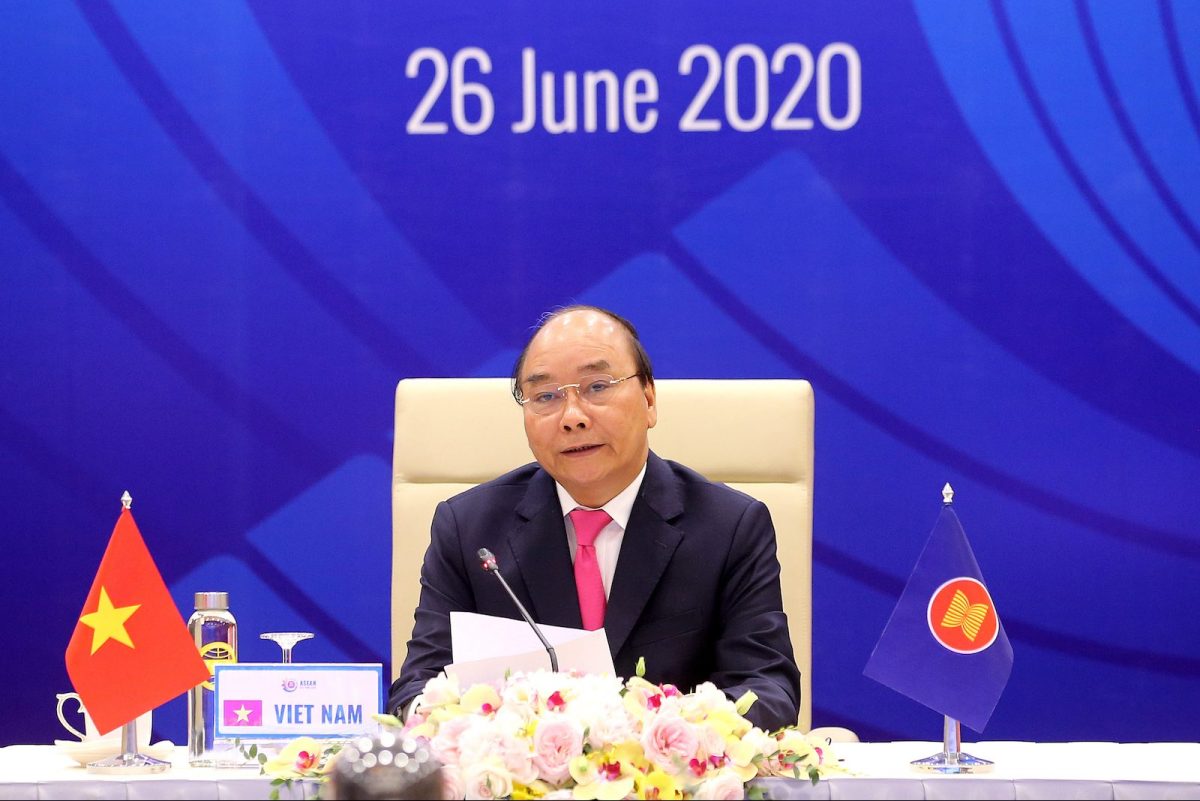
    During the first six months of the year, there were 26 meetings and most of these were through video-conferencing, exhibiting a high degree of commitment by the ASEAN under the Chairmanship of Vietnam.    

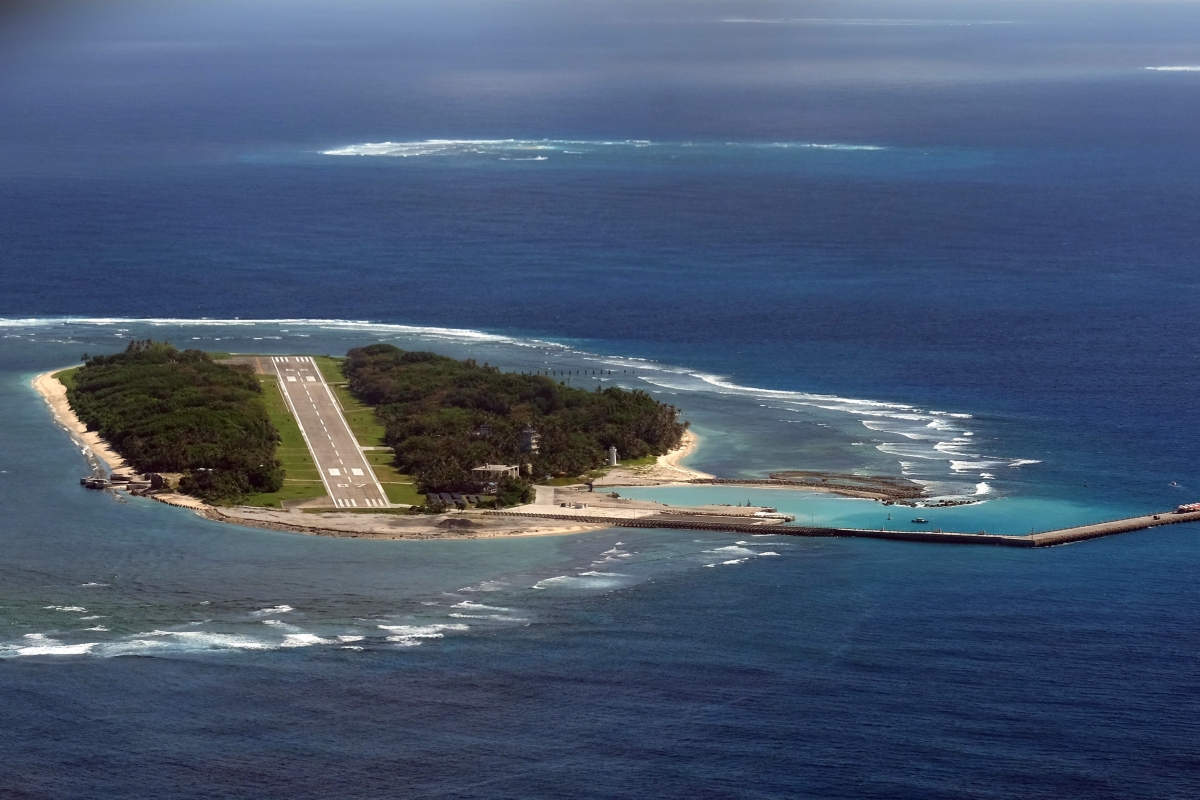
    Vietnam’s Chairmanship of the ASEAN comes at a time of immense turbulence marked by COVID-19 pandemic, disruption in the global supply chains resulting in economic recession among major economies, and strategic instability in the Indo-Pacific region marked by high tensions between the United States and China in the South China Sea. However, the ASEAN calendar of engagements with its Partner countries has remained busy, and Vietnam has spearheaded the Organisation with adeptness and alacrity and sustained the momentum of the ASEAN’s mandate through meetings and conversations.  During the first six months of the year, there were 26 meetings and most of these were through video-conferencing, exhibiting a high degree of commitment by the ASEAN under the Chairmanship of Vietnam.

     On 16 June 2020, at the 20th ASEAN-India Joint Cooperation Committee Meeting, through a video conference, India and the ASEAN “reaffirmed their commitment to further strengthen and deepen their cooperation.” Both sides noted the progress made for the implementation of the ASEAN-India Plan of Action (2016-2020), and “shared their commitment to complete the development of the new Plan of Action for 2021-2025 to further strengthen their strategic partnership over the next five years”.[i]

    A month later Secretary (East), Ministry of External Affairs (MEA), India, participated in the 22nd annual meeting of the Senior officials of ASEAN countries and India, and commended Viet Nam’s ASEAN chairmanship. Both sides “agreed to continue assisting each other’s citizens affected by the coronavirus outbreak”; provide “ASEAN countries with detailed information about the Indo-Pacific Ocean Initiative proposed by Indian Prime Minister Narendra Modi at the 16th ASEAN-India Summit in 2019”; welcomed “ASEAN bringing into play its role in fostering cooperation, dialogue and trust building in the region”; and conveyed India’s support for “efforts to seriously and fully implement the Declaration on the Conduct of Parties in the East Sea and build an efficient and effective Code of Conduct in the waters in line with international law and the 1982 UN Convention on the Law of the Sea”.[ii]

    COVID-19 Pandemic

    India and ASEAN are confronted with COVID-19 pandemic and there is ample evidence that both sides have conveyed their intention to fight the pandemic together. Prime Minister Modi engaged the leaders of Indonesia, Myanmar, Thailand, Singapore and Vietnam through telephonic conversations and assured support to ASEAN Member States. Likewise, Indian Foreign Secretary Harsh Vardhan Shringla has had weekly tele-conversations with counterparts from US, Australia, Japan, South Korea, New Zealand, and Vietnam to share ideas and best practices in the Indo-Pacific region for responding to COVID-19 pandemic.[iii]

    It is an opportune moment for the officials of the health departments in India and ASEAN to set up a dedicated virtual platform/dashboard designated as ‘India-ASEAN Meeting for Health Development (AI-MHD) that can be pluggedinto the ‘ASEAN Emergency Operations Centre (EOC) Network, the ASEAN Risk Assessment and Risk Communication Centre, the ASEAN Bio Diaspora Virtual Center (ABVC) and the ASEAN Centre for Humanitarian Assistance on disaster management (AHA Centre) for future public health emergencies’.

     India’s External Affairs Minister Dr. S. Jayashankar, in his remarks at the 6th Roundtable Meeting of ASEAN-India Network of Think Tanks (AINTT), noted that “the impact of the Coronavirus has been beyond our collective imagination. Current estimates put the cumulative loss in the range of USD 5.8-8.8 trillion or approximately 6.5-9.7% of the global GDP.[iv]

    ASEAN Outlook on the Indo Pacific (AOIP)

    India has acknowledged the importance of the ASEAN Outlook on the Indo Pacific (AOIP) and New Delhi is committed to “explore cooperation in the key areas outlined in the AOIP, covering maritime cooperation, connectivity, sustainable development and economic cooperation, in order to contribute to the maintenance of peace, freedom and prosperity in the region”.[v] Similarly, ASEAN has endorsed synergies in various sectors and promoted regional frameworks under India’s Act East Policy, and SAGAR (Security and Growth for All in the Region) vision. Although health and pandemic issues are conspicuously absent in the AIOP and SAGAR, but these are surely part of the broader thematic issues contained therein.

    India is committed to positive contribution to ASEAN-led mechanisms such as the East Asia Summit (EAS), the ASEAN Regional Forum (ARF), the ASEAN Defence Ministers’ Meeting-Plus (ADMM-Plus). It is a staunch believer of ‘rule of law’ and India believes that a Code of Conduct is a useful solution to reduce tensions in the South China Sea.

    On November 04, 2019, Prime Minister Narendra Modi launched the Indo Pacific Oceans’ Initiative (IPOI) at the East Asia Summit held in Bangkok, Thailand.[vi] It is an “ an open global initiative” and “ draws on existing regional cooperation architecture and mechanisms to focus on seven central pillars conceived around Maritime Security; Maritime Ecology; Maritime Resources; Capacity Building and Resource Sharing; Disaster Risk Reduction and Management; Science, Technology and Academic Cooperation; and Trade Connectivity and Maritime Transport.”

    Cooperation, Dialogue and Trust Building

    India is committed to positive contribution to ASEAN-led mechanisms such as the East Asia Summit (EAS), the ASEAN Regional Forum (ARF), the ASEAN Defence Ministers’ Meeting-Plus (ADMM-Plus). It is a staunch believer of ‘rule of law’ and India believes that a Code of Conduct is a useful solution to reduce tensions in the South China Sea. India’s Foreign Minister has stated that India is working in conjunction with Vietnam and “responses to that (CoC) are being handled by the Vietnamese and that is the way it should be,” [vii]

                Finally, it has been noted that “as we come out of this pandemic, let us be clear on one fact. The world will never be the same again. That means new thinking, fresh ideas, more imagination and greater openness. We need to go beyond orthodoxies, whether of trade, politics or security. These are domains that all of you debate regularly and I am sure today you will have a very productive discussion.”[viii]  It is useful for ASEAN and India to explore commonalities and convergences in the ASEAN Outlook on the Indo Pacific (AOIP) and the Indo Pacific Oceans’ Initiative (IPOI). In this context, Vietnam has the unique opportunity to further expand, deepen and strengthen the ASEAN India Strategic Partnership.


    Notes

    [i] “ASEAN, India strengthen cooperation”, https://asean.org/asean-india-strengthen-cooperation/ (accessed 20 August 2020).

    [ii] “ASEAN, Indian senior officials gather at online 22nd meeting”, https://www.asean2020.vn/xem-chi-tiet1/-/asset_publisher/ynfWm23dDfpd/content/asean-indian-senior-officials-gather-at-online-22nd-meeting (accessed 20 August 2020).


    [iii] “Cooperation among select countries of the Indo-Pacific in fighting COVID-19 pandemic”, https://mea.gov.in/press-releases.htm?dtl/32691/Cooperation+among+select+countries+of+the+IndoPacific+in+fighting+COVID19+pandemic (accessed 20 August 2020).

    [iv] “Remarks by EAM during the 6th Roundtable Meeting of ASEAN-India Network of Think Tanks (AINTT)”,https://www.mea.gov.in/Speeches-Statements.htm?dtl/32904/Remarks_by_EAM_during_the_6th_Roundtable_Meeting_of_ASEANIndia_Network_of_Think_Tanks_AINTT(accessed 20 August 2020).

    [v] “ASEAN Outlook On The Indo-Pacific” https://asean.org/storage/2019/06/ASEAN-Outlook-on-the-Indo-Pacific_FINAL_22062019.pdf (accessed 20 August 2020).

    [vi] “Ministry of External Affairs Indo-Pacific Division Briefs”, https://mea.gov.in/Portal/ForeignRelation/Indo_Feb_07_2020.pdf (accessed 20 August 20200.

    [vii] “Incident between Indian, Chinese militaries was ‘not skirmish but face-off’: Jaishankar”,https://economictimes.indiatimes.com/news/defence/incident-between-indian-chinese-militaries-was-not-skirmish-but-face-off-  (accessed 20 August 2020).

    [viii] “Remarks by EAM during the 6th Roundtable Meeting of ASEAN-India Network of Think Tanks (AINTT)”, https://www.mea.gov.in/Speeches-Statements.htm?dtl/32904/Remarks_by_EAM_during_the_6th_Roundtable_Meeting_of_ASEANIndia_Network_of_Think_Tanks_AINTT (accessed 20 August 2020).


    Image Credit: Asia Times

  • The Geopolitics of Syria’s Reconstruction

    The Geopolitics of Syria’s Reconstruction

    Introduction

    Syria’s territories are controlled by a variety of actors – Al Assad’s regime (with Russia and Iran as its supporters); Kurdish dominated self-administration (with a small number of US troops supporting them); Turkey and its affiliated militias; and the Syrian Salvation Government affiliated to the Hay’at Tahrir al-Sham (HTS), a former al-Qaida offshoot.

    Fragmentation of the state’s territories, as the state lost control of its territories, resulted in the emergence of a network of localised war economies with numerous local and foreign actors being involved. War economies emerged in territories held by Assad’s regime as well as those under the control of various other opposition parties, characterised by an increase in smuggling of goods (among which essential goods, crude oil and arms were popular), extortion, rent seeking for essential services, and taxation of goods at checkpoints established by the warring parties, including local warlords, opposition armed groups or regime’s militias. The Syrian Arab army is also reported to have engaged in rent seeking behaviour through the establishment in recaptured territories (Hinnebusch, 2020).

    Another area of priority for armed opposition groups is the border crossings with Turkey whose access they have sought to control. The Ahrar-Al Sham group, established control over the Bab al-Hawa crossing between 2015-16, and earned around $5 million per month. Armed opposition groups have been involved in conflict with each other over control for border crossings, particularly conflict between Hay’at Tahrir al-Sham (HTS) and Ahrar al-Sham in 2017 (al-Kattan, 2017).

    The Syrian army (that was cross-sectarian) is in crisis of its reducing force size as it is hampered by resistance to conscriptions and many desertions. The Alawite sect was co-opted into the state’s army, political and security apparatus, resulting in tensions along sectarian lines. Another significant development was that those among the pre-war elite who advocated for a political solution based on power sharing were expelled from it, resulting in the contraction of the core to comprise of individuals along sectarian lines. Further, pro-regime militias emerged as pro-government communities were forced to rely on themselves for their defence, leading to a widespread localisation of power to fiefdoms (al-Kattan, 2017).

    The political, economic and security dimensions of the conflict which led to the emergence of war economies has been accompanied by shift of composition of the economy marked by the emergence of ‘war commanders’ and a decentralised elite, who capitalised on evading sanctions, served as middlemen between the armed groups of the state and opposition and established monopoly upon the supply of goods and services.

     These developments further led to the emergence of new centres of power which existed alongside the existing regime that consolidated its power by strengthening its relations with the new elite, army and security sector.

    The domestic dynamics of the Syrian conflict are closely related to a wider geopolitical struggle among regional and external actors who act as patrons for the domestic actors.

    In addition, by portraying itself as a bulwark against radical Islamism and strengthening its relations with influential individuals in minority communities and providing them with disproportionate authority within their societies, the regime’s efforts have redefined existing social hierarchies and co-opted pro-regime minority leaders to power. The regime’s policies, throughout the war, have not only strengthened the neo-patrimonial nature of the State and its relations with its multiple networks but lead to the decentralisation of a system of neo-patrimonialism (Middle East Institute & Etana Syria, 2020).

    The domestic dynamics of the Syrian conflict are closely related to a wider geopolitical struggle among regional and external actors who act as patrons for the domestic actors. The Syrian conflict that began as an internal conflict emerged into a proxy conflict where regional struggle for influence played out between the ‘resistance axis’ comprising of Hamas, Hezbollah and Iran, and Sunni dominated ’moderate’ states comprising of Saudi Arabia, Qatar and Turkey. The latter wished replace the Assad regime that was aligned towards the ‘resistance axis.’ Iran considers the Syrian conflict as threat to its survival and its ability to support Hizbollah against Israel.  The rival axes instrumentalised sectarianism as a part of their discourse and in their support for proxies. However, the interests of those within the Sunni camp clashed (with Turkey and Qatar’s support for the Muslim Brotherhood and Saudi Arabia and UAE against the Muslim Brotherhood and its version of political Islam) resulting in division of the Sunni camp further leading to the division of their proxies (Aita, 2020).

    The global struggle for power between the US and Russia, with the former promoting a liberal world order and advance its hegemonic interests, and the latter interested in increasing its sphere of influence, limiting US intervention while emphasising on state sovereignty. Russian intervention in Syria in support of the Assad regime tilted the power balance in its favour allowing the regime to gain control of its lost territories.

    Image Credit: Al Araby

    US sought to limit direct intervention in Syria while relying on proxies and financial sanctions (that it pursued along with the EU) to pressurise Assad’s regime to compromise to a solution that would promote its interests. Assad’s regime, due to its connection Iran, Shia militas in Iraq and Hezbollah in Lebanon, was able to manage despite the external pressure it faced. US attention and efforts were diverted to controlling ISIS. In 2019, while US withdrew from Northern Syria due Turkish intervention against the Kurdish forces, it announced it would redeploy its forces to the energy reserves in Deir ez-Zor to prevent Assad’s forces or ISIS from gaining control over them (Hinnebusch, 2020).

    The geo-political struggle for influence in the Syrian conflict among regional and global actors, has also transcended into efforts to capitalise on Syria’s post-war reconstruction efforts and business.

    With diversion of US efforts towards constraining ISIS, Russian intervention, growing differences between Saudi and Qatar, Saudi and UAE intervention in Yemen, have all resulted in a gradual withdrawal of the GCC, leading to a rise in the role played by Turkey, Iran and Russia. Turkey’s role and interests evolved from installing a Brotherhood government and targeting the regime to controlling the Syrian Kurdish PYD, which it views as a terrorist organisation. The threat of a confrontation with Moscow in Syria allowed it to participate in the Astana Process and a gradual realignment of its policy with that of Russia’s policy. More recently, Turkey and Russia have brokered a ceasefire deal in Idlib.

    The geo-political struggle for influence in the Syrian conflict among regional and global actors, has also transcended into efforts to capitalise on Syria’s post-war reconstruction efforts and business.

    This paper explores the local, regional and international dimensions of reconstruction and development Syria while analysing the impact the war has had on the political economy of Syria.

    Internal dynamics of Syria’s reconstruction

    The internal dynamics of Syria’s reconstruction are characterised by conflict among Syrian actors (supported by external actors) for resources and instruments that would lead them to strengthen their control. The regime views reconstruction efforts as a means to consolidate its authority and power over the country.

    Image Credit: NYT

    While the efforts made by the regime to consolidate its power and authority served its objectives and reduce the costs of governance, they have led to the decentralisation of political and security apparatus at the local levels. In addition, Iran and Russia continue to establish relations based on patronage with several Syrian clients. The integration of Hezbollah, Iraqi Shi’i militias and Iran’s revolutionary guards, have further loosened the control the regime holds over the security apparatus and strengthened sectarianism.

    The efforts of Assad’s regime have been directed at satisfying its loyalist elite on whom it is vitally dependent to legitimise its authority and power, and to a lesser extent the public.

    The regime sought to prevent local security apparatus from capitalising on their autonomy by incorporating them into the newly established units under centralised defence forces as in the case of the 5th Army Corps, although this was only partially successful. Russian intervention and participation in the conflict allowed it to establish order in the army.  The paucity of manpower further prevents the regime from extending its authority over the entire country, forcing it to continue to depend on its relations with tribal leaders and local warlords (Hinnebusch, 2020).

    The efforts of Assad’s regime have been directed at satisfying its loyalist elite on whom it is vitally dependent to legitimise its authority and power, and to a lesser extent the public. It encouraged its loyalists to participate and reap benefits off the war economies during the war as its authority over its local proxies declined, while the threat of being targeted by the opposition has ensured that the elites remain loyal. With the localisation of war, the regime has strengthened its relations with the elite while consolidating its power by encouraging investment of income and revenues earned through illicit means into the formal economy. The elite, the warlords, who are partners in the conflict are increasingly participating in the formal economy by setting up formal companies and businesses. However, there remains much to be done to fully integrate them into the productive economy, discourage involvement in rent seeking, and to promote the revival of a productive economy (Sinjab, 2017).

    One of the major effects of the conflict and its resulting socio-economic and political patterns has been the lawlessness, that serves as a deterrent to socio, economic and political cohesion, further preventing the investments required for reconstruction.

    Legislation aimed at Reconstruction

    The regime’s economic strategy for reconstruction namely the ‘National Partnership’, enforced in 2016, allows public bodies to form private investment companies while supporting the establishment of private firms.

    Image Credit: BBC

    Private investors are encouraged to investing in the remaining public property allowing the government to retain its influence on the economic movements. This serves the purpose of attracting new investors to invest in lucrative opportunities while the investments serve to support regime’s prime customers and clients. The legislation also enables them to obtain and secure public sector properties at the cost of the state treasury’s finances, thereby raising a doubt regarding the ability of the ‘new elite’ to alter the nature of the enterprise. Another significant measure taken by the regime as part of its reconstruction repertoire are property and urban reconstruction laws, including the Law 66 of 2012 and Law No 10 of 2018, that expropriate land and property from displaced opposition supporters in substandard living conditions and reallocate them to new upscale housing. This is meant to gather the support of the regime’s loyalists. The regime by creating uncertainty about the security of the property could discourage all investors with the exception of a few capitalists (Daher, 2018).

    Despite the fact that restrictions on capital movement makes it very difficult to attract investments into Syria, the Syrian government is implementing policies and schemes to attract financial aid from outside. It intends to tax finance inflows ranging from money sent by expatriates into Syria for humanitarian aid, which must be channelled through NGO’s funded by the regime. It also intends to attract $100 billion worth Syrian currency held outside Syria through tax concessions and by launching the Syrian International Business Association (SIBA) under the auspices of World Bank. Analysts warn about the difficulties associated with investments from other nations. They suspect that given the dispersion of investments, diaspora would find it difficult to compete with loyalists for reconstruction contracts and there may be issues with fraudulent officials and widespread corruption. The assets of those businessmen who left the state have been frozen. Lastly, the US and EU-imposed multilateral sanctions led to Syria being cut off from the international banking system(Aita, 2020).

    The Syrian Government has declared that reconstruction contracts will be granted to its supporters and not countries who supported its opposition. It has also offered concessions in order to attract investments from Russia and Iran, but this may jeopardize Syria’s financial independence in the coming years.

    Reconstruction of Syria would lead to stronger relations with Iran and Russia followed by simultaneous decline in relations with the West (to whoom it exported a major portion of its oil ) and the Arab Gulf. Previous economic partners may engage in reconstruction in areas where there is negligible regime-control. The reconstruction parameters are bound to affect Syria’s social fabric. The gap between the rich and the poor has widened due to the war economy. The rigged economy will put the interests and benefits of the common people in peril.

    Geopolitical Dynamics of Reconstruction

    The geopolitical struggle over reconstruction among competing players at the regional level is centred around increasing one’s own influence, either through direct intervention or proxies. Considering that different parts of Syria is under the control of different parties there is every chance that Syrian reconstruction effort may not be an integrated effort across the nation but rather take the form of parallel reconstruction initiatives across the many different areas of Syria.

    The global geo-economic factors influence whether resources become available for reconstruction and on what terms. Because the powers that are geopolitically strongest on the ground in Syria (Russia, Iran) are geo-economically weaker than those who lost the geopolitical conflict (US, EU, Gulf), the latter are using the capital that they can withhold and obstruct or seek to leverage their contribution to effect the looming winding down of the military conflict on their terms. They, together with the World Bank, are making their participation conditional on a political settlement. Specifically, this will affect whether the regime will be able to reconstitute authority over the country’s territory and its reconstruction, or will be forced into some sort of power-sharing/territorial confederation or, these failing, reconstruction deepens fragmentation. If the parties do not reach a compromise the outcome could be a frozen conflict consolidated by separate and minimalist reconstruction tracks.

    Further, regional and global actors that have not participated in the conflict happen to be economically stronger and have the means to mobilise resources. Their support and resources to fund the reconstruction and development of Syria remain contingent on the ability of Assad’s regime to fulfil their conditions of a political settlement.

    Russia’s Reconstruction Support

    Russia’s role in Syria’s reconstruction have been driven by the benefits a stable Syria could provide it. It has provided Assad’s regime with support in economic and military terms and settled Syria’s debt. Russia also seeks to renew and recoup its pre-war investments in infrastructure and energy sector, and establish new contracts in geo-strategic areas. Assad’s regime has been granted a preferential role in redevelopment of its energy and infrastructure sectors. The state of the Russian economy has made lesser resources available for investment. The risk of investing in Syria due to the political and security climate and the threat of being targeted by US sanctions have led to minimal investment into Syria. The entities that have invested are operated/owned by oligarchs close to Putin, and those under sanctions, for instance, Gennady Tim-Chenko’s construction company (Van Veen, 2020).

    Russia has realised that it lacks the resources to actively finance Syria’s reconstruction effort and instead focussed its efforts on building the state institutions necessary to provide adequate security infrastructure, which is an important pre-condition for any reconstruction effort.

    Russia has realised that it lacks the resources to actively finance Syria’s reconstruction effort and instead focussed its efforts on building the state institutions necessary to provide adequate security infrastructure, which is an important pre-condition for any reconstruction effort. Simultaneously it tried to seek support from the European Union and international organisations to create the necessary infrastructure required to facilitate the return of refugees based out of Europe while ensuring the attainment of a political settlement that helps Bashar Al Assad to stay in power (Daher, 2018).

    Image Credit: NYT

    Russia has also worked with the Assad regime to implement policies aimed at the return of refugees thereby addressing some of the requirements and requests of the European Union. However, Bashar Al Assad has so far only paid lip service to such requests.  For instance a law intended to promote reconstruction projects has been amended under Russian pressure but without any major changes to its provisions and was used to expropriate the property of Syrians who fled abroad.

    Iran’s Role

    Iran has provided Assad’s regime around $16billion worth of financial aid since 2012.It has provided an additional $3.5 million in 2013 which was further extended by $1 billion in 2015 and $6.4 billion and $700million to pro-Iran militias in Syria.   It has expressed its interests in participating in the reconstruction of Syria. Iranian entities were awarded numerous contracts worth millions of dollars to initiate redevelopment of the electricity infrastructure by the central government as well as local governments but are yet to be implemented. The Iranian Revolutionary Guards, who have considerable experience in participating in the reconstruction of Iran after the Iran-Iraq war and own vast construction companies in Iran, have entered into agreements in the sectors of mining and communications. While Iran has stated it would offer $1 billion for reconstruction, the amount it pledged is a minuscule amount of the total funds required. Iran’s participation in Syria’s reconstruction is also likely to be limited due to the impact of US sanctions on its own economy(Van Veen, 2020).

    Diminished role of US, EU and Arab States

    As for regime controlled parts of Syria, Washington moved to block reconstruction funding in these areas. US pundits argued that the regime would inevitably be empowered by reconstruction and should not be rewarded for its brutal repression of the uprising; anti-regime interest groups moved not only to preclude US funding but also to erect obstacles to others participating in reconstruction. In April 2018 the US Congress passed the No Assistance for Assad Act (NAAA) which was designed to prevent any drift from humanitarian assistance to reconstruction stabilization, and according to Faysal Itani, had the effect of ‘killing any World Bank dreams to get funding to operate in Syria’. Indeed, the US has a long history of directing the flow of world financial capital via sanctions, conditionality, etc. for its geopolitical purposes; in Syria, it seeks to manipulate money (geo-economics) to obtain what it could not achieve via geopolitics: specifically, keeping Syria a failed state that would make it a resource-draining burden for Russia and its allies.

    The US has used its influence in North-Eastern Syria, to counter efforts by the Assad regime to consolidate its power over Syria which is a precursor to a “nationally integrated” reconstruction. Establishing control over energy reserves is essential for Assad’s regime to pursue its reconstruction efforts successfully. The US, by controlling reserves in the North-East Syria, has been able to deprive Syria’s access to essential resources.

    US efforts in reconstruction have been motivated by its interests to deter any reconstruction efforts sponsored by the regime through geo-economics measures such as sanctions, when its geo-political efforts have had limited success in motivating Syria and its allies in pursuing a political solution in line with US policy interests.

    The US campaign against ISIS devastated Raqqa but reconstruction there has remained limited to stabilization measures. The Trump administration tried to get the Saudis to assume the burden of reconstruction (asking for $4 billion). The US goal was to start enough reconstruction to deter any move in the area to join regime sponsored reconstruction efforts (Alaaldin et.al., 2018; Burcher, 2018; Harris, 2018; US Congress, 2018;). US efforts at convincing Saudi Arabia to undertake reconstruction efforts have not been successful as the latter offered relatively smaller amount (al-Khateb, 2020).

    US efforts in reconstruction have been motivated by its interests to deter any reconstruction efforts sponsored by the regime through geo-economics measures such as sanctions, when its geo-political efforts have had limited success in motivating Syria and its allies in pursuing a political solution in line with US policy interests.  It simultaneously blocked reconstruction funding directed towards territories under the control of the regime. The Caesar Act, now incorporated into the National Defence Act of 2020, targets investment into Syria, through individuals and businesses coming into the ambit of the UN sanctions (Hinnebusch, 2020).

    While the EU has provided substantial aid to Syrian refugees in Syria’s neighbouring countries, it has made its aid and participation in reconstruction contingent on efforts to reach a political solution that is in accordance with ‘UNSCR 2254 and the Geneva Communique’

    The EU has been affected by the Syrian Conflict due to the influx of refugees and large-scale migration of its citizens to partake in terrorist activities. While the EU has provided substantial aid to Syrian refugees in Syria’s neighbouring countries, it has made its aid and participation in reconstruction contingent on efforts to reach a political solution that is in accordance with ‘UNSCR 2254 and the Geneva Communique’ (Van Veen, 2020).

    Russia is making efforts to broker a political settlement of sorts, with Turkey’s support, to convince EU to invest in reconstruction to enable refugees to return. While the EU seems to be relying on the inability of Syria’s allies to support its funding and thus force Assad to agree to the EU’s conditions, the regime does not seem to be interested in accepting EU conditions and give up its power in return for support of its reconstruction. However, individuals EU states have participated in reconstruction efforts in a limited manner in both the regime-held as well as opposition-held areas.

    Turkey continues to be one of Syria’s top trading partners. Numerous Syrian businessmen who have been exiled have invested in Turkey, around 26% of foreign investment in Turkey in 2014 originated from Syrian businessmen, particularly in its border regions with Syria. While a number of exiled Syrian businessmen supported the opposition, their investment would be instrumental, if mobilised, in territories held by Turkey and its militias at a time when refugees are returning to the region. While the Syrian government is against the participation of Turkey in the reconstruction of Aleppo, Russia’s efforts in mediation would lead Turkey to participate in the reconstruction process. Turkey has invested significantly in establishing institutions facilitating the governance of areas under its control and also in building economic infrastructure in these areas (Daher, 2018).

    While Jordan and Lebanon have expressed interest in participating in the reconstruction of Syria, the resources they can mobilise are limited.  The Gulf countries have, no doubt the resources required for reconstruction, but have made their role in Syria’s reconstruction contingent on withdrawal of Iran and its proxies and in case of some countries, a regime change. The UAE as expressed its interest in participating in Syria’s reconstruction so as to limit Iran’s influence. However, Yazigi (2017) states that reconstruction efforts, in the case of  Lebanon, were contingent on a solution that emphasised upon power-sharing, backed by regional and international actors and substantial financial aid from Saudi Arabia. It is unlikely that either of the two scenarios would play out in the case of Syria.

    China: A Possible Contender?

    the Chinese state considers Al Assad’s regime as a bulwark against terrorism and its relations with the regime an asset in combating Uighurs who are participating on the behalf of terrorists.

    China has expressed its interest in participating in the reconstruction of Syria to advance its interests through investments in economy and geo-strategic areas such as the maritime sector, and to develop and connect its Belt and Road Initiative in the region. Given China’s interests, size and nature of China’s capital, China becomes a viable partner in the reconstruction of Syria.  China conducted a trade fair in 2018, which was attended by 1,000 Chinese companies and witnessed an investment of $2 billion for the reconstruction and development of Syria’s industrial sector. Private investors have been concerned about the widespread corruption in Syria and the threats of being targeted by US sanctions. Moreover, the Chinese state considers Al Assad’s regime as a bulwark against terrorism and its relations with the regime an asset in combating Uighurs who are participating on the behalf of terrorists.

    Conflict Resolution vs Conflict Management

    Given that the warring parties consider the conflict to be more-or-less of a zero-sum game, territorial and social fragmentation of Syria, it would be extremely difficult for them to pursue means to resolve the conflict through creating the need for the conflict to be managed and downsized (Dacrema, 2020). The non-recognition of certain non-state actors by the rival sides and questions regarding the participation of non-state actors in negotiations, which would only serve to legitimise them further, complicates the process of negotiating a solution.

    Temporary Arrangements

    A strategy that would allow for the management of the conflict would be to negotiate temporary agreements and deals. Turkey and Russia have been able to broker temporary ceasefires at multiple instances, throughout the conflict, in the Idlib region. Temporary arrangements would help build confidence among the warring parties in the long run, and reduce the possibility of escalation of war (Dacrema, 2020).

    Conclusion

    Given that the warring parties prefer a status quo in comparison to the resolution of a conflict and value their geo-political and economic interests, it is highly unlikely that parties would push for resolution of the conflict. In consideration of a political stalemate, reconstruction efforts among the warring parties are likely to take place parallelly, as they have played out with the localisation of the conflict. While resources in the territories held by the regime are being diverted to areas that have remained loyal during the conflict and/or areas of strategic importance with areas formerly occupied by opposition forces receiving relatively lesser attention; territories under Turkish control and those held by the Kurdish forces have witnessed efforts aimed at stabilising the territories.

    Russia and EU have the potential and the leverage required to emerge as power brokers in the reconstruction and initiate the process in a manner that promotes social, economic and political cohesion in the long run.

    Russia and EU have the potential and the leverage required to emerge as power brokers in the reconstruction and initiate the process in a manner that promotes social, economic and political cohesion in the long run. The likelihood of being able to convince themselves that the possibility of achieving one’s interests alongside the other is a far better option in comparison to its alternative of a failed state, which threats both their interests. However, their ability to convince their allies and their clients (in this instance, Assad regime is Russia’s client) and the mistrust between both the parties as well as between their allies poses a challenge.

    Russia’s efforts in brokering a constitutional committee for Syria under the aegis of the UN is an indicator of a compromise. Hinnebusch (2020) suggests that “it is not impossible to move incrementally toward a minimalist sort of political settlement that might acquire enough international legitimacy to open the door to some reconstruction funding.” While the likelihood of this occurrence is difficult amid conflicting interests, it cannot be overruled.

    The humanitarian aspects of the conflict and urgent need for reconstruction to alleviate tangible and intangible costs of the conflict have largely been ignored. The warring parties have been preoccupied with advancing and fulfilling their interests at the cost of ordinary Syrians. There is a need for parties to acknowledge and make efforts towards the realisation of the urgency of reconstruction that is vital for securing the social and economic interests of ordinary Syrians. The likelihood of the same, however, is questionable.


    References

    Aita, S. (2020). Reconstruction as a political-economy issue: The case of Syria. Retrieved 28 June 2020, from https://www.thecairoreview.com/tahrir-forum/reconstruction-as-a-political-economy-issue-the-case-of-syria/

    al-Kattan, R. (2017). Retrieved 25 June 2020, from https://www.atlanticcouncil.org/blogs/syriasource/the-economic-case-for-syria-s-stabilisation/

    al-Khateb, K. (2020). US outsources Syria aid to Gulf. Retrieved 4 July 2020, from https://www.al-monitor.com/pulse/originals/2018/08/us-outsources-syria-aid-gulf.html

    Dacrema, E. (2020). Three Concepts to Understand the Future of Syria. Retrieved 25 June 2020, from https://www.oasiscenter.eu/en/what-future-for-postwar-syria

    Daher, J. (2018). The political economic context of Syria’s reconstruction : a prospective in light of a legacy of unequal development. Retrieved 3 July 2020, from https://core.ac.uk/display/162303203

    Hinnebusch, R. (2020). The Battle over Syria’s Reconstruction. Retrieved 1 July 2020, from https://www.globalpolicyjournal.com/articles/development-inequality-and-poverty/battle-over-syrias-reconstruction

    Human Rights Watch. (2019). Rigging the System. Retrieved 25 June 2020, from https://www.hrw.org/report/2019/06/28/rigging-system/government-policies-co-opt-aid-and-reconstruction-funding-syria#_ftn114

    Middle East Institute, & Etana Syria. (2020). Manufacturing Division: The Assad Regime and Minorities in South-west Syria. Retrieved 2 July 2020, from https://www.mei.edu/publications/manufacturing-division-assad-regime-and-minorities-south-west-syria

    Sinjab, L. (2017). How Syria’s War Economy Propels the Conflict. Retrieved 25 June 2020, from https://syria.chathamhouse.org/research/how-syrias-war-economy-propels-the-conflict

    Veen, E. (2020). The geopolitics of Syria’s reconstruction: a case of matryoshka. Retrieved 27 June 2020, from https://www.clingendael.org/publication/geopolitics-syrias-reconstruction-case-matryoshka

    Yazigi, J. (2017). Analysis: No Funds to Foot Syria’s Reconstruction Bill. Retrieved 1 July 2020, from https://www.newsdeeply.com/syria/community/2017/12/04/analysis-no-funds-to-foot-syrias-reconstruction-bill


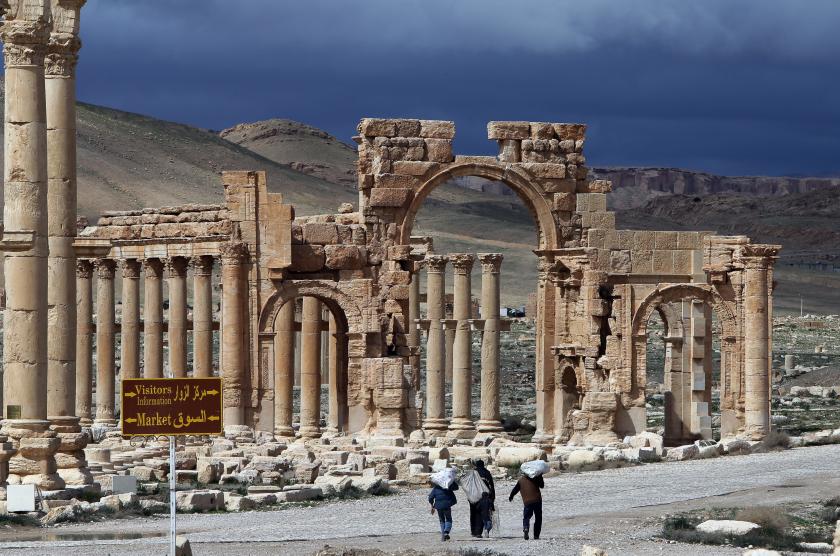
    Main Image Credit: Palmyra before its destruction by ISIS – www.citymetric.com 
     

  • Living Next to China: India’s Economic Challenge

    Living Next to China: India’s Economic Challenge

    Abstract

    Hampered by declining economic growth, India needs to take bold and practical economic measures to overcome the adverse impact of the coronavirus pandemic, compounded by past economic blunders such as the demonetisation and the haphazard implementation of the GST regime. Mohan Guruswamy analyses that the seeds of the current economic slide were sown by the UPA II regime by its populist measures that were wasteful, unproductive, and reduced capital expenditure. Non action by the NDA governments on these issues has made it worse. He argues that India must not shy away from recourse to deficit financing to overcome the current unprecedented challenges faced by the economy on account of the Covid-19 disruption. India needs to increase its stimulus package from a mere 0.3% of the GDP to at least 10% to boost economic revival and growth. India’s reserves of $490 billion ($530 billion as of recent figures) is available to be tapped for economic revival. The measures must focus on addressing the severe impact on weaker sections of the society such as the poor, lower middle-class, and the farmers.

    The Covid2019 shock hit all world economies and has caused a serious contraction in all of them. Ironically, in the advanced economies like the USA, UK, Japan, and others, it exposed their intrinsic strengths with highly evolved social security systems by and large being able to absorb the labor displacement and the ability to quickly put together a fiscal fight back plan. Even China has been able to quickly recover its pole position as the worlds leading exporter and industrial production center. In India, Covid2019 exposed our co-morbidities, and has further opened the traditional faultlines, with the large unorganized labor cohort bearing the brunt of the costs. At last count the CMIE estimates over 130 million daily wagers in the urban centers being rendered jobless and homeless.[i] India’s economy which has been in distress for most of the last decade in now seriously stricken.

    When India’s economic history is written in some future date, and when a serious examination is done of when India lost its way to its ‘tryst with destiny’, the decade of 2010-20 will be highlighted.

    When India’s economic history is written in some future date, and when a serious examination is done of when India lost its way to its ‘tryst with destiny’, the decade of 2010-20 will be highlighted. The facts speak for themselves. India’s real GDP growth was at its peak in March 2010 when it scaled 13.3%.  The nominal GDP at that point was over 16.1%. The nominal GDP in September 2019 was at 6.3%, it’s lowest in the decade. Since then the downward trend is evident and we are now scraping the bottom at about a real GDP growth rate of 4.5%, this too with the push of an arguably inflationary methodology. Our previous CEA, Arvind Subramaniam, estimated that India’s GDP growth is overestimated by at least 2.5%. BJP MP and economist Subramaniam Swamy was even more pessimistic. He estimated it to be 1.5%.

    The decline in the promise is amply evident by the change in the make up of the economy during this decade.  In 2010 Agriculture contributed 17.5% of GDP, while Industry contributed 30.2% and Services 45.4%.  In 2019 that has become 15.6%, 26.5% and 48.5% respectively.  The share of industry has been sliding.  This is the typical profile of a post-industrial economy.  The irony of India becoming post-industrial without having industrialized must not be missed.

    Decline in Capital Investment

    The most significant cause for the decline of growth is the decline in capital investment.  It was 39.8% of GDP in 2010 and is now a good 10% lower.  Clearly without an increase of capital investment, one cannot hope for more industrialization and hence higher growth.  What we have seen in this decade is the huge increase in Services, which now mostly means increase in Public Administration and informal services like pakora sellers.

    In 2010 it seemed we were well on track.  But now we are struggling to get past $3 trillion, and the $5 trillion rendezvous that Modi promised by 2024 will have to wait longer.

    At the turn of the century, as China’s GDP began its great leap forward (from about $1.2 trillion in 2010 to $14.2 trillion in 2019), was also a heady moment for India whose GDP of $470 billion began a break from the sub 5% level of most of the 1990’s to the rates we became familiar with in the recent past (to hit a peak stride of 10.7% in 2010). At that point in time, if growth rates kept creeping up, we could have conceivably gone past $30 trillion by 2050. But for that the growth rate should consistently be above 7%. It seemed so feasible then.  In 2010 it seemed we were well on track.  But now we are struggling to get past $3 trillion, and the $5 trillion rendezvous that Modi promised by 2024 will have to wait longer.

    To be fair to Modi and the NDA, the decline began early in the second term of the UPA when capital expenditure growth had begun tapering off.  Dr. Manmohan Singh is too canny an economist to have missed that.  But UPA II also coincided with the increasing assertion of populist tendencies encouraged by the Congress President and her extra-Constitutional National Advisory Council. The decline in the share of capital expenditure was accompanied by a huge expansion in subsidies, most of them unmerited.  Instead of an increase in expenditure on education and healthcare, we saw a huge expansion in subsidies to the middle and upper classes like on LPG and motor fuels. Even fertilizer subsidies, which mainly flow to middle and large farmers with irrigated farmlands, saw a great upward leap.  Clearly the money for this came from the reduction in capital expenditure.  Modi’s fault in the years since 2014 is that he did nothing to reverse the trend, and only inflicted more hardship by his foolish demonetization and ill-conceived GST rollout.

    The realities are indeed stark.  The savings/GDP ratio has been in a declining trend since 2011 and Modi has been unable to reverse it.  Consequently, the tax/GDP ratio and the investment/GDP ratio have also been declining.  The rate of economic growth has been suspect and all objective indicators point to it being padded up. The drivers of economic growth such as capital expenditure is dismal.  Projects funded by banks have declined by over half since 2014 to less than Rs.600 billion in 2018-19.  Projects funded by the market have dropped to rock bottom.  Subsequently the manufacturing/GDP ratio is now at 15%.  Corporate profits/GDP ratio is now at a 15-year-old low at about 2.7%.  You cannot have adequate job creation if these are dipping.  Declining rural labor wage indices testify to this.

    Between October 2007 and October 2013 rural wages in the agricultural and non-agricultural sectors grew at 17% and 15%, respectively.  Since November 2014, however, agricultural and non-agricultural sector wages grew at only 5.6% and 6.5%, respectively. In 2019 average rural wage growth has further fallen to 3.1%.[ii]

    Bharat and India Divide

    It is very clear now that the urban lane has been moving well in India.  Indeed, so well that an Oxfam study revealed that that as much as 73% of the growth during the last five years accrued to just 1% of the population.[iii] This does not mean it is just the tycoons of Bombay and Delhi who are cornering the gains.  Government now employs close to 25 million persons, and these have now become a high-income enclave.  The number of persons in the private and organized sector is about another ten million. In all this high-income enclave numbers not more than 175-200 million (using the thumb rule of five per family).  Much of the consumption we tend to laud is restricted to just these.

    The simple fact that the share of Agriculture is now about 15.6% of GDP and falling, while still being the source of sustenance for almost 60% of the population reveals the stark reality.  A vast section of India is being left behind even as India races to become a major global economy.

    Agriculture is still the mainstay of employment.  Way back in 1880 the Indian Famine Commission “had observed that India had too many people cultivating too little land”.  This about encapsulates the current situation also.  While as a percentage the farmers and farmworkers have reduced as a part of the work force, in absolute terms they have almost tripled since 1947.  This has led to a permanent depression in comparative wages but has also led to a decline in per farmer production due to fragmentation of holdings.  The average farm size is now less than an acre and it keeps further fragmenting every generation.[iv] The beggaring of the farming community is inevitable.  The only solution to this is the massive re-direction of the workforce into less skilled vocations such as construction.

    The simple fact that the share of Agriculture is now about 15.6% of GDP and falling, while still being the source of sustenance for almost 60% of the population reveals the stark reality.  A vast section of India is being left behind even as India races to become a major global economy.

    As the decade ends, the Bharat and India divide have never been more vivid.  Our social scientists are still unable to fix a handle to this because the class, cultural and ethnic divides still eludes a neat theoretical construct.  Yet there can be little disagreement that there are two broad parts to this gigantic country and one part is being left behind.  The distance between the two only increased from 2010 to 2020.  This is indeed the lost decade.  Recovering from this will take long and will be painful.  If we take too long, we might have used up a good bit of the ‘demographic dividend’ and the demographic window of opportunity.  The ageing of India will be upon us by 2050[v].

    Covid-19 Impact – Increasing Economic Disparities 

    In the recent months the onslaught of the Covid2019 induced lockdown has been quite relentless.  From 2004-2014 India’s GDP grew at an average of 7.8%.  At its peak it went past 10% in 2010-11 Then it started slowing down.  The new government was unable to return to the old growth rates because it did not care to learn from the experiences of the previous regime, which began to spend more on giveaways, misguidedly thinking it was welfare economics, and took the accelerator off capital expenditure.  Even though capital expenditure is driven in India by government spending, this government spending is very different from subsidies and giveaways.  Subsidies generally tend to be misdirected with the already well-off garnering most of it.  Minimum Support Prices (MSP) are a huge annual subsidy[vi]and 90% of it accrues to the states of Punjab, Haryana, and the coastal region of Andhra Pradesh.  Fertilizer subsidies tend to accumulate to the advantage of large and medium farmers or to about a quarter of all land holdings.  Ditto for free power.  The only welfare expenditure to benefit farmers is investment in irrigation, rural infrastructure, and social welfare like education and health.  Unfortunately, this has been on the decline.  This has exacerbated disparities, both local and regional.  With capital expenditures declining, job creation suffered and the inevitable slowdown of GDP growth happened.  As we started diving, the government inflicted the so-called Demonetization adding to our woes.  Just as things began to look up, the Covid2019 pandemic overtook us.

    Now the only dispute on national income is how much will be the contraction.  The Finance Ministry hopes there won’t be any. The IMF has officially said it will be 4.5%.  The rating agencies predict a contraction of 6.8%, while many more are suggesting something closer to 10%.  How do we deal with is now?  The government of India has tended to be “conservative” in its outlook and has made no serious suggestion on economic stimulus.  What it calls a stimulus is actually not a stimulus. The problem is more philosophical.

    The divide between the Keynesians and the Chicago school is as intense and often antagonistic as the Sunni-Shia, Catholic-Protestant or Thenkalai-Vadakalai Iyengar divides.

    Keynesian economics is a theory that says the government should increase demand to boost growth. Keynesians believe consumer demand is the primary driving force in an economy.  As a result, the theory supports expansionary fiscal policy.  The Chicago School is a neoclassical economic school of thought that originated at the University of Chicago in the 1930s.  The main tenets of the Chicago School are that free markets best allocate resources in an economy and that minimal or zero government intervention is best for economic prosperity.  They abhor fiscal deficits.

    Inadequate Stimulus Package 

    The instruments used to beat countries like India into submission are ratings agencies such as Moody’s, which just downgraded India.  We shouldn’t lose too much sleep over it.  India is a hardly a borrower abroad and is more of a lender holding $490 billion as reserves.

    The only reason why the actual stimulus package is only Rs.63K crs is the obsession with fiscal deficits by Chicago economists such as Raghuram Rajan and his former student the hapless Krishnamurthy Subramaniam, the present CEA. They are true disciples of the Washington Consensus to judge countries like India by the fiscal deficit size.  The instruments used to beat countries like India into submission are ratings agencies such as Moody’s, which just downgraded India.  We shouldn’t lose too much sleep over it.  India is a hardly a borrower abroad and is more of a lender holding $490 billion as reserves.

    That is why the CEA when asked about a big stimulus said: “There are no free lunches!” That’s exactly what Milton Friedman said. But they quite happily ignore the biggest deficit financed economy in the world is the USA.  Raghuram Rajan told Rahul Gandhi on his videoconference that a stimulus of Rs.65K crores would suffice in the present situation[vii]. The Nobel Laureate Abhijit Bhattacharya and former CEA Arvind Subramaniam suggest a stimulus package like the USA or Japan[viii].  The USA has just announced a stimulus of over $3.5 trillion or over 15% of GDP.  Modi’s stimulus is a mere 0.3% of GDP.

    What is ‘Fiscal Deficit?’ A fiscal deficit occurs when a government’s total expenditures exceed the revenue that it generates, excluding money from borrowings.  Deficit differs from debt, which is an accumulation of yearly deficits.

    Many serious economists regard fiscal deficits as a positive economic event.  For instance, the great John Maynard Keynes believed that deficits help countries climb out of economic recession.  On the other hand, fiscal conservatives feel that governments should avoid deficits in favor of balanced budgets.

    India’s debt/GDP ratio is by contrast a modest 62% and yet it intends to pump in a mere 0.3% of GDP as stimulus.

    The fastest growing economies in the world, and now its biggest – USA, China, Japan and most of Western Europe – have the highest debt/GDP ratios.  Japan’s debt/GDP is over 253% before the latest stimulus of 20% of GDP.  China’s debt is now over 180% of its GDP.  The USAs debt/GDP is close to 105% yet it is raising $3 trillion as debt to get it out of the Covid2019 quagmire.  India’s debt/GDP ratio is by contrast a modest 62% and yet it intends to pump in a mere 0.3% of GDP as stimulus.

    Pump priming the economy by borrowing per se is not bad.  It is not putting the debt to good use that is bad.  Nations prosper when they use debt for worthwhile capital expenditure with assured returns and social cost benefits.  But we in India have borrowed to give it away as subsidies and to hide the high cost of government.  To give an analogy, if a family has to make a choice of borrowing money to fund the children’s education or to support the man’s drinking habit, the rational choice is obvious. The children’s education will have a long-term payback, while the booze gives instant gratification. But unfortunately, our governments have always been making the wrong choices.

    If borrowed money is used productively and creates growth and prosperity, it must be welcomed.  What we want to hear from the government is not about fiscal deficit targets, but economic growth, value addition, employment, and investment targets.  Our governments have hopelessly been missing all these targets.

    Modi’s Options – Need for Bold Decisions

    So, what can Modi do now to get us out of this quagmire?  If the regime abhors a stimulus financed by deficit financing there are other options that can be exercised.  But he is hamstrung with a weak economic management team with novices as the two key players, the Finance Minister and RBI governor.

    India has over $490 billion nesting abroad earning ridiculously low interest.  Even if a tenth of this is monetized for injection into the national economy, it will mean more than Rs.3.5 lakh crores.  At last count the RBI had about Rs.9.6 lakh crores as reserves.  This is money to be used in a financial emergency.  We are now in an emergency like we have never encountered or foresaw before. Even a third of this or about Rs.3.2 lakh crores is about five times the present plan.

    There is money in the trees, and all it needs is a good shake up to pick the fruits. The pain of the lockdown must not be borne by the poor alone.  The government can easily target 5% of GDP or about Rs.10L crores for the recovery fund as an immediately achievable goal.

    There are other sources of funds also, but tapping these will entail political courage and sacrifices. Our cumulative government wages and pension bill amounts to about 11.4% of GDP.  After exempting the military and paramilitary, which is mostly under active deployment, we can target 1% of GDP by just by cancelling annual leave and LTC, and rolling back a few DA increases.

    The government can also sequester a fixed percentage from bank deposits, say 5% of deposits between Rs.10-100 lakhs and 15-20% from bigger deposits for tax-free interest-bearing bonds in exchange.  The ten big private companies alone have cash reserves of over Rs.10 lakh crores[ix].

    There is money in the trees, and all it needs is a good shake up to pick the fruits. The pain of the lockdown must not be borne by the poor alone.  The government can easily target 5% of GDP or about Rs.10L crores for the recovery fund as an immediately achievable goal.

    This money can be used to immediately begin a Universal Basic Income scheme, by transferring a sum of Rs.5000 pm into the Jan Dhan accounts for the duration of the financial emergency; fund GST concessions to move the auto and engineering sectors in particular; begin emergency rural reconstruction projects to generate millions of new jobs and get our core infrastructure sectors like steel, cement and transportation moving again.

    Getting money to move India again is not a huge problem.  What comes in between are the philosophical blinkers.  Call it Chicago economics or the Gujarati mindset.

    Notes

    [i] https://www.businesstoday.in/sectors/jobs/india-unemployment-rate-hits-26-amid-lockdown-14-crore-lose-employment-cmie/story/401707.html

    [ii] https://www.financialexpress.com/economy/farm-wages-growth-fell-to-a-four-quarter-low-in-q3-fy-20/1789235/

    [iii] https://economictimes.indiatimes.com/news/economy/indicators/wealth-of-indias-richest-1-more-than-4-times-of-total-for-70-poorest-oxfam/articleshow/73416122.cms?from=mdr#:~:text=Wealth%20of%20India’s%20richest%201%25%20more%20than%204%2Dtimes%20of,total%20for%2070%25%20poorest%3A%20Oxfam&text=The%20Oxfam%20report%20further%20said,particularly%20poor%20women%20and%20girls.

    [iv] https://www.prsindia.org/policy/discussion-papers/state-agriculture-india

    140 million hectares of land is used as agricultural area, as of 2012-13.  Over the years, this area has been fragmented into smaller pieces of land.  As seen in Table 3, the number of marginal land holdings (less than one hectare) increased from 36 million in 1971 to 93 million in 2011.  Marginal and small land holdings face several issues, such as problems with using mechanization and irrigation techniques.

    [v] https://economictimes.indiatimes.com/news/politics-and-nation/demographic-time-bomb-young-india-ageing-much-faster-than-expected/articleshow/65382889.cms

    [vi] https://www.thehindubusinessline.com/opinion/all-you-wanted-to-know-about-minimum-support-price/article7342789.ece

    [vii] https://www.hindustantimes.com/india-news/in-video-conversation-with-rahul-rajan-suggests-65k-crore-aid-for-poor/story-CtrtvW6HErR16L9m1t9wHP.html

    [viii] https://economictimes.indiatimes.com/news/economy/policy/rahul-gandhi-in-conversation-with-abhijit-banerjee-india-needs-a-bigger-stimulus-package-like-us-japan-to-revive-economy/videoshow/75549770.cms

    [ix] https://www.screener.in/screens/2551/Cash-Rich-Companies/


    Image credit: Adobe Stock

  • Vietnam: Bright Economic Outlook post-COVID

    Vietnam: Bright Economic Outlook post-COVID

    COVID-19 is truly a ‘Black Swan’ event and its impact is being felt across the globe. There is widespread worry about the future of economic growth in the post-pandemic period and the World Bank has observed that the pandemic caused the deepest global recession since Second World War. [i] There are at least three reasons which triggered and added to the current crisis. First, it has involved the US and China in a trade war since July 2018, when US President Donald Trump imposed wide-ranging tariffs on China for its alleged unfair trade practices. In August 2019, Trump ordered U.S. companies to “immediately start looking for an alternative to China, including bringing your companies home and making your products in the USA.”[ii] China responded in a similar manner with counter tariffs on US goods. Since then numerous negotiations between them have been held, the last in June 2020 at Hawaii, did not yield any breakthrough. This revengeful tariff war has now blown into a full-fledged trade war and President Trump aggravated with the renewed threat of a “complete decoupling from China.”

    There is widespread worry about the future of economic growth in the post-pandemic period and the World Bank has observed that the pandemic caused the deepest global recession since Second World War.

    Second, amid the trade war, the Corona-19 pandemic made matters worse for the two protagonists. The US accused China of withholding information about the Wuhan virus which was detected in December 2019 and Beijing did not make public the information till January 2020 after which it spread across the globe from Europe to the US. The pandemic has caused massive disruptions in supply chains and some countries have decided to shift businesses out of China. For instance, Prime Minister Shinzo Abe government announced US $2.2 billion stimulus package to help companies shift production out of China back to Japan or elsewhere.[iii]

    Third, the new security law in Hong Kong has triggered an exodus by several companies to move out of China. The Law “targets acts of secession, subversion, terrorism and collusion with foreign forces, with life in prison for those committing the most serious offences”[iv] has scared common people. Many technology companies, startups, entrepreneurs are now confronted with uncertainty and are exploring alternative destinations.[v]

    many companies are being forced to shut down their operation in China and rethink-reevaluate-reinvest in new destinations to remain buoyant for the time being and slowly make their networks more resilient across sectors for the future.

    Furthermore, the pandemic exposed the weaknesses and susceptibilities of many organizations, business houses and industries particularly those that are intimately connected and dependent on China to fulfil their need for raw materials or finished products. Consequently, many companies are being forced to shut down their operation in China and rethink-reevaluate-reinvest in new destinations to remain buoyant for the time being, and slowly make their networks more resilient across sectors for the future. According to a leading business research and advisory company, “tariffs imposed by the U.S. and Chinese governments during the past years have increased supply chain costs by up to 10% for over 40% of organizations” and “popular alternative locations are Vietnam, India, and Mexico.” [vi]

    Vietnam and Thailand have a very good scorecard in their fight against COVID-19 and are rearing to attract investments and kick start the economy.

    Even before COVID-19 pandemic crisis, in 2019, five Asian countries i.e. Malaysia, India, Thailand, Indonesia and Vietnam (MITI-V) or “Mighty Five” had been identified as “up-and-coming players” with high potential for being world’s next manufacturing hubs.[vii] Among these, Vietnam and Thailand have a very good scorecard in their fight against COVID-19 and are rearing to attract investments and kick start the economy.

    According to the World Economic Forum, Vietnam’s economic rise is marked by trade liberalization, domestic reforms through deregulation, lowering the cost of doing business and investments made in human resource development.[viii] During the first six months of the current year, FDI commitments was at over US$15 billion which is a positive outlook for the country. In fact, Vietnam has attracted FDI from 136 countries and territories with nearly 32,000 projects with a combined value of US$378 billion. Among these Japan is the second largest investor with over US$60 billion. Last month, Vietnam’s Ministry of Planning and Investment, Embassy of Japanese at Hanoi, Japan External Trade Organization (JETRO), and Japan Bank for International Cooperation (JBIC) held a virtual conference to explore FDI investments “especially in the context of Japanese government providing a US$2.3 billion aid package for Japanese firms to diversify their supply chains”.[ix]

    Vietnam has many common export products from China such as broadcasting equipment, and could emerge as the “top exporter of broadcasting equipment to developed countries” but is constrained by “smaller GDP and workforce”; but its   progresses in infrastructure could potentially make it a more appealing option.[x]

    Vietnam has attracted FDI from 136 countries and territories with nearly 32,000 projects with a combined value of US$378 billion. Among these Japan is the second largest investor with over US$60 billion.

    Besides, there are other contenders such as Thailand and India to attract FDI and these two countries offer attractive FDI policies and manufacturing infrastructure. In mid-2019, as many as 200 American companies were planning to move their manufacturing base from China and were looking at India.[xi] Similar trends have been reported from South Korea [xii] and Japan [xiii] who could migrate to “production-conducive economies like India, Vietnam and Thailand”.[xiv]

    According to one estimate, FDI “across the globe may decline by 40% this year due to the Covid-19 crisis”[xv], but by all counts and accounts, Vietnam is a resounding success story.  It is a stable economy, possesses necessary infrastructure and facilities, and above all it enjoys “multilateral and bilateral agreements with foreign countries”[xvi], which makes it a popular destination in the post-COVID economic revival outlook.

    Notes

    [i] “Global Economic Prospects”, https://www.worldbank.org/en/publication/global-economic-prospects (accessed 16 July 2020).
    [ii] “Trump says he’s ordering American companies to immediately start looking for an alternative to China”, https://www.cnbc.com/2019/08/23/trump-says-hes-ordering-american-companies-to-immediately-start-looking-for-an-alternative-to-china.html (accessed 30 July 2020).
    [iii] “Coronavirus Impact: Japan to offer $2.2 billion to firms shifting production out of China”, https://www.businesstoday.in/current/world/coronavirus-impact-japan-to-offer-22-billion-to-firms-shifting-production-out-of-china/story/400721.html (accessed 30 July 2020).
    [iv] “Hongkongers contemplate a second exodus”, https://www.scmp.com/week-asia/politics/article/3093517/home-and-away-after-national-security-law-hongkongers (accessed 30 July 2020).
    [v] “Tech Firms Begin to Abandon Hong Kong over Security Law”, https://webcache.googleusercontent.com/search?q=cache:tmQW3Yjx5vcJ:https://www.bloomberg.com/news/articles/2020-07-20/tech-firms-begin-to-abandon-hong-kong-because-of-security-law+&cd=13&hl=en&ct=clnk&gl=in (accessed 30 July 2020).
    [vi] “Gartner Survey Reveals 33% of Supply Chain Leaders Moved Business Out of China or Plan to by 2023”, https://www.gartner.com/en/newsroom/press-releases/2020-06-24-gartner-survey-reveals-33-percent-of-supply-chain-leaders-moved-business-out-of-china-or-plan-to-by-2023 (accessed 30 July 2020).
    [vii] “5 China Sourcing Alternatives In Asia”, https://www.intouch-quality.com/blog/5-alternatives-to-sourcing-from-china (accessed 30 July 2020).
    [viii] “Vietnam races ahead of China in economic growth: opportunities and challenges for Vietnam in the post-COVID- 19 period”, https://timesofindia.indiatimes.com/blogs/ChanakyaCode/vietnam-races-ahead-of-china-in-economic-growth-opportunities-and-challenges-for-vietnam-in-the-post-covid-19-period/ (accessed 30 July 2020).
    [ix] Ibid.
    [x] “COVID-19: Developing countries and shrouded opportunities”, https://www.orfonline.org/expert-speak/covid-19-developing-countries-and-shrouded-opportunities/ (accessed 30 July 2020).
    [xi] “About 200 US firms aim to move manufacturing base from China to India post-general election: USISPF”, https://www.businesstoday.in/current/economy-politics/about-200-us-firms-aim-to-move-manufacturing-base-from-china-to-india-post-general-election-usispf/story/341011.html ( 30 July 2020).
    [xii] “Korean companies keen to move out of China to India”, http://timesofindia.indiatimes.com/articleshow/75130387.cms?utm_source=contentofinterest&utm_medium=text&utm_campaign=cppst (30 July 2020).
    [xiii] “Global firms look to shift from China to India”, https://www.livemint.com/industry/manufacturing/global-firms-look-to-shift-from-china-to-india-11587494725838.html  (30 July 2020).
    [xiv] “India isn’t ready yet for foreign companies that want to quit China”, https://theprint.in/opinion/india-isnt-ready-yet-for-foreign-companies-that-want-to-quit-china/415040/ (accessed 30 July 2020).
    [xv] “1,000 Japanese firms looking for investment opportunities in Vietnam”, http://hanoitimes.vn/1000-japaneses-firms-looking-for-investment-opportunities-in-vietnam-313133.html (accessed 30 July 2020).
    [xvi] “Vietnam races ahead of China in economic growth: opportunities and challenges for Vietnam in the post-COVID- 19 period”, https://timesofindia.indiatimes.com/blogs/ChanakyaCode/vietnam-races-ahead-of-china-in-economic-growth-opportunities-and-challenges-for-vietnam-in-the-post-covid-19-period/ (accessed 30 July 2020).


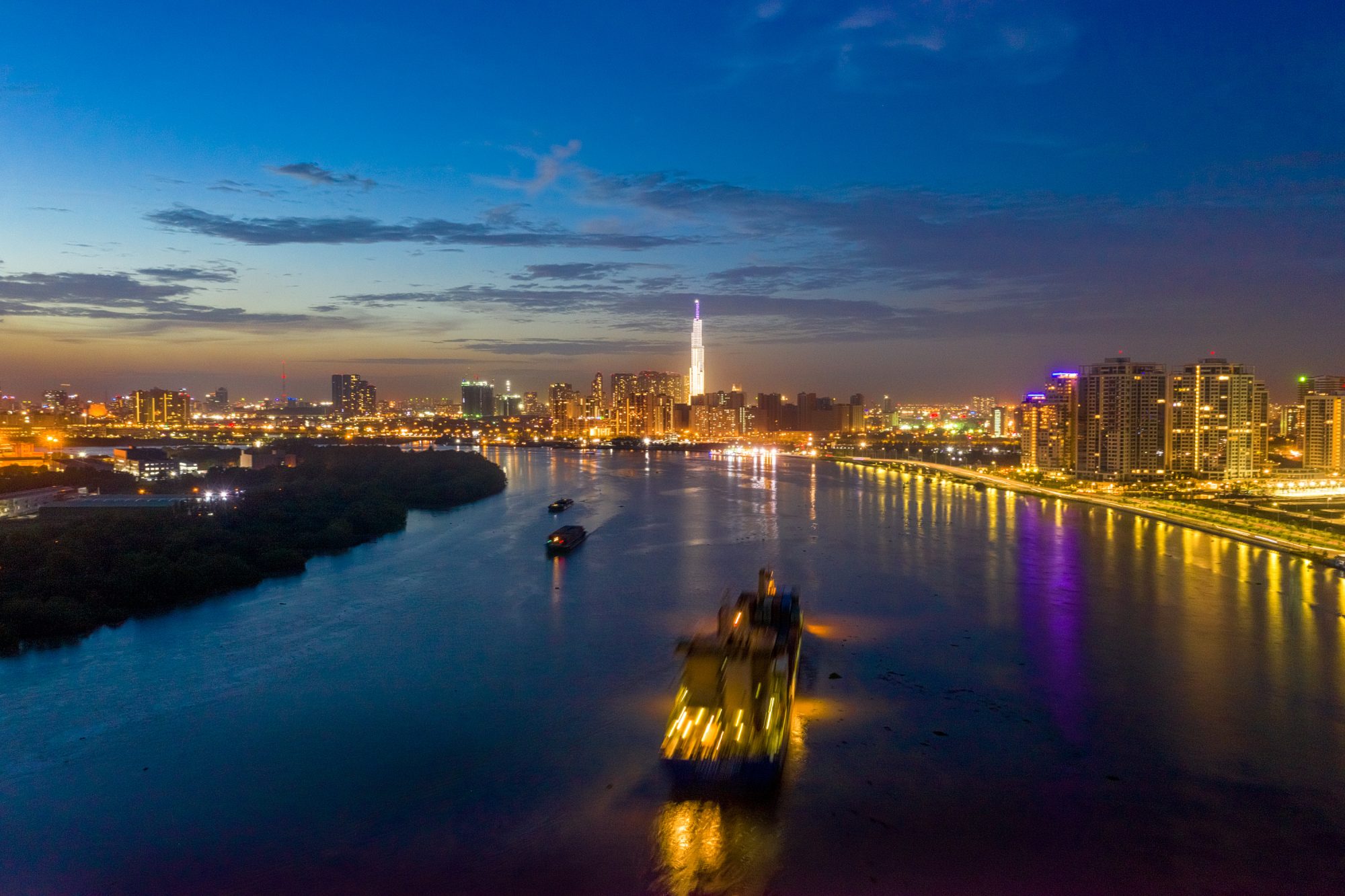
    Image: Ho Chi Minh city and Saigon River – Credit: Adobe Stock

  • Trade during the Sangam Age: Exploring the Sangam literature and Keezhadi excavations

    Trade during the Sangam Age: Exploring the Sangam literature and Keezhadi excavations

    The sculpted marvels which bejewel the ancient temples all across Tamil Nadu stand testimony to the magnificence of Sangam age (3rd century BC to 3rd century AD) and the prolific artistic innovations which are characteristic of that period. But that’s not all there is to it. Matching the artistic and cultural fervour, trade activities were also at an all-time high during the Sangam age. Evidentiating this claim, the Sangam literature chronicles details of all the fine merchandise which were produced in Ancient Tamilakam. Building up on their strengths, the Tamils ventured into lands far and wide, establishing trading associations in foreign countries, some of which till date retain imprints of their existence. Coupled with manifest cultural similarities, archaeological and inscriptional evidence add on to the credibility of Sangam literature by making a strong case for the existence of an extensive trade between Tamilakam and the rest of the Old World.

    Sangam Literature: Valuable source of Information on Trade

    Pattinappalai, one of the poems (301 lines in ‘Vanji’ meter and Asiriyapa/Akaval meter) in Pattuppāṭṭu which is a corpus of ten poems, talks in great detail about Kaveripoompattinam, the capital city of the Early Cholas.

    Even though only half of what is claimed to have been created remains, the Sangam literature is too big a chunk to be thoroughly studied in a short time. There might still be parts of it that are waiting to be looked into. But of what has been discovered, the details pertinent to trade can predominantly be found in three major literary works, namely Pattuppāṭṭu, Silappatikaram and its sequel Manimekalai. Pattinappalai, one of the poems (301 lines in ‘Vanji’ meter and Asiriyapa/Akaval meter) in Pattuppāṭṭu which is a corpus of ten poems, talks in great detail about Kaveripoompattinam, the capital city of the Early Cholas. The port of Puhar / Kaveripoompattinam had ” an abundance of horses brought over the seas, sacks of black pepper brought overland in carts, gemstones and gold from the northern mountains, and sandalwood and eaglewood from the Western hills, pearls from the southern seas and coral from the eastern seas, grains from the regions of Ganga and Kaveri, food grains from Eelam (Sri Lanka) and products from Burma and other rare and great commodities.”

    A description of the port warehouses of Kaveripoompattinam in Pattuppattu is revealing of the flourishing trade – “Like the monsoon season when clouds absorb ocean waters and come down as rains on mountains, limitless goods for export come from inland and imported goods arrive in ships. Fierce, powerful tax collectors are at the warehouses collecting taxes and stamping the Chola tiger symbols on goods that are to be exported.”

    Silappatikaram and Manimekalai, on the other hand, talk about the cities of Madurai, Puhar and Kanchipuram, which served as major centres for cloth weaving, from whence fine quality fabrics were manufactured and exported through the Coromandel Coast. Silk, cotton and wool are some of the fabrics which are mentioned to have been exported from the coast. The epics also present a vivid description of the urban market scenes. The details paint the picture of a buzzing market where trade was carried out in a variety of supreme quality products, starting from agricultural products like black pepper, food grains, areca nuts, white sugar, eaglewood to luxury commodities like gold, pearls, gems, jewels, coral and silk, among other things. In fact, the urban markets are said to have had a separate street dedicated to food grains alone. So high was the demand for food grains that despite having close to eighteen indigenous varieties, grains also had to be imported from other countries in exchange for white salt. Likewise, the demand for aromatic products were too high to be met by home-gown eagle woods and sandalwoods, resulting in the import of the same from South East Asian countries, particularly from China and Indonesia.

    Tamilakam: Maritime Trade hub-centre between the East and the West

    Both literary and archaeological evidence have time and again reaffirmed one another; the merchants of Tamilakam had traded with the East and the West with equal flair. While there is a substantial amount foreign and native literature, and archaeological findings to assert the latter, there is relatively less evidence to support the former. And not only did Tamilakam engage in direct trade with the West, but because all products from Southeast Asia had to be sent through ports along the coast of South India, Tamilakam also acted as the hub-centre for the trade between the East and the West.

    Commodities from Tamilakam had a great demand in Rome. Black pepper, cardamom, pearls and gemstones, especially Beryl which was mined from sites in Kodumanal, Padiyur and Vaniyampadi, were highly sought after in Rome.

    With regard to the West, Tamil merchants have had a long-standing trade relationship with the Egyptians and the Romans. Beginning from the period when Alexandria was the centre of Mediterranean commerce, trade with the West extended well into the time when Rome assumed dominance and became the centre-stage of Mediterranean economy. Trade with Tamilakam was in fact a deciding factor in the question of dominance in sea trade. The Arabs held ground against the competing Romans by monopolizing the knowledge regarding direct sea route to India and information about the source markets in India. Nevertheless, eventually the Romans established direct trade links with India and Rome became the largest market ground for Indian products. Commodities from Tamilakam had a great demand in Rome. Black pepper, cardamom, pearls and gemstones, especially Beryl which was mined from sites in Kodumanal, Padiyur and Vaniyampadi, were highly sought after in Rome.


    Picture: Interpretation map from ‘The Periplus of the Erythraean Sea”.

    In the interpretations of a historical document called ‘The Periplus of the Erythraean Sea, originally authored by a Greek Navigator in the 1st century, there is said to have been  mentions of a marketplace called Poduk’e in the historical text . G.W.B. Hunting Ford, a historian, has postulated that this place might have been Arikamedu, a location two miles away from modern day Pondicherry.  Hunting Ford also notes that Roman pottery have been excavated in Arikamedu and that these evidence point at the possibility that this region might have been a trading centre for Roman goods in the 1st century AD. Arikamedu, known as Poduk’e in the Greco-Roman world was a manufacturing hub of textiles particularly of Muslin clothes, fine terracotta objects, jewelleries from beads of precious and semi-precious stones, glass and gold. The city had an extensive glass bead manufacturing facilities and is considered as “mother of all bead centres” in the world. Most of their production were aimed for export.

    Picture: Arikamedu – credit: Wikipedia

    Arikamedu, known as Poduk’e in the Greco-Roman world was a manufacturing hub of textiles particularly of Muslin clothes, fine terracotta objects, jewelleries from beads of precious and semi-precious stones, glass and gold. The city had an extensive glass bead manufacturing facilities and is considered as “mother of all bead centres” in the world.

    Descriptions of Puhar, Korkai, Muziris and Arikamedu in Sangam literature indicate extensive presence of Yavanas’ (foreigners) settlements in port cities on account of trade. Pattinapalai describes the port activities and the Chola customs revenue system in detail.

    Keezhadi: Evidences of  Industrial and Trade Centre

     In addition to these, the Keezhadi excavation, conducted by the Archaeological Survey of India in 2016, has unearthed around 13000 antiquities like shells, glass beads, rusted old coins, weapons, pottery of various kinds and iron tools, belonging to the Sangam age. Among the fine quality red and black ware bowls excavated in the region, are the Roman roulette wares which evidentiate the existence of trade links between the Tamils and Romans. Moreover, seven furnaces were discovered at the site and these, according to the archaeologists, are an indication of the possibility that the site might have been a textile unit and settlers in the region might have been involved in industrial activities.

    Keezhadi findings places the Sangam age to an even earlier period starting from 6th century BC. As per Amarnath Ramakrishna, who led the first two phases of excavations, Keezhadi site was one among the 100 sites of possible human habitation shortlisted for excavation. Discovery of Tamil Brahmi inscriptions and graffiti that date back to earliest times as compared to any other findings in India. Quite obviously, Keezhadi points to the potential of a huge trading and manufacturing habitation and a distinct civilization – the Tamil Vaigai River Valley Civilisation. The Sangam literature is rich and a huge treasure trove of information that needs to be researched extensively.


    Picture: Australian seaboard, Statue of Garuda and Tamil Inscriptions, symbolising maritime culture – Credit: ancient-origins.net

    Maritime Trade in Tamilakam: A Core Activity

    Several artefacts with Tamil Brahmi inscriptions have been excavated in foreign countries as well. In Thailand, potsherd with Brahmi inscriptions were unearthed. Likewise, Cheena Kazhakam ( Chinese gold coins) were discovered in Srivijaya (modern day Sumatra in Indonesia) and Kadaram (modern day Kedah in Malaysia), places which were under the occupation of the Cholas.

    The aforementioned evidence when correlated with the inscriptional evidence, found in foreign lands about Tamil trading settlements, will help in the historical reconstruction of the maritime trade links of Ancient Tamilakam and will attest to the extensive nature of trade carried out by the Tamils during the Sangam age.


    References

     Mukund, Kanakalatha. The Trading World of the Tamil Merchant: Evolution of Merchant Capitalism in the Coromandel. Orient Blackswan, 1999. https://books.google.co.in/books?id=tjXdDYChdGsC&lpg=PP1&pg=PP1#v=onepage&q&f=false.

    Mukund, Kanakalatha. The World of the Tamil Merchants. Portfolio Books Limited, 2015. https://books.google.co.in/books?id=Bha2eLqMPWcC&lpg=PT6&ots=tw2qDuzDlf&dq=trade during sangam age kanakalatha mukund&pg=PT5#v=onepage&q=trade during sangam age kanakalatha mukund&f=false.

    “Roman Trade with India.” Roman Trade with India – New World Encyclopedia. Accessed June 24, 2020. https://www.newworldencyclopedia.org/entry/Roman_trade_with_India#cite_ref-31.

    Kannan, Gokul. “Keezhadi Excavation Points to Vaigai River Civilisation in Sangam Period.” Deccan Chronicle. October 1, 2016. Accessed June 24, 2020. https://www.google.com/amp/s/www.deccanchronicle.com/amp/nation/in-other-news/011016/keezhadi-excavation-points-to-vaigai-river-civilisation-in-sangam-period.html.

    Annamalai, S. “Uncovered: Pandyas-Romans Trade Link.” The Hindu. May 16, 2017. Accessed June 24, 2020. https://www.google.com/amp/s/www.thehindu.com/news/national/tamil-nadu/archaeological-excavation-in-sivaganga-uncovers-pandya-roman-trade-links/article10879282.ece/amp

    Saju, M.T. “Tamil Trade Ships That Sailed to Foreign Shores.” Times of India. March 29, 2018. Accessed June 24, 2020. https://www.google.com/amp/s/timesofindia.indiatimes.com/blogs/tracking-indian-communities/tamil-trade-ships-that-sailed-to-foreign-shore

    Main Image: Keezhadi Excavation Site – Credit – ASI

  • The Catalysing Effect of Covid-19 on the Changing World Order

    The Catalysing Effect of Covid-19 on the Changing World Order

    Contrary to the realist belief, international states co-exist in a world order of hierarchy rather than anarchy. Ikenberry presents this hierarchical world order and the cyclical rise and fall of hegemonic powers. Early 20th century witnessed the shift from Pax-Britannica to Pax-Americana that was complete by 1945, from which point the US defended its position during the Cold War with the erstwhile USSR. It exercised its hegemonic influence even more aggressively after the Cold War. However, US dominance of the world order has been diminishing owing to the Trump administration’s isolationist approach to foreign policy, and the increasing influence of China in world politics. This article examines the catalysing effect of Covid-19 and the rise of China on the current World Order.

    Trump’s policy of disregarding multilateralism and imposing its unilateralism on the world has catalysed into an involuntary retreat, protectionism, and isolationism for the USA with dire consequences for its foreign policy effectiveness.

    Trump’s policy of disregarding multilateralism and imposing its unilateralism on the world has catalysed into an involuntary retreat, protectionism, and isolationism for the USA with dire consequences for its foreign policy effectiveness. The net result is that the world is witnessing an abdication of leadership by America in a world disrupted by the Covid-19 pandemic. A clear pattern of isolationism can be seen in various actions of the Trump Administration since it’s assumption of the Office. In 2017, the US withdrew from the Paris Agreement, in 2018 it unilaterally reneged from the JCPOA, re-imposed sanctions on Iran and threatened sanctions on allies who supported Iran. In 2019, it withdrew troops from Syria, which led to subsequent Turkish incursion on Rojava Kurds, and in early 2020 it negotiated with the Taliban to enable withdrawal of US troops from Afghanistan. With the onset of Covid19 global pandemic, the Trump administration has accused the WHO of protecting China. In a unilateral action not endorsed by its allies, USA first stopped its funding for WHO and then terminated its relationship with the UN institution. This comes as a blow to multilateralism since the US was WHO’s largest donor, contributing about $440 million yearly. In addition to this, the US has failed to provide the lead in the global response to tackle the virus despite its initiatives in the past pandemics such as H1N1, Ebola and the Zika virus. The US was absent from the WHO initiative – Global Coronavirus Response Summit (before its withdrawal from the association). In addition, the US has been unable to provide external aid to combat the virus due to domestic shortages, which explains its restraint to guide an international response in the absence of a coherent domestic plan of action. Thus, the coronavirus pandemic has acted as a catalyst in increasing the pace of US isolationism from world politics.

    China has turned the tide on its previous missteps in containing the virus by publicising its governance model as the most effective way to combat the pandemic.

    Meanwhile, the pandemic has established firmly China’s rise in the international stage. Though China is facing backlash for suppressing details about the virus, it is battling to overcome this criticism by providing international aid and stepping up to lead a global response using Beijing’s success as a template to overcome the novel virus. China has contributed significantly to the global response by providing materials such as ventilators, respirators, masks, protective suits and test kits to Italy, Iran, Serbia, and the whole of Africa. Grabbing its opportunities to lead international responses, China hosted Euro-Asia conference, participated in the Global Coronavirus Summit where it pledged an emergency funding of $20 million to WHO, and pledged $ 2 billion to the WHO (equalling its annual budget) to be disbursed over the next two years, thus contrasting sharply with the US behaviour of withdrawing from the WHO. China has turned the tide on its previous missteps in containing the virus by publicising its governance model as the most effective way to combat the pandemic. It continues to highlight the inadequacies and shortfalls in healthcare systems of the western world as against the success of its governance model, Beijing Consensus, and variations of it in East Asia. It is clear that China has seized the Covid-19 pandemic as a huge opportunity to establish its global leadership.

    Taking advantage of the global disarray due to the pandemic, China has taken strong actions to deflect global criticism of its initial handling of the virus. Two prominent examples of this being, European Union watering down the report on Covid19 disinformation owing to pressure from Beijing, and the passing of the controversial Hong Kong security law. While the US has taken initiative in cracking down on China by repealing the special privileges to Hong Kong, other countries were cautious in retaliating against China significantly and limited their actions to sympathetic support for pro-democracy protestors. The exception to this was Britain, which offered UK citizenship to British National Overseas Passport holders in Hong Kong, despite seriously offending China. Despite the global backlash against Chinese diplomacy in the form of generous aids, international actors have expressed limited concerns through action against Chinese domination. This is due to the circumstantial mismatch in global balancing against China’s rise. The US uses unilateral actions and ‘expects’ its allies to follow, while its allies despite their serious concern over China’s rise, remain vary of following in the American footsteps. This is because US allies treat coronavirus as an immediate threat as opposed to China’s rise. The US being a status quo power is more threatened by China’s rise since it posits as a revisionist state. However, in view of China’s proactive efforts in leading global contributions to battle the coronavirus, US allies remain tolerant of China’s dominance.

    The passive and fractured response to China’s aggressive exploitation of the pandemic to establish its global leadership is a concern for India. The recent setting up of Chinese military camps in Indian controlled territory of Ladakh is a manifestation of China’s complex strategy. India has, true to its traditional policy, opted out of involving the United Statesin the ‘bilateral issue. However, it would be beneficial to be united in balancing against China’s rise. While it is necessary to work together to utilise Global Supply Chains (GSC) during the pandemic to battle the coronavirus pandemic, it is equally important to look at global balancing against China to ensure its compliance to rules-based world order. Since China’s power is derived from its economic strength, balancing strategy against China should focus on trade and economy. Chinese foreign policy depicts a pattern of economic coercion to reward or punish its counterparts. This can be tackled through concerted global action. India is, as one of the largest producer of pharmaceuticals, playing a crucial role in global efforts to fight the pandemic by providing Hydroxychloroquine globally. However, given that most raw materials are sourced from China, balancing against China requires a favourable movement of GSC diversification. US-China trade war has, encouraged companies to move production out of China and into Asian countries such as Vietnam and Taiwan. As a result of the coronavirus crisis and the global backlash, companies look to further diversify their resources and supply chains. India and other Asian countries could benefit from this if they adapt their policies suitably.

    Global backlash against China’s handling of the virus in Wuhan is still a challenge for China’s geopolitical strategy. Its foreign policy is seen more as displaying aggressive and coercive approach than persuasive diplomacy.

    It is difficult to estimate whether China would aspire for hegemonic leadership. Global backlash against China’s handling of the virus in Wuhan is still a challenge for China’s geopolitical strategy. Its foreign policy is seen more as displaying aggressive and coercive approach than persuasive diplomacy. Given the current volatile scenario most countries have, in the absence of US leadership, increased their dependence on China as it is now the largest provider of aid. While all this tips the scale in China’s favour, it’s hegemonic ambitions can be countered through trade strategies as its weakness stems from the fact that it is a hugely export driven economy. Global diversification of supply chains would reduce the world’s increasing dependency on Chinese manufacture and products. The world will need to be cautious as the pandemic has provided China an opportunity to tighten its grip on the global economy as the world’s workshop and technology provider. Here on, international efforts to bandwagon or balance will become a decisive factor in determining China’s rise to apex position in the world order.


  • Sanitation & Hygiene Concerns In Government Schools In Tamilnadu: Need For Digital Intervention

    Sanitation & Hygiene Concerns In Government Schools In Tamilnadu: Need For Digital Intervention

    Ensuring that there are proper health and hygiene facilities and awareness for girls at the school level is an extremely important building block for quality education.

    Introduction

    Achieving quality education at school level is a dynamic process that needs to revise the elements according to the needs of the social setting. One such element is a policy that promises an education system to promote gender equality from the grassroots. The problem needs an intervention with an enhanced infrastructure for maintaining sanitation and hygiene for girl students and a holistic understanding of gender issues through awareness that leads to organic social change. The state, undoubtedly, is responsible to ensure quality education and resolve the gaps in education using innovative methods. Tamil Nadu is one of the best performing states as far as literacy rate is concerned. However, realistic social barriers still exist that need intervention and customized strategy. According to the 2011 census, Tamil Nadu stood third after Kerala and Maharashtra. The male literacy rate was around 87% and the female literacy rate was around 73%.
    This article attempts to decode the most important factors,sanitation and hygiene, in ensuring ‘quality’ of education for girls. This particular aspect encompasses three main Sustainable Development Goals (SDG) of the UN; Quality Education, Gender Equality and Water & Sanitation. The last goal of providing access to clean water, sanitation and hygiene (WASH) particularly in rural areas is the means to achieve the former two goals of gender equality and quality education.

    Need to prioritize WASH for quality education

    Tamil Nadu employs more than 50% of its women in remunerative labour. Girls tend to drop out of schools either because of customary practices or because of the demand for labour. In some cases The lack of awareness and knowledge on menstruation and menstrual practices are also major factors contributing to this drop out. Despite several initiatives and attempts at establishing proper sanitation and hygiene practices particularly in schools, most of these initiatives fail to gain attention across social barriers, especially those initiatives surrounding menstruation and their importance. This exposes the limitation of community-based initiatives and their impact. Specifically Water, Sanitation and Hygiene practices, commonly known as WASH. Tamil Nadu is estimated to have 6.1 million adolescent girls and yet around 7837 schools have either dysfunctional toilets or no toilet facilities at all. The implication of such poor infrastructure is an adverse impact on learning and results in drop out from schools in most of the cases. Ensuring that there are proper health and hygiene facilities and awareness for girls at the school level is an extremely important building block for quality education.

    The lack of awareness and knowledge on menstruation and menstrual practices are also major factors contributing to this drop out. Despite several initiatives and attempts at establishing proper sanitation and hygiene practices particularly in schools, most of these initiatives fail to gain attention across social barriers, especially those initiatives surrounding menstruation and their importance.

    Access to toilets and sanitation facilities is a privilege that only a few have access to particularly in rural areas where people practice open defecation owing to the lack of toilets. Tamil Nadu has performed brilliantly in this respect since the implementation of Swachh Bharat Abhiyan Scheme in 2014. Over 48 lakh toilets were built in rural areas since 2014, with Tamil Nadu becoming an open-defecation free state.
    The Government of India recognized the role played by sanitation and hygiene in ensuring that quality education is delivered. In 2014, the MHRD had launched the ‘Swachh Bharat Swachh Vidyalay’ initiative. The scheme was implemented to ensure that there were separate functional toilets for girls and boys. In addition to ensuring separate toilets, the scheme also focuses on maintaining a certain level of hygiene and sanitation. While it is not enough that this initiative has been implemented in schools across the country, it is also important that parents, teachers and children are aware of the same. Proper hygiene and sanitation does not end in school, it is imperative that this awareness is spread in local communities and villages as well. As a part of the scheme, government schools in rural and urban areas are eligible to nominate themselves for the ‘Swachh Vidyalay Puraskar’. This acts as an incentive for schools across the country to improve their WASH standards.

    Capitalizing the Digital Wave

    With Tamil Nadu’s rural internet penetration through mobile phones at 41.98%, there is a significant potential that can be tapped in the state’s ICT usage. While creating awareness is one side of the coin, spreading awareness is another. This is where the potential of ICT can be harnessed, in spreading awareness. The government of Tamil Nadu has made available textbooks, lessons and other educational material on their ‘DIKSHA’ portal which is essentially a YouTube channel. On this channel, students from different classes can access their study material. This could be one of the possible means through which awareness can be created across districts and villages on the importance of sanitation and hygiene.
    Some of the government schools in Tamil Nadu have demonstrated an exceptional WASH record, thereby proving the fact that if the administration is focused the results can be excellent as shown by Thiruvallur and Vellore districts. Schools in these districts have maintained excellent sanitation and hygiene standards and have been recipients of the SVP. The initiatives taken by these schools to spread awareness on the importance of sanitation and hygiene have largely been behaviour oriented. By involving parents and the larger community, these initiatives have been successful and effective as well. Community-based initiatives are to create and spread awareness on various social welfare schemes. Apart from creating awareness, such initiatives also tend to bring communities together. The implementation of the SBSV scheme has facilitated the use of ICT as well. While the integration of ICT in the process is a welcome change, there is a lack of clarity on what exactly it is being used for.

    Importance of awareness on Menstrual Hygiene

    It has been established that several initiatives were taken in the past and are being taken to improve ‘WASH’ practices in the country, particularly in schools to improve enrollment rates as well as reduce dropout rates. Educational institutions in the country, particularly schools have an inherent responsibility to educate adolescent girls on menstruation, talk about the changes it brings about in a girl’s body. A 2014 report by Dasra foundation posits that close to 23 million girls drop out of school annually due to a lack of awareness. 79% of girls and women in Tamil Nadu were not aware of menstrual hygiene and practices that are followed at the time of menstruation. Lack of awareness of menstrual hygiene and the practices that are required to be followed at the time of menstruation makes a girl/woman extremely susceptible to infections. This is largely attributed to the stigma that is created around menstruation and the notion that it is an ‘impure’ phenomena. A study conducted in 2015, in Padappai, points out that only 43.33% of girls were aware of menstruation when they experienced it the first time. The source of information in most of these cases was the mother while the teachers and schools had a very small part to play in the process. Therefore, a layer of stigma surrounding the issue is apparent that is far from being institutionalized. Institutionalizing the issue would lead to it being discussed in schools, which in turn would normalize it and break the stigma around it. There are a plethora of possibilities that ICT brings about. Schools could tap into this potential and make use of it to communicate effectively to their students. In rural India particularly, simply creating awareness and breaking the stigma around menstruation will not suffice. Often, this stigma is reinforced by women in the family. In order to move beyond this, schools must ensure that lessons on menstruation are conducted for both girls and boys alike. Not only does this induce awareness among boys but it also makes them more sensitive to the issue.

    A 2014 report by Dasra foundation posits that close to 23 million girls drop out of school annually due to a lack of awareness. 79% of girls and women in Tamil Nadu were not aware of menstrual hygiene and practices that are followed at the time of menstruation.

    Awareness through Digital Platform

    Tried and tested methods of spreading awareness in a community has generated results but is not enough. Improving sanitation and hygiene standards in learning institutions requires the participation of all the stakeholders involved in the process. While this may be an initial attempt at de-stigmatizing the issue, undoing centuries of discrimination and oppression requires a systemic approach. Tamil Nadu government’s ‘DIKSHA’ portal is a good place to start. In addition to developing online resources, there must also be some sort of portal that mandates uploading information related to the sanitation and hygiene measures that are being taken in schools. Additionally, it is important to use digital interventions to create awareness and reinforce the message in a timely manner. While infrastructure creation is a part of the goal, it is equally important to establish the need for it and educate people. This is where the digital intervention comes into the picture. One of the goals in Tamil Nadu’s Vision 2023 Project is to encourage PPP as a mechanism for infrastructure creation. This could be one of the potential means through which awareness is spread by introducing digital interventions in rural areas. It could either include installing a TV in Gram Panchayat offices which could display campaigns on the importance of sanitation and hygiene/menstrual hygiene, etc. With respect to creating awareness on menstrual hygiene which is a systemic issue because of the stigma attached to it – the solution needs to be systemic as well. For starters, creating conversation around menstruation is extremely important. Something called the ‘culture of silence’ exists in Kenya particularly in rural areas where girls refrain from speaking about menstruation and puberty. Identifying practices like this is a start when it comes to de-stigmatizing menstruation. While removing GST on sanitary napkins is one way to make the product more accessible, it is important to make people realize why there is a need for using one in the first place and the consequences of not using it. This brings us to the question of whether it is enough for the state to build infrastructure alone and if its responsibility ends there as opposed to also creating awareness on how to go about using the said infrastructure as well as educating people on its importance.

    Ensuring Effective Policies

    Some of the government schools in Tamil Nadu have demonstrated an exceptional WASH record, thereby proving the fact that if the administration is focused the results can be excellent as shown by Thiruvallur and Vellore districts. Schools in these districts have maintained excellent sanitation and hygiene standards and have been recipients of the SVP.

    Initiatives like the SBA, SBSV and SVP are focussed around creating infrastructure and incentivizing schools to implement hygiene practices. Sanitation happens to be a state subject, and each state faces its own challenges with respect to addressing the problem. For instance in a state like Tamil Nadu where there is decent infrastructure, the drop-out rate for girls is still on the higher side. A lack of awareness on menstrual hygiene has also contributed to the drop-out rates in the state. Evidence suggests that not all government schools in Tamil Nadu have toilets and the ones that have toilets, do not maintain them well. Perhaps now the state must implement initiatives that focus on capacity building and behavioural change in order to ensure that the results are more impactful and also long-lasting. The initiatives that the state implements in the future must focus on intrinsically motivating people to implement sanitation and hygiene practices in their lives. Apart from that, the state must also conduct follow-up workshops that engage with people and communities and teach them how to use toilets, etc. In addition, whenever a new initiative/scheme is launched, state governments must also make sure that there are bodies/committees in place in every district that happens to be a beneficiary of the scheme. As communication becomes easier and more efficient in the digital age, initiatives that are implemented in the future must focus on knowledge creation.

    References

    https://www.orfonline.org/expert-speak/gender-dimensions-of-school-closures-in-india-during-covid19-lessons-from-ebola-66643/https://poshan.outlookindia.com/story/poshan-news-strong-connect-between-sanitation-and-health/348492https://swachhindia.ndtv.com/23-million-women-drop-out-of-school-every-year-when-they-start-menstruating-in-india-17838/https://www.ncbi.nlm.nih.gov/pmc/articles/PMC6286883/http://sujal-swachhsangraha.gov.in/sites/default/files/Five%20schools-%20WASH%20in%20School%20-%20practices%2C%20Tamil%20Nadu-%20Clean%20school%20.pdfhttps://mhrd.gov.in/sites/upload_files/mhrd/files/upload_document/Swachh_Vidyalay_Puraskar_Guidelines.pdfhttps://www.researchgate.net/publication/294638502_Awareness_about_menstrual_hygiene_among_adolescent_girls_in_rural_area_of_Kancheepuram_district_-_Tamilnaduhttps://timesofindia.indiatimes.com/city/chennai/tn-second-in-rural-smartphone-use/articleshow/67291628.cmshttps://www.researchgate.net/publication/333561228_Availability_and_Utilization_of_Sanitation_Facilities_A_Micro_Study_from_Rural_Tamil_Naduhttps://swachhindia.ndtv.com/swachh-bharat-abhiyan-tamil-nadu-to-go-open-defecation-free-on-october-2-25278/#:~:text=Tamil%20Nadu’s%20Swachh%20Bharat%20Abhiyan%20Journey&text=The%20state%20has%20a%20total,declared%20free%20from%20open%20defecation.&text=Tamil%20Nadu%20has%20improved%20its,per%20cent%20in%20four%20years.&text=Over%2048%20lakh%20toilets%20(48,since%202014%20in%20rural%20areas.https://www.wsscc.org/2016/08/10/wsscc-menstrual-hygiene-management-training-kenya-breaks-silence-menstruation/

  • India-China Trade In Ancient Times: Southern Silk Route

    India-China Trade In Ancient Times: Southern Silk Route

    To follow the Silk Road is to follow a ghost. It flows through the heart of Asia, but it has officially vanished leaving behind the pattern of its restlessness: counterfeit borders, unmapped peoples. The road forks and wanders wherever you are. It is not a single way, but many: a web of choices.

    Colin Thubron, Shadow of the Silk Road.

    Introduction

    India and China, two Asian giants, share a lot of similarities in terms of history and culture. Both countries represent age old civilizations and unique history. Cultural and economic ties between the two countries date back to about 2000 years ago. The Silk Route, which is an ancient network of trade routes, formally established by the Han Dynasty, served as a connection between the two countries. It was also through this route that Buddhism spread to China and East Asia from India. The routes were more than just trade routes; it was the carrier of ideas, innovations, inventions, discoveries, myths and many more.
    The earliest mention of China can be found in the Indian text “Arthashastra” which was written by Kautilya in the fourth century BC. Kautilya made a remark about Cinapattasca Cinabhumjia (Cinapatta is a product of China)[1]. Whereas, the earliest mention of India in Chinese records dates between 130 and 125 BC. Zhang Qian, a Chinese envoy to Central Asia, referred to India as Shendu, in his report about India to Emperor Wu of the Han dynasty.
    This article will look into the ancient trade route that existed between South Western China and India’s North East region via Myanmar and the future of the trade route.

    Ancient trade links between India and China

    Shiji, which is the first Chinese dynastic history, compiled between 104 and 87 BCE talks about the existence of a trading route between India and South West China. According to Chinese records, Emperor Wu of the Han dynasty, tried to establish a trade route from Changan, the Chinese capital to North East India through Yunnan and adjoining areas. However, the rulers of Yunnan were against the idea of establishing a direct trade between India and China and Emperor Wu failed to establish the trade route. Even though the trade route failed to take off, the trade in Cinapatta and Chinese square bamboo continued without any hindrance.

    Political Geography of the Southern Silk Route

    The Southern Silk route (SSR), one of the least studied overland route, is a trade route which is about 2000 km long and linked East and North East India with Yunnan Province of China via Myanmar. This is a relatively unknown, ancient trade route that is considered a part of the larger web of Silk Roads. This route existed before the Central Asian Silk route became popular. This trade route between Eastern India and China came to be known during the early 3rd century BCE, and it became popular by the 2nd century BCE. By 7th century AD various other branches of the SSR emerged to create web of trading routes.
    Traders carried silk from Yunnan through Myanmar, across India and joined the main silk route in Afghanistan. In addition, silk was also transported from South West China through the Shan states and North Myanmar into East India and then down to the Coromandel Coast.
    The Qing dynasty which ruled China from 1644-1912, recorded the cross cultural exchanges that took place across SSR. This route contributed to cultural exchanges between China and the West. It also promoted interactions among different nationalities.
    Indian sources have failed to provide abundant evidence about the SSR and the interaction that took place across this route but there is enough evidence that indicates that trade and migration did take place in the Eastern India-Upper Myanmar-Yunnan region. For example, modern scholars believed that the Tai Ahoms were originally from Yunnan but they migrated to North East India and founded a small kingdom around 13th century, which grew to become the powerful Ahom Kingdom of Assam.
    The areas through which the SSR passed were inhabited by various ethnic groups whose political, social and economic organizations were primitive and backward. As a result, the safety of the route was often questioned. Archeological evidences have been found along the Southern banks of Brahmaputra up to Myanmar border, which shows that trade did exist along this route.
    The main items that were exported from China via this route included Silk, Sichuan cloth, Bamboo walking sticks, ironware and other handicrafts items. Sichuan, a South Western province was the main source of silk. Glass beads, jewels, emeralds etc were some of the items that were imported to China.
    Another important trade route is the South West Silk route or the Sikkim Silk route, which connected Yunnan, and India through Tibet. A section of the route from Lhasa crossing Chumbi Valley, Nathu La Pass connected to the Tamralipta Port (present day Tamluk in West Bengal). From the Tamralipta port, this trade route took to the sea to traverse to Sri Lanka, Bali, Java and other parts of the Far East. Another section of the route crossed Myanmar and entered India through Kamrup (Assam) and connected the ports of Bengal and present day Bangladesh.
    Over time, the Southern Silk Route lost its prominence and it was in 1885 that it re- emerged as a strategic link as the British tried to control some parts of the route in order to access and gain control over Southern China.
    The strategic importance of the route increased during World War II. In 1945, Ledo Road or Stilwell Road was constructed from Ledo, Assam to Kunming, Yunnan to supply aid and troops to China for the war with Japan. Ledo Road is the shortest land route between North East India and South West China. However, after the war the road was left unused and in 2010, BBC reported that much of the Ledo road has been swallowed up by jungle.
    The Assam-Myanmar-Yunnan road is very difficult to traverse not only in the present times but also during the ancient times. However, despite the hard conditions, it is through this route that a golden triangle of drug trafficking, movement of terrorist and smuggling functions today.

    Future Potential: Reviving the Southern Silk Route Economy

    North-East India and the Yunnan province share many similarities. Both are landlocked as well as under developed regions. Both are home to a large number of ethnic groups and have witnessed secessionist movement from time to time. Apart from this, Yunnan and North East India are geographically isolated from their political capitals.
    Yunnan and North East India, home to rich varieties of subtropical fruits with high nutritional values and medicinal plants, can cooperate and transform the hills of North East India and South West China into plantations, factories, laboratories to produce processed food products and lifesaving drugs that can find a huge market in developing and developed countries.
    In a bid to revive the Southern Silk route, Bangladesh, China, India and Myanmar, signed the Kunming Initiative, a sub-regional organization, in 1999. This initiative was replaced by the Bangladesh-China-India-Myanmar Economic Corridor (BCIM-EC) in 2015. The BCIM-EC was announced by China as a part of its Belt-Road Initiative, which has been boycotted by India since the beginning. In 2019, the BCIM-EC was dropped from the list of 35 projects that are to be undertaken under BRI, indicating that China has disreagrded the project. However, in the same year India has sought to keep the BCIM-EC project alive.
    If the BCIM-EC project does take place, it will reduce the travel time, cut transportation cost, open up markets, provide way for joint exploration and development of natural resources and create production bases along the way. Before the BCIM-EC takes off, it is important to develop the roadways infrastructure of India’s North East region.
    Even though the BCIM-EC promises to elevate the economic conditions of the backward North-East region of India, it has not gained sufficient steam as both China and India have different apprehensions. China sees India’s reluctance to support BRI as the barrier for any progress in the project. Given the current stand-off in Ladakh, India’s apprehensions about China seeking to exploit the insurgent groups operating in the region gains significance. Either way realizing the Southern Silk Road as a viable project in the form of BCIM-Economic Corridor looks distant now.
    [1]Haraprasad Ray, “Southern Silk Route: A Perspective,” in The Southern Silk Route : Historical Links and Contemporary Convergences (Routledge, 2019).

    References

    Ray, Haraprasad. “Southern Silk Route: A Perspective.” Essay. In The Southern Silk Route: Historical Links and Contemporary Convergences. Routledge, 2019.
    “Continental and Maritime Silk Routes: Prospects of India- China Co-operations.” In Proceedings of the 1st ORF-ROII Symposium. Kunming, 2015.
    Mukherjee, Rila. “Routes into the Present.” Essay. In Narratives, Routes and Intersections in Pre-Modern Asia, 37–40. Routledge, 2017.
    UNESCO. Accessed June 20, 2020. https://en.unesco.org/silkroad/content/did-you-know-great-silk-roads.
    “The Silk Route.” Accessed June 21, 2020. http://www.sikkimsilkroute.com/about-silk-route/.
    Ray, Haraprasad. Introduction. In North East India’s Place in India-China Relations and Its Future Role in India’s Economy, n.d.
    Chowdhury, Debasish Roy. “’Southern Silk Road’ Linking China and India Seen as Key to Boosting Ties.” South China Morning Post, October 23, 2013.
    “China Wants to Revive ‘Southern Silk Road’ with India.” The Times of India, June 9, 2013.

    Image: Stilwel Road from Ledo in Northeast India to Kunming in Yunnan province, China

  • Life In Post-370 Kashmir: Battling The Pandemic Amid Communications Blockade

    Life In Post-370 Kashmir: Battling The Pandemic Amid Communications Blockade

    When British sovereignty over India lapsed in 1947, Kashmir, the Muslim majority state under the rule of Hindu ruler Maharaja Hari Singh chose to remain independent. However, that independence was short lived as Pakistani raiders invaded Kashmir and Hari Singh turned to India for assistance. India promised to help on the condition that Hari Singh signed the Instrument of Accession, according to which defence, communication and external affairs of the state will be handed over to the Indian administration. Since then Kashmir had enjoyed special status under Article 370 of the Indian Constitution. Under article 370, Kashmir had its own state flag, constitution and autonomy over the internal administration of the state. With Article 370 along with Article 35A, the residents of Jammu and Kashmir lived under a separate set of laws, including those related to citizenship, ownership of property and fundamental rights, as compared to residents of other Indian states.Kashmir has been in the midst of unrest and turmoil for decades, as Pakistan inspired religious fundamentalism led to the growth of terrorism and insurgency. Constant communication and internet ban, and curfew have been part of everyday life for the people of Kashmir. Kashmir accounts for about 60% of the communication and internet ban that happens in India. Internet in the valley was cut off for four months in 2016 following the uprising after the killing of Burhan Wani.
    On 5th August 2019, the BJP-led Indian government, headed by Prime Minister Narendra Modi stripped Kashmir of its special status by revoking Article 370. Home Minister Amit Shah introduced the Jammu and Kashmir Re- organization Bill in the Parliament and was passed with a majority. The ‘Jammu and Kashmir Re-organisation Bill‘ divided the erstwhile Jammu and Kashmir into two Union Territories – Jammu & Kashmir and Ladakh.

    Over the last five decades and more, Article 370 has been hollowed out by various governments that were in power in the erstwhile state.

    Analysis and contention that Article 370, in its present form has been diluted over the years and that it existed just in name is indeed true. Over the last five decades and more, Article 370 has been hollowed out by various governments that were in power in the erstwhile state. Despite this, Article 370 guaranteed the people of Kashmir certain benefits such as exclusive land rights and job reservation among others. With the scrapping of Article 370, people of the valley fear that it will usher in a change in the demographics of the erstwhile state. As J&K loses it special status, people will lose their exclusive land rights, various reservations and other benefits that they enjoyed. There is also a fear among the people that with the scrapping, settler colonization will take place in the valley like it happened in Palestine.Following the announcement, the valley was placed under a lockdown including communication and internet ban. Several political leaders including former chief minister Omar Abdullah and Mehbooba Mufti were placed under house arrest. Opinions of the leaders of the valley were not taken into consideration before the Indian government decided to scrap article 370. Kashmir politics, over the years, has been dominated by narrow selfish interests of political parties and political families, which has led to significant loss of confidence of the people. Continued terrorism and religious fundamentalism has vitiated the atmosphere over decades. In such an environment it is difficult to ascertain peoples’ perception of the government’s action, as self-proclaimed leaders may not reflect the ground situation. The central government, armed with extensive intelligence inputs and analysis, feels that the region’s 1.25 crore people long for economic development, better quality of life, and better opportunities in education and employment. However, imposition of a complete lockdown of the valley for nearly six months may have been counterproductive. The situation became more complicated as the Covid-19 pandemic hit the valley.

    Statistics, however, tell a different story – Jammu and Kashmir did better than several other Indian states including Gujarat, the “model state”, in terms of human development index, infant mortality rate, life expectancy etc.

    Home Minister Amit Shah claimed that Article 370 led to isolation of J&K from the rest of India and was the root cause of armed militancy, poor economic growth, and poverty in the valley. Statistics, however, tell a different story – Jammu and Kashmir did better than several other Indian states including Gujarat, the “model state”, in terms of human development index, infant mortality rate, life expectancy etc. Regarding the statement that Article 370 facilitated militancy in the valley, there has been no evidence to prove the same. However, militants care little about Article 370. There has been no decline in militant activities even after the abrogation of Article 370. Militant attacks and counter-insurgency operations continue at high intensity.The aftermath of the decision saw communication and internet being suspended or curtailed effectively for 9 months. The justification given by the government was to stop the spread of false information and prevent terrorist activities in the valley. This communication blockade was the longest in the history of a democratic country and it cut off Kashmir from the rest of the world. Adverse impact on education has been huge due to the lockdown. As educational institutions remain closed for nearly 8 months, education in the valley has taken a back seat. Even when situation in the valley seemed to return to normalcy, parents were unwilling to send their children to school. As the world was hit with the Covid-19 pandemic, schools and universities across the country and the world have resorted to online classes but that is not the case in Kashmir. It is a challenge for students to use online classes on the 2G network that is currently allowed in the valley. It is practically impossible to load and download the study materials in a 2G network. Even this network, primitive by today’s standards, is often unstable and unreliable.
    In March 2020,exactly after 213 days, internet service i.e. only 2G service, was restored in the valley but it was snapped again on May 6 after security forces closed in on Hizbul Mujahedeen Commander Riyaz Naikoo. The frequent communication blockade is of serious concern at a time when the world is fighting the Covid pandemic. Militant activities continue to disrupt peace and security, as is seen by the latest snapping of internet amid CASO (cordon and search operations) launched by J&K police in Srinagar district. India shuts down internet more than any other democracy in the world.

    It is of utmost importance that the Centre restore high speed internet service in the valley so that people can receive information on Covid-19 in local language and help prevent the spread of the virus.

    The valley was declared a red zone as the number of covid cases in the union territory crossed 6424 and recorded 90 deaths. Disruption of communications has made the battle against Covid-19 difficult as it causes delays in taking the necessary steps to fight the pandemic. Even before the internet was snapped on May 6, doctors across the valley faced difficulty in downloading the guidelines issued by WHO. With limited access to internet, healthcare workers across the valley find it difficult to access regular updates, research and announcements regarding the pandemic and accurate tracking of transmission within the region. People support groups are helping each other in this time of crisis. Apart from Covid related restrictions issued via newspapers, radio and SMS, there is no access to campaigns designed for social media. With the lack of reliable information, there is a high possibility for misinformation. It is of utmost importance that the Centre restore high speed internet service in the valley so that people can receive information on Covid-19 in local language and help prevent the spread of the virus.Terrorist and insurgent outfits are revamping their tactics to exploit the pandemic situation and widen the pre-existing schisms. Infiltrations have increased as recent spurt in terrorist encounters indicate. The Covid-19 pandemic has added to the difficult situation in which the people of Kashmir are stuck in. The future of Kashmir looms in darkness due to the pandemic and several other challenges that most states have never and most likely will never experience. Kashmir was shut down through a state imposed lockdown in August 2020. As it was emerging from the lockdown towards normalcy, the pandemic brought about a lockdown that now has the peoples’ consent for the first time. This has turned out to be the world’s longest lockdown. However, the pandemic has provided the government an opportunity to get closer to the people by providing rehabilitation assistance, food supplies, and facilitating educational improvisations amid communications breakdown. Amid the pandemic crisis, the state becomes an test case for democracies across the world for the battle between control for ‘development’ and control of ‘liberty’.Image Credit: Deccan Herald

  • ASEAN Unity Critical for South China Sea:  But Time to Address Newer Issues

    ASEAN Unity Critical for South China Sea: But Time to Address Newer Issues

    Perhaps the most defining character of the ASEAN in the last six decades of its existence has been ‘Unity’ among its Member States who have scrupulously adhered to the fundamental principles contained in the various treaties signed by the Member States. The ‘ASEAN Way’ is unique and helps them to remain ‘united’ despite diversity in their political systems, national economic indicators, development levels, and military capabilities. ASEAN has also done well to be labelled as the ‘driver of regional integration’ and promoted a variety of regional political, security and economic initiatives to ensure peace and stability. It has managed with sophistication and alacrity relations with its partner countries bilaterally as also through multilateral structure.

    The ‘ASEAN Way’ is unique and helps them to remain ‘united’ despite diversity in their political systems, national economic indicators, development levels, and military capabilities.

    ASEAN’s engagements with China are through various political and diplomatic exchanges such as Summits and several ASEAN led mechanisms also provide opportunities to its Member States to engage China. The free trade agreement (FTA) is particularly important and catalytic for trade and both sides have taken upon themselves to accelerate negotiations of the Regional Comprehensive Economic Partnership (RCEP).

    At the strategic level, ASEAN Member States have been quite disillusioned with China over its intention to resolve disputes in South China Sea; but the ASEAN leadership has assiduously pursued the Code of Conduct in the South China Sea and succeeded in completing the first reading of the Single Draft COC Negotiating Text. It is now putting pressure on China to quickly conclude the CoC in the stipulated timeframe to ensure region remains peaceful and stable to enable member countries to invest in national and regional development.

    Ironically some ASEAN Member States have not been keen to openly making reference to Chinese reclamation in South China Sea and near continuous buildup of military infrastructure on islands and features in the Parcels and the Spratly group of islands.

    The report card of ASEAN Unity vis a vis China, so far, has been just about quite decent with at least two exceptions when China was suspected of interfering in ASEAN matters; first in 2012, Cambodia resisted reference to South China Sea in the Chairman’s statement, and again in 2016 soon after the South China Sea Arbitration award.[i]

    Ironically some ASEAN Member States have not been keen to openly making reference to Chinese reclamation in South China Sea and near continuous buildup of military infrastructure on islands and features in the Parcels and the Spratly group of islands. While Vietnam and the Philippines have openly confronted China over their claims in South China Sea, Malaysia chose to pursue “quiet diplomacy” but has stubbornly displayed “lawfare in the South China Sea”;[ii] Brunei has remained quiet because its policy makers “see little choice but to remain quiescent about its dispute with China,” Notwithstanding that, the Chairman’s Statement of the 36th ASEAN Summit 26 June 2020 is a clear display of their ‘unity’ and they have collectively expressed concerns on the Chinese activities and recognised the seriousness of a series of incident at sea which have eroded trust and confidence.

    To some extent ASEAN has succeeded in internationalising the Chinese non-compliance of international treaties such as the 1982 UNCLOS to which Beijing is a signatory.

    Today, South China Sea issue has made global headlines. The US has unabashedly rejected Chinese claims over South China Sea and China is accused of not adhering to internal law. To some extent ASEAN has succeeded in internationalizing the Chinese non-compliance of international treaties such as the 1982 UNCLOS to which Beijing is a signatory as also retained a “minimal formal consensus on the South China Sea, rejecting the pernicious idea that the waterway is only the concern of littoral states, and resisting Chinese pressures to avoid discussion of the issue in ASEAN -led forums, certainly contributed to this outcome.”[iii]

    Perhaps it is time for the ASEAN to bring to the forefront the Lachang-Mekong river issue. Several trans-boundary river management issues and concerns between China (the upper riparian and Thailand, Laos, Cambodia and Vietnam (the lower riparian) have emerged over the years. China has been building dams on the river and its tributaries; has avoided sharing full hydrological data particularly during dry seasons; and released river water untimely. The lower riparian states have called for a ‘code of conduct’ and a ‘rule based trans-boundary resource management’ mechanism for the Mekong River between the upper and the lower riparian states.[iv]

    It is tempting to believe that China has successfully stifled lower riparian member states concerns through sops and infrastructure development projects under the Belt and Road Initiative. Interestingly, Lancang-Mekong Cooperation (LMC), the most active forum is dominated by China.

    Non-riparian ASEAN members are accused of “minimal interest” in the Lancang-Mekong issues and they “generally do not participate”. Even attempts to interest the rest of ASEAN on Mekong issues “are met with only the pretense of polite interest”. [v]

      If ASEAN is to preserve ‘unity’ it must see maritime and continental Southeast Asia as one strategic space and take into account challenges faced by ASEAN Member States who border China on land particularly Myanmar who has accused China of interfering in its internal politics and arming the ethnic armed groups operating near the Chinese border,[vi]  and Laos[vii] that is economically and militarily weak to fend off Chinese pressures unlike Vietnam which has withstood Chinese pressures on land and at sea. Otherwise, China will open yet another contentious front for the ASEAN.  Finally, under the circumstances, prudence necessitates that ASEAN should prepare to incorporate newer issues other than the South China Sea in its agenda!

    Notes:
    [i] “ASEAN deadlocked on South China Sea, Cambodia blocks statement, https://www.reuters.com/article/us-southchinasea-ruling-asean/asean-deadlocked-on-south-china-sea-cambodia-blocks-statement-idUSKCN1050F6 (accessed 18 July 2020).
    [ii] “US-China tensions: why is Malaysia so quiet about the South China Sea?”, https://www.scmp.com/week-asia/politics/article/3093715/us-china-tensions-why-malaysia-so-quiet-about-south-china-sea (accessed 18 July 2020).
    [iii] “Why Asean should treat the Mekong like the South China Sea”, https://www.scmp.com/week-asia/opinion/article/3093546/why-asean-should-treat-mekong-south-china-sea (accessed 18 July 2020).
    [iv] Chheang Vannarith, “Code of conduct for the Mekong”, https://www.khmertimeskh.com/298648/code-of-conduct-for-the-mekong/ (accessed 19 July 2020).
    [v]“Why Asean should treat the Mekong like the South China Sea”, https://www.scmp.com/week-asia/opinion/article/3093546/why-asean-should-treat-mekong-south-china-sea (accessed 18 July 2020).
    [vi] “After ASEAN & India, Now Myanmar Accuses China of Creating trouble on the Border”, https://eurasiantimes.com/now-myanmar-accuses-china-for-creating-trouble-in-the-country/ (accessed 19 July 2020).
    [vii] China also claims its right over a large part of Laos on historical precedents (China’s Yuan Dynasty, 1271-1368). “China faces territorial issues with 18 nations; check details”, https://zeenews.india.com/world/china-faces-territorial-issues-with-18-nations-check-details-2292826.html (accessed 19 July 2020).

    Image: Adobe Stock