Category: Regions

  • The state of Bihar!?

    The state of Bihar!?

    The Prime Minister in the run up to the Bihar assembly elections announced a Rs.50,000 crores package for the state. Just as he announced a Rs.100,000 crores package for Jammu and Kashmir that July. Bihar has a population of over 103 million and J&K has a population of 12.5 million.

    This is not a new story. Bihar has been systematically exploited by denying it its rightful and deserved share of central funds from the First Plan.

    That Bihar is India’s poorest and most backward state is undeniable. The facts speak for themselves. But what makes its situation truly unique is that Bihar is the only state in India where the incidence of poverty is uniformly at the highest level (46-70%) in all the sub-regions. The annual real per capita income of Bihar of Rs. 3650 is about a third of the national average of Rs.11, 625. Bihar is also the only Indian state where the majority of the population – 52.47% – is illiterate.

    But Bihar has its bright spots also. Its infant mortality rate is 62 per 1000, which is below the national average of 66 per 1000. But what is interesting is that it is better than not just states like UP (83) and Orissa (91), but better than even states like Andhra Pradesh and Haryana (both 66).

    Even in terms of life expectancy, the average Bihari male lives a year longer (63.6 yrs.) than the average Indian male (62.4 yrs) and the state’s performance in increasing life spans has been better than most during the past three years.

    Bihar has 7.04 mn. hectares under agriculture and its yield of 1679 kgs. per hectare, while less than the national average of 1739 kgs. per hectare is better than that of six other states, which include some big agricultural states like Karnataka and Maharashtra.

    Despite this, in overall socio-economic terms, Bihar is quite clearly in a terrible shape.

    As opposed to an All-India per capita developmental expenditure during the last three years of Rs.7935.00, Bihar’s is less than half at Rs.3633.00. While development expenditure depends on a bunch of factors including a state’s contribution to the national exchequer, no logic can explain away the per capita Tenth Plan size, which at Rs. 2533.80 is less than a third of that of states like Gujarat (Rs.9289.10), Karnataka (Rs.8260.00) and Punjab (Rs.7681.20).

    Simple but sound economic logic tells us that when a region is falling behind, not just behind but well behind, it calls for a greater degree of investment in its progress and development. It is analogous to giving a weak or sick child in the family better nutrition and greater attention. Only in the animal kingdom do we see survival of the fittest with the weak and infirm neglected, deprived and even killed.

    But instead of this we see that Bihar is being systematically denied, let alone the additional assistance its economic and social condition deserves, but also what is its rightful due.

    From the pitiful per capita investment in Bihar, it is obvious that the Central Government has been systematically starving Bihar out of funds. Quite obviously Bihar has also paid the price for being politically out of sync with the central government for long periods. The last one was for a dozen years from 1992 to 2004. For the last one year Bihar had a government in New Delhi that was supposed to be favorably disposed to the regime in Patna.

    Quite clearly states that are in political sync do much better in terms of central assistance. Lets take a look at how Andhra Pradesh, a state that has stayed largely in political sync with New Delhi, has fared in the past few years. In terms of grants from the Central Government (2000 to 2005), Bihar fared poorly receiving only Rs. 10833.00 crores while AP got Rs. 15542.00 crores.

    Bihar has also been neglected as far as net loans from the center are concerned. It received just Rs.2849.60 as against Rs.6902.20 received by AP from 2000-02. It’s only in terms of per capita share of central taxes do we see Bihar getting its due. This gross neglect by the central government is reflected in the low per capita central assistance (additional assistance, grants and net loans from the center) received by Bihar in 2001. While AP received Rs.625.60 per capita, Bihar got a paltry Rs.276.70.

    The results of the economic strangulation of Bihar can be seen in the abysmally low investments possible in the state government’s four major development thrusts. Bihar’s per capita spending on Roads is Rs.44.60, which is just 38% of the national average, which is Rs.117.80. Similarly for Irrigation and Flood Control Bihar spends just Rs.104.40 on a per capita basis as opposed to the national average of Rs.199.20.

    Now the question of how much did Bihar “forego”? If Bihar got just the All-India per capita average, it would have got Rs. 48,216.66 crores for the 10th Five Year Plan instead of the Rs.21,000.00 crores it has been allocated.

    This trend was established in the very first five-year plan and the cumulative shortfall now would be in excess of Rs. 80,000.00 crores. That’s a huge handicap now to surmount. Then it would have got Rs. 44,830 crores as credit from banks instead of the Rs. 5635.76 crores it actually got, if it were to get the benefit of the prevalent national credit/deposit ratio.

    Similarly Bihar received a pittance from the financial institutions, a mere Rs.551.60 per capita, as opposed to the national average of Rs.4828.80 per capita. This could presumably be explained away by the fact that Bihar now witnesses hardly any industrial activity. But no excuses can be made for the low investment by NABARD. On a cumulative per capita basis (2000 to 2002) Bihar received just Rs.119.00 from NABARD as against Rs.164.80 by AP and Rs.306.30 by Punjab. It can be nobody’s argument that there is no farming in Bihar.

    If the financial institutions were to invest in Bihar at the national per capita average, the state would have got Rs.40, 020.51 crores as investment instead of just Rs.4571.59 crores that it actually received.

    Quite clearly Bihar is not only being denied its due share, but there is a flight of capital from Bihar, India’s poorest and most backward state. This is a cruel paradox indeed. The cycle then becomes vicious. This capital finances economic activity in other regions, leading to a higher cycle of taxation and consequent injection of greater central government assistance there. If one used harsher language one can even say that Bihar is being systematically exploited, and destroyed by denying it its rightful share of central funds.

    To even make a dent on the abysmal state that Bihar is now in, Bihar will need at least twice what it gets from the Centre, as of yesterday.


    Mohan Guruswamy is a prolific commentator on politics, economics, development and governance. He is a trustee of TPF. The views expressed are the author’s own.

  • Poll Trail in India’s Backyard

    Poll Trail in India’s Backyard

    This article was published earlier in ‘The Tribune’.

    A DEVELOPMENT that has received scant notice in global politics is the democratisation of South Asia, where elected governments rule all the regional countries. An alliance of Maoists and the Communist Party (UML) was voted to power in Nepal in November-December 2017. Scheduled elections were held this year in Bhutan, where the enlightened monarchy voluntarily ceded power to elected governments. Pakistan saw a change in government recently, when the Imran Khan-led Tehreeq-e-Insaf party was voted to power, though there is evidence that the victory was ‘facilitated’ by the army. The Maldives saw a welcome change in government, with opposition parties joining hands to nominate the soft-spoken Ibrahim Mohammed Solih, to oust the authoritarian and anti-India government of President Abdullah Yameen.

    Bangladesh is now headed for general election on December 30. This will be followed by the General Election in India next year. Presidential elections are also scheduled in Afghanistan next year. Interestingly, it is President Ghani who is determined to hold these elections next year. The Trump administration, however, seems keen to thrust a government with Taliban participation on the Afghan people, to facilitate the expeditious withdrawal of its troops from Afghanistan, instead of backing a constitutionally mandated election.

    After going through the traumatic experience of having its elected government arbitrarily dismissed and its legislature dissolved by President Sirisena, Sri Lanka has seen its elected government and parliament being restored, with the judiciary asserting its constitutional authority. Presidential and parliamentary elections in Sri Lanka are scheduled in 2020. But given the continuing personal and policy differences between President Sirisena and PM Wickremesinghe, the island nation appears headed for uncertain times politically and economically in coming months.

    Developments in South Asia will also be seriously affected by what transpires in the elections in Bangladesh, the results of which will have a bearing on the security of India’s Northeast. The results could shape the contours of Pakistan-sponsored terrorism against India, by groups operating from Bangladesh. India has seen a vast improvement in relations with Bangladesh during the past decade, because of the cooperation and understanding of the Awami League government headed by Sheikh Hasina.

    The last decade saw the resolution of the long-pending problem of demarcation of India’s borders with Bangladesh and exchange of enclaves, which was completed in 2016. Likewise, the demarcation of the maritime boundary with Bangladesh was completed, with a UN tribunal awarding Bangladesh 19,467 sq km of the disputed 25,602 sq km in the Bay of Bengal. Sheikh Hasina’s two terms in office in recent years have also seen a remarkable strengthening of anti-terrorism cooperation with India. This involved firm action against Indian separatist groups, which were provided a haven by Khaleda Zia and her Bangladesh National Party, with Pakistani involvement. India and Bangladesh have acted jointly against Pakistan-sponsored terrorism on their soil by measures like the decision not to participate in the SAARC Summit to be held in Islamabad.

    India’s economic cooperation with Bangladesh has increased substantially in recent years, with projects for the supply of over 3600 MW hydroelectric and thermal power by India. This has been accompanied by substantial expansion in road and rail communication links. Moreover, under Sheikh Hasina’s leadership, Bangladesh achieved an unprecedented rise in economic growth, with a threefold increase in per capita income and a reduction of people living below the poverty line, from 19 per cent to 9 per cent. Bangladesh is no longer classified as a ‘least developed country’. A booming textile industry and moves to step up growth in areas like pharmaceuticals and IT have spurred optimism that Bangladesh could soon reach a 9 per cent growth rate.

    Hasina has virtually decimated her rival Khaleda and her party. Also, the formidable Jamat-e-Islami has been banned from participating in elections. Khaleda is in jail, convicted on charges of corruption. Accusations of authoritarianism against Sheikh Hasina have, however, resulted in the forging of opposition unity. The octogenarian Dr Kamal Hossain, who played a leading role in the Bangladesh freedom struggle and became a close associate of Sheikh Mujibur Rahman, engineered this development. The opposition parties, including Khaleda’s BNP and members of the Jamat-e-Islami, have joined this alliance, labelled as the Jatiya Oikya Front (National Unity Front), to take on the Awami League. Pakistan has maintained close ties with the BNP and Jamat-e-Islami.

    Sheikh Hasina has welcomed Chinese assistance, including financing of important projects. China has committed $38 billion in loans, though Bangladesh officials have made it clear that they have no intention of walking into a debt trap, like Pakistan and Sri Lanka. But Bangladesh has welcomed Chinese efforts to find an amicable solution to the Rohingya issue. Sheikh Hasina has averred that Bangladesh will not get involved in US-China rivalries, stating: ‘Our foreign policy is very clear. We want friendly relations with everyone. What China and US are doing is between them.’ But China let the cat out of the bag about its preferences in Bangladesh, when Khaleda met President Xi in 2016 during his visit to Bangladesh. A press note by the Chinese embassy in Dhaka noted: ‘President Xi Jinping appreciated that the BNP has firmly maintained a friendly policy towards China for years.’ Despite protestations of ‘non-interference’, China has given indications of its involvement in the internal politics of Sri Lanka and the Maldives, where Chinese and Pakistani preferences have been identical. Sheikh Hasina and the Awami League are approaching the electorate with a creditable record on economic development. The challenge by a united opposition can’t, however, be ignored.

    Ambassador G Parthasarathy is a former diplomat and a prolific commentator on geopolitics. He is a trustee of TPF. The views expressed are his own.

    Note: Since the time this article was published, Bangladesh went to polls and Sheikh Hasina has won a land-slide victory. This is bound to have a very positive impact on the region, and on India-Bangladesh relations in particular – TPF research team.

  • Assess Pakistan’s Sincerity to end cross-border Terror

    Assess Pakistan’s Sincerity to end cross-border Terror

    Published earlier in ‘The New Indian Express’.

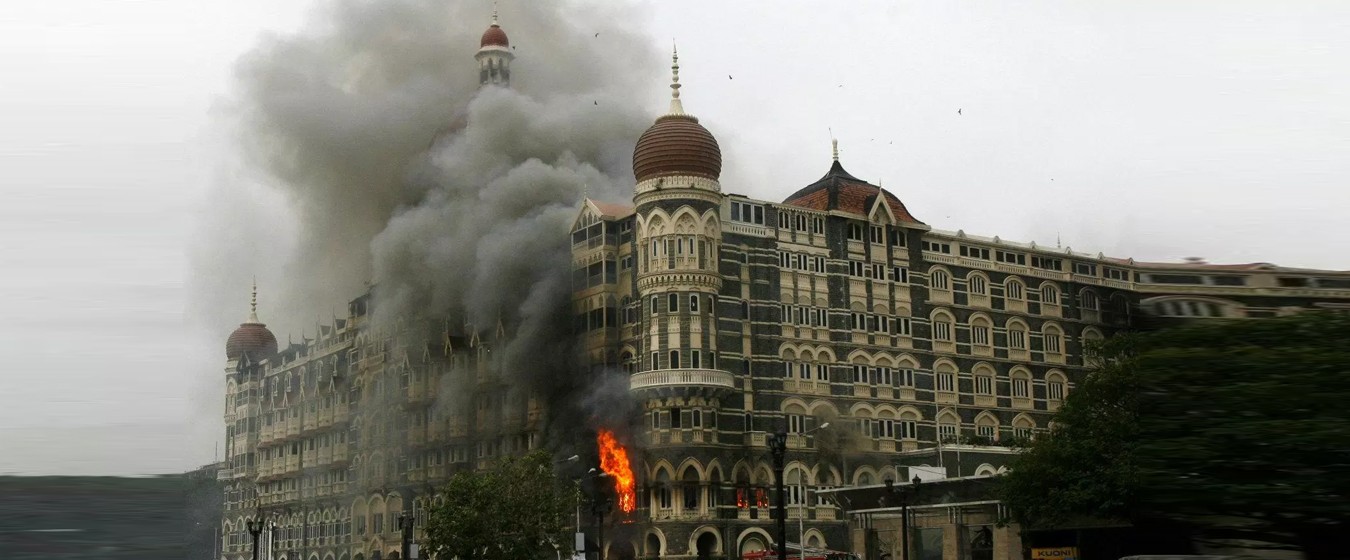
    It is unfortunate that the solemnity of events marking the 10th anniversary of the barbarous terrorist attack on Mumbai, by the Lashkar-e-Taiba (LeT) was negated, by the hype and drama surrounding Indian participation in the opening of the Sikh holy shrine in Kartarpur. The Israelis sought out and arrested, or eliminated those German Nazis responsible for the holocaust of Jews during World War II. Even those Nazi War Criminals living in countries as far off as Argentina were sought out, eliminated, or brought to justice. Those responsible for, or involved in, the Mumbai massacres of March 12, 1993 and November 26, 2008, ranging from Dawood Ibrahim to Lashkar military commander Zakiur Rehman Lakhvi, live comfortably in Pakistan.

    Imran Khan, like other Pakistani leaders, has resorted to the usual Pakistani excuses, citing absence of evidence and “lack of cooperation” by India as being responsible for their inability to prosecute the perpetrators of the Mumbai attacks. But former chief of Pakistan’s Federal Investigative Agency Tariq Khosa exposed such ploys in an article in the Dawn newspaper in 2015. He was, however, later compelled to retract. Khosa acknowledged that the Commander and Deputy Commander of the 26/11 terrorists were traced and arrested. He averred that the investigations led to the FIA obtaining detailed evidence about the import and transportation from Japan to Lahore, of the fishing trawler used by the terrorists.

    The money trails were followed and linked to an accused in Pakistan, who was arrested. A couple of foreign-based financiers were also brought to trial. The room in Karachi from which the operation was commanded and controlled was located and the communications equipment used retrieved.

    The sheer brazenness of Pakistani denials of involvement was also evident from evidence available in the trial in Chicago of two persons of Pakistani origin, David Coleman Headley (born Daood Sayed Gilani) and Tahawwur Hussain Rana. They received long prison terms and the trial proceedings reveal the extent of Pakistani involvement in the planning and execution of the 26/11 strike. The so-called ‘trial’ of Lakhvi was a farce. The then ISI chief Lt Gen Shuja Pasha periodically visited Lakhvi in jail. His wife was allowed freely to meet him and their new baby was born while Lakhvi was in jail. Lakhvi is now a free man and continues his role in the LeT.

    Every time a new ruler emerges in Pakistan, his “friends” in India issue loud calls about why we should immediately enter into a serious dialogue with the new messiah, because of the goodwill towards India that he claims he has. Imran Khan is no exception. People seem to forget that Imran, popularly known as ‘Taliban Khan’, has been elected to office, thanks to the support of the powerful army. Under international economic pressure, the army is now trying to persuade the world that it oozes goodwill for India. We should interact with the military and civilian establishment in Pakistan to first assess how sincere they are in eliminating cross-border terrorism. Imran has realistically recognised that any formal dialogue can commence only after General Elections in India in 2019.


    Ambassador G Parthasarathy is a former diplomat and a prolific commentator on Geopolitics. He is a Trustee of TPF. The views expressed are the author’s own,


  • India and China Talks: No Give, No Take

    India and China Talks: No Give, No Take

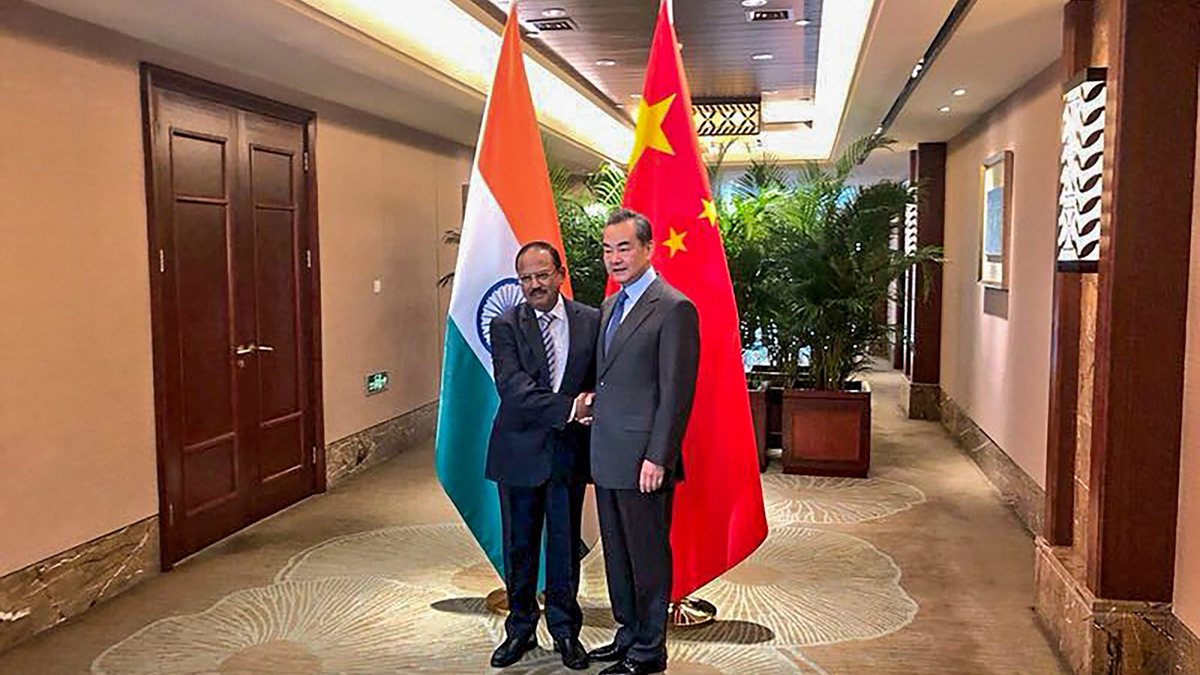
    The Indian and Chinese Special Representatives, National Security Advisor Ajit Doval and State Councillor and Foreign Minister Wang Yi, had the 21st round of talks ostensibly to discuss the “Border Issue” on November 24 at the picturesque town of Dujiangyan in Sichuan province. Though this was the first appearance of Wang Yi at these talks, there is now a monotonous regularity in this and no resolution of the vexatious border issue seems to be in sight, let alone be discussed.  Since the border issue now seems very intractable, the two representatives have broadened the scope of the talks to discuss other bilateral issues. Nevertheless, while it is clearly understood that the resolution of the border territories dispute may never be on the horizon, but at least agreeing on where the interim lines of control lie the military vigil on the borders will ease off into a less tense standstill. Sadly for us, there was a time when with a little bit of give and take this contentious and now protracted problem seemed solvable.

    In 1960 Chinese Premier Zhou Enlai suggested something akin to a status quo as a permanent solution. This was repeated in 1982 by Chairman Deng Xiaoping to India’s Ambassador in Beijing, G Parthasarathy. Once again it was offered during Rajiv Gandhi’s tenure as Prime Minister to the then Indian Ambassador AP Venkateshwaran and senior advisor to then Chinese PM Zhao Ziyang. But when Rajiv Gandhi visited Beijing in 1988, both countries decided to keep a permanent solution aside and focus on immediate “doable’s”. All along India felt that the internal political situation will not allow the government of the day the room to go with it. It hasn’t changed much, with the historical issues even less understood and inflamed public opinions prevailing on both sides.

    What is commonly referred to as the “Border Dispute” between India and China has now manifested itself into two distinct disputes. The first is the dispute over two large and separated tracts of territories. One is Aksai Chin, a virtually uninhabited high altitude desert expanse of about 37000 square kilometers. The other is what is now the Indian state of Arunachal Pradesh, a diversely populated hill region with a population of around 1.4 million people spread out over 84,000 square kilometers, which China claims as Lower Tibet.

    Aksai Chin lies between the state of Jammu and Kashmir, and China’s Xinjiang province, both regions that are also riven by separatist conflicts. Arunachal Pradesh borders Tibet, which also has a separation conflict with China. India claims that these borders were agreed upon by British India, and independent or semi-independent authorities, in Xinjiang and Tibet in the early days of the last century. China doesn’t agree with these. Both countries agree that these are legacies of history and cannot be solved in the immediate or near term and best be left to the future to resolve.

    But what causes the frequent frictions between the two is that they do not have agreed Lines of Actual Control (LAC) to separate the jurisdictions under the control of the armies of the two countries. The perceptions of the LAC differ at many places. At some places it might be by just a few meters, and elsewhere by tens of kilometers.

    To minimize the inflammability due to actively patrolling of security personnel of both sides, the two countries have a Border Defence Cooperation Agreement that sets out norms of behavior for both sides. The important things being that nothing of a permanent nature will be built on these disputed areas, and that the patrols take all precautions not to confront each other. Which simply means, if they come face to face they will both withdraw. The corollary to this is that the patrols will not tail each other. The agreement also requires local commanders to frequently meet and exchange views and sort out local differences across the table.

    Despite the adverse geographical and climatic conditions, and the overarching tensions between Asia’s biggest economies, the troops on the ground are able to show surprising bonhomie and friendliness. But periodically, either due to misunderstanding or local level posturing by either side, there are frictions that threaten to erupt into a conflict with use of arms. But it has not happened since 1967 when the two armies fought a fierce localized battle in the Sikkim sector, quite close to where the recent Dokolam dispute took place.

    The two countries have been engaged in frequent talks at various levels since 1981. After Prime Minister Rajiv Gandhi’s visit to Beijing in 1988, both countries had agreed to set up a task force to find a solution to the “border issue”. Chairman Deng welcoming his “ young friend” suggested they “forget the past” as they stood in the centre of the cavernous Great Hall of the People and the handshake lasted three long minutes.

    For three long decades since then the two countries have been meeting to discuss the border issue, but so far we have seen unwillingness by both sides to forget the past. Since 2003 these talks were elevated to a high level political dialogue between Special Representatives, in India’s case the National Security Advisor and in China’s case an official at the level of State Councilor. The first meeting at this level took place between Indian NSA Brajesh Mishra and Chinese State Councilor Dai Bing Guo. We are now having the 20thround of this dialog between India’s National Security Advisor, Ajit Doval, and China’s State Councilor, Yang Jeichi.

    A former Indian NSA once told me that the talks are high in style and hospitality, with the Indian side trying hard to match the Chinese, but there has been little traction. This is because of the versions of the claims that have been internalized and now form public opinion in both countries. Both countries are gripped by strong nationalism bordering on jingoism, which makes give and take, so vital in the resolution of such vexatious disputes, extremely difficult.

    But the Border Management and Cooperation Agreement is a major outcome of these talks and that has by and large worked. The next logical step of these talks should be to agree on an LAC. But unfortunately even that is now being weighed down by aggressive nationalism driven by social media that equates “giving up” with national loss of face. This is something increasingly very important to both countries. We will not be seen giving up anything, even our obduracy and historical short sightedness.

    Both countries are now very different then what they were in the last century. Both, India and China, are relatively prosperous and militarily powerful, but not so powerful to take by force what they desire.  The new geopolitics and the new interdependent economics also will not permit a major dislocation in the world order.  But the rise of new nationalisms has also led to a hardening of hearts. Neither now seems capable of giving or taking. So once again when Ajit Doval and Wang Yi met, both sides did not give away anything and we will have to wait for another time for that.


    Mohan Guruswamy is a Distinguished Fellow and Trustee of TPF. This article was earlier published in ‘The Citizen’.


  • Pakistan continues to support terrorism

    Pakistan continues to support terrorism

    Kamal Davar                                                                                                     November 30, 2018/Op-Ed

    As India observes the 10th anniversary of the ghastly Mumbai terror attack on 26 November 2008, which resulted in 166 fatalities including of foreign tourists and over 600 injuries, certain misgivings continue to agitate the minds of its concerned citizens and the security establishment alike.

    For decades, India has been the target of deliberate, well-planned Pakistani sponsored terrorism. Though India’s financial capital, Mumbai, has been a chosen destination for terror acts earlier too in 1993 and the Mumbai train massacres in 2006, those four horrific days of 26-29 November 2008 shook the nation and many civilized countries around the world. In matters of counter-terrorism endeavours, India woke up from its traditional languorous slumber, to a large extent, as it laboured to counter its own version of the infamous 9/11 terror strike on the American homeland. Was it a failure of intelligence, inadequate response mechanisms or, importantly, a systemic failure of the Indian security establishment? The candid answer lies in a combination of all these factors which resulted in this attack.

    In today’s increasingly troubled world, terrorism remains an ever burgeoning scourge outwitting advanced nations and their security forces time and again. Terrorism has explicitly developed into a rabidly dangerous reality with an expanding footprint, both regional and globally. The South Asian region, thanks to the original perpetrator of global terror, Pakistan, remains a hotbed of this plague, with no end in sight owing to continuing Pakistani machinations in India and Afghanistan. To Pakistan, the employment of terror as an extension of state policy appears to be more than a productive stratagem. Regrettably, Pakistan persists with its myopic and self-destructive terror policies in the region, continuing to foment terror in J&K, parts of the Indian hinterland through Nepal and, to some extent, in the north-east via Bangladesh.

    To successfully ward off cataclysmic events, a hard-nosed study and detailed addressal of the many professional and preparedness shortcomings which contribute to the likelihood of such occurrences is an imperative which security agencies can only disregard at the nation’s peril. It is the considered view of many security analysts that Indian commercial, public, military and other iconic, high-value institutions and infrastructure—perennial and lucrative targets for Pakistan-sponsored terror—have to have their security preparedness of the desired order to be vastly buttressed.

    Global problems beckon global solutions. With terrorism now a common threat confronting like-minded nations, intelligence sharing between friendly nations is sine qua non. To a large extent, especially after 26/11, the US intelligence community has established professional links with their Indian counterparts. Though some level of intelligence sharing does exist with certain friendly nations, India must forge far more deliberate intelligence cooperation with intelligence agencies of terror-afflicted nations like the UK, France, Russia, Afghanistan, Iran, Bangladesh and the Central Asian Republics. Though it is not a simple affair to develop seamless coordination resulting in speedy sharing of hard, actionable intelligence with foreign agencies, the criticality of effective counter-terrorism interoperability requires the same. Thus, India must take the lead with like-minded security outfits to get them on the same page. UN protocols on counter-terrorism and agencies like Interpol and the Paris-based Financial Action Task Force must endeavour towards greater cooperation to combat the common enemies of humanity.

    Looking inwards, it is endemic with some intelligence agencies in India to try and be ‘one up’ on each other by not fully sharing their inputs with sister institutions. This malaise, where existing, must be rooted out by the NSA. In addition, it is common knowledge that terrorists today are not merely in rag-tag outfits but with advanced technology and continually improving modern weaponry and tools to support their nefarious designs. Thus, security agencies have to keep abreast of all technological innovations taking place. As the nation endeavours to improve its technical intelligence capabilities in its myriad applications, human intelligence capabilities need also to be sharpened.

    A large number of terror outfits are labelled as ‘non-state’ actors which is a stark misnomer as some of the nations they are located in are supporting these terror conglomerates. In the case of Pakistan, its notorious spy agency, the ISI, funds, trains and equips a large number of these terror ‘tanzeems’ such as the Hafiz Saeed-led Lashkar-e-Taiba which carried out the Mumbai attacks under its watchful eye, the Jaish-e-Mohd, Harkat-ul-Mujahideen, and Sipaha-e-Sahaba, among others. US President Donald Trump’s recent imposition of financial sanctions on Pakistan for its duplicity in the war on terror was a long overdue measure. Similarly, Indian financial intelligence set-ups must keep a hawk’s eye on suspicious financial transactions from abroad to accounts in India.

    As Pakistan displays no signs of mending its ways, the Indian security establishment must factor in its preparedness the ever-looming and innovative terror threats from Pakistan and its proxies. Thus, for India, eternal vigilance and security upgrades remain the price to pay to fire-wall itself from terrorism.

    Lt Gen Kamal Davar is an Indian Army veteran and is former chief of India’s Defence Intelligence Agency. He is a visiting distinguished fellow at the TPF.

    This article was published earlier on November 25th, 2018 on Livemint.

  • Changing Paradigms of Political Canvas in Sri Lanka

    Changing Paradigms of Political Canvas in Sri Lanka

    The intransigent ethno-political emotional divide amongst the Sri Lankan society of 1980s manifested into a bloodiest insurgency with the Tamil separatists almost succeeding in carving out a separate Tamil Elam in the North and Eastern regions of the island nation. The political divide at that juncture was result of a racial cleavage between the Sinhala majority and oppressed Tamil minority which prompted the later to rebel in the face of socio-economic denials of all kinds.

    It was India who came to rescue of the Sri Lankan government of the day in 1987 to ensure territorial integrity of the country even at the cost of negative political repercussions within India. The India had to pay the price of this political outreach to Sri Lanka with life of Rajiv Gandhi, the prime minister who went out of way to help them in their hour of crisis. The deeply indebted Sinhala dominated Sri Lanka of 80s seem to be chartering a different trajectory now with self serving opportunist afflictions due to inducements of easy money from extra regional players, especially China.

    While encashing the apparent Chinese benevolence, the gullible Sri Lankan politicians seem to have ignored the basic dictum that ‘there are no free lunches’ in this world. And the slip is showing wherein the Sri Lankan political dispensation seems to have compromised on their territorial integrity by leasing out Habantota port and 15000 acres of land in lieu of repayment of Chinese loans. A precedence has been set for more such sovereign compromises in times to come for which India had fought a bloody battle against their own co ethnic insurgents.

    The motive of the ongoing political drama appears to be focused on facilitating the Chinese cause even if it amounts to tempering with the constitutional jurisprudence. Indeed, there is a paradigm shift in political thinking with its doctrine of development through Chinese support which has obvious inherent centrifugal tendencies as against focus on internal economic consolidation. Instead of reclaiming the lost politico-economic ground to China post Habantota episode, a major part of Sri Lankan polity seem to be under compulsion to toe the Chinese lines due to debt diplomacy so cleverly orchestrated by the Chinese.

    The close scrutiny of Sri Lankan political conduct in the past hinges on the non accommodation of rival ethnic, social or political groups within the Sri Lankan society which seem to continue even today in some form or other. Earlier it was based on ethnic rivalry between Sinhala and Tamils, and now it is intra Sinhala dispensation vying for more political and money power in a political set up with opportunist tendencies. Despite a vibrant democratic political dispensation to take care of well being of its subjects, the island nation has witnessed spells of changing political priorities and concomitant societal upheavals in the recent times. The military driven turbulent ethno- political complexion of 80s gave way to consolidation of socio-political synergies alongside resolving the internal security issues for almost three decades.

    Subsequently, in the aftermath of subjugation of Tamil insurgency in 2009, the priorities changed to the much needed economic development of the nation. However, the tourist predominant economy had woeful inadequacies of infrastructure and public conveniences to tap the potential of the nation at par with other international tourist destinations close by. To do that, there was no money due to prolonged war effort which in turn prompted Sri Lankan polity to look outwards paving way for externally influenced politico-economic opportunism.

    Chinese concept of BRI suited both China as well as the Sri Lanka as a mutually beneficial mechanism to take care of each other’s interests. The BRI concept envisages development of communication and transportation net work, industrial and power corridors as part of Chinese grand game for their global economic expansion. As far as China is concerned all the countries in the Indian Ocean are important for Chinese geo political matrix as a response mechanism for the security of her economic interests. Chinese conduct when hyphenated with their ‘’String of Pearls in the Indian Ocean’’, and their defiant politico-military stance in the South China Sea speaks of their seriousness and sensitivities of their interest in the Indo Pacific region. Sri Lanka happens to be in a pivotal position to serve the Chinese geo political interests.

    In the given circumstances, close affiliation with the China is a win -win situation for Sri Lanka for their economic buoyancy and a politically strong anchor to stand by their side in the time of crisis. However, there are also apprehensions of negative fallouts of new found political bonhomie with an outsider with prospects of disturbing existing stable regional political equilibrium fully aligned with socio- cultural emotional bind of Indian legacy. Accordingly, there is an emerging pattern of an internal political divide amongst Sri Lankan parties and individuals believing in encashing the pragmatic opportunism as against continuation of stability through India centric regional cohesiveness.

    The Mahindra Rajpaksha during his premiership was given loans worth $ 6 billion for various infrastructural projects including Hambantota port. Later the dept trap diplomacy of China got highlighted in their demand of ownership of the port plus land adjacent to it. It, surely, has exposed the dubious ways of China which has prompted number of recipients of Chinese benevolence to revisit their commitments with them as regards to BRI scheme. Sri Lankan civil society is ceased with this Chinese conduct and there is a resistance to encouraging Chinese intrusion into Sri Lankan affairs beyond a point.

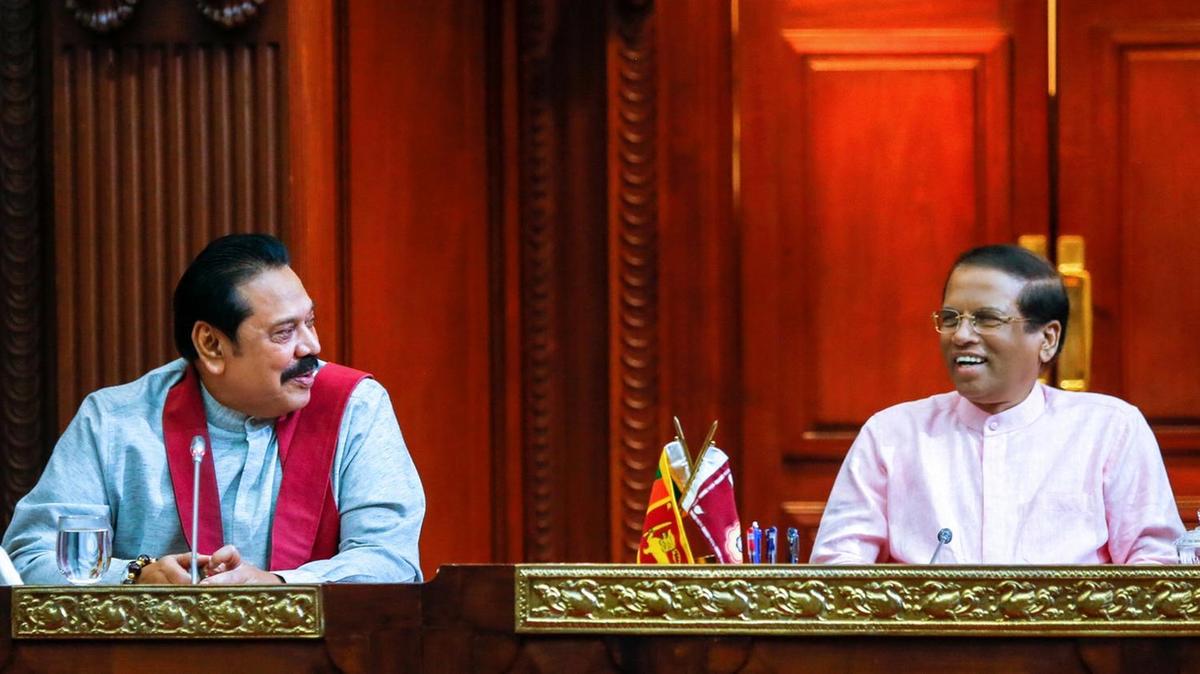
    The opponent Ranil Wickremasinghe, is known to be a proponent of the Indian lobby who had, recently , cancelled housing project of more than 50,000 houses in North and Eastern Tamil areas given earlier to China in favour of Indian companies. The Rajapaksha was brought back as the prime minister by the president through an untenable political move leaving the country in a political chaos. The parliament was dissolved paving way for fresh elections. However, the Supreme Court ruled against this unconstitutional move by the president. It was probably done as Rajapakshe, like his previous tenure, would facilitate better relationship with the China looking at their current political compulsions and national interests.

    What is happening in the Sri Lankan political canvas seem to have imprints of pro India vs pro China lobbies. The fact that there is an outstanding loan of almost $ 5 billion despite handing over the Hambantota port to them, China may be pulling the strings to bring in a political dispensation favourable to them to do their bidding. The way the democratic norms are being flouted do indicate a desperate situation precipitated by the looming economic catastrophe waiting to happen.

    The military geography of Sri Lanka has bestowed her with a unique location to take care of the most vulnerable security concerns of China with 70% of trade and 90% of energy supplies passing through the Indian Ocean. Therefore, it is obvious that China is here to stay as a permanent feature and to do that they seem to have acquired a substantial political space in the Sri Lanka. Whereas, the Sri Lanka seem to have lost out on her autonomy to some extent as there is a probability of China dictating their terms when they find the policies are not in sync with Chinese interests.

    The likely Chinese naval presence at Hambantota port barely few hundred miles from Indian shores is a security concern for India. The Chinese politico-military afflictions in Sri Lanka is likely to prompt the western powers also to further enhance their military presence closer to the Indian shores. It, obviously, would impact the Indian security matrix with the extra regional players milling around in the areas of Indian influence all this time. The new nomenclature of ‘Indo Pacific ‘ referring to erstwhile IOR and Asia Pacific is manifestation new US maritime doctrine as a response mechanism to Chinese geo political expansion. The increase in the US sponsored military diplomacy in the region and revival of Quad are all indicative of new global strategic grand games being unfolded closer to the Indian shores.

    India has no choice but to upgrade her military capabilities to take care of the inimical developments around her periphery both on land as well as maritime domain. It warrants looking beyond defensive doctrines and acquire offensive capabilities for optimum power projection in the areas of concern, besides defence of the island territories and international maritime obligations. Given the distances from the main land and bottle necks for shipping, China would always be militarily vulnerable in the Indian Ocean. It stands to an advantage for India which need to be factored in the design of the military doctrine and its political strategic outreach.

    The Sri Lanka needs to recall that they stand integrated today due to unflinching support by India in their hour of crisis and sacrifices made by the Indian soldiers to hold their country together. They should also appreciate that the India continues to be the stabilizing factor for Sri Lanka and a friend in need. China on other hand is here to exploit the Sri Lankan geographical space for their geo political motives sans any benevolent emotional connect. In fact, China has already usurped their strategically located land through their manipulative ways. If the Sri Lankan polity has not understood their game plan then they should be prepared for more such disintegrating moves as part of their dubious debt diplomacy. The Sri Lanka is in economic crisis and stands vulnerable which is reflective in their recent political conduct. In that, there seem to be tell tale signs of Chinese complicity in the ongoing happenings in the Sri Lankan political space which is not a good news.

    India, obviously, has not been pro active enough to sense the aspirations of her neighbours and propensity of China to exploit the political deficit on the strength of her deep pockets and liberal military outreach. The Sri Lanka has a great significance for Indian security and we need to take all the possible measures to neutralize the Chinese foot prints in the island nation. India fortunately has a large influence in the Sri Lankan society and reckonable political leverages which needs to be nurtured and exploited in our national interests. India as a responsible regional country need to go all out to extend a helping hand to Sri Lanka in her testing times as their political stability is essential to the Indian strategic interests.

    Lt Gen Rameshwar Yadav is an Indian Army veteran and former Director General, Infantry. The views expressed are his own. This article was published earlier in https://cenjows.gov.in/article-detail?id=122

  • Indian Air Force at 86: Challenges of Sustaining Credible Force Structure

    Indian Air Force at 86: Challenges of Sustaining Credible Force Structure

    The Indian Air Force celebrates its 86th anniversary on this October 8th, making it one of the oldest and large air forces of the world. Despite many challenges, most of which relate to inefficiencies of political decision making and inadequate financial support to modernisation, the IAF has come out with flying colours to continue to demonstrate its operational capabilities and strategic reach. The recent ‘Gaganshakti’ high intensity exercise  is an outstanding example. While the IAF continues to grapple with its huge problems of obsolescence, the last decade and a half has also been testimony to some major transformations underway in the IAF. As the 21st century dawned, the IAF began a rapid transformation from being largely a tactical air force to a strategic force, with significant expeditionary capability.

    Isolation to Outward Engagement

                 For more than half a century, outward engagement of the three services was limited to participation in UN peace-keeping missions. As India began its transformation with economic liberalisation in 1991, it began to dismantle its inward looking licence raj, and with it a global outlook started to emerge. As Indian economy accelerated into an overdrive by the late 1990s, and as India’s strategic image strengthened with  the overt declaration of its nuclear weapon status, the government encouraged military to military interactions and defence diplomacy. IAF’s international engagement expanded significantly from the 2000s. Major bilateral exercises were carried out on regular basis with major air forces – USA, UK, France, Singapore, South Africa, Oman, and Malaysia. Also, the IAF became a regular participant in USAF’s multinational exercises such as Cope Thunder and Red Flag. Recently the IAF has expanded its international exercises to involve Israel, Russia, Australia, Indonesia, and Malaysia. For over a decade, the Singapore Air Force carries out its two month long annual training from one of IAF bases on the eastern coast. Joint exercises for humanitarian assistance, involving multinational forces, is now a regular feature. These interactions and engagements have highlighted IAF’s high quality operational expertise, its global standing, and in turn, has contributed immensely to IAF’s growth in its international understanding. Today, the world sees the IAF as the sharp edge of India’s military power as well as the primary instrument of its humanitarian assistance capability worldwide.

    Enhancing its Reach

                 Although the IAF inducted the Jaguar from 1979, its air-to-air refuelling capability was kept inactive. Induction of Mirage 2000 in 1985 met the same fate. The importance of aerial refuelling in extended range operations by the USA in its Libyan strike, Osirak nuclear reactor strike by Israel, and Falklands operations by the UK was not lost on the IAF, and it decided in favour of this force multiplier in the late 1990s. Although the IAF was one of the last major air forces to induct the aerial refueler, its pace of operationalisation was probably the fastest. In less than a decade IAF fighters were flying across Atlantic Ocean to participate in international exercises like the ‘Red Flag’ and ‘Cope Thunder’. Within the last decade the IAF has demonstrated its extended operational reach through all its major exercises. Aerial refuelers form critical component of IAF’s operational capability in terms of reach and penetration. An expansion of this fleet is now long overdue.

    Technological and Operational Transformation

                 Airpower, by its very nature is technology intensive. The IAF embarked on major operational reorientation through induction of major technologies from the early 2000s. This began with induction of precision weapons, UAVs, electro-optical systems, and sensors. The IAF initiated its first upgrade program in the mid 1990s, for 125 MiG-21 Bis aircraft, by stitching together a complex avionics upgrade involving three nations – Russia, France, and Israel. The success of this program has established an irreversible upgrade culture as a cost-effective strategy for sustaining its force structure. This upgrade strategy has also contributed immensely to  indigenisation capability of Indian industry. The Jaguar fleet went through a series of comprehensive upgrades, giving rise to significant expansion of its capabilities. The Su-30 MKI is an excellent result of IAF’s conceptualisation and implementation of avionics suites and mission optimisation. Between 2004 and now, the IAF’s upgrade strategies have given fresh lease of life to various aircraft fleet and weapon systems: AN-32, MiG-27, MiG-29, Jaguar, Mirage-2000, and air defence missile systems. More programs involving upgrades of Su-30 MKI fighters and IL-76 transport aircraft are likely to be taken up soon.

    The IAF moved to transform its air defence operations through the induction of AWACS platforms. Selecting the proven IL-78 platform, the IAF again masterminded a complex three nation development program to evolve a modern, state-of-the art AWACS platform by 2009. The three AWACS platforms inducted in phase I have been utilised extensively to bring in major operational transformation of its air defence operations in a very short time-frame. The AWACS has certainly given the IAF a significant operational edge vis-à-vis the PLAAF challenge across the Himalayas. Simultaneously, the IAF has supported the indigenous program of AEW aircraft development based on Embraer-145 platform.

    Indo-US strategic partnership manifested itself in significant transformation in IAF’s airlift capability. By 2012, the IAF inducted and operationalised C-130J Hercules aircraft for special operations, which is also the IAF’s first 20 tonne airlift aircraft; and C-17 Globemaster heavy lift aircraft. These are going to be joined by Chinook heavy lift helicopters and Apache attack helicopters. By 2012 large numbers of Russian Mi-17 1V helicopters entered service. With these inductions, the IAF’s airlift capability has truly attained transcontinental proportions.

    The air defence missile segment, afflicted by long delays and overruns in terms of cost and time, has finally started showing results. The IAF, inducted its first squadrons of LLQRM (short range air defence missiles) based on Israeli systems, while simultaneously inducting indigenous Akash missile systems. This still indicated huge gaps, which is sought to be filled by the long-delayed MRSAM, jointly developed by India and Israel. With the projected signing of the contract for the Russian S-400 long-range SAMs the air defence will be on stronger operational capability.

    The most significant operational and technological capability of the IAF is its net-work centric warfare capability, which is underway for more than a decade. The IAF is the most significantly networked military force amongst the three services. It first established its primary communication grid, AFNET (Air Force Network), and  simultaneously established its air defence network inclusive of vital command and control network, IACCS (Integrated Air Command and Control System). The IACCS integrated all its ground based radar sensors and other inputs to create a common operational picture for real-time command and control to become effective. This was a pioneering transformation. The culminating transformation is its ‘airborne network’, which involved evolving NCW concepts based on  futuristic ‘self-organising, master-less, node-less, architecture’. The concepts were validated through a three-year long pilot project in 2013. Centred on the SDR (Software Defined Radio) the IAF is focused on indigenous solution. However, interim acquisition of limited numbers of SDR to kickstart operationalisation has stalled for nearly four years due to our infamous acquisition procedural delays. NCW operationalisation is a huge challenge that involves significantly large number of legacy aircraft and systems.

    The transformation of the IAF as an aerospace force began in the aftermath of Kargil war. IAF has been at the forefront of transforming the ISR domain through its operational strategies involving various ISR assets – UAVs, tactical and strategic reconnaissance systems, and satellites. It has played a stellar  role in defining the roadmap for developing and deploying space assets. It is matter of time before the IAF leads the tri-service aerospace command in true measure to formalise and operationalise India’s Space security strategy.

    IAF as the instrument of India’s Global Power

                 The rise of India and China is the major transformative process of the 21st century international system. That India aspires to be a global power is well known and well founded. India’s march to global power status in the 21st century will be a challenging and arduous task. Rise to great power status is not one of just prestige and power but comes with huge responsibilities. These responsibilities come with significant costs. A great power should be willing to share and shoulder the costs of providing public goods to the global community. This is precisely what the USA is now complaining about, as it finds the costs of sustaining itself as a hegemon is becoming prohibitively expensive. The USA is clearly signalling that aspiring great powers should share the costs of global public goods albeit without upsetting an international order crafted to its advantage. This is where India must rise to the challenge by rising as a benign power with the right balance of hard and soft power to influence the course of emerging power politics.

    The IAF, on its 86th anniversary, is at the cross roads of evolving as the instrument of India’s global power. As the 21st century progresses, the centrality of aerospace power in the national power of major countries has become unquestionable. Joint or integrated warfare has been necessitated by the critical role of aerospace power in all domains, be it precision, reach, rapidity of application, and intelligence through ISR. The viability of conventional deterrence comes from aerospace power’s ability to deter through the fear of precise punishment. It becomes obvious that the IAF has to be the cutting edge instrument of India’s hard military power. This obviously calls for the right combination of force structure with cutting edge technologies and weapon systems with significantly long reach. A serious introspection would reveal that the IAF, as it enters its 87th year, faces daunting challenges of building and sustaining the requisite force structure.

    IAF’s Force Structure Challenges

     IAF has been grappling with problems of obsolescence and dwindling force structure for more than two decades. Long drawn out and unending MMRCA acquisition process is an example of leaving operational capability gaps unactioned as well as loss of opportunities to enhance industrial and technological capabilities. Time and cost overruns in the indigenous Tejas-LCA program is again an operational shortfall for the IAF. The IAF today is at an all-time low of 32 fighter squadrons. An analysis of the history of IAF’s force structure would reveal a story of crisis management to sustain minimum force levels. Much of the blame must go to the political leadership for failure to grasp the importance of sustaining credible conventional force structures, while part of the blame must certainly fall on services themselves.

    JRD Tata committee, set up in the aftermath of 1962 humiliation against China, recommended an IAF force structure of 65 combat squadrons. This was accepted by the government but was pruned down to 39.5 squadrons as an interim measure on account of resource constraints. This figure has remained more or less permanent, till the government approved a figure of 42 squadrons in 2005. Even though the IAF has enhanced its combat capability with the induction of force multipliers, and networked air defence capability, its approved force structure may fall short of meeting India’s requirements of functioning effectively as a global player. In the modern, net-centric aerospace environment, the IAF will be India’s main instrument of conventional deterrence. Tata committee recommendations look more apt for India, given India’s emerging stature and global responsibilities expected of it. However, the immediate requirement is to get IAF’s force structure back to the approved 42 combat squadron strength. Given the large number of aircraft that need to be replaced, this would take at least 15 years if only done on war-footing.

    Modernisation and Indigenisation Imperatives

    As it celebrates its 86th anniversary the IAF would do well to do some serious introspection. Modernisation processes for all militaries in all countries face the challenges of timely resource availability, particularly for capital-intensive service like the Air Force. In India the problem is compounded by inadequate aerospace industrial and technology base. Indian military power, and IAF in particular, is heavily import dependent. Despite more than 70 years of indigenisation efforts, not much has changed in critical areas. A major cause for this state of affairs is the lack of adequate involvement of the user service in project management and technology development. The IAF will have to take a leaf out of the USAF model to make a major impact on indigenisation. This will need the following to be done on a time bound basis:

    • IAF needs to create a cadre of research personal. It also needs to operate aerospace research laboratories. These will focus on research and development of aerospace technologies. Ideally the IAF needs to exercise command and control over laboratories such as ADE, DARE, CABS, etc.
    • Programs like the Tejas-LCA should have been managed by the user service, the IAF, after the technology demonstration phase. Program management by the user service is an absolute must as it will be driven by operational needs balancing technology, cost, and time factors. As a corollary, it becomes obvious that the IAF must create the necessary expertise to manage its programs.
    • IAF’s involvement in DRDO driven programs must clearly define them as those that are technology development oriented and those that are user driven weapon system development. The latter programs must clearly be managed by the IAF while the former must be enabled by IAF support.
    • The IAF must clearly lay down a 20 year strategic roadmap for the government wherein all aircraft and major weapon systems are made completely free of foreign OEM dependence.


    Conclusion

                India’s security environment cannot be viewed simply as just border and territorial disputes with Pakistan and China. Its strategic challenges in a fast changing 21st century world are increasing by the day. China’s aerospace capability has leapfrogged significantly over the last two decades, and it poses a major challenge to India. The IAF will need to spearhead India’s aerospace capability to balance China’s dominance.

    IAF’s long-term force structure strategy could revert to its earlier ‘auxiliary air force’ format, albeit in a new form. Indian government wound up the auxiliary air forces post 1962, while it retained the ‘Territorial Army’ model. The benefits of this scheme is well established. It provides huge opportunities to a large segment of qualified young people to do military service, provides a ready reserve, and forms an important component of second rung security structure. With slight modification this could be created as Air National Guards, much like the US system. The objective should be to achieve one squadron of Air National Guards for each state in a defined time period based on financial and technical resources. These squadrons should be equipped with Tejas aircraft. Over a period of time this could become a win-win situation for the IAF, civil society, and the country as a whole. A comprehensive approach to force structure could see the IAF as the foremost air force in Asia and a major powerful force in the world by 2032, that will be IAF’s centenary year.

    =====xxx=====

     The author, Air Marshal M Matheswaran AVSM VM PhD (Retd) is a former Deputy Chief of Integrated Defence Staff (Policy, Plans & Force Development).
  • The San Juan Incident

    The San Juan Incident

    K N Sushil   December 08, 2017

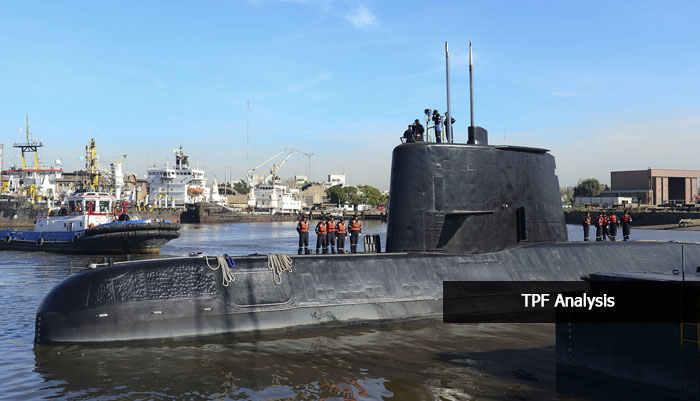
    The ARA San Juan disappeared a few hundred kilometers off Argentina’s coast on November 15, and despite an extensive air and sea search no sign of the sub has been found. Eight days after the sub vanished, the Vienna-based Comprehensive Nuclear Test-Ban Treaty Organisation said that it had detected hydro-acoustic anomaly” about 30 nautical miles (60km) north of the sub’s last-known position at 10:31 (13:31 GMT) few hours after the sub’s last contact. The analysis of the acoustic incident was reported as follows.

    The acoustic signal associated with the loss of the Argentina Submarine ARA SANJUAN confirms the following:

    That acoustic signal originated near 46-10S, 59-42W at 1358Z (GMT) on 15 November 2017. It was produced by the collapse (implosion) of the ARA SAN JUAN pressure-hull at a depth of 1275-feet. Sea pressure at the collapse depth was 570 PSI. The frequency of the collapse event signal (bubble-pulse) was about 4.4Hz. The energy released by the collapse was equal to the explosion of 12,500 pounds of TNT at the depth of 1275-feet. That energy was produced by the nearly instantaneous conversion of potential energy (sea-pressure) to kinetic energy, the motion of the intruding water-ram which entered the SAN JUAN pressure-hull at a speed of about 1800 mph.
    The entire pressure-hull was completely destroyed (fragmented/compacted) in about 40 milliseconds (0.040s or 1/25th of a second), the duration of the compression phase of the collapse event which is half the minimum time required for cognitive recognition of an event. Although the crew may have known collapse was imminent, they never knew it was occurring. They did not drown or experience pain. Death was instantaneous.
    The SAN JUAN wreckage sank vertically at an estimated speed between 10 and 13 knots. Bottom impact would not have produced an acoustic event detectable at long range

    The ARA San Juan was an IKL(German) designed type 1700 submarine built by TKMS in their Essen yard in 1985 at about the same time the Indian type 1500 was being built at HDW(Kiel). Both the submarines have great deal of similarities. Therefore, having commanded two type 1500s I will venture to hazard a guess on what could have afflicted the submarine.

    Facts as gleaned from various reports.

    15 Nov 0030Hrs. Submarine surfaced to report Water ingress through snort system causing a short circuit in the forward battery group. The forward battery group was isolated. The submarine charged her batteries on surface

    At 0600 The message is transmitted through normal communication channels.

    At 0730 the Captain informs base that he intend to continue his passage dived (Presumably because the sea was rough) At 1031, according to the CTBT report the submarine imploded at a depth of 1275 ft.

    From the above it would appear that the submarine was snorting before she surfaced at 0030hrs. If there was water ingress through the snort mast that caused a short in the forward battery group then the submarine was unable to maintain snorting depth, because the sea may have been too rough and the “head valve” (that prevents water from coming into the mast, when the mast dips even momentarily) was not functioning. As part of the SOP the snort induction drain, which drains into the bilges is kept open for the duration of the snort.  In any case during the snorting, the diesel engines are used to create the suction that draws all the foul air from all over the submarine. The fresh air coming from the snort mast merely spreads to fill the vacuum. Therefore flooding through the snort system would normally have no effect on the battery groups.

    The submarine remained on surface for seven hours post an incident of fire and smoke, which was attributed to short circuiting of the forward battery group. The crew, it seems, did not see any fire but managed to clear the smoke after isolating the forward battery group.

    A fire in a battery group is one of the most dreaded emergencies on board any submarine. Therefore the damage control actions and subsequent analysis would have been painstakingly thorough. If there was a fire in the battery pits the firefighting system would have been activated (manually or automatically). Once the system is activated the battery pits are to be kept in a sealed condition for at least one hour. Thereafter the pit is ventilated for at least an hour before inspecting it. In these types of submarines one has to lie down on a trolley and manoeuvre manually over the batteries. If the sea is rough it becomes extremely difficult and dangerous.  It may therefore be possible that they may have dispensed with the inspection whilst on surface.

    In the seven hours on surface the crew must have thoroughly examined the power distribution network and come to the conclusion that the problem was contained, and the submarine was reasonably safe to continue dived with a single battery group. They may even have considered that it would be safer and easier to inspect the battery pit while the submarine is underwater.

    The submarine dived at 0730 hrs. After 3 hours it appears to have imploded at a depth of 388 Meters. 388 Meters is of course below the normal operating depth but well above the crushing depth. If the submarine did indeed implode at that depth the inescapable inference is that there were severe structural problems that had weakened the pressure hull. The Argentinean Navy must have known if any structural limitations were reported or imposed.

    If the structural problems were not severe enough then some event that occurred in the 3 hours she was submerged must have been responsible. That event was so catastrophic that the submarine was unable to prevent an uncontrolled descent. Given the background situation the captain would have ordered the submarine to dive to 50 Meters. As soon as he settled down to that depth, he would have ordered the inspection of the battery pit. Unless there are clear tell tale signs, it is possible to miss some things which may have the potential to cause damage. Anyhow the inference and action post this inspection is not known. Did they reconnect the forward group? We will never know. The inspection would have taken about 45 minutes to an hour. The fact that they did not surface immediately after the inspection indicates that they did not notice anything alarming.

    In the three hours that the submarine was under water, if there had been a gradual flooding, the crew would have taken action to mitigate the effects, and would have ample reaction time to surface. Therefore loss of control must have been triggered by a sudden event. A pressure hull breech and flooding that must have cause to rapidly lose depth. The most immediate response is to use speed to create dynamic vectors to aid depth control. Since the submarine had only one battery group connected the speed of the submarine would be restricted to about 8 Knots ahead and about 4 Knots astern.  This would not be sufficient to delay the descent so that de-ballasting and pumping out capacities can effectively annul or reduce the rate of flooding. The rate of flooding keeps on increasing with depth.

    Now we have a situation where the submarine with the forward (or all) ballast tank probably blown going down. At depths greater than 180 meters the effect of blowing ballast with High Pressure air (250Bar)is painstakingly slow. The next stage is when the submarine crosses 15 meters more than the operational depth the Hydrazine emergency de-ballasting system will be triggered. This system is designed to clear the forward and aft main ballast tanks in 12 seconds at any depth. The problem would be if the Ballast tanks already contain air the Hydrazine will cause an explosion in the ballast tanks. If that happens there is nothing left to create positive buoyancy.

    The Next question is why did the submarine implode at 388 meters? As brought out earlier it clearly points to structural weakness in the pressure. If such a situation did not pre-exist then it may be possible that the battery pit event may have cause massive spillage of acid into the pit causing the pit to corrode in the almost 10 hours this corrosion may have weakened the hull sufficiently to cause a substantial breech in the pressure hull. The flooding of the pits could an explosion as the water level reaches to short the terminal connectors.  This is only a conjecture.

    San Juan went down without a trace. The crew did not even have the time or opportunity to release the systems and tell tale indicators that were meant tell the outside world that the submarine is in distress.

    It is said what goes up must come down. Submariners know that what goes down need not necessarily come up. San Juan RIP.

    In the language of the submarine community San Juan is on eternal patrol.

    Vice Admiral K N Sushil (retd) is a Indian Navy Veteran, and the former Flag Officer commanding-in-Chief of Southern Naval Command.[/vc_column_text][/vc_column][/vc_row]

  • China: A Colossus in Asia?

    China: A Colossus in Asia?

    Vidya Nadkarni December 10, 2017
    China today is moving out of the shadows.  After decades of following Deng Xiaoping’s advice to “hide our capacities” and “bide our time,” Xi Jinping in his long address to the CCP’s 19th Party Congress in October announced that his country “has stood up, grown rich, and is becoming strong” and would move “closer to center stage.”  Xi celebrated the “steady progress” in China’s construction on the islands and reefs in the South China Sea—a self-back-patting that has disregarded the concerns of Southeast Asian claimants to the Paracel and Spratly island chains and troubled the United States. China, in Xi’s words is a “great nation,” and he implied a prominent global role for the country when he noted that history looked “kindly on those with resolve, with drive and ambition, and with plenty of guts.”  He could not have offered a clearer message to the world that China was claiming its proper due on the global stage.

    China’s assertiveness is coming at a time when American allies and partners are increasingly questioning U.S. resolve and interest in global leadership.  President Trump’s “America First” strategy appears to many as a clarion call for a foreign policy strategy of retrenchment.  While the rhetoric of Trump administration officials continues to support US global engagement, the President’s position has been far less clear.  For instance, early in his administration Trump unceremoniously withdrew from the Trans-Pacific Partnership and the Paris Climate accord.  He decertified the Iran nuclear deal but stopped short of suspending the multilaterally negotiated agreement. Predicting the depth and steadfastness of US commitment to a global presence is therefore difficult.

    Specifically with respect to the Asian theater, while Secretary of State Rex Tillerson and Admiral Harry B. Harris of the US Navy’s Pacific Command (PACOM) have underscored US interest in a strong presence in the Indo-Pacific region, President Trump, in a speech at a November 2017 gathering of Asia-Pacific CEOs in Danang, Vietnam that White House officials had billed as highlighting the US commitment to a “free and open Indo-Pacific region,” inveighed instead against the unfair trade practices of other countries and insisted that he would put America first and not let the United States be taken advantage of anymore.  Trump’s fiery defense of nationalism and sovereignty was followed immediately by President Xi’s vigorous defense of open trade and globalization.  Upon his return to Washington, however, President Trump in debriefing remarks on his trip to Asia touted his accomplishment of three goals: uniting the world against the North Korean menace; strengthening America’s alliances and economic partnerships in a free and open Indo-Pacific; and insisting on fair and reciprocal trade deals. His interlocutors in Asia, however, heard him emphasize the third objective.

    Trump’s November trip to five Asian countries—Japan, South Korea, China, Vietnam, and the Philippines—thus did little to reassure US allies who are caught between the Scylla of economic reliance on China and the Charybdis of an uncertain protection from the US security umbrella. China dominates the economic scene in Asia.  To get a picture of what this means, consider the degree of dependence on China in Australasia.  China has superseded the United States as the largest trading partner of Australia, Japan, India, and the ASEAN countries.  International Monetary Fund (IMF) trade statistics for 2016 show that Australia and the countries of ASEAN collectively ran trade surpluses with China, making access to the large Chinese market enormously important, particularly to Australia and the smaller countries in Southeast Asia.  India and Japan ran trade deficits, although Japan’s deficit is small.  India is the exception here with a trade imbalance ratio of 1:5 in China’s favor fueling fear of Chinese goods flooding the Indian market.  Beijing is investing in much-needed infrastructure projects in countries from Asia and Europe to Africa.  Xi Jinping’s signature Belt/Road Initiative (BRI), which was unveiled to much pomp in May’s Belt and Road Forum in Beijing, has behind it the promise of $124 billion in funding.  China’s economic aid is attractive despite market rate loans because Beijing is unhampered by transparency issues as well as environmental and human rights concerns that are part and parcel of projects funded by the World Bank or the Asian Development Bank. In the long term, however, many of these investments saddle politically volatile countries with massive debt burdens making them vulnerable to strategic manipulation.

    Recognizing that BRI is as much a geostrategic as an economic initiative, Australia, Japan, and India have been cautious about participation.  Australia has nominally agreed to set up a working group to discuss possible cooperation, but Prime Minister Malcolm Turnbull has so far refused to link BRI with the Northern Australian Infrastructure scheme.  Perhaps reacting to Trump’s protectionist instincts, Japanese Prime Minister Shinzo Abe in a June speech offered a paean to free trade and spoke favorably about BRI in the context of the economic virtues of linking the Pacific to Eurasia.  But, in an indirect message to the Chinese leadership, Abe noted the international community’s expectations that it was critical for any infrastructure projects to be “open to use by all” and “be developed through procurement that is fair and transparent.”  India’s concerns arise from the BRI’s lack of transparency and from New Delhi’s objection to the China Pakistan Economic Corridor (CPEC) project, which links the Chinese province of Xinjiang with Pakistan through contested territory in Kashmir.  Recognizing the importance of having India on board, the Chinese leadership has sought to placate New Delhi.

    China’s rise is unlikely to be smooth unless Beijing can neutralize the worries of India, long-standing US allies in Australasia, and smaller countries in Southeast Asia.  Many of these countries are hedging their bets by engaging with China economically but also by investing in military hardware to shore up their security.  Australia, India, Japan, and South Korea regularly hold military exercises with their favored security partner—the United States.  India and Japan have cemented a strong partnership.  Australia has expressed interest in joining the annual Malabar naval exercises that bring together the United States, India, and Japan.  The first time that a quadrilateral naval exercise among these four democracies occurred was in 2007.  While New Delhi has not responded favorably to Australia’s recent request, either to avoid upsetting China or due to doubts over the extent of China’s influence in Australia, an overweening China is likely to propel security countermeasures in all these countries.

    Beijing’s challenge is how best to balance its economic lure with what are seen by many of its Asian neighbors as provocative military moves in the East and South China Seas and the Indian Ocean Region. If China looms large in Asia militarily, the formation of an anti-China alliance may quickly follow.  The problem for great powers is that economic influence is seldom sufficient to override measures that countries are likely to take in the face of security threats.

    Dr Vidya Nadkarni is a Professor and Head of Political Science at the University of San Diego, California. She is a Trustee of TPF.

  • PLA Navy and Robotics

    PLA Navy and Robotics

    Vijay Sakhuja December 03, 2017

    Early this year, the UK Royal United Services Institute announced that by 2020 China’s naval order of battle would be 500 ships comprising aircraft carriers, nuclear and conventional submarines, frigates and destroyers, amphibious ships and logistic vessels. Further, the Chinese defence spending would increase from US $ 123 billion in 2012 to US $ 233 billion by 2020. Surely, China is on its way to build a large and powerful navy and in the last eight years Chinese naval shipyards built 83 ships. The speed of production has been characterized as ‘making dumplings’.

    One of the significant features of this naval build-up is investments in science and innovation led by digital technologies. Among these, the ‘robotic revolution’ merits attention. Till about 2013, China was the top importer accounting for 20 per cent of industrial robots produced globally (36,560 units as compared to Japan’s 26,015 units, and US in third place with 23,679 units). Since then Chinese demand for robots has increased, and in 2016, it installed 90,000 imported units nearly a third of the global total, which is expected to increase to 160,000 units by 2019.

    While import substitution has proved useful, the Chinese government has invested in the development of indigenous robots to support the country’s US $11 billion robot market. The plans aim to ensure that China-branded robots constitute over 50 per cent of total sales by 2020 from 31 per cent in 2016. The country plans to produce 100,000 robots annually by 2020, compared with 33,000 in 2015. This is in line with the country’s “Made in China 2025” strategy led by industrialization and informatization focused on innovation, smart technology, the mobile Internet, cloud computing,  big data and the Internet of Things.

    No doubt the robot led industrialization has boosted China’s production and export competitiveness in a number of sectors such as car manufacturing, electronics, appliances, logistics, and food industry, but its use in the military has not lagged behind. In June 2017, the state-owned China Electronic Technology Group demonstrated 119 tiny propeller aircraft (X-6 Skywalker, a commercial model) loaded with software and sensors capable of communicating with the other drones in the swarm.

    There are nearly 1,300 drones currently in operation with the PLA and the PLA Air Force, but use of robots in the naval domain is more recent. Perhaps it was the discovery in 2015 of a torpedo-like spy device off Hainan province provided the requisite impetus to invest in unmanned platforms. The spy device of US origin was confirmed as an intelligence gathering system to obtain information on the Chinese naval operations in the South China Sea.

    China’s advancements in underwater platform technology has been demonstrated by the indigenously built Haiyi-7000 (Chinese for “sea wings”) unmanned platform which dived to a depth of 5,751 meters in the Mariana Trench, western Pacific. Apparently, the technology for the platform was obtained from the US.

    The PLA Navy’s has been quite enthusiastic about using unmanned platforms. In 2016, a naval exhibit showcased Chinese plans to build an Underwater Great Wall comprising of sensors moored to the ocean bed 3,000 meters deep, to work in tandem with autonomous unmanned underwater vehicles (AUV’s) launched from torpedo tubes, surface ships, missiles and aircraft, to monitor underwater vessel movements including tracking enemy submarines particularly those of the US and Japan. Although China is yet to develop a mature technology for underwater drones, Chinese scientists are working to build swarms of 3D-printed and cheap autonomous underwater robots connected through underwater communication and datalink technologies, as well as precise navigation systems and multiple sensor payloads.

    Another noteworthy Chinese demonstration of its interest in robot ships is validated by the development of a stealthy robotic trimaran warship D3000. According to China Aerospace and Science Technology Corporation, a Chinese defense contractor, this vessel is designed to operate autonomously for months, or as part of a larger task force with manned ships. The D3000 can serve as a mothership for other unmanned systems and pass the data of targets or unfriendly objects to ships and aircraft to work out firing solutions.

    China is offering to foreign customers new unmanned systems that are still undergoing testing or have just entered service in the Chinese military. For instance, China showcased a 42-foot trimaran High Speed Intercept Boat in 2016 in Malaysia. The vessel can be armed, achieve speeds of 80 knots, and can ‘potentially operate in unmanned swarms.

    The concept of operations for the USVs involve undertaking various missions and tasks “including escort, interdiction of civilian freighters, patrolling offshore assets and working in a system of systems with other unmanned systems, including drones and submersibles”.

    In 2014 President Xi Jinping during a speech to the Chinese Academy of Sciences called for a “robot revolution”’ to raise industrial productivity and it is fair to argue that Chinese shipyards, naval research centers and the PLA Navy  are ‘certainly not going to sit the robotic revolution out”.  The Chinese government has characterized the robotic industry as the “jewel in the crown of manufacturing”. This is best demonstrated by the importance of robotics in the 13th Five-Year Plan (2016-2020), the Made in China 2025 program, Robotics Industry Development Plan and Three-Year Guidance for Internet Plus Artificial Intelligence Plan (2016-2018). In essence, China is exhibiting a high degree of confidence in its ability to develop modern unmanned naval technologies.

    Dr Vijay Sakhuja is a co-founder and trustee of TPF.