Category: Opinion/Commentary

  • Assess Pakistan’s Sincerity to end cross-border Terror

    Assess Pakistan’s Sincerity to end cross-border Terror

    Published earlier in ‘The New Indian Express’.

    It is unfortunate that the solemnity of events marking the 10th anniversary of the barbarous terrorist attack on Mumbai, by the Lashkar-e-Taiba (LeT) was negated, by the hype and drama surrounding Indian participation in the opening of the Sikh holy shrine in Kartarpur. The Israelis sought out and arrested, or eliminated those German Nazis responsible for the holocaust of Jews during World War II. Even those Nazi War Criminals living in countries as far off as Argentina were sought out, eliminated, or brought to justice. Those responsible for, or involved in, the Mumbai massacres of March 12, 1993 and November 26, 2008, ranging from Dawood Ibrahim to Lashkar military commander Zakiur Rehman Lakhvi, live comfortably in Pakistan.

    Imran Khan, like other Pakistani leaders, has resorted to the usual Pakistani excuses, citing absence of evidence and “lack of cooperation” by India as being responsible for their inability to prosecute the perpetrators of the Mumbai attacks. But former chief of Pakistan’s Federal Investigative Agency Tariq Khosa exposed such ploys in an article in the Dawn newspaper in 2015. He was, however, later compelled to retract. Khosa acknowledged that the Commander and Deputy Commander of the 26/11 terrorists were traced and arrested. He averred that the investigations led to the FIA obtaining detailed evidence about the import and transportation from Japan to Lahore, of the fishing trawler used by the terrorists.

    The money trails were followed and linked to an accused in Pakistan, who was arrested. A couple of foreign-based financiers were also brought to trial. The room in Karachi from which the operation was commanded and controlled was located and the communications equipment used retrieved.

    The sheer brazenness of Pakistani denials of involvement was also evident from evidence available in the trial in Chicago of two persons of Pakistani origin, David Coleman Headley (born Daood Sayed Gilani) and Tahawwur Hussain Rana. They received long prison terms and the trial proceedings reveal the extent of Pakistani involvement in the planning and execution of the 26/11 strike. The so-called ‘trial’ of Lakhvi was a farce. The then ISI chief Lt Gen Shuja Pasha periodically visited Lakhvi in jail. His wife was allowed freely to meet him and their new baby was born while Lakhvi was in jail. Lakhvi is now a free man and continues his role in the LeT.

    Every time a new ruler emerges in Pakistan, his “friends” in India issue loud calls about why we should immediately enter into a serious dialogue with the new messiah, because of the goodwill towards India that he claims he has. Imran Khan is no exception. People seem to forget that Imran, popularly known as ‘Taliban Khan’, has been elected to office, thanks to the support of the powerful army. Under international economic pressure, the army is now trying to persuade the world that it oozes goodwill for India. We should interact with the military and civilian establishment in Pakistan to first assess how sincere they are in eliminating cross-border terrorism. Imran has realistically recognised that any formal dialogue can commence only after General Elections in India in 2019.


    Ambassador G Parthasarathy is a former diplomat and a prolific commentator on Geopolitics. He is a Trustee of TPF. The views expressed are the author’s own,


  • India and China Talks: No Give, No Take

    India and China Talks: No Give, No Take

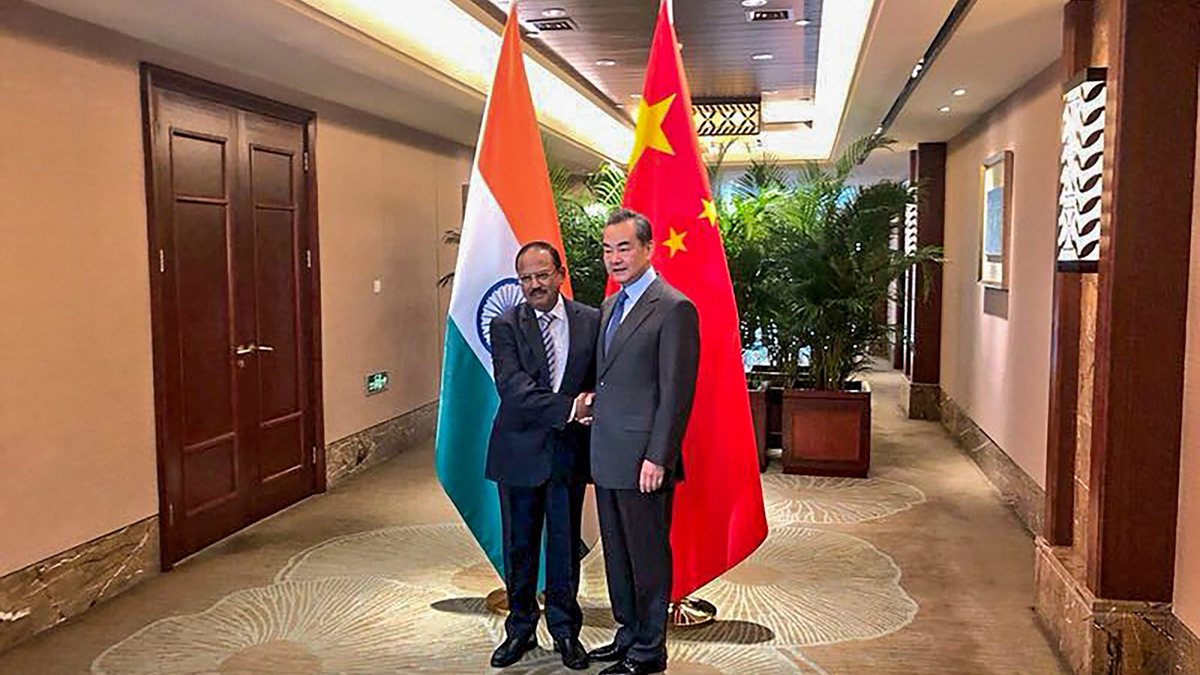
    The Indian and Chinese Special Representatives, National Security Advisor Ajit Doval and State Councillor and Foreign Minister Wang Yi, had the 21st round of talks ostensibly to discuss the “Border Issue” on November 24 at the picturesque town of Dujiangyan in Sichuan province. Though this was the first appearance of Wang Yi at these talks, there is now a monotonous regularity in this and no resolution of the vexatious border issue seems to be in sight, let alone be discussed.  Since the border issue now seems very intractable, the two representatives have broadened the scope of the talks to discuss other bilateral issues. Nevertheless, while it is clearly understood that the resolution of the border territories dispute may never be on the horizon, but at least agreeing on where the interim lines of control lie the military vigil on the borders will ease off into a less tense standstill. Sadly for us, there was a time when with a little bit of give and take this contentious and now protracted problem seemed solvable.

    In 1960 Chinese Premier Zhou Enlai suggested something akin to a status quo as a permanent solution. This was repeated in 1982 by Chairman Deng Xiaoping to India’s Ambassador in Beijing, G Parthasarathy. Once again it was offered during Rajiv Gandhi’s tenure as Prime Minister to the then Indian Ambassador AP Venkateshwaran and senior advisor to then Chinese PM Zhao Ziyang. But when Rajiv Gandhi visited Beijing in 1988, both countries decided to keep a permanent solution aside and focus on immediate “doable’s”. All along India felt that the internal political situation will not allow the government of the day the room to go with it. It hasn’t changed much, with the historical issues even less understood and inflamed public opinions prevailing on both sides.

    What is commonly referred to as the “Border Dispute” between India and China has now manifested itself into two distinct disputes. The first is the dispute over two large and separated tracts of territories. One is Aksai Chin, a virtually uninhabited high altitude desert expanse of about 37000 square kilometers. The other is what is now the Indian state of Arunachal Pradesh, a diversely populated hill region with a population of around 1.4 million people spread out over 84,000 square kilometers, which China claims as Lower Tibet.

    Aksai Chin lies between the state of Jammu and Kashmir, and China’s Xinjiang province, both regions that are also riven by separatist conflicts. Arunachal Pradesh borders Tibet, which also has a separation conflict with China. India claims that these borders were agreed upon by British India, and independent or semi-independent authorities, in Xinjiang and Tibet in the early days of the last century. China doesn’t agree with these. Both countries agree that these are legacies of history and cannot be solved in the immediate or near term and best be left to the future to resolve.

    But what causes the frequent frictions between the two is that they do not have agreed Lines of Actual Control (LAC) to separate the jurisdictions under the control of the armies of the two countries. The perceptions of the LAC differ at many places. At some places it might be by just a few meters, and elsewhere by tens of kilometers.

    To minimize the inflammability due to actively patrolling of security personnel of both sides, the two countries have a Border Defence Cooperation Agreement that sets out norms of behavior for both sides. The important things being that nothing of a permanent nature will be built on these disputed areas, and that the patrols take all precautions not to confront each other. Which simply means, if they come face to face they will both withdraw. The corollary to this is that the patrols will not tail each other. The agreement also requires local commanders to frequently meet and exchange views and sort out local differences across the table.

    Despite the adverse geographical and climatic conditions, and the overarching tensions between Asia’s biggest economies, the troops on the ground are able to show surprising bonhomie and friendliness. But periodically, either due to misunderstanding or local level posturing by either side, there are frictions that threaten to erupt into a conflict with use of arms. But it has not happened since 1967 when the two armies fought a fierce localized battle in the Sikkim sector, quite close to where the recent Dokolam dispute took place.

    The two countries have been engaged in frequent talks at various levels since 1981. After Prime Minister Rajiv Gandhi’s visit to Beijing in 1988, both countries had agreed to set up a task force to find a solution to the “border issue”. Chairman Deng welcoming his “ young friend” suggested they “forget the past” as they stood in the centre of the cavernous Great Hall of the People and the handshake lasted three long minutes.

    For three long decades since then the two countries have been meeting to discuss the border issue, but so far we have seen unwillingness by both sides to forget the past. Since 2003 these talks were elevated to a high level political dialogue between Special Representatives, in India’s case the National Security Advisor and in China’s case an official at the level of State Councilor. The first meeting at this level took place between Indian NSA Brajesh Mishra and Chinese State Councilor Dai Bing Guo. We are now having the 20thround of this dialog between India’s National Security Advisor, Ajit Doval, and China’s State Councilor, Yang Jeichi.

    A former Indian NSA once told me that the talks are high in style and hospitality, with the Indian side trying hard to match the Chinese, but there has been little traction. This is because of the versions of the claims that have been internalized and now form public opinion in both countries. Both countries are gripped by strong nationalism bordering on jingoism, which makes give and take, so vital in the resolution of such vexatious disputes, extremely difficult.

    But the Border Management and Cooperation Agreement is a major outcome of these talks and that has by and large worked. The next logical step of these talks should be to agree on an LAC. But unfortunately even that is now being weighed down by aggressive nationalism driven by social media that equates “giving up” with national loss of face. This is something increasingly very important to both countries. We will not be seen giving up anything, even our obduracy and historical short sightedness.

    Both countries are now very different then what they were in the last century. Both, India and China, are relatively prosperous and militarily powerful, but not so powerful to take by force what they desire.  The new geopolitics and the new interdependent economics also will not permit a major dislocation in the world order.  But the rise of new nationalisms has also led to a hardening of hearts. Neither now seems capable of giving or taking. So once again when Ajit Doval and Wang Yi met, both sides did not give away anything and we will have to wait for another time for that.


    Mohan Guruswamy is a Distinguished Fellow and Trustee of TPF. This article was earlier published in ‘The Citizen’.


  • Disempowering the soldier

    Disempowering the soldier

    Deepak Sinha                                                                                          December 02, 2018 : Commentary

    With election fever having gripped major parts of the country, television coverage of Prime Minister Narendra Modi hitting the poll trail is common, as also his constant reference to the so-called “surgical strikes” in his speeches. It is obvious that through his words of sympathy and support for the sacrifice and efforts of the military, he is intent on furthering his reputation as a firm and pro-active leader. But despite semantics and bombast, his Government continues with unabated ferocity in its agenda to disempower and dismember the military. Among a host of other issues, take the case of the Armed Forces Tribunals (AFT), another important institution that has been in the line of fire by this Government over the past year.

    It was just about a decade ago when the Parliament, in its wisdom, transformed the military justice system by enacting the Armed Forces Tribunal Act, 2007, in order to address the serious lacunae in the existing system where justice was dispensed within the military. As per its website, it provided for the “adjudication or trial of disputes and complaints with respect to commission, appointments, enrolments and conditions of service in respect of persons subject to the Army Act, 1950, The Navy Act, 1957 and the Air Force Act, 1950.”

    More importantly, it also provided for “appeals arising out of orders, findings or sentences of courts — martial held under the said Acts and for matters connected therewith or incidental thereto.” In addition, it also adjudicates cases pertaining to military veterans and their heirs in issues relating to service matters. The AFT also has a distinct advantage since appeals against its findings can be made directly to the Supreme Court, thereby speeding up the judicial process for the affected individuals and the Government.

    The critical role played by the AFT can best be understood in context of the fact that the Armed Forces being hierarchical organisations steeped in tradition, demand unquestionable loyalty and implicit obedience to orders from its rank and file. In this paternalistic and excessively conservative environment if, for any reason, an individual finds himself on the wrong side of the track, be it with regard to personnel or disciplinary issues, his superior officer becomes the prosecutor, jury and judge — all rolled in one.

    While this provides for a quick dispensation of justice, undoubtedly extremely important in certain circumstances, it may not necessarily be unbiased or provide for an impartial or just resolution of the issue. The establishment of the AFT, thus, provided for an extremely important element in the military justice system. It gave all ranks an opportunity to approach an independent authority if they felt that they had not received justice at the hands of their superior officers for whatever reason.

    Besides the principal Bench in New Delhi, the AFT has regional benches in 10 other cities across the country. While Delhi, Lucknow and Chandigarh have three Benches each, all other centres have a Bench each, a total of 17 Benches. Each Bench comprises of a judicial member and an administrative member. The judicial members are retired High Court judges and administrative members are retired members of the Armed Forces who have held the rank of Major General/ equivalent or above for a period of three years or more.

    It demands no great intelligence to conclude that the judicial member is appointed based on his experience and knowledge of law and functioning of the criminal justice system. The administrative member is selected based on his long and distinguished service in the military and knowledge in associated matters.

    However, over the past year while members have retired at regular intervals on completion of the laid down tenures, new appointments have not been forthcoming with a result that presently, of the authorised 35 members for 17 Benches, there are a total of only seven judicial members and eight administrative members presently nominated to the AFT. This implies that the Armed Forces Tribunals is presently functioning at less than 40 per cent of its strength.

    Another five members, including three administrative members, will retire by May 2019, which would make the Armed Forces Tribunals virtually non-functional, if new members are not appointed. For all intents and purposes, circumstances leading to the prevailing state of affairs cannot be attributed to the lack of suitably-qualified judges or service officers. But it clearly points towards a deliberate attempt by the appointing authority and the Ministry of Defence to nullify their effectiveness at the cost of servicemen and veterans alike.

    It is a matter of public record that there have been numerous occasions on which the various Benches of the AFT have ruled against the stand of the Ministry, thereby causing much embarrassment and humiliation to the Ministry. As per reports in the media as on date, the Ministry of Defence has a total of over 7,000 appeals against judgements of the AFT pending in the Supreme Court.

    Obviously, the Defence Secretary finds himself in an unenviable position and can hardly be happy with this state of affairs, especially given the fact that he is a member of the selection committee that appoints members to the Armed Forces Tribunals. This attempt to curtail the effectiveness of the AFT could, therefore, well be because of this, which makes it a clear case of conflict of interest. Incidentally, a petition is under consideration of the Punjab and Haryana High Court since 2012 on this very issue and the need to place the AFT under the Ministry of Law instead.

    However, a more disturbing reason could be that the Government’s attempt to introduce new rules through the Finance Bill 2017 were stalled when it was stayed by the Supreme Court in its judgment of February 9, 2018, in the matter of Kudrat Sandhu versus the Union of India.

    As per the new rules, the appointment of administrative members was to be no longer restricted to the military, but was also open to others with at least 20 years of public service in such fields as economics and finance. Clearly, expecting non-military members to be conversant with military traditions and customs, procedures and conditions of service was not only impracticable, to say the least, but also made no sense. Obviously, this was nothing but a brazen and unashamed attempt to add to the sinecures available for retiring bureaucrats, which given their bent of mind, would result in the Ministry of Defence getting things their way from their own erstwhile colleagues.

    Whether the Armed Forces Tribunals has been brought to its knees by the deliberate actions of unconscionable bureaucrats or utter lack of empathy of politicians is of little concern. The truth is, by curtailing the effectiveness of the Armed Forces Tribunals, the Government is destroying the military justice system which is a disservice to serving and retired personnel. Moreover, it is denying them justice that is their due, given that they have no other legal recourse available.

    The writer is a military veteran, a Consultant with the Observer Research Foundation and Visiting Senior Fellow with The Peninsula Foundation, Chennai. This article was published earlier in ‘The Pioneer’ on November 30, 2018.

  • A step closer to N-triad deterrent

    A step closer to N-triad deterrent

    PM Modi announced with justifiable national pride on November 6 that India’s first nuclear-propelled submarine, INS Arihant, commissioned in 2016, was now operational as an integral part of its nuclear deterrent. India earlier had the capabilities to launch nuclear weapons from the air, mounted largely on its Mirage 2000 and Jaguar, and by land-based missiles, ranging from Agni 1 (700-900 km) to Agni 5 missiles (5,500 km). Its aim has been to develop a ‘credible nuclear deterrent’, with capabilities to deliver nuclear weapons from multiple locations to strategic areas in its nuclear-armed neighbours, China and Pakistan.

    Arihant provides India with a capability to hit either neighbour from 300 m under the sea. The sea-based missiles envisaged for this purpose are Sagarika (750 km range) and K-4 (3,500 km). While land-based missile sites can be destroyed, a submarine-based deterrent is virtually impregnable against a missile attack. India is the only country with a sea-based N-deterrent, which is not a Permanent Member of the UNSC. India will soon operationalise a second nuclear submarine (Arighat), and is expected to have a fleet of four by 2022.

    According to US Federation of Nuclear Scientists, India currently possesses 130-140 nuclear weapons, while Pakistan has 140-150 and China 280. While India tested its first nuclear weapons in 1998, Pakistan’s first test was in 1990, on Chinese soil.

    In a recent book, Thomas Reed, a US nuclear weapons designer and former Secretary of the US air force, stated that China’s ‘Pakistan nuclear connection’ can be explained in the following words: ‘India was China’s enemy and Pakistan was India’s enemy. The Chinese did a massive training of Pakistani scientists, brought them to China for lectures, even gave them the design of the CHIC-4 device, which was a weapon that was easy to build — a model for export.’ Gary Milhollin, another expert, remarked: ‘Without China’s help, Pakistan’s bomb would not exist.’ China has also provided Pakistan the designs of its nuclear weapons, upgraded its ‘inverters’ for producing enriched uranium in Kahuta and provided it with plutonium reactors to build tactical nuclear weapons in Khushab and Fatehjang. Pakistan’s ballistic and cruise missiles are replicas of Chinese missiles.

    India’s N-doctrine stated that its weapons would only be used in retaliation against a major attack on Indian territory, or on its forces anywhere, in which nuclear, chemical or biological weapons are used. But Pakistan does not have a formal doctrine. The long time head of its Nuclear Command Authority, Lt Gen Khalid Kidwai, however, said over a decade ago that Pakistan’s nuclear weapons were ‘aimed solely at India’ and Pakistan would use nuclear weapons if India conquered a large part of Pakistan’s territory, or destroyed a large part of its land and air forces. He also held out the possibility of the use of weapons if India tried to ‘economically strangle’ it, or pushed it to political destabilisation. Pakistan’s statements in recent years have, however, indicated that it would not be averse to using tactical nuclear weapons in a conventional conflict with India.

    China, like India, also had proclaimed that it would not be the first to use nuclear weapons. But it has been ambiguous if this applied to India. China has maintained a measure of ambiguity on its ‘no-first-use’ pledge. This became evident when China’s foreign ministry spokesman (in 2004) rejected a suggestion from External Affairs Minister Natwar Singh that both countries should adopt a ‘common’ nuclear doctrine. Subsequent discussions between Indian and Chinese experts have suggested that China maintains deliberate ambiguity on its doctrine when it comes to dealing with India. Many ask if this is meant to signal to Pakistan that China will come to its aid in any nuclear exchange Pakistan may have with India, even if initiated by Pakistan. This ambiguity adds to India’s determination to strengthen its ‘triad’ of land, air and sea-based nuclear weapons. Agni 5 missiles can target China’s populous east coast. Within the next four years, we would have an adequate sea-based deterrent to deter China from holding out credible nuclear assurances to Pakistan that it would intervene should India choose to respond to use, or threats of use, of tactical weapons by Pakistan.

    While India has a streamlined nuclear command structure headed by the PM and Cabinet Committee on Security, it needs to revamp the archaic structure of its Ministry of Defence (MoD). The key military figure in the command structure is the Chairman of the Joint Chiefs of Staff Committee, who generally holds office for less than a year; hardly enough time for him to become familiar with the complexities of the command. Repeated proposals, including from defence committees and task forces, recommending the appointment of a full-time Chief or Defence Staff, or Chairman Chiefs of Staff Committee, who will hold charge of the command and report to the political authority, have gathered dust in the offices of the MoD bureaucracy.

    The MoD needs to be reorganised. Recommendations for such change, even from the Parliament Standing Committee of Defence, lie unimplemented. We recently acquired our desperately needed first batch of artillery guns after the ’80s’ Bofors controversy. This happened even as detailed designs for 155 mm Howitzers provided by Sweden were gathering dust for two decades. There is also surely something wrong if it takes over a decade to acquire fighter aircraft, even as the IAF is facing a shortage of around 30 per cent in the sanctioned strength.

    Ambassador G Parthasarathy  IFS (Retd) is the former High Commissioner to Pakistan and is a trustee of TPF. 

    This Op-Ed was published earlier in ‘The Tribune’ on November 15th.

  • Pakistan continues to support terrorism

    Pakistan continues to support terrorism

    Kamal Davar                                                                                                     November 30, 2018/Op-Ed

    As India observes the 10th anniversary of the ghastly Mumbai terror attack on 26 November 2008, which resulted in 166 fatalities including of foreign tourists and over 600 injuries, certain misgivings continue to agitate the minds of its concerned citizens and the security establishment alike.

    For decades, India has been the target of deliberate, well-planned Pakistani sponsored terrorism. Though India’s financial capital, Mumbai, has been a chosen destination for terror acts earlier too in 1993 and the Mumbai train massacres in 2006, those four horrific days of 26-29 November 2008 shook the nation and many civilized countries around the world. In matters of counter-terrorism endeavours, India woke up from its traditional languorous slumber, to a large extent, as it laboured to counter its own version of the infamous 9/11 terror strike on the American homeland. Was it a failure of intelligence, inadequate response mechanisms or, importantly, a systemic failure of the Indian security establishment? The candid answer lies in a combination of all these factors which resulted in this attack.

    In today’s increasingly troubled world, terrorism remains an ever burgeoning scourge outwitting advanced nations and their security forces time and again. Terrorism has explicitly developed into a rabidly dangerous reality with an expanding footprint, both regional and globally. The South Asian region, thanks to the original perpetrator of global terror, Pakistan, remains a hotbed of this plague, with no end in sight owing to continuing Pakistani machinations in India and Afghanistan. To Pakistan, the employment of terror as an extension of state policy appears to be more than a productive stratagem. Regrettably, Pakistan persists with its myopic and self-destructive terror policies in the region, continuing to foment terror in J&K, parts of the Indian hinterland through Nepal and, to some extent, in the north-east via Bangladesh.

    To successfully ward off cataclysmic events, a hard-nosed study and detailed addressal of the many professional and preparedness shortcomings which contribute to the likelihood of such occurrences is an imperative which security agencies can only disregard at the nation’s peril. It is the considered view of many security analysts that Indian commercial, public, military and other iconic, high-value institutions and infrastructure—perennial and lucrative targets for Pakistan-sponsored terror—have to have their security preparedness of the desired order to be vastly buttressed.

    Global problems beckon global solutions. With terrorism now a common threat confronting like-minded nations, intelligence sharing between friendly nations is sine qua non. To a large extent, especially after 26/11, the US intelligence community has established professional links with their Indian counterparts. Though some level of intelligence sharing does exist with certain friendly nations, India must forge far more deliberate intelligence cooperation with intelligence agencies of terror-afflicted nations like the UK, France, Russia, Afghanistan, Iran, Bangladesh and the Central Asian Republics. Though it is not a simple affair to develop seamless coordination resulting in speedy sharing of hard, actionable intelligence with foreign agencies, the criticality of effective counter-terrorism interoperability requires the same. Thus, India must take the lead with like-minded security outfits to get them on the same page. UN protocols on counter-terrorism and agencies like Interpol and the Paris-based Financial Action Task Force must endeavour towards greater cooperation to combat the common enemies of humanity.

    Looking inwards, it is endemic with some intelligence agencies in India to try and be ‘one up’ on each other by not fully sharing their inputs with sister institutions. This malaise, where existing, must be rooted out by the NSA. In addition, it is common knowledge that terrorists today are not merely in rag-tag outfits but with advanced technology and continually improving modern weaponry and tools to support their nefarious designs. Thus, security agencies have to keep abreast of all technological innovations taking place. As the nation endeavours to improve its technical intelligence capabilities in its myriad applications, human intelligence capabilities need also to be sharpened.

    A large number of terror outfits are labelled as ‘non-state’ actors which is a stark misnomer as some of the nations they are located in are supporting these terror conglomerates. In the case of Pakistan, its notorious spy agency, the ISI, funds, trains and equips a large number of these terror ‘tanzeems’ such as the Hafiz Saeed-led Lashkar-e-Taiba which carried out the Mumbai attacks under its watchful eye, the Jaish-e-Mohd, Harkat-ul-Mujahideen, and Sipaha-e-Sahaba, among others. US President Donald Trump’s recent imposition of financial sanctions on Pakistan for its duplicity in the war on terror was a long overdue measure. Similarly, Indian financial intelligence set-ups must keep a hawk’s eye on suspicious financial transactions from abroad to accounts in India.

    As Pakistan displays no signs of mending its ways, the Indian security establishment must factor in its preparedness the ever-looming and innovative terror threats from Pakistan and its proxies. Thus, for India, eternal vigilance and security upgrades remain the price to pay to fire-wall itself from terrorism.

    Lt Gen Kamal Davar is an Indian Army veteran and is former chief of India’s Defence Intelligence Agency. He is a visiting distinguished fellow at the TPF.

    This article was published earlier on November 25th, 2018 on Livemint.

  • Avoiding the Ideology trap: Learning from History

    Avoiding the Ideology trap: Learning from History

    Deepak Sinha                                                                                       November 23, 2018: Commentary

    Alexandre Dumas once wrote that “all generalizations are dangerous, even this one.” While there is much wisdom in his words, there are also circumstances when sweeping generalizations are not only unavoidable, but also simply reflect the truth. The widespread prevalence of social media and 24 x 7 news channels have empowered individuals by ensuring that not only is information, analysis and opinion available at the click of a button but also that his or her voice is heard, sometimes with telling effect, as the ongoing ‘#MeToo’ movement has shown, both in India and abroad. While empowerment of the individual is a positive development for our democracy, it has also upended governance structures, as it allows unelected individuals and groups to stall progress or any attempt to change the status quo.

    Moreover, unprincipled and unaccountable elements have used such channels to spread vicious lies and propaganda that allows them to organize and indulge in bullying, intimidation and even violence to achieve their own nefarious ends. Political parties too have seen this as a useful tool to dominate the public narrative and occupy mind space. A perfect example is what we were witness to in Gujarat recently where large number of innocent labourers from Bihar and Uttar Pradesh were threatened with violence and hounded out, ostensibly by a local politician, because of an alleged heinous criminal act on the part of one unidentified individual.

    While what we saw in Gujarat was at the extreme end of the spectrum, and was clearly criminal in nature, a more insidious and harmful impact of social media is the constant attempt to question and vilify decision makers and leaders, without necessarily being fully aware of all the facts. Such criticism, apart from creating fissures and uncertainty within an organization, also tends to severely constrain leaders from taking initiatives that fall within their ambit and are necessary if progress is to be made.

    Interestingly, one group who appear to be the torch bearers at the forefront of this “criticism tsunami”, if one can call it that, are military veterans. There are those among them who are extremely critical of the manner in which this government has treated the Armed Forces, with some justification one may add, and are appalled by the seeming subservience of the top brass. There are also those, in fairly substantial numbers, who tend to be extremely conservative in their outlook and view all issues through the prism of nationalism and, for all intents and purposes, are allied to the present governments’ ultra- nationalistic plank. Indeed, there are many among them who have taken the plunge into politics and are members of the BJP, with one former Chief reportedly having even joined the RSS. When you add to this the fact that our adversaries spare no effort at feeding misinformation aimed at polarizing the military community and civil society, there is little doubt that the military finds itself a veritable minefield of clashing ideologies and attitudes through which it has to tread exceedingly cautiously.

    To be fair, much of the criticism against the Forces has been brought on by patently silly attempts of those at the helm to grab headlines and credit to inveigle themselves into the good books of the governing dispension, probably in the hope of post- retirement sinecures. This is not something new, though what differentiates it from earlier times is this governments’ ill-concealed and voracious appetite to take advantage of these officers to politicize much of what the military does in the hope of deriving advantage against its political opponents. Sadly, it has also got into the habit of appropriating military infrastructure for use by the public to win votes, without bothering about the impact of such a step on the military. For example, while military veterans are barred from using military hospitals except in some circumstances, and are therefore covered by the Ex Servicemen Health Scheme, the Government has recently permitted all those covered by CGHS to utilize facilities at Service Hospitals. With an additional 50 Crores personnel to be catered for where will all serving personnel and their dependents go?

    The recent celebration of “Parakram Parv”, a three day commemoration of the cross-border punitive strikes in retaliation to the terror attack against the Uri military camp in which 17 soldiers were killed and scores injured, is another recent example. Without downplaying the significance of the cross-border strikes, probably a far more appropriate manner of honouring the forces, if the Prime Minister indeed genuinely appreciates their contribution, would have been for him to have taken the initiative to get back home the fifty four soldiers still held as Prisoners of War by Pakistan since the 1971 Indo-Pak War. Their continued incarceration, with no attempts by successive governments or civil society for their release, is a matter of national shame that reflects poorly on each and every one of us.

    This brings us to the elephant in the room that must be seen for what it is. It is well known fact that our military’s exemplary record of remaining apolitical is what differentiates it from all other militaries in the region. Individual ideologies and beliefs just have no place in the military’s firmament and politicians of all persuasions have been kept at arms- length, though one must also admit that most political parties have reciprocated similarly and kept their distance from the military as well. Unfortunately, the unsubtle attempt by the current dispensation to foist its ideology amongst the military rank and file, attempting to use “deep selection” among the higher ranks and indirectly through the veteran community that is enamoured of its ultra – nationalistic agenda, and all that it implies, appears to be showing nascent signs of putting down roots. This is an extremely dangerous trend that needs to be dealt with ruthlessly if we are to maintain our military’s neutrality and inclusive character. It seems the time has now come for including a provision within the Service Rules for an appropriate “cooling off” period before any soldier can join either a political party or involve himself in politics. This is particularly so for those leaving in the higher ranks.

    The unedifying manner in which this government has dealt with the Armed Forces over the past four years, whether it be in its dealings with veterans or its refusal to adhere to long standing norms, customs and traditions, has led to increasing antipathy among the rank and file that is clearly reflected in some of their actions that have embarrassed the senior hierarchy and the MOD and shown them in poor light. Seven hundred personnel individually petitioning the Supreme Court on their apprehensions of being victimized while deployed in operations, serving officers publicly criticizing policy directions issued by Army Headquarters on social media and the non-implementation of policy directions issued by the MOD, as has happened in nearly all military cantonments with regard to providing open access to the public, are examples that should be cause for worry. All of this has adversely affected morale, which can also be gauged from the most telling example of an officer having reportedly applied for premature retirement on grounds that his conditions of service have been violated by the down- gradation of the military. That his application was rejected is no cause for optimism.

    The situation is hardly likely to improve given the reported fact that the government is once again attempting, surreptitiously and without appropriate consultation with the military leadership, to look for a method by which it can prevent the Cantonment Boards from taking back bungalows from their present owners on expiry of the 99 year lease period, as required vide the Cantonment Act 2006. One reported solution being considered is to replace the ex officio appointment of the Local Military Authority as President of the Cantonment Board by an elected representative to supposedly further its “democratization” A move that would be violative of the Cantonment Board Act, not that such statutory provisions have stopped it before, especially keeping in mind that some extremely influential people have obtained ownership of these leased bungalows.

    Finally, it should be a matter of great concern that amongst a host of other issues, the Service Chiefs have also quietly acquiesced to the appointment of Mr. Doval, the National Security Advisor, as the de-facto Commander-in-Chief, despite lacking both the constitutional authority and the credentials to hold such an appointment. The irony cannot be missed given that the Services themselves seem reluctant to accept the appointment of a Chief of Defence Staff fearing loss of power.

    By conceding their authority the Chiefs have placed the Services in a very tenuous position which can impact their professional standing and functioning in the future. They would do well to study the case of the German Armed Forces, the Reichswehr, formed post the First World War, as an apolitical and professional force. However it rapidly deteriorated after it was ideologically suborned and converted into the Wehrmacht, the unified armed forces of Nazi Germany. This happened largely in part due to the acquiescence of the High Command to orders that were wholly unconstitutional and undemocratic and partly due to the fierce loyalty of some to Nazi ideology. Our hierarchy must not let themselves be lulled into a state of complacency but hold firm on retaining customs and traditions that have allowed our military to occupy the preeminent position that it does in the hearts and minds of our citizens.

    This article was published earlier in Times of India.

    Brigadier Deepak Sinha is a Visiting Senior Fellow at TPF. The views expressed are his own.

  • The Economics Nobel: From the Esoteric to the Practical

    The Economics Nobel: From the Esoteric to the Practical

    Mohan Guruswamy                                                                                   October 15, 2018 : Commentary

    The Sveriges Riksbank Prize in Economic Sciences in Memory of Alfred Nobel was instituted in 1968 by the Swedish central bank, and laureates are selected by the Royal Swedish Academy of Sciences. It is commonly called the Nobel Prize in Economics, though the Nobel Endowment has nothing to do with it. It has mostly tended to go to scholars doing esoteric research in economics. Much of economic research has tended to be quite remote from influencing public policy. My professor at the Kennedy School of Government, Harvard University, Professor Thomas Schelling who taught me “game theory” used in nuclear strategy, and only sometimes in economics, got an Economics Nobel for just that in 2005. Now the trend from the esoteric and philosophical is moving towards the practical.

    This year two American economists, William Nordhaus and Paul Romer, were awarded the Nobel Prize in Economics for their work in two diverse areas, but current concerns. Nordhaus won it for his warning policymakers during the first stirrings of concern about climate change in the 1970s that their economic models were not properly taking account of the impact of global warming and he is seen as one of the pioneers of environmental economics.

    The co-winner – Romer – is seen as the prime mover behind the endogenous growth theory, “the notion that countries can improve their underlying performance if they concentrate on supply-side measures such as research and development, innovation and skills”. This simply means developing nations that want to get out of their rut, like India, must invest in quality education and R&D. Instead our bureaucratic centralism has created a huge system whose outcomes are so low grade, that mediocrity passes off as brilliance. The fact that Indian students and scholars have to go abroad to fully harness their brilliance and gain recognition tells us what has gone wrong with our system.

    Paul Romer has argued, “Technological change can be accelerated by the targeted use of state interventions in areas such as R&D tax credits and patent regulation”. He called it “post colonial endogenous growth theory”. This famously inspired the an Oxford don, the economist Derek Morris, to write an odd to it. Its the history of economic theory in verse and is very witty and clever. The relevant verse for us is:

    “Only inventions seemed to have any effect
    And from where these arose everyone was quite bereft
    So people then began to get rather weary
    Of the once almighty neoclassical growth theory

    A new explanation arrived,
    over which there was quite a fuss
    Technical progress – innovation, ideas – were “endogenous”

    Invention was crucial but needed embodiment
    In people – in skills – and in capital investment
    So these were important to make growth shine
    Although others had known this for a very long time.”

    But how does one nurture invention without a national mood? For it is now well understood that how we do as a nation depends a great deal on how we perceive ourselves? This psychological factor is now understood to be critical to sustained economic growth.

    Classical economics was linked closely with psychology. Adam Smith’s other great work was “The Theory of Moral Sentiments” and dealt with the psychological principles of individual behavior. Smith emphasized the concept of empathy, the capacity to recognize feelings that are being experienced by another being. Jeremy Bentham described “utilitarianism as the greatest happiness of the greatest number that is the measure of right and wrong” and is considered by many as the father of the welfare state. Classical economic theory, also known as laissez faire, claims that leaving individuals to make free choices in a free market results in the best allocation of resources. Since individuals made choices the emphasis was on understanding human beings and their behavior as individual and as groups.

    Neo-classical economists based their thinking on the assumptions that people have rational preferences; individuals maximize utility and firm’s profits; and people act independently. Consequently neo-classical economists distanced themselves from psychology and sought explanations for economic analysis heavily based on the concept of rational expectations. For most of the last century economics became increasingly mathematical. Much of economic theory came to be presented as mathematical models, mostly calculus, to clarify assumptions and implications.

    It is not as if the switch was complete. Many great economists like Vilfredo Pareto, John Maynard Keynes and Joseph Schumpeter continued to base their analysis on psychological explanations.

    In more recent times this school of economics has been given greater importance and is reflected in the award of Nobel Prizes to behavioral economists like Daniel Kahneman of Princeton University and last year to Richard Thaler. Making the announcement Nobel Committee said: “His empirical findings and theoretical insights have been instrumental in creating the new and rapidly expanding field of behavioral economics, which has had a profound impact on many areas of economic research and policy.”

    There is a delicious irony in the award of the Nobel to Richard H. Thaler. He works in the University of Chicago, the nursery of classical economics, where he is the Ralph and Dorothy Keller Distinguished Service Professor of Behavioral Science and Economics at the Booth School of Business. Incidentally Raghuram Rajan who is also an economics professor is a colleague, was reported to also being considered for the Nobel for his “contributions illuminating the dimensions of decisions in corporate finance”.

    The dominance of the classical school on the world of economics can be gauged by the fact that since the relatively recent inception of the Nobel Prize in Economics in 1968, the Chicago economics department faculty have won the Nobel as many as twelve times, twice as many as MIT, which has six Nobel laureates. Seen from Harvard University’s ivory tower even MIT is considered as leaning more towards classical economic theory. Recent Harvard winners for economics such as Oliver Hart (2016), Alvin Roth (2012) and Eric Maskin (2007) were rewarded for their work based on mathematical empiricism than behavioral speculation. Amartya Sen (1998) was one of the few who broke this mold and won it in recognition of his work and abiding interest in welfare economics.

    Every politician worth his salt knows that national mood and perceptions are decisive in determining national outcomes. And often people do not always make rational choices, something that marketers of diverse products such as automobiles and soap, and political dreams know. But economists took their time recognizing this, and the Nobel Committee even longer. Better late than never.


    Mohan Guruswamy is a well known political and economics commentator. He is a Trustee of TPF.

  • The Centrality of MADness in Nuclear Doctrine

    The Centrality of MADness in Nuclear Doctrine

    Mohan Guruswamy August 24, 2018

    It has been reported that the defence acquisitions council (DAC), chaired by defence minister, Nirmala Sitharaman, has approved the “acceptance of necessity (AoN) for the acquisition of the National Advanced Surface to Air Missile System-II (NASAMS-II) worth around $1 billion from the US. However, in 2002 the USA had vetoed India’s bid to acquire the Israeli Arrow-2 missile interceptor system. Consequently, DRDO began developing the Prithvi Air Defense (PAD), which will provide long-range high-altitude ballistic missile interception during an incoming missile’s midcourse phase as well as interception during the terminal phase. At various times these systems had different monikers like ballistic missile defence (BMD) or anti-ballistic missile system (ABM).

    The people who decide on such things reside in New Delhi and understandably their safety gets priority. So it is the NCR that will get the expensive and exaggerated sense of protection such systems tend to generate. But no air defence system can be deemed impenetrable. The Americans and Russians realized much before the Cold War ended that the costs involved will be prohibitive, even for them and made a virtue of necessity. But the idea was seductive. Even as the Cold War was waning, Ronald Reagan toyed with the idea of a strategic defence initiative (SDI), which envisaged an ABM systems stationed deep in space that will launch on picking up a launch. It seemed far-fetched and futuristic that commentators took to calling it Star Wars.

    This thought has been high on the minds of our security establishment ever since it learned that on May 26, 1990 China tested a Pakistani derivative of its CHIC-4 design at the Lop Nor test site, with a yield in the 10 to 12 kiloton (kt) range. That yield estimate accords with recorded yields of Pakistan’s 1998 nuclear tests, which are somewhere between 5 and 12 kt. Refinements in boosting and efficient plutonium use are the normal next steps in weapon improvement, along with miniaturization of the warheads to fit into smaller and lighter reentry vehicles. Pakistan has done all of these to arm its cruise and ballistic missiles with lighter payloads. Once India deploys the PAD system around its capital, we can be assured that Pakistan too will deploy an ABM around Islamabad. We can also rest assured that China will assist it in “developing” such a capability.

    The International Panel on Fissile Materials has estimated that Pakistan has an inventory of approximately 3,100 kilograms (kg) of highly enriched uranium (HEU) and roughly 170kg of weapon-grade plutonium This is enough to potentially produce 200 to 300 warheads. Pakistan has also frequently tested the ranges of about a dozen Chinese derived missiles from the Hatf (50 km) to Shaheen III (2750 km). There is little doubt that Pakistan has planned for all eventualities, from local battlefield use and to feed its desire to have a credible “Islamic” bomb capability, and for that its reach must include Tel Aviv.

    Long after the Cold War has ended, nuclear deterrence is still based on Mutually Assured Destruction (MAD). This simply means that any sneak decapitating or debilitating first strike will be responded with a massive retaliation, the fear of which should instill good sense. That after almost three quarters of a century when the nuclear genie was uncorked from the bottle, we have not had a nuclear war or weapon use is living proof of its robust common sense. So much so, that when developments in ABM or BMD capability reached fruition, the two Cold War protagonists, the USA and now defunct USSR, had a treaty restricting these systems. Ironically even well before they had a treaty on reducing the number of nuclear bombs.

    The MAD doctrine was made painfully credible, by the development of nuclear arsenal survivability by widespread deployment (at the peak of the Cold War America and Russia each had over 30,000 nuclear bombs.) This credibility got its biggest boost when submarines, initially diesel and then nuclear powered, capable of firing nuclear armed missiles (SSBN) from the impenetrable dark recesses of the oceans were introduced. The first of these submarines was the Russian Zulu Class submarine capable of firing from underwater an early Scud missile (1955). The Americans were the first to deploy a long endurance, deep diving and very silent nuclear powered submarine – George Washington – in 1959. Since then MAD was ensured by the highly accurate missiles in the bellies of such submarines operated by the US, Russian, British, French, Chinese and India navies. Pakistan too is now reportedly testing nuclear capable missiles fired from underwater on modified diesel submarines.

    We need to learn from how nuclear weapons strategies evolved during the Cold War, instead of mimicking USA and Soviet follies. The notion of deterrence between the USA and USSR was based on no escape from MAD. The march of the Cold War follies peaked with the two protagonists together deploying almost 70,000 warheads each aimed at a specific target. At the height of this madness almost every open ground was targeted as possible tank marshaling or military logistics areas. The last thing we hence want is getting into a numbers game with Pakistan or China. Credibility depends on reducing the uncertainty of use from the opposite perspective. The Indian PAD missile defence system only increases them. India and Pakistan have ensured a modicum of confidence by not mating the warheads and delivery systems, giving a vital period to rollback the unleashing of Armageddon. But now both countries will have to evolve a launch on warning doctrine.

    Clearly, the two South Asian nuclear powers too have a local version of MAD in place. The Pakistani doctrine “commits itself” to use battlefield nuclear weapons if an Indian conventional assault threatens its essential nationhood and hence it has steadfastly refused to accept the notion of “no first use” (NFU). The Indian doctrine emphasizes NFU but also makes it explicit that any Pakistani use of nuclear weapons on India or its forces will be responded with a massive retaliation. India may have less nuclear weapons, not because it cannot make more, but what it has is enough to ensure the complete annihilation of Pakistan, which is geographically too a much smaller country. China has moved on from NFU to a doctrine now called “credible minimum deterrence”. But how much is credible?

    Mercifully, nuclear doctrines these days are couched in such abstractions as MAD requires a degree of predictability, ironically ensured by opacity. The USA’s “single integrated operational plan” (SIOP) began with the ominous words that its objective, after the outbreak of a general war with the then Soviet Union to turn it into a “smoking radiating ruin.” It was written by its the certifiable USAF chief, Gen. Curtis Lemay Jr., based on whom the character played by George C. Scott in the Stanley Kubrick classic “Dr. Strangelove” was created. But people like Lemay who gave MAD credibility. Since no one of a sane frame of mind would even contemplate the enormity of the disaster of a nuclear war, uncertainty of use was a key element of MAD. It has been written that Soviet President Leonid Brezhnev used to have sleepless nights thinking of a man like Richard Nixon with his finger on the button.

    India’s nuclear strategy documents in detail as to who the nuclear command would devolve to in the unlikely event of a decapitating first strike on New Delhi with the aim of eliminating its national leadership. It is said that chain of nuclear command keeps descending downwards to a Major General, a modern day Raja Parikshit so to say who will perform the final obsequies. At last count India had over 600 military officers at that level. Decapitating all of them is a near statistical and physical impossibility. It will take tens of thousands to precision nuclear weapons to annihilate India’s military chain of command, and it can be speculated whether even America or Russia can achieve that, let alone Pakistan?

    Ironically, the evocative acronym MAD doctrine is eminently sensible. Good sense should tell us that enough of this madness and leave MAD alone.

    This Op-Ed was originally published in Asian Age.

    Mohan Guruswamy is a Trustee of TPF.

  • Governance

    Governance

    My dog Charlie is long gone. But Charlie, who was a brown “Great indian Mongrel”, was wise in the ways of the world. He taught me a lesson in public policy I will never forget.

    Corruption is India’s favorite conversation topic. We love discussing it and bemoaning its all pervasiveness. We are experts at it and have all experienced it at in some form or the other and at all levels. Yet with so much collective experience it is a difficult topic to write about. Like our gods it takes so many myriad forms. It defies a simple definition. But we all know what it is. What Justice Potter Stewart of the US| Supreme Court said in the context of obscenity – “I know it when I see it”- is equally applicable to corruption. It is the most obscene of obscenities but is a fairly common one.

    Economists prefer to bandy about a different term when referring to corruption. They call it “economic rent”. According to the IMF “it is the extra amount paid (over what would have been paid for the best alternative use) to somebody or for something useful whose supply is limited either by nature or through human ingenuity.” Quite clearly this definition excludes the moral dimension. But then our problems get even more compounded when we realize that the moral dimension is very elastic and varies.

    Take for instance the case of former Prime Minister Manmohan Singh. As far as the Rajya Sabha is concerned, he is a tenant of Mrs Hiteshwar Saikia and is a resident of Guwahati in Assam. But we know that is not true and that he has been ordinarily resident in New Delhi from ever since we came to know him. LK Advani, has been just as peripatetic. At one time he declared he was a resident of Ujjain in MP for the sake of a Rajya Sabha seat. Now he is a resident of Ahmedabad. Arun Jaitley has similarly been vagrant. He is a Delhiwala, but went to Amritsar where he announced he was buying a house to reloacte in 2014. The Amritsaris didnt want teh likes of him, so now he is a resident of Ahmedabad. But if you and I were as cavalier as this in declaring our place of residence, say for the purpose of a passport, we could end up in prison.

    Economic rent takes other forms, which tax the common good much more. High import duties, for instance, meant to restrain imports actually serve to increase prices and profits for domestic manufacturers. The Hindustan Ambassador, that immortal symbol of a mindless and rapacious bureaucracy, actually gave its manufacturer and employees as much joy as it gave sorrow to those who owned or drove these cars. Did you notice how all car tyres or batteries cost about the same? Or how all similar sized air-conditioners and refrigerators cost about the same? Or till recently how all air-tickets cost the same and an arm and a leg at the same time? Adam Smith explained it best by noting that “People of the same trade seldom meet together, even for merriment and diversion, but the conversation ends in a conspiracy against the public.”

    These conspiracies cannot succeed without the active connivance of the politicians and bureaucrats. We know what they mostly do, but thanks to the exertions of Aniruddha Bahal, purporting to represent an industry association, we have proof for the first time of this. Our MP’s have much to thank Dr. Manmohan Singh for conjuring up MPLADs (MP’s local area development scheme), but the then Finance Minister probably never contemplated the likes of the venerable Sakshi Maharaj who turned the scheme into one of personal development. But though both the two stings involve MP’s scams evidenced are of different natures. The money for questions business is a common place as a traffic cop collecting money from errant drivers. The payment itself is a punishment for the truancy and it does not seem to matter very much where the money paid ends up, We learn our lessons from it. But when the cops collect for registering an FIR or for no rhyme of reason then it belongs to a different class and we are truly outraged.

    Those of us in Delhi who built houses or made alterations without the sanction of the authorities paid for the deviations knowing it was contrary to the law. But it was commonplace and that seemed to make it okay. But when the High Court has ordered them demolished we were outraged. What if the same High Court ordered that MP’s making false statements about their place of residence must quit? Would we be outraged? We may be happy but not outraged. This is clearly a subject that requires far greater deliberation and discussion and there is much Parliament can do by way of introspection. There are many who are quite expert on the subject. Chandan Mitra, a former  BJP MP, whose concern for probity is as well known as his Chattarpur farmhouse, has even written a book on the subject of corruption.

    Opinion polls show that there are some professions we believe to be almost entirely corrupt. Politicians and policemen top this list with 99% of those polled believing them to be crooks. Much of the corruption we witness in everyday life is a result of their unnecessary exertions. In the past few months I have had opportunity every morning to contemplate a vacant plot of land in the neighborhood I live in. The plot is bounded by roads on all four sides and naturally people walking take a short cut across it. Some well meaning soul has taken upon himself to put an end to this practice. First a sign came up demanding that people not do the most rational thing, that is take a short cut. The sign was ignored and my dog Charlie has been using the signpost to leave his signature. Then a small length of barbed wire pegged between two poles appeared astride the path at both ends. The people who use the path still find it convenient to go around the poles and take the not so short shortcut. Good old Charlie just slips under the wire and seems quite happy that he has two more poles to leave his daily markers.

    The nature of most of our lawmaking is just like this. They are irrational and people will respond rationally to them, by circumventing them if not ignoring them. Just as Dr.Manmohan Singh has done to the requirement that MP’s to the upper house be ordinarily resident in the state. Now the only way that plot can be prevented from being used as a short cut is to either build on it. If the empty plot is just walled up, the walls will encourage another use, which will be odious to boot. Which brings me to another aspect. We have laws that prohibit pissing in public and on walls, private and public. Pissing is meant to be a private business. But where are people to pee when you just don’t have enough urinals? So a law against pissing in public makes sense only when you have enough public urinals.

    Thoughtless laws corrode a state thoroughly. This is why states built around tight regulation and appeals to a higher human idealism fail. The crime wave that engulfed the former USSR was really due to the old nomenklatura doing the only thing they were adept at. It is not that other social and political systems do not germinate corruption. Corruption is all-pervasive and a world wide phenomenon. It comes built in with nature. Animals steal food from each other just as humans extort from others. But human beings live in organised societies and societies are nothing but systems based on laws. For laws to work it must be clear that if caught, trial will be swift and if found guilty retribution will be commensurate.

    That’s where we have serious problems. Who makes the law? Politicians. Who enforces the laws? The police. Both are believed to be overwhelmingly corrupt.

  • The San Juan Incident

    The San Juan Incident

    K N Sushil   December 08, 2017

    The ARA San Juan disappeared a few hundred kilometers off Argentina’s coast on November 15, and despite an extensive air and sea search no sign of the sub has been found. Eight days after the sub vanished, the Vienna-based Comprehensive Nuclear Test-Ban Treaty Organisation said that it had detected hydro-acoustic anomaly” about 30 nautical miles (60km) north of the sub’s last-known position at 10:31 (13:31 GMT) few hours after the sub’s last contact. The analysis of the acoustic incident was reported as follows.

    The acoustic signal associated with the loss of the Argentina Submarine ARA SANJUAN confirms the following:

    That acoustic signal originated near 46-10S, 59-42W at 1358Z (GMT) on 15 November 2017. It was produced by the collapse (implosion) of the ARA SAN JUAN pressure-hull at a depth of 1275-feet. Sea pressure at the collapse depth was 570 PSI. The frequency of the collapse event signal (bubble-pulse) was about 4.4Hz. The energy released by the collapse was equal to the explosion of 12,500 pounds of TNT at the depth of 1275-feet. That energy was produced by the nearly instantaneous conversion of potential energy (sea-pressure) to kinetic energy, the motion of the intruding water-ram which entered the SAN JUAN pressure-hull at a speed of about 1800 mph.
    The entire pressure-hull was completely destroyed (fragmented/compacted) in about 40 milliseconds (0.040s or 1/25th of a second), the duration of the compression phase of the collapse event which is half the minimum time required for cognitive recognition of an event. Although the crew may have known collapse was imminent, they never knew it was occurring. They did not drown or experience pain. Death was instantaneous.
    The SAN JUAN wreckage sank vertically at an estimated speed between 10 and 13 knots. Bottom impact would not have produced an acoustic event detectable at long range

    The ARA San Juan was an IKL(German) designed type 1700 submarine built by TKMS in their Essen yard in 1985 at about the same time the Indian type 1500 was being built at HDW(Kiel). Both the submarines have great deal of similarities. Therefore, having commanded two type 1500s I will venture to hazard a guess on what could have afflicted the submarine.

    Facts as gleaned from various reports.

    15 Nov 0030Hrs. Submarine surfaced to report Water ingress through snort system causing a short circuit in the forward battery group. The forward battery group was isolated. The submarine charged her batteries on surface

    At 0600 The message is transmitted through normal communication channels.

    At 0730 the Captain informs base that he intend to continue his passage dived (Presumably because the sea was rough) At 1031, according to the CTBT report the submarine imploded at a depth of 1275 ft.

    From the above it would appear that the submarine was snorting before she surfaced at 0030hrs. If there was water ingress through the snort mast that caused a short in the forward battery group then the submarine was unable to maintain snorting depth, because the sea may have been too rough and the “head valve” (that prevents water from coming into the mast, when the mast dips even momentarily) was not functioning. As part of the SOP the snort induction drain, which drains into the bilges is kept open for the duration of the snort.  In any case during the snorting, the diesel engines are used to create the suction that draws all the foul air from all over the submarine. The fresh air coming from the snort mast merely spreads to fill the vacuum. Therefore flooding through the snort system would normally have no effect on the battery groups.

    The submarine remained on surface for seven hours post an incident of fire and smoke, which was attributed to short circuiting of the forward battery group. The crew, it seems, did not see any fire but managed to clear the smoke after isolating the forward battery group.

    A fire in a battery group is one of the most dreaded emergencies on board any submarine. Therefore the damage control actions and subsequent analysis would have been painstakingly thorough. If there was a fire in the battery pits the firefighting system would have been activated (manually or automatically). Once the system is activated the battery pits are to be kept in a sealed condition for at least one hour. Thereafter the pit is ventilated for at least an hour before inspecting it. In these types of submarines one has to lie down on a trolley and manoeuvre manually over the batteries. If the sea is rough it becomes extremely difficult and dangerous.  It may therefore be possible that they may have dispensed with the inspection whilst on surface.

    In the seven hours on surface the crew must have thoroughly examined the power distribution network and come to the conclusion that the problem was contained, and the submarine was reasonably safe to continue dived with a single battery group. They may even have considered that it would be safer and easier to inspect the battery pit while the submarine is underwater.

    The submarine dived at 0730 hrs. After 3 hours it appears to have imploded at a depth of 388 Meters. 388 Meters is of course below the normal operating depth but well above the crushing depth. If the submarine did indeed implode at that depth the inescapable inference is that there were severe structural problems that had weakened the pressure hull. The Argentinean Navy must have known if any structural limitations were reported or imposed.

    If the structural problems were not severe enough then some event that occurred in the 3 hours she was submerged must have been responsible. That event was so catastrophic that the submarine was unable to prevent an uncontrolled descent. Given the background situation the captain would have ordered the submarine to dive to 50 Meters. As soon as he settled down to that depth, he would have ordered the inspection of the battery pit. Unless there are clear tell tale signs, it is possible to miss some things which may have the potential to cause damage. Anyhow the inference and action post this inspection is not known. Did they reconnect the forward group? We will never know. The inspection would have taken about 45 minutes to an hour. The fact that they did not surface immediately after the inspection indicates that they did not notice anything alarming.

    In the three hours that the submarine was under water, if there had been a gradual flooding, the crew would have taken action to mitigate the effects, and would have ample reaction time to surface. Therefore loss of control must have been triggered by a sudden event. A pressure hull breech and flooding that must have cause to rapidly lose depth. The most immediate response is to use speed to create dynamic vectors to aid depth control. Since the submarine had only one battery group connected the speed of the submarine would be restricted to about 8 Knots ahead and about 4 Knots astern.  This would not be sufficient to delay the descent so that de-ballasting and pumping out capacities can effectively annul or reduce the rate of flooding. The rate of flooding keeps on increasing with depth.

    Now we have a situation where the submarine with the forward (or all) ballast tank probably blown going down. At depths greater than 180 meters the effect of blowing ballast with High Pressure air (250Bar)is painstakingly slow. The next stage is when the submarine crosses 15 meters more than the operational depth the Hydrazine emergency de-ballasting system will be triggered. This system is designed to clear the forward and aft main ballast tanks in 12 seconds at any depth. The problem would be if the Ballast tanks already contain air the Hydrazine will cause an explosion in the ballast tanks. If that happens there is nothing left to create positive buoyancy.

    The Next question is why did the submarine implode at 388 meters? As brought out earlier it clearly points to structural weakness in the pressure. If such a situation did not pre-exist then it may be possible that the battery pit event may have cause massive spillage of acid into the pit causing the pit to corrode in the almost 10 hours this corrosion may have weakened the hull sufficiently to cause a substantial breech in the pressure hull. The flooding of the pits could an explosion as the water level reaches to short the terminal connectors.  This is only a conjecture.

    San Juan went down without a trace. The crew did not even have the time or opportunity to release the systems and tell tale indicators that were meant tell the outside world that the submarine is in distress.

    It is said what goes up must come down. Submariners know that what goes down need not necessarily come up. San Juan RIP.

    In the language of the submarine community San Juan is on eternal patrol.

    Vice Admiral K N Sushil (retd) is a Indian Navy Veteran, and the former Flag Officer commanding-in-Chief of Southern Naval Command.[/vc_column_text][/vc_column][/vc_row]