Category: Opinion/Commentary

  • Time for Structural Reforms, Modernisation

    Time for Structural Reforms, Modernisation

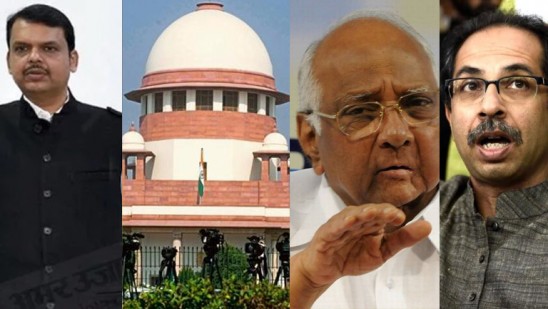
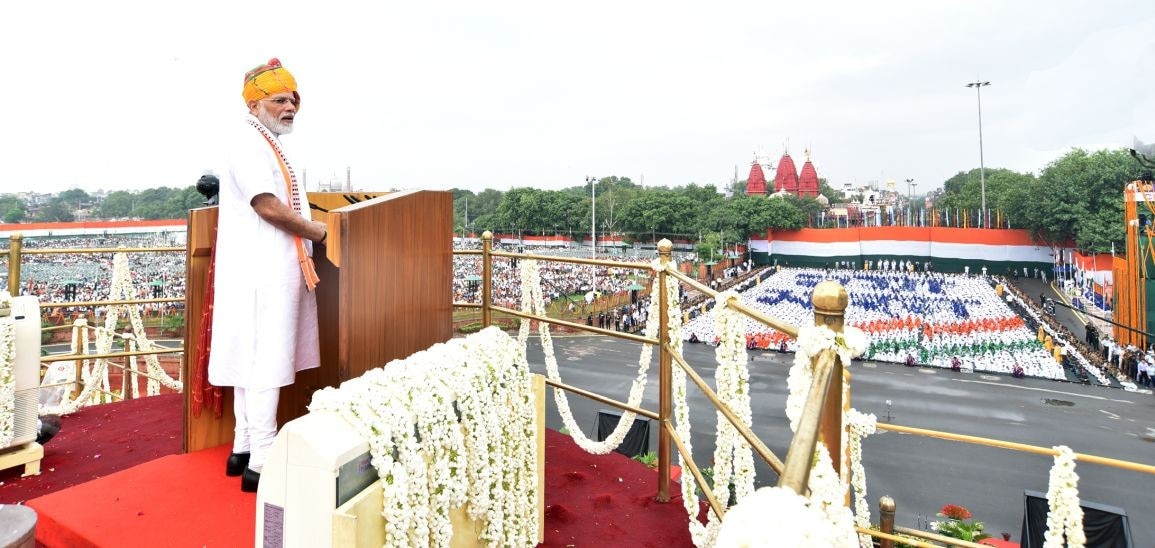
    The Prime Minister’s announcement on independence day of his decision to appoint Chief of Defence Staff (CDS) as the single-point military advisor to the CCS and the PM was received with great enthusiasm. The appointment of CDS, recommended in 2001 by the Kargil Review Committee and endorsed strongly by the Group of Ministers’ headed by the then Deputy Prime Minister Shri L K Advani has been long overdue. Like with every other decision with respect to military reforms, the CDS decision became a victim of bureaucratic manoeuvring, vindictiveness, engineered turf battles, and political indecisiveness. The process of setting up a tri-service integrated headquarters was, however, incorporated with a Vice Chief equivalent, CISC heading it. Major reforms such as integration of service headquarters, appointment of the CDS, and establishment of Indian Defence University – all remained in limbo or with just cosmetic changes. There is no doubt that the Indian military is in crying need of major structural reforms in tune with 21stcentury environment, technologies, strategies, and the primacy of joint operations in the conduct of war. The CDS is more than a single person’s appointment, it is an entire system.  Therefore, it needs to be accompanied by other major structural reforms.

     Integrated Defence Staff (IDS), the joint headquarters structure to assist the CDS is already in place. The current head, CISC, would become the VCDS. It has taken more than a decade for the IDS to establish a mature and optimised acquisition system and processes, develop Long-Term Integrated Perspective Plans, optimise the defence intelligence agency, and address joint operational and training systems. While significant expertise has evolved including coordination with multiple MOD agencies, the CISC has had to depend on the Chairman, COSC for major decisions. This was invariably subordinated to the Chairman’s priority for his role as the Chief of his Service. An integrated approach, driven by the CDS, should ensure speedy and optimal modernisation of individual services towards enhancing our joint warfare capability.

     Currently, Chiefs of respective services are responsible for operational capability, training, and the requisite modernisation plans. Acquisitions and modernisation plans were largely driven by individual service specific interests, and very often these ended up getting delayed or blocked by turf wars and prioritisation battles for share of the defence budget pie. This would change under the CDS, with operational decisions being driven by the CDS system while the Chiefs would be responsible for their service capability development, training, and maintenance in tune with joint strategies. This should speed up the modernisation process.

    This year’s defence budget is barely above the subsistence level. A decade of stalled modernisation has brought all three services to their lowest levels of force structures and capabilities. The Indian Air Force is down to 32 squadrons, and is likely to go down 28 squadrons over the next five years as the older, overdue for phase out aircraft are finally laid off. It would take more than a decade for the IAF to get back to its authorised force strength of 42 squadrons provided its modernisation process is undertaken on a war-footing. If not it would be at least two decades for full recovery. The Army is no better, as a former VCOAS stated – 60% of its weapon systems are vintage. Army’s two major modernisation programs – TCS and BMS, intended to be through ‘make’ route, has been shelved after more than a decade of work with two consortiums of Indian majors. This is bound to have huge adverse impact on its modernisation efforts. One can’t blame the Army though. Repeated delays in routine procurements, and lack of accountability on development programs have cost the Army dearly. Notwithstanding some of the recent decisions such as the joint venture between Kalashnikov and the OFB for small arms manufacture, light-weight howitzer and the fast-track procurement of assault rifles and weaponry for special forces, Army’s overall capability for a two-front war is  of concern. The FICV project continues to be in a limbo. Army Chief’s restructuring efforts towards ‘Integrated Battle Groups’ is a welcome step and would help the cause of jointness.

    Navy modernisation efforts are no better either. The progress of the Indian Aircraft Carrier continues in its slow pace. Very well laid out plans such as 30-year ship building and submarine-building programs have been approved years ago, if not decades ago. These have floundered for lack of timely budget allocation. Effectively the Navy continues to grapple with ageing ships, submarines and weapon systems.

    Much of the modernisation that has accrued over the last 15 years has been largely due to procurements from the US, almost exclusively through the FMS route, that is government-to-government contracts. It does not speak well for all our sloganeering on ‘make in India’, and reflects the lack of a coherent national strategy. This is a domain the CDS will need to address.

    In a recent announcement, the government indicated that it would allocate USD 130 billions over the next five to seven years for modernisation of the three services. The CDS will need to move beyond the current system of work in the IDS, as far as modernisation goes. Currently, the LTIPP is seen as a ‘Desired Capability’ document, which the government is happy to concur. There is no assurance of financial commitment, and so the plans remain wishful thinking. Big headlines are made whenever the DAC approves ‘Acceptance of Necessity’ for thousands of crores worth acquisitions. These turn out to be meaningless as the subsequent processes takes years, more than 50% AONs elapse, and less than 25% of approved AONs fructify into desired inductions. On an average the time taken from AON to contract signing has been about 9-10 years. The flaw lies in the mismatch between various aspects of indigenous development, ‘make in India’ manufacturing and huge import dependency versus the combat capability of the forces.

    It is quite clear that various organs of the government, over the last 70 years, have failed to address effectively the need of a vibrant indigenous defence industry that is export oriented and reduces our forces’ import dependency. The CDS system, if evolved correctly, should integrate different aspects of  integrated operational philosophy, requisite force structures and combat capability with indigenous manufacturing, technology development, and a balanced, accountable, and efficient  acquisition process. The CDS must also be given enough power to take operational and financial decisions to ensure appropriate force structures for India’s defence. The bottom line, however, is to see the wisdom that an allocation of 1.35% of GDP is abysmally low to meet India’s defence needs in the 21stcentury.

    This article was published earlier in Deccan Herald on 22 Sep 2019.

    The author is the Founder-Chairman and President of The Peninsula Foundation. He is a former Deputy Chief of Integrated Defence Staff. The views expressed are author’s own.

  • Hong Kong’s Pro-Democracy Movement and the Chinese Conundrum

    Hong Kong’s Pro-Democracy Movement and the Chinese Conundrum

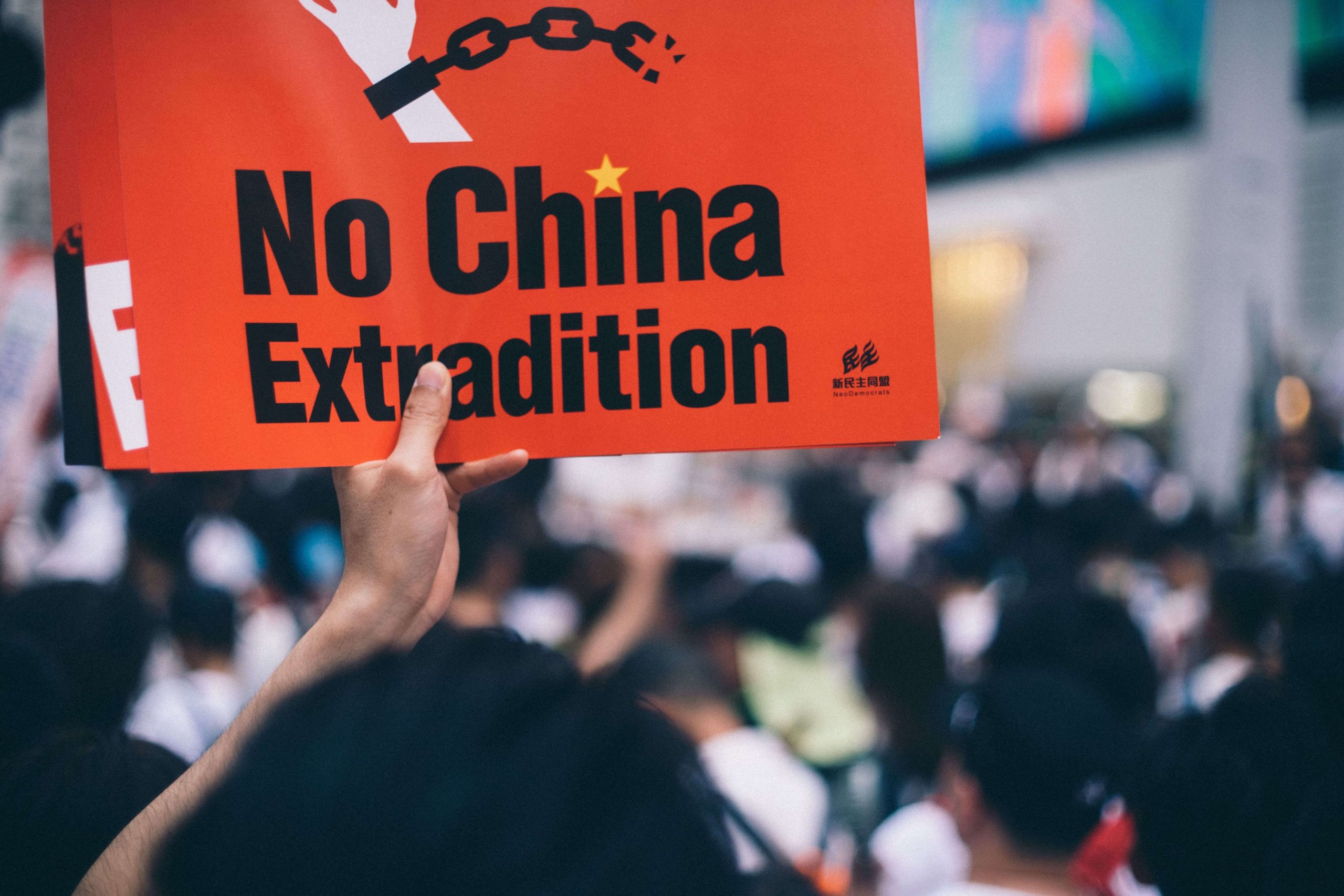
    The protest that erupted in Hong Kong since early June, triggered by stark objections to the extradition bill, has spiraled into a pro-democracy movement in the region. Beyond the political situation, the widespread, leaderless yet organised demonstrations reveal deep social and economic frustrations of the Hong Kongers. As the unrest enters its fourth month, the course of the events in the upcoming days also remains crucial for People’s Republic of China that is gearing up for its 70thanniversary on 1stOctober. With the rest of the world keenly observing Beijing’s measures, China seems to be in a conundrum, often changing its reactionary responses towards Hong Kong.

    Despite wide opposition, the pro-China Legislative Council (LegCo) in Hong Kong passed an extradition bill, usurping the democratic members presiding the bills committee.  While the current laws permit Hong Kong to extradite people upon legislature’s approval, the government introduced the bill claiming that it was unfeasible and could alert targets to flee before proper action. Eventually, following massive protests, the bill was suspended as people claimed that the proposed changes allowing Hong Kongers to be tried in mainland China will erode the region’s autonomy and freedom. Dissidents asserted that the Chinese legal system is opaque and often subordinate to the political structures, not always respectful of the rule of law. Although the citizens succeeded in removing the bill, the protests gained momentum towards larger demands of democracy.

    In 1997, when the British returned Hong Kong to China, Beijing allowed the region to retain a high degree of independence, with the mainland responsible only for defence and diplomacy. Although “one country, two systems”, set to expire in 2047, states political and economic autonomy, only 40 of the 70 LegCo members are directly elected by the people (others nominated by business houses mostly pro-China)  and the Chief Executive is appointed by a 1200 member committee, approved by China. Over the years, multiple protests for democracy have been observed in Hong Kong due the uncertainty post 2047 and increasing Chinese influence, like the Umbrella Movement in 2014. Currently, the discontent with the largely pro-China administration and its failure to represent the Hong Kongers, galvanised by the extradition bill, refuelled the pro-democracy movement in Hong Kong now primarily demanding free election of Hong Kong’s leader and LegCo, withdrawal of the suspended extradition bill and stepping down of Carrie Lam (present Chief Executive).

    The longest and largest unrest in Hong Kong since reunifying with the mainland seems to be spreading to include all sections of the population including lawmakers, civil servants, and even business houses. Mostly led by youth below 30 years, the movement has evolved to be a fight for the future of Hong Kong. Unlike older Hong Kongers, the younger generation did not grow up in a British colony and does not identify with the mainland, manifesting no pride in returning to the Chinese regime. According to Hong Kong University Public Opinion Program, the number of people expressing pride in being a Chinese citizen is at a record low, with an overwhelming majority identifying as Hong Kongers rather than Chinese. Despite being (seemingly) a leaderless rebellion, the sense of desperation and fear of Hong Kong losing its autonomy are powering the movement. While the driverless protests prevent protestors from becoming state targets, the nature of the crisis can easily turn violent and escalate since there is no set course of action, such as breaking into the legislature, shutting the city’s subways and airports, etc.  Many suggest that the protest is constantly gainingmomentumas the political frustration is also fuelled by socio-economic issues. Studies have revealed wide income disparities, especially in the last 45 years. Hong Kong has emerged as the most unequal nation amongst developed nations with the highest Gini coefficient- 0.539 (2017).  After Hong Kong was returned to China, it was hit by the Asian Financial Crisis in 1997 and SARS threat in 2003, worsening recession and unemployment, eventually leading to higher integration with the mainland in terms of trade and investment. As the GDP fell from an average rate of 5.1 percent in 1977-1997 to 2.6 percent in 1997-2017, the wealth gap widened as well. The younger generation equates the blame of poor economic opportunities, rising income inequality and reduced upward mobility to the pro China initiatives of the Hong Kong administration, which is not directly elected by the people. Aging population, low minimum wages, skyrocketing real estate, etc require immediate government policies to tackle the resulting social issues. In the absence of appropriate government action, the demand for a democratic government that acts in Hong Kong’s interests have strengthened.

    Interestingly, the official Chinese response to the Hong Kong situation has been constantly evolving over the course of the protests. Initially, the unrest was hardly covered in Chinese media and traces of Hong Kong incidents were censored from the mainland’s social media platforms. Further, the Chinese state downplayed the number of protestors, claiming that majority of the public in Hong Kong were in favour of the introduced extradition bill. As the movement gained momentum, Beijing portrayed the protestors as a radical, violent minority. Eventually, as pro-democracy demands were raised, Chinese official statements were released comparing the agitation to a “colour revolution”, a term used to highlight a direct threat to Chinese party and its authority. Since then, police force and violence have heightened, and paramilitary forces amassing in the nearest city of Shenzhen has been reported. Following this, Beijing signalled that it has a responsibility to intervene as the Hong Kong administration’s capacity to h andle the situations seems ineffective. In parallel, Hong Kong’s administration repeatedly stressed that the ongoing demonstrations are disrupting the economy, a strategy to undermine support to the protestors.  Additionally, Beijing have also claimed that foreign “black hands” are operating and funding the revolution, since pro democratic leaders were photographed with US leaders and protestors defaced the national symbol at central liaison office (Chinese representative authority in Hong Kong). Overall, this narrative seems to actively reduce positive sentiments towards Hong Kong protestors in the mainland. Moreover, Chinese origin accounts on social media have been found propagating a campaign against the dissenters. Twitter suspended over 2,00,000 accounts, and Facebook removed 7 pages, 3 groups and 5 accounts on account of depicting protestors as violent criminals or terrorist aimed at influencing public opinion around the globe. For directly connecting to younger masses, Beijing has also roped in popular figures like Jackie Chan and pop singers. However, despite these hard and soft measures, China has largely failed in curbing the ongoing crisis.

    The varying responses to contain the rebellion highlight Chinese helplessness. Beijing’s long term strategy of subtly eroding Hong Kong’s autonomy has effectively been defeated. Ruthlessly crushing pro-democracy demands, as it did in Tiananmen Square protests, will undermine China’s carefully constructed role as a responsible state actor. Moreover, unlike the Tiananmen protestors, Hong Kongers have no allegiance to the mainland and are conditioned to certain levels of freedom. Suppressing their rights and removing its current level of autonomy will work against China and could further create tensions in Taiwan, prompting the island to declare real independence. Furthermore, it will invite international repercussions as UK has already announced diplomatic retaliation if the Sino British declaration is not honoured by the Chinese and US has hinted that the special privileges it extends to Hong Kong will be reconsidered if its status is changed. Despite Hong Kong’s declining significance to Beijing, it still handles  75 percent of offshore RMB payments and 63 percent of FDI into China. However, failure to quell the protests will hamper China’s image of invincibility and imply that Beijing caved in against mob action. This will weaken national pride amongst mainlanders, from which the Communist Party derives its strength. China seems to be caught in a tough spot, between one that wants to achieve stability by instituting leadership change and upholding one country two systems approach with integrity, and one that wants to portray itself as an ambitious rising power with unquestionable strength.

    Renuka Paul is Research Analyst with The Peninsula Foundation.

    Image Credit: Photo by Joseph Chan on Unsplash.

  • Venezuela’s Collapsing Economy: Victim of Geopolitical Games

    Venezuela’s Collapsing Economy: Victim of Geopolitical Games

    Manjari Balu and M Matheswaran                                                                     June 23, 2019/Analysis

    The collapse of Latin America’s oil-rich country, Venezuela, epitomises the probable debacle of a socialist regime while the geopolitical strategies espouse the power struggle at the cost of the economy. After the death of Hugo Chavez in 2013, Nicolas Maduro, the hand-picked successor of Chavez took overthe office to preserve the “petrostate” status of Venezuela.  USA, backed by Brazil, Canada and many other countries, have recognized the opposition led by Juan Guaido as the interim president and have questioned the legitimacy of the Maduro government. Venezuela’seconomy depends to the extent of 95 per cent on oil exports and the dwindling oil prices in 2014 deepened the latent crisis, an inevitable consequence for a socialist government with illiberal economic agendas. Chavizmo rose to fame with a brand of Bolivarian revolution that promised to reduce poverty and deter the US in interfering in the country’s functioning.

    Economic Collapse: Paradox of Largest Oil Reserves and Economic Mismanagement

    Venezuela is a prime example of what economic mismanagement, impractical socialist measures, and corruption can do to a country that is wealthy with natural resources. At 300, 878 million barrels of proven oil reserves, Venezuela has the largest amount of proven oil reserves in the world. The country’s economy is largely tied to its oil wealth and was one of the richest in Latin America until a few years ago. Economic collapse has led to a huge humanitarian crisisunseen in the country’s modern history. IMF has predicted that Venezuela’s inflation rate will reach 10 million per cent in 2019, becoming one of the worst cases of hyperinflation in modern history.

    TheTransformation Index that evaluates the political and economic transformation of a country, has ranked Venezuela 110 out of 129 nations with a score of 3.27 out of 10. In addition to criticizing the poor state of the economy, it also reported that the state-sanctioned crime rates have spiralled. The current catastrophic economic crisis and political chaos is the result of a pervasive economic mismanagement and an economy rooted in a single commodity, petroleum.

    Inflation was 1,30,000 per cent in 2018 and the economy has contractedby 22.5 per cent, indicating the dire status of the economy. The economic future of the country continues to be bleak and the debate has converged to the geopolitical relevance of the issue. Data on money supply is a key element to understand the inflation rates in an economy and Venezuela has refused to publish money supply data in the past years. A recent data suggests that  12 trillion BsF (Bolivares Fuertes) were printed exposing the economic ruination.

    Initial denial by the Venezuelan government about the crisis never let aid flow in, recent acceptance of humanitarian aidhas tripled the aid budget. With poor socio-economic indicators as a major challenge, Venezuela is further saddled with huge external debt as a problem to be solved by the new dispensation, be it Maduro led government or any other successor. Currently, Venezuela’s external debt stands at  150 per cent of the total GDP.

    American Sanctions, Food Imports, and Falling Aid

    Few consider the problem to be homegrown in Venezuelaand many blame the US for artificially creating the hyperinflation.  The US justified the economic sanctions to bring down Maduro regime and accused him to have caused upheavals since 2014 and the controversies besieging election manipulation by Maduro’s party substantiate the allegation. Political funding for a coup against the regime change in Venezuela was extensively promoted by the Bush administration. The protraction of political interest led to imposition of anti-democratic sanctions,  and reiterates the hegemonic strategy that the US continues to pursue.

    The recent economic sanctions imposed on the state-owned oil company, Petroleos de Venezuela SA (PdVSA)  by the US has exacerbated Venezuela’s problems in its oil production- the output is expected to fall by 33 per cent in 2019. Investigation of Venezuela’s oil production before and after the economic sanctions suggests the production has been on downtrend even before the sanctions.  

    Private investments and productivity in agriculture dropped alarmingly as the socialist government led by Chavez nationalized agribusiness and industries and encouraged food imports.  Seventy per cent of the food requirements were met by imports. According to the United States Department of Agriculture, Venezuela is one of the potential markets for the US to export agricultural produce, and accounted for 21 per cent of total agricultural imports of Venezuela. However, as the economy collapsed, over-dependence on imports for food began to tell. In 2016, food imports fell by 72 per cent and reports state that people have lost an average of 8.6 kgs of weight due to food scarcity.


    China’s Extractive Relationship with Venezuela

    Majority of the loans are from China and Russia and their servicing or repayments are tied with its oil revenue. It is estimated that Venezuela owes around 13.5 billion USD to China as of 2019. Under Chavez leadership, China and Venezuela laid a financial foundation by crafting  “China-Venezuela Joint fund” known as the FCCV. The central bank of China alone loaned 42.5 billion US dollars from 2007-2012 to Venezuela. The compounded bilateral interest incentivized China to support even when the Venezuelan economy faltered in 2014. China further escalated its commercial interest byloaning a sum of $4 billion as cash for oil deal paying little attention to the projected contraction in the Venezuelan economy. In the year 2017, Maduro announced ambitious planning to spend 70 percent of the total budget on social schemes to address food scarcity. While the quixotic socialist paradigm was impressive during Chavez’s tenure the public soon realized the huge dent made in the economy by imprudent  social spending.

    The defensive lending strategy adopted by China post Maduro’s electoral victory shifted the focus of investments to oil and oil-related infrastructure. Although China’s recent intervention in Venezuela’s domestic affairs is evident from the endorsement for Maduro,  oil supply has always been its priority over political rivalry in Venezuela. As China became more sceptical about Venezuela’s ability to repay the loans because of low oil production and the adverse impact of US sanctions, its capital flow to Venezuela shrunk.  Maduro had viewed relations with China to be based on ideological common ground, but China was focused on leveraging its abundant resources, which, in turn, contributed to the crippling of the economy of Venezuela. This asymmetric relationship between Venezuela and China thwarted expectations of Maduro to acquire more credit from China.

    For China, endorsing Maduro is not an option as far as its economic interest is concerned; increasing rebellion of Venezuelan people portends a threat to the Maduro government that could bring in democracy in Venezuela, which could make it a potential defaulter of past debts. The Chinese government is considered culpable for Venezuela’s crisis by many American policymakers, and are accused to have followedthe “debt trap diplomacy”. The investment strategy in Venezuela resembles the Angola model- Chinese government extends credit tied with oil. However, in the case of Venezuela, China is bearing the cost of overestimating the performance of Venezuelan economy.

    Russia’s All-Weather Ties

    As we see a pragmatic China becaming more cautious about the failing economy of Venezuela, Russia’s interest and the relationship go beyond just the commercial narrative. Russia ties with Venezuela are deep-rooted since the time of Chavez, and it has continued to bolster the failing Venezuelan apparatus for clear geopolitical reasons. Vladimir Putin has invested strongly on  Russia’s international image and prestige, especially while rebuilding Russia post the Yeltsin years. The first credit line of arms relations between Russia and Venezuelawas signed in 2006. Although the export of military equipment to Venezuela have reduced drastically by nearly 96 per cent in the past few years, Venezuela has been the largest buyer of Russian arms in the Western Hemisphere with a total estimate of $4 billion during Chavez years. Russia has made consistent efforts to support Maduro by deploying military presence in Caracas even as Venezuela’s economy took a downturn.

    Chavez and Putin deepened their political ties on common grounds of  supporting a multipolar world order, and Chavez expected tangible benefits for Venezuela out of this agreement. Oil deals between both the countries advanced asRussia’s largest crude oil producer, Rosneft, partnered with PdVSA for several projects. Rosneft holds 40 percent shares and plays an instrumental role in pivoting Russia’s foreign policy through sound investments in the West. Venezuela agreed to commit 49.9 percent of its share in Citgo, American subsidiary company in exchange for credit from Rosneft. Russian emphasis on the “strategic” importance of the alliance with Venezuela reveals Russia’s intention to strengthen its geopolitical presence in USA’s backyard. Putin’s domestic political image has become sharper with his strategic take on Venezuela.

    However, sanctions on Venezuela has severely restricted the ability of Rosneft to borrow or invest, thus escalating tensions between Russia and the US.  Much like in Syria, Putin has sent a strong signal to the US by deploying a small contingent of Russian military personnel in Venezuela.

    Pawn on the Chessboard of Great Power Politics

    Venezuela has become the strategic battlegroundfor geopolitical struggle between the USA, Russia, and China. Collapse of the Venezuelan economy does not augur well for China in the long-term. However, China will look to strengthen its ties with Venezuela through economic support as its energy needs have a critical link with Venezuela. USA’s ‘Manroe Doctrine’ and its ‘Roosevelt Corollary’  has fiercely opposed any external powers’ strategic presence in the Western Hemisphere. This policy has led the USA to be an interventionist in Latin American countriessince the 1960s. Not much has changed since then. Chavez’s Venezuela has been a major opponent of US hegemony  Putin’s Russia is looking to strengthen its presence in South America, and support to Venezuela forms the lynchpin of this strategy. While international community looks for peaceful resolution of the rapidly deteriorating situation in Venezuela, geopolitical competition of external players has ensured  power tussle continues in Venezuela. Political Victory of either Maduro or opposition would represent the triumph of their Global supporters, Russia or the USA.  The socialist seed sown by Hugo Chavez is haunting Venezuela with a dented economy and a crisis in leadership. The “Petrostate” desperately needs economic reforms and international support to rebuild its economy. Structural reforms to remove the bottlenecks of growth in the post-crisis period and opportune investments in potential areas would rescue Venezuela in the following years.

    Manjari Balu is a Research Analyst at ‘The Peninsula Foundation’.

    Air Marshal M Matheswaran (retd) is the President of TPF.

    Image Credit: BBC News

  • Qatar Rafale Issue: Getting a Realist Perspective

    Qatar Rafale Issue: Getting a Realist Perspective

    M Matheswaran                                                                                                       May 23, 2019/Commentary

    Over the last two weeks, much has been written about the controversy emanating from the possibility of Pakistan Air Force pilotshaving trained and flown the Rafale aircraft in France. A lot of concern has been expressed about the operational capabilities of the Rafale being compromised. One needs to examine this carefully. A better understanding of technology would make it easy even for the layman to appreciate and deduce from available open source knowledge what  modern aircraft are capable of. Given this, one can imagine what a trained and experienced fighter pilot would be capable of deducing, and hence evolve his tactics, by visually observing and studying various parameters of the aircraft, leave alone flying it. Hence, to get a realist perspective of this situation, we need to examine various factors, particularly Qatar-Pakistan relations.

                But first take a look at the technical issues. The Rafale is a 4.5 generation aircraft. Its design, in terms of its clean aerodynamics and an optimal design to create minimal radar signature, would make it clear to any professional that this is an aircraft capable of exceptional manoeuvring. It is also an established fact that amongst all 4.5 generation aircraft, there would be very little difference in terms of combat performance. Quite obviously, the most critical elements of the aircraft consist of its sensors, avionics systems, radar, and weapons. Both India and Qatar have contracted for similar version of aircraft, F3R.The systems and weapons have some similarities but also major differences. Modern fighter aircraft are systems intensive and function as system of systems.

                Features that are common to both Qatar Air Force and Indian Air Force Rafales are primarily the RBE 2-AA AESA radar, SPECTRA self-protection suite, IFF with full Mode-5/Mode-S compatibility, Elbit’s TARGO-II Helmet Mounted Display System, and some of the most critical weapons such as Meteor BVRAAM, Mica air-to-air missile, and SCALP air-to-ground long-range cruise missile. Anyone who flies the aircraft will, obviously, get to know the full functioning, performance, and envelope of the systems and the weapons. Most critical would be the intimate knowledge of the AESA radar and the important weapons. However, one must understand that deeper technical knowledge of systems like the radar would not be available to Qatar. Given the long-standing relationship between France and Qatar, any high level systems programming and integration would be retained by the French. This has been the practice in the past, and it is so with most Arab countries. Additionally, AESA radar configurations and source codes are highly secure and it would be virtually impossible for anyone to break into it, even if we assume that Pakistani pilots and technicians would make an attempt to do so, which is very unlikely. Weapon envelopes would certainly be known in the course of training on them. Training on systems like SPECTRA, while providing its functional knowledge, does not compromise any security. The crux of SPECTRA lies in its threat library programming, which is exclusive to the host nation, and on response algorithms that will not be open to anyone other than the designer.

                Indian Rafales, however, will have significant security measures. These lie in completely different secure communication systems that would be incorporated, and India’s own secure datalink capability that would be incorporated. Qatar Rafales would have the Link-16 compliant datalink systems, which India will never incorporate. As the French Rafales upgrade to F4 status, much of those upgrades may become available to India, and IAF aircraft will become uniquely different and highly secure with its own NCW architecture. In terms of EO designation and Recce pods, Qatar Rafale will have the Lockheed Martin’s Sniper pod while IAF have the well-proven and advanced Litening-4 EO pod integrated. EW capabilities and hence, EW tactics and strategies will be completely different for IAF’s aircraft. Unlike in the past, this contract envisages French cooperation and full access to integrating additional weapons and systems of India’s choice, which will make the aircraft considerably different.

                So what should we make of the news about Pakistani pilots flying the Rafale in Qatar and subsequent denial by the French ambassador in India? As for Pakistani pilots sizing up the Rafale against the F-16, it is a non-issue as the two are just not comparable. The upgraded F-16s of PAF is of Block-50 standard at best, and that is clearly one generation behind Rafale. The concern, therefore, is irrelevant.

    One must take into account various regional geopolitical issues to get a realist perspective. Qatar is a small country of 2.8 million inhabitants, with nearly 80% of the population located in the capital city of Doha. With highest per capita GDP in the world, Qatar focuses on rapid development towards first world status, and displays its ambitions in playing a geopolitical role, punching well above its weight much like Singapore. Doha has been host to major international events, and will be hosting the FIFA 2022.

                Considering that Qatar is a tiny kingdom on the Arabian peninsula, Saudi Arabia has always tried to dominate and control the state as a subordinate. Qatar has successfully dismissed these attempts by breaking out and engaging countries at the global level. It has made itself a major diplomatic player, a generous donor of foreign aid, and a leader in modernising education in the region. It has maintained strong relations with Iran and Turkey as much as with other Islamic states. It has sought to balance different groups and organisations with a moderating influence and has sought to push for peace in the region. These efforts, and the overwhelming popularity of ‘Al Jazeera’ has riled countries like Saudi Arabia, Egypt, Bahrain, and UAE into sanctioning Qatar and curtailing diplomatic relations.

                Pakistan, which has very strong relationship with all Arab countries, has maintained a neutral stance in the Qatar-Saudi Arabian dispute, despite strong pressures from Saudi Arabia. Pakistan’s military presence in these countries, in terms of training local forces as well as providing fully deployed troops to augment local defences has been a long-standing practice. Pakistan Air Force pilots have regularly flown for the Air Forces of these states. Hence, access to military resources in terms of operational flying experience on these aircraft has been a huge advantage for PAF. Since the Iraq war in 1991, Qatar has sought to build a significant military capability, its Air Force in particular.

                While India and Qatar have excellent relations (Qatar meets nearly 60% of India’s LPG needs), to meet its military training and force requirements Qatar has engaged Pakistan’s services in addition to European and British professionals. All these pilots, essentially mercenary in nature, have become Qatar citizens as well. Qatar has provided air base for US air forces  at al-Udeid, 20 miles from Doha. The base services US Central Command, including US forces in Afghanistan and Syria. Qatar addresses Pakistan’s energy security significantly, and both nations have cultivated their relationship carefully. Qatar has allowed Taliban to set up office in its territory and has worked to encourage dialogue with all parties involved in the Afghan conflict. In return, Pakistan has been careful to balance its relations with all gulf countries, and values its engagement with Qatar highly, as the recent visit of Pakistan’s Prime Minister shows.

                For a very small state, Qatar is on track to building significant air power capability. After signing initial contract for 24 Rafales with French Dassault in 2015, Qatar placed additional orders for 12 more aircraft, making it a total of 36 Rafales. This was preceded by an earlier order for Boeing’s 36 Qatar advanced-variant Eagles from the USA for $ 12 billion, with an option to increase the order later to 72. In another major deal with BAe, Qatar concluded a contract for supply of 24 Eurofighter Typhoons and 9 Hawk advanced jet trainers, worth over $ 6.6 billion, with first payment made in Sep 2018. For an air force whose strength was just 2100 personnel in 2010 and just 13 Mirage 2000-5 fighters in early 2000s, this build up with three fleets of 4.5 generation aircraft and substantial increase in numbers is unprecedented. Qatar’s decision to go in for a seven-fold increase in its air power capability is curious and there are questions as to how this tiny air force will absorb the massive capabilities in which it is investing. More importantly, it is inevitable that it would need pilots on hire to fly these aircraft. This where the Pakistani relationship comes into focus. In addition work is already underway to increase the infrastructure  in terms of building an additional base and expanding existing bases at al-Udeid and Doha.

                Pakistani pilots who fly for Qatar air force may do so after being given Qatar citizenship. Unlike India, Pakistan allows dual citizenship passports. It is therefore, quite obvious that Pakistani pilots will fly all these aircraft being procured by Qatar. It is irrelevant whether they have been trained in France on Rafales contracted for Qatar, in all likelihood they would have. India, therefore, would do well to factor this reality in its calculations.

    The author is the founder Chairman of TPF, IAF veteran and former Deputy Chief of Integrated Defence Staff. Opinions expressed are the author’s own.

    A shorter version of this article was published in Deccan Herald.

    Image Credit – rafale.co.in

  • Belt & Road: What are China’s Real Intentions?

    Belt & Road: What are China’s Real Intentions?

    Mohan Guruswamy                                                                                         May 22, 2019/Analysis

    Almost two years after China hosted a well-attended and hugely-touted conference to promote its One Belt, One Road (OBOR) initiative, it held the second summit last month. It is apparent the grand design outlined at the first summit hasn’t quite shaped up as intended. Questions were asked about its real intentions, economic benefits and usurious tendencies.

    The Chinese have begun backtracking a bit. Already, Malaysia has renegotiated the terms of the rail project with a much-reduced outlay, lower interest rates and increased local participation. It may be mentioned that the original deal was signed by paying the disgraced former Malaysian PM Najib Razak a sizeable bribe. Even Pakistan, Beijing’s so-called “all-weather” friend and ally, has begun questioning the terms of the China-Pakistan Economic Corridor (CPEC) after deriving lessons from what happened to Sri Lanka when the birds came home to roost at Hambantota.

    The second edition of the Belt and Road Initiative Summit got under way in Beijing on Thursday last week. It seems that India’s opposition to it might have also been addressed somewhat when the BRI map showing routes rather curiously shows the whole of Jammu and Kashmir and Arunachal Pradesh as part of India. Is this a signal, or just artistic licence? The map even portrayed India as a part of BRI, despite India having boycotted the summit for the second time.

    Typically, many Indian commentators have started seeing meaning in it. Maps be damned, we can see meaning in BRI only when the norms and terms conform to accepted international norms, such as those of lending agencies like the World Bank.

    The BRI is seen as China’s big play to seek world domination. Both the fears and the optimism are unfounded. The BRI is a project meant to very simply get out the Chinese reserves invested in Western banks into investments where these will fetch a much higher rate of return; and to take up the slack from the huge overcapacity problem that plagues the Chinese economy.

    Speaking at the first BRI (then OBOR) conference, President Xi Jinping had announced that Beijing would advance 380 billion yuan ($55 billion) to support it. This was a far cry from the huge figures, sometimes as high as $750 billion to $1 trillion, that were bandied about. Exaggerating the size of the lollipop is an integral aspect of China’s economic diplomacy.

    While economists are generally sceptical about China’s goals and intentions, strategists — mostly the garden-variety Indian military types — have endowed this project with sinister overtones. I was on a television show when a prominent “security analyst” and the anchor raised the issue of the so-called “string of pearls”. To them it seemed that every port or airport where a Chinese company is the contractor had a military purpose. Most of these folks have not progressed beyond Mahan and Mackinder, whose theories were fashioned in a much earlier era when coaling and oil refuelling points were very critical.

    The “string of pearls” is a bogus idea. It was cooked up by consultants working for a company called Booz Allen Hamilton, which was linked to the US department of defence and the Central Intelligence Agency, and was given a lot of traction by some well-known Indian “strategic thinkers”. I was once at a conference where Adm. Dennis Blair, a former US Navy chief and later President Barack Obama’s Director of National Intelligence, was asked about it. He called it a “stupid notion”, and said no one who has run a large navy or held a responsible position in a navy will ever say an oceanside blockade is possible. He explicitly and loudly said to Indian strategists who harped on the “string of pearls” that no navy could encircle a country with just a few ports.

    The question that we need to ponder over a bit is how long will these “ports” survive after any outbreak of hostilities? The Indian Air Force and the Indian Navy have enough airpower at hand to sort them out, and our Navy can effectively blockade hostile ports in the neighbourhood. It may be noted that the IAF has operationalised an airbase in Thanjavur and will fly SU30 MKIs from there. The Navy deploys MiG-29K fighters as well as P-8i Poseidon maritime surveillance and attack aircraft, and has a formidable fleet of combat vessels. We have not been exactly sleeping or need to be overly worried. The same Sri Lanka that once hosted a Chinese Jinn class nuclear submarine ostensibly on a goodwill mission last year turned away a conventional submarine of the PLA Nany wanting to pick up supplies.

    Now to the economics of BRI. There is a reality most of our commentators do not see or understand. By 2013, China had accumulated foreign exchange reserves of about $3.5 trillion. The capital it claims it is prepared to subscribe for the NDB, AIIB and Silk Road Fund would amount to only around seven per cent of its total foreign exchange reserves invested in Western banks. As these China-promoted institutions will provide infrastructure lending rather than grants, the return on capital from these investments could be significantly higher than the returns China gets from its foreign exchange reserves now invested in low-yielding US government bonds. It’s very simple. China needs to get value for its money and also help its demand-starved industries. They have found a typically Chinese solution to it, and are making a virtue out of a necessity.

    Look at it from another angle. The US dollar is also steadily depreciating in the long term against other major currencies. With no interest and with depreciation factored in China’s huge reserves, accumulated by extracting surpluses in its sweatshops, are steadily shrinking in value. The question which Beijing seeks to grapple is this. One way is to put these funds to work in investment-starved countries in Africa and Asia and assures themselves of returns for a long time to come. In some, the birds have come home to roost quite early. The grandiose Hambantota port project in Sri Lanka, which once had the same bunch of Indian “strategic thinkers” in a tizzy, hosts no ships and doesn’t earn very much. China is now pressuring Sri Lanka to service the debt and is seeking to extract some more in lieu of that. Much of the Hambantota investment has been recouped by China via material and labour supplied to complete the project. That’s why one prominent European commentator then called OBOR “One Belt, One Road and One Trap”.

    Like Sri Lanka, some other intended beneficiaries have now begun to ask questions about the utility and intentions of OBOR. Pakistan’s Dawn newspaper has said: “But the main thrust of the plan actually lies in agriculture, contrary to the image of CPEC as a massive industrial and transport undertaking, involving power plants and highways. The plan acquires its greatest specificity, and lays out the largest number of projects and plans for their facilitation, in agriculture.” It then questions the benefits that will arise from linking mostly dry and barren Xinjiang, and in particular the predominantly Turkestani Muslim Kashgar prefecture with its restive four million people, to an increasingly water-starved and already much troubled Pakistan. Once when a Pakistani interlocutor at a Track-2 session asked me what then would be the economic gains to Pakistan, I replied they could sell tea and samosas to the traffic!

    Much is being made about the overland link between China and Europe by rail and road links. Most commentators seem to miss that the Trans-Siberian Railway line from Vladivostok to Moscow is almost a hundred years old. Its capacity can be beefed up. Yet overland freight costs will always be much more expensive than sea freight costs. Business is about cutting costs and taking the least expensive option. No one with common sense will prefer to shift by land what can be shipped. Others make much of the so-called Malacca dilemma. The Arctic route is now opening up, and the real Malacca dilemma soon will be the rapid decrease in freighters through it. There is always the option of a canal for freighters across the Kra Isthmus, a project that will bring China and Japan much closer to India.

    Mohan Guruswamy is a Trustee and a Distinguished Fellow of TPF. He is a prolific commentator on economic and security issues, and specialises on China.

    This article was published earlier in Deccan Chronicle.

  • New challenges of global terrorism

    New challenges of global terrorism

    G Parthasarathy                                                                                                  May 23, 2019/Opinion

    The people of Sri Lanka have shown courage, wisdom and resilience in recovering from the traumatic effects of the country’s brutal ethnic conflict between 1983 and 2010. An estimated 47,000 Tamil civilians, 27,000 LTTE members, 50,000 Sinhala civilians, 23,790 Sri Lankan soldiers and 1,500 members of the Indian Peace Keeping Force laid down their lives, during the conflict.

    he Sri Lankan ethnic conflict, however, did not affect the lives of “Indian Tamils” in Southern Sri Lanka, whose ancestors had migrated, as plantation workers, during British rule. There have, however, been recent incidents of religious tensions between the Sinhala Buddhist clergy and radicalised elements in the Muslim minority. Sri Lanka’s relatively small Christian minority, which is peaceful and relatively affluent, had steered clear of getting drawn into any ethnic conflict.

    In these circumstances, the world was shocked to learn that in the midst of holy Easter Sunday church services on April 21, churches in Colombo, Negombo and even the eastern port of Tamil dominated Batticaloa, were hit by bomb explosions.

    Three hotels housing a large number of western tourists in Colombo were also targeted. As many as 253 innocent people perished in the carnage.

    The “Islamic State of Iraq and Syria” (ISIS) soon claimed responsibility for the attack, contradicting President Trump’s claims that the terrorist outfit had been “100 per cent” crushed in Syria. It soon emerged that the mastermind behind the blasts was a rabidly fundamentalist Sri Lankan Tamil, Maulvi Mohammad Zahran Hashim, who was from the town of Kathankudy, in Sri Lanka’s Tamil dominated eastern province.

    Indian intelligence agencies had provided timely warnings to the Sri Lankan Government about an impending terrorist strike by the ISIS. These warnings were not seriously taken note of by the Sri Lanka Government. It is, however, imperative that India keeps in touch discreetly with the Sri Lankan Government. We are evidently seeing the beginnings of long-term internal and regional problems and challenges, as ISIS members disperse and regroup, after being ousted from Iraq and Syria, like Al Qaeda and the Taliban did, after American militarily intervention in Afghanistan.

    As the ISIS targets in Sri Lanka were the country’s peaceful Christian community and western (Christian) tourists, the bomb attacks sent ripples across the West, as the attacks came soon after the massacre of Muslims in New Zealand, during their Sunday prayers.

    Radicalisation drive

    Sri Lanka’s Muslim community, which has done well economically in the Island, has lived in peace with both Buddhist Sinhalas and Hindu Tamils. Recent studies, however, indicate that some years before the bombings, sections of Tamil Muslims from the eastern province were getting radicalised in Saudi Arabia and other Gulf Arab countries.

    Zahran Hashim was one of those so influenced by radical Islamist practices and beliefs. Cutting across ethnic differences, Hashim made common cause with Sinhala Muslims, including two sons of a Muslim business tycoon in Colombo, who had been deeply influenced by the ISIS. Both the sons died in suicide bomb blasts, even as the wife of another bomber detonated explosives in a suicide bombing the same day, resulting in the deaths of three police personnel.

    The Sri Lanka bomb blasts were thus executed by young radicalised Sri Lankan Muslims, cutting across the ethnic divide. Moreover, there are now signs that an estimated 75-100 Indian Muslims, who were with the ISIS in Syria, have dispersed and chosen escape routes, including through Afghanistan and Pakistan. Hashim has also reportedly established close institutional links with a counterpart group in Coimbatore and with people in other parts of Tamil Nadu and Kerala.

    There are now indications that after being forced out of Iraq and Syria, ISIS fighters have now dispersed across Asia, Africa and even to parts of Europe. While the Osama bin Laden-led Al Qaeda made it clear that its struggle was against “Jews and Crusaders,” the ISIS targets all non-Muslims, as was evident from its brutal killings of Indians in Iraq. Moreover, the Al Qaeda operated primarily out of Afghanistan and Pakistan, apart from select Arab countries. Al Qaeda’s leadership was predominantly Arab. It had very few members from other parts of the world.

    The ISIS poses a much more serious challenge to India than the Al Qaeda ever did, primarily because it has recruited its fighters from countries across Europe, Asia and Africa. President George Bush praised India because not a single Indian joined or backed Al Qaeda. But, things are different with ISIS, which regards India as a part of the “Islamic State of Khorasan”. Over 100 Indians are estimated to have joined the ISIS.

    Extending its reach

    The reach of ISIS across India is evident from its links with extremists in Kashmir, apart from those established in the recent past, in Tamil Nadu and Kerala. Radicalisation in our southern States poses new and serious security challenges. ISIS also acknowledges its links with associates, across India’s maritime frontiers in Malaysia, Thailand, the Philippines, Myanmar, Indonesia, Maldives, Saudi Arabia and the UAE. It also has a growing presence in Afghanistan and Pakistan.

    India will also have to take note of the distinct possibility of ISIS attempting to take advantage of tensions arising out of the Rohingya refugee crisis. A senior Myanmar official recently revealed that even as ISIS was losing influence in Iraq and Syria, its supporters were moving into Myanmar’s Rakhine State, where Rohingyas reside. Many Rohingya refugees, now in Bangladesh, could well make common cause with ISIS and with members of Pakistani backed militant outfits like the Jamat-ul-Mujahideen, to destabilise the situation along the common borders of India, Bangladesh and Myanmar. Pakistan has had an abiding interest in destabilising the Sheikh Hasina-led Government in Bangladesh.

    Apart from having to deal with continuing Pakistan sponsored terrorism, India will now also have to keep a watch on challenges that would likely arise from the ISIS, with its emerging presence in the southern States. Like in Sri Lanka, ISIS activities could target selected sections of the population in India, while seeking to radicalise them. They will pose a challenge to internal security in India. Finally, Pakistan could be expected to use the challenges posed by ISIS, to absolve itself of responsibility on actions of its trained jihadis, on Indian soil and in Bangladesh. These issues will hopefully receive careful attention after the general elections.

    The writer is a former High Commissioner to Pakistan. He is a Trustee and Visiting Distinguished fellow of TPF.

    This article was published earlier in The Hindu: BusinessLine.

    Image Credit-Getty through Vox.

  • Chinese Lesson: Paying the Price for Uprightness

    Chinese Lesson: Paying the Price for Uprightness

    Mohan Guruswamy                                                                                        May 22, 2019/Op-Ed

    World’s largest electoral exercise, in the largest democracy – India, concluded on May 19th. The counting and results are awaited in a few hours from now. This elction has been the most acrimonious so far in Independent India’s history. Given the endemic corruption and the corrosive hyper-nationalism around the world today, the importance of honesty, integrity, and uprightness in public life is in stark focus. The French Revolution produced Maximilien Robespierre, ‘the Incorruptible’ whose intolerance for corruption brought in the infamous guillotine. Mohan Guruswamy goes down Chinese history to highlight the importance of uprightness, whatever the price maybe.

    Recently I had a visitor from Hainan, China, Jiang Zhongqiang. Jiang is from the South China Maritime Research Centre, and has been commissioned to write a book about the Congress Party. I told him that to understand the inner workings of the party he would be better off first studying the inner workings of the Ming court. When asked to elaborate I told him about Hai Rui (1514-1587), the honest bureaucrat from Hainan who is buried in the provincial capital Haikou in a nondescript grave. We also spoke about the writer Lu Xun (1881-1936), who like Hai Rui paid a heavy price for his uprightness.

    Hai Rui was a scholar-official of the Ming dynasty. He is remembered as a model of honesty and integrity in office. A play based on his career, Hai Rui Dismissed from Office, by Wu Han gained political significance in 1961 after the Peking Opera staged it. Initially Mao applauded the play, but when people started seeing in it as an allegory of him and Marshal Peng Dehuai, the Great Helmsman changed his mind. Peng himself agreed with this interpretation, and stated: “I want to be a Hai Rui!” in a 1962 letter to Mao requesting his return to politics. Wu Han himself was purged for his troubles and died in prison in 1969.

    Hai Rui was a scholar-bureaucrat. Like many educated Chinese he joined the bureaucracy and soon gained a reputation for his morality, scrupulous honesty and fairness. This won him widespread popular support, evinced among other things by his being enshrined while alive; but he also made many enemies in the bureaucracy. Nevertheless, he was called to the capital Peking and promoted to the position of secretary of the ministry of revenue. In 1565, he submitted a memorial strongly criticising Emperor Jialing for the neglect of his duties and bringing disaster to the country, for which he was sentenced to death in 1566. He was released after the emperor died in early 1567. Hai Rui was reappointed under the Emperor Longqing, but soon forced to resign in 1570 after complaints were made over his overzealous handling of land-tenure issues.

    He is not particularly celebrated in China any more, which is not surprising given the open corruption that flourishes there. Like in India now, wealth is more celebrated than character in China. When I visited Haikou, Hainan, in 2013, I asked my hosts to be taken to Hai Rui’s grave. My hosts were surprised. Perhaps he makes the Communist mandarins feel uncomfortable?

    Interestingly enough, Hai Rui had an Indian connection. He was descended from a native of Guangzhou named Hai Da-er (Haidar), and his mother was also from a Muslim (Hui) family that originated from India. Hai Rui himself was however known primarily as a Neo-Confucian and never discussed Islam in his Confucian works.

    In April 2015, I drove out from Shanghai to Shaoxing in Zhejiang province and crossed over the 36-km long bridge across the Hangzhou Bay from Jiaxing to Cixi. Cixi incidentally is the birthplace of KMT Generalissimo Chiang Kai Shek. The next town Shaoxing is the birthplace of Zhou Enlai, Mao Zedong’s devoted acolyte. But Shaoxing is a much-visited tourist destination these days because it is the hometown of the venerated writer Lu Xun, commonly considered the greatest Chinese writer of the 20th century. Lu Xun was also an important critic known for his sharp and unique essays on the historical traditions and modern conditions of China. Lu Xun was the pen name of Zhou Zorn, born in a wealthy Shaoxing family. This home of the family Zhou is a much-visited tourist site, not only for its simple elegance and for the unique peep it offers into late 19th century upper class family life in China, but also because it is the locale for several of Lu Xun’s stories.

    His official biography in the brochure reads: “Lu Xun left his hometown in 1899 and attended a mining school in Nanjing; there he developed an interest in Darwin’s theory of evolution, which became an important influence in his work. Chinese intellectuals of the time understood Darwin’s theory to encourage the struggle for social reform, to privilege the new and fresh over the old and traditional. In 1902 he traveled to Japan to study Japanese and medical science, and while there he became a supporter of the Chinese revolutionaries who gathered there. In 1903, he began to write articles for radical magazines edited by Chinese students in Japan. In 1909 he published, with his younger brother Zhou Zuoren, a two-volume translation of 19th-century European stories, in the hope that it would inspire readers to revolution, but the project failed to attract interest. Disillusioned, Lu Xun returned to China later that year.”

    Lu Xun was a contemporary of Munshi Premchand (1880-1936) and like him excelled in short story writing. He began writing full time in 1918 and his first published fiction was the now-famous short story Kuangren riji (“Diary of a Madman”). Like the Russian realist Nikolay Gogol’s tale of the same title, the story is a condemnation of traditional Confucian culture, which the madman narrator sees as a “man-eating” society. It was considered a tour de force that attracted immediate attention and helped gain acceptance for the short-story form as an effective literary vehicle.

    Like Premchand, Lu Xun’s stories were telling commentaries of the times usually told with a sardonic sense of humor. In 1930 Lu Xun stopped writing fiction and devoted himself to writing satiric critical essays, which he used as a form of political protest. The same year he became the nominal leader of the League of Left-Wing Writers. Although he himself refused to join the Chinese Communist Party, he considered himself a tongluren (fellow traveler), recruiting many writers and countrymen to the Communist cause through his Chinese translations of Marxist literary theories, as well as through his own political writing.

    During the last several years of Lu Xun’s life, the KMT government prohibited the publication of most of his work, so he published the majority of his new articles under various pseudonyms. He criticised the Shanghai Communist literary circles for their embrace of propaganda, and he was politically attacked by many of their members. In 1934 he described his political position as hengzhan or “horizontal stand”, meaning he was struggling simultaneously against both the right and the left, against both cultural conservatism and mechanical evolution. Hengzhan, the most important idea in Lu Xun’s later thought, indicates the complex and tragic predicament of an intellectual in modern society.

    The celebration of the life and works of Lu Xun leaves its imprint all over the lovely town of Shaoxing. Lu Xun rather than Zhou Enlai is the popular and loved son of Shaoxing. All over Shaoxing you will see not only statues of Lu Xun but also statues of characters from some of his more celebrated works. Even Lu Xun’s favourite restaurant is a popular eatery and it is very difficult to get a place. Our party of four got a courtyard table after our local hosts told the owner that two Indians (Ambassador T.C.A. Rangachari and myself) had come across the globe just to pay homage to Lu Xun. The food was worth every word of praise Lu Xun may have had for it. I had a dish of braised mushrooms with pork and rice, which was a favorite of Lu Xun’s.

    I was at Ghalib’s haveli at Ballimaran some months ago. Ghalib, like Premchand many decades later, was the greatest commentator of the period. The haveli where he lived the last nine years of his life is a sorry mess. It reflects nothing of his immense popularity and greatness. As a chronicler commented: “Ghalib’s last home lost its original flourishes of frescoes, alcoves and archways, following several sub-divisions and additions over the years. Reduced to a dimly lit gallery, a small verandah and a claustrophobic courtyard, it was a coal store at some time in the past. Ghalib would have chuckled.” Poor Premchand had to wait till 2016 to get a research centre named after him in Varanasi. I am sure both would have said something pithy about how we celebrate our scholars.

    The writer, a policy analyst studying economic and security issues, held senior positions in government and industry. He also specialises in the Chinese economy. He is a Trustee and Distinguished Fellow of TPF.

    This article was published earlier in Deccan Chronicle.

    Image Credit – PublicDomainPioctures from Pixabay.

  • How the newly inducted IAF Chinook heavy-lift helicopters provide huge versatility in operations

    How the newly inducted IAF Chinook heavy-lift helicopters provide huge versatility in operations

    M Matheswaran                                                                                                 May 22, 2019/Opinion

    The Indian Air Force inducted the first batch of four Boeing C-47 F(I) Chinook helicopters last month into its inventory. These are part of the order for fifteen heavy lift helicopters. With a payload capability of 10 tonnes and a significantly good high altitude performance, the Chinooks fill a long-felt gap in IAF’s heavy lift helicopter capability. For long the IAF had depended solely on its small fleet of Russian built Mi-26 helicopter, which is still the world’s largest and heaviest payload helicopter. The Mi-26, with an enormous payload capability of 20 tonnes, had provided yeoman service for more than two decades.

    Starting with a fleet of four aircraft, the Mi-26 has played extensive role in meeting major airlift requirements of material, machinery, and men, for the military and civil administration in the Himalayan border regions.With one aircraft having crashed few years ago, the surviving fleet had been hampered by maintenance and technical support problems, virtually bringing to halt the heavy heli-lift capability of the IAF. Besides, increasing emphasis on infrastructure build-up in the border regions has highlighted the importance of heli-lift capabilities for both the IAF and the Indian Army. This is what prompted the IAF to look out for building and enhancing its heli-lift capabilities in the heavy-segment.

    India’s borderlands, dominated by the mighty Himalayan ranges, are unique, treacherous, and the most demanding in the world. The need to operate at altitudes higher than 20000 ft on regular basis is unique to India, and is a challenge to most helicopters designed in the West and Russia. Operations in Indian environment puts gruelling demands on these helicopters. High altitude performance in other parts of the world is at less than 20000ft, in fact, it would average between 5000 and 10000 ft, with exceptions at 15000 ft. In India, 20000 ft operations would be routine in the Himalayan stretches and valleys all across our nearly 4000 km long border in the north and north-west. High altitude operations put severe demands on the engine, has a drastic reduction in effective payload, and has adverse impact on total technical life. These will need to be addressed by appropriate technical enhancements that are fairly expensive as well.

    Indian MOD signed the contract with M/s Boeing in Sep 2015 for supply of 15 CH-47F(I) Chinook Helicopters. The contract is for USD 1.1 billion, with an option clause for further seven aircraft. All 15 aircraft are planned to be supplied before March, 2020. It is almost certain that the option clause would be exercised. The first aircraft was handed over in a ceremony at the manufacturer’s production facility in Philadelphia on Feb 1 st , and the first batch of four were shipped out to Mundra Port in Gujarat. The four were then assembled and integrated into fully operational helicopters at the IAF base in Chandigarh and inducted on the 25 th March. Some of the specialist systems, self-protection systems and EW equipment are contracted through the FMS (Foreign Military Sales) procedure.

    While the payload capability is only half that of the Mi-26 helicopter, the Chinook provides huge versatility in operations. The IAF version is the CH-47 F(I), which is the latest and advanced version of the Chinook, designed more than 50 years ago in 1962. The IAF aircraft is upgraded with new generation avionics and flight control systems that make the aircraft capable of very precise and versatile operations during day and night. The Chinook’s twin-rotor design gives it good agility and stability in high altitude operations. Its advanced mission computer and the DAFCS (Digital Automatic Flight Control System) allows the pilot to feed in the complete mission profile and fly automatically and with hover precision in one foot increments vertically and laterally. The CH-47 F(I) is an advanced multi mission helicopter with the true multi-role, vertical-lift capability. It contains a fully integrated, digital cockpit management system, Common Aviation Architecture Cockpit and advanced cargo-handling capabilities that complement the aircraft’s mission performance and handling characteristics. Its primary role will be for transportation of troops, artillery, equipment, and fuel. The army is particularly keen on the Chinook heavy heli-lift capability for transportation and deployment of its recently procured M-777 Ultra-Light howitzer artillery guns in the Himalayan border regions with China.

    As opposed to the small fleet of three Mi-26 helicopters, the larger fleet size of the CH- 47 F(I) would provide the IAF immense flexibility and availability of aircraft for a variety of tasks. It will provide a boost to the construction of infrastructure and border road projects, long overdue. Border Roads Organisation would get a fillip to its long-delayed road construction projects in the north-east. Our continued requirements of aerial maintenance in remote regions will be better served with this new capability, as also for critical needs of HADR operations, in missions for transportation of relief supplies, and evacuation of refugees. The IAF plans to deploy the two squadrons, one in the Western sector in Himachal Pradesh and adjoining Himalayan regions, and the other in the East sector in Assam/Arunachal Pradesh.

    The Chinook acquisition was also accompanied by acquisition of the Apache attack helicopter, also from Boeing. Both contracts, worth together over USD 3.5 billion, were signed on the same day on 28 Sep 2015. Both are also a combination of DCS (Direct Commercial Sales) and FMS (Foreign Military Sales) processes. The two inductions have followed a series of procurements from the USA, mostly through the FMS route. Having started with the first major defence deal in 2008, the Indo-USA defence business is likely to touch a whopping USD 18 billion by the end of 2019. Most of these acquisitions are through FMS and are virtually replacing the earlier Russian fleets: Apache replacing the Mi-35, Chinook replacing Mi-26, Sikorsky MH-60 Romeo replacing the Kamov in the Navy, with the likelihood of 110 NMRH to follow; this is a sort of indirect CAATSA in play.
    It is important for India to realise that while many of these acquisitions have given significant teeth to Indian operational capability, in terms of business it has been huge business to the US companies with very little to show for India in 3 terms of Technology transfer or industrial gain in terms of manufacture or co-design and co- development.

    The CAG report number 3 of 2019 comes down heavily on these acquisitions. It castigates the MOD and the IAF for procedural lapses, long drawn out acquisition processes, and more importantly of having skewed the QRs in such a way that only Chinook and Apache would have been successful. That’s a serious indictment. However, India will do well to remember that major procurements like the Apache and the Chinook at huge costs, while meeting the IAF’s operational requirements, should also be leveraged to benefit India’s larger strategic interests of technology acquisition, industrial capability, global partnerships, and of course, strengthening US-India strategic partnership. It needs to be a win-win for both.

    The author is retired Air Marshal and former Deputy Chief of Integrated Defence Staff. He is the founding Chairman and President of The Peninsula Foundation, Chennai. Views expressed are personal. 

    This article was published earlier in Financial Express.

    Image Credit.

  • After Balakot: India-Pak ties and nuclear bombast

    After Balakot: India-Pak ties and nuclear bombast

    Mohan Guruswamy                                                                      Apr 19, 2019/Commentary

    We know that in the aftermath of the Balakot airstrikes, India and Pakistan went into some form of nuclear readiness. The Indian Navy quietly announced last week that all its crucial assets, including the nuclear missile-launching INS Arihant, were deployed in the Arabian Sea. Unlike the United States and the erstwhile Soviet Union (now Russia), which had several stages of nuclear readiness to signal intent and gravity, India and Pakistan have no such signalling language. So, when it comes, it comes.

    Politicians on both sides of the border are prone to loose talk and nuclear sabre-rattling is part of their lexicon. But this is not without some reason and purpose. Even though there is little risk of a nuclear world war any longer, because of their awesome power and potential to inflict sudden and massive violence on large populations, nuclear weapons inspire tremendous and often irrational fear, however infinitesimal the probabilities of their use. When both adversaries have nuclear weapons, you have a balance of terror.

    As a matter of fact, in the prevailing international situation, any war involving even conventional forces cannot remain a local affair for long, to be sorted out by just the two adversaries. Where there is even the smallest risk of an escalation to nuclear conflict, that intervention could be quite quick. This is what the Pakistanis are counting on.

    But since nuclear weapons cannot be used, their only utility lies in the mere threat of their use. In nuclear theology, this has come to be known as “the utility in non-use”. From time to time declared and undeclared nuclear powers have tried to use nuclear weapons in this manner. The Pakistanis are only travelling down a well-trod path. Each time the Pakistanis threaten us with nuclear war, what they are in fact doing is semaphoring to the rest of the world, particularly those of the West, that have taken it upon themselves to supervise the international regime, to intervene.

    In the early days of the Yom Kippur war of 1973, an incident occurred which tells a great deal about how the game of nuclear diplomacy is played. The sudden and successful attack by Egyptian troops under the command of Gen. Saaduddin Shazli not only put the Egyptians back on the Sinai Peninsula but also unveiled a new generation of Soviet weapons and tactics to match. At the northern end of Israel, a Syrian armored attack under Gen. Mustafa Tlas was threatening to push the surprised Israelis down the slopes of the Golan Heights. In just the first three days of the conflict, the highly regarded Israeli Air Force lost over 40 fighter aircraft and a huge number of tanks to the new generation of Soviet anti-aircraft and anti-tank missiles. The panicked Israelis turned to the United States for assistance but found Washington quite reluctant. Both President Richard Nixon and his national security adviser Henry Kissinger till then were of the opinion that a degree of battlefield reverses was needed to get an increasingly intransigent Israel to the conference table. Caught, in a manner of speaking, between the devil and the deep sea, the Israelis then played their nuclear card.

    American surveillance satellites and high-flying reconnaissance aircraft suddenly began to pick up unusually heightened activity around the Israeli nuclear facility at Dimona near the Negev desert. Israeli defence minister Moshe Dayan, while imploring Dr Kissinger to start the airlift of urgently-needed weapons and military technical assistance, told him about how desperate their situation actually was and had already hinted that Israel might have to resort to nuclear weapons to halt the Arab armies. The alarmed Americans sent a SR-71 Blackbird reconnaissance aircraft fitted with special sensors to detect nuclear material over Dimona. The SR-71’s sensors picked up the signature of nuclear material on a bomb conveyor apparently loading an Israeli fighter-bomber. Whether the nuclear flare registered was from an actual nuclear weapon or radioactive material in a container to simulate a weapon will never be known.

    To the advantage of Israel, the Americans read this as preparations for an imminent nuclear attack. Would the Soviets sit quietly when their allies were subjected to a nuclear attack — would have been their immediate thought? Was this going to be the beginning of World War III? Within minutes, President Nixon was on the line to Prime Minister Golda Meir, telling her that a massive US airlift bearing much-needed weapons and military advisers was ordered and that the supply would begin within hours.

    In early 1952, as the Chinese poured in troops into Korea to grind to a halt the advance of the American-led UN forces, a highly placed US diplomat in Geneva conveyed through Indian diplomat K.M. Pannikar a warning to China that the United States will use nuclear weapons on it unless it agreed to talks immediately. China soon afterwards agreed to hold talks, which soon resulted in the armistice that holds till today.

    Others have done this somewhat differently. During the 1982 Falklands War, the British quietly deployed the nuclear submarine HMS Conqueror, armed with nuclear missiles, off the Argentine coast. As the fighting raged and the Argentines scored some naval victories by sinking the destroyer HMS Sheffield and the converted Harrier jet carrier Atlantic Conveyor, the Royal Navy revealed the presence of its nuclear submarine. The presence of the Conqueror with nuclear weapons was to tell its somewhat lukewarm ally, the United States, that if the war went badly for it Britain would be forced to use even nuclear weapons. It was therefore in America’s interest to not only using its enormous clout with the Argentines to end its occupation of the Falkland Islands but to also assist Britain. Soon after this the US tilted fully in favour of the British by giving it critical intelligence and political support.

    In 1992, then US President George H.W. Bush conveyed to Saddam Hussein that a poison gas attack on Israel using its Scud missiles would invite a nuclear strike upon it. The Iraqis fired several Scuds on Israel, but none with poison gas. After the war, UN inspectors scouring Iraq for weapons capable of mass destruction detected huge quantities of poison gas in ready to use explosive triggered canisters. Obviously, the threat had worked.

    Clearly, the threat of the first use of nuclear weapons, if provoked beyond a point, could be often as effective as nuclear deterrence. In recent times, to give credence to its irrationality, Pakistan has deployed or claims to have deployed tactical nuclear weapons to some of its formations. Since a tactical nuclear weapon has a much smaller destructive power, its use is considered somewhat more likely and hence more credible than a strategic nuclear weapon. A strategic weapon is a city or area-buster, whereas a tactical weapon is said to have only a battlefield application. But India’s response to this is that whatever the weapon, and wherever it is used, if it is used it will invite a full-scale retaliation. Many analysts think this is not credible, and India needs a flexible policy that will allow it to also match escalation up the ladder.

    But the frequent Pakistani outbursts that nuclear war can happen here if the Kashmir situation boils over is an addition to the known nuclear semaphoring practices. Here the Pakistanis are using the Western abhorrence of nuclear war to influence Indian policy. They are not threatening India, because that is not credible, more so since India has a far bigger nuclear arsenal. They are in fact threatening the world that the balance of terror might be breached, and inviting it to intervene. Whatever the nature of this intervention, it is deemed to be in its favour. We saw this happen in 2008 when within minutes of the 26/11 Mumbai attacks Presidents and Prime Ministers from all over began calling our Prime Minister calling for restraint. We have a somewhat ironical situation here. A cruel and ruthless military presiding over a notoriously lawless and corrupt nation is pleading for Kashmir’s supposed right to self-determination and is blackmailing the world to come to its assistance.

    The author is a Trustee and Distinguished Fellow of ‘The Peninsula Foundation’. He is a prolific commentator on economic, political, and security issues. The views expressed are his own.

    This article was published earlier in Deccan Chronicle.

    Photo Credit: PTI

  • Douse the anger within

    Douse the anger within

    Deepak Sinha                                                                              Apr 18, 2019/Opinion

    While the Government continues to celebrate the armed forces’ performance for electoral gains, it will do well to remember that the basic tenet of warfare is that the man behind the gun matters more than the gun. Its failure to grant non-functional upgrade is all the more hurtful.

    For those innocent souls still blissfully ignorant of what Non-Functional Financial Upgrade (NFU) implies, in brief, it simply ensures that when an IAS officer from a particular batch (one that includes everyone who joins service the same year) is promoted to a certain rank, all batchmates from Group A Central services automatically start drawing the same pay-scale two years after that individual’s promotion. Even as those officials continue to discharge earlier functions, they are upgraded to a higher pay grade. Thus, nearly all civil services officers, regardless of what rank they may retire with, get pension at the highest level of HAG+ or what those few appointed as Cabinet Secretaries are granted. If that isn’t hitting the jackpot, then what is?

    One doesn’t need to be a guru to figure out that such a system is contrary to all principles of management and without precedent anywhere in the world, either in the Government or corporate sector. As a matter of fact, Vivek Rae, the IAS member in the seventh Pay Commission, recommended that NFU be done away with on grounds that “to strive for uniform career progression across such a diverse set of services and cadres, with widely varying functions, violates fundamental management principles relating to organisational structures. Such a dispensation, with automatic career progression till the HAG level, completely buries the concept of merit-based career progression and undermines considerations of efficiency and accountability.”

    Singh’s motivation for approving this, despite pretensions to intellectual and moral honesty, is not difficult to guess. Pragmatism required a veil to cover the scandalous actions of his coalition partners, which the bureaucracy willingly provided, obviously in exchange for a quid pro quo. That Prime Minister Narendra Modi refused to do away with NFU, as the majority members of the seventh Pay Commission recommended, obviously suggests that he and his colleagues are as much a hostage to bureaucracy as was the previous Government, despite all his blather about good governance.

    It is in the nature of the beast that when hogs are given unlimited access to the feeding trough, other hogs will follow, even those, who may not see themselves as hogs as well. It was just a matter of time before the Central Armed Police Forces (CAPF) and the armed forces approached the Government for their inclusion and on  refusal, approached the courts. While the apex court has already directed the Government to commence NFU for CAPF — something the Government recently approved for implementation — the case of the armed forces still lingers with that august body.

    The irony in all this is difficult to miss. NFU was granted in order to address the wide disparity in career progression across different Organised Group ‘A’ services (Central services) and to bring parity between them and the IAS. It was accepted despite its “wide-ranging financial, organisational and governance implications” as the seventh Pay Commission put it especially with regard to inter-se status between various services and their military counterparts, which had been sacrosanct till then since independence.

    To quote Rathin Roy, the other member of the seventh Pay Commission, the “broad parity was disturbed by granting NFU to IPS, IFoS and organised group ‘A’ services after the sixth Central Pay Commission report, without a similar dispensation being extended to the Defence Forces.  Consequently, the Defence Forces officers, who are in no way lower in status or responsibility than Group ‘A’ Central services, though not classified as such, have fallen steeply behind IPS/IFoS and 49 organised group ‘A’ services.”

    Again, as it was bound to happen, all of this has had a particularly disastrous impact on the “armed forces’ morale, status, cohesion and national security”, to quote the seventh Central Pay Commission. In the present circumstances, especially given that it is an election season, it is more than likely that the issues raised will be disregarded, more so in light of the extraordinary performance of the armed forces over the past couple of years, despite acute deficits in weapons, equipment and ammunition.  After all, it is not just coincidence that every party attempts to include “surgical strikes” in its outreach — be it the fight against poverty or the measure of the leaders’ strength of character, as Modi has so effectively done till now.

    Unfortunately, this bombast by politicians, especially of the ruling party, is difficult to balance against the Government’s extensive efforts to deny NFU to the armed forces. The Press Information Bureau (PIB) on March 25 stated, “In the instant case, the recourse to judicial review was taken as per the existing policies and at the decision of the Government of India. Certain facts have been twisted and misrepresented in the media with the purpose of misleading the uniformed community and the general public. One, the Central Pay Commission has been incorrectly quoted to have recommended NFU/ NFU for the armed forces.

    “Two, there has been no attempt to malign the uniformed community or quote them as staying in ‘palatial houses’ as the hardships faced by military fraternity are well-known and deeply respected by everyone, including those in the Government. The counsel of the Government of India has only read out the recommendations of the seventh Central Pay Commission as the argument of the case in the apex court….”

    Clearly, the PIB’s statement is disingenuous. For one, it denies the existence of Para 17.55 of the seventh Central Pay Commission report that categorically states, “The Chairman is of the considered opinion that …the same will be available not only to all organised Central group ‘A’ services but also members of CAPFs, ICG and Defence forces.” Second, the PIB’s defence of the Government counsel’s arguments is at complete variance to the tweet by advocate for the litigants, Col Mukul Dev: “March 12, 2019, the Black Day in the history of Indian armed forces,  which I must observe it as, when I had to hear the most demoralising and damaging arguments of the Ministry of Defence (MoD)… the MoD babus have got objection to the CSD facilities, the Army public schools, the officers institutes, the free travel passes (in their terminology), the concessional air travel scheme, the grant of Military Service Pay, the free rations and the so-called palatial houses in which we are made to stay….In essence, the same very babus, who are entrusted to look after the interests of soldiers, are now trying to usurp everything. Times have definitely changed…..”

    While the Prime Minister can hold forth on how much better we would have fared if the Rafale had been in our inventory during the recent spat with Pakistan, he would do well to remember that the basic tenet of warfare is that the man behind the gun matters more than the gun.

    The writer is a military veteran, a consultant with the Observer Research Foundation and Visiting Senior Fellow with The Peninsula Foundation. The views expressed are the author’s own.

    This article was published earlier in The Pioneer.