Category: Opinion/Commentary

  • Governance

    Governance

    My dog Charlie is long gone. But Charlie, who was a brown “Great indian Mongrel”, was wise in the ways of the world. He taught me a lesson in public policy I will never forget.

    Corruption is India’s favorite conversation topic. We love discussing it and bemoaning its all pervasiveness. We are experts at it and have all experienced it at in some form or the other and at all levels. Yet with so much collective experience it is a difficult topic to write about. Like our gods it takes so many myriad forms. It defies a simple definition. But we all know what it is. What Justice Potter Stewart of the US| Supreme Court said in the context of obscenity – “I know it when I see it”- is equally applicable to corruption. It is the most obscene of obscenities but is a fairly common one.

    Economists prefer to bandy about a different term when referring to corruption. They call it “economic rent”. According to the IMF “it is the extra amount paid (over what would have been paid for the best alternative use) to somebody or for something useful whose supply is limited either by nature or through human ingenuity.” Quite clearly this definition excludes the moral dimension. But then our problems get even more compounded when we realize that the moral dimension is very elastic and varies.

    Take for instance the case of former Prime Minister Manmohan Singh. As far as the Rajya Sabha is concerned, he is a tenant of Mrs Hiteshwar Saikia and is a resident of Guwahati in Assam. But we know that is not true and that he has been ordinarily resident in New Delhi from ever since we came to know him. LK Advani, has been just as peripatetic. At one time he declared he was a resident of Ujjain in MP for the sake of a Rajya Sabha seat. Now he is a resident of Ahmedabad. Arun Jaitley has similarly been vagrant. He is a Delhiwala, but went to Amritsar where he announced he was buying a house to reloacte in 2014. The Amritsaris didnt want teh likes of him, so now he is a resident of Ahmedabad. But if you and I were as cavalier as this in declaring our place of residence, say for the purpose of a passport, we could end up in prison.

    Economic rent takes other forms, which tax the common good much more. High import duties, for instance, meant to restrain imports actually serve to increase prices and profits for domestic manufacturers. The Hindustan Ambassador, that immortal symbol of a mindless and rapacious bureaucracy, actually gave its manufacturer and employees as much joy as it gave sorrow to those who owned or drove these cars. Did you notice how all car tyres or batteries cost about the same? Or how all similar sized air-conditioners and refrigerators cost about the same? Or till recently how all air-tickets cost the same and an arm and a leg at the same time? Adam Smith explained it best by noting that “People of the same trade seldom meet together, even for merriment and diversion, but the conversation ends in a conspiracy against the public.”

    These conspiracies cannot succeed without the active connivance of the politicians and bureaucrats. We know what they mostly do, but thanks to the exertions of Aniruddha Bahal, purporting to represent an industry association, we have proof for the first time of this. Our MP’s have much to thank Dr. Manmohan Singh for conjuring up MPLADs (MP’s local area development scheme), but the then Finance Minister probably never contemplated the likes of the venerable Sakshi Maharaj who turned the scheme into one of personal development. But though both the two stings involve MP’s scams evidenced are of different natures. The money for questions business is a common place as a traffic cop collecting money from errant drivers. The payment itself is a punishment for the truancy and it does not seem to matter very much where the money paid ends up, We learn our lessons from it. But when the cops collect for registering an FIR or for no rhyme of reason then it belongs to a different class and we are truly outraged.

    Those of us in Delhi who built houses or made alterations without the sanction of the authorities paid for the deviations knowing it was contrary to the law. But it was commonplace and that seemed to make it okay. But when the High Court has ordered them demolished we were outraged. What if the same High Court ordered that MP’s making false statements about their place of residence must quit? Would we be outraged? We may be happy but not outraged. This is clearly a subject that requires far greater deliberation and discussion and there is much Parliament can do by way of introspection. There are many who are quite expert on the subject. Chandan Mitra, a former  BJP MP, whose concern for probity is as well known as his Chattarpur farmhouse, has even written a book on the subject of corruption.

    Opinion polls show that there are some professions we believe to be almost entirely corrupt. Politicians and policemen top this list with 99% of those polled believing them to be crooks. Much of the corruption we witness in everyday life is a result of their unnecessary exertions. In the past few months I have had opportunity every morning to contemplate a vacant plot of land in the neighborhood I live in. The plot is bounded by roads on all four sides and naturally people walking take a short cut across it. Some well meaning soul has taken upon himself to put an end to this practice. First a sign came up demanding that people not do the most rational thing, that is take a short cut. The sign was ignored and my dog Charlie has been using the signpost to leave his signature. Then a small length of barbed wire pegged between two poles appeared astride the path at both ends. The people who use the path still find it convenient to go around the poles and take the not so short shortcut. Good old Charlie just slips under the wire and seems quite happy that he has two more poles to leave his daily markers.

    The nature of most of our lawmaking is just like this. They are irrational and people will respond rationally to them, by circumventing them if not ignoring them. Just as Dr.Manmohan Singh has done to the requirement that MP’s to the upper house be ordinarily resident in the state. Now the only way that plot can be prevented from being used as a short cut is to either build on it. If the empty plot is just walled up, the walls will encourage another use, which will be odious to boot. Which brings me to another aspect. We have laws that prohibit pissing in public and on walls, private and public. Pissing is meant to be a private business. But where are people to pee when you just don’t have enough urinals? So a law against pissing in public makes sense only when you have enough public urinals.

    Thoughtless laws corrode a state thoroughly. This is why states built around tight regulation and appeals to a higher human idealism fail. The crime wave that engulfed the former USSR was really due to the old nomenklatura doing the only thing they were adept at. It is not that other social and political systems do not germinate corruption. Corruption is all-pervasive and a world wide phenomenon. It comes built in with nature. Animals steal food from each other just as humans extort from others. But human beings live in organised societies and societies are nothing but systems based on laws. For laws to work it must be clear that if caught, trial will be swift and if found guilty retribution will be commensurate.

    That’s where we have serious problems. Who makes the law? Politicians. Who enforces the laws? The police. Both are believed to be overwhelmingly corrupt.

  • The San Juan Incident

    The San Juan Incident

    K N Sushil   December 08, 2017

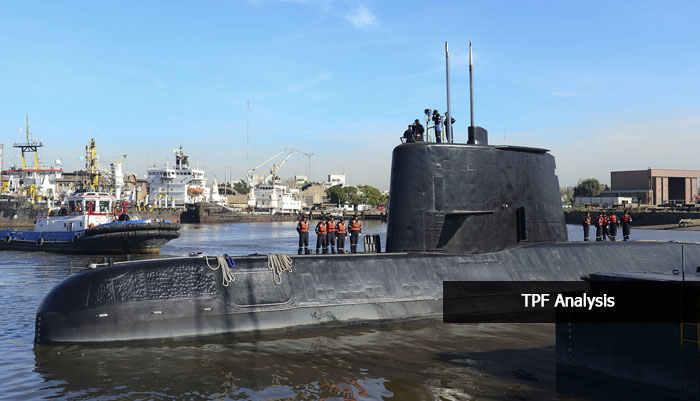
    The ARA San Juan disappeared a few hundred kilometers off Argentina’s coast on November 15, and despite an extensive air and sea search no sign of the sub has been found. Eight days after the sub vanished, the Vienna-based Comprehensive Nuclear Test-Ban Treaty Organisation said that it had detected hydro-acoustic anomaly” about 30 nautical miles (60km) north of the sub’s last-known position at 10:31 (13:31 GMT) few hours after the sub’s last contact. The analysis of the acoustic incident was reported as follows.

    The acoustic signal associated with the loss of the Argentina Submarine ARA SANJUAN confirms the following:

    That acoustic signal originated near 46-10S, 59-42W at 1358Z (GMT) on 15 November 2017. It was produced by the collapse (implosion) of the ARA SAN JUAN pressure-hull at a depth of 1275-feet. Sea pressure at the collapse depth was 570 PSI. The frequency of the collapse event signal (bubble-pulse) was about 4.4Hz. The energy released by the collapse was equal to the explosion of 12,500 pounds of TNT at the depth of 1275-feet. That energy was produced by the nearly instantaneous conversion of potential energy (sea-pressure) to kinetic energy, the motion of the intruding water-ram which entered the SAN JUAN pressure-hull at a speed of about 1800 mph.
    The entire pressure-hull was completely destroyed (fragmented/compacted) in about 40 milliseconds (0.040s or 1/25th of a second), the duration of the compression phase of the collapse event which is half the minimum time required for cognitive recognition of an event. Although the crew may have known collapse was imminent, they never knew it was occurring. They did not drown or experience pain. Death was instantaneous.
    The SAN JUAN wreckage sank vertically at an estimated speed between 10 and 13 knots. Bottom impact would not have produced an acoustic event detectable at long range

    The ARA San Juan was an IKL(German) designed type 1700 submarine built by TKMS in their Essen yard in 1985 at about the same time the Indian type 1500 was being built at HDW(Kiel). Both the submarines have great deal of similarities. Therefore, having commanded two type 1500s I will venture to hazard a guess on what could have afflicted the submarine.

    Facts as gleaned from various reports.

    15 Nov 0030Hrs. Submarine surfaced to report Water ingress through snort system causing a short circuit in the forward battery group. The forward battery group was isolated. The submarine charged her batteries on surface

    At 0600 The message is transmitted through normal communication channels.

    At 0730 the Captain informs base that he intend to continue his passage dived (Presumably because the sea was rough) At 1031, according to the CTBT report the submarine imploded at a depth of 1275 ft.

    From the above it would appear that the submarine was snorting before she surfaced at 0030hrs. If there was water ingress through the snort mast that caused a short in the forward battery group then the submarine was unable to maintain snorting depth, because the sea may have been too rough and the “head valve” (that prevents water from coming into the mast, when the mast dips even momentarily) was not functioning. As part of the SOP the snort induction drain, which drains into the bilges is kept open for the duration of the snort.  In any case during the snorting, the diesel engines are used to create the suction that draws all the foul air from all over the submarine. The fresh air coming from the snort mast merely spreads to fill the vacuum. Therefore flooding through the snort system would normally have no effect on the battery groups.

    The submarine remained on surface for seven hours post an incident of fire and smoke, which was attributed to short circuiting of the forward battery group. The crew, it seems, did not see any fire but managed to clear the smoke after isolating the forward battery group.

    A fire in a battery group is one of the most dreaded emergencies on board any submarine. Therefore the damage control actions and subsequent analysis would have been painstakingly thorough. If there was a fire in the battery pits the firefighting system would have been activated (manually or automatically). Once the system is activated the battery pits are to be kept in a sealed condition for at least one hour. Thereafter the pit is ventilated for at least an hour before inspecting it. In these types of submarines one has to lie down on a trolley and manoeuvre manually over the batteries. If the sea is rough it becomes extremely difficult and dangerous.  It may therefore be possible that they may have dispensed with the inspection whilst on surface.

    In the seven hours on surface the crew must have thoroughly examined the power distribution network and come to the conclusion that the problem was contained, and the submarine was reasonably safe to continue dived with a single battery group. They may even have considered that it would be safer and easier to inspect the battery pit while the submarine is underwater.

    The submarine dived at 0730 hrs. After 3 hours it appears to have imploded at a depth of 388 Meters. 388 Meters is of course below the normal operating depth but well above the crushing depth. If the submarine did indeed implode at that depth the inescapable inference is that there were severe structural problems that had weakened the pressure hull. The Argentinean Navy must have known if any structural limitations were reported or imposed.

    If the structural problems were not severe enough then some event that occurred in the 3 hours she was submerged must have been responsible. That event was so catastrophic that the submarine was unable to prevent an uncontrolled descent. Given the background situation the captain would have ordered the submarine to dive to 50 Meters. As soon as he settled down to that depth, he would have ordered the inspection of the battery pit. Unless there are clear tell tale signs, it is possible to miss some things which may have the potential to cause damage. Anyhow the inference and action post this inspection is not known. Did they reconnect the forward group? We will never know. The inspection would have taken about 45 minutes to an hour. The fact that they did not surface immediately after the inspection indicates that they did not notice anything alarming.

    In the three hours that the submarine was under water, if there had been a gradual flooding, the crew would have taken action to mitigate the effects, and would have ample reaction time to surface. Therefore loss of control must have been triggered by a sudden event. A pressure hull breech and flooding that must have cause to rapidly lose depth. The most immediate response is to use speed to create dynamic vectors to aid depth control. Since the submarine had only one battery group connected the speed of the submarine would be restricted to about 8 Knots ahead and about 4 Knots astern.  This would not be sufficient to delay the descent so that de-ballasting and pumping out capacities can effectively annul or reduce the rate of flooding. The rate of flooding keeps on increasing with depth.

    Now we have a situation where the submarine with the forward (or all) ballast tank probably blown going down. At depths greater than 180 meters the effect of blowing ballast with High Pressure air (250Bar)is painstakingly slow. The next stage is when the submarine crosses 15 meters more than the operational depth the Hydrazine emergency de-ballasting system will be triggered. This system is designed to clear the forward and aft main ballast tanks in 12 seconds at any depth. The problem would be if the Ballast tanks already contain air the Hydrazine will cause an explosion in the ballast tanks. If that happens there is nothing left to create positive buoyancy.

    The Next question is why did the submarine implode at 388 meters? As brought out earlier it clearly points to structural weakness in the pressure. If such a situation did not pre-exist then it may be possible that the battery pit event may have cause massive spillage of acid into the pit causing the pit to corrode in the almost 10 hours this corrosion may have weakened the hull sufficiently to cause a substantial breech in the pressure hull. The flooding of the pits could an explosion as the water level reaches to short the terminal connectors.  This is only a conjecture.

    San Juan went down without a trace. The crew did not even have the time or opportunity to release the systems and tell tale indicators that were meant tell the outside world that the submarine is in distress.

    It is said what goes up must come down. Submariners know that what goes down need not necessarily come up. San Juan RIP.

    In the language of the submarine community San Juan is on eternal patrol.

    Vice Admiral K N Sushil (retd) is a Indian Navy Veteran, and the former Flag Officer commanding-in-Chief of Southern Naval Command.[/vc_column_text][/vc_column][/vc_row]

  • China: A Colossus in Asia?

    China: A Colossus in Asia?

    Vidya Nadkarni December 10, 2017
    China today is moving out of the shadows.  After decades of following Deng Xiaoping’s advice to “hide our capacities” and “bide our time,” Xi Jinping in his long address to the CCP’s 19th Party Congress in October announced that his country “has stood up, grown rich, and is becoming strong” and would move “closer to center stage.”  Xi celebrated the “steady progress” in China’s construction on the islands and reefs in the South China Sea—a self-back-patting that has disregarded the concerns of Southeast Asian claimants to the Paracel and Spratly island chains and troubled the United States. China, in Xi’s words is a “great nation,” and he implied a prominent global role for the country when he noted that history looked “kindly on those with resolve, with drive and ambition, and with plenty of guts.”  He could not have offered a clearer message to the world that China was claiming its proper due on the global stage.

    China’s assertiveness is coming at a time when American allies and partners are increasingly questioning U.S. resolve and interest in global leadership.  President Trump’s “America First” strategy appears to many as a clarion call for a foreign policy strategy of retrenchment.  While the rhetoric of Trump administration officials continues to support US global engagement, the President’s position has been far less clear.  For instance, early in his administration Trump unceremoniously withdrew from the Trans-Pacific Partnership and the Paris Climate accord.  He decertified the Iran nuclear deal but stopped short of suspending the multilaterally negotiated agreement. Predicting the depth and steadfastness of US commitment to a global presence is therefore difficult.

    Specifically with respect to the Asian theater, while Secretary of State Rex Tillerson and Admiral Harry B. Harris of the US Navy’s Pacific Command (PACOM) have underscored US interest in a strong presence in the Indo-Pacific region, President Trump, in a speech at a November 2017 gathering of Asia-Pacific CEOs in Danang, Vietnam that White House officials had billed as highlighting the US commitment to a “free and open Indo-Pacific region,” inveighed instead against the unfair trade practices of other countries and insisted that he would put America first and not let the United States be taken advantage of anymore.  Trump’s fiery defense of nationalism and sovereignty was followed immediately by President Xi’s vigorous defense of open trade and globalization.  Upon his return to Washington, however, President Trump in debriefing remarks on his trip to Asia touted his accomplishment of three goals: uniting the world against the North Korean menace; strengthening America’s alliances and economic partnerships in a free and open Indo-Pacific; and insisting on fair and reciprocal trade deals. His interlocutors in Asia, however, heard him emphasize the third objective.

    Trump’s November trip to five Asian countries—Japan, South Korea, China, Vietnam, and the Philippines—thus did little to reassure US allies who are caught between the Scylla of economic reliance on China and the Charybdis of an uncertain protection from the US security umbrella. China dominates the economic scene in Asia.  To get a picture of what this means, consider the degree of dependence on China in Australasia.  China has superseded the United States as the largest trading partner of Australia, Japan, India, and the ASEAN countries.  International Monetary Fund (IMF) trade statistics for 2016 show that Australia and the countries of ASEAN collectively ran trade surpluses with China, making access to the large Chinese market enormously important, particularly to Australia and the smaller countries in Southeast Asia.  India and Japan ran trade deficits, although Japan’s deficit is small.  India is the exception here with a trade imbalance ratio of 1:5 in China’s favor fueling fear of Chinese goods flooding the Indian market.  Beijing is investing in much-needed infrastructure projects in countries from Asia and Europe to Africa.  Xi Jinping’s signature Belt/Road Initiative (BRI), which was unveiled to much pomp in May’s Belt and Road Forum in Beijing, has behind it the promise of $124 billion in funding.  China’s economic aid is attractive despite market rate loans because Beijing is unhampered by transparency issues as well as environmental and human rights concerns that are part and parcel of projects funded by the World Bank or the Asian Development Bank. In the long term, however, many of these investments saddle politically volatile countries with massive debt burdens making them vulnerable to strategic manipulation.

    Recognizing that BRI is as much a geostrategic as an economic initiative, Australia, Japan, and India have been cautious about participation.  Australia has nominally agreed to set up a working group to discuss possible cooperation, but Prime Minister Malcolm Turnbull has so far refused to link BRI with the Northern Australian Infrastructure scheme.  Perhaps reacting to Trump’s protectionist instincts, Japanese Prime Minister Shinzo Abe in a June speech offered a paean to free trade and spoke favorably about BRI in the context of the economic virtues of linking the Pacific to Eurasia.  But, in an indirect message to the Chinese leadership, Abe noted the international community’s expectations that it was critical for any infrastructure projects to be “open to use by all” and “be developed through procurement that is fair and transparent.”  India’s concerns arise from the BRI’s lack of transparency and from New Delhi’s objection to the China Pakistan Economic Corridor (CPEC) project, which links the Chinese province of Xinjiang with Pakistan through contested territory in Kashmir.  Recognizing the importance of having India on board, the Chinese leadership has sought to placate New Delhi.

    China’s rise is unlikely to be smooth unless Beijing can neutralize the worries of India, long-standing US allies in Australasia, and smaller countries in Southeast Asia.  Many of these countries are hedging their bets by engaging with China economically but also by investing in military hardware to shore up their security.  Australia, India, Japan, and South Korea regularly hold military exercises with their favored security partner—the United States.  India and Japan have cemented a strong partnership.  Australia has expressed interest in joining the annual Malabar naval exercises that bring together the United States, India, and Japan.  The first time that a quadrilateral naval exercise among these four democracies occurred was in 2007.  While New Delhi has not responded favorably to Australia’s recent request, either to avoid upsetting China or due to doubts over the extent of China’s influence in Australia, an overweening China is likely to propel security countermeasures in all these countries.

    Beijing’s challenge is how best to balance its economic lure with what are seen by many of its Asian neighbors as provocative military moves in the East and South China Seas and the Indian Ocean Region. If China looms large in Asia militarily, the formation of an anti-China alliance may quickly follow.  The problem for great powers is that economic influence is seldom sufficient to override measures that countries are likely to take in the face of security threats.

    Dr Vidya Nadkarni is a Professor and Head of Political Science at the University of San Diego, California. She is a Trustee of TPF.

  • GDP Growth by increasing the Cost of Government!

    GDP Growth by increasing the Cost of Government!

    Mohan Guruswamy  11 July 2018

    The truth is now staring us in the face. The latest breakdown of sectoral contribution to growth is out. Get ready for this. Public Administration, which somewhat perversely is classified as part of services, has now grown by 7% over the previous quarter making it the biggest driver of growth in India. Very simply this means as you keep paying government employees more the GDP will keep growing ever faster till one day you run out of breath and cash. In the Q3 of 2018, Public Administration added contributed 17.3% towards growth. In Q4 of 2018 it has grown to 22.4% making is a fraction smaller than the contribution of manufacturing at 22.7%.

    But hold your breath. Not satisfied with the 7th Pay Commission’s across the board hike of 23%, government employees are hopeful that the Prime Minister on August 15 will make an announcement fulfilling the promise made by the Finance Minister to give central government employees a pay hike beyond the recommendations of the pay commission. They are also hopeful that the retirement age will be raised to 62 years, allowing them to serve this poor and hapless country longer.

    There had been a spate of commentaries about how beneficial the 7th Pay Commission mandated pay hikes, and now approved by the Union Government with retrospective effect will benefit the economy. Despite this munificence, some government employees have called the 23.5% across the board hike peanuts! Others have made comments like “you pay peanuts you get monkeys!” as if you will now have earnest and honest public servants because the same fellows get more pay? The metaphor is unfortunate as well as illogical as the “monkeys” are already in place, only now the diet has become much more richer. Fat monkeys are what you will get.

    The high cost of wages has also slowed down intake into government and most departments are hugely understaffed. For instance the Revenue collecting departments are under strength by as much as 45.45%, Health by 27.59%, Railways by 15.15% and that the MHA is under strength by only 7.2% speaks volumes about how much has gone wrong in our system. We have a saying that the main business of government is to collect taxes so that they may be spent for the benefit of all the people. Thus we see the main business of government is now its least concern.

    The sheer absurdity of the logic that higher government salaries are beneficial to the economy speaks volumes of the kind of stupidity that permeates our policy thinking at high places. By this logic if the pay hike was higher GDP growth would be even higher. But think of this in terms of money denied for critically needed infrastructure and social development such as rods, power plants, schools and hospitals. As if these don’t generate GDP growth? Higher salaries mostly benefit those who get them. Period.

    The last pay hike hike benefitted 23 million government employees in the central and state governments and their PSU’s. No doubt this will make the CII and FICCI members will hear the music louder and dance all the way to the bank.  No wonder the top industry and banking analysts have given a big thumbs up to the Union Cabinet decision stating the move will “boost consumption in the economy” and lead to higher GDP growth. Its their fond hope that the pay hike combined with continued public push to the capital expenditure will help steer the economy to higher growth levels of 8% and above.

    “The pay hike of nearly Rs. 1 lakh crores for government employees will give a strong boost to the consumer demand and help uplift the growth of the economy,” said Didar Singh. the then secretary general, FICCI.  He will approve being a former IAS officer rehired by the industry trade union. But has FICCI noticed the IIM, Ahmedabad study that has found the “pay in the government sector is distinctly greater than that in the private sector?” The 23.5% average hike in central government employees’ salaries pushed up the government’s wage bill, including arrears, by an estimated R. 1.14 lakh crores.

    While you worry about the high cost of government, I will give you another reason to worry? If you wonder why our public administration is so ineffective, consider this. An analysis by a leading media organization suggests that roughly 14% officers get transferred within one year of service and another 54% within 18 months. In other words, 68%, or over two-thirds of India’s top bureaucrats, last on an average less than 18 months at a posting. Only 8% of the officers analyzed had average tenures of more than two years and there are only 14 officers who have managed to complete an average stay of more than three years between transfers. So what is the government you are getting for all the money we spend?

    This when 648 million Indians are living below the UNDP stipulated poverty line. The question we all must ask is growth at whose cost? Arun Jaitley crowing about it is akin to the head of a family who prefers to increase his spending on smoking and drinking by cutting down on the milk for the growing children.

    The three levels of government together employ about 185 lakh persons. The central government employs 34 lakhs, all the state governments together employ another 72.18 lakhs, quasi-government agencies account for a further 58.14 lakhs, and at the local government level, a tier with the most interface with the common citizens, we have only 20.53 lakhs employees. In other words it simply means we have five persons telling us to do this or do that, for every one supposedly serving us. And whom even these one out of six persons are answerable to is still a big question?

    Do we then have a big government bearing down on us? Not really.

    Consider this: India has 1,622.8 government servants for every 100,000 citizens. In stark contrast, the U.S. has 7,681. The central government, with 3.1 million employees, thus has 257 serving every 100,000 population, against the U.S. federal government’s 840. Now look at the next tier at the state level. Bihar has just 457.60 per 100,000, Madhya Pradesh 826.47, Uttar Pradesh has 801.67, Orissa 1,191.97 and Chhattisgarh 1,174.62.

    This is not to suggest there is a causal link between poverty and low levels of public servants: Gujarat has just 826.47 per 100,000 and Punjab 1,263.34. The troubled states or really speaking the troublesome states actually fare far better on this score. Thus, Mizoram has 3,950.27 public servants per the 100,000 populations, Nagaland 3,920.62 and Jammu and Kashmir 3,585.96. Bar Sikkim, with 6,394.89 public servants per 100,000, no state comes close to international levels.

    Very clearly for the most part, India’s relatively backward states have low numbers of public servants. This means staff is not available for the provision of education, health and social services needed to address poverty. It would seem that instead of getting better government and more public servants, we are getting more expensive government.

    We are now riding the tiger of a high wage enclave of government employees, who also drive consumption and hence GDP growth. It may now be difficult to get off this tiger

    Shri Mohan Guruswamy is a former Rajya Sabha MP and a political commentator. He is a Trustee of TPF.
    This article was earlier published in National Herald.

  • Foreign Reserves beyond a point are Pointless

    Foreign Reserves beyond a point are Pointless

    Mohan Guruswamy  October 07, 2017

    Clearly the Indian economy is not at a place where it wants to be. The Modi government is finds itself in a chakravyuh that it is unable to fight its way out. The government is just unable to make or attract the investment needed to make the economy buoyant again. India enjoyed a decade of unprecedented growth from 2004-14 that seemed to have lost steam in the last year. It was largely caused by a huge decline in the proportion of capital investment expenditure. Despite the growth of the private and foreign investment, the Indian economy is still largely dependent on government investment to lead the investment and growth cycle.

    The promise of Modi was that he was expected to set right this trend and once again begin a new cycle with government led investment. He promised us a hundred new cities, a nationwide grid of high-speed rail networks, a national river-linking program and so many other major transformational projects. A hundred new cities have now become a hundred smart cities, which means little more than free wi-fi networks. The nationwide grid of fast trains has now become an exorbitant and apparently uneconomical single bullet train joining Ahmedabad and Bombay. Similarly all other feasible and exciting promises made are now mere caricatures of what were promised. It is simply that the Modi government has been unable to free the economy from its high subsidy burden and PSU black hole, where only the oil and power companies earn a profit due to administered pricing.

    Consequently the picture continues to be bleak. Output of capital goods contracted 1% in July against growth of 8.8% a year ago. Production of consumer durable goods shrank 1.3% against a nominal increase of 0.2% a year earlier.

    Then came the twin black swan events. Demonetization came as a body blow to the cash-dependent unorganized sector that makes up 40% of India’s GDP. The unorganized sector also accounts for 90% of the total employment of around 450 million. The loss of jobs due to the two events – demonetization and hasty implementation of GST- is still not empirically confirmed. Estimates vary. The construction and vegetable and fruit retail sectors seem to have taken a massive hit and the ballpark estimation of loss of jobs is at about 25-30 million. These sectors mostly employ rural landless labour with few skills and hence forced into taking up daily wage and earnings sustenance. They don’t shout much and few notice their pain. Unlike the loss of even a few thousand jobs in the IT sector.

    The implementation of GST forced companies to reduce production in the run-up to its 1 July implementation as dealers reduced inventory. The inadequate training and preparation was abundantly evident. The announcement of rates was hasty and the many mismatches between input and output rates compounded the confusion. Of the Rs.95000 crores collected in the first month, as much as Rs.65000 is due to be refunded. The problem is that the government doesn’t seem to have the cash to do so.

    In a belated effort to reverse these trends the government is planning to loosen its fiscal deficit target of 3.2% of GDP to enable it to spend up to Rs. 50,000 crore. This is piddly sum for an economy whose GDP is over Rs.150 lakh crores now. Right now we have a net outflow of foreign investment. What we need is a huge dollop of cash infusion to boost investment. Loosening fiscal deficit norms will help. But meaningfully slashing subsidies when Modi’s term is on the slope to elections is not politically feasible.

    There is that old saying that when the going gets tough, the tough get going.  Modi should now show toughness and imagination that is tempered with realism.  He needs to revive the national mood and generate optimism over the economy. He now needs a plan to drive investment. He doesn’t have to go far to find the money to fund this plan.

    The government is sitting with reserves of nearly $400 billion with about $135 billion alone sitting in US banks earning next to nothing. These reserves are equal to about 80% of our foreign debt. Even after providing a quarter of the reserves to cover short-term hot money of NRI investors each taking a pound of flesh for mostly foreign bank financed investment in their mother country, we will still have $300 billion in hand.  How much money can be freed from the other $300 billion for investment is the big question now? Kaushik Basu has said that India’s foreign reserves need not be more than the current account deficit (CAD) or about $80 billion. Others are more cautious.

    This will certainly raise many eyebrows. One is surprised over the number of people who think holding huge reserves abroad in ridiculously low yield securities is a sign of our wealth. No. It is a sign of our stupidity.

    Just holding enough reserves to cover the CAD or exports for a few months would be about enough. This nonsense of holding reserves to at least cover six months imports is just plain arbitrary and concocted by the people who made the Washington Consensus. This “consensus” assures New York banks plenty of cheap money to finance American domestic consumption and extravagances. The Chinese have now realized the stupidity of financing the US cheaply with their reserves which not long ago almost touched $4trillion. They have run it down by about $1trillion since.

    Now how much do you think the US foreign reserves amount to? Hold your seat. It is now $65 billion or about a fifth of India’s. What a travesty.

    Clearly running them down by $100-120 billion or Rs.6.5L- 8L crores can be contemplated. The government could establish an India Infrastructure Investment Fund and start shifting meaningful fractions from the foreign reserves into this fund. A board of well-regarded experts, who can allocate investments on merits to prevent the usual leakages and political misuse, could administer the fund. The fund must also mandate the minimum level of local procurement and investment to boost Make in India.

    Slow growth and no new jobs are Narendra Modi’s twin Achilles heels. He is vulnerable on both counts. He must seize the moment with both hands and start running with both legs.

    Shri Mohan Guruswamy is a former Rajya Sabha MP and a political commentator. He is a Trustee of TPF.
    This article was earlier published in ‘The Economic Times’.

  • The Demand for Gondwana: India’s Adivasi Homeland

    The Demand for Gondwana: India’s Adivasi Homeland

    Mohan Guruswamy December 03, 2017

     The scion of the former Gond kings of Chandagarh or Chandrapur now in Maharashtra, Birshah Atram was recently visiting the Gond homelands in the former composite Adilabad district to meet his kinsmen in the various garhi’s in the region. Birshah Atram is descended from a line that was established in Chandrapur in the 13th century by Kandakya Balal Sah. The Gond kings ruled till 1751 when the British annexed it after the Raja of Nagpur died childless. Birshah who holds two PhD’s in English and Ancient Indian History has for long been seeking a solution to the vexed Adivasi problem, that has also morphed into the Telugu led Naxalite rebellion that enables the Central and State governments to turn it into a law and order issue, by highlighting the grievances of the Adivasi people. He believes that the Central Government needs to implement the constitutional provisions and promises made in the Constituent Assembly by recognizing Gondi language and self-rule for the Gond people by carving out a Gondwana state of the Gond homelands in Maharashtra, Madhya Pradesh, Andhra Pradesh and Chhattisgarh.

    There is a vast and mostly forested region spanning almost the entire midriff of India from Orissa to Gujarat, lying between the westbound Narmada and eastbound Godavari, bounded by many mountain ranges like the Vindhya, Satpura, Mahadeo, Meykul, and Abujhmar, that was once the main home of the Adivasi. The late Professor Nihar Ranjan Ray, one of our most distinguished historians, described the central IndianAdivasis as “the original autochthonous people of India” meaning that their presence in India pre-dated by far the Dravidians, the Aryans and whoever else settled in this country. The anthropologist Dr. Verrier Elwin states this more emphatically when he wrote: “These are the real swadeshi products of India, in whose presence all others are foreign. These are ancient people with moral rights and claims thousands of years old. They were here first and should come first in our regard.”

    Unfortunately like indigenous people all over the world, the India’sAdivasis too have been savaged and ravaged by later people claiming to be more “civilized”. They still account for almost 8% of India’s population and are easily it’s most deprived and oppressed section. Though this is the home of many tribal groups, the largest tribal group, the Gonds, dominated the region. The earliest Gond kingdom appears to date from the 10th century and the Gond Rajas were able to maintain a relatively independent existence until the 18th century, although they were compelled to offer nominal allegiance to the Mughal Empire.

     The great historian Sir Jadunath Sarkar records: “In the sixteenth and seventeenth century much of the modern Central Provinces (today’s MP) were under the sway of aboriginal Gond chiefs and was known under the name of Gondwana. A Mughal invasion and the sack of the capital had crippled the great Gond kingdom of Garh-Mandla in Akbar’s reign and later by Bundela encroachments from the north. But in the middle of the seventeenth century another Gond kingdom with its capital at Deogarh, rose to greatness, and extended its sway over the districts of Betul, Chindwara, and Nagpur, and portions of Seoni, Bhandara and Balaghat. In the southern part of Gondwana stood the town of Chanda, the seat of the third Gond dynasty and hereditary foe and rival of the Raja of Deogarh.” But the glory of Deogarh departed when the Maratha ruler of Nagpur annexed Deogarh after the death of Chand Sultan.

    Incidentally the Gond ruler of Deogarh, Bakht Buland, founded the city of Nagpur. Jadunath Sarkar writes about him thus: “He lived to extend the area, power and prosperity of his kingdom very largely and to give the greatest trouble to Aurangzeb in the last years of his reign.” In fact the one big reason Aurangzeb could not deploy all his power against Shivaji was because the Gond kings were constantly at war with the Mughals and kept interdicting the lines from the Deccan to Agra. But of course the history of modern India is not generous to them.

    During the British days this region constituted much of the Central Provinces of India later to become Madhya Pradesh. This is the main home of about sixteen million Gond people who are India’s largest single tribal grouping. The Gonds are now a culturally and linguistically heterogeneous people having attained much cultural uniformity with the dominant linguistic influences of their region. Thus, the Gonds of the eastern and northwestern Madhya Pradesh region that now includes the new state of Chhattisgarh speak Chhattisgarhi and western Hindi. But the Gonds of Bastar, which is at the southeastern end of this vast region and a part of Chhattisgarh, are different in this respect. Though there are many tribal groups like the Halbas, Bhatras, Parjas and Dorlas, the Maria and Bison Horned Gonds are the most numerous. The language spoken by them, like that of the Koyas of AP is an intermediate Dravidian language closer to Telugu and Kannada.

    The process of Hinduization combined with Hindi culture has reduced the egalitarian Koitur to the bottom of the social strata. Dr. Kalyan Kumar Chakravarthy, Director of the Indira Gandhi Rashtriya Manav Sangrahalaya, Bhopal has written eloquently and cogently on this in his concluding chapter “Extinction or Adaptation of the Gonds” in the book “Tribal Identity in India” also edited by him. The real enemy of theAdivasi is the creeping Hinduization with all its attendant values and exclusionary practices, seems to me a good start to the process of saving its tribal society from extinction. All over the rest of India’s central highlands our policies by forcing the Adivasis to merge their identities with that of the encroaching culture have crushed them into a becoming a feeble and self-pitying underclass.

    Clearly there are two distinct reasons for the present unrest in the Adivasihomelands of India. The first and probably the more important one is the struggle for identity against the creeping Hinduization or de-culturization of Adivasi society. Adivasi society was built on a foundation of equality. People were given respect and status according to their contribution to social needs but only while they were performing that particular function. Such a value-system was sustainable as long as the Adivasi community was non-acquisitive and all the products of society were shared. Adivasisociety has been under constant pressure as the money economy grew and made traditional forms of barter less difficult to sustain.

    The Fifth and Sixth Schedules under Article 244 of the Indian Constitution in 1950 provided for self-governance in specified tribal majority areas. In 1999 the Government of India even issued a draft National Policy on Tribals to address the developmental needs of tribal people. Special emphasis was laid on education, forestry, healthcare, languages, resettlement and land rights. The draft was meant to be circulated between MP’s, MLA’s and Civil Society groups. A Cabinet Committee on Tribal Affairs was meant to constantly review the policy. Little has happened since. The draft policy is still a draft, which means there is no policy.

    Even before Independence on December 16 1946, welcoming the Objectives Resolution in the Constituent Assembly, the legendary Adivasileader Jaipal Singh stated the tribal case and apprehensions explicitly. He said: “Sir, if there is any group of Indian people that has been shabbily treated it is my people. They have been disgracefully treated, neglected for the last 6,000 years. …The whole history of my people is one of continuous exploitation and dispossession by the non-aboriginals of India punctuated by rebellions and disorder, and yet I take Pandit Jawahar Lal Nehru at his word. I take you all at your word that now we are going to start a new chapter, a new chapter of independent India where there is equality of opportunity, where no one would be neglected.”

    The Adivasi’s paid dearly for taking Jawaharlal Nehru and the Constituent Assembly at their word.

    Shri Mohan Guruswamy is a former Rajya Sabha MP and a political commentator. He is a Trustee of TPF.
    This article was published earlier in ‘The Citizen’.

  • Investments In Genome Editing Technologies

    Investments In Genome Editing Technologies

    S Chandrasegaran   February 10, 2018

    Introduction

    India is soon poised to become the world’s most populous nation, overtaking China. India faces the critical challenge of producing sufficient food for a growing population living in a changing climate. Substantial research investments have been made to sequence, assemble, and characterize the genomes of major crop plants by other countries, which have led to important discoveries of crop genes and their functions. This knowledge will be valuable in increasing agricultural production by using synthetic biology and genome editing, technological advancements for precise plant engineering. Genome editing and synthetic biology are unprecedented technological breakthroughs, with great potential for crop improvement. Defining gene sequences from diverse species and cultivars has far outpaced our ability to alter those genes in crops. Recent advances in genome engineering (aka genome editing) make it possible to precisely alter DNA sequences in living cells, providing unprecedented control over a plant and animal genetic material.

    Potential future crops derived through gene editing and synthetic biology include those that better withstand pests, those that are salt and drought tolerant, that have enhanced nutritional value, and that are able to grow on marginal lands. In many instances, crops with such traits will be created by altering only a few nucleotides among the billions that comprise plant genomes. With the appropriate regulatory structures and oversight in place, crops created through genome editing might prove to be more acceptable to the public than plants that carry foreign DNA in their genomes. Public perception and the performance of the engineered crop varieties will determine the extent to which genome editing and synthetic biology contribute towards securing the world’s food supply.

    It is critical for India to make substantial investments in these technologies to make them readily available to indigenous Indian scientists so that they can be part of the upcoming revolution in agriculture. Government of India needs to embrace policies that lift all barriers towards the potential applications of these breakthrough technologies for crop and animal improvement. Such forward thinking policies will not only assure India’s food and economic security, but also to insure that it can compete with other Western nations and China in industrial innovation and production and remain self-reliant.

    What is genome editing?

    Programmable nucleases, such as zinc finger nucleases (ZFNs), transcription activator like effector nucleases (TALENs) and RNA-guided CRISPR-associated Cas9 nuclease, induce a DNA double-strand break (DSB) at a user-defined genomic site of living cells. Since DSBs are lethal to cells, they are immediately repaired through one of the two evolutionarily conserved pathways: (1) non-homologous end joining (NHEJ), which is error prone; or (2) homology-directed repair (HDR). Using these repair processes (Figure 1), scientists have been able to disrupt specific genes, or correct mutations in disease-causing genes, or insert exogenous DNA sequences at a pre-determined locus within the genome of living cells, which were not possible prior to the creation of programmable nucleases. As a result, the genome editing technologies have revolutionized life sciences research as well as biotechnology and biomedical fields. These disruptive technologies have the potential to have a great impact on agriculture through precise crop engineering, animal husbandry in the near future and on human therapeutics through engineered autologous cell-based therapies in the future.


    What is synthetic biology?

    Synthetic biology can be broadly defined as the design and construction of novel artificial biological pathways or organisms, or the redesign of existing natural biological systems. It is an emerging discipline where artificially synthesized genetic material from nucleotides, are introduced into an organism. Synthetic biology brings the application of engineering principles to biology; it aims to design and fabricate biological components and systems that do not already exist in the natural world. Synthetic genomics is a sub-discipline of synthetic biology; it refers to the synthetic assembly of complete chromosomal DNA that is designed from natural genomic sequences. The power of these techniques lies in the use of interchangeable and standardized bio-parts to construct complex genetic networks that include sensing, information processing and effector modules and in the creation of redesigned chromosomes and genomes. They have the potential to create complex new organisms with novel biological pathways and genes constructed to user specifications. Synthetic biology has great potential in biotechnology, agriculture and regenerative medicine.

    Work done by us in genome editing and synthetic genomics:

    I have been very fortunate to be involved in two exciting areas of life sciences research over 30-year career in the Department of Environmental Health Sciences at the Johns Hopkins School of Public Health. First is the creation of zinc finger nucleases (ZFNs), which was a culmination of seven year research effort on the study of FokI restriction endonuclease. Later, in collaboration with Dana Carroll lab, we showed stimulation of gene targeting by a ZFN-induced targeted double-strand break using frog oocytes as a model system, which ushered in the era of genome editing. We have continued this research to date, with the current focus being on the generation and genetic correction of disease-specific human induced pluripotent stem cells for human therapeutics.

    Second is the total synthesis of a functional designer eukaryotic (yeast) chromosome III (aka synIII). We have embarked on the creation of a synthetic yeast genome (Sc2.0), in collaboration with Jef Boeke at NYU and several other international collaborators. Our lab reported the creation of the first fully functional synthetic 272-kb synIII yeast chromosome with numerous changes compared to the native chromosome. Currently, our focus is on completing another designer yeast chromosome IX (aka synIX).

    Project 1: Genome Engineering using Programmable Nucleases

    Our lab originally showed that FokI, a type IIs endonuclease, is comprised of two separable protein domains: a sequence- specific DNA binding and non-specific nuclease domain. We then reported the creation of custom zinc finger nucleases (ZFNs). Later, in collaboration with Dana Carroll’s lab in Utah, we showed stimulation of gene targeting by a ZFN-induced targeted double-strand break, using frog oocytes as a model. Recently, we have shown generation and genetic correction of human pluripotent stem cells using designer ZFNs/TALENs. Our contribution includes the application of ZFN/TALEN/Cas9 technology for targeted modification of human induced pluripotent stem cells. Recently, we reported the generation of precisely targeted genetically well-defined disease-specific hiPSCs using TALENs. Our current focus is on genetic engineering of patient-specific hiPSCs to achieve functional disease correction of monogenic diseases either by targeted genome editing (i.e. gene correction) of the defective gene or by targeted insertion of wild-type therapeutic gene to the CCR5 locus of patient-specific hiPSCs (Ramalingam et al 2013; 2014). The precisely targeted genetically well-defined disease-specific hiPSCs will be very valuable for disease modeling and for drug discovery by screening small compound libraries against the disease-specific hiPSCs. The ZFN/TALEN/Cas9-mediated approach is widely applicable to a variety of other mammalian cells as well and to generate various animal disease models to study and treat human disease in the future. We are currently conducting research to develop a hiPSC-derived HSPCs-based therapy as a curative alternative to the expensive non-curative GCase enzyme replacement therapy (ERT) to treat type 1 GD.

    Key Publications:
    Chandrasegaran S and Carroll D. (2016). Origins of Programmable Nucleases for Genome Engineering. J. Mol. Biol. 428: 963-989. PMID: 26506267
    Ramalingam S, Annaluru N, Kandavelou K and Chandrasegaran S. (2014) TALEN-mediated generation and genetic correction of disease-specific human induced pluripotent stem cells. Current Gene Therapy 14: 461-472. PMID: 25245091
    Ramalingam S, London V, Kandavelou K, Cebotaru L, Guggino W, Civin CI and Chandrasegaran S. (2013). Generation and genetic engineering of human induced pluripotent stem cells using designed zinc finger nucleases. Stem Cells and Development 22: 595-610. PMID: 22931452
    Bibikova M, Carroll D, Segal DJ, Trautman JK, Smith J, Kim YG and Chandrasegaran S. (2001) Stimulation of homologous recombination through targeted cleavage by chimeric nucleases. Mol. Cell Biol. 21: 289-297. PMID: 11113203
    Smith J, Bibikova M, Whitby FG, Reddy AR, Chandrasegaran S and Carroll D. (2000) Requirements for double-strand cleavage by chimeric restriction enzymes with zinc finger DNA-recognition domains. Nucleic Acids Res 28: 3361-3369. PMID: 10954606
    Kim YG, Cha J and Chandrasegaran S (1996) Hybrid restriction enzymes: zinc finger fusions to Fok I cleavage domain. Proc Natl Acad Sci USA 93: 1156-1160. PMID: 8577732
    Kim Y-G and Chandrasegaran S (1994) Chimeric restriction endonuclease. Proc Natl Acad Sci USA 91: 883-887. PMID: 7905633
    Li L, Wu LP and Chandrasegaran S. (1992) Functional domains in Fok I restriction endonuclease. Proc Natl Acad Sci USA 89: 4275‑4279. PMID: 1584761
    Project 2: Creation of a synthetic yeast (Sc2.0)

    In a 2014 Science paper, our lab reported a synthetic designer version of yeast Saccharomyces cerevisiae chromosome III (synIII) with numerous changes, including a built-in recombination system (SCRaMbLE) for inducing genome alterations of the synIII strain [Annaluru et al 2014; 2015; Richardson et al 2016]. The design changes had no impact on cell fitness and phenotype, suggesting plasticity of the yeast genome to the changes introduced. The Sc2.0 consortium, which comprises of a group of international scientists, have recently reported synthesis of five more yeast chromosomes in April, 2017. The ultimate goal of Sc2.0 consortium is to create a designer synthetic yeast genome. Our lab is currently working to complete the synthetic yeast chromosome IX (synIX). The final streamlined minimal yeast genome would serve as a valuable ‘chassis’ organism for the industrial production of biochemical and biological products, including nutraceuticals.

    Key Publications:
    Richardson SM, Mitchell LA, Stracquadanio G, Yang K, Dymond JS, et al. (2017) Design of a synthetic yeast genome. Science 355: 1040-1044. PMID: 28280199
    Annaluru N, Ramalingam S and Chandrasegaran S. (2015) Rewriting the blueprint of life by synthetic genomics and genome engineering. Genome Biology 16: 125-136. PMID: 26076868
    Annaluru N, Müller H, Mitchell L, Ramalingam S, et al. (2014) Total synthesis of a functional designer eukaryotic chromosome. Science 344: 55-58. PMID: 24674868
    Dymond J, Richardson S, Coombes C, Muller H, Narayana A, Blake W, Wu J, Dai J, Lindstrom D, Boeke A, Gottschling D, Chandrasegaran S, Bader J and Boeke J. (2011) Synthetic chromosome arms function in yeast and generate phenotypic diversity by design. Nature 477: 471-476. PMID: 21918511
    Dr S Chandrasegaran is a Senior Professor at the Bloomberg School of Public Health in John Hopkins University, Baltimore. He is a Trustee of TPF.