Category: Opinion/Commentary

  • Hong Kong’s Pro-Democracy Movement and the Chinese Conundrum

    Hong Kong’s Pro-Democracy Movement and the Chinese Conundrum

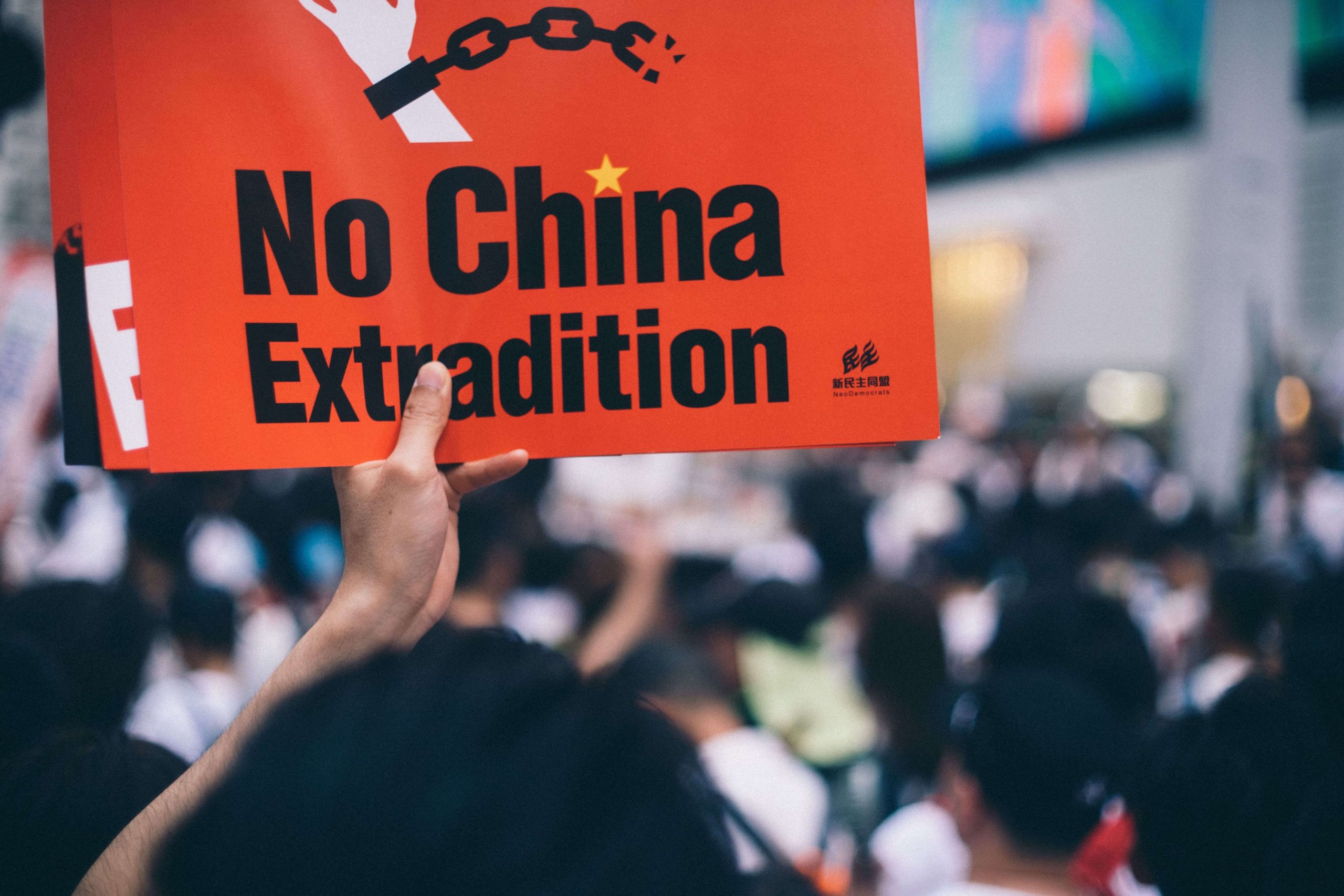
    The protest that erupted in Hong Kong since early June, triggered by stark objections to the extradition bill, has spiraled into a pro-democracy movement in the region. Beyond the political situation, the widespread, leaderless yet organised demonstrations reveal deep social and economic frustrations of the Hong Kongers. As the unrest enters its fourth month, the course of the events in the upcoming days also remains crucial for People’s Republic of China that is gearing up for its 70thanniversary on 1stOctober. With the rest of the world keenly observing Beijing’s measures, China seems to be in a conundrum, often changing its reactionary responses towards Hong Kong.

    Despite wide opposition, the pro-China Legislative Council (LegCo) in Hong Kong passed an extradition bill, usurping the democratic members presiding the bills committee.  While the current laws permit Hong Kong to extradite people upon legislature’s approval, the government introduced the bill claiming that it was unfeasible and could alert targets to flee before proper action. Eventually, following massive protests, the bill was suspended as people claimed that the proposed changes allowing Hong Kongers to be tried in mainland China will erode the region’s autonomy and freedom. Dissidents asserted that the Chinese legal system is opaque and often subordinate to the political structures, not always respectful of the rule of law. Although the citizens succeeded in removing the bill, the protests gained momentum towards larger demands of democracy.

    In 1997, when the British returned Hong Kong to China, Beijing allowed the region to retain a high degree of independence, with the mainland responsible only for defence and diplomacy. Although “one country, two systems”, set to expire in 2047, states political and economic autonomy, only 40 of the 70 LegCo members are directly elected by the people (others nominated by business houses mostly pro-China)  and the Chief Executive is appointed by a 1200 member committee, approved by China. Over the years, multiple protests for democracy have been observed in Hong Kong due the uncertainty post 2047 and increasing Chinese influence, like the Umbrella Movement in 2014. Currently, the discontent with the largely pro-China administration and its failure to represent the Hong Kongers, galvanised by the extradition bill, refuelled the pro-democracy movement in Hong Kong now primarily demanding free election of Hong Kong’s leader and LegCo, withdrawal of the suspended extradition bill and stepping down of Carrie Lam (present Chief Executive).

    The longest and largest unrest in Hong Kong since reunifying with the mainland seems to be spreading to include all sections of the population including lawmakers, civil servants, and even business houses. Mostly led by youth below 30 years, the movement has evolved to be a fight for the future of Hong Kong. Unlike older Hong Kongers, the younger generation did not grow up in a British colony and does not identify with the mainland, manifesting no pride in returning to the Chinese regime. According to Hong Kong University Public Opinion Program, the number of people expressing pride in being a Chinese citizen is at a record low, with an overwhelming majority identifying as Hong Kongers rather than Chinese. Despite being (seemingly) a leaderless rebellion, the sense of desperation and fear of Hong Kong losing its autonomy are powering the movement. While the driverless protests prevent protestors from becoming state targets, the nature of the crisis can easily turn violent and escalate since there is no set course of action, such as breaking into the legislature, shutting the city’s subways and airports, etc.  Many suggest that the protest is constantly gainingmomentumas the political frustration is also fuelled by socio-economic issues. Studies have revealed wide income disparities, especially in the last 45 years. Hong Kong has emerged as the most unequal nation amongst developed nations with the highest Gini coefficient- 0.539 (2017).  After Hong Kong was returned to China, it was hit by the Asian Financial Crisis in 1997 and SARS threat in 2003, worsening recession and unemployment, eventually leading to higher integration with the mainland in terms of trade and investment. As the GDP fell from an average rate of 5.1 percent in 1977-1997 to 2.6 percent in 1997-2017, the wealth gap widened as well. The younger generation equates the blame of poor economic opportunities, rising income inequality and reduced upward mobility to the pro China initiatives of the Hong Kong administration, which is not directly elected by the people. Aging population, low minimum wages, skyrocketing real estate, etc require immediate government policies to tackle the resulting social issues. In the absence of appropriate government action, the demand for a democratic government that acts in Hong Kong’s interests have strengthened.

    Interestingly, the official Chinese response to the Hong Kong situation has been constantly evolving over the course of the protests. Initially, the unrest was hardly covered in Chinese media and traces of Hong Kong incidents were censored from the mainland’s social media platforms. Further, the Chinese state downplayed the number of protestors, claiming that majority of the public in Hong Kong were in favour of the introduced extradition bill. As the movement gained momentum, Beijing portrayed the protestors as a radical, violent minority. Eventually, as pro-democracy demands were raised, Chinese official statements were released comparing the agitation to a “colour revolution”, a term used to highlight a direct threat to Chinese party and its authority. Since then, police force and violence have heightened, and paramilitary forces amassing in the nearest city of Shenzhen has been reported. Following this, Beijing signalled that it has a responsibility to intervene as the Hong Kong administration’s capacity to h andle the situations seems ineffective. In parallel, Hong Kong’s administration repeatedly stressed that the ongoing demonstrations are disrupting the economy, a strategy to undermine support to the protestors.  Additionally, Beijing have also claimed that foreign “black hands” are operating and funding the revolution, since pro democratic leaders were photographed with US leaders and protestors defaced the national symbol at central liaison office (Chinese representative authority in Hong Kong). Overall, this narrative seems to actively reduce positive sentiments towards Hong Kong protestors in the mainland. Moreover, Chinese origin accounts on social media have been found propagating a campaign against the dissenters. Twitter suspended over 2,00,000 accounts, and Facebook removed 7 pages, 3 groups and 5 accounts on account of depicting protestors as violent criminals or terrorist aimed at influencing public opinion around the globe. For directly connecting to younger masses, Beijing has also roped in popular figures like Jackie Chan and pop singers. However, despite these hard and soft measures, China has largely failed in curbing the ongoing crisis.

    The varying responses to contain the rebellion highlight Chinese helplessness. Beijing’s long term strategy of subtly eroding Hong Kong’s autonomy has effectively been defeated. Ruthlessly crushing pro-democracy demands, as it did in Tiananmen Square protests, will undermine China’s carefully constructed role as a responsible state actor. Moreover, unlike the Tiananmen protestors, Hong Kongers have no allegiance to the mainland and are conditioned to certain levels of freedom. Suppressing their rights and removing its current level of autonomy will work against China and could further create tensions in Taiwan, prompting the island to declare real independence. Furthermore, it will invite international repercussions as UK has already announced diplomatic retaliation if the Sino British declaration is not honoured by the Chinese and US has hinted that the special privileges it extends to Hong Kong will be reconsidered if its status is changed. Despite Hong Kong’s declining significance to Beijing, it still handles  75 percent of offshore RMB payments and 63 percent of FDI into China. However, failure to quell the protests will hamper China’s image of invincibility and imply that Beijing caved in against mob action. This will weaken national pride amongst mainlanders, from which the Communist Party derives its strength. China seems to be caught in a tough spot, between one that wants to achieve stability by instituting leadership change and upholding one country two systems approach with integrity, and one that wants to portray itself as an ambitious rising power with unquestionable strength.

    Renuka Paul is Research Analyst with The Peninsula Foundation.

    Image Credit: Photo by Joseph Chan on Unsplash.

  • Venezuela’s Collapsing Economy: Victim of Geopolitical Games

    Venezuela’s Collapsing Economy: Victim of Geopolitical Games

    Manjari Balu and M Matheswaran                                                                     June 23, 2019/Analysis

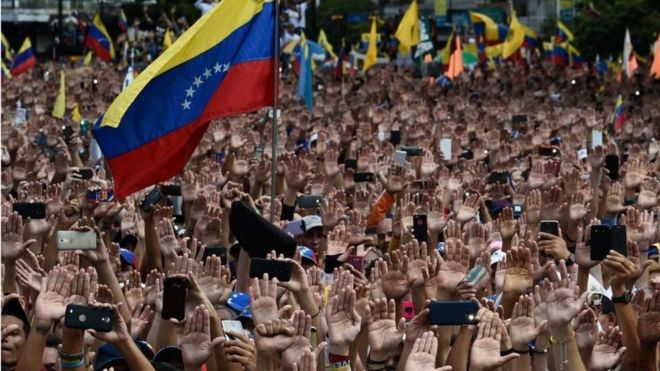
    The collapse of Latin America’s oil-rich country, Venezuela, epitomises the probable debacle of a socialist regime while the geopolitical strategies espouse the power struggle at the cost of the economy. After the death of Hugo Chavez in 2013, Nicolas Maduro, the hand-picked successor of Chavez took overthe office to preserve the “petrostate” status of Venezuela.  USA, backed by Brazil, Canada and many other countries, have recognized the opposition led by Juan Guaido as the interim president and have questioned the legitimacy of the Maduro government. Venezuela’seconomy depends to the extent of 95 per cent on oil exports and the dwindling oil prices in 2014 deepened the latent crisis, an inevitable consequence for a socialist government with illiberal economic agendas. Chavizmo rose to fame with a brand of Bolivarian revolution that promised to reduce poverty and deter the US in interfering in the country’s functioning.

    Economic Collapse: Paradox of Largest Oil Reserves and Economic Mismanagement

    Venezuela is a prime example of what economic mismanagement, impractical socialist measures, and corruption can do to a country that is wealthy with natural resources. At 300, 878 million barrels of proven oil reserves, Venezuela has the largest amount of proven oil reserves in the world. The country’s economy is largely tied to its oil wealth and was one of the richest in Latin America until a few years ago. Economic collapse has led to a huge humanitarian crisisunseen in the country’s modern history. IMF has predicted that Venezuela’s inflation rate will reach 10 million per cent in 2019, becoming one of the worst cases of hyperinflation in modern history.

    TheTransformation Index that evaluates the political and economic transformation of a country, has ranked Venezuela 110 out of 129 nations with a score of 3.27 out of 10. In addition to criticizing the poor state of the economy, it also reported that the state-sanctioned crime rates have spiralled. The current catastrophic economic crisis and political chaos is the result of a pervasive economic mismanagement and an economy rooted in a single commodity, petroleum.

    Inflation was 1,30,000 per cent in 2018 and the economy has contractedby 22.5 per cent, indicating the dire status of the economy. The economic future of the country continues to be bleak and the debate has converged to the geopolitical relevance of the issue. Data on money supply is a key element to understand the inflation rates in an economy and Venezuela has refused to publish money supply data in the past years. A recent data suggests that  12 trillion BsF (Bolivares Fuertes) were printed exposing the economic ruination.

    Initial denial by the Venezuelan government about the crisis never let aid flow in, recent acceptance of humanitarian aidhas tripled the aid budget. With poor socio-economic indicators as a major challenge, Venezuela is further saddled with huge external debt as a problem to be solved by the new dispensation, be it Maduro led government or any other successor. Currently, Venezuela’s external debt stands at  150 per cent of the total GDP.

    American Sanctions, Food Imports, and Falling Aid

    Few consider the problem to be homegrown in Venezuelaand many blame the US for artificially creating the hyperinflation.  The US justified the economic sanctions to bring down Maduro regime and accused him to have caused upheavals since 2014 and the controversies besieging election manipulation by Maduro’s party substantiate the allegation. Political funding for a coup against the regime change in Venezuela was extensively promoted by the Bush administration. The protraction of political interest led to imposition of anti-democratic sanctions,  and reiterates the hegemonic strategy that the US continues to pursue.

    The recent economic sanctions imposed on the state-owned oil company, Petroleos de Venezuela SA (PdVSA)  by the US has exacerbated Venezuela’s problems in its oil production- the output is expected to fall by 33 per cent in 2019. Investigation of Venezuela’s oil production before and after the economic sanctions suggests the production has been on downtrend even before the sanctions.  

    Private investments and productivity in agriculture dropped alarmingly as the socialist government led by Chavez nationalized agribusiness and industries and encouraged food imports.  Seventy per cent of the food requirements were met by imports. According to the United States Department of Agriculture, Venezuela is one of the potential markets for the US to export agricultural produce, and accounted for 21 per cent of total agricultural imports of Venezuela. However, as the economy collapsed, over-dependence on imports for food began to tell. In 2016, food imports fell by 72 per cent and reports state that people have lost an average of 8.6 kgs of weight due to food scarcity.


    China’s Extractive Relationship with Venezuela

    Majority of the loans are from China and Russia and their servicing or repayments are tied with its oil revenue. It is estimated that Venezuela owes around 13.5 billion USD to China as of 2019. Under Chavez leadership, China and Venezuela laid a financial foundation by crafting  “China-Venezuela Joint fund” known as the FCCV. The central bank of China alone loaned 42.5 billion US dollars from 2007-2012 to Venezuela. The compounded bilateral interest incentivized China to support even when the Venezuelan economy faltered in 2014. China further escalated its commercial interest byloaning a sum of $4 billion as cash for oil deal paying little attention to the projected contraction in the Venezuelan economy. In the year 2017, Maduro announced ambitious planning to spend 70 percent of the total budget on social schemes to address food scarcity. While the quixotic socialist paradigm was impressive during Chavez’s tenure the public soon realized the huge dent made in the economy by imprudent  social spending.

    The defensive lending strategy adopted by China post Maduro’s electoral victory shifted the focus of investments to oil and oil-related infrastructure. Although China’s recent intervention in Venezuela’s domestic affairs is evident from the endorsement for Maduro,  oil supply has always been its priority over political rivalry in Venezuela. As China became more sceptical about Venezuela’s ability to repay the loans because of low oil production and the adverse impact of US sanctions, its capital flow to Venezuela shrunk.  Maduro had viewed relations with China to be based on ideological common ground, but China was focused on leveraging its abundant resources, which, in turn, contributed to the crippling of the economy of Venezuela. This asymmetric relationship between Venezuela and China thwarted expectations of Maduro to acquire more credit from China.

    For China, endorsing Maduro is not an option as far as its economic interest is concerned; increasing rebellion of Venezuelan people portends a threat to the Maduro government that could bring in democracy in Venezuela, which could make it a potential defaulter of past debts. The Chinese government is considered culpable for Venezuela’s crisis by many American policymakers, and are accused to have followedthe “debt trap diplomacy”. The investment strategy in Venezuela resembles the Angola model- Chinese government extends credit tied with oil. However, in the case of Venezuela, China is bearing the cost of overestimating the performance of Venezuelan economy.

    Russia’s All-Weather Ties

    As we see a pragmatic China becaming more cautious about the failing economy of Venezuela, Russia’s interest and the relationship go beyond just the commercial narrative. Russia ties with Venezuela are deep-rooted since the time of Chavez, and it has continued to bolster the failing Venezuelan apparatus for clear geopolitical reasons. Vladimir Putin has invested strongly on  Russia’s international image and prestige, especially while rebuilding Russia post the Yeltsin years. The first credit line of arms relations between Russia and Venezuelawas signed in 2006. Although the export of military equipment to Venezuela have reduced drastically by nearly 96 per cent in the past few years, Venezuela has been the largest buyer of Russian arms in the Western Hemisphere with a total estimate of $4 billion during Chavez years. Russia has made consistent efforts to support Maduro by deploying military presence in Caracas even as Venezuela’s economy took a downturn.

    Chavez and Putin deepened their political ties on common grounds of  supporting a multipolar world order, and Chavez expected tangible benefits for Venezuela out of this agreement. Oil deals between both the countries advanced asRussia’s largest crude oil producer, Rosneft, partnered with PdVSA for several projects. Rosneft holds 40 percent shares and plays an instrumental role in pivoting Russia’s foreign policy through sound investments in the West. Venezuela agreed to commit 49.9 percent of its share in Citgo, American subsidiary company in exchange for credit from Rosneft. Russian emphasis on the “strategic” importance of the alliance with Venezuela reveals Russia’s intention to strengthen its geopolitical presence in USA’s backyard. Putin’s domestic political image has become sharper with his strategic take on Venezuela.

    However, sanctions on Venezuela has severely restricted the ability of Rosneft to borrow or invest, thus escalating tensions between Russia and the US.  Much like in Syria, Putin has sent a strong signal to the US by deploying a small contingent of Russian military personnel in Venezuela.

    Pawn on the Chessboard of Great Power Politics

    Venezuela has become the strategic battlegroundfor geopolitical struggle between the USA, Russia, and China. Collapse of the Venezuelan economy does not augur well for China in the long-term. However, China will look to strengthen its ties with Venezuela through economic support as its energy needs have a critical link with Venezuela. USA’s ‘Manroe Doctrine’ and its ‘Roosevelt Corollary’  has fiercely opposed any external powers’ strategic presence in the Western Hemisphere. This policy has led the USA to be an interventionist in Latin American countriessince the 1960s. Not much has changed since then. Chavez’s Venezuela has been a major opponent of US hegemony  Putin’s Russia is looking to strengthen its presence in South America, and support to Venezuela forms the lynchpin of this strategy. While international community looks for peaceful resolution of the rapidly deteriorating situation in Venezuela, geopolitical competition of external players has ensured  power tussle continues in Venezuela. Political Victory of either Maduro or opposition would represent the triumph of their Global supporters, Russia or the USA.  The socialist seed sown by Hugo Chavez is haunting Venezuela with a dented economy and a crisis in leadership. The “Petrostate” desperately needs economic reforms and international support to rebuild its economy. Structural reforms to remove the bottlenecks of growth in the post-crisis period and opportune investments in potential areas would rescue Venezuela in the following years.

    Manjari Balu is a Research Analyst at ‘The Peninsula Foundation’.

    Air Marshal M Matheswaran (retd) is the President of TPF.

    Image Credit: BBC News