Category: India

  • India’s war on the Mughal Empire

    India’s war on the Mughal Empire

    The profound legacies of the Mughal Empire, forged through a remarkable fusion of Persian and Sanskrit worlds, are now under siege from a mythical vision of India’s past.

    On every 15 August since 1947, India’s Independence Day, the country’s prime minister unintentionally acknowledges the Mughals’ political legacy by delivering a nationwide address from the parapets of the mightiest symbol of Mughal power – Delhi’s massive Red Fort, built in 1648.

    ‘As is true of autocracies everywhere’, wrote David Remnick last April, ‘this Administration demands a mystical view of an imagined past.’  Although Remnick was referring to Trump’s America, something of the same sort could be said of India today. Informed by Hindutva (Hindu-centric) ideals, the country’s governing BJP party imagines a Hindu ‘golden age’ abruptly cut short when Muslim outsiders invaded and occupied an imagined sacred realm, opening a long and dreary ‘dark age’ of anti-Hindu violence and tyranny. In 2014, India’s prime minister declared that India had experienced 1,200 years of ‘slavery’ (ghulami), referring to ten centuries of Muslim rule and two of the British Raj. But whereas the British, in this view, had the good sense to go home, Muslims never left the land they had presumably violated and plundered. To say the least, India’s history has become a political minefield.

    Today’s India would be unrecognisable without the imprint the Mughals had made, and continue to make, on its society and culture. It was they who, for the first time, unified most of South Asia politically.

    Between the early 16th and the mid-18th century, towards the end of those 12 centuries of alleged ‘slavery’, most of South Asia was dominated by the Mughal Empire, a dazzling polity that, governed by a dynasty of Muslims, was for a while the world’s richest and most powerful state. Although it declined precipitously during the century before its liquidation by Queen Victoria in 1858, today’s India would be unrecognisable without the imprint the Mughals had made, and continue to make, on its society and culture. It was they who, for the first time, unified most of South Asia politically. On every 15 August since 1947, India’s Independence Day, the country’s prime minister unintentionally acknowledges the Mughals’ political legacy by delivering a nationwide address from the parapets of the mightiest symbol of Mughal power – Delhi’s massive Red Fort, built in 1648. Much of modern India’s administrative and legal infrastructure was inherited from Mughal practices and procedures. The basis of India’s currency system today, the rupee, was standardised by the Mughals. Indian dress, architecture, languages, art, and speech are all permeated by Mughal practices and sensibilities. It’s hard to imagine Indian music without the sitar, the tabla, or the sarod. Almost any Indian restaurant, whether in India or beyond, will have its tandoori chicken, kebab, biryani, or shahi paneer. One can hardly utter a sentence in a north Indian language without using words borrowed from Persian, the Mughals’ official language. India’s most popular entertainment medium – Bollywood cinema – is saturated with dialogue and songs delivered in Urdu, a language that, rooted in the vernacular tongue of the Mughal court, diffused throughout India thanks to its association with imperial patronage and the prestige of the dynasty’s principal capital, Delhi.

    Yet, despite all this, and notwithstanding the prime minister’s national address at Delhi’s Red Fort, India’s government is engaged in a determined drive to erase the Mughals from public consciousness, to the extent possible. In recent years, it has severely curtailed or even abolished the teaching of Mughal history in all schools that follow the national curriculum. Coverage of the Mughals has been entirely eliminated in Class Seven (for students about 12 years old), a little of it appears in Class Eight, none at all in Classes Nine to 11, and a shortened version survives in Class 12. In 2017, a government tourism brochure omitted any mention of the Taj Mahal, the acme of Mughal architecture and one of the world’s most glorious treasures, completed in 1653. Lawyers in Agra, the monument’s site, have even petitioned the courts to have it declared a Hindu temple.

    Although such radical measures have failed to gain traction, the national government has made more subtle efforts to dissociate the monument from the Mughals and identify it with Hindu sensibilities. For example, authorities have eliminated the initial ‘a’ from the name of one of its surrounding gardens, so that what had been Aram Bagh, the ‘Garden of Tranquility’, is now Ram Bagh, the ‘Garden of Ram’, the popular Hindu deity. This is the same deity to which India’s current government recently dedicated an extravagant temple complex on the site of the Babri Masjid, the mosque in eastern India that the Mughal Empire’s founder had built in 1528, but which a mob of Hindu activists tore down brick by brick in 1992.

    All of this prompts two related questions: how did a rich, Persian-inflected Mughal culture sink such deep roots in today’s India in the first place? And why in recent years has the memory of that culture come under siege?

    Ever since the early 13th century, a series of dynastic houses, known collectively as the Delhi sultanate, had dominated the north Indian plain. The last of these houses, the ethnically Afghan Lodis, was dislodged by one of the most vivid figures in early modern history, Zahir al-Din Babur(1483-1530). In 1526, Babur led an army of mostly free-born Turkish retainers from his base in Kabul, down through the Khyber Pass and onto the wide Indo-Gangetic plain, thereby launching what would become the Mughal Empire.

    As was true for the Delhi sultans, the new polity’s success lay in controlling access to ancient trade routes connecting Delhi and Lahore with Kabul, Balkh, and Central Asian markets, such as Samarkand and Bukhara. For centuries, cotton and other Indian goods moved northwards along this route, while horses – more than a hundred thousand annually, by Babur’s day – moved southwards to markets across South Asia. War horses had long formed the basis of power for Indian states, together with native war elephants. But the larger and stronger horses preferred by Indian rulers had to be continually imported from abroad, especially from Central Asia’s vast, long-feathered grasslands where native herds roamed freely.

    Having established a fledgling kingdom centred on Delhi, Agra and Lahore, Babur bequeathed to his descendants a durable connection to the cosmopolitan world of Timurid Central Asia, a refined aesthetic sensibility, a love of the natural world reflected in his delightful memoir, the Baburnama, and a passion for gardens. Aiming to recreate in India the refreshing paradisiac spaces that he knew from his Central Asian homeland, Babur built gardens across his realm, a practice his descendants would continue, culminating in the Taj Mahal.

    Since he died only four years after reaching India, Babur’s new kingdom merely continued many institutions of the defeated Lodis, such as giving his most trusted retainers land assignments, from which they collected taxes and maintained specified numbers of cavalry for state use. It was Babur’s son Humayun (r. 1530-40, 1555-56) who took the first steps to deepen the roots of Mughal legitimacy in Indian soil, as when he married the daughter of an Indian Muslim landholder rather than a Central Asian Turk, a practice he encouraged his nobles to follow. More importantly, while seated in a raised pavilion (jharokha) that projected from his palace’s outer walls, he would greet the morning’s rising sun and show his face to the public, just as the sun showed itself to him. This followed an ancient practice of Indian rajas that subtly conflated the image of a seated monarch with the icon of a Brahmanical deity, before whom one pays respectful devotion through mutual eye contact (darshan).

    The Mughals became further Indianised during the long reign of Humayun’s son Akbar (r. 1556-1605). Whereas for three centuries the Delhi sultans had struggled to defeat the Rajput warrior clans that dominated north India’s politics, Akbar adopted the opposite policy of absorbing them into his empire as subordinate kings. Nearly all Rajput kings accepted this arrangement, for by doing so they could retain rulership over their ancestral lands while simultaneously receiving high-ranking positions in Akbar’s newly created ruling class – the imperial mansabdars. Their new status also allowed them to operate on an all-India political stage instead of remaining provincial notables. Moreover, they were granted religious freedom, including the right to build and patronise Hindu temples. Over time, there emerged a warrior ethos common to both Mughals and Rajputs that superseded religious identities, allowing the latter to understand Muslim warriors as fellow Rajputs, and even to equate Akbar himself with the deity Rama. For their part, Akbar and his successors, as the Rajputs’ sovereign overlords, acquired regular tribute payments from subordinate dynastic houses, the service of north India’s finest cavalry, access to the sea through Rajasthani trade routes leading to Gujarat’s lucrative markets, and the incorporation of Rajput princesses in the imperial harem.

    Moreover, since Rajput women could become legal wives of the emperor, from Akbar’s time onwards, an emperor’s child by a Rajput mother was eligible for the throne. As a result, Akbar’s son Jahangir (r. 1605-23) was half Rajput, as his mother was a Rajput princess. Jahangir, in turn, married seven daughters of Rajput rulers, one of whom was the mother of his imperial successor Shah Jahan, making the latter biologically three-quarters Rajput.

    This last point proved especially consequential. As more Rajput states submitted to Mughal overlordship, the imperial court swelled into a huge, multi-ethnic and women-centred world in which the Rajput element steadily gained influence over other ethnicities. Moreover, since Rajput women could become legal wives of the emperor, from Akbar’s time onwards, an emperor’s child by a Rajput mother was eligible for the throne. As a result, Akbar’s son Jahangir (r. 1605-23) was half Rajput, as his mother was a Rajput princess. Jahangir, in turn, married seven daughters of Rajput rulers, one of whom was the mother of his imperial successor Shah Jahan, making the latter biologically three-quarters Rajput.

    Inevitably, Rajput mothers in the imperial harem imparted their culture to their offspring, who were raised in the harem world. This allowed Indian sensibilities and values to seep deeply into Mughal imperial culture, reflected in imperial art, architecture, language, and cuisine. At the same time, the absorption of Rajput cavalry in the imperial system allowed native military practices to diffuse throughout the empire’s military culture.

    The Mughals engaged with Sanskrit literary traditions and welcomed Brahmin and Jain scholars to their courts. From the 1580s on, Akbar sponsored Persian translations of the great Sanskrit epics Mahabharata and Ramayana, effectively accommodating Indian thought to Mughal notions of statecraft.

    Like all authentically Indian emperors, moreover, the Mughals engaged with Sanskrit literary traditions and welcomed Brahmin and Jain scholars to their courts. From the 1580s on, Akbar sponsored Persian translations of the great Sanskrit epics Mahabharata and Ramayana, effectively accommodating Indian thought to Mughal notions of statecraft. Whereas the Sanskrit Mahabharata stressed cosmic and social order (dharma), its Persian translation stressed the proper virtues of the king. Similarly, the Sanskrit Ramayana was subtly refashioned into a meditation on Mughal sovereignty, while the epic’s hero, Rama, was associated with Akbar himself, as though the emperor were an avatar of Vishnu.

    Beginning with Akbar, the Mughals also fostered cultural fusions in the domains of medicine and astronomy.  By the mid-17th century, the Mughals’ Greco-Arab (Yunani) medical tradition had become thoroughly Indianised, as Indo-Persian scholars engaged with Indian (Ayurvedic) works on pharmacology and the use of native Indian plants.

    Similarly, from the late 16th century on, Persian-Sanskrit dictionaries allowed Sanskrit scholars to absorb Arabo-Persian ideas that had derived from ancient Greek understandings of the uniformity of nature and laws of motion. That knowledge, together with astronomical tables patronised by Shah Jahan that enabled the prediction of planetary movements, then spread among the Mughal-Rajput ruling class at large.

    The most telling indication of the public’s acceptance of the Mughals as authentically Indian is that in both the 18th and 19th centuries, when the empire faced existential threats from outside, native forces rallied around the Mughal emperor as the country’s sole legitimate sovereign. In 1739, the Persian warlord Nadir Shah invaded India, routed a much larger Mughal army, sacked Delhi, and marched back to Iran with enormous loot, including the symbolically charged Peacock Throne. At this moment, the Marathas, who for decades had fiercely resisted the imposition of Mughal hegemony over the Indian peninsula, realised that the Mughals represented the ultimate symbol of Indian sovereignty and must be preserved at all costs. The Marathas’ chief minister Baji Rao (1700-40) even proposed that all of north India’s political stakeholders form a confederation to support and defend the weakened Mughal dynasty from foreign invaders.

    Similarly, by the mid-19th century, the English East India Company had acquired de facto control over much of the subcontinent, while the reigning Mughal ruler, Bahadur II (r. 1837-57), had been reduced to a virtual prisoner in Delhi’s Red Fort, an emperor in name only. But in 1857, a rebellion broke out when a disaffected detachment of the Company’s own Indian troops massacred their English officers in the north Indian cantonment of Meerut. Seeking support for what they hoped would become an India-wide rebellion, the mutineers then galloped down to Delhi and enthusiastically rallied around a rather bewildered Bahadur II.  Notwithstanding his own and his empire’s decrepit condition, to the rebels, this feeble remnant of the house of Babur still represented India’s legitimate sovereign.

    Through the Mughals’ twilight years, spanning the two incidents mentioned above, one emperor was especially revered in public memory – ‘Alamgir (r. 1658-1707), widely known today by his princely name, Aurangzeb. Upon his death, large and reverential crowds watched his coffin move 75 miles across the Deccan plateau to Khuldabad, a saintly cemetery in present-day Maharashtra. There, the emperor’s body was placed, at his own request, in a humble gravesite open to the sky, quite unlike the imposing monuments built to glorify the memory of his dynastic predecessors (excepting Babur). That simple tomb soon became an object of intense popular devotion. For years, crowds thronged his gravesite, beseeching ‘Alamgir’s intercession with the unseen world, for his saintly charisma (baraka) was believed to cling to his gravesite, just as in life it had clung to his person. For, during his lifetime, the emperor was popularly known as ‘Alamgir zinda-pir, or ‘Alamgir, the living saint’, one whose invisible powers could work magic.

    ‘Alamgir’s status as a saintly monarch continued to grow after his death in 1707. Already in 1709, Bhimsen Saksena, a former imperial official, praised ‘Alamgir for his pious character and his ability to mobilise supernatural power in the empire’s cause. In 1730, another retired noble, Ishwar Das Nagar, credited ‘Alamgir for the exceptional peace, security, and justice that had characterised his long reign. Nagar’s account followed a spate of histories that praised the emperor as a dedicated, even heroic administrator, and his half-century reign as a ‘golden age’ of governmental efficiency.

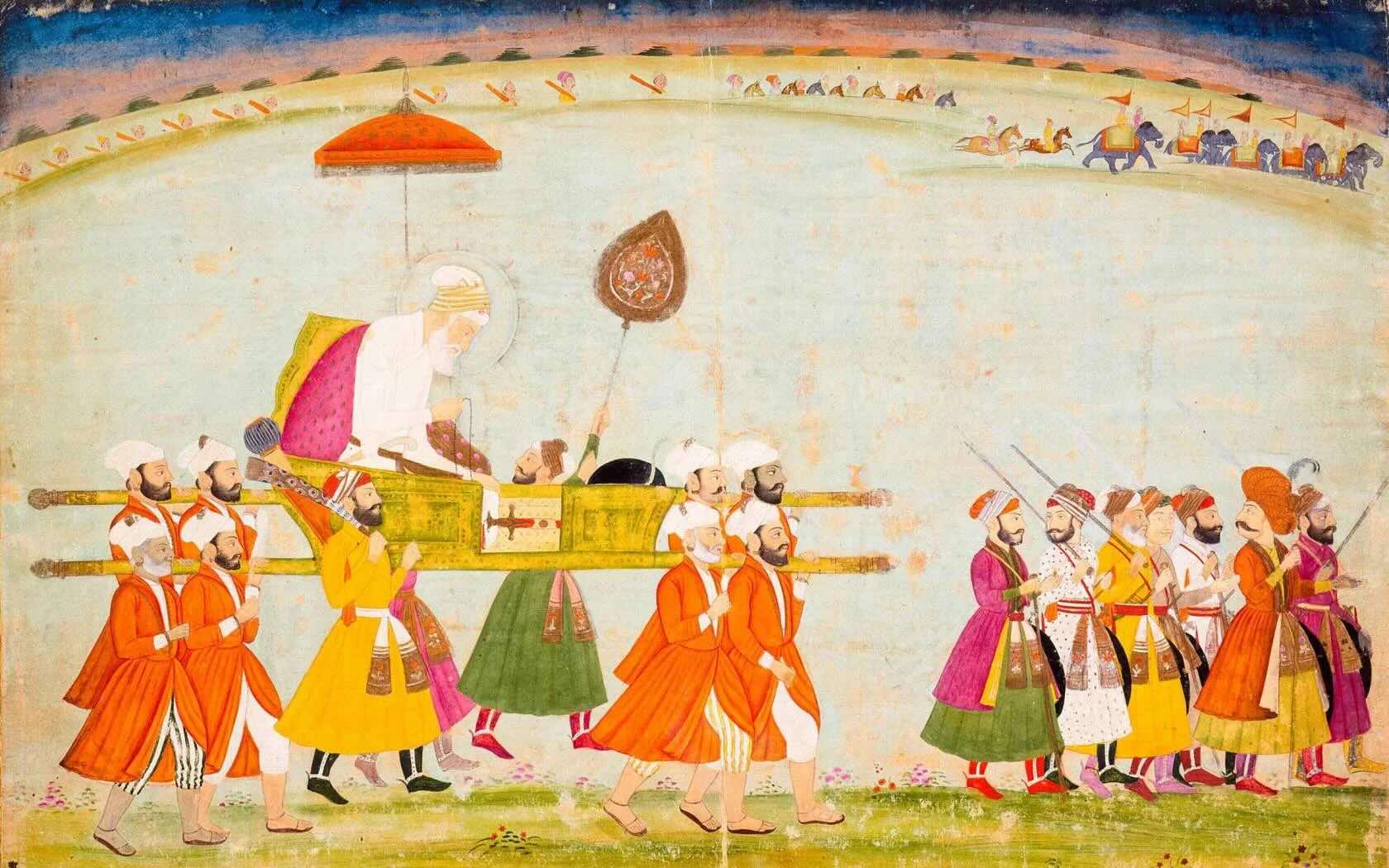
    Further contributing to ‘Alamgir’s cult was the appearance of hundreds of images depicting the emperor engaged in administration, military activity, or religious devotion. Reflecting the extent of the ‘Alamgir cult, many of these post-1707 paintings were produced not at the imperial court but in north India’s Hindu courts, including those of the Mughals’ former enemies. No other Mughal emperor was so venerated, and for so long a period, as ‘Alamgir.

    Over time, however, Indians gradually came to see the Mughal period – and especially ‘Alamgir’s reign – in an increasingly negative light. As the East India Company attained control over South Asia in the late 18th century, British administrators, being unable as foreigners to deploy a nativist rationale to justify their rule, cited the efficiency, justice, peace and stability that they had brought to their Indian colony. And because the Mughals had immediately preceded the advent of Company rule, those rulers were necessarily construed as having been inefficient and unjust despots in a war-torn and unstable land. The colonial understanding of Muslims and Hindus as homogeneous and mutually antagonistic communities also facilitated aligning colonial policies with the old Roman strategy of divide et impera. More perniciously, the colonial view of the Mughals as alien ‘Mahomedans’ who had oppressed a mainly non-Muslim population reinforced the notion of a native Hindu ‘self’ and a non-native Muslim ‘other’ – constructions that would bear bitter fruit.

    Although originating from within the colonial regime, such ideas gradually percolated into the public domain as the 19th century progressed and Indians became increasingly absorbed in the Raj’s educational and administrative institutions. It was not until the 1880s, with the first stirrings of Indian nationalist sentiment, however, that such colonial tropes became widely politicised. As the possibility of an independent nation took root, Indian nationalists began to look to their own past for models that might inspire and mobilise mass support for their cause. The writing of history soon became a political endeavour, ultimately degenerating into a black-and-white morality play that clearly distinguished heroes from villains. In short, India’s precolonial past became a screen onto which many – though not all – Hindu nationalists projected the tropes of the Hindu self and the Muslim other.

    Between 1912 and 1924, one of India’s most esteemed historians, Jadunath Sarkar, published his five-volume History of Aurangzib, the princely name of ‘Alamgir, who would soon become the most controversial – and ultimately the most hated – ruler of the Mughal dynasty. Sarkar’s study was so detailed, so thoroughly researched, and so authoritative that, in the century following its publication, no other historian even attempted a thorough survey of ‘Alamgir’s reign.

    Importantly, Sarkar wrote against the backdrop of the Great War and a nationalist movement that was just then reaching a fever pitch. In 1905, Lord Curzon, the Viceroy for India, had partitioned Sarkar’s native province of Bengal in half, a cynical divide-and-rule measure that ‘awarded’ Bengali Muslims with their own Muslim-majority province of eastern Bengal. The very next year, there appeared the All-India Muslim League, a political party committed to protecting the interests of India’s Muslims. Meanwhile, the partition of Bengal had provoked a furious protest by Bengali Hindus, leading to India-wide boycotts against British-made goods. Ultimately, the government gave in to Hindu demands and, in 1911, annulled the partition, which only intensified fear and anxiety within India’s Muslim minority community.

    It was in this highly charged political atmosphere that Sarkar worked on his biography of ‘Alamgir. With each successive volume of his study, the emperor was portrayed in darker colours, as were Muslims generally. In the end, Sarkar blamed ‘Alamgir for destroying Hindu schools and temples, thereby depriving Hindus of the ‘light of knowledge’ and the ‘consolations of religion’, and for exposing Hindus to ‘constant public humiliation and political disabilities’. Writing amid the gathering agitation for an independent Indian nation, Sarkar maintained that ‘no fusion between the two classes [Hindus and Muslims] was possible’, adding that while a Muslim might feel that he was in India, he could not feel of India, and that ‘Alamgir ‘deliberately undid the beginnings of a national and rational policy which Akbar [had] set on foot.’

    Perhaps more than any other factor, Sarkar’s negative assessment of ‘Alamgir has shaped how millions have thought about that emperor’s place in Indian history. Since the publication of History of Aurangzib, professional historians have generally shied away from writing about the emperor, as though he were politically radioactive. This, in turn, opened up space in India’s popular culture for demagogues to demonise the Mughal emperor. For millions today, ‘Alamgir is the principal villain in a rogues’ gallery of premodern Indo-Muslim rulers, a bigoted fanatic who allegedly ruined the communal harmony established by Akbar and set India on a headlong course that, many believe, in 1947, culminated in the creation of a separate Muslim state, Pakistan. In today’s vast, anything-goes blogosphere, in social media posts, and in movie theatres, he has been reduced to a cardboard cutout, a grotesque caricature serving as a historical punching bag. A recent example is the film Chhaava, a Bollywood blockbuster that was released on February 14, 2025 and has since rocketed to superstar status. Among films in only their sixth week since release, already by late March, it had grossed the second-largest earnings in Indian cinema history.

    Loosely based on a Marathi novel of the same title, Chhaava purports to tell the story of a pivotal moment in ‘Alamgir’s 25-year campaign to conquer the undefeated states of the Deccan plateau. These included two venerable sultanates, Bijapur and Golkonda, and the newly formed Maratha kingdom, launched in 1674 by an intrepid chieftain and the Mughals’ arch-enemy, Shivaji (r. 1674-80). The film concerns the reign of Shivaji’s elder son and ruling successor, Sambhaji (r. 1680-89), his struggles with Mughal armies, and finally his capture, torture, and execution at ‘Alamgir’s order in 1689.

    The film is not subtle. With its non-stop violence, gratuitous blood and gore, overwrought plot, and black-and-white worldview, the movie turns the contest between Sambhaji and ‘Alamgir into a cartoonish spectacle, like a Marvel Comics struggle between Spiderman and Doctor Doom. Whereas Sambhaji single-handedly vanquishes an entire Mughal army, ‘Alamgir is pure, menacing evil. Mughal armies display over-the-top brutality toward civilians: innocent Indians are hanged from trees, women are sexually assaulted, a shepherdess is burned to death, and so forth.

    In reality, ‘Alamgir is not known to have plundered Indian villages or attacked civilians (unlike the Marathas themselves, whose raids in Bengal alone caused the deaths of some 400,000 civilians in the 1740s). On the other hand, contemporary sources record Sambhaji’s administrative mismanagement, his abandonment by leading Maratha officers inherited from his father reign, his weakness for alcohol and merry-making, and how, instead of resisting Mughal forces sent to capture him, he hid in a hole in his minister’s house, from which he was dragged by his long hair before being taken to ‘Alamgir.

    Historical accuracy is not Chhaava’s strength, nor its purpose. More important are its consequences. Within weeks of its release, the film whipped up public fury against ‘Alamgir and the Mughals. In one venue where the movie was showing, a viewer wearing medieval warrior attire rode into the theatre on horseback; in another, a viewer became so frenzied during the film’s protracted scene of Sambhaji’s torture that he leapt to the stage and began tearing the screen apart.

    Politicians swiftly joined the fray. In early March, a member of India’s ruling BJP party demanded that ‘Alamgir’s grave be removed from Maharashtra, the heartland of the Maratha kingdom. On 16 March, another party member went further, demanding that the emperor’s tomb be bulldozed. The next day, a riot broke out in Nagpur, headquarters for the far-right Rashtriya Swayamsevak Sangh, India’s paramilitary Hindu supremacist organisation. It began when around 100 activists who supported bulldozing ‘Alamgir’s grave burned an effigy of the emperor. In response, a group of the city’s Muslims staged a counter-protest, culminating in violence, personal injuries, the destruction of property, and many arrests. The fevered demand for bulldozing ‘Alamgir’s final resting place, however, is deeply ironic. In 1707, Sambhaji’s son and eventual successor to the Maratha throne, Shahu, travelled 75 miles on foot to pay his pious respects to ‘Alamgir’s tomb.

    In the end, the furore over ‘Alamgir’s gravesite illustrates the temptation to adjust the historical past to conform to present-day political priorities. Indicating the Indian government’s support for Chhaava’s version of history, in late March, India’s governing party scheduled a special screening of the film in New Delhi’s Parliament building for the prime minister, Cabinet ministers, and members of parliament.

    Nor is it only the historical past that is being adjusted to accord with present-day imagination. So is territory. In 2015, the Indian government officially renamed New Delhi’s Aurangzeb Road – so-named when the British had established the city – after a former Indian president. Eight years later, the city of Aurangabad, which Prince Aurangzeb named for himself while governor of the Deccan in 1653, was renamed Sambhaji Nagar, honouring the man the emperor had executed in 1689.

    Such measures align with the government’s broader agenda to scrub from Indian maps place names associated with the Mughals or Islam and replace them with names bearing Hindu associations, or simply to Sanskritise place-names containing Arabic or Persian lexical elements. Examples include: Mustafabad to Saraswati Nagar (2016), Allahabad to Prayagraj (2018), Hoshangabad to Narmadapuram (2021), Ahmednagar to Ahilyanagar (2023), and Karimgunj to Sribhumi (2024). Many more such changes have been proposed – at least 14 in the state of Uttar Pradesh alone – but not yet officially authorised.

    It is said that the past is a foreign country. Truly, one can never fully enter the mindset of earlier generations. But if history is not carefully reconstructed using contemporary evidence and logical reasoning, and if it is not responsibly presented to the public, we risk forever living with a ‘mystical view of an imagined past’ with all its attendant dangers, as Remnick warns.


    This essay was published earlier on www.engelsbergideas.com

    Feature Image Credit: www.engelsbergideas.com


  • India–U.S. Ties Beyond the Trump Show

    India–U.S. Ties Beyond the Trump Show

    With its deep institutional roots and strategic clarity, the India–U.S. relationship is well-positioned to advance further, driven not by transient rhetoric but by enduring common purpose

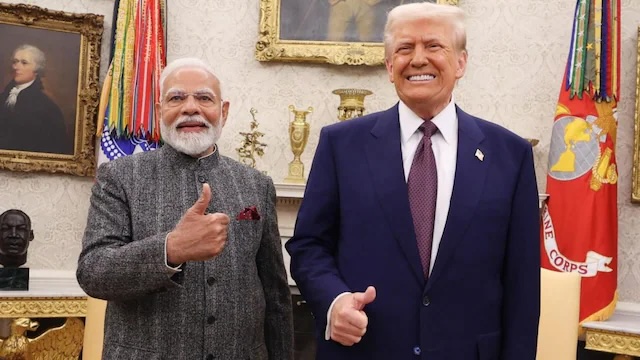
    U.S. President Donald Trump’s repeated assertions about mediating a ceasefire between India and Pakistan have reignited long-standing apprehensions surrounding external involvement in the Kashmir issue. His remarks, including those referenced during a U.S. court hearing in May 2025—where U.S. Commerce Secretary Howard Lutnick testified that the Trump administration’s trade policies helped avert a potential nuclear confrontation in South Asia—were met with widespread criticism from strategic experts and policymakers alike. New Delhi has remained steadfast in its position: the issue of Jammu and Kashmir is strictly bilateral and not subject to international mediation.

    Diaspora Influence and Institutional Depth

    Despite Trump’s controversial rhetoric, the India–U.S. relationship has matured well beyond the influence of individual leaders. It now stands as a robust, multi-dimensional partnership, underpinned by shared strategic interests, deepening economic ties, and strong people-to-people linkages. This is evident through the formalization of the relationship via key agreements and strategic initiatives. Today, it is regarded as a promising and one of the most consequential partnerships of the 21st century, given its potential to reshape the dynamics of the Indo-Pacific region and beyond. Moreover, this strength is particularly reflected in the vibrant Indian diaspora in the United States—numbering over four million—one of the most educated and affluent immigrant communities in the country, playing an increasingly influential role in shaping policy.


    The diaspora’s clout in U.S. policymaking has grown remarkably. A striking example of this influence was witnessed during the COVID-19 crisis in 2021. At a critical juncture, when the Biden administration had imposed export restrictions on essential medical supplies, Indian-Americans mounted an organized lobbying campaign. Their efforts succeeded in convincing the administration to reverse the ban and dispatch critical medical equipment and raw materials for vaccines to India. This intervention demonstrated the community’s capacity to influence key policy decisions at the highest levels. Their role is not limited to crisis management. The Indian-American community has been instrumental in advancing landmark initiatives such as the U.S.–India civil nuclear agreement, and today, many Indian-Americans serve in influential roles within the U.S. government. This diaspora acts as a cultural and strategic bridge, enhancing bilateral understanding and reinforcing long-term cooperation.

    The evolving India–U.S. partnership is bolstered by a diverse and committed set of stakeholders,including government institutions, private enterprises, think tanks, academic bodies, and civil society in both nations. Crucially, U.S. institutions such as the State Department and Congress continue to regard India as a vital strategic partner, particularly in the context of the Indo-Pacific strategy and broader efforts to counterbalance China’s growing regional influence. These institutions take a long-term, bipartisan approach to India–U.S. relations, one that is grounded in continuity and strategic alignment rather than reactive or transactional impulses, such as those reflected in Trump’s pronouncements.

    Strategic Continuity

    Trump’s leadership style has often been described as transactional, business-oriented, and self-promoting. He frequently projects himself as a master negotiator and dealmaker, but many of his actions suggest otherwise. His tendency to prematurely claim success and take credit has often weakened his own negotiating position, whether in the context of Ukraine, North Korea, Iran, or South Asia. For instance, Trump repeatedly announced breakthroughs in negotiations between Russia and Ukraine that never materialized, thereby weakening his credibility and diminishing his effectiveness as a serious diplomatic actor.

    While Trump’s erratic rhetoric may generate headlines, it is critical not to exaggerate its impact on this deeply rooted relationship. His habitual tendency to seek the spotlight and amplify his personal role in global diplomacy often lacked substantive backing or long-term vision.

    In the case of India and Pakistan, Trump’s attempt to “hyphenate” the relationship—suggesting he could broker a deal between both nations—ignored the decades-long efforts by previous U.S. administrations to de-hyphenate the ties and treat each relationship on its own strategic merits. His statement that “they’ve been fighting for 1,500 years” reveals a superficial understanding of South Asian geopolitics and history. Such remarks reflect a lack of diplomatic nuance and strategic depth.

    In contrast, previous U.S. presidents devoted sustained efforts toward cultivating strategic trust with India—especially in light of their fraught Cold War history and the lingering presence of anti-American sentiment within Indian political and intellectual circles. During this era, American foreign policy toward India embodied a form of strategic altruism, emphasizing long-term engagement grounded in mutual respect rather than immediate concessions or gains. Successive administrations—Republican and Democratic alike, including Trump’s own during his first term—recognized the importance of winning India’s trust, acknowledging its historic skepticism of U.S. intentions and its adherence to a non-aligned foreign policy stance.

    These efforts bore fruit in the form of landmark agreements and growing strategic alignment across a broad spectrum of areas, including defense cooperation, civil nuclear energy, high technology, artificial intelligence, cybersecurity, and counterterrorism. Recent developments—including the Initiative on Critical and Emerging Technologies (iCET), the U.S.–India Major Defense Partnership Framework (2025–2035), the COMPACT Initiative, and collaborations through platforms like INDUS-X and the Artemis Accords—have deepened cooperation. These engagements signify that the India–U.S. partnership is now an essential component of the 21st-century global security and economic architecture.

    the India–U.S. partnership rests on far more stable and enduring foundations: bipartisan consensus within the U.S. strategic establishment, shared democratic values, converging geopolitical interests, and institutional mechanisms that safeguard continuity and progress.

    While Trump’s erratic rhetoric may generate headlines, it is critical not to exaggerate its impact on this deeply rooted relationship. His habitual tendency to seek the spotlight and amplify his personal role in global diplomacy often lacked substantive backing or long-term vision.  Even his relationship with Elon Musk—once a vocal ally who contributed nearly $300 million to pro-Trump political efforts during the 2024 campaign—has deteriorated into public conflict, highlighting the unpredictability of Trump’s leadership style. In stark contrast, the India–U.S. partnership rests on far more stable and enduring foundations: bipartisan consensus within the U.S. strategic establishment, shared democratic values, converging geopolitical interests, and institutional mechanisms that safeguard continuity and progress.

    West Asia dynamics: No Indian shift

    Moreover, recent U.S. gestures toward Pakistan—including inviting Pakistan’s Army Chief to U.S. Army Day celebrations, public praise for its leadership, the release of funds for upgrading the F-16 fleet—and support in securing IMF bailout packages—should be analysed through the lens of broader strategic imperatives, particularly concerning Iran. Amid escalating tensions with Tehran and recent Israeli airstrikes on Iranian targets by its close ally Israel, Washington may be positioning itself for potential regional contingencies and wider escalation. In this context, logistical access to Pakistani military bases—notably Noor Khan Airbase, and other facilities which, according to senior analyst Imtiaz Gul, is already under partial U.S. operational control—could become critical. Pakistan has a history of facilitating U.S. military operations, such as during the War on Terror. Given its proximity to Iran, Pakistan is strategically well-placed to support U.S. initiatives in the region.

    The U.S. may also seek to ensure that Pakistan remains aligned with Western objectives should Israel act unilaterally against Iran. Therefore, recent goodwill gestures by the U.S. toward Pakistan should be interpreted not as a shift away from India, as some within the Indian strategic establishment might fear, but as part of a calculated strategy to secure regional flexibility amid evolving geopolitical uncertainties in West Asia.

    Ultimately, the strength and resilience of the India–U.S. relationship derive from its firm institutional foundation and shared strategic vision. It is largely insulated from the whims of transient political figures. Despite periodic turbulence, the partnership has demonstrated remarkable continuity and adaptability. Key U.S. national security documents—including the Indo‑Pacific Strategy and the National Security Strategy—consistently describe India as a “major defense partner” and an indispensable actor in the effort to balance China’s regional ambitions. These structural commitments ensure that the bilateral relationship remains on a trajectory of deepening cooperation. As articulated in the 2022 U.S. Indo-Pacific Strategy, India is seen as a “like-minded partner and leader in South Asia and the Indian Ocean, active in and connected to Southeast Asia,” and a “driving force of the Quad and a net security provider in the region.”

    Conclusion

    Today, the India–U.S. relationship stands as a beacon of mutual trust, strategic alignment, and forward-looking engagement. Decades of deliberate diplomacy, institutional investment, and cultural linkage have given rise to one of the most promising partnerships of the 21st century. While figures like President Trump may generate momentary uncertainty, they lack the capacity to derail the deep-rooted and multidimensional nature of this partnership. The future of India–U.S. relations remains bright, anchored in shared democratic ideals, strategic complementarity, and a common vision for a free, open, and inclusive Indo-Pacific.

    Feature Image credit: news18.com

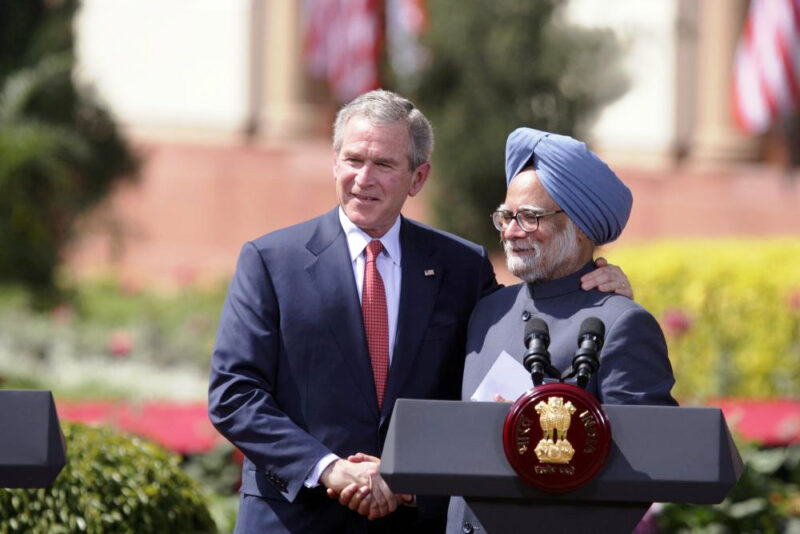
    Image of  President Bush and PM Manmohan Singh: wikipedia India-United States Civil Nuclear Deal.

  • Indus Water Treaty: A Model for International Water Governance

    Indus Water Treaty: A Model for International Water Governance

    Introduction

    Water is the basis of biological sustenance, without which no civilisation can sustain. Access to clean and safely managed water is therefore a human right, not a privilege.

    According to the United Nations Development Programme (UNDP) —

    One in four people still lives without safely managed water services or clean drinking water. Approximately 4 billion people live with severe water scarcity for at least one month of the year, and about half a billion people face water scarcity year-round.

    The water crisis is not an isolated issue but a global challenge. It calls for effective governance not just within the local governments and authorities of a country but transnationally as well.

    International Water Governance refers to this process of decision-making, formulation, and implementation of policies pertaining to the use, management, and distribution of transboundary water resources.

    Peace and cooperation on matters of conflict over water are hard to reach and much harder to maintain. Treaties, multilateral agreements and conventions often govern transboundary waters; one such example of a successful bilateral water-distribution treaty is the Indus Water Treaty (the IWT) of 1960 between India and Pakistan over the regulation and use of the Indus River Basin and its tributaries.

    Indus Water Treaty

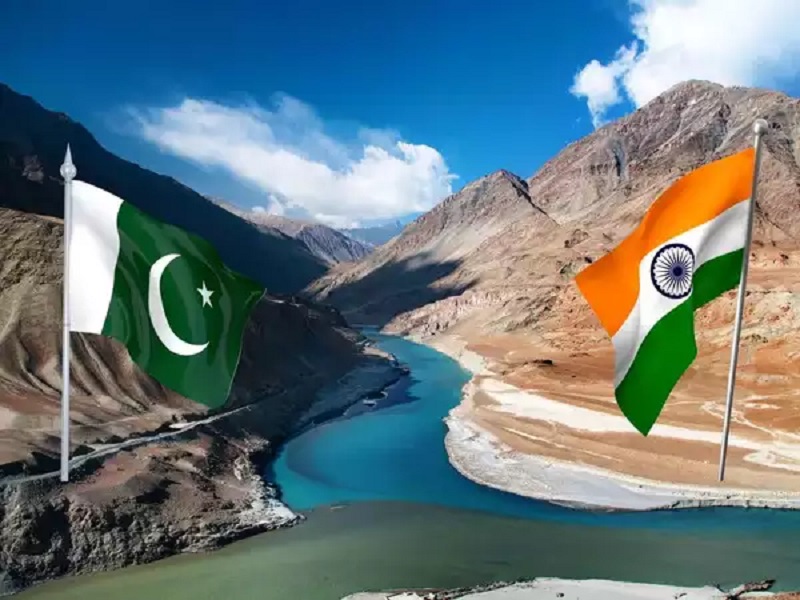
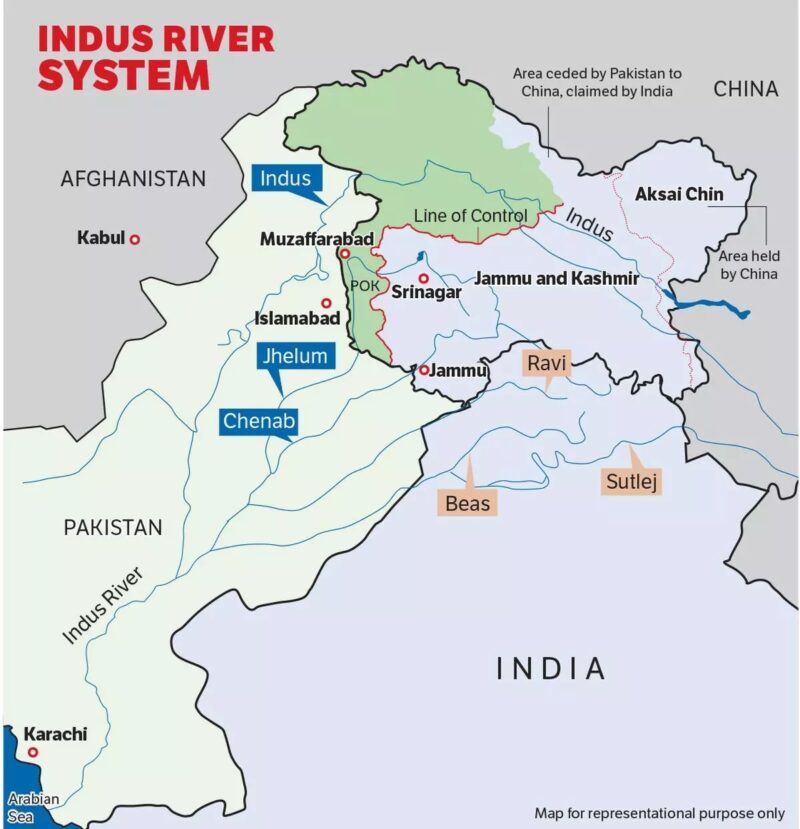
    The Indus Water Treaty was signed in 1960 in Karachi between India and Pakistan as facilitated by the World Bank (erstwhile International Bank for Reconstruction and Development or IBRD). It demarcates the sharing and usage of the Indus River and its major tributaries, categorised into “eastern” and “western” rivers for Indian and Pakistani use, respectively.

    The Indus River flows mainly from Tibet and the Himalayan regions of India’s Himachal Pradesh and Jammu and Kashmir and across Pakistan’s Punjab and Sindh before emptying into the Arabian Sea through Karachi.

    Of the six major tributaries of the Indus River— the Beas, Ravi and Sutlej are the “eastern rivers” and the Indus, Chenab and Jhelum are the “western rivers”. The former is for India’s exclusive use after Pakistan’s permitted water use, and the latter is for Pakistan’s exclusive use after the criteria of India’s permitted use are met.

    As a result, the split was made in the ratio of about 20:80 of the total water flow from the Indus system in favour of Pakistan. Pakistan has unrestricted access to the waters of the western rivers for agricultural, domestic, and industrial purposes.

    India too is permitted to use a limited amount of water from these rivers, apart from the eastern rivers, for specified purposes, such as irrigation and power generation. It also lays down detailed regulations for India in building projects over the western rivers.

    Historical context and Security concerns

    As the partition of British India took place on religious lines instead of geographic factors, the division of the historically integrated water system in a manner satisfactory to both countries was a challenging feat. Although most of the river naturally flows through the regions of Pakistan, it primarily originates from India before it enters the former. Hence, Pakistan is the downstream nation of the Indus River. This places Pakistan in a vulnerable position, exposed to the risks of India causing artificial droughts or flooding of its arable lands, which may be used as leverage to control water and food security in times of hostilities.

    According to Pakistan, it was entitled to all the waters of the Indus and its tributaries due to its historical right before or until the partition, also highlighting the threat of severe water scarcity without the continuous flow of the rivers. Whereas India insisted that the waters be equitably distributed on a new post-partition basis by proposing for the first time the separate rationing of the western and eastern rivers between the two nations. Ergo, paving the way for arguably one of the most successful, long-standing bilateral agreements struck between any two agnostic states.

    Provisions and Objectives of IWT

    In 1952, with the World Bank as the mediator, a Working Party consisting of Indian, Pakistani, and World Bank engineers was formed to draw up a cooperative plan for the use, allocation and distribution of the disputed waters. After almost eight long years of negotiations, the Indus Water Treaty was finally ratified in 1960.

    The main provisions of the IWT are as follows:

    • Water distribution:

    India and Pakistan received approximately 30% and 70% of the total waters of the Indus rivers located in India. India’s eastern rivers have a mean annual flow of 40b/m3 while the western of Pakistan have an MAF of 100b/m3.

    • Regulation of water use:

    Use of waters of the eastern and western rivers are explicitly demarcated between India and Pakistan while limited usage of the other country’s rivers is also permitted for specific purposes that are of non-consumptive nature, like hydropower generation, fishing, etc.

    • Water rights:

    According to IWT, although the liberty to use unutilized water of the other country exists, the right over the water is not forfeited over time, even in case of repeated underutilization.

    • Conflict resolution:

    A Permanent Indus Commission (PIC) comprising commissioners from both India and Pakistan is provided for by the Treaty. The PIC serves as a forum for the exchange of hydrological data, information, and views on the implementation of the treaty and the resolution of disputes.

    Aftermath

    The treaty has survived several border skirmishes, terror attacks including the 26/11, and even two full-fledged wars in 1965 and 1971. The terms of water sharing as agreed upon have been adhered to despite such hostilities.

    After the 2016 Uri Attack on an Indian Army base in Jammu and Kashmir and the 2019 Pulwama Attack, threats of revoking the Treaty have been made by India but never materialised, as the Treaty continues to remain intact. However, according to the IWT, the bombing or destroying of dams, barrages, power stations, etc. located in the Indian part of the Indus basin by Pakistan violates the Treaty which can lead to its abrogation.

    Despite Pakistan’s repeated violation of the Treaty by using groundwater of Ravi and Sutlej areas of India for various uses before they cross into its area, and by constructing river training works to reduce river flooding in Pakistan and enhance flooding in India’s Great Rann of Kutch area; no concerns have been raised by the latter hereto.

    With the Treaty in place, several projects have been undertaken on the allotted rivers, India has constructed the Bhakra-Nangal and Salal dams for hydroelectric power generation. Pakistan constructed the Tarbela and Mangla Dams for water storage, irrigation, and hydropower generation.

    Shahpur Kandi and Ratle Projects:

    The Shahpur Kandi project of India over the Ujh river has been objected to by Pakistan for diverting waters of Ujh, a tributary of Ravi, an eastern river exclusive for India’s use. The dam was officially completed in February 2024.

    India’s ongoing Ratle Hydroelectric Project on the Chenab also made headlines, for Pakistan’s objection to its construction in the Indian area after its funding was finally approved in 2021. The dam would have an 850 MW generative capacity, for which a limited reserve of water is required to be reserved. This alarmed Pakistan as it claimed it would pose a risk of possible weaponization of water supply by India in wartime situations. Disagreement over the summoning of a Neutral Expert or a Court of Arbitration as authorised by the Treaty for dispute resolution was settled in 2016 by the World Bank’s decision to let both motions proceed simultaneously. Later, India was allowed to construct the dam by the World Bank despite objections by Pakistan. The project is scheduled to commence operations in 2026.

    A Blueprint for Transboundary Water Cooperation

    The success of the IWT sets an example of how countries can overcome their political differences and contribute to an efficient system of shared resource governance. It successfully helped the Indian subcontinent evade a potential war between the two nuclear-armed states over the river basin, a model for other regions struggling with water scarcity and competition to follow.

    Climate change coupled with the construction of dams and barrages for water storage and regulation carries heavy ecological repercussions like the disruption of river ecosystems, aquatic habitats, and biodiversity of the concerned region. Consequently, endangering the livelihood of the nearby occupants, even forcing them to relocate.  Hence, such a cooperative regulatory mechanism must be in place to facilitate constructive dialogue towards incorporating environmental considerations into water management strategies to tackle and mitigate any negative repercussions.

    The Indus Water Treaty has demonstrated its efficacy as a significant diplomatic agreement between the two neighbouring states, consistently withstanding various challenges over time. The treaty primarily emphasises the importance of cooperation and diplomacy in resolving transboundary water disputes while also establishing a foundation and providing scope for potential future collaboration in numerous domains of shared governance.

    Proposals for its abrogation have been deemed impractical for both parties, as the treaty has endured for six decades. Nevertheless, there is a recognised need to re-examine, renegotiate, revise, and amend the long-standing Treaty to better address contemporary issues, including new ecological and climate change concerns, as well as evolving terms of negotiation.


    References:

    ET Online, (2024, February 26). India completely stops Ravi River water flow to Pakistan. Historical context and significance. The Economic Times. https://economictimes.indiatimes.com/news/india/india-completely-stops-ravi-river-water-flow-to-pakistan-historical-context-and-significance/articleshow/107980936.cms

    Gupta, M.S. (2024, February 25). Shahpurkandi dam complete after 3 decades, will help check unutilised Ravi water flowing to Pakistan. The Print. https://theprint.in/india/governance/shahpurkandi-dam-complete-after-3-decades-will-help-check-unutilised-ravi-water-flowing-to-pakistan/1978380/

    Gupta, S [The Print]. (2023, January 31). Understanding the Indus Waters Treaty & why India is pushing Pakistan for changes [Video]. YouTube. https://youtu.be/pVp93u2IgSg

    MEA Media Centre, (1960, September 19). Bilateral/Multilateral Documents: Indus Waters Treaty. Ministry of External Affairs, Government of India (MEA, GOI). https://www.mea.gov.in/bilateral-documents.htm?dtl/6439/Indus

    Samantha, P.D. (2023, January 31). The Indus Question: India, Pakistan and rivers of concern. The Economic Times. https://economictimes.indiatimes.com/news/india/analysis-india-pakistan-looking-to-exploit-resources-for-more-electricity/articleshow/97462196.cms

    Times Now Digital, (2018, November 7). Pak ‘diplomatic sabotage’ busted: India to go ahead with Ratle hydroelectric project, govt to send team to J&K. Times Now. https://web.archive.org/web/20190225224015/https://www.timesnownews.com/india/article/pakistan-india-ratle-hydroelectric-project-indus-water-treaty-agreement-chenab-shahpur-kandi-dam-project-ujh-multipurpose-project-jammu-and-kashmir/310636

  • Recalibrating India’s Act East Policy: New Realities in Myanmar and Bangladesh

    Recalibrating India’s Act East Policy: New Realities in Myanmar and Bangladesh

    On 23 September 2024, Reuters published a news item quoting unnamed sources that said that India had ‘ invited political and military opponents of Myanmar’s ruling junta to attend a seminar in New Delhi. Even as the lack of corroboration of such a report puts it in the realm of conjecture, it is worthwhile mulling over the motivations or otherwise for such a seminal event to be even contemplated, especially in the light of implications for India’s Act East Policy.


    TPF Occasional Paper: 10/2024

    Recalibrating India’s Act East Policy: New Realities in Myanmar and Bangladesh

    Maj Gen Alok Deb (Retd)

    On 23 September 2024, Reuters published a news item quoting unnamed sources that said that India had ‘ invited political and military opponents of Myanmar’s ruling junta to attend a seminar in New Delhi’[i]. The item went on to specify that the shadow National Unity Government (NUG) and ethnic minority rebels from the states of Chin, Rakhine and Kachin bordering India had been invited to a seminar in mid-November, to be hosted by the Delhi-based Indian Council of World Affairs (ICWA), a foreign policy think tank funded by the Government of India. The piece was also carried by some major Indian newspapers with its origin attributed to Reuters. At the time of writing, there has been no acknowledgement or rebuttal of this report by any government agency. Neither has the ICWA posted this on its website as a forthcoming event. Even as the lack of corroboration of such a report puts it in the realm of conjecture, it is worthwhile mulling over the motivations or otherwise for such a seminal event to be even contemplated, especially in the light of implications for India’s Act East Policy.

    A Summary of India’s Act East Policy

    India’s ‘Act East’ policy of 2014 is an initiative that takes off from its earlier ‘Look East’ policy. ‘Act East’ envisages initiatives at multiple levels with the nations of ASEAN and the wider Indo-Pacific region. These initiatives are to be taken forward through a process of continuous engagement at bilateral, regional and multilateral levels, thereby providing enhanced connectivity in its broadest sense, including political, economic, cultural and people-to-people relations.[ii]

    To successfully implement the ‘Act East’ policy, the Indian government is working to make the North East its strategic gateway to ASEAN. Accordingly, it has increased the allocation for the region’s development by more than four times over the last 10 years.[iii]  The North East is also poised to benefit from initiatives from countries like Japan which earlier this year had proposed developing an industrial hub in Bangladesh with supply chains to the North East, Nepal and Bhutan.[iv]

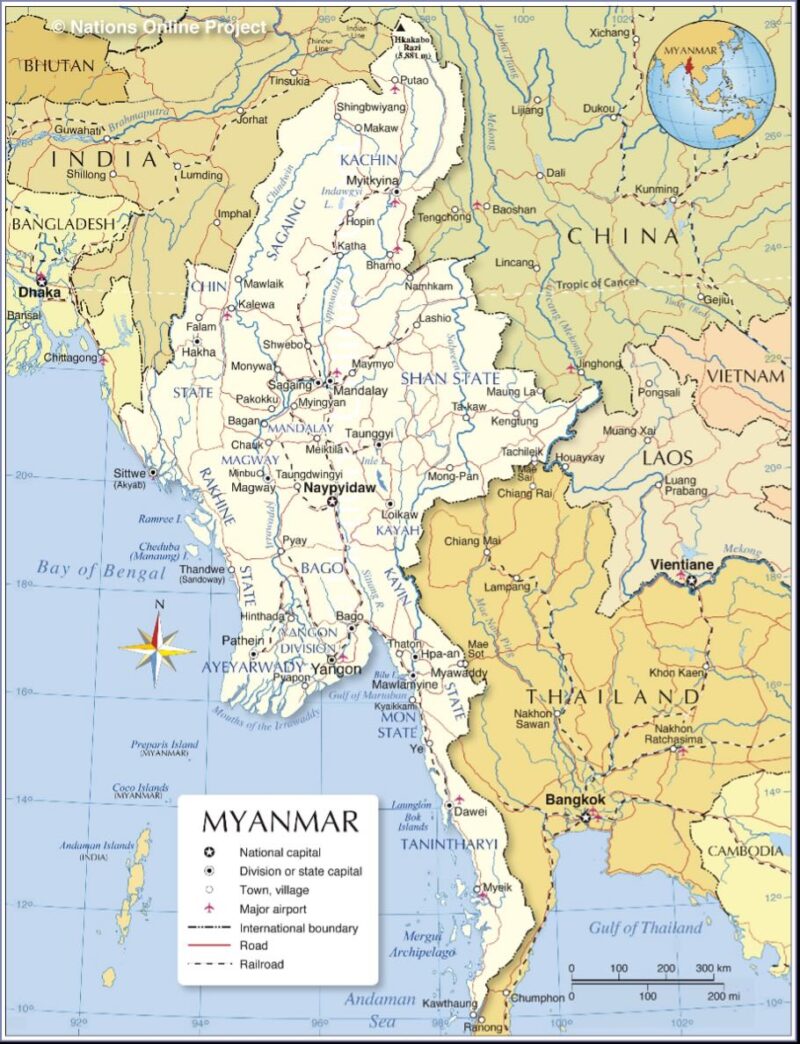
    As the North East becomes India’s gateway to ASEAN,  the centrality of Myanmar to our Act East becomes apparent. It is the key link in the road connectivity between India’s North East and other ASEAN nations whereby the free flow of inland goods, services and other initiatives to and from these nations to India can be ensured. The success or otherwise of Act East is thus directly affected by the security environment in Myanmar. Instability here will negatively impact our North Eastern states sharing borders with that country. The internal situation in Myanmar therefore becomes an area of prime concern for India, warranting close attention.

    For similar reasons, another neighbour, Bangladesh, is equally important for the success of India’s Act East Policy. India’s North East has benefitted from good ties with Bangladesh, both security-wise and economically. Militancy in the North East has reduced over the last decade and a half. With Bangladesh agreeing to provide access to its ports in the Bay of Bengal for the movement of Indian goods, the North Eastern states have a shorter route to the sea. Additionally, states bordering Bangladesh such as Assam and Meghalaya have developed trade links with that country for mutual benefit. The  BBIN (Bangladesh Bhutan India Nepal) Motor Vehicle Agreement for the Regulation of Passenger, Personal and Cargo Vehicular Traffic was signed in 2015 to ‘ promote safe, economically efficient and environmentally sound road transport in the sub-region andfurther help each country in creating an institutional mechanism for regional integration’  is another mechanism for implementing our Act East and Neighbourhood First policies[v]. The role of Bangladesh here is pivotal.

    State of the Civil War in Myanmar

    Fighting in Myanmar is now in its fourth year. The military junta continues to suffer reverses on the battlefield. Large portions of Rakhine State and certain portions of Chin State are now under the control of the Arakan Army (AA). International Crisis Group has recently averred that ‘..in just a few months, the Arakan Army has created the largest area in Myanmar under the control of a non-state armed group – in terms of both size and population – and is now on the verge of securing almost all of Rakhine[vi].

    In Shan state to the North, the Three Brotherhood Alliance (TBA) of three Ethnic Armed Organisations (EAOs) had by December 2023, captured over 20,000 square kilometres of territory, including key border crossings and trade routes between China and Myanmar in Operation 1027[vii].  On 07 March 2024, the Kachin Independence Army (KIA) launched Operation 0307 and successfully captured certain military posts across  Kachin State close to the Chinese border. This forced the Tatmadaw (Myanmar military) to redeploy, further thinning out forces[viii]. Fighting also continues in other states and regions across the country, notably Sagaing and Kayah.

    Associated Press deduces that ‘.. the announcement of the measure on state television amounts to a major, though tacit, admission that the army is struggling to contain the nationwide armed resistance against its rule..’.The Junta has since conscripted Rohingya youth and deployed them against the Rakhines. 

    Notwithstanding these losses, there is no let-up in the Tatmadaw’s efforts to combat the rebels. The Junta has resorted to conscription to stem rising attrition, activating an old law in this regard. Associated Press deduces that ‘.. the announcement of the measure on state television amounts to a major, though tacit, admission that the army is struggling to contain the nationwide armed resistance against its rule..[ix] To further contextualise, the same article stated the rebel National Unity Government’s (NUG) claim that more than 14,000 troops have defected from the military since the 2021 seizure of power. The Junta has since conscripted Rohingya youth and deployed them against the Rakhines. The Chins fear that they too will be acted upon similarly.[x]

    To overcome the asymmetry of force especially in artillery and airpower, the rebels have acquired large numbers of drones. These are being used to bomb military positions, contributing significantly towards the successes of the CNA’s operations[xi].  To summarise, Myanmar’s civil war continues to see-saw with no signs of ebbing. The Junta continues to make periodic peace overtures to the NUG with conditionalities that the latter is unwilling to accept[xii]. With the multiplicity of actors and issues involved, there are no clear indications of how and when the conflict will be resolved.

    Impact of the  Myanmar Conflict on India’s North-East

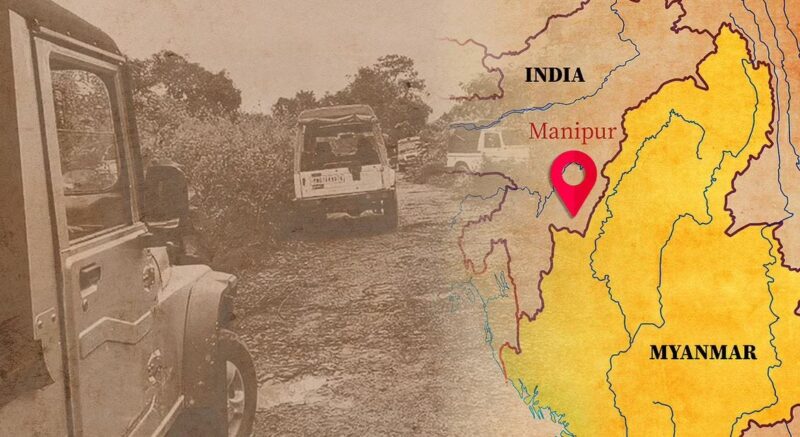
    The impact of Myanmar’s internal situation on India’s border states has progressively worsened. Initially, after the Junta takeover, it was Mizoram which bore the brunt. The state government citing common ethnicity and humanitarian concerns accepted the influx of Chins from Myanmar as a moral responsibility and initiated rehabilitation measures. These refugees along with earlier refugees from Bangladesh recently joined Kukis from Manipur, number around 44000 and continue to remain in refugee camps.[xiii] The Central government has had to reconcile its policy of preventing infiltration across borders with the societal realities of Mizoram. A positive outcome of this approach is that there has been no violence in Mizoram.

    In Manipur, by September 2024, the 18-month-long ethnic conflict had resulted in over 225 deaths and some 60,000 people displaced.[xiv] The administration has been derided by both sides, more so with recent warnings about impending threats to law and order[xv] followed by retractions[xvi]. People of either community have been uprooted from their homes and moved to safe areas separated by buffer zones guarded by security forces.  So great is the mutual suspicion that on the clamour of the Meiteis to replace the Assam Rifles, two battalions of this central force have been withdrawn and replaced by the Central Reserve Police Force (CRPF), against the wishes of the Kukis[xvii].

    Voices for an independent ‘Kukiland’ for the Kuki Zo peoples are being raised,[xviii] which are variously interpreted as a demand for greater autonomy within Manipur or for a separate union territory. The current happenings also dredge up the old ghost of ‘Zale’n-gam’ or Kuki nation, comprising the Chin Kuki Zomi peoples (including Mizos) residing across India, Bangladesh and Myanmar. Zale’n- gam has few takers and appears restricted to a YouTube channel[xix]. Today both sides fight each other with a variety of weapons including improvised rockets and drones. Hostage-taking is the latest tactic that has been adopted.[xx]

    Tension between the Nagas of Manipur and other communities is discernible with some reports of violence against the former.[xxi] As of now Nagas have kept out of the Kuki-Meitei dispute; also, other than the insurgent National Socialist Council of Nagaland ( Isak Muviah) faction (NSCN-IM) that is observing a ceasefire with the Centre, no other party has demanded integration of all Naga inhabited areas in India ( Arunachal Pradesh, Assam, Manipur) and Myanmar – the idea of  Greater Nagalim.

    At the state level, the responses of Mizoram and Manipur to the Myanmar crisis vary. This can be best seen in their reactions to the Centre’s recent notification to fence the entire 1643 Km Myanmar border and its earlier decision to end the Free Movement Regime that permits movement on both sides of the border for up to a distance of 16 km.[xxii]  While the Mizoram government and tribes living in both states oppose the decisions, the Manipur government clamours for its implementation. Currently, only around 30 Km of the border has been fenced.

    Since the Tatmadaw now has limited control over its border areas, it has become imperative for India to commence a structured dialogue with other warring parties in Myanmar’s border regions. This, with a view to restoring the situation in Manipur (and on the border) through mutually acceptable solutions at least for the short to medium term, is necessary. Only then can a modicum of security on the border be guaranteed. This involves navigating a maze of ethnic, religious, historical and societal issues with great sensitivity. The importance of such a dialogue cannot be overemphasised, more so because of recent developments in Bangladesh.

    The Impact of Bangladesh’s ‘Second Liberation’

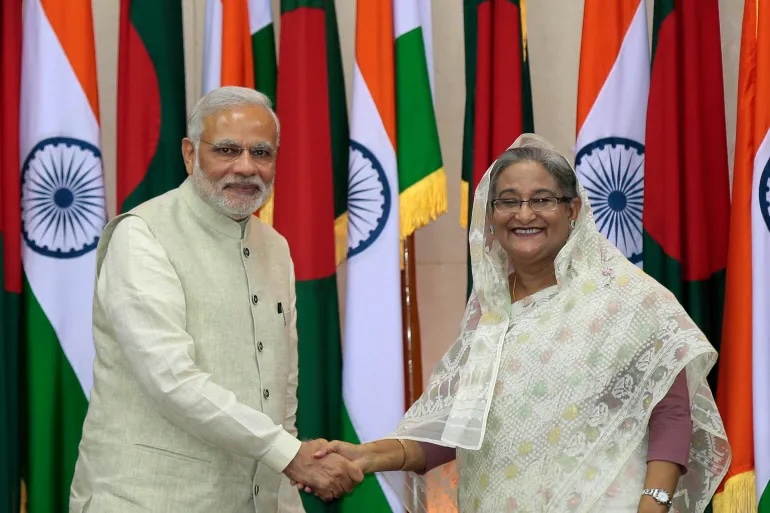
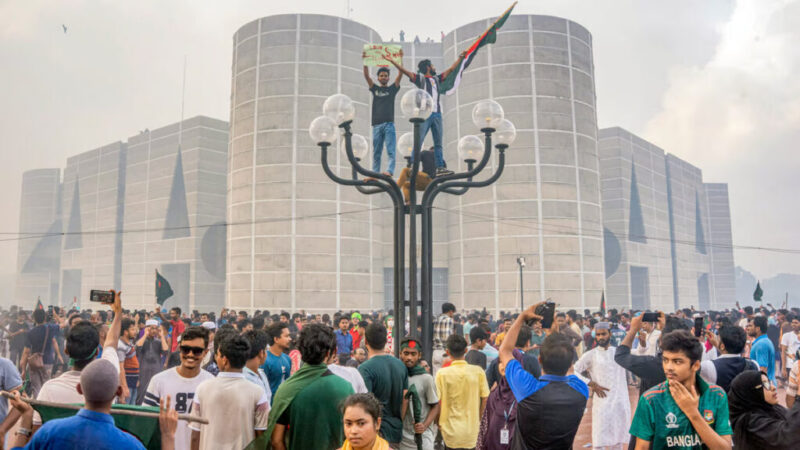
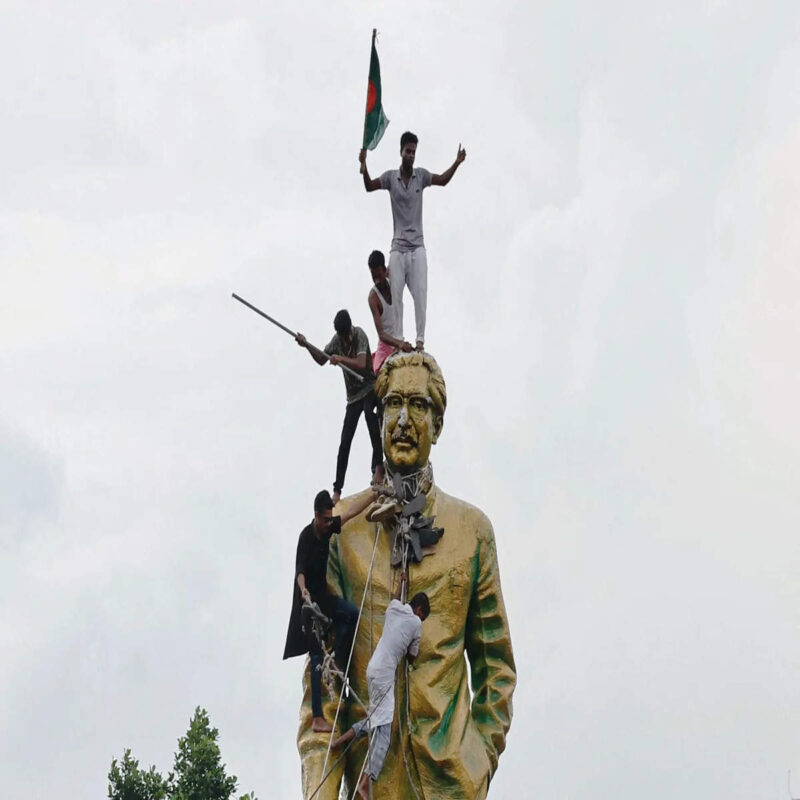
    The events of 5 August 2024  that witnessed the overthrow of Sheikh Hasina’s government have proved to be yet another watershed in India-Bangladesh relations. India has invested more in the India-Bangladesh relationship than with any other neighbour in South Asia. A glance at the website of our Ministry of External Affairs[xxiii], where details of various agreements and summaries from the last Prime Ministerial meeting in Delhi in June 2024 are provided, will suffice to show just how strong and all-encompassing this relationship has become.

    Persons or organisations associated with the previous regime have either fled the country or been placed under arrest and assets confiscated. A few have been killed by mobs. Bank accounts of others have been frozen. Jamaat e Islami which collaborated with the Pakistan Army in 1971 has been resurrected. Extremists with proven murder charges against them have been freed from prison, as have political prisoners.

    At the time of writing, it is two months since the interim government headed by Chief Advisor Mohammed Yunus assumed charge.  The country continues to make efforts to reestablish the rule of law. All wings of the armed forces have been given magisterial powers[xxiv]. The functioning of the judiciary, higher civil services, local administration, police, security agencies, banking, economy, and higher education, is under review. Persons or organisations associated with the previous regime have either fled the country or been placed under arrest and assets confiscated. A few have been killed by mobs. Bank accounts of others have been frozen.[xxv] The Jamaat e Islami which collaborated with the Pakistan Army in 1971 has been resurrected. Extremists with proven murder charges against them have been freed from prison, as have political prisoners. Commissions have been set up to suggest reforms in the constitution, electoral system, police, judiciary, public administration and in tackling corruption.  Elections do not seem to be on the horizon yet. The advisers ( as the ministers are currently known) are new faces, not well known in India.

    While this paper does not attempt to be a study of India-Bangladesh relations, the polarised politics in that country coupled with a perception that the misdeeds of Sheikh Hasina’s government were conducted with impunity because of Indian backing, is sure to impact India’s portrayal here.

    With the removal of Sheikh Hasina, the India-Bangladesh relationship is undergoing a major reset. Statements of certain public figures and sentiments of a section of the population in that country suggest that a different perspective on the evolution of Bangladesh as a nation from 1971 onwards is emerging. While this paper does not attempt to be a study of India-Bangladesh relations, the polarised politics in that country coupled with a perception that the misdeeds of Sheikh Hasina’s government were conducted with impunity because of Indian backing, is sure to impact India’s portrayal here. This will make it an arduous task for both countries to go back to the trusted, cooperative and mutually beneficial relationship that existed. As mentioned, the list of achievements for both countries is far too numerous –  settlement of land and oceanic borders,  road, rail and riverine connectivity (including use of ports), economy and business ( both government and private), education including educational scholarships, technology, disaster management, border management, maritime security, military to military cooperation, improved people to people contacts, culture and health. As per records, of the 16 lakh visas issued by India for Bangladesh nationals in 2023, 4.5 lakhs were for medical treatment alone[xxvi]. Economies are so embedded that everyday necessities like onions are exported regularly to Bangladesh ( approximately 6 to 7 lakh tonnes annually).

    Even as the new regime provides assurances on the security of minorities and acknowledges India as an important neighbour, the enthusiasm with which it has interacted with official interlocutors from a host of nations worldwide especially China, Pakistan and the US is noteworthy and indicates where its newfound priorities might lie.

    A parallel reality, however, is that negative perceptions about India have historically found space in sections of Bangladesh’s polity. These have received a huge fillip after the change of regime with even settled agreements prone to misunderstanding. A recent example pertains to a tripartite agreement dating back to the Hasina period whereby electricity is to be imported from Nepal via India to Bangladesh. The agreement was signed in Kathmandu in the first week of  October 2024. Newspaper reports from Bangladesh indicate that there is palpable resentment over the condition that Indian transmission systems inside Indian territory be utilised for this purpose since it increases costs per unit of electricity in Bangladesh.[xxvii] Another issue currently bedevilling relations is the state of minorities in Bangladesh who have faced attacks on their homes, businesses and religious places with some loss of life, since the protests in July. India’s concerns in this regard have been conveyed at the highest level. Even as the new regime provides assurances on the security of minorities and acknowledges India as an important neighbour, the enthusiasm with which it has interacted with official interlocutors from a host of nations worldwide especially China, Pakistan and the US is noteworthy and indicates where its newfound priorities might lie.

    Larger Implications for India

    Bangladesh and Myanmar are pivotal for India’s Act East policy from the security, economic and connectivity angles. The issues pertaining to Myanmar and Manipur have been brought out earlier. A common concern affecting both nations and  India is the Rohingya crisis. Despite international pressure and requests from Bangladesh for China to intercede with Myanmar on its behalf, there has been no positive response from Myanmar. Bangladesh, which currently hosts close to one million refugees,[xxviii] has publicly expressed its inability to accommodate any more Rohingyas and asked for a speedy ‘third country settlement’ [xxix]. A detailed report of the International Crisis Group (ICG) in October 2023[xxx]provides details of activities of militant organisations like the Rohingya Solidarity Organisation (RSO) and Arakan Rohingya Salvation Army (ARSA) which are involved in drug running from Myanmar along with Bangladeshi syndicates for sale of the product in that country. Their participation in violent crime and other illegal activity has become a pressing concern within Bangladesh. Rohingyas have infiltrated into India as well, and have been identified as far North as Jammu. The security implications of such migration for both Bangladesh and India are apparent. The insensitivity of the Myanmar Junta on this account is heightening security risks for India and Bangladesh and merits diplomatic intervention.

    With the situation in Bangladesh evolving by the day, it is prudent for India to take a strategic pause as it weighs its options for pursuing its Act East policy. While giving the new regime in Bangladesh its due, India has to consider the impact of resurgent forces aided by inimical powers that aim to derail the India-Bangladesh relationship beyond repair. Even as both countries attempt to reestablish strong ties, the old adage preached by educated Bangladeshis in the context of support to Sheikh Hasina’s regime that ‘India should not put all its eggs in one basket’ resonates. While Myanmar geographically cannot provide the singular advantages that Bangladesh can, it is time for India to press for securing Myanmar’s cooperation to complete pending projects in that country, such as the Kaladan Multi-Modal Port Project (KMMPP) via Sittwe and Paletwa, that provides an alternate route to our North East, as well as the Trans Asian Highway (TAH) that provides connectivity with the rest of ASEAN, amongst others.

    To summarise, two possible reasons for inviting rebel Myanmar groups to Delhi could be: first, the relative viability of either Bangladesh or Myanmar to help implement the Act East policy in light of the emerging situation in Bangladesh and the state of the civil war in Myanmar. The second, ensuring security on the India-Myanmar border, to prevent aggravating the situation in India’s border states.


    Notes:

    [i] ‘Exclusive: India extends unprecedented invite to Myanmar’s anti-junta forces, sources say’ Wa Lone and Devjyot Ghoshal Reuters September 23, 2024

    [ii] ‘Govt aims to make Northeast gateway of ‘Act East Policy’: President Murmu’ Press Trust of India 27 June 2024.

    [iii] Ibid.

    [iv] ‘Japan to tie landlocked Northeast India with Bangladesh’  Saleem Samad  The Daily Messenger 05 March 2024.

    [v] Press Information Bureau Government of India Ministry of Shipping note dated  10 June 2015

    ‘Bangladesh, Bhutan, India and Nepal (BBIN) Motor Vehicle Agreement for the Regulation of Passenger, Personal and Cargo Vehicular Traffic amongst BBIN’

    [vi]   ‘Breaking Away: The Battle for Myanmar’s Rakhine State Asia Report N°339 | 27 August 2024’ International Crisis Group (Executive Summary).

    [vii]   ‘As Myanmar’s Junta Loses Control in the North, China’s Influence Grows’  Jason Tower, United States Institute for Peace, August 1, 2024.

    [viii] Ibid.

    [ix]   ‘Facing setbacks against resistance forces, Myanmar’s military government activates conscription law ‘ Associated Press, February 12, 2024.

    [x] ‘India’s ‘Forgotten Partition’ and the Myanmar Refugee Crisis’  Swapnarka Arnan The Diplomat  11 May 2024.

    [xi] ‘We killed many … drones are our air force’: Myanmar’s rebels take on the junta from above. Aakash Hassan and Hannah Ellis-Petersen  The Observer 20 January 2024.

    [xii] ‘Armed Groups Snub Myanmar Junta ‘Peace’ Offer’  The Irrawaddy 28 September 2024

    [xiii] ‘Centre provides 1,379 MT rice to Mizoram for Manipur, Myanmar, B’desh refugees’ Morung Express 25 September 2024.

    [xiv] ‘Ethnic violence in India’s Manipur escalates, six killed’  Tora Agarwala Reuters  September 7, 2024

    [xv] ‘900 Kuki militants infiltrated Manipur from Myanmar, says Security Advisor’ India Today NE September 20 2024.

    [xvi] ‘Input on infiltration by 900 Kuki militants could not be substantiated on the ground, says Manipur security advisor’ Vijaita Singh The Hindu 26 September 2024.

    [xvii] ‘Kukis call removal of Assam Rifles from 2 Manipur areas ‘biased, appeasement’, Meiteis call it ‘victory’  Ananya Bhardwaj  The Print 04 August 2024.

    [xviii]‘ Manipur: Kuki-Zo organizations hold rallies, demand separate ‘Kukiland’ for peace  by Northeast News

    August 31, 2024.

    [xix] YouTube channel titled ‘Zalengam Media’.

    [xx] ‘Kuki militants seek release of ‘secessionist’ in Manipur’ Prawesh Lama and Thomas Ngangom Hindustan Times Sep 30, 2024.

    [xxi] ‘Keep us out of your war, Manipur Naga body warns two warring communities’  The Hindu Bureau 06 February 2024

    [xxii] ‘Government sanctions ₹31,000 crore to fence Myanmar border’   The Hindu

    Published – September 18, 2024

    [xxiii] Ministry of External Affairs, Government of India website mea.gov.in.

    [xxiv] ‘Navy, the air force also granted magistracy powers’  The Daily Star September 30 2024

    [xxv] ‘Bank accounts of Joy Putul Bobby frozen’ Dhaka Tribune 30 Sep 2024.

    [xxvi] ‘Indian High Commission in Dhaka, facing protests & threats, returns 20,000 visa applicants’ passports ‘ Ananya Bhardwaj  The Print   29 September 2024.

    [xxvii] ‘Bangladesh delegation in Nepal to sign the contract to import 40 MW electricity’ Dhaka Tribune 30 September 2024.

    [xxviii] Operational Data Portal of the United Nations High Commissioner for Refugees, for Bangladesh.

    [xxix] ‘Bangladesh calls for faster resettlement process for Rohingya’ Ruma Paul  Reuters  September 8, 2024

    [xxx] ‘Rohingya Refugees in Bangladesh: Limiting the Damage of a Protracted Crisis’ International Crisis Group Autumn Update 04 October 20223.


    Feature Image Credit: What does Sheikh Hasina’s resignation mean for India-Bangladesh relations? – aljazeera.com 

    Map Credit: National Online Project

    Bangladesh Parliament Image: The Shattered Identity of a Nation: From Liberation to Chaos – borderlens.com

    Sheikh Mujibur Rahman’s Statue: Bangabandhu to Toppled Statue: Mujibur Rahman’s contested legacy post Bangladesh upheaval – Economic Times


  • “And Now to some serious Governance”

    “And Now to some serious Governance”

    A time comes for each leader and government to rise above pettiness, discarding ill will and hatred towards all. For the BJP, now uniquely in its third term, this is the time to show the nation that it is a party with a difference. For the opposition equally, this is the time to cooperate with the government on critical issues impacting the country.  


    Since my retirement from active service, I have avoided politics and political writings like the plague, but the avoidable happenings of the past few months have caused me, like am sanguine would have to millions of our countrymen, pain and a sense of despair.

    India has conducted over 18   general elections to its Parliament since 1952 with a lot of fury and vibrancy, but the Lok Sabha 2024 general elections were indeed an example of abysmally low-level politics transcending our better senses.

            How the world’s largest democracy indulged in its Lok Sabha 2024 elections was hardly complimenting to it considering the unquestionable fact that among the emerging nations in the world, call it from the Global South, the conduct of our elections showed some among those participating in poor light. Between competing political parties, enlightened debates and mutual civility were sadly lacking.   India has conducted over 18   general elections to its Parliament since 1952 with a lot of fury and vibrancy, but the Lok Sabha 2024 general elections were indeed an example of abysmally low-level politics transcending our better senses. India, which carries a fair amount of moral authority and is considered an example of a true and vibrant democracy, cannot let its hallowed image be sullied attributable to the selfish electoral games of some of its political leaders. The party in power at the Centre, the principal Opposition party and all those regional parties at the helm in the states have to display adequate maturity and a modicum of propriety and civility towards each other and not politicize each and every aspect of governance or national issues impacting India. The opposition, as it shows the mirror to the government on critical issues of governance, must not criticise each and every act of the government as a matter of routine.

             With the outcome of the general elections now done and dusted and the previous BJP government back in power, albeit with a clear reduction in its seats tally from 303 down to 240, it must get down to the exacting business of good governance from the Centre. That the same government, with its experience of the last ten continuous years in power, fielding more or less the same faces in the Cabinet in critical ministries and importantly serviced by the same bureaucrats should have, relatively speaking, not such an arduous task in governance. However, the thrust for fair, equitable, and sensitive handling of all critical matters across the nation has to come from the top political leadership. All our states must never feel discrimination by the Centre, especially in financial allocations urgently required for developmental works and disaster management. Additionally, the new government must take stern measures to keep rising inflation and unnecessary governmental expenditure under check before the economy takes a severe nose-dive.

             The Modi government, with the continuous experience of the last ten years, will have more than a good idea of the systemic improvements required and about areas needing additional financial resources and effort. It is unnecessary to worry too much about criticisms from the opposition but to carry on regardless in developmental works, without fear or favour, and with impartiality towards all the states in the true spirit of federalism. A time comes for each leader and government to rise above pettiness, discarding ill will and hatred towards all. For the BJP, now uniquely in its third term, this is the time to show the nation that it is a party with a difference. For the opposition equally, this is the time to cooperate with the government on critical issues impacting the country.

             New Delhi’s hands will be full of the nation’s diverse and formidable challenges, requiring attention and effectiveness. On the foreign policy front, India will have to walk the tightrope of maintaining strategic autonomy and sustaining its good relations with both the US and Russia. However, as it determinedly confronts an overly assertive China, India needs to use its economic clout and sophisticated diplomacy to get its South Asian neighbourhood closer to it and each other, avoiding the debt trap diplomacy and financial machinations of China.

    The number of terror-related incidents in J&K has gone up substantially in the last three months, and Pakistan will have to be kinetically chastened.

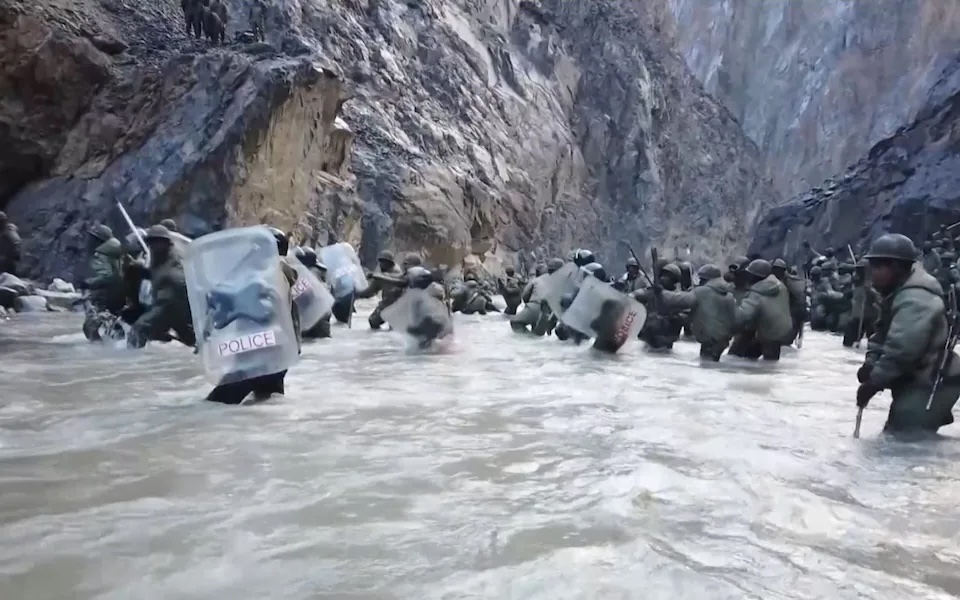
          India must, at the appropriate level, convey to China that their confrontationist attitude towards us will be harmful to the Chinese, too and may propel India to rethink its existing Tibet policy. Nevertheless, India must maintain the utmost vigil along the 3485 km Line of Actual Control/ IB, which it shares with  China. Meanwhile, Pakistan once again needs to be cautioned against stepping up terror activities in J&K  or elsewhere in the Indian hinterland. India is in full knowledge of Pakistan’s many fault lines. Still, it has refrained from exploiting these, and Pakistan must also cooperate in ensuring a peaceful and prosperous South Asian neighbourhood independent of China’s wily stratagems. The number of terror-related incidents in J&K has gone up substantially in the last three months, and Pakistan will have to be kinetically chastened.

    Meanwhile, India’s preparations to successfully improve its security capabilities to confront a two-front war must go ahead with realism and an unfailing determination. Measures to augment capital expenditure for major defence acquisitions must be identified. Transformative defence reforms like the introduction of integrated theatre commands will need the attention of the Centre. In addition, India must take all steps to restore peace in our restive NE states.

             The Modi government has come in for some criticism abroad on its human rights record and dealings with its Muslim population. This unjust criticism must be dealt with judiciously and with maturity. India’s overall inclusiveness and celebration of its diversity are unique examples for the entire world, especially the nations of the Global South. We must never deviate or be even seen to shift from this noble orientation.

    Reduction of the yawning gap between the countless ultra-rich and those millions in abject poverty is essential as we boast of becoming the 5th largest economy in the world. The many human indices where we are faltering also need to be addressed.

             As economic strength is the pillar that propels and sustains progress, the Modi government must take measures to improve our economic health. Reduction of the yawning gap between the countless ultra-rich and those millions in abject poverty is essential as we boast of becoming the 5th largest economy in the world. The many human indices where we are faltering also need to be addressed.

             By all yardsticks, India is deservingly on the cusp of acquiring a seat on the global high table. Let us not squander away this golden opportunity by internal squabbling but instead work together in addressing crucial issues that affect our nation; we must seize this opportunity.

    Feature Image Credit:  vskbharat.com    

    Cartoon Credit: Times of India

  • Can a Muscular Response deter Chinese Aggression?

    Can a Muscular Response deter Chinese Aggression?

    The Sino-Indian War of 1962, which is seen as a humiliating defeat for India, continues to rankle all Indians. Clearly, it is seen as a result of poor leadership both at the political and military levels. In hindsight, many believe that the PLA could have been routed had India regrouped its Army and used the IAF in a massive counterattack. It was November, and with the onset of winter and the closing of the Himalayan passes, the PLA could have been demolished completely. That we didn’t even think of it shows the serious vacuum in strategic thinking. More than half a century later, and with the Indian military much stronger and battle-hardened, it is inexplicable why India’s leadership is shy of following an aggressive strategy, including the use of force proactively against China. Brigadier Deepak Sinha, a vetran and TPF’s Senior Fellow, raises this question while correlating the current situation with that of 1962.

    There is an urgent need for us all to shed our divisive politics, long-held dogmas and skewed perceptions, forget fanciful visions and face reality, especially when it comes to the question of national security. The last thing we need is for petty politics and fragile egos to control our nation’s destiny. Nothing can be more consequential, traumatic or shameful than being bested by a rival on the battlefield. The consequences of our “defeat” in the Sino-Indian Conflict of 1962 continue to rankle and haunt us to this day.

    Quite clearly, the fear psychosis that permeates our higher military and political leadership is palpable.

    Indeed, our reluctance, for fear of escalation, to launch a quid-pro-quo riposte and grab disputed territory elsewhere as a bargaining chip following the PLA’s blatant land grab of disputed territory in Eastern Ladakh is a clear indication of this. This was reinforced by an earlier interview with ANI by our Foreign Minister, who stated, “Look, they (China) are the bigger economy. What am I going to do? As a smaller economy, I am going to pick up a fight with the bigger economy? It is not a question of being reactionary, it’s a question of common sense….” Quite clearly, the fear psychosis that permeates our higher military and political leadership is palpable.

    On the other hand, the Chinese leadership has a very different perception of our capabilities as was reflected back in 1959 following the Longju incident. A declassified United States document of that time points out that “the late August clashes point to a mode of thought which has remained an ingredient in the Chinese leaders’ calculations on the border dispute: ‘When the Indians show a temperament to advance on the ground, we must alter their frame of mind by letting military action take over political caution. Besides, military risk itself is negligible because we are the stronger side.” Obviously, over the years, they have been given no reason to believe otherwise. In order to understand what ails us, it is worth briefly examining the course of the 1962 conflict to get a clearer idea of the extent of our loss at the hands of the Chinese. That should help us understand why, over fifty years later, we continue to remain so traumatised and fearful.

    The opening skirmish of that conflict occurred in the North East with the capture, on 8th Sept, of the isolated Assam Rifles post at Dhola, on the southern slopes of the Thag La ridgeline. This post was surrounded and completely dominated by PLA positions on higher ground, and its loss was a foregone conclusion. The actual conflict commenced at approximately 0500 hours on 20th October, when the PLA launched a massive infantry attack, supported by artillery, on the 7 Infantry Brigade positions. The Brigade was deployed in a tactically unsound manner on direct orders of GOC 4 Corps, Lt Gen B M Kaul, along the Southern banks of the Namka Chu River over a 20 Km frontage instead of on the heights overlooking the river.

    The battalions were deployed in platoon penny pockets, lacking mutual support, in temporary positions with no overhead cover. Artillery support was restricted to just one battery of Heavy Mortars and a troop of two field guns with limited ammunition. No intelligence was available to the Brigade Headquarters or any of the other higher headquarters as to PLA force levels or their intentions. The assault came as a surprise and just four hours later, by 0900 Hours, the Brigade ceased to exist as a fighting force. Within just another 96 Hours, the strategic border town of Tawang, approximately 100 Km in-depth, held by an understrength battalion, was attacked and captured without a fight.

    Almost simultaneously in the Northern Theatre, isolated forward positions at Aksai Chin and the Pangong Tso area were also cleared after a brief skirmish. After an administrative pause of approximately a month, the PLA launched the next phase of its offensive with its assault on the Walong positions on 16th Nov and on the main defences of the 4 Infantry Division at Bomdi La, Se La and on the Division Headquarters at Dirang Dzong. Simultaneously, on 20th Nov, Chushul came under attack by an Infantry Divison. On 21st Nov the Chinese announced a unilateral ceasefire and subsequently withdrew to positions occupied by them prior to the commencement of the conflict.

    There are three main deductions that can be drawn from an examination of the facts. Firstly, that the conflict was, in essence, extremely limited in terms of time, space and force levels involved. From an army of 550,000 personnel, approximately 20,000 personnel were committed into this conflict, primarily due to our limited logistical capabilities. The conflict was primarily restricted to the tactical level only, at battalion level and below. While the conflict itself was spread over one month, the tactical engagements themselves lasted a few hours at best, and on one or two occasions where stiffer resistance was put up, extending to 48-72 Hours. Unfortunately, given the terrain, lack of field fortifications, etc, casualties suffered were relatively high, with approximately fifteen hundred killed, similar numbers wounded, two thousand missing and another 4000 taken prisoner. The Air Force, which could have played a critical role in blunting the PLA attacks and destroying their lines of communications, was deliberately confined to the logistics role for reasons that are still not clear, while the Navy remained a bystander.

    Sadly, our military and political leadership exhibited an utter lack of moral courage, determination and willpower by quietly acquiescing to the unilateral ceasefire, thereby kicking the main irritant of the demarcation of borders further up the road, where it has once again come to bite us on our posteriors.

    Secondly, far from being a major defeat, as has been commonly made out, it was at best a temporary reverse that could, and should, have been countered with the use of fresh troops under a more determined and professional leadership. More importantly, the PLA understood this fact and, therefore, undertook a unilateral withdrawal to its earlier pre-war line of defences. It must have been fully cognisant that if hostilities were to continue, it would find itself in an increasingly untenable position with its supply lines already badly stretched and being further impacted with the onset of winter. It would only have been a matter of time before the Indian Army got over its shock, regrouped and reorganised itself and launched a counter-offensive to recapture lost territory. Sadly, our military and political leadership exhibited an utter lack of moral courage, determination and willpower by quietly acquiescing to the unilateral ceasefire, thereby kicking the main irritant of the demarcation of borders further up the road, where it has once again come to bite us on our posteriors.

    Thirdly, what continues to remain totally inexplicable is the reasons why our military and political leadership continue to remain so traumatised and scared to this day. The truth is that the narrative that emanated following the reverses was set by officers and men belonging to units that, for the most part, had withdrawn before coming in contact with the PLA. They were low on morale and had come to believe the Chinese were supermen who could not be stopped by mere mortals. It was from amongst the experience and perception of these personnel that pamphlets on the tactics and capabilities of the PLA were subsequently formulated that continue to be relied on to this day, thereby giving further credence to that distorted narrative.

    The fact of the matter is that in any future conflict, the PLA will be fighting over 2000 Kms away from its home bases, supported along communication lines that run over some of the most difficult and inhospitable terrain in the world. They are also easily susceptible to interdiction, given the nature of the terrain. In addition, they would have to contend with a hostile and badly oppressed population not just within Tibet but in Xingjian as well, which could revolt if a suitable opportunity arose. This would require the PLA to deploy additional forces for rear area security to prevent disruption of the lines of communication.

    Moreover, while there are sizeable disparities in aspects such as force levels and capabilities, infrastructure development and economic strength, one needs to be cognizant of the fact that we have also made tremendous strides with regard to infrastructure development, logistics and offensive capabilities. Our forces still hold the edge vis-à-vis combat experience and operating in mountains, while the Air Force continues to hold the upper hand in the TAR purely on account of terrain profile and radius of action. Most importantly, the availability of two Mountain Strike Corps gives us immense flexibility, if properly utilized, to grab the initiative and force a decision dilemma on the PLA. In the circumstances, the reason for our extreme reluctance to stand up against the Chinese bully must lie elsewhere. One distinct possibility is that our political leadership lacks faith in the military leadership and its ability to fight and win.

    This will seem at odds with the fact that the military has a splendid history of having always successfully completing any task given to it. If anything, it has been grossly misused by the Central and State Governments to carry out tasks that are not in their ambit, whether these be organizing the Commonwealth Games or construction of railway over-bridges, because the concerned departments and agencies have been unable to produce the requisite results. Clearly, this mistrust, primarily in the sphere of civil-military relations, has more pernicious roots and is very deeply embedded in the politico-bureaucratic psyche.

     Interestingly, in the Official History of the 1962 Conflict with China, available in the public domain but yet to be published, the Chief Editor, Dr S N Prasad, concludes that the chief reason for our defeat was that the political establishment was unable to avoid war while it was in the process of transforming the military establishment. Given Prime Minister Nehru’s apprehensions about the military taking control, he wanted to change it from being, as Mr Prasad puts it, a “close-knit professional body, deliberately isolated from the citizen. Its predominant motive force remained esprit de corps and not identification with the people… Perhaps he wanted to model it after the People’s Liberation Army of China, more egalitarian, flexible, closer to the people………Such basic changes required a committed, or at least a pliant, band of army officers in key positions. So mediocre Thapar was selected instead of the doughty Thorat as Army Chief, and Bijji Kaul was made CGS……. “

      He further goes on to add that “To carry out this transformation of the national defence set up, a decade of peace was absolutely essential. For establishing indigenous weapons manufacture, money had to be found by cutting arms imports. The armed forces would be short of equipment and stores for several years till the new arms factories started producing. The officer cadre was a house divided within itself till the new breed fully took over. A period of transition was inevitable, during which the fighting machine would not be fully efficient and would be vulnerable………Therein seems to lie the basic cause of the debacle of 1962. India failed to avoid a war during the transition period. Lulled by faulty political assessment and wrong intelligence forecasts, the country got caught in a war when it was least prepared.

    With Mr Modi’s ascension to power, we came a full circle as he took it upon himself to steer it away from its apolitical and secular character towards a more ideologically compatible institution that would be in sync with his Party’s long-held vision of making India into a Hindu Rashtra.

    Fortuitously for the country, Nehru’s vision for a transformed military was stymied by the 1962 Conflict and the most important lesson that his successors assimilated quickly was to stay away from interfering in the internal affairs of the military as that could gravely damage internal cohesion and morale. With Mr Modi’s ascension to power, we came a full circle as he took it upon himself to steer it away from its apolitical and secular character towards a more ideologically compatible institution that would be in sync with his Party’s long-held vision of making India into a Hindu Rashtra.

    Towards this end Mr Modi has smartly used the concept of “deep selection” to ensure key senior appointments were filled by officers displaying an affinity for his government’s ideology, regardless of existing rules, seniority or merit. This, in turn, made them personally beholden to him, and he was thus able to use them to take ownership and deflect criticism from initiatives that were pushed through by his government regardless of their adverse impact on long-standing and cherished customs and traditions or on the operational capabilities of the Services. This has led to schisms within the institution, damaged the integrity and cohesion of the chain of command and cast a big question mark on the apolitical and secular character of the Services.

    In this context, a politically compromised Chief of Defence Staff and other senior officers shamefully endorsed the PMO, thrusting down the ill-conceived Agnipath Scheme on the military with not a single objection being raised. This scheme has all but destroyed the basic ethos of our fighting arms, ensuring that the deeply entrenched and effective Regimental System has been severed at the roots. Given their ignorance of matters military, they would have been ignorant of Winston Churchill’s wise advice that “Regiments are not like houses. They cannot be pulled down and altered structurally to suit the convenience of the occupier or the caprice of the owner. They are more like plants; they grow slowly if they are to grow strong…and if they are blighted or transplanted, they are apt to wither.”

    And wither they have, the resulting adverse impact on morale is not difficult to gauge. This is undoubtedly being further exacerbated by the considerable voids in manpower, with combat units reportedly functioning at less than 75% of their authorised strength, and truncated peace tenures to fill up operational voids in Eastern Ladakh, Manipur and Jammu & Kashmir. In addition, the government’s emphasis on the ‘Atman Nirbhar Abhiyan’ and ‘Make in India Scheme’ has resulted in deficiencies, even if temporary, in the holdings of weapons systems, ammunition and other warlike stores. Given all these factors, the military obviously finds itself in an extremely precarious situation, committed to its fullest capacity with limited options available. Ironically, a government that lays such a great emphasis on our Hindu origins, culture and history has managed to display a profound ignorance of statecraft and warfare, as brought out in Kautilya’s Arthashastra. In this classic, Chanakya points to the necessity for a strong army because, for all nation-states, there are only two states of being: either conquer or be conquered.

    …at the present time, we are once again confronted with an extremely turbulent geopolitical situation, with the world’s attention on the ongoing crises in Europe and the Middle East. The situation today, in many ways, is clearly reminiscent of the period on the eve of the 1962 Conflict. For reasons not very different from then, the Indian Military finds itself in a very similar situation as well.In these circumstances, the real question that we should be asking ourselves is not whether we can overcome our past traumas and face down the PLA, but more importantly, whether China will seize this opportunity to recalibrate the Sino-Indian relationship through the use of force.

    Interestingly, in 1962, China launched major operations against us at the end of the campaigning season, which could have been jeopardised by unseasonal snow. Obviously, this was because, at that time, the world’s attention was riveted to the Cuban Missile Crisis. Similarly, at the present time, we are once again confronted with an extremely turbulent geopolitical situation, with the world’s attention on the ongoing crises in Europe and the Middle East. In addition, the United States is deeply immersed in its own internal problems with presidential elections just around the corner and with little time for other matters.

    The situation today, in many ways, is clearly reminiscent of the period on the eve of the 1962 Conflict. Moreover, at that time, Chairman Mao was under intense pressure as his Great Leap Forward experiment had failed, and he had been removed from his appointment as State President. Today, President Xi also finds himself under similar pressure following his disastrous Zero Covid and hard-line economic policies that have tanked the economy. For reasons not very different from then, the Indian Military finds itself in a very similar situation as well.

    Undoubtedly, the political leadership and the military top brass must be fully cognizant of this state of affairs. Clearly, they are in no position to stare down the PLA. What makes matters worse is that following the General Elections, Mr. Modi’s authority and standing have been greatly diminished. Where does this leave those senior officers who have progressed by hanging on to his ideological coat-tails? Has the authority and credibility of the CDS, an out-and-out political appointee and loyalist, been affected within the Chiefs of Staff Committee of which he is the Chairman? What will be its impact on the move towards the establishment of theatre commands? In these circumstances, the real question that we should be asking ourselves is not whether we can overcome our past traumas and face down the PLA, but more importantly, whether China will seize this opportunity to recalibrate the Sino-Indian relationship through the use of force.


    Feature Image Credit: Border Clashes between India and China ‘regularly covered up’  The Telegraph

    Namka Chu and Dhola Post Picture credit: www.indiasentinels.com

  • Artificial Intelligence vs The Indian Job Market

    Artificial Intelligence vs The Indian Job Market

    Artificial intelligence (AI) has become a ubiquitous presence in our daily lives, transforming the way we operate in the modern era. From the development of autonomous vehicles to facilitating advanced healthcare research, AI has enabled the creation of groundbreaking solutions that were once thought to be unattainable. As more investment is made in this area and more data becomes available, it is expected that AI will become even more powerful in the coming years.

    AI, often referred to as the pursuit of creating machines capable of exhibiting intelligent behaviour, has a rich history that dates back to the mid-20th century. During this time, pioneers such as Alan Turing laid the conceptual foundations for AI. The journey of AI has been marked by a series of intermittent breakthroughs, periods of disillusionment, and remarkable leaps forward. It has also been a subject of much discussion over the past decade, and this trend is expected to continue in the years to come.

    According to a report by Precedence Research, the global artificial intelligence market was valued at USD 454.12 billion in 2022 and is expected to hit around USD 2,575.16 billion by 2032, progressing with a compound annual growth rate (CAGR) of 19% from 2023 to 2032. The Asia Pacific is expected to be the fastest-growing artificial intelligence market during the forecast period, expanding at the highest CAGR of 20.3% from 2023 to 2032. The rising investments by various organisations towards adopting artificial intelligence are boosting the demand for artificial intelligence technology.[1]
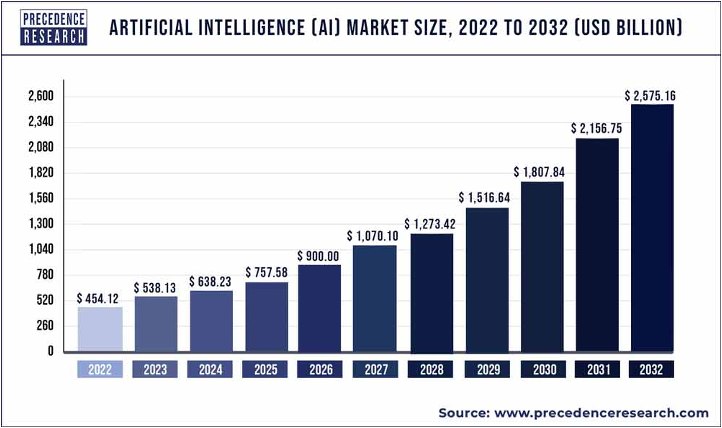
    Figure 1 illustrates a bar graph displaying the upward trajectory of the AI market in recent years, sourced from Precedence Research.

    The Indian government has invested heavily in developing the country’s digital infrastructure. In 2020, The Government of India increased its spending on Digital India to $477 million to boost AI, IoT, big data, cyber security, machine learning, and robotics. The artificial intelligence market is expected to witness significant growth in the BFSI(banking, financial services, and insurance) sectors on account of data mining applications, as there is an increase in the adoption of artificial intelligence solutions in data analytics, fraud detection, cybersecurity, and database systems.
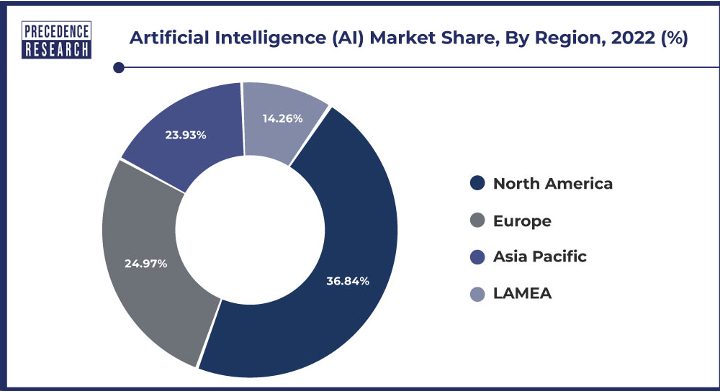
    Figure 2 illustrates a pie chart displaying the distribution of the Artificial Intelligence (AI) market share across various regions in 2022, sourced from Precedence Research.

    Types of AI Systems and Impact on Employment

    AI systems can be divided primarily into three types:

    Narrow AI: This is a specific form of artificial intelligence that executes dedicated tasks with intelligence. It represents the prevailing and widely accessible type of AI in today’s technological landscape.

    General AI: This represents an intelligence capable of efficiently undertaking any intellectual task akin to human capabilities. Aspiration driving the development of General AI revolves around creating a system with human-like cognitive abilities that enables autonomous, adaptable thinking. However, as of now, the realisation of a General AI system that comprehensively emulates human cognition remains elusive.

    Super AI: It is a level of intelligence within systems where machines transcend human cognitive capacities, exhibit superior performance across tasks, and possess advanced cognitive properties. This extends from the culmination of the General AI.

    Artificial intelligence has been incorporated into various aspects of our lives, ranging from virtual assistants on our mobile devices to advancements in customisation, cyber protection, and more. The growth of these systems is swift, and it is only a matter of time before the emergence of general artificial intelligence becomes a reality.

    According to a report by PwC, the global GDP is estimated to be 14% higher in 2030 due to the accelerating development and utilisation of AI, which translates to an additional $15.7 trillion. This growth can be attributed to:

    1. Improvements in productivity resulting from the automation of business processes (including the use of robots and autonomous vehicles).
    2. Productivity gains from businesses integrating AI technologies into their workforce (assisted and augmented intelligence).
    3. Increased consumer demand for AI-enhanced products and services, resulting in personalised and/or higher-quality offerings.

    The report suggests that the most significant economic benefits from AI will likely come from increased productivity in the near future. This includes automating mundane tasks, enhancing employees’ capabilities, and allowing them to focus on more stimulating and value-added work. Capital-intensive sectors such as manufacturing and transport are likely to experience the most significant productivity gains from AI, given that many operational processes in these industries are highly susceptible to automation. (2)

    AI will disrupt many sectors and lead to the creation of many more. A compelling aspect to observe is how the Indian Job Market responds to AI and its looming threat to job security in the future.

    The Indian Job Market

    As of 2021, around 487.9 million people were part of the workforce in India out of 950.2 million people aged 15-64, the second largest after China. While there were 986.5 million people in China aged 15-64, there were 747.9 million people were part of the workforce.

    India’s labour force participation rate (LFPR) at 51.3 per cent was less than China’s 76 per cent and way below the global average of 65 per cent.[3]

    The low LFPR can be primarily attributed to two reasons:

    Lack of Jobs

    To reach its growth potential, India is expected to generate approximately 9 million nonfarm jobs annually until 2030, as per a report by McKinsey & Company. However, analysts suggest that the current rate of job creation falls significantly below this target, with only about 2.9 million nonfarm jobs being added each year from 2013 to 2019. [4]

    During the COVID-19 pandemic, urban unemployment in India surged dramatically, peaking at 20.9% in the April-June 2020 quarter, coinciding with wage decline. Although the unemployment rate has decreased since then, full-time employment opportunities are scarce. Economists highlight a concerning trend where an increasing number of job-seekers, particularly the younger demographic, are turning towards low-paying casual jobs or opting for less stable self-employment options.[5]

     This shift in employment pattern occurs alongside a broader outlook for the Indian economy, which is projected to achieve an impressive growth rate of 6.5% by the fiscal year ending in March 2025. Despite this optimistic growth forecast, the employment landscape appears to be evolving, leading individuals towards less secure and lower-paying work options. This shift raises pertinent concerns about the job market’s quality, stability, and inclusivity, particularly in accommodating the aspirations and needs of India’s burgeoning young workforce.

    Low female labour participation

    In 2021, China boasted an estimated female population of 478.3 million within the 15-64 age bracket, with an active female labour force of approximately 338.6 million. In stark contrast, despite India having a similar demographic size of 458.2 million women in that age group, its female labour force was significantly smaller, numbering only 112.8 million.[6]

    This discrepancy underscores a notable disparity in India’s female labour force participation rate compared to China, despite both countries having sizeable female populations within the working-age bracket.[7]

    Along with unemployment, there was also a crisis of under-employment and the collapse of small businesses, which has worsened since the pandemic.

    AI vs the Indian Job Market

    The presence and implications of AI cast a significant shadow on a country as vast and diverse as India. Amidst the dynamic and often unpredictable labour market, where employment prospects have been uncertain, addressing the impact of AI poses a considerable challenge for employers. Balancing the challenges and opportunities presented by AI while prioritising job security for the workforce is a critical obstacle to overcome.

     The diverse facets of artificial intelligence (AI) and its capacity to transform industries across the board amplify the intricacy of the employment landscape in India. Employers confront the formidable challenge of devising effective strategies to incorporate AI technologies without compromising the livelihoods of their employees.

    As per the findings of the Randstad Work Monitor Survey, a staggering 71% of individuals in India exhibit an inclination towards altering their professional circumstances within the next six months, either by transitioning to a new position within the same organisation or by seeking employment outside it. Furthermore, 23% of the workforce can be classified as passive job seekers, who are neither actively seeking new opportunities nor applying for them but remain open to considering job prospects if a suitable offer arises.

    It also stated that at least half of Indian employees fear losing their jobs to AI, whereas the figure is one in three in developed countries. The growing concern among Indian workers stems from the substantial workforce employed in Business Process Outsourcing (BPO) and Knowledge Process Outsourcing (KPO), which are notably vulnerable to AI automation. Adding to this concern is India’s rapid uptake of AI technology, further accentuating the apprehension among employees.[8]

    India’s role as a global hub for outsourcing and its proficiency in delivering diverse services have amplified the impact of AI adoption. The country has witnessed a swift embrace of AI technologies across various industries, magnifying workers’ concerns regarding the potential ramifications of their job security.

    Goldman Sachs’ report highlights the burgeoning emergence of generative artificial intelligence (AI) and its potential implications for labour dynamics. The rapid evolution of this technology prompts questions regarding a possible surge in task automation, leading to cost savings in labour and amplified productivity. [9]

    The labour market could confront significant disruptions if generative AI delivers its pledged capabilities. Analysing occupational tasks across the US and Europe revealed that approximately two-thirds of the current jobs are susceptible to AI automation. Furthermore, the potential of generative AI to substitute up to one-fourth of existing work further underscores its transformative potential.

     Expanding these estimates on a global scale suggests that generative AI might expose the equivalent of 300 million full-time jobs to automation, signifying the far-reaching impact this technology could have on global labour markets.

    Recent advancements in artificial intelligence (AI) and machine learning have exerted substantial influence across various professions and industries, particularly impacting job landscapes in sectors such as Indian IT, ITeS, BPO, and BPM. These sectors collectively employ over five million people and are India’s primary source of white-collar jobs. [10]

    In a recent conversation with Business Today, Vardhman Jain, the founder and Vice Chairman of Access Healthcare, a Chennai-based BPO, highlighted the forthcoming impact of AI integration on the workplace. Jain indicated that AI implementation may cause customer service to be the sector most vulnerable to initial disruptions.

    Jain pointed out that a substantial portion of services provided by the Indian BPO industry is focused on customer support, including voice and chat functions, data entry, and back-office services. He expounded upon how AI technologies, such as Natural Language Processing, Machine Learning, and Robotic Process Automation, possess the potential to significantly disrupt and automate these tasks within the industry.

    While the discourse surrounding AI often centres on the potential for job displacement, several industry leaders argue that AI will not supplant human labour, but rather augment worker output and productivity.

    At the 67th Foundation Day celebration of the All-India Management Association (AIMA), NR Narayan Murthy, as reported by Business Today, conveyed a noteworthy message by asserting that AI is improbable to supplant human beings, as humans will not allow it to happen.

    Quoting Murthy’s statement from the report, “I think there is a mistaken belief that artificial intelligence will replace human beings; human beings will not allow artificial intelligence to replace them.” The Infosys founder stressed that AI has functioned as an assistive force rather than an outright replacement, enhancing human lives and making them more comfortable.[11]

    McKinsey Global Institute’s study, “Generative AI and the Future of Work in America,” highlighted AI’s capability to expedite economic automation significantly. The report emphasised that while generative AI wouldn’t immediately eliminate numerous jobs, it would enhance the working methods of STEM, creative, business, and legal professionals.[12]

     However, the report also underscored that the most pronounced impact of automation would likely affect job sectors such as office support, customer service, and food service employment.

    While the looming threats posed by AI are undeniable, its evolution is expected to usher in a wave of innovation, leading to the birth of new industries and many job opportunities. This surge in new industries promises employment prospects and contributes significantly to economic growth by leveraging AI capabilities.

    Changing employment Landscape

    Having explored different perspectives and conversations on AI, it has become increasingly evident that the employment landscape is poised for significant transformation in the years ahead. This prompts a crucial enquiry: Will there remain a necessity for human jobs, and are our existing systems equipped to ensure equitable distribution of the benefits fostered by this technology developments?

    • Universal Basic Income

    Universal basic income (UBI) is a social welfare proposal in which all citizens of a given population regularly receive minimum income in the form of an unconditional transfer payment, that is, without a means test or need to work, in which case it would be called guaranteed minimum income.

    Supporters of Universal Basic Income (UBI) now perceive it not only as a solution to poverty, but also as a potential answer to several significant challenges confronting contemporary workers: wage disparities, uncertainties in job stability, and the looming spectre of job losses due to advancements in AI.

    Karl Widerquist, a professor of philosophy at Georgetown University-Qatar and an economist and political theorist, posits that the influence of AI on employment does not necessarily result in permanent unemployment. Instead, he suggests a scenario in which displaced workers shift into lower-income occupations, leading to increased competition and saturation in these sectors.

    According to Widerquist, the initial effects of AI advancements might force white-collar workers into the gig economy or other precarious and low-paying employment. This shift, he fears, could trigger a downward spiral in wages and job security, exacerbating economic inequality.

     He advocates for a Universal Basic Income (UBI) policy as a response to the challenges posed by AI and automation. Widerquist argues that such a policy would address employers’ failure to equitably distribute the benefits of economic growth, fuelled in part by automation, among workers. He sees UBI as a potential solution to counter the widening disparity in wealth distribution resulting from these technological advancements.[13]

    A study conducted by researchers at Utrecht University, Netherlands, from 2017 to 2019 led to the implementation of basic income for unemployed individuals who previously received social assistance. The findings showcase an uptick in labour market engagement. This increase wasn’t solely attributed to the financial support offered by Universal Basic Income (UBI) but also to removing conditions—alongside sanctions for non-compliance—typically imposed on job seekers.[14]

    Specifically, participants exempted from the obligation to actively seek or accept employment demonstrated a higher likelihood of securing permanent contracts, as opposed to the precarious work arrangements highlighted by Widerquist.

     While UBI experiments generally do not demonstrate a significant trend of workers completely exiting the labour market, instances of higher payments have resulted in some individuals reducing their working hours. This nuanced impact showcases the varying effects of UBI on labour participation, highlighting both increased job security for some and a choice for others to adjust their work hours due to enhanced financial stability.

    In exploring the potential for Universal Basic Income (UBI), it becomes evident that while the concept holds promise, its implementation and efficacy are subject to multifaceted considerations. The diverse socioeconomic landscape, coupled with the scale and complexity of India’s population, presents both opportunities and challenges for UBI.

     UBI’s potential to alleviate poverty, enhance social welfare, and address economic disparities in a country as vast and diverse as India is compelling. However, the feasibility of funding such a program, ensuring its equitable distribution, and navigating its impact on existing welfare schemes requires careful deliberation.

    Possible Tax Solutions

    • Robot Tax

    The essence of a robot tax lies in the notion that companies integrating robots into their operations should bear a tax burden given that these machines replace human labour.

     There exist various arguments advocating for a robot tax. Initially, it aimed to safeguard human employment by dissuading firms from substituting humans with robots. Additionally, while companies may prefer automation, imposing a robot tax can generate government revenue to offset the decline in funds from payroll and income taxes. Another crucial argument favouring this tax is rooted in allocation efficiency: robots neither contribute to payroll nor income taxes. Taxing robots at a rate similar to human labour aligns with economic efficiency to prevent distortions in resource allocation.

    In various developed economies, such as the United States, the prevailing taxation system presents a bias toward artificial intelligence (AI) and automation over human workforce. This inclination, fueled by tax incentives, may lead to investments in automation solely for tax benefits rather than for the actual potential increase in profitability. Furthermore, the failure to tax robots can exacerbate income inequality as the share of labor in national income diminishes.

    One possible solution to address this issue is the implementation of a robot tax, which could generate revenue that could be redistributed as Universal Basic Income (UBI) or as support for workers who have lost their jobs due to the adoption of robotic systems and AI and are unable to find new employment opportunities.

    • Digital Tax

    The discourse surrounding digital taxation primarily centers on two key aspects. Firstly, it grapples with the challenge of maintaining tax equity between traditional and digital enterprises. Digital businesses have benefited from favorable tax structures, such as advantageous tax treatment for income derived from intellectual property, accelerated amortization of intangible assets, and tax incentives for research and development. However, there is a growing concern that these preferences may result in unintended tax advantages for digital businesses, potentially distorting investment trajectories instead of promoting innovation.

    Secondly, the issue arises from digital companies operating in countries with no physical presence yet serving customers through remote sales and service platforms. This situation presents a dilemma regarding traditional corporate income tax regulations. Historically, digital businesses paid corporate taxes solely in countries where they maintained permanent establishments, such as headquarters, factories, or storefronts. Consequently, countries where sales occur or online users reside have no jurisdiction over a firm’s income, leading to taxation challenges.

    Several approaches have been suggested to address the taxation of digital profits. One approach involves expanding existing frameworks, for instance, a country may extend its Value-Added Tax (VAT) or Goods and Services Tax (GST) to encompass digital services or broaden the tax base to include revenues generated from digital goods and services. Alternatively, there is a need to implement a separate Digital Service Tax (DST).

    While pinpointing the ultimate solution remains elusive, ongoing experimentation and iterative processes are expected to guide us toward a resolution that aligns with the need for a larger consensus. With each experiment and accumulated knowledge, we move closer to uncovering an approach that best serves the collective requirements.[15]

    Reimagining the Future

    The rise of Artificial Intelligence (AI) stands as a transformative force reshaping the industry and business landscape. As AI continues to revolutionise how we work and interact, staying ahead in this rapidly evolving landscape is not just an option, but a necessity. Embracing AI is not merely about adapting to change; it is also about proactive readiness and strategic positioning. Whether you’re a seasoned entrepreneur or a burgeoning startup, preparing for the AI revolution involves a multifaceted approach encompassing automation, meticulous research, strategic investment, and a keen understanding of how AI can augment and revolutionise your business. PwC’s report lists some crucial steps to prepare one’s business for the future and stay ahead. [16]

    Understand AI’s Impact: Start by evaluating the industry’s technological advancements and competitive pressure. Identify operational challenges AI can address, disruptive opportunities available now and those on the horizon.

    Prioritise Your Approach: Determine how AI aligns with business goals. Assess your readiness for change— are you an early adopter or follower? Consider feasibility, data availability, and barriers to innovation—Prioritise automation and decision augmentation processes based on potential savings and data utilisation.

    Talent, Culture, and Technology: While AI investments might seem high, costs are expected to decrease over time. Embrace a data-driven culture and invest in talent like data scientists and tech specialists. Prepare for a hybrid workforce, combining AI’s capabilities with human skills like creativity and emotional intelligence.

    Establish Governance and Trust: Trust and transparency are paramount. Consider the societal and ethical implications of AI. Build stakeholder trust by ensuring AI transparency and unbiased decision-making. Manage data sources rigorously to prevent biases and integrate AI management with overall technology transformation.

     Getting ready for Artificial Intelligence (AI) is not just about new technology; it is an intelligent strategy. Understanding how AI fits one’s goals is crucial; prioritising where it can help, building the right skills, and setting clear rules are essential. As AI becomes more common, it is not about robots taking over, but humans and AI working together. By planning and embracing AI wisely, businesses can stay ahead and create innovative solutions in the future.

    References:

    [1] Precedence Research. “Artificial Intelligence (AI) Market.” October 2023. Accessed November 14, 2023. https://www.precedenceresearch.com/artificial-intelligence-market

    [2] Pricewaterhouse Coopers (PwC). “Sizing the prize, PwC’s Global Artificial Intelligence Study.” October 2017. Accessed November 14, 2023. https://www.pwc.com/gx/en/issues/data-and-analytics/publications/artificial-intelligence-study.html#:~:text=The%20greatest%20economic%20gains%20from,of%20the%20global%20economic%20impact.

    [3] World Bank. “Labor force, total – India 2021.” Accessed November 12, 2023. https://data.worldbank.org/indicator/SL.TLF.TOTL.IN?locations=IN

    [4] McKinsey & Company. “India’s Turning Point.” August 2020. https://www.mckinsey.com/~/media/McKinsey/Featured%20Insights/India/Indias%20turning%20point%20An%20economic%20agenda%20to%20spur%20growth%20and%20jobs/MGI-Indias-turning-point-Executive-summary-August-2020-vFinal.pdf

    [5] Dugal, Ira. “Where are the jobs? India’s world-beating growth falls short.” Reuters, May 31, 2023. Accessed November 14, 2023. https://www.reuters.com/world/india/despite-world-beating-growth-indias-lack-jobs-threatens-its-young-2023-05-30/

    [6] Government of India. Ministry of Labour and Employment. “Labour and Employment Statistics 2022.” July 2022. https://dge.gov.in/dge/sites/default/files/2022-08/Labour_and_Employment_Statistics_2022_2com.pdf

    [7] Deshpande, Ashwini, and Akshi Chawla. “It Will Take Another 27 Years for India to Have a Bigger Labour Force Than China’s.” The Wire, July 27, 2023. https://thewire.in/labour/india-china-population-labour-force

    [8] Randstad. “Workmonitor Pulse Survey.” Q3 2023. https://www.randstad.com/workforce-insights/future-work/ai-threatening-jobs-most-workers-say-technology-an-accelerant-for-career-growth/

    [9] Briggs, Joseph, and Devesh Kodnani. “The Potentially Large Effects of Artificial Intelligence on Economic Growth.” Goldman Sachs, March 26, 2023. https://www.key4biz.it/wp-content/uploads/2023/03/Global-Economics-Analyst_-The-Potentially-Large-Effects-of-Artificial-Intelligence-on-Economic-Growth-Briggs_Kodnani.pdf

    [10] Chaturvedi, Aakanksha. “‘Might take toll on low-skilled staff’: How AI can cost BPO, IT employees their jobs.” Business Today, April 5, 2023. https://www.businesstoday.in/latest/corporate/story/might-take-toll-on-low-skilled-staff-how-ai-can-cost-bpo-it-employees-their-jobs-376172-2023-04-05

    [11] Sharma, Divyanshi. “Can AI take over human jobs? This is what Infosys founder NR Narayan Murthy thinks.” India Today, February 27, 2023. https://www.indiatoday.in/technology/news/story/can-ai-take-over-human-jobs-this-is-what-infosys-founder-nr-narayan-murthy-thinks-2340299-2023-02-27

    [12] McKinsey Global Institute. “Generative AI and the future of work in America.” July 26, 2023. https://www.mckinsey.com/mgi/our-research/generative-ai-and-the-future-of-work-in-america

    [13] Kelly, Philippa. “AI is coming for our jobs! Could universal basic income be the solution?” The Guardian, November 16, 2022. https://www.theguardian.com/global-development/2023/nov/16/ai-is-coming-for-our-jobs-could-universal-basic-income-be-the-solution

    [14] Utrecht University. “What works (Weten wat werkt).” March 2020. https://www.uu.nl/en/publication/final-report-what-works-weten-wat-werkt

    [15] Merola, Rossana. “Inclusive Growth in the Era of Automation and AI: How Can Taxation Help?” *Frontiers in Artificial Intelligence* 5 (2022). Accessed November 23, 2023. https://www.frontiersin.org/articles/10.3389/frai.2022.867832

    [16]  Rao, Anand. “A Strategist’s Guide to Artificial Intelligence.” PwC, May 10, 2017.https://www.strategy-business.com/article/A-Strategists-Guide-to-Artificial-Intelligence
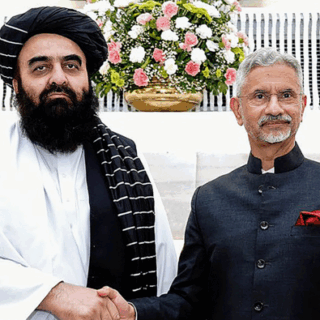
     

  • Between the Devil & the Deep Blue Sea: Tackling India’s Internal Security Challenges

    Between the Devil & the Deep Blue Sea: Tackling India’s Internal Security Challenges

    Our ability to develop and prosper, both as a society and a nation, are wholly dependent on the smooth functioning of our democratic institutions and their ability to faithfully uphold the tenets laid down in our Constitution.

    Our progress since Independence has not been without bumps along the road. Not only has the detritus of Partition haunted us, but we have also had to confront antagonistic neighbours intent on grabbing territory, creating divisions and curtailing our economic development and influence around the world. They have tried to do this by resorting to conventional operations, grey zone warfare, including using terrorist groups. In addition, we’ve had to overcome our internal troubles as well, what V.S. Naipaul referred to as a “million mutinies”, rebellions and insurgencies, for the most part, along our border regions. Undertaken by our disaffected citizens, in most cases with external support, aspiring to establish their own independent homelands because of ideological or religious motivations or out of a sense of frustration at being treated as second-class citizens within their own country.

    The response of the State and Central Governments to these internal challenges has invariably been to initially attempt some sort of half-hearted political accommodation or initiative aimed at preserving the status quo and giving themselves political advantage. Once this fails, as it is bound to, the Central Armed Police Forces or the Army are brought in, depending on the levels of violence, to neutralise the insurgency and regain political and administrative control. This can take anywhere from a decade to three or more. The Mizoram Insurgency, for example, commenced in 1966 and was successfully terminated with the agreement being signed between opposing sides in 1986, while the Punjab Insurgency lasted from the mid-80s to the mid-90s, though there are efforts to restart it.

    Unfettered exploitation of natural resources and minerals from those resource-rich regions by large corporations and their political acolytes has led to the displacement of tribals from their homelands and added to their economic woes. Given that the political, security and administrative establishments are wholly compromised and corrupt, the tribals have alleged that they have had little choice but to take up arms in an effort to break the nexus and get their rightful dues.

    We’ve had similar problems in our North-eastern States of Assam, Nagaland, Manipur and Tripura, which continue to persist in fits and starts, aided, and abetted by China. We have also faced a long-running Maoist rebellion in our hinterland, organised and conducted by tribals from those regions. Unfettered exploitation of natural resources and minerals from those resource-rich regions by large corporations and their political acolytes has led to the displacement of tribals from their homelands and added to their economic woes. Given that the political, security and administrative establishments are wholly compromised and corrupt, the tribals have alleged that they have had little choice but to take up arms in an effort to break the nexus and get their rightful dues.

    The issue we seem to have failed to comprehend is the transformation that has taken place in understanding what constitutes the basic elements of national security.

    Fortunately, good sense prevailed within the political and security establishment, and the military, other than limited support in casualty evacuation and surveillance by the Air Force was completely kept out of ant-Maoist operations. The military’s job is not to protect marauding corporates but our sovereignty from the depredations of inimical elements, both internal and external. The dynamics of the Military’s involvement in countering the Maoist insurgency would have undoubtedly had serious repercussions within the military’s functioning, and over a period of time, would have adversely impacted our existing governance structures, much in the manner that some of our neighbours have been so affected. The issue we seem to have failed to comprehend is the transformation that has taken place in understanding what constitutes the basic elements of national security. Until the end of the Cold War and before the advent of globalisation, national security had purely military and economic connotations with the stress on territorial control. This was achieved by controlling the flow of information, goods and services and the movement of people through various means, including physical barriers. The advent of the Info-Tech revolution and the consequent move towards globalisation made it increasingly difficult for governments to control access to and the free flow of information, ideas, digital services, and finances.

    As Professors, Wilson and Donan, note in their book, ‘Border Identities: Nation and State at the International Frontiers’ (UK, Cambridge: University Press, 1998), “International borders are becoming so porous that they no longer fulfil their historical role as barriers to the movement of goods, ideas and people and as markers of the extent of the power of the state.”

    Perforce, governments the world over have been forced into the realisation, for many at great cost, that it has become impossible to lock up people or ideas and isolate them from the global discourse. Thus, in the context of the security of the state, more than just ensuring territorial integrity, it is the security of the people through sustainable human development that is non-negotiable. We are today at a stage where, while traditional physical threats continue to pose serious challenges, especially from China and Pakistan, it is the non-military threats that are more dominant. These arise, on one side, from the host of cross-border insurgencies that afflict us because of ethnic, ideological, economic or religious conflicts, and on the other side, because of policies that emanate from politics of exclusion and economic exploitation. In both cases endemic corruption due to the nexus between the political-bureaucracy-security establishment and criminal elements involved in the smuggling of drugs and weapons and human trafficking remains the common thread. As a result, we not only face the threat of violence but also have to confront the increasing spread of religious radicalization.

    For example, in the Northeast, as my colleagues, Lt Gen J S Bajwa (Retd), Maj Gen N G George (Retd) and I, have pointed out in our paper, ‘Makeover of Rainbow Country: Border Security and connecting the Northeast’ (Manekshaw Paper No 62, Centre for Land Warfare Studies, 2016), “we are faced with a trans-border insurgency affecting our states that has metamorphosed into a serious law and order issue due to trans-national criminal syndicates having established linkages with armed gangs that are opposed to the existing political status-quo. This has also been accentuated with these groups being used by China and Pakistan for meeting their own nefarious designs…. Criminal syndicates have extended their reach to include complete control and dominance over all smuggling activities, be it of small arms, psychotropic drugs, livestock, or human trafficking. This economic clout has enabled them to subvert elements within the political parties, the bureaucracy, and the security establishment….”. Thus, it appears that the defining characteristic of on-going insurgencies is that they are nothing more than “businesses”, using all means at their disposal to make a profit. Thus, we see that has been that they have never crossed the threshold of violence or mass mobilisation that would lead to the next logical phase; from insurgency to civil war, where insurgent forces take on the military in conventional operations. These regions are further adversely impacted by poor governance, ineffective policing, agonisingly slow judicial processes, and unchecked criminal activity. The ability of the local populace to oppose the injustices heaped on them has been very subtly neutralised using the Security Forces and Police with wide ranging powers, including in some regions the use of AFSPA, to maintain the status quo. Our ability to develop and prosper, both as a society and a nation, are wholly dependent on the smooth functioning of our democratic institutions and their ability to faithfully uphold the tenets laid down in our Constitution. This is not feasible without sustained focus on providing high quality of universal education, emphasis on social justice and inclusion and an unvarying commitment to ensuring accountability and the rule of law. Focus on infrastructure development in border areas as well as ensuring free and fair elections, greater accountability and breaking the existing nexus between criminal groups and the local political and administrative establishment and unethical corporate houses. Clearly, all stakeholders have to accept that resorting to the use of force in order to ensure a stable security environment is an unviable option with very limited positives.

    The ability of the local populace to oppose the injustices heaped on them has been very subtly neutralised using the Security Forces and Police with wide ranging powers, including in some regions the use of AFSPA, to maintain the status quo.

    Finally, a word with regard to countering terrorist actions such as the one that targeted Mumbai on 26 November 2008. Much has changed since then with our major cites becoming far less vulnerable thanks to a quantum enhancement of the coastal surveillance infrastructure as well as better coordination, integration and demarcation of responsibilities amongst the stakeholders such as the Indian Navy, Coast Guard, local police and the intelligence agencies. In addition, the establishment of integrated National Security Guards (NSG) hubs in Mumbai and other metropolises ensures much speedier response as well as better coordination with local police and their Special Weapons and Tactics (SWAT) Teams. Efforts have also been directed to enhancing training of personnel and upgrading technical capabilities.

    Unfortunately, politics has played a major spoilsport and two important initiatives planned in the aftermath of the Mumbai attack, the establishment of the National Counter Terrorism Centre (NCTC) and its intelligence data exchange architecture (NATGRID) have not fully fructified. There can be little doubt that these initiatives, if pushed through as visualised, would have been of immense utility in ensuring our ability to prevent and respond to terror threats in a timely and effective manner. To conclude, it would be fair to suggest that we face an extremely difficult and challenging internal security environment that is deeply entwined in, and impacted by, our external threat perceptions. Of necessity, we must adopt robust policies, with the requisite capabilities, to be able to respond appropriately so as to be perceived as a ‘hard state’ by our neighbours. This would give us the necessary space andenvironment to push through policies focussing on sustainable human development, which is the only feasible option to ameliorate our internal security challenges.


    Feature Image Credit: the diplomat

  • India’s National River Linking Project: Will it work or end up a Disaster?

    India’s National River Linking Project: Will it work or end up a Disaster?

    In October, India’s ambitious scheme to build a 230-kilometre canal between the Ken and Betwa rivers was finally approved. It’s the first of many projects planned for implementation under the National River Linking Project (NRLP), which aims to connect 37 Himalayan and peninsular rivers across the country via some 3,000 reservoirs and 15,000 kilometres of dams and canals. The government has touted the NRLP, which was first mooted more than four decades ago, as the solution to drought-proofing the country. But new research suggests the US$168 billion project could actually make the drought worse. 

    – From a study by the ‘Geographical‘ – Dec 2023.


    I keep hearing that Modiji is going to unveil the often-spoken and then shelved Rivers Link Up Scheme as his grand vision to enrich the farmers and unite India. In a country where almost two-thirds of the agricultural acreage is rainfed, water is wealth. Telangana has shown the way. Once India’s driest region has in just eight years been transformed into another granary of India. Three years ago, he had promised to double farmers’ incomes by 2022, and he has clearly failed. He now needs a big stunt. With elections due in 2024, he doesn’t even have to show any delivery. A promise will do for now.

    This is also a Sangh Parivar favourite, and I am quite sure the nation will once again set out to undertake history’s greatest civil engineering project by seeking to link all our major rivers. It will irretrievably change India. If it works, it will bring water to almost every parched inch of land and just about every parched throat in the land.

    On the other hand, if it doesn’t work, Indian civilization as it exists even now might then be headed the way of the Indus Valley or Mesopotamian civilizations destroyed by a vengeful nature, for interfering with nature is also a two-edged sword. If the Aswan High Dam turned the ravaging Nile into a saviour, the constant diversion of the rivers feeding Lake Baikal have turned it into a fast-receding and highly polluted inland sea, ranking it as one of the world’s greatest ecological disasters. Even in the USA, though the dams across the mighty Colorado have turned it into a ditch when it enters Mexico, California is still starved for water.

    I am not competent to comment on these matters, and I will leave this debate for the technically competent and our perennial ecological Pooh-Bahs. But the lack of this very debate is cause for concern. It is true that the idea of linking up our rivers has been afloat for a long time. Sir Arthur Cotton was the first to propose it in the 1800’s. The late KL Rao, considered by many to be an outstanding irrigation engineer and a former Union Minister for Irrigation, revived this proposal in the late 60’s by suggesting the linking of the Ganges and Cauvery rivers. It was followed in 1977 by the more elaborate and gargantuan concept of garland canals linking the major rivers, thought up by a former airline pilot, Captain Dinshaw Dastur. Morarji Desai was an enthusiastic supporter of this plan.

    The return of Indira Gandhi in 1980 sent the idea back into dormancy, where it lay all these years, till President APJ Abdul Kalam revived it on the eve of the Independence Day address to the nation in 2002. It is well known that Presidents of India only read out what the Prime Ministers give them, and hence, the ownership title of Captain Dastur’s original idea clearly was vested with Atal Behari Vajpayee.

    India’s acute water problem is widely known. Over sixty per cent of our cropped areas are still rain-fed, much too abjectly dependent on the vagaries of the monsoon. The high incidence of poverty in certain regions largely coincides with the source of irrigation, clearly suggesting that water for irrigation is integral to the elimination of poverty. In 1950-51, when Jawaharlal Nehru embarked on the great expansion of irrigation by building the “temples of modern India” by laying great dams across our rivers at places like Bhakra Nangal, Damodar Valley and Nagarjunasagar, only 17.4% or 21 million hectares of the cropped area of 133 million hectares was irrigated. That figure rose to almost 35% by the late 80s, and much of this was a consequence of the huge investment by the government in irrigation, amounting to almost Rs. 50,000 crores.

    Ironically enough, this also coincided with the period when water and land revenue rates began to steeply decline to reach today’s zero level. Like in the case of power, it seems that once the activity ceased to be profitable to the State, investment too tapered off.

    The scheme is humongous. It will link the Brahmaputra and Ganges with the Mahanadi, Godavari and Krishna, which in turn will connect to the Pennar and Cauvery. On the other side of the country, it will connect the Ganges, Yamuna, with the Narmada, traversing in part the supposed route of the mythical Saraswathi. This last link has many political and mystical benefits, too.

    There are many smaller links as well, such as joining the Ken and Betwa rivers in MP, the Kosi with the Gandak in UP, and the Parbati, Kalisindh and Chambal rivers in Rajasthan. The project, when completed, will consist of 30 links, with 36 dams and 10,800 km of canals diverting 174,000 million cubic meters of water. Just look at the bucks that will go into this big bang. It was estimated to cost Rs. 560,000 crores in 2002 and entail the spending of almost 2% of our GNP for the next ten years. Now, it will cost twice or more than that, but our GDP is now three times more, and it might be more affordable and, hence, more tempting to attempt.

    The order to get going with the project was the output of a Supreme Court bench made up of then Chief Justice BN Kirpal and Justices KG Balakrishnan and Arjit Pasayat, which was hearing a PIL filed by the Dravida Peravai, an obscure Tamil activist group. The learned Supreme Court sought the assistance of a Senior Advocate, Mr Ranjit Kumar, and acknowledging his advice, recorded: “The learned Amicus Curiae has drawn our attention to Entry 56 List of the 7th Schedule to the Constitution of India and contends that the interlinking of the inter-State rivers can be done by the Parliament and he further contends that even some of the States are now concerned with the phenomena of drought in one part of the country, while there is flood in other parts and disputes arising amongst the egalitarian States relating to sharing of water. He submits that not only these disputes would come to an end but also the pollution levels in the rivers will be drastically decreased, once there is sufficient water in different rivers because of their inter-linking.”

    The only problem with this formulation is that neither the learned Amicus Curiae nor the learned Supreme Court are quite so learned as to come to such sweeping conclusions.

    Feature Image Credit: geographical.co.uk

    Opinions expressed are that of the author and do not reflect TPF’s position on the issue.

  • Social and Economic Aspects of Caste Survey in Bihar

    Social and Economic Aspects of Caste Survey in Bihar

    The need for caste census today is because after independence we adopted the top-down development model. It was thought that the development benefits would flow from the upper strata to the lower ones. But this hope has been belied with the well-off capturing most of the benefits, leaving little for the marginalized sections who are lagging behind in development.
    ————-

    The release of the figures of the caste survey in Bihar has immediately led to the heating up of politics in the entire country. There is a demand for conducting a caste survey in many states, including Uttar Pradesh, Madhya Pradesh, Rajasthan and Maharashtra. In Karnataka, the demand is to make public the data of the caste survey conducted in 2015.

    Poverty and Population Increase

    According to the Bihar survey report, the largest population in the state belongs to the extremely backward class (EBC), constituting about 36 per cent of the total population. While the Report clarifies the situation in Bihar, it does not tell us the situation in the entire country. That would require a national survey. Therefore, now the pressure will increase on the Central Government to conduct and make public the data at the national level. That is the only way the caste composition of the total population can be known. This is required to make policies which can enable equitable shares in employment and education for different sections of the population.

    The increase in the proportion of extremely backward classes in the total population of Bihar should have been expected because of the prevailing poverty among them. Those who are poor have more children due to several reasons, like lack of education and awareness. Most importantly, for their social security in old age. The poor do not have savings; hence children constitute their old-age social security. They have more children to ensure at least one child survives till their old age. Also, more children mean more earning hands in the family. As people become more prosperous, people produce fewer children. The economic condition of the middle class and the well-off are relatively better, so they have fewer children, and their population grows less.

    The question arises: what is the likely consequence? Upper caste people are worried that since extremely backward castes constitute a higher proportion of the population, their demand for reservation will increase.

    Growing Unemployment a Crucial Factor

    I believe that if we had given more importance in employment and education to the extremely backward castes from the beginning, today’s situation would not have arisen. Reservation makes no difference if jobs are available in sufficient numbers. Reservation becomes critical when employment generation is weak. When there is a lack of adequate employment, a dispute arises over reservations as to who will get how much employment. At present, due to large unemployment among the educated youth and few available government jobs, the demand for reservations has increased.

    The problem has been growing because, after independence, we have adopted the top-down and trickle-down policy. The result has been that the upper sections of society have cornered most of the benefits while the marginalized sections have received very little benefits. Disparities have grown, and so have expectations, thereby raising the level of conflict in society. The use of more advanced technology in every sector has displaced labour and contributed to increasing unemployment. The Agriculture sector, which has the most employment (46%) in our country, has seen increased use of tractors, harvester combines, threshers, potato digging machines, etc., thereby reducing the need for employment and displacing workers. This is also true of manufacturing and services, like banking.

    Impact of Government Policies

    The government is also fueling this change by promoting the growth of the capital-intensive organized sector at the expense of the unorganized sector (which employs 94% of the workers). For example, the government reduced the tax rates on the corporate sector and rolled out the PLA scheme while cutting allocations to the National Rural Employment Guarantee Scheme. Allocations to education and health sectors have also been kept low and cut, even though both these sectors generate more employment. Due to these policies, most of the investments are being made in big projects, like railway freight corridors, where human labour is being replaced by big machines.

    The result is rising inequality, frustration, alienation and sharpening social conflict. Therefore, the parties pursuing social justice politics for the lower classes and the people themselves have been demanding greater reservation for the backward castes according to their proportion in the population. With Bihar’s caste survey becoming public, the demand for conducting such surveys in other states and nationally will become more vociferous. The demand will also arise that the maximum limit of reservation, which is fixed at 50 per cent by the Supreme Court, should be increased. But reservations will be only for a few million jobs while the need is for work for tens of millions. So, the real issue is the generation of enough employment and good education for the children of the poor.

    Political Implications

    Opponents of caste surveys argue that castes with a lower proportion in the population will start competing to increase their population by bypassing family planning policies. But I don’t accept this. Around the world, as family prosperity increases and education levels rise, people have fewer children. The well-off families with less share in the population are already sending their children abroad for education and employment, which may accelerate.

    Bihar’s caste survey data is bound to impact national politics. All political parties would like to use it in their own way, and Mandal-Kamandal politics will intensify in the country. But, the situation for BJP has changed compared to the 1990s since in the last few elections, it has wooed the votes of backward castes. The issue of reservation and demand for an increase in the maximum prescribed reservation limit will intensify. The ruling party will be reluctant, but in view of the electoral arithmetic, it will also not oppose it vociferously. It will hope that the Supreme Court will not agree to increase the limit. Further, it will try to divert the public attention towards issues like Sanatan dharma, terrorism and threats from China-Pakistan.
    The lesson is that when socially correct policies are not implemented in a timely manner, social strife and alienation spread, and the nation is forced to implement sub-optimal policies.

    This is a translation of the article in Hindi published earlier in Amar Ujala.