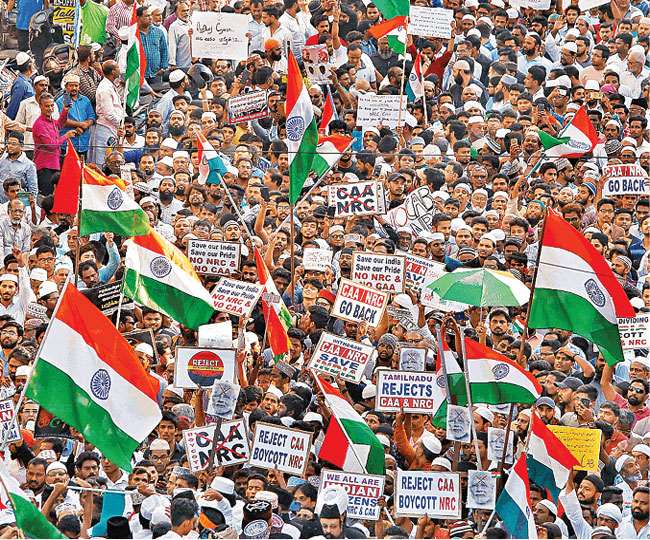
It is indeed difficult to comprehend this Government’s precipitous push for the Citizen Amendment Act (CAA), in the manner that it has, at a time when the economy is on the edge of a precipice and it has yet to satisfactorily resolve serious issues like Kashmir that it has on its plate. True, illegal immigration is of huge concern around the world, and even more so in our case as the issue has been further complicated by the deleterious effects of Partition. However much the young today may wish away the past, we are still bound by it. Regardless of whether one subscribes to the “Two Nation Theory” or not, Pakistan emerged as the homeland for Muslims of the Sub Continent while India came to be regarded as the home for those dispossessed because of their religious affiliations from those areas.
One tends to forget that the Preamble to the Constitution, when first adopted, described India as a “Sovereign Democratic Republic” in which “liberty of thought, expression, belief, faith and worship” were guaranteed. Socialism and secularism were only added to our preamble as an afterthought by the Congress Government of Mrs. Gandhi in 1976 through the 42nd Amendment, obviously to gain political advantage and protect her own minority vote bank. In a sense that has now come to haunt us as the BJP proceeds to curry benefit for its Hindutva plank, as the CAA clearly attempts to do, though ostensibly it is aimed at correcting an old wrong.
Religious minorities in both countries were given a semblance of relief with the signing of the Nehru-Liaquat Agreement of 1950 that required both countries to protect minorities. While Indian Muslims, among others, continued to enjoy the fruits of democracy in a secular republic, the same could not be said for Pakistan, and subsequently Bangladesh, after its formation. Minorities there continued to be discriminated and persecuted against on religious grounds, forcing lakhs of Hindus and Sikhs to flee across the border. The Government of India’s subsequent refusal to grant citizenship to the fleeing Hindus and Sikhs, as had been publicly promised by both Mahatma Gandhi and the Congress Government in 1947, left them stateless and in penury and was certainly a dark chapter in our history.
Subsequently, after 1971, the issue was further complicated as Bangladeshi Muslims too crossed over in an attempt to improve their own economic prospects. It is also an undisputable fact that much of this flow of illegal migrants was aided by Governments then in power in Assam and Bengal that were shortsighted enough to believe that this flood of illegal immigrants would increase their vote banks and allow them to subvert elections. It is ironical that the very parties involved in this immoral and criminal act are today at the forefront of the Anti CAA protests. While the Nellie Massacre and the Assam Student Agitation brought a halt to this farce in Assam in the early Eighties, it has allegedly continued unabated in Bengal even to this day.
Politicians, activists and media persons who today question the extent of illegal immigration, especially from Bangladesh, would do well to study the extremely balanced and insightful “Report on Illegal Migration into Assam Submitted to The President” by Lt Gen S K Sinha (Retd), then Governor of Assam, on 8 Nov 1998. As most readers would be aware while the extent of actual illegal immigration into Bengal and other states is not available, anecdotal evidence suggests that it has been extensive and has impacted the social fabric of these States. Indeed, most of those who question attempts to curb or quantify the extent of illegal immigration are being deliberately obtuse and intent on promoting a false narrative motivated more by their bias against the current Government and their need to hide their own involvement in promoting this flood of immigrants.
The Assam Accord signed by the Congress under Mr. Rajiv Gandhi in 1985 required a process to be initiated for the “detection and deletion of foreigners.” In this context under the aegis of the Supreme Court action was initiated in Assam to update the National Register of Citizens (NRC) that had been prepared in 1951 by recording particulars of all the persons enumerated during that Census. This update was to include the names of those persons (or their descendants) who appear in the NRC, 1951, or in any of the Electoral Rolls up to the midnight of 24th March, 1971, or in any one of the other admissible documents issued up to then, which would prove their presence in Assam or in any part of India on or before 24th March, 1971. As per Prateek Hajela, State Coordinator of the NRC Project, “A total of 3.1 Crore persons have been found eligible for inclusion in the final NRC list, leaving out 19.,06 Lakh persons including those who did not submit their claims.” They now have the right to file an appeal before Foreigners Tribunals.
This implies that once the process of appeals is complete, those declared as illegal immigrants, as defined by the Citizenship Act of 1955, will have to be either imprisoned or deported under the Foreigners Act, 1946 or the Passport Act, 1920. However, this has placed the Central Government and the Assam Government on the horns of a dilemma because the vast majority of those who are presently ineligible for inclusion in the NRC are Hindus. Logically speaking, deporting these people would be a gross miscarriage of justice given that they fled their country of origin due to religious persecution. In anticipation of this problem the Government amended the latter two Acts in 2015, thereby exempting Hindus, Sikhs, Buddhists, Jains, Parsis and Christians from Afghanistan, Bangladesh and Pakistan, who had fled to India before 31 Dec 2014 because of religious persecution, from being deported. A natural corollary to this action would have been to amend the Citizenship Act 1955 to grant citizenship to these groups in an earlier timeframe, rather than the eleven years that the Act otherwise requires. This is exactly what the Government has done with the CAA, 2019. That such an action will also help further its own political agenda is undeniable, but that is exactly how all politicians in power work.
All of this goes against the interests of the Assamese who view the issue in purely ethnic terms. Their protests, therefore, are against inclusion of Bengalis as citizens regardless of their religious affiliations as they believe that they are being swamped numerically, culturally and linguistically. One fails to understand why the Central Government, which has the benefit of its own party in power in the State, was unable to anticipate the likely consequences of its actions. Obviously, either both the central and state leadership ignored or misunderstood the signs, but whatever be the case the Party has certainly harmed its own cause and faces an uphill battle in regaining popular support. In the context of the rest of the country however, the adverse reaction that this step has drawn is clearly political in nature, initiated by those who fear they will lose out at the hustings because of this.
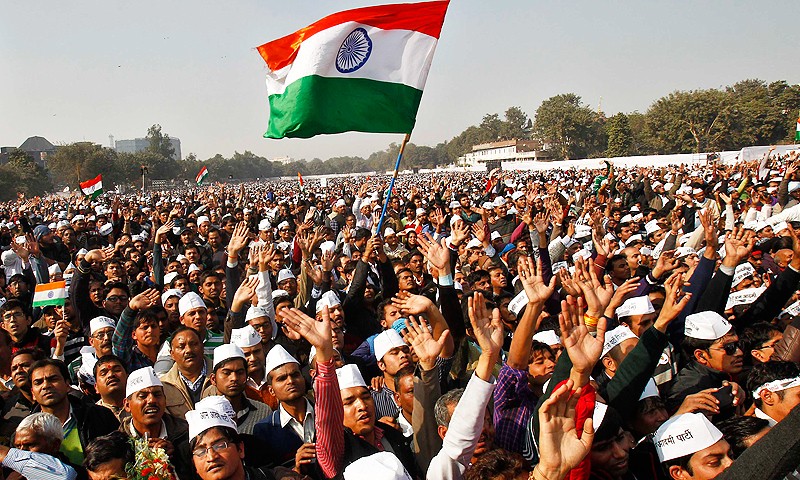
The opposition narrative that has been propagated is along two thrust lines. Firstly, it appeals to the liberal secular mindset, which already sees this government as autocratic and fascist in nature, that the CAA is discriminatory, as it leaves out Muslims from those countries, thereby eroding our secular identity, and is therefore unconstitutional. Secondly, it creates a fear psychosis among the minority Muslim population by linking it to the NRC and suggesting that it will be used by this Government to harm their community. The Police by their highhanded behaviour and excessive use of force in dealing with the protests have only reinforced this narrative.
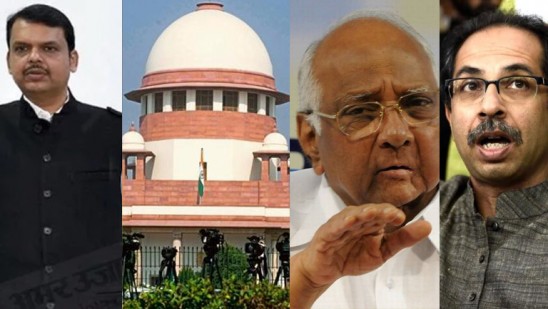
While it is for the Courts to decide on its constitutionality, prima facie the argument seems to lack substance because the Act is only applicable to non- citizens who are not covered by the provisions of our Constitution and in effect corrects an earlier wrong. Moreover, if legislation is to be treated as unconstitutional purely on the basis that it is discriminatory in nature, then how does one justify existing laws on the subject and is it not time for the uniform civil code to replace all our other such Acts in place? Clearly, for those who ignore these arguments, Bertrand Russell’s belief that “Men are born ignorant not stupid. Education makes them stupid,” appears to have some relevance.
With regard to the fears that have brought many of our Muslim brethren to take to the streets, the issues involved appear to be more complex. There can be no two views that the updating of the NRC is a legitimate exercise that every State undertakes to protect its sovereignty. No State can let its ethnic, religious or linguistic profile be overturned by illegal immigration as that will adversely impact society. However, the NRC can also not be used by any government as a tool for harassment. This is unfortunately where this Government loses out because over a period of time its actions have come to be viewed with suspicion by the public at large and specifically by our minority population. There is a huge trust deficit and people tend to be extremely suspicious of its motives. Moreover, now that the Ram Temple issue has been more or less settled, there is the fleeting suspicion that this Government now intends to use NRC to further its Hindutva agenda. That apart, there have also been numerous occasions on which this community has faced unprovoked attacks, with little being done to assuage their feelings, especially as perpetrators have rarely been brought to justice. It is also a telling comment on their treatment that violence during these ongoing protests has primarily been restricted to states that are run by the BJP.
This has allowed the opposition parties to cynically peddle a blatantly false narrative and spin it in a manner that gives it enough credence to coalesce not just minority groups in their favour, but also others who have been distrustful of the way this government functions, with little regard for transparency, dialogue or rule of law. In the meantime the Modi Government has now decided to change tack, put the NRC on the backburner and proceed forward with the updating of the National Population Register (NPR) that only records the list of people in the country, instead. However, this move is also unlikely to be taken kindly since for all intents and purposes, it is a precursor to the NRC and provides relevant data that it can use.
The way forward in resolving this contentious situation can hardly be the one that results in further confrontation or adds to the distrust quotient. Mr. Modi would be well advised to take a step back and invite political parties and civil society for a fresh dialogue on all touchy issues. In addition they must look at including appropriate provisions to the guidelines for conduct of NPR/NRC that statutorily ensure that minorities and the poor are not harassed during the process. In any case the Assam NRC process and its final results show that despite our best efforts, deportation of illegals is a very distant possibility. It may therefore be a far better alternative to adopt a more practical and less contentious approach. One such option could be that those identified as foreigners continue to be permitted to remain and work here, without probably being given the right to vote or acquire property. However, their children born here should automatically be made citizens as per existing laws.
The author, a military veteran, is Senior Visiting Fellow at The Peninsula Foundation, Chennai and a Consultant at ORF, New Delhi. Views expressed are the author’s own.