Author: Deepak Sinha

  • Chinese Roulette: Which Way Will the Wind Blow?

    Chinese Roulette: Which Way Will the Wind Blow?

    The 2022 campaigning season along the Sino-Indian Line of Actual Control (LAC) opens up in just a matter of months. By all reckoning, the situation is likely to continue remaining extremely volatile, uncertain and tense. While some believe that it may have been this Government’s abrogation of Article 370 and the Home Minister’s statement in Parliament that invited a strong response from the Chinese, the truth is that we are yet to fully comprehend the Chinese leadership’s motivation for damaging, if not jettisoning, over three decades of Confidence Building Measures (CBMs) and growing economic ties, though the latter seems not to have been impacted in the short term, by resorting to unprovoked aggressive action in Eastern Ladakh and elsewhere.

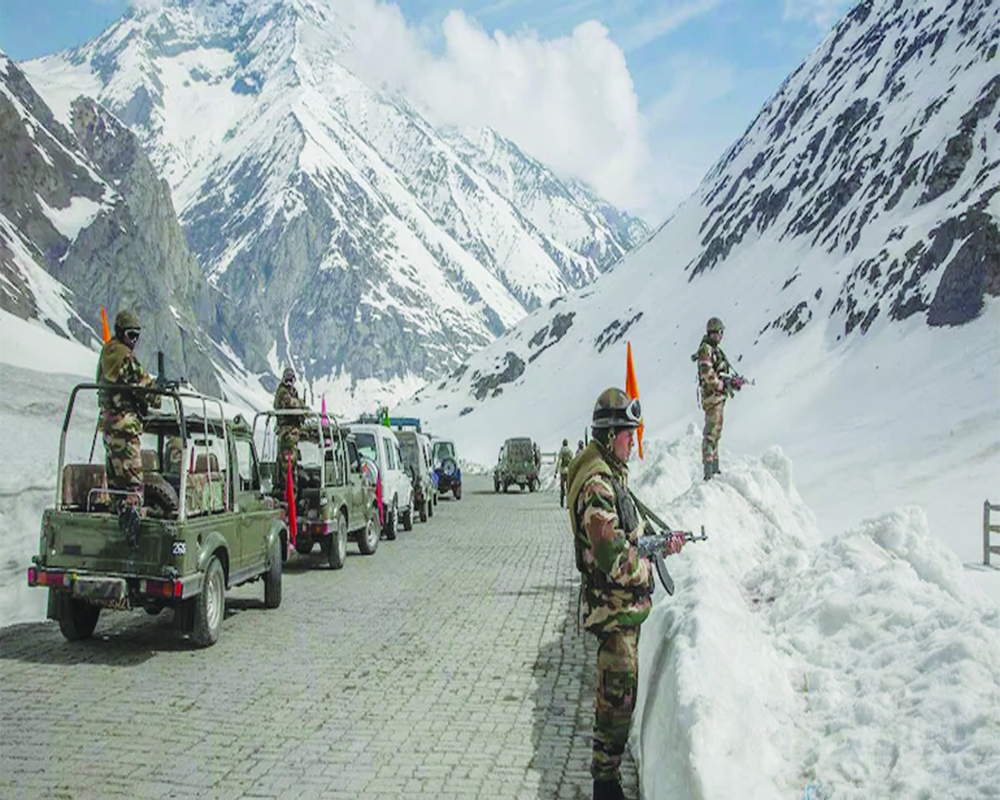
    In addition, we continue to see a steady build-up of forces and infrastructure, as well as cartographic aggression in the form of renaming of villages in Arunachal Pradesh and the passage of the Land Border Law, effective from 1st January 2022. All of this strongly suggests that the situation will get much worse before it gets better, and we are more likely to see increased Chinese assertiveness and determination to settle territorial disputes on its own terms. Moreover, by its actions in Eastern Ladakh, it has already occupied territory up to its Claim Line of 1959. This begs the question, obviously difficult to answer with any degree of certainty, as to whether there is a likelihood of further Chinese escalation leading to a limited conflict?

    Clearly, the Government is also seized of the problem, as is obvious from the Defence Minister’s statement, while inaugurating border infrastructure, that “We faced our adversary in the northern Sector recently with grit and determination. It could not have been done without proper infrastructural development. In today’s uncertain environment, the possibility of any kind of conflict cannot be ruled out.”i It must be emphasised that conflict is not something that we either desire or is in our interest, especially given the Omicron tsunami that appears to be gathering momentum and the adverse impact that the pandemic has already had on our economy.

    It is therefore quite apparent from the Modi Government’s actions that it has been extremely circumspect and cautious in its response following China’s occupation of our territory, by some estimates extending over a 1600 Sq. Km. Clearly, it has no intention of either attempting to push back the PLA from the intrusion sites, or for that matter, occupying territory elsewhere, as a quid pro quo and bargaining chip for later. However, there is a view that occupying Indian claimed territory in Aksai Chin as a quid pro quo is not a bargain but an acknowledgement that Aksai Chin is alien territory. Therefore this Government has attempted to engage China in talks, both at the diplomatic and military level, though with little success to show for its efforts. Given the mismatch in force levels, this level of military and diplomatic engagement is understandable, though Mr. Modi’s unwillingness to personally call out the Chinese for their provocative behaviour may well give, them and the world at large, an impression of an eagerness to crawl, when just asked to bend.

    However, a deeper examination of events does suggest that the Government has not taken Chinese bullying lightly, and has, in fact, responded in an extremely measured manner, militarily. Following the Galwan incident, it has mirrored Chinese troop accretions by deploying additional forces in Eastern Ladakh, along with armour and other supporting elements. Its pro-active occupation of the Kailash Heights, though these troops were subsequently withdrawn as a part of reciprocal action by the PLA in the Pangong Tso Sector, hinted at the possibility of similar, but more offensive actions, being replicated elsewhere. The reorientation of the Army with the earmarking of a second Mountain Strike Corps for offensive operations has substantially added to the Army’s capabilities and would adversely impact the PLA’s force ratio dynamics. Most importantly, the upgrade of communication infrastructure, not just in Ladakh but elsewhere along the LAC as well, has been greatly speeded up and is coming to fruition, thereby significantly enhancing our defensive capabilities.

    To help us understand if China is likely to resort to force in the ongoing stand-off, an examination of historical precedent may give us some vital clues. As Prof M Taylor Pravel of MIT notes, two characteristics have defined China’s use of force. Firstly, “along its continental border, China has employed force in frontier disputes where it has faced militarily powerful opponents (i.e., states that could possibly challenge its otherwise strong claims). Although the local military balance is difficult to measure with precision, China has on average been vastly stronger in the overall military balance…. India in 1962, the Soviet Union in 1969, and Vietnam in the early 1980s. At the same time, China has refrained from employing force against its weaker continental neighbours. Second, China has used force in disputes where the strength of its claims have been weak, especially when it has occupied little or none of the contested territory. In these disputes, China has been sensitive to any further decline in its bargaining power.”ii

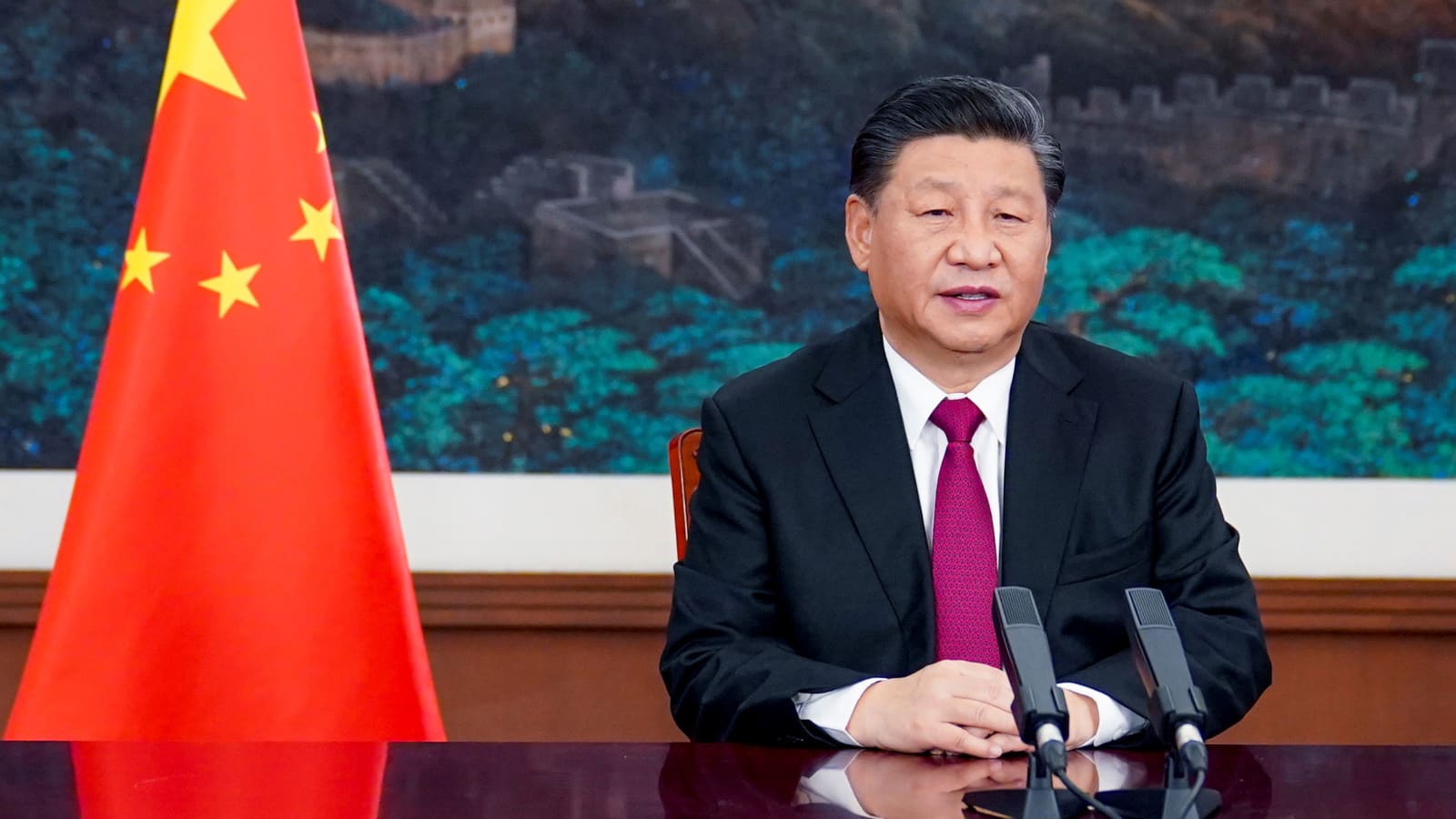
    This suggests that even with neighbours that de facto accept Chinese interpretations of its territorial claims, China is still extremely wary of actions that they may undertake to change the existing relative balance of power along with its disturbed periphery, and prefers to use force against them to delay/stop their progress. For example, there is evidence to suggest Nehru’s Forward Policy and the refuge given to the Dalai Lama were a serious cause of concern to the Chinese leadership. This is borne out by declassified United States documents pertaining to the capture of Longju in August 1959, which reveal that “the late August clashes point of a mode of thought which has remained an ingredient in the Chinese leaders’ calculations on the border dispute: ‘When the Indians show a temperament to advance on the ground, we must alter their frame of mind by letting military action take over political caution. Besides, military risk itself is negligible, because we are the stronger side’.”iii A perception within the Chinese leadership that appears to have remained unchanged in the intervening years, and is especially pertinent at the present time, given President Xi Jinping’s penchant for following in the footsteps of late Chairman Mao Zedong.

    In addition, there are some other factors that have a bearing on this issue of force escalation. For one, it is fairly common for autocratic governments to attempt to conjure up external threats to unify the people against a common enemy, and divert their attention from serious domestic challenges that may lead to unrest or hurt their own leadership position. In this context, as Kalpit Mankikar, a Fellow with the Observer Research Foundation who focuses on China points out, prior to the 1962 Conflict Chairman Mao faced serious internal dissension against his leadership and it had more to do with the intra-CCP power struggle. Mao’s Great Leap Forward (GLP) had been criticised, and for the first time, he had to demit office as State President, forced to hand over to his heir apparent Liu Shaoqi, which came as a huge jolt to him.

    President Xi now finds himself in rather similar circumstances as the economy stutters, in no small measure due to his government’s crackdown on multiple Chinese sectors and companies that have been mascots of growth over the years. His emphasis has been on the idea of “common prosperity” or “reasonable adjustment of excessive incomes and encouraging high-income groups and businesses to return more to society”iv, a blatantly populist measure, that was initially very well received by the average Chinese citizen. However, the enforcement of new regulations in this regard, the so-called “Three Red Lines”, has had a devastating impact on real estate companies such as Evergrande, which hold approximately 75% of all retail investments, bringing them to the verge of bankruptcy, and creating internal turmoil, uncertainty and dissent as the average citizen sees his savings completely wiped out. The likelihood of a domino effect on other facets of the economy cannot be wished away and is bound to adversely impact President Xi’s efforts to stay in power after the end 2022, when his term officially ends.

    In these circumstances creating and tackling an external threat along its borders, as the prevailing situation along the LAC is made out to be, will certainly divert attention and may very well pay great dividends. For example, while President Xi would have preferred to undertake actions to integrate Taiwan, he is hampered by the very real likelihood of The United States and its allies coming to the aid of Taiwan. Taking on India at the LAC is a relatively easier option, as interference by the United States and its allies is likely to be restricted to providing moral and material support at best. Furthermore, it could be viewed as a dress-rehearsal that would allow the PLA to gain vital operational experience, something it has been bereft of since the Sino- Vietnam Conflict of 1979, apart from ensuring a protected flank. Moreover, a successful termination of such a campaign would setback Indian aspirations by decades and severely dent Mr. Modi’s reputation and popularity, much as 1962 did in the case of Pandit Nehru. Not only would such action have a sobering impact on Taiwan’s dealings with the Chinese, but also in the manner other South East and Central Asian neighbours respond to Chinese hegemonistic designs as well.

    It is in this context that the new Land Border Law, now in effect, is likely to be extremely problematic for two reasons, and may well act as the trigger for any future conflict. Firstly, it attempts to give Chinese acts of cartographic aggression, such as differing perceptions on the exact alignment of the LAC, renaming of towns and villages in Arunachal Pradesh, and its acts of ‘salami- slicing’ over the years, a veneer of legality. Secondly, there is a clause in the Law that can be interpreted to suggest that it prohibits the construction of permanent facilities in the vicinity of the LAC without sanction from Chinese authorities, which would obviously be unacceptable to any sovereign state, especially given the manner in which it is rapidly developing communication infrastructure and settlements bordering the LAC.

    Increasing troop concentrations, especially in terms of armour and ballistic/air-defence missiles, in the Tibet Autonomous Region (TAR) along with the external and internal difficulties confronting President Xi suggests a high possibility of a conflict breaking out within the year. There are analysts, including some in this country, who believe that the PLA will be able to achieve a decisive victory given the over-all force disparity, especially in cyber, space and missile capabilities, as was the case in the 1962 Conflict. However, they have tended to disregard the adverse impact of climate and altitude, both on personnel and equipment, that gives a distinct advantage to a military fighting internal lines.

    The PLA can hardly afford to ignore its extended and extremely vulnerable lines of communication, however well developed, and the uncertain internal security environment within TAR and Xingjian. Most importantly, the PLAAF will be operating with greatly reduced capabilities from bases within TAR because of the altitudes involved, while being adversely impacted while operating from bases outside the Region given the extended ranges involved. Finally, the Indian Military does have a sizeable force, reasonably well-equipped with two Mountain Strike Corps and a Division plus of Special Operations Forces in place for offensive operations that will act as a deterrent to Chinese misadventure.

    It understands, however contrarian its public pronouncements may be, that the Indian Armed Forces are a very different force from what they encountered in 1962. Not only is the Indian Army far more experienced and battle-hardened in high altitude and mountain warfare than the PLA, but it will be the Indian Air Force, not utilised in 1962, that will be the battle-winning factor in any conflict. In addition, the employment of the Tibetan manned Special Frontier Force (SFF) in the Kailash Ranges, which received worldwide accolades, would have certainly caused immense disquiet within the Chinese leadership. The SFFs actions and rise of the Taliban have surely given an immense boost to the Independence Movements in both TAR and Xinjiang. Most importantly President Xi and his acolytes must be fully aware that anything other than a decisive victory, will for all intents and purposes, be perceived as a defeat and be the final nail in his coffin.

    Will all of this be sufficient to deter the Chinese from escalating the stand-off? The truth is that while we are inherently placed in an advantageous position, primarily due to location and circumstance, neither deterrence nor success is guaranteed. The fact of the matter is that over the past two decades the military has not just been neglected, but has also been deliberately discriminated against by the political and bureaucratic establishment. The damage that has been done, both to its organisational culture, morale and capabilities will need focus, effort and time to reverse. Most importantly, threats of this nature are best tackled by a nation that is united and willing to place its complete trust in its political leadership. Does our political establishment have the maturity, foresight, integrity and vision to provide the leadership we deserve and need? To quote the poet, philosopher and singer, Bob Dylan, “the answer, my friend, is blowing in the wind”…

    i The Times of India, New Delhi 29 December 2021, p 19.

    ii M Taylor Fravel, Power Shifts and Escalation: Explaining China’s Use of Force in Territorial Disputes, International Security, Winter 2007/2008, Vol 32 No 3, p 56

    https://www.jstor.org/stable/30130518?seq=1&cid=pdf-reference#references_tab_contents

    iii The Sino-Indian Dispute, Section 1:1950-59, DD/I Staff Study, CIA/RSS March 02, 1963, Approved for Release May 2007, p 33.

    iv Bloomberg News, China Eyes Wealth Redistribution in Push for ‘Common Prosperity’, 18 August 2021

    The article was originally published in Indian Defence Review, Jan – Mar 2022, Vol 37 (1) Pg 50.

    Featured Image Credits: CNBC
  • The Ukraine crisis: Its impact on India

    The Ukraine crisis: Its impact on India

    India has to tread a fine line in this imbroglio: Taking care of the welfare and evacuation of Indian students and the possibility of an oil price hike.

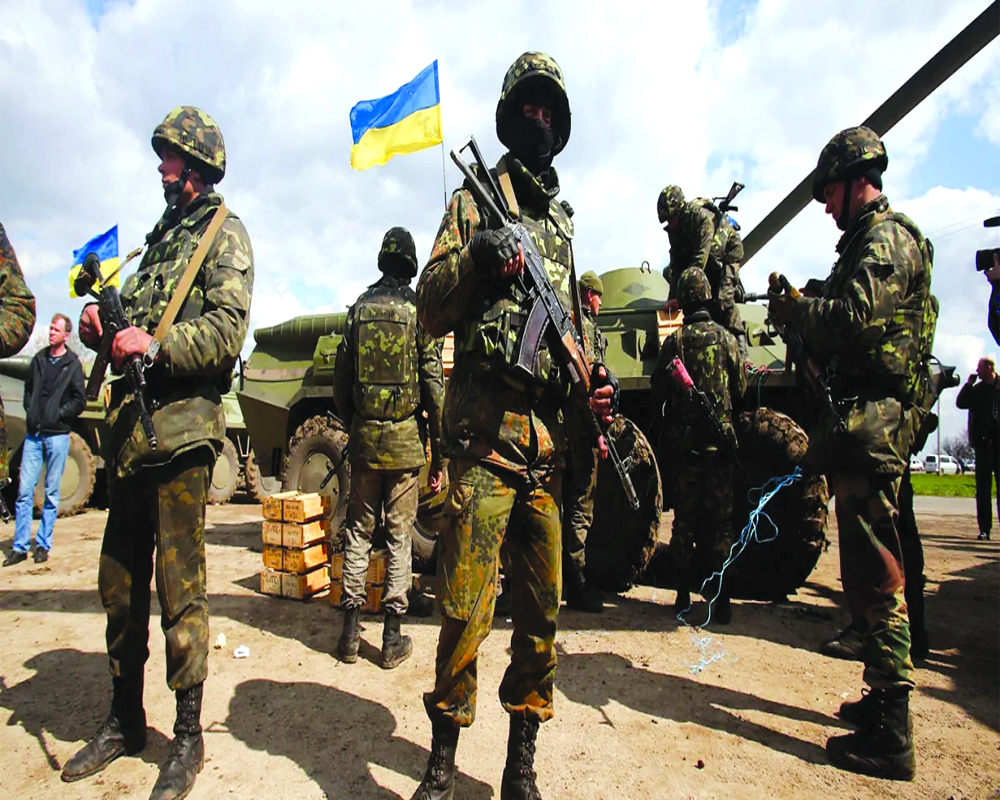
    The face-off over Ukraine between Russia and the United States and its Nato allies has been dominating the headlines for a while now with tensions ratcheting up as we receive dire public warnings every day of a Russian invasion any day now. Clearly, the possibility of Russian intervention there, and the consequent escalation of sanctions against them, is very real and concerning.

    While Ukraine may be a developing country and the poorest in Europe, by no means is it a pushover. It is the second-largest country there, behind Russia, by area, and in terms of population the eighth largest with its 42 million inhabitants. It has been independent since 1991, following the collapse of the Soviet Union, though it had been a part of the Russian Empire and the Soviet Union since the 18th century. If there is one lesson that Putin and the Russian military should have learnt from America’s disastrous interventions in Iraq and Afghanistan is that invasions are relatively easy to accomplish, but keeping restive and hostile populations under control is a wholly different proposition.

    [powerkit_button size=”lg” style=”info” block=”true” url=”https://www.dailypioneer.com/2022/columnists/the-ukraine-crisis–its-impact-on-india.html” target=”_self” nofollow=”false”]
    Read More
    [/powerkit_button]

  • Dissonance and disharmony the military could do without

    Dissonance and disharmony the military could do without

    In a few months from now, the campaigning season opens up along the LAC with China, with the likelihood that the ongoing tensions and stand-off may very well spill over into something more serious, may be even limited conflict perhaps?

    In such unsettled times the military leadership must obviously be singularly focused on countering challenges that it is likely to confront in the coming days. Thus, any needless controversy that embroils the military at this critical juncture, especially of the politically motivated variety, will tend to divert the leadership’s attention from the task at hand and adversely impact the morale of the rank and file.


    Read More

  • AFSPA in the N-E: Is status quo the answer?

    AFSPA in the N-E: Is status quo the answer?

    The recent Nagaland incident involving the Army Special Forces again underlines that such cases are unavoidable in the existing milieu

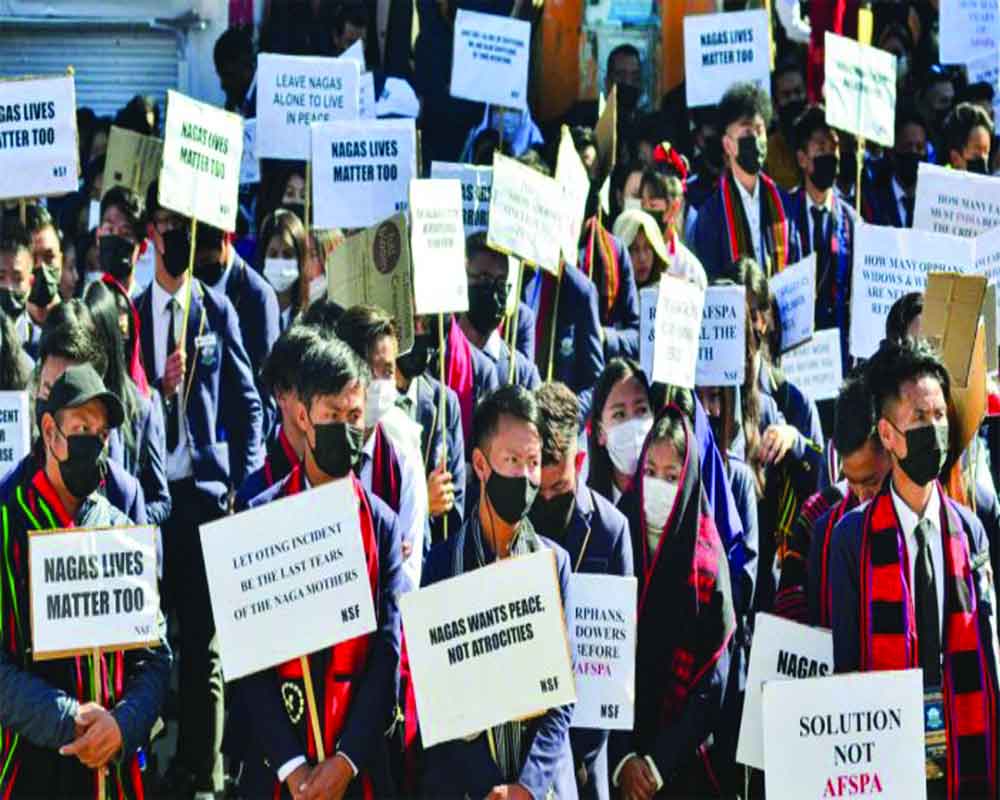
    Much has already been written on the tragic incident that occurred recently in the Tiru-Oting area of Mon district, Nagaland. In a case of mistaken identity, six coal miners were killed by a troop of the Army Special Forces. Subsequent escalation led to more deaths, including that of a Special Forces soldier, murdered in retaliation by villagers. The Army was quick to express regret, though it does not take away from the fact that in the existing milieu, such incidents are unavoidable.

    The truth is that the Special Forces personnel did their job with brutal efficiency. They were operating on supposedly credible intelligence and allegedly acted decisively once the vehicle transporting the miners did not stop, with tragic consequences. That they rushed two wounded miners to a civil hospital does suggest they acted in good faith.


    Read More

  • Military leadership: In the eye of storm

    Military leadership: In the eye of storm

    Politicians are trying hard to keep behind curtains the true state of affairs along the Line of Actual Control but it’s only adding to credibility deficit

    The acrimonious exchanges between both sides on the heels of the 13th Corps Commander-level talks in Ladakh, an exercise in futility and procrastination, have drawn adverse attention to the manner in which the Union Government has kept its own citizens in the dark as to the true state of affairs along the Line of Actual Control in Ladakh and elsewhere. Equivocation has its costs, and the recently released videos and photographs of our personnel taken prisoners at Galwan have left us embarrassed and angered, mainly at the folly and shortsightedness of our leadership for not coming clean on the issue in the first place. All that its rather inept attempts to keep the genie in the bottle have achieved is to play into the hands of the excellent Information Warfare capabilities the Chinese possess, allowing them to shape the narrative to their advantage.


    Read More

  • Politics and the Military don’t gel

    Politics and the Military don’t gel

    It would be in the interest of the political establishment to desist from politicising the military. Creating an uncontrollable monster, that will go on to bite the hand that feeds it, is nothing but sheer stupidity.

    The former President of the United States, Donald Trump, has always had the reputation of being a man of questionable moral and ethical integrity with close connections to the radical right. Yet, there were those who voted for him in 2016 because they genuinely believed that he was the lesser of the two evils, and strongly felt that only an “outsider” like him was capable of draining the “Washington Swamp”, a phrase alluding to the seemingly all-pervasive corruption surrounding the Washington power elite. They would certainly have been disappointed by his insipid performance as President, especially the extent of his chicanery and selfishness. These have been laid bare in a recent book by two Pulitzer Prize-winning Washington Post journalists, investigative staff writer Carol Leonnig and former White House Bureau Chief Philip Rucker, on Trump’s final year in power, titled “I Alone Can Fix It”. A fitting sequel, and as perceptive and illuminating, is “A Very Stable Genius”.

    One of the most fascinating aspects of their latest book pertains to the manner in which the Chairman of the Joint Chiefs of Staff, General Mark Milley, responded to President Trump’s brazen attempts to overturn the election results by peddling his “Big Lie” that the elections had been “stolen” by the Democrats resorting to widespread fraud. Despite his legal challenges being summarily dismissed, he continues to peddle these allegations to this day. There can be little doubt that his incitement of his supporters culminated in a violent but abortive attempt on January 6 to disrupt proceedings at Capitol Hill to formalise the election results.

    Prior to this, one may recall, General Milley had been excoriated by military veterans, politicians and the media for having unwittingly dragged the military into politics by being present, in uniform, at Trump’s infamous “Bible photo op” at the St John’s Church, immediately after peaceful protestors had been forcefully evicted while demonstrating for racial equality. Indeed, that he then went on to tender a public apology for his error of judgement speaks volumes of his forthrightness, integrity and strength of character.

    On Trump’s attempts to cling to power through force, General Milley reportedly told his colleagues in the Joint Chiefs: “They may try, but they’re not going to f@@###g succeed…You can’t do this without the military. You can’t do this without the CIA and the FBI. We’re the ones with the guns.” His actions have lessons that our military leadership would do well to imbibe. 

    He then initiated action to ensure that the military was not dragged into the political sphere, despite Trump having appointed his own lackeys to key positions within the Pentagon. If the authors are to be believed, he went so far as to compare Trump to Hitler and refer to the January 6 insurrection as the “Reichstag Moment” for the US. On Trump’s attempts to cling to power through force, he reportedly told his colleagues in the Joint Chiefs: “They may try, but they’re not going to f@@###g succeed…You can’t do this without the military. You can’t do this without the CIA and the FBI. We’re the ones with the guns.”

    His actions have lessons that our military leadership would do well to imbibe. It is inconceivable that our senior military hierarchy can, or ever will, adopt such a confrontational attitude towards the leadership of a democratically elected Government, whatever be the provocation, or however unconstitutional be their actions. The aloofness displayed by the military during the 1977 Emergency is a case in point. True, there have been the likes of General Thimmayya, Field Marshal Manekshaw and a few more of that vintage who have displayed spine and opposed Government directions, but these have been few and far between, and restricted only to professional matters within their purview. Moreover, till recently, the military’s senior leadership has been quite circumspect in ensuring that its actions were completely unbiased, apolitical, secular and within constitutional parameters. In fact, it was their adherence to such behaviour that made the military the most popular and respected institution within the country.

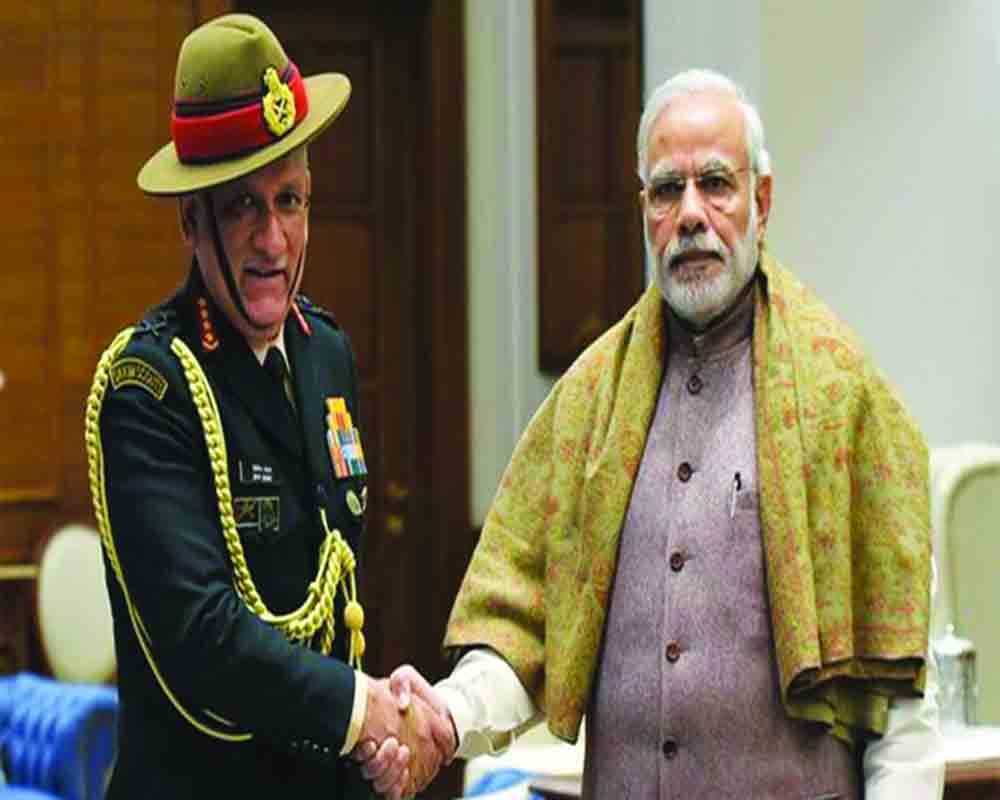
    Unfortunately, while the bulk of our military remains apolitical and secular, the actions and public statements of the Chief of Defence Staff, General Bipin Rawat, have created perceptions that the military’s senior leadership has become excessively politicised. Then there is the fact that some very senior officers have taken the plunge into active politics immediately on shedding their uniform.

    While some within the ruling elite may see this turn of events as advantageous to their ideological cause, and in fact encourage this shift within the military hierarchy through the process of “deep selection”, as some allege, they may well be biting off more than they can chew. If there is anything to learn from history, it is that once the military gets sucked into politics, it will not be satisfied acting as a mere handmaiden of those in power. As General Milley so eloquently put it, they are the ones with the guns! We just need to look closely at our own neighbourhood for examples.

    The Government and the legislative would do well to put rules in place that prevent members of the military and even the Civil Services from joining politics without an appropriate cooling- off period.

    It would be in the interest of the political establishment to desist from politicising the military. Creating an uncontrollable monster, that will go on to bite the hand that feeds it, is nothing but sheer stupidity. The Government and the legislative would do well to put rules in place that prevent members of the military and even the Civil Services from joining politics without an appropriate cooling- off period. That would go a long way in insulating them, especially the military, from politics.

    This article was published earlier in the pioneer.

    The views expressed are those of the author.

    Feature Image: www.dailypioneer.com

  • The Taliban Occupation of Afghanistan: Impact on India

    The Taliban Occupation of Afghanistan: Impact on India

    The swift and relatively unopposed takeover of Afghanistan by the Taliban, in a matter of just days and not months as expected,has caught the United States and its Allies,as well as the international community, completely off-guard.It has led to a serious humanitarian crisis as countries scramble to get their own citizens, stranded in-country, out of harm’s way. An effort greatly complicated and impeded by the frenzy and sheer desperation of the tens of thousands of Afghans, who had worked with the Coalition, and are also attempting to flee to avoid retribution.


    Read More

  • Civil-Military Relations: Differing Perspectives

    Civil-Military Relations: Differing Perspectives

    There are a number of theoretical constructs that have been propounded to explain Civil-Military Relations. However, these concepts, be it Huntington’s “Objective Civilian Control”, or Morris Janowitz views on “Subjective Control”, and there are others as well, basically interpret and differentiate the interplay between the degree of civilian dominance and military autonomy.

    Introduction

    At the present time, there is an ongoing controversy in the public domain with regard to our Higher Defence Management as the Services are unable to agree on how to proceed forward with the Government’s stated aim of establishing Theatre Commands. We are told that Raksha Mantri has asked the CDS to convene a meeting of the three services to thrash out the matter so that a consensus can be reached on how to proceed forward. This direction by the RM is a clear pointer to the distressing state of civil-military relations prevailing within our country.

    In any democracy civilian control over the military, which implies the control exercised by our elected representatives through the government, is the very foundation on which civil-military relations are based. Therefore, one would expect when the Services have divergent views, the politicians would step in and give concise directions on how the Services are to proceed. In roughly similar circumstances in the United States, for example, the US Congress broke the logjam through the Goldwater-Nichols Act in 1986. This brought about sweeping changes to the  Department of Defense by reworking the command structure of the United States Military. More recently, in China, on President Xi Jinping’s directions, transformational changes to the PLA’s organizational structure were undertaken. So, to clearly understand why our Ministry of Defence (MOD) is unable to push through such reforms, we perforce must examine its functioning and set up.

    In essence, however, Civil-Military Relations are a messy affair, not just here, but worldwide. The Goldwater Nichols Act, for example, took a year to be passed and nearly another four to five years to be implemented. There are a number of theoretical constructs that have been propounded to explain Civil-Military Relations. However, these concepts, be it Huntington’s “Objective Civilian Control”, or Morris Janowitz views on “Subjective Control”, and there are others as well, basically interpret and differentiate the interplay between the degree of civilian dominance and military autonomy.

    Leaving aside the theoretical aspects, the one thing on which there can be no disagreement is the fact that success or otherwise at tackling vital national security issues depends on, what Raj Shukla in his paper “Civil-Military Relations in India” (CLAWS, 2012), calls “the pattern of institutional interaction between the civil and military components of a nation’s polity.” Most importantly, in our context, this is essential not just because the military is responsible for protecting our national sovereignty and territorial integrity, and must, therefore, deliver the maximum bang for the buck, but more so, because defence spending, while at its’ lowest in the past seven years,  is still  13.73% of all government expenditure at Rs 4.78 Lakh Crores. Not an insubstantial amount in any way.

    In the opinion of Steven Wilkinson, author of  Army and Nation: The Military and Indian Democracy Since Independence, our military has been defanged and “coup proofed” by a series of measures put in place by the bureaucracy and its political masters.

    Historical Precedent

    It is important to remember the Spanish philosopher, George Santayana’s, words of wisdom that “those who cannot remember the past are condemned to repeat it”, we would also do well to recall the maxim that “there’s a reason why your windshield is bigger than your rear-view mirror. Where you’re headed is much more important than what you left behind”. Therefore, seventy plus years on, historical precedent means little, because we have had enough time to have absorbed lessons from the wars we have fought since and adapted our HDO accordingly. Suffice it to say that Prime Minister Nehru had an inherent dislike for the military and was apprehensive of what it could do, especially after seeing what was happening in our neighbourhood.

    In the opinion of Steven Wilkinson, author of  Army and Nation: The Military and Indian Democracy Since Independence, our military has been defanged and “coup proofed” by a series of measures put in place by the bureaucracy and its political masters. These include a steep decline in its precedence and perks, diversifying its ethnic composition and giving overriding powers to the civilian bureaucracy within the Ministry of Defence in every aspect of military functioning, including the selection of senior ranks.

    In addition, large paramilitary forces under the Union Home Ministry have also been formed to “ring-fence” the military and for use as countervailing forces against it, if required. Finally, the lure of post-retirement crumbs, such as an ambassadorship, governorship or membership of the Armed Forces Tribunal has ensured that the senior hierarchy remains quiet and continues to toe the Government line. All of this has weakened the military to a large extent making it a less attractive career, which is why it has been attempting to cope with large deficiencies over an extended period of time.

    The Kargil Conflict of 1999 caught us by surprise, and in its aftermath, there were calls for drastic changes to the existing system. It was obvious that the existing defence paradigm of the Indian state was obsolete while we were in the 21st century, our command and control structures were still in the 20th century. The Government established the Kargil Review Committee headed by K Subrahmanyam to go into the issue of reforms and its subsequent recommendations were handed over to a group of ministers for examination and implementation.

    Amongst the recommendations made, the three that were of most importance pertained to the necessity for integration of the services both with each other and with the MOD; the creation of a chief of defence staff (CDS); and joint operational commands. Like nothing else, the Kargil Conflict showed up the serious lack of synergy amongst the three Services of Armed Forces as well as a lack of coordination between the Armed Forces and Civil authorities. It must be pointed out that while some of the lesser recommendations were implemented, including facetiously attempting to fool the political establishment by renaming the Service Headquarters, it has only been after nearly two decades that any serious movement towards reforms has been undertaken with the appointment of the CDS and the Department of Military Affairs (DMA). It is still too early to comment on their efficacy.

    Characteristics of Civil-Military Relations in India

    It may come as a surprise to some that the Raksha Mantri and the civilian bureaucrats in the MOD, apart from handling the three Services and the Coast Guard, also deal with a number of civilian manned and run agencies such as DRDO, OFB and Veterans Welfare etc. The total number of civilians paid from defence estimates exceeds 500,000. To put it in perspective it is larger than the active strength of the Pakistan Armed Forces.

    Anit Mukherjee in a paper titled The Absent Dialogue (Seminar 599-2009)  suggests that there are three main characteristics that our Civil-Military Relations present, which explains to a large extent the ongoing interaction between the two. These are:

    • Strong administrative, procedural and bureaucratic controls over the armed forces. Where this differs from other democracies in this respect is the complete lack of expertise on defence matters among the civilian bureaucrats. As a result dialogue between both sides is constrained and, as is to be expected, they are more focused on the process than the outcome. This lack of knowledge also ensures that they are unable to “arbitrate between competing parochial interests”, and are also unwilling to take responsibility or be held accountable for controversial decisions.
    • While consulted, the military is excluded from the crucial decision-making forums, thereby denying them a role in the policy-making process. The CDS has only been granted the position of a member of the Defence Planning Committee (DPC) as well as in the Strategic Policy Group (SPG), both headed by the NSA, which is the “principal mechanism for inter-ministerial coordination and integration of relevant inputs in the formulation of national security policies.” Thus, the NSA de facto performs the duties of the CDS—a peculiar situation since the former completely lacks the requisite experience.
    • The military has been granted a great deal of autonomy concerning its own affairs. is allowed to do much of what it wants in what it considers its own sphere of activity: training and education, threat assessments, force structure, doctrine, innovations, appointments (up to a certain rank) and miscellaneous welfare activities. This makes for personality-driven interactions.
    • In addition to the above three characteristics as propounded by Anit Mukherjee, there is also the issue of disjointed and uncoordinated interaction between the MOD with the Ministry of Finance (MoF). For example, Amit Cowshish in his paper, Distortions in the Discourse on Modernization of Armed Forces, in the Journal of Defence Studies (Vol 8, No3, Jul-Sept 2014) writes that “in the run-up to the formulation of the 12th Defence Five-Year Plan (FYP) (2012–17), all the Services Headquarters confirmed to the MoD that the Op Directives were a good enough basis for formulating the plan. However, “the difference of opinion between the MoD and the Ministry of Finance (MoF) over the size of the 11th Defence FYP (2007–12) was one of the reasons why it could not be brought before the Cabinet Committee on Security (CCS)”.

    Impact on Functioning

    The impact on the functioning of our Higher Defence Management of all of this is that we live in a divided house in which the atmosphere reeks of distrust and hostility, the currency for interaction is power, and the aim of all stakeholders is to protect one’s own turf at all costs, at the very least. It is indeed unfortunate that the most important lesson we seemed to have picked up from the British and perfected, is the fine art of divide and rule.

    The second issue of import is the fact that over all these years we have not been able to formulate a comprehensive National Security Strategy document. This goes far beyond just the functioning of the MOD or Civil-Military interactions and can be blamed on our inability to adopt a ‘whole of government approach. Nonetheless, its absence has not only caused ambiguity in our strategic aims but also has had a debilitating effect on our military. As I have written elsewhere in my paper Rebooting the India Army: A Doctrinal Approach to Force Restructuring (ORF Issue Brief No439, Feb 2021) that “The NSS is also the foundation for a comprehensive military doctrine by the Armed Forces. This military doctrine acts as a formalised guideline that broadly visualises the nature of potential conflicts, the preparations required for them, and the methods to be adopted. In its formulation, it flows from the military-strategic goals enumerated, which dictate how the military must be organised, trained and equipped to carry out its assigned missions”.

    It implies, that instead of transforming our organizational architecture or processes to deal with future conflict scenarios we adopt the lowest common denominator that allows for compromise. 

    If perceptions, within the Services and at the MOD, vary about what our strategic aims are and how we plan to accomplish them, then substantive dialogue on the issue of integration and joint manship are extremely difficult. It implies, that instead of transforming our organizational architecture or processes to deal with future conflict scenarios we adopt the lowest common denominator that allows for compromise.  Basically, that allows us to adopt a bureaucratic bean-counting mode, to ensure harmony among all stakeholders, which translates to proportional representation in all aspects of functioning, entailing only superficial changes in the status quo. The Armed Forces Special Operations Division (AFSOD) is the perfect example of such an approach. Instead of consolidating all of our Special Operations Forces (SOF) resources, we have adopted a flawed approach, not unlike what the United States adopted.  after the disaster of Operation Eagle Claw in 1980, the abortive bid to free US diplomats held hostage by the Iranians. They formed the Joint Special Operations Agency which was flawed as it had neither operational nor command authority over any SOF. By providing minimal resources that have little operational impact, we have managed to pay lip service to jointness while each Service continues to control and employ its SOF assets as it chooses.

    Conclusion

    The only way forward for us is a change in mindsets and attitudes. We can no longer afford a system wherein, according to K. Subrahmanyam, “politicians enjoy power without any responsibility, bureaucrats wield power without any accountability, and the military assumes responsibility without any direction”. We need a more informed and enlightened polity that is aware of our security environment and is willing to demand answers from our political and security establishment as to how our tax Rupees are being spent on defence. There is no doubt that accountability is the key to a more secure future.

    It is time our political establishment got real, set aside bureaucratic infighting and apathy and took control as the Constitution requires them to do. This requires a better understanding of security issues along with political will, determination and a more assertive leadership that is focused on strengthening our institutions. Otherwise, as Anit Mukherjee so aptly asserts, “It might not make a pretty picture to say that we are weak because we choose to be weak, but sometimes it is necessary to look in the mirror”.

    Feature Image Credit: www.ipdutexas.org

    Article Image Credit: patimes.org


  • Facing a long hot Summer

    Facing a long hot Summer

    Category: Governance, Civil-Military Relations, National Security

    Title: Facing a long hot summer

    Author: Deepak Sinha, Feb 10, 2021

    In a few short months, we are in for what is bound to be one long hot summer, global warming notwithstanding. Our enemies are at our gates and the prospect of conflict well within the realms of possibility. After all, the PLA must be keen to get on with its unfinished business, though what that might be, neither our military nor civil leadership have quite figured out!


    Read More

  • Going for Broke

    Going for Broke

    Category : Democracy & Governance/Public Health

    Title : Going for Broke

    Author : Deepak Sinha 21-03-2020

    Spanish flu of 1918-20 was the worst and biggest pandemic in the modern age. By various estimates it killed 50-100 million people worldwide. In India the death toll was 17.5 million. This was at a time when vaccines and antibiotics were not yet widely used and the pandemic exploded in the wake of a globalisation of different sort, returning soldiers of World War I who carried the flu from the battlefields to all parts of the world. The world survived it. Covid-19 threatens a similar fate which calls for concerted effort from the global community as Deepak Sinha observes in his article.

    Read More