Tag: USA

  • International Institutions in post-Covid Era

    International Institutions in post-Covid Era

    Pandemic exposes inadequacies in the 21st century world

    At the Munich Security Conference 2020, the Indian External Affairs Minister stated that multilateralism has weakened, and attributed it to the inadequacy of international institutions, established seventy-five years ago, to cope with the challenges of 21st century. This was just before the coronavirus became a global pandemic. Today, among other aspects of society that are challenged by the pandemic, its impact on the world has exposed the inability of international organizations to develop a globally cooperative strategy. The September edition of the UNSC meeting held regarding the coronavirus pandemic saw the United States, China, and Russia fight bitterly over responsibility and responsiveness to the pandemic. Instead of building constructive solutions to face the challenge each country focused on accusing others. Similarly, although the Covid-19 global response pledging event secured 7.4 billion euros, their origins (whether new or retargeting of approved grants), method of fund application, proposed call for global research sharing platforms are either ambiguous or not yet set up. Hence, although international organizations have promoted dialogue, the jury is still out on their efforts towards alleviating the crisis or cushioning its impact. The pandemic thus leads to questions about their effectiveness and what post-covid international institutions might look like.

    Given the manner in which various nation-states represent, contribute to, and run international organizations it is definitive that the nature of international institutions is susceptible to change.

    Institutionalism and International Organisations

    International Organisations such as the United Nations and its predecessor the League of Nations mark the variety of multilateralism brought to life based on the theory of institutionalism. Institutionalism originated from the thought that if humans are fundamentally good but act otherwise it is because of anarchy in the international system, and through institutions fostering international cooperation anarchy can be countered to promote the fundamental good in human nature. The final goal of institutionalism stood to promote supranational organizations. However, there have been drawbacks in bringing practicality to this theory. These institutions are built on belief (an individual external factor to the institution itself brought by participants) and power in international institutions is extended when states surrender part of their sovereignty. The changes and differences in individual beliefs cause significant changes in institutions in both the way they operate and the consequences of their operations. Given the manner in which various nation-states represent, contribute to, and run international organizations it is definitive that the nature of international institutions is susceptible to change. Hence, better international coordination and responses to the past crisis such as the 2008 financial crisis, controlling the Ebola breakout in West Africa were also a result of the leftist individual beliefs of participants. However, with global politics inclining towards the right, with waves of hyper-nationalism sweeping across nations, efforts towards multilateralism have taken a back seat. Stephen Walt maintained that the pandemic will reinforce nationalism as the world retreats from hyper-globalization to reduce future vulnerabilities and will create a world that is ‘less open, less prosperous, and less free’. The pandemic has put the world on a trajectory towards the right with politicians becoming more authoritative, and thus multilateralism will see significant changes in the post-covid era.

    Rise of narrow Nationalism and Right Wing Politics

    Despite the rise of right-wing politics globally, the benefits of multilateralism cannot be foregone. Multilateralism in international institutions in past crises followed a model wherein the United States took the lead across various organizations and coordinated the world towards a united response. Since such leadership has been replaced with great power politics, multilateralism has taken an operational role instead of a supervisory role. The main difference between the two roles is that the latter had better potential to progress as a supranational organization while the former traverses as a platform offering supporting services to different countries. Examples of this are efforts led by NATO to use their airlifting capabilities to move vital medical equipment and food supplies, and WHO’s initiative to share guidelines and important research to countries who then took individual decisions. In the current trajectory, these changes in institutional consequences can lead towards three possibilities in the future of multilateralism:

    At the risk of sounding highly pessimistic, the institutional belief in multilateralism is likely to see a steep decline and sovereignty surrendered to international organizations will erode. The role of the UN and its organs may change focus on global data collection, analysis, and politically motivated discussions from the current (weakening) narrative of progress, development, conflict prevention, and resolution.

    • As Robert Kaplan argues, Coronavirus has become the watershed movement segregating the upcoming era as Globalisation 2.0 with the rise of autocracies, social and class divides, and new emerging global divisions. This image of globalization 2.0 can be used to reflect on what the next era of multilateralism will be. In the continuing trajectory with no clear international leadership, international institutions would reduce to becoming a platform of dialogue in great power politics with the initiative and effectiveness of resolutions substantially watered down. At the risk of sounding highly pessimistic, the institutional belief in multilateralism is likely to see a steep decline and sovereignty surrendered to international organizations will erode. The role of the UN and its organs may change focus on global data collection, analysis, and politically motivated discussions from the current (weakening) narrative of progress, development, conflict prevention, and resolution. For instance, the pandemic-induced embargo on the movement of people would in turn catalyse the degeneration of organs such as the UNHCR as the dialogue focuses on data collection and blame allocation instead of refugee crisis management. The international political narrative will shift from globalism to regionalism for effective conflict resolution.


    • As US-China rivalry hampers effective policymaking, relatively smaller powers will lead the narrative in these institutions. The foundations for this possibility are already evident. The United Kingdom and other European countries have been increasingly calling for global summits to promote multilateralism. Their efforts can be theorized to be an enmeshment strategy similar to that used by small states in ASEAN. The objective of this strategy is to alleviate the high risks of major powers directly competing by creating interdependence (if not directly between the great powers) among the various actors in the system through increased multilateral participation to an extent that great powers are tied down in this system and their interests are intertwined such that conflict would become costly. Thus smaller powers prevent the complete breakdown of international organizations by continuing to promote dialogue and ensure the persistence of multilateralism, albeit weaker, but prevent the division into two great-power blocs as with the first scenario. This approach where smaller states remain neutral to great power influences would in turn result in the latter’s effort to win over small states characterized by the exploitation of the cold war by small states. Although the US has so far managed to step away from this, with the oncoming elections it is likely that a change in administration would enable the enmeshment strategy to prevent an extreme global division.


    • Taking an optimistic view, the pandemic may catalyse the trajectory towards Ikenberry’s Multilateralism 3.0 where power in the institutions is more reflective of present-day world powers. Given the shift in American foreign policy and lack of initiative, the pandemic could become an important shaper for other Asian powers to get higher representation to balance China’s rise. Although this demonstrates an idealistic situation far from the rightist trajectory, Ikenberry concedes to the fact that in the short-run countries will be nationalistic but in the long run, democracies will break out from the authoritarian, nationalistic regimes to promote a pragmatic and protective internationalism. Ikenberry makes this interpretation based on the enlightenment world leaders had following the destruction and suffering from the world wars. Hence, the pandemic marks the starting point for the butterfly effect which will lead to wartime-like geopolitics, followed by enlightenment to build stronger international institutions with representations reflective of the new world order and better capable of dealing with issues the current institutions struggle to resolve.

    Conclusion

    Although international cooperation would be the sensible means to navigate through the pandemic and other crisis induced by the pandemic, due to factors external to the institution, such as domestically controlled participant change – multilateralism will see considerable weakening. Among the three possibilities identified for the future of international institutions, only time can tell which path the world will take. However, a combination of the second possibility in the short run progressing to the third over the long run is the most optimistic option to work upon for a better pathway to navigate through this crisis.

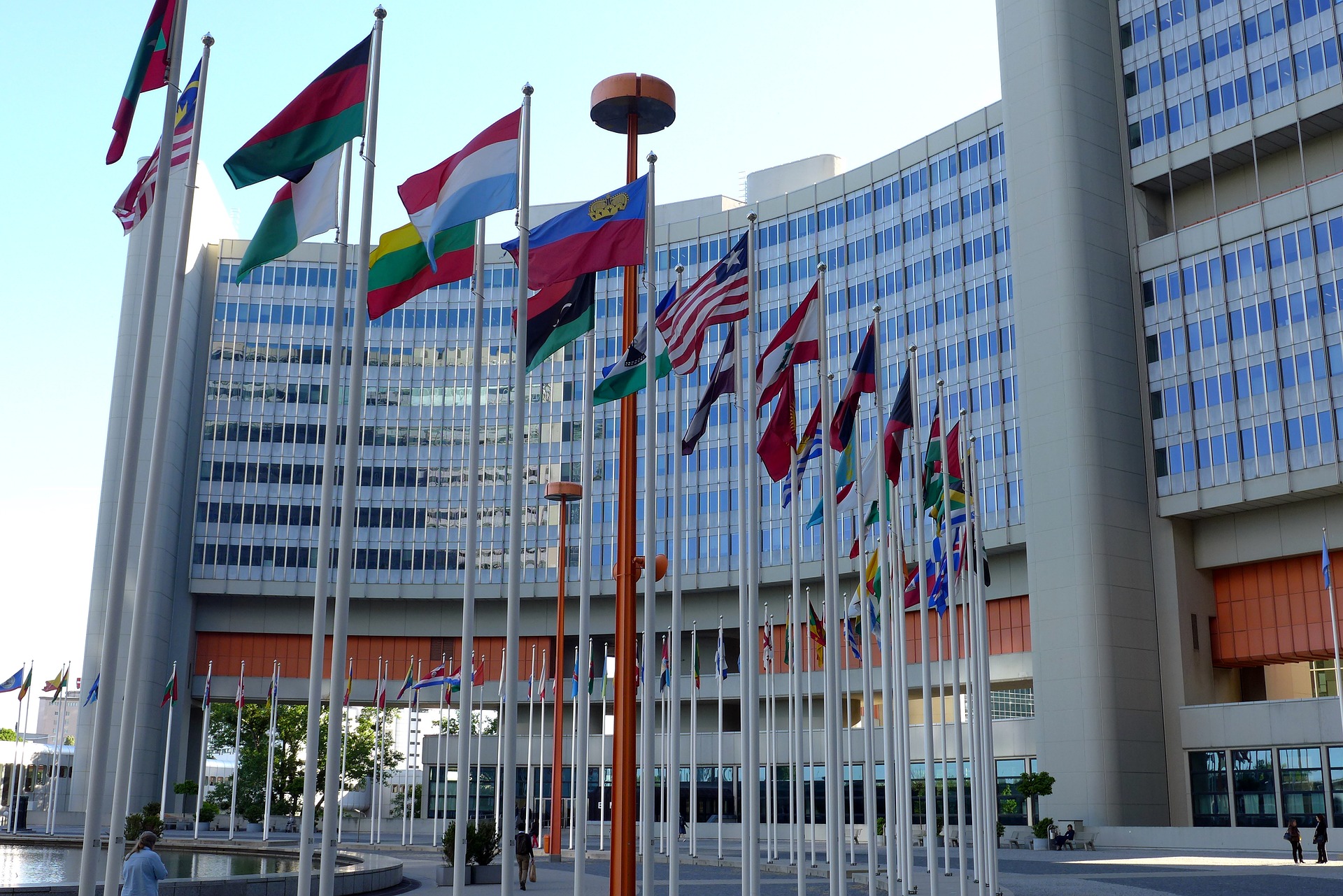
    Image: Pixabay

  • UAE-Israel Deal: An Analysis of its Regional Impact

    UAE-Israel Deal: An Analysis of its Regional Impact

    Introduction

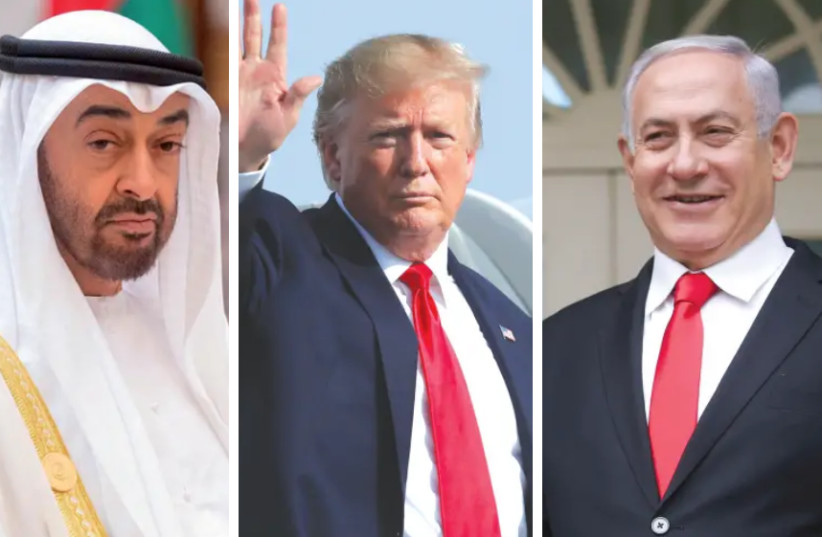
    The recently brokered Abraham Accords Peace Agreement between the United Arab Emirates and Israel marks the beginning of the potential shift in West Asia’s existing power relations. Driven by their security interests, and in an attempt to amplify their power projections in the region, the two countries have come together, in what is being seen, as an opposition to the Iranian axis of influence. Although the normalization of relations with Israel marks a huge setback for the possibility of a Palestinian Statehood, several Arab countries are expected to jump on the bandwagon, with Bahrain having already concluded a treaty after UAE. This article highlights the eclectic mix of reactions from various players in West Asia and the potential opportunities and setbacks it brings with itself.

    Palestine

     Several countries held strongly pro-Palestine policies during the Cold War and decolonization period. However, in the last few decades, many have established ties with Israel; Egypt in 1979, and Jordan in1994 and now UAE and Bahrain in 2020. That being said, majority of the Arab and Gulf countries still officially do not recognize Israel. The United Arab Emirates announced its decision to normalize relations with Israel on 12th August 2020. There are many reasons why UAE and Bahrain decided to establish diplomatic relations with Israel; according to some analysts it is to counter Iran’s influence in the region, but for some it is also to establish trade and business contacts.

    However, do these developments indicate that countries in the Arab world are moving gradually into accepting Israel’s occupation of Palestinian lands as ‘fait accompli’? A significant development that needs to be recognised is the fact that many West Asian countries no longer demand the return of Palestinian lands as a precondition to normalizing ties with Israel.

    The Palestinians in the West Bank and Gaza have strongly criticised the deal and see it as betrayal of their rights and cause by the international community.

    It is long-known that Israel will not return to pre-1967 boundaries; in May 2020 Benjamin Netanyahu explicitly stated his plan to annex the West Bank. He has, however, postponed the implementation of his decision, probably indefinitely, in the interests of the deal that is likely to benefit Israel greatly.

    The Palestinians in the West Bank and Gaza have strongly criticised the deal and see it as betrayal of their rights and cause by the international community.  Banners  displaying “Treason” and “No to normalization with the occupier’ have come up across the region.  The Palestinian Authority, in very obvious response, have rejected the deals. These accords, as they rightly fear, affect the future of Palestinian sovereignty and legitimize Israel’s occupation.

    Turkey  

     President Recep Tayyip Erdogan sees himself as the champion of Muslims ever since he came to power in 2002. Under Erdogan, Turkey has pursued a clear pro-Palestinian stance. Turkey has indeed provided aid to Palestine at various times, including during COVID-19. It has criticized Trump’s peace plan for the Israel-Palestine conflict, for ignoring Palestinians’ legitimate rights. Not surprisingly, Turkey is clearly unhappy with UAE’s and Bahrain’s steps to normalize ties with Israel. Turkey has threatened with the option of halting diplomatic relations with UAE over the deal.

    However, for Palestinians Turkey’s statements ring hypocritical and hallow. Turkey was one of the earliest and the first Muslim majority state to recognize Israel in 1949. Turkey and Israel have a long history of intelligence cooperation. Even in the current situation, Turkey is focused more on dealing with the UAE on this issue, rather than Israel. Nevertheless, speaking for Palestinian rights in the international forum is equally important. In that respect, Turkey’s voice in support of the Palestinian cause is an important one.

    Saudi Arabia

     Saudi Arabia, long seen as the champion of Islamic nations, particularly in view of the fact that it is home to the two holiest shrines of Islam. Therefore, this peace agreement is a shock to the conservatives who form the majority in the Kingdom. This move by the UAE is seen as going along with the Jewish regime that denies the rights of the Palestinian Muslims. However, the Foreign Minister, Faisal bin Farhan Al Saud said the deal could be seen as positive, but his country will not normalize relations until peace is signed with the Palestinians,  within the framework of the Arab Peace Initiative.  Saudi Arabia’s track record of its unwavering support to the Palestinian cause from the days of the Yom Kippur war, also known as Ramadan War, makes the nation’s stance on the ‘Abraham Accords’ more influential than any other Gulf country. The advocacy for Palestinian state runs deep in the Saudi people. As a result, Saudi leadership’s slightest inclination towards the agreement could spark unrest among its citizens.

    The current regime under the Crown Prince of Saudi Arabia, Mohammed bin Salman (MBS), who is a very capable leader compared to his predecessors because of his broader outlook to mend diplomatic ties with the regional enemies, yields an element of uncertainty as he may be inclined towards the accord. The political and ideological differences between the people of Saudi and their leader might spark cynicism towards the government; hence, support for the accord is implausible in the short term.

    Israel, which shares the Red Sea coastline with the country and is a major player in technology innovations in the region, makes it an ideal ally for the Kingdom.

    The idea, however, is not wholly inconceivable because of MBS’s Vision 2030. Upon ascending the throne, the Crown Prince has constructed an elaborate plan to detach the Kingdom’s dependence on its natural resources and focus on bringing in diverse investments into the country. One of the main plans is to develop the Red Sea Coastline by exploiting its tourism prospects by building a smart city. Israel, which shares the Red Sea coastline with the country and is a major player in technology innovations in the region, makes it an ideal ally for the Kingdom. One of the other factors that could generate a coalition between Saudi Arabia and Israel is their common enemy, Iran.

    If MBS does accept the accord, it may not come as a surprise, but that does not warrant the fact that there is a high possibility of the decision shocking many conservative and religious establishments.  In retrospect, that could give birth to the “new” Saudi Arabia that the crown prince has promised to build.

    Qatar

    Qatar, which is considered the most developed state in the Gulf region, is in the middle of a diplomatic standoff with the regional players. Its dispute with the two major states, Saudi Arabia and UAE, has made the state go out of its way to establish diplomatic ties with parties that are not particularly approved by the GCC. The state has not given any official statement on the accord, but it’s closeness with Iran may be taken as an unofficial veto to the accord in itself. Qatar’s close relationship with the US and Iran has been a subject of debate ever since the Gulf crisis, but the state has somehow managed not to let the relationship cut across each other. This particular agreement with Israel orchestrated by the Trump government could pressure Qatar to push and resolve its issues with the UAE.

    Like any other Arab country, Qatar has advocated for the Palestinian state. It took it a little further by investing in the Gaza Strip, funding welfare payments to the coastal territory. One can suspect that the Emirati’s decision to form a coalition with the Israeli state will only deepen the ties between Qatar and Palestine.

    Though the Qatar government has been silent about the accord, Doha based news media, Al Jazeera has not shied away from raising concerns regarding the agreement. It even went to the extent of calling the accord ‘PR stunt’ initiated by the UAE. It’s support to Palestine and capitalisation of the hashtag ‘normalization as betrayal’ have received a lot of criticism from those countries that support the agreement. Qatar has always been hostile to Israel’s treatment towards the Palestinian state but has managed to have practical relations with Israel.

    Iran  

    As the world witnesses the coming together of the United Arab Emirates and Israel, two of the former adversaries, it comes as no surprise that Iran has been aggressively lashing out against the deal. With Iran still reeling under the economic pressure of the US sanctions, President Rouhani has called the deal a ‘betrayal’, aimed at satisfying the United States at a time when President Trump prepares himself to run in the national election in November. The leader of Iran-backed Hezbollah has also condemned the deal on similar grounds. Iran’s disapproval stems from two main factors – first, from its support for the Palestinian statehood; and second, more realistically, due to the increasing influence of Israel-United States nexus in the region and consequently its declining axis of influence. Iran’s insecurity is speculated to have stemmed from the confluence of actors that oppose the Islamic Republic’s attempts to establish its hegemony in the region. The confluence opens up the possibility of shifting the regional balance of power in favour of Israel, and Saudi Arabia, under the shadow of the United States. While Saudi Arabia and Israel do not yet have an official diplomatic relationship, various reports suggesting backdoor diplomacy between the two countries have surfaced over the years. The common factor bringing the two countries together has most often been assumed as the perceived threat from Iran.

    Iran and UAE, on the other hand, while maintaining a meaningful trade relationship, continue to have persistent sources of bilateral tension.

    On the other hand, while Iran and Israel have often been engaged in rhetoric of bellicose jingoism towards one another, it is essential to note that both the countries maintained a friendly relationship before the Iranian revolution of 1979, with Iran being the second Muslim country recognizing the state of Israel.

    Iran and UAE, on the other hand, while maintaining a meaningful trade relationship, continue to have persistent sources of bilateral tension, one of which is the unresolved territorial dispute over the islands of Greater Tunb, Lesser Tunb, and Abu Musa, which lie near the critical Strait of Hormuz, providing access to key shipping lanes. Despite UAE’s historical claims over their sovereignty, the islands that were forcefully occupied by Iran continue to be a strain in the relationship between the two countries. A second irritant is a growing relationship between UAE and the United States, with the former becoming one of the largest importers of US weapons and providing the US with military bases and intelligence on Iran. Worried about the growing Iranian aggression, the country has maintained a strong security relationship with the United States and has often supported the UNSC resolutions to bar sensitive materials and technology to Iran.

    Yemen

    The conflict in Yemen that began to unravel with the spread of Arab Spring in 2011 has resulted in an unprecedented loss of civilian lives across the country, making Yemen one of the world’s worst humanitarian crises. The Israel-UAE deal, which reflects the beginning of normalization of ties between Arab countries and Israel, cannot be seen in isolation from the region’s larger volatile landscape. The Peace Treaty, as it is being termed, brings with itself a plethora of threats that seek to shift the existing power relations, without aiming at the cessation of violence. UAE’s increasing outreach must be looked at in the context of its increasingly interventionist policies, especially in Yemen. The deal may ultimately lead to more interference and militarization in Yemen, prolonging the prospects for conflict resolution, and sustaining hostile conditions.

    Varied responses to the deal can be seen with the Yemeni government, and the Houthis, an armed group championing Yemen’s Zaidi Shia Muslim minority, coming out in opposition to the deal in a bid to continue their support for Palestine. On the other hand, it comes as no surprise that members of the Southern Transitional Council (southern separatists), which gets its support from the UAE, have applauded the treaty to build cooperation between UAE and Israel.

    Interest and interference in Yemen are of tremendous strategic significance to both Israel and UAE.

    Interest and interference in Yemen are of tremendous strategic significance to both Israel and UAE. In a show of its strengthening military projection, UAE seized control of the Yemeni island of Socotra, located in the Indian Ocean,allegedly allowing Israel to establish its presence in the region. The archipelago sits at a crucial strategic position en-route to Bab el-Mandeb, providing access to key shipping lanes.

    On the other hand, while there exists no diplomatic relationship between Yemen and Israel, the latter has often been seen intervening in the ongoing conflict in Yemen, “under the pretext of defending its interests in the Red Sea and the Strait of Bab-El-Mandeb”. With a military base already constructed at Emba Soira in Eritrea, Israel continues to increase its strategic presence across the Strait. Further, as speculations about the possible Houthi-Iran cooperation spread across the region, Israel’s surveillance centres continue to monitor the armed group’s actions and other actors in Yemen.

    Conclusion

    Palestine is a very sensitive and rousing issue for most of the citizens in West Asia. It is a shared memory of betrayal and expulsion; indeed, many politicians in West Asia use Palestine as an element in their speech and citizens also use it during slogans referring to Palestine protests.

    That being said, these deals are coming at a time when Israel is increasing its hawkish behaviour towards the Palestinians. Once the annexation happens, one cannot help but wonder how it could change the landscape of West Asia. Thus far, the progress made is the mild indication of some major players in the region favouring the accord.  Analysts suspect that the support for the accord will gain momentum in the long-term side-tracking religious, cultural and social identities to maintain diplomatic relations for economic growth.  If all countries, therefore, become friendly with Israel, will the annexation only receive loud threats with no actions?

    This study is put together by Dharika Athray, Rupal Anand, and Vrinda Aiyaswamy. All of them are Research Interns at TPF.

  • What Triggered Recent Chinese Naval Exercises in the South China Sea?

    What Triggered Recent Chinese Naval Exercises in the South China Sea?

    During the last few months, the PLA Navy along with the PLA Air Force conducted several exercises in the South China Sea. China used these maneuvers to deter Taiwan against its growing relationships with the US, and as a tool of “strategic communication” to signal to the US of its military capabilities to project power and defend its national interests. There are at least five important reasons that could have triggered such aggressive posturing by China.

    First is COVID-19. After Wuhan was designated as the source-destination of COVID-19 in January this year and over 80,000 of its residents were reported to have been infected by the virus, the Chinese leadership sought to boost its image among its people who had been struggling by lockdowns.[i] In the first half of February, China chose to divert international attention away from the pandemic by deploying fighter jets and bombers to intimidate Taiwan which had been critical of China over its handling of the virus. This prompted Taipei to advise authorities in Beijing to “focus on preventing the spread of the epidemic” and admonished it for “inciting nationalism at home to shift public focus away from challenges at hand” and labelled it as a “game not worth the candle”.[ii]

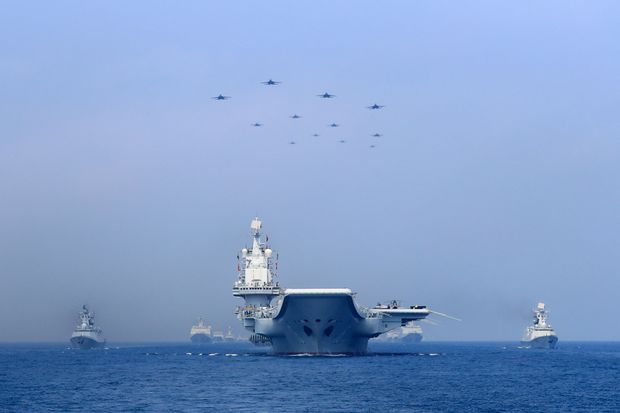
    the PLA Navy, led by the aircraft carrier Liaoning, conducted naval exercises and the taskforce sailed through the Miyako Strait, Bashi Channel and the South China Seaostensibly to display its military readiness during the pandemic. 

    Also, while the global community struggled to combat the pandemic and at least three US Navy carriers afflicted by COVID-19 virus, the PLA Navy, led by the aircraft carrier Liaoning, conducted naval exercises and the taskforce sailed through the Miyako Strait, Bashi Channel and the South China Sea[iii] ostensibly to display its military readiness during the pandemic. The PLA Air Force too showcased it combat readiness and fighter jets intruded into Taiwan’s air space. However, the US responded by three-carrier deployment including dual-carrier operations; B-52 Stratofortress bombers operated from Guam and the nuclear submarines were forward-deployed to conduct “contingency response operations.”[iv]

    Second, China was rattled after the US turned the Taiwan Allies International Protection and Enhancement Initiative (TAIPEI) Act into law to show that “it has the support of both branches of government, which is required for a strong and effective U.S. foreign policy”.[v] Similarly, it also introduced a new Bill ‘Taiwan Defence Act’ in the US Congress[vi] which requires the Department of Defense to provide weapons to Taipei. The Trump administration also announced a military package worth US$ 180 million to improve Taiwan’s capability against “regional threats and to strengthen homeland defense,” [vii]

    Third, is about the Pacific Deterrence Initiative (PDI) which entails fiscal support for military activities and associated infrastructure investment plans[viii] in the Pacific Ocean. The PDI is similar to the 2014 European Deterrence Initiative (targeted against Russia) and is meant to advance US priorities in the Indo-Pacific region. It aims to “focus resources on key capability gaps to ensure U.S. forces have everything they need to compete, fight, and win in the Indo-Pacific” is conspicuously targeted against China.

    India, in response to Chinese posturing in the Himalayas, deployed its naval ship in the South China Sea. This unexpected Indian posturing challenging China in its own backyard and operating in close cooperation with the US Navy, has caused alarm bells in Beijing.

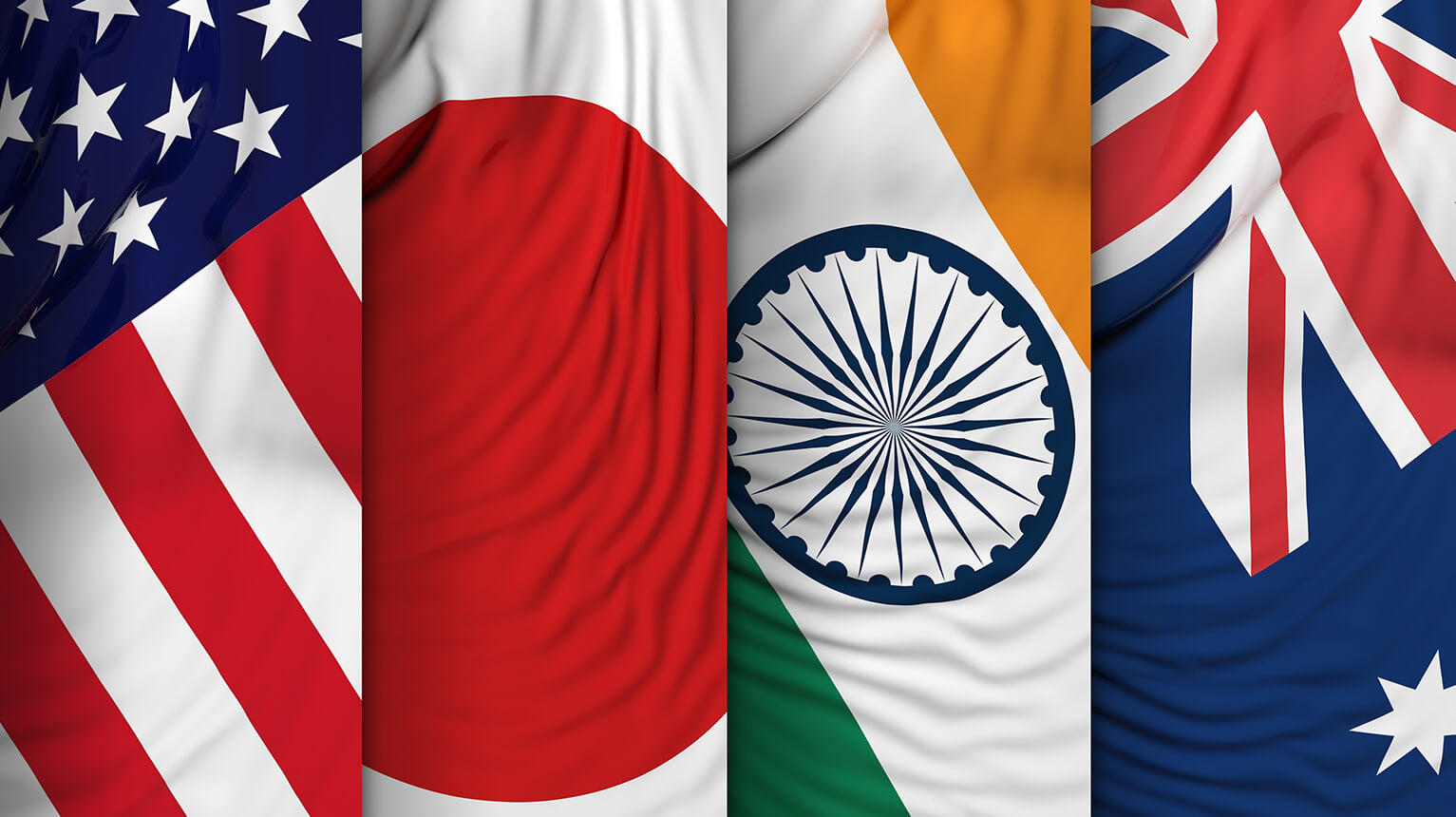
    Fourth, China is concerned about the Quadrilateral Security Dialogue (QSD), a grouping of Australia, India, Japan and the US, which China believes is meant to contain it. Since 2018, India has been hosting the Malabar series of naval exercises which include Japan and the US; but this is being expanded to include Australia. The geographic focus of the Malabar exercises had so far remained in the Bay of Bengal or the Pacific Ocean (around Guam and Japanese waters), could now shift to the South China Sea. India, in response to Chinese posturing in the Himalayas, deployed its naval ship in the South China Sea. This unexpected Indian posturing challenging China in its own backyard and operating in close cooperation with the US Navy, has caused alarm bells in Beijing.

    Chinese worries about the Quad are further aggravated after Taiwanese President Tsai Ing-wen, amid rising tensions between Taiwan and China around the South China Sea region, has called for a joint alliance of democratic nations to uphold “a strategic order that encourages cooperation, transparency and problem-solving through dialogue, not threats of war”.[ix]

    Fifth, is related to Code of Conduct (CoC) for South China Sea between China and the ASEAN. The Chairman’s Statement of the 36th ASEAN Summit has “emphasised the need to maintain and promote an environment conducive to the COC negotiations”[x] and Prime Minister Nguyen Xuan Phuc has urged China to accelerate talks on an effective and efficient COC in line with international law, including the 1982 UNCLOS.[xi] China has in the past disregarded the urgency over the finalization of the CoC and has dragged the issue far too long, but now appears to have realized that there is high degree of unity among the Member States over the South China Sea issue and attempted to reassure ASEAN of its intentions to pursue the issue hopefully in right earnest.

    Among other political, diplomatic and economic toolkits to appease the ASEAN Member States, it also chose to conduct military exercises to intimidate Malaysia, Philippines and Vietnam.

    Among other political, diplomatic and economic toolkits to appease the ASEAN Member States, it also chose to conduct military exercises to intimidate Malaysia, Philippines and Vietnam. It relented only after Philippines Foreign Secretary Teodoro Locsin Jr denounced as ‘illegal provocations’ Chinese air patrols over the South China Sea and threatened if “something happens that is beyond incursion but is in fact an attack on say a Filipino naval vessel … [that] means then I call up Washington DC,”

    China’s attempts to dominate the regional security affairs, non-adherence to the 1982 United Nations Law of the Sea, coercion of other claimants to the disputed features in South China Sea and its intimidation of Taiwan has not gone well among the ASEAN Member States. ASEAN sees US’ formidable capabilities and above all its commitment to keep the Indo-Pacific ‘free and open’ against any attempts by China, as reassuring.

    In his recent remarks at the 10th East Asia Summit Foreign Ministers’ Meeting,[xii] Secretary of State Michael R. Pompeo assured his counterparts from 17 countries that the US shares and supports the “principles of openness, inclusiveness, transparency, and respect for international law contained in the US’ Indo-Pacific vision, ASEAN’s Outlook on the Indo Pacific, and the visions of many other EAS Member States”.

     
    Image Credit: The Globe and Mail and VoA
     
     
    References

    [i] “China Sends Ships, Planes over Disputed Seas to Show Strength after COVID-19 Outbreak”, https://www.voanews.com/east-asia-pacific/china-sends-ships-planes-over-disputed-seas-show-strength-after-covid-19-outbreak  (accessed 08 September 2020).

    [ii] “The ROC Firmly Defends its Sovereignty: The CCP Should Immediately Stop its Military Provocations and not Misjudge the Situation”, https://www.mac.gov.tw/en/News_Content.aspx?n=A921DFB2651FF92F&sms=37838322A6DA5E79&s=3AF953C12D84A525  (accessed 08 September 2020).
    [iii] “   Chinese aircraft carrier Liaoning conducts exercises in South China Sea: PLA Navy spokesperson”, https://www.globaltimes.cn/content/1185471.shtml  (accessed 08 September 2020).
    [iv] “Pacific Fleet Submarines: Lethal, Agile, Underway”, https://www.navy.mil/submit/display.asp?story_id=112909 (accessed 06 July 2020).
    [v] “Trump and the TAIPEI Act”, https://thediplomat.com/2020/04/trump-and-the-taipei-act/  (accessed 08 September 2020).
    [vi] Under the 1978 Taiwan relations Act the United States “will make available to Taiwan such defence articles and defence services in such quantity as may be necessary to enable Taiwan to maintain a sufficient self-defence capabilities”;
    [vii] “Trump administration approves arms sale to Taiwan amid China tensions”, https://edition.cnn.com/2020/05/21/politics/us-taiwan-arms-sale/index.html (accessed 20 June 2020).
    [viii] “Investments in theater missile defense, expeditionary airfield and port infrastructure, fuel and munitions storage, and other areas will be key to America’s future force posture in the Indo-Pacific.” See “The Pacific Deterrence Initiative: Peace through Strength in the Indo-Pacific”, https://warontherocks.com/2020/05/the-pacific-deterrence-initiative-peace-through-strength-in-the-indo-pacific/ (accessed 20 June 2020).
    [ix] “Fed-Up of Chinese Threats, Taiwanese President Urges ‘Coalition of Democracies’ to Confront Beijing”, https://eurasiantimes.com/fed-up-of-chinese-threats-taiwanese-pm-urges-coalition-of-democracies-to-confront-beijing/ (accessed 09 September 2020).
    [x] “Chairman’s Statement of the 36th ASEAN Summit 26 June 2020” https://asean.org/storage/2020/06/Chairman-Statement-of-the-36th-ASEAN-Summit-FINAL.pdf (accessed 14 July 2020).
    [xi] “Pompeo: China cannot be allowed to treat the South China Sea as its maritime empire”, https://vietnamtimes.org.vn/pompeo-china-cannot-be-allowed-to-treat-the-south-china-sea-as-its-maritime-empire-21832.html (accessed 14 July 2020).
    [xii] “Secretary Pompeo’s Participation in the 10th East Asia Summit Virtual Foreign Ministers’ Meeting”, https://china.usembassy-china.org.cn/secretary-pompeos-participation-in-the-10th-east-asia-summit-virtual-foreign-ministers-meeting/  (accessed 10 September 2020).

  • The Geopolitics of Syria’s Reconstruction

    The Geopolitics of Syria’s Reconstruction

    Introduction

    Syria’s territories are controlled by a variety of actors – Al Assad’s regime (with Russia and Iran as its supporters); Kurdish dominated self-administration (with a small number of US troops supporting them); Turkey and its affiliated militias; and the Syrian Salvation Government affiliated to the Hay’at Tahrir al-Sham (HTS), a former al-Qaida offshoot.

    Fragmentation of the state’s territories, as the state lost control of its territories, resulted in the emergence of a network of localised war economies with numerous local and foreign actors being involved. War economies emerged in territories held by Assad’s regime as well as those under the control of various other opposition parties, characterised by an increase in smuggling of goods (among which essential goods, crude oil and arms were popular), extortion, rent seeking for essential services, and taxation of goods at checkpoints established by the warring parties, including local warlords, opposition armed groups or regime’s militias. The Syrian Arab army is also reported to have engaged in rent seeking behaviour through the establishment in recaptured territories (Hinnebusch, 2020).

    Another area of priority for armed opposition groups is the border crossings with Turkey whose access they have sought to control. The Ahrar-Al Sham group, established control over the Bab al-Hawa crossing between 2015-16, and earned around $5 million per month. Armed opposition groups have been involved in conflict with each other over control for border crossings, particularly conflict between Hay’at Tahrir al-Sham (HTS) and Ahrar al-Sham in 2017 (al-Kattan, 2017).

    The Syrian army (that was cross-sectarian) is in crisis of its reducing force size as it is hampered by resistance to conscriptions and many desertions. The Alawite sect was co-opted into the state’s army, political and security apparatus, resulting in tensions along sectarian lines. Another significant development was that those among the pre-war elite who advocated for a political solution based on power sharing were expelled from it, resulting in the contraction of the core to comprise of individuals along sectarian lines. Further, pro-regime militias emerged as pro-government communities were forced to rely on themselves for their defence, leading to a widespread localisation of power to fiefdoms (al-Kattan, 2017).

    The political, economic and security dimensions of the conflict which led to the emergence of war economies has been accompanied by shift of composition of the economy marked by the emergence of ‘war commanders’ and a decentralised elite, who capitalised on evading sanctions, served as middlemen between the armed groups of the state and opposition and established monopoly upon the supply of goods and services.

     These developments further led to the emergence of new centres of power which existed alongside the existing regime that consolidated its power by strengthening its relations with the new elite, army and security sector.

    The domestic dynamics of the Syrian conflict are closely related to a wider geopolitical struggle among regional and external actors who act as patrons for the domestic actors.

    In addition, by portraying itself as a bulwark against radical Islamism and strengthening its relations with influential individuals in minority communities and providing them with disproportionate authority within their societies, the regime’s efforts have redefined existing social hierarchies and co-opted pro-regime minority leaders to power. The regime’s policies, throughout the war, have not only strengthened the neo-patrimonial nature of the State and its relations with its multiple networks but lead to the decentralisation of a system of neo-patrimonialism (Middle East Institute & Etana Syria, 2020).

    The domestic dynamics of the Syrian conflict are closely related to a wider geopolitical struggle among regional and external actors who act as patrons for the domestic actors. The Syrian conflict that began as an internal conflict emerged into a proxy conflict where regional struggle for influence played out between the ‘resistance axis’ comprising of Hamas, Hezbollah and Iran, and Sunni dominated ’moderate’ states comprising of Saudi Arabia, Qatar and Turkey. The latter wished replace the Assad regime that was aligned towards the ‘resistance axis.’ Iran considers the Syrian conflict as threat to its survival and its ability to support Hizbollah against Israel.  The rival axes instrumentalised sectarianism as a part of their discourse and in their support for proxies. However, the interests of those within the Sunni camp clashed (with Turkey and Qatar’s support for the Muslim Brotherhood and Saudi Arabia and UAE against the Muslim Brotherhood and its version of political Islam) resulting in division of the Sunni camp further leading to the division of their proxies (Aita, 2020).

    The global struggle for power between the US and Russia, with the former promoting a liberal world order and advance its hegemonic interests, and the latter interested in increasing its sphere of influence, limiting US intervention while emphasising on state sovereignty. Russian intervention in Syria in support of the Assad regime tilted the power balance in its favour allowing the regime to gain control of its lost territories.

    Image Credit: Al Araby

    US sought to limit direct intervention in Syria while relying on proxies and financial sanctions (that it pursued along with the EU) to pressurise Assad’s regime to compromise to a solution that would promote its interests. Assad’s regime, due to its connection Iran, Shia militas in Iraq and Hezbollah in Lebanon, was able to manage despite the external pressure it faced. US attention and efforts were diverted to controlling ISIS. In 2019, while US withdrew from Northern Syria due Turkish intervention against the Kurdish forces, it announced it would redeploy its forces to the energy reserves in Deir ez-Zor to prevent Assad’s forces or ISIS from gaining control over them (Hinnebusch, 2020).

    The geo-political struggle for influence in the Syrian conflict among regional and global actors, has also transcended into efforts to capitalise on Syria’s post-war reconstruction efforts and business.

    With diversion of US efforts towards constraining ISIS, Russian intervention, growing differences between Saudi and Qatar, Saudi and UAE intervention in Yemen, have all resulted in a gradual withdrawal of the GCC, leading to a rise in the role played by Turkey, Iran and Russia. Turkey’s role and interests evolved from installing a Brotherhood government and targeting the regime to controlling the Syrian Kurdish PYD, which it views as a terrorist organisation. The threat of a confrontation with Moscow in Syria allowed it to participate in the Astana Process and a gradual realignment of its policy with that of Russia’s policy. More recently, Turkey and Russia have brokered a ceasefire deal in Idlib.

    The geo-political struggle for influence in the Syrian conflict among regional and global actors, has also transcended into efforts to capitalise on Syria’s post-war reconstruction efforts and business.

    This paper explores the local, regional and international dimensions of reconstruction and development Syria while analysing the impact the war has had on the political economy of Syria.

    Internal dynamics of Syria’s reconstruction

    The internal dynamics of Syria’s reconstruction are characterised by conflict among Syrian actors (supported by external actors) for resources and instruments that would lead them to strengthen their control. The regime views reconstruction efforts as a means to consolidate its authority and power over the country.

    Image Credit: NYT

    While the efforts made by the regime to consolidate its power and authority served its objectives and reduce the costs of governance, they have led to the decentralisation of political and security apparatus at the local levels. In addition, Iran and Russia continue to establish relations based on patronage with several Syrian clients. The integration of Hezbollah, Iraqi Shi’i militias and Iran’s revolutionary guards, have further loosened the control the regime holds over the security apparatus and strengthened sectarianism.

    The efforts of Assad’s regime have been directed at satisfying its loyalist elite on whom it is vitally dependent to legitimise its authority and power, and to a lesser extent the public.

    The regime sought to prevent local security apparatus from capitalising on their autonomy by incorporating them into the newly established units under centralised defence forces as in the case of the 5th Army Corps, although this was only partially successful. Russian intervention and participation in the conflict allowed it to establish order in the army.  The paucity of manpower further prevents the regime from extending its authority over the entire country, forcing it to continue to depend on its relations with tribal leaders and local warlords (Hinnebusch, 2020).

    The efforts of Assad’s regime have been directed at satisfying its loyalist elite on whom it is vitally dependent to legitimise its authority and power, and to a lesser extent the public. It encouraged its loyalists to participate and reap benefits off the war economies during the war as its authority over its local proxies declined, while the threat of being targeted by the opposition has ensured that the elites remain loyal. With the localisation of war, the regime has strengthened its relations with the elite while consolidating its power by encouraging investment of income and revenues earned through illicit means into the formal economy. The elite, the warlords, who are partners in the conflict are increasingly participating in the formal economy by setting up formal companies and businesses. However, there remains much to be done to fully integrate them into the productive economy, discourage involvement in rent seeking, and to promote the revival of a productive economy (Sinjab, 2017).

    One of the major effects of the conflict and its resulting socio-economic and political patterns has been the lawlessness, that serves as a deterrent to socio, economic and political cohesion, further preventing the investments required for reconstruction.

    Legislation aimed at Reconstruction

    The regime’s economic strategy for reconstruction namely the ‘National Partnership’, enforced in 2016, allows public bodies to form private investment companies while supporting the establishment of private firms.

    Image Credit: BBC

    Private investors are encouraged to investing in the remaining public property allowing the government to retain its influence on the economic movements. This serves the purpose of attracting new investors to invest in lucrative opportunities while the investments serve to support regime’s prime customers and clients. The legislation also enables them to obtain and secure public sector properties at the cost of the state treasury’s finances, thereby raising a doubt regarding the ability of the ‘new elite’ to alter the nature of the enterprise. Another significant measure taken by the regime as part of its reconstruction repertoire are property and urban reconstruction laws, including the Law 66 of 2012 and Law No 10 of 2018, that expropriate land and property from displaced opposition supporters in substandard living conditions and reallocate them to new upscale housing. This is meant to gather the support of the regime’s loyalists. The regime by creating uncertainty about the security of the property could discourage all investors with the exception of a few capitalists (Daher, 2018).

    Despite the fact that restrictions on capital movement makes it very difficult to attract investments into Syria, the Syrian government is implementing policies and schemes to attract financial aid from outside. It intends to tax finance inflows ranging from money sent by expatriates into Syria for humanitarian aid, which must be channelled through NGO’s funded by the regime. It also intends to attract $100 billion worth Syrian currency held outside Syria through tax concessions and by launching the Syrian International Business Association (SIBA) under the auspices of World Bank. Analysts warn about the difficulties associated with investments from other nations. They suspect that given the dispersion of investments, diaspora would find it difficult to compete with loyalists for reconstruction contracts and there may be issues with fraudulent officials and widespread corruption. The assets of those businessmen who left the state have been frozen. Lastly, the US and EU-imposed multilateral sanctions led to Syria being cut off from the international banking system(Aita, 2020).

    The Syrian Government has declared that reconstruction contracts will be granted to its supporters and not countries who supported its opposition. It has also offered concessions in order to attract investments from Russia and Iran, but this may jeopardize Syria’s financial independence in the coming years.

    Reconstruction of Syria would lead to stronger relations with Iran and Russia followed by simultaneous decline in relations with the West (to whoom it exported a major portion of its oil ) and the Arab Gulf. Previous economic partners may engage in reconstruction in areas where there is negligible regime-control. The reconstruction parameters are bound to affect Syria’s social fabric. The gap between the rich and the poor has widened due to the war economy. The rigged economy will put the interests and benefits of the common people in peril.

    Geopolitical Dynamics of Reconstruction

    The geopolitical struggle over reconstruction among competing players at the regional level is centred around increasing one’s own influence, either through direct intervention or proxies. Considering that different parts of Syria is under the control of different parties there is every chance that Syrian reconstruction effort may not be an integrated effort across the nation but rather take the form of parallel reconstruction initiatives across the many different areas of Syria.

    The global geo-economic factors influence whether resources become available for reconstruction and on what terms. Because the powers that are geopolitically strongest on the ground in Syria (Russia, Iran) are geo-economically weaker than those who lost the geopolitical conflict (US, EU, Gulf), the latter are using the capital that they can withhold and obstruct or seek to leverage their contribution to effect the looming winding down of the military conflict on their terms. They, together with the World Bank, are making their participation conditional on a political settlement. Specifically, this will affect whether the regime will be able to reconstitute authority over the country’s territory and its reconstruction, or will be forced into some sort of power-sharing/territorial confederation or, these failing, reconstruction deepens fragmentation. If the parties do not reach a compromise the outcome could be a frozen conflict consolidated by separate and minimalist reconstruction tracks.

    Further, regional and global actors that have not participated in the conflict happen to be economically stronger and have the means to mobilise resources. Their support and resources to fund the reconstruction and development of Syria remain contingent on the ability of Assad’s regime to fulfil their conditions of a political settlement.

    Russia’s Reconstruction Support

    Russia’s role in Syria’s reconstruction have been driven by the benefits a stable Syria could provide it. It has provided Assad’s regime with support in economic and military terms and settled Syria’s debt. Russia also seeks to renew and recoup its pre-war investments in infrastructure and energy sector, and establish new contracts in geo-strategic areas. Assad’s regime has been granted a preferential role in redevelopment of its energy and infrastructure sectors. The state of the Russian economy has made lesser resources available for investment. The risk of investing in Syria due to the political and security climate and the threat of being targeted by US sanctions have led to minimal investment into Syria. The entities that have invested are operated/owned by oligarchs close to Putin, and those under sanctions, for instance, Gennady Tim-Chenko’s construction company (Van Veen, 2020).

    Russia has realised that it lacks the resources to actively finance Syria’s reconstruction effort and instead focussed its efforts on building the state institutions necessary to provide adequate security infrastructure, which is an important pre-condition for any reconstruction effort.

    Russia has realised that it lacks the resources to actively finance Syria’s reconstruction effort and instead focussed its efforts on building the state institutions necessary to provide adequate security infrastructure, which is an important pre-condition for any reconstruction effort. Simultaneously it tried to seek support from the European Union and international organisations to create the necessary infrastructure required to facilitate the return of refugees based out of Europe while ensuring the attainment of a political settlement that helps Bashar Al Assad to stay in power (Daher, 2018).

    Image Credit: NYT

    Russia has also worked with the Assad regime to implement policies aimed at the return of refugees thereby addressing some of the requirements and requests of the European Union. However, Bashar Al Assad has so far only paid lip service to such requests.  For instance a law intended to promote reconstruction projects has been amended under Russian pressure but without any major changes to its provisions and was used to expropriate the property of Syrians who fled abroad.

    Iran’s Role

    Iran has provided Assad’s regime around $16billion worth of financial aid since 2012.It has provided an additional $3.5 million in 2013 which was further extended by $1 billion in 2015 and $6.4 billion and $700million to pro-Iran militias in Syria.   It has expressed its interests in participating in the reconstruction of Syria. Iranian entities were awarded numerous contracts worth millions of dollars to initiate redevelopment of the electricity infrastructure by the central government as well as local governments but are yet to be implemented. The Iranian Revolutionary Guards, who have considerable experience in participating in the reconstruction of Iran after the Iran-Iraq war and own vast construction companies in Iran, have entered into agreements in the sectors of mining and communications. While Iran has stated it would offer $1 billion for reconstruction, the amount it pledged is a minuscule amount of the total funds required. Iran’s participation in Syria’s reconstruction is also likely to be limited due to the impact of US sanctions on its own economy(Van Veen, 2020).

    Diminished role of US, EU and Arab States

    As for regime controlled parts of Syria, Washington moved to block reconstruction funding in these areas. US pundits argued that the regime would inevitably be empowered by reconstruction and should not be rewarded for its brutal repression of the uprising; anti-regime interest groups moved not only to preclude US funding but also to erect obstacles to others participating in reconstruction. In April 2018 the US Congress passed the No Assistance for Assad Act (NAAA) which was designed to prevent any drift from humanitarian assistance to reconstruction stabilization, and according to Faysal Itani, had the effect of ‘killing any World Bank dreams to get funding to operate in Syria’. Indeed, the US has a long history of directing the flow of world financial capital via sanctions, conditionality, etc. for its geopolitical purposes; in Syria, it seeks to manipulate money (geo-economics) to obtain what it could not achieve via geopolitics: specifically, keeping Syria a failed state that would make it a resource-draining burden for Russia and its allies.

    The US has used its influence in North-Eastern Syria, to counter efforts by the Assad regime to consolidate its power over Syria which is a precursor to a “nationally integrated” reconstruction. Establishing control over energy reserves is essential for Assad’s regime to pursue its reconstruction efforts successfully. The US, by controlling reserves in the North-East Syria, has been able to deprive Syria’s access to essential resources.

    US efforts in reconstruction have been motivated by its interests to deter any reconstruction efforts sponsored by the regime through geo-economics measures such as sanctions, when its geo-political efforts have had limited success in motivating Syria and its allies in pursuing a political solution in line with US policy interests.

    The US campaign against ISIS devastated Raqqa but reconstruction there has remained limited to stabilization measures. The Trump administration tried to get the Saudis to assume the burden of reconstruction (asking for $4 billion). The US goal was to start enough reconstruction to deter any move in the area to join regime sponsored reconstruction efforts (Alaaldin et.al., 2018; Burcher, 2018; Harris, 2018; US Congress, 2018;). US efforts at convincing Saudi Arabia to undertake reconstruction efforts have not been successful as the latter offered relatively smaller amount (al-Khateb, 2020).

    US efforts in reconstruction have been motivated by its interests to deter any reconstruction efforts sponsored by the regime through geo-economics measures such as sanctions, when its geo-political efforts have had limited success in motivating Syria and its allies in pursuing a political solution in line with US policy interests.  It simultaneously blocked reconstruction funding directed towards territories under the control of the regime. The Caesar Act, now incorporated into the National Defence Act of 2020, targets investment into Syria, through individuals and businesses coming into the ambit of the UN sanctions (Hinnebusch, 2020).

    While the EU has provided substantial aid to Syrian refugees in Syria’s neighbouring countries, it has made its aid and participation in reconstruction contingent on efforts to reach a political solution that is in accordance with ‘UNSCR 2254 and the Geneva Communique’

    The EU has been affected by the Syrian Conflict due to the influx of refugees and large-scale migration of its citizens to partake in terrorist activities. While the EU has provided substantial aid to Syrian refugees in Syria’s neighbouring countries, it has made its aid and participation in reconstruction contingent on efforts to reach a political solution that is in accordance with ‘UNSCR 2254 and the Geneva Communique’ (Van Veen, 2020).

    Russia is making efforts to broker a political settlement of sorts, with Turkey’s support, to convince EU to invest in reconstruction to enable refugees to return. While the EU seems to be relying on the inability of Syria’s allies to support its funding and thus force Assad to agree to the EU’s conditions, the regime does not seem to be interested in accepting EU conditions and give up its power in return for support of its reconstruction. However, individuals EU states have participated in reconstruction efforts in a limited manner in both the regime-held as well as opposition-held areas.

    Turkey continues to be one of Syria’s top trading partners. Numerous Syrian businessmen who have been exiled have invested in Turkey, around 26% of foreign investment in Turkey in 2014 originated from Syrian businessmen, particularly in its border regions with Syria. While a number of exiled Syrian businessmen supported the opposition, their investment would be instrumental, if mobilised, in territories held by Turkey and its militias at a time when refugees are returning to the region. While the Syrian government is against the participation of Turkey in the reconstruction of Aleppo, Russia’s efforts in mediation would lead Turkey to participate in the reconstruction process. Turkey has invested significantly in establishing institutions facilitating the governance of areas under its control and also in building economic infrastructure in these areas (Daher, 2018).

    While Jordan and Lebanon have expressed interest in participating in the reconstruction of Syria, the resources they can mobilise are limited.  The Gulf countries have, no doubt the resources required for reconstruction, but have made their role in Syria’s reconstruction contingent on withdrawal of Iran and its proxies and in case of some countries, a regime change. The UAE as expressed its interest in participating in Syria’s reconstruction so as to limit Iran’s influence. However, Yazigi (2017) states that reconstruction efforts, in the case of  Lebanon, were contingent on a solution that emphasised upon power-sharing, backed by regional and international actors and substantial financial aid from Saudi Arabia. It is unlikely that either of the two scenarios would play out in the case of Syria.

    China: A Possible Contender?

    the Chinese state considers Al Assad’s regime as a bulwark against terrorism and its relations with the regime an asset in combating Uighurs who are participating on the behalf of terrorists.

    China has expressed its interest in participating in the reconstruction of Syria to advance its interests through investments in economy and geo-strategic areas such as the maritime sector, and to develop and connect its Belt and Road Initiative in the region. Given China’s interests, size and nature of China’s capital, China becomes a viable partner in the reconstruction of Syria.  China conducted a trade fair in 2018, which was attended by 1,000 Chinese companies and witnessed an investment of $2 billion for the reconstruction and development of Syria’s industrial sector. Private investors have been concerned about the widespread corruption in Syria and the threats of being targeted by US sanctions. Moreover, the Chinese state considers Al Assad’s regime as a bulwark against terrorism and its relations with the regime an asset in combating Uighurs who are participating on the behalf of terrorists.

    Conflict Resolution vs Conflict Management

    Given that the warring parties consider the conflict to be more-or-less of a zero-sum game, territorial and social fragmentation of Syria, it would be extremely difficult for them to pursue means to resolve the conflict through creating the need for the conflict to be managed and downsized (Dacrema, 2020). The non-recognition of certain non-state actors by the rival sides and questions regarding the participation of non-state actors in negotiations, which would only serve to legitimise them further, complicates the process of negotiating a solution.

    Temporary Arrangements

    A strategy that would allow for the management of the conflict would be to negotiate temporary agreements and deals. Turkey and Russia have been able to broker temporary ceasefires at multiple instances, throughout the conflict, in the Idlib region. Temporary arrangements would help build confidence among the warring parties in the long run, and reduce the possibility of escalation of war (Dacrema, 2020).

    Conclusion

    Given that the warring parties prefer a status quo in comparison to the resolution of a conflict and value their geo-political and economic interests, it is highly unlikely that parties would push for resolution of the conflict. In consideration of a political stalemate, reconstruction efforts among the warring parties are likely to take place parallelly, as they have played out with the localisation of the conflict. While resources in the territories held by the regime are being diverted to areas that have remained loyal during the conflict and/or areas of strategic importance with areas formerly occupied by opposition forces receiving relatively lesser attention; territories under Turkish control and those held by the Kurdish forces have witnessed efforts aimed at stabilising the territories.

    Russia and EU have the potential and the leverage required to emerge as power brokers in the reconstruction and initiate the process in a manner that promotes social, economic and political cohesion in the long run.

    Russia and EU have the potential and the leverage required to emerge as power brokers in the reconstruction and initiate the process in a manner that promotes social, economic and political cohesion in the long run. The likelihood of being able to convince themselves that the possibility of achieving one’s interests alongside the other is a far better option in comparison to its alternative of a failed state, which threats both their interests. However, their ability to convince their allies and their clients (in this instance, Assad regime is Russia’s client) and the mistrust between both the parties as well as between their allies poses a challenge.

    Russia’s efforts in brokering a constitutional committee for Syria under the aegis of the UN is an indicator of a compromise. Hinnebusch (2020) suggests that “it is not impossible to move incrementally toward a minimalist sort of political settlement that might acquire enough international legitimacy to open the door to some reconstruction funding.” While the likelihood of this occurrence is difficult amid conflicting interests, it cannot be overruled.

    The humanitarian aspects of the conflict and urgent need for reconstruction to alleviate tangible and intangible costs of the conflict have largely been ignored. The warring parties have been preoccupied with advancing and fulfilling their interests at the cost of ordinary Syrians. There is a need for parties to acknowledge and make efforts towards the realisation of the urgency of reconstruction that is vital for securing the social and economic interests of ordinary Syrians. The likelihood of the same, however, is questionable.


    References

    Aita, S. (2020). Reconstruction as a political-economy issue: The case of Syria. Retrieved 28 June 2020, from https://www.thecairoreview.com/tahrir-forum/reconstruction-as-a-political-economy-issue-the-case-of-syria/

    al-Kattan, R. (2017). Retrieved 25 June 2020, from https://www.atlanticcouncil.org/blogs/syriasource/the-economic-case-for-syria-s-stabilisation/

    al-Khateb, K. (2020). US outsources Syria aid to Gulf. Retrieved 4 July 2020, from https://www.al-monitor.com/pulse/originals/2018/08/us-outsources-syria-aid-gulf.html

    Dacrema, E. (2020). Three Concepts to Understand the Future of Syria. Retrieved 25 June 2020, from https://www.oasiscenter.eu/en/what-future-for-postwar-syria

    Daher, J. (2018). The political economic context of Syria’s reconstruction : a prospective in light of a legacy of unequal development. Retrieved 3 July 2020, from https://core.ac.uk/display/162303203

    Hinnebusch, R. (2020). The Battle over Syria’s Reconstruction. Retrieved 1 July 2020, from https://www.globalpolicyjournal.com/articles/development-inequality-and-poverty/battle-over-syrias-reconstruction

    Human Rights Watch. (2019). Rigging the System. Retrieved 25 June 2020, from https://www.hrw.org/report/2019/06/28/rigging-system/government-policies-co-opt-aid-and-reconstruction-funding-syria#_ftn114

    Middle East Institute, & Etana Syria. (2020). Manufacturing Division: The Assad Regime and Minorities in South-west Syria. Retrieved 2 July 2020, from https://www.mei.edu/publications/manufacturing-division-assad-regime-and-minorities-south-west-syria

    Sinjab, L. (2017). How Syria’s War Economy Propels the Conflict. Retrieved 25 June 2020, from https://syria.chathamhouse.org/research/how-syrias-war-economy-propels-the-conflict

    Veen, E. (2020). The geopolitics of Syria’s reconstruction: a case of matryoshka. Retrieved 27 June 2020, from https://www.clingendael.org/publication/geopolitics-syrias-reconstruction-case-matryoshka

    Yazigi, J. (2017). Analysis: No Funds to Foot Syria’s Reconstruction Bill. Retrieved 1 July 2020, from https://www.newsdeeply.com/syria/community/2017/12/04/analysis-no-funds-to-foot-syrias-reconstruction-bill


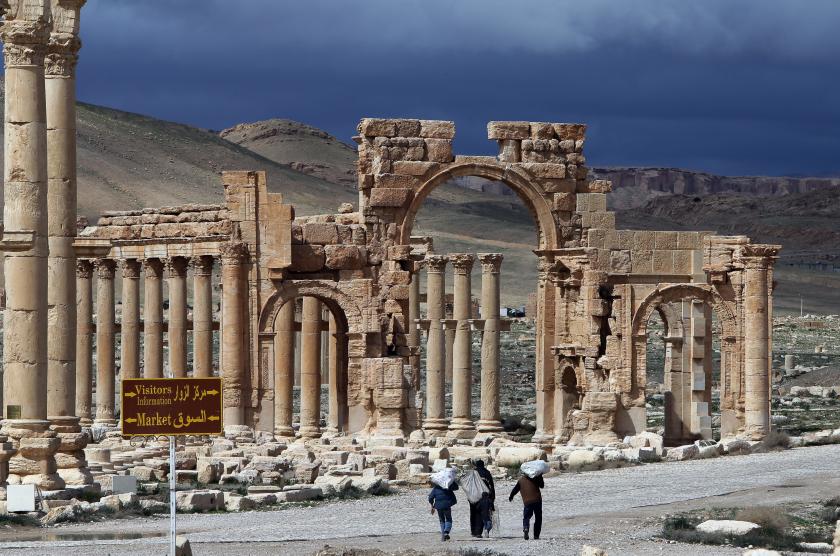
    Main Image Credit: Palmyra before its destruction by ISIS – www.citymetric.com 
     

  • The Catalysing Effect of Covid-19 on the Changing World Order

    The Catalysing Effect of Covid-19 on the Changing World Order

    Contrary to the realist belief, international states co-exist in a world order of hierarchy rather than anarchy. Ikenberry presents this hierarchical world order and the cyclical rise and fall of hegemonic powers. Early 20th century witnessed the shift from Pax-Britannica to Pax-Americana that was complete by 1945, from which point the US defended its position during the Cold War with the erstwhile USSR. It exercised its hegemonic influence even more aggressively after the Cold War. However, US dominance of the world order has been diminishing owing to the Trump administration’s isolationist approach to foreign policy, and the increasing influence of China in world politics. This article examines the catalysing effect of Covid-19 and the rise of China on the current World Order.

    Trump’s policy of disregarding multilateralism and imposing its unilateralism on the world has catalysed into an involuntary retreat, protectionism, and isolationism for the USA with dire consequences for its foreign policy effectiveness.

    Trump’s policy of disregarding multilateralism and imposing its unilateralism on the world has catalysed into an involuntary retreat, protectionism, and isolationism for the USA with dire consequences for its foreign policy effectiveness. The net result is that the world is witnessing an abdication of leadership by America in a world disrupted by the Covid-19 pandemic. A clear pattern of isolationism can be seen in various actions of the Trump Administration since it’s assumption of the Office. In 2017, the US withdrew from the Paris Agreement, in 2018 it unilaterally reneged from the JCPOA, re-imposed sanctions on Iran and threatened sanctions on allies who supported Iran. In 2019, it withdrew troops from Syria, which led to subsequent Turkish incursion on Rojava Kurds, and in early 2020 it negotiated with the Taliban to enable withdrawal of US troops from Afghanistan. With the onset of Covid19 global pandemic, the Trump administration has accused the WHO of protecting China. In a unilateral action not endorsed by its allies, USA first stopped its funding for WHO and then terminated its relationship with the UN institution. This comes as a blow to multilateralism since the US was WHO’s largest donor, contributing about $440 million yearly. In addition to this, the US has failed to provide the lead in the global response to tackle the virus despite its initiatives in the past pandemics such as H1N1, Ebola and the Zika virus. The US was absent from the WHO initiative – Global Coronavirus Response Summit (before its withdrawal from the association). In addition, the US has been unable to provide external aid to combat the virus due to domestic shortages, which explains its restraint to guide an international response in the absence of a coherent domestic plan of action. Thus, the coronavirus pandemic has acted as a catalyst in increasing the pace of US isolationism from world politics.

    China has turned the tide on its previous missteps in containing the virus by publicising its governance model as the most effective way to combat the pandemic.

    Meanwhile, the pandemic has established firmly China’s rise in the international stage. Though China is facing backlash for suppressing details about the virus, it is battling to overcome this criticism by providing international aid and stepping up to lead a global response using Beijing’s success as a template to overcome the novel virus. China has contributed significantly to the global response by providing materials such as ventilators, respirators, masks, protective suits and test kits to Italy, Iran, Serbia, and the whole of Africa. Grabbing its opportunities to lead international responses, China hosted Euro-Asia conference, participated in the Global Coronavirus Summit where it pledged an emergency funding of $20 million to WHO, and pledged $ 2 billion to the WHO (equalling its annual budget) to be disbursed over the next two years, thus contrasting sharply with the US behaviour of withdrawing from the WHO. China has turned the tide on its previous missteps in containing the virus by publicising its governance model as the most effective way to combat the pandemic. It continues to highlight the inadequacies and shortfalls in healthcare systems of the western world as against the success of its governance model, Beijing Consensus, and variations of it in East Asia. It is clear that China has seized the Covid-19 pandemic as a huge opportunity to establish its global leadership.

    Taking advantage of the global disarray due to the pandemic, China has taken strong actions to deflect global criticism of its initial handling of the virus. Two prominent examples of this being, European Union watering down the report on Covid19 disinformation owing to pressure from Beijing, and the passing of the controversial Hong Kong security law. While the US has taken initiative in cracking down on China by repealing the special privileges to Hong Kong, other countries were cautious in retaliating against China significantly and limited their actions to sympathetic support for pro-democracy protestors. The exception to this was Britain, which offered UK citizenship to British National Overseas Passport holders in Hong Kong, despite seriously offending China. Despite the global backlash against Chinese diplomacy in the form of generous aids, international actors have expressed limited concerns through action against Chinese domination. This is due to the circumstantial mismatch in global balancing against China’s rise. The US uses unilateral actions and ‘expects’ its allies to follow, while its allies despite their serious concern over China’s rise, remain vary of following in the American footsteps. This is because US allies treat coronavirus as an immediate threat as opposed to China’s rise. The US being a status quo power is more threatened by China’s rise since it posits as a revisionist state. However, in view of China’s proactive efforts in leading global contributions to battle the coronavirus, US allies remain tolerant of China’s dominance.

    The passive and fractured response to China’s aggressive exploitation of the pandemic to establish its global leadership is a concern for India. The recent setting up of Chinese military camps in Indian controlled territory of Ladakh is a manifestation of China’s complex strategy. India has, true to its traditional policy, opted out of involving the United Statesin the ‘bilateral issue. However, it would be beneficial to be united in balancing against China’s rise. While it is necessary to work together to utilise Global Supply Chains (GSC) during the pandemic to battle the coronavirus pandemic, it is equally important to look at global balancing against China to ensure its compliance to rules-based world order. Since China’s power is derived from its economic strength, balancing strategy against China should focus on trade and economy. Chinese foreign policy depicts a pattern of economic coercion to reward or punish its counterparts. This can be tackled through concerted global action. India is, as one of the largest producer of pharmaceuticals, playing a crucial role in global efforts to fight the pandemic by providing Hydroxychloroquine globally. However, given that most raw materials are sourced from China, balancing against China requires a favourable movement of GSC diversification. US-China trade war has, encouraged companies to move production out of China and into Asian countries such as Vietnam and Taiwan. As a result of the coronavirus crisis and the global backlash, companies look to further diversify their resources and supply chains. India and other Asian countries could benefit from this if they adapt their policies suitably.

    Global backlash against China’s handling of the virus in Wuhan is still a challenge for China’s geopolitical strategy. Its foreign policy is seen more as displaying aggressive and coercive approach than persuasive diplomacy.

    It is difficult to estimate whether China would aspire for hegemonic leadership. Global backlash against China’s handling of the virus in Wuhan is still a challenge for China’s geopolitical strategy. Its foreign policy is seen more as displaying aggressive and coercive approach than persuasive diplomacy. Given the current volatile scenario most countries have, in the absence of US leadership, increased their dependence on China as it is now the largest provider of aid. While all this tips the scale in China’s favour, it’s hegemonic ambitions can be countered through trade strategies as its weakness stems from the fact that it is a hugely export driven economy. Global diversification of supply chains would reduce the world’s increasing dependency on Chinese manufacture and products. The world will need to be cautious as the pandemic has provided China an opportunity to tighten its grip on the global economy as the world’s workshop and technology provider. Here on, international efforts to bandwagon or balance will become a decisive factor in determining China’s rise to apex position in the world order.


  • POST COVID 19: RE-IMAGINING THE NEW WORLD ORDER

    POST COVID 19: RE-IMAGINING THE NEW WORLD ORDER

    As the world grapples, rather unsuccessfully so far, with its worst pandemic in a century, COVID 19, it would be an understatement that the world, as mankind has known for decades, will ever be the same again! The Coronavirus is not just a medical emergency which has afflicted the entire world, already caused over 125,000  fatalities and  with its rampage  continuing alarmingly,   the socio-economic-political consequences for the world, in the near future, are likely to be as horrendous as the employment of a weapon of mass destruction(WMD).

    Post COVID 19, whenever that period dawns, what the new world order or disorder would be is agitating the minds of governments and analysts the world over. Though it is rather premature today to crystal-gaze as to when the world can rejoice that COVID 19 is now part of history, it is equally imperative for governments and global institutions, the world over, to frankly analyse the ramifications of  the aftermath of such an apocalyptic event. It will be better to be prepared for the after-results now than be found ill-prepared as the world was when this pandemic struck in full surprise and ferocity.

    The onslaught of this coronavirus was indeed a Black Swan event and hence it found the world, including the most powerful nation on the earth, US and most of the technologically advanced nations, like in Europe, grossly under-prepared – a fact that will puzzle future historians. For the uninitiated, a Black Swan event is a metaphor for an unpredictable event that is beyond what is normally expected of a grave situation and is characterized by both extreme rarity and equally severity in occurrence. Events like the Black Death plague which had engulfed the world 600 years back and took a toll of 25 million lives, the Spanish Flu a hundred years back which took millions of lives, the atom bomb attacks on Hiroshima and Nagasaki in Japan by the US Air Force at the near- end of World War II  or the 9/11 terrorist attack on the Twin Towers in the US could be categorized  as Black Swan events.

    Prior to ascertaining through the prism of uncertainty the contours of the “new normal” or the “next normal”, it will be in order to study what all went grievously wrong in the globe’s response to the pandemic. Firstly and, unquestionably, was the emerging superpower China’s total disdain for the fallout of the coronavirus. Reliable reports in the western media point out that as early as 17 Nov 2019, the virus was detected in the Wuhan laboratory in China’s Hubei province. It was attributed to the major animal market of Wuhan which sells dead bats, dogs, cats, fish, seafoods and many other forms of animal produce for the Chinese palate. Once the virus started spreading uncontrollably, it was only on 31 Dec 2019 that China cared to inform the WHO regards the spread of an “abnormal pneumonia”.

    From the beginning of Jan 2020, the pandemic rapidly spread its tentacles to the US and most nations of Europe with devastating effect. Amazingly and regrettably, the US and most nations were rather sluggish in their response mechanisms to combat this dreadful virus. No stringent lockdowns or social/physical distancing or curbs on travel or congregations was enforced—- the tragic results were for all to see with medical systems collapsing and no drugs/vaccines available, no hospital beds or ambulances, as  required, available. It was only that by end Feb/ mid-March some emergency measures were enforced—much too late though. The world expects all fellow nations to share critical information with each other in the event of such emergencies as such viruses do not recognize any international borders.

    In India too, there is a view that we may have been a bit late in enforcing lockdowns and other stringent measures. Nevertheless, PM Narendra Modi’s much awaited 21 days lockdown announced on 24 March (and its subsequent extension till 03 May 2020), though necessary, could have been better implemented with some advance planning. Though the centre and state bureaucracy did step up subsequently to resolve the teething problems, especially of migrant labour, many helpful interventions from well-meaning NGOs, gurdwaras, temples, the public and others, the humanitarian problems have been overcome to a large extent. Overall, the nation’s response, cutting across religious lines, to this medical emergency has been encouraging and embellished with humanitarianism.

    The other major fall-out of the COVID 19 pandemic will, in all certainty, be the catastrophic economic costs the world will have to bear. The IMF has stated that the current crisis is the most horrible in a century and will be likely worse than the “Great Depression” (1929-1939). It visualizes the global GDP to shrink by a whopping 3 percent though it forecasts that next year could witness an improvement. As observed all over the world, stock markets have tumbled to abysmally low levels, production facilities come to virtual shutdowns, staff laid off, air and rail travel shut, supply chains both international and intra-nation disrupted etc. In addition, oil prices have had a dangerously steep decline throwing the world trade and economy out of gear. The US with its financial muscle ultimately, despite being financially badly mauled, is expected to slowly bounce back. President Donald Trump, now in his crucial re-election year, may take some out-of-the box fiscal initiatives to bring the US economy back on track. The ongoing trade war between China and the US may witness contours of a rivalry not witnessed so far. Anyway, China needs to be globally chastised for its unethical practices.

    It will be a natural fall-out for most nations now to take a fresh look at their trade relations with China. Japan has already announced a US $ 2.2 billion package for their industrialists to pull out of China. Others like Taiwan may do so too. Some of the industries moving out of China may prefer to re-locate to India and here is a good chance for India to welcome them here and give a fillip to India’s currently near-stagnant “Make in India” programmes. However, the Indian establishment will have to shed its hollow big talk, traditional lethargic attitudes and genuinely encourage foreign investments into India. India’s private industry is modern, robust, and skilful enough to work together with foreign collaborators.

    The world now must rise and strengthen global institutions like the UN and its various agencies to combat global challenges. No country, however powerful, can exist as an island as witnessed now. Nations like China, notwithstanding its deep pockets, must be cautioned not to disturb the economic equilibrium of the world, most of which is reeking with poverty and under-development. China’s intransigent attitude not even allowing a discussion on the pandemic at the United Nations Security Council last fortnight is unacceptable to the world.

    In the coming years, it is certain that owing to the gruesome after-effects of COVID 19, nations, both the powerful and the poor, are going to take far more seriously their public health preparedness and emergency standard operating procedures. Medical infrastructures, rightly so, demand far greater thought, planning and investments than hithertofore.

    It is well on the cards that even the militarily powerful nations will look into the various nuances of biological warfare. It is now clear to the entire world that a virus can prove to be far more lethal than many megatons of explosives and modern weaponry. According to many western journalists, China may deny its botched-up bio warfare experiment, but it is a matter of time when the bitter truth will unravel. India as a signatory of the Geneva Convention of 1972 (effective since mid-1975) to eschew production and experimentation of  WMDs including bio weapons should not only  use its moral authority to make nations be sincere adherents of existing UN protocols  but, importantly, for its own safety put into place  adequate defensive mechanisms to thwart such challenges. The lessons to be drawn from COVID 19 must be taken seriously. In addition, the UN must draw up contingency plans to prevent, contain and manage and ultimately defeat such likely challenges in the future. It will have to be a synthesis of health, economic, political, and even military measures.

    The new world order, in all likelihood, will be drastically differing, more sobering, additionally fiscally prudent, and conservative and with nations becoming isolationist and inward looking. China’s image and its economy will certainly take a sound beating. Though the pandemic is world-wide and global problems, unquestionably, require global solutions, yet in the coming years we may witness the rise of hyper-nationalism and authoritarianism in most nations including democracies. Nevertheless, as India strives to do its bit to get its economy back on track and takes various prophylactic measures for the future, it must do its bit to strengthen global institutions.

    This article was published earlier in ‘USI – Strategic Perspectives‘. Views expressed are the author’s own.

    Image credit: Tehran Times


  • Think tanks’ role growing: Is that a good thing?

    Think tanks’ role growing: Is that a good thing?

    Category : Education/Think tanks/Policy Research

    Title : Think tank’s role growing: Is that a good thing?

    Author : Mohan Guruswamy 20.01.2020

    The word “think tank” owes its origins to John F. Kennedy, America’s 35th President, who collected a group of top intellectuals in his White House – people like McGeorge Bundy, Robert S. McNamara, John Kenneth Galbraith, Arthur Schlesinger and Ted Sorenson, among others, to give him counsel on issues from time to time. In India, while the number of think tanks are now increasing, neither the government nor the think tanks have a culture of serious and in-depth research that would aid government’s policy making. Mohan Guruswamy analyses the think tanks and their culture in India.

    Read More

  • Tectonic shift in US’ Attitude

    Tectonic shift in US’ Attitude

    Category : International Affairs/ USA-Iran

    Title : Tectonic Shift in US attitude

    Author : Deepak Sinha 18-01-2020

    The targeted execution of a serving Iranian General and war hero, Qasem Soleimani, while on an official visit to Iraq raises serious questions of sovereignty, morality, ethical conduct and can never be justified in any civilised society. It is a blatant act of aggression in clear violation of international law and a war crime, made even more heinous because neither America nor Iran is at war with each other. Deepak Sinha comments on American motives and likely impact of this assassination.

    Read More

  • Deal or No Deal: The Future of Iran’s Nuclear Agreement

    Deal or No Deal: The Future of Iran’s Nuclear Agreement

    Iran’s nuclear program has been at the epicentre of most non-proliferation narratives since the beginning of 21st century. From the initial stages of receiving nuclear assistance from US to being sanctioned for their nuclear activities, Iran has managed to remain at the centre of this discourse. In 2015, Iran signed the nuclear agreement with the five permanent members of the United Nations Security Council (UNSC) – the US, Russia, France, China and U.K as well as Germany and the European Union. However, with the arrival of Trump presidency, this deal was reopened by the US and has remained controversial despite a wide consensus that Iran has largely abided by the clauses of the agreement.

    The Iran Nuclear Deal or the Joint Comprehensive Plan of Action (JCPOA) is unique for a number of reasons. It is an amalgamation of years of negotiation process between countries of widely differing perceptions and interests. It is the coming together of the western powers with Iran in order to sign a deal to curb Iran’s nuclear programme and ensure non-proliferation of nuclear weapons. Over the course of fifty odd years, the series of discourses on Iran’s nuclear programme, since its genesis till the time the deal was signed has evolved significantly. These discourses have impacted and resulted in significant policy changes. Most importantly, it has also led to a process of rapprochement between Iran and the western states making it one of the landmark agreements in recent times. However, the deal also received criticism because the narratives portrayed that Iran got a better deal through lifting of sanctions while its part of the commitment to the non-proliferation requirements was much less.

    Unlike the Obama administration that pushed for the deal, President Donald Trump has been clear about his dislike for the agreement and has been an advocate of how this could possibly be “the worst deal”. Owing to this, Trump unilaterally pulled out of the agreement on May 08, 2018 and stated that he would reimpose sanctions until a better deal could be worked out. While Trump’s decision to undo years of negotiation comes from various factors such as Israeli influence, Iran’s support for Hamas and its role in Syria to name a few, it is also due to the perception of the Republican hardliners that there was not enough pressure put on Iran and that the US managed to get a bad deal out of it, and this remains a large part of Trump’s narrative. The US strategy now is to push for a more hard-line agreement and ensure complete isolation of Iran if it refuse to fall in line. This however, has failed because more than two years later there are still no signs of Iran buckling under US pressure, although the economic impact of sanctions has started to bite.

    Given the situation, there are four possible outcomes that can be observed – First, Iran is likely to play a victim card and protest to the Europeans for compensations against the unilateral sanctions that affect its economy despite Iran abiding to all the terms and conditions of the JCPOA. In another context, this could also push Iran to retaliate by threatening to pursue uranium enrichment and continue operations in its nuclear facilities while preventing the International Atomic Energy Agency (IAEA) from inspections. Recent announcements by the Iranian government regarding its nuclear enrichment is a clear indication that they are choosing the latter option. Secondly, while the European countries are disappointed with USA’s withdrawal, there are high chances of the deal falling apart purely based on the fact that the European members of P5+1 are strategically and intimately tied to the US through much larger scope of mutual interests. However, the European countries will aim to renegotiate the deal because of the serious security concerns that might come into play if Iran is pushed towards becoming a nuclear power. Thirdly, lack of commitment from the P5+1 countries might force Iran to second guess about its decision to renegotiate a new deal. If Iran decides to abandon the agreement, there exists a high risk of nuclear proliferation in the region. However, this would only lead to further sanctions from the other European countries as well. Therefore, any decision taken by Iran will have to be done taking all these factors into consideration. Finally, Iran’s strategy going forward will largely depend on USA’s strategy and the increasing economic pressure as a result. While Trump has chosen to withdraw from the deal, he has also stated that he is open to further negotiations to ensure a better deal. It is unclear as to what a better deal entails and therefore, Iran will have to play its cards right yet again to not only stop itself from being isolated and ridden with sanctions but to also prevent its own population from revolting against its decisions.

    Another aspect that comes into play with respect to the deal is the role of China and Russia as counter-weights to dealing with US pressure. Along with the European allies, both the countries are against Trump’s decision to leave the nuclear agreement, reintroduce sanctions and renegotiate the deal. Earlier, China and Russia’s involvement remained minimal in the JCPOA. This time around, both the countries won’t allow Iran to be isolated. China and Russia have had historical ties with Iran and therefore, have been reluctant participants in the sanctions regime. However, both the countries will now actively look to counter USA’s unilateral decisions regarding the deal and will support Iran weighing out the consequences.

    Iran is currently amidst domestic protests due to hike in fuel prices and bad economic conditions. Despite being an oil rich country, it is unable to reap the benefits of it through exports, due to sanctions. The Iranian government is exactly in the same situation it was in 2015 (politically and economically) when it signed the JCPOA. Therefore, strategically, this could be the right time for the US to give a window of opportunity to Iran to renegotiate. However, given the circumstances, renegotiating this deal is not at the top of the priority list for any of the countries and therefore, the future of the deal still remains uncertain.

    Looking ahead at the future possibilities

    If the countries come together again at the negotiating table, there are a few things that has to be done differently this time around to ensure that a deal is signed and is followed through. Firstly, a fool-proof clause has to be added in order to ensure that there are no easy exit strategies for any country from the deal. Once the deal is signed, every signatory has to abide by the deal unless there are any violations made by a member country. Secondly, with respect to Iran, the deal should be such that, the benefits of staying in the deal should be far more important than threatening to quit. Thirdly, the P5+1 countries have to ensure that they all have the same goal and approach to the deal rather if they want this deal to succeed. Fourthly, opportunity to improve the nuclear facilities in Iran must be provided but the agreement should be designed to detect and prevent clandestine programs. Finally, any further delay in signing a new deal will only increase Iran’s breakout capabilities which is counter-productive given that it was the need for the deal in the first place. Therefore, the imperative of saving or renegotiating the JCPOA as acceptable to all is never more urgent, particularly in the context of the emerging humanitarian crisis in Iran as a result of back-breaking sanctions.

    Swathi Kallur is a Research Intern with TPF. She holds a master’s in international relations from Symbiosis University, Pune. Views expressed are author’s own.

    Image Credit: Commons.wikimedia.org

  • American Sanctions on Iran and the Underlying Oil War

    American Sanctions on Iran and the Underlying Oil War

    Adithya Subramoni                                                                                      June 24, 2019/Analysis

    In a shocking turn of events, America in 2018 announced its withdrawal from the Joint Comprehensive Plan of Action 2015. This came as a surprise to the international community for good reason, because subjecting Iran under harsh sanctions when they kept up their end of the bargain seemed like a punishment from the US for keeping up this good behaviour. President Donald Trump, calling towards the international community and specifically ‘like-minded countries’ for a team effort, said it was time to curb Iran’s state-sponsored terrorism. But his idea to get Iran to re-engage on this field was through the ‘maximum pressure campaign’. This strategy is unlikely to find takers owing to the fact that the nuclear issue and state sponsored terrorism are two completely different issues, and hence need to be dealt with separately. To charge Iran with state sponsored terrorism is completely misplaced. Iran has not caused any damage to US or its citizens in the last twenty five years. On the other hand terrorist acts affecting the US and its allies have almost always had a link to Sunni Islamic fundamentalism with its links to Saudi Arabian Wahabi organisations. The real motive is USA’s geopolitical targeting of Iran. Trump’s recent designation of the Iranian Islamic Revolutionary guard corps (IIRGC), a unit of the Iranian army, as a terrorist outfit defies all logic and may become counterproductive to the US interests, the very issue that Trump wants to safeguard.

    Iran’s support to Hamas is fundamentally a regional and geopolitical struggle with Israel, while the Sunni vs Shia conflict is a manifestation of the regional power struggle between Saudi Arabia and Iran. If the USA wanted to pressurise Iran on its support to militant outfits like Hamas, it should have ensured it has support of its allies and multilateral institutions. USA’s unilateral action on Iran does not have the support of other members of the P5 +1(Germany) as well as other oil-dependent countries. With the latest round of sanctions, countries with economies having exposure to Iranian trade industry are gearing up to take a major hit. This brings us back to the subject of concern, why take such hasty decisions impacting the global economy without consultations from other members of the P5 + 1?

    The exit strategy

    In 2018 shale oil catapulted America to the leading position amongst the oil producers. As companies in Texas adopted fracking technology to good use in optimising their oil production, America climbed up to the first position in the oil producers list, surpassing major oil producers such as Saudi Arabia,Russia, Iran and the UAE. Climbing up the oil ladder came at a cheaper price for America considering the OPEC countries, excluding Iran, and Russia had agreed to reduce their oil production to protect the free-falling price of oil. This gave America a free hand at capturing the oil market especially where the demand from emerging economies was increasing rapidly. The only barrier to becoming the largest oil exporter was qualms from the emerging economies and other countries who found the American alternative to be an extremely expensive replacement for their oil needs. With emerging economies deeply dependent on Middle Eastern oil sources, one of the options for America to increase the demand for its oil was by blocking Iran’s oil exports through sanctions. This could give multiple advantages to the US: one is to create economic pressure on Iran; second is to boost American oil exports by eliminating Iran’s oil supply from the market; and third is to strengthen its ally Saudi Arabia’s pursuit of regional domination by squeezing Iranian oil-based economy.

    America’s play on executing its exit and sanctions in such a speedy manner may be rooted in the fact that the major countries dependent on the Iranian oil are in the Asian continent. European countries such as France, Greece, Italy and Spain all combined import close to 500,000 barrels a day as opposed to China and India who import close to 600,000 barrels per day and 500,000 barrels per day respectively. With America limiting its oil imports primarily from Canada and Saudi Arabia, and the European Union sourcing two-thirds of its oil requirements from Russia and Saudi Arabia, American sanctions on Iran do not impact the energy requirements of the western power bloc significantly. Hence, it may have been an American expectation that other members in the JCPOA (P5+1) would support Trump administration’s move to scrap the JCPOA and resume the earlier hard line approach of sanctions on Iran. This, however, has not happened.

    Unfortunately for America, other members of the JCPOA did not see any justification in the logic and accusation given by the Trump administration and hence, there was no support forthcoming from them. Trump’s disdain for allies and his unilateral approach, virtually demanding complete acceptance from European allies bordered on disrespect and insult to the member countries’ sovereignty and pride. Reaction to Trumps position was one of disbelief and contempt, as his actions displayed, in their opinion, disregard and contempt for international norms and credibility. Quite clearly USA has sought to bulldoze its way through with utter disregard for international institutions and multilateralism, exploiting its domination of the global financial institutions, banking system, and the fact that the US dollar is still the world’s reserve currency.

    UK, France and Germany together set up Instex – Instrument in Support for Trade Exchanges, to facilitate the trade of medicines, medical devices and food supplies, which trades in Euro through a financial channel having zero exposure to the American financial intermediaries. This marked a milestone in the chapter of American supremacy, where its European allies took a stance against its imposing regime. Though the volume of trade is negligible, the all important European message is that it will not support the American unilateralism. In the absence of any European support, Trump administration should have recognised its folly of trying to impose its decision on its allies, but on the other hand it made it even worse by virtually threatening diplomatic ties with those countries. Others in the P5, such as China and Russia have agreed with the European counterparts to re-examine and review if necessary the terms of the 2015 JCPOA deal and look for ways to deflect and overcome the US sanctions. Iran too, has welcomed the idea and agreed to keep its end of the 2015 deal. Time however, is running out as Iran has demonstrated its loss of patience over the lack of progress on the issue, and has stated on more than one occasion, in the last six months, that it will recommence its nuclear fuel reprocessing and enrichment activities.

    Asian approach to the Iranian issue

    Asia is the largest customer of crude oil, importing 53% of the global total oil imports, translating to an approximate amount worth $628.2 billion. One major reason for this huge oil influx is the fact that Asia is home to the fastest developing economies such as China and India. Though China and India have maintained that they will continue to import oil from Iran, one issue that concerns all the countries importing Iranian oil is the availability of insurers willing to take up the risk for oil supply from Iran. Most insurers will be cautious to take up projects for fear of losing business and financial access in the West.

    With the ongoing trade war with America, China is fighting a dual war. For America, the opponent has been weighed down with two hurdles co-incidentally and conveniently. With the trade war impacting the export industry and sanctions on its oil supplier indirectly hitting the Chinese economy, China may chose well to hit back on America by disregarding the sanctions on Iran. Iran might just have earned itself a powerful ally because of American hegemony. Chinese imports of crude oil from Iran have surged to record levels in April and May. Iran is set to become China’s 2ndlargest supplier of crude oil.

    Steering the wheel of attention towards India, Iran is its third largest oil source. Particularly being an oil dependent emerging economy, the sanctions on Iran will force India to look at more expensive oil options. The six month credit line and insurance included price for Iranian oil made it the most lucrative oil supplier in the business. Another issue that has come to India’s doorstep is the longevity of the rupee account based trading system with Iran using the UCO Bank. UCO Bank being the only bank with no exposure to American financial channels is the only means for continued Iran-India trade relations. In light of the US sanctions, India reduced its oil imports to turn eligible for a sanction waiver. This sanction waiver came to an end on 02May 2019, and oil imports stopped owing to the election period as well. Now the primary concern for the new Indian government is to prioritise the Iran issue. Iran is accountable for thirty percent of India’s exports, and given that the rupee account is fuelled by the INR deposited in favour of oil imports from Iran, the systematic reduction of oil import also creates a proportional fall in demand for Indian exports, owing to the curb of Iran’s purchasing power. Since the end of the sanctions waiver, India has stopped import of Iranian oil, hopefully only as a temporary measure.

    At the same time, a diplomatic concern that arises for India is its interest over the Chabahar port. Chabahar Port is a major investment arena for India to create a transportation corridor connecting Asia as well as the land-locked Afghanistan with the rest of the world. Though India plans on disregarding the US Sanctions and continuing business through the UCO Bank and Iran’s Pasargad Bank, attention needs to be paid to resolve the reducing Iranian imports, not only to secure India’s exports but also to show Iran the commitment India has towards its diplomatic ties with them and its vested interest in operating the Chabahar Port. Going ahead with the possibility that China would disregard the sanctions on Iran, a reduction in Iranian imports could weaken Iran’s ties to India and pave the path to strengthen Iran-China ties. This would particularly be drastic for India, if Iran were to give China operational rights to the Chabahar port. Needless to say, this would bring in interference from Russia, who wouldn’t be thrilled with the loss of regional trade autonomy to China.

    Approaching the dénouement

    From a bird’s eye view, the rising conflicts in the West Asian region, with Saudi Arabia and the UAE being the main champions who support the efforts for a change in Iran’s regime, Iran finds itself in a cornered situation amongst its neighbours. If cornered, both strategically and economically, Iran could resort to using its strategic location to choke the Strait of Hormuz by planting sea mines or through any other obstruction mechanism. Though unlikely, as it would put Iran in a very hostile situation with rest of the world, it cannot be ruled out as an extreme last resort measure. This could create major international crisis. It would, as a start contribute to the run up in oil prices and owing to supply security – it is possible that USA stands to benefit immensely in such a crisis.

    On the other hand, by imposing sanctions on Iran, America has pushed India to an uneasy corner. Owing to regional ties, it plays to India’s strength to take care of her interests by dealing with Iran and securing operation of Chabahar port. On the other hand it is essential to keep India’s ties with America on an even keel. If it refuses to acknowledge India’s ground interests and resorts to the muscle power of sanctions, China may end up as the beneficiary with a fortuitous win with Chabahar port, leading to an ultimate strategic loss to India and the US.

    The situation calls for global introspection into imposing sanctions by a country due to its phenomenal control over the world’s financial channels and the domination of the USD international trade. But this round of sanctions just might be the one where countries figure out alternate solutions together; considering the European initiative of Instex, Asian methods such as the trade using rupee account, Russian and Chinese support towards Iran; to finding a more cooperative and equitable solution that enables the world to trade outside the control of America. The sanctions may have just provided the edge to catalyze the changing world order, but the question is who’ll sit on the throne of the high table when the rubble settles? Or will it be, as it seems more likely, a more cooperative and less competitive, multi-polar world order?

    Adithya Subramoni is interning at ‘The Peninsula Foundation’. She has a Bachelors degree in Commmerce  from Christ College, Bangalore.

    Photo Credit under a Creative Commons Attribution 4.0 International License.: english.khamenei.ir