Tag: Space

  • Celestial Motions and some Orbital Mechanics

    Celestial Motions and some Orbital Mechanics

    With enormous developments in Space sciences overtaking us, it is important to refresh our understanding of orbital mechanics from a basic perspective. Agrim Arsh, a young amateur enthusiast provides an easy-to-understand piece.

    The curiosity to learn about our place and purpose in the Universe prompted us to look at it through sceptical eyes, and understand it through the scientific method of observation and application. We made models to explain the occurrences that we observed and continually refined them to make them fit our observations and worldview.

    The earliest models of the Universe known to us were those proposed by ancient astronomers, including those in Greece, India, and China. With time, the models of the Universe have changed much in acceptance and prominence— from the Platonic Geocentrism that saw major additions from Eudoxus and Hipparchus, to the Ptolemaic model (Plato’s geocentric model with refinements), after a lengthy period, the Copernican Heliocentric Model and finally, our present models of the Universe, the most widely accepted currently being the ∧CDM Model (Lambda cold dark matter model) where ∧ refers to the cosmological constant, a constant coming into the model from the Einstein Field Equations.

    But to understand astronomy, we must first understand the motions of the Earth. And as for every motion, we must choose a reference frame (observer) for our motion. So let’s understand the motions of the Earth concerning certain reference frames.

    Relative to the Sun, there are three main motions of the Earth— Revolution (orbital motion), Rotation (rigid-body motion), and Precession (motion of the axis of rotation). The motion of the Earth is very much similar to the motion of a top always acted upon by a normal force.

    Revolution

    Revolution refers to the actual displacing motion of the Earth around the Sun. The path followed by the Earth is an ellipse, with the Sun situated at one of the foci. Amongst other properties of an ellipse is the fact that the sum of the distances of any point on the ellipse from the two foci is constant.
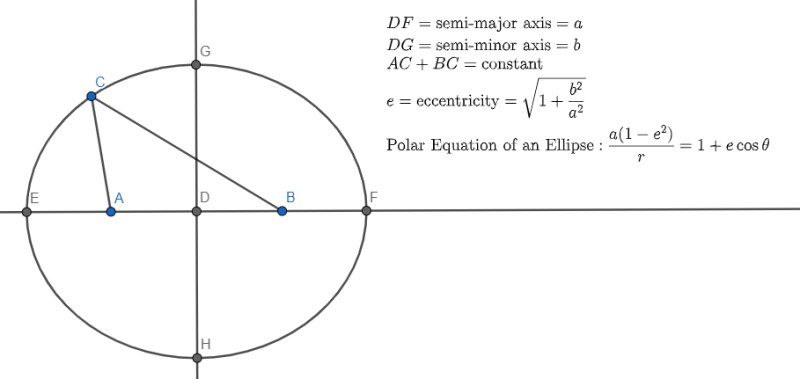
    Image: All (that is needed) about ellipses (made with Geogebra)

    If the Sun is placed at A, then the distance of the planet ranges from AF to AE. The planet is farthest from the Sun at F. This point is called the ‘Aphelion’, while the point E where it is closest to the Sun is called the ‘Perihelion’ (for any general body, these points are called ‘Periapsis’ and ‘Apoapsis’ and for the Moon, they are called ‘Perigee’ and ‘Apogee’ respectively).

    [Proof¹ for the mathematically-inclined reader (requires calculus):

    We can write the force equation for the planet in its orbit as:

    and in calculus form:

    We can eliminate ω with the help of the equation obtained from the conservation of angular momentum. Henceforth, we obtain:

    This second-order differential equation can be solved by substituting u for 1/r and ɵ (angle) for t:
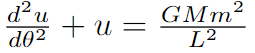
    As you might know, the solution of this kind of differential equation is of the form A sin ɵ + C for some parameters. Similarly, this equation yields:

    where A is a parameter depending on the initial conditions. This equation satisfies the polar equation of an ellipse (see image on ellipse). This proves the orbital path of planets to be an ellipse. ]

    This law was put forth by Kepler (proof was given by Newton) and is known as Kepler’s First Law of Planetary Motion. Kepler’s Second Law states that the line separation vector between the Sun and the planet sweeps equal areas in equal intervals of time, i.e.
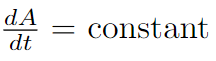
    Kepler’s Third Law states that the square of the time of revolution of a planet is directly proportional to the cube of its semi-major axis:

    Choosing T in years (specifically, Julian Year; 1 Julian year=(exactly) 365.25 days), and R in AU (astronomical unit, defined as the distance between the Earth and Sun; approximately 149.6 million km), the constant of proportionality equals 1.

    Problem (for the mathematically inclined): Prove the above two results.

    The Earth’s eccentricity is quite small (about 0.0167) and very slightly variable, as the Earth is affected by the gravitational forces of other Solar System Objects in its orbit. The plane of the orbit of a planet around the Sun is known as the Orbital Plane and is not necessarily the same for all the planets and moons (in fact, it is extremely rarely the case so). For example, the orbital plane of the moon is inclined to that of the Earth at about 5°.

    All the planets revolve around the Sun in a counterclockwise direction when viewed from the top because this was just the way remnant material and accretion disk from the solar nebula started spinning, by chance, during the birth of the Solar System.

    Earth’s one tropical year, defined as the time taken by the Earth to reach the same spot in its orbit again, is 365 days 5 hours 48 minutes 46 seconds with minute variations.

    Rotation

    Rotation is the rigid-body motion of the Earth, i.e. its motion on its axis. The plane passing normally to the line connecting the Earth’s pole and through its center of rotation, the Equatorial Plane, is inclined to its Orbital Plane at an angle of about 23.4° which is responsible for the change in seasons on the surface depending on which side of the Earth faces the Sun.

    So what’s the Earth’s period of rotation? 24 hours? Some might be a “bit more accurate” and say 23 hours 56 minutes 4 seconds. In fact, both are right, depending upon the definition:
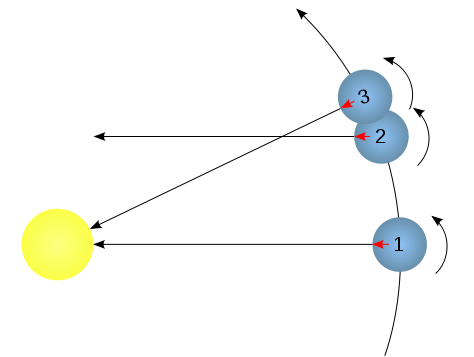
    Image: Completion of a Sidereal Day (pos. 2) compared to the completion of a Solar Day (pos. 3) (in source: Wikimedia Commons, licensed under CC BY-SA 3.0

    1 Sidereal Day is defined to be the time taken for a general star to come to a specific position in the night sky again and is equal to approximately 23 hours and 56 minutes. 1 Solar Day, on the other hand, is defined to be the time taken for the Sun to come to a specific position in the sky again and is equal to about 24 hours. How? Let’s not forget to count in the effect of the Earth’s revolution when calculating the period for a day with the help of the Sun. We know the Earth takes about 365 days to complete a revolution (360°) around the Sun. This means that in a day, it has covered (360°/365≈0.986°) in its orbit. This means that the Sun needs to cover 0.986° more to be at the same position it was the day before. Therefore, the difference in time between 1 Solar Day and 1 Sidereal Day = (0.986°/360°)×24 hours ≈ 0.066 hours ≈ 4 minutes. This is what we see as the “extra daytime” in 24 hours of the solar day. It is due to this difference in solar and sidereal timekeeping that we see the appearance of zodiac changes in the night sky.

    Furthermore, the length of the Solar Day is also variable! Remember that Second Law given by Kepler in the previous section. That implies that the Earth revolves faster when it is closer to the Sun (near the Perihelion), implying that the Sun needs to cover slightly more than 0.986° to complete 1 Solar Day, implying that the length of the Solar Day is even larger. The opposite is true in the case of Aphelion and the length of the Solar Day reduces. Presently, the Perihelion takes place on about the 3rd of January. Thus, the actual longest day for the whole of Earth takes place in Northern Hemisphere’s winters (the Southern Hemisphere residents enjoy more daylight than the Northerners!).

    The Earth spins in the same direction it revolves, i.e. counter-clockwise as seen from the top. This is what is known as Prograde motion. In fact, most of the planets in the Solar System are in a prograde motion. Why? As told previously, the solar accretion, by chance, came to be spinning counter-clockwise. Thus, when the planets were formed by the lumping of this accretion material, they had to conserve their angular momenta. This sped up their rotation (just like a skater speeds up when drawing his arms together) in the prograde direction. Uranus and Venus are the only planets that spin retrograde, i.e. in the opposite direction to their revolving directions. The cause for this is thought to be collisions of these planets early on in their lives (you see, they had a pretty ‘rocky’ start), which impacted their angular momenta adversely and changed their directions of motion.

    Another interesting corollary of celestial motion is that the period of rotation of some satellites might be in sync with their period of revolution. This is what is known as ‘tidal locking’. This is an effect of the barycentre’s (center of mass’) gravitational effect on the satellite.
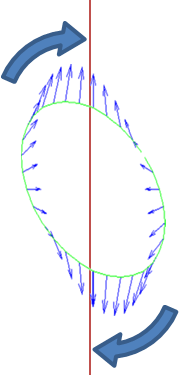
    Image: Mechanism of Tidal Locking— The central body generates a gravitational torque on the satellite that stresses mass along the orbital direction of the satellite. The changed angular momentum as a result of this gravitational torque synchronizes the rotation period and the revolution period in a 1:1 ratio (for orbits with low eccentricity). For periods with a large tidal effect and eccentricity of orbits, the synchronization is not in a 1:1 ratio, but other simple ratios like 3:2 are more stable, for example in the case of Mercury’s tidal locking around the Sun. The given image shows the net torques about the surface of the body (in Public Domain.

    You might have heard that we see only one side of the Moon. This is a result of the Tidal Locking of the Moon around the Earth in a 1:1 ratio. With repeated observation, about 59% of the Moon is visible from the Earth, due to the effects of liberation (change in perspective from different locations).

    Precession and Fine Adjustments

    A lot of the figures above are reported to be only a neat approximation. The reason for this is that these figures might undergo a slow periodic change. The cause of this change is the third type of motion of the Earth, Precession. Axial Precession is defined as the circular motion of the Earth’s axis of rotation. It is caused because of the gravitational effects of the Sun and the Moon on the equatorial bulge of the Earth (the shape of Earth). The Earth ‘precesses’ once in about 25,772 years. It is responsible for a large number of fine effects in the motions of the Earth.
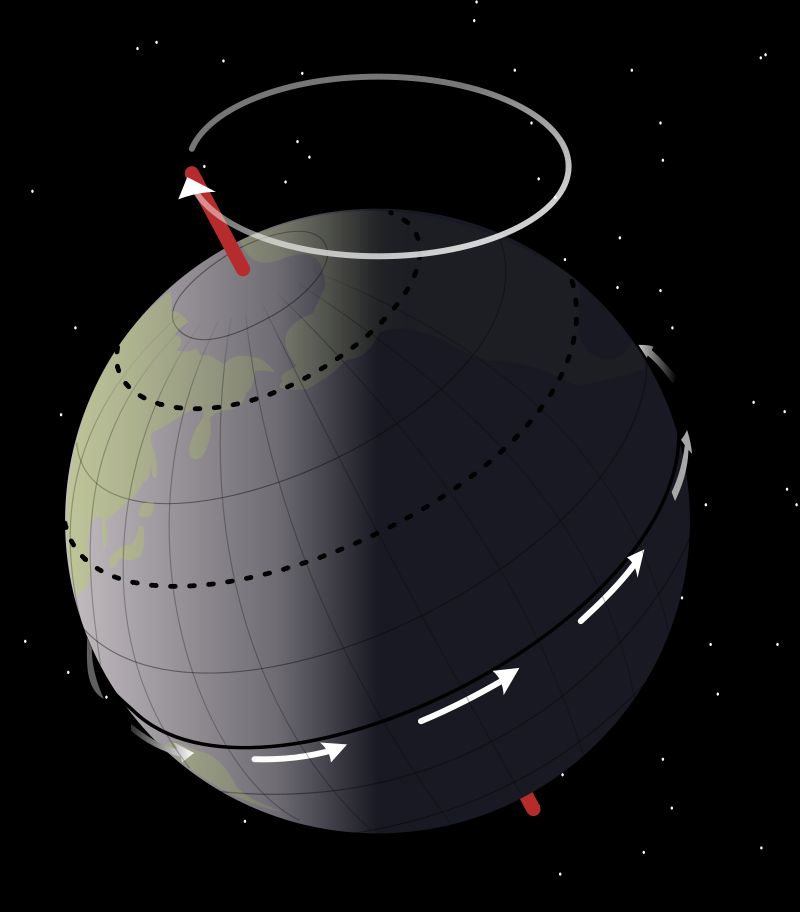
    Image: Axial Precession of the Earth (in Public Domain)

    Because of the Precession of the Earth, the time of the seasons has been slowly changing. If the currently accepted Calendar Year would have been equivalent to the Solar Year, then in some time, Christmas in the Northern Hemisphere would have been celebrated in the heat of summer in July. This is known as the ‘Precession of the Equinoxes’. However, this situation is avoided because the Gregorian Calendar is based on the seasons themselves. However, precession will have a clear effect on the climate of the Earth. As of the present, the perihelion lies during the winter of the Northern Hemisphere, making them less severe and the summer of the Southern Hemisphere more severe. However, in some time, this will reverse, resulting in more severe winters in the Northern Hemisphere.

    Axial Precession also changes the star alignment on the Earth. Our pole star will change from Polaris to Vega and then to Thuban before coming back to Polaris within the next 26,000 years.

    There is also an Apsidal Precession of the Earth— changes in the shape of its elliptical orbit (its eccentricity) due to fine adjustments (gravitational effects of other planets), resulting in an approximately 112,000-year cycle.

    This is not all. The precessional trajectory of the Earth is also not a perfect circle, but a kind of wavy one. This causes a periodic change in the axial tilt of the Earth. The resulting motion of ‘wavy precession’ is what is known as Nutation.
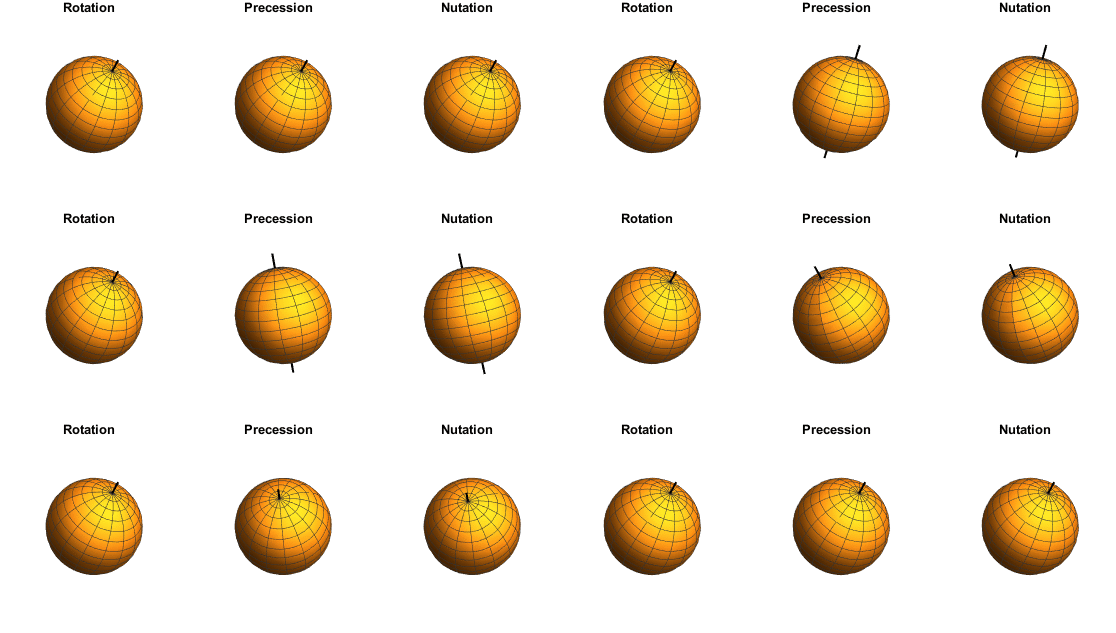
    Image: Earth’s rigid-body motions: Rotation, Precession, and Nutation (in Public Domain)


    Thus, quoting my previous sentence, the Earth’s motion is pretty much like the spinning of a top— rotation, precession, and nutation. However, there are also a large number of very, very fine adjustments in these periods, as an exactly precise measurement requires a solution to the ‘Three-Body Problem’ (more on it in later articles).

    So this was pretty much everything about the motion(s) of the Earth from the Reference frame of the Sun, and as a rigid body on its own. In the next article, we will take this idea further and will look through the motions of other celestial bodies with different frames of reference.

    All images used are in the public domain otherwise stated.

    This article is published earlier in medium.com 

    Feature Image: Clouds over the Southern Pacific Ocean taken from Sun (in Public Domain) – medium.com
  • The First Cosmic Bits that were Caught in Webb’s Web

    The First Cosmic Bits that were Caught in Webb’s Web

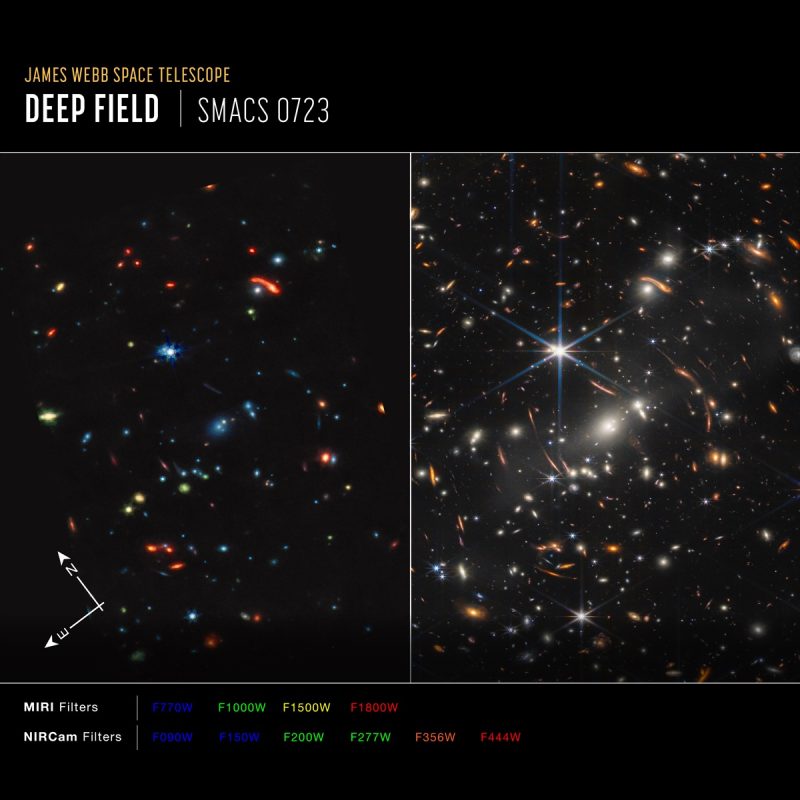
    Thousands of galaxies flood this near-infrared image of galaxy cluster SMACS 0723. High-resolution imaging from NASA’s James Webb Space Telescope combined with a natural effect known as gravitational lensing made this finely detailed image possible.

     Image Credit: NASA and STScI

    Professor Avi Loeb, head of the Galileo Project and founding Director of Harvard University’s – Black Hole Project writes about the first pictures from NASA’s revolutionary James Webb Telescope. This article is published earlier in Medium.

    From its vantage point L2, located a million miles away from Earth, the Webb Telescope just started to unravel new insights about the Universe. What is most exciting about the latest data caught in the “spider web” of the 18 hexagonal segments of its primary mirror?

    The new Webb data shows evidence for water vapor, hazes and some previously unseen clouds, on the gas-giant planet WASP-96b. The planet’s mass is half of Jupiter’s mass and it transits in front of its star every 3.4 days, allowing a small fraction of the star’s light to pass through its atmosphere and reveal its composition to Webb’s instruments. This planet is not expected to host life-as-we-know-it because it does not possess a thin atmosphere on top of a rocky surface, like the conditions on Earth.

    The image shows numerous red arcs stretched around a cluster of galaxies, named SMACS 0723, located about 5 billion light years away. NASA-administrator Nelson noted: “Mr President, we’re looking back more than 13 billion years”, an unusual statement to be heard in the household of DC politics which makes plans on a timescale of four years.

    But there was also a “deep image” of the cosmos that was released in a dedicated White House event, hosted by President Biden and vice-President Harris. The image shows numerous red arcs stretched around a cluster of galaxies, named SMACS 0723, located about 5 billion light years away. NASA-administrator Nelson noted: “Mr President, we’re looking back more than 13 billion years”, an unusual statement to be heard in the household of DC politics which makes plans on a timescale of four years.

    These amazingly sharp arcs were observed thanks to the unprecedented angular resolution of Webb’s optics. They feature ancient small galaxies from early cosmic times which happened to lie behind the cluster so that their images were deformed by the effect of gravitational lensing. Clusters of galaxies, like SMACS 0723, contain a concentration of about a thousand Milky-Way-like galaxies, buzzing around at five per cent the speed of light or a thousand miles per second. Most of the cluster mass is made of dark matter, an invisible substance which fills the dark gaps in Webb’s image. The luminous cores of galaxies are like fish swimming in a container filled with transparent water, bound together by gravity — which serves as the “aquarium” walls.

    Ever since Fritz Zwicky observed clusters of galaxies in 1933, we know that most of the matter in them is invisible. While Zwicky inferred that dark matter must exist in order to bind the fast-moving galaxies, the same gravitational potential well can be probed directly through its lensing effect on background galaxies.

    The Webb Telescope achieves unprecedented sensitivity to the faint galaxies that produced the first light during the dark ages of the Universe, hundreds of millions of years after the Big Bang. Its unprecedented ability to peer back in time stems from its observing site far away from the glowing terrestrial atmosphere, the area of its “light bucket” being 7.3 times larger than that of the Hubble Space Telescope, and its high sensitivity to the infrared band into which starlight from early cosmic times is redshifted.

    In its released “deep image”, the 10 billion dollars Webb Telescope, is aided by the natural gravitational lens of SMACS 0723, graciously provided to us for free. The cluster lens magnifies distant sources behind it by bending their light. The combination of the Webb telescope and the cluster’s magnifying power allows us to peer deeper into the universe than ever before.

    In a paper from 1936 titled “Lens-Like Action of a Star by the Deviation of Light in the Gravitational Field”, Albert Einstein predicted that a background star could be gravitationally lensed into a ring if it is located precisely behind a foreground star. This “Einstein ring” is an outcome of the cylindrical symmetry around the lens. A cluster of galaxies is not perfectly symmetric and so sources behind its center are lensed into a partial ring, or an arc — as evident from Webb’s image.

    In 1992, I entered the neighboring office of Andy Gould, a postdoctoral fellow at the Institute for Advanced Study at Princeton, where Einstein wrote his lensing paper. Andy worked extensively on gravitational lensing by compact objects, considering the possibility that the dark matter is made of them. I asked Andy whether he ever considered the contribution of a planet to the lensing effect by a star. Andy responded promptly: “planets have a negligible mass relative to their host star and so their impact on the combined lensing effect would be negligible.” I accepted the verdict of the local lensing expert and retreated quietly to my office. Ten minutes later, Andy showed up in my office and said: “I was wrong … the Einstein ring radius of planets scales as the square root of their mass and so their effect is measurable and could serve as a new method for discovering planets around distant stars. Let’s write a paper about that.” And so we did in a paper titled: “Discovering Planetary Systems Through Gravitational Microlenses.” Today, gravitational lensing is the main method by which planets are discovered around distant stars where the transit method is less practical because the stars are too faint.

    This anecdote from thirty years ago weaves together the themes of the two Webb images that were just unraveled.

    A decade ago, I wrote two textbooks, one titled: “How Did the First Stars and Galaxies Form?”, and the second co-authored with my former graduate student, Steve Furlanetto, titled “The First Galaxies in the Universe”. Both books described theoretical expectations for what the Webb telescope might find in the context of the scientific story of Genesis: “Let there be light”. Last year, I co-authored a textbook with my former postdoc, Manasvi Lingam, titled: “Life in the Cosmos”. There is no doubt that I would be glad if the forecasts in these textbooks will be confirmed by future Webb data. But even better, I would be thrilled if Webb’s data will surprise us with new discoveries that were never anticipated.

    Feature Image Credit: NASA

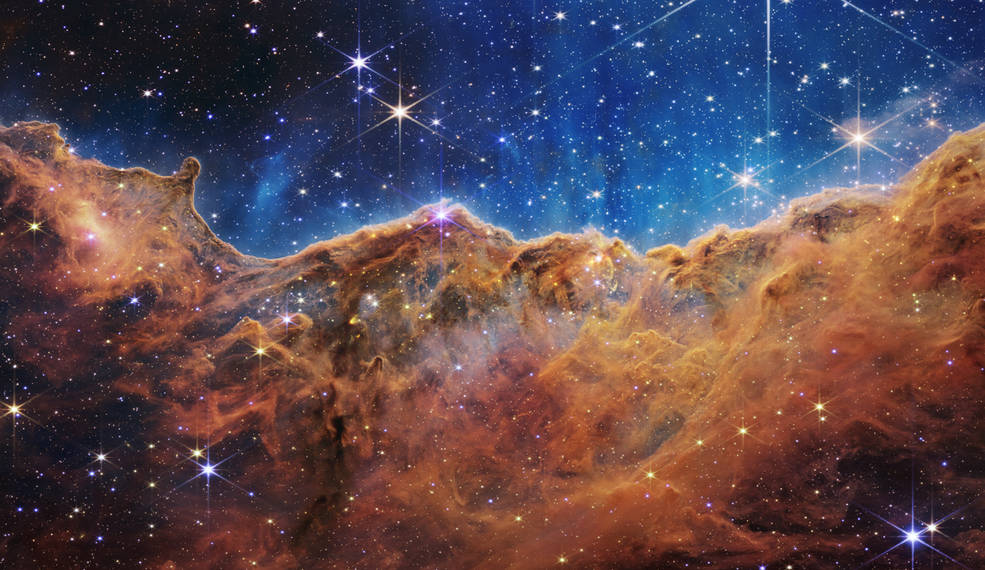
    This landscape of “mountains” and “valleys” speckled with glittering stars is actually the edge of a nearby, young, star-forming region called NGC 3324 in the Carina Nebula. Captured in infrared light by NASA’s new James Webb Space Telescope, this image reveals for the first time previously invisible areas of star birth.

    Called the Cosmic Cliffs, Webb’s seemingly three-dimensional picture looks like craggy mountains on a moonlit evening. In reality, it is the edge of the giant, gaseous cavity within NGC 3324, and the tallest “peaks” in this image are about 7 light-years high. The cavernous area has been carved from the nebula by the intense ultraviolet radiation and stellar winds from extremely massive, hot, young stars located in the center of the bubble, above the area shown in this image.

  • On Metaverse & Geospatial Digital Twinning: Techno-Strategic Opportunities for India

    On Metaverse & Geospatial Digital Twinning: Techno-Strategic Opportunities for India

    [powerkit_button size=”lg” style=”info” block=”true” url=”https://admin.thepeninsula.org.in/wp-content/uploads/2022/07/TPF_Working-Paper_MetaGDT-1.pdf” target=”_blank” nofollow=”false”]
    Download
    [/powerkit_button]

    Abstract:

    With the advent of satellite imagery and smartphone sensors, cartographic expertise has reached everyone’s pocket and we’re witnessing a software-isation of maps that will underlie a symbiotic relationship between our physical spaces and virtual environments. This extended reality comes with enormous economic, military, and technological potential. While there exist a range of technical, social and ethical issues still to be worked out – time and tide wait for no one is a metaphor well applied to the Metaverse and its development. This article briefly introduces the technological landscape, and then moves over to a discussion of Geospatial Digital Twinning and its techno-strategic utility and implications. We suggest that India should, continue on the existing dichotomy of Open Series and Defence Series Maps, initiate Geospatial Digital Twins of specific areas of interest as a pilot for the development, testing, and integration of national metaverse standards and rules. Further, a working group in collaboration with a body like NASSCOM needs to be formed to develop the architecture and norms that facilitate Indian economic and strategic interests through the Metaverse and other extended reality solutions.

    Introduction

    Cartographers argue that maps are value-laden images, which do not just represent a geographical reality but also become an essential tool for political discourse and military planning. Not surprisingly then, early scholars had termed cartography as a science of the princes. In fact, the history of maps is deeply intertwined with the emergence of the Westphalian nation-state itself, with the states being the primary sponsors of any cartographic activity in and around their territories[1].
    Earlier the outcome of such activities even constituted secret knowledge, for example, it was the British Military Intelligence HQ in Shimla which ran and coordinated many of the cartographic activities for the British in the subcontinent[2]. Thus, given our post-independence love for Victorian institutions, until 2021 even Google Maps had remained an illegal service in India[3].

    One of the key stressors which brought this long-awaited change in policy was the increased availability of relatively low-cost but high-resolution satellite imagery in open online markets. But this remote sensing is only one of the developments impacting modern mapmaking. A host of varied but converging technologies particularly Artificial Intelligence, advanced sensors, Virtual and Augmented Reality, and the increasing bandwidth for data transmission – are enabling a new kind of map. This new kind of map will not just be a model of reality, but rather a live and immersive simulation of reality. We can call it a Geospatial Digital Twin (GDT) – and it will be a 4D artefact, i.e. given its predictive component and temporal data assimilation, a user could also explore the hologram/VR through time and evaluate possible what-if scenarios.

    [powerkit_button size=”lg” style=”info” block=”true” url=”https://admin.thepeninsula.org.in/wp-content/uploads/2022/07/TPF_Working-Paper_MetaGDT-1.pdf” target=”_blank” nofollow=”false”]
    Read the Full Paper
    [/powerkit_button]

  • China’s Growing Space Power Significant for India

    China’s Growing Space Power Significant for India

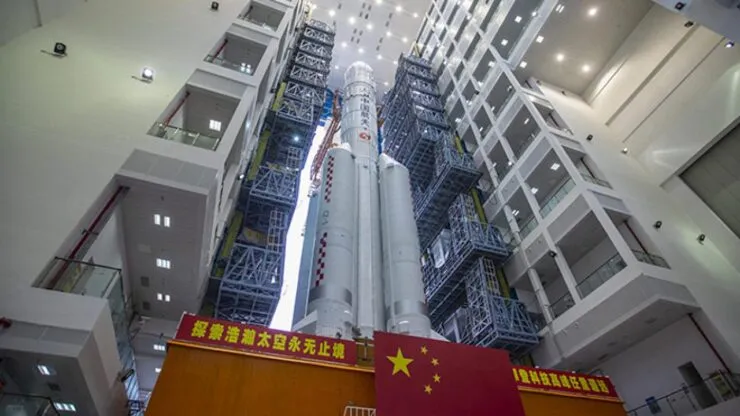
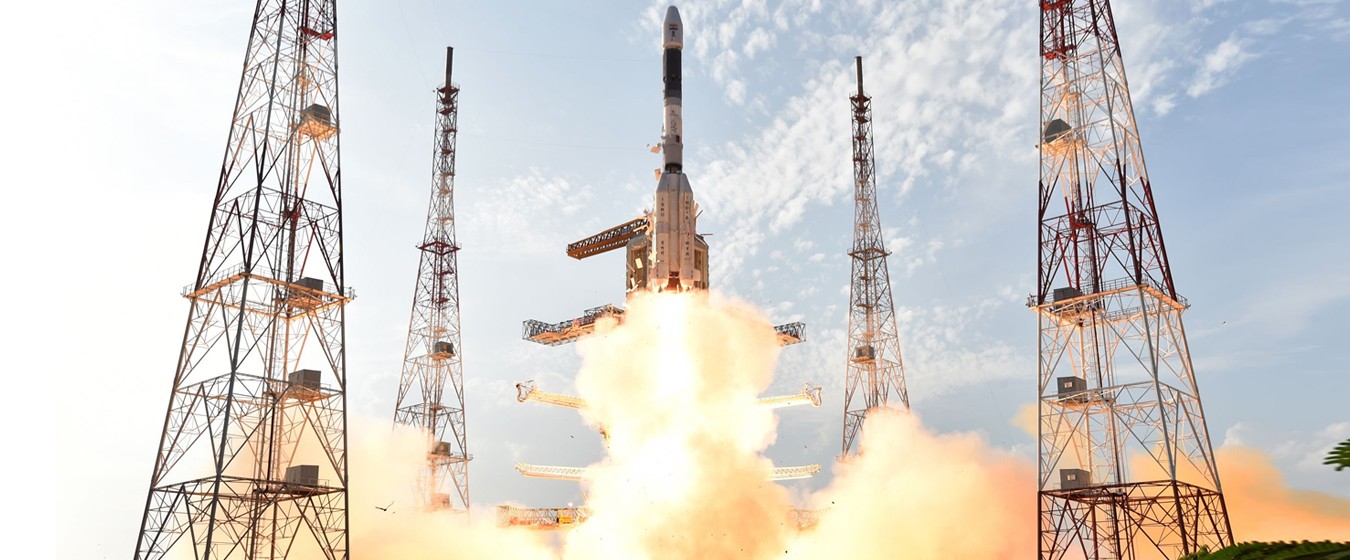
    Space has become an arena of competition for power and influence. Big powers have invested heavily in their military space capabilities. Amid an accelerated militarisation of space, China’s space capabilities have grown by leaps and bounds. China has identified Space as a critical domain in the perspective of its global ambitions. The rapid growth in China’s Space capabilities and its articulated ambitions are of significant importance to India’s Space security and national interests.

    Space has become an enormously important facet of our daily life. The increasing utility and critical need for space-based services have made it a rapidly-growing economic and technological arena. Space capabilities now symbolise a nation-state’s growing economic power. Innovation and disruptive technologies are now characterising the growth of the space industry, both in the private and public sectors. In all this, play the most important role as space has become an arena of competition for power and influence.

    Traditionally, military uses of space technologies have revolved around advanced communication, precise navigation, improved Intelligence, Surveillance, Reconnaissance (ISR) capabilities, and meteorology. Further developments have enabled these technologies to be used in Ballistic Missile Defence (BMD), advanced sensors, early warning systems, and anti-satellite (ASAT) systems.

    [powerkit_button size=”lg” style=”info” block=”true” url=”https://raksha-anirveda.com/chinas-growing-space-power-significant-for-india/” target=”_blank” nofollow=”false”]
    Read More
    [/powerkit_button]