Tag: Iran

  • Deal or No Deal: The Future of Iran’s Nuclear Agreement

    Deal or No Deal: The Future of Iran’s Nuclear Agreement

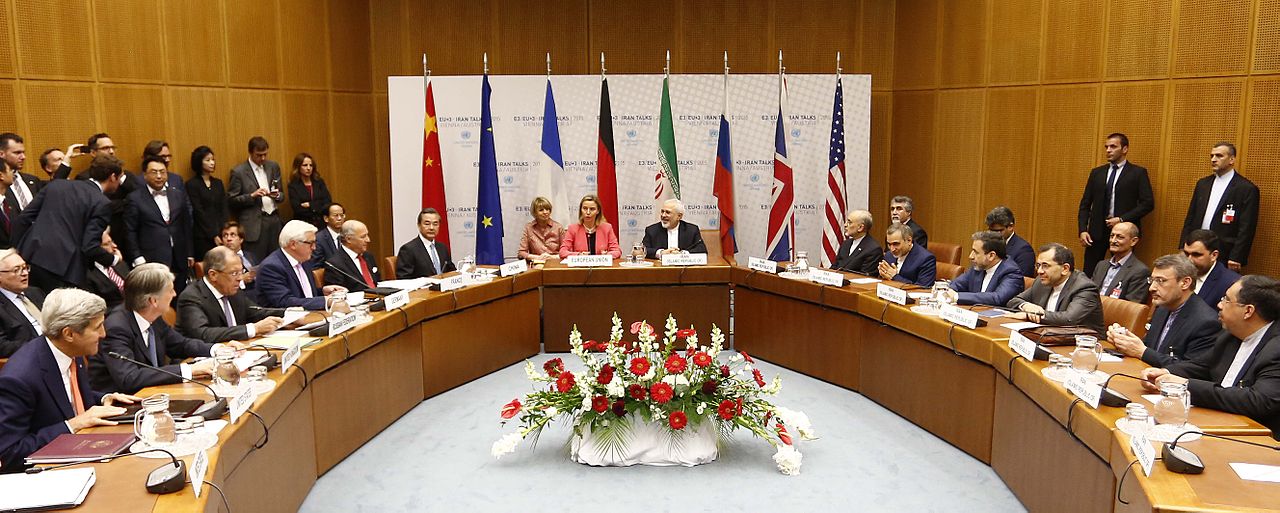
    Iran’s nuclear program has been at the epicentre of most non-proliferation narratives since the beginning of 21st century. From the initial stages of receiving nuclear assistance from US to being sanctioned for their nuclear activities, Iran has managed to remain at the centre of this discourse. In 2015, Iran signed the nuclear agreement with the five permanent members of the United Nations Security Council (UNSC) – the US, Russia, France, China and U.K as well as Germany and the European Union. However, with the arrival of Trump presidency, this deal was reopened by the US and has remained controversial despite a wide consensus that Iran has largely abided by the clauses of the agreement.

    The Iran Nuclear Deal or the Joint Comprehensive Plan of Action (JCPOA) is unique for a number of reasons. It is an amalgamation of years of negotiation process between countries of widely differing perceptions and interests. It is the coming together of the western powers with Iran in order to sign a deal to curb Iran’s nuclear programme and ensure non-proliferation of nuclear weapons. Over the course of fifty odd years, the series of discourses on Iran’s nuclear programme, since its genesis till the time the deal was signed has evolved significantly. These discourses have impacted and resulted in significant policy changes. Most importantly, it has also led to a process of rapprochement between Iran and the western states making it one of the landmark agreements in recent times. However, the deal also received criticism because the narratives portrayed that Iran got a better deal through lifting of sanctions while its part of the commitment to the non-proliferation requirements was much less.

    Unlike the Obama administration that pushed for the deal, President Donald Trump has been clear about his dislike for the agreement and has been an advocate of how this could possibly be “the worst deal”. Owing to this, Trump unilaterally pulled out of the agreement on May 08, 2018 and stated that he would reimpose sanctions until a better deal could be worked out. While Trump’s decision to undo years of negotiation comes from various factors such as Israeli influence, Iran’s support for Hamas and its role in Syria to name a few, it is also due to the perception of the Republican hardliners that there was not enough pressure put on Iran and that the US managed to get a bad deal out of it, and this remains a large part of Trump’s narrative. The US strategy now is to push for a more hard-line agreement and ensure complete isolation of Iran if it refuse to fall in line. This however, has failed because more than two years later there are still no signs of Iran buckling under US pressure, although the economic impact of sanctions has started to bite.

    Given the situation, there are four possible outcomes that can be observed – First, Iran is likely to play a victim card and protest to the Europeans for compensations against the unilateral sanctions that affect its economy despite Iran abiding to all the terms and conditions of the JCPOA. In another context, this could also push Iran to retaliate by threatening to pursue uranium enrichment and continue operations in its nuclear facilities while preventing the International Atomic Energy Agency (IAEA) from inspections. Recent announcements by the Iranian government regarding its nuclear enrichment is a clear indication that they are choosing the latter option. Secondly, while the European countries are disappointed with USA’s withdrawal, there are high chances of the deal falling apart purely based on the fact that the European members of P5+1 are strategically and intimately tied to the US through much larger scope of mutual interests. However, the European countries will aim to renegotiate the deal because of the serious security concerns that might come into play if Iran is pushed towards becoming a nuclear power. Thirdly, lack of commitment from the P5+1 countries might force Iran to second guess about its decision to renegotiate a new deal. If Iran decides to abandon the agreement, there exists a high risk of nuclear proliferation in the region. However, this would only lead to further sanctions from the other European countries as well. Therefore, any decision taken by Iran will have to be done taking all these factors into consideration. Finally, Iran’s strategy going forward will largely depend on USA’s strategy and the increasing economic pressure as a result. While Trump has chosen to withdraw from the deal, he has also stated that he is open to further negotiations to ensure a better deal. It is unclear as to what a better deal entails and therefore, Iran will have to play its cards right yet again to not only stop itself from being isolated and ridden with sanctions but to also prevent its own population from revolting against its decisions.

    Another aspect that comes into play with respect to the deal is the role of China and Russia as counter-weights to dealing with US pressure. Along with the European allies, both the countries are against Trump’s decision to leave the nuclear agreement, reintroduce sanctions and renegotiate the deal. Earlier, China and Russia’s involvement remained minimal in the JCPOA. This time around, both the countries won’t allow Iran to be isolated. China and Russia have had historical ties with Iran and therefore, have been reluctant participants in the sanctions regime. However, both the countries will now actively look to counter USA’s unilateral decisions regarding the deal and will support Iran weighing out the consequences.

    Iran is currently amidst domestic protests due to hike in fuel prices and bad economic conditions. Despite being an oil rich country, it is unable to reap the benefits of it through exports, due to sanctions. The Iranian government is exactly in the same situation it was in 2015 (politically and economically) when it signed the JCPOA. Therefore, strategically, this could be the right time for the US to give a window of opportunity to Iran to renegotiate. However, given the circumstances, renegotiating this deal is not at the top of the priority list for any of the countries and therefore, the future of the deal still remains uncertain.

    Looking ahead at the future possibilities

    If the countries come together again at the negotiating table, there are a few things that has to be done differently this time around to ensure that a deal is signed and is followed through. Firstly, a fool-proof clause has to be added in order to ensure that there are no easy exit strategies for any country from the deal. Once the deal is signed, every signatory has to abide by the deal unless there are any violations made by a member country. Secondly, with respect to Iran, the deal should be such that, the benefits of staying in the deal should be far more important than threatening to quit. Thirdly, the P5+1 countries have to ensure that they all have the same goal and approach to the deal rather if they want this deal to succeed. Fourthly, opportunity to improve the nuclear facilities in Iran must be provided but the agreement should be designed to detect and prevent clandestine programs. Finally, any further delay in signing a new deal will only increase Iran’s breakout capabilities which is counter-productive given that it was the need for the deal in the first place. Therefore, the imperative of saving or renegotiating the JCPOA as acceptable to all is never more urgent, particularly in the context of the emerging humanitarian crisis in Iran as a result of back-breaking sanctions.

    Swathi Kallur is a Research Intern with TPF. She holds a master’s in international relations from Symbiosis University, Pune. Views expressed are author’s own.

    Image Credit: Commons.wikimedia.org
  • American Sanctions on Iran and the Underlying Oil War

    American Sanctions on Iran and the Underlying Oil War

    Adithya Subramoni                                                                                      June 24, 2019/Analysis

    In a shocking turn of events, America in 2018 announced its withdrawal from the Joint Comprehensive Plan of Action 2015. This came as a surprise to the international community for good reason, because subjecting Iran under harsh sanctions when they kept up their end of the bargain seemed like a punishment from the US for keeping up this good behaviour. President Donald Trump, calling towards the international community and specifically ‘like-minded countries’ for a team effort, said it was time to curb Iran’s state-sponsored terrorism. But his idea to get Iran to re-engage on this field was through the ‘maximum pressure campaign’. This strategy is unlikely to find takers owing to the fact that the nuclear issue and state sponsored terrorism are two completely different issues, and hence need to be dealt with separately. To charge Iran with state sponsored terrorism is completely misplaced. Iran has not caused any damage to US or its citizens in the last twenty five years. On the other hand terrorist acts affecting the US and its allies have almost always had a link to Sunni Islamic fundamentalism with its links to Saudi Arabian Wahabi organisations. The real motive is USA’s geopolitical targeting of Iran. Trump’s recent designation of the Iranian Islamic Revolutionary guard corps (IIRGC), a unit of the Iranian army, as a terrorist outfit defies all logic and may become counterproductive to the US interests, the very issue that Trump wants to safeguard.

    Iran’s support to Hamas is fundamentally a regional and geopolitical struggle with Israel, while the Sunni vs Shia conflict is a manifestation of the regional power struggle between Saudi Arabia and Iran. If the USA wanted to pressurise Iran on its support to militant outfits like Hamas, it should have ensured it has support of its allies and multilateral institutions. USA’s unilateral action on Iran does not have the support of other members of the P5 +1(Germany) as well as other oil-dependent countries. With the latest round of sanctions, countries with economies having exposure to Iranian trade industry are gearing up to take a major hit. This brings us back to the subject of concern, why take such hasty decisions impacting the global economy without consultations from other members of the P5 + 1?

    The exit strategy

    In 2018 shale oil catapulted America to the leading position amongst the oil producers. As companies in Texas adopted fracking technology to good use in optimising their oil production, America climbed up to the first position in the oil producers list, surpassing major oil producers such as Saudi Arabia,Russia, Iran and the UAE. Climbing up the oil ladder came at a cheaper price for America considering the OPEC countries, excluding Iran, and Russia had agreed to reduce their oil production to protect the free-falling price of oil. This gave America a free hand at capturing the oil market especially where the demand from emerging economies was increasing rapidly. The only barrier to becoming the largest oil exporter was qualms from the emerging economies and other countries who found the American alternative to be an extremely expensive replacement for their oil needs. With emerging economies deeply dependent on Middle Eastern oil sources, one of the options for America to increase the demand for its oil was by blocking Iran’s oil exports through sanctions. This could give multiple advantages to the US: one is to create economic pressure on Iran; second is to boost American oil exports by eliminating Iran’s oil supply from the market; and third is to strengthen its ally Saudi Arabia’s pursuit of regional domination by squeezing Iranian oil-based economy.

    America’s play on executing its exit and sanctions in such a speedy manner may be rooted in the fact that the major countries dependent on the Iranian oil are in the Asian continent. European countries such as France, Greece, Italy and Spain all combined import close to 500,000 barrels a day as opposed to China and India who import close to 600,000 barrels per day and 500,000 barrels per day respectively. With America limiting its oil imports primarily from Canada and Saudi Arabia, and the European Union sourcing two-thirds of its oil requirements from Russia and Saudi Arabia, American sanctions on Iran do not impact the energy requirements of the western power bloc significantly. Hence, it may have been an American expectation that other members in the JCPOA (P5+1) would support Trump administration’s move to scrap the JCPOA and resume the earlier hard line approach of sanctions on Iran. This, however, has not happened.

    Unfortunately for America, other members of the JCPOA did not see any justification in the logic and accusation given by the Trump administration and hence, there was no support forthcoming from them. Trump’s disdain for allies and his unilateral approach, virtually demanding complete acceptance from European allies bordered on disrespect and insult to the member countries’ sovereignty and pride. Reaction to Trumps position was one of disbelief and contempt, as his actions displayed, in their opinion, disregard and contempt for international norms and credibility. Quite clearly USA has sought to bulldoze its way through with utter disregard for international institutions and multilateralism, exploiting its domination of the global financial institutions, banking system, and the fact that the US dollar is still the world’s reserve currency.

    UK, France and Germany together set up Instex – Instrument in Support for Trade Exchanges, to facilitate the trade of medicines, medical devices and food supplies, which trades in Euro through a financial channel having zero exposure to the American financial intermediaries. This marked a milestone in the chapter of American supremacy, where its European allies took a stance against its imposing regime. Though the volume of trade is negligible, the all important European message is that it will not support the American unilateralism. In the absence of any European support, Trump administration should have recognised its folly of trying to impose its decision on its allies, but on the other hand it made it even worse by virtually threatening diplomatic ties with those countries. Others in the P5, such as China and Russia have agreed with the European counterparts to re-examine and review if necessary the terms of the 2015 JCPOA deal and look for ways to deflect and overcome the US sanctions. Iran too, has welcomed the idea and agreed to keep its end of the 2015 deal. Time however, is running out as Iran has demonstrated its loss of patience over the lack of progress on the issue, and has stated on more than one occasion, in the last six months, that it will recommence its nuclear fuel reprocessing and enrichment activities.

    Asian approach to the Iranian issue

    Asia is the largest customer of crude oil, importing 53% of the global total oil imports, translating to an approximate amount worth $628.2 billion. One major reason for this huge oil influx is the fact that Asia is home to the fastest developing economies such as China and India. Though China and India have maintained that they will continue to import oil from Iran, one issue that concerns all the countries importing Iranian oil is the availability of insurers willing to take up the risk for oil supply from Iran. Most insurers will be cautious to take up projects for fear of losing business and financial access in the West.

    With the ongoing trade war with America, China is fighting a dual war. For America, the opponent has been weighed down with two hurdles co-incidentally and conveniently. With the trade war impacting the export industry and sanctions on its oil supplier indirectly hitting the Chinese economy, China may chose well to hit back on America by disregarding the sanctions on Iran. Iran might just have earned itself a powerful ally because of American hegemony. Chinese imports of crude oil from Iran have surged to record levels in April and May. Iran is set to become China’s 2ndlargest supplier of crude oil.

    Steering the wheel of attention towards India, Iran is its third largest oil source. Particularly being an oil dependent emerging economy, the sanctions on Iran will force India to look at more expensive oil options. The six month credit line and insurance included price for Iranian oil made it the most lucrative oil supplier in the business. Another issue that has come to India’s doorstep is the longevity of the rupee account based trading system with Iran using the UCO Bank. UCO Bank being the only bank with no exposure to American financial channels is the only means for continued Iran-India trade relations. In light of the US sanctions, India reduced its oil imports to turn eligible for a sanction waiver. This sanction waiver came to an end on 02May 2019, and oil imports stopped owing to the election period as well. Now the primary concern for the new Indian government is to prioritise the Iran issue. Iran is accountable for thirty percent of India’s exports, and given that the rupee account is fuelled by the INR deposited in favour of oil imports from Iran, the systematic reduction of oil import also creates a proportional fall in demand for Indian exports, owing to the curb of Iran’s purchasing power. Since the end of the sanctions waiver, India has stopped import of Iranian oil, hopefully only as a temporary measure.

    At the same time, a diplomatic concern that arises for India is its interest over the Chabahar port. Chabahar Port is a major investment arena for India to create a transportation corridor connecting Asia as well as the land-locked Afghanistan with the rest of the world. Though India plans on disregarding the US Sanctions and continuing business through the UCO Bank and Iran’s Pasargad Bank, attention needs to be paid to resolve the reducing Iranian imports, not only to secure India’s exports but also to show Iran the commitment India has towards its diplomatic ties with them and its vested interest in operating the Chabahar Port. Going ahead with the possibility that China would disregard the sanctions on Iran, a reduction in Iranian imports could weaken Iran’s ties to India and pave the path to strengthen Iran-China ties. This would particularly be drastic for India, if Iran were to give China operational rights to the Chabahar port. Needless to say, this would bring in interference from Russia, who wouldn’t be thrilled with the loss of regional trade autonomy to China.

    Approaching the dénouement

    From a bird’s eye view, the rising conflicts in the West Asian region, with Saudi Arabia and the UAE being the main champions who support the efforts for a change in Iran’s regime, Iran finds itself in a cornered situation amongst its neighbours. If cornered, both strategically and economically, Iran could resort to using its strategic location to choke the Strait of Hormuz by planting sea mines or through any other obstruction mechanism. Though unlikely, as it would put Iran in a very hostile situation with rest of the world, it cannot be ruled out as an extreme last resort measure. This could create major international crisis. It would, as a start contribute to the run up in oil prices and owing to supply security – it is possible that USA stands to benefit immensely in such a crisis.

    On the other hand, by imposing sanctions on Iran, America has pushed India to an uneasy corner. Owing to regional ties, it plays to India’s strength to take care of her interests by dealing with Iran and securing operation of Chabahar port. On the other hand it is essential to keep India’s ties with America on an even keel. If it refuses to acknowledge India’s ground interests and resorts to the muscle power of sanctions, China may end up as the beneficiary with a fortuitous win with Chabahar port, leading to an ultimate strategic loss to India and the US.

    The situation calls for global introspection into imposing sanctions by a country due to its phenomenal control over the world’s financial channels and the domination of the USD international trade. But this round of sanctions just might be the one where countries figure out alternate solutions together; considering the European initiative of Instex, Asian methods such as the trade using rupee account, Russian and Chinese support towards Iran; to finding a more cooperative and equitable solution that enables the world to trade outside the control of America. The sanctions may have just provided the edge to catalyze the changing world order, but the question is who’ll sit on the throne of the high table when the rubble settles? Or will it be, as it seems more likely, a more cooperative and less competitive, multi-polar world order?

    Adithya Subramoni is interning at ‘The Peninsula Foundation’. She has a Bachelors degree in Commmerce  from Christ College, Bangalore.

    Photo Credit under a Creative Commons Attribution 4.0 International License.: english.khamenei.ir

  • Strategic Autonomy and the Looming Oil Crisis

    Strategic Autonomy and the Looming Oil Crisis

    Kamal Davar                                                                                             May 31, 2019/Commentary

    The new Modi government will have to speedily contend with a serious foreign policy challenge on its hands.

    That this ordeal comes in the wake of some underplayed serious economy problems currently facing the nation will compound the problems for India which imports over 80 per cent of its burgeoning oil needs.

    Thus, if the looming crisis in the Persian Gulf between an arrogant US and an equally defiant Iran does not get resolved peacefully, ominous ramifications await the region, the world and all those nations which import crude oil from Iran.

    The genesis of the current crisis between the US and Iran has its roots in the Joint Comprehensive Plan Of Action (JCPOA) which was agreed upon by Iran and six western nations in 2015, led by the US, to curb Iran’s nuclear programme, which boils down to deterring Iran from developing nuclear weapons. But in May 2018, the US, under its mercurial President Donald Trump, chose to renege on this treaty as Trump felt that this was the “worst deal ever negotiated.”

    It is also a fact that Iran did not violate any norms of the law as regards this agreement.

    Meanwhile, the US allowed some nations, including India, which import oil from Iran a six-month waiver, which ended on May 2, 2019. As a consequence of the US action, oil prices the world over have jacked and soon its adverse effects will be felt in India as inflation will hit the already strained Indian economy. Over a 10 per cent hike in global oil prices has already taken place in the last one month and a crippling escalation in oil prices ahead is well on the cards.

    Notwithstanding any US pressure on India, the unalterable fact of Iran’s strategic significance to India in the region remains beyond question. India imported 24 million metric tonnes of crude from Iran in the 2018-19. India was Iran’s second largest buyer of crude last year, while Tehran was the third largest supplier to India after Iraq and Saudi Arabia (11 per cent of a total of India’s oil imports).

    Additionally, Iranian crude comes with a longer credit period and cheaper freight owing to Iran’s geographical proximity to India and, thus, Iranian oil remains the best option for India in more ways than one.

    Higher oil prices also make the Indian rupee weaker, making imports to India costlier. Importantly, that Iran-India collaboration in the development in the vital Chabahar Port in Iran will give India vital ingress to Afghanistan and the Central Asian Republics cannot be understated.

    Meanwhile, the US has rushed the formidable USS Abraham Lincoln carrier-borne Task Force to the Persian Gulf region and undertaken certain prophylactic steps in case war breaks out.

    The Iranians, too, have mounted some small-range anti-ship missiles on their warships. Iranian President Hassan Rouhani recently said that his nation is facing acute pressure from international sanctions, dubbing it a “war unprecedented in the history of the Islamic revolution.”

    The US has also branded Iran’s elite Revolutionary Guards as a foreign terrorist organisation. A war of words has broken out, with President Trump declaring that if “Iran wants to fight, that will be the official end of Iran. Never threaten the United States again.”

    Replying back sternly, Iranian Foreign Minister Javad Zarif retorted that Iranians have stood tall for millennia against aggression and that “economic terrorism and genocidal taunts won’t end Iran.” He added that “never threaten an Iranian. Try respect it works.”

    Importantly, even US allies have steered away from of taking any partisan positions with either the US or Iran. Meanwhile, oil-producing nations like Saudi Arabia, Kuwait, Mexico and the US itself have been requested to step up their oil production to cater for Iranian oil shortfalls.

    How this oil crisis will shape up to meet global demands is anyone’s guess.

    It is a strategist’s nightmare in conjuring up a scenario concerning the ramifications of a war between Iran and the US. The Persian Gulf is easily one of the world’s critically significant strategic waterways through which one-third of the world’s oil is transported.

    In the event of a war, Iran will definitely close the vital Straits of Hormuz for commercial shipping purposes, throwing the region’s economy out of shape — an eventuality which, hopefully, should not ever take place.

    Preoccupied with its General Election, India, as a major regional player, has so far not reached out to its strategic partner, the US, to impress upon it to defuse the crisis.

    Recently, the Iranian Foreign Minister made a trip to India to explain their position to India on the current standoff.

    India, however, need not succumb to any US pressures or take sides. India has an adequate financial standing and moral stature to play a peacemaker’s role. India must conscientiously follow the time-honoured policy of zealously guarding its strategic autonomy. Respect for India from nations even adversarial to each other — as in earlier decades — will follow automatically and some of India’s economic tribulations will also get simultaneously addressed.

    Let the new government in New Delhi bear in mind Iran’s more than significant strategic value for India in the region.

    The author, Lt Gen Kamal davar is a former DGDIA and is visiting Distinguished fellow at TPF. 

    This article was earlier published in The Tribune.