Tag: India

  • Economic Relevance of Quad as a Regional Strategic Forum

    Economic Relevance of Quad as a Regional Strategic Forum

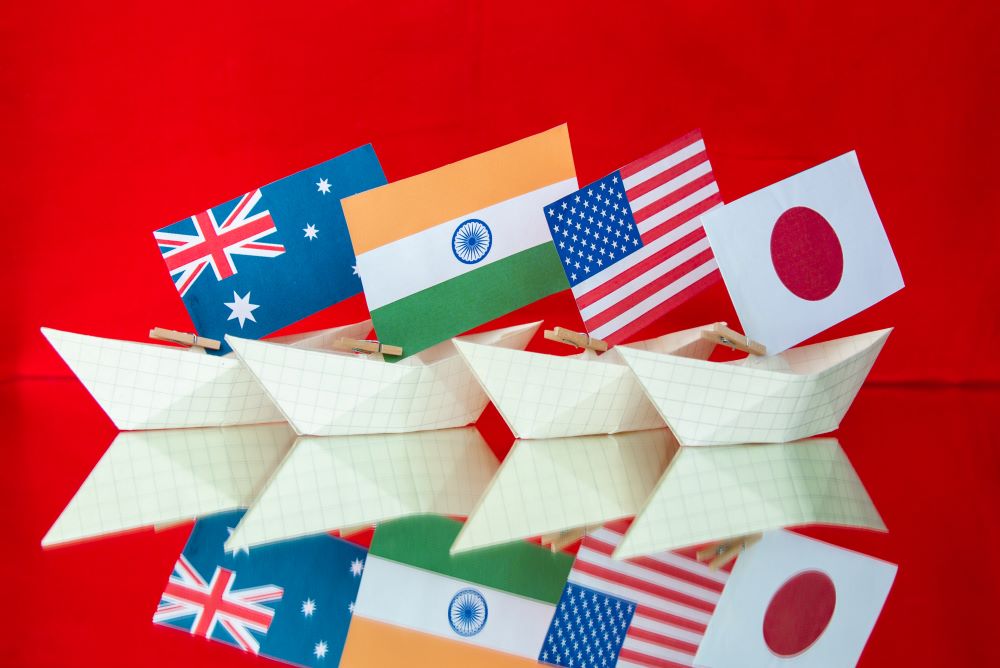
    The QUAD, a grouping of the United States, Japan, India, and Australia, began as a “Tsunami Core Group,” an impromptu group formed in response to the devastating Boxing Day tsunami of 2004. This core group brought together the four nations to swiftly mobilise and coordinate multilateral disaster relief and humanitarian assistance operations. The first meeting of the initial QUAD took place in May 2007 during the ASEAN Regional Forum (ARF) meeting in Manila. The meeting was characterised as an “informal grouping” that discussed themes of mutual interest to the dialogue participants (Buchan & Rimland, 2020). The group was established to deal with the immediate challenges posed by the tsunami and was never intended to become permanent. However, early cooperative efforts sparked a debate about QUAD’s overarching goal. When Australia withdrew from the QUAD in 2008, it ceased to exist. It was revived in 2017 against the backdrop of an increasingly assertive Chinese posture, and the emergence of the idea of the Indo-Pacific as a single maritime zone.

    The first QUAD meeting, after its revival, happened on 12 November 2017, when the four ‘like-minded’ partners discussed seven key issues: the rules-based order in Asia; freedom of navigation and overflight in the maritime commons; respect for international law; enhancing connectivity; maritime security; the North Korean threat and non-proliferation; and terrorism (Jain, 2022). The QUAD aims to bring diverse perspectives together in a shared vision for a free and open Indo-Pacific, and it strives for a region that is free, open, inclusive, healthy, and anchored in democratic values.

    Economic Potential

    There are numerous reasons to increase economic engagement within the QUAD nations—the four countries, with a combined population of over 1.8 billion people, represent a quarter of the world’s population and over $30 trillion in GDP. In 2018, trade between the four countries totalled more than $440 billion, with nearly $6 trillion in trade with the rest of the world. QUAD intends to use both public and private resources to construct high-quality infrastructure in the Indo-Pacific region. According to the MEA’s website, since 2015, QUAD partners have invested more than $48 billion in regional infrastructure development. The commitment of the QUAD to regional infrastructure development can be strengthened by integrating India into the existing ‘Australia-Japan-US Trilateral Infrastructure Partnership’ and by broadening their reach into the Indo-Pacific region (“Fact Sheet: QUAD Leaders’ Summit,” n.d.). Except for India and the United States, the remaining two countries are also Regional Comprehensive Economic Partnership (RCEP) members. This shows that, notwithstanding territorial and security differences, trade and commerce are still the primary focus (“Economic Dimension Key to QUAD Success”, 2021). Further, the Covid-19 pandemic has harmed the global economy, including the QUAD nations, in areas ranging from employment to investment. Thus, by bolstering their economic ties for greater freedom and cooperation, the group will facilitate a faster recovery from the pandemic’s effects.

    The Indian Ocean, not the Indo-Pacific, is central to India’s vision. In the short term, India’s engagement with the Indo-Pacific framework will be primarily diplomatic and economic and will be constrained by the Indian Ocean’s strategic primacy and constraints on its sea-power projection

    QUAD and the Indian Economy

    India’s strong economic ties with the QUAD economies are reflected in its bilateral trade volume with each member. During 2019-2020, these three economies accounted for 15% of India’s total trade. The United States contributes the most with 11%, followed by Japan and Australia, with 2.15 and 1.6 per cent, respectively. Further, India already has a free-trade agreement with Japan, which was implemented in 2011, and negotiations with Australia and the United States are ongoing. India can now use this critical multilateral forum to help facilitate trade negotiations and increase economic activity with member economies (“Economic Dimension Key to QUAD Success” 2021).

    According to Lunev and Shavlay (2018), the emergence of China, the expansion of India’s economic and strategic clout, and, most importantly, the growing importance of the Indian Ocean as a strategic trade route carrying nearly two-thirds of global oil shipments and a third of bulk cargo, have entailed a shift in the security architecture from the Asia-Pacific to the Indo-Pacific. These factors have contributed to the rise of regional stakeholders advocating for a free and open Indo-Pacific, resulting in the re-establishment of the QUAD. However, India’s maritime interests and strategies are at odds with those of the other QUAD members. The Indian Ocean, not the Indo-Pacific, is central to India’s vision. In the short term, India’s engagement with the Indo-Pacific framework will be primarily diplomatic and economic and will be constrained by the Indian Ocean’s strategic primacy and constraints on its sea-power projection.

    The South and East China Seas, the Western Pacific, and the Indian Ocean are of particular concern to the United States and Japan. Unless and until these disagreements are resolved, QUAD’s effectiveness as an entity will be called into question

    Tokyo Summit 

    The Tokyo Summit is the QUAD Leaders’ fourth interaction since their first virtual meeting in March 2021, in-person Summit in Washington DC in September 2021, and virtual meeting in March 2022. The Tokyo Summit took place against the backdrop of the ongoing Russia-Ukraine conflict and its repercussions. The joint statement issued following the QUAD summit in Tokyo on May 24, 2022, is more comprehensive than the first three summits. It has attempted to clarify the broad framework for cooperation by outlining eight specific areas. These include Peace and Stability; Covid-19 and Global Health Security; Infrastructure; Climate; Cybersecurity; Critical and Emerging Technologies; QUAD Fellowship; Space; and Maritime Domain Awareness and Humanitarian Assistance and Disaster Relief (HADR) (Luthra, n.d.). A comprehensive QUAD joint statement and the launch of the Indo-Pacific Economic Framework (IPEF) are key developments of the Tokyo summit. QUAD leaders also announced a maritime initiative to combat illegal fishing at the Tokyo summit, and a pledge to invest $50 billion in infrastructure in the Indo-Pacific to combat China’s growing power (“QUAD Joint Leaders’ Statement”, 2022).

    The QUAD has long been criticised for lacking a common purpose or a substantive agenda. Furthermore, none of the objectives cited as reasons for bringing the four states together are unique to the QUAD. Other actors and institutions in the region already exist for these purposes.  Thus, there is a need for QUAD partners to better articulate their distinct rationale for cooperation and collaborative efforts.

    India is a key player due to its naval power and strategic location, and should thus be an active participant. However, there are differences in areas of interest among the QUAD nations, complicating its effectiveness. The South and East China Seas, the Western Pacific, and the Indian Ocean are of particular concern to the United States and Japan. Unless and until these disagreements are resolved, QUAD’s effectiveness as an entity will be called into question. While India is frequently portrayed as the holdout — and has recently been the most vocal — objections have come from other countries as well. The potential impact on Sino-Australian relations continues to make some in Australia nervous. Beijing’s reaction has factored into American caution as well, as has the preference for a trilateral format (Madan, 2017).  

    India requires investment, attractive financing for infrastructure, technology, and access to key raw materials, particularly rare earth elements, among the QUAD nations. QUAD’s other members are looking for market access and dependable investment destinations. Broadening QUAD’s current strategic focus to strengthen economic ties under the partnership’s auspices would be a win-win situation for all countries involved in such a scenario.

    Bibliography

    Buchan, P., & Rimland, B. (2020). Defining the diamond: The past, present, and future of the quadrilateral security dialogue. Defining the Diamond: The Past, Present, and Future of the Quadrilateral Security Dialogue | Center for Strategic and International Studies. Retrieved July 22, 2022, from https://www.csis.org/analysis/defining-diamond-past-present-and-future-quadrilateral-security-dialogue 

    “Economic Dimension Key to Quad Success.” 2021. The Statesman. February 23, 2021. https://www.thestatesman.com/opinion/economic-dimension-key-quad-success-1502953752.html.

    “Fact Sheet: Quad Leaders’ Summit.” n.d. Www.mea.gov.in. https://www.mea.gov.in/bilateral-documents.htm?dtl/34319/Fact+Sheet+Quad+Leaders+Summit.

    JAIN, Purnendra. 2022. “India’s Changing Approach to the Quadrilateral Security Dialogue.” East Asian Policy 14 (01): 56–70. https://doi.org/10.1142/s1793930522000046.

    Lunev, Sergey, and Ellina Shavlay. 2018. “Russia and India in the Indo-Pacific.” Asian Politics & Policy 10 (4): 713–31. https://doi.org/10.1111/aspp.12430.

    Luthra, Girish. n.d. “Forward from the Tokyo Quad Summit and IPEF.” ORF. https://www.orfonline.org/expert-speak/forward-from-the-tokyo-quad-summit-and-ipef/.

    Madan, Tanvi. 2017. “The Rise, Fall, and Rebirth of the ‘Quad.’” War on the Rocks. November 16, 2017. https://warontherocks.com/2017/11/rise-fall-rebirth-quad/.

    “Quad Joint Leaders’ Statement.” 2022. The White House. May 24, 2022. https://www.whitehouse.gov/briefing-room/statements-releases/2022/05/24/quad-joint-leaders-statement/.

    Rahman, Mohammad Masudur, Chanwahn Kim, and Prabir De. 2020. “Indo-Pacific Cooperation: What Do Trade Simulations Indicate?” Journal of Economic Structures 9 (1). https://doi.org/10.1186/s40008-020-00222-4.

    Feature Image Credits: Resilinc

  • Reality of India’s Performance as put Forth by the Environmental Performance Index (EPI)

    Reality of India’s Performance as put Forth by the Environmental Performance Index (EPI)

    India ranked 117 out of 180 countries as per the latest “The State of India’s Environment Report 2021” released by the Centre for Science and Environment (CSE) in June 2021, while it ranked 87th out of 115 countries in the Energy Transition Index (ETI) released by the World Economic Forum in 2021

    Taking adequate measures to combat climate change and global warming has become a key priority of nation-states today. With a global understanding that reducing greenhouse gas emissions, achieving carbon neutrality, and switching to renewable sources of energy are the ways forward for sustainable development, countries around the world, including India, have made various pledges and commitments to achieve defined targets in respect of climate change and environmental protection. While developing countries have called for the adoption of the principle of ‘Common but Differentiated Responsibilities and Respective Capabilities’ (CBDR–RC), India, as the third largest carbon emitter in the world, has considerable responsibility in enacting the much-needed changes. In the budget presented for 2022-23, the Indian government has pledged to reach net-zero carbon emissions by 2070, and achieve a non-fossil fuel energy capacity of 500 GW by 2030. It further seeks to meet 50% of the energy requirements from renewable sources, while also reducing the total projected carbon emissions by 1 billion tonnes and reducing the carbon intensity of the economy to less than 45%. These are stiff targets to achieve, maybe even impractical in the view of some analysts.

    While the Indian government has celebrated the inauguration of various policies and schemes which would contribute to these lofty goals, India’s performance according to global indices reveal an immediate need for a change of tactics.  India ranked 117 out of 180 countries as per the latest “The State of India’s Environment Report 2021” released by the Centre for Science and Environment (CSE) in June 2021, while it ranked 87th out of 115 countries in the Energy Transition Index (ETI) released by the World Economic Forum in 2021. Similar positions have been held by the country in other notable indices like the Climate Change Performance Index (CCPI) where India was ranked 10th out of 60 countries and the European Union released by German Watch. Thus, India’s rank of 180 out of 180 countries in the Environment Performance Index came as a surprise to many. 

    The Environment Performance Index presents a data-driven summary of the state of sustainability around the world using 40 performance indicators based on climate change performance, environmental health, and ecosystem vitality. It is released biennially by the Yale Centre for Environmental Law and Policy and the Columbia University Centre for International Earth Science Information Network in partnership with the World Economic Forum. India’s position in the latest 2022 report is a step down from EPI-2020 where it ranked 168th with a score of 27.6. 

    India’s aggregate score according to EPI -2022 is 18.9 with the report stating that “India slips to the bottom of the rankings for the first time, with increasingly hazardous air quality and quickly rising greenhouse gas emissions.” Further, according to EPI, India also ranks poorly in terms of rule of law, corruption control, and government performance. On its release, the results have been contested by the Indian government which claimed that many of the indicators used are based on “unfounded assumptions” and that these were based on “surmises and unscientific methods”. 

    According to the concerns raised by the Indian government, Projected GHG Emissions Levels in 2050 which is the new indicator in the Climate Policy Objective,  is calculated in the Environment Performance Index using the average rate of change in emissions over the previous ten years rather than modelling that takes into account a longer time period and which considers other factors like the level of renewable energy capacity and usage, extra carbon sinks, energy efficiency and the like in the individual nations. While the principle of ‘Common But Differentiated Responsibility and Respective Capabilities’ (CBDR–RC) has been enshrined in the United Nations Framework Convention on Climate Change (UNFCCC) acknowledges the different capabilities and differing responsibilities of individual countries in addressing climate change, the EPI report’s emphasis on data and statistics have led to the overlooking of this principle in the course of its analysis. The time period used by the EPI of 10 years with regards to projected Greenhouse Gas emissions is unlike other indices like the CCPI (Climate Change Performance Index) which uses a timeframe of 5 years for its calculations (to take into consideration the new and renewed commitments made by countries at the 2015 Paris conference). The CCPI in comparison also uses a past trends indicator under the category of GHG emissions (with a 40 % weightage) where historical GHG emissions (Co2, Methane, Fluorinated gases, Nitrous Oxide) are considered with reference to the base year of 1990 as put forth by the Kyoto Protocol. The absence of acknowledgement of India’s historical emissions which have been minimal i.e.:  from 1870 to 2019, its emissions have added up to a minuscule 4 percent of the global total is also noticeable in the EPI findings. 

    The exclusion of the Indian Forest cover, which is far greater than many countries, as a vital carbon sink is a significant downfall of the EPI analysis

    Forests and wetlands have been globally acknowledged as vital carbon sinks with great effectiveness in controlling carbon levels. The world’s forests absorb a total of 15.6 gigatons of CO2 per year although these figures are threatened by threats like deforestation, natural disasters, and forest fires. According to the latest Forest Survey of India report, the total forest cover in India (2022) is 7,13,789 square kilometres which are 21.71% of the total geographical area. In comparison, Denmark, which topped the EPI rankings 2022, officially possesses  608,078 ha or 6080.78 square kilometres of forest corresponding to 14.1% of the land area. The exclusion of the Indian Forest cover, which is far greater than many countries, as a vital carbon sink is a significant downfall of the EPI analysis. 

    Wetland ecosystems have been scientifically proven as one of the most biologically productive areas on the planet. They provide a wide range of important services, such as food, water, groundwater recharge, water purification, flood moderation, erosion control, microclimate regulation and landscape aesthetics outside of being viable carbon sinks. According to the National Wetland Inventory and Assessment compiled by the Indian Space Research Organisation (ISRO), wetlands are spread over 1,52,600 square kilometres (sq. km) in India which is 4.63 percent of the total geographical area of the country. The difference in topography of the high-ranking countries in the index with India can mean that the effect of wetlands and forests can have a significant impact on India’s rankings as opposed to countries like Denmark where wetlands make up only 0.6 % of the land area where the impact is comparatively much lower. 

    The government further argues that the equity principle is given relatively little weightage in the form of statistics such as GHG emission per capita and GHG emission intensity trend which can be found to be grounded in the EPI’s disregard of the CBDR principle. The EPI rankings with regards to GHG emissions are also in contrast to other indices like the CCPI where seven G20 countries received a very low rating for their performance, including Russia (with 165 ranking with respect to GHG emissions and an overall ranking of 112), Australia (with 171 ranking with respect to GHG per capita and an overall rank of 17), the United States (with 167 ranking with respect to GHG per capita and overall rating of 43), and Canada (with 169 ranking with respect to GHG emissions and overall rating of 49). 

    While the EPI utilises indicators like Pesticides and N mgmt index under the category of agriculture and solid waste, recycling and ocean plastics under the category of waste management, other indicators such as agricultural biodiversity, soil health, food loss and waste are also not included in the report despite the fact that these are critical for developing nations with significant agrarian populations. Furthermore, the index computes the geographical distribution of various ecosystems but makes no mention of their efficiency and functioning with regard to climate change which can have a significant impact when gauging factors like biodiversity, waste management, air quality and fisheries. 

    India installed 15.4 gigawatts (GW) of renewable energy projects in 2021 alone but operations of these projects remain a fraction of these capacities

    Thus, it can be found that certain critiques of the Environment Performance Index are well founded and must be acknowledged, and respective changes must be introduced to improve the reach, relevance, and functionality of the index. However, even with the addition of these factors, the fact remains that India’s performance on climate action is still underwhelming with significant gaps between capabilities and action in reality. India installed 15.4 gigawatts (GW) of renewable energy projects in 2021 alone but operations of these projects remain a fraction of these capacities. Therefore, the government must concentrate on redoubling its efforts to meet its 2030 targets and use the reports of various indices including the Environment Performance Index as a gauge of the country’s closeness to achieving its promised goals. 

    Feature Image Credits: The New York Times

  • Declining Number of Tibetan Refugees in India

    Declining Number of Tibetan Refugees in India

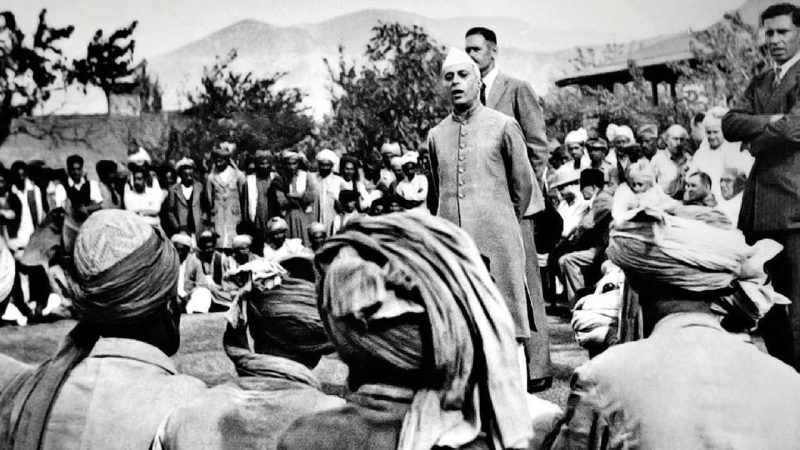
    His Holiness the Dalai Lama, and his followers, were welcomed by then Prime Minister Jawaharlal Nehru with open arms whose government helped them settle in India as they fled Tibet, following the Chinese invasion

    Introduction

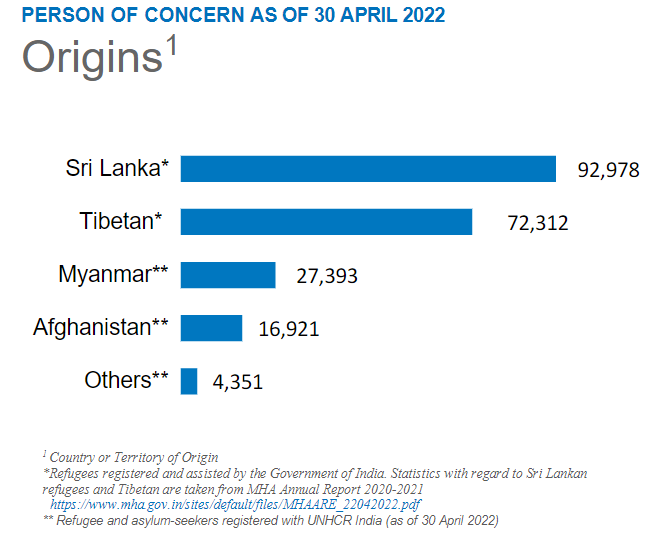
    India is the largest democracy in the world, with a multi-party system, and a diverse set of cultures. It has a long tradition of hosting a large number of refugees. India has been particularly supportive of Tibetan refugees, right from the start of the Nehruvian era in the early 1950s. The number of Tibetan refugees living in India is estimated at well over 150,000 at any given time. However, a recent survey conducted by the United Nations High Commissioner for Refugees (UNHCR) in India, in association with the Ministry of Home Affairs (MHA), showed that only 72,312 Tibetans remain in the country.

    In India, Tibetans are considered to be one of the most privileged refugees unlike other refugees in the country. His Holiness the Dalai Lama, and his followers, were welcomed by then Prime Minister Jawaharlal Nehru with open arms whose government helped them settle in India as they fled Tibet, following the Chinese invasion. That period saw a large influx of Tibetans towards India as they sought asylum. The Tibetan refugees have been allotted settlements where they continue to live under the management of the MHA and the Tibetan government-in-exile, or the Central Tibetan Administration (CTA). These facilities have contributed to a sense of community-living and have enabled them to keep their culture alive till today. Tibetan refugees in India have enjoyed freedom, which was impossible in their own land under the Chinese Communist Party (CCP) rule. However, after residing in India for almost seven decades now, recent data estimates a large decline in the number of Tibetan refugees. Therefore, this study examines the theoretical concerns and empirical findings of refugee problems in general as well as distinctive features of the Tibetan refugee experience in India.

    The status of Tibetans in India is determined under the Passports Act 1967, Foreigner’s Act of 1946, and the Registration of Foreigners Act of 1939 which refer to Tibetans as simply “foreigners”. These provisions cover everyone apart from Indian citizens thus, restricting refugees’ mobility, property, and employment rights. Recognizing this, the Government of India sanctioned the Tibetan refugees with the 2014 Tibetan Rehabilitation Policy (TRP) which caters to the issues faced by them and promises a better life for Tibetans in India. An array of provisions under this policy include land leases, employment, trade opportunities such as setting up markets for handicrafts and handlooms, housing, etc. to all Tibetans in possession of the RC (Registration Certificate). Further, certain policies applicable to Indian citizens are extended to Tibetan refugees as well. For instance, the Constitution of India grants the right to equality (Article 14) and the right to life and liberty (Article 21), and India is obliged to provide asylum as outlined in Article 14 of the Universal Declaration of Human Rights (UDHR). Despite these facilities and the cordial relationship that has been built over 70 years between the Tibetans and Indians, the question raised by many, including Indian authorities is – why is the number of Tibetans migrating out of India increasing?

    With increased awareness about Tibetan refugees and their problems, many countries have opened their borders to Tibetans by introducing numerous favourable policies

    The various push and pull factors- motivation for migration

    The Tibetan Exit continues to grow with about 3000 refugees migrating out of India every year. The support and admiration of His Holiness the Dalai Lama gained worldwide has been partly due to the exhibition of the rich culture and traditions of Buddhism. With India being the birthplace of the religion, Tibetans in India caught the limelight in the global arena, leading many researchers to study their migration patterns to India. Attention is now being placed on Tibetans exiting India despite years of strong cultural and social bonding. General migratory trends of humans can be analyzed using eminent scholar Everett Lee’s comprehensive theory of migration of 1966. The term ‘migration’ is defined broadly as a permanent or semi-permanent change of residence. Many factors tend to hold people within the area or attract people towards it, and there are others that repel them from staying. This theory could also be applied to the Tibetan migratory trends by looking at the “Push and Pull” factors proposed by Lee. The ‘push theory’ here encompasses the aspects that encourage the Tibetans to emigrate outside India, and the pull theory is associated with the country of destination that attracts the Tibetans to emigrate. Ernest George Ravenstein, in his “Laws of Migration”, argues that ‘migrants generally proceed long distances by preference to one of the great centers of commerce and industry and that ‘the diversity of people defines the volume of migration’. Ravenstein’s laws provide a theoretical framework for this study, as Tibetans tend to migrate out of India with a special preference to Europe, the USA, Canada, and Australia. With increased awareness about Tibetan refugees and their problems, many countries have opened their borders to Tibetans by introducing numerous favourable policies. For instance, with the Immigration Act of 1990, the Tibetan community in New York grew exponentially. The US Congress authorised 1000 special visas for Tibetans under the Tibetan Provisions of the U.S. Immigration Act of 1990, leading to the rampant growth of Tibetan migrants in the US. The first 10 to 12 Tibetan immigrants arrived in the U.S. in the 1960s, and then hundreds in the 1970s. Today, New York alone consists of roughly 5,000 to 6,000 Tibetan immigrants.

    Former Canadian Prime Minister Stephen Harper agreed to resettle 1,000 Tibetans from Arunachal Pradesh in 2007 (CTA 2013) encouraging substantial migration. The fundamental intention of migration is to improve one’s well-being from the current state.

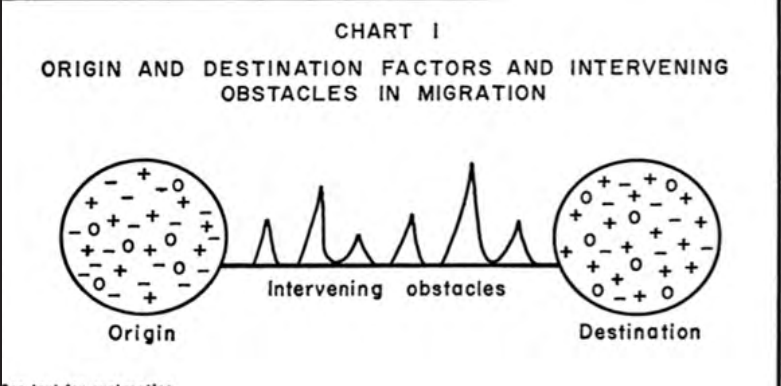
    The motivation for migration can be analysed by correlating origin and destination places with push and pull aspects. Push factors in the place of origin generally include lack of opportunities, religious or political persecution, genocide, hazardous environmental conditions, etc. The pull factors at the destination, on the other hand, are environment responsive to the push variables. The flow of migrants between the two points is hindered by intervening obstacles or intervening opportunities, which can also affect the motivations of individuals while migrating.

    Fig. 2 Lee’s (1966) push-pull theory in graphic form

    Fig.2 shows there are two points in the flow of migration – a place of origin and a destination, with positive and negative signs indicating the variables of pull and push factors with intervening obstacles between them. Both the origin and destination have pluses and minuses which means each place has its push and pull aspects. Every migrant is influenced by the positives of staying and the negatives of leaving a particular place. The factors to which people are essentially indifferent are denoted as zeroes. The logic of the push-pull theory is that if the pluses (pulls) at the destination outweigh the pluses of staying at the origin, as shown above, then migration is likely to occur.

    The three main pull factors or the aspects that pull Tibetans out of India are – economic opportunities, better policies for Tibetan refugees outside India, and world attention.

    Better opportunities and more earning capacity are the primary reasons for the migration of Tibetan refugees out of India. They claim that there are better options, job security, better facilities, and more accessible resources. All this put together expands their level of awareness. People outside treat them as equals which makes the living situation a lot easier, whereas in India, except for a handful who are well educated, Tibetans are mostly given very low-paid jobs such as servants, waiters, cleaners, etc.

    Second, concerning open policies in other countries, it can be argued that the migratory trend of Tibetans started in 1963 when Switzerland allowed 1,000 Tibetan refugees who were then the country’s first non-European refugees. Their population is now around 4,000. Further, in 1971, under the Tibetan Refugee Program (TRP), the original 240 Tibetans arrived in Canada, which now is a community of 5,000.

    Third, the migrants and His Holiness the Dalai Lama’s transnational travels have helped to promote Tibetan culture and give the West exposure to the richness and traditions of Tibetan Buddhism. Tibetans also migrate to spread awareness. Sonam Wang due, a young Tibetan activist from India who was the President of the Tibetan Youth Congress in Dharamshala, says that he moved to the U.S. to protest more effectively and freely. An important day known as the Tibetan Lobby Day is conducted annually in the U.S, where hundreds of Tibetans along with their supporters assemble to urge their respective governments and parliamentarians to continue their support for Tibet and the Tibetan people.

    Fig. 3 Tibetan Lobby Day in the U.S

    On the other hand, some factors tend to push people away from their origin country. Push factors from India are mainly restrictions and social reasons. There are many Tibetan schools and colleges in the subcontinent with a large number of Tibetan students. According to the Planning Commission’s data on Tibetan Demography 2010, there is growing unemployment among Tibetan youth, with levels as high as 79.4 percent. When students return to their settlements after graduation, only 5 percent of them get absorbed in employment in the Tibetan community, as jobs here are scarce with mediocre salaries. Finding a job in the Indian community is further restricted by the authorization issue which holds that they are not Indian citizens. Many of them join the Indian Army, work in call centers, or become nurses as these are a few employment opportunities in which they can earn reasonably to support their families. Those without RC are restricted while applying for business documents and procuring licenses, and the youths who have acquired education and skills are pushed out of India as they search for better job opportunities. The younger generation of Tibetans in India realizes the discrimination they face and are motivated to migrate elsewhere for a better life. Although there is Article 19 of the Indian Constitution for freedom of speech and expression and the right to assemble peacefully, when it comes to Tibetans’ protesting, they are restricted in every possible way. Tibetans must secure a legal permit before any protest outside Tibetan settlements. This varies from one region to another, for instance, Tibetans in Dharamshala can protest peacefully as that is their officially recognized place by the Central government. In spite of having authorized Tibetan settlement areas in Chandigarh, Delhi, Arunachal Pradesh, Karnataka, etc., protests conducted in these states are not tolerated and require permits because the decision-making power is solely vested in each of the State governments.

    According to Mr. Sonam Dagpo, a spokesperson for the CTA, the main reason for the decline of refugees in India is because “Tibetans are recognized as ‘foreigners’, not refugees”. The Indian government does not recognize Tibetans as refugees primarily because India is not a party to the 1951 Refugee Convention. This Convention relates to the status of refugees and is built on Article 14 of the Universal Declaration of Human Rights, which recognizes the right of people seeking asylum in other countries because of persecution in their own countries. Another important reason is the lack of awareness among Tibetan refugees that they are the stakeholders to benefit from the TRP. However, implementation of the policy is left to the discretion of the respective States, which makes it problematic. Many Tibetans use India as a transit spot. They enter India primarily to meet His Holiness the Dalai Lama and study here, after which in pursuit of a better life and the West’s influence, they tend to resettle abroad. Nepal in recent times, generously funded by the Chinese, started strictly patrolling the borders with India and are sending back Tibetans to their homeland. Therefore, this is also one of the reasons why Tibetans entering India have decreased drastically.

    The introduction of the Rehabilitation Policy (TRP) in India has decreased the burden on Tibetans. However, efforts are to be made to widen the level of awareness about the policy among the stakeholders and States

    Conclusion

    Egon F. Kunz (1981) theorized about refugee movements and formulated two categories of refugee migrants namely – ‘Anticipatory’ and ‘Acute’. Anticipatory migrants are people who flee in an orderly manner after a lot of preparation and having prior knowledge about the destination, the latter category of migrants is those who flee erratically due to threats by political or military entities and from persecution in their place of origin. Tibetans migrating out of India are largely Anticipatory refugee migrants well aware and seeking betterment. The introduction of the Rehabilitation Policy (TRP) in India has decreased the burden on Tibetans. However, efforts are to be made to widen the level of awareness about the policy among the stakeholders and States.

    Tibetans are mostly living and visiting India from abroad by and large because of His Holiness the Dalai Lama. Considering his advancing age and the number of Tibetans migrating out of India on the rise, will there be a time when Tibetans will give away the hold of solidarity by living in large communities in India? This is the burning question that lies ahead in the future of India-Tibet relations.

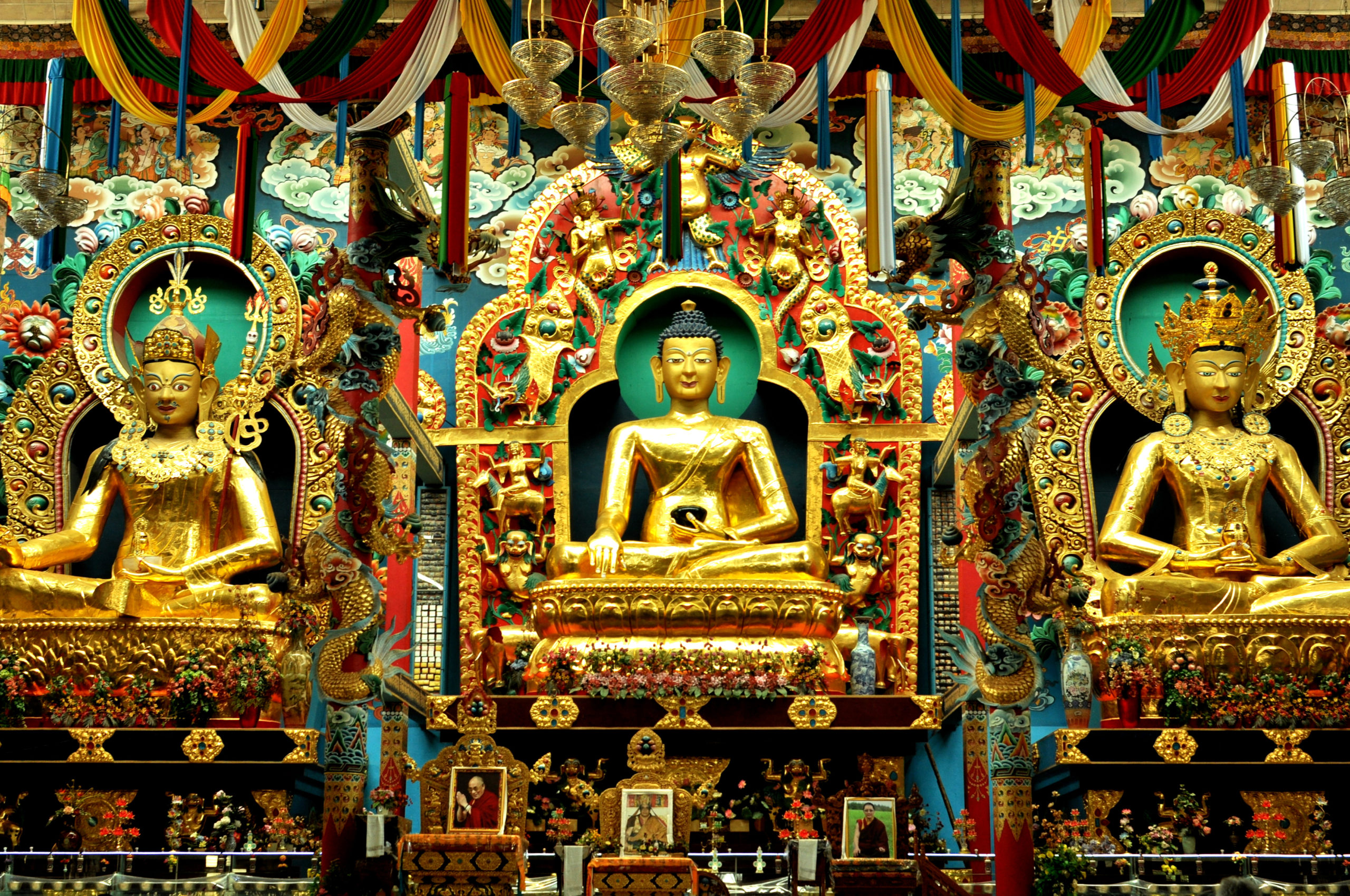
    Feature Image Credits: Karnataka Tourism

    Fig. 1 Source: https://reporting.unhcr.org/document/2681

    Fig 2 Source: Dolma, T. (2019). Why are Tibetans Migrating Out of India? The Tibet Journal, 44(1), 27–52. https://www.jstor.org/stable/26921466

    Fig 3 Source: https://tibetlobbyday.us/testimonials/2020-photographs/

  • On Metaverse & Geospatial Digital Twinning: Techno-Strategic Opportunities for India

    On Metaverse & Geospatial Digital Twinning: Techno-Strategic Opportunities for India

    [powerkit_button size=”lg” style=”info” block=”true” url=”https://admin.thepeninsula.org.in/wp-content/uploads/2022/07/TPF_Working-Paper_MetaGDT-1.pdf” target=”_blank” nofollow=”false”]
    Download
    [/powerkit_button]

    Abstract:

    With the advent of satellite imagery and smartphone sensors, cartographic expertise has reached everyone’s pocket and we’re witnessing a software-isation of maps that will underlie a symbiotic relationship between our physical spaces and virtual environments. This extended reality comes with enormous economic, military, and technological potential. While there exist a range of technical, social and ethical issues still to be worked out – time and tide wait for no one is a metaphor well applied to the Metaverse and its development. This article briefly introduces the technological landscape, and then moves over to a discussion of Geospatial Digital Twinning and its techno-strategic utility and implications. We suggest that India should, continue on the existing dichotomy of Open Series and Defence Series Maps, initiate Geospatial Digital Twins of specific areas of interest as a pilot for the development, testing, and integration of national metaverse standards and rules. Further, a working group in collaboration with a body like NASSCOM needs to be formed to develop the architecture and norms that facilitate Indian economic and strategic interests through the Metaverse and other extended reality solutions.

    Introduction

    Cartographers argue that maps are value-laden images, which do not just represent a geographical reality but also become an essential tool for political discourse and military planning. Not surprisingly then, early scholars had termed cartography as a science of the princes. In fact, the history of maps is deeply intertwined with the emergence of the Westphalian nation-state itself, with the states being the primary sponsors of any cartographic activity in and around their territories[1].
    Earlier the outcome of such activities even constituted secret knowledge, for example, it was the British Military Intelligence HQ in Shimla which ran and coordinated many of the cartographic activities for the British in the subcontinent[2]. Thus, given our post-independence love for Victorian institutions, until 2021 even Google Maps had remained an illegal service in India[3].

    One of the key stressors which brought this long-awaited change in policy was the increased availability of relatively low-cost but high-resolution satellite imagery in open online markets. But this remote sensing is only one of the developments impacting modern mapmaking. A host of varied but converging technologies particularly Artificial Intelligence, advanced sensors, Virtual and Augmented Reality, and the increasing bandwidth for data transmission – are enabling a new kind of map. This new kind of map will not just be a model of reality, but rather a live and immersive simulation of reality. We can call it a Geospatial Digital Twin (GDT) – and it will be a 4D artefact, i.e. given its predictive component and temporal data assimilation, a user could also explore the hologram/VR through time and evaluate possible what-if scenarios.

    [powerkit_button size=”lg” style=”info” block=”true” url=”https://admin.thepeninsula.org.in/wp-content/uploads/2022/07/TPF_Working-Paper_MetaGDT-1.pdf” target=”_blank” nofollow=”false”]
    Read the Full Paper
    [/powerkit_button]

  • GST @ 5 Years: The Union Govt and States Can’t Ignore the Most Contentious Bits Any Longer

    GST @ 5 Years: The Union Govt and States Can’t Ignore the Most Contentious Bits Any Longer

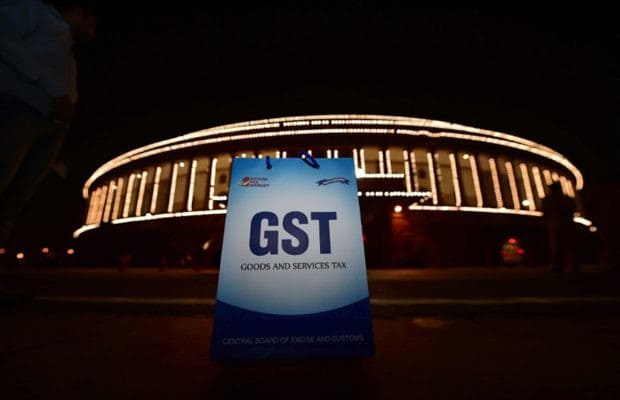
    India’s goods and services tax (GST) regime was launched with much fanfare on July 1, 2017. It was marketed by many as the nation’s second ‘tryst with destiny’, a reform that would unify the country by creating a single market while ushering in excellent ease of doing business.

    It was said that gross domestic product (GDP) would rise by 1% to 2%, inflation would decline with the elimination of the cascading effect and the ‘black economy’ would be checked. It was supposed to benefit backward states which are consuming states since GST is a last-point tax – collected where the final sale occurs. It was pitched as a win-win situation.

    Government officials, writing on the occasion of the completion of five years of operation of GST, have enumerated the various benefits but admitted to some problems which they feel can be sorted out soon. The Congress has asked for a revamp of the GST since it is fundamentally flawed that a bit of tinkering cannot resolve. Many of the states have been expressing their concerns for some time, most recently in the just-concluded GST Council meeting.

    [powerkit_button size=”lg” style=”info” block=”true” url=”https://thewire.in/economy/five-years-of-gst” target=”_blank” nofollow=”false”]
    Read More
    [/powerkit_button]

  • Ukraine Crisis and India’s Rejection of Western Binary Construct

    Ukraine Crisis and India’s Rejection of Western Binary Construct

    “India has already chosen a side, its own, where it is happy, willing and most importantly capable of staying put”

    The current crisis in Ukraine has, or at least threatened to, shift the focus away from two equally urgent geopolitical conundrums – the Taliban usurping power in Afghanistan and China increasing its assertiveness in the Indo-Pacific and beyond. One almost gets the feeling that the timings of these events couldn’t have been better scripted. Needless to say, all three of them are intertwined in a complex web of events where the major world players are looking to outmanoeuvre each other. These events hold serious ramifications for India, a country which under Prime Minister Narendra Modi has looked to continuously raise its international profile as a major and responsible power in the region. Out of the three, India is a serious stakeholder in the Afghan equation and the Indo-Pacific construct, with even the Ukraine crisis putting the world’s focus on India.

    Derek Grossman, writing for the Foreign Policy magazine, observes that due to the Russian invasion of Ukraine and the ensuing crisis, “Modi’s multipolar Moment Has Arrived”. He even sees India as ‘the clear beneficiary of Russia’s war’. Grossman says that by not condemning Russia’s aggression in Ukraine and refusing to toe the Western line in sanctioning Moscow, India has in fact elevated its global stature. He suggests each of the major powers from the US to China to Russia has been vying to have India on its ‘side’. This assumption is not limited to just Grossman alone but many Western analysts assume that India is vying for a side. But this is exactly where Grossman fails to understand the basic objective of India’s foreign policy. India’s External Affairs Minister Dr. S. Jaishankar’s remarks at the recent GLOBESEC 2022 Bratislava Forum throw light on this ‘misunderstanding’ on the part of Grossman and analysts of his ilk. Jaishankar, to a question regarding the ongoing Russia-Ukraine conflict that in case India must pick a side, who India will side with – the US or China, quipped “I don’t accept that India has to join either the US axis or the China axis. We are one-fifth of the world’s population, the fifth or sixth-largest economy in the world, and India is entitled to have its own side and make her own choices devoid of cynical transactions but based on India’s values and interests.” In the same forum, he also remarked that India is not “sitting on the fence” on the Ukraine issue (a reference to Biden’s remark of India being ‘shaky’) and is in fact merely “sitting on its ground”. Jaishankar’s remarks emphasize India’s policy of strategic autonomy and of India not being a lackey of any power or axis. Meaning India has already chosen a side, its own, where it is happy, willing and most importantly capable of staying put.

    “Somewhere Europe has to grow out of the mindset that Europe’s problems are the world’s problems, but the world’s problems are not Europe’s problems.”

    But what Grossman does get right is in his usage of the term ‘Multipolar’. India indeed views the world as multipolar today. Instead of clinging to either pole of the binary world order, India desires to be one of the poles itself. So, then what explains the West’s adamancy or incapability to understand India? Even this has been partly answered by Jaishankar himself as he says, “Somewhere Europe has to grow out of the mindset that Europe’s problems are the world’s problems, but the world’s problems are not Europe’s problems.” And this is exactly why I mentioned Afghanistan and the Indo-Pacific at the very outset. It is not to say that an India desiring to be a globally recognised power shouldn’t be concerned about Ukraine, but to understand the fact that, for India, a “messy” US withdrawal from Afghanistan and an ever-aggressive China lurking large on its borders are far greater challenges that cannot be met by choosing sides, rather India has to meet those challenges on its own strength. India simply doesn’t have the luxury of joining Axis A against Axis B or vice versa. Among many other things, India needs Russia to balance out China and for its strategic interests in Afghanistan and Central Asia; India needs the US to cement its role in the Indo-Pacific and create a strong deterrence against China; while India also needs to partner with China and Russia in climate change politics as well as limit Western dominance over the global financial system.

    But it is also true that today, India’s strategic interests find greater convergence with that of the US, ranging from countering extremism in the Af-Pak region to checking China’s rise and securing a free and open Indo-Pacific with the help of “like-minded” nations in the region like Japan and Australia in the QUAD grouping. With regards to Russia, relations between the two traditional partners have cooled down a little especially because of Russia’s hobnobbing with Pakistan to secure its interests in Afghanistan and India’s growing ties to the US. Given the fact that Russia is speculated to become increasingly dependent on China as the war in Ukraine wages on, India’s manoeuvrability stands even more limited. Ever since the start of the war, India has tirelessly tried to explain to its Western counterparts the need to re-focus on the Indo-Pacific. Perhaps the bigger challenge for the democratic world is China’s unilateral attempts to change the status quo in the region. Russia’s threat is largely military in nature and is a headache majorly for its European neighbours. But the Chinese threat is global and all-encompassing ranging from economic to military to security to cultural. Additionally, for India, the Taliban in power next door doesn’t evoke any pleasant memories as anti-India forces might be on the loose given the Taliban’s proximity to Pakistan and its ties with anti-India forces.

    India must solidly guard against being labelled in any camp and should steadfastly pursue its own path. India’s recent actions of abstentions in the UN against Russian aggression at the same time as Prime Minister Modi making a whirlwind tour of Europe to calm Western nerves augur well for its strategic objectives. The signing of the US-led Indo-Pacific Economic Framework (IPEF) in the recently held QUAD summit in Tokyo also serves India well vis-à-vis China. A recent visit of an Indian delegation to Afghanistan, ostensibly to oversee aid distribution, suggests that New Delhi may be willing to work with the Taliban regime, thus providing the latter with some legitimacy and the former some flexibility. To be recognised as a major global power, India should de-link from all geopolitical binaries and work towards becoming the Third Pole, maybe taking a cue from the Himalayas.

    Feature Image Credits: Economic Times

  • Agnipath Might have Adverse Consequences

    Agnipath Might have Adverse Consequences

    It takes a soldier a long time to emotionally and physically get moulded into his unit groove, become infused with his unit’s ethos and, thus, be prepared to lay down his life for the unit’s honour

    The government this week announced a recruitment model, Agnipath, for the short-term induction of personnel into the armed forces. As a veteran, who has worn the nation’s uniform with pride for 41 years, I wish the new scheme all success. But due to my loyalty to my motherland, shared by all veterans, I also have some misgivings about the new recruitment programme.

    [powerkit_button size=”lg” style=”info” block=”true” url=”https://www.hindustantimes.com/opinion/agnipath-might-have-adverse-consequences-101655393300667.html” target=”_blank” nofollow=”false”]
    Read More
    [/powerkit_button]

  • India is not the Fastest Growing Big Economy

    India is not the Fastest Growing Big Economy

    A closer look at recent data on GDP shows that the numbers are flawed and recovery is incomplete

    The Provisional Estimates of Annual National Income in 2021-22 just released show that GDP grew 8.7% in real terms and 19.5% in nominal terms (including inflation). It makes India the fastest-growing major economy in the world. Further, the real economy is 1.51% larger than it was in 2019-20, just before the…

    [powerkit_button size=”lg” style=”info” block=”true” url=”https://www.thehindu.com/opinion/lead/india-is-not-the-fastest-growing-big-economy/article65515195.ece” target=”_self” nofollow=”false”]
    Read More
    [/powerkit_button]

  • The Inefficiencies of India’s Justice System

    The Inefficiencies of India’s Justice System

    The present system of justice delivery is inefficient precisely because it is meant to be manipulated by our rulers to achieve their goals.

    Aryan Khan’s case reflects what is wrong in India’s system of justice. He was caught for allegedly being part of a nexus with international or national drug dealers. Much hype followed since he is the son of a mega movie star. Media, political parties and the general public presented, commented and followed the case.

    As suddenly as the case erupted, it has been closed with the argument that no narcotic drugs were found. It is common knowledge that drugs flow in parties like the one that was planned on the ship. But, here a particular group of youngsters were targeted and it was not a general raid. What was the plan?

    Message and Extortion

    A Minister in the Maharashtra government accused the agency of using such cases for extortion. He was later arrested for having dealings with the family of a notorious don. If the allegations against him are true, he would know about use of drugs and the ways of functioning of the agency involved. So, his allegations about extortion are likely to be correct. The question then is, who was the real target and has a deal been struck?

    The public will never get to know the truth but, what an inefficient way of doing things. It cannot be that some officer initiated the case on his own for extortion and harassment of a high profile person. Could the extortion not have been done quietly without media hype and public exposure? Mafia is known to extort without advertising their action. For the powers that be, it was also necessary to send a message to their detractors. The case is symptomatic of what the system is capable of.

    [powerkit_button size=”lg” style=”info” block=”true” url=”https://thewire.in/political-economy/the-inefficiencies-of-indias-justice-system” target=”_blank” nofollow=”false”]
    Read More
    [/powerkit_button]

  • The Geopolitical Consolidation of Artificial Intelligence

    The Geopolitical Consolidation of Artificial Intelligence

    Key Points

    • IT hardware and Semiconductor manufacturing has become strategically important and critical geopolitical tools of dominant powers. Ukraine war related sanctions and Wassenaar Arrangement regulations invoked to ban Russia from importing or acquiring electronic components over 25 Mhz.
    • Semi conductors present a key choke point to constrain or catalyse the development of AI-specific computing machinery.
    • Taiwan, USA, South Korea, and Netherlands dominate the global semiconductor manufacturing and supply chain. Taiwan dominates the global market and had 60% of the global share in 2021. Taiwan’s one single company – TSMC (Taiwan Semiconductor Manufacturing Co), the world’s largest foundry, alone accounted for 54% of total global revenue.
    • China controls two-thirds of all silicon production in the world.
    • Monopolisation of semiconductor supply by a singular geopolitical bloc poses critical challenges for the future of Artificial Intelligence (AI), exacerbating the strategic and innovation bottlenecks for developing countries like India.
    • Developing a competitive advantage over existing leaders would require not just technical breakthroughs but also some radical policy choices and long-term persistence.
    • India should double down over research programs on non-silicon based computing with a national urgency instead of pursuing a catch-up strategy.

    Russia was recently restricted, under category 3 to category 9 of the Wassenaar Arrangement, from purchasing any electronic components over 25MHz from Taiwanese companies. That covers pretty much all modern electronics. Yet, the tangibles of these sanctions must not deceive us into overlooking the wider impact that hardware access and its control have on AI policies and software-based workflows the world over. As Artificial Intelligence technologies reach a more advanced stage, the capacity to fabricate high-performance computing resources i.e. semiconductor production becomes key strategic leverage in international affairs.

    Semiconductors present a key chokepoint to constrain or catalyse the development of AI-specific computing machinery. In fact, most of the supply of semiconductors relies on a single country – Taiwan. The Taiwan Semiconductor Manufacturing Corporation (TSMC) manufactures Google’s Tensor Processing Unit (TPU), Cerebras’s Wafer Scale Engine (WSE), as well as Nvidia’s A100 processor. The following table provides a more detailed1 assessment:

    Hardware Type

    AI Accelerator/Product Name

    Manufacturing Country

    Application-Specific Integrated Circuits (ASICs)

    Huawei Ascend 910

    Taiwan

    Cerebras WSE

    Taiwan

    Google TPUs

    Taiwan

    Intel Habana

    Taiwan

    Tesla FSD

    USA

    Qualcomm Cloud AI 100

    Taiwan

    IBM TrueNorth

    South Korea

    AWS Inferentia

    Taiwan

    AWS Trainium

    Taiwan

    Apple A14 Bionic

    Taiwan

    Graphic Processing Units (GPUs)

    AMD Radeon

    Taiwan

    Nvidia A100

    Taiwan

    Field-Programmable Gate Arrays (FPGAs)

    Intel Agilex

    USA

    Xilinx Virtex

    Taiwan

    Xilinx Alveo

    Taiwan

    AWS EC2 FI

    Taiwan

    As can be seen above, the cake of computing hardware is largely divided in such a way that the largest pie holders also happen to form a singular geopolitical bloc vis-a-vis China. This further shapes the evolution of territorial contests in the South China Sea. This monopolisation of semiconductor supply by a singular geopolitical bloc poses critical challenges for the future of Artificial Intelligence, especially exacerbating the strategic and innovation bottlenecks for developing countries like India. Since the invention of the transistor in 1947, and her independence, India has found herself in an unenviable position where there stands zero commercial semiconductor manufacturing capacity after all these years while her office-bearers continually promise of leading in the fourth industrial revolution.

    Bottlenecking Global AI Research

    There are two aspects of developing these AI accelerators – designing the specifications and their fabrication. AI research firms first design chips which optimise hardware performance to execute specific machine learning calculations. Then, semiconductor firms, operating in a range of specialities and specific aspects of fabrication, make those chips and increase the performance of computing hardware by adding more and more transistors to pieces of silicon. This combination of specific design choices and advanced hardware fabrication capability forms the bedrock that will decide the future of AI, not the amount of data a population is generating and localising.

    However, owing to the very high fixed costs of semiconductor manufacturing, AI research has to be focused on data and algorithms. Therefore, innovations in AI’s algorithmic efficiency and model scaling have to compensate for a lack of equivalent situations in the AI’s hardware. The aggressive consolidation and costs of hardware fabrication mean that firms in AI research are forced to outsource their hardware fabrication requirements. In fact, as per DARPA2, because of the high costs of getting their designs fabricated, AI hardware startups do not even receive much private capital and merely 3% of all venture funding between 2017-21 in AI/ML has gone to startups working on AI hardware.

    But TSMC’s resources are limited and not everyone can afford them. To get TSMC’s services, companies globally have to compete with the likes of Google and Nvidia, therefore prices go further high because of the demand side competition. Consequently, only the best and the biggest work with TSMC, and the rest have to settle for its competitors. This has allowed this single company to turn into a gatekeeper in AI hardware R&D. And as the recent sanctions over Russia demonstrate, it is now effectively playing the pawn which has turned the wazir in a tense geopolitical endgame.

    Taiwan’s AI policy also reflects this dominance in ICT and semiconductors – aiming to develop “world-leading AI-on-Device solutions that create a niche market and… (make Taiwan) an important partner in the value chain of global intelligent systems”.3 The foundation of strong control over the supply of AI hardware and also being #1 in the Global Open Data Index, not just gives Taiwan negotiating leverage in geopolitical competition, but also allows it to focus on hardware and software collaboration based on seminal AI policy unlike most countries where the AI policy and discourse revolve around managing the adoption and effects of AI, and not around shaping the trajectory of its engineering and conceptual development like the countries with hardware advantage.

    Now to be fair, R&D is a time-consuming, long-term activity which has a high chance of failure. Thus, research focus naturally shifts towards low-hanging fruits, projects that can be achieved in the short-term before the commissioning bureaucrats are rotated. That’s why we cannot have a nationalised AGI research group, as nobody will be interested in a 15-20 year-long enterprise when you have promotions and election cycles to worry about. This applies to all high-end bleeding-edge technology research funding everywhere – so, quantum communications will be prioritised over quantum computing, building larger and larger datasets over more intelligent algorithms, and silicon-based electronics over researching newer computing substrates and storage – because those things are more friendly to short-term outcome pressures and bureaucracies aren’t exactly known to be a risk-taking institution.

    Options for India

    While China controls 2/3 of all the silicon production in the world and wants to control the whole of Taiwan too (and TSMC along with its 54% share in logic foundries), the wider semiconductor supply chain is a little spreadout too for any one actor’s comfort. The leaders mostly control a specialised niche of the supply chain, for example, the US maintains a total monopoly on Electronic Design Automation (EDA) software solutions, the Netherlands has monopolised Extreme UltraViolet and Argon Flouride scanners, and Japan has been dishing out 300 mm wafers used to manufacture more than 99 percent of the chips today.4 The end-to-end delivery of one chip could have it crossing international borders over 70 times.5 Since this is a matured ecosystem, developing a competitive advantage over existing leaders would require not just proprietary technical breakthroughs but also some radical policy choices and long term persistence.

    It is also needless to say that the leaders are also able to attract and retain the highest quality talent from across the world. On the other hand, we have a situation where regional politicians continue cribbing about incoming talent even from other Indian states. This is therefore the first task for India, to become a technology powerhouse, she has to, at a bare minimum, be able to retain all her top talent and attract more. Perhaps, for companies in certain sectors or of certain size, India must make it mandatory to spend at least X per cent of revenue on R&D and offer incentives to increase this share – it’ll revamp things from recruitment and retention to business processes and industry-academia collaboration – and in the long-run prove to be a lot more socioeconomically useful instrument than the CSR regulation.

    It should also not escape anyone that the human civilisation, with all its genius and promises of man-machine symbiosis, has managed to put all its eggs in a single basket that is also under the constant threat of Chinese invasion. It is thus in the interest of the entire computing industry to build geographical resiliency, diversity and redundancy in the present-day semiconductor manufacturing capacity. We don’t yet have the navy we need, but perhaps in a diplomatic-naval recognition of Taiwan’s independence from China, the Quad could manage to persuade arrangements for an uninterrupted semiconductor supply in case of an invasion.

    Since R&D in AI hardware is essential for future breakthroughs in machine intelligence – but its production happens to be extremely concentrated, mostly by just one small island country, it behoves countries like India to look for ways to undercut the existing paradigm of developing computing hardware (i.e. pivot R&D towards DNA Computing etc) instead of only trying to pursue a catch-up strategy. The current developments are unlikely to solve India’s blues in integrated circuits anytime soon. India could parallelly, and I’d emphatically recommend that she should, take a step back from all the madness and double down on research programs on non-silicon-based computing with a national urgency. A hybrid approach toward computing machinery could also resolve some of the bottlenecks that AI research is facing due to dependencies and limitations of present-day hardware.

    As our neighbouring adversary Mr Xi says, core technologies cannot be acquired by asking, buying, or begging. In the same spirit, even if it might ruffle some feathers, a very discerning reexamination of the present intellectual property regime could also be very useful for the development of such foundational technologies and related infrastructure in India as well as for carving out an Indian niche for future technology leadership.

    References:

    1. The Other AI Hardware Problem: What TSMC means for AI Compute. Available at https://semiliterate.substack.com/p/the-other-ai-hardware-problem

    2. Leef, S. (2019). Automatic Implementation of Secure Silicon. In ACM Great Lakes Symposium on VLSI (Vol. 3)

    3. AI Taiwan. Available at https://ai.taiwan.gov.tw/

    4. Khan et al. (2021). The Semiconductor Supply Chain: Assessing National Competitiveness. Center for Security and Emerging Technology.
    5. Alam et al. (2020). Globality and Complexity of the Semiconductor Ecosystem. Accenture.