Past Events July 24, 2018 The Military-Industrial Component of the U.S.-India Partnership
JULY 24, 2018 | 12:15 PM
Please join the Stimson South Asia program for a conversation with Air Marshal M. Matheswaran, the former Deputy Chief of the Integrated Defence Staff in the Indian Ministry of Defence, who will talk about the military-industrial component of the U.S.-India partnership. Joanna Spear, Associate Professor of International Affairs at the Elliott School, and Benjamin Schwartz, Head of the Aerospace and Defense Program at the U.S.-India Business Council, will serve as discussants. Sameer Lalwani of the Stimson Center will moderate.
WHAT: An on-the-record discussion with Air Marshal M. Matheswaran on the military-industrial component of the U.S.-India partnership.
WHERE: The Stimson Center, 1211 Connecticut Avenue, NW, 8th Floor, Washington DC, 20036
WHEN: Tuesday, July 24 from 12.15 to 2 pm. Lunch will be served at 12.15 and the discussion will begin at 12.30.
RSVP: Click here to RSVP for the event.
FOLLOW: @StimsonCenter on Twitter for event news and use #StimsonNow to join the conversation
Featuring:
Sameer Lalwani, Senior Associate and Co-Director, South Asia Program, Stimson Center (moderator)
Sameer Lalwani is a Senior Associate and Co-Director of the South Asia Program at the Stimson Center where he researches nuclear deterrence, inter-state rivalry, and counter/insurgency. He is also an Adjunct Professor at the George Washington University’s Elliott School and a Contributing Editor to War on the Rocks.
Air Marshal M. Matheswaran, former Deputy Chief of the Integrated Defence Staff, Indian Ministry of Defence
Air Marshal M. Matheswaran retired from the Indian Air Force in 2014 after nearly 39 years of military service. In his last appointment, he was the Deputy Chief of the Integrated Defence Staff for 23 months at the tri-service headquarters in the Ministry of Defence, India. Since then, he has held defense and aerospace consulting positions at Hindustan Aeronautics Limited and Reliance Defence. He is the Founder, Chairman, and President of the Peninsula Foundation, a think-tank for security policy research.
Benjamin Schwartz, Head, Aerospace & Defense, U.S.-India Business Council
Benjamin Schwartz leads the U.S.-India Business Council’s Defense and Aerospace program where he advocates for pro-trade policies before officials in the Indian and American governments. He previously served in a range of positions within the U.S. national security community, including at the Department of State, the Department of Energy, and the Department of Defense, where he was Director for India in the Office of the Secretary of Defense.
Joanna Spear, Associate Professor of International Affairs, George Washington University.
Joanna Spear is Associate Professor of International Affairs and Director of the FAO Regional Sustainment Initiative at the Elliott School of International Affairs at George Washington University. Her areas of focus include U.S. and UK arms sales policies, U.S. counter-proliferation policies, and transatlantic relations. In 2012, she was a Senior Visiting Fellow at Institute of Defence Studies and Analyses New Delhi, working on India’s arms import policies and offset strategies.
[sc name=”donte”]
Tag: India
-
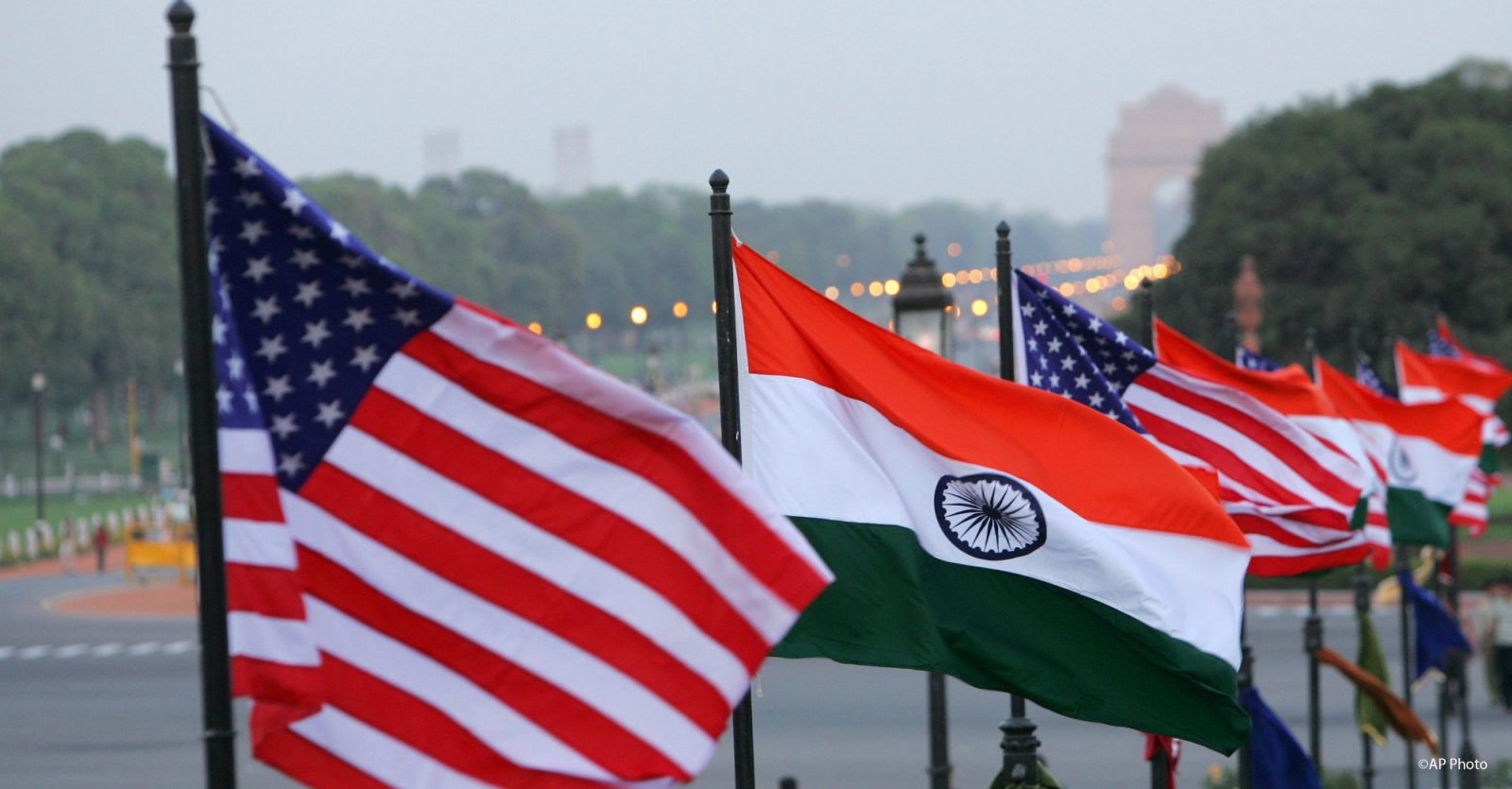
The Military Industrial Component of the U.S.-India Partnership – Panel Discussion at Stimson Centre
-

Foreign Reserves beyond a point are Pointless
Mohan Guruswamy October 07, 2017
Clearly the Indian economy is not at a place where it wants to be. The Modi government is finds itself in a chakravyuh that it is unable to fight its way out. The government is just unable to make or attract the investment needed to make the economy buoyant again. India enjoyed a decade of unprecedented growth from 2004-14 that seemed to have lost steam in the last year. It was largely caused by a huge decline in the proportion of capital investment expenditure. Despite the growth of the private and foreign investment, the Indian economy is still largely dependent on government investment to lead the investment and growth cycle.
The promise of Modi was that he was expected to set right this trend and once again begin a new cycle with government led investment. He promised us a hundred new cities, a nationwide grid of high-speed rail networks, a national river-linking program and so many other major transformational projects. A hundred new cities have now become a hundred smart cities, which means little more than free wi-fi networks. The nationwide grid of fast trains has now become an exorbitant and apparently uneconomical single bullet train joining Ahmedabad and Bombay. Similarly all other feasible and exciting promises made are now mere caricatures of what were promised. It is simply that the Modi government has been unable to free the economy from its high subsidy burden and PSU black hole, where only the oil and power companies earn a profit due to administered pricing.
Consequently the picture continues to be bleak. Output of capital goods contracted 1% in July against growth of 8.8% a year ago. Production of consumer durable goods shrank 1.3% against a nominal increase of 0.2% a year earlier.
Then came the twin black swan events. Demonetization came as a body blow to the cash-dependent unorganized sector that makes up 40% of India’s GDP. The unorganized sector also accounts for 90% of the total employment of around 450 million. The loss of jobs due to the two events – demonetization and hasty implementation of GST- is still not empirically confirmed. Estimates vary. The construction and vegetable and fruit retail sectors seem to have taken a massive hit and the ballpark estimation of loss of jobs is at about 25-30 million. These sectors mostly employ rural landless labour with few skills and hence forced into taking up daily wage and earnings sustenance. They don’t shout much and few notice their pain. Unlike the loss of even a few thousand jobs in the IT sector.
The implementation of GST forced companies to reduce production in the run-up to its 1 July implementation as dealers reduced inventory. The inadequate training and preparation was abundantly evident. The announcement of rates was hasty and the many mismatches between input and output rates compounded the confusion. Of the Rs.95000 crores collected in the first month, as much as Rs.65000 is due to be refunded. The problem is that the government doesn’t seem to have the cash to do so.
In a belated effort to reverse these trends the government is planning to loosen its fiscal deficit target of 3.2% of GDP to enable it to spend up to Rs. 50,000 crore. This is piddly sum for an economy whose GDP is over Rs.150 lakh crores now. Right now we have a net outflow of foreign investment. What we need is a huge dollop of cash infusion to boost investment. Loosening fiscal deficit norms will help. But meaningfully slashing subsidies when Modi’s term is on the slope to elections is not politically feasible.
There is that old saying that when the going gets tough, the tough get going. Modi should now show toughness and imagination that is tempered with realism. He needs to revive the national mood and generate optimism over the economy. He now needs a plan to drive investment. He doesn’t have to go far to find the money to fund this plan.
The government is sitting with reserves of nearly $400 billion with about $135 billion alone sitting in US banks earning next to nothing. These reserves are equal to about 80% of our foreign debt. Even after providing a quarter of the reserves to cover short-term hot money of NRI investors each taking a pound of flesh for mostly foreign bank financed investment in their mother country, we will still have $300 billion in hand. How much money can be freed from the other $300 billion for investment is the big question now? Kaushik Basu has said that India’s foreign reserves need not be more than the current account deficit (CAD) or about $80 billion. Others are more cautious.
This will certainly raise many eyebrows. One is surprised over the number of people who think holding huge reserves abroad in ridiculously low yield securities is a sign of our wealth. No. It is a sign of our stupidity.
Just holding enough reserves to cover the CAD or exports for a few months would be about enough. This nonsense of holding reserves to at least cover six months imports is just plain arbitrary and concocted by the people who made the Washington Consensus. This “consensus” assures New York banks plenty of cheap money to finance American domestic consumption and extravagances. The Chinese have now realized the stupidity of financing the US cheaply with their reserves which not long ago almost touched $4trillion. They have run it down by about $1trillion since.
Now how much do you think the US foreign reserves amount to? Hold your seat. It is now $65 billion or about a fifth of India’s. What a travesty.
Clearly running them down by $100-120 billion or Rs.6.5L- 8L crores can be contemplated. The government could establish an India Infrastructure Investment Fund and start shifting meaningful fractions from the foreign reserves into this fund. A board of well-regarded experts, who can allocate investments on merits to prevent the usual leakages and political misuse, could administer the fund. The fund must also mandate the minimum level of local procurement and investment to boost Make in India.
Slow growth and no new jobs are Narendra Modi’s twin Achilles heels. He is vulnerable on both counts. He must seize the moment with both hands and start running with both legs.
Shri Mohan Guruswamy is a former Rajya Sabha MP and a political commentator. He is a Trustee of TPF.
This article was earlier published in ‘The Economic Times’. -
India needs a Space Security Architecture
Ajay Lele December 12, 2017
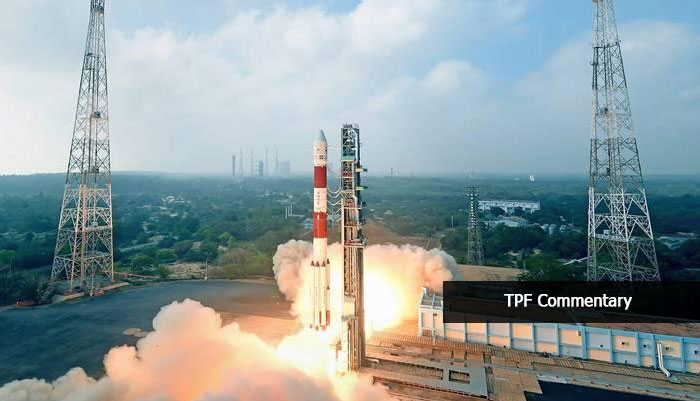
In the 21st century Space Security is rapidly emerging as a critical component of the National Security architecture. Today, space has emerged as a major instrument for the human survival. Very many activities associated with humans day to day leaving are depending on the satellite technologies directly or indirectly. Owing to increasing emphasis on space technologies space industry is also found making rapid growth. At the same time space has obvious utilities for the militaries too for the smooth and fast conduct of their various operations. Unfortunately, space is also emerging as a potential battleground with the possibility of confrontations both on the earth and also in the outer space. Naturally, for the states with significant amount of assets positioned in space as well as for the states having dependence on space technologies, it becomes imperative to evolve a specific policy structure to address issues concerning space security. This article attempts to discuss a need of such framework for India.
Necessity
Indian space programme is civilian in nature and existing space structures has been evolved essentially to cater for such requirement. Presently, Space Commission is responsible for growth, development, sustenance and furtherance of India’s space programme. There is no specific defence element involved with this structure. Hence, appreciating the military needs and also to allow ISRO to continue with its civilian mandate, it has become necessary to have a separate commission for handling strategic requirements. For this purpose a Military Space Commission needs to be established.
Such commission could oversee all space security aspects. Under this commission a specific agency could be established for coordinating activities of various stakeholders and liaise with various agencies of (civilian) Space Commission. Such agency could suggest modifications in exiting policy architecture as found necessary from time to time and also establish an experts group. This is important because human resources having an understanding about strategic requirements in respect of outer space issues may not be readily available. Hence, to address modern day threats it is inessential to have human resource of specialists with multidisciplinary vision. Such group should consist of military personnel, space scientists, cyber experts, AI/robotic experts, strategic technologists, technology managers, lawyers, academicians, disarmament & arms control experts and diplomats.
Military Space Command, a tri-service organisation should be the main implementation agency for this commission. This agency should have a larger mandate encompassing various issues. In coming years, Indian Army, Navy, Air force and other services like the Coastguard, Border Security Force etc are likely to increase their reliance on satellites for the purposes of intelligence gathering, communication, navigation, and operations of various weapon systems. Over last couple of years is has been noticed that the need for I-S-R capacities in space to support network centric strategies is significantly increasing. Space command should be tasked to administer various military and para military related aspects of satellite technologies. This command should directly liaise with the Military Space Commission to project its requirements. For operational purposes this command could be put under the CDS/IDS. Home Ministry representative could a single point source amongst para military forces to liaise with this command. The command should have an exclusive research wing. Also, special focus should be given to issues related to Space Situational Awareness (SSA) and Space Meteorology.
India has no intent to weaponize the space. However, India needs to develop (not necessarily test) certain offensive technologies, from ASAT to jamming to cyber tools. Today, the idea of weapons in space is more theoretical in nature. However, this could become a reality in coming few years. From deterrence perspective it is important for India to have a mechanism in place which could address such issues. The policy perspective in this regard should be developed by the Military Space Commission and Space Command should be the implementation agency. Legal and foreign policy related issues would play a major role towards evolving any space security architecture. In regards to these matters, it is important for Military Space Commission to liaise with the Space Commission and evolve an India specific view.
Context
Indian space programme is civilian in nature and existing space structures has been evolved essentially to cater for such requirement. Presently, Space Commission is responsible for growth, development, sustenance and furtherance of India’s space programme. There is no specific defence element involved with this structure. Hence, appreciating the military needs and also to allow ISRO to continue with its civilian mandate, it has become necessary to have a separate commission for handling strategic requirements. For this purpose a Military Space Commission needs to be established.
Such commission could oversee all space security aspects. Under this commission a specific agency could be established for coordinating activities of various stakeholders and liaise with various agencies of (civilian) Space Commission. Such agency could suggest modifications in exiting policy architecture as found necessary from time to time and also establish an experts group. This is important because human resources having an understanding about strategic requirements in respect of outer space issues may not be readily available. Hence, to address modern day threats it is inessential to have human resource of specialists with multidisciplinary vision. Such group should consist of military personnel, space scientists, cyber experts, AI/robotic experts, strategic technologists, technology managers, lawyers, academicians, disarmament & arms control experts and diplomats.
Military Space Command, a tri-service organisation should be the main implementation agency for this commission. This agency should have a larger mandate encompassing various issues. In coming years, Indian Army, Navy, Air force and other services like the Coastguard, Border Security Force etc are likely to increase their reliance on satellites for the purposes of intelligence gathering, communication, navigation, and operations of various weapon systems. Over last couple of years is has been noticed that the need for I-S-R capacities in space to support network centric strategies is significantly increasing. Space command should be tasked to administer various military and para military related aspects of satellite technologies. This command should directly liaise with the Military Space Commission to project its requirements. For operational purposes this command could be put under the CDS/IDS. Home Ministry representative could a single point source amongst para military forces to liaise with this command. The command should have an exclusive research wing. Also, special focus should be given to issues related to Space Situational Awareness (SSA) and Space Meteorology.
India has no intent to weaponize the space. However, India needs to develop (not necessarily test) certain offensive technologies, from ASAT to jamming to cyber tools. Today, the idea of weapons in space is more theoretical in nature. However, this could become a reality in coming few years. From deterrence perspective it is important for India to have a mechanism in place which could address such issues. The policy perspective in this regard should be developed by the Military Space Commission and Space Command should be the implementation agency. Legal and foreign policy related issues would play a major role towards evolving any space security architecture. In regards to these matters, it is important for Military Space Commission to liaise with the Space Commission and evolve an India specific view.
In closing
It is important to note that Military Space Commission is not an attempt to evolve a parallel architecture to Space Commission and ISRO. Duplication of assets is not advisable and all necessary assistance (and advise) should be taken from ISRO to organise range of activities. There sould be horizontal and vertical interaction with various departments of ISRO and also with Defence Research & Development Organisation (DRDO). Today, the rapidly changing global space order is posing different type of challenges to national security. As one of the leading space-faring states in the world and also being a major military power and possessor of nuclear weapons, it is important for India to have well-thought-of policy of using space for military and deterrence purposes.
References: Author has referred various Internet based sources
Dr Ajay Lele is a Senior Fellow at the IDSA.