Tag: government

  • Revamping PSUs in India – is Disinvestment the only way forward?

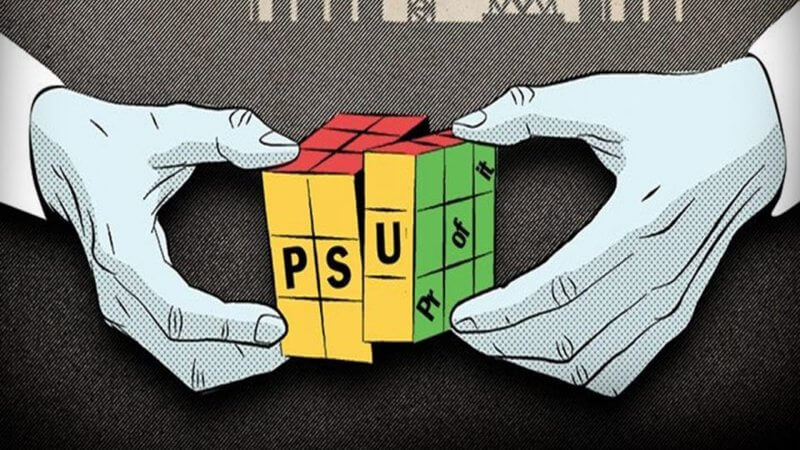
    Revamping PSUs in India – is Disinvestment the only way forward?

    Back in 1948 when India’s first Public Sector Unit (Indian Telephone Industries) was established, India was a newly independent agrarian economy with a weak industrial base. It was clear that the country needed to embark on a path of rapid industrialization if it was to improve the economic status and standards of living. The need was felt for large scale investment from the public sector that private players could not provide. It was in this backdrop that PSUs were first established in the country. It was envisioned that these state-run entities would jumpstart industrialization and spearhead development.

    Today, almost 70 years later, the country itself has come a long way. Once seen as the knights in shining armour come to rescue India’s economy, the same PSUs have come under fire for squandering crores of taxpayer money today. Far removed from their past glories, PSUs today are a cesspool of unproductivity where taxpayer money dies a slow painful death. The sorry state of PSUs in India has even warranted nicknames in the likes of ‘Zombie Companies’ and ‘Zombieland of Taxpayer Money’. While these nomenclatures may seem extreme, they are not without merit.

    The combined loss of these PSU’s amounts to over Rs. 31,635 crores in taxpayer money [1]. What’s more, this number is not inclusive of the losses reported by the dozen public sector banks, which would only add to the already huge mountain of debt.

    Current State of PSU’s in India

    Back in 1951, there were only 5 public sector enterprises in existence. Since then the government has gone on a spending spree, entering more and more businesses over the years. Today the government runs more than 300 PSUs across a plethora of industries ranging from hotels & watches to telecom and steel. It doesn’t come as a surprise that over 70 of these entities are running a net loss. The combined loss of these PSU’s amounts to over Rs. 31,635 crores in taxpayer money [1]. What’s more, this number is not inclusive of the losses reported by the dozen public sector banks, which would only add to the already huge mountain of debt. If the central public sector enterprises have fared poorly, the state-level public enterprises (SLPE) paint a bleaker picture. Barring certain states, the SLPEs of almost all the states in India report a net loss. The losses reported by these SLPEs are almost 3 times greater than the amount reported by their central counterparts.

    The PSUs which have not reported a net loss has not escaped public scrutiny either, with almost all of them losing value over the last decade. While some do report profits, their returns have been dwindling, save a few. The rate of return on capital employed (ROCE), widely used as a measure of profitability and efficiency, has been on a downward trend for PSUs. It has been reported that PSU efficiency has fallen by over 50% in the last decade [2]. In the last six years alone the total market cap of all public sector firms and banks fell by 36% even as the market cap of all BSE and NSE listed companies have almost doubled in the same period [3]. 

    The bad news is that this dismal performance of PSUs is only going to get worse, especially given the current economic climate. Despite years of turnaround efforts and crores of bailout money, these state-run entities have shown no signs of recovery, save a few. In this light, much of the discourse around PSUs has been focused on disinvestment. The government too seems to echo this sentiment as it has chosen to embark upon a long-drawn journey of divesting its holdings. Several sectors in India are already heading towards 100% privatization. With the sale of Air India, the civil aviation industry will become fully private. In the power sector, there has been a growing emphasis on private generation, with the centre reducing its stake in NTPC and BHEL. Sooner or later this sector is also headed for 100% privatization. In other sectors like telecom and health, the government has just a token presence, with much of the market being dominated by private players.

    Push for Privatization

    This push for privatization is welcome and much needed in sectors like civil aviation which lack strategic importance. The sorry state of Air India has made clear that the government simply cannot compete with private players in a highly commercialised industry like aviation. Air India in particular has been languishing for years and has eroded crores of taxpayer money in the process. This has been the case not just for India but for other developing economies like Brazil and Malaysia as well. Malaysia has been trying to turn around Malaysia Airlines for decades altogether with no end in sight. After years of struggle, it seems the government has finally decided to change tracks as it is now looking to give up its majority stake in the airline to private investors. The case with Brazil is no different – the failing national aerospace conglomerate Embraer was revived just in time with a dose of privatization.

    The Embraer turnaround model in particular offers some interesting lessons for India. What started off as a government entity in 1969 was privatised in 1994 in order to avoid bankruptcy [4]. Embraer then went from near bankruptcy to becoming the third-largest aircraft manufacturer in the world. What’s striking here is that the Brazilian government played its cards to near perfection – while it completely privatized the airline, the Brazilian government still holds a ‘golden share’ in Embraer giving it veto power over strategic decisions involving military programs and any change in its controlling interest. This model ensured a win-win situation for the Brazilian government and the rest, of course, is history. 

    Instead of divesting its bleeding PSU’s, the government is currently in the process of selling its 100% stake in 3 large profitable companies (BPCL, CCI, and the Shipping Corporation). While it’s tempting to believe this is a part of an extensive government masterplan, the stark reality is that the government has let fiscal pressures dictate its divestment strategy.

    The problem with the centre’s current disinvestment strategy, however, is that it is focused merely on balancing government books and lacks a long-term strategic vision. Instead of divesting its bleeding PSU’s, the government is currently in the process of selling its 100% stake in 3 large profitable companies (BPCL, CCI, and the Shipping Corporation). While it’s tempting to believe this is a part of an extensive government masterplan, the stark reality is that the government has let fiscal pressures dictate its divestment strategy. It appears the government is simply selling its stake in PSUs to make quick money and ease the fiscal books. There are also concerns that 100% privatization of entities like BPCL and HPCL will feed private monopoly and leave India’s energy security purely in the hands of private players. Even in the sale of loss-making entities the government has lacked a systematic plan, with divestment being carried out in penny packets. This sort of disinvestment just to stop the bleeding is a short term stop-gap measure and will surely have long term repercussions. 

    The case for Public Sector Presence

    While privatization plays are much needed in sectors like civil aviation, the same cannot be said for strategic sectors such as power, pharma, and health. A diluted public sector presence in strategic industries may not bode well for the economy, especially for a developing country like India. As the COVID-19 pandemic has shown, strong public systems are essential to absorbing global shocks. While proponents of disinvestment seek to cut the economic costs of bleeding PSUs, they often ignore the social costs involved in the process and the impact it will have on a developing economy like ours.

    In light of the current global economic climate, as more and more countries turn inward, the role of state-run entities has become all the more important. The experiences of other Asian economies like China and Singapore have shown that state-run units could be tools of economic growth if utilised effectively. Most of China’s industrial push, including the recent ‘Made in China 2025’ plan has been heralded by State-Owned Enterprises (SOE’s). Among the 124 Chinese companies in the Fortune Global 500 list, more than half were SOE’s [5]. Out of these, 3 of the Chinese SOE’s feature in the top 5 globally, speaking volumes of the role they have played in the growth of the country. China has effectively put SOE’s at the core of its vision to combat the challenges it currently faces, including the escalating trade war with the USA. China’s model is also noteworthy given the level of collaborative investments between SOE’s and private players. India can take a leaf or two out of China’s book on the successful use of SOE’s to drive its growth story.

    Turning around existing PSU’s – success stories 

    It is clear that the government simply cannot take the easy way out of simply divesting and washing its hands off the bleeding PSUs. In certain critical sectors (that first need to be recognized in line with the long-term strategy) the government still needs to work on repairing the damage and turning around its existing underperformers. While the task seems impossible given the current state of affairs, policymakers can take heart from the fact that it has been done before both in India and globally.

    One such global success story is that of the Kiwi national carrier Air New Zealand. In a world of post-privatization success stories, Air NZ stands out as one of the few lone dissenters to buck this trend. The NZ based company, privatised by the government in 1989, had to be re-nationalised again in 2001 after it ran into financial troubles. The fortunes of the New Zealand economy have been closely tied to that of Air NZ, with the country being heavily dependent on local and international tourism. Within just two years of nationalisation Air NZ was able to fashion a comeback from near ruin, and today is one of the biggest revenue earners for the NZ government. That a company that failed in private hands was able to be revived by the government offers a beacon of hope for struggling public enterprises worldwide.

    Back home in India as well such success stories do exist, albeit in a bygone era. Aptly recognised as one of the greatest public sector managers of India, Dr. V. Krishnamurthy is the mastermind behind these success stories. His unparalleled contributions to the public sector have earned him several monikers such as ‘the helmsman’ and ‘the man with the golden touch’. He has been largely credited with successfully turning around public sector giants like BHEL, SAIL, GAIL, and Maruti. At a time when public sector turnarounds were unheard of in India, Dr. Krishnamurthy managed to increase profits of BHEL from 17 crore rupees to 57 crores during his five-year tenure [6]. He also came to be widely regarded as the ‘Steel Man of India’ after his successful turnaround of SAIL in the late 1980s. 

    At Maruti he decided to take a different approach, inviting private sector participation through a JV. While many skeptics were against this move initially, the helmsman had the last laugh as Maruti went on to dominate the automobile market in India for decades. Maruti’s turnaround story is also a shining example of the merits of public-private collaboration – something which today’s policymakers have chosen to largely overlook. Maruti today is a 100% private company and is widely credited with creating the automobile industry revolution in India. 

    Way Forward – a two-pronged approach to fix PSU’s

    While such success stories may be scant and the field is mired with accounts of public failure, it is evident that such turnarounds are not impossible. As we have seen from the examples in India and elsewhere, with the right leadership any enterprise can be pulled out of the mud. What is clear is that there is no simple one size fits all answer to the woes of PSU’s in India. Several countries have taken different approaches to tackle this issue. While China has followed a model of strong public presence in several industries, countries like the USA hardly have a public sector presence. The United States government rather exercises its presence by closely regulating and monitoring the industry through effective policy mechanisms.  Other countries like Singapore have chosen to manage PSUs through sovereign funds and holding companies. Singapore plays in the public sector via its two sovereign funds, Temasek and GIC. The companies owned by these funds operate as commercial entities and are no different from private players. Such a model has ensured that the companies get the best of both worlds – public ownership but with private, commercial management.

    countries like Singapore have chosen to manage PSUs through sovereign funds and holding companies. Singapore plays in the public sector via its two sovereign funds, Temasek and GIC.

    While there are many such different models that India can take inspiration from, the verdict is clear that the government must stop the bleeding in the public sector quickly or face the wrath of taxpayers. Going forward, the government must adopt a two-pronged approach to fix PSUs – some need to be killed, while others deserve a chance at resurrection.

    Firstly, the government needs to shut down bleeding enterprises in sectors that have no strategic relevance. The government is present in sectors like biofuel, airlines, hotels, and watches despite making heavy losses every year. Public entities simply cannot compete in these industries nor is there any strategic need to do so. The logical step for the government would be to send these entities to the graveyard and stop the bleeding.

    The top 10 loss making PSU’s account for over 94% of the overall losses reported by all PSU’s together.

    Secondly, efforts must be made to turnaround/transform remaining entities in strategic sectors. The top 10 loss making PSU’s account for over 94% of the overall losses reported by all PSUs together. These large offenders would be the best places to start – the government would do well to either transform these entities in-house through fresh leadership or by inviting private partnerships.

    The above tasks are easier said than done and may take years of policy reform to become a reality. While the problem does seem formidable, it is not unique to India alone. Several economies around the world, developing and developed alike, are grappling with the issue of falling public sector productivity and the need to stay relevant. Indian policymakers and public sector managers have a long road ahead of them, especially given the current global socio-economic scenario. But they can definitely take inspiration (and some valuable lessons) from the several public sector turnaround stories globally and from India’s great helmsman himself.


    References

    [1] Department of Public Enterprises. (2019). Public Enterprises Survey 2018-19 (Volume 1, Statement 1). Retrieved from https://dpe.gov.in/public-enterprises-survey-2018-19

    [2] Rai, D. (2019, September 11). PSU returns fell 50% in the past decade; 44 new entities created. Business Today. https://www.businesstoday.in/current/corporate/in-depth-government-companies-almost-lost-half-of-their-efficiency-in-last-10-years/story/378508.html

    [3] How PSU’s market cap fell by 36% in 6 years under Modi govt, while stock market doubled theirs. (2020, October 30). The Print. https://theprint.in/opinion/how-psus-market-cap-fell-by-36-in-6-years-under-modi-govt-while-stock-market-doubled-theirs/533743/

    [4] Haynes, B & Boadle, A. Boeing willing to preserve Brazil’s ‘golden share’ in Embraer deal. (2018, January 19). Reuters. https://www.reuters.com/article/us-embraer-m-a-boeing-idUSKBN1F72XB

    [5] Fortune. (2020). Fortune Global 500 2020. Retrieved from https://fortune.com/global500/

    [6] Nayar, L. V. Krishnamurthy, SAIL, BHEL, Maruti. (20187, March 23). Outlook India. https://magazine.outlookindia.com/story/v-krishnamurthy-sail-bhel-maruti/298634
     

  • The Gated Republic: India’s Public Policy Failures and Private Solutions

    The Gated Republic: India’s Public Policy Failures and Private Solutions

    Book Review
     
    The Gated Republic: India’s Public Policy Failures and Private Solutions
    Author: Shankkar Aiyar
    Publisher:  Harper Collins India
    Date: 01 September 2020
     

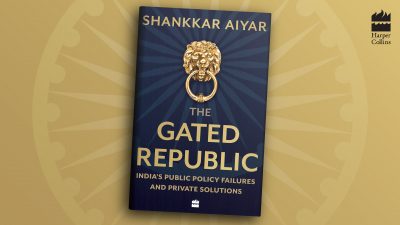
    India has always been statist. All its political parties are Statist in one way or the other; from Jawaharlal Nehru to Narendra Modi, the State has been thought of as the most important player in economic and social affairs. However, even with all this undue importance, the Indian State has failed to deliver even basic goods to its citizens in more than seventy years since independence. Political journalist and author Shankkar Aiyar analyses these government failures and explores the private solutions offered for such problems in his new book The Gated Republic: India’s Public Policy Failures and Private Solutions.

    Without engaging in the debate on how small or big a government should be, the author asserts that providing basic amenities is a moral obligation of the State to its citizens. The basic amenities namely Water, Health, Education, Power and Security are the titles of the chapters where he analyses issues surrounding each one of them individually. The issues are well researched, and every argument is substantiated with facts, so much so that one might find the sheer number of facts overwhelming.

    Shankkar Aiyar, however, does not stop with just facts, he gives us anecdotal stories on how failed government policies affect real people. And disproportionately such affected people are poor. Aiyar argues that this is because ‘those who can find solutions- where they find them and when they can pay for them- have already migrated to private solutions. Two conclusions can be deduced from this analysis. One, the poor are left out without even basic amenities of life, thereby increasing inequality. And two, the people who can pay for private solutions are ‘paying for services they have already been taxed for’. Either way, the author argues that the government has let down its citizenry.

    The fact that there is a rationed hourly quota for water in Mawsynram, the region of the highest rainfall in India and that even after seventy-three years after independence, less than 50% of class V students can read class II level text is a testament to the magnitude of the failures of the government.

    The State is, however, not ignorant of these issues. ‘Every decade saw a new committee’ and Aiyar lists out all of them from various sectors, sometimes even from the British period. In public policy, it is said that what gets measured gets managed but even with so many committees, there have not been desirable improvements. The fact that there is a rationed hourly quota for water in Mawsynram, the region of the highest rainfall in India and that even after seventy-three years after independence, less than 50% of class V students can read class II level text is a testament to the magnitude of the failures of the government. It is not that the government is not doing anything, but this dire situation is the result of sloth-like bureaucracy and something Aiyar calls the ‘announcement approach’ of the politicians. Aiyar argues that successive governments have stopped themselves with lucrative announcements and rebranding of old schemes with new slogans instead of rectifying ill-thought-out policies. For example, he talks about the Accelerated Rural Water Supply Program (ARWSP) which was introduced in 1973. Through the years it has gone through different transitions from being included in the twenty point program during the emergency to Technology Mission on Drinking Water in 1986, Rajiv Gandhi National Drinking Water Mission in 1992, becoming a separate Department of Drinking Water under Ministry of Rural Development in 1999, morphing into the Department of Drinking Water and Sanitation in 2010 and finally becoming Drinking Water and Sanitation Ministry in 2011. Now the ministry is renamed as the Ministry of Jal Shakthi. Even after all these measures, clean piped water is still a distant dream to many Indians.

    In a democracy, incompetent policies and politicians should be punished in the polls but Aiyar argues that there is a ‘divorce of authority from accountability’. He does not dwell too deep into why such a gap between government failures and electoral politics exists because the question, although imminent to understand this state of affairs, is beyond the scope of the book. However, he points out at various places in the book where such a gap exists and how ‘normal’ it has come to be. For example, the use of tanker lorries by the governments to ferry and provide water to its citizens is a shift from the actual problem of the lack of capacity to provide piped water. And the fact that water tankers are a ‘normal’ in reality is a testament to how public policy failures are divorced from electoral politics.

    Although people have not kept the State accountable, they have come up with solutions to address government failures on their own. There is an opinion echoed by many others that in India that problems are solved not by the government but despite the government. Aiyar explores so many places where the above statement holds. We get to know about ‘Bisleri’, the first bottled water and how its name evolved, the story of Apollo group of hospitals, many budget private schools and teaching fellowships, the ubiquity of inverters, private security firms who grossly outnumber police force 83:17 and so on. Each private solution is the result of incompetent government services and inefficient public policies. Aiyar dives deep into how the solutions came to be and how it has helped normal people. Take, for example, the power sector. Even though India is the world’s third-largest electricity producer, not every household has electricity. And inverters, diesel and battery, have made a huge impact on households. So much so that, in 2011, the sixty-eighth National Sample Survey (NSS) report created a new entry for inverters in household consumption of goods and services. Aiyar discusses many other problems and their private solutions in the book.

    What is interesting is that people, even poor people, prefer private solutions though it is costlier. For example, the author points out that about ‘78% of rural and 81% of urban Indians’ preferred private hospitals. This shows a lack of faith in government services. These are the symptoms of decades of ill-thought-out public policies that do not address the root cause of the issue.

    What is even more interesting is that now, these private solutions are rebranded as government initiatives. The Adoption of water purifiers and dispensers in government offices and public places is an example of such rebranding. More recently, NEET coaching classes by government schools in Tamilnadu can also be boxed into that category. While both measures are desirable, they are only short-time fixes that address the symptoms of government failure. Through these measures, the author argues that the tragedy of the issue is lost, and the irony is ignored.

    the book paints a rather gloomy picture of the state of affairs where people are exiting from government services for private solutions. Although this ‘exodus’ is natural for rich people, abject government failures are pushing everyone into private solutions irrespective of affordability.

    To summarize, the book paints a rather gloomy picture of the state of affairs where people are exiting from government services for private solutions. Although this ‘exodus’ is natural for rich people, abject government failures are pushing everyone into private solutions irrespective of affordability. The book argues that people are assembling themselves into gated communities where these failures of government policies are taken care of by private solutions. The author has accomplished what he has set out to do- to show us in a platter, the sorry state of public policies and the many failures that it begot. It remains for the civil servants, politicians and the voting citizens on what their line of action will be.

  • Freedom of Speech and Right to Information amidst the Covid-19 Pandemic

    Freedom of Speech and Right to Information amidst the Covid-19 Pandemic

    The global pandemic hit India in March 2020 and Prime Minister Modi announced a 21 day lockdown beginning on 25th March 2020. Since then the lockdown has been extended multiple times as the country grapples with a major public health crisis. Media houses have been on their feet, both literally and metaphorically, as they cover new stories, cases and most importantly, the state response towards the pandemic. The citizenry relies on news reportage to learn more about their government’s approach towards handling this unconventional situation. Media is often regarded as the fourth pillar of democracy meaning it is a supporting figure for democracy to persist and flourish. The pandemic has exposed some paramount inadequacies in the government’s handling of the situation such as lack of a robust public health infrastructure and other issues. The reportage on such instances has often faced backlash from the government resulting in legal notices against the journalists and media houses. India also dropped two places in the World Press Freedom Index making it 142nd in position citing the curfew in Jammu and Kashmir. The watchdog has also issued a warning about the implications of the pandemic, “the looming health crisis could serve as an excuse for governments to take advantage of the fact that politics are on hold, the public is stunned and protests are out of the question, in order to impose measures that would be impossible in normal times” (Scroll Staff, 2020).

    Media is often regarded as the fourth pillar of democracy meaning it is a supporting figure for democracy to persist and flourish.

     Two patterns can be observed with regards to media freedom in India during a time like this; furthering a certain narrative through misinformation and misrepresentation and carrying out state-sponsored propaganda. In this lockdown, the state wants a narrative which eulogizes their efforts during the lockdown and overall handling the situation. However, there are major loopholes in the measures taken by the government which has led to the system failing its most vulnerable class of individuals; the marginalized and the poor. The state has also taken this time to strike upon certain civil liberties and advance their propaganda by curbing dissent.

     Misinformation and misrepresentation of certain communities has been rampant during this time. Nabeela Khan, in an article called Trends in Covid19 misinformation in India for Health Analytics Asia categorizes the spread of misinformation in four waves. First, misinformation about the origin of the virus, this has been debated not just in India but worldwide where they have accused China of producing this virus in a lab and spreading it to use to its advantage. There have also been multiple other theories available online related to consumption of certain meats in China. Second circulation of old images and videos to create fear, in this case the Tablighi Jamaat incident was highlighted immensely and videos from before the pandemic were used to show that ‘Muslims’ in India spread the virus. Third, on ‘cures’ and prevention techniques which is particularly famous on several WhatsApp groups where home-made remedies of lemon, honey, turmeric or any other ‘Ayurvedic’ cures are posted every day. And fourth, on lockdowns in India, where the news of lockdown being extended were spread even before the official announcements were made. Increasingly, there has been excess confusion over the surging numbers in India and whether or not governments give out the exact figures. Additionally, there is no clarity about government aid and funding towards the poor such as the internal migrants in the country.

    Kaye makes an important point as he says that the governments are using the pandemic as a smokescreen to carry forward their agenda and take actions that they have wanted to take for a long time.

    The UN Special Rapporteur David Kaye, talks to The Lawfare Podcast about his latest UN report Disease, pandemics and the freedom of opinion and expression. Kaye makes an important point as he says that the governments are using the pandemic as a smokescreen to carry forward their agenda and take actions that they have wanted to take for a long time. He gives an example from Hungary where the Press is under strict scrutiny of the government. Since the coronavirus is a recent occurrence, there is not a very large body of information available on it. The information keeps changing as cases increase or decrease, as there are multiple waves of it so the orders issued by the government are subject to change. He also particularly criticizes India for its treatment of Jammu and Kashmir since August 2019 and calls it “a real misuse of the situation”.

     Journalists and activists across the world have been arrested during this lockdown and India is no exception to this trend of suppressing free speech. Siddharth Varadarajan, Gautam Navlakha, Anand Teltumbde, Safoora Zargar, Umar Khalid, Dhaval Patel, Supriya Sharma among many others have either been arrested or served notice by the government during the lockdown. These journalists have either been arrested on the grounds of their reportage of the pandemic, during the pandemic or incidents that took place before the pandemic.

     An FIR was lodged against Siddharth Varadarajan, one of the founding editors of The Wire, an acclaimed media house, on the grounds of making unverifiable claims. Varadarajan tweeted on March 31st saying that UP Chief Minister Yogi Adityanath had given a go-ahead for the Ram Navami festival to be held from March 25th to April 2nd, in the middle of the lockdown and Yogi also said that “Lord Rama would protect the devotees from coronavirus”. As a matter of fact, it was Acharya Paramhans who gave out this statement and not CM Adityanath and Varadarajan tweeted a clarification the following day. On April 10, police from Ayodhya showed up at his doorstep in Delhi to serve him notice and his wife Nandini Sundar explained this instance elaborately in her tweets. However, this act only suggests the government’s misuse of power and tactics to pursue a culture of intimidation. It could be argued that the journalist was peddling unverified claims but CM Adityanath in fact supported the decision to have a Ram Navami mela. The Wire has published an elaborate FAQs list on this matter explaining every detail of it. It has also been condemned by the Editors’ Guild of India who have called this episode “an overreaction and an act of intimidation”.

     Journalists and activists such as Gautam Navlakha, Anand Teltumbde, Safoora Zargar, Umar Khalid, Sharjeel Imam etc. have been booked under the UAPA, Unlawful Activities Prevention Act. This Act was formulated as a law in 1967 to prevent any ‘unlawful’ activities or any measures which threatened the integrity and sovereignty of India. In 2004, the UPA government expanded on it further to target terrorist outfits or any organizations harming the state but not individuals. The 2019 Amendment of the Act has entrusted the government with identifying individuals who might be harming the integrity of the state, the definition of which the government decides. The contemporary term used for such people on social media and other platforms is ‘urban naxals’. Student activists and journalists have been booked under this act for protesting against oppressive government laws which promotes a narrative that dissent is by its very nature, ‘anti national’. There have also been cases where activists have been arrested, then granted bail and arrested again based on some other complaint. Safoora Zargar’s case is a particularly complex one in this regard where she was arrested after she was granted bail and was granted bail again recently on humanitarian grounds. Zargar is five months pregnant which was the basis of her bail but the discourse around this has been to release her not because of her pregnancy because dissent is a fundamental right.

    The moment we no longer have a free press, anything can happen. What makes it possible for a totalitarian or any other dictatorship to rule is that people are not informed; how can you have an opinion if you are not informed? If everybody always lies to you, the consequence is not that you believe the lies, but rather that nobody believes anything any longer. This is because lies, by their very nature, have to be changed, and a lying government has constantly to rewrite its own history – Hannah Arendt

     Praveen Swami makes a compelling argument in a FirstPost article about hate speech and freedom of speech. He opines that the response to hate speech is not censorship but plurality where opinions are allowed to coexist. In India, a large part of the Press is controlled and supported by the government leading them to produce streamlined biased news. According to him, alternatives need to come up for hate speech where the dominant narrative does not remain unchallenged.

     To conclude, Hannah Arendt’s cautioning words on freedom of press and misinformation are very relevant today and sounds the alarm bells:

    “The moment we no longer have a free press, anything can happen. What makes it possible for a totalitarian or any other dictatorship to rule is that people are not informed; how can you have an opinion if you are not informed? If everybody always lies to you, the consequence is not that you believe the lies, but rather that nobody believes anything any longer. This is because lies, by their very nature, have to be changed, and a lying government has constantly to rewrite its own history”


    Reference

    Bakshi, Asmita (2020, May 31) From Pinjra Tod to Kashmiri Journalists: What’s the Deal with UAPA?. Livemint. Retrieved from https://www.livemint.com/mint-lounge/features/from-pinjra-tod-to-kashmiri-journalists-what-s-the-deal-with-uapa-11590915249625.html


    Chakma, Suhas (2020, June 22) FIR Against Supriya Sharma is Emblematic of how the Law is Abused to Throttle Press Freedom. The Wire. Retrieved from https://thewire.in/media/supriya-sharma-fir-abuse-law-press-freedom


    Goldsmith, J (Host) (2016, May 16). The Lawfare Podcast: David Kaye on Free Speech During a Pandemic. (Audio podcast episode). In Lawfare. Retrieved from https://www.lawfareblog.com/lawfare-podcast-david-kaye-free-speech-during-pandemic

     Khan, Nabeela (2020, June 12) Trends in Covid19 misinformation in India. Health Asia Analytics. Retrieved from https://www.ha-asia.com/trends-in-covid-19-misinformation-in-india/

     Scroll Staff (2020, April 21) Covid-19: India drops 2 places on World Press Freedom Index, as watchdog warns of pandemic impact. Scroll.in. Retrieved from https://scroll.in/latest/959816/covid-19-india-drops-2-places-on-world-press-freedom-index-as-watchdog-warns-of-pandemics-impact

     Scroll Staff (2017, December 4) Top ten things that Hannah Arendt said that are eerily relevant in today’s times. Scroll.in. Retrieved from https://scroll.in/article/856549/ten-things-hannah-arendt-said-that-are-eerily-relevant-in-todays-political-times

     Swami, Praveen (2020, April 27) Hate speech in the time of a pandemic: Answer to malevolent incendiary language is plurality, not censorship. Firstpost. Retrieved from https://www.firstpost.com/india/hate-speech-in-the-time-of-a-pandemic-answer-to-malevolent-incendiary-language-is-plurality-not-censorship-8295271.html

     The Wire Analysis (2020, April 19) FAQ: What are the UP Police FIRs Against The Wire Actually about? The Wire. Retrieved from https://thewire.in/media/faq-up-police-fir-siddharth-varadarajan


    The views expressed are the author’s own.

    Image Credit: Rhy Design and medium.com