Blog

  • India’s impending Fighter Aircraft Choices: Finding the Elusive Solution?

    India’s impending Fighter Aircraft Choices: Finding the Elusive Solution?

    Category : Defence & Aerospace/India

    Title : India’s impending Fighter Aircraft Choices: Finding the Elusive Solution?

    Author : M Matheswaran 02.02.2020

    The Indian Air Force has been afflicted with decreasing force strength due to phasing out of old aircraft and increasing obsolescence of its fleets. Despite the induction of Rafale and Tejas, the IAF will continue to face challenges of reducing numbers and a large chunk of old platforms in its inventory. The IAF is facing serious shortages in its fighter aircraft strength. Air Marshal M Matheswaran examines the possible strategy that can best address IAF’s choice of fighter aircraft for its future.

    Read More

  • Falling Consumption Expenditure: Need for Labour Market Reforms

    Falling Consumption Expenditure: Need for Labour Market Reforms

    Government withholding consumption expenditure data on the grounds of data quality has stirred many criticisms from economists and other interest groups. Growing concern over falling rural consumption especially amidst economic slowdown has crystallized a categorical debate on the nature of slowdown. Irrespective of the validity of methodology employed, low consumption expenditure can sequel falling growth rates. Slowdown of the automobile industry as a case, sluggish growth and rising unemployment corroborate the unofficial claims on falling consumption expenditure. According to Business Standard report, the average amount spent per month by an individual declined from INR 1501 in 2011-12 to INR 1,446 2017-18. Although falling rural consumption expenditure evinces an economic malaise, issue of inefficient labour market has received less attention. Consumption is considered an important way to assess the health of an economy according to neoclassical economists. Multiple theories on income and consumption relationship are advanced in the field of economics. According to permanent income hypothesis, consumption expenditure varies in relation to the expected future income. In simple terms, an individual’s consumption will be distributed across their lifetime based on the permanent income they are expected to receive. Every theory has reiterated the central role of income in determining the consumption levels of the individuals. 

    Income insecurity in Informal sector

    A study conducted  on consumption spending in Ghana concluded that income and inflation had a long-run relationship on consumption expenditure. The Monthly Per capita Consumption Expenditure (MPCE) in 2011-12 revealed that urban MPCE was higher by 84 percent than rural MPCE. India, operating as a dual economy, considers casual wages and regular salaries as a proxies to study informal and formal sector. The wage differential among salary earning individuals operating in informal and formal sector was higher than casual labourers’ wages. Increasing number of regular employees working in informal sector shifted the concern to penetration of ‘informality’ across the labour market.  Post globalization labour market has theoretically encouraged organized sector but the wage employment in the organized sector has employed more casual labourers with no social security. A new layer of casual labours was created post reforms to cushion the weight from competitive prices. Fragmentation within the organized sector with growing contractual labourers has weakened the expected income levels which could directly affect consumption behaviour. Working-poor in India are highly concentrated in the organized sector as casual labourers and self-employed with a combined share of 51 percent of the total workforce as of 2012.

     A recent report on consumption expenditure points out that rural monthly consumption has fallen by 10 per cent from INR 643 to INR 580 indicating a need to accumulate more income in rural India. The main industries functioning under informal structure were construction, manufacturing and wholesale-trade employing majority of unskilled and semi-skilled labourers. In 2011-12, rural employment contributed 76 percent of total informal sector labourers in the three main sectors. Almost 80 per cent of rural workers are engaged in casual employment and despite a moderate growth in casual wages over the years; it amounted to only 36 percent of a regular worker’s earnings. Increasing share of informal employment within the organized sector coupled with poor social security has reduced expected financial flow of labourers. State induced social spending would propel consumption levels to a limited extent but the underlying crisis in the rural labour market would continue to contract long term consumption expenditure. Total social sector spending as a percentage of GDP has reduced from 2.7 per cent in 2000 to 2 percent in 2014. Reduced government spending and lack of labour market reforms are responsible for poor disposable income in the rural economy. 

    Rural labour market instability

    Casual labourers have constituted consistently 28 percent in Indian rural labour force since 1983. The periodic labour force survey report (2017-18) observed a decline in the share of self-employment in both rural and urban sectors. The unemployment rate in urban sector is 7.3 percent, comparatively higher than rural unemployment rates of 5.8 percent. A major portion of rural labourers are associated with the casual sector in rural areas with unstable income and weak social security. For instance, average earning per day in public workfare programme such as MGNREGA has fluctuating wage rates in rural areas, recording as low as INR 136 in 2018. Such a precarious structure in the labour market has diluted the spending capacity of rural residents in the recent times. According to the usual status in employment, there is a moderate increase in casual labourers and salary earners but the self-employment rates have been on the downtrend. In 1983, 60 percent were self-employed, which has gone down to 57 percent in 2018 despite the attractive loan schemes introduced by the government. 

    Female workers’ earnings play a vital role in determining the consumption health of an economy, a drastic fall in female work participation deserves an in-depth investigation. Falling participation rate could mean either women drop out due to social conditions or due to unavailability of jobs matching their skills. While sufficient literature studying these two areas are available, the first issue can be viewed with scepticism as earnings of men have increased significantly while women’s wages have stagnated. Although overall women in the workforce have reduced, 73 percent of women are engaged in agriculture as primary activity compared to 50 percent of men. A deceleration in agriculture and low investment on public infrastructure in the past few quarters have  decimated the consumption capacity of rural India. Women being the bigger component of agricultural labour force, and with factors of social discrimination, tend to have lower wage rates, thereby contributing significantly to reduced capacity for consumption and expenditure.

    Labour market reforms needed to revive long term consumption

    It would be erroneous to isolate the core economic problem to be categorical- the structural issue or cyclical slowdown can be both demand-side and supply-side driven. The whole economic apparatus is strongly integrated and a supply-side constraint can indirectly choke the demand which would, in turn, weaken the growth. Many economists have recommended the need for structural reforms; labour and capital relations have to be redefined as a measure to redistribute the resources. Further, the labour code on wages, 2019 has invited criticisms on grounds of poor protection for informal labourers and favouring corporate profit. Financial ecosystem requires corporates to make profits but a stagnant reinvestment convulses the cycle. Deepening crisis in the economy is conspicuous and falling consumption reiterates the need for better land and labour reforms. 

    Closer examination of the rural labour structure provides a bleak picture of low-income concomitant with minimum social and economic security, thus seriously impacting rural economic consumption. According to the PLFS report, the percentage of rural regular salaried employees with no job contracts increased from 58 percent in 2004 to 69 percent in 2018. Around 88 percent of rural female casual labourers against 84 percent of rural male casual labourers had no union or association. Absence of union is a proxy for weak bargaining power which eventually distorts the real market wages for the labour. Systematic labour market reform is critical especially for fixing the minimum wages and restructuring the labour market. Failure of manufacturing and service sectors to absorb the excess unskilled labourers from the agricultural sector has posed a major challenge. A short term cash transfer or providing welfare schemes should not be mistaken for structural reform. Enhancing the skill levels of rural labourers so as to enable their displacement to the manufacturing sector would augment employment and income. 

    Effect of demonetisation on the informal rural economy cannot be underestimated; removing 80 percent of currency from the economy damaged small and medium scale businesses operating on cash. ‘Make in India’ has not succeeded in accelerating business entrepreneurship in the country. Only 5 % of the adult population manages to establish a business that survives for longer than 42 months according to Global Entrepreneurship Monitor, a rate that is the lowest in the world. Financial investment in medium scale and small scale industries has been poor due to bureaucratic hurdles and unfavourable business environment leading to world’s highest business discontinuation rate of 26.4 %.

    From the supply side, low reinvestment despite a reduction in interest rate has exacerbated the falling consumption situation. Slowing automobile industry and consistent downtrend in manufacturing have contracted the capacity for employment generation in the industrial sector. CMIE has observed corporate profits to be more volatile than wages in the last two decades. The standard deviation of increased profit was recorded to be 32 percent as compared to 6.3 percent in the wage share. The erratic change in profit component implies entrepreneurs are more likely to be discouraged to invest in a business and play it safe. This invariably allows only the big corporate companies to survive. Low share of labour income in the economy is undoubtedly a structural phenomenon; the state’s apathy to induce private capital investment is detrimental to the labour market as well. 

    Reforms should have distinct rural and urban labour market strategies

    Departing from viewing economy in a political lens, a state must prioritize market reforms especially labour reforms. It is the state’s responsibility to ensure efficient allocation of resources and guarantee economic development and welfare of people. The slogan of ‘minimum government and maximum governance’ can be realised only through radical reforms and policy changes.

    The problem of shrinking consumption in rural areas is an outcome of constraints in the supply-side and unorganized labour market. Mere infusion of money as a solution is neither practical nor sustainable; a long term strategy to improve the structure of the rural economy is necessary to address the current economic crisis. Policies should be directed towards energising the informal sector, provide social security and economic dynamism that accelerates capital formation and induces private investment to support business growth. Consumption levels can be revived by making demand side and supply side changes simultaneously; increasing public gross capital formation and encouraging private investment by improving the investment climate would revive private consumption. A clear distinction has to be drawn between rural and urban labour markets, reforms to monitor the movement and prices will emerge as a structural reform to support both growth and development. 

    Manjari Balu is a Research Analyst with TPF. Views expressed are her own. 

    Image credit: www.newskarnataka.com

  • Post-Millennium Trends in the Global Energy Security

    Post-Millennium Trends in the Global Energy Security

    The concept of energy security has been at the front and center of many important changes in international relations and international law since the 1970s. While the 1970s witnessed a series of international and domestic contests and cooperation on energy security, in the recent past the situation has been slightly different. In particular the speed of evolution and the fleshing out of the scope and content of energy security has been quite dramatic. The period from 2000 to 2019 has been transformational in multiple ways in respect of the evolution of the concept of energy security, including power structures where sources of military and economic power are not necessarily overlapping. The simultaneous transformation of Russia, India, France, Japan, Germany and UK as multi-regional powers having pockets of influence much beyond their immediate neighborhood is underway. In essence, the North-South divide and East-West geographical construct and post World War 2 multilateralism are losing relevance. A deep study of these changes is required and the first two decades of the twenty first century offer a useful time frame. The book is an attempt to encapsulate the trends indicative of this emerging energy security architecture.

  • PDC 6: Concept and relevance of Nationalism in the 21st century

    PDC 6: Concept and relevance of Nationalism in the 21st century

    PDC Past Event :  25th Jan 2020

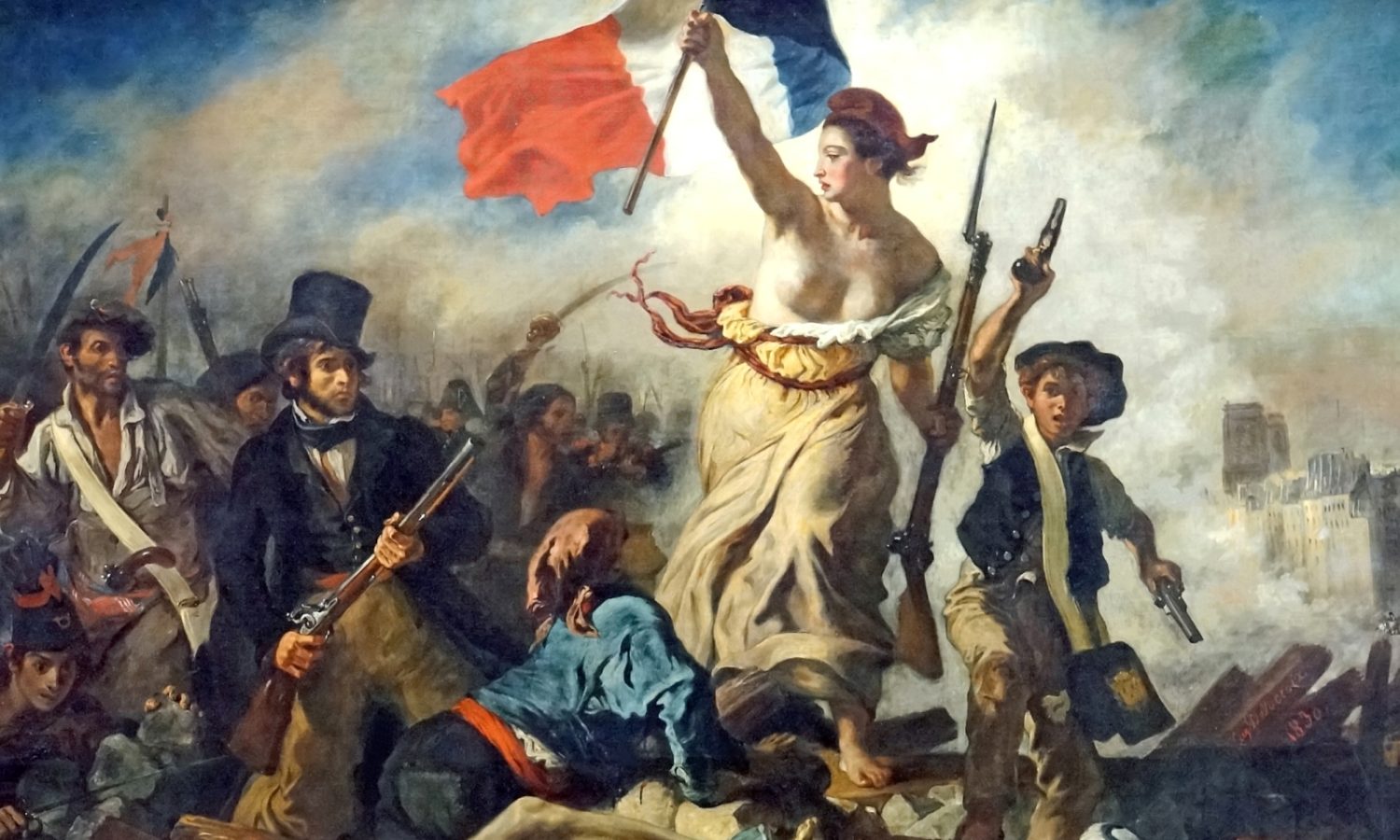
    The concept of nationalism and its influence in shaping the modern world system is undeniable. According to Anderson, humans consider themselves as part of imagined communities based on some common features and derive collective responsibility to that idea. This feeling over time results in identifying a language, shared heritage, and so on to develop uniqueness and distinctness of their community from others. Across history, there are various instances of multiple nations existing under a common kingdom like the Roman Empire, Austria-Hungary, etc. However, post the thirty year war and the Treaty of Westphalia, modern nation states evolved and nationalism became a primary force in shaping these entities. This found its final expression in John Locke’s philosophy that rejected the divine rights of the king and stressed that all persons are endowed with natural rights, and rulers failing to protect them should be removed, with force if necessary. These rising concepts drove the masses towards liberty, equality and fraternity resulting in the French revolution and the American war of independence. The race between powerful states and the spread of colonialism ensured that a national identity could be forged only with a population within a defined territory, ruled by a legitimate government. This Western notion of modern nation states was applied to all regions of the world, altering the natural course of evolution of the nationalism process in these regions. From Africa to Asia, territorial claims and the forging multiple nations to form nation states resulted in various challenges that still remain. For instance, Iraq was formed based on its oil reserves and not in its civilizational bonds. It brought forged the Shia, Sunni and Kurd communities with differing histories and no common bond into a single nation state, resulting in a fragile state with implications even felt today.

    Interestingly, globalisation and its standardising imperatives have stimulated nationalism rather than dissolving its validity. It is argued that self- determination in the 21st century, especially when the global culture is increasingly unified, intensifies due to revival of nationalism. As communication and movement is eased, often the unique identity is weakened. These disruptors to national identities are seen as threats, which is used by politicians and world leaders to strengthen the existing uniqueness of their states. However, these nationalistic drives disregard the diversity that exists in each nation state, creating domestic challenges, particularly for minorities. Electoral politics further divides the people by creating a nation of us vs them, often painting others as potential threats. This has manifested into modern challenges of immigration, terrorism and so on. The rise of hypernationalism in modern day politics can be traced along these lines. By imposing a common national identity, it affects the subnational sentiments of the people since nationalism is more local than national. Singapore, for instance, thrives by creating an equal space for the various sections of its people. While nationalism is a requirement for the functioning of any nation, hypernationalism is a threat to its very existence.

  • Think tanks’ role growing: Is that a good thing?

    Think tanks’ role growing: Is that a good thing?

    Category : Education/Think tanks/Policy Research

    Title : Think tank’s role growing: Is that a good thing?

    Author : Mohan Guruswamy 20.01.2020

    The word “think tank” owes its origins to John F. Kennedy, America’s 35th President, who collected a group of top intellectuals in his White House – people like McGeorge Bundy, Robert S. McNamara, John Kenneth Galbraith, Arthur Schlesinger and Ted Sorenson, among others, to give him counsel on issues from time to time. In India, while the number of think tanks are now increasing, neither the government nor the think tanks have a culture of serious and in-depth research that would aid government’s policy making. Mohan Guruswamy analyses the think tanks and their culture in India.

    Read More

  • Tectonic shift in US’ Attitude

    Tectonic shift in US’ Attitude

    Category : International Affairs/ USA-Iran

    Title : Tectonic Shift in US attitude

    Author : Deepak Sinha 18-01-2020

    The targeted execution of a serving Iranian General and war hero, Qasem Soleimani, while on an official visit to Iraq raises serious questions of sovereignty, morality, ethical conduct and can never be justified in any civilised society. It is a blatant act of aggression in clear violation of international law and a war crime, made even more heinous because neither America nor Iran is at war with each other. Deepak Sinha comments on American motives and likely impact of this assassination.

    Read More

  • Power Shift: Knowledge, Wealth, and Violence at the edge of the 21st Century

    Power Shift: Knowledge, Wealth, and Violence at the edge of the 21st Century

    Power Shift: Knowledge, Wealth, and Violence at the edge of the 21st Century” by Alvin Toffler, Bantam Books, 1990. New York

    Alvin Toffler

    Last book of the trilogy, ‘Powershift’ published in the 1990s still continues to be an impressive intellectual handbook to understand the transformation of power in a rapidly evolving technological, economic, and social environment. Toffler argues the nature of power in any epoch is determined by knowledge, wealth and violence. By acknowledging the inevitable emergence of new age knowledge economy, Toffler sets to describe the set of changes in the power dynamics at the turn of the 21st century. A gradual shift in power succeeds with knowledge through control of information in a super symbolic economy. Post third wave of industrialization, smoke stack industries would be replaced by decentralized industries with technology and information playing critical roles. China in the past few decades has designed its economy based on knowledge and gained technological sovereignty in Asia threatening the West’s global dominance. He asserts the pattern of powershift in politics, economics and business would be integrated and the hierarchy of power would get dissolved. A mosaic of power structure would emerge, ‘demassyifying’ production that determines the future of an economy. Recent developments in 3D printing, artificial intelligence etc have changed the paradigm of manufacturing – the country investing and comprehending the impact of innovation and disruptive technologies would gain economic superiority. By providing substantial case studies and thorough qualitative analysis, the futurist predicts millennials to redefine the defence for democracy with technology, information and knowledge. There exists a conspicuous relationship between power, wealth and knowledge since the beginning of the industrial revolution. While power has traditionally been symbolised by brute military power and economic power until the end of the world wars, the post 1945 transformation of power is contained in a triangle of military power, economic power, and knowledge (science and technology) power, Knowledge has now transformed the very notion and effectiveness of power. Power structure in the 21st century, according to the writer, will be redefined by knowledge.

    Power Shift: Knowledge, Wealth, and Violence at the edge of the 21st Century

    Violence and wealth function as important tools to consolidate power – politicians, bureaucrats and business people have always used violence & wealth to move up the hierarchy. Changing levels of technology and innovation has advanced knowledge to be a source of high quality power. Toffler firmly argued that power shift era will not be about competing nations or institutions for power, rather the dynamics between violence, wealth and knowledge would be the most intimidating transformation of power. Twenty odd years later it is clear that his analysis is spot on. An important note has been made on three key factors that bolster power accumulation – military, economic and technological power. Any country claiming superiority over these three could garner superpower status. Testing this hypothesis in the case of scandanavian countries proves that despite achieving superior economic and technological capabilities these countries could never realise great power status due to lack of strong military power. Toffler highlights, however, that the nature of military power now symbolises the critical influence of knowledge power. Tofflers’ concepts, also echoed by Joseph Nye as ‘smart power’ (combination of soft and hard power), justifies the end of the Cold-War era power struggle. Political values, culture and foreign policy were fundamental for soft power, traditional marxist and liberals considered economic might to be foundational to soft power. Global power centre of gravity shifting from west to east at the turn of the 21st century is a reflection of not just the rise of Asia but also the transformation of power and hence, the powershift. China’s ambitious Belt and Road initiative aims to consolidate its economic power within the western framework and then transform it. Undoubtedly, power transformation across the region and within a country is an outcome of increasing control of and access to advanced technology. A successful super symbolic economy would operate only in a country which manages to maintain monopoly of knowledge for a brief time frame until the knowledge can be commercialized to boost the economy further.Toffler has made assumptions by partially ignoring the role of domestic government structure in accumulating wealth by gaining access to control of knowledge. The inextricable link between local framework in materializing as an influential player in the global market cannot be ignored. Toffler’s following statement rings even more relevant today than ever before – “Knowledge itself … turns out to be not only the source of the highest-quality power, but also the most important ingredient of force and wealth. Put differently, knowledge has gone from being an adjunct of money power and muscle power, to being their very essence. It is, in fact, the ultimate amplifier. This is the key to the powershift that lies ahead, and it explains why the battle for control of knowledge and the means of communication is heating up all over the world.” By using the term knowledge liberally, author assumes a fluidity in defining knowledge as a tool in the era of powershift. Beyond logical thinking, knowledge is related to the ability of learning, unlearning and relearning. Any information and data can be reproduced with value as a product of passion and innovation. India at this juncture must position herself to strategically become a strong emerging power in a multi polar world. Counter balancing China’s growth in Asia, India has to permeate the knowledge economy by investing in technology and innovation. It might be fallacious to idealize China’s path, but it is critical to recognise the changing dynamics of knowledge in the current world order. An exhilarating text presenting an inspiring account of the future which we currently live in. The book remains germane as we experience knowledge of technology shaping the power structure and reiterates the dictum ‘knowledge is power’.

  • Rural Development and Gender Equality: A reality check in Tamilnadu

    Rural Development and Gender Equality: A reality check in Tamilnadu

    Category : Agriculture/Rural Development/Gender Equality

    Title : Rural development and gender equality: A reality check in Tamilnadu

    Author : Manjari Balu 06.01.2020

    Tamilnadu continues to be one of the fastest growing states in India, despite some major declines due to political instability, rampant corruption, and populist measures at the cost of development. Despite significant progress in literacy, women’s education, and some aspects of social security, there are still major shortfalls with respect to rural employment, skill development, and gender wage inequality. Tamilnadu has to develop a policy framework to achieve employability through quality secondary education for women, shifting focus from only enrolment of girls in primary education. Manjari Balu analyses this issue in Tamilnadu.


    Read More

  • India’s Illegal Immigration and Citizenship Issues: Tussle between Politics and Policy

    India’s Illegal Immigration and Citizenship Issues: Tussle between Politics and Policy

    It is indeed difficult to comprehend this Government’s precipitous push for the Citizen Amendment Act (CAA), in the manner that it has, at a time when the economy is on the edge of a precipice and it has yet to satisfactorily resolve serious issues like Kashmir that it has on its plate. True, illegal immigration is of huge concern around the world, and even more so in our case as the issue has been further complicated by the deleterious effects of Partition. However much the young today may wish away the past, we are still bound by it. Regardless of whether one subscribes to the “Two Nation Theory” or not, Pakistan emerged as the homeland for Muslims of the Sub Continent while India came to be regarded as the home for those dispossessed because of their religious affiliations from those areas. 

    One tends to forget that the Preamble to the Constitution, when first adopted, described India as a “Sovereign Democratic Republic” in which “liberty of thought, expression, belief, faith and worship” were guaranteed. Socialism and secularism were only added to our preamble as an afterthought by the Congress Government of Mrs. Gandhi in 1976 through the 42nd Amendment, obviously to gain political advantage and protect her own minority vote bank. In a sense that has now come to haunt us as the BJP proceeds to curry benefit for its Hindutva plank, as the CAA clearly attempts to do, though ostensibly it is aimed at correcting an old wrong.   

    Religious minorities in both countries were given a semblance of relief with the signing of the Nehru-Liaquat Agreement of 1950 that required both countries to protect minorities. While Indian Muslims, among others, continued to enjoy the fruits of democracy in a secular republic, the same could not be said for Pakistan, and subsequently Bangladesh, after its formation. Minorities there continued to be discriminated and persecuted against on religious grounds, forcing lakhs of Hindus and Sikhs to flee across the border. The Government of India’s subsequent refusal to grant citizenship to the fleeing Hindus and Sikhs, as had been publicly promised by both Mahatma Gandhi and the Congress Government in 1947, left them stateless and in penury and was certainly a dark chapter in our history. 

    Subsequently, after 1971, the issue was further complicated as Bangladeshi Muslims too crossed over in an attempt to improve their own economic prospects. It is also an undisputable fact that much of this flow of illegal migrants was aided by Governments then in power in Assam and Bengal that were shortsighted enough to believe that this flood of  illegal immigrants would increase their vote banks and allow them to subvert elections. It is ironical that the very parties involved in this immoral and criminal act are today at the forefront of the Anti CAA protests. While the Nellie Massacre and the Assam Student Agitation brought a halt to this farce in Assam in the early Eighties, it has allegedly continued unabated in Bengal even to this day.

    Politicians, activists and media persons who today question the extent of illegal immigration, especially from Bangladesh, would do well to study the extremely balanced and insightful “Report on Illegal Migration into Assam Submitted to The President” by Lt Gen S K Sinha (Retd), then Governor of Assam, on 8 Nov 1998. As most readers would be aware while the extent of actual illegal immigration into Bengal and other states is not available, anecdotal evidence suggests that it has been extensive and has impacted the social fabric of these States. Indeed, most of those who question attempts to curb or quantify the extent of illegal immigration are being deliberately obtuse and intent on promoting a false narrative motivated more by their bias against the current Government and their need to hide their own involvement in promoting this flood of immigrants. 

    The Assam Accord signed by the Congress under Mr. Rajiv Gandhi in 1985 required a process to be initiated for the “detection and deletion of foreigners.” In this context under the aegis of the Supreme Court action was initiated in Assam to update the National Register of Citizens (NRC) that had been prepared in 1951 by recording particulars of all the persons enumerated during that Census. This update was to include the names of those persons (or their descendants) who appear in the NRC, 1951, or in any of the Electoral Rolls up to the midnight of 24th March, 1971, or in any one of the other admissible documents issued up to then, which would prove their presence in Assam or in any part of India on or before 24th March, 1971. As per Prateek Hajela, State Coordinator of the NRC Project, “A total of 3.1 Crore persons have been found eligible for inclusion in the final NRC list, leaving out 19.,06 Lakh persons including those who did not submit their claims.” They now have the right to file an appeal before Foreigners Tribunals.

    This implies that once the process of appeals is complete, those declared as illegal immigrants, as defined by the Citizenship Act of 1955, will have to be either imprisoned or deported under the Foreigners Act, 1946 or the Passport Act, 1920. However, this has placed the Central Government and the Assam Government on the horns of a dilemma because the vast majority of those who are presently ineligible for inclusion in the NRC are Hindus. Logically speaking, deporting these people would be a gross miscarriage of justice given that they fled their country of origin due to religious persecution. In anticipation of this problem the Government amended the latter two Acts in 2015, thereby exempting Hindus, Sikhs, Buddhists, Jains, Parsis and Christians from Afghanistan, Bangladesh and Pakistan, who had fled to  India before 31 Dec 2014 because of religious persecution, from being deported. A natural corollary to this action would have been to amend the Citizenship Act 1955 to grant citizenship to these groups in an earlier timeframe, rather than the eleven years that the Act otherwise requires. This is exactly what the Government has done with the CAA, 2019. That such an action will also help further its own political agenda is undeniable, but that is exactly how all politicians in power work.

    All of this goes against the interests of the Assamese who view the issue in purely ethnic terms. Their protests, therefore, are against inclusion of Bengalis as citizens regardless of their religious affiliations as they believe that they are being swamped numerically, culturally and linguistically. One fails to understand why the Central Government, which has the benefit of its own party in power in the State, was unable to anticipate the likely consequences of its actions. Obviously, either both the central and state leadership ignored or misunderstood the signs, but whatever be the case the Party has certainly harmed its own cause and faces an uphill battle in regaining popular support. In the context of the rest of the country however, the adverse reaction that this step has drawn is clearly political in nature, initiated by those who fear they will lose out at the hustings because of this.

    The opposition narrative that has been propagated is along two thrust lines. Firstly, it appeals to the liberal secular mindset, which already sees this government as autocratic and fascist in nature, that the CAA is discriminatory, as it leaves out Muslims from those countries, thereby eroding our secular identity, and is therefore unconstitutional. Secondly, it creates a fear psychosis among the minority Muslim population by linking it to the NRC and suggesting that it will be used by this Government to harm their community. The Police by their highhanded behaviour and excessive use of force in dealing with the protests have only reinforced this narrative.

    While it is for the Courts to decide on its constitutionality, prima facie the argument seems to lack substance because the Act is only applicable to non- citizens who are not covered by the provisions of our Constitution and in effect corrects an earlier wrong. Moreover, if legislation is to be treated as unconstitutional purely on the basis that it is discriminatory in nature, then how does one justify existing laws on the subject and is it not time for the uniform civil code to replace all our other such Acts in place? Clearly, for those who ignore these arguments, Bertrand Russell’s belief that “Men are born ignorant not stupid. Education makes them stupid,” appears to have some relevance. 

    With regard to the fears that have brought many of our Muslim brethren to take to the streets, the issues involved appear to be more complex. There can be no two views that the updating of the NRC is a legitimate exercise that every State undertakes to protect its sovereignty. No State can let its ethnic, religious or linguistic profile be overturned by illegal immigration as that will adversely impact society. However, the NRC can also not be used by any government as a tool for harassment. This is unfortunately where this Government loses out because over a period of time its actions have come to be viewed with suspicion by the public at large and specifically by our minority population. There is a huge trust deficit and people tend to be extremely suspicious of its motives. Moreover, now that the Ram Temple issue has been more or less settled, there is the fleeting suspicion that this Government now intends to use NRC to further its Hindutva agenda.  That apart, there have also been numerous occasions on which this community has faced unprovoked attacks, with little being done to assuage their feelings, especially as perpetrators have rarely been brought to justice. It is also a telling comment on their treatment that violence during these ongoing protests has primarily been restricted to states that are run by the BJP. 

    This has allowed the opposition parties to cynically peddle a blatantly false narrative and spin it in a manner that gives it enough credence to coalesce not just minority groups in their favour, but also others who have been distrustful of the way this government functions, with little regard for transparency, dialogue or rule of law. In the meantime the Modi Government has now decided to change tack, put the NRC on the backburner and proceed forward with the updating of the National Population Register (NPR) that only records the list of people in the country, instead. However, this move is also unlikely to be taken kindly since for all intents and purposes, it is a precursor to the NRC and provides relevant data that it can use. 

    The way forward in resolving this contentious situation can hardly be the one that results in further confrontation or adds to the distrust quotient. Mr. Modi would be well advised to take a step back and invite political parties and civil society for a fresh dialogue on all touchy issues. In addition they must look at including appropriate provisions to the guidelines for conduct of NPR/NRC that statutorily ensure that minorities and the poor are not harassed during the process. In any case the Assam NRC process and its final results show that despite our best efforts, deportation of illegals is a very distant possibility. It may therefore be a far better alternative to adopt a more practical and less contentious approach. One such option could be that those identified as foreigners continue to be permitted to remain and work here, without probably being given the right to vote or acquire property. However, their children born here should automatically be made citizens as per existing laws.      

    The author, a military veteran, is Senior Visiting Fellow at The Peninsula Foundation, Chennai and a Consultant at ORF, New Delhi. Views expressed are the author’s own.


  • PDC – 5: Artificial intelligence and disruptive technologies

    PDC – 5: Artificial intelligence and disruptive technologies

    Technology is growing exponentially signalling the ‘Fourth Industrial Revolution’ of technological breakthroughs, such as Robotic Process Automation, Artificial Intelligence, Blockchain, and the Internet of Things. The advent of Fourth Industrial Revolution will disrupt almost every industry, every emerging and developed country in areas of employment and governance. The change has already started from an individual level, ranging up to societal and national level and one can only predict as to what depths these disruptive technologies are going to revolutionise the future. Come join us in our brainstorming discussion as to how people in India should adapt on a personal and professional level to embrace this uncertain, but exciting future.

    The discussion led by S K Sivakumar, enterprise architect was well received by the participants. Currently stepping into to fourth wave of industrialization it is crucial for any country to comprehend the technology aspect from various dimensions. AI technology is embedded in most of our consumer products and is shaping the future of our manufacturing & service sector. A concise explanation on usage of AI technology and the working back end technology was shared. An interesting insight on application of such technology at micro level was presented by the speaker. With such developments in the technology, it is an opportune time to evaluate the technological capabilities of India and direct policy decision to reach out potential growth in research on disruptive technology. While there is a threat of AI taking over manual jobs, it is most unlikely to happen anytime in near future. A more adaptive approach to growing technology has to be employed to facilitate research and development in the field. A follow up session on the same topic is to be organized to explore the international relation angle in the technology power race.


    PDC Past Event : 20 Dec 2019